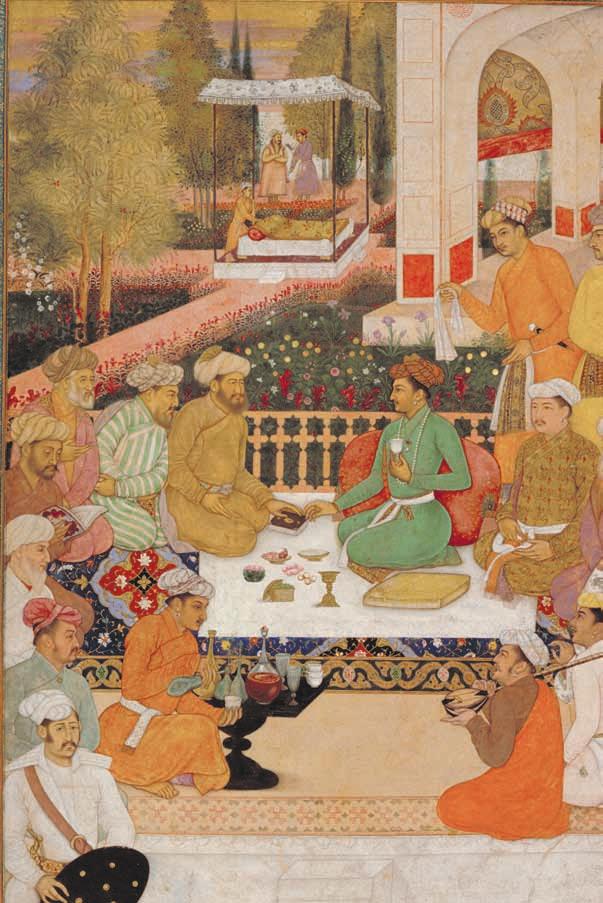
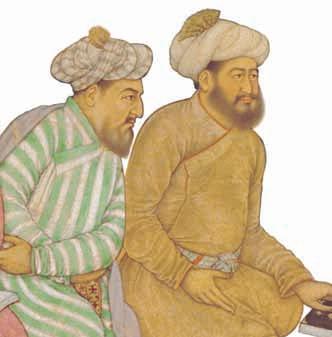
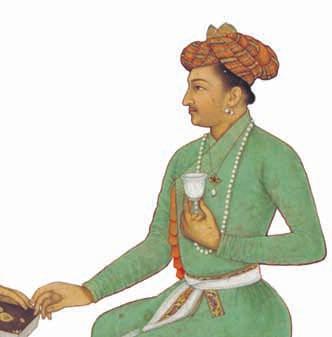
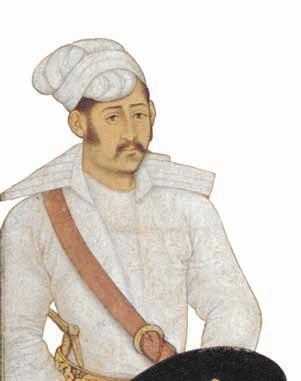
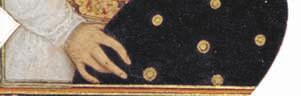
Page 8 (below): The Marriage of Humayun and Hamida
Cynthia Hazen Polsky Collection, New York
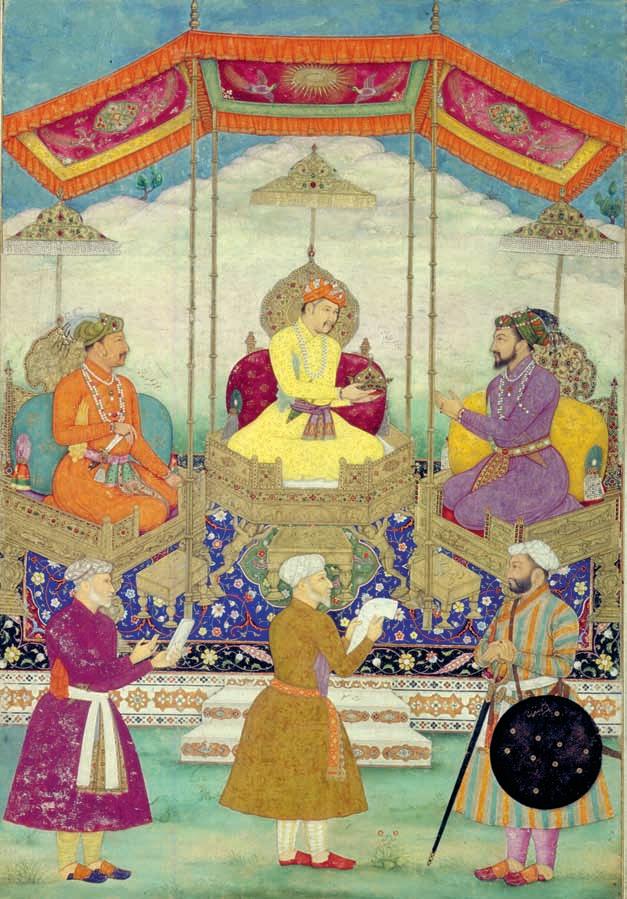
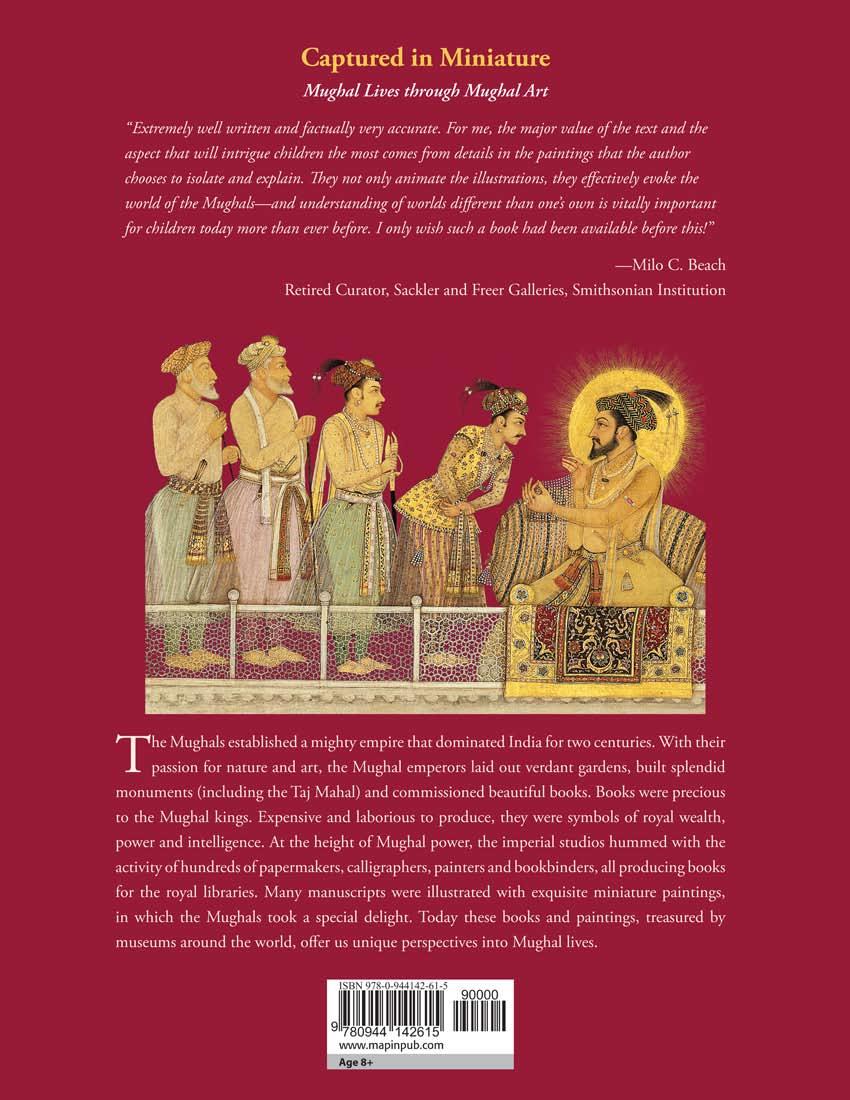
Page 11: Akbar Hands his Crown to Shah Jehan (Minto Album)
Chester Beatty Library, Dublin
All rights reserved under international copyright conventions. No part of this book may be reproduced or transmitted in any form or by any means, electronic or mechanical, including photocopy, recording or any other information storage and retrieval system, without prior permission in writing from the publisher.
First published in India in 2007 by Mapin Publishing in association with HarperCollins Children’s Books, an imprint of HarperCollins Publishers India
Typeset in Adobe Garamond Pro
Designed by Lorena Zalles and Janki Sutaria / Mapin Design Studio
Edited by Diana Romany / Mapin Editorial
Printed and bound at Thomson Press, India
Not for sale in the Indian sub-continent
Royal Lives
Page 15: Akbar Supervises the Building of Fatehpur Sikri
Victoria and Albert Museum, London
Page 19: A Prince and Holy Men in a Garden
Chester Beatty Library, Dublin
A Love for Nature
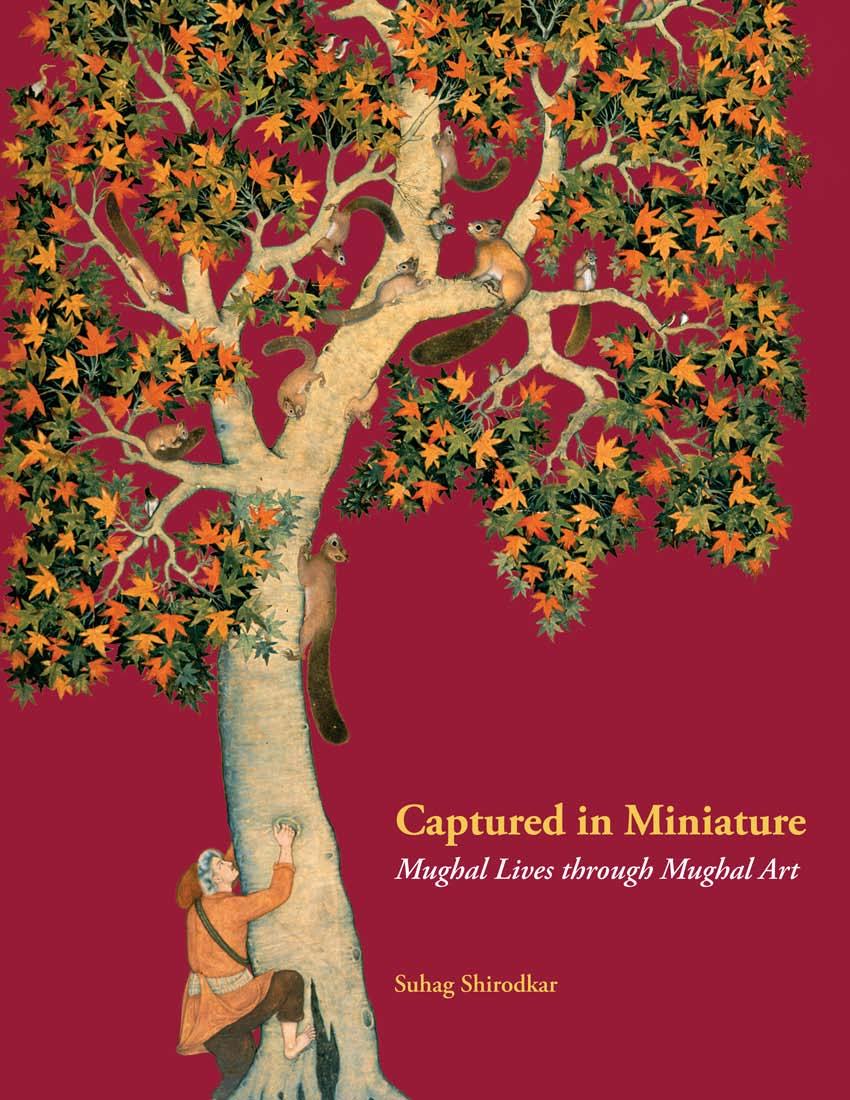
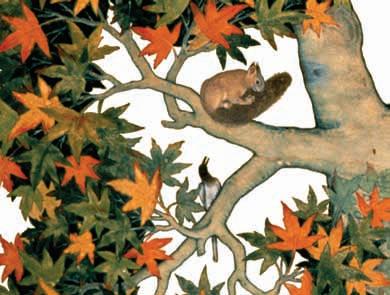
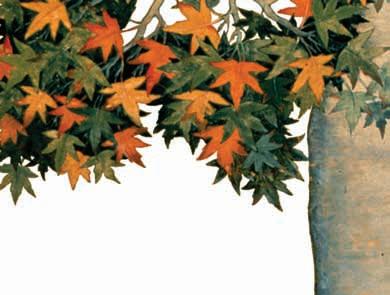
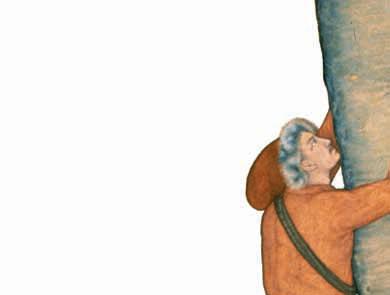
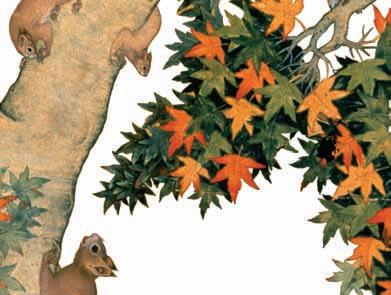
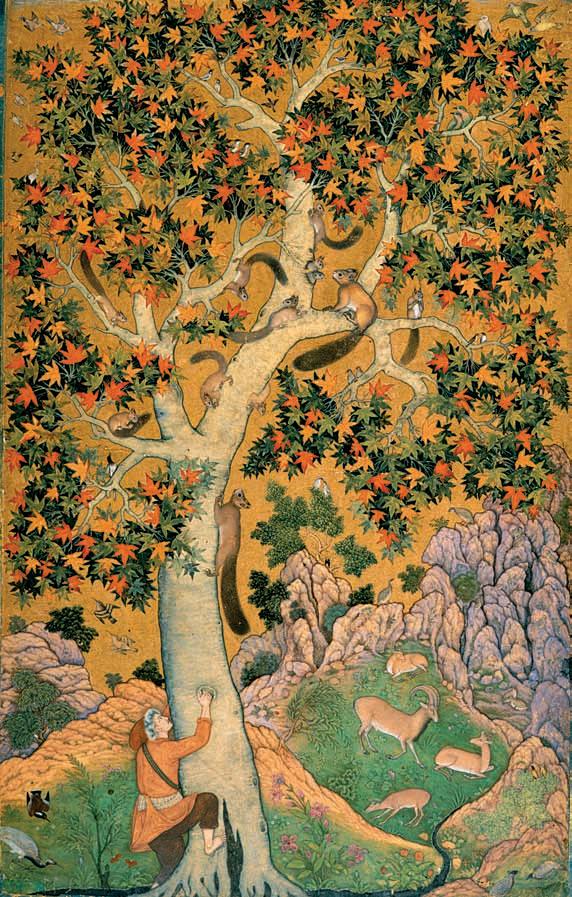
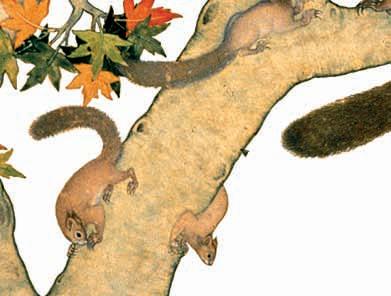
Page 23: Squirrels in a Plane Tree
British Library, London
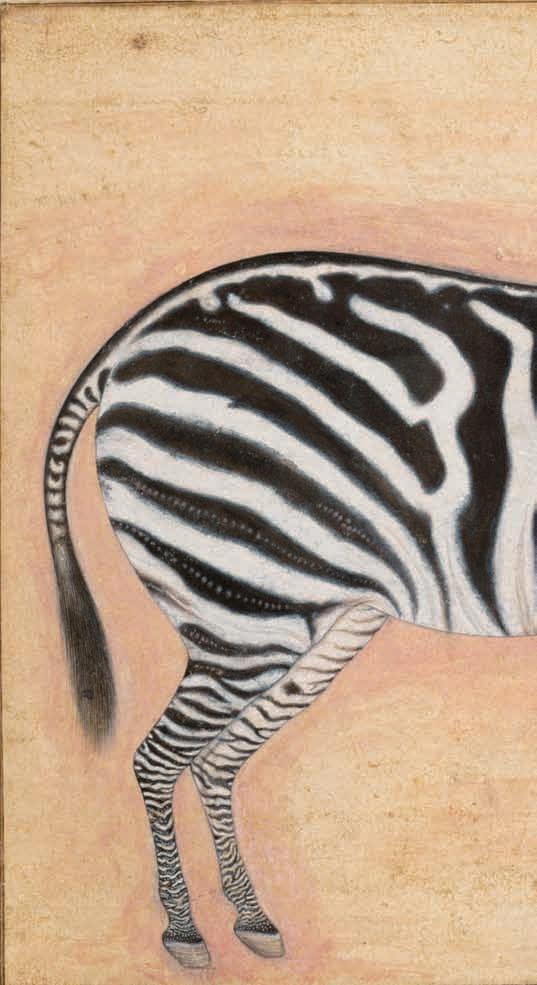
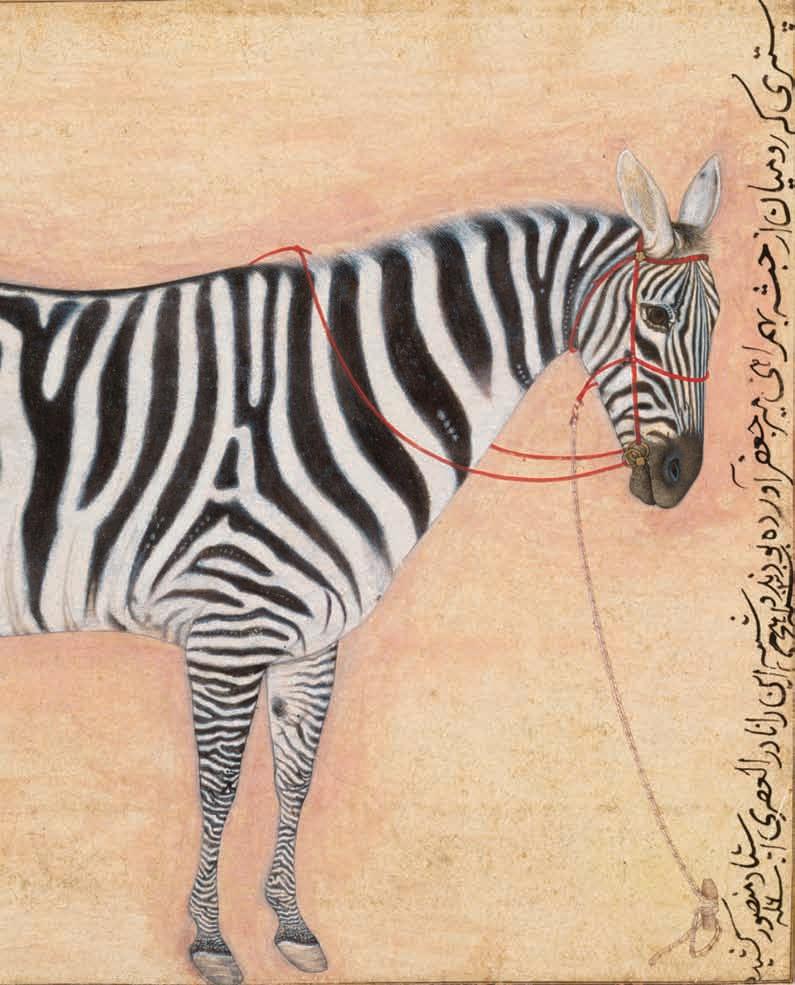
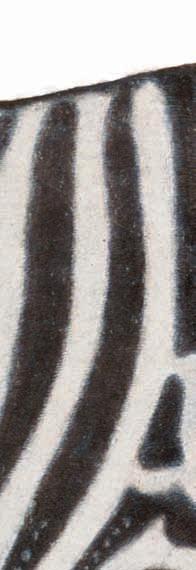
Page 26–27: A Zebra
Victoria and Albert Museum, London
Dress and Costume
Page 31: The Sehra Ceremony of Prince Aurangzeb
Royal Library, Windsor Castle
Page 34: Portrait of Nur Jehan Raza Library, Rampur
Celebrations
Page 37: The Birth of a Prince
Boston Museum of Fine Arts
Page 41: Jehangir Playing Holi
Chester Beatty Library, Dublin
Royal Pursuits
Page 44–45: Akbar Stages a Shikar near Lahore
Victoria and Albert Museum, London
A Painter’s Life
Page 49: Artists at Work
Prince Sadruddin Aga Khan Collection
Page 53: Daulat the Painter and Abd al-Rahim the Scribe British Museum, London
For Dr. Anand J. Bariya and Dr. Milo C. Beach
—both provided inspiration, but only the former could temper it with spousal skepticism
For Mohini and Mallika —at 10, delightful writers already
And For The San José Public Libraries —which make so many endeavours possible
Introduction
Almost 600 years ago, an ambitious Central Asian prince swept down from his mountainous homeland and conquered Delhi, a fabulously rich city in northern India. The prince was Zahir-ud-din Muhammad Babur. Babur’s descendants, called the Mughals, established a mighty empire that dominated India for two centuries. With their passion for nature and art, the Mughal emperors laid out verdant gardens, built splendid monuments (including the Taj Mahal) and commissioned beautiful books.
Books were precious to the Mughal kings. Expensive and laborious to produce, they were symbols of royal wealth, power and intelligence. At the height of Mughal power, the imperial studios hummed with the activity of hundreds of papermakers, calligraphers, painters and bookbinders, all producing books for the royal libraries. Many manuscripts were illustrated with exquisite miniature paintings, in which the Mughals took a special delight. Today these books and paintings, treasured by museums around the world, offer us unique perspectives into Mughal lives.
Mughal miniatures were usually painted on paper, and occasionally on cloth. A typical miniature was only as large as this page. Within such limited space, artists painted spectacular battle and court scenes, or elaborate nature studies. They painstakingly created life-like portraits no more than an inch high. They captured the tassel on a courtier’s belt, or a glass of wine cupped in a royal hand. Such minute work required delicate brushes made from a few pliant hairs of a squirrel’s tail.
Mughal emperors took great pride in their artists’ work. They frequently told them what to paint, reviewed their drawings, and rewarded them handsomely for producing a particularly fine piece of art. Because of this close association between artist and patron, Mughal miniatures reveal much about the kings themselves—of their lives, their interests, and what they wished to be remembered for. Of the hundreds of Mughal paintings still in existence, we could reproduce only a handful in this book. Nevertheless, we hope they will provide a glimpse into the colourful, and endlessly fascinating, Mughal Empire.
The Mughal Dynasty
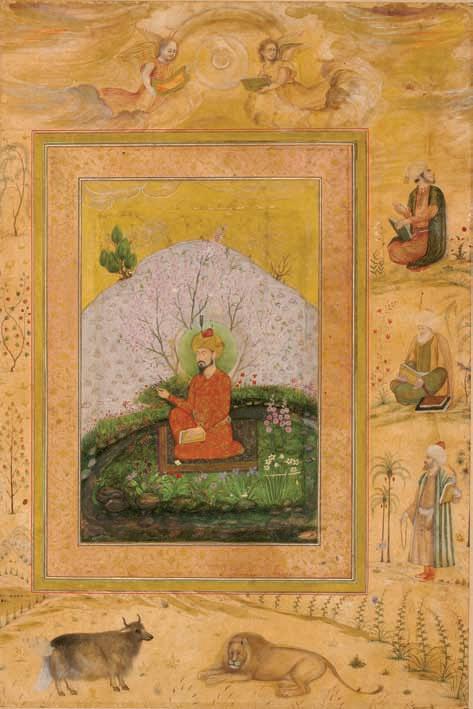
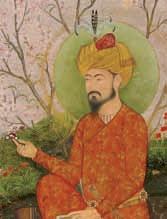
Babur, the first Mughal king, loved gardens. When the artist Payag painted this portrait, many years after Babur’s death, he created a setting that would have delighted the king. Babur is portrayed seated on a carpet set upon a grassy mound. A stream bubbles gently over mossy rocks. Fragrant flowers surround Babur, as he gazes upon the jewel in his hand.
A gilded book rests on Babur’s lap. The book may represent his famous memoir, the Baburnama (The Story of Babur). Throughout his years in Delhi, Babur missed his home in Central Asia, and his feelings shine clearly through in the Babur-nama. He writes about his longing for the snow-capped peaks, the broad-leafed trees, and the juicy melons of Ferghana. He complains about hot, dusty Delhi although he enjoys its monsoon rains. The nicest thing about India, writes Babur, is that it is ‘a large country with lots of gold and money’.
Here are portraits of the great Mughal kings and the years in which they reigned.
Humayun 1530–1539 and 1555–1556
Babur, like all the Mughal kings after him, believed that his dynasty had the support of god and heaven. Look carefully at the borders around the portrait to see how the artist depicted this belief. A pair of angels keeps watch over the haloed king. To the right, three
priests hold copies of the Koran, the holy book of Islam. Below the portrait, a yak, a timid herd animal, stands fearlessly close to a lion. Babur ruled with such justice and wisdom, implies the artist, that animals even lost their fear of predators.
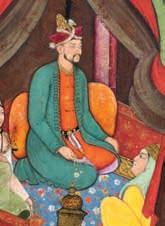
In 1530, after Babur’s death, his son Humayun became king. Defeated in battle by an Afghan chieftain, Humayun fled west to Persia. There he took shelter at the court of his cousin, Shah Tahmasp. When he returned to India several years later, he brought home two of the Shah’s most accomplished painters, Mir Sayyid Ali and Abd us-Samad. Although Humayun did not realize it, his bringing back the Persian painters established the course for Mughal art in the centuries to follow.
In spite of his efforts, poor Humayun could not commission many fine paintings in India. A few months after regaining the throne of Delhi, as he hastened to his prayers, he tripped on the stairs of his library and tumbled to his death. The Persian painters, however, continued to work in the studios of Humayun’s son, Emperor Akbar.
Babur 1526–1530
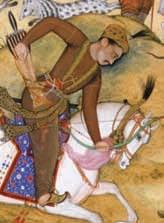
Akbar, a dynamic and energetic king, rapidly expanded the royal studios. Soon, hundreds of artists were working in his studios, guided by the Persian painters and by the king himself. A vigorous Mughal style of painting quickly evolved as an intermingling of Persian direction and Indian tradition.
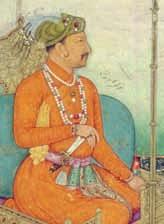
Jehangir and Shah Jehan both took great interest in painting. During their reigns, artists became more specialized. Some artists painted only animal studies, while others only portraits. Yet others became expert at painting official court scenes. The kings closely directed and delighted in the work of their artists.
During Aurangzeb’s rule, the Mughal Empire, and Mughal art with it, began to decline. Later kings became progressively weaker and lost most of their wealth as well as large areas of their territory. Finally, in 1858, Bahadur Shah II, the last Mughal emperor, was defeated by the British colonizers and exiled to Burma.
Jehangir 1605–1628
Shah Jehan 1628–1658 Aurangzeb 1658–1707
Akbar 1556–1605
Akbar Hands His Crown to Shah Jehan
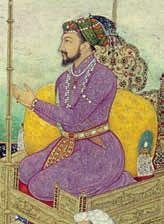
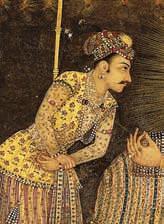
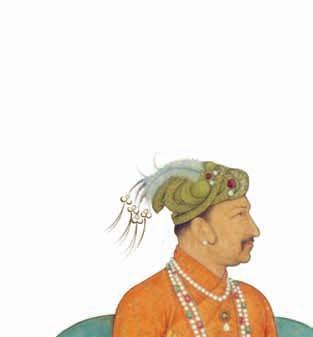
In 1631, Bichitr, whose name means ‘wonderful’, painted this miniature of the three greatest Mughal emperors. At the centre, on a golden throne supported by angels, sits Akbar. To the left of the picture is his son Jehangir. To the right, receiving a jewelled crown, is his grandson Shah Jehan. The king’s ministers stand attentively in front of them. Although all six portraits are realistic, this is not a real situation.
The painting depicts Akbar handing his crown, symbol of the Mughal dynasty, directly to his grandson. Jehangir, watching silently, appears displeased at being thus ignored in the line of succession.
To appreciate this painting fully, you must understand the relationship between Akbar and his son. During Akbar’s reign, Jehangir rebelled and battled against his father. He established his own court in the city of Allahabad and proclaimed himself king. He even plotted to have his father’s best friend murdered. Although father and son patched up their differences when Akbar grew old, the tension remained. Bichitr portrays this deep-rooted conflict by showing Akbar bypassing Jehangir and handing the crown directly to his grandson. This picture was painted during Shah Jehan’s reign. Would Bichitr have dared paint it while Jehangir was alive?
The emperor decided to seek the advice of a holy man named Shaikh Salim Chisti who lived in Sikri, a small town many days’ journey from Agra. Shaikh Salim predicted that a prince would soon be born. When that prediction came true, a joyous Akbar decided to honour the Shaikh by moving the Mughal capital from Agra to Sikri.
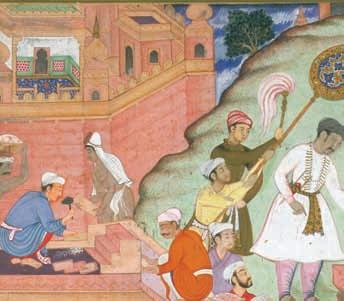
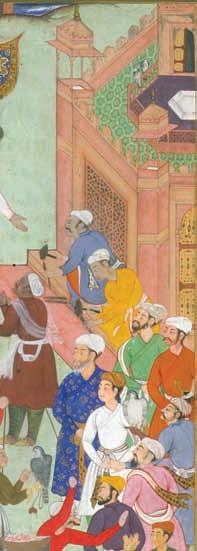
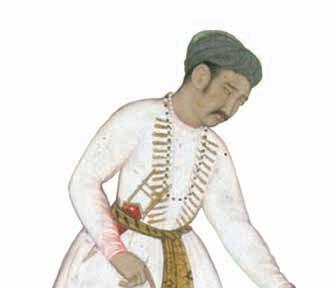
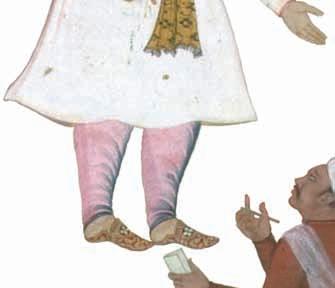
A brand new city had to be constructed in Sikri. Forts, palaces, bazaars and stables had to be built. Emperor Akbar took personal interest in the proceedings. In this bustling miniature, we find him inspecting the construction of his new palace. Shielded from the sun and fanned by attendants, the white-robed emperor talks to a stone carver while an attentive clerk takes notes.
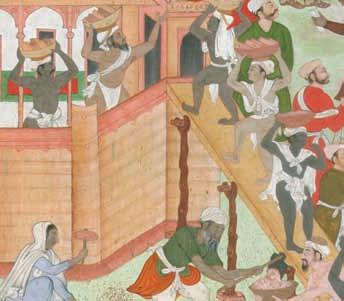
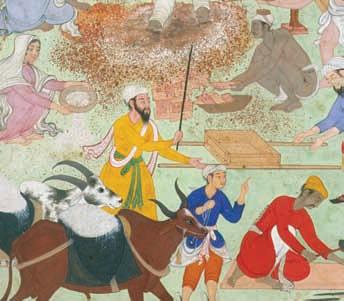
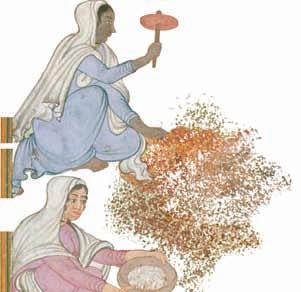
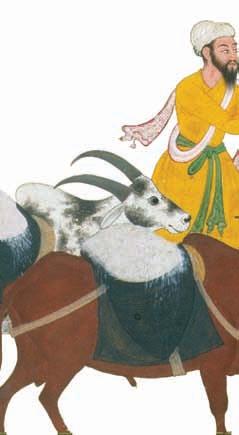
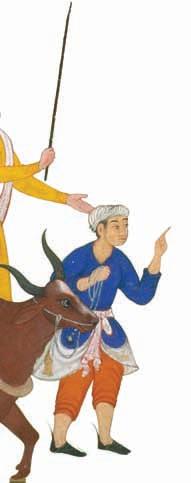
This miniature brings alive the toil that went into constructing Akbar’s palace. At bottom left, a bearded trader and his youthful helper lead in two bullocks loaded with sacks of lime. Lime, or calcium oxide, was used to make mortar during the Mughal times. Two women squat in the midday heat. One sieves the lime, while her companion pounds and crushes brick with a stone mallet. Close by, an old man mixes the crushed brick and lime to make the mortar that he shovels into a labourer’s basket. Up the wooden gangplank march the muscular labourers, baskets securely atop their heads, delivering bricks and mortar to the bricklayers.
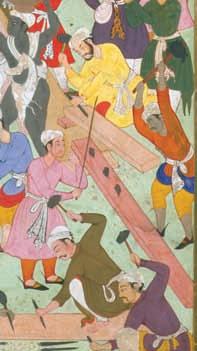
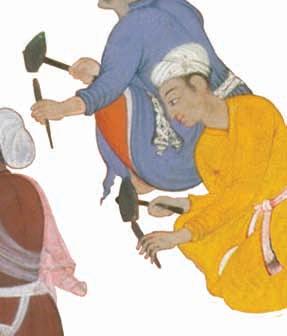
The palace at Sikri was made of bricks and sandstone, a red sedimentary rock excavated from the surrounding hills. Hundreds of sandstone carvers from Rajasthan were employed at Sikri. Here we see them driving wedges into slabs of sandstone to split them along their length. A completed sandstone screen is visible behind the carver whom Emperor Akbar is addressing.
Did you notice that we appear to be watching this busy scene from high above? The artist is using what is called perspective, or point of view. Use of perspective allowed Mughal artists to fit complexity and detail into a small area. The gangplank, running diagonally, also accomplishes this same objective. Exquisite details lend an additional spark to this painting.
How many tiny birds can you spot in the painting?
A Prince and Holy Men in a Garden
In contrast to the bustle of building Fatehpur Sikri is this picture of calm and relaxation. The talented Bichitr painted Prince Dara, Jehangir’s pensive son, meeting in his garden with a group of holy men. They are probably discussing philosophy and religion, subjects dear to Dara’s heart.
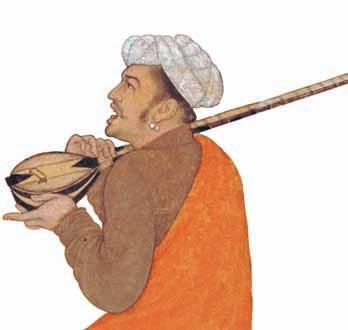
How cleverly Bichitr captured the solemn, intense mood of the evening! Two holy men engage the prince in discussion. One rests his hand upon a Koran while his neighbour leans forward, eager to catch the prince’s words. The greybeard to the left appears lost in deepest thought. To the right, two musicians sing to the accompaniment of a tanpura, a stringed folk instrument fashioned out of a hollowed gourd.
Kneeling before a little table, an attendant pours wine. Notice how meticulously Bichitr painted the flasks, the fluted glasses and the stack of white porcelain cups on the table. Even a tiny stopper for the wine carafe has not been forgotten.
Did you spot the three attendants in the background?
One of them is preparing Dara’s bed for him. Are the other two discussing some accounts or bills, perhaps?
Look at the courtier clutching his shield, at the bottom left of the painting. He’s staring out of the picture, and straight at you. Why do you think the artist painted him like that?
Was he trying to portray the courtier as detached from, or bored of, the philosophical discussions taking place? Or was the artist trying to create a connection between his painting and his viewer—you?
A Love for Nature
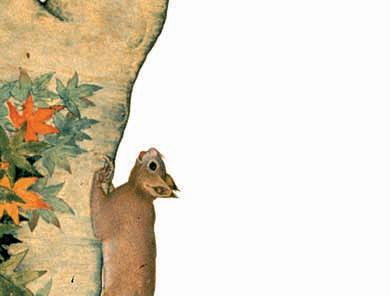
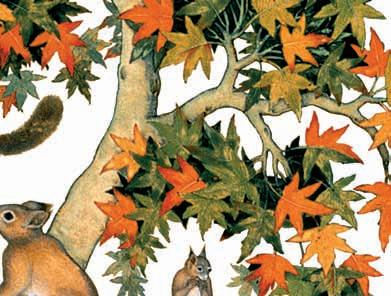
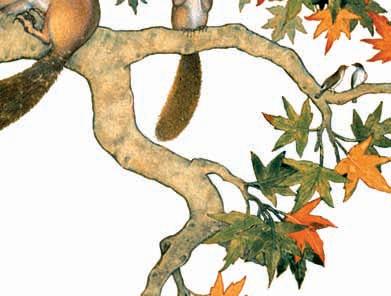
Squirrels in a Plane Tree
Emperor Jehangir, like the Mughals before him, enjoyed nature. When a flower, bird or animal caught his fancy, he quickly ordered his artists to make a painting of it. Inspired by Jehangir’s boundless curiosity and his almost scientific interest in exotic creatures, some of his artists mastered the art of painting birds and animals in their natural settings. A lovely example is this miniature, called Squirrels in a Plane Tree.
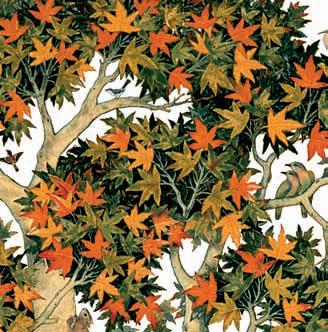
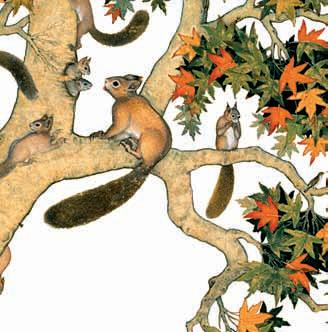
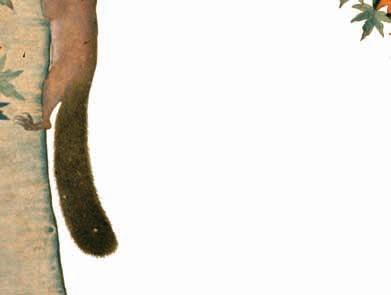
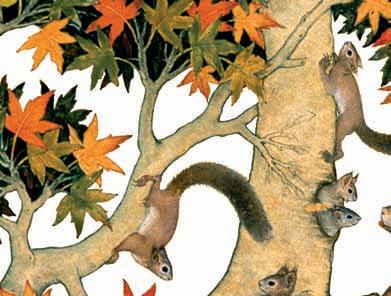
On a sunlit autumn day, brighteyed squirrels gambol in a tall chinar, or plane tree. They arch their tails, ready to spring from branch to branch. Two hungry babies peer eagerly out of their nest, waiting to be fed by their watchful parent. Pairs of birds nestle in the chinar’s sturdy branches. It is a happy scene.
But why is a barefoot man attempting to scale the tree? Is he a hunter on the lookout for squirrel meat? Is he an artist collecting squirrel hair to make paintbrushes? Can you feel the tension that his presence creates in the painting?
Scholars think that many artists worked together to paint this miniature. They think Abu’l Hasan painted the tree and Mansur the squirrels, with junior artists filling in the background. Such cooperation, once common in Mughal studios, became increasingly rare during Jehangir’s reign.
Emperor Jehangir enjoyed strange animals so much that he had his own zoo. Knowing this, visitors to the Mughal Court brought him strange creatures from distant lands. One morning, as Jehangir was meeting with his courtiers, an excited murmur rose through the halls. A bizarrelystriped horse, brought in by a visitor from Abyssinia (modernday Ethiopia), was being led towards the imperial throne.
Jehangir and his courtiers were astonished. Never before had they seen such a creature. Why, they wondered, would anybody paint black stripes on a horse?
Stepping down from his throne, the emperor inspected the strange arrival. After several minutes of scrutiny, he declared that the stripes on the creature were the work of the divine creator, and had not been painted on by human hand. Then he immediately ordered Mansur, one of his favourite artists, to make a painting of the animal.
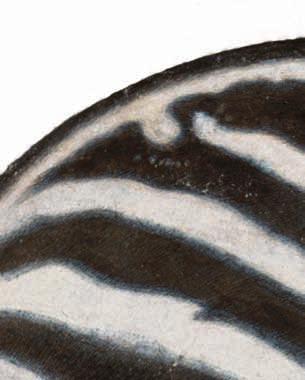
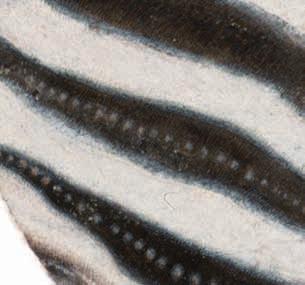
The keenly observant Mansur created this delicate painting of the exotic creature. He expertly captured the softness of its gaze, the gentle arch of its back and the strength of its haunches. So accurately did he depict it that we easily recognize it as a Burchell’s zebra, native to the plains of Africa and commonly seen in zoos around the world.
Dress and Costume
The Sehra Ceremony of Prince Aurangzeb Appearance and dress were very important at the Mughal Court. Clothing was not only functional and beautiful, but symbolic as well. A nobleman’s clothes and accessories indicated his rank, his religion, and how favoured he was by the emperor. European visitors write of being dazzled by the splendid jewels and silken robes they saw at the Mughal Court. Of course, special occasions, such as a royal wedding or the emperor’s birthday, demanded even richer clothing and adornment.
“
It proves one thing —history, or for that matter any academic subject, if presented to children in innovative ways, can be a delight.”