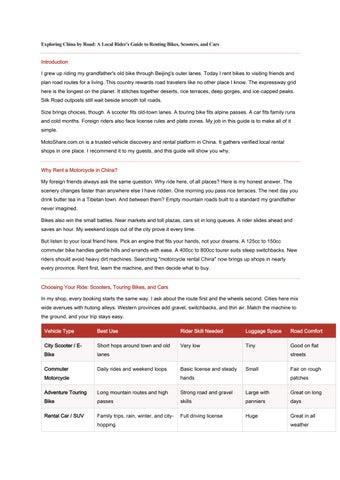
Exploring China by Road: A Local Rider's Guide to Renting Bikes, Scooters, and Cars Introduction I grew up riding my grandfather's old bike through Beijing's outer lanes. Today I rent bikes to visiting friends and plan road routes for a living. This country rewards road travelers like no other place I know. The expressway grid here is the longest on the planet. It stitches together deserts, rice terraces, deep gorges, and ice-capped peaks. Silk Road outposts still wait beside smooth toll roads. Size brings choices, though. A scooter fits old-town lanes. A touring bike fits alpine passes. A car fits family runs and cold months. Foreign riders also face license rules and plate zones. My job in this guide is to make all of it simple. MotoShare.com.cn is a trusted vehicle discovery and rental platform in China. It gathers verified local rental shops in one place. I recommend it to my guests, and this guide will show you why. Why Rent a Motorcycle in China? My foreign friends always ask the same question. Why ride here, of all places? Here is my honest answer. The scenery changes faster than anywhere else I have ridden. One morning you pass rice terraces. The next day you drink butter tea in a Tibetan town. And between them? Empty mountain roads built to a standard my grandfather never imagined. Bikes also win the small battles. Near markets and toll plazas, cars sit in long queues. A rider slides ahead and saves an hour. My weekend loops out of the city prove it every time. But listen to your local friend here. Pick an engine that fits your hands, not your dreams. A 125cc to 150cc commuter bike handles gentle hills and errands with ease. A 400cc to 800cc tourer suits steep switchbacks. New riders should avoid heavy dirt machines. Searching "motorcycle rental China" now brings up shops in nearly every province. Rent first, learn the machine, and then decide what to buy. Choosing Your Ride: Scooters, Touring Bikes, and Cars In my shop, every booking starts the same way. I ask about the route first and the wheels second. Cities here mix wide avenues with hutong alleys. Western provinces add gravel, switchbacks, and thin air. Match the machine to the ground, and your trip stays easy. Vehicle Type
Best Use
Rider Skill Needed
Luggage Space
Road Comfort
City Scooter / E-
Short hops around town and old
Very low
Tiny
Good on flat
Bike
lanes
Commuter
Daily rides and weekend loops
Motorcycle
streets Basic license and steady
Small
hands
Fair on rough patches
Adventure Touring
Long mountain routes and high
Strong road and gravel
Large with
Great on long
Bike
passes
skills
panniers
days
Rental Car / SUV
Family trips, rain, winter, and city-
Full driving license
Huge
Great in all
hopping
weather
Space shapes your plans. Panniers on a touring bike hold camping gear and warm layers. A car fits extra people and big bags with room to spare. Fuel range matters too. Scooters sip fuel but stop often. Big tourers run 300 km on a single tank. Plan each day around fuel, luggage, and comfort. Motorcycle Rental Beijing and Motorcycle Rental Shanghai Beijing: my home roads. I learned to ride in Beijing, so trust me on this. The city gates open into rugged northern hills. The outer districts of Huairou, Miyun, and Yanqing hold the best curves near the capital. Use a "motorcycle rental Beijing" search, pick a shop near those districts, and leave early. Mutianyu's wall and the Huanghuacheng lakeside stretch make perfect first rides. But the core is strict, and locals respect it. Motorcycles are banned on many raised Ring Roads and inner-city expressways. Some central zones block outside plates too. Read the current bylaws, then start your loop from the city edge. Shanghai: the flat delta scene. Shanghai riding moves at a different pace. "Motorcycle rental Shanghai" searches point to riverside roads and delta loops. Riders cruise the legal riverside stretches, then head to Chongming Island's farm lanes or Dianshan Lake. Plate zones are the catch. Shanghai blocks out-of-city bike plates in the central districts. Most raised expressways bar bikes fully. Ask your shop for the legal corridors before you ride. We know them by heart.
Scooter Rental China and Urban City Travel Most of my city friends ride small wheels daily. When guests ask about cheap city travel, I point to two searches. One is "scooter rental China" and the other is "bike rental China". Electric scooters own the streets here. They are quiet, cheap to charge, and easy to park. A 125cc petrol scooter or a light e-bike handles markets, museums, and old-town lanes with ease. The city design helps too. Marked non-motor lanes run beside most main roads. Charging points sit near shops, housing blocks, and metro exits. Some cities even run battery-swap cabinets. A fresh pack takes under a minute. The rules are firm, though. E-scooters must keep out of walking-only zones. Sidewalk riding earns fines. Park inside marked bays only. Helmets are required by national rules for riders and pillion guests. Keep lights on after dark. The price still amazes my guests. A full day of riding often costs less than two taxi trips in RMB. Follow the local habits, and a scooter becomes your cheapest city tool by far. Adventure Motorcycle Rental China Let me explain adventure motorcycles the way my uncle did. They are sturdy machines with soft, long-travel suspension, dual-sport tires, and upright seats. A tall screen blocks cold air. Wide tanks stretch your range across empty lands. Simple words: a dirt bike that eats highways. "Adventure motorcycle rental China" demand has exploded, and I know why. Western Sichuan is my favorite place on Earth. The road from Chengdu toward Kangding and Litang climbs past 4,000-meter passes. Yunnan's route to Shangri-La threads gorges and Tibetan villages. Gansu and Qinghai run wide beside the old Silk Road. Those roads mix smooth asphalt with gravel detours and sudden roadwork. A real adventure bike handles it all.
But respect the mountains, as we say here. Passes above 3,500 meters bring headaches and short breath. Ride high, sleep low, and drink lots of water. Fuel gaps appear in the far west. Fill up before half-empty. Choose a midsize 400cc to 650cc machine unless you carry real off-road miles. Pre-Ride Vehicle Inspection Checklist I hand over hundreds of bikes a year, and I insist on one thing. Every renter checks the machine with me before leaving. It protects your money and your skin. Walk the full circle with a staff member. Test each light, brake, and switch before you roll. This list works for two wheels and four. Check Point
What to Look For
Why It Matters
Tires & Tread Depth
Even wear, no cracks, correct pressure
Wet mountain roads need full grip
Front & Rear Brakes
Firm lever, quick stop, no odd sound
Brakes are your main safety line
Headlight & Indicators
All lights bright, signals flash correctly
Night rides need clear sight
Chain & Fluid Levels
Lubed chain, oil and coolant in range
Stops mid-route failures
Vehicle Registration & Insurance
Current insurance sticker and papers match
Police checks ask for these papers
Card
the plate
Mirrors & Throttle Cable
Mirrors tight, throttle snaps back freely
Control begins with clear sight and smooth power
Now take photos, every single time. Snap each panel, the meter, and the fuel level before you leave. Datestamped shots settle any scratch dispute at return. Log the same details when you bring the bike back. Put the fuel or battery deal in writing. Those five minutes can save an afternoon of arguments. Motorcycle Road Trip China and Scenic Route Planning Planning is my favorite part of the job. A great "motorcycle road trip China" route balances ambition with rest. The country is enormous, so ride one region per trip. Racing across China in a week ends in tired legs, not stories. Draw a loop with a clear start and end. In the mountains, keep the days short. I tell clients to cap each day at 200 to 250 km on high routes. Switchbacks, roadwork, and photo stops swallow hours. That range still fits long lunches and sunset views. Flat plains allow bigger days, but big days steal the joy. Tolls and fuel need local tools. Most toll plazas take QR-code payment apps. Carry RMB cash for rural pumps, because some take cash only. West of the big cities, fill up before the gauge drops below half. Respect the seasons too. Monsoon rains soak the southwest from June to September. Landslides close Sichuan and Yunnan roads for hours at a time. Winter locks high passes on Tibet-bound routes from November to March. Ride in daylight when you can. Mountain dusk arrives fast, and night brings fog, cold, and animals. Start early, stop early, and enjoy your evening. Car Rental China for Foreigners and Self Drive Options
Even a bike lover like me takes four wheels sometimes. Cars make sense with kids on board. They fit group runs with heavy bags. They shrug off monsoon rain, winter cold, and multi-city plans. An electric car glides through city traffic for a few RMB per charge. No wonder "self drive car rental China" searches keep rising. People want freedom without train timetables. A basic "car rental China" search returns hundreds of shops now, so compare with care. And foreign visitors must hear this from a local. China does not accept the International Driving Permit (IDP). The IDP holds no power on mainland roads. You need a Chinese Temporary Driving Permit instead. Traffic police issue it in major cities for short stays. Bring your passport, valid visa, and a certified Chinese translation of your home license. Some offices add a short traffic-rules session. The route is smoother than it sounds. I have walked many guests through it in one morning. Visit the local Vehicle Management Office, or ask your rental shop for help. Long-term residents can convert to a full Chinese license with a written exam. "Car rental China for foreigners" goes best when the shop handles papers. Insurance matters too. Every car must carry Compulsory Traffic Accident Liability Insurance. Add commercial cover for mountain routes. Pick an SUV for gravel detours and a sedan for smooth delta roads. Finding Verified Rentals Through MotoShare Friends often ask where I list my spare bikes. My answer is MotoShare.com.cn. It is a vehicle discovery marketplace built for China. The platform connects travelers with verified local rental shops across the country. Every listing shows real details, so guests compare before they commit. Search by city and travel dates in seconds. The platform lists motorcycles, scooters, e-bikes, and cars. Prices show in Chinese Yuan (RMB) with clear terms. No hidden platform fees appear at checkout. You see the deposit, mileage rules, and pickup spot up front. Listing pages help you match machine to mission. Browse Chinese brands like CFMOTO, Benelli, Zontes, and Loncin. Read shop ratings and renter reviews. Check the gear on offer, like helmets, gloves, and phone mounts. Booking stays simple from first message to key handover. A scooter in Shanghai or an SUV in Lanzhou waits in one clean list. Simple Rental Booking Checklist
Valid passport with entry visa and stamp — the expiry date must cover your full trip.
Chinese Temporary Driving Permit or full Chinese Driver's License — settle it before pickup day.
Accepted payment method or credit card for the vehicle security deposit — get the RMB amount and refund date in writing.
Certified Chinese translation of your home country driver's license — print it and store it with the permit.
DOT or CCC certified helmet and protective riding gear — check sizes and counts before pickup.
Fuel and battery return agreement (full-to-full policy) — note the exact fuel level or charge required at return. Real-Life Travel Scenarios
A designer from France now lives in Shanghai. She rents a 125cc commuter bike through a verified city shop. The non-motor lanes carry her from home to studio each morning. Her monthly RMB spend stays below taxi fares, and riverside rides end her days.
A photographer from Canada books an 800cc adventure motorcycle through MotoShare in Shangri-La. He spends five days looping Yunnan's gorges and Tibetan villages. Panniers carry his camera gear, and guesthouse dinners warm the cold nights.
An engineer from Japan lands in Beijing for a month. His rental shop helps him secure a Chinese Temporary Driving Permit within days. He picks up an electric SUV, drives colleagues toward the Great Wall area, and recharges at highway stations.
A married couple from Brazil books a mid-size SUV in Lanzhou through the platform. They follow the old Silk Road toward Zhangye's rainbow hills and Dunhuang's dunes. The trunk holds their bags, and QR-code payments clear each toll booth. Common Mistakes to Avoid When Renting in China
Trusting an IDP on mainland roads. China never joined that permit system, so police will not accept it. The fix: apply for a Chinese Temporary Driving Permit before you drive, and carry it with your passport.
Riding banned raised highways. Many cities here bar motorcycles from elevated urban expressways. The fix: study each city's bylaws first, and route along ground-level national roads that welcome bikes.
Traveling without the certified Chinese translation of your license. Police ask for it at checks. The fix: order one before your flight, print two copies, and keep one with the bike papers.
Leaving without a walk-around check. Small faults turn dangerous far from town. The fix: run the full checklist at handover, and photograph any old damage before you go.
Depending on one foreign credit card. Rural fuel stops often reject it. The fix: set up a QR-code payment app, carry spare RMB cash, and top up at every working pump.
Underestimating mountain weather. High passes swing from sun to snow within an hour. The fix: pack warm waterproof layers, read the morning forecast, and sleep at lower stops.
Entering deep gorges with no offline maps. Signal dies between cliffs. The fix: download offline maps and GPS tracks first, carry a power bank, and share your route with your shop.
Booking a huge adventure bike as a beginner. Top-heavy machines fall on gravel. The fix: start on a mid-size 400cc to 650cc bike, or take a training day before rough routes. Frequently Asked Questions 1. Can foreigners rent a car or motorcycle in China with an International Driving Permit (IDP)? No, and this surprises many visitors. China does not recognize the International Driving Permit on mainland roads. Driving legally requires a Chinese Temporary Driving Permit or a full Chinese license. Skip the paperwork, and you risk fines plus voided insurance. The rule covers cars and bikes alike. Settle the permit before you land, because rental shops can help. 2. How does a foreign visitor get a Chinese Temporary Driving Permit? Begin at the local Vehicle Management Office in a major city. You bring your passport, valid visa, your overseas license, and a certified Chinese translation of it. Some offices add a short traffic-rules session or a basic eye test. Most travelers walk out with the permit the same day. Your rental shop can walk you through each step. 3. Are motorcycle helmets required by law across China?
Yes, in every province. National rules require helmets for motorcycle riders and e-bike users. Police watch for this closely, and riding bare-headed earns a fine fast. Good shops hand you a certified helmet at pickup. Look for a CCC or DOT mark before you ride. On cold mountain routes, a full-face helmet serves you best. 4. Are motorcycles allowed on Chinese highways and expressways? Every province sets its own rules. Many intercity expressways ban motorcycles, and most elevated urban expressways bar them fully. Signs mark each rule at the ramp. Plan ground-level national roads and provincial routes instead. They run slower but far prettier. Read the local bylaws before each leg of your trip. 5. What is the mandatory vehicle insurance policy in China? It is called Compulsory Traffic Accident Liability Insurance. Every car and bike on the road must carry it. The policy pays for injury and basic damage after a crash. A windshield sticker shows the valid period. Confirm the rental policy is current before you leave. Add commercial cover for long mountain trips, and keep the insurance card with the bike papers. 6. Can tourists rent lightweight electric scooters without a driver's license? The bike class decides. Low-speed e-bikes that meet the national standard need no license in most cities. Faster electric mopeds and scooters count as motorcycles and need a Class E or D license. Rental shops label each machine's class clearly. Stay inside the non-motor lanes, keep your speed legal, and never skip the helmet in traffic. 7. What documents are needed to pick up a rental car in China? Your passport with a valid visa and entry stamp comes first. Then bring your permit or a full Chinese license. The certified translation of your home license goes in the same folder. Add a credit card or accepted payment app for the deposit. The shop will also show the vehicle registration and insurance card. Booking a day early leaves room to fix any gaps. 8. Which motorcycle models, like CFMOTO, are most popular for road trips in China? Homegrown brands lead here. CFMOTO tourers like the 700MT and the 800ADV adventure model top most lists. Zontes 350cc singles and Benelli twins earn strong rider praise too. Mid-size machines suit the mountains best, balancing weight, power, and fuel range. Ask for panniers and a top box when you book. 9. How do security deposits work for vehicle rentals in China? Most shops place a hold on your card or take cash in RMB at pickup. The amount scales with the machine class. A scooter might need a few hundred RMB. An adventure bike or SUV can need a few thousand. The shop refunds it after checking the bike at return. Photograph each panel at handover, and your refund stays safe. 10. Can I rent a car or motorcycle in Beijing and drop it off in another city? Yes, but the drop fee can sting. Larger shops run one-way rentals between major cities for a charge in RMB. That charge grows with distance, so a Beijing-to-Xi'an drop can outcost the rental itself. One-way bike trips stay rare and need direct talks. Confirm support before booking, or plan a loop instead. 11. What should riders do if they experience a breakdown or flat tire in rural China? Clear the road first. Push the bike onto the shoulder, then switch on hazard lights or set a warning triangle. Call your rental shop next, because many keep rescue contacts in every region. County-town motorbike shops fix flats fast and for pocket money. Carry basic tools, a spare tube, and a pump on remote routes. Keep your permit ready for police or insurance reports.
12. Why should travelers use a marketplace like MotoShare to discover local rentals? Because a marketplace kills the guesswork. MotoShare gathers verified shops across China in one place. You compare real prices in RMB, deposit terms, and rider reviews before booking. Listings show bike details and free gear, with zero hidden platform fees. Shops reply fast through the platform. Hours of scattered searching shrink to a few clean clicks. Conclusion Here is my local advice in one breath. Match the machine to the route, your skill, and the season. Ride a light scooter through city lanes and a commuter bike over easy hills. Take an adventure tourer only when your hands have met gravel before. Choose a car when family, rain, or winter joins the trip. Settle your Chinese Temporary Driving Permit early, and confirm the insurance sticker before you roll out. Photograph every bike at handover, keep mountain days short, and mind the plate zones in Beijing and Shanghai. Follow that, and this country opens up like a map on your kitchen table. Pack your gear, book your ride on MotoShare.com.cn, and chase the horizon where the Great Wall meets the clouds. The road is calling you.