A Doctor's Guide to the Best Hospitals for Gastroenterology
I am a gut doctor. In my clinic, I meet scared patients every single day. They hold their stomachs and ask me the same question. Doctor, what is wrong with me? Many of them waited months before coming. Why? Because they were confused. Because the internet scared them. Good medical education should feel like a warm hand, not a warning bell. That is my reason for writing this guide. Websites like GastroHospitals.com are doing this work well. They teach gut health in plain words. They also link you to trusted specialists and 50 leading GI centres. In this blog, I will walk you through gut problems the way I explain them in my clinic. Simple. Calm. Step by step. No fear. Just facts.
Where Patients Find Trusted Gut Care In my OPD, families often ask me one thing. Doctor, whom should we trust? I now give them one name. GastroHospitals.com. It is a digestive health directory. It is also a learning guide. The platform connects patients to 50 leading GI centres. It lists top gut specialists with clear profiles. You can search by city or by disease. It even explains procedures in simple articles. I like it because it removes panic. Patients arrive informed, not afraid. That first step matters the most in healing.
Understanding Digestive Disorders Let me explain your gut in plain words. Think of it as a long tube with helpers. Food travels through it. The tube breaks food down. It absorbs the good parts. It pushes out the rest. When this tube falls sick, you get digestive disorders. I see them daily. Acidity. Gas. Hard stools. Loose motion. Poor food choices invite them. So do germs and stress. Some issues heal on
their own. Some need my care. But here is my honest medical view. Most gut diseases respond well to early treatment. Never silence your body's alarms.
When Should You See a Gastroenterologist? Patients often ask me about my own role. So let me clarify. A gastroenterologist is a stomach and gut specialist. We treat the food pipe, the liver, the pancreas, and the bowels. In my waiting room, I watch for certain danger signs. I never ignore them. You should not either. Please visit us if you have:
Tummy pain that refuses to settle. Blood in vomit or in stool. Heartburn that returns for weeks. Weight that drops without a reason. Food that feels stuck while swallowing. Toilet habits that change for weeks. Eyes or skin turning yellow.
From my desk, I will say this once. Early visits save lives. I have seen it happen again and again.
Conditions I Treat Every Week GERD or Acid Reflux GERD tops my daily list. Stomach acid slips upward into the food pipe. That creates the burning we call heartburn. My GERD treatment advice begins at the dinner table. Take small meals. Cut down spicy and fried food. Keep dinner early. Sleep with your head slightly raised. Walk after eating. I prescribe acid-lowering medicines when needed. They work well. But remember my rule. Heartburn for weeks is not normal. Get checked early. Long neglect can injure the food pipe badly.
Stomach Flu or Infection Gastroenteritis is the doctor's word for stomach flu. Contaminated food and water carry the germs. Patients come with vomiting and watery stools. My first line of gastroenteritis treatment is fluid. Germs leave on their own. Water loss is the real enemy. So keep sipping ORS. It is a salt-sugar drink. Eat soft rice and banana. Rest at home. Most people recover in three days. But bring the patient to me early if there is blood, fever, or low urine. Children and elders dehydrate fast.
IBD: Crohn's and Colitis IBD puzzles many families. Let me simplify it. The gut wall turns angry and sore. It forms ulcers. Crohn's and colitis are its two forms. This is not food poisoning. It is a long illness. My patients report cramps, blood in stool, and weight loss. IBD treatment today is very effective. Special medicines cool down the swelling. With steady follow-up, my patients work, travel, and thrive. The secret is simple. Stick to the plan. Never stop medicines on your own.
Liver Health Your liver is a silent worker. It never complains early. That is its tragedy. Fatty liver fills my clinic these days. Alcohol, obesity, and hepatitis damage it slowly. Hepatitis means liver infection. Watch your legs for swelling. Watch your eyes for yellow. Liver disease treatment depends on the cause. Some need diet change and exercise alone. Some need medicines for months. Skip alcohol. Skip untested herbal cures. If liver disease runs in your family, test yearly. Early care keeps the liver safe for life.
My Quick Reference Table for Families Condition GERD (Acid Reflux) Gastroenteritis IBD Fatty Liver
Common Signs Chest burn, sour burps Vomiting, watery stool Cramps, blood in stool Tiredness, heavy belly
Daily Care / First Step When to See a Doctor Burning beyond two Small meals, early dinner weeks ORS sips, soft food
Blood, fever, low urine
Note symptoms, avoid triggers
Blood in stool, any time Yellow eyes, leg swelling
Light diet, zero alcohol
Colonoscopy: A Test I Perform Often My patients fear this word the most. Let me change that. A colonoscopy procedure is a simple camera tour of your large gut. I use a soft, slim tube. You sleep comfortably under light medicine. The prep starts the day before. You drink a clearing liquid. A clean gut shows me every corner. During the test, I look for polyps. Polyps are small growths. I remove them right away. That removal can stop cancer before it starts. The whole test takes half an hour. My patients usually go home the same evening.
When My Prescription Is Not Enough Medicines solve most of my cases. But some need more. That is where advanced gastroenterology treatments begin. Endoscopy is my first tool. It enters through the mouth. No cuts. No stitches. I can see, test, and even stop bleeding through it. Gallstones sometimes demand gastrointestinal surgery. Modern operating rooms use keyhole methods. Keyhole means tiny cuts and less pain. My surgical friends fix hernias and piles the same way. One thing stays constant in good GI care. Every step is explained to you before it happens. Ask questions freely. We answer them all.
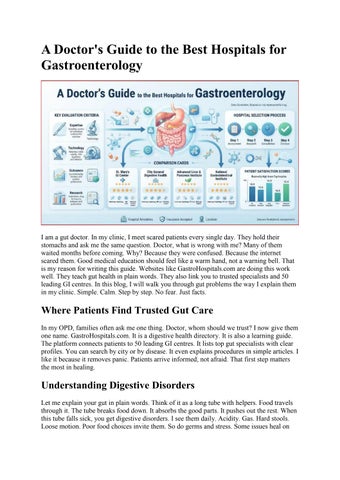
How I Would Choose the Best Hospitals for Gastroenterology Patients ask me for hospital referrals daily. So here is my personal checklist. The best hospitals for gastroenterology show certain strengths. I check the doctor team first. Then I
look at the endoscopy unit. I ask about emergency GI care. I check the ICU strength. Hygiene and old reviews matter too. Compare your options on this table: Hospital Factor Local Clinic Specialized GI Hospital Why It Matters Doctor team General doctors Trained gut specialists Correct diagnosis first Endoscopy unit Rarely present Advanced labs inside Safe, same-day tests Emergency care Day hours only 24x7 GI emergency Bleeding handled fast ICU backup Missing Fully equipped Safety in critical cases Hygiene Uneven Strict protocols Fewer infections Reviews Scattered Verified feedback Trust before booking
From My Clinic Diary
A college boy ate pani puri from a cart. He suffered all night. ORS, rest, and light khichdi fixed him. He came only for reassurance. A homemaker treated her burning chest with antacids for a year. Her endoscopy showed early damage. GERD treatment healed her fully in a month. A teacher saw blood in her stool. Her colonoscopy procedure caught one small polyp. I removed it the same day. She now spreads the word. A grandfather suffered attacks of pain after meals. Scans found gallstones. Keyhole gastrointestinal surgery gave him a two-day recovery.
Eight Mistakes I See in My OPD 1. 2. 3. 4. 5. 6. 7. 8.
Living with heartburn for years. Silent acid injures the food pipe slowly. Popping antibiotics without advice. They disturb the gut's good germs. Postponing a colonoscopy procedure. Delayed checks invite late disease. Vanishing after the first visit. Gut illness needs follow-up. Believing miracle remedies. Random herbal mixes injure the liver. Hiding symptoms from shyness. Doctors cannot treat hidden facts. Feasting during recovery. Fried food delays gut healing. Picking hospitals by cost alone. Skill decides outcomes, not price.
A Helping Hand I Recommend Families need a starting point. GastroHospitals.com gives them one. It lists 50 leading GI centres in one place. It shows specialist profiles you can study before booking. Its guides explain every procedure in easy language. Hospital details are verified for you. So comparison becomes simple. In my view, an informed patient heals better. This platform builds such patients every day. Read first. Ask next. Then decide with full trust.
The Action Plan I Hand to Every Patient 1. Symptom Check: Write down what hurts, where, and when. 2. Track Triggers: Mark the foods and stresses that flare it. 3. Consult a Doctor: Meet a gastroenterologist with your notes.
4. 5. 6. 7.
Diagnosis: This means finding the exact cause. Complete your tests. Compare Hospitals: Weigh doctors, labs, ICU, and reviews. Treatment: Follow the plan. Take medicines on time. Recovery: Eat light, rest well, and never skip follow-ups.
The journey flows one way: Symptom Check, Track Triggers, Consult a Doctor, Diagnosis, Compare Hospitals, Treatment, Recovery.
Frequently Asked Questions 1. What exactly does a gastroenterologist do? A gastroenterologist is a specialist for your digestive tract. We care for the food pipe, stomach, bowels, liver, and pancreas. We treat acidity, ulcers, fatty liver, and bowel diseases. We also perform endoscopy and colonoscopy ourselves. Recurring stomach trouble is our daily work. Bring your reports and your full history. We first find the root cause. Then we treat it with a clear plan.
2. How much acidity is normal? Occasional burn after a heavy meal is fine. It fades with water or a walk. But heartburn many times a week signals GERD. That pattern needs attention. Long-standing acid can wound the food pipe. Start with small meals and early dinners. Cut tea, cola, and late snacks. If burning lasts beyond two weeks, get checked. GERD treatment works best when started early. Please stop ignoring it.
3. Will my colonoscopy hurt? Most of my patients feel nothing at all. I give a light sedative before we begin. That medicine makes you sleep peacefully. The colonoscopy procedure itself takes about 30 minutes. You may feel mild cramps afterward. They settle within a day. Bring a family member for the ride home. Any pain after that is uncommon. Just call my clinic if it persists. Rest well the same evening.
4. Is GERD curable or only manageable? GERD rarely vanishes forever. But control is very much possible. Medicines reduce the acid sharply. Food habits keep the burn away. I tell patients to eat slow and small. Keep dinner three hours before bed. Raise the head of your bed slightly. Most patients live symptom-free with proper GERD treatment. Very stubborn cases may need a small procedure. Either way, relief is close.
5. Is IBD different from IBS? Yes, completely different. IBS is a sensitive gut without visible damage. Tests look clean there. IBD shows real ulcers and swelling in the gut wall. It can bleed and block the bowel. That is why IBD treatment needs expert care. Strong medicines calm the swelling deep inside. Both conditions deserve a doctor, not home guesses. A simple test tells them apart.
6. What is the fastest way to recover from gastroenteritis? Fluids decide your recovery speed. Start ORS with the first loose motion. It is a salt-sugar water mix. Sip it after every stool. Eat soft rice, curd, and banana. Avoid milk and oily food for a week. Gastroenteritis usually clears within three days. Watch for warning signs. Blood, fever, or low urine needs a clinic visit. Weak patients may need drip support.
7. Which foods damage the liver quickly? Alcohol leads my list. Daily drinking harms the liver the fastest. Sugary drinks follow closely. They pour fat into liver cells. Fried street food adds to the burden. So do untested herbal products. They can be silently toxic. Fill your plate with vegetables and fruits instead. Walk thirty minutes daily. Get liver tests if you drink often. Your liver recovers quietly with care.
8. When does a gut problem need surgery? We always try medicine first. Surgery enters when medicine fails. Gallstones causing repeated pain top the list. Blocked hernias come next. Large piles and some growths also need an operation. Modern gastrointestinal surgery uses keyhole methods now. Cuts stay tiny. Pain stays low. Patients return home within days. Your surgeon will explain the whole plan first. Take a second opinion calmly if needed.
9. What should I check before choosing a GI hospital? Check the specialist team first. The best hospitals for gastroenterology carry full-time gut experts. Visit the endoscopy unit next. Confirm emergency GI care for day and night. Ask about ICU backup for complex cases. Read genuine patient reviews as well. Compare a few centres before booking. Verified health directories can simplify this search. Good homework now prevents regret later.
10. Is endoscopy a risky test? No, it is one of the safest gut tests. I perform them weekly without trouble. The camera tube enters through the mouth gently. It inspects the food pipe and stomach closely. A mild throat ache for a day is expected. Serious problems are rare in trained hands. Share your medicine list before the test. Skilled specialists keep the whole process calm and quick.
11. Which stomach problems can I manage at home? Gas, mild cramps, and one loose motion respond to home care. Drink clean water. Eat khichdi, rice, or curd. Sleep well. But do not stretch home care too long. Blood, fever, sharp pain, or vomiting needs a clinic. Never self-prescribe antibiotics. They injure the gut lining. My simple rule stands. Anything crossing two weeks deserves a proper diagnosis.
12. How regularly should I screen my gut? Once a year suits most healthy adults. At 45, discuss colonoscopy screening with your doctor. Family history of gut cancer demands earlier tests. IBD and past polyps need scheduled
scopes. Liver patients need their own timeline. Screening catches disease quietly. Early disease leaves quietly too. One yearly test can protect decades of your life. Please do not postpone it.
Concluison Let me leave you with my clinic's golden rules. I have watched thousands of gut patients heal. Their only shared secret was simple. They acted on time. Listen to your body daily. Pain that repeats is a message. Tests like endoscopy and colonoscopy protect you, so never fear them. Watch for red flags like blood and sudden weight loss. Choose hospitals for their skill, not their discount. Verify doctors before you trust them. And when you feel lost, turn to GastroHospitals.com. It connects you to 50 leading GI centres and top gut specialists. Healing begins with the right guidance. So book that appointment today. Your future self will be grateful.