Welcome to Early Childhood at Mansfield Steiner School.
Thank you for entrusting your child to our care.
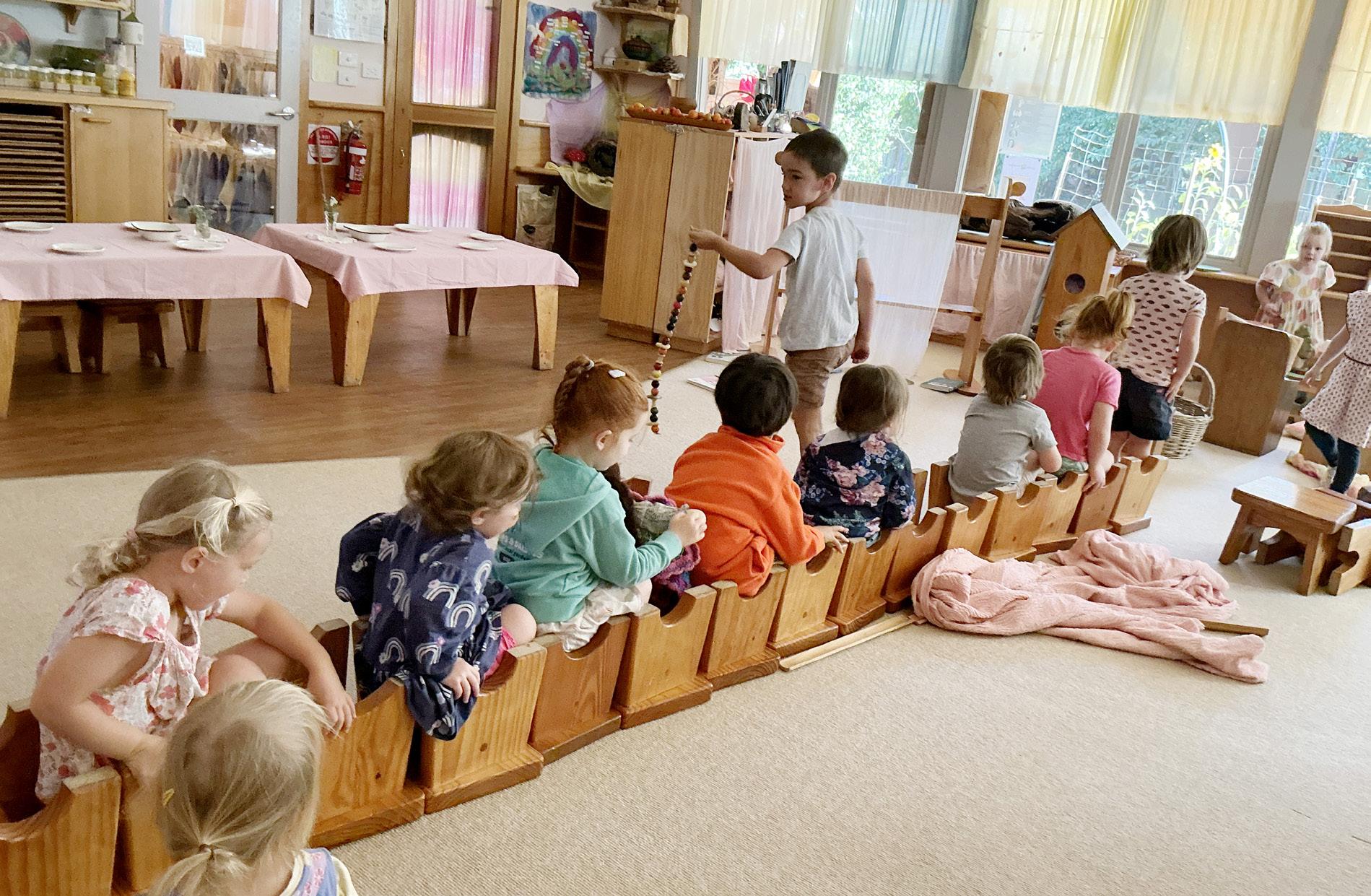
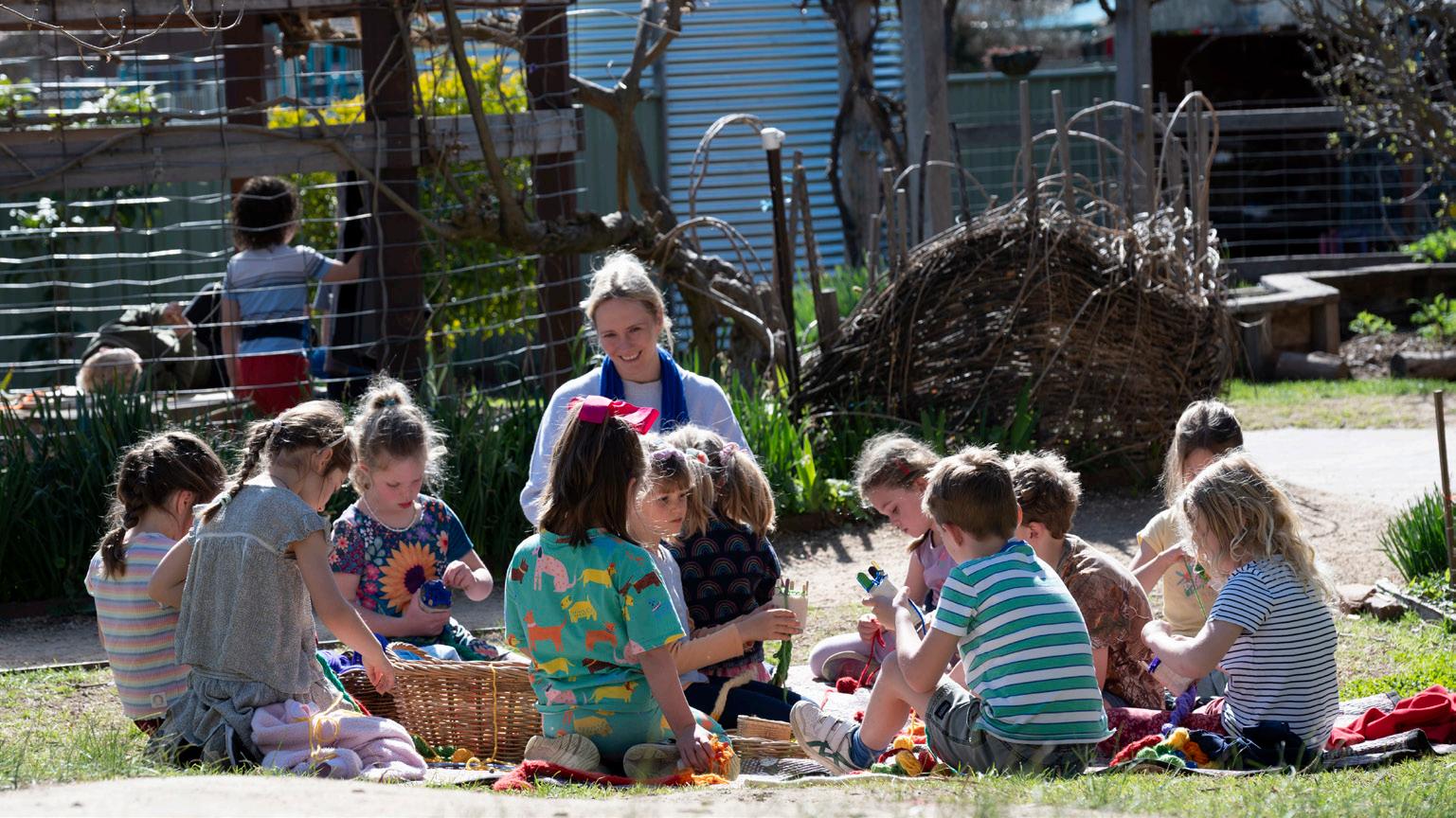
Our program aims to foster your child’s imagination and sense of wonder through stories, songs, creative play, interaction with nature and involvement in everyday tasks. Your child will learn through imitation and their own creative experiences in our warm, nurturing environment that is filled with beautiful, natural, open-ended play materials.
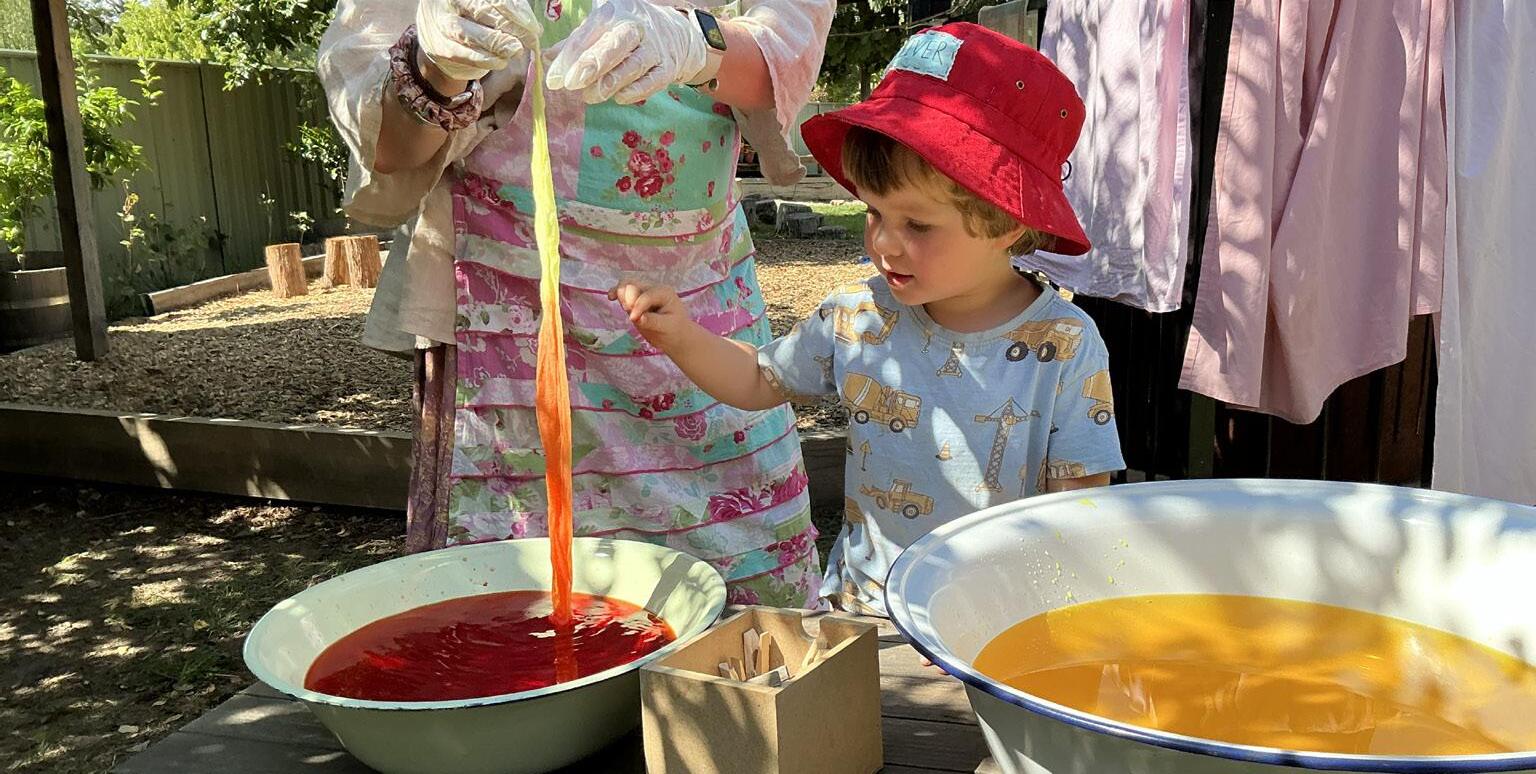
Through play and structured activities, they will learn to cook, paint, garden, sew, use tools, share and problem solve. They will explore their environment, learning to cooperate with others–enhancing their social and emotional well-being, growing in self-esteem and developing gross and fine motor skills. Foundational pre-literacy and numeracy skills are taught through rich oral and practical learning experiences. Their developing will, is supported through play and purposeful activity; and their senses are nurtured at an age when they are particularly open and impressionable.
Days will be filled with many experiences but when asking: “What did you do today?” you may be met with a dreamy gaze. The young child mostly lives in the present moment, it is difficult for them to recount the days’ events. But we can learn their way of sharing–perhaps they will sing the fragment of a song or share a new friend’s name.
We hope to work in partnership with you, parents and guardians, to support your child’s education in the early years of their school journey. We can always make a time to discuss any concerns and hope you can attend our Parent Information Sessions, talks and other school events.
You can also bring elements of Steiner Education into your home. Here are a few ideas:
• Establish a strong routine. This creates stability and security for children.
• Avoid over-stimulating. For effective learning and emotional well-being children need enough time to process and “play out” their experiences.
• Connect with nature every day.
• Provide natural, open-ended play materials to nurture the senses, and enhance creativity and innovation.
• Tell stories. Simple stories from your own childhood are perfect. Storytelling builds imagination.
Thank you for taking the time to read this guide. We hope it is useful now and as a reference in the future.
We look forward to sharing these wonder-filled Early Childhood years with you.
Warm Regards,
The Early Childhood Staff
WHAT IS STEINER EDUCATION?
Is education actually meeting the real needs of today or more accurately tomorrow’s world? This is an issue of great concern for current society. Many parents seek an education for their child which, while not overtly religious, reflects a spiritual view of the world. Parents hope for an education which gives their children a balance of academics and physical skills and that provides them with a strong sense of self and stewardship for the world in which they live.
The philosophy elaborated by Rudolf Steiner (1861-1925) describes the child as a spiritual being, who brings his or her gifts into the world. It is the task of the teacher to recognise and foster these gifts and to help the child to become his or her true self.
This gives education a purpose, which extends beyond that of getting a job or into a course. Steiner education strives to provide an environment – physical, emotional and intellectual –where not only the thinking, but also the will (striving towards a purposeful destiny) and the feelings of the child can grow and truly reflect the whole person.
In fact, the realm of feeling is the central medium for learning and development in a Steiner School. There the child is encouraged to experience the full richness of childhood with its wonder and fascination for the world.
So often, the trend today is to hurry children through childhood, into the “real business” of becoming an adult. As a result, often their activities are rather like scaled down versions of what adults do. This means they miss out on the very important business of being a child and growing through a natural sequence of developmental stages. By working with these stages, the skills and information required by education will arise from the child in a natural way rather than having to be put upon the child. On the other hand, if these stages are not addressed or fulfilled, it can lead to difficulties in adult life.
A simple but profound principle underlies Steiner Education. Just as humanity, as a whole, has passed through great cultural epochs, so also the child develops through stages that reflect human history. With that view in mind, nothing is taught for its own sake, but within the context of the development of human culture, thereby cultivating the child’s own humanity.
Whatever the subject, from science to music, it is presented in a way that meets the developmental stages of the children and offers both sensory and intellectual nourishment. No fears about the child’s future are brought into the education. Instead there is confidence in the knowledge that a rich childhood and the development of the ability to face and resolve problems are the best preparation for successful adulthood.
Robert Martin – Melbourne Rudolf Steiner School
EARLY CHILDHOOD
Steiner describes the child’s life forces, particularly in the first seven years, as being primarily engaged in the development of the physical body. Play is essential for children to grow physically healthy. Through play they develop fine and gross motor skills and learn through sensory exploration. Play also develops a child’s motivation or will, and is the “work” of childhood. Gross and fine motor skills and appropriate, holistic sensory exploration, lay the foundations for later academic learning. There is so much essential foundation work to be done in these early years, which is why Steiner suggests we do not prematurely focus on early intellectual activity, it may be at the expense of healthy physical development and later academic learning.
Early Childhood is also an optimal time to create emotional wellbeing and learn social skills. It is easier for children to learn when they feel safe and secure. We aim to create a caring environment, with predictable expectations and a strong rhythm and routine. Our play-based program, guided by teachers, provides ample opportunity to learn life-long social skills.
The children’s faculty for imagination also develops in early childhood as they call up from within themselves the pictures and experiences they are absorbing from life. They express themselves and make sense of their world through activity and play. Imagination is important for later creative thinking and innovation.
IMAGINATION
Steiner describes the first seven years as the Age of Imagination. The child is “thinking in pictures” imaginatively, rather than abstractly in concepts. We describe the child of kindergarten age as having a ‘dreamy consciousness.’ The young child experiences themselves as being at one with the world. Awareness of themselves as an individual, is slow and gradual. We aim to meet this consciousness by avoiding intellectual explanations or instructions, in favour of creating imaginative pictures.
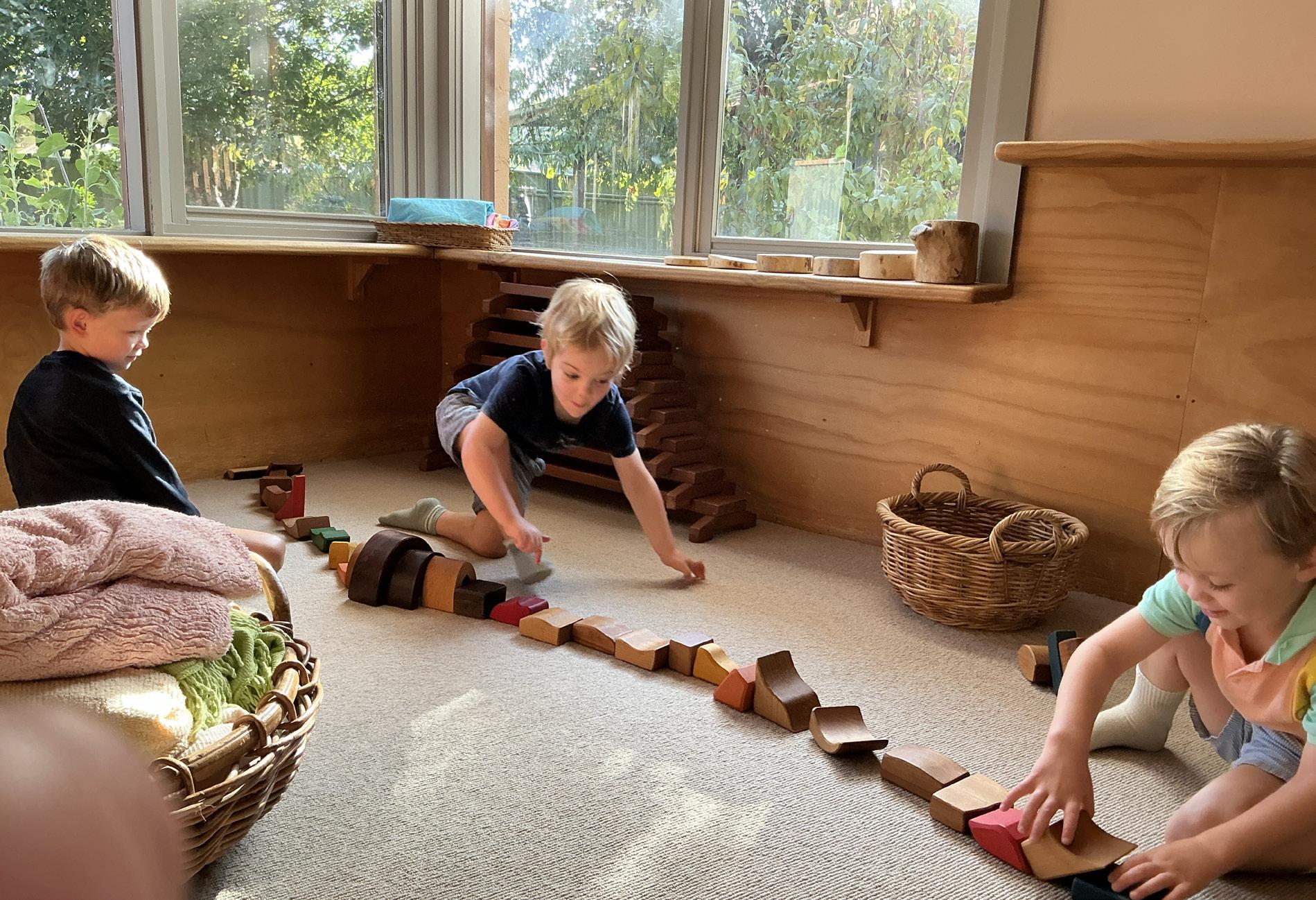
Plenty of time is allowed for imaginative free play, both inside and out. The child is encouraged to create their own play scenarios independently of adult intervention. A variety of relatively unformed playthings of natural materials such as shells and pebbles, logs and blocks, cloths, handmade dolls, wooden animals and the like, allow for openended transformation into imaginative play. Teachers choose to tell, rather than read, traditional fairytales or nature stories thus calling on the child to create internally their own imaginative pictures.
IMITATION
The young child learns primarily by watching, listening and endeavoring to copy those around her. To ‘teach’ a small child the most appropriate way is to ‘do’ what you would like the child to do, whether it is walking and talking, or tying shoes and tidying away the toys. We try to be worthy role models for the children, to ‘be’ what we want the child to be e.g. caring, polite and helpful.
Rather than intellectual explanations or detailed requests, in Early Childhood the teacher will ‘do’, maybe with gentle prompts, allowing the child’s natural tendency to join in and copy to achieve the aim.
RHYTHM AND ROUTINE
Steiner saw rhythm, routine and repetition as key factors in supporting the development of the will or motivation. Children are carried along by the rhythms of the world in which they live–breathing in and out; sleeping and waking; the seasons; the movement of the stars across the sky—they flourish when their daily activities are arranged rhythmically to reflect the natural order of life.
Early Childhood activities flow with a sense of “breathing in” and “breathing out”, for example, from the quiet moments of mealtimes, story time and rest time, to the active moments of vigorous work and play. Circle time, a whole class together time, flows between the polarities of quiet voices and finger games, to whole body movement, singing and verse, in a rhythmic and balancing way; bringing the child from stillness to movement and back again.
All transitions between activities are accompanied by singing, or carefully chosen phrases that enable the child to follow the routine of the day without needing much instruction or explanation.
Each day has its own special activity e.g. painting on Tuesdays or baking bread on Thursdays. Children are carried along by our regular rhythms and it is most helpful to them if they are also nourished by regular rhythms at home. As difficult as it can be to establish set meal times and bedtimes, we strongly encourage you to do so.
Each room will have on display a more detailed schedule of the daily timetable, mealtime menu and weekly activities.
REPETITION
Repetition allows learning to consolidate; practice makes perfect. The young child unconsciously practices new skills until they are automatic. In Early Childhood, we choose to build up familiarity and to repeat experiences many times rather than provide a variety of constantly changing, new stimulations. We tell the same story, for example, every day for a week or more. The same Morning Circle is presented for a three-week period. The rhythm and the routines are repeated, providing security for the child.
“Rhythm, routine and repetition develop will-power, the capacity to complete tasks and the inner strength and confidence to undertake initiative based on thoughts and feelings, by providing the child with regular opportunities to do things in a familiar way again and again. The child begins to develop habits that can be of lifelong value.”
Rudolf Steiner
At
Mansfield Steiner School, Early Childhood is broken into three stages: Playgroup, Morning Star Kindergarten and Rosa Mundi Prep.
PLAYGROUP
Playgroup is a weekly gathering of parents/guardians and their small children. It is a wonderful way to become familiar with the Morning Star environment and rhythm, which is quite similar to kindergarten: baking, inside play, morning circle, morning tea, outside play and story time. Children can play amongst themselves while parents share experiences. The group is facilitated but requires parent support to help things run smoothly. Please check the website or call the school for current Playgroup times.
MORNING STAR KINDERGARTEN
The Morning Star Kindergarten program offers a play-based curriculum that fosters the child’s physical, social, emotional and cognitive development. The surroundings are orderly, beautiful and calm, inviting the child to engage in learning in a secure, creative and inspiring environment.
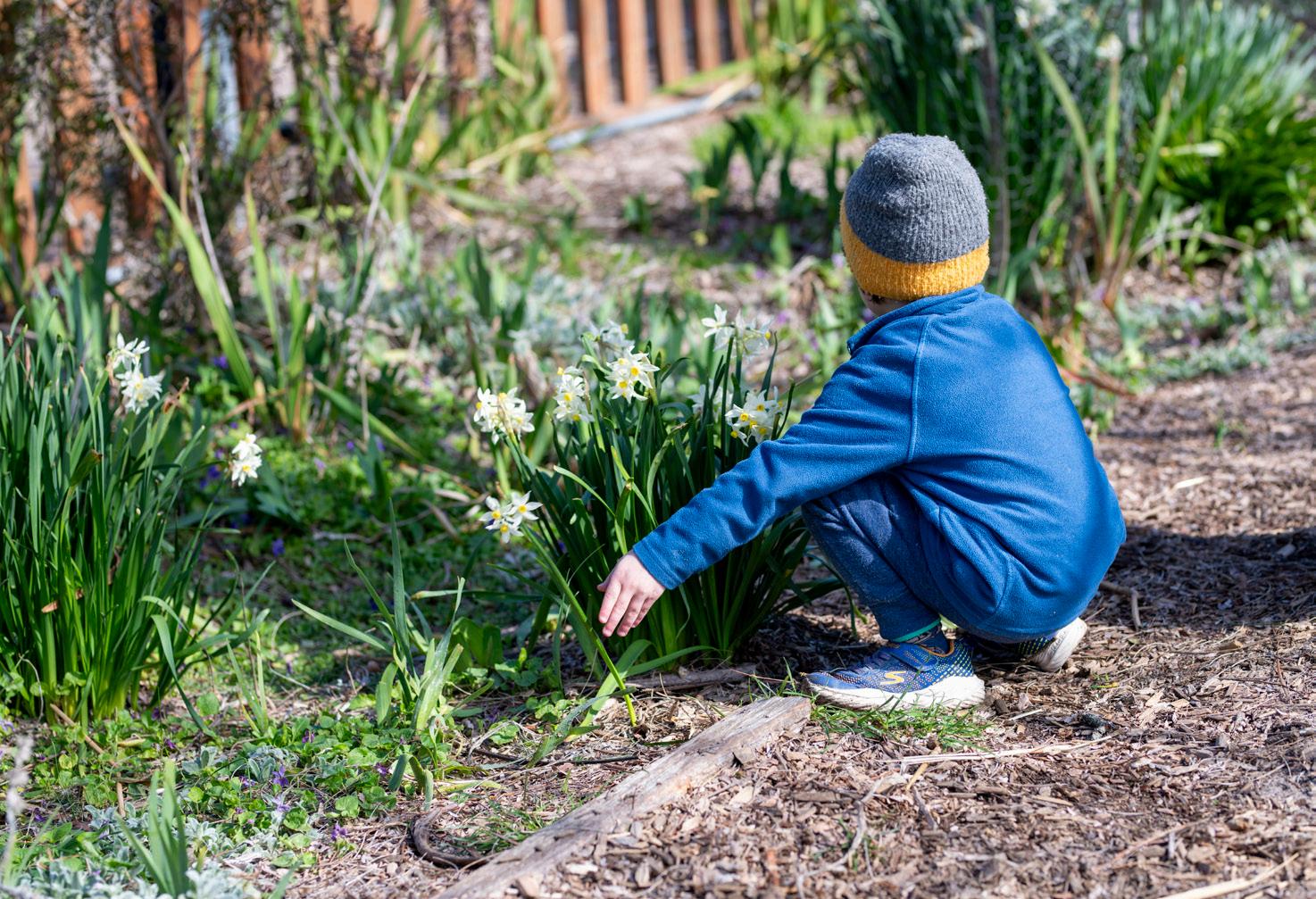
Through active investigation of the natural environment the child’s innate sense of wonder is fostered. A reverence for the rhythm of the seasons and the beauty of our world lays the basis for future environmental stewardship.
Strong foundations for literacy are developed through verse, song, rhythms, rhymes and stories. Our arts and craft activities–beeswax modelling, painting, drawing, wool crafts–develop dexterity and an appreciation of beauty and craftsmanship using fine motor skills.
Healthy social relationships are nurtured through a balance of play and structured activities. Children in the Morning Star program learn to share, take turns and listen to one another. They engage in practical activities such as cooking and gardening. The child’s desire to learn by doing is fulfilled. A sense of clear, unpressured achievement strengthens the child’s will and self-esteem. Children actively develop good learning habits and a sense of gratitude. They work in an environment that is considerate and respectful so that school becomes a special, valued place.
The program is attuned to the developmental needs of the child. Each child is born with a natural curiosity for the world, a sense of wonder, a spontaneous joy in simple things, a lively enthusiasm for living. Our teachers work with this in mind.
Morning tea and lunch are shared at the table. Songs, finger-plays and a simple story, perhaps acted out with props or puppets are shared each day. Opening and closing verses and the mealtime grace are repeated throughout the year and the children develop a familiarity and sense of security.
Children in the Morning Star program are turning four and five years of age within the calendar year. The Morning Star Kindergarten runs 2 programs: Honeybees, 3-4years Mondays and Wednesdays 8.30 -4pm and Echidnas, 4-5 years, Tuesdays, Thursdays and Fridays, 8.35 - 3.15pm
ROSA MUNDI PREP
The focus of the Rosa Mundi year is one of “preparation”. The program endeavours to lay the foundation for physical health and vitality. It fosters a sense of wonder and an interest in the world. Children cultivate an inner readiness to learn and meet the world through personal experiences. Children develop their ability to form meaningful relationships, and embark on a journey of lifelong physical, emotional, intellectual and inner development. Rosa Mundi children follow a structured program with a balance of experiential learning
and creative play. The focus of the program is to encourage children through experiences. By physically doing the young child grows in their physical development, speech and oral language, mental abilities and attitude towards learning. The program follows a rhythmical, harmonious and secure daily routine. Emphasis is given to creating a balance in challenging and restful activities, both within the day and over each week. The children’s work reflects the seasons of the year and is celebrated with social festivals.
Play is recognised as a serious and vital activity through which the children’s powers of creativity, imagination and initiative are cultivated. Young children learn through play, approaching it in entirely individual ways and out of their unique experiences of the world in which they live. The environment is ordered, clean, natural and organic and is set up in a way to safeguard healthy play. Using open-ended play materials enables the child to develop their imagination and sense of creativity. Simple objects, with no predetermined use, enable children to find endless possibilities in their play. Children are fully immersed in the activity of play; planning, designing and problem solving in activities that come freely from their own intrinsic motivation–carried by their own will and engagement with others. We aim to foster enthusiasm, joy and wonder for life in an environment of goodness, beauty and imagination.
Solid foundations for language skills are laid through rich oral language experiences. We see a genuine love of language grow through repetition of verse, song, rhythms, rhymes and stories. Movement accompanies these experiences developing a child’s fine and gross motor skills. The teacher also aims to enrich the children’s oral language and provide opportunities for them to develop social awareness through encouraging respectful interactions. Each day the children and the teachers come together for morning circle: they sing songs, recite verses and poems and participate in dances and finger plays. Later in the day we all meet again for story time, where they are exposed to traditional folk and fairy tales and simple nature stories.
If you want your children to be brilliant, tell them fairy tales. If you want your children to be even more brilliant, tell them even more fairy tales.”
Albert Einstein
Numeracy skills are introduced through formal and informal experiences with pattern recognition and through imagination, imitation and creative play. Numeracy skills are embedded as the children stack, measure, sort, collect, gather and count, and sing number rhymes. Problem solving and communication skills are fostered through interactions with the teacher and peers.
The child in their first seven years wants to be physically active, learns by imitation, and lives in a world of “doing”. The Rosa Mundi program fulfills this need for physical movement by supporting learning through imitation as a fundamental key to developing successful confident children. Cognitive, social, emotional and physical skills are afforded equal value and many different competencies are developed. Children need time and opportunity to
practice practical and useful skills. They engage in domestic activities where they feel a sense of achievement and challenge through contributing to, caring for and creating something beautiful. The simple acts of cleaning, sweeping, digging, weeding, building, kneading, sewing and preparing a meal, support the healthy development of wellrounded confident and capable learners ready to meet the challenges of the next stage of development.
Children in the Rosa Mundi class ideally will turn six and demonstrate Class 1 readiness before they embark on their “Big School” journey. The child will then begin their sixyear journey with a Class Teacher. The activities in the Rosa Mundi program support the development of the young child in readiness for formal academic learning. Children are well prepared, ready to learn and they progress quickly.
SCHOOL READINESS
Children will be individually assessed, and discussions held with parents, as to their readiness for the following year. Some children may need an extra year in kindergarten or prep. This additional year can be of great benefit to subsequent learning, self-esteem and social development. Often Rudolf Steiner’s advice that children need to have experienced “seven spring times” before commencing Class 1 holds true.
It is not yet time for the harvest. Now is the time to plant seeds that will bear fruit at a later time… here we have time
A nonymous
OUR ENVIRONMENT
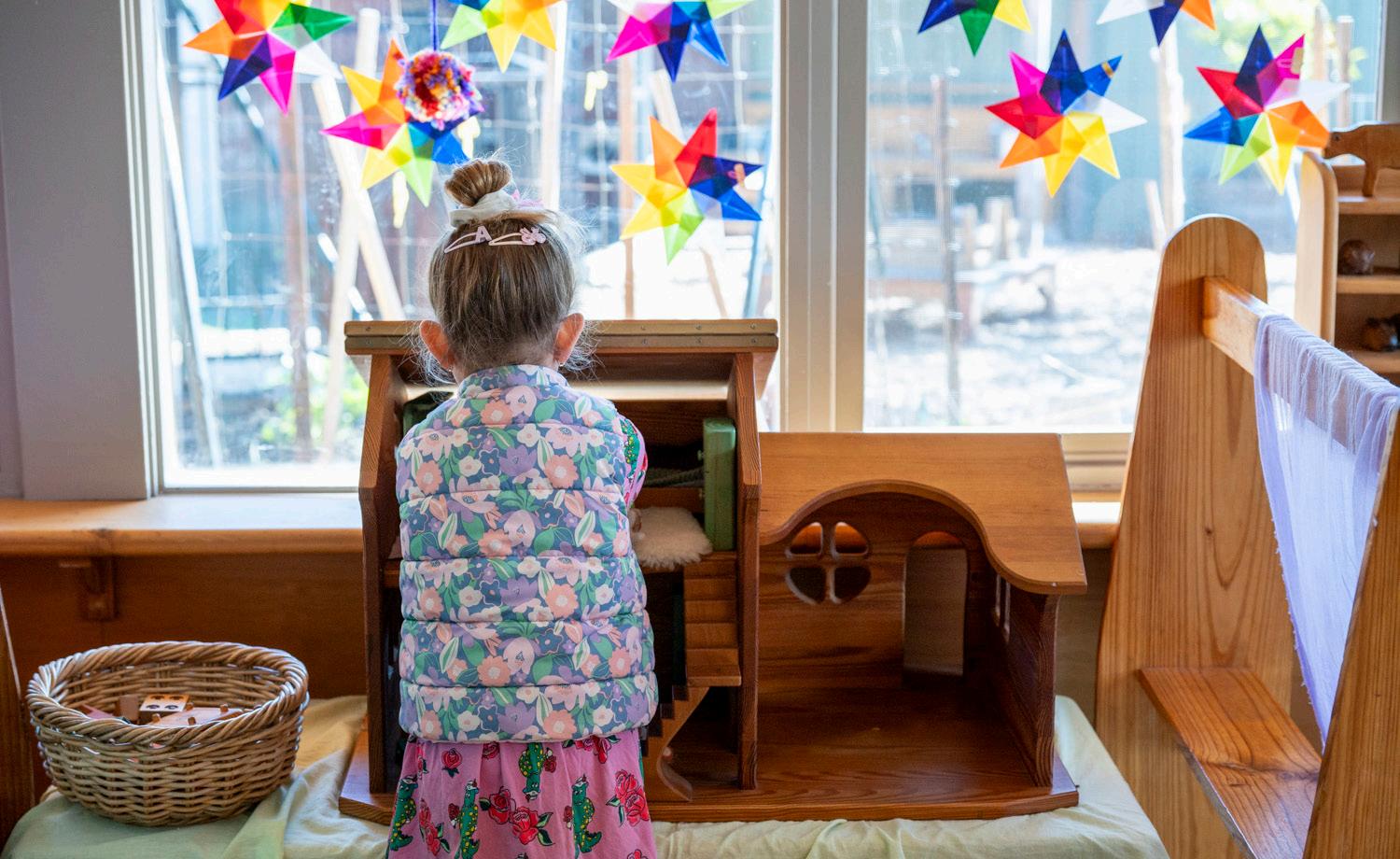
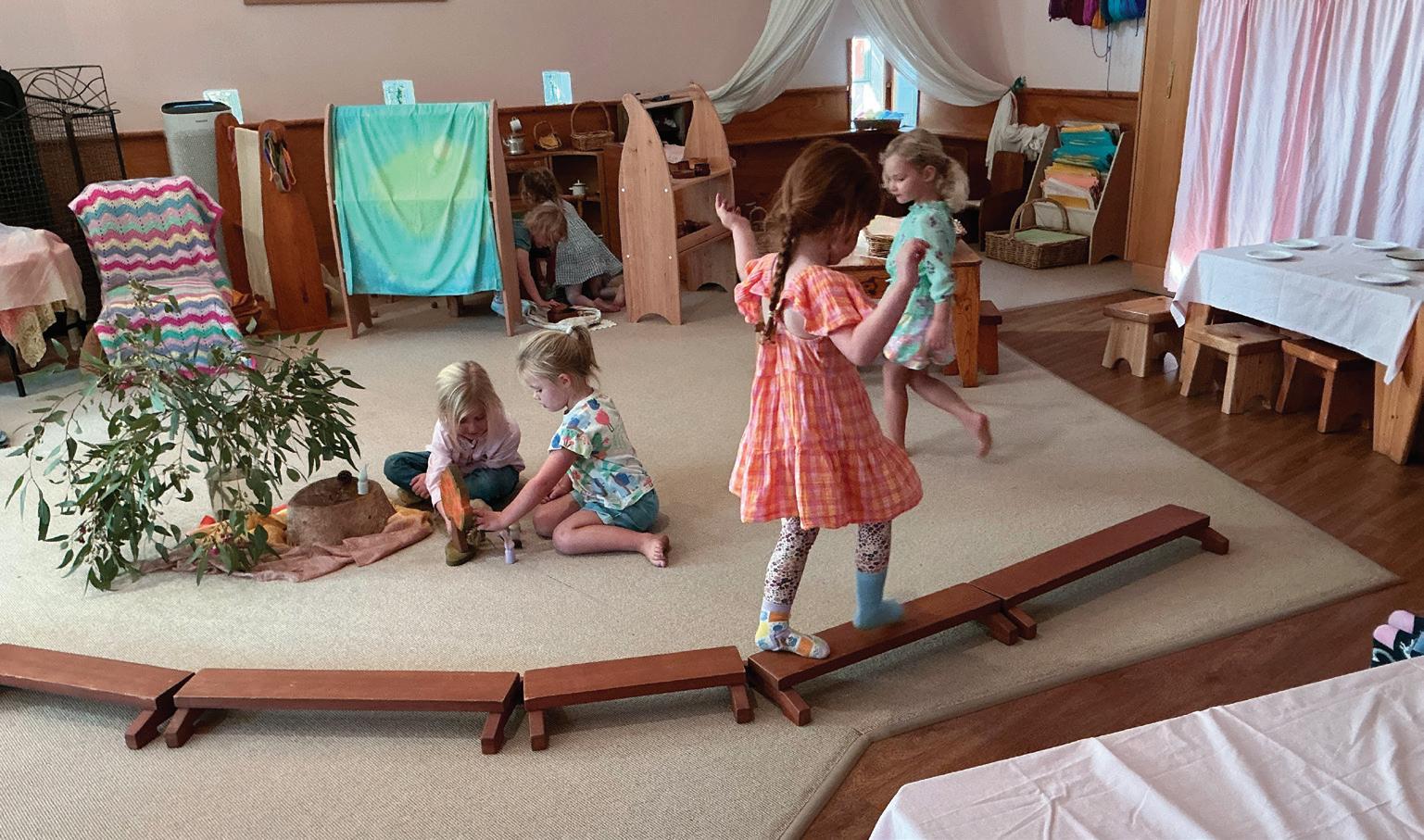
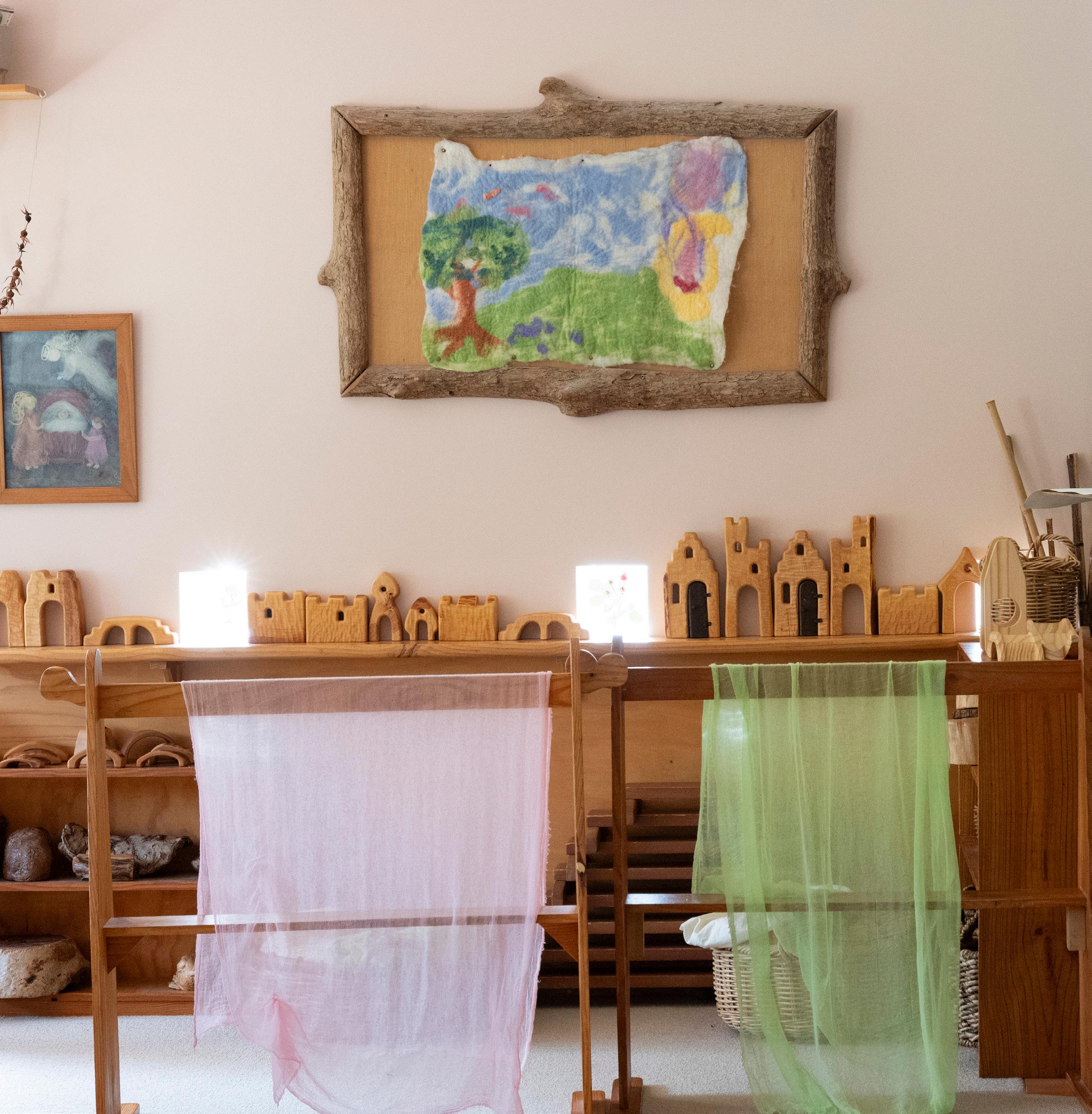
The Early Childhood surroundings are warm and nurturing. Colours, furnishings, materials and equipment are chosen with care for their specific qualities. The warm and lifeenhancing forces of peach blossom pink were recommended by Steiner as most appropriate for little children–the walls and curtains reflect this.
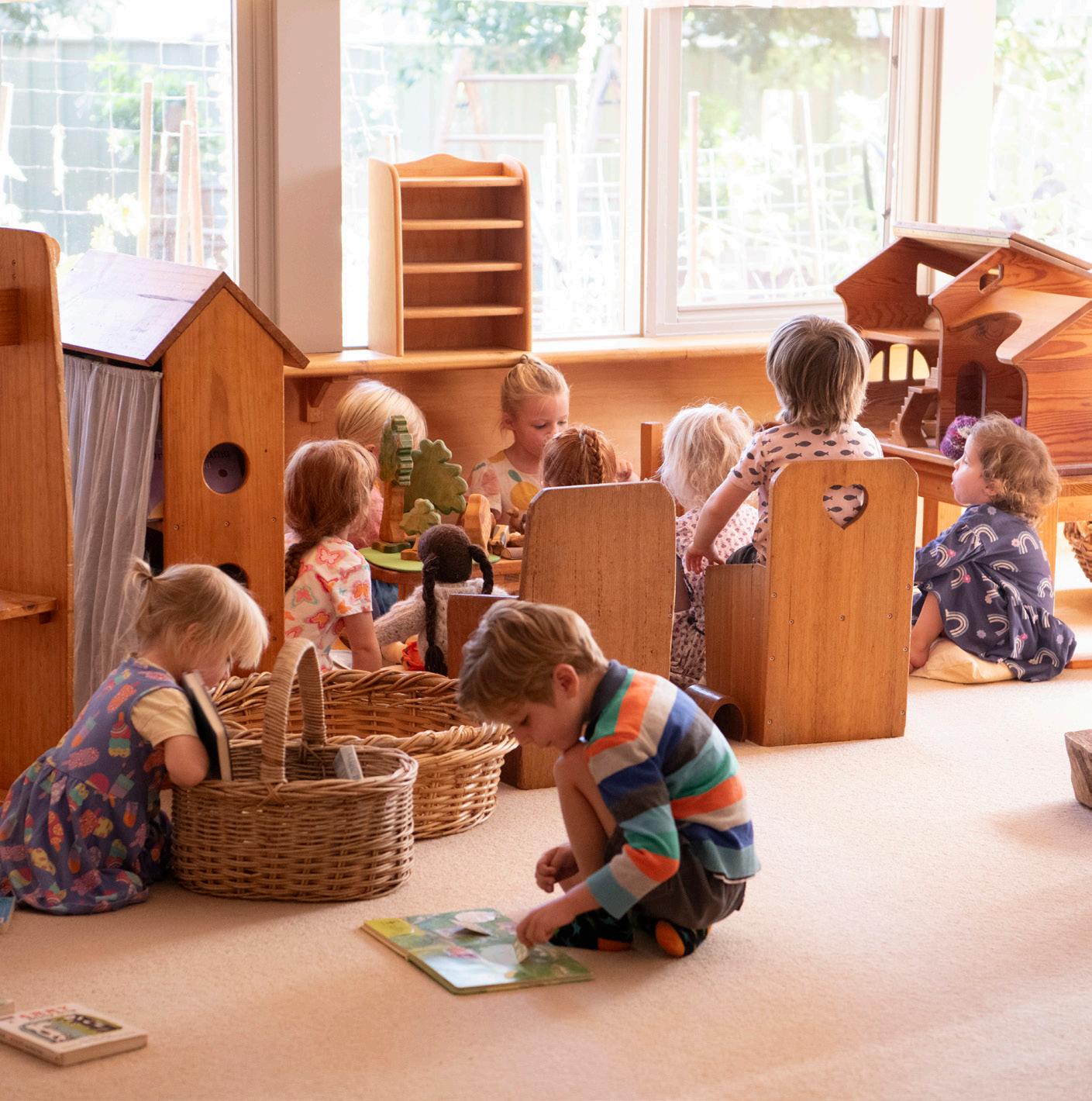
Simplicity, beauty and practicality are inherent in the furniture, much of which has been lovingly made especially for us. Natural materials and play things are used whenever possible. Baskets of logs, blocks, shells, gumnuts, stones and crystals inspire and support creative play. Cloths of all sizes and colours lend themselves to cubbies and dress-ups and all manner of props. Play stands, tables and stools are available to create ships, castles, a tractor or a stable. Wooden dishes, handmade dolls and animals are all familiar to the children. The kitchen corner provides a homely atmosphere, and the wood fire is a cosy spot to gather on chilly days.
MORNING CIRCLE
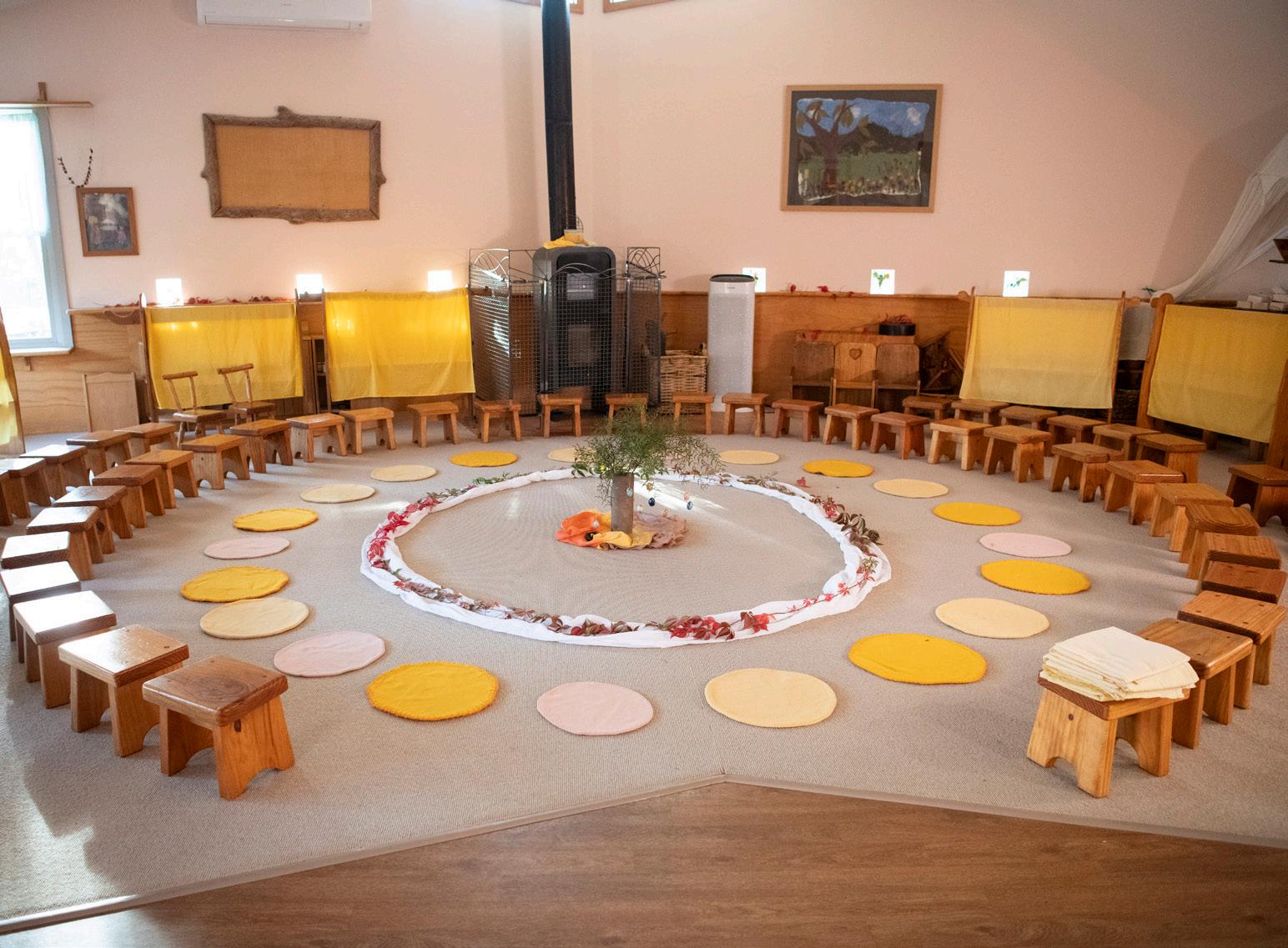
Our circle each day is an opportunity to come together as a group to share songs and verses. We commence and conclude with the same verses each day, acknowledging the earth and building a sense of identity amongst us.
The same morning circle, generally relating to the season or approaching festival, is repeated usually for three weeks. This daily repetition enables the children to learn poems, songs and action plays by heart, stimulating memory, sequencing ability, vocabulary and clarity of speech. Gesture and movement as well as finger plays are incorporated into songs and verses. Care is taken to choose material with rich imagery and intrinsic value. Literacy and numeracy concepts are carefully added with number patterns and rhymes often featuring.
Children learn to use their first instrument, their voice. They begin to develop a love of music and often have a favourite song. Musical concepts are also imbedded, pitch (high and low), tempo (fast and slow) and tone (loud and soft).
STORY TIME
MORNING TEA VERSE
Blessings on the blossom
Children gather quietly at the end of the morning, and again at afternoon rest time, to listen to a story. Morning stories are told rather than read. The stories chosen are often traditional fairytales, or those based on the natural world or seasonal themes. Told stories allow the teacher to build a relationship with the child as a listener. Children learn to make a mental image of how the story goes rather than relying on a predetermined illustration. Some stories have a moral or developmental message such as generosity, kindness, courage or confidence. These concepts are not discussed with the children, they are left to grow within as an experience the child has been a part of.
And blessings on the roots
Blessings on the leaf and stem
Blessings on the fruit
Stories are occasionally created by the teacher to address a difficulty or introduce a change. Sometimes stories are told using props from the classroom and at other times with actions. If children know the story well we may dramatise it–each child may take a turn acting and being a member of the audience.
Stories plant important seeds for imaginative play. Story play becomes a part of what children do in their free play. They learn to articulate their internal dialog and live into the concepts that they have experienced in a told story. Children may work alone or in groups to build a story scene. They use toys to tell the story and practice taking turns, sharing and listening to others’ ideas when choosing which objects go where and how the story will go.
PLAY
A large proportion of the day is given to free play. Children teach themselves almost everything they need to learn through free play. Play extends the child: the imagination (the basis of creative thinking in adult life) is developed; body and mind are integrated; the body learns co-ordination, spatial orientation and sensory acuteness; social skills are continually challenged; and emotional growth takes place. Open ended materials help support the development of imagination. The possibilities in play become endless.
REST TIME
A rest time is scheduled each day after lunch, for approximately 30 minutes. Rest time is a moment in the day when each child can spend time by themselves. The teacher will read a short story, play the lyre and make sure each child is settled and resting.
ELECTRONIC DEVICES AND THE YOUNG CHILD
To benefit fully from a Steiner education, children need every opportunity to develop their own creative play; learn to occupy themselves independently; enjoy interacting with family and friends; and learn about the world through active exploration and participation.
The presence and strong effects of television, iPads, smartphones, electronic games etc. in a child’s life is often clearly seen in the room. The child may speak in the tone of a certain character or may seem “stuck” in play, unable to extend and allow their creativity to flourish. Other negative effects may manifest in a child who cannot sit still during story time; they may be unable to imagine or follow the story. This makes it a distressing time for children instead of a time of wonderment and delight. Children are very vulnerable to the conditioning effects of television. Teachers find that regular watchers can expect to be constantly “entertained”, they find it hard to lose themselves in imaginative play, take a superficial and short-lived interest in creative activities and have difficulty settling down to concentrate on stories and songs.
There are many well-documented effects of electronic media on children but perhaps the greatest loss is the dimming effect it has on the child’s wonderful imagination, that which provides the foundation for learning and growth. The teachers fully recognise that
electronic media is in the domain of the family and that it is up to you to decide for your child. However, in order to support your child and the teacher, we ask that no electronic devices be used in the mornings before school or before bedtime, as it will affect the quality of your child’s day at school or your child’s sleep.
FOOD
A substantial Morning Tea is prepared in Morning Star and Rosa Mundi each day. Our meals are arranged in a weekly rhythm and are supplemented with fruit and veg contributed by the children or grown in the garden. Participation in food preparation and the shared experience of eating together enhances social and fine motor skills, and enables children to develop an appreciation for a diversity of grains, fruits, vegetables, tastes, textures and cooking methods. Each day a different grain is featured:
Where possible organic or biodynamic foods are used, eggs are always free range or from the hens at school. Each child’s special needs are considered. If your child has allergies, please speak to his/her teacher.
Children attending full days in Morning Star or Rosa Mundi need to bring a healthy lunch from home in a container e.g. sandwiches, wraps, pasta, rice, nori rolls, crisp bread, carrot/ celery sticks, cheese, yoghurt or fruit. Please do not send pre-packaged foods and avoid plastic wrapping and lunch boxes featuring commercial characters. Do not send lollies or highly sweetened items.
TOYS
Our rooms are filled with beautiful imaginative play equipment. We prefer children not to bring toys and books from home. These can easily change the flow of play within the class and can create problems with sharing, damage or loss
Please keep an eye on what goes into your child’s school bag! If you do find a special treasure that belongs to the class, please return it. It’s enough to say to your child, “This belongs to your classroom, let’s take it back tomorrow.”
‘Treasures’ from the natural world (a nest, unusual leaf, stone, feather etc.) are welcome for our ‘Nature Table.’ If there is something special (a holiday souvenir, tooth-fairy gift) that your child is wanting to show us, please check with staff first so that it can be taken care of and brought in at an appropriate moment.
CLOTHING
Clothing is extremely important for the child’s comfort and for getting the most out of active work and play. Natural fibers, such as cotton and wool, are durable and comfortable because they breathe. Sturdy shoes are essential. Thongs, crocks, strappy dress, sandals and cowboy boots are inadequate for daily activities
Children are not always aware of the temperature, as adults we need to dress them appropriately. In the warm spring and hot summer weather loose, comfortable clothing is best. Cooler autumn and winter months require several layers of clothing, with singlets and socks to keep warm.
During indoor play children and staff often wear soft-soled shoes. A change of footwear for indoors helps children change behaviour: “Outside shoes are for running, climbing and noisy play; inside shoes are for walking and quiet play.” In Morning Star handmade slippers will be given to each child. In Rosa Mundi Prep we ask the families to supply the slippers. These are usually handmade.
In accordance with our school Sun Smart Policy, in term 1 and 4 and when UV levels exceed 3, a broad-brimmed hat must be worn for outside play and children’s shoulders need to be
covered. Children will recieve a plain coloured school hat that will be personalised with your child’s name.
In the winter, jackets and beanies or warm hats are necessary; please ensure your child has something extra to put on when going outside from the warmth of the classroom. In Term 2 and 3 please bring a pair of waterproof boots, a raincoat and waterproof pants or overalls as we play outside in all-weather every day.
Please keep the following in your child’s Spare Clothes Bag: 3 pairs of socks, 3 pairs of underwear, 3 x T-shirs, 3x pants (shorts in term 1 & 4) and a woollen jumper. Label each item with your child’s name. If your child has wet or dirty clothing it will be sent home at the end of the day in the reusable spares bag. Please replace anything brought home and return it the next day.
While Mansfield Steiner School does not have a uniform, we ask that you do not send your child with commercial or movie character images printed on clothing and school bags as this can affect the imaginative play of little children and create a competition of who has certain things. We also request that children are not to be dressed in black clothes as we wish to create an environment that reflects the rainbow spectrum of colours.
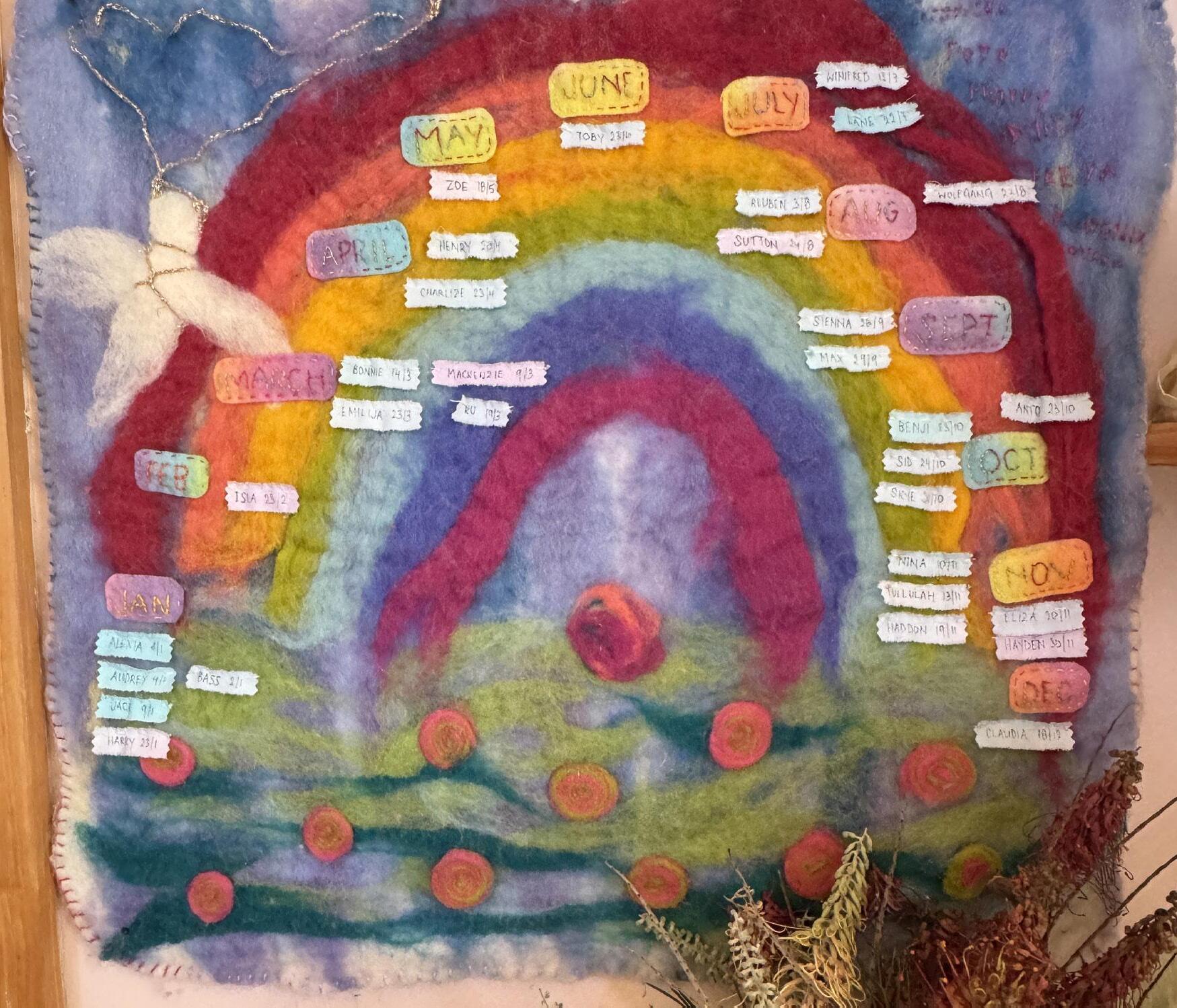
BIRTHDAY CELEBRATIONS
The teacher regards your child’s presence in the class as a blessing and is grateful for the opportunity to express his/her appreciation on his/her birthday. Every child’s birthday is celebrated. Children whose birthday falls in a holiday period can celebrate in the weeks following the holidays.
During the celebration there will be singing and special gifts given by the teacher and the class. The birthday ceremony given by each teacher can be a memorable occasion. We hope parents can join us to share this celebration.
Please talk with your child’s teacher about the birthday celebration the week before your child’s special day.
SCHOOL FESTIVALS
Seasonal festivals are times when families and friends are invited to school to join the children share songs, stories and games. Festivals are held on the last day of each term. We observe and celebrate the rhythms of the year through our festivals. As the year weaves from one festival to another we are provided with a true reason for preparation and celebration. For many of us the preparation is half the joy: decorating the room and garden, baking special treats, and learning songs and verses. Told stories give children a pictorial understanding of the festival and speak very deeply to them without our having to explain anything. A lovely sense of community can be felt at these times.
NATURE TABLE
Each room’s nature table changes with the seasons and gives us a way to note these changes. Autumn brings fruits, nuts, berries, grains and boughs of changing leaves. The winter table is bare and simple. Spring bursts forth with bulbs. Summer sees an abundance of flowers and fruits. It’s a lovely idea to create a nature table at home–perhaps on a small table or windowsill.
EXCURSIONS
Morning Star At the beginning of each year parents are required to sign a ‘blanket permission’ form to cover nature walks, stick collecting and socialising on the school premises. These occasions are supervised by staff and are held during the kindergarten session.
Rosa Mundi At the beginning of each year parents of Rosa Mundi students are required to sign a blanket permission form for school excursions to various locations in and around Mansfield. Excursions will be less than a full day and will not interfere with bus arrangements. Excursions may include walking to the Botanical Gardens, swimming pool or shops. We will inform you at least one week before an excursion with details.
Mansfield Steiner School Early Childhood Handbook
HOW EARLY CHILDHOOD OPERATES
MORNING STAR SIGN IN/OUT
Attendance Register: sign in and out when you drop off and pick up your kinder child. This is a requirement of the Department of Education & Early Childhood Development. Rosa Mundi Prep children have their attendance noted by the teacher, there is no parent sign in requirement.
If a person other than a parent is to collect your kinder child, they must be nominated by you in writing.
PUNCTUALITY AND ATTENDANCE
Our school day begins at 8.45am. Punctuality is important as we are laying the foundations for future learning. Teachers are not available for lengthy discussions in the morning. If you need to speak to us please do so briefly, or leave the information in the message book beside the entry door. Pick up time is a better time for short discussions and longer meetings can be arranged.
Phone the Office by 8:45am if your child is to be absent from school. If your child is away for 3 days or more, please email the school via Sentral, explaining the absence, as it is a legal requirement of the school to maintain a register.
PICK-UP TIME
Teachers attend meetings after school, please be prompt in picking up your child. If you are late your child will be taken to wait at the school office.
Remember to sign your child out, the legal responsibility for their safety on the grounds and in the car park is then passed back to you.
BUS TRAVEL
It may be possible for children who are five years of age in Morning Star, and all Rosa Mundi children, to use the State Bus Service. Further information and the appropriate forms are available from the office. Please notify the office of any change in daily travel arrangements. A bus supervisor is on duty at the bus stop every day to support and supervise the children.
PARKING
Do not leave children unattended in parked cars.
Please, do not park or pick up children in the office or drive way turn circles; these areas are for turning. Do not park in the staff car park at the rear of the school or in the bus stop in front of the bus shelter. Be mindful that car park conversations in parking areas may increase safety risks to children due to decreased supervision. Carefully check the way is clear when reversing. Do not park in neighbouring driveways. Observe one way signage when leaving the school. Monitor your children crossing roads and as they get older, ask them to use the Council supervised crossing.
When driving in the school grounds please proceed slowly and with great care!
WHAT TO WEAR AND BRING
• A piece of fruit or veg according to the class timetable.
• Plain coloured, comfortable clothing as per the School Dress Code.
• Sturdy covered shoes with grip for outside play, suitable for nature walks. No Crocs please and no laces.
• 3 sets of spare clothes.
• A healthy packed lunch.
• Gumboots and coat to be left at school (waterproof pants or overalls are also a good idea).
• Singlets, socks and layers of warm clothing for cool autumn/winter weather. Beanies in the cool months.
• An appropriately sized backpack. (No Logos).
• We will provide a labelled sunhat for your child.
PLEASE, NO ADVERTISING OR CARTOON CHARACTERS ON CLOTHING, BAG OR LUNCH BOX.
PETS
Please don’t bring your pets into the school grounds at pick up and drop off time. Your teacher may have a designated news day. If your child would like to bring a pet to school please discuss this with the teacher.
DISCIPLINE
The school is committed to providing a safe and caring environment; each student, staff member and parent is responsible for ensuring that this occurs. The school’s Discipline Policies relating to students are based on principles of Restorative Practice and do not permit corporal punishment.
In Steiner Early Childhood Education we strive to understand the nature and development of the young child and to create a schedule that allows for an appropriate balance of “breathing in” and “breathing out” activities. This can eliminate some of the difficulties that are often found in preschool settings. There are long periods of free play, both indoors and outside. Consistency in the rhythm often allows the child to know, through their habits, what is expected of them.
Teachers model ways of resolving issues or conflicts among the children. They may model how to restore harmony among friends and make a wrong a right by learning from the experience and repairing any upset. When required, teachers may use “time-in” (instead of “time-out”), a period of time spent working with or helping one of the adults, until the teacher feels that the child is ready to rejoin his or her classmates.
If difficulties are persistent, a teacher may request an interview with the parents. The adults can then assess the situation and work together to find ways to help the child express him or herself in more socially appropriate ways. Sometimes children can also be helped by changes in diet and daily routines. Please let us know of any changes at home that may result in unusual behaviour.
Good communication among adults is most helpful for children during these formative years. In cases of on-going, extreme, disruptive behaviour the school Behaviour Management Policy will be applied.
COMMUNICATION, PARENT SUPPORT AND INVOLVEMENT
Teachers are available for phone messages from 8.30am–3.30pm. If you wish to discuss something at length please arrange a time to talk after school. You are always welcome to come with queries or concerns about your child, the program or the school.
Parent Evenings are informative and can be a great time for community building. Meetings will cover what your child is learning and why according to our understanding of
child development and the Steiner curriculum. Please ensure at least one parents attend these evenings and advise the teacher if you cannot attend. This is a child free evening.
Parent Teacher Interviews for Echidna and Prep families are held near the end of Term 2. They provide an opportunity for sharing impressions, concerns, progress and goals for your child. These conversations allow us to deepen our understanding of your child as well as strengthen our work together. Please make time to attend your child’s interview and hear of their individual progress.
Spring Fair occurs on the last Saturday each year in October. Our beautiful garden and school is showcased via work on display, performances, delicious food and great market stalls and activities. Organised by a group of volunteer parents and friends and staff, money made on Spring Fair has been used to purchase things like a commercial oven for the school cooking program, a stage for performances in our hall and fruit trees for our garden. We look forward to your involvement and enjoyment.
Working Bees are organised by our gardeners. Working bees generally occur once a term and are held on a Saturday morning with a lovely morning tea. These days are to help with projects big and small in the classroom and grounds. Our sandpits, paths, gardens and playgrounds have all been built at working bees. If you are unable to attend on the day it is greatly appreciated if you speak to your child’s teacher and find a project that you are able to help out with. Your child develops lifelong values when they see you working with others to develop their school.
If you are joining us as a volunteer, worker, observer, or settling an anxious child, we ask that you contribute in the same way as the teacher and assistant do. Rather than becoming involved in the children’s play, we allow them to create their own play. With a calm demeanour, the staff create the mood and rhythm of the Early Childhood classroom, joyfully and busily occupied in domestic or craft activities–we will encourage you to do the same.
If you are planning on spending time in the classroom to assist in any way, you must have a Working With Children’s Check, available free for volunteers at http://www.workingwithchildren.vic.gov.au Under the Child Protection Act it is a legal requirement that all staff and volunteers have the check done to protect the safety of our children. We also ask that you follow our ‘No Phones in Kinder’ policy and leave your phone in our phone box whilst visiting.
We ask that you are respectful and supportive in creating an environment that is safe for all children at our school. If you or a family member is at school for a long period of time above normal arrival and pick up times we ask that you visit the office and sign in as a visitor. For Emergency Management Procedures the school needs to keep a record of all visitors to the school in the case of an emergency. We appreciate your understanding of these requirements.
Being a helper in an Early Childhood class is an opportunity to “see” and “feel” how we run our day. It is an opportunity to see how your child is in the group and an opportunity to help us in the class – doing various domestic and creative tasks. As a general rule, in the Early Childhood class the children go about their work and the teachers model and teach through their work. The adults try to avoid lengthy spoken instructions and conversations with the children. The staff will go about their work and quietly observe the children at their work, intervening if and when required. We are available to the children if they need assistance with a particular task or a ‘tricky’ situation with others. If ‘we’ adults need to speak to each other it is done very quietly and unobtrusively. Time at school is time for the children, not a time to share our concerns and worries.
If you come into the class or garden as a helper we ask that you consider these things.
• Please turn off your phone.
• Please take a moment to prepare yourself for the task – remove other ‘business’ and personal concerns from your mind.
• Slip your shoes off if coming inside.
• As a rule, it is not necessary to initiate conversations with the children.
• It is not a time to play with your child or other children – imagination comes from within not from adult direction.
• Please do not speak to the staff about worldly or personal concerns during your time in the classroom, garden or on walks. Save adult conversation for adult time.
• If your child wants to spend time with you – that is fine, however do not speak to them about anything except aiding them in the task. Assist them with the knife or brush – very few words are required.
• If your child does not want to participate then you can role model by actively participating yourself.
The Early Childhood space and time during school hours is special. We are being and doing without the worries of the wider world. We do our work and the children do theirs – or assist us with ours. We thank you and hope that you enjoy your time with us.
There are many other ways to support the Early Childhood program and become involved in your child’s education, these can be found in the school newsletter:
• Parent and Friends group meet regularly to plan fundraising and events to support the school.
• Washing and mending often needs to be attended to.
• Governance Committee – The administrative body of the school meets monthly. If you have a particular interest or expertise to offer, please let us know!
EARLY CHILDHOOD STAFF
All staff must have appropriate training and qualifications as required by the Department of Education and Early Childhood Development and/or Victorian Institute of Teaching. Most staff also have further formal training specific to Steiner Education. Staff gather for regular Early Childhood meetings and meetings with the Primary and Secondary faculties at our school. Meetings include child studies, school organisation and study. Staff attend regular Early Childhood Regional Meetings for Victorian Steiner early childhood educators; a 5-day National Conference every second year and Vital Years Early Childhood conference.
To fulfill their role as someone worthy of imitation, the teachers undertake personal development and a strengthening of their inner life, health and wellbeing. This aspect encompasses on-going reading and study of relevant literature on child development and early childhood education from various perspectives including Steiner Education and mainstream publications.
HEALTH
For your child’s wellbeing and your own peace of mind, please ensure all health information on record is current and notify us of any changes. The teachers take a special interest in your child’s health and would be happy to discuss it with you at any time. A well-rested child who is dressed warmly in winter and protected from the sun in summer and who is fed a wholesome diet is best prepared to withstand the onslaught of winter colds and health ailments. It is normal, however, for children to experience sicknesses as they grow.
Infectious diseases The School must be notified immediately if your child is diagnosed as having any of the following conditions: Chickenpox, Measles, Whooping Cough, Ringworm, Hand-Foot-and-Mouth, German Measles, Mumps, Conjunctivitis and Impetigo. Children with these conditions must be kept at home until they are no longer contagious. The Office has a list of exclusion periods for each of these illnesses.
Emergencies In an emergency, we will use the information you have provided regarding contact numbers, physician’s name and phone numbers, and specific instructions. In the event that parents or guardians cannot be contacted, your signed consent will allow us to give the medical attention your child might need.
Head Lice According to the School Policy, children found to have head lice will be required to have treatment to eliminate the infestation as quickly as possible. Parents will be contacted and asked to collect their child from class. Please be diligent in checking your child’s head for lice/eggs and treating them thoroughly to prevent repeat outbreaks.
Illness It is always best if a child who is not well is cared for in the quiet and warmth of their own home, however much they want to come to school! The teachers are sympathetic with working parents and understand the feeling of needing to work when a child is sick. However, in the event that your child shows signs of being unwell, please make alternative
arrangements so that he or she can be in a quiet and restful environment for recovery. We urge you to arrange back-up childcare as a lively Early Childhood room is not a soothing environment for a child who becomes ill during the day and we will contact you or a nominated carer for your child to be collected. If your child is hurt or becomes ill during the day we will contact you.
After an illness, children often appear healthy in the morning but are still not up to the vigorous activity of the day. Please allow your child at least one full day of rest after an illness. The teachers will make every effort to support you in keeping your child healthy. If your child is absent, please call the office in the morning so that they can inform your teacher.
Medication It is preferable that children are given medicines at home. If a child must take medication during the day, it must come in its original container with the physician’s instructions. Parents must also fill the medication register giving full instructions, sign and date, and hand the medication directly to the teacher. Children are not to have medication kept in their lunch boxes or school bags. Vitamins and cough drops are treated as medication.
Medical Conditions Please advise the School Office and your teacher of any special medical conditions such as asthma, epilepsy, severe allergies or anaphylaxis that your child may have and provide a Medical Action Plan signed by your doctor to help staff take appropriate care for your child.
Absences A phone call is appreciated if your child is going to be absent. If longer periods of absence are anticipated e.g. holidays or illness, please let us know in advance to assist us with program planning.
Supporting Your Learning
The following article comes from Central Coast Steiner School. It is reproduced with the school’s permission with examples substituted to suit our program.
Supporting Your Child’s Learning in a Steiner Prep Class
You’ve decided on a Steiner education for your child. What a wonderful choice! At a Steiner school, your child will experience a deeply nurturing education of the head, heart and hands. You have most likely made your decision to send your child to our school after some serious consideration. You have probably discussed your choice of a holistic educational approach with family members and friends. Sometimes your decision might be questioned by others, so it is important that you understand the journey you and your child are starting on.
The Australian educational approach currently tends to favour a push for ‘early learning’, even though this causes many children significant stress. This is not the Steiner way and not the approach taken by many countries with excellent educational credentials, such as Finland. Bodies of research support the case for starting the formal learning process a little later. A study published in the ‘Early Childhood Research Quarterly’ compared children in New Zealand Steiner schools who started formal literacy instruction at age 6-7 with those in conventional state schools who started at age 5. They found that as a group, the children in the Steiner schools had a slightly better comprehension by the age of 10 than those who had started earlier. Even with the later start, the Steiner school students caught up and as a group, slightly surpassed the state school students by age 10 in reading fluency.
So, you can be confident that the Steiner approach works. Take a look at the wonderful work produced by our primary and secondary students. Our students are not ‘burnt out’ and disengaged by their schooling. They are keen learners. You can be confident that your child’s progress will be closely monitored and if the teachers see that he/she needs support, this will be provided in consultation with you.
Our Prep program is unique. No other educational philosophy values childhood and the child’s right to play the way that Steiner education does. You may wonder – how exactly is my child learning in prep? How can I support that learning at home?
In prep, your child is learning in so many ways – learning to socialise, to listen, to share and take turns, to play with friends, to solve problems, to be part of a group. Your child is learning many ‘hands on’ creative skills such as gardening, craft, painting, drawing, woodwork, bees wax modelling and baking. Your child is also learning the fundamentals of literacy and numeracy. In a Steiner prep class, healthy foundations are laid for the more formal intellectual work that begins in Class One. Let’s look closely at how your child is learning literacy and numeracy and how you can support that learning at home.
Literacy Development in Steiner Education
Most importantly, in a Steiner Prep class, your child will learn to love language, to love narrative. They will speak poetry, learn nursery rhymes, perform plays and hear many, wonderful stories. This love of language is the best pre-requisite for successful reading.
Reading instruction is an area that can cause parents some concern. Often parents will teach their child about letters and reading at home in the secret hope that they will not be ‘behind’. However, teaching reading is a complex process that requires some expertise. Any parental support should be guided by a sound knowledge base.
There are five ‘building blocks’ that lead to reading success. These are:
• In a Steiner Prep class, we work with Phonological and Phonemic Awareness, Vocabulary development and Comprehension. We do this because we see that these ‘building blocks’ belong to the world of a five-year-old. From Class One, we also work with Phonics and Fluency.
• The Steiner approach takes developmentally appropriate instruction seriously. We work with the nature of the child. At the age of five, the child learns predominantly through imitation, play, socialisation and carefully chosen content. We avoid premature intellectual development in favour of a balanced learning approach that strengthens the will of the child.
How can you support your child’s literacy development at home?
1) Support a love of language and love of reading
A child who grows up in a home where books, stories and reading are valued will have a real ‘head start’ for their learning. As a parent, if you do not yet have an established daily routine of reading with your child, now is the time to start! There are so many beautiful and enjoyable books to discover. Making up your own stories, or telling stories from your life is also wonderful.
Make a special place to store your child’s books. This communicates that books are precious and deserve a place all of their own. Perhaps every birthday can be marked with the gift of a beautifully illustrated book.
Take time to read with your child. Turn off all devices and the TV. Perhaps light a candle. Maybe you can establish a regular, cozy reading spot. Make a ritual out of reading time so that it is associated with love, connection and warmth. Your child’s imagination will be deeply nourished. Together you will discover worlds and go on adventures.
Choose quality, well-illustrated books (not Disney versions) and don’t worry if your child wants to read certain favourite books over and over. Take time to look at the pictures, notice the details. Have fun predicting what will happen next. Read slowly and with expression to really bring the stories alive.
2) Support your child’s vocabulary development
Words are the building blocks of language. Children need to be familiar with a broad range of words so that they can understand and communicate well. It is helpful when you expose your child to as many juicy and enticing words as possible! Don’t be afraid to introduce new and interesting words to your child. For example, you can say: “Look how dark and gloomy the storm clouds are!” Your child will automatically get a sense of the meaning of the word ‘gloomy’ without too much explaining.
3) Support your child’s phonological awareness
This is all about the sounds of words. It is about the sounds at the start, middle and end of words. It includes rhymes and breaking words into syllables e.g. the word tomato has three syllables.
If your child takes an active interest in the letters he or she sees, that is fine. It is very important to focus on the sound rather than its name. For example, for the letter W, it is much more helpful for a child to notice the sound than to know that it is called ‘double U.’ You can say, for instance: “That is the shape we draw when we make the sound w.” The sounds should be the focus, not the names of the letters. Have fun playing with the sounds of words, clapping out syllables, playing rhyming games such as: “I spy with my little eye something that rhymes with chair…” If your child takes no active interest in letters, that’s fine too. There is no need to do any teaching at home. In Class One, the introduction to the alphabet is imaginative and beautiful.
4) Support your child’s writing development
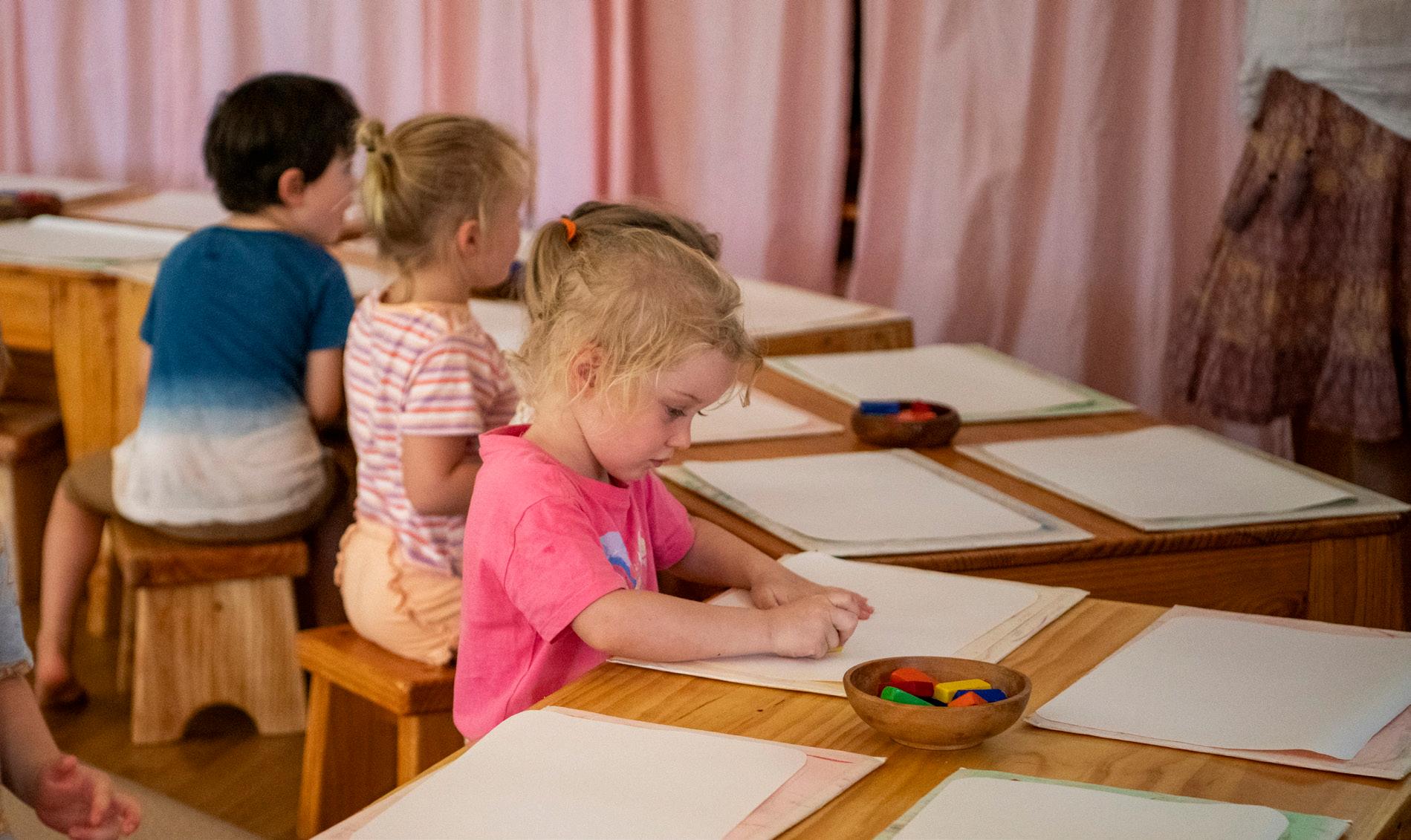
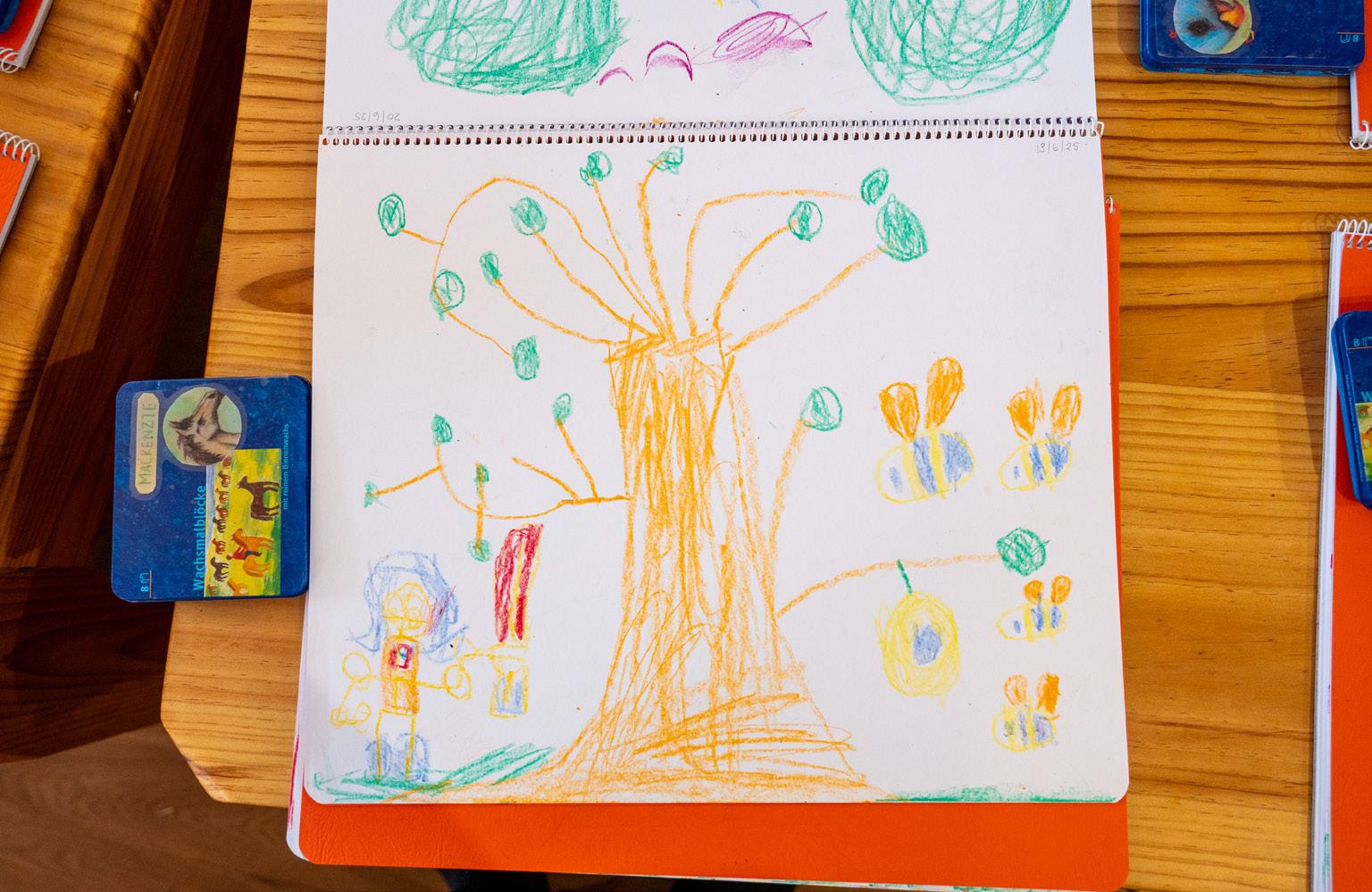
This can be done through drawing. Ideally, you would have a special spot for drawing so that your child sits with good posture. Steiner early childhood classes favour the use of Stockmar crayons because of their quality and the way that they sit in the child’s hand. These crayons enable broad strokes and shaded drawing.
Pencils are used later in Steiner schools. However, if you choose to use pencils at home it is best to use thicker pencils such as Lyra pencils. If your child is gripping the pencil awkwardly, this may cause bad habits to form, which will be hard for the Class One teacher to undo. Following is how a healthy pencil grip is formed:
How to Hold a Pencil
1. Put your thumb and forefinger just above the cone shaped part of the pencil.
2. Let the pencil rest between your thumb and forefinger.
3. Then put your middle finger underneath for support.
It is really helpful for your child to learn to take care with his/her drawing. You may like to invest in quality sketching paper. Encourage your child to fill the page with colour and stay with the drawing till it is complete. Help develop habits of focused attention when your child draws. The best way to do this is to occasionally sit beside your child and model a love of drawing.
Numeracy Development in Steiner Education
In the Steiner Prep class, we develop the child’s ‘number sense.’ Number sense helps children ‘make friends’ with numbers in a playful way. They develop a relaxed and confident approach to mathematical foundations. They play with counting. For example, they begin to learn the ‘friends of ten’ through games such as tenpin bowling: “If six pins have fallen, how many are still standing?” Learning about fractions and multiplication groups occur in daily activities – through sharing – cutting a cake, cutting fruit into halves, quarters and counting scones and muffins on the tray: “Three groups of four make twelve.”
Our craft activities develop the understanding of shapes and patterns, sequencing and symmetry. We use language that describe weight and magnitude. Children learn to ‘subitise’ – for example, to see that two rows of three chairs on a table make six. To see a group and know the number that they represent.
How can you support your child’s numeracy development at home?
Bring joy to the world of numbers at home. Everyday activities such as cooking and setting the table can be used as opportunities to count. Use language that supports mathematical development. Words such as more, less, longer, shorter, heavy, light, near, far – these all lay the basis for mathematical understandings.
And remember, whatever your experience of maths may have been at school, your child is a different person. Avoid negative comments such as “I was never any good at maths,” as these can hold your child back.
This applies to literacy development too. When parents model enthusiasm and a love of learning this is ‘infectious.’ It is an attitude that inspires and helps your child enormously.
And finally...
Learning occurs when children are able to pay attention. Many children these days have difficulty focusing and listening in a calm and centered way. Adults can struggle with this too at times.
A home environment that has a sense of calm is good for the development of a child’s senses. Avoid overstimulation. Avoid your child engaging in screen time completely if possible. There are so many other things to do. Try to take a mindful approach to how you shape your child’s experiences.
Spend time with your child doing real (not screen based) activities. This will deeply support your child’s development. Spend time with your child enjoying the beauty and healing that nature provides. Childhood is precious, profound and short.
We are thankful for the opportunity to educate your child. We are thankful for the partnership that we can develop in supporting a love of learning in your child.
RECOMMENDED READING
Understanding Waldorf Education Jack Petrash.
You Are Your Child’s First Teacher Rahima Baldwin.
Lifeways Gudrun Davey & Bons Voors.
The Incarnating Child Joan Salter.
Festivals with Children Brigitte Barz.
Simplicity Parenting Kim John Payne.
The Hurried Child David Elkind.
Children at Play Heidi Brits-Crecelius.
Festivals, Family & Food Diana Carey & Judy Harpe.
Conception, Birth and Early Childhood Norbert Glass.
Phases of Childhood B. Lievegoed.
Who’s Bringing Them Up? Television and Child Development Martin Large.
A Guide to Child Health M. Glockler & W. Goebel.
The First Three Years of the Child Karl Konig.
Natural Childhood: a practical guide to the first seven years John B Thomson. Waldorf Schools - Kindergarten and Early Grades Ruth Pusch.
Happy Children R. Dreikus.
Steiner Education Gilbert Childs.
Healing Stories for Challenging Behaviour by Susan Perrow. Work and Play in Early Childhood Freya Jafke.
The Waldorf Parenting Handbook Lois Cusick.
The Education of the Child Rudolf Steiner.
Mothering with Soul Joan Salter.
Beyond the Rainbow Bridge B Patterson & P Bradley.
Story Telling With Children Nancy Mellon.
Ready to Learn Martyn Rawson & Michael Rose.
The Challenge of the Will Margaret Meyerkort.
Raising a Family J Elium & D Elium.
The Genius of Natural Childhood Sally Goddard Blythe. Endangered Minds Jane Healy.
Free to Learn Lyn Olfield.
Why Children Don’t Listen Monika Keil-Hinrichsen.
The Way of the Child A C Harwood.
Some of these books are available for borrowing from the School library, or purchase from: www.steinerstore.com.au
STATEMENT OF AGREEMENT
STATEMENT OF AGREEMENT
Teaching staff have an ethical and moral responsibility to deliver a quality education to the best of their ability. To support the efforts of teaching staff and receive the maximum value from Steiner Education there is a two-way relationship between staff and parents. Children find it confusing when expectations and understandings are vastly different for home and school. We hope that many of the school’s values and philosophies are similar to those of your family and look forward to supporting you on your child’s learning journey.
I / We have read the Early Childhood Guide.
I / We understand that the school requires a commitment from parents of students in the Morning Star and Rosa Mundi rooms to:
• Notify the school of any medical support or dietary requirements that my child may need (where known) using appropriate documents.
• Respect the need for punctuality at school commencement and dismissal times.
• Make necessary efforts to attend Parent Information Sessions, Working Bees, Parent Teacher Interviews and Early Childhood Festivals. (Please notify staff prior to events of extenuating circumstances).
• Read the School Messenger and communications to be aware of dates for school events well in advance.
• Attempt to provide my child/ren with a healthy and balanced diet, free from packaging.
• Limit my child’s exposure to digital media devices, television, movies and games.
• Send my child with bag, lunchbox, hat and clothing free from cartoon characters or logos.
I / We understand that the points above form part of the ethos of Mansfield Steiner School and it is expected that every effort will be made to support these understandings in the interest of my child’s learning and development.
Name of Student
Mother/Guardian (print name) (signature)
Father/Guardian (print name) (signature)
Date
Please sign and return the agreement at the commencement of the school year.
MORNING STAR KINDER TIMETABLE
HONEYBEE GROUP 3-4 years old 8.30am - 4.00pm
ECHIDNAS GROUP 4-5 years old 8.35am - 3.15pm
MON TUE WED THURS FRID
HB E HB E E
NOTE:
Honeybee children must turn 4 in the school year Echidna children must turn 5 in the school year