

NEW YORK LOS ANGELES MIAMI HAMPTONS LAS VEGAS ASPEN THE RETAIL ISSUE MANN REPORT
REAL ESTATE BROKERAGE
THE REINVENTION OF
BOB KNAKAL


With our deep insight and experience, where others see challenges, we see opportunities.







• Registration/Breakfast: 9:30 am
• Shotgun Golf Start: 11:30 am


• Tennis & Pickleball Start: 1:30 pm
• Cocktails/Dinner: 4:30 pm




































































Meridian’s national dominance in multifamily financing gives us a unique vantage point from which to approach markets on our clients’ behalf. By leveraging our 30+ year relationships and depth of experience, we are able to see what others can’t and produce exceptional outcomes — especially in turbulent markets. Remain informed and be agile with Meridian.













EDITORIAL
Editor
Debra Hazel
Associate Editor
Alex Baumbusch
Director of Communications and Marketing
Penelope Herrera
Director of
Newsletter Division
Cheri Phillips
PRESIDENT/CEO
Jeff Mann
ART
Art Director
Serena Bhullar
Graphic Designer
Laura Chousa
Graphic Designer
Madi McCreesh
Cover Photography
Ezekiel Jeremiah
Jeremy Bergstein
Marshal Cohen
Frank DeLucia
Terri Jensen
Kris Kiser
Nate Larmore
Nolan McKeever
Ira Meister
Carl J. Montante Jr.
Charleston Morford
Technology Consultant
Joshua Fried
Distribution
Mitchell’s Delivery Service
DIGITAL MEDIA
Designers
Serena Bhullar
Laura Chousa
Madi McCreesh
Editors
Alexandra Baumbusch
Debra Hazel
Penelope Herrera
Cheri Phillips
Web Developer
CS Designworks
West Coast Office: 578 Washington Blvd., Suite 827
Marina Del Rey, CA 90292
866-306-MANN (6266)
East Coast Office: 450 7th Ave, Suite 2306
New York, NY 10123
212-840-MANN (6266)
mannpublications.com





May 9, 2024




Jennifer L. Widay

CHAIRS EMERITI

Kathy A. Chazen, CLU, ChFU
Roger A. Silverstein
Properties, Inc. Trustee, National Jewish Health















It’s really interesting when a cover feature brings back the past, even as the story is all about the future. That’s the case this month. Bob Knakal and his then-partner, Paul Massey Jr., were the first cover subjects for Mann Report. It’s been a lot of years, a lot of covers and a lot of events, conversations and more with Bob, who’s a good friend, since then.
Bob’s newest venture, BK Real Estate Advisors (BKREA), wants to redefine how a brokerage can be run, using the latest technology to find new patterns in data, new ways to eliminate repetitive tasks and build new relationships. I’m thrilled for Bob and it will be fascinating to watch this grow.
Meanwhile, we’re continuing to grow our social media presence and bring you the latest news via our many newswires. Sign up for our free weekly reports on our website, mannpublications.com.
And we’re out and about. Look for our editor Debra Hazel at the ICSC Las Vegas conference this month after attending Marcum LLP’s Retail Symposium in April. We want to hear what you want to know as we plan for the rest of the year and beyond.
Enjoy the rest of the spring!

“For everything you have missed you have gained something else.” - Ralph Waldo Emerson















PKF
With

It’s ICSC month, so once again, welcome to our annual Retail issue.
I won’t admit to how many of the ICSC annual conferences I’ve attended, but I’ve seen a lot of changes in the industry, from the “Malling of America” to de-malling to mixed-use and more. Now, we’re seeing completely new iterations of development, as you’ll see in our features and columns. A former train station is becoming a luxury hotel, right at the entrance to a Downtown Salt Lake City office/retail complex. Uniland’s Carl J. Montante Jr. tells us what his company is doing to transform Eastern Hills Town Center into a neighborhood with retail, entertainment, wellness, residences and offices.
We haven’t ignored other sectors. Technology also is at the fore, with our cover subject Bob Knakal discussing how he’s using artificial intelligence to serve clients at his new company, and MGAC’s Nate Larmore discussing how AI can reinvent project management.
Just as projects are being reinvented, so, too are retail and the industry as a whole. It’s an exciting time. If you’re at ICSC, too, find me and tell me what you’re seeing.

JEWISH NATIONAL FUND-USA

Newmark
Tree of Life® Award Honoree
CrossCountry Mortgage, LLC
Gregory A. Davis Leadership Award Recipient
MONDAY, JUNE 3, 2024 · 6:30 PM
Midtown East, Manhattan
RSVP to jnf.org/NYtreeoflife
CHAIR
Glen Weiss, Vornado Realty Trust
HONORARY CHAIRS
David R. Greenbaum, Vornado Realty Trust
Jeffrey E. Levine, Douglaston Development
More information
Sarah Azizi, Tristate Director, Manhattan sazizi@jnf.org • 212.879.9305 x505
JEWISH NATIONAL FUND - USA builds a strong, vibrant future for the land and people of Israel through bold initiatives and Zionist education.
St. Jude Children’s Research Hospital kicked off spring in South Florida for the 14th Annual St. Jude Palm Beach Cocktail Party “Reach for the Stars”. Presented by and in memory of Robert Thomas Butler and hosted at The Colony Hotel, the spring soirée included a reception with delectable cuisine, cocktails and special St. Jude moments.
The chairs for the event were Stephen and Erin Hawthornthwaite and the honorary chair was Ashley Miller. The event benefited the lifesaving mission of St. Jude, “Finding cures. Saving Children.”
“Collectively, our community is committed to advancing many missions, but with your demonstrated support and presence, we celebrate the active role you play in advancing St. Jude’s mission,” said Erin Hawthornthwaite. “We fund the research that will save the lives of hundreds of thousands of children stricken with cancer and other life-threatening diseases throughout the nation and around the globe. We would like to recognize our event co-founder and former American Lebanese Syrian Associated Charities (ALSAC)/St. Jude Board Member, Thomas Quick, whose foundation, passion and commitment to St. Jude over the years has shaped our fundraising efforts, specifically here in Palm Beach, but truly around the globe.”
During the event, guests heard from local St. Jude patient Slater and his entire family about the 10-year-old’s life-changing experience at St. Jude. The evening concluded with a call to the heart “Give to Live” where guests were able to make charitable contributions to St. Jude.
The distinguished host committee included Maura Ziska Christu and Eric Christu, Alison and Will Pappas, Stephanie and William Eady, Emilia and Brian Pfeifler, Mary Frances Garrett, Mary and MacGregor Read, Jessica and Dana Koch, Alexia and Baird Ryan, Gloria and Michael Masterson, Kiki and Drew Shilling, Deborah and Bruce Miller, Elena Marie Siems, Rhonda and Gene Milner, Vanessa Rooks-Stefanski and Marc Stefanski, Nievera Williams Design and Leslie and Spence Whitman.
The event’s sponsors included presenting sponsor in memory of Robert Thomas Butler. Gold Benefactors included Nancy DiGiulio, Erin and Stephen Hawthornthwaite and Mary Frances Garrett. Silver Benefactors included Trillion Inc. and The Fortin Foundation of Florida. Bronze Benefactors included Maura Ziska Christu and Eric Christu, Alison and Will Pappas, Stephanie and William Eady, Courtney Parmenter and Juan Rionda, Mary Frances Garrett, Emilia and Brian Pfeifler, Hive Collective, Mary and MacGregor Read, Jessica and Dana Koch, Alexia and Baird Ryan, Gloria and Michael Masterson, Kiki and Drew Shilling, Deborah and Bruce Miller, Elena Marie Siems, Rhonda and Gene Milner, Vanessa Rooks-Stefanski and Marc Stefanski, Nievera Williams Design and Leslie and Spence Whitman.




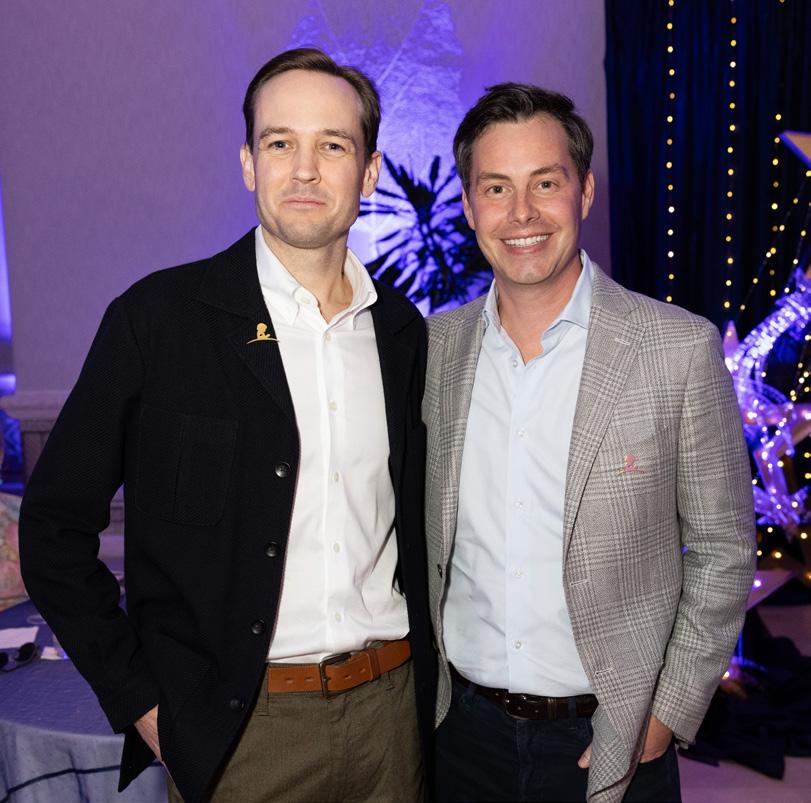



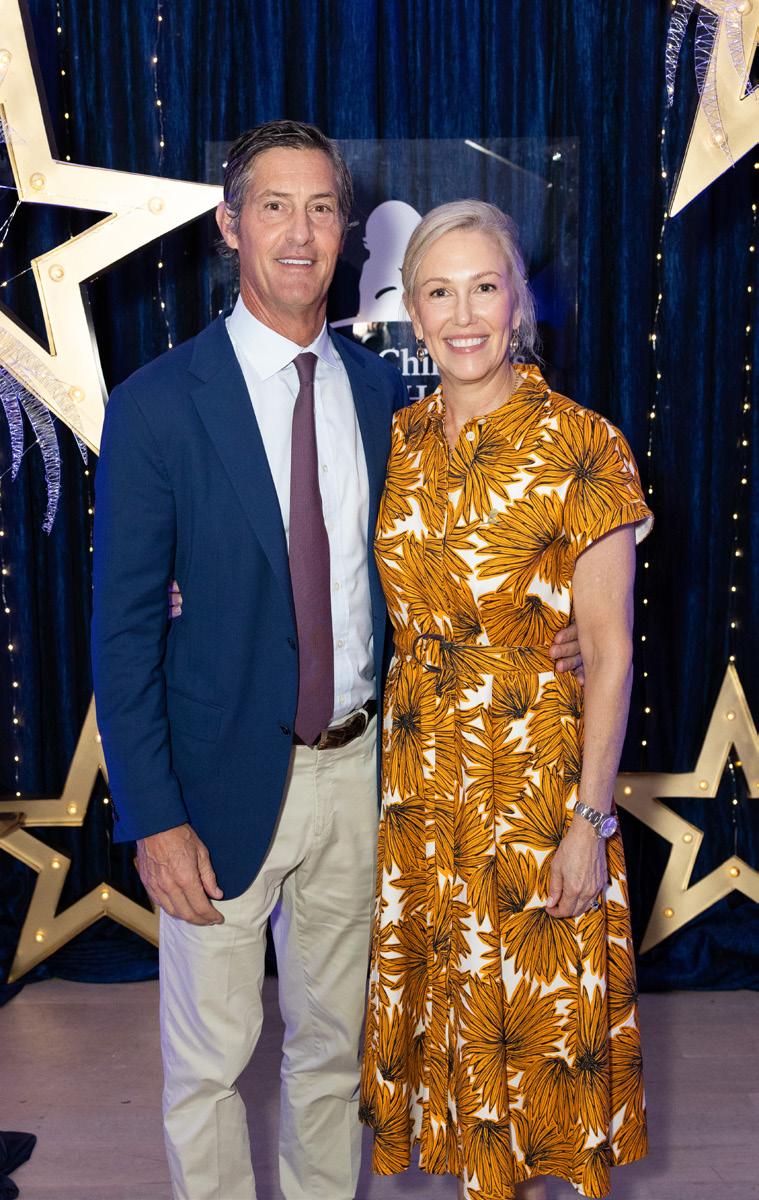


 Sawyer, Shari Anne, Shane and Slater Bushman
Tom Abraham and Tom Quick
Alexia Ryan and Ashley Miller
Oliver Green and William Eady
Nancy Digiulio and Jane Hsieh
Jill Schecter and Trish and Lizzy Davies
Spence and Leslie Whitman
Elena Siems and Phyllis and Hilaria Simon
Elizabeth DeWoody and Mary Frances Garrett
Sawyer, Shari Anne, Shane and Slater Bushman
Tom Abraham and Tom Quick
Alexia Ryan and Ashley Miller
Oliver Green and William Eady
Nancy Digiulio and Jane Hsieh
Jill Schecter and Trish and Lizzy Davies
Spence and Leslie Whitman
Elena Siems and Phyllis and Hilaria Simon
Elizabeth DeWoody and Mary Frances Garrett
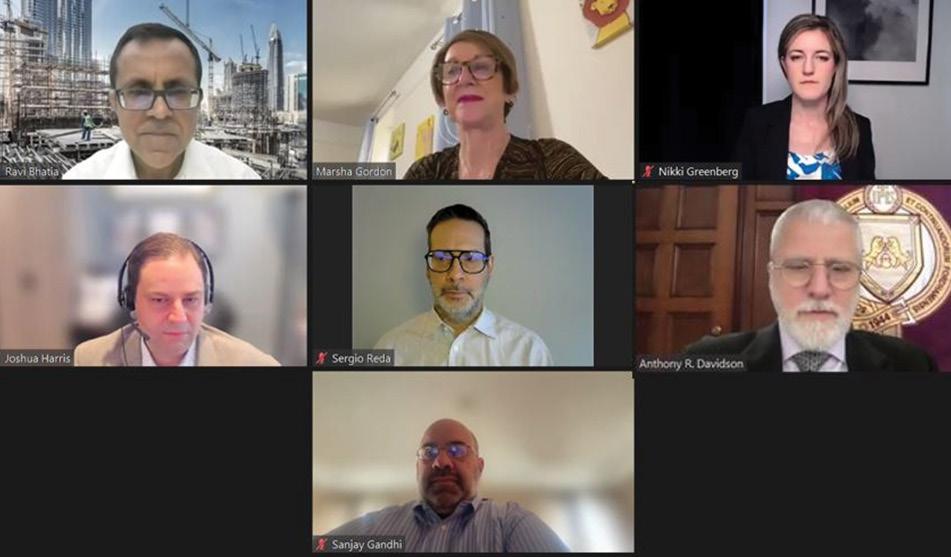
Artificial intelligence (AI) is affecting virtually every industry, offering opportunities to transform business as usual. Understanding the technology and how best to leverage its potential in real estate was the topic of a recent in-depth forum hosted by Fordham University’s School of Professional and Continuing Studies and The Business Council of Westchester.
Presented virtually, “Revolutionizing Real Estate: The Smart Solutions of AI” featured Nikki Greenberg, founder and chief innovation officer, Real Estate of the Future; Ravi Bhatia, business development manager, Skanska USA Civil and adjunct professor, Fordham Real Estate Institute (REI); Sanjay Gandhi, senior managing director, property management, Besen Partners and Serge Reda, co-founder, AlphaRithm AI and adjunct professor at Fordham REI and chair of its Technology Committee. The discussion was moderated by Joshua Harris, executive director of Fordham REI and managing partner of Magnolia Hill Partners.
“Artificial intelligence is impacting every industry,” said Business Council of Westchester President and CEO Marsha Gordon. “We’re delighted to partner with Fordham’s School of Professional and Continuing Studies and its Real Estate Institute to explore strategies and innovative solutions to maximize AI’s potential.”
Greenberg set the stage by presenting an overview of AI’s rapid evolution — including generative AI and the rise of ChatGPT — and how business professionals can leverage technological advancements.
“We’re at a turning point in terms of where technology is and the impact it is going to have. Is AI revolutionary? I believe it is. But, while the technology is getting better, human beings should not be flatlining – we all have to evolve along with this,” she cautioned. “AI is math, not magic. There’s an algorithm behind the scenes, a set of instructions. It relies on information it’s given to make an analysis. If you give it wrong information, it’s going to give you a wrong outcome. We need to be thinking about the quality of data we give to AI to enable it to give us a quality outcome.”
Harris asked the panel what AI’s single, most consequential impact will be on real estate.
“I see great opportunities to improve efficiencies and reduce risk,” said
Bhatia. “We’ve all gone through the supply-chain shocks of a postCOVID-19 world. As information becomes more readily available, there’s going to be more transparency in pricing, in terms and conditions and in streamlining contracts. That’s huge. If we can reduce transaction costs, improve safety and improve efficiencies in the supply chain, it is going to be game-changing.”
“The advantages we see are in automating the mundane, repetitive tasks we do in our industry,” Gandhi agreed. “A lot of the research tools can be automated and, if we can reduce transaction costs, that’s great. These are exciting times. But real estate has been traditionally a handshake industry and that is going to be one of the challenges.”
Reda pointed to real estate investing and development as an area where AI could have a significant impact, in terms of identifying opportunities and reducing risks.
“Investing in real estate is an enormous investment so it requires a lot of information and analysis. AI could be extremely impactful in the incorporation of data that humans are just not capable of analyzing on their own,” he said. “Those who can leverage that kind of capability will have an advantage in the market.”
The panel also addressed one of the most common concerns related to AI: potential job loss.
“Jobs are going to evolve,” said Greenberg. “We’re going to learn to use new tools. Some will lean in, others won’t. What we’re going to see with AI is a combination. AI is great at crunching numbers, [and performing] analysis very quickly. Humans are great at relationships, trust and ambiguity. Combine them, and you’re super-charged.”
“We’re proud to collaborate with The Business Council of Westchester and share these important conversations with our colleagues in the business community,” said Anthony R. Davidson, dean, Fordham University School of Professional and Continuing Studies. “Artificial intelligence is reshaping the commercial real estate landscape and we want to support business professionals and prepare future industry leaders to leverage AI’s potential.”











ATCO Properties & Management announced that full-service menswear company Eton Inc., has signed a 10-year and nine-month, 5,000-squarefoot office and showroom lease at 381 Park Avenue South in Manhattan’s Midtown South.
Founded in the Swedish village of Gånghester in 1928 by Annie Pettersson, Eton specializes in creating men’s luxury shirts, accessories and lifestyle garments. Known for pioneering the wrinkle-free cotton shirt, its collections range from sharp dress shirts for formal occasions, to casual shirts, T-shirts and overshirts in luxuriously refined materials. Eton will relocate from 24 West 57th St. in the summer of 2024 and occupy part of the 12th floor at 381 Park Avenue South.
“We are pleased to have welcomed so many new and returning tenants to 381 Park Avenue South over the past six months,” said Kate Hemmerdinger Goodman, co-president at ATCO Properties & Management. “With its classic architectural charm, location in the highly desirable Flatiron District and the exceptional tenant service that we pride ourselves on, the building is an attractive choice for companies like Eton.”
Anthony Manginelli of CBRE represented the tenant and Robert Tunis, Kyle Berlinsky and Joseph Mangiacotti of Colliers represented building ownership. The asking rent was $62 per square foot.
Boasting 228,000 square feet of office space, 381 Park Avenue South was built in the early 1900s. Other prominent office tenants in the building include FGS Design LLC, Two Sticks Inc., EVOS, ListenFirst Media and the Stephen B. Jacobs Group. Bakery and restaurant Sarabeth’s Kitchen is located at the base of 381 Park Avenue South.

Real estate developers and investors Thor Equities Group and Vesper Holdings have launched a joint venture student housing platform to be called Thor Vesper. The joint venture will be led by Managing Director of Student Accommodations Christian Davis, who will be based in Thor’s London office.
“As thematic investors, we are constantly observing trends and seeking out new opportunities. Student housing is a resilient sector with strong fundamentals alike our other focuses, data centers and logistics, and we are thrilled to partner with Vesper Holdings on this latest venture,” said Thor Equities Group CEO and Chairman Joe Sitt.
With nearly 20 years of expertise in the real estate industry, Davis will oversee Thor’s student housing platform as the demand for space strengthens. Over the course of his career, Davis has executed more than 50 major transactions in the student housing industry totaling over 20,000 beds.
Davis joins Thor from CA Ventures, a real estate investment management company specializing in niche asset classes, where he led a team responsible for the sourcing, structuring and execution of the UK and Ireland PBSA. Prior to CA Ventures, Davis held senior positions at Watkin Jones, The Student Housing Company and Cushman Wakefield.





NEAL BERMAN Brainstorm Promotions
DEREK BESTREICH Bestreich Realty Group
PETER BLOND Brandt, Steinberg, Lewis & Blond
MITCHELL BLOOMBERG International Lights
MICHAEL BONARDI D&D Elevator
FRANK DELUCIA HUB International

DAVID DIAMOND Diamond Property Group


CHAIRMEN: MARK ENGEL & MATT ENGEL • Langsam
TANG FAN JPMorgan Chase
PERRY FINKELMAN American Development Grp
ROBERT FRANK Academy Energy Group
JASON & WAYDE GILSTON Gilston Electric
JOSH GOLDMAN
Storage Systems
IRA GORDON Land Appliance
ALAN GREENE ESQ.
Abstract Corp.
STEVE HERTZ
Cherson & Rosenthal
GARY MEILUS
ROBERT MILLER
PELTON
Lynch

MICHAEL RAMIN
JACOB REKANT Landmark Abstract Agency
ALLEN ROSS

Morris
SHIMON SHKURY
Property Advisors
RONI SHOYFER
Bank

ROBERT SINGER Singer & Falk
JAMES SLATTERY
TICHNER
Paint
WALDMAN

So long, CNN, hello, The Center. CP Group, a vertically integrated commercial real estate and management firm, is repositioning the 1.2 million-square-foot CNN Center as “The Center,” offering office space, retail, dining, content creation and entertainment at the core of downtown Atlanta’s entertainment district.
“CP Group’s rebranding of the former CNN Center into The Center aims to create a unifying destination for commerce, culture and connection while also honoring the building’s legacy as a historic Atlanta landmark in media, sports and entertainment,” said Chris Eachus, partner at CP Group. “Our vision includes curating an unparalleled selection of dynamic users, dining and retail experiences, entertainment offerings and elevated lifestyle amenities — all of which will be carefully crafted to draw the community into the heart of the city.”
CP Group’s evolution of The Center will focus on activating the ground floor experience, appealing to retailers and innovative tenants seeking a historic and highly accessible site in a buzzing downtown environment. Since CNN Center was occupied by its namesake tenant for nearly four decades, this marks the first time in 40 years that office users can claim space within the property.
Coleman Weatherholtz of Healey Weatherholtz Properties is the retail leasing agent, while Jeff Keppen and Nicole Goldsmith of CBRE are The Center’s exclusive office leasing agents.
The Center was built in 1976 as the Omni Complex and was converted into the CNN Center by media mogul Ted Turner in 1986. In 2021, CP Group purchased the project from AT&T — CNN’s former parent

company — via a sale leaseback that ran through 2024.
Located at the heart of Atlanta’s Central Business District, The Center is directly connected to State Farm Arena, home of the National Basketball Association’s Atlanta Hawks, and adjacent to the fourth largest convention center in the United States, the Georgia World Congress Center, as well as Centennial Olympic Park, Georgia’s legacy of the 1996 Summer Olympic Games and a year-round destination for locals and visitors. Those facilities and the nearby Mercedes-Benz Stadium attract over 12 million visitors annually.
The project currently includes the Omni Atlanta Hotel within its site and boasts an array of prominent cultural sites and institutions within walking distance, including the World of Coca-Cola, the Children’s Museum of Atlanta, Georgia Aquarium, the College Football Hall of Fame Museum and the Center for Civil & Human Rights.
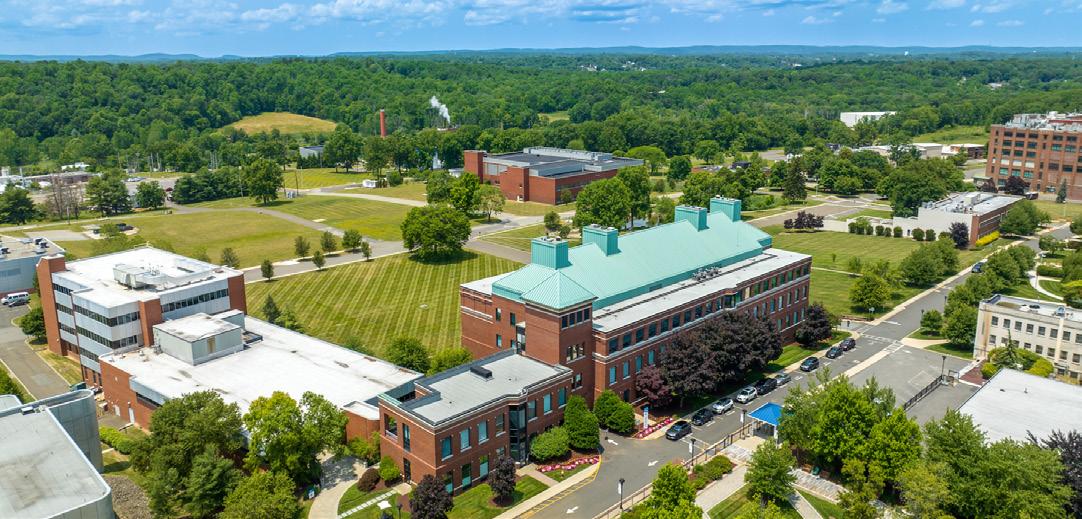
Hudson Valley iCampus, New York’s hub for innovation, ingenuity and industry, signed three new leases and two expansion agreements in the first quarter of 2024, totaling 35,124 square feet and having a value of over $4 million.
“Many of the deals were for laboratory uses,” said Jamie Schwartz, president of Hudson Valley iCampus. “Although the headlines report life sciences and biotech investments slowing due to high interest rates and other factors, we continue to experience brisk leasing activity from both large and small companies.”
RK Pharma Inc., an American multinational pharmaceutical and biotechnology corporation that focuses on the development, manufacturing and sale of high-quality and affordable generic pharmaceutical products worldwide, leased an additional 22,584 square feet of stability chamber space in Building 100. RK Pharma also leases 82,975 square feet of laboratory, manufacturing and office space in Buildings 215 and 215A.
Allied Health Management Service Organization LLC, a healthcare company that is advancing proton therapy, leased 5,677 square feet of laboratory space in Building 205. Michael Baraldi of Cushman & Wakefield represented the tenant. Robert Lella of Colliers International represented Hudson Valley iCampus.
Cosmetic, fragrance and skincare company Avon Products Inc. leased 4,719 square feet of laboratory and office space in Building 205. Robert
Armistead Mechanical Inc., one of the largest employers of plumbers and pipefitters in New Jersey and the New York Hudson Valley region, leased 1,468 square feet for shop space in Building 205.
Olaplex Inc., one of the largest independent hair care brands in the world with over 100 worldwide patents, expanded its footprint by 676 square feet in Building 205 to 11,612 square feet of laboratory and office space.
Hudson Valley iCampus offers “plug and play” laboratory, manufacturing and support space available for immediate occupancy. For example, Building 205, a 125,000-square-foot, tenant-ready laboratory building, was 40% leased two years ago, and now it is 100% leased.
COMPLETING BILLIONS OF DOLLARS IN TRANSACTIONS ANNUALLY FOR MANY OF THE MOST INFLUENTIAL PARTICIPANTS IN THE REAL ESTATE INDUSTRY
Corcoran Group LLC has welcomed its first franchise in Oregon with the launch of Corcoran Prime. Owned and led by Becky Jackson, the new brokerage will serve clients throughout the greater Portland metropolitan area and will hold a dedicated office space in Portland’s Pearl District.
“Portland’s market holds immense opportunity, and to be entering the market with Corcoran Prime is an ideal accompaniment, not only to our strong existing West Coast presence, but also our greater international affiliate network,” said Pamela Liebman, president and CEO of The Corcoran Group. “The experienced team behind Corcoran Prime provides a foundation that is poised for both growth and success when paired with Corcoran’s innovative tools, iconic branding and world-class support systems.”
Jackson and fellow broker Matt Lesher founded The Agency Inc. Realtors, now Corcoran Prime, in 2014 with an intimate team, and has grown to include roughly two dozen licensed agents, as well as several support staff holding across marketing, management and transaction coordination roles.
“We lead with the philosophy that our role as professionals in the real estate industry is to bring a superior level of service to our clients, across all real estate transactions, ensuring they receive the best possible outcomes,” said Jackson. “The Corcoran culture is thoroughly aligned with this philosophy, and the brand meshes with our position as a sophisticated, yet approachable company. By embracing Corcoran’s modern technology and tools and continuing to deliver unparalleled service to our dedicated clients in the vibrant Portland market, we are perfectly poised for growth in the future.”
Situated along the Willamette River in northwest Oregon, Portland’s diverse economy spans the healthcare, technology, manufacturing and sportswear industries, with numerous Fortune 500 companies

The city is also home to institutions such as Portland State University and Oregon Health & Science University and is celebrated for its vibrant arts scene, contemporary culinary community and commitment to sustainability.
“Portland is brimming with a vibrant culture and a diverse real estate market,” said Stephanie Anton, president of Corcoran Affiliates. “Corcoran’s decision to expand into this key market is underscored by the strength of the leadership and agents behind Corcoran Prime, whose stellar reputation, client dedication and commitment to continued growth melds so well with our brand. Together, I am excited to make a meaningful impact on the Portland market.”
Z Life, the future-focused real estate company known for its glass curtain wall systems and walkable city designs, is set to initiate plans for a national expansion. The announcement comes on the tail of a March 15th launch and the subsequent success and traction of Midtown, its latest project in Las Vegas’ rising Arts District.
The company’s expansion will include strategic commercial developments in key cities across the country including Salt Lake City, Utah; Reno, Nevada; Austin, Texas; Nashville, Tennessee and San Francisco, California. The locations were carefully selected as host sites to showcase Z Life’s vision of residential spaces that foster sustainability, luxury, and community.
“Z Life is crafting ecosystems for living that meet the needs and aspirations of the younger generation,” said Weina Zhang, CEO of Z Life. “Our success in Las Vegas, highlighted by the overwhelming response to our Midtown launch event, is a testament to the demand for our unique approach to development. We’re excited to bring our vision to more cities across the nation.”
Midtown, developed adjacent to the English Hotel, exemplifies Z Life’s commitment to innovative design and sustainable luxury, the company said. With the largest single unitized curtain wall contract in the United States, Z Life’s architectural designs, including the newly opened Fontainebleau hotel, have set new standards in the real estate and glass industry. The Midtown project features micro-retail spaces, cutting-edge workspaces, biohacking facilities and an exclusive on-site shared Tesla program for residents.

“We’re incredibly proud of Midtown; it stands as our proof of concept, showcasing our commitment to redefine urban living,” said Anna Olin, COO of Z Life. “This expansion is bringing our vision to a national stage, assisting first-time buyers and creating spaces where people can truly live where they work.”
The Midtown community is dedicated to innovation and affordable luxury, offering its residents amenities such as a pool, gym and comprehensive urban living solutions at significantly lower costs compared to industry standards.
Thanks to the commercialization of a portion of the development, Z Life is able to keep HOA fees at just 25 cents per square foot, providing an accessible pathway to homeownership for the younger generation, while promoting a sustainable, car-free lifestyle.
Z Life is set to break ground on two additional towers in the Midtown area in the fall of 2024.



































Greenbrook Partners, a privately held, vertically integrated real estate operating and investment company headquartered in New York City, has completed the conversion of a former convent at 784-786 President St. in Park Slope, Brooklyn into 12 modern, family-sized apartments.
The deteriorating, vacant building, acquired from the Sisters of St. Joseph, has undergone a comprehensive $3 million gut renovation completed over the past 20 months without any government subsidies. This redevelopment included converting 30 dormitory rooms into four two-bedroom duplexes and eight three-bedroom units with outdoor green spaces.
“We are thrilled to bring 784-786 President St. back to life, marking the completion of a project that adds valuable housing stock to Brooklyn and demonstrates our commitment to sustainability and the vibrancy and economic health of the community,” said Gregory Fournier, managing principal of Greenbrook Partners.
Greenbrook Partners also focused on reducing the property’s carbon footprint and adding to the neighborhood’s portfolio with modern, sustainable homes, by switching from gas to electric heating systems, the installation of LED lighting, the implementation of low-flow water fixtures and more. In addition, the building was transitioned from a nontaxable religious property to a taxable entity generating $83,000 of new annual property tax revenue for New York City.

Edina Realty, the largest residential real estate firm in Minnesota and western Wisconsin, recently announced its expansion into the southwest Florida market. A new Edina Realty office in Naples, Florida concentrates on serving communities along the state’s Gulf Coast between Sarasota and Marco Island. Florida listings are now available on edinarealty.com for consumers to search for primary or secondary homes anywhere in the state of Florida.
Edina Realty began expanding its footprint in 2023 to include southwest Florida, giving agents an additional opportunity to serve clients — especially snowbirds — looking to relocate or split time between the Midwest and Florida.
“A number of our agents who winter in Florida or spend significant time there asked for this expansion,” said Chief Executive Officer Greg Mason. “They want access to Edina Realty’s technology, products, network and services when they’re working with clients in the Sunshine State as well in Minnesota and western Wisconsin.”
Roughly 20 Edina Realty agents are now conducting business in Florida, and the company expects that number to increase.














Empire State Realty Trust Inc. has become one of the first commercial office and multifamily portfolios in the U.S. to achieve the Well Equity Rating through the International Well Building Institute (IWBI)’s Well at Scale pathway. Additionally, ESRT received the 2023 IWBI HealthSafety Leadership Award for prioritizing occupant health and well-being through industry-leading indoor environmental quality measures and achieving the Well Health-Safety Rating across 100% of its portfolio in each year of participation since 2020.
“Our continued leadership and long-term commitments to the wellness and health equity of our tenants and employees are celebrated through our consistent achievements within the IWBI’s Well at Scale program,” said ESRT Chairman and CEO Tony Malkin. “Our achievement of the inaugural Well Equity Rating is a reflection of our accountability and strides in diversity, equity and inclusion (DEI) within our corporate culture.”
Throughout 2023, ESRT focused on employee health and well-being and promoted an inclusive culture through competitive benefits, employee engagement and volunteerism and industry-leading practices in sustainability and indoor environmental quality. ESRT was the first commercial real estate portfolio in the Americas to achieve the Well Health-Safety Rating in 2020 and among the first to commit to Well at Scale and inaugural Well Equity Rating in 2022.
“Leading organizations that prioritize the health and well-being of their employees and tenants are not only helping cultivate a safer, healthier and more productive workforce, but also experience higher occupancy and retention,” said Rachel Hodgdon, president and CEO of IWBI.

“We are excited to celebrate Empire State Realty Trust for its steadfast commitment to people-first places. Not only has it achieved the Well Health-Safety Rating for the third year in a row, but it has also achieved the Well Equity Rating across its entire portfolio. We commend ESRT for this outstanding leadership milestone.”
The Well Health-Safety Rating is an evidence-based, third-party verification for all new and existing buildings that focuses on operational excellence and long-term resilience through air and water quality, cleaning procedures, emergency preparedness, health resources and stakeholder engagement. The Well Equity Rating is a roadmap designed to help organizations act on their diversity, equity, inclusion and accessibility goals and improve company culture and employee health.
JLL Foundation, a non-profit founded and backed by JLL, has expanded its investments in early-stage companies focused on climate change mitigation, according to its new annual report. Of the 15 startups supported by JLL Foundation in 2023, 100% are helping to reduce greenhouse gas emissions, 73% are making a sustainable impact on real estate and land, 60% are reducing water consumption, 53% are reducing waste and 33% are making a social impact.
“The JLL Foundation takes a non-traditional approach, providing zerointerest loans, which allow companies to survive and thrive during the challenging early stages in their journey towards commercialization,” said Trish Maxson, chair of the JLL Foundation.
JLL Foundation’s mission closely aligns with JLL’s purpose to shape the future of real estate for a better world and its own sustainability program focused on climate action, healthy spaces and inclusive places. JLL Foundation offers catalytic funding particularly to entrepreneurs who traditionally have less access to venture capital — for example, 53% of the 2023 portfolio companies are fully or partially female-founded. Since its inception in 2022 and in partnership with Good Machine, a venture studio specializing in the climate impact space, JLL Foundation has invested in 30 impact-driven startups across five continents.
“Providing interest-free loans from the JLL Foundation to startups is one way to accelerate the transition to a more sustainable world,” said
 Christian Ulbrich, global CEO and president of JLL.
The impact of the foundation’s investment varies based on the needs of each company. In 2023, the foundation’s loans helped Kadeya, a closedloop beverage system manufacturer, fund its first fully autonomous unit; Minus Materials, a carbon-negative, bio-renewable limestone producer, focus on markets that consume higher quality calcium carbonate; Zafree, a tree-free paper pulp fabricator, purchase a machine that will help increase its capacity and GoPowerEV on its mission to ensure that every electric vehicle owner has affordable and convenient access to charging.

Invitation Homes Inc., a Dallas-based single-family home leasing and management company, announced that it is under contract to acquire approximately 500 additional newly built homes for a total investment of approximately $140 million. The homes will be located in Charlotte, North Carolina, Jacksonville, Florida and Nashville, Tennessee and are being acquired through new relationships with three top-tier homebuilders. Deliveries are expected to begin later this year.
“As lack of supply continues to be a primary culprit in the high cost of housing, we are proud to further broaden our strong homebuilder partnerships to create additional housing,” said Scott Eisen, the company’s chief investment officer. “At the same time, we believe our strategy of partnering with the largest and best homebuilders to grow our footprint across the country offers the best risk-adjusted returns to our stockholders.”
Invitation Homes, an S&P 500 company, provides access to high-quality, updated homes with features such as close proximity to jobs and access to good schools. The company received deliveries of 648 newly built homes in 2023 and currently anticipates deliveries of approximately 1,000 new homes from its new product pipeline in 2024.

In response to growing demand from clients in the U.S. Southwest, global architecture and design firm Perkins&Will has opened a studio in San Antonio, Texas. The new studio is located in the heart of San Antonio’s Historic Pearl neighborhood, just north of downtown at 303 Pearl Parkway. The addition joins studios in Dallas, Austin and Houston, and strengthens the regional network that includes studios in Denver and Monterrey, Mexico.
The new studio will be led by lifelong San Antonian Adrianna Swindle, who heads cultural and civic as well as corporate and commercial practices, and Omar Cantu, health practice leader. The studio will also deliver local services in urban design, workplace and higher education.
“We couldn’t be more excited to officially put down roots in San Antonio,” said Tom Reisenbichler, Southwest region director. “With many projects here over the years, this studio has been a long time coming, and we have significant new work already in progress. Perkins&Will and San Antonio are a great fit. We see a strong appetite here for placemaking, or the kind of design-driven, sustainable, human-centric spaces that our firm is known for.”
The firm’s local portfolio includes the University of Texas at San Antonio Student Center, Methodist Texan and Methodist Westover Hills hospitals, a renovation and expansion of the historic Thomas Jefferson High School and the award-winning University Hospital Sky Tower, one of the largest hospitals in the country to earn LEED Gold.
Swindle, a Distinguished Alumna of the University of Texas at San Antonio and co-founder of the AIA San Antonio Chapter Latinos in Architecture (LiA) Committee, is a long-time advocate for the development and visibility of local designers, also having served as the San Antonio AIA board president in 2021.

















Qira, a financial services platform that provides renters and property managers a way to improve cash flow and avoid debt, now offers full security deposit management services. As a part of its overall goal to give renters more financial options and decrease the upfront cost of moving, these items include security deposit alternative programs, security deposit payments and refund processing with full escrow management and, now, security deposit payment plan services.
“Qira is proud to provide comprehensive security deposit services that offload administrative tasks, ensure properties are compliant with state laws and significantly reduce properties financial risk,” said Revital Gadish, CEO of Qira. “We believe these programs greatly benefit our audience of property managers who often prefer to outsource the entire security deposit management to Qira and to our renters who now have more alternatives to pay their deposit.”
When using Qira security deposit solutions, properties can offer their renters a zero-deposit program for a fee or pay the full security deposit either as a lump sum or in installments over the lease term. To minimize risk to the property or portfolio, regardless of the renter’s choice, Qira covers the full security deposit for the renter from Day One and handles all operational aspects of the transaction with a fully automated and integrated security deposit refund when the renter moves out, reducing the burden on onsite teams.
The security deposit payment plan services include: flexible installment payment plans of three, six and 12 months; renter eligibility to receive a full security deposit refund at the end of the lease; funds held in escrow per state regulations and a fully automated security deposit system for renters and property managers handled exclusively by Qira.

The security deposit management system allows Qira to manage the escrow accounts and ensure operators are compliant with state regulations (including interest-bearing account capabilities). This benefits properties or portfolios that do not offer a security deposit alternative or payment programs to their renters.
Qira’s security deposit alternative service allows renters to opt into paying a nominal fee, as low as $5 a month, rather than paying a bulky upfront security deposit. The property can offer this as an amenity to renters, while Qira covers the full security deposit amount.
This is a low-risk solution for property managers to obtain their deposit amount and offer renters a $0 upfront move-in cost.
“Our security deposit management technology is unique, and we have the only integrated payment plan solution on the market,” said Roy Doron, chief technology officer at Qira. “This plan enhances our already-existing integration with leading property management software like Rent Manager, Resman, Yardi, Realpage and more to maximize efficiency for both renters and property managers.”
Play ball! Major League Baseball Major League Baseball leads major sports leagues in total real estate developments, with 16 ballparks (53% of venues) having a related development, according to RCLCO Real Estate Consulting’s just launched Venue-Anchored Development Tracker of every major league stadium in the United States and Canada.
The tracker will allow users to track existing, under construction and planned venue-anchored development of a sector which is increasingly a driver for mixed-use development throughout the country. RCLCO counts 43 venue-anchored real estate development projects (MLB, NFL, NBA, NHL, MLS) on the ground, seven under construction and 34 planned/publicly under consideration.
“We are seeing a burst in development interest around sports venues and stadiums, as teams and owners seek to diversify and control future revenue streams, as well as enhance the fan experience and deliver local community benefits,” said Erin Talkington, managing director of RCLCO. “There is no one formula for a successful development. While the most well-known projects are held up as places to replicate, the unique local-market responsive elements of places like Titletown are what will differentiate future venue-anchored developments.”
RCLCO defines a venue-anchored development as one where the venue serves as the focal point around which real estate is organized. The Venue-Anchored Development Tracker includes detailed information regarding every stadium’s ownership, announced future plans and the surrounding associated real estate development.
Notably, teams/ownership groups have only been involved in 43% of existing projects but are involved in 68% of planned projects.

RCLCO expects that the development pipeline will to continue to grow, as one impetus for planning a new real estate project is venue reinvestment or replacement. More than 40 venue leases across the five leagues expire in the 2030s, suggesting the focus on real estate opportunities will continue.
“It is tremendous to see the high-quality analysis and information RCLCO is publishing with the first-of-its-kind Sports Venue-Anchored Development Tracker as a way to further cement our place as industry leaders at the intersection of sports and real estate,” said RCLCO Managing Director Joshua Boren. “As rising franchise values and new ownership continue to increase and teams look for additional ways to expand their brand and increase revenues, real estate will continue becoming an even more critical component of these transactions and the industry’s future. RCLCO has been fortunate to be at the forefront of this movement, as the industry continues to evolve and become more sophisticated.”
While the initial tracker is focused on professional league venues, RCLCO will expand the tracker to include numerous other leagues and venues throughout the year and on an ongoing basis.






JUNE 5 TH , 2024 | 5:00 PM - 8:00 PM
ARNO RISTARANTE
141 38TH ST - NEW YORK
The Top Hat Award is a prestigious honor presented annually to an individual for lifetime achievement and dedication in the Credit Industry. We are proud to recognize Richard Simon and Glenn Schwartz, who have reached new levels of achievement within our community. This year, we will celebrate their accomplishments with an award ceremony at New York Hilton & Towers.
 Richard Simon

at www.475toppers.com
InvestorFlow, a cloud-based platform for alternative investment firms, announced the acquisition of Coyote Software, a U.K.-based softwareas-a-service company powering many of the largest commercial real estate firms in the U.K. and Europe. InvestorFlow will now expand collaboration across all fundraising, transaction and asset management stakeholders and provide more granular reporting to investors within the CRE ecosystem on a single platform, the company said.
The Coyote solution enables investment teams to review more opportunities, close more deals and increase investment returns, the company said. Additionally, asset and property managers use the platform to consolidate real estate data, manage portfolio performance and risk and provide actionable insights to deliver better financial outcomes. The company has over 80,000 assets on its platform, with a combined 500 million square feet and a roster of major firms including Nuveen, Legal & General Investment Management (LGIM) and Royal London Asset Management.
“Coyote was designed and built by real estate professionals,” said Todd Glasson, CEO and founder of InvestorFlow. “The addition of Coyote will expand InvestorFlow’s capabilities to drive collaboration among investment, asset and property managers at scale, while yielding faster and deeper insights into performance and risk for LPs. This transaction immediately expands our footprint in EMEA and will accelerate our continued growth across all alternative asset classes globally.”
The deal builds on InvestorFlow’s strategic combination with Cloud Theory to form a complete suite for private market firms to turn relationships into capital, knowledge into investment opportunities and collaboration into lasting partnerships. In an industry marked by highly distributed teams and fierce competition, InvestorFlow provides a single

source of truth to clients, empowering fundraisers, deal teams and client services to operate at scale with reliable data, asset transparency and team coordination, all while keeping LPs informed on investment performance and new fund opportunities.
“Coyote is delighted to be joining InvestorFlow in its mission to power the alternatives industry,” said Coyote Software CEO and Co-Founder Oli Farago. “We embarked on this journey over a decade ago to transform the way real estate investment firms source opportunities, manage deals and maximize asset performance. Alongside the broader InvestorFlow team, we can extend our capabilities into fundraising and investor relations. This will provide deeper and more granular reporting for clients that demand real-time transparency and insights as we expand this capability to new and emerging private asset types.”
“We are excited about Coyote and the product and geographic expansion the acquisition provides to InvestorFlow,” said Christine Blehle, managing partner at Ambina Partners, which provided the capital.
Radix, a provider of multifamily market research, performance, and data analytics, has launched the Radix Resident Portal, a public data platform aimed at enhancing consumer visibility into property data.
“Our aim with the resident portal is to empower consumers with enhanced market visibility, illuminate prevailing concessions, and champion economic empowerment,” said Radix CEO Blerim Zeqiri. “Renters deserve access to real-time information.”
Radix champions data accessibility, dismantling the barriers that hinder market efficiency. Boasting over nine million units, Radix’s independent data ecosystem furnishes the industry with unbiased insights and market trends, encompassing occupancy, traffic, ATR and net effective rents. With the introduction of the Radix Resident Portal, renters gain access to this data, facilitating streamlined price discovery, spotlighting concessions and discounts and facilitating the discovery of rental options tailored to their specific needs.
“Our aim with the resident portal is to empower consumers with enhanced market visibility, illuminate prevailing concessions and champion economic empowerment,” Zeqiri said. “If a national retailer offers a discount and no one knows about it, did it help the consumer? Renters deserve access to real-time information. We stand as the sole data provider in the industry actively tracking concessions and offering comprehensive search functionalities, thereby invigorating market dynamics.”
The Radix Resident Portal will soon grant apartment seekers the agency to craft their search narrative, encompassing location preferences, unit specifications, square footage, amenities and other essential features. Leveraging AI technology, the portal aligns renter preferences and

lifestyle choices with properties that match their criteria, devoid of advertising biases.
Additionally, the portal will offer comparative value assessments based on product quality, location and pricing parameters. Radix clients can incorporate these assessments on their websites, further educating renters and extending ongoing concessions and discounts, thus mitigating common consumer grievances. Clients will also gain the ability to highlight detailed concessions by unit type, enhancing pricing efficiency and facilitating consumer access to optimal deals.
“The resident portal prioritizes consumer needs, striving to connect them with the best deals available,” Zeqiri continued. “Our clients stand to benefit from receiving qualified leads at no cost, while our continuously expanding data ecosystem ensures a continually improving resource for all stakeholders. Our mission is to facilitate consumer discovery and match clients with prospective residents based solely on data integrity, eschewing the influence of advertising and sponsorships. This paradigm shift will revolutionize the relationship between renters and property managers.”

“An extremely talented real estate group with an impressively deep bench: the team is ideal for handling the most complex matters.”
— Chambers USA
Counsel to Related Companies and Oxford Properties Group in connection with the development of and all leasing activities at the 26-acre Hudson Yards on the West Side, the largest private development in Manhattan since Rockefeller Center.
Counsel to Google in connection with its US$2.4 billion acquisition of Chelsea Market in New York City.
Counsel to BlackRock in its 850,000square-foot lease for its planned headquarters relocation to 50 Hudson Yards.
Counsel to Brookfield Property Partners on all aspects of the development of Manhattan West in the Hudson Yards District, including its recent lease to the National Hockey League.
Counsel to Vornado Realty Trust and Related Companies on the redevelopment of Penn Station, including the redevelopment of the James A. Farley building and construction of Moynihan Train Hall.
Counsel to J.P. Morgan, as lead lender, in its US$900 million construction loan syndication to Extell Development for the development of Central Park Tower.
Counsel to SL Green Realty Corp., including all zoning approvals, in connection with the development and leasing of One Vanderbilt Avenue, an iconic 1,401-foot tall, 1.7 million square foot office tower being constructed on the full block to the west of Grand Central Terminal.
Counsel to Maefield Development in its approximately US$1.5 billion acquisition of the EDITION hotel, retail, and signage project known as 20 Times Square.
Counsel to JP Morgan Chase in connection with various aspects of its planned 2.5-million-square-foot headquarters redevelopment at its 270 Park Avenue location.
National commercial real estate finance company Greystone announced that Alex Chang has joined the firm as a senior managing director. In his new role, Chang will focus on a number of initiatives, including the firm’s bridge lending capabilities through Greystone Monticello as well as expanding the firm’s bank and alternative capital relationships. Primarily based in New York, Chang reports to Debby Jenkins, co-president of Greystone’s lending business platforms.
“Alex’s deep expertise across CRE debt, securitization and capital markets areas is incredibly valuable, and I am thrilled to have his level of proficiency here at Greystone as we continue to refine and build out our bridge and alternative capital platforms,” Jenkins said.
Bringing over 20 years of commercial real estate experience spanning agency, CMBS, mezzanine, bridge and loan securitization executions, Chang was most recently focused on bridge-to-agency opportunities at PGIM Real Estate. Prior to that role, he spent over 13 years at Freddie Mac Multifamily, where he oversaw the credit quality of more than $500 billion in securitizations, structured and approved complex transactions, and was responsible for the credit policies governing all multifamily products.
Earlier in his career, Chang also spent time at Mezz Cap and Bear Stearns. He earned a bachelor’s degree from University of Virginia and a master’s degree in finance from American University.

The most expensive street for office space in the United States is not in New York City, Chicago or Miami — it’s Sand Hill Road in Menlo Park, California, with average full-service gross asking rents reaching $167.74 per square foot, said JLL’s “Most Expensive Streets 2024” report. The street is home to many venture capital and private equity firms, especially those focused on the tech sector.
New York’s 34th Street in Hudson Yards isn’t far behind, asking $162.43 per square foot, followed by Royal Palm Way in West Palm Beach, Florida, running at $134.31 per square foot. Rounding out the top five are University Avenue in Palo Alto, California, at $109.04 per square foot and Greenwich Avenue in Greenwich, Connecticut, at $105.00 per square foot.
The study, which analyzed more than 50 U.S. markets, explored how U.S. prime office corridors have shown resilience amid a confluence of market headwinds, urban migration and supply constraints. At the same time, off-core, peripheral urban neighborhoods with robust dining and entertainment amenities have increasingly attracted high-end tenants looking for a vibrant atmosphere.
Prime office corridors have been relatively immune to recent challenges in the commercial real estate market; JLL research showed that vacancy remains highly concentrated in inferior assets with 10% of buildings comprising 60% of national vacancy. It also saw positive absorption in 2023, while U.S. office market overall registered more than 50 million square foot of negative net absorption.
“U.S. office assets in prime corridors have shown resiliency over the past four years as companies recognize the value in high-quality offices, not just as a means to motivate return-to-office strategies, but also as a recruitment and retention tool,” said Jeff Eckert, president, Americas agency leasing at JLL. “The best buildings in the best locations will continue to shine.”
Interest in mixed-used environments, in particular, has flourished as

cities continue their post-pandemic transformation and consumer habits evolve. Activity levels in those areas with a more diverse distribution of property types among commercial, residential and entertainment uses have recovered more quickly than commercially dominated cores.
“It’s not surprising to see emerging submarkets become more dominant, said Jacob Rowden, research manager, U.S. office at JLL. “These neighborhoods outside the CBD tend to be in the middle of the action and offer tenants everything they’re looking for — from dining and shopping to entertainment amenities and fitness centers.”
Across the markets analyzed in the study, rents on the most expensive streets exceed the market average by 75%.
and
plus a deep
That’s where Janover comes in. We get to know both you AND your
our knowledge of the system to tailor a detailed tax plan
At Janover, our greatest value is the ability to help you look at the whole picture - numbers, family, business. You’ve worked hard to have it all... wouldn’t you like to keep it?

Sotheby’s International Realty announced the opening of Poland Sotheby’s International Realty, signifying the brand’s 194th office in Europe. The company is headquartered in the Europejski building in Warsaw’s prime City Centre and will service the districts of Śródmieście, Mokotów, Wilanów and beyond.
“The luxury residential real estate market in Poland has witnessed significant growth and robust demand in recent years,” said Philip White, president and CEO of Sotheby’s International Realty. “As the capital and largest city of Poland, Warsaw serves as the economic, cultural and political hub of the country. Its strategic location within Europe attracts a diverse range of buyers and expatriates, along with a growing number of high-net-worth individuals seeking premium properties in prime locations. We greatly look forward to supporting Paulius and the Poland Sotheby’s International Realty team.”
Poland Sotheby’s International Realty is headed by Paulius Gebrauskas, who brings more than a decade of real estate experience to the company and a proven track record of working with Polish clients. An international businessman, Gebrauskas is also an owner of Baltic Sotheby’s International Realty in Lithuania.
“Warsaw’s luxury residential real estate market offers a compelling blend of sophistication, culture and investment potential, attracting both domestic and international buyers seeking premium living experiences in

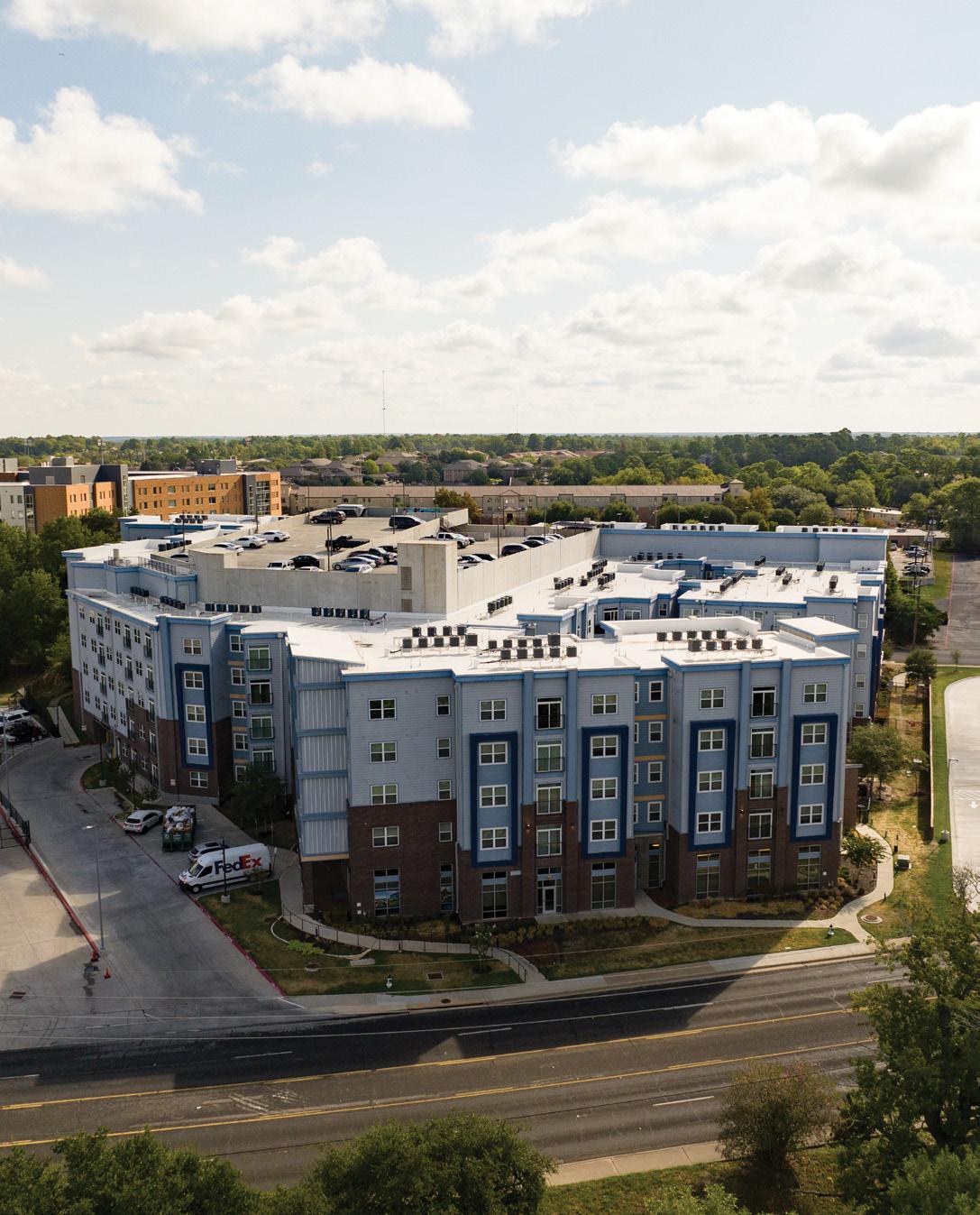
Continuing its expansion into the student housing sector, Time Equities Inc. (TEI) has acquired The Armory at Sam Houston (The Armory), a student housing complex located at 2257 Sam Houston Ave. in Huntsville, Texas, for $25.75 million. This acquisition marks TEI’s fourth venture into student housing, and its first property in the sector in Texas.
Built in 2018, the 145-unit, 502-bed development stands as the nearest privately owned student housing property to Sam Houston State University’s campus.
“The purchase of The Armory presented TEI with an exceptional opportunity to further our student housing portfolio in a new market,” said Bobby Cohan, senior acquisition and asset manager at TEI. “We continuously identify value and growth potential in student housing nationwide, and we are actively seeking new acquisitions to augment our portfolio within this asset class.”
TEI strategically targets assets serving public, Tier 2 institutions, catering to schools with a student population ranging between 10,000 and 20,000. TEI also owns assets at East Tennessee State University in Johnson City and Tennessee Tech University located in Cookeville, as well as a property in Richmond, Virginia that serves Virginia Commonwealth University (VCU).
“Time Equities was the ideal candidate to acquire The Armory, given their track record of success with student housing projects in Tennessee,” remarked Ryan Lang, head of student and co-head of alternative real estate assets at Newmark, who served as Stonemont and TEI’s broker for the transaction.
TEI was represented in-house by Bobby Cohan and Brad Gordon. The seller, Stonemont, was represented by Newmark.





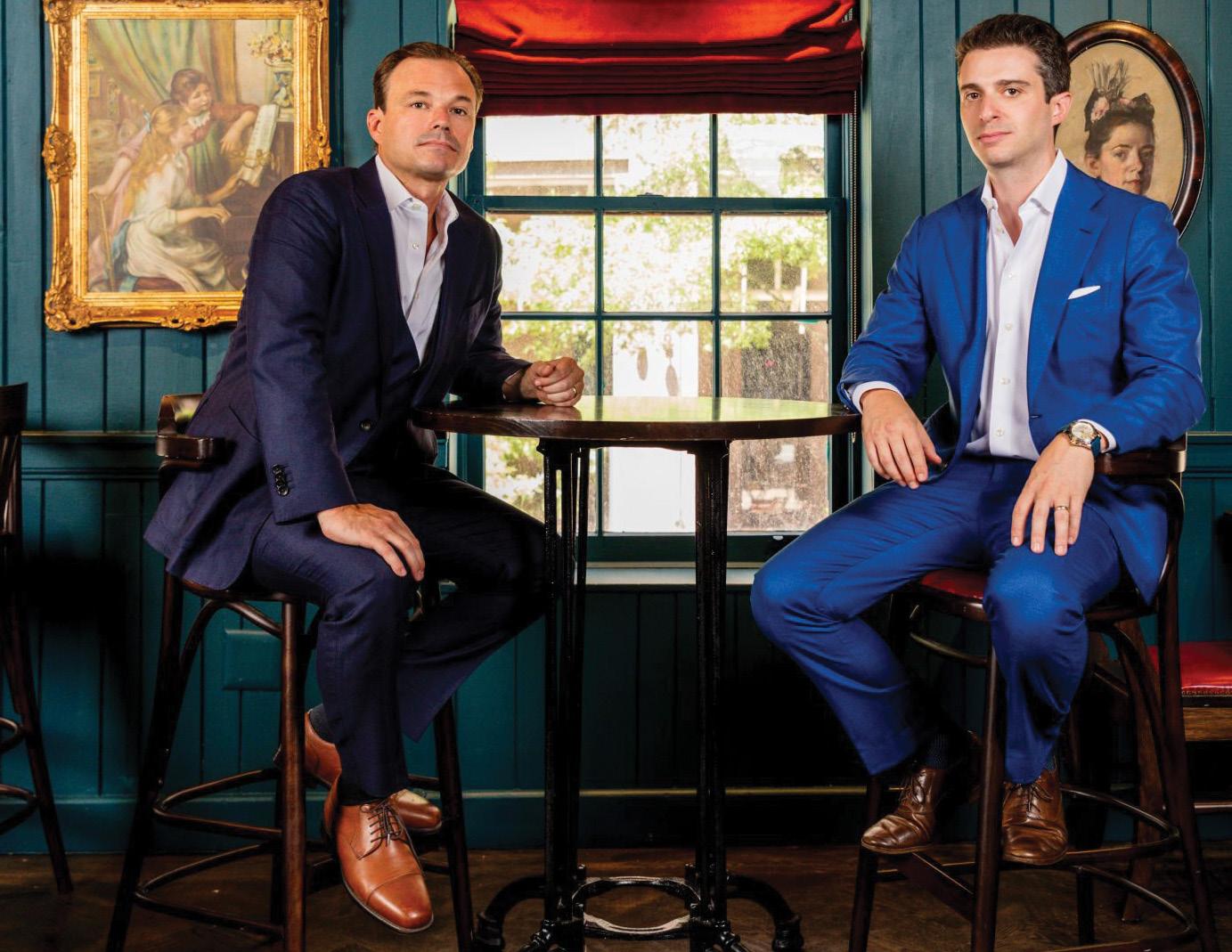
After 40-plus years of a real estate career that has seen some 2,300 transactions totaling over $21 billion in New York City, and stints with some of the largest brokerages in the world, Bob Knakal has realized one major thing.
He’s an entrepreneur at heart. And he wants to pioneer a new path using the latest technology that shows others can be, too.
“The world is changing,” Knakal said. “The real estate world has always been way behind in terms of new technologies. It’s an analog business in a digital world.”
That’s why Knakal, just weeks after an unceremonious departure from JLL in February, formed BK Real Estate Advisors (BKREA). The new firm, which provides capital markets transaction and consulting services to property owners, utilizes technology such as AI to better serve the team and clients, Knakal said. The result could even marginalize the need for large brokerages.
“This can change the business in two very profound ways. One is in the prospecting and executing of business,” Knakal said. “The other is the interpretation of data. Even a single-person shop can do what a big company used to do in the past.”
Massey Knakal Realty Services, growing the firm over the next twoplus decades.
“Although Paul and I were at CB for four years, we really wanted to leave after two — we didn’t think we could easily get a bank loan,” Knakal recalled. “We had that entrepreneurial spirit.”
In 2014, the pair sold Massey Knakal to Cushman & Wakefield for $100 million, and Knakal rejoined the world of big brokerages. He served as chairman of New York investment sales until 2018, then joined JLL in a similar role until this year.
The pandemic had given him an opportunity to push the business in a different way. With the city shut down, Knakal and his team walked the empty streets and created detailed maps of every building in Manhattan south of 96th Street. Stored in one secret location, the “Knakal Map Room” has become real estate lore, and something of a pilgrimage site for select real estate professionals.
“The real estate business is the information business and the relationship business.”
-Bob Knakal
From his early childhood, running his own business has been in his blood. A child who had to be dragged out of bed to go to school was the first one up to shovel neighborhood driveways on snow days, he recalled.
Later on, Knakal’s career began with a bit of serendipity. The Maywood, New Jersey native had planned to be an investment banker after attending the Wharton School at the University of Pennsylvania. On spring break during his freshman year, he sent a resume to Coldwell Banker (later CB Richard Ellis, then CBRE), thinking he was applying to a bank, for a summer job. Instead, he landed in and fell in love with real estate. After three college summers at CB, he decided to work for the company full time after college in Manhattan. On his first day, he met Paul Massey Jr., who guided him to the office’s coffee machine and became his partner, building a business based on deep market expertise. In 1988, the two formed
And then came social media. Knakal said that he has always believed that business comes through networking, attending events almost daily throughout his career. Pressured by his peers, Knakal quickly saw that social media could provide another entrée to deals.
Starting in January 2023, Knakal and his social media team began posting about business, his own history and bits of advice, and rapidly grew a national following.
“I wanted to go beyond posting the price and the size of the building. I wanted to be different from what everyone else was doing,” he said. “I enjoyed motivating the troops at Massey Knakal, so that became Motivational Monday. We have Testimonial Tuesday. I have boxes of photos and material from the old days, so that became Throwback Thursday. It’s very different from ‘I just listed this’ or ‘I just sold that.’”
Today, he has more than 40,000 followers on LinkedIn, 32,000 followers on X (formerly Twitter) and 8,000 followers on Instagram, achieving more than 23.5 million impressions and views in 2023. In

March, he was named the No. 1 commercial real estate influencer on LinkedIn by CREiSummit, a group of real estate professionals focused on expanding the use of digital marketing in the industry.
That higher visibility came at a price. Within days of a February 11 “New York Times” profile on Knakal and the Knakal Map Room that mentioned JLL just once, the company parted ways with the veteran broker. Speculation was rife online about Knakal’s next move — joining another big firm, partnering with another superstar broker or going out on his own.
They didn’t have long to wait. On X, Knakal announced BKREA, a firm that will utilize the data he has compiled and applying AI and other technologies to find trends and patterns to serve his clients.
“The time at Cushman & Wakefield was expected because anyone who would buy us would expect us to be on service contracts,” he said. “The time at JLL was not at all what was expected. It’s great to be an entrepreneur again.”
With 40 years of relationships and deals under his belt, joining another large firm wouldn’t have given him much more in terms of client access, he said. Instead, he sought the opportunity to once again build a firm his own way, while exploring what artificial intelligence can offer.
With a Midtown office (and a secure location for the Knakal Map Room), Knakal’s first hire was Sam Samowitz, a data scientist who is creating proprietary algorithms that can reveal market trends, as well as perform the support tasks that had been one of the benefits of working with a larger firm.
“Most data sets in the real estate business are not very good,” Knakal said. “These data sets from third-party aggregators are collected by people who are not participants in the transactions, so they can’t give, or obtain, inside details.”
Absolute numbers, he continued, don’t mean all that much — what matters is the relationship between the numbers and where they’re going. Even definitions can vary. Is the Empire State Building, which has some retail at the base, considered a mixed-use project? How will a shift in public policy affect a market? BKREA’s mission is to put data into context in order to maximize the potential value to investors.
“For example, in 2019, there was $23.6 billion in investment sales activity in Manhattan for deals over $10 billion,” he observed. “But in 2015 there was $54.7 billion. When it comes to information, it’s the
interpretation of the information that matters.”
Prior to forming BKREA, Knakal had been working with two data scientists for about a year, applying AI models to see what factors or combinations of factors will be predictive of changes in the market. The first result will be the Knakal Land Index, focused on Manhattan south of 96th Street, with other indices to come. Other models will focus on the multifamily market, where Knakal has 40 years of data, and office rents. But even with all this information, the goal is the same.
“The more clients are informed, the better decisions they can make,” he said. “The best time is to have that information is now, particularly if the AI algorithms can do what they think they can.”
BKREA has also formed the Knakal Affiliate Program, or KAP, a group that will facilitate referrals and collaborations between brokers and firms.
“The real estate business is the information business and the relationship business,” Knakal said. “We’re not a tech company. We’re a real estate brokerage business that uses the technologies that are available. You can have the greatest model in the world, but if people don’t like you or want to work with you, you can’t succeed.”
Just weeks into BKREA’s life, it has a nine-person team and several deals already under way, Knakal said. And life is freeing as an entrepreneur.
“There’s a new vivaciousness to every aspect of every deal you’re doing,” he said.
That noted, he doesn’t plan to expand BKREA into another megacompany.
“A firm of 15 to 20 people can do what 100 people could do in the past,” he said.
And just as important is his legacy of encouraging others to start their own businesses or run their own departments.
“What I’m most proud of is that today, there are 30 companies or divisions of companies being run by former Massey Knakal brokers,” he said. “We ran that business with a true servant leadership philosophy. We told them how proud we were of them. We believed in building up folks, training intensely and getting them to realize they could do even better. That produced some of the best investment sales brokers in the city. History doesn’t necessarily repeat itself, but it always rhymes.”


“History doesn’t necessarily repeat itself, but it always rhymes.”


Levy Goldenberg stands out for its unwavering dedication to clients. Located in downtown Manhattan, Levy Goldenberg LLP specializes in commercial and real estate litigation. With a foundation of extraordinary legal representation, Levy Goldenberg LLP is becoming a trusted partner in the Big Apple's complex legal world.







We aim to provide a transparent, practical approach to commercial and real estate disputes in New York. Our vision is to not only offer exceptional legal services but also to drive progress and innovation in the legal community and New York City.





 Courtesy of The Athens Group


It might seem that the development of the Asher Adams Hotel in downtown Salt Lake City is a tale of preparing for the Olympics. But the redevelopment of the former Union Pacific Train Station into a luxury hotel is also a story of preserving the past, the ongoing energizing of an urban area to create a new future and, yes, the Olympic Games.
What had been a vital transportation hub in the early part of the 20th century eventually became obsolete and turned into an events venue. Now, The Athens Group is recreating the space into the Asher Adams, a 225-key hotel that will keep the integrity of the original building, including preserving the train station’s iconic French empire architecture, while creating a destination that will serve travelers and a thriving downtown residential and business area when it opens in the fourth quarter of this year.
“Salt Lake City is ready for a new upscale hotel,” said Eric Peterson, vice president of development and project executive at The Athens Group. “We are fortunate to be in the heart of downtown and to restore the historic train station as part of this development. This makes for a powerful combination to offer something the city has never seen before.”
It’s the latest chapter in a century-long saga. The Union Pacific Railroad opened the train station in 1908, and saw it flourish through the early part of the century. In the 1970s, however, when Amtrak took over passenger rail services, all trains were moved several blocks south. Some redevelopments were undertaken over the years, but the building largely was used for special events. Meanwhile, what had been the outskirts of the city became the core of downtown.
“I’ve visited that mall and Union Pacific building many times over the last 20 years, and that amazing train station has wanted to be a hotel for a long time,” Peterson said.
The station is often considered the front door to the Gateway retail complex that had been developed in time for the 2002 Olympics, surrounding the Salt Lake Olympic Plaza. Arizona-based development company Vestar acquired the property in 2016, and revitalized the Gateway retail, office and entertainment property, even as the downtown had grown into a 24/7 destination. The complex is the home for major celebrations including New Year’s Eve, and is within walking distance of the Delta Center, home of the Utah Jazz, and other arts facilities. But Vestar saw that the train station was being underutilized.
“The main hall was a beautiful icon that wasn’t fulfilling its purpose used for wedding receptions,” said Bryan Hill, general manager at Vestar. “We wanted to create a living room for the city.”
Vestar brought in The Athens Group, long known as a luxury hotel developer, to turn the existing station
into 13 historic guest suites, as well as adding a new building to house 212 modern rooms, multiple food and beverage outlets. The team then waited as the pandemic paused development.
Meanwhile, the group made extensive plans to preserve the character of the existing building, even as it adds modern amenities. Its stained-glass windows were preserved, as was much of the original lighting, even as the acoustics were upgraded to align with hotel standards. All was done under the rigorous review of the Historic Landmark Commission.
“My favorite part of the development is the careful restoration of the old building; to see things like the old brick, the windows, the decorative plaster come back to life,” Peterson said.
The redevelopment couldn’t have come at a better time. The 2002 Winter Olympic Games brought new attention to Salt Lake City — annual skier days rose 43% in the years following the games. It also revitalized interest in the city as a great place to live.
“The Olympics helped put Salt Lake City on the map,” Peterson said. “In the last 15 years, we’ve experienced a real building boom, and now the city has become a prime destination for leisure travel, operating a business and raising a family.”
Specifically, the downtown is booming with entertainment, apartment construction and hospitality and new developments. There is a burgeoning healthcare and life sciences industry moving in. In 2002, Vestar leased space at the Gateway to the BioHive Hub, which is now home to multiple science companies.
The Gateway has seen only minor inconveniences during the construction, Peterson observed.
And now the city is looking to repeat as a global sports home, named by the International Olympic Committee in April 2024 as the preferred host for the 2034 Summer Olympics. The result is an anticipated immense uptick in visitors, many of whom will want a luxury experience in the heart of the action.
The Adams Asher will boast two bars inspired by the train station: General Baggage, located in what once was part of the baggage storage area, and Little Nugget, named for a luxury lounge car. An upscale restaurant also is planned, with the goal of serving locals as well as visitors.
“Our restaurant is going to be a destination of its own, whether or not you’re staying at the hotel,” Peterson said. “And the restoration of the space in the train station will give everyone access to this tremendous history that they will be able to experience in a new way — everything in the restaurant from the menus, the recipes and the service is being curated to complement the design and restoration of the train station.”
Malls, once emblematic of consumer culture, are now undergoing a profound metamorphosis to align with the evolving demands of the 21st century. Transitioning into vibrant lifestyle destinations termed “Town Centers,” these spaces seamlessly blend entertainment, dining, retail, housing and collaborative work environments.
A prime example of this transformation is unfolding in Buffalo, New York, where the Eastern Hills Mall is currently undergoing a redevelopment initiative that will reshape its identity into an urbanesque, pedestrian-friendly setting that harmoniously integrates retail, entertainment, health and wellness amenities, alongside office spaces and residential options. According to the American Planning Association, mixed-use development allows for greater housing variety and density, encourages more compact development which supports tax revenue growth for the surrounding community, strengthens neighborhood character and sense of place and promotes pedestrian- and bicycle-friendly environments.
Built in 1969 and opened in 1971, the Eastern Hills Mall was home to several anchor stores including JCPenney, Sears and Macy’s. The mall underwent an extensive overhaul in 1987 that added a food court and, throughout the years, minor cosmetic renovations.
Following well-documented changes in consumer buying preferences, the growth of online shopping and the subsequent closure of several brick-and-mortar anchor stores, in January 2024 mall owners and developers Uniland Development Company and Mountain Development Corp. (MDC) closed the interior concourses of the mall to begin the transformation into a new town center.
Although in-store shopping is still preferred when looking at the data, 20.1% of retail purchases are expected to take place online in 2024, up from an estimated 18.8% in 2023, according to eMarketer’s forecast 2024 report. And this number is expected to grow each year — by 2027, online retail purchases are expected to hit nearly 23%, according to Statista figures.
Upon full buildout, Eastern Hills Town Center is projected to be home to 1,500 residential units, one million square feet of office and medical space, multiple restaurants, retail stores, hotels and parks for outdoor event space. The total landscape is made up of 100 acres, located on the sought-after border between Clarence and Amherst, two of the strongest towns for population growth and income in western New York.
The future town center will provide a mixed-use, village-like atmosphere, with 24/7 activity supporting a live/work/play lifestyle.
To save the American mall model from its own demise, we must adapt to 21st century trends. The consumer pool has broadened because of mixed-use developments. We’re now catering to corporations, retailers, tourists and residents. As we crafted the vision for what the town center would be, we remained persistent in our commitment to prioritizing the needs and desires of consumers.
Town centers are experiencing increased popularity throughout the United States due to rising demand for the charm of suburban living coupled with the convenience of walkability and accessibility to nearby vendors. According to a National Association of Realtors report, 79% of respondents rate walkability as “very” or “somewhat” important, and 78% say they’d pay more for a home in a walkable community. This figure increases to 90% when looking at Gen Z and millennial respondents.
As for amenities, according to McKinsey, “Around 50% of U.S. consumers now report wellness as a top priority in their day-to-day lives, a significant rise from 42% in 2020.”
Mixed-use developments like this are especially appealing to businesses regarding talent recruitment. Employees are drawn to the convenience of having lifestyle amenities within easy walking distance, eliminating the need for driving. Walking or biking also leads to financial benefits, such as lower auto expenses for insurance, maintenance and gas.
The town center model supports many Americans’ recent prioritization of work/life balance. In recent years, studies have shown that the workforce prioritizes work-life balance, sometimes even over salary — 72% of workers believe work-life balance is a critical factor when choosing a job, according to a Zippia report.
Adaptation is essential for navigating the complexities of an ever-evolving world, and within the realm of commercial real estate, this holds particularly true. Amidst dynamic shifts in work patterns, housing trends and consumer preferences, the imperative to adapt has never been more pressing. We perceive these shifts not as a challenge, but as an opportunity for advancement. By embracing change, we unlock the potential to bolster the economic vitality of entire communities, ushering in a new era of prosperity and progress.



Artificial intelligence (AI) is poised to significantly alter many of the scopes, processes and tools that are foundational to the Architecture, Engineering and Construction (AEC) industry. AI will change the way our industry estimates cost and develops construction schedules. We will see improvements in the development of cost- and schedule-informed design options, increased accuracy of cost models, enhanced project risk management, informed decision-making and efficient project delivery. AI will transform activities from the development of design options, optimization of engineering models, BIM population and coordination, real-time quality review and controls and close-to-realtime pricing takeoffs. AI stands to automate and accelerate many labor-intensive, repetitive tasks. Project leaders utilizing AI will have more impactful information earlier, resulting in better decision-making with a wider variety of intelligent options.
With machine learning already altering many of our coordination processes and implementation tools, AI will assist the development of higher-level project controls, including resource allocation, cost analysis, risk management, productivity assessment and generative design. Historically, these core tasks relied on intuition through experience, situational awareness of project conditions, cerebral acumen, as well as time-consuming data collection, analysis and interpretation. AI can shoulder the time and accuracy burdens, keeping a watchful digital eye on the hundreds of thousands of project and market performance data points.

Rather than replace human insight and wisdom, AI will declutter our dashboards and allow for earlier and faster decision-making. These new tools and add-ons will scour, collate, consolidate and populate, presenting more accurate and pertinent data. Delegating these time-intensive tasks to an AI yeoman will free project leaders to focus on the most high-value tasks — accurate and timely forecasting, interpretation of trends, wellinformed decision-making, management of partner-vendor relationships and curating effective strategy.
The convergence of 3D and 4D BIM modeling for projects, with intelligent objects now embedded in modern design practices, allows AI tools to immediately read and interpret project designs in ways unthought of only five years ago. The integration of intelligent object-based CAD design, coupled with AI’s ability to rationalize large data sets for benchmarking of project cost and risk data, will allow faster and more in-depth analysis of project costs and risks.
AI-based tools will begin to actively track and analyze impacts of material and labor pricing on project budgets. This capability will incorporate BIM-integrated links to distribution channels auto-updating material prices, detecting competitive pricing from alternative vendors. It will auto-test and track variations in lead times, regional cost variations, logistics and shipping. The integration web will have capability to incorporate weather predictions, manufacturing schedules, labor availability and costs, alerting project managers and owners to advantageous shifts and probabilities of interruptions.
AI-based tools will begin to prepopulate and manage design and construction schedules based again on intelligent 4D design practices. Program-level parameters, such as project type, location and space program, will inform detailed schedules for design phases, construction, technology implementation and commissioning. Milestones and progress-to-target data sets actively update schedule status. During construction, progress is updated via photos, field crew updates and other real-time status assessment tools. Some of these assessment tools will be automated robotic assistants, while others will be mobile tools carried by professionals in the field.
One of AI’s most broadly effective characteristics, automation, is ushering in a new era of systematized administrative operations, documentation and archival management. Within our industry, AI brings much-needed efficiency to low-value, transactional tasks that consistently sap time and human resources. AI tools will dramatically improve accuracy of documentation processes and will — to a far greater benefit — integrate the hundreds of thousands of requests, decisions, identification of issues, task assignments, meeting requests and a host of other activities that are noted during meetings.
Presently, these meetings are taking place virtually, in board rooms, at architectural offices, in engineering charrettes,
field huddles, construction swarms and more. By accurately integrating these conversations in real time, AI will align decisions and alert teams to misalignments. AI will enable the monumental alignment of resources, leapfrogging us away from today’s time-intensive and conjecture-biased processes into a whole new league of collaboration.
Project Management
Project managers will have formidable tools that work at greater speeds, in real time. Much of the work of a project manager is to evaluate project data, make judgments on that data as they assess project health, risks and strategy and enact necessary changes in approach or strategy. AI-based tools will provide real-time status and forecast of scope, cost and schedule, allowing project managers to focus on higher value activities, such as cost-saving opportunities, lagging construction sequences, impacts of seasonal weather on construction pace, scope conflicts and gaps, as well as budget challenges or opportunities. This, in turn, better equips program and project managers with data analysis and project intelligence that drives better informed decision-making.
AI tools will quickly analyze vast amounts of project data and, more importantly, ancillary regional and global data. Project managers will benefit from a global view with regional implications. In a sense, the predictions and intuitions of today’s best prognosticators will be replicated and upgraded by our software savants. This will result in faster, better and more effective market delivery of the built environment.
Optimizing Generative Design and Visual Communication
The AEC industry can be described as physically manifesting the outcome of visual data sets. AI-based generative design tools are already delivering vision-based renderings that not only allow stakeholders to virtually see finished product, but to experience and test the finished product. Alternative analysis using iterative mockup-test designs, beta testing of viable options and measurement of client user experience and project performance is now possible.
In luxury residential, for example, our clients currently experience a multisensory virtual experience of design alternatives, including views throughout seasons, weather phenomenon, walking distances, sound and light variations — each with preferences and requirements automatically registered into the simulation. Now, renderings are visual and multi-sensory experiences. Moving into the new spaces will create a new sense of déjà vu since the clients have already experienced the project in a variety of seasons, occasions and special events. All of these reactions, preferences and requirements will feed into the final design, delivering a result synthesized with the client’s expectations.
AI is remarkably adept at receiving, compiling, analyzing and interpreting large data sets. Construction project management is awash in massive amounts of data, generated at all levels of a large project. Compiling that data and presenting it concisely and effectively improves business intelligence and decision making. What has historically been more intuitive, experience-driven decision-making can be replaced by informed, datadriven decisions with quantitative analysis of alternatives seen through the lens of meeting client project objectives. Waiting weeks or months for an update on construction changes can now be replaced by real-time alternative analysis and consideration, all before the change is enacted.
With the potential to revolutionize the AEC industry at record speed, AI’s adoption and intentional use within firms will likely deliver significant competitive advantages over organizations that stay-the-course with more traditional tools and methods. As with any disruptive technological advancement, AI’s opportunities and near-horizon limitations will provide direction and resolve in achieving new optimizations. In more than a century of innovation, AI will be as disruptive and advantageous as any innovation of the industrial revolution.
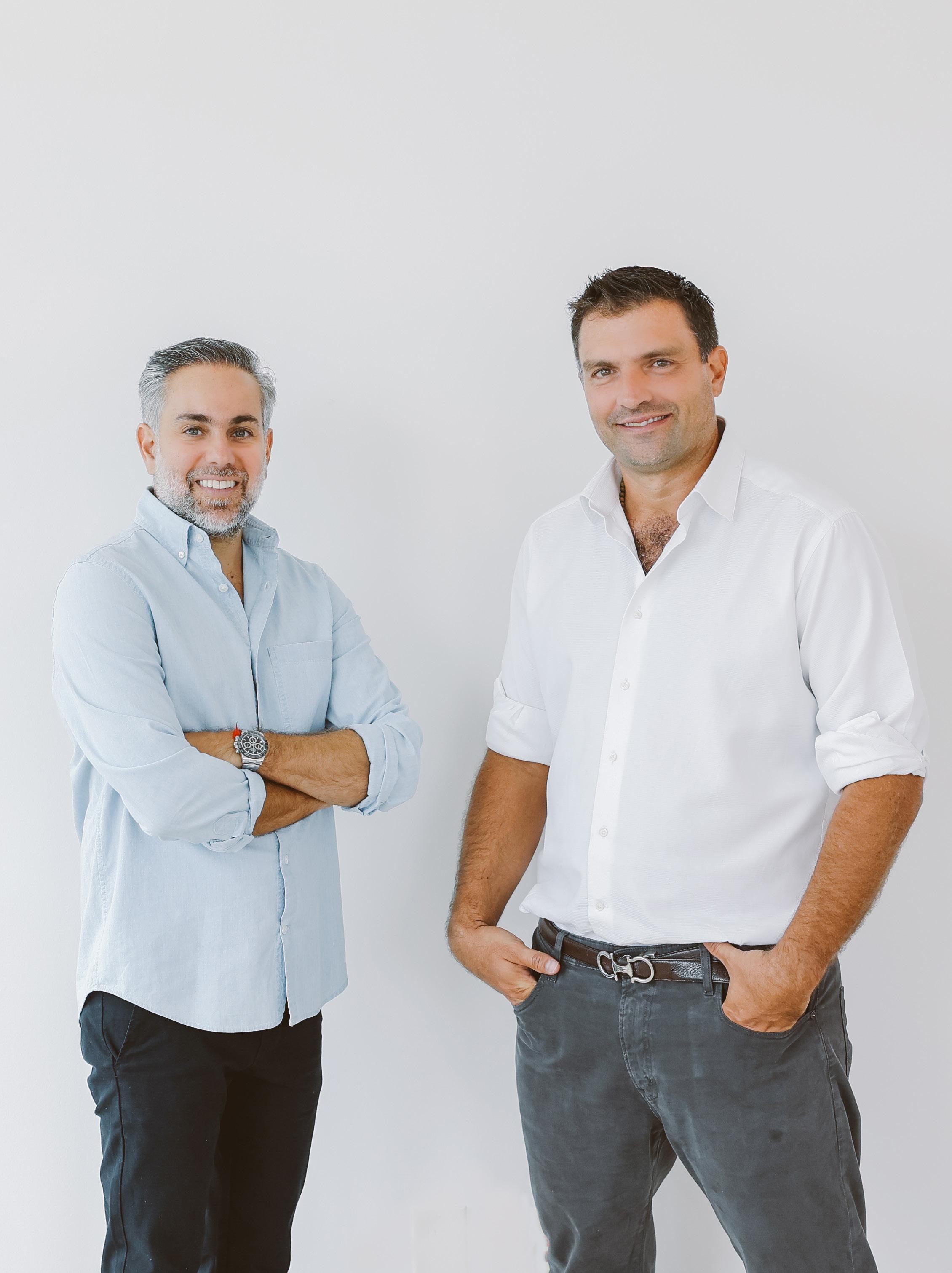

In Miami, where real estate often revolves around luxury condos and hospitality, lies a force reshaping and enriching urban neighborhoods with a unique vision. Case in point: a long-vacant and abandoned church site in Hallandale Beach, Florida that had been desecrated. But since 2023, it has been a Montessori school that serves more than 160 pre- and elementary school age children.
“This school will breathe life into an unused and desolated property and turn it into a source of community pride,” said Martin Saidon, CEO and co-founder of Fortec, a Miami-based, nationally focused real estate development company specializing in built-to-suit educational projects that are designed to support community growth and revitalization. Fortec invested $10.47 million and partnered with Higher Ground Education, the largest Montessori school operator in the world, to reinvent the site.
It follows a similar partnership in 2020, in which Fortec and Higher Ground teamed to open a school in Hollywood, Florida. The property, which sat abandoned for many years, had become a base for the homeless and was deteriorating the quality of life in the community around it. After the school’s opening, the neighborhood began to see a ripple effect in improvements.
“Once the school opened, it was incredible to see how the area began to transform,” said Pablo Barreiro, Fortec chairman. “New businesses were moving in, and even the city began investing in revitalizing the public spaces. The school played a key role in uplifting the community and bringing people together.”
By partnering with quality educational operators and investors who share their vision, Fortec aims to enhance communities by redeveloping vacant buildings into high-quality educational facilities — specifically in early education, its founders said. Since its inception in 2020, Fortec has developed 18 schools nationwide to date, amassing more than $150 million in transactions. The portfolio totals more than 300,000 square feet of commercial real estate across Florida, Massachusetts, Virginia, Washington, Georgia, Texas and Illinois.
Barreiro and Saidon, both natives of Argentina and both parents to school-age children, share a commitment to social impact and believe that developing high-quality schools can catalyze community growth and empowerment. The two established Fortec after discovering that the educational industry was severely underserved.
“As parents, concentrating on educational projects is fulfilling be-
cause we know we are playing a small role in each child’s education,” said Barreiro.
Both, however, bring a combined 40 years of experience in financing, purchasing, selling and managing real estate assets. After earning bachelor’s degrees in economic and political science, an MBA and Juris Doctor degree, Barreiro worked as a commercial real estate broker and investor, as well as in-house counsel for a multinational real estate company. There he gained insights into dealing with lenders, sellers, buyers, agents and government officials.
“When I discovered the education sector, I was intrigued,” said Barreiro. “No one in the industry was talking about it. We quickly recognized that this was an opportunity to venture into an industry that was completely underserved.”
Saidon’s two decades of experience in real estate spans both the commercial and residential sectors. Drawn to the financial side of the industry, his knack for development, sales and lending is bolstered by his deep, value-driven analysis and ability to identify undervalued assets and turn them into profitable ventures, the company said.
Their own lives provide inspiration for the projects and Fortec’s charitable endeavors. As parents, Saidon and Barreiro draw inspiration from their own families in the projects they work on, they said. Their experience gives them an understanding of what other parents seek in a school facility and considers the kind of environment that will help students thrive.
Fortec’s dedication to supporting the community’s youth is exemplified by its philanthropic initiative, Fortec Cares. Through this program, Fortec contributes to various causes that benefit youth and families, including the Nicholas Zoë Foundation, a Miami-based nonprofit organization that advocates for pediatric sarcoma patients by funding research and raising awareness about the disease. Fortec financially supports the foundation’s efforts to improve outcomes for children affected by cancer.
In addition, when Fortec acquires former educational properties, the team often uncovers valuable items in excellent condition, such as computers, books and toys. These resources are donated to organizations like Resource Depot, a nonprofit creative reuse center helping others see value in discarded items, and schools such as Mountaineer’s School of Autism and All Stars Child Development Center, ensuring they reach those who need it most.





June 10, 2024
TOURNAMENT CHAIR
CHAIRS EMERITI
Robert E. Helpern*
Tannenbaum Helpern
Syracuse & Hirschtritt LLP
Roger A. Silverstein* Silverstein Properties, Inc.
Samuel B. Lewis* SBL Property Consultants, LLC
Stephen B. Siegel** CBRE, Inc.
* Member, National Jewish Health Council of Trustees | ** Co-Chair, National Jewish Health Council of National Trustees
Funds raised will support groundbreaking medical research and treatment for patients with lung, heart, immune and related conditions, including asthma.
REGISTER OR DONATE TODAY
njhealth.org/NYGolf
Mattie Shepheard | 212.297.0857
ShepheardM@njhealth.org

We may be one of the 10 largest banks in the U.S., but we never lose sight of the individual. Our Relationship Managers personally get to know your business, taking the time to understand your unique needs before offering their custom solutions. And with over 150 years of industry experience, you won’t just like working with us. You’ll love it.
tdbank.com/commercialbanking

A bit of Manhattan will go “down the shore” with the development of The Atlantic Club, the first luxury high-rise condominium development in Long Branch, New Jersey, now underway for a spring 2026 completion.
Located steps from Pier Village, the retail and residential complex, The Atlantic Club will feature 132 one- to five-bedroom luxury condominium residences with two spectacular penthouses. Residences will range from 993 square feet to 4,246 square feet with prices ranging from $1.12 million to more than $5.95 million.
“It’s such a joy to develop art”
-Roy Stillman
Unlike high-rises along the New Jersey waterfront, The Atlantic Club will be reminiscent of the most exclusive New York City developments, boasting a 3,000-square-foot, art-filled lobby, residences with high-end appointments and over 75,000 square feet of indoor and outdoor amenities, all on one of the few remaining beachfront locations in the state.
“The idea of vacant land of any magnitude on the ocean just doesn’t exist,” said Roy Stillman, lead of design and development of Stillman Development LLC, a co-developer with Surrey Equities and Gotham City Real Estate.
The location had previously been home to Seaview, two rental towers from the 1950s and 1960s. Stillman had the land under contract, but the existing buildings were found to have environmental issues. The development group was given two options: have the city take it down, or they
could — with the developers picking up the tab.
“We actually took the buildings down while still under contract to buy them, which is very unusual,” he said. “But we had the opportunity to acquire just under four acres with about 450 feet of frontage. You may never see that again in your career, especially in a tough regulatory environment.”
Located in an Opportunity Zone, the project could have been a rental development, but the sales market is so strong that the partners decided to build condominiums instead. And at the adjacent Pier Village, they had a template for what to do — and what not to do.
The first decision was to go make a commitment to luxury after visiting the mixed-use Pier Village.
“Long Branch has hit a tipping point,” Stillman said. “Prior to tipping point, it was a nice place for a rental. Then it became the place for private homes. In some parts of Pier Village, prices have doubled. Now, we’re almost at Manhattan prices.”
Unlike some parts of Pier Village, where some residences don’t have ocean views, the two towers of The Atlantic Club are taking full advantage of its waterfront location. Only four of the 132 residences won’t have a direct ocean view.
“Why is a person buying a condo on the ocean? To see it,” he said.

“People come here to look at the sea, sunrise, sand and ocean, and experience that peace you get from that.”
That peace will further be enhanced by the lack of commercial space. Instead, the tone will be that of a fine art gallery. The lobby sets the stage for residents and guests with a marquee entrance that will rise to a height of 18 feet and nine inches. Stillman has called upon Cristina Grajales, owner of the Cristina Grajales Gallery, to reimagine the lobby and building overall as a gallery. Grajales, in turn, engaged Christophe Côme, a French glass sculptor whose work is featured in Chanel stores around the world, and Jorge Lizarazo, one of the world’s leading textile and tapestry artists from Hechizoo atelier, to create new works specifically for the project.
“It’s such a joy to develop art,” Stillman said. “That’s one of the subthemes of our company — we’re artists who work in real estate.”
The residences, too, will be luxuriously appointed, outfited with white oak-style flooring, recessed lighting, custom cabinetry, state-of-the-art integrated kitchen appliances and bathroom spaces with imported porcelain marble. The indoor and outdoor amenities will include deeded parking spaces for 300 cars; an expansive pool deck with sunbeds, fire pits and barbecue grills; a fitness center with dedicated studios for spinning, cardio, yoga and weight training; a business center; a game room with billiards and poker; a dedicated virtual reality room and sports simulator; a cinema and a children’s playroom.
Each floor is set back, allowing wraparound eight-foot-deep balconies and terraces, designed to be strong enough to hold a hot tub and barbecue, so owners can enjoy the views.
“The inside is unbelievable; the outside is irreplaceable,” Stillman said.
Many of the prospective buyers are likely to be New Jersey-based families and downsizers, looking to move from suburban houses or have a second vacation home. However, the developers are seeing interest from Philadelphians and even Manhattanites, given the convenience of nearby ferries to New York City. But whether The Atlantic Club will be a full- or part-time home, its buyers will literally be at the top of the ocean.
“It signifies, ‘Honey, we made it,’” Stillman continued. “’Look at what we’ve got.’”





In a city where you can normally access just about everything, renters unwilling to compromise to suit the needs of their families face a shortage of quality three- and four-bedroom apartment options in New York City. Of the roughly 6,700-plus apartments currently listed for rent on Streeteasy, less than 1,200 are three- or four-bedrooms.
This is at a time in the market when renting is preferred over buying, not only because of high-interest rates, but also the ease of having everything at one’s fingertips without the responsibility of home ownership. The renter-bychoice trend is among us.
Many affluent residents who left New York during the pandemic for places like Florida, Texas, Arizona and California are returning to a rental scene still dominated by studios, and one- and two-bedrooms. Zero in on some of Manhattan’s trendiest and most expensive neighborhoods — TriBeCa, Hudson Yards and Central Park South — and the choices for multi-bedroom units, along with expansive, contemporary amenities are even more far and few between. A 2022 study from the Economic Innovation Group highlighting trends in post-pandemic outmigration of cities found that the population of young families was quickly declining due mainly to larger space requirements.
Increased demand for additional space can be seen due to another postpandemic trend: hybrid and remote work. A 2023 American Enterprise Institute working paper notes that while remote work allows for professionals to move out of city centers and into suburban and rural areas, large cities are still attracting remote workers. This can be attributed to third spaces (like libraries, public parks and museums), coworking options and amenities that city rentals can provide.
Developers in tune with the trends are filling the gap and providing unique and luxurious residential experiences amongst a vast range of unit sizes, with exciting amenities to boot. Now, instead of a resident taking their laptop to a coffee shop or a coworking space and trying to find the Wifi, new rental development properties provide access to everything from high-speed internet, soundproof booths and conference rooms to office nooks and 60-inch TV screens for Zoom calls.
Premier luxury residential property
Anagram Columbus Circle, for example — developed by Global Holdings near Central Park at the entrance to the Upper West Side — has ensured its luxury experiences are not limited to parties of one. Of the building’s 123 residences, roughly one-third are threeand four-bedroom apartments, located throughout the 26-story tower.
Offering studios to four-bedroom units, Anagram Columbus Circle residents have access to 13,000 square feet of amenities focused on an ultra-luxe boutique hotel experience by INC Architecture & Design, which designed the four levels of amenities in partnership with Global Holdings. This includes a rooftop with a catering kitchen, outdoor grills and a fire pit.
Additionally, there is a Clubhouse with a private resident garden, conference room, teen lounge, multisport simulator, STEM-inspired study area, children’s playroom, outdoor garden, music room and a Central Park kit room — a firstof-its-kind New York City rental offering housing seasonal needs such as sleds, mini grills, scooters, tennis rackets and more for a day of fun in Central Park.
Recognizing the lack of robust inventory in the city, Anagram Columbus Circle continues to attract a diverse mix of occupants who want to live in a premier location with access to luxury amenities. The results have been evident — Global Holdings recently announced that Anagram Columbus Circle reached its 50% leased milestone.
When developing Anagram Columbus Circle, Global Holdings sought to offer the intricate, detail-oriented amenities and design that make the residences so appealing, while diversifying the unit mix to attract a diverse pool of luxury renters who would be drawn to the excitement and accessibility of the area. Anagram is infused with exceptional experiences, so residents have everything at their fingertips both inside and outside of their apartments.
In New York City, the portion of rentals vacant and available dropped to 1.4% in 2023, the lowest vacancy rate since 1968, according to city data released in February.
Savvy developers seeking to fill a void in the marketplace have already begun to transform their amenities to reflect today’s needs. Next, should come the diversification of the unit mix.


Monday, August 5, 2024 | 9:00 am
Pine Hollow Country Club


Kenneth Lovett, President, John B Lovett & Associates



To Register and for Sponsorship Opportunities, please visit jnf.org/golfandtennis



More than 35 years of real estate,
WilkinGuttenplan uses expert industry knowledge in accounting, audit, and tax services to assist New York City real estate owners, developers, and investors of commercial and residential properties identify opportunities and guide them on implementing strategies to stay ahead of changing times.



 Carol A. Sigmond Partner
Greenspoon Marder LLP
1345 Avenue of the Americas, Suite 2200 New York, NY 10105 carol.sigmond@gmlaw.com (212)524-5074
The New York City property tax system is broken. The systemic intended bias, partial to outer borough single-family homes and pre-1973 cooperative and condominium units, has created chaos as befits a governmental policy of irrational favoritism. Here, not only is the law actively biased, but the manner of implementation by the city has made the situation worse.
A challenge is being brought by Tax Equity Now NY LLC (TENNY), a progressive group seeking tax equity for people of color in multifamily rental buildings. TENNY claims the New York City property tax system unfairly penalizes people of color. The NYC property tax system penalizes anyone who is not the owner of a single-family home or a pre-1973 cooperative or condominium unit.
The Office of the New York City Comptroller reports that there are about two million rentals and owner-occupied apartments in the city. Of all households in New York City, 69% are renters, with about half of them in some type of subsidized housing. About 30% of the apartments in the city are co-op or condo units, divided around three to one in favor of co-op apartments. Another 17% of New York households reside in singlefamily homes. From a voting perspective, there are far more renters than residents of singlefamily homes. Indeed, it appears there are now more residents of co-op and condo apartments than single-family homes.
In its challenge, TENNY has compared the property taxes on rent-stabilized and rent-controlled apartment buildings with pre-1973 co-op and condo apartments and single-family homes. Unsurprisingly, the single-family homes are substantially undertaxed by that metric. Similarly, the old coops, including those located on Park Avenue and Fifth Avenue in the old “Silk Stocking” district, are also treated more favorably than post-1973 co-op and condo buildings. This bias is based on the inclusion of rent control and rent-stabilized units in the comparison basket for co-ops and condos but not for post-1973 co-ops and condos.
TENNY has challenged this latter implementation bias. It maintains that allowing luxury condo and co-op apartments to use a metric that includes rent-controlled units (of which there are only about 17,000 left out of about two million apartments) and rent-stabilized units is improper.
TENNY believes that only affordable housing
buildings should be using subsidized rents in the calculation and proposes altering the bias in the system in favor of those they want to see benefit, rather than cleaning up the entire mess.
While TENNY maintains that residents of affordable housing units in neighborhoods of color are the most overtaxed, it seems likely that the coop shareholders and condo owners in post-1973 buildings in Manhattan are in that group as well. A $2 million apartment in a post-1973 co-op or condo building is paying $20,000 or more in property taxes annually. The same valued single-family home pays about $5,000-6,000 per year in property taxes. There is no rationale for the difference.
The quirks in the system go further. The city blithely increases the taxes on Class 3 properties, which belong to utilities. All property taxes charged to utilities are passed on to the ratepayers. So, the idea that Con Edison or Verizon are paying more taxes is a fiction. You are the one paying more taxes.
The property tax situation in New York City is likely to worsen, at least in the short term. The demand for office space has dropped. Many office buildings are virtually empty, and the banks have assumed control of the property pre-foreclosure or predefault. Retail spaces are vacant as more shopping has moved online. Certain restaurant spaces have also been adversely affected by the hybrid work model. This leaves only residential property to pick up the slack on property tax.
No doubt, the city will look to increase taxes on the already overburdened post-1973 co-op and condo units. And as the post-1973 cooperative and condominium buildings age, they will need more maintenance. If the maintenance costs rise and the property taxes continue to increase, these units will lose value based on excess operating costs.
What are the city’s co-op and condo boards doing about this issue? For years, they have passively accepted the excess taxes. Managing agents have not encouraged efforts to address the issue, either. However, unless the boards in the post-1973 cooperative and condominium units are heard, the politicians are likely to try and continue to shift property tax burdens on this small percentage of property owners.
This column presents a general discussion. This column does not provide legal advice. Please consult your attorney for specific legal advice.
 Frank DeLucia
Senior Vice President Hub International Northeast frank.delucia@hubinternational.com
Frank DeLucia
Senior Vice President Hub International Northeast frank.delucia@hubinternational.com
(212)338-2395
Recent challenges have put a strain on insurance rates within the real estate sector. However, there’s still hope for owners and operators seeking affordable coverage. The root of the problem lies in capacity, referring to the total insurance underwriters are willing to provide in the real estate realm. Due to recent losses, insurance carriers have scaled back their offerings and significantly hiked up rates, marking the onset of what’s termed a “hard market”.
This capacity crunch is particularly pronounced in areas prone to catastrophes, where creative solutions are essential for securing insurance. In such markets, businesses must present themselves in the most favorable light to enable brokers to negotiate the best terms with insurers. Collaborating closely with insurance advisors, demonstrating a favorable loss history, implementing preventative measures and showcasing proactive risk management practices can make a compelling case for insurers to consider.
Several factors contribute to the ongoing challenges in obtaining real estate coverage. Catastropherelated claims, inflation, supply chain disruptions and outdated property valuations are driving up rebuilding costs beyond what insurers initially anticipated. Water damage and severe weather events are proving costly for property insurance, while liability claims, particularly slips and falls, are leading to expensive lawsuits. Additionally, the economic ramifications of the global pandemic, including lower interest rates, are further pressuring premiums upward as insurers seek to maintain profitability without relying on investment returns. So, what can businesses do?
Despite the hard market, businesses can still control and manage losses. Owners and operators who control their risks in house will be in a better position to find coverage at an acceptable rate. Proven strategies include:
• Preventative maintenance. Regular preventative maintenance improves building safety and can reduce the likelihood of claims. Test fire pumps monthly, fix broken handrails immediately and replace old electrical panels.
• Implementing water damage mitigation plans. Losses from water damage are the most common cause of insurance claims in real estate. It’s essential to have water damage prevention and mitigation plans, which include installing shut-off valves, understanding how to isolate water leaks, ensuring functional sewer lines and sump pumps and scheduled inspection and maintenance of the plumbing system itself.
• Emergency planning. Every property in a portfolio should have an “all hazards” emergency plan that applies to possible crisis scenarios including fire, earthquake, flood, windstorm, workplace violence, terrorism and other locationspecific risks. You should also identify ways to mobilize building occupants in the event of an emergency and emphasize communicating the emergency plan to building occupants.
• Enhanced safety and security. Property managers and owners should develop a comprehensive safety and audit program to ensure the physical safety of building occupants. The plan should include employee training on identifying hazards or risks before they cause losses. It should also ensure building security with cameras, access control or with a third-party security team where needed. Common areas like parking lots or high-traffic spaces should be kept clear of objects that could cause slip and fall claims.
• Vet all contractors.. All vendors should provide a certificate of insurance before performing work. Review the vendor’s insurance policy with your broker to ensure there are no exclusions to prohibit them from assuming risk when working on your property. The property owner should also request to be added as an additional insured to their policy.
These are just some of the ways you can get ahead of rising premium costs and navigate the current state of the insurance market. Now more than ever, it is imperative to work with your insurance advisor to review your coverages and to understand what your P&C policies cover, what they don’t and the best ways to mitigate the individual and unique risks of your properties.








We would like to take this opportunity to thank the following people:
Our team & staff for their endless dedication and support
Our tenants for their cooperation to keep our buildings safe
Our partners for their trust and confidence in these challenging times
All New Yorkers working tirelessly to keep our city moving
We hope everyone continues to be healthy and safe in 2021.




Outdoor Power Equipment Institute TurfMutt Foundation Equip Expo
1605 King St. Alexandria, VA 22314 turfmutt.com opei.org (703)549-7600
The TurfMutt Foundation, which this year is celebrating 15 years of advocating for the care and use of yards, parks and other green spaces, encourages homeowners to put their own spin on their personal outdoor space this spring by adopting a “yard your way” attitude.
The act of “backyarding,” which is the practice of using our yards, parks and other green spaces for activities typically associated with our indoor life, such as dining, working, entertaining and more, has gained much traction in recent years. Now that spring is here, the foundation encourages people to ratchet up their backyarding activities by identifying their personal style and personality.
Remember, your yard isn’t just for aesthetics. It is purposeful and contributes to our and the planet’s well-being. The TurfMutt Foundation encourages homeowners to design a space that shows off their sense of style and supports what is important to their family.
Here are six ideas to “yard your way” this spring:
Sensible and sustainable What you plant in your yard can affect climate change on a micro level, and eco-conscious homeowners know selecting native plants is good for the environment. They are more resilient, require less water and promote biodiversity. Another bonus is that they are also easier to maintain. Plants, shrubs, trees and grass are “environmental superheroes” that capture and filter rainwater, produce oxygen and absorb carbon, just to name a few benefits.
Biodiverse digs. Human-made and synthetic environments have changed the landscape, so pollinators and wildlife rely on our yards and community green spaces to bring equilibrium to the ecosystem. Planting for these local critters can turn your backyard into a private nature preserve.
The key is putting the right plant in the right place by selecting plants that will thrive in your climate zone, and choosing a variety of greenery that will
bloom year-round to support local pollinators and serve the connected ecosystem.
Business in the front(yard) and party in the back. If you live in a neighborhood with strict homeowner’s association regulations, you may feel hemmed in by what you can do in the publicfacing areas of your yard. But you can use the backyard to really highlight your style, whether it’s cozy and family-friendly or modern and sleek.
Budget backyarding. Your yard is full of costsaving measures that budget-conscious families can take. Skip the fancy restaurant and dine al fresco on your patio. Host a family movie night on a blanket of backyard grass. Or consider trading a pricy weekend getaway for a backyard staycation.
DIY … or don’t. If you are a weekend warrior who relishes DIY projects, taking care of your yard yourself can be an excellent choice. But there is no shame in your backyard game if you outsource yard work so you can spend your time outside just enjoying your yard. You could also have a landscaping crew do the basic mowing and maintenance so you can spend your time enjoying gardening activities.
Park it. Community greenspace and neighborhood parks make it possible to “yard your way” even if you don’t have an outdoor space to call your own. Want to sit under a shade tree and read? A community park often offers these kinds of resting spots. Want to do a little hiking but not travel hours out of town? An urban trail system is an excellent opportunity to hoof it close to home. You can even stake a claim to your own patch of nature and try your hand at growing things through community gardening programs.
For more, sign up for Mutt Mail, a monthly enewsletter with backyarding tips and all the news from the TurfMutt Foundation. To learn more about creating the yard of your dreams, visit turfmutt. com. Look for Mulligan the TurfMutt on the CBS “Lucky Dog” television show.
Langsam Property Services Corp. is a Bronx-based real estate management company. These buildings are located in the Bronx, Manhattan, Queens, Brooklyn, and lower Westchester County.
Langsam is designated as an Accredited Management Organization (AMO), a standard of excellence in management conferred by the Institute of Real Estate Management (IREM).
1601 Bronxdale Avenue
Bronx, New York 10462
Tel: 718. 518. 8000
Fax: 718.518. 8585


Debra Hazel Communications
North Las Vegas, NV (201)618-5247
I know, it seems like I’m on a Kohl’s kick (I probably am), but not long after I wrote about its partnership with Babies “R” Us for the April issue, I saw Kohl’s CEO Tom Kingsbury speak at the Shoptalk conference in Las Vegas. As you’ll recall, that partnership calls for Babies to open a dedicated department in some 200 of Kohl’s 1,100-plus stores, offering gear, activity, bath, furniture, feeding and safety products. Located next to Kohl’s existing infant apparel displays, the shop will create a complete baby department, with even more items available online.
That’s just the beginning of Kohl’s reinvention, based on Kingsbury’s talk, where he elaborated about the company’s future plans, which include much more in the hard goods line.
“The businesses we’re going to go after are home-related,” Kingsbury said, with a focus on affordable home décor, such as ceramics, glassware and storage. That sector had been losing share in Kohl’s overall sales volume in recent years. “Value is incredibly important and that will distinguish us from everything else.”
In the near future, look for a more curated assortment of unique items, including art, botanicals and picture frames, noted a March press release, and a greater, newer better presentation of seasonal décor. The bedding and bath assortments will be updated more regularly and receive an upgraded presentation, as well.
Layout and organization also will be critical. Kingsbury is bringing ideas from his years as president and CEO of off-pricer Burlington, locating new and seasonal items at the front of the store and impulse purchases at checkout.
“We’re putting the best products in the best locations,” he said, and not just to appeal to shoppers, “Manufacturers come in and shop Kohl’s and see a great presentation of their product.”
The new format is seen in 80 stores now, with another 350 units to roll out this year. If it looks a bit like Burlington or TJX, it’s not a coincidence.
“One of the things I learned is the treasure hunt mentality,” he continued. “It’s creating an envi-
ronment where you’re waiting in line and can find something you want. It’s a big business. And it’s an important business because it adds to the back basket.”
Also look for more trendy fashion to complement the in-store Sephora stores, which bring in a younger, more diverse and trend-oriented shopper. (It also has resulted in a significant amount of cross-shopping, he said. Some 40% of purchasers have another item in the basket, including accessories and infant merchandise.)
But trendy requires quick response, something Kohl’s is working on.
“We’re working closely with the manufacturing community to reduce time to product, while making it more trend-oriented,” Kingsbury said. The company also plans to establish its first dress department, with fashionable assortments at better price points, while also continuing its focus on private label, which constitutes 30% of its business.
Where Kohl’s isn’t evolving per se is in its real estate strategy. The retailer has always been located in open-air centers, and understands presentation in that format, while other department stores are just coming into those property types even as they close more of their mall stores.
“We’re more established in terms of having stores in strip centers versus Macy’s,” he said. “We have 1,200 stores and they’re talking about 30 to 40 stores. We’ve been doing it for a long time.”
The Sephora partnership has been working so far, he continued. Forty percent of the customers who shop Sephora are new to Kohl’s and aren’t cannibalizing market share.
The process will take time, he observed, but in two years, Kingsbury expects a revitalized assortment and store.
“You’ll find more interesting product in our stores overall. Product is king and always will be,” he said. “You’ll see an assortment that is much more interesting, topical and trend-oriented.”
We’ll see.





 Marshal Cohen Chief Retail Analyst Circana
900 West Shore Road
Port Washington, NY 11050
Marshal Cohen Chief Retail Analyst Circana
900 West Shore Road
Port Washington, NY 11050
Retail 2024 will be like a roller coaster ride — ups and downs and filled with thrills and adventure.
It also will have lots of challenges and distractions, but plenty of opportunities. For the first quarter of 2024, we have seen pricing stabilize for the most part in general merchandise and even food and beverage, where we had runaway price elevation hovering in the 20% to 30% range in 2022 and 2023. Now, it’s back to a more normal level of 1% to 2% over the previous year. We have seen the reliance on sales diminish as witnessed by the absence of those traditional post-holiday 70% storewide clearance sales — and they, for the most part, only really showed up for holiday seasonal merchandise.
But the big missing piece to the retail puzzle today is impulse and innovation. Consumers have shifted to buying what they want when they want or need it. Price is not the main driver, it is convenience — getting what they want from whichever retailer can deliver it quickly, either from online or in the store.
We also have seen the shift from buying ahead of season to buying in season and only when the conditions call for it, such as winter wear when winter hits. Back to School has traditionally been a July/August business. That’s not so going forward. Back to School in 2023 was almost nonexistent; it didn’t come until late September and, in some cases and categories, not until October.
Look for seasonal selling to be tied to the weather and needs. This changes the dynamic for retailers and brands. Understanding how much and when to offer seasonal merchandise now has a different calendar and window of opportunity.
The other big retail story is innovation and new
products. Fashion has an advantage as many of the products come with new colors and styles built into the DNA of the brands. However, even in fashion we are seeing a shortfall of new and exciting products that reach the consumer’s desire level. Retailers were on a path of minimizing risk and looking to fill stores with the tried and true. Basics played a big role here, but basics only maintain sales. Innovation is what drives growth. We have bored the consumer to death.
New brands are emerging as consumers look to discover new products and in many cases are finding them in new names. Young and old, consumers are seeking out newness and products they not only desire, but need. We are now entering a key period of replenishment for some categories such as activewear, where we saw huge demand amid an increase during the COVID-19 years. Now, consumers need to replenish. This represents a big opportunity as demand will increase once again. The current trend of dressing up will cool off as we build that part of the wardrobe to fill the current needs.
All in all, retail has to adjust to the consumer. We can’t keep to the same old traditions of seasons, merchandise calendars, promotional periods and risk aversion. We need to ignite passion in fashion again. We need to change with the times and grow the business from more than one direction. It’s not about young or mature shoppers or upper or lower incomes — it is about growth from every direction.
This is going to be a crazy fall, with something called an election. It’s a distraction from discretionary spending and it is an emotional roller coaster. But be prepared for the ups and downs. Take advantage of the opportunities and watch the opportunities materialize.



Associate Baker Hostetler
Nolan McKeever
Associate Baker Hostetler
1170 Peachtree Street, Suite 2400 Atlanta, GA 30309
cmorford@bakerlaw.com
nmckeever@bakerlaw.com (404)459-4216
As the retail landscape continues to adapt to increasing demand for e-commerce and shifting consumer needs in the wake of the pandemic, some landlords have elected to reinvest capital to update or redevelop aging centers. Others have focused their efforts on finding creative and cost-effective ways to utilize existing common areas. This article focuses on the latter scenario and highlights some emerging changes observed in retail common areas and corresponding risks that tenants should be aware of when negotiating shopping center leases.
One noteworthy change to retail common areas has been the emergence of electric vehicle (EV) charging stations. These stations are usually operated pursuant to license agreements between landlords and third-party providers that install and operate EV charging stations and pay a license fee to landlords. Installation of EV charging stations has proven an attractive way for landlords to offset vacancy issues while filling parking lots with new customers in need of EV charging.
However, while the center at large may benefit from new customers, these stations can become an obstacle to tenants, as many EV charging stations are located in close proximity to storefronts (and the electric grid needed to power them). They encumber spaces most convenient for customer use, including those most conducive to ecommerce needs (e.g., pickup, delivery and exchanging items bought online).
Accordingly, tenants whose accessibility needs are paramount should take special care in protecting parking that is essential for their use. This can be accomplished during lease negotiations by (i) designating no-build or no-change areas over nearby parking spaces integral for tenants’ use, (ii) imposing restrictions prohibiting EV charging over some or all tenant parking areas and/or (iii) negotiating tenant approval rights regarding the location of EV charging station areas as a condition of their installation.
Also note that some EV charging stations include built-in screens designed for advertisements that may prove competitive with a tenant’s use, so tenants with high brand sensitivity may also want to
consider expanding exclusive use provisions to restrict competitive advertising.
Other emerging common area uses are more temporary in nature and can involve events and attractions brought to centers by landlords to boost revenue, such as food trucks, family-friendly events, farmers markets, holiday markets and mobile healthcare testing and vaccination sites. While these uses may benefit tenants by increasing foot traffic, they can also present a variety of undesirable consequences that should be addressed in negotiations of lease and title documents. These can include disturbing noise, odors, litter, traffic congestion and parking concerns. These consequences can be further exacerbated when tenants are responsible for footing the bill.
Therefore, tenants should also consider protection from costs associated with common area events, paying special attention to common area maintenance (CAM) cost provisions in their leases. Retail leases frequently require tenants to reimburse the landlord for CAM costs, which are often defined broadly in landlord lease forms and could very well include the landlord’s costs in hosting common area events that do not benefit tenants.
Tenants can address these concerns by expressly excluding or capping costs for common area events or attractions, limiting CAM costs to landlord’s repair and maintenance only (with certain reasonable exceptions), offsetting CAM costs by sharing in event profits, defining common areas to exclude areas used for such events (and the corresponding costs) and/or requiring temporary users to contribute to CAM costs.
In any event, tenants should endeavor to require adequate evidence of CAM costs and calculations from landlords, as well as audit rights, in order to understand and verify the expenses for which they are responsible.
As these examples suggest, it is important for retail tenants and their counsel to stay informed of emerging changes to centers so that they can assess new risks and discuss their concerns with landlords at the outset of lease negotiations to avoid future disputes.
8:30 AM
Arrival and Registration 9:00 AM
Breakfast/Brunch 11:00 AM
Call to Carts 11:15 AM (SHARP)
Shotgun Start
5:00-6:00 PM
Hors D’oeuvres and Cocktails
6:00-7:00 PM
Dinner and Presentation of Golf Winners and Honorees
GOLF
$850 per person
$3,400 per foursome
DINNER & COCKTAILS ONLY
$300 per person


OC
, 2024


Join us for the National Realty Club Foundation golf outing at the lovely Fresh Meadow Country Club in Lake Success, New York for a great day of golf, food, and networking.
The National Realty Club was founded 76 years ago by Harry Helmsley. Currently leading the charge has been Jeffrey Mann with the help of Robert Romanoff, Bob Knakal, Jamiee Nardiello, Gregg Schenker, Orin Wilf, Dean Palin, Jay Neveloff, Lou Switzer, Steven Sladkus, Michael Romer, Aaron Boyajian, and others. We are unifying individuals who can gain from one another as well as having a charitable arm to raise money to support NYC in areas that need help.
For more information, please contact penny@nationalrealtyclub.org

 Terri Jensen
Accredited Land Consultant
National Land Realty
1005 Superior Drive
Northfield, MN 55057
(855)384-5263
Land professionals are not in the land business so much as they are in the people business. The client will always be at the center of the land professional’s duties, and even the most knowledgeable land experts will find their expertise useless if they cannot understand their clientele.
For some time, at least, that facet of the land industry was straightforward: investors, farmers and ranchers wanted to make money, and all land professionals needed to do was assist them in reaching that goal. But, as no one needs reminding, times have changed.
Farmland is moving quickly — 40% of the nation’s agricultural land is set to change hands in the next 15 years, reports American Farmland Trust — and the new landlords do not all resemble their predecessors. The number of female farm producers, for one, increased by nearly 27% in the five years leading up to the 2017 U.S. Department of Agriculture Census. But more notable yet are the motivations behind these new producers and investors; for many, non-economic concerns take precedence. What are these ‘conscious investors’ looking for, and how can land professionals prepare to guide them? Those questions are discussed below.
It is important to understand who constitutes this particular wave of owners and operators. The investor in question is, more often than not, a young woman who resides in an urban area and holds broad social and political beliefs. They are willing and able, furthermore, to act on those beliefs, and will be more concerned with health, sustainability and environmental preservation than the economic prospects of entering the agricultural land market.
As such, these investors are likely to seek opportunities for soil regeneration, wildlife preservation, diversification in crops and livestock, nutritious food production and safety for farmhands. They will, at the same time, wish to avoid harmful chemicals, genetically modified organisms (GMOs) and excessive tillage. All these factors converge toward a regenerative, environmentally and socially
Providing a “conscious investor” with the most lucrative investment opportunities will no longer cut it. It is up to the land professionals to reeducate themselves for the task of serving an entirely new kind of client, the needs of whom require organic, community-supported, regenerative agroecology and a host of external influences.
Fortunately, resources are abundant; many programs exist for the sole purpose of teaching landowners how to thoroughly and efficiently meet those goals. Land professionals would do well to benefit from such resources, as there is much to be learned.
To begin with, land professionals must learn to ask the right questions. Determining the specific needs of the client is a prerequisite to meeting them, and ambiguous terms like “organic” and “sustainable” can result in misunderstanding. Inquiring about specific focuses, such as those listed above, will ensure that the professional and the client are on the same page. Then, they must learn how those desires are realized (that is, the agroecology), as well as the obstacles and opportunities that may influence the process.
Legislation, financing, land restrictions, easements and market trends can all hinder or, in most cases, benefit the inventor’s efforts. It is the land professional’s responsibility to guide their client through these complexities.
A new kind of buyer has arrived in the agricultural market, and they are certain to leave a mark. Accommodating the concerns, desires and needs of these “conscious investors” will pose a steep challenge for some, but that same challenge will, as always, bring opportunity to those who are willing to embrace it. While this overview provides a starting point for doing just that, the rest remains up to every land professional. The ones who today choose to educate and equip themselves are the ones who will, ultimately, reap the benefits tomorrow.







RICHARD SIMON, ESQ. | PARTNER CHAIR, BANKING AND FINANCIAL SERVICES






JEFFREY ROSENTHAL, ESQ. | PARTNER CHAIR, BANKRUPTCY AND CREDITORS RIGHTS


1930, Mandelbaum Barrett PC has prioritized providing
spanning over 30
 Ira Meister
President and CEO
Matthew Adam Properties Inc.
Ira Meister
President and CEO
Matthew Adam Properties Inc.
375 Pearl St. – 14th Floor
New York, NY 10038
(212)699-8900
imeister@matthewadam.com
Have co-ops and their boards been caught in the wake of new federal regulations requiring most U.S. corporations to file personal information about those in decision-making positions?
At issue is a 2021 law that went into effect on January 1 of this year requiring the information to be filed with the Department of Treasury Financial Crimes Enforcement Network (FinCEN). The provision is part of the Corporate Transparency Act (CTA) created to curb illicit financing such as money laundering, tax fraud and financing of terrorism. Entities subject to the CTA must file a Beneficial Ownership Information Report (BOI) with information about the individuals who ultimately own or control them.
As I write this, the consensus is that the requirement to file applies to co-ops and their boards, according to Joshua Sycoff of law firm Belkin Burden Goldman LLP. Sycoff said that while co-ops and their boards are currently required to file, the jury is still out on whether co-ops will definitely be required to comply by the end of the year. For companies created prior to January 1, 2024, the filing deadline is December 31, 2024.
“We recommend holding off to see if more guidance is coming from FinCEN and whether co-ops will fall under an exemption,” Sycoff said. “The question should be revisited in the next several months with ample time to prepare the materials for filing.”
Twenty-three categories of entities are specifically exempted from the reporting requirements, including “large operating companies” with a U.S. presence, companies registered with the Securities and Exchange Commission and companies whose ownership interests are controlled by entities that qualify for an exemption.
Beneficial ownership information reporting is not an annual requirement and only needs to be submitted once unless updating is required such as election of a new board member. Information to be provided includes the individual’s name, birthdate, address and verifying information from a current document such as a driver’s license or passport.
Complicating the issue is New York State legislation that Governor Kathy Hochul signed into law in December which will impose its own set of disclosure requirements when it takes effect on December 21, 2024. This law mirrors the CTA and incorporates many of its provisions by reference but applies only to limited liability companies formed
or authorized to do business in New York.
Initially, the New York legislation included provisions making the information available to the public. That, however, was scrapped. The federal law has no provisions to make the information public — it can only be disclosed to certain federal agencies and regulators, state and local law enforcement, financial institutions and foreign law enforcement agencies.
Throwing a possible curveball into enforcement of the CTA is a decision in early March by a federal district court judge in Alabama declaring the law unconstitutional; it stated that the Treasury Department cannot require small business owners to report details of their owners and others who benefit from the business. The judge said Congress exceeded its powers when it passed the law.
The suit was brought by the National Small Business Association. The small business lobbying group argued that the reporting rule violates the Constitution, saying that it is unduly burdensome on small firms, violates privacy and free-speech protections and infringes on states’ powers to govern businesses.
It is anticipated that the Treasury Department will appeal the ruling to the Eleventh Circuit Court of Appeals, but there could be additional challenges in other states.
Failure to comply with CTA can lead to steep penalties. Willfully providing false information or failing to report complete information can result in fines of $500 a day up to $10,000 and imprisonment for two years maximum for those who criminally violate the law. The CTA contains a safe harbor from such civil and criminal liability for the submission of inaccurate information if the person who submitted the report voluntarily and promptly corrects the report within 90 days.
What about condominiums on so-called “Billionaires Row,” where buyers use LLCs to hide their identity? Most of these are cash transactions, which already require the purchaser to disclose their identity to the Treasury Department, but the filings are not made public.
Information that walks small businesses through the requirements in plain language as well as informational videos and webinars to learn more about how to report are available at fincen.gov/ boi. But it is best for co-ops to consult with their attorneys or accountants.

The Community Housing Improvement Program invites you to their 26th Annual Golf and Tennis Outing. Starting with breakfast, golfers can enjoy the driving range, putting greens, and shotgun with lunch served on the course. The doubles tennis tournament begins right after lunch. The activities conclude with a cocktail and dinner party.
June 3, 2024
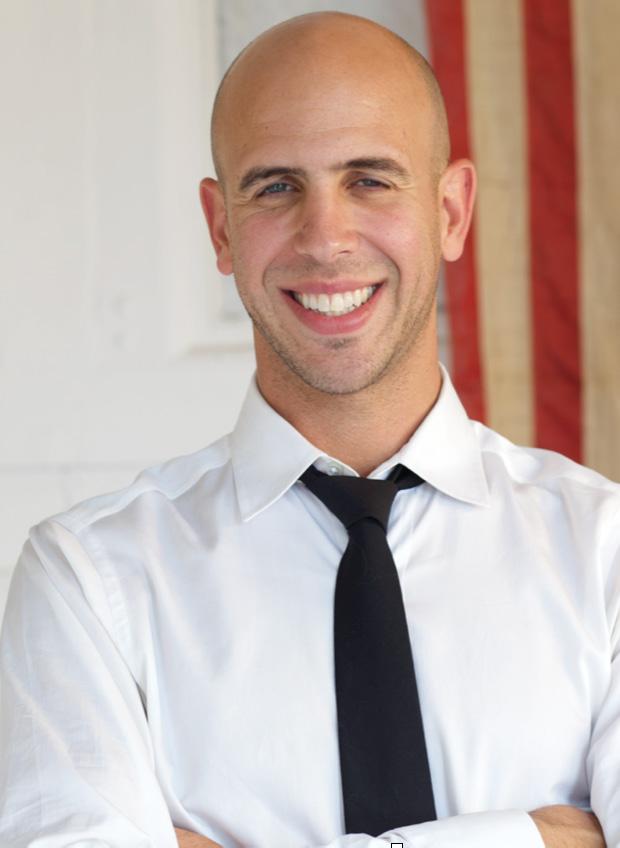 Jeremy Bergstein
“Retail” is everything in 2024.
Pet grooming, restaurants, visits to a medical office — and grocery, apparel, beauty, home goods and our usual suspects — all have a “Retail Experience.” These exepriences acan drive you to their location, collect your data, optimize your visit and drive your return.
Augmented Reality (AR): “Own your Digital Square Foot!” This is just the beginning of a massive wave of value. Prepare your space to integrate AR and “own” the augmented reality layer. If you don’t do it first, you know who will!
jeremy@thescienceproject.co
It’s 2024 and Retail is everywhere. It is all categories, all platforms, inside our buildings, outside our spaces and areas surrounding. Thankfully, parity has settled over the relationship between digital and physical. It is becoming obvious that physical spaces are back. Every single space, whether it’s RETAIL or “retail” needs to be productive; it must attract traffic, drive visits, max out the value of those visits and then drive return with frequency and periodicity.
Now it is time to acknowledge that physical real estate can do so much more to create value and claim new revenue in and around properties.
How can we prepare our physical spaces to be better prepared for retail, RETAIL, and “Retail”? Here is a run-through of some strategic bullets:
Smart Building Technologies: IoT (Internet of Things) solutions can better manage energy, security and automate systems to reduce operational costs and improve the building’s sustainability profile. In addition, screens, sensors, lighting and more are or will all be connected, geared toward creating a better experience for visitors.
Digital Signage and Interactive Displays: Signage for advertising, wayfinding and information sharing can enhance customer engagement and experience. Use interactive displays and kiosks to provide information about the stores, promotions and events within the building. Be smart — don’t overdo it and think very carefully of its purpose. There is a whole lot of value here.
Wi-Fi and Connectivity: It is that simple. Free highspeed Wi-Fi improves the customer experience, encourages longer visits and collects data on shopping behavior and preferences.
Facilitating “omnichannel retailing” is still a thing even if the phrase is passé. Integrating physical spaces with e-commerce platforms, fulfillment, etc. allows customers a better experience, brands more revenue and properties to collect data.
Branding and Positioning: A strong brand creates an emotional connection with your customer, drives traffic, makes your destination more memorable with your market and emphasizes unique selling propositions like location, tenant mix and customer experience.
Targeted Advertising and Promotions: Use digital marketing and social media to target local customers with personalized ads, promotions and events. New location-based tools make this more relevant than ever. Leverage data analytics to understand customer preferences and tailor marketing campaigns in targeted neighborhoods and platforms.
Loyalty Programs: These tiers comprise loyalty, VIP, concierge and more. Build out a Customer Relationship Management (CRM) system, design amenities and create programs that reward repeat customers, encouraging them to visit the building more frequently. Build your data footprint; it extends far beyond your property line.
Look at your data, understand your targeted market and speak with visitors. Curate a mix of tenants that complement each other to create a cohesive shopping experience and attract a broader customer base.
Creating a modern productive property is not simply a checklist. Strategy and execution must be aligned across an organization. By adopting these technology and marketing approaches, a physical retail building can create new value to customers, tenants and building owners.



Heroes to Heroes helps American and IDF veterans battling moral injury overcome guilt, shame, and a loss of self. But we can only help if you do. Please join us as we pay a special tribute to our heroes, all of you, who support both American and IDF veterans. We need you this year more than ever.
Please join us for the Heroes to Heroes Golf, Tennis and Pickleball Outing on Monday, July 22, 2024 at Sunningdale and St. Andrew’s Country Clubs in Westchester, NY.
For more information go to:
HEROESTOHEROES.ORG or call (201) 851-2409.


David L. Picket, Gotham Organization CEO, didn’t immediately join the family company out of school; instead, he worked in real estate law at Citibank before becoming the latest generation to lead the development firm.
Picket studied literature in college, then law, before joining Citibank during the restructuring boom in the late 1980s.
“That’s what really got me interested in real estate — seeing it in its worst hour, from the bottom up, learning how to take apart transactions and put them back together,” Picket said. A decade later, Picket joined his father at Gotham.
That was part of a wide-ranging conversation about succeeding in New York City’s highly competitive real estate sector hosted by the Fordham Real Estate Institute (REI). Led by Bess Freedman, CEO of real estate firm Brown Harris Stevens and member of REI’s Executive Advisory Council (EAC), the event was part of REI’s “Titan Talks” series, which features one-on-one discussions with leaders shaping the real estate industry and New York City’s landscape.
Since joining the company in 1991, Picket has led Gotham Organization’s new project development business through a period of substantial growth. Gotham has developed more than 5,000 housing units and 1.7 million square feet of urban retail. The majority of
Gotham’s developments have utilized public/private partnerships, combining public funds, tax benefits and/or reduced land prices in exchange for the creation of affordable housing, schools, community facilities, job programs and other public benefits. Picket is the fourth generation leading his family-owned Gotham Organization; several of his children mark the fifth generation.
“It’s so important for our students to engage with and learn from industry leaders,” said EAC Chairman Ryan O’Connor, president and CEO of Clinton Management. “The EAC is focused on supporting tomorrow’s industry leaders and we’re grateful to everyone helping us expand our Building Futures scholarship, which offers low-income New Yorkers access to REI’s courses and programs, and to careers in real estate and construction.”
Freedman explained to the students, real estate agents and other industry professionals in attendance that the purpose of Titan Talks is to give a behind-the-curtain look at some of the most successful companies and the women and men leading them.
Freedman, who also started her career in law, pointed to advantages of having a diverse education. “It doesn’t matter where you start in a career, you gain knowledge. I was a prosecutor in my former life, but sometimes you find something else is calling you. Figure out your super-power, what you’re great at, and work toward that.”
Picket agreed, and advised students interested in real estate careers to have patience.
“I know that’s a tough one for a lot of Gen Z and Gen Xers — I have them as children — but real estate for the most part is not an immediate gratification business,” Picket advised. “It requires a collection of many different skills. The ‘stuff’ you’re collecting along the way, which may frustrate you or that you may not think is important, later in life [is what] you will draw on — that reservoir of knowledge.”
Picket also talked about the challenges in the markets right now and advised people considering a career in real estate to “follow the money.
“Where is the money flowing right now?” Picket said. “Clearly, office buildings are not a favored class. Despite more people going back to work, it’s a challenge. It’s going to take time until there is interest again in investing. Industrial has run its course. Hotels are coming back but are always challenging. Retail has found its bottom and there is some reinvestment going on. Rental multifamily seems to be the most stable asset. It’s the most predictable income stream and requires the least capital.”
The impact of rising interest rates curtailing deals and development across New York City also came into focus.
“Money is more expensive than it was,” Freedman continued about the dramatic shift. “It was so cheap for so long, and now the Federal Reserve has raised interest rates 11 times, and that hike has had an immense impact. Whereas people were taking all sorts of risks in years past, today people are far more cautious. It’s tougher times overall.”
Freedman and Picket also discussed the lack of affordable housing in New York City.
“The tools are all out there,” Picket said. “We’ve done this before. In the 1970s the city was by far the biggest landowner in New York. We were producing 40,000, 50,000 units of housing a year, through the 1980s and into the 1990s because we had the proper incentive programs in place, creative Section 8 deals, Mitchell-Lama, etc. We still have really good tools, but the city has lost its way a little.”
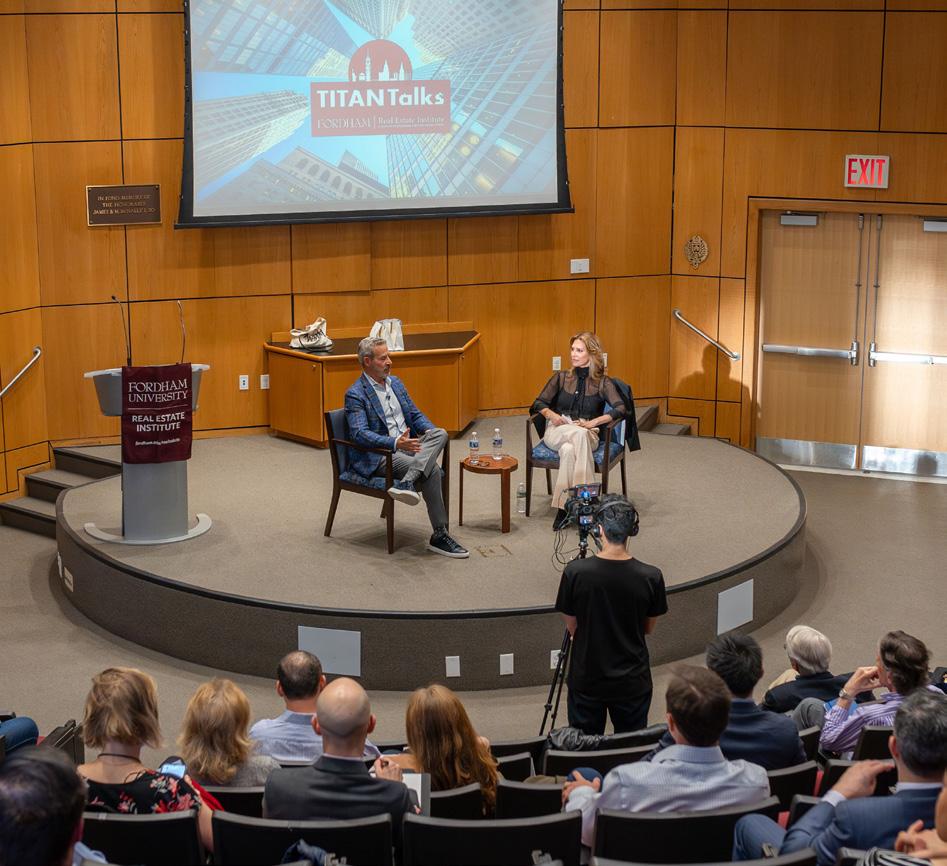
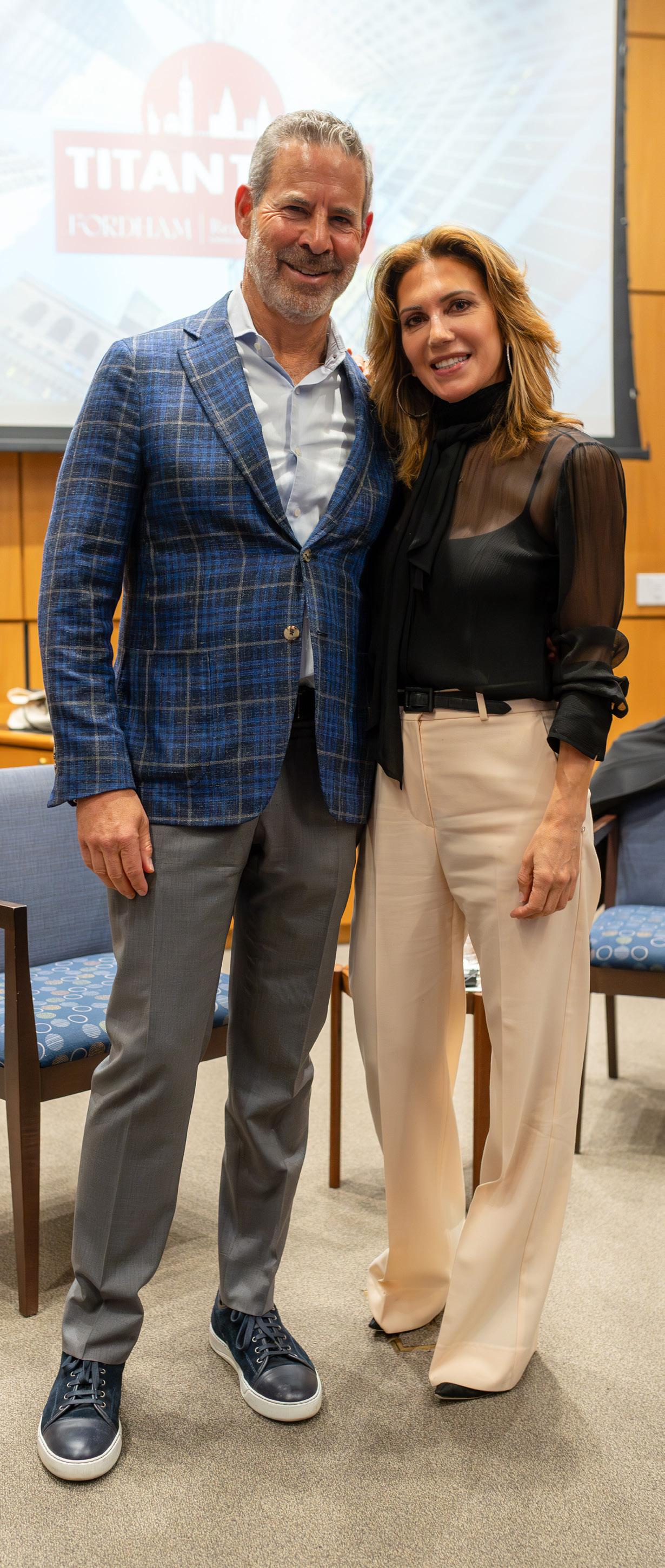

interiors by steven g. to appoint forté luxe luxury boutique waterfront community in jupiter, florida
Photo courtesy of wearevisuals
Marius Fortelni, founder and CEO of Forté Development, announced that Interiors by Steven G. will serve as the interior designer for its Forté Luxe, a luxury boutique waterfront community in Jupiter, Florida.
Located at 12450 Crystal Cove Place and featuring just 15 residences on a unique peninsula surrounded on three sides by Intracoastal Waterway views, Forté Luxe is expected to be completed in the second quarter of 2025. Pricing ranges from $4.35 million to $8 million.
“We are very pleased to work with Interiors by Steven G., one of South Florida’s most prominent interior design firms, on the beautiful, contemporary design for Forté Luxe,” said Fortelni. “Forté Luxe’s multi-level residences will offer the finest designer finishes, merged with the enviable Jupiter-Tequesta lifestyle.”
Interiors by Steven G. was inspired to create a modern coastal living ambiance with all that nature has to offer due to the beautiful blue waters off the inlet of Loxahatchee River, spilling into the Atlantic Ocean. Light wood tones, textured tree barks, shells stones and sand, infused with cobalt blue and green tones, is what will separate this project from others in the area, the designer said.
For more than 40 years, Interiors by Steven G. has served South Florida’s renowned developers, luxury residential homeowners, Fortune 500 companies, prominent real estate firms and more. Not only will it provide contemporary design for the boutique community itself, but it will also redesign Forté Luxe’s sales gallery. At press time, the sales gallery was anticipated for completion in April 2024.
“Forté Luxe is a spectacular project that undoubtedly transcends residents into an oasis of retreat, fresh air, sunshine and the most beautiful sceneries,”
said Steven Gurowitz, founder and president of Interiors by Steven G.
Residences will range from 3,550 to over 5,000 square feet of living area. Features will include: expansive great room interiors with full-height glass doors and windows; private garage with grand entry, featuring unrestricted views of the beach line and water; private interior elevators; voluminous ceilings and full-height sliding glass windows and doors; waterfront covered terrace with built-in outdoor gas grills for al fresco dining; spacious elevated balconies with Intracoastal views; engineered hardwood or large format porcelain flooring throughout the residence; designer kitchens featuring European-inspired cabinetry, quartz countertops with a waterfall island and top-of-the-line appliances and plumbing fixtures; separate laundry room with full-size washer and dryer on same level as the owner’s suite; walk-in closets; designer-appointed bathrooms and interiors with a premium lighting package, including recessed lighting and signature fixtures at the entry and dining room.
Architecture is by Alfonso Jurado, and Kast Construction is the general contractor.


Located between San Diego and the Mexican Border, Chula Vista, California has quietly become the second largest city in San Diego County. With a name that translates to “beautiful view” and home to the Elite Training Center (formerly the Olympic Training Center) and numerous golf courses, the city is attracting visitors — who need a place to stay.
One new option is the just-completed Springhill Suites by Marriott in eastern Chula Vista. Offering 179 guestrooms, the 127,628square-foot, all-suite hotel is located 13 miles from San Diego Bay, and three short miles from recreation options at Otay Lake and the Otay Open Space Preserve. The project took general contractor R.D. Olson Construction 18.5 months to complete.
The five-story Springhill Suites hotel includes high design and amenities, including 1,900 square feet of meeting and conference space that can be reconfigured according to individual needs, a spacious pool and a 1,095-square-foot fitness center. The vibrant lobby offers complimentary computers and printers at the business center with flexible workspace and free Wi-Fi for travelers, as well as a media and TV lounge with a fireplace for light conversation or reading.

 Photos courtesy of R.D. Olson Construction

Guests can enjoy complimentary breakfast from the large buffet in the hotel’s 930-square-foot dining space. Additionally, for private socializing or meetings there is a separate 490 square-foot dining room. A full-service bar and lounge offer approximately 1,800 square feet of interior seating and nearly 1,500 square feet of covered patio seating. To accommodate guests 24/7, there is an in-house market for snacks and necessities. Outdoors, the hotel offers a modern “zero entry” pool with lounge seating and a large jacuzzi spa for relaxing. The courtyard offers two barbecue grills and an event lawn with three fire tables for lounging in the evening. Several 700square-foot suites bordering the courtyard pool have private patios and ground floor pool access.
“Springhill Suites is another great example of R.D. Olson’s strength in hospitality construction,” said Bill Wilhelm, president of R.D. Olson Construction. “Our portfolio is growing yearly in hotel work, which is representative of our great attention to luxury details and commitment to brand integrity.”
In keeping with demand, the parking lot has 10 EV charging stations. R.D. Olson Construction’s partners on Springhill Suites by Marriott include Lee & Sakahara Architects and Design Studio Interior Designer.
Previous R.D. Olson hospitality and renovation projects include The Lido House and VEA Newport Beach Marriott, both in Newport Beach, California and Sheraton at the Park in Anaheim, California.






Your Webster Bank Relationship Manager and Property Management Team know the challenges you face and give you access to the tools you need to e ectively manage them. Value, solutions and service – put our resources to work for you.
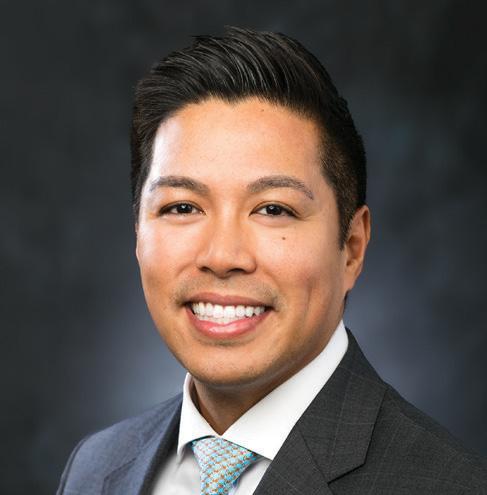





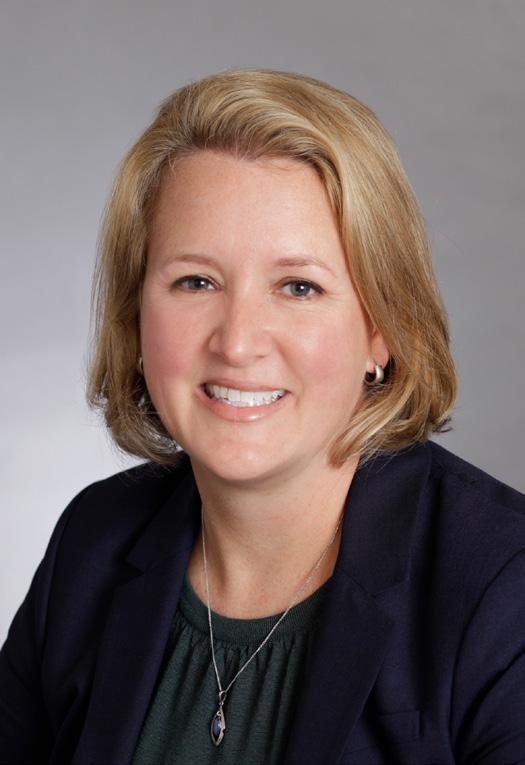


Cushman & Wakefield has appointed Jessica Francisco as its first chief sustainability officer (CSO). In this new role, Francisco will report to the company’s chief investment and strategy officer.
“This new CSO role reflects the firm’s commitment to advancing sustainability not only for our own operations but also through the strategic advice and services we provide our clients,” said Cushman & Wakefield’s Chief Investment and Strategy Officer Nathaniel Robinson. “We believe sustainability is a business imperative for the commercial real estate industry. The appointment is a significant step in our ongoing journey toward a more sustainable and resilient future for all.”
Francisco joined Cushman & Wakefield in 2022 as the global head of sustainability for the firm’s occupier services business. As CSO, Francisco will develop and implement comprehensive firmwide sustainability
strategies and goals, embed best practices across all business units, integrate sustainability into the company’s core services and establish metrics to measure progress and ensure impactful results in collaboration with business partners across the firm.
Prior to joining Cushman & Wakefield, Francisco was head of sustainability at Arcadis U.S., where she led its regional sustainability program and environmental, health, safety and sustainability advisory practice.
Her experience also includes leading the renewable energy and climate consulting team at 3Degrees and multidisciplinary teams in the design and execution of clean energy programs at Pacific Gas & Electric. She has designed and implemented sustainability strategies for global organizations and led business strategy, program and portfolio management and operations improvement in both consulting and corporate roles.
Manhattan Skyline Management Corp. announced that Sara Getlin has joined the firm as director of property management and operations.
Getlin will help oversee Manhattan Skyline’s residential portfolio, which encompasses several thousand luxury apartments in New York City’s most desirable neighborhoods, as well as the firm’s retail holdings. In her new role, Getlin will conceive and execute on operational and development objectives for the property management team. Her main responsibilities will also include reviewing and providing direction for annual budgets and operational reports as well as overseeing recruitment, hiring and training efforts. Getlin will collaborate closely with senior leadership on longterm strategic planning and the creation of standardized protocols for building operations to ensure resident satisfaction.
“We are thrilled to welcome Sara Getlin to the Manhattan Skyline family. She brings a wealth of experience garnered over more than 20 years working in New York City real estate, which makes her a perfect fit to lead our property management team,” said Laurie Zucker, vice chairwoman at Manhattan Skyline Management Corporation.
Most recently, Getlin served as vice president of property operations at The Dermot Company, overseeing end-to-end property operations for its multifamily and mixed-use portfolio.
Prior to Dermot, Getlin worked as a property manager for firms including Gumley Haft, Bldg Management and Glenwood Management. Early in her career she served as portfolio coordinator for SL Green. She holds a bachelor’s degree from CUNY Brooklyn College.
Newmark Group Inc. has named industry veteran Conor Lalor as president, head of retail capital markets for North America. In tandem with his appointment, Newmark has also hired Kyle Minter as senior managing director, working closely with Lalor to focus on retail investment sales, recapitalizations and financings across North America. Lalor will be based in Atlanta and Minter in Dallas.
Lalor will work closely with Newmark’s retail capital markets leadership team, including Pete Bethea in San Diego, Bill Bauman in Los Angeles, Nick Bicardo in San Francisco, Matt Adler in Washington D.C. and Tom Dobrowski in New York. Lalor’s team will also collaborate closely with Chairman of Global Retail, Newmark Retail
Services Mark Masinter and the broader retail services team to advise clients on the latest retail trends.
“As Newmark’s retail business continues to experience meaningful growth, and with our commitment to building a high-performing team, this strategic expansion enhances our ability to meet evolving market demands and deliver exceptional results,” Masinter said.
Before joining Newmark, Lalor spent more than 12 years at Eastdil Secured, where he was a managing director and led the firm’s retail business across the Sunbelt and eastern United States. His teams have transacted over $25 billion in sales, financings and recapitalizations.

Meridian Capital Group named Brian Brooks, a former acting comptroller of the currency, as chairman and chief executive officer, succeeding co-founder Ralph Herzka, effective mid-April. Herzka co-founded Meridian in 1991 and will continue to play a key role in the business as founder and senior chairman, focusing on expanding customer, lender and broker relationships and generating additional revenue growth.
“As we look to institutionalize Meridian as a world-class company and further diversify our revenues, there is no better steward of our future than Brian. He is an outstanding and recognized leader in financial services, and I am excited to work with him to build on our firm’s foundation of unparalleled experience and market intelligence,” Herzka said. “Thanks to the work of our leadership and team, we are positioned well to stand tall and thrive in the service of our stakeholders as the real estate market and regulatory environment evolve.”
Brooks joined Meridian from law firm O’Melveny and previously held several roles at Fannie Mae, including general counsel and corporate secretary, where he led the overhaul of its corporate governance structure and worked on significant high-profile transactions. He was later appointed to Fannie Mae’s board of directors and served on its risk committee.
He also previously served as the primary regulator of the U.S. national banking system as acting comptroller

of the currency. In that capacity, he also served on the board of the Federal Deposit Insurance Corporation and as a voting member of the Financial Stability Oversight Council. Earlier in his career, as vice chairman of OneWest Bank, Brooks played an instrumental role in its resolution and the sale of one of the nation’s largest portfolios of residential mortgages, paving the way for the bank’s sale to the CIT Group.
Meridian President Yoni Goodman will continue in his role and will work with Brooks in an augmented role that will include a focus on broker recruiting, retention and development; corporate M&A; geographic and business line expansion; investment sales strategy and growth and retail leasing strategy and growth.
“I am thrilled to join a top-flight, innovative team in the commercial real estate industry and to partner with Ralph and Yoni to help Meridian build on its respected leadership position,” Brooks said. “I see great potential to revitalize the broker model and enhance the core engine of the firm while investing in adjacent commercial real estate capabilities and strengths.”
Meridian has arranged more than $550 billion in commercial real estate financing for more than 11,000 customers since its founding. The company has repeatedly been the No. 1 commercial mortgage broker by transaction count and a top-five broker by dollar volume.
Lucy Bertsch has been named principal of Compensation Consulting, one of the talent management services within RCLCO Real Estate Consulting’s Management Consulting practice. Bertsch joins the firm’s Bethesda, Maryland office, and in her new role will continue to expand the comprehensive set of compensation consulting offerings.
She will spearhead assignments to help clients benchmark pay levels against peer firms and design incentive programs that align short- and long-term compensation with key business objectives.
Prior to RCLCO, Bertsch served as senior director in the Compensation Consulting group at Ferguson Partners, working with privately held real estate platforms to develop compensation solutions that align interests, emphasize performance and results and attract, motivate and retain key employees. She specializes in benchmarking compensation levels and developing incentive plans, including annual bonus plans, long-term incentives and carried interest programs.
Bertsch’s work spans all asset classes and types of real estate firms, from investment managers, private equity investors, developers and owner/operators, to
family-owned firms. Prior to joining Ferguson, Bertsch worked at Deloitte in its Talent Strategy and Innovation group in Chicago and Washington, D.C. She earned her bachelor’s degree in human and organizational development and Spanish from Vanderbilt University and her master’s degree in human resources management from Georgetown University.
“We are thrilled that someone of Lucy’s expertise and strength has joined our team at RCLCO,” said Ellen Klasson, managing director of RCLCO. “Compensation consulting is a key focus for us as we expand our talent management and executive search functions, which are accelerating in importance for our client base as we begin to move out of this challenging period for the industry as whole.”
In late 2023, RCLCO formalized a partnership with CEL Compensation Advisors, which has produced the annual Real Estate Compensation & Benefits Survey for 35 years and advises private and public real estate companies on their compensation strategy. Bertsch will work alongside Jim Wright of CEL Compensation Advisors to grow the consulting platform while simultaneously increasing the reach of the Compensation Survey to more industry participants.

We are constantly upgrading our approach and methods to save our clients time and money by delivering the most progressive services and tools in the industry.
Why? To always increase the value of our buildings and enhance the lifestyles for our residents.
Large to small, we tailor all our services to meet the unique needs of each of our clients. A total commitment to quality service is what has made Century one of the most trusted management companies in New York for over 40 years.
Connect with our expert team today to find out how we can help.































 Lee Brodsky CEO BEB Capital
Lee Brodsky is the chief executive officer of BEB Capital, a privately held, multifaceted real estate company. Since its formation in 2013, Brodsky has led BEB to become an institutional-grade owner and operator of industrial assets along the East Coast. In addition to its industrial portfolio, BEB owns and manages numerous multifamily assets and development sites in New York City and the surrounding region. He oversees BEB’s overall direction and spearheads strategic planning for the business, including the execution and management of key partnerships. Under Brodsky’s leadership, BEB launched its lending division in March of 2020, a significant component to the firm’s growth since inception.
How long have you been in the industry?
19 years.
How did you get into the business?
My first job was at Winoker, a real estate brokerage firm in the Garment District, which I found through a newspaper listing. A year later, I joined Newmark Grubb Knight Frank, where I worked for 14 years while transitioning to BEB Capital as CEO in 2017.
Who influences you?
I was always taught to have a solid group of mentors whom I consider personal board members to lean on for honest feedback and guidance as I navigate my career. First and foremost, my father, Bert, always has a big influence on my decisions. Jeff Weiner, the CEO of Marcum, has always pushed me to be a forward-thinking, proactive leader and business operator; Barry Gosin, Newmark’s CEO, had a major impact on my success and Carl Kuehner of BLT has always been generous with sharing his macroeconomic perspective on the real estate space.
As I think about the strategic direction of our
firm, Andrew Saltoun, my longtime friend and one of the smartest entrepreneurs I know, continues to help me synthesize the critical thought patterns of management and operating a business — and, finally, BEB Capital’s chief investment officer, Keyvan Ghaytanchi. Keyvan and I are very different, and that’s why we work so well together. It can be frustrating at times, but we both strongly believe that approaching situations from opposing angles typically yields the best outcomes.
What is the state of the industrial sector right now?
Rental rates and demand for industrial leasing are strong; however, capital markets — buying, selling and financing transactions — remain very challenging. We are seeing the gap between buyers and sellers start to close. It was previously 20% apart; today, it’s closer to 15%.
How can a developer bring more affordable housing into notoriously pricey Brooklyn?
The state must devise another tax program to replace 421a. It’s impossible to develop mixed-income housing without a program and, once that occurs, capital markets can cooperate. It simply doesn’t make economic sense to build today without a program.
The right jurisdiction with forward-thinking council members is also extremely helpful; an example is what we were just able to accomplish with 737 Fourth Ave. Again, that couldn’t have happened without a program like 421a.
What keeps you up at night?
The cost of debt is really taxing today, creating a significant amount of stress. BEB Capital emanated as a family business, so I have a lot of stakeholders to report to. One issue is immediate, and the other is global, but they keep me up at night.



The financial backing of a global bank, and the streamlined structure and agility of a boutique bank that will keep your business moving forward.
BHI offers full commercial banking services that combine the personal attention of a prestigious boutique bank with the expertise and financial strength of Bank Hapoalim – the leading financial institution in Israel.
With a footprint in the largest U.S. metropolitan areas, we are committed to creating innovative funding solutions for your short– and long-term needs and providing convenient banking and liquidity products for your everyday business needs.
30
Even as other sectors are still trying to maintain or regain their footing, retail real estate overall remains healthy. Some urban areas continue to see disruption due to persistent work-from-home trends, but demand remains high for suburban retail spaces. Mall-based retailers now look to open-air properties to fulfill their expansion plans, and new construction remains low, due in large part to high costs. While consumer spending may moderate in coming months and years as housing remains expensive, it’s still a pretty good time to be in retail, as you can see by the numbers.
The percentage points that net retail absorption declined in March 2024 vs. early 2023. (NAR, “Real Estate Market Insights”)
4.0%
Retail real estate vacancy over all sectors as of year-end 2023. Malls reported 8.5% vacancy, while “general retail” saw a 2.5% vacancy rate. (JLL, “United States Retail Outlook Q4 2023”)
10
The number of basis points that retail vacancy is expected to rise in 2024. (Colliers, “2024 Retail Outlook”)
$147 per square foot
The average cost in the United States to fit out an inline store. (Cushman & Wakefield, “2024 U.S. Retail Fit Out Cost Guide”)
36
The number (out of 50) of major markets that will see retail real estate space expansion of 0.5% or less this year. (Marcus & Millichap, “2024 Retail Investment Forecast”)
2.6%
The predicted year-over-year rise in retail sales for 2024. (CBRE, “U.S. Real Estate Market Outlook 2024”)



Founded over 30 years ago, Zetlin & De Chiara LLP is one of the nation’s leading construction law firms. Our attorneys deliver a full range of legal services centered around construction law throughout the United States and abroad.




RONALD