





DATA CENTERS ARE MORE NEEDED THAN EVER BUT BUILDING THEM ISN’T EASY



For decades, we have built a real estate practice unparalleled in the US. Now, as the global legal powerhouse HSF Kramer, we are so much more. As the only law firm ranked in Chambers Band 1 in the US, the UK and Australia, we continue to transform skylines and reshape landscapes. Please visit our website to learn more. Kramer Levin is now HSF Kramer















































































EDITORIAL
Editor
Debra Hazel
Director of Communications and Marketing
Penelope Herrera
Director of
Newsletter Division
Cheri Phillips
PRESIDENT/CEO
Jeff Mann
ART
Art Director
Virginia Sanchez
Cover Photography Business Wire
Faron Brazis
Frank DeLucia
Stephen Gilman
Merilee Kern
Kris Kiser
Bob Knakal
Scott Krinsky
Nate Larmore
Itay Oren
Austin Rabine
Stuart Saft
Carol A. Sigmond
David Fuller Watts
Technology Consultant Eric Loh
Distribution Mitchell’s Delivery Service
DIGITAL MEDIA
Designers
Virginia Sanchez
Editors
Debra Hazel
Penelope Herrera
Rose Leveen
Cheri Phillips
Web Developer
CS Designworks
West Coast Office: 578 Washington Blvd., Suite 827
Marina Del Rey, CA 90292 866-306-MANN (6266) mannpublications.com


East Coast Office: 450 7th Ave, Suite 2306
New York, NY 10123 212-840-MANN (6266)











The past two decades have seen an extraordinary change in our industry and our world with the rise of technologies including the Internet of Things (IoT), artificial intelligence and more. It’s also necessitated the rapid expansion of a new real estate sector — data centers, to house all of the storage, circuitry and more to run this brave new world.
But these buildings are more than just fancy warehouses. They require careful site locations, specific systems for cooling and a lot of money to build them, as you’ll see in this month’s cover feature. If done well, however, they are critical infrastructure and a great investment.
On a more earthly level, there’s still time to register for our annual golf tournament that benefits two very important foundations — The Mann Charitable Foundation and the National Realty Club Foundation — being held at the Fresh Meadow Country Club on October 6. The event will honor Martin Efron, managing director at White Oak Commercial Finance, and Jaimee L. Nardiello, partner at Zetlin & DeChiara LLP. Proceeds will support causes including Alzheimer’s Disease, Crohn’s and Colitis, Lymphoma and Macular Degeneration, as well as organizations such as the Bronx Historical Society, Community Mainstream, National Jewish Museum, Jewish National Fund, Catholic Faith Network and Nassau County Law Enforcement Exploring.
For more information about tickets and sponsorships, please contact Penelope Herrera at pherrera@themanncharitablefoundation.com or penny@ nationalrealtyclub.org.
See you next month!

“One machine can do the work of 50 ordinary men. No machine can do the work of one extraordinary man.” — Elbert Hubbard











by Adrian








8:30 AM Arrival and Registration
9:00 AM Breakfast/Brunch
11:00 AM Call to Carts

11:15 AM (Sharp) Shotgun Start
5:00 - 6:00 PM Hors d’Oeuvres and Cocktails
6:00 - 7:00 PM Dinner and Presentation of Golf Winners and Honorees




Join Jeff Mann, The Mann Charitable Foundation and the National Realty Club Foundation as we are having a joint golf outing this year. On October 6, 2025, be prepared for another stellar annual golf outing. This outing will support causes such as Alzheimer’s disease, Crohn’s and Colitis, Lymphoma, Macular Degeneration along with raising money for the areas of NYC that need support including Bronx Historical Society, Community Mainstream, National Jewish Museum, Jewish National Fund, Catholic Faith Network, Nassau County Law Enforcement Exploring, among other areas.

With over 75 years of experience and deep understanding of industry challenges, IDB’s Commercial Real Estate team supports property owners, developers and builders across every type of financing requirement. We can help you keep pace with changes in the marketplace, while maintaining high credit quality levels and providing the personalized service, efficiency and flexibility to fit your specific needs. For more information about financing solutions that meet your specific needs, visit idbny.com.





At Peninsula Property Management (PPM), we do more than manage properties—we elevate them. With a leadership team that is deeply involved, hands-on, and responsive, PPM is redefining the standard for property management in New York City. Our mission is simple: deliver results with integrity, precision, and a hospitality-first approach.

Proactive Management
Stop issues before they start — from Local Law 97 to vendor oversight.
Financial Clarity
Clean, timely financials. No surprises –just strategic planning and transparency.
NYC Compliance Expertise
DOB, HPD, LL88, LL97, FISP we navigate every regulation so you don’t have to.
New Development Services
Schedule B, TCO phasing, hiring of staff, punch-list, insurance implementation.
Smart Cost Control
Energy savings, bulk contracts, vendor negotiations we cut waste, not corners.
Track requests, tasks, and reports live through our integrated digital platform.
Welcome to our Artificial Intelligence issue.
AI is changing how all of us interact with the world, helping us process information in moments rather than weeks, guiding development, property management, leases and more. The breadth of AI is behind the growth of the data center sector, as you’ll see in our cover feature. But our contributors also show us how it’s becoming ever more vital in many different ways.
This month, experts Itay Oren and Nate Larmore tell us how AI is elevating property operations and aid in healthcare design and construction and respectively. Kinexio’s David Fuller Watts discusses the role tech is playing in creating and running mixed-use centers, while our friend Merilee Kern’s interview with GreatBuildz can help us avoid costly mistakes in home renovation. And look at our focuses on residential conversions and a great new community in Orlando, too.
Tech also appears among our columnists, including the possibility that cryptocurrency can be counted as assets for mortgages, robotics and more in construction and even the dangers of relying too much on AI in legal research. All of them are fascinating reads from some of the great minds in our business. Enjoy.










Broadacre Financial and the Taub Institute hosted the Ninth Annual “Laugh to Remember” at Gotham Comedy Club in New York City. The event raised over $300,000 in support of the Taub Institute for Research on Alzheimer’s Disease and the Aging Brain at Columbia University Irving Medical Center. The funds will advance research into Alzheimer’s, Parkinson’s, ALS and Frontotemporal Dementia.
This night of comedy, hosted by Chris Haynes of Broadacre Financial, brought together 230 guests and top-tier talent, including comedians Mark Normand, Jimmy Failla, Mike Yard and Ophira Eisenberg.
The event’s success was made possible by the generous support of corporate sponsors Vranos Family Foundation, AEI, Bank of America, Broadacre Financial, Bryan Cave Leighton Paisner, Cadwalader, Doughnuttery, First Nationwide Title, Gotham Comedy Club, Health/ROI, LCK Wealth Management, M&T Bank, McGuireWoods, Park Bridge Financial, Polsinelli, Seyfarth, Stewart Title and The Henry & Marilyn Taub Foundation.


















$300,000







This spring, American Friends of Rabin Medical Center (AFRMC) brought together supporters, friends, and community leaders for two successful charity golf outings, held at Suneagles Golf Club in New Jersey and Westchester.
Both outings were marked by beautiful weather, competition, and a strong sense of purpose. Participants rallied around AFRMC’s mission to support Israel’s Rabin Medical Center, with proceeds from the outings directed toward expanding critical emergency and rehabilitation services for patients in need.
The season kicked off with the Annual AFRMC New Jersey Golf Outing, where guests enjoyed a warm and memorable day on the lush fairways of. The outing featured a spirited round of golf followed by a lively dinner celebration, awards for tournament and contest winners, and a selection of exceptional prizes from a raffle and silent auction.
Just a few weeks later, AFRMC hosted its highly anticipated Annual New York Golf Outing at the prestigious Old Oaks Country Club in Purchase, New York. This year’s event was held in honor of longtime AFRMC supporter Yoav Oelsner of Upland Property Advisors, whose steadfast support has advanced AFRMC’s mission over the years.





















Samantha Sweeney, Subcontractors Trade Association



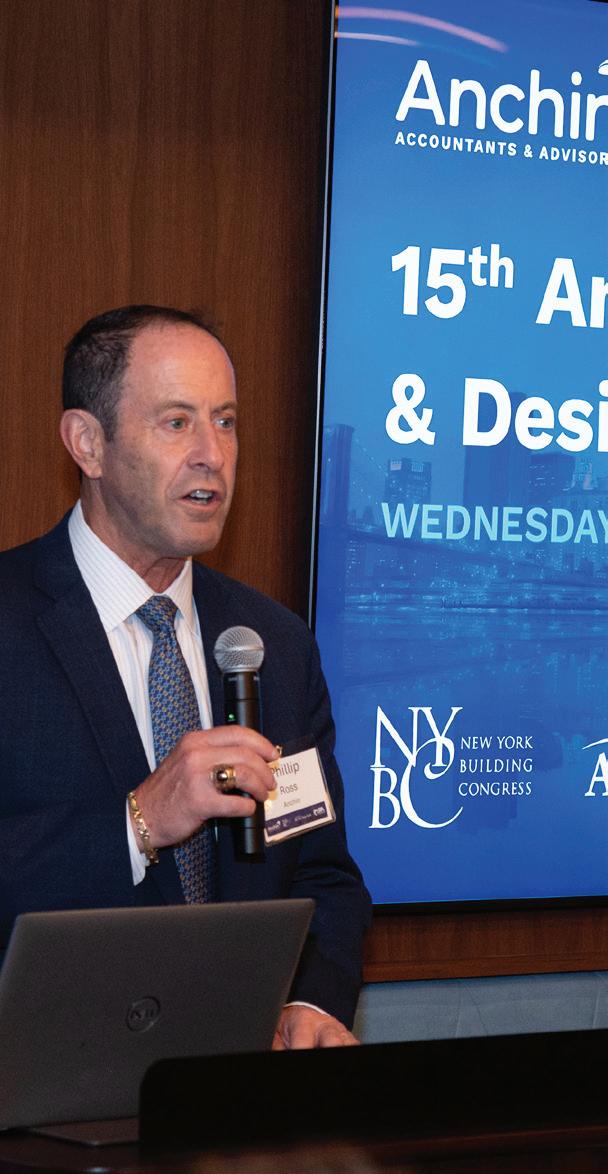
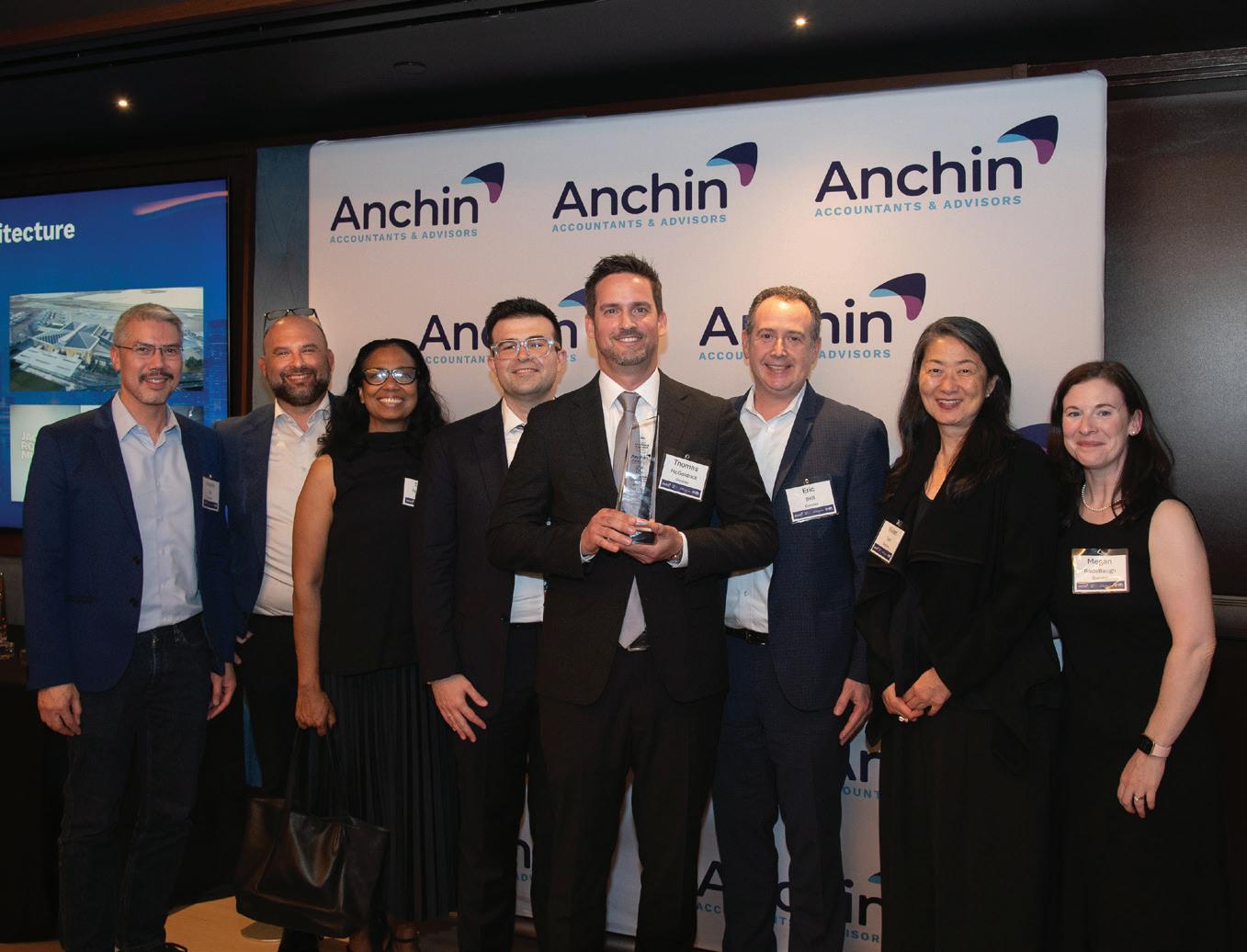
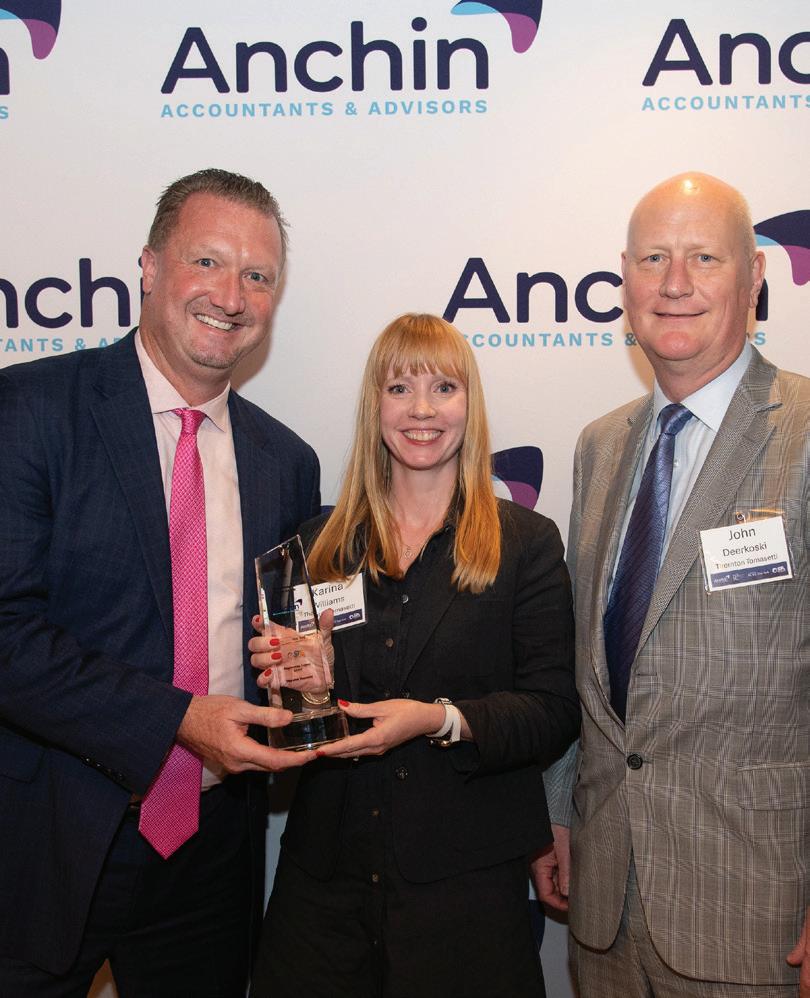
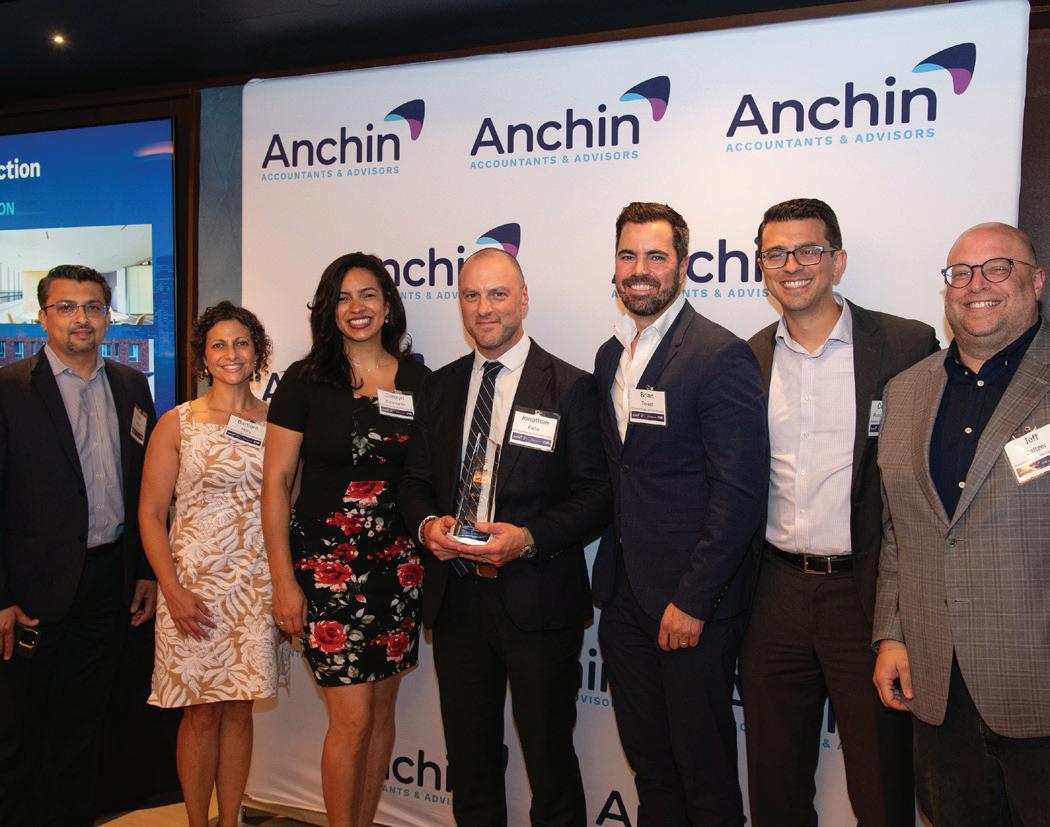
Accounting, tax and advisory firm Anchin proudly announced the winners of its 2025 Construction and Design Awards during the firm’s 15th annual celebration, hosted at The Meeting Galleries in Midtown Manhattan.
The milestone event, presented in collaboration with the New York Building Congress (NYBC), the American Council of Engineering Companies of New York (ACEC New York) and the Subcontractors Trade Association (STA), recognized leaders in the architecture, engineering and construction (AEC) sectors for their exceptional achievements, innovation and impact on the industry.
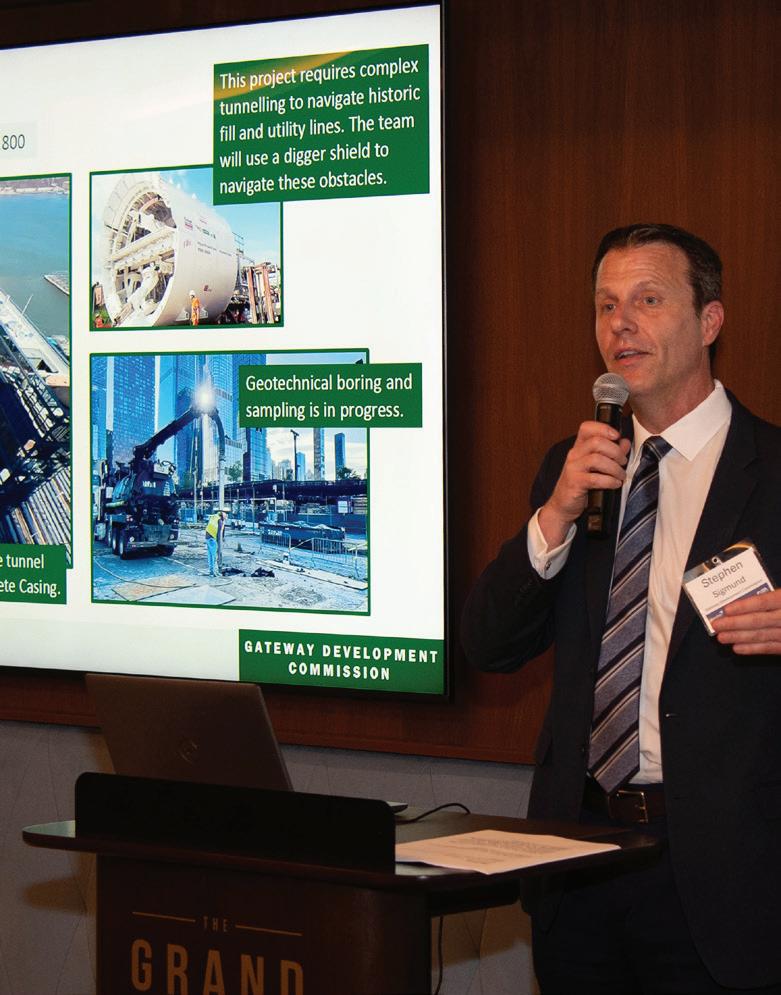
The evening featured a keynote address from Stephen Sigmund, chief of public outreach for the Gateway Development Commission, who shared insights on the progress and importance of modernizing the 115-year-old Gateway rail tunnels linking New York and New Jersey, one of the most significant infrastructure undertakings in the nation. Sigmund emphasized the role of the A/E/C community in delivering transformative projects that shape the future of the region.
Elizabeth Weiss, A.J. McNulty & Co.

During his opening remarks, Phillip Ross, co-leader of Anchin’s Architecture & Engineering and Construction Industry Groups, highlighted the event’s significance in this landmark year, reflecting on the industry’s strength in navigating an evolving economic landscape, shifting policies and generational infrastructure investments.
“What began as a gathering to highlight standout firms has grown into one of the most anticipated evenings of the year for the AEC community: a testament to the progress and resilience of this industry,” Ross said.
Fred Ackerman, co-leader of Anchin’s Architecture & Engineering and Construction Industry Groups, closed out the celebration with remarks that noted the importance of collaboration.
This year’s honorees in the form of Anchin Legacy Awards, were ACEC of New York, EJ-Electric Installation Co., Gensler, Langan, New York Building Congress (NYBC), Perkins Eastman, Shawmut Design & Construction, Subcontractors Trade Association (STA), Thornton Tomasetti and Turner Construction Company.



The 2025 Heart of New York City Gala united 500 guests at Pier 60, Chelsea Piers for an evening of inspiration and impact. Organized as part of the American Heart Association (AHA) New York City Heart Challenge chaired by JLL Tris-tate President Peter Riguardi, the annual event was themed “The Future of Heart,” and highlighted AHA science that will be responsible for shaping the future of cardiovascular health and healthcare as we know it.
NBC’s Today show nutrition expert and bestselling author Joy Bauer emceed the evening, which was chaired by CBRE’s Michael Monahan, and featured powerful stories from survivors. Among them were JLL Vice Chairman Alex Chudnoff, a two-time open-heart surgery survivor, and Bonni Brodnick, a stroke survivor, who were recognized as “caretakers of the torch” for their dedication to the AHA’s mission across generations.
Guests enjoyed an evening of fine dining, an exciting auction and futuristic entertainment. Actress Susan Lucci, national ambassador for the Go Red for Women initiative, also took to the stage to spotlight how the AHA empowers people of all ages to live longer, healthier lives.
The gala is the cornerstone of the Heart of New York City campaign, celebrating milestones in research funding, education, and community outreach. Funds raised will support research, advocacy, and programs to fight heart disease and stroke—the leading causes of death in New York and nationwide—while driving change to improve health outcomes for everyone, everywhere.





Meridian negotiates and closes more than $1 billion in underlying cooperative loans and lines of credit annually







Verizon will relocate its New York headquarters to Penn 2, Vornado Realty Trust’s reimagined office tower in the heart of The Penn District campus.




As part of a 19-year lease, Verizon will occupy nearly 200,000 square feet in office space across the eighth through 10th floors of Penn 2, which will also include exclusive access to more than 25,000 square feet of outdoor space. Verizon will also establish a flagship retail location on Seventh Avenue.
“We are thrilled to welcome Verizon to the growing roster of world-renowned business, communications, technology, finance and entertainment firms that have chosen The Penn District for their corporate homes,” said Glen Weiss, executive vice president-office leasing and co-head of real estate for Vornado Realty Trust. “Our reinvention of The Penn District has produced a vibrant gateway to New York’s new West Side and represents a new era of workplace thinking, where dynamic environments, unparalleled connectivity and employeefocused design come together to inspire collaboration and innovation.”
Vornado’s Penn 2 transformation incorporates a new, modern and
highly efficient curtain wall; a triple-height lobby; 16 distinctive doubleheight outdoor tenant loggias and The Bustle. The new Penn 2 also encompasses 30,000 square feet of curated retail, including The Dynamo Room, a 7,100-square-foot, full-service restaurant and bar from Sunday Hospitality. The building features 72,000 square feet of outdoor green spaces; The Perch, a rooftop glass pavilion and event space that opens onto a lushly landscaped 17,000-square foot private green space available to all tenants and a 280-seat Town Hall suspended above the 33rd Street promenade.
Penn 2 also serves as the corporate headquarters for Madison Square Garden, Universal Music Group and Major League Soccer. Together with its neighboring Penn 1, the towers create a two-building connected campus in the heart of The Penn District. The twin projects encompass 4.4 million square feet of premium offi ce space, new and improved entrances to Penn Station and the surrounding subway system, as well as acres of new public plazas, landscaping and granite-paved sidewalks.
All Penn District tenants have access to 180,000 square feet of Vornado’s WorkLife amenity package, highlighted by The Landing, a full-service restaurant, bar and private dining rooms; a 53,000-squarefoot sports, wellness and fitness center and 100,000 square feet of flexible workspace and conference facilities.
A Cushman & Wakefield team led by Executive Vice Chairman Josh N. Kuriloff, Peyton Horn, Heather Thomas and Kyle Ernest represented Verizon. Vornado was represented in-house by Weiss, Josh Glick, Jared Silverman and Anthony Cugini.




RFR announced several largescale renewals at its 17 State St. as the firm plans for a new amenity center and updates to its public plaza. In total, RFR has recently inked 80,680 square feet of new and renewed leases at 17 State St.
Alphadyne Asset Management, an alternative investment management firm, signed an early renewal of its 43,872-square-foot, threefloor lease. The firm has been at 17 State since 2005. Alphadyne was represented by Silvio Petriello of CBRE; RFR was represented in-house by AJ Camhi, Paul Milunec and Ryan Silverman.
“This building is a prominent landmark in the downtown New York skyline,” said Camhi, director of leasing for RFR. “With its proximity to Battery Park and sweeping views of New York Harbor, 17 State St. is one of the most sought-after addresses in Manhattan. Our plans to introduce a new lounge and conference center in the building has further elevated the allure of the building for new and existing tenants while fortifying its reputation as one of New York’s premier office buildings.”
The new amenity space — designed by Studios Architecture and dubbed Liberty Lounge & Conference Center — will include hospitality and flexible space. The amenity space will feature four distinct functions: social/collaborative seating that can transform into a Town Hall-Screening Room, a well-appointed café, a library lounge and a 32-person boardroom. The interior design will celebrate the character
of the flourishing neighborhood with warm-toned modern fixtures and accents and natural green foliage. For healthy commuting, an “End of Trip” facility offers a changing room, shower and space to freshen up.
On the public plaza, RFR is enhancing the landscaping and providing updated seating.
Several tenants have re-committed to long-term leases while four tenants signed on for 12,000 square feet of new leases. Camhi, Milunec and Silverman represented RFR Realty, which has also hired a JLL team of Mitchell Konsker, John Wheeler, Andrew Coe and Margaux Kelleher to assist in leasing:
• Law firm Bressler, Amery & Ross, a tenant since 1995, will renew and relocate its 8,243-square-foot commitment. Robert Goodman of Cresa represented the tenant.
• Atlantic Specialty Coffee, a commodity services group specializing in coffee, cocoa and cotton, renewed its 6,167-square-foot space and has been a tenant since 1994. CBRE’s Michael Rizzo and Richard Levine represented the tenant.
• Asset management firm Friendly Capital, a tenant since 2003, renewed its 3,899-square-foot commitment.
• Samson Funding, which provides capital to small and mid-size businesses, renewed its 6,181-square-foot commitment. It has been a tenant since 2021.
• AI-powered life insurance tech firm Optifino joined the tenant roster with a 5,138-square-foot lease. Derrick Ades and Lewis Gottlieb of CBRE represented the tenant and Konsker, Wheeler, Coe and Kelleher of JLL along with the RFR leasing team represented the landlord.
• Law firm Pierkarski Law signed a new 3,917-square-foot lease. Jimmy Ishay of Gotham Realty represented the tenant.
• Medical technology firm Aspargo Laboratories signed a new, 3,263-square foot lease coming out of a sub-tenancy at 17 State.


investment to enhance and elevate the property. Our goal is to create a best-in-class experience for tenants, offering the kind of amenities typically reserved for major corporate campuses. This effort has positioned the building to meet the evolving expectations of today's tenants,” said Michael Hakakian of Creed Equities.

JLL has leased 39,522 square feet of office space in several transactions at 1330 Avenue of the Americas, a boutique, 525,000-square-foot Midtown tower owned by a joint venture of Creed Equities, Hakimian Capital, CH Capital Group and Nassimi Realty.
The 40-story tower, featuring rare floorplates of 10,000 square feet to 16,000 square feet along Sixth Avenue, is undergoing strategic renovations by ownership to meet the demands of tenants seeking premium amenities, custom pre-built space and a premier location.
Ownership’s capital improvements will feature a suite of amenities called Club 1330, which will consist of shared conference facilities, a tenant lounge, a large café, state-of-the-art golf simulator and dedicated wellness room set to be complete this month.
“We’re thrilled by the recent leasing momentum, which validates our
A JLL team led by Executive Managing Director Christine Colley, Managing Director Simon Landmann, Vice Presidents Lance Yasinsky and Thomas Swartz and Vice Chairman Mitch Konsker serves as exclusive leasing agent for the property.
Prime Finance expanded to 10,400 square feet, taking the entire 25th floor with a new lease extension; York Capital Management renewed its 10,000-square-foot direct lease for five years, with JLL's Evan Margolin representing the tenant.
Pamplona Capital Management relocated from 667 Madison Ave., leasing 5,243 square feet on the 24th floor, represented by Corrine Neupaur of Tishman Real Estate; MFG Partners extended and expanded to 4,525 square feet on the 26th floor, represented by David Yablon of Katz & Associates.
Sellaronda Global renewed its 3,445-square-foot lease for three years, represented by Jonathan Anapol of Prime Manhattan. Apollon Wealth Management renewed its 3,072-square-foot lease for five years, represented by Barry Zeller and Troy Elias of Cushman & Wakefield; General Equities renewed its 2,837-square-foot lease for five years.









Triangle Equities has been awarded a $1 million grant from Empire State Development in recognition of Terminal Logistics Center, a Class-A, 413,936-square-foot, five-story vertical warehouse facility located at 130-02 South Conduit Ave. in Jamaica, Queens, along with the project’s job creation and community impact efforts.
The facility is divided into two units. A warehouse used for air cargo currently being leased by DO & CO, an international airline caterer headquartered in Austria, features two stories of truck courts connected by a ramp. The second unit is comprised of part of the cellar as well as the third through fifth floors, and is currently occupied by Safeguard, a selfstorage facility providing storage to individuals and small businesses.
“Triangle Equities is incredibly proud to have developed Terminal Logistics Center in Queens. As a third-generation firm founded and built in the borough, we have always sought to deliver projects with meaningful impacts to the Queens community, as well as the tri-state region at large,” said Evan Petracca, chief operating officer at Triangle Equities. “This grant from Empire State Development affirms our commitment to excellence in community-building and development. We are excited to continue our work to further add value and contribute to our great city.”
“Terminal Logistics Center is a model of smart, community-driven development — transforming an underutilized site into a hub of economic opportunity and innovation,” said Empire State Development President, CEO and Commissioner Hope Knight.
Prior to its redevelopment, the site was home to one of JFK International Airport’s satellite parking lots, employing approximately five full-time employees. To date, Terminal Logistics has created 900 jobs for Queens County and directed more than $10.8 million to minority and womenowned business enterprise (M/WBE) contractors. The project’s air cargo infrastructure is essential to JFK International Airport’s global competitive advantage, answering the call to a rapidly increasing need for fast and reliable logistics, further alleviating supply chain pressures, and generating approximately $29 million of output growth annually,




Terminal Logistics Center is located in a dense urban area, a rarity for facilities of this size and nature. Due to its location, Triangle Equities approached the development of the facility with innovative tactics, prioritizing the needs of the local community. To capitalize on the building’s relatively small footprint, Triangle Equities worked with architecture firms Nelson and GF55 Architects to design Terminal Logistics Center as one of the first multistory industrial buildings in the United States at the time of its planning, building upward rather than outward. The project team developed a ramp connecting the first and second floors of the building, large enough for 53-foot trucks to navigate its 28 loading docks. Additionally, Triangle Equities liaised with Queens Community Board 10 and local representatives from nearby PS 124 Osmond A. Church to alleviate






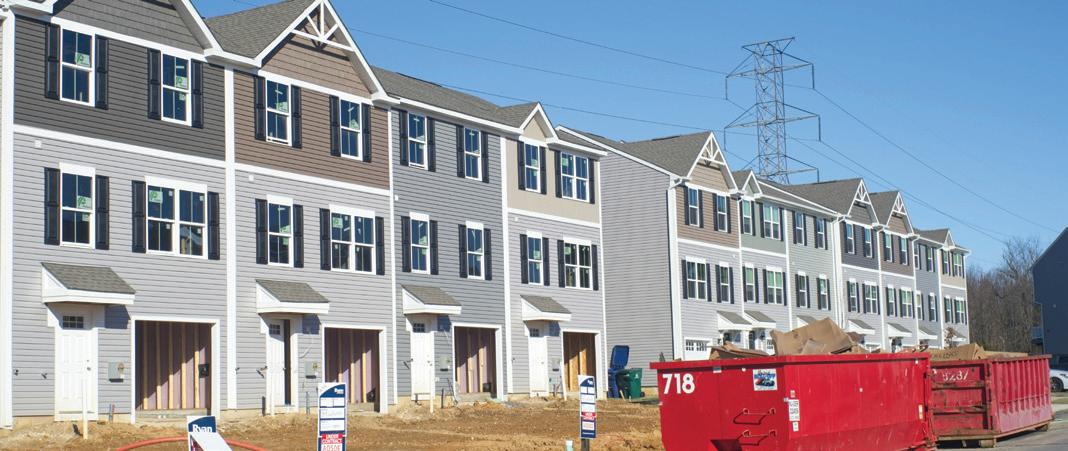
New construction is becoming a more affordable, and increasingly attractive, option for today’s homebuyers as the price premium over existing homes hit a record low of 7.8% in Q2 2025, according to the latest Realtor.com “New Construction Quarterly Report”. Newly built homes are not only more plentiful than they’ve been in recent years but also offer better value on a per-square-foot basis than existing homes, especially in the South where supply is rebounding fastest.
“In a market still grappling with a shortage of nearly four million homes, affordable new construction plays a critical role in restoring balance. Even with recent slowdowns in starts and permits, builders continue to deliver new homes to the market at a healthy pace,” said Realtor. com Chief Economist Danielle Hale. “In many areas, these homes are not only available, they also offer better value compared to existing home inventories. We’re even seeing new home price declines in some of the most active pandemic-era hot spots, signaling a shift toward greater affordability in markets that were previously out of reach for many.”
In Q2 2025, the price premium for new construction compared to existing homes dropped to a record low of 7.8%, as builders held pricing steady and existing home prices continued to rise. The median list price for a newly built home was $450,797 in Q2, essentially flat from a year ago, while the median existing home prices rose 2.4% to $418,300.
Nationally, new builds averaged $218.66 per square foot, compared to $226.56 for existing homes.
The affordability edge is strongest in the South and West, where new homes make up a greater share of for-sale listings. The West, which offers relatively lower new construction prices compared to the other regions, was the only region where the new-home premium rose year over year – a reflection of strengthening new home prices and an influx of lower-priced existing homes.
Locally, new build list prices declined in 30 of the 100 largest metros, with the steepest declines in the South, where inventory is high and demand has cooled. The top five markets seeing the biggest drops in new construction list prices are Little Rock, Ark. (-15.6%); Austin, Texas (-8.5%); Wichita, Kan. (-7.9%); Jacksonville, Fla. (-7.8%) and Cape Coral, Fla. (-7.4%). These price drops are from a combination of factors: builder efforts to offer more affordable options, rising competition from existing homes and weaker buyer demand.
The South continues to lead the nation in housing supply, accounting for more than 50% of both new and existing home listings, outpacing its 39.4% share of U.S. households. It’s also the only region where its share of new builds exceeds its share of existing homes for sale, thanks to high levels of builder activity. In contrast, the Northeast remains the most inventory-constrained region, with a significant shortage of both existing and new construction homes for its 17.1% share of U.S. households. In the Midwest and Northeast, tighter inventories and high demand have pushed new build prices well above existing homes, more than 50% higher in many cases, making new construction largely a premium product in those regions.
While builder activity has softened amid tariff concerns and the threats of lower demand and higher material costs, completions have continued to hit the market at a steady rate since the pandemic, as builders stepped in to meet elevated housing demand.

closer to revealing the project’s full architectural form and introducing a distinguished new landmark on the Upper East Side.”
The condominium is a timeless reinterpretation of classic prewar architecture, featuring an Indiana limestone façade with sculpted reliefs, signature rope-trimmed window surrounds, and custom decorative railings that lend an added sense of craftsmanship and distinction.

Investment
1122 Madison Ave., a new condominium development that will introduce 26 residences to the Upper East Side.
and
“The start of superstructure at 1122 Madison Ave. is an important milestone for Legion Investment Group,” said Victor Sigoura, founder and CEO of Legion Investment Group. “With each slab pour, we come
The 26 homes are designed with large floor plans for modern city living, and select residences include terraces, balconies and, in many cases, uninterrupted and protected views of Central Park.
“William Sofield and his team have crafted a condominium that both honors the architectural legacy of the Upper East Side and introduces something truly distinctive. With vertical construction now underway, we look forward to seeing Studio Sofield’s vision come to life at this iconic landmark location,” said Genghis Hadi, managing principal and cofounder at Nahla Capital.
Sales are expected to launch this fall, exclusively led by Corcoran Sunshine Marketing Group and The Cathy Franklin Team at The Corcoran Group. Residences will begin at $10 million, and the building is slated for completion in mid-2027.
Manhattan-based real estate private equity firm and debt fund manager Northwind Group announced the origination of a $11 million senior firstmortgage loan for the acquisition of 10 West 17th St., a fully entitled, vacant land parcel planned for the development of an 18-story, 23unit luxury residential condominium project in Manhattan’s Flatiron submarket.
The loan was originated by Northwind Debt Fund III, the firm’s latest flagship closed-end fund, focused on real estate credit investments across major U.S. gateway markets. Following a record year in 2024 with over $1.1 billion in originations, Northwind continues to originate and close new loans across its target markets.
Prosper Property Group, a vertically integrated real estate firm with a track record in New York City residential projects, will lead the development of the property, located on 17th Street between Fifth and Sixth Avenues. Once complete, the project will feature 23 boutique luxury residences ranging from two to four bedrooms.
“We are pleased to provide financing at a favorable basis in one of Manhattan’s most sought-after neighborhoods,” said Ran Eliasaf, founder and managing partner of Northwind Group. “We look forward to working with Prosper Property Group on this development and building a long-term relationship, as part of our broader commitment to supporting New York City’s residential market and helping to deliver much-needed new housing”
The financing was arranged by Andrew Iadeluca, a principal of New Development Capital.





In a market where affordability and space are increasingly rare, The Openaire at 26-15 4th St. in Astoria, Queens introduces a value-driven alternative on the Astoria-Long Island City border. The 13-story, 143unit condominium offers spacious layouts, extensive amenities and unobstructed views of the Manhattan skyline and East River, at price points starting under $500,000.
Prices for the studio to two-bedroom homes are priced from $499,000 to $915,000. The project represents a timely opportunity for first-time buyers, investors and families alike, especially given the low monthly carrying costs and strong rental demand in the area.
“We see The Openaire as a return to what city living should be — livable, light-filled homes with room to grow,” said Eric Benaim, CEO of Modern Spaces, which is leading the sales for the building. “You’re not sacrificing location, amenities or design to access value. This is one of the smartest buys on the waterfront right now.”
The Openaire offers studios starting at $499,000, one-bedrooms from $582,000, and two bedrooms from $803,000. Most residences feature private outdoor space, many with sweeping views of the Manhattan skyline and East River. Residents will enjoy a full suite of amenities, including a rooftop terrace with barbecue grills and landscaped lounge areas, a fully equipped fitness center, a residents’ lounge and coworking space. The building also features a 24-hour doorman, on-site parking and a private shuttle service that connects to nearby subway and ferry stops. The Openaire offeres convenient access to Midtown via the N/W trains, the Astoria ferry and the RFK Bridge.
Sales launched in early August 2025.






























EV charging software provider Epic Charging has migrated 148 smart charging stations to its own charge point management system (CPMS) at a 401-unit condominium building in downtown Chicago. With over a quarter of the units opting for an EV charger in their dedicated parking spaces, this project is believed to be one of the the largest residential installations of EV chargers in the United States to date.
The migration followed the abrupt exit of Enel X Way from the U.S. market, leaving many multifamily buildings in search of a reliable, scalable charging solution.
“After exploring all the options, we concluded that Epic Charging was the only company offering the fully integrated smart solution we wanted,” said Sunil Mehra, board president of the 600 N Lake Shore Drive Condominium Association. “[Epic’s] turnkey software and support services made configuring and operating 148 individual EV chargers in a multi-story parking garage seamless and hassle-free. And with the capacity to install many more, this project cements 600LSD as a
cutting-edge high-rise residence in downtown Chicago.”
To ensure a smooth transition, Epic’s CTO Michael Fridshtand traveled onsite to work closely with the building’s IT team, bringing handson expertise in reconfiguring the network to the Open Charge Point Protocol (OCPP) platform. The integration required custom engineering — particularly for RFID authentication on discontinued Enel X hardware. In addition, Epic partnered with local utility ComEd to enroll the property in its Voluntary Load Reduction Program, which helps support grid reliability during peak hours while continuing to satisfy resident charging needs. ComEd’s VLR pays participating sites at least $0.25 per curtailed kWh during peak-demand events.
Residents at 600LSD now use Epic’s mobile app and RFID cards with both the existing Enel X Way and new Autel chargers to activate, schedule, monitor and pay for their charging sessions. With real-time visibility and analytics, residents can optimize electricity usage and schedule charging during off-peak hours, while the building benefits from load-limiting features that reduce infrastructure strain and support future charger expansion.
“Multifamily units account for about 31% of housing in the U.S., and with most charging happening at home, it’s critical for multifamily property owners to begin deploying EV charging infrastructure,” said Michael Bakunin, Epic co-founder and CEO. “Successfully migrating 148 chargers at a sizable condo building in downtown Chicago further cements our leadership in the multifamily market, which is the fastestgrowing segment in the U.S. for Level 2 charging, by demonstrating our ability to deliver scalable, grid-friendly solutions for large residential communities.”
region president. “Stephen is a respected leader who understands the unique challenges and expectations of healthcare clients. His expertise, combined with Suffolk’s national resources and technology-driven approach, will allow us to deliver unmatched value to our partners.”



National builder Suffolk is expanding its California footprint with the opening of a new office in Newport Beach. This strategic expansion strengthens Suffolk’s presence in Southern California and enhances its ability to serve sophisticated healthcare clients along the vital corridor from San Diego to Los Angeles, the firm said.
The Newport Beach office will be led by construction industry veteran and Suffolk General Manager Stephen Green, who brings decades of experience managing large-scale, complex healthcare projects and high-performance teams.
“Suffolk is proud to deepen our investment in Southern California through this strategic expansion,” said Jeff Hoopes, Suffolk West Coast
By leveraging AI, predictive analytics and sophisticated digital tools, Suffolk, a full-service general contractor, helps clients make smarter decisions, minimize risk and drive efficiencies at every stage of the building lifecycle, from early planning and preconstruction to closeout and turnover, the company said. This integrated, collaborative approach is especially valuable in healthcare, where certainty, safety and schedule are critical to success.
“We’ve built the right team of local experts who understand this region and bring the specialized healthcare experience our clients need,” Green said. “This team’s deep roots and proven track record position us to make an immediate impact in the market and deliver exceptional value to our partners.”
Suffolk’s healthcare and life sciences clients include the corporate headquarters of Regeneron in Tarrytown and White Plains Hospital in Westchester County, both in New York; Tampa General Hospital in Florida; Gilead Life Sciences in Foster City, California and Boston Children’s Hospital.

The New York Chapter of Professional Women in Construction (PWC NY) announced the 2025 recipients of its annual Scholarship Program, which recognizes six students pursuing a degree in the AEC industry. The recipients are Carmen Herranz, City College of New York (CCNY); Pop Joslaine Manos, CCNY; Richie Ng, Columbia University; Lada Sokolova, New York University; Natalia Tanko, CCNY and Jerrica Wallack, CCNY.
PWC NY is a nonprofit organization that supports and connects careerminded women and works to promote diversity within the architecture, engineering, construction and related fields. PWC NY actively engages members through committees and activities structured to provide leadership opportunities, networking and professional development. The PWC NY Scholarship Program was created in honor of Founder Lenore Janis to encourage the next generation of women in AEC.
“There are so many opportunities in AEC for young women today,” said Regina Rivera, executive cirector of PWC NY, in the announcement. “We can provide guidance and resources to help them on their way to a successful career.”
The PWC NY scholarships for 2025 are funded through a partnership with Designers Lighting Forum of New York (DLFNY) in honor of Caroline Rinker, past president.



“Caroline Rinker was a passionate advocate in the New York Lighting Community and her commitment to advance women in the profession embodies the mission of PWC NY,” Rivera added. “We are honored to celebrate her legacy through this scholarship partnership with DLFNY.”
In addition to the monetary award, each scholarship recipient receives a one-year complimentary membership to the PWC NY Chapter, which includes access to all committee and member-only events, and will be an invited guest to PWC’s Salute to Women of Achievement celebration in September.
Savills has acquired Hoffman, a move management consultancy, along with Compustall Services Inc., a technology relocation services provider. The acquisition of both companies marks a continued expansion of the firm’s integrated service platform, providing clients with a single, seamless solution for planning and executing complex workplace transitions across sectors and geographies.
“In the spirit of continuity, stability and growth for our team and our clients, I’ve decided it’s the right time to join a global company led by people I know and trust,” said Rick Hoffman, founder of Hoffman, now president of Savills North America Relocation Management. “We’ve worked with Savills for decades. They understand our business and share our values. With their global platform and resources, we’re positioned to grow together in powerful ways.”
Founded in 1987 in New York City, Hoffman began as a specialist in office relocations and has since evolved into a national consultancy serving a broad range of industries and space types, including headquarters, hospitals, labs, trading floors, media studios and academic campuses. The firm manages both single-site and portfoliowide relocations, overseeing projects totaling approximately 10 million square feet annually. Compustall specializes in the management of seamless IT transitions during workplace relocations.
Rick Hoffman and his leadership team will continue to oversee the business as part of Savills Relocation Management.
“Hoffman has long collaborated with Savills on cross-client relationships in legal, healthcare, education and other sectors where workplace transitions are mission-critical. We are pleased that Rick and his leadership team will be staying on to lead this service,” said David Lipson, CEO of Savills North America. “This acquisition allows us to





offer essential relocation services that impact the employee experience across the life of a lease. When done well, these services enhance productivity and engagement, and we are proud to welcome one of the industry’s best providers to the platform.”
Savills Relocation Management will work with clients through every stage of occupancy, from move-in to ongoing transitions and end-oflease decommissioning. Savills clients will gain access to an expanded suite of services, including planning, logistics, relocation, activation, technology support, storage and decommissioning, delivered through a consistent, scalable process nationwide.
“Hoffman is a long-time trusted partner to several of our clients, and we are proud to have them aboard. Together, we are building upon an established working relationship and a shared commitment to service,” said Michael Glatt, president, Savills North America Project Management. “The team will work closely with Savills Change Management and other consulting practices to deliver integrated, endto-end support for complex transitions.”
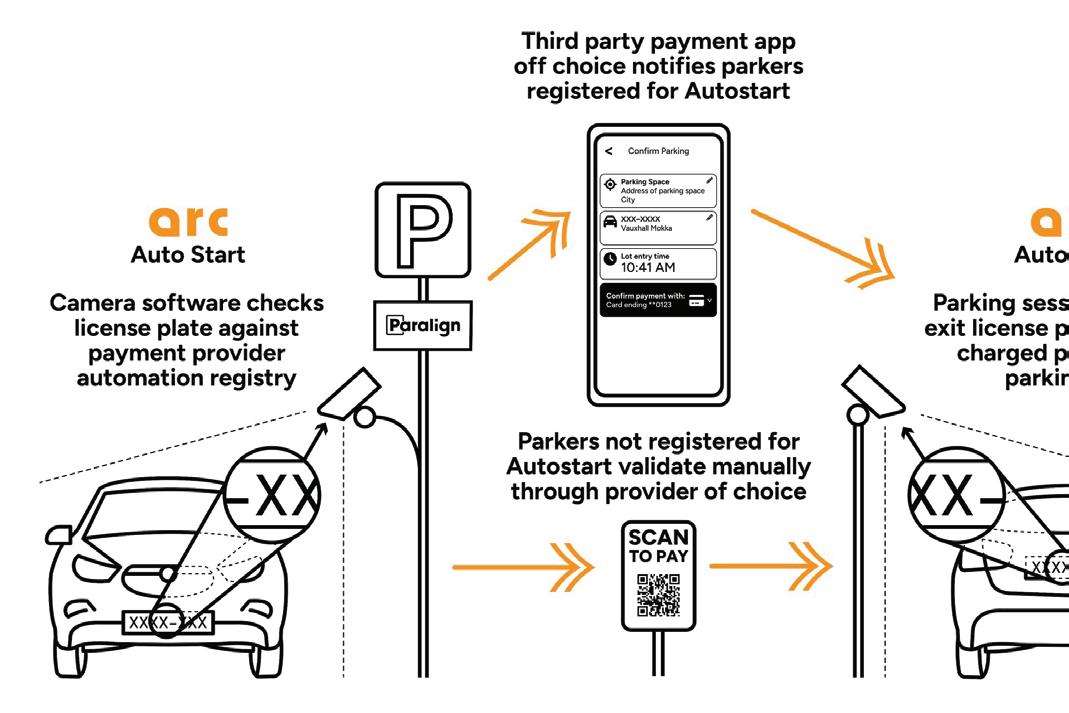
Unlike other payment networks serving the parking industry, this open network allows parking owners and operators to choose their preferred payment provider for collecting parking fees.
“Autostart is a game changer when it comes to parking,” said John Conway, co-founder and chief business development officer for PRRS. “Ticketless parking enables a more efficient, cost-effective and driverfriendly experience, but it has always been challenging to manage payments fairly and accurately. Autostart solves that problem and makes free-flow parking work for any parking facility.”

PRRS, a provider of parking compliance solutions, announced the introduction of Autostart, an AI-powered parking management technology designed to transform the way drivers access and pay for their parking. Powered by Paralign’s ARCFlex software and leveraging advanced AI vision, Autostart offers an open network; precise payment activation for gateless, free-flow parking facilities, capturing and verifying license plate data the instant a vehicle enters and exits a facility and automatic charging of drivers for the exact amount of time that the parking session lasted via a preferred payment platform.
Autostart provides instant vehicle recognition with 99.88% accuracy, using AI vision technology; automatic payments if the driver is preregistered with the facility’s preferred payment provider; flexible options for all parkers; real-time notifications and precision billing.
ARCFlex is already integrated with more than 45 parking payment providers and PRRS is migrating payment providers to Autostart.
“Until the introduction of Autostart, drivers parking in ticketless parking lots and garages had to pre-pay for a set amount of parking,” said Conway. “The problem is that people don’t always know how long they will park. Meetings run long or people just lose track of time. When that happens parking owners have had to treat overstays as an enforcement issue, sending notices for noncompliance fees. Drivers hate receiving notices for $50 or more. Autostart minimizes this unpleasant pain point.”
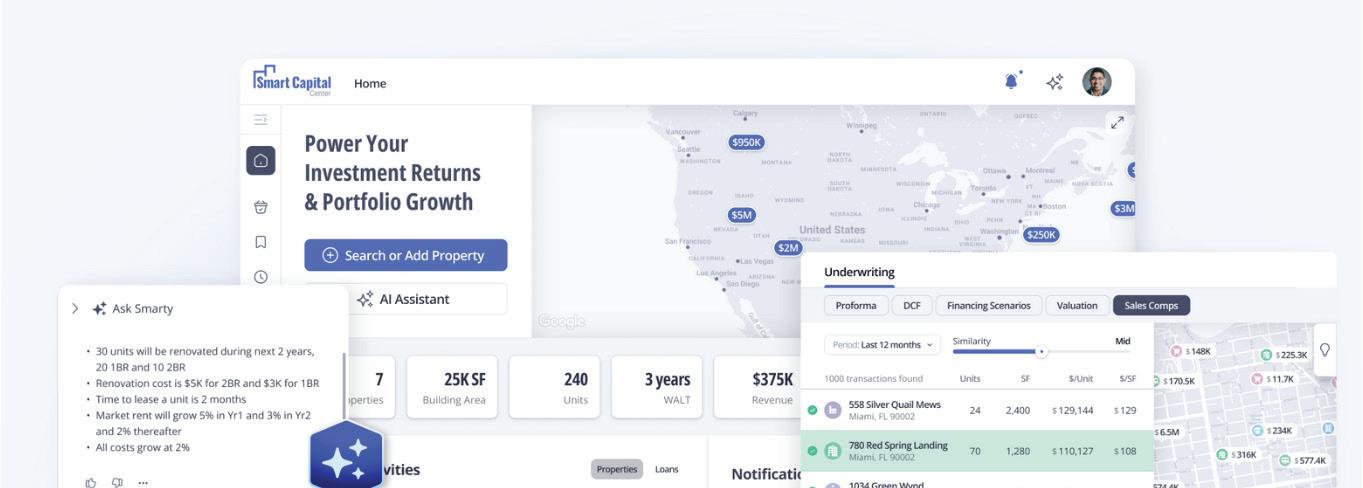
CRE loan underwriting and due diligence, eliminate operational bottlenecks in CRE asset management, reduce risk exposure through real-time portfolio intelligence and expand deal volume without the cost of additional hires.
Whether a professional is pricing loans, modeling cash flows or tracking lease expirations, these assistants can bring CRE workflow automation to every part of the investment lifecycle.


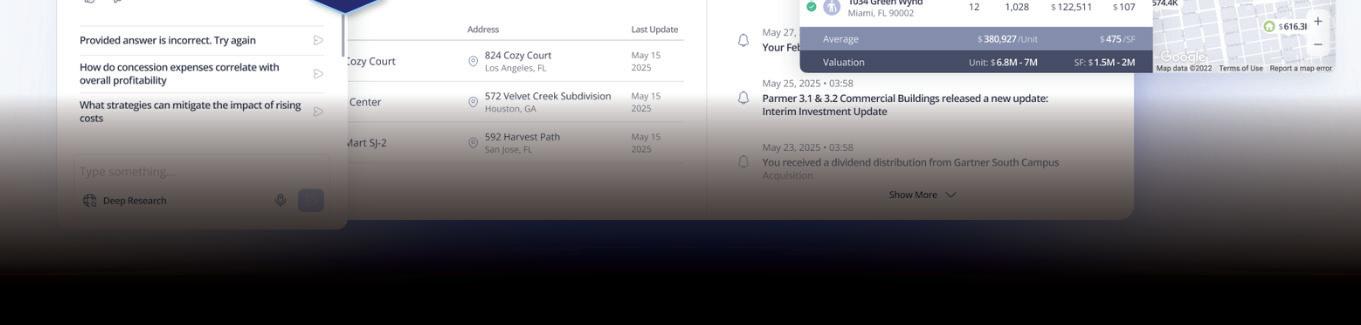
AI-powered CRE finance platform Smart Capital Center announced the launch of its AI Analysts and Assistants — always-on, intelligent team members built to automate complex workflows, extract critical insights and elevate performance across the full commercial real estate lifecycle.
Smart Capital’s AI Analysts operate like 100 times-capacity teammates, available around the clock to support investment, lending and asset management teams. They handle high-volume tasks across underwriting, portfolio management and loan servicing — streamlining decision-making, reducing manual work and maximizing ROI. From rent roll interpretation and investment analysis to clause-level legal review and real-time risk alerts, the platform delivers a fully deployable, end-toend CRE solution designed for scale.
By automating these workflows, the platform enables firms to accelerate
The CRE platform’s AI analysts are capable of acting as underwriters, asset managers, analysts, legal reviewers, project managers and capital markets professionals across the full deal-to-asset lifecycle.
Capabilities include answering document-based questions instantly, summarizing key legal clauses, understanding financials and KPIs, generating property overviews instantly and natural-language search across all documents.
Key functions include semantic clause-level comparison, data validation and exception management, tenant-level lease analysis, comparative market analysis (CMA) integration, insurance compliance verification and real-time alerts.
The platform adapts to each organization’s workflows and communication style, ensuring consistent output, compliance with internal standards and smooth integration.
“We built these AI analysts to help CRE businesses stay focused on what matters: strategy, relationships and growth,” said Laura Krashakova, CEO of Smart Capital Center. “Our platform handles the complexity — so your team can handle the opportunity.”

solutions that deliver value across their entire portfolio,” said Daniel Russo, president of property management technology at JLL. “Prism AI supercharges our professionals to make smarter decisions. This isn’t just about efficiency; it’s about fundamentally elevating the standard of property management while delivering exceptional value to our clients and tenants.”

JLL has introduced artificial intelligence (AI) capabilities that are now available as an add-on to its Prism building operations platform. As part of JLL’s property management technology ecosystem powered by JLL Falcon, Prism AI provides comprehensive, predictive operational intelligence across all aspects of building operations — with the results driving faster decisions on resource allocation, tenant satisfaction, risk mitigation, vendor management, capital investments and more, the company said.
“In today’s market, where expectations around building performance are multifaceted, investors are hyperfocused on implementing technology
Prism AI transforms disparate property documents stored in Prism into an integrated, searchable knowledge base that automates administrative tasks and streamlines workflows. Property teams can get smart recommendations to improve tenant satisfaction based on Prism AI’s analysis of service request patterns. Teams can analyze years of property task and workflow data. Engineers can leverage Prism AI to analyze service manuals against warranty documentation to detect coverage opportunities and prevent costly out-of-pocket repairs.
Prism’s interface allows users to simple, conversational questions like, “What issues from last quarter’s property inspection are still outstanding?” and get instant answers plus relevant recommendations. Prism AI maintains complete data separation so property data, tenant information and financial details remain private to each organization.
“Prism AI represents a transformative leap forward in property management technology, seamlessly combining advanced data analytics with practical, actionable intelligence,” said Yao Morin, chief technology officer at JLL. “As client expectations continue to evolve, JLL remains focused on developing solutions that not only meet today’s challenges but anticipate tomorrow’s opportunities, setting new standards for excellence across commercial real estate.”
“AI’s real promise lies in how it reshapes the human experience of work,” said Dana Jones, RealPage CEO and president. “It’s about removing daily barriers, reducing burnout, and giving teams the bandwidth to show up with energy and purpose to focus on what matters most — delivering exceptional experiences for their residents.”



RealPage, a global provider of AI-enabled software platforms to the real estate industry, unveiled the Lumina AI Workforce, the multifamily industry’s first agentic AI platform, at RealWorld 2025, an event focused on multifamily innovation, held in Las Vegas.
The Lumina AI Workforce marks a decisive shift away from fragmented tools and task-based automation toward an orchestrated network of intelligent agents that act, learn and collaborate across multifamily domains. These AI agents operate in sync with human teams, handling repetitive tasks, coordinating workflows and surfacing actionable insights. This allows property staff to stay focused on strategic, highimpact work.
The first five Lumina AI Agents, each specialized in a core multifamily domain, yet built to collaborate and drive results together, are AI Leasing Agent, which connects with prospects, answers questions and helps guide them from first contact to signed lease; AI Resident Agent, which keeps residents informed, engaged and supported; AI Operations Agent, which handles the day-to-day details of running a property, like move-ins, renewals, audits and reporting; AI Facilities Agent, which responds to maintenance needs, schedules inspections and keeps repairs on track with staff and vendors and AI Finance Agent, which handles routine finance tasks like coding invoices, catching errors, reconciling accounts and sending reports.
The agents are built directly into familiar platforms such as OneSite, Knock and Loft.
The Lumina AI Workforce is powered by the Lumina AI Data Platform, RealPage’s multi-year investment in secure, scalable and deeply integrated AI infrastructure. This foundation ensures AI is not a bolt-on, but a core capability embedded across the RealPage ecosystem.
Founded in 1998 and headquartered in Richardson, Texas, RealPage joined the Thoma Bravo portfolio of market-leading enterprise software firms in 2021.


















earthquake striking California within the next 30 years, according to the United States Geological Survey.
“You can’t control when the next quake hits, but you can control how ready you are for it,” Tourjé said.

The recent tsunami warnings issued along California’s coast following a magnitude 8.8 earthquake off Russia’s Kamchatka Peninsula may have seemed excessive — especially when only small waves reached the shore.
But when it comes to California’s seismic readiness, “There is no such thing as an overabundance of caution,” Kyle Tourjé, executive vice President of Alpha Structural said, noting that many California cities remain unprepared for the 99% chance of a magnitude 6.7 or larger
Recent policy changes could set the state back decades in terms of disaster readiness. In May, the Federal Emergency Management Agency (FEMA) canceled $30 million to $33 million in retrofit grants intended for California’s highrisk softstory apartment buildings. These buildings, common in Los Angeles and tracked for compliance by the Los Angeles Department of Building Safety (LABDS), have historically caused deadly collapses in events like the 1994 Northridge quake.
San Francisco enacted an ordinance on May 9, 2025, requiring preliminary structural assessments of nearly 4,000 nonductile concrete or tiltup buildings to be completed within 18 months. This means owners must hire engineers to evaluate seismic risks, which can cost thousands per building. In contrast, Los Angeles passed an ordinance targeting both soft-story and non-ductile concrete buildings, but retrofitting non-ductile concrete structures presents far greater funding challenges because of their size, complexity and high costs. This blend of urgency and caution has experts calling for faster progress — pushing Californians from assessment to implementation and building the partnerships needed to safeguard the city’s buildings.

a billion dollars in lifetime sales, is led by Ashley Reidy Quinn and Nick Montalbano. Quinn co-founded the team with Montalbano, and in addition to overseeing and generating the team's sales and rental transactions, she leads its operations, marketing and client experience strategy. She earned the distinguished Real Estate Board of New York’s “Rental Deal of the Year” award during her first year in the business. Montalbano leads the team's business development and sales strategy. The team’s transactional range spans Manhattan, Brooklyn and the Hamptons, and includes work within prominent properties such as 212 Fifth Ave. and 33 East 74th St.

Coldwell Banker Warburg (CBW) announced that two teams are joining the firm from Elegran Real Estate: the Asset Advisory Team and the Waterview Advisory Group. In recent months, 25 real estate brokers and agents have joined CBW from Elegran and other brokerages and firms.
“We’re thrilled to welcome not one, but two exceptional teams to Coldwell Banker Warburg. The fact that they’ve chosen CBW as their next home is a testament to the culture we’ve built, the standards we uphold, and the future we're creating together,” said Kevelyn Guzman, regional vice president of Coldwell Banker Warburg. “The Waterview Advisory Team is a powerhouse — they’re analytical, growth-focused, and bring a modern investment approach to every deal. The Asset Advisory Team leads with integrity, collaboration and a strong track record of client success.”
The Asset Advisory Team, which has amassed more than a quarter of
The Waterview Advisory Group boasts a quarter of a billion dollars in transactions across New York and globally. It provides a wide range of agent and advisory services, ranging from residential sales listings, buyer representation, rental listings, property investment analysis and to commercial real estate sales and rentals. The group is led by its founder, agent Jules Garcia, a former regional vice president and 20-year financial services industry veteran. He focuses on upscale townhouses, new developments and multifamily properties in Brooklyn and Queens. Also on the Asset Advisory Team are Agents John David Henning, an expert in digital marketing, social media strategy and consumer behavior and Allie Dornier, The granddaughter of a real estate broker, with experience in property management.
The Waterview Advisory Group also includes Agents William Yau, who previously negotiated multimillion-dollar media investments with Fortune 500 companies in the financial, travel, retail, and e-commerce industries, and Nikita Idira, whose 10 years of experience spans Manhattan, Brooklyn and Long Island.
The two teams join three other agents who recently moved to CBW from Elegran Real Estate: Gina Conzo, Jarrod Duncan and John Cella.








































Flexspace AI is following the success of its industry-first Flexspace AI Dynamic Pricing with a new 2.0 version that allows coworking space and flexible real estate operators the ability to automatically optimize pricing of their spaces and adjust in real-time, just like hotels.
Flexspace AI’s SmartPricing Agent taps into the power of AI to automatically optimize pricing based on various demand data sets and market trends, deliver the best rate at the right time to increase real-time booking conversion and learn about the price elasticity for each of their offices and meeting rooms.
“With our SmartPricing Agent, we’re turning flexible real estate into intelligent commerce: said Eyal Lasker, co-founder and CEO of Flexspace AI. “Just like Shopify transformed online retail, our AIpowered ecommerce revenue platform gives coworking and flexible real estate operators the tools to sell and price dynamically, from hourly meeting rooms to monthly offices, in real time.”
Coworking space operators like Werqwise, The Malin, The Shop Workspace and Venture X have experienced five times revenue on average in the first 12 months with the e-commerce revenue platform.
“Flexspace AI has driven consistent, measurable growth for The Malin across customer engagement and website revenue performance, with over 70% growth quarter-over-quarter in 2025, and strong momentum heading into Q3,” said Jordan Gallagher, director of operations, The Malin.”This has been largely fueled by actionable trend and behavior data that helped us refine our positioning, pricing and local marketing for greater efficiency.”
Operators like Gallagher can increase their revenue without having to make time-consuming manual adjustments.
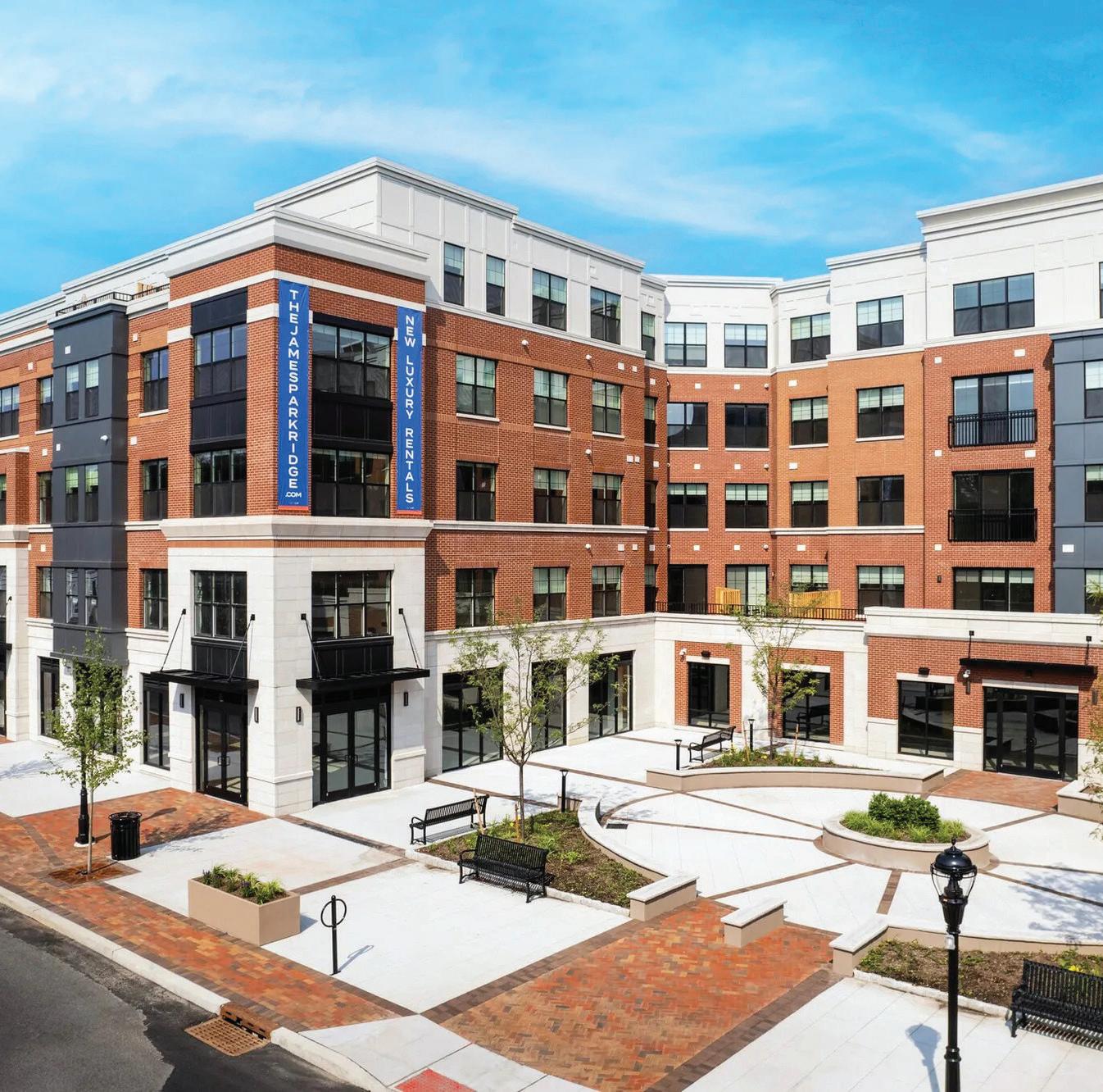
Representatives of CBRE, led by Jeffrey Dunne, Stuart MacKenzie, Eric Apfel and Travis Langer of CBRE Institutional Properties, in partnership with Roland Merchant and Tom Pryor of CBRE’s Investment Banking team, announced the $177 million sale of The James, a Class A multifamily community in Park Ridge, N.J. CBRE advised the owner, Veris Residential, on the sale.
Built in 2021, The James consists of 240 apartments along with nearly 18,000 square feet of ground- floor retail space. The property features luxury Class A finishes along with an expansive amenity package, including a fitness center with Precor equipment; a yoga and spin studio; coworking spaces; multiple clubrooms, including a game room with billiards and shuffleboard; a plunge pool; an outdoor lounge with TVs, firepits and BBQ grills and more.

The property is situated in downtown Park Ridge, an affluent suburb in Bergen County, and adjacent to Park Ridge Station, which serves NJ Transit’s commuter railroad, offering frequent service to Hoboken and easy connections to Midtown Manhattan in under an hour.
“Following the $85 million disposition of Signature Place in Morris Plains for Veris Residential last month, we’re pleased to advise the company in the disposition of another trophy multifamily asset in suburban New Jersey,” said Dunne. “The James is well positioned in downtown Park Ridge, benefiting from the area’s affluent clientele and proximity to the Park Ridge train station.”

Data Centers are more needed than ever but building them isn’t easy

By Debra Hazel
The exponential growth of digital information and processes in the cloud is creating some down-to-earth real estate problems.
Whether it’s being used in proptech, artificial intelligence, social media or other businesses, the amount of data continues to soar — and that growth is necessatating massive new data center developments to house needed technology.
“If the global data center industry in 2024 could be summed up in two words, they would be ‘accelerated growth.’ The industry experienced rapid expansion throughout the year, a trend expected to continue into 2025 and 2026,” said CBRE’s “Global Data Center Market Comparison” report in May 2025. “Artificial
intelligence (AI) and machine learning (ML), which gained prominence in 2022, are key drivers of this demand now and into the future.”
Builders are responding.
“By the end of 2024, the data center development pipeline reached nearly 50 million, effectively doubling the volume from five years ago. Capital deployment in data center construction reached an all-time high of $31.5 billion annually in 2024, with no signs of plateauing this year,” reported Newmark in its “2025 United States Data Center Market Outlook.”
But this potential boom faces a number of challenges to be overcome, including site criteria, NIMBYism, power needs and logistics.

The main question is where to build them. Unlike warehouses and distribution centers — which data centers physically resemble — these buildings have very specific needs. Data center development requires access to reliable power and water for cooling, strong network connectivity, local incentives given the extremely high cost of construction and a low risk of natural disasters — CBRE noted that a facility should have no more than 29 hours of downtime per year.
Currently, Virginia remains the largest data center market in the world, CBRE said.
“Virginia’s operational data center capacity is larger than the combined capacity of the next three largest data center markets in the Americas. It also represents more than 25% of total operational capacity throughout North, Central and South America,” the company reported.
But it may not be as dominant for long, as creeping NIMBYism and competition from other areas in the United States increase.
“Local opposition to rapid data center growth is reshaping the regulatory environment in the Richmond market,” reported Avison Young in its “Q2 2025 Data Center Market Overview.”
As of June 2025, Henrico County has placed new requirements and restrictions on data center developments, even including areas previously amenable to such projects. Some companies have withdrawn plans for properties in the county amid opposition.
Other regions are looking decidedly more appealing. Newmark reports that data center development is taking place in at least 23 states around the United States, including Pennsylvania, the Carolinas and Texas.
In late August, social media giant Meta’s $1 billion Kansas City Data Center opened after three years of construction,
“In 2022, we selected Kansas City because it offered excellent infrastructure, a robust electrical grid, a strong pool of talent for construction and operations jobs and incredible community partners,” said Brad Davis, data center community and economic development director at social media giant Meta.
Funds managed by Blue Owl Capital and affiliates of Chirisa Technology Parks and Machine Investment Group recently closed on a joint venture partnership to include $4 billion of funding for previously announced CoreWeave developments in Lancaster, Pa. CoreWeave has invested in the campus and will lease the site.
London-based Yondr Group, a leading global developer, owner and operator of hyperscale data centers, has secured
a 163-acre site in Lancaster, Texas, just south of Dallas to develop a campus with the capacity to accommodate 550 megawatt (MW) critical IT load. The company also has projects in Northern Virginia and Toronto.
Elsewhere, Vantage Data Centers recently announced a $25 billion investment to develop a 1.4 gigawatt (GW) data center campus in Shackelford County, Texas. Situated on 1,200 acres, the campus will be home to 10 data centers totaling 3.7 million square feet.
“Texas has become a critical and strategic market for AI providers. In particular, the launch of our Frontier campus with 1.4GW of GPU compute capacity marks a watershed moment for Vantage as we deliver on our promise to meet the unprecedented requirements of our customers,” said Dana Adams, president of North America at Vantage Data Centers. “This investment in Texas will be a significant economic growth driver for the area as we rapidly deploy the digital infrastructure needed to support AI applications.”
In Mississippi’s Rankin County, Avaio Digital Partners is investing $6 billion into a 175-acre campus in the City of Brandon (near Jackson) that it said will host the computer server, networking and data storage technologies that underpin cloud computing and AI applications.
GW once all data centers are operational. However, utilities are set to supply only 20.6 GW of that needed capacity. Newmark reported.
And demand for power globally continues to increase. A report from International Energy Agency notes that the world’s electricity consumption is projected to grow 4% annually through 2027 due to a number of factors.
“The data center development pipeline — already at record heights — would be substantially higher if not for the singular issue of power constraints,” said Newmark in its “2025 United States Data Center Market Outlook.”
Even in areas where power is available, it could take years to build the infrastructure needed, given supply chain shortages.
“The data center development pipeline — already at record heights — would be substantially higher if not for the singular issue of power constraints,”
Construction of the first phase of the project, totaling over 600,000 square feet of data center buildings and 116MW of power, will be complete and energized in the first half of 2027.
Newmark in its “2025 United States Data Center Market Outlook.”
In late August, Zenith Volts Corp. announced that the Chaves County Commission had granted county approval for a 300acre data center project located 20 miles south of Roswell, N.M. Designed to support 1.25GW or more of power capacity with expandable land resources, the project is expected to be fully operational by November 2027.
The approved 8,500-acre site will integrate advanced power solutions, including on-site solar, natural gas generators for dependable backup, modular solar-thermal hybrid systems for 24/7 thermal storage, a 250-acre battery energy storage system, and geothermal cooling for optimal efficiency.
Even if all other elements align, power is critical. Newmark reports that Analysis from S&P Global Market Intelligence indicates that the power demand from both existing and planned datacenters in the U.S. is expected to total about 30.7
“These challenges will continue to intensify as the data center sector expands rapidly into new geographies,” JLL said in “2025 Global Data Center Outlook.”
As a result, some developers are taking matters into their own hands. In August, digital infrastructure company Equinix announced that it is working with energy companies including Oklo, Radiant, ULCEnergy and Stellaria that are developing innovative approaches to generating reliable and sustainable electricity to support the needs of Equinix data centers worldwide.
“Access to round-the-clock electricity is critical to support the infrastructure that powers everything from AI-driven drug discovery to cloud-based video streaming,” said Raouf Abdel, executive vice president of global operations at Equinix, in the announcement. “As energy demand increases, we believe we have an opportunity and responsibility to support the development of reliable, sustainable, scalable energy infrastructure that can support our collective future. By working with our energy partners, we believe we can support the energy needs of our customers and communities around the world by helping to strengthen the grid and investing in new energy sources.”
Equinix also designs highly efficient data centers aimed at optimizing energy use. In 2023, Equinix announced plans to expand support for highly efficient advanced liquid cooling technologies — like direct-to-chip — to more than 100 data centers across 45 metros around the world.
Nuclear power and natural gas are emerging as preferred solutions, as well.
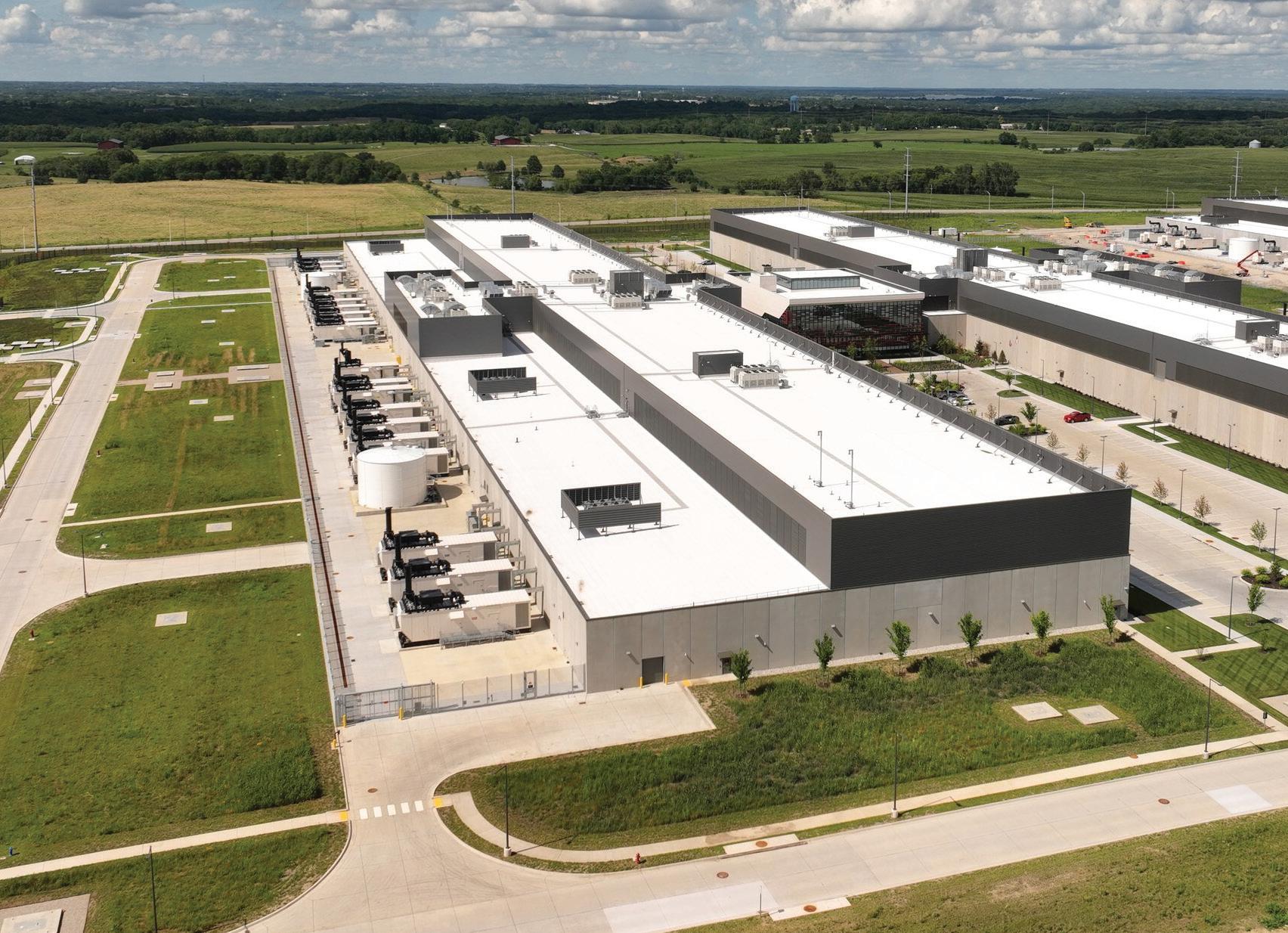
The environment is also a factor for NIMBYism, with some builders focusing on green developments. Like all of its data centers, Meta's Kansas City Data Center is LEED Gold-certified, and its electricity use is matched with 100% clean and renewable energy.
Albany, N.Y.-based Soluna Holdings Inc., a developer of green data centers for intensive computing applications recently reached a key milestone with 1 GW of clean computing projects in either operation, construction or development, with the launch of two new Texas-based sites: Project Fei, a solar-powered facility in northern Texas, and Project Gladys, a wind-powered facility in the southeast region of the state.
Project Fei is a 100 MW data center co-located with a 240 MW utility-scale solar farm, Soluna’s second solar-based project to date. Developed in partnership with a global leader in energy infrastructure investment, Project Fei will convert underutilized solar energy into clean, high-performance computing power. The project is currently advancing through land acquisition, power contract negotiation, and Electric Reliability Council of Texas (ERCOT) interconnection planning.
Project Gladys, a 150 MW facility, will be co-located with a 226 MW wind farm and developed in partnership with a prominent U.S.based independent power producer (IPP) managing over $40 billion in assets and more than 80 energy facilities nationwide.
“Reaching one gigawatt of clean computing projects in our total development pipeline is a transformative moment for Soluna. Getting these projects from development to operational will put us on par with some of the biggest companies in the world when it comes to clean-powered computing capacity, including Amazon, Meta, and Google,” said John Belizaire, CEO of Soluna.
The result, Belizaire said, is that the company could possibly effectively displace nearly 48 million metric tons of CO2, equivalent to removing 11 million cars from the road over the life of these assets, and we believe this is just the beginning of what clean computing can do.”
As with all new construction, logistics is a challenge for data center developers.
“Materials like lumber, PVC, plumbing components, gypsum and concrete have remained relatively immune to supply chain woes and can be sourced rather quickly, while copper wire, steel and light fixtures typically face two- to three month wait times,” CBRE reported. “The most critical components, like switchgear, chillers, generators and transformers, have lead times exceeding six months, with some taking more than a year to procure. Stockpiling of components, which became more common in 2024, is further exacerbating this issue, as construction speed became a significant competitive advantage for developers.”
But demand remains strong, with vacancy rates at record lows.
“While analyses vary on adoption scenarios, some forecasts, including an October 2024 analysis by McKinsey, suggest that up to 70% of total data center demand will be AI-driven by 2030, up from under 50% currently,” Newmark said. “This trend will require significant further expansion of digital infrastructure for training, inference and other use cases in the coming years.”




In today’s fast-moving and increasingly complex financial environment, successful business owners need more than just an advisor—they need a trusted partner who sees the full picture, anticipates change, and integrates every facet of their financial world. For over 30 years, Louis C. Ciliberti & Associates has delivered exactly that.
We are a full-service financial firm and multi-family office that helps the most financially successful individuals and privately held companies in the nation. At Louis C. Ciliberti & Associates, we don’t just provide advice—we orchestrate and execute a total wealth strategy that aligns with our clients’ business goals, family needs, and long term vision.

















By: Itay Oren
Over the past year, few topics have dominated industry conversations as thoroughly as artificial intelligence (AI). From panel discussions at real estate conferences to casual conversations with property managers, AI is not just a buzzword anymore, it’s a looming presence. For many, it sparks excitement. For others, apprehension. And for most, a mixture of both.
The proptech sector finds itself at a crossroads. AI is no longer an abstract concept confined to tech blogs; it’s entering day-to-day operations across commercial real estate. But as the technology gains momentum, so do the debates around what it actually means for the people working in the field.
At the heart of these discussions lies a fundamental concern: Is AI coming for our jobs?
This question isn’t unfounded. History offers plenty of examples of technological disruption leading to workforce reductions. Automated processes have replaced factory workers; self-checkout kiosks have trimmed retail staff and AI-driven algorithms handle customer service chats that once required human agents. Given these precedents, it’s understandable why property managers, operations teams and facility staff might feel uneasy.
However, there’s a growing school of thought within the industry suggesting a different narrative, one that frames AI not as a threat, but as an opportunity to rethink how teams work.
It’s easy to get swept up in the AI gold rush, but thoughtful implementation is critical. Visitt has been working on AI-driven solutions since 2022, well before the recent surge in mainstream AI interest. Visitt has taken the time to test, iterate and refine the tools in
collaboration with property teams, ensuring the technology addresses real-world pain points. This intentional approach contrasts with the reactive rollouts seen in other industries, where AI tools are sometimes deployed hastily in the name of innovation, often leading to more confusion than clarity.
The companies leading the way in AI adoption within property operations are those that view technology as a means to an end, not an end in itself. They are less concerned with flashy features and more focused on building solutions that integrate seamlessly into existing workflows, making life easier for property teams rather than complicating it.
As AI continues to evolve, the conversation around its role in property management will no doubt intensify. But the most forward-thinking players in the industry are already charting a path that rejects the binary of “AI versus jobs.” Instead, they envision a future where AI acts as an enabler, augmenting human capabilities and freeing teams to concentrate on the high-value tasks that thrive on human insight and connection.
The shift won’t happen overnight. It will require ongoing collaboration between technology providers, property teams and industry stakeholders. It will also demand a cultural shift, moving from viewing AI as a threat to embracing it as a partner in achieving operational excellence.
At this juncture, one thing is certain: AI is not a passing trend. Its impact on property operations is already evident, and its potential is just beginning to be realized. For those willing to engage thoughtfully with the technology, the coming years could mark a period of unprecedented innovation in how properties are managed, maintained and experienced.
In the complex ecosystem of property management, a significant portion of daily work is repetitive and administrative. Tasks such as processing service requests, scheduling maintenance tasks, following up on work orders and logging inspections, while essential, consume a disproportionate amount of time and mental bandwidth.
AI’s potential lies in automating this tedious, repetitive work that slows teams down, so that human workers can focus on highervalue activities. These include problem-solving, relationship building with tenants and proactively managing assets to optimize performance. Rather than replacing teams entirely, AI can enhance their effectiveness by taking care of the mundane tasks, enabling them to focus on meaningful engagement.
This shift will inevitably change how teams are structured and how buildings are managed, but the bigger opportunity lies in enabling organizations to operate smarter and faster, while empowering their people to concentrate on the work that requires creativity, judgment and personal connection. This philosophy has been gaining traction, especially among organizations that have been experimenting with AI-driven workflows for several years. Companies like Visitt advocate for “purpose-built AI”, technology specifically designed to address the unique challenges of property operations, rather than generic AI solutions retrofitted to the real estate sector.
While AI’s influence in real estate is undeniable, there is also a significant gap between the idea of AI and the practical realities on the ground. Many property managers are still trying to make sense of how AI fits into their day-to-day responsibilities. The technology is evolving fast, and amidst the excitement, there’s a lot of noise: terms like “machine learning,” “predictive analytics” and “automation” are often used interchangeably, adding to managers' confusion.
But those with hands-on experience implementing AI in property operations point to clear, tangible benefits. AI-powered predictive maintenance saves time and cost by quickly identifying similarities and root causes, allowing teams to fix issues at the source instead of repeatedly addressing symptoms. Automated tenant communication tools can streamline updates, reminders and service notifications, ensuring faster response times and a better tenant experience. Recurring issues can be identified across multiple properties and automatically flagged for escalation, helping teams stay ahead of potential problems before they disrupt operations.
With fewer emergencies and more efficient workflows, teams can cut costs, improve building performance and focus on high-value activities like tenant engagement.
Another critical area where AI is making a difference is data consolidation. Property operations generate a vast amount of data daily, from work orders and service tickets to inspections and compliance reports. Sifting through this data manually is inefficient and prone to errors. AI can aggregate and analyze this information in real time, providing actionable insights that help teams stay ahead of potential issues.
Predictive maintenance powered by AI is not just helpful, but transformative. AI tools now analyze building management system data, work orders, and recurring maintenance patterns to detect early signs of equipment stress, such as HVAC units teetering on failure during a heat wave, long before human teams could reasonably intervene.
Rather than reacting to breakdowns, operations leaders can proactively address issues, reduce downtime and better allocate staff time. This shift from reactive to predictive is a game-changer for property teams navigating the complexities of modern building management.
We see AI as a strategic tool that cuts through the noise of overwhelming alerts, surfaces critical insights and supports decisionmaking.
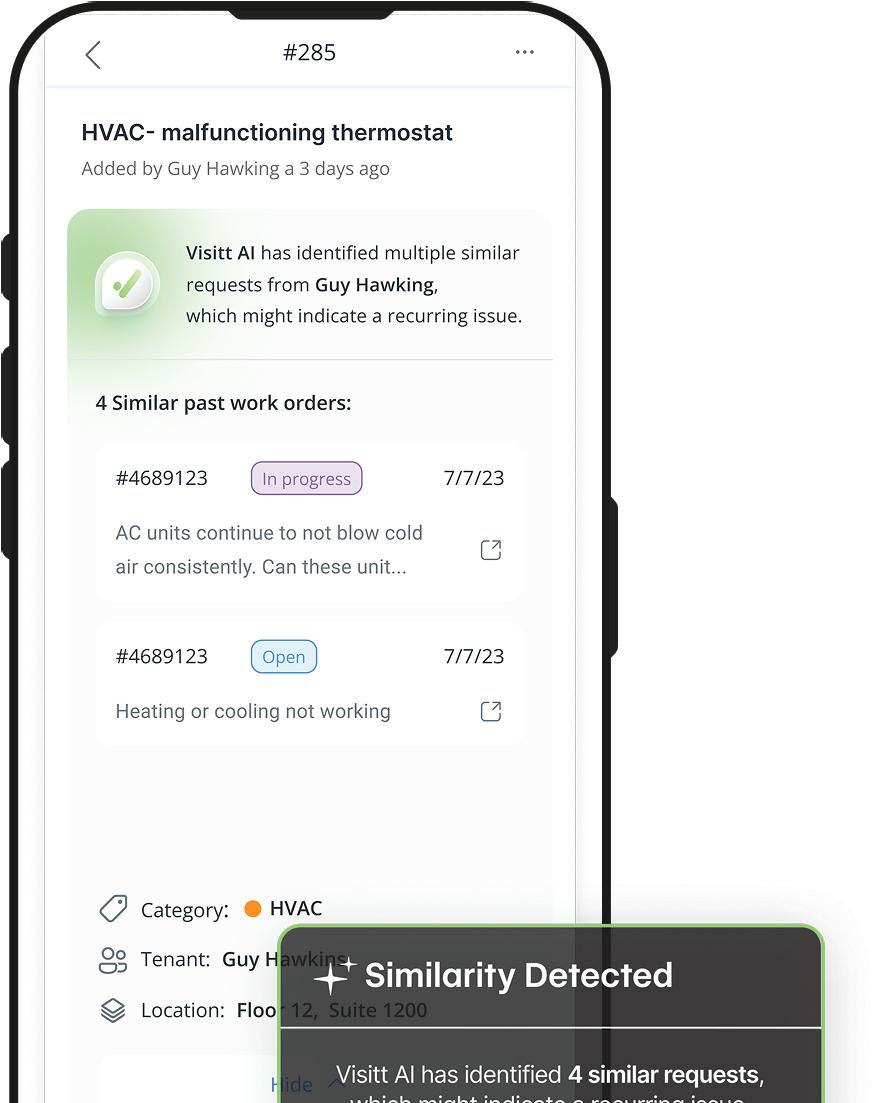

When a work order keeps repeating or sensor data indicates an anomaly, AI can escalate the issue with context, enabling teams to act swiftly and intelligently. This redefines what it means to operate a property: less firefighting, more foresight, and less time chasing down issues, more time building strong tenant experiences.
With AI handling the mundane and the repetitive, property professionals are freed to do what they do best — engage, think strategically and create environments where people want to work, live, and thrive
One of the prevailing misconceptions about AI is that it will soon make human involvement completely obsolete. In reality, we still see today that the most effective implementations of AI in property management prioritize human expertise.
Technology can handle the repetitive, structured tasks, but judgment calls, relationship management and problem-solving still require a human touch.
What AI can do is multiply a team’s effectiveness. Instead of being bogged down with manual processes, teams can focus their efforts on areas where they add the most value.
This approach requires a shift in mindset, not just among executives, but across entire organizations. Training and change management are essential to ensure teams understand how AI is meant to support them, not sideline them.
Itay Oren is co-founder and CEO of Visitt.io, a provider of AI-based property operations platforms.






By Nate Larmore, Senior Director, MGAC

Like every complex industry, healthcare design and construction has a reputation for stringent regulation, layers of bureaucracy, schedule issues, cost overruns, bulky processes and complicated decision-making. But emerging technologies are offering new possibilities to innovate and achieve greater efficiency in how designers, builders and facility operators plan and deliver construction projects.
A wide range of disruptive technologies are allowing program managers, architects, engineers and con-struction teams to rethink the means and methods by which we plan, design and deliver projects. At the forefront of this shift is a cadre of artificial intelligence (AI)-based systems and tools that are allowing experts to re-engineer best practices as well as means and methods for organizing and equipping hospital facilities.
From testing architectural concepts to assessing workflow innovations to studying new efficiencies in space programs, AI tools can model thousands of options in an instant and provide stakeholders with deeper understanding into what is possible. From early planning and predictive modeling to construction logistics and ongoing facility management, firms are applying AI solutions across the full lifecycle of healthcare facilities to combat inefficient process, bloated schedules and industry complexity.




While AI is often associated with clinical applications, such as diagnostic imaging, predictive analytics and virtual nursing, it is becoming a powerful tool for both design and transforming care delivery. Although regulatory constraints and extended project timelines make it difficult to fully embed AI in early design stages, project teams are already seeing a significant impact. They understand and embrace the fact that AI can be used to support real-time decision-making and optimize workflows.
Inside the hospital itself, AI is elevating patient care and redefining how we think about designing typical technologies, and especially the design of footwalls (the wall at the end of hospital beds) to accommodate smarter, multi-functional technology, as well as a higher need for power and access to fast and reliable networks.
Traditionally, the TVs in the hospital rooms served mostly entertainment purposes, but now virtual nursing capabilities are integrating into smarter TVs equipped with cameras and AI sensors, enabling remote communication and patient monitoring. This reduces the current burden on nursing staff while improving safety and experience for patients. These systems can detect temperature changes, predict fall risk and analyze movement in patient rooms, creating opportunities for more responsive, proactive care.





AI will not replace nurses; it will reinforce them. According to The American Association of Colleges of Nursing, the United States predicts nearly 193,100 registered nurse job openings each year through 2032 due to retirements and workforce exits.
With this growing gap, hospitals are turning to AI to support nursing staff by automating administrative tasks, enabling virtual care and improving patient monitoring — all which ease workload and reduce burnout.
By better supporting the human element, AI-equipped systems offer critical assistance in alleviating daily pressure on essential workers — not eliminating their jobs.
The rise of AI is also changing how hospitals strategize their communications and accessibility. Outdated traditional call centerbased translation services are being replaced by AI-driven tools in the hospital rooms, enabling faster and more accurate translation for nonEnglish-speaking patients.
In diagnostic departments, AI is now embedded in imaging technology, assisting radiologists by flagging anomalies and reducing the potential for human error. The AI features in diagnostics support specialists
as they examine, diagnose, apply treatment and predict patient outcomes to speed up and improve the overall healing process.
While all these amazing AI innovations are shaping the future of healthcare, they are not without challenges. Legal teams are justifiably cautious about the privacy implications of constant data monitoring and how data could be misused in lawsuits against healthcare providers.
While promising, digital twins — global learning health and disease models for preventive and personalized medicine — have not been widely adopted (yet) due to cost concerns and uncertain ROI. And like any powerful tool, AI can replicate and accelerate flawed processes if not implemented thoughtfully and with human oversight.
In current as well as near-future applications, AI lacks critical thinking and cannot distinguish right from wrong, so AI tools must be adopted as supporting features for medical staff.
Focusing on optimizing workflows, thoughtfully improving efficiency, delegating daily busy work and enabling healthcare workers to spend more quality time with patients will improve outcomes and patient satisfaction.
Focusing more on the planning and design of healthcare facilities, AI is already impacting legacy processes and assumed inefficiencies that have become typical of healthcare design and construction. These tools streamline documentation, transform estimating and workflow modeling.
Other tools are automating status assessments and provide real-time status tracking of construction activities, saving time, minimizing errors and driving better project outcomes. On the planning front, it can help right-size hospital infrastructure by better predicting space utilization and right-sizing space programs.
AI will not replace human expertise, but it is and will continue to enhance it. As we bring more AI features into the fabric of hospital design, the focus should remain clear: to build smarter, more adaptive and more efficient healthcare spaces that meet the evolving needs of patients and providers alike.

By David Fuller Watts, CEO, Kinexio
For decades, property management ran on instinct and experience. A seasoned manager could walk a concourse, feel the crowd, glance at storefronts and know what was working and what wasn’t. That intuition is still invaluable, but in today’s complex retail and mixed-use environments, it’s not enough. The pace of change, the diversity of tenants and the heightened expectations of visitors demand something more: real-time, shared, actionable data. The properties that embrace it aren’t just managing, they’re thriving.
It’s worth remembering that data in real estate is nothing new. Leasing teams have long tracked occupancy rates, operations managers have maintained maintenance logs and marketing departments have counted foot traffic. What has changed is the speed, granularity and shareability of that data.
A decade ago, a landlord might receive retailer sales reports months after the fact, long after the window for intervention had closed. Today, real-time sales and performance data can inform
operational decisions the very next day. That shift from lagging to leading indicators is a game-changer.
The holiday season is a perfect example. With next-day sales data, property managers can adjust marketing campaigns on the fly, move underperforming tenants into higher-traffic areas or deploy additional cleaning and security resources to maintain the customer experience during peak foot traffic. This isn’t a hypothetical — it’s already happening in forward-thinking retail and mixed-use environments.
Historically, property operations knowledge lived in people’s heads, often the heads of seasoned veterans who knew every quirk of a building, every long-term tenant relationship and every hidden risk. While invaluable, that model doesn’t scale and it doesn’t survive staff turnover.
The future lies in capturing and operationalizing that knowledge through data platforms. Think of it as succession planning for property expertise. When institutional knowledge is documented,
centralized and shared, it stops being dependent on individuals and starts being a resource for the entire organization.
This is also changing the dynamic between landlords, tenants and even competitors. Where once data was guarded as a proprietary asset, we’re now seeing more sharing, particularly when it benefits everyone involved. Real-time reporting on sales, traffic patterns and even safety incidents can help entire retail districts act faster, spot trends earlier and reduce risk.
If the past few years have proven anything, it’s that retail is far more adaptable than many predicted. While some categories have shifted online, retail’s ability to adjust its tenant mix keeps it relevant in a way that static office towers can’t easily match.
Premium retail space remains in high demand and landlords are becoming increasingly selective about who they bring into the fold. Secondary malls are pivoting to mixed-use models, adding residential, leisure and even healthcare facilities to diversify traffic and revenue streams. The result is a wave of new “destinations” where people don’t just shop — they spend time, socialize and return again and again.
Hollywood Park in Los Angeles and Tysons Corner in Virginia are two examples of how this plays out. Both are more than shopping centers; they are vibrant, multi-use communities that blend retail, dining, entertainment and residential living. Their success is no accident — it’s rooted in data-driven decisions about tenant mix, event programming and operational management that keep the experience fresh and compelling.
Ask any visitor what makes them return to a destination, and they’ll rarely cite “good property management” directly. But they will notice, and act on, its effects: clean common areas, a sense of safety, responsive staff and well-maintained amenities. These table stakes for customer loyalty are deeply data-dependent.
Incident tracking, for instance, allows property managers to address safety risks before they escalate. Patterns in cleaning logs can reveal where and when maintenance is most needed, allowing for targeted deployment of resources rather than blanket scheduling. Even marketing decisions are affected: if data shows that cleanliness issues correlate with drops in sales in certain zones, management can prioritize them immediately.
In short, operational data isn’t just about internal efficiency, it’s about protecting and enhancing the visitor experience, which in turn protects revenue.
There’s a temptation in proptech to chase complexity, layering on features until the platform feels more like a puzzle than a tool.
But in my experience, the most effective solutions are those that deliver clarity, not confusion.
In multi-tenant, high-foot-traffic environments, whether shopping centers, stadiums, airports or train stations, staff don’t have the luxury of sifting through complicated dashboards or wrestling with multiple disconnected systems. They need simple, intuitive platforms that integrate data from various sources into a single, actionable view.
The goal isn’t just to have data, it’s to have data you can use in the moment, in the field, to make a difference.
The ultimate vision for data-driven property management is a connected community in which every stakeholder — security, maintenance, cleaning, tenants and management — operates in sync. Information flows seamlessly, decisions are made faster and everyone understands how their role contributes to the destination’s success.
This isn’t a distant ideal; it’s already emerging in properties that treat data as a shared asset rather than a siloed resource. And as AI continues to mature, the potential for predictive, proactive and personalized property management will only grow.
At Kinexio, data is not just isolated metrics but acts as the backbone of a connected ecosystem. The Kinexio Facilities Management (FM) Portal is designed to unify maintenance, asset tracking, compliance and communication into a single, accessible platform. By providing one source of truth for everything from preventive maintenance schedules to incident reports, the portal eliminates the silos that often slow down decision-making in property operations.
Real-time data and integrated workflows allow on-site and remote teams to respond faster, reduce risk and plan for the long term, whether that’s avoiding costly equipment failures, improving compliance or creating cleaner, safer environments. More importantly, it fosters a sense of shared responsibility across security, maintenance, cleaning crews, tenants and management. In connecting these communities, we strengthen not only the performance of each asset but also the collaborative culture that underpins great placemaking.
Retail and mixed-use destinations are more than just collections of buildings and leases, they are living ecosystems. And like any ecosystem, their health depends on the quality of the information flowing through them.
The properties that will lead the next decade won’t necessarily be the largest or the flashiest. They’ll be the ones that use data as the thread connecting every operational decision, tenant relationship and visitor experience.
For those of us in the business of creating places where people want to be, data isn’t just a tool. It’s the foundation of everything.
“It’s a whole new world,” said Louis Adler, co-CEO of REAL New York, a fullservice, landlord and developer-focused real estate brokerage. “It used to strictly be a redevelopment pipeline. Now it’s mostly a conversion pipeline. And this is the kind of product you’re going to be seeing over the next decade.”
Adler knows of what he speaks as REAL New York has over 1000 conversion units in the pipeline around New York City.
The city is undergoing significant rezoning to facilitate the conversion of non-residential buildings, particularly offices and hotels, into housing. This initiative, part of Mayor Adams’ “City of Yes” plan, aims to address the city's housing shortage by creating 20,000 new residential units through office conversions, according to NYC.gov.
The rezoning efforts simplify the conversion process and offer tax breaks to developers who include affordable housing in these projects, according to a report from The City -NYC News.
“We are working on a reconfigured hospital … and another project involving a hotel,” added Robert Rahmanian, co-CEO of REAL New York.
REAL New York has been tapped to spearhead the pre-development, leasing and marketing of two new recently announced projects of this nature: one, a former Mount Sinai Beth Israel medical building at 313 East 17th St. will become residential, and the other, a 1964 office building at 300 East 42nd Street is being renovated into a hybrid of residential and office.
The 13-story, 54,000-square-foot medical facility at 313 East 17th St. is being converted into 96 residential units by developer B Contractors Group LLC, with Kao-Hwa Lee Architects. The nine-story office tower at 300 East 42nd St. a will become a modern, large-scale hybrid residential/commercial development in Midtown East with commercial renters remaining operational on the lower floors, and a renovation to the top floors that will create residential units. The project is being developed by CSC Real
Estate with S9 Architects and Tang Studios.
While conversions are trending, they are not a simple task. They require the talents of a skilled professional team to ascertain which properties will bring about the most benefit for everyone – the city, developers and, most importantly, the buyer/renter.
Each project must be analyzed carefully, Adler explained, offering up a cheat sheet of dos and don’ts along with best practices, asking the hard questions that need to be answered before a building is even purchased.
These can include:
• How will the existing infrastructure be used?
• Will the developer need to replace windows or will the existing ones suffice?
• If replacement is necessary, is there sufficient budget?
• Can the same HVAC system and elevators be used?
It’s also important to remember to account for amenities spaces.

“Do different entrances need to be created for different property holders — office, luxury condo, rental? If there are still some offices remaining in the property, how are the entrances being distributed from the residential to office side?” Adler continued.
“We are being contacted by a myriad of developers,” added Rahmanian. “They send us blocking charts that we assess to determine how to create attractive units that will be appropriate and enticing to the renter/ buyer and in keeping with the budget of the developer. Is it a full or partial reno?”
REAL New York analyzes every factor to decide if the project should be a “no” or a “go”, the company said. REAL New York’s market knowledge allows them to offer an analysis about whether it is feasible or not — even before they purchase the property.
With great risk, comes great reward. The city offers tax breaks, including a 25- to 35year exemption from most property taxes for conversions that include affordable housing, reported The City-NYC News. And for those renting in unusual asset classes, they can
The city is undergoing significant rezoning to facilitate the conversion of nonresidential buildings, particularly offices and hotels, into housing.
often reap costs savings – sometimes up as much as 20%. For apartments, renters and owners can get better value per foot than a new developer.
In certain districts, the rezoning increases allowable floor area ratios and building heights, providing more flexibility for new construction and conversions. In some cases, additional benefits to these conversion spaces include finding an unusual space that has not been seen before, such as a legal studio with two home offices. The esoteric layout of some office, medical or hotel conversion spaces
allows those who work from home to have unique options.
“We strategize and implement renovation, marketing and sales plans that find the particular line to success for each project,” said Adler. “Conversions aren’t just about buildings, it’s about unlocking potential in zoning, floorplans, strategy and neighborhoods.”
The rezoning specifically targets office-toresidential conversions, especially in areas with high vacancy rates like Midtown South, according to NYC.gov.
“Our growth in this sector reflects a deep understanding of the multi-faceted decisionmaking process behind successful real estate conversions,” Rahmanian concurred. “Whether it’s transforming a landmark or repositioning a former medical facility, there are complexities that must be addressed in order to maximize the dollar value of the space’s value. It’s a bit like Rubik’s cube — How do you get the most efficient layouts, the right number of residences for the targeted audience, the most appealing home?”









For much of the past century, Florida’s new-home communities have been built around a familiar vision: endless turf grass, cul-desacs lined with identical mailboxes and perhaps a golf course or two to tie it all together. But just outside of Orlando, Fla., a different kind of neighborhood, one that puts the natural environment at its heart, is quietly rewriting the rules and introducing the Sunshine State’s first “naturehood.”
Spanning 27,000 acres across Orange and Osceola Counties, nearly half of which will remain preserved, Sunbridge is the first large-scale “naturehood” in Central Florida.
nearly half of which will remain preserved, Sunbridge is the first
The term may be new, but the idea is deceptively simple: design a community that lives with the land, not just on it. Here, ancient oak hammocks shade winding paths, shimmering lakes stretch toward the horizon, and walking trails replace much of the asphalt and noise of conventional development.
noise of conventional development.
What sets Sunbridge apart begins with what it doesn’t disturb. More than 13,000 acres of oak hammocks and wetlands are protected, alongside 1,100 acres of lakes that border another 15,000 acres of safeguarded conservation land. Rather than clearing these areas for roads and rooftops, Tavistock Development Company, the developer behind the master-planned community of Lake Nona (located just two miles west of Sunbridge), has woven them into



the community’s daily life, turning nature into both a literal and figurative centerpiece.


Based in Orlando, Tavistock's global investments are principally focused on real estate, hospitality, agriculture and financial services Its holdings are diverse and global in scale, spanning North and South America and the Caribbean, Europe, Asia and Australia.





The entire project will include more than 7,000 residential units in Orange County, with more planned for Osceola County, as well as hotel rooms and commercial space. But here, the land will dominate the design.

Solar Roofs and Smart Choices

Walking through the naturehood, the absence of manicured turf lawns is striking. In their place are native Florida plants, cultivated under the guidance of Cherry Lake, a leader in sustainable landscaping. Beyond their beauty, these plantings help restore habitat for pollinators, reduce water use and encourage residents to interact with the land in more meaningful ways. It’s landscaping as ecological stewardship, rather than ornament.
The entire project will include more than 7,000 residential units a landscaping. Beyond their beauty, these plantings help restore habitat for pollinators, reduce water use and encourage residents to how


Sunbridge isn’t just about preserving the view, it’s about rethinking how a community can function sustainably. It is the first in the Orlando market to require solar roofing on every home, a move that signals both environmental commitment and a forward-




looking energy strategy. In a state where sunshine is as plentiful as sea breeze, the decision feels not just logical, but overdue.
The goal is to create a community that treads lightly on the planet while offering a standard of living that feels expansive, not limiting. In Sunbridge, the promise of sustainability is woven into everyday amenities, from energy-efficient home designs to neighborhood trails that invite walking and biking over driving.
Education
The vision extends to the next generation through an E-STEM (environment, science, technology, engineering and math) school designed with a conservation-based curriculum. Students won’t just learn about ecosystems from textbooks — they’ll explore them just steps from the classroom, observing wildlife, studying native plants and developing the skills to become stewards of the land themselves.
This is complemented by the Florida Headwaters Foundation, a community-wide nonprofit that connects residents and local schoolchildren to the land through events, workshops, and handson conservation projects. The aim is not only to protect nature but to cultivate a culture that values and sustains it.


In traditional real estate, luxury is often defined by square footage, finishes and proximity to urban amenities. Sunbridge expands that
definition to include space to breathe. The community boasts more miles of walkable trails than any other master-planned community in Florida, giving residents daily access to outdoor spaces that most people experience only on weekends or vacations.
It’s a lifestyle that appeals to a growing number of homebuyers, those who value wellness, sustainability and community connection as much as they do architectural design. Sunbridge is as much a philosophical shift as it is a physical one, signaling that a future of development can be environmentally responsible and desirable.
By pioneering the naturehood model in Central Florida, Sunbridge may well set the stage for other developments to follow suit. In a state where growth often comes at the expense of green space, Sunbridge offers a place where life is not built around conquering the land but coexisting with it.




By Merilee Kern, MBA
In a move set to disrupt the home improvement industry, GreatBuildz — a homeowner-contractor matching service — has launched BidCompareAI. This free and publicly available AI-powered tool is designed to help homeowners make sense of contractor bids — often one of the most confusing and error-prone aspects of home renovation projects.

Whether it’s a kitchen remodel, bathroom repair or other consequential renovation, comparing contractor bids often involves interpreting vague line items, conflicting scopes of work and wide cost discrepancies. But AI is poised to resolve this ubiquitous pain point for homeowners and investors.
Specifically, BidCompareAI promises to change the game by facilitating a fast, freely accessible and accurate way to upload and compare contractor estimates side by side — without any signup, fee or prior construction knowledge required.
“Most homeowners are forced to make major financial decisions based on unclear or incomplete contractor bids,” said Jon Grishpul, co-CEO of GreatBuildz. “Quotes often differ not only in price but in scope, terminology and detail — making an ‘applesto-apples’ comparison nearly impossible without expert help.”
The tool leverages artificial intelligence to analyze multiple contractor quotes and generate a clear side-by-side comparison report in minutes.
Among other features, BidCompareAI can flag scope inconsistencies, highlight missing items or unrealistic pricing and summarize the key differences that could impact project cost and execution.
Addressing a Common Concern
Consumer studies reveal how common and costly this issue is:
• 63% of homeowners go into debt to fund renovations.
• 78% exceed their budget.
• 50% encounter unplanned costs once projects are underway.
Among those who work with contractors, over half (53%) say they exceeded their original budget — often due to vague or misleading bids that obscure hidden expenses or cut corners.
BidCompareAI aims to reduce those risks.
“For the first time and at no cost to them, homeowners can now make truly informed decisions without having to decipher vague or misaligned construction contractor quotes,” noted Grishpul. “BidCompareAI adds instant transparency and clarity to a historically opaque process, saving people from costly mistakes before a project even starts.”
Once homeowners upload two or more bids — regardless of file format — the tool returns:
• A line-by-line spreadsheet comparison of each bid.
• A summary report spotlighting red flags,
pricing gaps or missing scope elements.
• AI-generated insights to help users understand potential overcharges or inconsistencies.
From confusing allowances to omitted demolition fees or misaligned fixture pricing, BidCompareAI can help its users avoid selecting a low-ball bid that could lead to change orders, cost overruns or disputes later, GreatBuildz said.
Internet searches reveal real homeowner frustration in online communities. On forums like Reddit, stories abound of wildly inconsistent contractor quotes and difficultto-decipher bids, with some lamenting:
“I’ve seen as much as a 100% difference between high and low bids.”
“Cheap bids usually raise a question of what’s been missed—typically leading to more cost later.”
“It all feels like a black box and makes it hard to compare apples-to-apples.”
BidCompareAI’s launch reinforces GreatBuildz’s mission to simplify and demystify the home renovation process.
In addition to connecting users with vetted, trustworthy contractors through its core platform, the company now provides a nocost tool that can help consumers make smarter hiring decisions before construction even begins.
“This is about more than just tech,” added Paul Dashevsky, co-CEO of GreatBuildz. “It’s about empowering homeowners to feel confident and in control of their renovation projects—and helping contractors better serve their clients.”
As consumer-facing AI tools proliferate across industries, GreatBuildz’s latest innovation can demonstrate how artificial intelligence can bring real-world value by making complex, high-stakes decisions — like selecting the right contractor — faster, clearer and far less stressful.



Please contact Neil B. Garfinkel, Managing Partner, to see how AGMB can assist you. Abrams Garfinkel Margolis Bergson, LLP is a full-service law firm dedicated to smart, practical and cost-effective counsel.

B. GARFINKEL, ESQ.
Broker Counsel to REBNY Abrams Garfinkel Margolis Bergson, LLP (212) 201-1173
Efax: (646) 778-3710 ngarfinkel@agmblaw.com www.agmblaw.com
Carol A. Sigmond Partner
Greenspoon Marder LLP
1345 Avenue of the Americas Suite 2200
New York, NY 10105
carol.sigmond@gmlaw.com (212)524-5074
Artificial intelligence (AI) and robotics are already changing the face of the construction industry, along with many other technological features. AI’s ability to analyze massive amounts of data in minutes, along with robotics that protect workers from hazardous activities, are just two examples of this transformation. These technologies are already widely used in construction and are expected to expand into multifamily housing within five years.
In 2025, robotics is being deployed on construction sites. One common use of construction robotics is layout. Robotics provides more accurate and quicker layouts, with the ability to adapt to field changes, instantly and accurately. The impact of a differing site condition or coordination issue may be identified, analyzed and solved in just minutes, not hours or days. Workflow can continue with minimal interruption, saving time and money in drywall layouts, masonry layouts and millwork, as well as ensuring the correct sizing of furniture, fixtures and equipment.
Robotic carts pick up debris piles and deliver materials to pickup points. Robotic carts also lift heavy objects, thereby protecting workers from injury. Robots can weld safely and with precision, which reduces the risk to the workers. Additionally, robots are capable for plastering and spackling drywall and applying paint. Robotic painters and plasters have the capability to provide a smoother, neater finished product.
On big sites, they can lay bricks, pour concrete and excavate. On even larger sites, robotic trucks and excavation equipment are working on roads, parking lots and foundations. Finally, robotically operated cameras and drones provide significant site coverage to allow remote personnel to view work quality, safety activities and general site operations in real time.
Robots are not only capable for building something — these devices are also capable of demolishing structures. Robots can work more quickly than people, in part because a robot is a piece of equipment, not a human being, so injury and insurance risk are minimized.
As the equipment and technology advance, robots will be developed to perform mortar removal, spalled concrete removal and replacement of mortar and concrete. These are some of the common issues in maintaining multifamily housing. If robotics delivers on its promise, it will make construction more efficient, safer and less costly.
Using robots in any endeavor, including construction, requires an investment in the devices
and in training operators. Additionally, local and state building codes will have to adapt to provide for robotic options for work performed by licensed parties. Both the regulatory and cost issues will delay deployment of construction robots, but it is only a delay; robots are coming to construction and sooner than we realize.
In parallel, with the development of robotics and the integration of data from robotics and generative AI into increasingly complex files for construction, new technologies are being developed to deploy AI on a regular basis to provide reports on construction projects. The technology exists to search the internet, select computer files for all data relevant to a construction project and integrate it into reports, including budgeting, change orders and scheduling, in hours.
As with robotics, these AI tools are more commonly deployed on large, multi-phase projects. AI will eventually permeate the entire industry. For cooperative and condominium boards, this will be a major advantage. The oversight reports are intended to be easy to read and digest. The data synthesized will include emails, texts, chats and drone footage, as well as more traditional construction data such as daily reports, budgets, change order requests and requests for information. Owners will be able to track projects in real time, seeing where and how projects are being delayed or issues with layout.
For example, there are frequent elevator delays in cooperative and condominium projects. AI would identify the times when the elevators are available for construction and when the unit owners’ use is greatest. That would allow the contractors to plan the use of the elevators to ensure there is no interference with the unit owners’ activities. It would also allow managing agents, board members and design professionals to see unsafe conditions and demand corrective actions before accidents happen. If outside safety consultants are utilized by the board, they will be able to view the project and identify issues quickly and direct corrective work. Fewer accidents translate into savings on insurance.
Technology is changing construction even as this column goes to press. Ask questions of your design professionals and be certain that the most costeffective technology is being deployed on your projects for both management and physical work. Over time, technology should stabilize pricing and reduce insurance costs.
This column presents a general discussion. This column does not provide legal advice. Please consult your attorney for specific legal advice.

Frank DeLucia Executive Vice President
Hub International Northeast frank.delucia@hubinternational.com (212)338-2395
Residential property and managers must employ crime prevention strategies — not only to protect residents and property but also to reduce legal and financial risks. Property owners can face serious legal consequences if found negligent in providing adequate security. While a criminal act is carried out by an offender, victims may pursue civil action against property owners if the attack was reasonably foreseeable and preventable.
Negligent security liability stems from premises liability law. If a person is harmed due to poor security on a property, courts may find the owner responsible. Since the 1970s, courts have increasingly ruled in favor of victims in such cases. Decisions can factor in foreseeability, local crime statistics and past incidents.
Meeting minimum legal security standards may not be enough. Courts expect owners to use “reasonable care” based on evolving risk levels. Failure can lead to large financial settlements, higher insurance premiums, the inability to renew policies or reputational damage.
To reduce crime and legal exposure, residential property owners should adopt a comprehensive approach to safety, combining policy, physical deterrents and technology.
Foster Crime Intolerance Among Tenants
• Include clear language in leases allowing termination due to criminal activity by tenants or their guests.
• Engage tenants in crime watch programs in collaboration with local police.
• Use newsletters to promote crime awareness and solicit reports of suspicious behavior.
Regularly Monitor and Document Local Crime
• Review neighborhood crime stats at least annually and document findings.
• Assess and update security controls quarterly, especially if local crime rates change.
• Log and follow up on all on-site incidents including vandalism or disturbances.
Meet and Exceed Regulatory Requirements
• Comply with local “Crime Free” or Rental Housing Safety ordinances.
• Stay informed about state multifamily housing safety laws.
Screen Tenants, Employees and Contractors
• Perform thorough background and reference checks for staff and tenants.
• Ensure contractors are licensed, bonded and vetted.
• Maintain control over tenant occupancy and monitor for unauthorized residents.
Creating Physical Barriers:
• Install fences, gates and secure entry systems.
• Ensure locks are changed when tenants exit.
• Limit access using buzzers, key cards or 24/7 concierge services.
Lighting:
• Maintain bright lighting around entrances,
pathways, parking lots and common areas.
• Utilize motion-sensor lighting in dark or isolated zones.
• Ensure backup emergency lighting is functional during power outages.
Security Systems:
• Consider burglar alarms in restricted areas and laundry rooms after hours.
• Use a UL-listed monitoring service with roundthe-clock response capability.
• Install and monitor camera systems, ideally covering high-traffic and vulnerable areas.
• Choose camera systems with local or cloudbased storage and remote access.
Hiring
• Vet all security personnel with background checks and references.
• Define guard duties clearly in writing.
• Require logs of guard activities and maintain proper documentation.
• Ensure legal compliance with weapons and force regulations.
• Consider patrols, especially around vacant units or remote parts of the property.
Routine inspections can help detect vulnerabilities before criminals do. High-crime areas may require weekly checks. Focus should be on:
• Overgrown landscaping that could conceal intruders.
• Construction areas that may be left unsecured.
• Vacant buildings or units, ensuring lights and locks are functional.
• General property maintenance, especially in common areas.
Employ a comprehensive security checklist to guide inspections and ensure that no aspect of property safety is overlooked.
While crime rates may have started to trend down in recent years, residential property owners can't afford to let their guard down. Courts continue to hold property owners accountable when security measures are lacking, and even one serious incident can lead to devastating financial and legal consequences.
A comprehensive crime reduction strategy not only improves resident safety and community trust — it also helps shield owners from negligent security claims, potential lawsuits and reputational damage. It also plays a critical role in maintaining favorable insurance coverage. Insurance companies increasingly evaluate risk based on proactive safety practices, and strong security controls can lead to better premiums and fewer disputes in the event of a claim.
By combining smart policies, physical upgrades, surveillance technology and regular assessments, residential property owners can reduce criminal activity, protect their tenants and strengthen their financial resilience. Proactive safety isn’t just good practice — it’s good business.



From financing considerations, to property performance metrics, today’s real estate business is inundated with both challenges and opportunities.
PKF O’Connor Davies has decades of experience working with a variety of assets including industrial, office and residential sites. Our experience in this complex field gives us the expertise to deliver strategic advice that drives real value.
With the PKF O’Connor Davies Real Estate Team, our clients know greater service, know greater insights, Know Greater Value.

Edward O’Connor, Partner 201.712.9800
eoconnor@pkfod.com


Kris Kiser
Outdoor Power Equipment Institute
TurfMutt Foundation Equip Expo
1605 King St. Alexandria, VA 22314 turfmutt.com opei.org (703)549-7600
As the vibrant colors of autumn arrive, now is the perfect time to ensure your community's green spaces — from yards to parks —flourish. The work you put in this fall will guarantee beautiful, thriving outdoor areas for everyone to enjoy next spring and summer.
According to research conducted for the TurfMutt Foundation by The Harris Poll, more than threequarters of Americans who have a yard (76%) say the family yard space is one of the most important parts of their home. Additional Harris Poll research
shows that a vast majority of Americans (89%) feel communities should prioritize providing these spaces for community health and well-being. This commitment to outdoor vitality aligns perfectly with creating thriving neighborhoods.
This graphic from the TurfMutt Foundation offers tips to get your own personal green space in tip-top shape this fall to reap the rewards of your efforts next spring and summer. To learn more about the power of parks and yards, go to turfmutt.com.







Debra Hazel
Debra Hazel Communications
North Las Vegas, NV 89084
(201)618-5247
It’s the subject that just won’t go away for manufacturers and, thus, retailers and the landlords who house them: tariffs.
When I attended the Magic apparel conference in Las Vegas in February, and wrote a column for the March issue, the current administration was new, and it could be easily believed that much of its talk about imposing massive tariffs on goods from just about everywhere (including uninhabited islands) was mere bluster. Relax, experts said. They may not happen, and we’ll figure it out if they do. We’ve had tariffs before.
At the Cbiz Retail Symposium in April, the conversation mostly boiled down to “Could you just make up your mind, already, so we can order for Holiday?”
At Magic’s August Las Vegas conference, speakers were discussing how to cope with the reality of rising prices to manufacturers, retailers and eventually consumers due to these new surcharges. (And which are likely to stay, as the Biden administration didn’t reverse the tariffs Trump imposed in his first term.)
“Tariffs, tariffs, tariffs — they’re the first, second and third issues people are calling about,” said Julie Hughes, president of the U.S. Fashion Industry Association.
The problem is, no one has set answers, and some of her members (brands, retailers, importers and wholesalers based in the United States and doing business globally), have even been approached by suppliers that clearly are not legitimate. It may be a case of buyer and seller beware.
“It seems we have more questions than answers at this point,” said Edward Hertzman, founder of Hertzman Global Intelligence.
Tariffs may be averaging 20%, Hertzman said, but vary widely, and that can affect how many goods your tenants can stock.
“We know that we’re all screwed,” said Robert Krieger, president of freight solutions company Norman Krieger Inc. “India has been slapped with an additional 25% tariff. If you’re importing a polyester blouse, [the tariff] is now 30% plus 25% as of today. It could be 50% tomorrow.”
Manufacturers are looking to more affordable countries for manufacturing — companies that had pulled out of China some time ago in favor of Cambodia and Vietnam are now looking at Jordan and Egypt.
“In April we started working with the Middle East for opportunities we never had before,” said Steve Trayner, president of sales at supply chain solution company CFL.
For less expensive items, the situation remains less worrisome – a 20% tariff on a $10 shirt is $2, and
restructuring could help mitigate that increase. Documentation will be key, all warned, as the government is increasing its enforcement efforts. If a manufacturer is under-invoicing to avoid tariffs, they are more likely than ever to be caught, resulting in fines or even jail time.
“They’re calling out foreign brokers,” Hertzman said. “I think there will be several Lance Armstrongs and Martha Stewarts — people who will be made an example of — in the next years.”
Krieger advised that all manufacturers visit with their customs broker to find every savings they can. For example, Krieger noted, much of denim imported from Mexico comes from U.S. cotton, which at this writing could exempt those items.
Even so, Hughes said, her members are cautiously optimistic about the near term, even as they wait for more certainty in pricing.
“People who are well capitalized will weather this uncertainty,” while entrepreneurs with one or two stores will struggle, she said.
It’s a touch early — holiday sales predictions should be coming out in September as I write this — but don’t look for a massive year-over-year increase. Hertzman expressed concern about consumer debt.
“There’s a lot more pain in the economy than we may believe,” he said. And that could result in consumers shopping less this holiday.
Ashley Alderson, CEO and founder of The Boutique Hub retail consultancy, noted that sales are expected to increase by a “modest” 1.2% with mobile dominating.
But when does the holiday season start? I’ve been saying for years that Black Friday is really Black November. Now with Amazon’s billionth Prime Days promotion taking place in October, the holiday sales season really starts long before you’ve purchased Halloween candy. And it extends well into January as gift cards are spent.
“Sometimes New Year’s resolutions come with retail therapy,” Alderson noted.
So how can landlords help tenants get away from their phones? The same way the office sector is drawing back workers — experiences.
“One of my favorite trends in retail over the last two years is experience bars — perfume bars, charm bars,” Alderson said. “It’s a great way to get people in the doors.”
That said, any retail tenants who blame tariffs on poor results going forward should be called on it.
“People are using tariffs as an excuse for why their business is not good,” Hertzman said. “You still have to have a product and a brand people want.”
Langsam Property Services Corp. is a Bronx-based real estate management company. These buildings are located in the Bronx, Manhattan, Queens, Brooklyn, and lower Westchester County.
Langsam is designated as an Accredited Management Organization (AMO), a standard of excellence in management conferred by the Institute of Real Estate Management (IREM).
1601 Bronxdale Avenue
Bronx, New York 10462
Tel: 718. 518. 8000
Fax: 718.518. 8585


Stephen Gilman Managing Director
On July 4, President Trump signed the One Big Beautiful Bill Act (OBBBA) into law. The act includes changes to section 179 depreciation, increasing the immediate deduction to $2.5 million and making 100% bonus depreciation permanent. Both changes will have a major impact on how property is depreciated. This is a good time for a refresher on tangible property regulations, as they also impact a property’s depreciable basis.
In 2013, the IRS issued T.D. 9636, which provides the Final Tangible Property Regulations, commonly called the repair regulations. These regulations attempt to streamline and assist taxpayers and practitioners in determining when property additions must be capitalized and when they can be expensed.
The final regulations provide rules covering five different areas: materials and supplies, capitalized costs (including the de minimis safe harbor election), cost to acquire or produce tangible property, costs to improve tangible property and dispositions of property. This article will focus on capitalized costs, including the de minimis safe harbor election and expenses to improve tangible property.
Treasury Regulation Section 1.263(a)-1(f) governs the de minimis safe-harbor election that can be made, which allows taxpayers to expense items that fall under a certain dollar threshold. Whether the taxpayer has an “applicable financial statement” or not impacts the dollar threshold. An “applicable financial statement” is defined as any of the following:
• A financial statement required to be filed with the SEC.
• A financial statement required to be provided to the federal or state governmental agency.
• A certified, audited financial statement.
A taxpayer with an “applicable financial statement” can deduct amounts paid for property and improvements under $5,000 provided they have a written accounting policy in place at the beginning of the year that states the $5,000 threshold and consistently treats such items as an expense for financial statement purposes. The $5,000 threshold is on a per-item basis, not a per-invoice basis.
Taxpayers without an “applicable financial statement” can also make the de minimis safe-harbor election; however, the expensing threshold is reduced to $2,500 per invoice item. Although in this situation, no written policy is necessary in this situation, it is a best practice to have one in place. Also, taxpayers must also be consistent with the treatment of these items as expenses for internal financial statements.
In both above cases, the taxpayer is required to attach a statement with their annual tax return each year
indicating that the de minimis safe-harbor election is being made.
To determine whether an expenditure should be capitalized, it is important to understand the definition of a unit of property. The regulations define a unit of property as all functionally interdependent components. Special rules determine the unit of property for buildings, condominiums and cooperatives, leased property, network assets (such as railroad tracks) and plant property. This article focuses on the application of these rules as they relate to buildings.
The regulations stipulate that when applying the improvement standards, buildings are divided into nine different property units or “building systems.” Those units of property are as follows:
• All heating, ventilation and air conditioning (HVAC) systems.
• All plumbing systems, including pipes and drains.
• All electrical systems, including wiring and outlets.
• All escalators and elevators in the building are considered a single unit of property.
• All fire-protection and alarm systems.
• All security systems for the protection of the building and its occupants, including window and door locks and security cameras.
• Gas distribution systems.
• Other structural components that are not part of the building structure.
• The building structure itself, which comprises the roof, windows and foundation doors.
When making improvements to a building, the taxpayer must consider each of the above systems and determine whether the expenditure is a betterment, a restoration or an adaptation to a different use.
For example, a building’s HVAC system comprises 10 rooftop HVAC units, and the taxpayer replaces three of them. Is this a betterment, restoration or an adaptation to a different use that would require the cost of the HVAC units to be capitalized?
Although the final regulations do not provide specific, bright-line tests to determine whether a replacement to a building system would constitute a betterment or a restoration, they include examples that suggest that if 30% or less of the building system (unit of property) is replaced, it would not be considered a betterment or restoration. Therefore, in the above example, the HVAC units could be expensed.
The tangible property regulations provide significant benefits for taxpayers. However, the regulations are quite complex, which makes it imperative to consult a tax advisor.


Bob Knakal Chairman and CEO
BKREA
New York, NY
(917)509-9501
I am often asked what makes a great broker and separates one from the rest of the pack.
During my career, I have interviewed and hired hundreds of people who wanted to give this business a try. While the business is fundamentally very simple, it is extraordinarily difficult and, like most things, a thin slice of the brokerage ranks makes it to the very top level.
There are three characteristics that I very consistently see in the very top people in our industry: expertise, passion and the ability to use discipline well.
Expertise is tremendously important because that knowledge, which is normally achieved through narrow specialization, can differentiate you from everyone else trying to do what you do, and that differentiation leads to a competitive advantage.
Narrowing your focus down as much as possible is important. You want to be able to understand each and every aspect, down to the smallest detail, about your area of specialization.
This is much easier in a very large and dense market, where you can focus on only one type of property, one type of transaction or one “something” that you can know better than anyone else in your market.
In smaller markets, this is much more challenging —you want to select an area of specialization that is small enough that you can know every single detail about it, yet large enough so you can make a good living with that focus.
I often tell younger brokers, who are competing with people with tremendously more experience, that the ability to become an expert and differentiate yourself is relatively easy. Let’s say that you are selling apartment buildings in Kansas City. Get a map, draw a line around the boundaries of Kansas City and count every building within your focus. How many are there? Who owns the most buildings? Who owns the greatest number of units? How many buildings sold last year, the year before that and the year before that? What was the average price per square foot? What was the average price per unit? What was the average capitalization rate?
I guarantee you that the senior broker with 20 or 30 years of experience in that local market, who sells apartment buildings, does not know the answers.
As a young broker starting out, you can make a tremendous impression on potential clients with your market knowledge by knowing these facts.
Passion and love of the business are critically important. If you don’t love the business, you can’t, and probably won’t, work hard enough to get to the very top. You also have to love it because, no matter how good you are, you are going to face difficult and challenging times.
The commercial real estate sales market always has been, is and always will be cyclical. Through no fault of your own, there will be tough times and if you don’t truly love it, it will be very easy to give up. During most downturns, significant numbers of brokers exit the industry as proven by the rising market share that those who hang with it during the tough times, inevitably achieve.
Last is the ability to use discipline well. I say “use” discipline, as opposed to “have” discipline because the fact is that we all have access to the same exact amount of discipline. We just choose to use it differently. Many of the things that we do in the broker industry are not glamorous but are essential. These mundane tasks have to be done over and over and over again, until success is achieved.
To illustrate, I often refer to the “Stonec,utter’s Creed,” which is, “Pound the Rock.” The stonecutter goes into the shop in the morning and sits in front of a big piece of rock. They will pound on the rock with their mallet 99 times without anything happening and upon the 100th blow, the rock will split in half. To the casual observer, they think that 100th blow must have been different. A different mallet perhaps? Perhaps the strike was harder? Or the stone was struck at a different angle? But the stonecutter knows that that 100th blow was no different from the rest — the 99 that came before allowed that 100th one to work.
If you are doing fundamentally correct things, eventually they will work. You just have to use discipline to keep at it and keep striking the rock until it finally splits in half.
If you possess these three characteristics, and truly want to succeed, amazing things can be achieved. In commercial real estate, the sky is not the limit — there is no limit!


Stuart M. Saft
Partner and Real Estate Practice Group
Leader
Holland & Knight LLP
787 Seventh Avenue, Suite 3100 New York, NY 10019 stuart.saft@hklaw.com (212)513-3308
In the last month I have received four letters containing references and quotes from court decisions and statutes that were strongly opposed to my positions (which I believed to be correct).
I work under the assumption that there is no certainty in anything we do or positions we take, because at any moment a judge somewhere could take a position that is contrary to what we think is the law.
Moreover, one of the wonders of Common Law is its flexibility. I am also well aware of the ability of judges to reject a time-honored statutory interpretation or of legislatures that demand transparency from private institutions, provide laws with unintended consequences or their own interpretation of what they enact.
To paraphrase Nancy Pelosi, they pass legislation to see what it provides.
But this is not about human judges reversing or distinguishing older decisions or legislatures changing statutory law — it’s about a non-human source artificial intelligence (AI) system intervening to “make law.”
The first letter I received in this brave new world cited a federal statute from the 1970s that I knew to take a contrary view, but the decision specified that it was a New York statute from a decade later.
I then looked for the New York decision and statute based on the citation, the name of the decision and the court’s records — and the cited decision and the law did not exist.
Think about it: a New York State Supreme Court decision with citations interpreting a New York State statute with a name that was almost identical to a federal statute.
Later that week, I was meeting with the head of AI at a major medical center on whose council I sit and I asked her about what I found. I was told that it was likely an “AI Hallucination,” which is not an uncommon manifestation from AI systems.
In researching “AI Hallucinations,” I learned that in the field of artificial intelligence, a hallucination is a response generated by an AI system which contains false or misleading information presented as fact.
I found this startling because I initially assumed it was a mistake, but now I understand that a self-
teaching machine can invent a response to satisfy the requirements of whoever is asking the question.
One would think that the AI systems should be modified to prevent it from lying. AI Hallucination draws a loose analogy with human psychology, where hallucination typically involves false “percepts.” However, there is a key difference: AI Hallucination is associated with erroneous responses or beliefs rather than perceptual experiences.
It does not appear that anyone understands what causes these manifestations, but the newspapers have reported on lawyers who were censored for submitting nonexistent decisions to judges.
This is not just something litigators have to be concerned about, but also all of the rest of us.
Fortunately, the first time it happened, it was obvious to me that the citation was wrong because I knew the federal statute so well. I also had been involved in the case several decades ago in which the court applied the federal statute to facts involving New York property law, and I knew there was no New York equivalent statute. I checked it out anyway because things change.
In the last month, I have received correspondence from other lawyers taking positions that were wrong, citing non-existent decisions supporting those positions. Surprisingly, the decisions were right on point and were opposite of what I thought the law would be.
As a result, I now routinely check the citation, and every time I have done so in the last month, I have found that the cited position either does not exist or is wrong.
Please note that I am not blaming the lawyers who sent me the decisions or assume they were doing so to trick me. We are all too busy to waste our time and energy trying to play such adolescent tricks on each other.
The problem is that we are all also too busy to check our work when we get support from an allknowing AI system that has at its disposal all human knowledge, which it can search in a nanosecond.
The fact remains that AI can be wrong, and we need to check to make certain that we are not caught up in its need to respond to every inquiry with an answer. We must never assume that a response we receive from AI is accurate or true.



















Austin Rabine
Co-founder and CEO
Site Technologies
625 West Adams St., 19th Floor Chicago, IL 60661 (312)768-8250
Every summer, Florida braces for storm season.
For owners and operators of large industrial and commercial real estate, that doesn’t just mean boarding up windows or securing loose items. It means preparing for the complex, costly aftermath of wind, water and structural damage and, critically, the insurance claims that follow.
Last year alone, natural catastrophes drove nearly $50 billion in insured losses in the United States, according to Swiss Re, with Hurricanes Helene and Milton accounting for the most. When a single storm can erase years of NOI, coverage is non-negotiable, and so is the proof that turns a policy into a payout.
But here’s the thing: proving storm damage is rarely straightforward.
Insurers always ask the same questions: What damage was pre-existing? What was wear and tear? What, exactly, was caused by the storm? If the owner’s answers to these queries rely on walk-through photos and gut feel, they can enter negotiations at a severe disadvantage.
In Florida, “inadequate documentation” has been explicitly cited by law firm Herman & Wells as the No. One reason for commercial insurance claim denial. When it comes to commercial roof warranty claims, for example, over 60% are denied due to insufficient evidence, leaving owners to absorb the full cost of repairs, said a report from We Coat Commercial Roofing.
Without clear, timestamped evidence of pre-storm conditions, owners risk delays, lowball settlements or outright denials. Miss a crack in the parking lot or a seam on the roof and the adjuster may call it pre-existing. Multiply that by dozens of sites and the math becomes painful.
That’s why the smartest operators treat pre-storm inspections as seriously as they do sandbags or backup power, because the clearer your evidence, the faster your recovery.
Capturing the “Before” That Protects You Traditionally, capturing evidence has meant dispatching inspectors to walk each facility, photograph problem areas and write up condition reports. But if you’re managing 50 warehouses or a national retail footprint, manual inspections alone won’t cut it. They’re slow, inconsistent and impossible to scale, especially when storm warnings give you just days to prepare.
This is where technology is changing the game.
IoT-based flood and water sensors installed in basements, utility rooms or around low-lying assets can detect early signs of flooding or leaks, as a result
of storms. These sensors not only transmit real-time alerts to property managers, allowing rapid response, but also provide data-backed evidence of water damage for insurance claims.
Digital twins are another important technology. These create a virtual model of a building or facility, aggregating real-time and historical data (from sensors, imagery, maintenance logs) to simulate how a facility might perform in different storm scenarios. This helps to visualize risk scenarios and model how certain failures might cascade, again providing a layer of evidence for storm-attributed damage.
But scenario modeling and internal evidence must be combined with external evidence.
At Site, we use drones to capture high-resolution imagery of a property or an entire commercial portfolio, for full visibility of exterior assets like parking lots, sidewalks, roofs, façades and landscaping. The goal is to document the existing condition of each site in detail before storm season hits, creating a verifiable baseline.
Once the images are collected, our proprietary AI analyzes surfaces like pavement and concrete for defects, tracks changes over time and counts inventory across key exterior elements, including ADA parking, light poles, bollards and signage. Meanwhile, expert-backed roof assessments are performed by our team, to build condition reports, pre- and post-storm.
All findings are consolidated into a centralized platform to give owners and operators one-click access to defensible, timestamped reports across their portfolio — with interactive orthomosaics, defect maps, item counts and exportable claim packets.
That level of detail really matters when you need to prove a flood took out five lights, not three, or that your roof was in great condition 24 hours before the storm. It really matters when there are thousands of dollars on the line.
Storm season is inevitable, but insurance disputes don’t have to be.
Real estate technologies like ours are transforming uncertainty into clear, actionable data. When the storms die down and the claims begin, the owners who come out ahead won’t be those caught scrambling. Instead, they’ll be the ones who can quickly prove exactly what happened and get back to business, while others are still tangled in disputes over incomplete evidence.
In Florida’s storm season playbook, solid proof isn’t just an advantage, it’s essential. With the right tools, property owners can face each storm with confidence, knowing they’re prepared for whatever comes next.



More than 35 years of real estate, condominium & cooperative experience
WilkinGuttenplan uses expert industry knowledge in accounting, audit, and tax services to assist New York City real estate owners, developers, and investors of commercial and residential properties identify opportunities and guide them on implementing strategies to stay ahead of changing times.










Faron Brazis
Tenant Engagement Manager
Hobbs Brook Real Estate
404 Wyman St #425
Waltham, MA 02451
(781)890-2128
Five years after the COVID-19 pandemic upended the workplace, the commercial real estate landscape has undergone a seismic transformation. Tenant engagement has quickly moved from the sidelines to center stage, becoming a key driver of retention, employee satisfaction and long-term leasing success. Gone are the days when a pizza party or occasional happy hour checked the box.
Today, experience holds just as much weight as physical office space and the data backs it up: according to VTS’ 2024 Global Landlord Report, more than 80% of landlords reported stronger lease renewals driven by enhanced tenant experiences.
When I stepped into the role of tenant engagement manager at Hobbs Brook Real Estate (HBRE) in 2021, dedicated positions like mine were still rare across the industry. At the time, tenant programming often felt like a box that needed to be checked off the list, uninspired and designed for a world where employees were expected to be in the office five days a week. Just as the purpose of the workplace has and continues to evolve, so has the way we activate these spaces. Tenant engagement is no longer just a niceto-have element, it is a clear competitive advantage, and we are already seeing its impact in large part in terms of both leasing momentum and long-term tenant retention.
To realize a modern workplace that attracts, inspires and retains talent, organizations must move beyond traditional models, reimagining the office not just as a place to work, but as a destination that draws people in and creates a culture through experiences that resonate.
Today’s tenants expect environments that compete not just with the other buildings from an amenity standpoint but with the lifestyle conveniences found in their own homes and neighborhoods. Landlords who embrace this shift and invest in transforming their campuses into sought-after destinations are experiencing the highest levels of leasing momentum.
This dynamic is especially critical in suburban office markets, where walkable access to dining, shopping and other key services are limited when compared to their central business district (CBD) counterparts. Given the majority of our portfolio is situated across suburban geographies, we saw a huge opportunity to bridge that gap (urban vs. suburban) by bringing the same style of amenities and experiences directly to our tenants on campus, transforming workplaces into engaging hubs that rival urban environments.
From grabbing lunch at food trucks and cafés, to squeezing in a bike tune-up, to getting a fresh haircut from a mobile barber or even attending a fitness class, we bring convenience and a touch of fun right on-site, serving the work, live and play elements to employees’ daily lives.
The results of this have spoken for themselves. Throughout 2024 and so far in 2025, HBRE has achieved exceptional tenant retention and growth, with leadership crediting robust tenant engagement programs as a key driver. Among the largest leases signed in Greater Boston in 2024 were Commonwealth Financial Network (152,000 square feet) and ZoomInfo (101,000 square feet), both secured at our Waltham Campus.
The activation efforts at Waltham have been pivotal in positioning the campus as a dynamic hub for tenants, with the Commonwealth Financial Network lease alone accounting for more than half of the properties’ available space.
Alongside the everyday perks we offer across our campuses, we know the real magic happens when people come together. To create those moments, we host standout events throughout the year that turn our spaces into bustling hubs full of energy and connection. From festive favorites like the Winter Holiday Market and Halloween Bash, to the can’tmiss Summer Concert Series, these gatherings have become milestone moments that tenants look forward to and keep coming back for. The impact has been clear — during 75% percent of event weeks, employee visits to the office jumped more than 50%.
Now in its fourth year, the Summer Concert Series runs monthly from Memorial Day through Labor Day. Each event features live music from local artists and carefully curated local food and retail vendors that match the theme of the performance. These events have become a signature part of our campus experience, sparking cross-tenant connection, collaboration and, most importantly, a strong sense of community.
As the workplace keeps evolving, landlords who double down on thoughtful, experiencedriven engagement are building vibrant, thriving communities that provide connection and creativity in addition to a workplace.
The future belongs to those owners who push boundaries and design spaces that inspire innovation, collaboration and lasting impact.



• Anti-odor StayFreshTM treament by Polygiene®
• Durable ripstop polyester with water resistant coating
• Front quick-access zippered pocket
• Anti-wrinkle garment bars
• Full-length middle and bottom zippered opening
• Two internal mesh zippered pockets
• Internal adjustable hanging loop secures multiple hangers
• Multi-use carry handle for hanging
• Bi- or tri-fold carry/packing options
• Two seperated slip-through openings for additional hanging options
• Gusseted sides



Scott Krinsky Partner
Romer Debbas LLP
275 Madison Ave, 8th Floor New York, NY 10016
skrinsky@romerdebbas.com (212)888-3100
We may be on the verge of a groundbreaking shift in how mortgages for single-family homes are underwritten. Back in June, William Pulte, the newly appointed director of the Federal Housing Finance Agency, instructed Fannie Mae and Freddie Mac to prepare a proposal to consider cryptocurrency as an asset class in mortgage underwriting. This is a massive step in embracing the rise of cryptocurrency in today’s financial climate.
Historically, cryptocurrency holdings had to be liquidated and converted into tangible wealth (U.S. dollars) to be considered assets that qualify for a mortgage. This was a nuisance to borrowers, both in terms of triggering taxable events and sacrificing the long-term value of their crypto holdings.
This proposed policy change would potentially allow crypto assets held in regulated, centralized exchanges to be considered tangible assets for mortgage underwriting purposes — so long as the ownership is clearly tied to the borrower and verifiable.
While this marks a major step forward in modernizing mortgage underwriting, a plethora of questions must be addressed by Fannie and Freddie before anything can actually come to fruition. For attorneys, agents and lenders operating in the mortgage space, it is important to begin contemplating the potential implications for clients who may hold cryptocurrency and be able to benefit from these changes.
One of the biggest considerations the government agencies will have to ponder is how to value cryptocurrency given its well-known volatility. It is likely that these assets will not be valued at 100% of their market value due to this volatility and would be “discounted” to a certain extent. The extent of this risk mitigation and how it might vary from lender to lender remains to be seen.
Additionally, it is possible that lenders will impose a cap on the ratio of cryptocurrency vs. traditional assets (that can be used to qualify each mortgage), limiting the amount that a borrower’s net worth can be made up of cryptocurrency for asset calculations. Expiration dates for the verification of these assets would also likely have very small windows (think about how often lenders are already verifying and re-verifying credit, employment, etc. during the mortgage process).
The regulatory obstacles will be plentiful, so don’t expect your favorite memecoins (you know, the ones named after animals, celebrities or inappropriately humorous abbreviations) to make the cut here as qualifying digital assets. Still, there could (and will likely) be a direct impact on the market value of whichever currencies are eventually approved.
Unsurprisingly, there is a Congressional contingent who have already expressed similar concerns with these new proposals. In a July 24 memo to Pulte, a handful of senators, including Elizabeth Warren (D-Mass.) and Bernie Sanders (I-Vt)., maintained that considering unconverted cryptocurrency in mortgage underwriting could “pose risks to the stability of the housing market and the financial system.” The memo drew distinctions between crypto and traditional unconverted assets like stocks, especially as they pertain to volatility.
The senators also noted the increased vulnerability of “scams, cyber hacks and physical theft” with these assets. They also raised a concern about conflicts of interest among policy makers, stakeholders and even specifically “President Trump and his family,” that may be unduly influencing these proposals. (This has also become an extremely relevant topic in the traditional market with the banning of Congressional stock trading.) For now, skeptics primarily seem to be looking for more clarity in how these new rules will be monitored, regulated and not abused by those in power — they are not necessarily looking to battle against the advancement of cryptocurrencies.
The first step in addressing these concerns finally took place at the end of July in the form of Senate Bill S.B. 2471 - the 21st Century Mortgage Act of 2025. As expected, the newly proposed legislation from Senator Cynthia Lummis (R-Wyo.) attempts to standardize digital assets by outlining that they must be held by a custodian who is “chartered, licensed or otherwise regulated under Federal or State Law and is subject to the jurisdiction of the courts of the United States,” or as the bill defines it, a “Qualified Custodial Arrangement.”
In August, the Consumer Federation of America and the National Consumer Law Center also submitted letters in opposition, citing similar risks based on transparency, volatility and predatory lending, and even went so far as to reference the 2008 housing crisis as a warning against risky underwriting practices. They back their concerns by stressing the importance of housing market stability and the expansion of homeownership opportunity, and recommend that this type of lending be limited solely to the private market, rather than the government backed markets.
Regardless of where you stand on crypto, these proposals are a huge step in the direction of acknowledging its legitimacy in the modern financial landscape and home lending. It will be exciting to see how this unfolds, as there will most certainly continue to be pushback from those who believe that such changes pose risks for the housing market if not analyzed extraordinarily carefully.




















Indiana State University and full-service real estate firm Thompson Thrift announced a groundbreaking partnership that includes a $1.4 million gift to the University, located in the company’s home town of Terre Haute, Ind. The university’s Board of Trustees approved the naming of the Thompson Thrift Department of Construction Management in the Bailey College of Engineering and Technology.
This partnership reflects both institutions’ shared commitment to excellence, innovation and community impact, setting a new standard for collaboration between higher education and industry, they said. In addition to the gift to the university, Thompson Thrift is providing $1.3 million in paid summer internships over the next 15 years to qualified students who are majoring in construction management.
“This partnership exemplifies Indiana State’s commitment to forging innovative, high-impact alliances that elevate academic excellence and professional readiness,” said Mike Godard, president of Indiana State University. “It stands as a model for how public-private collaboration can enrich higher education, demonstrating the transformative potential when universities and industry leaders unite with a shared vision.
“Through the integration of experiential learning, professional mentorship and industry-aligned curricula, we are equipping our students for meaningful careers in a competitive field. Beyond these direct benefits, this collaboration strengthens recruitment, enhances retention and boosts the university’s reputation, both within the Thompson Thrift Department of Construction Management and across our campus. We are deeply grateful to John Thompson and Paul Thrift for their leadership, generosity and belief in the power of partnership to shape the future of the next generation of our educated workforce.”
The newly named Thompson Thrift Department of Construction Management will benefit from scholarship support, internship and new interdisciplinary initiatives that bridge education with industry practice. The department will host guest lecturers and adjunct professors from various business units within Thompson Thrift to provide students with real-world perspectives.
“Partnering with Indiana State University aligns perfectly with our mission to positively impact our team members and the communities we serve,” said John Thompson, CEO of Thompson Thrift Construction. “By investing in the next generation of construction leaders, we’re building a foundation for a more innovative and resilient future.”
It’s also something of a homecoming — Thompson and co-CEO Paul Thrift began laying plans for their business partnership while attending Indiana State

University, eventually founding Thompson Thrift in 1986. Since that time, Thompson Thrift has grown from a locally focused development and construction company into an integrated, full-service real estate company with a national scope.
Today, 15% of the Thompson Thrift team are counted among ISU alumni. In 2022, both Thrift and Thompson were honored with the university’s Distinguished Alumni Award.
“The University’s connection to Thompson Thrift began when John Thompson and Paul Thrift started their company as students at Indiana State,” said Andrea Angel, vice president of university advancement and CEO of the Indiana State University Foundation. “The partnership continues this legacy and provides a framework of how business and industry can partner in meaningful ways with higher education.”
A public university, Indiana State was founded in 1865 and offers more than 100 undergraduate majors. (The university covers four years’ instate tuition for qualified, Pell-eligible students from Indiana, Illinois, Kentucky, Ohio and several other Midwestern states.) The Bailey College of Engineering and Technology was established in 1962.
Beginning in the fall 2026 academic year, junior and senior students majoring in construction management will have the opportunity to earn a $5,000 annual scholarship, renewable for one year, as an outcome of this partnership. Scholarships will be given to 10 students from Indiana or Illinois who are on-campus students with a declared major in construction management.
Beginning in the fall 2026 academic year, junior and senior students majoring in construction management will have the opportunity to earn a $5,000 annual scholarship, renewable for one year, as an outcome of this partnership

The construction management program teaches major aspects of construction, including planning, scheduling, estimating, materials and structures, bolstered by site tours, hands-on activities and industry internships and instruction from professionals with decades in the industry.
Classroom lectures are combined with laboratory and work experience to teach building design and planning, environmental control systems, quality control, project management and building structures, among other topics.
Graduates typically find employment before graduation or within one to three months following graduation, the university said. Indiana State alumni have found employment with many well-established construction firms, including C.H. Garmong & Sons Inc., C.P. Morgan, F. A. Wilhelm Construction, Hannig Construction, Inc., Rieth-Riley Construction Company Incorporated, Thompson Thrift and White Construction.
In addition, the gift supports the departmental program fund, which provides experiential learning opportunities to students, outreach to middle and high school students, faculty professional development and equipment upgrades as needed.
The gift also establishes a named construction management classroom for Thompson Thrift, which will be unveiled at a ceremony recognizing this commitment upon completion of the Bailey College of Engineering and Technology renovations in the fall of 2026.



















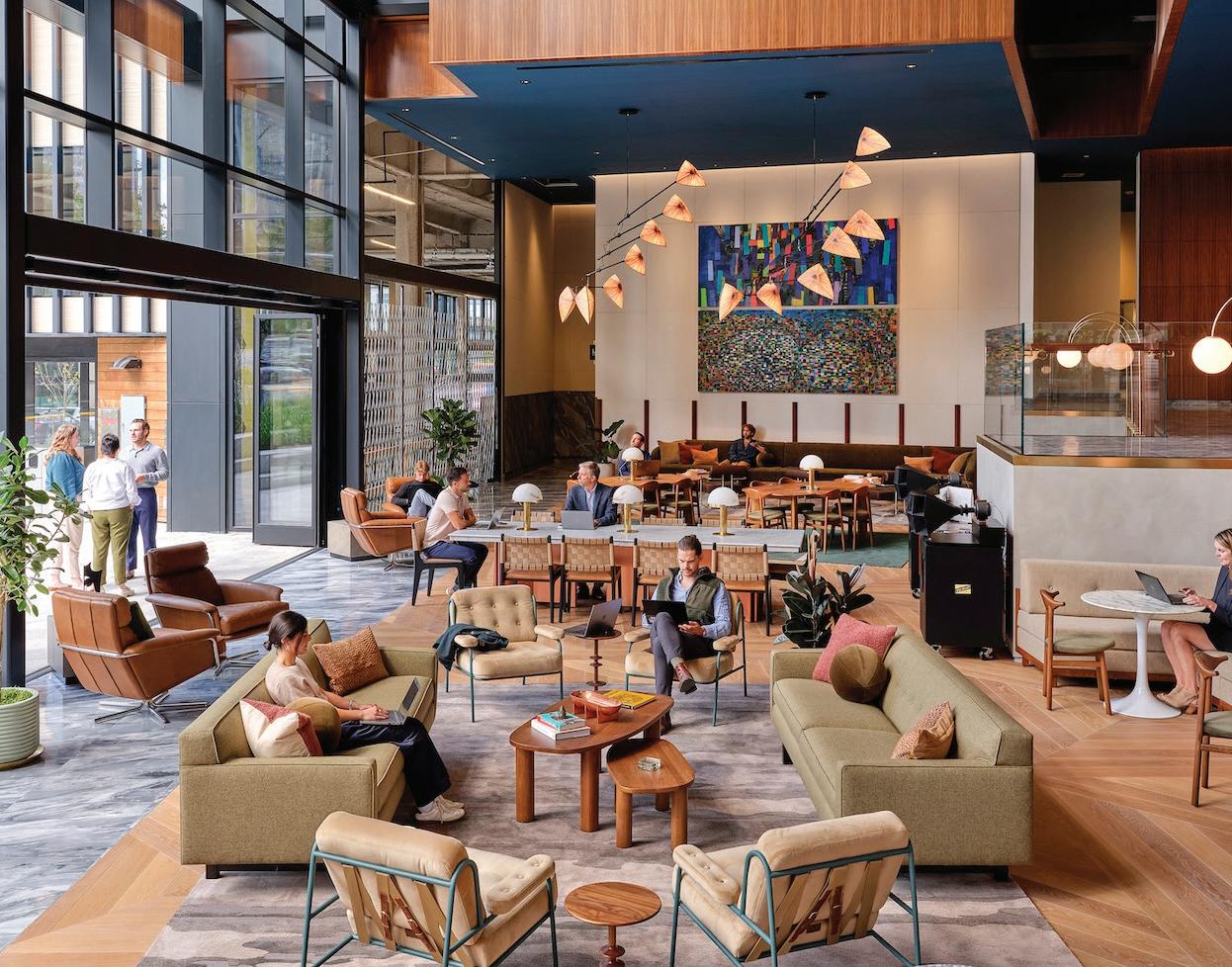
Design firm Pickard Chilton announced the completion of The Eight, a 25-story office tower that reconnects the urban fabric of Bellevue, Wash., with public spaces and more. Developed by Skanska Commercial Development, the 799,933-square-foot office tower at 10770 NE 8th St. prioritizes open space, pedestrian pathways and design guided by elements of placemaking.
Pickard Chilton served as the project’s design architect. Other members of the project team include Skanska USA, general contractor; Adamson Associates, architect of record and Magnusson Klemencic Associates, structural engineer. Michael Hsu Office of Architecture designed the project’s interiors.
“The massing, color and structural expression pay homage to the natural beauty and the architectural heritage of the Pacific Northwest,” said Anthony Markese, FAIA, RIBA, LEED AP, principal at Pickard Chilton. “The Eight’s unique faceted tower form and sunlit public plaza were envisioned as a prototype for the catalytic transformation of a key site in the heart of Bellevue, Wash.”
The tower is situated on the northwest side of the site to maximize ground-level open space along NE 8th St. Curated local retail, the office lobby and a publicly accessible lobby lounge called the “Living Room" open directly onto the plaza, merging the interior and exterior and fostering a sense of place.
An independent pavilion is designed as a carbon-efficient, heavy timber structure anchoring the site's eastern edge. At a pedestrian scale, the pavilion nestles into the site, integrating ramps, accessible pathways and open space.
A mural by local artist Baso Fibonacci lines the western street edge as a new, vibrant passageway.
The Eight’s signature tower design is rooted in structural expression, sustainability and the creation of public open space.
Pickard Chilton designed a side core, allowing for open, columnfree floorplates, 14-foot ceilings and maximized views. Diagonal braces emerge from a structural diaphragm below grade to wrap around the faceted tower and create a robust lateral system capable of resisting regional seismic forces.
The unique structure and the program within are celebrated by exposing the braces at strategic, terraced activeuse spaces along the façade, creating a dynamic, exuberant expression.
“From day one, our goal on The Eight was to deliver more than just an office tower — we set out to create a dynamic, welcoming place that meets the flexibility, wellness, and sustainability needs of today’s top-tier tenants,” described Charlie Foushée, executive vice president and regional manager for Skanska USA Commercial Development’s Seattle region. “Our collaboration with Pickard Chilton resulted in an iconic building that features light-filled, engaging spaces for everyone — from office workers to residents and visitors — to connect, gather, and thrive in the heart of the city.”
The Eight incorporates sustainable design and construction methodologies. Its enclosure, designed to exceed the city’s energy code, is emphasized with dark-painted metal components, evoking a traditional steel structure.
Access to daylight, inspiring views and fresh air is prioritized via the street level plaza, open rooftop and seven tenant terraces. The Eight is the third LEED v4 Core & Shell Platinum project in Washington and Bellevue’s first.
“From day one, our goal on The Eight was to deliver more than just an office tower — we set out to create a dynamic, welcoming place that meets the flexibility, wellness and sustainability needs of today’s top-tier tenants.”




With views of fireworks at the Happiest Place on Earth, you need a Skydeck to match.
Cloud House, a new community developed by Bonanni Development not only enriches the urban experience along Stanton, Calif.’s revitalized Beach Boulevard corridor, it offers its residents spectacular views of Disneyland’s fireworks via Orange County’s largest rooftop Skydeck.
Designed by AO, the five-story wrap development delivers 321 market-rate studio, one,and two-bedroom apartments tailored to a design-conscious, urban-minded demographic. Cloud House is a catalyst project for the City of Stanton, supporting its pro-development vision and addressing the Southern California region’s growing demand for housing.
“It’s been incredibly rewarding to be part of a design and consultant team where so much creative synergy was poured into every aspect of the project. That collective effort made it possible to realize such a unique and visionary outcome for Cloud House,” said Ioanna Magiati, partner at AO. “Cloud House brings a new level of energy to Stanton with a strong design identity, one that celebrates architectural innovation and community connection.”
Crowning the development is the 17,500-square-foot Skydeck, a lifestyle-focused amenity that strategically spans two distinct structural systems — a sevenstory, Type-I concrete podium and a Type-III wood-framed residential building.
The Skydeck required an innovative design solution to unify the levels, uses and materials. AO crafted
a seamless, multi-layered experience with a custom stair connection that bridges the buildings, while accommodating a pool, fitness center and clubhouse. The result is a cohesive, elevated environment that redefines the amenity experience through bold design, spatial creativity and technical precision unlike anything else in the region.
The Skydeck hosts boutiquestyled amenity zones including a resort-style pool with a jumbo movie screen, indoor-outdoor fitness center, outdoor kitchen, terraced seating, hammock swings and fire pits.
The clubhouse features a gourmet kitchen, gaming lounge, golf simulator, communal dining areas and a hidden speakeasy-style open-air lounge. This signature space exemplifies AO’s commitment to designing humancentric, experience-driven environments, the firm said.
Architecturally, Cloud House is influenced by midcentury modernism, with clean forms, vibrant materials and unexpected moments of delight. Highlights include a doubleheight lobby and leasing office with an integrated indoor greenhouse, open coworking and lounge areas and a central courtyard that blurs the boundary between nature and the built environment.
“Cloud House has been thoughtfully cared for at every step of its journey by everyone involved, and that sense of dedication is truly felt as you experience the property,” said Cole Bonanni of Bonanni Development. “Our goal is always to create lifestyle experiences that resonate within the communities we build, and from personal experience, Cloud House is accomplishing exactly that.”


Extensive years of Industry Experience covering Deposits, Lending and Technology.
At Webster Bank, you’ll find products designed for the property management industry – and a team of professionals with the experience to put them to work for you. Your Webster Bank Relationship Manager and Property Management Team know the challenges you face and give you access to the tools you need to e ectively manage them.
Value, solutions and service – put our resources to work for you.


908.720.4223 rguanlao@websterbank.com

917.231.6758 afusgorniak@websterbank.com

jkowalski@websterbank.com



National contract furniture dealer Henricksen has promoted Kelly Hogan to vice president of design and client engagement of the Washington, D.C. office. In this role, Hogan will foster existing client relationships and serve as a trusted resource, bringing 17 years of experience with the company and offering design expertise grounded in her extensive industry knowledge.
“Kelly has a passion and drive for achieving the best results for our clients,” said Gosia Humes, general manager of Henricksen’s Washington, D.C. office. “She brings valuable insights for clients whose needs and obstacles require her designoriented perspective. As design continues to play an increasingly significant role in this industry, her role is more essential than ever.”
Hogan first joined COFCO, a Henricksen Company,
as an interior designer in 2008 and transitioned to the D.C. office following the 2019 acquisition. Hogan’s design background, combined with her expertise in relationship-building, enables her to engage clients effectively and educate them on the current workplace landscape and emerging trends.
An active member of the local design community, Hogan has served as a mentor for Interior Design’s 30/30 program, guiding emerging professionals through discussions on the industry’s future and current challenges. She is also actively involved with Commercial Real Estate Women (CREW) D.C., IIDA and Women in Healthcare, and has contributed her time to the Christopher Kelley Leadership Program, Breakthrough T1D, Bread for the City and Rebuilding Together.ULI, where she has served in leadership roles and mentors emerging professionals in the field.
SitusAMC, a provider of solutions supporting the lifecycle of real estate finance, announced the appointment of Peter Pasqua as senior director, head of asset management within the company’s commercial real estate (CRE) servicing and asset management division.
In this role, Pasqua oversees the firm’s asset management vertical, helping to evolve and enhance the platform’s capabilities to better serve clients across the commercial real estate landscape. Pasqua will report to Amanda Dugat, managing director, head of servicing and asset management.
“We’re thrilled to welcome Peter into this leadership position,” Dugat said. “Peter’s deep expertise and strategic vision make him an exceptional fit to lead our asset management platform. His experience, perspective and technology-driven approach will be invaluable as we continue to strengthen our offerings and deliver best-in-class service to our clients.”
Pasqua joined SitusAMC in 2023 as part of the company’s CRE Technology Enablement Team
(CRETET), where he was instrumental in advancing key initiatives for the firm’s servicing and asset management technologies, helping streamline processes, enhance execution and deliver greater value to clients.
Prior to SitusAMC, Pasqua managed a $1 billion portfolio for a Dallas-based family office. In that capacity, he was responsible for P&L oversight, investor relations, refinancing and development initiatives. Previously, as managing director and co-head of asset management at Mosaic Real Estate Investors, he was recruited by industry pioneers Ethan Penner and Vicky Schiff to help build and institutionalize the asset management platform for a private credit portfolio focused on high-yield debt and preferred equity. His earlier career included leadership roles at major financial institutions including Crédit Agricole CIB, Alvarez & Marsal and Portigon AG/WestLB AG.
He holds a Juris Doctor from Hofstra University’s Maurice A. Deane School of Law and a Bachelor of Arts from New York University.




Houlihan Lawrence announced the return of Vincent Caiola to its White Plains, N.Y. brokerage. Known for his professionalism, local expertise and client-first approach, Caiola has built a reputation for delivering results, the firm said.
“It feels like coming home,” said Caiola. “What sets Houlihan Lawrence apart is the caliber of leadership, the deep-rooted collaboration among agents and the tools and support that empower us to serve clients at the highest level.”
A resident of West Harrison, N.Y., Caiola leverages his in-depth knowledge of the community to guide
buyers and sellers with confidence and integrity.
An award-winning agent licensed in New York and Connecticut, Caiola has closed over $15 million in sales and was named to the 2025 Real Trends Verified list, placing him among the top 1.5% of real estate professionals in the country.
“We’re thrilled to welcome Vincent back,” said Geoff Berry, manager of the Houlihan Lawrence White Plains brokerage. “He brings a strong commitment to his clients and community, and his decision to return highlights the unmatched environment we’ve created for agents to grow and succeed.”
Brian Carcaterra, a veteran advisor with 20 years of experience across both brokerage and ownership, has rejoined Newmark as an executive managing director in its Stamford, Conn. office. In his new role, Carcaterra will specialize in office tenant and landlord representation, as well as strategic advisory services across key markets such as Fairfield and Westchester Counties.
“Brian’s experience advising top-tier tenants and institutional landlords gives Newmark a strategic advantage in today’s evolving office market,” said Sean Moynihan, executive vice president and Tri-state Region market leader. “He brings a high level of discipline, trust and partnership to every
engagement qualities that align fully with our culture and client-first mission.”
Carcaterra began his career at Newmark in 2003, where he advised office tenants and landlords in Connecticut.
Carcaterra rejoins the company after working most recently as executive vice president at Building and Land Technology, where he oversaw leasing across an eight-million-square-foot national office portfolio. He previously also led multi-market tenant representation for leading financial services, private equity and hedge fund clients, in addition to overseeing agency assignments at CBRE.
Gibson Dunn announced that David L. Perechocky has joined Gibson Dunn’s New York office as a partner in the Real Estate Practice Group and Real Estate Investment Trust (REIT) Industry Group.
Perechocky has a wide-ranging real estate transactional practice counseling REITs, real estate private equity sponsors and other real estate companies and real estate-related businesses.
Prior to joining Gibson Dunn, David served as a partner at another leading international law firm.
“We’re excited to welcome David to Gibson Dunn,”
said Eric M. Feuerstein, co-chair of the Real Estate Practice Group. “David is a top real estate M&A dealmaker whose broad experience and impressive deal sheet will benefit clients navigating today’s market environment. With rising demand for REIT M&A transactions, including take-private deals, and a growing need among investors to access REIT capital markets, David’s deep experience managing complex and creative deal structures will be invaluable.”
He earned his law degree from New York University School of Law in 2012, where he served as a staff editor for the “New York University Journal of International Law and Politics.”














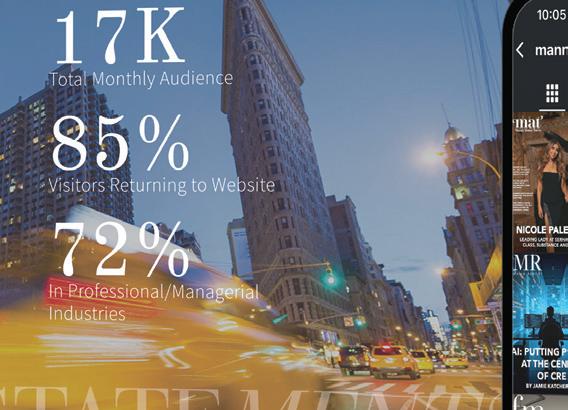


















As executive managing director of BLS & Co., one of the largest specialty site selection and incentives advisory consulting firms in North America, Biggins manages the firm’s national corporate relationships, including advising clients on overall site selection, relocation and incentives strategies, managing major projects involving complex multi-jurisdictional competitive strategies and offering expert advice on incentives structures to facilitate client objectives. He also serves as an advisor to public sector economic development organizations.
Prior to founding BLS & Co., Biggins served as senior vice president and CFO of the real estate subsidiary of the Dyson-Kissner-Moran Corp., a diversified developer concentrating on corporate build-to-suit projects and large-scale urban projects undertaken in public-private partnerships. He also served as executive director of NYC's Office of Economic Development, and later was appointed Commissioner of Ports, International Trade & Commerce.
How long have you been in the business?
It’s been 25 years since founding BLS & Co., but my prior texperience —four years working on New York City’s economic development initiatives under the Koch Administration and seven years working on public/private partnerships with DKM Properties — was both the inspiration and preparation for what we do at BLS.
What got you into the business?
An attraction to the inherently interdisciplinary nature and the essential priority of economic development as a key ingredient in the success of virtually all public
policy concerns and objectives.
Who inspires you?
My team, every day, and leaders in public service, business and NGOs who focus on the interconnectedness of their missions.
How is the volatile tariff situation affecting corporate real estate decisions?
Uncertainty is the core concern. Shaking up the status quo may have been warranted to long-entrenched dynamics ... but the simple reality is that long-term predictability is essential to induce long-term investments. Decisions to establish or relocate manufacturing capacity take years to plan and execute — three to four years for most large production operations, and four to six years for those requiring extended regulatory approval (e.g., FDA).
That said, there is a growing list of other, more durable reasons to increase investment in U.S. production capacity, including narrowing labor cost arbitrage (due to increasing cost in alternative markets and automation), enhanced quality control and nimbler, more sustainable supply chains. And, yes, also a longer-term trend toward more protective trade policies that transcend administrations.
What can companies do?
Our perspective is focused on manufacturing and data center projects for which the availability of critical heavy equipment, including turbines and other energy-related components, are consequential in planning
Jay Biggins
Executive Managing Director Biggins Lacy Shapiro
& Co.
new projects, especially those with time-tomarket urgency. Those with the balance sheet, liquidity and volume to command priority are distinguishing themselves.
How are companies reassessing their real estate?
We can expect the migration back toward three to four or more days at the office (perhaps downtown or satellite) to continue, but there will have been some degree of longterm shift in the balance of work from home and return to work (RTW) relative to the preCOVID-19 norm. The shift in employee office occupancy may only be a couple of percentage points, which is profound in terms of total local consumer demand, transit ridership and many other metrics, and its impacts will be felt. Yet it’s still just a few points, so in some ways not always noticeable in all contexts. An affordable downtown is the key balancer.
All of our clients are smartly not over-playing the sluggish and uneven RTW transition and remain highly focused on the local workforce access as they continue to press for increased presence at the office — here too a balance of accommodating and enjoying the benefits of flexibility and some cost savings, but focusing on where most employees and most high-value employees, come together to collaborate, mentor, socialize and excel.
What keeps you up at night?
A level of national and global instability accelerated both by breakdown of trust in institutions and in the provenance of “facts.”



The financial backing of a global bank, and the streamlined structure and agility of a boutique bank that will keep your business moving forward.
BHI offers full commercial banking services that combine the personal attention of a prestigious boutique bank with the expertise and financial strength of Bank Hapoalim – the leading financial institution in Israel.
With a footprint in the largest U.S. metropolitan areas, we are committed to creating innovative funding solutions for your short– and long-term needs and providing convenient banking and liquidity products for your everyday business needs.
www.bhiusa.com
The proptech sector continues to grow, but at a more mature pace. Long gone are the days when investors threw funds at anything and everything, figuring that if one technology succeeded, the payback would more than make up for the failures. Now, observers say, the goal is to invest in technologies that meet the changing needs of its users, as we can see by the numbers.
10,000
The number of companies in proptech. (Ascendix)

$94.2 billion
$4.3 billion
The amount of growth equity and debt investment into the U.S. proptech market in 2024, across more than 165 investments. (Houlihan Lokey, “2024 PropTech Market Update”)
$4.50 billion
The amount of venture capital invested in constructionrelated proptech in 2024. (Center for Real Estate Technology & Innovation, “Proptech Venture Capital Report”)
90.1%
The percentage of responding companies that plan to run their corporate real estate function with AI and technology. (JLL, “The Future of AI in Proptech”)
The projected size of the global proptech market by 2030. (Grand View Research) 92
The number of mergers and acquisitions in the proptech sector in 2024, up seven from the previous year (Capstone Partners, “Real Estate Technology M&A Update — December 2024)



Zetlin & De Chiara LLP, one of the country’s leading law firms, has built a reputation on counseling clients through complex issues. Whether negotiating a contract, resolving a dispute, or providing guidance to navigate the construction process, Zetlin & De Chiara is recognized as a “go-to firm for construction.”