









For decades, we have built a real estate practice unparalleled in the US. Now, as the global legal powerhouse HSF Kramer, we are so much more. As the only law firm ranked in Chambers Band 1 on three continents, we continue to transform skylines and reshape landscapes. Please visit our website to learn more. Kramer Levin is now HSF Kramer











































EDITORIAL
Editor
Debra Hazel
Director of Communications and Marketing
Penelope Herrera
Director of Newsletter Division
Kristen Pooran
PRESIDENT/CEO
Jeff Mann
ART
Art Director
Virginia Sanchez
Cover Photography
Binyan Studios
Morris Betesh
Frank DeLucia
Patrick Ghilani
Eric Hadar
Merilee Kern
Kris Kiser
Bob Knakal
Sabrina Lippman
Jamie Macartney
Ira Meister
John Meko
Austin Rabine
Stuart Saft
Abe Schlisselfeld
Carol A. Sigmond
Simon Soloff
Liz Snyder
James Whelan
Technology Consultant Eric Loh
Distribution Mitchell’s Delivery Service
DIGITAL MEDIA
Designers
Virginia Sanchez
Editors
Debra Hazel
Penelope Herrera
Rose Leveen
Web Developer
CS Designworks
West Coast Office: 578 Washington Blvd., Suite 827
Marina Del Rey, CA 90292 866-306-MANN (6266) mannpublications.com


East Coast Office: 450 7th Ave, Suite 2306
New York, NY 10123 212-840-MANN (6266)

February — the shortest month, the dead of winter and one we all hope to escape by going somewhere sunny and warm, even for a couple of days.
But as always, there is joy and warmth to be found.
My dad knew Sol Goldman, once one of the largest landlords in the city, through other family friends, so it’s personally satisfying to feature Bldg Management, a descendent company now run by Sol’s nephew Lloyd, on our cover. But even more important is what Bldg is achieving with The Orchard — remaking the Queens skyline with an 823-foot-tall tower that is a testament to long-term thinking and patience. (The family has held the land for 60 years!)
It’s also a perfect lead-in to our annual focus on the multifamily sector, so critical and personal in this city dominated by renters.
In our Photo Events, you see how many of us spent the days leading up to the holiday season — celebrating genuine achievement and doing good for others. Congratulations to Urbahn Architects on its 80th anniversary, and thanks to Fried Frank for its always fun (and massive) holiday party and to National Jewish Health, whose fundraiser will help so many in the months and years ahead.
The joy they spread is enough to warm even a cold February.

“Real estate cannot be lost or stolen, nor can it be carried away. Purchased with common sense, paid for in full, and managed with reasonable care, it is about the safest investment in the world” — Franklin D. Roosevelt











At Peninsula Property Management (PPM), we do more than manage properties—we elevate them. With a leadership team that is deeply involved, hands-on, and responsive, PPM is redefining the standard for property management in New York City. Our mission is simple: deliver results with integrity, precision, and a hospitality-first approach.

Proactive Management
Stop issues before they start — from Local Law 97 to vendor oversight.
Financial Clarity
Clean, timely financials. No surprises –just strategic planning and transparency.
NYC Compliance Expertise
DOB, HPD, LL88, LL97, FISP we navigate every regulation so you don’t have to.
New Development Services
Schedule B, TCO phasing, hiring of staff, punch-list, insurance implementation.
Smart Cost Control
Energy savings, bulk contracts, vendor negotiations we cut waste, not corners.
Track requests, tasks, and reports live through our integrated digital platform.
Welcome to our annual focus on the Multifamily sector, the one nearly all of us have experienced at some point. Many of us may never have set foot inside a distribution center, but odds are we’ve rented an apartment or lived in student housing at some point. And the sector is particularly dear to New Yorkers — according to nyc.gov, 67% of us rent, rather than own our homes.
So it’s not surprising that when we called upon our contributors to give us their takes on the trends surrounding multifamily, we received a slew of articles and columns. Morris Betesh of Arrow Real Estate Advisors gives us a succinct summary of investment attitudes for the year, while EnTech’s Simon Soloff gives us a checklist on how to maintain your boiler when the season turns to spring. CBIZ Real Estate Industry Leader Abe Schlisselfeld offers his thoughts on creative financing for this category, and BKREA’s Bob Knakal tells us why he thinks COPA is a very bad idea for investors and residents alike.
And, of course, our cover features The Orchard, what will be tallest multifamily building in Queens.
Thank you to all of our contributors for sharing their wisdom and to all of you who will read it.

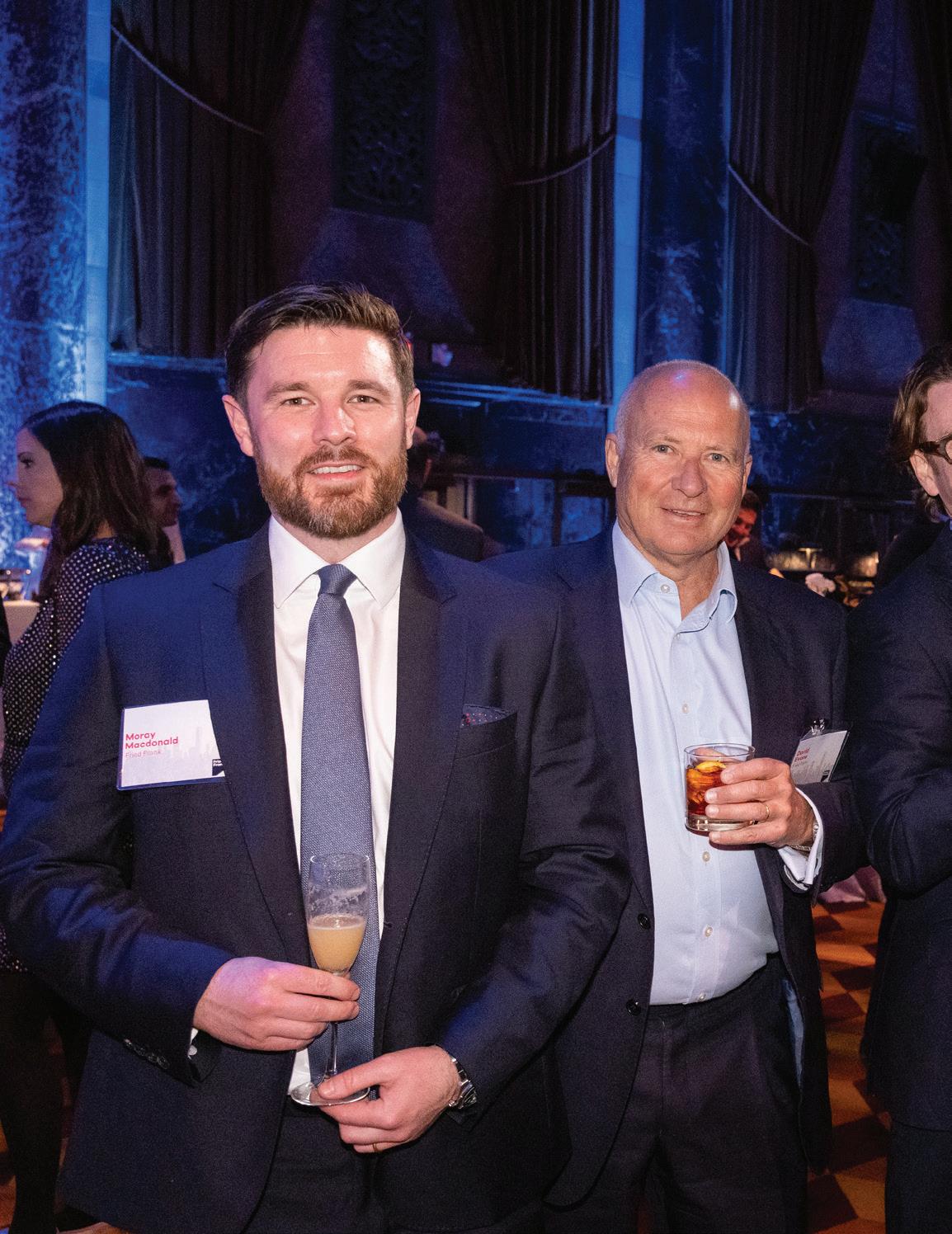
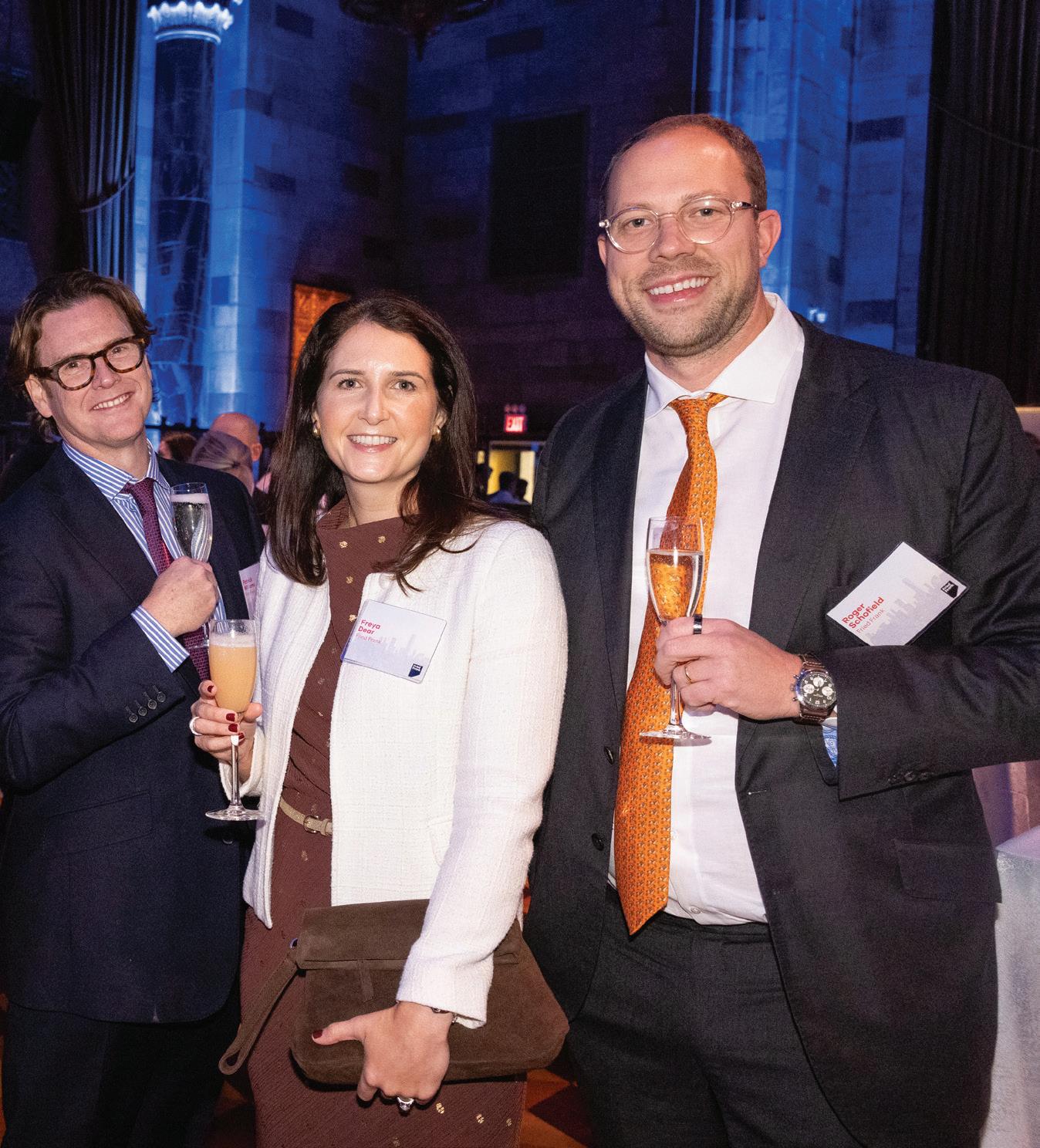
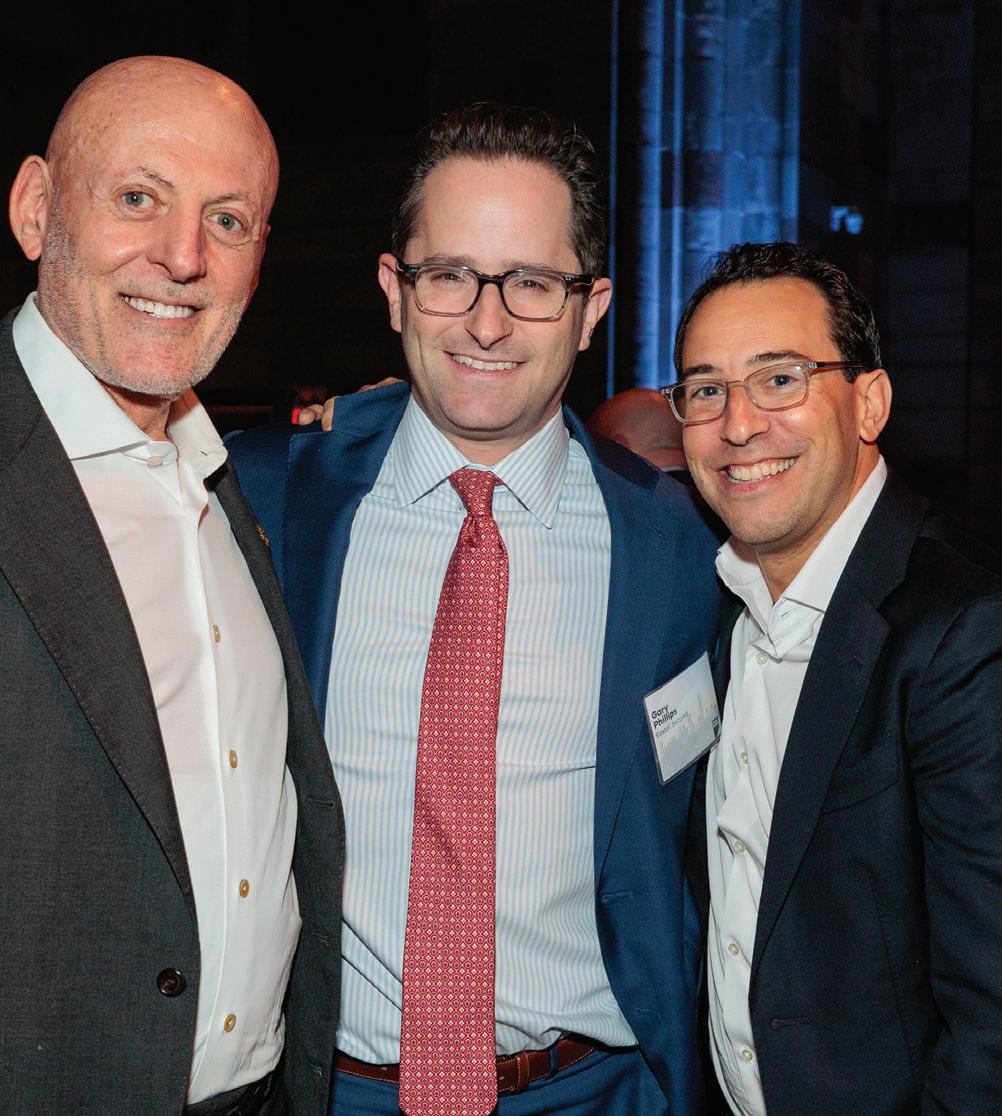
Fried Frank’s 2025 Real Estate Holiday Party welcomed more than 1,000 guests. Hosted by Fried Frank’s Real Estate Department, including department Chairman Jon Mechanic and Co-chairs Laurinda Martins and Michael Werner, the event is one of the year’s most sought-after tickets.
Held at Cipriani 42nd Street, the annual event brought together many of New York’s top real estate leaders in celebration of the holiday season.

































Urbahn’s Natale V. Barranco, AIA, LEED AP; Martin D. Stein, AIA; Donald E. Henry Jr., AIA, LEED AP, CPHC; Enrico Kurniawan, AIA, NOMA; Bridgette Van Sloun, AIA, CPHC, Well AP; Lawrence Gutterman, AIA, DBIA, LEED AP; Daniel Kohn, AIA, LEED AP; Rafael Stein, AIA; Ijeoma D. Iheanacho, AIA, LEED AP, NOMA; Christopher Young, AIA and Nandini Sengupta, Assoc. AIA, LEED AP, NOMA.
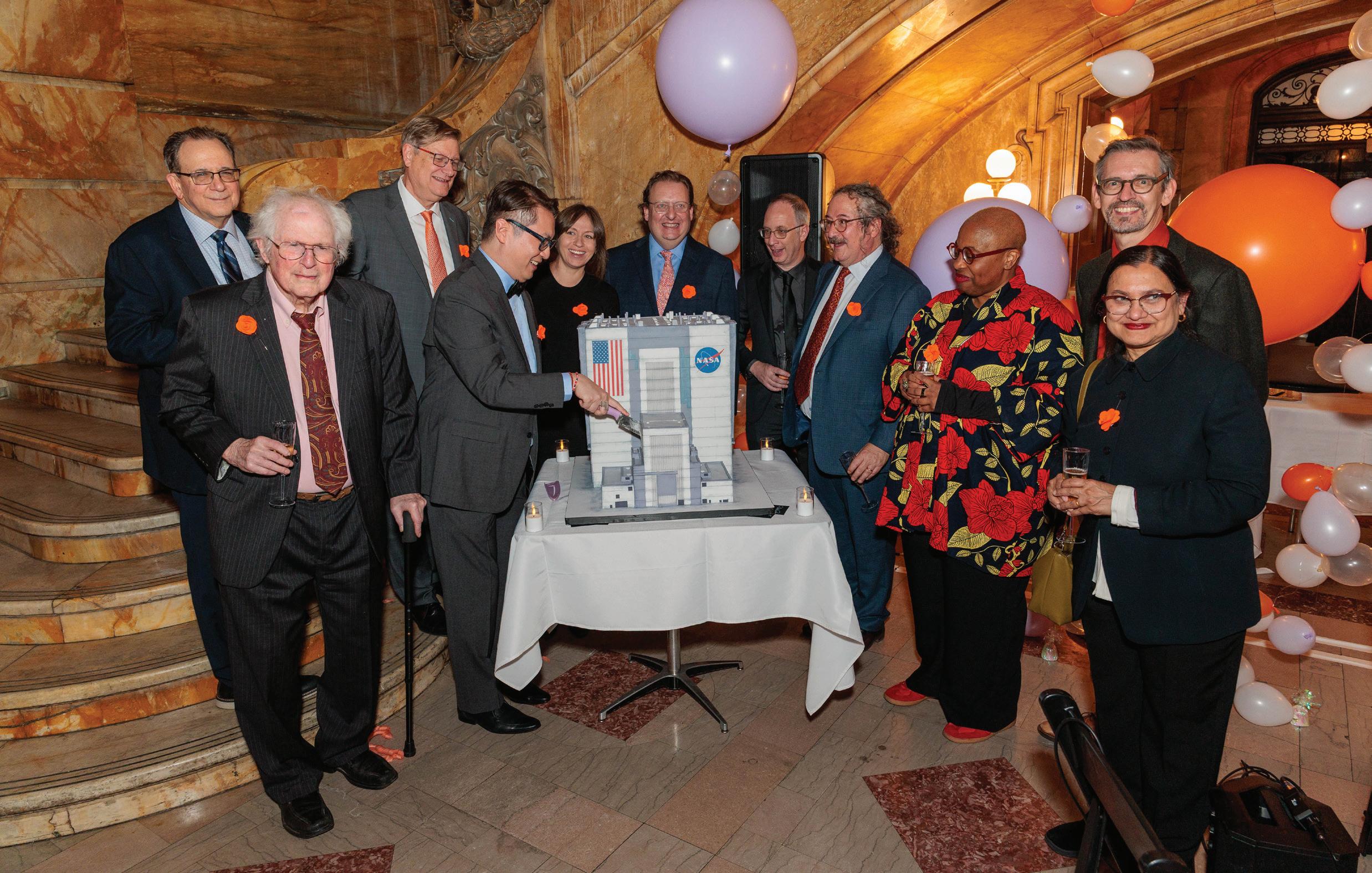

Urbahn Architects, a New York City-based design and planning firm, marked its 80th anniversary with a reception at the Surrogate’s Courthouse, a landmarked Beaux-Arts structure in downtown Manhattan. The Urbahn-designed renovation of a section of the courthouse recently won a Lucy G. Moses Preservation Award from the New York Landmarks Conservancy.
Urbahn promoted eight professionals from within the firm to associate principals: Bridgette Van Sloun, AIA, CPHC, WELL AP; Christopher Young, AIA; Daniel Kohn, AIA, LEED AP; Enrico Kurniawan, AIA, NOMA; Ijeoma D. Iheanacho, AIA, LEED AP, NOMA; Lawrence Gutterman, AIA, DBIA, LEED AP; Nandini Sengupta, Assoc. AIA, LEED AP, NOMA and Ryan Bieber, AIA, LEED AP.
This diverse group brings perspectives from varied cultural and career backgrounds,
having worked across healthcare, sciences, public safety, governmental facilities, transportation, hospitality and multifamily housing markets. Their expertise guides what has become an increasingly global practice at Urbahn Architects.
“Our work is never formulaic,” explained Donald E. Henry Jr., managing principal at Urbahn. “Each project deserves a truly indepth analysis of desired functions, zoning and technical restrictions, budgets and architectural context.”
In a profession that often celebrates grand spatial gestures, this commitment to pragmatism may seem understated, Urbahn has observed. Yet over eight decades, Urbahn has demonstrated how this approach can transform public spaces, educational and healthcare facilities or transportation infrastructure in ways that enable meaningful impact on daily life.


“Each project deserves a truly in-depth analysis of desired functions, zoning and technical restrictions, budgets and architectural context.”
— Donald E. Henry Jr.



















The 57th annual National Jewish Health “A Winter’s Evening” Dinner Dance honored Glen J. Weiss, executive vice president of office leasing and cohead of real estate at Vornado Realty Trust. More than 600 real estate and construction industry professionals attended the Moroccan-inspired event at Chelsea Piers.
The gala raised more than $2.2 million to establish The Staci & Glen Weiss Fund to Safeguard Critical Pediatric Research at National Jewish Health. The medical center offers unparalleled care to people with the most difficult cases of lung, heart, immune and related diseases.
Weiss was honored with the 2025 National Jewish Health Humanitarian Award, recognizing his significant contributions to National Jewish Health and other civic and charitable causes, and for his professional accomplishments.
Pier 60 was enveloped by a kaleidoscope of draperies and rugs, as well as aromatic and colorful spices evoking a Moroccan bazaar. Guests were drawn into the ambience by a drum troupe, belly dancers, fortune tellers and henna
Larry Silverstein, treasurer of the National Jewish Health Board of Directors, was honorary chair and helped lead the event’s program. Dinner chairs were Neil Goldmacher, Robert J. Ivanhoe, Gary Jacob, James D. Kuhn, Josh Kuriloff, Jonathan L. Mechanic, Bruce Mosler, Peter G. Riguardi, Stephen B. Siegel, co-chair of the National Jewish Health Council of National Trustees, and Roger A. Silverstein.
President’s Circle sponsors were CBRE’s New York and San Francisco offices; Feil Family Foundation, Wendy M. and Stephen B. Siegel, The Silverstein Family and Silverstein Properties.
The Honoree’s Circle sponsors included Michele and Marty Cohen, Cushman & Wakefield, Glenwood Management Corp., Maxine B. Murnick, Newmark, Northwood/Kukral Foundation and Vornado Realty Trust.
The Founder’s Circle sponsors included Brookfield Properties Inc.; Chicago Title; Citadel; Commonwealth Land Title Insurance Company; The Emmes Group of Companies; Extell Development Company; Fried, Frank, Harris, Schriver & Jacobson LLP;











The Walker & Dunlop Capital Markets Institutional Advisory Practice arranged the loan on behalf of InterVest capital partners, a global alternative investment manager. Dustin Stolly, Aaron Appel, Adam Schwartz, Keith Kurland, Jonathan Schwartz, Sean Reimer and Sean Bastian, arranged the financing from Apollo Global Management, J.P. Morgan Chase & Co. and TYKO Capital. Walker & Dunlop also advised on the extension of an existing $88.4 million C-PACE loan from Petros that remained in the capitalization, bringing the package to $867 million.
111 Wall Street is a 24-story, fully vacant offi ce tower being converted into a 30-story luxury residential rental community. The project includes a fi ve-story overbuild, a fully redesigned lobby and will feature approximately 1,568 rental units across more than 899,000 rentable square feet.

Walker & Dunlop announced that it has arranged a $778.6 million construction loan to facilitate the offi ce-to-residential conversion of 111 Wall Street, located along the East River waterfront in Lower Manhattan’s Financial District. The closing of this financing marks the largest single-building offi ce-to-residential conversion loan in New York City history and the country.
The redevelopment will also include 7,000 rentable square feet of ground fl oor retail. Approximately 25% of the units will be designated as affordable housing for residents earning an average of 80% of area median income (AMI), qualifying the project for New York City’s Affordable Housing Conversion Program.
“Manhattan’s apartment demand remains exceptionally strong, and projects like 111 Wall Street address both the growing need for housing and the repositioning of outdated, underutilized offi ce assets," said Stolly, senior managing director at Walker & Dunlop.
The development team includes MetroLoft Development as developer, Collaborative Construction Management as construction manager, Gensler as architect of record and Corcoran New Development as marketing and leasing agent.
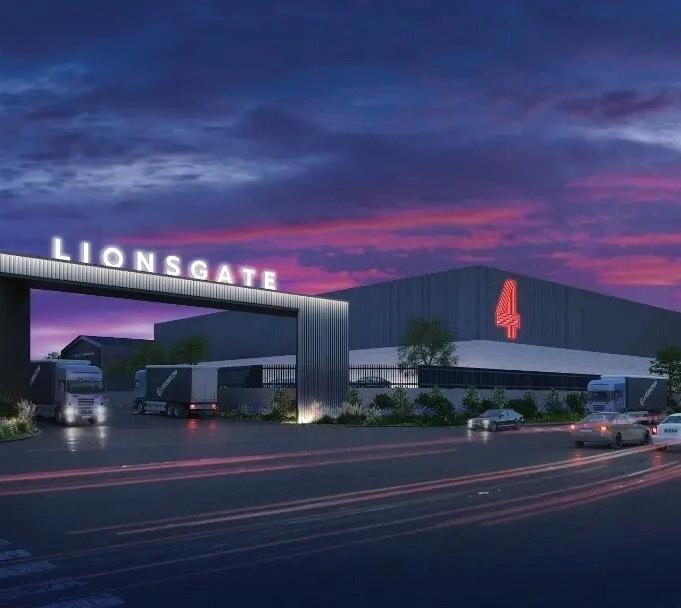
The nearly 300,000-square-foot complex will be the first purpose-built studio in New Jersey specifically constructed for television and film production. In addition to the studio production space, the project will include offices, support space and parking for 145 cars, 22 trucks or trailers and 11 RVs. The full 12-acre facility will be owned and managed by Great Point Studios.
“As an organization dedicated to advancing the arts in Newark and the surrounding area, the construction of Lionsgate Studio completely aligns with NJPAC’s mission of transforming lives through artistic expression and production,” said Tim Lizura, executive vice president of real estate and capital projects at NJPAC.

“With roots in New Jersey dating back to 1966, it only made sense for Gilbane to help construct the first film and TV production studio of its kind in the Garden State,” said John E. Anderson III, business leader of Gilbane’s New Jersey office. Gilbane will serve as lead builder on the project. The company has recently built multiple high-profile buildings in the Newark area, including 50 Rector Park, the first market-rate rental residential tower in Newark in more than 50 years, and the Prudential Center, home to the New Jersey Devils NHL team.
Gilbane will leverage its extensive network of diverse-owned contractors to help the project meet its inclusion goals of dedicating 25% of total construction contracting to Minority Business Enterprises and 7% to Women’s Business Enterprises. Additionally, 40% of total worker hours will be dedicated to Newark residents.








Walker & Dunlop Inc. and Pretium announced a $250 million strategic joint venture designed to fill a crucial fi nancing gap for affordable multifamily housing. “Walker & Dunlop Affordable Bridge Capital, a joint venture with Pretium” will originate fl exible, short-term, first-mortgage bridge loans for properties that are being acquired, refi nanced or prepared for long-term government-affordable programs such as LowIncome Housing Tax Credit (LIHTC), Section 8 or tax-exempt bonds.
“It is a powerful new tool that offers flexible, interest-only bridge financing with loan sizes ranging from $10 million to $75 million and terms between six and 36 months,” said Sheri Thompson, executive vice president and head of affordable housing at Walker & Dunlop. “It is an impact-driven platform that will help clients accomplish their mission.”
The venture will provide bridge fi nancing that provides projects with reliable, permanent takeout through Agency and HUD programs.
“We designed this joint venture to help address the shortage of quality, affordable housing in communities across America,” said Jonathan Pruzan, co-president of Pretium.
“We are excited to combine our platform capabilities alongside Walker & Dunlop to deliver powerful fi nancing solutions for affordable multifamily developers,” said Karen Kulvin, managing director and portfolio manager for real estate debt at Pretium.
City flagship under a lease that runs through 2040. The upper floors, comprising approximately 24,300 square feet of office space, are leased to a roster of creative and technology tenants, including Comcast Ventures, Aptos Labs and Sister Group. The historic property underwent a comprehensive redevelopment in 2018, resulting in modernized interiors, upgraded systems and a penthouse level with a private terrace.
Newmark’s Adam Spies, Adam Doneger, Josh King, Marcella Fasulo and Meaghan Philbin brokered the all-cash transaction. Olmstead Properties will serve as the property manager and exclusive leasing agent at the building.
The acquisition follows Vertex’s purchase of 373 and 381 Park Avenue South from Atco Properties & Management for $104 million in 2025.





“This is exactly the type of stable, high-quality asset we want to own for the long term. We built Vertex to pursue both short-term opportunities and long-term holds that produce strong, tax-efficient cash flow,” said Patrick Pavone, co-founder of Vertex. “61-63 Crosby Street fits that approach — a well-located historic building in a neighborhood with real momentum.”
Vertex was co-founded by Adam Arnow and Patrick Pavone and is backed by the Rosenblatt and Arnow families — two long-established names in New York real estate. The platform was created to target strategic office acquisitions across the city and deploy capital where location fundamentals and long-term value align.
York
“Our goal is to assemble a portfolio of Manhattan assets with staying power. 61-63 Crosby has that — historic character, a stable rent roll, and a location that continues to improve,” said Adam Arnow, co-founder of Vertex.

Their deep local knowledge and commitment to clients make Corcoran Wiley an ideal addition to the Corcoran network.”
Founded in late 2016, Wiley Real Estate quickly established itself as a trusted name in Central Virginia’s real estate market. The firm’s success spans high-end residential properties, agricultural and pastoral farms, as well as various land development opportunities.



Corcoran Group LLC announced the continued expansion of its network with the launch of Corcoran Wiley, based in Charlottesville, Va. Formerly Wiley Real Estate, the firm is led by Broker/Owners Justin and Peter Wiley and will serve clients throughout Central Virginia and the greater Charlottesville area.
“Central Virginia offers a rare blend of natural beauty, cultural depth and enduring real estate value,” said Pamela Liebman, president and CEO of Corcoran Group LLC. “Justin, Peter and their affiliated agents bring unparalleled expertise in farms, estates and upper-end residential properties, along with a reputation for integrity and exceptional service.
“Our reputation has always been rooted in integrity, deep community ties and guiding clients through even the most complex transactions with care,” said Peter Wiley. “Affiliating with the Corcoran brand amplifies that foundation, marrying our local knowledge and trusted relationships with world-class marketing, technology and brand power.”
Peter Wiley returned to his hometown of Charlottesville and began brokering real estate in 2005, following an extensive career as a Congressional staffer and working as a lobbyist for venture capital and biotechnology industries in both Boston and Washington, D.C. Following his collegiate studies, Justin Wiley honed his skillset through the management and advisory of various large farms and historic estates throughout Central Virginia, ultimately bringing his expertise to his family’s real estate business in 1992.
Corcoran Wiley will continue to operate out of its existing Charlottesville and Orange County offices.







After outperforming traditional real estate in both sales and value in 2025, the luxury market is expected to continue its upward trajectory in 2026, said Sotheby’s International Realty’s “2026 Outlook” report, which offers insights into the trends and developments shaping the sector. Key drivers include the $6 trillion inherited in 2025, a transfer of generational wealth that is becoming a major demand driver for luxury real estate, and a 44% surge in foreign buyer activity in the U.S.
The result is that the threshold for defi ning a luxury home is rising, with national expectations starting at around $1.3 million, higher than in many other countries.
“The continued aim of the Luxury Outlook is to help clients and the wider market navigate a rapidly shifting landscape through data-based and expert insights informed by our global network of real estate advisors. The latest edition continues to offer the strategic intelligence and global perspectives that empower clients to make confi dent, wellinformed decisions,” said Bradley Nelson, chief marketing offi cer, Sotheby’s International Realty. “As we look ahead to 2026, inventory levels have largely returned to pre-pandemic norms. This renewed balance in the market signals healthier conditions and provides buyers
with a wider range of opportunities.”
The 2026 Luxury Outlook report draws on insights from Sotheby’s International Realty agents worldwide who specialize in transactions in the $10 million-plus price category. Their expertise is complemented by data from industry leaders including JPMorgan Private Bank, PricewaterhouseCoopers, Cerulli Associates, Henley & Partners, UBS and the National Association of Realtors (NAR).
The report found that luxury real estate continues to outperform the general housing market, driven by sustained wealth creation and less sensitivity to macroeconomic factors. Inventory levels of new construction homes have returned to pre-pandemic norms, creating a healthier and more balanced market. The U.S. supply of homes priced at $1 million is at its highest since 2020. There is signifi cant cross-border demand as foreign buyer activity surged 44% in the U.S. with Florida, California, Texas and New York as leading destinations. Crypto is increasingly influencing luxury purchases, especially in markets like Dubai, New York and California. Regulatory changes may allow crypto assets to count toward mortgage qualifi cation.
To respond to the changing market conditions, Sotheby’s advised that both home buyers and sellers should consider “first mover advantage” as acting decisively benefi ts them — early movers often secure better deals or faster sales.
“The overall real estate market was more impacted by elevated interest rates and affordability issues, but the luxury real estate market is positioned for continued outperformance. Building on 2025’s robust foundation, the luxury market is seeing increased inventory, growing international homebuyer activity and a larger percentage of all-cash sales, particularly at the higher end,” said Philip White, president and CEO, Sotheby’s International Realty. “We expect global sales to strengthen, as luxury property buyers — the strongest segment of the market — are less constrained by geography.”

McKenna Group,” said Dawn McKenna, DMG founder. “30A is among the most desirable coastal destinations in the country, and our clients have been increasingly asking for our expertise here. This expansion allows us to deliver the same exceptional service and market knowledge our clients expect — whether they’re buying a vacation home, investing in property or relocating to the Emerald Coast.”

Coldwell Banker Realty in Florida announced that the nationally recognized Dawn McKenna Group (DMG) has expanded to Destin and the 30A corridor in Florida. DMG/30A will be located at 2930 West County Hwy 30A, Unit #105 in Santa Rosa Beach, Fla.
DMG has seen strong demand for luxury real estate in Florida’s most sought-after vacation and second-home destinations, particularly along the scenic 30A corridor. Building on its success in Naples, the group’s expansion onto 30A refl ects its commitment to serving clients wherever they live, vacation and invest.
“Opening our DMG | 30A offi ce is an exciting milestone for the Dawn
DMG’s 30A agents bring more than 20 years of experience, over $200 million in sales volume, and a history of record-breaking transactions to the offi ce.
As part of the expansion, DMG has added Bonnie Hall, an awardwinning, highly credentialed professional. A resident of the area since 1997, Hall serves buyers and sellers on the Emerald Coast, from Fort Walton Beach to Rosemary Beach to Panama City Beach. Her clients include first-time buyers, luxury buyers and seasoned investors.
Hall joins the team with Maria McKenna, a dynamic real estate professional serving the communities along Florida’s 30A, including beloved destinations like Rosemary Beach, Alys Beach, Seaside and Watercolor. She began her career with DMG in Chicago in 2023.
“We are thrilled to see the Dawn McKenna Group bring its nationally recognized expertise to 30A,” said Duff Rubin, regional president, Southeast of Coldwell Banker Realty. “Their proven success in luxury real estate and commitment to client service make them a perfect addition to our Destin offi ce and this vibrant coastal community.”
agents and clients have enjoyed the exceptional convenience and oversight that this in-house platform brings to the entire real estate transaction process,” said Michael S. Liebowitz, president and CEO of Douglas Elliman Inc. “I am thrilled that clients in our New York markets will now have access to the competitive rates, diverse loan products and seamless integration that only comes from working with a single, trusted source for both their real estate and financing needs.”



Douglas Elliman Real Estate announced that Elliman Capital, its inhouse mortgage platform that launched in July 2025 in Florida, has now expanded to New York, which includes all of New York City, Long Island, the Hamptons, North Fork, Westchester and Hudson Valley.
Powered by an alliance with Associated Mortgage Bankers, Elliman Capital provides a seamless, full-service lending solution with a wide array of financing options — including conventional and jumbo loans, construction financing, commercial lending, bridge loans, FHA, VA and more, the company said. It also supports borrowers with non-traditional financial backgrounds such as self-employed individuals, investors and foreign nationals.
“In the short time since we launched Elliman Capital in Florida, our
Elliman Capital advances the company’s comprehensive service offering, providing clients access to an extensive range of loan products including conventional loans, jumbo loans, construction loans, investment property financing, bridge loans, commercial lending, second home mortgages, FHA loans, VA loans and USDA loans.
The platform is specifically designed to be flexible by extending financing to qualified self-employed individuals, investors, foreign nationals and other borrowers with unique financial circumstances who have historically faced challenges in securing appropriate financing.
The new mortgage platform incorporates advanced technology and streamlined processes that allow Douglas Elliman agents to easily refer clients, track loan progress and receive real-time updates throughout the financing process.
Key benefits of Elliman Capital include access to traditional and specialty loan products from multiple national and regional lenders, competitive rates due to strong lender relationships, an integrated technology platform that simplifies the mortgage application and approval process and tools and expert guidance from Douglas Elliman agents.

full suite of services including commercial landscaping maintenance, irrigation design and installation, drainage solutions and fertilization and weed control to a wide range of commercial and residential clients across New Jersey.
“By joining forces with Riverview, we can leverage greater resources to serve our clients even more effectively, while continuing to uphold the quality and personalized service our clients have grown to trust,” Raibick said. “We have the utmost faith in the Riverview team to continue the legacy we have built.”

Riverview Landscapes has acquired the landscaping and snow management business of Irrigation and Landscape Management Inc. (ILM), a landscaping and irrigation provider based in Parsippany, N.J. It is Riverview’s 19th acquisition since 2022.
Founded over 25 years ago by Steven Raibick, ILM has provided a
Raibick will remain involved in a consulting role, while longtime manager Alex Alonso will join Riverview’s Bergen County branch as an operations manager. Raibick will continue to independently support select longtime ILM irrigation-only customers.
“Adding ILM to the Riverview team allows us to deliver even more value to our clients in the Northern New Jersey region,” said Michael Waterman, CEO of Riverview Landscapes. “Their commercial landscaping expertise and specialized irrigation capabilities complement our existing offerings and position us to support properties with even greater effi ciency and quality.”
ILM will join Riverview’s Northern New Jersey region, which includes the previously acquired On-Site Landscape Management, Florence Landscaping and North Jersey Landcare. Riverview also operates in the Southern New Jersey, New York and New England regions.
The BRAVE title is an acronym for a practical, human-centered framework that equips leaders and coworkers to Be aware, Reach out, Actively listen, Validate and inform and Encourage next steps, turning awareness into meaningful action when mental health and safety matter most. Construction workers face some of the highest rates of suicide, substance use disorders and mental health concerns of any profession in the United States. High-stress job sites, physical risks and the stigma surrounding emotional vulnerability have created a hidden crisis.




Wellness Workdays, a national provider of workplace wellness solutions, announced the launch of “BRAVE: Building a Toolbox for Mental Health & Safety,” a first-of-its-kind training program built specifically for the construction industry. Designed to tackle the sector’s urgent mental health challenges, Brave equips frontline leaders, safety managers and crews with the skills to identify, address and prevent mental health crises before they escalate.
“Mental health is safety,” said Debra Wein, CEO and founder of Wellness Workdays. “BRAVE is not just another training program. It is a core layer of jobsite safety. By giving workers tools to recognize warning signs, listen without judgment and connect peers to help, we’re building stronger, safer teams.”
Delivered in-person by certified behavioral health professionals with experience in safety environments, BRAVE uses real-world construction scenarios, role play and guided discussion to help participants recognize signs of distress, substance misuse and mental illness among coworkers; apply the five-step BRAVE Action Plan for supportive, timely intervention; understand privacy, cultural humility and de-escalation techniques; connect peers to professional help and workplace resources and practice self-care and manage emotional stress after difficult interactions.
The program can be delivered as two, two-hour sessions or a single half-day workshop, with pre- and post-training evaluations to measure impact. Participants receive a certificate of completion and follow-up support materials.








































Otis is expanding the program globally, strengthening community engagement by empowering Otis colleagues to serve as volunteers, and motivating students to explore STEM fi elds early.
The program recently expanded to the Middle East. In Saudi Arabia, Otis volunteers partnered with the Jeddah Orphans Association to deliver meaningful STEM experiences to young learners. And in Sharjah, United Arab Emirates, volunteers led 50 students through the program at Sharjah Indian School.

that it is making its successful
Engineers program for young STEM (science, technology, engineering and math) students available everywhere the global company does business.
Little Engineers is a hands-on, elevator-focused STEM education initiative designed to teach young students about the technology, safety and history of the elevator and escalator industry. Launched in Hong Kong, the program has hosted more than 800 students across Greater China and the Asia-Pacifi c regions program. Now,
Through interactive lessons, hands-on projects and virtual adventures, primary school students can explore the science behind elevators and escalators, learn about vertical mobility technologies, and build mini elevators and pulley systems.
The global expansion of Little Engineers supports Otis’ commitment to inspire youth around the world to become part of a dynamic industry, while reinforcing its dedication to safety, innovation, and community engagement.
“This global expansion refl ects Otis’ commitment to engaging meaningfully in the communities we serve. Through initiatives like Little Engineers, we’re helping young people discover the excitement of STEM, gain a basic understanding of elevator systems and core technology and learn and practice safe-riding tips,” said Matt Turner, vice president of social impact at Otis, in the announcement. “Programs like Little Engineers also allow us to introduce students to the human side of engineering — its creativity and real-world impact. It’s a way to spark interest early and share the passion that drives so many of our engineers today.”

sand to form new glass. Known for its durability, recycled glass extends the lifespan of installations and reduces the need for new materials to cover surfaces, supporting a more circular approach.
“With the launch of the Sagrada Collection, Tile Club is proud to introduce a sustainable tile option that delivers the look and performance of stunning Spanish-style tile, backed by a recyclable manufacturing process that designers can spec confidently,” said Fatima Mazanova, CEO of Tile Club. “Its versatility opens up greater creative freedom, whether specifying an eco-friendly commercial wall, backyard or a kitchen backsplash.”

By carefully selecting and color-sorting materials during the recycling process, glass is crushed and mixed with
Designed for both residential and commercial applications, the mosaic tiles deliver on visual impact and performance. A slip-resistant matte finish allows for use indoors and outdoors, including submerged environments such as shower floors and swimming pools, making it a versatile solution for high-traffic and wet-area applications.
Especially well-suited for swimming pool applications, the tiles meet ANSI A137.1 wet DCOF ≥ 0.60 and achieve proven slip resistance (R11). The glass construction resists frost, thermal shock and pool chemicals, enabling seamless indoor-to-outdoor transitions. UV color stability ensures long-lasting vibrancy in sun-exposed environments. The collection also includes corner tiles designed for pool ledges, enabling design continuity.
The mosaics are available in copper, white and multicolor and in various formats: 12.2 inch by 12.2 inch penny round, hexagon and square.


As part of the acquisition, Rowan Aldean, CEO of Opsansa, will join the VeriFast executive team as vice president of automation. In this new role, Aldean will spearhead the development of agentic automation within the VeriFast platform — moving beyond simple task automation toward autonomous AI agents capable of managing complex leasing workfl ows from end to end.
VeriFast is integrating Opsansa’s specialized technology to eliminate the “dead air” in the leasing cycle. By combining VeriFast’s expertise in resident screening with Opsansa’s agentic workfl ow automation, property managers can now move from initial inquiry to approved lease with greater speed and precision.

VeriFast, the AI-powered Verifi cation-as-a-Service platform, announced what it called “a defi nitive move to redefi ne the rental landscape” through the acquisition of Opsansa, a San Franciscobased provider of automated property management support.
This strategic acquisition accelerates VeriFast’s mission to provide a frictionless, end-to-end AI leasing ecosystem for the multifamily and residential sectors.
“This is a massive game-changer for the industry because tasks that used to take hours or days are now happening instantly,” said VeriFast CEO Tim Ray. “By bringing Rowan on board to lead our agentic automation strategy, we are ensuring that VeriFast isn’t just a tool, but a fully autonomous engine for property operators. Speed at which we approve qualifi ed residents is the ultimate currency in multifamily leasing, and we are now positioned to help operators and asset owners fill their buildings with qualifi ed residents at scale.”
The integration of Opsansa’s technology and Aldean’s expertise creates a singular, AI-driven platform that automates the most laborintensive aspects of the multifamily leasing offi ce. Agentic AI will be leveraged to manage support operations and applicant communication without manual intervention. Approvals can happen in minutes with faster handling of applicants’ identity, income and employment.









How buyers and sellers choose a real estate agent has shifted meaningfully over the past several years, said Zillow’s “2025 Consumer Housing Trends Report for Agents.”
More than one in three (36%) sellers fi nd their agents through online channels, more than double the 15% share in 2018, the report said. Among buyers, 33% said online research played a key role in chosing an agent. Repeat buyers account for 55% of all home purchasers, bringing greater experience, higher expectations and a more deliberate approach to hiring an agent.
After several years on the sidelines waiting for mortgage rates to
fall, many homeowners are reentering the market with a stronger understanding of rates, timing and trade-offs. These experienced buyers are returning with different priorities and higher expectations.
“These ‘comeback buyers’ have lived through multiple market cycles, they’ve adjusted to today’s rates and they’re intentional about who they hire, rewarding agents who show up with a clear strategy, strong process management and a truly modern, digital-first experience," said Amanda Pendleton, Zillow’s home trends expert.
While 79% of repeat buyers say they would consider working with the same agent again, only 13% ultimately hired their agent based on their past experience with them. Nearly half of repeat buyers interviewed two or more agents, often narrowing their short list through online research before making contact.
“This isn’t about loyalty disappearing,” Pendleton said. “It’s about buyers being more intentional. Agents who stay visible, communicate clearly and demonstrate expertise early are well-positioned to earn that business — even with experienced clients.”
Once contact is made, decisions tend to happen quickly; 47% of buyers hired the first agent they spoke with, and 59% of sellers did the same. This means that the hiring decision often happens before the first call, driven by how clearly an agent’s expertise, approach and track record come through online.
Compared with first-time buyers, repeat buyers place greater emphasis on effi ciency and strategic guidance, with 63% of repeat buyers ranked organizing and submitting paperwork as the most valuable agent service, compared to 51% of first-time buyers.

















Artificial intelligence awareness is rising rapidly among commercial real estate professionals according to “The State of Property Management Technology, 2026,” a new global research report from Building Engines, a JLL company. The report is based on a survey of more than 350 commercial real estate (CRE) professionals conducted in partnership with BOMA International. More than 45% of respondents say they have a good understanding of how AI can support property management — more than double last year’s figure.
But many property management teams are struggling to translate innovation, particularly AI, into everyday operational impact. Only 28% of teams have implemented AI in their building operations, despite nearly half planning to invest more in property management software in the coming year.
Tenant satisfaction may be improving on paper, but the day-to-day
experience tells a different story. While 41% of property managers believe tenant satisfaction has improved over the past year, tenant comfort issues continue to account for nearly two-thirds of all service requests. More than half of property teams spend five or more hours each week managing tenant communications, most of it via email, creating inefficiencies that strain already-lean teams.
The report also highlights a growing disconnect between how satisfied property managers believe tenants are and the experiences of the broader employee population within buildings, underscoring the need for more proactive, technology-enabled tenant engagement tools.
Industry-specific insights reveal that retail and industrial property managers feel particularly underserved by existing software, with fewer than half confident that today’s tools meet their needs: creating opportunities for purpose-built technology focused on preventive maintenance, capital project management and tenant experience.
The report concludes that success in 2026 will depend on property teams’ ability to turn AI’s promise into practical tools that improve daily operations, deliver tenant experiences that match rising expectations and use sustainability data to reduce costs and improve performance.
“Property teams are interested in AI and technology, but many are still unsure how to apply it in ways that actually make their jobs easier. The opportunity in 2026 is to move AI from a concept to a practical tool that solves real, day-to-day challenges,” said Aliza Carpio, director of product management, JLL. “Across nearly a decade of our annual research, one theme remains consistent: property management continues to grow more complex, but teams that pair proven operational fundamentals with smart, focused technology investments are best positioned to succeed.”

operators optimize rents and leasing strategies.
• SurfaceAI – An AI agent platform for property operations, focused on lease audits, due diligence and delinquency workflows.
• Pares – An AI-powered solution focused on operational insights and performance optimization for real estate teams.
• Domiq – An end-to-end agentic AI system that assists, scores and analyzes multifamily leasing teams, 24/7.

The Center for Real Estate Technology & Innovation (CRETI) has selected four startups for the first cohort of Foundations, a program aimed at helping early-stage proptech companies scale.
The six-week, non-dilutive program, known as CRETI Foundations, is designed to address a recurring challenge in real estate technology: promising products that struggle to gain traction with owners and operators navigating tighter margins and longer procurement cycles. The program centers on commercialization, operator feedback and realworld execution.
The inaugural cohort comprises:
• RentFlow – A pricing and leasing intelligence platform helping
According to CRETI, the group was selected based on product readiness and demonstrated owner and manager demand. The program is structured to mirror how adoption actually occurs, with startups engaging directly with property executives through working sessions, feedback forums and curated introductions.
Throughout the program, participating companies will work closely with multifamily leaders to refine their commercial strategies, pursue pilot opportunities and position themselves for partnerships and early revenue. The initiative culminates in private briefings with operators and investors, reflecting CRETI’s emphasis on execution over exposure.
“Foundations was built to close the gap between strong products and actual adoption,” said Ashkan Zandieh, managing director of CRETI. “In the real estate industry, technology only works if it aligns with operational realities and delivers clear economic value.”
CRETI plans to roll out additional Foundations cohorts focused on other real estate segments.

With over 75 years of experience and deep understanding of industry challenges, IDB’s Commercial Real Estate team supports property owners, developers and builders across every type of financing requirement. We can help you keep pace with changes in the marketplace, while maintaining high credit quality levels and providing the personalized service, efficiency and flexibility to fit your specific needs.
For more information about financing solutions that meet your specific needs, visit idbny.com.





is experiencing major disruption, our new alliance represents a deliberate and defining choice,” said Paddy Dring, head of global prime sales and Knight Frank’s Private Office. “We believe the future belongs to firms that uphold excellent standards of client privacy and combine the strength of a global platform with the agility, intimacy, and deep local expertise of a boutique brokerage. This alliance sets us apart; it’s about quality over scale and partners that truly understand their markets.”




Global property consultancy Knight Frank announced a new strategic alliance with Carolwood Estates, a boutique real estate brokerage based in Beverly Hills. The new alliance marks a pivotal moment for Knight Frank as it engages with the U.S. market with renewed energy, focus and commitment, the company said.
The new platform offers unique opportunities for Los Angeles clients involved in global real estate transactions, as well as for international clients looking to acquire property in Los Angeles.
“This is a hugely exciting step for Knight Frank with a partner that naturally aligns with our values. In a time when the real estate landscape
Los Angeles’ ultra-high-net-worth clients can also access Knight Frank’s Private Office, a specialist team delivering bespoke, end-to-end service. Knight Frank also is exploring similar partnership opportunities in New York, Miami, Palm Beach, Fla. and Aspen, Colo., Dring continued.
Headquartered in London, Knight Frank has more than 20,000 people operating from 600 offices across 50 territories. The group advises clients ranging from individual owners and buyers to major developers, investors and corporate tenants.
Carolwood’s roster of 200 associates closed $5 billion in sales in 2025. The firm represented both sides of the two highest sales in Los Angeles of 2025, both closing at $110 million each respectively.
“We are beyond excited to partner with Knight Frank and bring Knight Frank’s global audience to Los Angeles and the West Coast,” said Drew Fenton, CEO of Carolwood Estates. “Our level of clientele and the significance of the properties we represent are the perfect fit for such a legendary brand.”
professionals discover and qualify new project and relationship opportunities, reducing weeks of business development research into just minutes.





As part of a major Texas growth strategy, Mercator.ai, an AI-powered business development platform for commercial construction, announced its expansion into the Houston market. This strategic move follows the company’s launch in Austin earlier this year.
Mercator.ai is an AI-powered relationship-based business development software for general contractors, subcontractors, suppliers and construction service providers. Its goal is to transform how construction
“Houston’s sprawling growth and increasing competitive landscape make it ripe for innovation and the perfect next step in our Texas expansion,” said Chloe Smith, CEO and co-founder of Mercator.ai. “Our platform transforms how construction professionals discover and qualify new projects, reducing weeks of business development research into minutes and enabling teams to start building mutually profitable relationships at the earliest possible project stage.”
The platform’s expansion into Houston includes access to relationship mapping and contact information for key project stakeholders, complete coverage of private and public commercial and industrial construction projects across the City of Houston and real-time monitoring of early project signals including land and real estate transactions, permitting and development proposals.
“Houston’s construction community is known for innovation and relationship-building,” Smith continued. “We’re excited to offer Houston contractors a seven-day free trial of our platform, allowing teams to experience firsthand how early project detection can optimize their most limited resource — time.”


$800+ Million Originated. Built for Bor rowers.





Integritas Capital was built to serve independent sponsors. As developers and operators, we understand the needs of builders and owners.
Founded by Stephen Palmese, the firm leverages two decades of brokerage relationships, development, and real estate lending.
In the last 18 months, Integritas has originated $811 million in loans, financing adaptive-reuse, construction, and transitional projects.
Disciplined underwriting underpins our selection process across our robust pipeline.
We deliver professionalism: speed, structure, and certainty to close. We back independent sponsors with institutional execution.
Loan sizes typically range from $25 million to $300 million.

“Adam, Christy and Wally are nationally renowned real estate attorneys whom we have sat across from and worked alongside for years,” said Jonathan L. Mechanic, partner and chairman of Fried Frank’s Real Estate Department.





Fried Frank announced that a prominent team of lawyers have joined the firm’s global Real Estate department. Partners Adam Endick and Christy Mazzola, along with senior counsel Wallace (Wally) Schwartz, will be based in the firm’s New York office.
“This group’s broad and deep skillset in our core practice areas will only further enhance our ability to service our clients. They will fit seamlessly into our team, and we could not be more excited to welcome them,” said Laurinda Martins, partner and co-chair of Fried Frank’s Real Estate Department.
Endick, Mazzola and Schwartz have decades of experience advising clients on the full spectrum of commercial real estate transactions, including acquisitions and dispositions, development, leasing, joint ventures and financings, across all asset classes.
This group’s arrival adds to the global growth of the firm’s Real Estate Department, which welcomed David Evans and Roger Schofield as partners in the department’s Corporate Real Estate Practice in London.

square feet of ground-floor retail space. Designed by SO–IL, with Magnusson Architecture & Planning serving as architect of record, Anagram Gowanus will offer Brooklynites studio to three-bedroom residences and feature amenities curated around community and wellbeing including fitness and coworking spaces, a children’s playroom and rooftop terraces.

Global Holdings, the international real estate development and investment firm founded and led by Eyal Ofer, in partnership with MacArthur Holdings and Tankhouse, celebrated the topping out of the luxury, mixed-use residential tower Anagram Gowanus at 450 Union Street in the Gowanus neighborhood of Brooklyn. Anagram Gowanus is anticipated to be completed in Q2 2027.
“We’re proud to reach this significant construction milestone at Anagram Gowanus, which demonstrates the momentum behind the Anagram brand’s growth as we continue to deliver unique, curated living experiences for the city’s most discerning renters,” said Josh Feder, senior vice president, head of investments, Global Holdings. “This development extends our ambition to scale the unparalleled Anagram lifestyle in high-growth neighborhoods. As the project continues to take shape, we look forward to introducing to the market a best-in-class asset that will unveil a whole new lifestyle and experience to the neighborhood.”
Anagram Gowanus is a 20-story, 158-unit mixed-use tower with 22,000
“As with all our work across Brooklyn, Anagram Gowanus has been shaped through a deep commitment to design, collaboration, and care,” said Sebastian Mendez, co-founder, Tankhouse. “Located in the creative heartbeat of Brooklyn, Anagram Gowanus’ topping out is a meaningful moment as we move closer to delivering a residential offering that thoughtfully fosters connectivity to its neighborhood and reflects our belief that strong design leads to vibrant, thriving communities.”
Private outdoor space lines the majority of units, with 25% having an outdoor terrace and nearly every unit featuring a Juliet balcony. All residences will offer dual-corner exposure, providing views across Manhattan, Brooklyn and New York Harbor. Anagram Gowanus will also include a 5,700-square-foot waterfront esplanade that expands public access along the Gowanus Canal and supports the city’s waterfront activation goals.
“[The] topping out of Anagram Gowanus is a testament to the strength of our partnership and our long-term vision that carried this project through,” said Howard Katz, principal, MacArthur Holdings. “With decades of experience in building and operating across New York City, we see enduring potential in Gowanus and are proud to contribute to Brooklyn’s continued evolution.”
KSK Construction Group served as the general contractor, with Raptor Concrete engaged as the project’s foundation and superstructure subcontractor.



By Debra Hazel


The launch of leasing at The Orchard does more than signify the addition of much-needed housing in New York City — it is almost literally monumental.
Soaring 823 feet above Long Island City, Queens, making it the tallest rental tower in the borough, The Orchard offers 824 residences, comprising 576 market-rate rental apartments and 248 affordable homes.
Its goal, said Bldg Management Co., the full-service, verticallyintegrated real estate investment, management and development firm behind the project, is to introduce a new standard for luxury living in one of the city’s most vibrant and pace-setting neighborhoods, “where bold design, immersive amenities, rare outdoor experiences and sweeping views converge at one premier address.”
“We’re incredibly proud to introduce The Orchard, a project that reflects our long-standing commitment to shaping the future of Long Island City,” said Lloyd Goldman, president of Bldg Management. “Having owned this site for nearly 60 years, we set out to create a development that honors the neighborhood’s history and elevates its modern identity. From the residences to New York’s largest private backyard space, we’ve crafted an unparalleled living experience and look forward to welcoming our first residents as this remarkable new chapter comes to life.”

Located at the intersection of Orchard Street and Jackson Avenue and commanding a full city block, the 70-story tower offers a refined contemporary lifestyle framed by 360-degree skyline panoramas. Bridging Long Island City’s industrial heritage with its creative energy and modern appeal, The Orchard was conceived as both a landmark destination and an authentic expression of the neighborhood’s history and character.
Incorporated in 1870, Long Island City became an industrial hub due to its location on the East River waterfront, most famously as the home to the Silvercup Bread Company factory, as well as other manufacturing plants. The decline of manufacturing beginning in the 1970s saw these large spaces abandoned except for the toxic waste left behind.
But a waterfront property — especially a location that is within minutes of the 7, E, M, F, G, N, R and W subway lines, Long Island Railroad, Citi Bike stations and the New York City Ferry — couldn’t be neglected for long. Lloyd Goldman’s father and uncle, Irving and Sol Goldman, invested in the area, acquiring a site that was originally part of Greenpoint Terminal in the 1960s and the family bided its time.
Others, meanwhile, began building. The Silvercup Bread Factory was converted to the Silvercup Studios film and television production facility in 1983. Rezonings changed
abandoned factories into residential neighborhoods with schools, parks and more. In 2025, the New York City Council approved the “One LIC” plan that is expected to transform 54 blocks in the neighborhood. The $2 billion plan would add some 15,000 new residential units (about 4,300 of them affordable), commercial space and more.
By the early 2020s, the time was right for Bldg Management to build on its long-held property.
“We have held this site for nearly 60 years, and it ’s served the neighborhood in different ways, from the American Steel Wool building to Woody Allen’s cutting space,” said Lloyd Goldman. “Long Island City has become one of New York ’s most compelling residential neighborhoods, and this felt like the right moment to introduce something that reflects where Long Island City is today.”
In mid-2023, Bldg Management secured a $425 million construction loan, led by M&T Bank, along with U.S. Bank and Bank of China, Israel Discount Bank, City National Bank and Bank Hapoalim. Construction began in June 2023.
Designed by Perkins Eastman, The Orchard’s façade pairs brick, glass and metal elements with elegant vertical articulation to acknowledge the area’s past. Rising on a site once home to the
American Steel Wool Building and later a film distribution hub where movie canisters were shipped out and film editors worked, The Orchard reimagines this lively history as a new architectural icon for Long Island City. When illuminated, its crown will serve as a beacon on New York’s skyline. The Orchard was constructed by Triton Construction, with Thornton Tomasetti serving as structural engineer.
“Perkins Eastman is one of the most respected design firms. They truly understand how to design buildings that respond to their surroundings and history,” Goldman said. “They were able to capture Long Island City’s industrial roots while giving the building a modern, forward-looking feel, creating something that’s both timeless and distinctly of this neighborhood.”
The timing also aligned with how renter expectations have evolved, Goldman continued. Even as new buildings arose, prices increased, too. According to Apartments.com, the average rent in Long Island City in January 2026 was $3,676 per month, 126% higher than the national average rent, up 3.3% year-over-year.
“Today ’s renters are looking for a residence that enhances how they live, and The Orchard was designed to deliver on that while supporting Long Island City’s evolution as a vibrant residential and cultural neighborhood,” Goldman said, noting


“Long Island City has become one of New York's most compelling residential neighborhoods, and this felt like the right moment to introduce something that reflects where Long Island City is today.”
—Lloyd Goldman
that the area includes green spaces, shops and cultural institutions such as the MoMA PS1, The Noguchi Museum and the Museum of the Moving Image. “The amenities are exceptional: spaces for wellness, including indoor and outdoor pools, fitness facilities, work areas, social spaces and outdoor retreats that integrate seamlessly into daily life. We felt the market was ready for this level of offering, and we’re seeing residents embrace it.”
The Orchard’s interiors by McCartan also offer expressions of industrial modernism. Designed to evoke a tranquil retreat, the arrival sequence begins with an elevated entryway and covered porte-cochère that lead into a dramatic double-height lobby. Two tailored orchard murals with ornate embellishments add texture and depth, while tall columns, natural materials and art-inspired details create a spectacular first impression.
The Orchard’s studio to three-bedroom residences cater to multiple household styles, with select homes featuring private balconies or terraces. Residents can choose from four collections: The Residences, The Terrace Collection, The Premier and Penthouse Collection and The Sky Collection.
Each residence offers open layouts with high ceilings and oversized windows that flood interiors with natural light while framing sweeping city and backyard views. The kitchens are appointed with modern solid-surface countertops and matching backsplashes, stainless steel appliances, including a Samsung gas range stove, and two-tone custom cabinetry. Bathrooms feature refined, stylish tiled walls, floors and showers, illuminated vanity mirrors and integrated floating sinks. Premium flooring brings warmth into the space, and every home includes in-unit laundry, programmable climate control and pre-wired WiFi. Solar shades are provided throughout, with blackout shades in bedrooms for comfort and privacy.
Each residential floor is accented with one of four signature corridor colors – red, blue, yellow and green – allowing residents the chance to select the atmosphere and aesthetic that they prefer.
Amenities span multiple floors and total more than 100,000 square feet of indoor and outdoor space. The heart is a 60,000-squarefoot landscaped Backyard on the third floor, with plantings designed and selected by Hank White of HMWhite, a New York–based landscape architecture studio. Features include an apple orchard with shaded paths, a resort-style pool with cabanas, three pickleball courts, a large running track, an outdoor media screen for movies and events, a great lawn for picnics and relaxation, a yoga deck, a life-size chess set, an outdoor games area, barbecue grills, large fire pit, a children’s playground and a fenced dog park.
The third-floor Fieldhouse provides a fitness center with Technogym equipment, a boxing studio and a versatile openconcept studio with dedicated Pilates and stretch-and-flow spaces. A full size indoor basketball court with a screen and film projector offers space for games and training, while the aquatic center includes an indoor lap pool, hot tub, steam room and sauna for relaxation. The building also boasts The Treehouse, a playfully designed children’s playroom.
On the fourth floor, The Commons offers self-serve coffee bars and a variety of spaces for entertainment, leisure and dining. Highlights include a multi-sport simulator, full-size arcade game

room with ping pong and billiards tables and screening and multimedia theaters with kitchenettes. The business center is equipped with co-working areas, secluded nooks and conference rooms in addition to a podcast studio and lounge. An event room, outdoor terrace and overlook provide elegant settings for gatherings and connection.
The Orchard’s 70th floor Sky Lounge will be a full-floor retreat offering all residents penthouse views of the city. Complete with a bar, full-service kitchen and seating area centered around a bespoke fireplace, it provides an elegant setting for dining or unwinding with friends and loved ones.
On-site services are powered by LIVunLtd and a 24-hour attended lobby. Residents benefit from LIVunLtd’s dedicated hospitality team with personalized support such as move-in assistance and home setup to pet care, fitness programming, custom events and more. The covered porte-cochère connects directly to a two-story garage with 207 parking spaces available for rent.
Additional building amenities include bicycle storage, a mailroom, a package room with refrigerated storage, resident storage units and a dog wash. The tower also features 14,550 square feet of retail space along Jackson Avenue, which, upon opening in late 2026, will bring new offerings to residents and the broader community.
“Long Island City is one of New York’s most dynamic residential markets, with strong demand for full-service living,” said Jodi Stasse, executive vice president of new developments at The Corcoran Group, The Orchard’s exclusive marketing and leasing agent. “The Orchard takes that lifestyle to the next level with striking architecture, thoughtfully designed interiors and expansive outdoor spaces. From rooftop dining and co-working lounges to pet-friendly areas and courts for basketball and pickleball, every detail is curated to inspire. It’s a community with something for everyone — where convenience meets sophistication.”




Zetlin & De Chiara LLP, one of the country’s leading law firms, has built a reputation on counseling clients through complex issues. Whether negotiating a contract, resolving a dispute, or providing guidance to navigate the construction process, Zetlin & De Chiara is recognized as a “go-to firm for construction.”



For 130 years, the Real Estate Board of New York (REBNY) has served as a constant in a city defi ned by reinvention. From booms and busts to rebuilds and reimaginings, REBNY has helped shape the policies, planning decisions and industry standards that underpin New York City’s growth and resilience. Representing the owners, developers, brokers, managers and professionals who define the city’s skyline, the organization has long operated on a simple premise: when New York City succeeds, so does its real estate industry.
Today, New York’s real estate industry operates in an environment that is more complex, regulated and scrutinized than at any point in its history. REBNY can point to multiple examples over the last decade of deliberate organizational renewal to ensure that the institution remains agile, credible and indispensable to its members.
From Dinner Conversations to Industry Leadership
REBNY’s origins offer a useful reminder of how evolution has always been part of its DNA. When a small group of brokers gathered for dinner in the late 19th century, the goal was straightforward: share information in an era when market intelligence traveled slowly and unevenly. That commitment to transparency and collaboration — exchanging what space was available, what was needed and eventually what prices were being paid — laid the groundwork for an institution that would grow alongside the city itself.
Over time, that informal exchange matured into something more powerful. In the late 1970s, REBNY made a pivotal decision to bring owners fully into the organization, sharing power and perspective. That shift fundamentally changed the board’s posture — from a largely reactive body to a proactive advocate capable of shaping policy, zoning and land-use outcomes in partnership with city leadership.


The modern phase of reinvention began, as it often does, with people. While REBNY has always benefi ted from deep institutional knowledge, the scope and sophistication of its work expanded dramatically — spanning policy advocacy, global data standards, residential technology platforms and complex member services.
In response, REBNY refreshed its leadership and staff, recruiting professionals with expertise across government relations, IT, policy, brokerage, operations, events and social impact. Crucially, this infusion of outside perspective strengthened — rather than displaced — institutional memory.



By James Whelan, President, Real Estate Board of New York





Culturally, the organization shifted toward clear goals, accountability frameworks and performance metrics, replacing informal, tenurebased decision-making. Staff development, cross-functional collaboration, succession planning and inclusion became strategic imperatives. The result is a more agile, empowered workforce aligned around outcomes — not process.
Behind the scenes, REBNY rebuilt the technological backbone of the organization in recent years to improve insight, scalability and resilience. Outdated legacy systems have been replaced by Salesforce, cloud infrastructure and robust cybersecurity and data governance.
Leadership gained real-time visibility into member engagement, advocacy impact, program ROI and event performance. Automation replaced manual processes, freeing staff to focus on higher-value work — from policy leadership to member advocacy. These investments may be invisible to most members, but they are now the silent engine that allows REBNY to move quickly and decisively when it matters.
Operationally, REBNY has moved from compartmentalized execution to an integrated enterprise model.
Core workfl ows — budgeting, communications, policy development, event planning — were redesigned end-to-end to reduce delays and duplication. Silos were dismantled in favor of cross-functional teams aligned around member outcomes rather than departmental lines.
Financial discipline was strengthened through long-term planning, scenario modeling and reserves management, ensuring institutional stability even amid market volatility and political headwinds. As membership, programming and advocacy demands grew, REBNY built scalability into its operations — delivering more without increasing overhead at the same rate.
Perhaps the most visible evolution has been REBNY’s renewed focus on daily member value. Listening was formalized through surveys, advisory councils and direct engagement. Programming and communications were segmented to refl ect the diversity of the membership — from residential agents and commercial brokers to owners, developers, managers and emerging proptech fi rms.
Professional development courses keep practitioners competitive. Highly curated events and committees help members build reputational capital in a relationship-driven market. The Legal Line provides seven-day-a-week expert guidance in a regulatory environment that grows more complex each year. Market reports are widely cited by the media.
In addition, the organization’s seven core events have been reimagined as strategic platforms — including the Annual’s return to the Waldorf Astoria, a symbolic bridge between REBNY’s origins and New York’s post-pandemic resurgence.
As many members put it plainly: you cannot maximize your market presence in New York City without active involvement in REBNY.
That member-centric focus has shaped REBNY’s advocacy posture — especially during one of the most challenging political climates the industry has faced in decades.
In 2024, the FARE (Fairness in Apartment Rental Expenses) Act, which shifts the payment of real estate broker fees from tenants to landlords, galvanized the real estate community. REBNY convened working groups, organized testimony, mobilized members and rallied more than 1,000 agents on the steps of City Hall. When the law passed, REBNY moved swiftly, fi ling a federal lawsuit challenging the Act on constitutional grounds.
The same proactive leadership defi ned REBNY’s role in advancing City of Yes, the most signifi cant zoning update since 1961. Through expert testimony and sustained engagement, REBNY helped unlock new housing supply, offi ce-to-residential conversions and long-term opportunity across all fi ve boroughs. City of Yes comes as New York City is in desperate need of 500,000 new homes to keep up with population and economic growth.
REBNY’s approach to advocacy refl ects a long-standing institutional instinct: when the city is at risk, REBNY does not wait on the sidelines.
Nowhere is REBNY’s evolution more evident than in the Residential Listing Service.
Today, REBNY’s RLS connects brokerages to tens of thousands
of exclusive New York City listings and powers the internal listing platforms of more than 500 member firms. Recent upgrades to a new backend and full adoption of RESO Web API standards have dramatically improved data quality and interoperability. The fi rst-ofits-kind centralized building database for New York City, the RLS provides a single, authoritative source of building information directly from owners and managers. In a vertical city, accurate building data is not a luxury; it is essential.
Beyond New York, REBNY staff are helping lead global efforts to standardize building data, positively impacting hundreds of MLSs and technology providers worldwide. This work reflects a broader shift: REBNY is not simply responding to technological change — it is helping set industry standards.

After nearly a decade of intentional transformation, REBNY is stronger, more adaptive and more relevant than at any point in its recent history. It has a high-performing team, modern systems, disciplined operations, deeper member relationships and a strategy designed for long-term infl uence.
Most importantly, the organization has reaffi rmed its core purpose: to serve its members with clarity, consistency, and conviction — and to fi ght the big fi ghts when it matters most.
At 130 years old, REBNY is not looking backward. It is built to lead New York’s real estate community to new heights.

By Simon Soloff, President and Co-founder, EnTech
For apartment buildings in colder climates, winter puts boilers through their most demanding workload of the year. After months of continuous operation, fl uctuating temperatures and heavy demand from dozens (or hundreds) of residents, boiler systems often emerge from winter with hidden wear and tear. While everything may appear to be functioning normally on the surface, minor issues that are left unaddressed can quietly escalate into costly breakdowns by the next heating season.
As president and co-founder of EnTech, a company focused on smart energy solutions for multifamily dwellings, I’ve seen how spring boiler maintenance provides a valuable reset. Addressing issues during the warmer shoulder season boosts efficiency and safety, reduces emergency calls and extends equipment life. Unlike fall’s rush of cold-weather startups, spring allows time for thorough inspections, planned repairs and smart upgrades without urgency. Here’s how to position your building’s boiler system for a more reliable heating season ahead.
The first step in post-winter boiler care is reviewing how the system performed during peak heating months. Maintenance logs, service records, fuel usage data and tenant complaints provide valuable insight into where the system struggled. Look for recurring issues such as uneven heat distribution, pressure fluctuations, shortcycling or unexplained increases in fuel consumption. Were certain zones consistently colder? Did maintenance staff respond to repeated calls about hot water shortages? These patterns often point to underlying issues that deserve attention now, not later.
Using winter performance data to guide spring service priorities ensures that maintenance eff orts are targeted and eff ective instead of reactive.
An annual post-winter inspection by a licensed boiler technician is essential for multi-unit buildings. Even well-maintained systems benefit from a professional assessment after months of heavy use.
A spring inspection gives technicians the opportunity to closely evaluate critical components, such as checking heat exchangers for cracks, corrosion or scale buildup; burners and combustion chambers to ensure clean, effi cient ignition and safety controls and shutoff valves to confi rm they are operating properly.
Technicians should also assess expansion tanks and pressure relief valves to ensure the system can safely handle pressure changes under varying loads. Beyond mechanical performance, a comprehensive spring inspection includes verifying code compliance, testing all safety devices and updating system documentation.
Proper records both demonstrate adherence to local regulations and also provide important protection for owners and property managers in the event of an incident or insurance claim.
Cleaning is one of the most impactful (and often overlooked) parts of spring boiler maintenance. Over the winter, boilers accumulate soot, scale and sediment that reduce efficiency and increase wear. Key cleaning tasks include removing combustion byproducts from heat transfer surfaces, cleaning burners and combustion air openings and inspecting flues and venting systems for blockages, corrosion or deterioration.
Even small obstructions can affect draft and combustion efficiency, leading to higher emissions and fuel costs. A clean boiler operates more efficiently, runs quieter and experiences less stress on internal components, ultimately delivering measurable savings over time.
Check for Leaks, Corrosion and
Winter conditions create ideal environments for moisture buildup and condensation, which can accelerate corrosion throughout a boiler system. Spring inspections should include a detailed check of pipes, valves, seals, fi ttings and connections. Small leaks, rust spots or worn gaskets may seem minor now but can worsen during off-season
inactivity or when the system ramps up again in fall. Addressing these issues early prevents water damage, pressure loss and unexpected failures later.
This is also the time to inspect insulation around pipes and mechanical rooms, as doing so will help minimize energy losses year-round.
Safety systems are only effective if they work exactly as intended, and spring is the ideal time to test them thoroughly. Visual inspections alone are not enough. Technicians should verify the operation of low-water cutoff devices, pressure and temperature controls, emergency shutoffs, alarms and interlocks. These components protect both the building and its residents from dangerous conditions, including overheating, overpressure or dry fi ring.
Routine testing ensures safety systems respond correctly during an emergency, not just during routine operation.
Water quality plays a major role in boiler longevity and efficiency. Improper pH levels, hardness or high dissolved solids can lead to scale buildup, corrosion and reduced heat transfer. Spring is an ideal time to test boiler water chemistry and take corrective action. This may include flushing the system, skimming to remove oils and debris or adjusting chemical treatment programs.
Maintaining proper water chemistry during the off -season helps protect internal surfaces and prevents damage that could otherwise go unnoticed until performance declines.
As outdoor temperatures rise, boiler systems often operate inefficiently if controls are not adjusted. Spring maintenance should include recalibrating temperature set points, outdoor reset controls and staging sequences to match milder conditions. Reducing unnecessary run times minimizes short cycling, lowers energy consumption, and reduces wear on components. For buildings with domestic hot water systems tied to the boiler, programming appropriate setbacks can deliver additional savings without compromising resident comfort.
Fine-tuning controls ensures the system operates effi ciently year-round.
Spring and summer offer the best window for non-emergency repairs and system improvements. With lower demand and greater scheduling flexibility, building owners can address worn components, aging controls or deferred maintenance without disrupting residents. This is also an ideal time to evaluate effi ciency upgrades such as improved controls, variable-speed pumps, or enhanced monitoring systems.
Planning upgrades now allows owners to budget strategically and complete work well before the next heating season begins.
Clear communication with tenants is a key part of successful spring boiler maintenance. Residents should be notified in advance about any brief service interruptions, inspections or testing that may aff ect heating or hot water availability.
Spring is also a good time to set expectations about shoulder-season temperature fluctuations and encourage residents to report any ongoing issues promptly. Early feedback helps maintenance teams catch problems before they escalate.
All inspections, repairs, test results and recommendations should be thoroughly documented. Updated service records create a clear maintenance history, support warranty claims and demonstrate due diligence. Based on spring findings, property managers can also begin building a fall startup checklist, ensuring nothing is overlooked when colder weather returns. Strong documentation not only improves operational readiness but also protects owners and managers from liability.
Spring boiler maintenance isn’t just about closing out winter; it’s about preparing for the season ahead. Addressing wear early, optimizing performance and planning proactively will improve safety, lower operating costs and increase reliability.
Treating spring care as preventive rather than optional reduces emergency repairs, minimizes resident complaints and extends the life of this critical system. This all will help ensure a smoother transition into warmer months and a stronger start when winter returns.
By Liz Snyder, Director of Product Marketing and Industry Leader at NanaWall
In multifamily building design, every square foot plays a role in both maximizing the developer’s return on investment (ROI) and enhancing the residents’ daily experience. As a result, there is increasing pressure to deliver elevated living experiences within tighter footprints and more complex urban constraints.
In this environment, features that expand usable space without increasing the building envelope have become strategic tools rather than luxury add-ons. As a result, developers and architects are turning to solutions such as fenestration to unlock significant additional livable and amenity square footage, improve building marketability and enhance long-term ROI, without expanding the building’s envelope. These systems create flexible, light-filled interiors that distinguish a property that only offerd traditional terrace doors or sliders.
Within properties, priority areas are amenity spaces and outdoor access within units. Amenities are major differentiators for multifamily spaces and are considered among the highest-impact ROI drivers in multifamily design. Bifold doors can maximize usable space, opening to 90% compared to 50% for traditional sliders or simple wing doors, and provide a seamless transition between interiors and the outdoors.
In the units, bifold glass doors offer an opportunity that traditional door systems don’t: full, unrestricted access to the outdoors that provides additional living space. Clear sightlines, uninterrupted views and strong visual connections to the outdoors have been shown to positively influence resident and tenant well-being and satisfaction. These factors increasingly shape leasing and purchase decisions, retention and perceived value in both rental and ownership models.
Because these enlarged openings function as primary living thresholds rather than occasional doors, long-term durability, acoustic control and weather performance become essential to protecting asset value.
Options in fenestration include advanced features such as weatherrated, ADA-compliant sills, thermal breaks, and double- or tripleglazed glass to reduce energy loads. Folding glass wall systems offer OITC (Outdoor-Indoor Transmission Class) ratings, reducing noise transfer and creating a more comfortable environment for residents. Many folding glass wall products are also rated to withstand high wind loads, supporting durability and performance in exposed sites. Together, these features can help protect the building’s value, enhance resident comfort and reduce long-term upkeep costs.

Completed in 2019, 41 West is a boutique mid-rise luxury condominium tower in San Diego’s prestigious and walkable Banker Hill neighborhood. With only 41 units across the 10-story property, it occupies a premium urban location and exclusivity. The building incorporates NanaWall folding glass walls within each residence that open fully to private balconies and terraces, offering the true California outdoor living. By allowing living areas to open fully to private outdoor spaces, the folding glass walls effectively expand the perceived livable footprint of each residence and create lightfilled homes with uninterrupted indoor-outdoor continuity.
In a dense urban market where location and outdoor access drive value, this strategy supports premium pricing, buyer differentiation and long-term ownership appeal.


Located in one of Atlanta’s most sought-after neighborhoods, The Charles at Buckhead Village features 57 units characterized by fixed floor-to-ceiling glass walls, attention-grabbing skyline views, premium design features, and expansive terraces overlooking the cityscape. This strategic design addition set The Charles apart from other properties in the area.
To fully optimize the space, NanaWall folding glass walls that could withstand the rigors of a high-rise application were specified. The goal was to seamlessly merge the indoor living areas with the terrace using easily operable folding glass walls, creating the ultimate luxury lifestyle. The project called for opening glass walls up to 10 feet tall that could withstand strong wind loads with design pressures (DPs) of ±58 and ±69 psf.
Additionally, the property emphasized experiential living. With an entire floor dedicated to recreation, the amenities terrace spans 14,000 square feet of luxurious indoor/outdoor areas, elevating residents' daily lives. To optimize both the well-equipped fitness
room and the community lounge, the NanaWall folding glass doors open fully to the terrace, connecting residents to fresh air, the infinity pool, manicured gardens and firepits for endless outdoor fun at the heart of the city. These amenity spaces are rarely offered by multifamily complexes, setting The Charles apart from the rest.
As multifamily development continues to densify, strategies that expand usable space while maintaining envelope performance are becoming central to financial success.
Projects like 41 West and The Charles illustrate how opening glass wall systems can support distinct ROI goals, whether through premium sell-through in owner-occupied condominiums or enhanced amenity performance in mixed-use environments.
When specified with attention to functionality, durability and longterm use, operable fenestration becomes a strategic investment in livability, differentiation and sustained asset value.
By Merilee Kern
As housing costs continue to climb and available inventory remains constrained across much of the United States, a growing number of homeowners are choosing reinvention over relocation. Rather than entering increasingly competitive housing markets, many are expanding and adapting their existing homes to better suit evolving lifestyles. From accommodating remote work and multigenerational living to generating rental income and boosting long-term property value, home additions have emerged as a strategic response to modern housing pressures.
Yet not all home expansions are created equal. Costs, complexity and return on investment can vary dramatically depending on the type of addition, the level of construction required and local building regulations. Understanding these differences is critical for homeowners looking to make informed, financially sound decisions.
To explore the economics behind today’s most common home addition options, I connected with Jon Grishpul, co-CEO of GreatBuildz.com, a free concierge service that connects homeowners with pre-vetted general contractors for remodeling projects, to examine what different expansions cost, what they deliver and what homeowners should consider before building.
MK: Why are more homeowners choosing to expand rather than move?
JG: For many homeowners, the need for additional space emerges long before the desire to leave their current home or community. Growing families, remote work arrangements, multigenerational households and changing lifestyle priorities are all driving people to rethink how their homes function. Home additions allow owners to gain space, improve comfort and enhance property value without starting over in a new location.
What should homeowners understand first when evaluating the cost of an addition?
Home addition costs vary widely based on region, labor availability, building codes and design choices. Nationally, the average cost often exceeds the commonly cited figure of $51,000, especially for projects involving plumbing, structural changes or second-story construction. Per-square-foot costs typically range from about $100 to $500, depending on the type of addition and finish level. Understanding these ranges early helps homeowners plan realistically and avoid budget surprises.
Why is the distinction between dry and wet additions so important?
One of the most significant cost factors is whether a project is a dry or wet addition. Dry additions include bedrooms, offices, living rooms and sunrooms that do not require plumbing. These are generally less expensive. Wet additions such as kitchens, bathrooms and laundry rooms add complexity and cost due to plumbing, permits and stricter code requirements. Identifying which category a project falls into helps establish a reliable baseline budget.
What do room additions or bump outs typically cost?
Room additions or bump outs are among the most accessible expansion options. These projects usually extend an existing room by a few feet, creating more usable space. Nationally, costs typically range from $250 to $500 per square foot. While smaller in scope, they can significantly improve functionality and daily comfort.
What should homeowners know about second-story additions?
Second-story additions are among the most transformative but also the most expensive options. These projects often cost between $300 and $500 per square foot and require extensive structural reinforcement. Foundations, load-bearing walls, framing, plumbing, electrical systems and roofing may all need upgrades. While the upfront investment is substantial, these additions can deliver strong long-term value for homeowners planning to stay put.
How do sunrooms compare in terms of cost and usability?
Sunrooms emphasize light, comfort and connection to the outdoors. Costs generally range from $200 per square foot to $400 per square foot, with total budgets often falling between $40,000 and $90,000 or more. Three-season sunrooms cost less, while fully insulated, climatecontrolled spaces cost more but offer year-round usability. Energy efficiency and insulation quality significantly influence pricing.
Why are garage conversions considered cost-effective?
Garage conversions use an existing structure, making them one of the most affordable ways to add livable space. Nationally, these projects typically cost between $120 per square foot and $200 per square foot, with total costs ranging from $20,000 to $50,000. Conversions often include insulation, drywall, flooring, electrical upgrades and heating or cooling systems. Adding a bathroom increases the cost but also boosts the value.
What about over-the-garage additions?
Over-the-garage additions combine vertical expansion with efficient land use. These projects usually cost between $250 per square foot and $400 per square foot and often require structural reinforcement. When designed well, they add bedrooms, guest suites or home offices without reducing yard space.
How is the growth of accessory dwelling units (ADUs) impacting residential economics?
Accessory dwelling units have become increasingly popular for rental income and multigenerational living. Costs typically range from $100,000 to $300,000 depending on size, design and site conditions. Well-planned ADUs can generate meaningful rental income while increasing property value. In many markets, combined returns from income and appreciation can reach 50% to 80%.
What should homeowners expect from kitchen additions?
Kitchen expansions and additions are among the most complex projects. Costs often range from $50,000 to $150,000 or more. These projects involve plumbing, gas lines, electrical systems, ventilation and structural changes. While high-end finishes can drive costs higher, kitchens consistently rank among the highest value improvements for resale.
How do bathroom additions compare?
Bathroom additions typically cost between $30,000 and $75,000 depending on size and plumbing complexity. Expanding an existing bathroom usually costs less but still requires careful planning around waterproofing, ventilation and fixture selection. Bathrooms deliver both daily convenience and strong resale appeal.
How should homeowners choose the right type of addition?
The right choice balances lifestyle needs with financial considerations. Homeowners should assess how they use their space today, how needs may evolve and which additions provide the most functional benefit. It is also important to consider how future buyers may perceive the added space, as market-aligned additions tend to deliver stronger returns.
What planning advice do you give homeowners?
Successful projects rely on careful planning. Hidden costs such as permits, utility upgrades and structural repairs can arise during construction. Understanding local requirements, maintaining detailed budgets and setting aside contingency funds are essential. Consulting experienced professionals early helps prevent delays and costly mistakes.
As homeowners continue to navigate rising housing costs and limited inventory, home additions offer a compelling alternative to moving. When thoughtfully planned, these expansions can improve daily living, generate income and increase long-term property value while allowing homeowners to remain rooted in the communities they value.
Ultimately, home additions are not just about square footage. They are about adaptability, financial strategy and future readiness. With realistic budgets, clear goals and informed decision-making, expanding an existing home can be one of the most rewarding investments a homeowner makes.



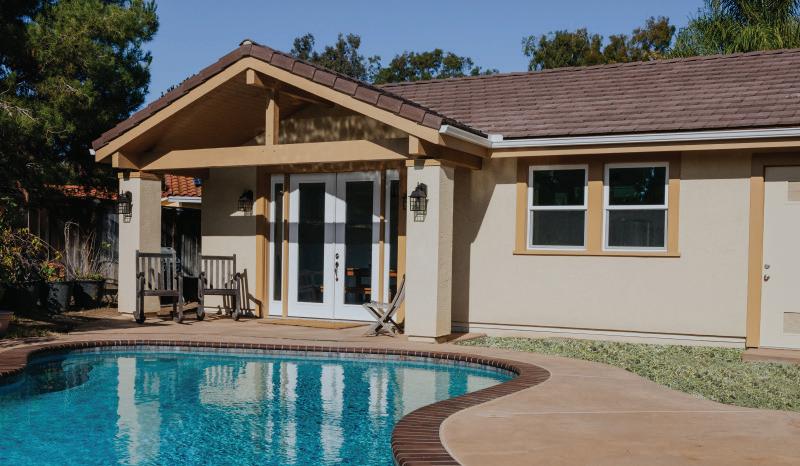


By John Meko, Vice President, North America and Global Operations, WiredScore
Turnkey internet service? Check. EV charging? Check. Indoor mobile coverage? Check.
Ten years ago, you’d be hard-pressed to find even one of these features in an industrial space. Now, in 2026, it’s a much different picture: technology is fast becoming the cornerstone of industrial buildings.
Exponential growth in automation, robotics and machine learning has seen tenants rapidly embracing technology to drive
efficiency across their leased spaces.
Look no further than the simple forklift as a sign of technological advancement of the sector over time.
Fifteen years ago this was simple, analog machinery that hadn’t changed much in 50 years. Fast forward to today, the level of embedded technology being adopted is transforming it into a data driven, connected component of a broader orchestration of efficient warehouse operations.
Era
Early/Manual era (pre-IoT)
Era
Rise of telematics and electrification (~2010s onward)
Era
Advanced/connected era (recent 5-10 years)
Data gathering / systems
Basic usage logs (hours, fuel), largely manual tracking
Data gathering / systems
Fleet electrification, increased use of sensors, wireless data transmission, dashboards
Data gathering / systems
Richer sensor sets (load, tilt, impacts, environment), integration with Warehouse Management Systems, mobile apps
What changed / trend
Minimal sensors, mostly reactive maintenance
What changed / trend
Shift to sustainable operations, more real-time visibility, fleet-wide monitoring begins
What changed / trend
Data becomes continuous, bigdata style, used for analytics and optimization
Era
Smart/AI-enabled era (2025 and beyond)
Data gathering / systems
Real-time streaming data, AI/ML analytics, video + sensor integration, predictive & semi- autonomous system
As a result of the sweeping digitization of the sector, landlords are now embarking on a steep learning curve as they set out to keep up with what tenants expect from their buildings. Now, nine in 10 tenants consider high-quality digital infrastructure to be essential or very important to day-to-day operations.
What changed / trend
Data used for autonomous behaviors, safety interventions, optimization at scale
Recent research from WiredScore shows that this is a compounding trend. Over the next two to five years, occupiers are not only expected to adopt more technology, but this technology is expected to become more sophisticated. AI, Internet of Things and cloud computing will fast become
common practice; robust connectivity and WiFi will no longer be a “nice-to-have” — it will become the foundation on which technologies are built.
Tenants are not just looking for spaces which cater for their requirements today, they need landlords to act as partners who can scale with them. While this might seem a daunting prospect to some landlords who haven’t given their digital infrastructure much of a thought, there are simple considerations for making this a priority:
Fail to plan, plan to fail. Many owners and developers like to play the waiting game when it comes to technology adoption, especially in a sector with an incredibly broad range of potential users. The challenge is that waiting until a tenant requests a technology like in-building cellular coverage is too late when you’re in a leasing conversation.
A roadmap to implementing improvements is essential. Too often, landlords are embarking on their tech journey with no plan, limited skills and awareness of what tech they should be focusing on and, most importantly, no knowledge of what tenants really need from their spaces. WiredScore works in partnership with landlords to guide them through this process, assessing their current tech, analyzing what can be improved and then working to implement these improvements when tenants demand.
Use tech in your branding. For landlords looking to position themselves as technologically advanced, integrating tech into brand positioning is fundamental. Future-ready spaces signal innovation, efficiency and an enhanced occupier experience, all of which are key differentiators in competitive leasing. By showcasing digital capability through certification and storytelling, landlords demonstrate long-term value, positioning their buildings as future-ready destinations.
The upside for landlords is that tenants are willing to pay more for technology-enabled space. According to WiredScore’s
research, 50% of occupiers would pay up to 10% more for space that guarantees digital readiness from day one.
Speed of moving in. With tenants often looking to activate their space within 30 to 60 days, traditional connectivity lead times of 90 to 120 days are causing significant turnover friction. If owners are prepared to lay the technological foundations, they can embark on a relationship knowing their tenants will be satisfied with excellent Day One connectivity.
Until now, technology has been an afterthought and connectivity has been a tenant problem, but the rapid adoption of technology is an opportunity for property owners to lead. If they plan ahead, forward-thinking landlords can present move-in connectivity to potential occupiers so they can be up and running quickly.
As industrial real estate continues to evolve, one thing is clear: technology is no longer an optional extra, it’s the backbone of modern operations. For landlords, this shift represents both a challenge and an opportunity. Those who act now to future-ready their building — by investing in robust connectivity, scalable systems and a flexible digital foundation — will be best placed to attract and retain the next generation of tech-driven tenants.
Working with partners like WiredScore allows landlords to move with confidence, transforming their assets into digitally capable, future-ready spaces.
By taking a strategic, well-planned approach to infrastructure, landlords can turn connectivity from a tenant pain point into a powerful selling point. In doing so, they not only enhance building performance and tenant satisfaction, but also drive longterm asset value and competitiveness in a market where digital capability defines success. Technology will only become more integral to how industrial occupiers operate. Those landlords who recognise this today and act decisively will set the benchmark for tomorrow’s industrial spaces: connected, efficient and built for the future.
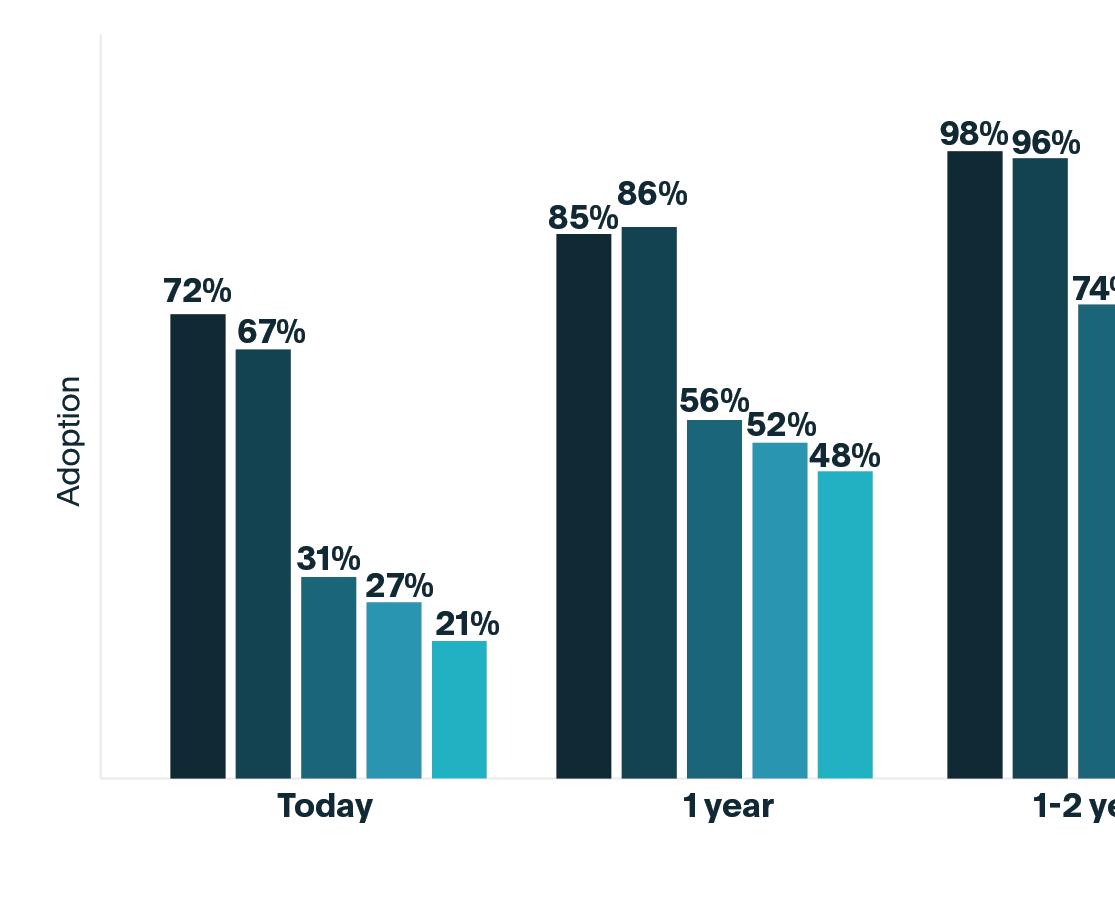
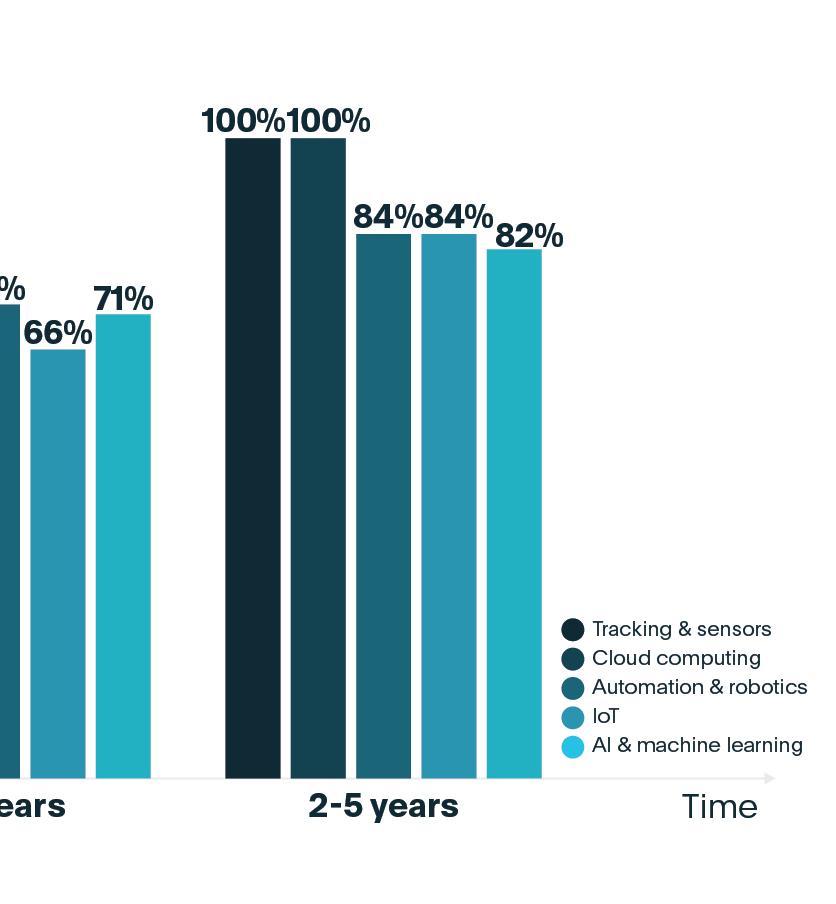
By Patrick Ghilani, CEO, MRI Software
As we welcomed a new year, many of us set personal goals to grow and improve. But what about our businesses? Business resolutions — especially in proptech — can be the catalyst for innovation and progress. With that in mind, I’d like to share six AI-focused resolutions for real estate firms embracing proptech, or those ready to take the leap.


1Embrace AI as a lasting partner
Artificial intelligence (AI) isn’t just a passing trend — it’s reshaping our industry. While real estate has traditionally been slower to adopt new technologies, the tide has turned. According to a recent JLL survey, 88% of investors, owners and landlords and 92% of occupiers are piloting AI. Just over two years ago, only 5% of commercial real estate firms were doing so. The momentum is undeniable.
AI is weaving itself into every facet of proptech and, by extension, every corner of real estate. The sooner we welcome AI as a partner, the better equipped we’ll be to harness its potential for efficiency and growth. Firms that embrace AI today will be better positioned to adapt to future innovations and stay ahead of the competition. Remember that comfort with AI tools is a key differentiator in keeping pace with the rapid advances that are transforming the real estate sector.


It’s important to recognize that AI adoption is not just about technology, it’s about mindset. Leaders who foster a culture of curiosity and openness to change will inspire their teams to see AI as an opportunity, not a threat.

Separate hype from reality: AI vs. automation
It’s easy to get swept up in the excitement around AI, but not every tool labeled “AI” truly fits the bill. Automation and AI serve different purposes. Automation streamlines repetitive tasks; AI, on the other hand, learns, adapts and collaborates with us. My advice: approach marketing claims with curiosity and discernment. Evaluate tools carefully to ensure they deliver genuine intelligence, not just automated processes.
Understanding the distinction between automation and AI is essential for making informed technology investments. Automation works for you, handling routine tasks, while AI works with you, offering guidance and creative problem-solving. By carefully assessing product claims, you can ensure your organization invests in solutions that truly drive innovation and value.
As you evaluate new technologies, ask vendors to clarify how their products leverage AI. Look for demonstrations of real learning, adaptability and decision-making. This will help you avoid costly missteps and ensure your technology stack is built on a foundation of true innovation.
Build a strong data foundation AI’s effectiveness depends on the quality of your data. To unlock real value, organizations must clean up and structure their data across divisions and sources. This may mean mapping out where data lives, standardizing governance and breaking down silos. Though it takes effort, a strong data foundation ensures that AI delivers insights you can trust and act on.
Start by identifying where your data is stored and how it’s compiled. Establishing clear guidelines for data governance and standardization will help prepare your organization for integration across teams and systems. The process may be laborious, but it’s a critical step to ensure that the insights you gain from AI are both accurate and actionable.
Investing in data management now will pay dividends as AI becomes more deeply embedded in your operations.
Change can be daunting, especially when it comes to technology. Some worry that AI will replace jobs, but the reality is more nuanced. AI will transform roles, making work more engaging and freeing up time for strategic thinking. The bestprepared firms will invest in training — not just technical skills, but also communication, analysis and creativity. Human insight and empathy will be more valuable than ever.
Employees need to feel confident using AI tools, which means providing comprehensive training and support. Encourage your teams to develop both technical and interpersonal skills, as AI cannot replace human relationships, critical thinking or decades of industry experience. By fostering a culture of learning and adaptability, you’ll help your workforce thrive in an AI-enabled environment.


At MRI Software, we’ve built our Responsible AI framework around principles like accountability, fairness, transparency, reliability and security. These aren’t just buzzwords — they’re the backbone of every AI-enabled product we create. By applying these principles to our software development, we ensure that every algorithm aligns with our commitment to ethical and secure AI.
I encourage all software providers to adopt similar standards, and I urge real estate firms to ask tough questions to understand the controls and cybersecurity measures in place behind their AI tools.
Responsible AI isn’t just good practice, it’s essential for mitigating risk and building trust with clients and stakeholders. As AI becomes more influential in our industry, it’s our duty to uphold the highest standards and advocate for responsible innovation, which also means ensuring that systems are inclusive and fair.

Make your voice heard

At MRI, client input shapes every new feature and tool we develop. When we are preparing to roll out new tools or features, we ask selected clients to participate in beta testing or early adopter programs. Their feedback helps us refine features and, where appropriate, add new ones, ensuring that what we deliver is tailored to the unique needs of proptech users.
Early feedback is especially critical when working with AI, which is built to solve real-world challenges from day one. AI technology isn’t simply layered on to our finished products; it is built into the product from the beginning to ensure that it will perform as expected according to specific use cases. Open communication is key to transforming AI’s potential into practical, impactful results.
Remember, your feedback doesn’t just improve products—it helps shape the future of proptech. By voicing your needs and aspirations, you contribute to a more responsive, innovative and human-centric industry.
AI tools are already a vital part of proptech. They’re used by facility managers, multifamily operators, commercial landlords and developers, investors, residential leasing agents and legal professionals for tasks ranging from fraud prevention and document abstraction to energy management and predictive maintenance. Morgan Stanley predicts that AI’s value for real estate will equate to $34 billion in efficiency gains by 2030. To recap:
1. Embrace AI as a lasting partner.
from
Make your voice heard.
Let these resolutions guide you. AI is transformative, making our work more rewarding and our industry more dynamic. If you’re not yet on board, let the rest of 2026 be your year to catch up — and then lead the way.










Please contact Neil B. Garfinkel, Managing Partner, to see how AGMB can assist you. Abrams Garfinkel Margolis Bergson, LLP is a full-service law firm dedicated to smart, practical and cost-effective counsel.

B. GARFINKEL, ESQ.
Broker Counsel to REBNY Abrams Garfinkel Margolis Bergson, LLP (212) 201-1173
Efax: (646) 778-3710 ngarfinkel@agmblaw.com www.agmblaw.com

Carol A. Sigmond Partner
Nossaman LLP
12 East 49th Street
22nd Floor
New York, NY 10017
On December 5, 2025, New York Governor Kathy Hochul signed amendments to Real Property Actions & Proceedings Law (RPAPL) section 881. These amendments are pro-development and, in part, likely unconstitutional.
Prior to the amendment, RPAPL section 881 directed courts to treat applications by neighbors for access as temporary condemnations that did not permit any permanent encroachment on the neighboring property. The courts had effectively tailored provisions to promote public safety for adjacent properties without undue interference in the operation of the adjacent properties. The burdens of the proceeding were placed on the party seeking access.
For Local Law 11 and other maintenance work, the requirements for insurance, indemnification and compliance with the law were routine and becoming stabilized. New buildings, particularly larger ones, were often subject to intense negotiations and litigation, reflecting the fact that developers were damaging adjacent property owners, and those owners were trying to protect their own interests.
Hochul has attempted to shift more burdens and expenses onto adjacent property owners. Among other changes adverse to adjacent property owners, she has attempted to create a right for developers to install underpinning on adjacent property by government fiat, without providing procedural or substantive due process or compensation for the taking of property.
The use of the word “attempted” is intentional. Whether this provision will survive a serious judicial challenge is highly doubtful. The United States Supreme Court’s decision in Cedar Point Nursery v. Hassid, 594 US 139, 141 S. Ct. 2063, 210 L. Ed. 2d 369 (2021) is instructive. By a 6-3 decision, the court ruled that allowing labor unions to enter private property for organizing purposes constituted an unconstitutional taking, strongly suggesting that permitting one property owner to place a permanent structure on neighboring property would also be a taking that would not pass constitutional muster.
Moreover, Hochul removed the right of full indemnification for adjacent property owners, substituting a requirement for paying “actual” damages for “entry.” She left a provision for “fees,”
which is likely to create disputes about attorney fees, resulting in additional expense and inconvenience for adjacent property owners.
Significantly, the New York City Department of Buildings (DOB) has determined that underpinning is no longer necessarily the most desirable means to protect adjacent properties from damage. NYC Building Code Section 1817.3 generally requires evaluations of adjacent buildings for suitable support methods, assessment of the adjacent buildings and subsurface conditions, evaluation reports and alternatives for underpinning. Tangent or secant piles, slurry walls and grouting must all be evaluated.
Poorly executed underpinning has damaged many buildings, particularly in Brooklyn and lower Manhattan. Because of this pattern of damage, the NYC DOB amended the Building Code on or about November 2, 2022, to tighten up the approval process for SOE drawings.
While Hochul was happy to give developers a “win,” she did not provide any meaningful protection for adjacent property owners. Too many property owners are stuck in litigation over property damage with uninsured or underinsured developers who go out of business to avoid paying for damages caused to adjacent properties.
The Governor should have required a minimum of $50,000 cash bond for statutory protections, $1 million cash bond for new buildings up to 75 feet and $5 million cash bond for new buildings over 75 feet, particularly where the developer (or its predecessor in interest) had a history of damaging other buildings. The NYC DOB should have been directed to deny building permits to developers with a history of damaging adjacent properties and failing to fully cover the damage with insurance.
The balance of the changes to RPAPL Section 881 does not appear to functionally change proceedings under RPAPL Section 881. Only time will tell. However, if a new building is planned adjacent to you, you should retain attorneys, architects and structural engineers as quickly as possible to protect your property.
This column presents a general discussion. This column does not provide legal advice. Please consult your attorney for specific legal advice.













Frank DeLucia Executive Vice President
Hub International Northeast
frank.delucia@hubinternational.com (212)338-2395
In 2026, the real estate market is entering a period best described as a reset rather than a rebound. Economic uncertainty continues to pressure profits but shifting conditions — particularly interest rate cuts and easing property insurance costs — are creating opportunities for owners and investors who are prepared to respond strategically.
Rather than dramatic swings, 2026 will reward discipline. Owners who understand where risks are easing, where they are intensifying and how those forces intersect will be best positioned to protect value and capitalize on emerging opportunities.
Several trends are shaping how deals are being evaluated, financed and managed. Liquidity is returning, but profitability still must be earned. After years of elevated interest rates, the prospect of additional rate cuts is unlocking refinancing opportunities and improving market liquidity. According to NAIOP, nearly $1.8 trillion in commercial real estate mortgages is set to mature in 2026, following roughly $960 billion in 2025, per the Mortgage Bankers Association. This forces owners to make decisions around refinancing, recapitalization and asset repositioning.
While lower borrowing costs may help stabilize profitability, relief will be uneven across asset classes. Office properties continue to face elevated vacancy outside of Class A space, industrial assets are grappling with tariff uncertainty and construction costs, while multifamily has shown relative stability but limited margin expansion. Compounding the challenge, 91% of industry leaders cite rising operating and labor costs as the biggest threat to profits in 2026, according to Hub’s Profitability and Resilience Survey.
Owners must proactively approach liquidity events. Refinancing scenarios should be stress-tested well ahead of maturity, portfolio diversification revisited with fresh eyes and capital allocated towards improvements with clear operational returns. Profitability in 2026 will favor disciplined underwriting, conservative expense assumptions and a willingness to make hard decisions about underperforming assets.
Workforce stability is becoming a property risk indicator. Property and facility management roles are under particular strain, with as many as 160,000 real estate industry positions expected to go unfilled by 2030 as reported by Propmodo. Tenants in hospitality, retail and logistics continue to struggle with staffing, affecting operating hours, service levels and long-term viability. Hybrid work has further complicated demand, requiring landlords to rethink space utilization and amenities in ways that are increasingly labor-dependent.
Owners navigating these pressures will need to treat workforce strategy as an operational risk issue, not a secondary concern. Recruiting, retention and training should be viewed as integral to asset performance and tenant stability. Compensation, career development and benefits will need to be
aligned with the realities of today’s labor market. In a tight hiring environment, workforce resilience will increasingly underpin property resilience.
Insurance costs are easing — selectively. After years of sharp increases, property insurance markets are showing meaningful signs of relief. Rate reductions begun in 2025 are expected to continue this year, with commercial property rates declining by as much as 15% in some markets and residential rates falling up to 25% where new underwriters are entering the market. Wellmanaged risks with strong loss prevention are positioned to benefit most.
Owners will need to treat insurance as a yearround portfolio consideration rather than a once-a-year renewal exercise. Replacement valuations should be kept current, risk controls clearly documented, and safety and security measures actively maintained. In 2026, insurance outcomes will increasingly reflect how well risks are understood and communicated, not simply broader market softening.
Litigation and cyber are expanding risk. Legal and cyber exposures are playing a larger role in real estate risk profiles. Nuisance lawsuits, particularly those tied to ADA compliance, continue to create unpredictable costs and repeat exposure. Cyber risk is accelerating with wire fraud and business email compromise, with individual phishing incidents resulting in losses approaching $20 million, reported The Broadsheet.
As smart building technologies and digital transactions become more prevalent, integrated legal and cyber strategies will be essential to protecting both deal execution and ongoing operations. Legal compliance, transaction verification protocols, staff training and cyber defenses should be coordinated rather than managed in silos.
Risk Maturity: A Competitive Advantage
Risk maturity is now a decisive differentiator in underwriting, financing and property insurance deal execution. Capital providers and insurers are no longer evaluating asset quality in isolation. They are looking closely at how owners identify, measure and manage risk across their portfolios. Properties supported by outdated data, fragmented strategies or reactive approaches are more likely to face tighter terms, even as some markets soften.
Owners will need to take an enterprise-wide view of risk that integrates operations, insurance, legal exposure and cyber considerations.
Accurate data, disciplined communication and early engagement with advisors will support better outcomes across transactions, financing and insurance placement. 2026 will not reward shortcuts or assumptions. It will favor those who understand their risks, manage them intentionally and prepare their portfolios for continued uncertainty.













Kris Kiser
Outdoor Power Equipment Institute
TurfMutt Foundation Equip Expo
1605 King St. Alexandria, VA 22314 turfmutt.com opei.org
(703)549-7600
Backyarding is the practice of taking everyday activities — entertaining, eating and working — into the green space around us. At the TurfMutt Foundation, which advocates for the care and use of yards, parks and community managed landscapes, we believe that everyone deserves to enjoy the benefits of nature, even those living in an urban setting with a smaller yard — or no yard at all.
Thanks to resourceful design, community parks and neighborhood green spaces, backyarding big even in small spaces is possible. The TurfMutt Foundation offers this practical advice for getting outside and enjoying nature when you have limited green space available to you.
Plant with Purpose and Precision
In a smaller area, every plant and container must contribute to your lifestyle. Plan carefully and creatively to utilize every square inch of your landscape real estate.
• Outdoor Office Nook: Long to take work outside? Set up a small, foldable table in an under-utilized side yard or corner of your patio that can easily double as an al fresco dining area in the evening. This creates multi-functional space crucial in small areas.
• Pet-Friendly Zones: Need a place for your pet to do her business? Plant a small patch of grass in a contained area. This allows pets to enjoy the outdoors while keeping the rest of your space functional for other activities.
• Nature’s Touch: Love nature? Bring it closer by planting a butterfly bush or small, pollinator-friendly flowering shrubs in a stylish patio container. This will attract beneficial insects and provides an immediate connection to the environment.
Create Privacy with a Living Wall
Rather than putting up a solid, bulky fence in a small yard, consider a “living wall” of trees, shrubs or climbing vines. This approach offers natural screening that not only maximizes your sense of privacy but also makes your outdoor space feel bigger by drawing the eye upward. It also offers critical support to backyard wildlife and insects.
Go Vertical
In urban landscape design, the concept of going vertical is essential.
• Hanging Gardens — Hang flower baskets on
your fence or railing or install wall planters.
• Trellis Focal Points — A trellis laced with vines is a gorgeous and space-saving focal point.
• Modern Green Walls — Green walls are all the rage and utilize blank wall space to create a vibrant natural feature, offering high visual impact in a small footprint.
Even if you don’t have grass or any soil to plant in, you can still be a successful gardener. Use containers to plant flowers, fresh herbs and even compact fruit trees and vegetable plants. There are also many chic planters available that securely attach to balcony railings, providing instant color and functionality without compromising precious floor space.
Selecting the right plants for your lifestyle and climate is key to mastering a small backyard space. Consult the USDA Plant Hardiness Zone Map for help selecting the best plants for your microclimate. This careful planning will support local pollinators, creating a self-sustaining miniature ecosystem.
When your private patch isn’t enough, remember the value of community parks, school yards and other green spaces. According to research conducted by The Harris Poll for the TurfMutt Foundation, 89% of Americans consider a good public park system a top community amenity.
Nearly all Americans (96%) utilize public green spaces, like public parks, for recreation. A vast majority (89%) feel that communities should prioritize providing these spaces for community health and well-being.
To take advantage of these community green meccas:
• Take your kids to the park for a study session or quiet reading.
• Walk the dog through the community green space at the end of your road.
• Plan a doggie playdate at the local dog park.
These are all wonderful places to get a much-needed dose of Vitamin N(ature), proving that backyarding truly is accessible to all.
To learn more about creating the yard of your dreams, no matter its size, go to turfnutt.com.






If you spent any time in or around the shopping center industry in the late 20th century and the first decade of the 21st, green business jackets meant one thing.
No, not the Masters tournament, despite the number of golfers I know. It meant you were somewhere in the vicinity of General Growth Properties (GGP), especially at their booth at the ICSC Las Vegas show.
The 2008 Great Financial Crisis hit GGP hard and after it filed for bankruptcy in 2009, Brookfield Asset Management, the Toronto-based giant, made a $2.65 billion investment in the company in 2010. John Bucksbaum left the company, and when in 2018 Brookfield Property Partners acquired GGP, the General Growth Properties name went into the vault.
North Las Vegas, NV 89084
(201)618-5247
GGP’s story reflects a lot of the changes that retail real estate has gone through in the 80-year postWorld War II era. The company was founded by brothers Matthew, Martin and Maurice Bucksbaum in 1954 in Cedar Rapids, Iowa as General Management, created to develop a shopping center around a family grocery store.
Almost immediately, it joined the post-World War II “Malling of America,” owning 10 malls by 1964, when it moved to Des Moines. Six years later, it became one of the first shopping center companies to go public and adopted the General Growth Properties name. It sold its assets (retaining their name and management) and went private in 1984, then began building and acquiring again.
In 1990 I interviewed Matthew and Martin Bucksbaum (Maurice Bucksbaum had retired) in person for a Chain Store Age cover story on GGP’s acquisition of Center Companies. In addition to a marathon travel day, what I remember most was their kindness and humor — and the absence of the green jackets.
Simply put, Matthew and Martin Bucksbaum were two of the greatest gentlemen in a business that needed and needs more of them.
During the early 1990s financing crisis that saw most of its competitors, including Melvin Simon & Associates and DeBartolo Corp. (since merged into Simon) turn to the public markets, GGP once again filed an IPO and continued to grow.
Not long after Martin Bucksbaum’s 1995 death, it relocated its headquarters from Des Moines to Chicago, the next generation came to the fore as John Bucksbaum was named CEO, and more acquisitions followed, including The Rouse Company and Howard Hughes Corp.
When I moved to ICSC as an editor, I saw Matthew Bucksbaum regularly at association events, sharing a cab in Madrid at its European conference (and bickering over who would pay), discussing book recommendations and more.
Meanwhile, GGP became the second largest of owners of malls in the U.S. after Simon, but one burdened by massive debt.
Until January, when Brookfield told Crain’s Chicago Business that it was rebranding Brookfield Properties Retail back to GGP while keeping the retail division’s structure, portfolio of 100plus malls and teams in place. Among its local properties are 218 West 57th St., 685 Fifth Ave., Paramus Park and Staten Island Mall, joinec by such trophy properties including Ala Moana in Honolulu, Natick Mall outside Boston, and closer to me, Meadows Mall, Fashion Show and Grand Canal Shoppes.
So why? Why now? It’s all about the branding and the marketing.
Many of us industry veterans still think of all of those properties as GGP, which built them or renovated them after a purchase. That will help with leasing.
As the company wrote on its Instagram site (@ ggp_luxury), “More than a name change, this is a renewal of our 70-year promise to you. We’ve always known that for luxury brands, the right setting isn’t just important—it’s everything. We’re dedicated to creating exceptional environments where the world’s most iconic brands connect with their biggest fans. Because when you succeed, so do we.”
And marketing a U.S. retail real estate company is diff erent from a century-old asset management company whose global real estate portfolio also includes office space (Brookfield Place in New York, Canary Wharf in London and more), hotels, healthcare and land.
I’ve always believed that with the possible exception of hotels, retail is the most “alive” sector, one that has to constantly adapt to the changing needs and wishes of its users, who change every single day. But unlike just about every other real estate sector, retail’s users — its shoppers, diners, those simply wanting that fabled “third place” — consider the property theirs. Is it “my office building”? Not really. “My hotel?” No. But “my mall”? You bet.
And that’s why names matter. So welcome back, GGP. Even with green jackets.
(Somewhere up there, Matthew Bucksbaum, who died in 2013, is smiling.)
Langsam Property Services Corp. is a Bronx-based real estate management company. These buildings are located in the Bronx, Manhattan, Queens, Brooklyn, and lower Westchester County.
Langsam is designated as an Accredited Management Organization (AMO), a standard of excellence in management conferred by the Institute of Real Estate Management (IREM).
1601 Bronxdale Avenue
Bronx, New York 10462
Tel: 718. 518. 8000
Fax: 718.518. 8585


Abe Schlisselfeld
CPA, EA
Real Estate Industry Leader
CBIZ
abe.schlisselfeld@CBIZ.com (212)201-3159
Recent Federal Reserve rate cuts have provided some relief to the multifamily market, but borrowing costs are still high compared to the pandemic period. While rates are no longer rising, financing remains more selective, underwriting standards are tighter and traditional loans often have pricing or terms that challenge deal economics.
In response, multifamily investors are reevaluating their capital structures. Instead of relying solely on traditional debt, many are adopting more flexible financing options to maintain momentum, safeguard liquidity and adapt to changing market conditions.
What Counts as Creative Financing?
Creative financing involves alternative capital structures beyond traditional bank loans. These methods include joint ventures, mezzanine financing, bridge loans and structured equity arrangements, each providing different ways to align capital with risk, timing and long-term goals.
For example, an investor buying a stabilized multifamily property might enter a joint venture with a capital partner to lower the initial equity contribution while gaining access to shared operational expertise. In another case, mezzanine financing can bridge a funding gap when senior lenders limit proceeds, enabling a value-add acquisition to close without delays related to refinancing or capital raises.
These strategies are not meant to be complex for their own sake. They are tools investors use to advance when traditional financing falls short, provided the economics, governance and exit strategy are clearly outlined.
When Creative Financing Makes Sense
Not every property is a strong candidate for alternative financing. Determining the appropriate approach begins with fundamentals like location, demand factors, occupancy trends and cash flow stability. Assets with predictable income can support layered capital structures while repositioning or redevelopment projects often benefit from equity partnerships that share both risk and rewards.
Consider a mid-market multifamily property undergoing renovations to modernize units and boost tenant retention. A bridge loan combined with structured equity could offer short-term flexibility while allowing time for income growth before securing permanent financing.
Conversely, a fully leased property with long-term tenants may qualify for mezzanine funding if cash flows are strong enough to cover higher debt costs.
Successful execution requires more than access to capital. Investors must consider operating realities, market dynamics and property-specific risks to ensure financing decisions support long-term performance rather than short-term convenience.
The Role of Advisory Insight Financing decisions do not happen in isolation. Expert advice on tax, insurance and operational factors can significantly impact both the structure and results.
For example, older multifamily buildings might need higher insurance limits or additional reserves due to their construction type or the age of their infrastructure, which can influence debt capacity and pricing. At the same time, tax strategies such as cost segregation or opportunity-based incentives can boost cash flow and overall returns when used early in the deal process.
Understanding these interconnected factors enables investors to assess financing options comprehensively, rather than viewing capital decisions as separate transactions.
Creative financing in the multifamily sector is expected to stay important in the coming years, even as interest rates level off. Capital will continue to back well-planned deals with solid business strategies, cautious risk management and realistic assumptions.
Hybrid capital stacks that combine debt, equity and institutional investments are expected to become more prevalent, especially for mid-sized assets outside the reach of larger lenders. At the same time, improved data analytics and technology platforms are enabling investors to evaluate risk and opportunity more accurately, helping match capital to assets more effectively.
Those who know how to deploy flexible financing wisely will be better prepared to compete in an environment where certainty stays elusive.
Creative financing is not a replacement for strong fundamentals or disciplined execution. However, when used strategically, it can help multifamily investors navigate today’s lending landscape, uncover opportunities others might miss and maintain growth despite ongoing market constraints.
The benefit comes from knowing when alternative financing aligns with the overall strategy and when traditional options are still the best choice. In a market full of change, that judgment can be crucial.

Ira Meister
President and CEO
Matthew Adam Properties Inc.
375 Pearl St. , 14th Floor
New York, NY 10038
(212) 699-8900
imeister@matthewadam.com
Due to a variety of issues, the board of a co-op or condo often decides that it needs a new management company. The decision is a difficult one, buttressed by the fear of the unknown and what is often perceived as setting into play a complex process to bring in a new firm.
It’s the most important and, to many, the most daunting duty of a board. It means trying to find the right company, going through the transition process and learning to work with new people. It can put the comfort factor out in the cold. Yet a transition need not be the uncertain experience many boards envision. Done properly, with a company focused on details, professionalism and results, it can be smooth.
But first, let’s discuss the reasons behind the need. Generally, problems fall into two main categories: poor communication and lack of attention. Often, I hear complaints from boards seeking new management that their current firm is lax in returning phone calls and providing information when requested.
Another issue is the deteriorating relationship between the board and the asset manager assigned to the property. Friction — regardless of who is responsible — can lead to a break-up. Sometimes a change in personnel by the company can solve the problem, but often the relationship is too torn.
The second issue is in line with the first: the asset manager has fallen asleep on the job. Financial reporting is late and often incomplete, the manager fails to visit the building on a schedule and requests for action are delayed or worse, ignored.
How do we manage a transition at Matthew Adam Properties? We follow the transition protocol in our Strategic Management program.
Simply put, Strategic Management is our adaptation of sound business principles with objectives and a timetable. It considers the short-term needs of a building as well as long-term requirements. It is a planned approach to property management, rather than the usual bandage cure and gives the board of directors comfort knowing that important concerns are being addressed and will be resolved.
When we are retained, we immediately evaluate the
property to identify its strengths and weaknesses. Our customized Strategic Management procedures include reviewing all financial issues, service and maintenance contracts, the building’s infrastructure, repairs and long-term capital needs.
We conduct a complete physical and financial evaluation of the property. We see if mandated inspections are current, review financial reports and talk to the accountants, look for any outstanding violations or fines and review annual fillings for the water tower, fire inspections, elevator, etc.
We check invoices to be certain the co-op/condo is getting what it is paying for and not getting ripped off. We have found instances where a property was paying for services or equipment provided to another building either through malfeasance or inadvertently inserting the wrong address.
Increasingly, governments are adding regulations and requirements that properties must comply with. We are current with all of these and check to see if the property complies. For example, if there are Local Law 11 violations on a building, we make certain they are addressed.
In addition to the reviews and analysis of the property, its finances and physical structure, we look at all details to make certain no stone is unturned or some issue will surface in the future.
From the board’s perspective, we recommend that it review the relationship with the outgoing management firm to see what steps may be taken to have a successful relationship. It is a good time for the board to discuss its goals and articulate this to the firms it is interviewing. For example, if Green initiatives are important to the building, the vetting process should include a discussion of this area. References should be checked, particularly from buildings managed by the firm.
With a board that takes an organized, planned approach to the change and the hiring of a new firm that has the systems and experience to handle the transition, changing management firms need not be the daunting experience many boards perceive. And in most cases, it leads to improvements in the property, adding value and enhancing the residents’ quality of life.


















Bob Knakal Chairman and CEO
BKREA
New York City
(917)509-9501
The Community Opportunity to Purchase Act (COPA) was vetoed by former New York City Mayor Eric Adams on his way out the door, but it remains a top priority for some policy makers, just as Good Cause Eviction took several attempts and various iterations before it passed. Undoubtedly, it will be proposed again.
New York City’s multifamily housing sector already operates under one of the most complex regulatory regimes in the country. While policymakers often frame new interventions as modest guardrails, the cumulative impact of layered regulation matters far more than any single proposal. The proposed COPA is a clear example. If enacted, COPA would materially weaken the apartment building sales market in New York City, reducing liquidity, discouraging investment and introducing new litigation risk — at a moment when the asset class can least afford additional headwinds.
First, COPA would inject a significant level of uncertainty into multifamily transactions, undermining the confidence of institutional capital. Large-scale investors and equity providers prioritize clarity: predictable timelines, defined counterparties and enforceable closing conditions. COPA replaces that clarity with an indeterminate pre-sale process, extended notice periods and the possibility that third-party nonprofit actors may intervene late in a transaction. The mere risk that a deal could be delayed, re-traded or derailed is enough to alter underwriting assumptions. For institutional investors — who often provide equity to owner-operators — this makes New York City rent-regulated apartments less attractive relative to markets with fewer procedural obstacles.
Second, COPA would meaningfully slow down the sale process, reducing liquidity across the multifamily asset class. Liquidity is not an abstract concept; it directly affects pricing, financing and long-term ownership decisions. Under COPA, many sellers would face mandatory waiting periods and administrative hurdles before accessing the open market. Transactions that might otherwise close in 90 to 120 days could stretch far longer, increasing carrying costs, interest expense and exposure to market volatility. Reduced liquidity translates into higher risk premiums, which in turn depress values. Over time, this dynamic discourages both new entrants and existing owners from reinvesting capital into aging stock.
Third, COPA opens the door to strategic behavior by nonprofits that may have no genuine intent to purchase buildings. By signaling interest, these organizations gain access to sensitive regulatory records held by the New York State Division of Housing and Community Renewal, including rent histories and registration data. This creates a perverse incentive structure: expressing interest
becomes a low-cost mechanism to mine data that can later be used to support rent overcharge claims or other litigation. The resulting increase in legal exposure — particularly for long-held assets with legacy recordkeeping issues — would further deter transactions and invite years of costly disputes. A law intended to stabilize housing would instead amplify adversarial behavior and legal friction.
Fourth, the cumulative effect of COPA would be to suppress investor appetite for rentregulated multifamily properties altogether. Investors evaluate not only current income streams but also exit optionality. If selling an asset becomes more difficult, slower and riskier, rational investors respond by reallocating capital elsewhere. This does not reduce the need for housing, nor does it magically preserve affordability. It simply shifts investment away from regulated rental housing toward less constrained asset classes or entirely different geographies. Over time, reduced investment means fewer renovations, deferred maintenance, worse living conditions for tenants and less capital available for building upgrades — outcomes that ultimately harm tenants as much as owners. This is a commonsense outcome of such policy — why can’t our policymakers see this?
These concerns are compounded by the broader policy environment. COPA does not exist in a vacuum. It arrives alongside proposals such as a multi-year rent freeze pledged by Zohran Mamdani, which would further compress revenue growth and erode operating margins. When layered together, the result is a toxic policy mix. Owners face rising expenses, capped revenues, increased legal risk, fewer capital providers and diminished exit options. Few asset classes can remain healthy under that combination, and rent-regulated multifamily housing is no exception.
COPA proponents argue that the law would preserve affordability and empower community ownership. Those goals may be well-intentioned, but good intentions do not negate market realities. Affordable housing preservation requires patient, long-term capital with operating expertise that is willing to fund acquisitions, renovations and ongoing operations. Policies that scare away that capital ultimately undermine the very outcomes they seek to promote.
If New York City wants to protect tenants and preserve affordability, it should focus on targeted subsidies, streamlined regulatory processes and incentives that encourage investment and responsible ownership — not blunt procedural barriers that reduce liquidity and destabilize the market.
COPA, as proposed, would do more harm than good. In an already fragile rent-regulated multifamily ecosystem, it risks accelerating disinvestment at precisely the wrong moment.


Stuart M. Saft Partner and Real Estate Practice Group Leader Holland
& Knight LLP
787 Seventh Avenue, Suite 3100
New York, NY 10019
stuart.saft@hklaw.com (212)513-3308
The newspapers are full of stories about the excess capacity of office buildings in many cities, the limited availability of apartments and the use of empty office buildings for housing, which is based on the concept of Adaptive Reuse. However, this is only part of the story.
Adaptive reuse is not just a current solution for underutilized office space due to the pandemic and artificial intelligence — it will also play an important part of the future as buildings age and needs change. As a result, adaptive reuse of owned real estate should be part of a business’ long-term planning.
Adaptive reuse has already played an important role in fulfilling the changing needs of society and has aided in dealing with climate change and preserving scarce resources. We have already seen that there is no limit on how buildings constructed for the needs of the 19th or 20th centuries can be transformed to provide for the needs of the 21st century. But we will also need buildings built in this century to serve future societal needs.
We have also learned that, although it is easier and more cost-efficient to convert pre-World War II buildings to other uses, it is difficult — but not impossible — to convert post-1970 glass and steel office buildings with large floor plates and tremendous interior space to residential use without demolishing a large portion of the building.
Moreover, adaptive reuse does not mean that the entire building has to be built; portions of buildings, such as several floors of an office building, can be converted into residential, hospitality, medical centers, charter schools and even homeless shelters.
Importantly, the adaptive reuse of buildings should cost less and be completed faster than demolishing a building and then constructing a new building on the site, while also playing an important role in protecting the environment.
Demolishing a building that has been in place for a century or longer requires dealing with the detritus of the demolition, which throws carbon and other dangerous elements into the air, including asbestos, embodied carbon and elements contained in the existing building. On the other hand, constructing a new building requires extracting natural resources,
which are in limited supply and doing so also has a negative impact on the environment.
However, changing the use and structure of a building is never easy. The biggest issue in converting buildings built prior to World War II is the location of the windows, elevators and plumbing lines. It is nearly impossible to install new elevator shafts in existing buildings without major construction and, of course, the plumbing requirements of a residential building and an office building bear no resemblance to each other. In addition, the requirements of the lobby may differ.
The allocation of the elevators, plumbing and waste lines directly relates to how the space can be used. This is made more difficult when the lower portion of the building will be used for a different use than the upper portion of the building.
However, when designing buildings, perhaps part of the plan should focus on the possible future use of the building. This advance planning could include such ideas as more flexible lobby space, the ability to replace the elevators to have them open in different or multiple locations with minor adjustments to the shafts and planning for alternate use of the core and shell of the building.
Each project requires careful planning and precise allocation of resources but create a renaissance of unused or underutilized space. The advantage of this planning is that it will give owners and lenders flexibility and speed in addressing issues.
The need to reuse space will not end just because office workers are returning to their offices and the available space is absorbed into our economy — it is a normal part of the life cycle of buildings. The needs of our society will continue to change and building owners should have plans for long-term changes in their real estate holdings.
Building owners, to protect their investments, need to plan for the future, not necessarily drawing plans for reconfiguring a building, but continuously analyzing the best use of each of its components.
In the early 20th century, American humorist Will Rogers once said, “Buy land — they are not making more of it.” He was right.



More than 35 years of real estate, condominium & cooperative experience
WilkinGuttenplan uses expert industry knowledge in accounting, audit, and tax services to assist New York City real estate owners, developers, and investors of commercial and residential properties identify opportunities and guide them on implementing strategies to stay ahead of changing times.










Austine Rabine
Co-Founder and CEO
Site Technologies
625 West Adams Street, 19th Floor Chicago, IL 60661 (312)768-8250
The emotional impact of a natural disaster, such as a hurricane, can seem impossible to quantify. The loss of life, destruction to communities and the enduring trauma they imprint cannot be measured with a dollar figure.
However, the monetary impact for commercial real estate (CRE) owners can be quantified.
At Site Technologies, we’ve published a new report, “Braving the Storm,” to understand the operational and financial pressures CRE owners face in both preparing for and responding to hurricanes. We have also identified some of the solutions that can save money and work hours both before and after a significant windstorm.
Nine of the costliest natural disasters in the history of the United States have been hurricanes. A single event can result in billions worth of damage to property and businesses — Hurricane Helene, for example, which hit in 2024, was responsible for $78.7 billion in damage alone.
In a storm’s aftermath, significant financial pressures can be faced on all fronts. From the cost of cleanup to the handling of insurance payouts and the negotiation of future premiums — as much as 50% more in the U.S.’ worst storm-affected areas — the challenges CRE owners face can pose an existential threat to property owners.
The pressure to protect and adapt is unlikely to relent as the cadence of these storms’ intensity and magnitude grows.
At Site Technologies, we understand it’s important

for commercial property owners and managers to carefully evaluate the potential risk posed to their property by major storms.
Our report surveys property and facility managers across the U.S. to understand how they’re preparing to protect against a hurricane, what it costs to prepare and the financial impact after such an event.
What we found is that these storms represent a significant expenditure, in both time and money, for commercial property owners and operators. For instance, 20% of respondents said that they spend between $15,000 and $20,000 annually on property preparation, while nearly half (44%) spent at least $7,500.
Property owners and managers are also devoting significant time and money to contending with a storm’s aftermath. For example, 18% of survey respondents said they spent more than $15,000 annually fixing damage, while over half — 58% of respondents — spent between 31 and 100 hours per property on post-event response tasks.
Meanwhile, just 4% of the respondents said that post-hurricane response accounted for none of their work hours, reflecting just how commonplace these pressures are among real estate owners and operators.
Property managers spend valuable time and money after a storm trying to reconcile the extent of damage, which is often complicated by pre-existing wear and tear.
Site’s pre-storm approach is centered on establishing a definitive, high-resolution baseline of the property’s condition. These simulate scenarios before a storm season begins to identify potential risks in real time.
Drone-based imagery is proving a game-changer in this regard. It enables clients to capture highresolution, geo-referenced views of an asset. It details the condition of roofs, façades and parking lots before a storm to provide an indisputable, timestamped baseline.
Through proprietary AI analysis, the guesswork of manual inspections is minimized, while dronefacilitated tours expedite the process in areas still unsafe or inaccessible after a hurricane.
Crucially, real-time assessment consolidated into an easy-to-access, centralized report will accelerate any claims submission made to an insurer and vastly improve the chances of securing a full payout.
We believe this level of detail is non-negotiable when thousands of dollars are on the line, and our report’s data shows that CRE managers agree.
A clear majority (86%) of respondents felt that a program like Site’s would add value to their hurricane preparation and response procedures, while nearly half (42%) said that they believe it could be very valuable.
Real estate technology transforms weather uncertainty into clear, actionable data, ensuring those who prepare with solid proof can get back to business, rebuild where necessary and come back stronger and more assured if faced with another weather event.










Morris Betesh
Founder and Managing Partner
Arrow Real Estate Advisors
140 East 45th St.
New York, NY 10017
MBetesh@arrowrea.com
Multifamily real estate has entered a more deliberate phase. After years defined by rapid rent growth, abundant liquidity and compressed execution timelines, the sector is settling into a market shaped by discipline rather than exuberance. This shift has not stalled activity as much as it has reshaped it. Capital is still moving and deals are still getting done, but the rules of engagement have changed.
Across markets, investors, lenders and developers are recalibrating expectations. Leverage is meaningfully lower. Underwriting is tighter. Pro formas are built around today’s cost of capital, not yesterday’s. Exit assumptions are conservative, and contingencies are no longer optional.
Yet despite these adjustments, multifamily remains the most resilient and liquid asset class in commercial real estate, supported by durable demand fundamentals and a chronic housing undersupply that constrains many major markets.
At Arrow Real Estate Advisors, recent transactions reflect this recalibration in real time. One of the most illustrative examples is a $210 million construction loan secured for a mixed-use residential tower in Sunset Park, Brooklyn. The transaction demonstrated that lenders remain willing to finance ground-up multifamily development, even in a higher-rate environment, provided that the fundamentals align. In this case, a strong sponsorship group, a compelling basis and a neighborhood undergoing measurable transformation helped drive lender conviction. Just as importantly, the capital stack featured meaningful equity and a lease-up strategy grounded in market realities rather than aggressive assumptions.
That theme, capital availability paired with heightened selectivity, has become consistent across the multifamily landscape. Construction lending is no longer driven by velocity or competitive term sheets layered on thin margins. Instead, it demands thoughtful structuring, conservative assumptions and clearly articulated execution plans. Sponsors who understand this dynamic and adapt accordingly are still advancing projects. Those anchored to pre-2022 expectations are often finding themselves sidelined, not due to a lack of opportunity, but because of misaligned underwriting.
Refinancing activity tells a similar story. As loan maturities approach for assets financed during the low-rate cycle, many owners have been forced to confront difficult decisions.
Early fears of widespread distress have largely failed to materialize. Instead, the market has produced a steady flow of refinancings marked by pragmatic solutions: reduced leverage, fresh equity infusions and creative use of bridge, agency and hybrid financing structures.
Arrow has recently arranged refinancings for multifamily assets across New York City, the
Midwest and the Sun Belt, spanning stabilized urban properties and suburban garden-style communities. In many cases, success hinged on sponsors’ willingness to reset expectations and prioritize durability over optimization. Deals that acknowledge today’s rate environment and focus on long-term stability continue to find lender support, even if proceeds are lower than originally anticipated.
Agency capital remains a cornerstone of the multifamily financing ecosystem, but it is no longer the sole option. Banks, debt funds, life companies and CMBS lenders have re-emerged for well-positioned assets, particularly those with strong in-place cash flow and demonstrated operating performance. The result is a more diversified capital landscape, one that offers flexibility, but also demands greater sophistication from borrowers and advisors alike.
Another defining trend is the growing role of adaptive reuse and conversion strategies. In supplyconstrained markets, particularly New York, officeto-residential and mixed-use repositionings are emerging as an increasingly important source of new housing. These projects are inherently complex, requiring coordination among municipalities, lenders, architects and development teams. But as cities grapple with housing shortages and underutilized commercial stock, conversion strategies are gaining institutional acceptance.
From a capital perspective, these deals are no longer viewed as experimental. When paired with experienced sponsorship, realistic construction budgets and clearly defined timelines, conversion projects are attracting meaningful financing commitments. In many cases, the multifamily component serves as the stabilizing force that anchors broader repositioning efforts and underpins lender confidence.
Underlying all of these trends is a simple reality: demand for rental housing remains strong. Household formation continues, homeownership remains out of reach for many due to affordability constraints and new supply pipelines are thinning in several major markets. While rent growth has normalized from its post-pandemic highs, occupancy levels have remained resilient, reinforcing multifamily’s role as a defensive investment during periods of economic uncertainty.
What has changed most is behavior. Investors are underwriting cash flow rather than appreciation. Lenders are prioritizing certainty of execution over speed. Transactions may take longer, but they are often stronger, better structured and more durable as a result.
The multifamily sector in 2026 is not about chasing the last cycle. It is about adapting to the current one. Those who embrace realistic underwriting, flexible capital structures and long-term thinking will continue to find opportunity. The sector is not retreating, it is maturing.


Eric Hadar Chairman and CEO
Allied
Partners
770 Lexington Ave.
New York, NY 10065
(212)935-4900
“Location, location, location” has long been the primary driver of property value. This still holds, but looking ahead to 2026, there are some significant shifts to watch out for.
I was invited to join a distinguished panel of the leading global industry experts in Istanbul for the Kempinski Past Forward Summit, where we explored trends in real estate and the evolving luxury hospitality landscape. All on the panel agreed that while location remains important, authentic luxury is equally, if not more, essential.
The traditional metrics that once made real estate valuable were location and grandeur; demand was a commodity and it was always assumed that tenants would pay. Today, luxury condominiums and highend office spaces are increasingly defined by service, experience and authentic connection, rather than just location alone. Human interaction, convenience, ease and comfort have become some of the most influential factors in property value.
Authentic Luxury Redefined
In today’s market, authentic luxury is defined by elevated, personal and purposeful service. More than ever, the true measure of success is how a space makes someone feel, not simply where it is located. White-glove attention and thoughtful service are essential. Building grandeur matters less than the sense of belonging it creates. A recent article in The Wall Street Journal reported that luxury today is defined by time-saving, efficiency and personalized service, as well as exclusive services and amenities, such as private car elevators to residences and members-only clubs, aligned with a desire for privacy and curated experiences.
The Rise of Authentic Hospitality
It’s no longer just about where people live, but how they feel when they’re there. Whether traveling or at home, people crave authenticity and comfort — spaces that slow time and let them feel unpressured and appreciated. We all want to feel welcomed and valued. Real estate now intersects with hospitality, like hotels fostering emotional connections that make guests feel at home. This approach is now shaping the luxury residential market.
Concierge Residences: Blurring the Line Between Living and Hospitality
Concierge residences reflect this shift, blending the amenities of a five-star hotel with the exclusivity of a private members’ club. The model: run a condominium residence like a hotel, treating residents as guests.
Concierge service, white-glove staff, and hospitality aren’t differentiators; they’re expected. Every team
member, from doormen to management, delivers five-star service. This approach intentionally blurs the lines between living and vacationing. Residents enjoy the comfort of home paired with the effortless luxury of hotel living. It’s an elevated lifestyle that transcends glitzy architecture, rooted instead in the everyday feeling of being taken care of.
Blurring the Lines Across All Property Types
The blend of hospitality and residential living reflects a shift across property types. Since the pandemic, offices have undergone significant changes as well. With more remote work, companies know workplaces must now be engaging and attractive, making people want to come in and work, not because they must, but because they genuinely want to. At home, in the office, traveling or shopping, people seek the same integrated experience — one that is defined by comfort, convenience and meaningful connections.
Five Key Luxury Market Trends for 2026
Across multiple panel discussions, five factors were highlighted as key to defining luxury:
1. Luxury Outpaces the Mass Market. Key luxury retail groups have consistently outperformed mainstream counterparts. The Average Daily Rate (ADR) growth of luxury hotels outpaces the overall market, and the luxury residential sector is projected to continue to demonstrate greater resilience than the broader housing market.
2. Demographics Will Drive Future Growth. The rising number of high-networth individuals (HNWIs) will fuel spending and continue to shape the sector. Wealth transfer from Baby Boomers to Gen X and Gen Y will introduce a new wave of luxury consumers, requiring brands to adapt to shifting preferences.
3. Experience and Exclusivity Top the List. In luxury, the experience matters as much as the product itself. VIP lounges, customized items, personalized services, as well as concierge and VIP services in hotels and residences, are essential for enhancing exclusivity.
4. Cross-Sector Expansion Continues. The continued integration of hotel and residential offerings will continue to provide a more comprehensive and holistic luxury experience.
5. Emerging Luxury Destinations. As competition intensifies, luxury brands are expanding their reach beyond prime streets, resort towns, secondary cities and out-of-town locations. In residential sectors, demand for two-hour retreats will increase in effort to drive development outside traditional hubs.






Honoring
FEDERICO CHECO
Chief Executive Officer
Prestige Wellness Group Inc.
Gala Chair
JENNIFER L. WIDAY
Kaback Service, Inc.
Chairs Emeriti
KATHY A. CHAZEN, CLU, ChFU
Trustee, National Jewish Health
ROGER A. SILVERSTEIN
Silverstein Properties, Inc.
Trustee, National Jewish Health
BENEFITING




Thursday May 7, 2026 | 6:30 p.m.
Ascent Lounge New York
Register at njhealth.org/NYAir or contact Mattie Shepheard: ShepheardM@njhealth.org or 212.297.0857 @ nyair society

Sabrina Lippman CEO
Habitat for Humanity
NYC & Westchester County slippman@habitatnycwc.org
New York’s housing conversation is finally beginning to shift. For years, the debate focused almost exclusively on how many units we could produce and how quickly. Today, the question is broader and more consequential: What kinds of housing actually create long-term stability for families and communities?
The region’s housing pressures are well known. Vacancy rates remain low. Rents continue to outpace wages. And working families who have anchored neighborhoods for decades are increasingly priced out of the places they helped build. Solving this crisis requires more than scale. It requires structure.
That is where limited-equity homeownership, done differently, becomes essential.
Too often, limited-equity homeownership models such as Housing Development Fund Corporation (HDFC) cooperatives or Community Land Trust homes are framed as a compromise, something between renting and owning, density and livability. In reality, these models sit at the center of the housing continuum.
When done well, they anchor neighborhoods, support local economies and create long-term stability for families who would otherwise be pushed further from the opportunity to own a piece of their communities. They house working families, seniors, first responders, educators and caregivers, people who need stability, proximity and affordability at the same time.
At Habitat for Humanity New York City and Westchester County, we see limited-equity ownership as a flexible platform that diversifies the homeownership market, balancing family wealthbuilding with community asset building.
Equity is not only unfettered access to market-rate ownership. It is also access to a stable home and deeper roots in the community for both first and future homeowners. Limited-equity models expand homeownership, preserve affordability and adapt to changing household needs when supported by thoughtful policy.
This is where the conversation must evolve. The question is no longer whether we should build more housing. It is whether we are investing in the right mix of housing, and whether we are protecting and providing access to what already exists.
One of the most promising shifts in the current policy landscape is the growing recognition that
increasing supply and expanding homeownership do not have to be competing goals. Cooperative ownership models and innovative approaches to rental-to-ownership conversions can advance both at once.
Equally important is cooperative ownership as a pathway to affordability and long-term stability. Limited-equity cooperatives allow families to build equity, participate in governance and remain rooted in their communities while preserving affordability for future residents. In a housing market increasingly shaped by speculation, cooperative models provide a durable alternative, one that aligns individual stability with community benefit.
Preservation, in fact, is where housing policy must continue to evolve. Every unit preserved is a unit not lost to displacement. Every building stabilized reduces the need for far more expensive replacement down the line. Strategies that preserve existing housing while transitioning ownership to residents and first-time homebuyers help create access to equity for more working-class New Yorkers.
This work is often less visible than new construction, but its impact is profound. Stabilizing existing housing and transferring ownership to local residents protects affordability while maintaining the social fabric of neighborhoods.
Habitat’s work increasingly reflects this reality, combining new construction with home repairs, technical assistance and financing tools that help residents remain safely housed while expanding access to homeownership. It is grounded in the understanding that housing is not static. Families grow, life stages shift and communities evolve.
This is not an argument against new development. It is an argument for balance. Housing policy must address production, preservation and ownership together, rather than treating them as separate tracks.
The choices we make now will shape not only how much housing we build, but who it serves and how long it remains affordable. Limited-equity homeownership, whether through new construction, rental-to-ownership conversion or emerging coownership models, offers a framework that is both practical and durable.
If we treat it as essential infrastructure rather than a middle ground, we can move past short-term fixes and toward housing systems that support stability and equity across generations.







Higher education and K-12 environments are undergoing significant reinvention. Student behavior has evolved, technology has reshaped how instruction takes place, and institutions are rethinking how space should function. The result is a fundamental shift in how campuses are planned, constructed and experienced.
For construction and design professionals, this change represents far more than a new architectural trend. It reflects a new era in learning, where collaboration, wellness and technology demand environments that differ greatly from the single purpose buildings of the past. Today’s educational projects must be aligned to how students actually learn and gather, not simply how space has traditionally been programmed.
One of the most visible and impactful shifts is the replacement of lockerlined hallways with active community hubs. For decades, academic buildings relied on narrow corridors filled with unused lockers. Students entered, attended class and left with little reason to occupy the building outside scheduled instruction hours.
Behavior and technology have changed that dynamic. Students rely on laptops instead of textbooks and rarely need locker storage. What has replaced these corridors are dedicated collaboration lounges, powered seating environments and informal learning spaces that support interaction throughout the day.
A modernization effort at Cal State Fullerton led by C.W. Driver Companies and HGA Architects highlights how transformative this

By Jamie Macartney, Project Executive, C.W. Driver Companies
shift can be. Five historic academic buildings dating to the 1930s and 1940s originally featured dark hallways with no natural light or seating. Once the lockers were eliminated, the linear space was converted into a network of community zones offering power access, WiFi and built-in study benches.
Those areas have become some of the most heavily used student environments on campus, functioning from early morning to late evening as places to meet, study, gather and rest.
This trend underscores a growing recognition across educational facilities: community space is no longer a secondary campus amenity; instead, it is critical to academic success and student retention.
Modern campuses are also blurring the boundaries between interior learning environments and exterior gathering spaces. As project-based disciplines grow, especially in engineering, science and maker programs, students require flexibility and movement beyond the traditional classroom model.
The planned Integrated Science & Engineering Building that is also a collaboration between C.W. Driver and HGA Architects at CSU San Marcos illustrates this direction. The new facility integrates outdoor learning patios, flexible labs and research environments designed to accommodate emerging technology and hybrid instruction models. These spaces support a shift toward hands-on teaching where daylight, circulation and movement are part of the learning process.
This indoor to outdoor connection is especially relevant across Southern California, where climate allows campuses to maximize outdoor teaching for significant portions of the year. For construction teams, this trend increases design and building complexity. It affects building envelope systems, acoustics, mechanical planning, finish selection and structural performance, reinforcing the need for early coordination between architects, engineers and builders.
These evolving priorities have accelerated the use of design-build delivery models across higher education and K-14 construction. Traditional design-bid-build approaches can struggle to adapt when space programming remains fluid and technology requirements shift during planning.
By contrast, design-build facilitates earlier alignment between contractors, architects and institutional stakeholders. Designers and builders can work collectively to evaluate what learning environments will look like five or 10 years into the future, rather than basing decisions solely on previous academic standards.
At CSU San Marcos and CSU Fullerton, design-build collaboration enabled academic, architectural and construction teams to explore how students occupy buildings. That approach helped validate investments in informal student space, allowing institutions to dedicate square footage to nonprogrammed areas without sacrificing instructional environments.
The pandemic accelerated many trends that were slowly emerging across education. Students returned to campus with a stronger desire for choice, flexibility and community. Many spend entire days on site, especially at commuter universities and urban high schools, placing greater pressure on informal environments to serve as study hubs, social areas and wellness spaces.
This shift is evident at the Long Beach Polytechnic High School campus modernization project, where C.W. Driver is delivering a multi-year effort that includes new STEM facilities, classroom clusters and shared student commons. The project reflects a broader move toward cohesive campus environments that support extended on-site learning, collaboration and daily student life beyond the classroom.
These evolving expectations have been translated into new design and construction requirements. Indoor air performance expectations have increased. Charging access must be virtually universal. Breakout rooms and digital connectivity now carry equal weight to traditional classrooms. Faculty and staff spaces are increasingly being configured to support student interaction.
These priorities affect planning, scheduling and field execution. A corridor, once a simple circulation path, may now function as the academic heart of a building, and must be constructed to support continuous occupancy and heavy use.
Technology Integration
Technology is reshaping the physical learning environment at nearly every level. Hybrid instruction demands more robust mechanical, electrical and telecommunication infrastructure. Laboratories and
project rooms require specialized systems that support digital control, fabrication and research.
At the same time, construction practices themselves are evolving, and BIM modeling has become standard across educational projects. Newer tools involving artificial intelligence and photo recognition technologies are emerging to help validate field installations, support documentation and streamline progress tracking.
As educational institutions plan for technology-rich futures, these tools provide faster feedback and more transparent coordination. In the years ahead, automated constructability review, schedule impact prediction and document analysis tools are expected to further compress planning cycles and increase project certainty.
Ultimately, the evolution of campus design reflects more than architectural change. Academic environments are increasingly becoming social infrastructure spaces that support personal development, mental health and student identity.
Flexible study zones, shared commons, indoor outdoor circulation routes and multipurpose building footprints are reshaping how students move through their day. Campuses are becoming ecosystems rather than isolated academic buildings.
C.W. Driver’s recent work at institutions such as CSU Fullerton, CSU San Marcos and Long Beach Polytechnic High School demonstrates how this shift is taking physical form. Buildings are being constructed to support collaboration, outdoor learning and integrated STEM programming. These environments mirror how students learn, meet, socialize and work.
The convergence of design innovation, construction technology and educational behavior is rewriting the future of learning spaces. For architects, builders and developers, this transformation presents both opportunity and responsibility. Tomorrow’s campuses will not be shaped by tradition, but by how students engage with space. Delivering those environments will require early collaboration, adaptable design and a commitment to supporting the next generation of learners.











From financing considerations, to property performance metrics, today’s real estate business is inundated with both challenges and opportunities.
PKF O’Connor Davies has decades of experience working with a variety of assets including industrial, office and residential sites. Our experience in this complex field gives us the expertise to deliver strategic advice that drives real value.
With the PKF O’Connor Davies Real Estate Team, our clients know greater service, know greater insights, Know Greater Value.

Edward O’Connor, Partner 201.712.9800
eoconnor@pkfod.com



DIGroup Architecture (DIG) with offices in New York City, New Brunswick, N.J. and Philadelphia, is reinforcing its “Architecture for Change” philosophy by spearheading two major higher education library renovations: the recently completed ninth floor of the Axinn Library at Hofstra University in Hempstead, N.Y. and the ongoing renovation of Stockton University’s Richard E. Bjork Library in Galloway, N.J.
Led by Graf & Lewent Architects (G&L), a studio of DIG, the fully renovated ninth floor of the Joan and Donald E. Axinn Library follows the successful redesign of the 10th floor just over a year ago, keeping student learning and community at the forefront for the university’s 10,680 students.
furniture to define the center prevents a confusing, disconnected floor plan. It also helps students navigate seamlessly.”
To brighten the space, the team added glass vision panels to perimeter doors, exposed the concrete ceiling slab in the center and minimized utilities. In addition, a maple-finished wood grid was incorporated to soften the design.
As part of a commitment to sustainability and efficiency, the renovation maximized existing resources. DIG was able to maintain and reuse the majority of the perimeter partitions from the previous offices as group rooms, reducing construction costs and minimizing waste while meeting new needs. Most of the existing ductwork was reused and new LED lighting and controls added to maximize efficiency.
Meanwhile, 150 miles south, students at Stockton University are anticipating a newly refreshed Richard E. Bjork Library, slated for completion next fall. The $19.5 million, 60,000-square-foot redesign and renovation of the E-Wing Library is funded by the New Jersey State Bond Solicitation of 2022. DIG completed the programming concept in 2022 and is now spearheading the design phase. The completed wing has been reconfigured across three stories into layers for student collaboration, a café, student advisement, tutoring, career development, technology and media recording/editing studios. It also includes a quiet study and a special collections archive and gallery.
“Our design successfully implements a logical relationship between different study zones, from quiet reading rooms to collaborative and café spaces, offering a variety of options for student engagement and study.”
“Following well-received renovations on the 10th floor, we initiated a student-led focus group for the ninth floor,” said Howard Graf, DIG principal and G&L co-founder. “Based on their input, we maintained the same look and color palette, bringing cohesion to the two floors.”
Jaime Masler Beach, DIG associate principal
The design challenge for the ninth floor was to create varied group study and gathering spaces while avoiding a fragmented layout. G&L strategically placed private, individual rooms around the perimeter and utilized furniture systems to define open gathering spaces in the center.
“The open center areas allow for easy wayfinding,” Graf explained. “Keeping the individual spaces at the perimeter and creatively using
“The Bjork Library renovation was driven by a commitment to anticipate the evolving way modern students learn and collaborate,” said Jaime Masler Beach, DIG associate principal. “Our design successfully implements a logical relationship between different study zones, from quiet reading rooms to collaborative and café spaces, offering a variety of options for student engagement and study.”
Similar to the methodology on the Hofstra project, DIG collaborated with students, faculty and other stakeholders at Stockton University to assure space needs were met, that key design features were appropriately planned and, when necessary, acoustical separation was specified.
The result DIG achieved is a design that intentionally overlaps, incorporating dynamic areas such as the café and a circulation core, with spaces used for casual gathering and interaction among academic peers.
“The new circulation core activates the entire space, offering a physical connection that is both functional and intuitive for everyone who uses it,” said Masler Beach.




















Extensive years of Industry Experience covering Deposits, Lending and Technology.
At Webster Bank, you’ll find products designed for the property management industry – and a team of professionals with the experience to put them to work for you. Your Webster Bank Relationship Manager and Property Management Team know the challenges you face and give you access to the tools you need to e ectively manage them.
Value, solutions and service – put our resources to work for you.



Cell: 908.720.4223 rguanlao@websterbank.com John

Mark Reid Managing Director, Relationship Manager O ce: 215.900.1874 mreid@websterbank.com
Anna FusGorniak Managing Director, Relationship Manager O ce: 212.661.0236 Cell: 917.231.6758 afusgorniak@websterbank.com

jkowalski@websterbank.com

rmallimo@websterbank.com



Real estate law firm Cox, Castle & Nicholson LLP announced the election of attorneys Scott Laes and Jamie Sprague to the firm’s partnership.
Both attorneys are accomplished litigators whose practices span commercial real estate, complex business disputes, construction disputes, environmental and land use matters, insurance recovery, landlord/ tenant disputes and labor and employment litigation.
“Our litigation practice is defined by its strategic, solution-driven approach to resolving disputes with efficiency and precision,” said Mathew Wyman, chair of Cox Castle. “Scott and Jamie exemplify that standard. They possess the skill, judgment and experience necessary to guide clients through matters ranging from straightforward commercial conflicts to the most complex multi-party litigation. Additionally, they approach each engagement with a focus on responsiveness, clear communication and a thorough understanding of client business goals. Their advancement to partnership strengthens our ability to deliver higher levels of service and achieve successful outcomes in courts and dispute-resolution forums nationwide.”
Based in Los Angeles, Laes focuses on construction disputes, including defect and delay litigation, business and commercial disputes, real estate disputes, partnership disputes, landlord/tenant disputes and
insurance coverage litigation in state and federal courts. He has extensive experience drafting and arguing briefs and motions, taking and defending depositions and participating in arbitrations, judicial reference proceedings and bench and jury trials.
Recently, he represented a developer in a complex multi-party construction action, prosecuting claims for defect, delay and breach of contract and defending against general contractor claims for breach of contract and indemnity. Laes has assisted clients in the aftermath of the 2025 Southern California wildfires.
Orange County-based Sprague represents clients in complex commercial litigation cases, including contract disputes, business torts, labor and employment litigation, landlord/tenant disputes, land use disputes and multi-plaintiff mass torts involving nuisance, trespass, negligence and environmental claims. She represents developers, investors, owners and operators in the healthcare and life sciences, renewable energy and construction industries, among others.
Sprague has experience in all levels of federal and state civil litigation, as well as administrative proceedings. Her track record includes successfully arguing before the Ninth Circuit Court of Appeals to uphold a jury verdict, fi rst-chairing multimilliondollar disputes and leading teams through trials, arbitrations and appeals.
Simone Development Companies, a developer of healthcare, mixed-use, office, industrial, retail and residential properties in the Tri-state region, announced that Kevin J. Plunkett, director of strategic initiatives, has been appointed to the Board of the Healthcare Trustees of New York State (HTNYS).
A division of the Healthcare Association of New York State (HANYS), the HTNYS Board is composed of trustees representing hospitals, continuing care organizations and health systems from across New York state.
The trustees have a responsibility to provide guidance and assist HTNYS activities and programs that aim to strengthen New York’s healthcare system through improved leadership and their involvement.
Plunkett, who joined Simone Development Companies in 2018, currently serves as chair of
Northwell Phelps Community Board and is vice chair of The Broadview, an intergenerational senior facility on the campus of SUNY Purchase. He is also chair of the Business Development Board of Tompkins Mahopac Bank, an affiliate of Tompkins Financial Corp., a New York Stock Exchange Company.
Plunkett previously served as deputy county executive of Westchester County from 2010 to 2018. He has served on the boards of numerous not-for-profit and educational institutions including ArtsWestchester, Westchester ARC Foundation and Iona College.
A graduate of the College of the Holy Cross, he earned his law degree at Stetson University College of Law. Throughout his law career, he has represented numerous governmental entities including the City of Rye and the Villages of Tarrytown, Irvington, Dobbs Ferry and Mamaroneck, N.Y. He is a life-long resident of Tarrytown.




Synergi, an international team of engineers, fabricators and installers of turnkey architectural stairs, announced the appointment of Tracy Lea Neff as president. Neff, who previously served as chief operating officer, will lead Synergi’s integrated operations model.
Working alongside Synergi’s CEO and senior leadership team, Neff will oversee the full operations platform — spanning pre-construction, engineering, fabrication and construction — refining organizational procedures and strengthening the control that anchors Synergi’s approach. By unifying these teams under one coordinated process, Neff will drive operational efficiency, elevate quality and reinforce the confidence and trust that define its work, the firm said. This strategic alignment positions Synergi to continue building on its reputation for craftsmanship, collaboration and delivery excellence across national and international markets.
“Tracy’s leadership has strengthened our ability to deliver technically complex, design-driven stair systems with the control and craftsmanship our partners expect,” said Jim Admiraal, CEO of Synergi. “Her understanding of the full project lifecycle — paired with her commitment to safety, quality, and client service — positions Synergi for its next phase of innovation and growth.”
As COO, Neff oversaw Synergi’s engineering, fabrication and construction groups, strengthening coordination across technical teams and refining workflows to support more controlled, efficient project delivery. Over the past 18 months, she immersed herself in the firm’s technical and organizational landscape — identifying opportunities to streamline processes, reinforcing team structure and helping position Synergi for national and international growth. Neff also championed the development of Synergi’s Elevate Safety Plan.
Berkshire Hathaway HomeServices California Properties has promoted Glen Wellbrock and Christina Collignon to new leadership roles.
Wellbrock previously served as senior director of marketing; he was promoted to the role of vice president of business initiatives. Collignon has advanced through multiple roles, most recently as content marketing manager; she has been promoted to director of marketing.
“In a market and industry that continue to evolve, agents need a brokerage like ours that evolves with them,” said Brent Consedine, president of Berkshire Hathaway HomeServices California Properties. “Glen and Christina understand what it takes to support agents in a competitive, fast-changing market, and their leadership directly strengthens the resources our agents count on every day.”
Wellbrock and Collignon have over 16 years of combined experience with the company and a thorough understanding of the shifting landscape of real estate marketing, which has allowed them to position agents for success and stay ahead of the competition.
Wellbrock’s background includes more than 20 years of experience in strategic relationship management and 10 years of experience working in marketing, from digital and strategy down to advertising and public relations. He earned a degree in business/marketing from The University of Washington’s Foster School of Business.
Rising progressively through the ranks from her initial role in marketing with the firm in 2015, Collignon has successfully managed the brand voice, video marketing, and social media/influencer campaigns for Berkshire Hathaway HomeServices California Properties.
Cushman & Wakefield has named Andy Jansen as president of project and development Services (PDS).
As president of PDS, Jansen will set the vision for the business, shaping and executing the full-scale Americas PDS strategy to drive growth, the firm said. Collaborating across investor and occupier Services, Jansen will be responsible for mobilizing resources, championing the implementation of technology solutions for efficient service delivery and developing a next-generation sales methodology.
“We are thrilled to welcome Andy Jansen to Cushman & Wakefield,” said Marla Maloney, co-chief executive,
Americas. “Andy’s proven ability to lead organizations through transformation and his deep understanding of technology and innovation will guide our PDS business into its next chapter of success.”
Jansen joins Cushman & Wakefield from NEO4J, a graph intelligence platform. He led a matrixed sales organization where he and his team solved highly complex, generational technology challenges for top global enterprises.
Additionally, he co-founded BuiltWorlds, an internationally recognized organization focused on innovation in construction, real estate, architecture and engineering.

































Jessica Del Vecchio is the Economic Development Manager for The Office of Economic Development, City of Boca Raton (Fla.). She launched the Office of Economic Development in 2015, and has facilitated dozens of corporate relocation and expansion projects.
How long have you been in the industry?
I launched the Office of Economic Development in 2015 and have been working in this space for more than a decade. In that time, I’ve helped guide numerous corporate relocations and expansions, contributing to the city’s continued growth and economic diversity. As the landscape has shifted, so has my role, moving beyond business attraction to also supporting companies after they arrive and retaining the ones already here, making sure they’re set up to thrive in Boca Raton.
My background in finance, paired with experience in government relations, allows me to view corporate site selection through both a business lens and a regulatory one.
What brought you into the business?
After almost 10 years at Smith Barney (now Morgan Stanley) and another eight as director of operations at the hedge fund Haar Capital, I discovered that what I enjoyed most was building businesses. I learned how to create something from the ground up. When I saw that the City of Boca Raton was looking to establish an Office of Economic Development, it caught my attention.
When I started, there were no files, no databases, no list of companies headquartered
in town and no true incentive programs. I reached out to local companies to understand where the gaps were, what support they needed and how the City could play a role. From there, we created programs, built partnerships and developed a foundation that helped businesses grow, expand and feel connected to Boca Raton.
How is Boca Raton’s office market?
Boca Raton has remained strong, with more than a 40% increase in office sales volume at a time when others are pulling back. Many of the commercial office buildings in Boca Raton have been redeveloped in recent years, creating updated Class A office space that appeals to companies relocating from higher-tax, higher-cost states like New York and California.
Our vacancy rate is sitting at about 6.8%, which reflects steady demand and limited available space. Rents remain competitive compared to major metros, and our location, which is close to airports, ports and regional talent adds to the convenience.
What about the retail sector?
The retail sector in Boca Raton continues to perform well, even as many markets nationwide face slower sales and higher vacancies. The growth in higher-income households has strengthened demand for elevated retail, boutique concepts and groceryanchored centers that act as daily convenience hubs. Many of our retail properties have been refreshed or repositioned in recent years, and
Economic Development Manager
Office of Economic Development, City of Boca Raton
that reinvestment is paying off.
What is the biggest misperception about Boca Raton/Palm Beach?
One of the biggest misperceptions about Boca Raton — and Palm Beach County more broadly — is that it’s primarily a retirementfocused community. While we do have residents who are retired, many of them are former executives, entrepreneurs and industry leaders who stay actively engaged.
The reality is that Boca Raton is a major business hub. Boca Raton is home to more than half of all corporate headquarters in Palm Beach County and has over 12 million square feet of office space. Combining that with a skilled workforce and a business-friendly environment, we’re attracting established firms as well as millennial CEOs, innovators and entrepreneurs in technology, finance and life sciences.
What does the future hold?
The outlook for Boca Raton’s economy is very strong. We expect steady demand for Class A office space and retail. Our focus moving forward is continuing to support a diverse mix of industries, including aerospace, life sciences, IT, finance and advanced manufacturing, so no single sector defines our economy.
We’re also investing in the things that help businesses succeed long term — strong infrastructure, family-friendly amenities and partnerships with our educational institutions to support talent development.



The financial backing of a global bank, and the streamlined structure and agility of a boutique bank that will keep your business moving forward.
BHI offers full commercial banking services that combine the personal attention of a prestigious boutique bank with the expertise and financial strength of Bank Hapoalim – the leading financial institution in Israel.
With a footprint in the largest U.S. metropolitan areas, we are committed to creating innovative funding solutions for your short– and long-term needs and providing convenient banking and liquidity products for your everyday business needs.
www.bhiusa.com

With interest rates moderating and some long-term construction projects now being completed, the multifamily sector is finally gaining some ground on the housing shortage. But demand still exceeds supply, especially in senior housing as the first Baby Boomers turn 80, and the cost of building remains high. The result is that investors are positive for the long term, you can see by the numbers.


4.4%
e multifamily vacancy rate at year-end 2025, an increase as new deliveries outpaced net absorption for the rst time in three quarters. (CBRE, “U.S. 2026 Real Estate Market”)
1.4 million


e number of apartment units that have been added nationally over the past three years (Marcus & Millichap, “2026 Multifamily Outlook”)
347,000

e number of construction starts for buildings with ve or more units in October 2025, down 10.8% year over year (U.S. Census Bureau, “Monthly New Residential Construction, October 2025”)
355,000



e net demand for multifamily units in 2025, the third best year for apartment demand since 2000. (Cushman & Wakeeld, “Six for 2026: U.S. Real Estate Trends to Watch”)
5.71%
e projected rent growth in January for Charlotte, N.C. in 2026, the top market in the U.S. (Origin Investments Multilytics model)
3.91
e investment prospects ranking (out of 5) for agerestricted housing, the highest-ranked of all residential property types. (PwC/Urban Land Institute, “Emerging Trends in Real Estate 2026”)