




FASHION MANNUSCRIPT





















As one of the nation’s leading providers of factoring and financing, we match our 100-plus years of experience with flexible solutions and actionable insights. Our team has the financial savvy to help companies unlock liquidity and manage credit risk so they can fulfill business demands and keep growing stronger. Let’s explore how we can put our experience to work for you.




























































Whether you are an apparel manufacturer or a fashion owner, IDB understands the changing dynamics of the retail environment including the growth of e-commerce and stands ready to assist you with financial solutions tailored to your needs. Our dedicated bankers not only specialize in Apparel & Consumer Products, but also leverage their strong client relationships and extensive global connections to deliver new opportunities, as your preferences, supply channels and fashions evolve. To




visit






PRESIDENT/CEO
Jeff Mann
EDITORIAL
Editor
Rose Leveen
Editorial Consultant
Debra Hazel
Associate Editor
Penelope Herrera
Southeast Editor
Shanna Forrestall
Director of Communications and Marketing
Penelope Herrera
Graphic Design
Virginia Sanchez
Director of Newsletter Division
Cheri Phillips
West Coast O ce: 578 Washington Blvd., Suite 827 Marina Del Rey, CA 90292 866-306-MANN (6266)
ART DIRECTOR
Virginia Sanchez
COVER PHOTOGRAPHY
Timor Raz
CONTRIBUTORS
David Harouche
Debra Hazel
Frank DeLucia
Ilisa Wirgin
Karen Giberson
Krieger Worldwide
Max Ma
Michael Sacco
Paul Magel
Pauline Poissonnier
Ron Friedman
BUSINESS
Technology Consultant
Eric Loh
DISTRIBUTION
Mitchell’s Delivery Service
California Distribution
MD Service
West Coast Advisor
Daniella Platt
DIGITAL MEDIA
Virginia Sanchez
Web Developer
CS Designworks
East Coast O ce: 450 7th Ave, Suite 2306 New York, NY 10123 212-840-MANN (6266)


I hope everyone enjoyed the holidays and had time to relax and spend time with family. Now that it’s the new year, I’m looking forward to everything coming up in 2026.
November and December at Mann Publications were busy but fun and full of holiday spirit. On the last day in the office, we did a wonderful Secret Santa gift exchange, which was a great send-off for everyone.
Of all the events I attended this month, my favorite was, of course, the Artificial Intelligence Unplugged event, held in partnership with CBIZ. It was a huge success with a great turnout. The venue was beautiful, and guests were greeted with champagne during a cocktail hour where people networked and mingled. Rob McGillen was the speaker of the night, and he wowed the audience with insights into how the world is changing due to the rise of artificial intelligence. Rob is a great guy, and we’ve already talked about working together on future events focused on AI.
You can see photos from Artificial Intelligence Unplugged in the magazine, accompanied by a wonderful and insightful article by Karen Giberson, my good friend and the president and CEO of Accessories Council.
At Mann Publications, we pride ourselves on offering exclusive and exciting content in each issue, and we couldn’t do that without the relationships we’ve built with our contributors, including those I’ve had decades-long friendships with, as well as fresh, new voices just joining the magazine now.
Have a good fi rst month of 2026.

“The greatest use of life is to spend it for something that will outlast it.”
— William James

Hi everyone!
It’s officially the new year, so it’s time for me to share the January 2026 edition of Fashion Mannuscript with all of you.
In true New Year’s fashion, this month’s magazine is both a reflection on the past and a glimpse of what’s to come. As with any Fashion Mannuscript edition, we’re looking back at recent events, trade shows and seasonal collections. However, this issue is diving even further back, with stories on special milestones and journeys.
You’ll read about the evolution of the swimwear brand Shan, founded by Chantal Levesque in 1985; Roberto Silva’s journey from behind-the-scenes sample making to stepping into the spotlight with his own label; and Delivering Good’s annual gala, which celebrated 40 years of the organization’s philanthropic efforts to offer hope, dignity and self-esteem to those in need.
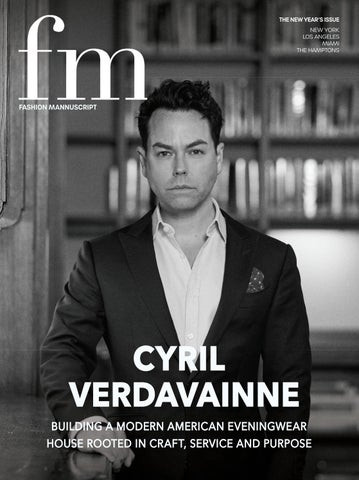
Our cover story explores Cyril Verdavainne’s journey in fashion, which began in France and culminated in an eponymous eveningwear brand. An academic requirement in the late ’90s forced Cyril to move to New York City, where he discovered an entirely new fashion landscape and fell in love. Verdavainne is now a globally recognized label, with Cyril’s Manhattan atelier attracting customers from around the country and beyond. Cyril’s story is fascinating, and his passion for supporting future generations of fashion designers is a perfect representation to bring into the new year.




































Taakk: The Common Baseline of
and the Ordinary

Canadian Fashion House Shan Celebrates 40 Years: Bringing Modern Design Into Luxury
and



Breaking Barriers in Fashion: How Helya Mohammadian Is Leading the Charge for Accessible Intimates With Slick









TUESDAY
5:30


Gordon
Dinner
Gordon
Dinner


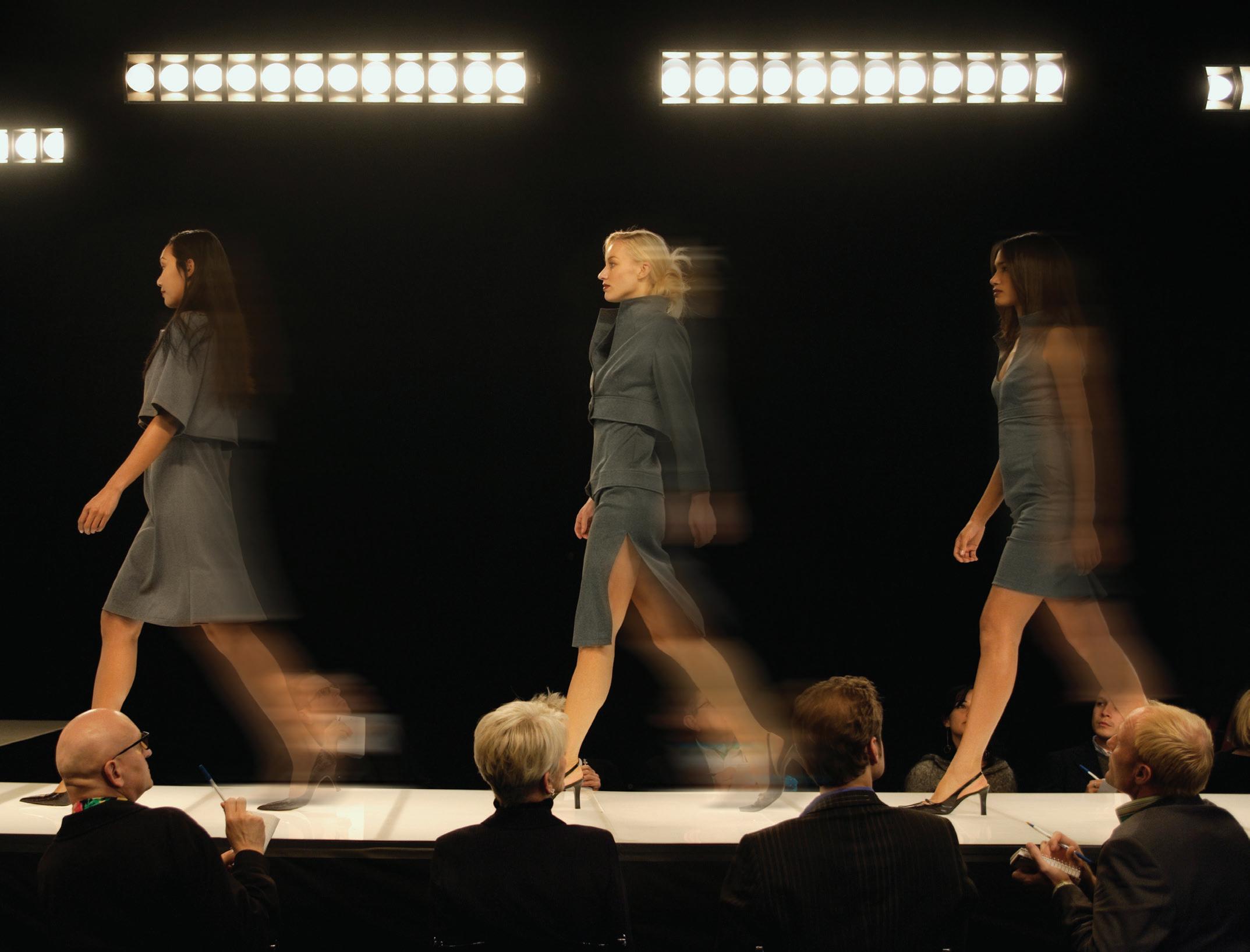


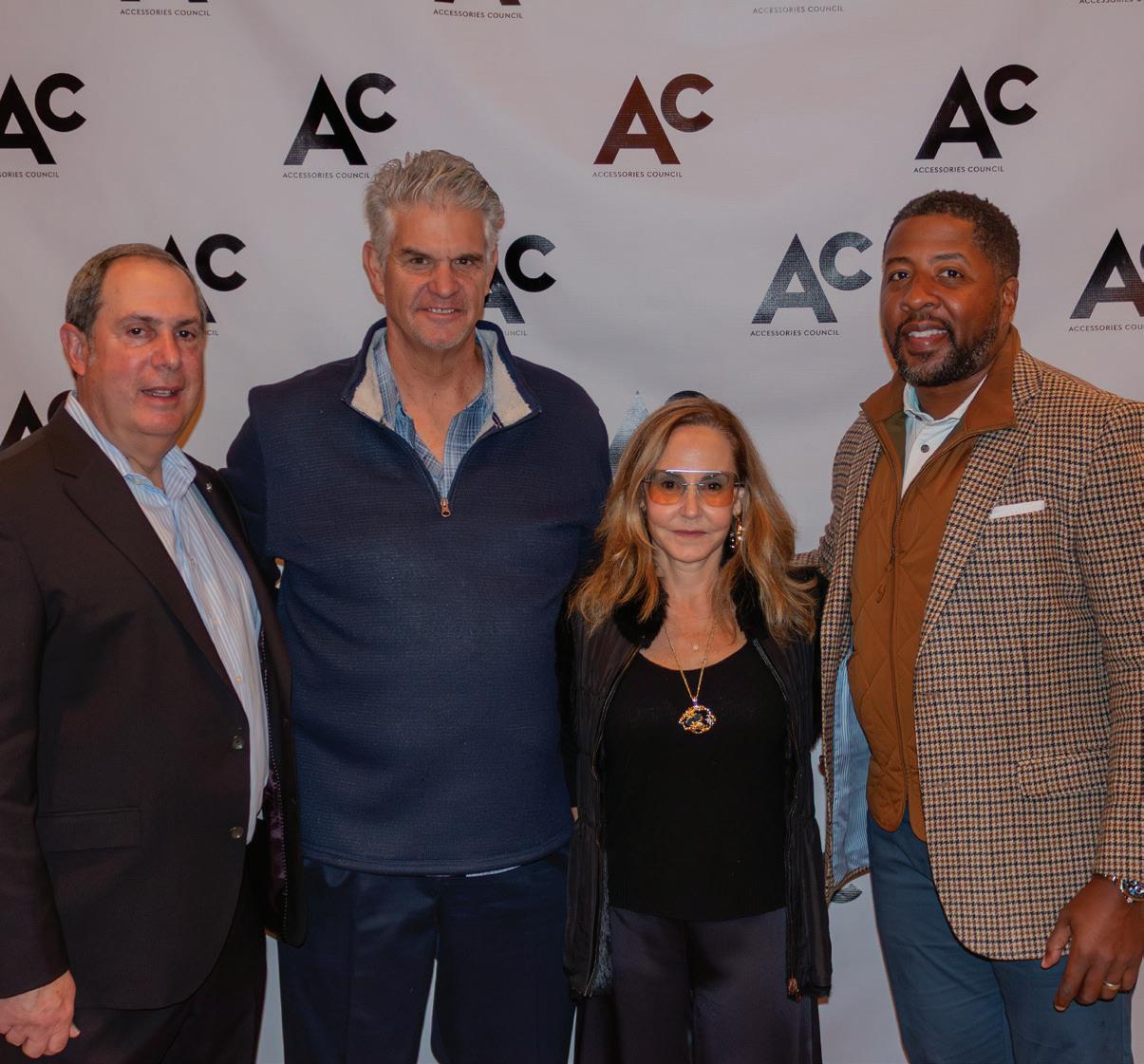
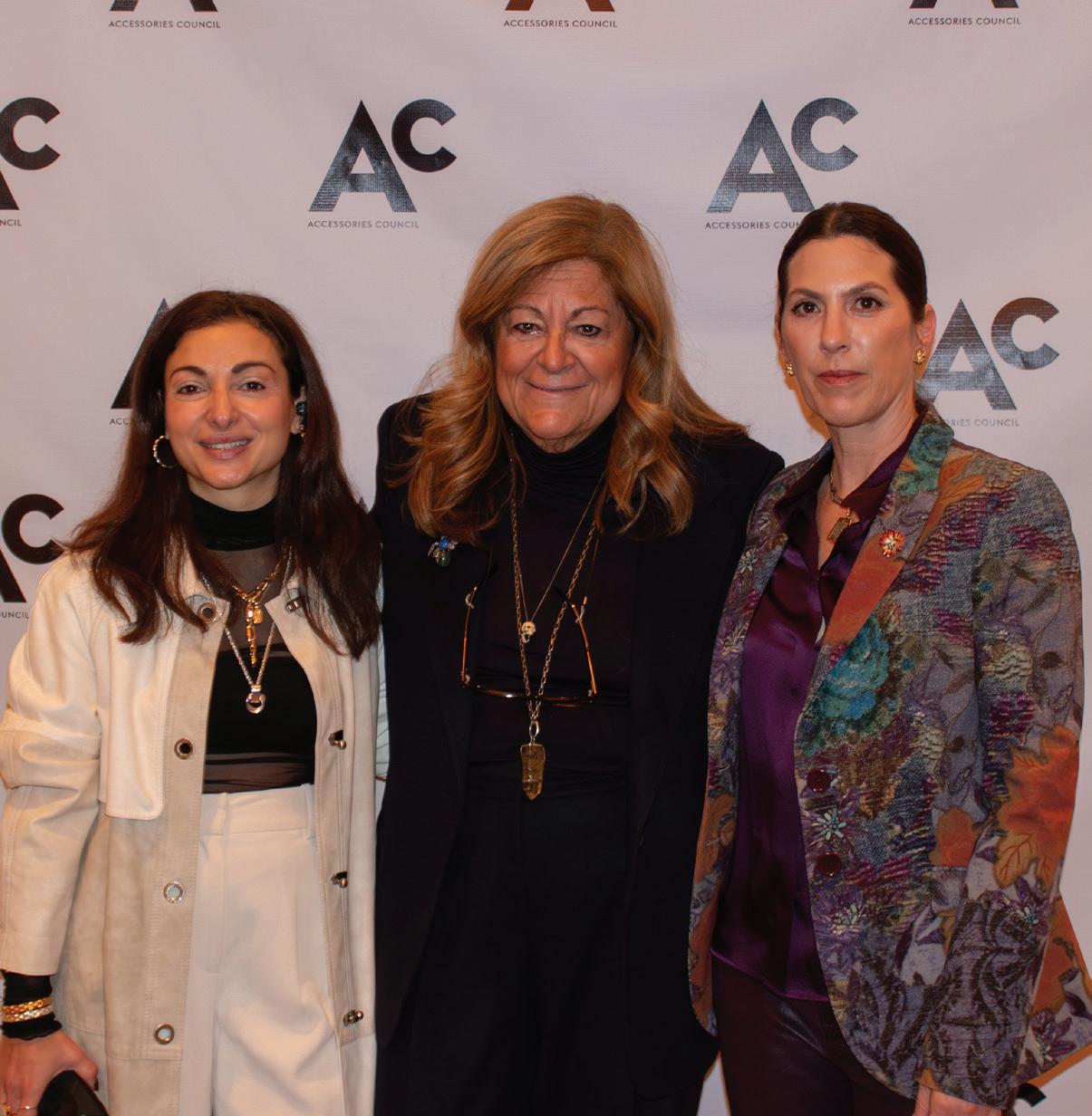
The Ac hosted the seventh annual Design Excellence Awards at The Fifth Avenue Hotel, honoring exceptional creativity, craftsmanship and innovation across the accessories industry.
Launched in 2019, the Design Excellence Awards were created to expand recognition for outstanding product design, celebrating brands and designers across categories including handbags, footwear, eyewear, jewelry, sustainability, social impact and more. The program continues to highlight talent whose work defi nes and inspires modern consumer style.
Karen Giberson, president and CEO of the Accessories Council, noted that the awards always welcome submissions from both emerging and established talent. “We encourage designers to be bold and creative, and to join us in this unique opportunity to earn a stamp of approval from respected industry leaders,” she said.
This year’s top honors went to Baggallini, recipient of the Circana Growth Driver Award for its Soho Backpack, and to Swarovski, which received the prestigious 2025 Hall of Fame Founders Award, which recognizes an iconic brand that has stood the test of time and

continues to shape the landscape of fashion and design.
Additional special distinctions included the IFF Award/ Furmark, presented to Saga Fur Creative Hub Mittens, and the IFF Award/First Nations, awarded to Atikus Coyote Trimmed Mittens.
Sponsors of the evening included Caleres, Circana, Fashionphile, Furmark, Philmar and Marchon Eyewear, which also designed the bespoke trophy presented to each honoree.
The Design Excellence Awards represent more than achievement, serving as an annual reflection of evolving consumer values, where creativity meets purpose and innovation meets sustainability. Each winning product was selected for excellence in design, functionality, aesthetic integrity and contribution to the future of the accessories industry.
The celebration at The Fifth Avenue Hotel brought together industry leaders, designers, press and Ac members for a night of recognition and connection— affirming once again that accessories remain the ultimate expression of personal style and ingenuity.


Handbags (Over $1,000 Retail): Siena Wolf and Rafe New York (tie)
Handbags (Under $1,000 Retail): 8 Other Reasons
Eyewear, Optical (Independent): Modo Eyewear
Eyewear, Optical (Multibrand): State Optical Co.
Eyewear, Sun (Independent): Selima x Nico
Eyewear, Sun (Multibrand): Barton Perreira
Footwear (Over $250): Veronica Beard
Footwear (Under $250): Cole Haan
Jewelry, Fashion (Under $100): Melinda Maria
Jewelry, Fashion (Over $100): Donna Karan New York Jewelry and Freida Rothman (tie)
Jewelry, Fine (Under $1,000): Cynthia Ryan
Jewelry, Fine (Over $1,000): Jane Win Jewelry
General Accessories: Vera Bradley Designs Inc.
Tech and Innovation: Hulken
Social Impact: Able x Leigh Ann Barnes
Sustainability: Mela
Brand Collaboration: Cove Fine Jewelry
Millinery and Hair Accessories: Deepa Gurnani


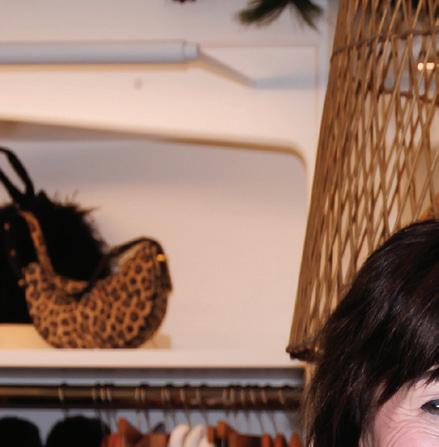
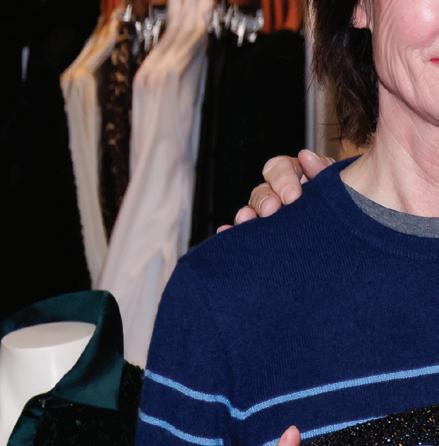
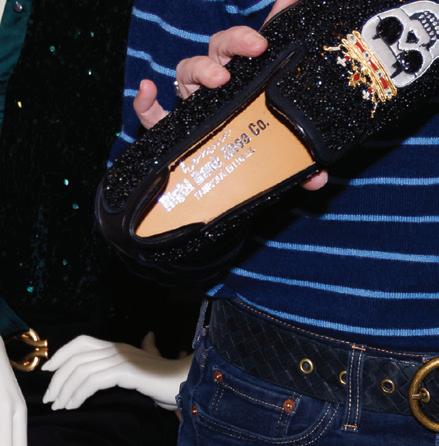


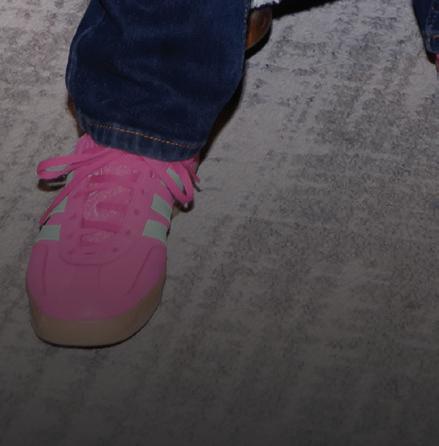



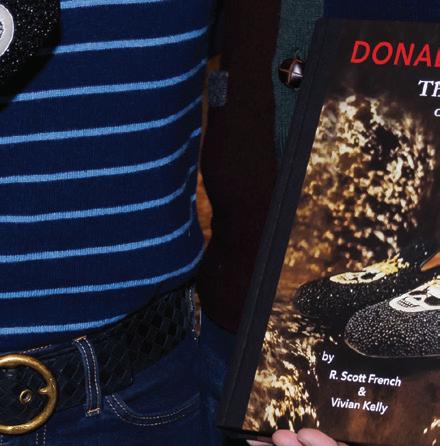

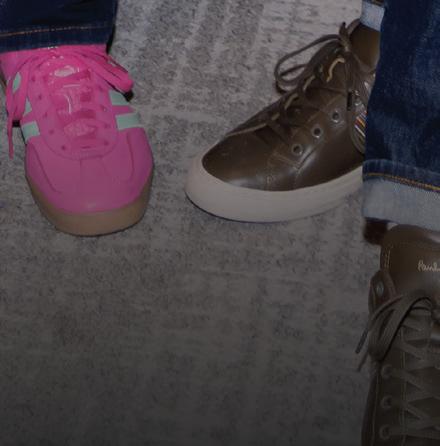




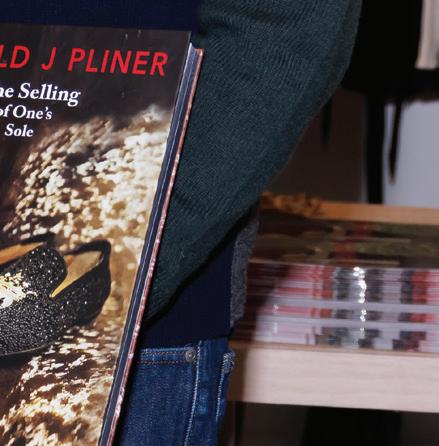

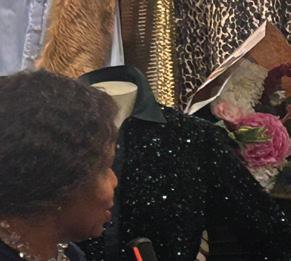
There are fashion evenings, and then there are fashion moments. On Nov. 18, 2025, the latter unfolded inside the J. McLaughlin boutique at East 72nd Street and Lexington Avenue, where posh décor, tailored Americana and softly clinking wine glasses set the stage for a celebration worthy of a true American design icon.
Aïda Moudachirou-Rébois
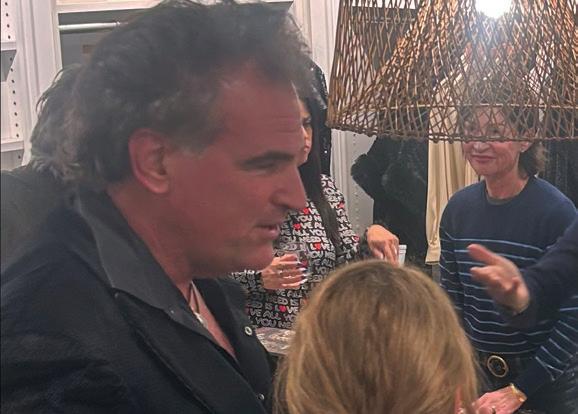
The occasion was the New York City book signing of “Donald J Pliner: The Selling of One’s Sole,” a beautifully produced coffee table biography chronicling the extraordinary personal and professional journey of legendary footwear designer Donald J Pliner and his wife, creative partner and muse, Lisa. More than 100 guests gathered for an evening that blended glamour, generosity and storytelling in equal measure.
At the heart of the event was an engaging and intimate conversation moderated by iconic fashion journalist and bestselling author Teri Agins. She sat down with the book’s authors, fashion publicist and Council of Fashion Designers of America (CFDA) member R. Scott French and fashion historian Vivian Kelly, whose collaboration brings Pliner’s extraordinary journey vividly to life. Their discussion traced a path that began in 1950s Chicago’s storied Black Belt, where Pliner grew up immersed in the shoe business at his family’s Pliner Florsheim boutiques, and followed his restless ambition westward to Los Angeles.
The narrative unfolds like a fashion-inflected epic. Pliner’s early retail success included launching The Right Bank Clothing Co. on Rodeo Drive, where he became a trusted purveyor to Hollywood’s elite. Yet the book does not romanticize the climb. It captures the precariousness of creative risk, including a pivotal moment when Pliner found himself penniless and nearly out of options. Salvation came not through chance but recognition, in what he famously calls “Love in the stairwell.” Michele Love, the influential Nordstrom buyer, discovered Pliner’s designs, placed his first meaningful order and backed it with a Vogue Magazine advertising campaign. Momentum followed swiftly, and soon after, Pliner
met Lisa, whose artistic vision, emotional support and creative collaboration became one of the book’s enduring throughlines.
Following the discussion and a lively audience Q&A, French and Kelly signed copies of the book. A portion of sales benefited the Fashion Scholarship Fund (FSF), which provides vital educational support to fashion students, many from underserved communities. FSF CEO Peter Arnold was in attendance, underscoring the evening’s philanthropic impact.
The guest list reflected Pliner’s lasting influence, with designers Nicole Miller, John Bartlett, Ruthie Davis, Roberto Silva, Joe Chamberlin, Evan Hirsch and Remo Tulliani among those in attendance. Photographed by noted fashion photographer Shawn Punch, the evening captured a rare alignment of legacy, community and celebration.
“The Selling of One’s Sole” is more than a biography. It is a richly textured portrait of ambition, resilience, love and the uniquely American art of building something enduring, one step at a time.










































































































By Karen Giberson
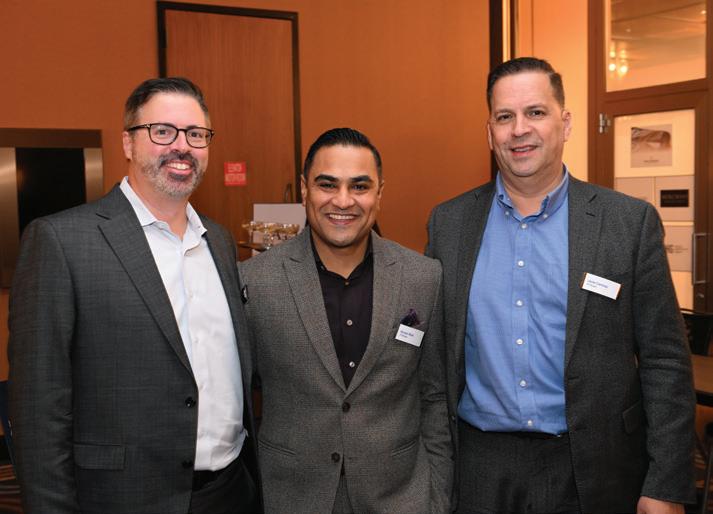
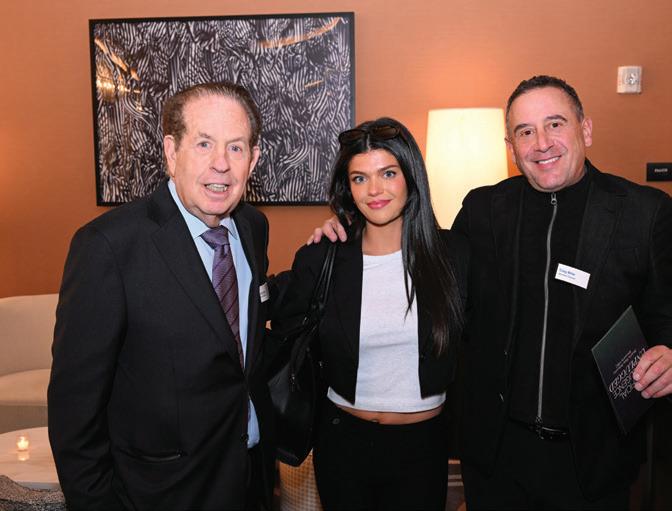
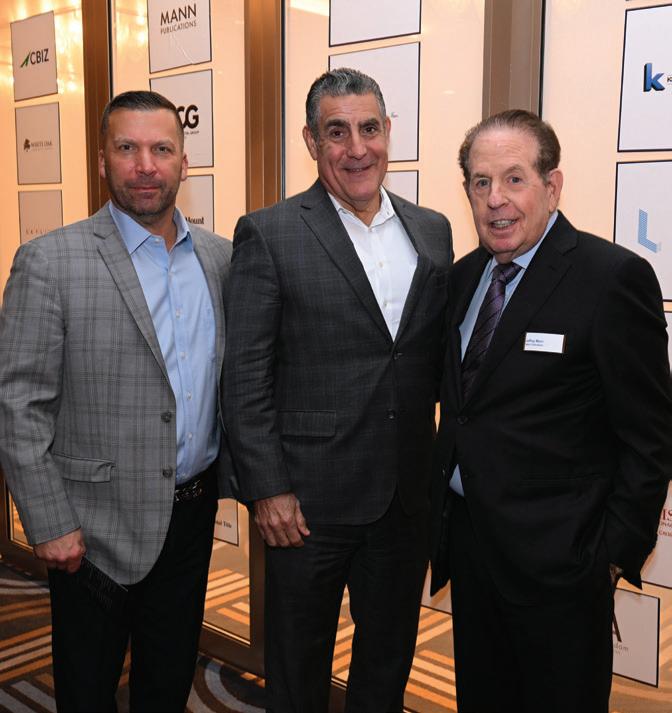
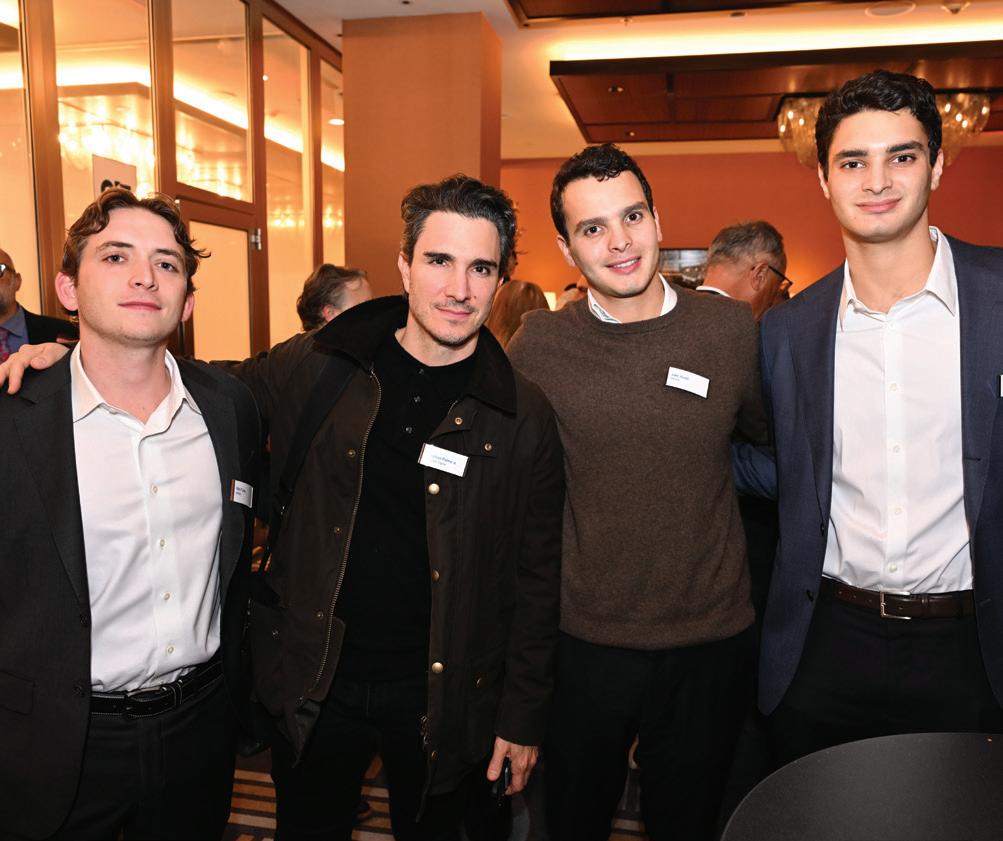
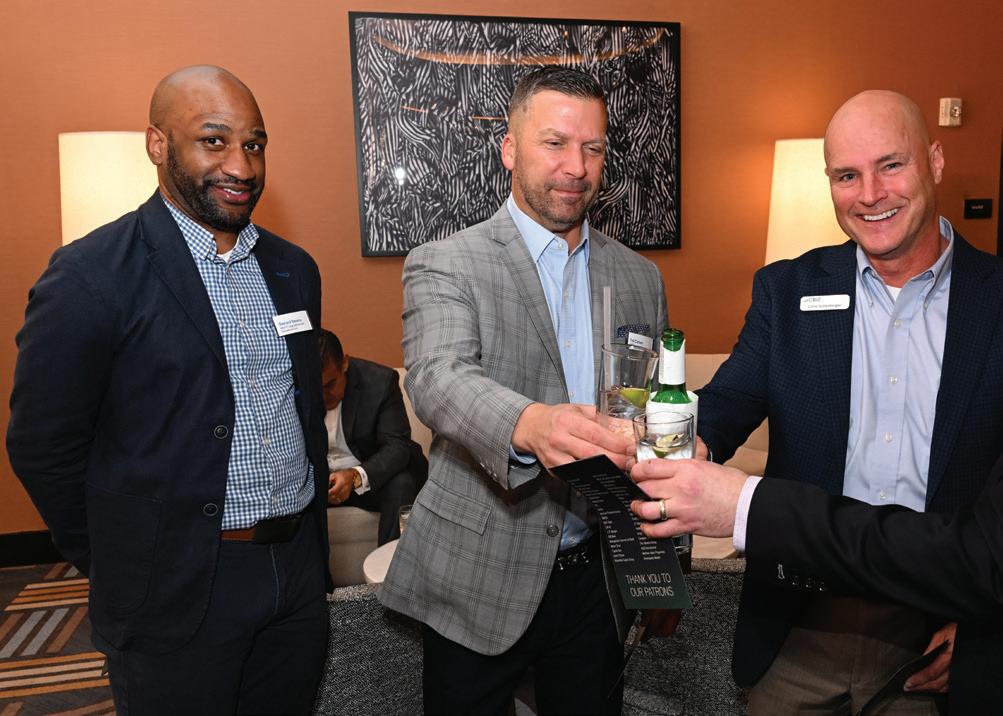
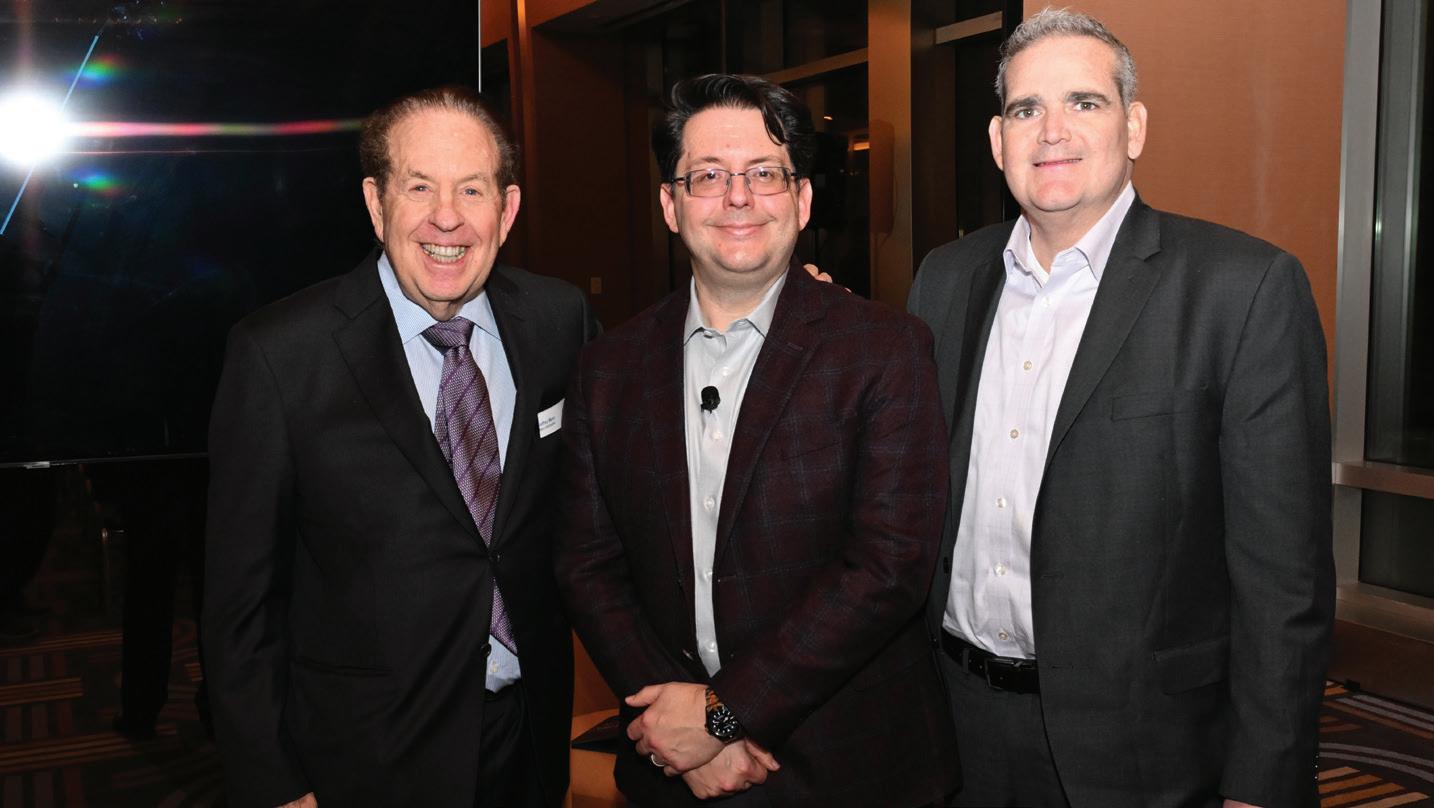
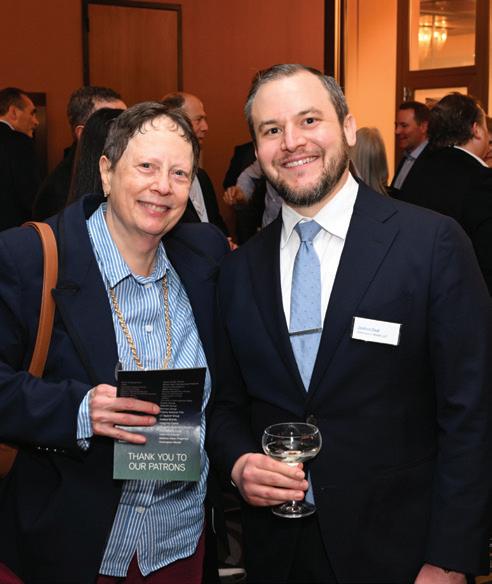
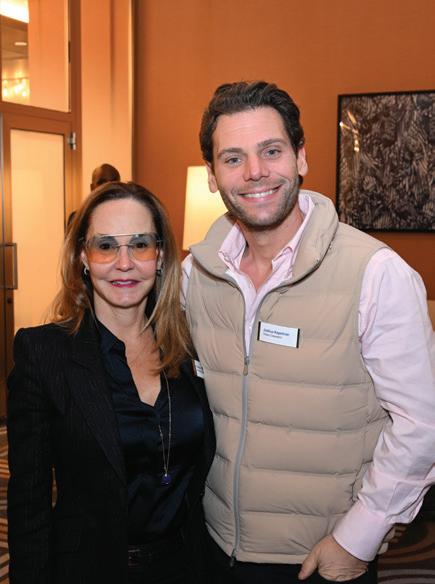
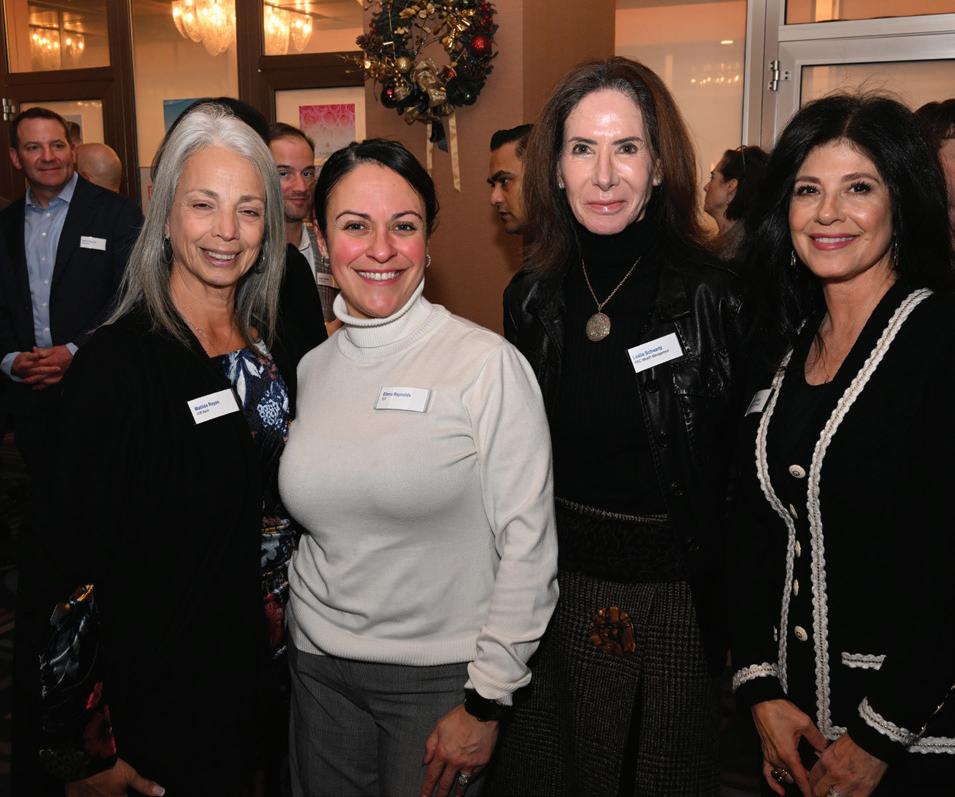
Mann Publications hosted a contentrich evening with Artificial Intelligence Unplugged, an event designed to bring clarity, practical expertise and fresh perspective to an industry eager to understand AI’s next evolution. Sponsored by CBIZ, the program convened senior executives from fashion operations and New York’s real estate community.
The night opened with a lively cocktail reception and networking hour, followed by a casual buffet dinner, each moment filled with fast conversation and idea sharing. Jeff Mann, founder and publisher of Mann Publications, welcomed the group and set the tone for a forwardfocused discussion.
The centerpiece was an insightful presentation from Rob McGillen, vice president of business innovation at CBIZ, who leads the firm’s AI practice and is widely recognized for his expertise in AI governance, controls and ethical implementation. His background spans pioneering work with Google DeepMind, IBM Watson, OpenAI, Anthropic and Microsoft Azure AI.





McGillen began with an AI-generated video created using Synthesia—a striking demonstration of text-tovideo capabilities that underscored both the promise and limitations of today’s platforms. He followed with a fast overview of how AI is reshaping workflows, creativity and operational efficiency across sectors.
In fashion and consumer products, AI is accelerating design-to-market calendars, producing visual assets at scale, translating content for global audiences and optimizing inventory, assortments and planning. In real estate, AI is improving property marketing, leasing, due diligence reviews, building management and fraud detection, and powering new platforms like Elise.
McGillen also reminded attendees that rapid adoption brings heightened security exposure—an area where strong governance and controls are increasingly essential. He encouraged exploration of emerging tools, including Matterport, a 3D AI platform that generates immersive virtual walk-throughs.











































































He noted a transformational shift: 40% to 50% of consumers now use AI to search, discovering companies and products through contextual, conversational results rather than keyword-driven search engine optimization (SEO). That trend is projected to influence $750 billion in sales by 2026.
His message: AI doesn’t rely on keywords—it relies on context and intent. Brands, marketers and retailers must rethink traditional SEO strategies built for crawlers, not conversational intelligence.
McGillen closed with a look at the rise of agentic AI, widely expected to fuel the next era of artificial intelligence. Attendees left energized—and many likely began rethinking their 2025 playbooks on the way out the door.



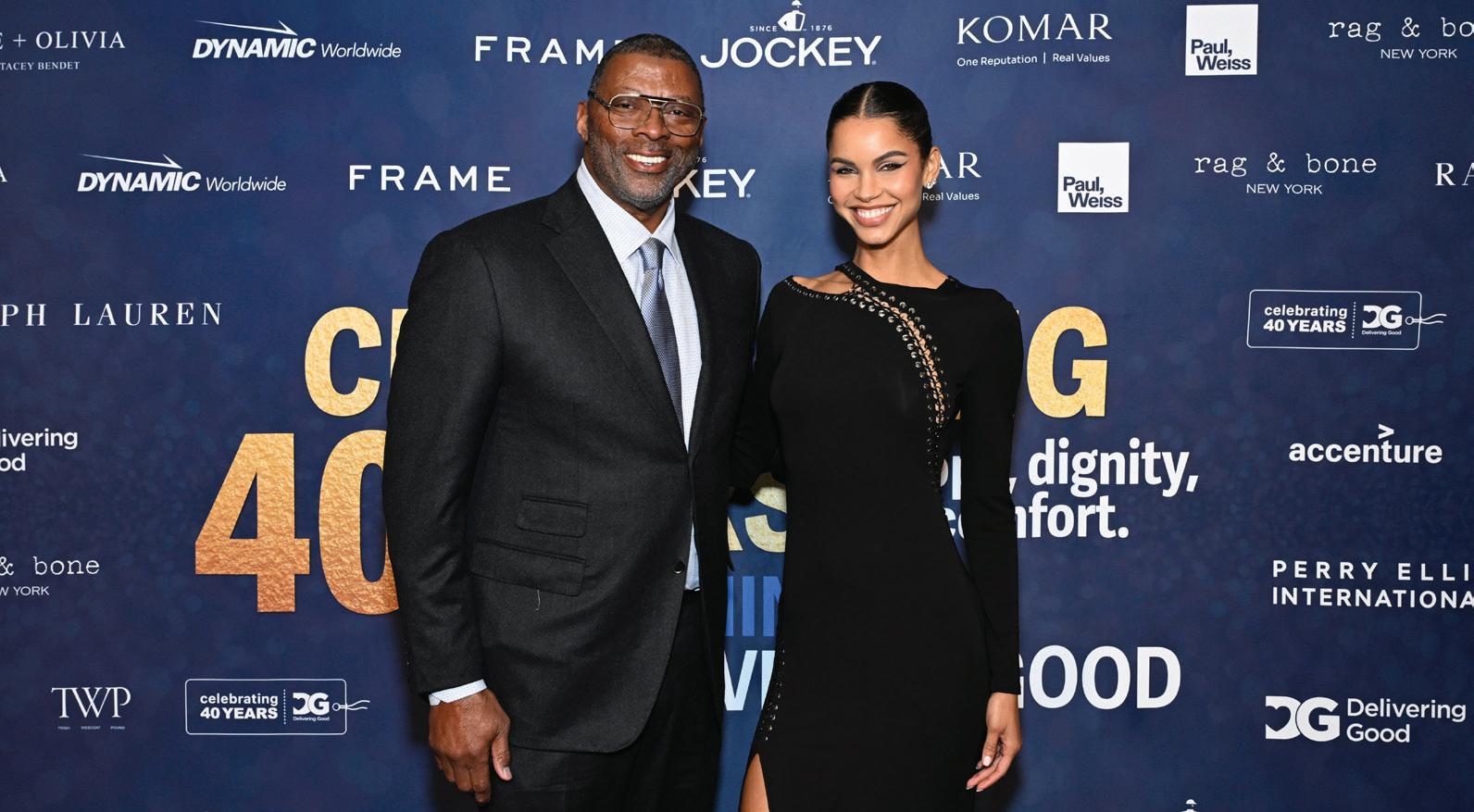
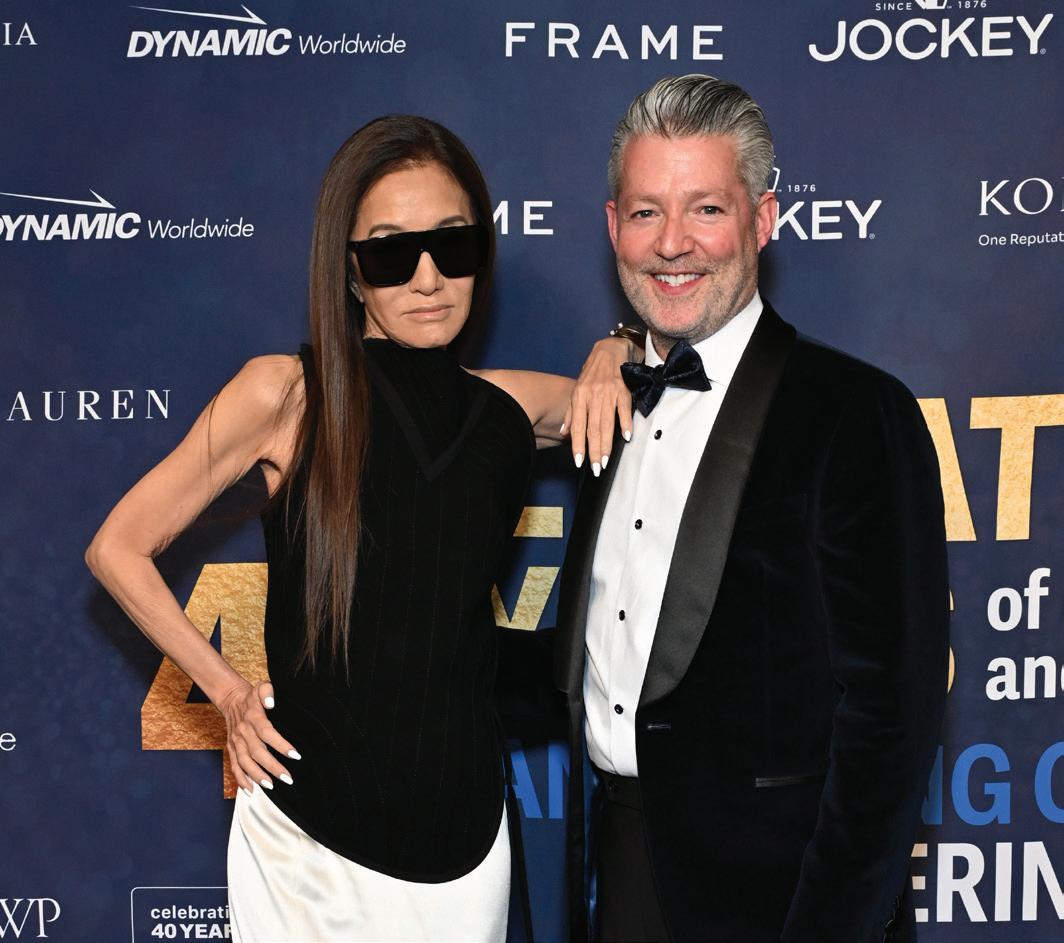






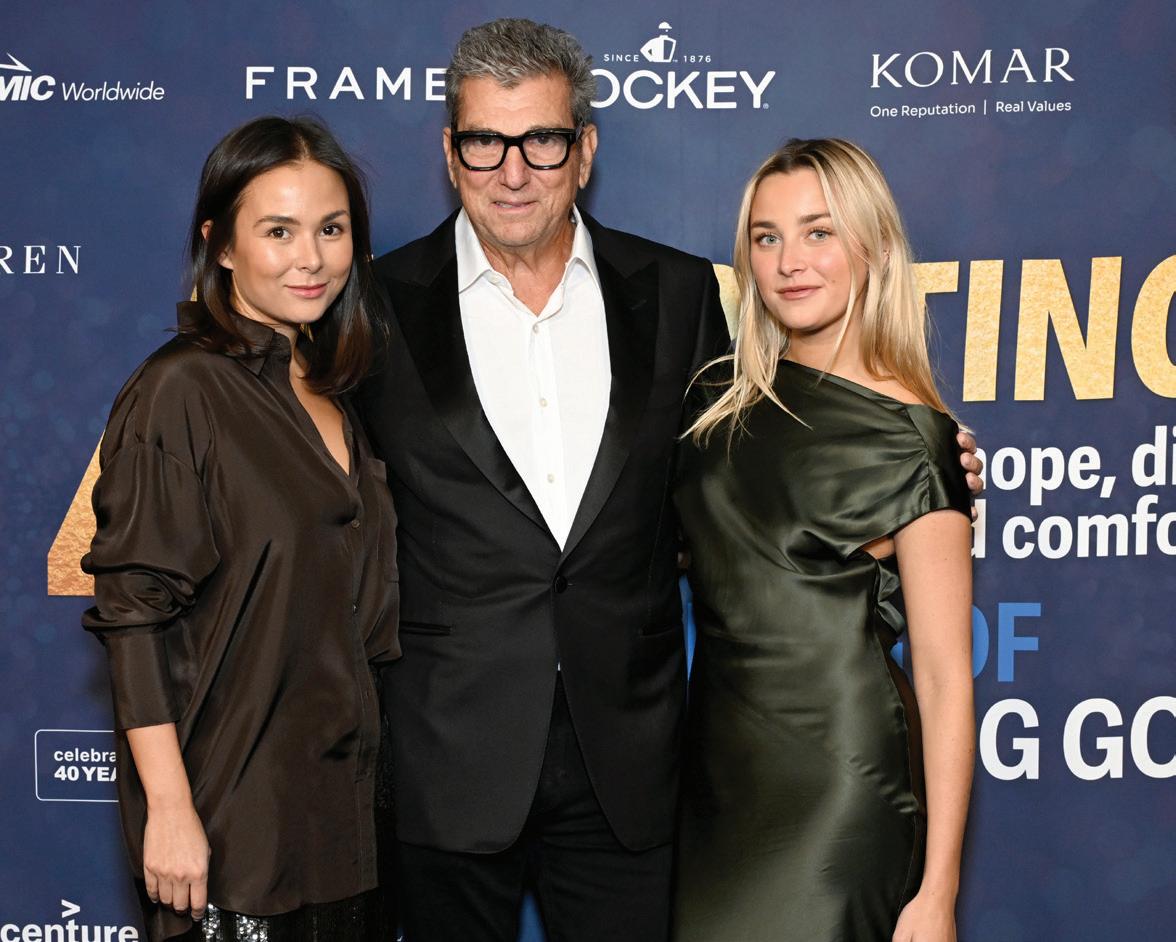


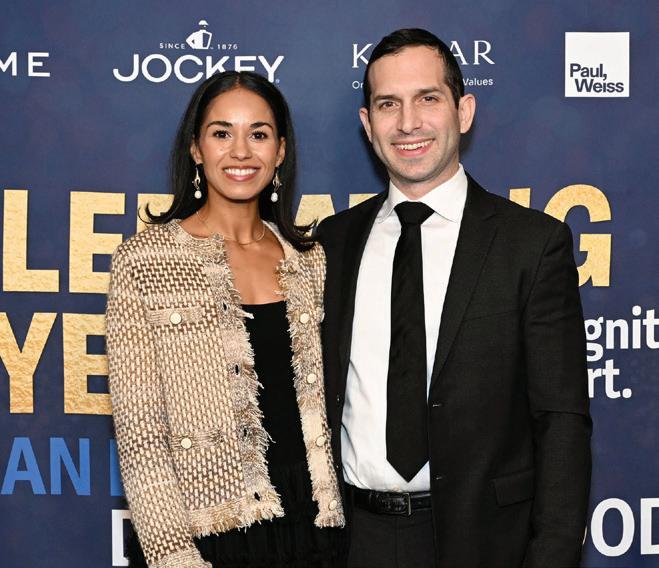

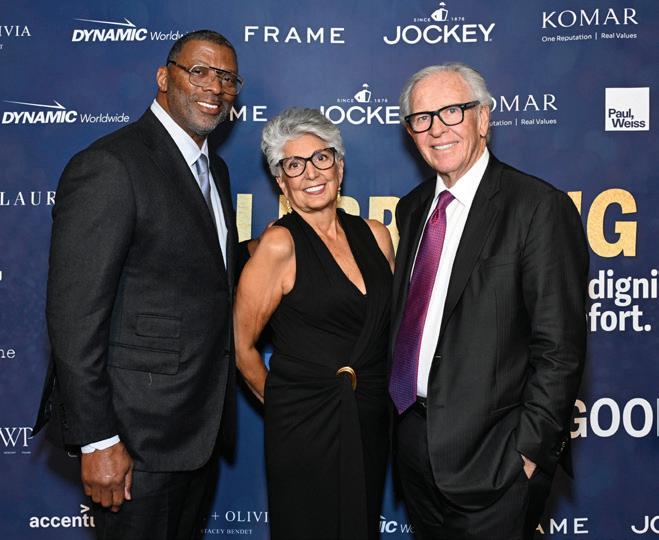


Photography by Slaven Vlasic




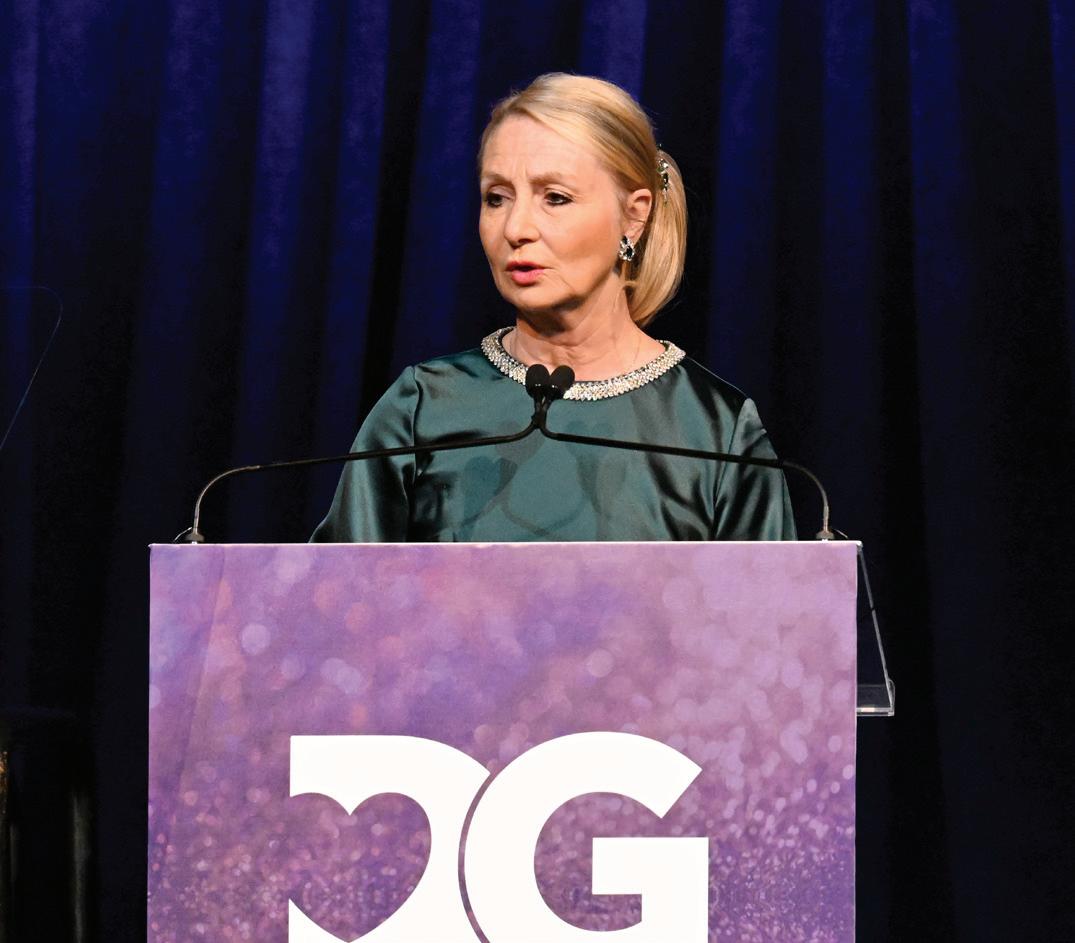
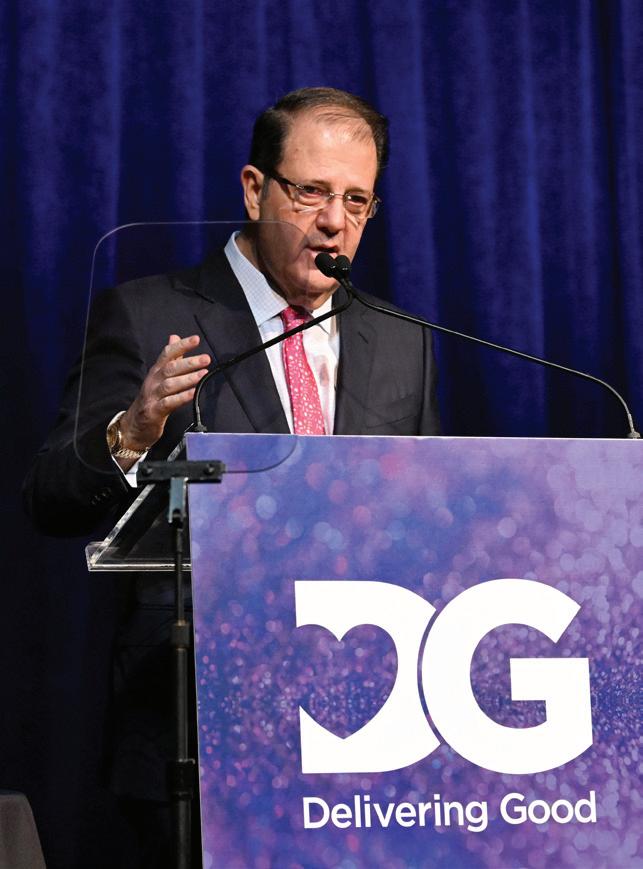
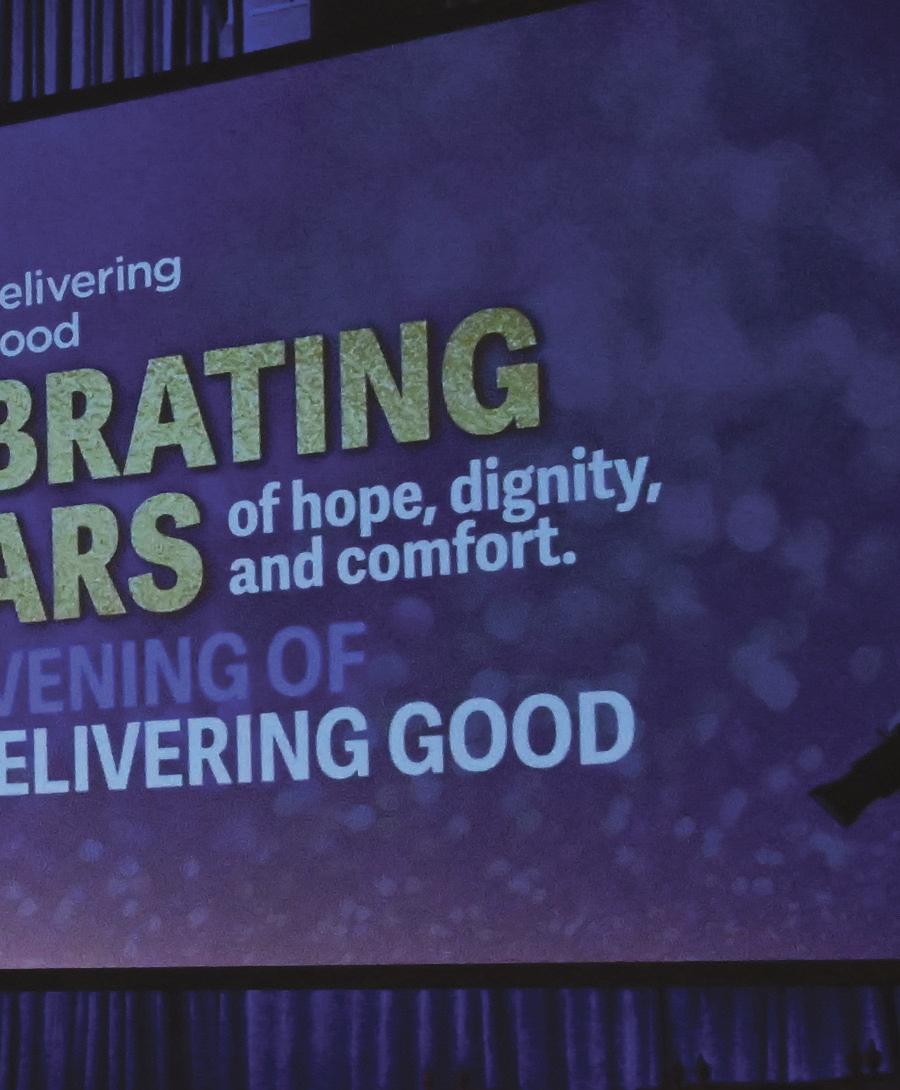
Delivering Good celebrated 40 years of restoring comfort, renewing hope and helping individuals and families rebuild with dignity after hardship or disaster during its annual gala at Gotham Hall in New York City. The event brought together leaders from fashion, finance, media, technology and philanthropy, raising an unprecedented $2.3 million to support Delivering Good’s mission of providing new essentials to individuals and families facing hardship and disaster.



president and CEO of Delivering Good. “As we celebrate 40 years, it’s a time to reflect on the impact this organization has had on so many, and how incredibly grateful we are to the people, the passion and the shared commitment that has made all of this possible.”
Guests enjoyed an inspiring evening honoring Oscar Feldenkreis, president and CEO of Perry Ellis International, and the late George Feldenkreis (Lifetime Achievement Award); Andrew Rosen, fashion entrepreneur, investor and visionary (Impact Award); and the founders of Delivering Good, K.I.D.S. and Fashion Delivers (Founders Award).
The evening featured remarks from model and Delivering Good ambassador Daiane Sodré and Carl Banks, former Super Bowl champion and president of G-III Sports, who both spoke about the
essentials to individuals and families facing hardship and disaster. organization’s profound impact.

“Together, we honored four decades of restoring comfort, dignity and hope to people facing hardship and disaster, and made history with a record-breaking $2.3 million raised,” said Matthew Fasciano,
Since its founding in 1985, Delivering Good has distributed nearly $3 billion in new merchandise through a network of more than 800 community partners, offering hope, dignity and self-esteem to children, families and individuals across the country. The organization’s programs continue to provide essential support in times of crisis, from natural disasters to economic hardship.

As part of the celebration, Delivering Good debuted a special 40th anniversary coffee table book, featuring powerful, award-winning photography that captures the human stories behind moments of crisis and recovery—from hurricanes and wildfires to public health challenges, housing insecurity and more. Contributors include acclaimed photographers Ryan Scott, Kitra Cahana and Sara Easter, whose work brings to life the spirit of hope and resilience at the heart of Delivering Good’s mission.
with a record-breaking $2.3 million raised,” said Matthew Fasciano, Good. to $3 billion in new merchandise through a network of more than 800 community partners, offering hope, dignity and self-esteem whose work brings to life the spirit of hope and resilience at the heart of Delivering Good’s mission.

and
a Night of Elegance at 16 Fifth Avenue



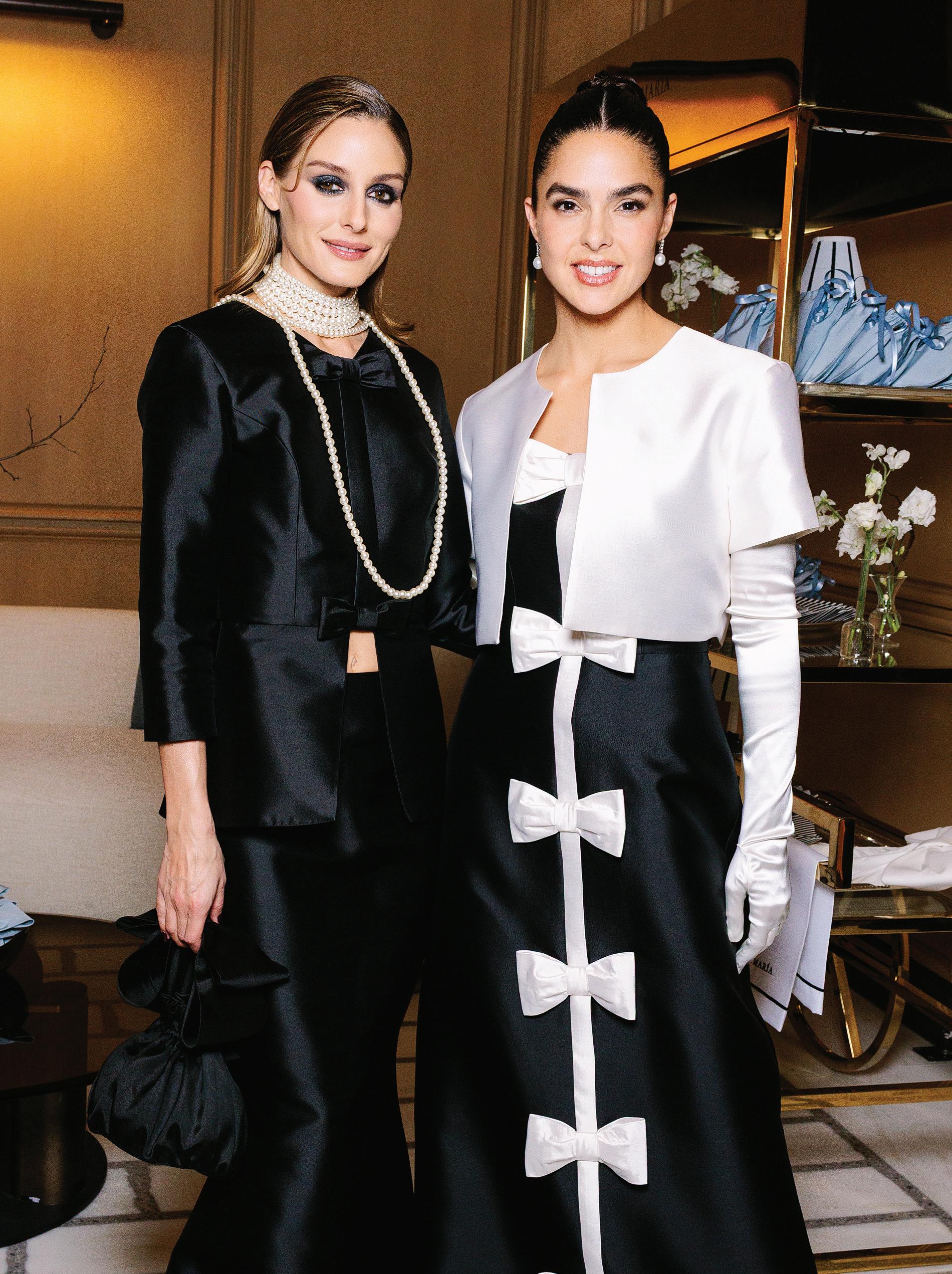
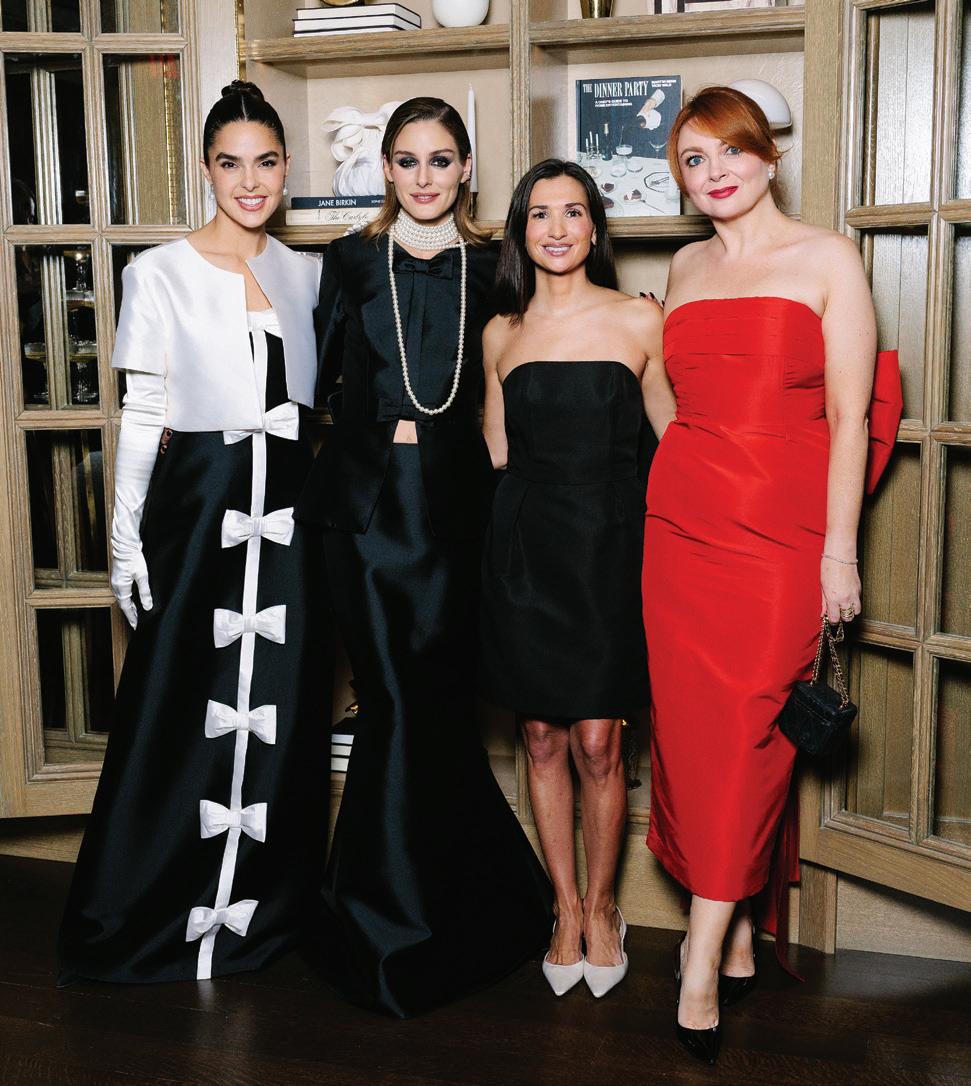
Guests stepped through the doors of 16 Fifth Avenue to celebrate the debut of Alexia María’s 2026 collection: A Year of Elegance. The intimate soirée—hosted by María and fashion and beauty entrepreneur Olivia Palermo—brought together an inspiring crowd of tastemakers, editors and friends of the brand for a night dedicated to the art of dressing up.
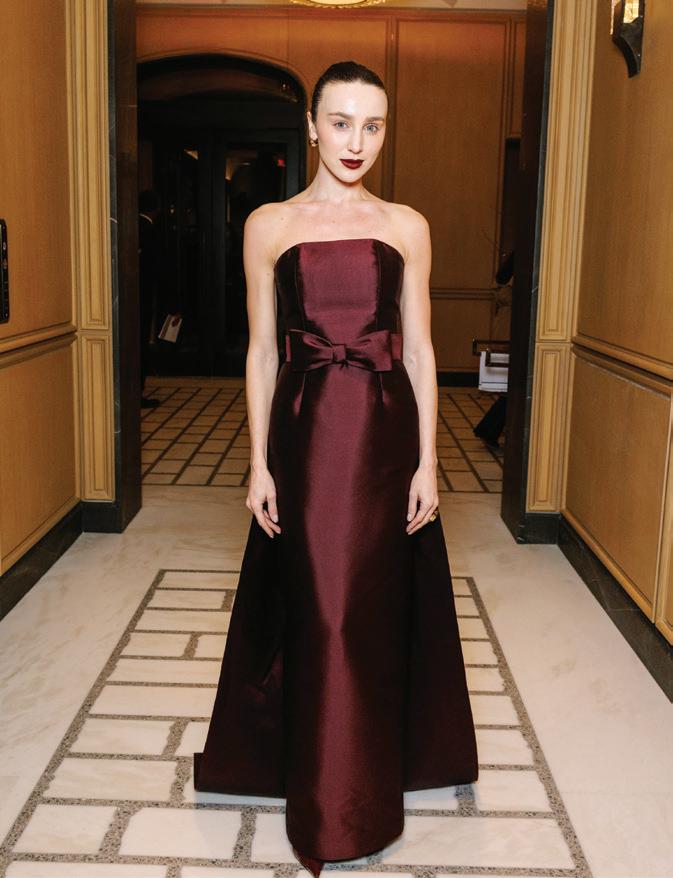
From the moment guests arrived, the atmosphere transported them into Alexia María’s world of timeless glamour. The space was adorned with delicate bows, a defining signature of the brand, and a curated black-and-white inspiration gallery wall that set the tone for the evening. Many attendees arrived wearing their favorite Alexia María designs, embracing the night’s theme with elegance and an infectious sense of celebration.
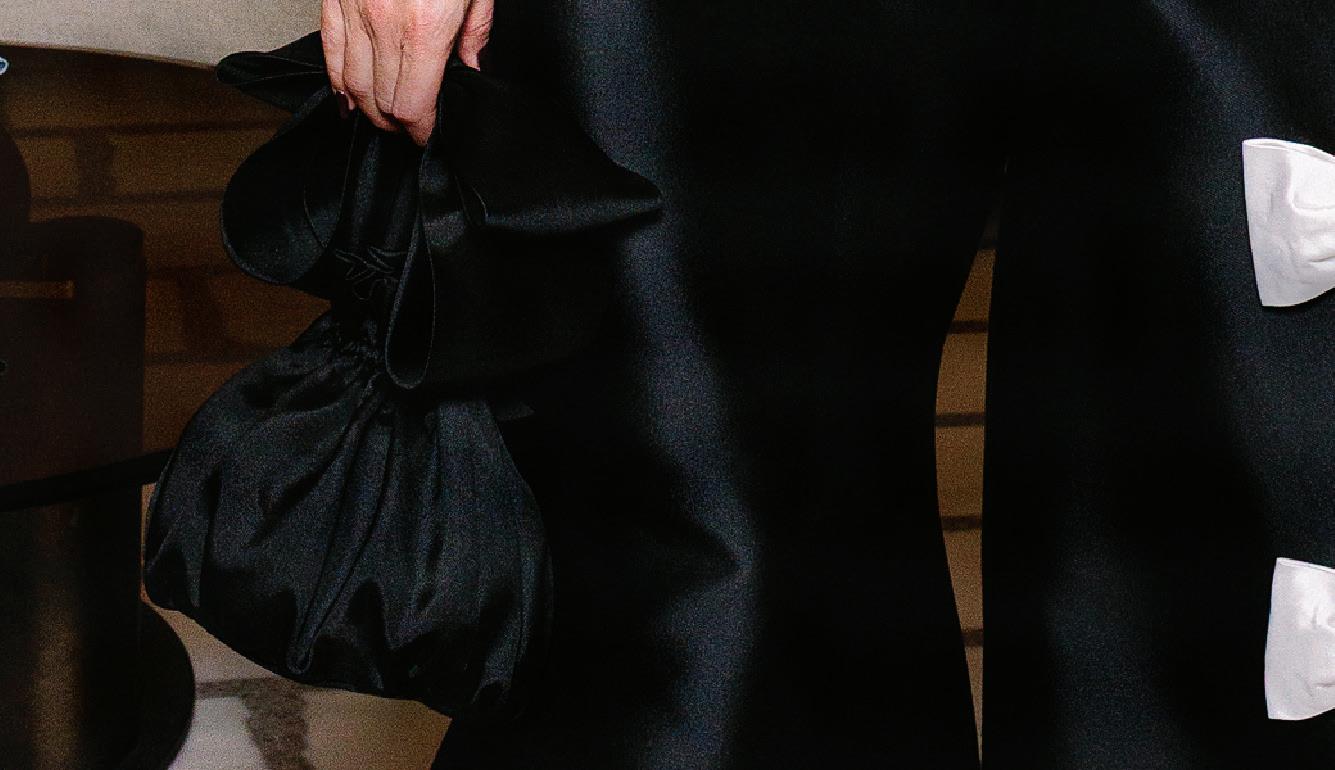
Palermo embodied the spirit of the new collection, wearing a head-to-toe Alexia
María look from the 2026 lineup, styled effortlessly with a pearl necklace. Palermo’s refined, modern aesthetic echoed the brand’s design codes and added a captivating presence to the evening.
María welcomed guests with heartfelt remarks. “I’ve always designed for the women in my life—elegant, graceful and endlessly inspiring. This collection is a reflection of them, and of the incredible women who wear Alexia María and make dressing up an art form of their own. Tonight was not only a celebration of the new collection, but of every woman who joined me this evening to reignite the art of dressing up.”
The soirée brought together a curated list of notable guests, including Johannes Huebl, Tracy Anderson, Mary Leest, Dahye de Givenchy, Steven Beltrani, Coco Shiffer, Alida Boer and Samantha Barry, Glamour Magazine’s editor-in-chief— each contributing to the effortless glamour that defined the night.










February 3 – 6, 2026

LuxExperience announced the appointment of Francis Belin as the new chief executive offi cer of Mytheresa, effective Jan. 1, 2026.
Belin brings extensive and diverse luxury experience and proven leadership in driving international growth. Most recently, as president of Asia Pacifi c and overseeing global luxury and Asian art at Christie’s, Belin achieved numerous milestones, cementing Christie’s as the global market leader. Belin has been pivotal to several important strategic initiatives and has held various roles at Swarovski and Richemont, starting his career as a management consultant at McKinsey & Company.
Following the tenure of Michael Kliger, who over the last 10 years successfully transformed Mytheresa into the leading luxury multibrand digital platform, Francis Belin will succeed him as Mytheresa CEO and drive Mytheresa’s continued global expansion while delivering exceptional value for its customers and partners. Belin will report to Kliger, who, in his role as LuxExperience Group CEO, will continue to lead the overall strategy at Mytheresa, Net-A-Porter, Mr Porter and Yoox. Belin will lead the current Mytheresa leadership team, including the chief commercial offi cer, the chief growth and site management offi cer, the chief marketing and customer offi cer, the chief buying and group fashion ventures offi cer, and the chief creative offi cer, who will all continue with their current responsibilities.
“I am extremely delighted to appoint Francis Belin as the new Mytheresa CEO,” said Kliger. “With Francis, we have found an exceptional leader, who is renowned for his customer-centric focus, global mindset, delivery of excellent results and collaborative leadership style. I am looking forward to supporting Francis as he leads the next exciting chapter for the Mytheresa business.”
Belin added, “I am truly honored to take on the lead of Mytheresa. I am deeply impressed by the robust business model and strong brand positioning that Mytheresa has established under Michael’s leadership. I look forward to working alongside the talented team to unlock Mytheresa’s next phase of global growth as an industry leader in the luxury market.”



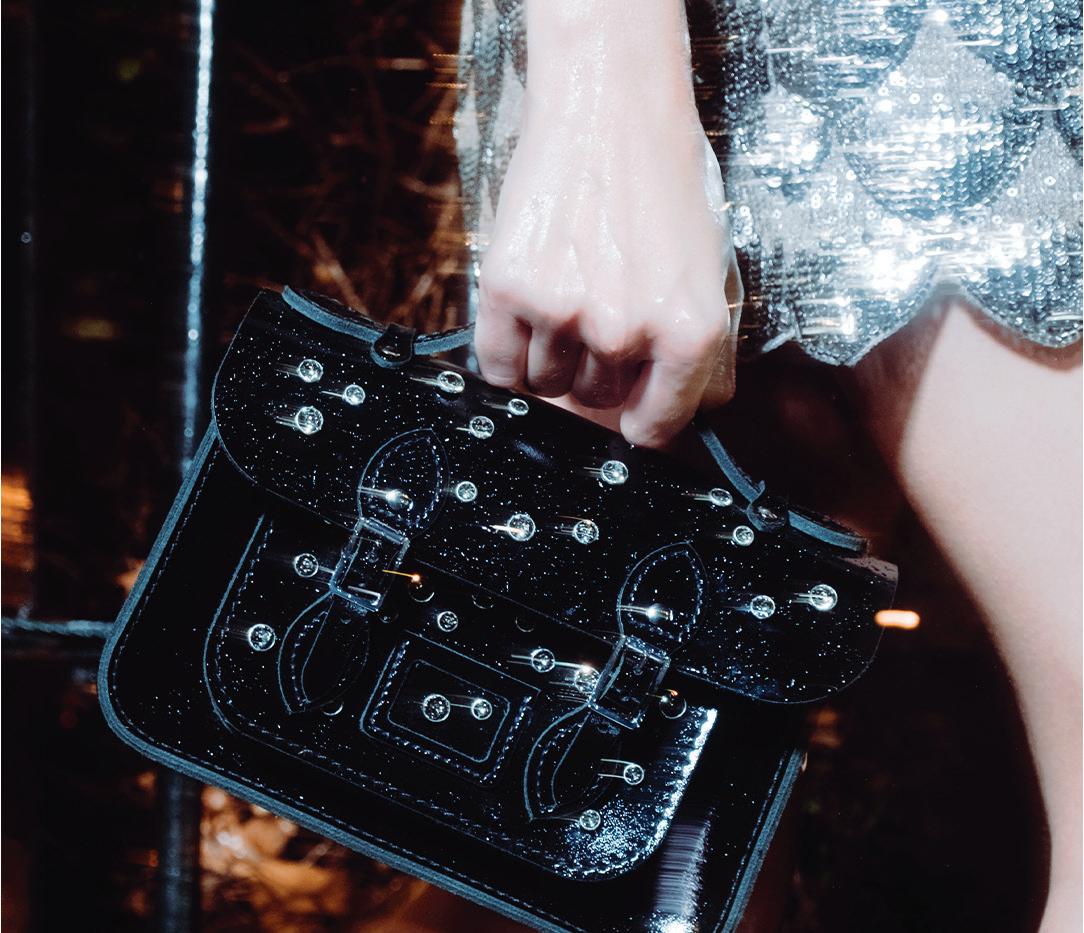
Just because the season of glittering parties and festive soirées comes to a close doesn’t mean your accessories have to go into hibernation. The newest collection from Cambridge Satchel features nine dazzling handbags sparkling with Swarovski crystal detailing, designed with more than December in mind. Handcrafted in England with quality British craftsmanship, these pieces blur the lines of holiday magic and everyday wear, proving you can sparkle and shine all year long.
Anchored in timeless design, the Festive Collection features the mini satchel, the mini Sophie and the twist-lock pouch, off ering petite versions of iconic Cambridge Satchel classics. Adding a joyful sparkle, the newest star-shaped silhouette off ers a standout option that’s playful yet refi ned. Most bags feature a detachable strap to slip over your shoulder for hands-free convenience or easy transition from day to night. Finished silver hardware completes each design, tapping into the rising trend toward leather metallic accessories that elevate both everyday outfi ts and evening looks.
Available in high-shine black, radiant pink and brilliant metallic silver, each bag is handcrafted from premium leather and adorned with Swarovski luminous Xirius Chaton crystals in vintage rose and black diamond. The result is subtle glamour that you can style again and again, keeping your essentials close with a magnetic closure. Whether styled for a daytime outing or a night on the town, each piece is designed to make every moment shine.
Cambridge Satchel’s Festive Collection shows that sparkle can be as practical as it is pretty. With its balance of refi ned sparkle and versatile silhouettes, this collection is made for every moment, from holidays to everyday, proving that the right accessory doesn’t just shine for a season; it shines all year long.
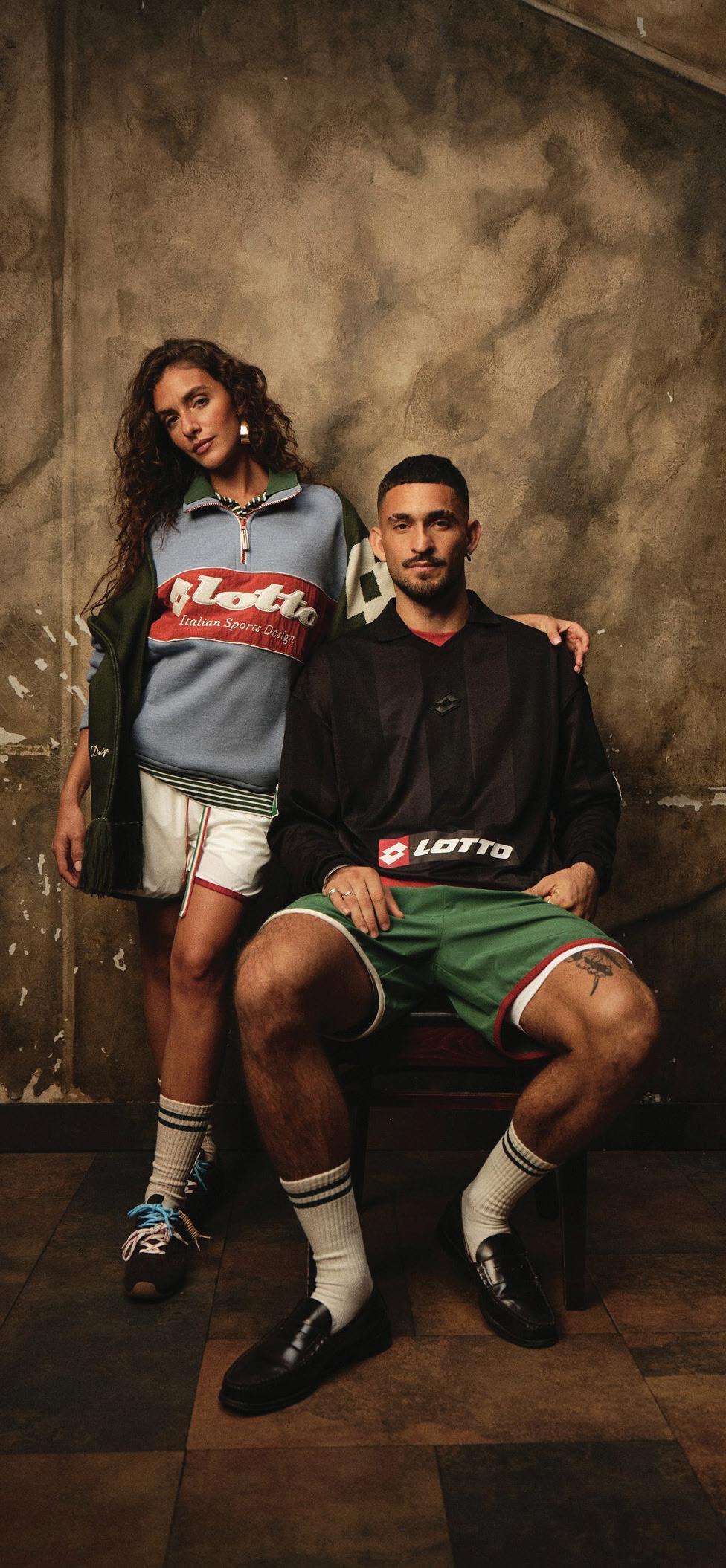
WHP Global, parent company of Italian sports brand Lotto, announced a new licensing partnership with Pure Cotton Global Group to design, manufacture and distribute a lifestyle apparel line across the U.S. and Canada. The debut capsule marks Lotto’s most significant North American fashion relaunch to date.
Born in Italy in 1973 and rooted in the country’s connection to soccer, style and craftsmanship, Lotto became a recognizable presence in the U.S. throughout the ’80s and ’90s. Now, the brand returns to North America with a renewed focus on streetwear, reflecting the growing influence of global sport on modern fashion and the opportunity to reintroduce Lotto to a new generation of North American consumers.
The first drop features the “Starting 11”—tees, hoodies, track jackets, joggers, shorts and other streetwear items that reimagine Lotto’s football heritage through premium fabrics, modern fits and the signature double diamond.
“Lotto has been a beloved brand in the world of soccer for more than 50 years, and its return to the North American lifestyle market comes at a moment when soccer-inspired fashion is driving culture—especially as excitement builds toward the 2026 World Cup,” said Margaret Kivett, executive vice president of athletic vertical at WHP Global. “Pure Cotton Global Group brings outstanding manufacturing expertise and retail vision, and we’re excited to build a strong platform together for Lotto’s growth in the fashion sector throughout the U.S. and Canada.”
“We are excited to partner with the WHP Global team to bring back such an iconic sports brand rooted in unforgettable moments in both soccer and tennis,” said Paula Brunson, president and CEO of Pure Cotton Global Group. “We look forward to reconnecting Lotto with North American consumers who value quality, heritage and a brand with a meaningful cultural connection.”

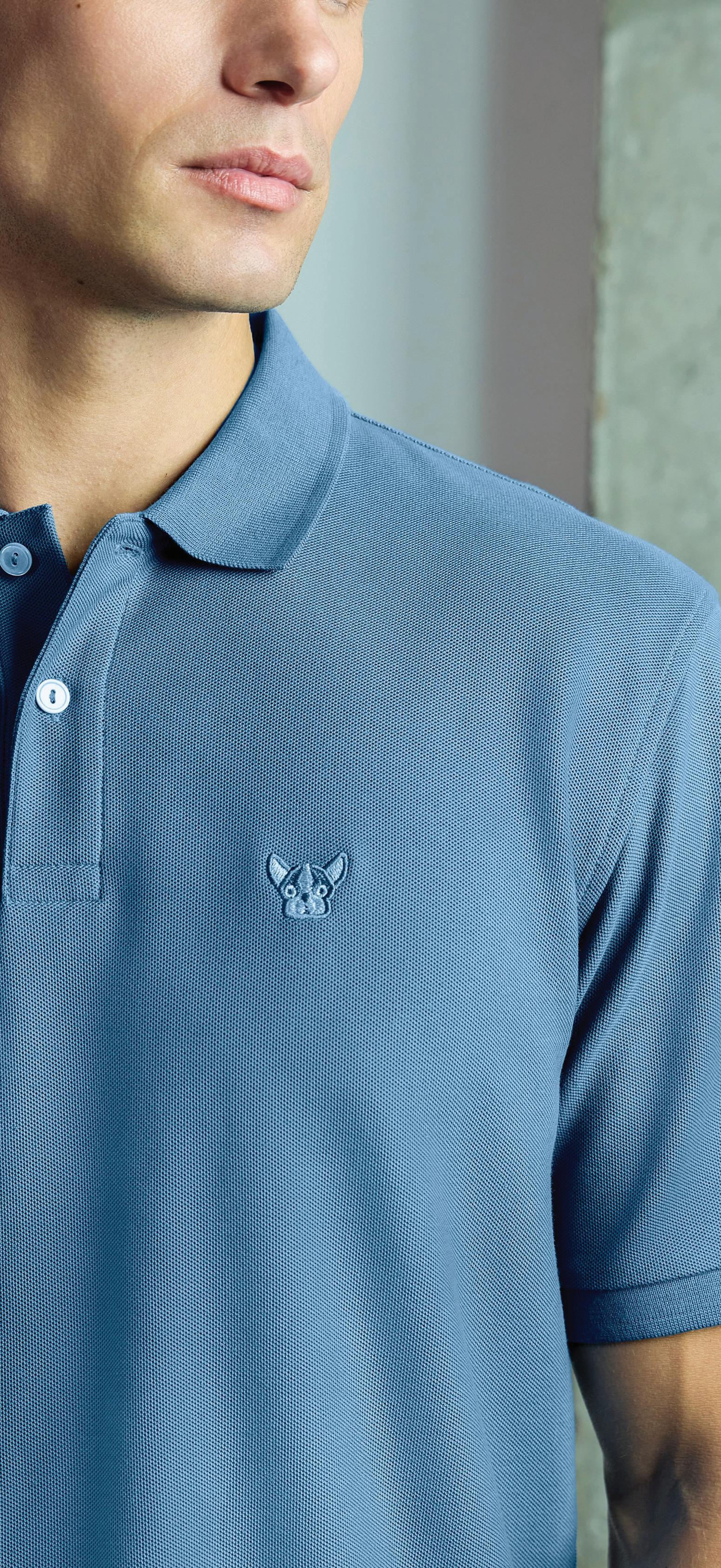
Menswear brand George Kent introduced its newest collection, a line defi ned by premium fibers, refi ned textures and a design philosophy centered on creating elevated essentials for the contemporary man. Rooted in durability and sophistication, the collection reflects the brand’s commitment to crafting garments that adapt seamlessly to the varied rhythms of modern living.
At the core of George Kent’s development process is its collaboration with specialized workshops in Peru, renowned for their expertise in working with 100% Peruvian pima cotton. This exceptional fiber, known for its remarkable softness, long-staple strength and refi ned drape, forms the foundation of the collection. Each garment is engineered to maintain its structure, preserve its color and deliver a consistently smooth hand-feel through longterm wear, reinforcing the brand’s dedication to premium material quality.
The new collection embodies versatility and purpose, offering refi ned silhouettes designed for the pragmatic man who values pieces that move naturally from one setting to the next. As George Kent expands its presence in the United States, the brand brings its signature Latin American craftsmanship and Pima cotton expertise to a broader audience seeking elevated everyday essentials. Clean lines, refi ned details and carefully considered proportions create garments that feel distinctly modern while maintaining a timeless appeal. The craftsmanship is evident across key categories, including pima cotton polos with engineered collars and mother-of-pearl buttons, premium tees crafted from pima jersey and interlock, and Oxford and micro twillshirts that balance structure with ease.
Color plays a thoughtful role this season, with a palette inspired by nuanced, grounded tones such as coronet blue, pristine, moonlight, almondine and feldspar green. These hues integrate effortlessly across categories, offering depth, balance and longterm vibrancy whether worn in casual or more elevated settings.

















Fashion Mannuscript is a monthly business-tobusiness magazine that delivers photo coverage of top fashion industry events, columns by experts in the community, and profiles of the people and companies behind some of the biggest deals in fashion.




@Mannpublications | @Fashionmanuscript


@Mann_pub
Mann Publications
View our website mannpublications.com to check out our digital magazines






By Ron Friedman
Hello again! In my last article, we were celebrating the Dodgers’ second consecutive World Series victory, this time against the Toronto Blue Jays. The parade followed the victory on a beautiful Monday in downtown Los Angeles, with the victory ceremony at Dodger Stadium. Manager Dave Roberts took to the podium and said he asked Pat Riley if he could borrow one of his famous quotes. Riley gave permission, and Dave Roberts declared, “Three-peat!” I hope he is right, and I look forward to another run at the title.
Importance of Year-End Balance Sheet Review: Addressing Inventory Realism in Consumer Product Companies
As you prepare for your year-end financial statement, it’s vital for every business owner to take a close, honest look at their company’s balance sheet. One of the key questions to ask is whether the asset values reflected are truly realistic—or if they may be overstated. This is especially critical for consumer product companies, where inventory often constitutes a significant portion of the assets.
Inventory should not simply be carried at historical cost indefinitely. Every year, companies must assess whether their inventory remains saleable and at what price. Consumer preferences change, products become obsolete and storage
conditions can deteriorate goods. If inventory is not reviewed and properly valued, the balance sheet may present an overly optimistic—and ultimately misleading—picture of the company’s financial health.
I have a client who exemplifies this common challenge. For years, he had been saving old inventory, holding onto the hope that one day he would be able to sell it profitably. However, after a realistic evaluation, we determined that the estimated carrying cost of this inventory— storage fees, insurance, opportunity cost and potential for obsolescence—far exceeded any reasonable expectation of what could actually be realized from selling it in the future.
In cases like these, my recommendation is often to donate the inventory to charity if there is no realistic market to sell the inventory at deep discounts. This approach provides several benefits:
• Clears out warehouse space, making room for new, more saleable products
• Removes overvalued assets from the balance sheet, giving a more accurate picture of the company’s financial position
• Potentially yields a tax deduction for the donated value, subject to IRS rules and documentation requirements
• Supports charitable organizations, benefiting the wider community Conducting a thorough, realistic yearend review of your company’s assets— especially inventory—can help ensure that your balance sheet reflects true value. This not only positions your business for stronger decision-making in the new year but also uncovers opportunities to make a positive impact by donating surplus inventory. In the long run, financial realism and social responsibility often go hand in hand.
Company
The beginning of each year is an ideal time for every business to pause and reflect—not just on the successes and challenges of the past year, but on the path forward. Now is the moment to reassess your business model and develop actionable plans for the upcoming year.
A cornerstone of proactive business management is the preparation of detailed financial projections for the new year. I always recommend that companies create a comprehensive set of monthly projections that include:
• Income statement: Forecasting revenues, cost of goods sold and expected profits each month
• Cash flow statement: Anticipating when cash will come in and go out to
prevent shortfalls
• Balance sheet: Estimating the company’s assets, liabilities and equity position at the end of each month
• Operating expense budget: Setting realistic spending limits for all business functions, from marketing to administration
It’s not enough to simply prepare these documents and then file them away. Far too often, projections and budgets end up in a desk drawer, forgotten until the next year’s planning cycle begins. This approach defeats the true purpose of forecasting.
Instead, your projections should be living tools—resources you refer to regularly, if not daily. Use them to:
• Monitor actual performance against your projections, spotting variances early
• Adjust tactics as needed, staying




nimble in response to changing market conditions
• Align your team, ensuring everyone is working toward common financial and operational goals
• Make informed decisions on investments, hiring and marketing based on up-to-date forecasts
By revisiting your projections frequently and using them to manage daily operations, you create a culture of accountability and data-driven decision-making. This increases the likelihood that you’ll meet or exceed your goals, rather than being surprised by unexpected shortfalls or missed opportunities.
As you start the new year, make it a priority to review the accuracy of your balance sheet




and build robust monthly projections— including income statements, cash flow, balance sheets and expense budgets. Most importantly, use these projections as working tools to actively manage and achieve your desired results. When you treat your business model as a living, breathing guide rather than a static document, you set your company up for greater success in the months ahead. I also recommend working closely with your professional advisors. At CBIZ, we take great pleasure in working closely with our clients to review their balance sheets and plans for a reality check and determine if there is adequate equity and sufficient credit lines to achieve the desired results. If not, CBIZ will make recommendations to advise our clients on approaches that will allow for a successful plan.
Until next time, remember what I always conclude with—if you are not having fun, then do something else!









By Michael Sacco, CPA Managing Director, National Consumer and Industrial Products Industry Leader, CBIZ

New York City is renowned for its vibrant culture, diverse opportunities and dynamic lifestyle. However, it’s also infamous for its high taxes, both at the city and state levels, making it one of the most expensive places to live in the United States. With growing numbers of remote work opportunities and shifting life priorities, many individuals, especially high earners, are contemplating a move out of NYC to minimize their tax burden. While potential savings can be significant, moving out of NYC for tax purposes is fraught with complexities, pitfalls and legal challenges.
Beware: New York State and City Tax Residency Rules Are Rigorous
First and foremost, New York state and New York City have stringent tax residency rules designed to prevent individuals from easily shedding their tax obligations. In broad terms, you are considered a New York resident for state income tax purposes if your “domicile” is in New York, or if you maintain a “permanent place of abode” in New York and spend more than 183 days per year in the state.
NYC’s individual income tax is only imposed on residents and partyear residents, so moving outside the city may eliminate one’s liability for it. However, simply moving isn't enough—a taxpayer must be able to prove a change in both residency and domicile. The difference between “residence” and “domicile” matters: residence is where you are physically residing, whereas domicile is your true, fixed and permanent home—the place you intend to return to after temporary absences. While one can have two or more residences, they can only have one domicile, and to obtain domicile in another location, they must demonstrate that they have abandoned the location of their previous domicile.
Tax authorities in New York are skeptical of those who claim to have left NYC for tax savings. There’s a long history of audits targeting such claims. Proving a change in domicile requires clear, convincing and objective evidence that your primary home is no longer in NYC.
Critical factors that New York considers in a domicile audit include:
• Home ownership and usage: Where do you own or rent homes? How much time do you spend in each?
• Business involvement: Where is your primary place of business or employment?
• Family location: Where does your family live, especially minor children?
• Social and community ties: Where do you participate in clubs, religious organizations, volunteer work, etc.?
• Physical presence: How many days are actually spent in and out of New York?
While you don’t need to sever all ties to NYC, you must demonstrate that your new home is truly your primary base of life and activity.
• Underestimating documentation requirements: Moving is not just about acquiring a new address or buying a house in another state. Many individuals believe that simply leasing or purchasing property elsewhere is enough. In reality, auditors are thorough; they will request credit card statements, cellphone records, travel logs and even E-ZPass toll data to track your movements and activities.
• Failing the 183-day rule: The “183-day rule” is a critical
threshold for statutory residency. If you maintain a permanent place of abode in NYC for at least 10 months of the year and spend 184 days or more in New York City for any purpose during the year, you’re taxable as a resident, regardless of whether you have a domicile elsewhere. Days spent even partially in New York count; for example, flying in for breakfast and leaving counts as an NYC day even if you do not spend any time in your NYC residence.
• Retaining too many ties to NYC: Retaining significant connections—executive positions at NYC-based businesses, children in NYC schools, social memberships—can undermine claims of a new domicile, signaling lingering NYC residency to auditors.
• Lack of consistency across records: Address changes should appear not just on tax returns but also on bank statements, insurance policies, driver’s licenses, voter registrations and so on. All outside communications should point to your home outside of NYC as your place of residence. Inconsistent records can raise red flags.
• Misunderstanding domicile versus residence: Some taxpayers believe that moving part-time or having multiple homes is sufficient. However, domicile is about where your life is centered—intent matters as much as physical presence.
To defend a claim of non-NYC residency, thorough and organized documentation is essential. Tax authorities rely on the “totality of the circumstances” and expect you to produce records that paint a picture consistent with a complete move:
• Lease agreements or purchase contracts for your new home
• Utility bills demonstrating regular usage at your new residence
• Driver’s license and car registrations changed to your new residence
• Voter registration in your new jurisdiction
• Bank statements and financial records listing your new address
• Employment records reflecting location change or remote work are above board
• Mail forwarding confirmations
• Affidavits from neighbors or local organizations attesting to your presence
• Memberships and participation in local organizations outside NYC
• Cell phone tower records and credit card statements; these have become especially pivotal in residency audits, as they often detail your actual location day by day
Keeping a detailed diary or log of days spent inside and outside New York is also advisable.
New York State and NYC aggressively audit high-net-worth individuals and those with strong connections to NYC. Auditors are trained to review years’ worth of records and probe for inconsistencies. Moving for tax purposes is considered a legitimate act only when substantiated with substantial proof of new life, not
just a transient escape.
If your move fails to pass muster, you may be liable for back taxes, interest and penalties, which can be a costly mistake.
Those considering a move should plan carefully and consult tax professionals specializing in residency issues. Key steps include:
• Meticulously tracking days spent in NYC versus your new home: Consider purchasing or subscribing to applications that reside on your cell phone and that track and record your physical location at several times during the day throughout the year.
• Scaling down NYC connections: Sell or rent out property, resign from organizations and cease business activities in NYC.
• Building substantial ties in your new home: Make sure to document every change.
• Being proactive: Don’t wait to make address changes; do so immediately and across all records.
• Documentation: Typically, audits are initiated one to two and a half years after you have filed your income tax return. Taxpayers who fail to keep adequate, contemporaneous records of their change in domicile put themselves at a great disadvantage. Make sure to keep copies of all pertinent records demonstrating your move and store them in a secure place, both virtually and physically.
The financial allure of moving out of NYC for tax relief is real, but the challenges and pitfalls are substantial. Without careful planning and robust proof, New York’s tax authorities may well reject your claim and impose heavy penalties. Successfully shifting tax residency out of New York City requires a genuine and well-documented relocation—merely maintaining a second home elsewhere is far from sufficient. If you’re considering such a move, seek expert advice from a CBIZ state and local tax (SALT) expert and treat documentation like your best defense.
Michael Sacco, CPA, is the national consumer and industrial products industry leader at CBIZ, where, along with his teams throughout the country, he helps companies achieve financial excellence through tailored consulting, advisory and outsourced services. To learn more about how CBIZ can help your business thrive, visit cbiz.com.



By Krieger Worldwide

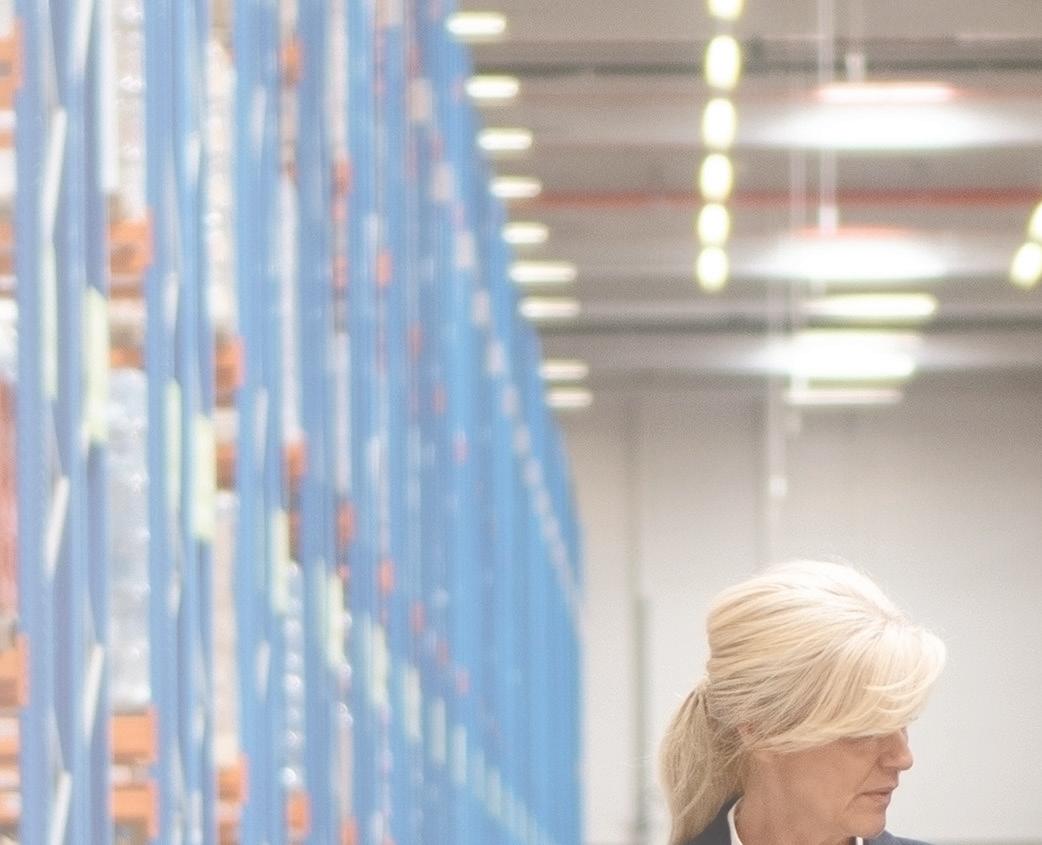

In today’s dynamic and unpredictable global trade environment, the role of a knowledgeable U.S. customs broker has never been more critical. At Krieger Worldwide, we see firsthand how rapidly evolving regulations, enforcement priorities and litigation outcomes directly impact importers’ bottom lines. Compliance is no longer a back-office function—it is a strategic necessity.
Recent developments surrounding the International Emergency Economic Powers Act (IEEPA) tariffs underscore this reality. As of Dec. 15, 2025, the U.S. Court of International Trade allowed liquidation of entries subject to the challenged IEEPA tariffs to proceed. While this decision caused understandable concern, the legal and procedural nuance matters. Importers who have properly challenged these tariffs have not lost their right to refunds, even if entries liquidate now. Should the Supreme Court ultimately strike down the tariffs, the court retains authority to order reliquidation and refunds after the fact. However, those refunds will not be automatic. Importers will need accurate records, clear documentation and a welldefined recovery strategy to secure what they are owed.
This is where an experienced customs broker makes a meaningful difference. Navigating post-summary corrections, understanding when protests are ineffective and tracking evolving jurisdictional pathways under 28 U.S.C. § 1581(i) require deep regulatory knowledge and practical experience. Without proactive guidance, importers risk missing recovery opportunities or failing to meet documentation expectations when it matters most.
The same complexity applies across other trade remedy programs. Recent U.S. Customs and Border Protection (CBP) guidance on section 232 content value for steel, aluminum and copper highlights how easily misclassification or valuation errors can result in



overpayment or penalties. Determining what costs are deductible, how to apportion shared expenses and when CBP will require duties on the full entered value demands precise classification expertise and defensible documentation. These are not theoretical issues— CBP expects importers to substantiate content value claims, and the burden of proof rests squarely on the importer.
Beyond duties paid at entry, strategic compliance also includes recovery mechanisms such as duty drawback. Properly leveraging drawback requires accurate classifications, consistent data and alignment between entry filings and export records. Errors upstream can eliminate eligibility downstream, turning potential refunds into sunk costs.
Technology and automation add another layer of responsibility. With CBP requiring electronic payment of supplemental duty bills for periodic monthly statement participants and increasing reliance on the Automated Commercial Environment (ACE) portal for refunds and reporting, importers must ensure their CBP forms 5106 and 400 are current, automated clearing house (ACH) information is accurate and ACE access is established. A broker who understands both the regulatory and operational side of these systems helps prevent delays, lost refunds and program removals.
At Krieger Worldwide, we believe a customs broker’s role goes beyond filing entries. It is about advocacy—helping clients interpret guidance, prepare for audits, preserve refund rights and adapt quickly as trade policy shifts. In an environment defined by change, uncertainty and heightened enforcement, having an experienced partner by your side is not just beneficial—it is essential to protecting your business and supporting long-term supply chain resilience.
By Paul F. Magel, President, Computer Generated Solutions Inc. (CGS)
For decades, the world has looked to Italy not only for exceptional design but for a supply chain built on precision, craftsmanship and speed. Today, even this highly regarded ecosystem is under pressure. Environmental, social and governance (ESG) regulations are tightening, digital product passport (DPP) mandates are approaching and customers now expect end-to-end transparency—from raw materials to last-mile delivery. The logistics model that served the industry well for years is being pushed to evolve faster than ever.
That’s why our new partnership with leading Italian systems integrator Lodestar matters. BlueCherry’s fashion-first supply chain platform, combined with Lodestar’s technical and local market expertise, gives Italian brands a practical, scalable way to modernize operations and stay ahead of rising compliance demands. Equally important, both organizations share a customer-first philosophy: a commitment to meeting brands where they are and supporting them through every stage of transformation.
From a supply chain standpoint, the industry can’t afford fragmented processes any longer. Fashion and apparel brands need real-time traceability instead of static reports. Compliance must be embedded directly into daily operations. And production, inventory, distribution and ESG reporting must run through a single connected digital thread. Through our work with Lodestar, we’re delivering exactly that: an open, end-to-end supply chain management solution that connects everything from product design to sourcing, production, distribution and sustainability reporting. Instead of separate systems managing each step, brands get a single operational backbone that improves accuracy, accelerates decisions and increases visibility across their entire value chain.
Taken together, these capabilities position BlueCherry and Lodestar to support the full breadth of transformation that Italian brands are aiming for—from operational efficiency to regulatory confidence.
Overall, our partnership with Lodestar is about readiness. Europe’s sustainability and DPP requirements are moving quickly, and the brands

Another advantage we’re bringing to the table is flexibility. Because BlueCherry is built as an open platform, brands can extend it as their business evolves—whether that’s adding new capabilities, integrating with existing tools or creating lightweight applications that streamline specific processes. This gives companies a practical, future-ready way to modernize without taking on disruptive “rip-and-replace” projects. Instead, they can improve workflows step by step, at the pace their operations require.
that thrive will be those with the infrastructure to track materials, verify compliance and surface proof points instantly. With Lodestar, we’re helping Italian fashion companies build that capability now—before regulatory pressure turns into a competitive hurdle.
At its core, fashion supply chains are the bridge between great design and consistent product delivery. By strengthening that bridge, we’re giving Italian brands the agility, intelligence and operational confidence they need to compete in a global market that isn’t slowing down.
By Pauline Poissonnier, Head of Solutions, Hardis Supply Chain

For years, the fashion industry has been defined by creativity and reinvention. Today, the most consequential reinvention is happening behind the scenes, within the supply chain systems that determine how quickly brands can move from inspiration to execution. Recent research from McKinsey’s “State of Fashion” report reveals that operational agility has become one of the most reliable predictors of resilience and financial performance. Brands that invest in faster decisionmaking, real-time visibility and smarter fulfillment capabilities consistently outperform those with slower or more rigid operating models.
While fashion was once shaped primarily by seasonal trends, it is now being influenced by inflationary pressures, inconsistent consumer confidence, supply chain fragmentation and the increasing demand for transparency across every stage of the product journey. These dynamics have pushed warehouses and distribution centers into a more strategic role, where they go beyond just moving goods. They are now where brands protect costs, preserve customer trust and differentiate themselves.
The Warehouse Has Become a Strategic Growth Engine
Distribution centers were once evaluated based on efficiency alone. That mindset has changed significantly. In McKinsey’s research on supply chain resilience, senior leaders now rank supply chain agility among the top capabilities required to compete through 2030. Warehouses contribute directly to this goal because they influence the availability, reliability and accuracy of every unit that reaches stores or consumers.
Several structural pressures have accelerated the need for modernization:
1. Labor volatility is reshaping workforce planning: Warehouses are navigating a shrinking pool of experienced workers, an aging labor base and higher turnover. Seasonal hiring has become more unpredictable and more expensive. In some regions, workplace enforcement actions have reduced labor availability with little warning. Productivity can no longer rely solely on institutional knowledge or on teams that remain stable for long periods. Operations must remain efficient whether staffed with long-time specialists or newly onboarded associates.
2. Operational inefficiencies are creating unnecessary margin pressure: Many fashion distribution environments still depend on manual data capture, paperbased workflows and legacy warehouse management system (WMS) configurations. These processes slow fulfillment, increase the
likelihood of errors and create inconsistent customer outcomes. Brands that modernize warehouse workflows see faster cycle times and more accurate inventory, which directly strengthens omnichannel reliability. In a period of heightened financial scrutiny, even small operational delays translate into avoidable costs.
3. Market velocity has exceeded legacy capabilities: Fashion releases are more frequent, replenishment windows are narrower and product mixes shift rapidly. Consumers expect real-time accuracy whether they are shopping in stores, online or through emerging channels. Warehouses designed for the pace of five years ago cannot support the flexibility required today. This gap between expectation and capacity has made modernization more urgent and more strategic.
4. Real-time flow orchestration as the new fulfillment standard: One of the most impactful shifts underway is the move toward real-time flow orchestration, commonly known as waveless management. This emerging capability is transforming how fashion warehouses balance speed, accuracy and resource utilization.
Real-time orchestration allows operations teams to:
• Process urgent or high-priority orders individually based on transportation cutoff times or workforce availability, ensuring critical items ship without delay
• Batch flows when timelines allow, optimizing throughput, equipment usage and labor allocation
• Protect the customer promise at every moment, even during sudden order surges or unexpected labor shortages
This ability to pivot instantly between speed and efficiency represents a major evolution from traditional wave-based processing. These complex equations require powerful algorithms, yet they remain fully transparent for warehouse teams, who retain clear visibility into decisions and priorities. For fashion brands, waveless orchestration reduces shipping disappointments, preserves delivery commitments and helps ensure that fast-moving inventory reaches consumers with minimal friction.
The industry’s modernization is not defined by sweeping automation or futuristic concepts. It is driven by practical technologies that meaningfully improve the accuracy, speed and consistency of warehouse tasks. These innovations elevate human performance rather than replace it.
Some of the most impactful advancements include:
• AI-supported WMS capabilities that optimize pick paths, reduce unnecessary decision points and enhance exception handling
• Guided workflows and augmented reality tools that help new hires reach proficiency more quickly, particularly during seasonal peaks
• Smart data capture tools that increase scanning speed and reduce error rates without requiring specialized hardware
• Flexible automation that scales with demand and adapts to the evolving physical layout of distribution centers
• Integrated training and feedback mechanisms that reduce reliance on lengthy onboarding cycles
The most successful supply chain transformations are those that blend human expertise with digital capabilities. Companies that pursue this hybrid model see faster benefit realization and more sustainable productivity improvements.
Unfortunately, in the upcoming year, volatility isn’t a temporary theme. It is a defining characteristic of the industry. Consumer demand can shift within weeks, regulatory frameworks continue to evolve and sustainability commitments are placing new expectations on transparency and traceability. Every one of these trends converges in the warehouse, which has become the central node for operational reliability.
Modernization does not require sweeping capital investments or fully robotic facilities. Instead, it depends on strategic decisions that improve real-time accuracy, support workforce variability and increase the

consistency of core processes. Real-time flow orchestration reinforces all of these goals by enabling teams to meet demand dynamically without sacrificing efficiency.
In an industry where creativity drives aspiration and execution drives loyalty, operational agility has become a fundamental brand asset. The warehouse is truly a differentiator that determines how quickly ideas reach the market and how reliably they reach the consumer.
The next generation of fashion leaders will be those who recognize that the path to long-term competitiveness begins with the systems that power the product journey. A modern warehouse is central to that future. It is where resilience is built and where the industry’s most forward-looking brands are quietly gaining their advantage.


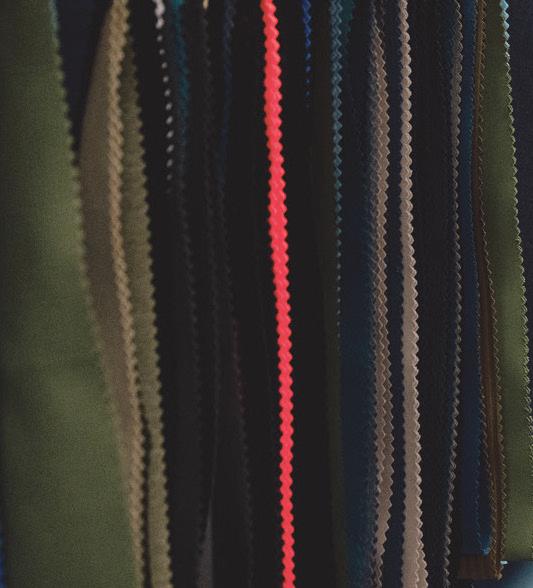
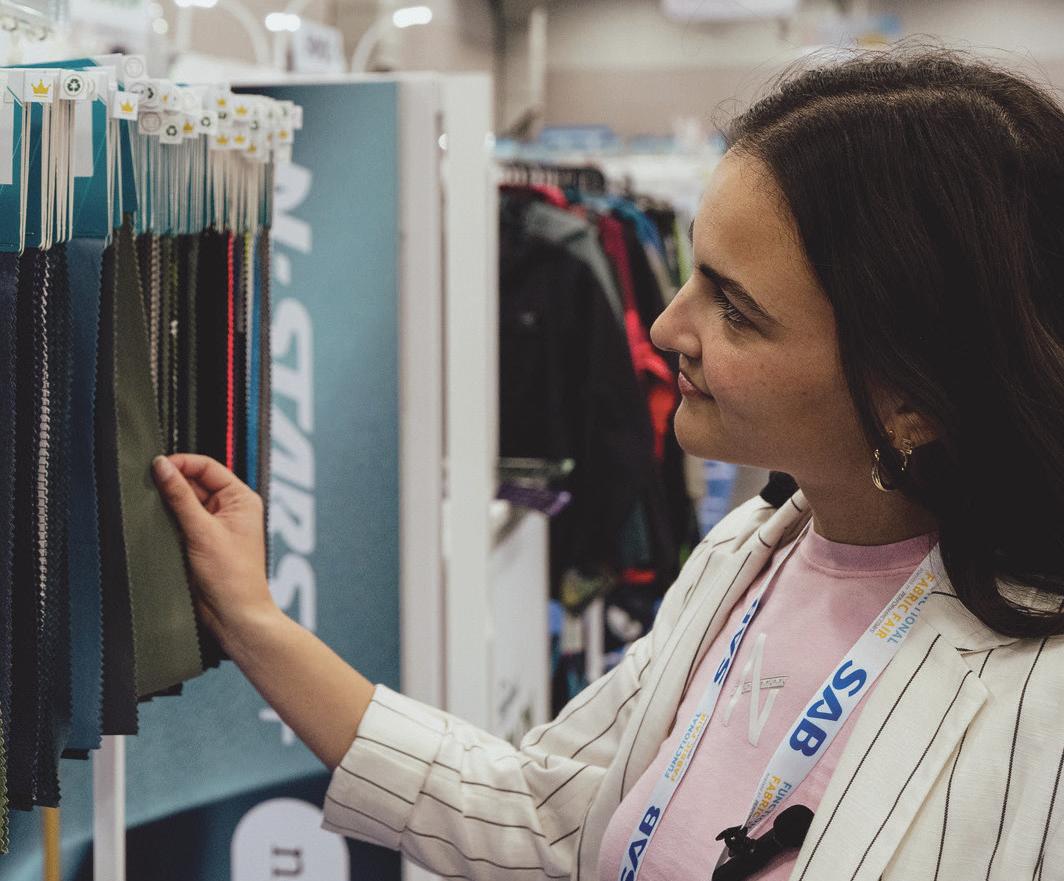


INNOVATION WITHOUT LIMITS. A COMMUNITY MOVING TEXTILES FORWARD—TOGETHER.
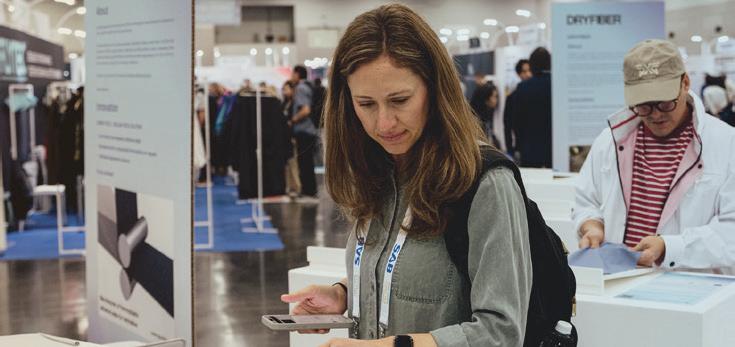
Discover what’s next in performance textiles at Functional Fabric Fair. Join us for a curated sourcing event connecting you with top suppliers, industry leaders, and brands driving the future of activewear, outdoor gear, and performance fashion.
Trend Forum


Innovation Zone
Expert Talks
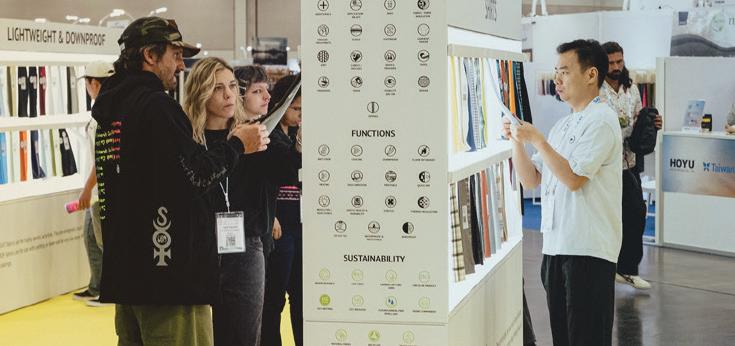

Explore 12 essential fabric categories curated by a jury of textile experts, and experience the season’s most innovative materials—up close and firsthand.






Discover cutting-edge products before they launch and get an exclusive first look at breakthrough materials and technologies shaping the future of performance textiles.

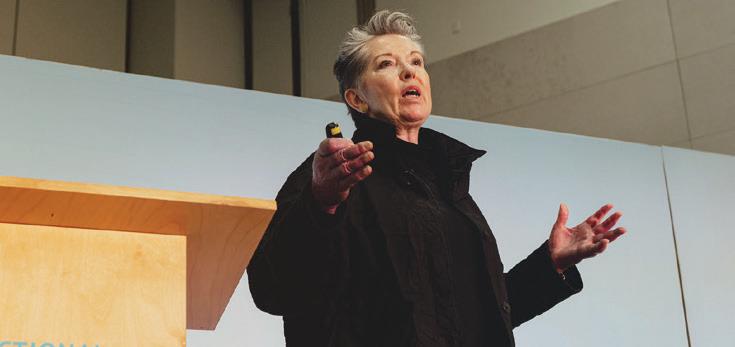

Engage with industry leaders through dynamic sessions that spotlight the latest trends, innovations, and sustainability practices driving outdoor and active textile design.
LEARN MORE AT






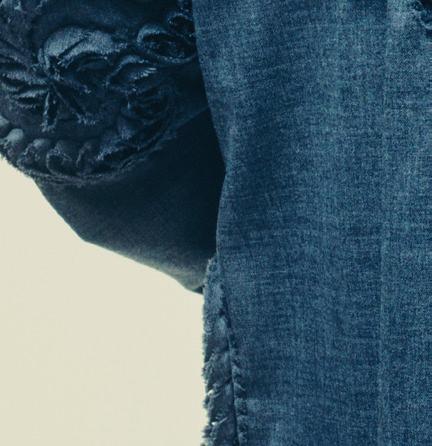

































As the international menswear calendar turns once again to Paris, anticipation builds for designers whose work continues to shape the global conversation around fashion. Among them is Taakk, the Tokyo-based menswear label founded by designer Takuya Morikawa, who will return to the Paris Fashion Week men’s schedule in January 2026 to unveil his Fall/Winter 2026 collection. In parallel, Taakk’s Spring/Summer 2026 collection arrives in stores in February, offering a timely moment to reflect on the brand’s philosophical core and its latest exploration of clothing as both art and everyday necessity.
Established in Tokyo, Taakk has steadily earned its place on the international stage through Morikawa’s singular approach to design—one that balances technical experimentation with poetic restraint. A graduate of Tokyo’s prestigious Bunka Fashion College, Morikawa spent eight formative years at Issey Miyake, where his understanding of fabric, form and innovation was sharpened under the guidance of one of Japan’s most influential fashion houses. Since launching his own label, that foundation has evolved into a distinct design language rooted in curiosity, craftsmanship and quiet disruption.
Morikawa’s achievements reflect the industry’s recognition of that vision. Taakk has received numerous honors, including Best New Designer at the Tokyo Fashion Awards in 2014 and 2017, the Fashion Prize of Tokyo in 2019—awarded by the Tokyo Metropolitan Government and the Japan Apparel Fashion Industry Council (JAFI)— and a finalist position for the LVMH Prize in 2021. Yet accolades have never been the end goal. Instead, Taakk has remained focused on the slow, deliberate pursuit of what Morikawa describes as “the essence of creation.”
suitable for daily life. Look closer, however, and Taakk’s signature sensibility reveals itself. A seam subtly twists off course. A fabric behaves unexpectedly against the body. A surface that appears simple reveals depth through texture, translucency or shadow. These moments of “quirk,” as Morikawa describes them, become points of curiosity—gentle disruptions that reframe the familiar.
This tension between the known and the unexpected is central to the collection’s emotional impact. Taakk does not seek shock value; instead, it creates garments that slowly unfold through wear and experience. The clothes ground the body while simultaneously awakening the senses— an approach that aligns with Morikawa’s belief that true creativity exists not in extremes but in the space between them.
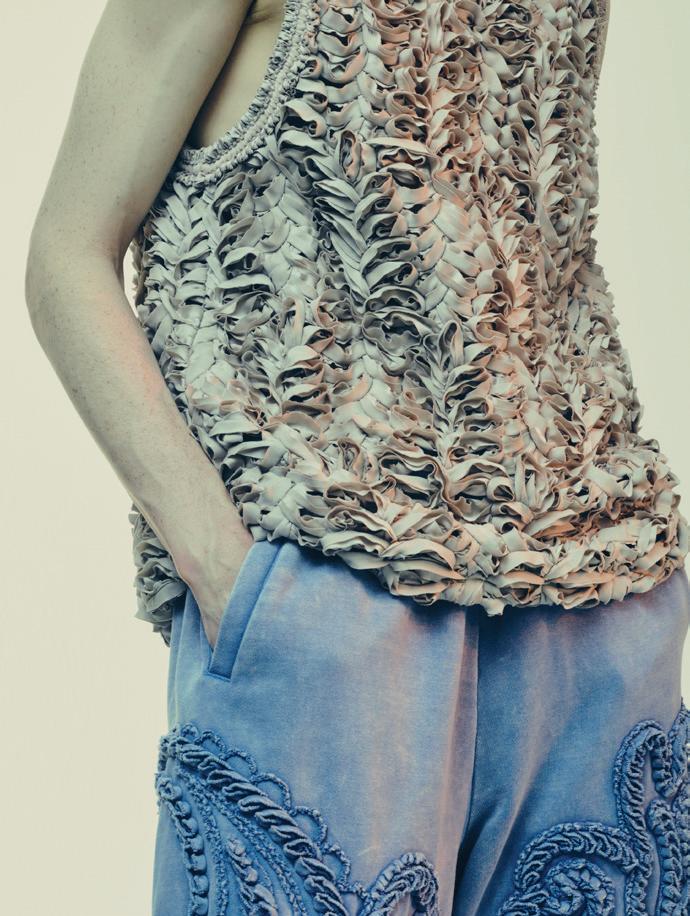
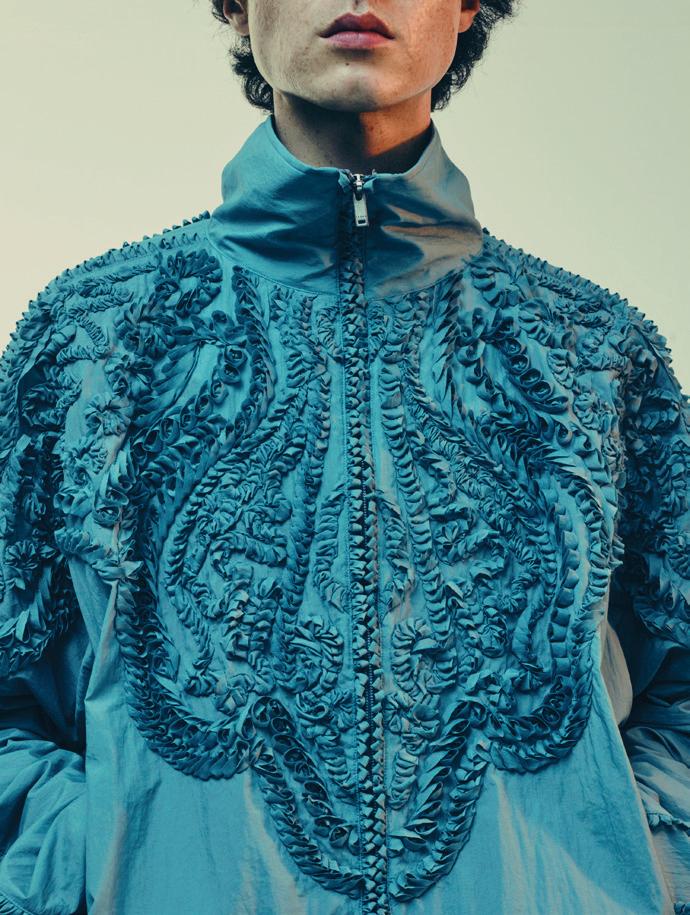
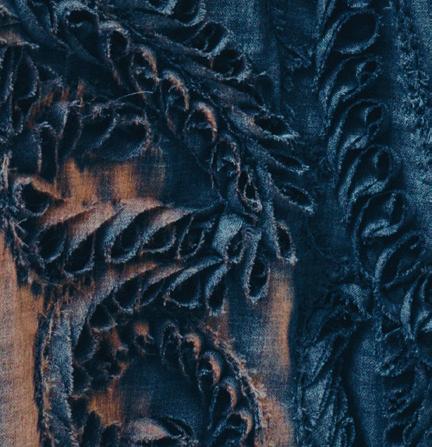
That pursuit is at the heart of Taakk’s Spring/Summer 2026 collection, titled “The Common Baseline of Art and the Ordinary.” The season continues an ongoing dialogue within the brand: Where does art end, and where does everyday life begin? Rather than framing the two as opposing forces, Morikawa positions them as coexisting realities— intertwined, inseparable and constantly informing one another.
“We are in the midst of a journey,” Morikawa explained. “A journey in pursuit of the essence of creation.” For Spring/Summer 2026, that journey manifests as a meditation on dualities: utility and expression, familiarity and surprise, comfort and challenge. The result is a collection that feels grounded yet quietly provocative— clothing that does not demand attention but rewards it.
At first glance, silhouettes appear recognizably wearable: tailored jackets, relaxed trousers, layered shirting and lightweight outerwear
Fabric innovation remains one of Taakk’s defining strengths, and Spring/Summer 2026 is no exception. The collection is built through close collaboration with Japan’s master artisans—specialists in weaving, dyeing, embroidery and textile processing, whose knowledge has been refined over generations. Together, Morikawa and his team challenge conventional definitions of fabric, reconstructing materials into new forms that blur the boundary between textile and artwork.
“When one looks at a piece of our clothing, it may appear intentional in every aspect,” Morikawa said. “But for me, it is only a fragment of imagination made visible—one moment captured from years of experimentation.” That philosophy underscores the brand’s process: garments are not conceived as final answers but as points within a much larger continuum of inquiry.
This openness to experimentation allows Taakk to continually redefine what modern menswear can be. The brand’s multidisciplinary approach—informed by art, architecture and material science—resists trend-driven narratives in favor of timeless exploration. Each collection builds upon the last, not through repetition but through evolution.
As menswear month begins in Europe and Taakk prepares to present its Fall/Winter 2026 collection in Paris, Spring/Summer 2026 serves as a compelling reminder of why the brand commands such global attention. It is not simply about innovation for its own sake but about asking essential questions: How do we live with clothes? How do they make us feel? And how can fashion quietly reshape our relationship with the ordinary?
With “The Common Baseline of Art and the Ordinary,” Taakk offers no definitive answers—only beautifully considered possibilities.
Founded in Montreal and rooted in the vision of creating a luxury swimwear line, Shan celebrates 40 years as a trailblazing fashion house. Founder and designer Chantal Levesque has remained dedicated to crafting high-quality designs using refined materials while prioritizing comfort and sophistication. Over four decades, Shan has mastered the art of timeless design—creating pieces that transcend trends and remain as elegant and relevant today as they were at the brand’s inception.
Born from Levesque’s vision and named after her firstborn son, Shan has elevated each of its collections across ready-to-wear, resort wear and swimwear for both men and women. Today, the brand operates 10 boutiques worldwide and is available in over 600 retailers, including Nordstrom, Neiman Marcus, Saks Fifth Avenue, Harrods and Le Printemps.

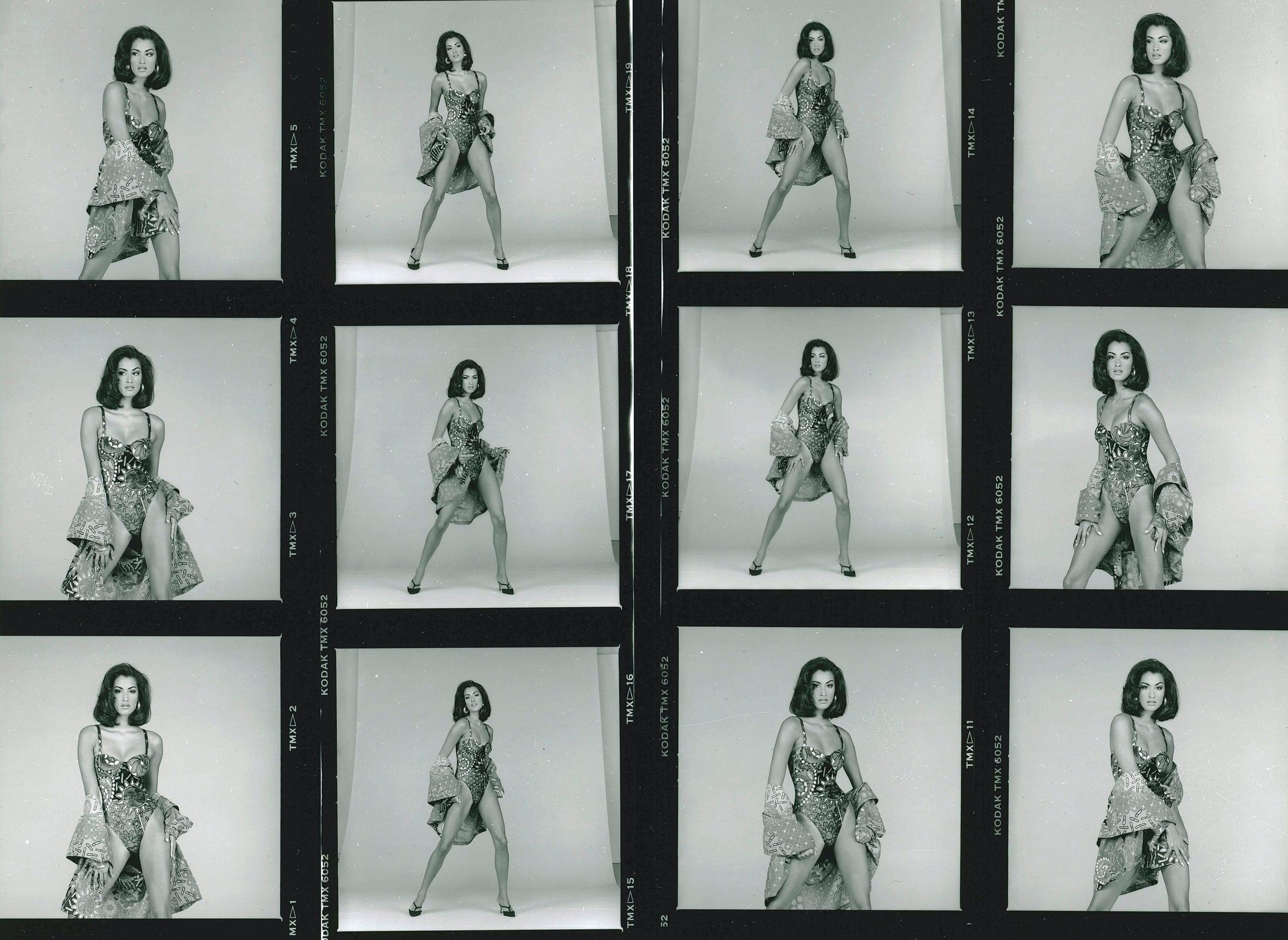
As seen in its archival campaign imagery, Shan has always embraced an elevated approach to high fashion meets classic swim and resort, with a strong emphasis on original prints throughout every collection. Traces of the brand’s modern design identity have been present since its origin in 1985.
Every piece is designed and manufactured in Laval, just outside Montreal, where craftsmanship is central to the brand’s identity. More

Bringing Modern Design Into Luxury Resort, Swim and Ready-To-Wear Collections Since 1985
than 150 skilled artisans work in the Shan atelier, assembling garments with precision, hand-finishing details and upholding rigorous quality standards. This commitment to local production ensures authenticity, sustainability and a uniquely Canadian-made approach to luxury fashion.
Today, Levesque’s son, Nathan Gilbert, serves as the brand’s creative director, bringing a fresh perspective while honoring its legacy. By keeping design, production, commercial and distribution operations under one roof, Shan maintains full control over every step of the process—preserving the integrity, quality and values that have shaped the label for four decades.
“Forty years is an extraordinary milestone, but it also feels like a new beginning,” said Gilbert. “Shan has always embraced innovation while honoring tradition, and this moment reinforces our commitment to shaping the future of luxury swim and resort wear. Our legacy drives us, and our ambition carries us forward. As we look toward 2026, we’re incredibly excited to continue expanding through new partnerships in the retail and hospitality industries, bringing the world of Shan to even more destinations and clients around the globe.”






From the mid-1980s through the 1990s, Shan helped redefine swimwear as both fashion and art, offering bold sensuality paired with refined sophistication. Early designs featured daring cuts, elongated silhouettes and expressive prints— often appearing like brushstrokes against clean white fabrics. Campaigns highlighted empowered femininity through slicked-back hair, bronzed skin and minimal accessories that emphasized the garments’ sculptural beauty. These iconic visuals not only captured the era but cemented Shan as an innovator shaping the evolution of modern swimwear.
Shan has long been recognized for its dynamic runway presentations showcasing bold cuts, rich colors and luxe craftsmanship. Over the past several years, the brand has made a notable impact at Paraiso Miami Swim Week, presenting collections that fuse elegance, innovation and wearable sophistication.
In 2023, the Resort 2024 and Spring/Summer 2024 collections blended soft, tropical-inspired tones with playful, vibrant silhouettes. The Cruise 2025 and Spring/Summer 2025 collections introduced shimmering metallics, mesh cover-ups and bold styling. Most recently, Cruise 2026 featured flowing silks, sheer mesh and contemporary jersey lycra in earthy tones, capturing a polished, seaside-inspired aesthetic. Each season reinforces Shan’s leadership in global luxury swim and resort wear.
Throughout 2025, Shan turned heads with a series of standout collections that define modern luxury. Each release reflects the brand’s mastery of design, merging timeless elegance with contemporary trends. The Cruise 2025 collection opens the season with sun-drenched sophistication, featuring flowing cover-ups, sleek swimwear and eveningready pieces that transition effortlessly from day to night.
Spring/Summer 2025 continued this narrative, showcasing Shan’s signature attention to detail and four decades of elevated craftsmanship in luxury swimwear and refined ready-to-wear. In August 2025, Shan unveiled the Fall/Winter 2025 collection for men and women, reimagining rich textures and signature prints for cooler months with versatile pieces that balance comfort and understated elegance.

How Cyril Verdavainne



Built a Modern American Eveningwear House

Rooted in Cra , Service and Purpose




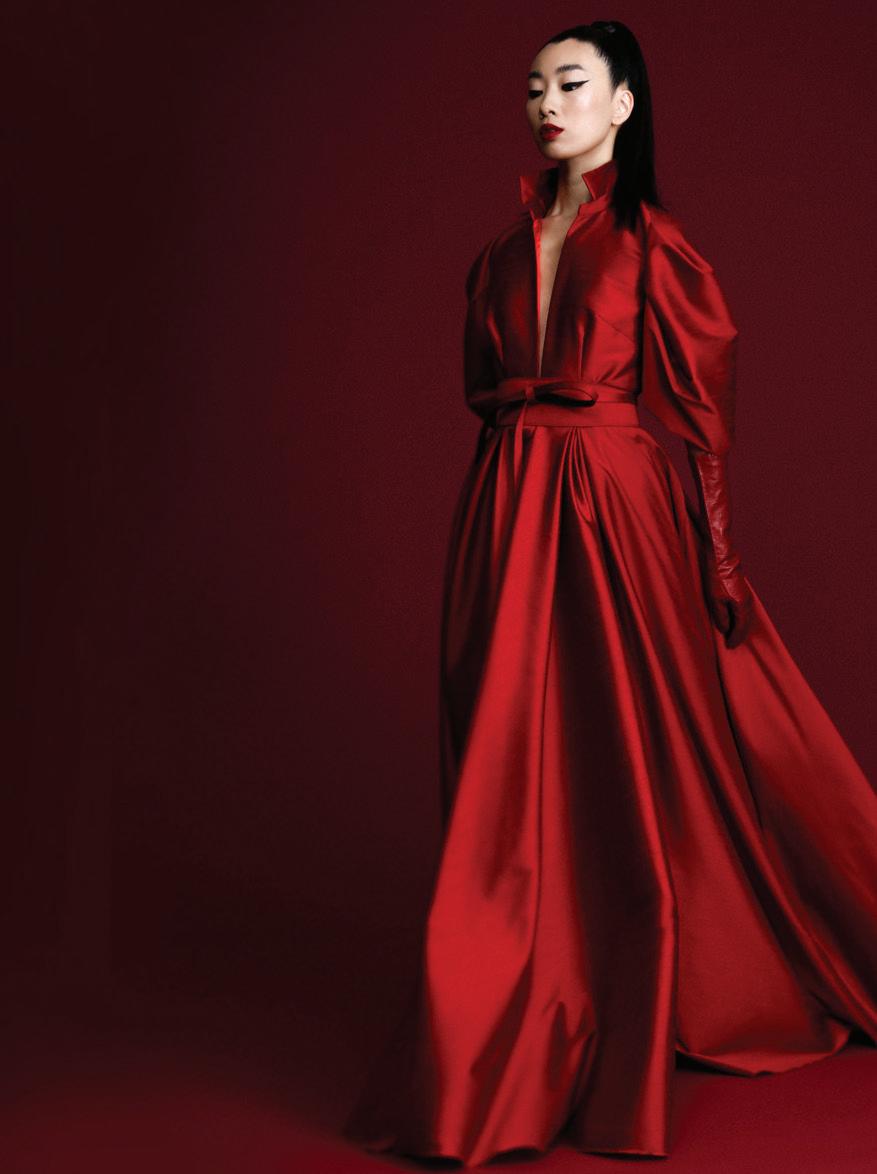

Cyril Verdavainne’s rise as one of New York’s most compelling eveningwear designers began not with a meticulously charted plan but with a series of unexpected shifts. Long before his Manhattan atelier became a destination for discerning women seeking custom luxury, he was a young Parsons Paris student sketching for Pierre Balmain and Thierry Mugler in the late 1990s. Couture was his world. New York, he admits, was not. But when Parsons required all Paris students to complete their senior year in New York, he had no choice but to cross the Atlantic. What he found upon arrival was a fashion landscape unlike anything he expected.

The adjustment was jarring. “I wanted to create masterpieces,” Verdavainne said. But the American market of the late ’90s was undergoing a profound shift. Oscar de la Renta was designing couture for Balmain in Paris, while Geoff rey Beene continued crafting brilliant outliers; yet, across the U.S., designers who had once pursued artisanal technique were now elevating commercial sportswear. Donna Karan was opening her major Madison Avenue fl agship. Tommy Hilfi ger was expanding well beyond the denim-driven casual wear that made him famous. Calvin Klein was preparing to bring on Francisco Costa. And soon after, Zac Posen would emerge with sharply tailored, Charles James-reminiscent silhouettes that reignited a conversation about American glamour. For a young designer steeped in Parisian couture codes, it was simultaneously disorienting and electrifying.
His early career became a crash course in the rhythms of American fashion. As a French citizen on an H-1B visa, he had one year to secure sponsorship. Carmen Marc Valvo hired him, and although he left periodically to explore other opportunities, Verdavainne credits Valvo with shaping his understanding of the eveningwear business. “It took me 20 years to truly understand how fashion works here,” he said. That long education laid the groundwork for Verdavainne, his own custom luxury eveningwear brand, now known for its impeccable craftsmanship and deeply personal approach to service.
Today, Verdavainne’s Manhattan atelier attracts clients nationwide and, increasingly, across Asia. His philosophy remains grounded in couture discipline but responsive to contemporary realities. He believes that the future of eveningwear lies in service, intimacy and custom solutions. “There is a real thirst for service and the custom experience,” he said. “Direct-to-consumer is essential. No one is buying a $3,500 dress online with a no-return policy.”

His fi rst Parsons New York assignment underscored this cultural divide: “Design a collection for Donna Karan and Tommy Hilfi ger.” Verdavainne recalled, “I called a friend at Vogue Paris to ask who they were. There was no internet. It was painful.” Yet, the challenge forced him to engage with a market driven by pragmatism and velocity. Slowly, the world he initially resisted began to take shape as an opportunity.
By graduation, Verdavainne no longer envisioned a return to Paris. New York’s intensity had captivated him. “The energy, the drive, the edge— things moved faster here,” he recounted. In France, he felt constrained by bureaucracy and entrenched hierarchy. In New York, he felt possibility. And importantly, a Parsons degree carried more weight in the U.S. than it did in Paris; professionally, staying just made sense.
That commitment has garnered industry recognition. Verdavainne’s New York Fashion Week presentations—staged in the private dining room at Cipriani Wall Street—were strikingly well received, catching the eye of fashion fi nancier Gary Wassner. Wassner chose to feature Verdavainne





“If it is real clothes you want to create, find out who you are making them for. Only then do you learn what it takes to begin.”
Cyril Verdavainne

as a “One to Watch” in Fashion Group International’s Communiqué newsletter, which soon led to a nomination for FGI’s 2024 Rising Star Award in Eveningwear. Verdavainne won.
His clarity extends to his perspective on the shifting retail ecosystem. Department stores, he says, once invested heavily in young talent. Buyers took risks; stores nurtured talent and rewarded discovery. “Today it’s all drop-ship,” he explained. “No one wants to own stock.” Saks, where he held trunk shows, recently suspended events for designers without in-store placement. Rather than lament the loss, Verdavainne doubled down on his showroom, where he can maintain control and create a client experience grounded in trust and precision. “We’re growing slowly and steadily,” he said. “Supporting smaller stores and being supported by them. Back to basics.”
these posts and think it’s the way the fashion industry works. But they don’t show what it takes to last.”


To counter that illusion, Verdavainne now lectures, sharing the realities, setbacks and endurance required to build a career that lasts beyond a few seasons. His ethos is anchored in giving back—not only to students but also to women battling cancer, a cause deeply personal to him and his husband. Through partnerships with the American Cancer Society and Ambulance Wish Singapore, Verdavainne participates in auctions and events that channel fashion toward meaningful impact. “Fashion must have a higher purpose,” he said.




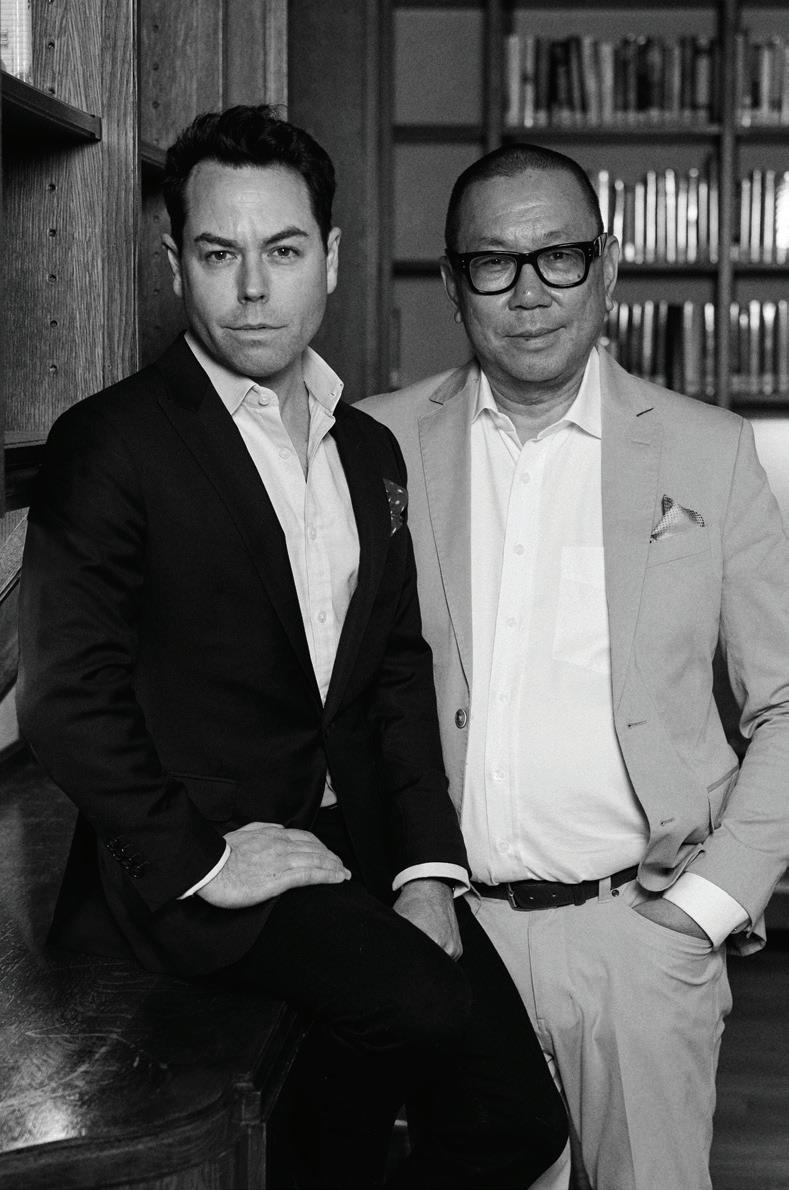
Yet the future he thinks most about is not his own—it is the next generation of designers. Fashion schools, he notes, face the challenge of balancing educational aspiration with workplace truth. “In 2001, there were 75 of us graduating from Parsons and almost no jobs. Last year, there were 280 graduates.” Social media, he warns, layers a glossy sheen over the industry, making success appear instant and effortless. “Young people see


career that lasts beyond a few seasons. His ethos is anchored students but also to women Verdavainne participates in fashion toward meaningful
Fashion schools, he notes, face the challenge of balancing




For aspiring designers hoping to launch their own line, his message is straightforward: Work for someone else fi rst. Learn their problems. Understand the customer—truly understand her. Build relationships before building product. “If it is real clothes you want to create, fi nd out who you are making them for,” he advised. “Only then do you learn what it takes to begin.”
their problems. Understand the customer—truly understand her. Build relationships before building product. “If it is real clothes you want to create, fi nd arrived in New York by necessity, but he built his house by
Cyril Verdavainne may have arrived in New York by necessity, but he built his house by design. Through craft, candor and purpose, he has become an essential voice in American eveningwear—one shaping not just what women wear but what the industry values.



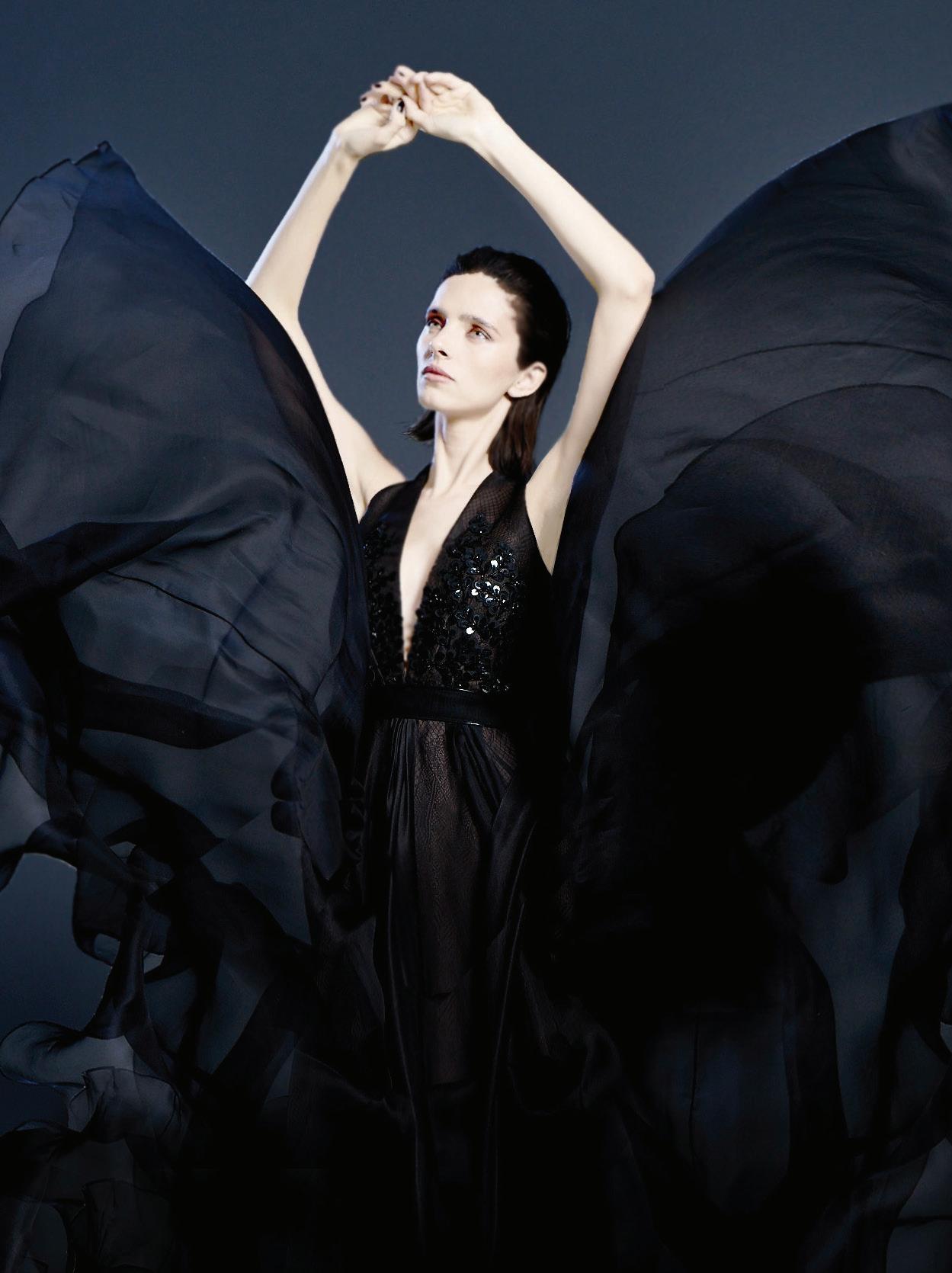







Born in New York City, Skarlett Blue creates unexpected everyday essentials for the bold, the cool and the ones who eff ortlessly mix elegance with edge. The brand rewrites the rules with ease and intention, crafting lingerie that moves with you and feels as incredible as it looks. With an all-women design team and an uncompromising focus on fi t, each piece blends fashion, comfort and quality across a size range that celebrates individuality. Because Skarlett Blue knows that when you’re comfortable with who you are, you’re unstoppable.
From the beginning, instead of chasing trends, Skarlett Blue built a brand grounded in thoughtful design, meticulous fit and an unwavering understanding of how women actually live in their lingerie. This is brought to life by the female-led design team, who intuitively understand their customers’ needs, frustrations and desires because they are designing for themselves, too. With each collection, the brand considers movement, comfort, support and the subtle details that turn a simple piece into something unforgettable.
Fit has quickly become the heartbeat of the brand. For Skarlett Blue, it isn’t just important; it’s everything. The team recognized early on that lingerie must be functional before it can be fashionable, but they never compromise on aesthetics. The brand’s pieces are tailored to move seamlessly with the wearer, offering the kind of comfort that goes unnoticed in the best possible way while still delivering the elegance, sensuality and style expected of a premium lingerie label.
As the brand has evolved, it has earned a strong position in the retail space. It is available in most major department stores,
including Bloomingdale’s, Nordstrom and Macy’s, as well as in over 400 boutique stores globally. Similarly, Skarlett Blue has a large online presence and is sold on e-commerce destinations, such as Free People, Shopbop, Bare Necessities and more. This multichannel accessibility has allowed the brand to grow beyond its NYC roots while maintaining a sense of intimacy with customers.
A recent milestone was Skarlett Blue’s New York City pop-up experience, which celebrated not only the brand’s collections but also its community. Over the course of two days, the event welcomed customers, influencers and the press, creating a uniquely immersive environment that brought the essence of Skarlett Blue to life. Personalized fittings allowed guests to understand the brand’s obsessive attention to fit, while displays of the latest Fall 2025 pieces showcased the design team’s dedication to creating lingerie that feels as incredible as it looks. Playful branded moments throughout the space reinforced the Skarlett Blue spirit. For a brand born in New York, debuting such a pop-up in its hometown was more than a marketing moment; it was a celebration of origin, identity and the loyal community that helped propel the brand forward.
“This year, Skarlett Blue evolved from a lingerie brand into a fullfledged attitude. We created collections and accompanying campaigns that were unapologetically cool, individual and always focused on superior fi t and feel,” said Tara Ocello, brand marketing director.
Today, Skarlett Blue stands as a brand that seamlessly blends fashion, comfort and quality, with several exciting initiatives underway.



WELLS FARGO CAPITAL FINANCE FACTORING
ASSET-BASED FINANCING
ACCOUNTS RECEIVABLE MANAGEMENT
ACQUISITION FINANCING
INVENTORY FINANCING
IMPORT AND EXPORT FINANCING
LETTERS OF CREDIT

In an industry that endlessly strives for the next big thing, having the flexibility to adapt at a moment’s notice is key to success. With Wells Fargo, you get the strength and stability you need, along with the nimbleness you want. Our flexible financing may support your growth, and our proven track record in factoring and receivables management helps make sure you’re ready for whatever’s next.
Tap into our knowledge, experience, and broad o ering of products so that your business’ success never goes out of style. Learn more at wellsfargocapitalfinance.com/apparel.
Peter Pugliese
Senior Vice President, Regional Sales Manager
212-703-3551
peter.pugliese@wellsfargo.com
Bringing you the latest breakthroughs in software, I.T. and fashion technology. From creative solutions to insights from experts, we are the source for all things fashion tech.
In today’s world, it’s hard to avoid overconsumption, particularly in fashion. Fast fashion is ubiquitous, and customers are constantly bombarded with trends and new “drops” on social media, all meant to encourage them to keep buying.
But what happens when clothing is no longer on trend and shoppers no longer want it? It ends up in a landfill and may not break down for hundreds of years.
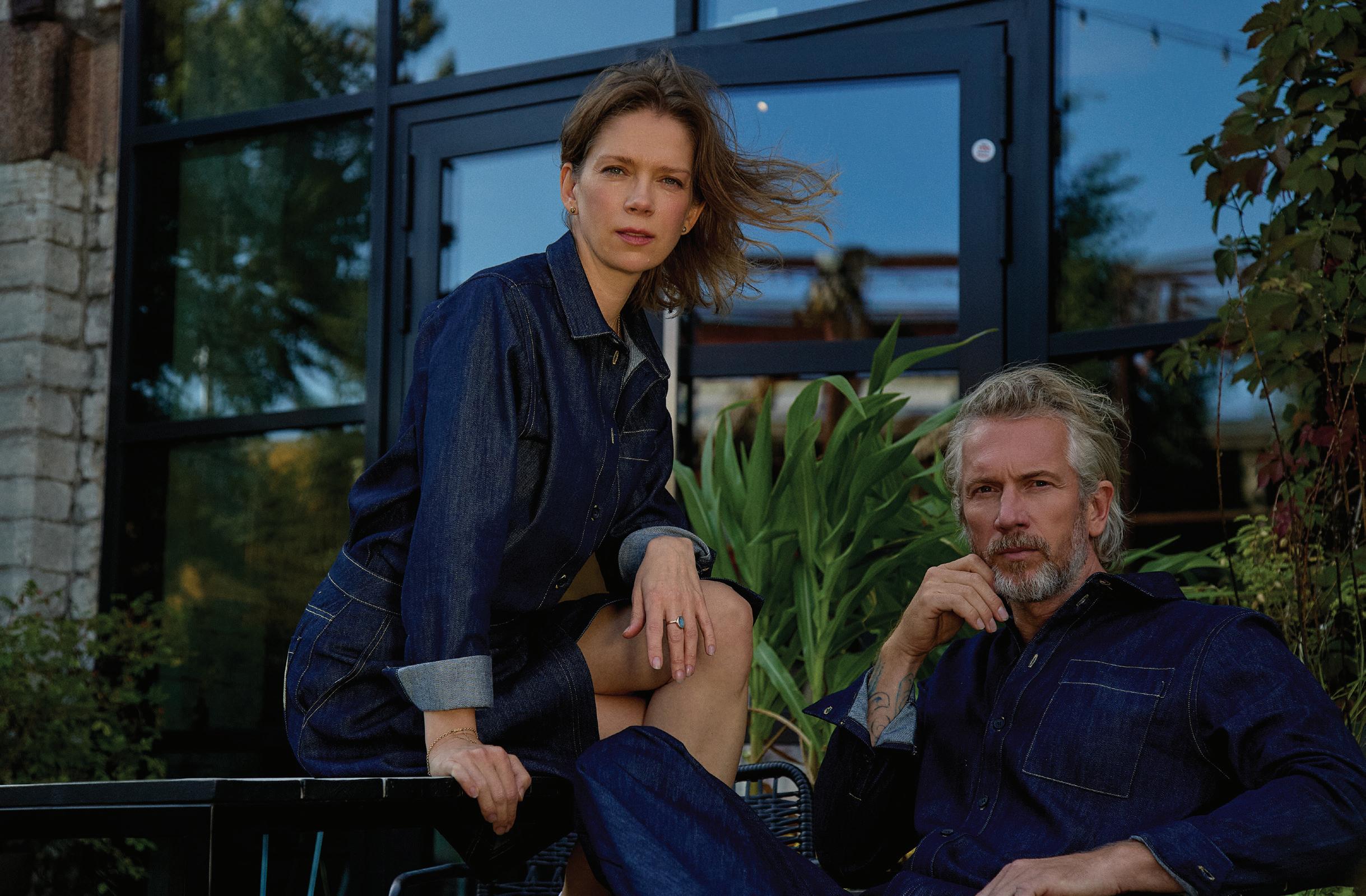
Fashion brand Reet Aus wants to change that. Founded in 2012 by PhD, visionary fashion designer, researcher and sustainability advocate Reet Aus, this eponymous pioneering sustainable fashion company aims to reduce the environmental footprint of the polluting fashion industry.
Aus has been recognized for leading industrial upcycling and circular fashion innovation, including through her work as a senior researcher and head of the Sustainable Design and Materials (DiMa) Lab at the Estonian Academy of Arts; as the subject of “Out of Fashion,” which chronicles her path from Tallinn (Estonia’s capital) to Bangladesh in her mission to dismantle fashion waste; and as a recipient of the Best Environmentally Friendly Product or Service from the Ministry of the Environment, Estonia.
“Early in my career in design, I became aware of fashion’s staggering environmental toll, with millions of tons of textile waste generated each year,” said Aus. “I knew there was a way to drive positive change and embraced upcycling (transforming waste into new designs) as my path forward. In 2012, I founded the Reet Aus brand, dedicated to
sustainable fashion through industrial upcycling, while also advocating for transparency and collaboration in the industry by working with brands and educating the next generation of designers. My mission is to reshape fashion into a force that benefits both people and the planet.”
Through thoughtful, certified circular design that turns textile waste into high-quality garments while ensuring fair labor practices and full transparency throughout the value chain, every Reet Aus garment is made with intention. Reet Aus aims to conserve resources, extend the life of textiles and minimize waste while providing customers with beautiful, minimalist pieces they can wear for years to come.
The designs themselves challenge the status quo through their story of transformation—turning textile waste into wearable, durable and desirable clothing. From seamless knits crafted from recycled wool sourced from post-consumer garments to the brand’s beloved signature T-shirts and denim products that blend 100% recycled cotton and Tencel lyocell fibers using Refibra technology, each product is intentionally designed to get the most out of each piece of fabric and reduce waste.
While Reet Aus pieces have a strong circularity story, they’re also beautifully wearable. Styles like the effortlessly versatile Kimono Jacket, the utilitarian yet chic Recycled Denim Tote Bag and the brand’s timeless Arrow Motif Up-shirt are easy-to-wear basics that add a strong backbone to any wardrobe.

A key part of Reet Aus’ brand ethos is waste reduction for a better fashion future. With traditional clothing manufacturing wasting 25% to 40% of textiles during the cutting stage, Aus saw an opportunity to do better. In collaboration with the Stockholm Environment Institute’s Tallinn Centre, she spearheaded the brand’s signature Upmade method, an independently developed, scientifically validated system for scaling industrial upcycling.
This circular business model transforms garment production leftovers into new, high-value clothing through a systematic upcycling process. The Upmade method shows that, with close collaboration between brands and manufacturers, 50% to 80% of textile offcuts can be turned into new garments—reducing waste, lowering environmental impact and strengthening long-term industry partnerships.
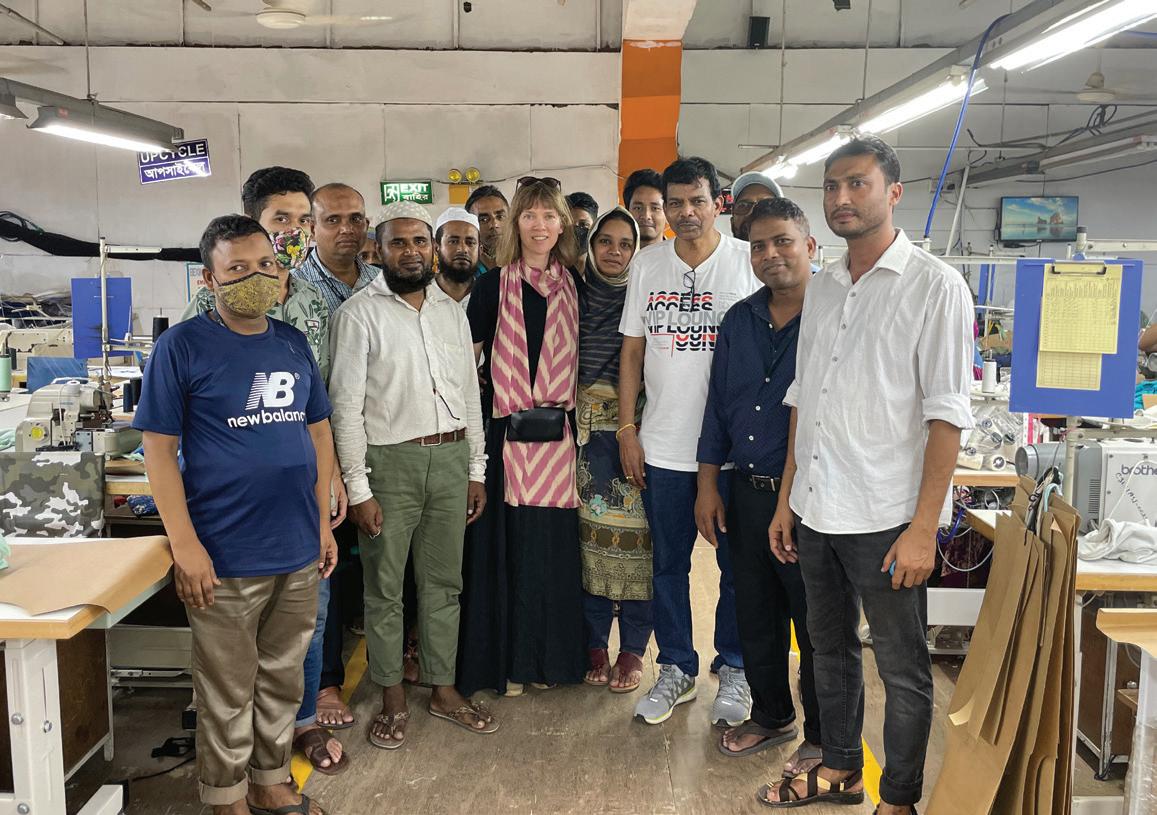


Through Upmade, the Reet Aus brand provides a reliable, traceable system for brands and factories to embed true circularity in production.
In 2024, Reet Aus launched digital product passports (DPPs) to enhance transparency across the entire value chain and support its commitment to circular design. Each passport provides verified, comprehensive data on each garment, including its origin, materials, production process and guidelines for reuse, repair and recycling.
A key component of the DPP is the cradle-to-gate life-cycle assessment (LCA), which offers scientific insight into the garment’s environmental impact, helping to close the loop and extend the life cycle of Reet Aus products.
This innovative tool supports EU sustainability initiatives and aligns with upcoming regulatory requirements under the Ecodesign for Sustainable Products Regulation (ESPR), positioning Reet Aus at the forefront of responsible, circular fashion innovation.
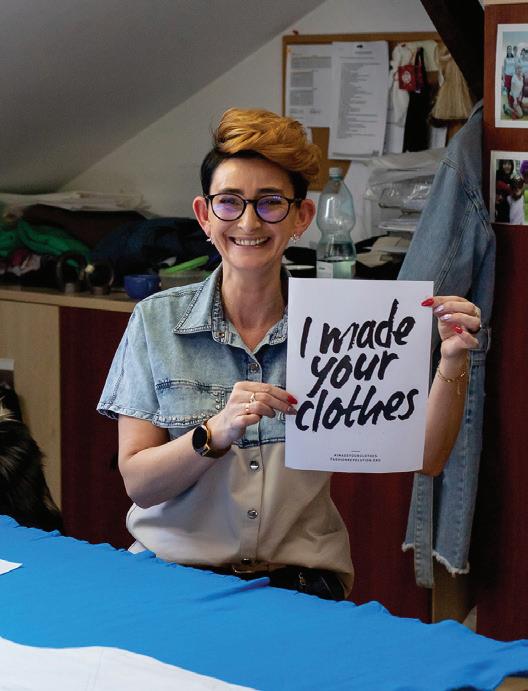
Criteria for Upmade certification include products made from textile waste or leftovers; safe, fair and ethical working conditions; full documentation of materials and processes; and the absence of hazardous chemicals restricted in the European Union or the United States. Upmade-certified garments, on average, reduce water use by 99% and energy use by 91%, and emit 92% less CO₂.
Reet Aus implements Upmade in its own designs and will soon offer it to other brands seeking to improve their own circularity.
A key element of the system is the Upmade digital information platform, designed to enable data flow between brands and manufacturers. The platform analyzes production waste, identifies leftover fabric types and quantities, and supports the design of new upcycled products. It also calculates the environmental impact of upcycled items across multiple categories.
At its core, the digital tool combines two functions: a software system for data exchange and waste analysis, and an environmental impact calculation model. Using structured production data, the platform provides brands with essential insights to design circular products and make informed production decisions. In effect, the Upmade model delivers a data-driven service that helps fashion companies integrate upcycling into their supply chains in a scalable, transparent way.



This article is part of the development of the Reet Aus brand’s export capacity and has been cofunded by the European Union.
This article is part of the development of the Reet Aus brand’s export capacity and has been cofunded by the European Union.


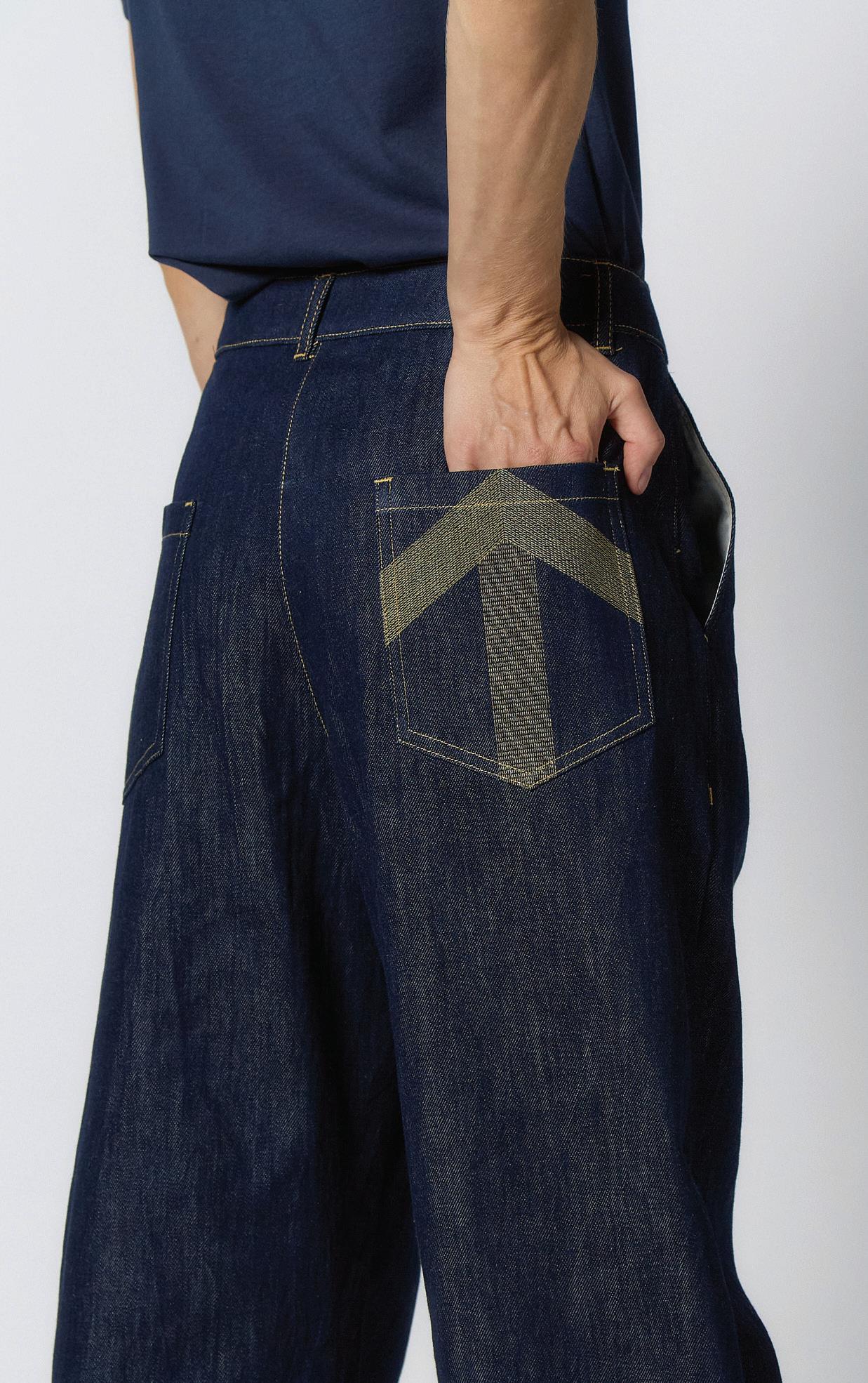
Kits Eyecare announced the release of Pangolin Gen-3, the latest evolution of its AI-enabled eyewear line. The new launch introduces two integrated cameras and advanced vision-assisted intelligence, delivering the most powerful and intuitive interface Kits has ever delivered.
Unlike earlier-generation smart glasses that relied on voice alone, Pangolin Gen-3 introduces integrated microcameras that allow the glasses to understand, interpret and respond to the world through contextual AI vision.
This enables breakthrough features such as:
• Vision-activated personal assistant: AI assistant for real-time translation, object recognition and general knowledge queries
• Real-time coaching and feedback: From navigation to training to task guidance
• Instant capture for memory and documentation: Frictionless, hands-free photo and video via intuitive discrete frame controls
“By giving AI the ability to see what you see, Pangolin Gen-3 moves from a passive assistant to an active, intelligent companion,” said Roger Hardy, co-founder and CEO of Kits. “This is where eyewear and technology finally meet in a way that feels natural, useful and magical.”
Kits named the line after the pangolin, one of nature’s most uniquely evolved creatures: agile, adaptive and astonishingly efficient. The name reflects a philosophy that has shaped Kits since day one: build smart, protect the user and continually evolve.
“Kits has always stood for making vision easy and accessible,” explained Hardy. “Pangolin takes that mission into the future—helping people not only see better but live better with AI at the center of their day.”


Italian legwear brand Oroblù, owned by CSP International Fashion Group (CSP), has collaborated with The Lycra Company to introduce a bio-derived line of tights specifically designed to be worn with sneakers. Utilizing the new Lycra EcoMade fiber, derived from industrial corn, this launch aims to establish a new standard for low-environmental impact legwear within the fashion industry.
The Lycra EcoMade fiber is produced using a specific variety of corn cultivated for industrial use. The manufacturing process involves the fermentation of glucose extracted from corn starch to create a primary plant-based ingredient. This renewable component replaces the fossil-based materials traditionally used in high-performance elastane fibers. According to the company, the resulting material contains 70% renewable content while maintaining the elasticity, comfort and durability associated with the brand’s standards.
“Working side by side with partners like CSP and Oroblù allows us to fully enhance the supply chain and accelerate the market launch of innovative solutions like the new bio-derived Lycra EcoMade fiber,” said Alistair Williamson, The Lycra Company’s VP for EMEA and South Asia. “The result is a product that combines performance and environmental responsibility, while maintaining the comfort, freedom of movement and quality expected by consumers.”
Product development focused on leveraging the performance of the new fiber to create a generation of tights suited for the growing sneaker trend. The design features a reinforced knit in the foot area to provide increased resistance against shoe friction and ensure a comfortable fit.
Carlo Bertoni, chief executive officer of CSP, stated that the collaboration aligns with the group’s broader sustainability goals. “Our concrete and evolving sustainability path is documented by periodic reports on our [sustainability] and constant commitments in the choice of materials with low environmental impact,” said Bertoni.
Both the polyamide and elastane components of the tights are derived from corn. The company has also applied sustainable practices to the packaging, which utilizes a recycled plastic bag and a Forest Stewardship Council-certified recycled paper case.














Debra Hazel Communications North Las Vegas, Nevada 201-618-5247
The last two months of 2025 saw a slew of openings, including new flagships from major apparel brands.
Irish-inspired sustainable apparel brand Frank & Eillen has opened its first standalone boutique at 753 Madison Ave. Lululemon’s 17,000-square-foot flagship has debuted at 524 Broadway in SoHo with a new design concept, paying homage to its Pacific Northwest roots. Just in time for the holidays, Chanel revealed its two-level, 4,260-square-foot in-store boutique at Bloomingdale’s. Amsterdambased Extreme Cashmere has come to North America with a flagship at 152 Mercer St. Aritzia’s new, 25,000-square-foot flagship at 89 Fifth Ave. in Flatiron is nearly three times the size of its first shop in the area!
Just a year after opening its first brick-and-mortar location in the Hamptons, Handvaerk has debuted at 1225 Madison Ave. Not far away, Gérard Darel came to 1003 Madison. Empire State Realty Trust Inc. (ESRT) has signed a new lease with Tourneau LLC for a 3,767-square-foot Rolex retail store at 86 N. Sixth St. in Williamsburg, Brooklyn. The property, located at the southeast corner of Wythe Avenue and North Sixth Street, is part of ESRT’s North Sixth Street Collection.
By Debra Hazel
Australian fitness brand FS8 will make its New York City debut with a studio at Three Waterline Square. Planet Fitness has leased a 27,000-square-foot space at Aldrich Plaza in Howell, New Jersey, marking a relocation and expansion within the local market. Chelsea Piers Fitness will open a 47,000-square-foot studio at 135 E. 57th St.
Marking its 100th location in the U.S. and 112th globally, Topgolf opened a two-level venue in New Braunfels, Texas. Located at 427 Creekside Way, Topgolf New Braunfels has 62 outdoor climatecontrolled hitting bays spanning two levels. Each bay has lounge-type furniture or high-top tables where groups can cheer—or heckle—the other players. The location employs roughly 200 Playmakers, including bay hosts, bartenders, ball retrievers and more.
Celebrating its 55th anniversary, Kings Plaza, Brooklyn’s only enclosed super-regional shopping center, is welcoming six new retailers, including Urban Planet, Coach, Applebee’s, Pacsun, Little Tokyo and Miniso.
Innovation Kitchen & Bathroom has signed a long-term, 7,000-square-foot showroom lease at 1796 Route 27 in Edison—the Staten Islandbased company’s first showroom in New Jersey. The Designery, an immersive, full-service kitchen, bath and closet design center featuring high-quality cabinets, countertops and flooring, celebrated the grand opening of its latest New York showroom at 591 Willis Ave. in Williston Park.
Carnegie Hospitality will create a street-level restaurant at 200 Chambers St., a Tribeca luxury condominium tower. Slated to open this summer, Carnegie Diner & Cafe and Delos Greek Restaurant at 200 Chambers—the first in Lower Manhattan
from Carnegie Hospitality—will share 8,450 square feet across the entire blockfront of West Street between Chambers and Warren streets. Miamibased Mediterranean restaurant Motek is opening yet another location, this time at 184 Bleecker St., once home to Café Figaro.
It’s been busy in Beverly Hills: H&M launched a 5,000-square-foot concept store at 370 N. Beverly Drive, featuring capsule collections and resale. Cashmere brand Elle and Riley crossed the Pacific from New Zealand to Beverly Hills, with a 9619 Brighton Way shop. Casablanca has come from Paris to Beverly Hills at 469 N. Canon Drive, formerly the home of Jimmy Choo.
Mitsuwa Marketplace brings its assortment of flavors, products and experiences of Japan to its newest location at 4955 Katella Ave. in Cypress, California. The Cypress marketplace will feature Mitsuwa’s signature selection of high-quality Japanese groceries, fresh meat and seafood, produce, snacks, beverages, cosmetics, kitchenware and exclusive imported goods. New to this location is an expanded hot and cold deli, offering a broader selection of freshly prepared Japanese dishes, authentic sushi, Japanese-style bento, grab-andgo meals and seasonal specialties made daily for shoppers seeking quality and convenience.
Fast-casual Tex-Mex restaurant Barrio Burrito Bar has opened its newest location at 20449 State Road 7 in Boca Raton, Florida, inside Mission Bay Plaza. Texas-style barbecue restaurant Lewis Barbecue will open in Raleigh, North Carolina, in the Iron Works district at Salvage Yard. Savers Value Village has acquired three new store locations totaling roughly 80,000 square feet in the Las Vegas market. The deals include a 32,186-square-foot space at Horizon Point in Henderson, a 24,125-square-foot freestanding building at 7239 Spring Mountain Road (formerly a 99 Cents Only Store location) and a former 19,887-square-foot Big Lots on Blue Diamond Road.

Managing Partner and EVP, Beauty, Health and Wellness, 5WPR
The influencer marketing landscape is at a turning point. As we begin 2026, the industry’s obsession with reach is giving way to something far more valuable: trust, alignment and the power of authentic community. In beauty, health and wellness, where consumers look to content creators not just for inspiration but for validation and guidance, the old playbook of transactional partnerships is losing its effectiveness. Influence is no longer something brands can purchase for a moment; it must be earned over time through genuine connection and shared values.
The Declining Impact of the Traditional Influencer Model
For years, the influencer marketing formula was straightforward: identify creators with massive followings, secure a sponsored post and measure success through impressions and reach. But audiences have evolved. They can immediately recognize when a partnership feels forced, misaligned or purely promotional. One-off sponsored content, especially when disconnected from a creator’s broader narrative, no longer resonates the way it once did. In fact, it can actively erode credibility, not only for the influencer but for the brand itself.
In an oversaturated digital landscape where consumers are bombarded with content at every turn, relevance has replaced reach as the most valuable currency. Brands that continue to chase follower counts over meaningful engagement are missing the fundamental shift happening in how influence actually works.
By Ilisa Wirgin
The most impactful creators today, and increasingly in 2026, are those who lead communities rather than simply amass audiences. These influencers foster ongoing conversations, encourage peer-to-peer engagement and create spaces where followers feel genuinely seen and heard. Their influence is built through dialogue rather than broadcast, making their recommendations feel organic, credible and earned.
Community-led influencers are trusted because they show up consistently. They engage directly with their followers, listen actively to feedback and reflect the values of the people who follow them. This consistency creates a level of trust that cannot be replicated through paid promotions alone. When these creators recommend a product or align with a brand, their community pays attention, not because they were paid to speak but because they have earned the right to be heard.
The way brands evaluate potential influencer partners must fundamentally evolve. Follower counts alone no longer tell the full story. Instead, brands should focus on the depth and quality of engagement, the consistency of messaging and the behavior of the community itself. Are followers genuinely interacting with content? Do they trust the creator’s recommendations? Does the partnership feel like a natural extension of the influencer’s existing narrative?
Values alignment is non-negotiable. Today’s consumers, particularly in beauty, health and wellness, expect authenticity, transparency and cultural awareness. Influencers who have built trust by staying true to their beliefs and advocating for causes that matter to their communities will continue to drive meaningful impact, even as platforms and formats evolve. Brands that overlook this alignment risk not only waste resources but also damage their reputation in the process.
In 2026, successful influencer outreach will look far more like partnership development than traditional pitching. Brands need to invest the time to understand a creator’s community, voice and long-term goals before initiating a collaboration. This requires research, patience and a willingness to approach influencers as strategic partners rather than content distributors.
The most effective partnerships are collaborative by design. Influencers should have creative freedom to shape storytelling in a way that feels natural to their audience. Authenticity cannot be templated, and rigid brand guidelines often stifle the very qualities that made the influencer compelling in the first place. Flexibility is essential, not just in messaging but in how success is defined and measured.
Equally important is thinking beyond short-term activations. Long-standing relationships consistently outperform one-off campaigns, creating cumulative trust and stronger brand equity over time. When an influencer becomes a genuine advocate for a brand, their endorsement carries far more weight than any single sponsored post ever could.
As influencer marketing matures, so must the way success is measured. Engagement quality, sentiment analysis and sustained conversation now matter more than raw impressions. Brands should focus on how content is received, discussed and shared, not just how far it travels. The strongest partnerships often feel seamless to the audience, embedded naturally within an influencer’s ecosystem rather than standing out as obvious advertising.
When a community embraces a message and carries it forward through their conversations and content, it is a clear signal that the partnership is working. These organic ripple effects are where true influence lives, and they cannot be manufactured through impressions alone.
While new platforms, technologies and AI-driven tools will continue to reshape the influencer landscape, one fundamental truth remains: trust is still built human to human. Community-led partnerships offer brands a way to stay grounded in authenticity amid constant technological and cultural change.
The brands that will lead in 2026 are those that understand influence as a relationship, not a tactic. By prioritizing community over scale, collaboration over control and credibility over short-term buzz, influencer marketing can evolve from a channel into a long-term growth strategy. The future of influence is not about who has the loudest voice; it’s about who has earned the trust to be heard.







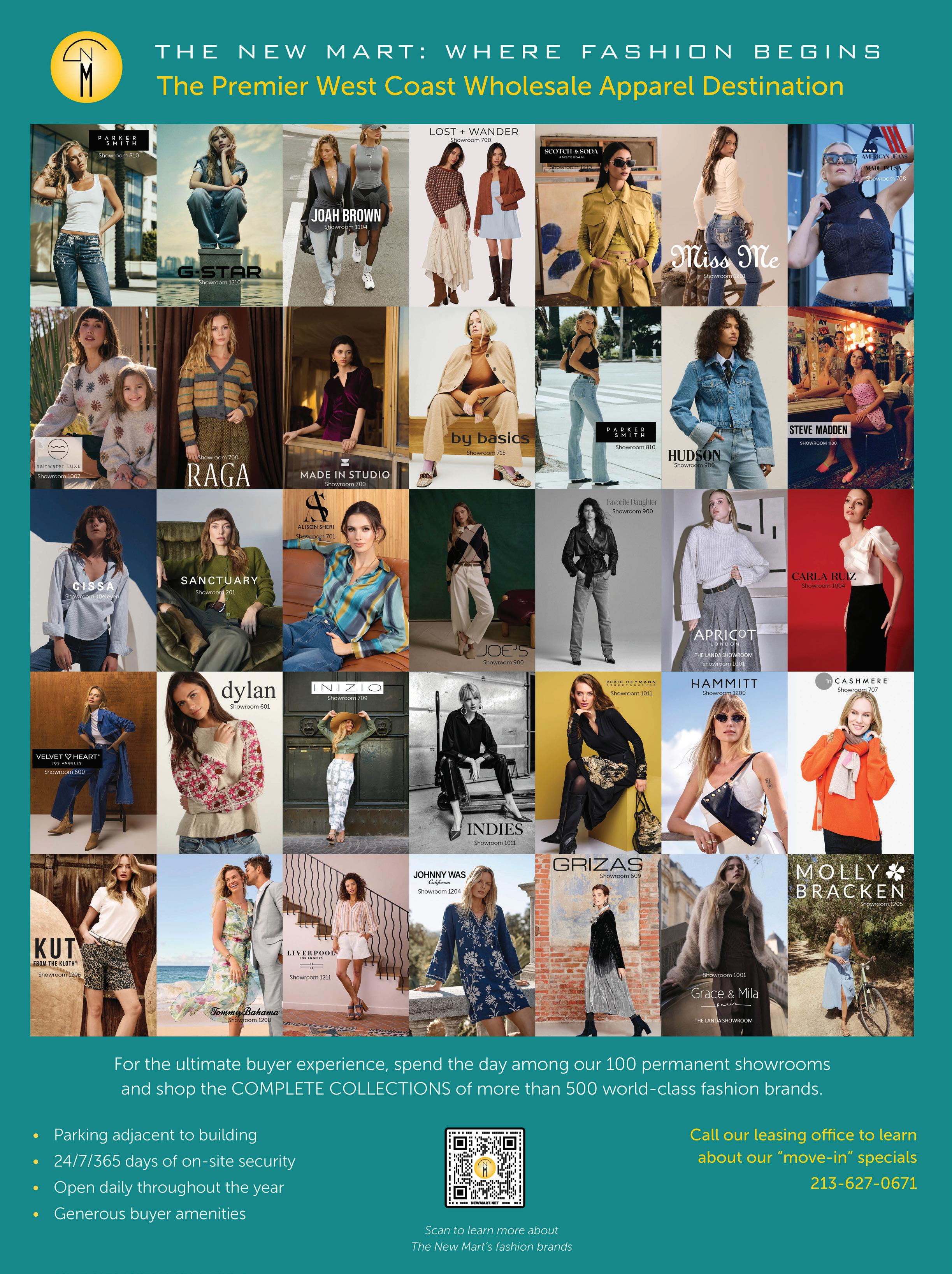



Founder, Chief Executive Officer, Chief Technology Officer, Multimedia Plus
For years, retail communication followed a predictable pattern. Corporate teams sent emails, PDFs, decks and memos. Store leaders interpreted them. Associates tried to extract the essentials between customers, fitting rooms and floor moves. Information often arrived diluted, delayed or unclear.
Today’s stores no longer operate at a pace that allows for slow, text-heavy communication. Fashion cycles move quickly, customer expectations shift daily and associates work in an environment defined by movement and immediacy. They are not sitting at desks reading long updates. They are multitasking on the sales floor, adapting to trends and answering customer questions in real time.
This is why short-form video has become one of the most effective communication tools in retail. It is fast, clear, human and aligned with the way associates actually work.
A Visual Industry Deserves Visual Communication
Fashion is inherently visual. We teach fit, silhouette and styling. We demonstrate how a fabric drapes, how a jacket should be steamed, how a table should be set. None of this translates well in long text formats.
Video posts allow leaders to show exactly what they
By David Harouche
mean. A 20-second clip can demonstrate a fold, a styling direction or a visual standard that could take pages to explain. In doing so, it reduces guesswork and strengthens consistency across stores.
The added benefit is speed. Instead of waiting for polished decks or cascading calls, leaders can record guidance on the spot. A merchandising director can walk through a new capsule collection. A regional manager can highlight top priorities for the weekend. A store director can demonstrate how to set up a mannequin that morning. Video allows communication to move at the rhythm of retail.
One of the biggest gaps in large retail organizations has always been visibility. Associates rarely meet senior leaders, and messages often feel distant or overly corporate. Video closes that distance.
When associates can see and hear leaders regularly, even through short clips, it builds connection. Tone becomes clear. Intent becomes clear. Priorities become clear.
Retail teams consistently say that a simple 15-second check-in from a leader feels more motivating and personal than a perfectly written email.
Associates are not looking for more content. They are looking for clearer content.
• Short-form video consistently outperforms traditional communication because:
• It takes less time
• Associates can watch a short clip during a lull or between customers.
• It eliminates ambiguity
• There is no guessing about what good looks like when they can see it
• It is easy to revisit
• A video can be replayed as a reference, especially for new hires
• It improves execution
• Consistency in visual merchandising, service behaviors and product storytelling becomes easier and more reliable
In fashion, where brand expression lives in small details, clarity is essential.
There was a time when video communication meant studios, lighting, editing and approvals. That era is over. The most effective videos today are filmed on phones, often on the sales floor, sometimes in one take. This shift has encouraged communication that is more frequent, more natural and more human. Leaders do not need a script; they need a message. Teams respond to authenticity far more than production value.
Traditional communication relies on multiple layers of translation. Headquarters sends the message to regional leaders, then district leaders, then store managers. By the time guidance reaches associates, it may no longer resemble the original intent. Video bypasses that entire chain.
One message. One voice. One clear direction. This reduces pressure on store leaders who no longer have to translate corporate language. It also helps headquarters respond quickly to changes in product, trends, traffic or floor conditions.
Retail moves fast. Communication should match it.
The next generation of retail talent grew up communicating through short-form video. They expect clarity, humanity and immediacy from leadership. They expect to see the people guiding the brand.
Video posts deliver exactly that.
They make communication faster. They improve alignment. They help retail feel more connected from headquarters to stores to associates.
In a moment when fashion retail must adapt quickly to shifts in culture and customer behavior, clear communication is not simply helpful; it is essential.
Short-form video is no longer the future of retail

CEO and Founder of 7thonline
By Max Ma
When most shoppers think about AI in retail, their minds go straight to splashy customer-facing innovations like AI stylists that help choose the perfect outfit or sales associate chatbots that never sleep. But for those inside the industry, the real value lies behind the scenes. Not only do AI-powered back-end systems improve margins and reduce costs; they also promote agility during challenging market conditions and unlock capital for further innovation throughout the organization.
If the goal of AI adoptions is to increase profitability and enable smarter decisions at scale, then backend systems are the fuel; AI is rapidly transforming the foundational layers by improving demand forecasting, supply chain planning and inventory management. Retailers seeking to improve flexibility and resiliency in 2026 should focus their AI budgets on forecasting precision and operational optimizations that increase inventory productivity.
The AI Advantage: Improved Inventory Management
Let’s start with inventory, the lifeblood of any retail business. Getting the right products to the right place at the right time has never been more difficult— especially as new selling channels emerge. AI changes that by breaking down insights to transform how retailers forecast, allocate and replenish stock at a granular level.
Accurate forecasting is the cornerstone of better inventory management. Instead of relying on static models or last year’s sales patterns, AI systems can account for real-time data, including weather and social media buzz, to analyze demand signals and predict buying behavior more precisely for dynamic in-season decisions. As a result, retailers can ensure they always have the right products in stock and better meet customer demand.
AI-enhanced retail merchandise planning solutions are unlocking real value by enabling smarter preseason decisions that align with consumer wants. With a deep understanding of which stickkeeping units (SKUs) will sell where, planners gain critical visibility and can build more accurate, localized assortment plans for every market. Better planning leads to better margins and fewer missed opportunities. And in an industry where every percentage point counts, these improvements can be the difference between profit and loss.
Retailers that integrate AI across planning and
inventory management processes are able to optimize assortments by location and channel, make faster merchandise decisions and align teams around shared data and key performance indicators (KPIs). The payoff is significant: higher sell-through, reduced markdowns and lower carrying costs. We have seen clients experience up to a 35% drop in inventory carrying costs, a 25% reduction in lost sales and 3 times higher inventory turnover.
For brands to meet the expectations of today’s shoppers, siloed legacy systems must go. The key to unlocking profitable growth is to connect AI-driven forecasting, allocation and replenishment tools across every sales channel and business function. With AI providing a centralized view of demand, inventory and performance, retailers can make faster, more confident decisions from assortment planning to lastmile fulfillment.
This integration also benefits team collaboration; cross-department teams are no longer working off of stale datasets or outdated reports. AI helps unify decision-making, reducing friction and aligning goals across departments. The result? Better outcomes, less burnout and smarter use of talent.
One of AI’s most promising features is its ability to improve over time. The more data a retailer feeds into its system, the more accurate and nuanced its forecasts become. With every season, drop or launch, AI “learns” and refines its predictions, unlocking new insights and efficiencies.
Retailers who adopt early are reaping compound benefits. As the gap between AI adopters and laggards widens, the early movers will hold a measurable advantage in agility, profitability and customer satisfaction. These tools are building a more resilient, responsive retail ecosystem.
It’s tempting to chase the most futuristic uses of AI, but the reality is clear: the biggest gains in retail right now are coming from back-end optimization. While retailers continue to experiment with various AI applications, those investing in AI for planning, forecasting and inventory management are already seeing returns. Retailers who use AI to improve the basics are building the foundation for tomorrow’s success.






Capital One® Commercial Banking offers you the financial services your business needs to succeed. You get customized solutions designed by a dedicated team of Consumer Products bankers with a combined track record of more than 75 years in the apparel, footwear, accessories and beauty sectors—and they’re backed by the full-services capabilities of a top 10 U.S. bank.*
Let us create a solution that matches your vision
capital.one/commercial

Hub International
frank.delucia@hubinternational.com
212-338-2395
By Frank DeLucia
Whether it’s a hurricane disrupting port operations, a factory fi re, civil unrest aff ecting transportation routes or prolonged utility outages, U.S. apparel manufacturers have faced repeated production interruptions in recent years. Business interruption (BI) insurance is designed to help apparel operations stay financially stable through these unexpected disruptions.
What Does Business Interruption Insurance Cover?
First, it’s important to understand that BI insurance is not a stand-alone policy. It is added to a commercial property policy and responds when physical damage to insured property prevents normal manufacturing operations.
For example:
• A fire damages your cutting and sewing floor.
• A hurricane destroys your warehouse or renders machinery inoperable.
• Civil unrest damages a distribution facility or prevents employees from safely accessing the plant.
In these scenarios, BI insurance helps cover the resulting financial losses.
Typical expenses BI insurance reimburses for apparel manufacturers include:
• Mortgage, rent or equipment lease payments for factories, machinery or warehouses
• Lost revenues from halted production runs or cancelled purchase orders
• Employee payroll, helping retain skilled sewers, cutters, patternmakers and quality control (QC) staff during downtime
• Taxes and loan payments that continue even when production stops
• Relocation or temporary facility costs, such as renting an alternative sewing or fi nishing facility while repairs are made
What Is Contingent Business Interruption (CBI) Coverage?
For apparel manufacturers, contingent business interruption is especially important due to globalized and time-sensitive supply chains.
CBI coverage helps protect revenue when your business is interrupted after a key supplier or downstream customer suffers a physical loss.
Examples include:
• A textile mill in another state or country shuts down due to fire or flooding
• A dye house experiences equipment damage and cannot finish fabrics
• A packaging or trim supplier suffers storm damage that delays delivery
• A distribution partner’s facility is destroyed, disrupting fulfillment
Just like standard BI, CBI is supplemental and must be added to your existing BI policy.
If your BI losses exceed your policy limit, your business pays the remaining amount out of pocket. To avoid this, evaluate gross earnings, production plans and future sales projections.
Key questions for apparel manufacturers include:
1. How long would recovery take after a physical loss? Consider the time required to repair specialized equipment (e.g., automated cutters, knitting machines) or rebuild dye/ finishing areas.
2. What would it cost to relocate production temporarily? Many apparel manufacturers rely on highly specialized processes that may only be available at certain U.S. or offshore facilities.
3. How vulnerable is our supply chain? Think about mills, dye houses, trim suppliers, logistics partners and distribution centers— any of which could interrupt your ability to deliver finished goods.
Cost drivers for BI coverage include:
• Your specifi c manufacturing niche (e.g., cutand-sew, knitting, dyeing, finishing)
• Number of employees and locations
• Value of machines, equipment and inventory
• Dependence on global suppliers or domestic contractors
Because BI and CBI limits and exclusions vary widely, it’s essential to work closely with your insurance broker to determine the right level of protection.



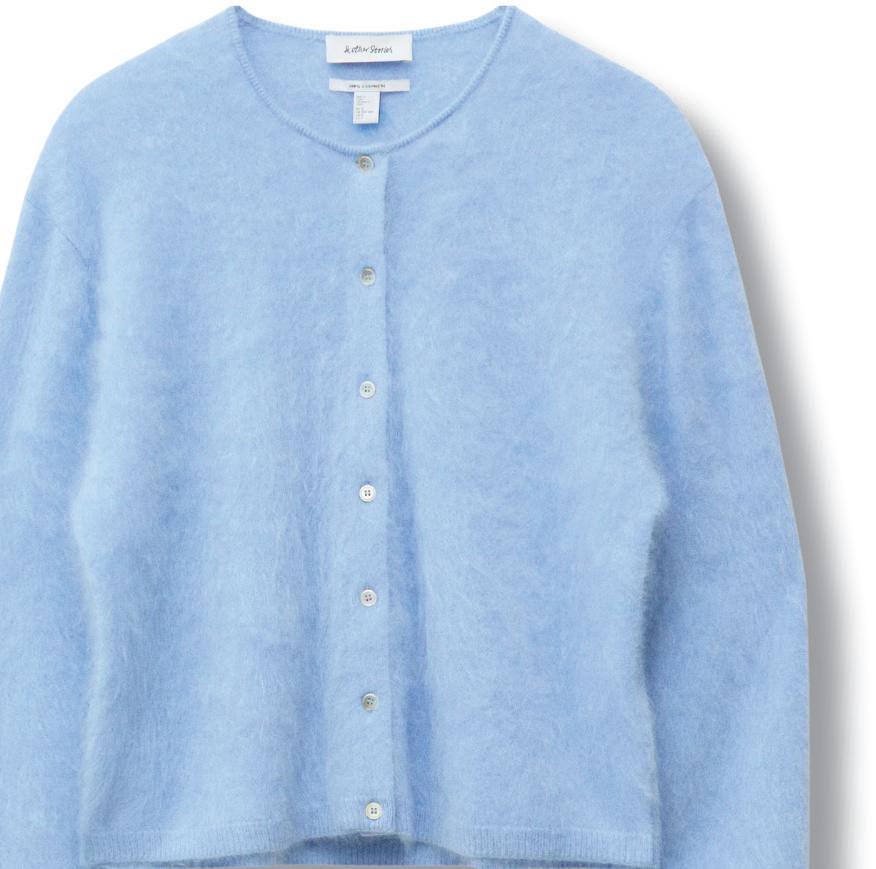












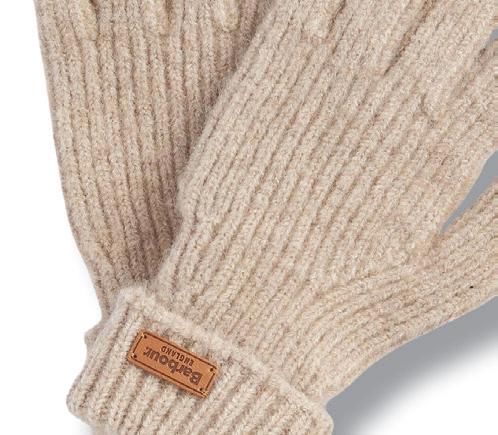

$379 | stories.com










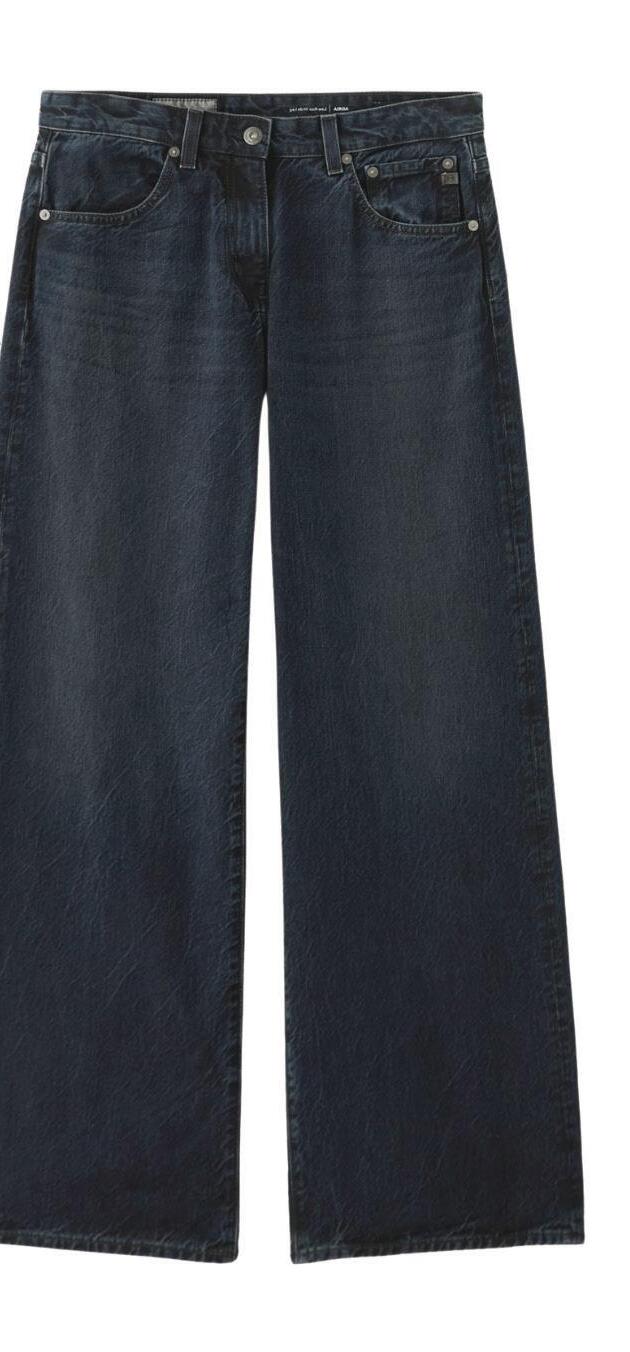

1. & Other Stories: Knitted from 100% cashmere, this cardigan has a brushed, worn-in feel. The cropped, loose construction features dropped shoulders and ribbed detailing at the hem and cuff s, creating a relaxed yet polished silhouette.

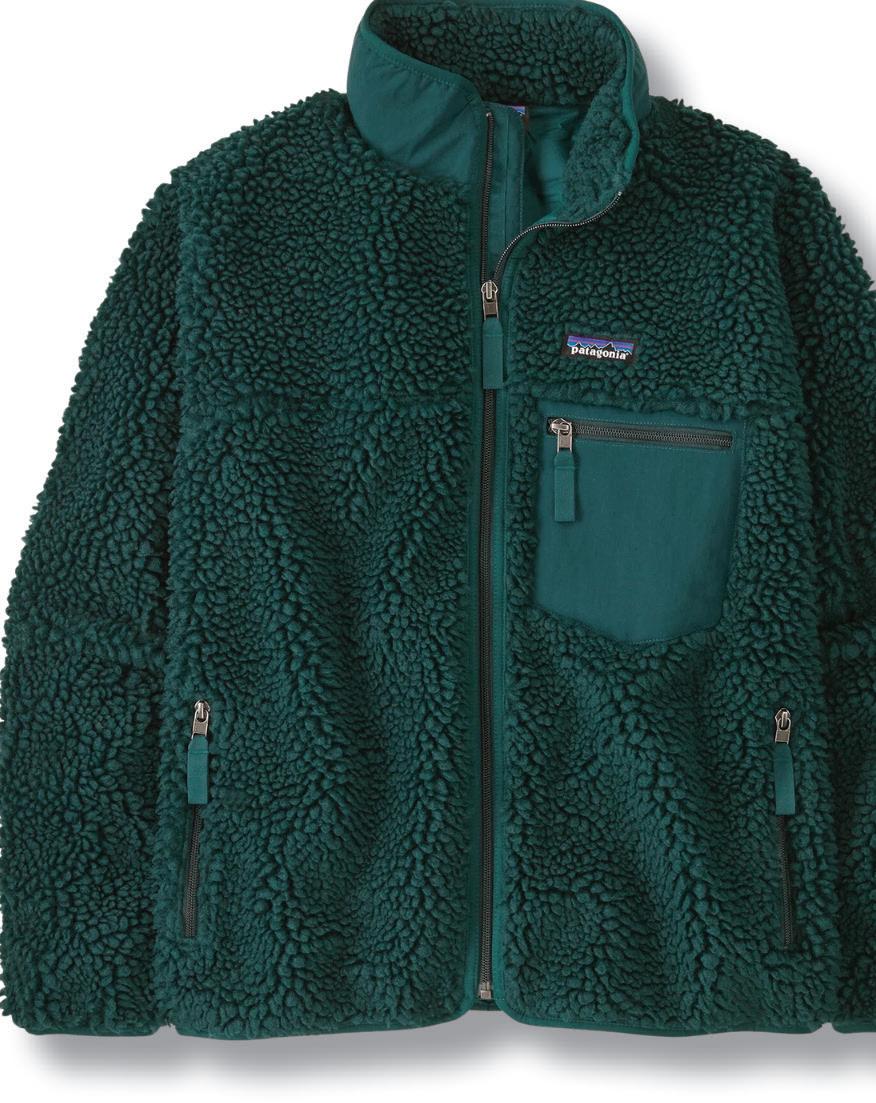


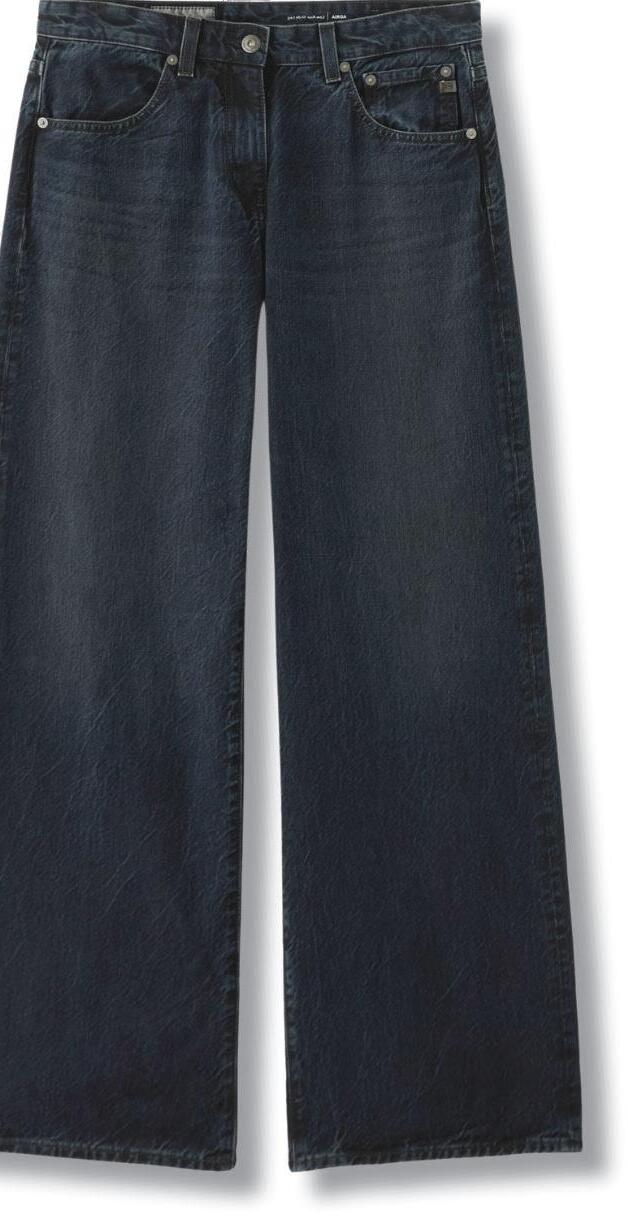

2. Barbour: A classic wintertime essential, these gloves are crafted from a soft boucle yarn with a knit that’s thick enough to protect against cold weather yet not overly bulky or restrictive.

$50 | barbour.com




3. AG Jeans: These relaxed, low-rise jeans feature a wide-leg silhouette and are finished to achieve a worn, broken-in look without sacrificing structure. The result is a comfortable, seamless fit with vintage influence.
$265 | agjeans.com


$249 | patagonia.com



4. Patagonia: This modern take on Patagonia’s heritage fl eeces features wind-blocking construction that protects against the elements. The plush fl eece texture adds visual interest and extra warmth, while its durable lining ensures a long lifespan.



5. Arctic Fox and Co.: Oversized and soft, this checkered scarf adds warmth and color to winter days. Made from recycled materials, it features a brushed texture for a cozy feel and is fi nished with fringe for movement.
$49 | arcticfoxandco.com

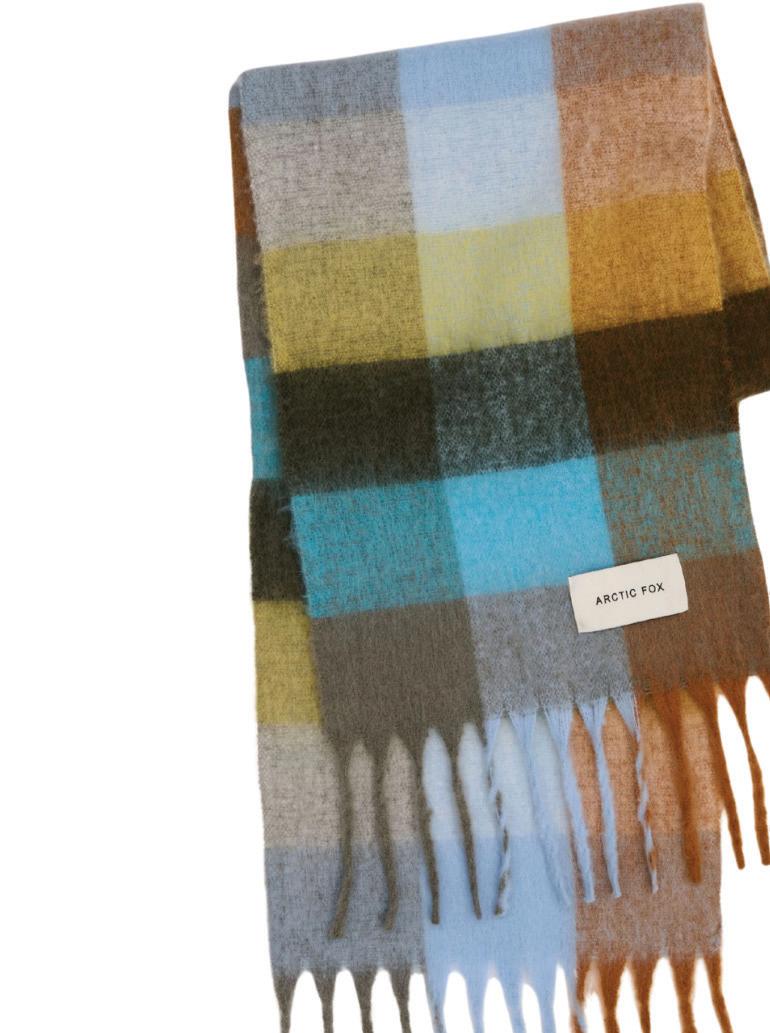







$220 | blundstone.com
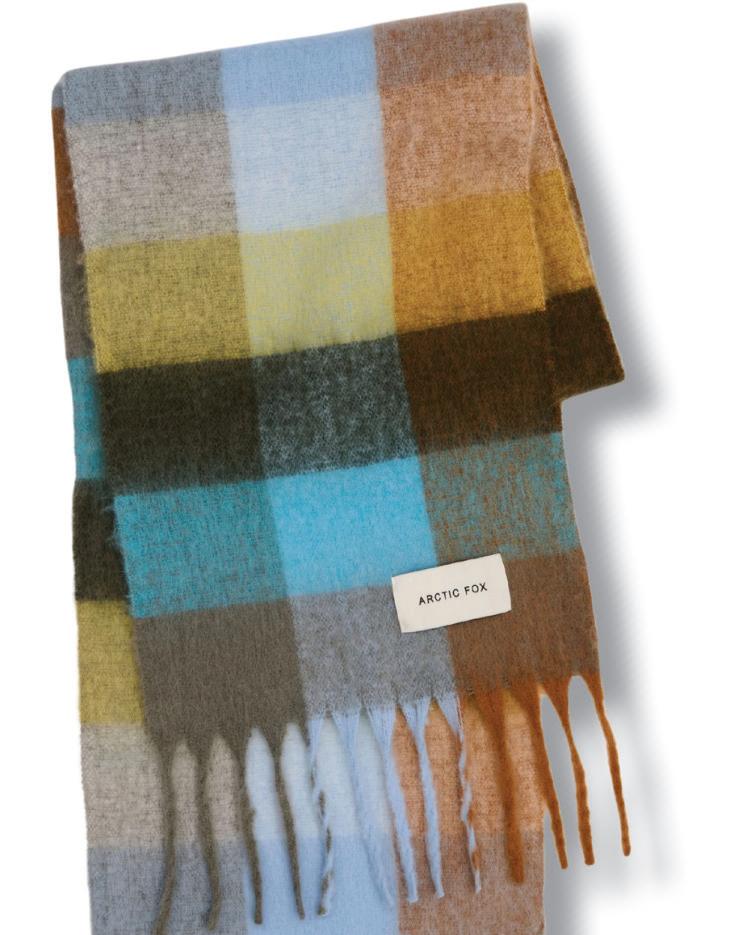


6. Blundstone: These utilitarian yet refined Chelsea boots, crafted from waxed pebble leather, offer a vintage take on Blundstone’s Original #500 series. They feature upgraded comfort technology, including additional footbeds and built-in shock absorption, while the toe-cap overlay adds subtle defi nition and an extra layer of durability.


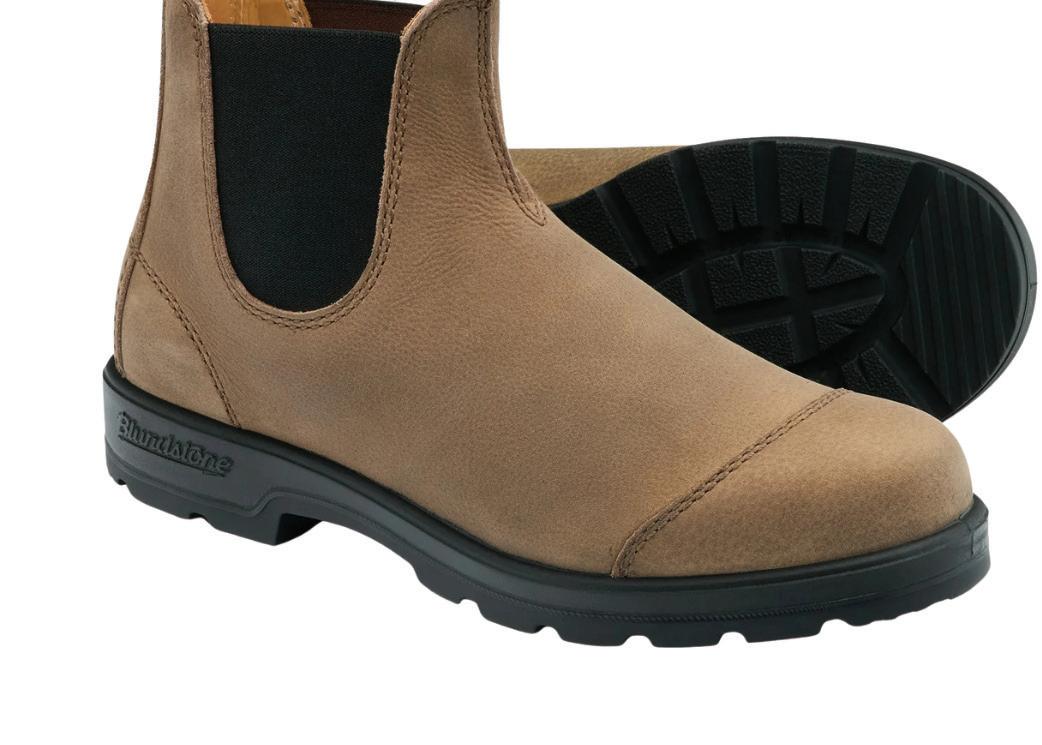
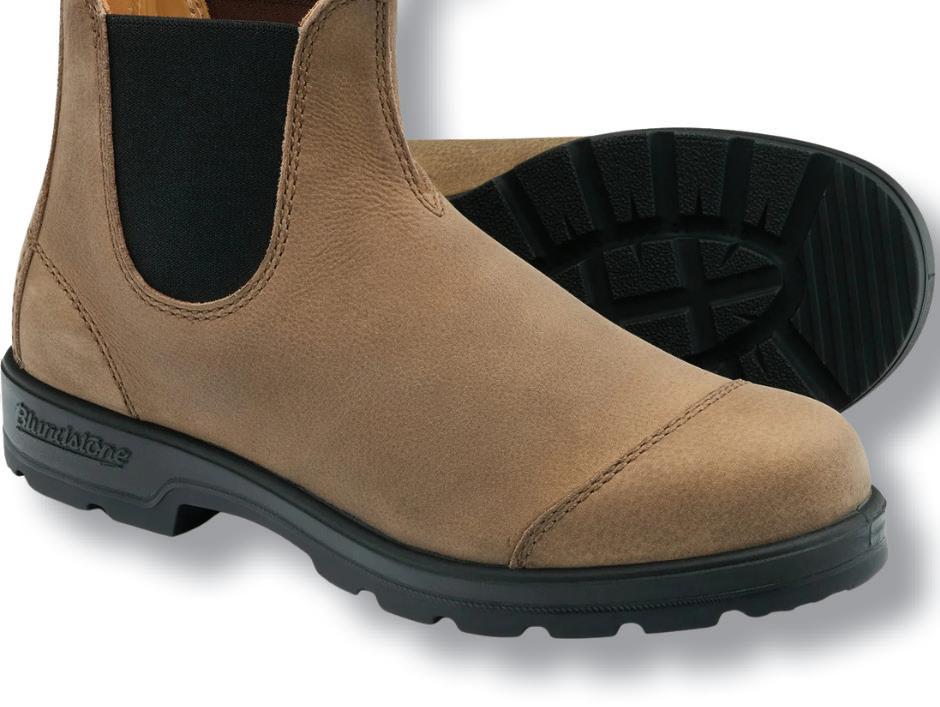


























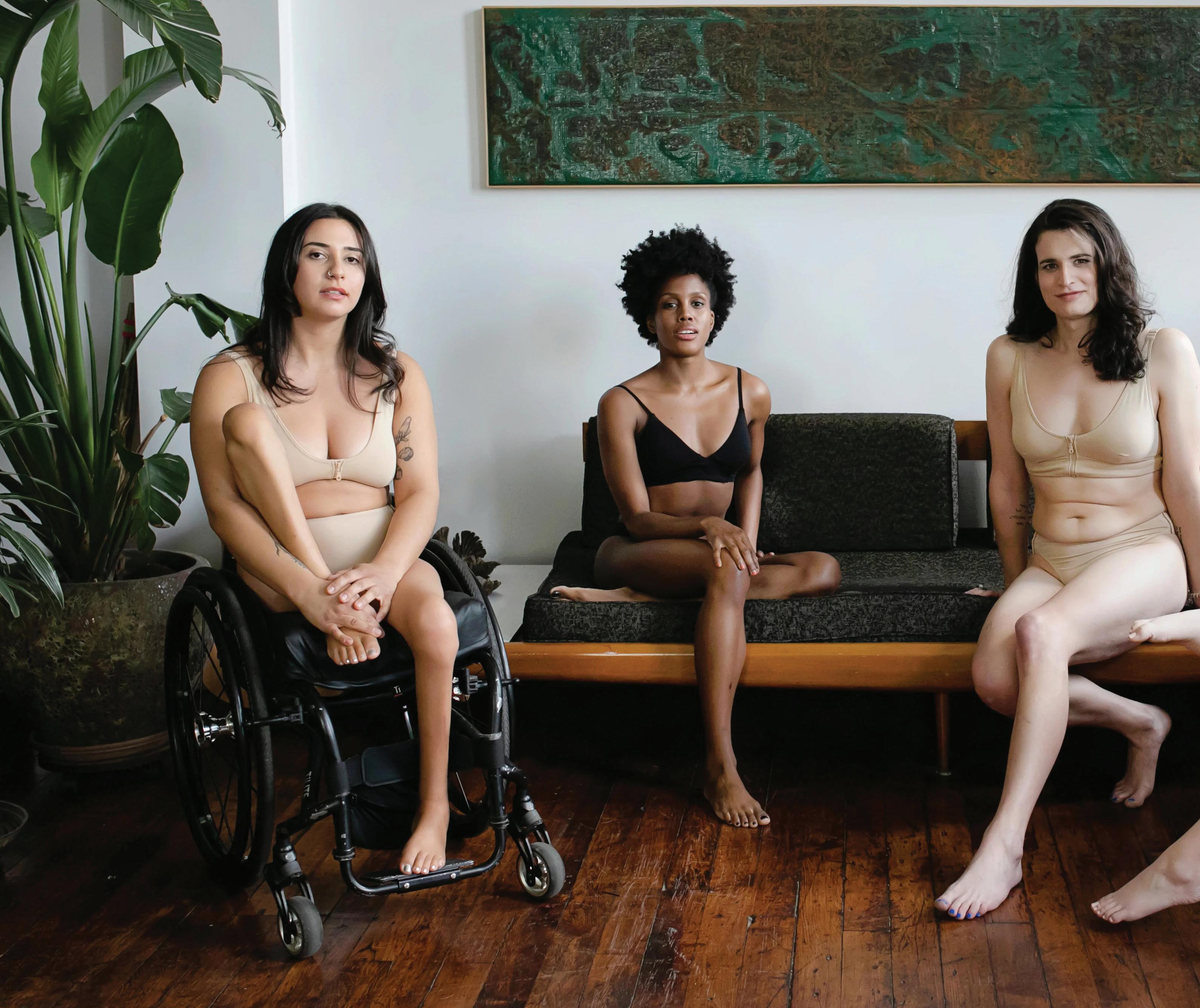
When Helya Mohammadian first envisioned Slick Chicks, her goal was clear: to create intimates that empower women with limited mobility, making fashion genuinely accessible to them. Inspired firsthand by her sister—who struggled to get dressed after a C-section—and countless women for whom dressing could be challenging or impossible, Mohammadian set out to address this gap. That spark of empathy became her mission: to redefine intimates and influence the fashion industry’s approach to accessibility.
Today, Mohammadian’s company, Slick Chicks, is a growing force in adaptive apparel, having recently expanded into national retailers such as Target and CVS. At the center of its rise is her belief that fashion can empower—that everyone deserves dignity, comfort and independence in their daily lives.
How Helya Mohammadian Is Leading the Charge for Accessible Intimates With Slick Chicks

The Problem She Saw—and the Solution She Built
For years, adaptive apparel was something of an afterthought in mainstream retail. People recovering from surgeries and living with chronic conditions, disabilities or even the natural challenges of aging were often forced to modify traditional clothing themselves or rely on caregivers to help with dressing. Undergarments, in particular, posed a serious challenge.
“Imagine trying to put on underwear without bending at the waist, or fastening a bra with one hand,” Mohammadian explained. “For millions of people, that’s not hypothetical—that’s daily life. And there just weren’t products out there that made it easier.”

She recognized a gap in the market and, more importantly, a human need. Drawing on her background in fashion and design, she began developing bras and underwear that incorporated adaptive features— such as side fasteners, front zippers and Velcro closures—without sacrificing style or comfort. The result was Slick Chicks: a line of intimates designed for independence, accessibility and dignity.
When Slick Chicks launched, Mohammadian knew she wasn’t just creating functional garments; she was also creating a community. “Adaptive apparel shouldn’t be limited to specialty shops or hidden away online,” she said. “It should be everywhere, because accessibility benefits everyone.”
That philosophy guides company operations. Slick Chicks has built a strong online community, sharing not just products but also stories from customers, caregivers and advocates. The company serves as both a fashion brand and a movement—working to normalize accessibility in the mainstream.
In the process, Mohammadian has been intentional about ensuring representation across the board. Slick Chicks’ campaigns feature women of all sizes, ages and abilities, reflecting the customers the brand is built to serve.
Breaking into mainstream retail wasn’t easy, but Mohammadian has steadily grown Slick Chicks’ reach through partnerships with major brands. In 2024, Slick Chicks debuted on Target shelves, introducing adaptive intimates to one of the largest retail environments in the U.S. In 2025, the brand announced another milestone: its nationwide availability in CVS stores.
The expansion is strategic. By placing Slick Chicks products in everyday retailers, Mohammadian ensures they’re accessible in practice, not just in principle. “If someone needs adaptive underwear after surgery, they shouldn’t have to hunt online or wait for shipping,” she explained. “They should be able to walk into their local store and find it on the shelf.”
The retail partnerships mark a breakthrough for adaptive fashion, demonstrating mainstream demand for products once considered niche.
At the heart of Slick Chicks’ success are the products themselves— intimates that combine adaptive functionality with thoughtful design. The classic and high-waist briefs, for example, feature side fasteners that allow wearers or caregivers to dress without bending or struggling. Bras include front zippers or Velcro closures, making them manageable for individuals with limited mobility, while still offering the support and comfort of everyday lingerie.
Each product incorporates moisture-wicking fabric for breathability, antimicrobial materials to reduce odor and tag-free construction to minimize irritation. The size range, from XS to 5XL, ensures a comfortable fit for a wide variety of body types without compromising on accessibility.
As the company grows, Mohammadian stays focused on Slick Chicks’ mission: empowerment. She sees adaptive apparel not just as clothing but as a tool for independence and confidence. “Putting on your own underwear or bra may seem small, but for someone who’s been unable to do it, it’s life-changing,” she said.
Beyond Target and CVS, Slick Chicks has partnerships with Aerie and JCPenney, and its products are available online through major retailers. With each expansion, the company urges the fashion industry to rethink accessibility.
Helya Mohammadian’s path from designer to social impact entrepreneur shows the power of empathy-driven innovation. By listening to people often excluded from the fashion industry, she has built a brand that is both practical and transformative.
Slick Chicks, under Mohammadian’s leadership, shows that adaptive apparel can be mainstream—accessible, inclusive and empowering. As the brand expands, it upholds a simple but transformative idea: fashion should provide dignity and confidence for everyone, regardless of ability.
For years, Roberto Silva has been one of New York’s most trusted behind-the-scenes talents. A go-to sample maker for many of the Garment Center’s most buzzworthy designers, Silva has quietly shaped collections long before they reached the runway. In September 2025, during New York Fashion Week, he stepped fully into the spotlight with the debut of his own label, A.Y.O.R. (At Your Own Risk), presented inside Chelsea’s Clamp art gallery.

Born in Mexico City, Silva’s fashion journey began long before his New York debut. He first arrived in the city in 1994 during what he calls “the golden days of fashion,” securing a small East Village order simply by walking into a store. “I was so excited for the future,” he recalled. But returning to Mexico meant progress came slower, and when he eventually made his way back to New York for good, survival required pragmatism.
Without formal studio experience, Silva built a career in retail and visual merchandising before fate pulled him back to the sewing machine. A denim studio reignited his hands-on skills, followed by a pivotal role as a sample sewer at the Brooklyn Fashion and Design Accelerator, where he deepened his understanding of sustainability and production systems. “More than the end result, I’m a huge fan of the process,” Silva said. “I truly enjoy working with emerging designers, hearing their ideas, strategizing and finding the best creative solutions.”
That love of process informs both sides of his business today. Alongside A.Y.O.R., Silva continues to run a sampling studio that collaborates closely with independent designers, a position that has sharpened his realism as a brand founder. “Knowing what I know about garment construction allowed me to be more realistic about what
I could achieve,” he explained. Every A.Y.O.R. sample was made in-house, with Silva overseeing every detail from initial pattern to final presentation.
The Spring/Summer 2026 collection reflects that precision. Structured denim, corseted trousers, sculptural dresses and irreverent twists on wardrobe staples reveal a designer fluent in both concept and execution. The collection’s backbone is the denim trucker jacket, reimagined through proportion, humor and material play. “I love clothes, their form and function,” Silva noted. “I always try to add contemporary touches and a sense of humor.”
In an industry increasingly driven by spectacle, Silva remains candid about the challenges facing American fashion. “Social media and celebrity culture have done immense damage,” he said, arguing that quality and point of view have been eclipsed by visibility. Still, his commitment is unwavering. His goal is modest yet radical in today’s climate: to sell well-made pieces, build lasting client relationships and let the work speak for itself.
With A.Y.O.R., Roberto Silva proves that mastery behind the scenes can translate into a compelling voice of his own. At your own risk, indeed.

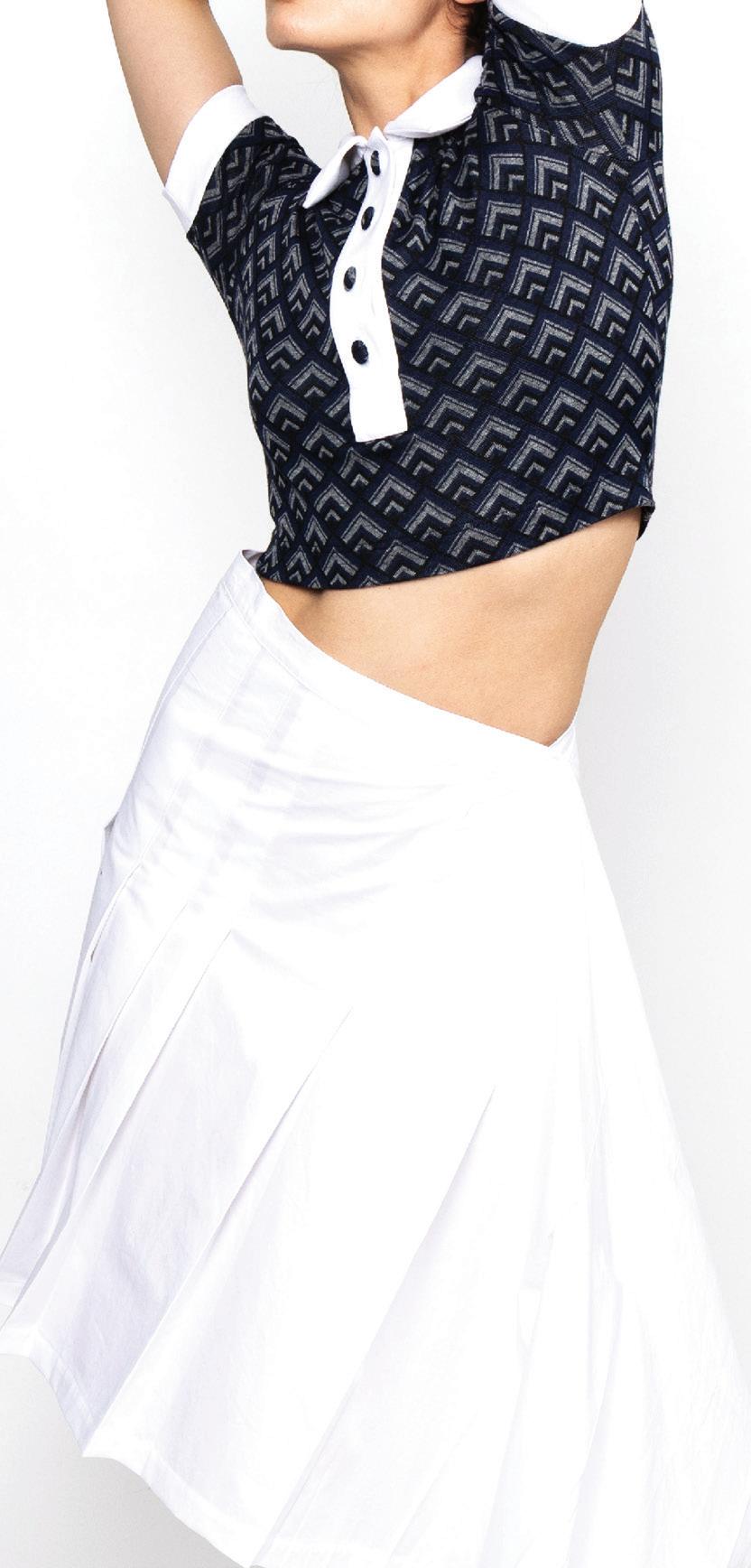
“I LOVE CLOTHES, THEIR FORM AND FUNCTION”
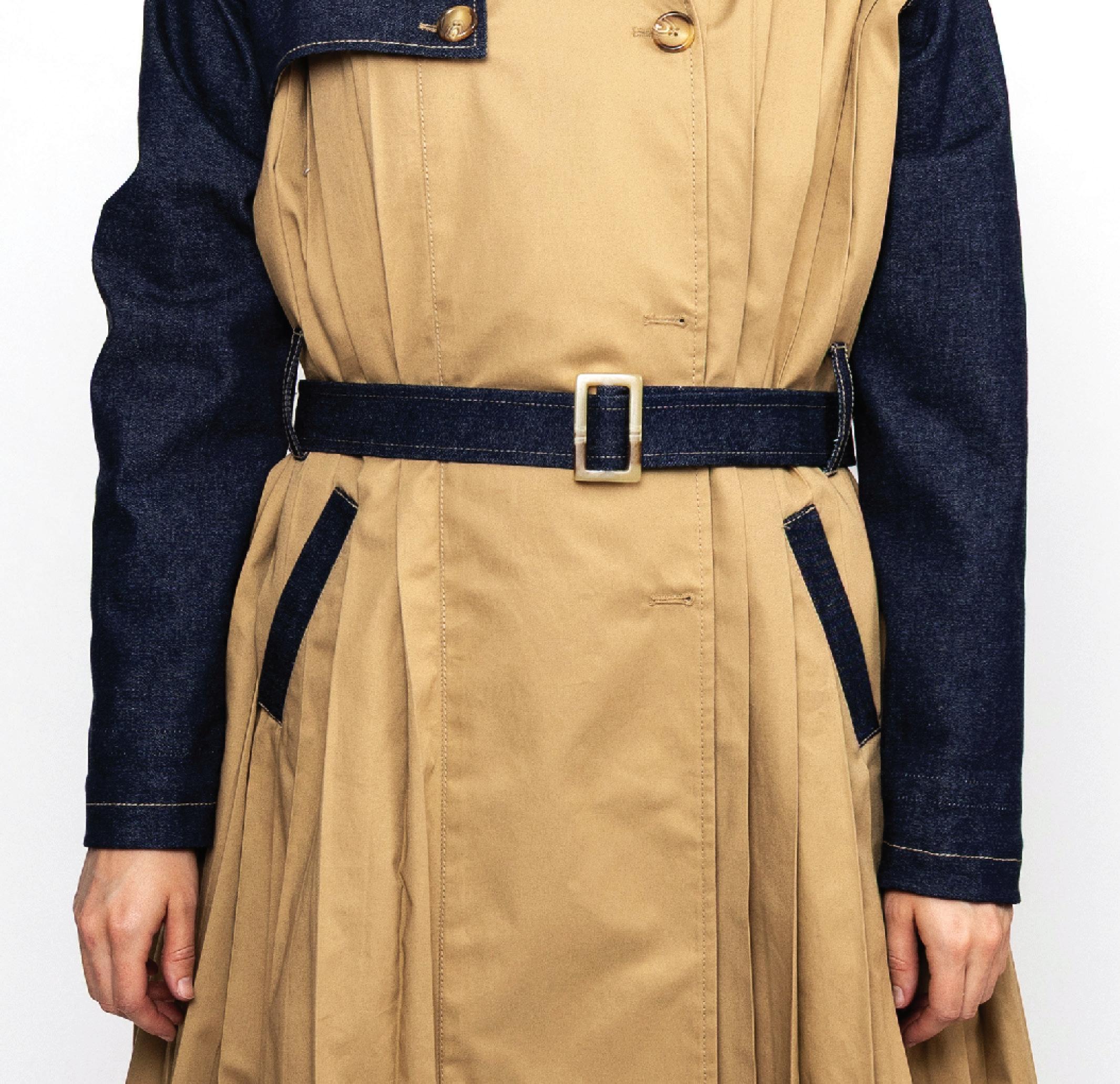
—Roberto Silva

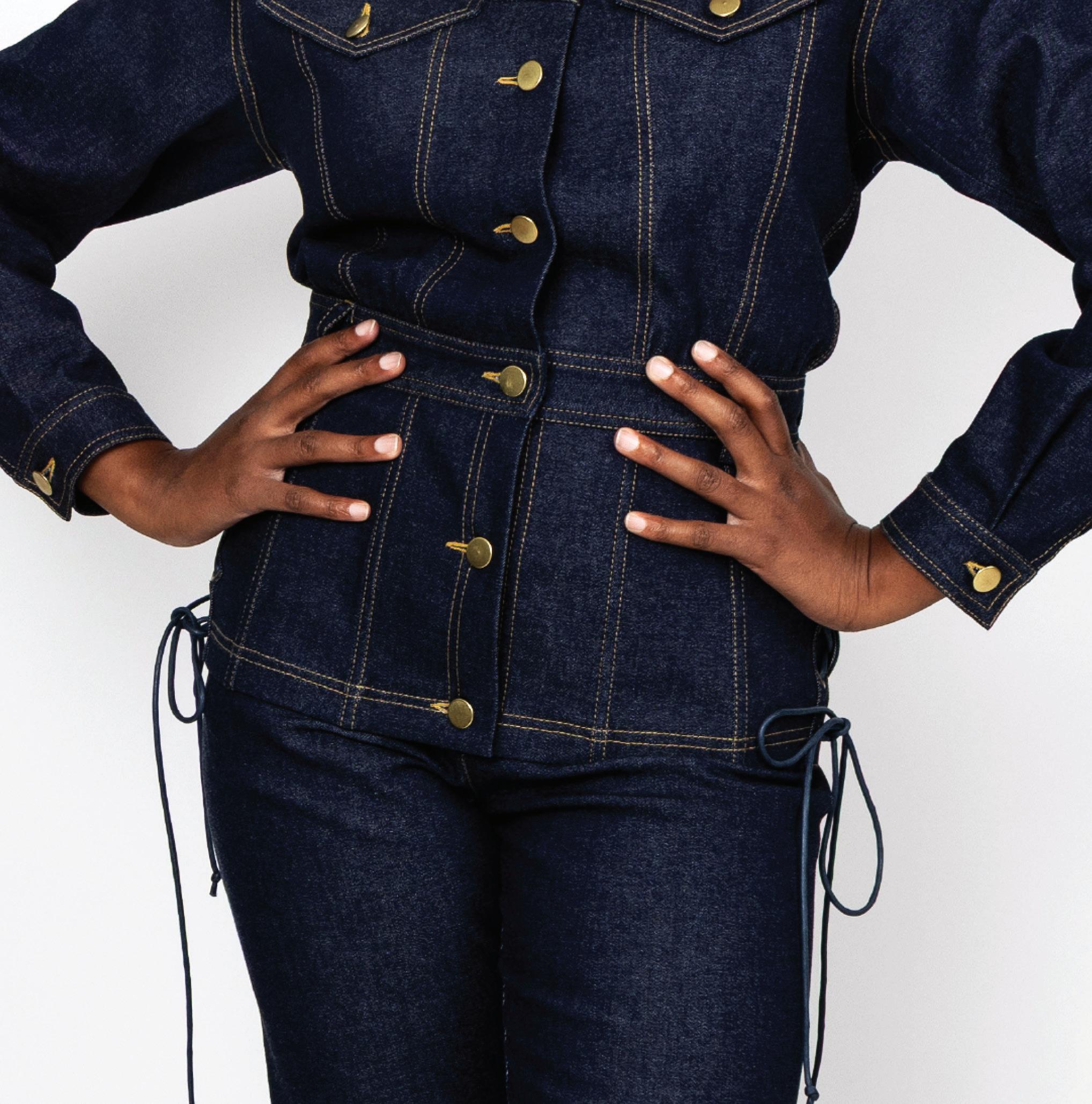
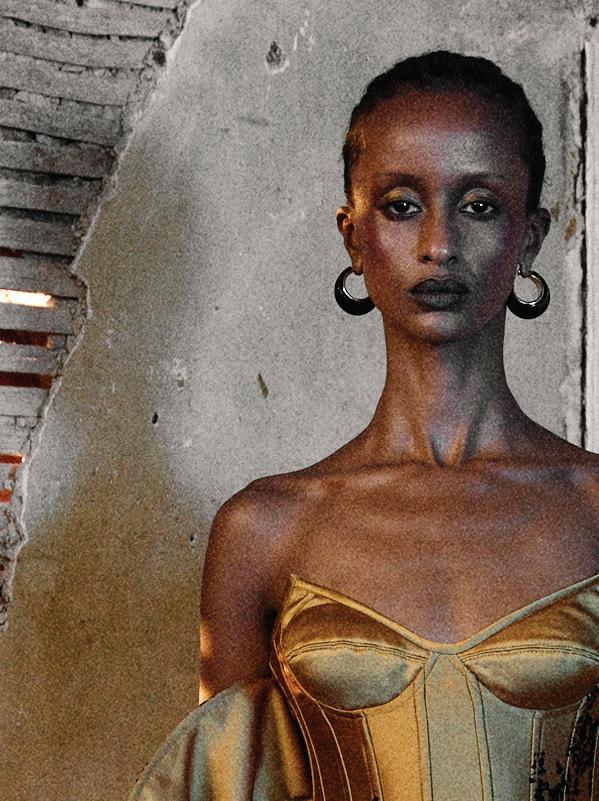
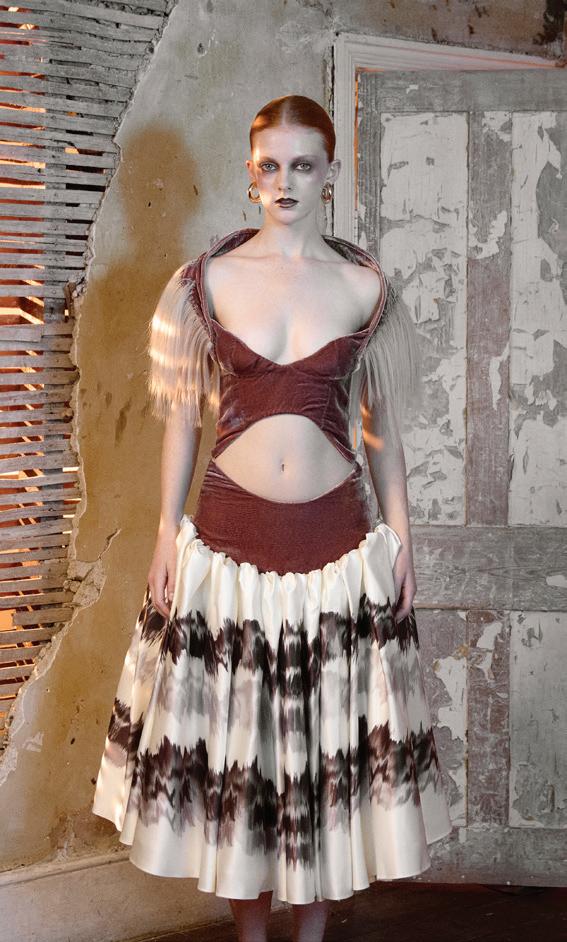
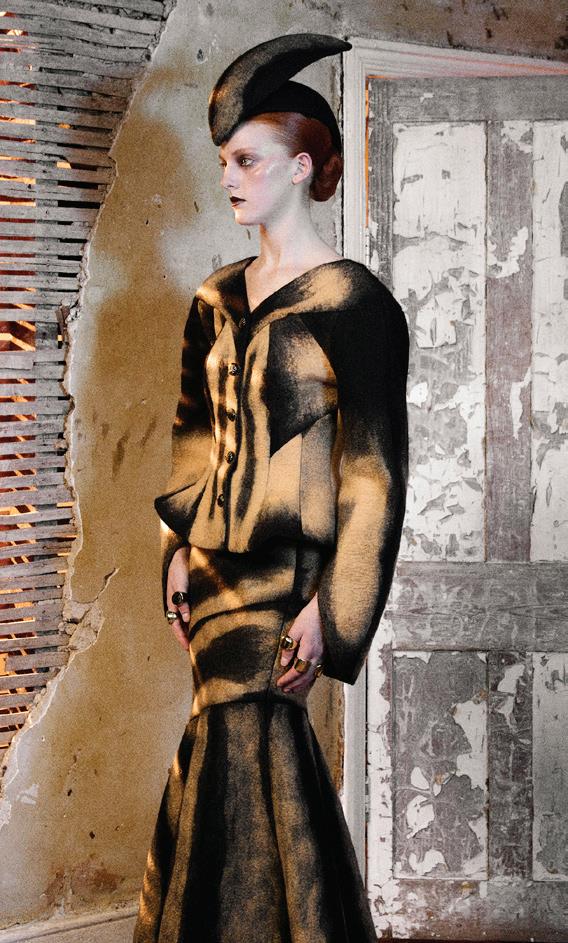
Tang Chi Couture
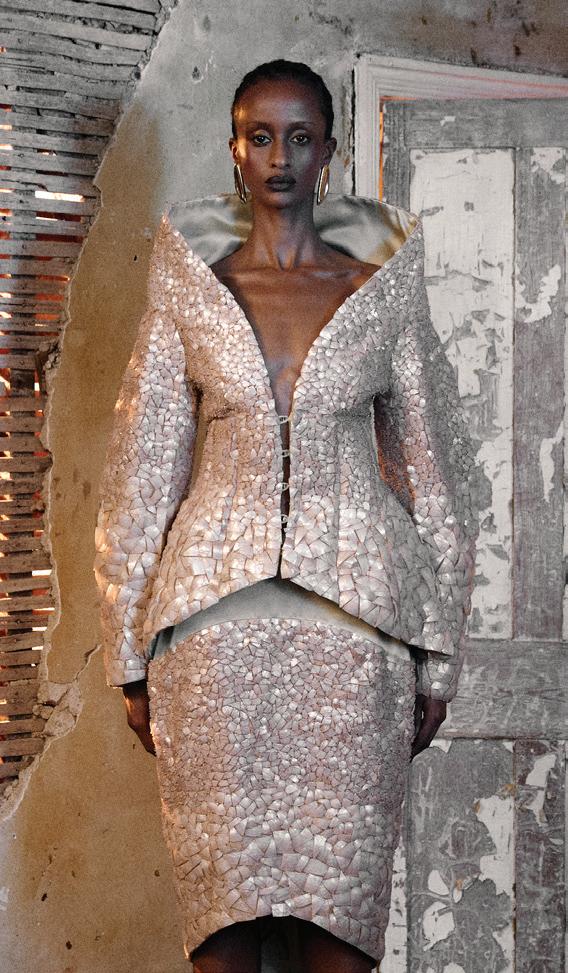

Debut collections often announce themselves with spectacle, but Tang Chi Couture arrives with something far more resonant: quiet intention. Unveiled during London Fashion Week in September 2025, the Spring/Summer 2026 collection, “Silent Marks,” marks the formal debut of the couture house founded by Taiwan-born, New York-based designer Maggie (Tang Chi) Fan. Poised and deeply introspective, the collection introduces a new voice in contemporary couture—one that prioritizes emotion over excess, and storytelling over immediacy. Just one season in, this young designer’s fan base is growing rapidly, with looks beginning to make appearances on red carpets around the globe.
Tang Chi Couture represents a new generation of designers redefi ning what couture can mean today. Rooted in emotional narratives and executed through painstaking craftsmanship, the house merges conceptual depth with technical mastery. Fan’s work speaks softly yet decisively, offering garments that feel like intimate reflections of identity, time and transformation.
At the core of Silent Marks lies a meditation on impermanence—the traces time leaves behind and the beauty embedded within them. Wrinkles, fading, erosion and distortion, elements so often concealed or corrected in traditional fashion, are reframed here as symbols of resilience and memory. Time, in Fan’s vision, is not an adversary to resist but a collaborator that shapes, softens and reveals truth.
This philosophy manifests through sculptural silhouettes that appear molded by movement rather than structure. Forms gently rise and collapse, cling and release, mirroring the body’s own evolution over time. Negative space is used deliberately, allowing garments to breathe and shift with their wearer, creating a dialogue between presence and absence. The result is a collection that feels alive—responsive to both the body and the moment.
Material experimentation plays a defi ning role throughout Silent Marks. Distressed silks evoke surfaces worn smooth by touch and memory, while hand-felted textiles create an organic tension between fragility and strength. Sculpted lace appears weathered yet enduring, and organic embroidery traces the body like quiet scars—not wounds but proof of survival. Each material choice feels purposeful, reinforcing the idea that imperfection is not something to disguise but something to honor.
There is a tactile poetry to the collection, one that
becomes apparent in the way fabrics fold, crease and yield. These gestures echo Fan’s broader exploration of femininity—not as something decorative or fragile but as a source of power, self-realization and quiet defi ance. Through her designs, feminism is expressed not through overt symbolism but through autonomy: garments that allow the wearer to inhabit strength on their own terms.
Craftsmanship sits at the heart of Tang Chi Couture’s identity. Every piece is made entirely by hand, guided by the belief that couture begins and ends with the human touch. In an era dominated by speed and replication, Fan’s devotion to slow creation feels both radical and necessary. Each stitch carries intention; each surface tells a story. These are garments designed to be lived with, not consumed.
Fan’s design process is instinctual and deeply personal. Memory, movement and emotion are translated into form through a poetic rhythm that resists rigid structure. Her garments function as sculptural expressions of intimacy and identity—existing in constant dialogue between impermanence and permanence, softness and resilience. It is within this tension that Silent Marks fi nds its quiet power.
A graduate of Parsons School of Design, Maggie Fan founded her eponymous house shortly after completing her studies, determined to redefi ne contemporary couture for a new generation. Prior to Tang Chi Couture, she built an international following through her experimental label, MA.GI, where her work garnered critical acclaim for its conceptual rigor and boundary-pushing silhouettes. With Tang Chi Couture, she returns to her roots— most notably through embracing her Mandarin name, Tang Chi Fan—positioning identity itself as an act of artistic integrity.
This reclamation of name and heritage reflects the broader ethos of the brand: authenticity as strength. Tang Chi Couture is not concerned with trends or commercial urgency but with creating garments that resonate on a deeper level. Sensual yet cerebral, architectural yet poetic, the label offers a refreshing counterpoint to the spectacle often associated with couture.
As Silent Marks moves from the London runway into the broader fashion consciousness—and onto international red carpets—Tang Chi Couture is a house to watch. In tracing the quiet imprints left by time, Maggie Fan invites us to reconsider beauty not as something fi xed or fl awless but as something earned, remembered and profoundly human.





Dallas is the ultimate buying experience with more categories and brands for smarter sourcing, all in one inspiring marketplace.

Plan ahead for a week of fashion in Dallas:

Dallas Apparel & Accessories Market

JANUARY 20 - 23, 2026

AETA International Trade Show
JANUARY 21 - 24, 2026


WESA’s International
Western/English Apparel & Equipment Market
JANUARY 21 - 24, 2026

Dallas Men’s Show
JANUARY 24 - 26, 2026
PREVIEW DAYJANUARY 23

EXCLUSIVE DETAILS FOR SHOWS IN:
• Dallas
• Denver
• Las Vegas
• Los Angeles
• Nashville
• Orlando
• New York


CONNECTING THE FASHION INDUSTRY WITH THE WORLD OF TRADESHOWS




For its fifth consecutive edition in Milan, Denim Première Vision (Denim PV), a flagship event of GL events’ fashion division, delivered two exceptional days. Bringing together more than 2,300 international professionals, the event captivated participants with the quality of its offer and audience, who came to discover Spring/ Summer 2027 trends and meet the leading minds in denim: Amy Leverton, founder of Denim Dudes; Lisi Herrebrugh and Rushemy Botter, designers at G-Star; Kristian Guerra, Head Designer at 44 Level Group; and Giorgia Cantarini, journalist, stylist and founder of S|Style-Denim Lab.
“This edition once again demonstrated the remarkable vitality and excellence of our community, as well as the denim ecosystem as a whole,” said Fabio Adami Dalla Val, show manager of Denim PV. “We brought together an international network of key players, showcasing content, innovations and creativity that strongly embody Denim PV’s distinctive identity. The high level of engagement and quality of professional exchanges during these two days further strengthen our commitment to delivering an ever more premium and relevant event, perfectly aligned with the market’s evolving dynamics in all its dimensions.”

“The high level of engagement and quality of professional exchanges during these two days further strengthen our commitment to delivering an ever more premium and relevant event.”
— Fabio Adami Dalla Val
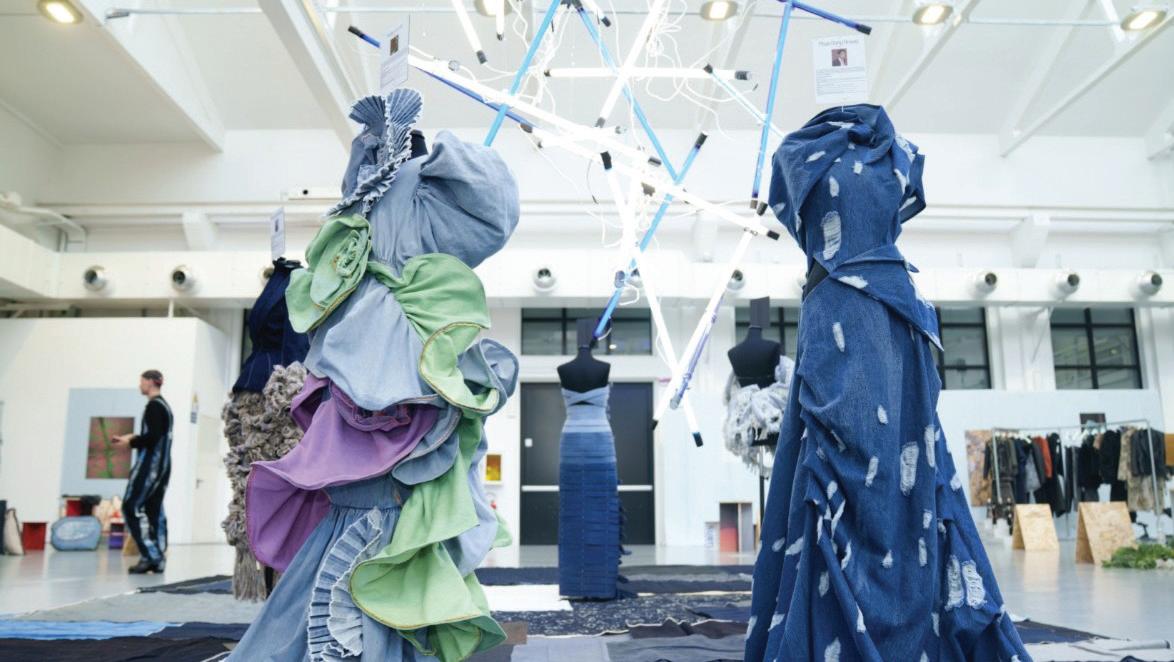
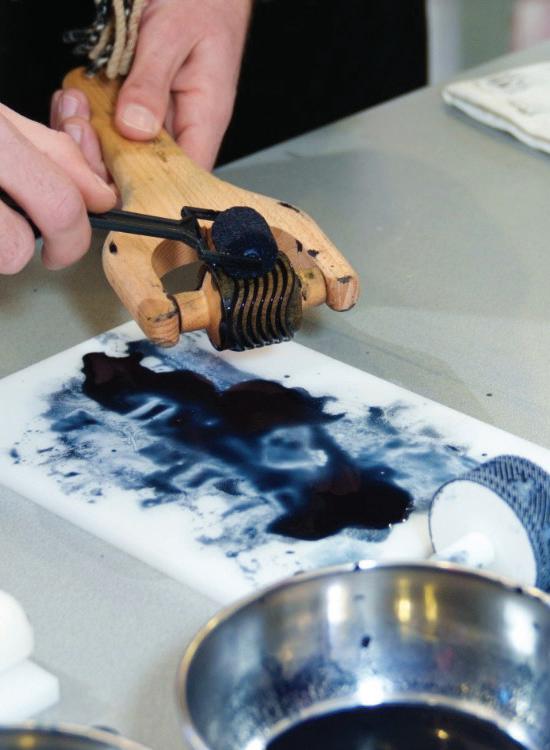
• Over 2,300 international professionals representing more than 50 countries and over 830 companies gathered in Milan.
• More than 65 exhibitors presented their latest developments.
• Over 25 brands showcased finished products in the Fashion District, including eight presented by S|Style-Denim Lab, supported by Kering’s Material Innovation Lab (MIL).
• An audience of over 400 participants attended a program of nine conferences featuring 19 recognized denim experts and speakers.
Denim Première Vision is teaming up with Chloris, the trailblazer in bio-based dye technology, to present a bold new partnership. This initiative revolves around an advanced research and development (R&D) and design program jointly led by Chloris and Denim PV. It is the first time a professional trade show actively contributes to a scientific and creative research framework.
As part of this project, a select group of leading industry players will work with Chloris’ nextgeneration pigment technologies to explore new standards of performance and aesthetic potential.
The first developments will be officially unveiled at the next May edition of Denim PV, highlighting Chloris’ growing role as a transformative innovation partner for the global denim industry.

Atlanta Apparel continues to be a must-attend destination for retailers seeking depth, variety and discoverability, all in one easy-to-shop campus. With 2,000 brands showcasing women’s apparel, young contemporary, ready-to-wear, shoes, accessories, children’s apparel, fine jewelry and more, buyers can handpick their Spring/Summer 2026 styles across a diverse and efficiently organized marketplace.
From vibrant showrooms to trend-forward temporaries, Atlanta Apparel ensures that retailers can explore established favorites while uncovering emerging brands. The market also offers a wide selection across price points and aesthetics, giving buyers the ability to shape a balanced, profitable brand mix tailored to their clientele.
Exclusive buyer amenities include complimentary breakfast, lunch, coffee and cocktails, fun events, hotel discounts, product giveaways and lively networking opportunities, elevating the shopping experience and keeping retailers energized throughout market week.
Children’s retailers also praise the breadth of youth and tween offerings.
As Myriah Marcus, owner of Madisonn Avenue in Woodstock, Georgia, shared, “Atlanta Apparel is one of the best places to find those hardto-source tween styles that bridge the gap between youthful and sophisticated, which our customers love. The energy here, from the music to the crowds, keeps us coming back and makes the whole experience exciting and productive.”
Caron Stover, senior vice president of tradeshows at Andmore, adds a new perspective on what makes this market truly stand out: “Our goal at Atlanta Apparel is to create a destination where retailers can explore, connect and feel inspired. This show brings together the right mix of product, people and energy to help buyers make confident decisions that drive their businesses forward.”
As buyers prepare to build their Spring/Summer 2026 assortments, two premier markets—Atlanta Apparel and Las Vegas Apparel—are gearing up to deliver unmatched sourcing, the latest trends and an elevated market experience designed with retailers in mind. Whether you’re shopping the Southeast’s largest apparel showcase or the West Coast’s most curated fashion environment, February’s markets promise inspiration, efficiency and a product mix that meets the evolving needs of today’s consumer.
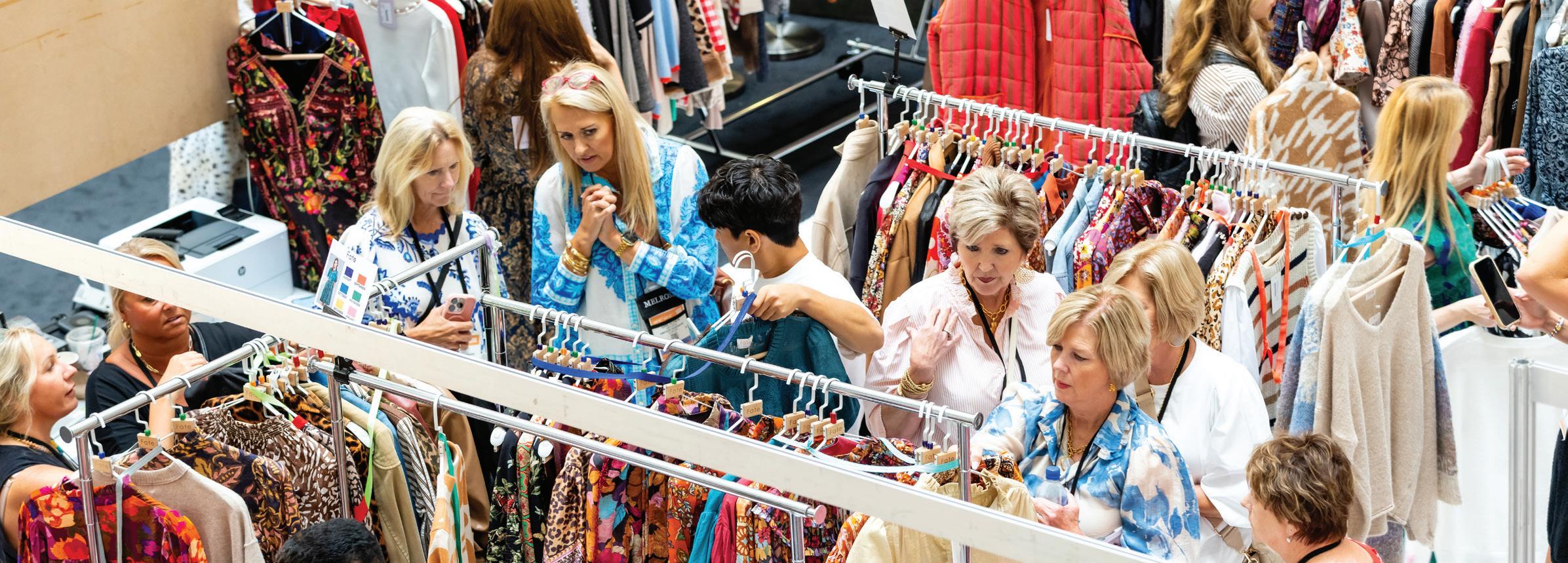
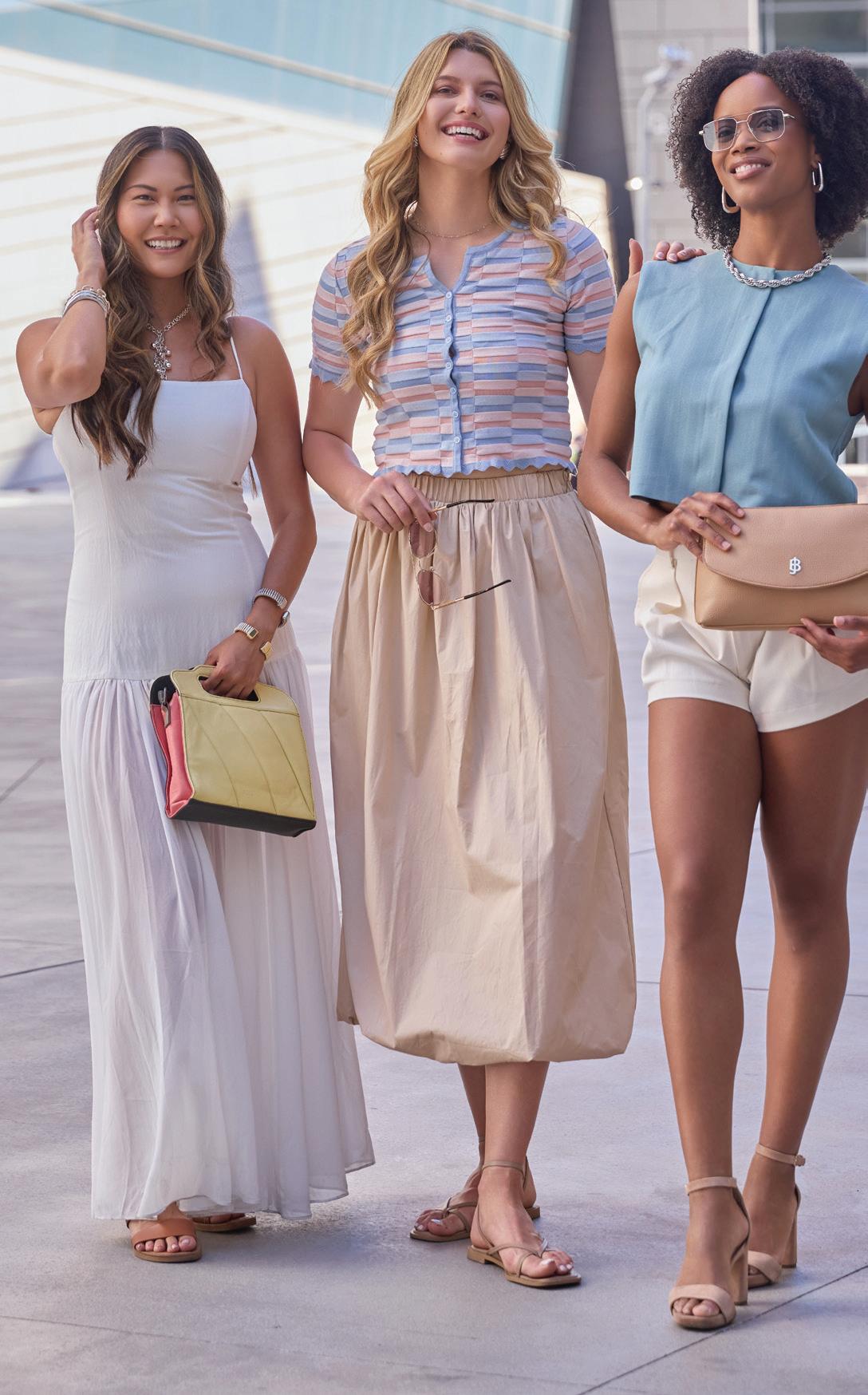

On the West Coast, Las Vegas Apparel offers a curated and highly approachable market experience during Las Vegas Fashion Week. Hosted at The Expo at World Market Center, LVA blends trendforward young contemporary apparel and accessories with classic styles. This February, the market once again co-locates with Womenswear In Nevada (WWIN), providing buyers with seamless access to more than 300 brands across both shows using just one badge.
The Expo’s elevated, easy-to-navigate environment ensures buyers can efficiently discover new resources. Hospitality-driven amenities—including complimentary breakfast, coffee, lunch and happy hours, free parking, rideshare credits and a streamlined arrival process—help create a relaxed and productive shopping experience.
“While Las Vegas Fashion Week can be overwhelming, LVA continues to set itself apart with its approachable scale, buyer-first format and the right mix of trend-forward lines,” said Stover.
The combined strength of LVA and WWIN continues to draw buyers from across the country and internationally. “This was our first trip to Vegas, and we will definitely be back,” said Chelsey Jones, owner of CJ Lines in Millry, Alabama. “Our market experience was great, we loved the layout of the show and we appreciate all the amenities to make it easier for buyers. This is our new favorite market!”
This year’s roster features exciting new brands joining LVA for the first time, including All That Glitterz, Ikat Jewelry, Jodifl and Davi & Dani—offering buyers even more opportunities to diversify their assortments.
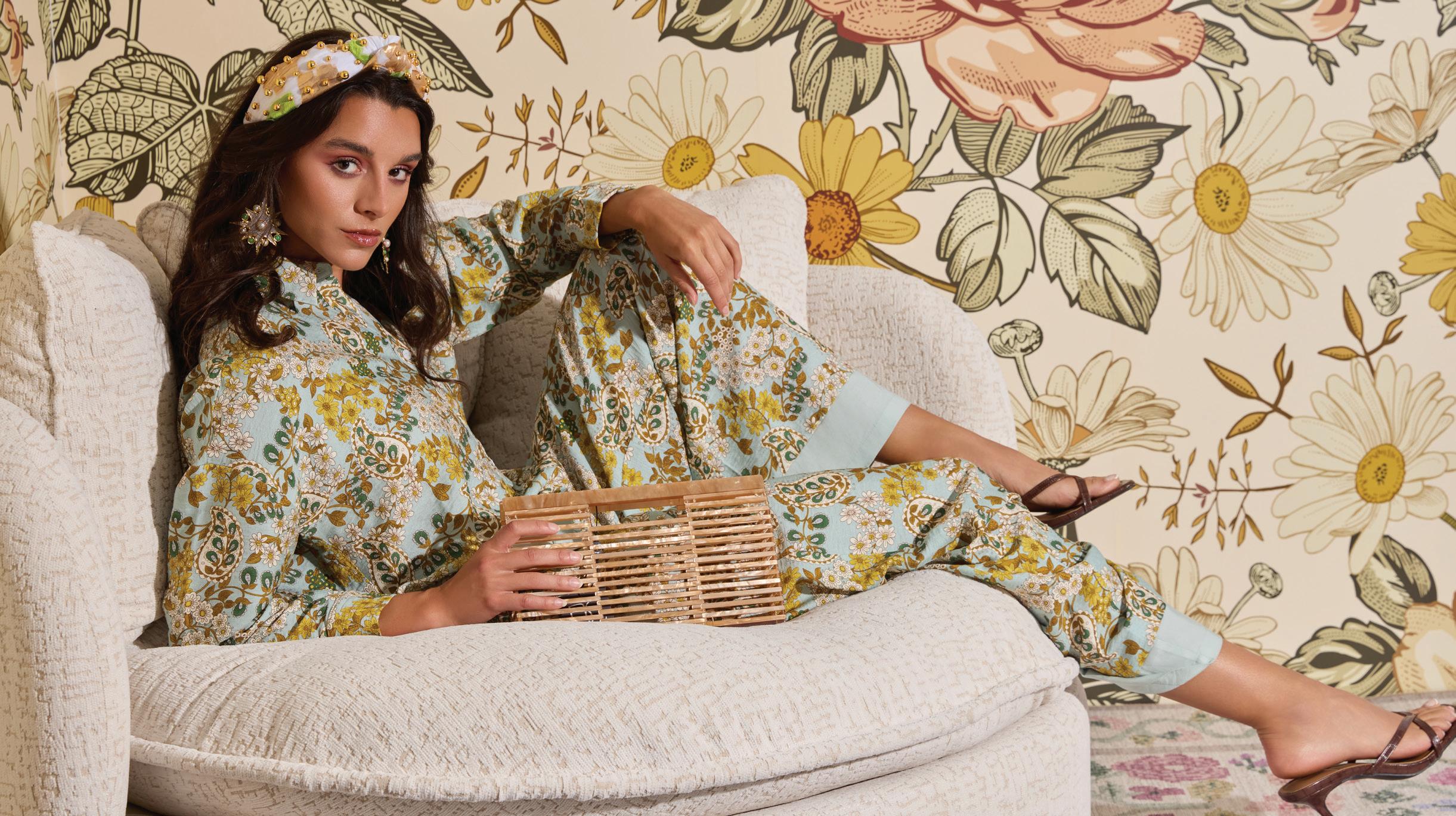
Kingpins introduced its denim platform to a new audience in Chengdu, China, with a hybrid pop-up event that mixed Kingpins’ denim supply chain trade show expertise with consumer-facing activities that incorporated Chengdu’s legacy as a streetwear and music cultural center.
Held at Cosmo in the Jinjiang District, the Kingpins Chengdu pop-up offered a look at what’s on the denim horizon, including inspirational installations, unique shopping experiences and customization stations, creative workshops, a fashion show, live open-mic music and business-tobusiness (B2B) networking.
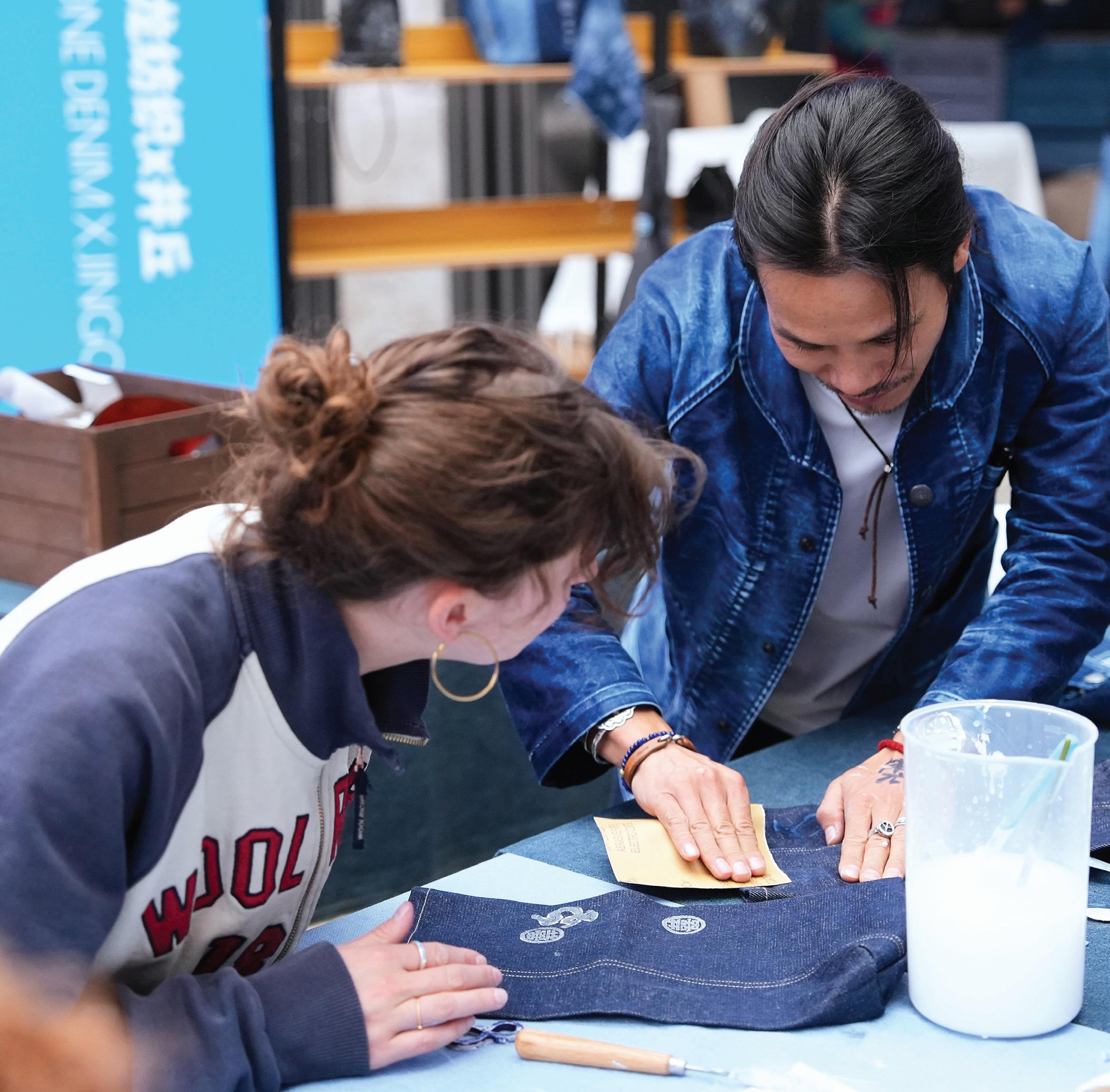

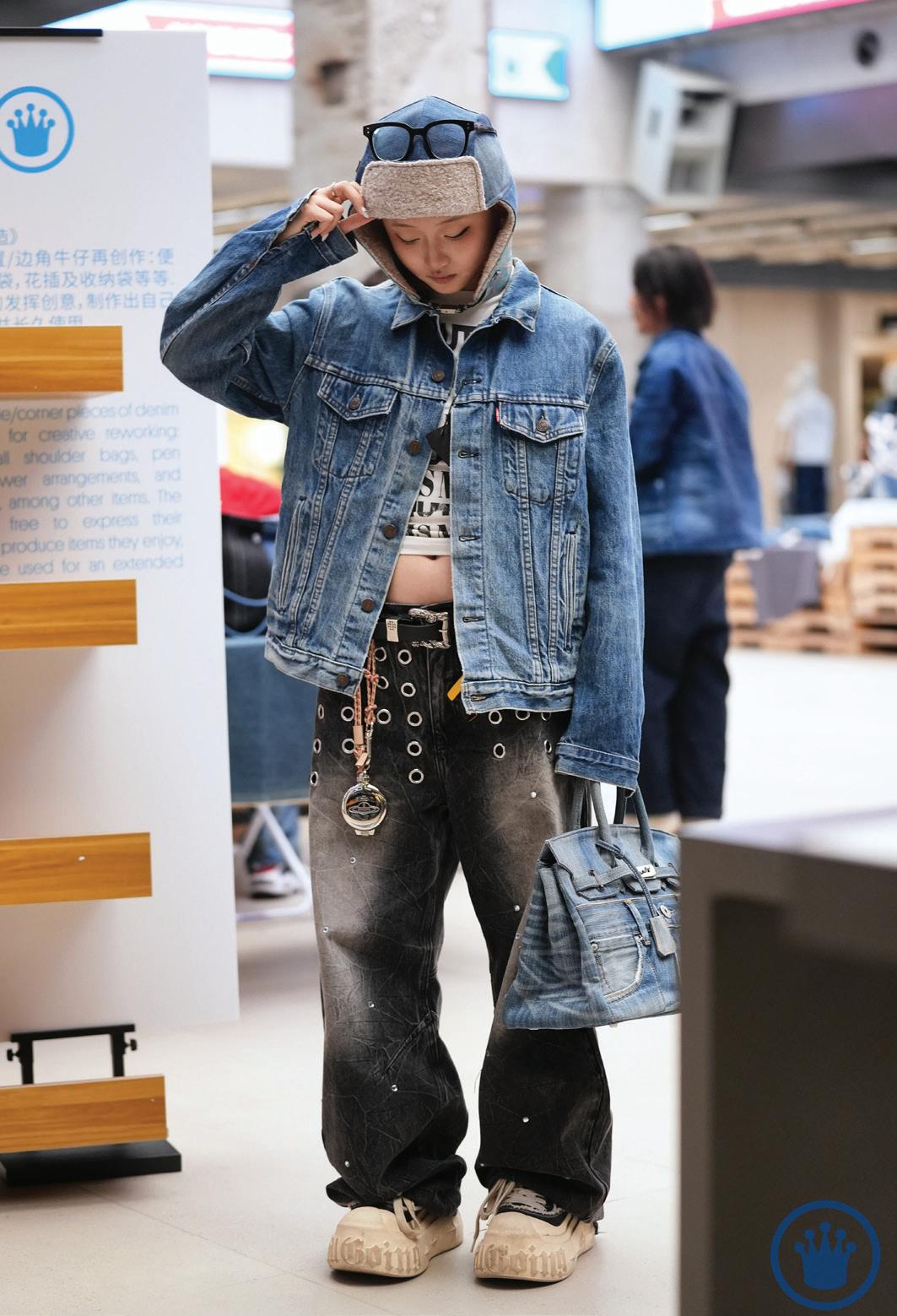
“We’re excited about the potential of taking Kingpins on the road and inviting consumers to experience our passion for the art and history of denim,” said Kingpins CEO Vivian Wang. “Just as our Kingpins Shows reimagined the traditional trade show format, our pop-ups give us the freedom to test fresh ideas, explore new cities and connect with new audiences. This is an evolving initiative, and we expect it to keep growing and improving. We welcome the denim community to share ideas for future pop-ups.”
Chengdu, with a population of around 21.4 million, is one of the largest cities Kingpins has ever showcased in and provided the opportunity to introduce Kingpins’ international denim community to a new audience. Highlights from the show included:
• Hands-on workshops, such as the collaboration between Cone Denim and JingqiuMade, which invited attendees to upcycle and transform blue jeans
• A retail marketplace featuring items from companies such as Simwood, Shanghai Jingqui Industrial, 1807, Unit 9, Fade to Blue, Lildenimjean, Sex&Jeans, HMS and Fraylaw
• A runway show featuring finalists from Advance Denim’s digital competition
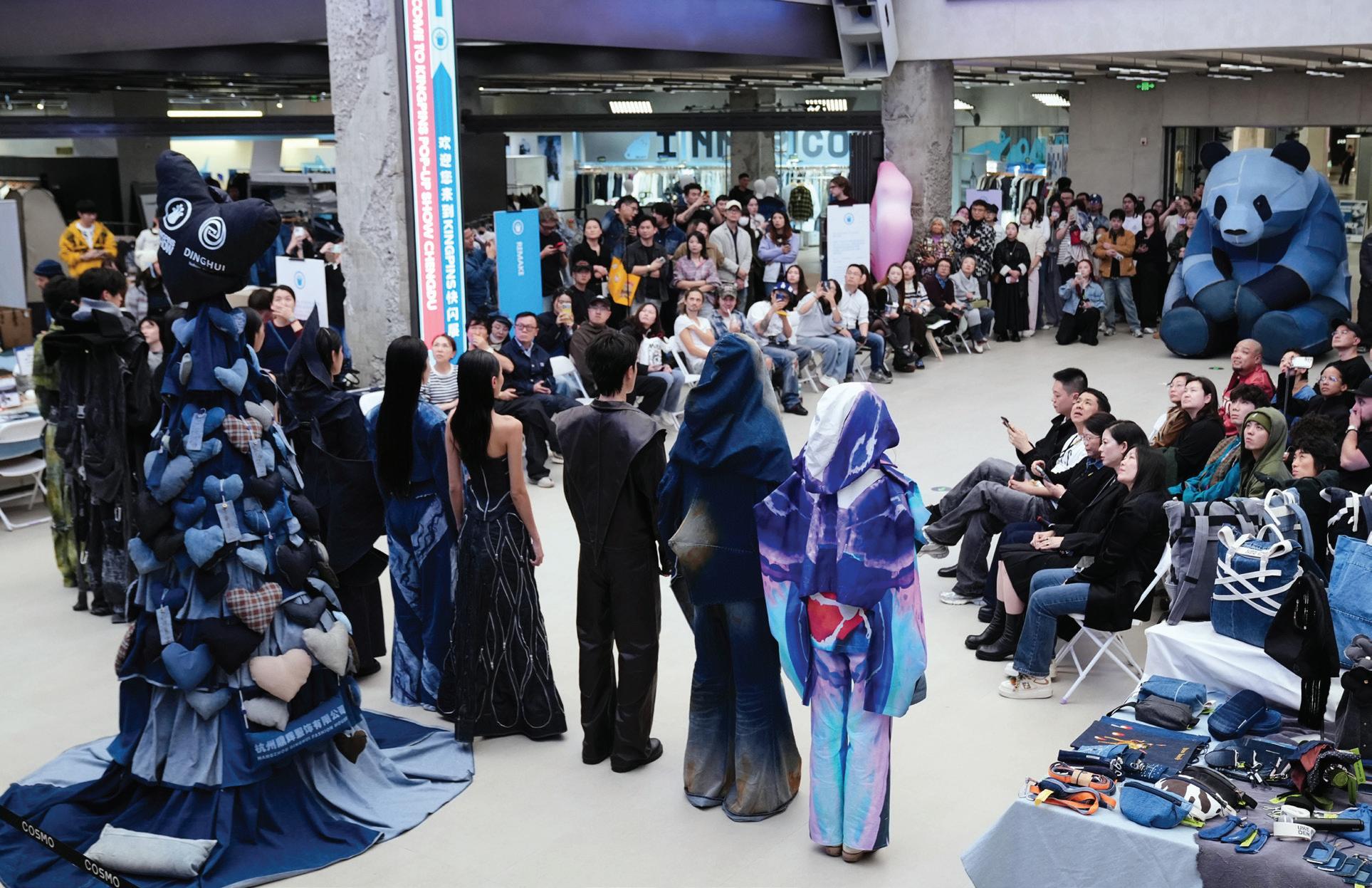
“We’re excited about the potential of taking Kingpins on the road and inviting consumers to experience our passion for the art and history of denim.”
Kingpins CEO Vivian Wang
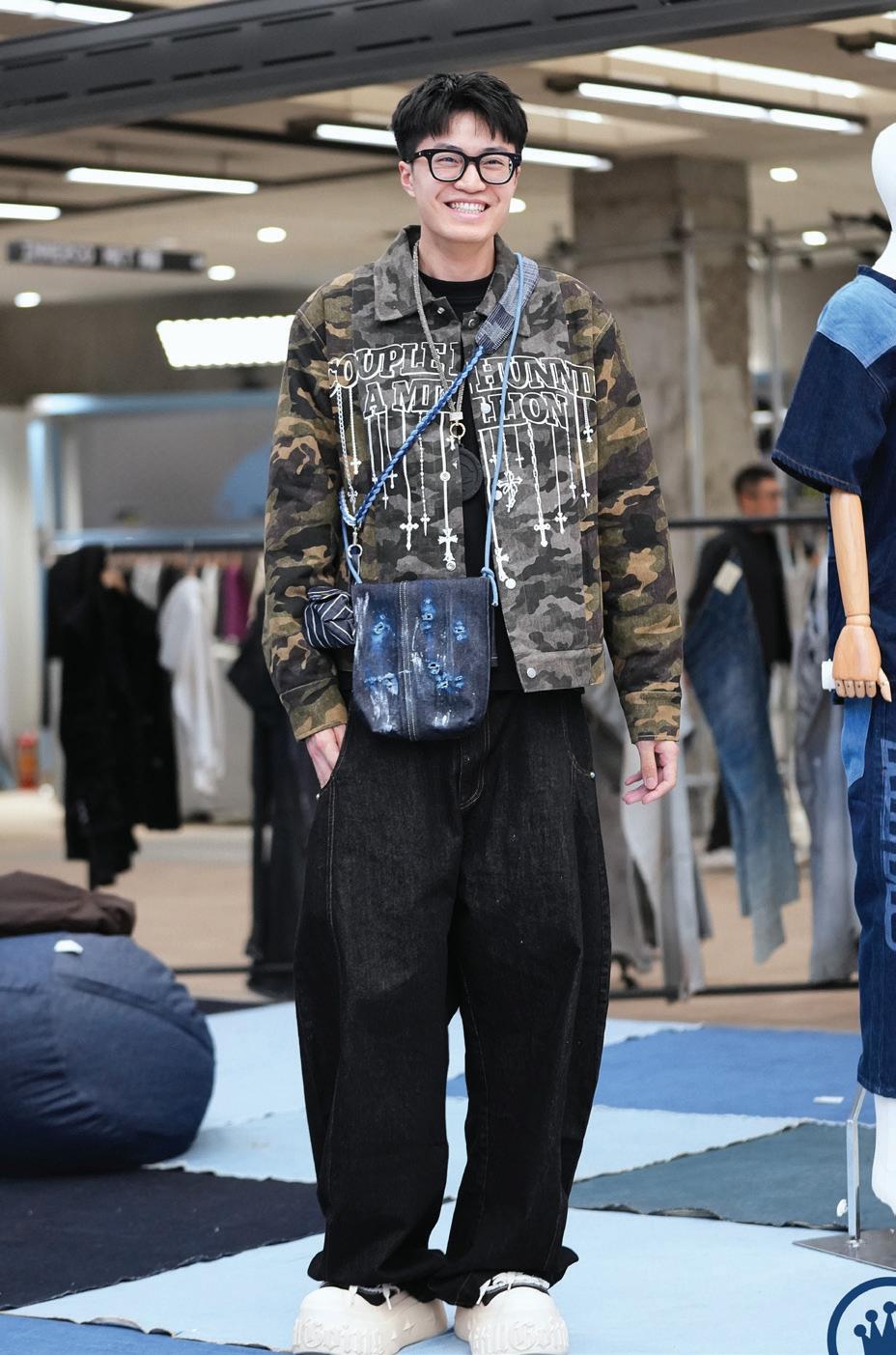
Dallas Market Center, kicks off 2026 with the first Apparel and Accessories Market of the year, Jan. 20-23. Taking place during Fashion Week, the January market debuts summer trends for 2026, newly added collections and recently opened showrooms. The event runs concurrently with KidsWorld and both the WESA International Western/English Apparel and Equipment Market and the AETA International Trade Show, offering buyers expanded opportunities to source Western and English trends.
“January sets the tone for the year, and Dallas continues to be where retailers come to get ahead,” said Cindy Morris, president and CEO of Dallas Market Center. “From must-have apparel and accessories to the largest Western and English resources under one roof, this market delivers the trends and efficiency buyers need to start 2026 strong.”
Summer 2026 collections officially debut across the marketplace as retailers prepare for the upcoming selling season. Hundreds of collections will be shown for the first time in permanent showrooms on the 13th, 14th and 15th floors, setting the trends for spring. New contemporary and Western showrooms to visit during market include Cotton and Rye Outfitters, Rodeo Hippie, and Thread and Supply. Trending Western apparel and accessories can also be found on additional floors throughout the marketplace.
Inside KidsWorld on the eighth floor, Sugar Bee Clothing and Prodoh are debuting new showrooms; Beaufort Bonnet Company expands into a second showroom; and Buttercup Bebe and Jerry Coff have relocated. KidsWorld Studio welcomes yearround exhibitors Binky Bro, Keep It Gypsy, Native Shoes by Ronnie Malatesta Sales, and Magnolia and Cypress.
Find trend-driven young contemporary apparel and accessories offering new collections for
summer on the 12th floor. The 13th floor represents exhibitors for apparel, accessories and footwear, and offers higher-end apparel, including 7 For All Mankind, Quay, Marfa Boots, Billini and many others.
Buyers will see these summer trends on the runway and throughout market displays:
• Viva La Color: Looks influenced by the fashion feature in the latest edition of Dallas Market Center’s Spark magazine will be strutting down the runway. Expect structured silhouettes in bright colors completed with bold accessories.
• Americana: Leaning into the United States’ 250th anniversary, red, white and blue apparel and accessories will be trending on both the contemporary and Western runway. Source the sizzling summer looks the next day.
• Bejeweled: This summer’s apparel is all about dazzling and delighting with trending pieces featuring sewn-on crystals that add sparkle and sophistication to every style.
• Fun Fringe: Fringe gets an update and takes center stage. Expect fun feathers and unexpected textures that add drama to any look and go way beyond traditional suede.
• Eye Candy: The Spark magazine fashion accessories story comes to life in bright and bold pieces with tons of texture, sparkle and color.
Cash and Carry
To meet the demands of retailers seeking immediately available products, starting on cash-and-carry temps will offer an expanded selection of exhibitors on the 10th floor, adjacent to AETA International Trade Show and WESA’s International Western/English Apparel and Equipment Market. The seventh floor offers permanent showrooms to find immediate merchandise across apparel, fashion accessories, footwear, gifts and fine jewelry.
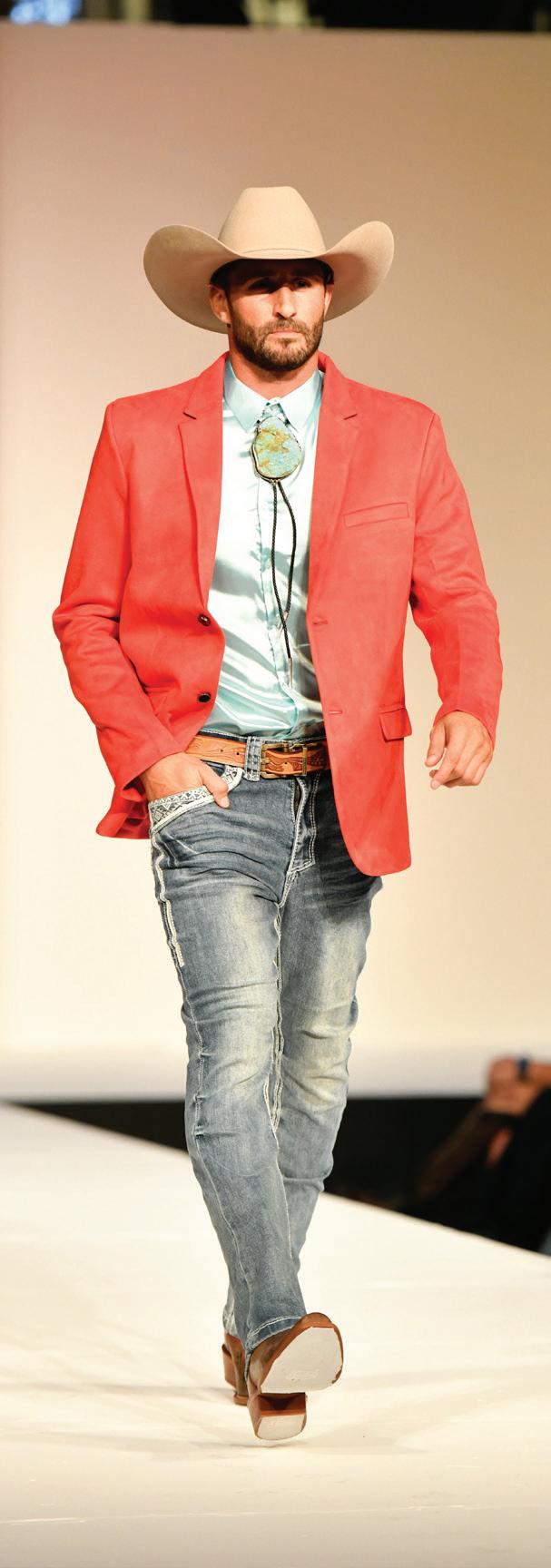
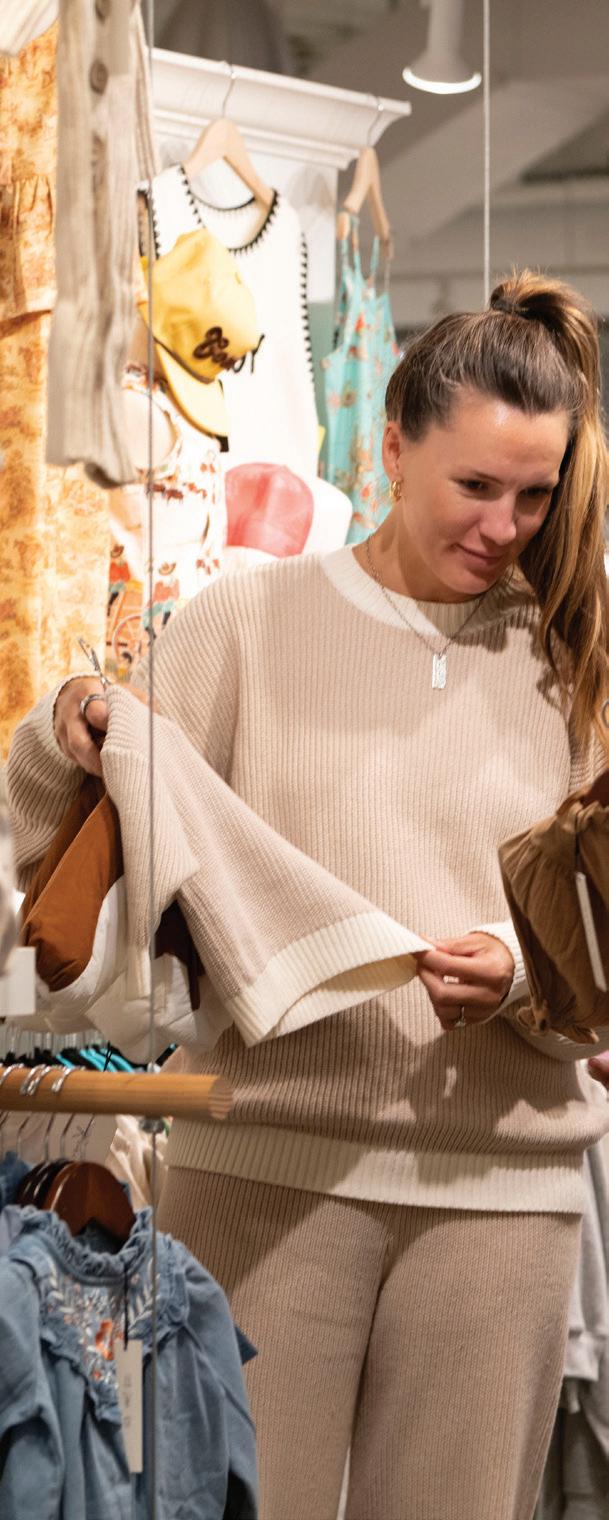
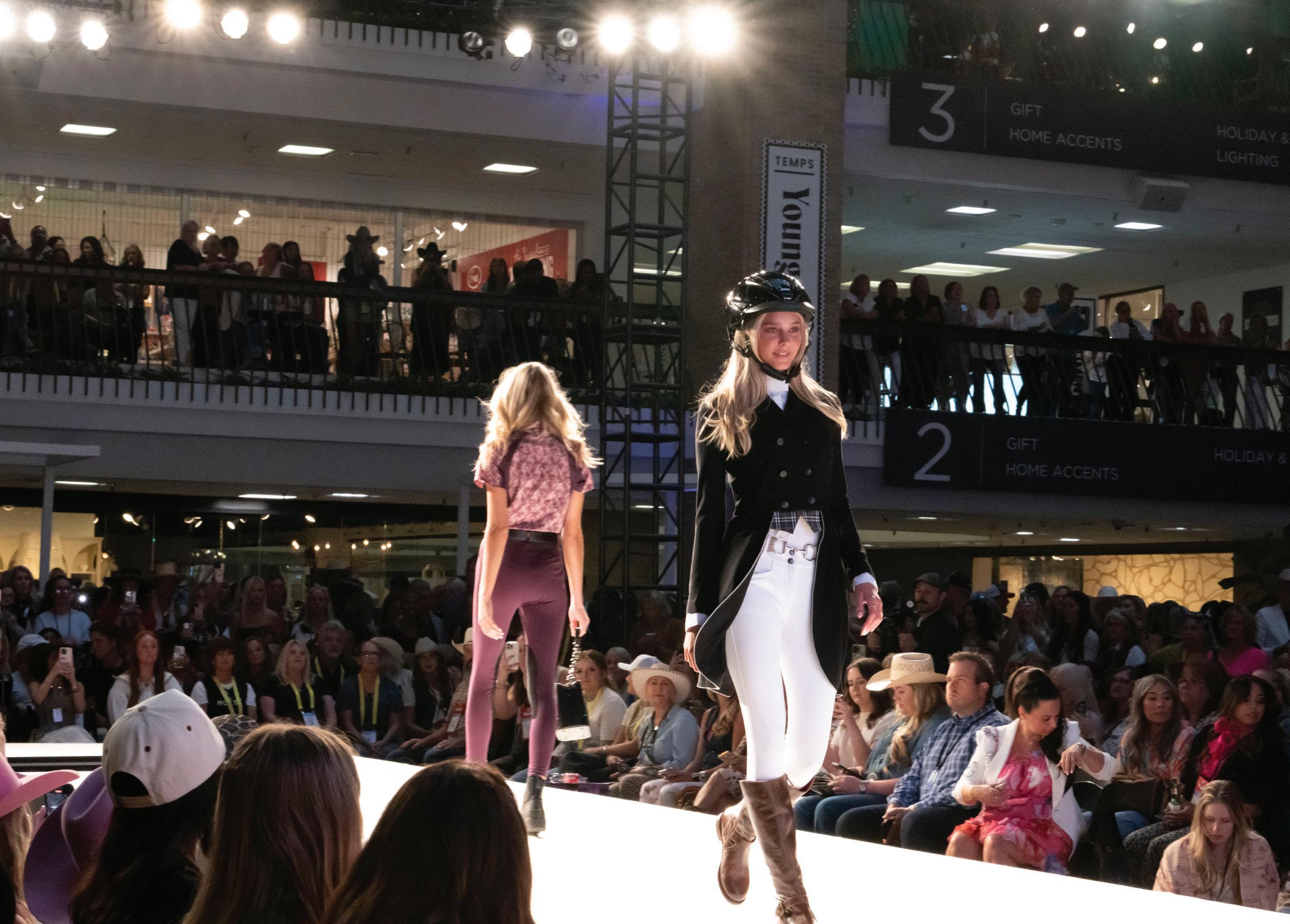


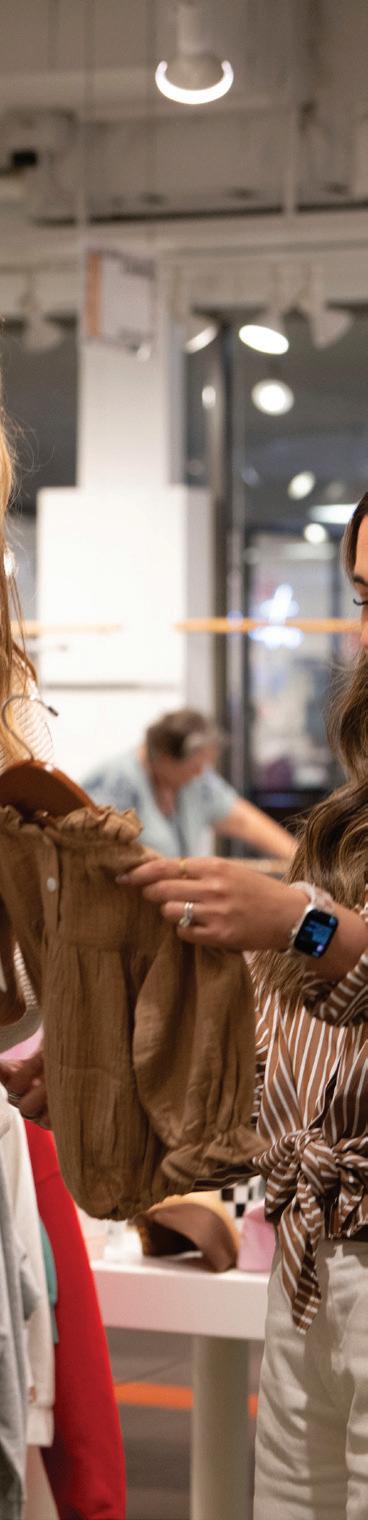
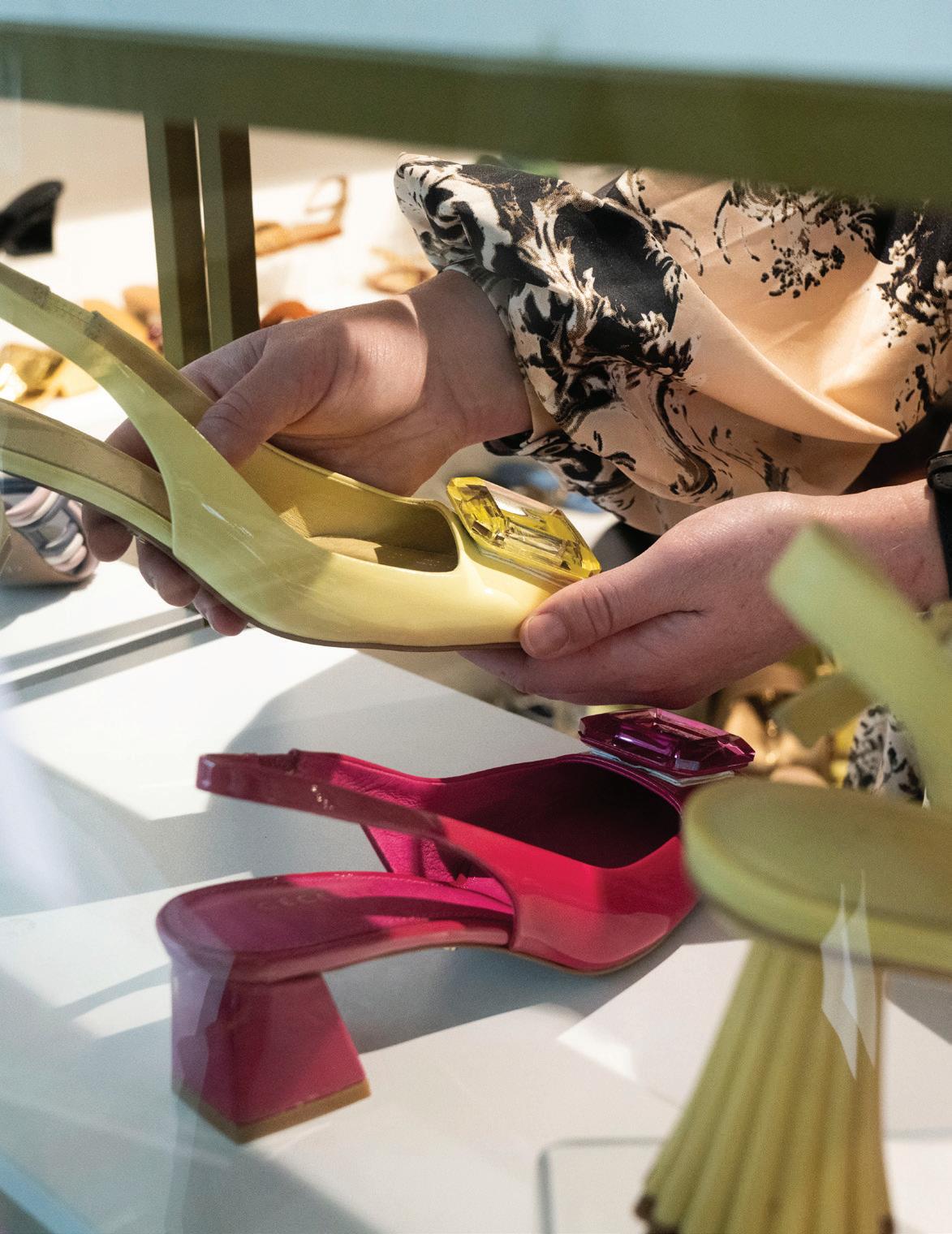
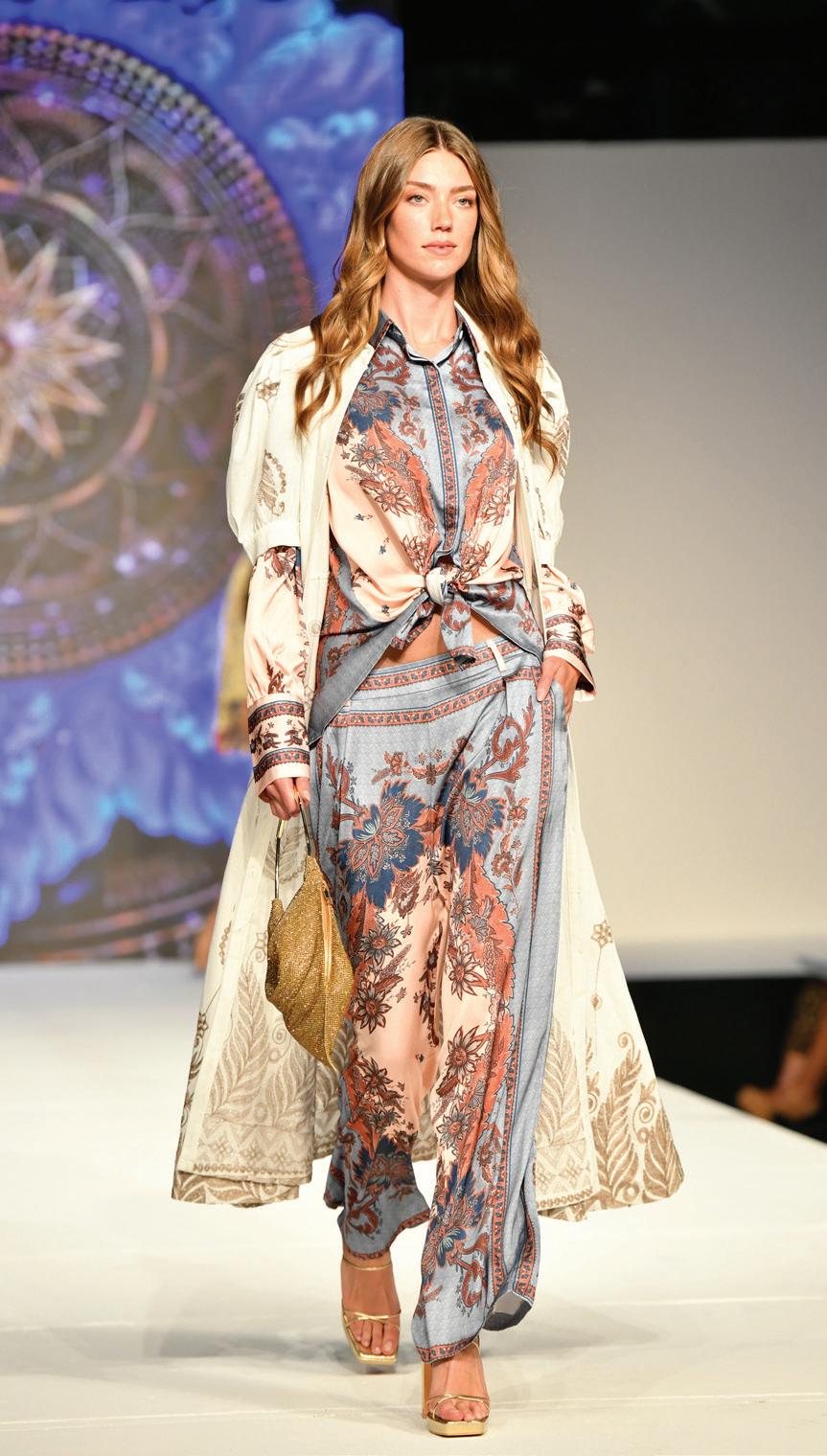



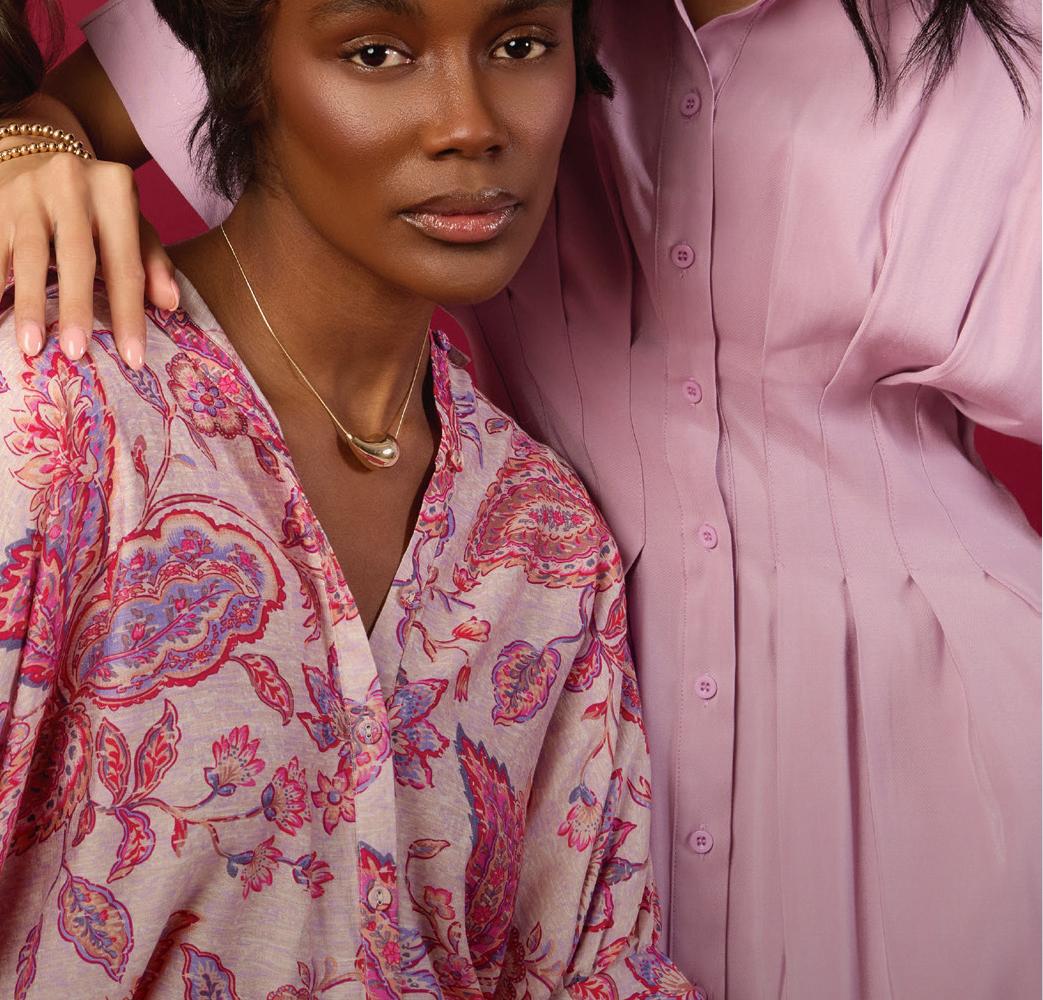
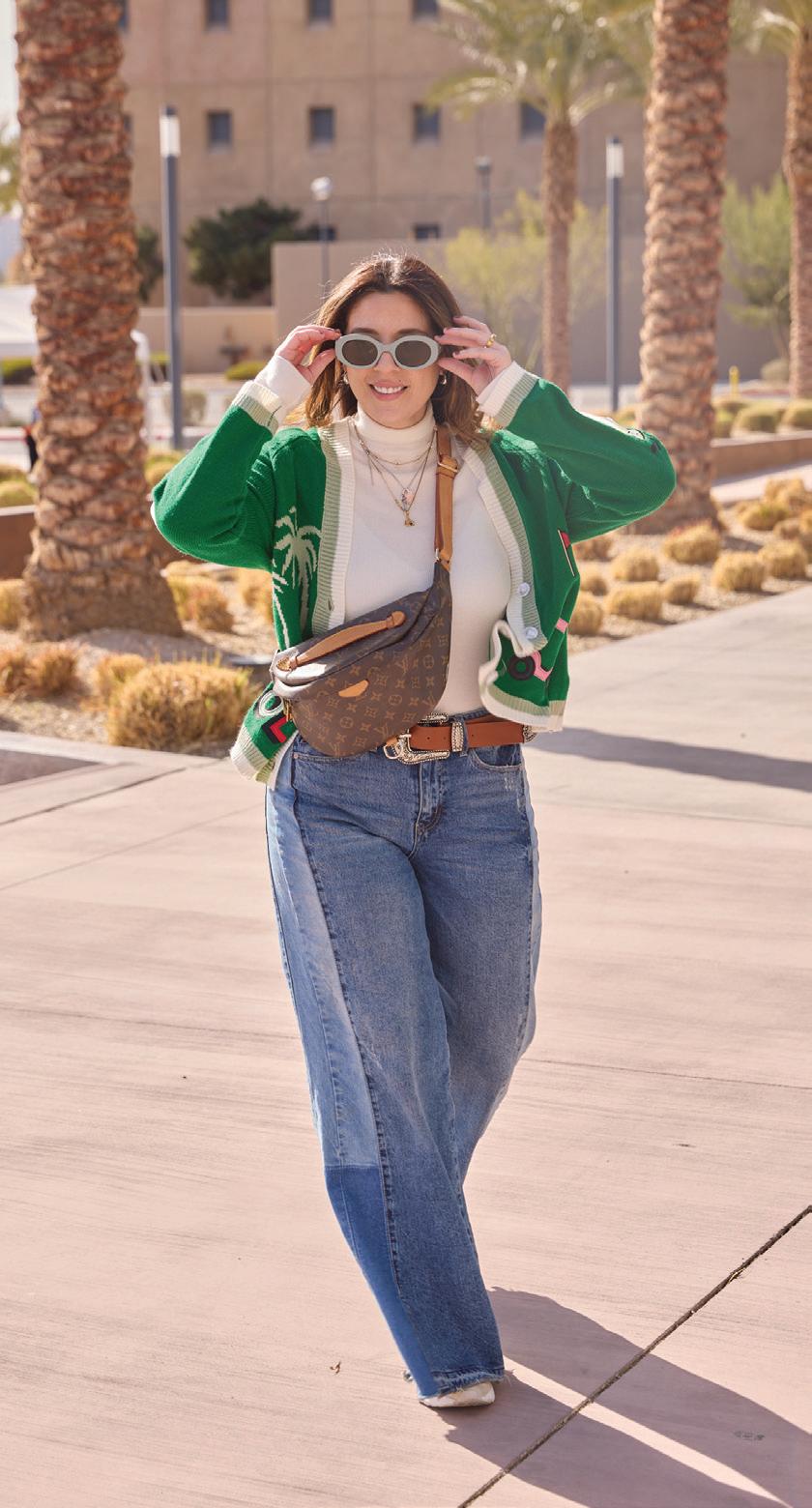

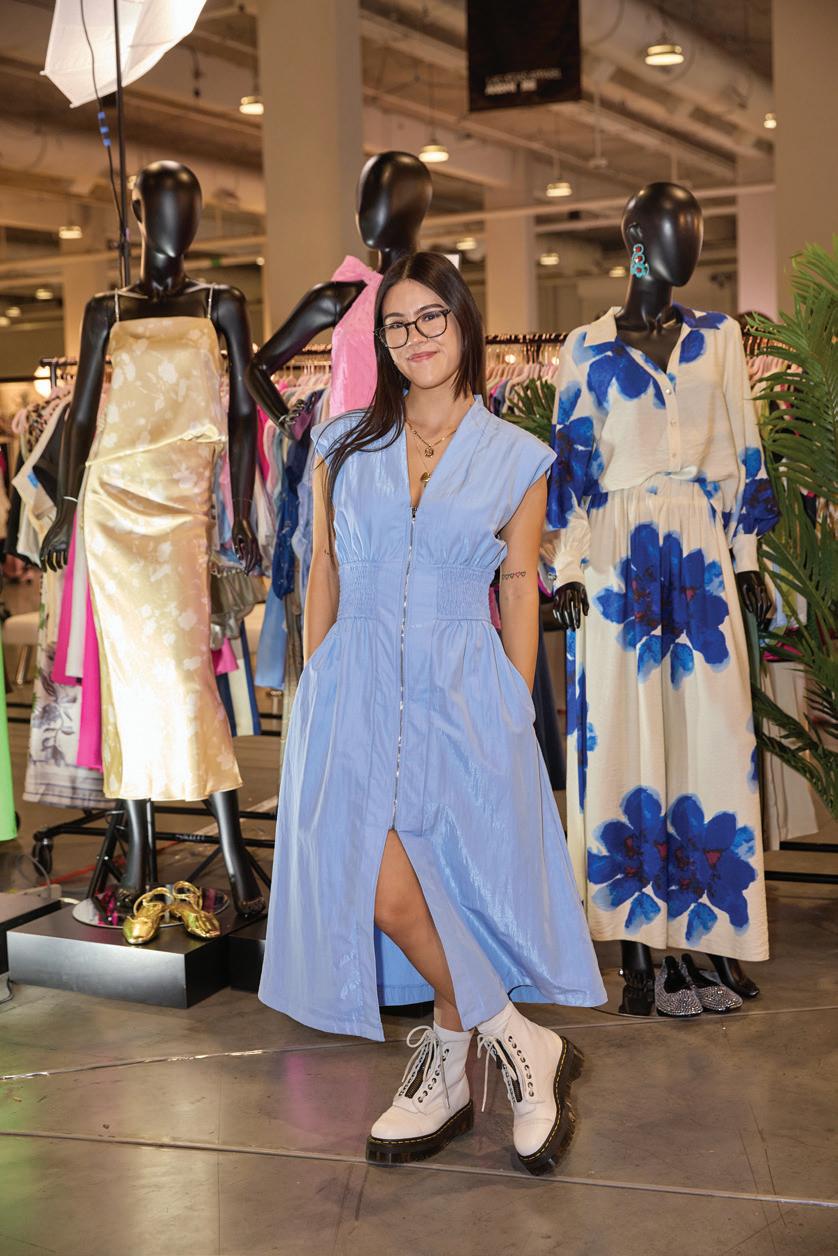












Highlighting a Modern, Empowering Vision of Swimwear

Salty Mermaid Swimwear has successfully completed its official partnership with Miss USA 2025, marking one of the most significant milestones in the brand’s history and a progressive step forward for swimwear representation in the pageant world. The collaboration, which unfolded throughout the 2025 pageant season, showcased Salty Mermaid as the exclusive swimwear partner and positioned the brand at the forefront of a national spotlight, reinforcing its mission to redefine modern beauty, confidence and inclusivity.
As part of the partnership, Salty Mermaid created and designed exclusive swimsuits specifically for the Miss USA contestants, which were worn throughout the season for campaign imagery and digital promotions. The collaboration brought a fresh, elevated aesthetic to the swimwear category—introducing bold, expressive silhouettes and a unique design approach that honored individuality and celebrated confidence in a meaningful way.
Salty Mermaid, celebrated for its vibrant styles and sustainable ethos, developed the curated collection exclusively for the Miss USA season. Drawing inspiration from the brand’s signature playful identity, the collection offered pieces that were tailored for comfort, versatility and flattering fit. Each suit was crafted with the brand’s commitment to mindful sourcing and inclusive design, ensuring contestants felt empowered and authentically represented on stage and on camera.
The partnership also amplified Salty Mermaid’s ongoing philanthropic
values. Known for supporting global initiatives related to ocean conservation and women’s empowerment, the brand used the heightened visibility of the Miss USA platform to reinforce conversations around purpose-driven fashion. This increased visibility helped introduce the brand to a broader national audience, strengthening Salty Mermaid’s position as a purpose-led leader in contemporary swimwear.
The scope and execution ofthe partnership left a significant impression on the Miss USA team. Mara Martin, head of PR and communications for Miss USA, noted, “I’ve been a fan of Salty Mermaid and of its founder, SJ, as a designer and female entrepreneur. Watching the 2025 Salty Mermaid runway show at Paraiso Miami Swim Week sparked an awakening for the swim industry, from inclusivity to its diverse designs. The Salty Mermaid team worked so quickly to bring this collection for Miss USA together; it was surreal. SJ produced an entire collection with custom designs for each contestant in just a week! It was something we truly didn’t think was possible, and the fact that the suits were not only finished to perfection but absolutely stunning was unbelievable. SJ is such an incredible example of a fearless female leader: creative, committed and capable of turning the impossible into something magical.”
In reflecting on the collaboration, Sarah Jon Porreca, founder and designer of Salty Mermaid Swimwear, shared, “This partnership has been one of the most meaningful moments in my journey as a designer and founder. Creating custom looks for the Miss USA contestants
“Creating custom looks for the Miss USA contestants allowed us to showcase the heart of Salty Mermaid— celebrating confidence, individuality and the beauty of every woman.”
— Sarah Jon Porreca, Founder and Designer, Salty Mermaid Swimwear



allowed us to showcase the heart of Salty Mermaid— celebrating confidence, individuality and the beauty of every woman. Seeing our custom designs come to life on such an iconic stage was surreal, and watching the contestants feel empowered in pieces we created for them is something I’ll never forget. This collaboration reaffirmed why we do what we do, and I couldn’t be more grateful to the Miss USA organization for trusting our vision.”
The success of this partnership represents a pivotal moment for Salty Mermaid, expanding the brand’s reach, elevating its visibility and reinforcing its values on a national scale. The collaboration not only validated the brand’s creative vision but also positioned Salty Mermaid as a standout force within the U.S. swimwear market, accelerating its trajectory for future growth and industry impact.
The partnership stands as a testament to how fashion and cultural organizations can come together to celebrate empowerment, promote thoughtful design and reflect the shifting landscape of today’s beauty standards. For Salty Mermaid, this milestone marks the beginning of an exciting new era, one defined by expanded recognition, deeper brand storytelling and continued commitment to making meaningful waves within the fashion industry.