

Manjith Fernandez Reynold
MA Design Management
Student ID: 13166014
Module Lead: Emma Waight
MA Design Management
Manjith Fernandez Reynold
MA Design Management
Student ID: 13166014
Module Lead: Emma Waight
MA Design Management
A comprehensive plan is necessary to debunk the myths of complex healthcare systems and deliver a smooth experience for patients. By embracing digital transformation, optimising workflows, and focusing on patient-centric techniques, healthcare providers may simplify processes, boost communication, and empower patients to actively engage in their treatment. This trend towards a more seamless healthcare experience benefits both patients and providers by boosting efficiency, decreasing costs, and, ultimately, improving health outcomes.
In order to provide a smooth healthcare experience in this digital age, an app as a first point of contact must be developed. From then, the patient’s experiences can begin. NHS now has a solid app that has certain limits and is constantly improving their user experience. In my final project, I hope to present some suggestions to improve the user experience as well as some essential information gleaned through primary and secondary research. This has the ability to provide a seamless experience and dispel the illusion of NHS complexity.
Keywords:
User perception and experience
user journey user testing
users with disabilities service design accessibility options interface elements onboarding experiences
voice interactions user preferences user engagement information architecture navigation systems
user-centered design
User perception and experience are at the heart of every successful application in an ever-changing digital world. The National Health Service (NHS) App, a crucial platform for healthcare services, has begun a radical redesign journey to provide its customers with a smooth and intuitive interface. The redesign attempts to improve user engagement, contentment, and general accessibility by emphasising user-centered design concepts.
A robust user testing methodology that put consumers at the centre of decision-making was key to this redesign. The NHS App redesign team acquired significant insights into building an optimised user journey by knowing their needs, pain areas, and preferences. Onboarding experiences were also included in the testing process to introduce new users to the app’s capabilities while providing a smooth transition for existing users.
A comprehensive approach was used to optimise interface components and navigation mechanisms in order to provide a satisfying user experience. The information architecture was redesigned to make it easier for consumers to obtain relevant healthcare resources and services. The makeover, which emphasised diversity, also examined accessibility options for users with impairments, so increasing the app’s reach and influence.
Recognising the rising usage of voice interactions, the NHS App redesign included speech-enabled capabilities to allow for more seamless user involvement. The combination of user choices and personalised settings gave consumers more control over their healthcare journey, improving their overall experience.
This article investigates the NHS App’s complex redesign process, focusing on the importance of user perception and experience as the driving force behind the app’s evolution. We demonstrate how a user-centric strategy may transform digital healthcare delivery in the twenty-first century by highlighting the influence of user testing, onboarding experiences, interface components, accessibility choices, navigation systems, information architecture, user engagement, and voice interactions.
This portion of the paper is intended to help readers understand the issues that NHS app users experience. This was researched utilising a mixed method approach that included both primary and secondary data. The research question is fundamental to the study design. It is accomplished using the narrative-inquiry and participatory action research methodologies. The core data was gathered through observations, questionnaires, and interviews.
The National Health Service (NHS) App is an essential tool for millions of users, providing access to healthcare services as well as vital health information. However, a user-centric redesign is required to ensure its efficacy and relevance in satisfying user demands. This narrative inquiry attempts to investigate user perceptions and experiences in order to guide the redesign process, with a special emphasis on empathising with users, performing user testing, analysing user paths, and improving accessibility choices for disabled users.
We will analyse the data acquired during the empathic phase using an interpretive technique. This
investigation will give useful information about how users perceive the existing NHS App. We will acquire a better knowledge of user expectations and opportunities for development by recognising trends and themes.
We will undertake iterative user testing to confirm our results and ensure that the redesign fits the demands of the users. This testing will entail developing prototypes based on the ideas gathered during the empathy phase (Jesse James Garrett, 2011). We will collect user input through observation, surveys, and interviews to identify pain spots and evaluate the usability of the rebuilt apps. (Norman, 1988/2013, pp. 1–36)
The tracking of user experiences inside the NHS App will be a critical component of this narrative research. We can identify areas where the app may improve user pleasure and utility by reviewing the user experience from beginning to end, including pre-app interactions and post-app results. This mapping technique will assist us in identifying key touchpoints and comprehending the environment in which users engage with the app (Krug, 2014).
Navigation is critical in creating a user-centric app experience. We will examine the existing navigation mechanism of the NHS App and compare it to best practises in mobile app design. Our objective is to
develop an intuitive and user-friendly navigation system that simplifies user interactions, decreases cognitive strain, and optimises the overall user experience.
We hope to get a thorough knowledge of user views, expectations, and requirements around the NHS App by conducting a user-centric narrative inquiry. This understanding will guide the redesign process, ensuring that the app is intuitive and accessible to all users. Finally, the redesign will allow the NHS App to better serve its customers while also improving their entire healthcare experience.

There must be a smooth access experience from the login page. Although the new login page appears to be tidy, it is critical to have rapid access for individuals in an emergency. Thinking about them will also assist to provide an emergency button that quickly begins tracking the user's position.
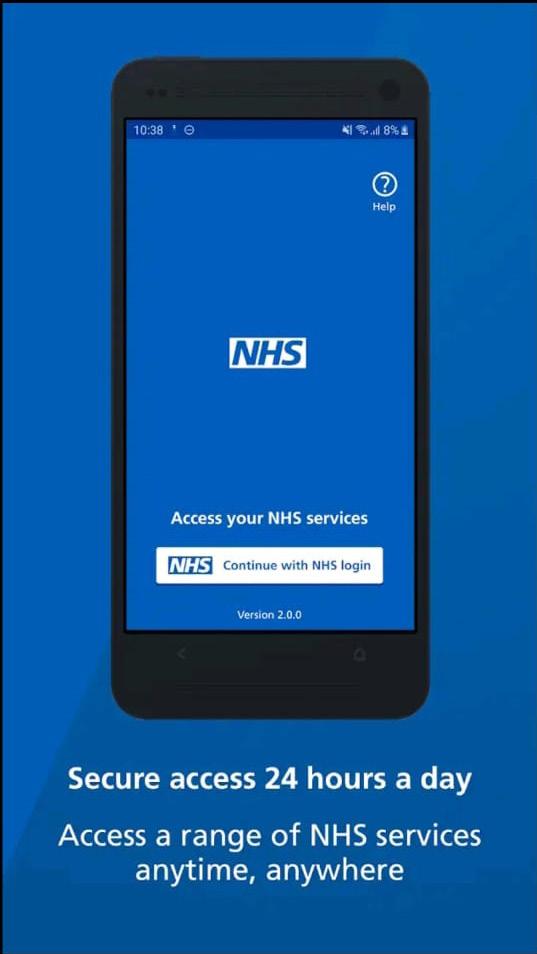
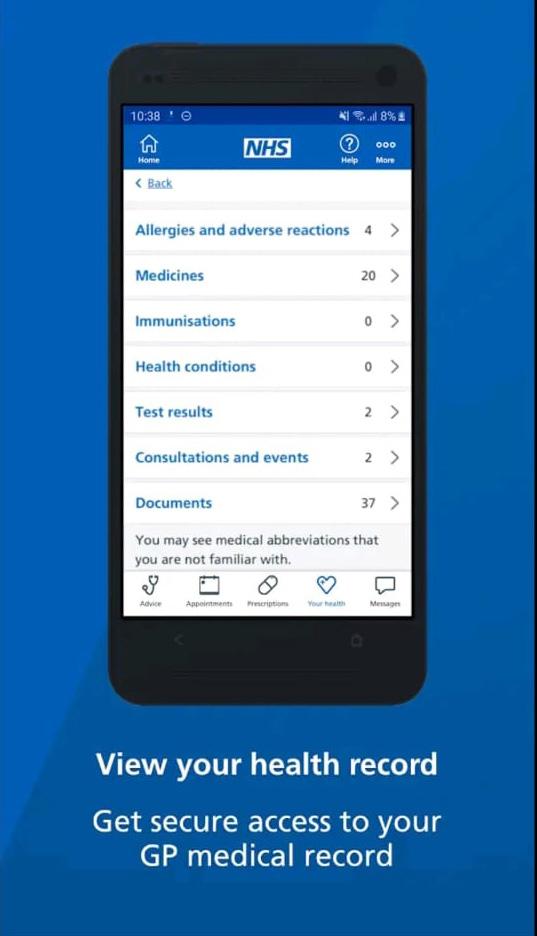
Finding places for improvement aids in redesigning it into a well-thought-out design. A improved navigation system would be sufficient to have a favourable influence on users.
Viewing the user's health data on a mobile app is convenient, but the design with plenty of text gives the impression that it is a text-heavy software. This gives the user the impression that they are going through a difficult process. The vertical scrolling tab gives the impression that it is infinite, which causes anxiety while using the programme. All of them, however, may be addressed with the app's guided tour.
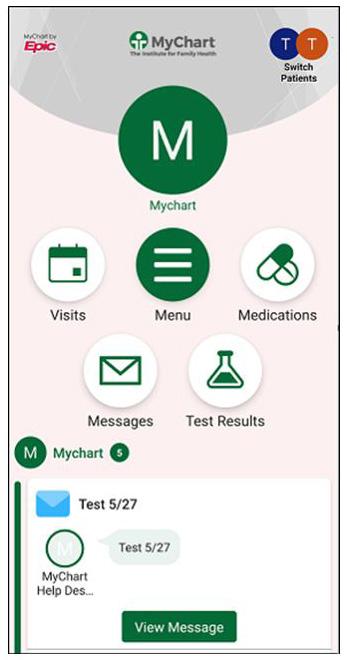
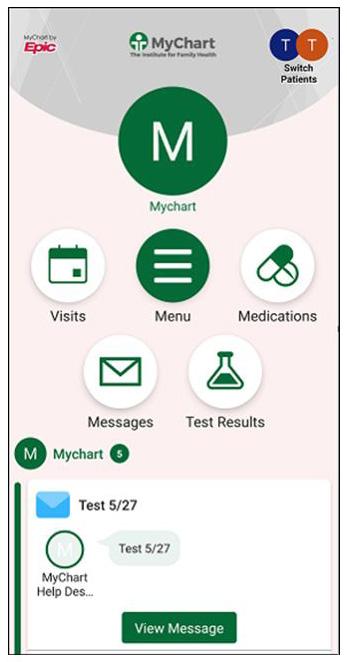
MyChart is a patient portal app developed by Epic Systems Corporation, a leading provider of electronic health record (EHR) systems. The app was designed to empower patients by granting them secure and convenient access to their health records, lab results, appointment scheduling, medication management, and communication with healthcare providers. This case study explores how MyChart has revolutionized healthcare access and improved patient engagement. (MyChart | Powered by Epic, n.d.)
Patients had difficulty obtaining their health information prior to the widespread use of patient portal applications such as MyChart. They frequently have restricted access to their medical records, test findings, and medication history, making it difficult for them to actively engage in their healthcare decision-making.
MyChart solved these issues by offering a user-friendly mobile application that linked easily with healthcare providers’ EHR systems.
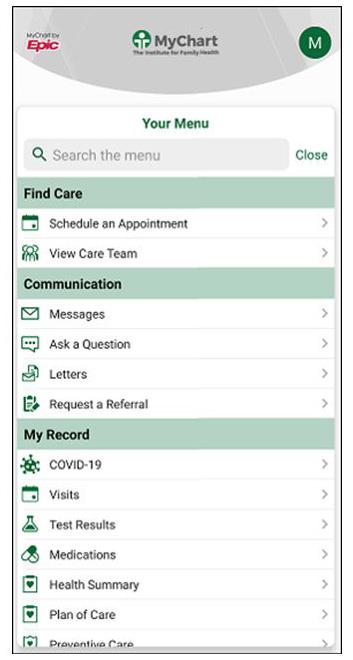
The key features included: Secure access to medical records: Patients can view their health information, including diagnoses, allergies, medications, immunizations, and test results.
Appointment scheduling: Users can conveniently schedule, reschedule, or cancel appointments with their healthcare providers.
Messaging: MyChart facilitates secure communication between patients and their healthcare teams, allowing users to ask questions, request prescription renewals, and receive timely responses.
Medication management: The app provides a comprehensive list of
prescribed medications, dosage instructions, and medication refill requests.
Virtual visits: MyChart has integrated telehealth capabilities, enabling patients to have virtual consultations with their healthcare providers.
Study of UX in this app
MyChart’s success can be ascribed to its simple and straightforward design. The app’s UI is straightforward and consistent, making it simple for patients of different ages and technological backgrounds to use efficiently. Epic Systems Corporation prioritizes the security of MyChart’s user data. The app uses robust encryption and adheres to industry best practices to ensure patient information remains protected from unauthorized access.
MyChart has revolutionised healthcare delivery and patient interaction. The app encourages active engagement in their treatment by providing patients with access to their health information, resulting in improved health outcomes. By automating appointment scheduling and medication refill requests through the app, it has decreased administrative responsibilities for healthcare practitioners, hence optimising their workflow. Patients now have greater control over their health because to MyChart, which fosters a sense of empowerment and autonomy. According to studies, people who actively utilise the app are happier with their healthcare experience and are more likely to stick to treatment regimens.
MyChart’s patient portal app has transformed healthcare access by providing patients with access to their health information, allowing for easy connection with healthcare professionals, and automating different administrative procedures. MyChart has become a strong tool in improving health outcomes and patient satisfaction by increasing patient engagement and involvement in their treatment. As technology advances, patient portal applications such as MyChart are projected to play a growing role in revolutionising healthcare delivery and empowering individuals to take control of their health (MyChart | Powered by Epic, n.d.).
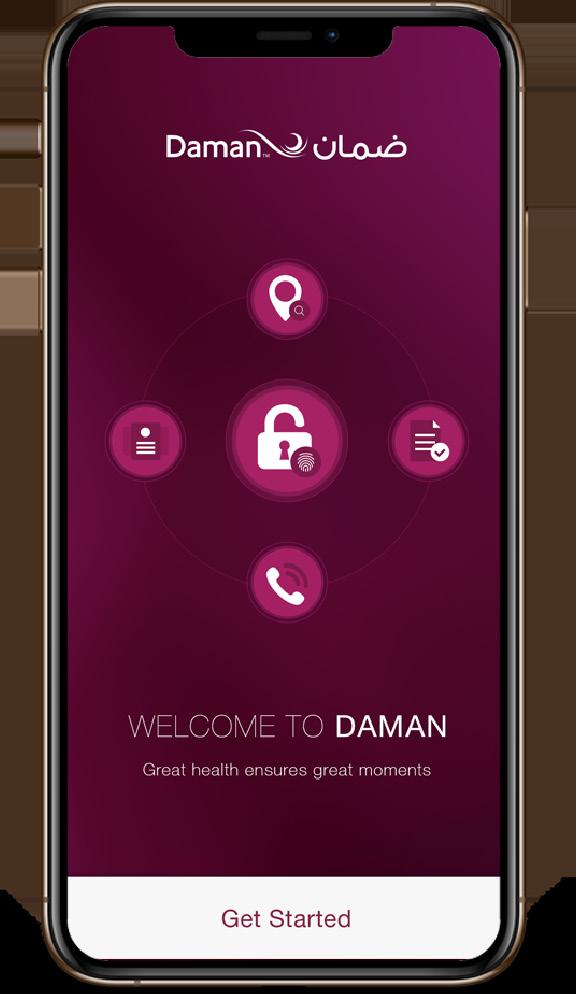
The National Health Insurance Company (Daman) in the United Arab Emirates (UAE) provides the Daman Health App as a mobile application. Daman is one of the UAE’s top health insurance carriers, and the app is intended to improve the healthcare experience for its subscribers.
The key features included:
Health Insurance Management: Daman members may use the app to view their health insurance information, such as policy details, coverage, and claim status. The software allows users to effortlessly examine and manage their insurance coverage.
Healthcare Provider Network: The app includes a full list of Daman’s network’s healthcare providers. Users may search for physicians, hospitals, clinics, and pharmacies to learn about their locations, contact information, and services.
Services: The Daman Health App provides users with access to a variety of online services, including virtual consultations with healthcare providers, medication refills, and electronic health records.
The Daman Health App strives to improve the ease, transparency, and accessibility of healthcare services for its members. Daman hopes to boost consumer engagement and streamline numerous healthcare operations like as insurance administration and claims processing by providing a userfriendly interface (Daman - Mobile App, n.d.).
The app’s virtual consultation function has the potential to improve access to healthcare, particularly for individuals who live in distant places or have restricted mobility. It may also help to relieve the strain on physical healthcare facilities by providing prompt medical advice.
People are becoming increasingly used to digital platforms and appreciate the convenience of using mobile applications to do their tasks. Healthcare platforms, in particular, are significantly more advanced than in previous years, resulting in seamless experiences for healthcare consumers. While benchmarking an app design, keep in mind the demands of millions of people who are still struggling to get adequate digital literacy. As a result, the five benchmarking dimensions would have a favourable influence on building a seamless experience for NHS users (Zarour & Alharbi, 2017).
The goal of the literature study is to compare the National Health Service’s (NHS) interaction design practises across five dimensions: visual design, usability, accessibility, user engagement, and user satisfaction. This assessment tries to identify important strengths, shortcomings, and opportunities for development in the NHS’s digital platforms by analysing current literature (Bongard-Blanchy and Bouchard, 2015).
Visual Design
The aesthetics and layout of the NHS's digital interfaces are evaluated when benchmarking its visual design. According to research, a clean, contemporary, and intuitive visual design can improve user perception and engagement. When comparing the NHS's visual design to that of other healthcare websites and mobile applications, best practises may be discovered, such as the use of clear typography, colour schemes, and visual representations of medical information.
Usability
Usability is an important aspect of interaction design that focuses on how simple and efficient it is for users to complete activities on the NHS’s digital platforms. Benchmarking the usability of the NHS entails assessing the clarity of navigation, job completion rates, and mistake rates. When the NHS’s usability measurements are compared to recognised usability standards, it is possible to identify areas where adjustments are needed to optimise the user experience.
Accessibility
Accessibility is an important part of interface design because it ensures that digital platforms can be used by people with impairments. Benchmarking the NHS’s accessibility entails analysing features such as text alternatives, keyboard navigation, and colour contrast and determining conformance with Web Content Accessibility Guidelines (WCAG). In order to meet the different demands of its users, studies emphasise the need of inclusive design in healthcare.
User Engagement
User engagement assesses users’ activity and interest in the NHS’s digital platforms. Metrics such as session time, pageviews, and click-through rates are used to benchmark user engagement. When the NHS’s user engagement is compared to industry benchmarks, it can assist discover areas for improving content relevancy and interaction to keep consumers actively engaged.
User Satisfaction
User satisfaction is a key outcome of interaction design, reflecting users’ overall contentment with their digital experiences.
Benchmarking user satisfaction through surveys or feedback analysis can provide insights into user preferences, pain points, and perceived value.
Understanding user satisfaction enables the NHS to prioritize improvements that align with user needs and enhance the overall healthcare experience.
This literature analysis emphasises critical components of the NHS's digital platforms that deserve attention and improvement through interaction design benchmarking across visual design, usability, accessibility, user engagement, and user satisfaction. Incorporating best practises and industry standards from other healthcare institutions can assist the NHS in creating more user-centric and productive digital experiences. Addressing shortcomings in these aspects will result in a more accessible, engaging, and satisfying user experience for patients, healthcare professionals, and other stakeholders interacting with the NHS's digital platforms (Bongard-Blanchy & Bouchard, 2015).
Visual Design
MyChart App
Daman
Health App
Usability
Accessibility
User Engagement
User Satisfaction
Purpose and Features
Patient portal app
National Health Insurance Company
Intuitive and user-friendly design, clear navigation, modern UI, and quick access to essential features
Straightforward user experience for insurance-related tasks.
Complies with WCAG guidelines, text-to-speech, high contrast, and adaptable font sizes.
Should prioritize accessibility compliance to ensure users with disabilities can comfortably navigate and use the app.
Messaging and virtual visits contribute to regular app usage.
Daman can increase user engagement by incorporating wellness programs, health-related content, or additional services that encourage regular interaction
responsive and helpful customer support
Ensuring prompt and reliable customer support will enhance user satisfaction. Implementing in-app support features or chatbots could improve the overall customer experience.
Summary
Both MyChart and Daman Health App serve different purposes within the healthcare ecosystem. While MyChart focuses on patient engagement and access to medical records, Daman Health App centers on health insurance management. By benchmarking their strengths and weaknesses, both apps can learn from each other to optimize their user experiences, accessibility, data security, and engagement, leading to better healthcare services and user satisfaction.
This portion of the report will employ user-centred design techniques like User Personas and User Journey Maps to help the researcher obtain a better knowledge of the user's needs, objectives, and preferences. Furthermore, the main issue and what is causing it will be emphasised.
The current NHS App deals with various problems in providing patients and stakeholders with a seamless and user-centric healthcare experience. The Problem
Limited Accessibility
challenging for users with disabilities, hinders inclusivity
Complex User Interface
user interface lacks clarity and coherence
Low User Engagement and Adoption
struggle to achieve widespread user engagement and adoption
Data Security Concerns
perceived data security vulnerabilities
Limited Integration with Emerging Technologies
no artificial intelligence (AI) or telehealth solutions
Inefficient User Experience
challenging for appointment scheduling, accessing medical records, communicating with healthcare providers
Inconsistent User Journey
inconsistencies across different touchpoints within the app



Age: 28
Lives in Oxford, United Kingdom
Busy work schedule
Works out a lot
Health and Fitness conscious
Emma works out a lot and takes her fitness seriously. Although she has a pretty busy work schedule, she makes sure to prepare most of her meals at home to make sure she consumes the right amount of calories and macro nutrients. However, she has unpleasant evenings due to her anxiety issues, especially when she’s on a strict dietary regimen.
Interests
- Working out / Fitness Diet plans
- Career / Work Looking to move to a fitness industry
- Occasional/social drinking. Enjoys beer party with friends every weekend.
Needs and expectations Influences
Need user-friendly, accessible, and efficient digital healthcare platform
Need to a quick access emergency service from the medical services app
Friends / Family influence to a great extend.
Gym environment gives more motivation to work out harder.
Social Media Trends, esp. Fitness. Get updates about new trends and exercise notifications.
Goals
Seamless experience with the help of ai integration to check the symptoms and control the online flow to the NHS account
Achieve Fitness Goals (Strength, , etc.)
Motivations
Instagram models/influencers
Athletes / Celebrities
Pain points and frustrations
Busy work schedule.
Complex user interface of the app.
Integrated app with ai chat bots.
Medicine ordering facility should be there with a home delivery
Emma becomes aware of the NHS app through a colleague who recommends it for its convenience and user-friendliness. She visits the NHS website to learn more about the app's features and how it can benefit her.
Emma downloads the NHS app from the app store based on positive reviews and the website's information. The app's description and user ratings assure him of its reliability and credibility.
Emma installs the app and starts the onboarding process. The app guides him through setting up his account, and she completes the necessary personal information quickly.
In the app's home screen, Emma easily locates the "Appointments" section and taps on "Book New Appointment." The app prompts her to select her preferred healthcare provider from a list of nearby facilities. Emma finds a suitable provider and schedules a convenient date and time for his health check-up.
The day before the appointment, the app sends Emma a friendly reminder notification with the appointment details and location. The reminder helps her plan her day and ensures she does not miss the visit.
On the appointment day, Emma opens the app to access his appointment details, including the time and address. The app's map integration helps her find the healthcare facility easily. Upon arrival, the reception already has her appointment information, streamlining the check-in process.
After the appointment, Emma navigates to the "Medical Records" section in the app to access her latest health checkup report. The app's user-friendly interface displays the report clearly, making it easy for him to understand her health status.
Emma explores the app's "Health and Wellness" features, which integrate with her wearable device. She finds it convenient to track his fitness activities and health metrics directly within the app.
When Emma undergoes a routine blood test, the app notifies her that her results are ready. She securely accesses the test results, and the app provides additional information to help her interpret the findings.
The app proactively sends John reminders for upcoming preventive screenings and vaccinations based on his medical history.
Throughout her journey, Emma trusts the app's data security and privacy. She feels confident that his personal health information is safe and protected.
The positive user experience of using the NHS app encourages Emma to continue using it for managing her healthcare needs. She shares her positive experience with friends and family, encouraging them to try the app as well.
Hearing/ learning about the app
Feeling great Can’t wait to check the app Whoa? I thought it is easy Come on!!! Now I have to wait? Who designed this? Not again I thought of much more
There should be a feedback form or ai bot to check our experience It’s good Why do they need this much restrictions? This is bad

Kingdom
John Mitchell is a 42-year-old architect residing in Manchester, United Kingdom. He leads a busy life, balancing his demanding work schedule with family responsibilities. As someone who values a healthy lifestyle, John is proactive about managing his health and seeks digital solutions that simplify his healthcare journey (Figma, 2023).
Fitness and Wellness: John enjoys staying active and participates in regular fitness activities, such as running and cycling. He monitors his physical activity and health metrics using wearable devices.
Technology: John has a keen interest in technology and is comfortable using smartphones, tablets, and other digital devices in his daily life.
Family and Friends: John’s close circle of family and friends influences his decisions and recommendations, including healthcare choices and digital app preferences.
Needs and expectations
User-Centric Design: John expects the app to have a user-centric design that caters to users with varying levels of technological expertise. A simple and intuitive layout is essential for him to navigate the app effortlessly.
Data Security and Privacy: John’s expectation is that the app prioritizes the security and privacy of his personal health information through robust data encryption and secure data transmission.
(Figma, 2023)
Health Professionals: As an architect, John values expert advice from healthcare professionals and relies on their guidance to manage his health effectively.
Efficient Health Management: John’s primary goal is to efficiently manage his health and healthcare appointments. He needs a user-friendly app that allows him to access essential healthcare services promptly.
Personal Health Records: John wants to have a comprehensive view of his medical history and records. He needs the app to securely store and provide access to his health information whenever necessary.
Seamless Appointment Scheduling: John needs an app that simplifies the process of booking, rescheduling, or canceling healthcare appointments. He expects timely reminders to help him stay organized.
(Figma, 2023)
Time Constraints: John’s busy schedule makes it challenging for him to devote ample time to healthcare appointments, leading to frustration with prolonged wait times.
Data Fragmentation: Managing multiple healthcare services and records from different providers can be challenging and frustrating for John. He seeks an integrated platform to consolidate his health data.
Proactive Health Management: John is motivated to take charge of his health and seeks digital tools that enable him to monitor his well-being and make informed decisions.
Time Efficiency: Given his busy lifestyle, John is motivated to use an app that saves time and streamlines healthcare tasks, allowing him to focus on his work and family commitments.
John becomes aware of the NHS app through a colleague who recommends it for its convenience and user-friendliness. He visits the NHS website to learn more about the app's features and how it can benefit him.
John downloads the NHS app from the app store based on positive reviews and the website's information. The app's description and user ratings assure him of its reliability and credibility.
John installs the app and starts the onboarding process. The app guides him through setting up his account, and he completes the necessary personal information quickly.
In the app's home screen, John easily locates the "Appointments" section and taps on "Book New Appointment." The app prompts him to select his preferred healthcare provider from a list of nearby facilities. John finds a suitable provider and schedules a convenient date and time for his health check-up.
The day before the appointment, the app sends John a friendly reminder notification with the appointment details and location. The reminder helps him plan his day and ensures he does not miss the visit.
On the appointment day, John opens the app to access his appointment details, including the time and address. The app's map integration helps him find the healthcare facility easily. Upon arrival, the reception already has his appointment information, streamlining the check-in process.
After the appointment, John navigates to the "Medical Records" section in the app to access his latest health checkup report. The app's user-friendly interface displays the report clearly, making it easy for him to understand his health status.
John explores the app's "Health and Wellness" features, which integrate with his wearable device. He finds it convenient to track his fitness activities and health metrics directly within the app.
When John undergoes a routine blood test, the app notifies him that his results are ready. He securely accesses the test results, and the app provides additional information to help him interpret the findings.
The app proactively sends John reminders for upcoming preventive screenings and vaccinations based on his medical history. John appreciates the app’s personalized approach to his healthcare needs.
Throughout his journey, John trusts the app's commitment to data security and privacy. He feels confident that his personal health information is safe and protected.
The positive user experience of using the NHS app encourages John to continue using it for managing his healthcare needs. He shares his positive experience with friends and family, encouraging them to try the app as well.
Hearing/ learning about the app
I’m so excited Still excited! Can’t wait to check the app
What’s this? I thought it is easy Come on!!! Now I have to wait? Who designed this?
Not again I thought of much more
There should be a feedback form or ai bot to check our experience It’s good Why do they need this much restrictions? This is bad
The suggested conclusion and design specifications for the design challenge described in the Define section will be displayed in this part of the report.
Redesigning the NHS App with a focus on addressing the pain points identified in John Mitchell's user journey (Table 2.) can significantly improve the overall user experience and enhance healthcare management for users. The redesign efforts should include the following aspects:

per the created design brief*
Enhancing User Experience through a User-Centered UX Design
Objective
Our goal is to create a seamless and user-centric UX design for a digital application that focuses on user perception and experience, catering to the needs and preferences of all users, including those with disabilities. The design should be informed by user testing, prioritize user journey and onboarding experiences, and incorporate accessibility options and voice interactions.
An intuitive information architecture is to be created
1. User Testing and User-Centered Design: Conduct thorough user testing to understand user behavior, needs, and pain points. Implement a usercentered design approach throughout the development cycle, incorporating user feedback to drive improvements.
2. Onboarding Experiences: Develop an engaging onboarding process that familiarizes users with the app's features and functionalities, ensuring a positive first impression and reducing drop-offs.
3. Accessibility Options: Prioritize accessibility by integrating features such as voice interactions and assistive technologies to accommodate users with disabilities, ensuring equal access to information and functionalities.
4. Navigation Systems and Information Architecture: Streamline the user journey and organize information intuitively, enabling users to find what they need quickly and easily.
5. User Engagement and Preferences: Incorporate personalization options based on user preferences to enhance user engagement and satisfaction.
Even though the information architecture takes considerably longer to simplify the app’s flow, it covers the major processes to gather the necessary information at the time.

Nearest ambulances are shown on map and can be tracked.
Once the emergency call button is pressed the nearest ambulance gets the user’s location and responds immediately
This space's information architecture is extensive and will need additional effort to simplify. As a result, the basic wireframes are accompanied with a splash screen to demonstrate how the app would have a beneficial influence on consumers. This is presently in the early stages of prototyping. The final result, however, is anticipated to have all of the elements listed in the study report, which is backed by primary and secondary research (Experience, n.d.-a).
A grid-style layout is simple to use. The layout may be altered depending on the age group. Users over the age of 50, for example, are more likely to have reading challenges (Norman, 1988/2013, pp. 1–36). However, designing a layout that is the same for one group of individuals is not a fair method to design a mobile app. Particularly when it comes to a healthcare app such as NHS. Planning several layout possibilities or styles will ensure that an inclusive design is completed as part of the service (Moreno, 2020). The design may then provide high-quality service to the intended users.
Manjith,
How are you today? Feeling unwell...! Select the quickest services you have
Two different layout styles for two types of category of people. This layout style can be selected when you sign up to this redesigned app. In the menu bar, there is an option to change the style of the layout, color and possible typographies. This way the new app is becoming an inclusive designed app (Kaushik, 2022).
Manjith,
How are you today? Feeling unwell...! Select the quickest services you have
The RACI Matrix in Figure 10 is a visual tool that assists in determining which stakeholders are Responsible, Accountable, Consulted, and Informed for various project tasks (Experience, n.d.).
Tasks & Activities
User Research
Market Research
Research Report & Brief Development
Budgeting
Initial design sketches
Finalise designs
Prototyping
Testing & Development
Brief & Budgeting review
Final Approval
Product Launch
Agile UX emphasizes efficient and continuous design to meet customer satisfaction standards. Integrating UX design and Agile requires collaboration and co-design, where UX practice becomes the responsibility of the entire team. UX designers and creative teams can be effectively incorporated into Agile workflows by following Agile methodologies and adapting to changes in the market. The role of the UX designer in an Agile product team involves shaping the environment, process, and team to support good UX design. Integration between Agile software development and UX design can be mutually complementary, with mutual adjustment playing a crucial role.
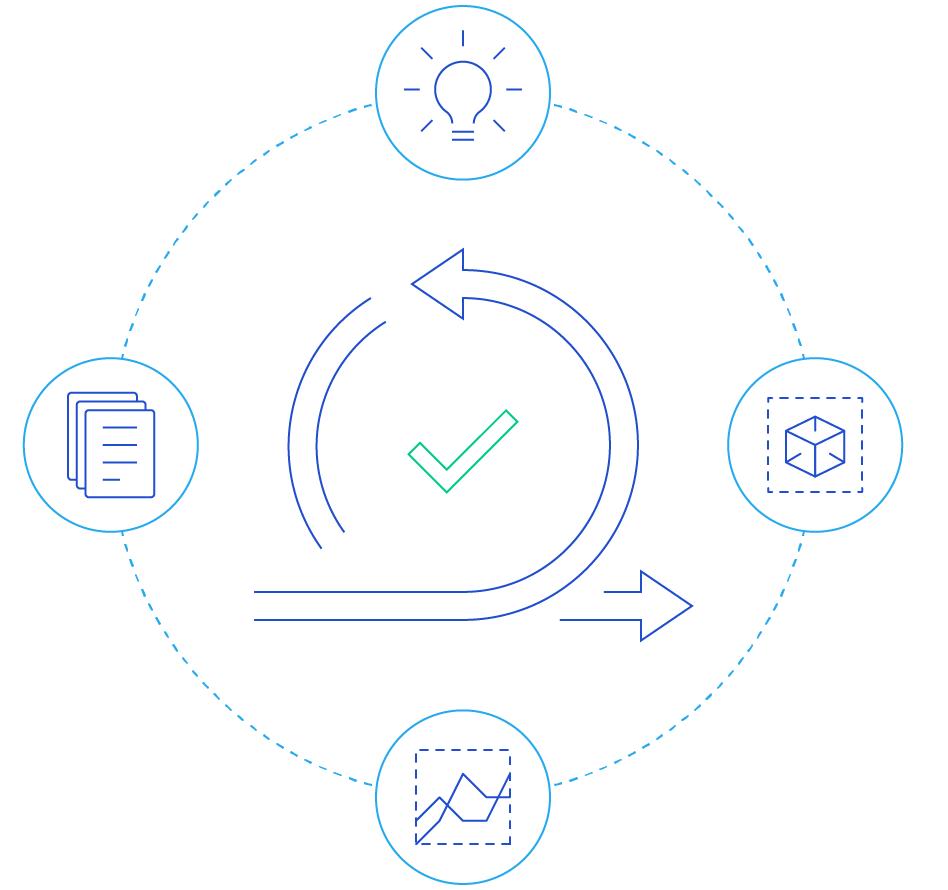
Figure 10. Shows the agile process of product design Source. (Agile UX: How to Incorporate UX and Product Design into Agile, n.d.)
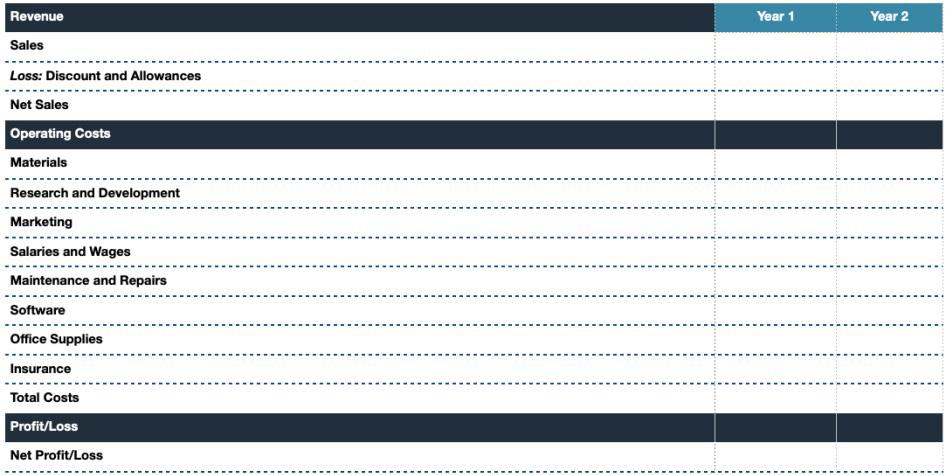
A budget plan is an essential component of project management since it helps to budget the various expenditures associated with a project and allows for budget monitoring.
SWOT analysis investigates the user experience of revamping the National Health Service (NHS) App's strengths, weaknesses, opportunities, and threats (uxplanet.org, 2020). This study assists in identifying areas for development as well as potential concerns. Each category is broken out as follows:
Established User Base: The NHS App already has a large user base, providing a strong foundation for the redesign to reach a significant portion of the population.
Trusted Brand: The NHS is a highly trusted institution, which can leverage its brand reputation to encourage users to adopt the redesigned app.
Rich Resources: The NHS has access to abundant healthrelated resources, information, and data, which can be integrated into the app for comprehensive user support.
Strong Data Security: The NHS has a robust data security infrastructure, assuring users that their sensitive health information is well-protected.
Nationwide Accessibility: The app can be accessed by users across the UK, offering universal healthcare support regardless of location.
Complexity: The current NHS App may be overly complex and overwhelming for some users, leading to poor user engagement and adoption.
Outdated Interface: The app might have an outdated user interface, which can hinder user satisfaction and may not align with modern design standards.
Limited Features: The existing app may lack certain essential features, making it less competitive with other health-related apps in the market.
Inconsistent User Journey: Users might experience a disjointed journey while navigating the app, resulting in frustration and confusion.
Limited Device Compatibility: The app may not be compatible with all mobile devices, restricting its accessibility to some users.
User-Centric Design: Redesigning the NHS App with a user-centric approach can improve user satisfaction and engagement significantly.
Enhanced Accessibility: A redesigned app can prioritize accessibility features, making it inclusive for people with disabilities.
Seamless Integration: Integration with emerging technologies like AI, wearables, and IoT can offer personalized and proactive healthcare services.
Health Monitoring: Implementing health monitoring features can empower users to take charge of their well-being, promoting healthier habits.
Personalization: Utilizing user data ethically, the app can offer personalized health recommendations and content based on individual needs.
Competitor Apps: There are numerous health and wellness apps available, posing a threat to the NHS App's market share and user adoption.
Privacy Concerns: Gathering and managing sensitive health data can raise privacy concerns among users, leading to a potential loss of trust.
Technical Challenges: The redesign process may face technical challenges, causing delays and potential bugs that could negatively impact user experience.
Resistance to Change: Existing users may be resistant to change, leading to a slow adoption rate for the redesigned app.
Regulatory Compliance: Adhering to strict healthcare regulations and data protection laws can be a challenge during the redesign process.
The UX redesign of the NHS App presents an exciting opportunity to revolutionize the way healthcare services are delivered to the citizens of the United Kingdom. By conducting a thorough SWOT analysis and considering user-centric design principles, the potential for a more seamless, engaging, and accessible user experience has been identified.
Building on the existing strengths of the NHS App, including its established user base and trusted brand, the redesign aims to create a modern and intuitive interface that resonates with users of all ages. The integration of rich healthcare resources and data, coupled with strong data security measures, ensures that users can access comprehensive and reliable health information with confidence.
Addressing the identified weaknesses, the redesign focuses on streamlining the app’s complexity, providing a consistent and guided user journey, and enhancing compatibility across a wider range of devices. By doing so, the NHS App can become a more user-friendly and efficient platform for users to manage their healthcare needs effectively.
Embracing the opportunities presented, the redesigned NHS App will explore innovative technologies, such as AI,
wearables, and IoT, to deliver personalized and proactive healthcare services. By empowering users to take charge of their well-being, the app aims to foster healthier habits and promote a positive impact on public health.
Despite the potential threats posed by competitor apps and privacy concerns, the NHS App’s redesign remains committed to building trust through transparent data management and prioritizing user privacy. Regulatory compliance will be adhered to meticulously, ensuring the app meets the highest standards of security and data protection.
In conclusion, the UX redesign of the NHS App marks a transformative step in the healthcare landscape, reaffirming the NHS’s commitment to delivering accessible, reliable, and user-centered healthcare services to all citizens. By embracing the power of technology and user-centric design, the redesigned NHS App aspires to become an indispensable tool in promoting a healthier nation, enabling users to make informed decisions and take control of their well-being with confidence. As the journey towards the redesign unfolds, collaboration with stakeholders and continuous user feedback will be pivotal to achieving the app’s full potential and ensuring it remains a vital asset in the healthcare ecosystem for years to come.
Agile UX: How to Incorporate UX and Product Design into Agile. (n.d.). Toptal Product Blog. https://www.toptal.com/ product-managers/agile/agile-ux-design-explained
Bongard-Blanchy, K., & Bouchard, C. (2015). Dimensions of User Experience - from the Product Design Perspective. Journal d’Interaction Personne-Système, Volume 3, Issue 1(Research articles). https://doi.org/10.46298/jips.1284
Daman - Mobile App. (n.d.). Www.damanhealth.ae. Retrieved August 7, 2023, from https://www.damanhealth.ae/en/ mobile-app
Experience, W. L. in R.-B. U. (n.d.-a). 3 Common IA Mistakes (that Are All Due to Low Information Scent). Nielsen Norman Group. Retrieved August 8, 2023, from https://www.nngroup.com/articles/3-ia-mistakes/
Experience, W. L. in R.-B. U. (n.d.-b). Setting UX Roles and Responsibilities in Product Development: The RACI Template. Nielsen Norman Group. Retrieved August 8, 2023, from https://www.nngroup.com/articles/ux-rolesresponsibilities/#:~:text=Each%20cell%20in%20the%20matrix
Figma. (2023). Figma. https://www.figma.com/file/fq1RZ0UXnBxlHRxTI3r3TS/User-Journey-Map---EmmaWilson?type=whiteboard&node-id=0-1&t=ZjACWh7x3z5aE2Ow-0
Jesse James Garrett. (2011). The elements of user experience : user-centered design for the Web and beyond (2nd ed.). New Riders.
Kaushik, V. (2022, July 5). Tips for Designing Layout. Medium. https://uxplanet.org/tips-for-designing-layout9ebba7ec6fd0#:~:text=There%20are%20two%20types%20of
Krug, S. (2014). Don’t Make Me Think, Revisited: A Common Sense Approach to Web Usability (3rd ed.). New Riders.
Moreno, L. (2020, October 27). Fundamentals of layout in user interface design (UI). Medium. https://uxdesign.cc/ fundamentals-of-layout-in-interface-design-ui-3a9dba31f1
MyChart | Powered by Epic. (n.d.). Www.mychart.org. https://www.mychart.org/
Norman, D. A. (2013). The Design of Everyday Things (pp. 1–36). Mit Press. (Original work published 1988)
The Noun Project. (2000). Noun Project. Noun Project. https://thenounproject.com
uxplanet.org. (2020, July 28). Top Things to Know About UX Competitive Analysis. Medium. https://uxplanet.org/topthings-to-know-about-ux-competitive-analysis-d91689fd8b36
Zarour, M., & Alharbi, M. (2017). User experience framework that combines aspects, dimensions, and measurement methods. Cogent Engineering, 4(1). https://doi.org/10.1080/23311916.2017.1421006
The NHS tops list of UK’s most cherished institutions. Mintel. (2023, January 10). https://www.mintel.com/press-centre/british-lifestyles-thenhs-tops-list-of-uks-most-cherished-institutions/
Mattei, L. (2020, April 22). A UX research framework to speed up your design process. Medium. https://uxdesign.cc/a-ux-research-frameworkto-speed-up-your-design-process-ae824a07a136
Bollini, L. (2017). Beautiful interfaces. from user experience to user interface design. The Design Journal, 20(sup1). https://doi.org/10.1080/146 06925.2017.1352649
Albert, & Tullis. (2022). Measuring the User Experience. Google Books. from https://books.google.co.uk/
Kushniruk, A. W., Ash, J., Horsky, J., Peute, L. W., Maguire, M., Polson, P., Liu, Y., Nielsen, J., Graham, M. J., Allen, M., Zhang, J., Lai, T. Y., BeuscartZéphir, M. C., Jaspers, M. W. M., Ammenwerth, E., Wyatt, J. C., Johnson, C. M., Rinkus, S., Nemeth, C. P., … Muller, M. J. (2008, November 29). A comparison of usability methods for testing interactive health technologies: Methodological aspects and empirical evidence. International Journal of Medical Informatics. https://www.sciencedirect.com/science/article/abs/pii/S1386505608001809
Alvarez, J., Léger, P. M., Fredette, M., Chen, S. L., Maunier, B., & Sénécal, S. (2020, August 1). An Enriched Customer Journey Map: How to Construct and Visualize a Global Portrait of Both Lived and Perceived Users’ Experiences? Designs; Multidisciplinary Digital Publishing Institute. https://doi.org/10.3390/designs4030029
Curtis, Z. (2023, April 4). How fonts secretly influence your thoughts. Medium. https://uxplanet.org/how-fonts-secretly-influence-yourthoughts-91ac0357b7c2
Design, G. (2021, March 25). The psychology behind a typeface and its impact on User Interface. Medium. https://glovorydesign.medium.com/ the-psychology-behind-a-typeface-and-its-impact-on-user-interface-1f230a3510b2
Dupo, J. (2023, July 3). How typography can affect user experience in an app more than we think. Medium. https://bootcamp.uxdesign.cc/howtypography-can-affect-user-experience-in-an-app-more-than-we-think-1bed0d379388
User experience design: How colors, shapes, and fonts impact and affect your branding · video production & web design/development agency: Captivation Agency: Sarasota, FL. Video Production & Web Design/Development Agency | Captivation Agency | Sarasota, FL. (2022, December 5). https://captivation.agency/insights/general/experience-design-how-colors-shapes-and-fonts-impact-and-affect-your-branding.html
Jaspers, M. W. (2009). A comparison of usability methods for testing interactive health technologies: methodological aspects and empirical evidence. International journal of medical informatics, 78(5), 340-353.
Redesigning the online experience of NHS for all users

Applicant: Manjith Reynold
Project Title: Redesigning the online experience of NHS for all users
This is to certify that the above named applicant has completed the Coventry University Ethical Approval process and their project has been confirmed and approved as Medium Risk
Date of approval: 03 Mar 2023
Project Reference Number: P148306