



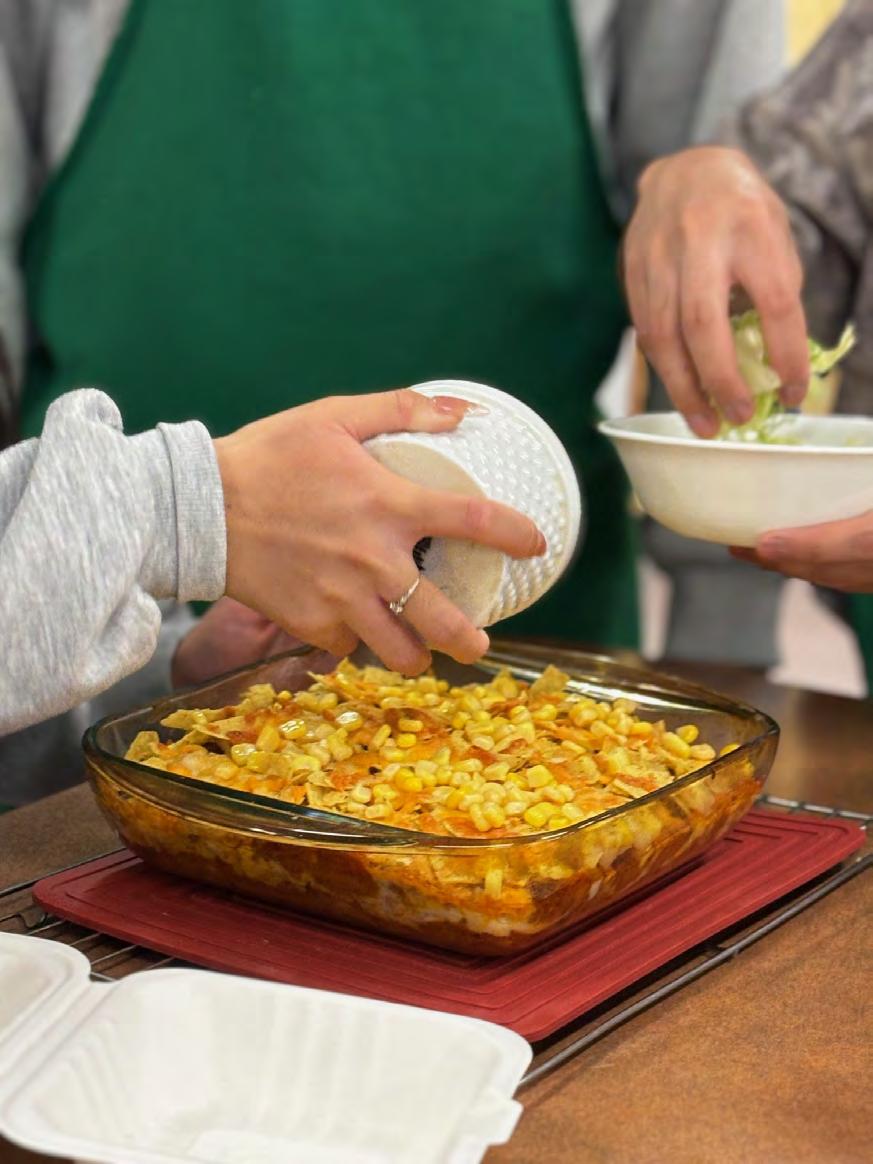
MBP visited Maples Collegiate in Winnipeg earlier today for a cooking demo with 48 grade 11 and 12 students. Thanks to Mr. Fife for welcoming us into the classroom.
For detailed water Information and flood conditions across the province please click on the link above. MBP also shares updates via the social media channels X, Facebook and Instagram.
The Agroclimate Impact Reporter (AIR) is back for the 2026 season!
Agriculture and Agri-Food Canada (AAFC) invites you to help us better understand local conditions and the agricultural impacts of weather and climate in your region...
MPI offers condensed Driver’s Z courses, Saturday road tests this summer
To support Manitobans looking to get their driver’s licence this summer, Manitoba Public Insurance (MPI) is offering limited, condensed Driver’s Z courses and making Class 5 road ...
Gov. of Canada creates platform for Canada-wide flood risk awareness
The Honourable Eleanor Olszewski provided an update on the development of Canada’s Flood Risk Finder, Canada’s first national, publicly available source of flood hazard and ...


Head Office #180, 6815 – 8th Street NE
T2E 7H7
Phone: (403) 275-8558
Email: contact@cattle.ca Ottawa Office #1101, 350 Sparks St. Ottawa, Ontario
K1R 7S8
Phone: (613) 233-9375
April 30, 2026
Calgary, AB — The Canadian Cattle Association (CCA) is deeply concerned with the Federal Government’s approach to food security and trade diversification in the Spring Economic update.
While there was recognition of the challenges the agriculture industry faces, including higher input costs, weather and market disruptions, the government’s emphasis to conclude negotiations with Mercosur as soon as possible fails to recognize the risks this agreement poses to food security.
The Prime Minister has declared his government will work on lessening our dependence on certain trading partners, and yet the Government is willing to increase our dependence on beef imports from Mercosur countries. Not only is this approach contradictory, it is also dangerous.
Already, Canadian beef imports have been at the highest levels since 1993 and now represent 30 per cent of our domestic consumption. This is higher compared to similar jurisdictions like the United States (19%), the European Union (7%), Australia (3%) and Mercosur (1%). We can also expect a bigger flood of beef imports into Canada from Brazil and Australia with these countries now being shut out of China.
The Canadian Government cannot support food security if at the same time they are willing to undermine Canadian farmers and ranchers in trade negotiations. CCA believes in trade diversification; however, we cannot diversify for the sake of diversifying.
“Beef raised in Canada generates 50 per cent fewer emissions and helps protect grasslands one of the world’s most endangered ecosystems,” says Tyler Fulton, CCA President He added, "Canadian beef farmers and ranchers are proud of our high standards for animal welfare and labour while providing vital environmental benefits like ecosystem protection, carbon sequestration and wildlife habitat. This results in the sustainably produced, premium beef that Canada is known for around the world.”
Fulton also emphasized, “It is extremely disappointing for Canadian beef producers to be dismissed in the pursuit of an accelerated free trade deal that favours lower quality imported beef from a country with lower standards in labour, environment, animal health and food safety.”
The Spring Economic Update recognizes the fragility of our food supply chain. About 30 per cent of Canada’s food supply is imported. Relying heavily on food imports exposes Canadians to multiple disruptions outside of our control.
Canadian beef farmers and ranchers are disappointed the Federal Government is choosing to focus on short-term outcomes instead of long-term solutions that truly address food security and
Head Office #180, 6815 – 8th Street NE
Calgary, Alberta
T2E 7H7
Phone: (403) 275-8558
Email: contact@cattle.ca
Ottawa Office
#1101, 350 Sparks St.
Ottawa, Ontario
K1R 7S8
Phone: (613) 233-9375
make our country stronger by supporting the growth and expansion of the Canadian beef industry.
If we want to be a regional superpower in trade, we cannot undermine the men and women who wake up each day to feed Canadians.
For further information, contact: Tina Zakowsky Communications Manager
Canadian Cattle Association
403-451-0931 | zakowskyt@cattle.ca
In May 2026, farm operators across Canada will receive an invitation in the mail to complete the Census of Agriculture questionnaire. Respondents will be able to complete their questionnaire online using their Secure Access Code (SAC) included in the invitation letter.
In the coming months, the Census of Agriculture Program will reach out to the farming community with materials they can use to help promote the census. Along with shareable materials, there will be a media campaign detailing what's new in the upcoming census and why the census is important.
In accordance with the Statistics Act, farm operators are required to participate in the Census of Agriculture. By the same law, Statistics Canada is required to protect the information provided in Census of Agriculture questionnaires. We place the highest priority on protecting your privacy and your information.
The data produced are key to supporting economic growth and sustainability for the businesses in this sector and can support decision-making around international trade, competitiveness and technological progress.
Farm organizations are also heavy users of census data and draw on this information to formulate policy recommendations, develop communications and outreach activities, and conduct market research.
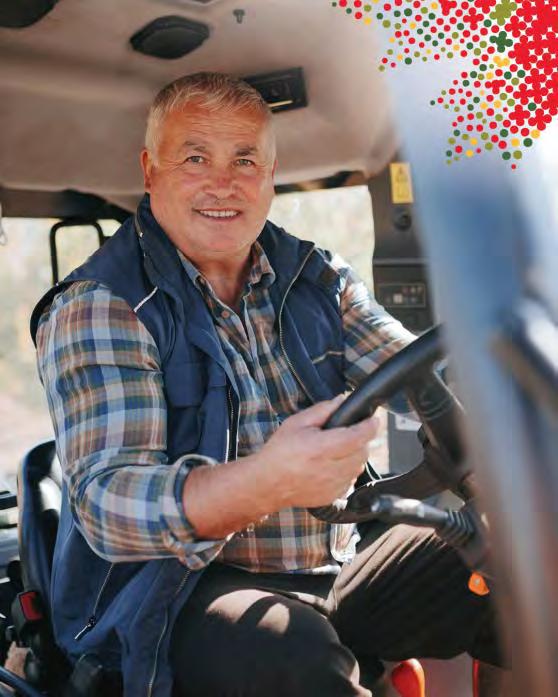
Statistics Canada has been working hard to make it easier for farm operators to complete their 2026 questionnaire. It is now shorter, faster and easier to complete. Farm operators are now required to only answer questions relevant to their operation's activities.
Consulting our users to get it right
Why is participation important?
Filling out the Census of Agriculture questionnaire is important for supporting the agricultural industry and local farming communities across Canada. Since 1921, the Census of Agriculture has provided a detailed portrait of the agricultural industry across Canada.
In fall 2022, Statistics Canada conducted a national consultation to assess the information needs of agricultural stakeholders. The agency received 847 comments and suggestions from diverse groups including farming organizations and businesses, federal government departments and agencies, provincial government, and academics to help improve the Census of Agriculture. Statistics Canada is grateful to the Canadian agricultural community for its ongoing feedback and support.
For more information, please visit the census website
We rely on technology more and more to keep in touch with our family, friends, and colleagues with a click of a button. But what happens in the event of a major emergency? Suddenly these tools can become vital in helping you and your family deal get in touch and stay informed. So here are some tips on the use of technology in an emergency:
• If possible, use non-voice channels like text messaging, email or social media. These use less bandwidth than voice communications and may work even when phone service doesn't
crank, or vehicle phone charger. If you don't have a cell phone, keep a prepaid phone card in your emergency kit
• Keep your contacts up to date on your phone, email, and other channels. This will make it easier to reach important contacts, such as friends, family, neighbours, child's school, or insurance agent
• If you have a smartphone, save your safe meeting location(s) on its mapping application
• If you must use a phone, keep your conversation brief and convey only vital information to emergency personnel and/or family. This will also conserve your phone's battery
• Unable to complete a call? Wait 10 seconds before redialing to help reduce network congestion
• Keep a charger for your mobile device in your emergency kit. Consider getting a solar-powered,
• Conserve your smartphone's battery by reducing the screen's brightness, placing your phone in airplane mode, and closing apps you are not using. You never know how long a power outage will last!
Remember, in an emergency or to save a life, call 9-1-1 for help. You cannot currently text 91-1. If you are not experiencing an emergency, do not call 9-1-1. If your area offers 3-1-1 service or another information system, call that number for non-emergencies.

Are you prepared for possible flooding in different parts of Manitoba this spring? The following is some information from the provincial government to help you get organized in the event of such an emergency.
A reminder about individual responsibilities during an emergency:
Step 1: – Producers/Individuals are the first point of responsibility to deal with their own emergency situation.
Step 2: – If individuals cannot provide appropriate response to their emergency situation, their local municipality is the first point of contact for emergency-related information and assistance.
Step 3: – If the local municipality cannot handle the situation, that municipality will contact Emergencies Measures Organization (EMO) for assistance. If EMO requires Manitoba Agriculture’s assistance, they will assign an issue to our emergency coordinator.
Producers who need to transport livestock to an alternate area are encouraged to book a transport company immediately to ensure service.
Below are some useful links related to flooding (forecasts, river and lake levels, etc.), tips for evacuation, Disaster Financial Assistance, etc.
• Flood Information
• Which Level of Government Do I Contact?
• Animal Emergency Supply Kit
• Caring for Livestock During an Evacuation
• Evacuation Checklist
• Preparing a Beef Farm for Flood Conditions in Rural Manitoba
• Managing Dead Livestock During and After Flooding
• Returning Home
• Disaster Financial Assistance and Farmers
• DFA Program Changes for Farmers
• Manitoba Red Cross
• Contact information and helpful websites when dealing with an emergency
Importance of Documentation During a Natural Disaster Like a Flood
If you do experience flooding and are incurring damages and expenses related to that which may be eligible for a future Disaster Financial Assistance program it is important that you:
• Take pictures of all damaged property and items before you dispose of anything.
• Keep track of all your disaster-related repairs and activities including:
o Labour and equipment hours.
o Materials used, including quantities.
o Specific types of equipment used, including make, model, year, horsepower and attachments.
o Receipts, invoices and other documents you need to support your DFA claim.
• Keep all receipts, invoices and any other documents for disaster related expenses as they are required in order to support your DFA claim. Invoices submitted to Manitoba EMO must be accompanied by the corresponding proof of payment (e.g. credit/debit slip, cancelled cheque) in order to be considered for eligibility.
Rotational grazing offers more than just dividing pastures into smaller parcels. It can extend the grazing season, reduce winter feeding days, and make better use of forage resources available on the farm. For producers, this approach may mean lower feed costs, improved pasture productivity, and in some cases, additional hay to sell.
Rotational grazing is a widely adopted practice across Canadian beef operations. According to the 2021 Canada-wide Farm Environmental Management Survey, 74% of beef producers utilize some form of rotational grazing, highlighting its role as a common forage management strategy. Similarly, the Alberta AgriSystem Living Lab: 2022 Baseline Adoption Rates Survey found that of 208 respondents, 69.2% implemented rotational grazing during the 2022 season, managing 57.1% of total reported pastureland under this system. While adoption is relatively high, this indicates that rotational grazing is often applied to only a portion of available pasture acres.
The Canadian Cow-calf Cost of Production Network (COP Network) uses standardized data collection which allows for comparison both within and between provinces, and internationally. Since launching in 2021, the COP Network has collected data from over 235 producers contributing to 64 cow-calf benchmark farms that represent various production systems. Each benchmark is based on data from 3-7 producers. Data collection occurs every 5 years with annual indexing of input and output prices, as well as crop and forage yields, in subsequent years. Individual benchmark farm summaries, can be found at: https://canfax.ca/resources/cost-ofproduction/cop-results.html
Patterns of use varied among producers. Most rotational grazing began in May (44.7%) or June (35.0%), with October (51.2%) being the most common endpoint. The grazing period ranged from 48 to 244 days, averaging 145.3 days, which was not statistically different from the average of 135.6 days reported for continuous grazing. Approximately half of producers (49.0%) reported resting paddocks for 30–60 days between grazing events, and cattle movement was managed either on a time-based schedule (49.7%) or according to forage availability (47.6%). Of those following a set schedule, the most common frequencies included moving cattle once per week (17.9%) or once every two weeks (11.7%). Triggers for moving herds most often included 50% forage utilization (37.2%) or 80% utilization (35.9%).
Despite the widespread adoption of rotational grazing, several barriers limit its expansion. Nearly half of producers (48.4%) identified water access as the primary challenge, while others cited up-front investment costs (10.9%) and reluctance to use electric or portable fencing (9.4%). These findings suggest
that while rotational grazing is common, it is often constrained by resource availability and infrastructure limitations.
To evaluate rotational grazing, the COP Network developed scenarios for 11 benchmark farms using 2022 data. The analysis assumed that producers invested in a portable electric fencing system in the first year to divide pastures into multiple paddocks, while continuing to use existing water systems. The cost of fencing was considered similar across herd sizes, meaning that the per-cow cost was lower for larger operations.
Stocking rates were expected to improve by 10 percent under rotational grazing. However, producer experience and research suggest that the actual range is much wider from as little as 5 percent to more than 60 percent depending on forage species, stand age, soil type, fertility, and moisture.
The primary benefit of rotational grazing was assumed to be fewer winter feeding days due to increased pasture productivity which allowed for an extended grazing season. For some operations, this also meant more hay was available. If hay was sold in the baseline year, that surplus was treated as additional revenue; if not, it was carried forward into the next year as extra feed inventory.
Measuring progress is often like watching grass grow. While it’s difficult to detect movement on a daily basis, it’s simple to see growth over time. - Frank Sonnenberg
As shown in Figure 1, across the 11 benchmark farms, only about half were able to pay off the fencing investment within the five-year analysis (orange lines above zero). Those that succeeded had three main advantages: larger herds, higher baseline feed costs, or additional revenue from hay sales.
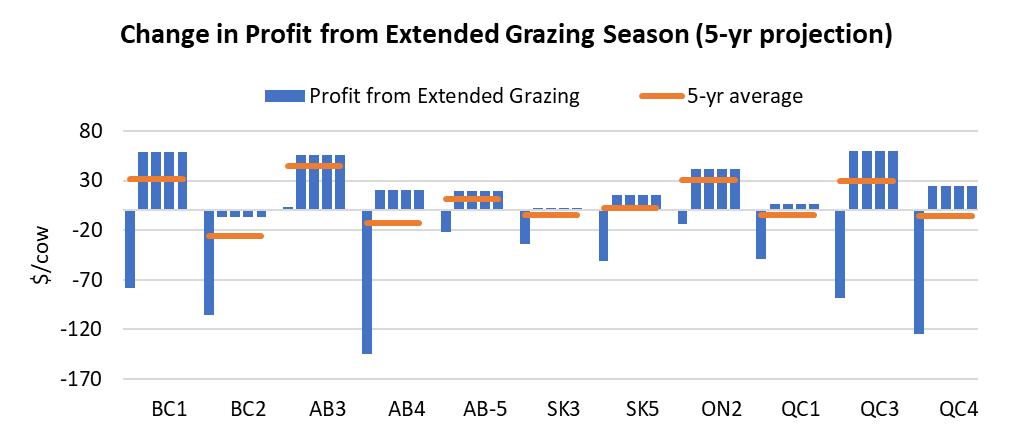
*Blue bars represent the change in profit per cow for years 1 through 5. The negative value in year 1 reflects the impact of the initial investment.
Notes for Chart:
• BC1: Additional revenue from selling hay, despite small herd
• BC2: Small herd, low baseline feed cost
• AB3: Larger herd, additional revenue from forage sale
• AB4: Small herd
• AB5: Large herd
• SK3: Larger herd, but low feed cost
• SK5: Medium herd, low baseline feed cost, additional revenue from forage sale
• ON2: Cost saving on purchased feed
• QC1: Medium herd, low baseline feed cost
• QC3: Cost saving on purchased feed
• QC4: Small herd
Larger herds were able to spread the cost of fencingacrossmorecows,reducingthe average investment per animal. Farms with higher feed costs — measured in dollars per head per day saw more savingsbyreducingthenumberofwinterfeeding days. For example, savings were most significant for farms relying on purchased feed, where every day of extended grazing lowered costs. Some operations also captured additional incomefromsellinghaynolongerneeded for feeding, while others improved their resilience by carrying forage over to the following season.
Smaller operations faced more challenges in paying off the investment within the five-year period. However, if their feed costs were high or if they could generate revenue from surplus hay, rotational grazing still offered a meaningful return.
What it Means on Your Farm
The results underline that rotational grazing is not a one-size-fits-all solution. Large herds can recover costs faster because the fencing expense per cow is lower, and farms with higher feed costs see greater benefit from every additional grazing day. Smaller herds may face challenges with payback, but if they have high feed costs or can generate revenue from selling surplus hay, rotational grazing may still be worthwhile.
The best way to control cow and sheep is to give them a big grazing field.
- Shunryu Suzaki
Flexibility can also make a difference. Producers who opt for lower-cost fencing systems or creative pasture layouts may see better results. The analysis reinforces that knowing your own costs both feed and infrastructure is key to deciding whether rotational grazing makes sense for your operation.
• Portable fencing is the largest upfront investment, with total costs similar across herd sizes. Larger herds reduce the cost per cow.
• Stocking rates were assumed to increase by 10%, but actual results reported by producers range from 5% to over 60%.
• Only about half of the 11 benchmark farms were able to pay off their fencing investment within five years
• Farms with higher feed costs per head per day, especially those relying on purchased feed, saw the greatest cost savings.
• Operations that sold hay in the baseline year could capture additional revenue from surplus forage, while others built carryover reserves.
• Soil type, fertility, forage species, and age of the pasture stand all impact results.
Adding a water system to a rotational grazing system isn’t just about convenience, it can influence calf performance and the initial investment can be partially offset by funding opportunities. How does portable fencing, water systems, and cost-share programs stack up in terms of costs and benefits? The results show both the challenges and the potential for profit.
The 2022 analysis looked at six benchmark farms: AB-8, AB-11, MB-3a, MB3b, QC-6, and QC-7. Each farm added portable electric fencing, a solarpowered water pump, and a shallow-buried pipeline system to support rotational grazing.
Key assumptions included:
• Longer grazing season achieved through improved management.
You can make money two ways - make more or spend less.
- John Hope Bryant
• Calves gaining an extra 0.09 lb/day with the water system, compared to direct dugout access.
• Farm-specific funding assumptions through the On-Farm Climate Action Fund (OFCAF), with 70–85% reimbursement of eligible costs.
Without funding, the net benefits were generally negative over five years due to the high upfront cost of water systems. This was most challenging for farms with large pasture areas needing long pipelines, or smaller herds where costs per cow were higher.
One exception was QC-7, where savings on purchased feed and fewer winterfeeding days resulted in a positive net benefit even without funding.
Estimated Average Net Economic Benefit over Five Years
Rotational Grazing Only With OFCAF With OFCAF and Heavier WW
When OFCAF funding was applied, the economics changed. Four of the six farms were able to make the scenario feasible with the reduced upfront cost.
Adding in the stacked benefit of heavier calves made the scenario profitable for most farms, though AB-11 saw a reduced price per pound because heavier calves shifted into a lower-priced weight category.
Notes:
AB-8: In Alberta, with 161 cows, 1,465 acres of grassland
AB-11: In Alberta, with 133 cows, 1,863 acres of grassland
MB-3a: In Manitoba, with 270 cows, 1,040 acres of grassland
MB-3b: In Manitoba, with 270 cows, 1,107 acres of grassland
QC-6: In Quebec, with 150 cows, 156 acres of grassland
QC-7: In Quebec, with 225 cows, 156 acres of grassland
Don’t wait for the right opportunity: create it. - George Bernard Shaw
The feasibility of rotational grazing with water systems depends on four things: upfront investment, herd size, savings from fewer winter feeding days, and potential revenue gains from heavier calves. For example, a 200-cow operation saving $20/cow on feed could justify an upfront investment of $20,000 and still expect a five-year payoff.
Estimated Break-even Budget for a 5-year
Period* by herd size and cost saving per cow
$50,000
$40,000
$30,000
$20,000
$10,000
$0
$5 $10 $15 $20 $25 $30 Breakeven
Potential Cost Saving per Cow
Farms without an existing water system stand to benefit the most, since installing one can boost calf performance in addition to grazing savings. Programs like OFCAF reduce the financial risk and help producers move ahead with grazing infrastructure, but details vary by province. Contacting the local delivery agent is essential for understanding coverage, requirements, and application steps.
• Water systems combined with rotational grazing can improve calf weights by 0.09 lb/day and reduce number of winter feeding days.
• High upfront costs make the system challenging without additional funding sources.
• The stacked benefits of funding, feed savings, and heavier calves made the scenario profitable for most farms.
• Herd size and per-cow savings determine how much investment is realistic e.g., $20,000 over five years for 200 cows saving $20/cow. $2,500
Canfax is funded by Memberships: Subscribe Now: Scan the QR Code for details how
Disclaimer / Copyright Notice: Canfax Research Services (CRS) tries to provide quality information, but we make no claims, promises, or guarantees about the accuracy, completeness, or adequacy of the information. CRS does not guarantee and accepts no legal liability arising from or connected to, the accuracy, reliability, or completeness of any material contained in our publications. Reproduction and/or electronic transmission of this publication, in whole or in part, is strictly forbidden without written consent from CRS.

Portfolio:
Agriculture and Agri-Food
Position title:
Chairperson
Organization:
Farm Credit Canada
Headquarters location:
Regina, Saskatchewan
Workplace location:
Across Canada
Type:
Part-time
Per diem:
$410.00 - $485.00
Annual retainer:
$10,500.00 - $12,400.00
Closing date: May 28, 2026
Opportunity number:
J0426-0636
Farm Credit Canada is Canada’s leading provider of financial and business services tailored to the agriculture and agri-food industry. It is self-sustaining and projects long-term viability through sound financial and risk management practices. As a prudent lender with 26 consecutive years of growth, a $55 billion loan portfolio and 103,781 customers across Canada, Farm Credit Canada, through its more than 2,500 employees, contributes to the strength and stability of the agriculture industry.
The Chairperson of the Board of Directors is responsible for leading the board by fostering constructive debate and discussion among board members, facilitating consensus and managing conflict. The Chairperson supports the President and Chief Executive Officer in fulfilling the mandate and mission of Farm Credit Canada, acts as a liaison with the Government, and promotes risk oversight and corporate governance practices.
Further details about the organization and its activities can be found by following the Organization website link above.
Please ensure that the information provided in your curriculum vitae and cover letter clearly demonstrates how you meet the following requirements:
• A degree from a recognized university or an acceptable combination of education, job-related training and experience;
• Experience serving on boards of directors of major public and/or private corporations, preferably as chairperson;
• Experience at the senior management level within the private or public sector;
• Experience in dealing with government, preferably with senior government officials
• Experience with modern corporate governance practices;
• Experience in risk oversight and risk management;
• Experience in the agricultural industry would be considered an asset.
The following criteria will be assessed:
• Knowledge of Farm Credit Canada’s mandate, legislative framework and activities;
• Knowledge of the roles and responsibilities of the Chairperson, the Board of Directors, the President and Chief Executive Officer;
• Knowledge of human resources and financial management;
• Knowledge of public policy related to the agricultural and agri-business sectors;
• Knowledge of key and emerging issues facing primary producers in the agri-business industry;
• Knowledge of regional concerns and how they relate to Farm Credit Canada;
• Knowledge and understanding of the financial services industry, particularly retail and commercial lending, and venture capital financing;
• Superior communication skills both written and oral;
• Ability to anticipate issues and develop strategies to enable the Board to seize opportunities or solve problems;
• Ability to foster debate and discussion among board members, facilitate consensus and manage conflict;
• Ability to lead the quest for high performance and be a champion of Farm Credit Canada’s values and cultural practices;
• Ability to develop and maintain effective working relationships with the Minister and their office, the Deputy Minister, as well as Farm Credit Canada’s partners and stakeholders;
• Ability to act as a spokesperson in dealing with stakeholders, media, public institutions, governments, and other organizations.
Proficiency in both official languages is preferred.
The Government of Canada will consider bilingual proficiency when assessing applicants. Your online profile must include your proficiency in speaking and understanding your second official language.
The following will be verified by references at a later date:
• High ethical standards and integrity
• Sound judgment
• Superior interpersonal skills
• Tact and diplomacy
The Government of Canada is committed to providing a healthy and accessible workplace, and to building a skilled and diverse workforce that reflects the population
it serves. Appointees will be expected to promote and maintain a healthy, respectful, inclusive and harassment-free work environment.
Candidates who belong to one or more of the designated employment equity groups are encouraged to self-identify when applying. Preference may be given to applicants who are members of one or more of the following groups: Indigenous peoples, persons with disabilities, visible minorities, and women.
• All appointees must comply with the Ethical and Political Activity Guidelines for Public Office Holders throughout the duration of their appointment.
• All appointees are subject to the Conflict of Interest Act. Public office holders appointed on a fulltime basis must also submit to the Office of the Conflict of Interest and Ethics Commissioner, within 60 days of their appointment, a confidential report in which they disclose all of their assets, liabilities and outside activities.
• All appointees are subject to the Terms and conditions applying to Governor in Council appointees. They must uphold the highest standards of probity and are expected to demonstrate behaviours in the workplace that afford respect, equality and dignity to everyone they interact with at work at all times. The Values and Ethics Code for the Public Sector outlines the values, principles and expected behaviours for public servants, including valuing
diversity and creating workplaces free from harassment and discrimination. Governor in Council appointees are expected to uphold and respect these values and principles throughout their time in public office.
• Appointees must also respect the principles of any code of conduct that applies to the organization to which they are appointed.
• Appointees must not be an officer or employee of Farm Credit Canada (statutory).
• Appointees are expected to commit to approximately 36 days per year to the duties and travel associated with this position.
• Appointees must be willing and able to travel across Canada.
A link to this notice will be placed in the Canada Gazette and shared on the Government of Canada’s LinkedIn page.
A list of qualified candidates may be established and may be considered for other appointment opportunities.
Candidates must submit their application package, including their curriculum vitae and a cover letter addressed to the Director of Selection Processes, Senior Personnel Secretariat, Privy Council Office, by 11:59 p.m. Eastern Time on May 28, 2026, via the Governor in Council Appointments website To learn more or if you require support or accommodation to submit your online application, please visit the How to apply page on the website. For alternatives to online applications, please visit the Application Assistance page.
Portfolio:
Agriculture and Agri-Food
Position title:
Director
Organization:
Farm Credit Canada
Headquarters location:
Regina, Saskatchewan
Workplace location:
Across Canada
Type:
Part-time
Per diem:
$410.00 - $485.00
Annual retainer:
$5,300.00 - $6,200.00
Closing date: May 28, 2026
Opportunity number:
J0426-0641
Farm Credit Canada is Canada’s leading provider of financial and business services tailored to the agriculture and agri-food industry. It is self-sustaining and projects long-term viability through sound financial and risk management practices. As a prudent lender with 26 consecutive years of growth, a $55 billion loan portfolio and 103,781 customers across Canada, Farm Credit Canada, through its more than 2,500 employees, contributes to the strength and stability of the agriculture industry.
The Farm Credit Canada Board of Directors represents the breadth of Canadian agriculture. The directors’ expertise contributes significantly to Farm Credit Canada’s strategic direction. Directors exercise a stewardship role and approve the corporate strategic direction, corporate plan, quarterly financial reports and evolving environmental, social and governance disclosures. The Board is composed of a maximum of 12 members, including the President and CEO, and the Chairperson.
Further details about the organization and its activities can be found by following the Organization website link above.
Please ensure that the information provided in your curriculum vitae and cover letter clearly demonstrates how you meet the following requirements:
• A degree from a recognized university or an acceptable combination of education, job related training and or experience;
• Experience in agriculture (farming, primary producer, agri-business, agrifood, co-operatives, federations and rural associations);
• Experience in gathering and analyzing complex information in support of decision making;
• Experience in one or more of the following areas: human resources management, information technology, strategic planning, corporate social responsibility, law, executive leadership, private entrepreneurship, and/or public policy;
• Experience working at a financial institution, for a community leadership organization and/or serving as a member of a Board of Directors for a public or private organization would be considered an asset.
The following criteria will be assessed:
• Knowledge of Farm Credit Canada’s mandate, legislative framework and activities;
• Knowledge of the agriculture, agribusiness and agri-food industries;
• Knowledge of risk management and compliance principles;
• Financial acumen (equity financing; venture capital financing; financial services; financial administration; audit; investments and lending and/or accounting) would be considered an asset;
• Superior communication skills both written and oral;
• Ability to reconcile varying interests and values;
• Ability to develop and maintain effective working relationships.
Language Requirements
Proficiency in both official languages is preferred.
The Government of Canada will consider bilingual proficiency when assessing applicants. Your online profile must include your proficiency in speaking and understanding your second official language.
Personal Attributes
The following will be verified by references at a later date:
• Sound judgment
• High ethical standards, integrity, and accountability
• Leadership
• Tact and discretion
• InitiativeEquity, Diversity and Inclusion
The Government of Canada is committed to providing a healthy and accessible workplace, and to building a skilled and diverse workforce that reflects the population it serves. Appointees will be expected to promote and maintain a healthy, respectful, inclusive and harassment-free work environment.
Candidates who belong to one or more of the designated employment equity groups are encouraged to self-identify when applying. Preference may be given to applicants who are members of one or more of the following groups: Indigenous peoples, persons with disabilities, visible minorities, and women.
• All appointees must comply with the Ethical and Political Activity Guidelines for Public Office Holders throughout the duration of their appointment.
• All appointees are subject to the Conflict of Interest Act. Public office holders appointed on a fulltime basis must also submit to the Office of the Conflict of Interest and Ethics Commissioner, within 60 days of their appointment, a confidential report in which they disclose all of
their assets, liabilities and outside activities.
• All appointees are subject to the Terms and conditions applying to Governor in Council appointees. They must uphold the highest standards of probity and are expected to demonstrate behaviours in the workplace that afford respect, equality and dignity to everyone they interact with at work at all times. The Values and Ethics Code for the Public Sector outlines the values, principles and expected behaviours for public servants, including valuing diversity and creating workplaces free from harassment and discrimination. Governor in Council appointees are expected to uphold and respect these values and principles throughout their time in public office.
• Appointees must also respect the principles of any code of conduct that applies to the organization to which they are appointed.
• Appointees must not be an officer or employee of Farm Credit Canada (statutory).
• Appointees are expected to commit to approximately 30 days per year to the duties and travel associated with this position.
• Appointees must be willing and able to travel across Canada.
A link to this notice will be placed in the Canada Gazette and shared on the Government of Canada’s LinkedIn page.
A list of qualified candidates may be established and may be considered for other appointment opportunities.
Candidates must submit their application package, including their curriculum vitae and a cover letter addressed to the Director of Selection Processes, Senior Personnel Secretariat, Privy Council Office, by 11:59 p.m. Eastern Time on May 28, 2026, via the Governor in Council Appointments website
To learn more or if you require support or accommodation to submit your online application, please visit the How to apply page on the website. For alternatives to online applications, please visit the Application Assistance page