DR.PAUL MANHAS, MD, CCFP.

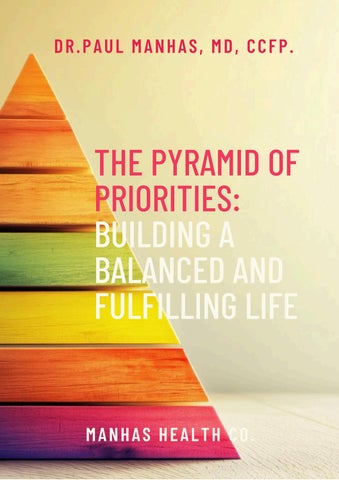
DR.PAUL MANHAS, MD, CCFP.
DR.PAUL MANHAS, MD, CCFP.
M A N H A S H E A L T H C O .

Welcome to The Pyramid of Priorities: Building a Balanced and Fulfilling Life, and thank you for taking the time to invest in your well-being
The foundation of a fulfilling life starts with understanding and aligning your priorities. Over the years, I’ve developed this pyramid framework to help myself and my patients create balance and resilience in their lives
It’s a simple yet powerful tool that breaks down life’s essentials into actionable steps, guiding you to focus on what truly matters.
This exercise should be revisited every month as a personal check-in. Think of the pyramid as a structured guide: the base is your foundation and the most important part, supporting everything above it. The middle sections the glue and the necessities are essential for stability, while the top, your pinnacle, is lighter but still meaningful
Often, people either focus too much on the pinnacle, neglecting the base, or they become so consumed with the foundation that they forget to nurture their joy and passions. Balance is key.
This resource makes self-reflection fun and personal, helping you identify areas to tweak and improve. When all parts of the pyramid are aligned, you’ll feel more grounded, focused, and fulfilled
It’s not just about weight loss or physical health it’s about creating harmony in all aspects of life, ensuring that your energy, time, and priorities align with your personal goals and aspirations
By addressing the base, strengthening the glue, managing necessities, and nurturing the pinnacle, you’ll create a life that feels both purposeful and joyful.
Dr. Paul Manhas, MD, CCFP
Co-founder & Director of Performance Services at Manhas Health Co. Clinical Instructor, UBC Faculty of Medicine
drpaulmanhas drpaulmanhas.com
This resource introduces the Pyramid of Priorities, a conceptual framework that emphasizes organizing life’s key aspects in a structured hierarchy to ensure balance, sustainability, and fulfillment
Each level of the pyramid represents a critical area of focus, with the base being the most essential Here's the breakdown of the four levels:
This topmost level symbolizes the activities that bring joy, relaxation, and personal fulfillment, adding depth to life
The Base: Defining Your Foundation
This level addresses the practical, functional aspects of life, such as work or employment, that provide the resources for survival and security
This level represents the central aspect of your life that holds everything together your "why."
The base represents the most fundamental aspect of your life. It is the foundation upon which all other priorities depend
The Pyramid of Priorities framework emphasizes starting with a solid foundation (health), strengthening bonds with the "glue" (family), meeting essential needs (work), and finding personal joy at the pinnacle (hobbies or passions) This structure creates a balanced, sustainable approach to managing life and achieving long-term fulfillment.
The Pinnacle: Priority No4
The Necessity: Prority No3
The Glue: Priority No2
The Base: Priority No1
The Pinnacle: Your Hobby or Release
The Necessity: Sustaining Life’s Essentials
The Glue: The Binding Force
The Base: Defining Your Foundation
Start Date
My Why...
Target Completion Date
The Base of the Foundation revolves around prioritizing your health Below is a table divided into five main categories, each with subcategories, questions to reflect on, and examples to guide your journey
Subcategories:
Meal Planning
Balanced Diet
Hydration
Meal Timing
Snacking Habits
Subcategories:
Sleep Duration
Sleep Schedule
Sleep Environment
Examples
Plan weekly meals in advance, focusing on lean proteins and vegetables.
Drink at least 2 liters of water daily
Avoid processed snacks by preparing fresh fruit or nuts
Examples
Set a consistent bedtime and wake-up time, even on weekends.
Create a sleep-friendly space with blackout curtains and white noise
Practice mindfulness or read before bed
Subcategories: Examples
Daily Movement
Cardiovascular
Exercise
Strength Training
Aim for 30 minutes of walking or biking daily Incorporate resistance training twice a week.
Do yoga or stretching exercises to improve flexibility
Subcategories: Examples
Stress Management
Mindfulness Practices
Emotional Support
Practice deep breathing or meditation daily
Speak to a therapist or trusted friend when overwhelmed
Take short walks or listen to music to decompress
Subcategories: Examples
Regular CheckUps
Health Screenings
Immunizations
Self-Monitoring
Schedule an annual physical with your doctor.
Monitor health metrics like blood pressure at home
Address symptoms early to prevent complications
CATEGORY
Meal Planning
REFLECTION QUESTION
Balance Diet
Am I eating food that align with my health goals?
Am I eating a balanced diet with proteins, carbs, and fats?
Am I drinking enough water daily? Hydration
Meal Timing
Snacking Habits
CATEGORY
Sleep Duration
Sleep Schedule
Relaxation Before Bed
Sleep Quality
Am I eating meals at consistent times?
Are my snacks healthy or impulsive?
REFLECTION QUESTION
Am I getting 7–9 hours of sleep each night?
Do I go to bed and wake up at consistent times?
Do I unwind with calming activities before bed?
Do I feel rested upon waking?
YOUR ANSWERS
CATEGORY
Daily Movement REFLECTION QUESTION
Am I active on a typical day?
YOUR ANSWERS
Cardiovascular Exercise
Strength Training
Flexibility and Mobility
Am I doing activities to improve my heart health?
Do I include strength-building exercises in my routine?
Am I stretching or doing mobility exercises?
Do I allow time for recovery? Recovery
CATEGORY Regular Check-Ups
Health Screenings
REFLECTION QUESTION
Is my physical or health check-up regular?
Am I staying up to date on screenings (e.g., blood pressure)?
Are my vaccinations current? Immunizations
Am I proactive about addressing health concerns? Self-Monitoring
YOUR ANSWERS
Stress Management
Mindfulness Practices
Emotional Support
Personal Growth
Restorative Breaks
Do I know how to manage my biggest source of stress?
Do I practice mindfulness or meditation?
Do I turn to anybody for emotional support?
Am I challenging myself to grow personally?
Do I take breaks to recharge?
When working through these charts, it’s important to keep in mind that progress is a journey, not a race Your answers may highlight areas where you excel and others where improvement is needed This is an opportunity to celebrate what’s working and take small, consistent steps toward better health in areas that need attention
External factors, such as work stress, family obligations, or unexpected life changes, can influence your ability to maintain a strong foundation Use these charts to identify where adjustments can be made to accommodate these challenges without compromising your overall health.
Additionally, remember that flexibility and adaptability are key As your life evolves, so will your priorities and needs. Regularly revisiting and updating these charts ensures that your foundation remains aligned with your goals and circumstances This practice will help you maintain balance and resilience over the long term.
21–25 Yes (85–100%)
Strong Foundation
You have a wellestablished base and are prioritizing your health effectively.
Stable Foundation with Gaps
Keep doing what you ’ re doing! Focus on maintaining consistency and finetuning small areas for optimization
16–20 Yes (65–84%)
11–15 Yes (45–64%)
6–10 Yes (25–44%)
0–5 Yes (0–24%)
Your foundation is strong but has some inconsistencies.
Developing Foundation
Your base is forming, but there are significant areas needing attention.
Weak Foundation
Your base is not stable, which may lead to challenges in other areas of life.
Unstable Foundation
Your base is at risk of collapse, affecting other priorities in your pyramid.
Identify and address specific gaps (e.g., inconsistent meal timing or insufficient sleep) Focus on improvement.
Choose one or two areas to prioritize (e.g., sleep or physical activity) and make gradual, consistent changes
Start with the most critical areas (e g., nutrition or preventive care) and build healthy habits incrementally
Seek guidance (e g , a health coach or doctor). Focus on small, achievable steps to rebuild your foundation
The Glue represents the element of your life that holds everything together and gives meaning to your efforts Often, this is your family, loved ones, or a deeply personal "why" This section focuses on reflecting, nurturing, and strengthening the relationships or motivations that keep you grounded and aligned with your priorities
Examples
Subcategories:
Quality Time
Communication
Shared Activities
Subcategories:
Mutual Encouragement Conflict Resolution
Celebrating Wins
Subcategories:
Time Allocation
Flexibility Boundaries
Schedule weekly family dinners or outings
Create a no-phone zone during meals
Play games or do activities together
Examples
Write encouraging notes or messages
Practice active listening during conflicts
Celebrate milestones with small surprises
Examples
Establish a dedicated "family hour" daily
Avoid answering work emails after hours
Plan vacations or staycations regularly
Subcategories: Questions to Reflect On
Common Goals
Traditions Vision
Plan family meetings to discuss goals.
Celebrate cultural or family traditions
Write a family mission statement
Subcategories: Questions to Reflect On
Social Circles
Community Engagement
Collective Growth
Social Circles
Community Engagement
Collective Growth
CATEGORY Quality Time
Communication
REFLECTION QUESTION
How much quality time do I spend with my family?
Do we have open and honest communication?
Shared Activities
Conflict Resolution
Appreciation
Are there shared activities we enjoy together?
How do I resolve disagreements within the family?
How do I show appreciation for my family members?
Conflict Resolution
Do I actively encourage my family’s goals and dreams?
How do we handle disagreements and resolve conflicts?
Do I try to understand and empathize with my family’s struggles? Empathy
How do we celebrate successes as a family?
CATEGORY Time Management REFLECTION QUESTION
How do I ensure I’m spending enough time with family?
Flexibility
Boundaries
Self-Care
Family Inclusion
CATEGORY Goals
Can I adjust my schedule for family emergencies or needs?
Do I have clear boundaries between work and home life?
How often do I take breaks to recharge mentally and emotionally?
Do I include my family in my work-related achievements or goals?
REFLECTION QUESTION
Have we discussed our family’s shared goals and values?
Do we have traditions that bring us closer together? Traditions
How do we ensure we’re moving toward our family vision? Vision
How do we align individual goals with family priorities? Alignment
YOUR ANSWERS
YOUR ANSWERS
Social Connections
How often do we connect with friends as a family?
Community Service
Collective Growth
Support Networks
Expanding Circles
Are we actively involved in any community events or activities?
Do we prioritize collective growth through shared experiences?
How do we support our friends in their personal or family goals?
Are there opportunities to expand our social circle?
When working through these charts, it’s important to approach each question with honesty and introspection Your answers will guide the areas where you can improve, so take your time to reflect and be truthful with yourself. Remember, the goal is not perfection but progress.
Consider how external factors like work stress, societal expectations, or personal challenges might be influencing your ability to strengthen your "Glue." Identifying these influences can help you find ways to manage or mitigate their impact
Also, remember that balance looks different for everyone Your priorities and relationships may evolve over time, so revisit these charts regularly to ensure they reflect your current needs and goals. This ongoing process helps you stay aligned and focused on what matters most.
Response Level
Number of Responses (Out of 23)
High Example: 15
Medium Example: 6
Low Example: 2
Strong performance in most areas Indicates well-established relationships and balance. Continue maintaining strengths and refine areas of opportunity
Moderate performance, showing consistency but with room for improvement.
Focus on identified gaps and make targeted changes
Needs significant improvement in certain areas. Prioritize these areas for immediate attention
1. Count Responses: Tally the number of High, Medium, and Low ratings across the 23 responses
2. Interpret Results: Use the interpretation column to understand what the distribution of responses indicates about your current efforts
3 Focus Your Efforts: Prioritize Low and Medium areas for improvement, while sustaining Highrated practices.
This section focuses on sustaining life’s essentials, which often involve your career, finances, and ability to provide for yourself and your family. These necessities form the backbone of stability, enabling you to focus on other priorities like personal growth, family, and hobbies
Subcategories:
Job Satisfaction
Work-Life Balance Skill Development
Subcategories:
Budgeting Savings Debt Management
Emergency Fund
Examples
Feeling underutilized in your current role
Struggling to find time for family due to work commitments
Attending workshops to develop new skills
Examples
Following a monthly budget but overspending occasionally
Saving consistently for retirement
Working on reducing high-interest debt
Subcategories: Examples
Coverage Understanding Plans
Access to Care
Recently updated health insurance to cover dependents
Unsure about plan details like deductibles
Using annual check-ups for preventive care
Subcategories: Examples
Housing Transportation
Food Security
Utilities Basic Needs
Renting a home but looking for something more affordable.
Using public transport but considering a car. Occasionally skipping meals due to budget constraints.
Subcategories: Examples
Retirement Career Goals
Education Health Goals Legacy
Started contributing to a retirement account
Enrolled in an online course for skill enhancement
Planning to create a will to outline legacy goals
CATEGORY
Job Satisfaction REFLECTION QUESTION
Am I satisfied with my current job and its alignment with my goals?
Work-Life Balance
Skill Development
Job Security
Do I maintain a healthy worklife balance?
Am I actively learning and developing new skills?
How secure is my current job or career?
Am I progressing in my profession? Professional Growth
CATEGORY Budgeting
REFLECTION QUESTION
Do I stick to a monthly budget?
Am I saving consistently for future needs? Savings
Do I manage debt or avoid unnecessary debt? Debt Management
Am I investing for long-term financial growth?
YOUR ANSWERS
CATEGORY Coverage REFLECTION QUESTION
Do I have adequate health insurance coverage?
Understanding Plans
Access to Care
Do I fully understand my health insurance plan and benefits?
Can I easily access necessary medical care?
Is my health insurance affordable? Affordability
Do I use preventative care proactively? Proactive Use
CATEGORY Housing
REFLECTION QUESTION
Is my housing secure and aligned with my needs
Do I have reliable and affordable transportation? Transportation
Food Security
Do I have consistent access to nutritious food?
Am I meeting all my basic needs? Basic Needs
ANSWERS
CATEGORY Retirement REFLECTION QUESTION
Am I actively planning for retirement?
Career
Education
Have I set clear career or business goals?
Do I pursue further education or certifications?
Am I prioritizing long-term health goals? Health Goals
How do I want to leave a legacy for my family? Legacy
1. Stability Over Perfection: Focus on building stability in your career and finances rather than striving for perfection Small, consistent improvements can create significant long-term benefits
2. Alignment with Values: Ensure that your job and financial choices align with your personal values and goals This alignment will lead to greater satisfaction and purpose in your daily efforts
3. Proactivity: Anticipate future needs and plan accordingly For example, create a safety net like an emergency fund or invest in skill development to remain adaptable in a changing world.
4. Health as an Investment: Treat health insurance and proactive medical care as essential investments, not optional expenses. Secure access to care supports your ability to work and provide for others
5. Regular Reviews: Periodically review your financial health, career progress, and essential needs to ensure alignment with your evolving goals and circumstances
The pinnacle of the pyramid represents the activities that bring joy, relaxation, and personal fulfillment These are the pursuits that recharge your energy and provide meaning beyond daily responsibilities. Whether it’s spending time with friends, creative hobbies, or indulging in moments of peace, this section is about nurturing your passions and celebrating the lighter side of life
Subcategories:
Art
Writing Music
Subcategories:
Friends
Family
Community
Examples
Painting landscapes
Writing poetry or journaling
Playing an instrument like the guitar
Examples
Weekly game nights with family.
Attending local festivals
Organizing group hikes or outings
Subcategories: Examples
Sports Fitness
Outdoors
Playing tennis
Jogging in the park
Hiking trails with friends
Subcategories: Examples
Meditation
Reading
Travel
Practicing mindfulness
Reading novels or self-help books
Planning short weekend getaways
Subcategories: Examples
Education
Skill
Development
Personal Projects
Taking a cooking class
Building a DIY project
Learning a new language
Creative Pursuits
Do I often engage in creative activities?
Family & Friends Activities
Do I spend time with friends or family for enjoyment?
Social Gatherings
Do I participate in community events or social gatherings?
Do I have a physical activity that I enjoy? Physical Hobbies
Group Fitness Activities
Do I participate in group fitness activities?
Do I take time to rest and recharge? Rest
Do I prioritize relaxation regularly? Relaxation
Do I often go away to unwind? Travel
Learning
Am I learning something new that excites me?
Do I have personal projects that bring fulfillment? Personal Projects
When reviewing this chart, focus on activities that truly bring you joy and fulfillment rather than those that feel like obligations or trends
Yes Responses (Out of 5)
0–3
Interpretation
You may not be engaging enough in activities that bring joy, relaxation, or fulfillment.
Recommended Action
Identify one or two hobbies or activities that excite you and start small
4-6
You’re moderately engaged in activities that recharge you, but there’s room for growth
Explore ways to deepen your involvement in creative or relaxing activities.
7-10
You’re actively prioritizing hobbies and releases that bring joy and fulfillment
Continue maintaining these activities and consider trying new ones to keep things fresh
The purpose of this chart is to help you evaluate whether you ’ re making enough time for hobbies and activities that recharge your energy and bring personal fulfillment
A lower number of "Yes" responses doesn’t necessarily mean failure; it might indicate a need to rediscover passions or create space for joy The goal is not to overburden yourself with expectations but to ensure that your hobbies and relaxation time feel intentional and meaningful.
Remember, the pinnacle of the pyramid is about enhancing your well-being in a way that feels light and rewarding, not stressful or obligatory
Congratulations on completing your pyramid and taking the time to reflect on your priorities. This process is more than just an exercise—it’s a powerful step toward understanding yourself and creating a life that truly aligns with your values and aspirations.
The pyramid framework is designed to grow with you, adapting to the inevitable changes and challenges that life brings. By revisiting it regularly, you’re giving yourself the tools to stay balanced, focused, and resilient.
Each layer of the pyramid serves a unique purpose, and together, they create a structure that supports your overall well-being. The base ensures stability, the glue binds your relationships and core values, the necessities provide the framework for sustaining life’s essentials, and the pinnacle invites joy and personal fulfillment. Skipping or neglecting any layer can create imbalance, but when everything is in alignment, the result is a sense of purpose and contentment that permeates every aspect of your life.
Take a moment to reflect on how you felt while working through this resource. Did you discover areas where you can improve or reinforce habits that already serve you well? Use these insights as motivation to take actionable steps, whether it’s dedicating more time to self-care, strengthening your relationships, or embracing hobbies that bring you happiness.
Remember, this resource is not about perfection; it’s about progress. Life is a journey, and every small adjustment you make contributes to your growth and well-being. Celebrate your wins, no matter how small they may seem, and give yourself grace as you work on areas that need improvement. Progress is a series of steps, not leaps.
Finally, know that the work you’ve done here is invaluable. By investing in this process, you’ve shown a commitment to yourself and the people around you. A balanced and fulfilled you has a ripple effect, positively impacting your relationships, work, and community. Keep this resource as a guide to revisit regularly, and let it remind you of your potential to create a life that feels truly aligned.
Thank you for allowing me to be a part of your journey. It is an honor to guide and support you as you build a life of balance, purpose, and joy. Keep moving forward—you deserve nothing less!
Dr. Paul Manhas, MD, CCFP
Co-founder & Director of Performance Services at Manhas Health Co. Clinical Instructor, UBC Faculty of Medicine
com

DR.PAUL MANHAS, MD, CCFP.
THE PYRAMID OF PRIORITIES: BUILDING A BALANCED AND FULFILLING LIFE
MANHAS HEALTH CO.