








AQuietShiftinEnglishTeaching
There is a quiet shift happening in how schools teach English, and it has little to do with textbooks. It has to do with software. Digital language labs have moved from being a luxury feature in a handful of premium schools to becoming a practical necessity for institutions that want measurable improvement in their students English skills.
WhatCEFRActuallyMeans
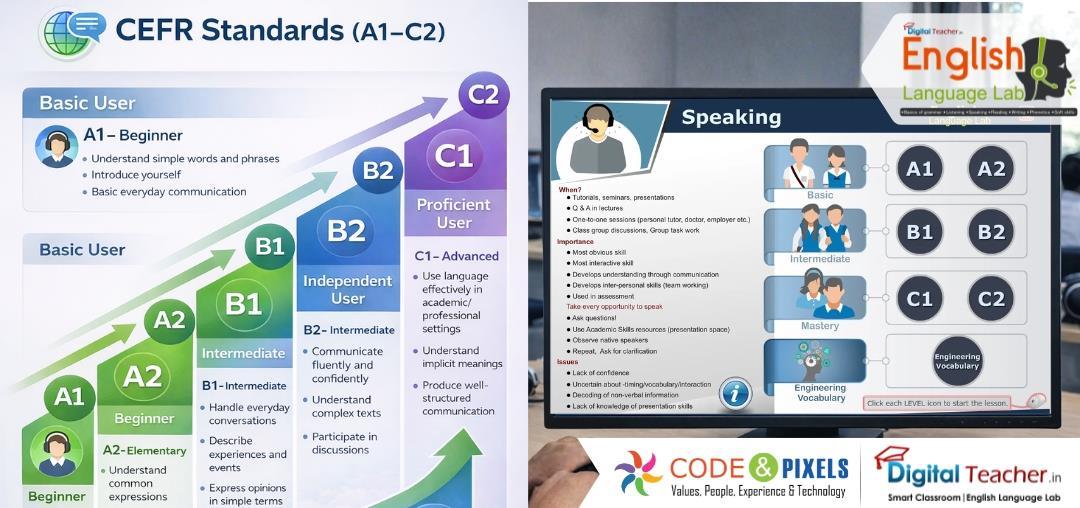
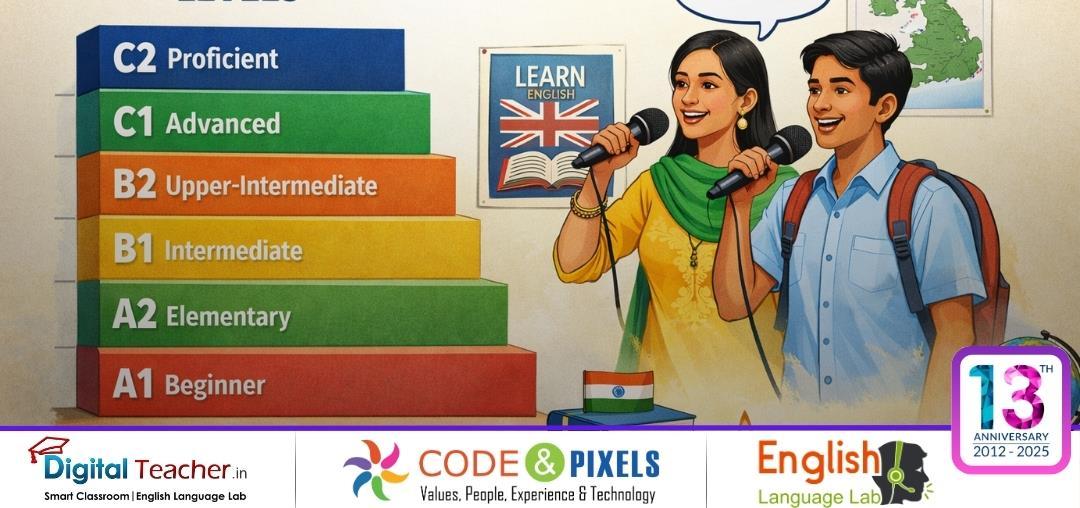
The biggest change driving this shift is the adoption of the CEFR framework inside these digital platforms. CEFR, short for Common European Framework of Reference, is an internationally recognized scale that measures language ability across six levels. A1 and A2 represent basic understanding, where learners grasp simple greetings, instructions, and everyday phrases. B1 and B2 represent intermediate fluency, where students can follow workplace discussions, news updates, and structured conversations. C1 and C2 represent advanced and near native mastery, where learners can follow fast paced academic lectures, debates, and nuanced discussions involving humor or tone.
GivingStudentsaClearRoadmap
What makes this framework powerful inside a digital lab is that it gives both students and teachers a clear roadmap. Instead of vague



progress reports, students know exactly what skill level they are working toward and what kind of listening or speaking exercises will help them get there.
PhoneticsTrainingThatGivesFeedback
Phonetics training has also advanced significantly. Many platforms now allow students to listen to correct pronunciation, record their own attempt, and directly compare the two. This kind of immediate feedback loop is something traditional classroom teaching rarely offers at scale. Some tools also include exercises specifically designed to reduce the influence of a learner's native accent, helping students sound clearer in professional and academic settings.
ExpandingVocabularyforRealUse
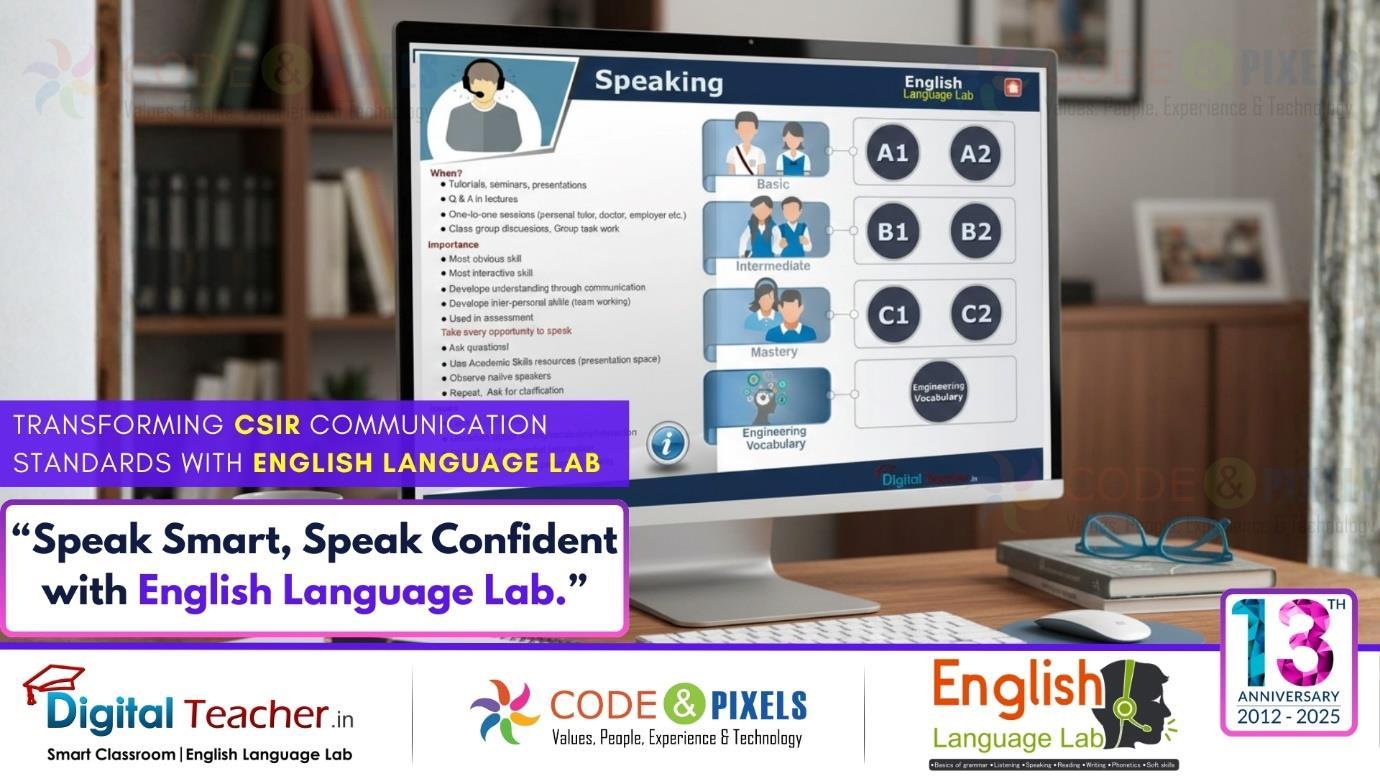
Vocabulary building has expanded too, with some platforms introducing subject specific word banks, including technicaland engineering vocabulary. This is particularly useful for students who will eventually need English not just for casual conversation but for technical documentation, presentations, and workplace communication.
SoftSkillsInsidetheLanguageLab
Beyond the academic side, many of these tools now include soft skills
and life skills modules. Communication confidence, interview readiness, and professional etiquette are increasingly seen as part of language learning rather than separate training altogether.
WhatInstitutionsShouldEvaluate
For institutions evaluating these tools, the real value lies in three things: a clear proficiency framework like CEFR, strong interactive pronunciation features, and a clean, fast interface that students actually enjoy using. Technology alone does not improve English skills. It is the combination of structured methodology and engaging design that makes the difference.
LookingAhead
As more schools recognize the gap between traditional teaching and real world communication needs, CEFR based digital language tools are likely to become a standard part of English education rather than a niche addition .