How brands capitalize on Black Friday and the holiday season
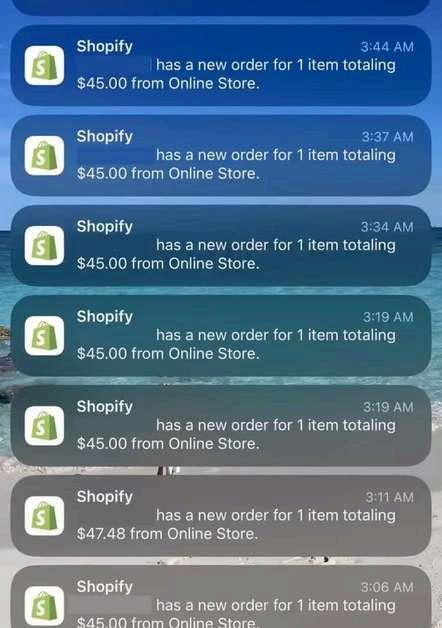
The viral formula: How AI and Tik Tok skyrocket small businesses
How AI-powered algorithms and TikTok trends are transforming small businesses into global success stories
Who Really Runs the Economy? The Power of the Biggest Investment Firms
Inside the influence of BlackRock, Vanguard, and the rise of trillion-dollar power shaping global markets, corporate governance, and the economic future
How do brands capitalise on Black Friday and the holiday season?
The holiday season has started, and the spending will only increase from here Black Friday is a tool that is used by many brands so that they can make maximum profit. Many brands extend their sales from before the black Friday period through to Cyber Monday, getting in all of their highest discount rates on offer in the same time period. One way they capitalize on this extended weekend is by delivering a sense of urgency
When people see the countdown of when the sale ends, they have an impulse to buy simply because of the psychological effect of the sale. People feel as though they will miss out on an opportunity if they do not immediately spend. Sentimental value from the holiday season only drives that impulse further. Brands use this as an opportunity to make nostalgic advertisements relating to Christmas that easily engagescustomers.
Neuroscience studies show that emotionally driven campaigns outperform rational ones by 31% in long-term brand profitability. Social media also plays a big role in advertising these sales because influencers can market brands and products so much more easily, simply by doing “hauls” and promoting via a single TikTok video.
Last year, in 2024, the overall global online spending on Black Friday was about £58 7 billion in just 24 hours. Shopify reports that £9.1 billion was globally processed through their stores during that weekend 73 % of merchants report that Black Friday / Cyber Monday (and the holiday period in general) accounts for over 20 % of their annual revenue. Some companies say it accounts for over 50% of their annual revenue
The mass spending also helps brands to collect data on which of their products are more in demand than others They can then use this data to personalize the experience of the first-time customers so that they become returning customers.
The number of returning customers involved in Black Friday and Cy each year, even if the rate of sales may be decreasing. The average dis was approximately 26% across categories globally in 2024 In 2018, glo rate was approximately 55%. Brands are being more resistant to discou as they are becoming more profit-driven rather than focusing on b However, some brands use black Friday as a way of proving their br Patagonia donates 100% of its Black Friday profits to environmental ca
In 2022, they raised £7 9 million from Black Friday sales alone, which they gave to underfunded environmental groups worldwide. This only helped to grow loyalty towards the brand from customers
In 2015, there were complaints of deals being falsely advertised and not saving as much money as they claimed they would, so now brands are clearer on their discount prices and what they truly have to offer. While brands may capitalize on these time periods, it can also benefit customers. Even though people may be buying more than they normally would, if people go about it correctly, they could use these sales to their advantage and save a significant amount of money.
-by Shaivee Dhakal
Coca Cola’s drift towards AI in their Christmas advertisement, does it continue the magic?
Santa Claus is not only a cultural icon for Coca Cola but symbolises the brand itself as a big part of its identity The iconic red truck, jingle bell sounds and packaging designs are not only a nice way to celebrate the Christmas season but a special marketing strategy. This successful Christmas advertisement strategy has started in 1930 with an iconic image of Santa Clause enjoying a coke The connection between Coca Cola and Christmas is an effective way of creating a nostalgic feeling towards the soft drink brand for its customers. Even though Coca Cola did not invent the legacy about Santa, it helped to shape it
Building on Father Christmas Coca Cola added iconic elements such as the red truck, polar bears and the familiar “Holidays are Coming” soundtrack. These ads do more than promote a beverage; they evoke nostalgia, warmth, and a sense of shared tradition That emotional resonance is the backbone of Coca-Cola’s holiday strategy By keeping the advertisements and themes in the same style, the brand equity is protected, and the old memories of loyal consumers are refreshed.
are very successful as; they atherings naturally increase e brand to togetherness and Coa Cola in the top of the g about Christmas nd move towards IA, Coca with integrating, moreover creating their Christmas advertisements with AI. This does not only allow faster production timeline but enabling Coca Cola to specialise their advertisements into dozens of localized versions
This move towards Artificial intelligence is open to interpretation as many people have different opinions on its use in Coca Colas Christmas advertisement for the 2025 season Even though, this allows for speed and scalability, it does not manage to capture the emotional warmth, and the sense of community which Coca Cola’s holiday ads are known for This tension between efficiency and emotional depth will define how far Coca-Cola pushes AI in future festive campaigns, depending on its effectiveness and connectiveness with their customers Coca Cola’s Christmas advertisement is world known for their blend between tradition and business strategy, creating a special bond to their customers Through nostalgic Santa illustrations or AI-powered storytelling Coca Cola is influencing the broader holiday experience with its own performance How successfully Coca-Cola balances innovation with emotional authenticity will determine whether its Christmas magic continues to resonate or risks feeling manufactured in a way that holiday audiences won’t accept
-by Isabella Gräfin Von Moy
ormula:HowAIandTikTok smallbusinesses
Our world is in the middle of a technological breakthrough with the Al revolution and all the advancements which society has made in the field of social media, offering new unimaginable benefits for starting entrepreneurs to help them get up on their feet.
Small businesses are increasingly turning to TikTok and Al methods to reach new customers and scale up leveraging ChatGPT and TikTok's viral potential to grow at a pace which has never been possible before. TikTok as well as ChatGPT offer a wide range of helpful tools which help withpromotion of small brands and simplify their sales. The worldwide trading platform provided by TikTok called "TikTok Shop" incorporates its app with a direct link to check out all products, which consumers are confronted with on their "For You" page.
This generates exponentially more sales than any other online shops because the process is quick and optimized Global sales on the platform reached about $19 billion in just the third quarter of 2025, while the U.S. market alone grew by 125% during that same period. On top of that, TikTok is already the best form of promotion for any brand because it has 1 6 billion monthly active users globally, which on average spend 1.5 hours daily (more than any other social media platform), scrolling endlessly and consuming every advert they see On the other hand, OpenAl and other Artificial Intelligence providers also help small businesses substantially with their tools such as image generation, website building, and much more
Not having to manually tackle every minor inconvenience and leaving Al to handle it is also an immense help According to Forbes Magazine, "automations allow them to put some of the most common marketing tasks on autopilot - like welcome emails, reminder texts, social media posts and campaign sends".
pecially paradise cause it ovide a in all nesses a g p only do TikTok and Artificial Intelligence platforms such as ChatGPT assist small businesses in building their shop up, but they also play a substantial role in the promotion and advertising of startups.
Not to underestimate is the huge scope of influence which TikTok allows all newcomers, due to its algorithm which pushes content tailored to user's interests and desires, no matter how big or small the content creator is. This gives many more small businesses the chance to go viral and market themselves to a huge range of people, without spending a fortune on advertising efforts. Taking the mochi brand "Little Moons" as an example, this startup was founded in 2010, went viral on TikTok in the beginning of 2021, and then shaped into a 100-million-pound firm shortly after, as of 2022, selling in major retailers such as Tesco's, Waitrose, and Morrisons. It really is amazing to see how much influence 15-second short films can have!
Similarly, ChatGPT has the same power to promote small brands, because it is now being used as a search engine by 5.5 billion people monthly, as a replacement for Google The Al site grants all wishes desired by its users, and when asked for shopping advice, it can deep search the entire internet for every major and minor seller matching the preference It's shop recommendations, according to OpenAl, are curated based on relevance and quality to any prompt, size of its brand nor advertising offers.
Theoretically, every niche product has an equal chance to be recommended by ChatGPT and reach it's target group Gatekeeping is no longer a thing because even the most secretive products can be suggested by Chat, due to its mathematically highest probability of matching a customer's interests.
In today's era of Generative Al, platforms like TikTok and ChatGPT level the field so that small businesses have new tools with which to grow, sell, and promote themselves faster and more efficiently than ever By mixing viral social media reach with Al-powered automation and personalized recommendations, entrepreneurs now have unparalleled opportunities to turn even the smallest ideas into thriving brands
-by Louise Zoll
The Business Behind Advent Calendars: Why Companies Aren’t Actually Losing Money
Every Christmas, Advent calendars dominate the markets, and many of them appear, at first glance, to be terrible business deals. Brands proudly advertise that the “total value” of the items inside is far higher than the selling price For example, Sephora’s Advent Calendar often lists more than €150 worth of products but sells for around €50. The Lego Star Wars Calendar includes figures and builds that would cost significantly more if purchased separately Even whisky-tasting calendars frequently claim €250 worth of samples while being sold for half that amount To consumers, this creates the impression that companies are practically giving away products at a loss. But in reality, Advent calendars are one of the most profitable seasonal items on the market.
The first reason is that the “value” printed on the box refers to retail value, not production cost. A Lego minifigure may sell individually for €4–€5, but producing it in bulk costs only a fraction of that amount The same is true for beauty miniatures, whisky samples, coffee pods, and small tech accessories. So even when a calendar promises €200 of “value,” the actual cost to the company may be closer to €20–€40. Second, Advent calendars act as powerful product discovery machines. They introduce consumers to 24 different items they probably would have never tried otherwise, many of which lead to full-size purchases later. For instance, a customer who discovers a new whisky might buy the full bottle
These follow-up purchases generate far more revenue than the calendar itself. Third, Advent calendars benefit from limited releases and guaranteed hype. Companies produce them once a year, in controlled quantities, meaning demand is high and sell-outs are common This reduces storage costs and eliminates the risk of unsold stock a huge advantage in retail. Finally, the emotional psychology behind Advent calendars creates a sense of excitement, ritual, and perceived generosity. Customers feel like they are receiving more than what they paid for, even though the brands’ profit margins remain strong
So while Advent calendars may look like financial gifts from companies to customers, they are, in reality, a perfect business model, that turns December into a highly profitable season year after year.
You often hear rumors about big asset management firms controlling absurd amounts of value, having more power than governments, but what's true? Are there more powerful groups of individuals than the biggest politicians or dictators?
The two largest investment firms are BlackRock, managing $13,460,000,000,000 and Vanguard, managing $11,600,000,000,000. These values are estimates from the Sovereign Wealth Fund Institute and to put this into perspective, only two countries in the world have GDP figures larger than BlackRock's total AUM (Assets under management): U.S. and China. But what kind of power do these absurdly high figures confer on such firms?
Voting Power: As of the end of 2021, the Big Three, consisting of the largest asset management firms in the world -BlackRock, Vanguard, and State Street Global Advisors, collectively held a median stake of 21.9% in S&P 500 Companies, which represented a proportion of 24.9% of the votes cast at the annual shareholder meetings of those companies.
Influence on Corporate Outcomes: The enormous voting power of the big three results in coordinated voting patterns that can determine the results of key shareholder votes, including those on environmental, social, and governance (ESG) issues. Even in the case of votes only being advisory, the sheer size of their holdings pressures corporate managers to align with the preferences of the big three – empowering them to shape the behavior of corporate units.
unications of the big three show them reflecting on their significant or example, communications by the big three promoting the success bjects like board diversity make clear that they are aware of the over directors and executives of corporations
s up of whether large investment firms only follow their primary he assets of their clients effectively to make them worth more, or use enefit themselves or manipulate markets Now we know that the influence of these firms reaches far beyond the stock market and mere investments; it shapes economic trends and even social priorities To what extent this shadow-power is actually misused is difficult to say, though the invisible dominance of these firms already challenges conventional ideas of transparency and control
by Hans Kramer
INFLATION IS CHANGING CONSUMER BEHAVIOUR
Inflation is a measure of how much the prices of goods (such as food or televisions) and services (such as haircuts or train tickets) have gone up over time. It matters to everyday consumers because higher costs make it harder to afford essentials like food, fuel, and housing As prices continue to climb, people are being forced to rethink how they spend, save, and choose between brands. High inflation is reshaping daily habits, pushing consumers to look for better value, cut back on non-essentials, and become more selective in their purchases As inflation rise, consumers are shifting towards more affordable alternatives to manage their expenses.
More people are choosing cheaper substitutes good and services instead of premium products. At the same time, spending on non-essential items – such as dining out, entertainment, and luxury goods has noticeably declined as households prioritize the necessities This shift in the economy results in more growing popularity of discount stores, thrifting, and bulk buying, all of which help consumers reduce costs and maximize value during periods of high inflations. Inflations have also led to significant changes in shopping behaviour as consumers become more cautious with their spending. May people now reply on price comparison tools and mobile apps to find the best deals, and they are more likely to wait for sales such as black Fridays or coupons before making purchases With tighter budgets, impulse buying has decreased, and customers are placing greater emphasis on overall value rather than convenience alone
Inflation is also weakening brand loyalty, as consumers are now more willing to switch brands when prices rise. This forces companies to adjust their marketing strategies by offering promotions, rewards, or highlight longterm values. Brands that raise prices too aggressively risk losing long-time customers who are actively searching for more affordable alternatives
Due to the inflations people are starting to look for new ways to save money for example to cook at home rather than eating out, and many are turning to DIY repairs, beauty routines, and homebased entertainment to reduce everyday expenses
Overall, inflation is reshaping the consumers’ mindset by making people more cautious, and focus more on the value, and willing to change their habits. In order for businesses to stay competitive in this price sensitive environment, they must adapt with s propositions, and stronger strategies that keep customers engaged.
As is known to many, Nvidia has become a household name, embodying the rise of AI and powering data-driven revolutions What’s less often discussed is that Nvidia, for all its fame in the graphics and AI world, doesn’t actually manufacture its own chips. Instead, the company is a true leader that excels in designing and building the software, yet is relying on TSMC and other companies for their Chip fabrication, while channelling its resources into innovation, software, and strategic partnerships Thereby, this strategy has unleashed scalable innovation cycles and high-value integration across AI, gaming, and data centre markets across the globe Nvidia’s ascent comes mostly thanks to soaring demand for AI and big data applications in the last few years. Alone by fiscal 2025, annual revenue hit $130.5 billion, doubling from $60.9 billion just a year earlier and reflecting a 114% year-on-year expansion. Quarterly revenue in July 2025
surged to $46.7 billion, up 55% from the prior year, with net income multiplying sixfold since 2023 The past two years witnessed revenue climbing approximately sixfold, driven almost entirely by AI and data centre demand, which now account for nearly 90% of Nvidia’s total sales
Safe to say, Nvidia exemplifies aggressive “organic” growth, propelled by exponential increases in existing product sales and broadening reach across the AI sector.
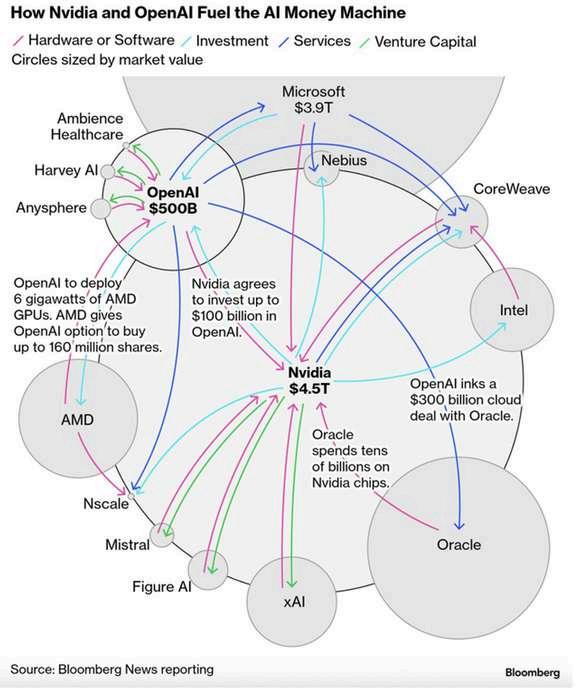
Its engagement with “strategic growth” is evident through its ecosystem-building as seen in the diagram below.w.
Nvidia's growth strategy provides an example showing how partnership-led expansion can ensure long-term stability and market leadership. Nvidia has successfully linked its success to the expansion of the AI and cloud computing sectors by investing in and working with big players like Microsoft, Oracle, and OpenAI This tactic increases its influence across several industries while guaranteeing consistent demand for its processors and software By incorporating Nvidia's technology into its partners' processes and raising switching costs, it also lowers competition risk As a result, the company's data centre sector now accounts for the majority of its income, proving how ecosystem control and strategic partnership have emerged as crucial factors in Nvidia's steady growth
To conclude, it can therefore be deduced that it’s really important for Nvidia to make sure its growth comes from real market demand and not just from deals with partners who are buying up their chips because of investment cycles or the current AI hype. If Nvidia’s sales and business keep relying too much on these big partners and the current excitement around AI, it risks running into trouble if that wave slows down Therefore, the best way for Nvidia to build a secure future is to stay focused on genuine demand and not get caught up in unsustainable, bubble-like growth, especially as the AI market keeps changing so fast.
-by Max-Julius Filtzer
Economics and Business Society
like to contribute an article for the next journal edition?
Become an editor for the Business and Economics Journal, a chance to develop research and writing skills, collaborate with other students and learn about the world of applied Economics. + it’s good for your CV (and CAS)!
For any additional information contact Beatrice De Saint Pierre (H.6), Rufus Giers (H.9) or Ryan Johnson (H.7)