National Football Centre


Case Study - iAS Head of PM, Mark Borg explains how BIM-led coordination and rigorous project controls delivered this FIFA/UEFA standard facility.

March / April 2026 Edition
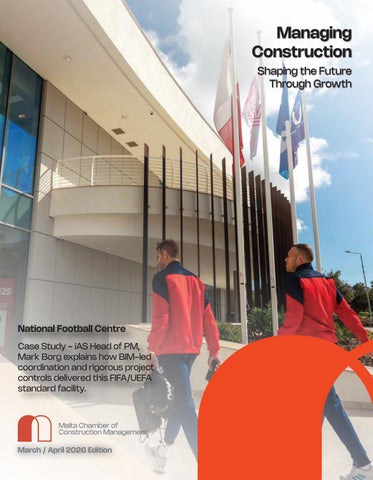
National Football Centre
Case Study - iAS Head of PM, Mark Borg explains how BIM-led coordination and rigorous project controls delivered this FIFA/UEFA standard facility.
March / April 2026 Edition



Publications and Financial Officer:
Fabrizio Gerada MCIOB Vice President
As Malta’s built environment continues to expand at an unprecedented pace, the role of the construction manager has never been more critical to the safety, quality and long-term value of what we build. In this edition, we shine a spotlight on that responsibility, from strategic themes like equality, diversity, and inclusion to the very practical realities of delivering complex projects on time, safely, and to ever-higher standards.
Our cover case study on the National Football Centre demonstrates how rigorous planning, BIM-led coordination and disciplined project controls can transform a challenging brief into a national asset that meets exacting FIFA and UEFA requirements. Alongside it, contributions on legal frameworks, risk analysis, sustainability, procurement and professional indemnity all point to the same conclusion: professionalism is no longer optional; it is the minimum entry ticket for anyone who wishes to operate credibly in this industry.
This issue also captures how European-driven regulation and local initiatives, such as professional licensing, ESG reporting obligations and EDI expectations, are redefining what it means to manage construction in Malta. The articles on equality, diversity and inclusion, on net-zero pathways and on standardised contracts show that competence today is as much about people, ethics and culture as it is about engineering detail.
As a Chamber, we remain committed to being the voice of construction managers at all levels, promoting high standards of quality, ethics and integrity while staying at the forefront of innovation in the local built environment. We invite you to use this edition not just as a reference but as a prompt to question how you lead your teams, structure your projects, and contribute to a safer, more sustainable, and more inclusive Malta.

Photo
Credit:
Terry Caselli
Editorial enquiries: info@mccm.org.mt
Advertising: info@mccm.org.mt
The Chamber is the voice of the construction managers at the various levels operating in Malta and beyond. We promote and expect, high standards in, quality, ethics, integrity and to be at the forefront of innovation of the local built environment. Through our input we strive to influence policies and regulations that impact the industry and their impact on the common good.
To promote science and technological advancement in the process of building and construction for the public benefit.
To be at the forefront of public education, encouraging research and sharing the outcome from this research.
To make sure that advancement in the built technology is aimed at improving the quality of life of the public in general.
To enhance professionalism, encourage innovation and raise quality in construction management.
To promote high standards and professional ethics in building and construction practices.
To promote the highest levels of integrity in every decision that we take that affect others.
To respect all those affected by our decisions
TO BE THE DRIVER OF A CULTURAL AWARENESS CAMPAIGN STRIVING FOR PROFESSIONALISM IN THE CONSTRUCTION INDUSTRY.
December 2025 / January 2026








This article marks my sixth contribution in the seventeenth edition and notably, my first contribution in my second year as President.
It provides an opportunity to reflect not only on what we have achieved over the past months, but also on the direction we continue to pursue as a Chamber.
Over the past year, we have reached several important milestones that have strengthened both our identity and our presence within the industry. From rebranding and governance improvements to increased outreach and professional engagement, we have steadily built momentum. More importantly, we have continued to position MCCM as a credible, proactive and constructive stakeholder within the national conversation on the Built Environment.
A key priority remains the long-awaited legal recognition of the Construction Project Management profession. We are actively working alongside Government and the relevant authorities to bring this process to fruition. While solid progress has been registered and the intent is clearly present, it is also a reality that such initiatives depend on political prioritisation. As a Chamber, we remain committed, patient and persistent in ensuring that this recognition is achieved in a manner that truly reflects the role, responsibility and value of our profession.
In parallel, we continue to contribute wherever our input is sought. Whether through consultative discussions, participation in industry events, or direct engagement with stakeholders, MCCM remains consistently present to represent the perspective of construction project managers.
This ongoing involvement is essential—not only to safeguard the interests of our members, but also to contribute towards a more structured, accountable, and forward-looking industry.
Equally important is our continued investment in the professional development of our members. Our CPD sessions remain a central pillar of our work, offering opportunities to stay informed, exchange knowledge, and respond to the continuous evolution of the sector. These sessions go beyond learning; they are instrumental in strengthening the professional community we are building together. We are particularly encouraged by the success of our first Professional Workshop, which saw a strong turnout and meaningful engagement— an initiative we look forward to expanding further and which I will elaborate on in the next edition.
Looking ahead, the Council is actively working on a number of initiatives aimed at further expanding opportunities for our members. These include more structured collaborations with our partners, collaboration visits, potential Erasmus-funded opportunities abroad and additional events designed to engage both existing members and new entrants to the profession. While these initiatives are still being developed, we are confident that they will deliver tangible value and open new avenues for engagement across the industry.
There is still much to achieve, but the foundations we have built are strong. With your continued support and involvement, I am confident that we will keep progressing in a way that benefits both our members and the wider construction sector.
Wishing you an insightful read.

In the context of the Maltese construction industry, Equality, Diversity, and Inclusion (EDI) has transitioned from a "nice-to-have" HR initiative to a critical strategic pillar for 2026. Building on the strategic influence of global professional bodies like the Chartered Institute of Building (CIOB), Royal Institute of British Architects (RIBA) and Construction Industry Federation (CIF), this shift is visible through specific government mandates and private sector leadership that go beyond policy into operational reality.
The local industry is currently navigating a significant building boom—with over 12,000 new dwellings approved in 2025—while simultaneously managing a persistent skills shortage and new EU-driven transparency laws.
Malta’s economic model relies heavily on foreign labour, with roughly 22% of the population consisting of foreign nationals. Diversity is no longer an option but a daily reality on every Maltese construction site.
The Two-Tier Challenge: A primary focus in 2026 is ensuring that the 80,000+ foreign workers, whether EU or Third Country nationals, in Malta are integrated fairly. EDI programs now prioritize Health and Safety (H&S) communication across language barriers to mitigate higher accident rates historically seen among non-native workers.
Cultural Integration: Tier-1 firms involved in "Net Zero" projects are hosting "Global Village" events and cultural awareness training. This has successfully reduced early-lifecycle turnover—a costly trend where workers leave shortly after receiving expensive technical training.
To meet infrastructure demands, the sector is tapping into underrepresented groups—specifically women and younger generations—who have historically avoided the industry’s "macho" image. As
of 2026, a coordinated push is bringing women into technical and leadership roles through:
Policy Incentives: Government initiatives like Free Childcare and the "Making Work Pay" approach have increased female labour participation to over 70% nationally. The construction sector is capturing this talent by offering flexible shift patterns.
Professionalization: The Building and Construction Authority (BCA) now mandates iSkills cards and formal licensing. This shifts recruitment from "brawn-based" informal hiring to skill-based professional selection, lowering barriers for women in BIM, site management, and green consultancy.
Modern procurement increasingly favours firms demonstrating social value. Under the Corporate Sustainability Reporting regulations, EDI is a legal requirement for large firms:
Mandatory Reporting: Companies with 250+ employees or €40M+ turnover must disclose social impact data, including gender pay gaps and disability inclusion.
Points-Based Tenders: Public tenders now utilize a scoring system where firms employing persons with disabilities or providing certified training for all ethnicities receive "fast-track" status.
Well-being: With nearly 90% of construction workers reporting high stress due to isolation, firms are now implementing Employee Assistance Programs (EAPs) as a standard operational cost.
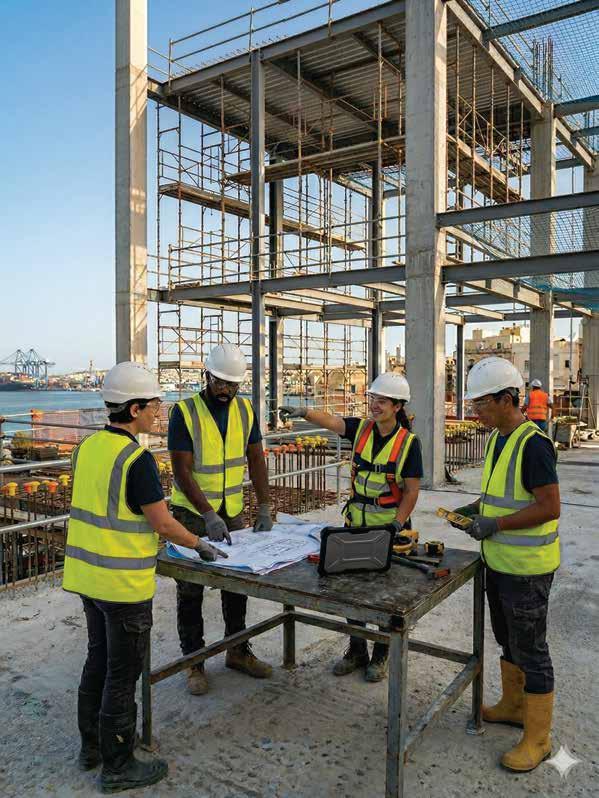
In 2026, EDI is ceasing to be a peripheral "social" issue and has become a fundamental requirement for commercial viability in Malta. As the industry navigates the pressures of a construction boom and the strict transparency mandates of L.N. 39/2026, the firms that thrive are those that view a diverse, integrated workforce as a solution to the chronic skills gap. By aligning site operations with EU-driven transparency and BCA professionalization, the Maltese built environment is shifting toward a skill-oriented, and globally competitive future.
References
BALZAN, M., 2026. 2025: A strong foundation for construction reform. [Online]
Building and Construction Authority, n.d. A Stronger Voice for the Citizen and Higher Competences in Construction. [Online] Building and Construction Authority, 2024. Contractors' Licensing. [Online]
Chartered Institute of Building, 2021. CIOB teams up with new
Maltese body to professionalise construction management. [Online]
CUTAJAR, M., 2026. The Corporate Sustainability Reporting Regulations, 2026 (L.N. 39 of 2026): What Maltese Companies Need to Know. [Online]
Department of Information, 2026. Legal notice 39 of 2026Corporate Sustainability Reporting Regulations, 2026
MINISRTY FOR SOCIAL POLICY AND CHILDREN"S RIGHTS, 2024. National strategy for Poverty reduction and Social inclusion (2025-2035), Valletta: MINISRTY FOR SOCIAL POLICY AND CHILDREN"S RIGHTS.
National Commission for the Promotion of Equality (NCPE), 2024. Certified Gender Equal Opportunities Employers Annual report, s.l.: National Commission for the Promotion of Equality (NCPE).
National Commission for the Promotion of Equality (NCPE), 2024. Functions of the Commission, Valletta: Government of Malta.
The Big Construction Diversity Challenge, 2026. Beyond good intentions: The real return of EDI in construction. [Online]
The Malta Independent, 2026. TMID Editorial: Malta's construction boom. [Online]


Victoria Hills
It has only been a couple of months since I arrived at CIOB and I’ve already been impressed by how much great work is underway –but as I settle in, I want members to be aware of some of my priorities for 2026.
One area of focus will be building strong relationships across CIOB. That includes working closely with colleagues, as well as our trustees, those on the presidential track, and the brilliant volunteers and members who support our work around the world. I am aware that I have the privilege of building on the strong relationships and foundations established by my predecessor, which gives me a very positive starting point.
Another priority will be beginning the process to create our next corporate plan. Our current plan runs until 2028 and this year we will start shaping what comes next. We will work with members from our
global community and key stakeholders to identify the emerging trends that will impact the construction industry in the years ahead.
I also want to help take our external engagement to the next level, using CIOB’s voice effectively and having more impact with our policy work. It feels like the right time to make our global voice louder and use it to shout more about the positive work our members are doing.
To support this, I will work closely with our Policy and Public Affairs, Membership and Education teams to build on their existing work and extend our influence internationally.
This progress will take time, but I very much hope many of you will be part of the journey as we continue to champion our members and move the industry forward together.

Daniel A. Castro

Construction management is a relatively young profession compared with architecture and engineering, yet it has become essential to the successful delivery of modern projects. The discipline emerged during the twentieth century as projects became more complex and owners demanded greater control over cost, schedule, and coordination. Today construction managers bridge design, construction, and technology to deliver projects more efficiently. As professional standards and certifications continue to grow worldwide, construction management is increasingly recognized as a profession in its own right.
Recently I became a Certified Construction Manager through the Construction Management Association of America (CMAA). Preparing for the certification required studying the history of the profession and reflecting on the milestones that shaped it. That process led me to revisit an important question that is still debated in many parts of the world. Is construction management truly its own profession or simply an extension of architecture, engineering, or contracting?
The answer becomes clearer when looking at how the industry evolved.
For centuries buildings were designed and constructed without the structured management practices that guide projects today. Architects and engineers designed, builders executed the work, and coordination occurred largely through informal methods. The systems of planning, scheduling, and cost control that now define professional project delivery did not yet exist.
One of the earliest turning points came during the nineteenth century. Historically the roles of designer and builder were often combined in the figure of the master builder. However, as the architecture profession
began to formalize, these responsibilities gradually separated. The founding of the American Institute of Architects in 1857 marked a significant moment in this transition. Architecture began to establish itself as a professional discipline focused primarily on design.
Following this separation, the concept of the general contractor started to emerge. Builders became independent organizations responsible for executing the work designed by architects and engineers. This structure created the familiar model that still defines much of the construction industry today. However, even with architects designing and contractors building, projects were still largely managed through informal coordination rather than through a defined management role.
The formal concept of construction management appeared much later. Project management itself is largely a twentieth century invention. Techniques such as critical path scheduling and structured project controls began to develop in the 1950s as engineering and infrastructure projects grew in scale and complexity.
By the 1960s the need for a dedicated management role in construction projects began to emerge. Owners were increasingly dealing with larger and more complex projects that required coordination among multiple designers, contractors, and consultants. Construction management developed as the adaptation of project management principles specifically applied to the built environment.
During the 1970s the role became more visible, particularly in public sector projects in the United States. Governments and institutional owners began adopting construction management approaches to improve oversight, control costs, and reduce project risks. Over time the role matured into a defined professional discipline with its own body of knowledge, standards, and certifications.
Looking back at this evolution, it is striking how many practices that now feel natural were once absent from construction. Scheduling methodologies, systematic cost management, formal procurement planning, and structured communication protocols are all relatively modern developments. Architects and engineers built remarkable structures for centuries without the
frameworks that we now consider essential.
Today these management practices are not only common but fundamental. Technology has further accelerated their importance. Digital scheduling platforms, building information modeling, and advanced project control systems allow teams to manage projects with levels of coordination and transparency that were impossible only a few decades ago.
In many ways the competitive advantage of modern construction organizations increasingly lies in how effectively they manage information, processes, and collaboration. Technical expertise in design and construction remains critical, but the ability to coordinate complex systems and stakeholders has become just as important.

Despite this reality, the recognition of construction management as a standalone profession is still uneven across the world. In some countries the role is well established and supported by professional institutions, certifications, and academic programs. In others it is still viewed as a secondary function or as a lower level activity compared with architecture or engineering. This perception overlooks the unique expertise that construction managers bring to projects. Construction management requires the integration of planning, cost control, procurement strategy, scheduling, risk management, contract administration, and field coordination. It is a profession that connects design intent with construction execution while aligning the interests of owners, consultants, and contractors.
As projects continue to grow in complexity, the value of this expertise becomes increasingly evident. Large infrastructure programs, urban redevelopment initiatives, and technically sophisticated buildings all demand a level of coordination that extends beyond traditional design or construction roles alone. Construction management provides the framework that allows these efforts to be organized and delivered successfully.
Reflecting on the history of the profession while preparing for certification reinforced an important idea. Construction management may be relatively young when compared with architecture or engineering, but it has already become indispensable to the modern construction industry.
More importantly, the profession continues to evolve. Professional organizations, certifications, and education programs are expanding across the world, helping define standards and strengthen the discipline.
If the trajectory of the industry is any indication, construction management will only continue to grow in competence, recognition, and relevance in the decades ahead.



Dr Maria McKenna
The doctrinal effect of mutation is the fragmentation of procedural clarity, particularly in the areas such as that of Risk Allocation. FIDIC’s allocation of design, unforeseen conditions, and cost risks becomes uncertain when clauses are rewritten without cross-reference to the corresponding provisions. This obscures who bears responsibility for defects or variations, increasing disputes over liability.
Under the Red Book, the Engineer functions as a quasi-arbitral certifier.(1) In Malta, this neutrality is often compromised by altering the Engineer’s certification powers or replacing them with employer discretion, contravening the FIDIC model and leading to claims of procedural unfairness.
Furthermore, FIDIC’s strict time bars (e.g., Sub-Clause 20.2.1 in the 2017 Red Book) depend on precise procedural compliance. When these clauses are amended or inconsistently translated, the enforceability of claims becomes debatable, allowing parties to contest procedural validity.
Finally, the removal or alteration of the DAAB provisions severs the link between early dispute management and arbitration. Maltese public authorities sometimes replace the DAAB with direct recourse to local arbitration or courts, thereby nullifying the intended multi-tiered resolution structure.
These doctrinal inconsistencies lead to a proliferation of disputes, as procedural uncertainty invites strategic interpretation. The result is that FIDIC’s primary advantage—predictability—is lost, leaving parties
reliant on judicial interpretation under the Civil Code rather than efficient contractual mechanisms.
Internationally, jurisdictions that retain FIDIC’s doctrinal integrity experience fewer procedural disputes and greater consistency in arbitral outcomes.(2) Malta’s partial and inconsistent adoption of FIDIC therefore not only increases the volume of disputes but also diminishes foreign contractor confidence, especially in EU-funded projects requiring standardised international conditions. Doctrinally, mutation transforms FIDIC from a balanced standard form into a bespoke but incoherent contract, lacking the interpretative predictability that courts and arbitrators depend upon.
In doctrinal terms, the adaptation and mutation of FIDIC contracts in Malta have eroded the coherence and predictability that these instruments were designed to provide. Ultimately, the Maltese construction industry’s experience confirms that mutation of standard forms breeds ambiguity, and ambiguity breeds dispute. The way forward lies in disciplined adaptation, doctrinal fidelity, and legal education—ensuring that FIDIC’s globally tested balance is preserved within Malta’s civil law framework rather than disassembled by it.
1. Nael G Bunni, The FIDIC Forms of Contract (4th edn, Wiley-Blackwell 2013).
2. Donald Charrett, ‘FIDIC Contracts in Civil Law Jurisdictions’ (2019) Construction Law International 14(1).


Dr. Ivan Mifsud LLD PHD

In planning law one may appeal from a decision of the Planning Authority, to the Environment & Planning Review Authority (EPRT). There is then a further appeal on points of law to the Court of Appeal. The judgment being dealt with in this article, is one such appeal.
The Court of Appeal (John Agius Vadala et v. Planning Authority et, 13th February 2026) dealt with a matter which is often raised by third party objectors but never contested successfully whether before the EPRT or before the Court of Appeal. This matter concerns the fact that the Planning Authority converted the number of floors limitation imposed in local plans into a height limitation irrespective of the number of floors within that height, the argument being that the height remains the same and therefore the mass of the building is unchanged, not leading to ‘larger’ buildings just because more floors are fitted in (floors were made lower, to fit more into the same height). This was done via Policy P35 and Annex 2 to the ‘Development Control Design Policy Guidance & Standards 2015’ commonly referred to as ‘DC15’. This manoeuvre has consistently been deemed legally valid (for example in Din l-Art Ħelwa v. L-Awtorita’ tal-Ippjanar decided on 9th October 2024). This court judgment under discussion is no exception, with the court deeming that DC15 (including Policy P35 and Annex 2) was approved by the same procedure as the local plans themselves, and is therefore legal. On this particular
occasion the Planning Authority granted a development of seven floors, where the local plan imposed a four floor limitation.
However, the appellants went further than merely contesting the conversion of floors into a height limitation, contending that the own Planning Authority’s ‘Strategic Plan for the Environment & Development’ (SPED) required that in processing such an application consideration must be given to the aspect of development density (Urban Objective 3: To identify, protect and enhance the character and amenity of distinct urban areas by…6. Establishing appropriate building heights and development densities). The Court of Appeal pointed out that while DC15 policy P35 and Annex 2 reinterpreted the number of permissible floors, the issue of ‘development density’ was not catered for, while the obligation imposed by SPED Urban Objective 3.6 had to be respected. Therefore, when considering the application, the Panning Authority had to honour its obligation under SPED by referring to criteria laid down in the local plan, and failure to do so amounted to an abdication of the Planning Authority’s duties and consequently a violation of the law.
Indeed, the Court of Appeal concluded that both the Planning Authority and the EPRT had abdicated their duty by failing to consider the issue of development density, but merely considering the question of height and whether the height imposed by the local plan as interpreted via DC15 policy P35 and Annex 2. On this basis, the appeal was upheld and the matter was sent back to the EPRT to consider the matter afresh in light of this judgment.

Charlene Ader
Construction in Malta has largely shifted from traditional two-storey buildings to developments reaching five storeys or more, often including underground basements or garages. This type of construction, coupled with a steady increase in planning applications, has also led to a rise in accidental archaeological discoveries, from prehistoric to contemporary periods. Malta’s archaeological heritage is truly the gift that keeps on giving, and the latest annual report and the publication of the 20th anniversary issued by the Superintendence of Cultural Heritage stands as clear testimony to this (SCH, 2024, SCH, 2025).
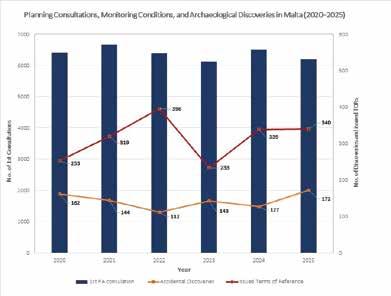
Figure 1 shows the number of first consultation planning applications, the number of Terms of Reference (TORs) issued by the Archaeological Monitoring Unit at the Superintendence of Cultural Heritage, and the number of accidental discoveries yielded over the last 5 years. As one of the regulatory bodies, the Superintendence of Cultural Heritage assesses planning applications from both a built heritage and archaeological perspective. Where there is potential for archaeological remains, the authority may impose an archaeological monitoring condition. In some cases, development permission is granted only after a preliminary site evaluation determines whether archaeological remains are present.
While Malta’s planning framework includes policies such as the Strategic Plan for Environment and Development (SPED) and Development Control Design Policy (DC15), these do not specifically address
development-led archaeology or provide clear guidance on preserving archaeological remains in situ. In practice, guidance is still drawn from the Structure Plan for the Maltese Islands (Buchanan & Partners, 1990), which outlines four levels of archaeological value to inform protection measures. Heritage polices are essential to help determine the archaeological value, similar to the heritage building for scheduling. Features may either be conserved for posterity or excavated and fully documented. Movable artefacts are transferred to the national repository, while immovable features may necessitate a redesign of the proposed development to allow for their protection, integration, or coverage. Where remains are heavily truncated or commonly occurring, the proposed excavations that involve a destructive impact on the remains may proceed once adequate recording has been completed. Nevertheless, preservation should always be prioritised wherever feasible.
Preservation of archaeological remains can be challenging, especially when immovable remains occur during construction, particularly in projects with limited design flexibility due to building regulations and site constraints. In such cases, work may be temporarily halted to allow for investigation, recording, and, where necessary, redesign. This can have significant implications for project timelines and costs, especially when archaeological risk has not been identified at an early stage. For developers and project managers, this highlights the importance of proactive risk assessment, particularly in areas known for archaeological potential, ideally through early consultation and, where appropriate, preliminary site evaluations. Given that each archaeological feature is unique, the Superintendence of Cultural Heritage continues to work closely with architects, engineers, and developers to determine a balanced approach that safeguards heritage while minimising disruption to the project.
Ultimately, this process underscores the importance of an interdisciplinary approach. Effective collaboration between planners, archaeologists, architects, and developers is essential t o ensure that Malta’s shared archaeological heritage is safeguarded while allowing for sustainable development.
References
Buchanan & Partners, 1990. Structure Plan for the Maltese Islands. Malta: Ministry for Development of Infrastructure.
DC15, 2015. Development Control Design Policy, Guidance and Standards. Malta: The Malta Environment and Planning Authority.
Halleux, J.-M., Hendricks, A., Nordahl, B.I. and Maliene, V. (eds.) (2022) Public value capture of increasing property values across Europe. Zürich: vdf Hochschulverlag AG.
Available at:
https://vdf.ch/public-value-capture-of-increasing-proper ty-values-across-europe-e-book.html
Mercieca-Spiteri, B., Spadaro, P., Spiteri, C., Borda, K. & Farrugia, K. 2025. The Superintendence of Cultural Heritage: 20 Years of Discovery 2003–2022 . Malta: SCH. SCH, 2020. Superintendence of Cultural Heritage Annual Report for 2020, Valletta: Superintendence of Cultural Heritage.
SCH, 2021. Superintendence of Cultural Heritage Annual Report for 2021, Valletta: Superintendence of Cultural Heritage.
SCH, 2022. Superintendence of Cultural Heritage Annual Report for 2022, Valletta: Superintendence of Cultural Heritage.
SCH, 2023. Superintendence of Cultural Heritage Annual Report for 2023, Valletta: Superintendence of Cultural Heritage.
SCH, 2024. Superintendence of Cultural Heritage Annual Report for 2024, Valletta: Superintendence of Cultural Heritage.
SCH, 2025. Superintendence of Cultural Heritage Annual Report for 2025, Valletta: Superintendence of Cultural Heritage.
SPED, 2015. Strategic Plan for the Environment and Development. Malta: Planning Authority.


Perit Charlene Jo Darmanin & Daniel La Rosa
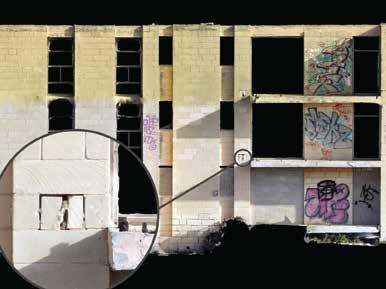
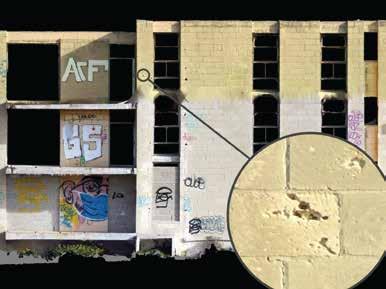
The deterioration of local built heritage, mainly comprising of Globigerina and Coralline Limestone, manifests as a slow, silent and often invisible process. Considering buildings higher than two floors, degradation and extent of damage is not always evident from ground level. The assessment and documentation of heritage structures, however, often assume the opposite; that condition need only be properly assessed once material or structural issues start to become visible. While heritage decay is dynamic, it is inspected and assessed with strategies and tools which are static.
In a field shifting from digitisation (creating digital copies) to full-scale digitalisation (reinventing processes through technology), the Comité International de la Photogrammétrie Architecturale’s (CIPA) underscores how the documentation of heritage structures should guide analysis, intervention design, and ongoing monitoring and dissemination strategies. Here heritage professionals are empowered to explore uncharted territory; unveiling new discoveries and sharing cutting-edge methodologies. Photogrammetry has steadily found its place within such heritage practices, particularly through the

production of accurate digital visual records of historic fabric through high-resolution 3D models, orthophotos and point clouds. These are, however, frequently treated as a final product; documents to be archived, rather than active instruments in the ongoing management of heritage assets. The prevailing mindset remains largely retrospective: record what exists, intervene when deterioration becomes evident, and repeat the cycle years later.
Photogrammetry has the potential of playing an active part within an operational system; one that allows observation, comparison and timely response to change across time. When deployed repeatedly and strategically, photogrammetric surveys can reveal patterns of structural movement, weathering processes, biological growth and loss of fabric that would otherwise go unnoticed. This shift, from documentation to monitoring, could potentially change how interventions are planned, resources are allocated and risk is assessed. The introduction of UAV-based inspections, using a drone in live configuration, pushes this shift even further. Traditionally, inspecting stone fabric at a height required the use of bulky and heavy handheld equipment, with access only possible through scaffolding or cherry pickers. These methods are costly, disruptive, and often
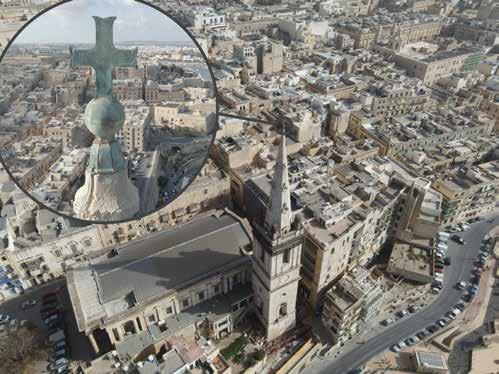
delayed until a project is well underway. Multi spectrum cameras within a single drone unit allow for close inspection at heights with ease of access from ground level. Live UAV-inspections have created an opportunity for project teams to observe vulnerable areas in real time, without physical contact with fragile fabric. Within minutes, a drone is deployed allowing teams to collectively assess conditions, discuss emerging issues, and verify details instantly. Cracks, displaced stone, missing mortar joints, or water ingress pathways can be examined closely, revisited repeatedly, and recorded with precision. Live inspections potentially change the nature of decision-making processes, with intervention planning a process that commences well before repair or restoration works become urgent or invasive. Projects can be scoped with more certainty and confidence, with the design of well-informed interventions carried out in a timely manner.
Jumping onto the current debate of ethical technology use, UAV technology does not replace professional judgment, nor does it absolve responsibility. On the contrary, enhanced visibility brings with it greater accountability. Better access for the inspection of deterioration implies enhanced visibility where delayed action or overlooking risk is no longer acceptable. The future of heritage conservation within the digital era potentially allows for improved engagement with buildings as living structures, offering an opportunity to move from static observation to continuous understanding. With this mindset, the question facing the local industry is no longer whether these tools are available or easily accessible, but whether we are prepared to integrate them meaningfully, and ethically, into how we care for our built heritage.

Gabriella Borda

The construction industry has always operated within a complex risk environment, balancing cost, time, safety, and quality. However, there is a category of risk that is rapidly reshaping this landscape. What was once considered an environmental concern is now emerging as an immediate operational challenge, requiring a fundamental shift towards dynamic risk management.
Traditionally, risk management in construction has been relatively static, based on historical data, fixed safety protocols, and predictable environmental conditions.
This approach is no longer sufficient. Climate change is introducing increased frequency and intensity of extreme weather events, leading to greater uncertainty in planning and scheduling, and non-linear and cascading impacts across project phases. Risk is no longer something that can be assessed once and monitiored periodically. It must be continuously evaluated, updated, and managed in real time.
Climate change does not entirely create new risks, it amplifies exisitng ones and introduces new layers of complexity. In the construction sector this manifests in several ways. Extreme heat, storms, and high winds can halt construction activities, delay timelines, and increase costs, leading to operations disruptions. Additionally, workers are becoming more exposed to heat stress and hazardous conditions, as these are becoming more frequent and severe, leading to a higher level of health and safety risk.
If we consider another aspect, such as materials, evolving environmental conditions can influence their performance and long-term durability. Furthermore, climate-related disruptions in supply-chains may affect both the availability and cost of materials. These risks are all interconnected, often triggering cascading effects across the entire project lifecycle.

Occupational Health and Safety Authority (OHSA) to require the suspension of certain works during extreme weather events, marks a critical turning point. This is not merely a compliance issue, as it reflects a broader recognition that climate risks are already materialising. Consequently, worker safety must adapt to new environmental realities and operational models must account for climate-driven disruptions.
In essence, what climate scientists have been projecting for years is now becoming embedded in regulatory frameworks and day-to-day operations. These developments are fundamentally altering the risk profile of construction-related business models, and as a result, climate risk is transitioning from an externality to a core financial variable, one that directly impacts profitability, valuation, and long-term viability.
One of the most important shifts is the translation of phyiscal climate risks into financial outcomes. Extreme weather events can lead to project delays, site shutdowns, damage to works, and increased insurance claims. Overtime these impacts accumulate and ultimately find their way on balance sheets. What was once considered a sustainabililty issue, is now being defined a financial risk that must be measured, managed, and disclosed.
To respond effectively, the sector must move towards dynamic and forward-looking risk management approaches. This may include integrating climate data and scenario analysis into project planning, leveraging digital tools for real-time monitoring, and embedding flexibility into project design. It is also very important to strengthen cross- disciplinary collaboration beetween engineers, architects, risk professionals, and financial stakeholders. The goal is not only to mitigate risk, but to build adaptive capacity in an increasingly uncertain environment.
The construction sector is entering a new phase where climate change is no longer a distant threat, but a structural driver of risk and change. The introduction of measures such as OHSA-mandated work interruption during extreme weather events is a clear indication that the risk landscape is evolving and traditional models are being challenged.
Organisations that recognise this shift early and invest in dynamic risk management capabilities, will be better positioned to navigate uncertainty, protect value, and remain competitive. Because ultimately, in today’s environment, managing ESG risks is synonomous with managing business risk.


Prepared
Architects
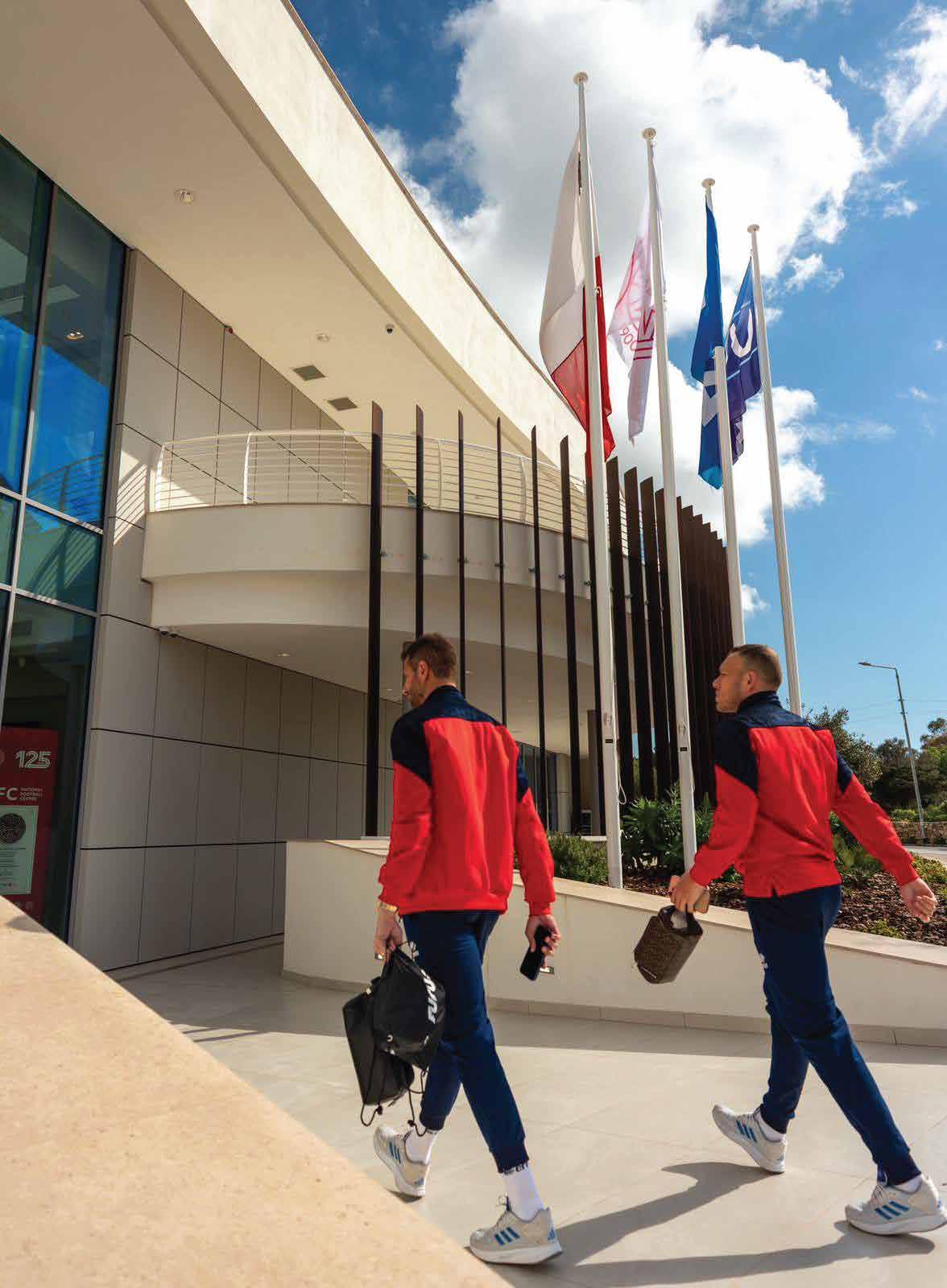
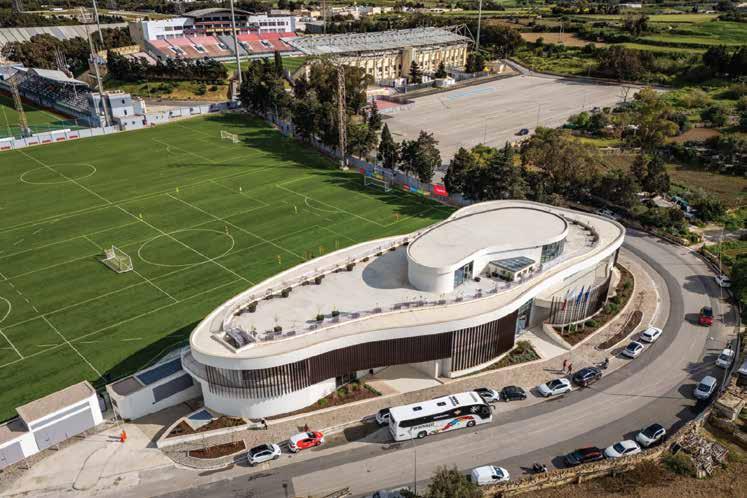
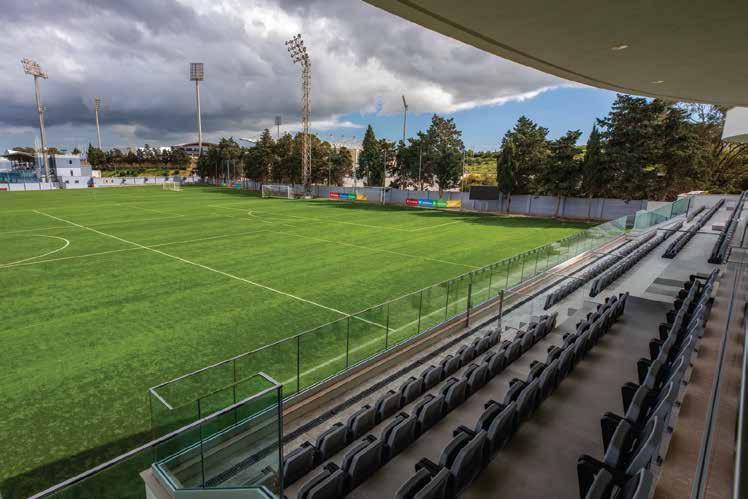
The inauguration of the National Football Centre (NFC) in Ta’ Qali marks a transformative moment for the Malta Football Association (MFA) and the local construction industry alike. Envisioned in 2022 as a core pillar of the MFA’s strategy to consolidate infrastructure for National Teams, this facility represents a benchmark in modern sports architecture. Situated on the periphery of the Ta’ Qali training grounds, the project serves as a technical hub that aligns Maltese football with international standards. For iAS, acting as a multi-disciplinary firm, the NFC is a testament to the power of integrated
The NFC was not merely a construction project; it was an essential strategic pillar outlined in the MFA’s document, "Forward Together 2025-2028." This strategy identified the centre as a visionary project vital for the professional development of the sport in Malta. Reflecting on this ambition, MFA President Bjorn Vassallo stated:
"This is not just a document for the Association records; it will serve as a shared vision for everyone who loves and enjoys the game. The National Football Centre is a building that will serve various sporting, administrative, educational, and recreational needs, raising quality and standards across all environments."

(this article is the first of a two-part series)
As the Lead Designer and Project Manager, iAS adopted a comprehensive multi-disciplinary approach, providing architectural, structural, interior design, and cost management services. A defining characteristic of the project’s success was the implementation of a rigorous BIM (Building Information Modelling) strategy.
Utilising a single, high-fidelity BIM model ensured seamless spatial coordination between architectural elements and complex building services. For construction managers and contractors, this digital-first approach meant that potential on-site clashes were identified and resolved digitally months before construction began. Furthermore, BIM allowed the client to better visualize the design brief, ensuring that high-performance labs and hydrotherapy areas were spatially optimized for elite athletic use. The project also benefited from the expertise of UEFA/FIFA technical teams, ensuring the layout met the highest global standards for sports architecture.
One of the most critical phases involved the delicate briefing and coordination workshops held with the National Team Coach and technical staff. These sessions were essential to ensure the design was developed in strict alignment with the MFA’s technical strategy, with a primary focus on elevating the Sports Science capabilities of the national game.
The facility was engineered to be a centre of excellence
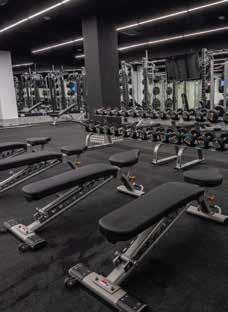
for athletic performance. Extensive workshops were dedicated to the layout of high-performance dressing rooms, a specialized physiotherapy clinic, and advanced sports science laboratories. Every detail—from the ergonomic flow between the gymnasium and the hydrotherapy recovery zones to the specific data-cabling requirements for player-tracking technology—was scrutinized. This collaborative atmosphere ensured that the physical environment would actively support the medical and physical preparation goals of the athletes, transforming the building into a sophisticated scientific tool for the technical staff.
MALTA CHAMBER OF CONSTRUCTION MANAGEMENT
Instil professionalism, innovation and quality - Continuing Professional Development Opportunies - Affiliation with the Chartered Insitute of Building Preparation for the Cosntruction Project Manager Warrant An active community willing to improve the industry Built around the busy schedules of professionals www.mccm.org.mt

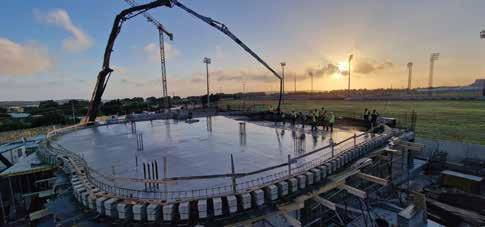
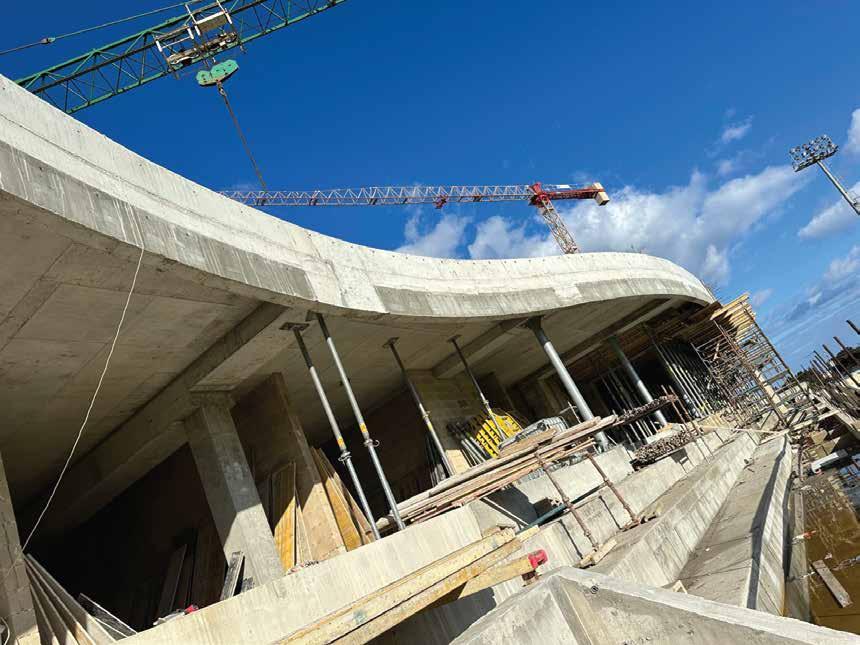
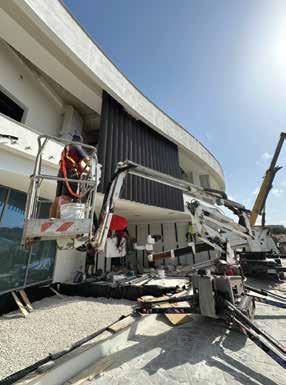
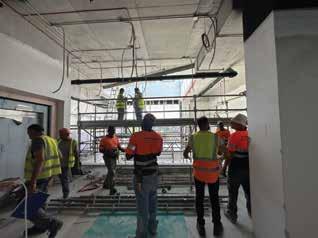
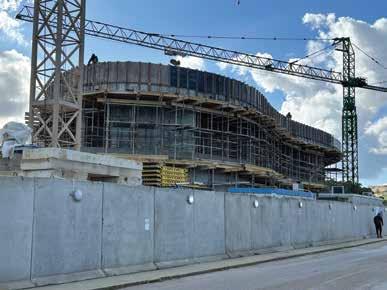
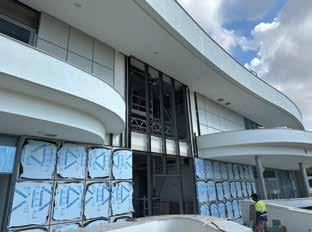

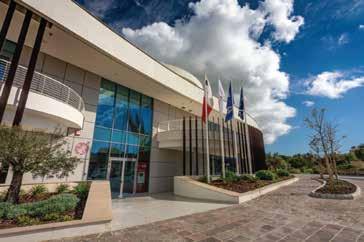

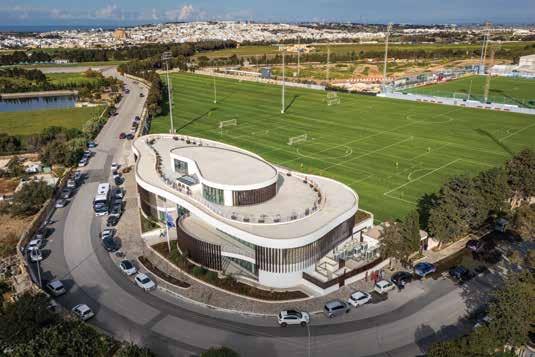
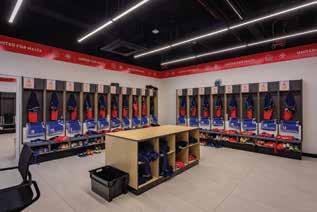
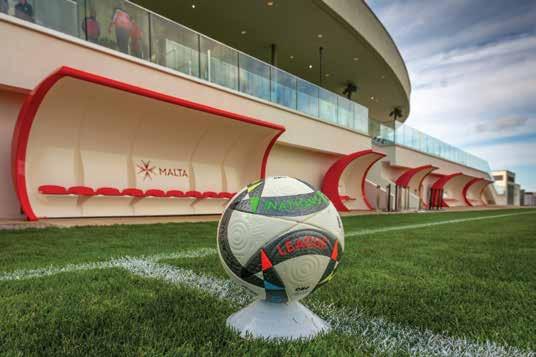
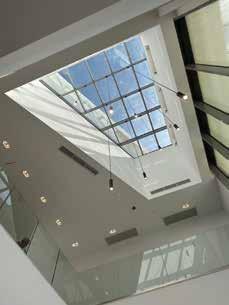
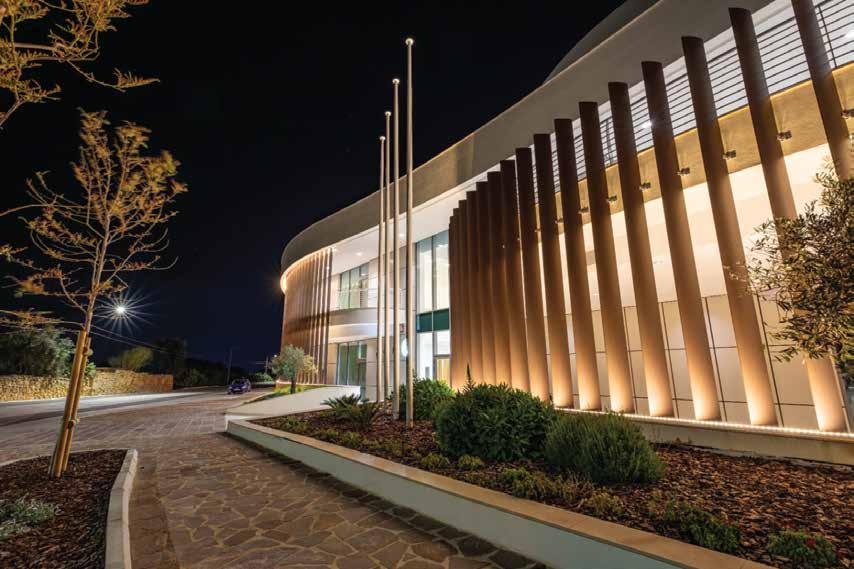
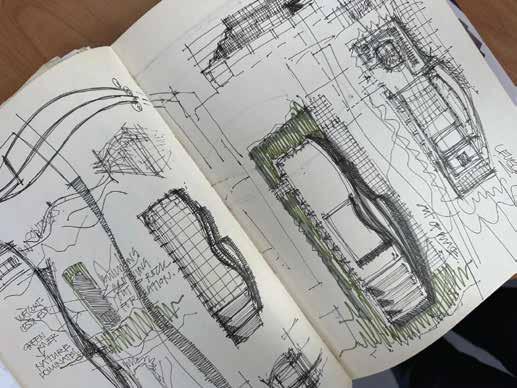
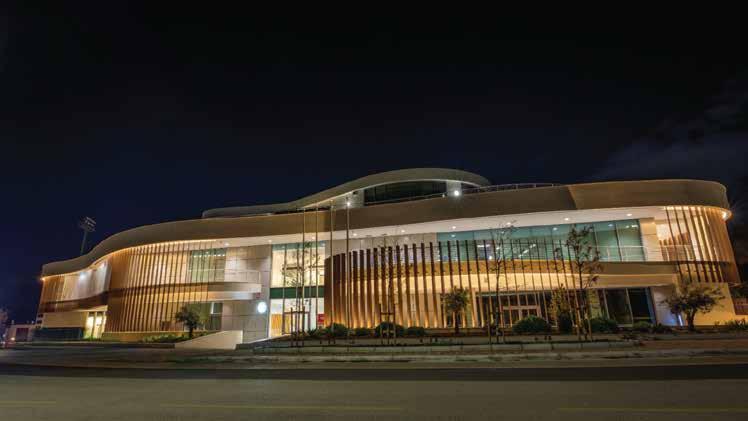
From a design perspective, the project draws deep inspiration from the typical Maltese topography. By simulating natural contouring lines, the architecture creates a series of fluid forms that articulate the National Football Centre’s massing, allowing it to sit harmoniously within its environment.
The interior environment is predominantly day-lit, featuring strategic openings on both sides of the project. A careful positioning of louvres was implemented to mitigate solar heat gain, creating an interesting architectural play of light and shadow while functionally screening all plant and equipment. This was a critical design requirement; given the project’s strategic position and extreme visibility from higher vantage points such as Mdina, the team made a concerted effort to avoid any visible external equipment. The design adheres strictly to the Ta’ Qali Action Plan, which earmarks the area for sports-related activity and the consolidation of the national sports facility network.
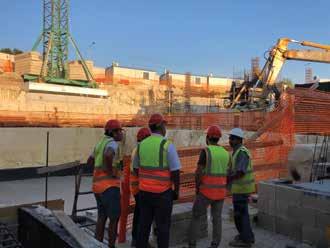
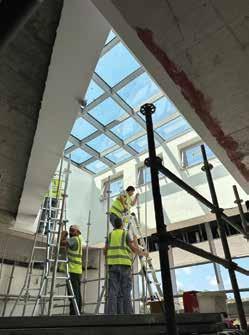
Structurally, the project pushed boundaries with its curved cast-in-situ concrete facade. The contractor developed specialized moulds for these profiles, which served as formwork for the concrete slabs. Achieving a spotless external finish while ensuring the waterproofing of the basement and spectator areas required meticulous site supervision. Execution was further complicated by site logistics. Situated in a popular recreational hub, iAS had to manage a high volume of public users, including walkers and joggers. Rigorous boundary management and traffic control ensured that construction progress never compromised the safety and wellbeing of the local community.
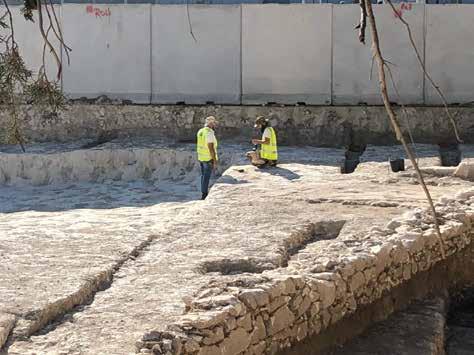
The project was managed according to RIBA stages, utilizing a sophisticated procurement strategy to respect the guidelines of the National Development and Social Fund (NDSF). The construction phase faced significant trials, including the discovery of
archaeological features during excavation. This required accurate surveying by an archaeological monitor and a subsequent re-configuration of part of the facility. Navigating these challenges while maintaining strict budgetary and timeframe controls required a dedicated eight-person iAS team, including a Cost Controller and Scheduler.
As the project neared its historic September 2025 deadline, technical challenges were matched by the need for exceptional soft skills and day-to-day communication. Managing the expectations of diverse stakeholders—from government entities to international sports bodies—required a balance of transparency and firm leadership. The iAS team acted as the central nervous system of the project, facilitating constant dialogue to ensure a seamless transition into the operational phase.
The centre was officially inaugurated on September 15,
the best possible support while opening up opportunities for more Maltese to get involved in the game."
FIFA President Gianni Infantino added:
"This facility is a glowing representation of hard work. It is fully equipped to serve as the hub of all footballing operations and logistics of all Maltese national teams."
Closing the ceremony, MFA President Bjorn Vassallo noted:
"The NFC represents a significant social return and added value in terms of education, performance, economy, and health."
Relive the opening of the National Football Centre
This video provides visual context for the grand inauguration and the high-profile dignitaries mentioned in the article.


David Xuereb
The global economy has entering a period defined by heightened uncertainty. Wars, geopolitical tensions, supply-chain disruptions and climate risks are increasingly intertwined. The recent conflict involving Iran in the Gulf illustrates how quickly regional tensions can reverberate through global markets. In such a volatile environment, the transition towards a net-zero economy is no longer simply a climate ambition—it is becoming a strategic economic and geopolitical priority. Recent developments in the Gulf demonstrate the fragility of the global energy system. The war involving Iran has disrupted shipping through the Strait of Hormuz, a passage through which roughly a fifth of the world’s oil and a significant share of global liquefied natural gas normally flow.
The consequences have been immediate. Oil and diesel prices have surged, threatening inflation and economic slowdown worldwide. According to reporting by Reuters, disruptions to shipping and energy supplies could “impede global economic growth,” with rising fuel costs feeding through transport, agriculture and manufacturing.
This dynamic reveals a structural vulnerability in the global economy: dependence on fossil fuels extracted or transported through geopolitically sensitive regions. When conflict erupts, the effects are transmitted almost instantly through energy markets, inflation and economic stability.
The International Energy Agency (IEA) has repeatedly warned that geopolitical tensions expose “fragilities in today’s global energy system,” reinforcing the need for faster expansion of cleaner energy technologies.
The net-zero transition therefore has a clear geopolitical dimension. By shifting towards renewable energy, electrification and energy efficiency, economies can reduce their exposure to geopolitical shocks linked to fossil-fuel supply.
Unlike oil and gas, renewable energy sources such as
wind, solar and hydropower are widely distributed geographically. They rely primarily on domestic resources rather than imported fuels. The International Monetary Fund (IMF) highlights this advantage, noting that renewable energy “does not require ongoing fuel imports,” allowing countries to gradually reduce their dependence on imported energy.
This shift has profound implications for energy security. In a world where conflicts in the Middle East, Eastern Europe or other regions can disrupt fossil-fuel supply chains, domestically generated renewable energy provides a more resilient foundation for economic stability.
The current Gulf crisis offers a powerful reminder of this reality. As tensions escalated, the IEA and its member countries were forced to release hundreds of millions of barrels from strategic reserves in order to stabilise oil markets.
Beyond energy security, the net-zero transition can also strengthen economic competitiveness. Historically, major economic transformations—from the industrial revolution to the digital age—have been driven by technological innovation and infrastructure investment. The shift to a low-carbon economy is likely to trigger a similar wave of economic transformation. Investments in renewable energy, smart electricity grids, energy storage, hydrogen technologies and sustainable transport are already creating new industries and value chains. Countries that position themselves early in these sectors may gain a significant competitive advantage in the global economy. In this sense, the net-zero transition is not only about avoiding climate damage but also about shaping the industries of the future. Clean technologies are rapidly becoming one of the most dynamic sectors of the global economy, attracting substantial investment from both public and private actors.
The benefits also extend to human wellbeing. Climate change itself poses growing risks to health, food systems, infrastructure and economic stability. Extreme weather events, rising temperatures and environmental degradation increasingly threaten livelihoods around the world.
Transitioning to a cleaner energy system can deliver immediate social benefits. Improved air quality, reduced pollution and more efficient urban infrastructure contribute directly to better public health and quality of life.
However, the transition must be carefully managed to ensure that it is socially inclusive. Workers and communities dependent on fossil-fuel industries need support through retraining programmes, social protection and regional development strategies. A successful transition must therefore combine environmental ambition with economic fairness.
Importantly, the net-zero transition can also help provide strategic direction in a world of geopolitical uncertainty. Clear long-term climate and energy policies create predictable signals for investors, entrepreneurs and researchers. These signals encourage innovation, guide infrastructure development and support long-term economic planning.
The war involving Iran illustrates how quickly geopolitical events can destabilise global energy markets and economic expectations. But it also highlights why the transition towards cleaner and more secure energy systems is increasingly viewed as a strategic necessity.

In the decades ahead, competitiveness will depend not technological leadership and sustainability. Economies that accelerate the transition towards net zero may therefore gain advantages in energy security, industrial innovation and social wellbeing. Our agreed Malta
In an era of geopolitical turbulence, the net-zero economy offers more than a climate solution. It offers a pathway towards greater economic stability, stronger

Vera Sant Fournier Creative Director at Era Design Studio


As a designer who has spent two decades tracing the stories embedded in spaces, I find Maltese traditional tiles, Il-Maduma Maltija—among the most persuasive narrators of a space and time and quintessential part of Maltese Interior Design Culture. They are not mere surfaces; they are layered experiences, where artisanal craft, history and daily life converge. When reintroduced with care, these tiles transform interiors from anonymous backdrops into atmospheres that feel stylized and avant-garde.
The lineage of Maltese decorative tiles (also referred as Maltese Cement tiles) trace their origins to mid-19th-century France, in the small Ardèche town of Viviers. Around 1850, contractor Étienne Larmande devised a radical process that eliminated the need for firing: a hydraulic press could compress coloured cement and pigments into a dense, decorative slab. The result was a durable, vividly patterned floor that offered the visual richness of marble or stone at a fraction of the cost. Patented in September 1859 and celebrated for its practical beauty—most notably at the 1867 Paris Exposition—the technique swiftly migrated across southern France and, before long, into the broader Mediterranean world, eventually finding its way to Malta.
The visual language is a composite: Moorish geometry, Sicilian and Spanish florals, and even British period motifs translate through Maltese sensibilities into distilled patterns, rosettes, stars, stylised waves and geometric repeats that read beautifully at the scale of a domestic space. Their popularity grew not only from aesthetics but from pragmatism; cool, dense underfoot and durable, they answered the island climate and everyday use. With post-war modernisation many
floors were supplanted by neutral, mass-produced finishes. What followed was a temporary silence in an otherwise loud visual tradition.
But this silence was not to last too long. Contemporary conservation projects and a renewed appreciation for craft have returned these floors to the foreground. Restorations in Valletta and many village cores have done more than reinstate pattern—they have recalibrated how we value patina, local manufacture and the lived history in buildings. Simultaneously, a new generation of makers and designers is translating traditional motifs, sometimes via faithful hydraulic reproduction, sometimes by reinterpreting scale and palette, so the tiles feel current rather than museum-pieces.

Design-minded ways to apply Maltese Cement Tiles to interiors:
• Make them the Protagonist:
Preserve existing patterned runs in entryways or stair halls. These thresholds are narrative devices: they set expectation, provide warmth and anchor the plan. Allow surrounding finishes to be restrained so the tile’s history remains legible.
• Framed Rug Effect:
Rather than tiling an entire floor, consider a bordered patch beneath a table or in a sitting niche. This theatrical move defines zones without overwhelming the plan, likening the tile to a woven rug but with permanence and light-reflective qualities. I have applied this type of featured decor elect into my outdoor area too, encased in a concrete floor.
• Vertical Surprises:
Use tiles on stair risers, backsplashes or fireplace surrounds. Applied vertically, the pattern engages at eye level, enriching circulation and focal points while preserving neutral floor expanses. I have also used this application using preloved tiles as a kitchen splash back in a luxury duplex in Valletta, using all random Maltese Cement tiles. A stunning result.
• Scale and Restraint:
When using historic patterns in compact spaces, scale them up or down deliberately. A slightly enlarged motif reads as contemporary; a smaller repeat feels intimate. Balance complexity with calm—pair patterned areas with large plains of lime-wash, plaster, or terrazzo. Smaller spaces work best with larger scaled motifs.
• Palette as Bridge:
Reinterpretations work best when palettes respond to light and materiality. Soft, oxidised pigments harmonise
with aged limestone and timber; saturated tones punctuate contemporary kitchens and boutique hospitality projects.
• Bespoke Dialogue:
Commissioning a modern maker to adapt a traditional motif altering repeat, border, or hue, yields authenticity with bespoke relevance.
What these tiles give beyond beauty, they provide anamnesis: a recall of craft, of hands and fires, of island trade routes and domestic rituals. In projects large and small, reintroducing Maltese tiles grounds interiors in a continuum, turning rooms into chapters rather than anonymous volumes. For clients seeking authenticity that reads as effortless, these tiles offer a rare combination: a tactile, visual richness that is at once historical and unmistakably present.


Noel Zahra Diacono
The construction industry is widely recognised as one of the most complex, fast-paced, and pressure-laden sectors in the modern economy. Projects involve diverse teams, tight deadlines, and high financial stakes, all of which create fertile ground for tension and stress. Amid these challenges, the importance of Emotional Intelligence (EI) has become increasingly apparent. As explored in the first article of this series, Emotional Intelligence: The Power of Understanding Emotions, EI is the ability to recognise, understand, and manage one’s own emotions while effectively influencing those of others (Goleman, 1998). This second article delves deeper into how EI manifests within the construction environment and why it is critical to enhancing leadership, teamwork, safety, and overall project success.
Construction sites are dynamic ecosystems, where engineers, project managers, contractors, and labourers must collaborate under immense time and cost pressures. Unlike in many office-based professions, the physical environment itself—characterised by noise, risk, and unpredictability—adds layers of emotional complexity (Loosemore & Muslmani, 1999). Workers often face stress from long hours, safety risks, and communication barriers, especially in multicultural teams. Consequently, leaders who can regulate their emotions and understand the emotional needs of their workforce are better equipped to maintain productivity, safety, and morale.
Emotional Intelligence offers a framework through which these challenges can be managed more effectively. It allows individuals to remain calm under pressure, communicate empathetically, and build trust—a vital element in an industry that depends on coordination and collaboration (Druskat & Wolff, 2001).
Leadership within construction is traditionally associated with technical expertise and decisiveness. However, modern research has shown that successful leadership extends far beyond technical capability. Goleman (2000) identified EI as a crucial determinant of effective leadership, particularly in complex environments such as construction.
A construction leader who exhibits emotional intelligence demonstrates self-awareness, self-regulation, motivation, empathy, and social skills—qualities that foster stronger relationships and improved team
performance (Salovey & Mayer, 1990). For example, when a project manager faces unforeseen delays, an emotionally intelligent response involves acknowledging the frustration of team members, addressing concerns calmly, and collaboratively finding solutions rather than assigning blame.
Empathetic leadership can also reduce absenteeism and turnover. In an environment where workers may feel undervalued or unheard, emotionally attuned leaders can recognise signs of burnout or dissatisfaction and intervene proactively (Clarke & Fuller, 2010). Such leaders inspire loyalty and engagement, thereby enhancing overall project outcomes.
An extract from a typical Finishes’ BOQ
Teamwork lies at the heart of every construction project. Yet, the industry is notorious for miscommunication, siloed departments, and fragmented subcontracting relationships (Laufer & Tucker, 2007). These factors often lead to conflict, errors, and inefficiencies. Emotional Intelligence can bridge these divides by promoting open communication, empathy, and psychological safety.
Teams with high collective EI tend to collaborate more effectively because they are better at recognising and managing the emotional tone of interactions (Druskat & Wolff, 2001). For instance, a foreman who senses frustration among workers during a stressful phase of a project can adjust his communication style—offering reassurance rather than criticism—to sustain motivation. Such sensitivity not only prevents escalation of conflict but also builds a culture of mutual respect.
Furthermore, emotional awareness can enhance safety communication. Workers are more likely to report hazards or mistakes in a psychologically safe environment where they do not fear blame or ridicule (Clarke, 2010). Hence, EI directly supports one of the most critical dimensions of the construction industry: safety.
Health and safety are central concerns in construction management, yet traditional safety programmes often focus solely on compliance and procedures. Emotional Intelligence adds a human dimension by recognising that attitudes, stress levels, and emotional states significantly influence safety behaviours (Turner, 2014). A stressed or emotionally distracted worker is more Part 2 of 3
likely to make errors, ignore safety measures, or miscommunicate with colleagues. Supervisors who demonstrate empathy and emotional regulation can detect when stress or fatigue are impairing performance and take preventive action. Research by Clarke (2010) showed that leaders with high EI create a stronger safety climate, where workers feel valued and responsible for their own and others’ well-being.
Moreover, integrating EI training into health and safety programmes can improve emotional awareness across the workforce. When workers understand how emotions affect decision-making, they become more self-aware, resilient, and committed to maintaining a safe work environment.
The construction workforce is often diverse, comprising individuals from multiple cultural backgrounds. Cultural differences in communication styles, emotional expression, and conflict management can sometimes lead to misunderstanding (Loosemore & Lee, 2002). Emotional Intelligence provides tools for navigating such diversity effectively.
Leaders with strong EI can read emotional cues that transcend language and cultural barriers. They are also more adaptable, adjusting their leadership approach to respect cultural norms while maintaining consistency in expectations and values (Giritli & Oraz, 2004).
Additionally, as the industry increasingly welcomes more women into construction roles, EI supports inclusivity by promoting respect, empathy, and understanding—qualities that counteract the traditional “macho culture” often associated with construction (Fielden et al., 2000).
Project management in construction requires balancing time, cost, and quality—a triad that often leads to emotional strain. An emotionally intelligent project manager can navigate these pressures with composure and clarity, influencing the team’s collective mindset (Mersino, 2013).
For instance, project setbacks are inevitable, but an emotionally intelligent manager focuses on solutions rather than problems, fostering a positive and resilient culture. They also use emotional awareness to manage stakeholder relationships—recognising the emotional
drivers of client expectations and communicating transparently to maintain trust.
EI can therefore enhance negotiation, decision-making, and stakeholder satisfaction—all key indicators of project success (Turner & Müller, 2006).
While some individuals naturally exhibit high EI, it can also be developed through training and self-reflection. Many construction organisations are now integrating EI modules into leadership development and safety programmes. Techniques such as mindfulness, reflective journaling, and empathy training can significantly enhance emotional awareness (Cherniss et al., 2010).
Furthermore, incorporating EI assessment into recruitment and promotion decisions ensures that emotional competencies are valued alongside technical skills. When organisations prioritise EI, they cultivate a culture of collaboration, respect, and accountability.
Emotional Intelligence in construction is not a soft or secondary skill—it is a critical competency that underpins leadership, safety, communication, and productivity. The ability to recognise and manage emotions effectively can transform the way projects are delivered and how teams’ function within high-pressure environments.
As construction continues to evolve towards more sustainable, digital, and people-centred models, EI will play a defining role in shaping the industry’s future. The next article in this series, Emotional Intelligence and Conflict Resolution in Construction, will explore how EI can be strategically applied to manage disputes, strengthen relationships, and foster long-term collaboration across all levels of the construction hierarchy.


Kurt Borg Coppini
In construction projects, much attention is typically given to the contract price, the project schedule, and the technical specifications. These elements are clearly important, as they shape the scope, timeline, and financial structure of the project. However, from the perspective of construction law and dispute resolution, experience repeatedly shows that the most financially significant clause in a construction contract is often not the one dealing directly with money.
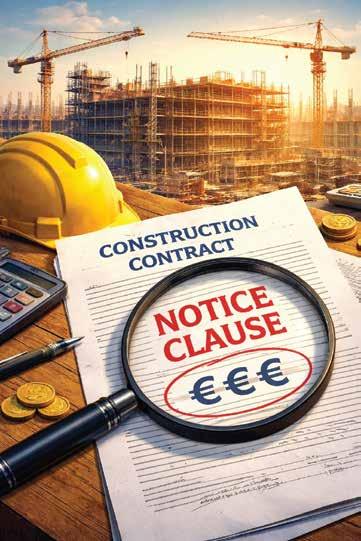
Surprisingly, the clause that can prove to be the most expensive in a construction contract is often the notice clause.
At first glance, notice provisions appear to be minor administrative requirements buried deep within the legal sections of the contract. They often specify that if a party wishes to claim additional time or payment, they must notify the other party within a defined period after becoming aware of the relevant event.
While this may seem like a routine procedural formality, in practice these clauses frequently determine whether a contractor succeeds in recovering substantial sums or loses the entitlement entirely.
Most modern construction contracts include detailed provisions requiring parties to provide formal written notice of certain events within a specified timeframe. These events may include delays caused by the employer, variations or additional work, late information or design changes, unforeseen site conditions, disruption to the contractor’s programme, or suspension and acceleration of works.
The notice clause usually specifies both when the notice must be given and what information it must contain.
For example, a contractor may be required to notify the employer within a certain number of days after becoming aware of an event that could affect the project’s time or cost. In many contracts, this initial notice must be followed by a more detailed claim submission within a further defined period.
The intention behind such provisions is reasonable. Early notification allows the other party to investigate the issue, verify the facts, and potentially implement mitigation measures before the problem escalates. In theory, notice clauses are designed to improve
communication and reduce disputes.
A common scenario encountered in construction disputes involves a contractor who has experienced a genuine delay caused by the employer or by circumstances outside the contractor’s control. For example, the contractor may have received late drawings, encountered unforeseen ground conditions, or been instructed to carry out additional works.
These events may have clearly disrupted the contractor’s programme and increased costs. From a practical standpoint, the claim may appear entirely justified.
However, when the matter is examined during adjudication, arbitration, or court proceedings, the claim may fail for one simple reason: the required contractual notice was not submitted within the specified time period.
Many contracts include strict wording stating that failure to provide notice within the prescribed timeframe results in the contractor losing the entitlement to claim additional time or compensation.
This means that even if the delay was genuinely caused by the employer, the contractor may still be liable for liquidated damages if the notice requirement was not satisfied.
Despite their importance, notice provisions are frequently overlooked during the execution of construction projects.
Project teams are typically focused on technical and operational matters rather than contractual procedures. Site managers, engineers, and supervisors are primarily concerned with solving immediate problems on site and keeping the works progressing.
There is also a widespread belief that informal communication is sufficient. Issues may be discussed during site meetings or referenced in emails, but these communications often do not satisfy the strict contractual requirements of a formal notice.
Additionally, delays and disruptions may develop gradually rather than as a single identifiable event. By
the time it becomes clear that the project completion date may be affected, the contractual deadline for issuing notice may already have passed.
The consequences of missing notice deadlines can be severe, particularly on large or complex construction projects.
A contractor who fails to preserve their contractual entitlement may be unable to recover extension of time, prolongation costs, disruption costs, or additional payment for variations.
In addition to losing the claim itself, the contractor may also face liquidated damages if the project completion date is exceeded without a formally recognised extension of time.
The financial impact can therefore be significant, sometimes reaching hundreds of thousands or even millions depending on the scale of the project.
The risks associated with notice provisions highlight the importance of effective contract management throughout the lifecycle of a construction project.
Contract management should not be seen as a one-time legal exercise at the beginning of a project. Instead, it is an ongoing process that plays a critical role in protecting the contractual rights of all parties.
Effective contract management includes monitoring project events that may give rise to claims, tracking contractual deadlines and notice requirements, issuing notices in accordance with the contract procedures, maintaining accurate project records, and coordinating communication between technical and commercial teams.
Notices are sometimes perceived as aggressive or confrontational. Project teams may hesitate to issue formal notices because they fear it could damage the working relationship between the parties. However, notices should be understood as a routine contractual mechanism designed to ensure transparency and proper project management.
From an employer’s perspective, early notice provides
an opportunity to investigate issues and implement mitigation measures before delays become critical. From a contractor’s perspective, timely notice protects contractual entitlements.
When used properly, notice procedures can actually help prevent disputes rather than create them.
Construction contracts allocate risk between the parties through numerous detailed provisions. While much attention is typically focused on price, scope, and schedule, experience in construction disputes demonstrates that seemingly minor clauses can have major financial consequences.
Among these provisions, the notice clause often stands out as one of the most significant.
Failure to comply with notice requirements can invalidate otherwise legitimate claims and expose contractors to substantial financial losses. Conversely, careful management of notice

Francesco Nesi
A building can be perfectly modelled and still badly conceived.
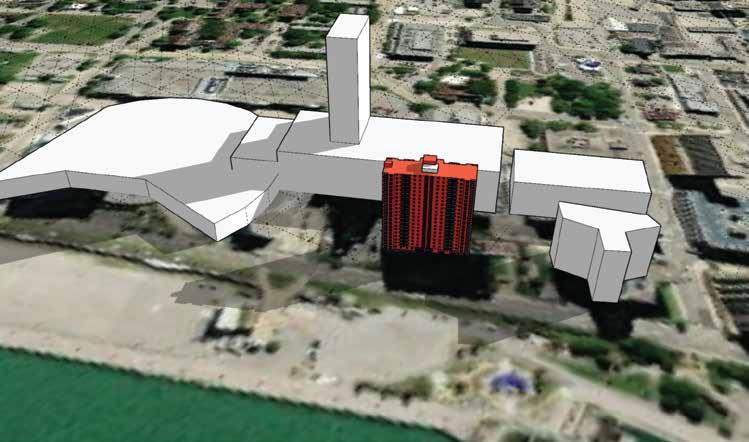
That is the uncomfortable truth behind many BIM conversations. The geometry may be clean, the disciplines may appear coordinated, the clashes may be reduced, and yet the most expensive questions often remain unresolved until much later: will this building overheat? Are the systems really compatible with the architecture? Are the façade choices supporting performance, or quietly undermining it? Are we designing something that can actually be built without triggering avoidable site changes?
This is where BIM becomes truly interesting.
Not when it produces a nicer model. Not when it looks impressive on screen. But when it stops being only a digital representation and starts becoming a working environment for better decisions. The real value of BIM lies in the information it carries and in what that information allows the team to test early, while changes are still affordable and before site conditions begin to dictate the project.
For Malta, that matters more than it may first appear. In a climate where solar gains, overheating risk,
shading, moisture, services integration and construction quality all weigh heavily on final performance, coordination alone is not enough. A model that only describes shape is useful; a model that helps predict behaviour is far more powerful.
That is exactly the point where BIM needs to evolve into something more meaningful: a true Building Energy Modelling approach. In other words, not just a three-dimensional container of geometry and quantities, but a structured information environment that also supports energy reasoning, performance verification, envelope decisions, MEP coordination and cost-optimum choices. At that point, windows are no longer just openings, but components with thermal, solar, acoustic and installation consequences. MEP is no longer something to “fit in later”, but part of the building logic from the beginning. The envelope is no longer a drawing exercise, but a measurable performance strategy.
Italy offers a useful lesson here. Since 1 January 2025, digital information management methods have become mandatory in public works above the € 2 million threshold. But the real lesson is not the legal threshold itself. It is what happens to the market once that threshold enters the system. Public procurement starts the process, but private practice quickly follows.
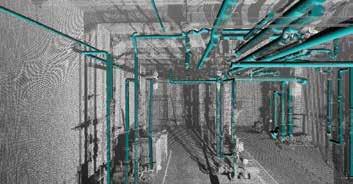
Developers, hotel groups, major clients and design teams begin expecting the same clarity, the same coordination, the same structured information. Manufacturers without usable BIM objects risk being left outside the design workflow. Specifications increasingly inherit the logic of public requirements, even in private projects.
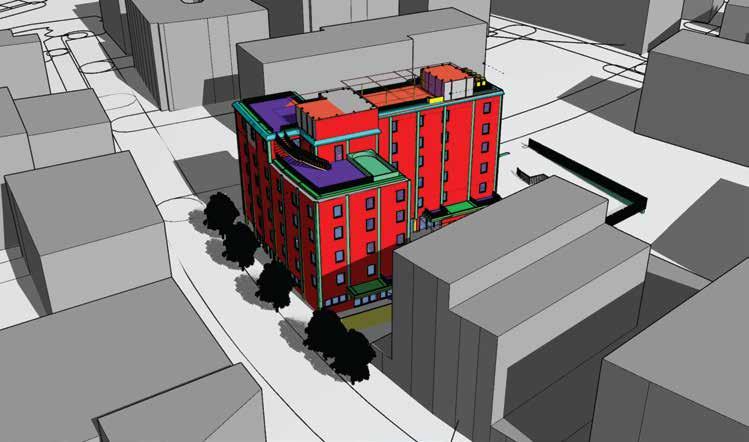
This is precisely why we use this approach not only for public works, but very often for private projects as well. And not as a presentation tool. We use it to reduce uncertainty, connect envelope, systems and performance, and make better decisions before
construction starts. In our experience, even on smaller private projects, this can reduce extra costs linked to site variations by 20–30%.
So the real question for Malta is no longer whether BIM is coming. It already is.
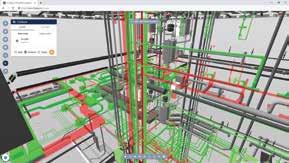
The more important question is whether the market will adopt it superficially, as a modelling requirement, or intelligently, as a tool to improve performance, reduce waste and prevent expensive mistakes before they appear on site.
That is where the real difference lies. And that is where the real competitive gap begins.

Mohamed Elaida MCIOB

Just as the construction industry was beginning to see signs of improvement while adapting to the easing impact of the Russia–Ukraine war, it must now contend with a fresh source of uncertainty: the conflict in the Middle East.
While the duration remains unclear, it could have a substantial impact on both ongoing and future construction projects.
Material Costs: The industry is highly dependent on oil, from everyday deliveries and the transport of raw materials to waste management, the operation of heavy machinery, and the use of plastics and other petroleum-based products, as well as construction materials that require significant energy to produce.
Historically, oil crises have driven substantial inflation in construction material costs. Faced with sharp price increases, shipment delays, and higher borrowing
costs, contractors and employers are likely to attempt to shift risk onto one another.
Labour Costs: If high energy prices drive sustained inflation, labour costs are likely to rise over time. Wage increases typically lag behind inflation due to annual negotiations, but renewed inflationary pressure will prompt workers to seek higher pay to recover real income losses.
Overall, if inflation picks up again, construction wages are likely to continue rising, albeit potentially at a more moderate pace than during the previous surge.
This may ultimately give rise to disputes between the parties concerning variations, price escalation, extensions of time, and responsibility for delays.
Geopolitical tensions—both historical and ongoing—have tightened global liquidity and reshaped risk sentiment. Persistently high interest rates, driven by central banks’ efforts to contain inflation, are weighing on consumer confidence and slowing activity in the residential construction market. At the same time, heightened uncertainty is prompting investors and occupiers to postpone leasing and investment decisions in commercial real estate.

Rising operating expenses, combined with the expectation that borrowing costs will remain elevated, are further challenging project viability. As a result, some developments are being delayed or paused entirely.
Adopting a diversified procurement strategy is advisable. Procuring materials when prices are favourable can yield long-term savings, but careful consideration must be given to storage capacity, protection, and cash flow. Strategic, targeted stockpiling, rather than excessive accumulation, is essential.
Contractors should also approach pricing cautiously, ensuring adequate allowances are built in to accommodate potential market fluctuations. In addition, early warning procedures and clearly defined provisions for compensation and delays can play a key role in reducing the likelihood of disagreements.
It is essential to build flexibility into programmes, allow for extended delivery periods, and ensure that contracts adequately reflect these risks.
There should also be a renewed focus on value engineering. Employers, contractors, and the professional team need to collaborate closely to review specifications, explore redesign opportunities where feasible, and identify cost-effective alternatives that maintain the project’s intended performance and purpose.
Under a FIDIC contract, contractors should promptly review the provisions dealing with extensions of time, typically under Sub-Clause 8.5 (Extension of Time for Completion) and related clauses, to determine whether delays arising from disrupted supply chains, long-lead items, or government actions may entitle them to additional time.
It is equally important to comply with the notice requirements, particularly Sub-Clause 20.2 (Claims for Payment and/or EOT), by clearly setting out the details and circumstances of the delay within the prescribed timeframes. Contractors must also demonstrate that they have taken reasonable steps to mitigate delay, as required under Sub-Clause 8.3 (Programme) and related obligations. Even where there is no entitlement to additional payment, securing an extension of time can provide valuable protection against delay damages.
Contractors should also consider provisions relating to cost increases, such as Clause 13.8 (Adjustments for Changes in Cost). Where such provisions are not included or have been excluded, the contract is effectively fixed-price, leaving variation provisions and claims for exceptional events as the primary avenues for relief.
For future contracts, real-world volatility should be properly reflected through fluctuation provisions, whether tied to specific work categories or resource-based inflation indices.
Contracts may also include mechanisms for price adjustments where the cost of particular items rises beyond an agreed threshold. Clear and well-drafted risk allocation provisions are essential to ensure that increases in material, labour, or fuel costs do not immediately lead to disputes.
Employers and contractors are advised to recognise that their objectives are aligned and that collaboration is far more effective than an adversarial approach. Successful project delivery depends on capability, clear communication, openness, and a consistently professional attitude from all parties involved.
While contracts provide the necessary structure and allocate risk, they are not, in themselves, a guarantee of success. Outcomes are ultimately shaped by how individuals interpret and implement those terms in practice. A cooperative mindset, supported by trust and proactive engagement, plays a far greater role in overcoming challenges and ensuring that projects are delivered efficiently and to the required standards.

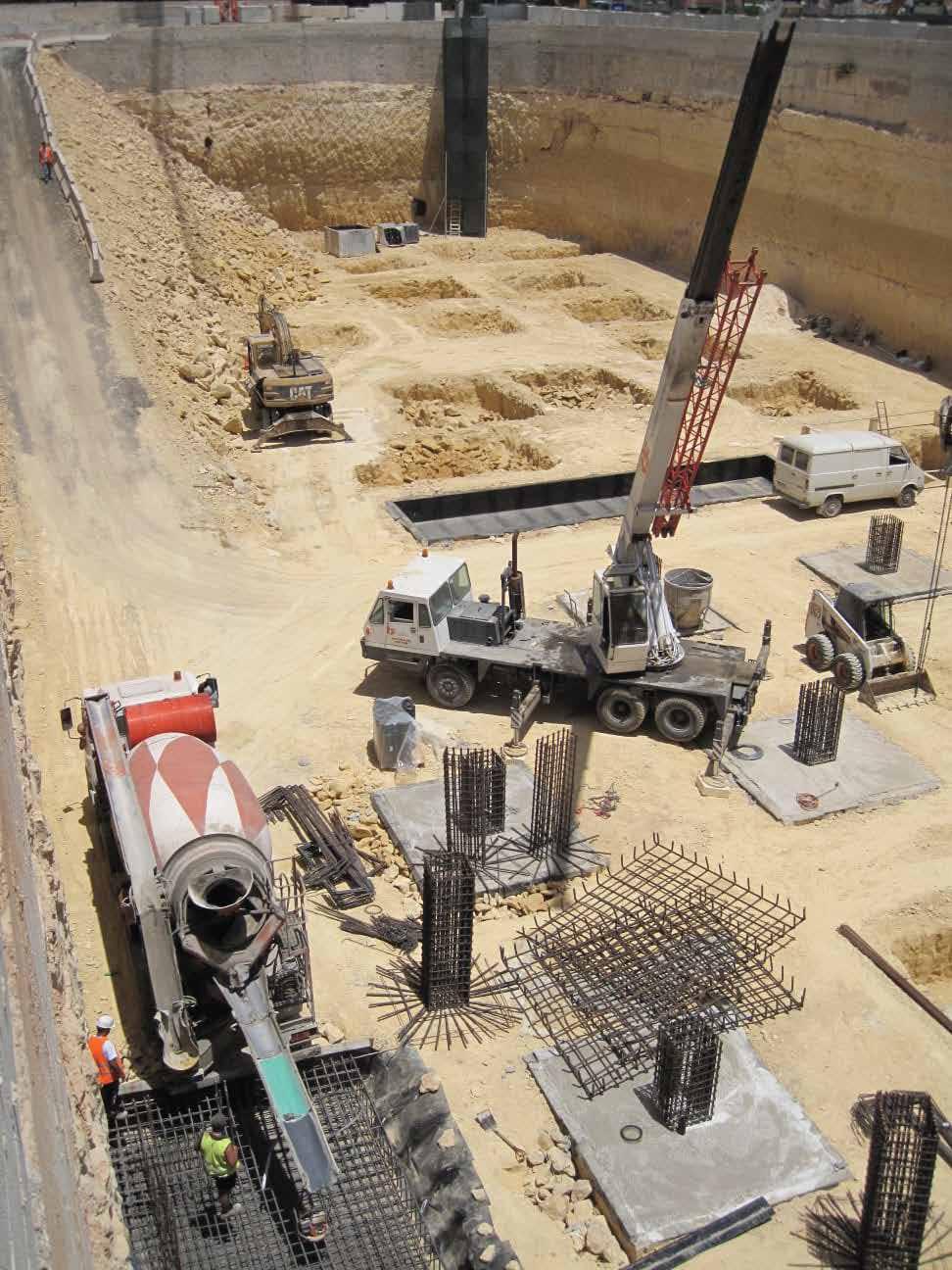
Milan Zdravkovic
Reinforced concrete (RC) columns play a fundamental role in transferring loads safely from a structure to its foundation. In frame structures and residential houses, especially those designed with reinforced concrete frames, the connection between columns and foundations is one of the most critical zones for structural stability. Understanding how RC columns are based in foundations helps ensure durability, safety, and proper load distribution.
At its core, an RC column is a vertical structural element designed to carry compressive loads, although it may also resist bending moments depending on the structural system. These loads originate from slabs, beams, walls, and any imposed loads such as furniture, occupants, or environmental forces like wind and seismic activity. The foundation, on the other hand, is responsible for transmitting these loads to the soil without causing excessive settlement or failure. The interface between the column and the foundation is therefore a key structural transition point.
In typical residential frame structures, RC columns are anchored into isolated footings, strip footings, or raft foundations. The choice depends on soil conditions, load intensity, and design preferences. Regardless of the foundation type, the principle remains the same: the column must be securely embedded or connected to the foundation to ensure continuity and structural integrity.
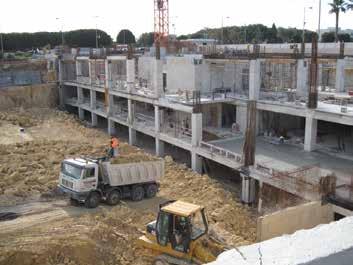
One of the primary considerations in designing the base of an RC column is load transfer. The column delivers axial loads, and sometimes bending moments and shear forces, into the foundation. To accommodate this, the footing is designed with sufficient area to distribute the load over the soil safely, ensuring that the soil bearing capacity is not exceeded. If the soil is weak, larger or deeper foundations may be required, or even specialized systems like piles.
Reinforcement detailing at the column base is crucial. The longitudinal bars of the column typically extend into the foundation, providing a continuous load path. These bars must have adequate development length, which is the length required for the steel to transfer stresses to the surrounding concrete effectively. Hooks or bends are often used at the ends of these bars to improve anchorage, especially when space is limited.
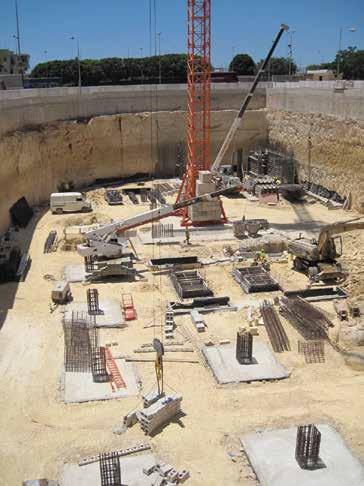
spaced ties help confine the concrete, improve ductility,
deformation without sudden failure, which is essential for earthquake-resistant design.
In many cases, a “column starter” or dowel bars are cast into the foundation first. These dowels extend upward and are later lapped with the column reinforcement. This method ensures proper alignment and continuity. Alternatively, the column and footing may be cast monolithically, which can provide superior structural performance by eliminating construction joints.
Construction joints, when unavoidable, must be carefully treated. The surface of the concrete at the joint should be roughened and cleaned to ensure good bonding with the new concrete. Sometimes bonding agents are used to enhance adhesion. Poorly executed joints can become weak points, leading to cracking or even structural failure over time.
The geometry of the column base also affects performance. In some designs, especially where moments are significant, a pedestal or enlarged base is provided between the column and footing. This helps distribute stresses more evenly and reduces the risk of punching shear, a type of failure where the column effectively “punches” through the footing. Adequate thickness and reinforcement of the footing are necessary to resist such forces.
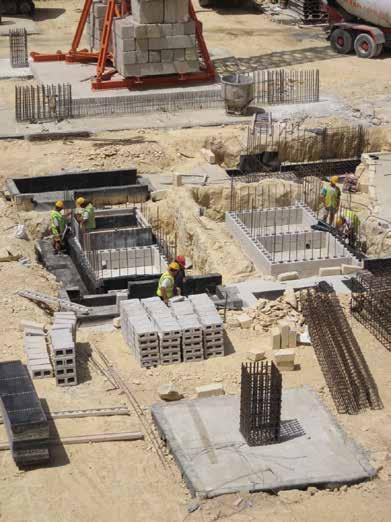
Waterproofing and durability considerations should not be overlooked. Since foundations are in direct contact with soil, they are exposed to moisture, chemicals, and potential corrosion risks. Proper concrete cover over reinforcement, use of quality materials, and sometimes additional protective measures like coatings or membranes are essential to prolong the life of the structure.
In residential houses, where loads are generally lower compared to high-rise buildings, the design may appear simpler, but the same principles apply. Even small errors in detailing or construction can lead to long-term issues such as differential settlement, cracking, or reduced load-carrying capacity.
Soil-structure interaction is another important factor. The behavior of the foundation depends not only on the structural design but also on the properties of the soil. Engineers must consider factors such as soil type, compaction, groundwater level, and potential for settlement. A well-designed column-foundation system ensures that loads are transferred uniformly, minimizing uneven settlement that could damage the structure.
In seismic regions, special attention is given to the ductility and energy dissipation capacity of the column base. Design codes often require additional reinforcement and stricter detailing rules in these areas. The goal is to allow controlled deformation during an earthquake, preventing catastrophic collapse and protecting occupants.
In conclusion, the base of an RC column in a foundation is far more than a simple connection—it is a critical structural zone that ensures the safe transfer of loads from the building to the ground. Proper design, detailing, and construction practices are essential to achieve a reliable and durable structure. Whether in small residential houses or larger frame buildings, the principles governing this connection remain fundamental to structural engineering.
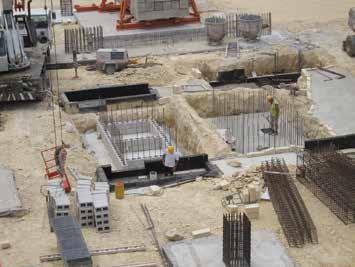

Michael Spiteri
Every year, workers in Malta’s construction sector face preventable risks that too often turn deadly, with falls from height topping the list as the leading cause of fatalities on sites. NSO data show that construction has accounted for over half of all workplace deaths in recent years, a trend reinforced by media reports documenting fatal falls.
Despite their prevalence, Malta has never implemented a dedicated, sustained national campaign to prevent these incidents. Between 2020 and 2025, official data indicate 9 to11 workplace fatalities annually, with construction consistently accounting for the largest share. While exact figures for deaths specifically from falls are not published for every year, falls remain the sector’s most persistent and deadly hazard, highlighting the urgent need for a coordinated national response. Given these risks, shouldn’t Malta prioritise a sustained, high-visibility campaign to prevent falls from height in construction?
Internationally, falls from height have been addressed through clear, risk-specific initiatives. The European Agency for Safety and Health at Work launched the “Don’t Fall For It” campaign in 2003, a major Europe-level initiative targeting falls in construction across member states. In the United States, Occupational Safety and Health Administration has run its Fall Prevention Campaign annually since 2012, with the ongoing 2025–2026 events delivered under the theme “Stand-Down to Prevent Falls.” The United Kingdom’s “No Falls Week” (2026) combined toolbox talks, practical guidance, and public messaging to improve site-level engagement. Similarly, in February 2026, the Health and Safety Authority of Ireland together with the Health and Safety Executive Northern Ireland and industry partners launched an all-island campaign aimed at raising awareness and improving safety practices when working at height. France’s 2024 campaign, “Travaux en hauteur: pas droit à l’erreur”, integrated awareness materials, training, webinars, and technical guidance on guardrails, scaffolding, and planning. Spain has also introduced targeted initiatives, including the 2021 national INSST campaign and the 2024 Castilla y León “Caídas en Altura” campaign, both focused specifically on reducing falls from height in construction and roof work. Belgium’s 2023 “Inspectiecampagne Vallen van Hoogte” took a strong enforcement-led approach, using coordinated inspections to drive compliance with fall-prevention requirements. Similar focused campaigns have been implemented in Cyprus, Australia,
Canada, and Japan, combining media outreach, inspections, and training obligations.
Malta can draw on these experiences. A national Falls Prevention Campaign must move beyond generic safety messaging and target recurring risks: unprotected edges, poorly made railings, unsafe platforms, improper ladder use, weak supervision, and insufficient planning. The message should be simple: falls from height are predictable, preventable, and unacceptable.
Both awareness and consistent oversight are essential to improving safety in the construction sector. Joint inspections currently carried out by the OHSA and BCA are an important mechanism for improving site safety and could form a central pillar of a national campaign. These coordinated visits help identify risks associated with work at height and other hazardous activities on construction sites, including situations such as roof work, scaffolds, open edges, lift shafts, and the use of personal fall-protection equipment. Inspectors assess site conditions and whether appropriate safety measures and planning are in place. Such inspections not only identify immediate risks but also provide guidance and signposting to safety information, helping improve practices across the sector. Consistent enforcement, particularly in cases of serious or repeated breaches, reinforces the message that fall prevention must remain a national priority.
A critical issue in fall prevention is how completion certification of a building project is currently handled. The compliance certificate, prepared and signed by the perit and the builder/contractor, is registered by the Building and Construction Authority once the building is completed according to the approved permits, including being sealed with doors and windows against water ingress, and may then be transferred to third parties. In practice, however, certain areas such as common staircases, balconies, lift shafts, and ground openings may still rely on temporary fall protection while finishing works are ongoing. While technical responsibility for certification lies with the ‘perit’ and the building contractor, developers also play an important role, particularly because they control project timelines and the marketing or transfer of apartments to third parties. By requiring permanent fall-prevention measures for all identified hazards before units are sold or occupied, Malta can close a critical safety gap,
Based on the 2020 Dissertation by
Kurt Borg Coppini
protect residents and workers, and set a national standard that makes preventable falls unacceptable. In many countries, final inspections and occupancy certifications require these protections to be in place before a building can be used. Strengthening Malta’s system in a similar way, while encouraging developers to prioritise safety at the completion stage, would help close this important gap in fall prevention.
A complementary approach adopted in several countries is the use of a Building Completion and Occupancy Safety Certificate, which confirms that essential safety features are fully in place before a building can be used or handed over to occupants. In jurisdictions such as the United Kingdom and Australia, final approvals normally require that key protective elements—including permanent guardrails, secure staircases, protected shafts and other edge protections—are properly installed before occupation. Introducing a similar mechanism in Malta could help ensure that buildings entering the market meet basic safety expectations from the outset and that foreseeable fall hazards are addressed before residents or workers begin using the premises.
Preventing falls does not require new laws, but a coordinated and sustained national commitment. A dedicated Falls Prevention Campaign would show authorities and industry stakeholders that the risks are known, the solutions already exist, and preventable deaths should never be accepted in construction work. Safety at the completion stage of residential developments also requires attention, as residents may face real risks if they take possession of apartment units or other residential properties before the developer installs permanent fall-prevention measures in common areas and shared spaces. By drawing on international experience and strengthening safety awareness and oversight across the sector, Malta can make 2026 the year when fatalities from falls from height begin to decline.


Christian Cefai
Malta’s construction industry is deemed as one of the key pillars of our economy; supporting development, employment and economic growth. Meanwhile, the sector continues to face increasing scrutiny regarding its environmental impact, regulatory governance and its broader effects on society. Rapid development, growing energy demands and the need for more efficient and environmentally responsible practices are amidst ongoing discussions on sustainable construction.
Within this context, Environmental, Social and Governance (ESG) principles are increasingly recognised as an important framework for guiding responsible development. In the construction sector, these principles provide a comprehensive approach to evaluating sustainability beyond environmental performance alone, thus incorporating social responsibility and transparent governance practices. This article summarises research carried out for a Master’s dissertation analysing the ESG principles implemented throughout construction projects in Malta. The research explores how sustainability is perceived and implemented within Malta’s construction sector and considers the extent to which ESG principles are reflected in current regulatory frameworks and industry practices.
The study adopts a qualitative approach, seeking to gain deeper insight into sustainability practices and perceptions within Malta’s construction context. Primary data was collected through six semi-structured interviews conducted with professionals and policymakers engaged in Malta’s construction industry, including senior individuals within regulating authorities and other industry professionals. The interviews aimed to capture informed perspectives on environmental sustainability, regulatory governance and the broader adoption of ESG practices within the local construction industry.
The findings were analysed thematically, allowing recurring patterns and themes to emerge from the participants’ experiences and observations. These insights were then discussed within the broader framework of ESG principles, EU sustainability policy and existing Maltese regulatory structures.
The construction sector plays a central role in environmental sustainability, particularly due to the significant energy consumption and carbon emissions associated with buildings throughout their lifecycle. As a result, several international frameworks and certification systems have emerged to evaluate and promote sustainable construction practices such as the Leadership in Energy and Environmental Design (LEED), Building Research Establishment Environmental Assessment Method (BREEAM) and Passivhaus (Passive House Standard). These certification systems provide structured methodologies for assessing building performance across a range of sustainability criteria, including energy efficiency, water use, materials selection, indoor environmental quality and overall environmental impact.
Although such frameworks are widely adopted internationally, their application within Malta remains relatively limited. Interview participants indicated that while awareness of these standards exists, their implementation is not yet widespread across local construction projects.
At a regulatory level, Malta has transposed several European directives aimed at improving building performance. The Energy Performance of Buildings Directive (EPBD) requires Member States to establish minimum energy performance standards and promote the transition towards Nearly Zero Energy Buildings (NZEBs). As a result, new buildings across the European Union are expected to achieve significantly improved levels of energy efficiency.
Within Malta, the Energy Performance Certificate (EPC) system provides an assessment of a building’s energy efficiency using an A–G rating scale. EPCs are intended to inform property owners and prospective buyers about energy consumption levels while encouraging improvements in building performance. While these mechanisms represent important steps
toward sustainable construction, the research suggests that challenges remain in ensuring their effective implementation.
One of the most consistent observations emerging from the interviews is the increasing awareness of environmental sustainability within Malta’s construction sector. Participants acknowledged that sustainability considerations have become more prominent in recent years, particularly due to EU climate targets and policy frameworks such as the Fit for 55 package.
Energy efficiency in buildings has received particular attention. Measures such as improved insulation, building practices and renewable energy integration are increasingly incorporated into building design in order to comply with regulatory requirements such as the DC-15 and improve EPC ratings. A more in-depth measure of energy efficiency and environmental awareness of a building is the carbon life cycle of a building which extends beyond the construction phase and into the operational energy use to include embodied carbon from materials, construction processes, and end-of-life disposal. Addressing both operational and embodied emissions is being increasingly recognised as essential to achieving long-term sustainability in the built environment.
However, interview participants also highlighted that sustainability practices often remain focused primarily on regulatory compliance rather than broader ESG integration, thus only implemented to meet minimum regulatory requirements rather than a long-term sustainability strategy.
Furthermore, participants noted that while policy frameworks exist, there is a commonly shared perception that enforcement mechanisms remain inconsistent. This issue was frequently raised in relation to both environmental regulations and broader governance practices.
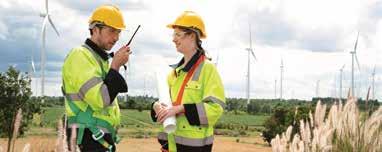
Governance emerged as a significant theme throughout the interviews. Participants expressed the view that although Malta has introduced several measures aimed at improving sustainability in construction, the effectiveness of these policies depends largely on enforcement and institutional coordination.
A recurring observation among interview participants is the gap between the regulatory frameworks and their practical implementation. While legislation and policy guidelines exist to support sustainable development, their enforcement is often considered insufficient.
This perception of limited enforcement was particularly noted in relation to environmental regulations, planning policies and building practices. Participants emphasised that stronger monitoring mechanisms and clearer accountability structures across all construction related regulatory bodies could improve the effectiveness of sustainability policies.
Governance challenges were also linked to the complexity of the construction regulatory environment, where responsibilities are distributed across multiple authorities and institutions which often lack coordination.
While environmental performance tends to dominate discussions around sustainable construction, the Social dimension also plays a crucial role in shaping responsible development.
Construction projects can have significant impacts on communities, urban environments and quality of life. Issues such as construction disruption, urban density and long-term liveability increasingly influence public perceptions towards development.
With the Social dimension being more subjective and difficult to gauge, the interviews focused more on the Environmental and Governance aspects. However, participants acknowledged that the Social dimension remains an important pillar of sustainable construction. Integrating social considerations into development
planning can contribute to a more balanced and sustainable urban growth.
The research findings suggest that Malta’s construction industry is gradually moving toward greater awareness of sustainability principles, yet the integration of ESG frameworks remains relatively primitive.
Environmental initiatives such as improved building energy performance and the implementation of EPC systems demonstrate progress towards more sustainable construction practices. However, the broader integration of ESG principles requires stronger alignment between policy objectives, regulatory enforcement and industry practices.
International frameworks such as LEED, BREEAM and Passive Haus provide useful reference models that could support the development of more structured sustainability practices within the Maltese context. Meanwhile, the continued implementation of EU energy directives will play an important role in shaping the forthcoming performance of Malta’s building stock.
As Malta continues to develop and modernise its built environment, the importance of sustainable construction is becoming increasingly imminent and evident. ESG principles provide a valuable framework for guiding this transition through integrating environmental accountability, social responsibility and effective governance into development practices. The insights gathered through this research highlight both the progress made and the challenges that
remain. While sustainability awareness is growing across the sector, stronger enforcement mechanisms, improved regulatory coordination and wider adoption of recognised sustainability frameworks could further strengthen Malta’s approach to responsible construction.
Ultimately, the transition toward sustainable construction requires collaboration between policymakers, regulators, industry professionals and the wider community. By aligning regulatory frameworks with effective implementation and encouraging broader ESG integration, Malta’s construction sector can continue to evolve toward a more sustainable and resilient future.


The Truth on Health & Safety: Busting Myths and Building Compliance
R&D Insights on the Digital Human with Visual Dialogue System:AI Powered OSH Ambassador
With insight into the current inflationary landscape, our speakers from TSA Riley cover an introduction to cost management, key data trends in the market, as well as practical tips on cost planning and benchmarking.
If Health & Safety sometimes feels overwhelming, confusing, or overly complicated, this CPD is designed to cut through the noise. This webinar, delivered in partnership with HazardCo, will unpack what you actually need to do on your construction site, what you don’t need to panic about, and how to stay compliant without
Artificial Intelligence offers a plethora of opportunities in the built environment, revolutionising designing, constructing, operating, and reusing buildings and infrastructure. Dave Philp FCIOB, Chair of the CIOB’s Digital and Innovation Advisory Panel, begins this CPD with an introduction to the CIOB AI Playbook, before handing over to Dr Ivan Fung.



15th April Sustainability and Environmental Building Materials Part 1
6th May Quantity Surveying for Project Managers
27th May Sustainability and Environmental Building Materials Part 2
Malta Chamber of Construction Management would like to thank its Partners