Photo by Joros Razon

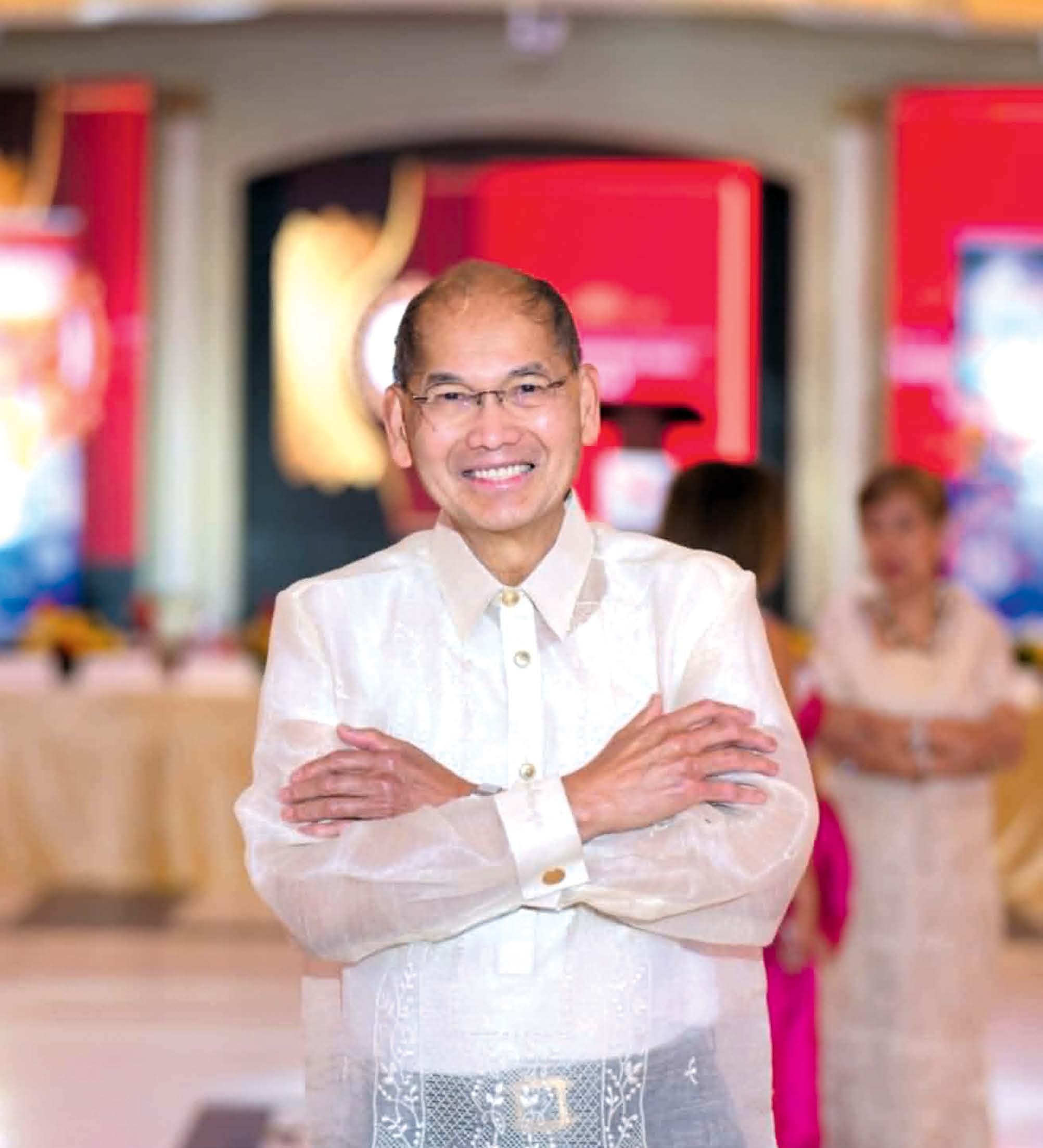
As the Filipino community in the New York metropolitan area bids farewell to Consul General Senen Mangalile, it is fitting to reflect on his tenure marked by steady leadership, accessibility, and a full dose of humor.
Mangalile arrived in New York in late 2022 at an uncertain time in the Filipino American community. His predecessor was suddenly called back to Manila, and for several weeks no one knew why and for how long. And then it rippled through the grapevine that N.Y. was getting a new consul general. The community waited until they came face to face with a heavyset diplomat with a smiling face and who spoke deep Tagalog. On hearing him for the first time, some millennials cried, “I didn’t understand a word he said.”
And that’s how Senen Mangalile introduced himself: Down-to-earth, self-deprecating, and a proud Bulakeno.
During his time at the Philippine Consulate General in New York, Mangalile distinguished himself not merely as a representative of the Philippine government but as a partner to the Filipino-American community.
The New York consular district is one of the largest and most diverse in the world. It encompasses a vast geographic area and serves an estimated 350,000 Filipinos from 10 northeastern states comprising different generations, professions, and walks of life.
Navigating such a landscape requires administrative skill, patience, and an understanding that a consulate is often the most visible face of
Founding Editor
Cristina DC Pastor
Managing Editor
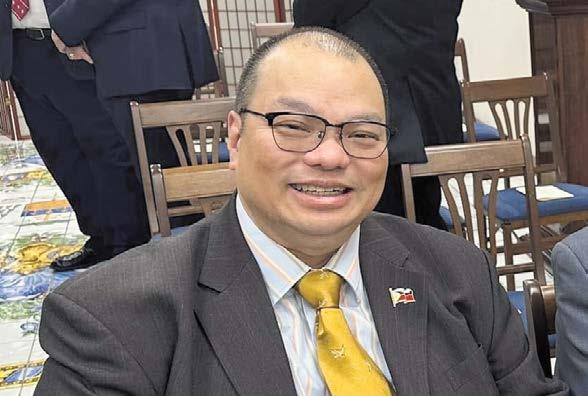
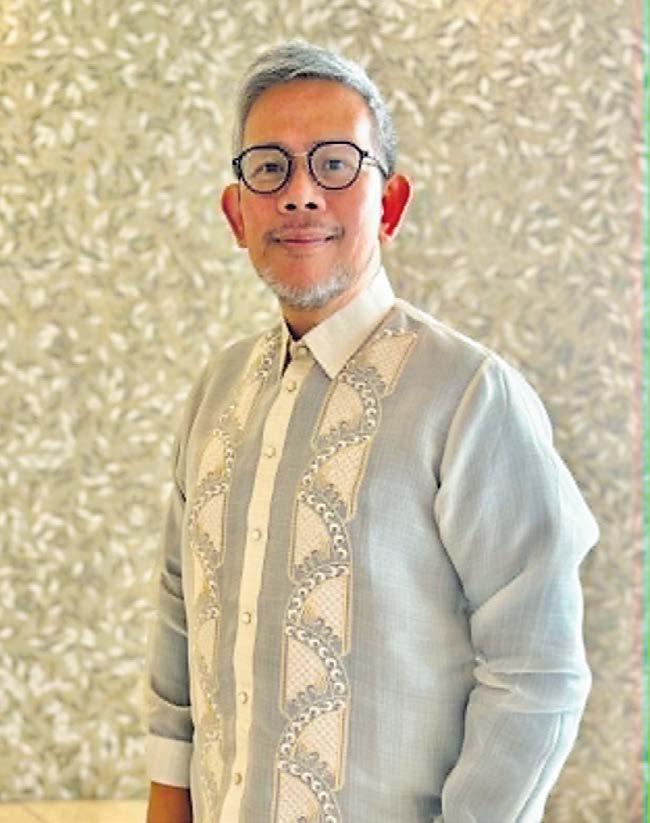
Down-to-earth, self-deprecating, and a proud Bulakeno. Photo by Edwin Josue
the Philippine government abroad. Sometimes it is difficult to reconcile the fact that a corruption-plagued government in Manila is represented abroad by diplomats who serve with integrity.
Mangalile approached that responsibility with professionalism and pleasantness. Whether attending cultural celebrations, community forums, business events, or commemorations, he made it a point to engage with Filipinos and friends of the Philippines. His presence conveyed a simple but important message: the consulate was your partner.
His tenure coincided with a period when Filipino Americans continued to expand their influence in healthcare, business, education, government, and the arts. Through it all, the consulate under his leadership remained a steadfast supporter of initiatives that highlighted Filipino achievements.
What many in the community appreciated most was his accessibility. Reporters could shoot
questions through Messenger and a response came promptly, sometimes within minutes. Diplomats often operate behind formal protocols, but Mangalile demonstrated that diplomacy can also be personal. He attended events large and small, recognized the contributions of community organizations, and is known to treat people with respect. Some in the community would get too cozy calling him “barkada,” but ever the diplomat he would respond with a shrug and a smile.
His work also underscored the evolving role of diplomacy in the 21st century. Today's consulates are not merely issuers of passports and visas. They are cultural ambassadors, economic promoters, crisis managers, and community builders. Mangalile embraced these multiple roles with reassuring demeanor.
No diplomatic posting is without challenges. The needs of overseas Filipinos are complex and constantly changing. On one occasion that I know, he paid a visit to a detained Filipino caregiver awaiting his pending deportation. We kept that story under wraps on the request of the activist group assisting the Filipino man in the hope of keeping him in the country.
The measure of a successful Congen is in the relationships nurtured and the trust earned. By that measure, Consul General Senen Mangalile leaves behind a legacy of dedicated public service.
We wish him success in the next chapter of his diplomatic career as Philippine Ambassador to the Kingdom of Cambodia and thank him for his service to Filipino Americans in the northeast.
Contributing
Maricar CP Hampton
Elton Lugay
Lindy Rosales
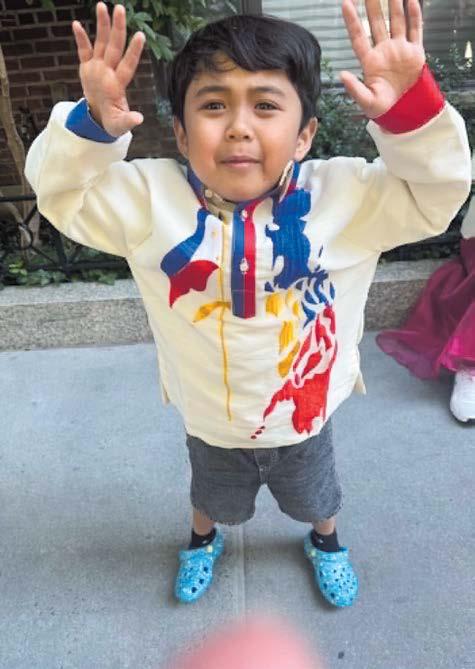
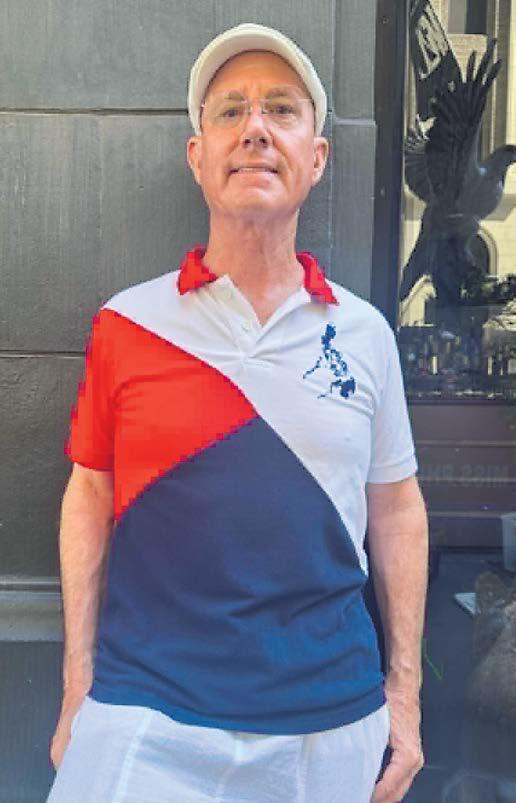
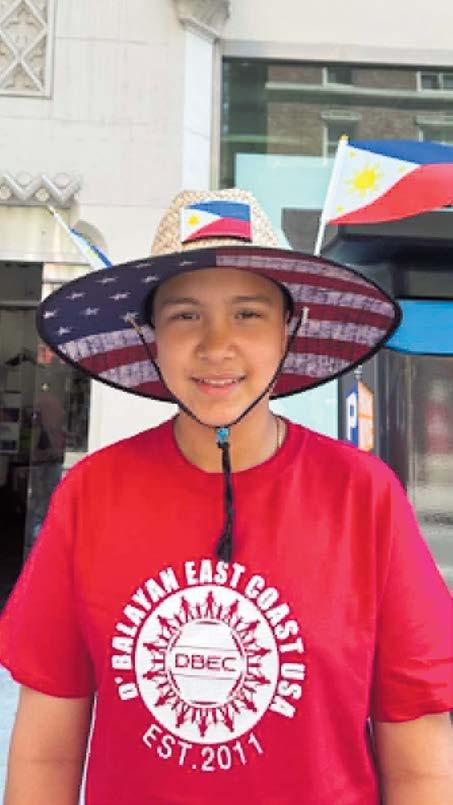
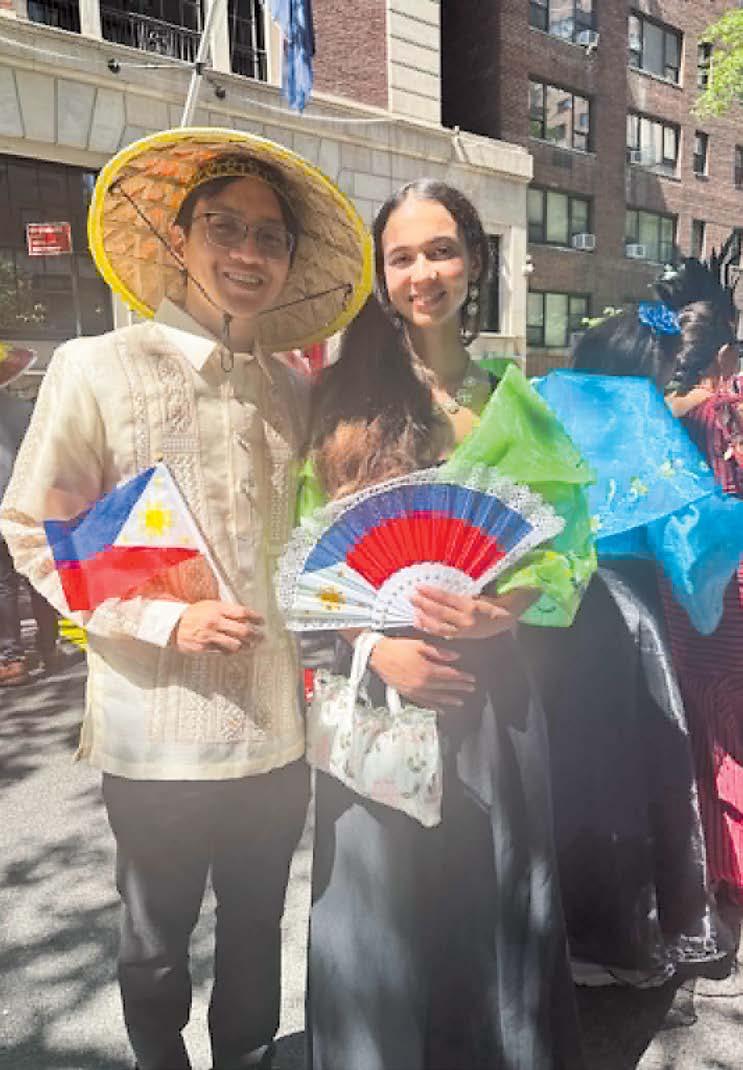
However you wear the Philippine flag, your love for the homeland shines through.
Whether it is draped over your shoulders, printed on a cap, fluttering from a fan, stitched on a shirt, or shielding you from the sun on an umbrella, the red, white, blue speak a language that reminds us of childhood mornings, family gatherings, neighborhood fiestas, and the familiar sounds and flavors that shaped who we are. It carries memories of laughter around the dinner table, the warmth of relatives, and of people who find reasons to smile even in politically turbulent times.
When you wave the Philippine flag at a parade, you are doing more than showing national pride. You are honoring your roots and keeping a connection alive across oceans and generations. You are telling the world that no matter how long you have been away, a part of your heart still beats for the islands you call home.
The Philippine flag is the story of longing and belonging, of sacrifice and success, of memories cherished and traditions passed on. It is a declaration that identity does not fade with distance.
Happy Independence Day on June 12.
Photos taken during the June 7 Philippine Independence Day Parade on Madison Avenue, NYC


New Yorkers jumped up and down in rapturous joy upon the incredible win by the New York Knicks 94-90 over the San Antonio Spurs on June 13th. The Knicks’ tenacity of never giving up in the last quarter’s 16-point deficit proved the champions’ hidden weapon.
For the Filipino American community, the presence of Jordan Clarkson with the Knicks is a huge source of pride and kinship. Clarkson, who represents the Philippines internationally as part of Gilas Pilipinas, has been a standout cager and former NBA Sixth Man of the Year in the 2020–21 season.
As noted in Wikipedia, “In Game 5 of the NBA Finals, Clarkson helped the Knicks achieve a 94–90 win and close out the NBA Finals against the San Antonio Spurs, 4–1, securing the Knicks' first NBA championship in 53 years. He also became the first player of Filipino descent to win an NBA championship.”
“Clarkson was born in Tampa, Florida, to African-American Mike Clarkson and Filipino American Annette Tullao Davis. Davis's mother, (Clarkson’s grandmother) Marcelina Tullao Kingsolver, was from Bacolor, Pampanga, Philippines…Both his parents served in the United States Air Force and divorced when Clarkson was young. He moved to San Antonio, Texas around age 6.”
In fact, in this year’s National Basketball Association, there are four other Filipino American players aside from Clarkson!
Dylan Harper (Guard, San Antonio Spurs) – Selected No. 2 overall in the NBA Draft. Born to a Filipina mother, he made an immediate impact in his rookie season, reaching the NBA Finals.
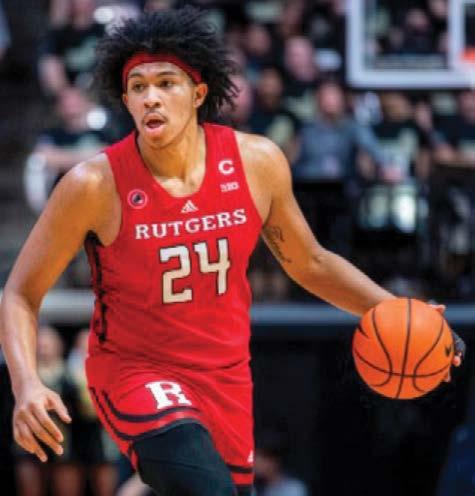
Ron Harper Jr. (Forward, Boston Celtics) – Son of five-time NBA champion Ron Harper and a Filipina mother, he is the older brother of Dylan Harper.
The Harper brothers’ father, Ron Harper, played 15 seasons in the NBA and won five NBA championships. Their mother, Maria (née Pizarro), is from Bataan, Philippines, and played college basketball for the University of


New Orleans as a freshman in the 1993–94 season. She is a former head coach of the DePaul Catholic High School girls’ varsity team in New Jersey and an assistant coach for the boys' team at Don Bosco High, where she coached Dylan and his brother, Ron Harper Jr.
The Harpers’ maternal grandfather represented the Philippines in Basque
pelota at the 1968 Summer Olympics. Ron Harper Jr. played college basketball at Rutgers and now plays for the Boston Celtics.
Jalen Green (Guard, Phoenix Suns / Houston Rockets) – The high-flying scorer traces has a part-Filipino mother, Bree Purganan, but her paternal grandfather is Filipino.

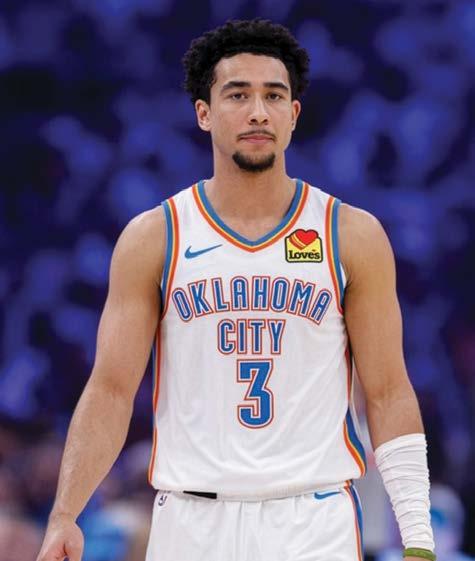
Jared McCain (Guard, Oklahoma City Thunder) is another highly-touted young player in the league who proudly embraces his Filipino heritage. McCain is of mixed race but identifies as African-American. He was born on February 2004, in Sacramento, California. Interestingly, the youngster recently acknowledged his Filipino ethnicity! In a locker room video that’s making the rounds on the Internet, he can be heard saying, “Shout out to my Asian community… [I’m] Probably like 10% Filipino, but that counts, right? ”
These young NBA professionals acknowledge their Filipino ancestry with pride and respect. Their Filipina mothers or grandmothers raised them well.
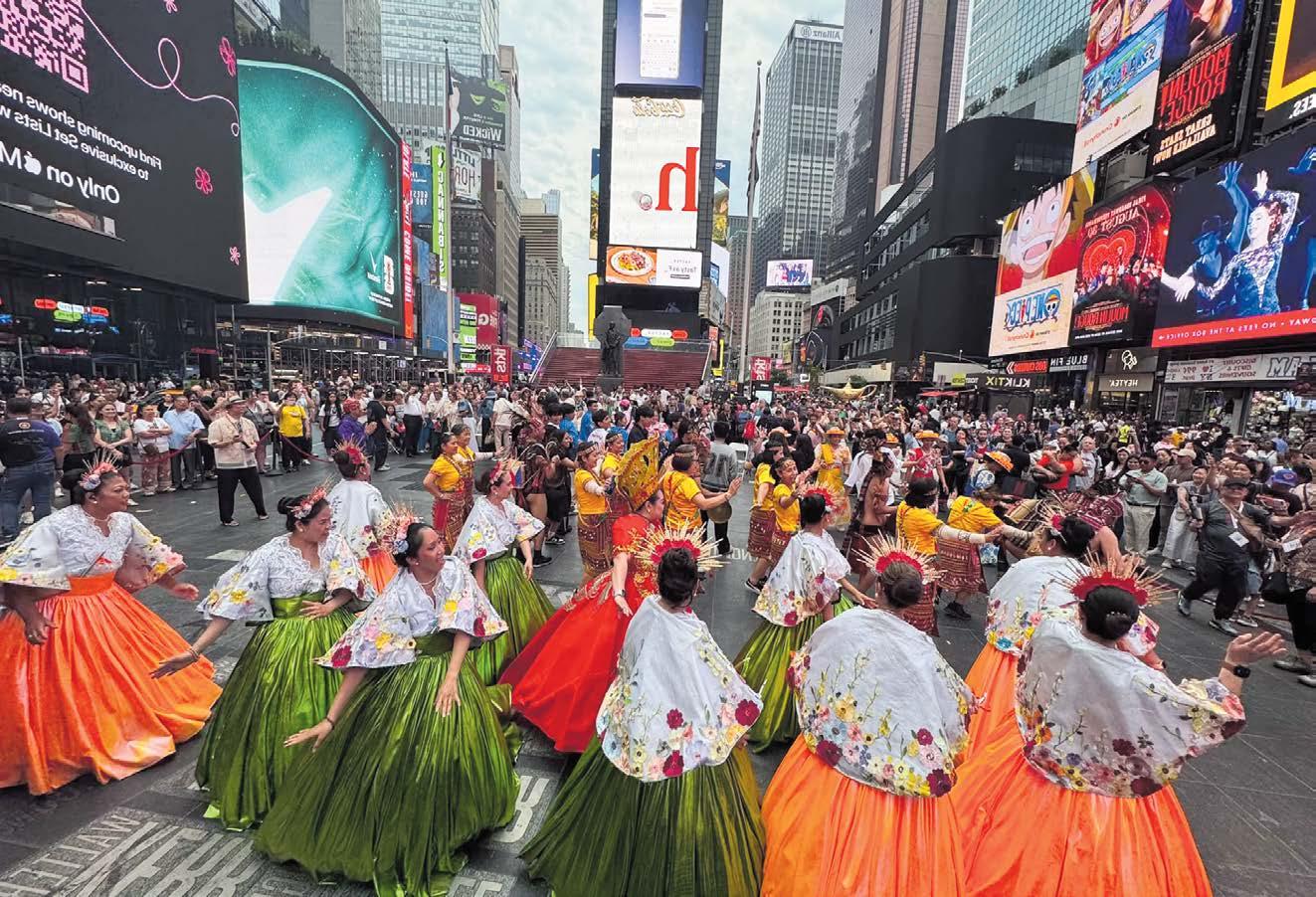
For the first time in the history of New York's Philippine Independence Day event, the iconic Times Square served as the opening venue on the June 6 eve of the Madison Avenue parade.
The famous Red Steps, one of Times Square's most recognizable landmarks, was the centerpiece of the gathering. Thousands of Filipinos and friends of the Philippines stood before the giant digital billboards, creating a sea of red, blue, and white as Philippine flags waved across the plaza.
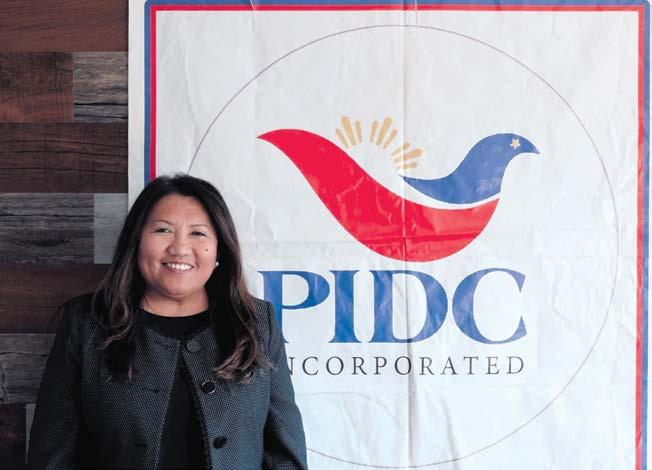
“When I said Times Square, everybody (in PIDC Inc.) seemed to love it. It was like, 'Woo-hoo!’” said Nora Galleros, executive director of the Philippine Independence Day Council Inc. (PIDC Inc.) and the brains behind the Times Square debut.
According to Galleros, the June 6 event served as a “grand prelude” to the 128th Anniversary of Philippine Independence and the commemoration of 80 years of Philippine-American friendship.
"The first-ever Filipino cultural activation in Times Square finally happened," Galleros said enthusiastically when interviewed by The FilAm.
Scheduled from 4 p.m. to 6 p.m. on Saturday, June 6, the free public event transformed the "Crossroads of the World" into a showcase of Filipino pride. Rather than focusing on speeches, organizers designed a program centered on culture, music, and community participation.
"Times Square came alive with the spirit of the Philippines," Galleros said. "We wanted the culture to speak for itself."
Festival performers from various regions of the Philippines took center stage, highlighting the country's rich and diverse traditions. Audiences marveled at the colorful presentations from San Juan, Batangas, as well as cultural groups from Cebu, Inc. and Gingoog City in Misamis Oriental. The event also featured Filipino-American performers and artists who represent the growing influence of the Filipino diaspora in the United States.
One of the highlights of the evening was the performances by students from the Manhattan School of Music. Their participation underscored the strengthening collaboration between Filipino cultural organizations and this New York's prestigious artistic institution. Singer Kay Habana performed a soprano rendition of “Ako ay Pilipino.”
For the finale there was a lively singing of "Kalesa" featuring baritone and tenor vocalists from the Manhattan School of Music; they were joined by the audience until the closing of the program. Guests included Philippine Consul General Senen Mangalile,
By Cristina DC Pastor
community leaders, and prominent Filipino-American personalities.
Unlike traditional stage productions, organizers deliberately chose not to install a large backdrop. "We didn’t want a backdrop," Galleros explained. "We want Times Square to be the background."
The event represented a significant investment and logistical undertaking for PIDC Inc. Galleros noted that certain aspects of production for a Times Square program, especially insurance, proved even more expensive than organizing the annual Independence Day Parade on Madison Avenue held the following day on June 7.
Yet, PIDC Inc. believes the effort was well worth it.
"This is just the beginning," Galleros said. "Every time we have guests from the Philippines, they ask if they can perform in Times Square. It is priceless to give that opportunity to them."
For Galleros, however, the event's true significance went beyond entertainment. It is about visibility and Filipino pride. And it is about placing the Filipino story in one of the world's most recognizable public spaces. For two hours, amid the dazzling lights and giant screens of Times Square, Filipino culture commanded the spotlight.
Galleros had one simple message for the community: "Bring a flag and enjoy, that's all we asked," she said. "We wanted to fill Times Square (and Madison Avenue) with our flag and presence."
By Cristina DC Pastor
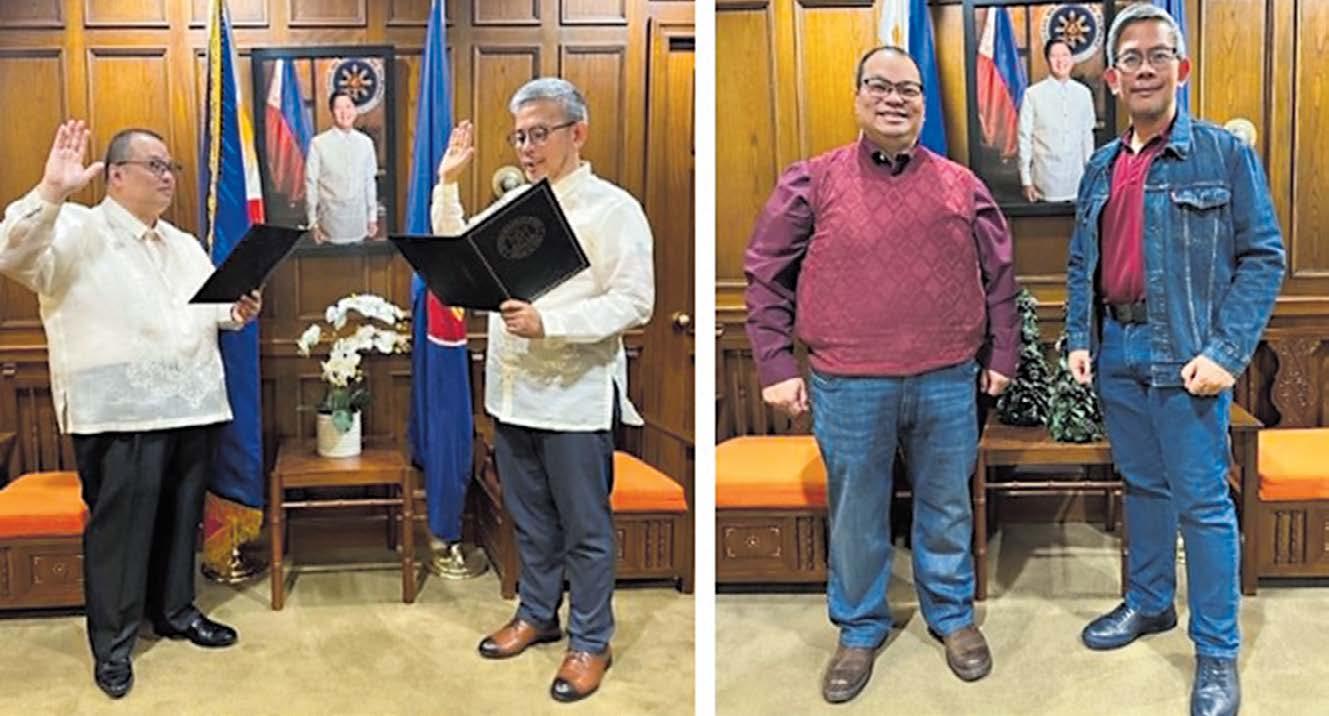
After years immersed in the dizzying rhythm of New York City, Mr. Adrian Elmer Cruz is now preparing for a new diplomatic chapter by moving to the Philippine Embassy in Vientiane, Laos where he will hold the twin titles Deputy Chief of Mission and Consul General.
But before leaving one of the world’s most exhilarating cities, the deputy consul general shared his thoughts about his posting that lasted more than three years.
DCG Ady, as he is fondly called, admits that New York has made a lasting impression on his family, and among the many challenges and opportunities that he had encountered one adrenaline-pumping sports activity stood out.
“My most memorable experience,” DCG Ady recalled, “is helping form a Dragon Boat Team filled up mostly by Filipino diplomats that competed for the first time in the annual Hong Kong Dragon Boat Festival in New York in 2025.”
The Philippine Consulate General team did not merely participate — it excelled. Competing in the Asian Cultural Invitational 250-meter category, the PCG team captured third place, a remarkable achievement for a newly formed team.
“Our team reflected the spirit of Bayanihan,” he said. “It was composed of personnel and family members from the Philippine Consulate and the Philippine Permanent Mission to the United Nations.” They were coached by veteran racers, helping transform novice paddlers into fierce competitors.
Held annually in Flushing, Queens, the Hong Kong Dragon Boat Festival is one of the largest multicultural festivals in the United States.
“The sport became a tool for team-building and family-bonding,” he added, sharing that his wife Citadel and daughter Bianca, 23, joined the team as well.
His years in New York has sharpened his observations about the Filipino American community, particularly its evolving role in American public life.
“To my amazement,” he said thoughtfully, “available demographic studies show Filipino Americans are among the highest earning ethnic groups in the U.S., yet despite their strong economic mobility and high levels of educational attainment, they generally shy away from seeking political representation.”
For DCG Ady, this gap between achievement and political visibility remains one of the most important issues confronting the community.
“It is high time that Filipino Americans get a seat at the table so they have the opportunity to be heard and to make a difference,” he said.
He noted that the Consulate General was established in New York City in 1946, and in that 80 years, those assigned in New York were witness to the growing influence of Filipinos in healthcare, commerce, education, technology and the arts throughout the 10 states that the Philippine Consulate has jurisdiction over, namely: New York, New Jersey, Connecticut, Delaware, Maine, Massachusetts, New Hampshire, Pennsylvania, Rhode Island, and Vermont.
“As the community continues to grow,” he said, “I am confident Filipino Americans will realize how to harness their presence and strength and become a more powerful influence in politics, culture and the economy.”
“There are so many things I will miss,” DCG Ady said expecting, like most departing diplomats do, the question to be asked.
“There is an abundance of museums, cultural destinations, historical sites and multicultural spaces that make New York special” he said. “Another aspect of New York life I will miss is the convenience of moving around NYC. New York, as I have experienced, can seduce and exhaust at the same time.”
Like many residents of Queens, he developed an appreciation for the borough’s extraordinary diversity. “We live in the borough of Queens,” he says, “and it arguably has the most diverse food scene in the city.”
“A great way to unwind is to try the ethnic culinary treats around the city” he said, “and that is another thing I will surely miss as well.”
From Filipino comfort food to Thai, Indian, Colombian, Korean and Mediterranean cuisine, Queens offered
an edible map of the world. The borough became a daily reminder of global interconnectedness.
Still, DCG Ady does not romanticize life in the city. Beneath the glamour and cultural abundance lies a difficult reality familiar to many immigrants and working families.
‘Living in New York City is not an easy choice for families. You can’t help but describe something very obvious about living in New York,” he said. “It’s so expensive!”
For families, he explained, New York presents both opportunity and strain. The city rewards ambition but often demands emotional and financial sacrifice in return.
Yet despite the challenges, he said his family experienced some of their happiest and most transformative years here.
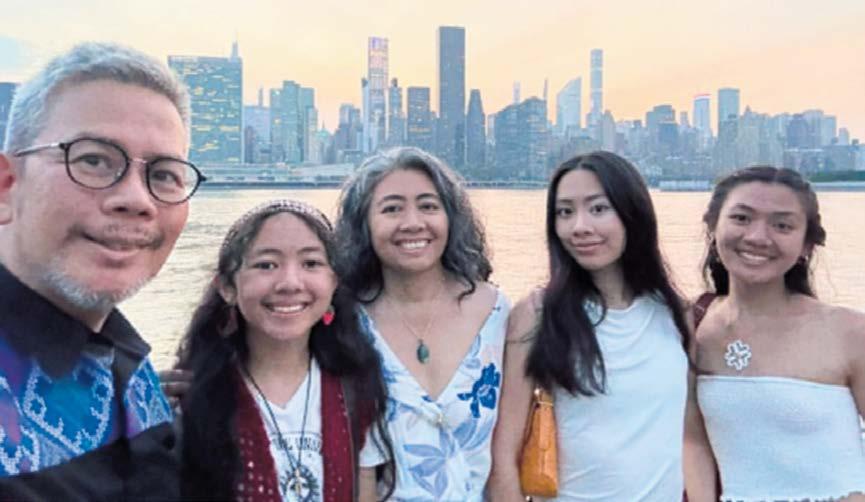
With wife Citadel and daughters Evita, Sophie and Bianca: ‘NYC unlocked the creativity in all of us.’
“We had a most memorable stay here as a family,” he said in reflection, “and I am grateful that New York unlocked the creativity in all of us.”
Wife Citadel, a cultural educator, held art exhibitions on various themes and conducted workshops with the community on the indigenous writing system Baybayin. Their daughters participated in art exhibits and musical performances.
There is affection in his voice when he talks about the city, but also realism.
“It’s nice to be a tourist,” he said, “but it’s difficult to live here and try to get adjusted to the cosmopolitan lifestyle and pace of working.”
He observed how the city operates at relentless speed. “New York always makes you feel like you are in constant pressure and living on the fast lane,” he said.
When he first arrived, that pace energized him. Over time, however, he also came to understand the emotional toll city life can take on immigrants struggling to survive, adapt and belong.
“I have met folks who have shared positive experiences but I have also heard stories from our Kababayans that living here can be a source of stress, isolation and disconnection for them as well,” he observed.
“Just letting them know that you want to learn how they feel can truly make a big difference.”
That empathy became part of his work as a diplomat — not simply representing the Philippines abroad, but understanding the realities of Filipinos navigating life far from home.
As he prepares for his next assignment in Laos, he leaves behind more than diplomatic accomplishments. He leaves friendships, shared meals, and community partnerships carved into his memories.
For many in the Filipino community, he will also be remembered as a diplomat who understood that service extends beyond official ceremonies and consular work. Sometimes it means listening. Sometimes it means building bridges. And sometimes, it means picking up a steering oar and paddling together toward a common finish line.



Under sunny skies, community leaders, residents, performers, and supporters gathered on June 13 to celebrate the grand opening of Little Manila Park, a volunteer-built greenspace that transformed an idle forested block beside the Brooklyn-Queens Expressway into a welcoming public oasis for the neighborhood.
The opening marked the culmination of years of planning, fundraising, and volunteerism driven by the Filipino tradition of Bayanihan, or communal unity and cooperation. Located at the corner of 70th Street and 41st Avenue in the heart of Woodside's Little Manila district, the park is envisioned as a gathering place that honors Filipino American heritage while serving the broader multicultural community of Queens.
The celebration began with the national anthems of the Philippines and the United States, followed by an invocation led by Pastor Joseph Montevani of the Woodside Neighborhood Association. It continued with cultural performances by the Cordillera Cultural Ensemble, Che Che Torres, Kinding Sindaw, and other artists, showcasing the rich diversity of Philippine traditions.
Following the performances, guests reflected on the significance of the new park before joining in a ceremonial ribbon-cutting. They shared a communal lunch featuring food from local Little Manila businesses, reinforcing the event's “neighborhood spirit and support for small enterprises,” according to the organizers.
“Little Manila Park stands as a testament to grassroots organizing,” said founder and president of Little Manila Park Noel Gamboa, an architect who saw the park’s possibilities as a neighborhood gathering place.
Built and maintained entirely by volunteers and funded through community donations, the project gained momentum after organizers secured a permit from the New York State Department of Transportation in December 2024. The unveiling of the Little Manila signage on June 14, 2025 further established the district's identity and paved the way for the park's opening a year later.
The park carries a deeper meaning beyond recreation. Organizers dedicated the space to COVID-19 heroes, many of whom were Filipino American healthcare workers who served on the front lines during the pandemic. The site sits within an area that was among New York City's hardest-hit communities during the global health crisis.
"It’s a group effort, the Bayanihan spirit that really made this place happen," said Gamboa.
New York State Assemblymember Steven Raga praised the project as a milestone not only for Filipino Americans but for the entire neighborhood.
"Thank you for your leadership Noel and all of our community leaders like Loida Nicolas Lewis and everyone who has helped us along the way," Raga said.
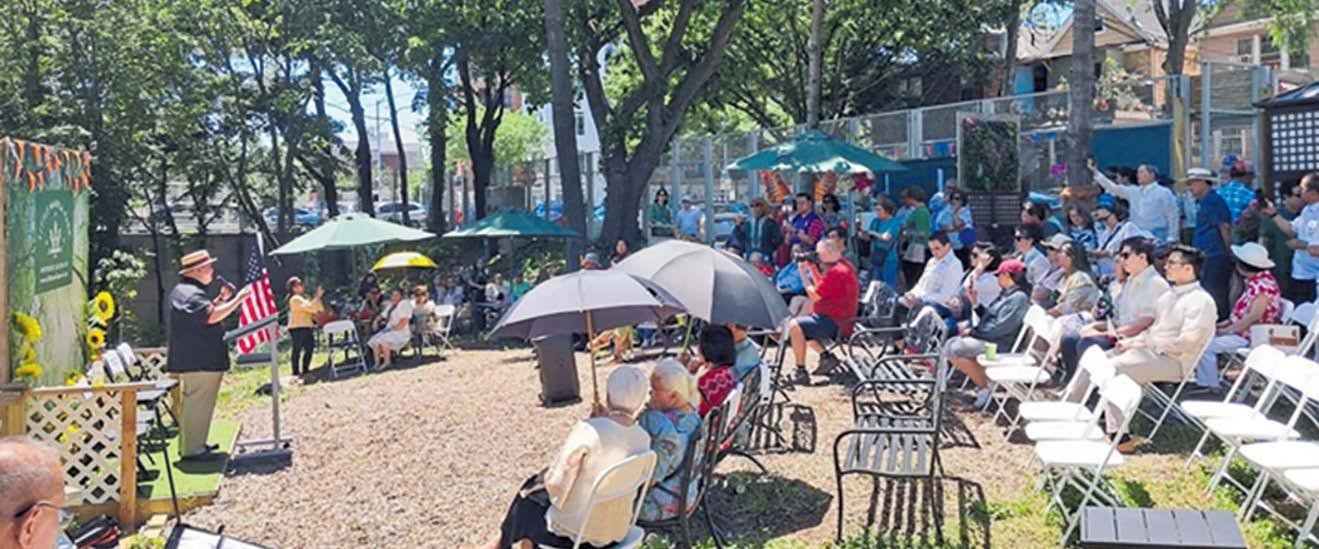
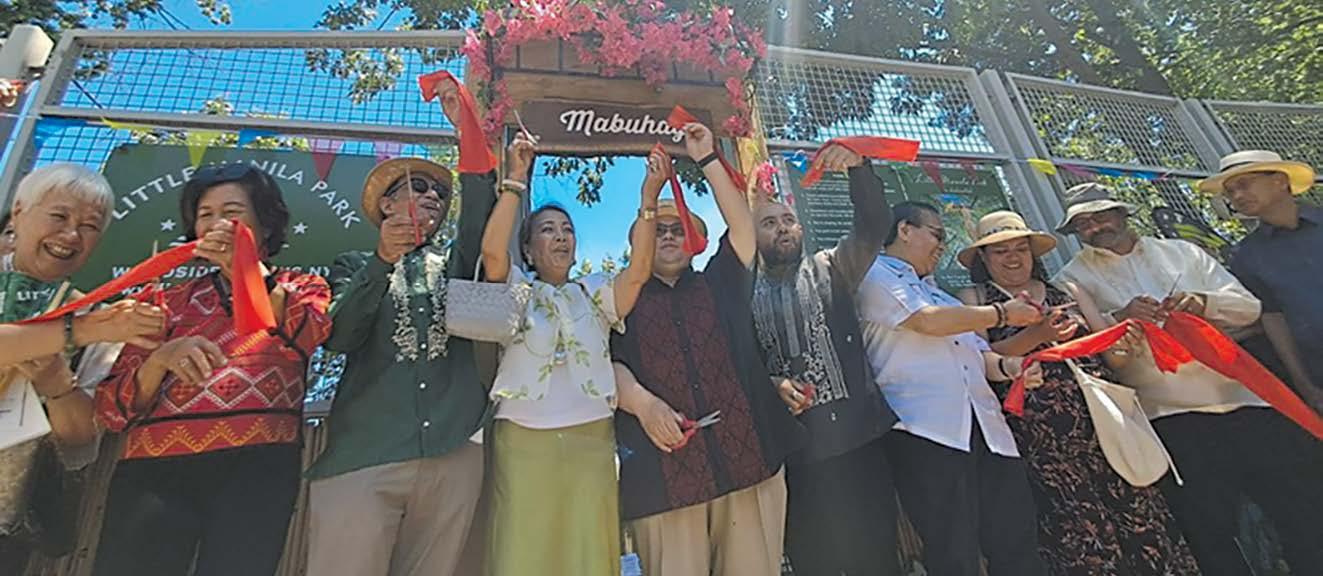
"This is a historic day not just for the Filipino community but for this very diverse immigrant community here in Woodside. We have a place to call our own, we have a place to relax, we have a place to gather, and that is what our community is about."
Representing Queens Borough President Donovan Richards, Laura Shepard emphasized the environmental and public health benefits of the project.
"This green space was badly needed," Shepard said. "This community suffers from the impact of living next to the BQE — poor air quality, noise, congestion, and higher rates of traffic violations on local adjacent streets. The next local green spaces are more than a 10-minute walk away."
She noted that the park helps address longstanding inequities by bringing a pocket park to a neighborhood often described as "park-starved."
"Little Manila Park will help improve quality of life
by adding a pocket park and creating a space for cultural programming to proudly showcase the identity of Little Manila," she said. "The Filipino community is an integral part of the tapestry here in Queens."
Philippine Consul General Senen Mangalile described the opening as the realization of a shared dream and encouraged community members to help preserve the space for future generations.
"I'm very excited that this little dream is now Little Manila Park," Mangalile said. "We are in the borough of Spider-Man. With big gifts like this come great responsibility. We have to work together to sustain this, not just for this generation, but for future generations to have a place to call their own."
The park is scheduled to open to the public on Saturdays from June through October, free of charge.
Photos courtesy of Rocco Cetera, Michael Magsombol, and Felix Manuel/Marivir Montebon
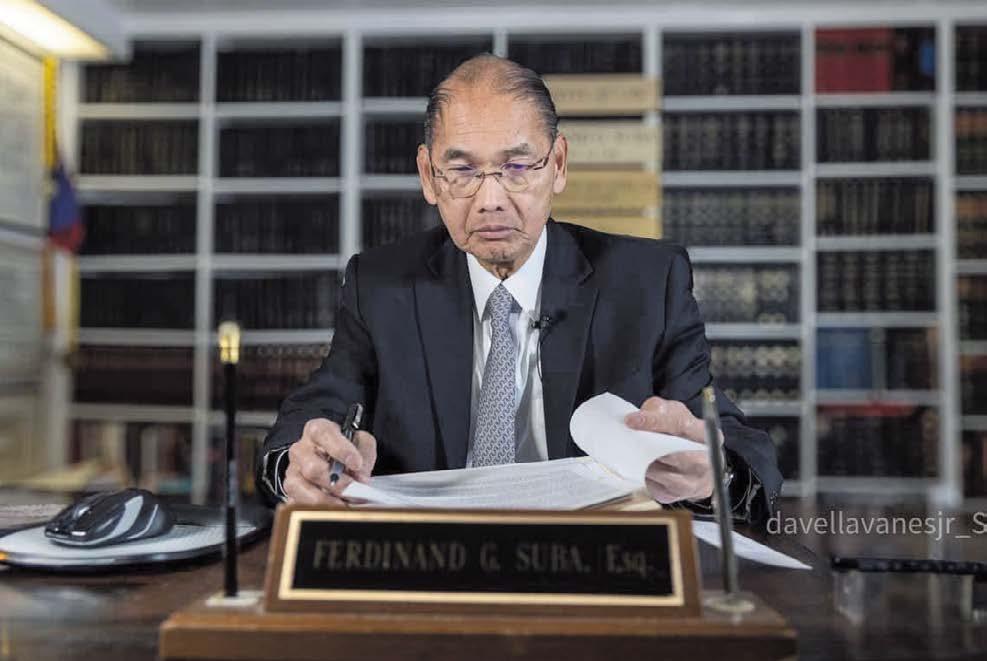
For Atty. Ferdinand G. Suba, Esq., fondly called “Dean” by friends and colleagues, the journey into the legal profession began long before he entered law school. It started in his hometown of Santa Ana, Pampanga, where politics, public service, and the law were part of everyday life.
As a young boy, Nanding as his parents called him, watched his father, Felix Suba, campaign for mayor. He also spent countless hours observing him work as a lawyer. One of his earliest memories was helping his father type legal pleadings on an old Underwood typewriter while his father served as counsel to then-Manila Mayor Antonio Villegas.
"Reading legal documents and observing my father's work fascinated me," Suba recalled. "My curiosity eventually turned into a love for the legal profession."
That fascination led him to pursue law. After earning a Bachelor of Arts degree in Political Science from the University of Santo Tomas, Ferdie as his classmates called him in UST, enrolled at the Ateneo de Manila University School of Law, where he completed his Bachelor of Laws degree. He passed the Philippine Bar in 1985.
After immigrating to the United States, Suba faced the challenge of establishing himself in a new country and legal system.
He was admitted to the New York State Bar in 1989 and later that year gained admission to practice before the United States District Courts for the Eastern and Southern Districts of New York. Following a stint as a litigation associate at the Wall Street law firm Lichtenberg & Goss, he opened his own law practice in 1989.
More than three decades later, he remains in private practice, concentrating primarily on immigration and nationality law while also handling real estate matters, wills, and estate cases.
Throughout his career, Suba has represented clients from more than 50 countries, helping immigrants navigate one of the most complex areas of American law.
To further strengthen his expertise, he pursued postgraduate studies in Elder Law, Wills, and Trusts at New York University. His professional affiliations have included the American Immigration Lawyers Association, the American Bar Association, the New York State Bar Association, the
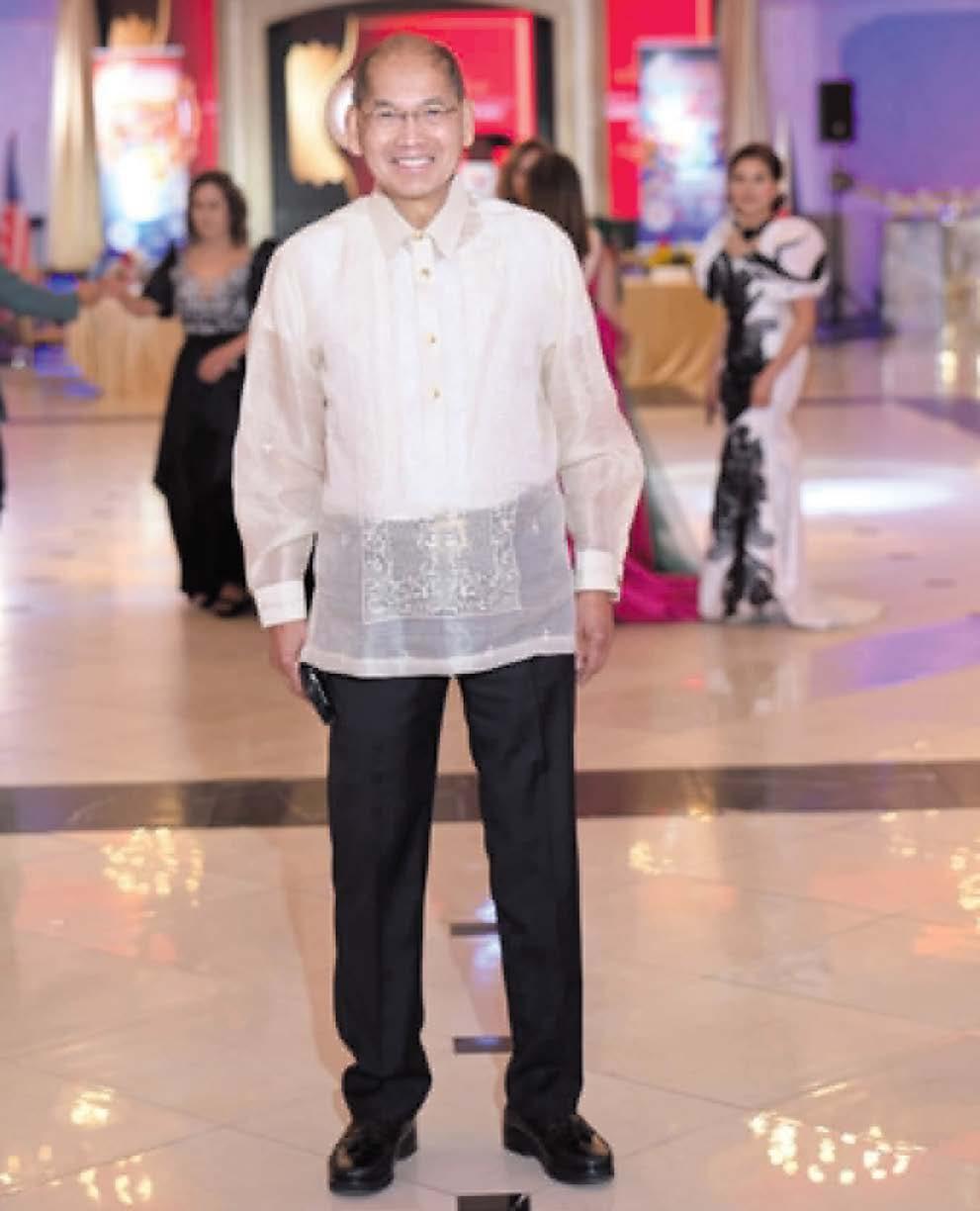
Association of the Bar of the City of New York, and the National Asian Pacific American Bar Association. He also remains a lifetime member of the Integrated Bar of the Philippines.
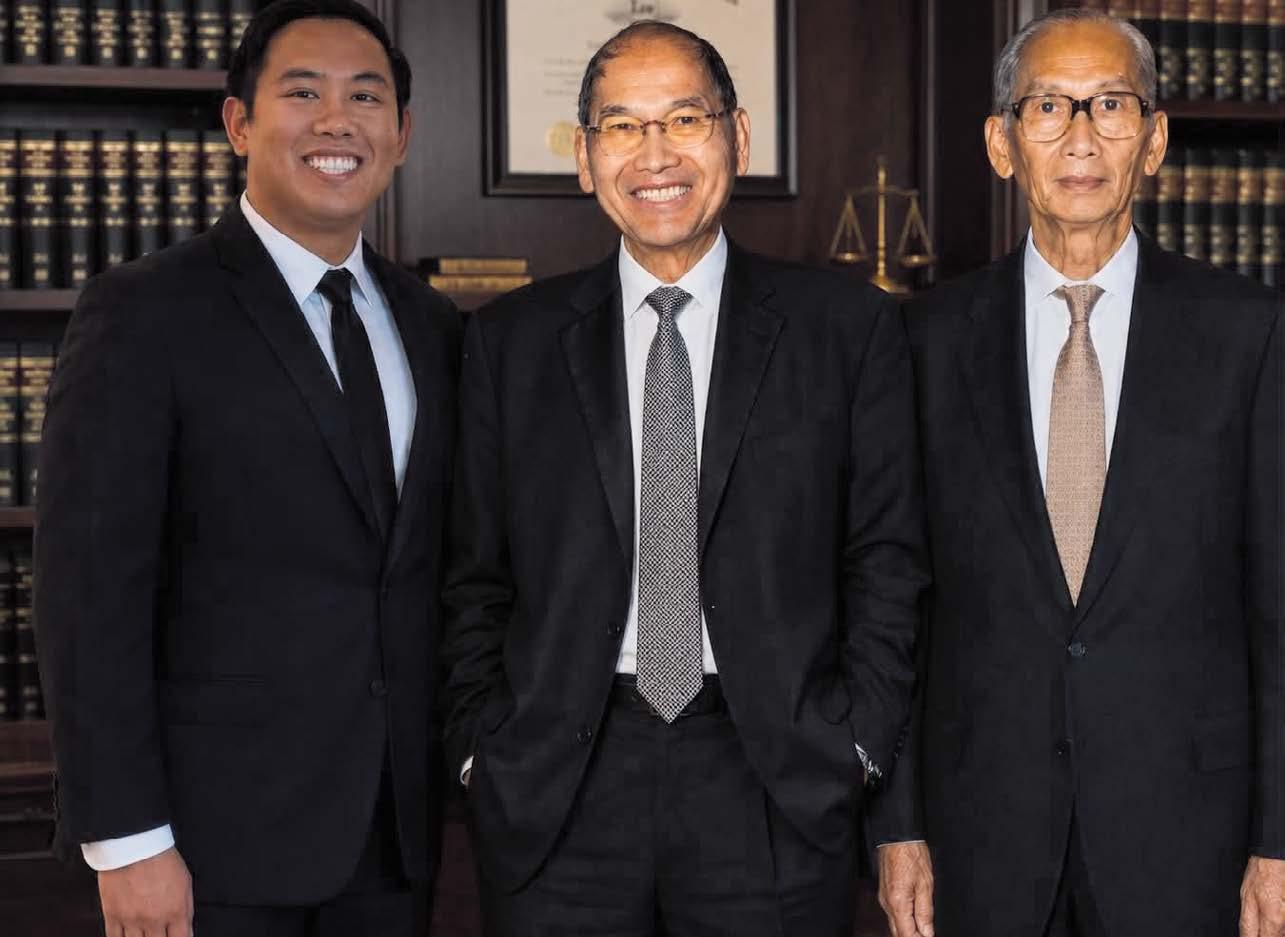
While Dean built a successful legal career, he also unknowingly planted the seeds for the next generation. His son, Ferdinand Jr., grew up hearing
stories about his grandfather's legal battles against corruption and public wrongdoing in Manila.
"I was always proud to see my father on Philippine television being interviewed as he challenged graft and corruption," Suba said of his own father. "I shared those stories with my son."
Whether those stories directly influenced his son's career choice remains uncertain, but the values

Beyond the courtroom, he founded the Filipino Catholic Award that honors exemplary Filipinos for their dedication to faith, community service, and civic engagement.
they embodied—integrity, public service, and justice—clearly left an impression.
Young Ferdinand frequently accompanied his father to the office, witnessing firsthand both the struggles and rewards of legal practice. Suba also deliberately encouraged skills that would prove valuable in the profession.
"I emphasized writing and public speaking," he said. "Those are essential tools for a lawyer."
Ferdinand Jr. completed his legal education at Cornell Law School and now works as a litigation associate at the prominent law firm Willkie Farr & Gallagher.
Beyond the courtroom, Dean has distinguished himself as a community leader, philanthropist, and advocate for Filipino Americans.
He has provided pro bono legal services to numerous nonprofit organizations throughout the New York metropolitan area and has served as legal counsel or adviser to several Filipino American institutions, including the Ateneo Association of North America, the Association of Filipino-American
Teachers of America, the University of Santo Tomas Nurses Association of New York, Kasamahan ng mga Pilipino sa Westchester, and the San Lorenzo Ruiz Global Ministry. His community service has earned him numerous recognitions, including The Outstanding Filipino in America (TOFA) Award in the field of Law, the Ten Outstanding Fathers Award from the National Federation
of Filipino American Associations (NaFFAA), the Dona Teodora Alonzo Award from the Association of Fil-Am Teachers of America, and various community leadership honors. His advocacy extends beyond legal work. He established the Filipino Catholic Award and the Dr. Jose P. Rizal Excellence Awards recognizing achievements in medicine, education, arts and literature, and youth leadership.
A prolific speaker and writer, Suba has lectured on topics ranging from immigration law and nonprofit governance to Philippine nationalism and the life of Dr. Jose Rizal. He also wrote the monthly "Legal Critique" column for The Filipino Catholic publication from 2011 to 2015.
A devoted Rizalian, Dean has played a significant role in the international organization Knights of Rizal. In 2021, he was elected trustee of its Supreme Council, the organization's highest governing body. He holds the rank of Knight Grand Cross of Rizal (KGCR), the highest rank conferred by the order.
“My life has been dedicated to the ideals of Dr. Jose Rizal—integrity, education, patriotism, and service,” he said.
For the Subas, the law has become more than a profession. It is a family tradition powered by a commitment to serve others, following the famous phrase, “Men for Others” a core Jesuit maxim or Dean’s frequent quoted phrase of the Jesuit’s guiding principle, Ad majorem Dei gloriam, translated, “For the greater glory of God.” – Cristina DC Pastor
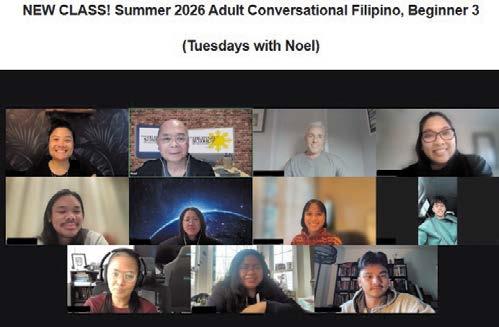
| July 7 to August 4
Adult Conversational Filipino, Beginner 3 with Noel Pangilinan For more information, contact Venessa Manzano at 774-257-4669 or info@filschool-nynj.org
| July 9 to 12
Desire & Solitude: The Cinema of Isabel Sandoval
Asia Society 725 Park Avenue at 70th Street NYC
| July 11 to August 1
Paaralan sa Konsulado
(Association of Fil-Am Teachers of America)
Visit https://tinyurl.com/yswdskbb
Philippine Center 556 Fifth Avenue NYC

| July 12 to 21
Very Important Pinoy Tour: Manila, Dumaguete, Cebu Visit: www.VIPtourphilippines.com
| July 17 and 18
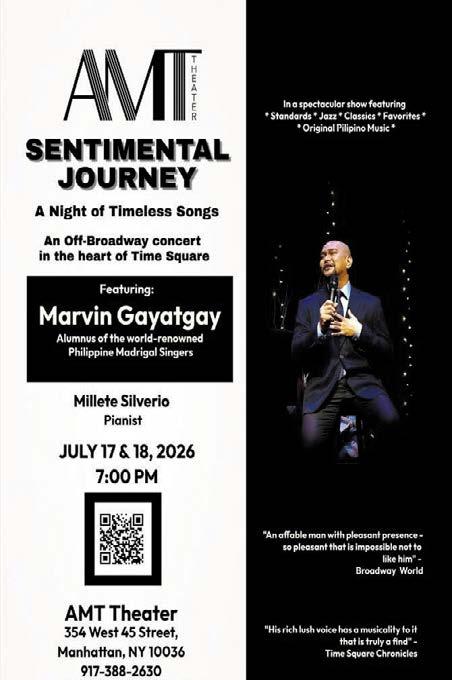
Sentimental Journey: A night of timeless songs featuring Marvin Gayatgay
AMT Theater
Times Square Theater District 354 West 45 Street, NYC

| July 22 to 25
FANHS National Conference
Crystal Gateway Marriott 1700 Richmond Hwy Arlington, VA
| August 9
22nd People’s Ball
Newark Liberty International
Airport Marriott 1 Hotel Rd, Newark, NJ

| August 14 & 15
NaFFAA National Empowerment Conference 2026
Theme: ‘Harnessing the Power of Community: Starting With Us’
Hyatt Regency Aurora-Denver Conference Center
13200 East 14th Place
Aurora, CO
| August 15
Bayanihan Fashion Show & Cultural Storytelling Experience
National Federation of Filipino American Associations
Hyatt Regency Aurora-Denver Conference Center
13200 East 14th Place
Aurora, CO
| August 15 to 16
29th Fiesta in America EXPO
American Dream
1 American Dream Way East Rutherford, NJ
| September 7 to 18
Central Europe Pilgrimage of Faith
With Fr. Leandro Dela Cruz of the Church of St. Ann, Lawrenceville, N.J.
Contact info@nativitypilgrimage. com
| September 13
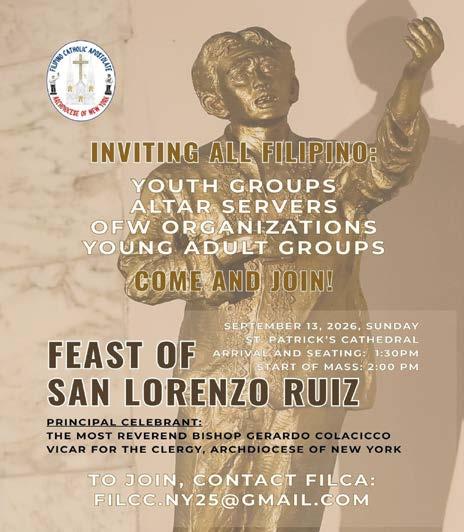
Feast of San Lorenzo Ruiz
St. Patrick’s Cathedral
To join, contact FILCA at filcc. ny25@gmail.com
| September 13
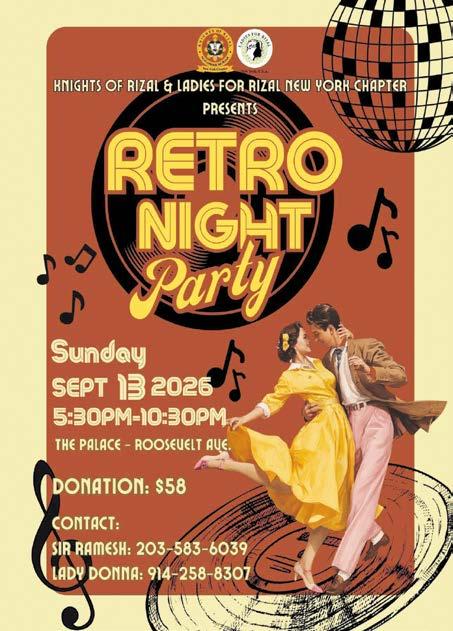
Retro Night Party (Knights of Rizal & Ladies for Rizal NY Chapter)
The Palace
63-01 Roosevelt Avenue
Queens NYC
| November 3
General elections
| 2027
| July 7 to 24
48th Annual Philippine Nurses Association of America, Inc.
National Convention
Filipino World War II veteran Rodolfo ‘Rudy’ Panaglima, one of only two surviving veterans in the Washington metropolitan area, died on June 12 at the Virginia Medical Center. He was 96.
Panaglima was just 13 when he joined his father in a Filipino guerrilla unit that worked in secret with the U.S. Army during World War II. He helped him sneak past Japanese forces as a courier and scout, bringing back information, food and medicine to U.S. soldiers in the mountains of the Philippines, near his home in Cagayan.
In 1990, after the U.S. granted naturalization benefits to Filipino World War II veterans, Panaglima was among the 26,000 Filipino veterans who availed of the benefit and came to the United States. However, that law did not extend citizenship or even residency to the veterans’ children. With family visa backlogs stretching decades for Philippine-born applicants, many newly naturalized elderly veterans were separated from their families for years.
At a press conference on June 2016, Panaglima shared his family’s experience of waiting 20 years
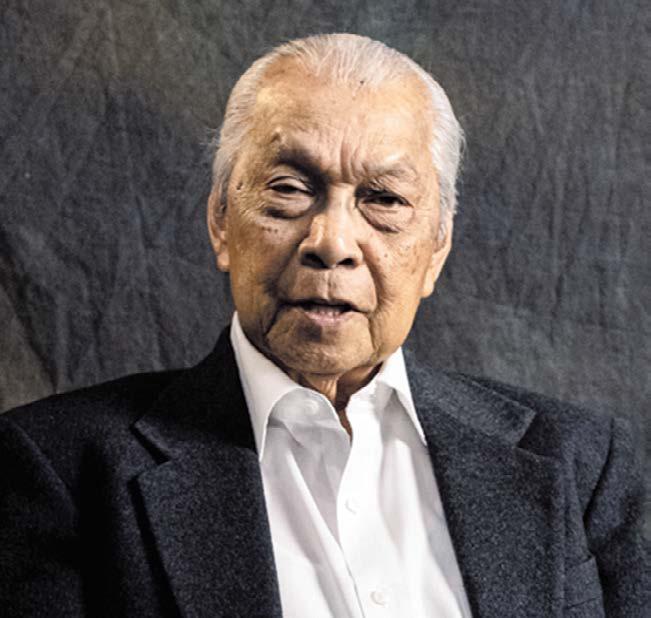
He waited 20 years to bring his two sons to the U.S. FilVetREP photo
to be reunited with his sons, and his hope that they will finally be able to come to the United States under the FWVP program.
“My two sons in the Philippines, Rolando and Raoul, have had approved immigration petitions since 1995 – and have waited more than 20 years to join us,” said Panaglima. “We need Rolando and Raul to take care
of us because of our age. We don’t have relatives in the area. I am a proud American who had served honorably. Hopefully in a few months, my two sons can be with me in America with this parole visa program.”
It took more than 20 years for Panaglima to finally bring his adult children and his wife Pura to the U.S. after President Barack Obama authorized the Filipino World War II Veterans Parole Program (FWWVP) in 2016. Panaglima, who was already 86 years old at the time, was among 300 veterans who applied. His sons were able to take care of him and their mother. Pura Panaglima died of Alzheimer’s a few years later.
FilVetREP Chairman Maj. Gen. Antonio Taguba (Ret) said the reunification program begins to right a wrong “deeply rooted in American history,” noting that Filipino veterans who helped win World War II “paid a huge price. The humiliation and indignation they suffered still resonate.”
Saddened by Panaglima’s passing, Taguba paid tribute to “a World War II warrior whose duty to country will never be forgotten.” Panaglima received the Congressional Gold Medal in October 2017.
Panaglima was a member of the American Coalition for Filipino Veterans, a national organization which lobbied for Veterans benefits. Panaglima’s story is among the oral histories featured in www. dutytocountry.com, FilVetREP’s online education program. – Jonathan Melegrito
Beyond the Visa: Gov’t wants to impose $100,000 for H1-B visa; judge says 'no way'
In September 2025, President Trump issued Proclamation 10973 introducing a $100,000 supplemental fee for new, first-time H-1B visa petitions filed from abroad.
That proclamation was in effect for several months although on June 8, 2025, a federal judge vacated the order and nullified the $100,000 fee. Judge Leo Sorokin said President Trump imposed an “unlawful tax” Congress did not authorize. Taxation is within the sphere of Congress and not the Executive. The administration is set to appeal this ruling. Only 85 applications have been received by the USCIS as of February 2026, according to reports,
with employers agreeing to pay the amount.
The H-1B program allows U.S. employers to sponsor foreign professionals in “specialty occupations” that require at least a bachelor’s degree, such as “engineers, teachers, computer programmers, medical doctors, and physical therapists,” according to the Department of Labor website.
This immigration status is generally capped at a maximum of six years, though exceptions exist for those pursuing permanent residency. Congress has restricted H-1B visas to 65,000 applicants per year, with 20,000 more for those with advanced degrees. Cap-exempt employers are higher education institutions, non-profit research organizations or governmental research entities.
Those exempt from this fee are individuals seeking changes or extensions of their status, current H-1B visa holders, beneficiaries returning on approved petitions and cases qualifying for “national interest exceptions.” Meaning individuals in these categories pay the standard fees.
Consult an immigration attorney immediately if you want to know what fees apply in your case.

by Licelle Cobrador
Fees are a very significant component of a petition. Getting the fees wrong can lead to a rejected filing and a missed deadline.
The FilAm runs a regular space for immigration matters, “Beyond the Visa,” written by lawyer Licelle Cobrador. Atty. Licelle of Cobrador & Associates www.cobradorlaw.com begins with the question: What’s the latest? Licelle cuts through the noise, bringing deep knowledge, focus and clarity to our immigration journeys. You may reach her at info@cobradorlaw.com.

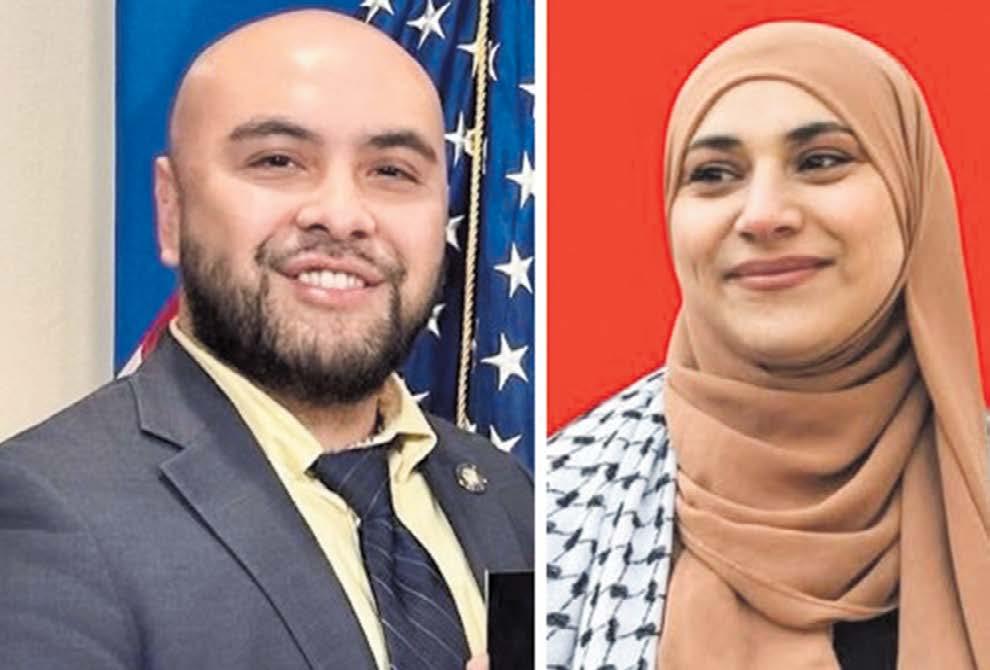
Assemblymember Steven Raga lost his bid for New York State Senate for District 12, falling to Palestinian American community organizer Aber Kawas in a closely watched June 23 Democratic primary.
Kawas, a Palestinian American community organizer, is the Zohran Mamdani-backed progressive candidate. Her victory is being attributed to the so-called “Mamdani Effect” following the popularity of the mayor belonging to the Democratic Socialists of America (DSA) party.
Kawas led with 58.3 percent of the vote to Raga’s 38.2 percent, according to unofficial results from the New York State Board of Elections. Kawas received 12,460 votes to Raga’s 8,166 in the open-seat contest to succeed retiring state Sen. Michael Gianaris.
Raga, the first Filipino American elected to the New York State Legislature, entered the race as a sitting Assembly member from District 30, representing parts of Woodside, Jackson Heights, Elmhurst, Sunnyside and Maspeth. He ran on a platform centered on immigrant rights, affordable housing, transit improvements and expanded health care access, positioning himself as a “people-powered” progressive focused on working families and small businesses.
Kawas, a Democratic Socialists of America organizer, consolidated support on the Left after securing Mamdani’s endorsement in the race to represent Queens in the state Senate. Political analysts and community
By Elton Lugay
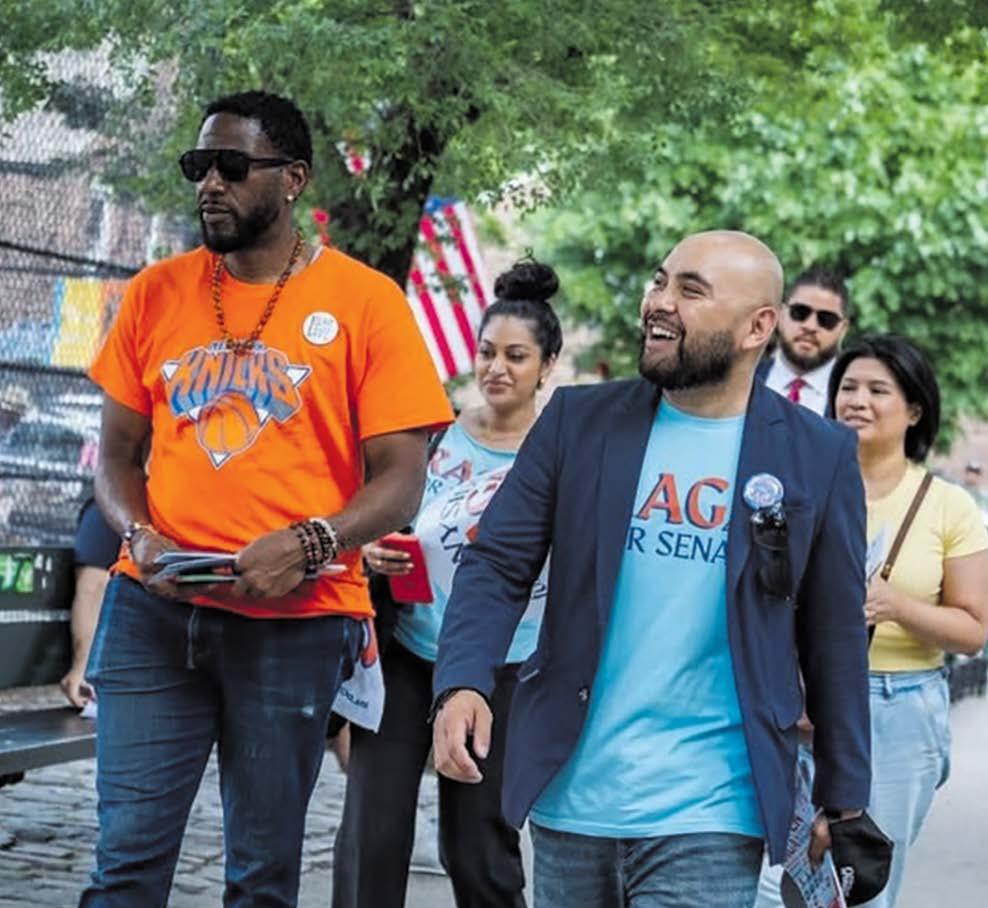
leaders said the mayor’s backing significantly boosted Kawas’ name recognition.
Civic leader and philanthropist Loida Nicolas Lewis called the result “a big blow to the Filipino American community,” saying Raga’s loss underscored the power of the mayor’s endorsement and the limits of national FilAm support.
She said “Mayor Mamdani’s endorsement (of) his fellow Democratic Socialist Kawas, who just moved to the Queens district from Brooklyn, is the major reason for his loss, aside from the failure of the whole Filipino community in the United States’ lack of support.”
Lewis contrasted the fragmented backing for Raga with what she described as the “entire Democratic Socialist Party of the United States” mobilizing for its New York candidates, citing Mark Lander’s unseating of incumbent Rep. Dan Goldman in Manhattan and Clare Valdez’s win in the Brooklyn–Queens seat vacated by retiring Rep. Nydia Velázquez.
She said those races showed how coordinated organizational support can overcome incumbency and name recognition in low-turnout primaries.
In the weeks before the primary, Filipino American voters and local activists openly expressed nervousness that Raga could face a serious challenge from Kawas despite his incumbency and longstanding community ties.
Following the loss, Raga thanked volunteers and voters and signaled he would remain engaged in public service and grassroots advocacy in western Queens, emphasizing that issues such as housing stability, immigrant protections and health care access remain urgent for his constituents.
He said, “This campaign may be ending, but the work continues.”
By Dr. Marivir Montebon
This 2nd of 4 parts dissertation by Dr. Marivir Montebon examines how bridging the political divide of U.S. immigration is possible through Transformative Journalism.
Political polarization did not begin or end with journalists. Corporate media organizations, driven by ideological differences, business interests, and the appetite for audience capture, have widened the division by reinforcing the public’s existing political and ideological beliefs.
Marshall McLuhan’s theory of communication — “The medium is the message” — explains how the medium, such as media organizations, creates a message that is consistent with its ideology.
| Polarization from the top
Dannagal Goldthwaite Young, in her book Wrong: How media, politics, and identity drive our appetite for misinformation, cited the role of media producers in creating political and ideological polarization.
In the mid-1990s, ideological sorting within the major parties deepened just as the internet transformed mass communication. Partisan cable networks MSNBC and Fox News emerged in 1996 because of this polarization from the top.
Since then, audiences have increasingly judged news organizations through partisan identity: many Democrats and Republicans label the same outlets as either trustworthy or biased depending on their own political beliefs. A 2018 Knight Foundation/Gallup survey showed that people judge news outlets’ bias largely through the lens of their own political identity.
Democrats tended to view outlets like AP, PBS, NPR, The New York Times, CNN, and The Washington Post as relatively unbiased, while seeing Fox News and Breitbart as strongly biased. Republicans, by contrast, viewed Fox News and The Wall Street Journal as unbiased and considered many mainstream outlets—

especially CNN and MSNBC—as biased. Independents/nonpartisan adults rated a smaller set of outlets, such as PBS, AP, NPR, The Wall Street Journal, and USA Today, as unbiased, but still saw several major outlets as biased.
The poll shows that perceptions of media credibility are deeply shaped by political affiliation, reinforcing broader social and ideological divides.
Young pointed out that divisive media production has given rise to the phenomenon of “partisan pundit” where pundits are the talking heads who appear on the news not to “report” news but to talk “about the news.”
It has become routine for media producers to assemble panels of pundits who argue about a topic, styled in an interpersonal “in your face” argument, that moves viewers to be engaged and increase their hostility towards the other side.
Pundits arguing on political issues have been elevated nationwide through cable news, intentional in its grand scheme of “nationalizing conflict-framed stories” instead of investing and reporting on complicated policy proposals that have consequences on local communities, said Young.
As a result, audiences make a choice to be engaged with these nationalized panels
of analysts by watching CNN, MSNBC, or Fox, or they decide to tune out. Young concluded that the nationalization of this media production has resulted in the amplification of mega-identities and the public’s decline in engagement with their state and local politics.
Intellectual arrogance plays well in these panels, amid interruption and insult and eye rolls, and unfortunately, misinformation too.
A 2015 PolitiFact review found that nearly 60% of checked pundit claims on Fox News were rated mostly false or false, compared with 44% on MSNBC and 20% on CNN.
A study by the Reuters Institute Digital Report 2022 indicates that most of the audiences in the U.S. sorted as
far right-leaning get their news mainly from Fox News. Scholars described the character of the sorted American audience demographics as predominantly far right, White, Republican, and Christian Evangelists.
Young proposes three broad responses.
First, journalists should practice democracy-centered reporting by refusing to reward identity performance, reducing conflict framing, and investing more in community-centered local coverage and public media.
Second, social media platforms should be more transparent about algorithms, ad targeting, and the data needed for independent research.
Third, citizens themselves must cultivate intellectual humility, resist performative partisanship, and demand information that helps democratic life rather than inflaming tribal loyalty. These steps, said Young, are not optional in a multiracial, multiethnic, and multifaith society that depends on pluralism and freedom of expression to remain healthy.
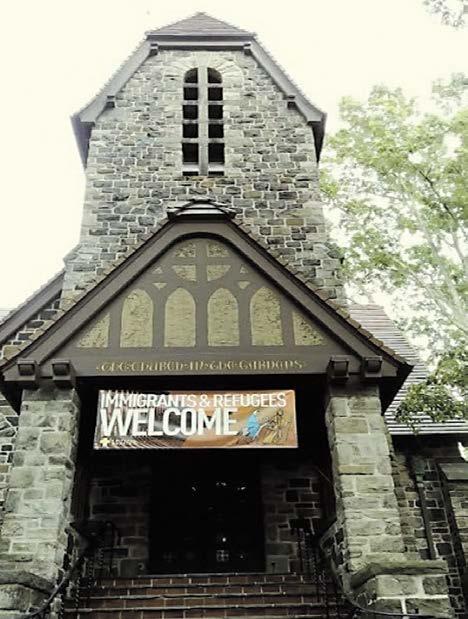
This study also highlights the possible role of the “pilgrim church” in changing how immigration is discussed in the United States.
In Church and Migration: A Theological Vision of the People of God, Daniel Montanez argues that immigration should be understood not only as a political controversy but as part of the broader human story of movement, displacement, belonging, and hope.
That perspective can help journalists move beyond narrow partisan frames by drawing on the experience of churches, faith-based organizations, and ministries that work directly with migrants.
Including such voices in immigration coverage could introduce moral depth, historical perspective, and a language of human dignity that is often missing from secular political debate.
Dr. Marivir Montebon is a New Yorkbased journalist who runs her media company Awesome Media, Ltd.
By Cristina DC Pastor
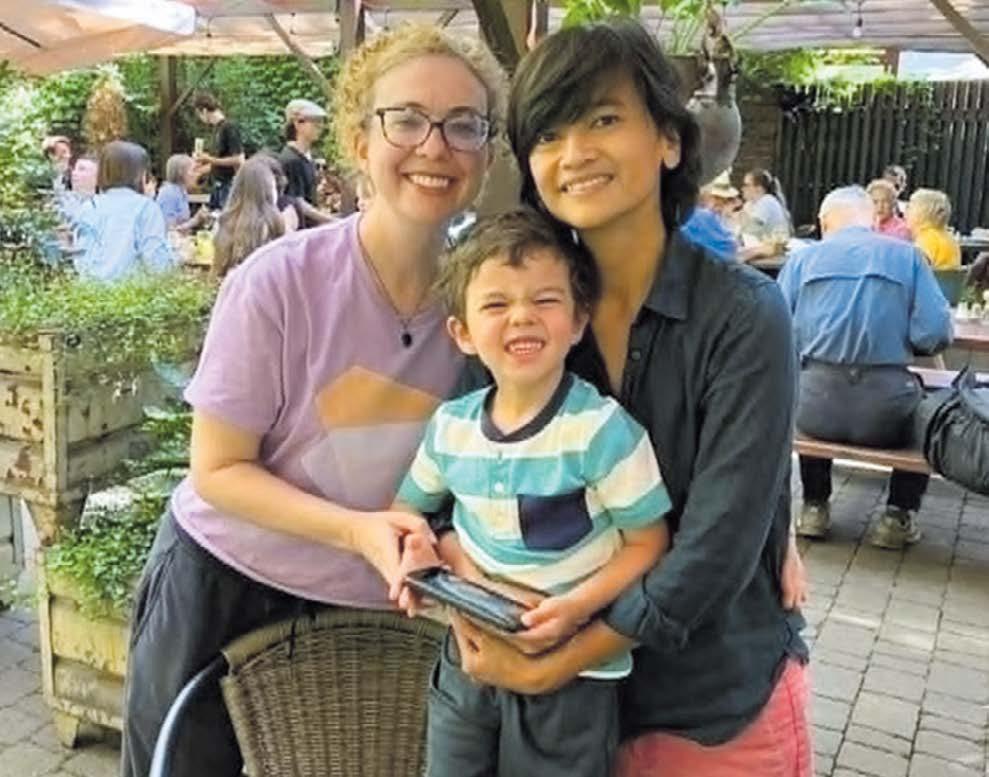
“He has very deep emotions,” says mom Desireena Almoradie. “Today he was upset because his best friend was getting close to another friend. There were some tears. He handles complex emotions very well; he just doesn’t always have the words for them yet. It’s very interesting to see.”
Desireena was describing how her 6 year-old son Cillian is discovering the complexities of friendship and emotions. He was upset, maybe slightly jealous, that his friend is starting to find new friends, but at the same time was tough enough to handle the likelihood he could lose him entirely.
For acclaimed Filipino American filmmaker Desireena Almoradie, raising a child in a same-sex household is less about preparing the child for rejection and more about nurturing a good heart.
That simple wish guides the life she and her Irish partner Niamh, a French teacher, have built in Washington Heights, New York City, where they are raising an energetic, curious boy who loves talking, drawing comics, writing stories, and watching Teenieping cartoons.
For Almoradie, parenthood began with a decision that many prospective parents know well: realizing there is never a perfect time.
“You are never really ready to have a child,” she says. “It is a now-or-never decision.”
She recalls a walk through Central Park with Niamh when they confronted the question directly.
“She asked me if we were going to do this or not. I told her we are never going to be ready, so we should just do it.”
Almoradie acknowledges that queer parents often face concerns about acceptance, both from society and sometimes from relatives. Yet her experience has largely been one of support.
“My family is a typical Filipino family,” she says with a smile. “They don’t say anything negative about me or my partner or Cillian. They may have thoughts, but they don’t say it because
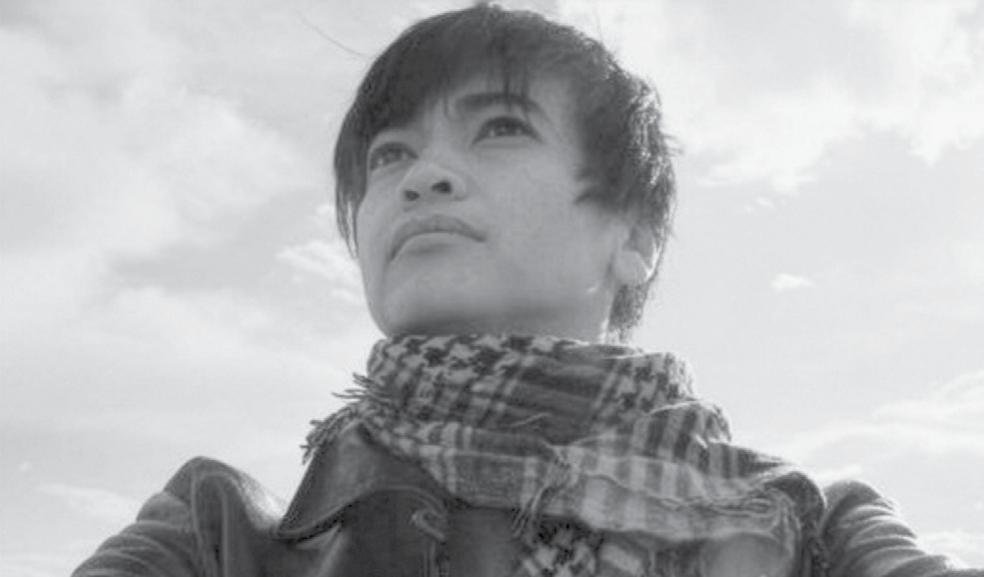
‘Having a child…is a now-or-never decision.’
they don’t want to offend anybody.” More importantly, she says, her immediate family has embraced them fully.
The journey to becoming parents was neither simple nor guaranteed. Like many couples pursuing assisted reproduction, they faced uncertainty and repeated attempts before success.
“With insemination, you have to go through a few rounds before you become pregnant,” she explains. “We went
through three or four rounds before finally getting pregnant with Cillian, and we got lucky.”
Even with insurance coverage for IVF and the advantage of being a two-income household, the financial realities of raising a child in New York were daunting.
“When I was calculating daycare when he was young, it was like paying for another apartment,” she says.
As Cillian grew older, the couple encountered questions unique to donor-conceived families. Around age two or three, he began asking where his father was.
Rather than avoiding the conversation, Almoradie and Niamh turned to children's literature for guidance. They found a book written by an author affiliated with a nonprofit sperm bank that explained donor conception in language children could understand.
“The book explained that sometimes families don’t have the sperm needed to make a baby with the egg,” she says. “So they find nice people who donate their sperm to help these families, and that’s how you became part of our family.”
They read the story to Cillian repeatedly. Over time, the explanation became part of his understanding of how families are formed.
“Now he barely asks that question,” she says. “My sisters and my close family love Cillian. They are nice to my partner and me, and we are lucky to have their love and support.”
Though born and raised in New York, Cillian carries traces of his Filipino heritage. He knows a handful of Filipino words, including the humorous favorites “laway” and “kili-kili.”
Living in New York City has also provided a welcoming environment. In their neighborhood, queer parents support one another, share advice, and help create a sense of community.
“We never really experienced hate or negativity from anybody in our community as two queer women parenting a child,” she says.
While some people assume that samesex parents must fit traditional maternal and paternal roles, Almoradie rejects that notion.
“In queer couples where there are two women, people often challenge each other about who is the maternal one,” she says. “Sometimes the answer is simply that you have two moms.”
Parenting, she notes, is about shared responsibility, communication, and love. Her goal for Cillian is to be good and happy. “I do not care if he is a plumber or an astrophysicist as long as he’s happy.”
By Elton Lugay
Recording artist
Jenn Cuneta is set to release her full-length album “Jenniverse,” a project that blends global dance music with messages of Filipino pride, empowerment and cultural identity.
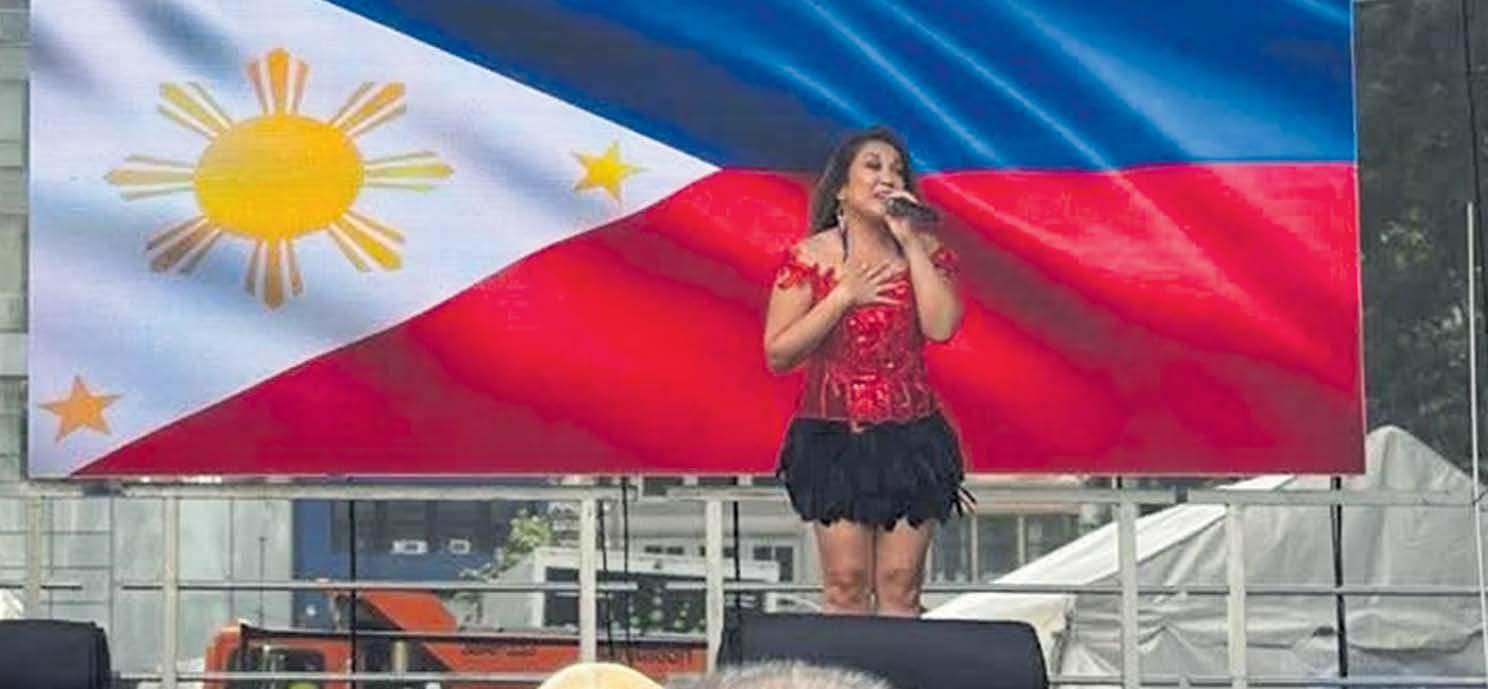
Set for release on June 7, the same day she will perform at the Philippine Independence Day Parade in New York — the album marks a milestone moment for Cuneta, whose career has spanned more than two decades in the international dance music scene.
“This album is really about purpose,” Cuneta said. “It’s about using music to uplift people, to celebrate who we are, and to remind our community, especially young Filipinos, that their voice matters.”
“Jenniverse,” as she describes it, weaves together trance, house and commercial dance music while incorporating both English and Tagalog lyrics. It reflects Cuneta’s bicultural identity and her commitment to representing Filipinos on a global stage.
At the heart of the album is its lead single, “Reyna,” which means “queen” in Filipino. It is a highenergy house anthem which pays tribute to the Philippines’ longstanding legacy in international pageantry, and to the deeper

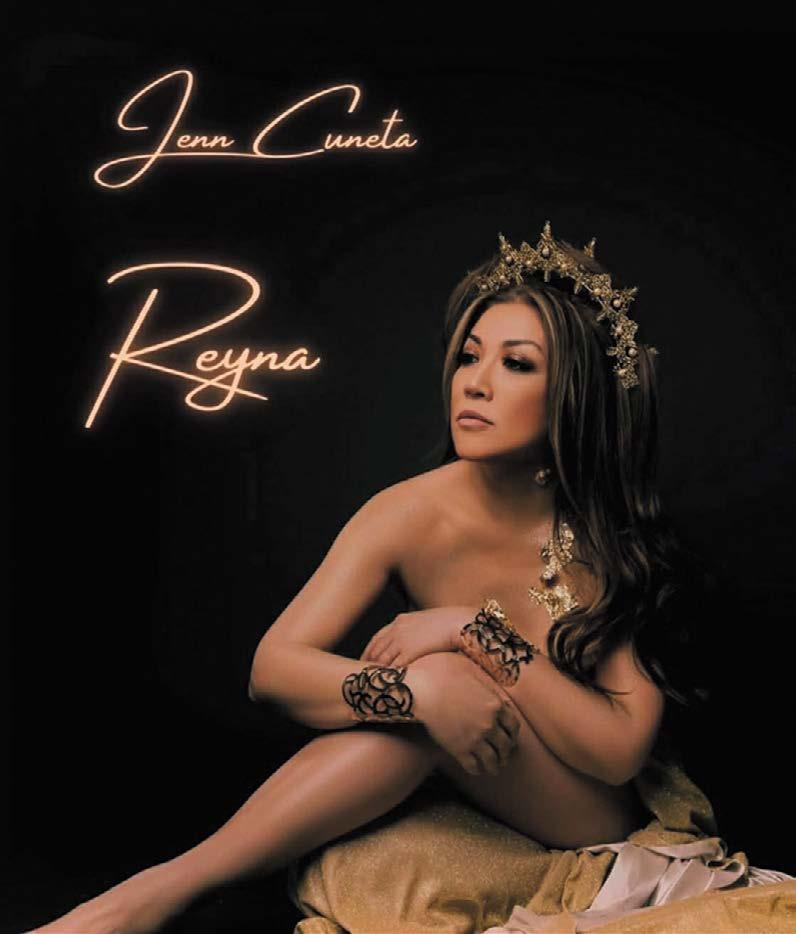
advocacy and leadership embodied by Filipina women.
“For me, ‘Reyna’ is more than just a song,” Cuneta said. “It’s a celebration of Filipina strength. We’ve seen how Filipinas lead, inspire and give back not just onstage, but in real life. I wanted that energy in the music.”
That message is also personal. Cuneta shared that her grandmother was crowned Miss Philippines in 1953, a legacy that continues to influence her music.
The track was produced by DJ Rich Dio, with songwriting by Nancy Rose and production work by Cheff Loncher, who became a key creative partner in shaping the overall sound of “Jenniverse.”
“Working with Cheff really helped bring the vision together,” Cuneta said. “He understood how to balance the emotion, the storytelling and the energy of dance music in a way that feels authentic to me.”
The connection and future collaboration with New York-based songwriter Nancy Rose began at a private performance in the Hamptons. It’s a partnership, she said, with “a layer of emotional depth and narrative to the project.”
In addition, Cuneta revisited a past collaboration with Nashville producer Lenny Bertoldo, aka Lenny B., which was ultimately

‘I want people to feel energized when they hear my songs.’
included in the album after being identified as a standout track.
Cuneta first gained international attention with her 2005 hit “Come Rain Come Shine,” which reached No. 2 on the Billboard Dance Airplay chart and sampled Paul McCartney’s Since then, she has remained active in the global dance music circuit, working with major labels such as Strictly Rhythm, Tommy Boy, Edel, Groovilicious, and Ultra Records (a division of Sony).
Cuneta said her focus with “Jenniverse” is connection particularly with the Filipino diaspora.
“As a Filipino American artist, I carry both worlds with me,” she said. “This album is my way of bringing those worlds together through music, through language, and through shared experiences.”
With her upcoming performance at the Philippine Independence Day Parade, Cuneta hopes the album will resonate strongly within the community she represents.
“There’s something powerful about celebrating our culture in a space like New York,” she said. “I want people to feel proud, seen and energized when they hear these songs.”
“Jenniverse” is currently available for purchase through Cuneta’s official website http:// jenncunetaofficial.com/.