112 The Real Estate Market Reset What Buyers and Sellers Need to Know Right Now
100 Respect, Not Love, Is the Foundation of All Relationships By Rabbi Eric Coopersmith and Joseph Bornstein
126 RESTAURANT GUIDE: NY
Not Just Your Kitchen By Laura Shammah, MS, RDN
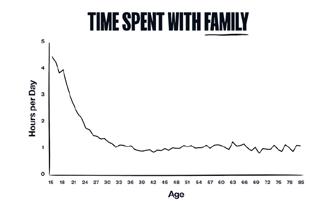
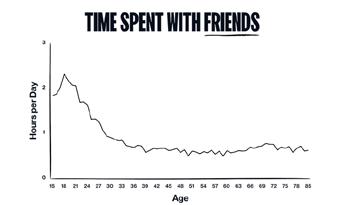
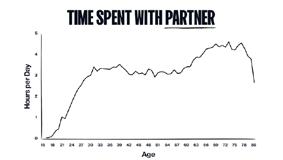
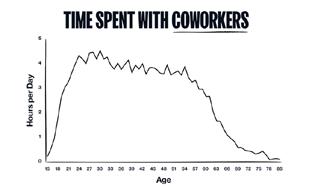
96 How We Spend Our Time Six Graphs That Change
By Rabbi Dr. Yosef Lynn
86 Sian Goldofsky Encouraging High School Entrepreneurs By Sarina Roffé
14 The Ten Utterances By Rabbi Lord Jonathan Sacks zt”l
58 A New Generation of Jewish Sports Heroes Rising Stars in American Sports WRITERS’ THOUGHTS
38 Why Nick Shirley’s Reporting Is Getting People to Pay Attention By Linda Sadacka
46 Lag B’Omer Seizing Your Life’s Mission By Rabbi Benjamin Blech
54 Mother’s Day, Jewish Style By Rabbi Boruch Leff
72 The Power of Giving Compliments
7 Ways to Do It
By Dr. Leslie M. Gutman
From The Editors
Welcome to May. Spring has arrived, the days are longer, and there is a quiet sense of renewal in the air. Passover is behind us, and we continue counting the Omer, moving step by step toward Shavuot. It is a time that invites reflection and growth, where each day carries a sense of purpose. Along the way, we mark Lag B’Omer, a day of light and direction, and celebrate Jerusalem Day, reflecting on the strength, history, and unity of our people.
Our cover story, Elevating the Community’s Impact to New Heights, looks at the growing influence and leadership of Sam Sutton and Joey Saban, and what it means for the future of our community. Their work reflects a broader shift, one where commitment and organization are turning into real impact.
Across the magazine, that same sense of energy continues. Our Community Photo Album, Passover Moments, captures the warmth and meaning of the season, from preparation to celebration. We also feature MDY’s “It’s a Small World” Yom Ha’atzmaut Celebration and a closer look at the DSN Dance Academy: A Year of Rhythm, Growth, and Joy, where creativity and confidence are on full display.
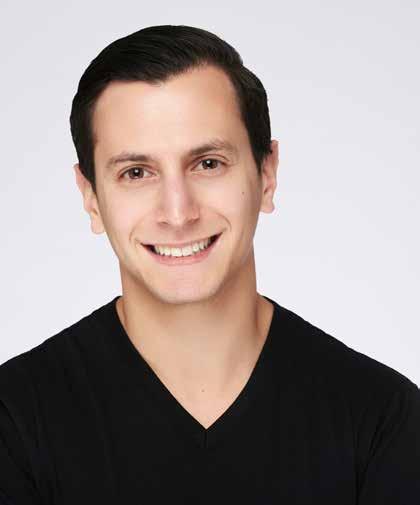
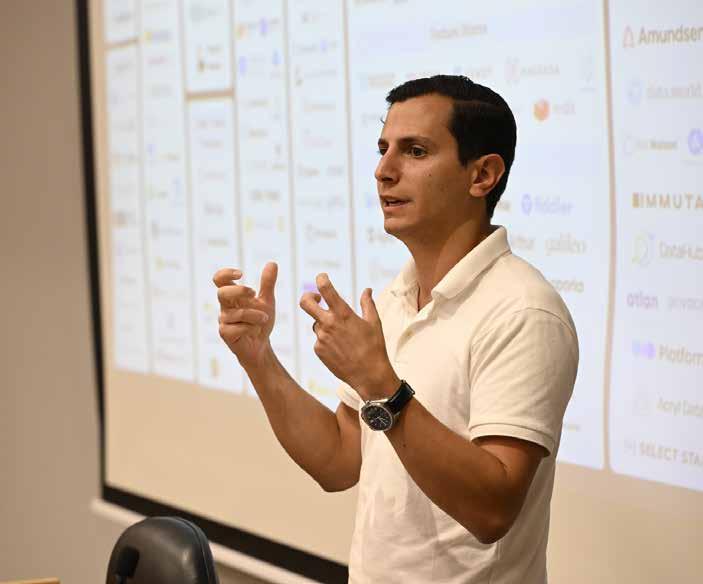
This issue’s profile, Sian Goldofsky: Encouraging High School Entrepreneurs, highlights a Deal, New Jersey native and Hillel Yeshivah graduate who made aliyah to Israel and built a career in cybersecurity and investing. He encourages entrepreneurship in high school, urging students to start early, focus on real problems, and use the strength of community to build something meaningful.
In our Writers’ Thoughts section, you will find Why Nick Shirley’s Reporting Is Getting People to Pay Attention, Lag B’Omer: Seizing Your Life’s Mission, Mother’s Day, Jewish Style, and The Power of Giving Compliments, each offering a different perspective on growth, responsibility, and connection in everyday life.
We also continue to explore personal growth with How We Spend Our Time: Six Graphs That Change Everything, Respect, Not Love, Is the Foundation of All Relationships, and Seven Steps to Manifest Your Dreams, offering practical ways to think about time, relationships, and personal direction in a more intentional way.
As we move through these weeks of the Omer toward Shavuot, this is a time to slow down, take stock, and move forward with clarity and purpose.
Wishing you and your family a meaningful and joyful Shavuot.
Ben-Gurion Matsas and Rachelle Fallas Matsas
2026 IYAR - SIVAN 5786
Ben-Gurion Matsas PUBLISHER/EDITOR
Rachelle Fallas Matsas EDITOR-IN-CHIEF
JEWISH IMAGE Brooklyn, NY (718) 627-4624 image@imageusa.com www.imageusa.com
Advertising Inquiries ads@imageusa.com
Editorial Inquiries editor@imageusa.com
Published Monthly.
Digital editions available on our website www.imageusa.com.
Deadline for advertisement is the 15th of the month, prior to publication.
Subscriptions available for $24 a year for 12 issues, email image@imageusa.com.
What the Israelites heard at Sinai has become known as the “Ten Commandments.” But this description raises obvious problems. First, neither the Torah nor Jewish tradition calls them the Ten Commandments. The Torah calls them aseret hadevarim (Ex. 34:28), and tradition terms them aseret hadibrot, meaning “the ten utterances.” Second, there was much debate, especially between Maimonides and Halachot Gedolot as understood by Nahmanides, as to whether the first verse, “I am the Lord your G-D …,” is a command or a preface to the commands. Third, there are not ten commandments in Judaism but 613. Why, then, these but not those?
Light has been shed on all these issues by the discovery, already mentioned, of ancient Near Eastern suzerainty treaties, most of which share certain features and forms. They begin with a preamble stating who is initiating the covenant. That is why the revelation opened with the words, “I am the Lord your G-D.” Then comes a historical review stating the background and context of the covenant, in this case, “who brought you out of the land of Egypt, from the slave-house.”
Next come the stipulations, first in general outline, then in specific detail. That is precisely the relationship between the “ten utterances” and the detailed commands set out in later chapters and books of the Torah. The former are the general outline, the latter, the details. So the “ten utterances” are not commandments as such but an articulation of basic principles. What makes them special is that they are simple and easy to memorize. That is because in Judaism,
law is not intended for judges alone. The covenant at Sinai was made by G-D with an entire people. Hence the need for a brief statement of basic principles that everyone could remember and recite.
Usually they are portrayed as two sets of five, the first dealing with relationships between us and G-D (including honoring our parents since they like G-D brought us into being), the second with the relations between us and our fellow humans. However, it also makes sense to see them as three groups of three.
The first three, No other gods besides Me, no graven images, and no taking of G-D’s name in vain, are about G-D, the author and authority of the laws. The first states that Divine sovereignty transcends all other loyalties (No other gods besides Me). The second tells us that G-D is a living force, not an abstract power (No graven images). The third states that sovereignty presupposes reverence (Do not take My name in vain).
The second three, the Sabbath, honoring parents, and the prohibition of murder, are all about the principle of the createdness of life. Shabbat is the day dedicated to seeing G-D as creator, and the universe as His creation. Honoring parents acknowledges our human createdness. “Thou shalt not murder” restates the central principle of the Noahide covenant that murder is not just a crime against man but a sin against G-D in whose image we are created. So the fourth, fifth and sixth commands form the basic jurisprudential principles of Jewish life. They tell us to remember where we came from if we seek to know how to live.
RABBI LORD JONATHAN SACKS ZT”L
The third three, against adultery, theft and bearing false witness, establish the basic institutions on which society depends. Marriage is sacred because it is the human bond closest in approximation to the covenant between us and G-D. The prohibition against theft establishes the integrity of property, which John Locke saw as one of the bases of a free society. Tyrants abuse property rights. The prohibition of false testimony is the precondition of justice. A just society needs more than a structure of laws, courts and enforcement agencies. It also needs basic honesty on the part of us all. There is no freedom without justice, and no justice without each of us accepting individual and collective responsibility for truth-telling.
Finally comes the stand-alone prohibition against envying your neighbor’s house, wife, slave, maid, ox, donkey, or anything else belonging to him or her. This seems odd if we think of the “ten words” as commands, but not if we think of them as the basic principles of a free society.
The greatest challenge of any society is how to contain the universal phenomenon of envy, the desire to have what belongs to someone else. René Girard, in Violence and the Sacred, argued that the primary driver of human violence is mimetic desire, that is, the desire to have what someone else has, which is ultimately the desire to be what someone else is. Envy can lead to breaking many of the other commands. It can move people to adultery, theft, false testimony and even murder. It led Cain to murder Abel, made Abraham and Isaac fear for their life because they were married to beautiful women, and led Joseph’s
brothers to hate him and sell him into slavery. It was envy of their neighbors that led the Israelites often to imitate their religious practices and worship their gods.
So the prohibition of envy is not odd at all. It is the most basic force undermining the social harmony and order that are the aim of the Ten Commandments as a whole. Not only do they forbid it, they also help us rise above it. It is precisely the first three commands, reminding us of G-D’s presence in history and our lives, and the second three, reminding us of our createdness, that help us rise above envy.
We are here because G-D wanted us to be. We have what G-D wanted us to have. Why then should we seek what others have? If what matters most in our lives is how we appear in the eyes of G-D, why should we seek anything else merely because someone else has it? It is when we stop defining ourselves in relation to G-D and start defining ourselves in relation to other people that competition, strife, covetousness and envy enter our minds, and they lead only to unhappiness.
Thirty-three centuries after they were first given, the Ten Commandments remain the simplest, shortest guide to the creation of a good society.
Rabbi Lord Jonathan Sacks ZT”L was an international religious leader, and philosopher. The author of over 30 books, Rabbi Sacks received multiple awards in recognition of his work. Sadly, he passed away in November 2020.
When a loss occurs, before you call your insurance company or insurance broker, call me to see how your policy coverages and endorsements relate to your loss.
It’s Simple: You Purchase Insurance For Your Home And Business... You Sustain A Loss... We Make Insurance Companies Do What They’re Supposed To Do!
•
•
•
•
•
•
•
•
•
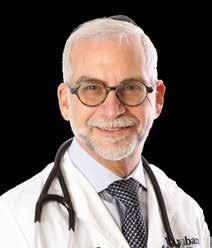
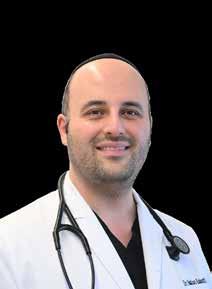
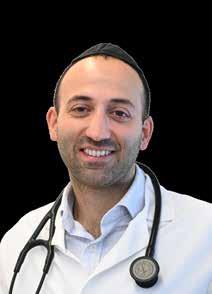
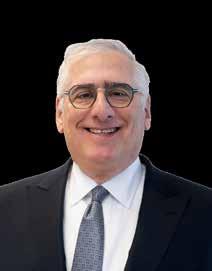
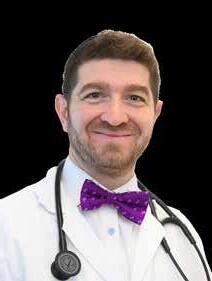
Moshe Lazar, DO FAAP
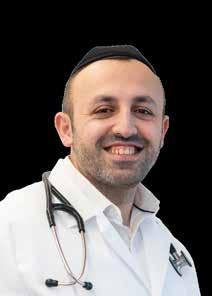
Gary Abberbock, MD FAAP
Eli Lazar, MD FAAP
Nathan Kabariti, MD FAAP
Yitzchok Shindler, PsyD
Bruce Lish, DDS
Eli Furer, PA
Yosef Kaluszyner, PA
Alex Gurgov, NP
ELEVATING THE COMMUNITY’S IMPACT TO NEW HEIGHTS
THE UPCOMING NOVEMBER ELECTION CYCLE IN NEW YORK REPRESENTS A PIVOTAL MOMENT FOR OUR COMMUNITY, ONE DEFINED NOT ONLY BY POLITICAL CONTESTS, BUT BY THE CONTINUED RISE OF SEPHARDIC REPRESENTATION AND INFLUENCE AT THE HIGHEST LEVELS OF STATE GOVERNMENT.
At the center of this movement stand Sam Sutton, up for reelection to the NY State Senate, and Joey Saban, now running for NY State Assembly after serving as Senator Sutton’s Chief of Staff.
Together, they have built one of the most effective, outspoken, and impactful legislative operations in New York. And the results speak for themselves.
A RECORD OF RESULTS:
SENATOR SAM SUTTON
For over 20 years, Sam Sutton served as the co-founder and President of the Sephardic Community Federation (SCF), delivering tens of millions of dollars in government funding to our community and advocating across government for our community’s biggest priorities. Last year, he took his public service to the next level with his successful bid for a seat in the NY State Senate.
In a short time thus far in office, Senator Sutton has delivered tangible, meaningful results for our community at a scale rarely seen. Most notably, he secured $20 million in security funding for religious institutions, ensuring that our schools, synagogues, and community institutions are protected in an increasingly dangerous environment. Additionally, he has brought millions more in direct funding to our community’s institutions, resources that strengthen education, social services, and communal infrastructure.
Legislatively, Senator Sutton has proven equally effective. He successfully passed multiple bills through the Senate in a very short time frame, demonstrating both policy leadership and the ability to navigate Albany’s complex political landscape. He played a key role in defeating the City Council’s COPA bill, taking a firm stand against antibusiness policies that would have harmed our community and our businesses.
EDDIE ESSES AND SARI SETTON
Looking forward, his diligence continues with the major Buffer Zone Bill, a critical initiative he introduced to create buffer zones around houses of worship to protect worshipers from intimidation and harassment. The bill is now being incorporated into the State Budget, an extraordinary achievement that underscores his growing influence in Albany.
THE FORCE BEHIND THE SCENES: JOEY SABAN
While Senator Sutton has led from the front, much of this success has been powered behind the scenes by Joey Saban. As Chief of Staff, Saban has been instrumental in turning vision into reality, coordinating legislative strategy, managing negotiations, and ensuring that priorities become policy.
From securing historic funding to advancing complex legislation, Saban’s role cannot be overstated. His deep understanding of both the community and the political system has made him a driving force in these accomplishments. Now, as he steps forward to run for the State Assembly, he brings with him not only experience, but a proven track record of getting big things done.
For example, Saban initiated and coordinated the press conference with the Governor after the antisemitic Swastika incident at Magen David, which led to securing the $20 million in security funding for religious institutions. He has also been the driving force behind the Buffer Zone Bill, coordinating the language of the bill and the full strategy behind passing it.
STANDING STRONG AGAINST EXTREMISM
In today’s political climate, leadership is not just about delivering resources, it is about standing firm in the face of ideological pressure. Senator Sutton’s office has distinguished itself as the loudest and strongest Democratic voice in the majority party, importantly, pushing back against the policies and influence of Zohran Mamdani and the Democratic Socialists of America.
Time and again, Sutton and his team have issued clear, unapologetic public statements and worked tirelessly within the legislative body to counter initiatives that threaten our values and way of life. At a time when many remain silent, their office has led with clarity and courage.
LOOKING AHEAD: THE ELECTION THAT MATTERS
While primary elections will take place in June, both Sutton and Saban enter this phase without challengers, a testament to the strength of their campaigns and the broad support they have already built. That means the real contest lies ahead in the general election this November.
We know that elections are not won in a single day, they are built over months of grassroots effort. Every community member has an opportunity to play a role, whether by volunteering time or making a contribution. Thanks to New York’s public matching system, even small donations are amplified 9-to-1, turning modest support into a powerful force.
A DEFINING MOMENT FOR OUR COMMUNITY
What Sutton and Saban have accomplished together goes far beyond legislation and funding. They have transformed our community’s civic engagement, elevating our voice, our presence, and our influence in ways that would have seemed unimaginable just a few years ago.
They have shown that our community can organize, lead, and win, not just for ourselves, but as a major force within New York politics.
And yet, this is only the beginning. With continued support, we have the opportunity to take this momentum even further and to ensure that the Sephardic community becomes a central pillar of the state’s political landscape, a community that not only participates, but in fact, leads.
A community that stands strong, unified, and unafraid. A community that serves as a clear and consistent counterweight to the growing influence of the DSA for years to come. The path forward is clear. The leadership is proven. And the moment is ours to seize.
Eddie Esses has been civically engaged in the community for many years, alongside Joey Saban. He is an active board member of the SCF, senior advisor to Senator Sutton, and owns multiple retail franchise stores.
Sari Setton is the executive director of the Sephardic Community Federation
SEPHARDIC COMMUNITY FEDERATION SEPHARDIC COMMUNITY FEDERATION
• STO • STO PPED A CASINO FROM COMING TO BROOKLYN PPED A CASINO FROM COMING TO BROOKLYN
• MAJOR IMPROVEMENTS FOR ZONING REGULATIONS IN BROOKLYN
• MAJOR IMPROVEMENTS FOR ZONING REGULATIONS IN BROOKLYN
• SAM SUTTON ELECTED TO THE NEW YORK STATE SENATE
• SAM SUTTON ELECTED TO THE NEW YORK STATE SENATE
• UNITED THE COMMUNITY IN REGISTERING TO VOTE & SHOWING UP AT THE POLLS
• UNITED THE COMMUNITY IN REGISTERING TO VOTE & SHOWING UP AT THE POLLS
• ESTABLISHED A POLITICAL FORCE TO COMBAT ANTI-SEMITISM A
• ESTABLISHED A POLITICAL FORCE TO COMBAT ANTI-SEMITISM
DSN DANCE ACADEMY
A YEAR OF RHYTHM, GROWTH, AND JOY
THE DSN DANCE ACADEMY WRAPPED UP AN UNFORGETTABLE SEASON, CELEBRATING A YEAR FILLED WITH ENERGY, DEDICATION, AND CREATIVITY. WITH AN IMPRESSIVE SCHEDULE OF APPROXIMATELY 36 CLASSES EACH WEEK, THE PROGRAM OFFERED A WIDE RANGE OF STYLES INCLUDING TAP, JAZZ FUNK, BALLET, HIP HOP, AND CONTEMPORARY, GIVING EVERY DANCER THE CHANCE TO EXPLORE AND GROW.
The season began in September, as students from nursery through high school stepped into the studio with excitement and commitment. Over the months, dancers worked diligently, building technique, confidence, and friendships, all leading up to the highly anticipated end-of-program recital in March.
The culmination of the season took place on March 9 at the Count Basie Center for the Arts, where the DSN Dance Recital lit up the stage from 6:30 to 8:30 PM. Featuring over 300 dancers, the performance embraced this year’s vibrant theme: Girls Just Want To Have Fun, showcasing routines inspired entirely by female artists. It was a night to remember. From the youngest performers taking their first steps on stage to seasoned high school dancers delivering polished routines, the evening was a powerful celebration of talent and joy.
In addition to the recital, excellence went beyond the recital stage. DSN’s junior and senior dance teams had an outstanding competitive season. Both teams earned first place in two competitions, securing their spots at Nationals, an exciting milestone that reflects their hard work and dedication.
The success of DSN Dance Academy is rooted in its exceptional staff, a passionate team behind the scenes. This year’s instructors included Rose Ashkenazi, Nicole Fera, Giana Forgione, Cynthia Pearsall, Katrina Portagallo, Nicole Trigani, Claire Whitmore, and Ava Yanucil. Guiding the program were Dance Director Danielle Hanan and Assistant Dance Director Sari Abraham, whose leadership helped shape a truly special season.
Dance Director Danielle Hanan was thrilled. “The recital is a beautiful reflection of the dedication and effort
our dancers invest throughout the year. Watching their growth, creativity, and confidence on stage is what makes the experience so meaningful for everyone involved. Year after year, I’m filled with an overwhelming sense of pride as the production comes to life. It’s moments like these that truly make the program so special.”
Youth Director Frieda Shamah captured the spirit of the event saying, “Our DSN Dance recital is the highlight of the year. There’s nothing like seeing all of our dancers of all ages up on stage, having fun, building confidence, and just loving every second of it.”
Assistant Dance Director Sari Abraham reflected on the
deeper impact of the program, “What makes this program so special to me is the experience of it all, the energy in the rooms, the consistency, the connection. When recital time comes, it is such an amazing display of everyone’s hard work coming together in the most beautiful way. This year was simply magical. I already miss everyone so much and can’t wait to see them all again in September.”
As the curtain closes on this season, the excitement is already building for what’s next. DSN Dance Academy continues to be more than just a dance program, it’s a community where passion thrives, friendships grow, and confidence shines. September can’t come soon enough!
“ “
CARE gave us answers when no one else could
- CARE parent
When everything felt conf ing and uncertain, CARE provided clarity. From navigating diagnoses to finding the right schools, therapies, and support systems, our CARE advisor walked us through every step turning fear into direction. We were guided one-on-one by a dedicated CARE advisor that coordinated everything from home health aides, navigating insurance and renewals, and making sure all of us were taken care of.
learn more about care!
INVESTING IS A MARATHON, NOT A SPRINT
ARI BAUM, CFP®
STANDING AT THE FINISH LINE OF A RACE, EVERYTHING FEELS CLEAR. THERE’S A CLOCK OVERHEAD, YOUR BODY IS EITHER SPENT OR TRIUMPHANT, AND THE RESULT REFLECTS MONTHS, SOMETIMES YEARS, OF PREPARATION. THERE ARE NO SHORTCUTS IN ENDURANCE SPORTS. YOU CAN’T FAKE YOUR WAY THROUGH A MARATHON OR AN IRONMAN. YOU EITHER DID THE WORK, OR YOU DIDN’T.
Investing works the same way. We often hear the phrase “investing is a marathon, not a sprint,” but in my experience, as both a financial advisor and an endurance athlete, that analogy is more than a cliché. It’s a framework for how people should think, behave, and ultimately succeed over time.
THE POWER OF CONSISTENCY
One of the biggest challenges clients face is psychological. They look at a long-term goal, saving $2 million, $5 million, or more, and it feels overwhelming. The number is so large that it creates paralysis rather than action.
But the path to that outcome is far simpler than it appears. No one runs 26.2 miles at once. You run one mile at a time. The same is true financially. Wealth isn’t built
in a single moment. It’s the result of disciplined, repeated actions over time. Saving consistently. Investing thoughtfully. Staying committed, even when progress feels slow. The people who succeed are not necessarily the ones who start with the most. They are the ones who stay in the race.
PREPARING FOR VOLATILITY
Every endurance athlete knows about “mile 20,” the point where fatigue sets in and doubt creeps in. This is where races are decided, not by physical ability alone, but by preparation and mindset. Markets have their own version of mile 20. We’ve seen it during moments like the 2008 financial crisis and the COVID-19 downturn, periods when uncertainty rises, headlines turn negative, and fear takes over. These moments are inevitable. The real question is not
whether they will happen, but how you will respond when they do. A well-constructed financial plan is designed for these environments. It prepares you mentally and structurally so that volatility doesn’t lead to panic. Instead of reacting emotionally, you rely on a process that was built with uncertainty in mind.
THE COST OF EMOTIONAL DECISIONS
When people are under stress, they tend to make poor financial decisions. It’s not a lack of intelligence, it’s human nature. In March 2020, many investors exited the market during the downturn, only to miss the recovery that followed shortly after. The issue wasn’t the market itself. It was the reaction to it. This is where guidance matters. A strong advisor doesn’t just build portfolios. They help clients navigate behavior. They ensure that risk levels align not only with financial goals, but with emotional tolerance. Because the best investment strategy in the world is useless if you can’t stick with it.
FILTERING OUT THE NOISE
Modern investors face a constant stream of information. Financial media focuses heavily on short-term movements, quarterly earnings, daily volatility, and predictions about what comes next. This creates the illusion that action is always required.
But consider this: What if your home had a ticker symbol, updating its value every day? One day it’s worth $1.2 million. The next, $900,000. Then back to $1.1 million. Would you sell? Of course not. Because you understand the purpose of your home. You live in it, you don’t trade it.
Investing should be approached the same way. When your time horizon spans decades, short-term fluctuations become far less meaningful. The challenge is not avoiding volatility, it’s avoiding the temptation to react to it.
DISCIPLINE OVER PREDICTION
Both endurance sports and investing present the same temptation, chasing shortcuts. In racing, that might mean starting too fast. In investing, it might mean reacting to headlines or trying to time the market. But the outcomes are often the same, burnout, inconsistency, and missed opportunities. Long-term success comes from discipline, not prediction. It’s about committing to a process, trusting it through difficult periods, and staying focused on the finish line rather than the noise along the way.
FINAL THOUGHT
Delayed gratification is not easy. It requires patience, trust, and the ability to stay focused when results are not immediate. But just as in endurance training, the payoff comes over time. The work you put in today may not show up tomorrow, but it will show up. And when it does, it reflects a simple truth: Success is not about reacting to every moment. It’s about staying committed to the process. Conceive. Believe. Achieve.
The content is developed from sources believed to provide accurate information. Investing involves risk including the potential loss of principal. No investment strategy can guarantee a profit or protect against loss in periods of declining values. Past performance does not guarantee future results. Consult with a financial professional regarding your specific situation.
Ari Baum, CFP® is the Founder and CEO of Endurance Wealth Partners, with over 25 years of experience in the Financial Services industry. He brings his in-depth experience to Conceive. Believe. Achieve. for his clients. Securities and Advisory services offered through Prospera Financial Services Inc. Member FINRA/SIPC. Brokerage and Advisory accounts carried by Wells Fargo Clearing Services LLC.
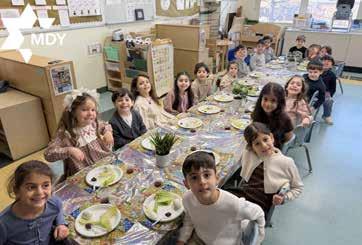
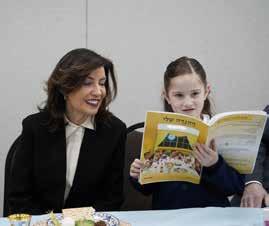
MDY’S “IT’S A SMALL WORLD” YOM HA’ASMAUT CELEBRATION
THIS YEAR, THE HALLS OF MDY RESONATED WITH A PROFOUND SENSE OF JEWISH PRIDE, VIBRANT ENERGY, AND A GLOBAL CONNECTION TO OUR HOMELAND. CELEBRATING ISRAEL’S 78TH YEAR OF INDEPENDENCE, OUR SCHOOL COMMUNITY CAME TOGETHER FOR A DAY THAT WAS AS MAGICAL AS IT WAS MEANINGFUL.
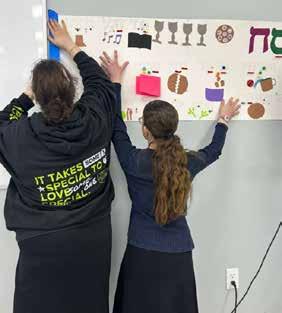
The moment you stepped into the lobby, the theme was unmistakable: “It’s a Small World.” In a stunning creative feat, the entrance was transformed into a wonderland where the magic of Disney met the spirit of Am Yisrael. The decor served as a powerful reminder that while the Jewish people are scattered across the globe, our hearts remain anchored to a single point on the map. This theme emphasized a core truth: no matter where we are, we are one family, united by our history and our future in the State of Israel.
The festivities began with a powerful spiritual start. Fathers joined their children for Tefilot, filling the air with an inspiring rendition of Hallel. The bond of community was felt deeply as they enjoyed a beautiful celebratory breakfast, followed by a morning of dancing and engaging in themed activities together.
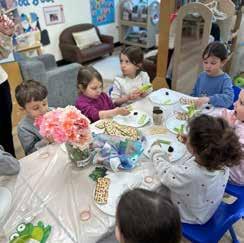
Our youngest learners brought the geography of our homeland to life in a spectacular way. Our kindergartners took their friends and family on a guided “tour” throughout the country of Israel. Each classroom was meticulously decorated to represent an important landmark or region of our country. As students and guests moved from room to room, they were treated to a multisensory experience that made the beauty of Israel feel close enough to touch.
As the day unfolded, the school became a stage for talent and joy. Students, who had been preparing for months, took to the floor with singing performances and special themed presentations. From important figures like our early prime ministers to famous landmarks found in Tanach, our students researched the land and its history in preparation for the day.
Our 7th and 8th graders showcased their spirit in a “Battle of the Blue and White,” competing in an Israelthemed decathlon and presenting original banners, songs, and dances dedicated to our homeland.
Every age group joined in the Rikudim, dancing with friends, teachers, and family members, turning the gym into a vibrant sea of blue and white.
While the day was filled overwhelmingly with joy, we remained deeply mindful of the world outside our walls. In acknowledgment of the ongoing challenges facing our brothers and sisters in Israel, the day was anchored by
special Tefilot in unity and solidarity with our family abroad. We prayed for the safety of our soldiers, the strength of our people, and peace and unity for our future as a nation.
From the morning prayers to the final Daglanut (flag dance performance), the day was a testament to the strength of the MDY community. It was more than just a school event. It was a vivid display of Jewish unity and pride. As we celebrated 78 years of independence, the message was clear, Israel is our home, our heart, and our heritage. Even though “It’s a Small World,” the spirit of the Jewish people remains immeasurably large.
WHY NICK SHIRLEY’S REPORTING IS GETTING PEOPLE TO PAY ATTENTION
LINDA SADACKA
AS ONE JOURNALIST DOCUMENTS WHAT IS HAPPENING ON THE GROUND, A BROADER SHIFT IN PUBLIC AWARENESS IS QUIETLY TAKING HOLD.
Every so often, a story does not begin with a policy debate or a legislative proposal, but with something far more immediate: exposure. In recent months, independent journalist Nick Shirley has drawn millions of views by doing something deceptively simple, walking into cities, turning on a camera, and documenting what he finds. What emerges from these recordings is not framed as analysis or argument, but as observation, and it is precisely that lack of mediation that has captured the public’s attention.
Across multiple states, Shirley’s reporting has highlighted taxpayer-funded environments that raise difficult and often uncomfortable questions. Viewers are confronted with facilities that appear inactive, systems that seem loosely monitored, and conditions that do not always align with the purpose for which public funds were allocated. These moments, taken individually, may not constitute proof of wrongdoing. But taken together, they create a pattern that is becoming increasingly difficult to ignore.
The response has been swift and far-reaching. His videos have circulated widely across platforms, drawing attention not only from everyday viewers but from national figures as well, including President Donald Trump. What was once peripheral, fragmented glimpses into underexamined systems, has now moved closer to the center of public conversation. This shift is not driven by any single clip or claim, but by repetition and accumulation. The same types of questions are appearing in different places, at different times, with enough consistency to prompt a deeper look.
This attention is not emerging in a vacuum. In states such as Minnesota and California, authorities have already uncovered large-scale fraud and misuse within taxpayerfunded programs, resulting in criminal charges, ongoing investigations, and the exposure of significant systemic failures. These cases predate any individual journalist, but they provide essential context for understanding why this kind of reporting resonates so strongly. When exposure aligns
with documented precedent, it no longer feels anecdotal. It begins to feel indicative.
At the same time, there has been a broader shift at the policy level toward confronting what is commonly described as waste, fraud, and abuse within publicly funded systems. Efforts to reevaluate foreign aid allocations, reduce questionable overseas spending, and reassess contributions to international bodies such as certain United Nations programs have reflected a growing insistence on accountability beyond domestic borders. While these initiatives have been debated politically, they underscore a larger point: the expectation that taxpayer funds, whether spent at home or abroad, should be subject to meaningful oversight.
What is now unfolding appears to extend that expectation further. Accountability is no longer confined to institutions or internal mechanisms. Increasingly, it is being driven from the outside. A broader wave of citizen journalists, armed with nothing more than a camera and a phone, is contributing to a new kind of visibility, one that does not rely on formal investigations to begin asking questions. This does not replace due process, nor does it establish guilt. But it does change the starting point. It brings scrutiny forward, often before systems have had the opportunity to respond.
The institutional response reflects an awareness of this gap. In recent years, the expansion of whistleblower programs, many of which offer financial incentives for reporting misuse, has signaled that traditional oversight alone has not been sufficient to detect problems at scale. These programs represent a structural acknowledgment that accountability must be reinforced, not assumed. When systems begin to rely on external reporting to identify internal failures, it suggests that visibility itself has become a necessary tool of governance.
For many observers, the issue ultimately resolves into something more practical than ideological. Individuals are expected to manage their own responsibilities with care,
earning, budgeting, and contributing consistently. It follows, then, that the systems supported by those contributions should operate with comparable discipline. When that expectation begins to feel uncertain, the question is no longer abstract. It becomes immediate, and it becomes personal.
This is why the current moment feels distinct. It is not defined by outrage, but by awareness. It is shaped not by a single revelation, but by the steady accumulation of observations, investigations, and documented cases that, taken together, suggest a broader need for scrutiny. From New York to Minnesota to California, similar concerns are surfacing with enough frequency to shift perception from isolated incidents to something more systemic.
If continued exposure leads to meaningful reform, the result may be a recalibration of how public funds are managed and safeguarded. If it does not, the pattern risks deepening, with consequences that extend beyond any single program or jurisdiction. That is the question now taking hold: whether visibility will translate into remedy, or whether it will simply reveal the scale of what has yet to be addressed.
As scrutiny intensifies and awareness continues to build, one reality becomes increasingly difficult to dismiss. The systems in question are not abstract constructs; they are sustained by the public. And as that connection becomes more visible, so too does the expectation that it be honored with clarity, accountability, and results. In that sense, the trajectory is becoming clearer. The questions are no longer going away, the attention is no longer fleeting, and the pressure for answers is no longer confined to the margins. The chickens are beginning to come home to roost.
Linda Sadacka is a writer and political strategist focused on public discourse, policy, and the intersection of media and governance. She hosts the Silent Revolution podcast on Spotify and Apple Podcasts. Follow her on Instagram @lindaadvocate.
THE SEVEN-WEEK JEWISH ROADMAP TO BECOMING YOUR BEST SELF
ELIYAHU FREEDMAN
Counting the Omer or as it is known in Hebrew, “Sefirat HaOmer” is at once one of the simplest and most complex Jewish observances. No matter where we are in the world, or however high or low we are feeling spiritually, counting the Omer for 49 days provides a simple opportunity each year for every Jew to feel connected. There is a peculiarity in the practice of counting the Omer, in which even in a communal setting every person must count for themselves. My childhood Rabbi Baruch Taub would say each year: every Jew counts, because every Jew counts.
At the most basic level, counting the Omer is about recording the 49 calendar days between Passover and Shavuot when the Jewish People stood at Mount Sinai and received the Torah. But in the ancient tradition of Jewish mysticism, the seven weeks (and each day within each week) charts a journey through seven qualities of character (or “sefirot”) that can change your life.
WEEK 1 – CHESED (LOVINGKINDNESS)
The Omer, like Judaism, is rooted in pure chesed or lovingkindness. Sometimes, when our lives are on autopilot, we can forget the love that exists as our core essence. In week one, we wake up from isolation to building intentional relationships with ourselves, our community, and the divine.
A practical step for this week is to identify one relationship you’ve been neglecting and reach out, not with a text, but with a real conversation (or even a longer than usual journal entry to ourselves).
WEEK 2 – GEVURAH (STRENGTH)
Without a container, the pure energy of love could become self-destructive. Our natural instinct to give needs boundaries, or it would be unsustainable.
This week, identify one area of your life where you’ve been saying yes when you mean no, and practice saying no, cleanly, without guilt.
Refunds are not automatic. There are no guarantees.
Over 330,000 businesses are eligible. Early recovery is key to getting your money back. Don’t lose your rights. Take action now to recover duties paid. Adesso can help.
www.adessoadvantage.com/tariff
WEEK 3 – TIFERET (HARMONY)
In the Kabbalistic map of the soul, Tiferet sits at the center balancing the warmth of chesed and order of gevurah. It is the quality of someone who can be both honest and kind, neither a pushover nor a wall.
This week, notice a moment where you sacrificed truth for the sake of comfort, and try to find the more courageous middle path.
WEEK 4 – NETZACH (PERSEVERANCE)
Netzach is the quiet strength of showing up, especially when we don’t feel like it. It’s the part of us that keeps going after the excitement fades.
This week, choose one small practice, learning, exercise, prayer, or even five minutes of reflection, and commit to it every single day, no matter what.
WEEK 5 – HOD (GRATITUDE)
Hod invites us to step back from the relentless pursuit of more and recognize the gift of what already is. It is the capacity to receive a compliment graciously, acknowledge a mistake honestly, and find beauty in someone else’s success.
This week, write down three things you’re grateful for that you had no hand in creating.
WEEK 6 – YESOD (INTEGRITY)
Yesod is about alignment, when our inner world and
outer actions match. It’s the foundation of trust, both with ourselves and others. When we live out of sync with our values, we feel it.
This week, identify one area where your actions don’t fully reflect who you want to be, and take a concrete step to bring them into alignment.
WEEK 7 – MALCHUT (SOVEREIGNTY)
Malchut is the culmination of the journey, the ability to stand fully in our lives with presence and responsibility. It’s not about control, but about ownership. After six weeks of inner work, we arrive here ready to lead our own lives with clarity and purpose.
This week, ask yourself: what would it look like to truly take ownership of my life right now, and take one bold step in that direction.
Counting the Omer is about much more than marking time. For 49 days, we’re given a map, step by step, to become more loving, more disciplined, more honest, more resilient, more grateful, more aligned, and more fully ourselves. Seven weeks. One small step each day. That’s all it takes to begin changing your life.
Eliyahu Freedman is an Iraqi-Jewish educator living in Jaffa, Israel. Passionate in the fields of Jewish history, spirituality and ethics, Eliyahu most recently completed a Master’s degree in Talmud from Tel Aviv University and was working on a PhD dissertation on medieval JudeoArabic history in the 10th century from Hebrew University.
SEIZING YOUR LIFE’S MISSION LAG B’OMER
LAG B’OMER IS A REMARKABLE ENIGMA. ON THE CALENDAR IT MARKS THE 33RD DAY OF THE COUNTING OF THE OMER, THE DAYS BETWEEN PASSOVER AND SHAVUOT. THE DAYS PRECEDING ARE OBSERVED AS A TIME OF MOURNING. IT IS THEN THAT 24,000 STUDENTS OF RABBI AKIVA PERISHED AS A RESULT OF A HORRIBLE PLAGUE. TO MARK THEIR DEATHS AND TO COMMEMORATE THIS TRAGIC EVENT, MUSIC, JOY AND CELEBRATIONS ARE CURTAILED. BUT ON THE 33RD DAY WE REJOICE. WHY? BECAUSE ONE OF THE GREATEST RABBIS OF THE TALMUDIC ERA, RABBI SHIMON BAR YOCHAI, WHO LIVED IN THE SECOND CENTURY OF THE COMMON ERA, PASSED AWAY ON THIS DATE.
The death of Rabbi Akiva’s students is recalled with grief. Yet the death of an illustrious rabbinic scholar continues to be observed with major festivities in the city of Meron, the mountain village in northern Israel where Rabbi Shimon is buried, and tens of thousands of pilgrims pour in from all corners of the world to rejoice together. How can we possibly reconcile these two different responses to the end of life of the righteous?
The answer perhaps lies in an extraordinary request Rabbi Shimon left with his disciples on the day of his passing. He instructed them to carefully note the time he left this earth as “the day of my joy,” the day, he explained, when he could happily leave this world knowing that he had fulfilled his divinely ordained mission.
The true tragedy of death is that it represents the closing curtain on our ability to do any more towards fulfilling the reason G-D sent our soul down to earth. It is only what we bring to that moment that can earn us a legacy of achievements. Death ends the story of our response to our life’s divine mission. Rabbi Shimon, master of Jewish mysti-
cism and heavenly secrets, was one of those rare blessed individuals who knew that he had succeeded in carrying out his life’s purpose. Death for him was nothing less than heaven’s “Amen” to his life of blessing. Lag B’Omer is the holiday that serves as a reminder for the need for our lives to fulfill our mission.
Some years ago, I had the privilege of speaking at a retreat for the Gathering of Titans. They are a group of approximately 100 CEOs of major corporations who get together annually at the Massachusetts Institute of Technology to refresh themselves intellectually and spiritually. On the printed program, every one of them was asked to succinctly summarize the philosophy, aims and goals of their business by way of their mission statement. Mission statements are a fact of life for every successful company. They define what the company hopes to accomplish, how it believes it will succeed, what its ultimate plans are for the future–what they hope to look like in 10, 20 and 50 years hence.
I suggested to these titans of industry that they con-
RABBI BENJAMIN BLECH
sider writing a mission statement for themselves, for their personal lives, just as they did for their businesses. It would allow them to think about the way they define success and to measure their progress as they try to balance finances and family, their wealth and their values, the way that they are judged by Forbes, and the way they will be judged by their faith and their G-D after they leave this earth. Imagine if we had the same kind of clarity about personal goals and how we plan to achieve them as we do for our bank books. Imagine if we took our personal mission statement as seriously as a business manifesto. Imagine if we took the time to decide why G-D put us here on earth and then went ahead and fulfilled our life’s purpose. Many of these Titans subsequently said to me that the need to think through their mission on earth, a task they had never previously attempted for their own lives, was nothing less than life changing.
And how can we discover exactly what our mission is?
King David writes, “The steps of man are directed by G-D” (Psalms 37:23). The Baal Shem Tov, the eighteenth century founder of the Hassidic movement, explained this verse in the following manner: Although we go about our daily tasks at what seems to be our own initiative and will, our steps are “guided” for a spiritual and loftier purpose. We end up in a specific place so that we will have the opportunity to do what needs to be done from a divine perspective.
G-D leads us to the location where our mission lies, we do not always need to find it. He orchestrates the circumstances to ensure that we have the position and tools to fulfill it. The challenge is to seize the moment. When we find ourselves in a specific place and situation, that speaks to our abilities and calls for our involvement, it is the greatest indication that there is something for us to accomplish there.
There is one thing we have to be careful about as we try to determine the life task assigned to us, and that is that we cannot allow it to be the goals others have convinced us to pursue. The world tries to seduce us to spend our
lives acquiring wealth and possessions. Its slogan is, “He who dies with the most toys wins.” But that is not why we were put here on earth, and that is also why our material goods immediately abandon us at our passing. Einstein is surely wise enough to be relied on for his advice: “Try not to become a man of success, rather try to become a man of value.”
Those who are mindful of the idea of mission take special notice of unexpected moments. A flight is rerouted and you suddenly find yourself in a foreign place. You unexpectedly meet people who share their problems with you. You are forced to relocate for the sake of your career and you abruptly discover new friends who need you. If we learn to view life from the perspective that nothing is merely coincidence and that, as the saying goes, “Coincidence is merely G-D’s way of choosing to remain anonymous,” we will find spiritual clues scattered among our daily activities.
The most unforeseeable and unexpected events are the ones that very often have the greatest meaning. They are the directional signals for our souls. The more we turn away from the worship of material objects and concentrate on affirming our values, the closer we come to fulfilling the mission that identifies the meaning of our lives.
Lag B’Omer is a powerful reminder to all of us that death may not be a curse. If, like Rabbi Shimon, we can reflect on the days of our lives as meaningful contributions to the betterment of ourselves, our family, our people and our world, if we leave a legacy of good deeds and a life of inspiration to others, our passing can partake of the extraordinary last instruction of the Rabbi who gave us a remarkable holiday, a holiday which is able to turn death into “the day of my joy.”
Rabbi Benjamin Blech, is a Professor of Talmud at Yeshiva University and an internationally recognized educator, religious leader, and lecturer. He is the author of 19 highly acclaimed books with combined sales of over a half million copies.
59 YEARS SINCE THE REUNIFICATION OF JERUSALEM JERUSALEM DAY
RABBI STEVEN PRUZANSKY, ESQ.
YOM YERUSHALAYIM (JERUSALEM DAY), THE ANNUAL CELEBRATION OF THE LIBERATION AND REUNIFICATION OF JERUSALEM IN 1967, IS AN OPPORTUNE TIME TO REFLECT ON WHAT WAS, WHAT IS, AND WHAT CAN BE. FIFTY-NINE YEARS AGO, AFTER THE JORDANIAN ARMY BEGAN SHELLING WESTERN JERUSALEM, THE IDF STORMED THE OLD CITY, CAPTURED THE TEMPLE MOUNT AND ENVIRONS, AND FULFILLED THE BIBLICAL PROPHECY THAT “REBUILT JERUSALEM IS LIKE A CITY THAT IS UNITED TOGETHER” (TEHILLIM 122:3).
It is hard to imagine that the Jordanian occupation of Jerusalem lasted only nineteen years, from 1948 to 1967. The Jewish community of the Old City had dwelled there since ancient times. After a valiant struggle including a siege and bombardment that lasted weeks, the Jewish fighters surrendered on May 28, 1948, after their food supply and ammunition were exhausted. Only a small contingent of 35 soldiers remained and were taken captive by Jordan together with more than 200 civilians. The commander of the Jordanian Legion was shocked by the minuscule numbers of fighters that had withstood the onslaught of his large force, commenting that had he known there so few Israeli soldiers, he would have fought them with sticks.
The Jordanian occupation of Jerusalem, not recognized by the international community, was brutal. The Jewish Quarter was ravaged. Numerous synagogues were destroyed and residential buildings were demolished. The area lay desolate and forlorn, with the tiny space in front of the Western Wall desecrated and used as a garbage dump.
In a mass grave on Gal Ed Street, 48 Jewish soldiers were buried. The divided city was a physical eyesore and a moral abomination as centuries of Jewish life was eradicated and the historic connection of the Jewish people to its spiritual center mocked. Jewish access to our holy sites was summarily denied.
Nineteen years later, Jerusalem was recaptured. The Old City was liberated and Jewish life flourished anew. The barricades that had divided the city were torn down. The 48 soldiers buried in the mass grave were reburied, each identified and each given his own grave, in the ancient Jewish cemetery on the Mount of Olives. Jerusalem was annexed and declared Israel’s eternal, indivisible capital. A new era dawned.
It is bitterly ironic, and extremely hypocritical, that to many people nineteen years of Jordanian occupation established a “reality” that fifty-nine years of Jewish presence has not. Multiple “peace” plans have called for the redivision of Jerusalem, with the newly added twist of declaring the eastern part of Jerusalem the capital of a Palestinian
state. (Such deference to the Palestinians was never considered during the Jordanian occupation, perhaps because the “Palestinians” had not yet been invented or had not materialized as a political entity.) One should be forgiven for questioning the sincerity of these proposals, as if Jewish sovereignty in Jerusalem is a temporary concession rather than a recognition of our biblical and historical rights.
Since 1967, the population of Jerusalem has more than tripled. New construction has become routine, infrastructure has expanded, and the city has become a center of the high-tech industry. Its sacred spaces, synagogues and study halls, chesed organizations and religious life, are remarkably vibrant. Although we still await the rebuilding of the Holy Temple, the city of Jerusalem no longer “sits in solitude, like a widow” (Eicha 1:1) but has welcomed the return of its children as was prophesied millennia ago.
Yet, there are still challenges ahead. Several nations including the United States have already returned their embassies to Jerusalem, and others have committed to do so, but much of the world still denies Jewish rights and sovereignty. NATO members like France and Turkey maintain consulates in Jerusalem that function as embassies to the Palestinians, in defiance of law and reality. Other nations like Qatar are primary subsidizers of radical Muslim forces that seek to undermine Israeli sovereignty in Jerusalem and
promote the fantasy of Israel’s demise. Just in the past year, UNRWA, a major source of hostility against Israel, was closed down and banned from Jerusalem. Israel will need to act against these and other nefarious forces in order to strengthen its sovereignty over the Holy City.
Israel’s administration of Jerusalem has guaranteed freedom of worship to all religions and the preservation of all holy places, a sharp contrast to the predation of the Jordanians and what could be expected if the city ever reverts to Arab rule in any form.
Our generation is privileged to have witnessed the liberation of Jerusalem earned through the sacrifice of our soldiers as well as the renaissance of the city now that its children have returned home. Jerusalem, today as always, is a conduit for the divine blessings that flow from heaven to earth. “Pray for the peace of Jerusalem, those who love you will find serenity” (Tehillim 122:6). Israel will meet all the challenges ahead and, we pray, usher in an era of universal peace, in which all nations will heed the “word of G-D that goes forth from Jerusalem” (Yeshayahu 2:3).
Rabbi Steven Pruzansky, a former congregational rabbi and attorney in the USA, today serves as Senior Research Associate at the Jerusalem Center for Applied Policy (JCAP.ngo).
MOTHER’S DAY, JEWISH STYLE
GO AHEAD AND TAKE HER OUT FOR DINNER, BUT MAKE SURE YOUR DISPLAY OF GRATITUDE ISN’T JUST A ONCE-A-YEAR OCCASION.
If your mother is anything like mine, she probably told you weeks ago, not to get her anything for Mother’s Day. “Since when did Mother’s Day become a Jewish holiday? ”Don’t bother yourself over me.”
Of course we know to ignore such self-defacing comments. But she may have a point. Isn’t every day supposed to be Mother’s Day? The Torah tells us to honor and revere our mothers at all times. So why go out of your way to show her your gratitude on Mother’s Day?
How can we benefit from using Mother’s Day? By treating it like a pseudo-Jewish holiday. If Mother’s Day is your way out of showing her how much she means to you during the rest of the year, the day actually becomes a vehicle to reduce true appreciation for moms.
Jewish holidays are fundamentally different than secular holidays like the Fourth of July or Presidents’ Day. Such holidays commemorate events, while Jewish holidays are portals in time when we can re-experience the spiritual forces that were unleashed due to a historical event.
For example, on the holiday of Shavuot, the Jewish
People received the Torah. Thus, every year on Shavuot, we have the opportunity to accept the Torah anew and strengthen our personal commitment.
Rabbi Dessler describes that time is a spiral. As we travel through time, we return to key moments of the past and recapture the inherent spiritual energy. This is why Jewish holidays are referred to in Hebrew as “moadim,” meeting places. Similarly, the Hebrew word “zman,” time, means designated or appointed because every moment in time has been appointed with a specific spiritual purpose.
But doesn’t that purpose apply the rest of the year?
For example, Passover celebrates G-D freeing the Jewish people from slavery in Egypt. But the Torah requires us to recall the Exodus from Egypt daily, as recited at the end of the Shema prayer. Why then do we celebrate Passover if we already recall the Exodus continuously the entire year?
The same question could be asked for almost every Jewish holiday. On Shavuot, we celebrate
G-D giving us the Torah on Mount Sinai. But we also have a general commandment to remember the events
RABBI BORUCH LEFF
IF YOU KNOW, YOU KNOW CALL.
Q: I’ve heard the name, but what is Ezras Nashim, really?
Ezras Nashim is a 24/7 all-women emergency ambulance service. Our dispatchers, EMTs, paramedics, drivers, and staff are all women.
Many people have nicknamed us “the women’s Hatzalah.”
Q: What training do your responders have?
Every responder is a New York State-certified EMT or paramedic, providing highly skilled emergency care.
Members begin with formal NYS training, testing, and certification, followed by ongoing in-house training with professional EMS instructors.
Q: What kind of emergencies do you handle?
We respond to a wide range of medical situations, from serious emergencies to urgent issues that still require professional care.
This includes heavy bleeding, deep cuts, burns, falls, fractures, allergic reactions, breathing difficulties, infections, dehydration, severe pain, and situations involving sensitive areas; including pregnancy, postpartum, and other women’s health emergencies.
Some cases require hospital care; others can be treated at home. We handle both; providing care and transport when needed.
Think:
- A woman who slips getting out of the shower and can’t move.
- A mother, days postpartum, facing a complication requiring examination.
- A patient in the middle of a panic attack who needs calm, immediate care.
Q: Where are you currently operating?
We are fully operational in: Boro Park, Flatbush, Kensington and Midwood and we’re in the final phases of developing our Crown Heights branch.
Our ambulances are based in Boro Park and Flatbush strategically adjacent to highway access connecting us to Crown Heights. As demand grows, we are focused on strengthening our current operations while preparing for
care, along with reassurance and sensitivity. With trained female responders, that’s exactly what she gets.
Q: How is this different from other emergency services?
Ezras Nashim is the only ambulance service, staffed entirely by female EMTs and paramedics.
of Sinai as often as we can. How then does rejoicing on Shavuot enhance our religious experience?
We celebrate all Jewish holidays with the following idea in mind. Yes, we need to remember all of G-D’s miracles and kindness to us at all times, but such a proposition is difficult. Doing something constantly tends to weaken its intensity. Eventually the dramatic can become tedious, the glory can become rote.
Holidays allow us to concentrate on a vital component of our spiritual lexicon for a day or a week and then transmit that idea into our essence for the rest of the year.
Yes, we need to constantly work on attaining freedom, but Passover arrives and as we relive the Jewish people’s
Exodus from Egypt for a full week, we become empowered to carry over the attitude of true freedom for the rest of the year.
So if you celebrate Mother’s Day, do it with the same approach as a Jewish holiday. Show her your appreciation, buy the card, and the roses, and go ahead and take her out for dinner. But make sure these displays of gratitude and affection are not just annual occasions. Mother’s Day should be a day full of love and endearment that helps you continue to experience such feelings throughout the year. This is Mother’s Day, Jewish style.
Rabbi Boruch Leff is a rebbe, an author of six books and a lecturer.
Emery Lehman of Team USA competes in Olympic speed skating, where he earned a silver medal.
A NEW GENERATION OF JEWISH SPORTS HEROES
RISING STARS IN AMERICAN SPORTS
WHEN PEOPLE TALK ABOUT JEWISH GREATNESS IN AMERICAN SPORTS, A FEW NAMES ALMOST ALWAYS COME UP FIRST. SANDY KOUFAX. HANK GREENBERG. MARK SPITZ. FOR DECADES THOSE NAMES CARRIED THE STORY ALMOST BY THEMSELVES. KOUFAX DOMINATED BASEBALL IN THE 1960S AND FAMOUSLY SAT OUT GAME 1 OF THE 1965 WORLD SERIES BECAUSE IT FELL ON YOM KIPPUR. GREENBERG WAS ONE OF BASEBALL’S FIRST JEWISH SUPERSTARS AND A HALL OF FAME SLUGGER FOR THE DETROIT TIGERS. SPITZ WON SEVEN GOLD MEDALS AT THE 1972 OLYMPIC GAMES, A RECORD AT THE TIME. TODAY THAT LIST IS GROWING AGAIN AS A NEW GENERATION OF JEWISH ATHLETES REACHES THE OLYMPIC PODIUM, ENTERS PROFESSIONAL LEAGUES, AND BUILDS CAREERS AT THE HIGHEST LEVEL OF COMPETITION.
In the past year especially, Jewish athletes have appeared across many different sports. Olympic ice rinks, NBA arenas, college basketball courts, and professional baseball stadiums have all seen Jewish players competing at elite levels. The results show how much the landscape has changed since the days when only a handful of names represented Jewish excellence in sports.
The 2026 Winter Olympics produced several proud moments for Jewish athletes, especially on the ice. The United States men’s and women’s hockey teams both
captured gold medals. Jewish players were part of that historic achievement. Goalie Aerin Frankel helped anchor the United States women’s team on its way to the Olympic title with key saves throughout the tournament. On the men’s side, brothers Jack Hughes of the New Jersey Devils and Quinn Hughes of the Vancouver Canucks were part of the American roster during the Olympic tournament. Jack Hughes has developed into one of the NHL’s most dynamic young scorers, while Quinn Hughes is widely regarded as one of the league’s top defensemen. Their younger brother
Luke Hughes has also reached the NHL with the New Jersey Devils, giving the Hughes family three brothers playing at hockey’s highest level, something that must give their Jewish mother, Ellen Weinberg-Hughes, plenty of reasons to kvell. Jewish representation in hockey can also be seen at the professional level with players like Zach Hyman of the Edmonton Oilers, who scored 54 goals in the 2023 to 2024 NHL season. Seeing Jewish players competing for and winning Olympic gold while also thriving in the NHL is another sign that Jewish athletes are now succeeding in sports that once had very little Jewish representation.
Another promising name rising in hockey is Zeev Buium, one of the most talked about young defensemen in American hockey. Buium played his college hockey at the University of Denver and was selected 12th overall in the NHL Draft by the Minnesota Wild before later becoming part of the Vancouver Canucks organization. His rapid progress has attracted strong attention from scouts and fans. Buium represents the growing presence of Jewish athletes in a sport that historically had very little Jewish participation.
Another highlight came from speed skater Emery Lehman of the United States Olympic team. Representing the United States, Lehman earned a silver medal in the men’s team pursuit. Speed skating requires years of intense training for races that last only seconds. Lehman’s medal placed him among the small group of Jewish athletes who have reached the podium in winter Olympic competition.
Basketball delivered another milestone. Israeli forward Deni Avdija of the Portland Trail Blazers reached a new level of recognition when he was selected to the NBA All-Star Game, the first Israeli player to earn that honor. Avdija’s steady improvement since entering the league has made him one of the most productive forwards in the game. His selection to the All-Star stage signaled that an Israeli player now belongs among the NBA’s biggest names.
The future of Jewish basketball also took a major step forward during the NBA draft. Two young players with Israeli ties, Ben Saraf and Danny Wolf, were selected in the first round by the Brooklyn Nets. First-round draft picks represent a team’s belief that a player can develop into a long-term contributor in the league. Their selections suggested that
Aerin Frankel celebrates with the American flag after winning Olympic gold.
Deni Avdija, Israeli forward in the NBA, during All-Star Weekend competition.
Max Fried of the New York Yankees.
Israeli basketball talent is gaining increasing recognition in the global game.
Women’s basketball has its own rising Israeli star. Yarden Garzon of the Maryland Terrapins has emerged as one of the most successful Israeli players in NCAA women’s basketball, earning All-Big Ten recognition and previously setting the Indiana Hoosiers’ program record for career three-pointers.
College basketball has also produced one of the most inspiring Jewish sports stories of recent years at Yeshiva University. The Yeshiva University men’s basketball team, known as the Maccabees, captured national attention with a 50-game winning streak in NCAA Division III. Led by standout guard Ryan Turell, the team became one of the most talked about stories in college sports. Turell was selected in the 2022 NBA G League draft and later played for the Motor City Cruise.
Football has produced fewer Jewish stars than some other major sports, but there have still been notable figures in the NFL. Wide receiver Julian Edelman of the New England Patriots became one of the most accomplished Jewish players in league history during his career. Edelman won three Super Bowl championships and was named the Most Valuable Player of Super Bowl LIII after a standout performance in the Patriots’ victory. Today, players such as kicker Greg Joseph of the Las Vegas Raiders have continued that presence in the league, showing that Jewish athletes remain part of football’s highest level of competition.
Baseball continues to carry its own Jewish legacy forward. Players like Alex Bregman of the Chicago Cubs and Max Fried of the New York Yankees remain among the most accomplished Jewish athletes in Major League Baseball. Bregman has been an All-Star third baseman and a key
player on championship teams. Fried has established himself as one of baseball’s top starting pitchers, earning AllStar honors and helping lead his teams into the postseason.
Taken together, these achievements tell a larger story. Jewish athletes are now competing and succeeding across a wide range of sports. Olympic ice. NBA arenas. College basketball courts. Major league ballparks. Each success adds another name to the growing list of Jewish sports figures.
The list that once started with Sandy Koufax and Hank Greenberg continues to grow. New Olympic medalists, rising young prospects, and professional stars are adding their own chapters. Each accomplishment strengthens a legacy of determination, pride, and achievement that continues to inspire the next generation of Jewish athletes.
Julian Edelman, former New England Patriots wide receiver and Super Bowl LIII Most Valuable Player.
Luke Hughes, Quinn Hughes, and Jack Hughes, three brothers playing hockey in the NHL.
Ryan Turell of Yeshiva University’s Maccabees during the team’s historic winning streak.
Yarden Garzon, Israeli guard, formerly of the Indiana Hoosiers.
TOP 7 LESSONS I WANT MY KIDS TO REMEMBER FOREVER
NOTHING IS AS IT SEEMS
We don’t know anyone else’s financial situation, backstory, or personal struggles. People who seem like they are ruling the world may actually be crumbling inside. The Talmud refers to this world as olam hasheker, a world of deception, which social media depicts all too well. The people you think are wealthy may be in heavy debt, and the people you think are poor may have happiness that is priceless.
Everyone has their struggles; no one’s life is perfect. Remember that as you keep your head high when facing your own struggles.
PEOPLE WILL REMEMBER HOW YOU MADE THEM FEEL — NOT WHAT YOU SAID
Maya Angelou famously stated, “I’ve learned that
people will forget what you said, people will forget what you did, but people will never forget how you made them feel.”
Your smile and warmth to others will be remembered forever. You may be the brightest, most eloquent entrepreneur, leader, or influencer, but if you make others feel inferior to you, they will walk away disheartened and unchanged. Your smile can break boundaries and give light to others who are struggling. Your encouraging words can change someone’s life on a bad day.
KINDNESS IS YOUR SUPERPOWER
You have the most incredible superpower within you that can move mountains and defy nature: kindness. No matter what the situation, you can always choose kindness. Even when it’s hard or when someone is rude to you, you can select a response that reflects your compassion. When
SARAH PACHTER
someone hurts you and you respond with kindness, you are tapping into an inner light that illuminates the entire world.
When someone you know is being bullied, either on the playground, in cyberspace, or in the workforce, you become a superhero when you choose to help the victim.
This popular quote says it all: “Let your child be the weird kid, the funny kid, the quiet kid, the smart kid, the athletic kid, the theater kid, the numbers kid, the teacher’s pet, the chatterbox, the valedictorian, the middle of the pack, or the barely made it kid. Just don’t let him/her be the mean kid.”
PEOPLE MAY WANT TO HEAR THE GOSSIP AT THE MOMENT, BUT THEY’LL RESPECT YOU AND STAY YOUR FRIEND IF YOU DON’T
Sometimes you’ll have a juicy piece of gossip to share. In the moment, everyone’s ears will perk up and the attention will be on you as they beg you to share what you know. When you are faced with the choice to share that secret, think twice.
People may be curious to hear what you know, but if you reveal the secrets of others, deep down they won’t trust you to keep theirs. You will find yourself with many true friends if you hold back from gossiping. People will trust you and know that you are worthy of hearing their stories.
YOUR INTEGRITY IS YOUR GREATEST ASSET
Life will present moments when you have to choose between your reputation and your integrity. Choose integrity. Reputation is defined by what does everyone else think of me? Integrity answers a different question: What do I think of me?
When you live with integrity, your moral compass guides you — not what others think. As long as you care more about the perception of others, you will be imprisoned. True freedom is when you do what is correct, even if it doesn’t seem that way to an outsider. Worry about what is right instead of what looks right.
GIVING CHANGES THE GIVER
On the one hand, we all love receiving, but our soul thrives off of giving. The more you give, the more you express the deepest desires of the soul. I once heard a beautiful quote, “The only money you have is the money you give away.” Nothing physical comes with us to the grave.
Giving develops empathy, increases confidence, and breeds personal empowerment. When you see that your hard-earned money can help someone else, you feel powerful. Using your talents and your creativity to change the world is inspiring. Receiving feels good in the short term, but the great feeling you get from giving lasts forever.
YOUR SPIRITUAL CHOICES REMAIN WITH YOU FOREVER
Everything in the physical world can be taken from you in an instant. In seconds, your wealth can diminish in an economic downfall. Your properties can be destroyed from a natural disaster. An accident or sickness can destroy your mind or body. The only thing that can never be taken away from you are your spiritual choices. The moments you overcome your anger, the times when you bite your tongue and choose the high road over cattiness, and the spiritual growth you achieve behind closed doors remain with you forever. No one can ever take away your spiritual efforts; they last forever.
I hope that my children will live life with these principles to the best of their ability. When you live this way, it can become your legacy forever.
Sarah Pachter is a dynamic, motivational speaker who has lectured throughout the US and Israel. For the past thirteen years Sarah has passionately taught women of all ages and levels of Jewish observance. In addition to lecturing for many organizations, schools, and synagogues, she is a kallah teacher, dating coach, and mentor. Sarah runs growth groups in private homes and meets with individuals for one-on-one private sessions.
BITACHON IN A MODERN WORLD LIVING WITH TRUST
In a world defined by uncertainty, where financial pressures rise, health concerns linger, and the future often feels unpredictable, the timeless concept of bitachon (trust) offers something rare: inner stability. Rooted in the teachings of Chovot HaLevavot (Duties of the Heart), particularly in Sha’ar HaBitachon (Gate of Trust), this approach is not simply a comforting belief. It is a disciplined way of thinking, a lens through which life itself is understood.
Many people mistakenly define bitachon as the belief that things will turn out the way a person hopes. But Rabbeinu Bachya ibn Paquda teaches otherwise. As Rabbeinu Bachya writes in Chovot HaLevavot, Sha’ar HaBitachon, Chapter 1: “The essence of trust is the tranquility of the soul of the one who trusts, and his heart relies on the One (Hashem) in whom he trusts, that He will do what is good and proper for him.” True bitachon, as presented here through Chovot HaLevavot, is not simply confidence in a specific outcome. It is confidence in Hashem Himself. It is the deep awareness
that whatever unfolds is neither random nor accidental but part of a precise and purposeful plan.
This distinction changes everything. A person can spend years building a career, nurturing relationships, and carefully planning the future, only to find that life takes an unexpected turn. Without bitachon, such moments can feel destabilizing, even overwhelming. But with bitachon, a different perspective emerges: If this is what Hashem has brought into my life, then it must serve a purpose, even if I cannot yet understand it.
At the core of Sha’ar HaBitachon is the teaching that Hashem alone is the true provider. Human effort, hishtadlut (responsible practical effort), is necessary, but it is not the source of success. We are required to act and to engage with the world responsibly, but we must never confuse the vessel with the source. A person may believe that their intelligence, connections, or persistence are what bring results. In truth, these are merely tools. The outcome is always in Hashem’s hands.
Living with this awareness softens the constant pressure to control every detail. It allows a person to act diligently without becoming consumed by anxiety. Effort remains, but worry begins to fade. This is especially relevant in today’s culture, where control is often mistaken for security. We are taught to plan every step, anticipate every risk, and prepare for every possibility. Yet despite all our efforts, uncertainty remains. Bitachon offers an alternative, not the removal of uncertainty but the ability to live peacefully within it.
Another essential aspect of bitachon is emotional resilience. A person who truly trusts in Hashem does not escape difficulty, but he or she experiences it differently. Challenges do not immediately lead to panic. Delays do not automatically trigger frustration. Instead, there is a quiet steadiness, a sense that even this moment is being guided.
This does not mean suppressing emotion or denying struggle. It means framing those experiences within a larger truth. When something does not go as planned, the question shifts from “Why is this happening?” to “What is Hashem asking of me in this moment?”
Such a mindset creates a profound inner freedom. A person is no longer defined by outcomes, by success or failure, gain or loss. Instead, they are anchored in their
relationship with Hashem. Their sense of stability comes not from external results, but from internal trust.
Sha’ar HaBitachon also emphasizes simplicity of heart. The more a person tries to calculate every possible scenario, the more anxiety grows. But when a person accepts that the future is ultimately in Hashem’s hands, the need to control begins to loosen. There is space to breathe, to live, and to move forward with clarity.
In practical terms, living with bitachon means doing what is necessary, working, planning, taking action, while simultaneously releasing the belief that everything depends on those efforts. It is a balance that requires constant awareness, but it leads to a quieter, more grounded way of living.
In a generation overwhelmed by information, pressure, and constant comparison, the message of bitachon feels almost radical. It invites us to step back from the noise and reconnect with something deeper, the understanding that we are not alone in navigating life.
Ultimately, bitachon is not about predicting a better future. It is about trusting Hashem, who is already guiding it. And in that trust, a person finds something far greater than certainty, they find peace.
Oh please! I can stop if I want to. Oh please!
I can stop if I want to. Oh please! I can stop if I want to. Oh please! I can stop if I want to. Oh please! I can stop if I want to. Oh please! I can stop if I want to. Oh please! I can stop if I want to. Oh please! I can stop if I want to. Oh please! I can stop if I want to. Oh please! I can stop if I want to. Oh please! I can stop if I want to. Oh please! I can stop if I want to. Oh please! I can stop if I want to. Oh please! Oh please! I can stop if I want to. Oh please! I can stop if I want to. Oh please! I can stop if I want to. please! I can stop if I want to. Oh please! I can
If someone you love is showing signs of a marijuana addiction, don’t wait until they hit rock bottom. Reach out for help today. Confidentiality guaranteed. Find outpatient care and support groups from our community’s foremost addiction recovery experts: ALCOHOL • GAMBLING • INTERNET • MARIJUANA • SUBSTANCE ABUSE
THE POWER OF GIVING COMPLIMENTS
7 WAYS TO DO IT BETTER
DR. LESLIE M. GUTMAN
“YOU ARE SUCH A GOOD LISTENER. YOU REALLY HELPED ME.” I RECEIVED THIS COMPLIMENT THE OTHER DAY AND IT MADE MY WHOLE WEEK. IT WASN’T GRAND OR POETIC. IT WAS PERSONAL AND HEARTFELT, AND I FELT LIKE I MATTERED. AND YET CHANCES ARE WHEN YOU NOTICE SOMETHING GOOD ABOUT SOMEONE, YOU SAY NOTHING. OR YOU THINK OF THE PERFECT WORDS HOURS LATER. OR YOU ASSUME THEY ALREADY KNOW AND DON’T BOTHER. OR YOU SAY SOMETHING THAT RINGS HOLLOW.
Compliments are more than mere niceties. When you offer a compliment, you’re doing four things at once. You’re strengthening our connection to others. Compliments are moments of bonding, safety, and belonging. You’re elevating others. Most people would love a sincere, specific affirmation. Not flattery. Just being seen. You’re helping people grow. When you name a strength that someone is showing, you help them see their own potential more clearly. That tiny moment of recognition can motivate someone to step up, try again, or lean into a quality they didn’t fully realize they had. You’re boosting our own well-being. Recognizing the good makes you feel good, too.
If we understood how powerful compliments are, per-
haps we’d give more of them. And we’d give them better. Here are seven ways to give better compliments and how to give them more frequently.
1. NOTICE THE MICRO GOOD
Don’t wait for something big or impressive. The small things are where relationships thrive. Example: “You made me smile when you messaged me this morning.” Noticing the small things teaches us to see the world with gratitude. Tip: Give a compliment for one tiny act of goodness each day. Focus on something you’d normally overlook.
2. MAKE IT SPECIFIC
“Great job” is fine. But specificity can be transforma-
tive. It tells the person: “I really saw you.” Example: “Your message was so clear and thoughtful. It made my day easier.”
Tip: If you want to make your compliments more meaningful, try using P.R.A.I.S.E. It’s a simple way to turn vague comments into something warm and memorable:
• Person: address them directly
• Reason: why you’re speaking up
• Action: what they did
• Impact: how it affected you or others
• Specifics: one concrete detail
• Emotion: how it made you feel
3. COMPLIMENT EFFORT, NOT JUST OUTCOME
Judaism teaches that we’re rewarded for effort, not results. Psychology says something similar: effort-based praise builds resilience and identity. Example: “I admire the persistence you showed.”
Tip: Start compliments with “I noticed how you…” to highlight process over perfection.
4. SAY IT IN THE MOMENT
Don’t save it for later, and don’t wait for the perfect phrasing. A simple, sincere sentence right now is better than the perfect compliment that never gets said. Example: “That was such a thoughtful question you asked just now.”
Tip: If you notice something good, give yourself a fivesecond window to say it.
5. LET IT BE SIMPLE
You don’t need to justify it. Just saying the good thing that you noticed is enough. Example: “You’re really good at making people feel welcome.”
Tip: If you feel awkward, keep it to one sentence. Sincerity beats eloquence.
6. COMPLIMENT CHARACTER, NOT JUST APPEARANCE
Appearance-based compliments can be lovely, but character-based ones build identity. Example: “You are so calm in stressful situations.” These are the compliments people remember years later.
Tip: Ask yourself: “What quality did this person show?” Say that.
7. PRACTICE RECEIVING COMPLIMENTS GRACEFULLY
Giving compliments is only half the equation. Receiving them well is its own form of generosity. When you deflect: “Oh, it was nothing,” you block the giver’s kindness. A simple “thank you” respects the moment.
Tip: If receiving a compliment feels uncomfortable, act as though you’re accepting a small gift.
Compliments are tiny acts of generosity, moments of truth-telling, flashes of appreciation. In a world quick to criticize and slow to notice, offering a sincere compliment stands out. You don’t need to follow all six principles. Even using two or three will give your compliments more sincerity and depth.
Dr. Leslie M. Gutman is Professor of Psychology and Director of the MSc Behavior Change at University College London. She writes and speaks widely about resilience, mental health, wellbeing, behavior change, and the intersection of Jewish teachings and contemporary research.
SIMPLIFYING PROPERTY TRANSFERS
WHAT
PROPERTY OWNERS SHOULD KNOW ABOUT QUITCLAIM DEEDS
BEN G. MATSAS
PROPERTY OWNERSHIP TRANSFERS, ONCE KNOWN FOR PAPERWORK, DELAYS, AND HIGH LEGAL COSTS, ARE BEING RESHAPED BY DIGITAL PLATFORMS THAT STREAMLINE THE PROCESS. NEW SERVICES ARE PART OF A GROWING WAVE OF ONLINE SOLUTIONS DESIGNED TO SIMPLIFY DEED TRANSFERS, INCLUDING QUITCLAIM DEEDS, TRANSFERS TO LLCS, AND PLACING PROPERTY INTO TRUSTS FOR ESTATE PLANNING.
Adeed transfer is required whenever ownership of real estate changes. This can include situations such as transferring property between family members, adding or removing a spouse, moving ownership into a limited liability company (LLC) for asset protection, or placing property into a trust to better manage inheritance and long-term planning. Traditionally, these transactions required multiple appointments, extensive paperwork, and significant legal fees.
“Quitclaim deeds” remain one of the most commonly used tools in these situations. They allow one party to transfer their interest in a property to another quickly, where there is no sale involved. While straightforward in concept, preparing and filing these documents correctly is essential to avoid future legal complications.
Digital platforms are now addressing these challenges by offering guided, step-by-step systems that replace much of the traditional complexity. LibertyFiling.com, for example, uses an online interface combined with automation and AI to help users complete deed transfers more efficiently. Instead of navigating dense legal language, users are prompted with simple questions, and the system generates the appropriate documentation based on their responses. These services are designed for a wide range of users. Homeowners transferring property to a family member, adding or removing a spouse, real estate investors restructuring ownership through LLCs, and those planning their estates through trusts can all benefit from a more streamlined approach. By reducing reliance on in-person consultations,
online platforms also make the process more accessible to those with limited time or resources.
Technology plays a central role in this shift. Automated systems can ensure that documents meet state-specific requirements, reducing the likelihood of errors that might otherwise delay filings. In addition, users can complete the process remotely, often in a fraction of the time required by traditional methods.
As the legal services landscape continues to evolve, platforms like LibertyFiling.com highlight how innovation can improve accessibility and efficiency in areas that have historically been slow to modernize. Documents are prepared by professional filers with years of experience and checked by AI for accuracy.
Readers of Image Magazine are being offered a special rate of $599 for a deed transfer service through LibertyFiling.com/deed-transfer, plus applicable government filing fees. If you have questions, please email Ben G. Matsas at info@LibertyFiling.com. All information is kept strictly confidential.
The information above is provided for general purposes only and should not be considered legal, tax, or financial advice. LibertyFiling.com provides document preparation and filing coordination services and does not provide legal or financial advice.
Ben G. Matsas is a business consultant who assists new business owners with document filing and administrative services, including forming LLCs and corporations, obtaining EIN numbers, creating websites, and setting up business phone systems and business email. He does not provide legal or financial advice.
Whether you are starting a new business, buying a property, investing in real estate, or separating your assets, forming an LLC can help keep your business and personal assets separate and organized.
Choose Liberty Filing to file your:
◦ LLC or Corporation
◦ EIN (Employer Identification Number)
◦ Domain name and website
◦ Business phone number
◦ Business funding
TRANSFER YOUR FLORIDA HOME OR CONDO TO THE NEXT GENERATION
Use Florida’s Best Kept Secret: “Lady Bird Deed”, a unique legal tool that has become one of the Florida state's most effective strategies for seamless property transfers to the beneficiary.
Transfer property ownership to a beneficiary while allowing the grantor (the property owner) to retain control during their lifetime. Stop lengthy probate, courts, judges, and high lawyer’s fees.
We can file all required forms for an affordable fee.
To start the processes go to the website www.libertyfiling.com/ladybird File your LLC or INC Starting at $99 Plus state Fees Many Other Optional Filing Services Available
For More Information:
Email: info@libertyfiling.com
Call: (347) 374-6924
Or scan the QR code below
Liberty Filing is a document filing service and registered agent. We do not provide legal or tax advice. For legal or financial guidance, please consult a licensed professional.
Ben G Matsas
SHAVUOT CHEESECAKES
FOUR DEPENDABLE RECIPES, FROM TRADITIONAL TO MODERN
SHAVUOT BRINGS WITH IT A TABLE SHAPED BY TRADITION AND COMFORT. DAIRY DISHES TAKE CENTER STAGE, AND CHEESECAKE, IN ITS MANY FORMS, HAS BECOME A FAMILIAR FAVORITE. WHETHER BAKED OR CHILLED, SIMPLE OR MORE LAYERED, IT IS THE KIND OF DESSERT THAT FEELS RIGHT FOR THE SEASON.
In many homes, the classic version still holds its place, but there is also room to try something new. These recipes keep the focus on practical home cooking while offering a range of flavors and textures that fit naturally into a Shavuot menu.
CLASSIC BAKED CHEESECAKE
Dairy
Yields: one 9 inch cake
Serves: 10 to 12
Ingredients
• 2 cups graham cracker crumbs
• 1/2 cup sugar
• 6 tbsp melted butter
• 4 packages cream cheese, softened
• 1 cup sugar
• 4 large eggs
• 1 cup sour cream
• 1 tbsp lemon juice
• 1 tsp vanilla extract
Instructions
1. Preheat the oven to 325 degrees.
2. Mix the graham cracker crumbs, sugar, and melted butter in a bowl until combined. Press the mixture firmly into the bottom of a 9 inch springform pan.
3. In a large bowl, beat the cream cheese and sugar until smooth. Add the eggs one at a time, mixing well after each addition.
4. Add the sour cream, lemon juice, and vanilla, and mix until fully combined.
5. Pour the filling over the crust.
6. Bake for about 60 to 70 minutes, until the center is just set.
7. Turn off the oven and leave the door slightly open. Let the cheesecake cool inside for 1 hour.
Refrigerate for at least 4 hours before serving.
BUILDING OUR NAME
CHOCOLATE SWIRL CHEESECAKE BARS
Dairy
Yields: one 9 by 13 pan
Serves: 12 to 16
Ingredients
• 2 cups chocolate cookie crumbs
• 5 tbsp melted butter
• 3 packages cream cheese, softened
• 1 cup sugar
• 3 large eggs
• 1 tsp vanilla extract
• 6 ounces melted chocolate
Instructions
1. Preheat the oven to 325 degrees.
2. Mix the cookie crumbs and melted butter, then press into the bottom of a
lined 9 by 13 pan.
3. Beat the cream cheese and sugar until smooth. Add the eggs one at a time, then mix in the vanilla.
4. Reserve 1 cup of the batter and mix it with the melted chocolate.
5. Pour the plain bat-
ter over the crust. Spoon the chocolate mixture on top and swirl gently with a knife.
6. Bake for 35 to 40 minutes, until set.
7. Cool completely, then refrigerate before cutting into bars.
1. Mix the cookie crumbs with the melted butter or margarine and divide evenly into serving cups. Press lightly to form a base.
2. Beat the cream cheese and sugar until smooth. Add the lemon zest, lemon juice, and vanilla, and mix well.
3. Fold in the whipped cream until light and combined.
4. Spoon the mixture over the crusts in each cup.
5. Refrigerate for at least 2 hours before serving.
BASQUE STYLE CHEESECAKE WITH HONEY
Dairy
Yields: one 9 inch cake
Serves: 8 to 10
Ingredients
• 4 packages cream cheese, softened
• 1 cup sugar
• 4 large eggs
• 1 cup heavy cream
• 1 tsp vanilla extract
• 1 tbsp flour
• 2 tbsp honey
Instructions
1. Preheat the oven to 400 degrees. Line a 9 inch pan with parchment paper, allowing the paper to come up the sides.
2. Beat the cream cheese and sugar until very smooth. Add the eggs one at a time, mixing well after each addition.
3. Add the heavy cream and vanilla, then mix until com-
bined. Sprinkle in the flour and mix just until smooth.
4. Pour the batter into the prepared pan and drizzle the honey over the top.
5. Bake for 50 to 60 minutes,
until the top is deeply golden and the center still has a slight movement.
6. Cool at room temperature, then refrigerate for several hours before serving.
PASSOVER MOMENTS
THIS MONTH’S COMMUNITY PHOTO ALBUM CELEBRATES PASSOVER. OUR SCHOOLS AND ORGANIZATIONS CAME TOGETHER WITH MEANINGFUL PROGRAMS, HANDS ON PROJECTS, AND PREPARATIONS FOR YOM TOV THAT BROUGHT PEOPLE OF ALL AGES TOGETHER. THE PHOTOS CAPTURE CHILDREN MAKING MATZAH, WORKING ON HAGGADAH PROJECTS, HAVING PRACTICE SEDERS, ACTING OUT THE PASSOVER STORY, EVENTS DURING HOL HAMOED, AND THE MANY SPECIAL MOMENTS THAT DEFINE THIS TIME.
SIAN GOLDOFSKY
ENCOURAGING HIGH SCHOOL ENTREPRENEURS
SARINA ROFFÉ
“I
BELIEVE THE ENTREPRENEURIAL SPIRIT CREATES INNOVATORS WITH NEW IDEAS AND A DRIVE THAT EXERTS A FORCE LIKE NO OTHER. I ENJOY SHARING MY EXPERIENCES AS AN INVESTOR AND PRACTITIONER, AS WELL AS STUDIES, RESEARCH, AND READINGS TO ASSIST YOUNG ENTREPRENEURS ON THEIR JOURNEY,” SAID SIAN GOLDOFSKY.
Born and raised in Deal, New Jersey, the Hillel High School grad believes high school students should be encouraged to be entrepreneurs. The culture of the Syrian community is rich with self-made businesspeople who are excellent role models. “In business, it is really critical to have a strong network, which we have in the community. When combined with the entrepreneurial spirit, it drives the future of the economy. And that’s exactly what we have in our community,” said Sian.
As background, Sian’s mom, Sima, is from the Ba’asher and Salamah families, whose roots trace back to Urfa, a satellite of Aleppo, and Yemen and who eventually settled in Eretz Israel. Sima met Sian’s dad, Dr. Sheldon Goldofsky, a descendant of Polish Holocaust survivors, on a trip to the United States. They married and settled in the Deal area. Hillel was Sima’s beacon of light as she wanted her children to learn Hebrew. Hillel enabled the family’s deeper integration into the Deal community, which ultimately led to the family becoming religious through their relationship with Rabbi Ezra Labaton A’H.
After Sian’s older brother, Siel, moved to Israel to serve in the Israeli Defense Forces, Sian’s parents and younger sister, Shani, followed suit and made Aliyah (immigration to
Israel). Sian stayed behind in America to finish high school. He then attended Binghamton University, where he earned a master’s and a bachelor’s degree in electrical and computer engineering with concentrations in information assurance (cybersecurity) and control systems, and where he met his future wife.
Even before graduating from Hillel, “I always intended on serving in the Israeli military. I wanted to be in intelligence or MAFAT (Directorate of Defense, Research & Development). I entered college with that goal in mind and studied under professors who were world-renowned in the relevant subjects. I invested deeply in cryptographic, network communications, and control systems studies, critical technologies for cybersecurity and defensive applications like the Iron Dome. These are challenging disciplines, but I kept focused on my end goal. I assisted in the research of amazing professors in the field, and before long found myself working as a civilian researcher for the U.S. military. That led me to an early career as an enterprise cybersecurity consultant, one of very few of my age, working with some of the largest companies in the world.”
Later, Sian made Aliyah (immigration to Israel) with his then-fiancé, Jasmine, and began a career in investing in
Sian Goldofsky
startups on behalf of leading funds managing over $1 billion. Today, in addition to his work in venture capital, Sian is an advisor to MAFAT.
“Throughout my career, it became apparent that there are those who innovate privately and those who want to spread innovation to the world.”
Sian and his partners at SaaS Ventures recently launched a $30 million fund dedicated to investments in Israeli cybersecurity and AI companies. “This is an exciting time for small business owners. If they invest in AI tools, they will be well positioned for significant growth,” said Sian. The October 7 attack on Israel motivated his new fund’s creation, and the current war with Iran reminded Sian to take a moment and think about how he can help the community. He will be speaking to students at Hillel Yeshiva about entrepreneurship in the coming school year.
“In our community, we have this incredible culture where everybody’s an entrepreneur. In Israel, it is very similar. Israel has one of the largest startup ecosystems and
the largest number of startups worth over $1 billion per capita in the world. Everyone is helping one another. That’s partially inherited from the IDF, where everyone participates due to mandatory service, and it breeds a collaborative culture. Also, as Jews, everybody feels for one another. It’s like the community I grew up in but extended significantly.”
Sian believes students should begin being entrepreneurial in high school. “High school students are already starting to play around with what it would be like to build their own business. There have never been lower barriers to entry. It’s never been more accessible to start something new, and the time it takes to go from an idea to a product has never been shorter. In high school, you have similarminded close friends who can work and collaborate with you at a time when you have no external responsibilities beyond your studies. You are well positioned to begin a business, and I suggest you start one now,” he said.
“Parents and others in the community can help provide guidance. Start with a problem that needs to be solved.
Jasmine and Sian Goldofsky with his daughters Moriah (L) and Olivia (R) and their dog Juno.
Sian Goldofsky being interviewed.
People care about what they want to buy, not what you want to sell. After identifying the problem, tailor your solution accordingly. It is straightforward. If you have a low-priced item, then it needs to be something that can sell itself and not be expensive to create or maintain. If it’s expensive, it must be possible to support a sales team, and the product must deliver significant value. After identifying the problem, ask yourself, what does my customer look like and where can I find them?”
“I want to encourage high schoolers to try their hand at entrepreneurship. I think that high school is the perfect time to begin. And I believe our community is well positioned for it. I’m excited about it. I’m hoping to invest in entrepreneurs from our community.”
“I also want people to stop being so concerned and questioning the value of college after AI. College remains valuable, and it can provide value in many ways. Success in college can come from a great education, but also from your network and relationships established while there. It’s a fantastic place to collaborate with partners, build projects or businesses, and even find your spouse.
“High grades are important, but as an investor I will take the person with experience growing a business quickly
every time. For me, grades are an indicator of potential success. A Harvard graduate likely has resilience and a track record of working hard, so when comparing two individuals who do not have experience building a business prior, we lean heavily on education. That said, if one built a thriving business before, they are much more likely to succeed in building another regardless of where they went to school.
“Age is not important. A person with little funding who built an application or a business that grew quickly at a young age, whether by user base or relative revenue, accomplished something that few people in the world have ever done.”
Sian travels frequently between Israel and the United States and is glad to be a resource for schools and synagogues in our community that may benefit from conversations around Israel, innovation, startups, and venture capital.
Roffé, a genealogist and historian, is the author of Branching Out from Sepharad (Sephardic Heritage Project, 2017). She is researching a new book, Syrian Jewish Paths to Freedom. Sarina holds a BA in Journalism, an MA in Jewish Studies, and an MBA.
Sian Goldofsky presenting to a group.
Sarina
Sarina Ro é Consulting Group
Celebrating 15 Years of NonProfit Expertise
O ering comprehensive services to Jewish nonprofit causes worldwide.
Providing a turnkey operation and administrative services for nonprofits
• Bookkeeping, Account Reconciliation, Accounts Receivable and Payable
• Coordination with CPAs for tax preparation and audits
Clients consistently praise her reliability, integrity, and commitment rooted in ethics, professionalism, transparency and a deep understanding of the community.
“Sarina’s high ethical standards and expertise make her the community’s go-to expert for nonprofit management.” Jacques Erdos, CPA
“Sarina and her team are personable, professional, and always ready to help. Her full turnkey operation for small nonprofits fills a vital niche.” Elliot Horowitz, CEO of H Equities
“Sarina is honest, organized, professional and dedicated to full transparency. Her knowledge of our community and expertise in nonprofit management make her an invaluable asset.” Rabbi Ronnie Kassin
“Beyond her professional skills, Sarina’s warmth and integrity have left a lasting impression on everyone who has the privilege of working with her.” Rabbi Netanel Meoded, Chief Rabbi of Kehilat Zion of Kowloon
MEET THE JEWS BEHIND ICONIC FASHION BRANDS
SOME OF THE MOST POPULAR FASHION BRANDS TODAY WERE FOUNDED BY PROUD, COMMITTED JEWS
DR. YVETTE ALT MILLER
EVERYONE KNOWS FASHION DESIGNERS RALPH LAUREN, CALVIN KLEIN, AND DONNA KARAN ARE JEWISH. BUT SOME OF TODAY’S MOST SOUGHT-AFTER BRANDS WERE ALSO FOUNDED BY JEWS YOU MIGHT NOT KNOW ABOUT. HERE ARE THE INNOVATORS BEHIND A FEW OF THE MOST POPULAR HIGH-END LABELS.
CHLOÉ
This iconic French brand was founded by Gabrielle Hanoka Aghion, an Egyptian Jew who moved to Paris in 1940 and democratized fashion by inventing “ready to wear” (pret a porter) clothes, designing and selling to middle-class women who didn’t have the time or money for custom couture.
Born in 1921 in Alexandria, Gabrielle grew up loving fashion. Her father managed a cigarette factory; her mother was fascinated by clothes and encouraged Gabrielle to design and sew her own. “There are these really beautiful images of her playing at the beach in these really lovely light dresses,” explained Kristina Parsons, a curator at the Jewish
Museum in New York, which ran an exhibit on Gabrielle. “I think that outdoorsy, very casual, easy approach to living was something that she carried into her designs.”
Gabrielle met her husband, the Jewish Egyptian artist Raymond Aghion, when they were children in school; they married at 19. Together they engaged in Resistance activity during World War II, then moved to Paris in 1945, socializing with artists including Picasso and other intellectuals. Raymond opened an art gallery. Gabrielle began sewing dresses and in 1952 founded Chloé, borrowing the name from a friend because she thought it sounded more French and appealing to customers. “All I’ve ever wanted was for Chloé to have a happy spirit, to make people happy,” she said.
In the 1960s, Chloé gave a young unknown designer his break, hiring Karl Lagerfeld as house chief designer after Gabrielle stepped away. She sold the brand in 1985 and passed away in 2014 at 93.
MAJE AND SANDRO
Sandro and Maje are both French brands, both fashion-forward, and both founded by sisters: Evelyne Chetrite launched Sandro in 1984, and Judith Milgom launched Maje 14 years later.
The sisters grew up in the tight-knit Jewish community of Rabat, Morocco. Their family moved to Paris when Evelyne was 15 and Judith was 10. Evelyne learned the fashion business from her husband Didier, a fellow Jew who worked in Paris’ tailoring Sentier district, and launched Sandro to fill a gap in the market: high-fashion, classic French style at accessible prices.
Judith worked for her sister and brother-in-law during teenage summers, then launched Maje in 1998 with a younger, more girlish aesthetic. The name is an acronym for their family: Moyal (Judith’s maiden name), Alain (her brother), Judith, and Evelyne. In 2009, the sisters jointly acquired the brand Claudie Pierlot.
Both Judith and Evelyne, along with their large families, make a point of sharing Shabbat dinner every week. They start planning Friday night’s meal on Tuesday. In a 2012 interview, Judith described her commitment to not working on Shabbat: “About 20 years ago, I started to observe the Jewish Sabbath really seriously. From dusk on Friday until
dusk on Saturday, I don’t do any work, don’t shop or look at my email or phone. It’s unbelievably therapeutic.”
THE KOOPLES
This prestigious label was founded in 2008 by three Orthodox Jewish French brothers: Alexandre, Laurent, and Rafael Elicha. “The Kooples” is the French pronunciation of the English word “couples;” ads feature real-life couples wearing the brand. Alexandre has said that “love is really the essence, the philosophy of the brand,” and credits his wife Charlotte, whom he met in Israel, as his muse.
The brothers grew up with front-row seats to the French fashion world. Their parents, Tony and Georgette Elicha, founded the brand Comptoir des Cotonniers in the 1990s. “Our parents were amazing teachers and through them, we got great experience and contacts,” the brothers have said. But their parents also gave them something more enduring: a love of Judaism and a sense of responsibility to lead the French Jewish community, even when it’s hard.
Tony led the Jewish community in Toulouse for years and served as Vice President of the Consistoire de Paris, an umbrella group for French Jewish organizations. In 2013, Alexandre became administrator of the Consistoire, running France’s large Jewish community while also running The Kooples. His brothers helped shoulder the business. The three families celebrate Shabbat and Jewish holidays together and even vacation together.
In 2012, Alexandre became president of the Ohr Hatorah school in Toulouse, after it became the site of
Evelyne Chetrite
Gabrielle Hanoka Aghion
David Reiss
one of the worst terror attacks on French soil. On March 19, 2012, an Islamist terrorist ambushed children and staff entering the Orthodox Jewish school and opened fire. He murdered Rabbi Jonathan Sandler, who was trying to shield his two young sons, then killed them: Arie, age five, and Gabriel, age three. He then shot eight-year-old Myriam Monsonego, the school principal’s daughter, in the head. He also shot and severely wounded Bryan Bijaoui, a 17-year-old student. Alexandre remains close friends with the principal, Rabbi Yaacov Monsonego, and is devoted to strengthening Jewish education in Toulouse and beyond.
Shabbat, Alexandre has said, is the cornerstone of his week. “Life is so magic... Shabbat is a good way to take time and think about what you’re doing in this world.”
REISS
David Reiss grew up in a traditional Jewish family in London and attended an Orthodox school. In 1965, he took over his father Joshua’s tailoring business in the East End, once a deeply Jewish neighborhood. “I had this entrepreneurial spirit and I suppose retail was in my blood,” he has said.
He opened the first Reiss store in 1971, aiming to fill the gap between expensive designer menswear and cheap, poor-quality clothes. The brand offered elegant tailoring at accessible prices, took off quickly, and expanded into womenswear and stores worldwide.
CANADA GOOSE
This beloved brand started in 1957 when Samuel Tick, a poor Polish Jewish immigrant to Toronto, was working as a fabric cutter and decided to try making high-quality winter coats. He called the company Metro Sportswear and supplied parkas to better-known retailers, who put their own labels on the garments.
In time, Samuel began selling directly to consumers under the name Snow Goose. The parkas quickly earned a loyal following: Canada’s Arctic Rangers, scientists at McMurdo Station in Antarctica, Ontario police officers, and Laurie Skreslet, the first Canadian to summit Mount Everest, who wore one on his climb. They all valued the coats’ extraordinary resistance to cold.
Samuel’s son-in-law David Reiss eventually took over, followed by his son Dani Reiss, who became CEO in 2001
Alexandre, Laurent, and Rafael Elicha
at 27, fresh out of the University of Toronto where he’d studied literature and philosophy. He had no plans to run the family business long-term and knew he was young and inexperienced. He proved to have a sharp instinct for business anyway. He renamed the company Canada Goose and began marketing the coats not just to outdoor workers but to city dwellers. The brand became a global phenomenon worn by celebrities worldwide.
AVEC LES FILLES
Avec Les Filles, French for “With the Girls,” is focused on dressing Millennial women. It’s the creation of Joyce Azria, an Orthodox Jewish designer and entrepreneur based in Florida.
Joyce learned fashion from her father, legendary designer Max Azria, who founded BCBG. After running BCBG, she stepped back to focus on her family. She and her husband Ilan Trojanowski have seven children. She launched Avec Les Filles in 2017 with the goal of bringing French-inspired style to a wider audience. “I love Sandro, I love Maje,” she said at the time, “but they are so high-end that I thought, ‘I want a brand that brings me in at 18 bucks and is a little easier to digest. What I strive to do with Avec les Filles is allow customers to indulge in an experience that’s designer-led and authentic, but still feels playful.”
Growing up, Shabbat dinner was a central family ritual for Joyce. She made sure it remained the cornerstone of her own family’s week too. Despite running an international business, she insists what truly brings her joy is family and
spirituality. “On Shabbat, I leave behind the business world and focus on my family and my relationship with G-D. I am fortunate that I’m not a slave to my work.”
TERI JON
This upscale American brand has an international origin: its founder and chief designer, Rickie Freeman-Platt, was born in Israel and draws inspiration from the real lives of her customers, guided by the belief that “every woman should have the opportunity to look great no matter what size or body shape she has.”
Rickie moved to New York at 17 and worked for Jewish fashion designers Evan Picone and Elie Tahari before founding Teri Jon in 1978, a high-fashion brand specializing in special occasion dresses.
An intensely private person, Rickie rarely gives interviews. Her philanthropy speaks for her. A board member of Stern College for Women, she opens her home and business to Jewish charities and actively campaigns for Jewish and Zionist causes.
Dr. Yvette Alt Miller holds a Ph.D. in International Relations from the London School of Economics and has taught at Northwestern University, London Business School, and lectured around the world. She is the author of Angels at the Table: A Practical Guide to Celebrating Shabbat, which had been praised as “life changing” and compared to having a friend guide the reader through a typical Shabbat, and of Portraits of Valor: Heroic Jewish Women You Should Know, which describes the lives of 40 remarkable women who inhabited different eras and lands, giving readers a sense of the vast diversity of Jewish history and experience.
Joyce Azria
Judith Milgom
Sam Tick
HOW WE SPEND OUR TIME
SIX GRAPHS THAT CHANGE EVERYTHING
RABBI DR. YOSEF LYNN
A RESEARCHER CHARTED HOW WE ACTUALLY SPEND OUR TIME. THE PATTERNS ARE STUNNING, A LITTLE BRUTAL, AND MIGHT CHANGE HOW YOU LIVE. LOOK AT SIX GRAPHS AND YOU’LL NEVER THINK ABOUT YOUR TIME THE SAME WAY AGAIN.
Writer Sahil Bloom pulled data from the American Time Use Survey and charted how we actually spend our hours across the key relationships in our lives. The patterns are striking, sometimes uncomfortable, and impossible to ignore. Here’s what they show, and what you can do about it.
1. YOUR FAMILY: A CLOCK THAT’S ALREADY TICKING
The data shows something heartbreaking: your time with parents and siblings peaks when you’re young, then falls off a cliff after age twenty. Here’s the reality check, if you’re in your thirties and your parents are in their sixties, and you see them maybe five times a year, you’ve got perhaps one hundred to one hundred fifty visits left. Total. Ever. That’s not a lot. What you can do: Pick up the phone this week. Not because it’s someone’s birthday or a holiday. Just call.
Friendship time hits its peak at eighteen and drops dramatically from there. You go from spending hours every day with dozens of people to squeezing in occasional dinners with a handful. The shift is massive. This is when you learn who your real friends are, the ones Bloom calls “Darkest Hour Friends.” The people who would actually show up if everything fell apart.
What you can do: Identify your two to three closest friends. The ones you’d call at 3 a.m. Send them a message this week telling them what they mean to you.
2. YOUR FRIENDS: THE WINDOW CLOSES FAST
Physical Achievement
Limb-Loss Education
Prosthetic Fittings
Support & Respite
Awareness & Inclusivity
Advocacy & Lobbying
3. YOUR PARTNER: THE ONE RELATIONSHIP THAT GROWS
Here’s the exception to every other curve on this list: time with your partner actually increases throughout your life. Which means this choice, who you marry, might be the most important decision you’ll ever make. And here’s what matters, you need to genuinely enjoy this person during the boring parts of life. Because most of life isn’t vacations and celebrations. It’s Tuesday nights on the couch. What you can do: Say one specific thing you appreciate about your partner today. Make it a habit.
4. YOUR KIDS: THE YEARS THAT DISAPPEAR
Your time with children spikes in your thirties and forties, then drops sharply when they leave home. Think about that. You’re working constantly to give them everything, but are you actually there for the moments that matter? There’s this tiny window when you’re their entire universe. Then it’s gone. What you can do: Commit to fifteen minutes of fully present time with your kids each day this week. No checking your phone. Just you and them.
5. YOUR COWORKERS: THE HIDDEN TIME SINK
From age twenty to sixty, your time with coworkers stays consistently high. That is four decades. That’s more waking hours than you’ll spend with almost anyone else in your life. So the question becomes urgent, do these people energize you or drain you? Are you proud of what you’re building together?
What you can do: Get honest with yourself. Do you gain energy from your coworkers? If not, maybe it’s time to consider a change.
6. BEING ALONE: THE CURVE THAT KEEPS RISING
Time spent alone increases steadily throughout your entire life. When you’re young, this feels like a problem to solve. As you get older, it becomes your reality. The question isn’t whether you’ll spend more time alone. You will. The question is, are you comfortable with yourself? Can you be alone without needing constant distraction?
What you can do: Practice being bored. Put your phone away for fifteen minutes each day. Just sit. Just walk. Get used to your own company.
WHAT THIS MEANS FOR YOU
These patterns aren’t inevitable. They’re just what happens when you live on autopilot. These graphs are offering a chance to see the default path clearly, so you can choose something different. You can call your parents more often while you still can. You can protect time for your real friendships. You can choose work that gives you energy instead of draining you. You can put down your phone during the precious years your kids actually want you around.
The curves will shift no matter what. That’s not in your control. But you can influence their shape through the choices you make today. What will you do differently now that you see the pattern?
Rabbi Dr. Yosef Lynn is an executive coach who focuses on helping individuals thrive in their professional lives and beyond, giving them the tools to achieve their goals in all of their personal endeavors, especially in their relationships and serves as the Dean of Students at Machon Yaakov, the Dr. David Robinson Institute for Jewish Heritage, Jerusalem. He holds a Doctorate in Human and Organizational Psychology (PsyD) from Touro, and a Master in Applied Positive Psychology (MAPP) from the University of Pennsylvania.
• What was life like for you in Syria? • How did you escape? or leave the country?
• Who helped you? • What was the path to escape? Over which border?
• How did you adjust to your new life?
Tell all the details of your story to prominent Syrian Jewish historian and genealogist Sarina Roffe for her upcoming book - Syrian Jewish Paths to Freedom. Interviews can be done on zoom, phone or in person. Photos welcome. Work is completed under the auspices of Sephardic Heritage Project - sephardicheritageproject.org
RESPECT, NOT LOVE, IS THE FOUNDATION OF ALL RELATIONSHIPS
RABBI AKIVA FAMOUSLY TAUGHT THAT “LOVE YOUR NEIGHBOR AS YOURSELF” IS THE OVERARCHING PRINCIPLE OF THE TORAH. WHY DID 24,000 OF HIS STUDENTS DIE FOR FAILING TO DO EXACTLY THAT?
Why did 24,000 students of Rabbi Akiva, the greatest Torah sage of his generation, die in a plague? The Talmud (Yevamot 62b) gives a single, devastating explanation: “Because they did not treat one another with proper respect.”*
Rabbi Akiva was the very sage who declared that the overarching principle of the entire Torah is the verse “Love your neighbor as yourself.” If any students should have understood the centrality of love in human affairs, it was his. How, then, did they fail so profoundly at the fundamental teaching of their own teacher?
The answer lies in a debate recorded in the same Midrashic passage about what is the Torah’s overarching principle. Rabbi Akiva’s colleague, Ben Azzai, offered an unexpected alternative candidate: “This is the book of the generations of man” (Genesis 5:1). What could a genealogical verse possibly teach that would rival the commandment to love your fellow neighbor?
RESPECT VERSUS LOVE
Rabbi Asher Weiss, a contemporary leading scholar, explains that Ben Azzai was pointing not to genealogy but to something more fundamental: the nature of what a human being is. The verse continues: “In the image of G-D He created him.” Ben Azzai’s principle is not about what we feel toward others, but about what others are. Every human being carries the image of G-D. Their value does not depend on whether we find them lovable. Their inherent G-dliness is independent from our feelings.
Here lies the crux of the disagreement. Rabbi Akiva built relationships on love. Ben Azzai insisted they must be built on respect. These are not the same thing.
Love, at its core, is about your experience of the other person: what is attractive, admirable, or kindred in them, the pleasure their presence brings. Respect is not a feeling but a recognition. It says, you exist independently of me. Your worth is not contingent on my affection. You have standing
RABBI ERIC COOPERSMITH AND JOSEPH BORNSTEIN
in the world that I did not grant and cannot revoke. Respect requires us to make space for another person’s reality, even when that reality is inconvenient or challenging to our own.
This, perhaps, is the mistake Rabbi Akiva’s students made. Love without the foundation of respect is unstable. You can love someone and still dismiss them, still fail to honor their dignity. Their love was unanchored. And so the plague came and the world was diminished.
ONE OF A KIND
The Mishnah teaches: “Beloved is man, for he was created in the image of G-D” (Ethics of the Fathers, 3:14). The Maharal of Prague and the Vilna Gaon elaborate with a striking metaphor. Every human being shares the same basic form: two eyes, two ears, a mouth, a nose. And yet no two faces are identical. Human beings are not mass-produced prints from a single plate. Each one is a Rembrandt: singular, unrepeatable, irreplaceable. Rarity confers value. A one-of-a-kind painting is worth more than a thousand copies. How much more so a human being, of whom there has never been and will never be a duplicate in all of history. That is the metaphysical foundation of kavod, dignity. Their value is written into the fabric of creation itself.
Two thousand years after Ben Azzai, John Gottman, the world renowned couples therapist, spent decades studying thousands of marriages. He identified what he calls, “Four Horsemen” of relational destruction: criticism, contempt, defensiveness, and stonewalling. Of these, he found that the single greatest predictor of divorce is contempt: any act of diminishment, however subtle, that communicates to another person that they are beneath consideration. In other words, the absence of kavod, respect.
Gottman arrived at this through empirical observation. Ben Azzai arrived at it through the Torah. They are saying the same thing: love brings pleasure to a relationship, but respect is the ground on which it stands.
FAILURE OF RESPECT, FAILURE OF LOVE
Because Rabbi Akiva’s students perished during the counting of the Omer, between Passover and Shavuot, the
Sages ordained a period of mourning for them. Now consider the second period of mourning in the Jewish calendar: the Three Weeks between the seventeenth of Tammuz and Tisha B’Av (the Ninth of Av). The Talmud tells us that the Second Temple was destroyed because of sinat chinam, baseless hatred. The commonly proposed remedy is ahavat chinam, unconditional love: love offered without precondition, without calculation, without requiring the other person to earn it first.
Place these two seasons of mourning side by side and a remarkable formula emerges. The Omer period addresses a failure of respect. The Three Weeks address a failure of love. Together, they map the full architecture of what human relationships require. Respect is the foundation: the recognition that every person, by virtue of bearing G-D’s image, is worthy of dignity.
Love is what we build upon that foundation: the warmth, the connection, the willingness to see the particular beauty in another person. Love without respect drifts toward self-interest. Respect without love lacks warmth. The rabbis gave us a dedicated time each year to work on each.
The Torah requires love grounded in respect and respect animated by love. This is the foundation of marriage, friendship, community, and ultimately of the covenant between G-D and Israel.
Staying mindful of the profound, intrinsic value of everyone around you during this period of mourning helps to transform the tragic death of Rabbi Akiva’s students into meaningful growth for ourselves and for the Jewish people.
Rabbi Akiva’s students were both exceedingly righteous and the leaders of the Jewish people, and were therefore judged in a very exacting way.
Rabbi Eric Coopersmith Originally from Toronto, Eric received rabbinic ordination from Aish HaTorah and the Chief Rabbi of Jerusalem. From 1996 to 2014 he served as CEO, working closely with Rabbi Noah Weinberg zt”l to develop strategy and manpower for Aish International and the Jerusalem Yeshiva. He was formerly the North American director of the Discovery Seminars, and compiled Aish’s kiruv primer, The Eye of a Needle.
SPRING CLEANING YOUR MIND, NOT JUST YOUR KITCHEN
Spring has a way of making us want to start fresh. We clean our homes, organize our closets, and throw out what we no longer need. It feels productive, even relieving, like we are creating space for something new. And naturally, that same instinct shows up around food.
“I need to clean up my diet.” “I should cut out sugar.” “I am starting over Monday.” It sounds healthy. Disciplined. But more often than not, it is just a different version of the same cycle. Because while we are busy clearing out our kitchens, we are not addressing the one place that actually drives how we eat. Our minds.
THE CLUTTER YOU CANNOT SEE
Most women I work with are not struggling because they do not know what to eat. They are struggling because their minds are full. Full of rules. Full of noise. Full of constant decisions about food. “Should I eat this?” “Did I already eat too much?” “I will be good now and make up for it later.” That mental clutter is exhausting. And just like a messy home, it makes everything harder.
WHY MORE RULES DO NOT CREATE MORE CONTROL
When things feel out of control, the natural instinct is to tighten things up. More structure. More discipline. More rules. No carbs. No sugar. No eating after a certain time. For a few days, it can feel like it is working. But then real life happens. You get hungry. You get tired. You are out with people. You are stressed. And suddenly, the rules become impossible to follow, not because you lack willpower, but because the system itself is not sustainable. So the cycle continues, control, to restriction, to overwhelm, to starting over. That is not clarity. That is clutter.
WHAT A REAL RESET ACTUALLY LOOKS LIKE
A true reset is not about doing more. It is about removing what is not helping. Instead of asking, “What should I cut out?” try asking, “What is making eating feel so compli-
cated?” For many women, the answer is not the food itself. It is skipping meals and then feeling out of control later, trying to be perfect all day, overthinking every bite, and feeling guilty no matter what they choose. When you clear that out, everything shifts.
SIMPLICITY CREATES STABILITY
Your body does not need perfection. It needs consistency. Regular meals. Enough food. A rhythm it can rely on. When eating becomes more predictable, your body responds. Hunger cues stabilize. Energy improves. Cravings feel less intense. Digestion often gets better. And most importantly, the mental noise quiets down.
A DIFFERENT KIND OF SPRING CLEANING
This spring, instead of focusing only on your pantry, consider what you can clear out mentally. The idea that you have to start over. The pressure to eat perfectly. The belief that certain foods make you good or bad. The constant negotiation around food. You do not need more rules. You need less noise.
THE SHIFT THAT CHANGES EVERYTHING
The goal is not to control your eating more tightly. It is to create a way of eating that does not require constant control. Because when food becomes simpler, your life does too. You have more space for your family, friends, your work, your energy, and your peace of mind.
This spring, do not just clean your kitchen. Clean the way you think about food. Because the real reset does not come from restriction. It comes from letting go of the noise that made eating feel so hard in the first place. It comes from clarity.
Laura Shammah, MS, RDN, specializes in eating disorders and works with a wide range of clients, including those managing PCOS, infertility, hypertension, high cholesterol, Crohn’s disease, diabetes, and cancer. She also supports clients training for marathons, women who are pregnant, and individuals seeking to lose or gain weight in a healthy way.
LAURA SHAMMAH, MS, RDN
• Normalize your eating habits and conquer your
• Restore a healthy relationship with food
• Stop restricting/ diet cycle, binging, under/overeating, emotional eating and finally feel free to live the life you want!
A.K. A
Dr Doueck is an amazing dentist who is greatly talented, my teeth are not so easy to deal with Dr Doueck took care and had just so much patience with me and make sure I was happy every step of the way! I would 100 percent recommend Dr Doueck.
D.M. D
Dr Doueck combines state of the art equipment, skill, knowledge and experience with being a mensch. If he had a fan club, I would be its president. I have been his patient for more than twenty-five years. No one is like him.
T.B. T
Had an incredible experience at Doueck Dental this morning. I never thought a cavity removal could be a good time, but today I stand corrected. From the lovely welcoming faces that greet you at the door, to the charming yet masterful Dr. himself, Doueck Dental has yet again made my day and greatly improved my dental confidence.
V.S. V
They are the best! Very careful and always coming in to check on me. And my teeth looking amazing!! Best people there too! If you're looking for a Dentist go here for anything you need for your teeth. 100% recommend
are in, and smiles are wide. At Doueck Dental, advanced techniques and expert design create natural, radiant smiles—with custom veneers and precise implants tailored for you.
SEVEN STEPS TO MANIFEST YOUR DREAMS
HOW TO STOP DREAMING AND START MAKING IT REAL GROUNDED IN ANCIENT WISDOM
DR. LESLIE M. GUTMAN
IS THERE SOMETHING YOU REALLY WANT OR WISH WOULD HAPPEN? MORE THAN 200 YEARS AGO, REBBE NACHMAN OF BRESLOV, AN INFLUENTIAL 18TH-CENTURY HASIDIC MASTER, TAUGHT THAT WHEN WE FOCUS EVERY OUNCE OF OUR ATTENTION ON A GOAL AND VISUALIZE IT IN DETAIL, WE AWAKEN THE INNER STRENGTH TO MAKE IT REAL. WHEN OUR DESIRE IS STRONG AND OUR CONCENTRATION STEADY, WE OPEN THE DOOR FOR CHANGE.
Manifestation has become a modern trend, echoing his teachings that our inner world shapes our outer actions. Here are seven steps to manifesting your wildest dreams.
1. SEE THE PATH BEFORE YOU WALK IT
When you imagine a goal vividly, what it looks like, how it feels, what steps you might take, you create a mental blueprint. Your mind becomes familiar with the path and your heart becomes more willing to take the first step. Jewish tradition calls this machshavah toba, a good and focused thought that sets spiritual and emotional movement into motion.
How to. Close your eyes for a moment and picture the outcome you want. Let the image become clear and steady. One vibrant image is more powerful than a dozen vague ones.
2. NAME WHAT YOU TRULY WANT
Most of us rush through life reacting to what’s in front of us. We rarely pause to ask: What do I actually want? What am I hoping for? What am I afraid to admit I wish for? Manifestation begins with honest reflection. It’s also the first step toward making it real.
How to. Create a vision board of your dreams and hang it somewhere you will see it every day.
3.
VISUALIZE YOURSELF OVERCOMING OBSTACLES
Part of manifestation is acknowledging the barriers you might face, then picturing yourself moving through them. Obstacles might include your own fears and insecurities or practical issues like time or money.
How to. Visualize one challenge you might face and imagine how you might overcome it. See yourself handling it with calm, courage, and resilience.
4. IMAGINE YOURSELF SUCCEEDING
Once you’ve pictured the goal and the obstacles, imagine yourself taking the steps that move you forward, making the phone calls, showing up, speaking with clarity, practicing the necessary skills, and staying steady when you feel nervous.
This is not wishful thinking. It’s mental rehearsal, a way of preparing your mind to act with confidence when the moment comes.
How to. Choose one small action you could take this week and imagine yourself doing it well. Keep the action manageable. Small steps build momentum.
5. ALIGN THOUGHT AND ACTION
Thought alone is never the whole story. Visualization is the preparation but behavior is the vehicle. Your goal becomes reality when your actions help you to achieve the goal.
Manifestation, in a Jewish sense, is the partnership between your intention, your effort, and G-D’s help. We do our part, and we trust that G-D meets us halfway.
How to. Take one concrete step forward that aligns with your vision. It doesn’t need to be dramatic.
6. HAVE A POSITIVE MINDSET
To maintain your motivation, rely on techniques like positive self-talk and practicing gratitude. A positive mindset doesn’t mean ignoring the difficulties. It means seeing the good in what you have now and recognizing
new doors can open that you haven’t even anticipated yet.
How to. Focus on what’s happening now that you are grateful for and consider tools like meditation or journaling to make this more concrete.
7. STAY OPEN TO SOMETHING BETTER THAN YOUR PLAN
Manifesting isn’t about controlling every outcome or getting exactly what we want in the moment. Jewish wisdom teaches that we can hold a clear vision and still stay open to the possibility that G-D has something even better in mind. Sometimes we focus so intensely on one specific result that we miss a different opportunity that’s even better for us.
Manifestation involves a measure of faith: we clarify our hopes, we take steady steps, and we trust that the path may unfold in ways we didn’t plan but ultimately serve our highest good.
Top tip. Hold your vision lightly. Stay committed to the direction, not attached to one specific doorway.
Rebbe Nachman believed in the power of a focused mind and a hopeful heart. When we picture the life that we want with honesty and courage, we begin to move toward it, one small step at a time.
Dr. Leslie M. Gutman is Professor of Psychology and Director of the MSc Behavior Change at University College London. She writes and speaks widely about resilience, mental health, wellbeing, behavior change, and the intersection of Jewish teachings and contemporary research.
Presidium:
Rabbi Yaakov Klass. Chairman
Rabbi Hananla Elbaz
Rabbi Yehoshua S. Hecht
Rabbi Yaakov Shulman
Av Beth Din: Rabbi Herschel Kurzrock
Sgan As Beth Din: Rabbi Peretz Steinberg
Moreh Tzedek: Rabbi Leibel Wulliger
Executive Vice President: Rabbi Mendy Mirocznik
Vice President: Rabbi Abraham Stone
16 Adar 5786 March 5, 2026
Dear Friend,
In years past, Beth Shifra maintained a free soup kitchen year-round, open seven days a week, serving free meals three times a day at no charge. During the week of Pesach, Beth Shifra also sponsored free Kosher for Pesach Sedarim and daily meals throughout the city. We are personally familiar with their signi cant work and urge you to support Beth Shifra in any way you can, including publicizing their inspiring e orts in your shul or organization.
May all those who participate in this holy e ort be blessed from Heaven.
On behalf of the Igud/RAA Presidium and the Beth Din, I extend warm greetings of Torah.
Sincerely,
Rabbi Mendy Mirocznik
Executive Vice President Rabbinical Alliance of America
Hannah Kosher Foods
2102 Ave. T Brooklyn, NY 11229
Third Thursday of Every Month 9am - 1pm FREE KOSHER FOOD
Make A Reservation <---Using the Plentiful App <--Next Distribution is: 5/20/2026
WHAT BUYERS AND SELLERS NEED TO KNOW RIGHT NOW THE REAL ESTATE MARKET RESET
THE PACE HAS CHANGED. HOMES ARE NOT FLYING OFF THE MARKET IN A WEEKEND THE WAY THEY DID A FEW YEARS AGO. BUYERS ARE TAKING MORE TIME. SELLERS ARE ADJUSTING TO A DIFFERENT SET OF EXPECTATIONS. THE SHIFT IS NOT SUDDEN, BUT IT IS REAL, AND IT AFFECTS ALMOST EVERY DECISION TIED TO REAL ESTATE TODAY.
What matters now is not guessing where the market is going. It is understanding how to operate in the market that exists today.
Higher mortgage rates are the biggest force behind the reset. When rates rise, monthly payments go up even if prices stay the same. That alone cuts into what buyers can afford. A buyer who could qualify for a certain price range two years ago may now need to look lower or bring more cash to the table. This has slowed demand, and fewer buyers are jumping in. At the same time, prices in many areas have softened. This does not mean a crash across the board. In some neighborhoods, prices are flat. In others, they have come down from their peak. The result is a market where expectations need to be more grounded. Sellers who base their price on last year’s peak numbers
often sit longer than they expect.
Time on market tells the story. Listings are staying active longer than they did during the surge years, and that changes the dynamic right away. Buyers feel less pressure to rush and have time to compare options. They can walk away from a deal that does not feel right, which was harder to do when inventory was tight and competition was intense.
For buyers, this creates a more stable environment, but it does not mean easy. Higher rates still make affordability a challenge. You may find a home at a better price, but your monthly cost could still be higher than you expect. That is why the numbers matter more than ever. Focus on your monthly payment, not just the purchase price. Factor in taxes, insurance, and maintenance. If the numbers do not work comfortably, it is better to step back than stretch
WHAT ARE THEY LOOKING FOR THERE IN THE MIDDLE OF THE NIGHT?!
Kollel Chatzos of Beitar Illit, Israel
”the torah is a tree of life to those that support it.” that is, the torah not only gives life to those who study it, but also to those who support those who study it. the Ramah writes that when one supports someone else who is studying torah, “it is considered as if he had studied himself. and a person may make a condition with his friend that his friend will study torah and he will provide him with a livelihood, and they will then split the rewards . . .”
During the midnight hours, the gates of heaven are open to receive the prayers of those who arise to devote these auspicious hours to limud torah. thirteen years ago, Rabbi Yehoshua Meir Deutsch established Kollel Chatzos with just a handful of avreichim. today, over 70 tzaddikim arise each night at midnight to recite tikkun Chatzos, learn until dawn, and conclude by davening together with the netz. once a week, in the predawn darkness, the entire Kollel travels to Kever Rachel and the Kotel to pray for our donors’ welfare, reciting each name from the Kollel’s Kvittel with tremendous devotion. on erev Rosh Chodesh, the entire Kollel travels to Meiron to daven at the kever of Rabi shimon Bar Yochai.
* For just $700 per month, you can become a full partner in one avreich’s limud Torah for the entire month, in a halachically binding YissascharZevulun partnership. In addition to the zechus of limud Torah during the auspicious midnight hours, you will receive a beautiful parchment document attesting to this partnership.
* For just $180 per month, you can become a full partner in 36 hours of one avreich’s limud torah.
* For just $101 per month, you can become a full partner in 20 hours of one avreich’s limud torah.
* For just $480 you can have the zechus of one night of limud torah at Kollel Chatzos.
too far. You also have more room to negotiate. In many cases, buyers are asking for closing cost credits, repairs, or help buying down their interest rate. Sellers are more open to these conversations now because they want to move the deal forward.
For sellers, the biggest shift is pricing discipline. Overpricing is one of the most common mistakes in this market. A home that sits too long can lose momentum. Buyers start to wonder what is wrong, and price reductions often follow. The final sale price can end up lower than if the home had been priced correctly from the start. Presentation also matters more now. When buyers have options, they compare closely. Clean, well maintained homes with simple updates tend to stand out. You do not need a full renovation. Basic steps like fresh paint, good lighting, and removing clutter can make a difference. Small repairs that were once overlooked are now part of the buyer’s decision.
There is also a gap between perception and reality that both sides need to manage. Some sellers still expect the fast sales and multiple offers of the recent past. Some buyers expect steep discounts. In most cases, the outcome
falls somewhere in between. Deals happen when both sides adjust to current conditions, not past ones. Local factors still matter. Real estate is not one national market. Some areas with limited inventory or strong demand are holding up better. Others are seeing more noticeable slowdowns. School districts, community amenities, and access to transportation continue to influence value.
If you are planning to buy, take the time to prepare. Get preapproved so you understand your budget clearly. Watch listings in your target area to see how long homes are sitting and how prices change. When you find the right property, move with purpose, but stay within your limits. If you are planning to sell, look at recent comparable sales, not peak prices from a different market. Work with a professional who knows your area and can give you realistic guidance. Focus on presenting your home well and pricing it correctly from day one.
The market has not stopped. It has reset to a pace that requires more thought and more balance. Buyers and sellers who understand that are in a better position to make decisions that hold up over time.
Chai there!
Support the Torah study of the Edmond & Lily Safra Lubavitcher Yeshiva
The Torah study of children is the supporting foundation of the world!
Sponsor a child's Torah for the day with a $26 monthly donation
Sponsor a child's Torah study for a week with a $91 monthly donation
Sponsor a child's Torah study for a month with a $360 monthly donation
Your generosity will support a child's Torah learning and pay everlasting dividends as this child impacts the world as a Chabad Shliach and the holy work and chesed that that they will do all around the world!
Join the Chai Club today: yttl.org/chai
ytt.l.org/chai
For additional information please contact Rabbi Sholom Simon • sholomsimon@yttl.org
Selling or buying, we can help you! Call Tova for all your real estate needs. Quality • Honesty • Integrity
NEW TO MARKET. FOR SALE OR RENT! EXCLUSIVE. AVE S/HIGH TEENS
Semi-detached 1 fam, 25x100 lot, built 20x58, 4 beds, 3.5 baths, mstr bed, mstr bath, parking, must see!! One of a kind, great block, brick, detached, 40x100 lot, 27x60 BS, prv drv, make it your dream home. Ideal for corporate, medical, administrative, 2,000 SF, 2 large conference room, 5 offices, parking, exclusive. AMAZING OPPORTUNITY. 40X100. EXCLUSIVE. AVE V/LOW TEENS BEAUTIFUL NEWLY RENOVATED. EXCLUSIVE. AVE W/LOW E
Detached home on a 40x100 lot, 22 width, prv drv for a few cars, legal 2 fam being used as 1 fam, R5 zoning. Priced to sell, call today!
DUPLEX SPACE FOR LEASE MCDONALD AVE/AVE S
Detached One Family, 4 Beds,
Kishk
GRACE MARCUS
Licenced Real Estate Agent
7) SOLD… WEST ALLENHURST
1) ALLENHURST Four family Investment.
2) OCEAN TOWNSHIP For sale. 6 bedrooms, 3 baths, updated on 101x125 property! Under $1m. Near Hillel and the new tennis center!
3) ELBERON
Elberon… home near Park Avenue set on enormous 120 x 180 property ! Fits pool & sports court! Off market large property 180’ deep.
WANAMASSA UNDER CONTRACT
4) SUMMER RENTAL BY THE SEA IN DEAL NJ SUMMER RENTAL DEAL NJ; BEAUTIFUL ONE BED 1 BATH CONDO OCEAN FRONT!
5) WEST ALLENHURST SUMMER WEST ALLENHURST - 4 BEDROOMS, 2.5 BATHS, IMMACULATE, MEMORIAL TO LABOR DAY!
6) LOGAN AREA - SUMMER RENTAL OCEAN TOWNSHIP- WEST DEAL - LOGAN ROAD AREA. THREE BEDROOMS, 1.5 BATHS, BUDGET PRICED!!!
7) SOLD… WEST ALLENHURST West Allenhurst SOLD 125’ across by 125’ deep.
8) WANAMASSA FOR SALE
Wanamassa Ocean Township 2-3 bedroom ranch home easy care cradled in Ocean Township - Wanamassa community; serene block, tranquil neighborhood, extremely easy home to maintain; great investment 1031, empty nester, or starter home! Priced to sell $650k!!!
3) ELBERON
HOUSE FOR SALE BKLYN
E 7th St/U & V–Prime mid-block. Walk to all. 2-family semi-attached on 25x120 lot. Wide driveway, 2-car private garage. Very bright. Backyard toward Ocean Pkwy. Build your dream house or move right in. $3.8M. east7uv@aol. com.
Ave S/High Teens Magnificent luxury brick 1-family on 56x100 lot, built 46x60, grand entry, 8 bedrooms, 9.5 baths, gym, sauna, steam room, beautiful backyard, private drive, new to market, for sale or rent, exclusive. Call Tova Arazi Real Estate 718-496-7699.
Ave Y/Low E–Build Your Dream Home Under $1M, near YDE, 2-family, Y & low East, semiattached, carport possible, backyard. Call Homecrest Realty Group, 917-361-8268.
Ave V/Low Teens–40x100 lot, detached home, private drive, legal 2-family used as 1-family, R5 zoning, priced to sell, exclusive. Call Tova Arazi Real Estate 718-496-7699.
HOUSE FOR SALE BKLYN
Bedford Ave/Ave M–50x100 lot, house and lot, private driveway, $2.1M. Call Homecrest Realty Group, 917-361-8268.
Ave N & O–Prime Location New to market, dream home, great block, brick detached, 40x100 lot, 27x60, basement, private drive. Call Tova Arazi Real Estate 718-496-7699
HOUSE FOR RENT BKLYN
Ocean Pkwy Near Ave X–Whole house for rent. 3 bdrm, 3 levels, fully renovated, new kitchen, 2 1/2 bath. Front and back porch parking for 3 cars, garage. On a quiet corner $5200.00 /mo by owner. Call 917-796-5244
For Sale or Rent: 4,000 sq ft office space in West Long Branch, NJ, featuring parking for 12 cars, additional handicap parking, and wheelchair accessibility. Conveniently located near Route 36. The property includes a separate 2-bedroom house and an additional rear lot ideal for development. Offered at $1.99M. Call or text: 917-385-9247
APARTMENT FOR RENT BKLYN
Ave O/E 2nd St–Finish basement, Lrg Bdrm, Lrg LR, full kit & bath, private entrance, transportation, shopping, near shul. All utilities included, $2000 per month. Call 917-757-2646.
Ave P/E 21st–1st Floor, 4 Bedrooms, 2 Baths in building $4,500. Call Homecrest Realty Group, 917-361-8268.
SUMMER RENTAL NJ
Oakhurst–5 bdrm, 2 bath, backyard, in-ground heated pool, fully finished house. Great location! Walking distance to shuls, $50k. ALSO Long Branch–4 bed, 2 bath, backyard, newly renov home. Walking distance to the beach and shuls, $40k. Call/text 718-954-4525.
35 Years and Still #1 Publication in the
Sephardic Community
The MaTsas FaMily and The sTaFF oF iMage Magazine would like To Thank all adverTisers and readers For 35 years oF supporT
CONGRATULATIONS
Mabrouk, Mazal Tov
BIRTHS
Joyce and David Harari – Girl
Joyce and Jacob Jerome – Girl
Lorraine and Dylan Sutton – Girl
Lillian and Leo Esses – Boy
Raquel and Isaac Esses – Boy
Jaclyn and Joey Hamadani – Girl
Betty and Leo Tebele – Girl
Elizabeth and Robbie Gindi – Boy
Laurie and Haim Abadi – Girl
Fortune and David Lazar – Boy
Jill and Harry Franco – Boy
Jody and Yehuda Shalam – Boy
Aerin and Marvin Azrak – Girl
Ginette and Jack Tawil – Girl
Sarah and Morris Kassin – Girl
Virginia and Jack Dweck – Boy
Celia and Steven Jemal – Girl
Joyce and Abraham Kassin – Girl
Esti and Jimmy Ades – Girl
Danielle and Eddie Nissim – Boy
Helena and Eddie Mamiye –Girl
Lily and Abie Nissim – Girl
Brenda and Albert Mamiye – Boy
Yvonne and Albert Cohen – Boy
Jenny and Steven Cohen – Girl
Fortune and Jack Shaab – Boy
Arlette and Jack Salama – Girl
Sandra and Ben Gevili – Girl
Yvette and Alfonse Missry – Girl
Norma and Albert Cohen – Boy
Sara and Eliyahu Shweky – Girl
Esther and Morris Sabbagh – Boy
Sophia and Ralph Shamah – Girl
SENATOR SAM SUTTON HELPS RESIDENTS STAY SAFE IN THE HEAT
Need help cooling your home this summer? If you or someone in your household has a medical condition that is affected by the heat, help may be available. As temperatures rise, many families find it harder to keep their homes comfortable, especially older adults, young children, and those with underlying health concerns. Staying cool is not just about comfort, it is an important part of staying safe and healthy.
The state’s HEAP Cooling Program is now open for applications and may provide assistance toward the purchase of an air conditioner or fan. For those who qualify, the program can cover up to $800, including installation, helping ease the financial burden during the hottest months of the year.
Senator Sam Sutton’s office is helping community members access this program and guiding residents through the application process. If you have questions about eligibility or need help applying, support is available.
To learn more about eligibility and how to apply, visit https://otda.ny.gov/programs/heap/#cooling-assistance. For assistance, call Senator Sam Sutton’s office at (718) 253-2015.
NYC OPENS DEED THEFT PREVENTION OFFICE
New York City has announced the creation of a new Office of Deed Theft Prevention, a citywide effort aimed at protecting homeowners from real estate fraud.
Deed theft occurs when criminals use forged or fraudulent documents to transfer ownership of a property without the owner’s knowledge. These scams often target longtime homeowners and families who have built equity over many years, sometimes leading to the loss of generational assets and displacement.
The new office will take a coordinated approach, working across city agencies to identify suspicious property filings, strengthen enforcement, and support residents who may be at risk or already affected. A key focus is prevention, including public education and outreach to help homeowners understand how to protect their property and recognize warning signs.
Rachel Sardar to Edmund Beyda
Celia Jajati to Simon Sarweh
Sara Bejman to Binyamin Perles
Sonia Betesh to Stanley Levy
Stephanie Dayan to Nathan Botton
Joyce Haber to Rick Rothstien
Chloe Shear to Julius Btesh
City officials say the goal is to stop fraud before it happens while also helping victims navigate the legal and financial challenges that follow. For more information or assistance with deed theft, call 311 or 212-NEW-YORK (212-639-9675).
If
or
please
SOCIAL EVENTS
PESACH SHENI
29TH DAY OF THE OMER SCC
HANDWRITING FOR PARKINSON’S
32TH DAY OF THE OMER DSN LAG B’OMER EVENT ESTHER AZIZO
33RD DAY OF THE OMER LAG B’OMER
SCC MOTHER’S DAY BOUTIQUE SHOW BOOK CLUB DSN FAMILY DRUM EVENT
34TH DAY OF THE OMER SCC
35TH DAY OF THE OMER SCC
LUNCH AND LEARN PD GROUP
MEN’S CLUB MAH JONGG LESSONS CENTERFLIX 36TH DAY OF THE OMER SCC
43RD DAY OF THE OMER YOM YERUSHALAYIM SCC
HANDWRITING FOR PARKINSON’S
30TH DAY OF THE OMER
PARASHAT EMOR MAQAM ASHIRAN
37TH DAY OF THE OMER
PARASHAT BEHAR & BEHUQOTAI MAQAM NAWAH
44TH DAY OF THE OMER
PARASHAT BEMIDBAR MAQAM RAST
Micheal Blaier
Steve Jacobs
fine DINING
NEW YORK
BORDEAUX STEAKHOUSE
1922 Coney Island Avenue, Brooklyn (718) 942-4040
CHINA GLATT
4413 13th Ave, Brooklyn (718) 438-2576
GLATT A LA CARTE
5123 18th Avenue, Brooklyn (718) 438-6675
GRUIT
252 Empire Blvd. Brooklyn (347) 846-0622
LA BROCHETTE
340 Lexington Avenue, New York City (212) 972-2200
LE MARAIS
150 W. 46th St., New York City (212) 869-0900
MIKE’S BISTRO
127 East 54th St., New York City (212) 799-3911
MOCHA RED
127 4th Avenue, New York City (212) 419-8889
NOI DUE CARNE
141 W 69th St., New York City (212) 712-2222
PESCADA
1776 Ocean Avenue Brooklyn (718) 766-2759
UN PLAZA GRILL
845 United Nations Plaza, New York City (212) 223-1801
URBANA
1305 53rd St., Brooklyn (718) 438-4448
WOLF & LAMB
16 East 48th St., New York City (212) 317-1950
NEW JERSEY
656 OCEAN & STINGERS BAR & GRILL
656 Ocean Ave, Long Branch (732) 728-9656
BALAGAN
66 Monmouth Rd, Oakhurst, NJ 07755 (732)716-4200
BUTCHER’S STEAKHOUSE
401 Main St, Allenhurst (732) 686-1498
CRUST CO PIZZA
379 Monmouth Road, Long Branch (732) 229-2145
DIET GOURMET
167 Lincoln Avenue, Long Branch (732) 870-3287
DOUGIE’S BAR & GRILL
256 Norwood Avenue, Deal (732) 517-0300
DOWN TO EARTH
312 Main Street, Allenhurst NJ (732) 686-1597
GRANDMA’S CHEESE CAFE
101 Brighton Ave, Long Branch (732) 895-3621
JELI’S RESTAURANT
125 Ocean Avenue N., Deal (732) 686-9595
JERSEY SHORE SUSHI
250 Norwood Ave, Deal (732) 660-5393
OUTPOST RESTAURANT
125 Ocean Avenue N., Deal (732) 686-9595
PKS BY THE SHORE
244 Norwood Avenue, Oakhurst (732) 813-5757
PRIMAVERA RESTAURANT & BAR
118 Norwood Avenue, Deal (732) 430-2073
RETRO GRILL
214 Roosevelt Avenue, Oakhurst (732) 695-3119
SALT STEAKHOUSE
15 Morris Avenue, Long Branch (732) 813-7258
SHENG MAO CHINESE
214 Roosevelt Ave, Oakhurst (732) 531-7086
TAPAS
116 Norwood Ave, Deal (732) 660-1700
TEVA RESTAURANT
125 Ocean Avenue N., Deal (732) 686-9595
CONSUMER GUIDE
AMBULANCE SERVICE
Ezras Nashim 55
ACCOUNTANT
Mitch Holsborg ......................... 101
ALARMS, CAMERAS & WIRING
EJS Techhnology Systems 124
APPLIANCE SERVICE
Astre Appliance Service 124
ATTORNEY
Expert Legal Solutions .................. 69
Gad Shaharabani 67
Goldstein & Goldstein 65
Jack Erdos 63
Robert Akerman ........................ 107 BEAUTY CARE
Laura’s Skin Care 103 BROADWAY/OFF BROADWAY SHOWS
Beaches........................................ 4
Gotta Dance 6 BUSINESS CONSULTING
Jeff Sitt Consulting 67 CAR WASH
Chucks Mobile Car Wash .......... 124 CONSTRUCTION