




































SILKY LASER





Eddie Esses and Sari Setton
24 Who Is Master Over Us? Lashon Hara and the Temptation to Play G-d By Rabbi Meyer Laniado
66 The Manna Problem Why We Still Complain Even When We Have Everything, and How to Reset the Way We See Things By Jeff Sitt 100 10 Ways to Get a Grip on Worry By Rebbetzin Chana Heller
Fresh Ways to Do
Ben G. Matsas
Laura Shammah, MS, RDN
When in Despair, Think of Your Set Task
Rabbi Lord Jonathan Sacks zt”l
How the White House Put Shabbat Back at the Center of Jewish Continuity By Linda Sadacka 112 Pulitzer Prize Shame
Dr. Yvette Alt Miller




Welcome to our June issue, a month filled with warmth, family, reflection, and community. As we celebrate Father’s Day, we are proud to share meaningful reflections from community members in Things My Father Taught Me by Sarina Roffé. Their words remind us how deeply a father’s lessons can shape a life, often in quiet ways that stay with us for years. We also feature Slovie Jungreis Wolff’s The 5 Best Father’s Day Gifts, which reminds us that the most meaningful gifts are not always things we can buy. They are acknowledgment, time, relevance, peace, and forgiveness.
Our cover story, A Crisis Hiding in Plain Sight, highlights an important new chapter for our community. The Mindful Eating Project, a division of The Safe Foundation, is opening Brooklyn’s first dedicated eating disorder clinic. The clinic will bring therapy, nutrition, family support, and medical oversight together under one roof, giving families a place to turn with privacy, dignity, and care.
This issue also reflects a community that has been active, proud, and full of purpose. Magen David Yeshivah High School’s annual Celebration of Excellence honored student achievement, character, leadership, and the drive to go all in. DSN and the Jersey Shore community came together to mark Yom Hazikaron and Yom Ha’atzmaut. In Bowl Night: Where Strikes, Stories, and Brotherhood Collide by Joey Baghdadi, community members gather each week for friendship, competition, and connection. We are also proud to feature Linda Ebani, whose decades of civic leadership and community service earned her recognition as a Woman of Distinction in the New York State Senate.
Our Personal Growth section offers thoughtful reading, including Who Is Master Over Us? by Rabbi Meyer Laniado, The Manna Problem by Jeff Sitt, and 10 Ways to Get a Grip on Worry by Rebbetzin Chana Heller. These pieces encourage us to think more carefully about speech, gratitude, perspective, emunah, and emotional strength.
We also look at practical health and family topics, including The Hantavirus Scare and How to Get Along With Extended Family This Summer, a timely piece for the season of shared homes, family trips, and summer plans.
Finally, Linda Sadacka’s How the White House Put Shabbat Back at the Center of Jewish Continuity reflects on President Trump’s White House proclamation marking Jewish American Heritage Month and America’s 250th anniversary, in which he called on Americans to celebrate faith and freedom, “especially on Shabbat.” The article explores how that message inspired the 250Shabbat initiative, encouraging Jews across America and around the world to honor the country’s 250th anniversary by strengthening their observance and fully keeping one Shabbat.
We hope this issue brings you insight, inspiration, and pride in the beautiful community we share.
Ben-Gurion Matsas and Rachelle Fallas
VOLUME 36 ISSUE 1
JUNE 2026
SIVAN – TAMUZ 5786
Ben-Gurion Matsas PUBLISHER/EDITOR
Rachelle Fallas Matsas EDITOR-IN-CHIEF
JEWISH IMAGE Brooklyn, NY (718) 627-4624 image@imageusa.com www.imageusa.com
Advertising Inquiries ads@imageusa.com
Editorial Inquiries editor@imageusa.com
Published Monthly.
Digital editions available on our website www.imageusa.com.
Deadline for advertisement is the 15th of the month, prior to publication.
Subscriptions available for $24 a year for 12 issues, email image@imageusa.com.
Matsas © 2026 JEWISH IMAGE™. All rights reserved. No material may be reproduced without the express written permission of the publisher. All advertising is subject to the applicable advertising agreement or insertion order. Advertisers are solely responsible for their content. The publisher does not independently verify advertising content. Advertisers agree to indemnify, defend, and hold the publisher harmless from any claims, liabilities, damages, and expenses, including reasonable attorneys’ fees, arising from such content, including claims of copyright or trademark infringement, false advertising, or defamation. All articles and letters reflect the opinions of their authors and not necessarily those of the publisher. The publisher assumes no responsibility for errors, inaccuracies, or omissions in editorial or advertising content. JEWISH IMAGE™ does not certify or guarantee the Kashrut of any product or establishment and does not endorse any products or services. To the fullest extent permitted by law, the publisher shall not be liable for any damages arising from the use of this publication or its content. The publisher reserves the right to edit, reject, or cancel any material at its discretion. This publication is governed by New York law, with exclusive venue in New York courts. If any provision is held invalid, the remaining provisions shall remain in effect.
Compassionate.

Under the leadership of Dr. Chana Becher, PsyD
Postpartum
PMDD
Perimenopause
Anxiety / Depression
Trauma Related Women’s Health
Infertility / Pregnancy Loss
Psychiatry

SUPPORTING HOSPITALIZED KIDS & SPREADING JOY IN MEMORY OF MICHAEL M. KAMEO A”H
CARNIVAL, BOUNCY HOUSES, TRAMPOLINE SHOW, OBSTACLE COURSE, COTTON CANDY, FACE PAINT, DESSERT STATION & MORE
JOIN US FOR A SPECIAL DAY OF RUNNING, GIVING, AND CELEBRATING. SIGN UP TO RUN!
@MICHAELKAMEOFOUNDATION
@TOYSFORHOSPITALIZEDCHILDREN





8:00 - 5K RUN & BIKE
9:00 - CARNIVAL & ACTIVITIES
11:30 - LIVE RIBBON CUTTING OF
BUILT BY THE KAMEO FOUNDATION TOGETHER WITH GENEROUS DONORS




SUGGESTED DONATION- ONE TOY FOR A HOSPITALIZED CHILD PER PERSON. HAPPY KIDS HEAL FASTER ®

ONE QUESTION, ASKED IN FAITH, HAS THE POWER TO CHANGE A LIFE. I KNOW BECAUSE IT CHANGED MINE. IT HAPPENS WHEN YOU ASK: WHAT IS G-D CALLING ON ME TO DO IN THESE CIRCUMSTANCES AT THIS TIME? TO BELIEVE IN DIVINE PROVIDENCE IS TO TRUST THAT G-D IS INTERWOVEN IN OUR LIVES. THIS DOES NOT MAKE SUFFERING LESS PAINFUL. BUT IT OPENS A DOOR THAT LEADS US TO THE LIGHT. IT HELPS US LIVE A LIFE THAT IS AN ANSWER TO G-D’S CALL.
Ilearned this from the biblical story of Joseph. Envied and hated by his brothers, he was sold into slavery by them, lucky not to be killed. Eventually he became viceroy of Egypt, second only to Pharaoh. The brothers, arriving in Egypt to buy food during a famine, do not realize that the man in royal robes is their brother. After putting them through a series of trials to show that they had repented of what they did, Joseph revealed his identity and forgave them, the first act of forgiveness in literature. The book of
Genesis, a set of variations on the theme of sibling rivalry, ends on this sublime note of reconciliation.
How was Joseph able to forgive? The Bible tells us. He says to his brothers: “Do not be distressed and do not be angry with yourselves for selling me here, because it was to save lives that G-D sent me ahead of you ... So then, it was not you who sent me here, but G-D.” This is one of the most transformative passages in the Bible. It explains how Joseph was able to free himself from the hurt and humiliation he


surely felt at being betrayed by his own family. Nowadays this is called cognitive behavioral therapy. Joseph changed the way he felt by changing the way he thought.
Evidently he had asked himself, “Why has G-D put me through this suffering?” But there are two ways of asking it, and it makes all the difference which way we do. One is oriented to the past: “What did I do to deserve this? For what sin am I being punished?” The other is directed to the future: “What is it that G-D wants me to do, that I can only do here, now and in these circumstances?”
Joseph must have asked this second question often during the long years he spent, first as a slave, then as a prisoner. The answer eventually came. The moment he was taken from prison to interpret Pharaoh’s dreams, seven years of plenty followed by seven years of famine, he realized that all the seemingly random events of his life were a preparation for this moment when he was able to devise a plan that would save a whole region from starvation. As soon as he had these thoughts, he was able to forgive his brothers. His fate, he now knew, was not about them at all. “It was not you who sent me here but G-D.” That one thought has the power to cure resentment and banish pain.
Whenever we come close to despair, the strongest lifeline is to think like Joseph. That is how psychotherapist Viktor Frankl saved the lives of several of his fellow prisoners
in Auschwitz, by helping them realize that they had a task to perform or a mission to fulfil that they could only do by surviving. This gave them the will to live. People who have suffered tragedy have often found meaning by alleviating the suffering of others. The grief may not disappear but it is redeemed. The adagio, with its intense sadness, is not the last movement of the symphony. Seen through the eyes of faith, life is not what Joseph Heller called it: “a trashbag of random coincidences blown open in a wind.” Each of us is here for a reason, to do something only we can do, and all the pain and heartbreak are bearable if we can discern G-D’s purpose or hear, however muffled, His call. As Nietzsche used to say, “He who has a strong enough Why, can bear almost any How.”
In crisis, the wrong question to ask is, “What have I done to deserve this?” The right one is, “What am I now being summoned to do?” Each of us has a task. Every life has a purpose. We can bear the pain of the past when we discover the future we are called on to make.

At a time when antisemitism has grown louder, we will not retreat. And we will not live our Jewish lives quietly.
Instead, we show up — for each other, for our community, and for Israel.
From supporting urgent needs on the ground in Israel to strengthening Jewish life here in New York, we are meeting this moment with purpose, resilience, and unity.
Because solidarity isn’t only how we respond to hate — it’s how we celebrate who we are
From New York to Israel, our work never stops. Because your support is unwavering.
When a loss occurs, before you call your insurance company or insurance broker, call me to see how your policy coverages and endorsements relate to your loss.

It’s Simple: You Purchase Insurance For Your Home And Business... You Sustain A Loss... We Make Insurance Companies Do What They’re Supposed To Do!
•
•
•
•
•
•
•
•
•

ACROSS BROOKLYN’S JEWISH COMMUNITIES, STRUGGLES WITH FOOD, BODY IMAGE, AND SELF-WORTH ARE REACHING INTO MORE HOMES THAN MOST PEOPLE REALIZE, AND REACHING THEM EARLIER. EATING DISORDERS DO NOT DISCRIMINATE BY AGE. THEY SHOW UP IN CHILDREN, TEENAGERS, YOUNG ADULTS, AND PARENTS ALIKE. AND WHEN ONE PERSON IS SUFFERING, THE ENTIRE FAMILY FEELS IT: THE WORRY AT THE DINNER TABLE, THE STRAIN ON SIBLINGS, THE SPOUSE WHO DOESN’T KNOW WHAT TO SAY. THIS IS A FAMILY ISSUE, AND IT DEMANDS A FAMILY-CENTERED RESPONSE.
The Mindful Eating Project (MEP), a division of The Safe Foundation, began as a pilot in 2022 to meet a community need that was outpacing available care. Since then, MEP has sponsored thousands of individual therapy and nutrition sessions, fielded hundreds of hotline calls, and built a network of clinicians serving families across Brooklyn. That pre-launch work proved the model. This fall, MEP takes the next step: opening a fully licensed New York State outpatient clinic dedicated entirely to eating disorder treatment. The fall 2026 opening will bring therapy, nutrition, family support, and medical oversight together under one roof, built for this community, located in this community.
WHAT MEP DOES
MEP offers an integrated continuum of care designed to meet patients and families wherever they are in the process, and to give them tools that last a lifetime.
CONFIDENTIAL HOTLINE
One phone call is all it takes to start. MEP’s hotline is staffed by people who understand what you’re going through and can guide you to the right next step.
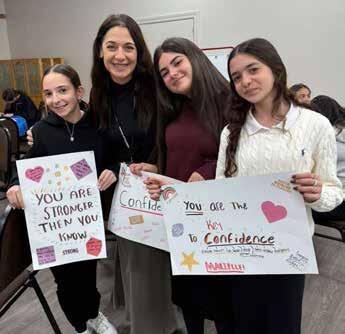
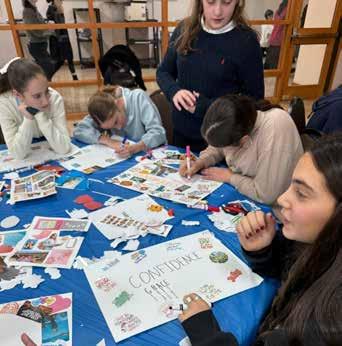
for
Every patient is paired with a case manager who coordinates care, removes obstacles, and stays with the family through the entire journey.
Individual and family therapy with clinicians who specialize in eating disorders. Treatment addresses the underlying drivers, not just the surface behaviors, and is tailored to the patient’s age and stage.
Registered dietitians work alongside the therapy team to rebuild a healthy, sustainable relationship with food, at a pace that respects what the patient is ready for.
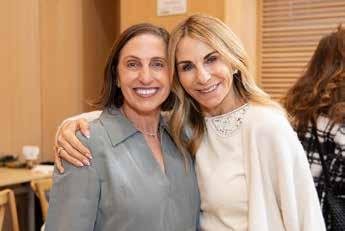
center are Sally
CPC ELI-MP,
Liat Dahan, Director of Community Education,
and
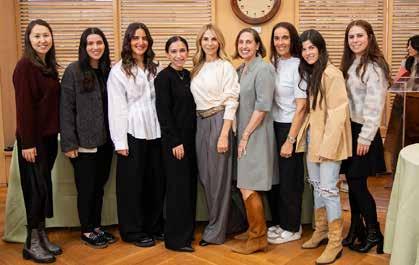
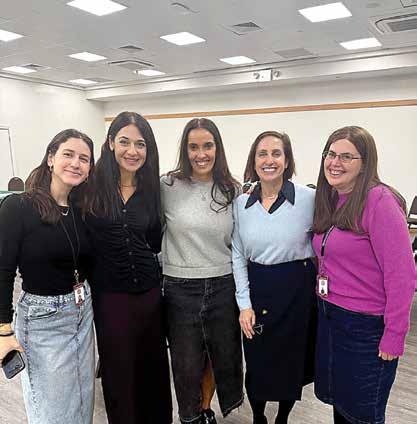
L to R: Ulzhan Yeshengazina, Director of the Mindful Eating Project (MEP), Odette Franco, MEP committee member, Roberta Saban, LCSW, MEP committee member, Milana Hazan, COO, The Safe Foundation, Michelle Haddad, MEP co-founder, Sari Dana, Body Positive Coach and MEP committee member, Liat Dahan, Director of Community Education, Project SAFE, Lauren Jemal Setton, MEP committee member, Rachelle Heinemann, LMHC, LPC, CEDS, event panelist.
When outpatient treatment isn’t enough, we help families access and navigate higher levels of care, and MEP stays involved throughout, so no one falls through the cracks during transitions.
The goal is bigger than any single appointment: to equip the patient and the people who love them with the tools, language, and support they need to navigate this for the rest of their lives. Recovery is not a single moment. It’s a long road, and MEP’s mission is to make sure no family walks it alone.

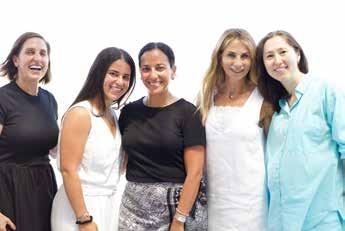
L to R: Event panelist Sari Dana, Body Positive Coach, moderator Bonnie Tawil, MEP committee member, event panelist Norma Saff, RD, Michelle Haddad, MEP co-founder, and Ulzhan Yeshengazina, Director of the Mindful Eating Project (MEP).
Everything is 100% confidential. You can call MEP at any time, and your information will be handled with the highest degree of discretion. Many of the people who reach out to MEP have not yet told a parent or a spouse. MEP takes great care to provide its clients with an environment that is a safe space where someone can begin to navigate treatment with full autonomy, privacy, and respect.
Treatment is only part of the picture. MEP also invests heavily in prevention and education, bringing the conversation into schools, homes, and community spaces where it used to be off-limits. Recent programming has included an Instagram Live with endocrinologist Maurice Mosseri and therapist Roberta Saban, LCSW, on body image and the cultural impact of weight loss medications, and an inperson panel with Laura Shammah, MS, RDN, and Rachelle Heinemann, LMHC, LPC, CEDS, on what these medications mean for growing bodies.
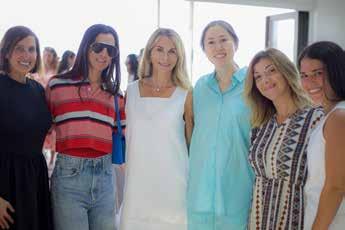
Sari Dana, Body Positive Coach, with Lorayne Shehebar and Michelle Haddad, MEP co-founders as well as Ulzhan Yeshengazina, Director of the Mindful Eating Project (MEP), Larisa Manouilovitch, Director of Marketing, The Safe Foundation, and Bonnie Tawil, MEP committee member and event moderator.
In schools, MEP’s partnership with Project SAFE continues to expand. In April 2026, MEP launched the Sari Dana Body Positive Online Program, giving students participating in Project SAFE schools free access to resources on body image, self-confidence, and selfacceptance. Other partnerships include Magen David Yeshivah on “Strong Together: Building Healthy Body Image,” a mother-daughter event, and Hillel Yeshiva on a community program focused on body image and parenting. Looking ahead, a summer 2026 community awareness event, expanded school programming, parent education, and digital campaigns will all tie into the new clinic.
The cultural shift this work represents is real. Where there was once stigma, there is openness. Where there was once isolation, there is connection. And where there was once silence, there is now a number to call.
If you’re concerned that you or a loved one may be struggling with an eating disorder, call The Mindful Eating Project at (718) 336-6363. Every call is confidential.




RABBI MEYER LANIADO
MOST OF US HAVE BEEN IN CONVERSATIONS THAT START AS AN EXPRESSION OF PAIN AND THEN TURN INTO SOMETHING MORE TROUBLING. A PERSON IS FRUSTRATED, WOUNDED, AND TRYING TO MAKE SENSE OF WHAT HAPPENED. BUT SOMETIMES THE LANGUAGE BECOMES SHARPER AS REPUTATIONS ARE DISSECTED AND OLD GRIEVANCES ARE REVISITED.
At a certain point, it no longer sounds like an attempt at finding a resolution. It sounds like a claim of authority to define another person’s life, choices, and failures. What is most unsettling to me in conversations such as these is the sense that the speaker feels entitled to stand above another person and pronounce judgment.
We often think lashon hara begins with what someone else did wrong. But often it begins somewhere else: in the desire to stand above another person and look down on them in judgment.
King David captures this posture when he gives voice to the lashon hara speaker’s inner thoughts: “With our tongues we will prevail. Our lips are with us. Who is master over us?” (Tehillim 12:5). In the phrase lilshonenu nagbir, the tongue becomes a kind of gibor, a weapon used to overpower. And in sefatenu itanu, “our lips are with us,” speech becomes something we imagine belongs entirely to us: to define, diminish, and control others. Beneath it all lies the deeper assumption: mi adon lanu, who can tell us what we may or may not say?
That is why the Gemara states that one who speaks lashon hara is as if he denies the fundamental principle of
faith, ke’ilu kafar ba’ikar (Arakhin 15b). Not because he stands up and says, “I do not believe in G-D.” But because he acts as if no one, not even G-D, has a claim over how he utilizes his gift of speech.
This is also one of the oldest temptations, one we find in the Garden of Eden. The serpent lures Adam and Eve with a single phrase: vihyitem k’Elokim yod’ei tov vara, “you will be like Elokim, knowing good and evil.” As Maimonides explains, Elokim here means judges or rulers: those who decide. The temptation was not simply to know more, but to become the one who determines good and bad, proper and improper (Moreh Nevukhim 1:2). Lashon hara is that same temptation: a person reaching for the authority to declare this action good, that one shameful, as though that judgment were theirs to render.
This helps explain one of the strangest appearances of tzara’at in Tanakh. We are used to associating tzara’at with lashon hara, as the Torah in Devarim connects tzara’at with the story of Miriam (Devarim 24:8-9). Yet one of the most striking cases in Tanakh involves King Uzziah, where no lashon hara appears at all. King Uzziah brazenly entered the Beit HaMikdash to perform a service that was prescribed exclusively for the kohanim. And so, the Kohen





Azariah approached him with eighty brave kohanim, and stood before the king and said: lo lekha Uzziah, “this is not for you, Uzziah” (Divrei HaYamim 2 26:18).
King Uzziah immediately becomes visibly enraged, and from that rage, vehaTzara’at zarha bemitzho, the tzara’at arose on his forehead. His self-perception and entitlement, the assumption that no boundary applied to him, burst forth for all to see (Divrei HaYamim 2 26:19).
One can almost hear Uzziah’s inner voice saying: the mi adon lanu of Tehillim, who is master over me? Who are these kohanim to stop me? I defeated enemies, fortified our city, and built an army of hundreds of thousands. Who are they to tell me no?
The Uzziah case is not a sole outlier. In discussing the cause of Tzara’at, the Gemara in Arakhin lists several reasons for this affliction, including arrogance (as we saw with Uzziah), murder, and theft (Arakhin 16a). At their root, these share a common posture: a person sees himself as the decider over another person’s life, property, or dignity. With murder, a person sees it as their prerogative to decide when to end another’s life, and with theft, a person decides that what belongs to another belongs to them. Similarly, lashon hara is when a person assumes the right to define someone else, to shape how they are seen, and to decide what their actions mean.
The affliction of Tzara’at and its healing process address this directly. The person stricken by tzara’at must stand before the kohen and be seen. The one who decided how everyone else should be viewed must now wait for the kohen to determine how he will be viewed. He cannot declare himself pure or impure; his status must be determined by someone else. And then, he must announce to others who pass by, out loud: “I am impure, I am impure.” And when he calls out “I am impure,” he is not merely warning others to keep their distance. Whether his tzara’at came from arrogance, from lashon hara, from theft, or
from any of the other causes the Gemara lists, the declaration is the same. There is a Master above me. My status is His to determine, not mine. Before Him, I stand.
Lashon hara is often, at its core, not about the person being spoken about. It is about the speaker and where they imagined themself standing: above another person, above their choices, above their story. Speech becomes a mirror of that inner posture. It reveals not only what I think of someone else, but where I think I stand in relation to them.
That is why the healing is done with cedar and hyssop. As Rashi explains: “let him abandon his pride, and regard himself lowly… as a hyssop” (Rashi to Vayikra 14:4). Tzara’at came from arrogance, and thus the remedy is to lower oneself from the cedar, the tall tree standing above everyone else, and to recognize where they actually stand, like the hyssop plant, low to the ground, not above others, and not entitled to pass judgment over them.
It is not only a question about harm done to another person. It is also a question of self-understanding: “Who do I think I am when I say it?” The posture of mi adon lanu is the posture of a person who has forgotten that both he and his speech have a Master.
Before we speak, we need to hear the words Uzziah could not bear: lo lekha, this is not for you. It is not your story to author or judge. The antidote to mi adon lanu is remembering who the real Adon is. We are not Elokim yode’ei tov vera, judges appointed to stand above another person’s life and pronounce what it means. Only G-D is, and before Him, we all stand.


AT A MOMENT WHEN MUCH OF ORGANIZED JEWISH LIFE SEEMS PREOCCUPIED WITH FINDING EVER NEWER WAYS TO MAKE JUDAISM MORE RELEVANT, AN UNEXPECTED VOICE REMINDED JEWS OF A FAR OLDER TRUTH. IN A WHITE HOUSE PROCLAMATION MARKING JEWISH AMERICAN HERITAGE MONTH AND AMERICA’S 250TH ANNIVERSARY, PRESIDENT DONALD TRUMP CALLED ON AMERICANS TO CELEBRATE FAITH AND FREEDOM, “ESPECIALLY ON SHABBAT.” IN A SINGLE SENTENCE, THE PRESIDENT DID WHAT MANY JEWISH INSTITUTIONS HAVE HESITATED TO DO. HE PLACED THE MOST ENDURING INSTITUTION IN JEWISH LIFE BACK AT THE CENTER OF THE CONVERSATION.
That formulation was striking not merely because it came from the White House, but because it touched a central question confronting Jewish communities throughout the Diaspora. How does a people that has survived exile, persecution, and assimilation preserve its distinct identity in an age of unprecedented comfort and freedom? The answer has never been complicated. Long before there were federations, advocacy groups, and continuity conferences, there was Shabbat.
Ahad Ha’am famously observed that “more than the Jews have kept Shabbat, Shabbat has kept the Jews.” The
aphorism has endured because it captures a historical reality. For thousands of years, Shabbat has served as the Jewish people’s weekly declaration that their lives are ordered by something greater than commerce, politics, and the relentless pressures of the surrounding culture. It sanctifies time, strengthens family, and creates a recurring encounter with faith and community. In every generation, it has functioned as Judaism’s most effective and democratic institution.
Yet in recent years, even this cornerstone has at times been treated as negotiable. In some circles, traditional observance is portrayed as burdensome or antiquated, while
institutional energy is directed toward making Jewish identity less demanding and more easily assimilated into prevailing cultural norms. The assumption underlying many of these efforts is that continuity depends on reducing the distinct obligations that have historically sustained Jewish life.
The White House proclamation suggested the opposite. By singling out Shabbat in the context of America’s 250th anniversary, the president linked Jewish tradition to the broader American ideals of faith, family, and liberty. Whether intentional or not, the message was unmistakable. The practices that preserved Jewish identity for millennia are not obstacles to modern life. They are among its greatest civilizational assets.

That insight prompted me to launch a simple grassroots initiative called 250Shabbat, encouraging Jews to honor America’s semiquincentennial by strengthening their observance of Shabbat. What began as a modest effort quickly spread far beyond anything I anticipated. Communities across the United States, South Africa, Panama, and elsewhere joined organically. Rabbis, educators, and community leaders began translating materials, creating their own graphics, and sharing the initiative through WhatsApp groups and social media. Discussions are now underway to involve senior figures, including the Prime Minister of Israel.
The rapid response revealed something important. Beneath the noise of modern Jewish life lies a deep and often unspoken hunger for authentic connection. Many Jews are not searching for a diluted identity tailored to contemporary sensibilities. They are searching for rootedness. They want a practice that imposes meaning, creates sacred boundaries, and links them to generations past and future.
That is why the growth of this initiative matters. Its signifi-
cance lies not in the mechanics of a WhatsApp group or an Instagram account, but in what ordinary Jews recognized almost instinctively. The surest answer to Jewish continuity is not another branding campaign or institutional reinvention. It is the weekly return to a covenant that has already proven its power across centuries.
The lesson extends beyond the Jewish community. In an era marked by fragmentation, loneliness, and cultural exhaustion, Shabbat offers a countercultural model grounded in rest, family, faith, and gratitude. It reminds both Jews and non-Jews that freedom is not merely the absence of restraint, but the ability to sanctify time and order life around enduring values.
The most striking aspect of this story is that it did not begin in a synagogue or a boardroom. It began with one sentence in a presidential proclamation. That sentence resonated because it articulated a truth many had forgotten but were ready to hear. The institutions that preserve civilizations are often ancient, demanding, and profoundly simple.
For the Jewish people, no institution has done more to ensure survival than Shabbat. At a time when so many are searching for new formulas to secure the future, the overwhelming response to 250Shabbat offers a more sobering and hopeful conclusion. The strongest path forward may not require inventing something new. It may require returning, with renewed seriousness and gratitude, to the gift that sustained us all along.






MOST FAMILIES DON’T LOSE WEALTH BECAUSE THEY FAILED TO WORK HARD, SAVE DILIGENTLY, OR INVEST WISELY. THEY LOSE IT QUIETLY, THROUGH OUTDATED DOCUMENTS, OVERLOOKED DETAILS, AND DECISIONS THAT SEEMED HARMLESS AT THE TIME.
Estate planning is often treated like a one-time task: sign the paperwork, put it in a drawer, and move on.
But life changes. Families evolve. Tax laws shift. And strategies that once made perfect sense can slowly become expensive mistakes. The truth is, some of the biggest financial problems families face happen long before anyone realizes there’s an issue. The challenge is that estate planning rarely fails all at once. It usually unravels piece by piece, one beneficiary form here, one deed change there, one forgotten account left untouched for years. By the time families discover the problem, the opportunity to fix it may already be gone.
One of the most common estate planning mistakes starts with good intentions. Parents want to make things easier for their children, so they add them to the deed of a home or property. On paper, it sounds logical. The thinking is often: “This will help avoid probate later.” But what many
families do not realize is that avoiding probate is only one piece of the equation.
When someone inherits property after death, they generally receive what is called a stepped-up basis. In simple terms, the property’s tax basis resets to the market value at the time of death. That reset can save heirs tens or even hundreds of thousands of dollars in capital gains taxes.
For example, imagine parents purchased a home decades ago for $40,000, and today the property is worth $450,000. If the children inherit the home properly through the estate, the basis may reset close to the current value. If the property is sold shortly afterward, there may be little to no taxable gain.
But if the child was added to the deed years earlier, the IRS may treat that transfer as a gift instead. That means the child could inherit the original $40,000 basis instead of the updated value. Suddenly, a future sale may create taxes on more than $400,000 of appreciation. And the tax issue is only part of the risk. Adding a child to a deed can also expose the property to that child’s creditors, lawsuits,


or divorce proceedings. It may even reduce the parents’ control over the property itself. What looked like a shortcut can quietly become a financial liability.
Another costly mistake often hides in plain sight. Many people assume their will controls where all their assets go after death. Unfortunately, that is not always true. Retirement accounts, IRAs, annuities, and life insurance policies typically pass according to the beneficiary forms on file, not according to the will.
That creates a dangerous problem when beneficiary forms are never updated. An ex-spouse may still be listed years after a divorce. A deceased relative might remain on the paperwork. In some cases, no beneficiary is listed at all, causing the account to default to the estate.
Families are often shocked to learn that a single outdated form can completely override the intentions written elsewhere in the estate plan. The reason this happens is simple: life moves faster than paperwork. People get married. Families grow. Relationships change. Accounts move between firms. Yet beneficiary forms often sit untouched for decades. What makes this especially painful is that these mistakes are usually discovered during moments of grief, when families are already overwhelmed emotionally. A fifteen minute review every few years can prevent years of legal complications later.
Perhaps the most misunderstood part of estate planning is the trust itself. Families spend time creating revocable trusts. Attorneys prepare documents. The binder gets organized. Everyone feels relieved knowing the plan is “done.” Except sometimes the trust never actually receives ownership of the assets.
The house remains titled individually. Brokerage accounts stay outside the trust. Bank accounts never get
updated. So when the trust is finally needed, it technically owns nothing. This process is known as trust funding, and it is one of the most overlooked steps in estate planning. The documents alone are not the strategy. The implementation is the strategy.
A beautifully drafted trust that was never funded may still leave assets exposed to probate, delays, unnecessary legal costs, and confusion among heirs.
The biggest misconception in estate planning is believing each decision exists independently. It doesn’t. The deed affects the tax strategy. The beneficiary forms affect asset distribution. The trust affects probate. The account titling affects all of it.
That is why estate planning should not be viewed as a one-time event. It should be reviewed periodically as part of an overall financial system. The families who tend to avoid major estate planning mistakes are usually not the families with the most complex legal documents. They are the families who periodically pause and ask a simple question: “Does all of this still work together?” Because protecting wealth is not only about growing assets. It is about making sure the people you love are not left dealing with preventable problems later.
This article is for informational and educational purposes only and should not be considered legal, tax, or investment advice. Estate planning strategies should be reviewed with qualified legal, tax, and financial professionals based on your individual circumstances.
Ari Baum, CFP® is the Founder and CEO of Endurance Wealth Partners, with over 25 years of experience in the Financial Services industry. He brings his in-depth experience to Conceive. Believe. Achieve. for his clients. Securities and Advisory services offered through Prospera Financial Services Inc. Member FINRA/SIPC. Brokerage and Advisory accounts carried by Wells Fargo Clearing Services LLC.
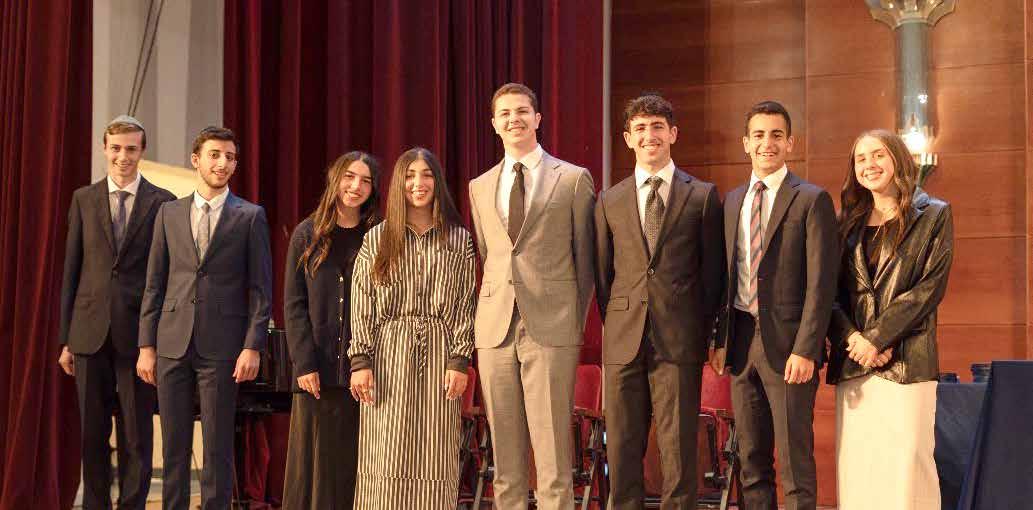
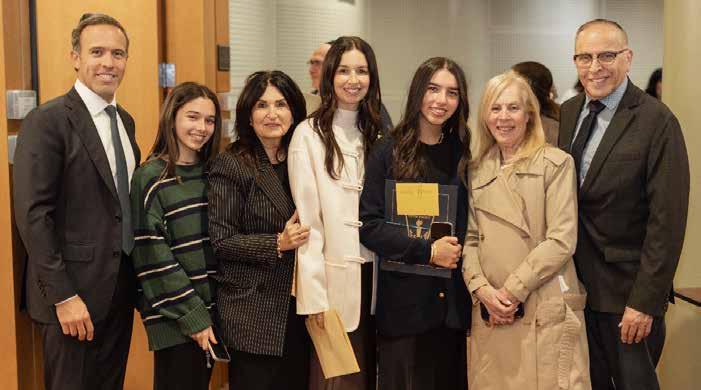
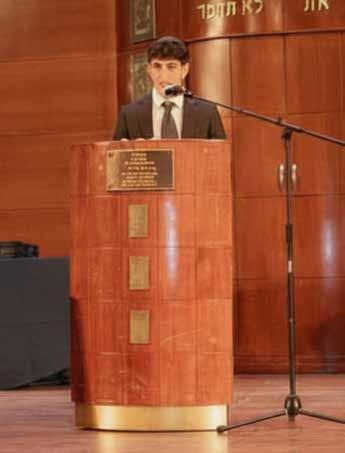
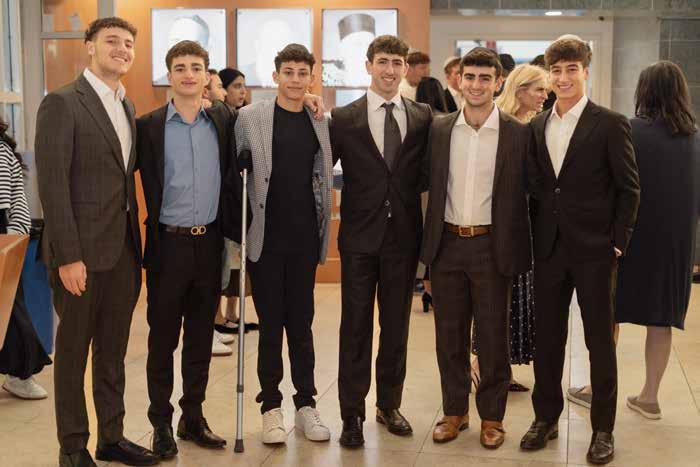
MAGEN DAVID YESHIVAH HIGH SCHOOL CELEBRATED ITS ANNUAL CELEBRATION OF EXCELLENCE, AN EVENING DEDICATED TO HONORING THE ACHIEVEMENTS, CHARACTER, AND LEADERSHIP OF OUR STUDENTS. THE PROGRAM FEATURED INSPIRING WORDS FROM JUNIOR CLASS STUDENT LEADERS, BEGINNING WITH MAX YEDID, WHO WAS RECOGNIZED AS STUDENT OF THE YEAR, FOLLOWED BY JOYCE ASHKENAZI, WHO DELIVERED A POWERFUL PRESIDENTIAL ADDRESS CENTERED ON THE PURSUIT OF EXCELLENCE.
In a speech that resonated deeply with all in attendance, Max reflected not on the title he received, but on the environment that shaped him. “Standing here tonight feels surreal… not because of the title ‘Student of the Year,’ but because I’ve had the privilege of growing up in a place that shaped who I am,” he shared. Describing MDYHS as more than just a school, he added, “MDY didn’t just educate me. It raised me.”
Max spoke about the opportunities that pushed him beyond his comfort zone, highlighting a transformative experience representing MDYHS at the World Zionist Jewish Youth Congress in Budapest. There, he witnessed firsthand how one individual can impact others, recalling how encouraging peers to put on tefillin led to a ripple effect across the world.“ The confidence to step forward, the pride in misvot, the comfort in my
identity, that was planted in me here, in these walls,” he said.
His message to his peers was clear: growth requires effort and intention. Challenging students to reach beyond what feels comfortable, he reminded them that “most people don’t fail… they just don’t go all the way,” urging everyone not to settle for “almost,” but instead to “go all in.”
Building on that message, Joyce Ashkenazi challenged the audience to reflect on what truly drives success. “Excellence is not only about achieving perfection, but about pushing ourselves to do more, to dream bigger, and to strive beyond what’s expected of us,” she said. Emphasizing that real growth happens outside of one’s comfort zone, she explained that while perfection may be unattainable, “the pursuit pushes us forward,” developing the inner drive that fuels continuous improvement.
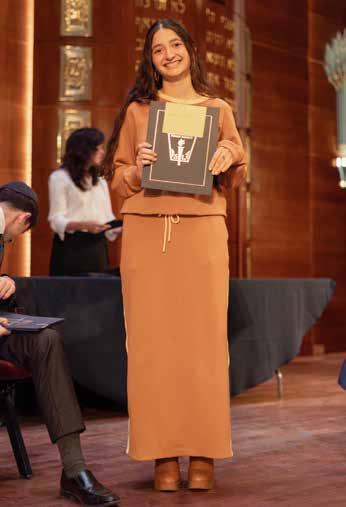




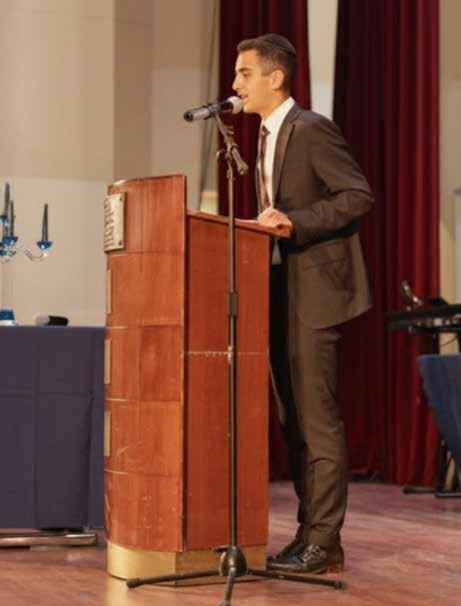
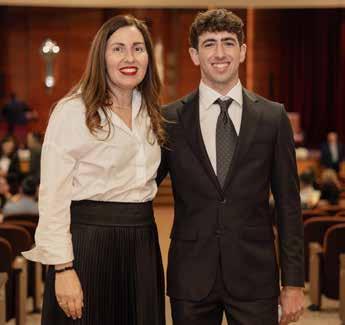
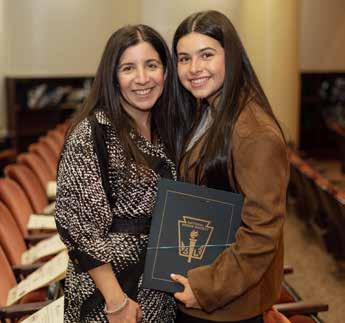
Joyce highlighted that excellence is not something we are simply born with, but something we build through effort, grit, and perseverance. Using the metaphor that each person has “a pile of firewood within them,” she challenged students to decide whether they are willing to “strike the match and ignite the fire.” Reflecting on her own journey, she shared that this spark was ignited at MDYHS, where the support and belief of teachers and peers empowered her to grow beyond what she once thought possible.
A signature moment of the evening was the candlelighting ceremony, led by Vice President David Abadi, with students representing the core tenets of the National Honor Society: Torah (Aaron Farhi), Scholarship (David Tawil), Character (Jack Franco), Service (Estelle Schemo), and Leadership (Sarah Hasbani), each bringing these values to life in a meaningful way.

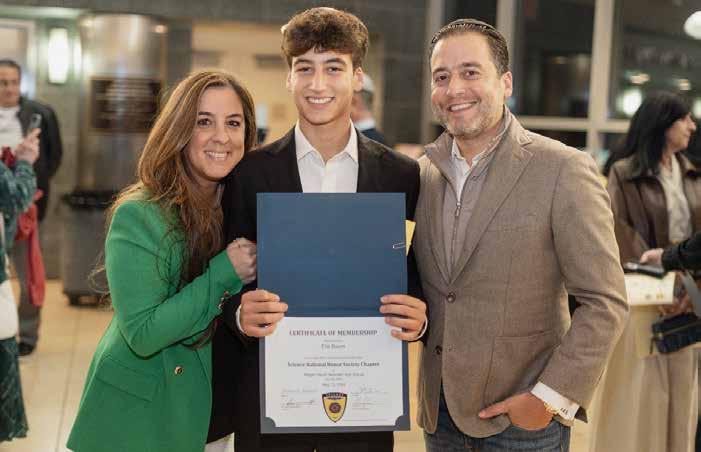
The evening culminated in the induction of our newest members into the National Honor Society, Kavod Chapter, presented by Dr. Daniel Vitow, and led by Rabbi David Elnadav and Mrs. Stephanie Shamah, followed by the administration of the pledge by Mrs. Audrey Abade.
Throughout the evening, student artwork from the MDYHS art program, under the guidance of Mrs. Jennifer Cabasso, was proudly displayed, showcasing the creativity and talent of our students.
The program was a powerful reflection of what defines an MDYHS education, not only academic achievement, but the cultivation of drive, identity, and purpose. As both Max and Joyce so clearly expressed, excellence is not a destination, but a pursuit, one that challenges our students to stretch higher, push further, and become the very best versions of themselves.
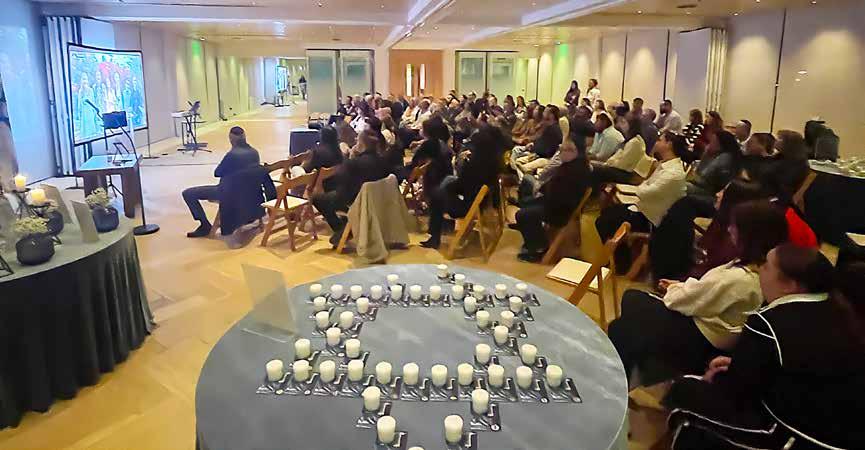
DSN MARKED TWO DEEPLY MEANINGFUL OCCASIONS WITH HEARTFELT COMMUNITY-WIDE EVENTS HONORING BOTH YOM HAZIKARON AND YOM HA’ATZMAUT. THROUGH REMEMBRANCE, UNITY, CELEBRATION, AND PRAYERS FOR ISRAEL, COMMUNITY MEMBERS GATHERED TO COMMEMORATE THESE IMPORTANT DAYS.
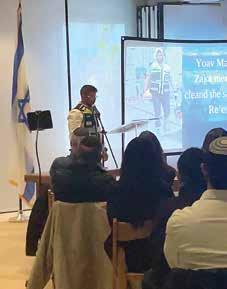
Yom Hazikaron was observed on Monday, April 20 at the DSN Beach Club, where nearly 200 attendees came together for a powerful and emotional evening dedicated to remembering Israel’s fallen soldiers and victims of terrorist attacks. The event was organized with the help of dedicated volunteers including Ayelet Maman, Yoav Maman, Ilay Maman, Yael and Tomer Ohayon, Daniella Benun, Adi Bersano, and injured IDF soldier Tamir Dudi.
Guests heard moving remarks from a ZAKA volunteer on October 7th, sharing firsthand experiences from the tragic scenes he witnessed and spoke candidly about the emotional journey of healing. IDF soldier Tamir Dudi also addressed the audience, reflecting on the many friends and fellow soldiers he lost during his service. He reminded attendees that every fallen soldier was more than a name, they were fathers, mothers, sons, daughters, brothers, sisters, and heroes deeply loved by those around them.
Rabbi Joseph Dana and Rabbi David Tawil led heartfelt prayers for Israel’s soldiers and recited Yizkor memorial prayers. The evening concluded with attendees lighting memorial candles and singing an especially emotional rendition of Hatikva, Israel’s national anthem. Each participant was given a memorial candle bearing the name of a fallen soldier to light again at home, continuing the remembrance beyond the evening itself.
DSN Event Coordinator Jennifer Sasson reflected on the significance of the gathering, saying, “Yom Hazikaron was a night filled with such meaning for our community. Everyone came together to remember those who have fallen. It was a night filled with incredible depth, unity, and meaning.”
Just two days later, on Wednesday, April 22, the community shifted from solemn remembrance to joyful celebration as the DSN Community Center hosted a vibrant Yom Ha’atzmaut family event attended by over 1,000 people.
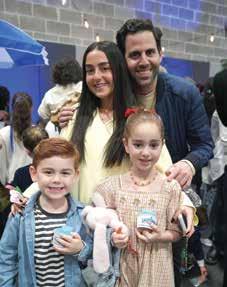
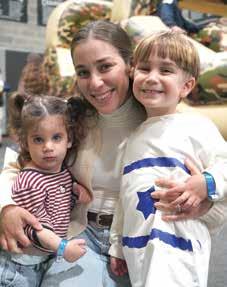
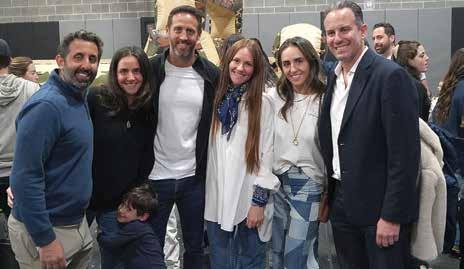
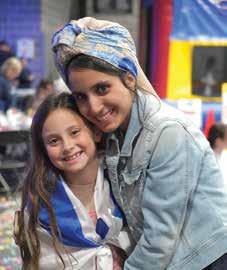


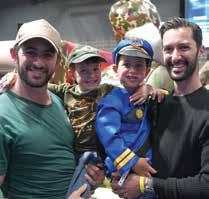

The gymnasium was transformed into a lively Israeli-inspired street fair, complete with a mock shuk, marketplace, festive music, food attractions, and interactive activities for children and families.
The event was made possible through the hard work and dedication of volunteers, including Honey Dayan and Jacqueline Musry. The celebration was held in memory of Jacqueline’s father-in-law, Maurice Musry a”h, whose life was deeply dedicated to Israel and whose love and passion for Israel left a lasting impact on all who knew him.
Guests enjoyed dinner by Nicole’s Kitchen, along with favorite treats from Lighthouse and Sylvia’s Candy. DJ Shatz kept the energy high as attendees danced proudly with Israeli flags waving in the air. Children enjoyed armythemed inflatable attractions and participated in a meaningful activity by writing letters to IDF soldiers.
Frieda Shamah, DSN Youth Director, shared, “Seeing our community come together to celebrate Israel with such incredible energy, pride, and unity was beyond anything we
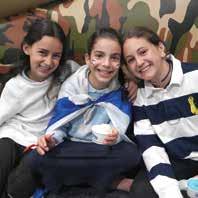
imagined. The overwhelming love and support for Israel could be felt throughout the entire event, making the night truly unforgettable.”
Jacqueline Musry reflected on the evening, saying, “Yom Ha’atzmaut this year was one of our best yet. Seeing everyone coming together to celebrate the State of Israel brought me to tears. It was true achdut, unity! Different schools, shuls, and area codes didn’t matter, we were all there together, united in happiness and pride, celebrating the Land of Israel and Am Yisrael, the people of Israel. It was an event I will never forget.”
DSN’s Executive Director Sammy Sitt summarized the impact of the two events. “These events beautifully reflected our community’s deep connection to Israel, first by honoring those who made the ultimate sacrifice, and then by celebrating the miracle of a Jewish state. I am proud that DSN continues to stand at the forefront of Israel-related programming, which remains an integral part of our mission.”
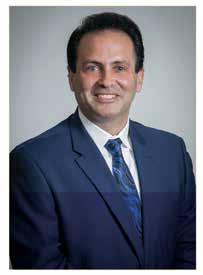
EDDIE ESSES AND SARI SETTON
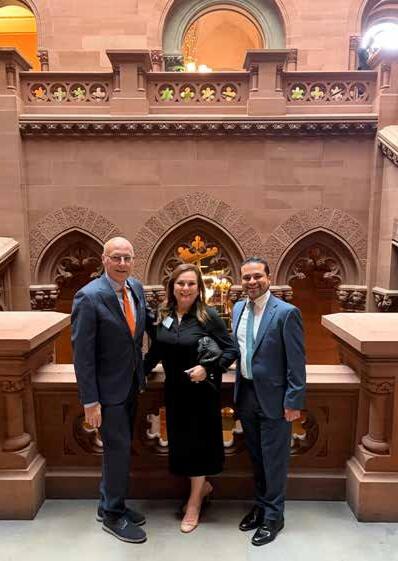
FOR DECADES, LINDA EBANI HAS QUIETLY BUT POWERFULLY HELPED SHAPE THE CIVIC FABRIC OF SOUTH BROOKLYN. A LIFELONG BROOKLYN RESIDENT, LINDA HAS BECOME SYNONYMOUS WITH GRASSROOTS LEADERSHIP, NEIGHBORHOOD REVITALIZATION, AND CIVIC ENGAGEMENT, A TRUSTED COMMUNITY ADVOCATE WHOSE WORK HAS TOUCHED THOUSANDS OF LIVES ACROSS THE COMMUNITY.
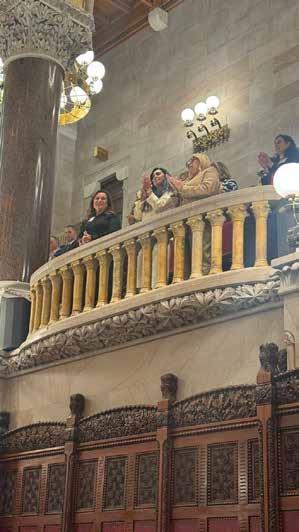
That dedication was recognized in a major way recently when New York State Senator Sam Sutton honored Linda as a Woman of Distinction on the floor of the New York State Senate in Albany. Surrounded by supporters, community leaders, and members of the Senator’s team, Linda received one of the state’s most meaningful recognitions for community leadership and public service.
“Today, I had the immense pleasure to recognize and honor our very own Linda Ebani as a Woman of Distinction on the floor of the New York State Senate,” the Senator said in a statement. “Linda’s nomination as a Woman of Distinction is a fitting tribute to her decades of visionary leadership, tireless service, and unwavering dedication to the people of Brooklyn. Her legacy of empowerment, civic engagement, and community stewardship continues to inspire others and exemplifies the profound impact of committed grassroots leadership.”
The honor reflected not only years of visible accomplishments, but a lifetime commitment to improving the neighborhoods Linda proudly calls home.
As a founder and leading force behind the Kings Highway Beautification Association, Linda helped create an organization that transformed the appearance and vitality of one of Brooklyn’s most important commercial corridors.
What began as a focused effort to improve Kings Highway evolved into a broader movement that is now working to revitalize retail corridors throughout the surrounding community. Through collaboration with local businesses, residents, and elected officials, the organization successfully secured millions of dollars in funding for beautification projects, infrastructure improvements, parks, and public spaces.
Under Linda’s leadership, Kings Highway has also seen dramatic improvements in cleanliness, landscaping, lighting, and overall neighborhood appearance, helping restore civic pride and strengthen local commerce. The organization’s impact eventually expanded well beyond Kings Highway itself, bringing similar enhancements to additional major shopping and retail corridors across our

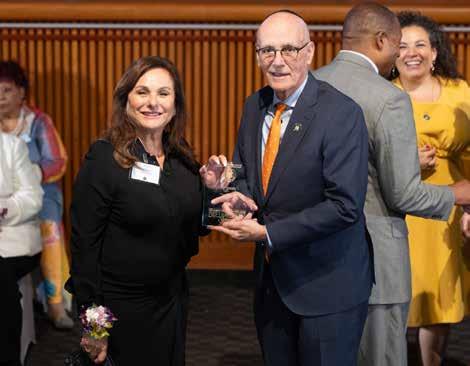
community. One of the most significant achievements connected to Linda’s advocacy was securing critical funding for the McDonald Avenue Playground, transforming it into a modern, welcoming recreational space for local children and families. The project became a symbol of her belief that strong communities are built around safe, vibrant public spaces and the impact that engaging civically with our elected officials can have.
While Linda’s work on beautification projects has reshaped the physical landscape of Brooklyn neighborhoods, her civic engagement efforts have reshaped the community politically as well.
A steadfast believer in democratic participation, Linda spent years organizing and leading large-scale voter registration initiatives designed to empower underrepresented residents and encourage civic involvement. As Chair and organizer of a volunteer committee of more than 40 women, she helped build a grassroots network that registered many thousands of new voters throughout the community.
Those efforts did not stop at registration drives. Linda and her teams also worked tirelessly on voter outreach and turnout operations during election seasons, helping mobilize residents and ensuring community voices were heard at the ballot box.
Her ability to bring together volunteers, community groups, and civic leaders has earned her widespread
respect throughout South Brooklyn and established her as one of the most effective grassroots organizers.
The Women of Distinction recognition in Albany served as a fitting tribute to Linda’s decades of service and leadership.
Senator Sutton was honored to formally recognize Linda’s contributions in the State Senate and highlighted her impact on South Brooklyn communities. Joey Saban, the Senator’s Chief of Staff, helped arrange and coordinate the recognition, helping ensure that Linda’s years of dedication received the statewide acknowledgment they deserved.
For many in our community who know Linda, the honor came as no surprise. Her legacy is visible across the community: in revitalized streets and parks, in stronger civic participation, and in the thousands of residents she inspired to become more engaged in their community.
More than anything, Linda Ebani’s story is one of grassroots leadership at its finest: neighbors helping neighbors, block by block, voter by voter, and community by community.

PARENTS, ADULT CHILDREN, GRANDCHILDREN, SIBLINGS, COUSINS, AND IN-LAWS MAY SHARE A SUMMER HOME, A BUNGALOW, A HOTEL SUITE, OR A VACATION RENTAL. THE HOPE IS SIMPLE. MORE TIME TOGETHER, MORE MEMORIES, MORE CONNECTION. BUT WHEN DIFFERENT ROUTINES, BUDGETS, PARENTING STYLES, AND PERSONALITIES MEET UNDER ONE ROOF OR ON ONE TRIP, TENSION CAN BUILD QUICKLY.
Family time works best when people understand the setting. Moving in together for the summer is one kind of challenge. Traveling together is another. Both can be meaningful, but each requires planning, patience, and a little humility from everyone involved. When extended family moves in together, the pressure usually comes from daily life. A house that feels relaxed to one person may feel crowded to another. One family wakes early. Another sleeps late. One parent wants children outside all day. Another needs quiet time for a baby to nap. One person expects shared meals every night. Someone else thought the arrangement would be more casual.
The best time to avoid resentment is before everyone settles in. Families should talk about the basics early. Who is paying for groceries? Who is cooking? Is there cleaning help, and who is covering it? Are guests allowed to come for meals, Shabbat, or overnight stays? Which rooms are private? These conversations may feel uncomfortable, but unclear expectations usually create more discomfort later. A summer home may feel informal, but it is still someone’s home. Adult children should not assume every cabinet, closet, refrigerator shelf, or bedroom is open. They should ask before inviting guests, replace supplies they use, and offer to contribute toward food, cleaning, or house-










hold costs. Even when the host refuses the money, the offer shows respect.
Hosts also need to make space for the adults their children have become. Married children and young families may have routines of their own. They may parent differently, keep different hours, or need time alone. Advice may come from love, but too much advice can feel like criticism. A safety issue should be addressed. A different snack choice or bedtime routine may not need a comment.
The kitchen is often where summer tension shows up first. Food touches everything. Children’s schedules, budgets, diets, cleanliness, and family habits all meet there. A practical plan helps. Families can assign meals, divide shelf space, label food when needed, and agree that everyone cleans up after themselves. No one should feel like the unpaid housekeeper while everyone else is on vacation.
Children add joy to a shared summer home, but they also add noise, mess, and conflict. Cousins may love being together and still fight over toys, snacks, rooms, and attention. Adults should avoid comparing children. Comments about who behaves better, eats better, listens faster, or helps more can sting. Children hear those remarks, and so do their parents.
Space is not a sign of distance. It is often what allows closeness to continue. Not every meal, errand, swim, walk, or outing needs to include the whole family. Some people recharge by talking. Others need quiet. Children need rest. Adults need privacy. A few hours apart can make the next few hours together much warmer.
Traveling together brings a different kind of pressure. A family trip can sound simple while everyone is planning from home. Once flights, hotels, rental cars, restaurant reservations, tickets, tired children, and weather delays enter the picture, small differences can become big frustrations.
Before booking, families should be honest about the kind of trip they want. Some people want a quiet vacation with late mornings and slow meals. Others want a full schedule and every major attraction covered. Neither approach is wrong, but mixing the two without discussion can create tension. A person who wants to rest may feel pushed. A person who wants activities may feel held back.
Budget should be handled clearly and respectfully. Extended families do not always have the same comfort level with spending. One family may want a nicer hotel, private transportation, and restaurant dinners. Another may need to keep costs down. The goal is not to make anyone embarrassed. The goal is to plan in a way that people can join without pressure. When one person wants an upgrade, that person can pay the difference or make a separate arrangement.
Food, transportation, and timing matter even more when children are involved. A long day may look fine on

paper, but not with toddlers, strollers, car seats, skipped naps, and hungry children. Families traveling together should plan with the least flexible person in mind, often the baby, the elderly grandparent, or the child who needs structure. When the most vulnerable person is considered, the whole group usually does better.
One of the healthiest rules for family travel is permission to skip. Not everyone has to join every dinner, tour, beach day, shopping trip, or late-night outing. Skipping an activity should not be treated as an insult. A family trip becomes easier when people can say, “That does not work for us today,” without creating drama.
In-laws may feel the pressure most. They are often entering a family system with its own jokes, habits, rules, and history. A little kindness can make a major difference. Include them in plans, but do not force closeness. Give them room to participate without feeling watched. When people feel accepted, they usually relax.
When conflict happens, it helps to keep the conversation small. One disagreement should not become a trial about every old family issue. “Can we make a plan for tomorrow morning before everyone goes to sleep?” will usually work better than a broad complaint about how the family never plans. Specific problems can be solved. Big accusations usually leave a mark.
Extended family time will rarely be perfect. It may be loud, crowded, delayed, and full of opinions. It can also become one of the memories children carry for life. They may not remember every meal or every outing, but they will remember cousins, shared rooms, late nights, grandparents, and the feeling of being part of something larger.
Getting along does not mean everyone agrees. It means people choose respect before pride, patience before reaction, and family before being right. That choice can turn a crowded summer home or a complicated family trip into something worth repeating.


WEDNESDAY, JULY







FOR TWENTY YEARS, IMAGINE ACADEMY HAS TRANSFORMED THE LIVES OF CHILDREN WITH AUTISM AND DEVELOPMENTAL DISABILITIES WHILE SUPPORTING THE FAMILIES WHO LOVE THEM. WHAT BEGAN IN 2005 AS A SMALL SCHOOL CREATED BY DETERMINED PARENTS HAS GROWN INTO ONE OF THE MOST RESPECTED NEURODIVERSE EDUCATION PROGRAMS IN NEW YORK CITY. NOW, THE SCHOOL IS PREPARING FOR ITS NEXT AND MOST IMPORTANT CHAPTER YET: A NEW BUILDING DESIGNED TO MEET THE GROWING NEEDS OF THE COMMUNITY.
Imagine Academy currently operates out of an outdated facility in Brooklyn. Every inch of space is utilized, yet the school continues to face a growing waiting list of families seeking services for their children. Leaders say the need for a larger facility has become urgent.
“Our community has outgrown the current location,” explained founder David Jemal. “A new facility would allow us to expand our programs, serve more children, and continue providing the highest level of professional care and education.”
The new building would dramatically enhance the student experience. School leaders envision a future campus featuring a full-sized gymnasium, outdoor recreation areas, expanded therapy suites, larger classrooms, dedicated sensory spaces, and a cafeteria with a teaching kitchen, all of which would allow Imagine to serve even more students
and families. Plans also include expanded after-school services, vocational training opportunities, and programs for students over age 21.
Assistant Principal Raquel Savdie emphasized how important the environment is to education. “We are bursting at the seams,” she said. “A larger, purpose-built space would allow our students to thrive socially, emotionally, and academically in ways we simply cannot accommodate right now.”
What started as a dream among a small group of parents has become a lifeline for countless families. With a new building, Imagine Academy hopes to continue creating happy minds and bright futures for generations to come.
For more information about our new building or available naming opportunities, please contact Elisa Chrem at echrem@imagineacademy.com or 718-376-8882, ext. 127.

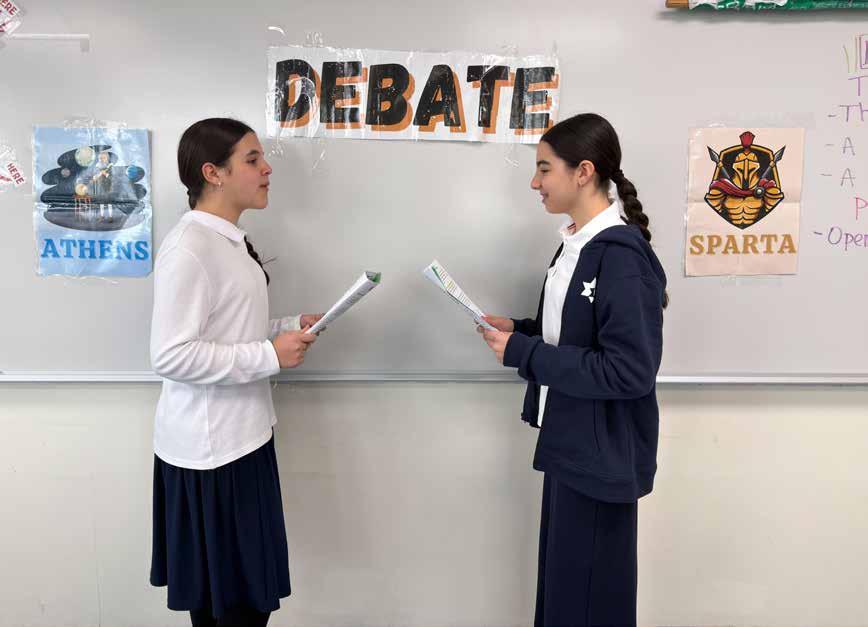
IN THE BUSTLING CLASSROOMS OF MDY, A QUIET REVOLUTION IS TAKING PLACE, ONE THAT REPLACES THE TRADITIONAL “SIT AND LISTEN” LECTURE WITH A DYNAMIC, ANCIENT PRACTICE KNOWN AS THE SOCRATIC METHOD.
Named after the Greek philosopher Socrates, this approach is essentially the art of asking instead of telling. Rather than feeding students facts to be memorized, our teachers act as guides, using a series of targeted questions to peel back the layers of a concept like an onion. This cooperative dialogue challenges students to examine their own assumptions and move past the surface of a topic.
The benefits of this method are profound. By training students not to take information at face value, we help them
develop sharp critical thinking skills. They learn to poke holes in arguments, including their own, which fosters a sense of intellectual humility. In a Socratic lesson, the goal shifts from “winning” an argument to a collective search for the truth. Furthermore, because students reach their own “aha!” moments through logic rather than being told what to think, they retain the information much longer. It even helps uncover “unconscious biases,” proving that many of our beliefs are based more on habit than on sound reasoning.


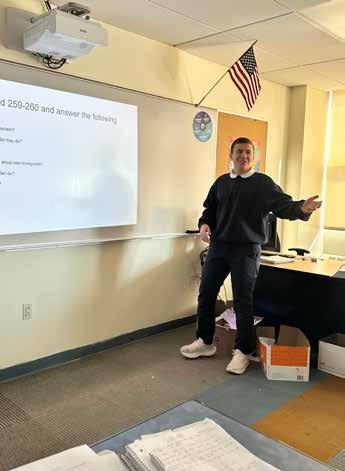

We see this in action across all middle school grade levels. In sixth grade, students didn’t just study Alexander the Great; they put him on trial, debating whether he was truly “Great” or simply a power-hungry tyrant. Meanwhile, seventh graders became historical investigators, analyzing document-based questions (DBQs) to see how factory owners and families viewed the Temperance Movement differently. Even the most difficult topics are tackled headon, such as when our eighth graders engaged in a heated debate over the heinous crimes of the communist regime and the KKK. By defending different positions, these students aren’t just learning history. They are learning how to think for themselves. At MDY, we aren’t just teaching kids what to learn; we’re teaching them how to wonder.





JOEY BAGHDADI
EVERY TUESDAY NIGHT AT FUN FEST, SOMETHING SPECIAL IS HAPPENING, AND IT’S NOT JUST THE SOUND OF PINS CRASHING. IT’S BOWL NIGHT.
What began as a simple bowling league has quickly grown into one of the most energetic, competitive, and enjoyable weekly meetups
in the SY community. Thirty-six players strong (and growing), ranging from ages 13 to over 60, lace up each week not just to bowl, but to compete, connect, and be part of something bigger than the game itself.
The spring 2026 season has perfectly captured what makes BOWL NIGHT unique. Twelve three-man teams battle through a 10-week regular season, bowling three games each Tuesday night, with only the top eight teams advancing to the playoffs. As the season entered its final weeks, each player truly realized how every frame mattered.
What truly separates the league, however, is its 85% handicap system, the great equalizer. A bowler averaging in the 80s can compete directly with someone rolling 180s and legitimately win. That structure creates rare, meaningful competition across generations and skill levels. Everyone has a chance. Everyone stays engaged. And that’s where the magic happens.
Because BOWL NIGHT isn’t really just about bowling. It’s about people. It’s fathers and sons sharing a lane, something I personally cherish each week while bowling alongside my two sons. It’s lifelong friends reconnecting,


new friendships forming, and personalities colliding in the best possible way. There’s laughter after gutter balls, celebrations after strikes, and just enough friendly trash talk to keep things entertaining. Add in our three weekly prize winners, awarded to those who bowl highest above their average, and the excitement only grows.


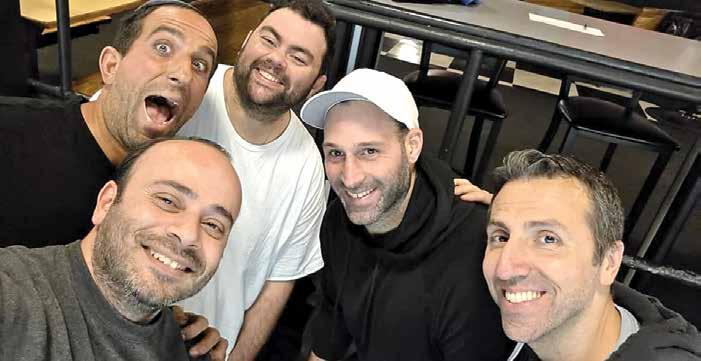
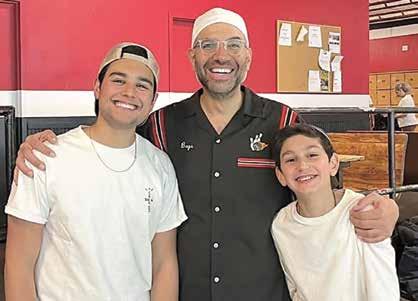
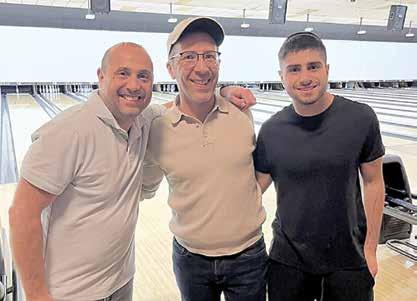
Off the lanes, the league has developed its own pulse. Our WhatsApp chat is active daily with recaps, reactions, standings talk, and endless banter. Our Instagram page, Instagram (@BowlNightSY), showcases weekly photos and videos from the alley, while detailed stats keep everyone updated on standings, averages, and schedules.
For me, this league is especially meaningful. Years ago, I ran another community league called the SBL, which lasted over a decade and was even featured in IMAGE Magazine back in 2008. When it ended in the early 2010s, I always hoped something like it would return.
In fall 2025, it did. The response has been incredible, and now we’re looking ahead toward expanding from
12 teams to 16+ for the fall 2026 season beginning this September.
Whether you’re a seasoned bowler or haven’t touched a bowling ball in years, there’s a place for you here. Because at its core, BOWL NIGHT is about community, camaraderie, competition, and showing up for something positive every single week. Grab a ball. Bring your game. Join the movement.








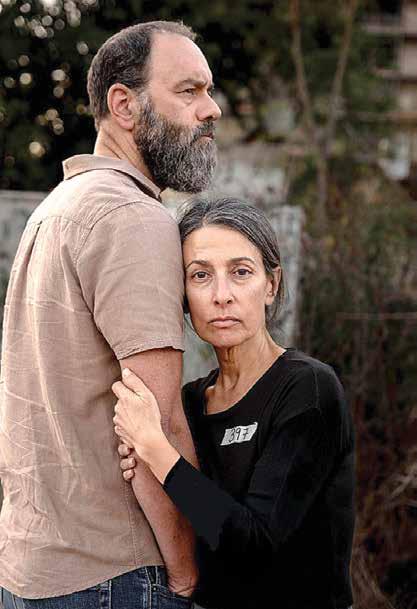
ON THE MORNING OF OCTOBER 7TH, 2023, RACHEL GOLDBERG-POLIN’S BELOVED TWENTY-THREE-YEAROLD SON, HERSH, WAS STOLEN FROM A MUSIC FESTIVAL BILLED AS A CELEBRATION OF UNITY AND LOVE AND, IN THAT MOMENT, HER LIFE WAS FOREVER SEPARATED INTO THE BEFORE AND THE AFTER.
Over the next eleven months, she and her husband, Jon, would work tirelessly, in public and behind the scenes, to secure the hostages’ release, to breathe some humanity into the situation while they were experiencing relentless emotional and psychological torment. The power of her raw and fervent pleas soon made her the face of the hostage crisis. And when Hersh and five other captives were executed after surviving 328 days of violence and cruelty, she would also become the face of its ultimate cost.
Goldberg-Polin pours her pain, love, and longing onto paper. WHEN WE SEE YOU AGAIN is a vital historical document and an unflinching chronicle of maternal heartbreak. “Now my prayer, my pursuit and quest, more than any other, is still Hope,” says Goldberg-Polin. “Hope to succeed on the protracted, forever-road ahead.” WHEN WE SEE YOU AGAIN offers the most complete account to date of Goldberg-Polin’s saga, as she worked to secure the release of her son and
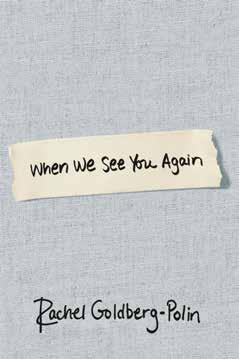
all of the hostages. Most powerfully, Goldberg-Polin brings readers alongside her as she processes her own grief. Reading it is an act of bearing witness. It gives voice to the broken among us, and reminds us that even when the world feels choked with darkness, light exists in a different way. How do we find it?
“There are days when I break completely,” she writes. “I have cried for an entire day straight. I didn’t think it was physically possible, but the weeping never let up. That is a very long time to cry. I kept hoping I would run out of tears. And then there are days when there is a whisper of sun. Not out there in the sky. In me. In us.”


WHY WE STILL COMPLAIN EVEN WHEN WE HAVE EVERYTHING, AND HOW TO RESET THE WAY WE SEE THINGS
JEFF SITT
YOU EVER NOTICE HOW EASY IT IS TO FOCUS ON WHAT’S MISSING, EVEN WHEN THINGS ARE ACTUALLY GOING PRETTY WELL? A DEAL FALLS THROUGH, AND SUDDENLY EVERYTHING FEELS OFF. ONE TOUGH CONVERSATION AT HOME, AND THE WHOLE DAY IS SHOT. A ROUGH PATCH IN BUSINESS, AND IT’S LIKE NOTHING IS WORKING. NOTHING CATASTROPHIC HAPPENED. BUT YOUR EXPERIENCE SHIFTS INSTANTLY.
It’s not new. In Parashat Beshalach, in the Book of Exodus, shortly after leaving Egypt, the Israelites are in the desert, sustained daily by manna, exactly what they need, exactly when they need it. No farming, no supply chain or logistics issues, no uncertainty about the next meal. And yet, they complain. Not because they had nothing, but because they lost sight of what they had.
That’s easy-to-read past. But it should hit close. The manna wasn’t just food, it was a daily reset on how to see what was already there. And maybe that’s the point. Not just what they were given, but how they were meant to see it. Because most of us aren’t lacking, we’re just not resetting how we see things.
Today, most of us have more access, more opportunity,


and more comfort than ever before. We have businesses, jobs, families, friends, homes, food, technology, our health, and options our grandparents couldn’t have imagined. And still, we can feel like something is lacking. The issue isn’t the situation. It’s the way we’re seeing it.
We’re wired to look for problems. That’s useful. It helps us survive and solve. But when it runs unchecked, it becomes the default. The mind filters everything through what’s wrong, what’s missing, what’s not enough. So even when things are steady, it doesn’t feel that way. That’s the manna problem. Having what you need, but not experiencing it.
And when you live from that place, you don’t just feel worse, you react differently. You tighten up. You rush. You speak before thinking. It’s like someone thrashing in the ocean, convinced they’re drowning, when in reality, they’re standing in 12 inches of water. The reaction is real. The danger isn’t.
This isn’t about ignoring problems. Business is hard. Life is demanding. People are complicated. But when your focus is locked on what’s missing, you lose clarity, energy, and perspective, the very tools you need to handle those problems well. Instead of operating from solutions, you get hijacked by survival mode.
You perform better when you see things clearly. Get this right, even a little, and you start to respond instead of react.
Try this. Take three minutes. When things feel off, pause and ask: What’s actually working right now? What do I already have that I’m not noticing? What am I overlooking?
That’s it. Most of the time, you’ll realize things aren’t as bad as they feel. There’s movement. There’s support. There are pieces in place. That doesn’t remove problems, but it puts them in perspective and proportion. And that changes everything.
When you operate from a clear head instead of lack, you think better. You react less. You make better decisions. You show up better at work and at home. Same situation, different experience. That’s the shift.
The Israelites didn’t need more manna. They needed a different way of seeing what was already there. And it’s just as true now. If you change the way you look at things, the things you look at change. Sometimes the difference between stuck and steady isn’t a new opportunity. It’s seeing what’s already in front of you, clearly.
Jeff Sitt is a Business & Life Strategist, speaker, and author who helps individuals and business leaders move from stress, reactivity, and overwhelm to greater clarity, focus, and purpose. Drawing from decades of business experience, mindfulness practices, and practical Torah-based wisdom, he combines mindset, emotional awareness, and actionable tools to help people perform better at work and in life. Jeff is the author of “Driving to Thriving: Reduce Stress and Increase Profits.”



SLOVIE JUNGREIS WOLFF
The most memorable gifts you can give your father this Father’s Day.
1.THE GIFT OF ACKNOWLEDGEMENT
A father can feel like an invisible parent as children grow. Behind the scenes he has supported, cared, and been concerned, while mom handled the day to day goings on. A most incredible way of expressing love is recognizing the good that we have been given. Especially to one who is used to being overlooked. Jewish wisdom calls this ‘hakarat hatov’-literally ‘recognizing the good’. Beyond simply seeing, it means we take a moment to contemplate and acknowledge.
This Father’s Day show your dad that you really see him and don’t take him for granted. Think back to all the trips taken, footballs thrown, nighttime snacks shared, whatever you can think of from your youth that remain etched in your mind. Acknowledge scenarios of your father’s patience, encouragement, and attention to help you attain your goals. Today is your chance to give the gift of recognition.
2.THE GIFT OF UNINTERRUPTED TIME
Undiluted, pure, simple moments together are a gift. We are given the opportunity to bond, share conversation and experiences. Once the moment passes we can never get it back again.
Plan a trip or take your father out, and do whatever it is he loves to do. Be patient. Be kind. Turn off your device. Sometimes we think we are present but emotionally, we are absent.
When you are together, take the time to celebrate your dad. Recreate memories. Share thoughts that show your love. This is your opening to tell your father, “I’m so happy you are my dad” or “You’ve shown me how to get through the hard stuff and climb a mountain. Thank you, Dad.” The words may be hard to say, but you’ll be so happy you said them.
3.THE GIFT OF RELEVANCE
As years pass, a father may sense that he has become irrelevant. The child who used to ask for help is now the one




Oh please! I can stop if I want to. Oh please!
I can stop if I want to. Oh please! I can stop if I want to. Oh please! I can stop if I want to. Oh please! I can stop if I want to. Oh please! I can stop if I want to. Oh please! I can stop if I want to. Oh please! I can stop if I want to. Oh please! I can stop if I want to. Oh please! I can stop if I want to. Oh please! I can stop if I want to. Oh please! I can stop if I want to. Oh please! I can stop if I want to. Oh please! Oh please! I can stop if I want to. Oh please! I can stop if I want to. Oh please! I can stop if I want to. please! I can stop if I want to. Oh please! I can















If someone you love is showing signs of a marijuana addiction, don’t wait until they hit rock bottom. Reach out for help today. Confidentiality guaranteed. Find outpatient care and support groups from our community’s foremost addiction recovery experts: ALCOHOL • GAMBLING • INTERNET • MARIJUANA • SUBSTANCE ABUSE




called upon to figure out a new gadget. Instead of waiting by the window for daddy to come home, it’s Dad who is anticipating a child’s return.
A father has much life wisdom to offer. Judaism teaches, “Ask your father and he will tell you.” With years come experience, heartbreak, loss, insight, and understanding. Seek out your father’s words, discover what life has allowed him to learn. “Dad, if you could meet yourself at my age, what would you say?” Listen. Don’t be snarky. Open your heart and mind. It’s not just about success and finances. We can learn, too, from all the mess-ups and disappointments. Dad has much to give. It is up to us to receive.
When children get together, old rivalries tend to erupt. Arguing, fighting, divisions, and put downs between sisters and brothers sap the joy out of family time. Shalom, peace in Hebrew, is one of the most meaningful gifts you can give your father.
Peace isn’t merely an absence of war. It is a sense of security, well-being and unity. Shalom is related to the Hebrew word shalem – wholeness. Because when we have peace we are whole. Complete human beings who love others as we love our very selves.
Make an effort to create an atmosphere of peace as a tribute to your dad. Hold off from anger, bitterness, and resentment. Whether it is peace with your family, or even peace with your father, you will know that you have brought
joy to your dad with your very presence.
5.THE
Most dads have tried their very best. Sure, mistakes were made. Perhaps there were hurts, missed opportunities, and nights that you found yourself crying in bed. But know that if your dad could, he would erase all those moments, go back, and try again. Life is too short to carry the heavy load of bitterness and resentments. We are all simply human beings. We fail. We fall. We want to love and to be loved. Forgiveness brings with it healing and serenity. Dig deep and draw upon your power of compassion and tolerance. It is time to walk a new path.
Give your father a smile. Show him that you are glad to have this time together. That smile will be your gift that gives your father fortitude and spirit to face life’s storms.
Approach this Father’s Day with the words of Rabbi Jonathan Sacks setting your path: “Love transforms us. It makes us beautiful in the eyes of those who love us. It makes us real.”
Allow love to transform your relationship with your dad. Appreciate the blessing you’ve been given, the blessing of having a father in your life.
Slovie Jungreis Wolff is a noted teacher, author, relationships and parenting lecturer. She is the leader of Hineni Couples and daughter of Rebbetzen Esther Jungreis. She gives weekly classes and has lectured throughout the U.S., Canada, Mexico, Panama, and South Africa.



BEN G. MATSAS
STARTING A BUSINESS TODAY IS EASIER THAN EVER, BUT IT WASN’T ALWAYS THAT WAY. STARTING A BUSINESS OFTEN MEANT DEALING WITH COMPLEX PAPERWORK, CONFUSING GOVERNMENT REQUIREMENTS, AND COSTLY DELAYS BEFORE A COMPANY COULD EVEN OPEN ITS DOORS. ENTREPRENEURS OFTEN HAD TO VISIT STATE OFFICES IN PERSON OR HIRE EXPENSIVE ATTORNEYS JUST TO PROPERLY SET UP AN LLC OR CORPORATION. EACH STATE HAD DIFFERENT RULES, AND EVEN SMALL MISTAKES COULD LEAD TO DELAYS OR REJECTED FILINGS. FOR MANY BUSINESS OWNERS, THE PROCESS WAS TIME-CONSUMING, STRESSFUL, AND COSTLY BEFORE THE BUSINESS EVEN BEGAN.
Today, everything has changed with the rise of the internet and modern technology. Business formation is now accessible to anyone with a laptop or phone. Online platforms guide entrepreneurs step by step through the setup process, making it simpler, faster, and more affordable than before. Automation tools help generate documents, reduce filing errors, and simplify the process for new business owners who may not know where to begin. Whether forming an LLC, corporation, or other entity type, entrepreneurs can now complete filings much more efficiently without the delays and complications that once made starting a business overwhelming.
Another important advantage in today’s business environment is flexibility and privacy. Entrepreneurs are no longer limited to forming a business only in their home state. It is now possible to form companies in any U.S. state, depending on an entrepreneur’s business needs and preferences. In addition, many business owners choose to use a registered agent service, which provides a legal mailing address in the state where the business is formed. This is especially useful for those who want added privacy and a professional business presence, since the registered agent receives official government notices and legal documents on behalf of the business. This system allows entrepreneurs to keep their personal address off public records while helping business owners stay organized with important business documents and notices. It also makes it easier to manage multi-state businesses without physically being located in every jurisdiction.
At the same time, online business formation has become much more affordable. Instead of paying high legal fees, entrepreneurs can now complete their business setup at a fraction of the cost. This allows business owners to focus more on building their company instead of spending valuable time dealing with paperwork and filing requirements.

At Liberty Filing (libertyfiling.com), entrepreneurs can form a business in any state and obtain registered agent services when needed, giving them flexibility, privacy, and support throughout the filing process. The company helps entrepreneurs handle the filing process more efficiently and avoid many of the common mistakes that can delay business formation. Whether starting a first business or expanding into another state, Liberty Filing offers entrepreneurs a simple and affordable way to handle the filing process with greater ease and convenience. Business formation services are currently available for a special price, giving entrepreneurs an affordable and convenient way to get their business started without unnecessary delays or confusion. Visit libertyfiling.com to learn more and get started.
The information above is provided for general informational purposes only and should not be considered legal, tax, or financial advice. LibertyFiling.com provides document preparation and filing coordination services only and does not provide legal, tax, or financial advice.
Ben G. Matsas is a business consultant who assists new business owners with document filing and administrative services, including forming LLCs and corporations, obtaining EIN numbers, creating websites, and setting up business phone systems and business email. His services are limited to business setup support and administrative assistance.



SARINA ROFFÉ
THE THIRD SUNDAY OF JUNE EACH YEAR IS FATHER’S DAY. FAMILIES GET TOGETHER WITH BARBECUES AS IT IS THE START OF THE SUMMER. THIS SPECIAL DAY WAS ESTABLISHED IN 1909 BY SONORA SMART DODD TO HONOR HER FATHER, A CIVIL WAR VETERAN. IT BECAME A NATIONAL HOLIDAY TO HONOR FATHERS, CELEBRATE PATERNAL BONDS, AND RECOGNIZE THE INFLUENCE OF FATHERS IN OUR LIVES. FOR ME, IT WAS THE HOUR IN THE SUMMER WHEN HE TAUGHT ME TO SWIM OR TO FISH, OR THE TIMES HE TOOK US TO CONEY ISLAND ON RIDES. THEY WERE SPECIAL TIMES. WE ASKED PEOPLE IN THE COMMUNITY TO SHARE WITH US THINGS THEIR FATHERS TAUGHT THEM.
ABE SALEM A’H
BY STEVE SALEM
In 1956, my parents, Abe and Estelle Salem, bought a small house in Brighton Beach. It was a major “fixer-upper.” My dad spent a year renovating the house before we could move in. Every day, he came home from work, ate dinner, and went to the house to work on renovating the whole place. On weekends he would bring me along. We’d go to the home improvement or lumber store to get supplies and tools. I remember him saying, “You have to have the right tool for the job, or you’ll mess it up.”
I watched him work and learned. I guess he learned out of necessity to DIY. We weren’t rich. When the major projects were done, we finally moved in. And as we lived there, he kept going with new DIY projects. And I learned more. I picked up his skills and used them when my wife Julie a’h and I bought our house in 1975, trying to emulate my dad with DIY projects. Thankfully my sons picked this up too. I am grateful for the experience. Also, Dad said, “Never go into an empty restaurant.”
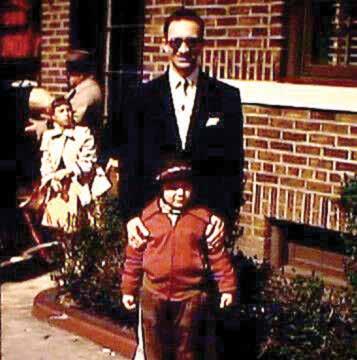
Abe a’h and Steven Salem, 1955





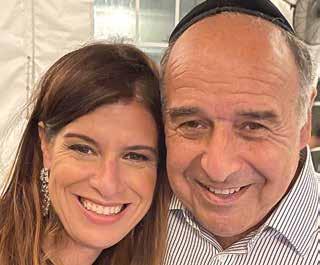
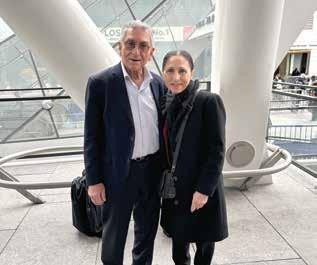
MARK ANTAR
BY MARA ATTIE
Growing up, my father instilled in me the importance of family, preserving traditions, humility, and treating others with honesty and integrity. He taught me that hard work and strong Torah-based values are the foundation of a meaningful life. Watching the way he carries himself each day taught me more than words or advice ever could. The values he lives by continue to guide me in every part of my life.
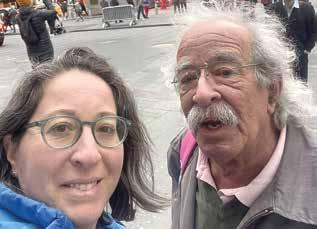
DAVID ROFFÉ
BY HARRIET J. ROFFÉ
My father always taught me never to laugh at someone else’s misfortune. He also taught me that if I am unhappy with my job because of a supervisor situation, but my boss likes me, there is no reason to leave, because ultimately, it’s the boss whose opinion matters. He also taught me not to live in fear.
BY
MICHELLE SAAD
My dad, Jack Ezra Falack, gave me a siddur for a bat Israel. He also gave me High Holiday machzors with my name engraved on them. My dad teaches me never to give up. Now that I think of it, he has given me the tools physically and spiritually to have faith in G-D!
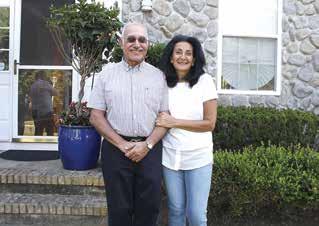
CLEMENT DANA BY VIVIANE
DARWISH
My father is my go-to person for advice! He taught me that Hashem is always first, to work hard, stay humble and move in silence with no ego. He also said that when people show you who they are the first time, believe it!


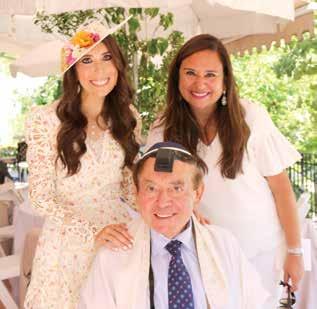
BY SALLY COHEN AND LAURIE MIZRACHI
Our dad, Charlie Saka, was a leader and visionary in our family and community. He inspired us and those around him to get involved, work hard, and make sure the job gets done, no matter what. He believed deeply in giving back, always leading with kindness, being charitable, and having respect for others. He carried with him the wisdom and values of those who came before him, honoring them through the life he lived every day. Our family proudly carries his lessons and legacy in everything we do.
BY KAREN COHEN
As a family, we spent our summers in a small town called Watch Hill, Rhode Island. My parents had a resort store there named Harvey’s and it was only open in the summers. From when I was a little girl, my siblings and I worked in the store and one of the things my father taught me was how to count out change to a customer at the register. First, we always put the money on top of the register, so there was no discrepancy. And we would always count out the change to the customer. We always counted up from the price of the sale to the dollar amount of money we were given. Counting out each penny, nickel, dime, quarter and dollar we gave back. For example, if the sale was $1.06 and we got a $5 bill. We would count each penny 7, 8, 9, 10 then the dime 20, then the nickel 25, then the three quarters $2, then each dollar 3, 4 and 5. Then we would put the $5 bill into the register drawer. It was a great lesson in math, courtesy, respect and professionalism.

BY EDDIE, STEPHEN AND HENRY SHALAM
Our father no doubt has taught us many things, but from a very young age he taught us to always treat people the way you want to be treated. He also taught us to be conscientious, hardworking and to do things right the first time. He taught us to be humble and to appreciate whatever we had. These are just a few of the life lessons we were taught, and they have always served us well.
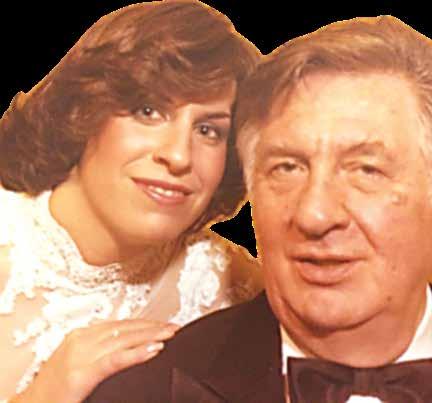
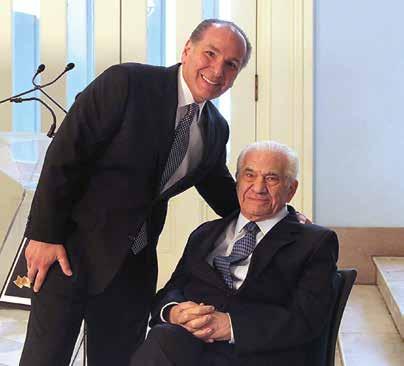
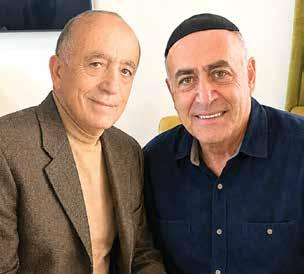
BY HAROLD SHAMAH
Of all the gifts my father possessed, the ones that defined him most were his boundless compassion and his unwavering desire for peace. He never carried bitterness, no matter the circumstance. Instead, he met people with understanding, feeling their pain as if it were his own, and doing whatever he could, big or small, to ease their burden. I strive every day to follow the example he set.
BY JOSEPH SHAMIE
My father taught me many lessons but most importantly, he taught us to be respectful, to be kind and to be generous. He taught by example. His motto was, “Work hard, play hard, and enjoy life.” He taught me never to hold a grudge. Many of the things he did for others did not come to light until after his death. He believed everyone deserved a chance to succeed. Countless former employees told us how he employed them, treated them with dignity, gave them bonuses at holiday time, so they could have a good holiday with their families. They said, “Louis Shamie is the father I never had.” Most importantly, my father valued family, kept us all close, and loved my mother, Lorraine, with all his heart. He is my hero.
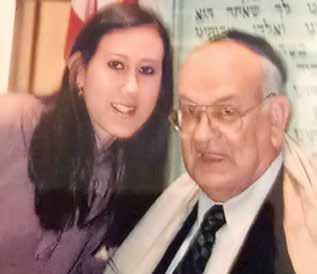
BY KIMI MANDIL
My father taught me the importance of hard work and perseverance. He came from Beirut not speaking a word of English. He knew the value in learning the language and what it would do to help him provide for his family down the line. These are some of the traits that he instilled in me and I am forever grateful.
O
ering comprehensive services to Jewish nonprofit causes worldwide.
Providing a turnkey operation and administrative services for nonprofits SERVICES
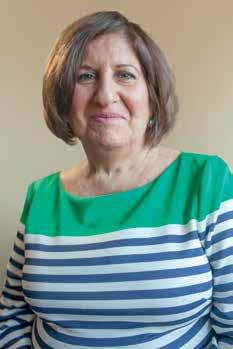
• Bookkeeping, Account Reconciliation, Accounts Receivable and Payable
• Coordination with CPAs for tax preparation and audits
• Payroll Management
• Brochures, Annual Reports, Bylaws, Employee Manuals
• Event Management for Fundraisers
• Forming Nonprofit Organizations
• Grant administration
Clients consistently praise her reliability, integrity, and commitment rooted in ethics, professionalism, transparency and a deep understanding of the community.
“Sarina’s high ethical standards and expertise make her the community’s go-to expert for nonprofit management.” Jacques Erdos, CPA
“Sarina and her team are personable, professional, and always ready to help. Her full turnkey operation for small nonprofits fills a vital niche.” Elliot Horowitz, CEO of H Equities
“Sarina is honest, organized, professional and dedicated to full transparency. Her knowledge of our community and expertise in nonprofit management make her an invaluable asset.” Rabbi Ronnie Kassin
“Beyond her professional skills, Sarina’s warmth and integrity have left a lasting impression on everyone who has the privilege of working with her.” Rabbi Netanel Meoded, Chief Rabbi of Kehilat Zion of Kowloon


JACK CATTAN
BY SUSAN SHAMIE
My dad taught me to be honest and to help others through charity. He believes in working hard and doing the right thing, but he also understands the importance of enjoying life. He taught me that there is a time for work and a time for play and that balance is an important part of living well. Most of all, he taught me that family is very important and should always be valued, supported, and cherished. His kindness, generosity and community work have earned him the respect and admiration of many people while playing tennis, soccer, watching hockey or simply spending time with his family and friends. He continues to inspire us with his energy and spirit. I am proud to say my dad is wonderful. I wish him a long life filled with health, happiness and many beautiful moments together with my mom, his partner for life.
D. ROFFÉ BY SARINA E. ROFFÉ
My dad taught me the importance of independence. He always taught me to be able to live on my own by teaching me things like using a map and keeping up with him on busy sidewalks. He taught me how to be empathetic and put myself in someone else’s shoes, and he taught me how to be resilient no matter how bad your cards are. Lastly, he taught me that the world doesn’t owe you anything. We’ve all just got to make the best with what we’ve got, and that there is tremendous value in succeeding when the odds are against you. And he taught me how to hang a TV.
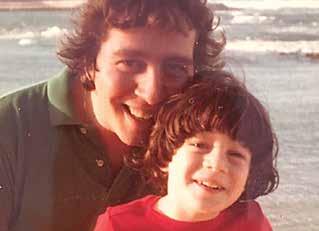
BY SAMUEL V. FRANCO
My father, Victor, taught me that integrity isn’t something you announce. It’s something you live quietly, every day, in the way you treat people when no one is watching. He comes from a big, sprawling family, and he carried them all with him, honoring his father’s memory and caring for his mother with the same pride, loyalty, and love. But what I remember most vividly is his friendships: the laughter, the stories, the lifelong bonds that showed me friendship is something you earn, build, and protect. My father’s example is not only in what he has accomplished but in how deeply he loves, how faithfully he shows up, and how many people feel seen and cared for because he has been in their lives. I love you, Dad.


BROOKLYN, N.Y. — Some gifts are bought. Some are wrapped. Some are placed in a bag with tissue paper and a ribbon.
And then there are gifts that carry something more: a small bottle, a handwritten card, a few sparkling gems carefully pressed into place, a scent chosen with thought, and a label that reads “N°1 MOM.”
To anyone else, it may look like a beautiful Mother’s Day project. But to a mother, it is something far greater. It is her child’s hands at work. Her child’s choices. Her child’s way of saying, sometimes without many words at all: I love you. I know you love me. This is for you.
At Atidaynu, this year’s Mother’s Day celebration was built around that quiet, powerful message.
Students participated in a special fragrance-making workshop, guided by a wonderful group of visiting volunteers who helped them create personalized perfumes for their mothers. The tables were filled with elegant bottles, fragrance options, sparkling decorations, gift bags, and cards. But the room was filled with something even sweeter: concentration, pride, excitement, and love.
Each student began by exploring different scents. They smelled, considered, reacted, and chose. Some picked something soft. Some picked something sweet. Some chose a fragrance because it felt pretty, because it felt special, because it felt like Mommy.
It was a simple choice, perhaps, but simple moments are often where the deepest things happen. In that moment, each child was thinking beyond himself: What would my mother like? What would make her happy? What can I give to the person who gives me so much?
For children with special needs, those moments matter deeply. A project like this is never only a project. It is decision-making. It is sensory exploration. It is fine motor work. It is sequencing, communication, patience, and follow-through. It is learning how to start something, stay with it, and complete it.
But more than anything, it is dignity.
So much of a child’s life can be shaped by what others do for him. Parents help. Teachers guide. Therapists support. Families advocate. For a child with special needs, that circle of care can be wide and constant.
But every child also deserves the chance to give back. To create. To offer. To walk through the door not only as someone cared for, but as someone who has something beautiful to give.
That was the heart of the day.
After the perfumes were prepared, they were poured into elegant Chanel-inspired bottles, each one labeled “N°1 MOM.” The students decorated the bottles with sparkling gems, turning each one into a little reflection of their own personality. Some were neat and careful. Some were bright and bold. Some were sweetly imperfect in the way only a child’s handmade gift

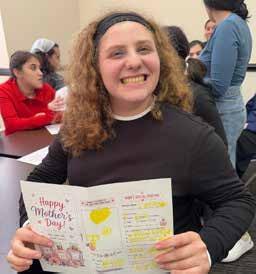
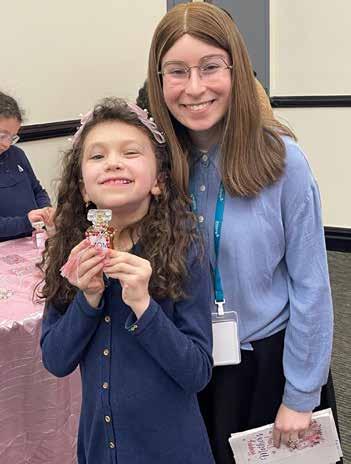
can be.
And that is exactly what made them beautiful.
The students then placed the finished perfumes into gift bags and prepared Mother’s Day cards filled with messages of love and appreciation. Some messages were written in careful handwriting. Some were short. Some may have needed help. But every card carried the same truth: Mommy, you matter to me.
Behind every child at Atidaynu is a mother who knows what it means to love without conditions.
She knows the appointments, the meetings, the reports, the phone calls, the forms, and the worries that do not always end when the day ends. She knows how to celebrate progress that others may not even notice: a new word, a calmer transition, a skill finally mastered, a moment of independence, a smile after a hard morning.
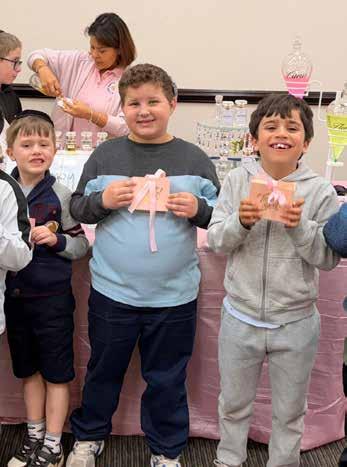
Mother’s Day gave Atidaynu students the chance to show up for her.
Not with something expensive. Not with something perfect. But with something personal. Something made by their own hands. Something that said, in the language of scent and sparkle and folded cards: I see you. I love you. Thank you for loving me.
The perfume may one day fade. The bottle may sit on a dresser. The card may be tucked away in a drawer with other treasures a mother cannot bring herself to throw out.

She knows the exhaustion. She knows the hope. She knows the prayers whispered quietly when no one else is listening.
And still, she shows up — again and again and again.
But the memory will remain.
The memory of a child choosing. Creating. Giving. The memory of a mother opening a gift and seeing not just a bottle of perfume, but a piece of her child’s heart.
By the end of the workshop, the students had created more than Mother’s Day gifts. They had created keepsakes of gratitude, independence, and love.
Small bottles. Big feelings. And one message every mother deserves to hear:
Mom, you are my number one.

THIS MONTH’S COMMUNITY PHOTO ALBUM HIGHLIGHTS A SPRING SEASON OF JEWISH MEMORY AND CELEBRATION. OUR SCHOOLS AND ORGANIZATIONS CAME TOGETHER WITH MEANINGFUL PROGRAMS, CEREMONIES, PROJECTS, AND CELEBRATIONS THAT BROUGHT PEOPLE OF ALL AGES TOGETHER. THE PHOTOS CAPTURE YOM HASHOAH PROGRAMS, YOM HAZIKARON COMMEMORATIONS, YOM HAATZMA’UT CELEBRATIONS, LAG BAOMER EVENTS, SCHOOL PROJECTS, ASSEMBLIES, BONFIRES, AND THE MANY SPECIAL MOMENTS THAT DEFINE THIS MEANINGFUL TIME OF YEAR.

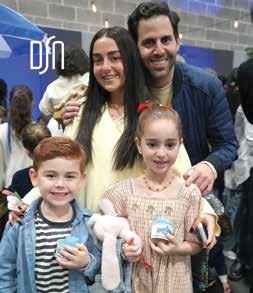
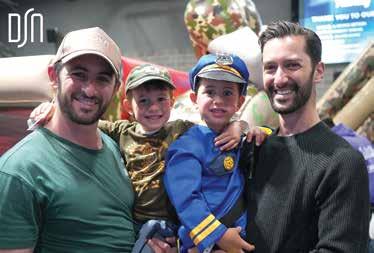

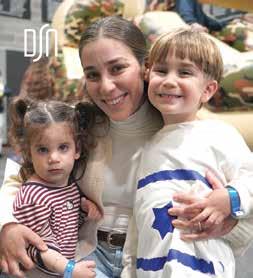





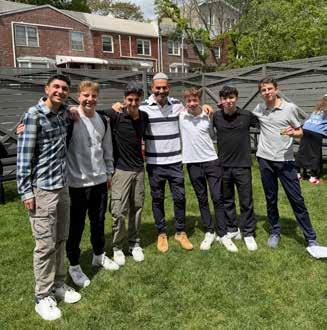




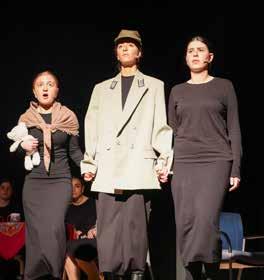

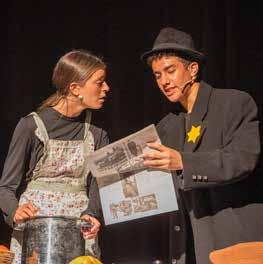






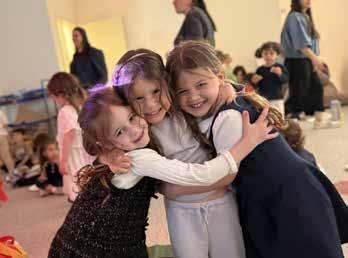

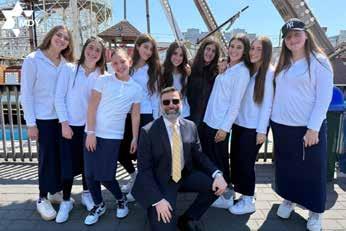
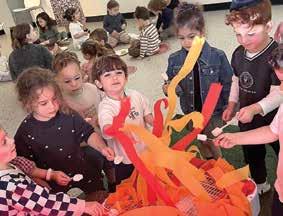


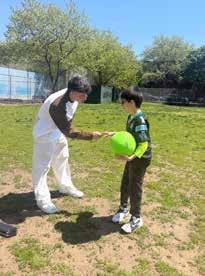

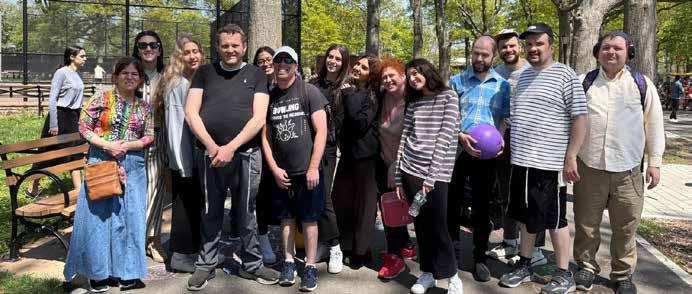
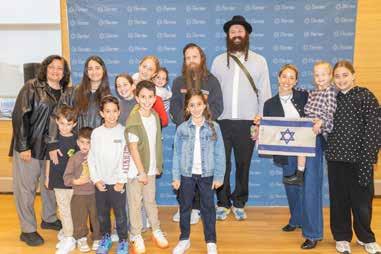













SUMMER MEALS TEND TO SHIFT NATURALLY TOWARD LIGHTER FOOD, SIMPLE PREP, AND INGREDIENTS THAT CAN HANDLE THE HEAT. A GOOD SALAD CAN WORK AS LUNCH, DINNER, A SIDE DISH, OR SOMETHING TO BRING TO A GATHERING WITHOUT MUCH STRESS. THE KEY IS BALANCE. FRESH VEGETABLES, ENOUGH TEXTURE, AND DRESSINGS THAT ADD FLAVOR WITHOUT OVERWHELMING THE INGREDIENTS.
These recipes focus on practical home cooking. They use familiar ingredients, straightforward techniques, and combinations that work well for weekday meals, Shabbat lunches, and summer get togethers.
MEDITERRANEAN CHICKPEA SALAD
Parve
Yields: About 8 cups
Serves: 6 to 8
Ingredients
• 2 cans chickpeas, drained and rinsed
• 1 pint cherry tomatoes, halved
• 1 cucumber, diced
• 1 red bell pepper, diced
• 1 small red onion, finely chopped
• 1 cup chopped parsley
• 1/2 cup sliced black olives
• 3 tbsp olive oil
• 2 tbsp fresh lemon juice
• 1 tsp garlic powder
• 1 tsp salt
• 1/2 tsp black pepper

Instructions
1. Place the chickpeas, tomatoes, cucumber, red pepper, onion, parsley, and olives into a large bowl. In a small bowl, whisk together the olive oil, lemon juice, garlic pow-
der, salt, and pepper.
2. Pour the dressing over the salad and toss well until evenly coated. Refrigerate for at least 20 minutes before serving so the flavors can blend together. Serve cold.


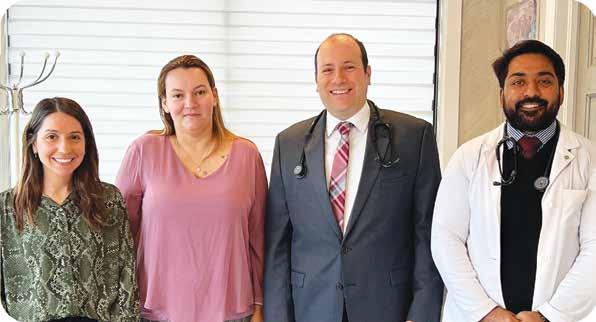

Meat
Yields: About 10 cups
Serves: 4 to 6
Ingredients
• 2 boneless chicken breasts
• 4 ears corn, husks removed
• 1 romaine lettuce heart, chopped
• 4 cups mixed greens
• 1 avocado, diced
• 1 pint cherry tomatoes, halved
• 1/4 cup thinly sliced red onion
• 3 tbsp olive oil
• 2 tbsp red wine vinegar
• 1 tsp Dijon mustard
• 1 tsp salt
• 1/2 tsp black pepper
Instructions
1. Heat a grill or grill pan over medium high heat. Brush the chicken and corn lightly with oil. Grill the chicken for about 6 to 7 minutes per side, until fully cooked.
2. Grill the corn until lightly charred on all sides. Let the
chicken and corn cool slightly. Slice the chicken into strips and cut the corn kernels from the cob.
3. Place the lettuce, mixed greens, avocado, tomatoes, onion, corn, and chicken into a large serving bowl.
4. Whisk together the olive oil, vinegar, mustard, salt, and pepper. Pour the dressing over the salad just before serving and toss lightly.

Parve
Yields: About 9 cups
Serves: 6
Ingredients
• 12 ounces spaghetti or lo mein noodles
• 1 red bell pepper, thinly sliced
• 2 carrots, shredded
• 3 scallions, sliced
• 1 cucumber, julienned
• 1/4 cup sesame oil
• 3 tbsp soy sauce
• 2 tbsp rice vinegar
• 1 tbsp honey
• 1 tsp grated fresh ginger
• 1 tsp sesame seeds
Dairy
Yields: About 8 cups
Serves: 6 to 8
Ingredients
• 6 cups cubed watermelon
• 1 cup crumbled feta cheese
• 1 cucumber, diced
• 1/4 cup fresh mint leaves, chopped
• 2 tbsp olive oil
• 1 tbsp fresh lime juice
• 1/4 tsp salt
• 1/4 tsp black pepper
Instructions
1. Place the watermelon, feta cheese, cucumber, and mint into a large serving bowl.
2. In a small bowl, whisk together the olive oil, lime juice, salt, and pepper.
3. Pour the dressing over the salad and toss gently so the watermelon stays intact. Serve chilled.
Instructions
1. Cook the noodles according to package directions. Drain and rinse under cold water until completely cool.
2. Place the noodles into a large bowl with the red pepper, carrots, scallions, and cucumber.
3. In a small bowl, whisk together the sesame oil, soy sauce, rice vinegar, honey, and ginger.
4. Pour the dressing over the noodles and toss well.
5. Sprinkle with sesame seeds before serving. Refrigerate until ready to serve.




• What was life like for you in Syria? • How did you escape? or leave the country?
• Who helped you? • What was the path to escape? Over which border?
• How did you adjust to your new life?
Tell all the details of your story to prominent Syrian Jewish historian and genealogist Sarina Roffe for her upcoming book - Syrian Jewish Paths to Freedom. Interviews can be done on zoom, phone or in person. Photos welcome. Work is completed under the auspices of Sephardic Heritage Project - sephardicheritageproject.org

REBBETZIN CHANA HELLER
HERE ARE SOME OF THE MOST EFFECTIVE ANTI-WORRY TOOLS.
Many of us feel saturated with a boatload of worry. How do we conquer it? Here are 10 of the best anti-worry tools.
1. KNOW HOW BAD WORRY IS FOR YOU.
Worry cripples us. It can even be paralyzing. At best, it’s a huge waste of our emotional energy. Worry is associated with all types of physical and emotional illnesses and even though we know this we still spend considerable time ruminating about all the things that could go wrong in our lives. Why do we do this? Somehow, we think that if we worry about something enough, we will gain control over it. But the opposite happens. The more we obsess about something the more it gains control over us.
2. TALK TO SOMEBODY ABOUT YOUR WORRIES.
This may seem obvious, but so many people don’t do it! Sometimes just talking to someone helps us realize that things aren’t as worrisome as we are making them out
to be. We are making a mountain out of the proverbial molehill. Talking to someone helps us gain perspective, be more objective, think about the situation differently and prevents worry from building up so much that it becomes overwhelming. Who in your life is your go-to person for your worries?
3. CHANGE WHAT YOU CAN AND LET THE REST GO.
Worries can be divided into two categories: things we can do something about and things we can’t. If you can do something, do it! If you can’t, convince yourself that your mental health is more important than obsessing over something you can’t change.
4. CUT DOWN THE AMOUNT OF TIME YOU SPEND WATCHING THE NEWS.
Do we even realize how much stress and negativity we stream into our life every day? It is seriously bad for our






emotional health to be too plugged in. The news needs to sell, so everything is a crisis. We all want to be informed but we have a responsibility to ourselves and our families to thoughtfully manage how much airtime we are giving to the news, the commentaries on the news and the commentaries on the commentaries.
5. INCLUDE SOME OF YOUR BEST STRESS-RELIEVING ACTIVITIES IN YOUR DAY.
Make a list of things that take your mind off of worry: exercise, calming music, meditation, prayer, cooking, talking to a friend, writing, painting, taking a walk, gardening, getting a massage, or soaking in a hot bath. Do something good for yourself today!
6. FORGET YOUR WORRIES BY BECOMING INTERESTED IN OTHERS AND CREATING A LITTLE HAPPINESS FOR THEM.
Delivering food to front-line workers, cooking a meal for someone who is alone, or checking in with someone who has had a big loss are all ways to relieve our own anxiety because we are getting out of ourselves. We are reminding ourselves that we are not the only ones who struggle. Additionally, doing good adds up to feeling good.
7. ASK YOURSELF: WHAT’S THE WORST THING THAT COULD HAPPEN?
Dale Carnegie, in his book How to Stop Worrying and Start Living, says whenever you are worried about something, ask yourself: what‘s the worst thing that could happen? What would you do if you lost your job? Visualize yourself working through the situation and calmly preparing yourself for how you would deal with the worst scenario. Once you accept the possibility in your mind and you can see yourself having the resources to cope you will find
yourself much calmer. And remember, most of the things we worry about will never happen.
8. FOCUS ON GRATITUDE.
Gratitude is a huge antidote to worry. Write in a gratitude journal every day. Talk about things that you are grateful for with your family. Notice and share that the things that are going right in your life outweigh the things that are not. It is hard to be a grateful person and a worrywart at the same time.
9. CULTIVATE EMUNA (FAITH) AND BITACHON (TRUST).
Judaism’s greatest anti-worry solutions are cultivating faith in an all-powerful G-D who is guiding the world and our life with compassion and love. We don’t understand His ways but we trust that all G-D does is for our good and our growth. Faith and trust in G-D enables us to have the courage to live with the uncertainty of life, to live with our own lack of control and understanding and to know that life is not at all random. Emuna is being able to say every day “Everything I need I have, and everything I have I need.”
Prayer lets us know we have an address for our worries and reminds us that G-D can do anything. Even if the answer is “no” or “not right now” just verbalizing our worries to G-D can have a huge calming effect. And, while you’re at it, make sure to ask Him to help you not worry so much!
Chana Heller, MSW, is the mother of five children and grandmother to many. She works for Aish Los Angeles as Director of JWI - Jewish Women’s Initiative. She is married to Rabbi Dov Heller, a psychotherapist and teacher at Aish LA.








LAURA SHAMMAH, MS, RDN
EVERY YEAR, AS THE WEATHER GETS WARMER, SOMETHING SHIFTS EMOTIONALLY FOR MANY WOMEN. THE SWEATSHIRTS COME OFF. ADS FOR DIETS BECOME LOUDER. SOCIAL MEDIA FILLS WITH “SUMMER BODY” TRANSFORMATIONS, DETOXES, BEFORE-AND-AFTER PHOTOS, AND MESSAGES ABOUT GETTING “BACK ON TRACK.” CONVERSATIONS SUDDENLY REVOLVE AROUND CARBS, BLOATING, FASTING, SHRINKING YOUR STOMACH, AND HOW QUICKLY SOMEONE CAN “FIX” THEIR BODY BEFORE VACATION SEASON BEGINS. AND QUIETLY, MANY WOMEN BEGIN TO PANIC.
Some start cutting out foods they normally enjoy. Others skip meals all day only to feel out of control at night. Some become afraid of social events involving food. Others stare at photos of themselves and pick apart every detail before even allowing themselves to enjoy the summer ahead. What is supposed to be a joyful season slowly becomes another opportunity for selfcriticism.
The truth is, many women are not actually trying to achieve health before summer. They are trying to achieve worthiness. Worthiness to wear the bathing suit. Worthiness to go on vacation confidently. Worthiness to be photographed. Worthiness to feel accepted in their own bodies. Somewhere along the way, women were taught that summer is something their body must “earn.”
What makes this especially painful is that the pursuit
• Normalize your eating habits and conquer your weight related
• Restore a healthy relationship with food
• Stop restricting/ diet cycle, binging, under/overeating, emotional eating and finally feel free to live the life you want!




A.K. A
Dr Doueck is an amazing dentist who is greatly talented, my teeth are not so easy to deal with Dr Doueck took care and had just so much patience with me and make sure I was happy every step of the way! I would 100 percent recommend Dr Doueck.

D.M. D
Dr Doueck combines state of the art equipment, skill, knowledge and experience with being a mensch. If he had a fan club, I would be its president. I have been his patient for more than twenty-five years. No one is like him.

T.B. T
Had an incredible experience at Doueck Dental this morning. I never thought a cavity removal could be a good time, but today I stand corrected. From the lovely welcoming faces that greet you at the door, to the charming yet masterful Dr. himself, Doueck Dental has yet again made my day and greatly improved my dental confidence.

V.S. V
They are the best! Very careful and always coming in to check on me. And my teeth looking amazing!! Best people there too! If you're looking for a Dentist go here for anything you need for your teeth. 100% recommend
Reviews are in, and smiles are wide. At Doueck Dental, advanced techniques and expert design create natural, radiant smiles—with custom veneers and precise implants tailored for you.
of the “perfect summer body” often leaves women feeling physically and emotionally worse, not better.
Extreme dieting increases food obsession. Undereating during the day often leads to intense cravings and overeating later at night. Over-exercising can elevate stress hormones, worsen fatigue, increase inflammation, disrupt sleep, and make women feel even more disconnected from their bodies.
For many women, especially during midlife and menopause, the body is already undergoing hormonal shifts that affect weight distribution, water retention, sleep, hunger, and metabolism. Yet instead of responding with compassion and support, many women respond by becoming more restrictive, more critical, and more ashamed.
Social media has intensified this pressure dramatically. Women are constantly exposed to filtered images, edited bodies, unrealistic standards, and unrealistic routines that often do not reflect real life. Comparison becomes exhausting. A woman can have a beautiful family vacation planned and still spend the weeks leading up to it consumed by anxiety over how her stomach looks in a bathing suit. That is not wellness.
Ironically, the women who often look and feel healthiest long term are usually not the ones punishing themselves seasonally. They are the women who focus on consistency instead of extremes. They nourish themselves regularly. They move in ways that feel supportive rather than punishing. They sleep. They hydrate. They eat dessert sometimes without spiraling emotionally afterward. They understand that health is built through patterns, not panic.
Feeling physically better for the summer is not a bad goal. Wanting more energy, strength, confidence, or
improved health is valid. But there is a major difference between caring for your body and constantly fighting against it.
A healthier approach to summer may look less dramatic than the internet promises. It may mean:
• Eating balanced meals consistently instead of skipping meals
• Adding more protein, fiber, fruits, and hydration instead of eliminating entire food groups
• Exercising to feel stronger and more energized rather than to “undo” eating
• Buying clothes that fit your current body instead of punishing yourself into smaller ones
• Spending less time body-checking and more time participating in your actual life
Most importantly, it may mean refusing to let your body determine whether you deserve to enjoy the summer.
No one looks back on their life and remembers the summer they finally had completely flat abs. But people do remember the summers they were fully present. The trips they enjoyed. The laughter. The beach days. The dinners with family. The memories they almost missed because they were too busy criticizing themselves. Your body is not a problem to solve before June arrives. And perhaps the healthiest thing women can do this summer is stop waiting to feel “perfect” before allowing themselves to live.





FOR MANY AMERICANS, THE PHRASE “HANTAVIRUS” ENTERED THE PUBLIC CONVERSATION THE SAME WAY UNFAMILIAR DISEASES OFTEN DO NOW, THROUGH ALARMING HEADLINES AND VIRAL SOCIAL MEDIA POSTS THAT QUICKLY SPARKED COMPARISONS TO COVID-19. A DEADLY VIRUS. A CRUISE SHIP OUTBREAK. INTERNATIONAL QUARANTINES. WITHIN HOURS, PEOPLE WERE ASKING WHETHER ANOTHER GLOBAL HEALTH CRISIS WAS BEGINNING. THE CONCERN INTENSIFIED BECAUSE THE OUTBREAK INVOLVED THE ANDES STRAIN OF HANTAVIRUS, THE ONLY KNOWN HANTAVIRUS STRAIN CAPABLE OF LIMITED HUMANTO-HUMAN TRANSMISSION. THAT DETAIL IMMEDIATELY DREW ATTENTION FROM PUBLIC HEALTH OFFICIALS AND A PUBLIC STILL SHAPED BY THE PANDEMIC YEARS.
The current outbreak is linked to the MV Hondius, a Dutch expedition cruise ship that carried passengers through Antarctica and the South Atlantic.
According to the World Health Organization and the Centers for Disease Control and Prevention, 11 confirmed cases and three deaths have been reported so far, while additional passengers and contacts continue being monitored by health authorities. Although the ship was carrying roughly 147 passengers and crew members, only 11 confirmed cases have been identified so far, a detail health officials say reinforces how difficult the virus is to spread through casual contact.
Hantavirus is a family of viruses carried mainly by rodents, with different strains found around the world. People are usually infected after breathing in airborne particles contaminated by rodent droppings, urine, or saliva, often while cleaning enclosed spaces where rodents have nested. In North and South America, infection can lead to hantavirus pulmonary syndrome, a severe respiratory illness that affects the lungs and can become life threaten-
ing. Health investigators believe the MV Hondius outbreak likely began with exposure before boarding the ship, possibly involving infected rodents in South America, where the Andes strain of hantavirus circulates naturally. What makes the Andes strain unusual is that, unlike most hantavirus strains, limited person-to-person transmission can occur through prolonged close contact. Even so, public health agencies continue to emphasize that the virus does not spread easily through casual everyday interaction, and the overall risk to the public remains very low.
Still, the outbreak triggered a major international response because passengers had already begun traveling home across multiple countries before the virus was fully identified. Passengers disembarked in Tenerife, Spain, before beginning repatriation efforts coordinated by governments and health agencies. Many passengers are now being monitored for up to 42 days, or longer depending on national health guidance, because the Andes strain of hantavirus can have a long incubation period. Several American passengers were transferred to the University of


Nebraska Medical Center for quarantine and observation, while others continue being tracked and monitored in Atlanta and additional facilities abroad.
The images associated with the outbreak naturally stirred anxiety. Quarantine facilities, medical transport teams, and reports of international monitoring immediately brought back memories of the early COVID period. For many people, the emotional reaction arrived before the medical facts did. That response is understandable. COVID permanently changed the way many Americans process public health news. Before 2020, most people rarely paid attention to outbreaks occurring outside their immediate area. Today, even a relatively contained virus can dominate online discussion within hours.
Social media has amplified that shift. Headlines about a “deadly virus outbreak” spread quickly because fear and uncertainty generate attention. In many cases, the details that matter most arrive later, after public assumptions have already formed. In the case of hantavirus, the most important detail is also the least dramatic. The virus does not spread easily between people. COVID became a global crisis because it moved efficiently through ordinary daily interaction. The Andes strain behaves very differently. Health officials continue to stress that widespread community transmission is considered highly unlikely.
That distinction matters because public anxiety can distort risk perception. The average American is far more likely to encounter seasonal influenza, RSV, or common respiratory infections than hantavirus. Most people living normal daily lives in cities and suburbs face extremely low risk. Public health guidance surrounding hantavirus remains focused primarily on preventing rodent exposure inside homes, garages, sheds, and workplaces. Health
officials recommend sealing holes and gaps where rodents can enter, placing traps around the home, and removing exposed food sources that may attract mice or rats. If rodent droppings are found, experts advise against sweeping or vacuuming them dry because that can push contaminated particles into the air. Instead, the area should be ventilated first and cleaned carefully using disinfectant, gloves, and paper towels. In cases of larger infestations, professional exterminators or pest control services are often recommended to reduce ongoing exposure risks safely.
The broader story surrounding the MV Hondius outbreak may reveal as much about modern public psychology as it does about the virus itself. Americans now live in a constant cycle of alerts, breaking news banners, and viral commentary. Every health story arrives with urgency attached to it. That environment makes it harder for people to separate a serious but limited outbreak from a widespread societal threat. It also creates fatigue. Many people want to stay informed without feeling trapped in permanent alarm.
The hantavirus outbreak aboard the MV Hondius is serious, especially for the families directly affected and the passengers now under monitoring. It deserves careful investigation and a coordinated public health response. At the same time, global health authorities continue to say the risk of widespread transmission remains very low. That balance between awareness and perspective is easy to lose online, but it remains the reality experts continue to emphasize.
This article is intended for general informational purposes only and is based on publicly available information and health guidance available at the time of publication. Because public health information and official guidance may change as new developments emerge, readers should consult current updates from relevant health authorities.

2102 Ave. T Brooklyn, NY 11229

Third Thursday of Every Month 9am - 1pm FREE KOSHER FOOD
Make A Reservation <---Using the Plentiful App <--Next Distribution is: 5/20/2026






DR. YVETTE ALT MILLER
JOSEPH PULITZER, A JEWISH IMMIGRANT FROM HUNGARY WHO PROSPERED IN AMERICA AS JOURNALIST AND NEWSPAPER OWNER, ENDOWED THE PULITZER PRIZE TO RECOGNIZE EXCELLENCE IN JOURNALISM.
Today, the Pulitzer Prize committee is damaging its illustrious legacy by awarding journalists who slander Israel and Zionists. Its 2026 prizes honor figures who propagate falsehoods about the Jewish state.
Saher Alghorra, a twenty-eight-year-old independent freelancer living in Gaza, won the 2026 Pulitzer Prize for Breaking News Photography. The Pulitzer committee says it is rewarding “his haunting, sensitive series showing the devastation and starvation in Gaza resulting from the war with Israel.” In reality, they are rewarding highly misleading photos taken with the blessing of and in cooperation with Hamas.
Alghorra’s most famous shot, published on the front page of the New York Times on July 24, 2025, was quickly exposed as a lie. It shows a young, nearly naked boy, Mohammed Zakaria al-Mutawaq, being cradled by his mother. His spine and ribs protrude through his skin. Mohammed’s appearance is horrifying; he is clearly very ill and underweight. “Mohammed…was born healthy but was recently diagnosed with severe malnutrition,” the New York
Times asserted in its caption. Elsewhere in the article, the New York Times asserted that “Gazans are dying of starvation,” placed the blame for hunger in Gaza entirely on Israel, and reported that: “Hollow-eyed, skeletal children languish on hospital beds…” with Mohammed illustrating this terrible phenomenon.
Within days, readers noted that posts about the family existed elsewhere online, describing Mohammed not as starving but as suffering from a degenerative muscle disorder which contributed to his emaciated state. This should have been obvious to Alghorra and his editors. In one of Alghorra’s photos of Mohammed that was not published by the New York Times, Mohammed’s older brother, who does not appear malnourished, appears standing in the background. The entire photograph seemed designed to promote a misleading narrative about the severity of food shortages in Gaza. Why?
Every journalist operating inside Gaza today, including photographers like Saher Alghorra, does so with the express permission of Hamas. One of the most cogent descriptions of the condition for journalists inside Gaza comes from Bret



Presidium:
Rabbi Yaakov Klass. Chairman
Rabbi Hananla Elbaz
Rabbi Yehoshua S. Hecht
Rabbi Yaakov Shulman
Av Beth Din: Rabbi Herschel Kurzrock
Sgan As Beth Din: Rabbi Peretz Steinberg
Moreh Tzedek: Rabbi Leibel Wulliger
Executive Vice President: Rabbi Mendy Mirocznik
Vice President: Rabbi Abraham Stone
16 Adar 5786 March 5, 2026
Dear Friend,

In years past, Beth Shifra maintained a free soup kitchen year-round, open seven days a week, serving free meals three times a day at no charge. During the week of Pesach, Beth Shifra also sponsored free Kosher for Pesach Sedarim and daily meals throughout the city. We are personally familiar with their signi cant work and urge you to support Beth Shifra in any way you can, including publicizing their inspiring e orts in your shul or organization.
May all those who participate in this holy e ort be blessed from Heaven.
On behalf of the Igud/RAA Presidium and the Beth Din, I extend warm greetings of Torah.
Sincerely,
Rabbi Mendy Mirocznik
Executive Vice President Rabbinical Alliance of America
Stephens, who has covered the region for decades for the Wall Street Journal and the New York Times, and notes that journalists inside Gaza function as mouthpieces for Hamas propaganda.
He writes: “The Palestinian territories… are republics of fear, fear of the Palestinian Authority in the West Bank and Hamas in Gaza. Palestinians are neither more nor less honest than people elsewhere. But, as in any tyrannical or fanatical regime, those who stray from the approved line put themselves at serious risk.”
Take another one of his Pulitzer Prize-winning photographs, of Hamas soldiers carrying the remains of a murdered Israeli hostage to an exchange point to hand over the remains to Israel. The photo is incredible: Alghorra was directly in front of the Hamas fighters when he snapped the photo, at what was obviously an important and sensitive moment. This picture could only have been taken with Hamas’ permission; it’s unthinkable that a truly independent photographer would have been granted such access to Hamas’ elite fighting units.
Indeed, a perusal of Alghorra’s Instagram feed shows how embedded he is in a number of terrorist groups in Gaza, including Hamas, the fearsome “Lions Den” terrorist group, the Popular Front for the Liberation of Palestine (PFLP), and Islamic Jihad. Over the past few years, he’s photographed militants with all these organizations up close and with seeming permission from their leaders.
Saher Alghorra might be a talented photographer with an eye for artistic composition. He is also an extension of Hamas and its allied terrorist groups, granted access to their inner workings in exchange for parroting their propaganda. Despite this, he’s won awards for his propaganda masquerading as independent journalism. The Pulitzer committee just awarded a Pulitzer Prize to Hamas’ lies.
At least Saher Alghorra has the excuse of living under Hamas’ tyrannical rule to excuse his lies about Israel. M. Gessen, who has won a Pulitzer Prize in Opinion Writing for a series of articles in the New York Times, has no such excuse.
A Jewish journalist from Moscow, M. Gessen has had a distinguished journalistic career, and has seemed to abandon all journalistic caution in one of their prizewinning essays, “How to Be a Good Citizen When Your Country Does Bad Things,” which singles out Israel among the world’s nations for opprobrium. Gessen describes both Israel and the United States as showing a “monster” face to the world. Spoiler alert: when it comes to Israel, Gessen’s answer to how to remain a “good” person is simple: leave Israel entirely. The Jewish state is supposedly too bad for
“good” people to live in any more. Anyone who does is “implicated” in its “crimes.”
Gessen baselessly asserts that Israel has “all but dropped any pretense of democracy.” No mention is made of the many Arab members of Parliament, judges, teachers, doctors, police officers, etc. inside of Israel, nor of the fact that Arab citizens of Israel participate fully in Israeli democracy just as Jews and others do. Gessen explains they didn’t interview any non-Jews for their prize-winning piece, presumably because it’s only Jewish Israelis who need to be taught to be “good.”
One of Gessen’s interviewees rails against Jewish Israelis: “I know how bad he smells,” she says of one. No similar criticism is directed at non-Jews, who are depicted as peaceful.
Gessen quotes at length two Israelis who’ve left the country. “I had to get away,” one explained, saying he and his family moved to Italy. A second interviewee spends most of her time in an Arab town under the jurisdiction of the Palestinian Authority. Assiduously left out of Gessen’s prizewinning essay is any background about the wider situation in which Israel finds itself, with Hamas continuing to launch missiles, drones, and even incendiary kites into Israel on a regular basis and Hezbollah in Lebanon raining missiles down on Israeli communities.
Gessen quotes Israelis who want the rest of the world to boycott, sanction, and isolate Israel, treating it as an international pariah. It’s only by destroying Israel, Gessen’s piece implies, that Jewish Israelis can be called “good.”
This isn’t journalism; it’s Hamas propaganda, which would see the entire world turn against Israel and side with Hamas in aiming to destroy it.
The Pulitzer Prize’s descent into reflexive anti-Israel advocacy is a serious blow for Western journalism. By rewarding openly biased, misleading, pro-Hamas, and antisemitic articles and photographs, they are chipping away at journalistic standards, and at our ability to distinguish robust, independent journalism from propaganda.
This year’s Pulitzer Prizes are a reminder that we all have to be vigilant in scrutinizing the media we consume.
Dr. Yvette Alt Miller holds a Ph.D. in International Relations from the London School of Economics and has taught at Northwestern University, London Business School, and lectured around the world. She is the author of Angels at the Table: A Practical Guide to Celebrating Shabbat, which had been praised as “life changing” and compared to having a friend guide the reader through a typical Shabbat, and of Portraits of Valor: Heroic Jewish Women You Should Know, which describes the lives of 40 remarkable women who inhabited different eras and lands, giving readers a sense of the vast diversity of Jewish history and experience.










Gorgeous Detached Brand New Two Family Built from the Ground Up 4 Floors Two Duplex Apartments with Private Parking
First Time on the Market
Brick 5 Bedroom One Family
Private Driveway
Eat In Kitchen, Den
Excellent Condition
Magnificent legal three fam home. Gut renovated, excellent investment opportunity or live in while collecting income. Prv parking, 3 bdrm, 2 bath over 3 bdrm, 2 bath over 2 bdrm, 2 bath over full fin bsmt. $2.65m

Opportunity! 40x100 on one of Gravesend’s top blocks. Private driveway.
Magnificent just built from the ground up. 7 bdrm custom build, top of the line, One of a kind home. Luxury buyer.

First time on the market. Amazing corner property, brick legal two family, private driveway.
Built 20 wide! Can be combined with the property next door making it a 40x100 built 40 wide!


Luxury One FamilyGorgeous with 4 bedrooms, den, stunning eat in kitchenParking & backyardExtra long lot, & extended.
Mini mansion for sale. Gorgeous huge det 40 x 125, 7 bdrm, 4.5 bath house. Magnificent kit, massive fin bsmt, prv drv and more.


East 21 & Ave R
Gorgeous 5 bdrm one family with master suite, den, private driveway. Paulie agent 732-742-0229
Attached 1 family Ave T prime!!! Excellent condition, 3 bdrms, 2.5 bath, den! Central air! Front and back porch. Finished bsmt.




Right off Ocean Parkway! 5 cap! Brand new two family, $1.75m. Elliot ES Realty 646-515-5095
Detached 30 x 100 1 fam home. Make it your own! $2.39m
Finally! A fully detached home in Midwood PRICED TO SELL! Located between N & O with parking, charm, and endless potential. $899K!!!





Phenomenal Location! Amazing One Family Home
Rare opportunity. Brick legal two fam extra long 150 lot. Parking for 3 cars.
Detached 40x100 Private Driveway 6 Bedroom. Master Suite Den
3 Full Floors Plus Basement Central Air Ready To Sell!
Detached 50x100
Built From the Ground Up
Magnificent Architectural Beauty
6 Bedroom. Dream Master Suite
Private Driveway
Massive Basement with Simcha Hall
Huge gorgeous townhouse, legal two family home. 5 bdrm luxury duplex over 5 bdrm duplex. Master suites, den, magnificent kitchen, private parking. And more
Too Many Details to Mention

Spectacular brand new home! Magnificently done with high end finishes by top interior decorator, 3 bdrm, 3.5 baths, prv parking. $2.69m
Opportunity To Own In The Heart Of Jerusalem Together With Our Community. Two Luxury Towers With Top Tier Amenities, Magnificent Apartments With Spectacular Views. Elliot ES Realty 646-515-5095



“Beth” Justin









1) ALLENHURST Four family Investment.
2) WINTER RENTAL, DEAL NJ
Phillips Ave, Deal NJ. 2 bedroom, 1 bath ranch with front porch, on-site parking, fully furnished. Close to JCC, houses of worship, Monmouth University, & more!
3) ELBERON
Elberon… home near Park Avenue set on enormous 120 x 180 property ! Fits pool & sports court! Off market large property 180’ deep.


Licenced Real Estate Agent




4) WINTER RENTAL, DEAL NJ
Darlington Road, 3 bedrooms, 1.5 new bathrooms, new kitchen, fully furnished! On site parking for multiple cars.
5) WEST ALLENHURST SUMMER
WEST ALLENHURST - 4 BEDROOMS, 2.5 BATHS, IMMACULATE, MEMORIAL TO LABOR DAY!
6) ALLENHURST BEACH HOUSE - SUMMER RENTAL AMAZING OCEAN VIEWS, HUGE BACKYARD SUMMER RENTAL, 4 BEDROOMS, 2.5 BATHS, CENTRAL AIR CONDITIONING, WRAP AROUND DECK.
7) HOME IN ELBERON FOR SALE
180 x 180 property approximately. Distinctive home with tremendous entertaining areas on first floor, 3 car detached garage, can be cabana, office, etc. Room for pool, sports court, etc! Near Park Avenue Shul and Larchwood Shul, and convenient to Lawrence Shul.
8) WANAMASSA FOR SALE
Wanamassa Ocean Township 2-3 bedroom ranch home easy care cradled in Ocean Township - Wanamassa community; serene block, tranquil neighborhood, extremely easy home to maintain; great investment 1031, empty nester, or starter home! Priced to sell $650k!!!
9) DEAL NJ - SUMMER RENTAL
Oceanfront condo by the sea in Deal NJ summer rental. One bedroom, all new!!!

East 7th/U & V–Prime mid-block. Walk to all. 2-family semi-attached on 25x120 lot. Wide driveway, 2-car private garage. Very bright. Backyard toward Ocean Pkwy. Build your dream house or move right in. $3.8M. east7uv@aol.com
East 14th Street / Avenue J - Legal three-family house near Touro and Yeshivah of Flatbush, detached with private driveway, high ceilings and four floors. Call for reduced price. Homecrest Realty Group 917-361-8268.
East 9th Street, Avenue R and S - Opportunity on one of Gravesend’s top blocks, 40 x 100 lot with private driveway. ES Realty 917-579-2564.
Quentin Road / East Low 20s - Detached house on 30 x 100 lot, four bedrooms, two and a half baths, private driveway, full basement and backyard. $1.599M. Homecrest Realty Group 917361-8268.
Quentin Prime - Magnificent custom-built sevenbedroom home, top of the line, one of a kind, for the luxury buyer. ES Realty 917-579-2564.
Avenue N - Semi-attached home with three bedrooms, two baths, laundry, office, three additional rooms, walk-in apartment and parking. $1.3M. Homecrest Realty Group 917-3618268.
Ocean Pkwy Near Ave X–Whole house for rent. 3 bdrm, 3 levels, fully renovated, new kitchen, 2 1/2 baths. Front and back porch pking for 3 cars, garage. On a quiet corner $5200.00 /mo by owner. Call 917-796-5244
Avenue N / Low East - 3 bedrooms, two baths. Low $5Ks. Homecrest Realty Group 917-3618268
East 7th Street / Quentin Road - Luxury house for rent. Homecrest Realty Group 917-361-8268. East 21st Street / Avenue U - House for rent. $4,500. Homecrest Realty Group 917-3618268.
Ave O / East 2nd St–Finished basement, Lrg Bdrm, Lrg LR, full Kit & bath prv entrance, transportation, shopping, near Shul. All Uilties inc $2000 per month Call 917-757-2646.
For Sale or Rent: 4,000 sq ft office space in West Long Branch, NJ, featuring parking for 12 cars, additional handicap parking, and wheelchair accessibility. Conveniently located near Route 36. The property includes a separate 2-bedroom house and an additional rear lot ideal for development. Offered at $1.99M. Call or text: 917-385-9247
Quentin / Low East - 3 bedroom two-and-ahalf-bath penthouse. $6,750. Homecrest Realty Group 917-361-8268.
Avenue T / East 8th St - Second floor, no parking. $2,800. Homecrest Realty Group 917-3618268.
Avenue N / East 9th St - Third floor, two-bedroom, one-bath apartment. $2,800. Homecrest Realty Group 917-361-8268.
Avenue P / East 9th St - 3 bedroomrooftop apartment. $3,500. Homecrest Realty Group 917-361-8268.
Oakhurst–5 bdrm, 2 bath, backyard, in-ground heated pool, fully finished house. Great location! Walking distance to shuls, $50k. ALSO Long Branch–4 bed, 2 bath, backyard, newly renov home. Walking distance to the beach and shuls, $40k. Call/text 718-954-4525.
Deal – House for rent. Neptune Ave bet Norwood & Richmond. Winter rental Sept 7/26-May 14/27. 6 bdrms, 4 baths, Excellent condition. Call Ninette 347-204-1823.

36 Years and Still #1 Publication in the Sephardic Community

The MaTsas FaMily and The sTaFF oF iMage Magazine would like To Thank all adverTisers and readers For 36 years oF supporT

Elizabeth and Robbie Gindi – Boy
Gail and Ikey Arzt – Boy
Tina and Elliot Akerman – Girl
Sylvia and Michael Dayan – Boy
Amanda and Nissim Levy – Girl
Gabrielle and Michael Deneff – Boy
Esther and Joey Antar – Girl
Shirley and Jack Adjmi – Boy
Paulina and Ralph Azrak – Girl
Frieda and Abie Sarway – Girl
Jacqueline and Albert Gammal – Girl
Joelle and Charles Cohen – Girl
Rachel and Albert Harari – Girl
Shelley and Michael Abadie – Boy
Golda and Meyer Ashear – Boy
Shelly and Solly Spigel – Girl
Dori and Murray Maleh – Girl
Nicole and Abie Rishty – Girl
Marie and Lane Matalon – Girl
Shelly and Tamir Glazer – Boy
Renee and Michael Arazi – Boy
Marcelle and Alan Menaged – Girl
Frances and Vita Mosseri – Boy
Elizabeth and Daniel Salzman – Boy
Raquel and Eli Dayon – Boy
Honey and Albert Dayan – Boy
Shelly and Raymond Alfaks – Girl
Danielle and Sammy Dayan – Girl
Micheline and Albert Alsaygh – Boy
Stephanie and Leon Harary – Girl
Jaclyn and David Tabush – Girl
Nanette and Jakey Tawil – Boy
Naomi and Jason Dayan – Boy
Tuni and Alex Levy – Boy
Shelly and Charlie Saka – Girl
Simone and Saul Tawil – Boy
Vivian and Michael Braha – Boy
Fortune Cohen to Michael Mizrahi
Ruthy Louzeh to Joseph Setton
Linda Abramson to Elie Ojalvo
Sarah Sorscher to Ben Dahan
If you would like to include a birth, engagement, or wedding announcement in our magazine, please email the details to: editor@imageusa.com
Barbara Kroub to Ricky Mamiye
Susan Dana to Joe Flaster
Rebecca Chemtob to Sydney Saada
Norma Sutton to Abie Hamoy
Lottie Shrem to Rafi Benor
Ester Chaia to Morris Khalifa
Eve Kabilo to Rami Ben-Yosef
Stella Eskenazy to Josh Yaich
Brenda Antebi to Eddie Keda
Orly Kamkhehji to Michael Tebele
Brenda Heffez to Shlomo Bukai
Sarah Tobias to Bobby Tawil
The New York City Department of Environmental Protection has announced a $95 million Cloudburst stormwater management project for Homecrest, Brooklyn. The project is designed to reduce street flooding, protect local waterways, and strengthen the neighborhood’s ability to handle heavy rainstorms.
The project will target flooding hotspots across a 350-acre area, including Kings Highway, Coney Island Avenue, and avenues P, R, S, T, U, and V. DEP plans to install porous pavement on city streets and underground stormwater storage systems on public land. These upgrades are meant to address a problem many local residents know too well, streets that flood after short, heavy rainstorms. The new system is expected to capture and manage an estimated 30 million gallons of stormwater each year, helping prevent rainwater from overwhelming streets and sewers during intense downpours.
INNA VERNIKOV ANNOUNCES FUNDING FOR LOCAL PARKS
Councilwoman Inna Vernikov announced funding for several park improvement projects throughout her district, including upgrades to playgrounds, athletic courts, waterfront areas, and public spaces used by families, children, and seniors.
Projects include Kelly Park Tennis Courts (Avenue S and East 17th Street), where the tennis courts are scheduled to be repaved. At Mellett Playground (Avenue V and East 13th Street), new basketball courts, a multi-sports area with a walking track, and pickleball courts are expected this fall.
Additional projects include Manhattan Beach Tennis Courts (Oriental Boulevard), where the courts will be resurfaced and drainage will be reconstructed, and Sheepshead Bay Rails and Bulkheads (Emmons Avenue, West End Avenue, and Shore Boulevard), where bulkheads will be reinforced, railings will be replaced, and Holocaust Park sidewalks will be repaired.

SCC BEGINNERS HEBREW SCC BINGO & BUTTER
LUNCH & SHOW SCC SENIOR TRIP
CAREGIVERS PARKINSON’S SUPPORT GROUP
SHELAH MAQAM IRAQ
QORAH MAQAM HOSENI
CLUB
BEGINNERS HEBREW PIZZA, POPCORN, & MOVIE EARLY CHILDHOOD CARNIVAL
S LEMONADE STAND
MICHAEL KAMEO FOUNDATION & TOYS FOR HOSPITALIZED CHILDREN EVENT
LEVAVI’S SUNSET BOARDWALK


















BORDEAUX STEAKHOUSE
1922 Coney Island Avenue, Brooklyn (718) 942-4040
CHINA GLATT
4413 13th Ave, Brooklyn (718) 438-2576
GLATT A LA CARTE
5123 18th Avenue, Brooklyn (718) 438-6675
GRUIT
252 Empire Blvd. Brooklyn (347) 846-0622
LA BROCHETTE
340 Lexington Avenue, New York City (212) 972-2200
LE MARAIS
150 W. 46th St., New York City (212) 869-0900
MIKE’S BISTRO
127 East 54th St., New York City (212) 799-3911
MOCHA RED
127 4th Avenue, New York City (212) 419-8889
NOI DUE CARNE
141 W 69th St., New York City (212) 712-2222
PESCADA
1776 Ocean Avenue Brooklyn (718) 766-2759
UN PLAZA GRILL
845 United Nations Plaza, New York City (212) 223-1801
URBANA
1305 53rd St., Brooklyn (718) 438-4448
WOLF & LAMB
16 East 48th St., New York City (212) 317-1950
656 OCEAN & STINGERS BAR & GRILL
656 Ocean Ave, Long Branch (732) 728-9656
BALAGAN
66 Monmouth Rd, Oakhurst, NJ 07755 (732)716-4200
BUTCHER’S STEAKHOUSE
401 Main St, Allenhurst (732) 686-1498
CRUST CO PIZZA
379 Monmouth Road, Long Branch (732) 229-2145
DIET GOURMET
167 Lincoln Avenue, Long Branch (732) 870-3287
DOUGIE’S BAR & GRILL
256 Norwood Avenue, Deal (732) 517-0300
DOWN TO EARTH
312 Main Street, Allenhurst NJ (732) 686-1597
GRANDMA’S CHEESE CAFE
101 Brighton Ave, Long Branch (732) 895-3621
JELI’S RESTAURANT
125 Ocean Avenue N., Deal (732) 686-9595
JERSEY SHORE SUSHI
250 Norwood Ave, Deal (732) 660-5393
OUTPOST RESTAURANT
125 Ocean Avenue N., Deal (732) 686-9595
PKS BY THE SHORE
244 Norwood Avenue, Oakhurst (732) 813-5757
PRIMAVERA RESTAURANT & BAR
118 Norwood Avenue, Deal (732) 430-2073
RETRO GRILL
214 Roosevelt Avenue, Oakhurst (732) 695-3119
SALT STEAKHOUSE
15 Morris Avenue, Long Branch (732) 813-7258
SHENG MAO CHINESE
214 Roosevelt Ave, Oakhurst (732) 531-7086
TAPAS
116 Norwood Ave, Deal (732) 660-1700
TEVA RESTAURANT
125 Ocean Avenue N., Deal (732) 686-9595


ACCOUNTANT
Mitch Holsborg 101 ALARMS, CAMERAS & WIRING
EJS Techhnology Systems ........... 124 APPLIANCE SERVICE
Astre Appliance Service 124 ATTORNEY
Expert Legal Solutions 69
Gad Shaharabani ....................... 67
Jack Erdos .................................. 63
Robert Akerman 107
Whitleys Auto Specialist 124 BAR MITZVAH LESSONS
Bar Mitzvah Lessons 124
Laura’s Skin Care 103
Jeff Sitt Consulting ....................... 67
I&D Meat & Poultry 65 CLEANERS
Landau’s Cleaners 27 CONSTRUCTION
Adjmi Construction 77 Build 1 125
Joseph and Sons Builders 125 COUNSELING
Rabbi Pereira ............................ 103 DEBT MANAGEMENT Angels of Debt 73 DENTIST
Dr Jacques Doueck ..... 101,103,105 GD Dentirsty of Brooklyn ............. 97
Tawil Dental 99
MEDICINE Dr. Ezra Israel 95
Rambam Family Health ............. 9,11
CLEANING Remex 69
A&V Prime Exterminating LLC ....... 77 FACTORS Hedaya


Limb loss is life-altering. It’s physical, emotional, and deeply personal. At The Next Step, we ensure that no one should face it alone.
Physical Achievement
Limb-Loss Education
Prosthetic Fittings
Support & Respite
Awareness & Inclusivity
Advocacy & Lobbying