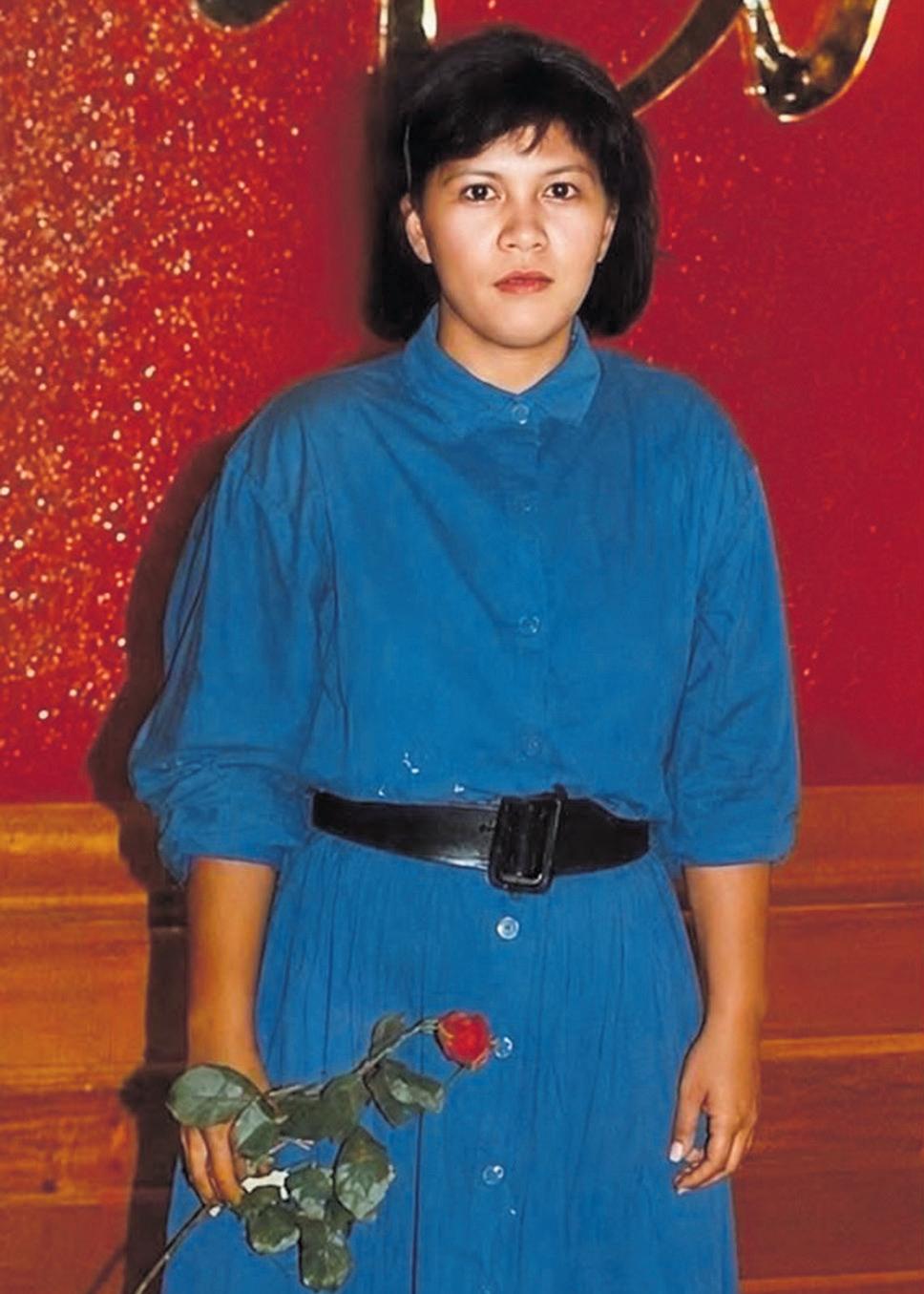
Remigio Cabacar
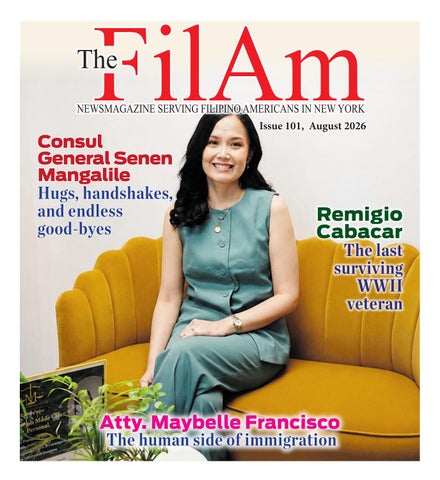
Marizel Yukee’s name is now on every Filipino’s lips.
She is not the first Filipino American to be linked to a major healthcare fraud scheme. Others have come before her, and others have followed.
Yet registered nurse Yukee has become the poster girl of large-scale healthcare fraud because of the staggering scope of the allegations against her. Federal prosecutors allege that between 2023 and 2025, she and her co-conspirators submitted approximately $906 million in fraudulent claims to Medicare and Tricare, an amount so enormous it has catapulted her into the national spotlight.
Why do some Filipinos become involved in large-scale scams? Several factors help explain the pattern, but none of them means Filipinos are inherently more likely to commit fraud. As some have stated, This is not an ethnic thing; this is a human thing.
Millions of Filipinos work often in positions involving finance, healthcare, customer service, shipping, and administration. With such a large global diaspora, some inevitably end up in positions where they have access to money, records, or systems that can be abused.
Poverty, debt, and pressure to support extended families can also make financial crimes more tempting for a small minority. This is not unique to Filipinos; similar pressures exist in many migrant communities.
Certain industries have seen high-profile fraud cases involving Filipino professionals because Filipinos are well represented in them. For example: Healthcare billing and home health services, elder
Founding Editor
Cristina DC Pastor
Managing Editor Rene Pastor
Address
P.O. Box 8071 New York, NY 10116
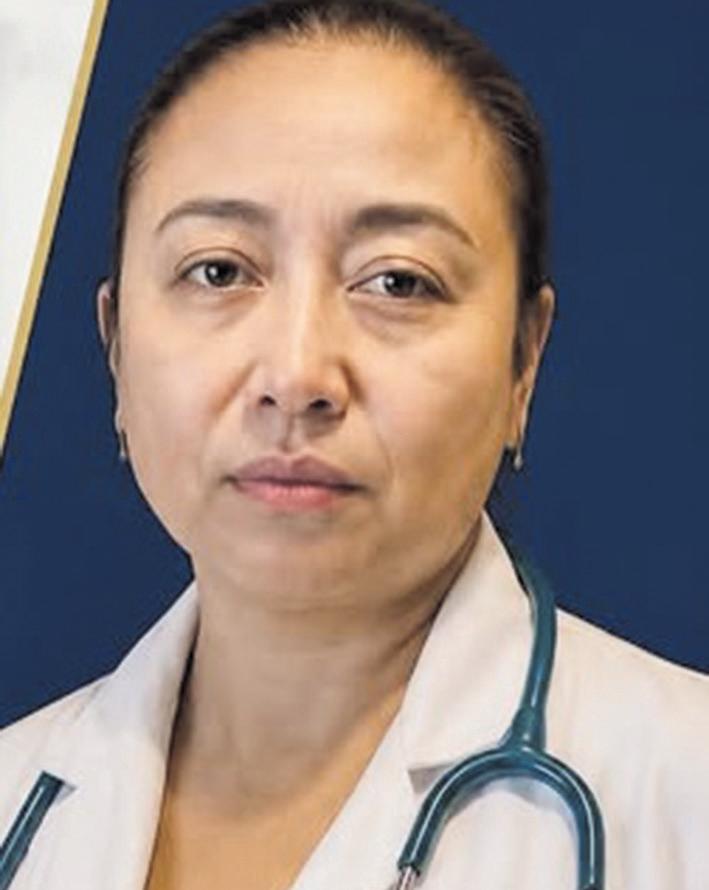
care, payroll administration, shipping and logistics, call centers. When fraud occurs in these sectors, Filipino names may appear simply because many Filipinos work there.
Many businesses recruit relatives or friends. That trust can be beneficial, but in some fraud cases, investigators have found family or community networks used to recruit participants. The same pattern has been documented among many immigrant groups, such as for instance Italian-American organized crime decades ago to Russian,
Chinese, Nigerian, and other fraud networks.
Traits often associated with Filipino culture can have unintended consequences: Strong loyalty to family and willingness to help relatives are some of them. These qualities are generally strengths, but in unethical organizations they can make it harder for employees to question illegal practices or refuse requests from relatives or supervisors.
Large fraud cases receive extensive media coverage. If several defendants happen to be Filipino, it can create the impression that the problem is widespread throughout the community.
In reality, the overwhelming majority of Filipino Americans are law-abiding professionals. Filipino Americans have positive traits, such as: High rates of college education, High labor-force participation, Strong representation in healthcare, engineering, education, and the military, Lower crime rates than many demographic groups in the United States. Because these positive stories are less sensational, they receive less attention than multi-million-dollar fraud indictments.
One area where Filipino names have appeared disproportionately is healthcare fraud, particularly in home health agencies and medical billing. The reason is largely structural: Filipinos are heavily represented in nursing and healthcare administration. When prosecutors investigate fraudulent healthcare companies, many employees and owners happen to be Filipino because many legitimate businesses in the same field are Filipino-owned as well.
Large-scale scams are found in every community. What matters is not ethnicity but the combination of opportunity, financial incentives, and individual choices.
Marissa Banez
Angelito Cabigao
Tricia Capistrano
Licelle Cobrador
Joel David
Wendell Gaa
The
Allen Gaborro
Maricar CP Hampton
Loida Nicolas Lewis
Elton Lugay
Lindy Rosales
By Romulo Aromin, Jr., MD
With only two weeks to prepare and against the backdrop of a heatwave, the world football games, and the long July 4 th weekend with the U.S. celebrating 250 years of independence, some 150 northeast Filams in the Tri-state gathered to send off Consul General Senen Mangalile who will assume the position of Ambassador Extraordinary Plenipotentiary to the Kingdom of Cambodia.
Held on July 5th at Leonard’s Palazzo in Great Neck, with lead sponsors Philippine Independence Day Council, Inc. (PIDCI) and Hiraya Foundation, this turnout was indeed a reflection of how Mangalile has served.
As Ambassador Cecilia Rebong stated in her remarks, “Consul General Senen Mangalile performed excellently in all these areas.” She was referring to the three pillars of Philippine foreign service: national security, economic security and the protection of overseas Filipinos.
What defined him, she continued, was building warm relations to all as he draws people and communities together.
PIDCI President Lea Frain, framed it in more personal ways. “This is not really a farewell. Rather, it is our way of saying thank you – for your leadership, your friendship, and for embracing our community as your own family.”
Nora Gallleros Tinio, PIDCI executive director, recalled how Mangalile’s counsel was invaluable with this year‘s Philippine Independence Day celebration debuting at Times Square, marked with events and festivities highlighting Philippine culture.
Assemblymember Steven Raga underscored the consul general’s active involvement when the Philippine Independence Day was celebrated in
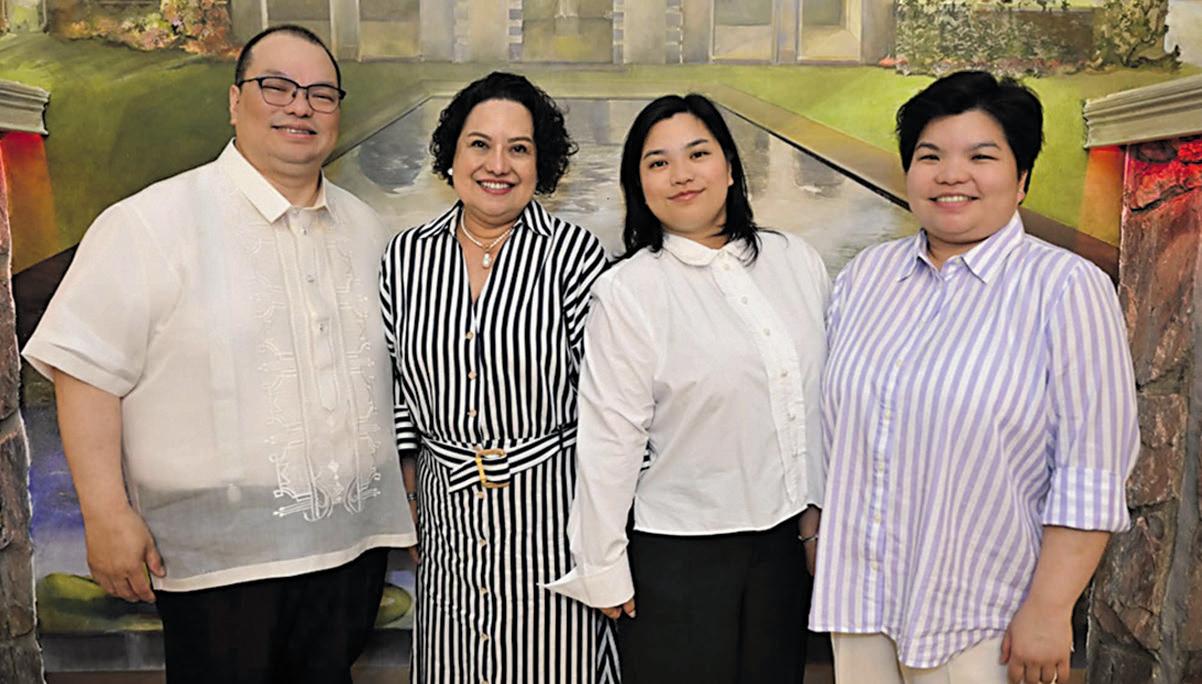

Hugs, handshakes and a final photo-op with the community.
the halls of NY State Assembly in Albany, a significant representation and a historic first.
“He has put such a wonderful face to our Filipino community”, he said as he presented Mangalile with a New York State citation for exemplary public service.
Other plaques of appreciation were given by organizations to include Association of Filam Teachers of America (AFTA), Handang Tumulong Foundation, Inc (HTFi), Homecoming Sa Konsulado, Ladies For Rizal NY, Philippine Independence Day Council, Inc. (PIDCI), University of Philippines Alumni Association (UPAA) New Jersey Chapter and University of the Philippines Alumni Association in America (UPAAA).
Romulo Aromin, Jr., MD, chair of the Hiraya Foundation, emphasized the event as a community collaborative and in a larger perspective commented, “As Filipinos and Filipino Americans, we have contributed significantly to the advancement of the American narrative,” as the U.S. celebrates its semiquincentennial founding and 80 years of Philippine-American diplomatic relations.
With Mangalile’s family in full attendance, the farewell was as celebratory as it was personal.
Roasting the Consul General was confirmatory, revelatory and humorous as well. Daughters Elizabeth (Pao) and Alexandra (Betsy) provided a more humanized version of him. With Pao’s
semblance to her father (pinagbiyak na bunga) and with her similar humor punches, the tone becomes both familial and familiar.
Given a well-deserved and overdue platform, his wife Fe offered a gratitude that is heartfelt, reminiscing times spent with community members who have since become friends as well.
In his remarks, Mangalile’s characteristic humor and delivery again reverberated with jabs on dances, Ternos, personal intrigues and secrets, among other observations. He recalled a tour de force of what made his tenure unforgettable and personal. Mangalile reminded the audience how for want of not disinviting anyone for the Independence Day reception, that his initiative turned into a cross community-wide celebration of picnics and turon (sweet banana spring rolls), the Pistahan ng Bayan held in Lincoln Park in Jersey City. What he reinvigorated is the sense of community working together–bayanihan–all for the call of volunteerism.
“The energy of this community… the Filipino American community in this part of the world is the one thing that I will carry with me…It is the energy of this community that makes things possible, that makes things happen, that makes magical things occur,” he said.
Addressing the audience, “You have your own, you have what it takes…that it is really the community that is the ambassador of the Philippines in this part of the world.”
He framed the consulate as stewards, “trying to point sometimes, to the right direction”.
All throughout the event, the consul general has been generous with his time initiating group photos with guests himself. He roamed around approaching guests at their tables, conversing and shaking hands. A number of times that he had to be cued to go back and continue with the program. This is how the career diplomat will be remembered: with humor and heart.
Luz Bay, Ph.D. was working comfortably and diligently as a psychometrician for a number of years at the College Board from her home in New Hampshire.
Then in 2022, the U.S. Supreme Court in Dobbs v. Jackson Women’s Health Organization overtured the 1973 Roe vs Wade decision that it was not against the U.S. Constitution for a woman to have an abortion during its trimester. The Dobbs Decision ruled that each state of the United States should pass its own laws on abortion.
That was the impetus for the three-time cancer survivor to decide to run as a State Representative of her district in Dover, NH so she would have a voice in the legislation that deals with a woman’s right to choose whether to keep the fetus or to abort it.
After discussing her decision to enter politics with her husband Mike, her son Lucas, and daughter Lina, she methodically, like the mathematician that she is, strategized her campaign.
Before she filed her application to run as a representative, she already ordered her campaign literature and yard signs.
On the day she filed, she put up her yard signs on the lawns of willing homeowners. Her sister Au who was visiting from the Philippines accompanied her as she knocked on doors and installed her yard signs. She simply introduced herself and left her campaign flyer to whoever opened the door without discussing any issues because it would cut her time in walking the homes in her district. It would also have taken away homeowners’ time with their families.
Needless to say, she won the Democratic primary and in November 2022, became the first Philippineborn FilAm to be elected State Representative in New Hampshire.
She was easily re-elected in November 2024 because of her work as a legislator and as an inspirational speaker in schools, churches and clubs.
This November 2026 election, she is running for the Executive Council representing her district, which comprises nearly half the geography of New Hampshire, against a Republican incumbent.
In New Hampshire, the Executive Council acts as the people’s counterpoint to the Governor’s power over approval or veto of bills, of the budget, of infrastructure projects over $10,000.
Dr. Bay’s energy to be an elected official until 2025, a full-time working mother, and a devoted wife could be

attributed to her being a dedicated marathon runner. She started running through a 5K program through her church when she decided to live a healthier lifestyle. The whole family participated in local 5K races when Lucas and Lina were in elementary school.

Since then, Dr. Bay has run three times in the New York City marathon, two times in its virtual marathon, and has run the Boston, Chicago, Berlin (Germany), Tokyo (Japan) and London (Great Britain) marathons. She completed the Abbott World Marathon Majors in only four years and ended up raising over $30,000 for cancer research.
Her indefatigable spirit may be explained by her background. Luz Bay was born in Batangas, the seventh of 14 children. Her mother Melitona finished Grade 4 and her father Jose was a high school dropout when they got married at 18 and 19 years old. Her father was an entrepreneur who managed a poultry and pig farm, a furniture factory, a car body repair shop and sent all their 14 children to college.
Luz was the only student in Batangas admitted on a scholarship to Philippine Science High School in 1977. She graduated from the University of the Philippines at Los Banos with a B.S. in Mathematics. She continued her studies at Southern Illinois University at Carbondale for her M.S. in Mathematics and Ph.D. in Educational Measurement in Statistics. She started her 32-year career as a psychometrician with increasing levels of responsibilities in the educational assessment industry.
In November this year, we should not be surprised when we would have the first FilAm elected to the powerful Executive Council of New Hampshire. She would also be only the eighth woman and the first person of color ever seated in the Council.
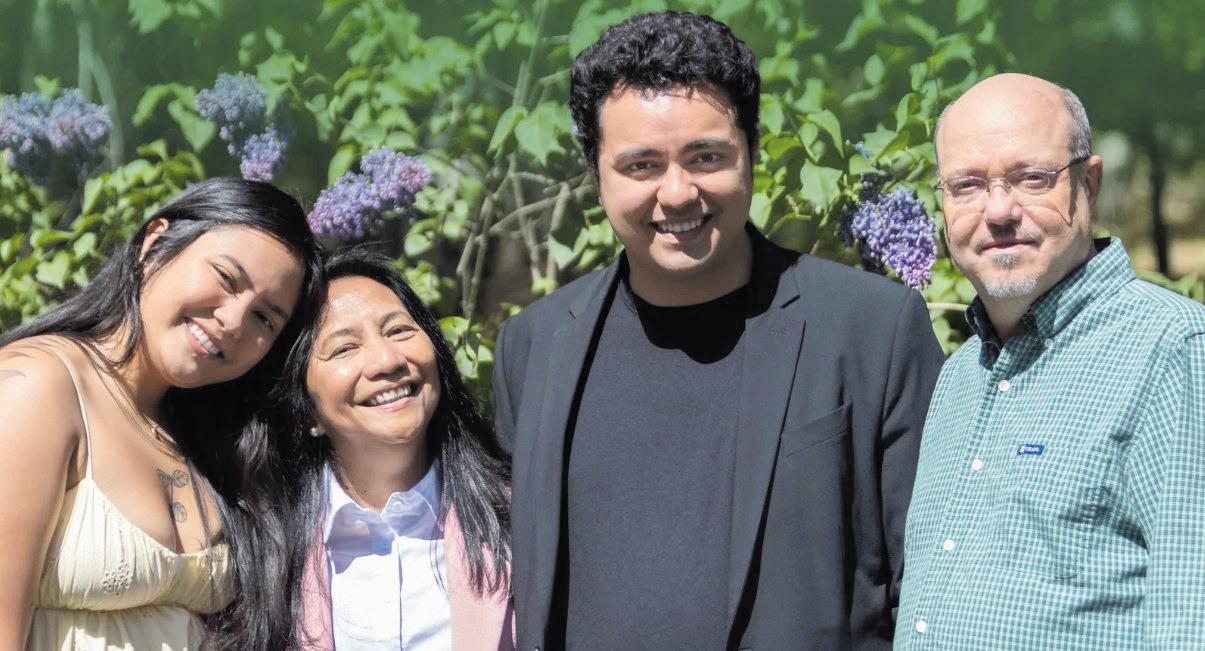
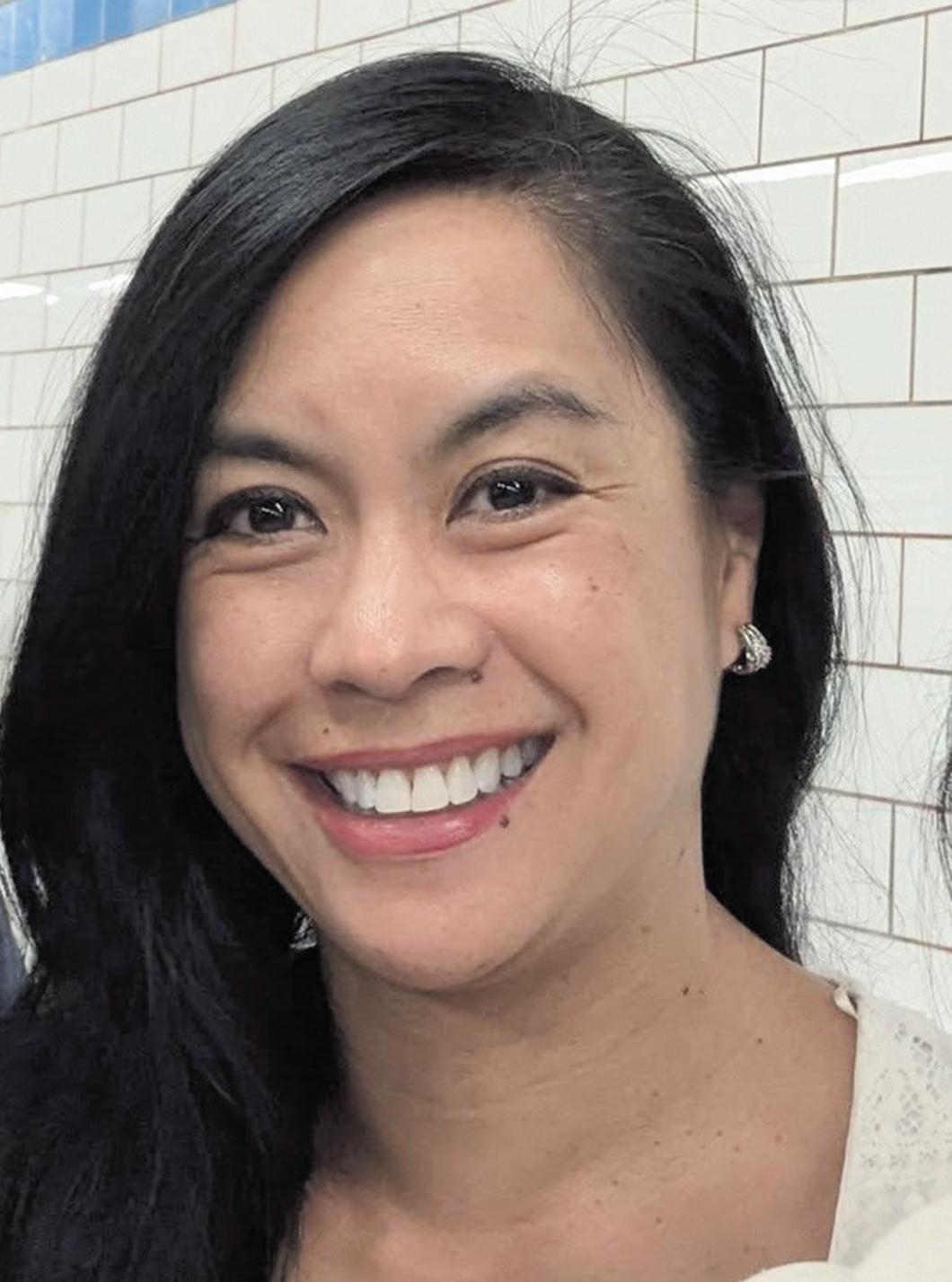
For nearly three decades, Venessa Manzano has been a familiar face in the Filipino American community of the Northeast—not as a politician, but as an educator, cultural advocate, nonprofit professional, and tireless volunteer.
Now, after more than 30 years of community involvement, she is embarking on a new chapter: public office.
Manzano has announced her candidacy as a Democrat in Emerson, New Jersey, believing that the skills she has developed through years of service can now benefit the broader community she calls home.
"Entering politics has always been on my mind," she said. "For over three decades, I have been involved with the Filipino communities in Massachusetts, New York and New Jersey. My extensive experience serving and advocating for our Kababayan in various roles and capacities has prepared me to expand to a wider community."
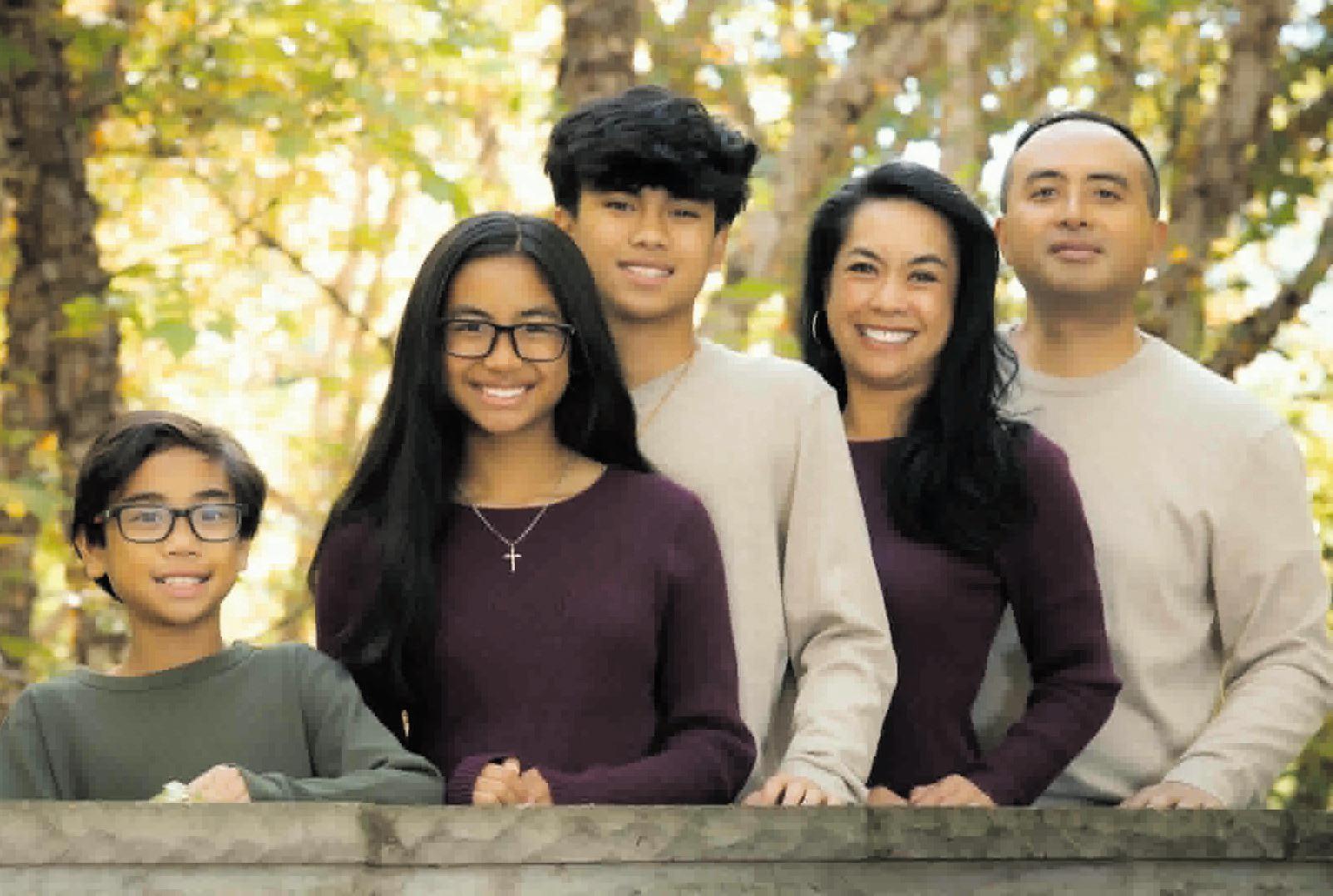
Before taking such a significant step, Manzano turned to her family, the people who know her best.
"When I pursue something new, my family recognizes that I have thoroughly explored the possibilities," she explained. "I open the floor to them for their opinions and feedback."
That collaborative approach has earned her the full support of her parents, siblings, husband, and children. "They become part of the process and are incredibly supportive," she said.
While her campaign has yet to officially begin, she hopes her family will join her on the campaign trail whenever possible.
Located in Bergen County, Emerson is a borough of approximately 7,400 residents. Known as "The Family Town," Emerson is recognized for its highly rated public schools, traditional neighborhood atmosphere, and strong sense of community. Manzano and her family have lived there for more than 13 years.
Although the Filipino population is relatively small—she estimates about a dozen Filipino families—Manzano says her campaign is not centered on any one race.
Instead, she plans to meet residents throughout the borough to better understand their concerns. Among her top priorities are programs and services for young people and senior citizens, although she made clear they do not necessarily reflect those of her upcoming campaign.
Raised by first-generation Filipino parents, she grew up immersed in Filipino traditions and developed a close relationship with her grandparents, both in the United States and during visits to the Philippines.
By Cristina DC Pastor
"They were my closest connection to my roots," she recalled. "From them, I learned our family history, heard stories of their hometown, and fell in love with Philippine folklore."
That appreciation evolved into years of volunteer work in nursing homes and senior centers while she was in high school. Later, as a physical therapy student, she found particular fulfillment helping older patients regain their mobility and independence.
Her dedication to young people has been equally enduring.
As a member of the Philippine Dance Company of Boston, she taught traditional Filipino dances to children. She later served as executive director of Filipino American Human Services, Inc. (FAHSI),
where she helped develop programs in tutoring, dance, and cultural education.
Perhaps her best-known contribution is founding The Filipino School of New York & New Jersey, which has spent the past 18 years teaching Filipino language, history, traditions, and culture to Filipino American youth.
"I've always believed that keeping youth connected to their identity gives them a stronger foundation for the future," she said.
Asked about her broader view of politics, Manzano expressed both optimism and realism.
"While I have an idealistic view of what politics can achieve, I understand the reality of the challenges we face," she said.
She has expressed disappointment over the defeat of her longtime friend, Steven Raga, in the Queens Democratic primary for the New York State Senate.
"It was heartbreaking to see someone I've known for so long—a good friend, steadfast supporter, and dedicated public servant—work so hard to reach this stage of his political career and come up short in the election," she said. "Regardless of the outcome, Steve has already made history as the first Filipino American elected to a state-level office in New York, and that legacy cannot be taken away."
"Politics shouldn't be about self-interest—it's supposed to be a selfless role dedicated to serving the community," she said. "Bridging that gap between the ideal and the reality takes hard work, but with honesty and accountability, I know genuine reform is within reach."
Manzano is preparing to introduce herself to voters across Emerson, bringing with her decades of nonprofit leadership, cultural advocacy, and grassroots service. She hopes to carry that same spirit of service into local government, and make a difference.
President Ferdinand Marcos Jr. formally received the credentials of Lee Lipton on June 30, the newly appointed U.S. ambassador to the Philippines, reaffirming the enduring alliance between the two countries. The credential presentation came as the Philippines and the United States commemorate 80 years of diplomatic relations and the 75th anniversary of the Mutual Defense Treaty.
During their meeting, Marcos and Lipton discussed strengthening bilateral cooperation in economic development, defense and security, maritime affairs, regional issues, and the Philippines' upcoming chairmanship of the Association of Southeast Asian Nations, according a press statement.
Both sides expressed optimism about expanding collaboration through strategic initiatives, increased trade and investment, and stronger people-to-people ties.
Lipton officially arrived in Manila on June 28, succeeding former U.S. Ambassador MaryKay Carlson. Before his appointment to Manila, he served as Chief of Staff to the U.S. Mission to the Organization of American States beginning in January 2025. In that role, he helped lead U.S. engagement on regional issues, including the security crisis in Haiti and initiatives to counter the influence of the Chinese Communist Party within the Inter-American system.

He built and led a New York-based apparel company that designed, manufactured, and marketed licensed collections for internationally known brands including Calvin Klein, St. John Knits, and Guess. After selling the company to a publicly traded firm, he entered the hospitality industry, developing several oceanfront restaurants in Palm Beach County, Florida, that remain among the area's busiest establishments.
Lipton was nominated by Donald Trump and confirmed earlier this year. Upon his nomination, he said his priorities would include deepening U.S.-Philippine security cooperation, strengthening supply chains, advancing the Luzon Economic Corridor initiative, and promoting fair and transparent trade.
He said in March before the U.S. Senate Foreign Relations Committee: “Community and peopleto-people ties have always mattered to me. The Philippines has a word that captures that spirit — bayanihan [buy-yaan-nee-haan] — working together for the common good. With more than 27 billion dollars in bilateral trade in 2025, roughly 375,000 Americans residing in the Philippines, and approximately 5 million Filipinos and FilipinoAmericans contributing to communities across the United States, our countries are linked in ways that extend far beyond security cooperation and veterans affairs.
“Filipino-Americans are among the largest Asian American groups in the U.S. military, serving across various branches. According to recent estimates, there are around 15,000 active-duty FilipinoAmerican service members in the U.S. Armed Forces. If confirmed, I would work to expand collaboration in the other areas where our interests align — healthcare, education, semiconductors, critical minerals, energy, infrastructure, humanitarian assistance and disaster response, tourism, and sports diplomacy, just to name a few — while ensuring that our economic relationship remains fair and reciprocal.”
A graduate of Bryant University, Lipton has been married for 42 years and has two sons.
Elmhurst Hospital appoints Dr. Robin Ulep as vice chair of Neurology, co-director of Stroke Center
The credential presentation came as the NYC Health + Hospitals/Elmhurst has announced the appointment of Robin Ulep, MD, as vice chair of the Department of Neurology and co-director of the hospital’s Stroke Center.
Dr. Ulep is a vascular neurologist with clinical expertise in acute stroke management, telestroke consultation, stroke prevention, rehabilitation, and recovery. She joins Elmhurst Hospital’s nationally recognized stroke care team, which provides timely, coordinated, multidisciplinary care for patients experiencing stroke and supports patients and families throughout treatment, rehabilitation, and long-term recovery.
Elmhurst Hospital has been recognized by the American Heart Association and by U.S. News & World Report as one of the best hospitals in the United States for the quality of its stroke care.
“We are thrilled to welcome a physician of Dr. Ulep’s caliber and expertise to co-lead our Stroke Center,” said NYC
Health + Hospitals/Elmhurst CEO Alina Moran. “Our clinicians are dedicated to ensuring that every patient experiencing a stroke has access to rapid, life-saving, and compassionate care close to home. Dr. Ulep’s expertise will further strengthen our nationally recognized stroke program and build upon the exceptional care our multidisciplinary team provides every day to the people of Queens.”
“Dr. Ulep brings exceptional clinical expertise, a collaborative leadership style, and a deep commitment to education and quality improvement,” said NYC Health + Hospitals/Elmhurst Chief Medical Officer Dr. Laura Iavicoli, MBA, FACEP, CHEP. “Her addition to our Stroke Center reinforces Elmhurst Hospital’s commitment to delivering world-class, evidence-based stroke care while advancing innovation, research, and equitable access for every patient we serve.”
“I am incredibly honored to join the team at Elmhurst Hospital. The hospital is nationally recognized for its
excellence in stroke care, and I am excited to partner with our multidisciplinary teams to continue to build upon that strong foundation,” said Dr. Ulep. “My commitment is to support our patients and their families throughout their entire journey – from initial emergency intervention to long-term rehabilitation.”
As vice chair of Neurology and co-director of the Stroke Center, Dr. Ulep will help lead clinical care, quality improvement, education, and program development for Elmhurst Hospital’s stroke services. Her work will focus on strengthening timely access to evidence-based treatment, supporting prevention and recovery, and advancing care delivery for underserved communities.
Dr. Ulep takes a patient-centered, collaborative, and multidisciplinary approach to stroke management. In her outpatient clinic, she focuses on comprehensive preventive care and supports stroke patients and their caregivers through the rehabilitation and recovery

practices a patient-centered, collaborative, and multidisciplinary approach to stroke management.
process. She is also dedicated to providing and advocating for culturally responsive healthcare for patients and families. Dr. Ulep received her ScB from Brown University and her MD from the University of Queensland. Her goal is to lead initiatives that improve healthcare delivery for underserved populations while expanding access to high-quality neurological care. -- NYC Health + Hospitals/Elmhurst
Dr. Robin Ulep was born in Santa Maria, California but went to school from pre-K to early grades in Baguio City. She is the eldest of six siblings. -- Editor
By Cristina DC Pastor
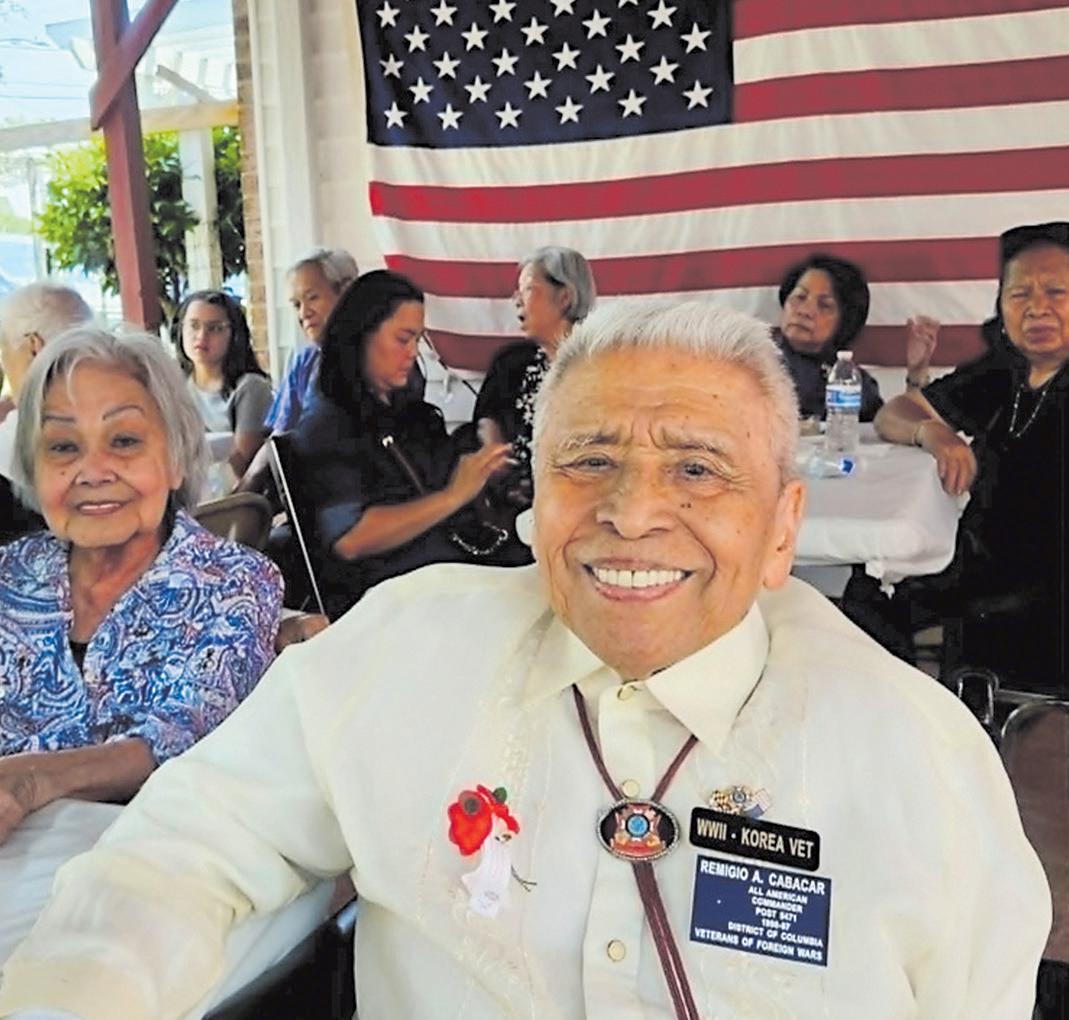
For nearly a century, he was a witness to history--from the hardships of war to the blessings of peace, from raising a family to becoming a great-grandfather.
Today, at 98 years old and approaching his 99th birthday, Remigio “Rey” Cabacar, the last surviving World War II Filipino-American veteran in the Washington, D.C., area measures his life not by medals or accolades, but by the people who surround him every day.
His daughter, Vilma Megorden, apologized for the delay in arranging this interview. Life has been especially busy as she and her family recently moved both of her elderly parents into their home after they had spent 46 years in the same house in Fort Washington, Maryland. It was a “major transition,” she told The FilAm.
Her father suffered a stroke two years ago that left him with paralysis on his left side, and he now relies primarily on a wheelchair. Yet his spirit remains remarkably strong. His mind is sharp, his memory vivid, and his passion for sharing stories from his years in the U.S. Navy remains undiminished.
His wife, Carolina, is 99 years old. Together they have shared nearly 72 years of marriage—and remain devoted to each other. Their four children now work together to care for them, rotating weekly so that neither parent is ever without family close by.
Despite his physical limitations, he still attends meetings of his Veterans of Foreign Wars post whenever possible and participates in events organized by Filipino veterans' organizations. Staying connected with fellow veterans continues to give him purpose.
He continues to be an advocate for the Filipino veterans who were promised benefits the U.S. government has failed to deliver: compensation and family reunification.
Upon retirement, he worked at the FBI, according to community leader Bing Branigin, where he served three directors. He retired in his 70s. Then he bought a barber shop which he named The Friendly Barber Shop, in Oxon Hill, MD. Up until 2023, he had been cutting hair for members of the community and the public.
When asked by The FilAm how he is doing, he answers with the wisdom of someone who has experienced almost a century of life.
“I am like the weather," he replies. "It's up and down. I feel 'up' because my surroundings are helpful, but 'down' because my activity is limited. Sometimes I reminisce about the past."
It is a simple yet profound description of aging. While his body no longer allows him the independence he once enjoyed, gratitude fills his days because he is surrounded by family who cares deeply for him.
One question we felt uncomfortable asking but did
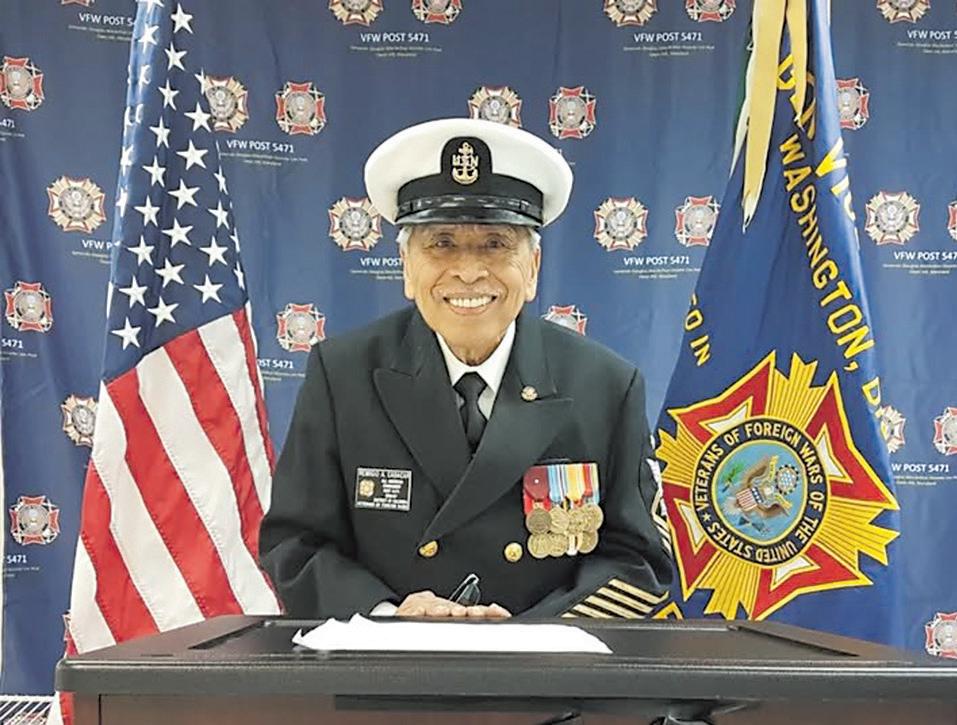
just the same: How does it feel to be the last surviving veteran in the D.C. area? He answers with both pride and sorrow: "I feel sad. When I first joined the Navy, there were about 300 of us who joined together. It makes me sad to know that they have all passed away."
Survival can sometimes feel lonely, he seems to be saying. Each passing year has taken another shipmate, another friend, another witness to the extraordinary events of World War II. Yet rather than dwell on loss, he chooses to remain engaged with life.
Volunteer work continues to occupy his time. At his VFW meetings, he still enjoys preparing simple foods for fellow members. Before age and illness slowed him down, he loved gardening, barbering, and cooking. Today, he has found quieter pleasures. His daughter Vilma has planted vegetables on the patio, and he and Carolina spend time sitting outdoors together, admiring the growing plants, blooming flowers, tall trees, and birds that flutter by.
He and Carolina raised four children who have built families of their own. Today, he proudly counts 10 grandchildren and numerous great-grandchildren among his greatest blessings. One granddaughter, Mary, lives nearby with her four children and visits frequently. The rest gather during holidays whenever possible. And when the younger generations come to visit, the stories begin.
"I tell them stories all the time when I can," he says. Those stories are more than family conversations. They are stories about sacrifice, courage, perseverance, and the value of freedom told by someone who experienced them firsthand.
This is what his daily routine looks like: He wakes every morning at 5:00 a.m. but remains in bed until 6:00, quietly planning the day ahead. Perhaps a doctor's appointment, a VFW meeting, or one of his favorite weekly traditions: Wednesday lunch at McDonald's with friends.
Exercise follows breakfast. Then comes time outdoors on the patio, conversations with family members and caregivers, television news, and sports. By evening, he watches the news before falling asleep around 8:00 p.m.
The schedule may seem ordinary, but it depicts the determination to keep moving forward despite physical challenges. He celebrates what remains intact: his mind, his memories, and his ability to enjoy those around him. His greatest source of strength, however, may well be the woman beside him.
"My wife, Carolina, is my 'number 1,'" he says simply. Faith also continues to sustain him. Unable to attend church in person, he faithfully watches Catholic Mass every Sunday morning. Before moving into his daughter's home, a deacon regularly visited to bring Holy Communion. He recalls being very active in church during his younger years. Today, his worship has become quieter, but no less meaningful.
When asked what matters most in life, he is unlikely to speak first of military service. He would probably mention his wife. His children. His grandchildren. The vegetables growing on the patio. A Wednesday lunch with friends… These quiet moments, accumulated over 98 years, are the true measure of Rey Cabacar’s life well lived.

Not every future nurse takes a straight line to the profession. Some accumulate credits from different schools. Others simply need time to discover whether nursing is the right fit.
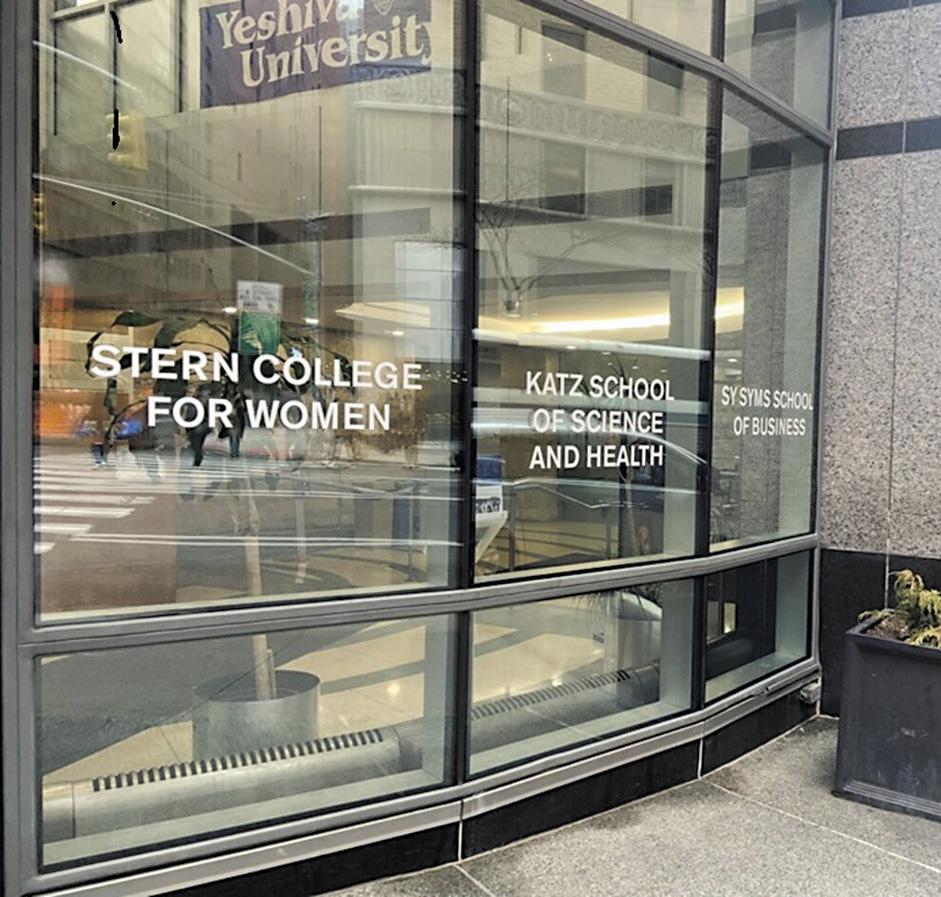
For all these students, Yeshiva University's Katz School of Science and Health has created a rigorous, full-time pathway to a Bachelor of Science in Nursing that counts their prior credits toward a nursing degree and gets them into practice faster.
The Transfer B.S. in Nursing is open to students who have completed at least 62 undergraduate credits, including prerequisite science courses, and can be completed in 21 months on campus in New York City. It’s ideal for students who have completed significant undergraduate coursework but have not yet earned a bachelor's degree.
"There is an enormous group of talented students who have done serious academic work and are ready to commit fully to nursing,” said Dr. Peggy Tallier, senior associate dean of nursing at the Katz School. “This program takes them exactly where they want to go."
The new program joins the Katz School’s Accelerated B.S. in Nursing (ABSN), which serves career-changers who already hold a bachelor's degree in another field. For information about the Transfer B.S. in Nursing, including admission requirements and application deadlines, visit www. yu.edu/nursing.
Clinical education at the Katz School takes place in top-ranked hospitals across New York City, one of the most medically complex and
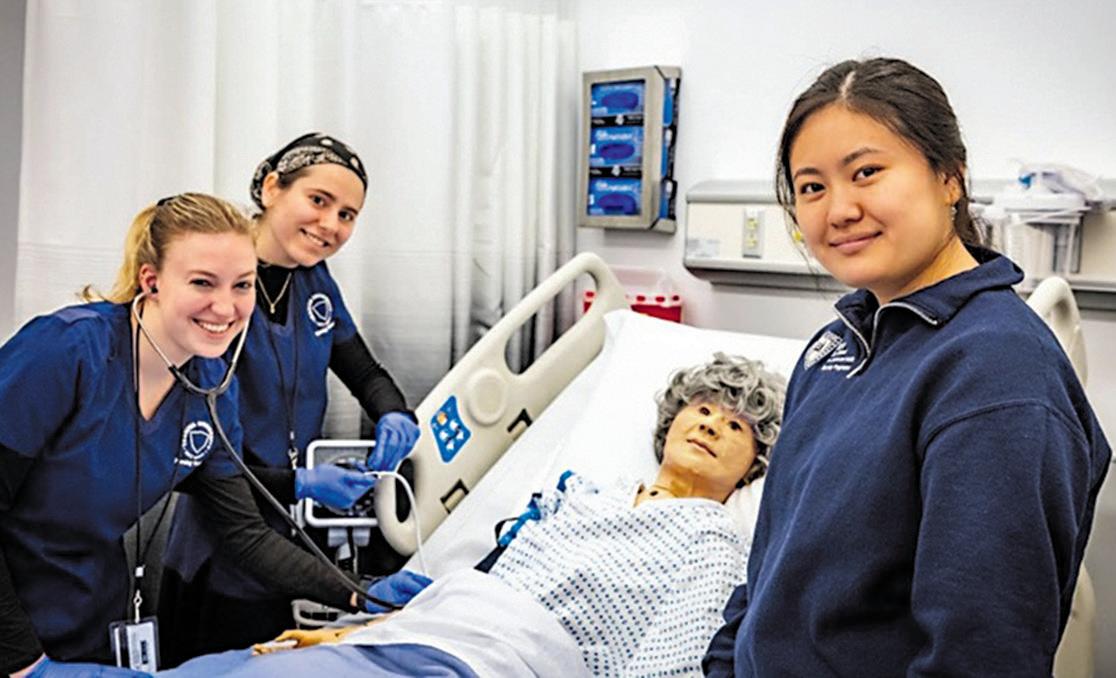
"By the time they graduate, they’ve seen things that many nurses won’t encounter for years," said Dr. Tallier. “That experience is irreplaceable.”
The 62-credit curriculum combines advanced health assessment, clinical skills training and high-fidelity simulation laboratories that replicate real-world patient scenarios. Rotations span medical-surgical, pediatric, maternity, psychiatric and community nursing, and interprofessional learning alongside other Katz School health sciences students, preparing graduates for the team-based realities of modern care delivery.
Dr. Paul Russo, dean of the Katz School of Science and Health, sees the Transfer B.S. in Nursing as an expression of the school's values.
"This program exists because we believe the Katz School has a responsibility to produce excellent and caring nurses, prepared for the hardest days the profession will ask of them," he said.
Upon graduation, students are eligible to sit for the NCLEX-RN, the national licensure examination for registered nurses. The degree prepares graduates for generalist roles across hospitals, outpatient clinics, community health organizations and long-term care.
Dr. Monique Katz, a boardcertified radiologist and the namesake of the Katz School of Science and Health, has long believed that investing in health sciences education is one of the most impactful commitments a community can make.
culturally diverse environments in the United States. Students rotate through major medical centers and community health settings
in the city’s five boroughs, caring for patients spanning every age, background and diagnosis. That breadth is intentional.
"The nursing shortage is real, and the stakes for patients are real," said Dr. Katz. "What excites me about this program is that it expands access. It finds students who have the drive and the preparation, and it gives them a world-class education and a direct path to the bedside. That's exactly the kind of impact this school was built to have."
By Cristina DC Pastor
For immigration lawyer
Maybelle Ocampo Francisco, every case tells a human story.
It could be a family longing to reunite, a professional pursuing a career, an entrepreneur chasing opportunity, or an immigrant hoping for security in a new country. It is with this understanding that she formed her own law practice in the hope, she said, of being a “trusted voice” on U.S. immigration law.
Maybelle, 42, has already built an impressive legal career with a roster of about 200 clients. But her success did not come from privilege. It grew out of hardship, the generosity of people she has met, and an unwavering belief in education and the willingness to learn and start from the bottom.
Born and raised in San Miguel, Bulacan, she is the youngest and only daughter in a family of three children. Her parents are OFW (Overseas Filipino Workers) who spent years working in Saudi Arabia. Her mother was a dietitian and nutritionist, and her father worked in the banking sector.
"We were not poor," she recalled in an interview with The FilAm. "But we certainly were not wealthy. We got by.” Maybelle and her siblings grew up largely under the care of their grandmother.
When her parents returned to the Philippines the family became entrepreneurial using their hard-earned savings. They farmed calamansi, sold produce at the local market, made nata de coco, and even sold homemade ice candy.
“Rakerista yung nanay ko,” she spoke with unabashed pride of her mother who knew how to earn a living. Those experiences, she said, taught her the values of integrity, hard work, humility, and compassion.

“Those values continue to guide me today, not only as an attorney but also as a business owner and advocate for immigrants,” said Maybelle. “Family has always been my foundation, and their sacrifices continue to inspire everything I do.”
Throughout school she consistently emerged as a student leader and academic achiever. Even as a young girl, she said she has dreamed of becoming a lawyer and also an accountant.
Opportunity eventually knocked in unexpected ways.
Her parents later tried their luck and migrated to the United States. Maybelle followed a few years after.
Like countless immigrants before her, she had to start at the bottom, working as a paralegal and later a case manager handling numerous immigration
cases. Through this experience, she gradually learned the complexities of America's immigration system. Supportive employers recognized her talent and encouraged her to pursue a legal education.
“Paralegal ako hanggang naging in-house (case manager). Ang tagal ko nasa field. 15 years. Dami ko nakilala. I was well networked,” she said. She enrolled at Mitchell Hamline School of Law in Minnesota because of its innovative blended-learning program that allowed her to continue working while earning an American law degree. Her scheduled was tailored around her circumstances where she traveled back
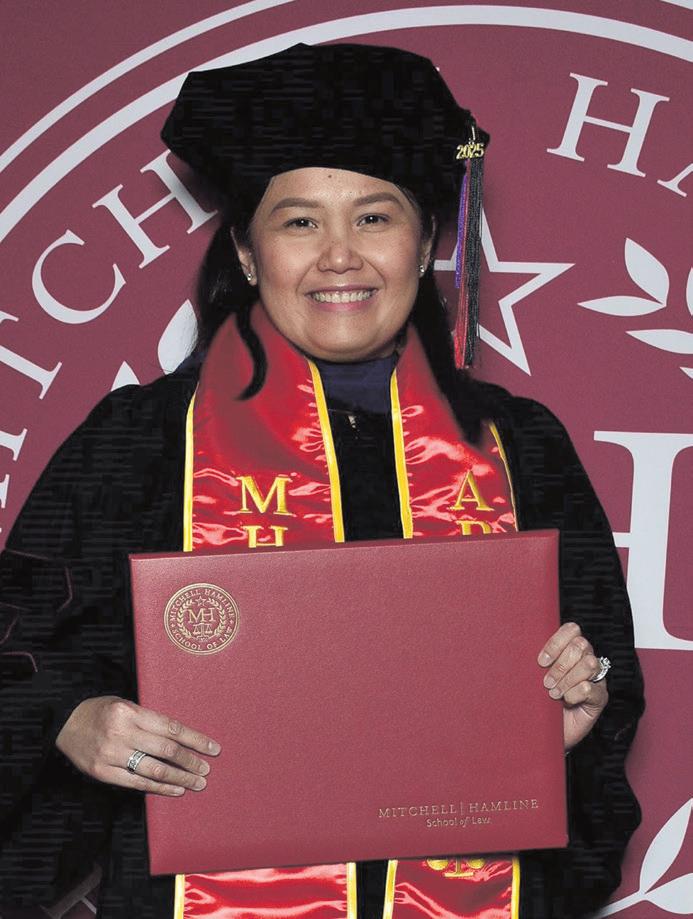
and forth from New Jersey where her family lived to Minnesota where she attended law school.
In law school, she became vice president of the Asian Pacific American Law Students Association, served on the school's diversity and inclusion committee, and worked as a student attorney with the Immigration Law Clinic, providing pro bono representation in asylum cases. Those experiences became the seeds of immigration law for her.
"As an immigrant myself," she said, "I understand the hopes, fears, and uncertainties many of my clients experience."
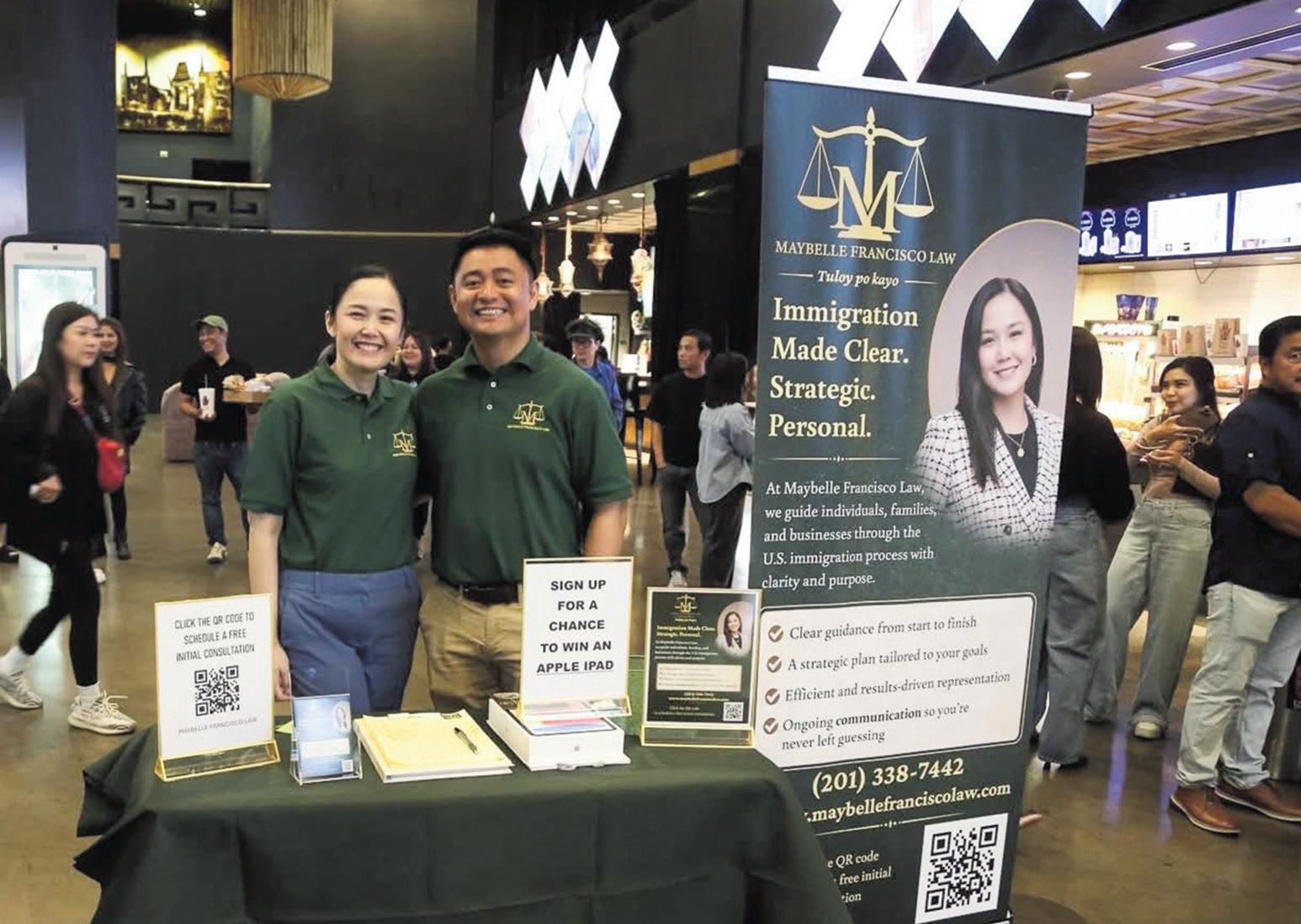
That empathy would eventually become the foundation of Maybelle Francisco Law, her immigration practice based in Paramus, New Jersey. She said her firm emphasizes accessibility, responsiveness, and compassion. Initial consultations for 30 minutes are free. She believes flexible payment plans help families afford legal representation.
“Many immigrants hold off on calling lawyers because of the consultation
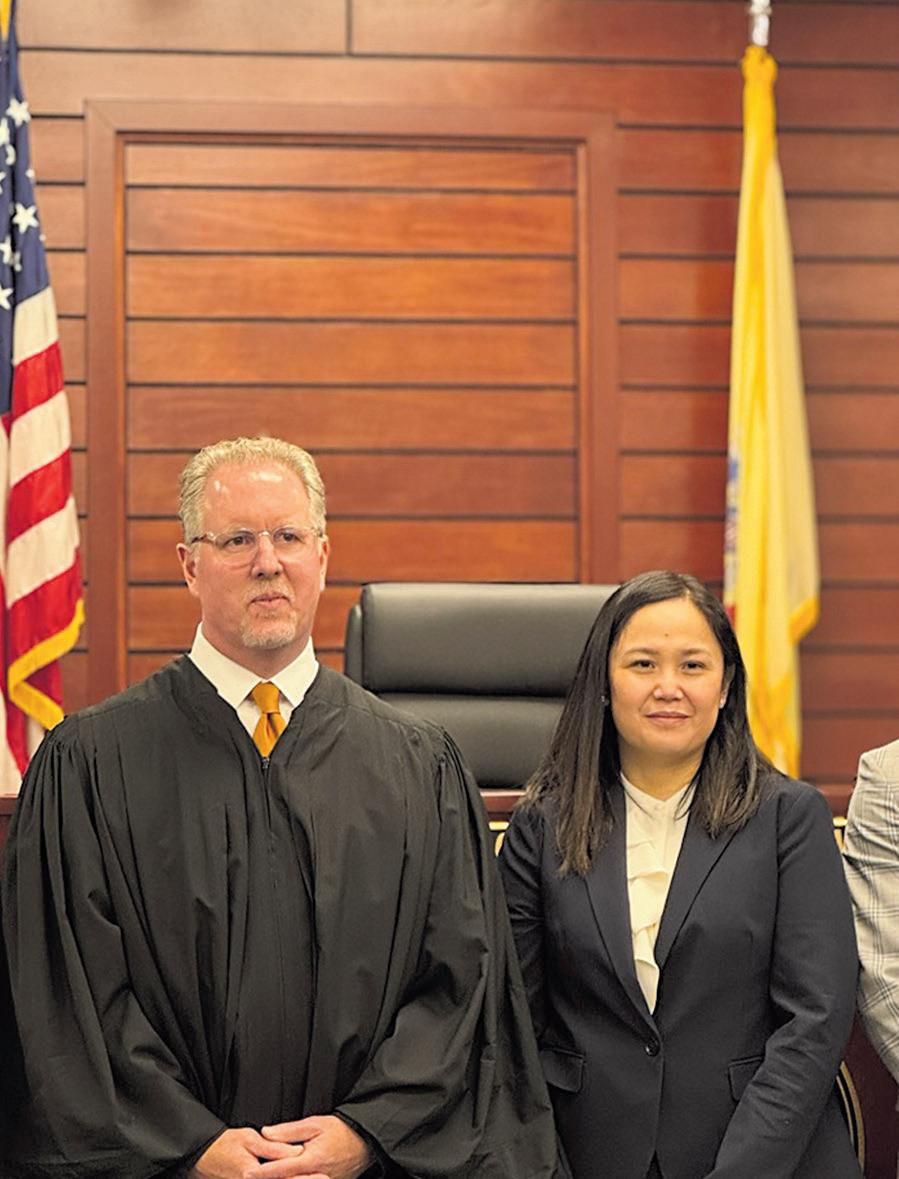
fees. May bayad agad,” she said. “People shouldn't have to choose between getting legal advice and paying their bills."
She said she has clients who are still paying for years even after getting their green cards.
She also made it a practice that clients have direct access to their attorney instead of being shuffled endlessly among staff.
One of the biggest challenges facing Filipinos is the extraordinarily long wait for family-based immigration due to visa backlogs. Many families remain separated for years or even decades despite following the legal process. Depending on type of visa and their status, children of U.S. citizens over 21 wait at least 15 years.
Her multilingual office of nine people also serves clients in Tagalog and Bisaya, eliminating language barriers that often prevent immigrants from seeking legal help.
“We take the time to listen. Our consultation is more on listening,” she said. Maybelle said one of the biggest mistakes immigrants make is relying on social media, friends, or unlicensed immigration consultants for advice rather than going to a competent lawyer. She also encourages Filipino profes-
husband
sionals to explore alternative employment-based immigration pathways beyond the well-known H-1B visa. There are options such as EB-1, EB-2
National Interest Waivers, O-1 visas, EB-3 opportunities for nurses, and investor programs that many qualified applicants don't know exist.
When asked what she would tell a Filipino who is on the run as a TNT (‘tago ng tago’ or always hiding)?
“Never lose hope," she declared. No lawyer can guarantee approval, she cautioned, but she would try to help undocumented immigrants understand that every case deserves an individualized legal review.
For Maybelle, immigration law extends beyond statutes and regulations. "It's about opportunity." She knows because opportunity changed her own life: a scholarship, supportive employers, and mentors who believed in her.
Success, she says, is not measured by the number of cases won or the size of one’s law practice. It is measured by impact. By the family reunited after years of separation. By the nurse who finally receives a green card. By the entrepreneur who opens a business. By the immigrant who no longer lives in fear.
If she hopes to leave one legacy, she would like to be remembered as “a law firm that truly cared."
She said. "If we helped families stay together, opened doors to opportunity, and treated every client with dignity, that will be the legacy I'm most proud of."
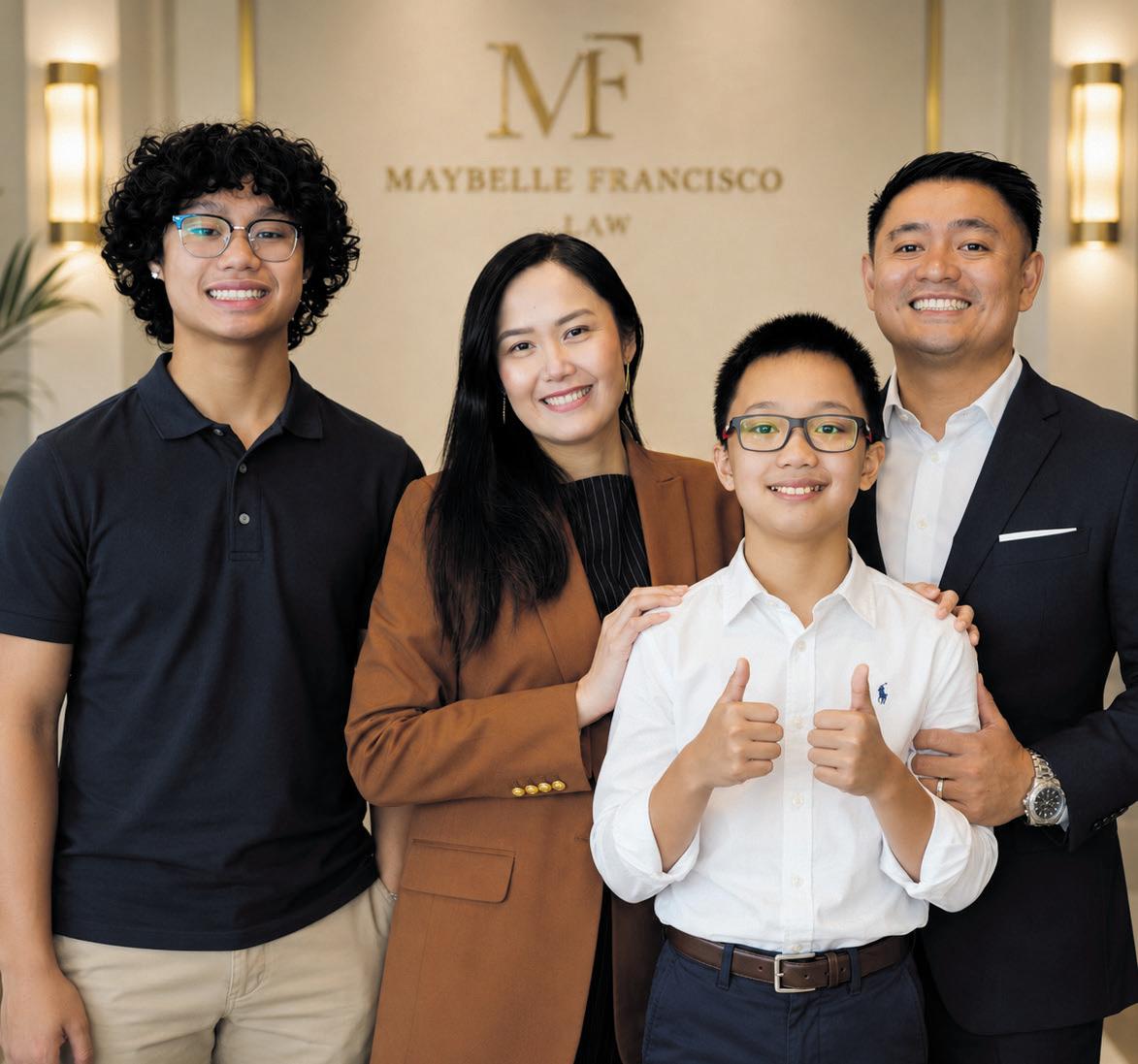
Maybelle lives in Fair Lawn, N.J. with husband Christian Francisco and their two boys Maverick and Madison.

| August 4
St. John Marie Vianney Day featuring priestly fellowship Immaculate Conception Church 900 Darlington Avenue Mahwah N.J.
| August 9
22nd People’s Ball
Newark Liberty International Airport Marriott 1 Hotel Rd, Newark, NJ

| August 6 to 9
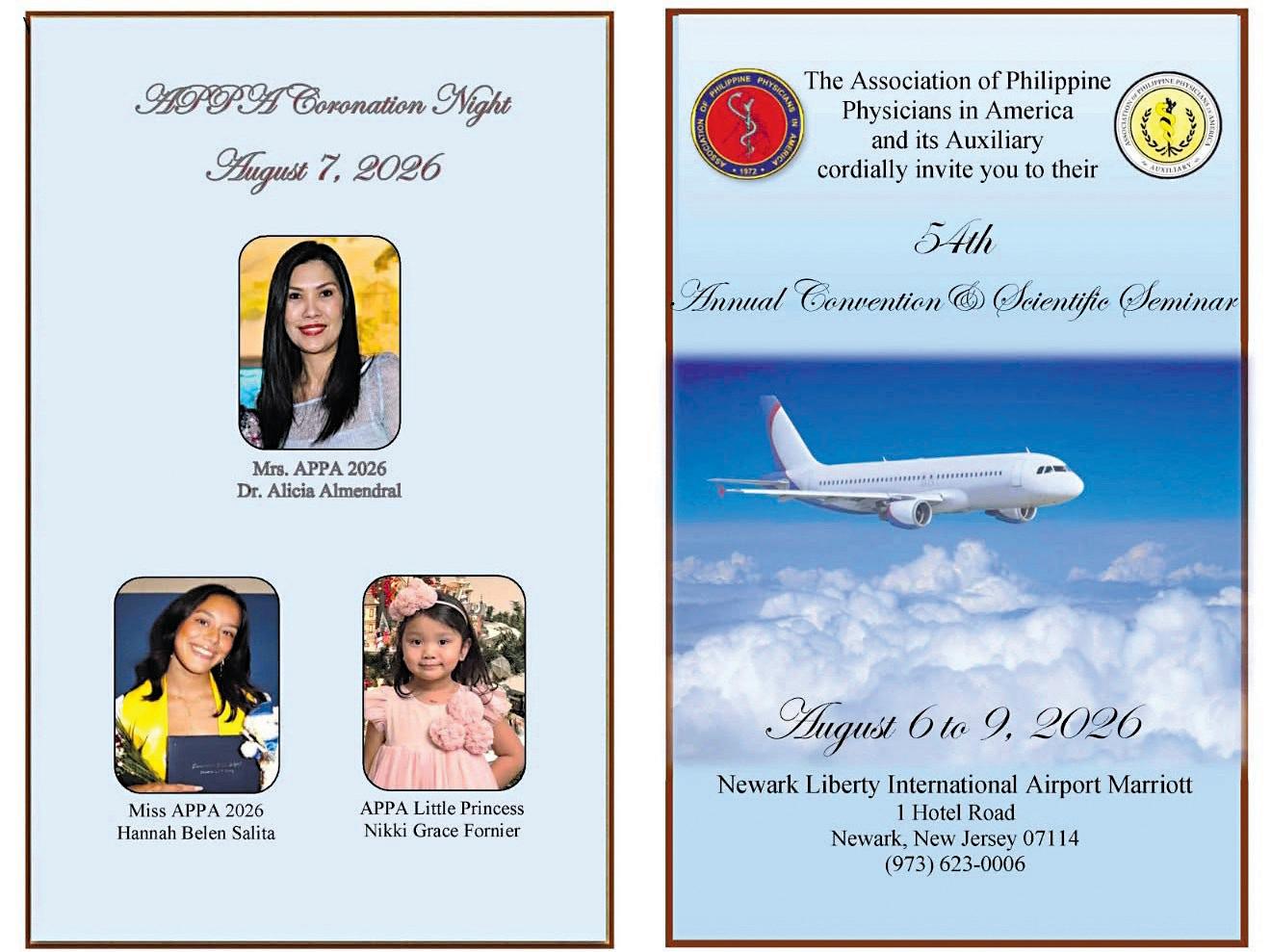
54th Annual Convention & Scientific Seminar by the Association of Philippine Physicians in America
Features: A Moda Filipiniana Fashion Show and Rigodon de Malacanan

Newark Liberty International Airport
Marriott
1 Hotel Road
Newark N.J.
| August 8 to September 4
Miguel Braganza’s musical theater and dance lab summer workshop
Ripley-Grier Studios
500 8th Avenue 16 fl NYC

| August 9
PAAC Summer Potluck 2026
Philippine-American Association of Connecticut, Inc.
Hammonasset Beach State Park –Shelter 3
1288 Boston Post Road Madison, CT 06443
| August 14 & 15
NaFFAA National Empowerment Conference 2026
Theme: ‘Harnessing the Power of Community: Starting With Us’
Hyatt Regency Aurora-Denver Conference Center 13200 East 14th Place Aurora, CO
| August 15
Kinding Sindaw to perform at Queensboro Dance Festival
Queens Theatre 14 United Nations Ave S Corona, NYC
| August 15
Bayanihan Fashion Show & Cultural Storytelling Experience
National Federation of Filipino American Associations
Hyatt Regency Aurora-Denver Conference Center 13200 East 14th Place Aurora, CO
| August 15 & 16
29th Fiesta in America EXPO
American Dream
1 American Dream Way East Rutherford, NJ
September 7 to 18
Central Europe Pilgrimage of Faith
With Fr. Leandro Dela Cruz of the Church of St. Ann, Lawrenceville, N.J. Contact info@nativitypilgrimage.com
| September 11 & 12
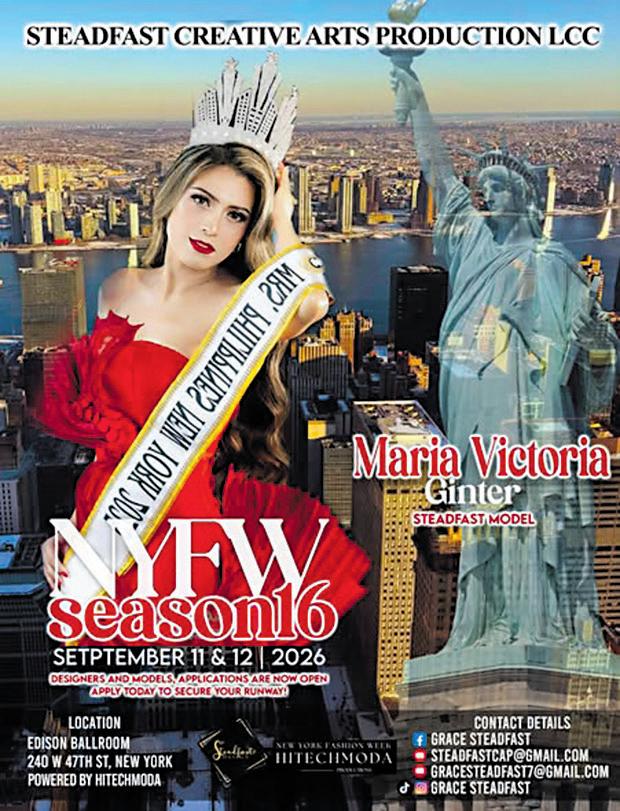
New York Fashion Week produced by Steadfast Creative Arts
Productions
Edison Ballroom
240 W 47th Street NYC
| September 12
Kenneth Barlis unveils his Spring/ Summer 2027 collection at New
York Fashion Week
Gotham Hall 1356 Broadway NYC
| September 13
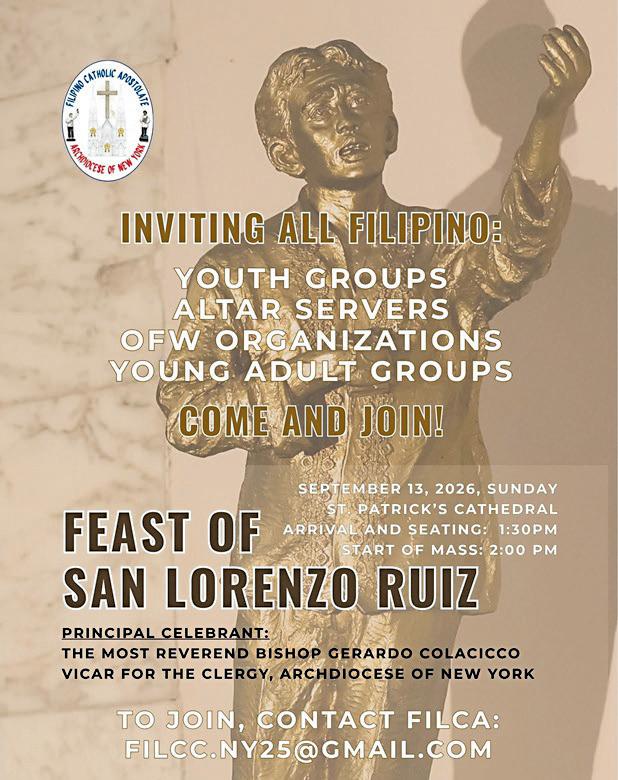
Feast of San Lorenzo Ruiz
St. Patrick’s Cathedral
To join, contact FILCA at filcc.ny25@gmail.com
| September 13
Retro Night Party (Knights of Rizal & Ladies for Rizal NY Chapter) The Palace 63-01 Roosevelt Avenue
Queens NYC

| September 17 & 18
3AF Fall Marketing Summit: Trust, culture, and the future of growth Venue: To be announced


4th Annual NY Yankees Filipino Heritage Weekend
Wednesday, 9/23 vs Tampa Bay Rays at 7:05pm Thursday, 9/24 vs Tampa Bay Rays at 7:05pm
Friday, 9/25 vs Baltimore Orioles at 7:05pm
Saturday, 9/26 vs Baltimore Orioles at 7:05pm
Sunday, 9/27 vs Baltimore Orioles at 3:20pm For more information, contact info@filschool-nynj.org
Yankee Stadium
Bronx NYC
| September 26
Beks Battalion: The Laff Control Project
Queensborough Community College Theater
Bayside, Queens NYC
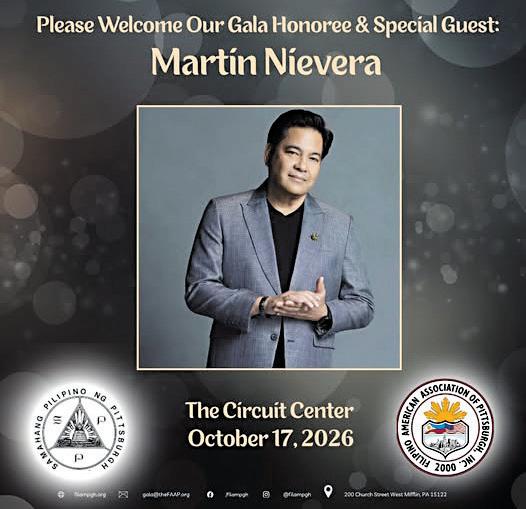
70th Anniversary of The Fil-Am PGH Filipino American Association of Pittsburgh
Special concert featuring Martin Nievera & Rex Navarrete on October 18
The Circuit Center 5 Hot Metal Street
Pittsburgh, PA
| November 3
General elections

| December 5
Simbang Gabi at St. Patrick’s Cathedral Holy Mass begins at 10:30 a.m.
Principal Celebrant: Most Rev. Bishop Edmund Whalen Vicar General, Archdiocese of New York
| 2027
| July 7 to 24
48th Annual Philippine Nurses Association of America, Inc. National Convention Inter-island cruise in Hawaii
| ATBP
‘How to Get a Green Card’ (now on its 17th edition) by Loida Nicolas Lewis
Available on Amazon
Online English tutor specializing in:
• Reading Comprehension
• Writing Skills
• Accent Reduction & Clear Pronunciation
• Conversational English
• English for Students, Professionals & Adult Learners
Contact 646-717-7460
Salary: $45,000 - $65,000 per year (based on experience) Great Neck, NY
Manage front desk: answer/route calls and emails, greet visitors, maintain supplies.
Customer support: handle inquiries, coordinate with clients, suppliers, and teams.
Admin tasks: data entry, maintain records, assist with order processing, filing, and document prep.
Join a reputable chemical importer/ distributor known for quality and strong client relationships. Serve as the first point of contact and support daily office operations.
HS diploma (assoc./BA preferred). Experience as receptionist/ assistant, ideally in chemicals or import/export.
Strong communication, Microsoft Office proficiency, organized and detail-oriented.
Competitive salary, health insurance, paid vacation/holidays, retirement plan, supportive work environment. Strong communication, Microsoft Office proficiency, organized and detail-oriented.

By Dr. Marivir Montebon
This 3rd of 4 parts dissertation by Dr. Marivir Montebon examines how bridging the political divide of U.S. immigration is possible through Transformative Journalism.
Participant journalists covering immigration adhere to truth and accuracy as the prime ethic of their profession. They are not quite concerned with the policy impact their stories may create.
With digital technology heightening misinformation and polarization, they said that writing an immigration story with a human face and empathy are enough challenges.
This study examined 10 veteran journalists covering immigration on the East Coast and a second group of volunteers and legal advocates who assisted immigrants. Journalists highlighted stories on deportation, immigrant victims of crime, achievement, and DACA, as their best work.
The study assessed truth, balance, impact, personal belief, and editorial policy in coverage. Participants said polarization has intensified in the past decade, especially during the Trump era, with social media amplifying misinformation, weak accountability, and more abrasive opinion.


All the participants rated being truthful and accurate as their top priority, ensuring that they report and write the basic facts. Not all of them consider creating a policy impact when they write their immigration stories.
A founding editor of a Filipino print and online magazine could not have said it any better: “Truth and accuracy are the highest principles I uphold. I am factbased and I get all sides to a story or an issue. My political leaning doesn’t come into play. I am just a storyteller. I don’t slant it towards politics. It will always be the story of the immigrant.”
Digital technology drowns the truth
Digital technology has opened content creation to many people, blurring truth and accuracy amid a constant flood of opinion and misinformation—a daily challenge for professional journalists.
A retired New York Times senior editor and freelance columnist described today’s media environment as “anti-intellectualism creeping in the guise of populism.”
With weakened standards, making truth harder to distinguish from opinion and misinformation.
“Audiences now believe what they want, reducing the value placed on rigorous reporting,” said one journalist.
Another journalist said social media and AI repeatedly recycle and amplify shallow coverage, while the decline of newspapers has reduced depth, editing, and reliability.
Together, these shifts leave journalists competing with speed, commentary, and constant reinterpretation rather than careful reporting grounded in verified information.
“I miss writing for newspapers. You worked closely with an editor, filed your story, and sometimes waited until the next day to see whether it ran—but the information was solid.”
Traditionally, balance in journalism means presenting both sides of an issue, especially dissenting views, and giving the aggrieved or accused a chance to respond.
“In political justice, you seek the truth. There is only one truth, not two sides to every question.”
The journalist-publisher argued that social justice issues do not always require balance in the same way corruption stories do, where the accused must be heard under the Code of Ethics.
“How do you balance a clear social justice issue? You can listen respectfully, but you must still show when a policy or belief harms people.”
Writing for public impact was a shared concern by the participant journalists, especially on immigration issues. It was ranked second after truth and accuracy. As the journalist publisher puts it, writing or reporting stories that create impact are those which open the eyes of the people to truth.
Influencing policy, as in the goal of policy impact, wasn’t a top concern for the participant journalists, with a median rating of 3.8 among the participants. This meant they were more concerned about delivering truthful stories in real time, regardless of the impact it may create for policy reforms. Most participants said personal beliefs did not determine whether they reported a story, though staying objective required conscious effort. Two senior editors said they would avoid stories they did not believe in.
One ethnic media journalist argued that complete detachment is impossible, and that lived experience can strengthen reporting by adding cultural context and community perspective. Immigrant journalists said this often made them more empathetic and openminded on immigration than some white colleagues.
Nine out of ten journalists said editorial policy guided how they wrote immigration stories.
One journalist chose to challenge editorial policy and stand by his story, even at personal cost. A journalist-publisher added that reporters aim to stay true to their values while working within newsroom guidelines. Overall, the study suggests that reporters in both conservative and liberal newsrooms have limited influence over editorial decisions.
One Filipino journalist from a liberal local newspaper reflected:
“I had little say in the editing process, which can limit representation. When more immigrant voices are included, coverage gains depth, understanding, and empathy, helping audiences better see why people come to this country.”
A retired senior editor said immigration is a vast beat spanning culture, politics, economics, and individual lives, yet coverage is often overtaken by national political rhetoric. As a result, reporters may end up covering partisan stunts, such as transporting migrants for political spectacle, instead of deeper immigration issues.
By Elton Lugay
When Filipino American jeweler Reagan John Rada heard about the powerful earthquake that struck General Santos City in the Southern Philippines, he knew his upcoming birthday celebration in New York could not remain just a party. Instead, he pledged to turn it into a fundraiser for families affected by the disaster in the region.
Rada’s “American birthday” — marking the years he has lived in the United States — became an occasion for members of the community to gather for a ticketed event where 100 percent of the proceeds would go to quake victims in General Santos City. Funds were donated to the New York-based Soccsksargen organization. The gathering was held at Tito Rad’s Restaurant in Woodside, Queens.
By the end of the night, the celebration had raised $3,098 to be sent to those hardest hit by the tremor. Those who did not give cash donated gift cards or items that were auctioned off. More donations came in the days after the party, Rada told The FilAm. Checks were handed to Soccsksargen organizer Rowena Randman.
The quake that moved Rada to action was a powerful one, reported at magnitude 7.8, that struck off the coast near Maasim, Sarangani province, and shook General Santos City and neighboring areas. Authorities placed the city under a state of calamity after the tremor damaged buildings, injured residents, and forced many families out of their homes as aftershocks continued.
At Tito Rad’s, the atmosphere was warm and reflective, the Filipino spirit of Bayanihan – neighbors
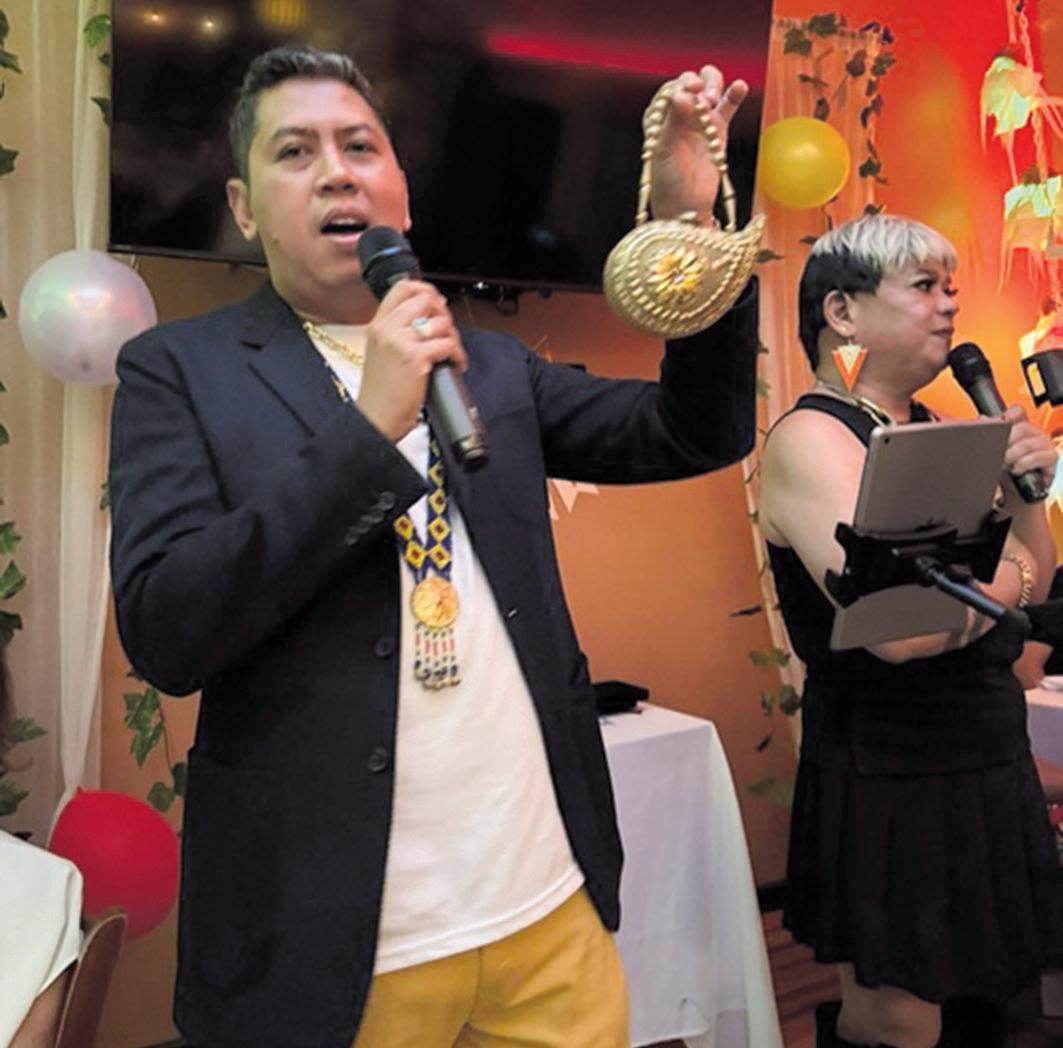
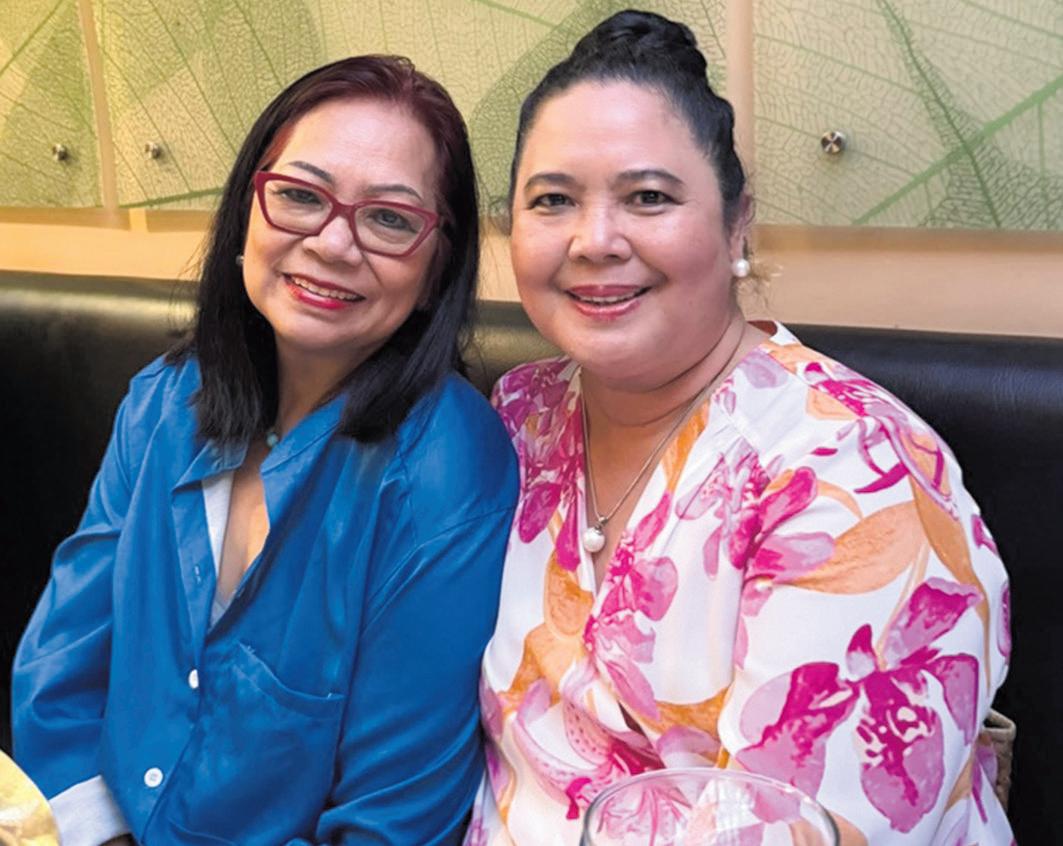
helping neighbors — evident in the way guests had wanted to help. The fundraiser drew a cross-section of the community, including Ambassador Mario de Leon and his wife Eleanor, nurse-philanthropist Dr. Dely Go, and partners in the arts and events scene Edwin Josue and Jerry Sibal. Comedians Allen and Cassey hosted the program, while local singers Michelle and Rasmin provided live musical performances.
For Rada, the night was about gratitude as it was about giving back. Born in the Philippines and raised in modest circumstances, he came to the United States more than two decades ago with dreams larger than his resources. In his early years, he juggled different jobs, navigating the uncertainties of immigrant life while honing his craft in jewelry design. His fortunes changed when the jewelry company he worked for was acquired by The House of Taylor Jewelry, owned by screen legend Elizabeth Taylor. There, his creative talent caught the attention of colleagues and mentors, leading to greater responsibilities and recognition. It was during this period that he became a legal immigrant.
He tells the story of how his path to legal residency was secured with the help of then-U.S. Senator Barbara Boxer and friends of Taylor, who advocated on his behalf as he rose through the ranks of the company.
Today, Rada is known as a jeweler to an international clientele and a visible figure in Filipino American circles. Friends say that despite his success, he has not forgotten the struggles of his early years or the communities that supported him.
“He has always believed that blessings should be shared,” noted one guest at the event, observing how Rada moved from table to table thanking supporters and explaining how the funds would be used. The jeweler emphasized that the evening was for the families in General Santos who are rebuilding their lives after the quake.
Gov. Kathy Hochul’s white Converse were already showing the strain by the time me and my friends reached Greenwich Village, the back of her right sneaker folded down as she powered through block after block of the NYC Pride March.
It was a small detail amid the rainbow spectacle, but for me it captured the spirit of a day when New Yorkers decided, again, to show up for a community under sustained political attack. This year was my first time marching the full Pride route in nearly two decades of living in New York. I’ve long been part of Pride through TOFA (the organization I founded and direct) sending singers, helping behind the scenes, supporting LGBTQ+ community members and allies. I was happy just documenting and cheering on the sidelines.
By Elton Lugay
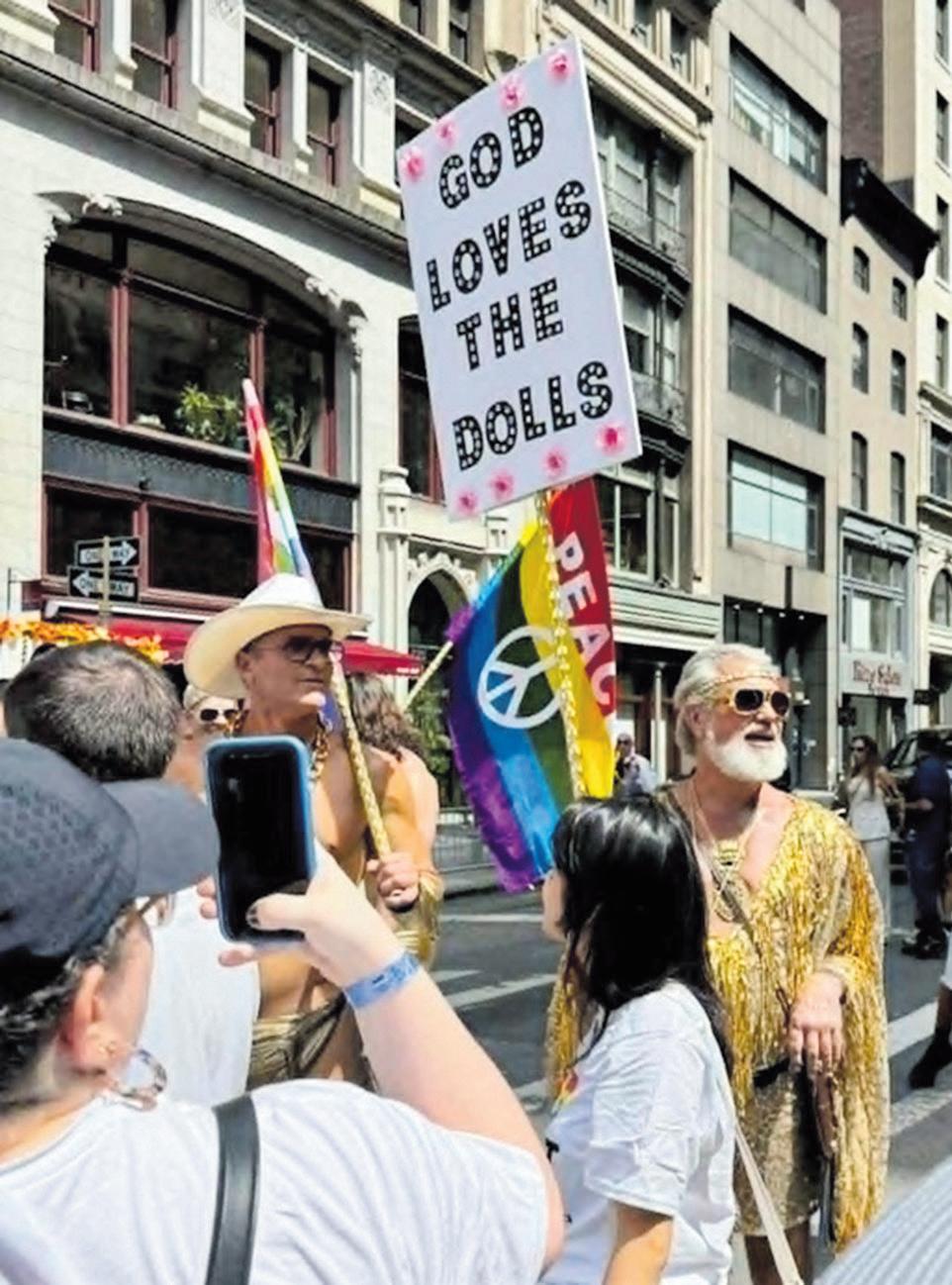

and lampposts. It’s the moving forward together that mattered. Pride is often described as a celebration, and the joy is real. People danced on stoops, kids waved tiny flags, strangers shouted “Happy Pride!” to everyone.
Stepping off on Fifth Avenue with our group, including my best friend Rasmin Diaz, felt like watching history moving on the street. I needed to walk with it. The march stretched roughly 1.8 miles, more than 30 Manhattan blocks from 26th St. and Fifth Ave. to Seventh Ave. and 15th St. marching, it felt like your legs and feet are reminding you this is a commitment, not a stroll.
At first the sidewalks looked thinner than in past years, but as we advanced, the crowds thickened, the sound of drums and whistles grew louder, and rainbow flags fluttered on balconies
But because Pride began as protest (beginning with the 1969 Stonewall uprising and the first Christopher Street Liberation Day March) it also carries a responsibility. It asks us to remember why LGBTQ+ New Yorkers needed to fight for the simple right to exist without fear, and why that fight is far from over.
Hochul, dressed in those Converse without socks and a simple white outfit, could have chosen to deliver a quick speech and leave. Instead, she stayed in the line, stopping regularly to greet spectators, clasp hands and pose for
quick photos. As someone who has just won the Democratic primary and is heading into a reelection campaign, she understands the optics of being seen at Pride.
But watching her walk the route, pause at Stonewall Plaza to shake hands and dance briefly to “YMCA,” and then hug her husband at the end of the march, I saw more than a photo op. I saw a governor signaling that when LGBTQ+ rights are in danger nationally, New York will stand its ground. Since the Supreme Court legalized same-sex marriage in 2015, many Americans have assumed the major battles are behind us. Not quite. Federal attacks on transgender rights, attempts to roll back protections in health care and education, and efforts to strip support from LGBTQ+ youth
programs are continuing. You just need to listen to trans and queer New Yorkers constantly worrying about whether the law will recognize who they are.
My friend Rasmin did not need a parade to prove her allyship. For years she’s volunteered behind the scenes at Pride and singing at LGBTQ+ events. Marching beside her, I realized how much I lean on people like her — straight allies who treat LGBTQ+ advocacy not as a seasonal past-time but as a long-term commitment.
Pride has been part of New York’s calendar for generations. Governors, mayors and celebrities come and go. The floats change; the slogans continue to scream. But it endures because of how we vote, organize, and show up for one another whenever our support is called for.
By Cristina DC Pastor
Maria Victoria Ginter was in her teens when her mother was diagnosed with breast cancer.
Her mother discovered a lump in her breast and underwent surgery, but the disease had already progressed. After years of treatment, including chemotherapy, the cancer reached Stage 4.
“She was only 45 years old when she died,” Victoria said.
The loss devastated the family. Her father was left to raise four children alone, while Victoria, the eldest, learned early about responsibility, sacrifice, and perseverance.

Fast forward several decades later. Victoria, 41, now wears many hats: wife, mother, healthcare professional, community volunteer, fundraiser, and advocate for breast cancer patients. Truly, she has transformed her pain into purpose.
Victoria organizes fundraisers for breast cancer patients. Her mother’s death is the driving force behind her advocacy. She launched a grassroots effort to support breast cancer patients in the Philippines. She works with radio station iFM 93.9 Cebu, which verifies patients’ medical records before broadcasting appeals or releasing financial assistance.
Victoria uses her pageant platform to raise funds within her community. She sets up donation tables at community events and in front of stores and shopping centers. The funds are turned over through iFM Radio’s beneficiary program, with the beneficiary present during the turnover. Her most recent fundraiser raised $905 for a breast cancer patient in Cebu. To date, Victoria has helped raise more than $5,000 for six breast cancer patients in the Philippines
“I want people to know exactly where their donations are going,” she explained.
For Victoria, every patient represents a reminder of her mother. “I know what families go through,” she said. “I know the pain of watching someone you love fight cancer.”
Victoria also supports programs for children with special needs and assists vulnerable women through
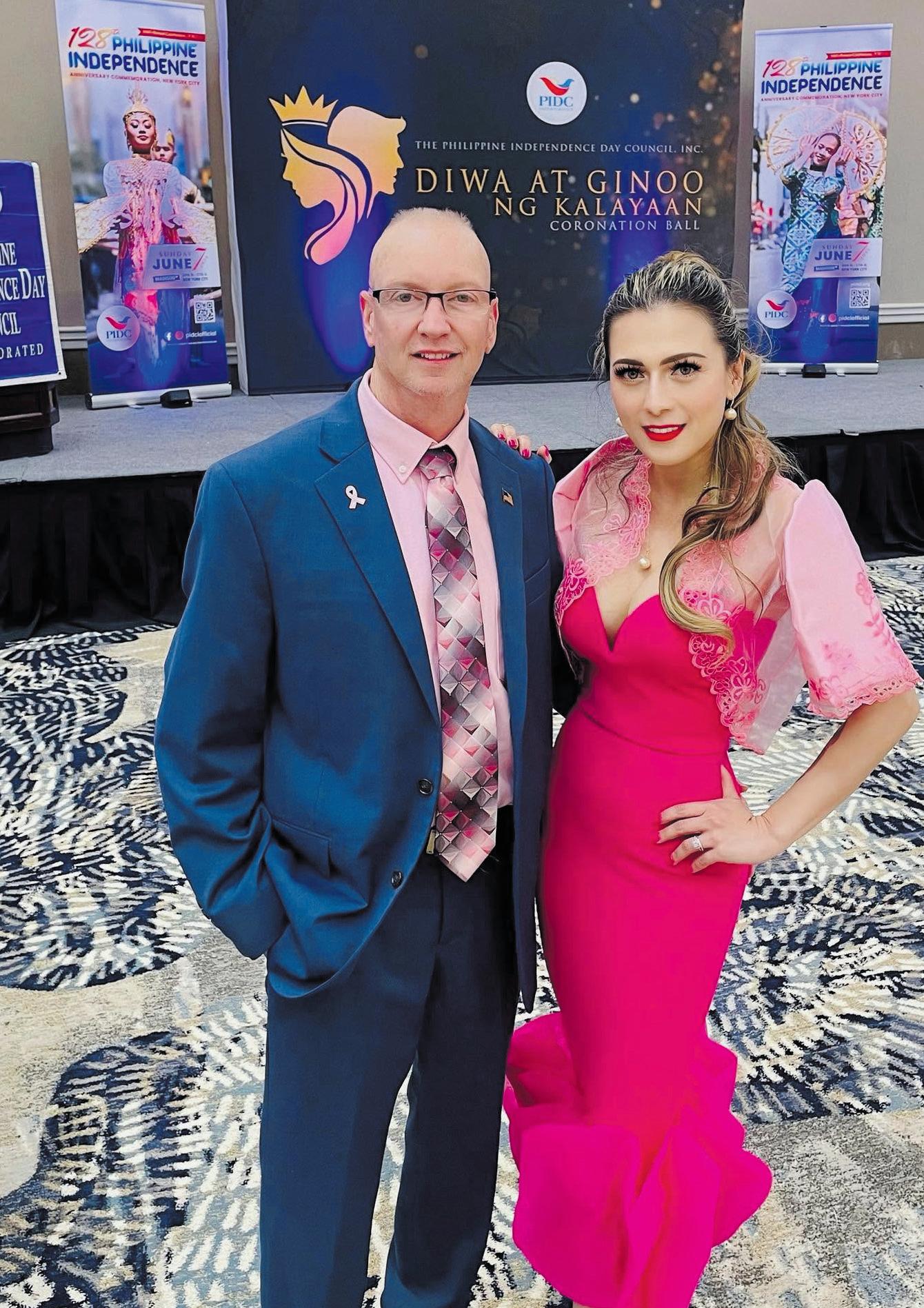

Sta. Rita de Cascia, an organization that serves as a safe haven for women and children who have experienced abuse, violence, exploitation, abandonment, and rescued street children.
“If they reach out to me, I try to help financially,” she said.
Her approach is quiet, low-key, and deeply personal.
Born and raised in Cebu, she grew up as the eldest of four siblings—two girls and two boys—in a closeknit Filipino family.
Her childhood was relatively comfortable. She attended St. Joseph’s Academy in Mandaue City, Cebu, from preparatory school through high school before enrolling at Southwestern University for college. At the
time, her life lacked clear direction, and she admits she did not take education seriously. She initially studied Information Technology before shifting to Hotel and Restaurant Management, eventually leaving college without completing her degree.
Tragedy and loss seemed to follow Victoria at a young age. The father of her two children died from a brain aneurysm at the age of 34.
“I was only 29,” she said. Her children were just 5 and 6 years old.
The young widow immigrated to the United States in 2015 after marrying an American Army soldier. It was an unexpected love story. She met Will Ginter through her cousin, who asked Victoria if she could guide him around Boracay and Cebu during his visit.
“At the time, romance was far from my mind. Yet the connection between them was immediate,” she said. “We ended up together,” she added.
The couple has now been together for 12 years, successfully blending their families. Victoria brought her two children into the marriage, while Will’s three children from previous marriages became part of their extended family. They live in Rome, New York, a small Upstate city located between Utica and Syracuse. She describes Will simply as “a great, very supportive, and loving guy.”
“We get along well with our stepchildren,” she said.
Living in the suburbs wasn’t always easy. “There aren’t many Filipinos here,” she said.
But over time, she found community and built a career from the opportunities that came her way. She returned to school and earned a degree in Health Information Technology from Mohawk Valley Community College. She became a Registered Health Information Technician (RHIT) and now works as a medical coder for Rome Health Hospital.
“It allows me to work from home and still have time for family and community work,” she said.
Driven by a sense of curiosity, Victoria joined Mrs. Philippines New York 2025 and won.
“There was really nothing wrong with trying,” she said.
The experience expanded her network and gave her a platform to promote the causes closest to her heart. At every fundraiser, she wears her pageant sash, and the sight of a local beauty queen has attracted donors to her table as they begin to ask about her cause.
Each weekend fundraiser, each patient helped, and each act of kindness honors the memory of her mother.
“Even if I can only help one person at a time,” she said, “that’s already making a big difference.”