


Contributed by Debra
McGhan
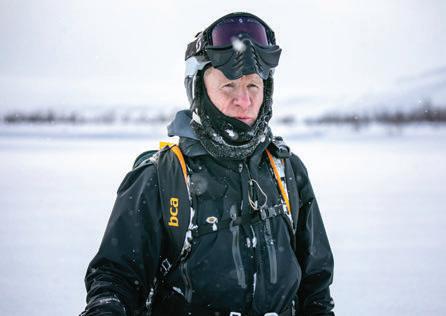
For more than five decades, Mike Buck has been exploring, discovering, sharing and learning about Alaska’s wild terrain. A retired schoolteacher, former occupational safety and health advisor, and long-time outdoor enthusiast, he received the 2026 Alaska Governor’s Safety and Health special safety award for his contributions to the field of health and safety.
In 2021 Buck, along with a powerhouse team that included Iron Dog champions Tyler Aklestad, Chris Olds and Scott Davis, plus Iditarod champion Peter Kaiser, and outdoor enthusiast Dan Hull, formed the Alaska Safe Riders. Aaron Bartel, another long-time outdoor enthusiast, took Hull’s seat and joined the board in 2023. This not-for-profit organization focuses on the safe operation of allpurpose vehicles through education and training programs. In 2026 they have already visited 45 communities, 37 schools, and taught over 10,000 individuals directly and 250,000 indirectly.
This effort, led by Buck, is possible thanks to a host of sponsors and supporters that include companies like Donlin Gold, Knik Construction, Lynden Transport, ConocoPhillips, Matanuska Telephone, and Matanuska Electric Association. They also receive major support from non-profit foundations that include the Rasmuson Foundation, Mat-Su Health Foundation, Alaska Community Foundation, Doyon, and others. Finally, Buck has amassed a team of volunteers and members that help with a host of tasks and outreach and also support the organization financially.
“In 2020, during the pandemic, I recognized that no organization or company was focused on the safe operation of all-purpose vehicles like snowmachines, ATVs and side-bysides,” said Buck, “yet we live in a state with the highest rate of unintentional injuries and fatalities associated with this activity. I wanted to see that changed.”
He took on the role and admits, “this is the hardest job I have ever had in my life. It’s become an obsession and I find myself putting in so many hours coordinating this outreach effort. I couldn’t do it without all the help and support I have received, but it just never seems like quite enough. We built this program for the State of Alaska. Now I’d like to see the state step in and provide some real assistance to ensure sustainability of the program.”
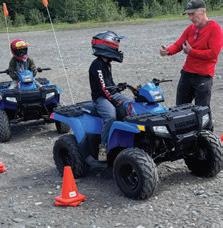
Currently the only funding provided by the State of Alaska is an annual $25,000 backcountry safety contract that supports programs offered in schools across Alaska. “It really doesn’t cover much of the real cost but thanks to support from our sponsors and donors, we’re able to leverage the funding and make this happen,” explained Buck.
Why does this all matter? “I’ve always felt so fortunate for all the things I’ve been able to do,” said Buck. “For years I lived in Valdez where I could take off from my backyard and be 100 miles from anyone in a really short time. It’s just magical and amazing.”
He values the freedom that riding his sled gives him. “I’ll admit, I’ve made a lot of mistakes in my life. Had a lot of close calls and that has taught so much that now I want to be able to give back. I’ve seen a lot of tragedies over the years. Lost a lot of friends in crevasses and avalanches. It’s painful and an awful thing for anyone to have to experience. I want to do everything I can to help others experience all the adventure Alaska has to offer and to do it safely. This program has given me the opportunity to see the state and hear some incredible stories.”
Some of those stories have impacted Buck in a big way. “Over the years we’ve added many stories I’ve heard while in remote villages into our teaching because this is real world stuff. This year I went to a school where the kids had recently lost a friend on a sled who went through the ice. After the presentation a young man came up to me and told me he was following his friend when he went through the ice. He said he couldn’t stop in time and also went through the ice, but he was able to grab onto the edge of the hole and made it out of the water. His friend didn’t. That really hit me hard.”
Buck says those stories, along with the excitement he sees in the children’s eyes during his training sessions, keep him motivated and inspired to keep teaching. “The best thing for me is the look on the kids’ faces when they learn something new or receive a new helmet or goggles. It’s exciting and fills my heart with so much joy.”
Alaska Safe Riders has a host of programs coming to a school or community near you thanks to the work and efforts from Mike Buck. You can learn more, join the effort, or make sure your school or community is on the agenda to receive a future Alaska Safe Riders safety program by visiting AlaskaSafeRiders.org.









Contributed by Melissa Rigas
It’s getting close to that time of year that we, as Alaskans, treasure, summer. Although short, we manage to pack in as much exploration, discovery, farming, fishing, and fun in those months as we can.
Amidst the joy, there are some very real issues that surface at this time. One of those is the threat to food security. What happens to those young folks who depend on their meals served at school? What happens to those home-schooled kids who don’t benefit at all from school meals?
Food is a necessity if we and our community are to be healthy and whole. So, when we speak about food security, we must not forget that we cannot envision food security without food availability. Accessibility, affordability, and nutrition must all be a part of the equation if we are to be successful in our mission to combat the issue. Fortunately, here in the Valley, we are
a tight-knit community that thrives on collaboration so that we may help all our neighbors when need be. As concerns feeding our youngest, it is not surprising that several organizations assure that they are fed throughout the summer months. The school district, our tribal villages, certain food pantries, Kids Kupboard, and we at the MATSU Food Bank are some of these organizations. Food4Kids, as many of you know, is the MATSU Food Bank’s summer feeding program. We will be located at the 2 sites we have been distributing meals for over 10 years, Wonderland Park and Newcomb Park (Wasilla Lake).
This year, we have decided to try to get ahead of the game by offering our community pre-registration. We believe it will facilitate the process from the start of the program, eliminate long waits, and give us an idea of how many folks we need to


by Carmen Pell 1976 to 2026! After 50 years of serving our amazing community, Chimo
prepare for.
If you are a client at the Betty White Food Pantry, you can simply pre-register with the person at reception. If you are not a client or wish to do it online, please go to our website at matsufoodbank.org where there will be a pre-registration application you can fill out in the very near future.
We would like to note that pre-registration is not mandatory. You can still come to the park or lake to pick up your meals as you always have. We just want to make the experience as easy and enjoyable as possible. Please also note that whether you pre-register or not, we must see your children the first time you pick up your meals. After that, their presence is not necessary although seeing them each year and watching them grow and meeting new families is always a pleasure for us. We want to know our community members.
We will begin summer feeding on
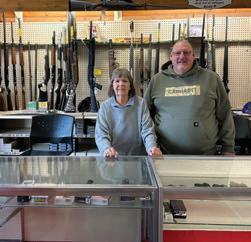
its doors. Chimo’s first location was in the Airport Shopping Center, which is now the Value Village Mall. This was before Carrs, Fred Meyers, or Walmart, and for those who remember, even before the Cottonwood Creek Mall. It is among the oldest businesses currently operating in the Wasilla area. Initially opened by Roy Wallis and his brother. The store operated in its initial location for 6 years, then moved to its current location in 1982, where it shared the condo
Wallin
Contributed by Sue
The long-awaited garden sale is coming soon! Come to see valley grown plants of many kinds. Happening Saturday, May 30 from 9 a.m. to 3 p.m., located at 3700 E. Bogard Rd.
Veggie starts, flowers of many kinds, both annual and perennial, house plants, tools, soil amendments, garden plastics, and some ceramic pots and garden books brought to you by Bright Lights. There is usually an entire wall of tomato plants of many varieties. Come early for best choices at this awesome annual local event. Bring friends, neighbors, and family young and old! See you there!




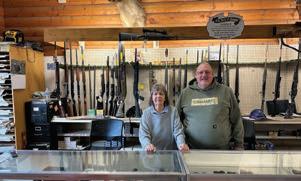
with Napa Auto Parts. In 1986, Roy’s brother left the business and Roy and his wife, Nancy, kept it running through the booms and busts of Alaska’s tumultuous economy. Roy went on to meet the Lord in 2012, Nancy and her daughter and son-inlaw, Craig and Carmen Pell, have continued the Chimo legacy of a small local family-owned business. That legacy started with Roy and Nancy making one of those life-changing decisions that actually wasn’t all that uncommon in 1976. They would drive up the Alcan Highway from California with a truck, an 8-foot cab over camper, 2 kids, a dog, and three 8-track tapes, Jim Croce, Johnny Cash, and Johnny Horton. Their “North to Alaska” adventure came with no clear plan, just a dream of a new start in the vast land of the Last Frontier that they had vacationed in the year prior. An outdoorsman’s paradise! After several campgrounds and different ideas of what kind of new adventure they might like to embark on, they settled on Wasilla and a gun store. Offering the community a

and
and
look forward to seeing you very soon. https://matsufoodbank.org/food4kids-registration/
full-service store focused on guns, ammo, and all things outdoor. Starting small at first, then expanding into fishing and archery, then as the community grew, they scaled it back to continue to be a viable community resource.
As only a small business can, over the years the store has not just provided the material goods of firearms and accessories, but it has served as a gathering place. A place to tell tall tales of fantastic hunting and fishing prowess. A place for the infirmed to come and sit just to get out of the house. A place to find a friendly face or a listening ear. It is with mixed emotions and much prayer that the decision was made to close the doors. Nancy is closing in on 79 and is ready to rest from the daily grind of opening the doors. For Craig and Carmen, it is an end of an era and an opportunity to start new adventures.
While traveling through Canada, Roy was greeted with the word Chimo, it is a greeting for indigenous peoples similar to “aloha” in Hawaii. It can mean hello, goodbye, or peace be with you. With that in mind the Chimo family would like to say “Chimo” to Wasilla and the surrounding Mat-Su Valley communities. Thank you for supporting us and allowing us to serve you these last 50 years.
If you’re looking to get one last thing from Chimos, the final going out of business sale will start April 15th with tentative plans to run through June 15th. Any interest in leasing the space? Stop in and chat with Craig.






Contributed by Alexander Medvedev
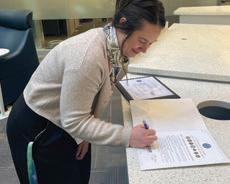
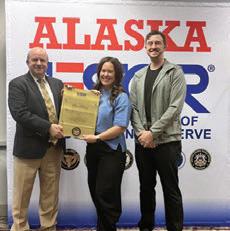
Pro Patria Award (Mar. 3, 2026) Caption: Robert
Doehl (ESGR Alaska State Chair), Jessica Gilbert (MTA), and Staff Sgt. Alexander Medvedev (MTA/U.S. Army Reserve) accept the ESGR Pro Patria Award on behalf of MTA.
Matanuska Telecom Association (MTA) continues to earn recognition at both the state and national levels for its commitment to supporting employees who serve in the National Guard and Reserve.
through leadership, workplace policies, and a culture that empowers service members to succeed both professionally and in uniform.
MTA has also advanced to the semifinalist level for the Secretary of War Employer Support Freedom Award. A national review board will evaluate all semifinalists, and Top 30 will be selected by the end of March for the next phase of consideration.
“We’re dedicated to supporting the Guard, Reserve members, and veterans on our team. Their leadership, adaptability, and service mindset make MTA stronger and our communities better,” said Demian Voiles, Chief Executive Officer of Matanuska Telecom Association.
A Track Record of Support: MTA’s recognition is built on years of consistent support: Pro Patria Award (2026), highest ESGR state-level honor; Above and Beyond Award (2023), recognizing extraordinary employer support; Patriot Awards (2023, 2025), honoring leadership support, including Jessica Gilbert;
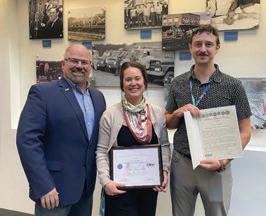
Above and Beyond + Patriot (May 1, 2023) Caption: Patty Wilbanks (ESGR), Staff Sgt. Alexander Medvedev (MTA/U.S. Army Reserve), Jessica Gilbert (MTA), and Leverette Hoover (ESGR) during Above and Beyond and Patriot Award recognition.
Employer Support of the Guard and Reserve (ESGR) is a Department of War program that promotes supportive work environments for National Guard and Reserve service members and their spouses.
Most recently, MTA was awarded the Pro Patria Award, the highest honor presented by ESGR at the state level. The award recognizes employers who demonstrate exceptional support
a workforce that includes about 10% of prior-service veterans and currently
serving Guard and Reserve members, MTA has built a strong reputation as a veteran-supportive employer in Alaska.
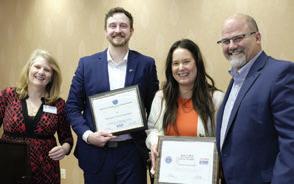
Statement of Support (Apr. 15, 2025) Caption:
(MTA) signs ESGR’s Statement of Support, reaffirming commitment to Guard and Reserve employees.
Statement of Support (2025), formal commitment to supporting employees in the National Guard and Reserve.
Jessica Gilbert, Director of Marketing & Communications at MTA, has been recognized twice with the Patriot Award.
During one nomination, U.S. Army Reserve Staff Sergeant Alexander Medvedev highlighted her leadership: “Her empathy, reliability, and commitment to personal and professional growth truly exemplify outstanding leadership.”
Supporting Those Who Serve: With
The organization actively fosters an environment where military obligations are respected, supported, and understood. Operating in a state with one of the highest per capita military populations in the nation and a critical role in U.S. defense across the Indo-Pacific and Arctic regions, MTA recognizes the importance of supporting those who serve both in uniform and at home.
The Pro Patria Award places MTA among a select group of employers statewide, as ESGR selects only one small, one large, and one public sector employer each year. This recognition underscores MTA’s role as a leading employer for service members and veterans in Alaska.
About the Author: Alexander Medvedev is part of the Public Affairs & Communications team at Matanuska Telecom Association (MTA) and a U.S. Army Reserve veteran with 17 years of service.
Contributed by Lee Henrikson
Mark your calendar for Saturday, April 25th from 2 to 4 p.m. for the Big Cabbage Radio Annual Meeting at Turkey Red. Before the meeting, Amy Bushatz, the journalist who created the Mat-Su Sentinel, will be interviewed by Mike Chmielewski. Their conversation about journalism and media in the Valley should be interesting and entertaining.
The event is limited to 40 people.
Members (anyone who donated in the last 6 months) are free. You can join at the event. The fee for non-members is $20.
Get an update on the station at the annual meeting. We’re in the midst of a website upgrade and a technical assistance grant from the Mat-Su Health Foundation. Hear the detail on both at
the annual meeting. Elect board members. Enjoy light refreshments from Turkey Red. Visit with other radio station members.
Big Cabbage Radio is celebrating almost 15 years on the air. We are excited that daily news spot Page 2 is getting attention. It broadcasts 4 times each weekday and the text is posted on our website. We also link to on NextDoor and Facebook.
The annual meeting coincides with our spring fund drive. The drive runs from April 24th through April 26th. If you like Big Cabbage Radio, please donate at bigcabbageradio.org.






Contributed by Marilyn Bennett
Call out for volunteers for this 4th of July 2026 celebration.
This year is the 250th anniversary of our country declaring independence from Great Britain. We felt that Palmer, Alaska deserves a special event to celebrate the 4th this year. Since fireworks do not work in Alaska, we thought it would be a great idea to have a rededication of the Declaration of Independence, right here in Palmer. St. John’s Lutheran Church has been celebrating July 4th for the past several years with a patriotic ceremony in the church. This year they want to host an outdoor celebration on the green. The plan is to involve as much of the community as possible in order to make it a fun event for everyone in Palmer.
This article is written as an invitation to fellow patriots and fun-loving people to participate in our celebration. This outdoor
event on the green is planned for 3 p.m. so as to not conflict with the parade in Wasilla. Those who want to go to the parade can still come back to Palmer for a hometown celebration of the 4th. The duration of the ceremonies will be approximately 1 to 1 1/2 hours. Face painting, rock painting, and other activities for kids are planned. We are hoping to make this a memorial experience for all involved. We now have a field cannon and black powder musket that will be fired as part of the ceremony. We are looking for a drummer or a traditional fife and drum group. A small snare drum would be great. We also need as many people as possible dressed in traditional colonial outfits to help create a great atmosphere here in Palmer.
I plan to come as Abigail Adams and give a short speech celebrating one of the first feminists in our country. She tried her best to get rights for women written into our constitution. She definitely started the
conversation on the rights of women in our country. We also plan to have a reading of the Declaration of Independence and the Bill of Rights. We are looking for speakers, entertainers, and musicians, give us your ideas and we will try to fit you in.
We will have someone doing face painting and may set up a small tent to entertain the kids. If you are an artist and want to get involved, we would love to hear from you. Our goal this year is to respectfully honor the milestone of 250 years by creating a memorial experience for our community. We need people who are interested in dressing in period costumes and also those who enjoy presenting small skits or speeches from the Revolutionary Period. We will have a display of flags and other objects and documents from the time period. If you have any items you would like to display please contact us so we can coordinate the display with our own. We know there are many resources and cre -

ative people in this community. Put on your period costume and a happy face. It should be a grand time for all. The celebration will be followed with hot dogs and other traditional picnic food, probably not from the colonial period.
Please contact Scott to give him your ideas at moscapoet@gmail.com. He will fill you in on what all he is looking at for the celebration and definitely welcomes your input. If you have questions about period dress or whatever you could ask me marilynmadd@hotmail.com. I don’t know much, but am always ready to share my limited knowledge.
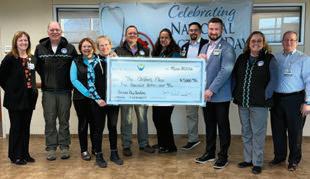
Contributed by Deena Straub
To celebrate National Doctors’ Day, MatSu Regional Medical Center, in partnership with the Mat-Su Health Foundation, do -
nated money to The Children’s Place, a Child Advocacy Center that provides a safe space for abused children and non-offending family members to receive support, justice, treatment, and healing. On hand to present the symbolic check were Taylor Rudd, CEO Mat-Su Regional Medical Center, and Esther Pitts, CEO Mat-Su Health Foundation. Receiving the donation on behalf of The Children’s Place was CEO Michelle Sturgeon.
The contribution recognizes the compassion, dedication, and impact of physi-

cians, whose commitment to caring for the community extends far beyond the walls of the hospital.
“On Doctors’ Day, we celebrate the incredible physicians who care for our community with skill, compassion, and heart,” said Taylor Rudd, Chief Executive Officer of Mat-Su Regional Medical Center. “Our providers don’t just practice medicine, they build relationships, support families, and make a lasting difference in people’s lives. This donation is one small way to honor their impact and extend that care to some of the most vulnerable members of our community.”
Mat-Su Regional Medical Center is proud to recognize its physicians not only for the
exceptional care they provide every day, but for the meaningful ways they help strengthen the community.
About Mat-Su Regional Medical Center: Mat-Su Regional Medical Center is a full-service, accredited hospital serving Alaska’s Mat-Su Valley. As the state’s only Level III Trauma Center and an Accredited Chest Pain Center with PCI, MSRMC delivers comprehensive inpatient and outpatient services to meet the region’s growing healthcare needs. Core offerings include emergency care, diagnostic imaging, robotic-assisted and joint replacement surgery, cardiac catheterization, advanced wound care, inpatient behavioral health, and two off-site urgent care centers.

Meals are served Monday-Friday at
& Wonderland Park from 11:30am-1pm starting May 26th







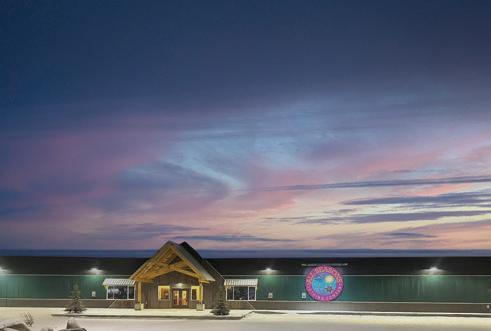








Contributed by Alaska Airmen’s Association
Alaska is a place where aviation isn’t just a hobby, it’s a lifeline. For 75 years, the Alaska Airmen’s Association has stood at the center of it all, working to protect, preserve, and promote general aviation across the state.
Founded in 1951, the Association is the
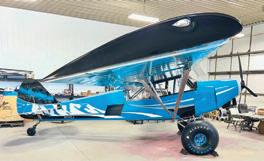
largest general aviation organization in Alaska and one of the largest in the country, with more than 2,000 active members spanning 46 states, 5 countries, and over 50 Alaskan cities and villages. Members range from student pilots and mechanics to seasoned aviators and aviation enthusiasts of all backgrounds, united by a shared love of flight. Each spring, the Association brings that
Contributed by Mary Glaves
If you live here, chances are you don’t need to be told what makes Alaska special.
It’s the early mornings on the river. The fall hunts. The ability to walk your back door and into country that still feels wild. It’s raising families who understand where their food comes from and what it means to rely on the land; a way of life is still very real here.
Across Alaska, decisions about access, land use, and wildlife management are happening every day. Those decisions affect everything from where you can hunt and fish to the long-term health of the habitat that supports it all. And increasingly, those conversations need people at the table who actually live this lifestyle.
BHA’s Alaska Chapter is currently accepting applications for a Field Operations Coor-

community together in a big way. The Great Alaska Aviation Gathering, now in its 28th year, is one of America’s largest free-entry aviation tradeshows, drawing over 25,000 attendees and more than 144 exhibitors. This year’s event takes place May 2nd and 3rd at the Alaska State Fairgrounds and Palmer Municipal Airport, featuring aircraft displays, educational seminars, a career fair, and the beloved Show & Shine competition, all free to attend.
None of it would be possible without the Association’s primary fundraiser: the annual

Aircraft Raffle. This year’s prize is a Custom 4-Place Cub built by Highline Air out of Cordova, Alaska, led by Brad Sjostedt, a certified A&P mechanic, commercial pilot, and 22-year Alaska Airlines veteran. Highline Air brings exceptional craftsmanship and deep Alaskan aviation expertise to the build. Raffle ticket sales make up 75% of the Association’s operating budget, directly funding the programs that keep general aviation thriving in Alaska, including over $150,000 in scholarships awarded last year alone. Every ticket purchased is an investment in that legacy and in Alaska’s aviation future.
dinator, a unique opportunity for someone who wants to be deeply involved in Alaska’s hunting, fishing, and public lands community while helping protect the places that make it all possible. Applications are open through May 13th.
Built for Alaska: The Field Operations Coordinator works directly with communities across the state. The role focuses on building and supporting BHA’s grassroots network: recruiting and working with local volunteers, helping organize events, and making sure Alaskans have a voice in the decisions that affect our lands and waters. That might look like helping put on a pint night in Palmer, showing up at an outdoor show in Wasilla, or connecting with folks who want to get more involved in protecting access and habitat.
You don’t need to come from a traditional policy background. In fact, some of the strongest candidates are those who have built community in other ways through guiding, volunteering, organizing events, or simply being deeply engaged in their local hunting and fishing community. What
matters most is the ability to connect with people, stay organized, and take initiative. It also means helping translate what’s happening in policy and land management into something people can understand and act on.
This position includes a complimentary blend of outreach, event coordination, communications support, and working with members to engage in issues that matter to hunters and anglers. This is a chance to help safeguard the places and opportunities that define Alaska, now and for the next generation. How to Apply: Backcountry Hunters & Anglers is accepting applications for the Alaska Field Operations Coordinator position through May 13th. To learn more about the Alaska Chapter and how to get involved, visit: backcountryhunters.org/About/Careers backcountryhunters.org/Get-Involved/ Chapters/alaska
To apply, send a resume and cover letter to: Careers@backcountryhunters.org Subject line: Field Operations Coordinator
Contributed by Michelle Lackey
Alaska Raceway Park is celebrating a major milestone in 2026: ten years of NASCAR-sanctioned oval racing in Alaska. Located just outside Palmer along the Glenn Highway and set against the backdrop of Pioneer Peak, Alaska Raceway Park is the state’s only NASCAR-sanctioned track and has become a premier destination for short-track racing in the region.
The one-third-mile asphalt oval opened in 2016, restoring weekly stock car racing to Alaska after the closure of North Star Speedway in 2012. What began as a bold effort to preserve the sport has grown into a thriving racing program that continues to draw competitors and fans from across the state.
A Legacy Built on Commitment: Alaska Raceway Park’s roots date back to 1964, when the facility first opened as a quarter-mile dragstrip. Over the decades, it became a cornerstone of Alaska motorsports, with a brief run of dirt oval racing in the early 1980s before returning to its primary role as a drag racing venue.
In 1998, Earl and Karen Lackey took ownership of the track during a time of uncertainty. They purchased land from the
State of Alaska and the Matanuska-Susitna Borough and worked to rebuild and stabilize the facility. Their most defining decision came years later.
When Alaska’s NASCAR racing scene was left without a home in 2012, the Lackeys chose to act. In their mid-70s, they mortgaged their home to finance the construction of a new oval track.
In 2016, that vision became reality.
“At the time, it wasn’t about expansion, it was about making sure racing in Alaska had a future,” said Michelle Lackey, owner of Alaska Raceway Park. “Ten years later, we’re proud to see what that decision made possible.”
Racing at the Edge of America: Operating a motorsports facility in Alaska presents unique challenges. Alaska Raceway Park sits roughly 1,900 miles from its nearest NASCAR-sanctioned neighbor, making logistics a constant consideration for teams and organizers.
Race cars, parts, and equipment are often shipped long distances, and even essential items like tires must be ordered months in advance and delivered by container. Despite these challenges, the track has built a strong
and dedicated racing community.
Each summer, drivers compete across multiple divisions, including Late Models, Thunder Stocks, Bomber Stocks, Bandoleros, and Legend Cars. Local standouts have advanced through the ranks, with some competitors going on to pursue racing opportunities outside Alaska.
While geographically isolated, the competition at Alaska Raceway Park reflects the same intensity and passion found at short tracks across the country.
A Unique Experience: Towering above the facility, Pioneer Peak provides one of the most distinctive backdrops in American short-track racing, earning the track its nickname, “A View with a Racetrack.”
But beyond the scenery, Alaska Raceway Park is defined by its people.

Looking Ahead: As Alaska Raceway Park celebrates its 10-year anniversary of NASCAR oval racing, its focus remains on continued growth and opportunity.
From longtime racers and families who have been part of the track for generations to new drivers entering the sport, the facility continues to serve as a hub for Alaska’s motorsports community.
Weekly race nights bring together fans from across the Mat-Su Valley and beyond, creating an atmosphere that blends competition, community, and tradition.
“This milestone is important, but it’s also just the beginning of what’s next,” Lackey said. “We’re continuing to grow the sport, create opportunities for racers, and build something that will last for the next generation.”
With a decade of oval racing now established, Alaska Raceway Park continues to build on its foundation, ensuring that motorsports remain a lasting part of Alaska’s culture for years to come. For more info about events, schedules, and programs, visit raceak.com.


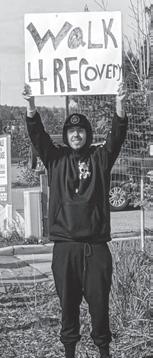




What led me to AARS was my long battle with addiction.. a struggle that began when I was just fifteen years old. I was also diagnosed with Major Depressive Disorder as a teenager. When I turned eighteen, I became homeless and spent the next five years living on the streets of Anchorage. By the time I was twenty-two, I had survived five winters outside and had been banned from multiple shelters. Facing another winter that I didn’t think I could survive, I reached out for help
and found AARS. Within three months, I became aware of what recovery truly meant and decided that I wanted that life for myself.
My greatest accomplishments include graduating the program twice – after a relapse, I chose to return, finish again, and stay committed. Earning my GED while at AARS was one of the best moments of my life; it showed me I was capable of far more than I ever believed. Reaching one year sober was another huge milestone, and I look forward to
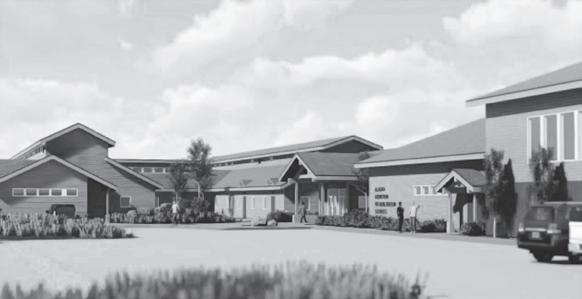
AARS has helped more than 3,400 Alaskans rebuild their lives, but demand now far outpaces capacity: only about 461 treatment beds exist statewide, and AARS alone received 383 referrals last year while operating just 26 residential and 10 outpatient beds at a time. Our expansion will double capacity, increasing residential beds from 26 to 52 and outpatient treatment beds from 10 to 42, so people ready for recovery are not left waiting in danger. Construction is underway, with completion targeted for summer 2026.


many more. I’ve also reconnected with my family after years of separation and am proud to be an active member of the recovery community.
If you’re struggling or thinking about recovery, please know it’s never too late to change. I’ve been where you are: lost, broken, and thinking there was no way forward. But recovery showed me that freedom is possible. You don’t have to do it alone – there are people who care, who understand, and who will walk beside you every step of the way.



At Mat-Su Urgent Care, we're here to help you bounce back! Whether it's a common cold or something more serious, our skilled medical teams offer the care you need, when you need it. Walk-ins are welcome.







Contributed by Deborah Morton and Angela Chapin
For many teenagers, the path through high school isn’t always straightforward. Academic struggles, lack of direction, or personal challenges can derail even the most capable of students. In Alaska, one program has been quietly changing that trajectory for decades: the Alaska Military Youth Academy (AMYA).
Serving teens ages 16 to 18, AMYA offers a voluntary, tuition-free alternative for young people who want a reset and a real chance to succeed. Each year, the program enrolls cohorts of cadets from across the state, guiding them through a structured residential experience that blends academics, discipline, and personal development.
Since its founding in 1994, AMYA has helped over 6500 Alaskan youth rewrite their futures. The program’s impact is
measurable: many cadets complete the residential phase, earning high school credits or preparing for the GED, while also gaining practical skills that position them for long-term success. Many graduates go on to higher education, vocational training, employment, or military service, reflecting the program’s broad approach to readiness.
At its core, AMYA is about more than academics. The academy’s quasi-military structure introduces cadets to a daily routine built on accountability, teamwork, and respect. For teens who may have struggled in traditional school settings or even in homeschooling environments, this structure can be transformative.
Cadets participate in a balanced curriculum that includes classroom instruction, physical fitness, leadership training, and community service. Along the way, they develop essential life skills such as time management, goal setting, and communi-
cation. These are not abstract lessons; they are practiced daily, reinforced by mentors, and tested through real-world application.
One of the program’s defining features is its focus on eight core components, including academic excellence, leadership, citizenship, and life coping skills. Together, these pillars create a comprehensive framework that addresses both educational gaps and personal growth. The result is a well-rounded experience that prepares cadets not just to graduate but to thrive.
Equally important is the sense of belonging that AMYA fosters. Many cadets arrive feeling disconnected from school, family, or community. By the time they leave, they often carry a renewed sense of confidence and purpose. The program emphasizes teamwork and peer support, helping participants build relationships that reinforce positive change.
Families across Alaska are increasingly
turning to AMYA as a solution. With no tuition costs and a proven track record of helping teens get back on course, the academy offers an accessible and effective option for those seeking something different from traditional education.
For some, AMYA is a second chance. For others, it’s a first opportunity to discover what they’re capable of achieving. In both cases, the outcome is often the same: young people who leave stronger, more focused, and better prepared for the future.
As Alaska continues to invest in its youth, programs like AMYA stand out as powerful examples of what’s possible when structure, support, and opportunity come together. For the cadets who walk through its doors, the experience is more than a program, it’s a turning point. To learn more, visit akmya.org or email goamya@alaska.gov.
Contributed by Jessica Stotler
Right now, there are children in our community who need a safe place to land. Many are navigating the effects of trauma, often referred to as Adverse Childhood Experiences (A.C.E.S.), and without consistent support, those experiences can shape the course of their future. The need for safe, stable homes continues to grow, while the number of available families has not kept pace. But there is another side to the story, one that is written every time someone chooses to say yes. Foster parents across our community are stepping in, not because it is easy, but
because it matters. One shared reflection captures it simply: “I’m so grateful I said yes. Opening my home and offering love from my heart has made more of a difference than I ever imagined. Just being consistent, providing structure, and loving kids where they are, it changes things. You can actually see their confidence grow. You can see their story begin to shift.” That is the power of relationship. Through REACH 907, families are being equipped to step into Therapeutic Foster Care, a model that surrounds both the child and the foster family with support. This includes training, ongoing guidance, and a team approach that ensures families are not navigating complex needs alone. It
allows foster parents to focus on what matters most, building trust, offering stability, and creating a home where healing can begin.
The impact is not instant, and it is not always easy. But it is meaningful. And it is needed. Not everyone will be called to open their home, but everyone can be part of the solution. For some, that begins at camp, showing up, having fun, and building safe connections with kids who need to experience joy and belonging. For others, it may look like supporting foster families, mentoring youth, or learning how to respond to children through a more trauma-informed lens.
Because this is not just about individual
children, it is about the future of our community. When children are given safety, consistency, and care, their trajectory changes. And when enough people step in, an entire generation can be strengthened. The need is real, and the time is now. REACH 907 is actively seeking foster families and community members who are willing to get involved. Whether you have space in your home, time to give, or a desire to learn, there is a role for you in helping these children find hope and healing. Sometimes the most powerful change begins with two simple words: yes, I will. More info at reach907ak.org.
Contributed by Tandy Hogate
The Alaska Homestead Expo is coming up again, it’s hard to believe it’s the third year already. I thought it might be fun to share the back story of how the Expo got started, because it’s a pretty cool story.
For those who don’t know, we own Common Ground Alaska. We’re a u-pick farm and plant nursery, and we’re very busy in the summer. I like to say we have a six-week party with the neatest people in Alaska during our short but sweet season. Countless times I have had conversations with customers who mention something about their goats or share how they were
successful overwintering bees. Or sometimes someone will ask for our favorite recipes and ways to use black currants and fruits on the farm.
The crazy part of the story is that so often someone else will come in with a question about goats, or talk about their experience overwintering bees, or have a really neat recipe using black currants.
I spent the first few years on the farm thinking how cool it would be if we could connect these people. If we could just get them together in one place, they would have a connection that would make our community stronger, and these amazing
Contributed by Kimberly Kellar, Valley Charities Inc. Marketing Coordinator
Get ready to go wild because our biggest sale
another Mat-Su neighbor’s favorite: Mega Clothing Stuff the Bag Day Sale event. Friday, April 24 and Saturday, April 25 from 11 AM to 3 PM at our Yenlo store located at 400 N Yenlo Street, Wasilla, AK 99654. Park in front, then head to the back.
people could get to know one another and learn from each other.
And that is where the idea of the Expo came from. Side note: that’s why we do the ice cream social, too. The ice cream social is done toward the end of the Expo so folks who recognize each other from classes can connect. And who wouldn’t have fun connecting over ice cream?
Putting on the show is a blast, but my greatest Expo memories are overhearing conversations like: “Hey, didn’t I see you in the goat class? How many goats do you have?” “I recognize you from the canning class. Did you happen to get that recipe for
Our Donation Alley turns into the ultimate bargain playground!
Stuff your bags to the top!! Only $20 per bag! No limits! Fill as many as you want! This is your chance to score mountains of awesome clothes, shoes, jackets, and more for just $20 a bag! Bring your friends and bring your excitement because this event is always a blast! Tag your shopping squad and tell us how
canning salmon with jalapenos?” Or my favorite so far: “Our kids are playing together really well, can we maybe plan a playdate?” These are actual conversations I have overheard at the Expo between folks who were strangers until Expo weekend. We’re not watching these classes on a screen. We’re not isolated and trying to figure things out on our own. Finally, we’re finding community, getting to know our neighbors and fellow Alaskans, and learning how to do this homesteading life together. And that makes it all worth it. Email tandy@commongroundalaska.com for more info.
many bags you’re


Contributed by Matt Tunseth
With more than 3 million lakes, 12,000 rivers and 6,640 miles of coastline, Alaska is awash in water. From the icy fjords of Southeast to the massive rivers of the Interior, these diverse waterways are a vital piece of daily life in the Last Frontier.
But hidden beneath the surface of these lifelines lies an uncomfortable truth: They’re one of the state’s most deadly features.
According to the Centers for Disease Control, Alaska leads the nation in per capita drowning deaths, with an average of 4.4 deaths per 100,000 residents. That’s more than four times the national average and more than 30 percent higher than second-place Hawai’i. Young children are particularly vulnerable, with drowning cited as the No. 1 cause of death for kids ages 2 to 6.
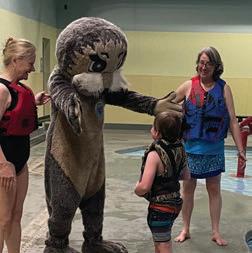
Rob Grogan and the Susitna Rotary Club are working to change that. For more than a decade, the club has partnered with the national “Josh the Otter” program to bring basic water safety education to Mat-Su youngsters.
“Every kid knows what to do if they’re on fire,” Grogan said earlier this month. “We want kids to know what to do around water, too.”
In support of that mission, the club will host a pair of free “Josh the Otter” water safety events at swimming pools in Palmer and Wasilla this spring. The sessions will feature instruction in water safety basics, the proper use of life jackets, also known as float coats, self-rescue techniques and safe ways to float and stay calm in water. The events are free, but children do need to be accompanied by a parent or guardian.
Grogan said the in-pool events are designed for children ages 3-6, but there’s not a strict age cutoff.
“If they’re older, that’s fine. If they’re younger, as long as the parent is familiar with water, that’s fine too.”
In the Mat-Su, Grogan said Rotarians visit schools across the Valley every year to help spread water safety basics, teaching kids to treat water with respect.
“We’ve managed to do all of the Valley schools for 11 years now,” he said.
Events will be held at the Palmer Pool, April 18 from 11:30 a.m. to 1 p.m. and at the Wasilla Pool May 16 from 12:45-2:15 p.m. Anyone wishing to sign up their child can visit the event page on Facebook or go to https://tinyurl.com/3967pbrh
The Josh the Otter program is a nationwide initiative started by the family of Josh Collinsworth, a Nebraska child who drowned in 2008. Its mission is to educate children and adults around the world about water safety, and it frequently partners with local Rotary Clubs. Collinsworth’s father, Blake, later wrote a book called “Josh the Baby Otter” to help children learn water safety concepts.
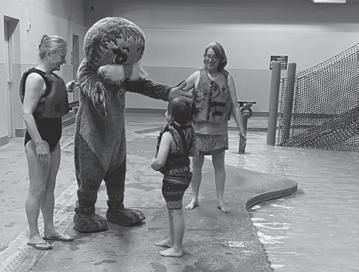
“The main objective is to reduce the number of kids that drown between the ages of 2 and 6,” Grogan said.
During the school programs, instructors have three things they stress to children: Don’t go around water without an adult; always wear a life jacket around water; and learn how to float.
It’s that third concept where the Josh the Baby Otter events come in. Before
hopping in the pool, children will be shown a brief video about water safety.
“Just
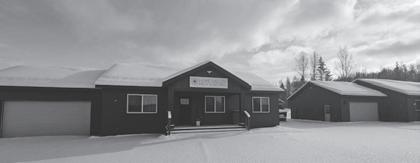

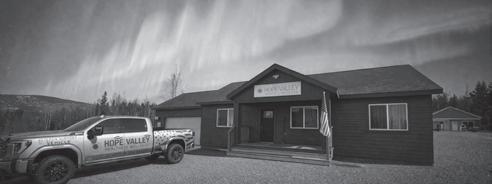


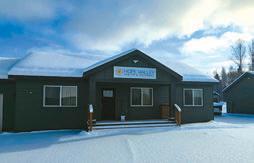
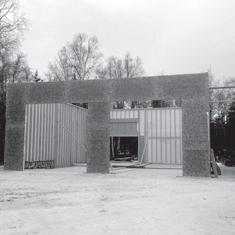
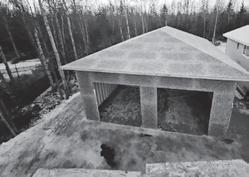
Contributed by Carl Harper In Alaska, distance is not measured in miles alone. It is measured in access, in isolation, and in how far someone has to go to find help. For thousands of veterans across the state, that distance has often meant going without hope or being forced to travel thousands of miles out of state just to get the help they need. Hope Valley Health and Wellness is working to change that. Set to open this month in the Mat-Su
Valley, the program was built with a focused mission: provide structured, veteran-centered treatment for substance use and co-occurring mental health conditions in a way that reflects the realities of living in Alaska. At the center of that mission is a simple phrase the team believes will carry weight across the state.
There is Hope, in the Valley. It is more than a tagline. It is a commitment to become the place people turn to when they do not know where else to go. The vision is clear. When a veteran is struggling, when a family is searching for answers, when a provider is trying to find the right resource, the response becomes instinctive.
There is hope in the Valley.
Ross Morton, who leads the organization, brings more than 40 years of experience in behavioral health treatment. Through his work with New Dawn Treatment Centers in California, Morton has helped build and operate programs that have served thousands of individuals across multiple locations.
Morton said the decision to expand into Alaska was driven by a clear and unmet need. “One of our outreach team members mentioned that veterans in Alaska do not have many options, and a lot of them do not want to leave the state to get help,” Morton said. “That stuck with me.”
He sent members of his team north to meet with community leaders and assess the situation. The response confirmed the gap. “The support from the community was overwhelming,” Morton said. “It was clear there was a real need for high-quality substance use and mental health treatment for veterans right here in Alaska.”
Soon after, Morton identified a newly constructed property in the Mat-Su Valley with room for expansion. From there, the project began to take shape.
“My grandfather was a Navy veteran,” Morton said. “He struggled with addiction, and it eventually took his life. Being able to serve veterans and active-duty service members is how I honor him.”
Alaska has one of the highest veteran populations per capita in the United States, with more than 70,000 veterans calling the state home. Access to consistent behavioral health care remains limited, especially outside of major population centers.
A combat veteran who served in the United States Army and now serves as Northwest Regional Veterans Program Manager for Hope Valley, Jessy Lakin has spent years
Contributed by Carol “Kitty” Hafner
The recent March 30 Alaska Governor Candidate Forum brought to light not only the many needs to address in assisting our veterans but offered multiple insightful possible solutions. Finding solutions in Alaska can additionally further support all American veterans, regardless of their current residence. During my 14 years as a higher education administrator, my personal passion to advocate for our American veterans led me to devote my professional energies in support of the Center for World War II Studies and Conflict Resolution at Brookdale Community College. Local veterans shared their personal experiences from the past 50 years. Programming included guest speakers providing
expert commentary on World War history, bringing to life the academic class offerings of History of WWII and Holocaust Studies. More recent deployments were also included, further educating students and community. Additionally offered were short term study abroad programs to Europe, most notably including the site of the Normandy invasion.
Our veterans know firsthand that entering into conflict is a decision not lightly taken. The repercussions are far reaching, even continuing beyond the end of a given conflict. Understanding and learning from our past is the foundation for future responsible leadership decisions. Today’s decision makers should first learn from America’s past before engaging in conflicts. One of my most profound experiences was hearing a frail elderly WWII veteran
address an audience of about 300. Reflecting upon his wartime experience, he was slow in his speaking, searching for the right words that were not easily forthcoming. As he continued his testimony, he paused for what seemed too long before continuing.
What he had witnessed all those many decades ago, he later said he had never before spoken about.
The room remained silent.
That day, before this audience, was the first time he had been able to verbalize his horrific World War II experience. He held all the tormenting horror within his heart for over 50 years.
I personally believe America has an obligation to take care of all our veterans. We also have an obligation to ensure all future military personnel will be provided for. If we won’t or can’t do this, we have no
working on the front lines of veteran support across Alaska. “In Alaska, problems do not stay small for long,” Lakin said. “When you are isolated and do not have access to consistent support, things escalate fast.”
Hope Valley was designed to remove that barrier and replace it with something dependable. The campus offers a structured residential environment with smaller group housing. The program operates separate male and female programs with dedicated housing and treatment tracks for each, ensuring safety, focus, and the ability to address gender-specific needs in recovery.
Each day is built around routine. Clinical care, peer support, and skill-building are integrated into a consistent schedule. Through a partnership with Battle Dawgs, veterans engage in structured outdoor immersion designed to rebuild confidence and restore purpose. Rick Casillo said the approach reflects years of experience working with veterans in Alaska’s environment. “What we have learned over 12 years is simple. Veterans heal differently. They respond to challenge, to purpose, and to being part of a team again.”
Hope Valley also integrates wellness modalities such as sauna, cold plunge, red light therapy, and nervous system regulation techniques. These are used alongside clinical care to improve stress response, sleep, and emotional regulation.
A retired Command Sergeant Major who served 27 years in the United States Army, Jared Geleney now serves as Director of Operations. “This program is going to change lives,” Geleney said. “We are giving veterans tools they can actually use to rebuild.” The broader impact extends beyond individual recovery. “When you help a veteran, you strengthen families and communities,” Lakin said. Hope Valley is stepping into that role with a clear identity.
There is Hope, in the Valley.
“We want families, providers, and veterans across Alaska to know that when things feel like they are falling apart, there is still an answer,” Lakin said. “There is still a place to go. There is Hope, in the Valley.”
business getting involved in conflicts in the first place. PTSD is all too common in our military ranks. Treatment is still not readily available to all who suffer. Again, if America cannot ensure all our military veterans can receive necessary healthcare and support services after serving our country, then they should not be put in harm’s way.
Over the 2025 Thanksgiving holiday, a very dear friend, a Vietnam veteran, lost his long health battles with Agent Orange and associated illnesses. He was the last of his military buddies to pass away from those complications.
When I first ran for Alaska political office in 2018 for the US House of Representatives, my platform and commitments were straightforward. Clearly included was for America to stay out of international conflicts, my firm stance remains solid today. And taking care of all our veterans, regardless of where they reside, is our moral responsibility.


Bowell
Contributed by Carrie
I have a lot of humanitarian friends. Some are more compassionate than others. Some speak from lived experience, their voice carrying a message deeply understood. Others respond from emotional reaction,
and this voice can be a little harder for me to land with. I want to be patient, yet I still step back at times, protecting my energy. There are moments where the communication feels immature, the static energy kicking and screaming, a marauder of attachment
dressed in garments of archetypes not yet earned. Even then, I want to remain patient and continue listening with a sense of hope.
And then I am reminded: to be human is to learn through trial and error. We experiment with choices, some lovely, others disturbing. We are all only human. It is our nature to explore and to influence one another, hopefully for the better. We are here to learn and to gain wisdom, and sometimes that wisdom is hard-earned. We can learn from each other’s mistakes without dehumanizing one another. Within the wheel of life, our choices impact both ourselves and others. When we are not mindful of our free will, harmony is lost. Still, underneath it all, there is a call for love, and to be loved. And maybe that is what we are all trying to find our way back to, in our own imperfect, human ways.
Contributed by Edna DeVries, Matanuska-Susitna Borough Mayor
Because I have personally participated in events that led to the deeply divisive conflict now unfolding—and because I possess knowledge that may help ordinary Alaskans understand and safely navigate it—I feel a duty to speak.
In 1985, while serving in the Alaska State Senate, I witnessed firsthand the power—and the limits—of Alaska’s grand jury system. A Juneau grand jury called the Legislature into special session to consider impeachment proceedings against Governor William Sheffield. The allegations were serious: that the governor had improperly steered a $10 million state lease to a campaign contributor and then provided false testimony to the grand jury.
After extensive proceedings, the grand jury issued a report concluding that the evidence demonstrated “serious abuse of office” and that the administration was “unfit to fulfill the inherent duties of public office.” The grand jurors emphasized that their findings were thorough, complete, and in the public interest to be released for open review.
Vlastic Marek
by
Contributed
The current demographic and social transformation of West — often referred to as an invasion due to the scale, speed,
Despite this, the Senate voted 12–8 against impeachment. I was among those who voted in favor. Instead of meaningful accountability, a nonbinding resolution condemning favoritism was passed.
From that moment, I saw clearly how powerful institutions can “circle the wagons” to shield themselves, even when a body of independent citizens, constitutionally empowered to investigate wrongdoing, has determined that accountability is warranted.
Soon after, a sharply divided Alaska Supreme Court adopted Criminal Rule 6.1. In effect, this rule severely restricted the ability of grand juries to investigate and publicly report on misconduct by public officials. Notably, two of the five justices dissented, warning that the rule was unconstitutional and fundamentally undermined the Alaska Constitution. They wrote that the rule “mocks” the Constitution’s explicit protection of grand jury authority, which states that such powers “shall never be suspended.”
In the decades following the adoption of Rule 6.1, grand jury investigations into public corruption have been virtually nonexistent.
and nature of the mass migration — is a profound threat to the survival of Western Christian civilization.
That changed in 2022, when citizens in Kenai organized sustained public demonstrations outside their courthouse, calling for a grand jury investigation into allegations that the Alaska Commission on Judicial Conduct had falsified or misrepresented investigations to shield judicial misconduct. Their persistence ultimately resulted in the convening of a grand jury.
Since then, credible information suggests that there have been coordinated efforts within the judicial system to obstruct or derail that investigation, raising serious concerns and fueling widespread public distrust.
In late 2024, Mayor Peter Micciche and I joined a small group of concerned citizens in respectfully requesting a meeting with the Governor and the Attorney General. Our goal was simple: to present evidence, discuss the situation, and explore solutions. Despite repeated efforts, no meeting was granted.
This lack of engagement from officials sworn to uphold the Constitution is deeply troubling. Combined with my long view of how these issues have developed and intensified over decades, it has compelled me to take action.
It is not a phenomenon of “multicultural enrichment” but rather a process of national displacement supported by the same globalist who preside over the decline of the American republic. Nations are communities bound by shared blood, language, faith, and history. Christianity and Islam are mutually exclusive belief systems. Low fertility rates are feature of advanced civilizations, not a flaw. When almost all of children survive to adulthood breeding like rabbits is optional. Those who vilify ICE agents cleaning up the streets from lawless invaders are blind to the observable, historic realities of how nations fall
Contributed by Lela Ryterski
Judges used to decide how much time a criminal should get, depending on the circumstances. Were the judges afraid of repercussion because of their decisions? Is that why they came up with mandatory sentencing which
Contributed by Dyani Chapman
We’ve all heard it, they don’t make them like they used to. My grandparents had the same refrigerator for 50 years. We used to actually fix stuff. Everything is junk after a few years now. It’s a real problem. Things aren’t being designed to last, and repair is being severely restricted. Right to Repair legislation is one of
and schematics. A survey found that only seven out of 50 common appliance manufacturers made service manuals available. Some manufacturers
forgo the time-tested Phillips-head or flathead screw for a unique shape incompatible with standard tools. Others design devices that need software to detect problems and only provide that software to dealers. Sometimes, devices are virtually locked if repaired outside authorized channels. Even worse, manufacturers glue batteries and parts together, so disassembly for repair has a high chance of breaking a device. These limits on repair are bad for consumers. People like being able to fix the stuff they own and to patronize local businesses rather than rely on companies that are not in Alaska and charge high costs. When good repair options aren’t available, we are pushed toward throwing electronics away and purchasing new ones, feeding the global supply chain. One report found
takes the decision and blame away from the judges? I observed a trial where the judge became a mere facilitator for the lawyers and the jury. Why then don’t we let the jury decide the sentencing? Blanket sentencing doesn’t provide justice. It takes the humanity out of the decision and is therefore flawed and unjust.
the average family could save $382 per year with better repair access. These limits are also bad for the environment. Electronic waste is the fastest growing waste stream in the world and is responsible for 70% of the toxic materials in the waste stream, including lead, mercury, and other substances known to cause cancer, reduce fertility, and cause developmental problems. In rural Alaska, this is especially concerning because most landfills are unlined and many burn trash. It is estimated that less than 15% of electronics are successfully recycled because the process is difficult and hazardous. The Right to Repair movement aims to ensure that individuals and independent repair shops can access the tools, parts, and information needed to fix our devices. In Alaska, the legislature is considering the Digital Product Repair Act, SB 111 and HB 162, which would require manufacturers to
That is why I am running for Governor. If elected, I will pursue a full and transparent accounting of these matters. I will initiate an independent and public investigation conducted by individuals of unquestioned integrity, people in whom the public can place genuine trust. I will also move immediately to make public the Kenai grand jury’s report and recommendations regarding alleged judicial corruption, information that was sealed before Alaskans had the opportunity to review it. The Alaska Constitution is clear: “The power of grand juries to investigate and make recommendations concerning the public welfare or safety shall never be suspended.”
I was born on July 12, 1941. I am 84 years old and will soon turn 85. Some may view my age as a limitation. I see it differently. I am not seeking a long political career. I am seeking one term, focused solely on addressing the serious issues facing our state. At this stage in my life, there is little that intimidates me. But I am deeply concerned about the long-term consequences of a system that appears increasingly unaccountable, one that could affect future generations of Alaskans, including my own children and grandchildren.
That concern is what drives me to speak and to act.
A people who do not prize their own heritage, defend their ancestral boundaries, and assert their right to exist as a distinct people will inevitably be erased from the face of the earth. Beware of members of Congress pretending to be Americans. And yes, that means you Senator Murkowski.
We will not have peace without justice. I wonder if the “for profit” prisons have anything to do with this…our taxes at work to keep people in jail.
“We have it in our power to begin the world over again.” Thomas Paine from ‘Common Sense’.
make parts, tools, and schematics available to individuals and independent businesses so repairs can be done locally. We are not the first state to address repair restrictions. States from Texas to California have passed similar laws, but Alaska’s would cover a broader range of devices. Access to authorized repair providers is limited, even in larger cities, so the ability to repair equipment locally is especially important. At the national level, Congress is discussing Right to Repair for the military, and the EPA is working to address misconceptions. Companies including Apple and John Deere are making concessions and expanding repair access. For the sake of our pocketbooks and the environment, we need to regain access to repair and rebuild a culture of repair. You can help by asking your state legislators to support SB 111 and HB 162 and by choosing repair over replacement when possible.
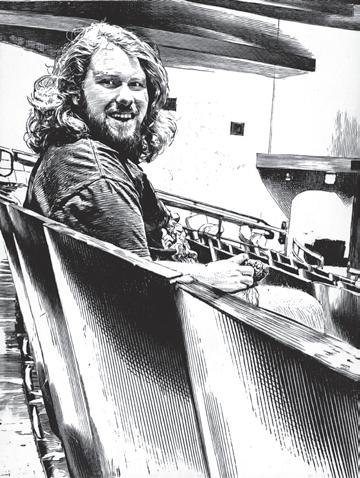
When Larry Lee Hansen was 13 years old, I met him at my music venue in downtown Wasilla. That venue closed many years ago, as the rest of my media business grew. But the impetus of Make A Scene Media was never the building itself. It was the idea behind it.
The will to make a scene.
As a young musician, I spent a lot of time studying the music industry. And the more I studied it, the more I came to a conclusion that shaped everything that followed. The system was corrupted by corporatism.
Not in a dramatic, conspiratorial sense. In a structural sense. Centralized power. Gatekeeping. Distance between the artist and the audience. A machine that scaled efficiently, but at the cost of something human.
So I responded the only way I knew how. I decided to build a smaller version of it. A microcosm.
Something local. Something decentralized. Something that could function as a healthier reflection of what the music industry could
be, if it were allowed to grow organically from the ground up instead of being imposed from the top down.
That was Make A Scene. A mission and a mandate.
The venue was an early expression of that idea. It was a learning experience for me. And it turns out, it was a learning experience for Larry too.
He was there helping me keep it alive, despite the financial challenges that come with trying to do something out of the ordinary. He was there when I made the decision to close the venue and shift my focus toward the media company that had quietly begun to grow alongside it.
That moment felt like an ending. But it wasn’t.
We went our separate ways for a while. Not in any dramatic sense. Just in the way that life separates people when they are at different stages of development.
Larry was a young musician, doing what young musicians are supposed to dogaining experience, finding his voice, putting in the time.
My work had shifted toward building something less... physical than a literal stage, but just as important.
A platform.
A media company designed to connect local people, to give them a place to speak, to create, to be seen.
But even as the form changed, the function never really did.
All along the way, we continued to produce
music events throughout the Mat-Su. That thread never broke.
I started mentoring Larry when he was 13.
But we didn’t call it that. We didn’t put a label on it until he was 30.
Because it wasn’t a program. It wasn’t structured. It wasn’t something we sat down and defined.
It was just one musician recognizing something in a younger musician. And the younger musician being willing to work.
That’s all it was. And that’s all it takes.
There’s a tendency to romanticize mentorship.
To turn it into something formal and measurable. But in reality, it’s much simpler than that.
It’s proximity, time, and shared effort. And it only works if both people are willing to work.
Larry showed up.
Again and again.
Which is why this next part feels less like an announcement... and more like a continuation.
I’m proud to say that Larry Lee Hansen has been hired by Make A Scene Media as a Local Music Liaison. He will be the interface between Make A Scene Media and the musicians who live in, or tour in, Alaska.
On paper, this looks like something new. A new department. A new direction. A new phase of growth. But that’s not really what it is.
It is a return.
Over the past 19 years, MAKE A SCENE Media has grown in ways I couldn’t have predicted. Publications. Radio. Event production. Media services. Platforms that allow people to express themselves and connect with each other outside of the constraints of algorithm-driven systems. But the original impulse never left. Music.
Now we’re in a position to bring all of these pieces together.
As we launch this department, Make A Scene Media has agreed to represent a touring artist from Los Angeles/New York:
Natalie Gelman.
Keep an eye out for her this summer in Alaska!
This is something I’ve wanted to do for a long time.
But wanting something and being ready for it are not the same thing. The other parts of Make A Scene Media needed to grow first. The infrastructure needed to exist. The network needed to be real. The platform needed to be significant.
Now it is.
And now, we can finally do what the name has always suggested.
Make a scene.
The music scene in Alaska already exists. It’s not something we’re creating. It’s something we’re revealing, and cultivating.
The musicians are already here. They’re already doing the work of culture, already creating. But most people don’t even realize it.
Our job, as a media company, is simple.
To make that visible.
To celebrate it.
And through that celebration, to remind people that culture is not something imported from somewhere else. It’s something that exists right here, where we are.
-Bringing Larry onto the team feels like a milestone. Not because it changes who we are. But because it confirms it.
Sometimes we grow by becoming something new. And later, we grow by becoming what we always were.
In
Touring musicians feel it too. They come through with something to offer, but the rooms are empty.
Not because people don’t carebut because the timing is wrong.
What if the problem isn’t the audience?
What if the setting is wrong?
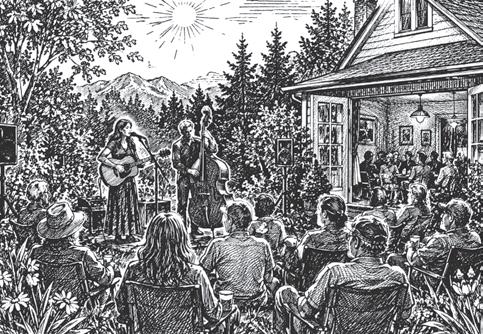
That’s why my company, Make A Scene Media, is focusing our resources to launch this Garden Party/House Concert format. And we’re asking you, our fellow Alaskans, to be part of the process!
This is the idea.
A garden party. A house concert.
An evening that feels like it belongs to the people who are there.
A space that might work for something like this?
Or maybe you’re not sure. Maybe you have questions. Maybe you’re curious, but cautious.
Just reach out and we’ll talk about it. Because this only works if it works for you, too.
If you have a space like this, we’re open— a share of ticket sales, a percentage, or something more unique that makes sense for you.
There’s no fixed model. Each show will be a unique production in a unique space.
And when people do go out, they’re often pulled toward the same places: festivals, large gatherings, crowded spaces.
Some folks love that, but some don’t.
Some people don’t want to fight traffic. They don’t want to stand in lines.
The light is still in the sky. The air is easier to breathe. People everywhere are in a good mood!
So we started thinking differently.
To create spaces where music can exist naturally, and where artists and audiences meet in a way that makes sense in the Alaska summer.
So this is an invitation.
Not a commitment.
Let’s have a conversation. Do you have a place?
A yard. A garden.
You can respond to what you’ve read, or write what matters to you.
If this idea speaks to you, even a little... reach out.
Call the station at 907-373-0955 and leave a message.
We’ll call you back.
Or email: Booking@makeascene.media
Let’s make a scene!
Music is not a product.
It is not a file, or a stream, or a commodity to be delivered on demand. Those things may carry music, but they are not music itself. Music is an act.
And more precisely, it is a cooperative act. Even the lone songwriter is not alone. She borrows language. She borrows structure. She borrows sound itself - shaped by those who came before her, and refined by those around her. And when that song leaves her hands, it becomes something else entirely. It becomes shared. Interpreted. Recreated in the mind of the listener.
Music, then, is not owned in the way we often think.
The classical liberal arts were not called “liberal” because they were easy, or optional, or indulgent. They were called liberal because they were the arts of a free people. (Liberal originally meant “free”.)
They were the disciplines required for participation in civic and cultural life.
Traditionally, they were seven: Grammar, Logic, and Rhetoric—the Trivium, the arts of language and thought.
Arithmetic, Geometry, Music, and Astronomy—the Quadrivium, the arts of number and relationship.
Music sits among them not as entertainment, but as structure. Harmony, proportion, and relationship.
A free people does not merely consume culture. A free people creates it.And creation does not happen in isolation. It happens in cooperation. Voluntary, organic, human cooperation.
The kind that emerges when people see something worth participating in.
Here in Alaska - and more specifically, here in the Mat-Su Valley - we have something unusual.
We have a disproportionate share of musicians.
It is not immediately clear why. Perhaps it is because Alaska is an inspiring place. The scale of it. The distance. The quiet. The kind of environment that invites reflection, and reflection often turns into expression.
Or perhaps it is more practical than that.
We spend long stretches of time indoors. Winters that stretch on. Hours that must be filled. And some people, given that time, choose to invest it into developing something creative.
But it is not just the musicians who live here.
We also see a disproportionate number of touring musicians come through Alaska.
Which is, on its face, irrational.
Touring in Alaska is not usually profitable. The distances are greater. The logistics are harder. The margins are thinner.
And yet, musicians still come.


ABOUT: “Joshua Fryfogle, the owner of The People’s Paper, Make A Scene Magazine, and Liberty, Liberally, is heavily involved in the local community. In addition to creating a monthly paper that prints what community members submit, he also owns 95.5 The Pass, KNLT, one of the only stations in the nation to play local music in regular rotation! Josh is a lifelong singer/songwriter, and serves as booking agent and sound engineer for countless other Alaskan musicians.”

They go out of their way - literally - to come here.
Again, perhaps it is the place itself. The same inspiration that creates musicians here draws them from elsewhere. Or perhaps there is something else at work.
Because a show doesn just require a stage. It requires a place to stay. A ride from the airport. A borrowed amplifier. A meal shared after the music is over. A conversation that turns into the next opportunity.
These things are not secondary to music. They are the conditions that make music possible.
So the question becomes:
What if those conditions were not left to chance?
What if, instead of each artist solving the same problems over and over again, we created a way for the community itself to respond?
Not with obligation.
But with openness.
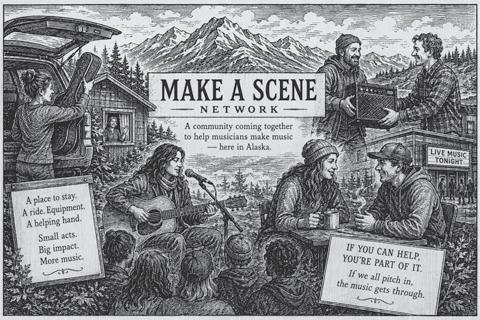
This is the idea behind the Make A Scene Network.
It is not an organization in the traditional sense. There are no dues. No contracts. No expectations placed upon you beyond your own willingness.
To be part of the network is simply to say: “If I can help, I’m open to being asked.”
That’s it.
And in practical terms, it works simply. You call us at 907-373-2698. We have a conversation and add you to the list. Or, sign up online at:
MakeAScene.media/network
That’s how you join.
Then, when a need arises - a touring musician needing a place to stay, a ride, a piece of equipment - we send out a message to the network.
A single text.
Those who can help respond. Those who can’t, don’t.
No explanation required.
From there, we follow up personally, and we have a conversation.
Because every situation is different. Every person is different, and every musician is different.
And the solutions, if they are going to work, must be just as unique.
We connect the people involved, talk through the details, and find a way forward that makes sense for everyone.
Maybe you have a spare room.
Maybe you have a vehicle that sits unused more often than not.
Maybe you have equipment, or knowledge, or connections. Or maybe you want to volunteer your time, to be part of something that brings more music into the place where you live.
The network does not assume that you will always say yes. In fact, it depends on your ability to say no.
Because what we are building is not a system of obligation, but a culture of voluntary participation.
Over time, something else begins to emerge. Not just more shows, but a different kind of place. A place where artists know they are not arriving as strangers, but as guests. A place where the barriers to creating and sharing music are lowered - not by institutions, but by people.
A place where culture is not imported, but cultivated.
The Make A Scene Network is an invitation to participation.
If you read this and think:
“I might be able to help, sometimes...” Then you are already aligned with the idea.
If you are interested in being part of the Make A Scene Network - whether as an individual, or through your businessreach out.
Not to commit to commit or obligate yourself, but to start a conversation about cooperation.
Call 907-373-2698. Or, sign up online at: MakeAScene.media/network
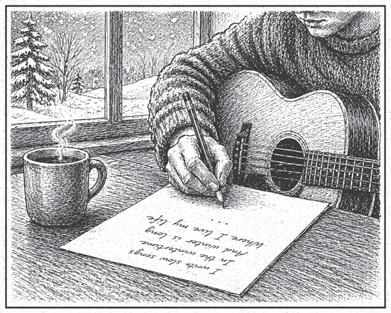
You can respond to what you’ve read, or write what matters to you. WWW.MAKEASCENEAK.COM I write slow... songs In the wintertime And winter is long Where I live my life
I can sing if you can sing I can dream of better things I can sing if you can I can sing if you can I write songs for you When I’m all alone By myself I dream Dreams become a song
I can sing if you can sing I can dream of better things I can sing if you can I can sing if you can

Contributed by John Nabors
It’s winter. Snow is a given here in the north country. Driveways and sidewalks need to be cleared, either with a snowblower or a shovel. You do the work to your satisfaction and go into your house to warm up and relax. Then you hear that sound! THE PLOWS!
You go to your window, look out and see the big road grader as it makes the first pass down your side of the block, leaving behind a wall of snow and ice from all down
the street, right across your freshly cleaned drive. All you can do is watch and wait. There will be a second pass.
The second pass will increase the width of the gift of the plows to three to four feet and anywhere from 6 to 12 inches tall. Will there be a third pass? Sometimes. So, you wait half an hour or so. Then comes the time to glove up and put on your heavy coat and hat. The lucky people have a 4-wheeler with a plow attached, or a snowblower.
Then there are the less fortunate members of our “Berm Society,” who only have
a shovel. Some folks have a kind neighbor who will clear the berm for you or at least help. Those of us who only have a shovel or snowblower need to have a supply of pain relievers on hand for the aftermath: back pain, knee pain, and even pain in your chilled hands.
There was a time when the plows would drop the wing at people’s cleared driveways and move the detritus from up the street to the sides instead of in front of your drive. That stopped with the rising cost of fuel. Stopping and dropping the wing was too cost heavy. Okay, I get that.
For a while a Muni pickup truck, with a plow attached, would follow and clear the
Contributed by Dana Raffaniello
Before examining what Ordinance 26-032 does, it is worth examining how it arrived.
This ordinance, which would permanently eliminate the Borough’s primary revenue authority and restructure the entire tax system for over 100,000 residents, was introduced by a single assembly member. No Borough staff contributed to its design. No fiscal note was produced. No formal legal opinion from the Borough Attorney was requested or published before introduction. No working group reviewed it. No committee vetted it.
One person drafted it, introduced it, and has been promoting it on social media with imagery crafted to provoke an emotional response rather than invite a structural one. Emotional frustration, no matter how real, does not change the Borough’s legal obligations or balance its budget.
There is a reason the emotional case has been made loudly while the structural questions have gone unanswered: once this community examines the fiscal note that was never produced, the legal opinion that was never requested, and the contingency plan that does not exist, the emotional case becomes considerably harder to sustain. This is a permanent decision. It deserves analysis, not capture.
The desire to reduce residential property taxes is not new, and the assembly member who introduced this ordinance is not alone in feeling it. Mat-Su residents have been pushing for property tax relief for years. That pressure is real, the frustration behind it is legitimate, and this community has earned the right to a serious conversation about reform. But a question this consequential deserves more than a solo effort. It deserves a formal working group drawing on the Finance Department, the Borough Attorney, the full Assembly as a body, and meaningful public input before any perma-
nent action is taken. What we have instead is a first draft with no safety net, promoted as a finished solution.
That process gap matters, because it shows in the details.
The assembly member who introduced this ordinance has publicly acknowledged the revenue math. In response to constituent questions about the missing fiscal note, he stated that 6.5% “lowers taxes by 9 million dollars,” and described that as the goal. That statement is an admission, not a reassurance. The Borough cannot run a deficit. It cannot borrow its way through a shortfall. It must balance its budget every single year. So a stated, intentional nine-million-dollar reduction in revenue is also a stated, intentional reduction in something the Borough currently funds. No public accounting of what gets cut has been offered. No service. No road. No school program. Just the number, presented as good news. Compounding that problem, OR 26-032 does not actually eliminate all property taxes. The no areawide property tax, road service area taxes, and fire service area taxes all remain. If the sales tax underperforms its projections, and the Borough Manager has already noted publicly that no historical sales tax data exists for Mat-Su to base those projections on, those remaining property taxes become the only available correction mechanism. Mat-Su homeowners could find themselves paying a new sales tax on groceries, utilities, and medical bills while simultaneously watching their road and fire service tax bills increase to absorb the shortfall the ordinance creates. That outcome is not a remote possibility. It is the logical consequence of eliminating the primary revenue tool while leaving the secondary ones in place, with no contingency provision anywhere in the ordinance text.
Now consider who the areawide property tax elimination actually benefits.
Currently, for-profit hospitals and medical facilities in the Borough pay areawide property taxes, as they should. Under existing Alaska law, nonprofit hospitals already receive a property tax exemption for their qualifying activities, a reasonable recognition of the community benefit they provide. For-profit medical facilities have no such exemption and contribute to the areawide tax base like other commercial properties. Under OR 26-032, that contribution goes to zero. Not reduced. Not adjusted. Zero. And those same facilities will pay minimal sales tax in return, because the ordinance exempts wholesale transactions, business-to-business services, and most of the commercial channels through which large facilities manage their operating costs.
Meanwhile, the patients of those facilities will pay 10.5% in combined borough and city sales tax on every medical bill in Palmer. A single medical episode does not generate one bill. It generates separate invoices from the hospital, the surgeon, the anesthesiologist, the radiologist, and the imaging center. Each is a separate taxable transaction under the ordinance as written. The sickest people in our community would be taxed at the highest combined rate in the Borough while the for-profit facilities billing them pay zero areawide property tax.
Out-of-state commercial and industrial property owners face the same structural windfall. Their assessed value contributes to the areawide property tax base today. Under OR 26-032, it does not. Large retailers and industrial operators structure their purchasing through wholesale and business-to-business channels explicitly exempt under the ordinance. The burden does not shift to them. It shifts to the Mat-Su family buying groceries and heating oil in January.
The $1,000 taxable cap built into the ordinance compounds this problem in a way that deserves plain language. Under
berm. That became a rare occurrence. Also, if you were a senior, you could call the Municipality to send the pickup to your address to clear your berm. No more. So be resolved to have a sore back and chilled hands, no matter how good your gloves are. The age of service to the community has been relegated to a line on a budget spreadsheet. Indifference appears to be the hallmarks of Muni bureaucracy. It’s how the world works now. So be strong, my Brothers and Sisters of the Berm. Do like me. I am 70 and retired. I think of shoveling and snow blowing as my winter exercise. It’s that or pay some teenager or a plowing service to do it for you.
OR 26-032, the maximum sales tax on any single transaction is $65, regardless of the purchase price. A Mat-Su waitress earning $12 an hour buys a $3,000 used car. A corporate executive buys a $90,000 vehicle. Both pay exactly $65 in borough sales tax. For the waitress, that $65 represents 2.17% of what she spent. For the executive, it represents 0.07%. The cap, presented as consumer protection, functions in practice as a discount for high-value purchases and a proportionally heavier burden on everyone else. That is not a distribution of the tax burden. That is a structural transfer of it, from those best positioned to pay toward those least able to absorb it. If property tax is feudalism because the lord collects from the serf who works the land, a capped sales tax with no income or ability-to-pay consideration is feudalism at the checkout counter.
The assembly member who introduced this ordinance has called property tax the new feudalism. A more accurate description of feudalism might be a system where a Palmer family pays 10.5% on their heating fuel and medical bills while out-of-state corporations pay nothing on their assessed commercial value in the Borough. The imagery is vivid. The math points the other direction.
Property tax reform is a conversation this community has earned and deserves. But it requires a structured, transparent process with real data, published legal analysis, fiscal safeguards, and a responsible transition path. Permanently prohibiting the Borough from ever reinstating property tax authority, before a single day of real sales tax collection data exists, is not reform. It is a permanent decision made on the basis of projections produced by one person, with no independent review, and no mechanism to correct course if the projections are wrong. The door OR 26-032 closes only opens one way. That is too consequential a decision to rest on a solo effort, however well-intentioned. Residents deserve real relief. This community deserves a process worthy of the stakes.
Contributed by Steven Merritt
The March issue’s pearl-clutching and AI-infused commentary on the ongoing immigration debate and ICE’s role (“Pouring Gasoline on the Fire”) leaves out one important point: Americans who speak up — in whatever form of civic participation — against this administration’s tactics and imagery certainly didn’t start the fire the author acknowledges.
The heavy-handed, abusive and dehumanizing behavior of agents has been well documented, as has the broad violation of a scope of authority that exists in detaining and arresting those suspected of being in the United States illegally. Immigrants in the country legally have been targeted — and even more egregious — is the arrest and detention of American citizens that fit a certain profile. This is conveniently glossed over in the March commentary.
The author’s blasé rationalization that illegal detentions and other violations will get their day in court is disingenuous. The “arrest ’em all and let the courts sort it out” enforcement plan is abjectly punitive, does
nothing but erode civil liberties and absolutely rises to a level of moral accountability. American citizens and immigrants with legal status have literally disappeared from families and communities after being illegally detained. He criticizes invoking a “moral emergency,” but what about the cost — morally and monetarily — of that unlawful detention? Where’s the compensation for lost wages? Supporting their families? In the immigration debate, how does the end justify these means?
To point out these violations and tactics is the duty of a free society. Elsewhere in the piece, the author spends a lot of time chastising the comparisons between ICE agents and the Nazi Gestapo. Fair enough. Putting aside the visual of people being snatched off the street in broad daylight, though, other behaviors tend to at least give some credence to the assertion. Former Border Patrol chief Greg Bovino wore a long topcoat with brass buttons and stars on the sleeve that could have been teleported from 1930s Germany. And let’s not forget “By God We’ll Have Our Home Again,” a popular neo-Nazi anthem used by the Department of Home -
land Security in a recruitment campaign.
Also, former Department of Homeland Security Secretary Kristi Noem stood behind a podium earlier this year adorned with the placard “one of ours, all of yours,” a slogan not linked to the Nazis, but to broad collective punishment. Even if intended as support for law enforcement — and in no way should ICE officers be targeted — its use belies a mindset tied to reprisals and intimidation — not democratic accountability. None of this is operating in a vacuum.
The author goes on to pan “emotional” responses, mentions human dignity in passing and near the end notes that “words create environments… and environments produce behavior.”
I agree with that last sentiment, so let’s look at two examples of the words and environments that have been created and amplified by the current administration and its allies to justify patterns of behavior.
First, let’s consider a broader message posited by influencers like Tucker Carlson and the late Charile Kirk, that white Americans are being replaced by immigrants of color, and the only way to save and protect
Contributed by Donna Anthony, Candidate for Alaska State House, District 26 Alaska is my home. District 26 is my community. The people here are not just my neighbors, they are the reason I have dedicated my life to service.
As a fourth-generation Alaskan, my roots run deep here. I have lived, worked, and served in this community for decades. I have stood alongside families in their hardest moments, worked to protect the vulnerable, and committed my life to public safety and service. That calling has never left me. I spent over 20 years in law enforcement, including serving as a Chief of Police. While serving with Palmer PD, working in investigations assigned to the Alaska State Troopers statewide task force and DEA. Where I worked on drug, money laundering and terrorism investigations. We partnered with federal, state, and local agencies to keep our communities safe. I’ve seen firsthand the
challenges we face—from rising crime to the pressures on our families and small businesses—and I understand that the decisions made in Juneau have real consequences for the people here at home.
In 2007, while serving with the Palmer Police Department, I founded the Santa Cop & Heroes Program to bring connection and care to seniors who might otherwise spend the holidays alone. That program continues today because serving others isn’t something I turn on and off—it’s who I am.
My journey hasn’t been without hardship. After breaking my back in the line of duty, I was medically retired from the Palmer PD. But I didn’t stop serving. I built a small business— Point Blank Firearms & Self Defense Training—where I’ve spent over a decade helping Alaskans protect themselves and their families safely and responsibly. That work has kept me grounded in the real-life concerns of the people in our district.
I am also a woman of faith. My relationship with God, my commitment to family, and my love for this community guide how I lead and how I serve. I believe in accountability, integrity, and doing what is right— even when it’s not easy.
I am running for State House not out of ambition, but out of a clear calling to serve.
District 26 deserves strong, principled leadership—leadership that will stand firm in defense of our constitutional rights, protect our Statutory Permanent Fund Dividend, develop a sustainable budget, support small businesses, and ensure our communities are safe. I believe in limited and responsible government, strong families, and a thriving private-sector economy that gives people the opportunity to succeed. I am not a career politician. I am a public
must involve denying constitutional rights in some form. This reckless “replacement theory” narrative also has been connected to mass murders in Buffalo, New York, and El Paso, Texas. In my opinion, and to borrow a phrase from the author, “that framing does not inform.”
Now let’s move to a specific administration action, a social media post from the Department of Homeland Security last year that featured an AI-generated image of alligators with ICE hats touting the Alligator Alcatraz immigrant detention facility in Florida. The author says that the country must have an honest and civil debate about immigration policy — and I agree — but this administration chooses to cloak cruelty in euphemism. Where is the human dignity in that image?
So, yes, words create environments and environments produce behavior. Let’s be honest with ourselves about the societal damage that can be created by those with influence and power who seek to dehumanize, divide, and hide behind inflammatory rhetoric.
servant. I will bring real-world experience, common-sense solutions, and a deep commitment to the people of this district to Juneau. I am ready to lead on day one, and I will not waver in protecting our values, our freedoms, and our future. Most importantly, I want to hear from you. As part of my campaign, I am hosting meet-and-greet events at local businesses throughout District 26. These gatherings are an opportunity to connect, listen, and support the small businesses that are the backbone of our community. I invite you to come out, share your thoughts, and be part of the conversation about the future of our district.
If you believe in strong leadership, safe communities, and protecting the values that make Alaska what it is, I ask you to stand with me.
Together, we can protect our freedoms, strengthen our communities, and secure the future of District 26. It would be an honor to serve you. DonnaAthnony.com for more info.
Contributed by Donna Anthony Public Service Announcement: Protect
Our Seniors from Text Message and Online Scams At Point Blank Firearms and Self Defense Training in Palmer, Alaska, we have proudly served the Matanuska-Susitna Valley for the past 12 years. While we specialize in responsible firearm ownership and self-defense, real protection also means staying safe from financial and emotional scams that target our seniors and vulnerable community members. We are issuing this updated PSA as a free community service. Common scams targeting seniors right now include fake DMV or license suspension texts, package delivery scams, medication, Medicare, or insurance confirmation scams, and romance or love scams. Messages claiming to be from the Alaska DMV may say you have unpaid fines or tickets
and demand immediate payment via a link, but the real Alaska DMV does not send text messages asking for payments or personal information. Package delivery scams often come as texts from “USPS,” “Amazon,” or “FedEx” saying a package is delayed or requires a fee, but legitimate carriers rarely send unsolicited text links, so always check the official app or website directly. Medication, Medicare, or insurance scams may ask you to verify personal information, Social Security numbers, or payment details due to supposed coverage changes, but legitimate providers will never ask for sensitive information through unsolicited texts.
Romance scams involve fake online profiles that build emotional relationships over time, often claiming to be widowed, in the military, or working overseas, and eventually asking for money. These scammers can be very convincing, so never send money,
gift cards, or personal information to someone you have only met online.
Red flags to watch for include urgent demands or pressure to act immediately, requests for money, gift cards, cryptocurrency, or wire transfers, unsolicited links or requests for personal information, and individuals met online who quickly declare love or ask for financial help. Poor grammar, inconsistent stories, or refusal to meet in person or via video call are also warning signs.
To protect yourself and your loved ones, never click links or reply to suspicious texts. Verify everything by contacting the real organization using a known phone number from their official website. Never send money to someone you have not met in person, and talk openly with family by sharing suspicious messages with trusted relatives before responding.
Scams can be reported to local law enforcement, including Palmer Police Department at (907) 745-4811, Wasilla Police Department through their Online Citizen Report Form or MATCOM dispatch at (907)
Childers
Contributed by Kierre
As the summer season approaches, the Mat-Su Trails and Parks Foundation and Revel Treks and Tours are inviting the community to gather, learn, and celebrate at the first annual Safe Summer Kick-Off in Palmer. Join the foundation and local partners on May 2 from 10 a.m. to 3 p.m. at the Palmer Depot for a free, family-friendly event designed to help residents prepare for a safe and adventurous season outdoors.
Attendees can explore informational booths, meet community groups, and discover new ways to enjoy the Mat-Su’s
extensive network of trails, rivers, and public lands. The event will be a full day of education, connection, and hands-on learning.
A key focus of the event is safety. Throughout the day, experts will provide free presentations and demonstrations on topics such as bear safety, water safety, trail etiquette, and backcountry navigation. These sessions aim to equip participants with the knowledge and confidence needed to responsibly adventure this summer season.
The Safe Summer Kick-Off also highlights the broader mission of the Mat-Su Trails
and Parks Foundation, to promote healthy communities by expanding access to trails and outdoor spaces. By fostering partnerships and providing resources, the organization continues to support safe, sustainable recreation across the region.
About the Mat-Su Trails and Parks Foundation: Since 2014, Mat-Su Trails and Parks Foundation (MSTPF) has provided grant funding to various non-profits and agencies, resulting in over 85 miles of new trails and 12 parks, the purchase of essential trail grooming and maintenance equipment, trail markers, and interpretive signage, and necessary trailhead amenities
Contributed by Cadence Sellars
Mat-Su College is pleased to announce its Spring 2026 Community Education Classes, offering a range of non-credit classes open to the public. Designed to support personal enrichment and skill development, these in-person courses provide accessible learn-
ing opportunities for community members of all interests and experience levels. This spring’s offerings include hands-on training in life-saving emergency response, opportunities to build sustainable gardening skills tailored to local growing conditions, and engaging classes that encourage
movement and creativity. April featured courses include American Heart Association: First Aid & CPR/AED, Basic Life Support (BLS), and a three-part Organic Gardening series featuring Build Your Soil’s Mineral Bank, Build Your Soil’s Microbe Bank, and Build Your Soil’s Health Care Plan. Participants
352-5401 option 6, Chickaloon Police Department at (907) 745-0700, or Alaska State Troopers at the Mat-Su post at (907) 7452131 or through the AKTips app for anonymous reporting. Reports can also be made to state and federal authorities, including the Alaska Department of Law Consumer Protection Unit at (907) 269-5200 or tollfree at 1-888-576-2529, or online, and the FBI Internet Crime Complaint Center at ic3. gov for internet-based crimes, phishing, or identity theft. At Point Blank, we believe awareness is self-defense. The same vigilance we teach on the range applies to protecting your finances and personal information.
If you or a senior loved one has been targeted or victimized by a scam, report it immediately. Quick action can sometimes help recover funds.
This public service announcement is provided free as community service. Please share it widely with seniors, family members, and neighbors.
Stay safe, stay aware, and stay vigilant.
The Point-Blank Team
like bathrooms. In 2025 MSTPF granted out over $675,000 to 14 different local organizations.
“Our goal at the Mat-Su Trails and Parks Foundation is to be the parks and trails resource for the Mat-Su, but a common barrier to access is lacking the knowledge and skills needed to explore confidently. Safe Summer Kick-Off helps make that possible by giving people the tools and resources they need to adventure responsibly,” says Taylor Raftery, Executive Director for the Mat-Su Trails and Parks Foundation.
For media inquiries please contact: Kierre Childers, Revel Treks and Tours (Revel is coordinating the event) info@revelak.com, 907-903-1664 or Taylor Raftery, Mat-Su Trails and Parks Foundation traftery@matsutrails.org, 907-795-2235.
can also join Your Own Spin or Let’s Dance: Movin’ On 2, multi-week classes focused on social dance. All classes are held at Mat-Su College with limited enrollment to ensure a high-quality experience. Registration is now open through the Community Education Portal. For more info or to register, visit matsu. alaska.edu.
Contributed by Sammy Taylor, Patti Fisher
Mid Valley Recycling began in 2012 with a wing and a prayer, a few loyal folks and a small grant from Big Lake Community Council. In the following years, Mat-Su Health Foundation, Meadow Lakes Community Council, and the MEA Roundup program have provided additional financial help for operations and for special contests and programs. Recently, Mat-Su Health Foundation gave us a grant to help advertise the benefits to all of recycling.
We’ve become more sophisticated over the years and have formed a wonderful relationship with Valley Community for Recycling Solutions (VCRS) and the Mat-Su Borough Solid Waste staff. Now those two entities take care of everything we collect so none is wasted, and all is put to another purpose after being recycled. Recycling in Big Lake is so successful that, for example,
we collect a yearly average of 80 tons of recycled corrugated cardboard. A lot of that is sold by VCRS to a Palmer business that employs nine people. We try to do our part to keep the Earth healthy.
None of this would be possible without the responsibility and commitment of our volunteers. Except during the coldest months, we are open for recycling at the Big Lake transfer site both Saturdays and Sundays from noon to 3. We accept everything VCRS does except the glass which is too heavy to transport on a large scale. To make sure we provide usable materials for those companies purchasing recyclables, volunteers are available when we’re open to help. Some of our volunteers have been with us since the beginning in 2012, like Yvonne. Some helped us get started and then moved on. We appreciate all those efforts. Things wouldn’t be so great now without your earlier help.
Right now, other volunteers include Patti (former officer and grant coordinator), Steve (current treasurer), John (current president and always there to shovel snow and help set up or put away equipment), Annie Lawler (our vice president and scheduler), and the other loyal (mostly retired) volunteers who keep us humming along. That includes Bonnie, Connie, Kat, Gloria, Jennifer (our Mrs. Alaska volunteer), John and Lori, Kathrin, Peggy, Shelley.
We even have a few younger volunteers who take time from their working lives to help. Kara works at the library and elsewhere and even entices her husband to assist occasionally. James can only volunteer in the winter because he does motorcycle tours of Alaska in summer and works another job. Annie P. has volunteered since last summer but will soon be headed south to do stream restoration in Washington state. We hope to see both James and Annie next
winter when we really need them. We love all our younger volunteers because they will keep things going after some of us old folks no longer can. And to all of you wonderful volunteers, we say thank you for being a part of the solution. We do what we can. If the rest of you readers live in the Big Lake area and have time to help, we would love to have you join our team. Contact Annie at 443-823-9694. We encourage all ages to volunteer.
Don’t forget to get in the spirit by coming to Recycle Revival on June 7. That is the annual musical fund-raising program held at Skeetawk (Hatcher Pass). It’s a great afternoon and evening event for the entire family featuring local bands, good food, and a silent auction. We appreciate you as a volunteer or as a recycler. We are everything and everything is us!
Contributed by Cadence Sellars
Mat-Su College invites prospective students, families, and community members to attend its 2026 Spring Open House on Wednesday, April 22, from 2:00 p.m. to 7:00 p.m. The event will take place on campus in Palmer and is free and open to the public. The Spring Open House offers an op -
portunity for attendees to explore campus facilities, connect with faculty and staff, and learn more about the wide range of academic and career pathways available. Designed for high school students, returning learners, and those seeking to advance their careers, the event provides valuable resources to help individuals take the next step in their educational journey.
Visitors can participate in guided campus tours, attend program presentations highlighting both Mat-Su College pathways, and receive expert guidance on financial aid, including navigating the FAFSA process. Info on scholarships and support programs will also be available, along with admissions overviews to help prospective students understand enrollment steps and student life.
“No matter where someone is in their journey, this event is designed to provide the tools and connections needed to get started,” said Darla Hadelland, event organizer and financial aid advisor. For more info about the Spring Open House, visit matsu.alaska.edu or email Darla Hadelland at dmhaddeland@alaska.edu
Contributed by Matanuska Electric Association
Members of Matanuska Electric Association are invited to attend the 2026 Annual Meeting, a great opportunity to connect with your co-op, learn more about the future of energy in our community, and have your voice heard.
MEA’s Annual Meeting will be on Tuesday, April 28, 2026, at the Glenn Massay Theater (8295 E College Drive, Palmer, Alaska). Doors will open at 5:00 p.m. and the meeting will begin at 6:00 p.m. (usually lasts about an hour). The Annual Meeting is more than just a
meeting, it’s a chance to engage directly with the people powering your community. Whether you’re interested in understanding how decisions are made, learning about upcoming projects, or simply connecting with others, this event offers something for everyone.
As an electric cooperative, you are not just a customer, you’re a member and an owner. The Annual Meeting is your opportunity to learn about the co-op’s priorities, projects, and plans for delivering safe, reliable, and affordable power; ask questions and share feedback directly with MEA’s Board of Directors and leadership
team; and stay informed about the energy landscape and what it means for you and your family. Your voice matters, and this is one of the most important ways to be part of shaping MEA’s future. This year’s meeting will also feature a variety of local community organizations and informational booths, giving members a chance to connect with partners and resources from across the region. Enjoy light refreshments, visit with neighbors, and be entered to win prizes including a retired MEA fleet vehicle. As a thank you for participating, members who attend will receive a $10 bill credit.

The Annual Meeting is your opportunity to share your thoughts, ideas, and feedback on how your co-op moves forward toward an affordable, reliable energy future. Members can also hear directly from board candidates and cast their vote in person if they haven’t already voted online. For those who prefer to attend remotely, the meeting will also be available via Zoom, and members must register on Zoom in advance. Attending the Annual Meeting on Zoom will also earn you a $10 bill credit and you’ll also be eligible to win prizes during the meeting. For more info, visit mea.coop.

Contributed by Terry Talks Nutrition
All About Herbs
Soothing Ingredients for Your Stomach and Intestines: Digestive health has long been considered the key to overall good health. Any stomach disorder, whether it’s indigestion, ulcers, bloating, IBS, or heartburn, takes a toll on how we get through the day and affects our whole-body health and perspective in countless ways. Unfortunately, digestive disorders are very common. In fact, according to the Centers for Disease Control and Prevention (CDC), peptic ulcers
affect at least six million Americans every year and the bacterium Helicobacter pylori is a major contributor. What Causes a Peptic Ulcer?: When your digestive tract is eroded in the stomach or small intestine, you may experience some very painful symptoms: nausea, burning pain in your stomach, or heartburn. Two of the most common causes of ulcers are the use of over-the-counter pain relievers like aspirin and ibuprofen, and H. pylori, a bacteria that would otherwise protect the lining of the stomach and small intestine. It’s very likely that the combination of the two causes, possibly in conjunction with inflammation and oxidative damage, are responsible. If you are prone to ulcers, or have developed an ulcer, you have to treat it. Otherwise, it can lead to bleeding, obstruction in the digestive tract, or internal infections.
Digestive disorders are difficult to treat because conventional medications make them worse by altering the body’s chemistry in a way that either leads to insufficient stomach acid for proper nutrient breakdown or otherwise causes significant side effects. If you’ve been struggling with any stomach or intestinal disorder, it’s time to start healing. And deglycyrrhizinated
licorice, better known as DGL, can make that happen.
DGL Rescues Your Digestive Tract: DGL as a medicinal ingredient begins as the root of the licorice (Glycyrrhiza glabra) plant. The roots are edible in their raw state but are often dried before use by herbalists for infusions. As a supplemental ingredient for digestion, the glycyrrhizinic acid is removed from the licorice extract, because there is a concern that this compound could raise blood pressure levels if the extract was used at high levels and for an extended time. So deglycyrrhizinated licorice naturally became commonly known as DGL.
DGL is a great first response to digestive issues because it helps soothe and calm them. DGL does this by reducing inflammation and protecting against bacteria and oxidative damage. This natural compound inhibits Helicobacter pylori, a bacterium that eats away at the protective mucosal lining of the stomach. DGL also inhibits stomach lining damage caused by aspirin and other NSAIDs (non-steroidal anti-inflammatory drugs) like ibuprofen. Its anti-inflammatory abilities can help prevent the symptoms of IBS, Crohn’s, and colitis as well.
Even though DGL has been available for years and in many forms, there is a clinically tested DGL that I prefer. Licorice root is dried and chopped when it is used in herbal
preparations. For clinical use, it is deglycyrrhizinated, standardized to remove glycyrrhizinic acid and maintain a consistent level of glabridin and beneficial flavonoids.
Clinically Tested DGL Cuts Symptoms in Half: In a randomized, double-blind, placebo-controlled test, individuals with dyspepsia, upset stomach or indigestion, took 150 mg of DGL each day in two separate 75 mg doses. At 15 days and again at 30 days, the total combined symptoms for those in the DGL group were virtually cut in half. These symptoms will sound familiar to anyone dealing with digestive and stomach issues: heartburn, early satiety, that uncomfortable feeling of being overfull even at the beginning of a meal, regurgitation, nausea, and bloating.
The DGL used in this study was standardized to contain 3.5 percent glabridin, a powerful anti-inflammatory compound, plus flavonoids that further reduce inflammation-causing and potentially damaging oxidative stress in the digestive system.
You CAN Feel Relief: Digestive issues may seem unstoppable, but they’re not. Adding DGL to your regimen will soothe your stomach, bolster your defenses against ulcer-causing bacteria, and won’t put your body’s own natural ability to properly digest nutrients at risk. It is one of the simplest and best ways to feel relief again. For more info visit All About Herbs on the Palmer-Wasilla Highway or call 907-376-8327.

Contributed by Sierra Winter
At Sunshine Community Health Center, we know that women are often the heart of our communities, caring for families, supporting loved ones, and keeping everything moving forward. But too often, in the middle of caring for everyone else, women place their own health and well-being at the bottom of the list.
This May, we are inviting women across our communities to take a moment to shift that focus inward.
Our May Health Incentive: Women’s Wellness Month is all about encouraging women to prioritize their health in a way that feels supportive, approachable, and meaningful. Whether it has been years since your last check-up or you are already engaged in your care, this is an opportunity to reconnect with your health and take a step forward, on your terms.
Why Women’s Health Matters:
Women’s health is more than annual check-ups, it’s about caring for the whole person.
Physical health, emotional well-being, reproductive health, and life stage transitions all play a role in how we feel day to day. Preventive care is one of the most important tools we have to stay healthy. Routine visits can help detect potential health concerns early, provide guidance on lifestyle and wellness, and create space for important conversations about your body and your experiences. But beyond the clinical side of care, women’s health is also about empowerment. It’s about having access to info, support, and resources so you can make informed decisions for yourself and your future.
What This Month’s Incentive Offers:
Throughout the month of May, we are encouraging women to schedule a Women’s Wellness Visit or connect with our Family Care Management team. A Women’s Wellness Visit is a preventive care appointment designed to support your overall health. These visits may include routine screenings, reproductive health discussions, breast and cervical cancer screenings, and personal-
ized guidance based on your age, lifestyle, and health goals. Just as importantly, it’s a chance to ask questions, share concerns, and build a relationship with your healthcare provider. For those who may need additional support, Family Care Management offers a more hands-on approach to navigating health and wellness. Our care management team works alongside patients to help coordinate appointments, connect to community resources, and provide ongoing support. Whether you’re managing a chronic condition, balancing multiple responsibilities, or simply unsure where to start, this service is designed to meet you where you are.
A Small Thank You with a Meaningful Message: As part of this month’s incentive, women who complete a Women’s Wellness Visit or a Family Care Management appointment will receive a Women’s Relaxation Basket at checkout, while supplies last. Each basket includes a selection of thoughtful items intended to encourage rest, relaxation, and self-care. While the items themselves may be small, the message behind them is something we hope resonates deeply: You deserve to take care of yourself. Self-care doesn’t have to be complicated or time-consuming. Sometimes it starts with a single moment, taking a breath, scheduling an appointment, or allowing yourself the time to focus on your own needs.
Meeting You Where You Are: We understand that every woman’s journey is different. For some, scheduling an appointment is routine. For others, it can feel over-
whelming, especially if it has been a long time since their last visit. There may be fear, uncertainty, or simply a lack of time. This initiative is not about pressure, it’s about invitation. An invitation to the woman who is always putting others first; an invitation to the woman who feels like there aren’t enough hours in the day; an invitation to the woman who isn’t sure where to begin. Wherever you are in your journey, you are welcome here. Our goal at Sunshine Community Health Center is to provide care that is accessible, compassionate, and rooted in the needs of our communities. We believe that healthcare should feel like support, not a burden, and that every patient deserves to feel seen, heard, and cared for.
Take the First Step: If you’ve been waiting for a sign to prioritize your health, this is it. Scheduling a visit doesn’t mean you have to have all the answers. It simply means you’re taking a step toward understanding your health and giving yourself the care you deserve. Appointments are available at both of our clinic locations, and our team is here to help make the process as easy as possible. Call 907-376-2273 to schedule your Women’s Wellness Visit or connect with Family Care Management today. This incentive is available throughout the month of May while supplies last, so we encourage you to schedule early.
You spend so much time caring for others, this month, we invite you to care for yourself. Because your health matters. Because your well-being matters. Because you deserve it.
Contributed by Alexander Harmon, Nature’s Remedies
As winter recedes and plant life reawakens, spring brings a familiar challenge for many: an increase in seasonal allergies and respiratory irritation. Alongside conventional treatments, interest continues to grow in herbal and nutritional approaches that may help the body respond more gently to environmental stressors.
Among lesser-discussed herbs, eyebright has historically been used in traditional European practices for watery, irritated eyes, one of the hallmark symptoms of seasonal allergies. Similarly, elecampane root has been valued for its role in supporting the lungs, particularly in helping to clear excess mucus and ease breathing. Another plant, ribwort plantain, often found growing wild in many regions, has been used for centuries to calm inflamed tissues in the respiratory tract.
For individuals managing asthma, some herbalists point to lobelia, a plant once
widely used in North American traditions.
Though potent and best used with guidance, lobelia has been associated with relaxing bronchial tension. More gentle options include hyssop, an aromatic herb that has been used to support clearer breathing and soothe throat irritation, particularly during seasonal transitions.
Beyond herbs, nutritional strategies also play a role in how the body handles inflammation. Rather than focusing on more widely known supplements, some practitioners recommend quercetin, a naturally occurring compound found in foods like apples and onions. Quercetin is studied for its ability to stabilize the release of histamines, which are largely responsible for allergy symptoms. Another supportive nutrient is N-acetyl cysteine (NAC), valued for its role in thinning mucus and supporting lung function.
As physical activity increases in the spring months, attention often shifts toward maintaining strength and recovery. Creatine, commonly associated with athletic perfor-
mance, continues to be studied not only for muscle output but also for its potential role in cellular energy production. While often used in fitness settings, its broader physiological effects are still being explored in scientific research.
Muscle relaxation and recovery can also be supported through natural means. Magnesium remains a cornerstone mineral in this area, contributing to proper muscle contraction and relaxation cycles. In addition, herbs such as cramp bark and Jamaican dogwood have been used in traditional practices to ease physical tension. These botanicals are generally discussed within the context of whole-body relaxation rather than as isolated quick fixes.
What emerges from both historical use and modern research is a broader perspective: many plants contain compounds that interact with the body in subtle, supportive ways. Rather than overriding symptoms, these approaches often aim to help the body regulate itself more effectively.
This renewed interest in plant-based support reflects a larger shift in how health is viewed. While modern medicine provides critical tools for acute and severe conditions, there is increasing curiosity about how traditional knowledge and natural compounds can complement that system, particularly for chronic, seasonal, or lifestyle-related concerns.
Spring, with its visible return of plant life, serves as a reminder of this connection. Many of the substances now being studied in laboratories originate from roots, leaves, and flowers that have been used for generations. As research continues, the line between traditional remedies and modern science becomes less divided. In that sense, the seasonal transition is more than just a change in weather. It is also an opportunity to reconsider where health solutions come from and how, in many cases, they begin with the natural world. For more info call Nature’s Remedies at 907-357-4367.
Contributed by Deena Straub
At more than 204,000 patient encounters last year, Mat-Su Regional Medical Center delivered quality healthcare for the MatSu community. The health system’s 2025 Community Benefit Report also shows care extended well beyond the hospital and clinics, contributing more than $196 million to the region through charity/uncompensated care provided, capital dollars reinvested in services and facilities, employee payroll, charitable projects and payment of more than $1.8 million in taxes supporting local schools and civic resources.
Mat-Su Regional increased access and strengthened services through more than $19 million in projects. Opening a second Cardiac Catheterization lab has brought more cardiology, interventional radiology, vascular, and urologic services for patients.
Recognizing that too many Alaskans don’t have access to behavioral healthcare, Mat-Su Regional is taking action. The new Behavioral Health Intensive Outpatient Program and Partial Hospitalization Program allows patients to maintain their daily routines while receiving structured, short-term mental health treatment in a
non-residential setting.
Construction planning is underway for a new freestanding 45-bed behavioral health hospital built in partnership with the MatSu Health Foundation to offer inpatient care for adults and adolescents. When opened, it will bring timely, trauma-informed care closer to home for families.
“We are here to care for our patients and the place we all call home,” said Taylor Rudd, chief executive officer of Mat-Su Regional Medical Center. “Health is central to quality of life, and we offer advanced medical services here in our Mat-Su valley to make it easy to access the care you need. It’s our privilege to transform lives every day, helping patients manage their health at every stage of life.”
Area families grew with the help of MatSu Regional’s Birthing Center as more than 800 babies were delivered in 2025.
Keeping patients safe remains a priority, and this focus has led to almost two years without a serious safety event. The hospital earned an A on the Leapfrog Patient Safety Grade in November, for the fourth consecutive grading period.
At more than 40,000 visits to the Mat-Su
Regional emergency room, lifesaving medically necessary care was provided to all patients, regardless of their ability to pay, with more than $20 million in charity and uncompensated care.
In 2025, the hospital earned designation as the first Level III Trauma Center in Alaska, meaning it is equipped to provide 24-hour immediate coverage by emergency medicine physicians and has prompt availability of general surgeons and anesthesiologists.
The hospital is an Accredited Chest Pain Center with Primary PCI by the American College of Cardiology and certified as an Advanced Primary Stroke Center by The Joint Commission, affirming the medical team follows medical standards supporting the best possible outcomes.
The health system and its employees also support local organizations that make a difference, especially those addressing social determinants of health. Through service projects such as Dog Days of Summer, the annual Jars of Love Peanut Butter drive for MatSu Food Bank, and contributions to charitable organizations such as Kids Kupboard, MyHouse and The Children’s Place, Mat-Su Regional gives back to the commu-
nity throughout the year.
Payroll of more than $136 million supports the delivery of around the clock care by a team of physicians, nurses and support staff, all passionate about serving patients. Their compassion and skills make a difference in the lives of neighbors, friends and the larger community.
“We truly have one of the best healthcare teams anywhere, and they live and work right here in our community,” said CEO Rudd. “Every day they care for neighbors, friends, and families across the Mat-Su Valley. That personal connection is what drives the compassion, expertise, and commitment they bring to every patient.
Support for the future healthcare workforce includes training the next generation of medical professionals. Strong relationships with UAA nursing and WWAMI medical students are key to growing the future medical team, with more than 500 medical and allied health students engaged at Mat-Su Regional last year. Mat-Su Regional’s partner the Mat-Su Health Foundation also offers robust academic and vocational scholarship programs that support local students pursuing careers in healthcare.
Contributed by Tara Workman
Your morning sets the tone for everything that follows. Yet most of us treat breakfast as an afterthought, grabbing something quick, skipping it entirely, or reaching for foods that feel satisfying in the moment but leave us struggling by mid-morning. The truth is simple: the way you fuel your body in the first hours of the day determines your energy, focus, mood, and choices for the rest of it.
Why Breakfast Matters More Than You Think: By 10 a.m., millions of people are already behind. Not because they lack discipline or willpower, but because of how they started their day. A poor breakfast triggers a predictable cycle: blood sugar spikes, then crashes, cravings kick in, energy drops, and decisions get harder. What feels like a productivity problem or a motivation problem is often just a nutrition problem
hiding in plain sight. This isn’t a character flaw. It’s biology.
What Your First Meal Should Actually Do: A truly nourishing breakfast isn’t just about calories, it’s about what those calories do for you. A perfect morning meal should keep you full through the late morning without snacking; provide steady, sustained energy rather than a short-lived spike; support mental focus so you can show up fully for your work, your family, and yourself; and be simple enough to stay consistent with, day after day.
Most conventional breakfast options, cereals, pastries, toast, even many “healthy” options, fall short. They tend to be high in sugar, low in protein, and missing the key nutrients your body needs to perform. The result? You’re hungry again in two hours, reaching for more coffee, and running on empty before lunch.
The Nutritional Blueprint for a Better
Contributed by Sandra Woodson, PhD
Are you lonely? If so, you are not alone. A recent survey published by the American Psychological Association discovered that 54% of U.S. adults felt isolated often or some of the time. In fact, the results state that “loneliness may have become a defining feature of life in America.” American Psychological Association. (2025). Stress in America 2025: A crisis of connection. apa. org/pubs/reports/stress-in-america/2025
I know all about loneliness. I grew up in the 1950s as an only child. Far from the “Leave it to Beaver” life, I had parents who truly wanted the best for me, but my father was a perfectionist, and my mother was emotionally abusive. My mom worked full-time to be able to send me to exclusive private schools, where I was bullied mercilessly because I was from “the wrong side of the tracks.” At the same time, I had no neighborhood friends because I didn’t go to school there. I came home alone every day, sat in our apartment, and cried. In high
school I met my husband, who became a type of savior in my life, someone who truly loved me. We married very young, but after several years of married life we began having problems between us, primarily due to immaturity. This all reached a climax just before my 28th birthday. I had never felt more alone. I had no siblings and no real friends. I felt abandoned by my husband. And my parents seemed suffocating and overbearing. They had become Christians the year before, and I felt that their new beliefs were just one more thing that they tried to push down my throat. But, right on cue, my parents came to town for a visit on Labor Day weekend 1979. My father insisted that my husband and I attend a local dinner meeting of a Christian organization with them, and of course I went. Not that I wanted to. But the only way I survived my childhood was to be extremely compliant, so of course I went to the meeting. However, I was angry. Really angry. Angry with my parents, angry with my husband, angry at life. I sat and stared
Contributed by Alexander
Harmon
Independent Analysts, An Urgent Warning for Every American Family
As the Federal Reserve prints trillions and world governments race toward cashless societies, three sharp voices, Ian Carroll, Whitney Webb, and Catherine Austin Fitts, are sounding a desperate alarm. Central banking isn’t just about interest rates anymore. It is the engine of a global control grid that could strip Americans of financial privacy, freedom, and self-reliance within the next few years. The experts warn that programmable digital currencies are the final piece of a surveillance system already under construction. If Americans do not understand this threat today, our children could inherit a future where every dollar spent is tracked, restricted, or turned off at will. Ian Carroll, known for his deep dives into institutional capture, traces the danger straight to the Federal Reserve’s secret 1910 founding at Jekyll Island. What began as a bankers’ scheme has ballooned into a $36 trillion debt machine that funds endless wars, inflates away middle-class savings,
and concentrates wealth among a tiny elite. Whitney Webb, investigative journalist and author of One Nation Under Blackmail, connects the dots to intelligence agencies and public-private partnerships that have quietly built the infrastructure for total oversight. And Catherine Austin Fitts, former Assistant Secretary of Housing and Wall Street veteran, calls it exactly what it is: a “control grid” designed to monitor, limit, and punish behavior through money itself. At the heart of this grid is the push for Central Bank Digital Currencies (CBDCs) and programmable money. Unlike cash or gold, which you hold and spend freely, digital dollars could be coded to expire, to work only in approved stores, or to vanish if your social-credit score drops. Fitts has repeatedly warned that this is not science fiction, it is already being piloted worldwide. Webb points out that CBDCs cannot function without biometric digital IDs tying your face, fingerprint, or iris to every transaction. Carroll adds that the same institutions pushing this “upgrade” have spent decades eroding privacy through KYC rules and surveillance tech. The result? A system where dissent,
Morning: Science points to a consistent formula for a breakfast that actually works: high-quality protein to sustain fullness and muscle health; healthy fats (like medium-chain triglycerides) for clean, lasting fuel; low glycemic carbohydrates to avoid blood sugar rollercoasters; and a broad spectrum of essential vitamins and minerals to support overall wellbeing. When you eat this way in the morning, everything changes. Cravings diminish. Energy levels stabilize. Mental clarity improves. You snack less throughout the day, make better food choices, and feel more in control, not because you’re trying harder, but because your body is properly supported.
Small Daily Choices, Long-Term Change: Your body is a gift. And the beautiful thing about nutrition is that you don’t need a dramatic overhaul to see real results, you just need to start with one thing. Start with your breakfast. When your morning is right,
at my food and couldn’t eat. I couldn’t talk. I wanted to die.
Then an Australian man got up to speak. He shared his life story about being a drug addict and ending up homeless, living on the street. I wasn’t really listening, but suddenly he began to talk about being extremely lonely and isolated. Nobody in his life that he could trust. Angry at the world. Just like me. So, I began to listen. He shared that his entire life changed because he had found a true friend who was with him every minute of every day and who would never abandon him. That friend was Jesus. I thought he was crazy because all I knew of Jesus were Sunday School stories and limited church visits that I identified with formal religion. Plus, this was the era of Jim Jones and Kool Aid suicide being in the news, and I thought that my parents had gone off the deep end with their Jesus talk.
But somehow, despite my skepticism, my anger, and my lack of understanding, this man’s authenticity reached me. I knew he was speaking the truth. So, later that evening I decided to take a risk. I prayed and told Jesus that if He was real, and if He wanted to not only be my Savior, but also
your whole day follows. You show up better for the people who depend on you. You feel good in your body. You live with energy again, instead of just managing fatigue. Ready to Make the Change?: You don’t have to figure this out alone. If you’re ready to transform your mornings and build a healthier foundation for your days, come talk to the specialists at Altair at 907-3571818. Our team can help you find the right nutritional approach for your body, your lifestyle, and your goals, so you can stop surviving your mornings and start thriving through them.
Learn more at our free Wellness with Purpose Open House: Sip, Step and Sample, April 30th, 5 to 7 p.m., 892 E USA Cir. #108, Wasilla, AK 99654. Your day starts at breakfast. Make it count.
be my true friend forever, that I would give my heart and my life to Him. I acknowledged that I had made a mess of my life. I needed to have my sins washed clean. But I also yearned for an answer to my lifelong loneliness. Could the God of the universe really want a relationship with me? I didn’t realize at the time that Jesus himself told his disciples, “I no longer call you servants… Instead, I have called you friends” (John 15:15). I will never forget having a supernatural experience that night when my anger left me and I felt peace I had never known before. My circumstances had not changed, but Jesus made himself so real to me in that moment that I felt His physical presence right beside me. In the many years since, I am never alone, because Jesus walks through every moment of joy or grief with me. I can truly say with David, “Even when I walk through the darkest valley, I will not be afraid, for you are close beside me” (Psalm 23:4 NLT).
Loneliness may be a defining characteristic of our American life today, but there is an answer. His name is Jesus. He loves you. He will never abandon you. Why not ask Him to be your Savior and Friend too?
large cash withdrawals, or even buying the wrong goods could freeze your accounts overnight.
The experts agree: the control grid is not coming, it is being assembled right now. Banks are already closing branches and discouraging cash. Governments are testing digital IDs and stablecoins as backdoors to full CBDC adoption. Once cash is gone, there is no off-ramp. Your money becomes permissioned. Your life becomes programmable.
Yet there is still a narrow window to protect yourself and your family. The same voices who expose the danger also point to proven safety nets: precious metals and homesteading.
Fitts strongly recommends physical gold and silver as timeless, non-programmable stores of value that cannot be switched off or inflated away at a central banker’s whim. Carroll highlights Bitcoin’s decentralized potential as a digital hedge, but all three stress that tangible assets remain the ultimate insurance. Homesteading and local food production, growing your own vegetables, raising chickens, storing water and supplies, build real-world resilience. Fitts’s Solari Report has devoted entire series to small-scale farming and community networks because, as she bluntly puts it, “What good is money
if you have no food or no community to protect it?”
These steps are not fringing survivalism. They are practical acts of sovereignty in an age when centralized systems are failing ordinary people. Precious metals preserve wealth outside the banking cartel. Homesteading restores independence from fragile supply chains and rising food prices. Together they form a personal firewall against the coming control grid.
Americans, the clock is ticking. The experts’ message is blunt: this is not a distant conspiracy theory. It is a policy already in motion, from pilot CBDC programs to cashless mandates in cities across the country. If you wait for mainstream media to explain it, the window will slam shut. Educate yourself today. Move a portion of savings into physical gold or silver. Start a backyard garden or join a local farm co-op. Teach your children about sound money and self-reliance. Preserve cash as long as it exists. Support lawmakers who defend financial privacy. The future is not written yet. But if Carroll, Webb, and Fitts are right, and the evidence is mounting, the choice is simple: understand the control grid now or surrender your economic freedom tomorrow. The safety net is still within reach, but only for those willing to act before it is too late.
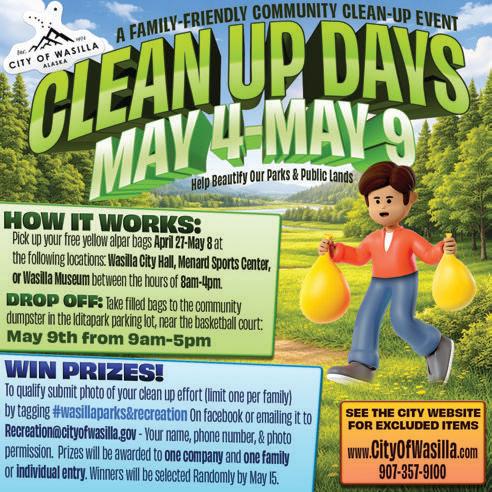
Contributed by Carter Fickes
We are The Northern Knights, a robotics team that competes at a national level in FIRST Robotics. “FIRST is the world’s leading youth robotics community, delivering hands-on STEM learning that inspires innovation, builds confidence, and prepares kids for life…” We are a part of one of their programs called FRC, which stands for FIRST Robotics Competition. After FIRST announced the game this year,

our team built a robot from scratch based on the strategy presented. The tasks are related to a real-world problem that we aim to solve. This time, we were tasked with building a robot capable of in-taking balls (also called fuel) in large quantities and shooting them into a hopper in the center of the field to score points. Our team is the only FRC team in the state of Alaska that competes at this level. We have a team of 9 people representing 6 high schools in the Mat-Su Valley and Anchorage. We just returned from a regional qualifying
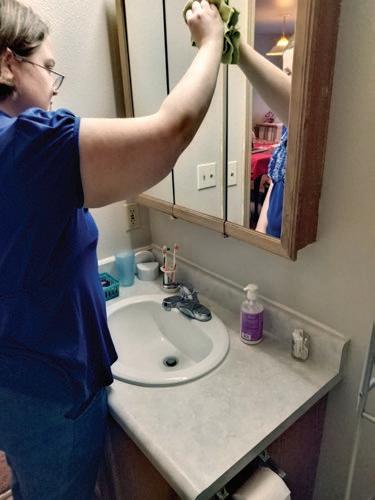


competition in Minneapolis, Minnesota,
where we competed among 47 other teams from the US, the Czech Republic, Japan, and China. Our team has been eager to compete at this level ever since we all started in FIRST robotics at the lower levels, FLL (FIRST Lego League) and FTC (FIRST Tech Challenge).
The thing that motivated us to compete at this level was the ambition of our team captain, Isaac. He has always had a dream to start an FRC team from Alaska and to compete at this level. It is Isaac’s senior year, and our team worked tirelessly over multiple months to make his dream come true and to prove to ourselves that we could do it. However, going into this regional, we knew we were the underdogs. This season is our rookie season, and none of us, except Isaac, had ever competed at this level before. With the help of our amazing sponsors, we built
a robot that met our objective task and was able to adapt to our strategy and the game for this year. We arrived in Minnesota on Tuesday, April 2, and hit the ground running, testing and looking at the field. Our team ended up pivoting our robot strategy due to complications and became a defense robot that was able to aid our alliance partners, with whom we are paired in every match, to win. We were chosen to be part of the number one alliance by Team 2052, Knight Krawlers, in the semifinal and final matches. This allowed us to be part of the winning alliance and win the entire regional competition. This accomplishment has never been achieved before by a team in Alaska, especially not by a rookie team. In the entire history of FIRST in Alaska, no team has reached this level. We have done the impossible and are now competing in the World Championship in Houston, Texas, at the end of April. Teams will travel from around the world, and we are honored to represent the state of Alaska. In the words of our coach, Tanya Black, after we qualified for the championships, “You guys have done the impossible! I am so proud of each and every one of you…”
Wasilla Area Seniors, Inc. (WASI)










Contributed by Deb Morton
At just a young age, Gabrielle Morton has already built a resume that blends elegance, discipline, service, and ambition, an inspiring combination that defines her role as Miss Alaska High School America. A student at Eagle River High School, Gabrielle represents a new generation of leaders who are as committed to their communities as they are to their dreams.
With aspirations that uniquely bridge creativity and courage, Gabrielle plans to pursue a career as both a fashion designer and an Explosive Ordnance Disposal (EOD) technician. It’s a rare pairing, one that reflects her dynamic personality: artistic, precise, and fearless.
A Scholar and Leader: Gabrielle’s academic achievements speak to her dedication.
Maintaining AB Honor Roll status while earning multiple AFJROTC distinctions, including awards for Volunteer Service, Good Conduct, Dress and Appearance, and Attendance, she exemplifies discipline and excellence. Her recognition in the JROTC Leadership Academic Bowl further highlights her ability to lead and perform under pressure. Leadership is not just a title for Gabrielle, it’s a lifestyle. From serving as a Youth Group Leader to participating in AFJROTC and peer leadership programs, she has consistently stepped into roles that allow her to guide and uplift others. Her involvement in the Anchorage Police Department’s Pathways to Policing mentorship program demonstrates her commitment to service and civic responsibility.
From Alaska to New York Fashion Week: While many know Gabrielle for her crown, she is also making waves in the fashion world. In 2025, she walked in New York Fashion Week for designer Kasia de Gelaque, an achievement that places her on an international stage. As a Supermodels Unlimited Ambassador through 2028, Gabrielle continues to expand her influence in the fashion industry. She was recently recognized as one of the Top 26 of 2026 in Supermodels Unlimited Magazine. Even more impressive is her creative talent: Gabrielle has been designing her own competition gowns since the age of five. Her eye for design and commitment to authenticity have helped her
stand out, not just as a contestant, but as a creator. Her growing platform has earned her national and international visibility, including three billboards in New York City and a feature on the cover of Uplift Universe Magazine in January 2025. Service at the Heart: Despite her growing accolades, Gabrielle’s true passion lies in service. She has dedicated hundreds of hours annually to volunteering, earning four Presidential Volunteer Service Awards and contributing over 500 hours each year to causes she believes in. Her involvement spans a wide range of impactful organizations, including Fur Rondy; the Last Frontier Honor Flight; Wreaths Across America; and Tim Tebow’s Night to Shine. Whether honoring veterans, supporting individuals with special needs, or bringing joy to her local community, Gabrielle shows up with purpose and compassion.
“Color Them with Kindness”: At the center of Gabrielle’s mission is her personal initiative, Color Them with Kindness. Founded in 2018, the program distributes over 1,000 kindness-focused items annually, encouraging positivity and connection among youth. Her advocacy aligns with the Miss High School America BRAVE platform, where she focuses on anti-bullying efforts rooted in kindness, faith, and confidence. Drawing from her own experiences, Gabrielle is determined to ensure that no teen feels alone. “I want young people to know their worth,” she shares through her work. “Kindness and faith can change everything.”
A Vision Beyond the Crown: Gabrielle’s journey is far from limited to Alaska. With a vision to expand her platform nationwide, she aims to reach all 50 states through school visits, community outreach, and digital engagement. She also hopes to inspire young women to participate in the Miss High School America program, helping them build confidence, leadership skills, and a strong sense of purpose. Her long list of accolades, including the Miss Jr. High America Community Service Award (Top 5) and recognition as a runner-up for the Alaska Spirit of Youth Role Model Award, are testaments to her impact. But for Gabrielle, success isn’t measured by titles alone. It’s measured by the lives she touches. Following the Journey to Nationals: As Gabrielle prepares to take the national stage this summer in Little Rock, Arkansas, supporters across Alaska and beyond can follow her journey, milestones, and behind-the-scenes moments on Instagram at @missakhighschoolamerica and @missgabbim. From preparation and training to community appearances and travel, her social platforms offer an inside look at the dedication, heart, and hard work that define her path to nationals.
From the runway to the community, from classrooms to national stages, Gabrielle Morton is redefining what it means to wear a crown. With heart, humility, and an unwavering commitment to kindness, she is not just representing Alaska, she’s inspiring a generation.








Calling all animal shelters, rescues, and vet clinics — Paws for Justice, a local community initiative sponsored by Crowson Law, wants to partner with you! We’re building a community campaign to help local pets find loving homes. Local organizations will feature the adoptable pets in the pages of The People’s Paper and on the airwaves of 95.5 The Pass KNLT-FM—and we’ll help coordinate free adoption events, promote them, and cover adoption costs or other services to help our furry friends find forever homes. To learn more about Paws for Justice or to sign up to help today - call (907) 373-2698. That’s 3732698. Brought to you by Crowson Law Group— defending the injured and giving Alaska’s rescue pets a voice. Visit crowsonlaw.com to learn more.
Contributed by Kelleigh Orthmann
I am a cute old polydactyl guy who has had a hard life and am looking for a quiet time in my later years. Both my joints and attitude are a little creaky. I like to do my own thing and am fine with other cats, I don’t want to be best friends, but I won’t get into arguments. Being an only kitty would be just fine too. I like chin scratches and have the cutest little old man voice. I am not looking to sit on laps or get cuddles, but I like to hang out with people, particularly if there are treats involved. I love to nap and also play with a feather wand. I am about 12 years old and will need continued monthly arthritis treatment, as well as a safe place outside where I can wander and nap in the sun. I am a terrific fellow with a lot of companionship to share with an easygoing family.




I am a shy little girl, maybe a year old, and would do best in a kind, calm home. I fit well into families with cats, dogs, and gentle people. I like to play with friendly kitties and don’t mind canine friends either. When I feel safe, I love to cuddle up and even sleep with my people. In the summer, I look forward to spending time outside listening to the wind and watching butterflies. I am a sweetheart ready for a gentle, loving life.

I am a beautiful, kind young lady looking for my perfect home. I came in with my four kittens and was a wonderful mother. I still have plenty of playful energy and love to tumble with my toys, then relax by sunbathing or sleeping beside you. I have done great with other cats and will need a kitty friend in my new home. I should adjust well to a loving home and would likely do fine with a nice dog and gentle kids. I will also need a