

What is the greatest professional challenge you have faced, and how did you overcome it?
Given the international dimensions of your career, what have you learned from working across so
Beyond the World Cup, British Cycling has presented its own unique set of challenges. I have been here for three

The pandemic and global pressures have had a lasting impact on major events. How must the industry adapt?
The first step is accepting that ‘normal’ no longer exists, and perhaps never did. I talk often about VUCA: volatility, uncertainty, complexity and ambiguity. We live in a VUCA world. We are witnessing global crises and conflict before our eyes. None of that is going


The industry must adapt, remain driven by its values and find a way to get things done despite the inevitable challenges. There is no blueprint for delivering a major event in a stable,


and high pressure conditions. That experience is invaluable at Wiz-Team because our technology is built by event managers, for event managers. Having led the PMO function, I understand both the operational reality on the ground and the importance of structured, scalable delivery models behind the scenes. My focus is always on real world usability and impact.
How has Wiz-Team evolved as a company in recent years?
Wiz-Team has evolved from a specialist event technology provider into a global partner supporting some of the world’s most complex events, across sport, institutions, hospitality, and culture. The company now delivers an integrated approach combining configurable event management software with deep operational expertise. We’ve grown internationally, expanded our product roadmap, and built long term relationships with major global organisations. At the same time, we’ve stayed true to our mission: empowering event managers through smart, flexible, and user driven technology.
Client needs in the event industry are changing rapidly. What are the biggest shifts you’re seeing?
Clients are facing increasing complexity on multiple fronts: security requirements, data protection, sustainability expectations, workforce challenges, and the need for real time visibility across operations. At the
same time, teams are expected to do more with fewer resources. Clients no longer want standalone tools — they want integrated ecosystems that adapt as their event evolves. This is why configuration, scalability, and ease of use are so critical. Wiz-Team’s strategy is to stay close to clients, listen carefully, and build solutions that genuinely respond to these new challenges.
What role does event management software now play in delivering successful events?
Event management software is no longer a “nice to have” — it’s a strategic asset. Done right, it enables better decision making, stronger security, improved participant experiences, and more efficient use of resources. With platforms like Event-Works, event managers can centralise data, automate workflows, and adapt quickly to change. Ultimately, technology should reduce complexity, not add to it. Our goal is to give event teams the confidence and clarity they need to focus on delivering exceptional experiences.
How does the new leadership structure support this vision?
The new structure creates clear ownership while fostering collaboration across leadership functions. With dedicated roles focused on operations, revenue, and technology, we can move faster, align more easily, and stay focused on both delivery excellence and long term innovation. It allows each area
to deepen its expertise while working toward a shared vision: delivering exceptional value to our partners and customers, with innovation and usability at the core of everything we do.
Finally, what excites you most about Wiz Team’s future?
What excites me most is the combination of people, purpose, and potential. Wiz Team has incredible talent, a strong culture, and a clear mission. The event industry is evolving rapidly, and Wiz Team is exceptionally well positioned to help shape its future. Being part of this next chapter — supporting growth, strengthening operations, and continuing to deliver
Scaling successfully isn’t just about growth; it’s about building the right foundations to support it
Ian Reid CBE Non Executive Chair Commonwealth Games Scotland
Ian Reid CBE is currently NonExecutive Chair of Commonwealth Games Scotland - the body responsible for selecting and preparing Team Scotland for each Commonwealth Games and Youth Games. He is also the Vice-Chair of the Glasgow 2026 Commonwealth Games Organising Committee. Ian currently runs his own Mega Events Advisory business from which he has recently led the World Combat Games and Islamic Solidarity Games in Riyadh, Saudi Arabia and continues to advise the Saudi sports leadership on their event portfolio. He was also a Strategic Advisor to the CEO, Board and Government on the recent UCI World Cycling Championships in Scotland. He is an Advisor to the UK Cabinet Secretary, Cabinet Office and DCMS on the UK Government Major Events strategy including having provided a senior assurance role on His Majesty the King’s Coronation and led a Government Major Events review following Operation London Bridge. Ian was awarded a Commander of the British Empire (CBE) medal in the King’s first honours list for his work as Chief Executive of the Birmingham 2022 Commonwealth Games, planned through the Pandemic. His first role in mega events was as CFO for Glasgow 2014 where he led a Corporate Services team for 7 years in planning, delivering and dissolving the Organising Committee.

Dragana Clarke
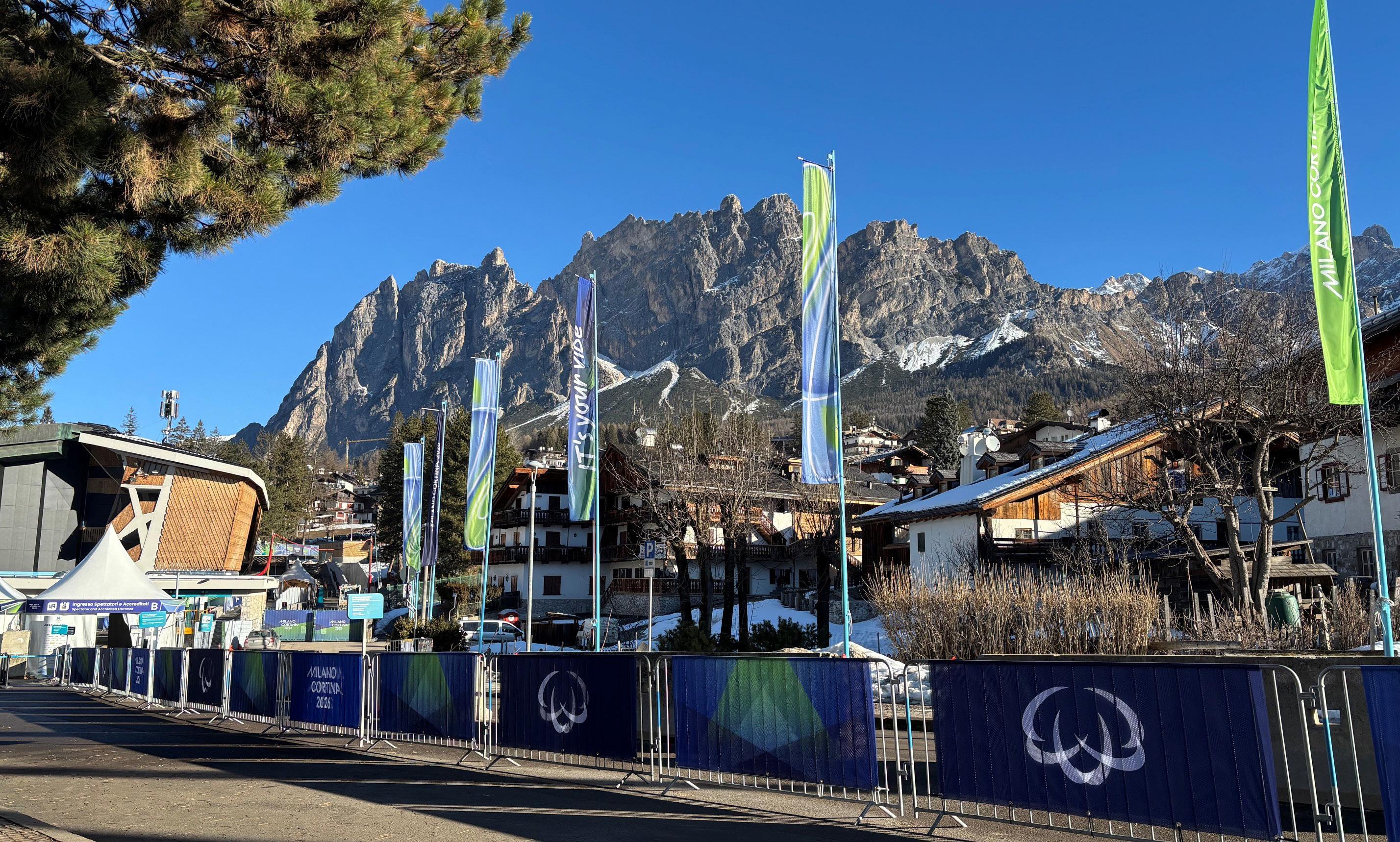
Operational Readiness and Main Operations Center Director FONDAZIONE MILANO CORTINA
2026 Organising Committee for the Olympic and Paralympic Winter Games
Dragana Clarke, leader and senior advisor in governance and
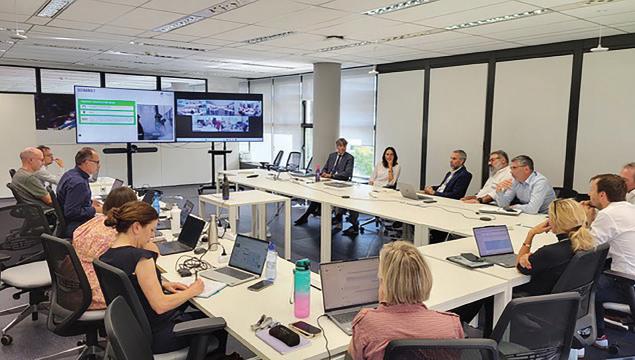
Finding and rehearsing solutions before the problems occur When we plan and rehearse the responses to different circumstances there will always be a solution. Operational readiness is a method of developing resilience within individuals and teams, as well as across the whole event ecosystem. Quantitative and qualitative analysis allows development of risk register and allocation of scale to problems severity.
Operational plans, policies and procedures, and contingency plans are produced and assured through exercises and testing. Operational readiness provides the framework
more than 500 risks, developed 700+ policies, procedures and contingency plans and rehearsed all the most important plans during 100+ readiness exercises and test events that engaged around 2000 individuals from OCOG and external stakeholders.
Whether applied to infrastructure,
In the case of MICO26, we talk about multiple cities and regions. While the
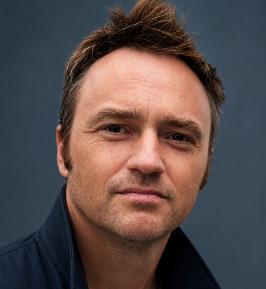
Andrew began his career in audio engineering and system design, shaping event experiences from behind the scenes. That technical foundation evolved into project management and broader production leadership across
changing before rehearsals began. Like any major ceremony, the event required organisers, broadcasters, producers, local suppliers and international specialists to operate as one team.
Planning and Delivery
A key lesson from events of this scale is that success starts early. Detailed planning, clear communication and defined responsibilities are critical long before show day. Our role was to provide project management and specialist audio systems while aligning all delivery partners behind a shared outcome. Often, our greatest value is being the glue between stakeholders, helping diverse teams move together with clarity and confidence. We worked closely with local suppliers and producers, combining their venue knowledge with our experience from previous global ceremonies. I’ve found this partnership model consistently delivers the strongest results. Local teams understand the host environment in ways no visiting supplier can replicate, while international specialists bring proven systems and transferable experience.
Decisions and Solutions
For ceremonies where there is no margin for error, resilience must be built into every decision. Redundant systems, clear workflows and proactive risk management were central to the approach. We also supported show
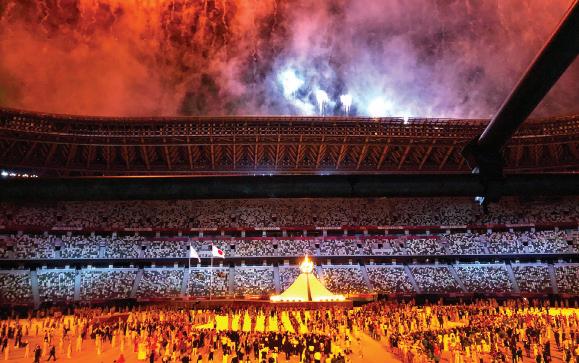
timing and communications, ensuring departments remained coordinated throughout rehearsals and live performances.
Lessons Learned
Tokyo reinforced that technical expertise alone is never enough. Calm leadership, adaptability and trusted relationships are just as important when conditions change quickly. Over two decades in ceremonies, I have learned that the moments remembered most by the world are often made possible by countless decisions no audience ever sees.
Since Tokyo, we have continued supporting major events including Paris 2024, two Super Bowl productions and Papua New Guinea’s 50th Golden Jubilee celebrations. We also have an exciting 2026 project in the pipeline; an unexpected twist in our plans, and a reminder that in ceremonies, you never quite know what comes next.
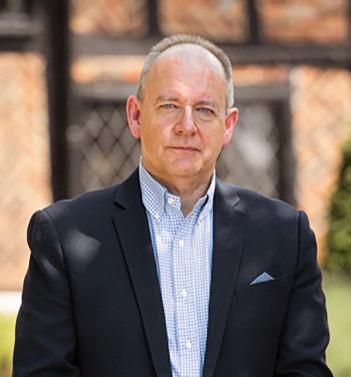
It was a genuine privilege to work with Norwest during the Tokyo Olympic Ceremonies. The company demonstrated the highest standards of professionalism, technical excellence, and reliability throughout a highly demanding operation. Their team consistently showed outstanding commitment, efficiency, and a collaborative spirit, contributing significantly to the success of an event of global importance. Working with Norwest was truly an excellent professional experience.
30
We are the UK’s leading Food, Nutrition, Technology and Wellbeing Collection, a global team of subject experts, who for the past 36 years, have delivered creative and commercially viable food, beverage and hospitality solutions to over 700 clients across 30 countries in the sports, stadia, major event, hotel and university sectors. We are proud to have worked with the world’s largest global events, including the London 2012 Olympic Games, Sochi 2014 Winter
How are Food, Beverage and Hospitality expectations from fans, visitors and customers changing?
One of the noticeable shifts, is the transition towards localisation and authenticity. Rather than relying on generic fast-food staples, venues are showcasing flavours that reflect their city or region. This includes local breweries, artisanal producers, iconic street-food dishes, and chef-led concepts. Introducing these aspects not only enhances the sense of place, but also deepens emotional connection, turning a visit into a richer, more personal experience. The traditional stadium experience in the UK has long been defined by queues, halftime rushes, and a limited choice between pies, chips, and beer. A major shift is underway as consumer expectations evolve and competition for leisure time intensifies. Stadium operators are reimagining F&B not as
a transactional necessity, but as a core part of the entertainment experience, rotating menus, investing in diverse partnerships with local food vendors and independent brands and delivering fresh, made-to-order concepts rather than pre-prepared items.
What role do technology and innovation play in improving event delivery?
Technology is already evolving the customer experience and will play a critical role through digital ticketing integration. Access to food and drink tied directly to ticket type, along with mobile ordering, self-checkout kiosks, and frictionless payment systems will all dramatically reduce waiting times, drive labour efficiencies and ensure customers have more freedom to enjoy the event. The result is a streamlined crowd flow, which alleviates some of the most common fan frustrations, such
as missing key moments due to long queues.
Data will always be essential to drive future strategic direction. Venues that are able to interpret and utilise their data will possess a competitive advantage when seeking to understand what fans consume, when, where and how often, allowing operators to refine offerings, manage costs, and tailor experiences at an individual level.
What challenges do you believe the industry must address in the coming years?
How stadiums evolve into multi-use venues, positioning themselves as year-round destinations, rather than occasional venues aiming to capture and maximise the match day window only. For clubs and venue operators, the challenge will be delivering these experiences at scale while maintaining profitability and sustainability.
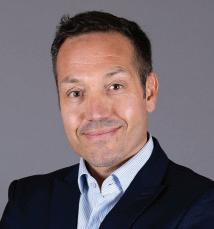
Jean-Jérôme PerrinMortier
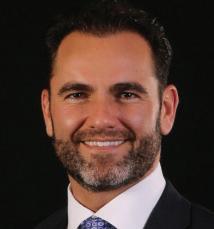
Jean-Jérôme Perrin-Mortier is Chief Executive of Peace and Sport, the international organisation used to promote the use of sport as a tool for peace, dialogue and social
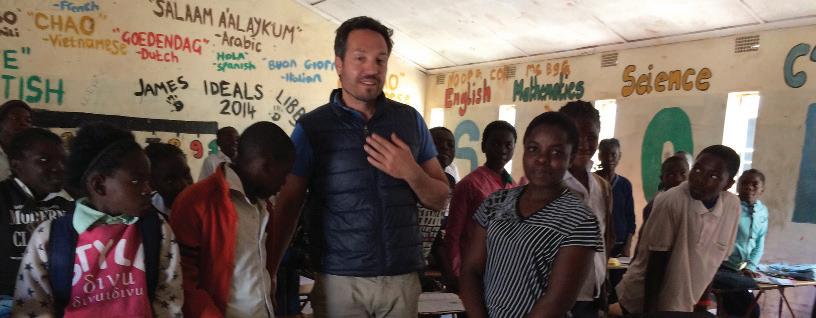
his own father, and had been unable to attend the funeral. He agreed to travel back with his son. The medal brought him home.
several at once, one will be flying while another is struggling, and the job is to keep everybody in the same boat and moving forward.”
To understand what makes a coach hold his nerve through four days of silence, it helps to go back to a small canoe club in the Champagne region, and to a story Perrin-Mortier tells about himself at fourteen.
team. He shook his head and called over a small, quiet boy named David. He asked David to name the people he had brought to the club. David reeled off five names. That, said the coach, is why he is the most important person here. He is not the best athlete. But he is the one who walks home and tells his friends to come and try.”
“On that day,” Perrin-Mortier says, “I understood that what looks like the most important contribution rarely is.”
It is the kind of lesson that travels.
Running an organisation, he says, requires the same instinct. The contexts differ: the elite athletes he worked with had to be held back, because they pushed too hard, while employees more often need pushing in the other direction. But the underlying craft of carrying people with you is, in his telling, the same craft.
He had not even known the sport existed. He had won a school crosscountry race, and the club president, who later became his first coach, had come looking for him. “He gave me a voucher for a free year,” he says. “My mother was sceptical, but I went. And I stayed.”
Two years later he came home from the French championships with his first silver medal. He was, in his own words, very proud of himself. The coach gathered the whole club, parents included, and asked him a question.
“He asked me who the most important person in the club was. guessed the president, then the coach, then a friend who had made the French
He went on to coach the canoe-kayak teams of South Africa, Togo and Azerbaijan at three Olympic Games, in Beijing, London and Rio. He spent more than 260 days a year with his athletes, for twelve years. “More time with my athletes,” he notes drily, “than with my wife.”
That apprenticeship, more than any management course, taught him how to lead. “Top athletes are demanding. They have their own perceptions and their own certainties, and you live with them in the space between failure and success. When you are managing
By the time Joël Bouzou, the Olympian and founder of Peace and Sport, asked him to come to Monaco as Director of Field Programmes, PerrinMortier had already spent the best part of a decade running development programmes alongside his elite coaching, working with international federations, NGOs and local authorities across Africa and Asia. He took the role on a contractor’s daily rate, ten days a month. He needed to know whether the project was really what he believed it to be. Four months in, he told Bouzou he was in, and that he wanted the
organisation to build a peace educators methodology. They built it, in four languages and across three age groups. He became Chief Operating Officer, and in 2022, Chief Executive.
The principle that has governed his international work, on every continent, is the one he learned in Champagne: the most important person in the room is rarely the one with the medal.
“Do not work with people who do not want to work with you,” he says. “It sounds obvious, but it is the single most important lesson I have taken from working in Africa, Asia and South America. You cannot arrive somewhere with your method and your principles and assume the local community needs what you are offering. You have to work to their needs, not yours.”
He puts it more bluntly to his own staff. “I tell them: do not behave like an empire. Even the poorest country has something you do not. The values are simply different.”
The same instinct shapes his advice to high-profile athletes who come to him wanting to set up foundations of their own. They tell him they want to build a school in a particular country. He always tells them to go to the Ministry of Education first. “If you build a school under your own name, the local education authority will be embarrassed. It implies their schools are not good enough. Find out what already exists, find a partner, and offer to support what they are trying to do. That is how you achieve something that lasts.” It is also the lens through which he views partnership at
organisational level. “I am happy to partner. But I will not put two logos side by side and call it a partnership. There has to be genuine convergence, or it is not worth doing.”
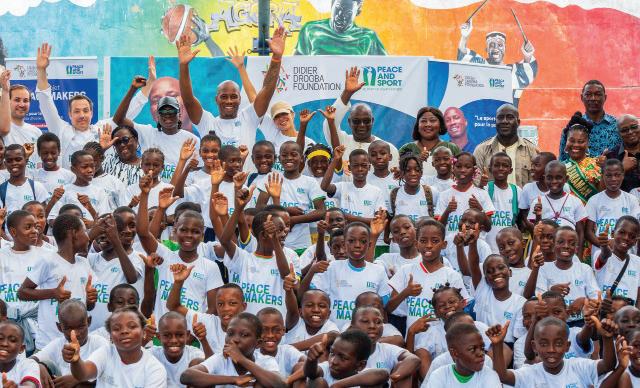
If his first coach taught him to look beyond the medal table, Didier Drogba taught him what the lesson looks like when it is carried by someone the whole world recognises. The Champion for Peace and Chelsea legend invited him to Côte d’Ivoire and the two travelled together to Colombia, Greece and elsewhere. “What struck me was his humility,” Perrin-Mortier says. “He came from professional football, not Olympic sport. And yet the way he carried himself with people in the street, particularly with children, taught me something about presence and responsibility I have never forgotten.”
Asked what he still wants to achieve, Perrin-Mortier is unusually candid for a chief executive. “I have built my entire career without a target. The only ambition I had as a young man was to travel, and my mother thought it was impossible. I went to Africa, I went to
Asia. I became a coach, then a national coach, then an Olympic coach, and each step was offered to me rather than planned.”
So he does not, he says, have a list of titles he wants next. What he wants, today, is more local than that, and harder. “When we tell a community we will accompany them for five years, I want to make sure that commitment is met, even if the funding has to be found from another source halfway through. That is the achievement that matters to me now.”
The advice he gives the next generation reflects the same conviction. “Do not surround yourself with people who are like you. Surround yourself with people who are better than you in the things you are asking them to do. If the people around you become better than you, that is a sign you have built the right team.”
from 2020 to 2023,
telling, is collapse the physical preconditions of competition. There is no height requirement, no birthright, no geography that cannot be overcome by a fast connection.
“In physical sports, you have physical limitations,” he says. “If I am not seven foot five, I am not going to play in the NBA. That is for sure. In esports, everybody has the common opportunity to excel.”
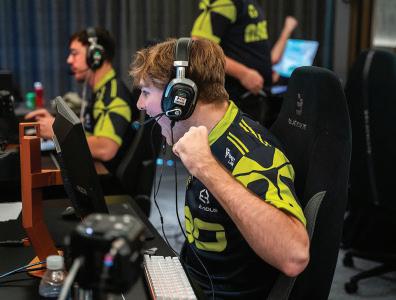
The federation he leads now represents 152 national members across every continent. Its annual world championship is contested across six titles, two on mobile, two on console, two on PC. The most recent edition, held in Kuala Lumpur in late 2025, saw Indonesia retain its women’s Mobile Legends crown ahead of Cambodia and Egypt, while Malaysia took the open final ahead of Cambodia and Türkiye. None of these are stories that fit easily inside the grammar of traditional sport.
“Traditional sports form the foundational pillars,” he says. “Esports is an accelerator. It is free. It is fun. It is dynamic. It is moving all the time.” That dynamism is a feature, not a
problem. Marinescu does not see his job as recruiting more players to the activity. The activity, he points out, has already recruited everyone it is going to.
“Our job isn’t to get more people to do the activity,” he says. “Our job is to help share those values with the youth.”
The road to recognition
That argument has put the IESF on a slow collision course with the institutional architecture of global sport. Marinescu first encountered the international esports world in 2014, when an early federation applied for recognition during his time at SportAccord. By 2021, the IESF had cleared the membership committee criteria for full international recognition. Then the process stalled.
He is careful not to relitigate the reasons. What he insists on is that recognition was never about prestige.
“It shows a level of communication,” he says. “Sitting at the same table allows us to share the values back from the sport movement to the esports community, and in return share ideas of how to modernise, digitise and
The case for the live event
The live event is also where the cultural register of the discipline reveals itself. Lights. Music. Crowd noise. The fusion of sport with everything around it.
make funner and more interesting to a younger demographic certain things that have not changed in a long time.”
That is a polite way of describing an industry whose conventional federations have, for years, been hunting the audience the IESF already has. To make the case credible, Marinescu has pushed governance to the front of the federation’s identity.
The IESF’s annual congress now runs to an agenda of 24 pages and 45 voting items. The day before the formal session, an unconference allows members sixteen hours to air every concern before a single motion is tabled. It is, he concedes, exhausting.
“I need to represent the decision of the Congress,” he says. “It’s not my job to take a direction or to make a decision.”
It is, in part, a rebuke to the assumption that emerging sports cannot govern themselves. It is also the working currency of the bridge Marinescu wants to build. Recognition, on his reading, will be earned by example.
For a sport that can, in theory, be played from any bedroom in the world, esports remains stubbornly drawn to physical gathering. Marinescu has the latency arguments at his fingertips. The earth, in esports terms, divides into ten playable regions. South Africa cannot play Tokyo in real time. He keeps insisting on live world championships anyway.
“I like live events because it brings people together,” he says, “and we can break this nostalgic ideology that esports are about kids on couches being lazy and obese.”
He recalls the gym at his first IESF event. He had arrived at six in the morning expecting to be alone. The full national teams were already there. He approached one of the Swedish players. The player told him he had been pushed into training by his federation, had lost the weight, had found a girlfriend, and would never go back.
“At the higher level of esports, it has nothing to do with the couch,” Marinescu says. “You have mental coaches, physical coaches. You eat right. You need to sleep right. You need a psychologist. It is a very efficient system.”
“It is fun. It is dynamic,” he says. “And when you mix it with culture and music and fun things, it becomes entertainment. And sport should be entertaining. It must be entertainment.”
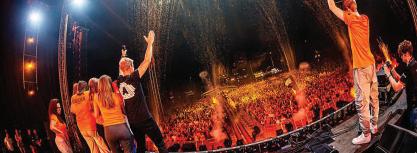
That fusion is, for the moment, what esports does better than almost any other discipline on earth. The Iași stadium with Armin van Buuren on the closing night was not an aberration. It was an unusually visible version of an ordinary week at the top end of the sport.
A bigger ambition
Asked what remains undone, Marinescu does not reach for a tournament or a recognition vote.
“I think we are still only in the first chapter of esports,” he says. What he reaches for is the audience.
The three billion. The young people who are already watching, already playing, and already taking their cues from the figures at the top of the discipline whether the institutions of sport recognise it or not.
“Those heroes in the world of esports are followed by billions of people,” he says. “My target is to ensure that everyone who is gaming is exposed to all the values that make you a better human.”
In July, the IESF will launch an academy: free certified courses for gamers, coaches, referees and event
organisers. Universities in more than 35 countries already offer esports programmes from undergraduate level through to doctoral research. The point, he says, is not to make competitive gamers professional. It is to give them somewhere productive to land when the playing days end. As casters. As event organisers. As game designers. As data centre managers. As the network architects of an industry that did not exist when most of them were born.
This is education as protection, not only for career pathways but for better lives. The academy will include free modules in nutrition, fitness, mental health, psychology, performance habits and the mechanics of esports, designed to help gamers build healthier and more sustainable lives around the activity they already love. It is, in his vocabulary, a way of armouring the community.
“I want to armour all of the community to be able to be successful human beings and happy human beings,” he says. “Because with that, I think I can contribute to making the world a better place.”
He has heard, often enough, the question put to him in meetings with sports ministers and Olympic committees. You are stealing our athletes. You are taking our community. His answer, by now, is rehearsed. “They are already taken. Nothing will be stolen. They are already gaming.” The world is already playing. The work, on his telling, is making sure it plays well.
This is not how governing bodies typically work. Nor is it how sports get built. Most federations grow topdown from a single flagship discipline. They expand cautiously, sometimes reluctantly, into adjacent activities.
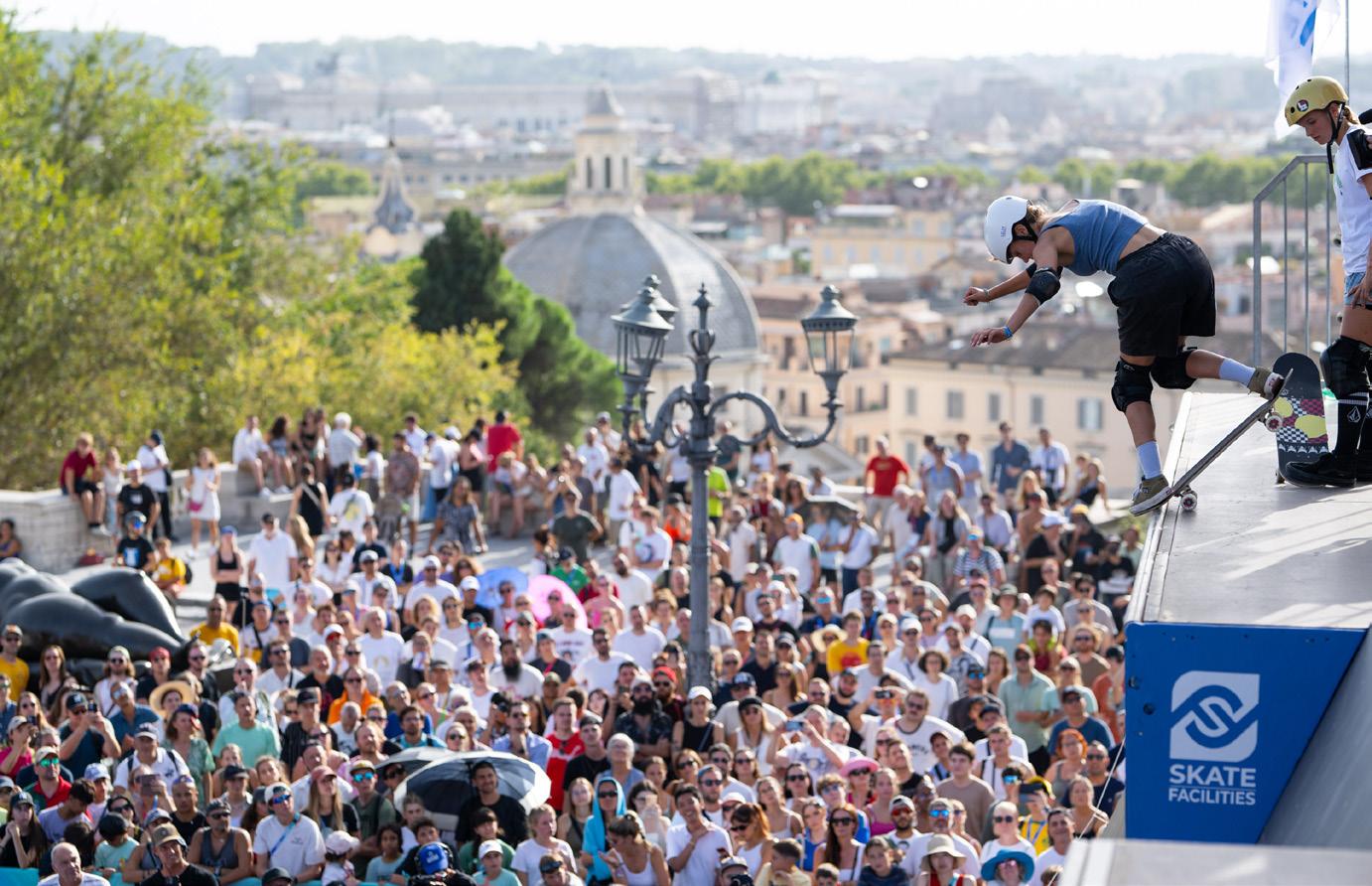
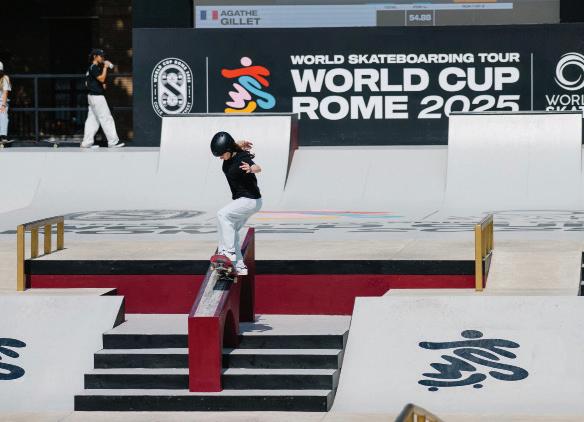
World Skate has inverted that logic. By treating skateboarding, speed skating, artistic skating, rink hockey, roller derby, roller freestyle, scootering, skate cross, downhill, slalom, inline freestyle, and inline hockey as co-equal expressions of the same essential act of propelling oneself forward on wheeled skates, the organization has created a genuinely inclusive sporting community with representatives from 137 countries across five continents.
The economics are compelling.
The Italia 2024 World Skate Games generated 439 million euros in total economic benefit for the host region against a 15-million-euro investment, yielding a 30 to 1 return on capital.
The Games reached 7 million users and 35 million views and impressions, with broadcast coverage reaching 80 nations via television. That infrastructure, that reach, that strategic leverage did not exist a decade ago. It emerged from a deliberate choice to imagine wheeled sports as a cohesive category rather than a collection of niche pursuits.
What makes World Skate’s governance structure worth studying for the wider major events industry is not merely its scale or its economic footprint. It is the intellectual discipline
required to hold twelve disciplines in alignment when each operates in fundamentally different environments.
Artistic roller skating involves millions of passionate athletes and fanbase since a century. Rink hockey is the sport that built the federation 102 years ago in Montreux. Scootering and roller freestyle are urban sports growing worldwide. Speed skating is one of the most thrilling discipline on tracks and roads. Downhill is the sport that demands more adrenaline, risk and ensure spectacle on the crazy slopes, being in the mountains or in the cities too.
The World Skate Games work because they celebrate those differences rather than suppress them. The format is adaptive. Host cities can customize their event calendars, sequence disciplines to maximize viewership and participation, and deploy urban venues for street sports
whilst reserving traditional stadiums for rink-based competitions. The World Skateboarding Tour exists as a separate Olympic qualification pathway, anchored in the calendar cycle that

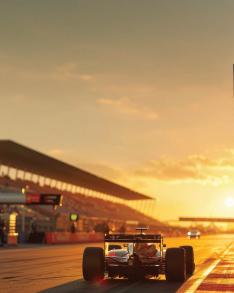


Byrom PLC and the MATCH Group is widely recognised as best in class for end-to-end accommodation and hospitality solutions within the sports event industry. Together the teams support some of the world’s most complex sporting events, combining deep market expertise with disciplined lifecycle delivery to create integrated, commercial effective solutions for host countries, organising committees, rights holders and federations. Byrom and MATCH have unparalleled experience spanning over 300 events, including every FIFA World Cup™ from 1994 to 2022, the Ryder Cup from 1997 through 2027, multiple Concacaf Gold Cups™, the CONMEBOL Copa America 2024, two AFC Asian Cups™, Formula 1 Grand Prix’s at Silverstone and MADRING, and soon, esports events. Victoria is Director of Accommodation and a member of the company’s Executive Management team. Having overseen accommodation services for five FIFA World Cups™, including the management of more than 1.8 million bedroom nights at the FIFA World Cup 2022™, she is a senior practitioner in the strategic planning and delivery of accommodation programmes for major international sporting events. Victoria’s work focuses on aligning accommodation with wider operational and commercial systems, ensuring programmes remain resilient under real-world conditions while protecting experience and commercial value.
Accommodation is one of the few elements of a major sporting event that touches almost every stakeholder group influencing experience, cost, and long-term legacy.
Despite this, it is often framed as a logistical necessity rather than a strategic asset. From our experience supporting some of the world’s largest international sporting events, accommodation is not simply about rooms and rates; it sits at the intersection of operational delivery, commercial performance and stakeholder experience. Decisions made early, often even before demand is fully understood, shape everything that follows.
Late delegation changes, evolving competition structures, unexpected eliminations and shifts in transport or accreditation models can quickly turn a settled plan into a pressurised negotiation environment. What appears administrative at the outset becomes one of the most commercially sensitive and operationally interconnected areas of delivery.
From logistics to strategic lever
Accommodation is traditionally approached as a procurement exercise focused on securing inventory at acceptable rates. While those elements matter, they no longer reflect the full role accommodation plays in modern sporting events. In practice, accommodation influences athlete environments, transport efficiency, accreditation flows, sponsor
servicing, commercial outcomes and overall event perception; crucially, it sits where commercial contracting meets operational reality. Assumptions made during procurement are tested as the event lifecycle unfolds, with decisions around inventory, rate structures and contract terms rippling across transport, workforce deployment, sponsorship servicing, ticketing and revenue projections.
When treated purely as a downstream function, complexity surfaces late, often when flexibility is limited and costs escalate. When approached strategically, accommodation becomes an enabler: balancing protection for stakeholders with commercial optimisation, and aligning pricing within a coherent framework.
The Hidden Complexity
Accommodation is often simplified to rates and rooming lists. In reality, both sit above a dynamic system shaped by event format, timelines, segmentation and evolving stakeholder expectations.
A commonly overlooked factor is that accommodation cost and value are not fixed at contract stage. Rates are often treated as a sole outcome rather than part of a framework that must perform under changing conditions. Programmes pass through multiple phases, from contracting through to live delivery and reconciliation, each placing different pressures on agreed terms.
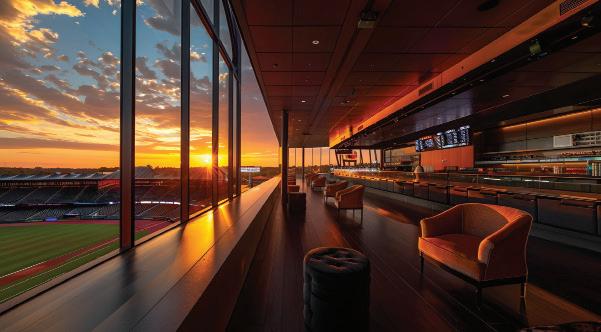
Across major events, agreements that appear robust at bid or contract stage require active management once variables such as qualification pathways, ticket sales behaviour, sponsor activation and global economic conditions begin to diverge from assumptions.
Event format further shapes behaviour: tournament environments create compressed timelines, concentrated demand, high segmentation, and variable stay patterns. These require controlled flexibility within clear frameworks. Models developed for recurring or single-sport events frequently fail when applied directly into tournament without adjustment.
Segmentation is another pressure point. Accommodation is often reduced to “who stays where”, when in practice segmentation drives rate logic, stay
patterns, cancellation exposure, and the distribution of commercial risk.
Misalignment here is a common source of downstream friction.
Accommodation, hospitality and the wider ecosystem While athlete and official accommodation often dominate planning discussions, modern events operate within a much broader ecosystem. Sponsors, media, hospitality rights holders, workforce and fans all engage with accommodation differently, often through parallel channels. As hospitality has become more central to commercial strategy, the connection with accommodation has strengthened.
Proximity, service consistency, pricing confidence and release structures all influence delivery and perception. When managed in isolation,
inventory becomes fragmented and visibility is lost. When approached as a coordinated system, organisers gain consistency of experience, stronger data insight, improved inventory utilisation and the ability to align experience with commercial intent. We have seen this at numerous events where we have worked together with our Hospitality division, MATCH Hospitality.
The benefits of an integrated approach apply to all user groups and is of particular importance in an environment of heightened public and media scrutiny.
Aligning commercial structures with operational reality
Pressure rarely rises from a single failure. More often it reflects cumulative misalignment between commercial contracts and operational delivery:
attrition schedules misaligned with qualification, accreditation or ticketing timelines, rate structures that do not reflect staggered occupancy, payment terms conflicting with cash flow, or evolving stakeholder expectations. The impact is not only financial but operational. When accommodation is treated as an integrated component of the ecosystem, organisers gain improved control over inventory, data and forecasting. This supports stronger stakeholder management, reduced attrition costs, stronger cash-flow protection and clearer oversight across usage.
Designing for the Event Lifecycle
The effectiveness of any accommodation strategy is largely determined by timing. Specialist expertise is often introduced after event-wide decisions on venues, timelines and frameworks are locked in, forcing accommodation to react rather than shape.
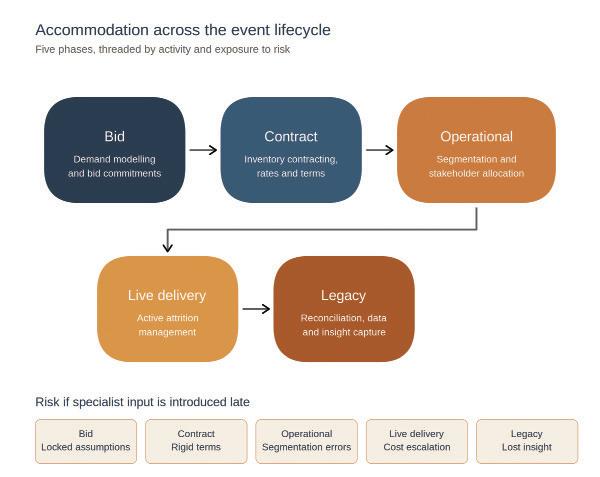
Stronger results are achieved when strategy is embedded early, ideally from bid phase. Early involvement enables realistic demand modelling, alignment with venues and transport, commercial structures grounded in how the event will evolve. This matters because accommodation delivery will always involve change. The most resilient approaches plan for disruption, building systems that absorb variation and empower teams to respond within clear structures.
Ultimately, success is defined by coherence under pressure, and that coherence is only possible when accommodation expertise is embedded early and the programme designed strategically across the full event lifecycle.
Key Takeaways for Rights - Holders and Organisers
Accommodation is a strategic system, not a standalone procurement exercise. Early decisions on inventory, segmentation, and rate structures shape operational and commercial outcomes throughout the event lifecycle.
Tournament environments demand flexible frameworks built for change, not static contracting models.
Misalignment between
accommodation, transport, accreditation, ticketing and hospitality is a leading source of operational friction and avoidable cost.
Integrated management improves forecasting, inventory control, stakeholder confidence, and cash protection.
Embedding specialist
accommodation expertise from the bid phase enables programmes to absorb disruption without compromising experience or value.
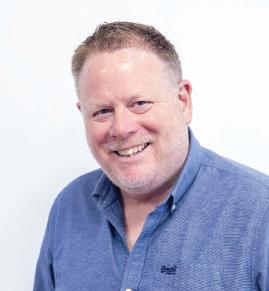

Phil McMichael
Director of Events & Entertainment
Production Resource Group
Phil brings over 30 years’ experience from the Live Events, Entertainment (TV & Theatre), Sports & Retail industries. Having held senior roles at several
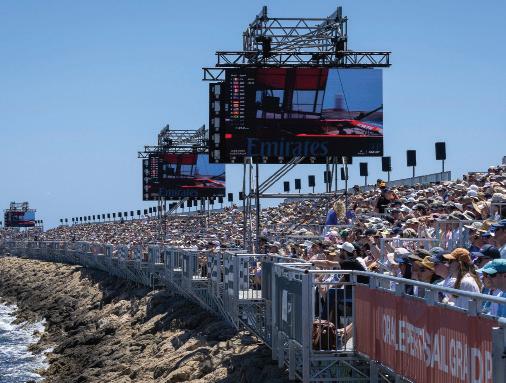
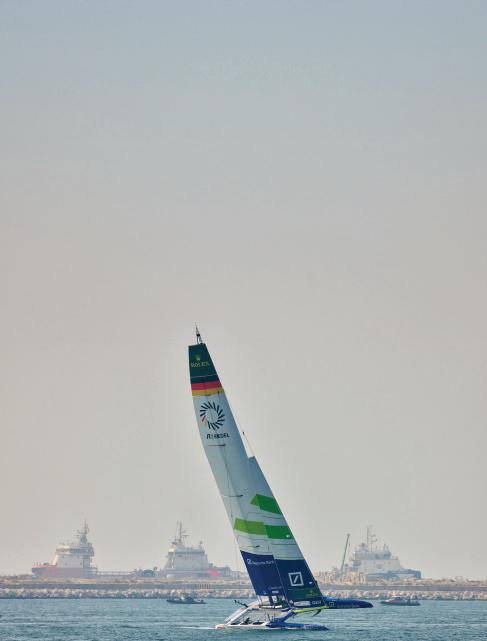
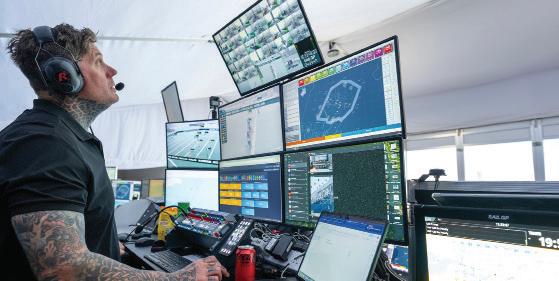
SailGP moves at speed, across continents, time zones and all manner and workflow. This balance between global oversight and local delivery is
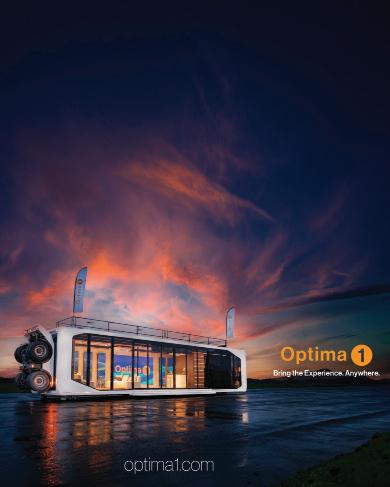


What sparked the idea behind Optima 1?
At its core, Optima 1 was created to eliminate compromise.
For years, we worked across a spectrum of solutions—empty event trailers requiring full fit-outs, broadcast trucks rich in technology but lacking in experience, and luxury motorhomes that offered comfort without the infrastructure to support modern production.
None delivered all of our needs.
The brief became clear: create a superyacht-quality mobile environment with fully integrated, invisible technology, flexible
• Sustainability: A reusable, mobile platform reduces the need for temporary construction and associated waste.
• Content demand: Events are no longer just physical experiences— they’re content engines. Optima 1 is designed to support that shift. In short, it removes friction at a time when expectations are only increasing.
How does it enhance the live event experience?
What’s interesting is how quickly it becomes more than just a structure— it becomes part of the event itself.
• A fully equipped, acoustically optimised space for recording or streaming content—ideal for athlete interviews, behindthe-scenes storytelling, or sponsorled series.
• If necessary, Optima 1 can even change location during an event
• More time spent delivering the experience, rather than building it
How does Optima 1 fit into the future of major events?
• TV Studio
• Broadcast-quality production capabilities, allowing live or recorded programming directly from the event footprint.
separate builds—they’re different expressions of the same platform.
The direction of travel is clear. Events
More environmentally accountable
Optima 1 sits at the intersection of
It allows rights holders to deliver broadcast-quality content, premium hospitality, and brand activations from a single, reusable platform—without cost, or sustainability. Perhaps most importantly, it introduces a different mindset: one where infrastructure is no longer a constraint, but an enabler.
Experience. Anywhere” — why is that so central to your messaging?
It reflects a shift in how major events
experience has meant building it from scratch—often tied to a fixed location, significant lead times, and complex logistics. That model still works, but it can limit flexibility, particularly for
for its own sake, and more about what that mobility enables: freedom, consistency, and speed at a level that simply hasn’t been possible before.
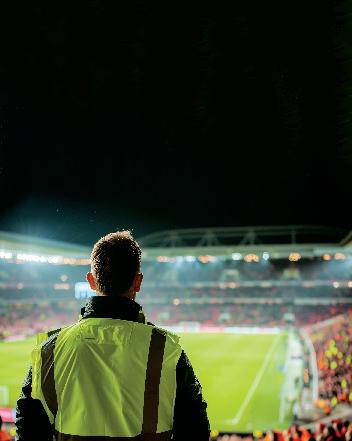

The rise of social media has significantly added to event safety and security problems in a number of different ways.
The “Pranksters”
Social media pranksters who deliberately gain access to events for social media fame and notoriety can be some of the most difficult individuals to contain. They consistently probe event safety until they manage to crack or break it.
Daniel Jarvis, widely known as “Jarvo,” has become a recurring concern for event safety and security due to his repeated pitch invasions at major
motivate others to attempt similar stunts, compounding the problem and stretching security resources further. Event organizers must then invest more heavily in preventive measures, increasing operational costs.
In essence, while Jarvo’s and others like him, actions may appear humorous to some, they highlight critical gaps in event security and pose real risks that cannot be overlooked.
The Swarm and Storm
The UEFA Euro 2020 Final at Wembley Stadium showed how social media can amplify the risk of mass unauthorised entry. In the hours before kick-off,
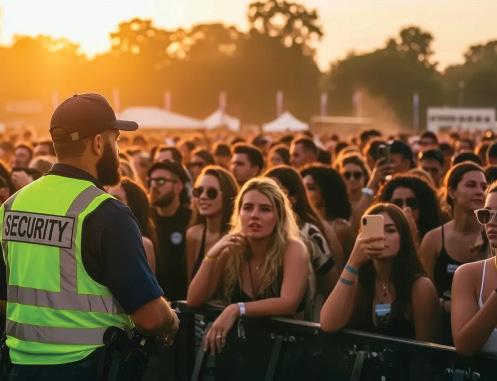
Social media acted as both a catalyst and coordination tool, enabling rapid mobilisation without formal organisation. To mitigate such risks, event planners must integrate real-time social media monitoring, strengthen outer security perimeters, and prepare surge response plans. Clear communication, visible enforcement, and collaboration with platform providers are essential to counter online incitement and protect public safety.
Afterwards, it should be noted that a number of the stewarding team also suffered from PTSD and other mental health issues.
Information, Information and Misinformation
A surge of social media activity around a venue can create both opportunities and risks from a safety and security perspective. On one hand, real-time posts, geotags, and live streams can help authorities monitor crowd density, identify bottlenecks, and respond quickly to incidents. Attendees often share information about long queues, disturbances, or medical emergencies, effectively acting as additional “eyes and ears” on the ground.
However, this same visibility can expose vulnerabilities. Detailed posts about entry points, security checks, or
venues for the Paris 2024 Olympic and Paralympic Games. As an Official Supporter, SLX was responsible for creating bespoke broadcast lighting solutions that met the exacting standards and global audiences. The project demanded large-scale programme management, technical finesse and careful sustainability planning. A core team of 30 specialists, supported by more
the SLX team, Paris 2024 represented more than scale. It demonstrated the company’s ability to combine technical expertise, creative problem-solving and responsible delivery under the
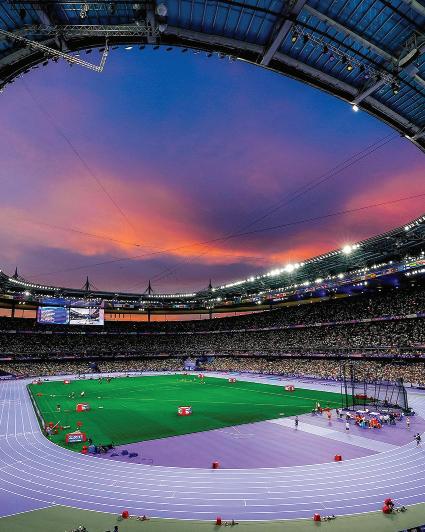

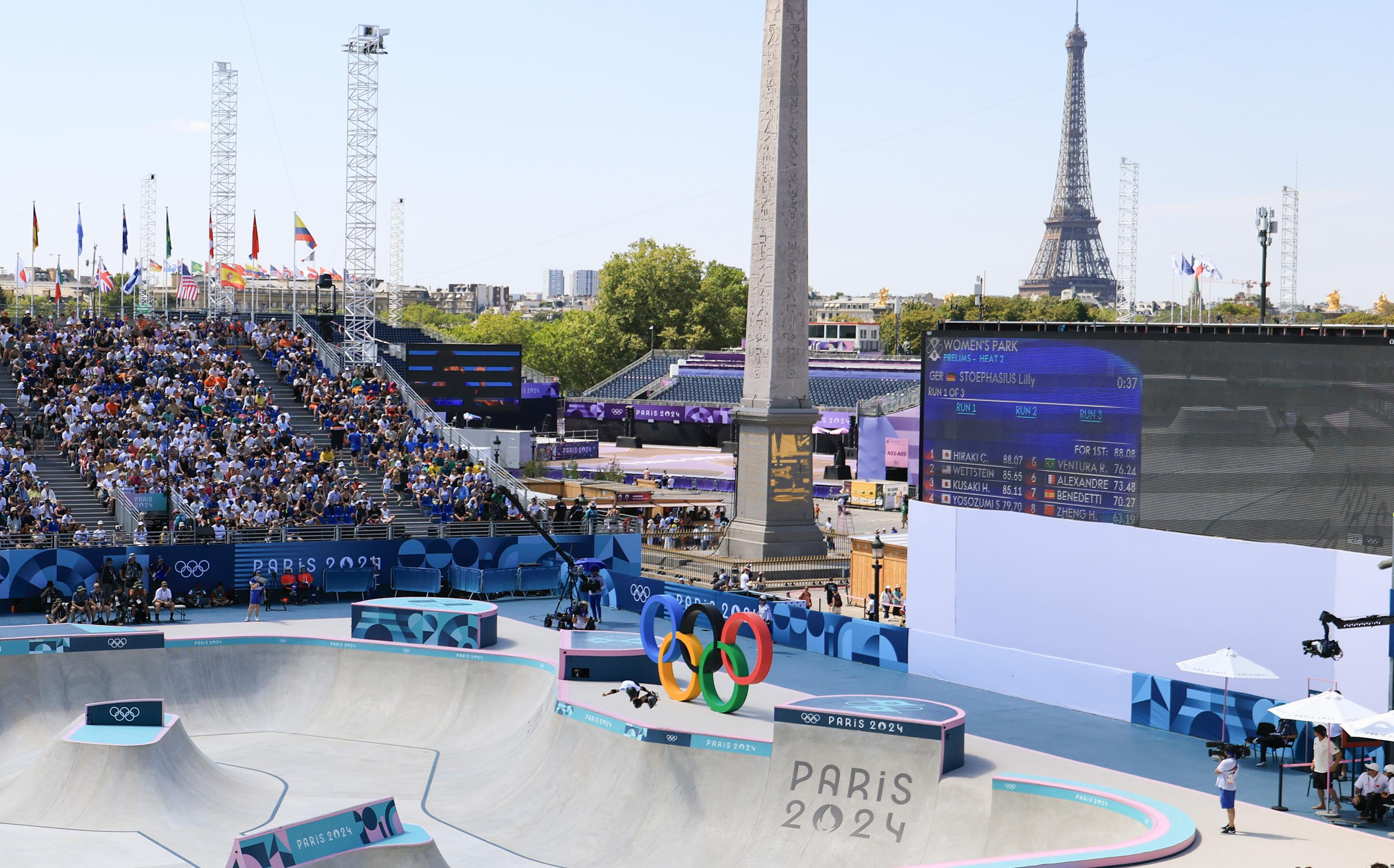
The Paris 2024 Olympic and Paralympic Games brought together thousands of athletes from across the world to compete on one of the most visible stages in international sport.
Hosted across iconic venues in and around Paris, the Games combined elite competition, cultural celebration, innovation and a strong commitment to sustainability.
Paris 2024 represented one of the most complex technical delivery environments the company has ever supported. As an Official Supporter, SLX was appointed to design and deliver bespoke lighting solutions across 29 Olympic and Paralympic
was supported by more than 100 freelance lighting technicians, all working to a fixed schedule across multiple locations.
To support the scale of the operation, SLX secured a 25,000 sq ft warehouse space in Paris as a central hub for equipment preparation, testing and deployment. Significant investment was also made to meet the demands of the Games. Alongside
SLX’s existing stock of sports fixtures, a further 1,600 fixtures were manufactured specifically for the project. Miles of fibre optic cabling were installed to support broadcast infrastructure, and rigging installations
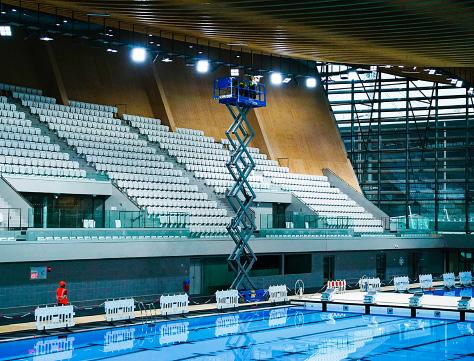
Across 29 venues, the lighting performed exactly as intended, supporting athlete safety, meeting broadcast standards and elevating the spectator experience both in venue and on screen.
Paris 2024 generated 5,600 hours of footage produced by Olympic Broadcasting Services and distributed to more than 500 television stations across 220 territories worldwide. For SLX, the project demonstrated the strength of its people, planning and technical expertise on a global stage That experience has directly shaped the next chapter of SLX’s major sporting event work. SLX has been appointed as the Official Provider of Broadcast Lighting and Rigging for the Glasgow 2026 Commonwealth Games, alongside sports presentation lighting, a key technical role within one of the UK’s most significant upcoming sporting events. The appointment reflects the confidence built through previous Games-time delivery and the team’s ability to combine broadcast lighting, robust rigging infrastructure, stakeholder coordination and sustainable thinking at scale. SLX will support venues including the Sir Chris Hoy Velodrome and Arena, Scotstoun Stadium, Tollcross International Swimming Centre and the Scottish Event Campus during the Games.
Confederation of Independent Football Associations. Founded in Sweden in 2013 to give a voice


Per-Anders Blind
A confederation built on a simple proposition
CONIFA’s founding idea is unusually clean. FIFA, by definition, organises the football of recognised states. Several million people on this planet do not live inside one. Some are stateless. Some belong to nations whose flags are not flown at the United Nations. Some are scattered across diasporas after war, occupation or genocide. Some live under regimes that ban them from playing under their own name at all.
CONIFA exists for them.
Established in 2013 and headquartered in Sweden, the confederation describes itself as
Inclusion as method, not slogan
Most international sport begins by drawing a line. CONIFA tends to begin by asking who has been left on the other side of it. The confederation is open to associations that represent peoples without a recognised state, regions denied access to global tournaments, and communities defined by language or culture rather than territory. Its definition of inclusion then extends inside the game itself.
Alongside its men’s and women’s competitions, CONIFA runs No Limits, a format in which disabled and non disabled players compete together on the same pitch, and Empowered
trade ties with the host country and Denmark refused to back down; today its players are selected through the Gyalyum Chenmo Memorial Gold Cup, named after the mother of the 14th Dalai Lama. The Afghanistan Women’s National Team, effectively erased overnight when the Taliban returned to power in 2021, plays on under CONIFA through the Girl Power Organisation founded by former captain Khalida Popal, with players reunited from six countries across three continents.
Tamil Eelam, a side rebuilt from a diaspora forged by genocide, were crowned men’s CONIFA Asian Champions in 2023 and reached the women’s CONIFA World Football Cup final in 2024, inside two years of the women’s team’s first training session.
New members: Palestinian refugees and the camps of Dadaab CONIFA’s membership continues to grow into precisely the spaces global football leaves behind, and two of its newest member associations make the point sharply. The Palestinian Refugee Football Initiative, based in Egypt and led by President Mohamed Ali Mohamed, is a grassroots organisation working with Palestinian refugee children, youth, women and men from the age of eight upwards.
PRFI provides a safe, inclusive and structured football environment for displaced communities, and frames its work as a peaceful platform through which Palestinian refugees can raise their voices on the global stage. The longer term vision is to connect
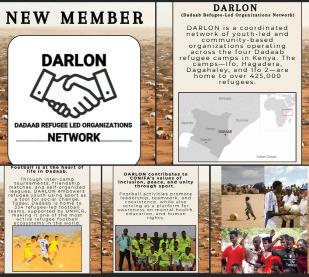
Palestinian refugee football teams across host countries and lay the foundations for a future Palestinian Refugee Football Association. DARLON, the Dadaab Refugee Led Organizations Network, brings CONIFA into one of the largest refugee complexes in the world. Operating across the four camps of Ifo, Hagadera, Dagahaley and Ifo 2 in Kenya, DARLON represents communities of more than 425,000 refugees.
Football is at the heart of life in Dadaab, and the camps are now home to 334 refugee led football teams supported by UNHCR, making this one of the most active refugee football ecosystems anywhere on earth. DARLON’s accession turns that ecosystem into a CONIFA member, with a seat at the table and a route into international competition.
between visiting squads and host communities, and offered a peaceful platform for engagement at a moment of severe geopolitical tension.
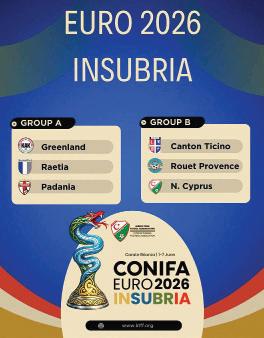
the continent, alongside Kıbrıs Türk Futbol Federasyonu (North Cyprus), Padania, FA Raetia, Fédération de Football Rouet Provence and Canton
single banner alongside a community tree planting initiative. It is the cleanest possible statement of what CONIFA means by inclusion: not a single
Football as economic and diplomatic infrastructure
The CONIFA case is not only a moral one. The confederation argues, with evidence, that its tournaments deliver tangible economic and diplomatic returns. The clearest example to date is the CONIFA European Championship 2019 hosted in Nagorno Karabakh, also known as Artsakh.
That tournament put a contested region onto the global media map, attracted diaspora visitors, generated short term tourism revenue across hotels, restaurants and local services, created event linked employment, and prompted upgrades to stadium and transport infrastructure. It strengthened local capacity to host future international events, deepened intercultural exchange

A New Era of Digital Football
The global events landscape is changing. Audiences are younger, more digitally native, and increasingly drawn to experiences that blur the line between
Co-Creation At The Core
For host cities, the FIFAe Festival is a different kind of opportunity. Not simply the chance to stage a global event, but an invitation to co-create one, shaped as much by the host city’s own identity and ambitions as by FIFA’s
of the most engaged communities in the space. The global impact is underlined
clear: the intersection of sport, technology and youth culture is one of the most dynamic spaces in global events today. Those who position themselves as early partners in the FIFAe Festival story have the opportunity to define their city’s role
“The FIFAe Festival is not about converting gamers into football fans or football fans into gamers. It is about recognising that for millions of young people,
Rolands Kikors
President and Chairman of the Board
World Street Workout and Calisthenics Federation
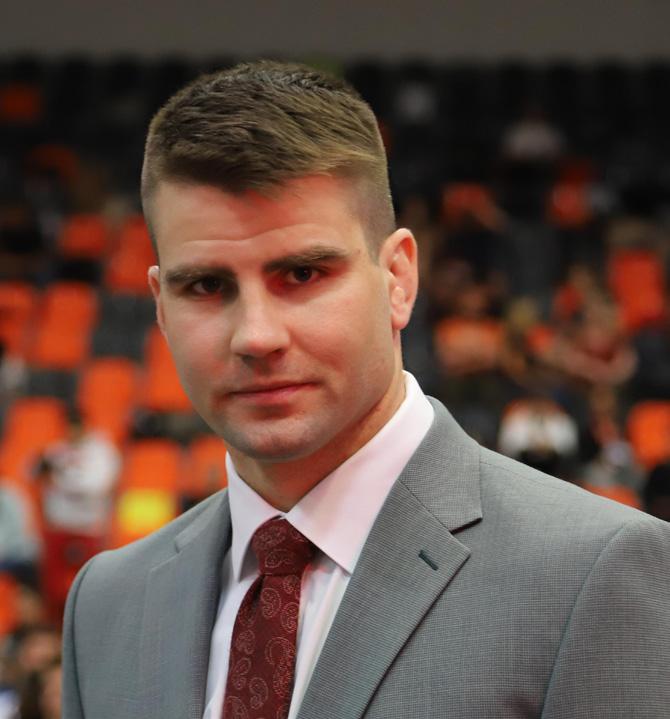
Rolands Kikors is Chairman of the World Street Workout and Calisthenics Federation (WSWCF) and WSWCF Academy, as well as Chairman of the Latvian Street Workout Sport Association. As an
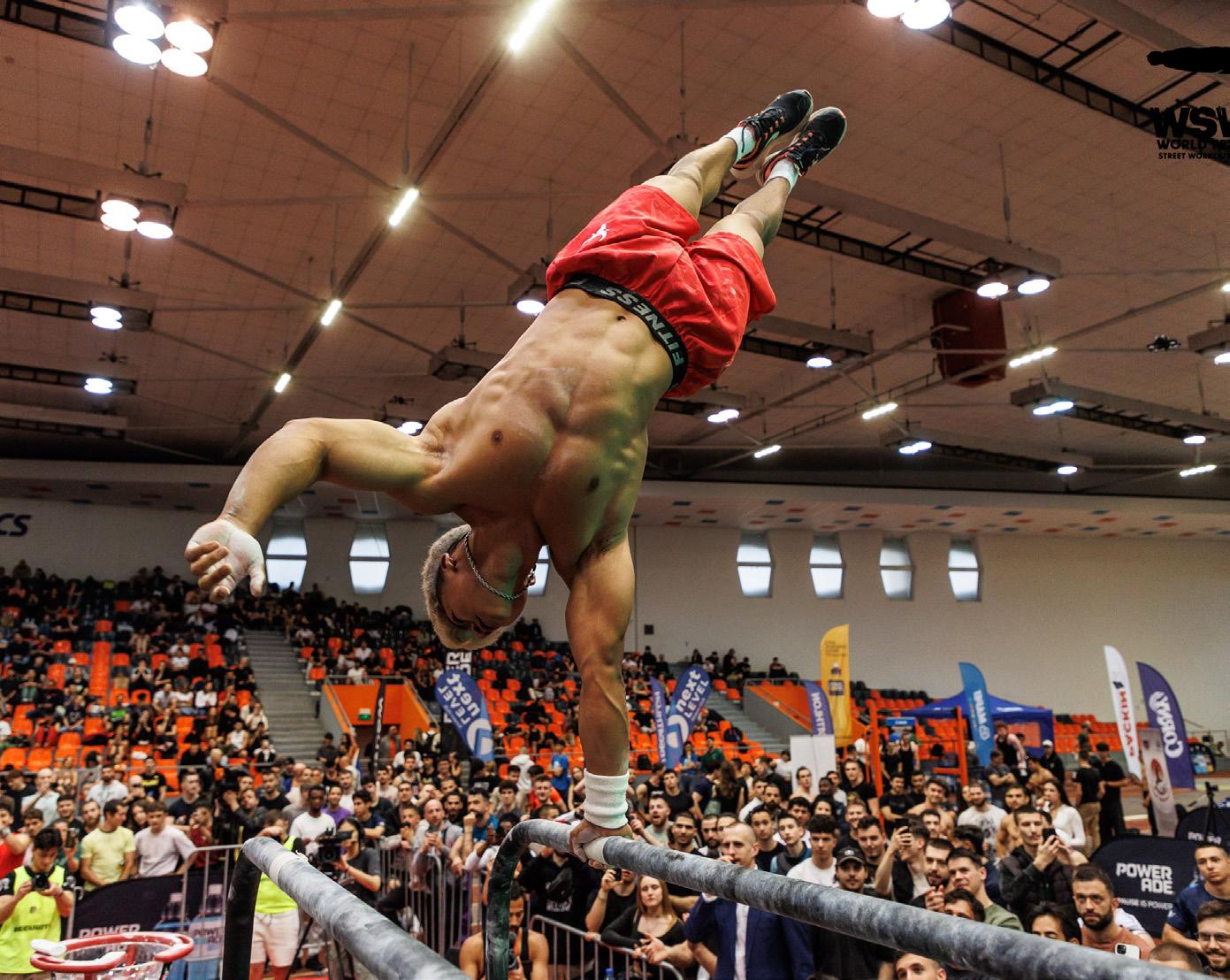
to imagine holding similar event in a school sports hall.
For WSWCF, this means positioning Calisthenics as more than a performance sport, it is also a social and cultural model for active lifestyles, urban sport participation, and community-based development.
One of the federation’s key strategic priorities is strengthening its international footprint. New markets represent both an opportunity and a responsibility. In many regions, especially outside traditional European strongholds, there is significant demand for sports that are low-cost, visually compelling, and youth-driven. For example, central America and Africa. Calisthenics fits this environment exceptionally well. WSWCF’s challenge is to convert that natural interest into structured national development,
The Olympic pathway remains an important reference point for any federation seeking long-term influence.
For WSWCF, the Olympic conversation is not simply about short-term access, but about alignment with the standards and expectations that global sport now requires. That includes governance, consistency, athlete development pathways, gender equity, international reach, and strong event quality.
Each of these elements strengthens the federation whether or not Olympic inclusion comes immediately. In that sense, the journey itself builds value.
certified events, and strong federation partnerships that can sustain growth.
Another important dimension is the federation’s relationship with the broader obstacle and climbing ecosystem, including World Obstacle.
A memorandum of understanding between both organizations was signed on April 9, 2025, establishing a common pathway towards Olympic recognition. This relationship opens strategic possibilities for collaboration, crosspromotion, and shared innovation in sport presentation and development.
As the sporting world continues to look for fresh, dynamic, and urban-friendly disciplines, WSWCF’s value lies in its ability to complement, not imitate other emerging sports. Its identity is distinct: expressive, athletic, inclusive, and deeply rooted in a modern movement culture as well.
WSWCF’s achievements are best understood not only through medals and championships, but through ecosystem development. The federation has helped define a sport, connect communities, support athletes, and create a recognizable global brand. This is a major accomplishment in a sporting landscape where attention is competitive and new disciplines must earn their place carefully.
Looking ahead, the federation’s strategy must continue to emphasize three pillars: global expansion, strategic partnerships, and sport credibility. With these in place, WSWCF can continue to grow from a powerful movement into an enduring international sport organization. The next chapter is not just about visibility; it is about creating lasting impact.
Calisthenics have already proven
A new generation of trampoline athletes has transformed an Olympic discipline into an action sport by blending athletic precision with creativity, style, and digital culture. Founded by Greg Roe and Trish McGeer, the Freestyle Trampoline Association (FTA) has built governance, competition frameworks, and media infrastructure around this movement. Unlike traditional Olympic trampoline, freestyle rewards creativity, individual expression, and audience engagement. By providing structured events, professional pathways, and broadcast infrastructure, the FTA has transformed grassroots energy into a sustainable international action sport property. The FTA World Championships in Porto demonstrates this evolution, establishing freestyle trampoline as legitimate competition rather than online entertainment.
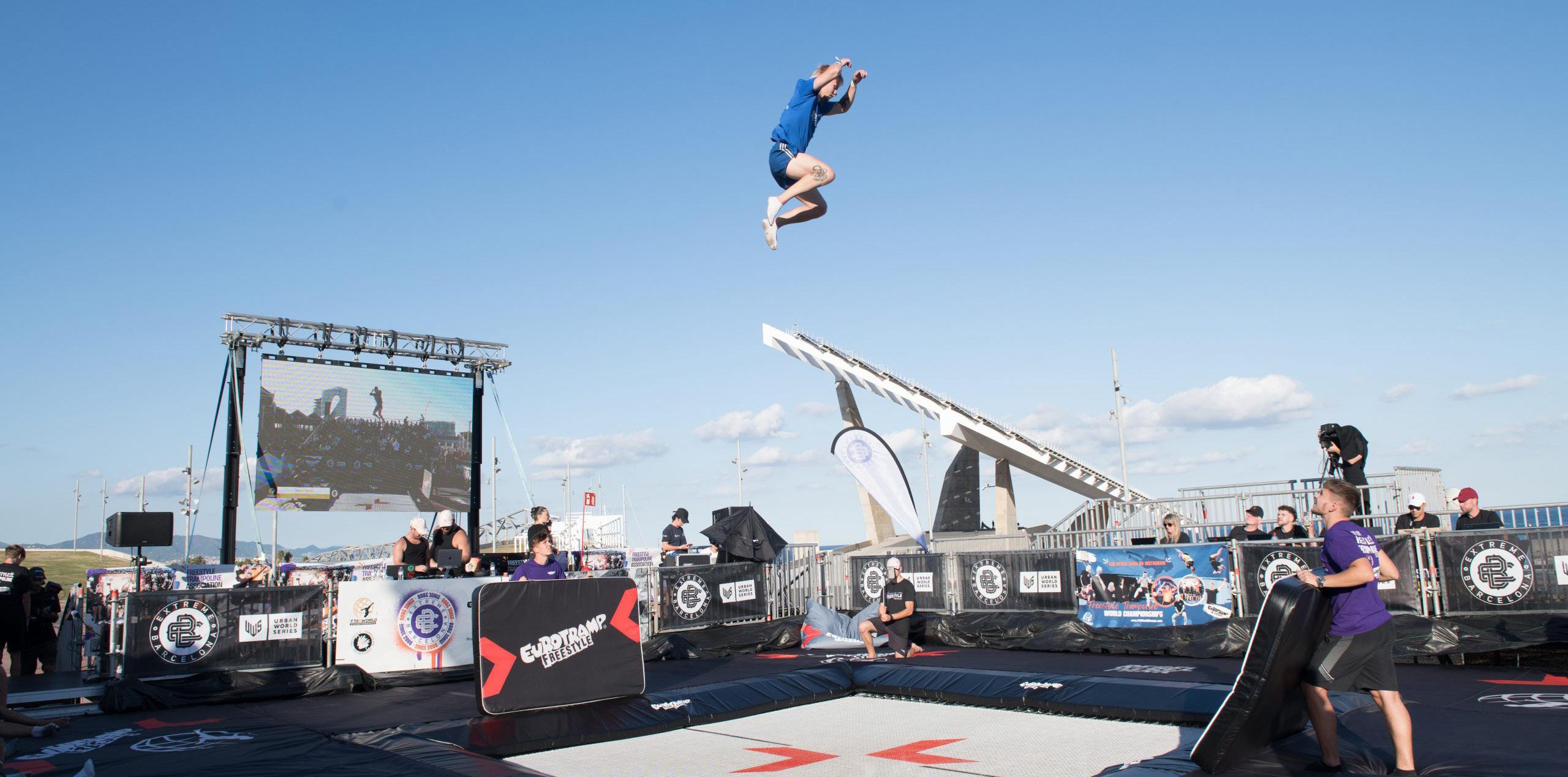
that reflects how young athletes actually train, create, compete, and share their sport in the digital age.
Greg Roe, a former Team Canada senior trampoline athlete and one of the early public figures of the
freestyle trampoline movement, helped identify that the sport was no longer limited to gym walls or formal competition halls. Through social media, backyard trampolines, trampoline parks, action sports events, and online communities, freestyle trampoline had already become a global participation movement. Greg’s contribution has been in recognizing that this movement needed more than viral videos. It needed governance, events, media, education, sponsorship, athlete pathways, and a long term business strategy.
Trish McGeer has played a central role in turning that vision into an operational sports structure. As FTA
President, her work has focused on event delivery, athlete organization, administration, partnerships, competition planning, and building trust with stakeholders across both the freestyle and traditional sport communities. Her leadership has helped the FTA move from an emerging idea into a more organized international platform capable of working with cities, venues, brands, suppliers, event organizers, and athletes.
Together, Greg and Trish have helped shape the FTA around one core idea: freestyle trampoline is not simply a variation of trampoline gymnastics. It is an action sport expression of trampoline culture. This distinction is important.
Traditional Olympic trampoline rewards precision routines and controlled technical execution within a formal judging system. Freestyle trampoline
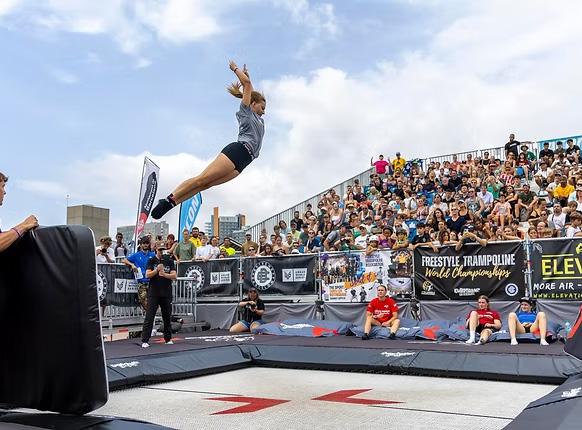
uses many of the same athletic foundations, but applies them through combination based competition, creativity, individual style, social media storytelling, live event entertainment, and audience engagement. Athletes are judged not only on difficulty and execution, but also on creativity, variety,
control, and the ability to perform combinations that feel progressive and original.
The FTA has developed rules, events, qualifying systems, safety procedures, judging criteria, athlete divisions, and media strategies to support this new format. Its events aim to create a bridge between formal sport and youth culture, where athletes can compete seriously while still maintaining the style, freedom, and personality that made the discipline popular in the first place.
athletes are given space to innovate.
Through the combined contributions of Greg Roe, Trish McGeer, and the global freestyle trampoline community, the FTA is working to turn that culture into a sustainable international sport, media
In doing so, the FTA is not only building a new future for trampoline. It is showing how traditional sports can
A major part of the FTA model is its media first approach. Freestyle