ADVOCACY, LEADERSHIP, & EDUCATION FOR MAINE’S ENERGY MARKETERS
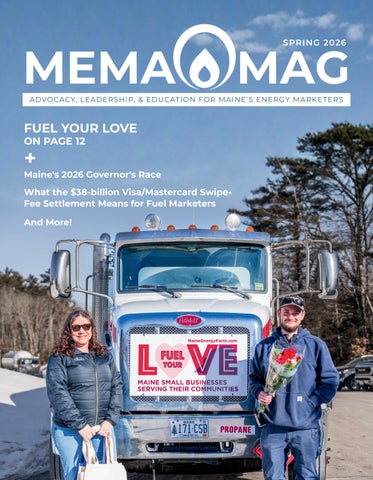
FUEL YOUR LOVE ON PAGE 12 +
Maine's 2026 Governor's Race
What the $38-billion Visa/Mastercard SwipeFee Settlement Means for Fuel Marketers And More!
MEMA MAG is a quarterly magazine designed to engage and communicate with members with useful, timely, and memberrelated content. MEMA MAG will be published four times a year.
Do you have a suggestion for MEMA MAG? Would you like to ADVERTISE? Contact Meghan Sylvester, Communications & Marketing Specialist at MEMA. Email her at msylvester@ maineenergymarketers.com or call 207-729-5298.
Copyright 2026 Maine Energy Marketers Association. All rights reserved. No part of this publication can be reproduced or transmitted in any form or by any means, electronic or mechanical, including photocopy, recording, or any information storage and retrieval system, without permission, in writing, from MEMA and/or the publisher. Printed in Maine, USA.
FROM THE DESK OF
Dear MEMA Members,
The Middle East has remained central to U.S. security and energy policy—particularly since 1979, with Iran at the forefront. Currently, escalating tensions involving Iran are disrupting the Strait of Hormuz, affecting global energy supplies, and putting the region back in the spotlight as a major geopolitical flashpoint.
Our thoughts are with the men and women serving our country and their families. As the U.S. increases its military presence there, both human and economic effects are becoming more visible every day. Rising oil prices are hitting global markets—and here at home, they’re affecting our industry and the customers we serve. We’re staying in close contact with our partners in Washington and will continue to keep you updated with relevant, timely information as things evolve.
Closer to home, Maine’s Primary Elections are just weeks away on June 9th. With Governor Janet Mills termlimited, neither party has an incumbent, making this one of the most open and competitive gubernatorial races in years. Be sure to read Megan Diver’s breakdown of the candidates on page 26, political veterans, business leaders, and newcomers—all vying to shape the future of our state.
Finally, our 11th Annual Fuel Your Love campaign was a huge success (see page 12)! Members across Maine delivered oil and propane to families struggling to make ends meet. This is one of the things that makes our industry special—MEMA members truly care about their communities. In fact, I think that Colby & Gale put it perfectly when they said:
“Our commitment to Lincoln and Knox Counties runs deep. Whether supporting the local fire department or ensuring an elderly neighbor stays warm through a blizzard, ‘Full Service’ means taking care of our community’s heart.”
Thank you to everyone who helped make this year’s Fuel Your Love our best yet—especially our sponsors: Atlantic Heating Company, Blue Flame Propane, Bob’s Cash Fuel, Colby & Gale, Dead River Company, Eastern Propane & Oil, Fielding’s Oil & Propane, Frederick Brothers Oil & Propane, J. P. Carroll, M. W. Sewall, R.H. Foster, Sail Energy, V.L. Tammaro, H.O. Bouchard (Truck Sign Sponsor), and Keith’s Meter Service (Event Sponsor). Thank you for all you do—serving your customers, supporting your communities, and keeping Maine’s energy running. Your support made all the difference!
Best,
Charlie
CHARLIE SUMMERS PRESIDENT
MEGAN DIVER VICE PRESIDENT
DAVID CUPKA LEAD MTEC INSTRUCTOR
MEET OUR TEAM BOARD OF DIRECTORS
CARTER VAILLANCOURT CHAIR OF THE BOARD DAIGLE OIL CO.
EXECUTIVE BOARD
HANNAH ESTES BUSINESS MANAGER
RICK KENNY LEAD MTEC INSTRUCTOR
SARAH NADEAU INSURANCE & OFFICE ADMINISTRATOR
PAUL SPAULDING MTEC INSTRUCTOR
MEGHAN SYLVESTER MARKETING & COMMUNICATIONS
SAMANTHA MCKINNEY ADMIN ASSISTANT
CASEY CRAMTON VICE CHAIR DEAD RIVER CO.
MATT POOLE........................................................COLBY & GALE
ROGER ARSENAULT.........................COMMUNITY ENERGY
ROBERT SHIBLEY......................................BOB’S CASH FUEL
CARTER VAILLANCOURT.............DAIGLE OIL COMPANY
CASEY CRAMTON...........................DEAD RIVER COMPANY
JEFF WEBB....................................EASTERN PROPANE & OIL
MICHAEL ESTES................................ESTES OIL & PROPANE
BRIAN HOLMES.............GLOBAL PETROLEUM CORP. - ALT.
TOM SCHWARM.................................GOULD TECHNOLOGIES
KEITH FINLEY KEITH’S METER SERVICE
CHARON CURTIS MARITIME ENERGY
ROBERT TRACY.....................RH FOSTER ENERGY, LLC. - ALT.
ELWIN SCOTT..............................................SIMARD & SONS, INC.
KRISTYN SCHWEITZER..............................SPRAGUE ENERGY
PAULA PALMER....................................SPRAGUE ENERGY-ALT.
MICHAEL TAMMARO...................................V.L. TAMMARO OIL
NEW MEMBERS
Please join MEMA in welcoming our newest members. Our members are the backbone of our association. The education services, programs, and events we provide are successful based on the solid support we receive from both associate members and members. To learn more about MEMA membership or to become a member, visit maineenergymarketers.com/membership
EQUIPMENT, SERVICE & SUPPLY MEMBERSHIP C-STORE MEMBERSHIP
Bearded Bro Home Services
Poland, ME
www.beardedbrohomeservices.com
CB Mechanical LLC
Biddeford, ME (207) 312-3660
Gelinas HVAC Services, LLC.
Scarborough, ME www.gelinashvac.com
IDEAL Energy Cooperative
Koob's Garage
Oquossoc, ME (207) 864-3737
SUPPLEMENTAL BUDGET
Mills' Final Term, Maine's Next Chapter
A State of the State address, a revised $11.9 billion budget , and a politically charged election
On Tuesday, January 27th, Governor Mills delivered her final State of the State address before the Maine Legislature. In the speech, she framed the current moment as one requiring both economic relief and assertive leadership.
Mills unveiled a broad affordability agenda aimed at easing cost-of-living pressures for Mainers, including:
• $300 “Affordability Relief” checks to assist more than 700,000 residents with everyday expenses.
• A major housing initiative to expand affordable housing supply.
• Making Maine’s free community college program permanent to ensure longterm access to postsecondary education.
• A proposal to ban cellphone use in schools during the school day to reduce classroom disruption.
Mills also used the address to criticize federal policies she said threaten Maine families, declaring that the state “will not be intimidated” by external pressures.
Republcan lawmakers responded sharply to the governor’s address, framing parts of her speech as a political campaign stunt ahead of the 2026 elections. Some Republicans walked out of the speech and criticized the Democratic administration for broader economic frustrations.
The debate has continued since in Augusta, and these developments have shaped discussions around Maine’s economic policies, immigration enforcement priorities, and the political landscape leading into a competitive election year.
On Thursday, March 12th, Governor Janet Mills proposed a change package to the Legislature’s Appropriations and Financial Affairs Committee.
The Governor’s supplemental budget change package adjusts her earlier FY2026–2027 proposal based on updated revenue projections and spending needs. The revisions recognize new one-time revenue and savings and redirect those funds to several targeted priorities while keeping the overall budget balanced.
The changes slightly reduce total spending compared with the original proposal and bring the two-year state budget to about $11.926 billion.
KEY FISCAL CHANGES
The package incorporates several newly available funding sources:
• $8.8 million in additional General Fund revenue identified in the latest revenue forecast.
• $8.2 million in debt-service savings because the State Treasurer no longer needs that funding.
• $5 million generated by delaying a federal tax conformity change by one year (to 2028).
These adjustments provided roughly $22 million in one-time resources that the administration redistributed in the change package.
MAJOR POLICY AND SPENDING ADJUSTMENTS
Permanent funding for victim services
• Proposes $6 million per year in ongoing funding to replace declining federal support from the Victims of Crime Act.
• Supports domestic violence and sexual assault programs, legal services for victims, and elder abuse services.
MEMA ADVOCACY WIN PROTECTING BETR
When Governor Mills' original budget proposed eliminating the Business Equipment Tax Reimbursement (BETR) program, MEMA took action. Alongside a coalition of fellow business trade associations, MEMA submitted formal testimony in opposition—warning that without BETR, Maine companies would face higher operating costs, slower expansion, and reduced capital investment, putting Maine at a competitive disadvantage against neighboring states.
The message was heard—the revised budget restores $8 million for BETR. A win for Maine's energy marketers and the broader business community.
Support for the Highway Fund
• Includes a one-time $13 million transfer to the Highway Fund to address declining revenues and maintain road and bridge projects.
Business Equipment Tax Credit (BETR)
• Restores $8 million for the Business Equipment Tax Credit program that had been removed in the earlier proposal. Items from the Original Supplemental Budget That Remain
• $300 “affordability checks” to roughly 725,000 Maine residents funded partly from the Rainy Day Fund.
• Investments in housing and affordability initiatives.
• Funding to maintain education, health care, and other core state programs.
Overall, the change package incorporates new revenue and savings identified after the initial budget proposal. Redirects those funds to victim services, transportation infrastructure, and the BETR program.
FUEL YOUR LOVE
HOW OUR INDUSTRY TURNED THE COLDEST WINTER IN YEARS INTO A WAVE OF WARMTH
This winter has been a brutal one. Across Maine and the broader region, temperatures have plunged well below what families have come to expect in recent years, stretching budgets already strained by the rising cost of living. For households dependent on heating oil and propane—fuels that average $3.76 and $3.35 per gallon statewide this season, respectively—keeping warm has become less of a comfort and more of a quiet, daily struggle. A full 100-gallon delivery of
heating oil carries a price tag of roughly $376 at today's averages. For families living paycheck to paycheck, that number is not just daunting. It can feel impossible. Against this backdrop, the Maine Energy Marketers Association's Fuel Your Love campaign—now in its eleventh consecutive year—arrived at exactly the right moment. This year, 13 member companies from across the state answered the call, joined by two generous sponsors who made the campaign's reach possible. What they delivered was not just fuel. It was comfort,
relief, and the unmistakable message that this industry stands with the people it serves.
ONE FAMILY, TWO HOMES, ONE ACT OF KINDNESS
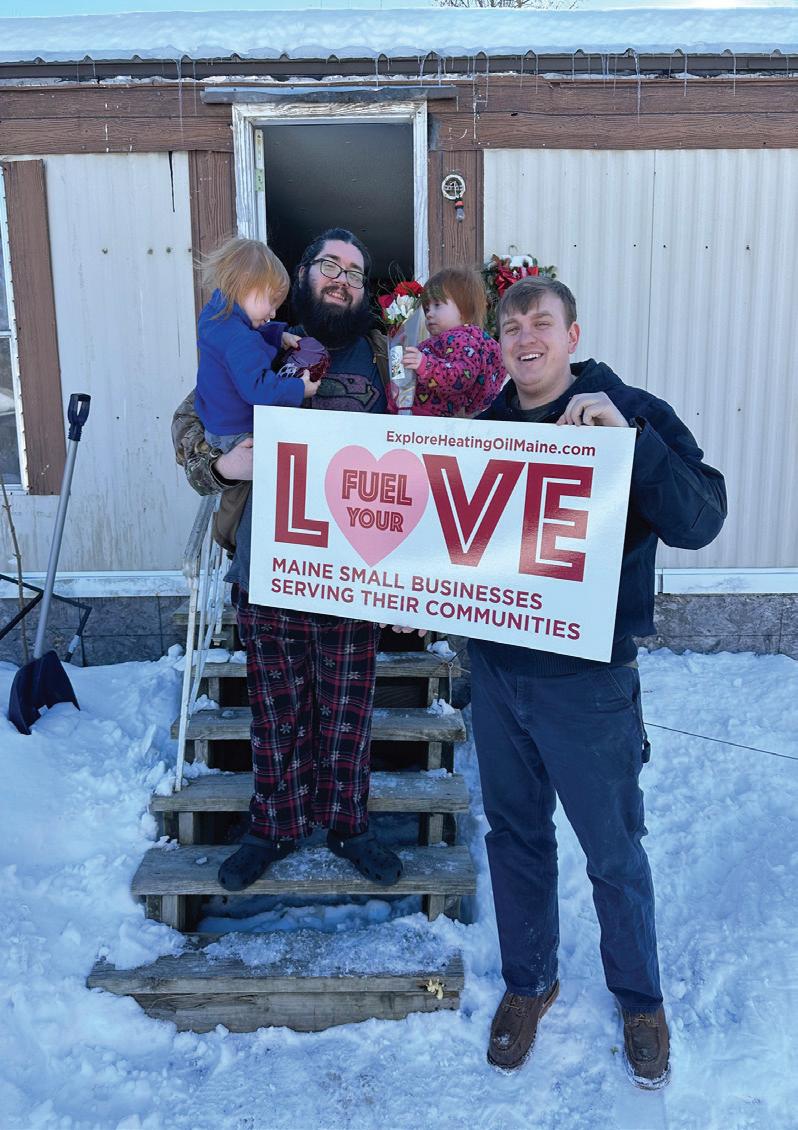
Among the most moving stories to emerge from this year's campaign comes from Fielding’s Propane and Oil in Casco and Raymond. The company identified a loyal customer, a son who purchases heating fuel not just for his own home but for his mother's as well. Two houses. Two bills. One man shouldering the burden on his own, 50 gallons at a time.
Through Fuel Your Love, Fielding’s filled both tanks to 100 gallons, doubling what this customer had planned to purchase, at no cost to him. When the delivery driver arrived at his door, the son was all smiles and visibly overcome. He spoke openly about how
Fuel Your Love is a reminder that Maine’s energy marketers are not just fuel providers—they are local businesses stepping up when their customers need them most.
relentless this winter has been, colder and harder than years prior, and how the compounding weight of heating costs on top of everyday expenses had been wearing on him. The donation, he said, was a wave of relief.
Think about that for a moment. A man who gives so much to take care of his mother was able to exhale, even just a little, because a fuel dealer chose to give back. That is what Fuel Your Love looks like in practice.
FREDERICK BROTHERS OIL & PROPANE: A COMMUNITY RETURNS THE GIFT
The story of Frederick Brothers Oil and Propane is one of giving born directly from gratitude. Owner Devin Frederick knows firsthand what it means to be held up by a community. When his two-year-old son was diagnosed with Menkes disease—a rare, devastating, and terminal genetic disorder— it was the people of his community of Scarborough who rallied around the Frederick family with unwavering support.
This year, Frederick Brothers joined the Fuel Your Love campaign because they desperately wanted to give something back. They donated 100 gallons of propane each to six customers—many of them disabled veterans. The weight of that decision is not lost on anyone in our industry. These are men and women who served this country, who now live on fixed incomes, and who face the same brutal winter that everyone else does—often without the resources to meet it.
At an average statewide price of $3.35 per gallon for propane this season, each of those 100-gallon donations represents over $300 in direct relief—more than $2,000 delivered by a single company to six households that needed it most. More than that, it represents a cycle of generosity that is quietly extraordinary: a community that rallied behind a family in their most difficult time, now receiving warmth from that same family in return.
FROM
EVERY CORNER OF MAINE, A WAVE OF GENEROSITY
The stories from this year's campaign stretch from one end of the state to the other.
Dead River Company's Brewer office delivered 1,488 gallons of heating fuel in a single day, visiting 12 customers and arriving at each door not just with a full tank, but with chocolates and flowers. Nearly 1,500 gallons in one day is a staggering number on its own. Add the flowers, and it becomes something else entirely—a celebration, a recognition, a moment that tells a customer: you matter to us beyond the transaction.
Eastern Propane & Oil in Southern Maine had a flair for the dramatic in the best possible way. Their team surprised customers with fresh donuts and flowers and then invited them to tear up their oil delivery receipts on the spot. The bill, gone. The tank, full. It is the kind of gesture that people will talk about for years. Eastern's reach this campaign extended further still: as the parent company of both J. P. Carroll and Blue Flame Propane, Eastern's culture of giving touched three separate businesses and their combined customer bases, a quiet multiplier effect that speaks volumes about the values at the heart of that organization.
Up in Baileyville, a small town in
Washington County in the far reaches of northern Maine, V.L. Tammaro delivered free fuel to several of their customers, and the community responded with an outpouring that is hard to overstate. Their social media post drew more than 100 comments, some from families who have been V.L. Tammaro customers for over 50 years. Generations of loyalty, acknowledged and honored in kind. In their post, the company captured it simply and with obvious pride:
“We’re proud to serve this community, and even prouder to give back to the neighbors who have supported us for generations.”
The comments that followed said everything. Neighbors wrote about what it means to live in a small town where the local business owner, in this case, Mike Tammaro, knows your name, knows your family, and has spent years building a company that puts the community first. That is not something that can be manufactured. It is earned, over decades, one delivery at a time. That sentiment was echoed across every participating company's social media presence this Valentine's Day. From Baileyville to Scarborough and everywhere in between, comments sections overflowed with gratitude, neighbors tagging neighbors, customers sharing their stories, community members expressing genuine pride in the businesses that
THANK
YOU TO THIS YEAR'S PARTICIPANTS
MEMA proudly recognizes the following 13 companies whose participation made the 2026 Fuel Your Love campaign a success:
• Atlantic Heating Company
• Blue Flame Propane
• Bob's Cash Fuel
• Colby & Gale
• Dead River Company
• Eastern Propane & Oil
• Fielding's Oil & Propane
• Frederick Brothers Oil & Propane
• J. P. Carroll
• M. W. Sewall
• R.H. Foster
• Sail Energy
• V.L. Tammaro
MEMA also extends its sincere gratitude to this year's campaign sponsors, whose support was instrumental in bringing Fuel Your Love to life:
• H.O. Bouchard, Truck Sign Sponsor
• Keith's Meter Service, Event Sponsor
YOUR GENEROSITY HELPS MAKE THIS CAMPAIGN POSSIBLE YEAR AFTER YEAR. THANK YOU!
serve them. For an industry that often goes unnoticed until something goes wrong, the outpouring was a powerful reminder of the deep goodwill that is built, quietly and consistently, every time a driver pulls into a driveway and does their job with care.
WHY THIS MATTERS TO OUR INDUSTRY
Energy marketers occupy a unique position in the communities they serve. We are not an abstraction. We are the company whose driver knows a customer by name, who notices when a tank has gone unusually quiet, who shows up in storms when the world has stopped moving. The Fuel Your Love campaign does not create that relationship, it honors it.
The participation we witnessed this year from member businesses is a testament to who the people in this industry are at their core. They did not need to be convinced that heating assistance for low-income families was a worthy cause. They knew it already, because they see these families on their routes every single week.
As an association, we are immensely proud of the engagement shown this year. To every member company that participated—whether you donated 100 gallons to one household or many—you have made this industry something to be proud of. You have shown our peers, our neighbors, and the families you serve that the energy sector is not just a business. It is a cornerstone of community life.
SAFETY PAYS LITERALLY
Maine State House Update
By Megan Diver
LEGISLATIVE AND POLITICAL DEVELOPMENTS
The past month in Augusta has been dominated by negotiations surrounding the state’s supplemental budget, ongoing committee work on hundreds of carryover bills, and the approaching conclusion of the Second Regular Session of the 131st Legislature. With the statutory adjournment date in mid-April, lawmakers are entering the final weeks of the session with several significant fiscal and policy issues still unresolved.
SUPPLEMENTAL BUDGET TAKES
The most significant development over the past month has been the supplemental budget proposal introduced by Janet Mills. The
administration’s proposal is designed to make targeted adjustments to the current biennial budget and advance several affordability initiatives.
The governor’s plan includes approximately $275 million in additional spending and policy changes. A central component of the proposal is a plan to issue $300 direct relief payments to hundreds of thousands of Maine residents, framed by the administration as part of a broader affordability initiative. The proposal would rely in part on one-time funding sources, including withdrawals from the state’s Budget Stabilization Fund, commonly referred to as the Rainy Day Fund.
The proposal also includes continued funding for housing initiatives, workforce programs, and maintaining the state’s commitment to cover 55 percent of public education costs.
Republican lawmakers have raised concerns
LEGISATIVE UPDATE
about the reliance on one-time revenues to support ongoing spending commitments and have questioned whether drawing from reserve funds is appropriate given broader economic uncertainty.
GOVERNOR RELEASES BUDGET “CHANGE PACKAGE”
In mid-March, the administration released an updated change package to the supplemental budget following the latest revenue forecast and updated fiscal projections. The revisions identify roughly $22 million in additional one-time resources, including higher-than-expected General Fund revenue and lower-thananticipated debt service costs.
The change package proposes several notable adjustments:
• Establishing permanent state funding for victim services programs, replacing declining federal support through the Victims of Crime Act. The proposal includes approximately $6 million annually to support organizations providing services related to domestic violence, sexual assault, and other victim assistance programs.
• A one-time $13 million transfer to the Highway Fund, aimed at helping stabilize transportation funding and support ongoing road and bridge maintenance projects.
• Restoring approximately $8 million for the Business Equipment Tax Reimbursement (BETR) program, which had been slated for elimination in earlier budget discussions. The
restoration was viewed by many in the business community as an important step in maintaining existing commitments to Maine employers.
Taken together, the adjustments slightly reduce the overall spending level of the supplemental proposal while redirecting available one-time funds toward specific priorities.
APPROPRIATIONS COMMITTEE WORK INTENSIFIES
Members of the Legislature’s budget-writing committee, the Maine Legislature's Appropriations and Financial Affairs Committee, have spent the past several weeks reviewing the governor’s proposal, holding work sessions, and negotiating potential changes.
Because the supplemental budget includes both spending adjustments and policy provisions, lawmakers must reach agreement on the final package before sending it to the full Legislature for approval. Budget negotiations in the committee are expected to continue through the coming weeks as legislative leaders work toward a final compromise.
POLITICAL LANDSCAPE
The current legislative activity is unfolding during the final year of the term for both the Legislature and the governor. Under Maine law, Janet Mills is term-limited and cannot seek reelection in 2026, setting the stage for an open gubernatorial race next year.
In addition to the governor’s race, Maine will also hold a closely watched U.S. Senate election in 2026,
when incumbent Susan Collins is expected to seek reelection. While those campaigns are still developing, the approaching election cycle is beginning to shape the broader political environment in Augusta.
LOOKING AHEAD
With only weeks remaining before the statutory adjournment deadline in April, lawmakers face a compressed timeline to resolve the supplemental budget and finalize action on priority legislation. Budget negotiations will likely remain the central focus of legislative activity, as leadership in both parties works to determine the scope of spending adjustments and the use of one-time funds.
Decisions made in the coming weeks will not only shape state spending for the remainder of the current fiscal cycle but may also influence the policy debates that emerge during the next legislative term and the upcoming 2026 election cycle.
Megan Diver is the Vice President of the Maine Energy Marketers Association.
Crisis Communications
Fuel prices are spiking.
Future supplies are at risk. Business costs are soaring
Customers are panicking.
DO THIS:
You cannot control geopolitics. You can control your response and your customers’ concerns. We are providing you with tools and tactics to help your company manage the current crisis, and any future ones, as well.
Modify your ordering or price protection programs immediately to protect your business from further spikes.
Proactively communicate with all customers using every channel available, including website pop-ups; blogs and company news pages; social media posts; email communications; and text messages. Work with your marketing partner to create materials that are tailored to your company’s products and services.
Explain the current situation in clear and sympathetic terms, such as what the Strait of Hormuz means to fuel supplies and how it affects wholesale and retail prices.
Emphasize that this is a global issue affecting all forms of energy, not limited to your fuels or your company’s pricing policies.
Listen closely to their inquiries and concerns.
Direct customers to HEAP and other assistance programs – they can determine if they are eligible. You can find local information at https://neuac.org/state-resource-directory/.
Offer easier payment programs wherever possible, including budget plans.
Suggest low-cost conservation tips to further reduce their fuel consumption.
Consider introducing alternative savings options, like loyalty rewards, prompt pay discounts, or a “good neighbors fund.”
Develop talking points to address individual customer concerns and advise your customer service team to respond to calls accordingly; if you have a live chat feature, update that as well.
Review rebates and financing options if the customer asks about long-term solutions and equipment replacement.
Remind customers that you have been with them through wars, price spikes and other crises, and you’ll help them get through this one as well.
DON’T DO THIS:
Don’t hide. Customers prefer honesty. Let them know you are working to secure supplies and control costs.
Don’t talk to the press without a plan. Offer to “get back” to anyone who calls. Make sure you are aware of the most current situation, and check for updates and information from your local, state, or national associations before walking into an interview that might be looking for a scapegoat for high prices.
Don’t get political. This is never a good idea, whether discussing the cause of the crisis, price, competing fuels, or other topics.
Don’t lose your cool. This could result in lost accounts, bad reviews or worse.
Don’t overlook or understate the financial impact –every customer’s circumstances are unique.
Don’t change your standard practices without consulting with your financial, legal, or marketing advisors. Customers and regulators are looking for price gouging.
Don’t make predictions or forecasts about fuel prices or other issues beyond your control, and don’t make promises that you might not be able to keep.
Don’t gloat over customers who haven’t enrolled in a budget or price protection plan, upgraded old equipment, or followed through on any other savings recommendations you’ve offered in the past.
Don’t promote expensive equipment replacements as a blanket option. While upgrades are a great idea for long-term savings and can be discussed one-on-one with specific customers, recommending them to customers who are struggling to pay a monthly heating bill will come across as tone-deaf –and could very well lose you the customer.
Following these parameters will help your company get through this period of volatility and go beyond saving customer accounts to solidifying their loyalty.
BY MARCI GAGNON
Settlement Swipe-Fee
This article originally appeared in the February 2026 issue of Fuel Oil News , a monthly magazine that covers the home heating oil industry, and is reprinted with their permission.
TThe newly proposed $38 billion Visa/ Mastercard swipe-fee settlement, announced on November 10, 2025, is making significant headlines. For many businesses, this settlement represents a valuable opportunity to slow the rising costs associated with accepting credit cards. Although the agreement has not yet been approved, the proposed settlement offers genuine advantages for marketers, along with new challenges for customer experience that will require careful planning.
What Marketers Stand to Gain:
• Small but meaningful fee reductions: Interchange fees will decrease by 0.1 percentage point for five years. While this change may not be transformative, the savings can accumulate considerably over time. The settlement does not specify whether this reduction applies to all interchange categories or only to certain types of merchants.
• Predictable pricing on standard consumer cards: Standard cards will have a cap of 1.25% for eight years, providing businesses a rare layer of cost stability.
• Flexibility to accept or reject specific card categories: For the first time, merchants could choose whether to accept premium rewards cards, commercial cards, or standard cards. This breaks the longstanding "honor-all-cards" rule that forced acceptance of every card type, including the most expensive ones.
• Expanded surcharging rights: Businesses could apply up to a 3% surcharge on certain card types to offset higher fees. It is unclear whether this would extend to states that currently do not permit surcharging.
While these are positive steps forward, it should be noted that this deal does not limit other types of network fees (e.g., "network" or "routing" fees) in the same way; critics argue Visa and Mastercard could raise those fees in the future.
The Customer Experience Challenge: Should this settlement pass, businesses must be cautious with customers, as these new benefits come with a delicate customer experience balancing act. Marketers should expect:
• Pushback on surcharges: Shoppers often
interpret surcharges as a penalty, even when they simply reflect the costs of processing.
• Awkward customer service interactions: If a marketer stops accepting premium rewards cards or adds fees to them, staff should expect to receive questions, frustration, and an increase in customer service calls.
• Shifts in card behavior: Consumers love their rewards. Restricting premium cards may change spending patterns or influence where they choose to do business.
If this proposal passes, marketers will have more cost control tools, but using them without harming customer goodwill will require clear signage, consistent messaging, and well-trained staff.
WHAT IT MEANS IN PRACTICE
Marketers can expect modest savings and, more importantly, flexibility. Under the proposed settlement, businesses can decline high-cost rewards cards or steer customers toward lower-cost options. But you'll need to manage the customer experience implications carefully.
Consumers choose credit cards for rewards, not efficiency. Anything that interferes with those habits risks frustration or slower payments, potentially extending card-on-file payments for loyal customers to 30 days or more as they transition to different payment methods. Surcharges often feel punitive, and being
told "that card costs extra" or "we don't take that card" can irritate loyal customers and even prompt them to switch to competitors. Businesses will have more costmanagement tools than ever, but using them without damaging loyalty will require a delicate balance.
WHAT IT MEANS IN PRACTICE
Marketers can expect modest savings and, more importantly, flexibility. Under the proposed settlement, businesses can decline high-cost rewards cards or steer customers toward lower-cost options. But you'll need to manage the customer experience implications carefully.
Consumers choose credit cards for rewards, not efficiency. Anything that interferes with those habits risks frustration or slower payments, potentially extending card-on-file payments for loyal customers to 30 days or more as they transition to different payment methods. Surcharges often feel punitive, and being told "that card costs extra" or "we don't take that card" can irritate loyal customers and even prompt them to switch to competitors. Businesses will have more costmanagement tools than ever, but using them without damaging loyalty will require a delicate balance.
WILL THE SETTLEMENT ACTUALLY STICK?
Approval is not guaranteed. A previous settlement was rejected, and major merchant groups say this version still doesn't go far enough. The merchants' objections filed last month focus broadly on the limited timeframe of the eight-year fee caps and that the settlement does not require additional changes to reduce fees across all merchants.
Meanwhile, Visa and Mastercard are pushing for approval, arguing in their filing that big box retailers face challenges proving their antitrust claims should the case go to trial and on appeal. The card brand networks also asked the court to reject Walmart's request to divide the plaintiff's class or to allow merchants to opt out, stating that "Walmart's interests were adequately represented by class counsel, and, to the extent it disagrees with the outcome, it will be fully heard by this Court through the settlement approval process."
Congress is also considering the Credit Card Competition Act, which could introduce even more
profound structural changes. According to experts, there's a moderate chance the current deal will be approved, but revisions are likely.
THE BOTTOM LINE
For Visa and Mastercard, this settlement is a good deal. They avoid a drawn-out trial and cap some interchange costs without admitting liability. However, keep in mind that they also own the networks and may still adjust other network-related fees over time. This settlement pertains to swipe/interchange fees, not a blanket cap on all transaction fees. The proposed settlement represents progress; however, the payments landscape will continue to evolve across the courts, Congress, and network pricing models.
For marketers, this settlement provides meaningful choice in which cards they accept and greater predictability in the costs of those cards. But the industry should be cautious; rolling out these new programs will require thoughtful execution. Customers won't simply adapt, and it is ultimately their reactions that will shape how effective these changes are.
Qualpay will follow the settlement closely, and as more information becomes available, we will provide the details and be able to answer specific questions about how they may impact the delivered fuel space.
Marci Gagnon is the Senior VP, Sales for Qualpay and has been in the payments industry for over 15 years with a concentration on recurring billing and the Energy space. Qualpay provides processing solutions to fuel delivery and service businesses with tools designed to provide real-time reconciliation and cost reduction. For additional information contact Marci Gagnon at marci@qualpay.com or visit https://www.qualpay.com/industry/utilityand-energy.
The proposed settlement represents progress; however, the payments landscape will continue to evolve across the courts, Congress, and network pricing models.
EMA FILES OBJECTIONS TO PROPOSED FEE SETTLEMENT
The Energy Marketers of America (EMA) filed objections to a newly proposed settlement of a swipe fee case brought by a merchant class that accepted Visa or Mastercard credit cards between December 18, 2020 and the present, according to CEMA Pipeline, the newsletter of the Connecticut Energy Marketers Association:
A federal court in New York rejected an earlier version of the settlement, and EMA views the new one now before the court as equally bad for merchants. The thrust of EMA’s objections is that the latest version of the settlement provides only a temporary and unworkable solution to the problems caused by excessive interchange fees, while permanently restricting merchants' legal rights.
The fee reduction of a tenth of a percent is negligible, and the 1.25% cap on interchange fees is only temporary and can easily be manipulated by the card companies that raise the network and other fees they collect. Visa and Mastercard would also retain centralized control over interchange fees and restrictive acceptance rules.
While the settlement would allow merchants to decline rewards cards, the card companies could add rewards to all their cards (even small and insignificant ones), which would make the right to decline rewards cards meaningless. And in return for these so-called "benefits," merchants would have to give up all their rights to sue Visa and Mastercard.
EMA also believes that even a bad settlement would be touted by Visa and Mastercard as a major achievement that they could use to kill the Credit Card Competition Act (CCCA) now pending in Congress. EMA has worked hard to support the CCCA as representing a real reform of the system and a significant step forward for its retailer-members.
Maine's 2026 Governor's Race
A LOOK AT THE CANDIDATES AHEAD OF THE JUNE PRIMARY
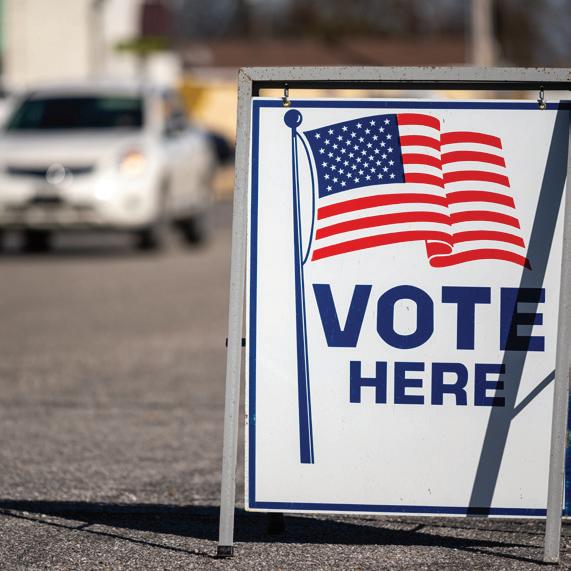
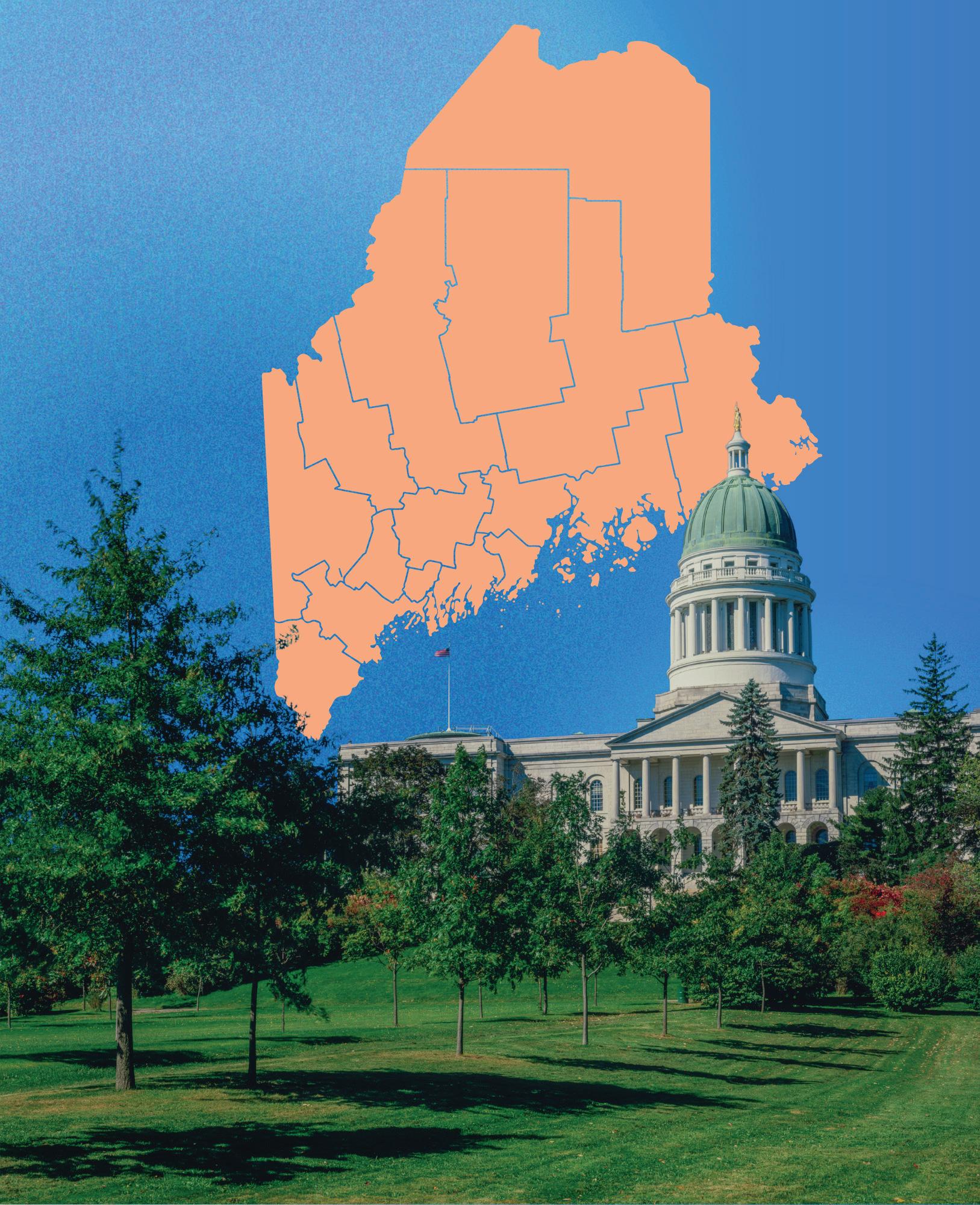
Maine voters will head to the polls on June 9, 2026, to choose party nominees in what is shaping up to be one of the most competitive gubernatorial primaries in recent state history.
By Megan Diver
The Maine Governor's race is wide open because the current governor, Janet Mills, is term-limited and cannot seek reelection, leaving both parties without an incumbent and prompting a crowded field of candidates vying to become Maine's next governor. Both the Democratic and Republican primaries feature a mix of well-known political figures, business leaders, and newcomers hoping to shape the future direction of the state.
The Democratic primary is widely viewed as competitive, with candidates appealing to different geographic and ideological parts of the party.
DEMOCRATIC PRIMARY
Four major Democratic candidates have emerged in the race, representing different wings of the party.
SHENNA BELLOWS
Maine Secretary of State | Former State Senator
Bellows currently serves as Maine’s Secretary of State and previously represented the state in the Maine Senate. Her campaign has focused on protecting democracy, expanding voting access, and continuing many of the policy priorities associated with the Mills administration. Bellows has positioned herself as an experienced statewide official capable of maintaining Democratic momentum in Augusta.
HANNAH PINGREE
Former Speaker of Maine House of Representatives
Pingree, a former Speaker of the Maine House of Representatives, served as director of the Governor’s Office of Policy Innovation and the Future under Mills before entering the race. She is also the daughter of U.S. Representative Chellie Pingree. Pingree’s campaign has emphasized climate policy, clean energy development, and expanding economic opportunity in rural Maine.
TROY JACKSON
Logger | Former President of Maine Senate
A logger from northern Maine and former president of the Maine Senate, Jackson has framed his campaign around representing working-class Mainers and rural communities. Jackson
often emphasizes labor issues, economic fairness, and the challenges faced by rural industries such as forestry.
ANGUS KING III
Energy Entrepreneur
King, an energy entrepreneur, is the son of U.S. Senator Angus King. Running as a centrist Democrat, he has focused on innovation, economic growth, and expanding Maine’s cleanenergy sector. His campaign highlights his experience in business and energy policy.
The Democratic primary is widely viewed as competitive, with candidates appealing to different geographic and ideological parts of the party.
REPUBLICAN PRIMARY
The Republican race is even more crowded, with numerous candidates seeking the nomination.
ROBERT CHARLES
Lawyer | Former U.S. Assistant Secretary of State
Charles is a lawyer and former U.S. Assistant Secretary of State who served in the George W. Bush administration. His campaign has focused on law enforcement support, public safety, and fiscal conservatism.
GARRETT MASON
Former Maine Senate Majority Leader
Mason previously served as Maine Senate Majority Leader and ran for governor in 2018. He has highlighted his legislative experience and ability
to work within the state government system.
JAMES LIBBY
State Senator
A state senator from Standish, Libby has emphasized education policy, government reform, and fiscal responsibility. He is also pursuing a publicly financed campaign under Maine’s Clean Elections system.
JONATHAN BUSH
Health-Care Technology Entrepreneur
Bush is a health-care technology entrepreneur and nephew of former President George H.W. Bush. His campaign has focused on applying business innovation and private-sector experience to government.
BEN MIDGLEY Former President of Planet Fitness
Midgley is a business executive best
known for his leadership roles in the national fitness industry. He previously served as president of Planet Fitness and later helped launch and lead the company behind Crunch Fitness, which expanded to hundreds of gyms across the country. Midgley entered the race emphasizing his private-sector experience and arguing that Maine needs stronger economic growth, lower taxes, and pro-business policies to attract investment and jobs.
DAVID JONES Real Estate Executive
Jones is a Maine businessman and real-estate executive who owns F.O. Real Estate. He has framed his campaign around improving the state’s economic climate, lowering taxes, and making energy more affordable for businesses and residents. Jones has argued that government policies should better support entrepreneurs and economic development across the state.
The large Republican field reflects the open nature of the race and the party’s effort to regain the governorship after two Democratic terms.
With a crowded field on both sides, the primaries could hinge on turnout, regional support, and fundraising strength.
OWEN MCCARTHY
Medical Technology Entrepreneur
McCarthy is a medical technology entrepreneur from Gorham and a trustee of the University of Maine System. A Harvard Business School graduate and co-founder of the digital therapeutics company MedRhythms, McCarthy has positioned himself as a political outsider focused on reducing government spending, providing tax relief, and supporting innovation and economic growth in Maine.
KEN CAPRON
Retired Accountant
Capron, a retired accountant, entered the Republican primary as a grassroots candidate emphasizing fiscal discipline and government accountability. His campaign messaging has focused on reducing state spending, improving government transparency, and advocating for policies he argues will make Maine more affordable for residents and businessesspending, providing tax relief, and supporting innovation and economic growth in Maine.
ROBERT WESSELS Retired Accountant
Wessels is a former selectman from Paris, Maine, who has been active in local politics. In the gubernatorial race, he has highlighted issues such as economic development, addiction recovery programs, and education reform. Wessels has framed his campaign around bringing practical, community-level experience to state government.
The large Republican field reflects the
open nature of the race and the party’s effort to regain the governorship after two Democratic terms.
Outside the party primaries, at least one prominent independent has entered the race.
RICK BENNETT
Former Maine GOP Chair
A longtime Republican lawmaker and former Maine GOP chair, Bennett left the party to run as an independent candidate for governor. His campaign has focused on appealing to voters frustrated with partisan politics. Because independent candidates appear directly on the general election ballot, Bennett will not participate in the June primaries.
INDEPENDENT CANDIDATES WHAT COMES NEXT
The June 9, 2026 primaries will determine the Democratic and Republican nominees who will face off in the November 3, 2026 general election.
With a crowded field on both sides, the primaries could hinge on turnout, regional support, and fundraising strength. The outcome will determine who will succeed Janet Mills and become Maine’s next governor at a time when the state is grappling with issues ranging from housing affordability and economic development to energy policy and rural economic challenges.
Federated DriveSAFESM Telematics can help your employees improve their daily driving habits. This combination of mobile app, in-vehicle tag, and online portal allows you to measure, rank, and provide feedback on employee driving behaviors so you