It’s a word people seem to throw around a lot these days, often without really considering what it means — not only to themselves but to the efforts in which they’re engaging. Is writing a check or making an online donation a philanthropic effort? Or does it require more than a one-and-done financial contribution to a cause or organization?
I honestly hadn’t given the topic as much thought as it deserves until I started working on this issue, which features articles that tell the story of philanthropy in different but equally important ways:
In Five Questions, we explore the evolution of the Aarón Sánchez Impact Fund and explain how this celebrity chef has transformed his success into a program (now part of the Emeril Lagasse Foundation) that has awarded over $2 million in culinary arts scholarships and other grants to uplift the lives of Latino youth through food.
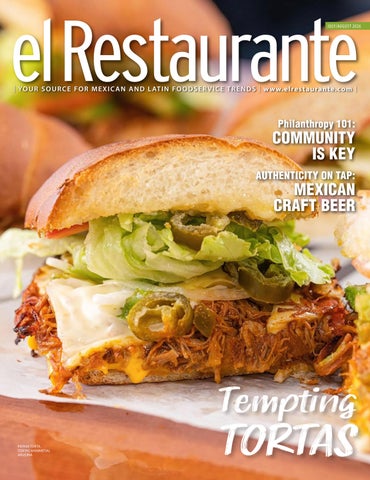
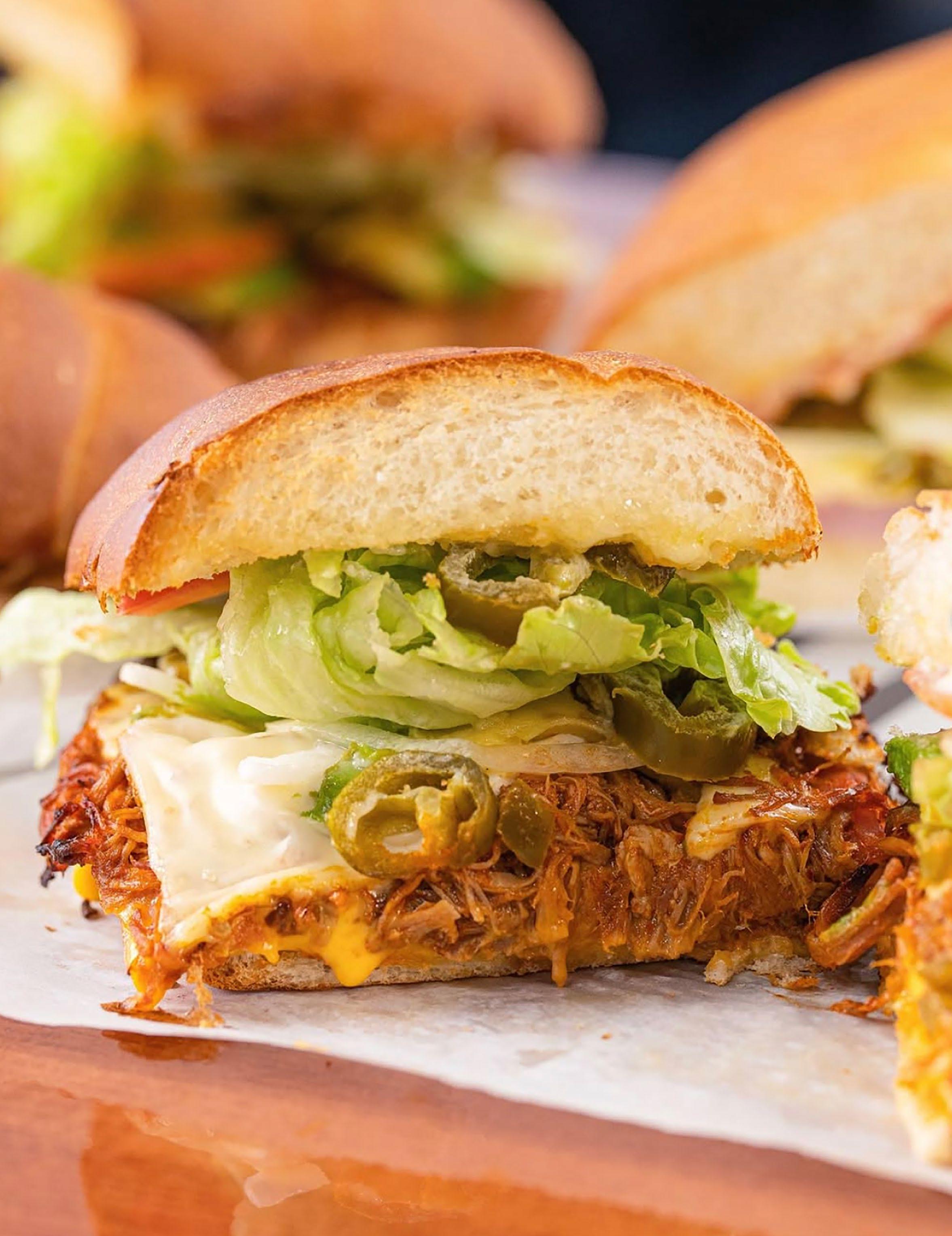
In our cover story, Tempting Tortas, we look at how Los Angeles-based Cuernavaca’s restaurant turned its opportunity to sell tortas at FIFA Fan Fest into a potential game-changing opportunity for a local panadería by hiring them to make soccer-themed bread for the 40,000 tortas needed to meet demand throughout the World Cup.
And in our Business Basics story, we delve into best practices for giving back — ways to help others while boosting goodwill with current and prospective customers.
We didn’t set out to make this a “feel-good” issue — but we’re glad it turned into one. And we’re grateful to be sharing so many positive stories in these challenging times.
If you have a story you’d like to share, please email kfurore@restmex.com and we’ll feature it on our website and/or in a future issue of el Restaurante
PUBLISHER Ed Avis
EDITOR Kathleen Furore
ART DIRECTOR Ala Ennes
MAIN OFFICE phone: 708.267.0023
PRESS RELEASES TO: kfurore@restmex.com
MAILING ADDRESS P.O. Box 13347 Chicago, IL 60613
SHIPPING ADDRESS 1317 W. Belden Ave. Chicago, IL 60614
AD SALES/ENGLISH Ed Avis 708.218.7755 e davis@elrestaurante.com
AD SALES/ESPAÑOL Alfredo Espinola 52-55-4006-9540 alfredo@elrestaurante.com
Published by Maiden Name Press, LLC Volume 29, Number 4
el Restaurante (formerly el Restaurante Mexicano) (ISSN 1091-5885) is published six times a year by Maiden Name Press, LLC 1317 W. Belden Ave., Chicago, IL 60614
We confess. When it comes to freshpacked flavor, we’re a show off.
Old California® pioneered clear, easy-open pouches for foodservice tomato products in 1999. We figured the vine-ripened quality of the reddest, richest, sweetest, California tomatoes available was something discerning customers would want to see. No wonder the nation’s finest restaurants love us!
For the quality you desire, choose the best ingredients –The Original Old California Freshpack Pouch from Neil Jones Food Company!
For more information, call 800.291.3862 | njfco.com/see2believe
ALL THE FLAVOR WITHOUT THE DRAMA.
Everyone wants real avocado flavor. But who wants the hassle, mess and cost of whole avocado fruit? Not you. So we made something better: WHOLLY® Avocado products.
• Picked and packaged at the perfect ripeness for 100% yield.
• Use WHOLLY® products anywhere you’d use whole fruit.
• 100% real Hass Avocados with no added preservatives and nothing artificial.
NEW CONTEST ALERT: $5K and a Custom Video Await the 2026 Independent Mexican/Latin Restaurant of the Year
INDEPENDENT MEXICAN/LATIN RESTAURANTS play a big role in their communities. They are essential meeting places for the community, important employers, and providers of great food. But they rarely get the recognition they deserve. A new contest co-sponsored by el Restaurante magazine and Mineragua aims to change that.
The 2026 Independent Mexican/Latin Restaurant of the Year Contest will shine a spotlight on three successful Mexican/Latin restaurants. Each winner will receive recognition in the magazine and a prize package designed to provide a cash infusion to the restaurants and help them grow their market:
• First place will receive $5,000, a package of point-of-sale materials, and an exclusive “Behind the Kitchen” video created just for the winning restaurant, an additional $5,000 value (click here to see an example of this video).
• Second place will get $2,000, a package of point-of-sale materials, and a $1,000 social media ad campaign.
• Third place will win $1,000, a package of point-of-sale materials, and a $500 social media ad campaign.
“Independent Mexican/Latin restaurants are essential to their communities and Mineragua is delighted to partner with el Restaurante magazine in honoring them,” says Miguel Garza, Food Service Trade Marketing Manager for Novamex, the supplier of Mineragua. “We hope this contest inspires Mexican/ Latin restaurant owners to strive for even higher levels of authenticity and service to their communities and employees.”
The entries to the 2026 Independent Mexican/Latin Restaurant of the Year Contest will be evaluated by a panel of judges who will consider the applicants’ service to their community, support
of their employees, and creation of culturally authentic cuisine.
The contest is open to any Mexican or other Latin-cuisine restaurant with 10 or fewer locations. Restaurant owners are welcome to nominate their own restaurants and nominations are also encouraged from restaurant customers, employees, and other people who know of a deserving restaurant. There is no cost to nominate, and the nomination form and rules can be found at elrestaurante.com/2026-independent-contest. The deadline for nominations is October 1, 2026.
“We have met thousands of Mexican/Latin restaurant owners in the three decades since we founded el Restaurante magazine, and we know that owning a restaurant is a labor of passion for many people,” says Ed Avis, publisher of el Restaurante. “And this new contest is designed to highlight owners who truly exhibit that passion.”
DEADLINE APPROACHING:
Enter our 2026 Sassiest Salsa Contest Now!
Are you proud of the salsa you make in your restaurant? Then don’t wait to enter the 2026 el Restaurante Sassiest Salsa Contest sponsored by Sammic! The deadline is September 30, 2026.
Entering the contest is easy, and the prizes make it worthwhile: The creator of the first place recipe will receive a Sammic Immersion Blender, the ultimate tool for mixing salsa. And the top three winners will get a cash prize: $750, $500 and $250, respectively. To top it off, all winning recipes will be featured in our Recipe of the Week email program and be published in the November/December edition of el Restaurante.
To enter the contest, click here and complete the form. Your recipe must be an original creation — and remember that we’ll publish the winners, so don’t send us a recipe that you’re trying to keep secret. The recipes will be judged by experienced chefs, and the winners will be announced in October.
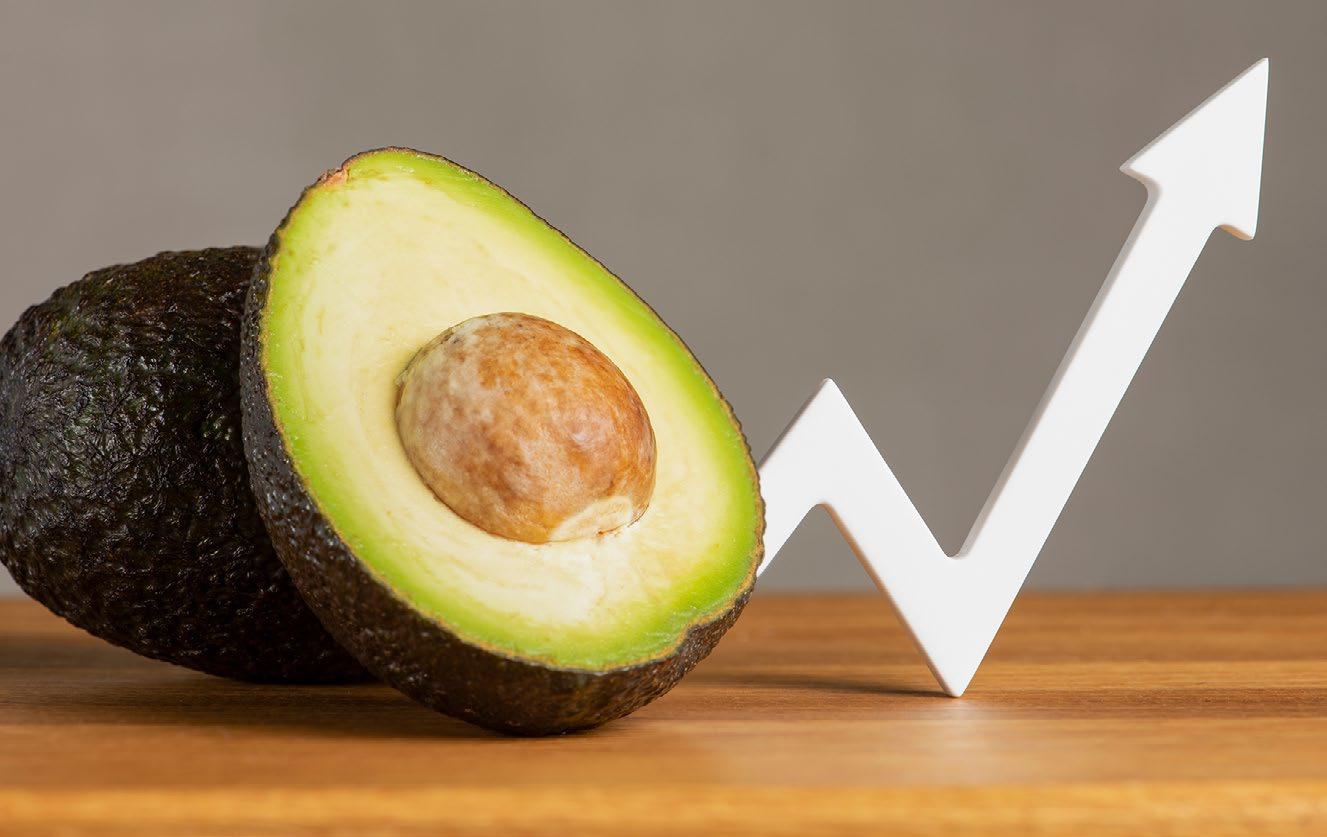
el Restaurante Study: AVOCADO PRICES SWING, GUAC PRICES DON'T
NICO RAMOS KNOWS how dramatically avocado prices can fluctuate. Ramos has owned Antigua Latin Inspired Kitchen in the Milwaukee suburb of West Allis, Wisconsin, for nearly 20 years, and he remembers case prices of avocados exceeding $100 in 2019; in December 2025 he was paying just $30 a case.
“The prices of avocados go up and down drastically,” he says. “And they can change each month.”
Despite those fluctuations, Ramos keeps the prices of his guacamole steady. He adds 3 percent to his menu prices across the board each year, in order to keep up with inflation, but otherwise guac prices don’t change, even if avocado prices skyrocket or plunge.
Our research shows that Ramos is not unusual in his pricing practices. Average guacamole prices across the country have been nearly flat over the past two years, despite breathtaking changes in avocado prices.
DRAMATIC FLUCTUATIONS
Droughts in Mexico in late 2024 pushed the average price for a 48-count case of avocados to over $80 in early 2025, according to Terrain, an agricultural research service. But in early 2026, the supply rebounded and the price dropped to a comfortable
$30 to $40 per case.
To see how ingredient prices affect menu prices, el Restaurante examined the online menus of 94 Mexican restaurants across the country in 2024 and again 2026. Ten restaurants we examined in 2024 closed before we repeated the study in 2026, so we found other Mexican restaurants nearby to replace them.
What did we learn? That the average menu price of a guacamole appetizer climbed only 3 percent between 2024 and 2026, from $12.32 to $12.71. (When a restaurant offered multiple varieties of guacamole, we recorded the price of the “classic” variety.)
Even though the overall average price of guacamole barely budged, many individual restaurants did change their prices. Our data showed that 53 percent of the restaurants in the study — excluding those which we could not compare yearover-year — raised their guacamole prices between 2024 and 2026. The average increase was $2.32 for an appetizer serving.
On the other side of the equation, 28 percent of the restaurants we investigated dropped their guacamole prices during the time span of the study — some rather dramatically. Sunset Cantina in Boston and Tzuco in Chicago, for example, cut their price for a standard guacamole appetizer by $6. The average price drop was $2.88.
PROMOTIONS, NOT PRICE CHANGES
Ramos from Antigua Latin Inspired Kitchen is not normally among the restaurant owners who drop the price of guacamole when avocado prices fall, but sometimes he runs promotions at those times to take advantage of the situation. For example, when avocado prices hit a low point last winter, he introduced a special flight of three varieties of guacamole.
“It was amazing,” he says of the promotion’s success, adding that the promotion did not include a price cut. “Why change the price when people are expecting those prices?”
Chef Aarón Sánchez RÓN SÁNCHEZ IMPACT FUND
| BY KATHLEEN FURORE | Chef Aarón Sánchez has made countless contributions to Latin cuisine. He’s an award-winning chef, cookbook author, and host/executive producer of Talking Sabor (PepsiCo’s first streaming series, on Hulu), El Toque de Aarón (Discovery Familia), and Hogar (HGTV). He’s also a former judge on FOX’s MasterChef and MasterChef Junior, cohost of Heritage Radio Network’s Cooking in Mexican from A to Z with his mom, Zarela Martinez, and chef/owner of Johnny Sánchez in Lake Charles, Louisianna.
But perhaps his most lasting, legacy-building contribution is the Aarón Sánchez Impact Fund, launched in 2016 to empower Latino youth with full culinary scholarships, hands-on training, and career mentorship.
el Restaurante editor Kathleen Furore spoke with Sánchez about the fund's origins and its evolution into a partnership with the Emeril Lagasse Foundation.
1
What prompted you to launch the Aarón Sánchez Scholarship? What was the idea behind that effort?
It stemmed from the idea of trying to understand my success. Saying I felt unworthy sounds kind of weird, but I realized that my family had helped me build such a beautiful
life and I wanted to make sure I gave something back. Initially the goal was to help young Latinos get into the culinary world in New York City. At that time, we were working with the French Institute Culinary School in New York (today it is the Institute of Culinary Education) to help with cost. We couldn’t have put anyone through without that help. Our youth, the next generation of Latinos, they’re our most valuable commodity… and I didn’t want a lack of access to education to be a problem. I wanted to help create a balanced playing field so everyone has a shot if they are willing to work hard and have the dedication.
2
You became very involved in the New Orleans culinary scene and moved the program from New York to NOLA. What impact did that have? The transition after New York was very important. I lived in New Orleans, so I was connected with that culinary community. I grew up in New York City and could argue that that is the most important food city — but the oldest one is New Orleans. The tradition and history are so rich, and I wanted these young kids we were working with to understand it.
(continued on page 14)
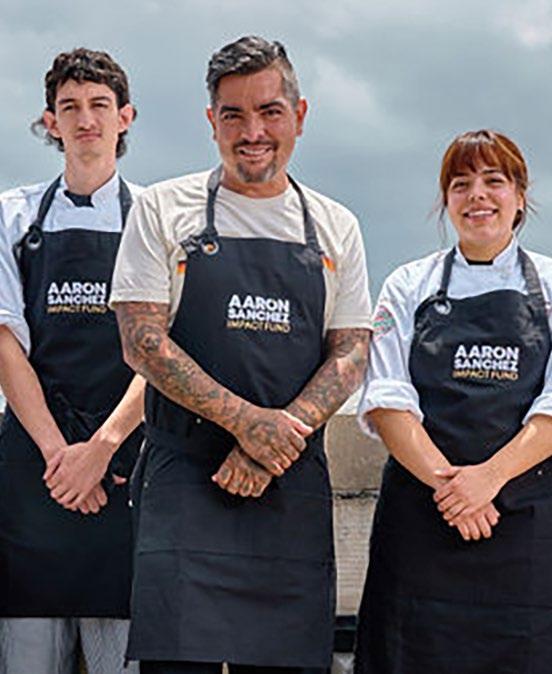
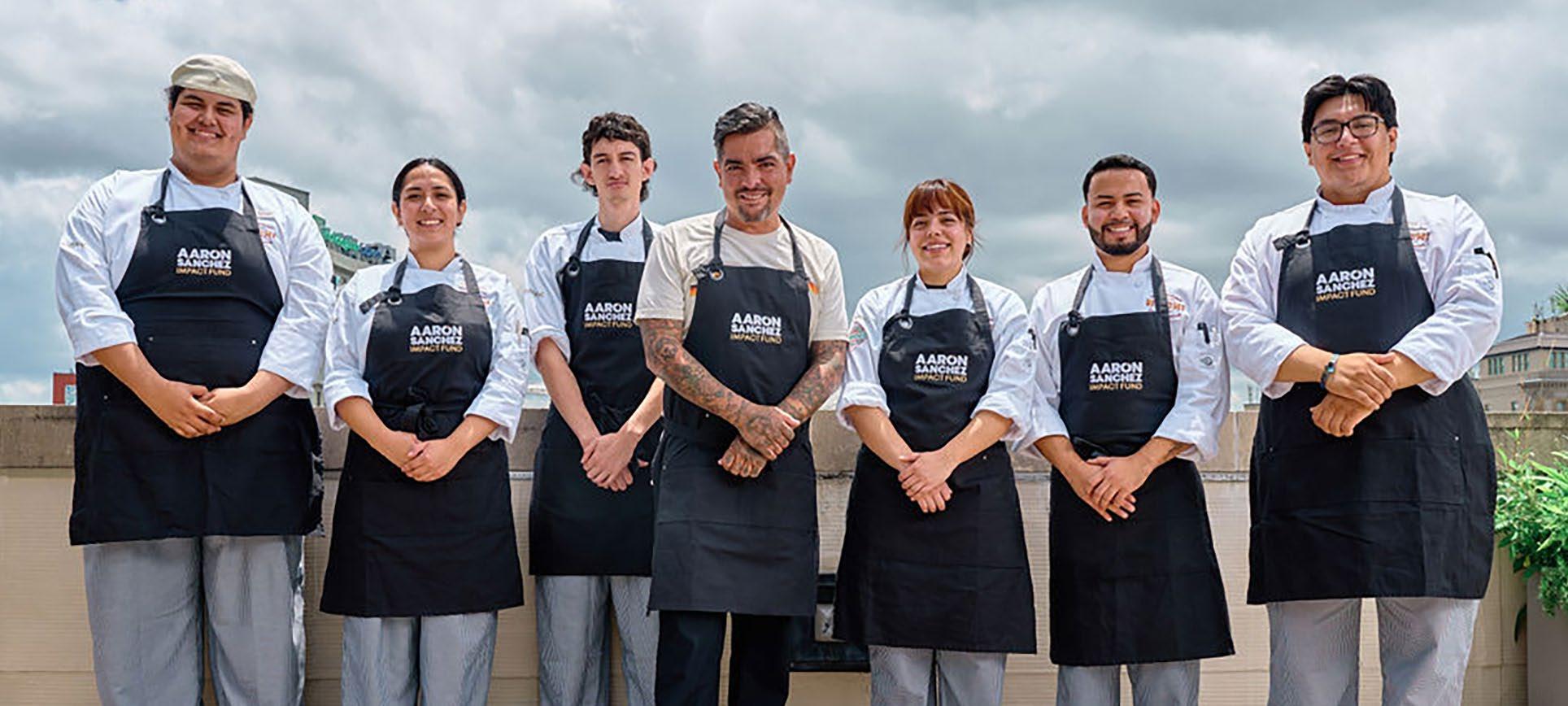
Chef Aarón Sánchez (center) with the Class of 2025
Looking for your next culinary adventure? Customers certainly are. Meet their expectations for excitement with innovative dishes featuring the unique, complex, deep flavors of HERDEZ® Quemada Charred Salsas. Try all 4 today.
AVAILABLE AT DOT FOODS
Roja #780082
Verde #780081
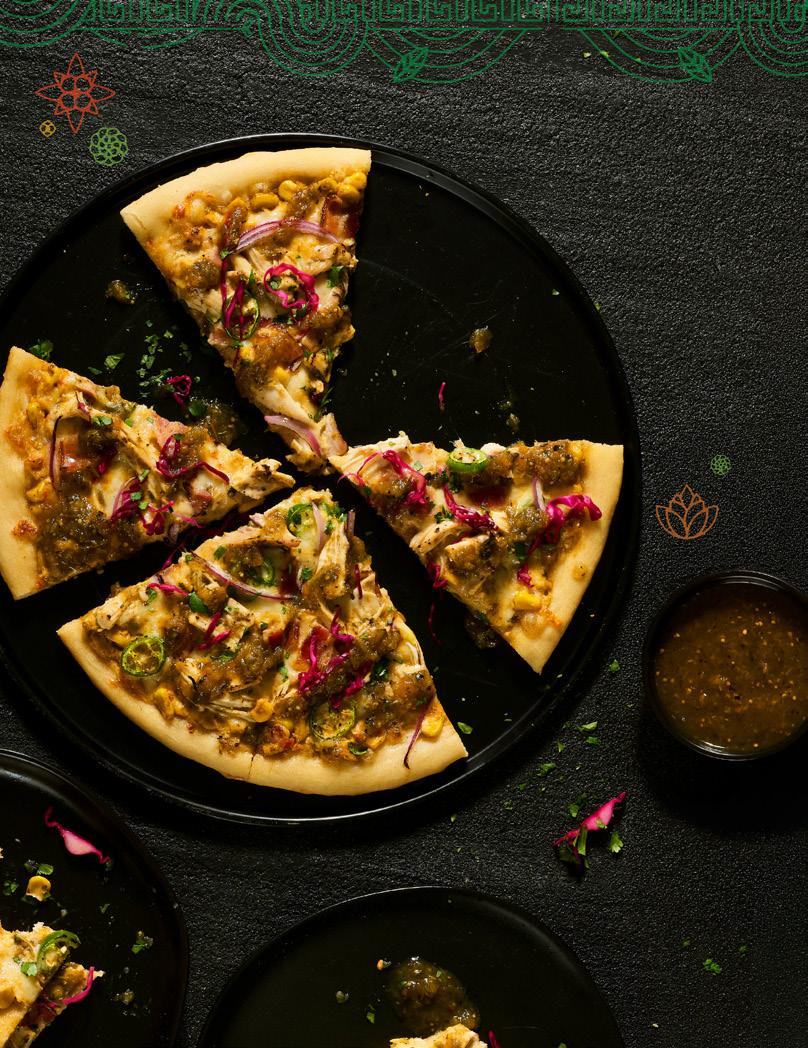
Salsa-Verde Chicken
Wood-Fired Pizza
Salsa
Salsa
Poblano Salsa #780080
Chipotle Salsa #780069
“Our youth, the next gen ation of Latinos, they’re our mo valuable commodity… and I didn’t want a lack of acc s to education to be a problem. I wanted to help create a balanced playing field so ev yone has a shot if they are wi ing to work hard and have the dedication.” AARÓN SÁNCHEZ
I have a lot of friends in New Orleans, including Emeril Lagasse and the Brennan family. So, the idea was to work with them, connect with the New Orleans Culinary & Hospitality Institute (NOCHI), and have the scholarship winners shepherded within NOCHI. It really broadened the scope of the program.
3
How did the partnership with the Emeril Lagasse Foundation develop?
I was introduced to Emeril more than 20 years ago through the Food Network connection. I consider him an uncle figure — someone I really admire. So, after I had contacted like-minded friends about my idea for the Aarón Sánchez Scholarship Fund and it started to get traction, I contacted the president of the Foundation and started to work it out. The Foundation has supported the Aarón Sánchez Scholarship Fund since its inception, and the official partnership was formalized in 2022. That established the Aarón Sánchez Impact Fund as an official program of the Foundation.
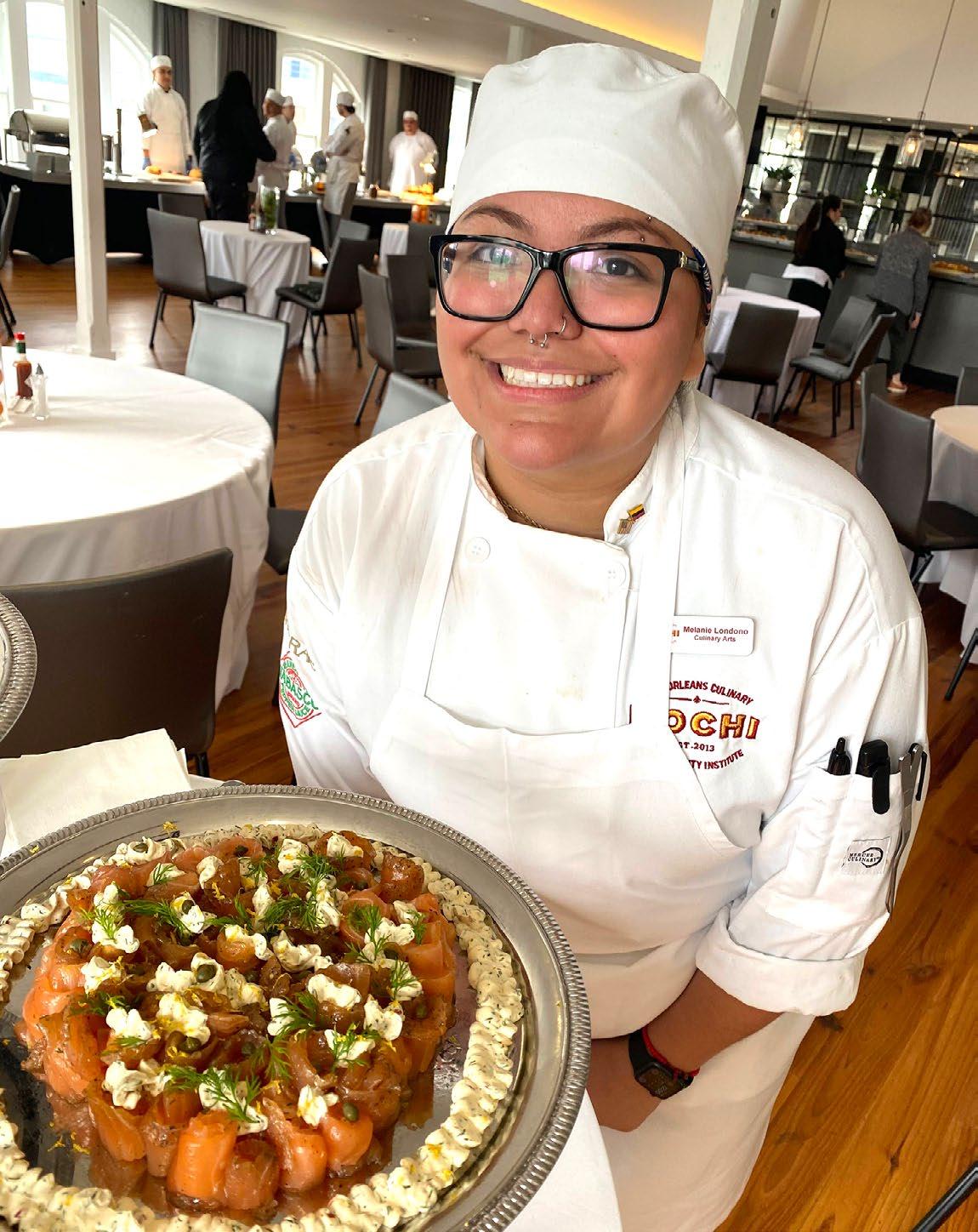
Melanie Londoño, Class of 2024
4
How has the Foundation’s involvement impacted the program? And what role do you personally play?
The beautiful thing is that since we partnered with Emeril, we’ve been able to grow the scholarship and refine it. Now we conduct a nationwide search once a year and go through an extensive interview and multi-layered vetting process that is unique and highly competitive. We strive for excellence. We accept six kids per cohort, and are recruiting seven starting this October. The cost is $65,000 per student, and now we can offer more assistance for tuition, housing and all costs of the internship.
We’ve also been able to expand into Human Services Grants for nonprofits serving Latino youth across the country. The grants provide programmatic support up to $20,000 per grant to eligible non-profit organizations focusing on nutrition education and/or food access for Latino youth.
One example is the gap funding we were able to provide for a California school system that was expanding a food bank for its middle school students. That funding allowed them to pour the concrete, finish construction, and triple the amount of nutritious food they could offer.
The Fund has awarded over $2 million in culinary arts scholarships and other grants since its inception.
My job is to mentor and tap into my network of likeminded peers and colleagues for internships — something customized to each student’s path. We ask the students to identify their personal goals — sports nutrition, recipe development, personal chef — it’s a broad scope. Then we try to place them accordingly. For example, we’ve flown someone to Chicago to work at Publican Quality Bread and Avec in River North and had someone work on recipe development for Food Network.
5You’ve been recognized by the Hispanic Federation with the Premio Orgullo Award for being a leader in the Hispanic community. Besides the Impact Fund, are there any other efforts you would like to highlight? Of course, it is nice to be recognized. But the only thing I care about, as anyone who knows me knows, is for people to see what I’ve accomplished and take that initiative into their markets and communities. I’m passionate about the
food world and the food circle.
There a lot of things that can be done — things like sending immigrant farmworkers’ kids to college, helping rescue an ecosystem. It just depends on particular chefs’ motivation and time. Most chefs who think the way I do are older. I would love to see chefs show their philanthropy-ship early on, to instill the idea of helping early in young peoples’ lives.
This isn’t for glory or for accolades. My goal is for decisionmakers to recognize communities of people who can contribute to the success of this country.…to help kids chase their culinary goals and realize their dreams.
To sum up, I’ll end with my favorite quote: “Service to others is the rent you pay for your room here on Earth.” — Muhammad Ali, one of my heroes.
If you’re interested in working with the Aarón Sánchez Impact Fund as a mentor or in some other capacity, reach out aaronsanchezimpactfund.com.
SCHOLARSHIPS & HUMAN SERVICES GRANTS APPLICATIONS
The application for the next round of AARÓN SÁNCHEZ SCHOLARSHIPS will open October 1 and stay open through December. Interested parties can learn more about the scholarship eligibility and apply at aaronsanchezimpactfund.com.
The AARÓN SÁNCHEZ IMPACT FUND accepts grant applications by invitation only but is always eager to hear about projects. Grant consideration is limited to organizations with 501c3 status and organizations serving Latino youth ages 0-18 (at minimum 60 percent of your service community). To learn more about the process of applying for a grant, visit aaronsanchezimpactfund.com/grants .
Tempting T O R T A S
GLOBAL FLAVORS DELIVER WHAT SANDWICH CUSTOMERS CRAVE
| BY KATHLEEN FURORE |
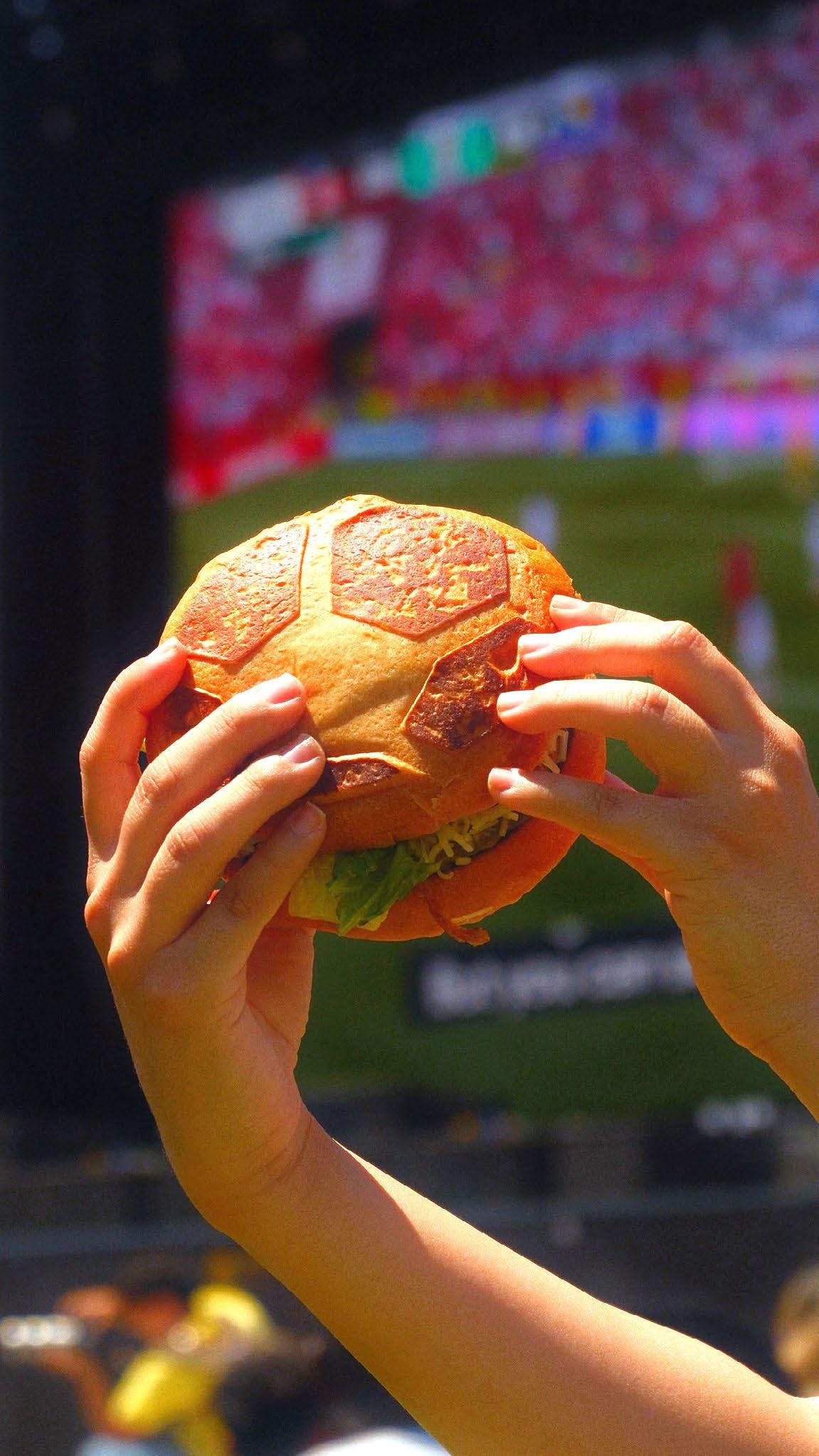
While Mexico lost its bid for a World Cup title on July 5, torta-lovers in Los Angeles emerged victorious on the culinary front thanks to the Torta Mundial from Cuernavaca’s Grill.
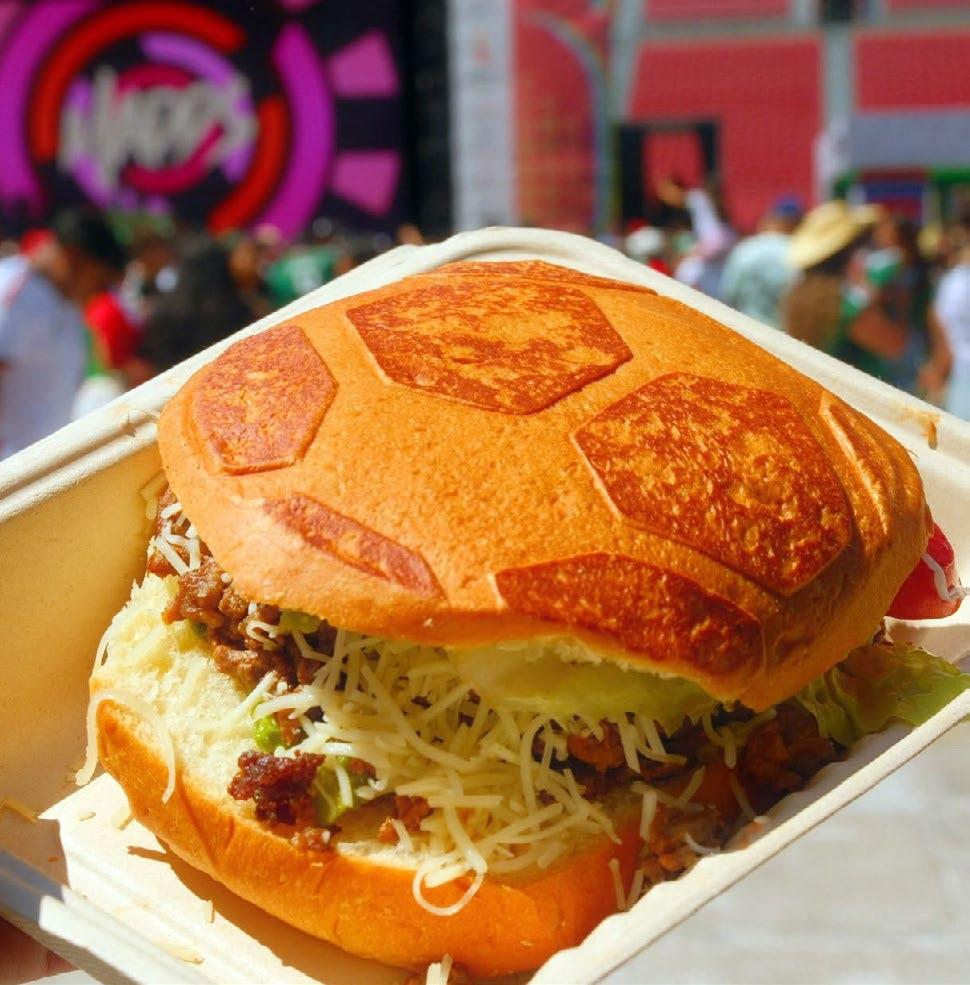
Packed with beans, cheese, lettuce, tomato and avocado plus the customer’s choice of protein, the pressed sandwich was served on Cuernavaca’s signature soccer-themed bread at FIFA Fan FestivalTM at the Los Angeles Memorial Coliseum and at the restaurant’s Fashion District location in Los Angeles throughout the tournament.
Just how did the idea for the soccer ball-shaped bread come to life?
“My dad has always had a saying, ‘food, family and fútbol.’ With the World Cup coming to our backyard and knowing there would be so many incredible Mexican restaurants participating, I knew we had to innovate something that would stand out while still capturing all the flavors of an authentic torta,” says Nayomie Mendoza, owner and culinary director of Cuernavaca’s Grill. “The bread immediately tells the World Cup story, but what keeps people coming back is what’s inside.”
NUMBERS CONFIRM IT: TORTAS ARE TRENDING
When Mendoza learned the restaurant would be part of the tournament’s culinary story, she and her team got to work scouting for just the right partner to pull off the sandwichmaking feat.
“Supporting fellow small businesses has always been important to us, so we partnered with a local panadería to bring the sandwich to life,” she says, noting that they needed 40,000 tortas to meet demand.
“We knew we would be serving tens of thousands of fans throughout the tournament, so we worked backwards from attendance projections to determine production,” she recalls. “It took weeks of planning with our bakery, suppliers and kitchen team to make sure we could deliver that volume without sacrificing quality. Scaling from our restaurant to one of the world’s biggest sporting events was one of the most exciting challenges we’ve ever taken on.”
The challenge proved worthwhile: Mendoza says the Torta Mundial was incredibly popular, garnering kudos from fans, celebrities, and players alike.
“Throughout the tournament we welcomed fans from all over the world, many of whom discovered us for the very first time through the FIFA Fan Festival. We also took advantage of
“Don’t just add a torta because it’s expected. Find a way to make it your own while staying true to the flavors people know and love.”
NAYOMIE MENDOZA, Cuernavaca’s Grill
Cuernavaca’s Grill’s Torta Mundial
“We’re seeing tortas a lot, not only in Mexican restaurants but also in bars and grills — all kinds of restaurants are developing them. A Tex-Mex or traditional Mexican restaurant without a torta isn’t really a Mexican restaurant!” PABLO URTEAGA, Performance Food Group
that momentum by inviting artists and creators to experience the Torta Mundial,” she reports. “Steve Aoki, Normani, Deorro and Mackenzie Sol from American Idol were just a few who helped champion it and share it with their audiences. And one of the coolest moments of this entire experience was having the Mexican National Team reach out to us. As lifelong fans, that was something we’ll never forget.”
WHAT’S DRIVING THE TREND
The need for a torta inventory 40,000-strong is a clear indication of how popular these traditional Mexican sandwiches have become.
The state of today’s current foodservice landscape shows why.
“In 2026, brands are taking their sandwich offerings to the next level in order to meet the evolving needs and palates of
consumers around the world,” the Tastewise post “Sandwich Trends Around the World: Global Favorites of 2026” says. Those consumers are pushing for new and innovative twists, which is contributing to nearly 15 percent year-overyear growth in social media conversations about sandwiches, Tastewise reports.
The ”twists” they’re seeking include bold global fusion flavors, elevated artisan ingredients, premium breakfast upgrades, customizable options, and viral social media preparations when ordering sandwiches. Tortas check all of those boxes.
That versatility makes them ideal menu additions for quickserve restaurants, family/sit-down restaurants and upscale establishments alike. And it is fueling the torta’s rise, says Pablo Urteaga, national category manager for Hispanic products at Performance Food Group (PFG).
“We’re seeing tortas a lot, not only in Mexican restaurants but also in bars and grills — all kinds of restaurants are developing them,” he says, pointing to the format’s range of meats, fillings, and sizes as key to its growing appeal.
Urteaga is such a strong believer in the torta’s place in Hispanic foodservice that he insists every Mexican restaurant should have one on the menu: “A Tex-Mex or traditional Mexican restaurant without a torta isn’t really a Mexican restaurant!” he says.
BUILDING A TORTA MENU
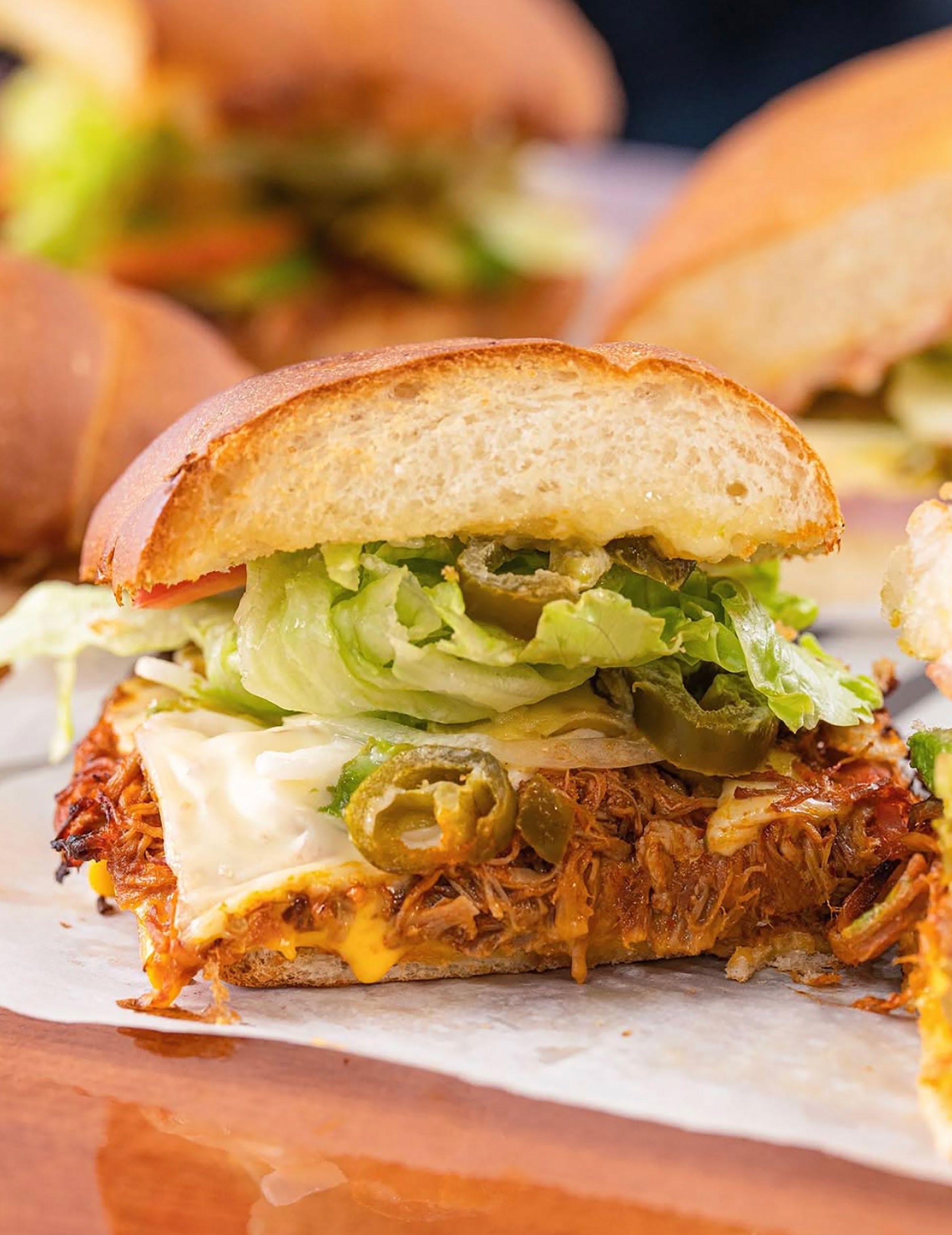
Tortas offer near-endless menu potential — from the classic Torta del Chavo (bolillo, ham, cheese, beans, mayo and avocado, named after the character in the Mexican sitcom El Chavo del Ocho ) to loaded versions built on taco and burrito staples like birria, carne asada, and al pastor.
Mendoza taps that potential at Cuernavaca’s, where tortas have driven traffic for more than 21 years.
(continued on page 20)
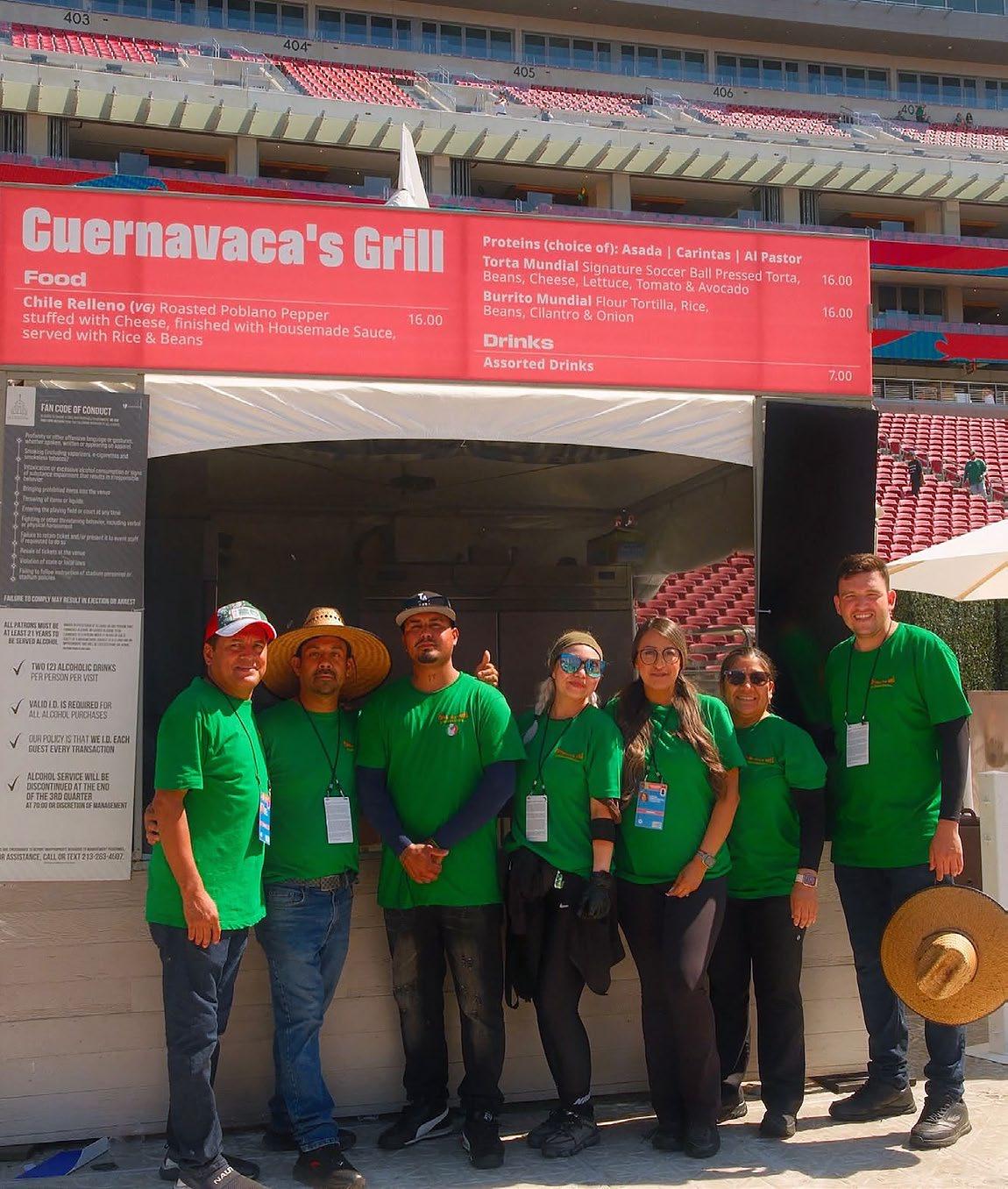
Cuernavaca’s Grill’s team prepares for a busy day at the FIFA Fan Festival (TM) .
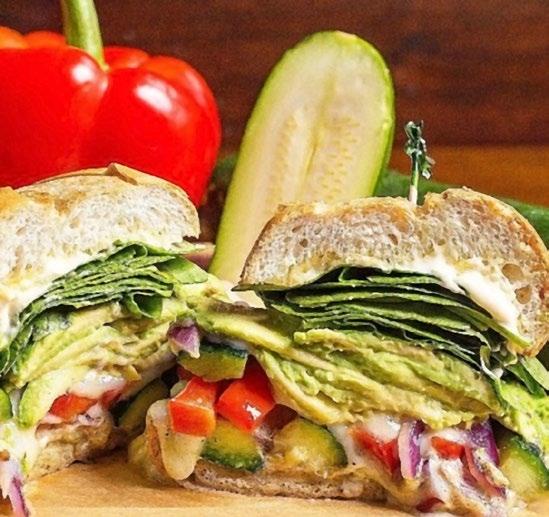
Calabacitas Torta with zucchini, spinach, red bell pepper and cheese from TEG Torta Shop, Phoenix
“While lunch is definitely our busiest time for tortas, they are popular throughout the day. They are one of those comfort foods people crave whether it’s noon or dinner time,” she says. Current customer favorites: Asada, Al Pastor, Carnitas, and Chile Relleno Tortas.
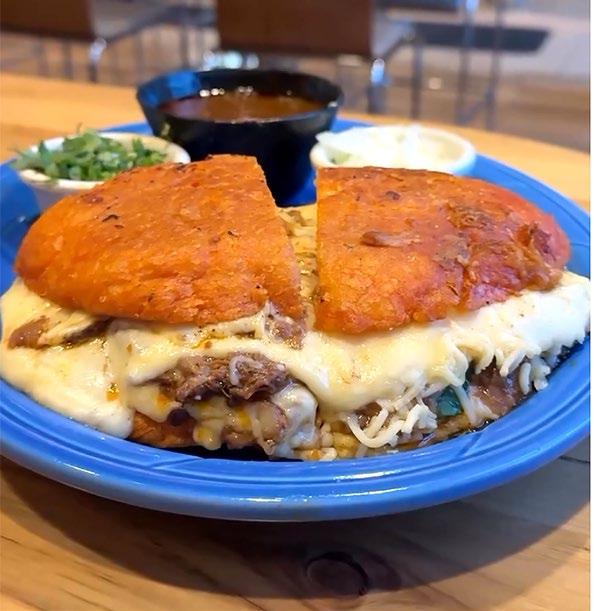
In Chicago, Tacotlan and Tecalitlan are both riding the birria wave with Birria Tortas. Tacotlan’s version earned a TikTok video, while Tecalitlan’s landed an Instagram shout-out from Chicago Food HQ that called the restaurant’s Birria Torta “a must for any ‘Chicago bucketlist.’”
Tacotlan has also turned tortas into a seasonal draw — bunny-shaped bread for Easter, a shamrock-shaped “Lucky Torta” for St. Patrick’s Day, and gingerbread-shaped tortas at Christmas.
The takeaway? A torta menu isn’t just a lineup of sandwiches; it’s a canvas you can paint in myriad ways: Shape it seasonally, stack it with
Regional Renditions
Moving beyond the most common torta varieties is a good way to tempt customers looking for creative sandwiches with global flavors and interesting twists. Adding tortas that developed in regions throughout Mexico as part of each region’s street food culture is one way to do that.
Three options to try:
• Torta Ahogada. Its name means “drowned sandwich” — and for good reason. This signature torta from Guadalajara is made with a crusty birote roll filled with pork carnitas, topped with raw or pickled white onions, then submerged a tomato-chile-based sauce.
Tecalitlan’s Birria Torta
• Torta Cubana. Mexico City is the birthplace of this torta that originated on Calle República de Cuba where vendors created the sandwich by tossing a multitude of ingredients into a soft bolillo or telera roll for hungry workers in the mid-20th century. It typically holds combinations of meats like ham, roasted pork and chorizo; melted queso Oaxaca or queso fresco; and lettuce, tomatoes, and pickled jalapeños. Mayonnaise, mustard and salsa are common condiments.
• Cemita. Originating in the city of Puebla, this torta is packed with a breaded beef, pork, or chicken cutlet (milanesa), queso Oaxaca, avocado, chipotle peppers, and pápalo (a local herb with a flavor described as a cross between arugula, cilantro, and citrus).
bold fillings, or let it tell a story. Just don’t build one just to check a box.
“Don’t just add a torta because it’s expected. Find a way to make it your own while staying true to the flavors people know and love,” Mendoza says. “Great bread is essential, quality ingredients matter — and don’t be afraid to tell a story through your food. The Torta Mundial worked because it wasn’t just a sandwich. It created an experience. Guests don’t just remember what they ate. They remember how it made them feel.”
See Torta recipes on page 37.
LATIN SANDWICHES, YELP APPROVED
If you’re wondering about the potential tortas offer for your menu, consider this: Las Tortas Perronas , a torta shop with three locations in Houston, recently was named to Yelp’s Top 100 Sandwich Shops of 2025. And while they specialize in sandwiches other than tortas, two Latin-inspired sandwich shops also made the cut: Box of Cubans in Riverview, Florida, and Omarcitos Latin Cafe in Chicago.
Did you know…
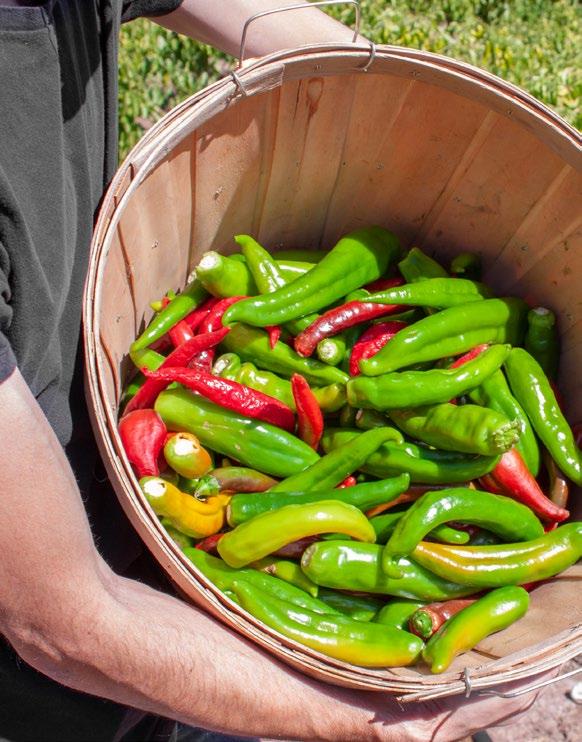
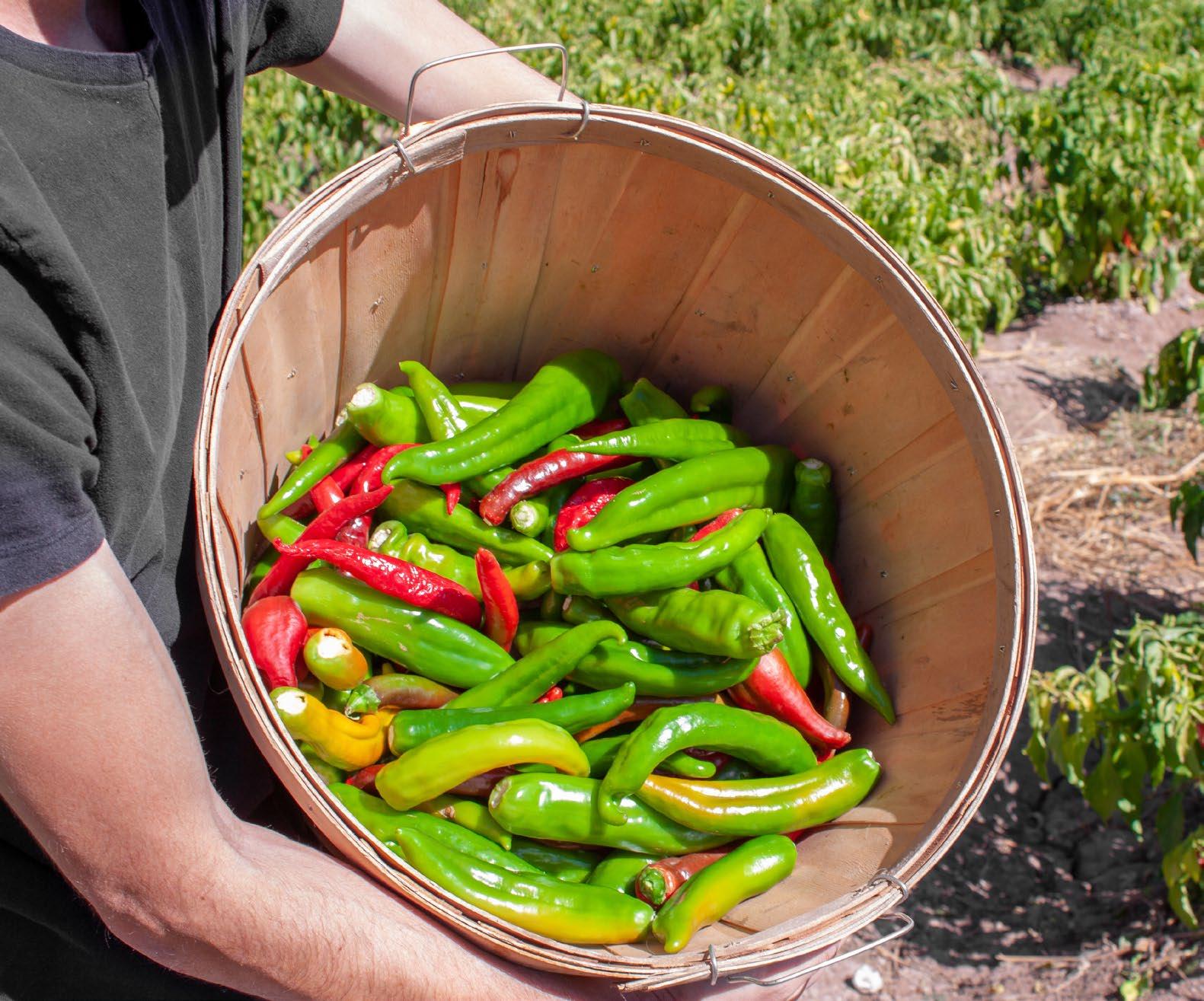
That “Hatch Chile” is not a single varietal like jalapeños, but a regional designation that covers several types ranging from mild to medium (Big Jim), hot (Sandia), and X-hot (Lumbre).
The question for every operator: How will your menu capture business from Hatch Chile-loving customers?
THE HATCH CHILE PHENOMENON
Hatch Chil : THE SEASON IS HERE — IS YOUR MENU READY?
| BY KATHLEEN FURORE | This Labor Day weekend, from September 5 – 6, over 30,000 visitors are expected in Hatch, New Mexico for the legendary Hatch Chile Festival — a celebration of the crop that put this small town on the map as the “Chile Capital of the World.”
Grown exclusively in southern New Mexico’s Hatch Valley, Hatch Chiles are harvested just once a year, between late July and early October, creating a short, high-demand window that restaurants can turn into a serious seasonal draw.
That’s just what Jalapeño Inferno in Scottsdale, Arizona does every year. Now gearing up for its 24th Annual Hatch Chile Harvest Menu, the restaurant has built a tradition around this ingredient widely regarded as a cornerstone of Southwestern cuisine.
Data show that more and more consumers are discovering Hatch Chiles’ allure. Frieda’s Branded Produce, based in Anaheim, California, has seen strong sales growth, and is gearing up for a banner 2026 season. The company shipped its first batch of fresh Hatch Chiles to retailers nationwide in mid-July.
“With Hatch Chile sales growing over 22 percent year-over-year in 2025, Frieda’s is anticipating another successful summer,” Perishable News reports, noting that limitedtime seasonal items like Hatch Chiles don’t just move product;
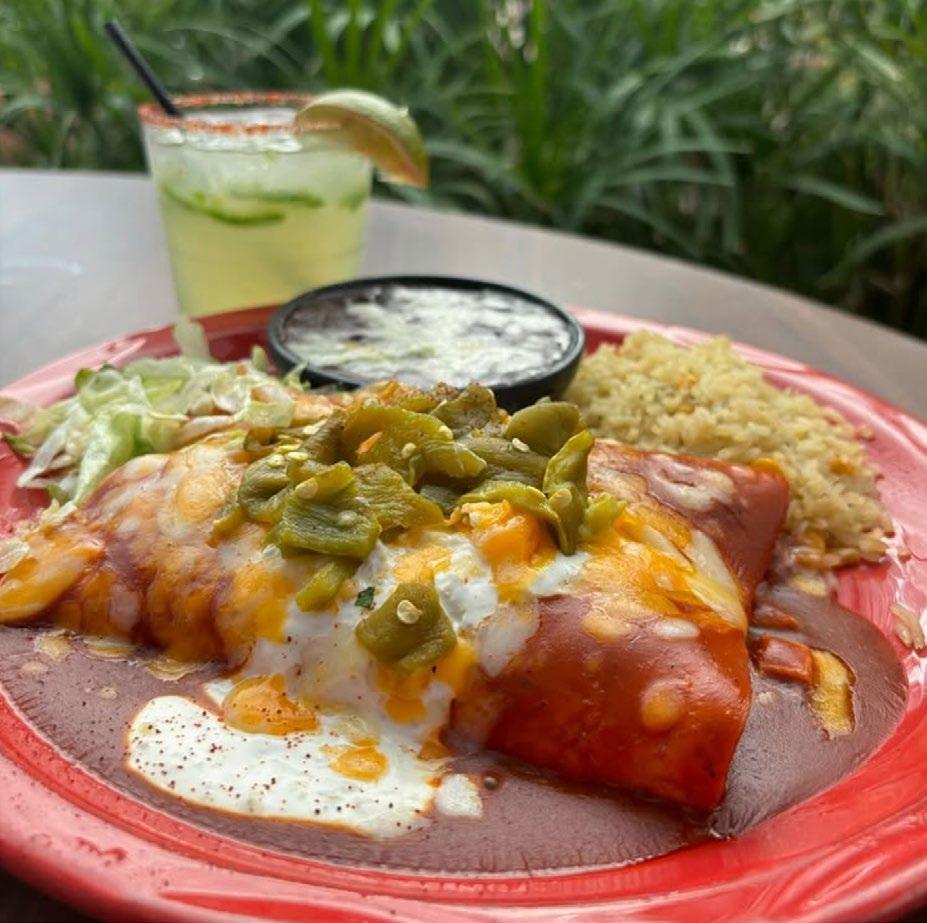
Jalapeño Inferno’s Big Jim Fundido Enchiladas
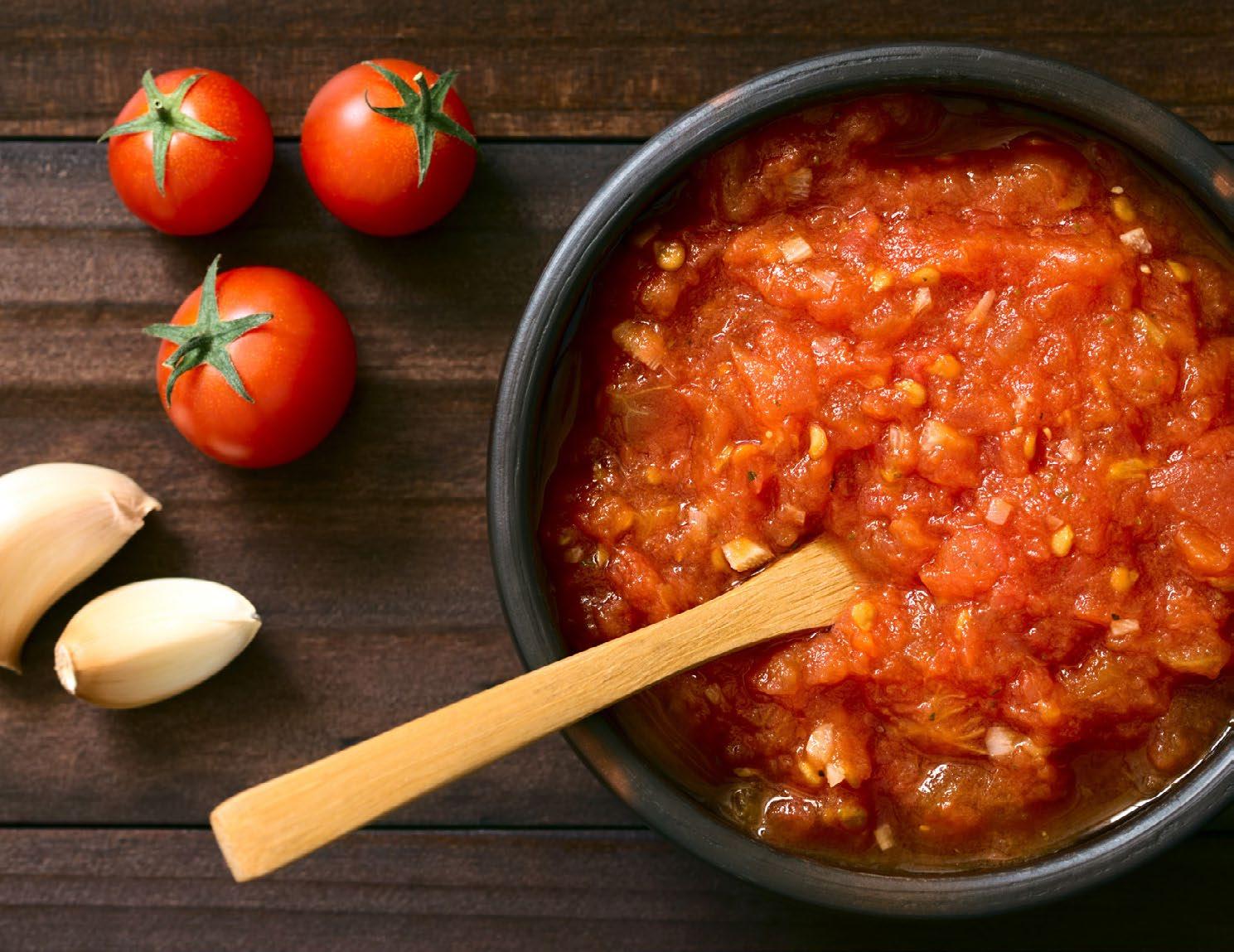
Get out your salsa-making ingredients and create a unique foodservice salsa recipe you think has the consistency and flavor to wow the judges. The grand prize winner will receive a Sammic XM-52 Immersion Blender and $750. Second and third place will receive $500 and $250, respectively. Plus the top three recipes will be featured in the NovDec issue of el Restaurante.
All readers of el Restaurante are welcome to enter the contest. The recipe must be an original recipe of your own creation. There are no restrictions on the ingredients of the recipe. All recipes will be judged on taste, creativity and appropriateness for foodservice applications.
A Sammic immersion blender makes your salsa preparation easier than ever! A powerful motor, easy-to-use controls and ergonomic design mean your staff can create amazing salsas, soups and other blended menu items with ease and speed. You will love the labor savings and your customers will love the results!
culinary trends
they create real excitement in the produce aisle and drive sales for Hatch-flavored items store-wide.
As Alex Jackson, vice president of sales and marketing at Frieda’s Branded Produce, told the publication: “Hatch Chiles give retailers a built-in traffic and basket driver at the peak of summer, causing a halo effect across the whole department.”
That halo doesn’t shine only in the produce aisle; it becomes a bright opportunity for restaurants, too, because shoppers who’ve discovered Hatch Chiles become customers ready to order dishes that deliver the flavor they crave.
tro and onion, served with lettuce wraps; and the Spicy & Cheesy Bean Dip with refried pinto beans amped up with Hatch Chiles and cheesy sauce.
HOW RESTAURANTS ARE BRINGING THE HEAT
Restaurants are using a variety of dishes incorporating Hatch Chiles to enliven their menus.
While Jalapeño Inferno’s Hatch Chile Harvest Menu varies slightly every year, one long-time favorite is the Hatch Caramelos, crispy flour tortillas folded and stuffed with grilled chicken, creamy refried beans, jack jack cheese, Hatch Chiles, onion and cilantro. Other featured items have included Big Jim’s Fundido Enchiladas with grilled chicken and Big Jim Hatch Chiles in corn tortillas, smothered in red enchilada and creamy fundido sauces; the spicy Hatch Green Chile Bowl with green chile shredded pork topped with spicy Hatch Chiles, cilan-
At Mí Día From Scratch, the seasonal menu introduced in May at its locations in Grapevine, Plano and Flower Mound, Texas, includes Hatch Tacos — wood-grilled skirt steak sauteed in New Mexico red chile, onions and poblanos, topped with queso fresco, New Mexico green chile autumn roast and micro cilantro on organic blue corn tortillas. But the restaurant doesn’t overlook the appeal of Hatch Chile Season. Past fan favorites on its limited time Hatch Green Chile Fest menu include Hatch Queso, Double Decker Brisket Tacos, Pork Carnitas Enchiladas, and a fiery Hatch Burger, which Chef Gabriel DeLeon prepared live on Fox 4 Good Day in 2024. (You can find the recipe on page 37 of this issue.)
New Mexico C tified Chile Program
The New Mexico Chile Association started the New Mexico Certified Chile™ program, an official verification system that protects consumers and industry members from agricultural fraud. It was created to cultivate the varieties grown only in New Mexico and to protect, promote and advocate for the entire industry dedicated to growing this special crop. The logo ensures that chiles labeled and sold as authentic New Mexico chile are actually grown in local soil.
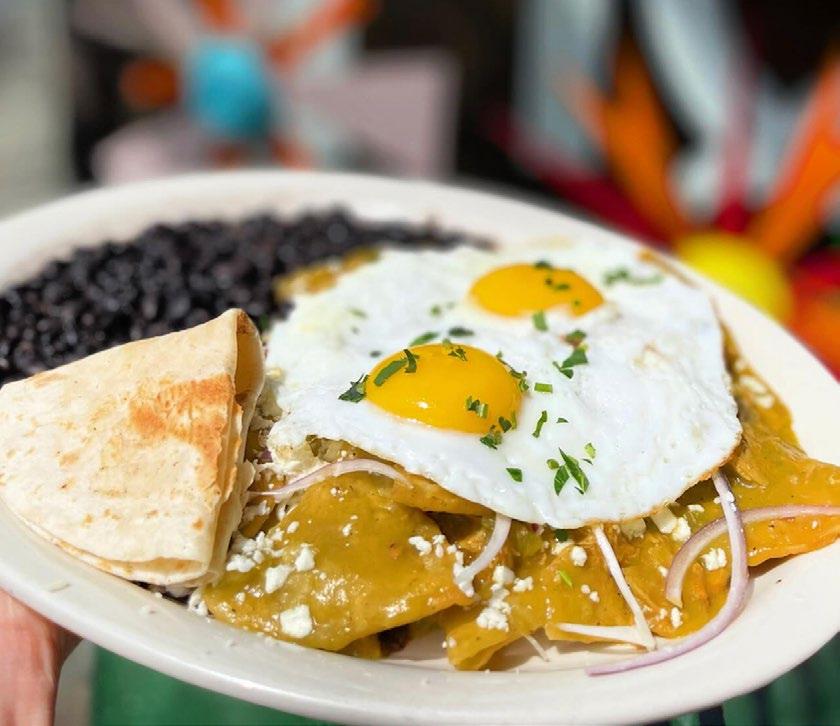
Flo’s Hatch Green Chile Chicken Chilaquiles
culinary
The Hatch Chile craze isn’t limited to restaurants in the southwest.
At Flo in Chicago’s West Town neighborhood, the message is clear from the message front and center on its home-page: “New Mexico in Chicago — Imported Hatch Green and Red Chile.” Menu options include Hatch Green Chile Chicken Chilaquiles loaded with crispy tortilla chips smothered in Hatch Green Chile, shredded chicken, black beans, red onions, and crumbled queso fresco, and topped with farm-fresh eggs; and the Hatch Green Chile Cheeseburger, an Angus beef patty topped with Hatch Green Chile, thick cut bacon, fried egg and cheddar cheese. Customers can also order a New Mexico Hatch Green Chile as a side
And at Santa Fe BK in Brooklyn, customers can order the Hatch Chile Mac n’
Cheese that comes with a choice of Hatch Green Chile, Chimayo red chile, or “Christmas” (a combo of the two colors).
THE HATCH CHILE PROFILE
Hatch Valley’s growing conditions — intense sun, hot days, cool nights, and Rio Grande irrigation — produce chiles with more depth and aromatics than a standard jalapeño or Anaheim. Flavor and heat vary by harvest color.
• Green Hatch Chiles are picked early in the season, and have a crisp, bright, grassy flavor with a slow-building heat (roughly 1,000–8,000 Scoville Units), spanning mild to medium-hot.
• Red Hatch Chiles are fully vine-ripened and have a deeper, sweeter, more earthy flavor with a bolder heat than the green chiles.
Hatch-ing Cocktails Behind the Bar
The appeal of Hatch Chiles isn’t limited to food menus. Jalapeño Inferno offers the Blackberry-Hatch Chile Margarita, hand-shaken with premium silver tequila, triple sec, homemade sour, muddled blackberries and spicy New Mexican chiles and served on the rocks.
Mí Día From Scratch heats things up with its signature Hell Freezes Over cocktail: “The Concept In A Glass!” house-made Hatch Green Chile-infused Hornitos Blanco Tequila, Cointreau, lime, cucumber, basil and organic agave nectar, finished with dry ice and a Hatch Chile salt blend.
OTHER IDEAS FOR HATCH CHILE COCKTAILS:
• Hatch Pepper Palomas. Grapefruit soda or juice with chile-infused tequila.
• Hatch Micheladas Mexican beer
combined with lime juice and a Hatch Chile-lime salt rim
• Hatch Mezcal Coolers Mezcal paired with Hatch Chile juice, muddled cucumber, and fresh cilantro
• New Mexican Martinis Tequila and orange liqueur shaken with citrus juices and garnished with a slice or curl of roasted Hatch Chile.
Hatch Chile-infused Tequila is simple to make. Frieda’s Branded Produce offers this recipe made with 1 bottle (750 ml) of tequila blanco and 5 to 6 roasted Hatch Green Chiles, halved lengthwise (seeding and/or peeling optional): In large glass jar or pitcher, add Hatch Chile halves. Pour tequila over chiles and stir. Cover and store in cool, dark place 3 to 4 days. The tequila will take on the color of the chiles. Strain and discard chiles, pour liquid into clean bottles, and store in refrigerator up to 6 months.
• FIRST PLACE: $5,000 and an exclusive “Behind the Kitchen” video
• SECOND PLACE: $2,000 and a $1,000 social media ad campaign
• THIRD PLACE: $1,000 and a $500 social media ad campaign
Open to any Mexican or other Latin-cuisine restaurant with 10 or fewer locations. FIND DETAILS AT elrestaurante.com/2026-independent-contest DEADLINE: October 1, 2026
AUTHENTICITY ON TAP: Mexican Craft B r Slowly Gains Momentum
| BY ED AVIS | Casa Vega is a classic Mexican restaurant in Sherman Oaks, California with 70 years of tradition behind it. It’s no surprise then that second-generation owner Christy Vega insists on authenticity on the menu, including the beers they serve: Her selections are all Mexican brews, including “craft” beers from Baja Brewing in Cabo San Lucas, Mexico, and Calidad in Southern California.
“Just as we thoughtfully pair tequila, mezcal, and wine with our menu, craft beer brings another layer of flavor to the meal,” Vegas says. “Whether it’s a crisp lager with tacos or a more complex ale alongside richer dishes, the right beer can
elevate the dining experience. It also reinforces that Mexican cuisine is incredibly diverse and sophisticated, and the beverage program should reflect that same level of care and craftsmanship.”
Craft Mexican beer — also called “emerging” beer— can add that little extra something that some customers appreciate.
“There are a number of Mexican restaurants that offer beautiful, authentic Mexican food, but when a client says, ‘Oh, and what do you have on draft for an IPA?’ they don’t have an authentic Mexican beer to go with it,” says Stephen Walker, president of Polaris Beverages, which imports a variety of
“Mexican craft b r has exploded in quality and creativity ov the la decade, and it’s exciting to introduce our gu ts to brew i they may not have discov ed oth wise. It giv people anoth way to exp ience the depth and evolution of Mexican culinary culture.”
CHRISTY VEGA, Casa Vega
beer from Mexico. “The Anglo palate is starting to crave more authentic Mexican craft beer, and it’s available.”
AVAILABILITY BY MARKET
So, what Mexican “emerging” brands can you get in the United States? If your restaurant is located near the border of Mexico, especially in Southern California, you have a wider selection than in other parts of the country, though restaurants located in major cities in other parts of the country do have a decent selection these days.
“Most of the breweries that export do so because of their proximity to the border,” says Francisco Olachea, an instructor on the topics of beer and distilled beverages for Asociación de Sommeliers Mexicanos in Mexico City.
According to Olachea, the brands that sell the most — though not necessarily in this order of importance or volume — are:
• Cervecería Minerva (Zapopan, Jalisco)
• Cervecería de Colima (Cuauhtémoc, Colima)
• Cervecería Allende (San Miguel de Allende, Guanajuato)
• Baja Brewing Company (Los Cabos, Baja California Sur)
“There are others, but these are the ones that have maintained a consistent presence and popularity in the U.S. markets,” Olachea explains.
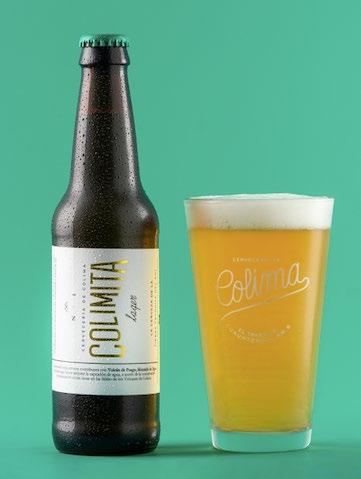
Colimita is a crisp pilsner from Cerveceria de Colima that has established itself in Southern California, explains Luis Peréz, purchasing and export manager for the brewery.
“We’ve focused our growth on establishments that value quality, authenticity, and origin,” Peréz says. “Our main market is San Diego, where the beer is available at restaurants, bars, and independent bottle shops that share an affinity for Mexican cuisine and culture. We also have a presence in Orange County and Los Angeles, including contemporary Mexican restaurants, specialty stores, and select retail chains, as well as distribution along the Central Coast and in Northern California.”
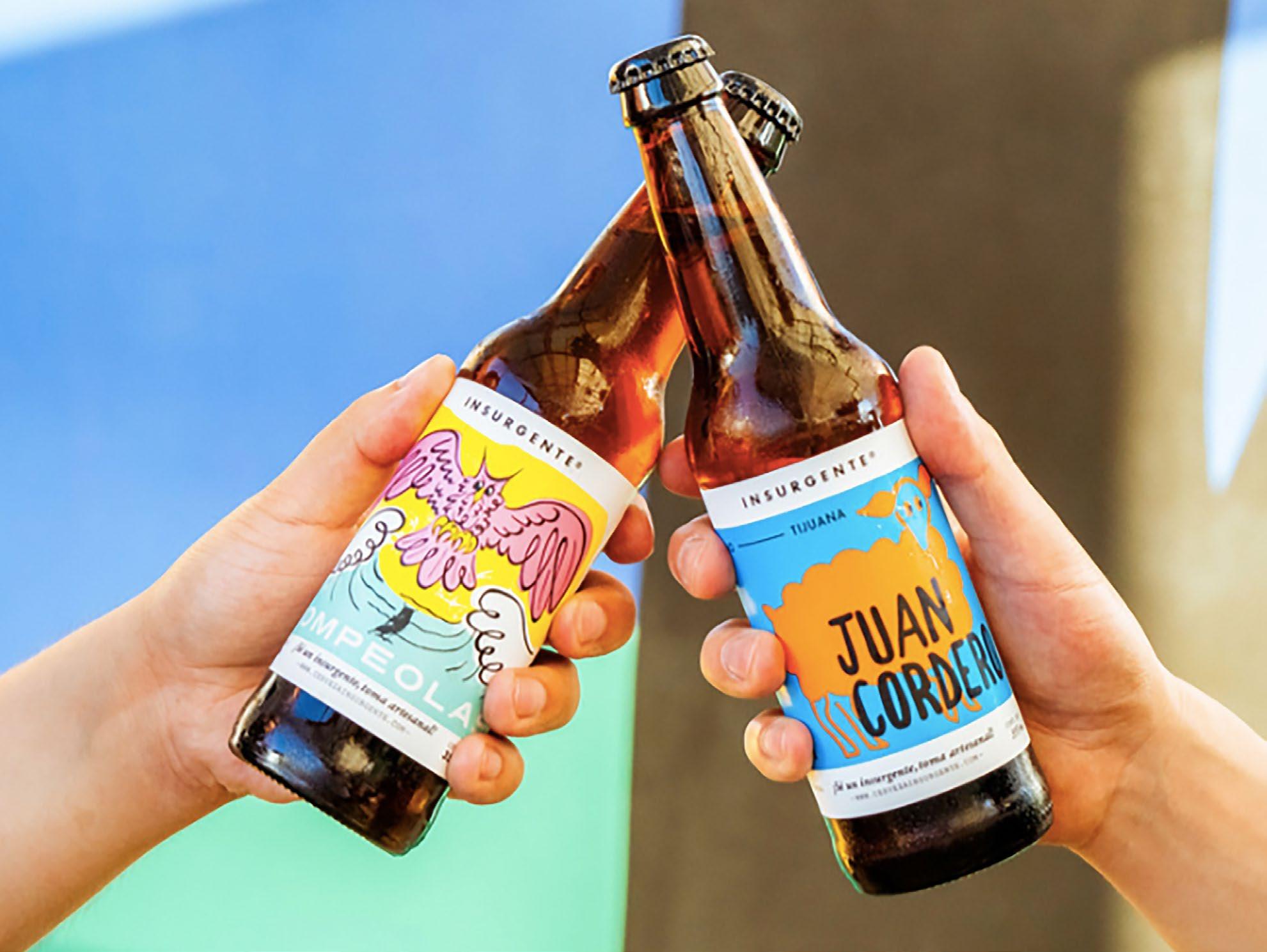
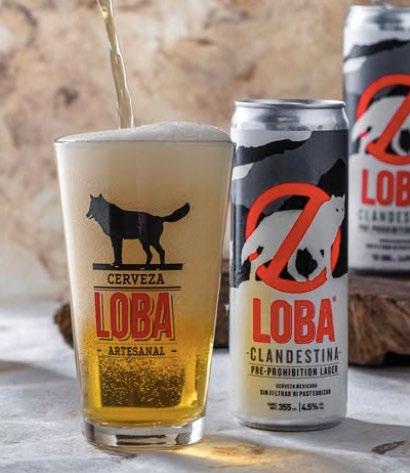
Colimita is imported by Polaris, which also handles Cervecería Rrëy, Cervecería Wendlandt, Cerveza Loba, and Insurgente, among others. In addition to importing beer brewed in Mexico, Polaris handles contract brewing in Southern California for Insurgente, Wendtlandt and Loba, a practice that took off during COVID and has continued as a way to more
economically produce those beers with the same procedures and ingredients.
Do Mexican craft beers sell well? Yes, Walker says, but the market has not been booming.
“The niche is growing. It was growing faster than the (U.S.) craft beer movement, but we were working off of a very small base, so that’s an easy thing to do,” Walker says. “As the (U.S.) craft beer movement has started to slow or even recede a little bit, we have continued growing very slowly. We are very small compared to the craft beer movement in general, so it’s not hard for us to keep growing, but just by adding new placements. It’s not necessarily that drinkers are drinking more of it, it’s just that they’re being offered in more places.”
WHAT RESTAURANTS ARE BUYING
Nearly every Mexican restaurant carries Corona and Modelo, but when it comes to craft beers, there is no super-popular brand that everyone carries, Walker says.
“It really depends on what any particular account is looking for,” he explains. “They may say, ‘Even though you guys have
some really nice imported lagers, we’re going to fill our lager needs with the macro brews, whether it’s Modelo or Corona or whatever. But we would really like to have some more crafty beers from Mexico and that we would like to fill with the imports.’ Or they might say, ‘We’ve got a lot of clientele that are tired of the Modelo, Corona and Tecate, and we would like to continue to have a light offering, like 4 or 5 percent. So, we’ll sell them the lighter (Mexican emerging) lagers or goses [salty-sour German beers] or whatever.”
Regardless of which brews a restaurant decides to menu, the typical serving formats are all available. Polaris offers Cervecería Rrëy beers in 12-ounce bottles and five-gallon kegs, and the rest of his brands come in five-gallon and 15.5-gallon kegs and 16-ounce cans.
His biggest sellers to restaurants are kegs.
“It is predominantly draft in the restaurants, though there are restaurants that prefer package, particularly higher end Mexican restaurants,” he says. “Some of them prefer the Rrëy lager and dark lager in a bottle. There is still a perception in a lot of places that a glass bottle is the way that Mexican beer is drunk, and it looks a little bit more elegant on the table than a can.”
MEXICAN STYLE, BREWED IN AMERICA
Good Mexican beer does not all come from Mexico. Just like Polaris brews some bona fide Mexican brands in Southern California, so do a number of American brewers make good Mexican-style beer. Some are available widely in the United States; others are just local.
Mexican Logger, a 5 percent ABV lager by Ska Brewing Company in Durango, Colorado, is one example. Others include Chicago-brewed Beer for Tacos, a gose-style beer with lime juice and salt from O ff Color Brewing; and Buenaveza Lager from Stone Brewing, which is available nationwide.
Four Corners Brewing in Dallas, Cruz Blanca in Chicago, and Calidad in Los Angeles are among the many smaller craft breweries that specialize in Mexican-style beers.
Regardless of where you source Mexican-style brews, your customers should appreciate the touch of authenticity on your menu.
“Mexican craft beer has exploded in quality and creativity over the last decade, and it’s exciting to introduce our guests to breweries they may not have discovered otherwise,” says Vega from Casa Vega. “It gives people another way to experience the depth and evolution of Mexican culinary culture.”
Philanthropy 101: Community is Key GIVING BACK WORKS BEST WHEN IT CO ECTS YOU TO THE COMMUNITY
| BY ED AVIS |
Mexican restaurants are well known for supporting their communities, whether it’s donating food to the homeless shelter, collecting money for hurricane relief funds, or sponsoring local baseball teams. The owners do these things because they sincerely want to help, and if they get a little marketing boost as well, great.
But the truth is that the list of potential causes that need help is endless. You can’t help them all! So how do you determine which are the worthiest of your support?
“Every donation is an investment in community equity,” says Allison Todd, a business development strategist and founder of SiMar Enterprises in Lexington, Virginia. “The question isn’t simply, ‘Is this a good cause?’ It’s, ‘Will this partnership help strengthen the specific community our customers care about?’”
We interviewed Todd and two other experts of small business philanthropy. Here’s what we learned:
LOOK FOR TRUE ENGAGEMENT
A smart charitable donation is one that helps strengthen your restaurant’s community, rather than just gets your name out there, Todd explains.
“Mexican restaurants and family eateries are inherently cultural and social hubs for their neighborhoods. To maximize
impact, owners should treat charitable contributions as an investment in local infrastructure rather than a generic expense,” she says, noting that strong philanthropic partnerships meet three criteria:
• Authentic value match: The cause aligns with the owner’s personal core values.
• Overlapping demographics: The organization directly serves the same local community and customer base the restaurant feeds.
• Relational depth: The partnership creates pathways for genuine human engagement, not just superficial logo placement.
Joe Braier, president/CEO of Lake Country Advisors in Pewaukee, Wisconsin, agrees. He says small businesses build brand credibility and visibility when they engage in philanthropic endeavors with community organizations.
“A restaurant with a high level of community engagement is likely to have more consistent attendance, improved word of mouth, and an increased competitive positioning within its market,” Braier says. “The best philanthropic opportunities for Mexican restaurants typically align with the identity of the business and/or the neighborhood served by the restaurant.”
Sponsoring school events, supporting local food banks or partnering with community organizations are examples where a restaurant becomes perceived as having roots rather than being simply promotional, Braier adds.
“In many cases this type of philanthropic effort will serve to differentiate the business from others in its market and provide for greater profitability over time,” he says.
SET A BUDGET AND GET EMPLOYEE INPUT
If you set a clear budget for your charitable giving — make sure you count “in-kind” donations such as food — it is easier to say “no” when organizations ask too late in the year. You can invite them to ask again at a certain time in the following year, which lets them know that you have an organized process for responding to donation requests.
Once you have a budget, ask employees what charities they think are worth supporting, suggests April Shprintz, a business consultant who pioneered the concept of The Generosity
“The qu tion isn’t simply, ‘Is this a g d cause?’ It’s, ‘Wi this partn ship help rengthen the specific community our cu om s care about?’” ALLISON TODD, SiMar Enterprises
Culture — a professional and corporate philosophy that focuses on pouring into your employees, your clients, and your community. Not only will that generate some ideas that you may have overlooked, but it also will make your employees feel like their opinion matters.
“Consulting employees about the charities and events that resonate with them can have a huge impact on employee retention,” Shprintz asserts.
ASK FOR MORE THAN YOUR LOGO ON A SIGN
When you make a donation to an organization or cause, it’s reasonable to expect that you’ll get some recognition, such as your logo on a sign or a “thank you” from the leader during the event. But a more valuable return on your investment (ROI) is the opportunity to deepen your relationship with that group or community, Todd says.
How can the organization you’re supporting facilitate this? Here are three possibilities:
• By providing you with photos and other content you can proudly share on your Facebook or Instagram page
• By creating opportunities for you to personally meet organization or local community leaders
• By connecting you to broader, neighborhood networks.
“A good nonprofit partner helps a restaurant become part of a shared neighborhood story,” Todd says. “The ultimate goal isn’t simply to be thanked on a flyer; it’s to build long-term trust and relationship capital.”
MEASURE YOUR ROI THOUGHTFULLY
It’s always hard to measure the ROI on marketing investments, and even harder to measure the return on a charitable gift. Furthermore, when you’re giving to a cause you believe in, you may be reluctant to attach a tangible value to it.
Plus, the benefits of making donations, such as increased brand awareness and goodwill, are almost unmeasurable, Shprintz notes.
“Donations can often circle back as revenue to the business in numerous ways that can’t be directly tracked the way a coupon or offer can,” Shprintz says. “That said, speak to any
business that regularly participates in their community by donating time, money and resources and they will be able to share anecdotally how it contributed to their growth.”
Since the best long-term return of charitable donations is deepened community trust, you may want to measure the ROI of a donation with these indicators, Todd suggests:
• Did this initiative introduce us to new community relationships, local leaders, or B2B partners?
• Did our current customers actively engage with, comment on, or share the story?
• Did the partnership visibly strengthen our brand reputation in the neighborhood?
• Did it boost internal employee pride, alignment, and team morale?
“Not every charitable investment produces an immediate weekend sales spike, but it consistently manufactures trust,” Todd says. “In a crowded market, trust is the most valuable, appreciating asset a business can build.”
She concludes by noting that consumers often forget typical marketing promotions, but remember businesses that demonstrated that they care about the community:
“They will remain fiercely loyal to the restaurant that sponsored their child’s youth team, supported a local family in a crisis, or consistently invested in neighborhood infrastructure.”
A Fiesta That Gives Back
Hacienda Mexican Restaurants, headquartered in South Bend, Indiana, is following the format experts on philanthropy recommend.
For more than a decade, the local chain — with 14 locations in the Hoosier State — has operated its “Gives Back Fiesta” program. The process is simple: organizations pick a date for their fiesta, then promote it with digital materials the restaurant provides along with “Gives Back Tokens” supporters present when paying for their meal. Hacienda, in turn, donates 20 percent of proceeds from supporters’ purchases.
The Goshen location’s May 20 fundraiser for Relay For Life, presented by the Goshen Center for Cancer Care, is a recent example: It raised $1,139 for Relay For Life, and also generated brand recognition via social media posts
Sabor. Quesabirria tacos made with shredded beef and
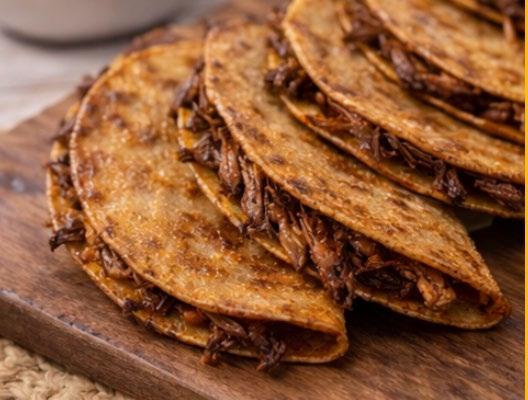
cheese are one of the recent additions to the Casa Sabor line of fully cooked classics that reduce prep time and drive consistency while delivering authentic flavor customers love. Designed to perform across multiple menu formats from quick-service to full-service operations. Tacos, burritos, bowls and plates, plus beef barbacoa, beef birria, pollo verde, pork carnitas, pork pastor and pollo tinga also available. casa-sabor.com, sales@casa-sabor.com
FLAT Equalizers. No more wobbly tables! These reinforced plastic equalizers stabilize your existing tables with just a press of the tabletop. Pushing together tables for large parties? Simply raise or tilt one of the misaligned tables so it matches the other table — the feet will adjust, creating a seamless alignment. Available in a variety of sizes (metric and standard/UNC) to fit almost any table with screw-in feet. They’re designed to protect against impact and corrosion, are fully sealed to block out dirt, food particles and other grime. 855-999-3528; FlatTech.com
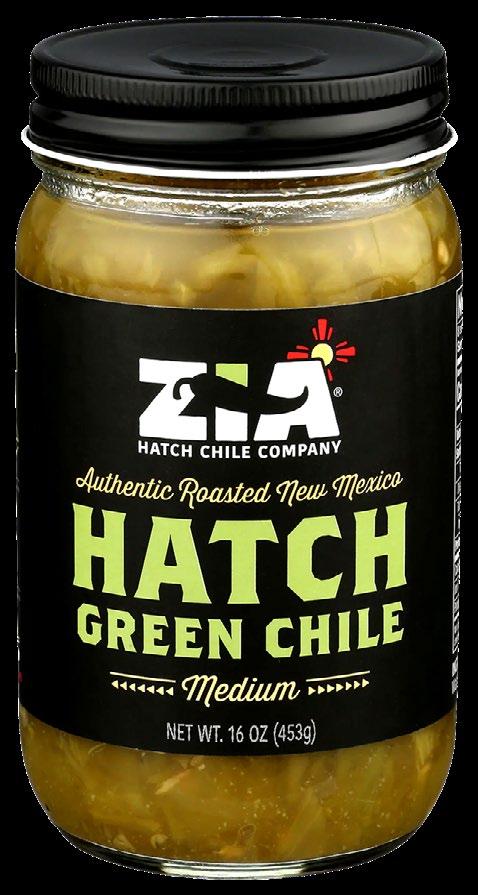
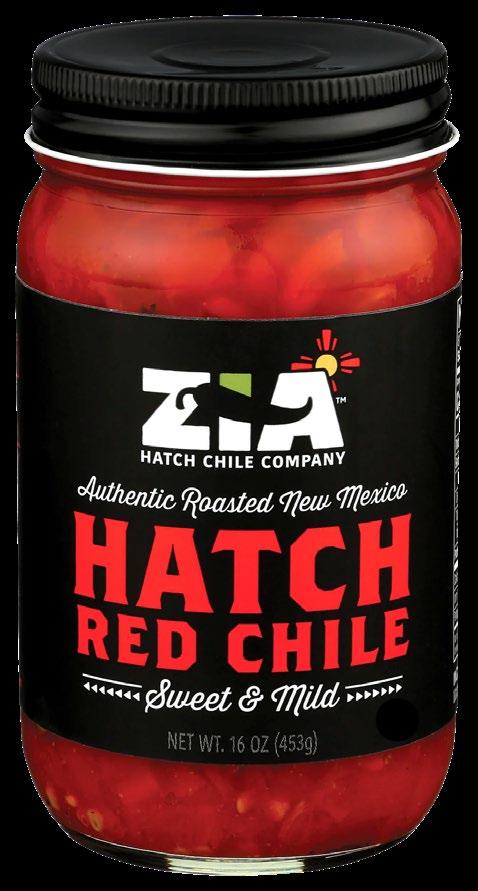
Zia Hatch Chile Products. These shelf-stable chile products let chefs treat customers to authentic Hatch Chile flavor all year long. The chiles, harvested only from mid-August to mid/late-October in New Mexico’s Hatch Valley, are roasted, peeled, diced, and naturally preserved in lime juice, garlic, and salt. As the chiles mature throughout the harvest, the skin turns red, and they’re roasted in the late harvest, bringing out a sweetness with an earthy, underlying spice. ziahatchchileco.com; nate@ziagreenchileco.com
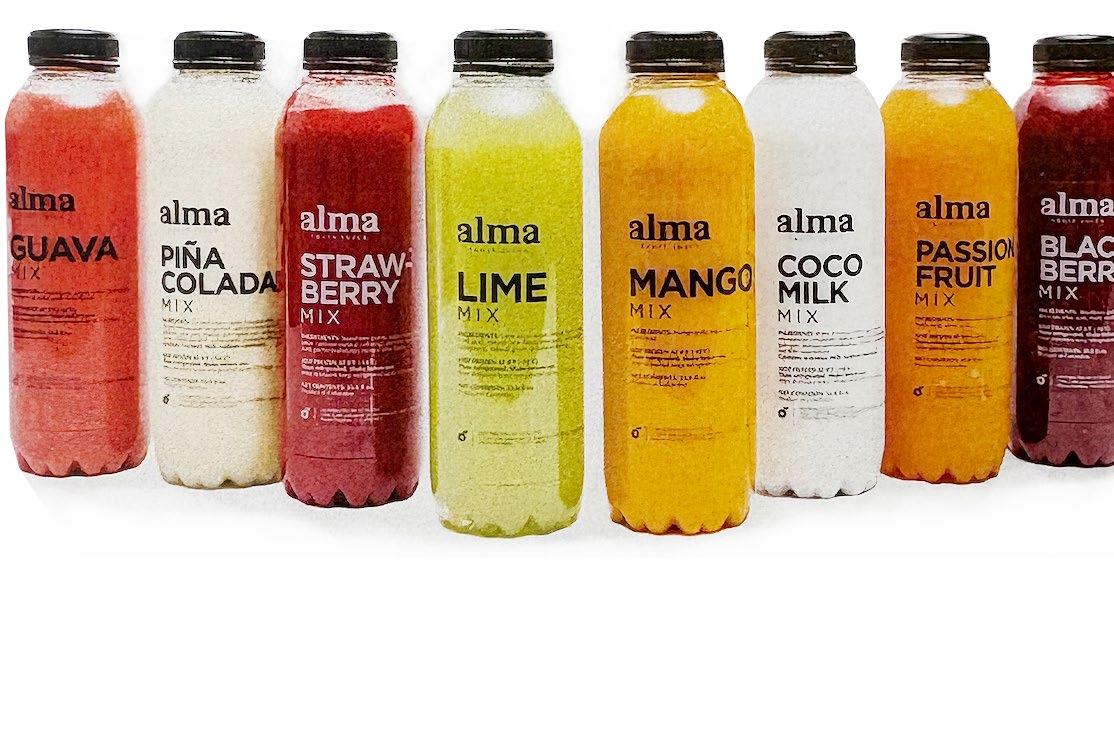
Alma Frozen Fruit Pulps. Made with real fruit, these preservative-free pulps are perfect for preparing cocktails, aguas frescas, slushies, milkshakes and other menu items that will wow customers with tropical flavors. Available in Guava, Pina Colada, Strawberry, Lime, Mango, Coco Milk, Passion Fruit and Blackberry. Recipes include the Mango Mezcalita, Coconut Frozen Margarita, Passion Fruit Mojito and more. 770-218-9803; info@lcfood.com
Casa
Oaxaca
Antojo Expo: The Destination for Hispanic Food & Beverage
When the Antojo Industry Trade Expo was officially recognized as a member of the “Fastest 50” Class of 2025 by Trade Show Executive Magazine in April 2026, it cemented the show’s position as one of the fastest-growing trade shows in the exhibit space.
According to the show’s producer, Eric Jurado, that uphill trajectory continues, with registration booming just three months before the 4th Annual event slated for October 5-6, at the Long Beach Convention Center in Long Beach, California.
“Our trade show’s growth is a direct result of the massive demand in the U.S. Latino and international markets. We’ve built a high-impact marketplace where exhibitors and buyers don’t just network — they sign contracts and secure shelf space,” Jurado says. “We’re four years in, and this is going to be our absolute best Expo yet. We’re bringing a whole new wave of fresh faces and new products into the food and beverage space that are going to completely shift the energy. If you’re in this industry, you need to be in Long Beach!”
THIS YEAR’S LINEUP OF INSTITUTIONAL BUYERS INCLUDES:
• The Distribution Giants: Sysco, Performance Foodservice, UNFI, Restaurant Depot, and IFS.
• The High-Volume Retail Titans: Kroger, Northgate Markets, Vallarta, Cardenas, Calimax, and Superior Grocers.
• The Multi-Unit Foodservice Heavyweights: Javier’s Restaurants, Miguel’s Jr., Applebee’s, and Viejas Casino Resort.
• The Neighborhood Powerhouses: A massive influx of independent restaurants, high-velocity micro-markets, liquor stores, and culinary trendsetters.
• The Next-Gen Digital Pioneers: Weee!, Emart America
• And the following companies are just a few of the myriad exhibitors you’ll find on the show floor:
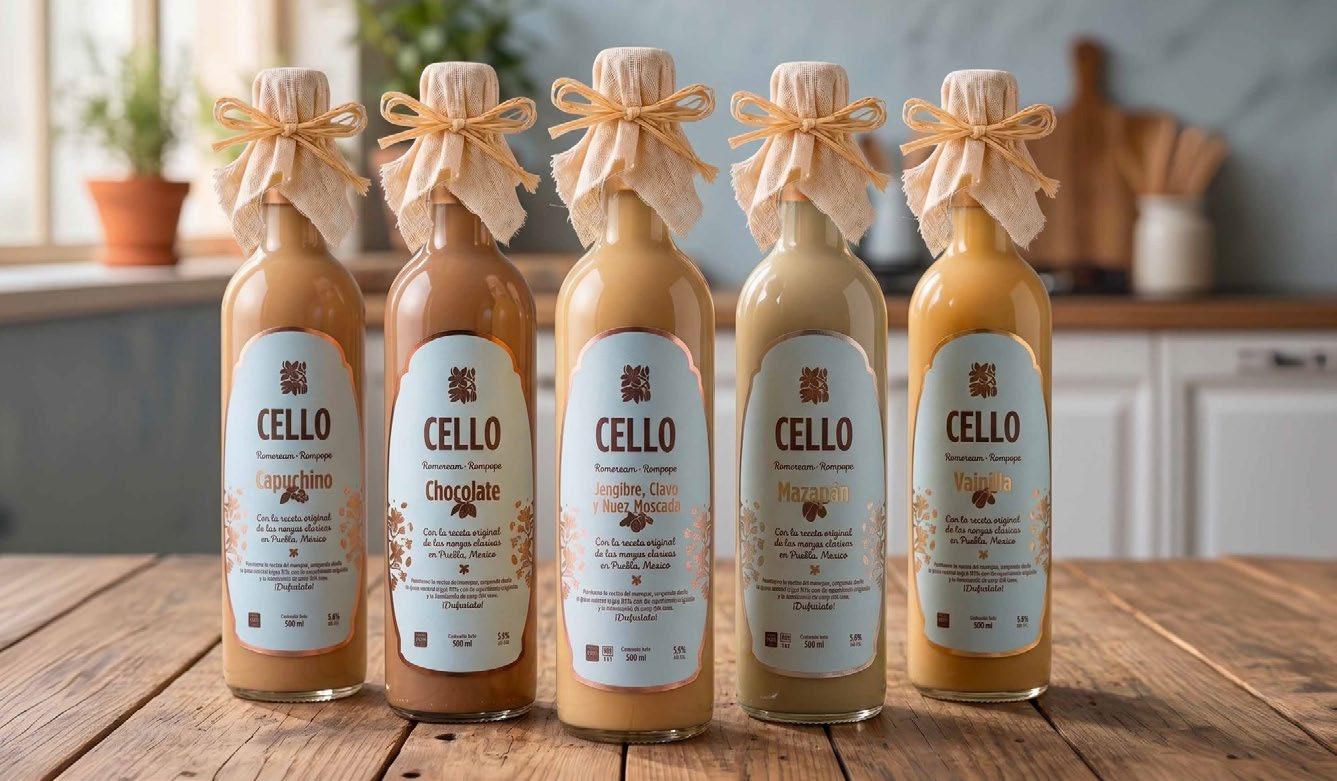
Cello Rompope. This creamy, Latin rum cream is made with premium ingredients and traditional techniques that honor its origins. Available in five flavors: Capuchino (Cappuccino), Chocolate, Vainilla (Vanilla), Mazapan (Marzipan), and Jengibre con Clavo y Nuez Moscada (Ginger with Clove and Nutmeg).+52-56-3940-5861; paolamacias@cellorompope.com; cellorompope.com
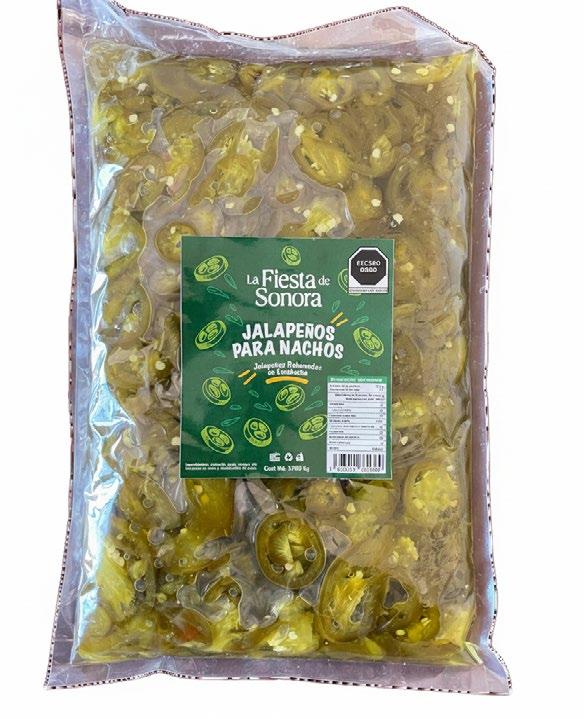
La Fiesta de Sonora. Artisanal salsas and jalapeños made with premium ingredients and no artificial preservatives bring the taste of Sonora to your restaurant tables. Tatemada, Habanero, Roja, Verde, and Chipotle Salsas and Jalapeño Nacho slices available. USA Phone and Whatsapp +52644-171-0260 and +52-644-116-2598; contacto@lafiestadesonora.com
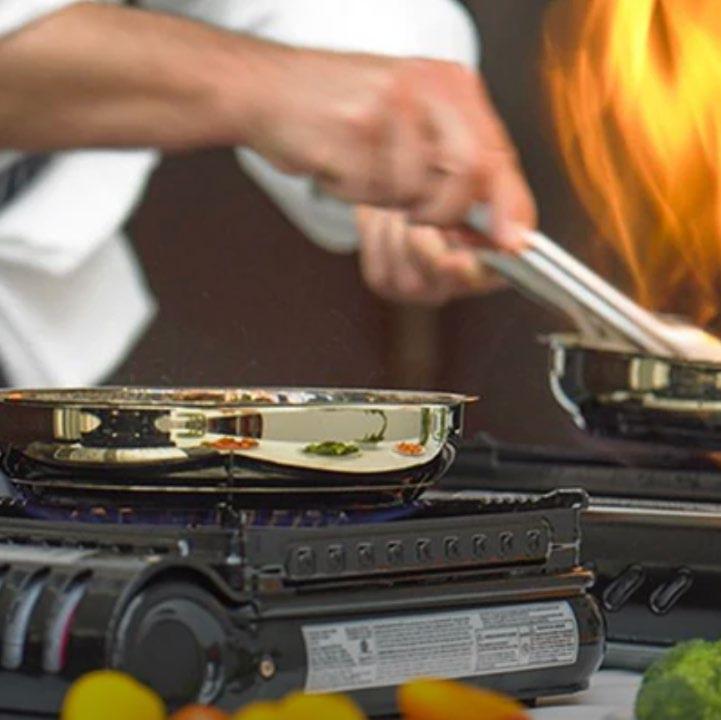
Sterno. The company’s extensive product line of foodservice equipment and accessories includes butane stoves for tabletop food prep, catering equipment, chafers, chafing fuel, delivery food carriers and more. 951-682-9600 sales@ sterno.com, sterno.com
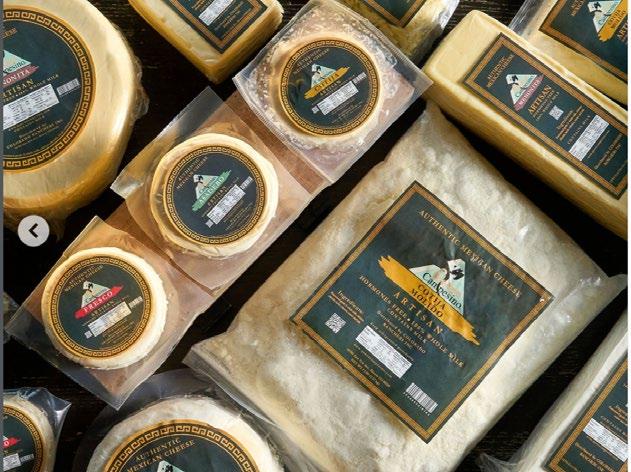
Queso Campesino. All-natural Hispanic cheese made from high-grade pasteurized whole milk from cows that are well treated in a protected environment. Varieties include Requeson, Cotija, Cotija Molida, Menonita, Fresco, Fresco Cremoso, and Oaxaca. quesocampesino.com
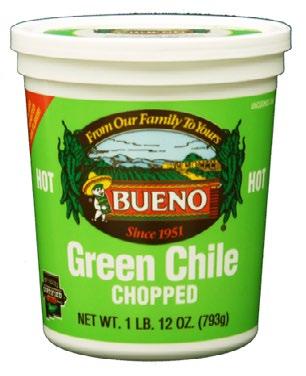
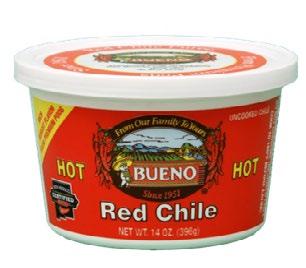
Bueno Foods. The first processor and company to receive the New Mexico Certified Chile™ certification, Bueno Foods’ Hatch-grown chile packages carry the seal confirming the chile was grown in Hatch, N.M. Products include Hatch Autumn Roast Chopped Green Chile, Regular Roast Chopped Green Chile, Ready To Eat Seasoned Green Chile with garlic and salt; plus several varieties of Red Chile Puree. buenofoods.com
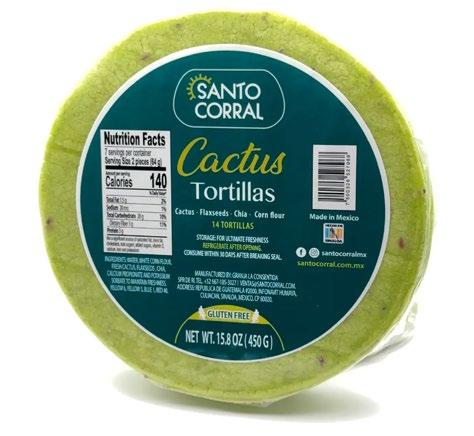
Santo Corral. Using the finest maíz blanco de Sinaloa for an unparalleled taste and texture, Santo Corral’s tortillas blend fresh nopal (not powder), flaxseeds, and chia seeds for an authentic yet modern take on a Mexican staple. Nopal tostadas and chips, plus beetroot and turmeric tortillas also available. santocorralusa.com
Need more details? Reach out to ericj@antojoindustry.com or call 714-914-4012
THE NATIONAL LATINO RESTAURANT ASSOCIATION
supports and promotes restaurateurs, small businesses and the entire Latino restaurant community at a national level to ensure the equitable economic growth of the sector. LRA community members come together to network with industry pros, market their brand and learn new ways of making their business more efficient.
MEMBER BENEFITS INCLUDE:
BOOTCAMPS
FREE CLASSES FOCUSED ON RESTAURANT INDUSTRY DEVELOPMENT AND EXCLUSIVE NETWORKING OPPORTUNITIES WITH CERTIFICATION UPON COMPLETION OF COURSES
ACCESS TO CATERING RFP'S BID ON CATERING CONTRACTS EXCLUSIVE TO LRA MEMBERS
DINE LATINO RESTAURANT WEEK EXCLUSIVE PROMOTIONS FOR YOUR RESTAURANT DURING THE RESTAURANT WEEK! (SAVE $900+)
GRANT OPPORTUNITIES GRANT ALERTS FOR LRA MEMBERS
EXCLUSIVE ACCESS TO THE LRA MEMBER PLATFORM
GROW YOUR PROFESSIONAL NETWORK BY ENGAGING OUR 8,000+ MEMBER CONTACTS
Allegiance Torta de Pork
Recipe and photo courtesy of Performance Foodservice
Makes 8 tortas
8 ea. garlic, clove(s), peeled
½ c. soy sauce
2 T. honey
2 t. salt
1 t. ground black pepper (1) 3 lb. Allegiance® bone-in pork shoulder
16 ea. bacon, slice(s)
⅔ c. black beans, drained and rinsed
8 ea. Telera rolls, (Mexican bread rolls; substitute with bolillos or similar rolls)
½ c. Mexican crema
6 oz. cotija cheese, grated
6 oz. feather shred Oaxaca cheese
12 oz. ham, whole muscle, pit smoked
6 ea. avocado halves, sliced
½ c. sliced pickled jalapeño, chopped
6 oz. salsa verde tomatillo
To Make the Roast Pork: Preheat the oven to 325°F. In a blender, combine garlic, soy sauce, honey, salt, and pepper. Blend until smooth.
Place the pork in an oven-safe pan (like a Dutch oven) and pour the marinade over it, ensuring the pork is evenly coated. Cover the pan with a lid and roast the pork for 1 hour. After 1 hour, uncover the pan and flip the pork. Continue roasting, uncovered, for an additional 1¼ to 1½ hours, basting occasionally, until the pork is tender. Let the pork cool, then refrigerate for several hours or overnight to make slicing easier.
To Prepare the Bacon and Beans:
In a large skillet, lay the bacon slices in a single layer and cook over medium heat for about 8 minutes, flipping occasionally, until crispy. Remove the bacon from the skillet and drain on paper towels. Retain about 2 tablespoons of bacon drippings in the skillet.
In a food processor, puree the black beans. Add the pureed beans to the skillet with the bacon drippings and stir for 1-2 minutes to heat through and thicken. Remove from heat and set aside.
Finish the Tortas: Preheat the oven to 400°F.
Slice the roasted pork as thinly as possible and let it come to room temperature. Split the telera rolls in half, like a bagel. Place the bottom halves on a rimmed baking sheet and spread a generous layer of beans on each. Top each beancoated bottom half with a portion of roast pork and 2 slices of bacon. Spread 2 tablespoons of crema on the cut side of the top halves of the rolls, then top with both cheeses and ham.
Place the top halves of the rolls (open-faced) on the baking sheet next to the bottom halves. Bake in the oven for 8-10 minutes, until the rolls are crispy, and the cheese has melted.
Once baked, remove the tortas from the oven and add 2 slices of avocado to each one. Top with pickled jalapeños and salsa verde. Close the tortas by flipping the top halves over onto the bottom halves.
Performance Foodservice products used in this recipe: Peak Fresh Produce® Garlic, West Creek® Honey, West Creek® Salt, Contigo® ground black pepper, Allegiance® bone-in pork shoulder, West Creek® Bacon, Contigo® black beans, Contigo cotija cheese, Contigo feather shred Oaxaca cheese, Contigo® Salsa
Verde Tomatillo, West Creek® ham, Contigo® avocado halves, Contigo® sliced pickled jalapeño
Chicken Milanesa Torta
Recipe courtesy of V & V Supremo Foods, Inc.
Makes 2 tortas
2 eggs
¼ t. garlic powder
¼ t. onion powder
¼ t. ground black pepper
¼ t. Kosher salt
½ c. plain breadcrumbs
¼ c. Grated Sierra Brand Cotija Cheese from V&V SUPREMO
2 boneless chicken breasts (butterflied and pounded thin)
¼ c. vegetable oil
1 T. unsalted butter, softened
2 telera bread rolls (or French bread sliced in half lengthwise)
½ c. black beans (recipe below) or your favorite brand of refried beans
Chipotle Cream Sauce (recipe at right)
4 Romaine lettuce leaves, torn ½ (10 oz). pkg. V&V SUPREMO Brand Queso Fresco, cut into 6 slices 6 tomato slices, divided 10 thin slices red onion, divided ½ medium avocado, medium slices, divided
Beat eggs in a shallow dish with garlic and onion powder, pepper and salt. Prepare a second shallow dish with breadcrumbs and cotija cheese. Mix until cheese and breadcrumbs are combined.
Dip chicken into eggs and let excess drip off. Coat with the cotija cheese and breadcrumb mixture, turning and patting to coat.
Preheat oil in skillet for 2 minutes over medium heat. Working in batches, fry chicken for 3 to 4 minutes on each side until golden brown and internal temperature of 165°F is reached. Transfer chicken to a paper towel-lined plate to drain.
Preheat a griddle or a nonstick skillet for 2 minutes over medium heat. Spread ½ tablespoon butter on the inside of each bread half. Place bread halves on griddle and toast 1 minute on each side, or until warm and golden.
To Serve: Evenly spread each telera bread bottom with 3 tablespoons mashed black beans. Add 2 tablespoons Chipotle Sour Cream. Top with 1 piece of chicken Milanese and drizzle with an additional 1 tablespoon Chipotle Sour Cream.
Top with lettuce, Queso Fresco slices, tomato, onion, and avocado. Spread 1 tablespoon of chipotle sour cream on the top half of the bread.
The Black Beans: Makes 4 cups
1 lb. dried black beans, cleaned and free of debris
6 c. water
½ medium white onion
3 cloves garlic
1 T. Kosher salt, or to taste
Combine water, beans, onion, and garlic. Cover and cook on high heat for 4 hours. Add salt and continue to simmer for an additional 30 minutes or until beans are tender. Discard onion and garlic if desired.
The Chipotle Cream Sauce:
1 c. Supremo Brand Mexican Sour Cream
3 T. canned chipotle sauce
¼ t. Kosher salt, heaping
⅛ t. ground black pepper
In a small bowl, combine sour cream with chipotle sauce, salt, and pepper. Mix until all ingredients are fully incorporated. Cover and refrigerate until needed.
‘Hatch Chile Burger
Recipe by Chef Gabriel DeLeon, Mí Día from Scratch, Texas. Reprinted from el Restaurante, August 2024
Makes 4 – 5 patties
8 oz. fresh hatch chiles
1½ lbs. ground beef 80/20
8 oz. cooked chorizo, cooled and fat rendered
¾ t. salt
Fresh pepper, to taste
2 slices American cheese
1 egg or 2 quail eggs
Olive oil as needed
Queso sauce (optional)
4 brioche buns
Prepare a hot grill and roast hatch chiles until black and blistered. Rinse chiles under cold water to remove skin and seeds. Dice ½- inch and store.
In a large bowl, mix ground beef, chorizo, salt and pepper. Try not to over mix. Prepare 7-ounce portions. Heat a pan or grill. Cook burgers to medium. Melt 2 slices of cheese. Prepare egg in sauté pan sunny side up with olive oil, and season with salt and pepper.
To assemble burger: Place 2 tablespoons of queso on bottom bun, top with beef patty, hatch chiles and egg.
EXECUTIVE CHEF/OWNER RAFAEL ZAMORA
Gatsby’s Speakeasy
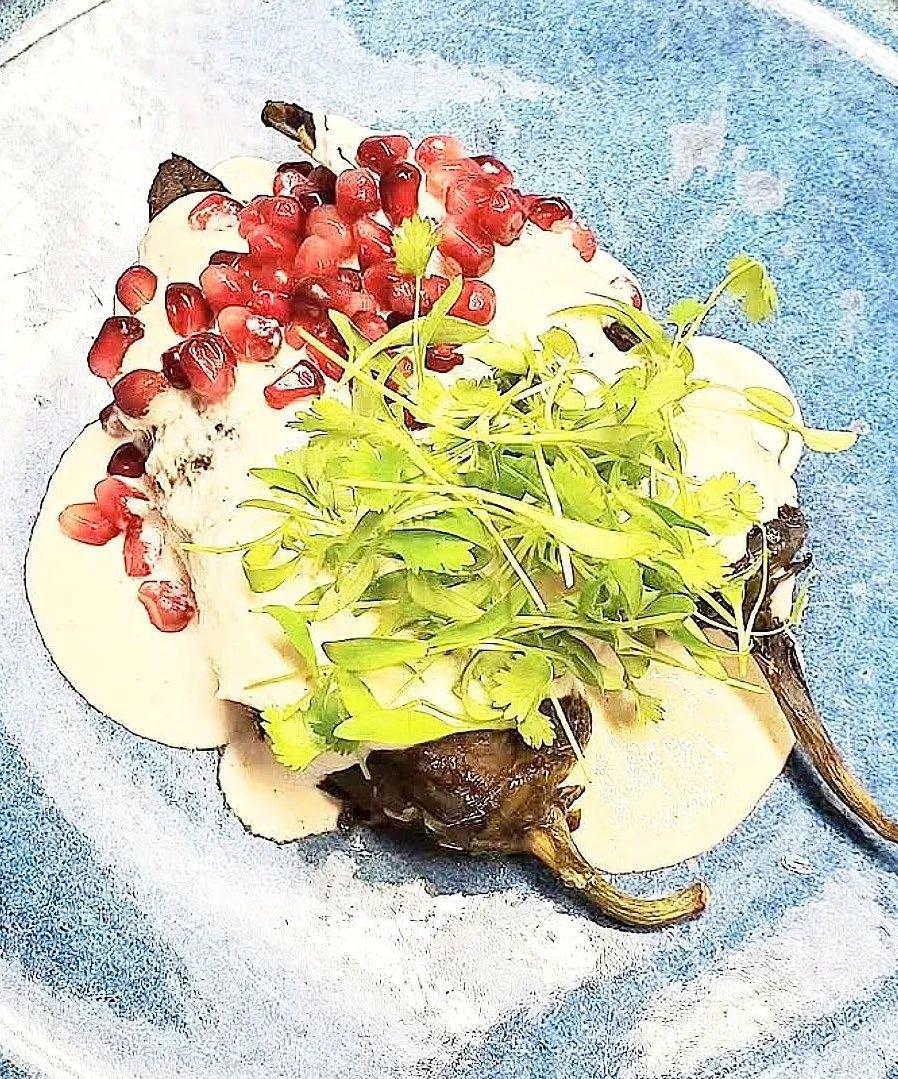
GATSBY’S SPEAKEASY in Santa Fe, New Mexico is known for its seafood, dry aged beef and fine dining. But that doesn’t mean dishes with decidedly Mexican profiles are never on the menu.
“This time of the year we get back to Southwestern cuisine,” Executive Chef/Owner Rafael Zamora says.
One example is the Chiles en Nogada that appears on the seasonal menu.
“This dish is great for summer season,” he says. “It is one of the top-selling dishes on our menu and a classic of Mexican food.”
Here, he shares the recipe with el Restaurante readers.
Chil en Nogada
4 chiles poblano, roasted and peeled, split and seeds removed.
2 oz. ground beef
4 oz. ground pork
½ c. diced yellow onions
3 garlic cloves peeled, chopped
1 oz. golden raisins
1 oz. sliced almonds
Salt to taste
Ground black pepper to taste
2 oz. clean walnuts
1 c. sour cream
1 c. heavy cream
1 oz. fresh, rinsed cilantro leaves, for garnish
1 oz. pomegranate seeds, for garnish
On a medium size pan start cooking both beef and pork, then add onion and garlic; let the mixture cook for about 8 minutes, making sure all ingredients are mixed. Add raisins and almonds, then add salt and pepper to taste.
Make the Nogada Sauce by blending the sour cream, heavy cream and walnuts for 1 minute.
Place the roasted poblanos on a wide plate. Scoop about a quarter of the meat mixture into each chile, then top with the sauce. Garnish with pomegrante seeds and fresh cilantro.