March 19. That was the official start of spring — but Chicago evidently wasn’t paying attention. As chilly to downright cold temperatures linger here in the Windy City, I’m wondering if the weather gods will ever deliver outdoor dining-appropriate weather. As patio tables continue to sit empty or in storage in many places around the country (see Denver snowstorm, May 6), I’m sure many of you are wondering the same thing.
Crazy weather patterns aside, it is time to firm up event plans and new menu items for the warm weather our ever-positive publisher Ed Avis has assured me will arrive. We hope the information in this issue will help you tackle that task.
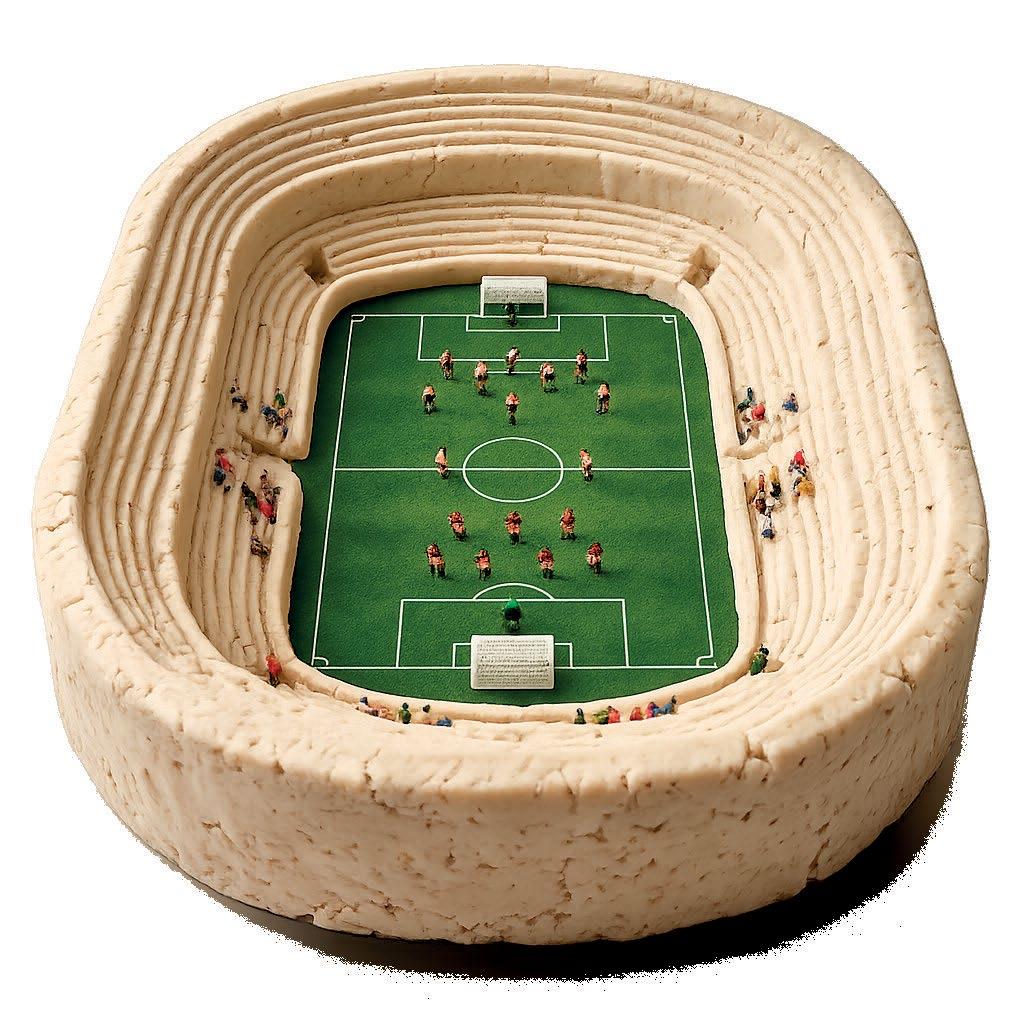
The World Cup is a key opportunity on the event front. Our hotline news story offers great information about how to turn this giant tournament that so many of your customers want to watch into a profit-generating event for your restaurant.
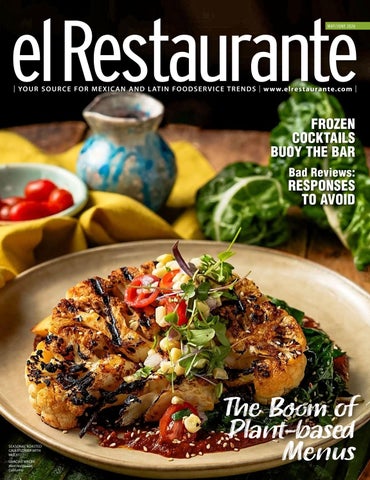
In the culinary arena, we’ve turned our attention to plant-based dining — something more and more diners are looking for at the restaurants they patronize. Our cover story takes a look at our readers’ experience with vegetarian/vegan menus, and shares input on incorporating plant-based dishes from Gracias Madre, a pioneer in the plant-based space.
For ideas on building a fun, revenue-generating spring and summer behind the bar, don’t miss the story on frozen cocktails. You’ll discover how these icy beverages are driving bar business at Mexican restaurants in San Antonio and Chicago and find tips on how to create the best version of these colorful, slushy libations.
Those stories are just the beginning…
Turn the pages of the flipbook, click on stories in our web-optimized version of this issue…and get ready for a profitable (and hopefully sunny) dining season ahead!
PUBLISHER Ed Avis
EDITOR Kathleen Furore
ART DIRECTOR Ala Ennes
MAIN OFFICE phone: 708.267.0023
PRESS RELEASES TO: kfurore@restmex.com
MAILING ADDRESS P.O. Box 13347 Chicago, IL 60613
SHIPPING ADDRESS 1317 W. Belden Ave. Chicago, IL 60614
AD SALES/ESPAÑOL Alfredo Espinola 52-55-4006-9540 alfredo@elrestaurante.com
Published by Maiden Name Press, LLC Volume 29, Number 3
el Restaurante (formerly el Restaurante Mexicano) (ISSN 1091-5885) is published six times a year by Maiden Name Press, LLC 1317 W. Belden Ave., Chicago, IL 60614
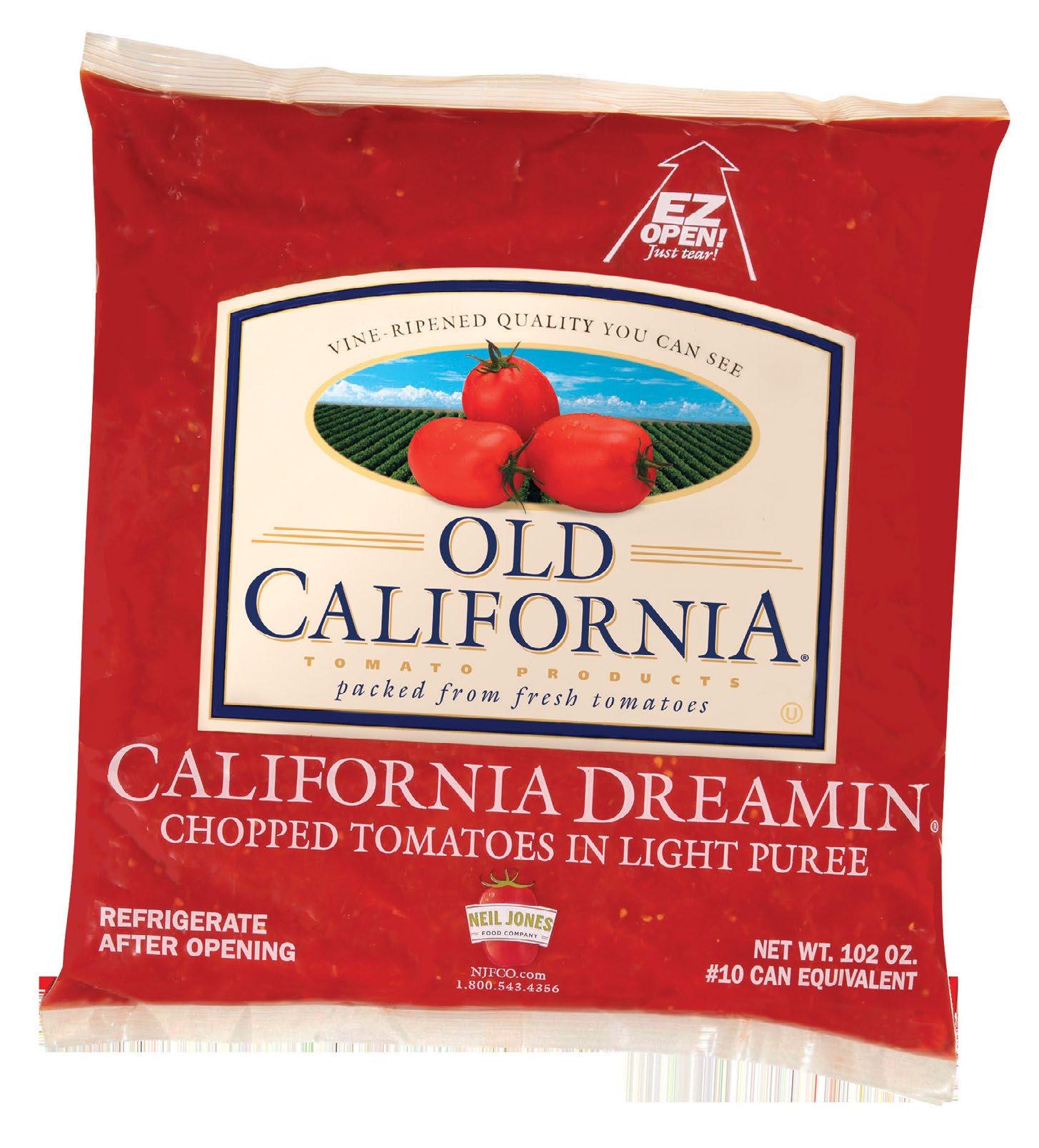
We confess. When it comes to freshpacked flavor, we’re a show off.
Old California® pioneered clear, easy-open pouches for foodservice tomato products in 1999. We figured the vine-ripened quality of the reddest, richest, sweetest, California tomatoes available was something discerning customers would want to see. No wonder the nation’s finest restaurants love us!
For the quality you desire, choose the best ingredients –The Original Old California Freshpack Pouch from Neil Jones Food Company!
For more information, call 800.291.3862 | njfco.com/see2believe
WHOLE FRUIT COULD BE A WHOLE LOT BETTER.
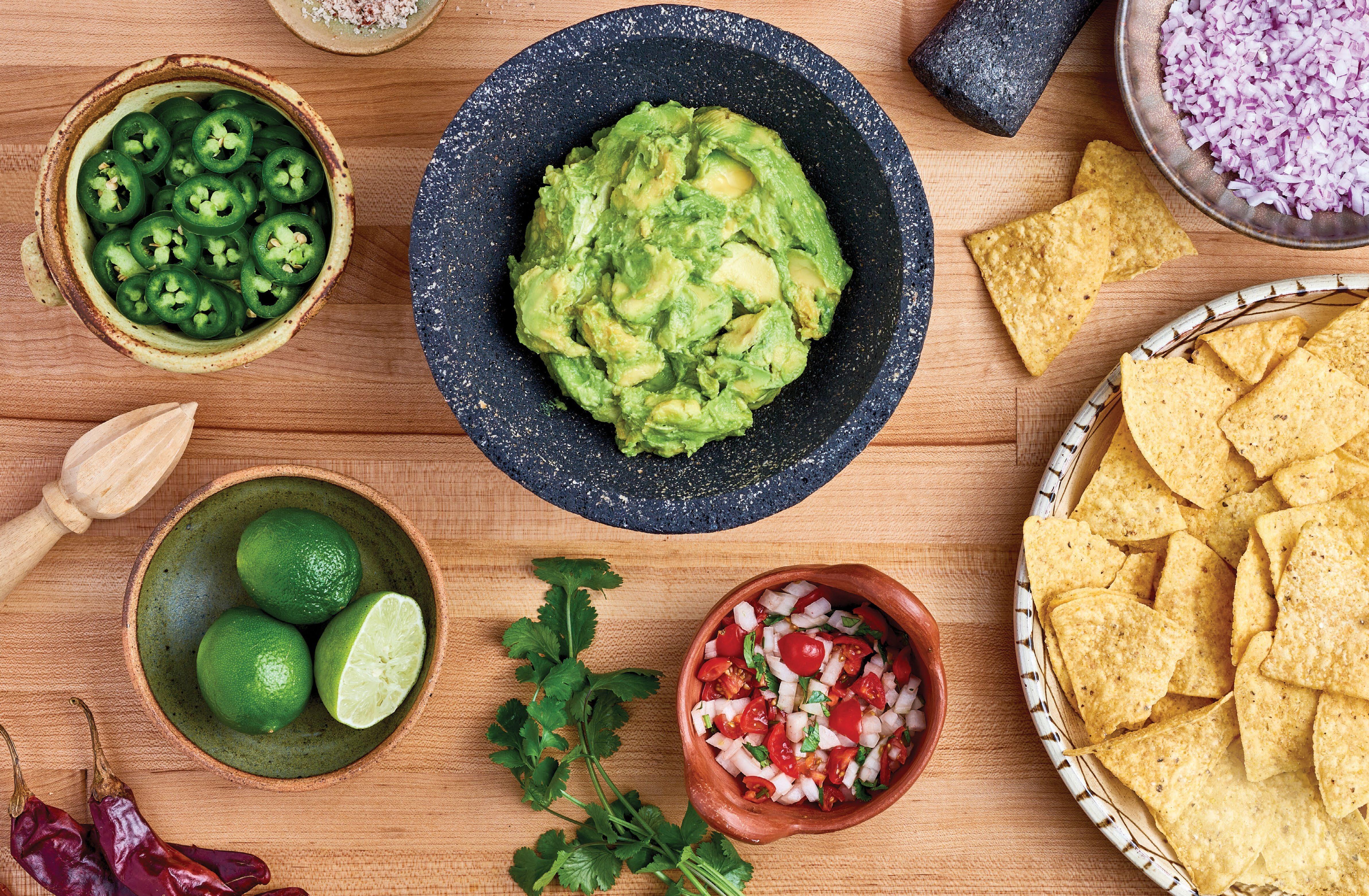
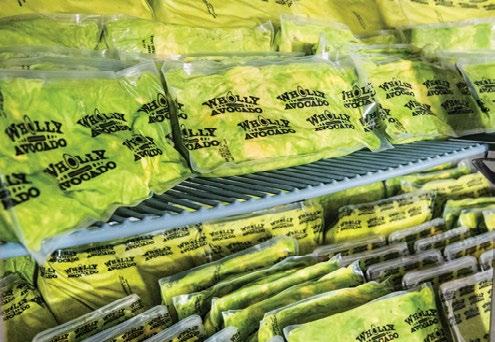
Everyone wants real avocado. But who wants the hassle, mess and cost of whole avocado fruit? Not us. And probably not you. So we made something better: WHOLLY® Avocado products.
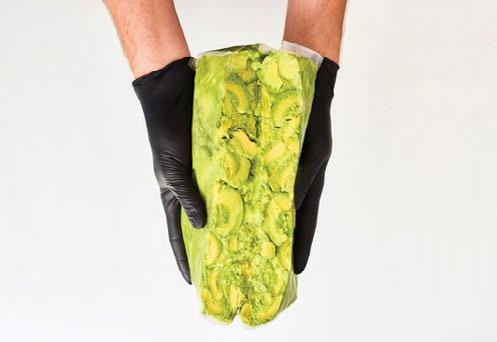
• Picked and packaged at the perfect ripeness for 100% yield.
• Use WHOLLY® products anywhere you’d use whole fruit.
• 100% real Hass Avocados with no added preservatives and nothing artificial.
GET A SAMPLE
WHAT’S YOUR PROBLEM?
If you’re using whole fruit, you’ve probably noticed some challenges.
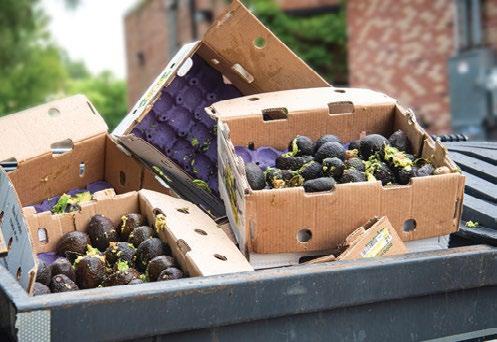
FOOD WASTE
WHOLLY® Avocado products can help you save almost 4 lbs. of product / case.
TIME
No cutting, pitting or scooping means we save you 30 mins. / case.
SAFETY
You won’t need knives, and we pioneered High Pressure Processing, so your food is safer.
7 TIPS TO PROFIT from the World Cup
THE 2026 WORLD CUP — THE WORLD’S LARGEST SOCCER
TOURNAMENT — KICKS OFF ON
THURSDAY, JUNE 11. From from that day through Sunday, July 19, the tournament will be hosted across the United States, Canada, and Mexico, featuring 48 teams and 104 matches over 39 days. It’s an event that always attracts many customers to Mexican/Latin restaurants. And the fact that it’s happening in North America this summer means it brings a bigger, potentially more profitable opportunity for restaurants to capitalize on World Cup mania than ever before!
On April 30, el Restaurante and the Latino Restaurant Association hosted a webinar on how restaurants can take advantage of the World Cup (click here to watch a recording of the webinar, which was sponsored by the California Milk Advisory Board). The key presenters were Oscar Delgado and Samona Caldwell from the Los Angeles Sports and Entertainment Commission, who shared seven key takeaways from that event:
1
Ten cities in the United States are hosting the games — Atlanta, Boston, Dallas, Houston, Kansas City, Los Angeles, Miami, New York/New Jersey, Philadelphiaand the San Francisco Bay area — and each host city has a website set up to help local businesses maximize the opportunity. The website is the same URL format for each city: losangelesfwc2026. com, dallasfwc2026.com, miamifwc2026.com, and so on (note that New York/New Jersey is nynjfwc2026.com). These websites have guidelines about how businesses can get involved, including information about how restaurants can register to be considered for catering, food truck and other foodservice opportunities related to the games.
2
Some of the host city websites mentioned above, including Los Angeles, offer restaurants the opportunity to register their World Cup viewing events with the local committee, which will then disseminate the information to the public. For example, if you are located in Los Angeles and plan to hold viewing parties for specific games, register your restau-
rant and parties at https://www.discoverlosangeles.com/user/ register to be placed on the Los Angeles “39-Day Fan Experience Guide.”
3
If you hold a viewing event in your restaurant or bar, you are welcome to promote it with generic soccerrelated verbiage such as “See the Big Soccer Game Here,” or “Watch the Brazil vs. Mexico Game Here on Tuesday.” But you cannot use any language or logos that imply an official affiliation with FIFA. For example, you cannot even say “Watch the FIFA World Cup games here.”
4
If your expected audience is fewer than 1,000 people, you don’t need a special license to show World Cup games. However, you should still register your event with FIFA through their portal, https://football.service-now.com/ public_viewing. You can use your normal commercial TV sports package to show the games (they are going to be on Fox and Telemundo).
5
If your event will be larger than 1,000 people, you will have to pay an as-yet-undetermined fee to hold the event. Register through the portal mentioned above and you will learn what the fee is.
6
Consider focusing on a specific country or region. For example, if many of your customers are from Mexico, consider showing all the games being played by the Mexican national team, then promote your viewing events to local soccer clubs, team fan clubs, or other organizations that serve a Mexican population.
7
Keep in mind that you might need to adjust your hours or staffing to accommodate certain games due to the time differences across North America. FIFA rules do not allow you to record a game and show it later — all games must be shown live.
The World Cup is a great opportunity to draw more customers to your restaurant — don’t let this once-every-four-years event pass your restaurant by!
Mexico-Based Restaurants Find Homes in the States
Mexican cuisine has already conquered the United States, so it’s no surprise that restaurants based in Mexico are opening locations here.
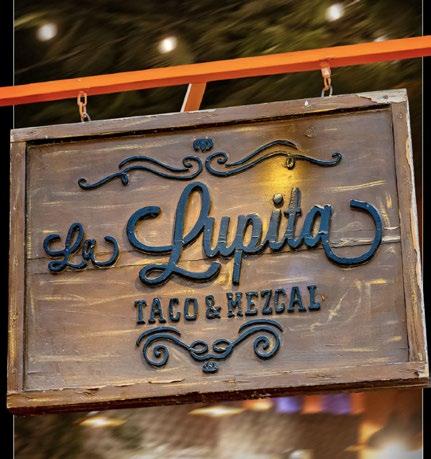
La Lupita Taco & Mezcal, which has operated in Mexico since 2015, has announced plans to open its first U.S. outpost in Dallas in Spring 2026, and a second in Scottsdale, Arizona at a later, still-undecided date. The restaurant currently has locations in San José del Cabo and Cabo San Lucas in Mexico and is popular for its upscale tacos and a vast mezcal list.
“Guests can expect hand-pressed tortillas, mezcal-forward cocktails, and daring dishes like wagyu tacos and grasshoppers, all served in a lively cantina setting,” a press release about the plans stated. “Opening celebrations will feature taco tastings, mezcal mixology showcases, live music, and chef-curated pairings that highlight the spirit and flavor that made La Lupita a culinary icon in Mexico.”
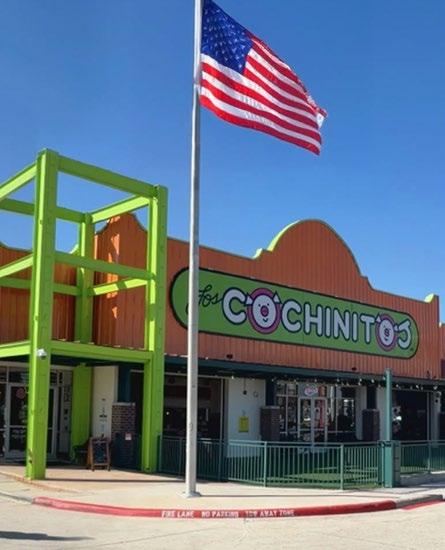
Los Cochinitos opened its first U.S. location last year in Spring, Texas, near Houston. The restaurant, which traces its roots to a taco stand launched in 1959, has eight locations in central Mexico. It’s known for carnitas, but the menu also includes a wide range of traditional tacos such as the El Minero made with costilla (pork ribs) and buche (pork stomach).
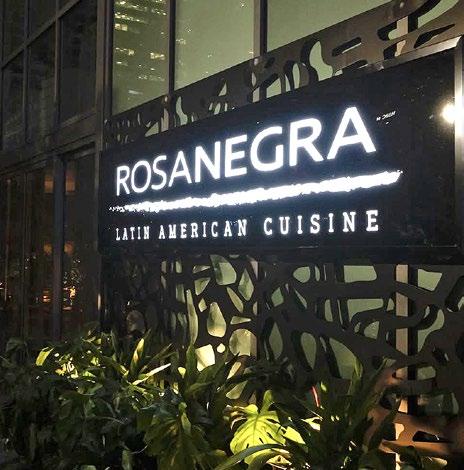
RosaNegra, which opened its first U.S. location in 2024 in Miami, is a high-end pan-Latin restaurant that is part of Grupo RosaNegra. The company also operates restaurants in four cities in Mexico, including Mexico City and Tulum, and in Madrid, Spain.
“Grupo Rosa Negra is on an
exciting journey of global expansion, extending its influence and distinctive seal beyond the borders of Mexico,” the company says on its website.
Several other popular Mexico-based restaurants are already established here and growing.
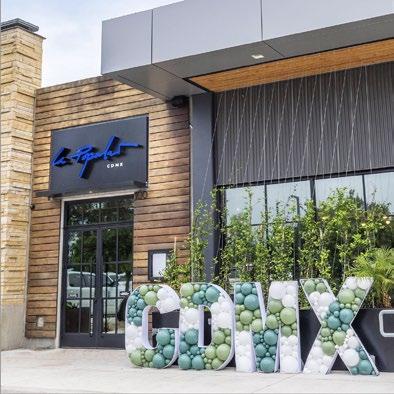
La Popular, an upscale Mexico City-based restaurant, opened its first U.S. location in 2023 in Roseville, California. It has since added locations in Claremont, Hollywood and Porter Ranch, California, and one in Austin, Texas.
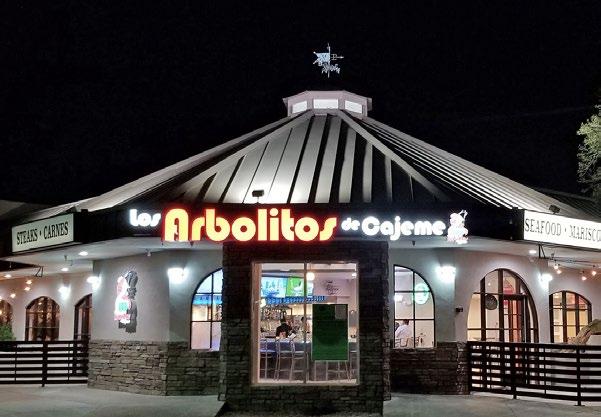
La Popular is known for taking simple dishes of ancestral Mexican culture to another level, using authentic ingredients that create adventurous flavors. The U.S. location is a collaboration between Grupo Carolo, which owns 27 restaurants in Mexico, and the Eureka! Restaurant Group, a chain of casual dining restaurants. Los Arbolitos de Cajeme was launched in 1988 in Sonora, Mexico, and has 18 locations there. It opened a location in Phoenix in 2019 and since then has added two more locations, one in Glendale, Arizona and one in Las Vegas. The restaurant’s menu leans heavily into Sonoran seafood, such as Tostada de Chiltepín with shrimp, octopus and tuna.
One of pioneers of the Mexico-to-United States route — and probably the most successful — is El Pollo Loco. The company was founded in 1974 in Mexico and opened 85 restaurants in Mexico in the following five years. In 1980, it opened its first U.S. location in Los Angeles. Today the company is traded on NASDAQ and has more than 500 locations in the United States.
Sean Huggard, ASH AND AGAVE
| BY KATHLEEN FURORE
| A touch of the Mexican Riviera landed in Denver when Ash and Agave opened its doors in Cherry Creek Shopping Center on April 5. This new concept from Shucking Good Hospitality (SGH) stands out for many reasons — not the least of which is its location in a retail rather than neighborhood setting.
el Restaurante reached out to Sean Huggard, founder and president, to learn more about the ins and outs of launching a restaurant in a retail center during a time that’s been so challenging for so many operators.
“The biggest thing is knowing exactly what your point of view is… And I would say culture matters just as much as concept. If your team is aligned and believes in what you are doing, guests will feel that. It is still a great industry if you are intentional and willing to put in the work, but it is not something you can approach casually anymore.”
– SEAN HUGGARD
el Restaurante: Running a restaurant has never been an easy task. And the current economic/political climate is creating so many additional hurdles for operators to overcome. What propelled your decision to open Ash and Agave at such a challenging time in the industry?
Sean Huggard: There’s never really a “right” time to open a restaurant anymore. If you wait for stability in this industry, you’ll be waiting forever. For us, it came down to belief in the concept and the experience we wanted to create. Ash and Agave is built around coastal Mexican inspiration, wood-fired cooking, and a strong agave-forward bar program. It is meant to feel like an escape, but still very approachable and fun. Even in today’s climate, people still want to go out, connect, and have experiences that feel worth it. That is what we are focused on. If you stay true to hospitality and building something people actually want to be part of, you find a way to make it work.
el Restaurante: Retail overall has changed a great deal due to the way consumers are shopping. Yet you chose a retail location for Ash and Agave. What made you decide to take that route?
Huggard: Retail has definitely changed, but I think that is what makes it interesting right now. The strongest retail centers are now about experience and energy. In our case, Cherry Creek actually approached us with the idea of bringing
in a true local restaurant concept. That was a big part of what made this feel right. They were intentional about wanting something that reflects the Denver dining scene, not just another big-name chain. That level of openness to a local operator really stood out to us.
The Cherry Creek Shopping Center is a great example of how retail is evolving. It has become a place where people go to spend time, not just run errands. We saw an opportunity to be part of that shift and help shape the experience in a meaningful way. For us, it was less about being in a mall and more about being in a high-traffic, highenergy environment where we can introduce Ash and Agave to a wide range of guests every day.
el Restaurante: How is operating in a mall location typically dominated by chains different than operating in other, more “neighborhood” locations? What are the benefits and the challenges?
Huggard: It is definitely different. In a neighborhood restaurant, you are building a base of regulars over time. In a retail environment, you are constantly welcoming new guests. That means your first impression really matters every single time. The biggest benefits are the volume and visibility. You get exposure to a lot of people who may not have discovered you otherwise. The challenge is
“There’s never really a ‘right’ time to open a restaurant anymore. If you wait for stability in this industry, you’ll be waiting forever. For us, it came down to belief in the concept and the experience we wanted to create.”– SEAN HUGGARD
standing out in a space where guests are used to very familiar, often more transactional experiences. We focus heavily on hospitality and energy. We want people to walk in and immediately feel like they are somewhere intentional and welcoming, not just another stop in a shopping day.
el Restaurante: There are many Mexican/Latin-inspired restaurants in Denver. What makes Ash and Agave unique? How has business been? And what are some of the most popular dishes so far?
Huggard: Denver has a really strong Mexican dining scene, and we respect that a lot — but with Ash and Agave, we are coming at it from a coastal perspective. It is inspired by the Mexican Riviera, so you see that in the flavors, the woodfired cooking, and the seafood focus. Seafood is a big part of our foundation as a restaurant group since we own our
“In a neighborhood restaurant, you are building a base
of regulars over time. In a retail environment, you are constantly welcoming new guests.
That means your first impression really matters every single time.”
– SEAN HUGGARD
own oyster farm on the East Coast. We have always put a lot of emphasis on sourcing and our relationships with seafood suppliers around the world. We are bringing in high-quality products daily and treating them simply, which fits naturally with coastal Mexican cuisine.
We are also very focused on the full experience. We put a lot of time and thought into the lighting, the music, the colors and textures of the space, where the bar is located. We designed it so the energy of the room and bar program are just as important as the food. The agave cocktails are a big part of the identity.
Business has been encouraging. We are seeing a good mix of people discovering us while shopping and others coming
in specifically to check us out. Some of the most popular items so far have been the ceviches, anything coming off the wood fire grill, and, surprisingly, many of the vegetarian dishes. The margaritas and agave-forward cocktails have also been really well received.
el Restaurante: What advice do you have for someone who is considering opening a new Mexican/Latin restaurant today? Anything specifically to be aware/beware of before taking the plunge?
Huggard: The biggest thing is knowing exactly what your point of view is. There are a lot of restaurants out there, so you need to be clear on what makes yours different from day one. You also have to be realistic about costs and timelines. Everything takes longer and costs more than you think, so building in flexibility is important. And I would say culture matters just as much as concept. If your team is aligned and believes in what you are doing, guests will feel that. It is still a great industry if you are intentional and willing to put in the work, but it is not something you can approach casually anymore.
The Boom Plant-basedof MENUS
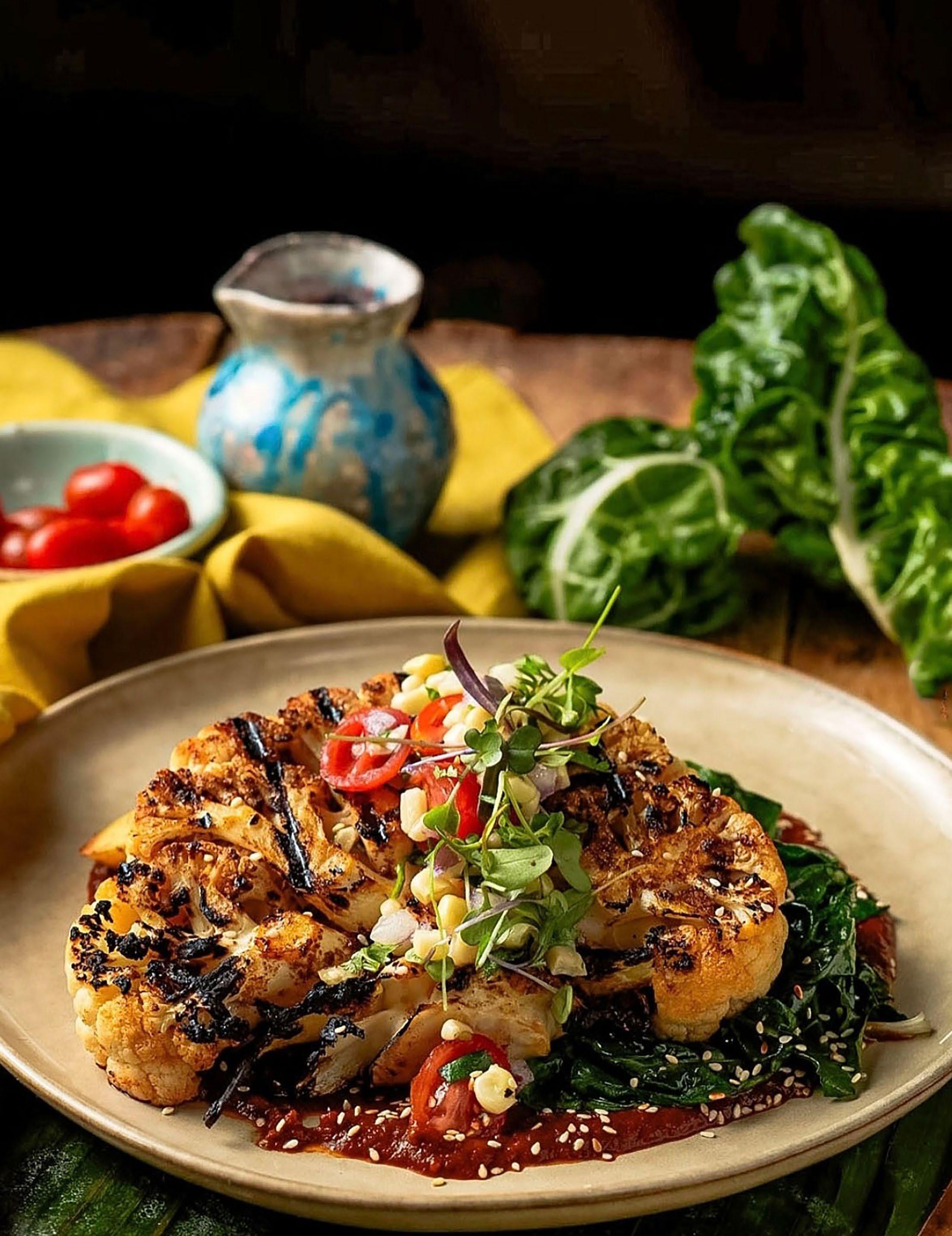
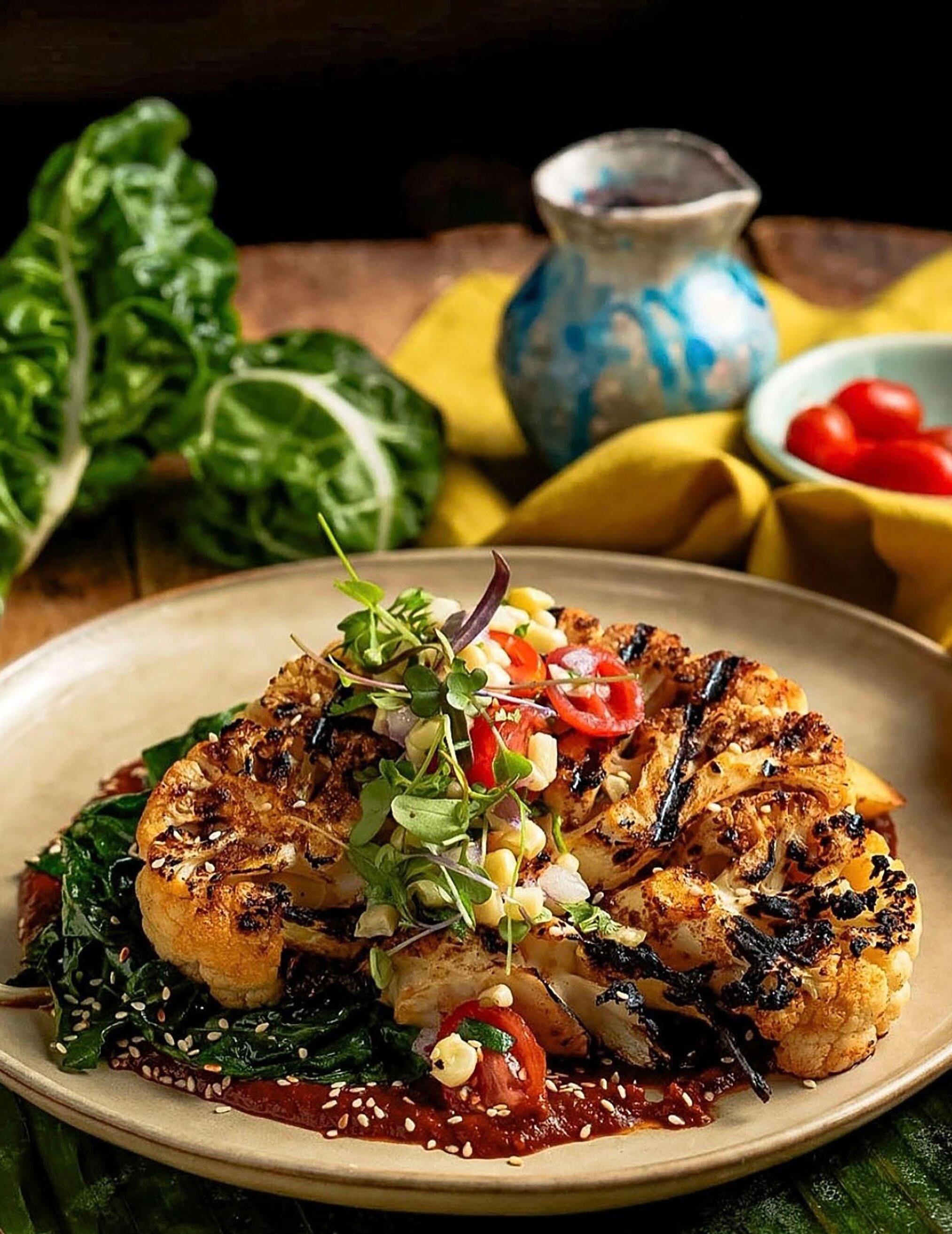
Gracias Madre’s Cauliflower with Mole
| BY KATHLEEN
FURORE | If you’re wondering what role plantbased dishes should play on your menu, consider data from an el Restaurante reader survey in April 2026.
Of the restaurants that responded, nearly all of them offer at least some vegetarian dishes. And many of them offer a lot of vegetarian options — 47 percent reported that plant-based dishes make up 25 percent to 50 percent of their menu, and 73 percent of restaurants that offer vegetarian options also offer vegan options.
Our readers, Mexican/Latin restaurants, are totally on-trend. Plant-based eating has become one of the most significant food trends worldwide — one that is “not only shaping consumer preferences but also transforming the way restaurants operate,” according to “The Rise of Plant-Based Menus in Restaurants from 2025 to 2035,” a report from the Food Marketing Institute (FMI).
A recent report by NPD Group shows that 53 percent of U.S. consumers are actively seeking plant-based options when dining out. In response, restaurants are diversifying their menus to cater to guests seeking plant-based options, the FMI notes.
“By 2035, the plant-based dining experience is expected to become a standard across all types of eateries,” FMI predicts.
A PLANT-BASED PIONEER
“When Gracias Madre first opened, plantbased dining was still considered niche, especially within Mexican cuisine. Since then, the market has evolved tremendously, with more consumers embracing plant-based eating for wellness, sustainability, and lifestyle reasons.”
– PATRICK HOTCHKISS,
Gracias Madre, a concept that debuted in in 2009 in San Francisco and opened a Los Angeles location in 2014, made plant-based dining its calling card well before vegetarian and vegan cuisine started trending.
“When Gracias Madre first opened, plant-based dining was still considered niche, especially within Mexican cuisine,” Chief Operating Officer Patrick Hotchkiss recalls. “Since then, the market has evolved tremendously, with more consumers embracing plant-based eating for wellness, sustainability, and lifestyle reasons.”
And while many restaurants have come and gone since Gracia Madre opened its doors, Hotchkiss attributes the restaurant’s success to an unwavering commitment to organic ingredients, ethical sourcing, and quality. “Even through inflation, the pandemic, and economic challenges, we never compromised our standards,” he stresses.
While those standards have remained unchanged, the menu has evolved in tandem with ingredient innovation and guest preferences.
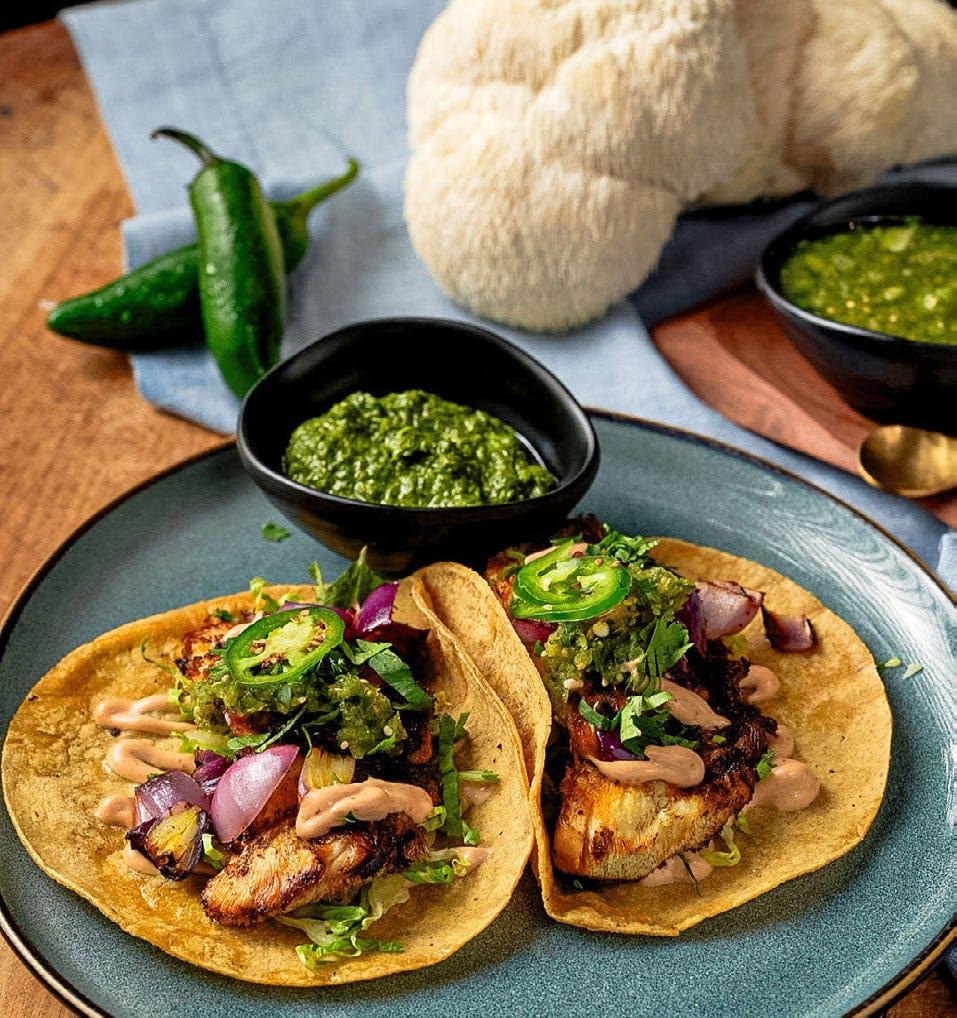
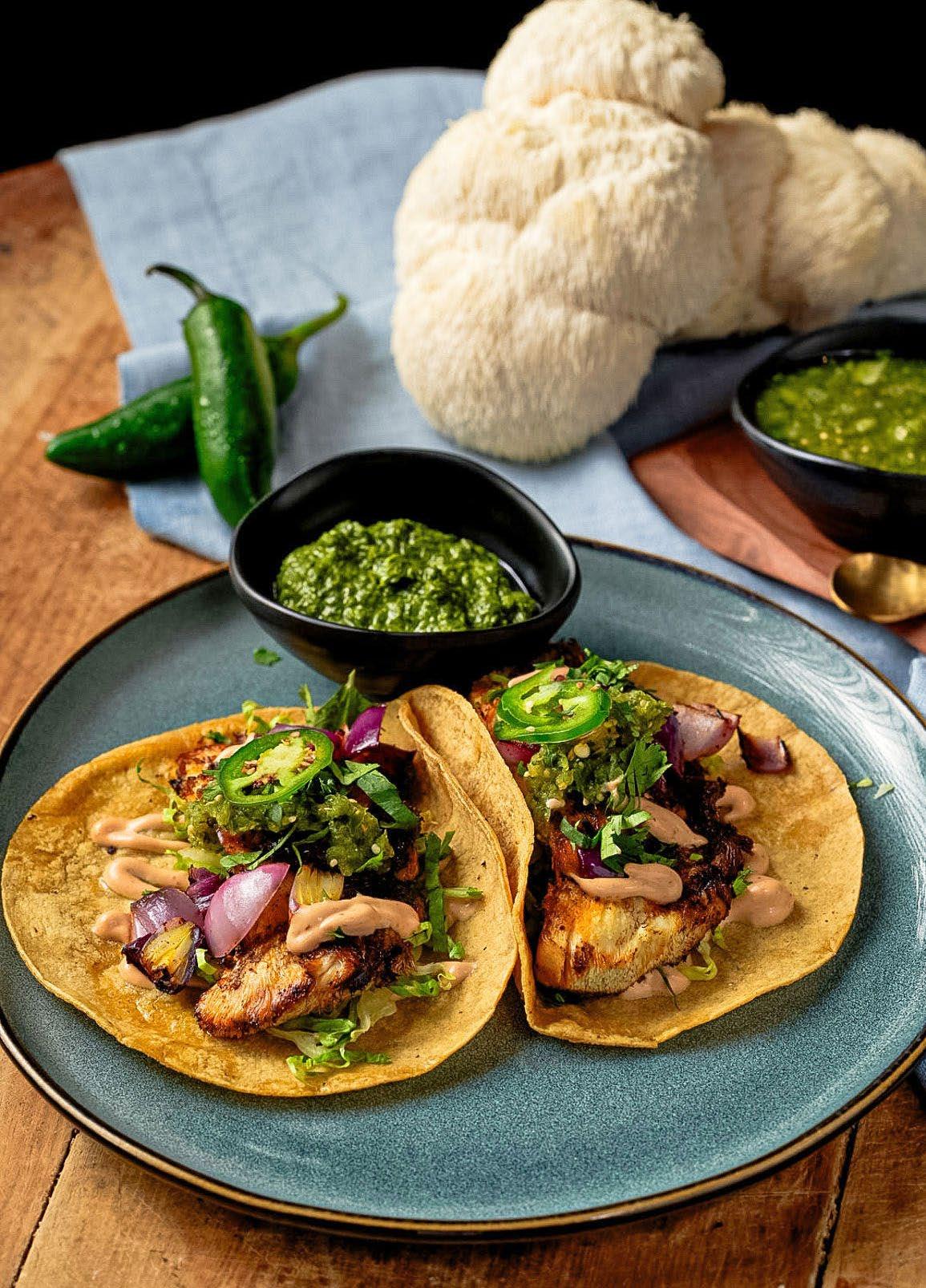
“As awareness around nutrition and plant-based ingredients has grown, we’ve introduced more seasonal and ingredient-driven dishes, such as our Lion’s Mane Mushroom Tacos
Gracias Madre
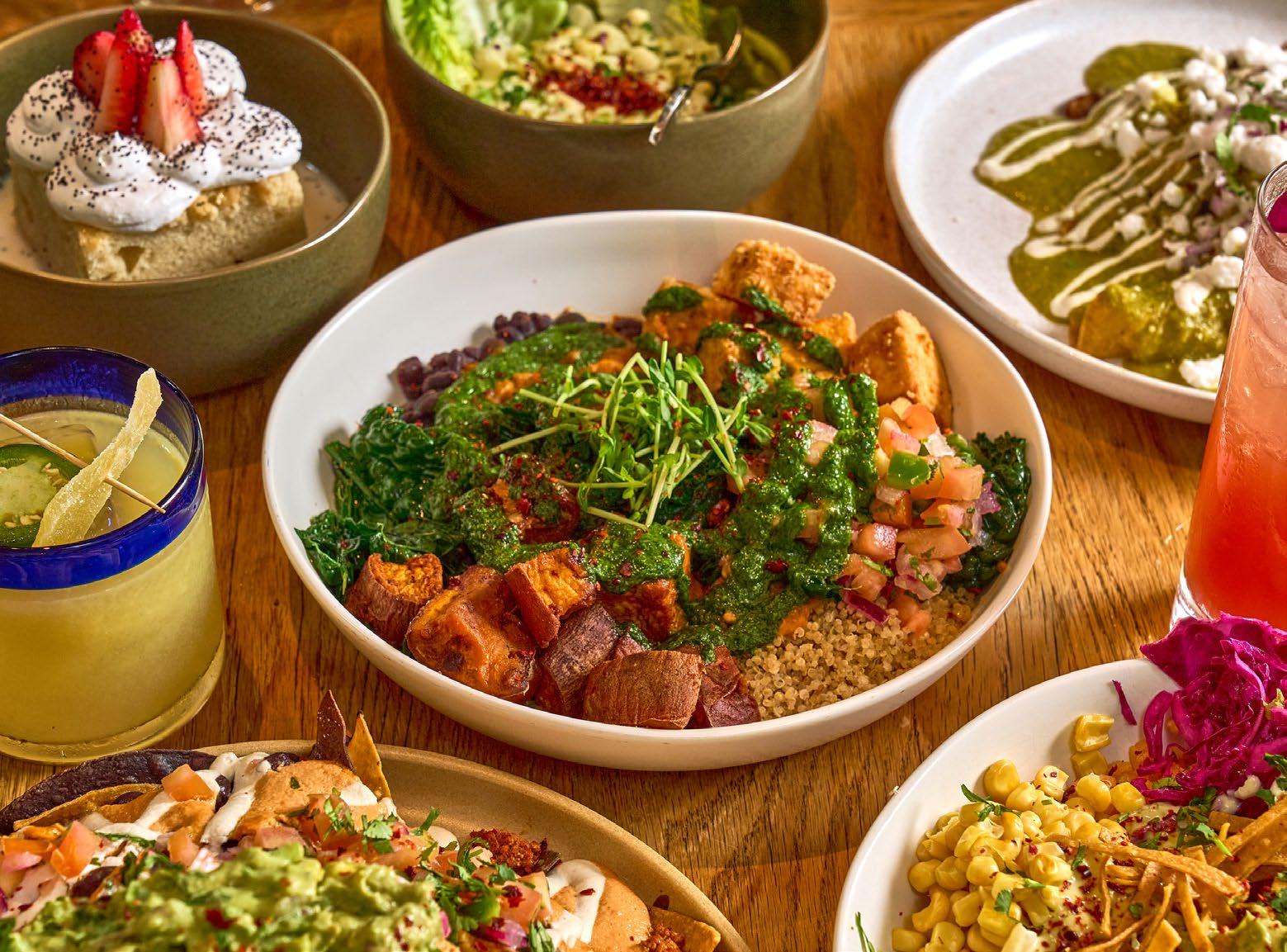
Gracias Madre’s Madre Bowl
and Fresh Coconut Tacos,” he reports. (The Cauliflower with Mole, pictured on the cover and in the opening of this story, is another example of a seasonal offering.) “We’re also constantly refining our sourcing, including working with clean, ethically produced plant-based cheeses and organic ingredients whenever possible.”
Popular dishes recently added to the menu include the Madre Bowl featuring roasted sweet potato, crispy tofu, kale, black beans, quinoa, pesto, and habanero salsa, and the Queso Fundido made with house-made cashew cheese, jalapeño, tomatoes, cilantro, and corn tortilla chips.
That doesn’t mean signature dishes from earlier menus have disappeared.
“By 2035, the plant-based dining experience is expected to become a standard across all types of eateries.”
– FOOD MARKETING INSTITUTE, “The Rise of Plant-Based Menus in Restaurants from 2025 to 2035”
“Our classic Guacamole made with avocado, jalapeño, red onion, cilantro, and lime has remained unchanged since the beginning. Other longtime staples include our Ceviche with hearts of palm, cilantro, aguachile, whipped avocado, and aleppo pepper, as well as the Mushroom Quesadilla with roasted garlic mushrooms, mozzarella, spinach, pico de gallo, and house tapatío,” he says.
HIGHLIGHTING PLANT-BASED OPTIONS
As important as plant-based fare is for some diners, billing a restaurant as vegan — something Gracias Madre has done since its inception — might seem a step too far for businesses wanting to build a broad base of loyal customers.
Hotchkiss acknowledges that vegan cuisine can sometimes feel limiting to guests who are unfamiliar with it.
“Being a vegan concept definitely comes with challenges, particularly when guests initially associate plantbased cuisine with limitation or assume there won’t be enough protein or flavor,” he says. “One of our goals has always been to change that perception by showcasing how satisfying, nutrient-dense, and flavorful plant-based Mexican cuisine can be.”
He praises Gracia Madre’s culinary team for achieving that goal by doing “an incredible job developing dishes that feel approachable, flavorful, and satisfying for everyone — whether they follow a plant-based lifestyle or not.”
“Over the years, many guests who don’t eat vegan regularly have discovered Gracias Madre through friends, celebrations, or simply curiosity, and we’re proud to have become an introduction to plant-based dining for so many people,” he adds. “Between the ambiance, hospitality, and the quality of the food, we’ve been fortunate to build a reputation that extends well beyond the vegan community.”
So, how can Mexican and Latin-themed restaurants let customers know they offer plant-based options without putting too much focus on vegetarian and vegan dishes?
Hotchkiss shares his perspective.
“Clarity is incredibly important,” he stresses. “Whether
(continued on page 20)
Gracias Madre’s Lion’s Mane Mushroom Tacos
restaurants choose to create a dedicated section, use symbols, or clearly note vegan and vegetarian options directly within menu descriptions, making those offerings easy to identify creates a much better guest experience.”
He speaks from experience.
“As someone who personally follows a plant-based lifestyle, I know how difficult it can sometimes be to navigate a menu or even decide whether to dine at a restaurant if the options aren’t clearly communicated,” Hotchkiss adds. “Guests appreciate transparency and thoughtful menu design, and even adding a few wellexecuted plant-based dishes can make a restaurant feel much more inclusive and approachable.”
Does your restaurant offer some creative plant-based appetizers and entrees? We’d love to showcase one. See a selection of plant-based recipes on page 27. Email editor Kathleen Furore at kfurore@restmex.com to be featured in a future issue.
Readers Weigh in On Approaches to PLANT-BASED DISHES
el Restaurante readers increasingly are embracing vegetarian and vegan options in response to their customers’ preferences for more plant-based menu items.
According to an April 2026 reader survey, 53 percent of respondents ranked vegetarian/vegan dishes as “moderately important” (some customers order them); 40 percent said they were “quite important” (many order them); and 7 percent “very important” (nearly all customers order a vegetarian or vegan menu item).
And they call out those options in a variety of ways: 27 percent have a separate section dedicated to vegetarian and vegan dishes and 53 percent use asterisks or some other symbol to notate vegetarian/vegan options.
What are some of the best-selling, plant-based items survey respondents are serving?
“I have five bowls on my menu — all have a vegetarian option,” says Jim Urdiales, owner of Mestizo Louisiana Mexican Cuisine in Baton Rouge, Louisiana, who features the bowls on the separate menu he has created for the restaurant’s vegetarian/Keto and gluten-free guests.
Purple rice — the base ingredient in each bowl — is topped with a vegetable mash or quinoa, some kind of sauce, sauteed spinach, grilled onion, pico de gallo, sliced avocado and cotija cheese.
The Vegetarian Cauliflower Bowl, for example, includes cauliflower mash and black beans topped with tomatillo sauce; the Sweet Potato Mash Bowl includes sweet potato mash topped with salsa macha; the Vegetarian Broccoli & Brussels Sprout Bowl includes broccoli and Brussels sprout mash topped with peanut mole; the Quinoa Bowl includes veggie quinoa and black beans topped with chimichurri sauce; and the Power Bowl includes black beans topped with tomatillo sauce.
“I also have jackfruit as an option on many dishes,” Urdiales adds.
Karen Sanjuan, restaurant manager of Don Artemio Restaurant in Fort Worth, Texas, reports that several dishes do well with vegetarian and vegan customers.
Among the favorites are the Ensalada de Palmito (grilled heart of palms, panela cheese, tomato, avocado, peanut chili vinaigrette); the El Famoso Chile Hojaldrado (a cream cheese and pecan-stuffed poblano wrapped in puff pastry and served over house made tomato sauce); Nopalitos Fritos (tenderfried cactus that can be made without the bacon, served with heirloom house-made blue corn tortillas to make tacos); and Enchiladas Queso Queso (deep-fried enchiladas, stuffed with queso fresco and goat cheese, topped with homemade artisan tamarind mole, ajonjoli, cream and potatoes in a slow cooked spicy tomato sauce). That dish also can be made with veggies instead of cheese for vegan customers.
“We use an asterisk or some other symbol to note vegetarian/vegan options: V= Vegetarian, PV = Possibly [can be made] Vegetarian,” Sanjuan says.
Empanadas’ Appeal: GLOBAL FLAVORS EXPAND MENU OPTIONS
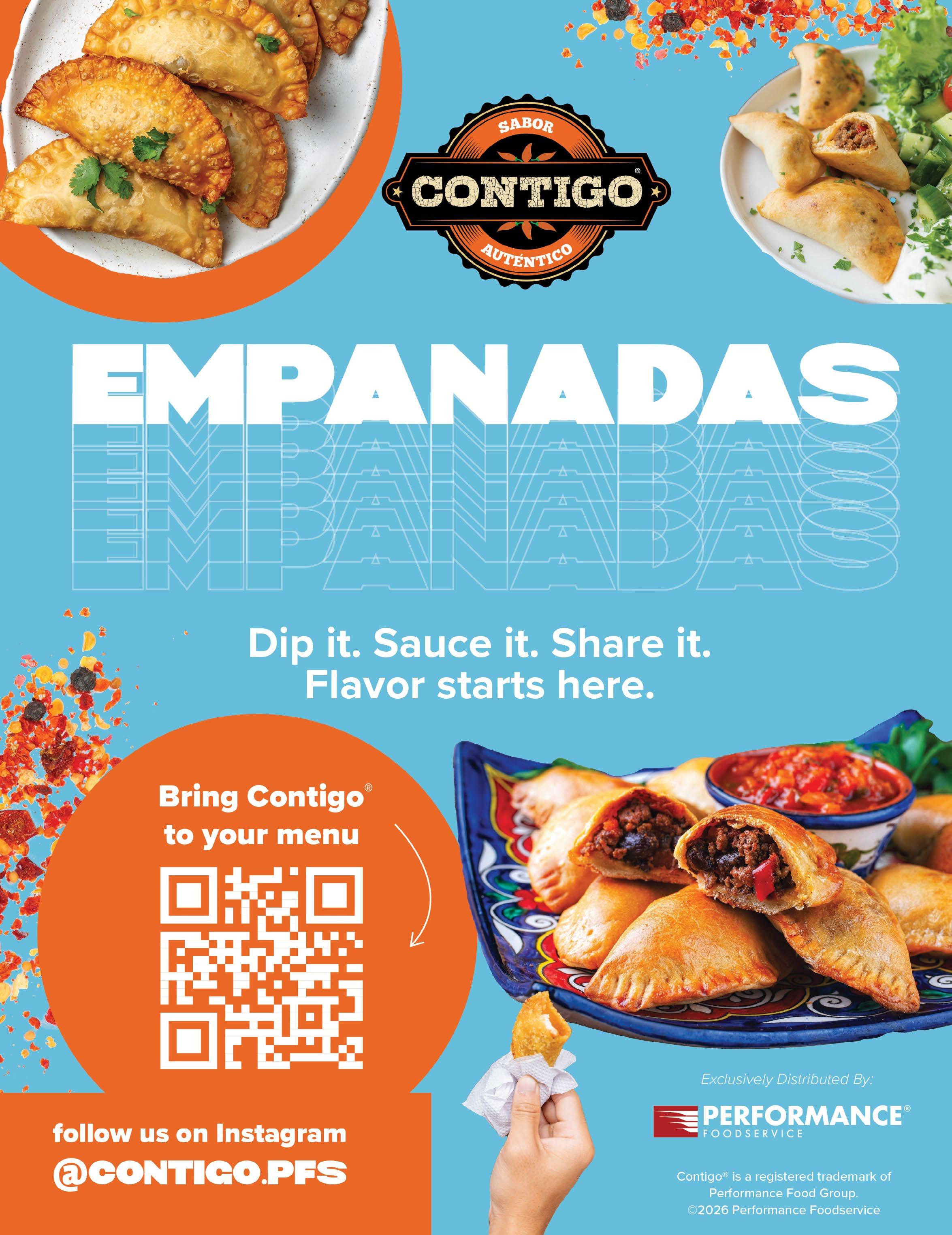
| BY KATHLEEN FURORE | From fast casual locations to upscale dining destinations, empanadas are making their mark as chefs transform these hand-held pastries into filling-packed pockets that appeal to a diverse range of today’s diners.
“Empanadas in all their varieties” popped up in the Grubhub 2025 Delivered Trend Report as a key part of the “foodmaxxing” trend, which highlights food items’ “maximum nutritional value, functional payoff, and...aesthetic appeal.”
With seemingly endless options — differences come down
“One of the most compelling things about the empanada is its versatility, which allows it to work across a wide range of restaurant formats and price points — from quick service and fast casual to family dining and even more elevated culinary concepts.”
– ANDREW JAFFE, Maria Empanada
to the dough, cooking method, shape, seasoning, and sauces, depending on country or origin — it’s simple to see why.
Argentinian empanadas, for example, feature a wheat flour dough filled with beef picadillo, ham and cheese, or onion-heavy mixtures (sometimes accented with olive or egg) and are baked for a flaky finish. Mexican-style versions, made with corn masa or wheat flour and typically fried, center on chiles, slow-cooked meats, beans, cheese, and bright acidic sauces. Colombian empanadas swap in cornmeal dough, lean on potatoes and rice over meat, and are served with ají, information from New York City’s Empanada Mama explains.
It’s that plethora of preparations that make empanadas an ideal addition to most any menu.
“One of the most compelling things about the empanada is its versatility, which allows it to work across a wide range of restaurant formats and price points — from quick service and fast casual to family dining and even more elevated culinary concepts,” says Andrew Jaffe, CEO of Maria Empanada, a concept with five Denver area locations, including one at Denver International Airport. “At Maria Empanada, our empanadas are priced around $5.49 each, which allows guests to customize their experience based on both appetite and budget. Someone may enjoy one as a snack, while another guest may build a full meal by mixing multiple flavors and pairings. That flexibility is incredibly valuable in today’s environment where consumers are looking for both value and personalization.”
They also work any time of day.
“Empanadas naturally fit multiple dayparts and occasions. They work equally well for breakfast, lunch, dinner, and increasingly for snacking, which continues to be a major consumer
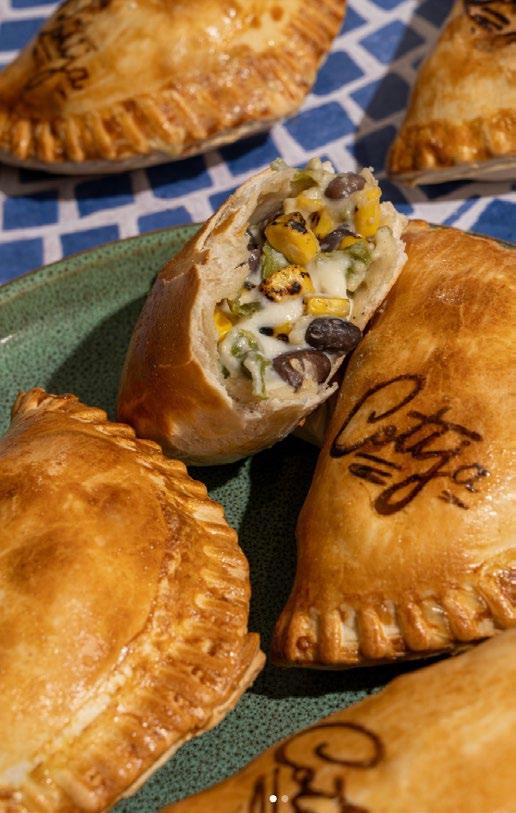
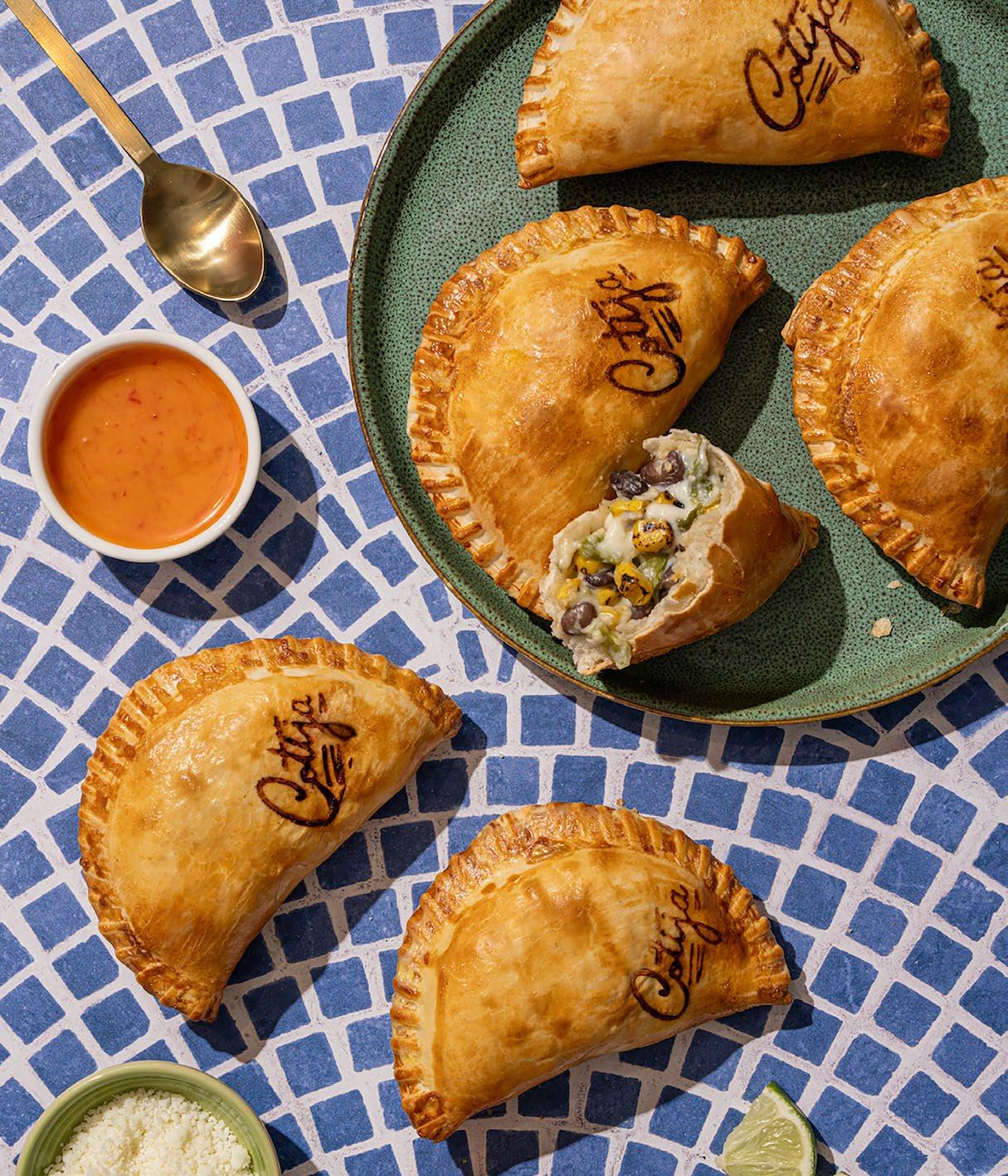
Maria Empanadas’ Roasted Corn & Cotija Empanadas, PHOTO COURTESY OF STEPHANIE KELLY PHOTOGRAPHY
Maria Empanadas’ Roasted Corn nadas
Photo courtesy of Stephanie Kelly
Corn & Cotija Empa-
Kelly Photography
culinary trends
behavior trend,” Jaffe adds. “That flexibility gives restaurants an opportunity to serve guests throughout the day in a format that feels both convenient and satisfying.”
FUN WITH FILLINGS
While traditional fillings will always be part of the empanada story, they aren’t the only fillings flavoring empanadas today.
Case in point: the menu at Maria Empanada.
› HAGA CLIC AQUÍ PARA
The Argentina empanada filled with steak, red bell pepper, green onions and green olives “remains one of our most popular, most authentic offerings. It really represents the heart of our brand and culinary heritage,” Jaffe says. But the menu offers so much more.
“We see the empanada as an incredible culinary canvas for creativity and innovation,” Jaffe says. “While our foundation will always be rooted in the tradition, craftsmanship, and authenticity of Argentine empana-
Empanadas in the Windy City
The empanada offerings in Chicago are as varied as the fillings that flavor these increasingly popular pies. Here are a few examples:
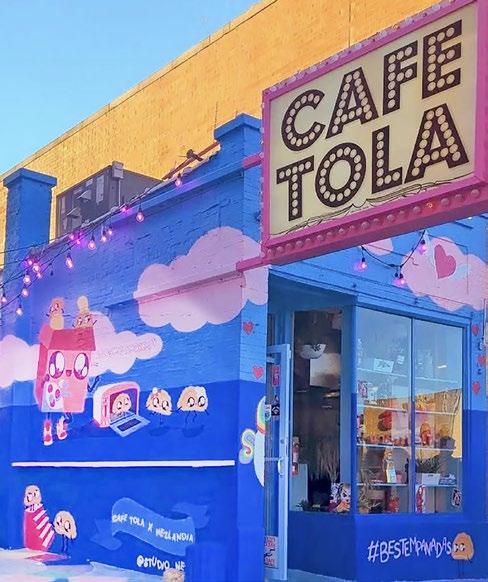
• Café Tola Mexican, Cuban, and American flavors inspire the 25 sweet and savory hand-rolled turnovers featured at this tiny, walk-up empanada outpost that opened in 2012 several blocks from Wrigley Field. Ropa vieja, birria, and apple pie are just a few of the fillings that have kept customers lining up for more than a decade no matter the weather — and they’ve helped owner chef/owner Victoria Salamanca expand the business with three more cafes plus the sit-down, full-service La Casa de Tola and Doña Tola .
• 5411 Empanadas Just a few blocks north of Café Tola, this small eat-in storefront with two Chicago locations offers baked, Argentinian style, gourmet empanadas. Flavors include Malbec beef (shredded Angus beef slow roasted in a red wine reduction with onions, carrots and rosemary); chorizo, patatas bravas & cheese; vegetarian sweet corn (whole kernel corn sautéed with diced onions mixed with house made béchamel sauce and mozzarella cheese); and vegetarian banana Nutella. The latest offering, perfect for summer: mini bite-size empanadas sold in packs of 12.
• Carnivale This upscale Latin restaurant offers a gourmet selection of empanadas that includes lamb with chickpeas, potatoes and thyme; beef with Cuban picadillo, roasted tomato, bell pepper and garlic; chicken tinga with chipotle, onion and roasted tomato; and corn with poblanos and Chihuahua cheese.
• Tanta This fine dining Peruvian restaurant’s empanada menu includes Empanada de Pollo (stewed chicken, aji amarillo, parmesan rocoto sauce); Empanada de Carne (beef tenderloin, raisins, onions, huacatay sauce); and Empanada de Tamalito (choclo, ají amarillo, cilantro, queso fresco, huancaina sauce).
culinary trends
FUN FACT
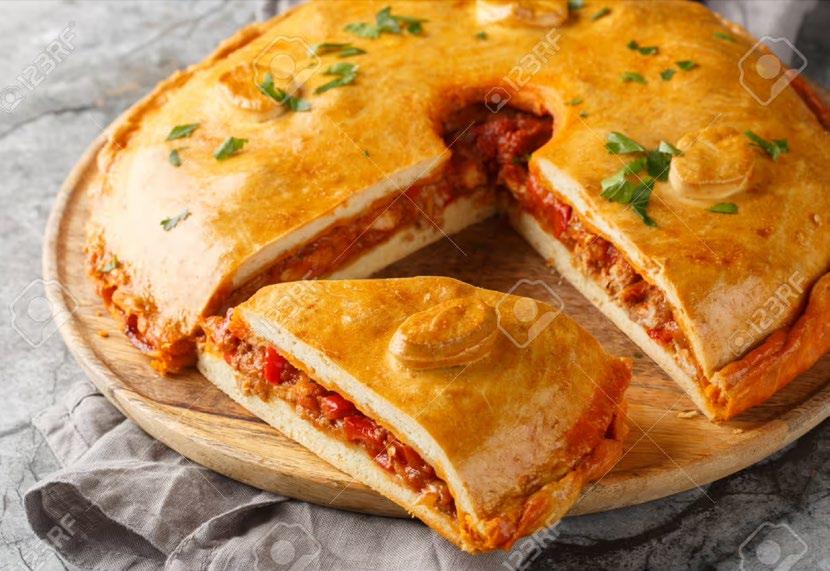
Empanadas did not originate as the hand-held pies typically made today. The original rendition — the Galician empanada, which hails from northern Spain — was a twocrusted pie baked in a round pie plate or rectangular dish.
“Once it landed on the shores of Latin America, the empanada shrank to its current handheld size and adapted to local climates, evolving with every incoming colonizer,” according to “Empanadas: A Journey from Galicia and All Around Latin America” at culinarycam.com.
da-making, that same format gives us the opportunity to thoughtfully explore flavors and ingredients in a way that still feels true to who we are.”
Two recently introduced empanadas are examples of the global flavors and ingredients the company is exploring.
“The inspiration behind flavors like our Miso Chili Crisp Steak and Roasted Corn & Cotija empanadas came from a desire to honor that [Argentinian] tradition while also reflecting the way today’s guests eat and discover food,” Jaffe says.
Those guests, especially Gen Z — “one of the most ethnically diverse and globally connected generations — are actively seeking authentic global foods, cultural storytelling, and unexpected flavor combinations that still deliver comfort and familiarity,” he adds. “We believe the empanada is uniquely positioned to bring those experiences to life in an approachable, craveable way.”
Among the creative interpretations Jaffe says guests have embraced: the Italiana empanada with Italian pork sausage, mozzarella, tomato sauce, and onions, “creating something that feels both comforting and uniquely Maria Empanada;” the Chorizo breakfast empanada made with chorizo
from Polidori Sausage combined with scrambled eggs, oven-roasted potatoes, cheddar jack cheese, and salsa; and the vegetarian Spinach empanada made with spinach, Parmesan cheese, a mozzarella blend, and béchamel cream sauce.
“What’s exciting is that each empanada offers something different, which encourages discovery and repeat visits as guests explore new flavors alongside their favorites,” Jaffe says.
What’s exciting for operators at all levels is that empanadas deliver many of the operational advantages that make quickservice and fast-casual dining successful. They offer “portability, speed, convenience, and ease of eating, but they do so with a far more crafted and elevated culinary experience,” Jaffe says. “What really expands the ceiling for empanadas across different restaurant tiers is the ability to thoughtfully curate premium ingredients, globally inspired flavors, and chef-driven recipes within the format. The empanada can be incredibly approachable and comforting, while also serving as a sophisticated culinary vehicle for creativity, craftsmanship, and high-quality ingredients.”
See empanada recipes on page 27.
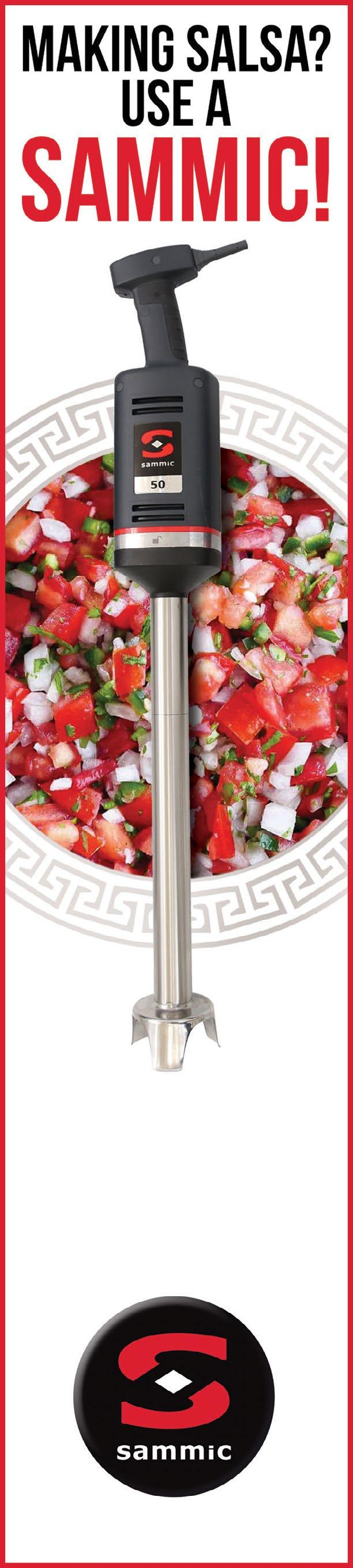
A Sammic immersion blender makes your salsa preparation easier than ever! A powerful motor, easy-to-use controls and ergonomic design mean your staff can create amazing salsas, soups and other blended menu items with ease and speed. You will love the labor savings and your customers will love the results!
Learn more at sammic.us
CHILL OUT TO CASH IN: Frozen Cocktails Buoy Bar Revenue
| BY ED AVIS | Aldaco’s Mexican Restaurant in San Antonio is known for hand-crafted, on-the-rocks cocktails, such as its famous MPO Margarita (so named because it won a “Margarita Pour Off” contest) and the Chilton (Tito’s, lemon juice and Topo Chico). But an important percentage of customers prefer frozen cocktails.
“Overall, probably 65 percent of our customers order on-therocks drinks, but the younger generation is more likely to order the fruity drinks and the frozen drinks, and those who are 75 and up are more likely to consume a frozen than a rocks [cocktail],” says owner Blanca Aldaco, adding that the percentage of frozen drink buyers increases when the temperature rises.
Cesar’s Killer Margaritas in Chicago, famous for its rotating selection of 32 flavored margaritas, sells an even higher percentage of frozen cocktails.
“With summer coming up, we’ll be selling probably about 65 percent frozen cocktails,” reports owner Israel Sanchez.
“Overall, probably 65 percent of our customers order on-the-rocks drinks, but the younger generation is more likely to order the fruity drinks and the frozen drinks, and those who are 75 and up are more likely to consume a frozen than a rocks [cocktail].”
– BLANCA ALDACO, Aldaco’s Mexican Restaurant
For both Aldaco’s and Cesar’s Killer Margaritas, and countless other Mexican restaurants, serving frozen cocktails is essential to keeping happy customers and a healthy bottom line.
MACHINES ARE KEY
Frozen cocktail machines are essential to the frozen drink programs
at Aldaco’s and Cesar’s Killer Margaritas. The machines turn each restaurants’ custom lime margarita blend into a slushy mix that forms the base of a variety of frozen margaritas.
Sanchez says they previously made frozen margaritas in a blender, but it was hard to create a consistent product. The machines make a consistent slushy lime margarita and speed up service.
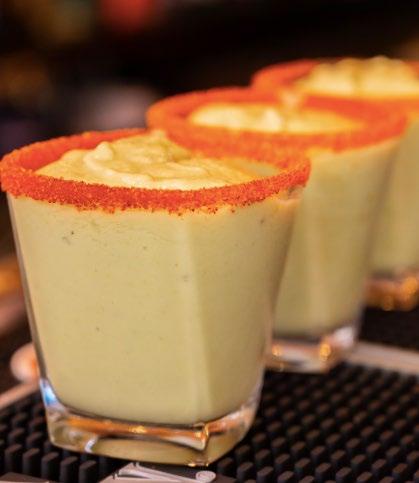
But the machine-made base is just the beginning — any variety beyond the lime margarita involves other steps. Consider the Avocado Margarita, the most popular frozen drink at Aldaco’s.
To make that cocktail, the bartender dispenses 10 ounces of the frozen lime margarita into a blender, adds a splash of sweet and sour, then adds half an avocado. But the bartender doesn’t just toss the avocado in — she adds it to the blender in five pieces.
“We do the avocado in five stages so that it blends softer
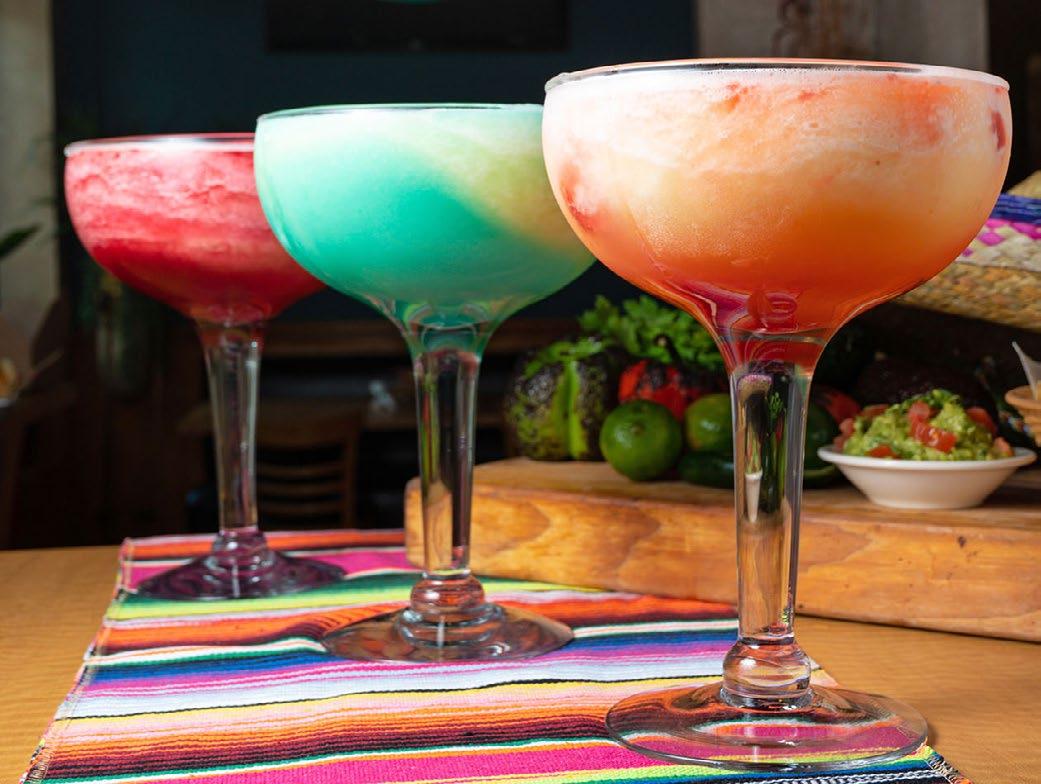
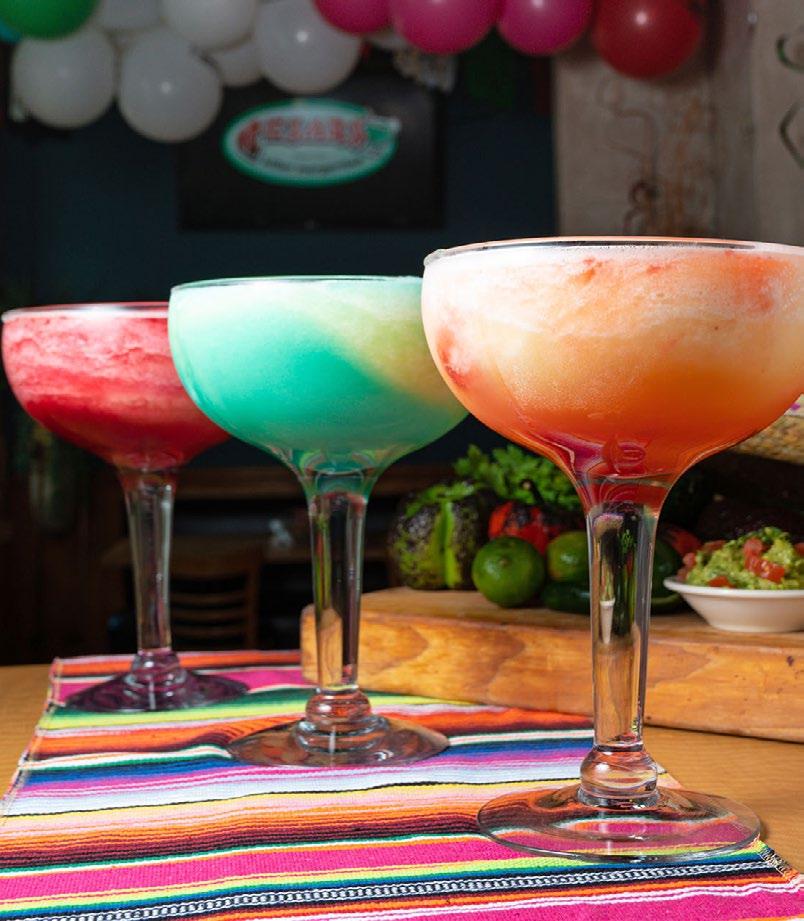
Aldaco’s Avocado Margarita
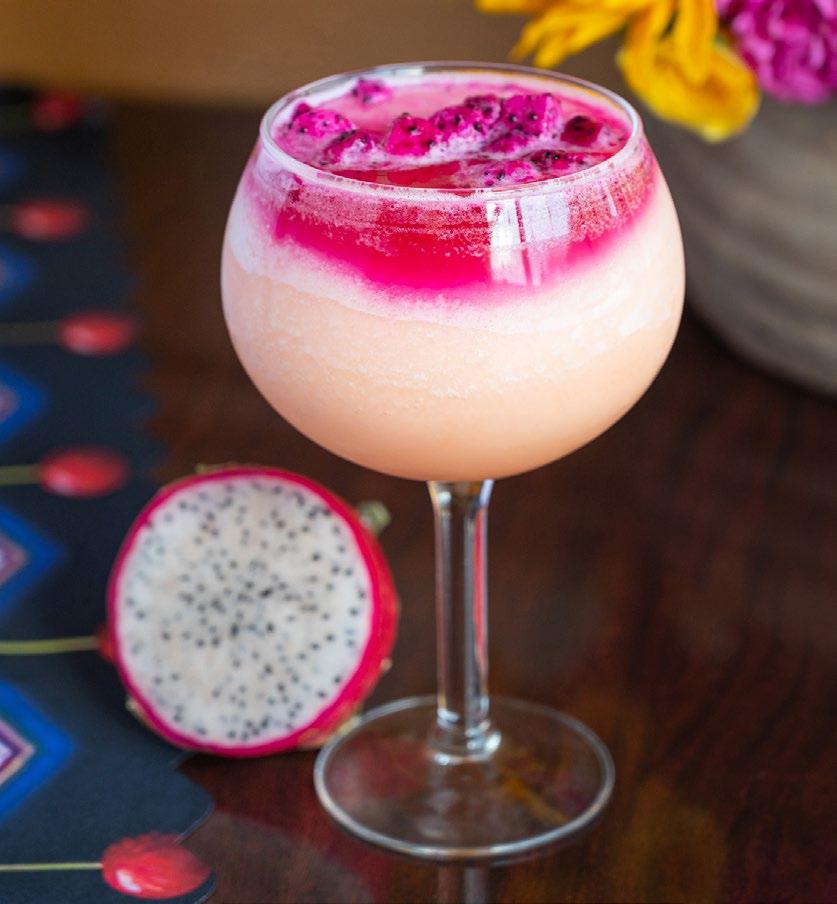
Cesar’s Killer Margaritas’ Dragonfruit Margarita
and easier and evenly,” Aldaco explains.
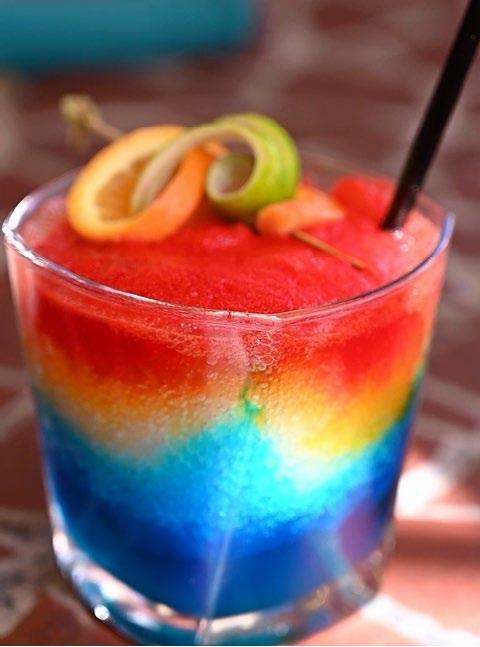
Aldaco’s Fiesta Margarita, prepared with four layers of flavor, also requires careful preparation. The lime base is the same as in the other frozen margaritas; creating the layers is a “labor of love,” Aldaco says.
“That’s one that we have to take very seriously,” she explains. “We have all the [different flavored and colored] mixes right next to the frozen blend in squeeze bottles that we can control. We open the tap [of the frozen blend machine] halfway, then we’ll do the blue layer, then we’ll add some more blend and another color, and so on.”
At Cesar’s Killer Margaritas, flavored margaritas including the popular mango, strawberry, and raspberry varieties are made by adding fruit puree to the frozen lime base. The base is created in the machine, but the fruit puree is added in a blender.
“To get the best out of all the purees, we add the purees to the bottom of a blender and then we add the frozen lime margarita [from the machine] and then mix it up to make sure that the puree is all the way through,” Sanchez explains. “That way
you’re getting flavor all the way.”
Guests can order enhancements, too. One popular combination is a frozen mango margarita accented with a squirt of chamois at the bottom and Tajin on the rim.
“It’s a unique flavor,” Sanchez says. “People who like the sweet and spicy flavor of the chamois always ask for it with the mango margarita because they go so well together.”
BEYOND MARGARITAS
Frozen cocktails aren’t limited to margaritas at Aldaco’s and Cesar’s Killer Margaritas. At Aldaco’s, the Frozen Mojito is a hit. Bartenders use a separate frozen cocktail machine to create the slushy blend of rum, lime powder and other ingredients that forms the base. When an order arrives, staff dispense the frozen mojito slush into a blender, then blend it with fresh mint so mint particles are dispersed throughout the drink.
Aldaco’s Fiesta Frozen Margarita
“To get the best out of all the purees, we add the purees to the bottom of a blender and then we add the frozen lime margarita [from the machine] and then mix it up to make sure that the puree is all the way through. “That way you’re getting flavor all the way.” – ISRAEL SANCHEZ, Cesar’s Killer Margaritas
The Frozen Paloma is another popular option, Aldaco says.
“It wasn’t easy to find the flavor that we wanted for the Frozen Paloma, so we created our own mix,” she says. “We use a little bit of Margarita Man to get the soluble mix that will freeze, then we add grapefruit peel and fresh grapefruit.”
Cesar’s Killer Margaritas’ customers are fans of the restaurant’s frozen piña coladas. Those slushy creations are made in a blender (not the cocktail machine) with a pre-measured volume of house-made, coconut-based colada mix and ice, plus strawberry, mango or guava puree.
“The piña coladas have almost taken on a life of their own because of the flavors that we’ve added,” Sanchez says.
THE RIGHT MIX
Finding the right combination of sweet and tart flavors to pair with a frozen cocktail’s alcohol content can be challenging because the ice cold, slushy texture affects how customers perceive the flavor.
The alcohol content is obviously important — customers definitely want the “buzz” — but most people who order frozen cocktails are more interested in the sweetness than in the alcohol flavor. Customers looking for the taste of tequila or rum order drinks on the rocks or straight, Sanchez notes.
However, as Aldaco notes, an overly sweet drink can be a turnoff for some customers. For example, she sampled a mix for a frozen version of an espresso martini but found it far too sweet.
“You can probably do that when you have younger generations who are barely starting because they want things sweeter,” she says. “But I try to make our frozen drinks not so much on the sweet side. We add fresh lime juice to our mix, so you have that citrus flavor going on. They’re not too sweet and they’re not too tart. I think they’re just balanced.”
Glassware is another key to the success of Aldaco’s frozen
cocktails. The restaurant previously served frozen drinks in the thick goblets commonly seen in many restaurants. But they take a long time to cool down after coming out of the dishwasher, and you risk cracking the glass if you add an icy drink to a hot goblet, Alcado explains.
Her solution: switching to square old-fashioned glasses.
“Those stack really nice, they wash really nice, and they cool down really fast,” she says.
Aldaco and Sanchez realize how much frozen cocktails add to their restaurants’ bottom line. They keep customers happy and the cash registers ringing.
“It’s important to serve responsibly but make sure your drinks are good enough that your consumer wants a second drink or third drink,” Aldaco says.
Frozen Cocktails Celebrate the Seasons
With all of the ingredient and color combinations available in your frozen cocktail repertoire, why not get creative when holidays (official or otherwise) roll around?
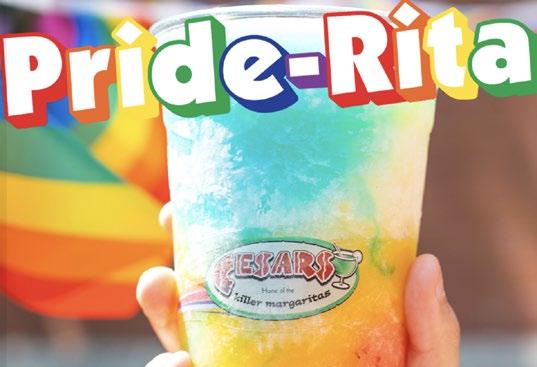
That’s just the approach owner Israel Sanchez takes at Cesar’s Killer Margaritas in Chicago. One very popular example — the Pride-Rita, a special, rainbow-themed frozen blend of strawberry, lime, mango, and blue curacao that the restaurant features in its annual Pride Month promotion.
“We actually donate $1 from each margarita to the Howard Brown Health Center from the sale of those margaritas during June,” Sanchez reports. The Chicago-based nonprofit organization is a healthcare provider specializing in LGBTQ+ needs.
Independence Day, Halloween, Christmas and Valentine’s Day are other occasions that Cesar’s Killer Margaritas’ customers can celebrate with themed frozen drinks that are color-coordinated with the season.
Cesar’s Killer Margaritas’ Super Megas Strawberry, Blue Curaçao and Raspberry Margaritas
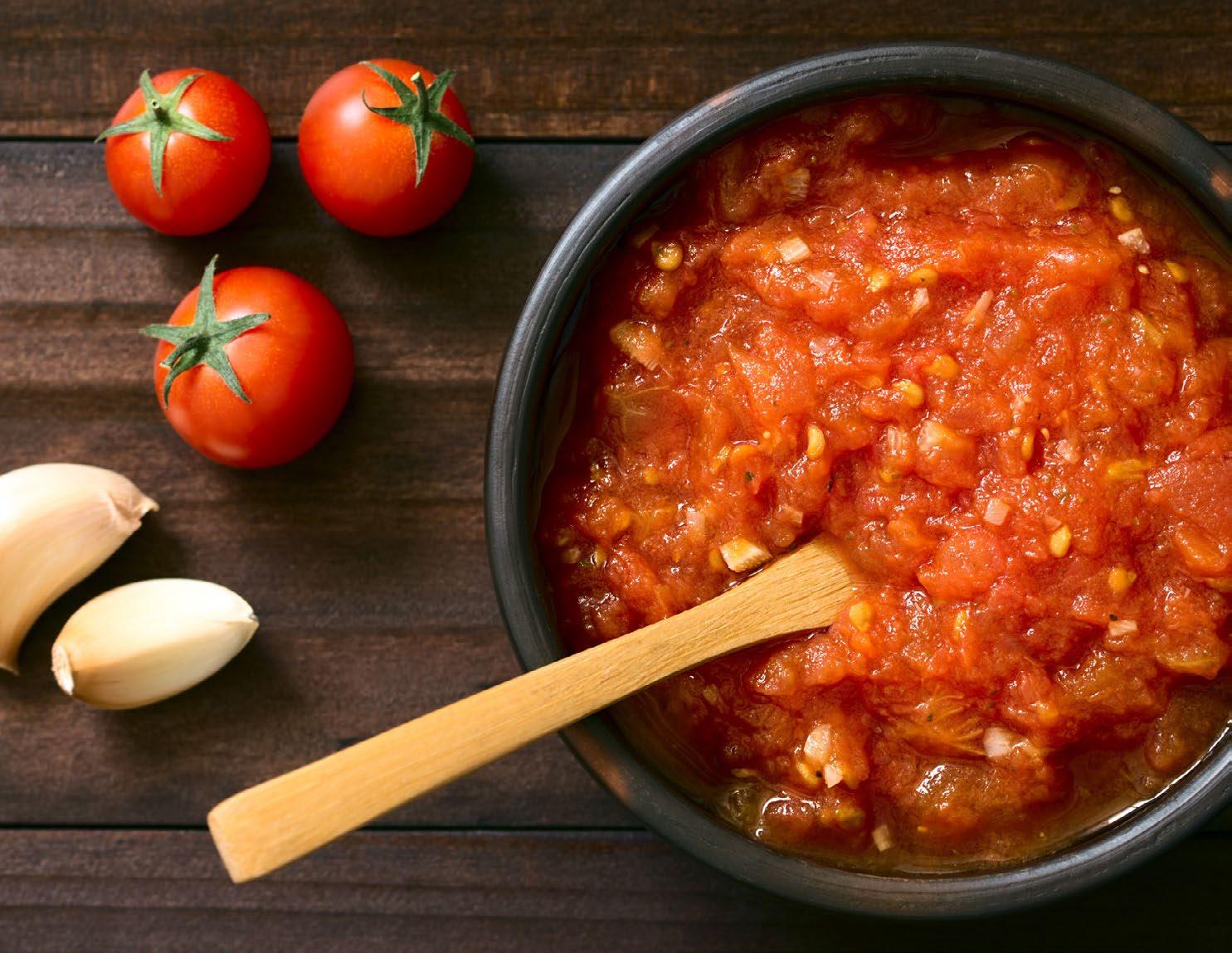
Get out your salsa-making ingredients and create a unique foodservice salsa recipe you think has the consistency and flavor to wow the judges. The grand prize winner will receive a Sammic XM-52 Immersion Blender and $750. Second and third place will receive $500 and $250, respectively. Plus the top three recipes will be featured in the NovDec issue of el Restaurante.
All readers of el Restaurante are welcome to enter the contest. The recipe must be an original recipe of your own creation. There are no restrictions on the ingredients of the recipe. All recipes will be judged on taste, creativity and appropriateness for foodservice applications.
THE NATIONAL LATINO RESTAURANT ASSOCIATION
supports and promotes restaurateurs, small businesses and the entire Latino restaurant community at a national level to ensure the equitable economic growth of the sector. LRA community members come together to network with industry pros, market their brand and learn new ways of making their business more efficient
MEMBER BENEFITS INCLUDE:
BOOTCAMPS
FREE CLASSES FOCUSED ON RESTAURANT INDUSTRY DEVELOPMENT AND EXCLUSIVE NETWORKING OPPORTUNITIES WITH CERTIFICATION UPON COMPLETION OF COURSES
ACCESS TO CATERING RFP'S BID ON CATERING CONTRACTS EXCLUSIVE TO LRA MEMBERS
DINE LATINO RESTAURANT WEEK EXCLUSIVE PROMOTIONS FOR YOUR RESTAURANT DURING THE RESTAURANT WEEK! (SAVE $900+)
GRANT OPPORTUNITIES GRANT ALERTS FOR LRA MEMBERS
EXCLUSIVE ACCESS TO THE LRA MEMBER PLATFORM
GROW YOUR PROFESSIONAL NETWORK BY ENGAGING OUR 8,000+ MEMBER CONTACTS
Don’t Flame the Feedback: WHAT NOT TO DO AFTER A BAD REVIEW
| BY ED AVIS
| It’s almost inevitable that a negative review of your restaurant will pop up on Yelp or some other platform. Maybe a customer is having a bad day and can’t resist taking it out on you, or a server’s error negatively impacted a guest’s meal. The reason doesn’t really matter; what does is how you navigate any fall-out to minimize its impact.
Not sure how to respond? Industry pros share six things NOT to do when responding to a bad review.
1
DON’T WAIT UNTIL YOU GET A BAD REVIEW TO CREATE A REACTION PLAN.
“It is really important for a restaurant to have standard operating procedures, a framework as to how to handle your reviews,” says Karla Cobreiro, a veteran restaurant publicist and chief credibility officer of cobreiro comms.
That framework should clarify who on your staff reads reviews, who triages them, who responds to them, how often they are monitored, and what the tone of the reply should be, Cobreiro explains.
In addition, consider beforehand what other steps you will take in the case of a bad review, such as reaching out to the customer, offering some kind of make-good, and/or addressing the root of the problem in your restaurant, if appropriate.
2
DON’T POST A GENERAL, GENERIC RESPONSE. Take time to read the complaint and craft a response that addresses the specific issue the customer raised.
“The worst thing that can happen is that a customer comes to the reviews and it looks like the responses are all cut-andpaste,” Cobreiro says. “If you’re saying the exact same thing again and again, people realize that your responses aren’t personalized, that you’re not actually doing something with that information.”
“It is really important for a restaurant to have standard operating procedures, a framework as to how to handle your reviews.”
— KARLA COBREIRO, cobreiro comms
3
DON’T BLAME THE CUSTOMER. Yes, sometimes a restaurant experience goes sideways because the customer makes an unrealistic demand, orders something they don’t like, or thinks your prices are too high. Regardless, resist the temptation to point fingers.
“You can acknowledge the customer’s dissatisfaction by saying, ‘I am sorry that your experience was less than ideal. We will reach out to you momentarily to learn more about your experience at our establishment so that we can rectify this situation,’” suggests Danyail Lawton, founder of the public relations firm BoldMoves.
That kind of statement shows you care about the customer’s complaint — even if it’s unfounded in your opinion — but it doesn’t automatically acknowledge that your restaurant is at fault. It leaves the door open for further clarification.
4
DON’T ARGUE IN PUBLIC WITH THE CUSTOMER. If addressing the bad review is going to involve more than one response, invite the customer to discuss the issue offline, either by direct messaging them (when possible) or by posting your email or phone number.
“If a review calls out food quality, service, or ambiance as negative, take the high road. Acknowledge the issue directly, and most importantly, move the conversation offline; you do not want to get into a back-and-forth on any review platform,” says Sean Wille, vice president of strategy + operations at Bear Icebox Communications. “Invite them to connect via phone or email so you can have an honest conversation and, when it makes sense, invite them back for the experience you aim to deliver every time.”
Lawton echoes that thought and adds that it’s important to remember that your audience for your comments is actually future potential customers who may read the reviews.
“Going back and forth with a dissatisfied customer is a loselose situation,” Lawton says. “The business owner’s reputation is at stake in these moments and how they handle these online issues is important. If they are defensive and aggressive in their response it will ignite the dissatisfied customer even more and they will make matters worse by sharing the conversation even further on social media. Now instead of only a few people seeing the message, it’s at a viral level all because the response to the customer was an emotional response.”
5
DON’T AUTOMATICALLY OFFER SOME KIND OF COMPENSATION. It’s tempting to tell every dissatisfied customer they should come back so you can compensate them with a meal or some other perk. But that’s not always the best approach for two reasons:
One, offering a free meal or comped appetizer before you understand the full story may lead the customer to think you are just trying to quickly extinguish the conversation.
“If right off the bat, you decide to offer compensation before even having the full picture, that could come across as like, ‘They’re just trying to make this go away, they don’t actually care to fix it, they’re not actually deeply trying to listen,’” Cobreiro says.
Two, guests might start comparing situations and saying, “Hey, when I complained about such-and-such, I didn’t get a free dinner.” That opens up a potential flood of problems with past and future guests who had or will have a less-than-stellar experience.
DON’T IMMEDIATELY ASK REVIEWERS TO CHANGE THEIR BAD REVIEWS AND DEFINITELY DON’T “BRIBE” THEM TO DO THAT. Of course, you would love it if every bad review was quickly revised or followed up by a great review. But the way to do get that result is by discussing the problem, fixing it (if feasible), and inviting the guest back for another visit in the hopes that they will post a better review the second time around.
“I worked with a restaurant group where the manager at one of the locations was reaching out to people who did not leave a five-star review and saying, ‘I noted that you came in and you gave us a four-star review. We really strive for a fivestar experience, so would you be willing to come back in with a $250 gift card and change your review to a five-star review?’ That is essentially bribery,” Cobreiro says. “That is not good, that is not okay.”
Instead, Cobreiro advises, follow-up with the guests after you have addressed the problem and they have visited a second time. Then you can gently ask them if a new review is warranted: “’Thank you so much for giving us a second
chance. How was the experience this time? If you think it makes sense, we’d love it if you updated your review to reflect the updated experience.’”
The bottom line is to remember that the way you respond to negative reviews does not just impact the customer who posted that review — it will impact countless future potential customers who read the reviews when they’re deciding where to eat.
Willie offers one last tip: Create a structure that encourages guests to immediately tell you something is wrong because it might prevent bad reviews from ever being posted.
“This is about creating early opportunities to address negative feedback,” Wille says. “Comment cards, receipt surveys, and manager touchpoints give guests a chance to say something in the moment instead of waiting until they get home and post about it. One of the easiest ways to build a connection is to turn a poor experience into one that earns a positive review later.”
Ch Choose California
for Hispanic-Style Cheeses & Dairy Products
California is a leading producer of Hispanic-style cheeses like Oaxaca, Queso Fresco, Panela and more.
Discover the authentic and flavorful cheeses made in America’s No. 1 dairy state.
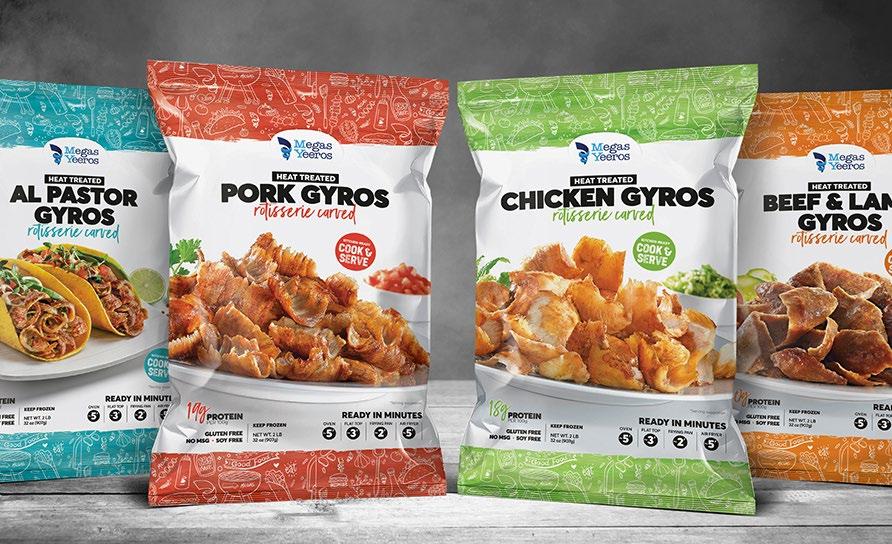
Megas Yeeros’ Heat-Treated Gyros. This new product line is designed to help operators improve speed, simplify operations, and expand menus while maintaining consistent quality. All varieties of the Heat-Treated Gyros are produced through a fully automated process, where the meat is cooked and rotisserie-carved from the cone, then shock-frozen to preserve texture, flavor, and consistency. Delivered ready to reheat and serve in just minutes — no need for specialized equipment or skilled labor. Great in tacos, wraps, bowls, and more. Available in Beef & Lamb, Chicken, Pork, and Al Pastor varieties. 212-777-6342; email info@megayeeros.com
BE&SCO Manufacturing’s Manual Tamale Machine.
Turn your restaurant’s tamale production into a smoother, more consistent process with this manual machine. Designed for single-person operation, it offers multiple extruder options to dial in the ideal meat-to-masa ratio and can produce up to 35 dozen tamales per hour. Compact and built for commercial kitchens, this machine provides a practical way to increase output without
losing the traditional tamale experience customers love.
Request a quote: 210-734-5124; bescomfg.com
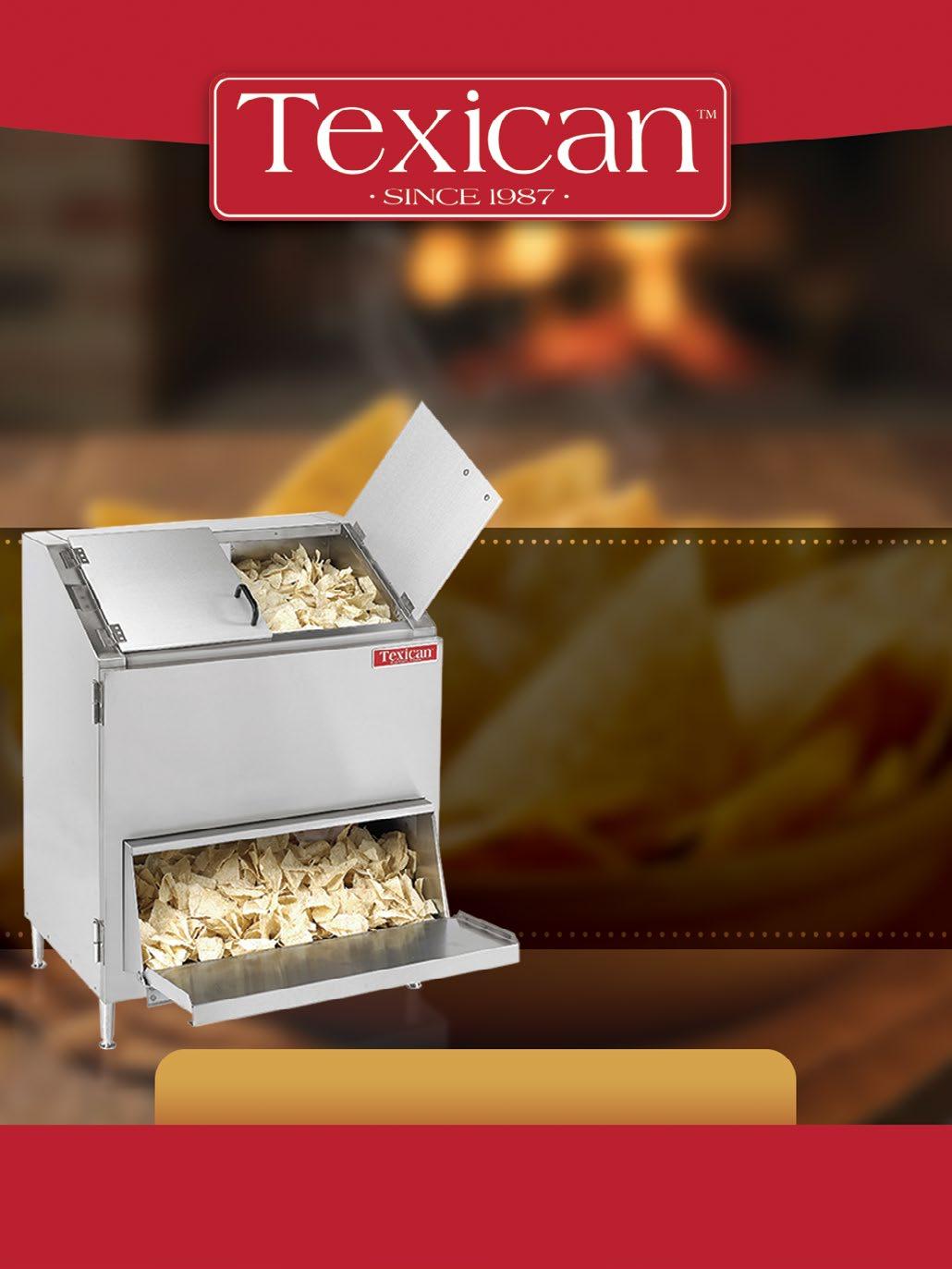
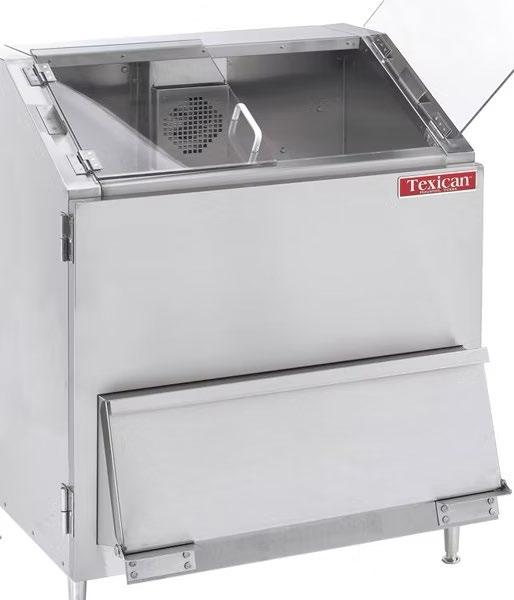
Texican Specialty Products’ Chip Serving Cabinets. Customers love hot chips — so make sure your chips come out hot and fresh by heating them in a Texican tortilla chip serving cabinet. Available in two models to fit most any operation: the “El Primo” 44-gallon capacity chip warmer (shown), and the “Chip Master” 25-gallon capacity chip warmer. Both have thermostatic temperature controls to ensure you’re delivering the freshest, crispiest chips that will keep customers coming back for more. 713-896-9924; TexicanSpecialty.com
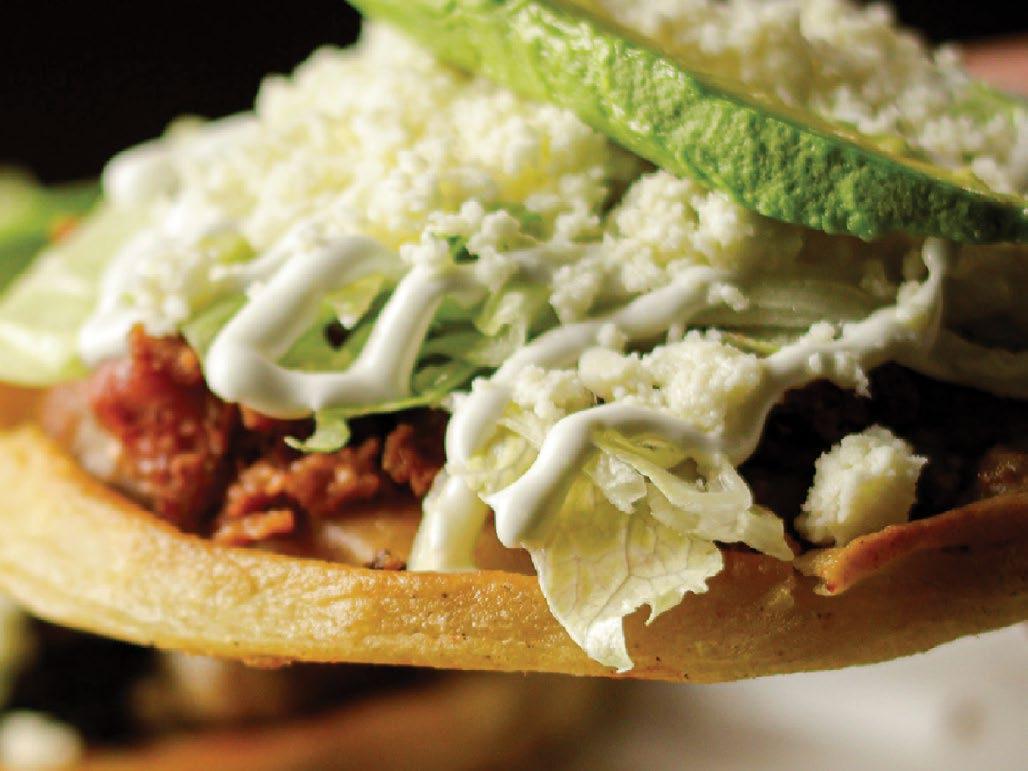
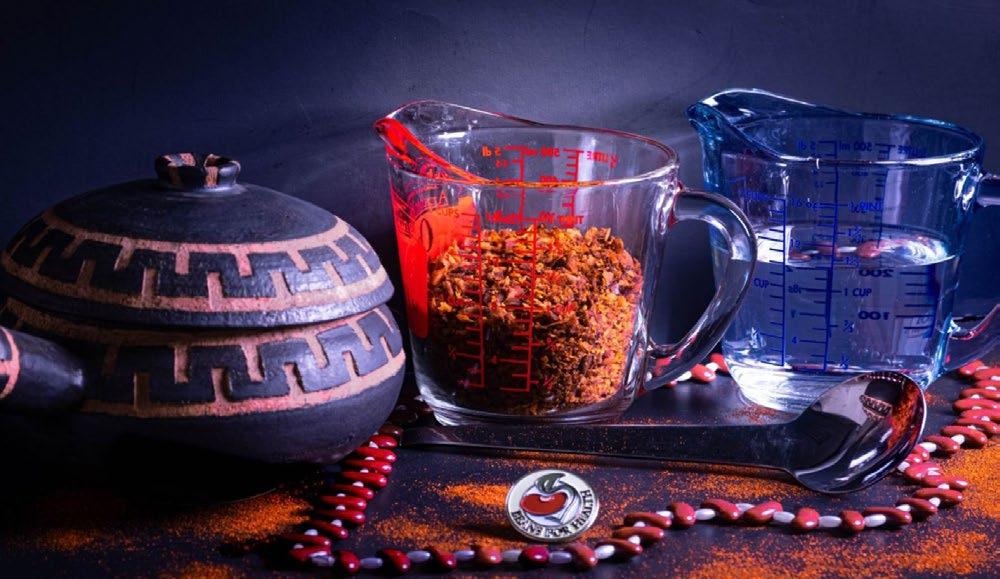
Inland Empire Foods’ Steam Cooked, Air-Dried Pinto Beans with Chorizo Seasoning. These dehydrated, cholesterol-free pinto beans are a great source of fiber and protein — things today’s diners are looking for in the food they order. The beans deliver the flavor of chorizo but with less saturated fat than pork chorizo. Prep takes only 3 to 5 minutes, and you get consistent quality every time. No refrigeration needed; one-year shelf life. Great for Mexican/Latin menu favorites: tacos, burritos, tostadas, tortas, pupusas, vegetarian refried beans and more. inlandempirefoods.com
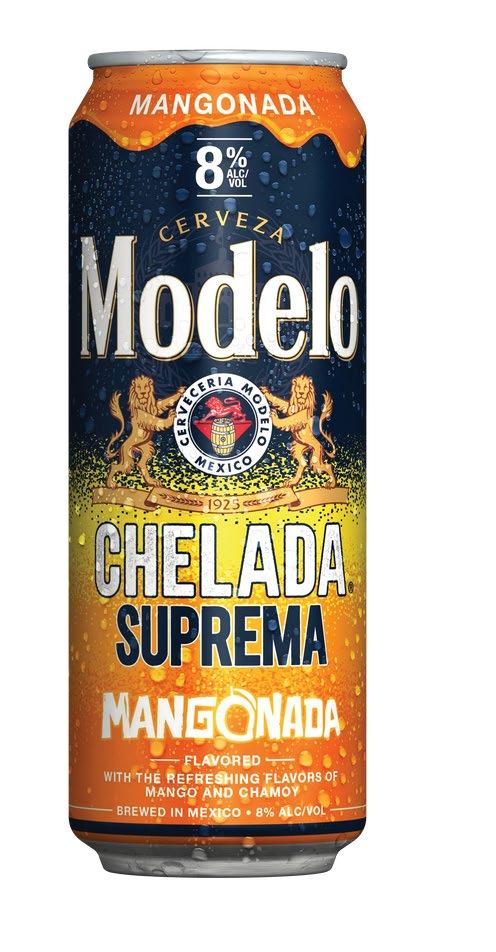
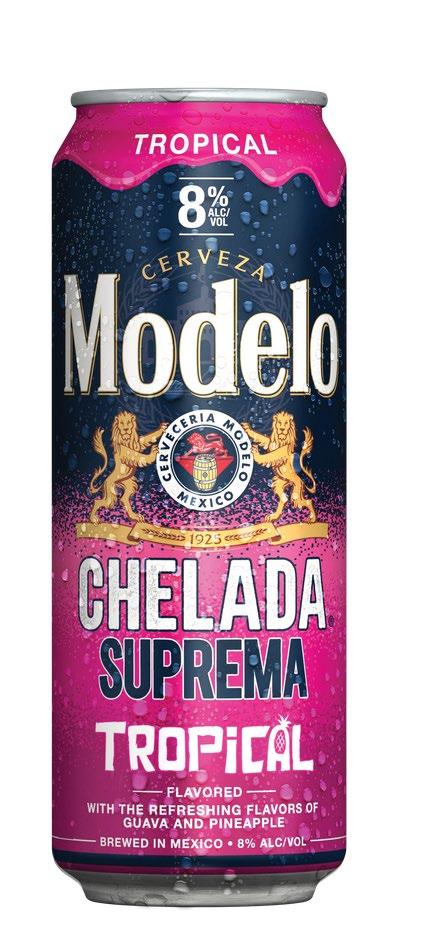
Constellation Brands’ Modelo® Chelada Suprema. This new high-ABV offering, launching nationwide, features a mix of Mexican beer and blended fruit flavors at 8% ABV; it’s brewed with the same quality and authenticity as all Modelo Cheladas, but now with a higher ABV. Available in 24-ounce cans in two bold, blended fruit flavors: Modelo Chelada Suprema Mangonada, featuring vibrant flavors of mango and chamoy, and Modelo Chelada Suprema Tropical, featuring refreshing flavors of guava and pineapple. ModeloUSA.com
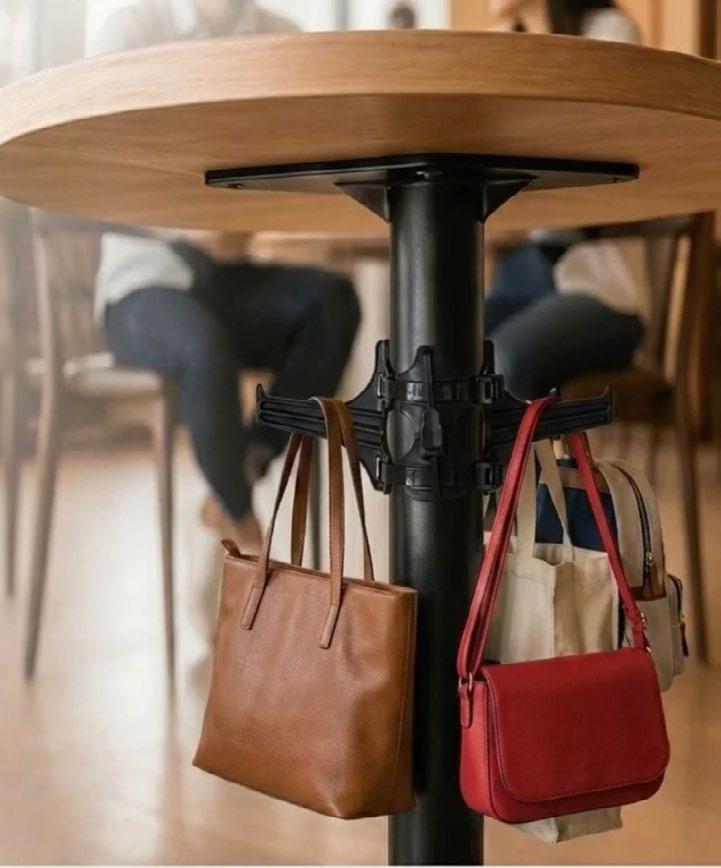
Purse Pegs. Give guests a safe, inconspicuous, clean place to hang their purses, bags, backpacks and more with this patented hook system designed to be easily retrofitted onto the pedestal bases of your tables. No drilling needed — just flip the table over and install two to six hooks, depending on the diameter of your table base pedestal. 970-376-3349; pursepegsllc.com
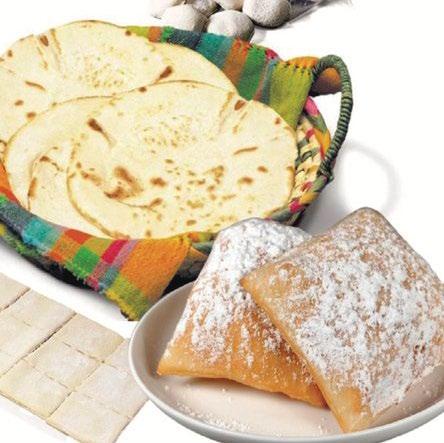
Bridgford Foods’ Dough Products. Bring authentic flavor to your menu with ease. Bridgford frozen tortilla dough balls, sopapilla dough and bolillo dough deliver fresh, house-made results. Just thaw, grill or fry for warm, consistent results every time. 800-527-2105; bridgford.com
CornNext’s Lime Splash Plastic-free Flavored Drinking Straws. The world’s first naturally 100% degradable, flavored drinking straws deliver the durability of plastic with none of the environmental impact. They’re great for mojitos, margaritas, sparkling water, sodas, iced tea and more, and stay strong in cold beverages without becoming soggy! Made from corn starch, water, natural enzymes, green food coloring, and lime concentrate juice with no petroleum, PLA, resin or harmful chemicals Other flavors also available. cornnext.com
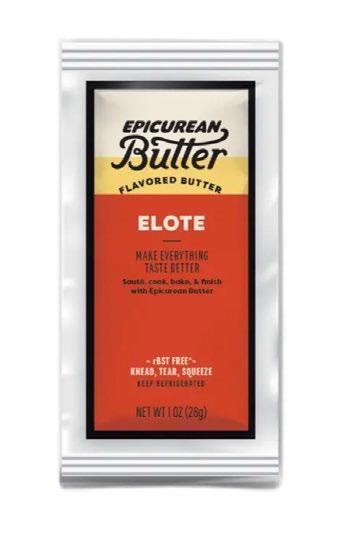
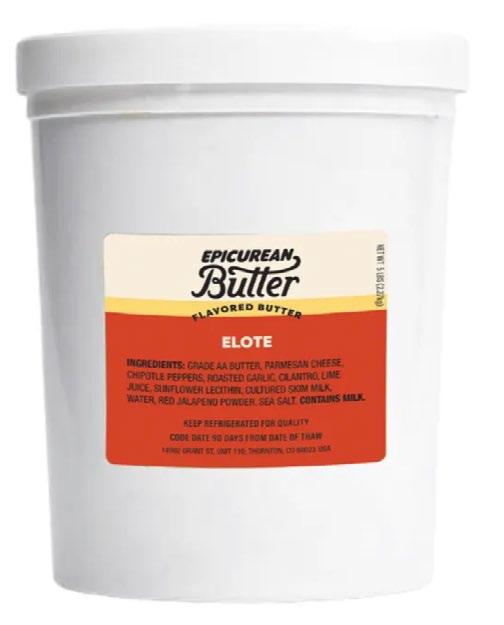
Epicurean Elote Butter. This 2026 National Restaurant Show FABI Award Winner and FABI Favorite was chosen as an outstanding innovation that exemplifies the future of food and beverage! The butter combines the bold, smoky flavor of chipotle peppers with cheese, creamy butter, and fresh lime; comes in 5-lb. tubs and 1-oz. packets; and enhances corn, proteins, and other sides while simplifying preparation. epicureanbutter.com
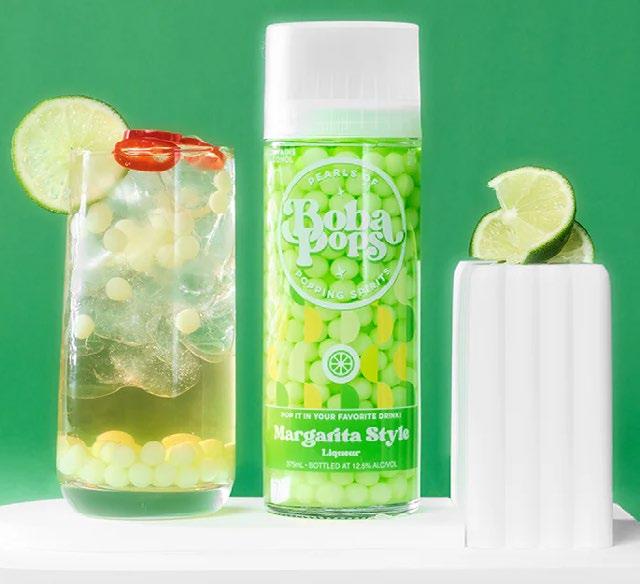
Boba POPS. These alcohol-infused popping boba add flavor, color, and texture to any drink. Just add ice to a glass, pour in your customer’s favorite drink, scoop in the pearls and serve guests a drink that will deliver a burst of booze and flavor. The POPS add a fun touch to cocktails like margaritas and mojitos, lemonade, seltzer, or desserts. Available in Margarita Style, Espresso, Lychee, Strawberry, Blueberry, Peach and Piña Colada flavors. bobapops.com
July 12-13 | San Antonio, TX
Mushroom Tacos (Vegetarian)
Recipe courtesy of Borderlands: Recipes and Stories from the Rio Grande to the Pacific by Hank Shaw
Makes 4 TO 6 servings
The Filling:
1 lb. fresh mushrooms, chopped (Any mushroom will work, but wild ones make this even better.)
½ white onion, chopped
3 T. lard, bacon fat or oil
Salt
3 cloves garlic, minced
Pinch of dried Mexican oregano
Black pepper to taste
To Finish:
½ lb. pound shredded melty cheese such as asadero, Oaxaca, mozzarella, or “Mexican blend”
Flour tortillas
Chopped cilantro
½ red onion
¼ c. cup freshly squeezed lime juice
Lime wedges, to serve
The Serrano Crema (optional):
1 or 2 serrano chiles, seeded and minced
2 cups Mexican crema, or 1½ c. sour cream and ½ c. cream
Salt
Soak the red onion in the lime juice with a pinch of salt.
If you’re making the serrano crema, blitz the crema and the serranos in a blender on high until completely puréed. If you want to get fancy, push the mixture through a finemeshed sieve. Set it aside for now.
To make the filling, add the mushrooms and onion to a large sauté pan, and turn the heat to high. Toss the contents of the pan to keep the mushrooms and onion moving as it heats up. As soon as it starts to sizzle, sprinkle some salt over everything. Shake the pan from time to time. At some point the mushrooms will give up their water. Add the lard or oil now and toss to coat. Add the minced garlic and oregano and mix well. Let all this cook, undisturbed, a few minutes
to develop some browning. Stir and mix well one more time, then let it brown once more. Turn off the heat and cover the pan.
To make the tacos, set about 2 tablespoons shredded cheese on a hot comal, griddle or flattop, set over medium-high heat. As it begins to melt, set a flour tortilla on it and press this down with your hand or a spatula until the melted cheese barely reaches the edges of the tortilla. Let this cook until the cheese releases, usually about 1 to 3 minutes (it’s better to let the cheese sit a little too long than too short. You want it pretty and brown and crispy). When it releases, or when you decide to scrape it off the comal with a spatula, flip the tortilla over, top it with some of the mushroom mixture, some of the lime-soaked onion, a bit of cilantro, and a drizzle of the serrano crema. Serve with lime wedges.
NOTE: If you’re not using the serrano crema, you may want to add hot sauce.
Mexican Street Corn Empanadas
Recipe courtesy of Performance Foodservice
Makes 45 servings
45 ea. Pillsbury Round Frozen Pie
Dough (or your own dough)
1 #12 scoop per empanada filling (recipe below)
14 oz. Chili Lime Crema (recipe below)
13½. oz. cheese, cotija
The Empanada Filling:
4 c. cream cheese, softened
1 c. sour cream
1 c. mayonnaise
2 c. chilies, green, mild, canned
¼ c. lime juice
2 T. hot sauce
1 t. garlic, powder
1 t. paprika, smoked
½ t. red pepper, flakes
½ t. kosher salt
9 c. roasted corn
3 c. pepper jack cheese, shredded
3½ c. bacon, cooked, chopped
Combine cream cheese, sour cream, mayonnaise, green chilies, lime juice, hot sauce, garlic powder, paprika, red pepper flakes and salt in a large mixing bowl. Stir until combined; fold in corn, cheese and bacon and refrigerate until needed.
The Chili Lime Crema:
8 oz. mayonnaise
12 oz. sour cream
1 T. Sambal Oelek chili garlic sauce
1 T. lime juice
⅛ t. sugar, granulated
½ t. garlic, powder
3 T. milk, whole
Combine mayonnaise, sour cream, Sambal Oelek chili garlic sauce, lime juice, sugar, garlic powder and whole milk in a mixing bowl. Stir until combined and refrigerate until needed.
To make the empanadas: Thaw pie dough round, covered, either at room temperature 15-30 minutes until flexible or refrigerated overnight. Remove paper from pie dough round and place sticky side down on parchment-lined sheet pan.
Deposit #12 scoop of filling mixture onto each pie dough round; flatten to cover half of the round, leaving a border. Brush border all the way around with water; fold dough over filling and crimp edges with a fork to seal.
Bake at 325°F for 18-22 minutes in a convection oven or 375°F for 28-32 minutes in a standard oven.
Serve an empanada immediately, topped with 2 teaspoons Chili Lime Crema and 1 tablespoon sprinkle of cotija cheese.
Sweetpotato and Black Bean Empanadas
Created exclusively for the North Carolina SweetPotato Commission by Savorez Mexican Restaurant, Wilmington, NC
Makes 8 servings
The Empanada Dough:
3 c. all-purpose flour
1 t. salt
1 stick cold butter, cut into small cubes
¾ to 1 c. cold water
Stir together flour and salt in a large bowl. Scatter the butter over the flour. Use a pastry cutter to cut the butter into the flour until butter is incorporated and mixture resembles cornmeal. Using a fork, stir in just enough water until the dough comes together. Knead 5 to 6 times, being careful not to overmix. Wrap dough in plastic wrap and refrigerate.
The Filling:
4 lbs. sweet potatoes, peeled, diced, and roasted
2 oz. coconut oil
2 yellow onions, peeled and diced
4 cloves garlic, minced
6 c. black beans, cooked and drained
1 T. mild chili powder
½ T. ground cumin
2 t. salt
Place all ingredients in a large bowl and toss together.
To Finish the Empanadas:
1 egg
1 T. water
To Prepare the Empanadas:
Preheat oven to 400° F. Line 2 large baking sheets with parchment paper. Lightly flour a work surface. Roll out half of the dough to ¼ inch thick. Cut out 4-5-inch rounds, larger if you’d like. Place about 2 tablespoons of the filling at the center of each round. Fold the dough over to encase the filling, making a half-moon shape. Use the tines of a fork to seal the edges. Empanadas may be frozen at this point.
When ready to bake: Arrange empanadas on baking sheets. Whisk together egg and water and brush empanadas with egg mixture. Bake empanadas one pan at a time (refrigerate the other pan until time to bake) until golden brown, about 30 minutes. (Savorez chefs deep-fry empanadas served at the restaurant, but this baked version is easier.)