A new trade show serving the Latino foodservice, retail and street vendor industries is launching on May 9-10, 2023, at the Pasadena Convention Center in Los Angeles. The Antojo Industry Trade Expo was organized by Eric Jurado, who was behind the successful Cocina Sabrosa Trade Expo in Long Beach in 2021.
Attendees will have the opportunity to see and sample products from exhibitors, who will be showcasing the leading food, beverage and equipment products and services in a professional trade show setting.
In addition to the trade show, the event will include management seminars on how to operate business profitably and successfully.
“ The Antojo Industry Trade Expo is the perfect business trade event for our association members to come and network with food, beverage, service providers, and equipment manufacturers all in one place,” says Lilly Rocha, executive director of the Latino Restaurant Association. For more information, visit www.antojoindustry.com.
CHEFS TAKE RECIPES BEYOND THE BASICS
salsa and quacamole
| BY ANNELISE KELLY |
Salsa may be a critical component of Mexican cuisine, but it doesn’t have to conform to traditional recipes and styles. While familiar versions such as pico de gallo, salsa rojo and salsa verde are the bulk of salsas Mexican restaurants serve, creative chefs are innovating with imaginative versions spiked with unexpected ingredients.
“Over the last five years, salsa trends have skewed to include more creamy, fruity flavors with a more savory, creamy, multinational salsa emerging, while the fresh, saucy, spiciness of classic red salsa seems to still be a staple on many menus,” says “What’s Trending in Salsa,” a 2020 report from In-Sight, an information platform operated by flavor and fragrance producer Symrise.
While salsa frequently takes center stage beside baskets of chips — commonly sharing the appetizer role with guacamole — salsa and guacamole both have important roles to play beyond the appetizer menu. They can take tacos, burritos, bowls and other dishes to a whole new level when crafted to complement the main event.
Te Amo Tequila Bar’s Guacamole with Blackened Jumbo Shrimp
last longer, so try using dried chiles and canned tomatoes.”
Xico definitely goes beyond the basics.
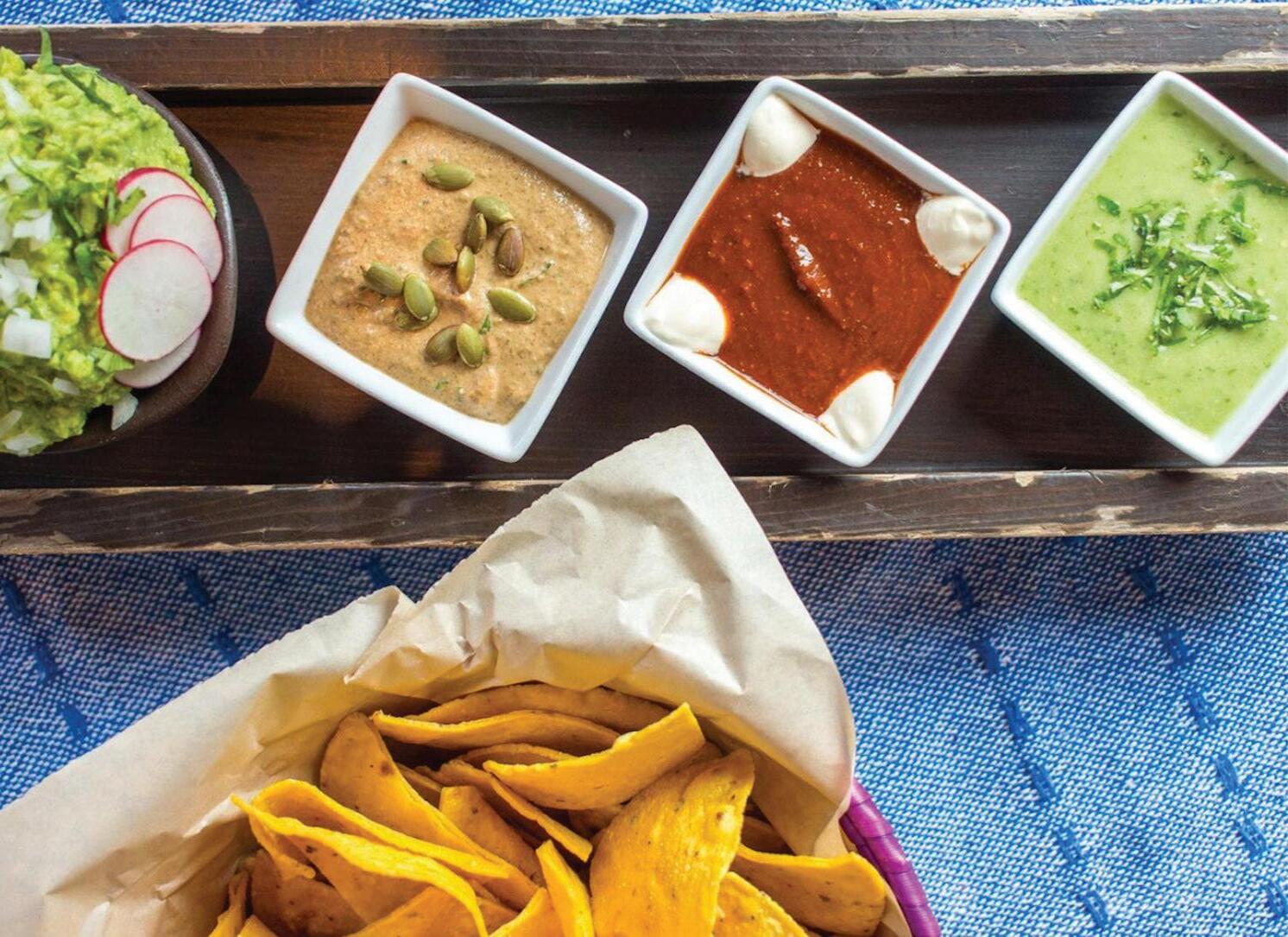
“We have always used locally grown ingredients here. Seasonal ingredients from our farmers push us into creativity,” says Davis. “We use fruit, like husk cherries in the winter. And our most popular appetizer is a chips and dips platter, where we feature three salsas including sikil p’ak made with toasted pumpkin seeds, tomato, habanero and cilantro to give our guests a sense of the wide range of salsas out there.” The platter also includes salsa verde, salsa de muchos chiles served over crema Oaxaquena, and molcajete guacamole.
While some of those salsas appear
Xico’s Chips and Dip Platter
“Customers want a range of heat levels, and you have to have those on deck in case a request for very hot salsa hits the kitchen! Always have some habanero, and a solid medium-spicy red salsa in good supply…Go basic. Come up with three to five salsas, at least one green and one red, with varying heat levels. Cooked salsas last longer, so try using dried chiles and canned tomatoes.”
– ELIZABETH DAVIS , Xico
with other dishes, most menu items are paired with a customized salsa. Davis explains that not every salsa pairs well with chips.
“Toasted chipotle salsa, which tastes a little like barbecue sauce, is really good with pork, but too thick and strong to eat with chips. Salsa verde cruda is great as a sauce, but too thin for a chip dip – the acid and color are great on a plate of tamales, or in ceviche.”
Salsa albaniles, a chunky tomatillo-based salsa, shines in Xico’s signature flaming queso. Fish tacos are topped with apple and radish salsa fresco, and whole trout pozole is paired with tomatillo avocado salsa. And the bar even relies on two salsas to amp up cocktails.
“Our spicy green margarita contains our salsa verde for an herbaceous kick, and the spicy red contains our habanero salsa for a fruity, hot kick!” says Davis. “The salsas are added before the drink is shaken. These are super popular…We use high-quality canned tomatoes in some of our salsas, and canned chiles in adobo. I’m intrigued by the bulk mashed avocados I’ve seen in your magazine!”
TODD CAMBURN, BARRIO STAR
“We are sauce and salsa people, period.” With that, Todd Camburn, chef and owner of Barrio Star in S an Diego, California, sums up the restaurant’s salsa selection.
“Every entree comes with some sort of sauce or salsa. Each different salsa/sauce is unique to the dish we pair it with. All the flavor profiles shine with each dish!” Camburn says. “Salsa is a huge Latin staple—it’s always important to have different kinds of
Automatics Autodoner is ideal for preparing cones of al pastor and other stacked meats.
fresh salsas for everyone’s palate. Our salsas and sauces haven’t varied much since conception.”
Those salsas range from the familiar, such as the fresh pico de gallo served with the Tamal de Pollo and the Barrio Bowl, and the roasted tomatillo salsa spiked with smoky crunchy corn salsa topping the Tamal de Maiz. Bright, fruity mango salsa tops the Brazil Bowl, and pineapple jicama salsa — “our most creative one, so much flavor and balance” — garnishes the Salmon Tacos and panko-fried catch of the day. Committed condiment lovers might choose Barrio Star’s Surf and Turf bowl complemented by cilantro lime salsa, coconut chili sauce, and diablo sauce.
GREAT GUACAMOLES
Te Amo Tequila Bar in New Haven, Connecticut, is not shy about elevating its guacamole menu with high-flavor, high-profile proteins. Purists can order traditional guacamole, but the restaurant also offers four deluxe options: pork belly; spicy shrimp and corn; blackened jumbo shrimp; and lobster guacamole. A guacamole trio featuring traditional, pork belly, and shrimp and corn offers a flight of flavors to curious customers.
Te Amo Tequila Bar’s Guacamole Trio
Barrio Star’s Brazil Bowl
At Xico, Davis has given up on fancy guacamoles because they didn’t sell well.
“People just want traditional guacamole,” she says of her customers in Portland. “We tried adding toppings like chicharron, toasted pepitas, and cherry tomato salsa, but no one ever ordered them, and they led to food waste.”
Barrio Star’s Camburn concurs.
“I personally believe in leaving such a beautiful fruit as the avocado alone. Let the fruit speak for itself,” he says. “For the most part, at Barrio Star we see people not veering
off the path of an excellent simple guacamole recipe. We’ve done the numbers and nine out of ten tables order our delicious guacamole. I feel like so many restaurants out there in today’s world try to be just too creative — and that’s not necessarily a bad thing. It’s just not my style. Stick to the basics, add your own flair and I’m certain it will be delicious.”
Annelise Kelly is a Portland, Oregon-based freelance writer and a regular contributor to el Restaurante
See Barrio Star’s Roasted Tomatillo Salsa recipe on page 54.
“Over the last five years, salsa trends have skewed to include more creamy, fruity flavors with a more savory, creamy, multinational salsa emerging, while the fresh, saucy, spiciness of classic red salsa seems to still be a staple on many menus.” – IN-SIGHT (in-sight.symrise.com)
FINE-TUNING FOOD SAFETY
| BY KATHLEEN FURORE | Restaurant inspections…
Might be pass/fail, a letter grade, a number…whatever the mark, it shouts out a very important message to your customers — and prospective ones:
Is your establishment clean, well-run and a safe place to dine?
According to news reports from media outlets in cities around the country, often the answer, unfortunately, is “not so much.”
There was the Mexican restaurant in Georgia that scored 57 of 100 late last year after inspectors found raw hamburger dripping onto a container below, cooked food touching raw…the list in the local news report went on and on.
But there are success stories, too. Taco Mamacita in Chattanooga, Tennessee earned a 100 of 100 during a
routine inspection in June, 2022.
What does it take to land a perfect score? el Restaurante editor Kathleen Furore reached out to Tenley Brown, director of business operations for MF Restaurant Group — Taco Mamacita’s support office and “mother ship” — for the answer.
el Restaurante: Do you remember when the inspection took place — the one that garnered the perfect score? And what was the reaction from the restaurant’s staff?
Tenley Brown: Yes, health inspections generally happen when we are busy and this one was during a lunch rush. The restaurant staff was extremely proud and excited to see their hard work and diligent efforts garner them a score of 100.
ER: How do you make sure everyone in the restaurant understands all of the food safety protocols at Taco Mamacita? Is there a formal training program? Follow-up training from time to time?
TB: We work really hard every day with our team to keep the restaurant top notch and to make sure they are follow-
¡Ahorros al instante!
Ahorre hasta $4,000* por unidad en equipo de alta eficiencia
Ahorre hasta $1,400 por tanque
Freidora
*Escanea o visite caenergywise.com/instant-rebates para más información y una lista completa de los productos eligibles.
Ahorre hasta $750 por cavidad
Horno de convección
Comuníquese con Energy Solutions: (714) 787-1098 instantrebates@energy-solution.com
ing all food safety protocols. We require our leaders in the store to all be ServSafe certified. They also go through our internal training, where we cover food safety again during their training. On a shift-by-shift basis, we also complete our own internal health inspections. These are done before we open, during service, and when we close.
ER: Do you have Spanish-speaking employees?
If so, do you offer training in Spanish?
TB: We do have Spanish-speaking employees and we have bilingual employees, as well, who help us make sure everyone
ServSave is a food and beverage safety training and certificate program administered by the National Restaurant Association, and accredited by the American National Standards Institute (ANSI) and the Conference for Food Protection. Training and certification options include:
• S ervSafe Food Manager. Learn about foodborne illness, how to prevent it and how to train employees in food sanitation. Choose from several online, classroom and language options.
• S ervSafe Food Handler. Learn basic food safety practices for preparing and serving food.
• S ervSafe Alcohol. Learn the essentials of responsible alcohol service, and protect yourself and your operation from risks and liabilities.
• S ervSafe Allergens. The number of Americans affected by food allergies is trending higher every year and studies indicate that half the fatal episodes from food allergens occur outside the home. ServSafe Allergens offers a video that explains more about food allergens, and why you should train your staff.
• S ervSafe Workplace This comprehensive suite of training programs focuses on creating and sustaining a safe and appropriate work environment for all employees.
For more information, visit servsafe.com.
follows the steps to ensure safe operation. Our kitchen managers have protocols for training and implementation that they follow, as well, with our front-of-house management team. ServeSafe classes/materials are also offered in Spanish, as well!
ER: Had you ever been “dinged,” so to speak, on any food safety issues? If so, what were they and how did you make sure that didn’t happen again?
TB: We have had points counted off before just like every other restaurant operation. It is hard to get a 100 and it is celebrated when it does happen. However, when points are taken off, we try to react and teach/learn from that the best we can! There are so many little things that can hurt your score — having a cutting board that needs to be replaced, for example. We have to be diligent daily in making sure our equipment, big and small, is all in great working condition, our kitchens are clean and clear of clutter, and our staff has the tools, knowledge and items needed to work in a safe and clean environment.
ER: Do you have any advice for restaurants that might be struggling to keep up with food safety protocols in their establishments? Any suggestions for ways to get their restaurants organized and to get employees to make sure they follow food safety protocols?
TB: These would be my top items to suggest:
• Make sure staff members are ServeSafe certified.
• Complete internal health inspections multiple times a day.
• Pay attention to previous health inspections for repeat items that cause a violation.
• Maintain equipment and conditions in the kitchen and restaurant.
• Never stop talking about health inspections. This is my biggest piece of advice! When I started in restaurants at 15, my first boss always talked about it. Every shift, every day. Literally drove the information and knowledge into our minds so often that it became second nature. Twenty-two years later, he and his wife — the owners of Taco Mamacita and the MF Restaurant Group — still talk about it daily.
PERFECCIÓN EN SEGURIDAD ALIMENTARIA
| POR KATHLEEN FURORE | Inspecciones en restaurantes…
Puede ser aprobada/reprobada, una calificación con letras, un número… sea cual sea la marca, lanza un mensaje muy importante para tus clientes actuales (y potenciales): ¿Tu establecimiento está limpio, bien administrado y es un lugar seguro para cenar?
Según informes de prensa de medios de comunicación en ciudades de todo el país, muchas veces, por desgracia, la respuesta es “no tanto”.
Hubo un restaurante mexicano en Georgia que obtuvo una calificación de 57 de 100 a finales del año pasado, después de que los inspectores encontraron hamburguesas crudas goteando en un recipiente que había debajo, alimentos cocidos tocando los crudos… y la lista en la prensa local seguía y seguía.
Pero también hay historias de éxito. Taco Mamacita en
Chattanooga, Tennessee obtuvo un 100 de 100 durante una inspección de rutina en junio de 2022.
¿Qué se necesita para lograr una puntuación perfecta? La editora de el Restaurante, Kathleen Furore se comunicó con Tenley Brown, directora de operaciones comerciales de MF Restaurant Group — la oficina de apoyo y nave nodriza de Taco Mamacita — para conocer la respuesta.
el Restaurante: ¿Recuerdas cuando se realizó la inspección, la que obtuvo la puntuación perfecta? ¿Y cuál fue la reacción del personal del restaurante?
Tenley Brown: Sí, las inspecciones sanitarias generalmente ocurren cuando estamos ocupados y esta fue durante el ajetreo de la hora de la comida. El personal del restaurante estaba extremadamente orgulloso y emocionado de ver que su arduo trabajo y sus diligentes esfuerzos les otorgaron una puntuación de 100.
ER: ¿Cómo te aseguras de que todos en el restaurante entiendan todos los protocolos de seguridad alimentaria en Taco Mamacita? ¿Existe un programa de capacitación formal? ¿Capacitación de seguimiento de vez en cuando?
TB: Trabajamos muy duro todos los días con nuestro equipo para hacer que el restaurante siga siendo de primera categoría y asegurarnos de que sigan todos los protocolos de seguridad alimentaria. Exigimos que todos nuestros líderes en la tienda tengan la certificación ServSafe. También pasan por nuestra capacitación interna, donde abordamos la seguridad alimentaria nuevamente durante su capacitación. Turno a turno, también realizamos nuestras propias inspecciones sanitarias internas. Estas se realizan antes de abrir, durante el servicio y cuando cerramos.
ER: ¿Tienen empleados que hablan español? Si es así, ¿se ofrece capacitación en español?
TB: Tenemos empleados que hablan español y también empleados bilingües, que nos ayudan a asegurarnos de que todos sigan los pasos para garantizar una operación segura. Nuestros gerentes de cocina tienen protocolos de capacitación e implementación que siguen, así como con nuestro equipo de administración en el frente de la casa. ¡Las clases y los materiales de ServSafe también se ofrecen en español!
(más en la página 30)
During
the Latino Restaurant Association (LRA),
ServSafe es un programa de capacitación y certificación en seguridad de los alimentos y bebidas que es administrado por la Asociación Nacional de Restaurantes y está acreditado por el Instituto Nacional Estadounidense de Estándares (ANSI) y la Conferencia para la Protección de los Alimentos. Las opciones de capacitación y certificación incluyen:
• S ervSafe Gerente de Alimentos. Aprende sobre las enfermedades transmitidas por los alimentos, cómo prevenirlas y cómo capacitar a los empleados en la higiene de los alimentos. Elige entre varias opciones en línea, presencial e idioma.
• S ervSafe Manejo de Alimentos. Aprende prácticas básicas de seguridad alimentaria para preparar y servir alimentos.
• S ervSafe Alcohol. Aprende los aspectos esenciales del servicio responsable de bebidas alcohólicas y protégete a ti y a tu operación ante riesgos y responsabilidades.
• S ervSafe Alérgenos. La cantidad de personas en EE.UU. que se ven afectadas por alergias alimentarias tiende a aumentar cada año y los estudios indican que la mitad de los episodios fatales de alérgenos en los alimentos ocurren fuera del hogar. ServSafe Alérgenos ofrece un video que explica más sobre los alérgenos en los alimentos y por qué debes capacitar a tu personal.
• S ervSafe Lugar de Trabajo. Este conjunto integral de programas de capacitación se enfoca en crear y mantener un ambiente de trabajo seguro y adecuado para todos los empleados.
Para obtener más información, visita servsafe.com.
ER: ¿Alguna vez te han “pegado”, por así decirlo, por algún problema de seguridad alimentaria? Si es así, ¿cuál fue y cómo se aseguraron de que no volviera a suceder?
TB: Nos han quitado puntos antes, como a cualquier otra operación de restaurante. Es difícil lograr un 100 y se celebra cuando sucede. Sin embargo, cuando nos quitan puntos, tratamos de reaccionar, y enseñar y aprender de eso ¡lo mejor que podemos! Hay tantísimos detalles que pueden afectar tu puntaje, por ejemplo, tener una tabla de cortar que necesita reemplazarse. Debemos ser diligentes a diario para asegurarnos de que nuestro equipo, grande y pequeño, esté en excelentes condiciones de trabajo, que nuestras cocinas estén limpias y sin desorden, y que nuestro personal tenga las herramientas, el conocimiento y los elementos necesarios para trabajar en un ambiente seguro y limpio.
ER: ¿Tienes algún consejo para los restaurantes que quizá están teniendo dificultades para estar al día con los protocolos de seguridad alimentaria en sus establecimientos? ¿Alguna sugerencia de formas de organizar sus restaurantes y hacer que los empleados se aseguren de seguir los protocolos de seguridad alimentaria?
TB: Estos serían los mejores elementos que yo sugeriría:
• Asegúrate de que los miembros del personal estén certificados en ServSafe.
• Realiza inspecciones sanitarias internas varias veces al día.
• Presta atención a las inspecciones de salud previas para saber si hay elementos repetidos que causen una violación.
• Mantén el equipo y las condiciones en la cocina y el restaurante.
• Nunca dejes de hablar de las inspecciones sanitarias. ¡Este es mi mayor consejo! Cuando yo empecé en los restaurantes a los 15 años, mi primer jefe siempre hablaba de eso. Cada turno, todos los días. Literalmente, metió la información y el conocimiento a nuestra mente con tanta frecuencia que se convirtió en algo totalmente natural. Veintidós años después, él y su esposa — los dueños de Taco Mamacita y MF Restaurant Group — siguen mencionándolo a diario.
Votar es la forma más poderosa que tiene la gente para expresar sus opiniones en los Estados Unidos. Al votar por candidatos en los que cree y en cuestiones que le interesan, puede lograr un impacto en cómo se gobierna nuestro país. Las próximas elecciones determinarán quién dirigirá Estados Unidos en los siguientes años y qué cuestiones recibirán atención. Asegúrese de que está registrado para votar e invite también a sus amigos, familia y empleados a registrarse.
Para consultar información sobre cómo registrarse, visite gobierno.usa.gov/requisitos-inscripcion-votar
Este anuncio está patrocinado por la revista el Restaurante y la Latino Food Industry Association.
Voting is the most powerful way for people to express their opinions in the United States. By voting for candidates you believe in and issues you care about, you can impact how our country runs.The upcoming elections will determine who leads America in the coming years, and which issues get attention. Make sure you are registered to vote, and encourage your friends, family, and employees to register, too. For information about how to register, visit www.usa.gov/register-to-vote
This advertisement is sponsored by el Restaurante magazine and the Latino Food Industry Association.
OUR 25,000+ READERS WANT INFORMATION ABOUT YOUR PRODUCTS!
It’s our 25th anniversary! We hope you’ll join us in celebrating this milestone year and promote your products to our loyal base of readers, who represent the heart of the Mexican/Latin restaurant industry in the United States.
NOVEMBER/DECEMBER
OUR ANNUAL BUYER’S GUIDE, WITH SPECIAL OFFERS FOR ADVERTISERS!
• COVER STORY: Appetizers & Sides
• SPECIAL REPORT: 8th Annual Independent Mexican Restaurant Report
• BUSINESS BASICS: Maximizing Online Ordering
• AT THE BAR: Cocktail Shrubs
• AD CLOSE: October 28, Materials Due: November 2 And in every issue…Hotline, Marketplace, My Favorite Recipe and More!
elRestaurante
The Taco Syndicate:
WEB OF RESTAURANTS KEEPS TACO LOVERS HAPPY
| BY ED AVIS |
Soon after Chris Cheeseman arrived in San Francisco in 2008, he discovered Tortilla Heights, a Mexican restaurant four blocks from his apartment. He was already amazed by the West Coast taqueria culture, something he had not experienced in his home state of Connecticut.
“When you grow up in Connecticut and you’re Italian, like I am, you eat a lot of Italian food, you work in pizzerias,” Cheeseman says. “Mexican food in California
is essentially the Italian food of the West Coast. It’s so ubiquitous. It’s really the cuisine of California.”
Cheeseman had come to San Francisco after graduating from Florida State University’s Dedman School of Hospitality and was working at the Bohemian Club, a swank members-only club in the Nob Hill neighborhood. He started visiting Tortilla Heights so often that he befriended the managing partner, Brian McLaughlin. McLaughlin saw something promising in
Cheeseman and hired him as the general manager.
EXPANDING THE CONCEPT
Tortilla Heights was not a taqueria; it was a full-service Mexican restaurant open only at night. But the other owner, Paul Owens, wanted to start lunch service — and the idea of opening a taqueria-like concept for lunch took root.
“I loved the idea of that,” Cheeseman says. “That mixed concept at the time really wasn’t around — that during
“Offerings of capital happen a lot. So, when these situations occur and if it’s the right time and the right moment, the right space, depending on who’s involved, we move forward and open them.”
– CHRIS CHEESEMAN
North Beach Cantina
lunch, you do the taqueria, and at night, you’re full service.”
The concept worked. They focused on quality — Wagyu beef for the beef tacos, for example. Lunchtime diners liked the good food they could get quickly, when they didn’t have time for an upscale experience. At night a different crowd showed up, those who expected sit down service and nice margaritas.
“That was my first opportunity, essentially, to create a restaurant in itself,” Cheeseman remembers. “I was 25 years old, and it was extremely exciting to build this program.”
Given the success of that experiment, what happened next is no surprise: Owens, McLaughlin, and two other restaurateurs — Nick Fasanella, the former owner of Nick’s Crispy Tacos who had developed the menu for Tortilla Heights, and Doug
Marschke, owner of the taco restaurant Underdogs — launched Tacko, a restaurant dedicated to top-quality taqueria cuisine. They asked Cheeseman to manage the new restaurant, and eventually he became the managing partner.
And what is now known as the Taco Syndicate was born.
A WEB OF RELATIONSHIPS
The Taco Syndicate’s roots started before Cheeseman’s arrival in San Francisco. Nick’s Crispy Tacos was already established, and Underdogs was being converted from a bar to a taco restaurant that year.
“For me, this all started when I took over Underdogs Sports Bar & Grill as a tech guy with very little restaurant experience,” Marschke says. “I teamed up with Nick (Fassanella), rebranded to Taco Shop at Underdogs,
and away we went. Nick was at Tortilla Heights for a while, and that is how I met Chris, and the web got started.”
Owens, McLaughlin, Fasanella, Marschke and Cheeseman have opened at least a dozen Mexican restaurants in the San Francisco area in the years since. In some cases, they worked as a group, other times just two of them. There has never been a formal corporate organization behind them. It is just a loose connection of business relationships and a shared fascination with Mexican food.
“It’s not a collective that we set out to just create a restaurant group and then open a series of restaurants,” Cheeseman says. “It’s just series of friendships and interactions over the years
of spawned opportunities. Opportunities open up all the time. Offerings of capital happen a lot. So, when these situations occur and if it’s
the right time and the right moment, the right space, depending on who’s involved, we move forward and open them.”
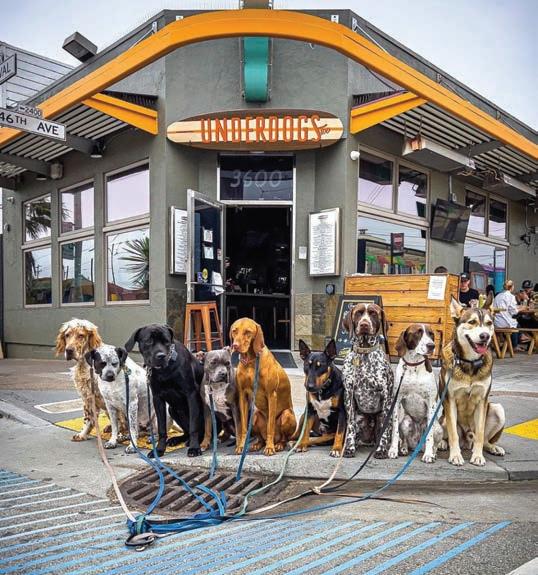
Today, Bay area restaurants owned by one or more of the men include Tacko, three locations of Underdogs, The Cantina at San Benito House, and North Beach Cantina, which opened in 2022. Marschke and Cheeseman are opening one more, Todos, this year.
“It’s been this spider web of restaurants that all sourced from Tortilla Heights and are operated by the same five of us who, throughout the years, have had restaurants come and go,” Cheeseman says. “And every restaurant that is opened is different. The menu will change a little bit, the concept. But it’s still based around that same core of Mexican food, the classics that everyone absolutely loves and continues to come back for.”
Cheeseman stresses that while the group is not formally connected, their joint efforts and knowledge sharing are key to their success.
“Really, it’s the collective experience that has moved this concept forward,” he says. “It takes a lot of wisdom to avoid the pitfalls and invest your time in the things that are going to succeed and figure out how
to continue to grow revenue, keep your costs down, and expand on the growing ideas that we have without taking away from the core of the brand.”
SUCCESS, REPEATED
A look at the restaurants’ menus confirms Cheeseman’s theory: customers who enjoy one of the restaurants will enjoy the others. Fish tacos and carne asada play starring roles on all the menus. Chicken Chile Verde makes an appearance on several menus, as does Elote Con Queso. The “Nick’s Way” taco — a creation popularized by Nick’s Crispy Tacos that features a crispy corn tortilla wrapped in a soft corn tortilla — is on the menus at Underdogs Too, Underdogs Tres and Tacko.
According to Cheeseman, the cuisine is the foundation of the fun: “There’s something about Mexican food that is very joyous, almost more than Italian food, which is a very joyous cuisine to eat. When people
come to the restaurant, they’re in a good mood. They want to drink a margarita. They want to have fun. It’s hard to say that about much other cuisine, but there is just a joyous experience about going to a Mexican restaurant.”
The group does some purchasing together to save money. For example, because the combined restaurants use so much carne asada, they were able to negotiate good prices for the beef that have held up despite the current inflation crisis, Cheeseman says.
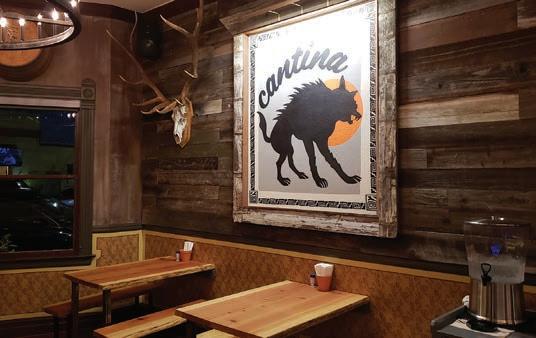
The vibe varies a bit from restaurant to restaurant — North Beach Cantina plays up the beach scene; Tacko has a more modern, clean look; and The Cantina at San Benito House features a lot of wood and Old West décor. But they all emphasize casual, communal fun.
Sadly, the group has weathered serious setbacks, too. In December 2020, Underdogs Too was destroyed by fire and was closed for about a
year, and The Cantina at San Benito House was closed for six months after a fire in April 2021 raced through the hotel above the restaurant.
STILL FRIENDS
The shared experiences of the Taco Syndicate men have made them close. But, as often happens as people age, other priorities have emerged.
“I think, unfortunately, we’ve all gone in a lot of separate ways,” Cheeseman says. “Our lives have evolved. We’ve had children, we’ve moved. A couple of us left the West Coast and now live on the East Coast. We are all still friends at the core. Years can pass and we’ll get together.”
Marschke agrees, but notes that being part of the “syndicate” still helps.
“We might not see each other as much, but we are always there to lend a helping hand, regardless if one of us has ownership in a business,” he says. “For example, when Underdogs Cantina opened, I was out with COVID, and Chris made sure he was there all day to make sure opening day went smoothly. It is also great to ask each other
for advice, or to bounce ideas off each other. It is so important in this industry to make sure you are not ‘going at it alone.’”
The collective helps even when members move. About a year ago, Cheeseman helped McLaughlin launch a restaurant called Localés in Hingham, Massachusetts. Its menu emulates those of the San Fran restaurants, right down to the crispy-within-asoft-corn-tortilla option.
It was during Cheeseman’s visit to help McLaughlin in Massachusetts that the group’s nickname emerged.
“He basically said, ‘I’m happy to rejoin the Taco Syndicate,’” McLaughlin recalls. “I thought it was a great name for this collective group of people and businesses because the one thing we are not is a corporate entity. It’s like a brotherhood almost because opening and operating restaurants can be like a battlefield. People have to step up and perform at certain times. And you don’t forget that. You definitely have almost like a familial relationship where time could pass and then get together. And it’s great.”
Ed Avis is the publisher of el Restaurante.
El Taco Syndicate:
UNA RED DE RESTAURANTES MANTIENE FELICES A LOS AMANTES DEL TACO
| POR ED AVIS | Poco tiempo después de que Chris Cheeseman llegara a San Francisco en 2008, descubrió Tortilla Heights, un restaurante mexicano a cuatro cuadras de su departamento. Ya se encontraba asombrado por la cultura taquera de la Costa Oeste, algo que no había experimentado en su estado natal, Connecticut.
“Cuando creces en Connecticut y eres italiano, como yo, comes mucha comida italiana, trabajas en pizzerías”, dice Cheeseman. “La comida mexicana de
California es básicamente la comida italiana de la Costa Oeste. Está en todas partes. Es realmente la cocina de California”.
Cheeseman había llegado a San Francisco tras graduarse de la Escuela de Hotelería Dedman de la Universidad del Estado de Florida y estaba trabajando en el Bohemian Club, un ostentoso club solo para miembros, en el vecindario de Nob Hill. Empezó a visitar Tortilla Heights tan seguido que se hizo amigo del socio director, Brian McLaughlin.
McLaughlin vio algo prometedor en Cheeseman y lo contrató como gerente general.
EXPANDIENDO EL CONCEPTO
Tortilla Heights no era una taquería; era un restaurante mexicano de servicio completo, que abría solo de noche. Pero el otro dueño, Paul Owens, quería poner en marcha un servicio de almuerzo, y la idea de abrir un concepto similar al de una taquería para el almuerzo echó raíces.
“Me encantó esa idea”,
“Las ofertas de capital son frecuentes. Así que, cuando se dan estas situaciones y si es el momento y el espacio adecuados, dependiendo de quién participe, seguimos adelante y los abrimos”.
– CHRIS CHEESEMAN
dice Cheeseman. “Ese concepto mixto no existía realmente en ese momento; que durante el almuerzo tuvieras una taquería, y por la noche, tuvieras servicio completo”.
El concepto funcionó. Se centraron en la calidad, con carne de res Wagyu para los tacos de res, por ejemplo. A los comensales de la hora del almuerzo les gustaba la buena comida que podían tener rápidamente, cuando no tenían tiempo para una experiencia lujosa. Por la noche, llegaba un público diferente, aquel que esperaba servicio en la mesa y buenas margaritas.
“Esa fue mi primera oportunidad, básicamente, de crear un restaurante en sí mismo”, recuerda Cheeseman. “Tenía 25 años de edad, y fue sumamente emocionante crear este programa”.
Dado el éxito de ese experimento, lo que ocurrió después no es ninguna sorpresa: Owens, McLaughlin y otros dos restauranteros, Nick
North Beach Cantina
Fasanella, antiguo propietario de Nick’s Crispy Tacos, que había desarrollado el menú de Tortilla Heights, y Doug Marschke, propietario del restaurante de tacos Underdogs, lanzaron Tacko, un restaurante dedicado a la cocina de taquería de alta calidad. Le pidieron a Cheeseman que dirigiera el nuevo restaurante, y finalmente se convirtió en el socio director.
Y así nació lo que ahora se conoce como el Taco Syndicate.
UNA RED DE RELACIONES
Las raíces del Taco Syndicate iniciaron antes de la llegada de Cheeseman a San Francisco. Nick’s Crispy Tacos ya estaba establecido, y Underdogs ese año se estaba transformando de un bar a un restaurante de tacos.
“Para mí, todo esto empezó cuando me hice cargo de Underdogs Sports Bar & Grill,
siendo un técnico con muy poca experiencia en restaurantes”, dice Marschke. “Me asocié con Nick (Fasanella), cambiamos la marca a Taco Shop at Underdogs, y así seguimos. Nick estuvo en Tortilla Heights por un tiempo, y así es como conocí a Chris, y la red empezó”.
Owens, McLaughlin, Fasanella, Marschke y Cheeseman han abierto al menos una docena de restaurantes mexicanos en la zona de San Francisco en los años posteriores. En algunos casos, trabajaban en grupo, otras veces sólo dos de ellos. Nunca ha habido una organización corporativa formal detrás de ellos. Se trata solo de una conexión libre de relaciones comerciales y una fascinación compartida por la comida mexicana.
“No es un colectivo con el que nos propusimos crear un grupo restaurantero y luego abrir una serie
de restaurantes”, dice Cheeseman. “Es sólo una serie de amistades e interacciones a lo largo de los años que han generado oportunidades. Las oportunidades se presentan todo el tiempo. Las ofertas de capital son frecuentes. Así que, cuando se dan estas situaciones y si es el momento y el espacio adecuados, dependiendo de quién participe, seguimos adelante y los abrimos”.
Hoy en día, los restaurantes del área de la Bahía que son propiedad de uno o más de estos hombres incluyen
Tacko, tres locales de Underdogs, The Cantina at San Benito House y North Beach Cantina, que abrió en 2022. Marschke y Cheeseman abrirán uno más este año: Todos.
“Ha sido toda una telaraña de restaurantes que provienen de Tortilla Heights y son operados por los mismos cinco de nosotros que, a lo largo de los años, han tenido restaurantes que van y vienen”, dice Cheeseman. “Y cada restaurante que se abre es diferente. El menú cambia un poco, así como el concepto. Pero sigue basándose en el mismo núcleo de la comida mexicana, los clásicos que todo el mundo adora y por los que siguen viniendo”.
Cheeseman recalca que mientras que el grupo no está conectado formalmente, sus esfuerzos conjuntos y sus conocimientos compartidos son la clave de su éxito.
“De verdad, es la experiencia colectiva la que ha hecho avanzar a este concepto”, comenta. “Se necesita de mucha sabiduría para evitar las trampas e invertir tu tiempo en las cosas que van a tener éxito y descubrir cómo seguir aumentando las ganancias, mantener bajos los costos y ampliar las ideas de crecimiento que tenemos sin alejarnos del núcleo de la marca”.
(más en la página 38)
ÉXITO, REPETIDO
Un vistazo a los menús de los restaurantes confirma la teoría de Cheeseman: los clientes que disfrutan uno de los restaurantes, disfrutarán los otros. Los tacos de pescado y la carne asada tienen papeles estelares en todos los menús. El pollo en chile verde hace una aparición en varios menús, así como el elote con queso. El taco “Nick’s Way”, una creación popularizada por Nick’s Crispy Tacos, que consta de una tortilla de maíz crujiente envuelta en una tortilla de maíz suave, se encuentra en los menús de Underdogs Too, Underdogs Tres y Tacko.
De acuerdo con Cheeseman, la cocina es la base de la diversión: “Hay algo en la comida mexicana que es muy alegre, casi más que en la comida italiana, que es una cocina de mucha alegría al comer. Cuando la gente viene al restaurante, está de buen humor. Quieren tomarse una margarita. Quieren divertirse. Es difícil decir eso de mu-
chas otras cocinas, pero ir a un restaurante mexicano es una experiencia simplemente alegre”.
El grupo hace algunas compras juntos para ahorrar dinero. Por ejemplo, debido a que los restaurantes en conjunto usan mucha carne asada, pudieron negociar buenos precios para la carne de res, los cuales se han mantenido a pesar de la actual crisis inflacionaria, dice Cheeseman.
El ambiente cambia un poco de un restaurante a otro. North Beach Cantina destaca la escena playera; Tacko tiene un look más moderno y limpio; y The Cantina at San Benito House cuenta con una decoración con mucha madera y un estilo del Viejo Oeste. Pero todos enfatizan la diversión relajada y colectiva.
Lamentablemente, el grupo también ha enfrentado graves dificultades. En diciembre de 2020, Underdogs Too fue destruido por un incendio y estuvo cerrado durante cerca
de un año, y The Cantina at San Benito House estuvo cerrado durante seis meses después de que un incendio arrasara con el hotel ubicado arriba del restaurante, en abril de 2021.
AÚN AMIGOS
Las experiencias de los hombres del Taco Syndicate los han acercado. Pero, como ocurre con frecuencia a medida que la gente madura, han surgido otras prioridades.
“Creo que, desafortunadamente, todos hemos tomado caminos distintos”, dice Cheeseman. “Nuestras vidas han evolucionado. Tuvimos hijos, nos cambiamos de casa. Un par de nosotros dejamos la Costa Oeste y ahora vivimos en la Costa Este. Todos seguimos siendo amigos en el fondo. Pueden pasar años y nos seguiremos reuniendo”.
Marschke concuerda, pero señala que ser parte del “sindicato” sigue siendo de ayuda.
“Puede que no nos veamos tanto como antes, pero siempre estamos ahí para echarnos la mano, sin importar si uno de nosotros es propietario de un negocio”, dice. “Por ejemplo, cuando se abrió Underdogs Cantina, yo me encontraba fuera con COVID, y Chris se aseguró de estar ahí todo el día para garantizar que el día de la apertura no hubiera problemas. También es excelente
pedir consejos o intercambiar ideas mutuamente. En este sector, es muy importante asegurarse de que no estás “solo en la batalla”. El colectivo ayuda incluso cuando los miembros se mudan. Hace cerca de un año, Cheeseman le ayudó a McLaughlin a inaugurar un restaurante llamado Localés en Hingham, Massachusetts. Su menú imita a los de los restaurantes de San Francisco, hasta en la opción de una tortilla crujiente dentro de una suave.
Fue durante la visita de Cheeseman para ayudar a McLaughlin en Massachusetts que surgió el apodo del grupo.
“Básicamente me dijo: ‘Estoy feliz de volver a formar parte del Taco Syndicate’”, recuerda McLaughlin. “Me pareció un nombre estupendo para este grupo colectivo de personas y negocios, porque lo único que no somos es una entidad corporativa. Es casi como una hermandad, porque abrir y administrar restaurantes puede ser como un campo de batalla. La gente tiene que dar un paso al frente y actuar en ciertos momentos. Y eso no se olvida. Definitivamente, tienes casi un vínculo familiar con el que puede pasar el tiempo y luego te reúnes de nuevo. Y es maravilloso”.
Ed Avis es el publisher de el Restaurante.
Liquid Luxury STRIKING IT RICH WITH MEXICAN LIQUEURS
| BY ELYSE GLICKMAN | With fall’s arrival comes a focus on new menus. Behind the bar, that means creating cocktails that complement the cooler temperatures and heartier food fall and winter bring. A well-chosen selection of liqueurs — specialty beverages that combine a base spirit with ingredients ranging from coffee, coconut, and chocolate to honey, fruits, nuts, herbs, and spices —can be an integral part of the mixologist’s tool kit through the holidays and well into winter 2023.
THE MEXICAN CONNECTION
“Mexican liqueurs capture rich flavors with warmth and spices that are common in Mexican cuisine, making them ideal for fall cocktails,” notes Mary Palac, Campari’s Mexican Spirits Portfolio Ambassador, who interfaces with various on-premise accounts. She points to the way the roasted poblanos in
Ancho Reyes Ancho Chile Liqueur bring a well-rounded heat to drinks already associated with fall, such as the Old Fashioned.
Mixologists at Mexican and Latin restaurants are creating enticing cocktails that customers are embracing thanks to the flavors liqueurs deliver.
“Herbal and spiced liqueurs are great modifiers for several drinks, if used correctly,” says Chef Richard Sandoval, the founder of Richard Sandoval Hospitality who has created a stable of restaurants worldwide that feature modern and coastal Mexican, Latin-Asian, Peruvian and pan-Latin cuisines.
“As we have found with our Espresso Martini, when you get a high-quality liqueur coffee or otherwise, you’re able to ‘echo’ flavors already present in a drink with a base of fresh pulled espresso or strong drip coffee. However, we can juxtapose a strong liqueur’s flavors against those that might not be inherently present and need a bit of coaxing to balance the drink.”
For his Cold Brew Negroni, Sandoval adds one ounce of coffee liqueur (Licor 43 Baristo, for example) to a classic Negroni recipe to
“echo” the bitter citrus flavors in the Campari and the nutty notes in the vermouth.
His version of a Carajillo, long a favorite in Mexico, adds two ounces of the original Licor 43 — vanilla liqueur featuring flavors of lemon, orange, vanilla and
coriander – to coffee that’s been chilled over ice. “A fresh, hot, fluffy espresso floated over the top” completes the cocktail.
The Ancho Chile Margarita at Tamayo, Sandoval’s restaurant in Denver, is a crowd pleaser thanks in part
“Mexican liqueurs capture rich flavors with warmth and spices that are common in Mexican cuisine, making them ideal for fall cocktails.”
– MARY PALAC , Campari
Ancho Old Fashioned PHOTO COURTESY OF MARY PALAC, CAMPARI
“A good rule of thumb is to start with the liqueur as a base and then add spirits or ingredients that highlight and complement the flavors of that liqueur. [Blanco tequila] is subtle and smooth enough to allow the liqueur to take center stage in a cocktail.”
– CHEF RICHARD SANDOVAL
to the popularity of spicy margaritas. The spice comes via Ancho Reyes liqueur.
“By making the ancho chile the centerpiece of this margarita, we receive a lot of questions on the ancho chiles, which are originally poblano chiles that are dried in the sun until they develop their red color and smoky flavor,” he reports.
Kyle Mason, vice president of operations for Mill Avenue Management Group and mixologist for Modern Margarita in Phoenix (a second location in South Chandler just opened in September) also is a fan of liqueur-enhanced cocktails.
He has used Ancho Reyes to update the restaurant’s Spicy Mango Margarita;
uses Casa Azul distillery’s La Pinta pomegranate liqueur (Clase Azul silver tequila blended with pomegranate flavors) to create the signature Pomegranate Cozmo that harmonizes well with the restaurant’s heartier fall menu; and turns to Vespertino (silver tequila with fresh dairy cream, brown sugar and hints of cocoa and vanilla) to put a unique spin on espresso shots and martinis.
THE SWEETNESS FACTOR
When guests see liqueur as an ingredient in a cocktail they’re considering, they might question if the drink will be too sweet.
“In today’s world, sugar is often viewed as a negative,” says Taylor Barton, beverage director of Encanto Restaurant & Bar in Los Angeles. However, he explains, it actually helps bind and blend flavors.
Dakota Granados, the bar manager of Lucky Day Bar in downtown Las Vegas, says those kinds of questions present an opportunity to educate customers on how liqueurs do not necessarily make a recipe sticky sweet, but rather add depth to the
spirits’ natural flavors and other ingredients.
“Lately, I think everybody is in competition for which product or drink has a drier palate as Americans are moving away from extreme sweetness,” says Granados. “Ultimately, without sweetness, the drink won’t be pleasant… truth be told, we want that sweetness. Most times, when I’m using a liqueur, it’s not sweet enough. If you try making a margarita without any agave nectar, it will be dry as hell.”
Sandoval agrees that cocktails made with liqueurs — Tamayo’s Ancho Chile Margarita, for example — need a bit of sweetening.
“What makes the Ancho Reyes liqueur so versatile is that it is not overly sweet — it adds more spice and zest,” he says. “We balance the heat with the sweetness of fresh agave nectar, add citrus with Patrón Citronage and lime, then finish it off with a spicy Tajín rim.”
BUILDING THE COCKTAIL
Barton encourages bartenders to follow common sense and start small when building a cocktail recipe with
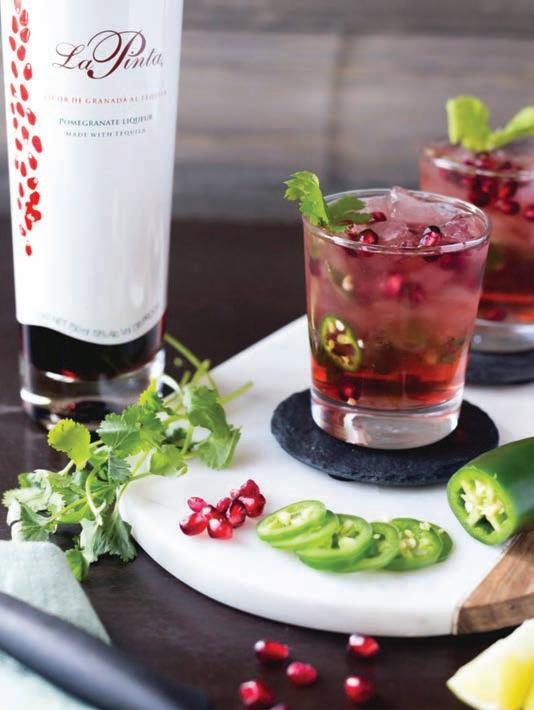
Some Like it Hot cocktail: La Pinta Pomegranate Liqueur, pomegranate juice and seeds, jalapeños, cilantro, and sparkling water
Encanto’s Chileatole
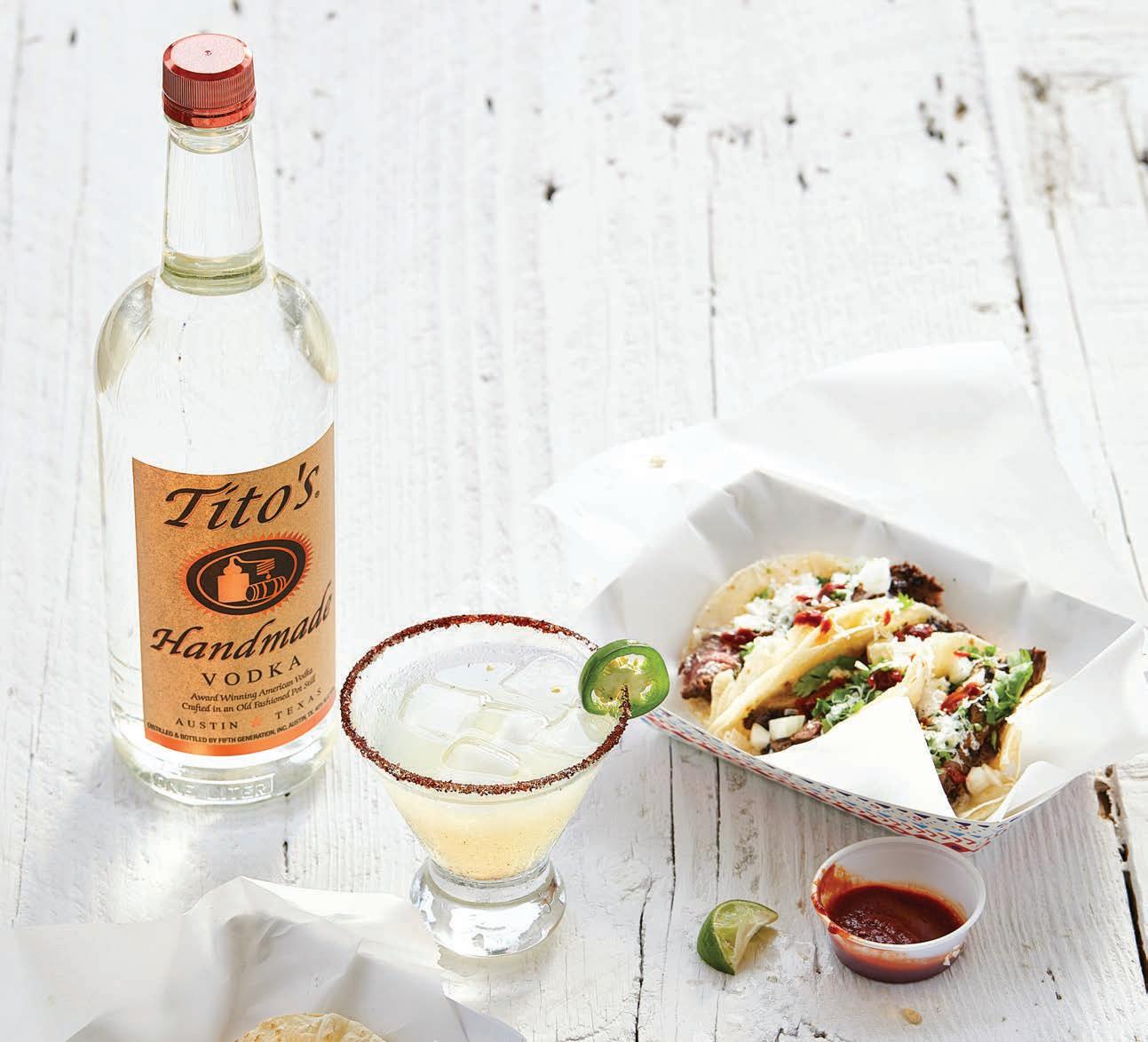
1½ oz Tito’s Handmade Vodka
½ oz orange liqueur
2 oz lime juice
¼ oz agave
Add all ingredients to a shaker with ice.
Shake and strain into a glass with or without fresh ice.
Garnish with a lime slice.
Pro-Tip: If you like it salty, use a glass with a salt rim.
“When determining what spirits to use, I always go for palate-based recipes… it’s wise to look at recipes focused on what flavors will hit the palate and how. There should be harmony between the nuances of the liqueur and the base spirit,” Barton explains.
“A good rule of thumb is to start with the liqueur as a base and then add spirits or ingredients that highlight and complement the flavors of that liqueur,” echoes Sando-
Xanath Crema de Vanilla Liqueur liqueur.
val, who favors blanco tequila when crafting cocktails with liqueur. “It is subtle and smooth enough to allow the liqueur to take center stage in a cocktail.”
Granados notes that it is important to think about recurring flavors when pairing a liqueur with a base spirit.
“If I take an aged Dominican rum like Brugal, which has inherent coffee and vanilla notes, I’ll complement it with a liqueur made of those flavors. Imagine an
A Roundup of Mexican Liqueurs
There are several go-to Mexican liqueurs that mixologists at Mexican and Latin restaurants turn to when crafting cocktails. They include:
Ancho Reyes Chile Liqueur
Ancho Reyes Verde Chile Poblano Liqueur
Kahlua (and its offshoots including Mint Mocha, Chili Chocolate, Blonde Roast Style)
La Pinta Pomegranate Liqueur
Licor 43 and Licor 43 Baristo
There also are myriad lesser-known liqueurs coming from Mexico, according to the website Masters of Malt. Some to look for include:
Cazcabel Honey Liqueur and Coconut Liqueur
Cenote Green Orange Liqueur
Del Maguey Crema de Mezcal
El Sueño Watermelon Tequila Liqueur
Fernet-Vallet Liqueur
Garcia Lemon Liqueur
Granada-Vallet Bitter Pomegranate Liqueur
Huana Mayan Guanabana Rum Liqueur
Mezcalite Passion Fruit Liqueur and Tamarind Liqueur
Nixta Licor de Elote Liqueur
Irish coffee, but instead of Irish whiskey, it’s Dominican rum,” Granados says. “If I take a reposado tequila like El Tequileno, which aged for eight months and developed a mouthwatering pear/vanilla flavor, I’m going to make a toddy with that and pair it with a spiced pear liqueur. And could you imagine a heavy corn bourbon Old Fashioned sweetened with Nixta Mexican corn liqueur? Delicious.”
Given that many Mexican liqueurs evolve out of longcherished family recipes, it should be no surprise that new iterations of classic Mexican cocktails have welldefined cultural connections.
Take Barton’s go-to winter drink, Chileatole. The beverage — a blend of masa, chocolate and chile — dates to pre-Hispanic times, and remains popular today as a breakfast or dinner drink in its traditional form.
“The secret to this drink as a cocktail is controlling the spiciness of the chilies as
well as the sweetness of the chocolate and piloncillo or sugar used to sweeten it,” says Barton. “My go-to liqueurs for one of my favorite riffs on this Mexican classic are [Chocolate and Guayaba] Pajarote Liqueur and Ancho Reyes Liqueur.”
Barton says he loves it when a guest mentions that a grandparent or relative used to make Chileatole and how they haven’t had it in a long time. It opens a conversation about his experience of living in Mexico for over a year, learning about the cuisine from everyone from beverage industry peers to strangers on the street inviting him in for lunch.
“As for guests unfamiliar with Chileatole, I always use the adage, ‘Don’t knock it till you try it,’” he says.
See cocktail recipes on pages 54 and 55.
Los Angeles-based writer Elyse Glickman specializes in writing about the food and beverage industry. She is the regular At the Bar columnist for el Restaurante
Tamayo’s Ancho Chile Margarita
A fun, creative way to promote your chef and your restaurant!
• Make them collectible! Autograph cards at cooking demos, street fairs and trade shows
• Announce new food and drink items — include a QR code too
• Use as a promotion at Grand Opening celebrations
• Promote special events, cooking classes, catering and more!
• Team with other chefs to create a Chef Card Pack to give away or sell at charity and other special events
You provide the pictures, logos and copy — we’ll create a custom-designed card Totally Affordable! Starting at just $150 including FREE custom design!
Lujo bebibleHACERSE
RICO CON LICORES MEXICANOS
| POR ELYSE GLICKMAN | Con la llegada del otoño aumenta el interés por los nuevos menús de detrás de las barras, lo que implica la creación de cócteles que complementen las temperaturas más bajas y la comida más abundante que el otoño y el invierno traen consigo.
Una buena selección de licores, es decir, bebidas especiales que combinan una base de alcohol con ingredientes que van desde el café, el coco y el chocolate hasta la miel, las frutas, los frutos secos, las hierbas y las especias, puede formar una parte integral del kit de herramientas de los mixólogos durante las celebraciones e incluso hasta bien entrado el invierno del 2023.
RAÍCES MEXICANAS
“Los licores mexicanos transmiten ricos sabores gracias a la calidez y las especias que caracterizan a la cocina mexicana, lo que los hace ideales como cócteles de otoño”, señala Mary Palac, Embajadora de la Cartera de Licores Mexicanos de Campari, quien trabaja con varias cuentas locales. También destaca la forma en que los chiles poblanos asados en el licor Ancho Reyes Ancho Chile aportan una calidez redonda a las bebidas que ya se asocian con el otoño, como el Old Fashioned.
Los mixólogos de los restaurantes mexicanos y latinos están creando cócteles irresistibles que los clientes reciben con los brazos abiertos debido a los sabores que aportan estos licores.
“Los licores de hierbas y especias son grandes modificadores para varias bebidas
Ancho Old Fashioned
FOTO CORTESÍA DE MARY PALAC, CAMPARI MEXICAN SPIRITS PORTFOLIO
“Una regla básica muy útil es empezar con el licor como base y luego añadir bebidas alcohólicas o ingredientes que destaquen y complementen los sabores de ese licor.
[El tequila blanco] es lo suficientemente sutil y suave como para permitir que el licor sea el protagonista de un cóctel”.
– CHEF RICHARD SANDOVAL
si se utilizan correctamente”, comenta el chef Richard Sandoval, fundador de Richard Sandoval Hospitality y creador de varios restaurantes repartidos por todo el mundo que ofrecen cocina mexicana moderna y costera, además de latino-asiática, peruana y panlatina. “Como hemos comprobado con nuestro Espresso Martini, cuando se trata de un licor de café de alta calidad o de otro tipo, se pueden hacer ‘resonar’ los sabores ya presentes en una bebida con una base de espresso recién hecho o de café de goteo fuerte. Sin embargo, podemos yuxtaponer los sabores de un licor fuerte frente a los que po-
drían no estar inherentemente presentes y necesitar un poco de insistencia para equilibrar la bebida”.
Para su Cold Brew Negroni, Sandoval añade una onza de licor de café (Licor 43 Baristo, por ejemplo) a una receta clásica de Negroni para hacer “resonar” los sabores cítricos amargos del Campari y las notas de nuez del vermut.
Su versión de Carajillo, un favorito en México desde hace mucho tiempo, añade dos onzas del Licor 43 original, el cual es un licor de vainilla con sabores a limón, naranja, vainilla y cilantro, al café enfriado con hielo. “Un espresso fresco, caliente y suave flotando por encima” complementa el cóctel.
El Margarita Ancho Chile de Tamayo, el restaurante de Sandoval en Denver, es un éxito de ventas gracias, en parte, a la popularidad de los margaritas picantes. El toque picante viene de la mano del licor Ancho Reyes.
“Debido a que el chile ancho es el elemento principal de esta margarita, recibimos muchas preguntas sobre los chiles anchos, los cuales originalmente son chiles poblanos que se secan al sol hasta que alcanzan su color rojo y su sabor ahumado”, explica.
Kyle Mason, vicepresidente de operaciones de Mill Avenue Management Group y mixólogo de Modern Margarita en Phoenix (con un segundo local en South Chandler recién abierto en septiembre) también es un fanático de los cócteles enriquecidos con licores.
En su restaurante usa Ancho Reyes para actualizar su margarita de mango picante, utiliza el licor de granada La Pinta de la destilería Casa Azul (tequila plateado Clase Azul combinado con sa-
Some Like it Hot cocktail de La Pinta
bor a granada) para crear un Cosmo de autor que armoniza perfectamente con el menú otoñal del restaurante, además emplea Vespertino (tequila plateado con crema de leche fresca, azúcar morena y toques de cacao y vainilla) para dar un toque único a los shots de espresso y los martinis.
EL ELEMENTO DULCE
Cuando los clientes ven que el licor forma parte del cóctel que consideran comprar es posible que se pregunten si la bebida será demasiado dulce.
“En el mundo actual, el azúcar se considera a menudo como algo negativo”, afirma Taylor Barton, director de bebidas de Encanto Restaurant & Bar en Los Ángeles. Sin embargo, según explica, en realidad ayuda a ligar y mezclar los sabores.
Dakota Granados, director del bar Lucky Day Bar, en el centro de Las Vegas, dice que este tipo de preguntas son una oportunidad para explicar a los clientes que los licores no hacen necesariamente que una receta sea dulce y pegajosa, sino que añaden profundidad a los sabores naturales del alcohol y otros ingredientes.
“Últimamente creo que todo el mundo compite por tener el producto o la bebida más seca, pues los estadounidenses se están alejando del dulzor extremo”, dice Granados. “A fin de cuentas, sin el dulzor, la bebida no será agradable... y la verdad es que queremos ese dulzor. La mayoría de las veces, cuando uso un licor, este no resulta lo suficientemente dulce. Si intentas hacer una margarita sin néctar de agave, te quedará muy seca”.
Sandoval coincide en que los cócteles elaborados con licores, como la margar-
ita de Chile Ancho de Tamayo, necesitan un poco de dulzor.
“Lo que hace que el licor Ancho Reyes sea tan versátil es que no es excesivamente dulce: le agrega más picor y sabor”, señala. “Equilibramos el picante con el dulzor del néctar de agave fresco, añadimos cítricos con Patrón Citronage y lima, y luego lo rematamos con un borde de Tajín picante”.
ELABORACIÓN DEL CÓCTEL
Barton anima a los cocteleros a seguir el sentido común y a ir despacio a la hora de elaborar una receta de cóctel con licor.
“A la hora de determinar qué licores utilizar, siempre opto por recetas orientadas al paladar... es conveniente buscar recetas centradas en qué sabores van a llegar al paladar y cómo. Debe haber armonía entre los matices del licor y el alcohol base”, explica Barton.
“Una regla básica muy útil es empezar con el licor como base y luego añadir bebidas alcohólicas o ingredientes que destaquen y complementen los sabores de ese licor”, comenta Sandoval, quien prefiere el tequila blanco a la hora de elaborar cócteles con licor. “Es lo suficientemente sutil y suave como para permitir que el licor sea el protagonista de un cóctel”.
“Los licores mexicanos transmiten ricos sabores con la calidez y las especias que caracterizan a la cocina mexicana, lo que los hace ideales como cócteles de otoño”.
– MARY PALAC, CAMPARI
Granados señala que es importante pensar en los sabores recurrentes a la hora de combinar un licor con una bebida alcohólica de base.
“Si tomo un ron dominicano añejo como Brugal, que tiene notas inherentes de café y vainilla, entonces lo complemento con un licor hecho de esos sabores. Imagina un café irlandés, pero en lugar de güisqui irlandés tiene ron dominicano”, dice Granados. “Si tomo un tequila reposado como El Tequileño, que ha madurado durante ocho meses y ha desarrollado un delicioso sabor a pera y vainilla, entonces haré un ponche con él y lo acompañaré con un licor de pera especiado. ¿Y se imaginan un Old Fashioned de bourbon de maíz endulzado con licor de maíz mexicano Nixta? Delicioso”.
Dado que muchos licores mexicanos evolucionan a partir de recetas familiares antiguas, no debería sorprender que las nuevas versiones de los cócteles mexicanos clásicos tengan conexiones
Chileatole de Encanto
Resumen de los licores mexicanos
Hay varios licores mexicanos a los que recurren los mixólogos de los restaurantes mexicanos y latinos a la hora de elaborar cócteles. Entre ellos están:
Licor Ancho Reyes de Chile
Licor Ancho Reyes Verde de Chile Poblano
Kahlua (y sus derivados, como Mint Mocha, Chili Chocolate, Blonde Roast Style)
Licor de Granada La Pinta
Licor 43 y Licor 43 Baristo
Según el sitio web Masters of Malt, también hay una gran cantidad de licores menos conocidos procedentes de México. Algunos para tener en cuenta son:
Licor de Miel y Licor De Coco Cazcabel
Licor de Naranja Verde Cenote
Crema de Mezcal Del Maguey
Licor de Sandía El Sueño
Licor Fernet-Vallet
Licor de Limón Garcia
Licor de Granada-Vallet de granada amarga
Licor de Ron de Guanabana Huana Mayan
Licor de Maracuyá y Licor de Tamarindo de Mezcalite
Licor de Elote Nixta
Licor de Crema de Vainilla Xanath
culturales bien definidas.
Por ejemplo, la bebida de invierno de Barton, el Chileatole. Esta bebida es una mezcla de masa, chocolate y chile que se remonta a la época prehispánica y sigue siendo popular hoy en día como bebida para el desayuno o la cena en su forma tradicional.
“El secreto para preparar esta bebida como cóctel es controlar el picante de los chiles, así como el dulzor del chocolate y el piloncillo o el azúcar que se utiliza para endulzarlo”, explica Barton. “Mis licores preferidos para una de mis versiones favoritas de este clásico mexicano son el Licor Pajarote [chocolate y guayaba] y el Licor Ancho Reyes”.
Barton dice que le encanta cuando un cliente menciona que su abuelo o algún familiar solía hacer Chileatole y que no lo ha probado en mucho tiempo. Esto da pie a una conversación sobre su experiencia de haber vivido en México durante más de un año y su aprendizaje gastronómico de la mano tanto de sus colegas de la industria de las bebidas como de los desconocidos que le invitaban a comer en la calle.
“En cuanto a los clientes que no están familiarizados con el Chileatole, siempre les digo: ‘No lo critiques hasta que lo pruebes’”, comenta.
Véase las recetas de cócteles en las páginas 53 y 54.
La escritora Elyse Glickman, establecida en Los Ángeles, se especializa en escribir sobre la industria de los alimentos y las bebidas. Es la columnista regular de At the Bar para el Restaurante
Ancho Chile Margarita de Tamayo
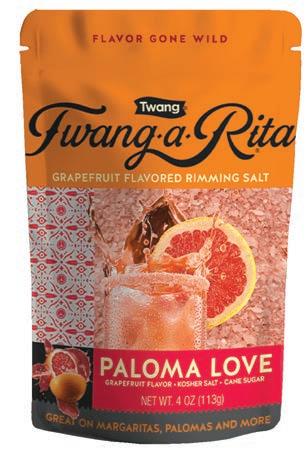
Twang-A-Rita Cocktail Rimmers. These premium flavored cocktail rimming blends are made with all-natural colors, flavors, kosher salts, pure cane sugar, and fragrant spices. They pair well with margaritas and so much more. Boost the appeal and value of your signature cocktails, desserts and dishes for just pennies per serving. 800-950-8095; info@twang.com; twang.com
Rimmers para cócteles
Twang-A-Rita. Estas mezclas de aderezos para cócteles de primera calidad están hechas con colores y sabores naturales, sales kosher, azúcar de caña pura y especias aromáticas. Combinan bien con margaritas y mucho más. Aumente el atractivo y el valor de sus cócteles, postres y platos característicos por tan solo unos céntimos por ración. 800-950-8095; info@ twang.com; twang.com
Lacandona. Our “La Lotería” collection is full of color and phrases that your customers can connect with, creating a festive and attractive atmosphere that everyone will want to see. Call us so we can share our creativity with you and do something amazing for your restaurant. Exclusive designs of Lacandona Furniture. 470-471-8751; muebleslacandona.com
Lacandona. Nuestra colección “La Lotería” está llena de color y frases con las que tus clientes pueden conectar, creando un ambiente festivo y atractivo que sin duda todo mundo querrá ver. Nuestra creatividad es infinita y la queremos compartir contigo, ¡Llámanos! Podemos hacer algo increíble para tu restaurante. Diseños exclusivos de Muebles Lacandona. 470-471-8751; muebleslacandona.com
The Butterfly Cannon Tequilas. Inspired by the Monarch butterfly’s migration from the U.S. to Mexico, these super-premium flavored tequilas are made from 100% agave. The Butterfly Cannon Cristalino Tequila is the base of The Butterfly Cannon Blue Tequila (infused with prickly pear, clementines and butterfly pea flower, which gives it a blue color that changes to pink when a mixer is added) and The Butterfly Cannon Rosa Tequila (flavored with Mexican pink grapefruit and grapefruit distillate for a sweet, tart citrus flavor layered with a rich agave taste). hello@ butterflycannontequila.com; butterflycannontequila.com
Los tequilas Butterfly Cannon. Inspirados en la migración de la mariposa monarca de los Estados Unidos a México, estos tequilas de sabor super premium están elaborados con 100 % de agave. El tequila The Butterfly Cannon Cristalino es la base del tequila The Butterfly Cannon Blue (con infusión de higo chumbo, clementinas y flor de guisante mariposa, que le da un color azul que cambia a rosa cuando se le añade un mezclador) y el tequila
The Butterfly Cannon Rosa (aromatizado con destilado de pomelo rosa mexicano y pomelo para obtener un sabor cítrico dulce y ácido con un rico sabor a agave). hello@ butterflycannontequila.com; butterflycannontequila.com
Amor Perfecto. Coffee Roasted at Origin is a new concept that is rapidly growing to become the gold standard for quality, freshness, sustainability, and traceability. Amor Perfecto is roasted to order in Colombia and shipped direct, arriving in 2 to 4 days. Wholesale orders available. support@amorperfecto.com; amorperfecto.com
Amor Perfecto. El café tostado en origen es un nuevo concepto que está creciendo rápidamente para convertirse en el estándar de oro de la calidad, la frescura, la sostenibilidad y la trazabilidad. Amor Perfecto se tuesta por encargo en Colombia y se envía directamente, llegando en 2 a 4 días. Pedidos al por mayor disponibles. support@amorperfecto.com; amorperfecto.com
Utopia Signature Wireless Table Charger. Offer your guests the convenience of device charging at the table. The first free-standing tabletop charger designed for your restaurant and bar guests! Utopia’s intelligent rechargeable+//DynaBattery technology makes it simple to add this charger to any table or bar area instantly and securely. Can be customized with your logo, too. 972-505-2587; tabledynamics.com
Cargador de mesa inalámbrico Utopia Signature. Ofrezca a sus clientes la comodidad de cargar sus dispositivos en la mesa o en el bar con este cargador de sobremesa. Gracias a la tecnología inteligente recargable+//DynaBattery de Utopia, es sencillo añadir este cargador a cualquier mesa o zona de bar de forma instantánea y segura. También se puede personalizar con su logotipo. 972-505-2587; tabledynamics.com
Folcklor Latino. The craftsmen at Folcklor Latino, located in Tonalá, Mexico, have decades of experience creating tables, chairs, booths, carts and other furniture for restaurants. “Thanks to the Folcklor team who did a fantastic job,” said Martín Morin, manager of Blanquita’s Mexican Restaurant in San Benito, Texas. “Everything looks fabulous. My family is delighted with the results. I hope that soon we will communicate with you to furnish another restaurant.” 424-385-6564; contacto@folcklorlatino. com; folcklorlatino.com
Folcklor Latino. Los artesanos de Folcklor Latino, ubicados en Tonalá, México, tienen décadas de experiencia en la creación de mesas, sillas, cabinas, carritos y otros muebles para restaurantes. “Gracias al equipo de Folcklor que hizo un trabajo fantástico”, dijo Martín Morin, gerente del restaurante mexicano Blanquita’s en San Benito, Texas. “Todo tiene un aspecto fabuloso. Mi familia está encantada con los resultados. Espero que pronto nos comuniquemos con ustedes para amueblar otro restaurante”. 424-385-6564; contacto@folcklorlatino.com; folcklorlatino.com
H.S Inc. This company, known for its unique, high-quality foodservice products, now offers its iconic molcajete in three new colors plus the original charcoal. With 8 sizes available, you’ll find the perfect one for serving salsas, guacamole, salads, and much more. 405–239-6864; sales@hsfoodservers.com
H.S Inc. Esta empresa, conocida por sus productos únicos y de alta calidad para el servicio de alimentos, ofrece ahora su icónico molcajete en tres nuevos colores, además del original en color carbón. Con 8 tamaños disponibles, encontrará el perfecto para servir salsas, guacamole, ensaladas y mucho más. 405-239-6864; sales@hsfoodservers.com; hsfoodservers.com
Sign up for el Restaurante’s
Recipe of the week email!
EMAIL Kathy Furore, kfurore@restmex.com, with ‘Recipe’ In the subject line
La Menonita en El Molcajete
Recipe by Chad Clevenger, El Nido Del Buho, Atlanta, Georgia
Winner of CMAB Cal-Mex Invitational — Appetizer Category
Makes 1 serving
The Salsa Verde:
1 lb. tomatillos, cleaned
6 oz. jalapeños, stemmed
1 T. salt, plus more to taste
5 cloves garlic
1 c. diced white onion
1 bunch fresh cilantro, roughly chopped
In a large pot, combine tomatillos, jalapenos, garlic, and enough water to cover. Add salt and bring to a boil. Reduce to a simmer and cook until tomatillos, jalapenos, and garlic are soft, about 8 minutes.
Drain, reserving 1 cup cooking liquid, and transfer to a blender. On medium speed, blend until smooth, adding reserved cooking liquid as needed. Add onion, cilantro, and more salt to taste.
The Fried Queso:
2 large eggs, beaten
1 oz. water
1 lb. corn tortilla chips, finely crushed
1 6-oz. piece Real California Menonita cheese
2 oz. Maseca masa harina
6 warm tortillas
Preheat the oven to 500°F. Place a molcajete in the oven until ready to serve. Combine eggs and water. In a food processor, process chips to a semi-fine powder.
Dust cheese with masa harina, dip in egg mixture, then roll in powdered chips. Cook in a 350°F fryer until heated through, 5-6 minutes.
Carefully add cheese to heated molcajete and add 6 ounces Salsa Verde to the side. Serve with warm tortillas.
Grilled Panela and Eggplant
Recipe by Claud Beltran, Bacchus Kitchen, Pasadena, California
Winner of CMAB Cal-Mex Invitational — Entree Category
Makes 4 servings
The Rajas:
2 medium yellow onions, halved and sliced
2 T. canola oil
2 pasilla peppers, charred, peeled and cut in ¼-in. strips
4 medium size Mexican squash, halved lengthwise and sliced (half-moon cuts)
1 c. fresh corn kernels
1 T. finely chopped garlic
¼ t. dried Mexican oregano
Salt and pepper, as needed
1 c. Real California Mexican crema fresca
Sweat onions in oil. Add peppers, squash and corn and cook until squash is tender. Add garlic, oregano, salt, and pepper. Add crema and remove from the heat. Cover and set aside 30 minutes.
The Grilled Panela and Eggplant:
4 oz. cherry tomatoes
Olive oil
Salt and pepper, as needed
1 oz. Real California Cotija cheese, cut into ¼-in. dice
1½-in. slice globe eggplant
10 oz. Real California Panela cheese, cut into ½-inch by 3-inch pieces, about 3 oz. each
Fresh cilantro or basil
Combine cherry tomatoes, olive oil, salt, and pepper and roast until tomatoes are collapsed. Deep fry cotija cheese, then combine with tomatoes. Brine eggplant in lightly salted water 30 minutes. Dry, oil, and grill eggplant. Rub panela cheese with olive oil and season with salt and pepper. Pan-fry or grill panela about 2 minutes per side.
To serve: Use a ring mold to arrange rajas, then top with eggplant, panela, and tomato and cotija mixture. Garnish with cilantro or basil.
recipes
Winter Corn
Recipe by Marco Colin, La Luna, Chicago
Winner of CMAB Cal-Mex Invitational — Dessert Category
Makes 12 servings
The Queso Fresco Ice Cream:
2 c. Real California heavy cream
2 c. Real California whole milk
½ c. agave syrup
5 oz. Real California Queso Fresco, crumbled
In a blender, combine cream, milk, and agave and process on medium until mixed well, about 30 seconds. Fold in queso fresco by hand. Transfer to an ice cream maker and process according to manufacturer’s instructions. Transfer to an airtight container and freeze at least 4 hours.
The Caramel:
1 c. sugar
¼ c. water, plus more as needed
6 T. Real California unsalted butter, cut into pieces
½ c. Real California heavy cream
1 t. vanilla extract
Pinch salt
In a 3-quart heavy-bottomed saucepan, combine sugar and water, stirring it into a flat, even layer. Warm over medium heat, cooking until sugar dissolves, becomes clear, and starts to bubble, 3 to 4 minutes.
Continue to cook, swirling occasionally but avoiding stirring, and brushing down the sides of the pan with more water as needed to prevent crystallization. When mixture thickens and turns deep amber, carefully add butter, whisking until completely melted.
Remove from the heat and slowly whisk in cream. Whisk in vanilla and salt and set aside to cool 10 minutes. Transfer to a lidded glass jar and set aside to cool completely.
The Pan de Elote:
1 14-oz. can Real California sweetened condensed milk
1 12-oz. can Real California evaporated milk
6 oz. Real California unsalted butter, melted
6 large eggs
1 c. cooked corn kernels
6 T. all-purpose flour
¼ c. baking powder
1 t. vanilla extract
Maldon sea salt, to finish
Preheat oven to 350°F. Grease 3, 9-by-9-inch cake pans, line pans with parchment, and grease the parchment. Combine milks, butter, eggs, corn, flour, baking powder, and vanilla. Divide batter evenly between prepared pans (divide by weight for accuracy, if desired) and bake until a tester inserted into center of cakes comes out clean, 30 to 35 minutes. Transfer to a wire rack to cool completely. Cut each pan into quarters.
To plate: Place a square of elote cake on a 6-inch plate. Using a medium size scoop, scoop a ball of the Queso Fresco ice cream and place on cake. Top with house made caramel and a sprinkle of Maldon sea salt.
Barrio Star Roasted Tomatillo Salsa
Recipe courtesy of Barrio Star
Makes 1 batch
5 jalapeños, halved (do not de-seed)
3 white onions, peeled and quartered
10 garlic cloves
2-3 lbs. tomatillos (husked and halved)
1 bunch cilantro (husked and halved)
Salt and Pepper, to taste
Preheat oven to 400° F. Arrange all ingredients except cilantro on sheet pan; toss with EVOO, salt and pepper. Roast until golden brown (30 to 40 min.); if roasting in a pan on stove, 10 to 15 min. Let cool. Place all ingredients in food processor or Vitamix. Add cilantro and pulverize. Salt and pepper to taste. Serve warm or cool.
Ancho
Chile Margarita
Recipe courtesy of Chef Richard Sandoval, Tamayo, Denver, Colorado
Makes 1 cocktail
1½ oz. Ancho Reyes Ancho Chile Liqueur
1 oz. fresh lime juice
½ oz. agave nectar
¾ oz. Patrón Citrónge, Cointreau or Triple Sec
Tajin or red chili powder
Lime for garnish
Combine all liquid ingredients in a shaker with ice. Shake and strain into cocktail glass rimmed with Tajin or red chili seasoning. Garnish with lime slice.
Ancho Old Fashioned
Recipe courtesy of Mary Palac, Campari Mexican Spirits Portfolio Ambassador
Makes 1 cocktail
1 oz. Ancho Reyes® Original
1 oz. Wild Turkey® 101 Bourbon Whiskey
¼ oz. rich simple syrup
2 dashes Angostura® Bitters
2 dashes orange bitters
Put all ingredients into a mixing glass with ice. Stir to chill until proper dilution is achieved. Pour into a rocks glass over a large ice cube. Garnish with an orange twist.
Pomegranate Cozmo
Recipe courtesy of Kyle Mason, Modern Margarita, Phoenix, Arizona
Makes 1 cocktail
2 oz. La Pinta Pomegranate Liqueur
1 oz. Cointreau
1 oz. cranberry juice
¼ oz. lime juice
Add all ingredients in shaker. Add ice and shake vigorously for six seconds. Double strain in coupe glass. Garnish with lime wedge or wheel.
Agave Espresso Martini
Recipe courtesy of Kyle Mason, Modern Margarita, Phoenix, Arizona
Makes 1 cocktail
1½ oz. Altos Reposado Tequila
¾ oz. Vespertino
1 oz. Kahlua
½ oz. Amaro Lucano
2 dashes coffee bitters
2 dashes chocolate bitters
3 coffee beans
To subscribe quickly and easily online, visit www.elrestaurante.com to start your free subscription today. Or fill in all mailing information and answer the questions on the form below.
PLEASE REMEMBER TO SIGN THE FORM. Mail it to el Restaurante PO Box 13347, Chicago, IL 60613, Or fax the form to 708-406-1609
Add tequila and bitters in shaker. Add ice and shake vigorously for six seconds. Blend in the Vespertino, Kahlua and Amaro Lucano liqueurs just enough to keep the drink smooth without over-blending so that the flavors stay balanced. Double strain in coupe glass. Garnish with coffee beans. FREE
ON THE WEB AT www.elrestaurante.com
Want more great recipes? Visit elrestaurante.com/recipes to find something for every section of your menu!
SUBSCRIPTION / SUSCRIPCIÓN GRATUITA
___NO, thanks. ___Address change only.
___YES! I wish to receive/continue to receive el Restaurante FREE of charge.
INSPIRED BY THE BEAUTY , culture and cuisine of Havana, Mariel — a Cuban-inspired restaurant located in Boston — offers a throwback to the hospitality and service of an earlier time.
Chief Culinary Officer Tom Berry and Chef Miguel Deras infuse the island’s melting pot of flavors throughout the menu, which pays homage to the country’s rich culinary history.
Among the favorites: The Corn & Crab Arepitas made of corn meal, cheese, and corn kernels, then topped with a salad made of high-end Japanese surimi crab, imitation crab made from white fish.
“In the crab salad we have grilled corn, avocado, spicy caribe mayo, red onions, cilantro, scallions, lime and then garnish it with fresh sliced jalapeño, smoked paprika oil and micro cilantro,” Deras explains. “The Arepitas are one of our favorite dishes, and guests really enjoy all the flavors we’ve put together in this recipe”
Corn & Crab Arepitas
The Crab Salad:
3 c. surimi crab, shredded
1 c. Caribe mayo
1½ T. lime juice
1 c. grilled corn
1 c. red onion, diced
2 c. avocado, diced
2 t. salt
½ c. cilantro, chopped
½ c. scallions, chopped
Mix all ingredients together in a medium bowl. Stir just until combined.
The Arepa Dough:
1¼ c. milk
¼ c. butter
1⅓ c. corn kernels (fresh or frozen)
3 c. yellow Masarepa
⅓ c. AP flour
¼ c. sugar
2 t. salt
¾ c. Queso Havana (you can substitute shredded mozzarella)
Heat the milk and butter together until warmed. Puree the corn in a food processor. Mix the Masarepa flour, AP flour, sugar, and salt in a bowl with a whisk.
Add the corn puree and cheese to the flour bowl. Pour the hot milk over and mix well with a rubber spatula.
Hand form the arepas into the desired size. We do about 2 tablespoons per arepa at Mariel.
Sear both sides of the arepa in a nonstick pan, until golden brown.
The Corn Sauce:
2 c. corn juice
¼ c. jalapeño, sliced
1 t. salt
½ c. sour cream
2 T. lime juice
½ t. bijol
To make the corn juice, simmer 4 cups of corn kernels with 1 cup of water. Add the jalapeños (or omit if you don’t want the spiciness). Use a stick blender to puree the mixture.
Strain the liquid using cheese cloth or a fine sieve. Mix corn liquid with sour cream and remaining seasonings.
Bring it to simmer and finish it in the blender. Keep cold until use.
Chef’s Note: Here at Mariel, we cook the Arepitas to order on a flat top, but you can also use a nonstick pan to give them a nice golden-brown color on both sides with a little bit of melted butter.
Once arepas are fully cooked, we scoop some crab salad and place it on top of the arepas.
On a plate, pour some of the corn and jalapeno sauce and then line up the arepas on top, and finish it off with sliced jalapenos, micro cilantro, and a few drops of smoked paprika oil around the arepas.
Call today for samples of our authentic Al Pastor, Pollo Adobo and Carne Asada. Available in Trompos (hand-stacked cones) and cooked-to-order IQF Strips that provide maximum flavor, yield and portion control. Now Serve Delicious Authentic Tacos EVERY DAY!