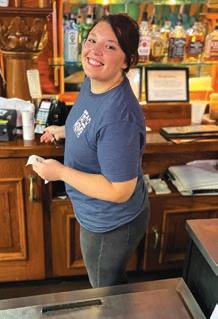
the kitchen manager of the Clute, Texas location of El Toro, which has six locations in that state. “You leave with a new skill without me tearing you down as an employee. I take great pride in that.”
Garay, who has worked in jobs ranging from electronics sales to medical coding, joined El Toro a little over two years ago and became the kitchen manager about nine months ago.
“The El Toro team and myself have been very impressed with the work Amanda has been doing,” wrote John Mayes, vice president of operations and pastor of El Toro, in his nomination of Garay. “She has done everything we have asked in the kitchen and more. We have had many individuals in charge of the kitchen in Clute, but no one has been able to achieve the results like Amanda.”
One key move Garay made when she started as kitchen manager was formally evaluating each kitchen employee. Not only did this let her get to know everyone, but also eliminated an attitude of “every man for himself” and encouraged employees to work as a team.
“We combed out the negativity,” she says. “Now it’s very much teamwork activity.”
Garay lives in Houston and drives 52 minutes to work each day. During the last five minutes of that drive, she turns on the theme song from the movie “Rocky,” which fires her up for the work day.
“Rocky was the underdog who persevered,” she says. “I’m an addict in recovery — I have been sober for three years — so I have come from that situation. I really discovered who I was as a manager when I got sober. Some people in recovery want to return to who they were before the addiction; I became more than I was.”
THIRD PLACE (TIE): TAYLOR GARNER, Taco Mama
One day Taylor Garner noticed that the floor in Taco Mama in Hot Springs, Arkansas was not swept well, and she asked her staff who swept last. A new server raised her hand and said, “I did! Did I do a good job?” Garner replied, “Well, not really, but maybe you could do a better job tomorrow.”
That tender reply exemplifies Garner’s management style. She treats everyone with kindness and respect and encourages them to seek her help when needed.
“We want people to have a great working environment and not be stressed out,” says Garner, who has worked at Taco Mama for four
years and became the front of house manager about a year ago. “I’m always nice to people, and I make it so I’m the first person they come to if they have a question.”
Another key to Garner’s success is that she never hesitates to jump in to help. In addition to all of her managerial tasks, including scheduling, hiring and training, she is the restaurant’s main bartender.
“I try to perform any role they need me to, including managing staff, waiting tables or tending bar,” she says. “I feel like that helps put me at the level of the servers. Sometimes when you’re a manager you forget what it was like to be a server, and I don’t want to do that.”
Taco Mama owners Shane and Diana Bratton praised Garner’s can-do spirit when nominating her: “Taylor’s attention to detail and her customer service are impeccable and her smile and attitude keep our customers coming back to see her. Taylor is an unbelievable asset for us at Taco Mama.”
THIRD PLACE (TIE): JHONATAN SANCHEZ, El Taco Macho
When Jhonatan Sanchez became the manager of El Taco Macho in Painesville, Ohio two and a half years ago, one of the first changes he made was to instill a sense of teamwork in his staff.
“I come from a culture of teamwork and if you work as a team, things will flow better,” he says. “When I came to the restaurant and started as a manager, people were very individual. In other words, you did your job and you didn’t care about the work of others. So, I said, ‘We have to improve that — let’s work as a team.’”
But he didn’t stop there — he also made process improvements. For example, when he noticed the restaurant’s ordering and inventory processes were not ideal, he created a system that carefully reviews each week’s orders to better estimate how much of everything to order.
“I think that was one of the things that made my boss very happy, because the bills began to drop,” he says.
In the nomination form for Sanchez, his boss noted that Sanchez also has been essential to improving the overall experience for customers: “He makes decisions about which dish to improve, which recipe to change, which new drink to offer. He knows what will give customers a good experience from the moment they enter.”
Sanchez is quick to credit his staff for some of the restaurant’s success. He listens to the ideas they offer and sometimes makes changes based on them.
Start saving now! High-efficiency equipment could help you save money by reducing your energy usage
With the California Foodservice Instant Rebates Program you could save on high-efficiency equipment for your business. Choose from a variety of qualifying products and get valuable Instant Rebates as a discount on your invoice – no paperwork, no waiting. It’s easy – here’s how:
Find a participating dealer at www.caenergywise.com/instant-rebates
Choose qualifying product
Receive an Instant Rebate on your invoice
Eligibility
Non-residential customers of SoCalGas®, Pacific Gas and Electric Company (PG&E®), Southern California Edison Company (SCE®) and San Diego Gas & Electric Company (SDG&E®) are eligible to receive Instant Rebates. Equipment must be installed in a non-residential location that receives natural gas and/or electricity service from one of the above utilities.
Energy Savings with High Efficiency
It’s Easy no paperwork required
Valuable rebates are available on a range of natural gas and electric equipment for your business. For a full list of qualifying equipment, download the Qualifying Products List at: www.caenergywise.com/instant-rebates
Major cooking appliances account for almost 35% of the average restaurant’s energy expenditures. Efficient equipment could help decrease your energy use by as much as 75% compared to standard efficiency equipment.1 High efficiency equipment uses less energy and water, which could reduce your utility bills.
Qualifying Equipment
Many common makes and models of commercial foodservice equipment qualify for the California Foodservice Instant Rebates Program. Qualifying equipment must be installed at a non-residential site that receives natural gas and/or electricity service from SoCalGas, PG&E, SCE, or SDG&E. The fuel type of the equipment being purchased must match the fuel type of your non-residential account with one of the above utilities.
Natural Gas
Qualifying Equipment* Rebate Amount
Griddle
Rack Oven
Conveyor Oven
Combination Oven
Convection Oven
Fryer
Steamer
Underfired Broiler
Griddle
Deck Oven
Combination Oven
Convection Oven
Fryer
Hand-Wrap Machine
Steamer
Hot Food Holding Cabinet
Electric
Dual Fuel
Glass or Solid Door Refrigerator
Refrigerated Chef Base
Glass or Solid Door Freezer
Ice Machine
Ice Making Head
Remote Condensing Unit
Ultra-Low Temperature Freezer
Conveyor Toaster
Dishwasher
Conveyor Broiler
Demand Controlled Kitchen Ventilation
$200 per foot
$2,500 per unit
$1,400 per cavity
$1,500 - $3,0001 per cavity
$700 per cavity
$900 - $1,4002 per vat
$2,000 per cavity
$650 per foot
$200 per foot
$1,500 per cavity
$1,500 - $3,0001 per cavity
$750 per cavity
$650 per vat
$125 per unit
$2,000 per cavity
$200 - $7503 per unit
$70 - $1003 per unit
$250 - $5003 per unit
$30 - $3503 per unit
$70 - $1004 per unit
$100 - $2504 per unit
$250 per unit
$1,200 per unit
$600 per unit
$50 - $6505 per unit
$2,000 - $4,0003 per unit
$700 per HP
*For the full and most current list of qualifying equipment, download the California Foodservice Instant Rebates Qualifying Products list at www.caenergywise.com/instant-rebates.
“I can buy something in a larger format that will cost less money and I can divide it up. You’re not just giving one big piece of fish for an entree, but you’re giving a small piece of cured fish with other garnishes so you’re able to extend it a little bit further.”
– CHEF GREG DENTON , Ox
rants. The average price of an appetizer at Mexican restaurants is $7.79, according to Technomic’s Ignite menu data.
The top five appetizers include that ubiquitous guacamole, along with cheesy nachos with or without chicken or beef. Tacos/taquitos also appear in the top five, along with seafood soup and other specialty soups. Ceviche is on the rise, having increased in popularity 9 percent over the past year.
Further Ignite menu data, surveying restaurants of all categories, reveals that bread appetizers are number one, ordered by over 16 percent of guests, closely followed by wings (13.9 percent) and filled appetizers (12 percent). On Latin menus, taquitos, tacos and empanadas lead the filled appetizer category.
Nieto’s experience reflects the data. His ceviche (tropically crafted with lime-marinated shrimp, tomato, pineapple, mango, red onion, cilantro and chipotle), and empanadas (described as “beefy-cheesy-salsa-stuffed turnovers” on Fat Rosie’s Instagram post) are among the restaurant’s most popular appetizer offerings.
“The one that everybody loves is the ceviche because of the freshness, because of the habanero flavor,” Nieto notes.
The menu at Ox also taps two of the trends the Technomic report highlights: popular appetizer offerings include empanadas and the restaurant’s celebrated clam chowder served with a smoked marrow bone.
Nieto’s Coctel de Camaron y Pulpo is another popular appetizer featuring seafood. Hoping to build on its success, the chef says he plans to incorporate more seafood and Ensenada influences onto his new menu.
Fat Rosie’s also offers two combination appetizers.
How to Upsell Appetizers
Appetizers represent big benefits to both guests and restaurant operators. Guests get to experiment with a diverse range of tastes and textures and have an edible distraction while waiting for their main course to arrive. Operators increase their per-cover receipts, allowing them to get the most from each table and each seating.
The first strategy is crafting an appetizer menu that guests can’t resist, featuring reliable favorites and intriguing dishes and combinations.
The next step is supporting your appetizer program by training servers in the art of the appetizer upsell.
Some simple techniques include training wait staff to engage with confidence, assuming the sale. Instead of saying, “Can I get you an appetizer?” try phrasing such as:
“Have you checked out our appetizer menu? Which can I bring you?”
“Would you like to hear about our appetizers?”
“Our guacamole/jalapeno poppers/taquitos go so well with our margaritas.”
“Our ceviche is incredibly popular.”
“The servers need to upgrade to be salespeople,” says Dudley Nieto, executive chef of Fat Rosie’s Taco & Tequila Bar, a chain with four Chicago area locations. Training should include tasting the food during pre-shift meetings, along with helping servers perfect their wording. “Finding a good story behind it is the best way to sell anything. Not just an appetizer, but anything.” He says the server’s role is to “guide the guests to a whole new experience, which starts with an appetizer.
“When the server tells you that piece of pork for cochinita pibil was marinated with achiote, it cooked all night covered in a banana leaf, and now you’re going have it in a tostada filled with black beans, and those black beans are cooked with toasted avocado leaves – now you have the story, you’re eating history and culture,” says Nieto. “From the moment you taste it, you want to continue eating, you want to go back and try that same appetizer, because the server explained its whole story.”
Sopes surtidos is composed of four small masa boats, each with a different filling so customers can sample assorted flavors such as chicken with mole sauce, poblano rajas, and beef queso dip. The other appetizer combo rounds up favorites including guacamole, ceviche tostadas, sopes with chicken mole, and crispy quesadillas.
In terms of trends, Nieto notes that customers are embracing vegan and vegetarian dishes, with seasonal vegetables often appearing as small plates and small appetizers. “Cauliflower is coming on strong as an appetizer, believe it or not,” he says. Nieto also notes that huitlacoche, grasshoppers, and guacamole with spicy and savory toppings such as chicharrones are trending appetizers in the Mexican restaurant arena.
Vegetarian dishes are becoming an important part of the menu at Socalo — the California canteen and Mexican pub from award-winning chef/owners Susan Feniger and Mary Sue Miliken in Santa Monica. Executive Chef Gio Lopez says the idea for his Chilitos Rellenos was born when he was looking for a new vegetarian item to add to the
seasonal menu.
“It’s actually adapted from a dish we used to make at Border Grill Santa Monica. I started testing different ways to make a more modern chile relleno that could have more of a wow factor when you bite into it,” Lopez explains, “I had played around with shishitos in another appetizer dish and decided they would be perfect for this experiment. So, I stuffed them with our house cheese blend and tested several different batters before deciding that a tempura style batter is the best option.”
The result? “Chillitos Rellenos are one of our most poular appetizer dishes at the moment,” he says.
SHARING ADVENTURE ON A PLATE
There’s little doubt that diners have become more adventurous when it comes to experimenting with cuisine.
Denton reports that he observes that at Ox.
“I’m seeing that offal dishes and some more adventurous dishes are being sold a little bit more. I think people are being a little more open-minded when it comes to some
foods — maybe that has to do with eating comfort foods when everybody was locked down, and now they want to venture out a little bit from that norm.”
Ox’s tripe and octopus and grilled sweetbreads and tongue are examples of “kind of more adventurous dishes on our menu,” Denton says. “We’re seeing that those are selling quite a bit.”
He says one role appetizers play is to give people an avenue to try smaller quantities of more adventurous items, enabling guests to sample and share something that might be new or challenging to their palates.
Nieto emphasizes that guests benefit from sharing appetizers with friends and thereby accessing more variety. “You just want enough so you can have the taste of it. Instead of a big plate, you have a small plate, so now you can play with flavors, textures and colors. That’s why it’s important to have the small dishes. It’s like tapas-style, right? You can share four or five different dishes, and it will be fun.”
He also notes that small plates offer an opportunity to introduce guests to distinctive dishes from areas such Yucatan, Puebla and Oaxaca, capitalizing on regional Mexican cuisines, which he says are trending.
FOLLOW THE MONEY
Appetizers can benefit operators’ bottom line in a few ways.
Denton gets the most from his ingredients and minimizes waste by strategically introducing certain appetizers. “I can buy something in a larger format that will cost less money and I can divide it up. You’re not just giving one big piece of fish for an entree, but you’re giving a small piece of cured fish with other garnishes so you’re able to extend it a little bit further. Anything that you don’t use, you’re putting in the garbage, you’re basically wasting money. Like when we get a whole halibut, we take the tail and the collar, and we’ll sell those as a deep-fried item. It’s nice and tender and crispy with a spicy ponzu — very appealing and a reasonable price point.”
Between inviting customers to try something different and even adventurous, tempting guests to share and broaden their tasting experience, and helping to bring balance to a menu, appetizers play a critical role in every Latin restaurant. Hone your appetizer menu and make ordering an appetizer irresistible to your guests and you’ll see your bottom line benefit.
Annelise Kelly is a freelance writer based in Portland, Oregon, and a regular contributor to el Restaurante
2022
INDEPENDENT
MEXICAN RESTAURANT REPORT
SALES RECOVERING, COSTS SOARING
| BY ED
AVIS
| This is el Restaurante’s eighth annual Independent Mexican Restaurant Report. It draws on an October 2022 reader survey that was answered by 45 readers, and follow-up interviews with four of them. Additional data came from two surveys conducted by restaurant technology provider Popmenu.
Overall Business 2022 vs. 2021
l Double or more = 5%
l 50%-100% increase = 14%
l 25%-50% increase = 27%
l Increase, but less than 25% = 27%
l About the same = 9%
l Decrease = 18%
How Do Sales Compare to Pre-COVID?
l Better: 34%
l Same: 23%
l Close: 27%
l Far
First, the good news: 34 percent of respondents to the el Restaurante survey say that sales are better than before COVID and another 23 percent say they’re about the same as before COVID. Now the bad news: Every one of the Mexican restaurant owners who completed the survey said food costs are up this year, and 78 percent said finding employees is harder than normal.
That’s precisely the situation at Acapulco Mexican Restaurants, an eight-location operation in Minnesota.
“Sales are a little better
Food Costs Status 2022 vs. 2021
l Increased = 100%
than pre-COVID, and we have more takeout,” reports Sam Leon, chief operating officer of the multi-unit. “But the third-party delivery fees, labor and food keep going up. And honestly, we’re afraid to price ourselves out of a restaurant. Plus, we’re not sure about the state of the economy and where we’re going.”
THE SITUATION WITH SALES
Our survey revealed that not only are sales for most restaurants better now than before COVID, but they also are better so far in 2022 than in 2021. Seventy-three percent of our respondents said sales are up this year, including 5 percent who said sales have doubled since last year and another 14 percent who report sales up between 50 and 100 percent. Only 18 percent said sales are down this year
Finding Employees
l Harder than Usual = 78%
l About the Same = 10%
l No Problems = 12%
compared to last year.
A survey of 1000 consumers conducted by Popmenu echoes those findings. The survey found that 58 percent of consumers are eating out more often this year than last year, with the top half of consumers spending an average of $125 per week on restaurant food.
Despite those solid numbers, there is some apprehension among Mexican restaurant owners. For example, Nick Yager, coowner with his wife, Maria Limon, of Gusanoz Mexican Restaurant in Lebanon, New Hampshire, says his restaurant is on track to exceed sales from last year and he’s well above pre-COVID times…but he feels certain circumstances are holding back even greater sales.
“My personal opinion is
Steps Taken to Attract/Retain Staff
l Raised Pay = 87%
l Flexible Hours = 64%
l New Benefits = 28%
l Nothing = 5%
(continued on page 24)
2022 INDEPENDENT MEXICAN RESTAURANT REPORT
that the labor market has caused us to limit the amount of sales we can do,” Yager says. “Often we turn off online ordering and we hadn’t been seeking any catering work until just last week because of staffing.”
Aaron and Kelly Metras own Salena’s Mexican Restaurant in Rochester, New York, and their key challenge is that walk-in traffic is clearly down. The couple, who just opened a new quick-service location — Salena’s Taqueria in Greece, New York — have observed that reservations are up at their Rochester location and service in the dining room has pretty much reached preCOVID levels. But the bar is painfully slow.
“We used to have a very bustling bar scene, especially on Friday and Saturday nights, where there would often be a standing-room-only crowd,” Aaron Metras says. “That is gone. Now if people are not sitting at a high-top table, they go out into the hall to wait — and fewer people are hanging out at the bar. The later crowds have also all but disappeared. We now close
at 10 on Friday and Saturday instead of 11, because no one is coming in late.”
FOOD COSTS KILLING PROFITS
Rising sales doesn’t necessarily mean rising profits. Our survey showed that everyone is facing higher food costs, which clearly is eating into the bottom line.
For example, Yager’s food cost typically has been 19 to 21 percent of sales until last year when it rose to 25 percent. It is trending the same this year. Costs of proteins, dairy, and many staples have jumped 20 to 40 percent, he reports.
“We haven’t changed our recipes because food quality and consistency are the most important aspects of our food,” he says when asked how he’s dealing with the increased costs. “But we have changed our menu pricing, though we’re cautious not to outpace our regular customers.”
The situation is the same
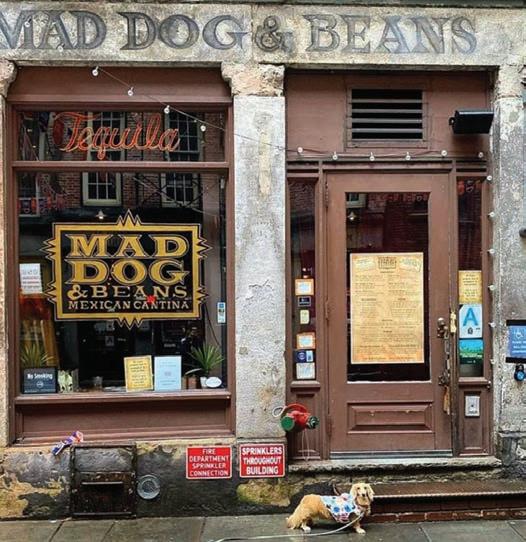
at Mad Dog & Beans Mexican Cantina in New York City, says Vince Deuschel, director of operations for JTP Restaurants, the parent company of Mad Dog.
“All our food and beverage prices have gone up,” Deuschel says. “Some have gone up directly, and some have had price increases in kind — like gas surcharges, delivery fees, or increased minimum deliveries that might force us to abandon other less expensive vendors.”
Deuschel has fought the prices by changing portion sizes and increasing menu prices about 10 percent. He says Mad Dog needs to do another increase, but is hesitant because guests, naturally, don’t appreciate the higher prices.
Metras says he has increased some prices at Salena’s — he doubled the price of wings for a while — but also worries about losing customers.
“We have tried being more strategic with our menu and
streamline ingredients, but I don’t think we have compensated for the increases, especially when you factor in labor,” Metras says. “We are hoping that the addition of our new location will help us create an economy of scale on some prep items and we will be able to reduce costs.”
Leon says Acapulco Mexican Restaurants is planning a 10 percent menu increase but feels customers won’t mind paying a bit more if the quantity and quality stay the same.
“We feel customers would be apt to pay more as long as you leave everything the same, like the free chips and salsa that we do,” he says. “I think they would have a fit if we took that away.”
el Restaurante readers are in good company when they raise prices. According to a Popmenu survey of 415 restaurant owners across the United States, 93 percent of respondents have raised or plan to raise prices to help them deal with spiking food and labor costs.
An issue that is closely related to food prices is food availability. In many cases, products restaurants need simply are not readily available.
“So, even if the price hasn’t gone up, we may not be able to get the product,” Metras says. “That has been a huge issue with beer and tequila, especially because we are a smaller market.”
(continued on page 28)
Aaron Metras
LABOR, OUCH!
Finding employees is harder than it usually is, according to 78 percent of respondents to the el Restaurante survey. And the consequences of losing staff are stiff, notes Metras, who lost most of his long-time kitchen staff during COVID.
“We sometimes forget to factor in the cost of mistakes made while training and getting new staff up to speed,” he explains. “We were able to stable out staff-wise last summer, but labor is still probably our toughest issue.”
To attract and retain employees, 87 percent of restaurants have increased pay and
64 percent have made their work schedules more flexible, according to our survey.
Are those measures working? Apparently not much.
“Increasing staff pay has not reduced turnover or increased performance,” Deuschel says. “We had to do so to stop turnover from getting worse. Salaried and hourly employees feel they have the upper hand due to the labor shortage.”
In some cases, the pay increases restaurant owners are offering are significant. Yager says employees who previously would have made $15 per hour now earn $20
an hour. Some of his servers are making much more — they are pulling in $1,200 to $1,500 per week in tips — but he still can’t find more of them.
“We track it and show them they’re making $30 to $40 an hour,” he says. “It’s hard work, but it does pay.”
Giving kitchen staff a 4-day workweek is one staffing idea that has worked for Metras. The employees work 9.5 hours and get a half-hour paid lunch. Staff appreciate that arrangement, he says.
And in some cases increasing pay has worked. Leon has increased pay significantly for
Acapulco’s 280 employees, with varied effect.
“The new employees tend to chase the dollar, but the older ones have been loyal and we’ve been blessed by that,” he says. “I think they’re comfortable where they’re at, and as long as they can sustain a decent income, I think they’ll stay.”
The bottom line is that Mexican restaurants are enjoying a solid year, for the most part, but not without challenges. If inflation eases and the labor market loosens, good things are ahead.
Ed Avis is the publisher of el Restaurante
RESTAURANT LABOR CHALLENGES?
Seniors Might Be the Solution
| BY ED AVIS | Aaron Metras, co-owner of Salena’s Mexican Restaurant in Rochester, New York, says labor is the toughest issue he’s facing. Not only are wages up 20 percent since 2019, but absenteeism also is higher.
“People are much more likely to call out sick now than they were pre-pandemic,” he says. “If they get COVID, they are still out five days — childcare is still tough for a lot of people.”
Metras has a lot of company; more than three quarters of respondents to the el Restaurante reader survey said finding employees is harder now than before. One reason for this, experts claim, is that many younger people — who normally make up the bulk of restaurant staff — are less willing to put in the hard work and late hours.
“I’m going to make a statement that applies to many, but not all, in the job market today… young people are not showing up!” says Izzy Kharasch, president of Hospitality Works, Inc., a restaurant and bar consulting company. “I have done interviews, hired the person on the spot, worked out their schedule and then they don’t show up. Or the individual comes to work, works for an hour or two and then walks out never to be heard from again.”
So Kharasch proposes a solution: Why not hire more senior citizens?
“I think I can solve the problem by reaching out to the mature generation who, like myself, knows what it is to show up on time, work hard, enjoy
interacting with guests and staff alike and then do it again the next day,” he says. Seniors may prefer part-time work, but that’s fine, he adds, because restaurants employ many part-timers.
Demographic trends back up Kharasch’s idea. According to the U.S. Bureau of Labor Statistics, the only age group that is expected to increase its labor force participation in the coming years are those 75 years and older — 11.7 percent of them will be working in 2030, compared to 8.9 percent today.
What can a senior citizen do in your restaurant? Kharasch suggests three positions: Host, because warmly welcoming guests is an essential task that seniors could easily handle; prep cook, because learning knife skills is rewarding, and prep cooks often work morning hours; or garde manger (prepping and managing cold food) because it’s typically part-time work and includes skills that a senior could show off to friends.
So, the next time you have an opening, don’t overlook the senior population. Many would enjoy a part-time, satisfying job that interacts with the public, and you will appreciate their work ethic.
Ed Avis is the publisher of el Restaurante.
EDITOR’S NOTE: Freelance writer Joseph Sorrentino lives in and travels throughout Mexico covering the food and beverage scene. Here, he reports from his visit to Puebla, where he explored the use of walnuts in dishes including Chiles en Nogada.
WALNUTS: Flavoring Chiles en Nogada and More
| BY JOSEPH SORRENTINO
, writing from Mexico | Walnuts were brought to Mexico by the Spanish around 1539. Trees were first planted in an orchard that was part of a Franciscan convento in Calpan, Puebla, and grew well in their new country. The walnuts, known as nuez castilla, the Castillan walnut, have made their way into Mexican cuisine, especially in Puebla, where they star in the iconic dish chiles en nogada.
Beginning in July, signs go up virtually everywhere in Puebla and across much of Mexico advertising chiles en nogada — poblano chiles stuffed with as many as 11 ingredients, including fruits, nuts and meat; bathed in walnut cream sauce called nogada; then topped with a sprinkling of pomegranate seeds and sprigs of parsley.
“It is probably the most popular dish in Puebla,” says Antonio Porras, whose family has owned La Lunita Restaurant in San Pedro Cholula for four generations. But it’s not available for long. Accord-
ing to Porras, the season typically runs from July until late September when pomegranate, walnuts and the fruits commonly used in the dish are in season.
DIFFERENT TAKES ON TRADITIONAL RECIPES
Like many traditional Mexican dishes, chiles en nogada’s origin is a little murky. It’s generally believed the dish was first made by nuns in the Santa Mónica convent in Puebla for a celebration of Mexican independence.
There are probably as many recipes for chiles en nogada as there are restaurants and families making it. One of those comes from Concepción Fernandez, whose version features poblano chiles stuffed with pears, apples, peaches, walnuts, almonds, pine nuts, and pork in her tiny restaurant in San Pedro Yancuitlalpan. She’s especially particular about the fruit she uses.
“Panochera is an apple that is sweeter than other types, pera lechera is a small pear that is also sweet and combines well with walnuts, and the peach is durazno criollo, which has more flavor,” Fernandez explains. For the nogada, Fernandez uses walnuts, queso fresco, queso filadelfia, and, she says, “a little milk to thin it out.” The chiles are charcoalroasted because, as Fernanez says, “Everything with charcoal has a better flavor.” (continued on page 32)
Antonio Porras
Mari Luz Martinez Barrios and her mother, María de la Luz Barrios Herrera, offer a slightly different version of chiles en nogada at Dos Aromas restaurant in Zacatlán. In their recipe, the poblanos are stuffed with a mixture of bananas, tomatoes, almonds, raisins, apples, pears, peaches, walnuts, onions, garlic and beef. “We use rayada apples and it is because they have more consistency,” Barrios says. They use canola oil for frying because, as Herrera explains, “There is no flavor, and it does not interfere with the dish.” Their nogada features goat cheese, cream and a little sugar.
At Dos Aromas, chiles en nogada season stretches until late October. “After that, it is cooler, less sunshine and the flavors of the ingredients change,” Hererra says.
The women are very friendly, but Barrios won’t give out her exact recipe. “It is a secret,” she says with a slight smile. “And even if you had it, you would not know how to make it.”
Porras’ rendition of chiles en nogada at La Lunita’s is similar to Fernandez’s. Like her, he uses panochera apples and pera lechera pears, but relies on a mix of beef and pork instead of only pork for his stuffing. He serves his chiles en nogada all year. “We freeze the mix of fruits, and we use pomegranates from greenhouses,” he says. He suggests serving the dish with a vino rosado, white wine or sidra, a hard cider.
While chiles en nogada is a dish made stateside, Porras is skeptical that U.S. chefs can replicate the quality and flavor diners enjoy in Mexico. “It is possible [for them] to get poblanos [in the U.S.], and they can use the fruits from there, but they would not have the same flavor,” he says. “The secret is using the fruits from this area and this season.”
BEYOND THE CHILES
Although chiles en nogada is the most famous dish made with walnuts in Mexico, it’s not the only one gracing restaurant tables.
Giuseppe Merlo offers two dishes using walnuts at Trattoria Merlo, his restaurant in Chipilo. Both are made with nogada that Merlo makes with percanera walnuts instead of castillos. “With these, it is not necessary to remove the skin,” he says. “They can be found all year and it is the easiest to use. With castillo, you must soak them and peel the skin. This walnut has a stronger flavor.”
His Berenjena Merlo is baked eggplant that’s diced, mixed with the nogada, and served over pasta or chicken. His Portabella Noce features portabella mushroom caps brushed with balsamic vinegar, baked for 15 minutes at 250º C (about 500º F), and sauteed in olive oil. The nogada is ladled onto the cap, which is then heated a few more minutes and plated with more nogada. “Drink a red wine with these — a merlot, malbec or carmenere,” he suggests.
Although the origin for chiles en nogada is unclear, Merlo knows where his recipes came from. “My head,” he said while tapping it. See recipes on page 63.
Mari Luz Martinez Barrios and María de la Luz Barrios Herrera
Giuseppe Merlo
Fun Fact
Shrubs were originally devised in England in the late 15th century for medicinal purposes. By the 17th century, concocting shrubs was a cottage industry in response to high taxes on imported spirits and by the 18th century, shrubs found their way to the Americas. Over time, shrubs evolved into cordials that could be added to cocktail recipes. Like bitters, they are regarded as condiments bartenders can use to fine tune cocktails…to make a drink that resonates with a given occasion, season or cuisine.
SHRUBS: Branching out toward more CREATIVE COCKTAILS
| BY ELYSE GLICKMAN
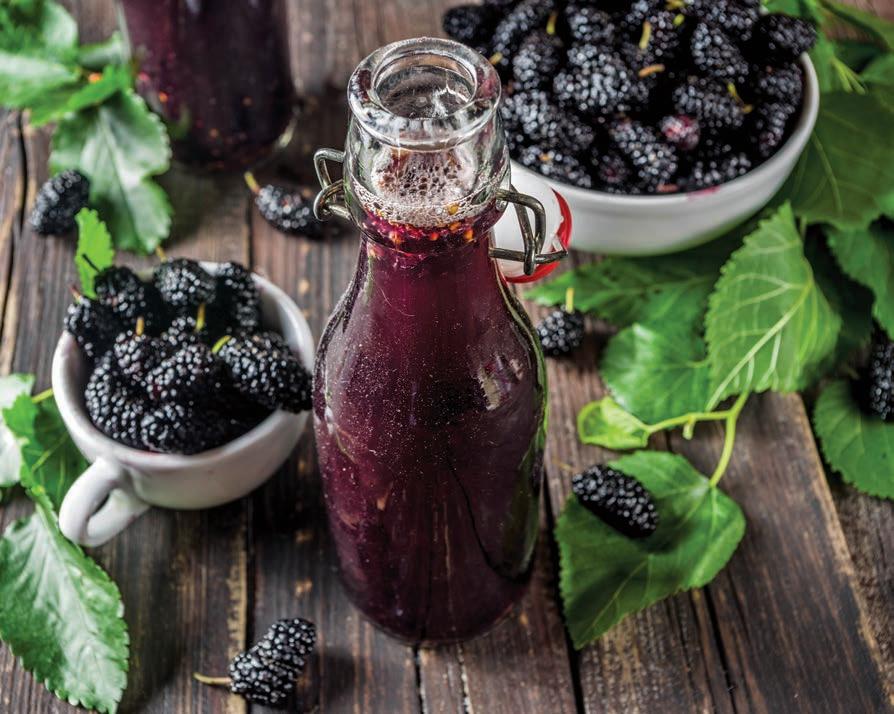
| The emergence of craft cocktails has provided bartenders greater incentive to replace artificially flavored mixers and flavoring agents with more natural, artisanal solutions. Shrubs — non-alcoholic syrups made with sugar, vinegar, water and fruit, and often enhanced with herbs, spices and other botanicals — are what mixologists are turning to.
In fact, shrubs have been a go-to flavoring in Mexico for years — which means they’re ideal ingredients in cocktails featured at Mexican and
Latin restaurants.
“In Mexico, where incredible flavors can only be found during certain times of the year, past generations realized shrubs were the best way to preserve them. There’s a new generation of bartenders in Mexico who are remembering their mothers’ and grandmothers’ recipes for preserving fruits and vegetables all year round,” says Alvaro Garcia, bartender at Mexico City’s Rayo Cocktail Bar, a venue known for its innovative drink menu. “They are applying them to their bar pro-
grams, rather than relying on flavored liqueurs or syrups. “[The recipes] have been passed down to bartenders who use them to add complexity to any cocktail. This also allows for combinations of flavors grown in different seasons to be mixed any time of year.”
Lucas Ryden, lead bartender for San Diego’s Realm of the 52 Remedies and founder of Cool Hand Co., says shrubs are particularly well-suited for the flavors of Mexican and Latin American cuisines.
“The vinegar component in a shrub
Tips for In-house Prep
Selecting the wrong vinegar or adding too much of it are two of the most common mistakes bartenders make when crafting shrubs. Industry pros offer several tips that can help mixologists avoid those errors, which can create overpowering vinegar smells and/or flavors.
Pick a method: hot vs. cold.
“Over the years, I’ve learned that different methods depend on what type of shrub you want to create and the experience you want customers to get out of the finished drink,” says Alvaro Garcia, bartender at Mexico City’s Rayo Cocktail Bar.
The hot method yields shrubs more quickly, while the cold method can produce more complex flavors, according to “Making Shrubs,” a how-to article from Edible New Mexico. (ediblenm.com).
“The cold method is mainly
used for herbs and flowers, as adding heat reduces the floral notes and flavors. This process is slower in extraction of flavors, but results are incredible,” Garcia says.
The hot method, on the other hand, allows the cooked fruit’s sweetness to balance out the vinegar’s acidity and helps avoid the problem of the finished product “tasting a bit too much like salad dressing,’” adds Lucas Ryden, founder of Cool Hand Co., a company that makes cocktail shrubs.
Philip Ly, bar director at General Lee’s in Los Angeles, recommends macerating, cooking and straining ingredients before adding vinegar — especially when using whole fruits/herbs/spices.
“It gives you a better sense of what everything will taste like, and you can slowly add the vinegar until you hit that sweet
provides a unique and mouthwatering acidity that cuts through spice, fat, and sugar really well,” says Ryden, whose company makes cocktail shrubs. “This acidity also complements all the fresh fruits, chiles, and herbs within this ingredient canon. I think all fruit bases for shrubs are fair game — berries, stone fruits, tropical fruits — [and] I particularly like using chiles and Mexican spices like cinnamon, clove, and hibiscus as a way to add those flavors to drinks with efficiency.”
MAKING SHRUBS
Shrubs, like bitters, can be purchased or pre-made. The long shelf life and the relative ease of preparing them in-house are two reasons they have been embraced by creative bartenders.
According to Garcia, if you’ve infused tequila or vodka at your bar, you have the skills to make shrubs. “I discovered
spot before the taste of vinegar becomes too powerful,” says Ly, who grew up immersed in Mexican/Latin American food and culture, which he said has helped shape his palate throughout his career. “Almost half our clientele at General Lee’s is Hispanic, so we are fortunate — we really dig into Latin flavors out of necessity,” he adds.
Learn about vinegars. “After a few sessions of R&D, I realized I was choosing the wrong vinegars for the shrub I intended on making,” says Ly. “Learning more about vinegars — how each one tastes and how acidic it is — helped me choose the right vinegar for the shrub I wanted to make. Stronger vinegars like a balsamic will be harder to work with, so it is best to blend it with like a champagne vinegar or Datu Puti to get the flavor you are looking for without the overwhelming vinegar taste.”
If vinegar flavor is too strong,
let shrubs marinate. Ly has discovered that the vinegar in the shrub starts to mellow after the shrub sits in the refrigerator for a few days. “Early on when I made shrubs, the vinegar came out too strong for my liking and I ended up adding more sugar and fruit trying to balance it out,” he recalls. “But simply letting it sit and marinate for a few days helped balance everything out naturally.”
Have correct tools on hand. Garcia’s list includes glass jars or plastic receptacles, sugar, vinegar, water, fruits/or vegetables, peeler, tape, marker, pen, and notepad as data is key.
Try everything! “The dos for creating a shrub is to try everything,” says Garcia’s colleague Tito Perez. “Combine flavors, work on your ratios and formulas, and never stop experimenting. Even if you fail, you have some awesome data to go by and things will get easier.”
(continued on page 41)
Cool Hand Co.’s Mexican-inspired Chapala Cocktail with tequila or mezcal, agave nectar, lime juice, and pineapple turmeric ginger shrub
• Make them collectible! Autograph cards at cooking demos, street fairs and trade shows
• Announce new food and drink items — include a QR code too
• Use as a promotion at Grand Opening celebrations
• Promote special events, cooking classes, catering and more!
• Team with other chefs to create a Chef Card Pack to give away or sell at charity and other special events A fun, creative way to promote your chef and your restaurant!
You provide the pictures, logos and copy — we’ll create a custom-designed card Totally Affordable! Starting at just $150 including FREE custom design!
New year, new ways to reach our 25,000+ readers with information about your products and services
LOOK AT THE 5 GREAT ISSUES COMING YOUR WAY IN 2023!
JAN/FEB/MAR
• Cover Story: Hamburguesas
• Special Report: 10th Annual Multi-Unit Report
• Business Basics: Catering
• At the Bar: Vodka Cocktails
• Ad Close: January 27
• Materials Due: February 1
APRIL/MAY/JUNE
Bonus distribution at the National Restaurant Show, Texas Restaurant Marketplace & Antojo Industry Trade Expo
• Cover Story: Cooking with Insects
• Business Basics: Happy Hour
• At the Bar: Spiked Iced Teas
• Ad Close: April 7
• Materials Due: April 12
JULY/AUGUST
Bonus distribution at the Western Foodservice Expo
• Cover Story: Desserts
• Business Basics: Operating a Multi-Family Restaurant Business
• At the Bar: Cocktail Samplers/Flights
• Ad Close: June 30
• Materials Due: July 7
SEPTEMBER/OCTOBER
• Cover Story: Side Dishes
• Business Basics: The Pros and Cons of Food Halls
• At the Bar: Creative Garnishes
• Ad Close: August 25
• Materials Due: August 31
NOVEMBER/DECEMBER
Our Annual Buyer’s Guide, with Special Offers for Advertisers!
• Cover Story: Tomatillos
• Special Report: 9th Annual Independent Mexican Restaurant Report
• Business Basics: Loyalty Cards and Subscriptions
• At the Bar: Wine and Spirits Storage
• Ad Close: October 27
• Materials Due: November 2
AND IN EVERY ISSUE …Hotline, Marketplace, My Favorite Recipe and more!
CALL PUBLISHER ED AVIS AT 708-218-7755 to discuss how we can put el Restaurante to work for you.
elRestaurante
“In Mexico, where incredible flavors can only be found during certain times of the year, past generations realized shrubs were the best way to preserve them. This has been passed down to bartenders who use them to add complexity to any cocktail. This also allows for combinations of flavors grown in different seasons to be mixed any time of year.”
– ALVARO GARCIA , Rayo Cocktail Bar
(continued from page 36)
shrubs back in 2016 while working at the amazing Gramercy Tavern in New York City, the first place I saw and tasted a shrub,” says Tito Perez, Garcia’s colleague at Rayo. “I saw how simple it was to make, and that with dedication and patience, you could really expand a kitchen and cocktail menu if used properly. I decided to experiment at home and started making very interesting cocktails. I loved the idea of taking something simple like a strawberry and turning it into something complicated, acidic, floral, and yet still fragile. I was hooked!”
The possibilities are almost endless when it comes to crafting shrubs that harmonize with different spirits. For example, red wine vinegar-based shrubs can enliven sangria and sherry-based cocktails. Apple-based shrubs elevate mezcal and tequila as well as white and brown spirits. Cranberry-pear or cranberryfig shrubs are not only ideal for holiday season drinks but also lovely partners for Latin American rums. And with the growing popularity of savory and less sweet cocktails, basil, fennel, peppercorns, rosemary, and thyme can be worked into a recipe to temper the shrub’s sweetness.
Perez advises bartenders at Latin-focused bars to have a wide variety of ingredients on hand so they can create cocktail-enhancing shrubs year-round. For the holidays and winter months, he recommends using pumpkin, currant, and stone fruits “to really bring out nostalgic flavors.” Strawberry, raspberry, mango, pineapple, and beets also are among his favorites. “They combine well with any spirits and also work well in mocktail recipes,” he adds.
The benefits of making shrubs go beyond flavor; there’s also an aspect of sustainability to the practice, Ly notes.
“I started playing with shrubs earlier this year because I wanted to start focusing on building a more sustainable bar program,” explains Philip Ly, bar director at General Lee’s Cocktail House in Los Angeles, who features several Hispanic-inspired cocktails on his menu. “California is in a bad drought, and I wanted to be more conscious of waste in our bar. Making shrubs was one of the many creative ways one can use to upcycle fruit/vegetables/ herbs that otherwise would be disposed of.”
At the Bar columnist Elyse Glickman is a Los Angeles-based writer who specializes in covering the food and beverage industry.
Make it a Mocktail
In venues with mocktails on the menu, shrubs can be a major asset. The acidity and kick from vinegar can mimic the heat of alcohol, providing a more interesting experience for your palate than something made with just juices or syrups. The shrub becomes the “backbone” of this experience, something that other nonalcoholic ingredients can’t really do.
“Bars could really elevate their mocktail programs with all the pieces of fruits and veggies that go to waste from day to day,” says Tito Perez of Mexico City’s Rayo Cocktail Bar.
“Shrubs add acidity, sweetness, and tartness to any mocktail. The nonalcoholic sector is a huge one and is one that’s been put to the side for too long. Shrub-based mocktails can boost sales and bring in a new type of clientele.”
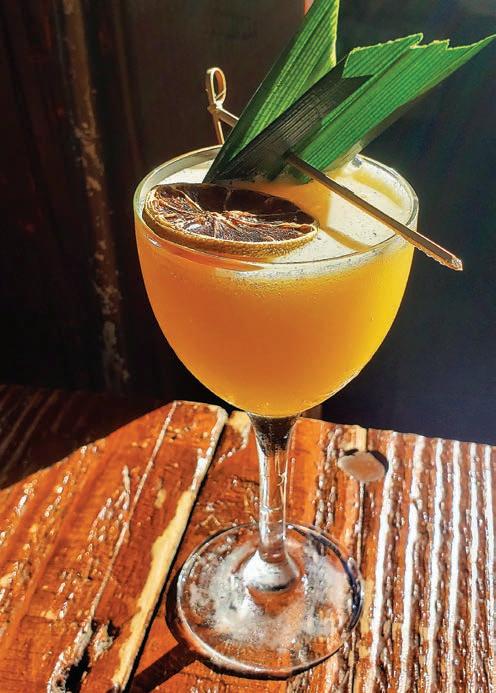
Nana’s Pineapple Upside Down Cake Cocktail with Pineapple Five Spice Shrub from General Lee’s
following pages,
that you’ll support our advertisers, who make el
possible.
ADVERTISER INDEX
21 Missions Agave www.21missionsagave.com
See our ad on page 62
American Eagle Food Machinery, Inc. www.americaneaglemachine.com
See our ad on page 28
BE&SCO Manufacturing www.bescomfg.com
See our ad on page 13
Best Mexican Foods www.bestmexicanfoods.com
See our ad on page 62
Bridgford Foods Corp. www.bridgford.com
See our ads on page 7 and 54
C.T. Beavers Co www.Tamaleking.com
See our ad on page 62
California Foodservice Instant Rebates caenergywise.com/instant-rebates/
21 Missions Agave. Make The Ultimate “Cadillac” Margarita with 21 Missions. 21 Missions Agave Azul Nectar, Un Muy Especial! Your customers will thank you (Tus clientes te lo agradecerán. Salud!) 866-5040555; www.21missionsagave.com
Grandeza. Rich, authentic, Premium Orange Liqueur was developed with the finest natural flavors of Mexico. Its flavor profile of bitter orange peels, sweet agave nectar, and a hint of vanilla make it the perfect complement to a margarita; it won’t overpower or mask your high-quality tequila the way cognac or brandy-based orange liqueurs do. grandezaspirits.com
Bridgford Foods. Frozen tortilla dough balls, sopapilla dough and bolillo dough let you make fresh tortillas, sopapillas and bolillo rolls quickly and easily for your customers without all of the prep work — just thaw, then grill or fry for authentic, consistent flavor every time. 800-527-2105; bridgford.com
BE&SCO Manufacturing. Perfect meat-to-masa ratio every time! BE&SCO offers the perfect solution to keep up with demand. Preparing tamales by hand is not only timely and labor-intensive, but you’re often left with inconsistent product. Our Commercial rated Tamale Machines are built to handle high production and offer the perfect 60/40 (meat-to-masa ratio) consistency! Whether you like más meat or más masa, BE&SCO has the perfect extruder variation to fit your preference! 210-743-5124; www.bescomfg.com
Best Mexican. We’re here for all your Mexican foodservice needs. We’ve been serving restaurants in the Northeast for over 50 years…and we can help you keep your restaurant running for whatever type of service you’re offering today. 800-867-8236; 845-469-5195; Bestmexicanfoods.com
Tito’s. Tito Beveridge wasn’t always in the vodka business. With a dream to do big things, he sat down one sleepless night and drew a line down the middle of a blank page. On one side, he wrote what he was good at, and on the other, what he enjoyed doing. The end result? Tito’s Handmade Vodka. It wasn’t quick, and it wasn’t easy, but 25 years later, @TitosVodka now lines back bars and store shelves, and fills glasses around the world. titosvodka.com
Lacandona. Our “La Lotería” collection is full of color and phrases that your customers can connect with, creating a festive and attractive atmosphere that everyone will want to see. Call us so we can share our creativity with you and do something amazing for your restaurant. Exclusive designs of Lacandona Furniture. 470-471-8751; muebleslacandona.com
Skorr. We’ve taken our chafer to the next level! This Wire Chafing Stand with Lid Lock is a true innovation in wire chafing stand design. Food stays hotter, longer. And since the chafer now is easier to carry, there are fewer spills because handles provide a lower center of gravity. Sturdy, wide stance for better balance on tables and carts, too. 800-538-2163; skorr.com
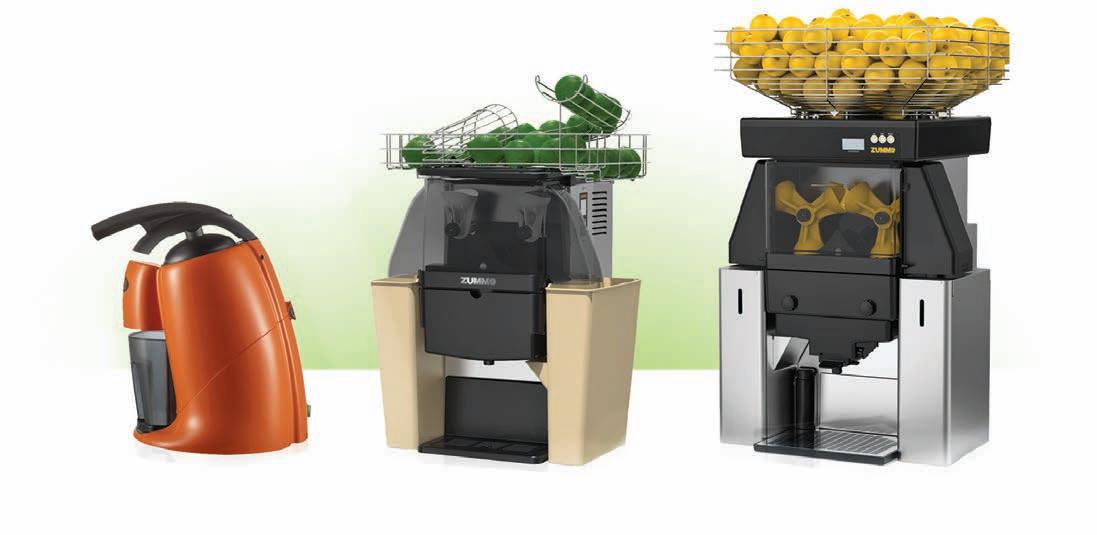
Quality Food Equipment Store. Hand-squeezing limes and lemons takes a lot of time and labor, which impacts your bottom line. Those problems are solved with these Citrus Juicers that do the work for you — and they increase yield, too. 571-373-2520; 833-858-4237; qualityfoodequipmentstore.com
Neil Jones Food Company. Premium quality tomato and custom blend sauces packed from fresh, vine-ripened California tomatoes are the specialty at this familyowned and operated corporation. Our San Benito facility has been packing the finest tomatoes since 1915. We strive to bring you the very best tomato products, whether you prefer fresh-packed #10 cans or fresh-packed shelf-stable pouches. 800-291-3862; njfco.com
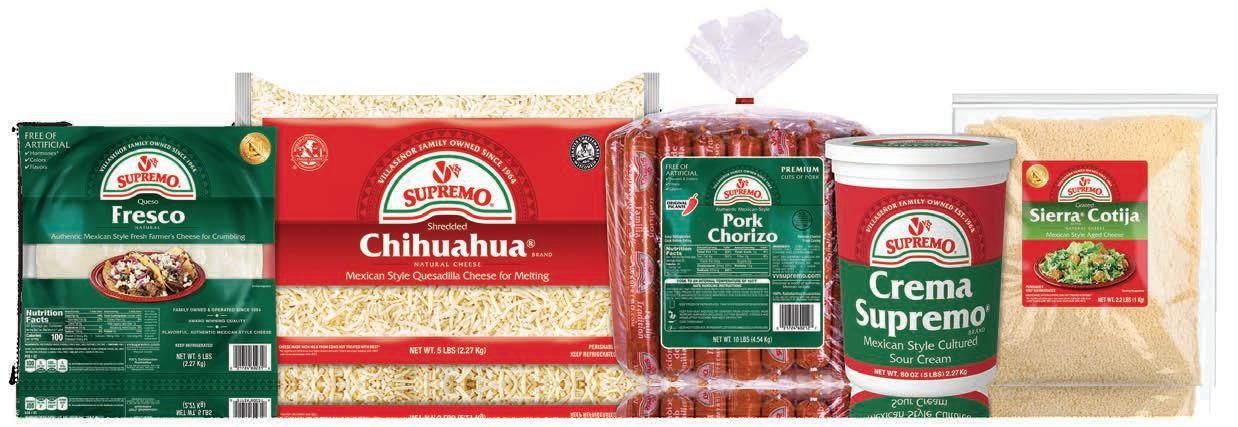
V&V Supremo Foods. This award-winning producer of authentic Hispanicstyle cheeses is your source for melting cheeses like Chihuahua® Brand Quesadilla; fresh cheeses such as Queso Fresco, Queso Blanco Del Caribe®, Queso Enchilado, Queso Asadero and Requeson; aged cheeses like Cotija; and Mexican crema. Chorizo in beef and pork varieties also available. 1-888-887-8773; www.vvsupremo.com
PRODUCT SHOWCASE
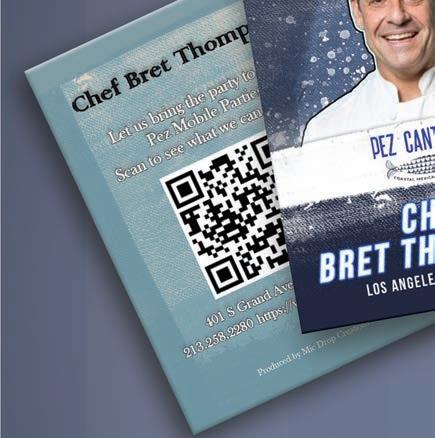
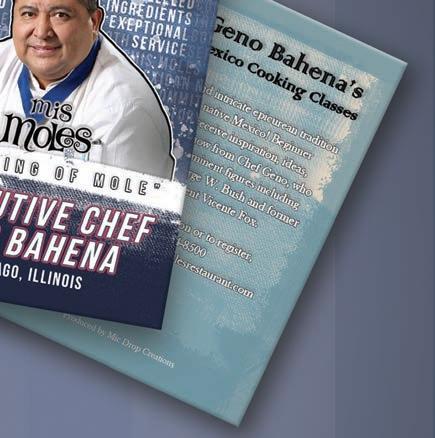
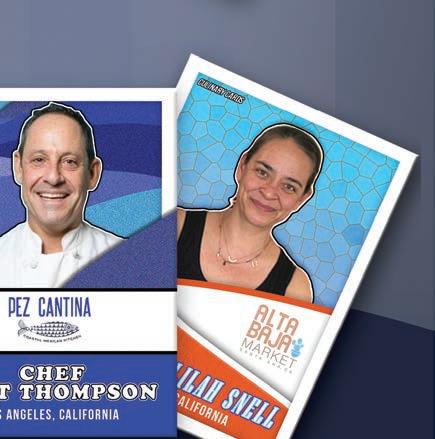
Culinary Cards. Collectible cards are hot…now chefs can get in on the fun with customdesigned cards featuring their picture on the front and information about your restaurant on the back. Created by Mic Drop Creations in partnership with el Restaurante.
708-218-7755
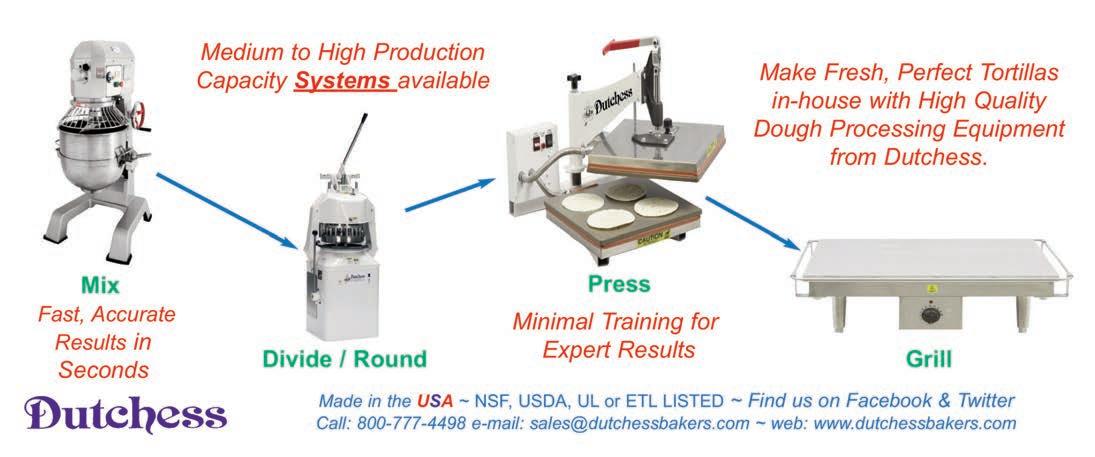
Dutchess Bakers. Our easy-to-operate line of tortilla/dough equipment includes mixers, dough dividers/rounders, tortilla presses and grills that deliver high-quality, fresh tortillas to your restaurant customers with every meal — whether for inhouse dining, curbside pickup, or carry-out and delivery orders. Available in sizes for most any Mexican/ Latin foodservice operation! 800-777-4498; dutchessbakers.com
Oil Chef. Double the life of your deep fryer oil with this FDA-approved Deep Fryer Accessory that reduces fryer oil consumption. It increases food output from the same quantity of oil without compromising food quality. The food grade, stainless steel accessory takes just a few seconds to install — and it’s maintenance-free! It can stay on your fryer for 3 years. Calculate your savings at oilchef.com
Rovey Seed Co. Rovey is a premier supplier of white, yellow, blue and red corn especially bred for tortilla production. The high-quality corn is used by restaurants across the country to make superior tortillas. It is available in nonGMO and organic varieties. 217-2274541; roveyseed.com
MegaMex Foodservice takes pride in creative authentic Mexican Flavors that operators can easily execute. 817-509-0626; megamexfoodservice.com
With MegaMex Foods’ WHOLLY® AVOCADO Hand-Scooped Avocado, you’ll save time and labor, but won’t sacrifice authentic texture and fresh taste. Made with just one ingredient, 100% Hass avocado, it’s ready to use, convenient, and maintains food safety. Sample today! 817-509-0626; megamexfoodservice.com/sample
Our TRES COCINAS™ Authentic Pepper Pastes are made with the signature ingredients you use every day. But instead of spending hours rehydrating, dicing and pureeing, you can get bold flavor from just a simple squeeze. Request a sample! 817-509-0626; megamexfoodservice.com/brand/tres-cocinas
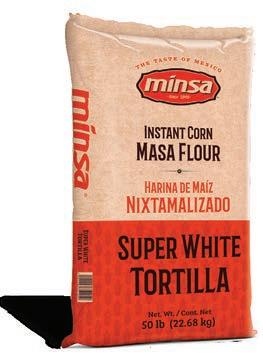
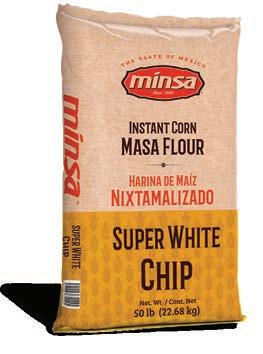
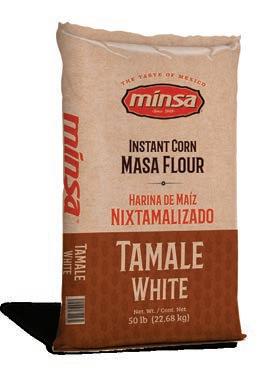
Minsa. The pioneering Mexican company in the nixtamalized corn flour industry with an outstanding track record has resumed its presence in the United States with a high-quality selection of special flours for tortillas, tamales, chips, nachos, extruded and special products. 404-310-5968; email ivan.ahumada@minsa.com.mx; www.minsausa.com
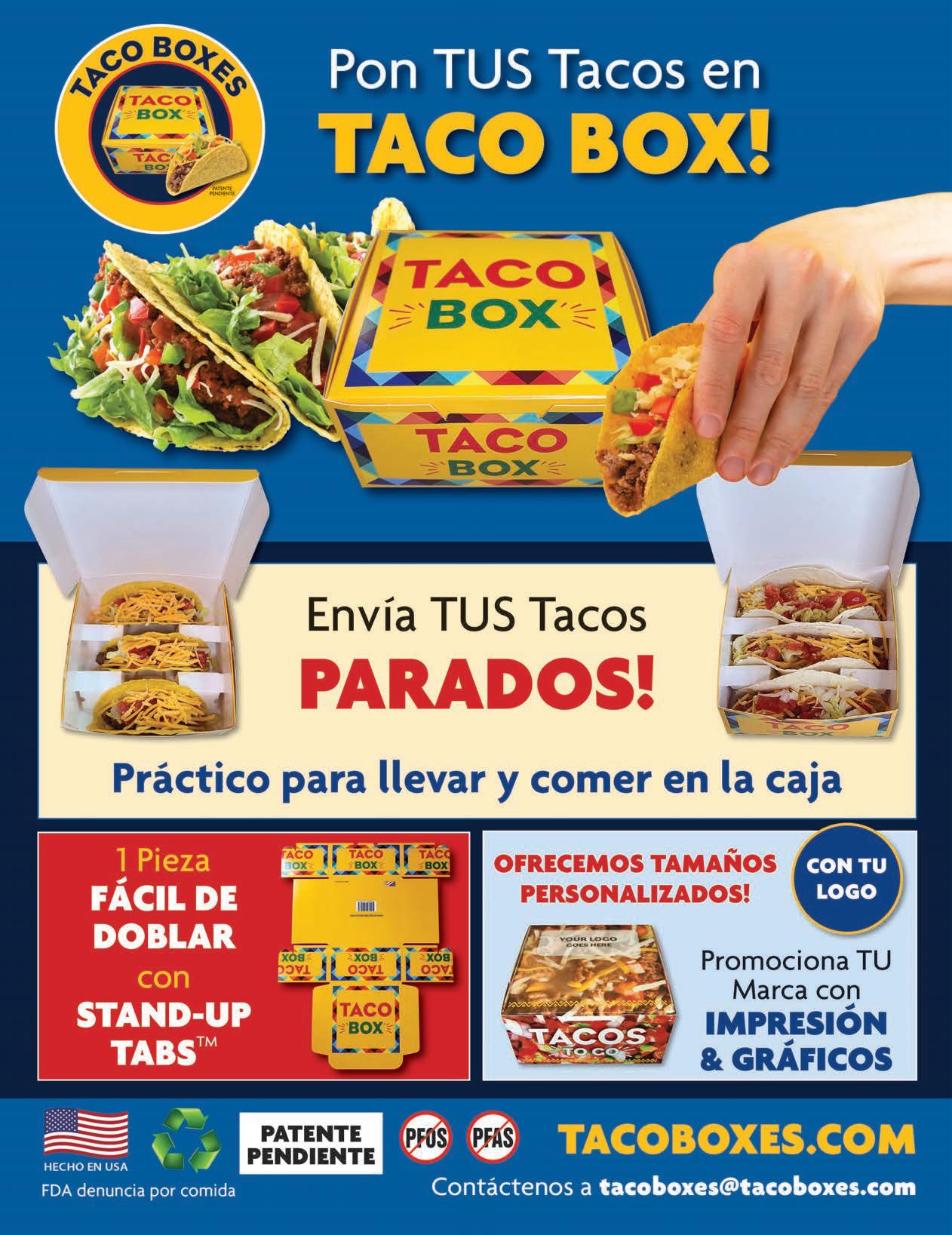
Taco Boxes. Transport and maintain the integrity of your tacos in the Taco Box, specially designed to hold hard shell and soft shell tacos, standing up! One-piece easy fold design with stand up tabs comes packed flat for easy storage. Made in USA, recyclable, economical, FDA Food Safe Approved, no PFOS or PFAS; Patent Pending. Email tacoboxes@tacoboxes.com; tacoboxes.com
The Catering Box. Don’t use just any old box for your catering! Instead, transport your catered food safely and professionally. Our Catering Boxes were designed to maximize your catering success by maintaining the integrity of your food when it leaves your kitchen. The materials, structure, and appearance were designed for transporting and serving food. Made in USA, recyclable, no PFOS or PFAS; Patent Pending. Email thecateringbox@aol.com; thecaterinqbox.com
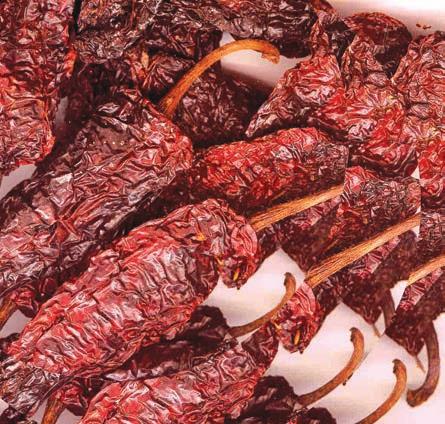
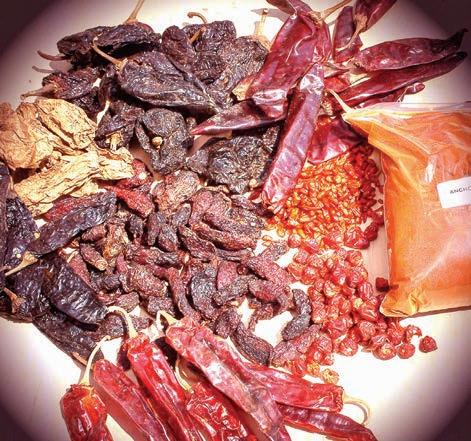
The Chile Guy Chile. Get low prices on whole pods, powders, flakes and crushed chiles — most from Mexico, but also from South America, Africa, Asia and Europe — all in commercial volumes and pricing. Can be shipped nationally and internationally in volumes from 5 to 50,000 lbs. SQF Certified, Kosher, and FDA and USDA compliant. Achiote, Mexican oregano and corn husks also available. Serving the restaurant industry for 31 years. 800-8699218 or 505-867-4251; email info@ thechileguy.com; thechileguy.com
Texican. Tortilla chip serving cabinets feature convection heat and thermostat temperature control for reduced operating costs. Top-quality, stainless steel dispensers guarantee the warmest chips with the least amount of chip breakage. Just load chips in top and serve from the bottom! The only warming cabinet with the “swing open” front door for ease of cleaning! Available in 44-gallon and 22-gallon capacity models. 800-869-5918; texicanspecialty.com
Culinary Software Service. Want to save money on food costs? ChefTec software offers inventory control, purchasing and ordering, recipe and menu costing, and nutritional analysis that can help! The software even comes with a money-back guarantee! Free bonus ingredient pack for Mexican restaurants also included. 877-243-3832; cheftec.com
American Eagle Food Machinery. Our OneHUB Collection provides unmatched versatility! High-volume Meat Cutter Attachment (shown) cuts bigger pieces, features large 7”x2” feeder. The 1.5HP motor with #12 Hub powers 6 interchangeable attachments including meat grinder, tenderizer, cutter, jerky slicer, vegetable cutter. Process everything from beef, pork, chicken to vegetables and cheese with one countertop footprint. Save time and labor cost without hand-cutting! 800-386-5756; www.americaneaglemachine.com/onehub
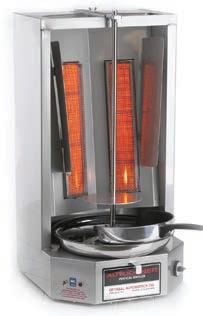
Optimal Automatics. Optimal’s
Autodoner Brand Vertical Broiler is the best-selling al pastor cooking unit in North American since 1972. It is made with durable, long-lasting case metal burners that are extremely easy to service. NSF approved. 847-439-9110; optimalautomatics.com
Folcklor Latino. The craftsmen at Folcklor Latino, located in Tonalá, Mexico, have decades of experience creating tables, chairs, booths, carts and other furniture for restaurants. “Thanks to the Folcklor team who did a fantastic job,” said Martín Morin, manager of Blanquita’s Mexican Restaurant in San Benito, Texas. “Everything looks fabulous. My family is delighted with the results. I hope that soon we will communicate with you to furnish another restaurant.” 424-385-6564; contacto@folcklorlatino.com; www.folcklorlatino.com
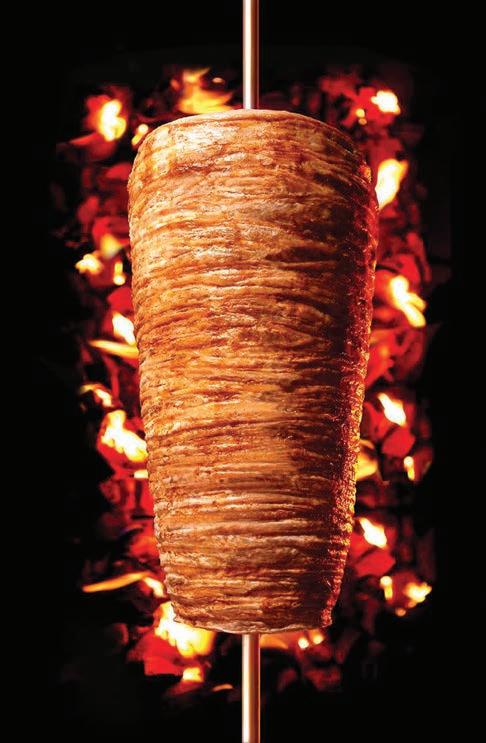
Megas Yeeros. Our Mega Sabor line of laborsaving meat products includes Al Pastor, Pollo Adobo and Carne Asada. They contain a variety of chile peppers from around the world; tropical fruit such as mangos, papaya and pineapple; vegetables such as yuca; and indigenous plants like achiote. They are deliciously spicy; come with different chile sauces for pork, chicken and beef; and offer easy portion control and consistent cost-per-unit. 212-777-6342; megasyeeros.com
Tortilla Masters. Creating perfect, ready-to-cook corn tortillas has never been easier thanks to the Ventura Flex Corn Tortilla Machine — the first tabletop restaurant-style corn tortilla machine to meet UL and NSF standards. It is convenient, small, and has big production capabilities — makes up to 840 tortillas per hour. This machine can be placed on a table, occupying a small 2 x 2 feet of space. 281-994-7010; tortillmachine.com
Energy Solutions/California Foodservice Instant Rebates. Save up to $4,000 per unit on high efficiency commercial foodservice equipment. Choose from a variety of qualifying products, get Instant Rebates as a discount on your invoice – no paperwork, no waiting. Find a participating dealer and qualifying products at www.caenergywise.com/instant-rebates.
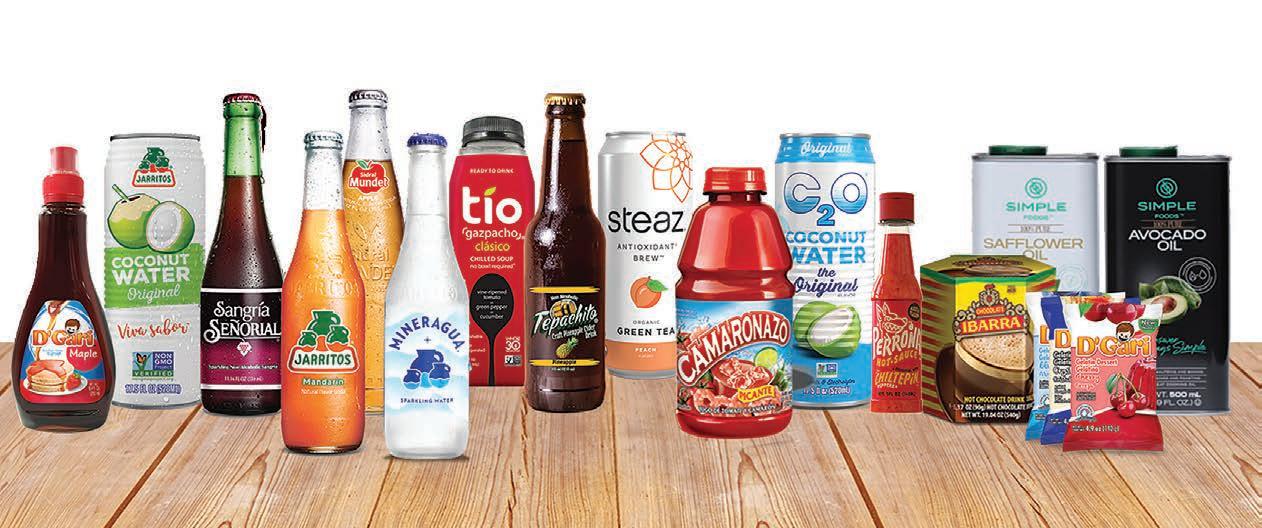
Novamex. No matter the flavor or the type of food, there is no better pairing than Mineragua, Sangría Señorial, Sidral Mundet, and Jarritos, now available in 12 flavors, including Watermelon, Mandarin, Guava, Lime, and Fruit Punch. Your customers will love them! 888-668-2639, email consumer. relations@novamex.com
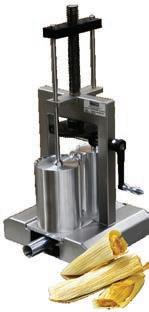
C.T. Beavers/Tamale King. These tamalemakers are perfect for the upcoming holiday season! Light, easy-to-operate machines deliver consistent quality tamales for your restaurant’s customers. Available in a variety of sizes; tamale pots, spices, corn husks and masa also available. 800-531-1799 or 817-534-3122; tamaleking.com
PFG Contigo This exclusive brand from Performance Foodservice is packed with delicious, innovative products that help Hispanic and Latin customers grow their businesses. Our portfolio reflects the diverse flavors and cooking styles of countries and regions around the world. From fresh and frozen protein options, to traditional tortillas, avocados, sauces, and more, Contigo has everything restaurants need to create high-quality, authentic dishes. performancefoodservice com/Contigo
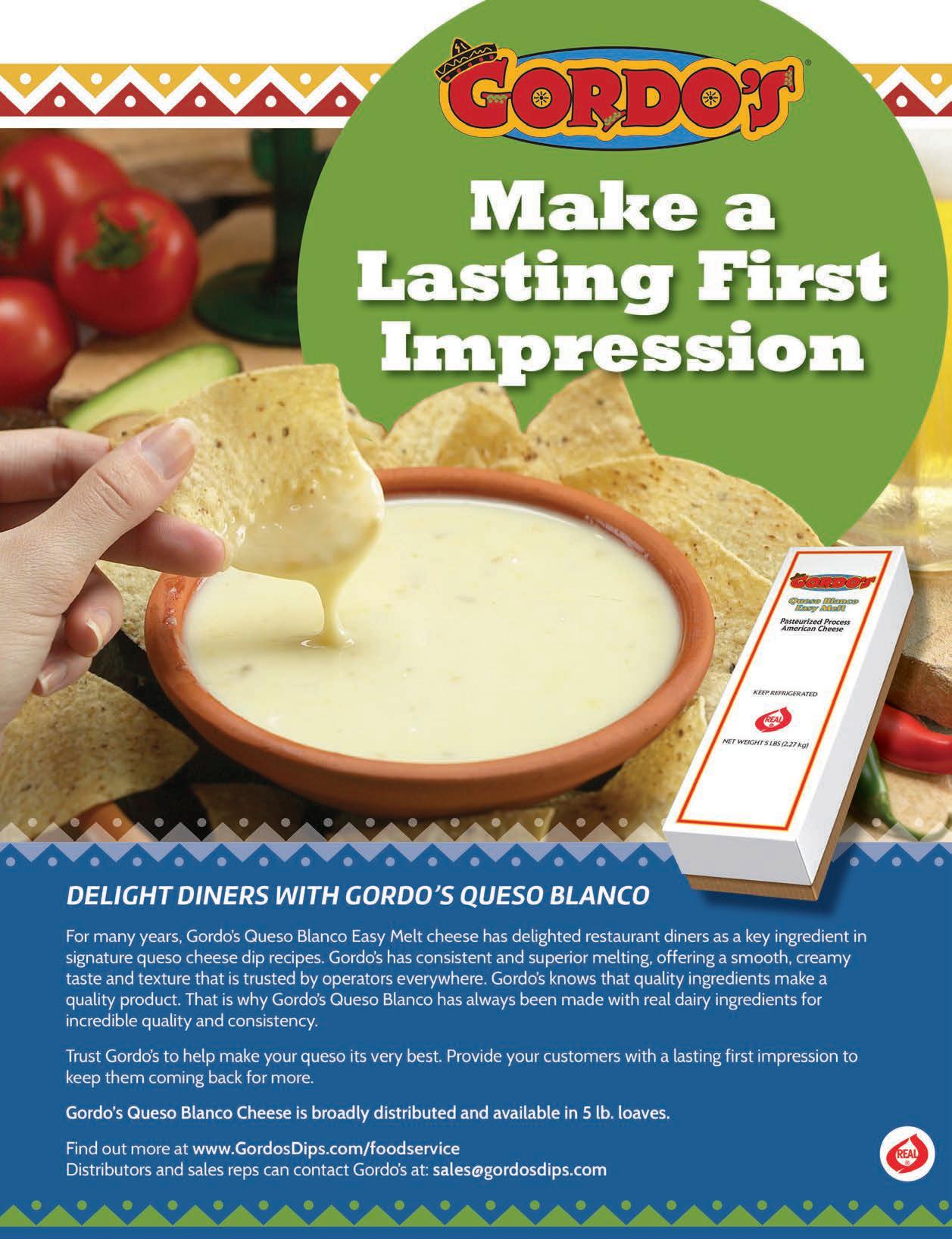
Gordo’s. Trust Gordo’s Queso Blanco Easy Melt cheese to make your Queso cheese dip its absolute best. Gordo’s is proudly made with real dairy ingredients for incredible quality and consistency. Available in 6/5# loaves and broadly distributed. Email sales@gordosdips.com; www.GordosDips.com/ foodservice
CONTACT INFO:
John Simmons
Bridgford Foods Corp.
P.O. Box 3773
Anaheim, CA 92803
PHONE : 800-527-2105
FAX: 866-744-4536
EMAIL: info@bridgford.com
WEBSITE: www.bridgford.com/ foodservice
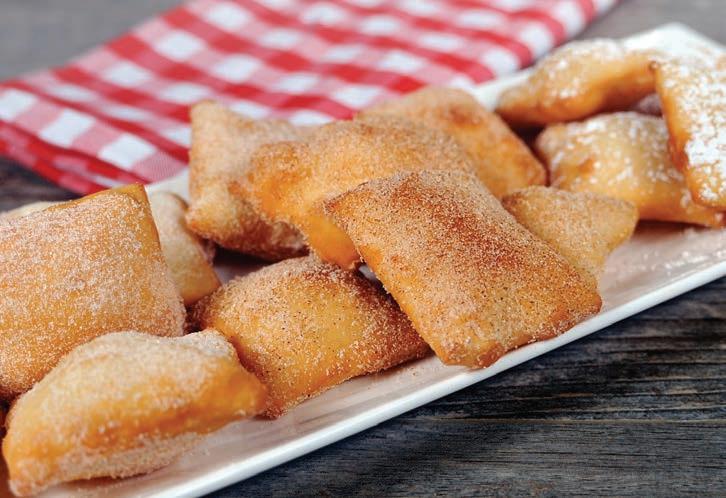
Pre-portioned 0.34 oz. Sopapilla Dough “Bites”—ready to deep fry and coat with cinnamon-sugar for a tasty snack.
Bridgford—The Fresh Baked Idea Company
Keep your customers coming back with easy and delicious products from Bridgford— Frozen Tortilla Dough Balls, Frozen Sopapilla Dough and Frozen Bolillo Roll Dough!
• Frozen Tortilla Dough Balls are perfectly formed, 1.25 oz. ready to thaw, flatten, and grill for your own “made on premise” freshly prepared homemade tortillas.
• Frozen Sopapilla Dough Pre-portioned 3” x 3 1/2” 1.35 oz. dough pieces make it convenient and easy to produce delicious “Fresh from the Fryer” sopapillas. Also, this dough is easy to fill and makes tasty empanadas.
• “Fry Bread” Sopapilla Dough Sheets—20.25 oz. Ready to cut and shape for an unlimited number of uses and sizes.
• Bolillo Roll Dough—Simply pan, let rise, bake and slice to serve as a delightful sandwich roll!
ABOUT US
Bridgford Foods pioneered the manufacture and sale of frozen bread dough to supermarkets and the foodservice trade in the early 1960s. These products are produced in plants located in Anaheim, CA, Dallas, TX, and Statesville, NC.
Uniqueness, high quality and consistency of products have been the main objectives of Bridgford Foods Corporation. Bridgford products have been awarded 109 gold medals at California state fairs.
The Finest Bulk Spices and Wholesale Chile
The Chile Guy can supply you with premium Grade A chile in whatever quantity and format you need! From 5 pounds to 50,000 pounds, you can count on The Chile Guy for all of your chile needs.
We are known for offering the finest chiles from around the world. With over 100 different chile varieties hand-selected by the country’s leading purveyor of chilies, you’re sure to find the very best chile in terms of heat, color, flavor and purity.
Our chiles are not only the best in the industry, but so are our chile products and bulk wholesale spices. We process our chiles into powders and flakes to ensure our customers of the highest quality, taste and consistency. All of our powders and flakes contain 100% pure, natural chile – we don’t blend in any powders or chile flakes unless specified by the customer.
Whether you’re creating a new recipe or spicing up an old one, The Chile Guy can help you obtain the best wholesale chiles and spices at the best price!
PHONE: 800-869-9218
EMAIL: info@thechileguy.com
WEBSITE: thechileguy.com
CONTACT: Megas Yeeros
PHONE: 212-777-6342
EMAIL: info@megayeeros.com
WEBSITE: www.megasyeeros.com
Get ready to experience something different. First in quality, first in innovation, at Megas Yeeros® the company believes good food is meant to be enjoyed by all. Our al pastor, pollo adobo, and carne asada in convenient stacked meat form and IQF strips are made from all natural ingredients and authenticspices. They are guaranteed to please your customers every time!
AT MEGAS YEEROS® WE STAND BEHIND OUR THREE STANDARDS OF EXCELLENCE:
• Our company only uses natural meats, never any fillers, preservatives or additives for a healthier and tastier end product.
• All our products are USDA approved and made in our modern, state-of-the-art facilities under the strictest guidelines.
• Our company prides ourselves in taking authentic ethnic food and reinventing it in innovative ways.
Maíz Mexicano para el Mundo
Minsa, la empresa mexicana pionera en la industria de harina de maíz nixtamalizado con una destacada trayectoria de años, ha retomado presencia en Estados Unidos con la gran calidad que siempre le ha caracterizado a los que ofrece una variedad de harinas especiales para tortillas, tamales, chips, nachos, extruídos y productos especiales.
Frente a consumidores cada vez más exigentes, que exigen transparencia en los procesos de fabricación de productos y que sean más saludables, Minsa realiza todos los esfuerzos para que los procesos para la elaboración de su harina sean de la más alta calidad. Se caracterizan por el uso de la más avanzada tecnología con altos estándares de inocuidad, respetando los procesos artesanales de nixtamalización, exclusivo de México para el mundo. La empresa cuenta con productos innovadores, funcionales y de valor agregado, siempre a la vanguardia ante el compromiso de aportar un nivel nutricional favorable a sus consumidores, a base de maíz selecto mexicano. Para los clientes, Minsa es la opción rentable que favorece la competitividad y crecimiento en un mercado cada vez más exigente. Todos los esfuerzos de Minsa tienen como prioridad satisfacer a sus consumidores a nivel global. Siendo una empresa con enorme tradición en México por sus productos, eminentemente arraigados en la cultura, tiene un compromiso que reitera día a día con esfuerzo y dedicación.
Mexican Corn for the World
Minsa, the pioneering Mexican company in the nixtamalized corn flour industry with an outstanding track record of years, has resumed its presence in the United States with the high quality that has always characterized those that offer a variety of special flours for tortillas, tamales, chips, nachos, extruded and special products.
Faced with increasingly demanding consumers, who demand transparency in the manufacturing processes of products and that they be healthier, Minsa makes every effort to ensure that the processes for the production of its flour are of the highest quality. They are characterized by the use of the most advanced technology with high safety standards, respecting the artisan processes of nixtamalization, exclusive from Mexico to the world. The company has innovative, functional and value-added products, always at the forefront of the commitment to provide a favorable nutritional level to its consumers, based on select Mexican corn. For clients, Minsa is the profitable option that favors competitiveness and growth in an increasingly demanding market. All of Minsa’s efforts have as a priority to satisfy its consumers globally. Being a company with an enormous tradition in Mexico for its products, eminently rooted in culture, it has a commitment that it reiterates day by day with effort and dedication.
CONTACT: Ivan Ahumada
PHONE: 404 310 5968
EMAIL: ivan.ahumada@minsa.com.mx
WEBSITE: www.minsausa.com
CONTACT: Neil Jones Food Company
PHONE: 800-291-3862
WEBSITE: njfco.com
Premium Quality California Tomato Products
When the Neil Jones Food Company began processing and packaging freshpack California tomatoes and Pacific Northwest fruit, the world was a very different place. As the years have passed and times have changed, the companies of Neil Jones Food have grown and progressed with the times. But thru all of this growth and change, one thing remains the same: We are Real people, packing exceptional quality products for our valued customer partners.
We don’t take shortcuts at Neil Jones. We understand that to produce the finest products, you have to start with the finest ingredients. We work closely with growers and agronomists to ensure quality year after year. You see, Premium quality doesn’t just happen—we make it happen!
Every year, from early-July thru midNovember, the plants of the Neil Jones Food Company pack thousands of tons of premium quality California tomato and Pacific Northwest fruit products. It’s a busy time and because freshness and quality are our primary goals, we make sure that every product meets not only our quality standards, but more importantly—yours.
The customer list at Neil Jones Food Company is diverse—from the finest independent restaurants in the world to children’s lunch trays across the U.S. We also customize products for chain restaurants, healthcare facilities, juice manufacturers, and cruise lines around the country and around the globe. Not only do we produce in traditional cans, but our unique shelf-stable option of California ‘fresh pack’ vine ripened tomatoes in commercial pouches is a significant space, freight, and disposal savings.
Our San Benito facility has been a working cannery since 1915, while our TomaTek facility was one of the first in the nation to utilize a ‘hot-fill pouch’ technology that forever changed the canning industry. NJFC has some of the most stringent standards in the industry and that processing efficiency translates directly into satisfied customers.
So whatever your culinary preferences and needs, if you’re looking for a quality product that will bring out the best in your fare, the companies of Neil Jones Food will exceed your expectations and have even your most finicky clientele saying, “Sabroso!”
Novamex
Founded in 1986, our vision is to market and distribute category-leading Latino, natural and organic brands to the United States and the rest of the world. Our industry-leading knowledge of the Mexican and American consumer, along with a philosophy of investing in brands through long-term, fully integrated marketing strategies have driven our success and helped bring the Hispanic and natural products culture to the world.
CONTACT: Novamex
PHONE: 888-668-2639
EMAIL: consumer.relations @novamex.com
WEBSITE: www.novamex.com
CONTACT: Quality Food Equipment Store
DIRECT PHONE: 571-373-2520
MAIN PHONE: 833-858-4237
EMAIL: john@qualityfoodequipmentstore.com
WEBSITE: www.qualityfoodequipmentstore.com
Welcome to Quality Food Equipment Store — Your Lime & Lemon Juice Specialist!
Labor is an ongoing challenge for Mexican and Latin restaurants — independents and chains alike. And when it comes to handsqueezing the fresh limes and lemons you need to meet the demand for specialty cocktails and other dishes made with citrus juice, the time and labor it takes can put a squeeze on customer service and sales. That’s where Quality Food Equipment Store can help!
Our high-quality Citrus Juicers do the work that it would take several employees and several hours to do. Our juicers save time, money and labor — and they increase yield, too!
Stop hand-squeezing … contact us today!
Award-Winning Mexican Cheeses
V&V Supremo Foods, Inc. is the premier, award-winning producer of authentic Mexican cheese, crema, chorizo, and maker of Chihuahua® Brand Quesadilla Cheese in the United States.
Our products are well-recognized within the cheese industry and have won numerous gold awards from prestigious competitions across the country and overseas.
We deliver exceptional flavor, texture, and consistency thanks to our strict quality controls that exceed government requirements to provide consumers with con-
sistently superior products. Our cheeses and cremas are natural and free of artificial growth hormones, additives, and preservatives. Similarly, our chorizo is made with premium cuts of pork or beef, free of fillers, gluten, or artificial flavors and colors.
The Villaseñor family founded the company in 1964, and we are family owned and operated to this day. Heritage, quality, and love have been a part of our products from the very beginning.
V&V Supremo®, authentic taste crafted over generations.
CONTACT: V&V Supremo Foods, Inc.
PHONE: 888-887-8773
WEBSITE: www.vvsupremo.com/fs
Over 50 years serving restaurants in the Northeast
Sign up for el Restaurante’s
Recipe of the week email!
EMAIL Kathy Furore, kfurore@restmex.com, with ‘Recipe’ In the subject line
Berenjena (Eggplant) Merlo with Nogada
Recipe courtesy of Giuseppe Merlo, Trattoria Merlo
The Nogada:
250 grams (8.8 oz.) raw percanera walnuts
1 oz. sherry
180 ml (6 oz.) Greek yogurt
¼ liter crema or heavy cream
½ apple
Blend all ingredients to make the sauce. Set aside.
The Eggplant:
1 eggplant, halved
1 T. garlic, diced
After cutting the eggplant in half, sprinkle with salt to remove the bitterness. Wash off the salt. Use a fork to make small holes in the eggplant. Brush lightly with olive oil, bake in oven at 250ºC for about 30 minutes. Remove skin, cut flesh into cubes. Sauté with a little olive oil and a tablespoon of diced garlic, about five minutes. Add the walnut cream sauce, stir for several minutes to warm up. Ladle over pasta or chicken.
La Lunita’s Nogada
Recipe courtesy of Antonio Porras, La Lunita
60 to 70 grams (2 to 2 ½ oz.) walnuts, soaked in water, peeled and ground
250 ml (8½ oz.) crema or heavy cream
15 grams (½ oz.) sugar
Pinch of cinnamon and pepper
Blend all the ingredients. Use to make Chiles en Nogada or other dishes calling for walnut sauce.
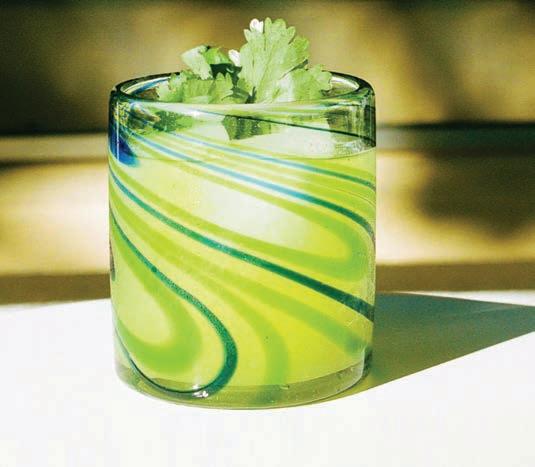
Chapal Cocktail
Recipe courtesy of Cool Hand Co. (CHC)
Makes 1 cocktail
2 oz. tequila or mezcal
½ oz. CHC Pineapple Turmeric Ginger Shrub
¾ oz. fresh lime juice
1 t. agave nectar
1 handful fresh cilantro leaves
Shake all ingredients with ice for 5 to 7 seconds. Fine-strain into glass with fresh cubes. Garnish with cilantro bouquet.
Nana’s Pineapple Upsidedown
Cake Cocktail
Recipe courtesy of General Lee Cocktail House, Los Angeles, CA
Makes 1 cocktail
1½ oz. Diplomatico Mantuano
1½ oz. Pineapple Five Spice Shrub (recipe below)
Dehydrated lime and pandan leaf, for garnish
Combine ingredients and shake. Double strain into a Nick and Nora glass. Garnish with pandan leaf and dried lime.
The Pineapple Five Spice Shrub:
1⅔ oz. cinnamon
1 oz. star anise
1¼ oz. clove
10 g. fennel
1¼ oz. red Sichuan pepper
2 qts. pineapple chunks
500 ml apple cider vinegar
1500 ml white vinegar
Toast spices in a pan. Heat the pineapple and add spices and sugar. Stir to incorporate. Strain out solids and add vinegars and reduce by 20 percent.
Let cool and refrigerate. Good for 1 month.
Bartender’s Note: “The cocktail is essentially a riff on a pineapple daiquiri. The addition of a pineapple five-spice shrub adds an extra layer of depth, spice, and acidity without an overbearing amount of sweetness found in most daiquiris.”
Pepe el Toro Cocktail
Recipe courtesy of Rayo, Mexico City
Makes 1 cocktail
1¾ oz. Chivas 13
½ oz. Nixta (Mexican liqueur)
½ oz. lime juice
1 oz. Piña y Agave shrub
Soda to top off
Large ice cube
Combine liquors, lime juice and shrubs in a mixing glass and stir or shake gently. Pour into a tumbler glass with a large ice cube and serve.
La Ofrenda Cocktail
Recipe courtesy of Rayo, Mexico City
Makes 1 cocktail
1¾ oz. mezcal
¾ oz. lemon juice
1½ oz. pumpkin shrub
3 dashes Angostura Bitters
Combine all ingredients in a mixing glass and stir or shake gently. Pour into a glass with a large ice cube. Garnish and serve.
ANGELA AND MARIAM EL HAJ
Calaca Mamas
CALACA MAMAS became one of the newest additions to the restaurant scene in Anaheim, California, when it opened across the street from the Disneyland Resort in May 2022. The restaurant’s sister owners, Angela and Mariam El Haj, are second-generation restaurateurs with a passion for the food industry and a deep-rooted love for Mexican food and culture, which inspired the Day-of-theDead-themed eatery — one that celebrates the themes of family, comfort, fun, and great Mexican-inspired cuisine.
While they and their customers love Calaca Mamas’
Chile Relleno, Chicken
Tinga Flautas with Habanero Honey Salsa, and Vegan Cauliflower Tacos paired with Pumpkin Seed Salsa, it’s the recipe for Concha French Toast that they share with el Restaurante readers.
“We love that our Concha French Toast is a delicious, sweet treat and so beautiful to look at!” Angela says of the brunch dish that features a house-made concha dipped in organic egg wash, grilled, then smothered with Vanilla Sweet Cream and topped with homemade organic
berry compote.
“French toast is one of our favorite breakfast foods and one of our chefs made it come to life with our homemade sweet cream and compote,” Mariam adds.
Concha French Toast
Conchas, sliced in half (house-made or purchased)
Vanilla Sweet Cream
Organic egg wash
Organic berry compote
The Vanilla Sweet Cream: 8 oz. cream cheese
1 c. butter
1 t. salt
2 t. vanilla
4 c. powdered sugar
4 T. heavy cream
Whisk the butter and cream cheese until smooth. Whisk in the vanilla and salt. Slowly mix in half of the powdered sugar and the heavy cream. Finally, mix in the remaining sugar and stir until smooth. Set aside.
The Organic Egg Wash: ½ gal. oat milk
2 eggs
1 T. vanilla
1 t. cinnamon
4 oz. sugar
Combine all ingredients and whisk thoroughly.
To prepare, per serving: Dip concha slices in egg wash, grill until golden brown, top with Vanilla Sweet Cream and serve with the berry compote.
EDITOR’S NOTE : Calaca Mamas’ berry compote recipe is always changing because it depends on the type of fruit that’s available, which is both seasonal and organic. We found this recipe from The U.S. Highbush Blueberry Council (blueberry.org) created by Chef Stephen Rogers of Sachet Restaurant as one example of a compote you can pair with Concha French Toast in your restaurant.
Blueberry Compote
2 c. blueberries
1/4 c. water
1⁄4 c. sugar
2 wide strips of lemon zest, about 3” long, using a vegetable peeler
2 t. lemon juice
Pinch of salt
Combine half of the blueberries with the water, sugar and lemon zest in a heavy-bottomed 1 quart pot, and place over medium high heat for about 5 to 6 minutes, stirring as needed.
Add remaining blueberries and cook another 2 to 3 minutes. Remove from heat and add lemon juice and salt. When cool, remove lemon zest.
Call today for samples of our authentic Al Pastor, Pollo Adobo and Carne Asada. Available in Trompos (hand-stacked cones) and cooked-to-order IQF Strips that provide maximum flavor, yield and portion control. Now Serve Delicious Authentic Tacos EVERY DAY!