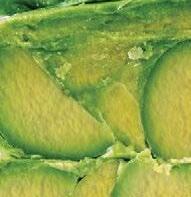
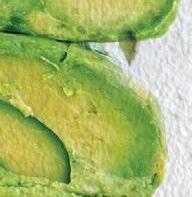
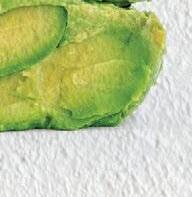
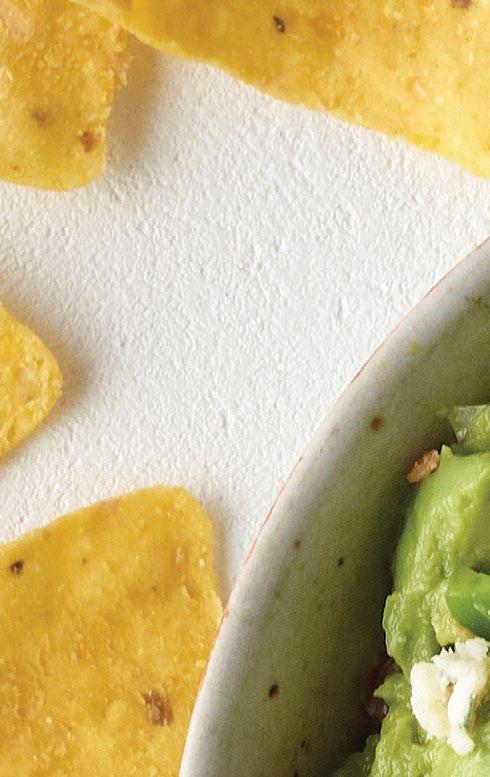
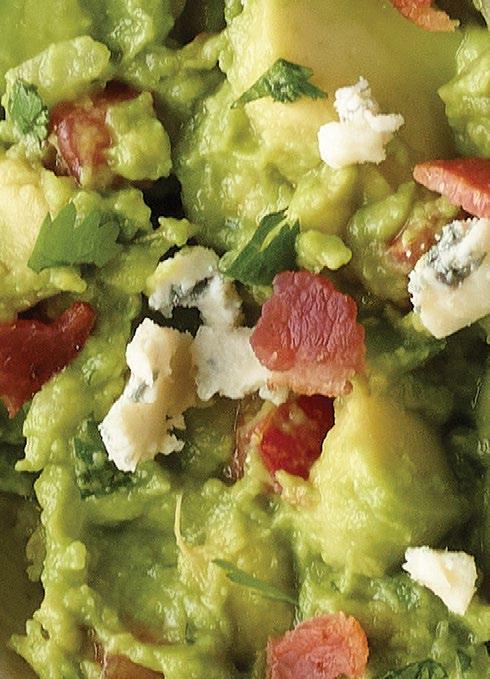
Our avocado is just like the fruit you cut, pit and scoop minus all the cutting, pitting and scooping. And that translates to some serious time and labor savings. If you want the best part of the avocado without any of the work, give WHOLLY® AVOCADO a try. It’s 100% Hass Avocado and always ready to go.
TRY IT YOURSELF. REQUEST A SAMPLE. SCAN THE CODE TO GET STARTED.
Welcome to el Restaurante’s
DIGITAL DEBUT!
It might look the same as every issue of el Restaurante that you’ve ever seen…and it is, except for one big difference: This issue is ONLY available online in our new digital format.
T he new format includes the same beautifully designed magazine we’ve always created in 3 versions: as a flipbook you can read online and download to your device; a weboptimized version, with every article featured in a special section of our website for convenient, scrollable reading; and a Spanish-only version in the same web-optimized format.
Since you no longer have the option to get el Restaurante in print, we need you to officially subscribe so we can deliver all of our award-winning content, up-to-date industry news, recipes, contest information and more to your device.
SCAN THE QR CODE OR EMAIL YOUR EMAIL ADDRESS TO EDITOR KATHLEEN FURORE AT kfurore@restmex.com, OR SUBSCRIBE AT https://bit.ly/SubscribeRestaurante.
CROSS-CULTURAL COOKING
NAMED “THE TREND OF THE YEAR”
If you want to tap into the trend that’s predicted to be the top one of 2024, consider adding a dish or two that fits into the “cross-cultural” category.
The recently released Hospitality Trends Report for 2024 from marketing and communications firms af&co and Carbonate lists Cross-Cultural Cooking as The Trend of the Year and explains why this way: “American food is a multi-ethnic melting pot and today’s restaurants are a reflection of that. Instead of hanging their hat on a slice of regional cooking, chefs in 2023 are rejecting the rigid idea of authenticity in exchange for something more reflective of the contemporary and diverse American experience, offering new combinations and menus that can’t be easily labeled or contained.” The report highlighted several restaurants that exemplify the trend with dishes that feature elements of Mexican culinary culture:
• Fatima’s Grill, with locations in Southern California and Brooklyn, New York. The menu of Halal Mexican Mediterranean fare features Shawarma Crunch Wraps and bottled “Lebamex” hot sauce.
• Vera Cocina in Washington, DC. Mexican Lebanese dishes include Fattoush Tostadas and Shakshuka with poblano crema.
• Good Luck Gato in Oakland, California. The “izakaya cantina” offers dishes such Okonomiyaki Baked Potato with carnitas, tonkatsu sauce, Kewpie mayo, scallions, nori and bonito flakes.
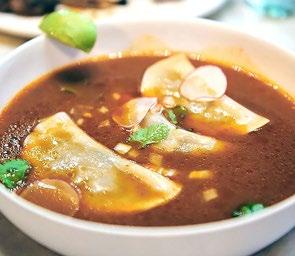
• Little Bull in Durham, North Carolina. Birria Dumplings with braised goat wontons, consome, and traditional Mexican accouterments star on the menu.
QUALITY YOU CAN TRUST
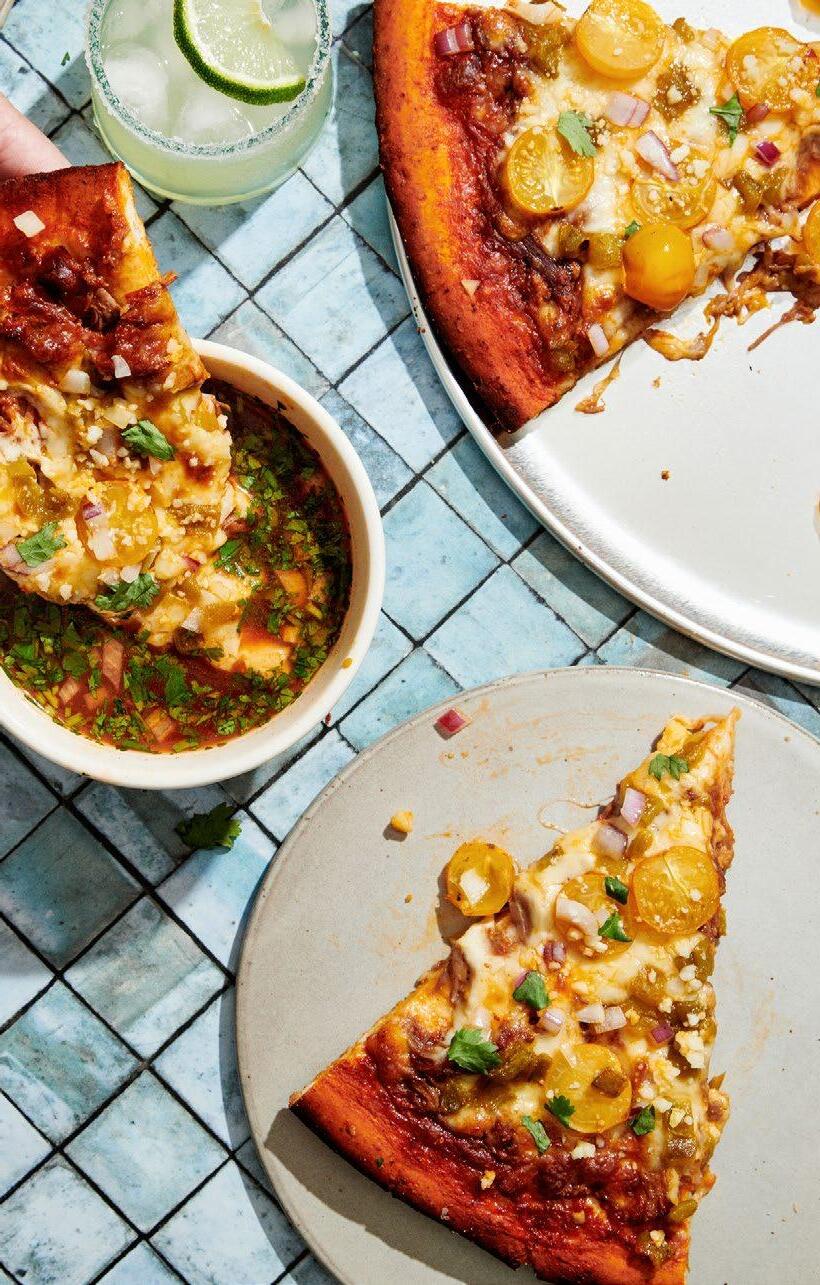
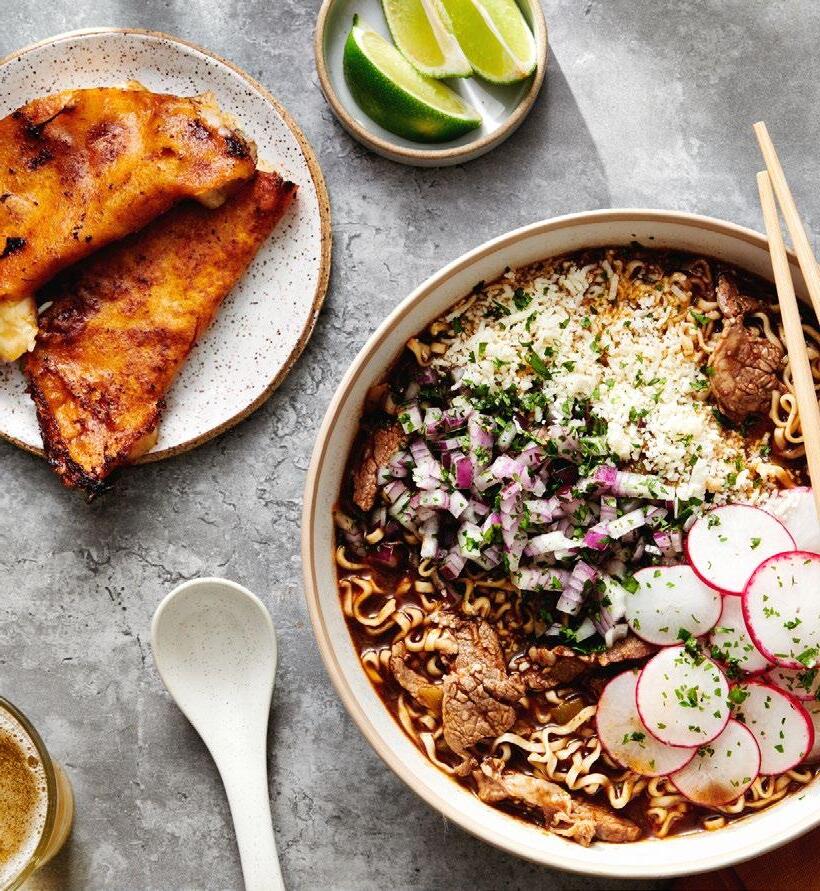
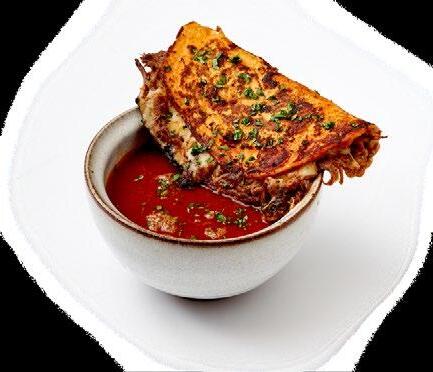
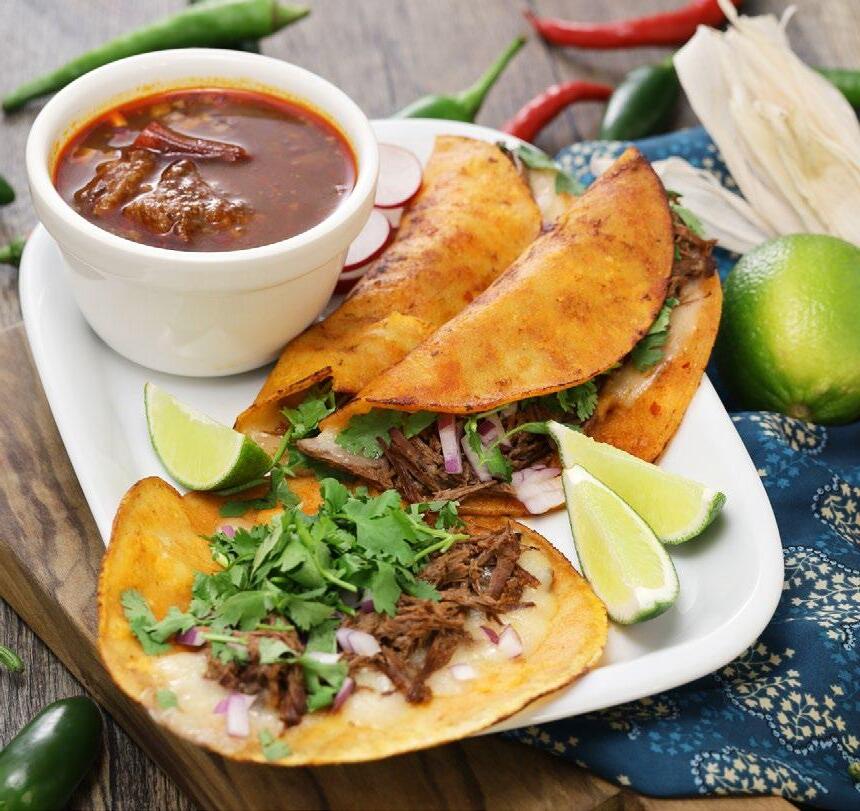
Contigo® Birria Base Concentrate provides restaurants an on-trend product with fast and easy preparation, quality and consistency every time. Our Birria Base Concentrate can be used for multiple menu applications including Birria Tacos, Birria Pizza, Birria Pho, and the famous Quesabirrias!
A
Union that Makes Sense: DUAL-CONCEPT
JOINS TAQUERIA, LATIN DESSERT SPOT
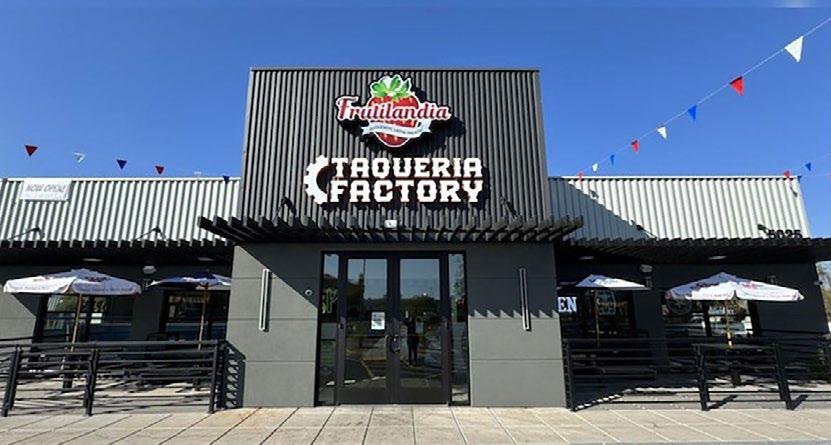
THE LATIN DESSERTS INCLUDING raspados and shaved ice topped with chamoy at Frutilandia have been a hit in the Phoenix area for 18 years. And the quesabirria tacos and birria ramen at Taqueria Factory have pleased Mexican food lovers since 2022.
Now fans of those restaurants can savor both in one trip. A dual-concept store featuring both brands has opened in the Arizona Mills outlet mall in Tempe and several others are in the works.
The idea for the union was born about a year and a half ago when Gamaliel Garfio and his wife Maria, who own both concepts, bought an old Walgreens location in Chandler, Arizona. There was plenty of room for both restaurants in the store, so they installed one of each, but not connected.
“We noticed that both were doing very well,” Garfio says. “So later when we came across the building in Arizona Mills, we thought we could try both menus in the same location. We opened on Black Friday and people love that they can get amazing tacos and their desserts in the same place.”
Birth of Frutilandia
When the Garfios moved to the Phoenix area from Los Angeles 18 years ago, they discovered that genuine Mexican desserts were hard to find. They had enjoyed fresas con crema, shaved ice topped with fruit and syrup, and other treats from countless businesses in LA.
“Here in Arizona there weren’t any restaurants like that at the time,” says Garfio, who had run a Los Angeles bakery with his wife. “So, we decided to start something to offer these kinds of desserts to the community.”
Today, Frutilandia has 10 locations in the Phoenix area. The concept’s growth has been fueled by franchising, which the Garfios started doing about five years ago. The Garfios own one location and the other nine belong to franchisees.
“The advantage of franchising is that we are able to grow faster because it’s somebody else investing in the restaurant, using our logo, systems, designs, recipes and mentoring,” Garfio says. “And for the franchisee, you could have individuals who have been wanting to open a restaurant but don’t know how, so they can go with the franchise option and drop into something that is already established.”
The franchisees pay the Garfios a 5 percent royalty and 2 percent marketing fee, based on sales. They buy some things from the company, such as the house-made natural fruit syrups, uniforms and logo clear cups, and buy the rest from a list of preferred suppliers.
Expanding to Mexican Classics
A few years ago, the Garfios decided to expand their business with a new concept focused on traditional Mexican menu items. They launched Taqueria Factory in 2022 in Chandler, Arizona. Eight months later they began franchising, and
“We noticed that both were doing very well. So later when we came across the building in Arizona Mills, we thought we could try both menus in the same location. We opened on Black Friday and people love that they can get amazing tacos and their desserts in the same place .”
– GAMALIEL GARFIO
CRAIG DOMINGUEZ
Westside Cantina
EDITOR’S NOTE : When Craig Dominguez answered a recent el Restaurante survey, we were intrigued that he and his wife Jacy Olmos opened Westside Cantina in Colorado Springs, Colorado exactly one year after the Covid pandemic hit, and just as intrigued they decided to offer a 50 percent plant-based menu. We wanted to know more; here Dominguez shares details of the couple’s not-quite-postCovid entrée into restaurant ownership and how things have gone since the debut.
1
Had you or Jacy worked in the industry before?
Let’s just say that Jacy and I have been in the restaurant business for so long, we practically grew up in one! Jacy was a host at 14, and I learned the ropes at my dad’s and uncle’s restaurant. We worked our way up through every position imaginable, from front of house to back of house, and along the way, we learned a lot about what makes a great restaurant. We also learned a lot about what we didn’t want to do in our own place — and that’s how Westside Cantina came to be. We wanted to create a place that was warm, welcoming, and served delicious food and drinks. And boy, have we ever!
2
How did you decide to open a restaurant one year after Covid wreaked havoc on the industry? Well, you know what they say about the restaurant business — it’s not for the faint of heart! Opening a restaurant during a pandemic was definitely a bold move, but Jacy and I were up for the challenge. We
figured that if we could navigate the ups and downs of the restaurant industry during a global pandemic, we could handle just about anything. Plus, we saw it as an opportunity to bring some light and positivity to our community. We wanted to give people a place to come together, enjoy some great food and drinks, and forget about the stresses of the world, even for just a little while. And that’s exactly what we’ve done.
3
In the el Restaurante survey you responded to, you said the that the Tofu Taco is your most popular menu item, that $5 Margarita Monday is your most popular promotion, and that you’ve been nominated in the Best Margarita category in The Gazette’s The Best of the Springs. How have your focus on plant-based dishes and the approach you take to your bar program helped set you apart from competitors?
Let’s face it, vegetarian and vegan options have been getting a bad rap for way too long. Tasteless, boring, and uninspiring — that’s just not our style! We wanted to change the game, to show that plantbased food can be just as flavorful and exciting as anything else on the menu. And let me tell you, it’s worked. Our vegetarian and vegan options have been a hit with both our plant-based and non-plant-
(continued on page 16)
Craig Dominguez and Jacy Olmos
HAGA CLIC AQUÍ PARA LEER EN ESPAÑOL
“Opening a restaurant during a pandemic was definitely a bold move, but Jacy and I were up for the challenge. We figured that if we could navigate the ups and downs of the restaurant industry during a global pandemic, we could handle just about anything.”
based guests — our most popular menu item, believe it or not, is our Tofu Taco.
Having so many plant-based options definitely has set us apart from other restaurants in the area, and we think it’s helped us attract a diverse and loyal customer base. We’re lucky to have Chef Taylor, who is not only amazing at what he does, but is also helping us prove to the community that vegetarian and vegan food can be just as satisfying and delicious as anything else on the menu — and
that’s something we’re pretty proud of.
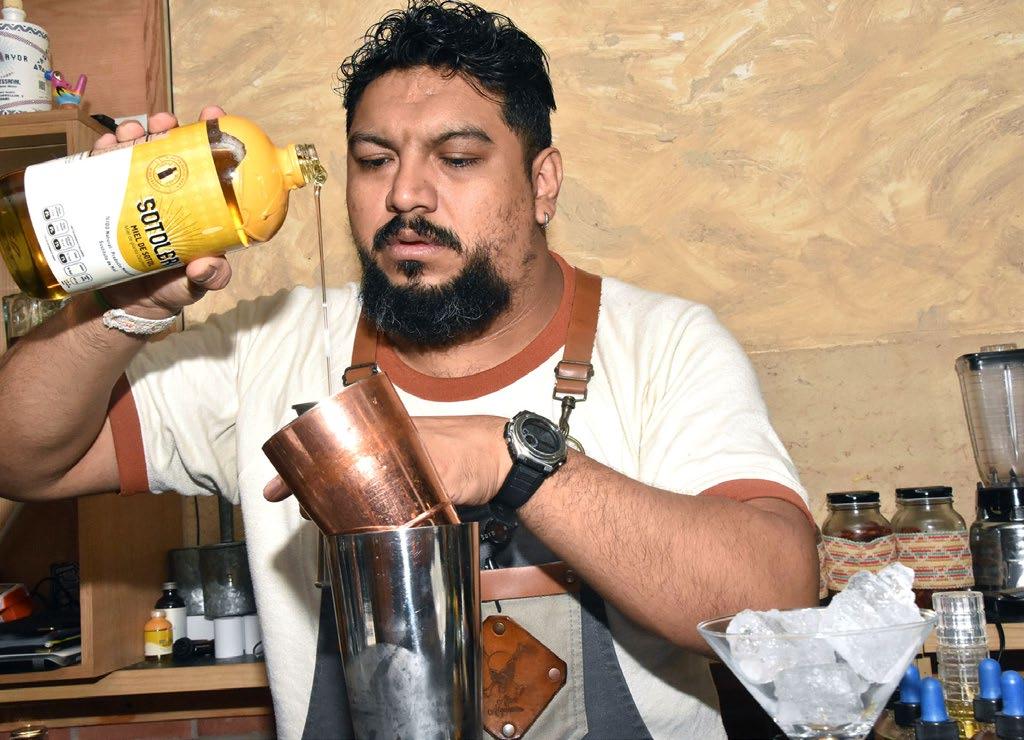
[When it comes to cocktails,] let’s just say we like to keep things interesting behind the bar! Mezcal and sotol are lesserknown spirits that we love incorporating into our cocktails. For example, we’ve got the Mezcal Breeze, a refreshing blend of Mezcal, Anejo, mango, and juices, and the Mezcal Old Fashioned, a smoky and chocolatey mix of Mezcal, Reposado, and chocolate bitters. We decided to start using these spirits because we love explor-
ing new flavors and experimenting with lesser-known ingredients. Sometimes we have to educate our guests on what they are, but that’s part of the fun.
4
You also told us you’re just trying to survive in this 2024 restaurant/bar climate. What is that like for you? And what is helping you survive?
In Colorado Springs, the restaurant and bar scene is competitive and dynamic, with many new chain establishments opening all the time. It can be a challenge for any business to keep up and stay relevant in such a constantly changing landscape — especially competing with those chain restaurants that have a consistent influx of money
“Be flexible and adaptable: Be open to new ideas and strategies, and don’t be afraid to try new things to stay relevant.”
and a much larger following.
For us, the key to surviving has been a combination of staying true to our core values and also being open to new ideas and strategies. We’ve focused on maintaining our commitment to high-quality ingredients, excellent service, and a welcoming atmosphere.
Additionally, we’ve focused on building a loyal customer base through things like social media engagement and partnerships with local organizations. These efforts have helped us to stay relevant and attract new customers, even in a highly competitive market.
5What advice do you have for small independent restaurants like yours who likely are struggling with the same challenges you’re facing in Colorado Springs?
Man, there is much advice we can give. Here are a few bullet points...
• Stay true to your core values: Remember what makes your restaurant unique and special, and don’t compromise on those values.
• Be flexible and adaptable: Be open to new ideas and strategies, and don’t be afraid to try new things to stay relevant.
• Focus on quality: Don’t cut corners on
ingredients or service, as customers can tell when a restaurant is skimping on quality.
• Take care of your staff as well as yourself: Invest in your employees and create a positive work environment, as this can have a big impact on customer satisfaction and retention. Also, keep in mind the importance of your own mental health and well-being. Whether it’s going on hikes, traveling, or spending time with friends and family. If you’re happy and healthy then that’s a positive reflection on your team and those around you.
Selling Your SALSAS
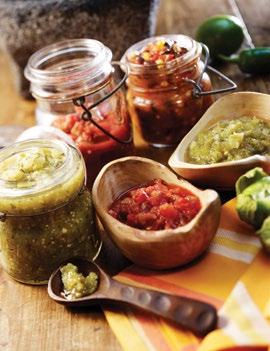
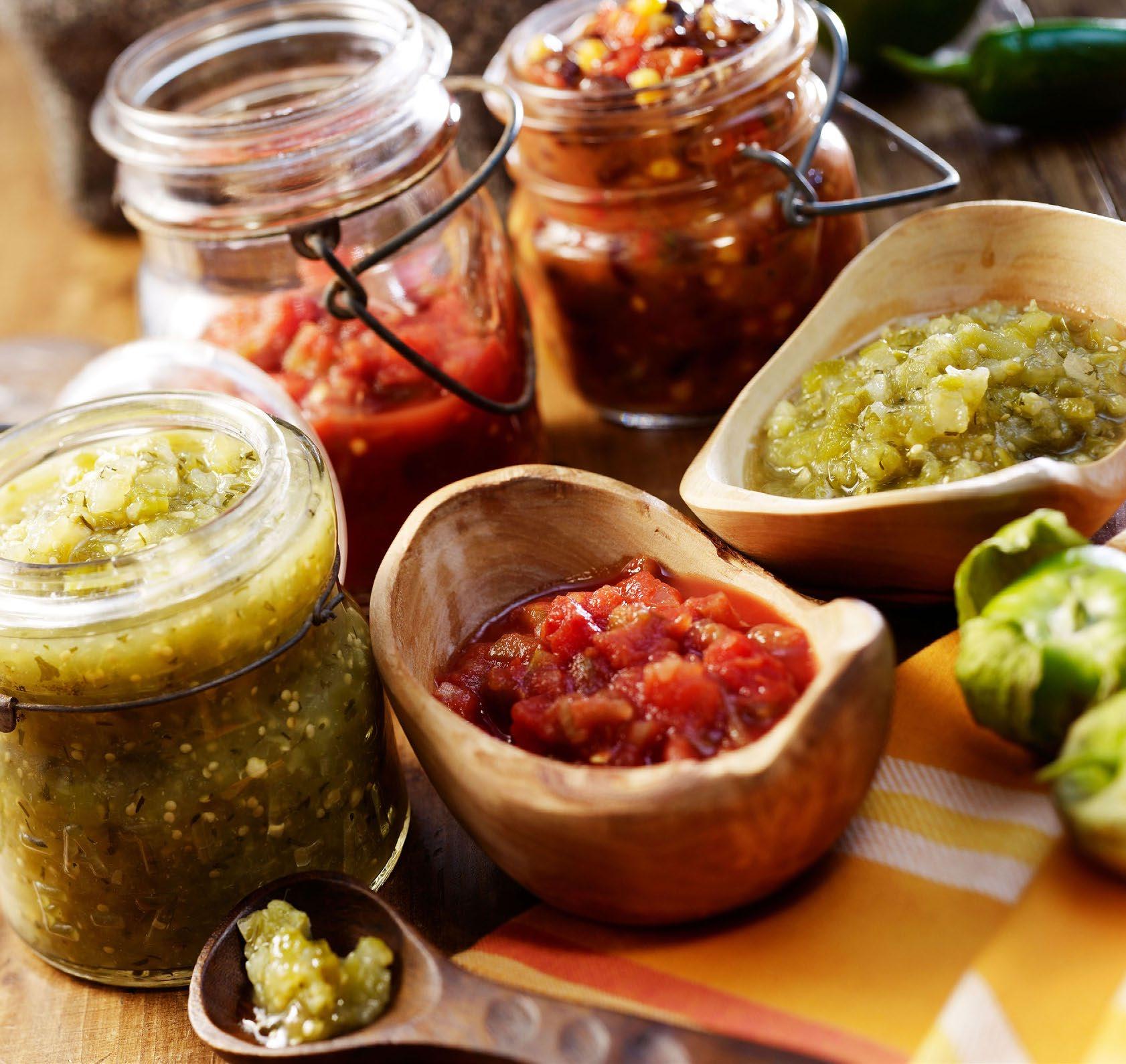
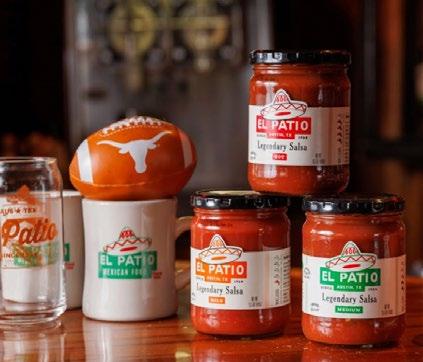
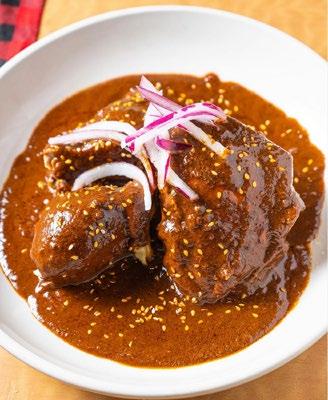
| BY KATHLEEN FURORE | Everyone loves the salsa you serve with your chips and the mole poblano that covers your chicken enchiladas. Your customers, friends and family members might even have told you to bottle and sell the sauces that come from your restaurant kitchen. Many restaurants have done just that, some with tremendous success. For example, El Patio — a restaurant that’s been serving great
HAGA CLIC AQUÍ PARA LEER EN ESPAÑOL
“RIGHT NOW, WE ONLY SELL IT AT THE RESTAURANT AND ONLINE. OUR GOAL IS TO GET ON LOCAL STORE SHELVES, BUT THAT’S BEEN DIFFICULT. DISTRIBUTORS WANT IT TO BE SHELF-STABLE, BUT USING PRESERVATIVES ALTERS THE FLAVOR.”
– LULU DURAN, Cesar’s Killer Margaritas
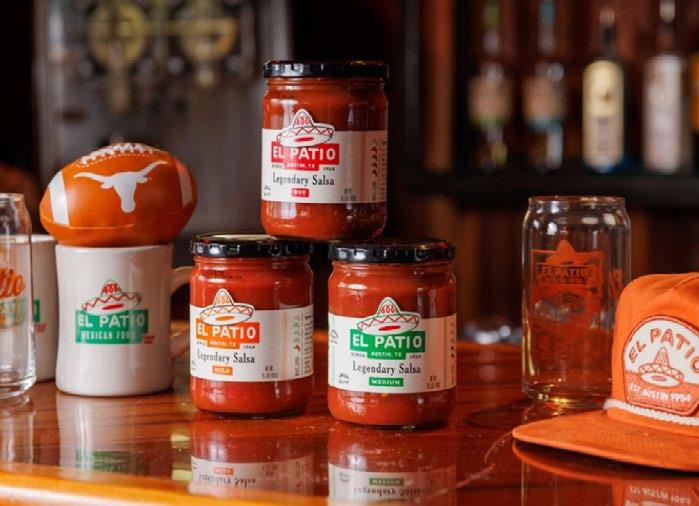
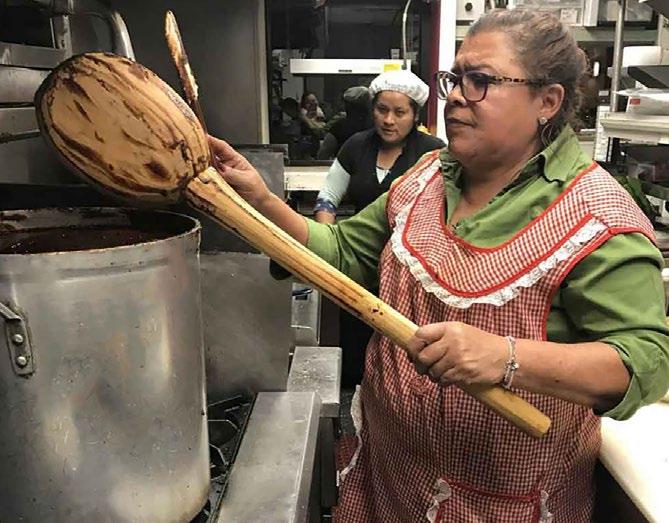
Mexican food in Austin, Texas, since 1954 — has succeeded to the point that the restaurant’s jarred salsas (introduced on a wide scale just over a year ago through El Patio Foods) are available on grocery store shelves throughout the state. But it isn’t as simple as it sounds. Just ask Lulu Duran of Cesar’s Killer Margaritas in Chicago. In 2020, when the pandemic hit, she and her siblings Israel and Sandy Sanchez decided to bottle and sell the mole that had become such a popular menu item at their family-run restaurant. It is the mole the family’s matriarch, Lourdes Sanchez (affectionately known as “Señora Lulu”) learned to make as a young girl in her grandmother Clarita Vazquez’s Mexico City kitchen. We reached out to Duran to find out about the challenges of bottling and selling a restaurant sauce.
el Restaurante: Did your mom’s mole play a role in helping you decide to open Cesar’s? Was it on the menu when the restaurant opened in 1991?
Lulu Duran: It was a great recipe, but 32 years ago the market for Mexican food was very different. It wasn’t that big — [customers wanted] mostly tacos and burritos then — so my parents decided to give customers exposure to typical Mexican dishes on an all-you-can-eat buffet. That is how people started tasting the mole and how it started to get popular with our customers.
el Restaurante: How did you decide to start bottling the sauce? And what is the process like?
Duran: During Covid there was a real shift and we had to innovate and pivot. We make our mole in really big batches, so we had all of this frozen mole — and I thought, “What are we gonna do? How can we get customers?” We were packaging our margaritas so I thought, “What else can we bottle?”
We started putting the mole in mason jars because we had to, literally, put food on the table. We bottle it all at the restaurant. We make about 30 gallons every two weeks to use in the restaurant and to bottle — we kill two birds with one stone.
el Restaurante: Where do you sell the mole? And how have sales been?
Duran: Right now, we only sell it at the restaurant and online. Our goal is to get on local store shelves, but that’s been difficult. Distributors want it to be shelf-stable, but using preservatives alters the flavor.
In the beginning, it was difficult because people really have to try it first. Now sales are picking up, especially during cold weather. We recently got a request from a couple to do their wedding — and they strictly want the mole. That will be a new adventure.
(continued on page 21)
Lourdes Sanchez (with a z)
Tips for packaging and selling your sauces
It can be tempting to jump head-first into trying to market and sell your restaurant’s sauces when everyone tells you how much they love them. But it takes more than a great-tasting salsa and accolades from customers, family members and friends to turn a recipe into a retail business.
“Selling packaged food requires a different business plan than a restaurant business and can be just as much of a full-time job depending on how it is approached,” explained Diane Longanbach, an innovation counselor for the Michigan State University (MS) Extension Product Center, in a blog post titled “Restaurants packaging and selling their signature sauces, dips and more.”
The Center supports innovation and growth for business, industry and entrepreneurs in the food, agriculture and natural resource sectors. “Based on how it is sold, tasks will involve production, documenting, tracking, marketing, distributing or shipping, merchandizing, and additional financial management, not to mention the financing to get the brand launched.”
To determine if it is an undertaking that is right for your restaurant, Longanbach offers these tips:
• Consider where it will be sold. Will it just be sold at your restaurant and perhaps at a handful of stores within your own town? Or is your goal to sell in several stores within an hour’s radius of your restaurant where you have brand recognition? Maybe your goal is to also add online sales. Regardless of the choice, recognize the logistics and employee time of each strategy.
• Think about safety for the shelf. Any sauce, condiment, or dip product that you want to be shelf stable will need to undergo a Process Authority Review to determine its safety and classification. Refrigerated and frozen products will not need a Process Authority Re -
view; however, refrigerated products are restricted to a 7-day shelf life unless you can prove otherwise through a shelf-life test from a food lab. (See the Michigan State University Extension article, “Understanding shelf-life testing for packaged food products” for more information.)
• Discuss how products will be produced. Does your business have kitchen time and staff to dedicate to the production of the product plus time to market, distribute, and merchandise it? Or, would it be better to send it out to be processed by a co-manufacturer and your time would be focused on marketing and distribution? You might want to note that local health departments often require that packaged foods need to be made separately from ready-toeat foods to avoid cross-contamination. (See the MSU Extension article, “Preparing for high-volume food product sales: Are you ready for a co-packer?” for more information.
• Budget for branding. Your restaurant customers will likely purchase your packaged food products when they come to eat at your restaurant. Typically, these sales don’t require a significant investment in label design and packaging. Selling the products within your city or town where you have product and brand recognition will be easier than other areas. Once you step into the world of selling to people who have never tried your food, your label is everything. Your label will either get them to pick it up or look past it. Budgeting enough capital to design and print a colorful and exciting label with your logo and branding will be critical to your success.
• Explore packaging options. It’s tempting to find a unique bottle or jar that you believe will set you apart from the others on the shelf. However, it’ll also likely break the bank to buy a pallet or truckload of it if it can’t be sourced locally in smaller quantities. Instead, check with local distributors to see what is in stock.
HAGA CLIC AQUÍ PARA LEER EN ESPAÑOL
“…TEST THE PRODUCT WITH AN UNBIASED MARKET, NOT JUST YOUR FRIENDS AND FAMILY. SEE WHO YOUR AUDIENCE IS AND GET HONEST OPINIONS.”
– LULU DURAN, Cesar’s Killer Margaritas
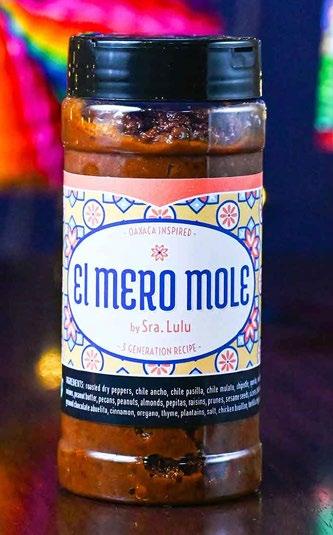
el Restaurante: Your salsa has the label El Mero Mole, not Cesar’s mole. How did you decide to create that label?
Duran: Originally, we had a very generic label with the restaurant’s name on it. But if you’ve never had mole and you looked at that generic bottle, it didn’t look very appealing. So, we worked with a designer to come up with names and a design. That was a group project. My grandma used to always say “el mero mero” which means “the main one, that’s it!” And the [design behind the logo] is a nod to an apron my mom would use.
el Restaurante: I know many restaurant owners and chefs think about doing just what you’ve done. What advice do you have for anyone thinking about bottling one of their sauces?
Duran: I would tell them to test the product with an unbiased market, not just your friends and family. See who your audience is and get honest opinions. And have a great label.
| BY ED AVIS | When Mario Ponce opened Takito Kitchen in Chicago’s Wicker Park neighborhood in 2013, he decided to use OpenTable as his reservation system. Though competitors to that system have emerged in the decade since, he still uses OpenTable for his business, which has grown to three Chicago locations.
“I have a love-hate relationship with OpenTable,” Ponce says. “I love that they bring people in the door but hate how much it costs.”
Ponce’s situation is not unusual. All restaurant reservation systems have pros and cons, and choosing which is right for your restaurant can be a challenge. Here are seven questions to ask when you are deciding on which reservation system to use.
1
Do I need promotional help from my reservation system? Most POS systems offer a solid reservation program as part of their software package, and if all you need is a basic system that takes and manages reservations, that may be enough. But if you want the promotional help that a more
sophisticated system, such as OpenTable or Tock, can offer, you may need to use one of those systems.
For example, Wednesdays are slow at Ponce’s restaurants, so he pays a premium fee to OpenTable to appear higher up in their search page when someone seeks a reservation for that day in his area. Sometimes he goes to the max and pays $7.50 per person, per reservation, for OpenTable’s promotion that gives 1,000 extra points if a customer books that particular restaurant.
“I use that on Wednesday because I’d rather have someone walk through the door than nobody,” he says.
2
What are the demographics of my customer base? Izzy Kharasch, a restaurant consultant and owner of Hospitality Works, says customer base is one of the first considerations when one of his clients is considering what reservation system to take. Why? Because different systems appeal to different groups.
Restaurant Reservations: WHICH SYSTEM IS RIGHT FOR YOUR MEXICAN RESTAURANT?
“When my restaurants are choosing a system, I say, ‘Who is your demographic?’” Kharasch says. “Tock is very hot with the younger crowd, 20 to 35. OpenTable is more classic now. It’s the first one people used and appeals to a crowd that is looking for points, for a more classic reservation experience. My managers who are younger are always pushing for Tock. The managers from fine dining and higher check average restaurants tend to like OpenTable.”
3 Where is your restaurant located? Restaurants surrounded by tough competition may need a different system than one in a smaller community or that has a long-established loyal customer base.
For example, Sandoval’s Café & Cantina in Portland, Oregon takes most of their reservations by phone, because they have a loyal customer base that is accustomed to walking
(continued on page 24
HAGA CLIC AQUÍ PARA LEER EN ESPAÑOL
“When my restaurants are choosing a system, I say, ‘Who is your demographic? Tock is very hot with the younger crowd, 20 to 35. OpenTable is more classic now.”
in and getting a table right away, and if they are bringing a larger group, just calling ahead to make sure a table will be available.
“We’re a neighborhood restaurant,” says Danny Sandoval, the restaurant owner. “We’ve been here for 27 years, and our customers know that if they’re bringing in a group, they need to make a reservation by phone. If they just call on the fly, nine times out of 10 we won’t have room. But if they call in the morning, we’ll tie up the tables for them.”
In contrast, a restaurant in a highly competitive neighborhood may need a highly visible system like OpenTable, Tock or Resy.
“If one of my clients is in a city and is looking for a system, I tell them to look at OpenTable or Tock,” Kharasch says, “because customers in or near big cities tend to use those systems to find a restaurant. But as we get farther out from the city, those systems are not necessarily the standard.”
4What features do you want? All reservation systems do the basics — take reservations, coordinate those reservations with your dining room layout and POS system, and help remind customers of reservations. But there are a lot of potential features beyond those.
For example, Citlali Mendieta uses Tock for her restaurant Antigua Latin Inspired Kitchen in Milwaukee. Among the Tock features she appreciates are that she can do ticketed events — she used that feature for a special prepackaged Thanksgiving dinner during Covid — and the ability to charge for reservations. She has charged customers for reservations for Valentine’s Day, Mother’s Day, Easter and other big days.
“That has worked well to prevent no-shows,” Mendieta says. “We only do it for those special days.”
OpenTable has the option to require people to provide a credit card when making a reservation, and Ponce says he uses that option during busy days.
“If Mr. Jones decides to no-show, we have the right to charge him a fee for not coming,” Ponce explains. “Now, there’s a good and a bad about this. We’ve never charged anybody, because we know the consequences — a one-star review, ‘They
– IZZY KHARASCH
had the audacity to charge us for not showing up’ — and it’s such a small percentage of customers who no-show. We like the guarantee of the fee, but the truth is, we don’t charge people if they don’t show up.”
Ponce also likes how OpenTable helps him manage the dining room flow and customer experience. “We get a lot of data on our customers,” he says. “OpenTable tells us the history of the customer’s spend, and we can send them notes and text messages. As a table management tool we
Why Take Reservations?
An el Restaurante reader survey in January 2024 showed that 52 percent of Mexican restaurants take reservations all the time, and an additional 17 percent rake them during busy days and times.
Why do they take reservations?
• Seventy-five percent of respondents said they do it because they know customers appreciate the certainty that they’ll get a table.
• Sixty-nine percent said it helps manage the dining room flow.
• Fifty percent said they take reservations so they know how many staff to schedule. “The main reason we take reservations is to make sure we can staff properly,” says Danny Sandoval, owner of Sandoval’s Café & Cantina in Portland, Oregon. “When we get a group of 10 or more, we need to have someone extra because that person will be dominated by that reservation.”
• Approximately 50 percent said it helps them get to know their customer base a little better, and so they can learn if a particular guest has a special request or allergy issue.
• About 44 percent said they take reservations so they can plan their food purchases effectively.
know when the customer is paying the check, because the software integrates with our POS system. So, when Mr. Jones pays for his meal, we know that his table will open shortly.”
5
Are big groups and/or catering events important to my restaurant? Some reservation systems are better than others when it comes to promoting your restaurant’s ability to handle large groups or catered events.
For example, Ponce pays an extra $99 per month for OpenTable’s private party booking option, and he feels it’s worth it.
“If you’re the secretary for a corporation and the boss says, ‘Book a dinner for 20 people,’ you go to OpenTable and there’s an option there for parties,” he explains. “We show up there, and even one of those parties can be thousands of dollars in revenue. It’s paid for itself.”
6
How much do you want to pay? All of the reservation systems have some kind of fee. If you use the system that comes with your point of sale (POS) system, it’s probably already part of your fee so there’s no extra cost.
OpenTable charges a monthly fee ranging from $39 to $449, depending on the features you want, and per-guest fee that ranges from $1 to $7.50.
“It gets more expensive if you participate, as we do, in the promotional campaigns,” Ponce says. “My bills are $1,200 to $1,500 per month, up to $5,000 when we get aggressive. But it does bring people through the door.”
Tock charges a monthly fee ranging from $79 to $769 per month, but with no per-guest fee. Resy charges $249 to $899 per month, with varying services at each level. Mendieta, who has used Tock, Resy, Yelp and OpenTable,
Don’t Miss Our
Webinar:
HOW TO CHOOSE A RESERVATION SYSTEM
appreciates the flat fee that Tock offers: “Tock is definitely the most affordable,” she says.
7
How should I manage reviews? All of the major systems — OpenTable, Tock and Resy — provide a way for customers to submit reviews. They send a message to each diner after the visit and request a review and provide a way for the restaurant to respond to the review.
“I like how Tock collects the review on our behalf,” Mendieta says. “And we can reply with emails or texts from the app.”
The bottom line is that all the reservation systems have pros and cons, and deciding which to use is a personal choice based on many factors, including your location and clientele.
“It’s really a matter of deciding what’s right for each restaurant,” Kharasch says.
Ed Avis is the publisher of el Restaurante.
Want to hear how restaurant owners chose the right reservation systems for their Mexican restaurants? If so, register for el Restaurante’s webinar that will feature a panel of restaurant owners discussing the systems they use. The free event is scheduled for March 7 at 10 am Central. Register via the QR code at left or at https://bit.ly/ ChooseReservationSystem.
SOM RESTAURANT MOVES BEYOND TEQUILA AND MEZCAL BEHIND THE BAR
“Pox is like liquid tortillas, a taste of corn and a little sweet. Sotol is smoky, with flavors of mineral water and mesquite.”
– ISIDORO GUINDI
THE APPEAL OF Pox and Sotol
| BY JOSEPH SORRENTINO, writing from Mexico, |
“The best way to know Mexico is through its food and drinks,” says Isidoro Guindi who, along with Luis Vences, opened SOM restaurant in the Condesa neighborhood in Mexico City in September 2023.
The restaurant is an outgrowth of two businesses these entrepreneurs own that are dedicated to introducing consumers to pox and sotol: the spirits company Casa Dionisio, and Siglo Cero, the business Guindi launched in 2014 to bring pox to the marketplace.
“The name SOM means ‘Somos México,’” Vences explains. “Every product tells a story, and these stories are present at the table.” Part of what these restaurateurs want to do is promote traditional Mexican liquors. “Our distillates are 100 percent Mexican, and
we want them to complement the food.”
They decided they didn’t want to just offer betterknown Mexican distillates like tequila and mezcal.
“I wanted something not known, something that is not [made from] agave,” says Guindi. “So, I decided to investigate pox and sotol.”
Pox (pronounced “posh”) is made in Chiapas from corn, while sotol is made in Chihuahua from the native sotol plant (a spiky desert succulent, also known as dasylirion plant). “We wanted something from the mountains in the south and the desert in the north,” Guindi says. “Pox is like liquid tortillas, a taste of corn and a little sweet. Sotol is smoky, with flavors of mineral water and mesquite.”
(continued on page 28
PHOTO BY JOSEPH SORRENTINO
Sotol Rising on US Restaurant Scene
Tequila has been popular on the cocktail front for years, and over the past few year mezcal has joined the list of Mexican liquors American consumers are embracing. Now sotol — one of the lesser-known Mexican spirits — is slowly gaining a foothold behind the bar.
Corima, the upscale restaurant from Chef Fidel Caballero that debuted on January 12 on New York City’s lower east side, is one example of the spirit’s growing popularity. Here, in what Caballero describes as “Progressive Mexican” cuisine, sotol promises to be an important component of the bar’s inventory.
“Working with the rough minimalism of the Chihuahuan desert as inspiration, Corima takes what is familiar to some and makes it approachable for all,” Corima’s website says, noting that the beverage menu “pays homage to the Northern region’s rich heritage, focusing on Mexican spirits such as Sotol, as an ode to the Chihuahuan Desert…”
At Meximodo Cocina Mexican & Tequila Bar in Metuchen, New Jersey, the bar menu features the Agua Verde made with sotol blanco, sugar snap peas, lavender, Ancho Reyes Verde, and fresh lime.
And this April, Urban Rio Cantina & Grill in Plano, Texas, is hosting a Cocktail Dinner featuring sotol from Desert Door Distillery in Driftwood, Texas. The event includes four courses plus four Desert Door Sotol cocktails for $70 per person.
WANT TO KNOW MORE ABOUT SOTOL AND HOW TO ADD IT TO YOUR BAR MENU? THESE COMPANIES ARE AMONG THOSE TO EXPLORE: Desert Door Sotol, Los Magos Sotol, Nocheluna’ Sotomayor, Sotol Oro de Coyame
See sotol cocktail recipes on page 36.
In Chiapas and Chihuahua, pox and sotol are consumed straight and in a special way. “Pox is traditionally drunk with the left hand. This is done because it is believed it connects to the heart. The ritual in the north with sotol is to drink it from the horn of a cow.”
But not everyone wants their drinks served straight, so SOM offers cocktails made with the two liquors.
“It is difficult to get ingredients to mix well,” says bartender Alejandro Ordoñez, who developed the cocktails. “Sotol mixes well with seltzer, green tea. Pox can be mixed with mint, something spicy...and with coffee, cacao or lemon soda.”
SOM is a small restaurant, with half a dozen tables lining the walls and a few chairs at the counter where you can watch your food and drink being prepared. It’s worth taking a seat at the counter; watching Ordoñez and fellow bartender Carlos Ivan Locano Tellez is like watching two artists at work.
Their “artwork” includes the Vieja Guardia, Dulce, and Herbal Fresh sotol cocktails, and Poxito, Pox de Mole, Quetzal, Brebaje de Shaman and Pox con Café cocktails made with pox.
Each cocktail starts with a glass being chilled with ice. The ingredients are poured into a glass or metal container, and, often, shaken and then poured into a glass. “The type of glass depends on the cocktail,” explains Vences. “This is by tradition.” The drinks are then garnished with basil, lemongrass or a pineapple leaf.
Ordoñez mentions that pox and sotol also can be used in classic drinks. “One can make a Pox and Tonic or a Pox Collins,” he says. “With sotol, one can make a Gimlet.”
Joseph Sorrento is a Mexico-based freelance writer.
THE LATINO RESTAURANT ASSOCIATION (LRA)
supports and promotes restaurateurs, small businesses and the entire Latino restaurant community at a national level to ensure the equitable economic growth of the sector. LRA community members come together to network with industry pros, market their brand and learn new ways of making their business more efficient.
MEMBER BENEFITS INCLUDE:
BOOTCAMPS
FREE CLASSES FOCUSED ON RESTAURANT INDUSTRY DEVELOPMENT AND EXCLUSIVE NETWORKING OPPORTUNITIES, WITH CERTIFICATION UPON COMPLETION OF COURSES
ACCESS TO CATERING RFP'S
BID ON CATERING CONTRACTS EXCLUSIVE TO LRA MEMBERS
DINE LATINO RESTAURANT WEEK
PARTICIPATE FOR FREE! EXCLUSIVE PROMOTIONS FOR YOUR RESTAURANT DURING THE RESTAURANT WEEK! (SAVE $900+)
GRANT OPPORTUNITIES
GRANT ALERTS FOR LRA MEMBERS
EXCLUSIVE ACCESS TO THE LRA MEMBER PLATFORM
GROW YOUR PROFESSIONAL NETWORK BY ENGAGING OUR 24,000+ MEMBER CONTACTS
2024 Mexican Multi-Unit Report: SOLID GROWTH AT LARGE AND MID-SIZE CONCEPTS
EDITOR’S NOTE: This is our 11th annual Mexican Multi-Unit Report. We track the performance and growth of Mexican multi-units by reading financial reports (for the publicly owned companies), reading press releases and trade articles, and counting unit totals on their websites. The data in our 50 Largest Mexican Multi-Units chart on page 31 is the best to our knowledge as of mid- January, but chains add and subtract locations constantly.
| BY ED AVIS
| The performance of multi-unit Mexican restaurants in 2023 varied greatly. If we look at performance based on growth in the number of units, the two biggest — Taco Bell and Chipotle — did quite well, as they added a significant number of new locations. And a handful of mid-size chains added a decent number of locations. But most of the others added few if any locations, and a handful shrunk during the year.
GROWTH AT THE TOP
The behemoth Taco Bell, a division of Yum! Brands, added 621 units in 2023, according to our calculations. That’s an 8 percent increase. Chipotle added 300 units, a 9.6 percent jump.
But growth in unit count is not the only way to measure success, of course. Taco Bell’s sales grew 11 percent in the third quarter of 2023, compared to the same period a year earlier, and same-store sales grew 8 percent. Chipotle reported remarkably similar Q3 results — total revenue increased 11.3 percent and same-store sales climbed 5 percent. Clearly those giant brands are succeeding financially.
In other news for those biggies, Sean Tresvant was promoted from global chief brand and strategy officer to CEO of
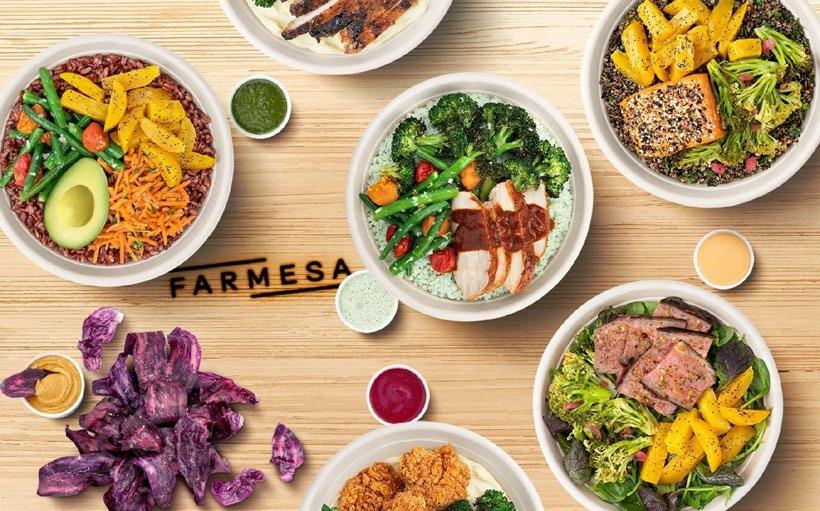
Taco Bell. “Sean is laser focused on keeping our powerhouse Taco Bell brand at the leading edge of culture and redefining innovation in the industry,” said Yum! Brands CEO David Gibbs. Chipotle stretched its concept with a new brand, Farmesa. A press release called Farmesa “a fresh, bold concept featuring delicious proteins, greens, grains and vegetables that are inspired by Chipotle’s Food with Integrity standards.” Brian Niccol, Chipotle’s chairman and CEO, said Farmesa, which launched with a location in Santa Monica, California, “uses classic culinary techniques with flavorful ingredients in a fast casual setting that we’re excited to test and learn on before we determine a broader rollout strategy.”
GROWTH IN THE MIDDLE
Judging the success of the mid-size multi-units is more difficult because they’re usually not public companies. But it’s fair to say that if a multi-unit adds more locations than it closes during a year, it’s probably doing something right. Five mid-size Mexican multi-units — Torchy’s Tacos, Bubbakoo’s Burritos, Condado Tacos , Taco Palenque and Fajita Pete’s —
FARMESA
TOP 50 MEXICAN CHAINS
TORCHY’S
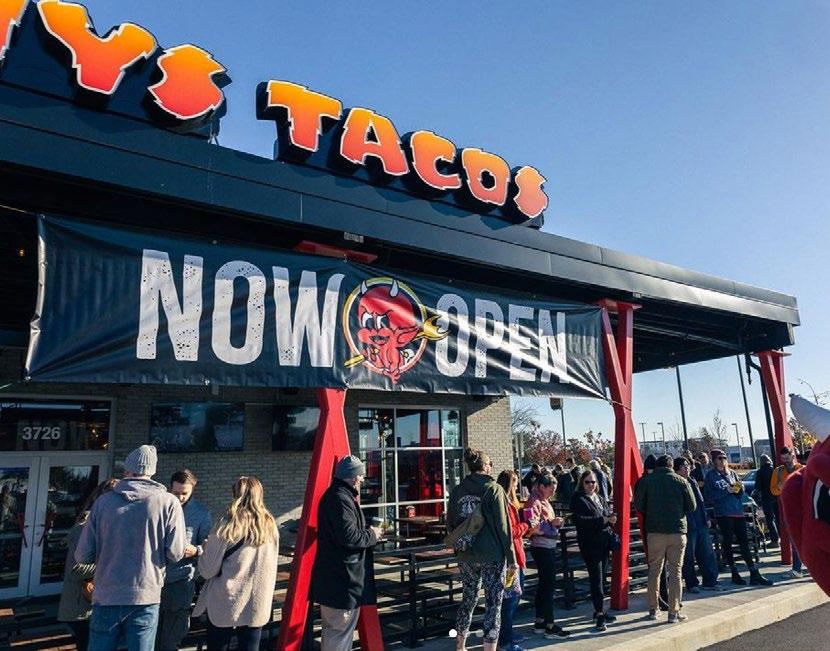
grew their unit count by more than 10 percent in 2023. Torchy’s added 10 units, an increase of 11.4 percent, to 124 units. The company, based in Austin and tied for 15th place on the el Restaurante Mexican Multi-Unit Top 50, is known for its irreverent attitude. Among the company’s 2023 promotions was a customer contest to create a new name for a Torchy’s taco, the “Name Your Own Damn Taco” contest. The winner was announced in June: “While a few of you had similar ideas and some of you may need to wash your mouths out with soap, we were so grateful for the thousands of fans who poured their hearts and souls into your entries. Ultimately, the choice came down to one winning entry by Cadie Kelly, a Torchy’s fan based in Tyler, Texas. Her choice was simply an offer we couldn’t refuse…Introducing THE HOGFATHER.” The winning taco features green chile pork layered with Teriyaki sauce, corn relish, bacon, crispy onions, and topped with cilantro, cotija, and Diablo Sauce, wrapped
MULTI-UNITS: BEYOND THE GROWTH
Expansion wasn’t the only news from Mexican multi-units in 2023.
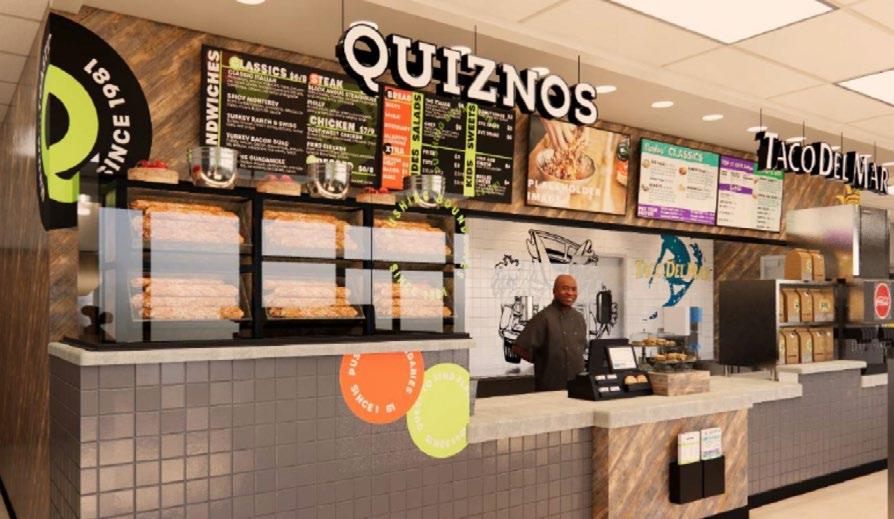
Taco Del Mar, a 66-unit chain owned by REGO Restaurant Group, pioneered a dual-concept idea with locations that combine a Taco Del Mar and a Quizno’s (also owned by REGO) inside Florida convenience stores owned by Sunshine Gasoline Distribu-
tors. The first opened in February 2023 and plans call for at least 13 in total. “The combination of the rebranded concepts, featuring inventive subs and made-to order-Baja inspired eats, coupled with the operational expertise of Sunshine Gasoline, provides a winning foundation to bring Quiznos back to local fans who have missed
the brand, and to introduce Taco Del Mar to the region,” said Tim Casey, CEO of REGO Restaurant Group, in a statement.
Fuzzy’s Taco Shop, which sits at 12th on the el Restaurante Top 50 list with 138 units, was acquired by Dine Brands early in the year. Dine Brands also owns Applebee’s Neighborhood Grill and IHOP. Fuzzy’s hopes to double its size in coming years, according to a press release announcing the acquisition. “I’m incredibly proud of the work the Fuzzy’s team and franchisees have accomplished over the past few years, which has enabled us to enter this new chapter of growth together with Dine Brands,” Paul Damico, CEO of Fuzzy’s Taco Shop, said in the release. “With Dine Brands’ substantial industry resources, we will be well positioned to build upon our proven successes and accelerate our growth.”
in a house-made flour tortilla.
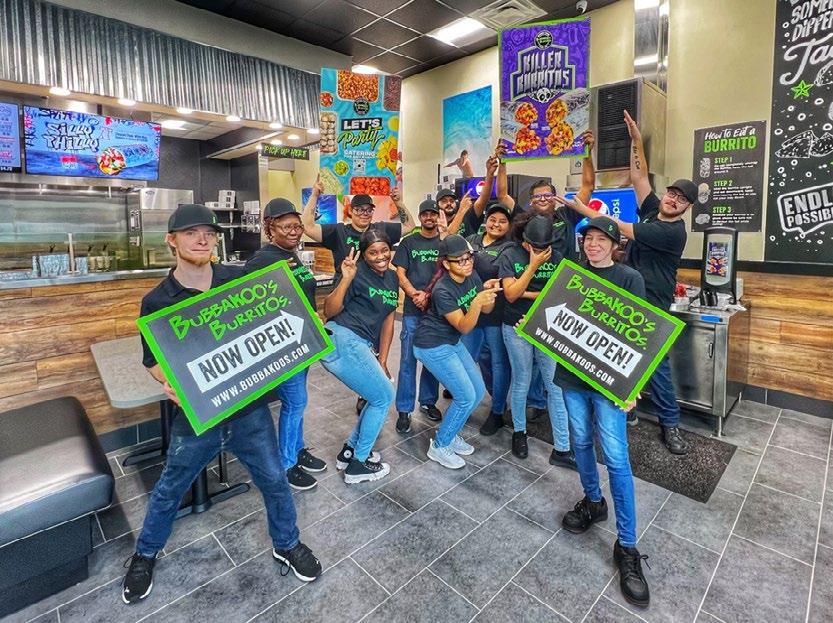
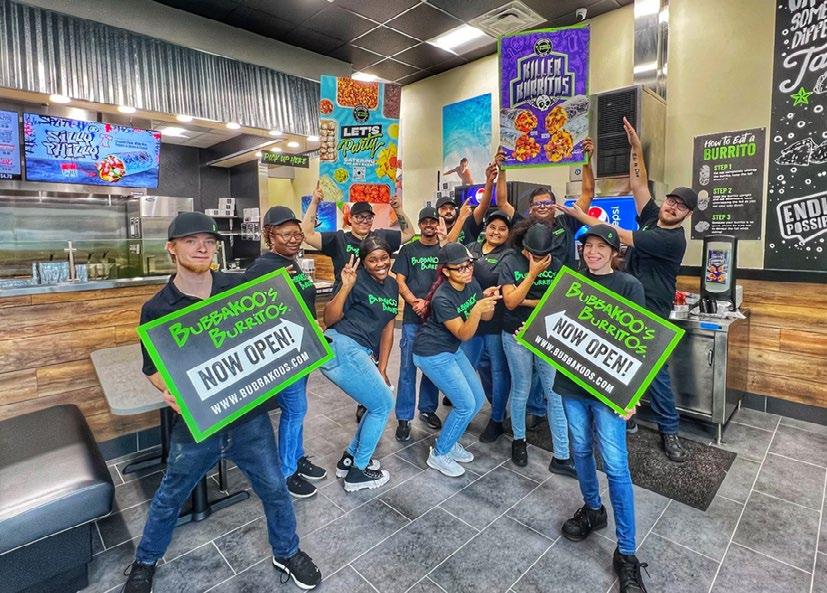
Bubbakoo’s added 15 units to reach 116 units, a 14.9 percent increase. This fast-growing company — known for customizable burritos, and number 17 on our list — opened locations in cities including Cincinnati; New Paltz, New York; and Cape Coral, Florida. The company was founded only 16 years ago and already has spread to 15 states. In 2024, the company already has opened four more locations, including its first Michigan location in Mt. Pleasant and a location in Jonesboro, Georgia.
West of Bubbakoo’s home turf, Condado Tacos — which jumped from 38th on our Top 50 list in 2023 to 31st in 2024 — is growing rapidly in the Midwest. The company, launched in Columbus, Ohio, in 2014, already has 49 units in eight states, and added 10 units in 2023, a 25.6 percent jump. Among the company’s 2023 achievements: being named one of Inc. magazine’s “Fastest-Growing Private Companies in America.” President and CEO Chris Artinian says the company plans to open 12 new restaurants per year going forward.
Taco Palenque, based in Laredo, Texas, added 8 units in 2023 for a new total of 41. That’s a 24.2 percent increase and puts them at 38th on our Top 50 list. The company’s restaurants are all located in south Texas, but the founder, Juan Francisco Ochoa Sr., told Texas Monthly magazine in March 2023 that he envisions expanding nationwide. Ochoa knows a thing or two about expansion: in 1975 he founded El Pollo Loco, which now has 492 locations and is 6th on the Top 50 list.
Fajita Pete’s celebrated its 15th anniversary in 2023 and opened its 32nd location, a jump of 5 from the year before — an 18.5 percent increase. The company, tied for 43rd on the el Restaurante Top 50 list, reports that it has 70 more units in the development pipeline, including planned openings in Chicago, Pittsburgh, Plano, Wichita Falls, and Puerto Rico.
— Ed Avis is the publisher of el Restaurante.
YOU WORK HARD TO MAKE YOUR PRODUCTS PERFECT. SO START WITH THE BEST INGREDIENTS!
ROVEY SEED COMPANY HAS BEEN FAMILY OWNED AND SERVING THE TORTILLA INDUSTRY FOR OVER 50 YEARS!
Non-GMO and Organic white, yellow, blue and red corn perfect for tortillas and chips. We also stock quality ingredients like lime, preservatves, softeners, baking powder, teflon and lubricants to save you time and shipping costs.
BUBBAKOO’S
HAGA CLIC AQUÍ PARA LEER EN ESPAÑOL
5 More Great Issues in 2024
MARCH/APRIL
• Cover Story: Cocktails
• Culinary Trends: Tlayuditas
• At the Bar: Barware Basics
• Business Basics: Family-Style Dining
AD CLOSE: MARCH 1
MATERIALS DUE: MARCH 8
MAY/JUNE
• Cover Story: Plant-based Mexican Menus
• Culinary Trends: Hispanic Cheese
• At the Bar: Alcohol On the Go
• Business Basics: Get Ready for Robots
AD CLOSE: APRIL 19
MATERIALS DUE: APRIL 24
JULY/AUGUST
• Cover Story: Tortillas
• Culinary Trends: Ceviche
• At the Bar: Bar Promotions that Boost Sales
• Business Basics: Pop-Ups
AD CLOSE: JUNE 17
MATERIALS DUE: JUNE 21
SEPTEMBER/OCTOBER
• Cover Story: Fish Dishes
• Culinary Trends: Cemitas
• At the Bar: Wine on the Menu
• Business Basics: The Chef’s Table Trend
AD CLOSE: AUGUST 23
MATERIALS DUE: AUGUST 30
NOVEMBER/DECEMBER
• Our Annual Buyer’s Guide: Special Offers for Advertisers!
• Cover Story: Soups & Stews
• Special Report: 10th Annual Independent Mexican Restaurant Report
• Culinary Trends: Tamales
• At the Bar: Making the Case for “Mocktails”
• Business Basics: Evaluating Off-Premise Options
AD CLOSE: OCTOBER 25
MATERIALS DUE: OCTOBER 31
CALL PUBLISHER ED AVIS AT 708-218-7755 to discuss how we can put el Restaurante to work for you.
elRestaurante
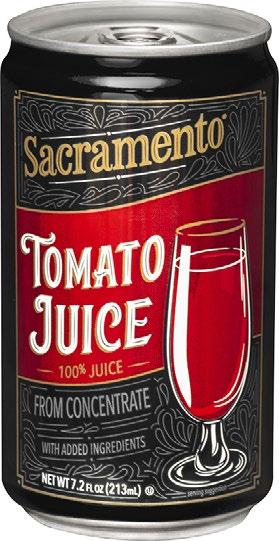
Sacramento® Tomato Juice in Single-serve Cans. The new 7.2-oz. size of this premium tomato juice is ideal for oversizing your Bloody Marys, Marias, and Micheladas for extra profit. And the brand is great for your bar because it maintains its robust flavor, even when alcohol and ice are added. Also available in 46-oz. plastic jugs and cans. Click here to request your free sample and be sure to tell us you want to try our 7.2 oz single serve can.
Dilusa USA El Puerquito Pressed Chicharron. The well-known “The Little Pig” line includes pressed pork rinds made from pork fat in melted and pressed cuts, perfect for use in making stews; Manteca, butter made from pork fat that’s ideal for frying Mexican appetizers; and a variety of pork meat products. 449 922 24 44+524493525701; contacto@dilusa.mx; dilusa.mx/ dilusausa
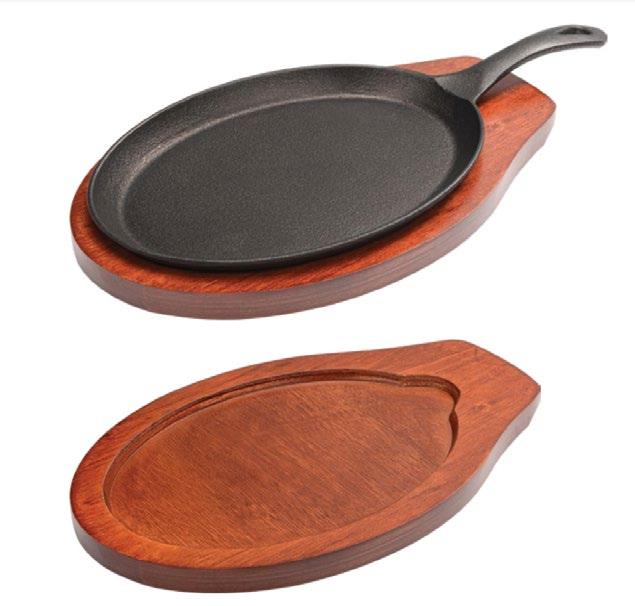
CAC Cast Iron Fajita Skillet/ Platter Set. These preseasoned cast iron skillet/ platter sets can be used in the oven or on any type of stovetops, including gas stoves and induction cooktops. The skillet has excellent heat retention and consistent heat distribution; the heat-resistant wooden underliner acts as a reliable heat buffer, protecting your tabletop and servers. Several style options available. 800-788-7756 or 732-563-4300; www.cacchinausa.com
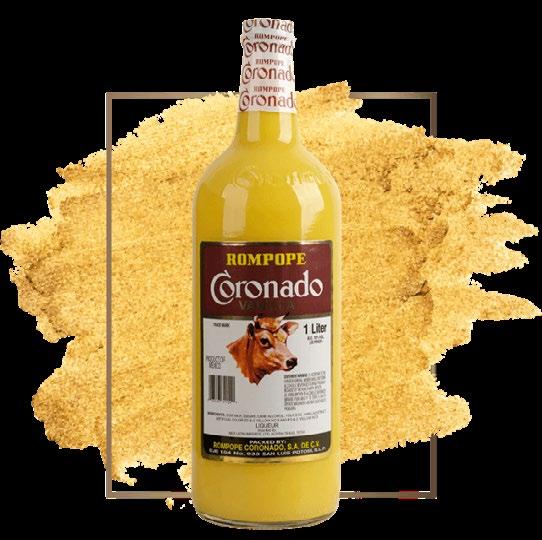
Rompope Coronado. This cream liqueur is made with vanilla, egg yolks, cinnamon, almonds and milk and the perfect amount of rum — great for creating signature cocktails and desserts including rice pudding and flan. Made with all natural ingredients — no artificial flavors. rompopecoronadousa.com
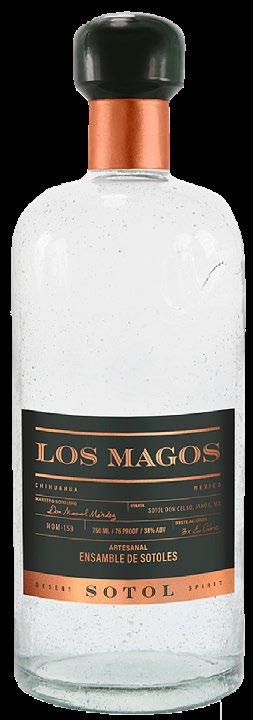
Los Magos Sotol Blanco. Made from 100 percent organic, triple-distilled sotol sourced ethically and sustainably from the Chihuahuan desert, this additive-free sotol delivers notes of citrus, black pepper, light smoke and eucalyptus on the nose, while the palate has flavors of honey and savory spice with an herbaceous finish. Denominación de origin Chihuahua, Mexico. info@ losmagossotol.com; losmagossotol.com
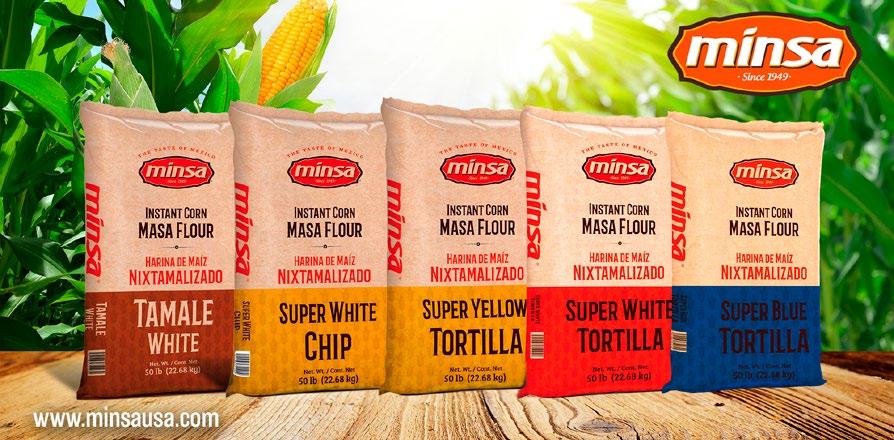
Minsa Corn Masa. We’re the pioneer in highquality Harina de Maíz Nixtamalizado that’s great for making table tortillas, snacks (chips, nachos, tostadas, tamales, taco shells) and extruded (corn chips). We offer conventional, GMO-free and organic corn flour that is also whole grain certified. Our white, yellow and blue certified natural corn products are made using strict manufacturing and quality assurance protocols. 404-310-5968; ivan. ahumada@minsausa.com.mx; minsausa.com
Charred Peach and Serrano Salsa
Recipe by Raymond Lampe, Dr. BBQ, Saint Petersburg, Florida, first place winner in the 2018 el Restaurante Sassiest Salsa Contest sponsored by Mama Linda Tomatoes!
½ white onion, cut into 2 pieces
2 peaches, pitted and quartered
1 serrano, seeded, split lengthwise
1 poblano, seeded, split lengthwise
2 c. Mama Linda Chopped Tomatoes, drained
Juice of one lemon
⅓ c. chopped cilantro
½ t. salt
½ t. pepper
½ t. cayenne, optional
Prepare a charcoal grill to cook direct at 500°F. Lay the onion, peaches, serrano, and poblano on a large sheet pan. Season with salt on all sides. You’ll grill all the ingredients but each needs a different plan.
Grill the onions and peaches, flipping occasionally, until charred dark brown on all sides, 4 to 5 minutes. Remove to the pan. Grill the serrano and poblano skin side down until charred dark brown. Remove to the pan. Cool for 10 minutes.
Remove as much skin as possible from the poblano and cut into small dice. Mince the serrano. Cut the onion and peaches into small dice. Put the tomatoes, poblano, serrano, onion and peaches into a bowl. Add lemon juice, cilantro, salt, pepper and optional cayenne. Toss well.
Let sit for 5 minutes and toss again. Check for salt and add if necessary.
Pistachio Poblano Chile Mole with Tortillas
Recipe by Chef Ben Berryhill; courtesy of American Pistachios
1 onion, peeled and rough chop
2 thick corn tortillas, cut into ½-inch pieces
4 tomatoes, remove stems and seeds
5 garlic cloves, minced
1 bunch cilantro, remove stems
3 c. chicken stock or broth
½ c. whole roasted pistachios, ground
3 roasted poblano chile, peeled and seeded
Salt, to taste
¼ c. crema fresca or Mexican crema
1 oz. cotija cheese, grated
In a two-quart sauce pot, sauté onions and tortilla pieces until they are lightly browned. Add tomato, garlic, and cilantro and sauté until wilted and fragrant.
Add stock or broth and ground pistachios and simmer and stir for 20 minutes. Remove from heat and allow to cool long enough to work with. In a blender combine sauce and cleaned poblanos.
Puree until smooth and season with salt to taste. Heat and serve in a warm ceramic bowl. Garnish with crema and cotija cheese. Serve with warm thick corn tortillas.
Oaxacan Pasilla Tomatillo Sauce
Recipe courtesy Chef Anselmo Ramirez, (the former) Ixcateco Grill, Chicago
4 oz. dried chile pasilla
½ c. diced onions
6 garlic cloves
3 oz. diced tomatillo
½ t. pepper
½ t. fresh oregano
¼ t. clove
¼ t. cumin
2 bay leaves
2 T. olive oil
Toast pasilla chile, then soak it in hot water for 15 minutes. Add to blender and blend into paste, then sauté the paste for approximately 5 minutes in olive oil over low heat.
While pasilla paste is cooking, sauté the diced onions, garlic and diced tomatillo in olive oil. Once cooked, incorporate all other spices, and blend together with the pasilla chile paste in a blender.
Heat that mixture on low heat until it simmers. Season to taste with salt and pepper.
Serving tip: Chef Ramirez suggests cooking a portobello in an oven with salt, pepper and water to allow evaporation. Stuff with seasonal roasted vegetables, top with melted Chihuahua cheese and panko bread crumbs, and serve atop a pool of black beans and the Oaxacan Pasilla Tomatillo Sauce.
Jardin Pepino
Recipe courtesy of Los Magos/William Perbellini, USBG Advanced Bartender and SGWS Certified Mixology & Spirits Expert
Makes 1 cocktail
1.25 oz. Los Magos Sotol
0.75 oz. reposado tequila (Partida or El Tesoro)
0.5 oz. orange liqueur (Pierre Ferrand Dry Curaçao)
1 oz. fresh lime juice
0.5 oz. agave syrup (dilution ratio 2:1)
3-4 thinly sliced cucumbers
4-5 cilantro sprigs
Gently muddle cucumber and cilantro (leaving some for the garnish), add the remaining ingredients.
Shake and double strain into a tajin rimmed coupe glass. Garnish with cucumber slice and cilantro sprig.
Luna Roja
Recipe courtesy of Nocheluna
Makes 1 cocktail
1.5 oz. Nocheluna Sotol
0.5 oz. Ancho Reyes Original 1 oz. prickly pear puree
0.75 oz lime juice
0.25 oz simple syrup
Half moon orange slice, for garnish
Add all ingredients except orange slice to a shaker.
Shake with ice. Strain and serve in a coupe glass with a half-moon orange slice.
The Evergreen
Recipe courtesy of Desert Door
Texas Sotol
Makes 1 cocktail
1.5 oz. Desert Door Original Sotol
1.5 oz. fresh lime juice
0.5 oz. agave nectar
Cucumber
Mint
Muddle cucumber and mint in shaker. Add sotol, lime Juice, agave nectar, and ice. Shake. Strain into glass with fresh ice and garnish with cucumber.
HAGA CLIC AQUÍ PARA LEER EN ESPAÑOL
WENDY GARCIA Tumerico
“IT’S ALL ABOUT FOOD , serving the community by healing through food. The food feels like home, it’s like family.”
Those sentiments, touted front and center on Tumerico’s home page, sums up Chef/Owner Wendy Garcia’s approach to running this vegan/vegetarian, Latin-inspired restaurant that Tucson diners have embraced — so much so that Tumerico recently took the #1 spot on Yelp’s Top 100 US Restaurants 2024, released in late January.
“I felt super excited and happy! It’s great news for the restaurant and all the Tumerico team,” Garcia says. “I was like Whattttt???? number 1? I’m still kind of assimilating the news.”
Garcia — who was named a semifinalist for the 2024 James Beard Award for Best Chef Southwest for the second year in a row the day after learning of the Yelp honor, and ranked #1 on Yelp’s Top 100 Southwest Restaurants list in April 2023 — has been called a “tireless ambassador for vegetarian Mexican food.”
She says cooking “is a part of who I am,” and that her menu is a nod to recipes she “grew up eating with my family — mom, dad, grandma, tios, tias, primos” in Hermosillo, Mexico.
She started introducing Tuscon customers to those recipes at a local farmers market, and built a customer base large enough to take the plunge with a brick-and-mortar location. She opened Tumerico with a menu that features dishes including enchiladas, tamales, bowls, burritos and several tacos, in 2016. As Garcia told Yelp, “…whatever Mexican dish you can think of, we can make [a vegetarian version] at Tumerico.”
Creating those dishes “takes me home with those loved ones,” she says. “When I thought of Tumerico 10 years ago, I wanted to cook delicious, tasty food but also the warm feeling of home and love,” she continues. “I want Tumerico customers to feel love and nourished and enjoy a homemade meal full of flavor. I believe in my heart that food is a form of telling someone you love and care for them. Our customers like being taken care of and fed.”
Here, Garcia shares her recipe for one of the most popular dishes that keeps Tumerico’s customers “taken care of and fed” — her Nopalitos Tacos.
Nopalitos Tacos
Makes 3 servings of 2 tacos each
Oil, for frying
4 c. cleaned, diced nopalitos (cactuts pads)
3 T. onion, diced
1 t. garlic
Red chili sauce (recipe below)
Corn tortillas
The Filling:
Sauté nopalitos in oil of your choice. Add the diced onion, garlic and red chili sauce; bring to boil, let simmer for 5 minutes.
When ready, warm tortillas and fill with nopalito mixture. Garnish with cilantro. Enjoy!
The Red Chili Sauce:
8 oz. New Mexico chili
4 cloves garlic
½ onion
Salt, to taste
Blend first 3 ingredients together; salt to taste.
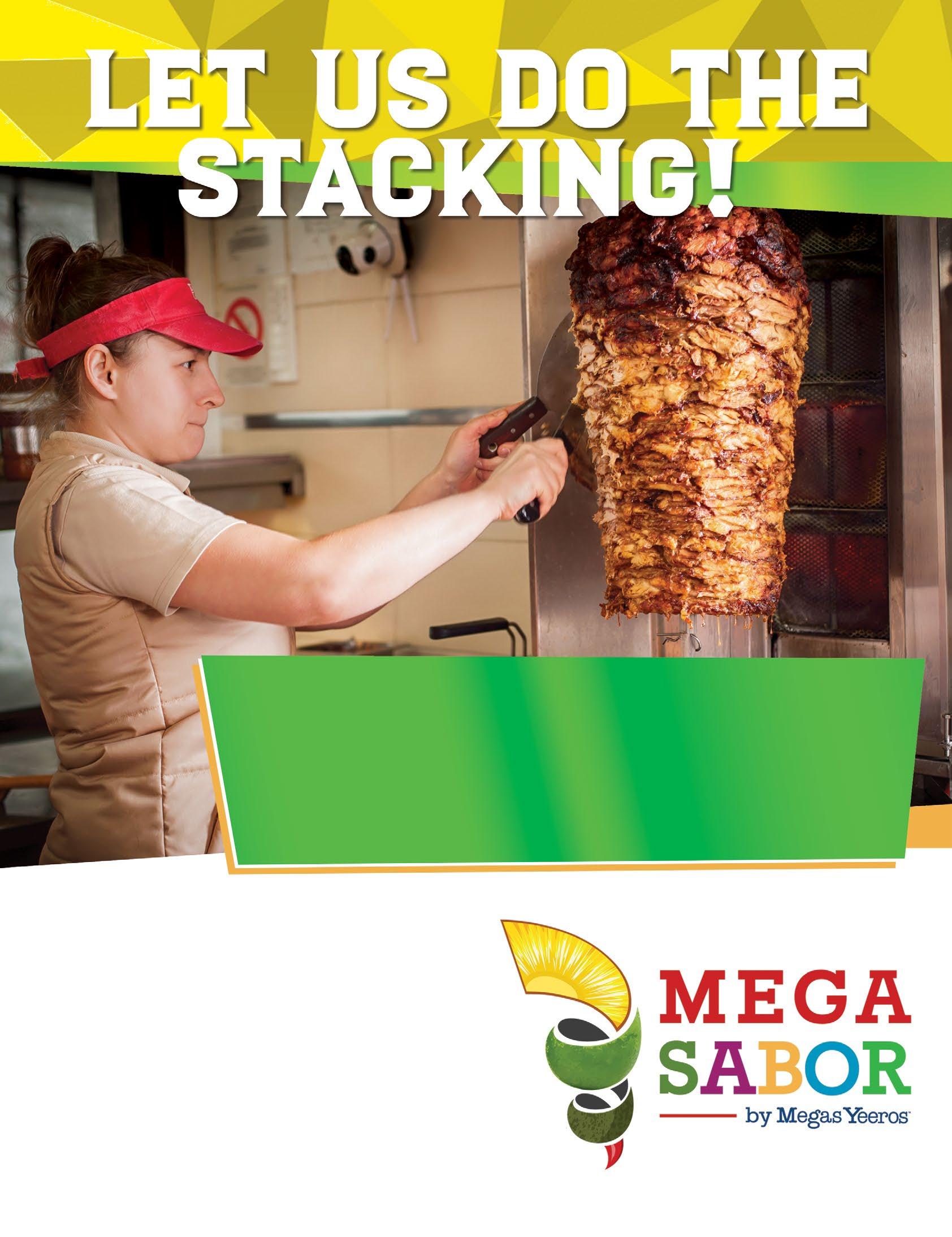
MegaSabor Hand-Stacked Trompos are the most authentic al pastor possible. Our Al Pastor Pork, Pollo Adobo and Carne Asada trompos are crafted with chili peppers from around the world; tropical fruit such as mangos, papaya and pineapple; root vegetables such as yuca; and indigenous plants like achiote. Your customers will notice the difference!
Save the labor of stacking your own trompos and offer your customers the very best!