AGRI PROBE

LANDBOU RADIO
RSG Landbou word elke Vrydag om 5:00 vm. en Saterdae om 11:45 vm. uitgesaai.
Tydens ons programme maak ons kennis met innoveerders, boere-planmakers, asook diegene aan die voorpunt van landbou-tegnologie en navorsing. Maak gerus kontak en laat jou stem gehoor word. Ek nooi jou graag uit om stories van hoop en inspirasie met my te deel. Stuur gerus wenke en idees na Eloise Pretorius | eloise.pretorius@westerncape.gov.za


“Sien”
jou binnekort op die radio!



Vir meer inligting Meer inligting oor die programreeks is beskikbaar op www.rsg.co.za en die uitsendings kan ook afgelaai word.


Potgooie
Vir aflaai van potgooie, skandeer die kode of besoek www.rsg.co.za/ rsg/page_id344/
Nou ook beskikbaar op die RSG toep!

Eloise Pretorius
Setting

S Setting the SCENE
by Stephanie Thomas
Securing the future through service
As South Africa marks Youth Month and the continent observes Africa Public Service Day, this issue of AgriProbe reflects on two forces that shape the sector every day: the people who are preparing to inherit it, and the public service that helps hold it together.
Youth are not the future of agriculture in some distant sense – they are already here, learning and contributing. Across our agricultural colleges and intern programmes, young people are engaging with farming, science, technology and service. These environments transfer skills and instil responsibility, offering space to understand agriculture as a vocation that demands resilience, innovation and care. Agriculture is sustained as much by continuity as it is by new thinking, which is why the mentoring that happens between lecturers and students, supervisors and interns, researchers and early-career professionals are some of the most important investments we make. Knowledge in this sector is cumulative, built over seasons and generations, to make the sector stronger and more adaptable.
June also invites reflection on the role of public service. In agriculture, public servants work largely out of sight –advising, inspecting, testing, monitoring and responding. Africa Public Service Day
reminds us that professionalism, integrity and accountability are not abstract ideals but practical requirements as the department works to expand agricultural markets across the continent, supporting South African producers to connect with regional value chains and strengthen trade relationships. In this context, the department is an enabler creating the conditions for standards to be upheld, and for opportunity to reach beyond our borders.
This is especially apparent in animal health and food safety. As ongoing threats such as foot-and-mouth disease continue to demand vigilance, the value of a capable, coordinated public service is undeniable. Food safety depends on systems that work, and on science, compliance, cooperation and trust across the value chain. It requires producers, veterinarians, inspectors and advisors to share both responsibility and purpose.
This edition of AgriProbe brings these threads together: youth entering the sector, public servants upholding its foundation, and researchers and practitioners strengthening its resilience. What connects it all is stewardship – of people, of public trust, and of the systems that ensure food remains safe, enterprises remain viable, and markets remain accessible.
#ForTheLoveOfAgriculture
Stephanie Thomas
COVER INSPIRATION
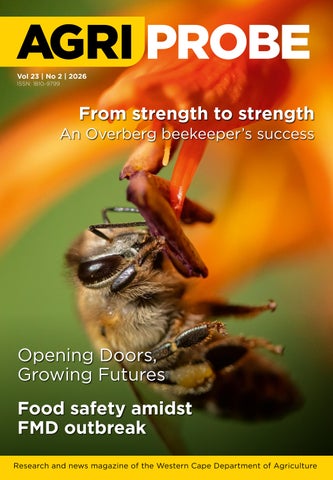
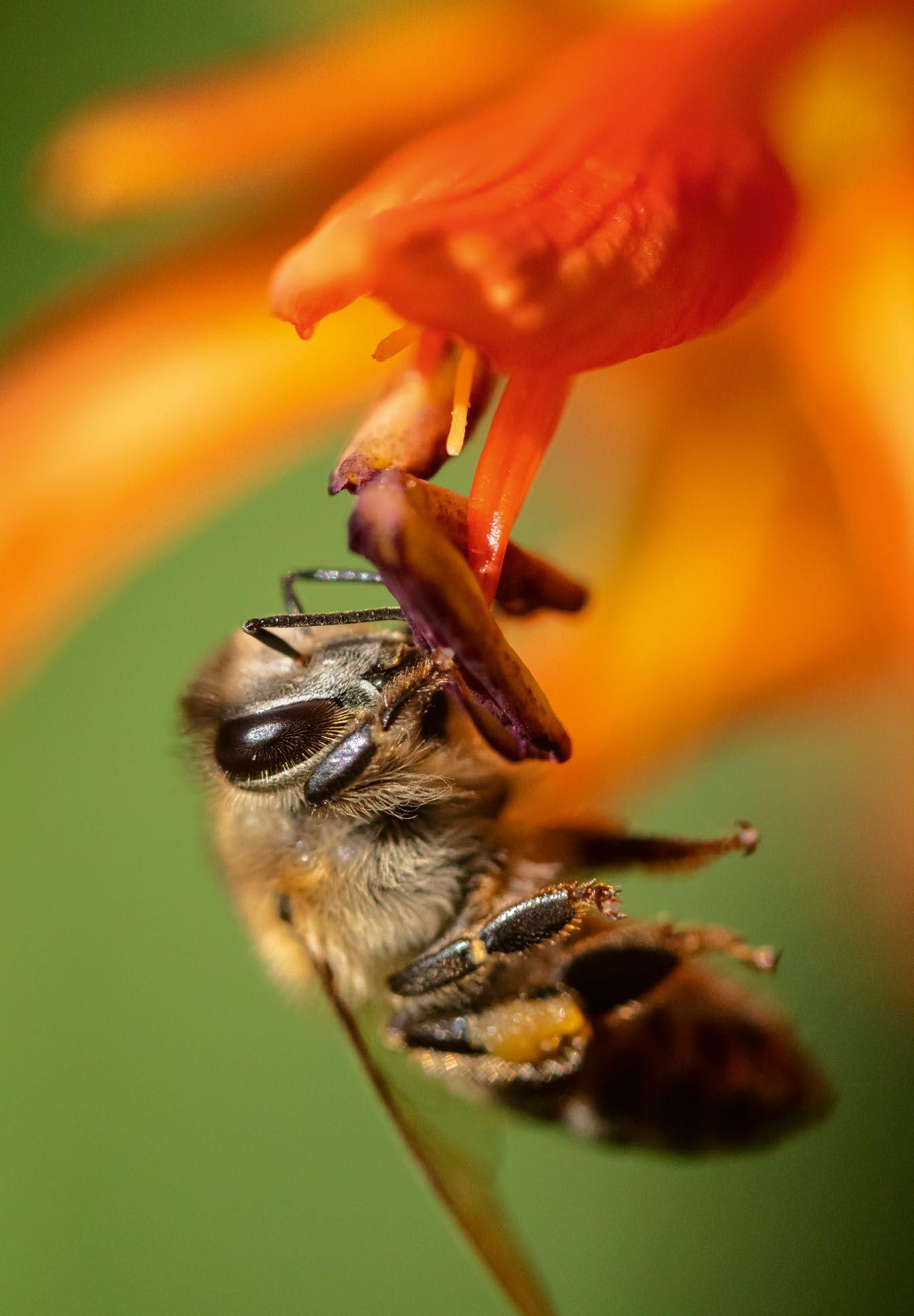
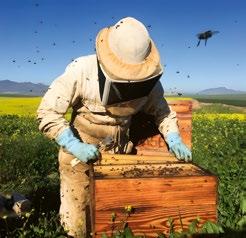
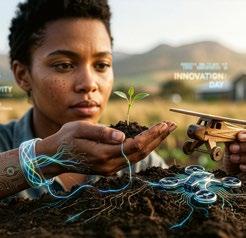
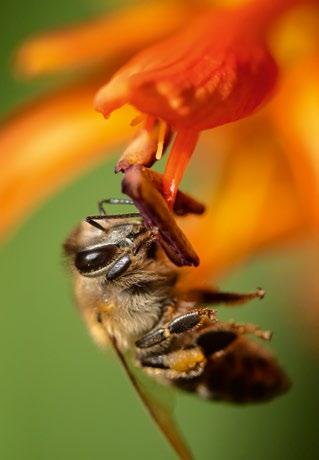
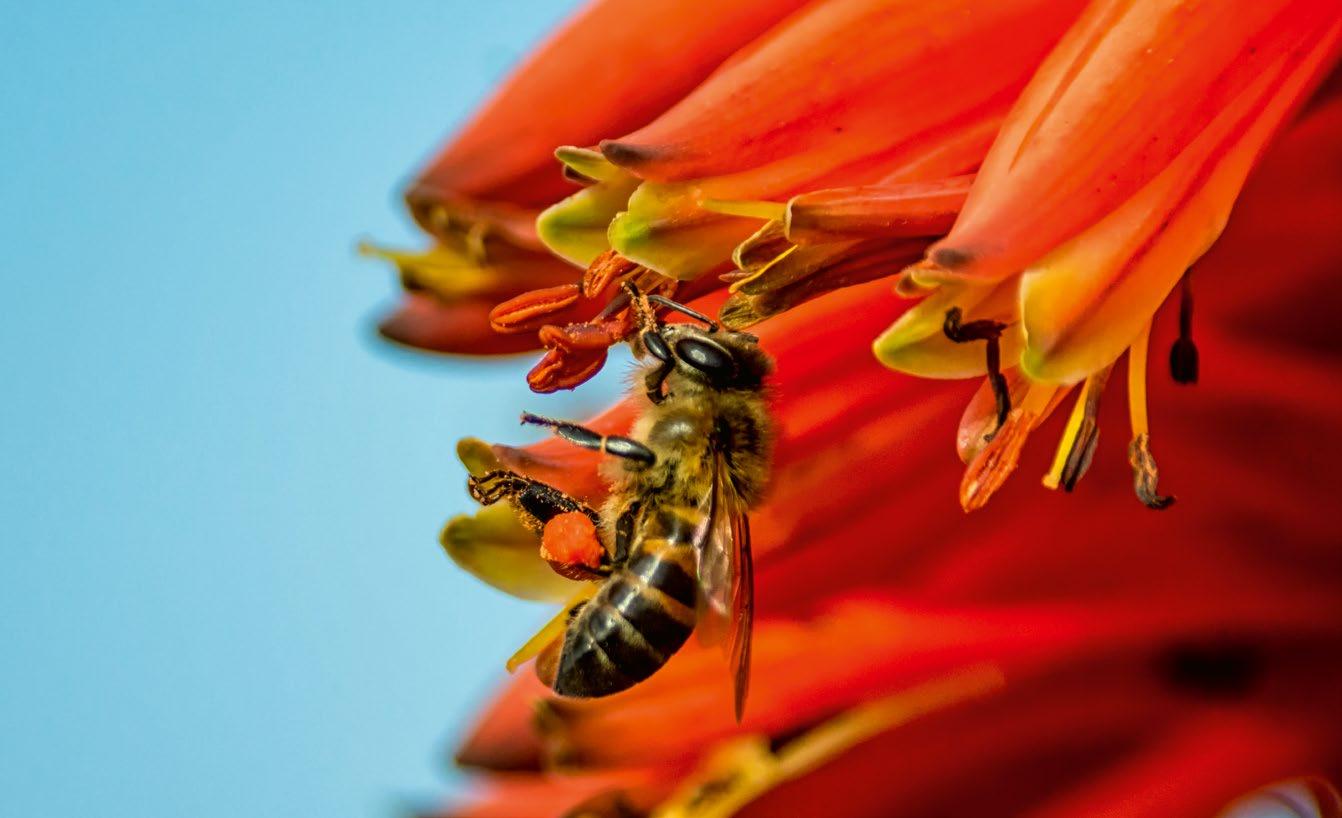
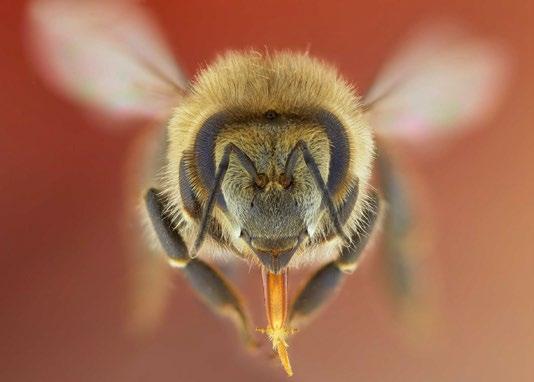
A honeybee at work among vibrant blossoms captures the essence of this edition of AgriProbe: growth through innovation, resilience and purposeful support. Our lead feature follows Overberg beekeeper Jakobus Hansen, whose enterprise continues to flourish through sound financial management, determination and targeted assistance from the Western Cape Department of Agriculture. Across the issue, we explore how innovation and creativity are shaping the future of agriculture – from developing young talent through workplace learning to strengthening food safety and biosecurity during the footand-mouth disease outbreak. Together, these stories highlight agriculture’s ability to adapt, innovate and thrive in a changing world.
Cover image © Andrew Hagan
EDITOR
Mary James (021 808 5008) mary.james@westerncape.gov.za
CHAIRPERSON
Stephanie Thomas (021 808 5190) stephanie.thomas@westerncape.gov.za
VICE CHAIRPERSON
Dr Filicity Vries (021 808 5014) filicity.vries@westerncape.gov.za
SECRETARIAT
Gizelle van Wyk (021 808 5022) gizelle.vanwyk@westerncape.gov.za
EDITORIAL COMMITTEE
Arie van Ravenswaay (021 808 5085) arie.vanravenswaay@westerncape.gov.za
Ashia Petersen (021 808 5010) ashia.petersen@westerncape.gov.za
Daniel Johnson (021 483 3261) daniel.johnson@westerncape.gov.za
Luyanda Dyantjies (021 808 5047) luyanda.dyantjies@westerncape.gov.za
Dr Lesley van Helden (021 808 5017) lesley.vanhelden@westerncape.gov.za

PUBLISHING TEAM
Publisher: Erika Alberts
Layout & design: Carmen le Roux
Copy editor: Aletta Pretorius-Thiart
Financial director: Pat Botha
For integrated communication and publishing solutions, e-mail: media@mlpmedia.co.za
Londiwe Thabethe (021 808 7733) londiwe.thabethe@westerncape.gov.za
Vusumzi Zwelendaba (021 808 5226) vusumzi.zwelendaba@westerncape.gov.za
Zenovia Parker (021 808 7798) zenovia.parker@westerncape.gov.za
Juan de Lora (021 808 5383) juan.delora@westerncape.gov.za

Budget of confidence
Growing a resilient, inclusive and future-focused agricultural sector
by Minister Ivan Meyer and Daniel Johnson




TThe 2026/27 Budget Address arrives at a defining moment for the Western Cape. With global uncertainty, climate volatility, rising input cost and biosecurity threats shaping the landscape, the message from this year’s budget is unmistakable: Western Cape agriculture remains resilient, competitive and deeply committed to building a thriving future for all who call this province home
With a total allocation of R1.149 billion, this budget is not merely a financial plan

– it is a declaration of intent. It signals a government and a sector determined to grow opportunity, protect livelihoods and champion innovation from farm to fork.
Agriculture: A pillar of hope and prosperity
employment and export performance.
Today, agriculture and agri-processing together contribute 10% of provincial GDP, support 267 804 jobs, and account for more than 54% of South Africa’s agricultural exports. These numbers tell a powerful story – one of hardworking families, scientific excellence, agriworkers who sustain industries, and farmers whose courage drives our competitiveness.
Despite global turbulence, agriculture in the Western Cape continues to outperform expectations. In 2025 alone, the sector grew by 27% in the third quarter, leading the province in recovery, »
This year’s budget strengthens that momentum.
Key investments for a stronger, smarter agricultural future
The 2026/27 budget makes targeted investments that build resilience, expand opportunity and unlock long-term growth.
Protecting natural resources (R157.265 million)
• Rehabilitation of 20 000 hectares of agricultural land
• Creation of 800 green jobs
• Ongoing river protection works and disaster risk reduction campaigns
These investments secure the ecological foundation on which every farm, community and value chain depends.
Supporting producers and expanding market access (R333.282 million)
• 3 800 on-site farm visits
• 2 750 household food production initiatives
• Support for land reform farmers through the commodity approach
• Strengthened international market access
From smallholder producers to export-driven commercial farms, support is designed to broaden participation and unlock growth.
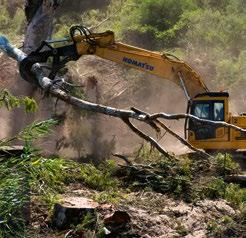
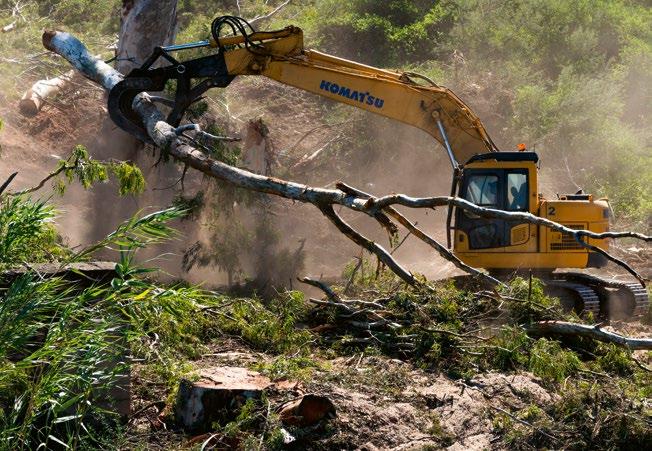
Contractors remove eucalyptus trees from the Breede River bank near Robertson, helping to save water and protect agricultural land.
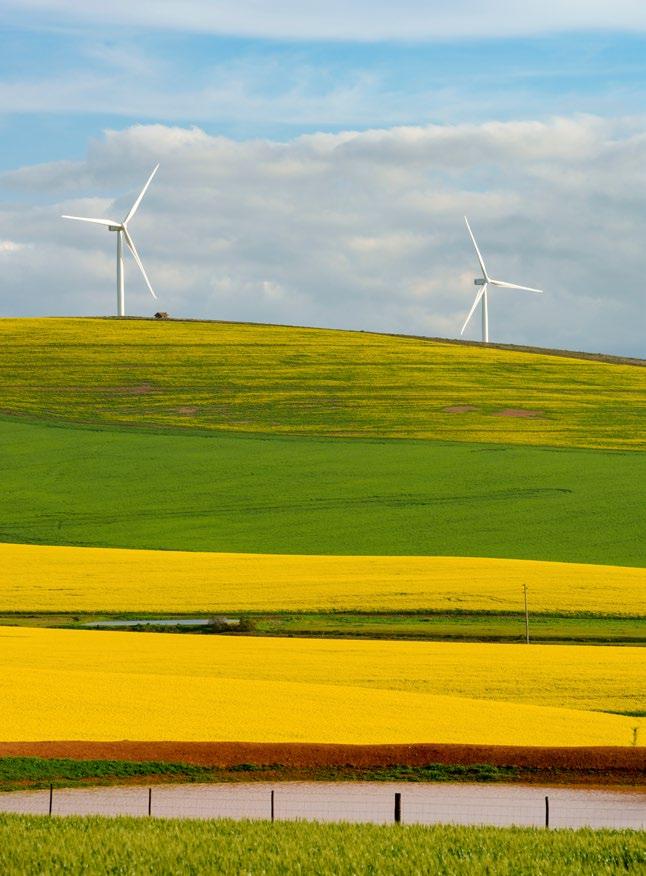
Canola fields near Caledon in the Overberg reflect the Western Cape’s productive agricultural landscapes and growing clean-energy transition.
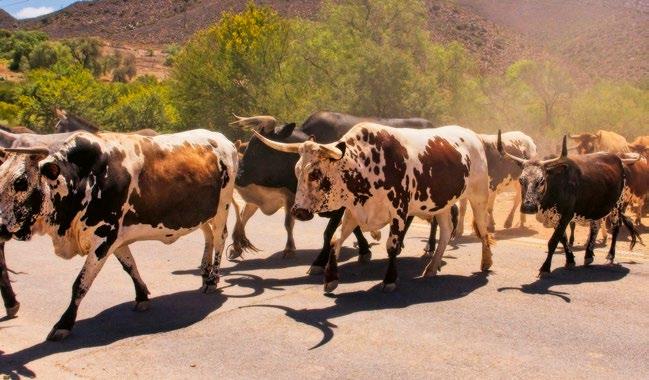
Nguni cattle near De Rust highlight the importance of strong veterinary services, biosecurity and disease surveillance across livestock value chains.
Photo © Peter T
Photo © Adrian
Photo © Roger de la Harpe
Strengthening veterinary services (R152.090 million)
Biosecurity is non-negotiable. The department’s rapid, science-based response to the current foot-and-mouth disease outbreak – through a 21 point plan, an FMD War Room, expanded vaccination and enhanced surveillance –reflects the professionalism of both our state and private veterinarians.
These teams protect not only animal health, but also export credibility, jobs and the rural economy.
Innovation, research and technology (R177.108 million)
• Investment in climate smart research
• Expansion of 4IR tools: drones, sensors, real-time data systems
• Continued partnership with MCAP and universities
This ensures our sector stays globally competitive while adapting to climate realities.
Rural safety, agri worker support and youth empowerment (R23.910 million)
• Strengthened rural safety interventions
• GBV, substance abuse and financial literacy campaigns
• Skills programmes for agri workers and emerging farmers
• Internships and training for 170 young people
These initiatives reinforce agriculture’s role as a social stabiliser and engine of rural dignity.
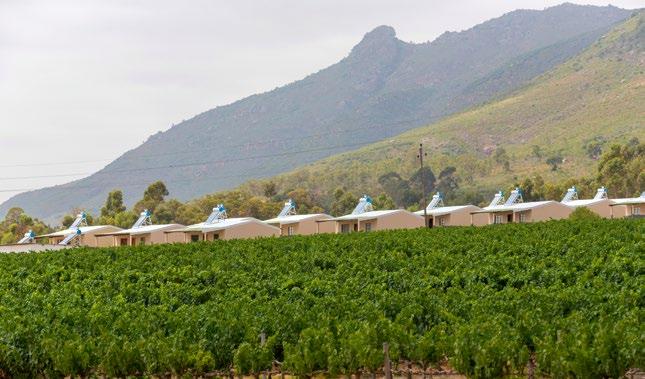
Vineyards and workers’ cottages at Pulpit Rock near Riebeek West reflect agriculture’s role in rural livelihoods, settlement and dignity.
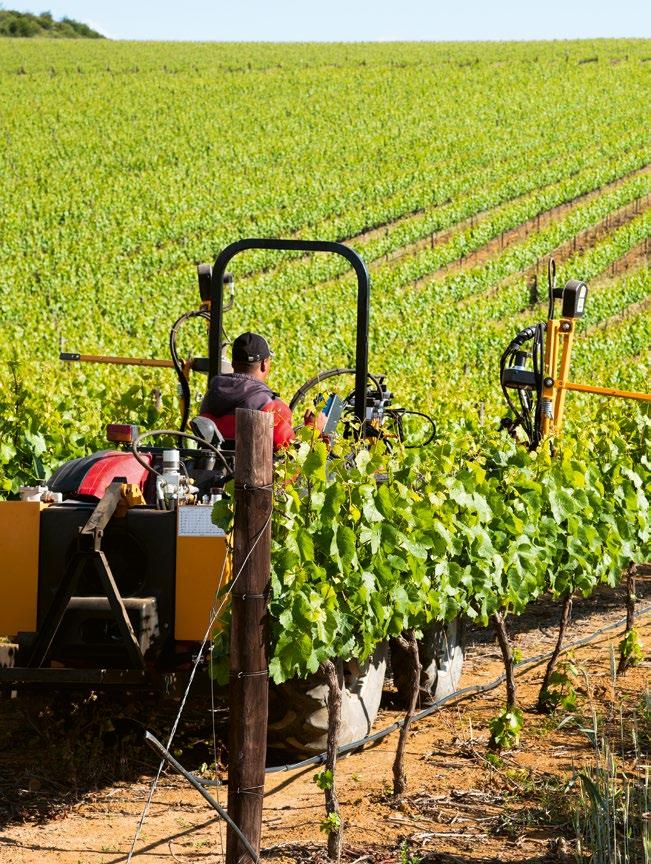
Vine trimming in spring supports productive vineyards, quality yields and the continued competitiveness of the Western Cape wine industry.
Photos © Peter T
Learn more!
Historic milestone: First black-owned wine cellar opens in South Africa https://shorturl.at/Q6FUd
Celebrating excellence across the value chain
Across the Western Cape agricultural value chain, excellence is reflected in people and organisations opening markets, strengthening standards, building businesses and recognising the workers who keep agriculture moving. This year’s budget also shines a light on individuals and organisations who embody the spirit of Western Cape agriculture:
Klein Goederust and its owner, Paul Siguqa, for transformational leadership in the wine industry.
SIZA and CEO Retha Louw for championing ethical and sustainable certification.
Brothers in Vines’ Sherwin van Wyk, breaking new ground in international wine markets.
The Citrus Growers’ Association, preparing for the inaugural Citrus Day in June 2026.
Shannon Robertson, Western Cape Agri Worker of the Year, whose global study tour showcases the excellence of our agri workers. Read all about her achievements in AgriProbe Vol. 23 No. 1, 2026.
The VLV Women’s Agricultural Union, taking leadership in the UN’s International Year of the Woman in Agriculture (2026).

Did you know?

Retha Louw, CEO of SIZA, leads a programme that supports ethical and environmentally responsible practices across South Africa’s agricultural value chain.
As a subscription-based, non-profit organisation, SIZA helps suppliers, exporters and buyers align with social and environmental standards, reduce audit duplication and strengthen market confidence through credible monitoring, evaluation and continuous improvement.
Learn more!
Scan the QR code or visit the official SIZA website: https://siza.co.za
Watch this!
Scan the QR code or visit https://tinyurl.com/2mfbbktn to watch the video: “SIZACaring for the environment”.
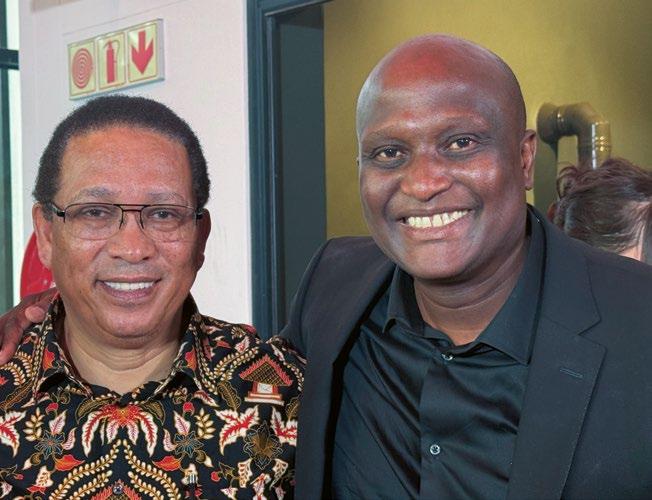
Minister Ivan Meyer with Paul Siguqa, owner of Klein Goederust, at the opening of South Africa’s first Black-owned wine cellar in Franschhoek.
These stories remind us that agriculture is, above all, about people – innovators, educators, workers and leaders whose contributions build a stronger future.
A sector united in purpose
From ecological infrastructure to solar PV for agri worker homes, from mobile abattoirs to expanded African market activations, this budget reflects a sector that is adaptable, collaborative and visionary.
Learn more!
Scan the QR code or visit https://brothersinvines.com
Watch this!
Scan the QR code or visit https://tinyurl.com/ cawe2tmw to watch the video: “Brothers in Vines”.
Learn more!
Scan the QR code or visit https://tinyurl.com/5335rn6a read more about SA’s citrus success.
Learn more!
Scan the QR code or visit www.cga.co.za
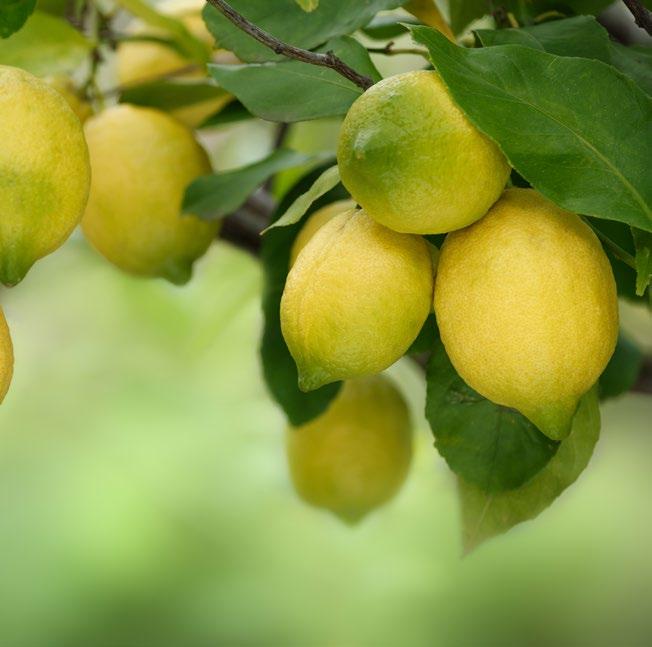
The Citrus Growers’ Association supports growers through market access, research and industry coordination.
Did you know?
South Africa has recently become the world’s leading citrus exporter, a milestone Minister Ivan Meyer linked to the resilience, innovation and quality focus of the Citrus Growers’ Association, producers, farm workers, exporters and stakeholders across the value chain.
It reinforces a simple truth: Agriculture is not just an economic sector – it is a lifeline that feeds the nation, uplifts communities and powers rural economies. »
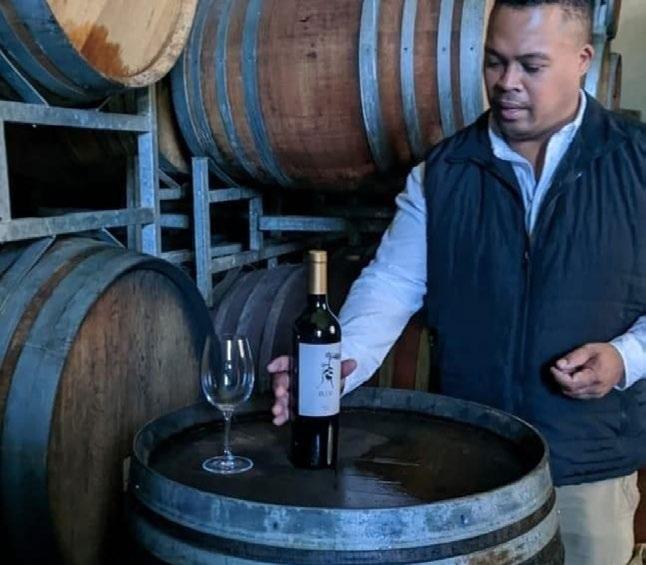
Sherwin van Wyk, founder of Brothers in Vines, is taking a South African wine story into international markets.
Photo © Andrew Hagen
Thanks to the collective efforts of our staff, farmers, partners, researchers, veterinarians and agri workers, the Western Cape continues to demonstrate what excellence in public sector leadership and agricultural innovation looks like.
Together, we will
• Grow food security
• Support thriving rural communities
• Build inclusive pathways for youth and emerging farmers
• Strengthen our resilience
• Position the Western Cape as a global agricultural leader
Learn more! www.fao.org/womanfarmer-2026/en
Watch this!
Scan the QR code or visit https://tinyurl.com/yu3y8unf to watch the video: “Video message by FAO Director General QU Dongyu for International Women's Day 2026”.
The message is clear: The future of Western Cape agriculture is bright, determined and full of possibility.
And every person in this sector – every extension officer, veterinarian, researcher, technician, farmer, agri worker, mentor and student – has a role in shaping that future. #ForTheLoveOfAgriculture AP
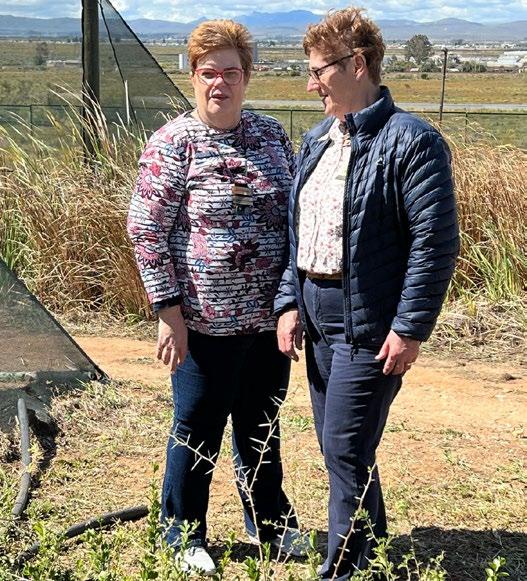
Elmarie Horstmann (left) and Joretha de Waal, members of the Lutzville branch of the Vroue-Landbouvereniging (VLV).
Photo © Peter T
2026 Western Cape floods test agricultural resilience
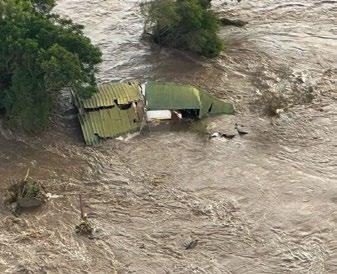
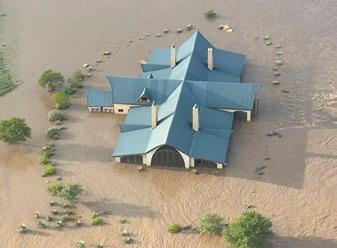
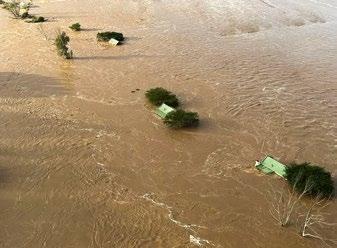
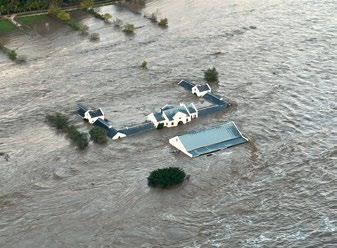
SSevere flooding across the Western Cape in May 2026 caused widespread damage to farms, infrastructure and rural communities. As assessments continue, government, industry and producers are working together to support recovery and strengthen resilience for the future.
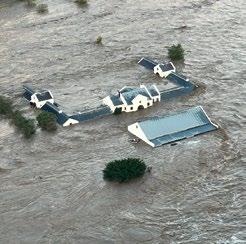
The Western Cape agricultural sector suffered extensive losses following a series of severe weather events in May 2026. Intense cold fronts brought widespread flooding, strong winds and infrastructure damage across key farming regions in all six districts of the Western Cape.
Learn more! Scan the QR code or visit www.elsenburg.com/ programmes/disaster-riskreduction/ to visit the Western Cape Department of Agriculture’s Disaster Risk Reduction Sub-Programme.
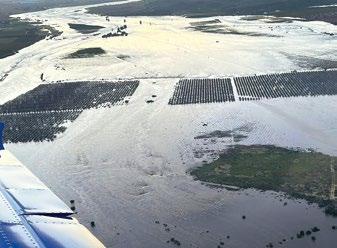
Vineyards, orchards and croplands were severely affected, with some producers reporting complete crop losses. Irrigation systems, access roads and bridges were also damaged, disrupting farming operations and isolating some rural communities.
The Western Cape Department of Agriculture (WCDoA) reported that the floods caused significant damage to agricultural infrastructure and threatened major fruit and wine export supply chains. Power outages affected irrigation systems, cold storage facilities and packhouse operations, while flooded roads delayed harvesting and the movement of produce to domestic and international markets. The Department subsequently deployed its Disaster Risk Reduction Damage Assessment App to improve the collection of real-time information from affected farming areas and support recovery planning.
Dr Ivan Meyer, Provincial Minister of Agriculture, Economic Development and Tourism, described the floods as devastating for the agricultural sector. Following aerial assessments and engagements with industry stakeholders, the Department prioritised damage assessments in high-value agricultural regions, including the Hex River Valley table grape industry, the Grabouw and Elgin deciduous fruit sector, and the Ceres-Witzenberg production areas. The Provincial Government also initiated processes to seek disaster classification and additional support for recovery efforts.
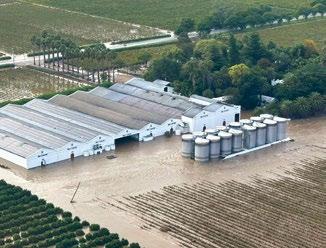
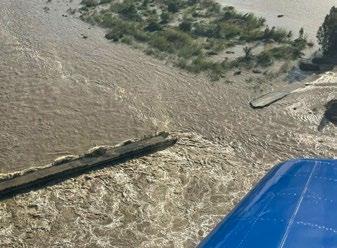
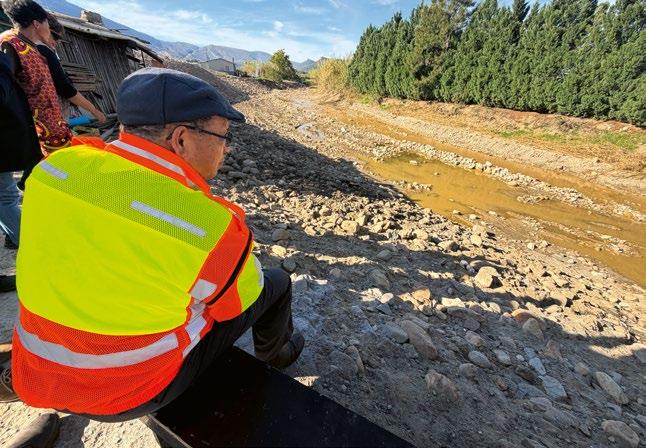
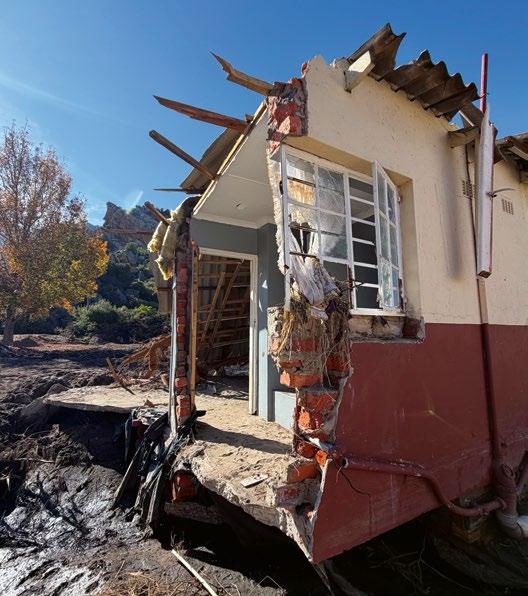
The impact extended well beyond individual farms. Farmers reported losses of water infrastructure, irrigation equipment, orchards, vineyards, tunnels, farm buildings and livestock. In some areas, rainfall exceeded 300 mm in 24 hours, while river systems such as the Breede River burst their banks, flooding large areas of productive farmland. Organised agriculture warned that the damage would have long-term implications for agricultural productivity, employment and rural economies.
Minister Ivan Meyer assesses flood damage during a visit to affected communities. The floods highlighted the importance of coordinated planning, resilient infrastructure and strong partnerships in supporting recovery.
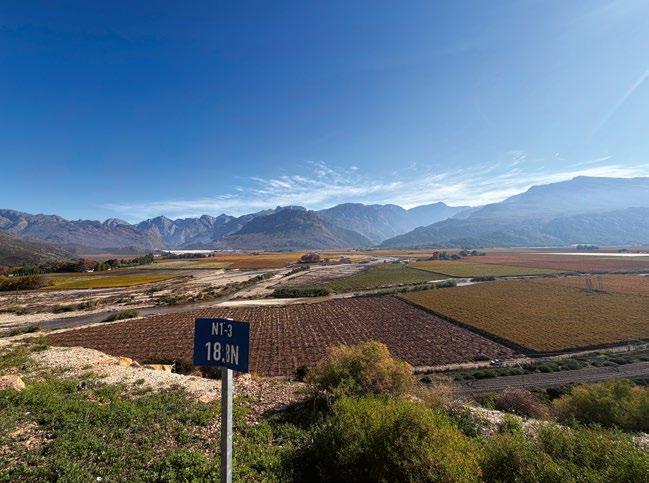
Floodwaters left a visible mark on the Hex River Valley, damaging agricultural land, infrastructure and access routes across the region.
What was once a home now stands as a reminder of the destructive force of the May 2026 floods, which affected families, livelihoods and communities across the province.
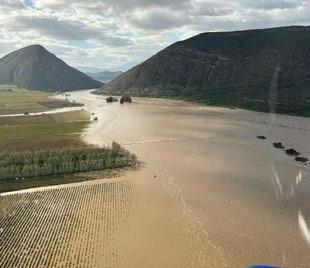
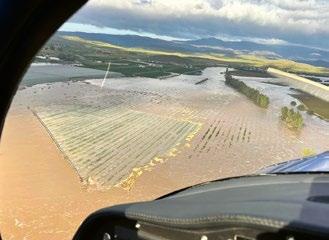
The scale of the disaster received national attention through a special Carte Blanche report, “Wrath of the Breede”, aired on 31 May 2026. The programme focused on the impact of the floods on the Robertson Wine Valley and farms along the Breede River. The report documented flooded vineyards, damaged cellars, uprooted trellises and the destruction of newly established plantings. Carte Blanche used the experiences of wine producers to illustrate the severity of the flooding and its broader impact on agricultural businesses, workers and rural communities.
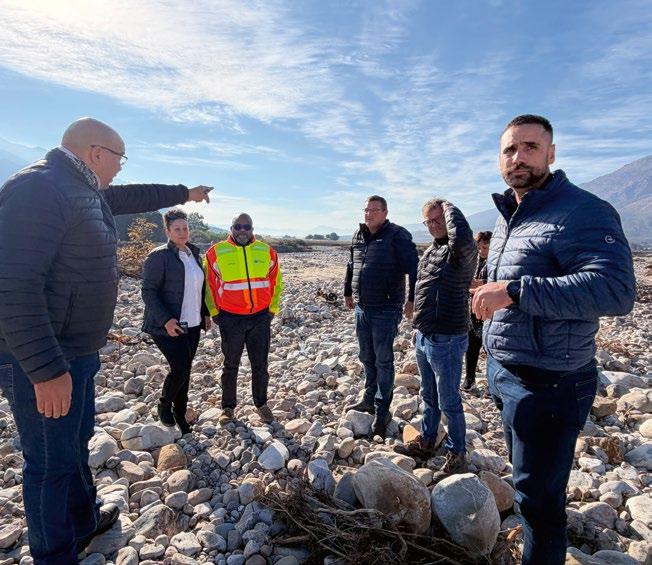
Dr Mogale Sebopetsa, table grape producers, SATI and Water User Association representatives assess flood damage in the Hex River Valley following the May 2026 floods.
Watch this!
Scan the QR code or visit https://tinyurl.com/37c7y53k to watch the report: “Inclement Weather | Severe storms lashed the Western Cape which claimed 11 lives”. Published by SABC News, 21 May 2026.
Watch this!
Scan the QR code or visit https://tinyurl.com/2p9mndvz to watch the video: “The Storm... the Devastation in the Western Cape”. Published by Lens over South Africa, 16 May 2026.
Learn more!
Scan the QR code or visit https://tinyurl.com/3smks2bx to read the “Severe weather impacts the agriculture sector across the Western Cape”. 19 May 2026.
Learn more!
Scan the QR code or visit https://tinyurl.com/y2wej92d to read the “Update on response to severe weather and recovery efforts”. 22 May 2026.
As recovery efforts continue, the floods have highlighted the growing importance of resilient infrastructure, disaster preparedness and climate adaptation within the agricultural sector.
The WCDoA, organised agriculture and producers continue to work together to assess losses, restore damaged infrastructure and strengthen the sector’s ability to respond to future extreme weather events. AP
Mr Potato Specialist retired after 35 years and 8 months
by Jerry Aries



MMany years ago, when I had just started at the Department, someone from the industry told me that if Adriaan Conradie doesn’t have an answer to a production problem, no one in the Western Cape will know the answer!
Adriaan was born in 1961 and grew up in Middelburg Cape, a small rural Karoo town that was part of the Western Cape at that stage. He matriculated in 1979 at Outeniqua High School in George. He studied at Stellenbosch University, where he obtained his Honours Agric. degree in Agronomy and Agricultural Extension in 1987.
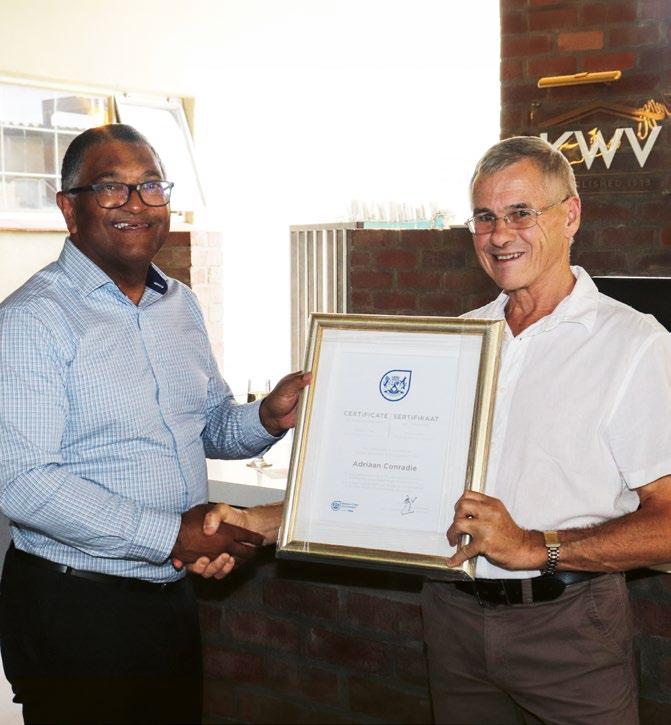
Adriaan Conradie (right) receives a certificate in recognition of 35 years and 8 months of dedicated service to the Western Cape Department of Agriculture from Deputy DirectorGeneral Darryl Jacobs. Both men retired in 2026 after making significant contributions to the Department. Read more about Mr Jacobs on page 17.
He started his agricultural career as a Production Manager in Clanwilliam, where he spent two years. During this time, he managed the production of potatoes, sweet melon and wheat under irrigation, as well as sheep, goats and cattle.
In 1990, he went back to do his second Honours degree in Business Administration at the Stellenbosch University Business School, which he completed at the beginning of 1992. While studying, he joined the Western Cape Department of Agriculture as an Extension Officer in Moorreesburg in 1990.
In 1994 he was promoted to Senior Extension Officer in Piketberg. This is where he gained most of his experience in the grain and potato industries.
In 1997 he became the Assistant Director for Swartland, Cape Winelands and Metropole and moved back to Moorreesburg. During this time, he started the Sandveld-aartappelnavorsingen-demonstrasie-projek (SAND) with external funds through Memorandum of Understanding agreements with the private sector.
Driven by his interest in management within the Agricultural Extension field he became the District Manager for the West Coast in 2004. Here he gained valuable experience in the development
of smallholder farmers, support to land reform projects and household food security initiatives.
Due to his specialist knowledge of Agronomy and deep understanding of sustainable farming development, he was redeployed to Elsenburg in 2011 as an Agricultural Specialist to assist the department in the province.
In 2013 he began acting as the Director responsible for the Food Security Sub-Programme in the Western Cape Province, a role he fulfilled for six years. This task also included managing the Farmer Support and Development Programme of the West Coast. Thereafter, he returned to his Agricultural Specialist post.
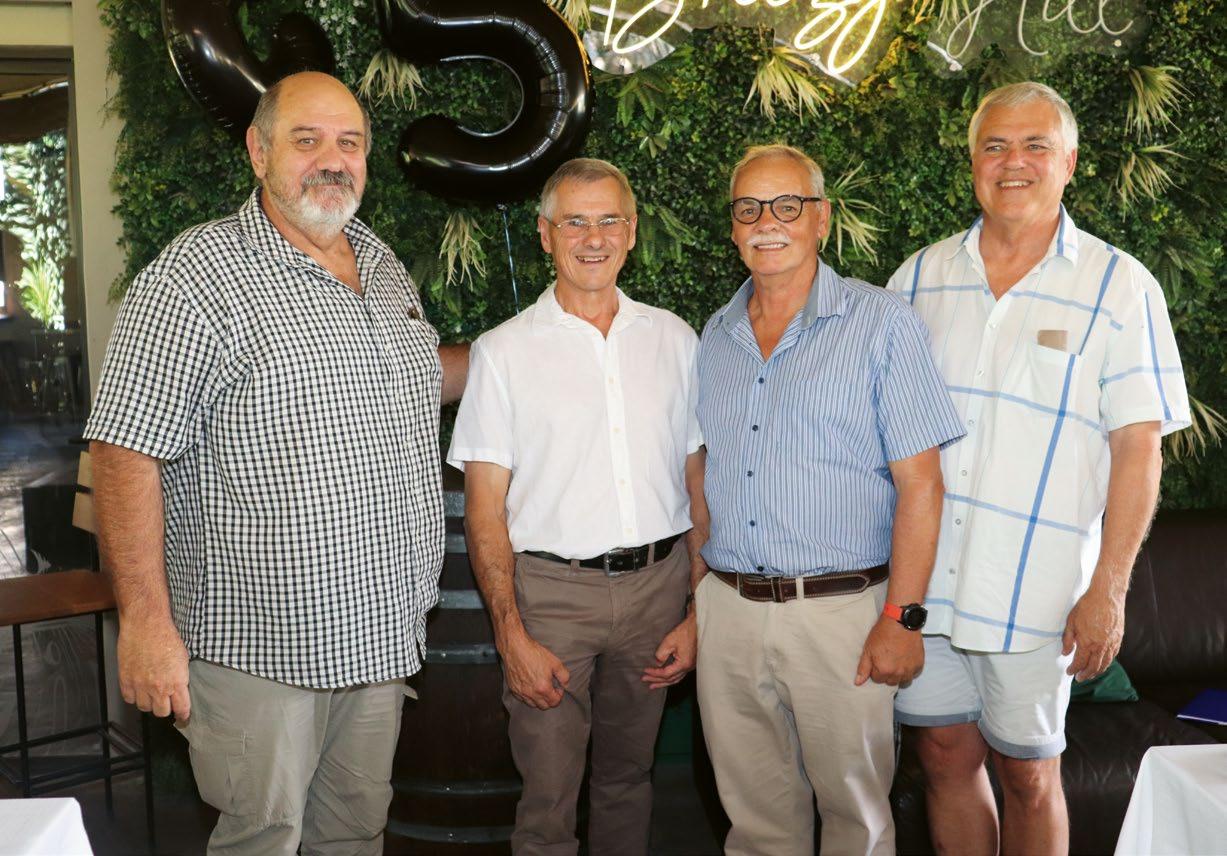
Adriaan share a special moment with retired colleagues he has worked with over the years.
From left: André Cornelisson, Adriaan Conradie, Jan Theron and Sakkie Slabbert.
Highlights
With such a long career in agriculture, it is obvious that Adriaan had several highlights that have impacted both the Department and the sector.
To mention a few:
Between 2000 and 2009, he was responsible, among other things, for the development and management of the SAND Potato Experimental Farm through a public-private partnership agreement.
Furthermore, in 2001 he developed one of the first mechanisation centres for small-scale farmers in the Goedverwacht Moravian Community, and from 2002 to 2006 he assisted with an advanced potato training course for Elsenburg students.
From 1995 to 2003 Adriaan was also the organiser of the Potato, Wheat and Canola Farmer of the Year competitions. The purpose of these competitions was amongst others to promote better potato management and wheat conservation practices, as well as promoting canola plantings as a rotational crop within the Western Cape.
During his responsibility as Food Security Manager and during the
drought of 2017 he developed a greywater filter and drip irrigation system inclusive of an earthworm tea bucket system for household gardens to improve sustainability.
Performance awards
Adriaan received various performance and extraordinary special awards for high-volume and high-quality services rendered throughout his career.
Adriaan is a family man – he is married and has two daughters and one grandchild. One of his main hobbies is water sports on the white beaches of the West Coast, which provide a welcome relief from the working environment and inspire him with the energy to make a difference in the agricultural field.
We wish Adriaan a well deserved retirement and hope his successor will have the answers, knowledge and confidence to address challenges and respond comfortably to questions from the potato industry. AP
For more information, contact Jerry Aries: jerry.aries@westerncape.gov.za


Darryl Jacobs A global career defined by service, integrity and purpose
by Giselle Terblanche
AAfter decades of dedicated public service, the Department bids farewell to Deputy Director-General, Darryl Jacobs – a leader whose career has been shaped by resilience, humility and an unwavering commitment to serving people.
Born and raised in Athlone on the Cape Flats in Cape Town, Darryl completed his schooling at Athlone Senior Secondary School in 1980 before enrolling at the University of Cape Town, where he obtained a Bachelor of Social Science degree in Economics and Industrial Sociology. He later continued his studies through the University of South Africa, completing both a Bachelor of Commerce in Accounting and a Bachelor of Commerce Honours degree in Business Management, alongside several executive and management programmes.
Reflecting on his early years, Darryl says the many jobs he took on while studying and working helped shape his outlook on life and leadership.
“Leadership can be principled, kind and firm at the same time.”
“I sold cheese, fruit and vegetables as a student at a top retail store. After I started working, I qualified as an estate agent and attempted to sell houses and timeshare as a sideline,” he recalled.
“These experiences grounded me. They taught me about hard work, about rejection and about relationships.” »
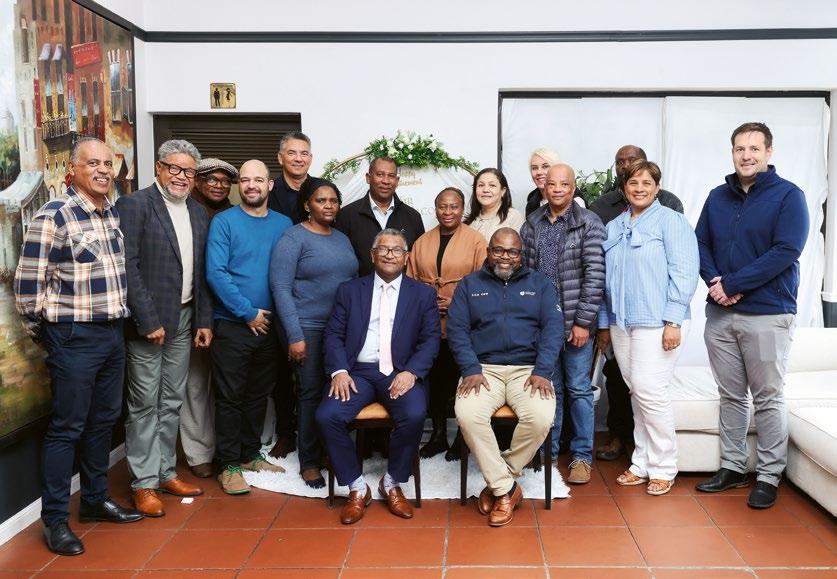
Darryl Jacobs with the WCDoA HOD and management team at his farewell.
Darryl began his public service career in 1985 at the former House of Representatives during a turbulent period in South Africa’s history.
In September 1989, he joined the historic Purple Rain Protest march for freedom, where he was arrested alongside Allan Boesak before later being released. Following the advent of democracy, Darryl joined the Office of then Deputy President, Thabo Mbeki, as a Financial Manager, becoming part of the generation of public servants who helped shape South Africa’s new democratic order.
In 1995, he was selected as an Eisenhower Exchange Fellow from South Africa and spent three months in the United States engaging with global leaders, including former President

George H.W. Bush. The fellowship also exposed him to developmental programmes across several continents.
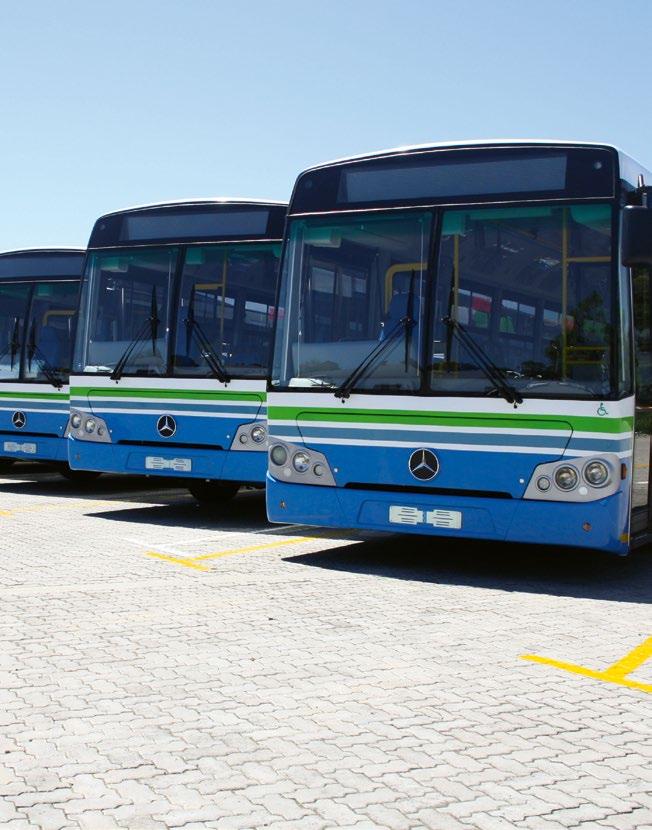
After returning to the Western Cape, Darryl became the first Black senior manager in the then Department of Transport and Public Works, later serving as acting Head of Department. He subsequently took the role of Chief Director: Public Transport, where he helped negotiate the establishment of the first non-metro formalised public transport system in George – the now well-known Go George bus service.
“That experience reaffirmed my belief in the role of the public service: to bring practical solutions to real people’s lives, often quietly, without applause,” he says.
In 2014, a phone call from former Head of Department, Joyene Isaacs, led Darryl to join Agriculture – a move he described as life changing. “I accepted with humility, curiosity and a deep sense of responsibility,” he reflects. “Agriculture gave me renewed purpose.”
Learn more!
Scan the QR code or visit www.gogeorge.org.za to view GO GEORGE routes, schedules and passenger information.
Did you know?
GO GEORGE is South Africa’s first non-metro integrated public transport network, launched in 2014 to provide safe, reliable, affordable and accessible scheduled bus services for George residents. Darryl helped negotiate the establishment of this pioneering system, which became a practical example of public service improving daily life.
Watch this!
Scan the QR code or visit https://tinyurl.com/2xhyfkzy to learn more about South Africa’s first non-metro integrated public transport system, including passenger information, route updates and community stories.
The Order of Agricultural Merit (Ordre du Mérite agricole) is awarded by the French Republic in recognition of outstanding service to agriculture. Established in 1883, it was originally second only to the Legion of Honour in France’s order of precedence.

As Deputy Director-General, Mr Jacobs became known for his calm leadership style, integrity and commitment to public service. He viewed leadership not as status, but as responsibility. “Being appointed Deputy Director-General was never something I took lightly,” he says. “I understood it not as a rank, but as a responsibility – to lead with integrity, to protect institutions and to serve without fear or favour.”
“Public service, when done honestly, is one of the most meaningful callings there is.”
During the Covid-19 pandemic in 2020, Darryl became critically ill and was admitted to ICU – an experience that gave him renewed perspective.
“During 2020 I thought my career was over when I was taken up in ICU with Covid,” he shares. “Clearly God was not finished with me yet.”
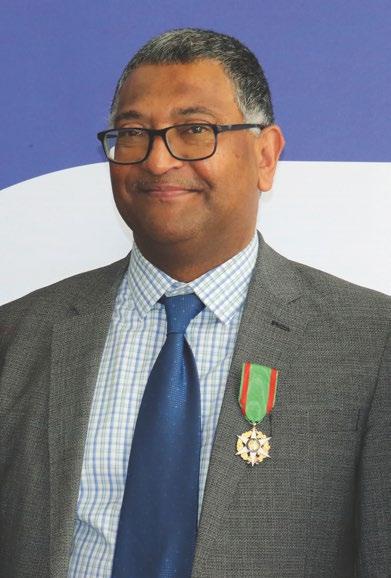
In 2022, Darryl received one of the highest honours of his career when the French Government bestowed upon him the title of Knight in the Order of Agricultural Merit.
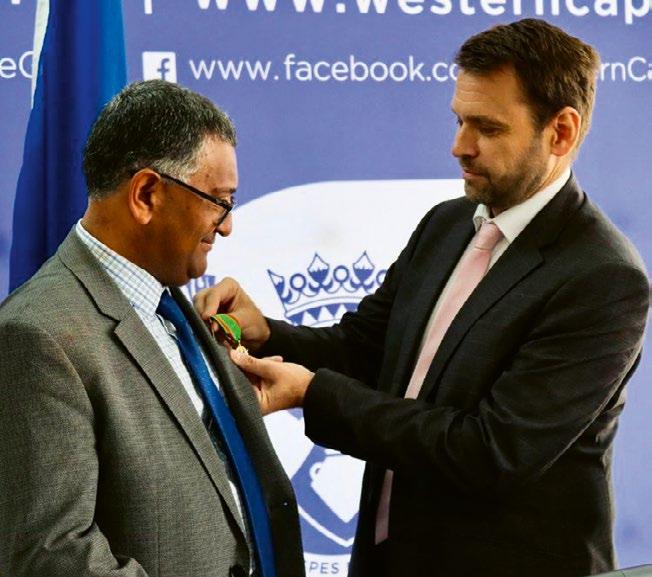
Established in 1883, the award recognises exceptional contributions to agriculture. True to character, Darryl accepted the honour with humility. “I accepted it not as a personal achievement, but as recognition of the collective work of this department, this province and this country,” he says.
As he steps into retirement, Darryl leaves behind a legacy of principled and compassionate leadership.
“If I leave anything behind, I hope it is the belief that leadership can be principled, kind and firm at the same time,” he reflects. “That progress is possible. And that public service, when done honestly, is one of the most meaningful callings there is.”
The department thanks Darryl for his years of dedication and leadership and wishes him everything of the very best for the journey ahead. AP
Darryl Jacobs, Deputy Director-General of the Western Cape Department of Agriculture, receives the French Order of Agricultural Merit in recognition of his contribution to agriculture.
From strength to strength
An Overberg beekeeper thrives through good financial management and government support
by Mzwanele Lingani & Hezekile Xovula



IIn the heart of the verdant Overberg region, beekeeper Jakobus Hansen is steadily transforming his passion into a thriving and sustainable agribusiness. His journey reflects a powerful combination of personal determination, sound financial management and ongoing support from the Western Cape Department of Agriculture (WCDoA), particularly through Programme 6: Agricultural Economic Services and Programme 3: Agricultural Producer Support and Development.
“The programme supports agricultural transformation while contributing to economic growth, employment and rural development.”
Beyond his beekeeping enterprise, Jakobus is formally employed and maintains a strong relationship with his employer. This partnership has proved invaluable, with his employer granting him access to land for his beehives through a long-term lease agreement. He is also permitted to host business meetings at the workplace; a practical demonstration of mutual trust and support that has helped strengthen his growing enterprise.
Photo © Cathy Withers
Agriculture Programme 6:
Agricultural Economic Services (AES) focuses on strengthening the economic sustainability and competitiveness of the agricultural sector across the Western Cape. The programme supports farmers, agribusinesses and agro-processing enterprises through economic advisory services, market access support, value-chain development and sector intelligence.
Core focus areas include
Production economics and farm business planning.
Marketing support for agri-businesses.
Agro-processing development and value addition.
Economic research, statistical analysis and sector reporting.
Broad-Based Black Economic Empowerment (B-BBEE) advisory support. Information dissemination to guide planning and investment decisions.
The programme also assists producers in improving profitability, identifying new markets and strengthening resilience in a changing agricultural economy. According to departmental performance reporting, the programme regularly supports agri-businesses with marketing services, production-economic support and agroprocessing capacity building initiatives.
Programme 3: Agricultural Producer Support and Development (APSD) represents the core farmer-support and agricultural development component of the Western Cape Department of Agriculture. The programme is primarily geared towards
supporting smallholder and developing farmers, while also strengthening broader agricultural transformation and food security initiatives within the province.
The programme provides
On-farm producer support services.
Agricultural development and mentorship initiatives. Commodity-based support programmes.
Food production support for vulnerable households. Infrastructure and rural development support. Institutional capacity building for land reform beneficiaries. Farmer support through partnerships such as Casidra SOC Ltd.
The APSD programme is designed to improve productivity, expand market participation and strengthen the longterm viability of emerging agricultural enterprises. The Western Cape Government notes that the programme supports agricultural transformation while contributing to economic growth, employment and rural development.



A - Z of Services
To download scan the QR code or visit https://tinyurl.com/mpjweneb
Strengthening the financial foundation
In recent years, Jakobus has made notable progress in strengthening his financial management skills. With guidance from the WCDoA on recordkeeping and business management practices, he has developed a clearer
understanding of cash flow management, expense tracking and strategic planning for sustainable growth.
This improved financial discipline enabled him to achieve a significant milestone: settling his income tax obligations with the South African Revenue Service (SARS). By bringing his tax affairs up to date, he has placed his business in good standing and positioned it for future opportunities. More importantly, this achievement reflects a profitable and well-managed enterprise capable of meeting its statutory obligations.
A business built on smart decisions
A defining feature of Jakobus’ success has been his commitment to reinvesting in his enterprise. He has steadily expanded his operations by acquiring additional beehives, tools and beekeeping equipment.
This proactive approach has increased both his honey production and his capacity to provide pollination services.
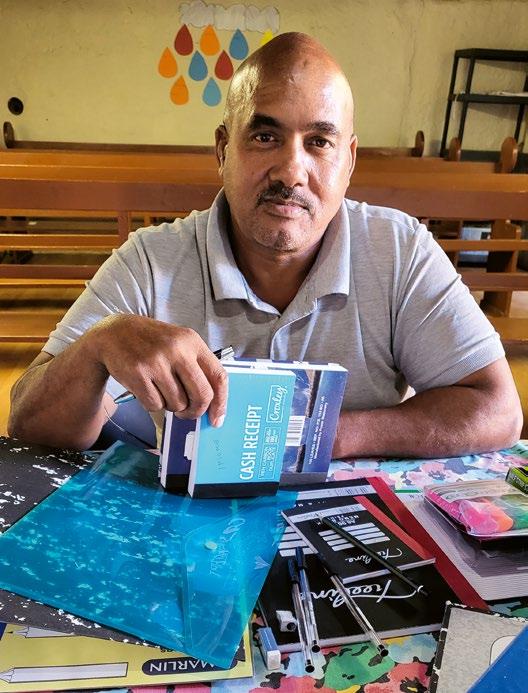
Jakobus Hansen sorting out his admin.
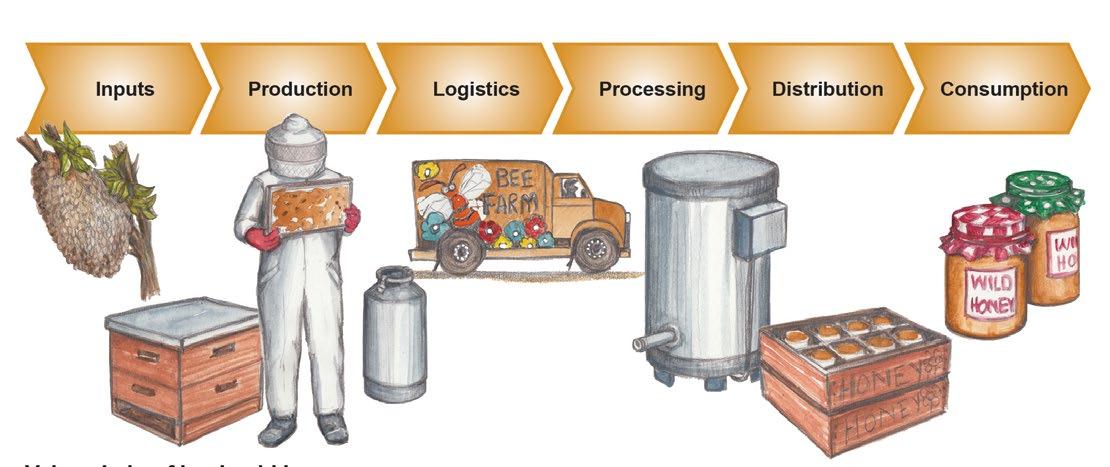
Value chain of honey.
Illustration by Ronelle Oosthuizen.
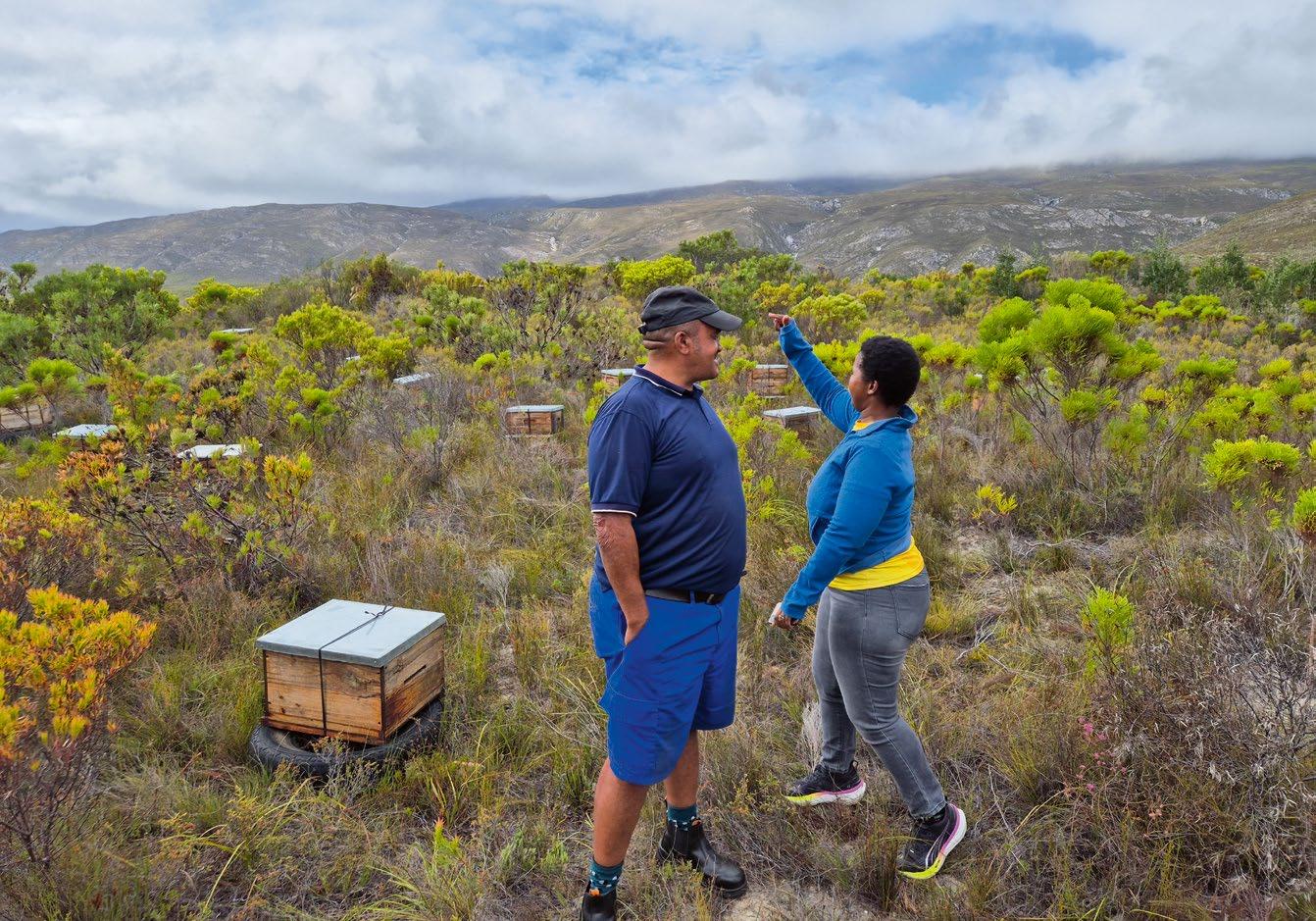
Currently, holds several pollination contracts that generate a stable revenue stream while ensuring a reliable market for his services.
By diversifying his income between honey sales and pollination services, he has strengthened the long-term sustainability and resilience of his business.
“By strengthening his financial management skills and reinvesting in his enterprise, Jakobus has built a resilient business.”
Recognising the importance of formalisation, Jakobus registered his business in early 2025. This strategic move has opened doors to opportunities in both the private sector and governmentsupported programmes. Demonstrating his commitment to growth, he applied for support through the Comprehensive Agricultural Support Programme (CASP). He expressed willingness to co-invest financially in purchasing a vehicle to expand his operational capacity. His readiness to contribute his own resources signals strong ownership and business confidence.
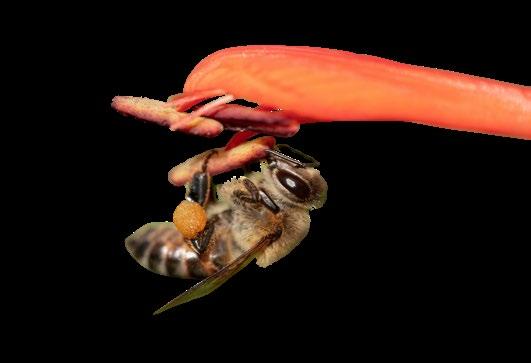
Cape honeybee (Apis mellifera capensis) – a vital contributor to Western Cape agriculture, yet increasingly pressured by habitat loss, pesticides, disease and changing climate conditions.
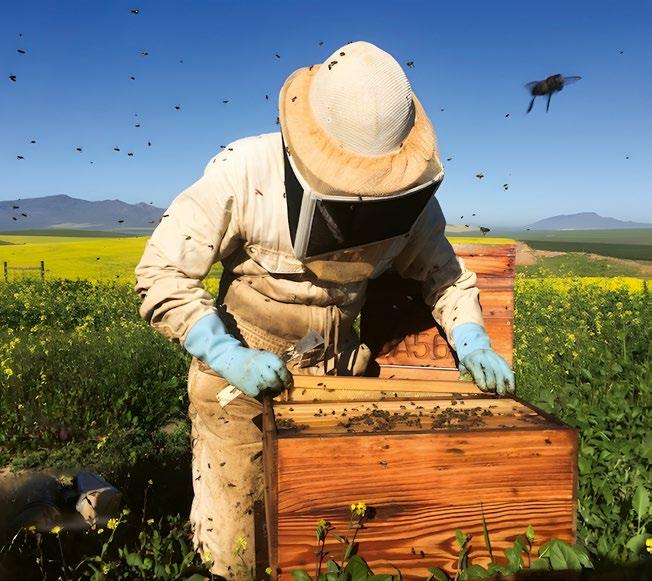
Jakobus Hansen and his bookkeeper taking stock of his beehives.
A strong partnership with the WCDoA
Throughout his journey, Jakobus has maintained a close working relationship with the WCDoA, regularly seeking advice on financial planning, market access, enterprise development and operational improvements. His openness to learning and appreciation for the Department’s advisory support have fostered a productive and collaborative partnership.
His story reflects the WCDoA’s broader mandate: equipping farmers with the knowledge, skills and resources needed to build competitive, sustainable agricultural enterprises.
“Jakobus’ journey demonstrates how practical support, sound business planning and a willingness to learn can help emerging farmers.”
Did you know?
Honey bees play a critical role in South African agriculture. According to the Western Cape Bee Industry Association, many agricultural commodities depend on honey bees as insect pollinators, while the South African National Biodiversity Institute (SANBI) notes that more than 50 different crops in South Africa rely on insect pollination. This makes managed pollination an important income stream for beekeepers such as Jakobus Hansen – and a vital service for producers who depend on healthy pollinator activity to secure crop yield and quality.
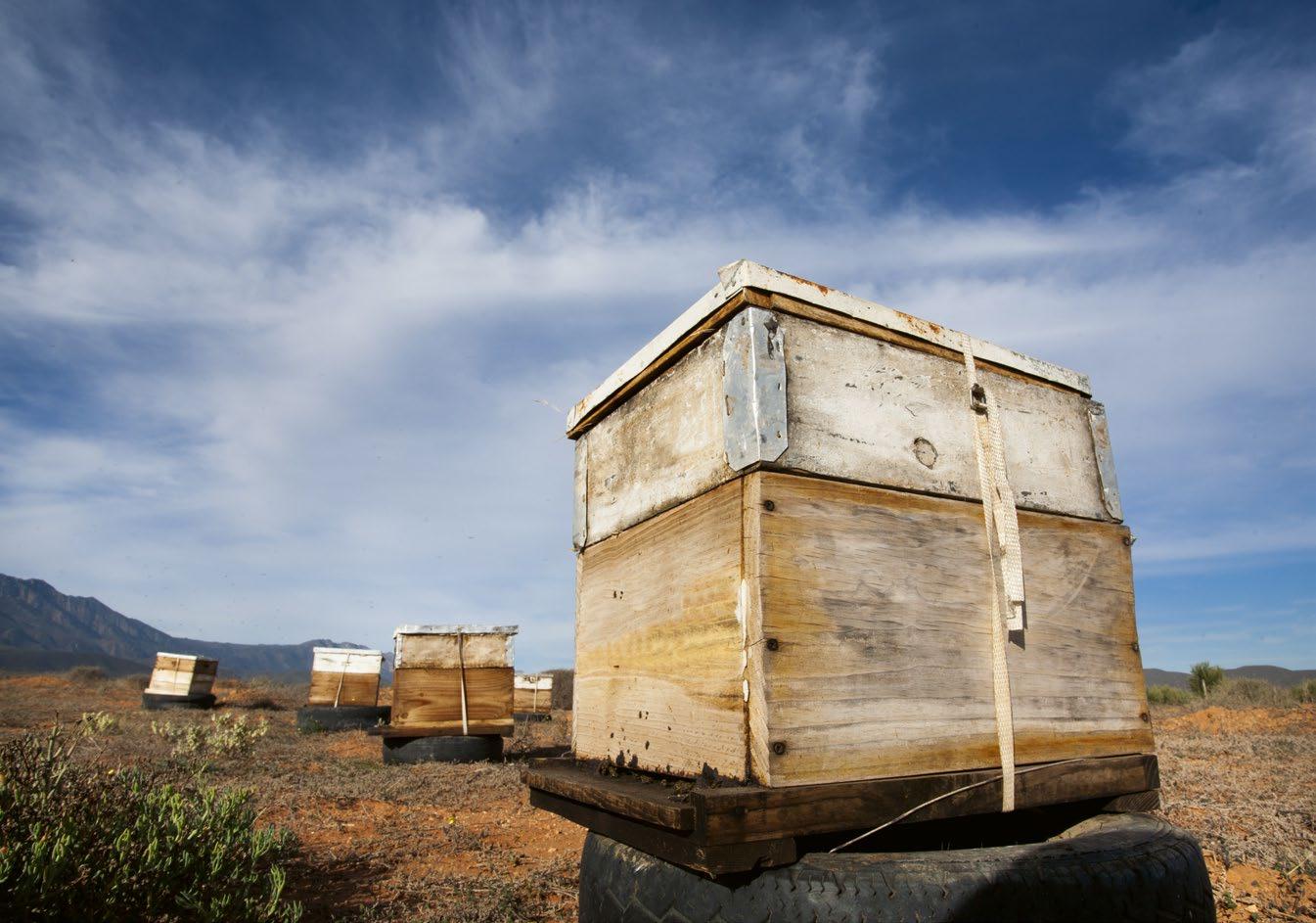
Beehives placed for the pollination of vegetable and fruit crops in the Nuy Valley, Breede River area.
Photo © Danie Nel
Learn more!
Scan the QR code or visit https://tinyurl.com/4v5yrjrc to read the Western Cape Bee Industry Association’s Pollination Guidelines & Contracts.
As Jakobus continues to grow his beekeeping operation and strengthen his business foundation, he stands as a compelling example of how determination, sound management and institutional support can transform a small enterprise into a resilient agribusiness success story. AP
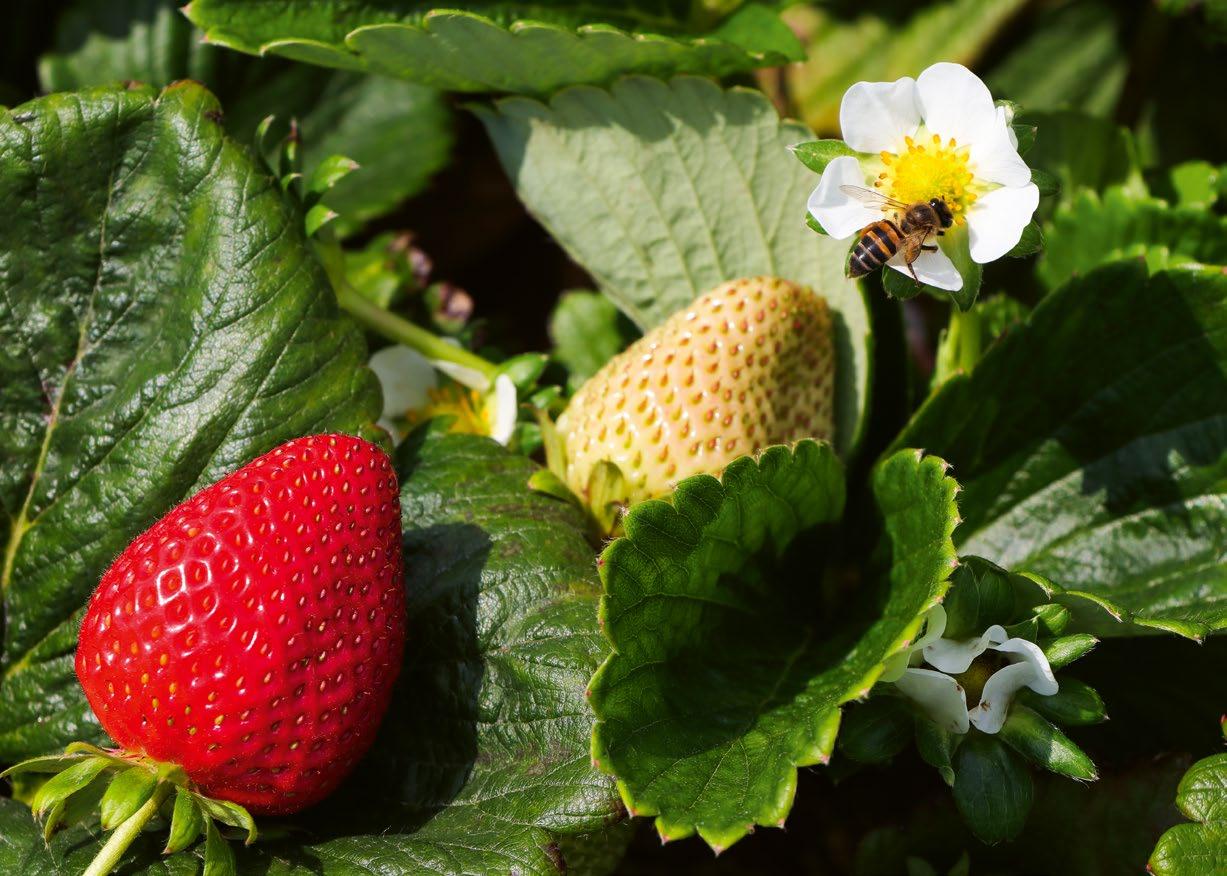
Cape honeybee (Apis mellifera capensis) pollinating a strawberry flower – a small act with significant value for agricultural production.
Photo © Jj Van Ginke


Opening doors, growing futures
by Mary James
AAgriculture has always been about the future.
Every seed planted, every animal bred, and every innovation adopted is ultimately an investment in what comes next. Yet perhaps the most important investment any sector can make is in its people –particularly its young people.
Across South Africa, youth unemployment remains one of our greatest challenges. While statistics tell an important story, they do not capture the ambitions, ideas
and determination of the young people behind the numbers. They do not show the young woman from a rural community attending an agricultural exhibition for the first time. They do not show the graduate intern stepping into a boardroom, discovering that her voice belongs there too.
For the Western Cape Department of Agriculture (WCDoA), youth development is about far more than creating employment opportunities. It is about creating access. Access to information.
Access to skills. Access to networks. Access to experiences that allow young people to imagine possibilities they may never have considered before.
This philosophy is reflected in the department’s youth development initiatives, particularly through the External Development Initiatives (EDI) programme and the Agricultural Education and Training (AET) offerings at the Elsenburg Agricultural Training Institute.
Through scholarships, bursaries, internships, graduate placements and workplace learning opportunities, young people are exposed to the many career pathways available within agriculture.
“The most important investment any sector can make is in its people – particularly its young people.”
In the previous reporting period alone, the department appointed 241 interns, exceeding its annual target of 170. This reflects a deliberate commitment to investing in the next generation of agricultural professionals, entrepreneurs and leaders.
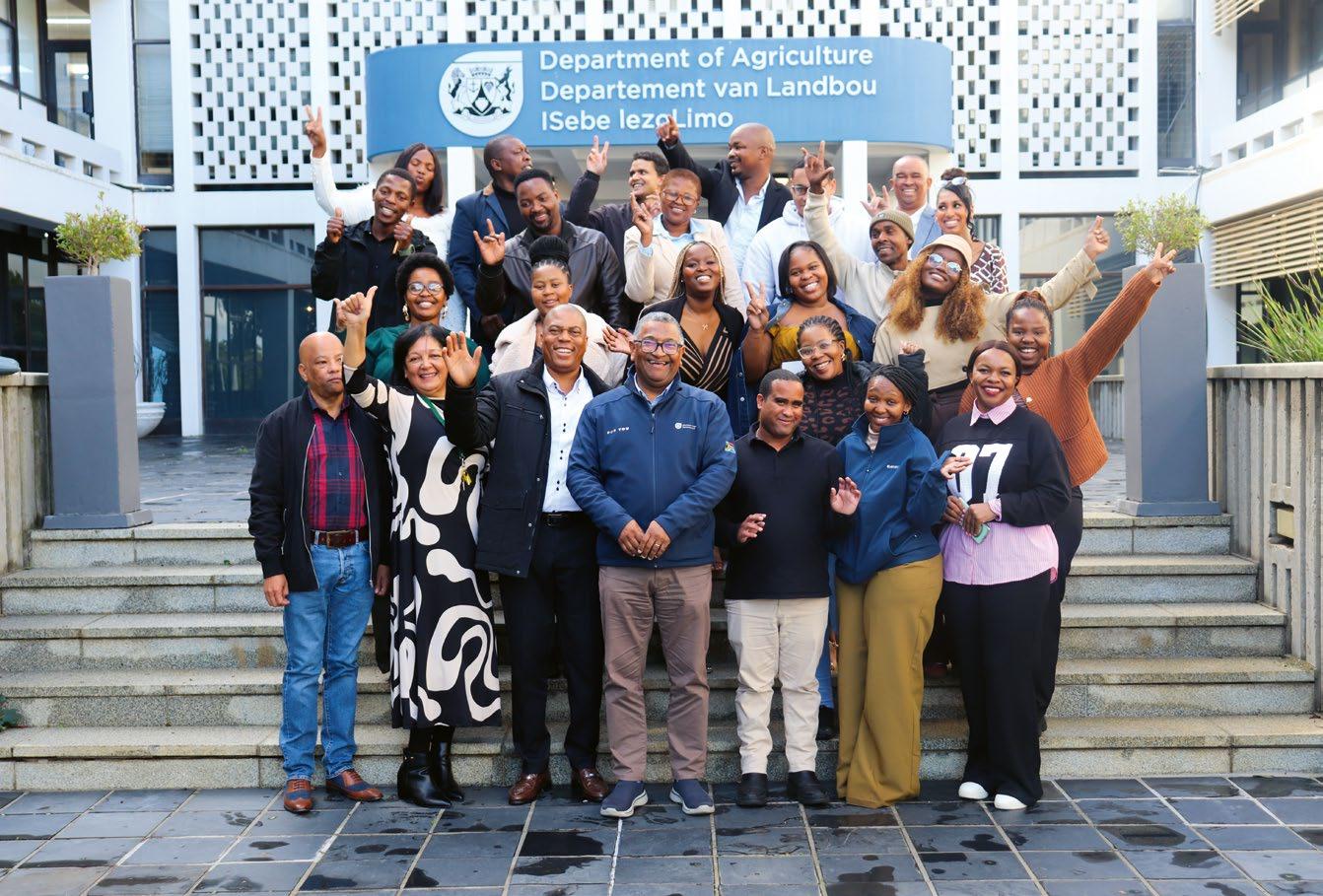
An excited group of graduate interns.
Equally important is ensuring that young people are aware of the opportunities available to them. Through annual career expos hosted in different rural nodes of the province, the department, in partnership with the Cape Career Exhibition Association (CCEA), brings together educational institutions, industry representatives and employers to expose learners to a wide range of career pathways, both within agriculture and beyond. For many learners, these engagements provide their first direct interaction with the world of work and the possibilities it holds.
Yet numbers only tell part of the story.
Sometimes the impact of a programme can be seen in something far less easurable – confidence.
“The most important crop we can grow is the next generation.”
As a centre of agricultural excellence, the Western Cape Department of Agriculture’s Programme: Agricultural Education and Training (Elsenburg College), empowers young people with the knowledge, skills, and confidence to pursue careers and entrepreneurial opportunities in agriculture, strengthening food security, creating jobs and supporting economic growth across the province.
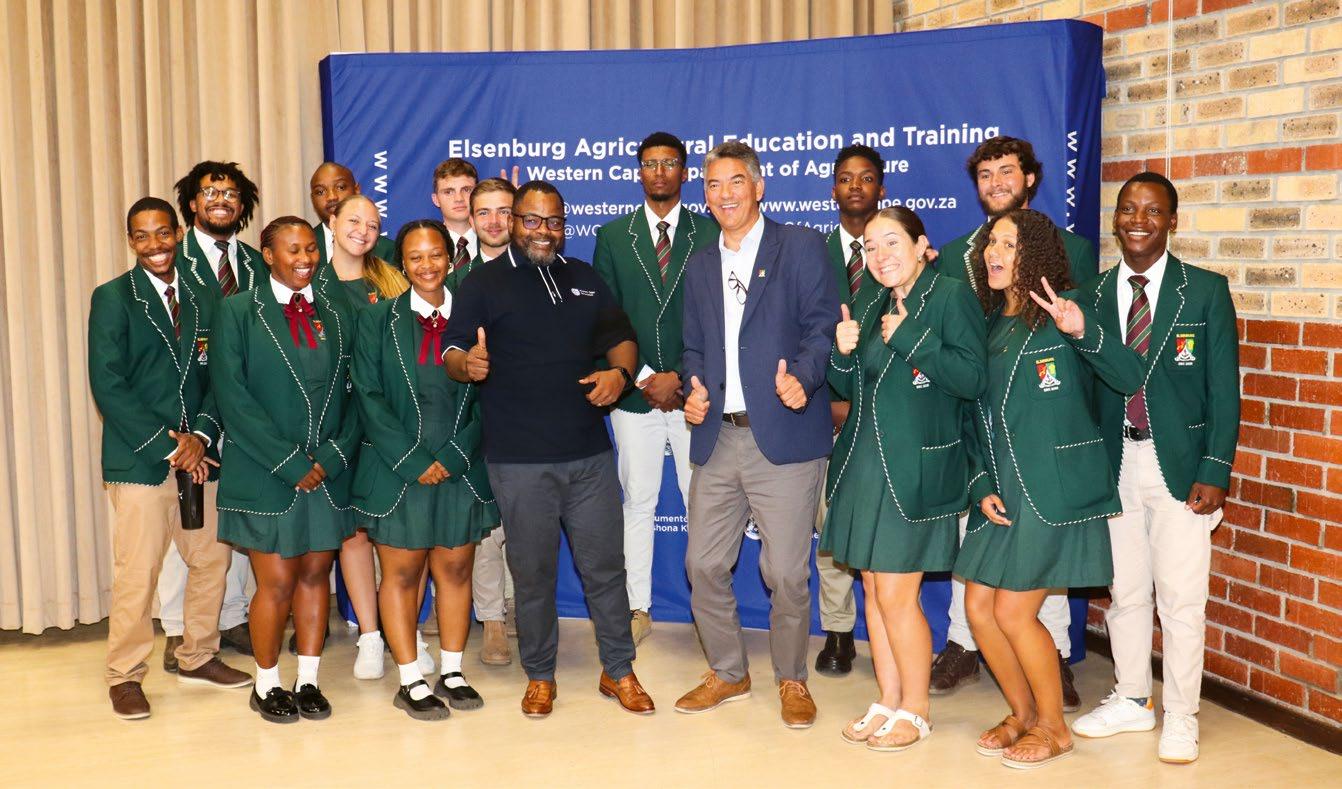
The 2026 Student Representative Council of the Elsenburg Agricultural Training Institute, with Dr Mogale Sebopetsa (Head of Department) and Granville Stander (College Principal).


Esmarelda Jantjies
For Esmarelda Jantjies, participation in the Department's EDI programme opened doors to opportunities she had never imagined. Through attending events such as NAMPO Cape, World Food Day and the Saai Karoo Agricultural Festival, she was exposed to an industry that suddenly felt more accessible and more achievable.


Ash-lynn Speelman
For Ash-lynn Speelman, a graduate intern at Elsenburg, the journey has taken her into spaces many young people seldom get the opportunity to experience. From participating in the Burgundy Exchange Programme to serving as a Protocol Officer during South Africa’s G20 engagements, she has gained first-hand experience of leadership, governance and international collaboration.
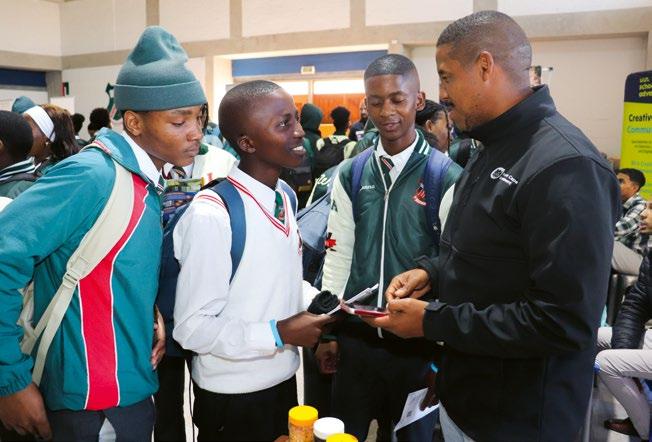
Lorenzo Sebastian (Elsenburg Agricultural Training Institute) talks to learners about the courses offered at the College at a recent career expo.
“Their experiences may be different, but they point to the same truth: Exposure changes perspectives.”
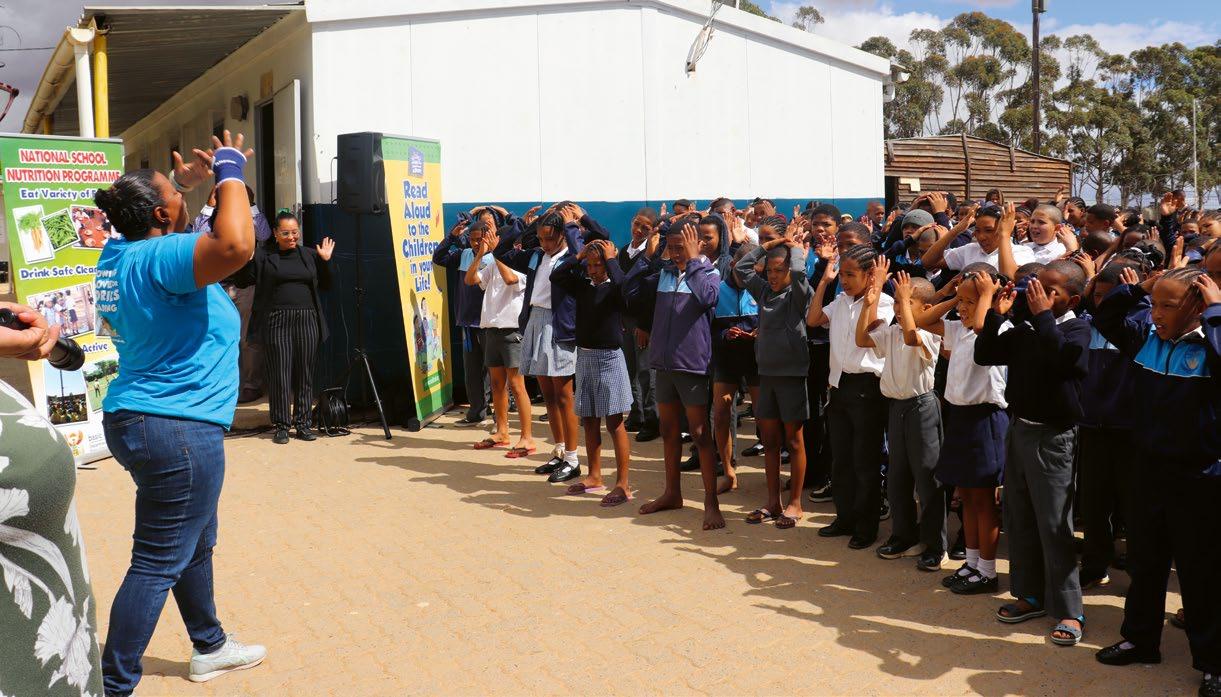
The WCDoA organises a schools programme annually as part of its World Food Day celebrations.
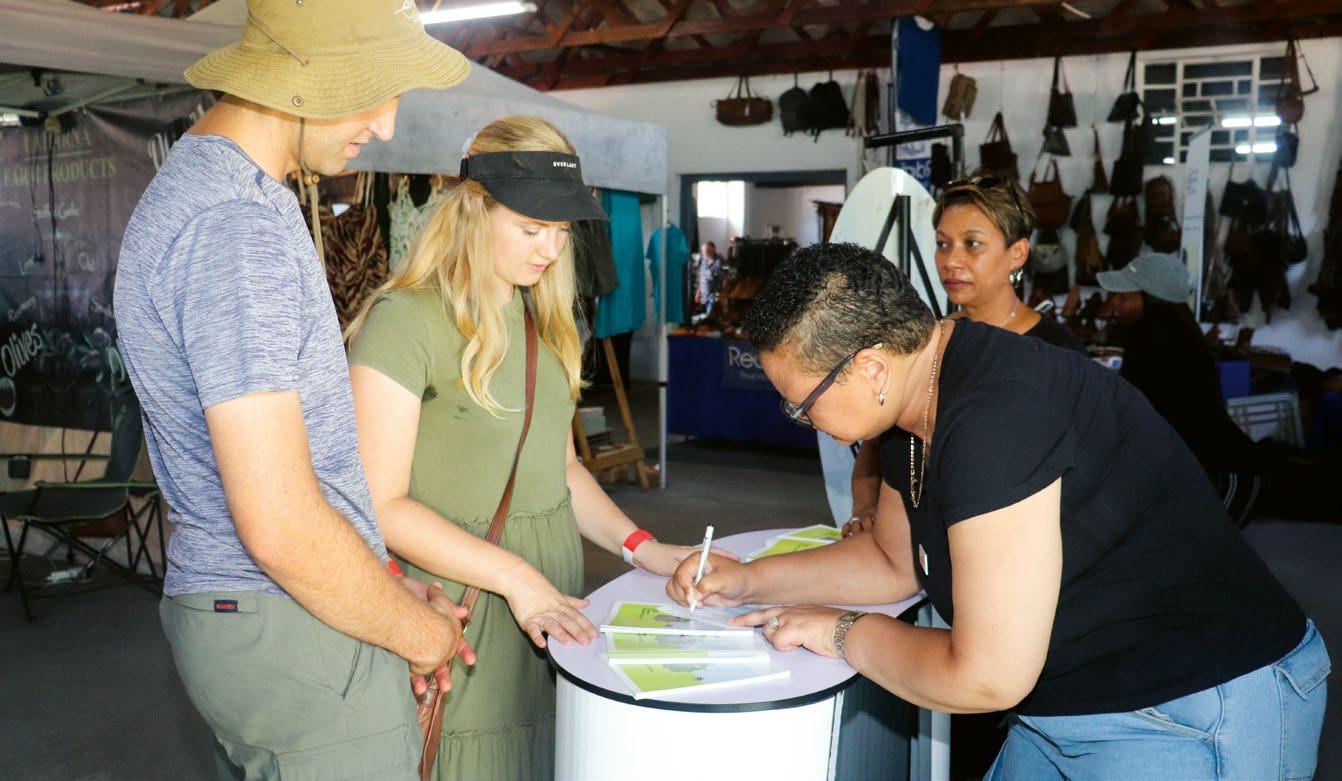
When young people are given opportunities to participate, contribute and be heard, they begin to see themselves differently. They stop viewing opportunities as something reserved for others and start recognising not only their own potential, but also the potential to grow their communities.
This is particularly important at a time when agriculture is evolving rapidly. Technology is reshaping farming practices. Climate change is requiring new approaches to production. Markets are becoming increasingly competitive and interconnected. The sector needs young people who can think differently, adapt quickly and bring fresh ideas to complex challenges.
The conversation therefore cannot be limited to jobs alone.
Employment remains important, but agriculture also offers opportunities
for entrepreneurship, innovation and enterprise development. The future of the sector will depend not only on young people finding work, but on young people creating work.
This requires more than technical training. It requires mentorship, support, access to information, exposure to industry networks and opportunities to develop leadership skills. It also requires a willingness to listen to young people and to create spaces where their perspectives are valued.
Perhaps that is one of the most important lessons emerging from the department’s youth initiatives. Young people do not simply want a seat at the table; they want the opportunity to contriabute meaningfully to conversations about the future they will inherit.
Agricultural shows are valuable platforms to share information about agricultural careers.
Learn more!
Scan the QR code or visit https://tinyurl.com/5yxhuzv5 to read more about the EDI: Agricultural Internship Programme.
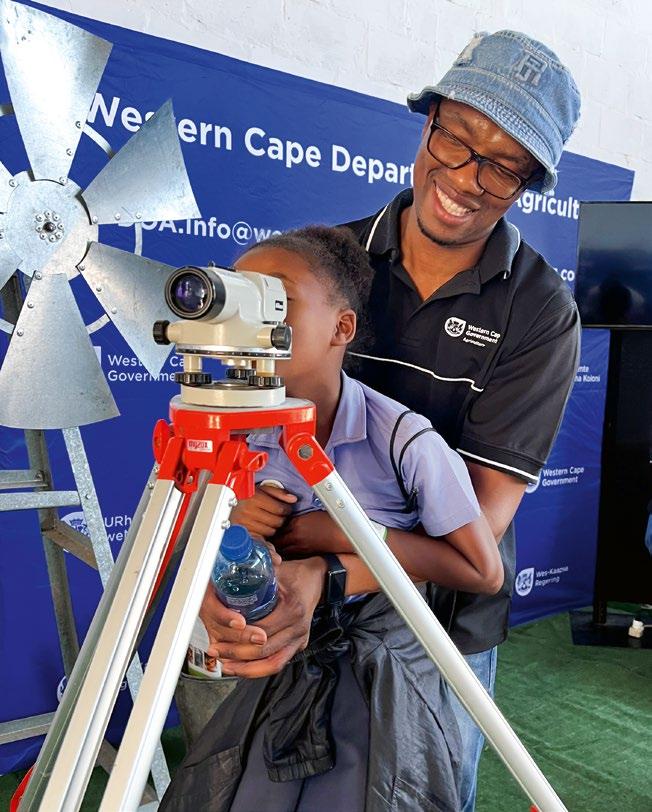
The EDI Agricultural Internship Programme focuses on experiential learning, enabling graduates to apply their academic knowledge in real-world agricultural, scientific, technical and administrative environments while contributing to the development of the sector.
As agriculture continues to navigate a rapidly changing world, the voices of young people will become increasingly important. Their ideas, energy and innovation will help shape the future of the sector.
By opening doors today, we are doing more than developing careers. We are nurturing confidence, cultivating leadership and creating opportunities for young people to become active participants in building a thriving agricultural sector.
For the future of agriculture is not something we are waiting for – it is already here, and it is young. AP
For more information, contact Mary James: mary.james@westerncape.gov.za
A glimpse through the lens today could become a career tomorrow. Through career expos and handson demonstrations, the Western Cape Department of Agriculture is exposing young minds to the diverse opportunities within agriculture and the broader agri sector.
Values, character, direction
The foundation of agricultural excellence
by Dr Mogale Sebopetsa


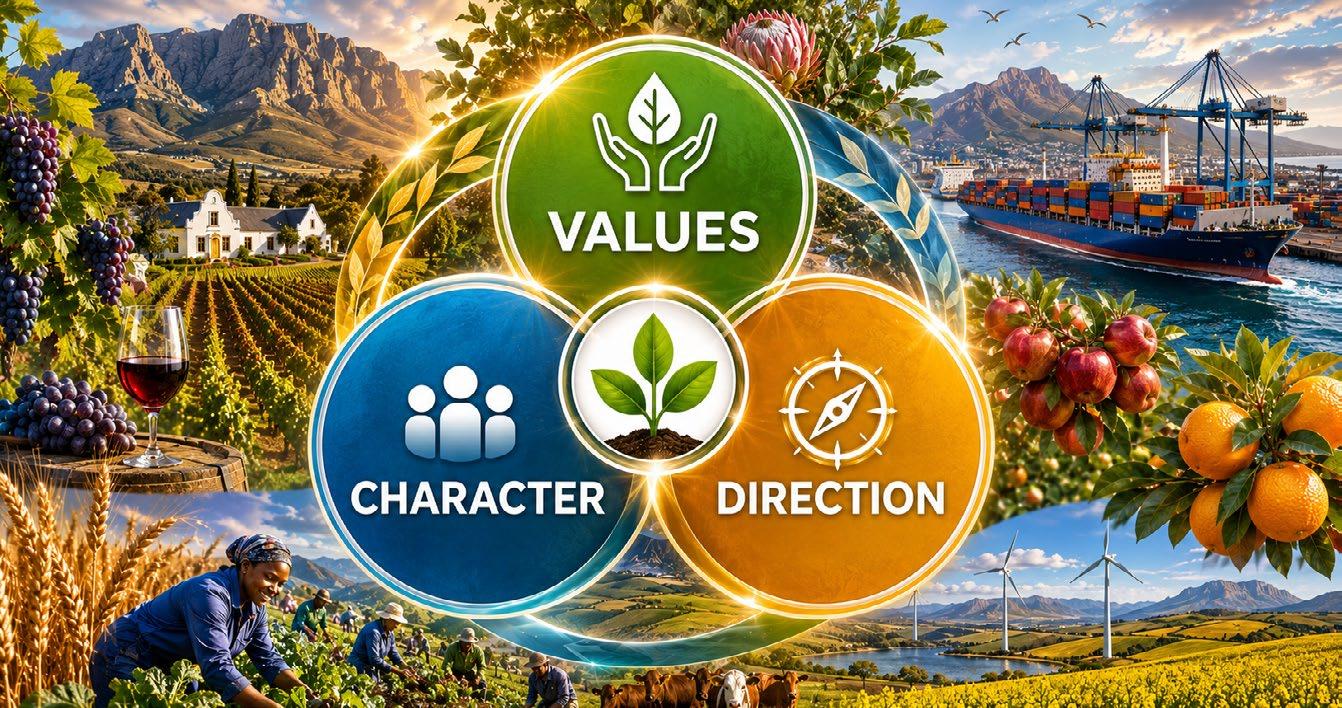
TThe question is often asked: What sustains the Western Cape agricultural sector as an economic powerhouse?
While outputs and conditions matter, they are ultimately expressions of something deeper, an alignment of values, character and direction.
The Values, Character and Direction (VCD) Framework rests on a simple premise: Organisational performance flows from institutional identity. What an institution achieves is shaped by what it believes and how those beliefs are lived over time.


Learn more!
Scan the QR code or visit https://tinyurl.com/ vbje795a to download the Western Cape Provincial Strategic Plan 2025–2030 to explore the province’s long-term vision, priorities and strategic goals for growth, resilience and service delivery.
The conceptual logic of the VCD Framework can be illustrated as follows:
Values
What are our beliefs, ethical principles and normative commitments?
Character
Institutional culture, leadership behaviour and governance practices (building a more human government).
The Western Cape Government has adopted a more “human” vision, namely, to build a government that people trust. This is grounded in values such as caring, competence, accountability, integrity, innovation and responsiveness – colloquially known as C2AI2R.
Values are not just slogans, but ethical commitments that guide behaviour, leadership and decision-making. When consistently practiced, these values shape culture, an organic pattern of shared meaning and behaviour.
From this culture emerges character Institutional character is what endures under pressure; it sustains integrity and enables coherence in complexity. It is the foundation of good governance and the driver of meaningful service delivery outcomes.
Direction, then, is not separate from identity. It reflects how an institution understands its purpose and sets its priorities. The Provincial Strategic Plan
Direction
Vision, strategy, policy choices and service delivery outcomes (where the organisation is headed and delivering positive outcomes), public trust and legitimacy.
serves as an expression of this intent, guiding action in alignment with values and character.
Through the VCD Framework, the Western Cape Department of Agriculture remains relevant by intentionally fostering partnerships and collaboration, therefore creating an ecosystem to strengthen service delivery. It also nurtures a shared sense of purpose: that agriculture is not only about production, but about feeding the people, about the economy, supporting livelihoods, creating opportunities and stewarding resources.
This purpose builds accountability, strengthens integrity, and enables innovation and responsiveness. Ultimately, the sector’s strength is cultivated, rooted in values, shaped into character and guided by direction. AP
For more information, contact Dr Mogale Sebopetsa: mogale.sebopetsa@westerncape.gov.za
Figure 1: Values, Character, and Direction (VCD) Framework (own model).
Cultivating agripreneurs Shaping the future through innovation
by Zenovia Parker



AAs South Africa marks Youth Month in June, the focus naturally turns to creating meaningful opportunities for young people. At the Elsenburg Agricultural Training Institute (EATI), this commitment is taking shape through the development of the AgriFood Innovation Hub. It is an initiative designed not only to drive innovation, but to actively invest in the growth and success of students.
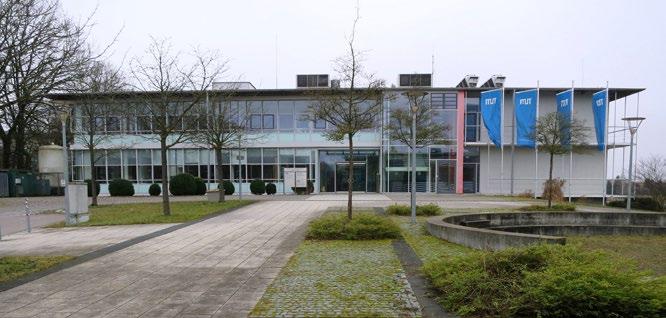
Following the 2025 international delegation to Munich, led by Dr Ivan Meyer, Minister of Agriculture and Economic Development and Tourism, valuable insights were gained from institutions such as the Technical University of Munich Venture Lab and the Weihenstephan-Triesdorf University of Applied Sciences, where strong links between academia, industry and entrepreneurship have enabled students to transition seamlessly into the world of innovation and enterprise.

Learn more!
Scan the QR code or visit https://www.tum-venture-labs. de/labs/food-agro-biotech/ to explore how the TUM Venture Lab Food Agro Biotech supports innovation in agriculture, food systems and biotechnology by helping researchers, students and start-ups transform scientific ideas into real-world solutions.
Watch this!
Scan the QR code or visit https://tinyurl.com/yckd3963 to watch the video: “TUM Venture Lab Food Agro Biotech”. Published by TUM Venture Labs.
The TUM Food Chemistry Department building on the Weihenstephan campus in Freising, Germany.

The CSIR supports South African agriculture through science, technology and innovation. Its science engagement initiatives also help inspire and equip future farmers, agripreneurs and agricultural innovators.
Learn more!
Visit the official CSIR website: www.csir.co.za
Building on this foundation, a threeday workshop held from 7 to 9 April 2026 brought together key stakeholders, including government, academia and industry partners such as the Council for Scientific and Industrial Research (CSIR), Stellenbosch University and Casidra, to co-develop the conceptual framework and roadmap for the Hub.
At the centre of these discussions was a clear priority: empowering students and young graduates to thrive beyond the classroom.
The proposed Hub aims to go beyond traditional academic training by equipping students with practical skills in entrepreneurship, innovation and problemsolving. It creates real opportunities for students to turn ideas into viable ventures, supported by mentorship, incubation and exposure to industry challenges. In doing so, it begins to close the gap between education and employment.
Equally important is the role of industry. Strong partnerships with agribusinesses, investors and innovation
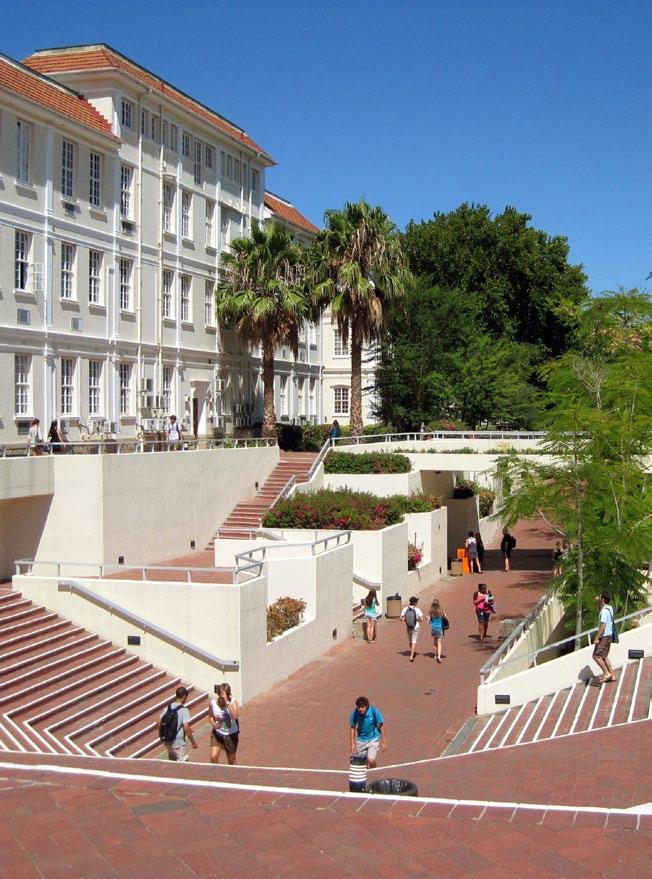
The Stellenbosch University campus is home to the Faculty of AgriSciences, a leading centre for agricultural education, research and innovation, with strong links to food systems, sustainability, biotechnology and the agricultural sector.
Learn more!
Scan the QR code or visit www.su.ac.za/en/faculties/ agrisciences to explore the Faculty of AgriSciences at Stellenbosch University.
networks will ensure that students are supported, guided and connected to real opportunities. Industry involvement not only strengthens the relevance of student innovation but also helps shape graduates who are ready to contribute meaningfully from day one. »
Did you know?
An employability study found that 68.1% of Elsenburg graduates aged 18–35 are more likely to be employed than the national average for their age group. Six months after graduation, many have already entered employment, internships, learnerships or entrepreneurial ventures.
From learning to earning: Growing agricultural opportunity
The establishment of the AgriFood Innovation Hub marks the first step in a broader rural wealth creation journey. At its heart is a simple but powerful idea: supporting students and graduates to move beyond job seeking and into job creation.
By nurturing entrepreneurial thinking at college level, the Hub creates space for young people to start and grow their own agri-food ventures. And as these small businesses begin to take shape and scale, they don’t just change individual lives –they create employment, support local economies and bring new energy into rural communities.
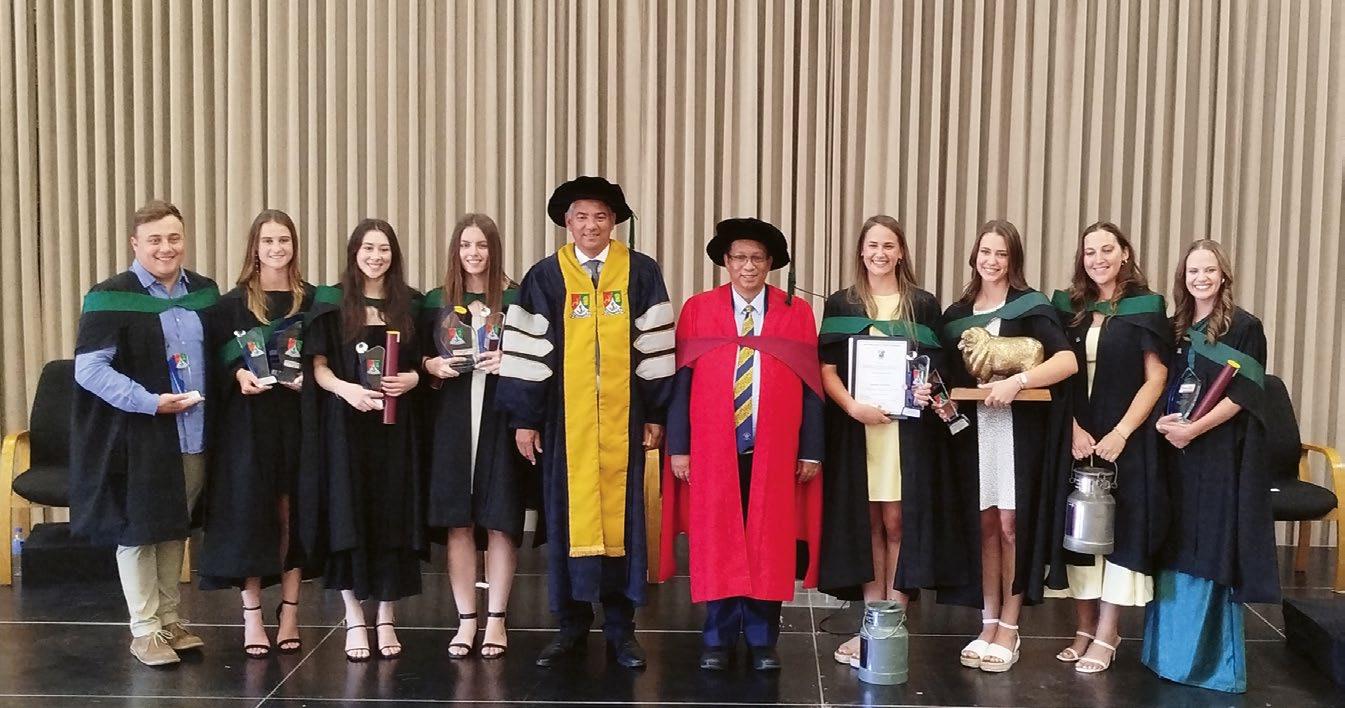
The Elsenburg Agricultural Training Institute Class of 2025 represents the next generation of agricultural professionals, innovators and agripreneurs. In 2025, Elsenburg awarded more than 220 qualifications, reinforcing its role in building skills, employability and innovation in the Western Cape agricultural sector.
Learn more!
Scan the QR code or visit https://tinyurl.com/y64w2asf to read about the 2025 Elsenburg graduation, where more than 220 qualifications were awarded and graduates were encouraged to champion innovation, sustainability and technology in agriculture.
Watch this!
Scan the QR code or visit https://tinyurl.com/4r22xu38 to watch the video: “Elsenburg College Video”. Published by the Western Cape Deparment of Agriculture.
Did you know?
A new generation of South African agripreneurs is reshaping agriculture through technology, sustainable farming, agroecology and value-added enterprises. Young farmers are increasingly combining food production with innovation, entrepreneurship and environmental stewardship to create new opportunities across the agricultural value chain.

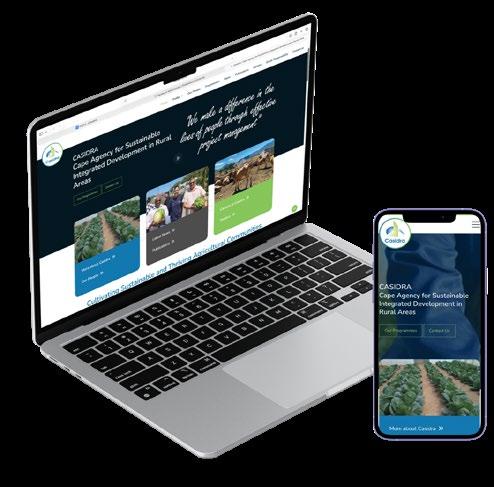
Casidra supports youth development, agricultural innovation and agripreneurship across the Western Cape through farmer support programmes, skills development, enterprise growth initiatives and partnerships that help emerging producers access opportunities, markets and sustainable livelihoods.
Learn more!
Scan the QR code or visit www.casidra.co.za to explore programmes focused on agricultural development, food security, enterprise support and rural economic growth in the Western Cape.
Learn more!
Scan the QR code or visit https://tinyurl.com/as4e9xrb to read the article on Food For Mzansi: “Youth in agriculture: The rise of South Africa’s agripreneurs”.
In this way, the impact of the Hub extends far beyond campus. It becomes a catalyst for inclusive growth where developing one student can ultimately uplift many others.
The Hub can also be seen as a dynamic living space for innovation where students, industry and researchers come together to test ideas, learn by doing and build solutions in real time. It is here, in this shared space, that confidence is built, networks are formed and futures are shaped.
Because at Elsenburg, growing the future of agriculture also means growing the people who will lead it. AP
For more information, contact Zenovia Parker: zenovia.parker@westerncape.gov.za


World Creativity and Innovation Day
by Arie van Ravenswaay
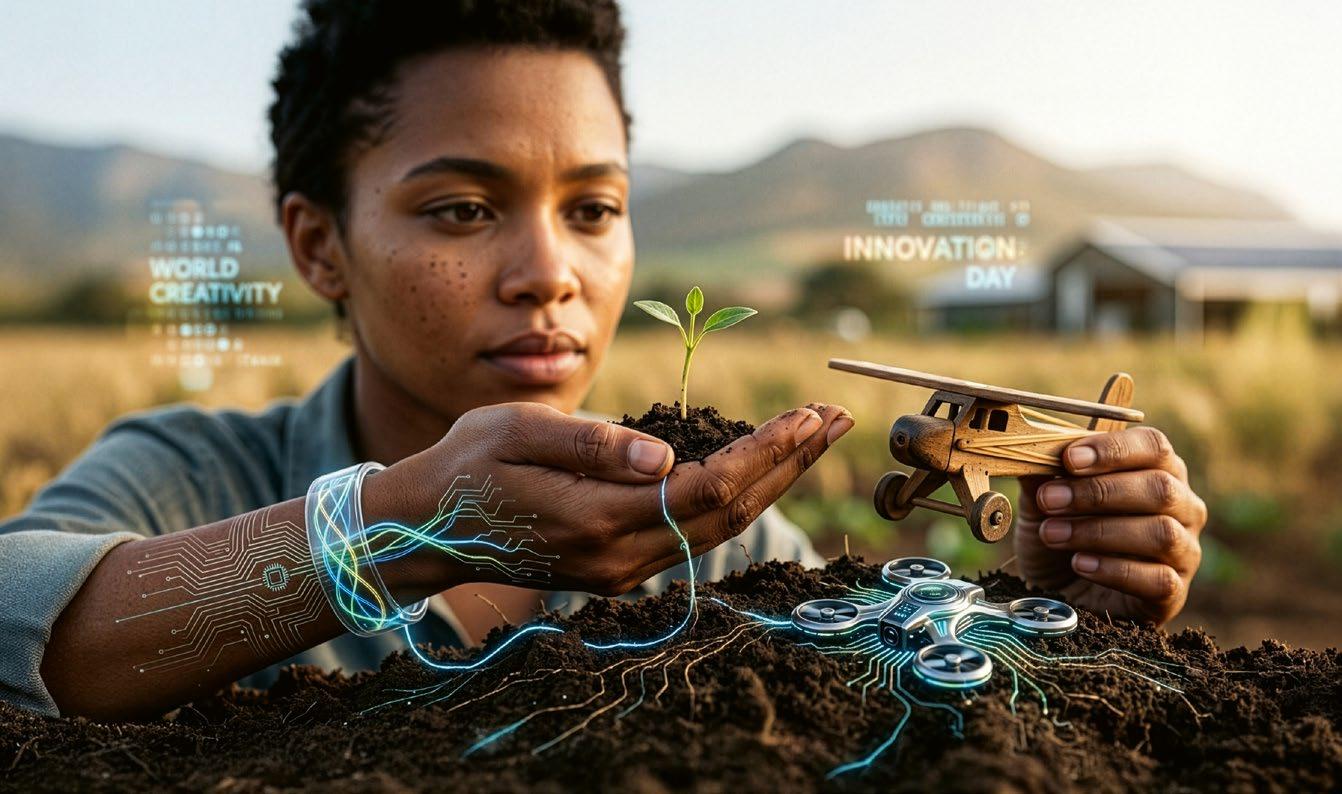
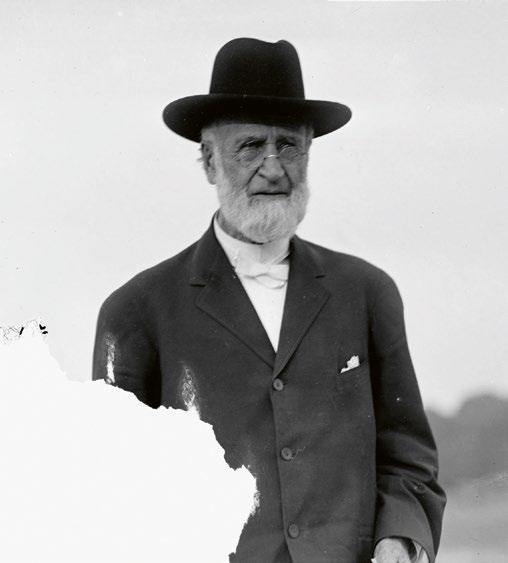
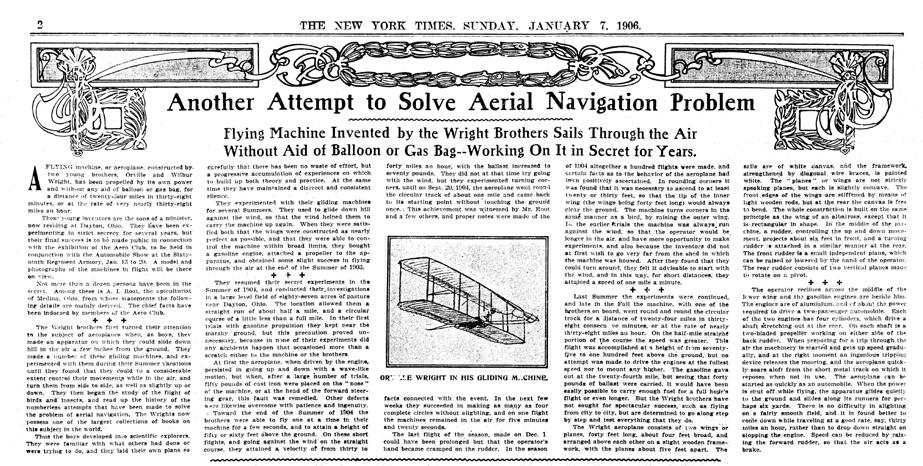
SSometimes we think of the innovators as the people changing the world, but we forget to think of the influencers that built that great mindset. Take, for example, the father of the Wright brothers, Milton Wright, a bishop in the Church of the United Brethren in Christ. He was not an engineer. He was not a pilot. He was not a scientist. But he was something arguably more powerful – he was a cultivator of curiosity. He did not merely give his sons answers. He gave them problems. He gave them tools. He gave them space to think.
One of the most famous stories tells of a small rubber-band-powered helicopter toy he brought home for Orville and Wilbur Wright when they were boys. The toy flew briefly toward the ceiling before falling. Many children would have played with it until it broke. The Wright brothers did something different. They asked why it flew. They tried to build their own. They experimented. They failed. They improved. Milton Wright also encouraged debate at the dinner table. He allowed his children to question. He did not silence disagreement. He cultivated independent thought. He valued books. He valued inquiry.
Did you know?
Milton Wright was a bishop, not an engineer. His greatest contribution to aviation may have been creating a home environment where questions, debate and experimentation were encouraged. Historians often credit his support of curiosity and learning as a key influence on the Wright brothers’ success.
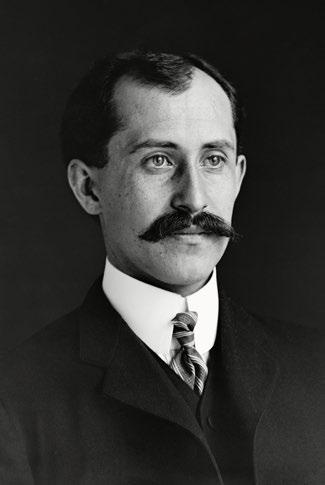
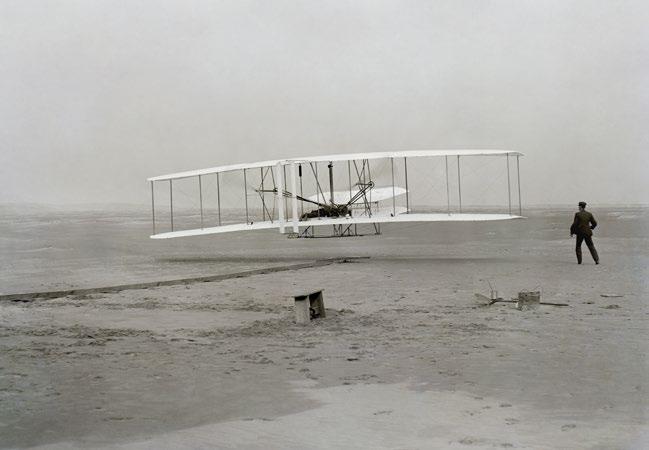
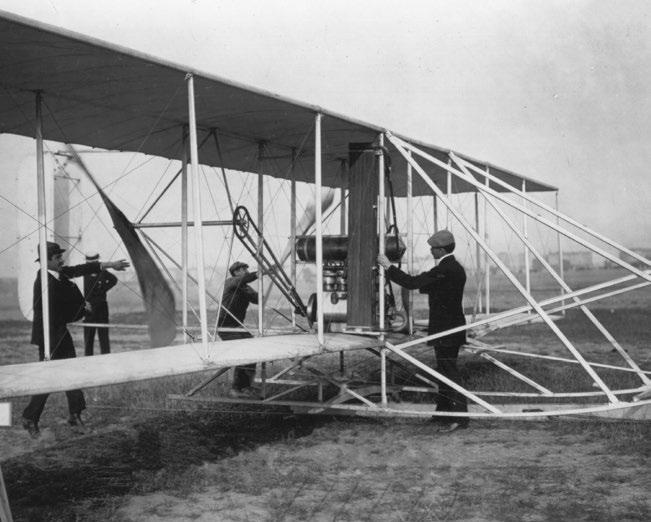
Orville Wright (1871 – 1948) , aged 34, whose first powered flight in 1903 helped launch the age of aviation.
Watch this!
Learn more!
Scan the QR code or visit www.nps.gov/wrbr/index.htm to explore the history of the Wright family at the official National Park Service Wright Brothers resources.
Scan the QR code or visit https://tinyurl.com/37c5vrv6 to explore videos from the National Park Service on the Wright brothers, the first powered flight at Kitty Hawk, the 1903 Wright Flyer and the legacy of innovation that transformed human flight.
He allowed his sons to take things apart and put them back together. He did not push them toward the predictable path of factory work. He nurtured their ability to observe, to analyse and to challenge what others assumed was impossible.
On 17 December 1903, at Kitty Hawk, the Wright brothers achieved powered flight. That moment did not begin on a windy beach. It began in a home where questions were welcomed.
That is the power of creative thinking.
Milton Wright (1838 – 1917) , father of Orville and Wilbur Wright, encouraged curiosity, independent thinking and questioning – qualities that helped shape two of history’s most influential innovators.
Wright Flyer – first flight The first flight of the Wright Flyer, 17 December 1903, with Orville Wright piloting and Wilbur Wright running at the wingtip. Photograph by John T. Daniels.
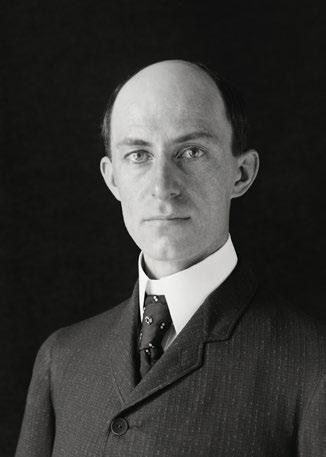
Wilbur Wright (1867 – 1912) , aged 38, whose engineering insight and persistence helped turn the dream of controlled flight into reality.
Creativity: The seed before the harvest
On 21 April 2026, as we celebrated World Creativity and Innovation Day, we were reminded that innovation does not start in laboratories – it starts in minds.
Agriculture has always required ingenuity. Farmers are natural innovators. They read the sky, they interpret soil, they adapt to drought, wind, pests, market shifts and technological change. They work with living systems that cannot be controlled; only understood and managed.
But there is a difference between reacting to a problem and rethinking it. Too often, when we face a challenge in agriculture, we look for a direct solution. A disease appears; we spray. Yields drop; we increase inputs. Costs rise; we cut somewhere else. These responses are necessary. But they are often linear.
Did you know?
Creative thinking asks a different set of questions:
• Are we defining the problem correctly?
• Is the system itself creating the bottleneck?
• Can we simplify the process rather than intensify it?
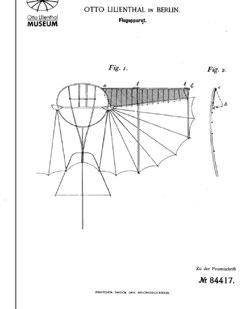
Otto Lilienthal's 1895 patent drawing for a flying apparatus. Lilienthal's pioneering glider experiments laid important foundations for the development of controlled flight.
Otto Lilienthal completed thousands of glider flights before his death in 1896 and is widely regarded as one of the pioneers of aviation. While many early inventors focused on power and lift, the Wright brothers succeeded by solving a different challenge: aircraft control. Their three-axis control system remains the foundation of modern aviation.
• Can we measure differently?
• Can we predict instead of react?
In many cases, the solution is not an addition but a redesign.
Learn more!
Scan the QR code or visit www.lilienthal-museum.de to explore Otto Lilienthal's patents and aviation research through the Otto Lilienthal Museum.
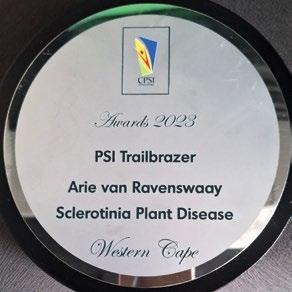
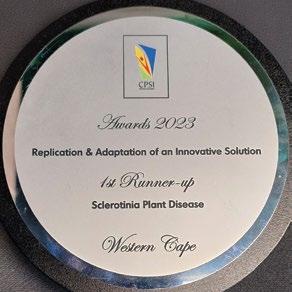
The Sclerotinia Camera project, led by Arie van Ravenswaay and Lizette Nowers, was recognised at the CPSI Awards for its innovative contribution to disease monitoring and precision agriculture.
The Western Cape: Creativity under pressure
In the Western Cape, agriculture operates under real constraints: water scarcity, climate variability, export pressures and increasing compliance standards. These pressures could limit progress. Instead, they have sharpened innovation.
South Africans have long been recognised for their resourcefulness. When resources are limited, thinking expands. When conditions are harsh, adaptation becomes instinctive.
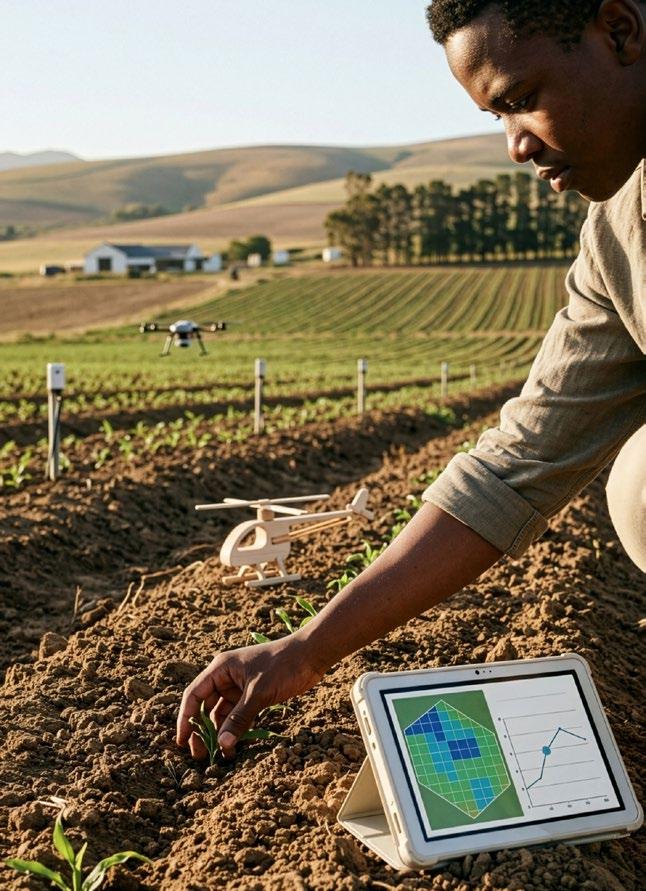
Within the Western Cape Department of Agriculture, this mindset has shaped practical innovation. Our work with multispectral drone systems, sensor networks, AI-integration and data platforms reflects a commitment not just to adopt global trends, but to contextualise them.
Learn more!
Scan the QR code or visit https://tinyurl.com/4cbm4w96 to read more about the Sclerotinia Camera. Also see the report in AgriProbe Vol. 22 No. 2, 2025.
The Sclerotinia camera project is a clear example. Instead of simply improving fungicide application, the deeper question was asked: How do we know precisely when intervention is necessary?
By reframing the problem around detection rather than reaction, the system reduced unnecessary spraying and improved decision-making. Creativity shifted the entire approach. Yet, we should not stop there. We need to look at other variables and adopt even better technology as it is introduced. Innovation is ever changing.
This is the pattern of meaningful innovation. It does not add complexity for its own sake. It removes uncertainty. It simplifies decisions and improves precision.
Sclerotinia Camera awards The Sclerotinia Camera project, led by Arie van Ravenswaay and Lizette Nowers, was recognised at the CPSI Awards for its innovative contribution to disease monitoring and precision agriculture.
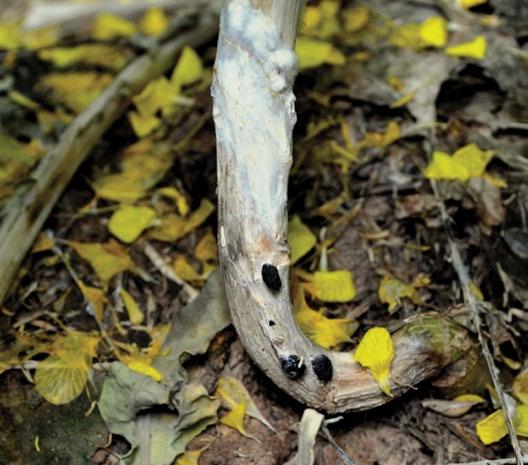
Severe infection on stem showing fluffy white fungal growth and sclerotes.
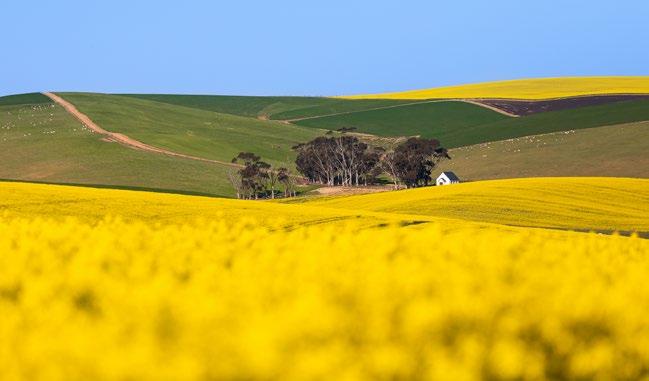
Canola fields in the Overberg region.
The Sclerotinia Camera project uses live image monitoring to detect conditions favourable for Sclerotinia stem rot in canola, helping producers make better-timed fungicide decisions. Images are captured every four minutes and refreshed hourly during flowering season.
Photo © Ciara Beard
Photo © Alta Oosthuizen

The psychology of agricultural problem-solving
Creative thinking in agriculture is not abstract. It is cognitive discipline. It involves:
• Observing patterns others miss.
• Challenging routine practices.
• Connecting biology with data.
• Integrating engineering with ecology.
• Repeatedly asking “why?”.
When a farmer notices uneven growth in a field, a linear approach might assume nutrient deficiency. A creative approach investigates soil variability, compaction layers, microclimates, irrigation distribution, pest pressure and historical yield maps. It connects variables.
This is where creativity and innovation intersect. Creativity generates alternatives. Innovation implements them with discipline.
Globally, agriculture is moving toward predictive systems. AI models analyse satellite imagery. Soil sensors provide real-time moisture data. Machine learning algorithms detect crop stress before symptoms are visible to the human eye.
But technology alone is not innovation. Without creative interpretation, data is noise.
Innovation requires a mindset willing to experiment responsibly, evaluate outcomes and refine continuously.
Lessons from the Wright brothers for agriculture
We must:
• Encourage questioning established practices.
• Allow safe experimentation.
• Teach systems thinking rather than isolated techniques.
• Reward insight; not just compliance.
If a young agricultural student asks why we irrigate in a particular way, the answer should not be “because that is how it has always been done”. It should be an invitation to investigate.
Creative problem-solving in agriculture means teaching people to:
• Define problems clearly.
• Break systems into components.
• Identify leverage points.
• Test assumptions.
• Improve prototypes.
When a drought strikes, the creative thinker does not only look for emergency water supply. He or she examines crop selection, planting density, irrigation scheduling algorithms, soil organic matter management and evapotranspiration modelling.
Creative thinking multiplies options.
HUMAN
From reaction to design
Perhaps the most important shift in modern agriculture is moving from reactive management to intentional design.
Reaction is necessary. Design is strategic.
When we design systems, irrigation networks, data dashboards, disease detection platforms or farm management tools, we are embedding creativity into infrastructure. We are shaping how future decisions are made.
In the Western Cape, this approach is increasingly visible. Data-driven agriculture is not about complexity – it is about clarity. It is about removing guesswork and replacing it with measurable insight.
And yet, the technology is secondary. The primary driver is mindset.
Just as the Wright brothers looked at birds and asked how lift truly works,
not how humans traditionally travelled, agricultural innovators must look at fields and ask deeper questions.
• Why does this system behave this way?
• What assumptions are we carrying forward?
• What would happen if we redesigned this from first principles?
A call to think differently
World Creativity and Innovation Day is not merely symbolic. It is a reminder: The future of agriculture will not be secured by repeating yesterday’s methods at greater scale. It will be secured by questioning, refining, integrating and redesigning.
Milton Wright could not have imagined global aviation networks spanning continents. But he understood something fundamental: If you nurture curiosity, innovation will follow.

Did you know?
From Kitty Hawk to canola fields.
The same mindset that helped the Wright brothers solve the challenge of flight is now being applied to modern agriculture. Instead of asking how to spray more efficiently, the Sclerotinia Camera project asked a different question: How do we know exactly when intervention is needed? The result was a smarter, more precise approach to disease management.

In the Western Cape, we have the opportunity to do the same.
• To cultivate thinkers.
• To reward inquiry.
• To design systems rather than patch problems.
• To see constraints not as barriers, but as prompts for invention.
Agriculture has always been about faith – planting seeds without immediate proof of harvest. Creativity is similar. It requires belief in unseen possibilities.
As we marked 21 April 2026, let us commit to more than solutions. Let us commit to better questions.
Watch this!
Scan the QR code or visit https://tinyurl.com/mp9v7r9t to watch NASA’s live coverage of the Ingenuity Mars Helicopter’s first flight on Mars.
Because when creative thinking takes root, innovation becomes inevitable. And when innovation becomes disciplined and purposeful, agriculture does not merely survive – it leads. AP
For more information, contact Arie van Ravenswaay: arie.vanravenswaay@westerncape.gov.za
NASA’s Ingenuity Mars Helicopter made history on 19 April 2021 as the first aircraft to complete powered, controlled flight on another planet – a modern “Wright brothers moment” for space exploration.
Did you know?
FMD was first scientifically described in 1897 by Friedrich Loeffler and Paul Frosch in Germany, who identified a filterable agent (now known as a virus) as the cause – making it the first animal disease ever shown to be caused by a virus. However, historical accounts suggest that the disease had been recognised long before that, with clinical descriptions dating back to the 16th and 17th centuries in Europe – particularly among cattle in Italy, England and Germany.


BThe first and critical line of defence Biosecurity in a foot-and-mouth disease control area
by Thean du Plessis
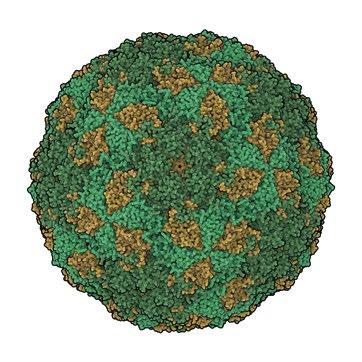
Biosecurity remains the cornerstone of disease control in areas affected by foot-and-mouth disease (FMD), a highly contagious viral disease that threatens livestock industries, food security and rural economies. Within a declared control area, strict biosecurity measures are not optional; they are essential to prevent further spread and to protect unaffected regions. Footand-mouth disease is caused by a virus that affects cloven-hoofed animals such as cattle, sheep, goats, pigs and certain wildlife species. The virus spreads rapidly through direct contact between animals, contaminated equipment, vehicles, clothing, feed, water, and even through the air over short distances.
Foot-and-mouth disease virus (capsid). This FMDV virus is the causative agent of foot-andmouth disease.
Learn more!
Foot-and-mouth disease, a highly contagious viral disease recognised by the World Organisation for Animal Health (WOAH), poses severe biosecurity risks. Scan the QR code or visit https://tinyurl.com/yc4rt6we to learn more about FMD.
Due to its highly contagious nature, a single lapse in biosecurity can have devastating consequences
FMD has been in South Africa for many years now, but for the first time in history it has spread to the Western Cape.
Social media, news and radio networks are buzzing about FMD, and a lot of questions arise, such as:
• Will we vaccinate?
• Is there enough staff to control it?
• What economic impact will FMD have on farmers?
• Is there money available to fight it?
• How? Who? When?
Watch this!
Scan the QR code or visit https://tinyurl.com/y52th8cb to watch SABC News’ media report on FMD, “Minister John Steenhuisen briefs the media on foot and mouth disease, broadcast on 1 June 2026”.

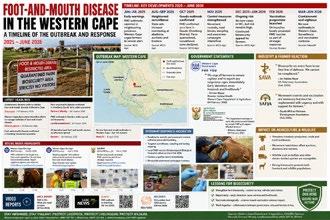
Foot-and-mouth disease emerged as a major agricultural challenge in the Western Cape during 2025 and 2026. Government agencies, veterinary services and livestock producers implemented extensive surveillance, movement controls, quarantine measures and vaccination programmes to contain the outbreak. This montage combines media coverage, awareness campaigns and frontline response efforts that shaped the province’s management of the disease.
Watch this!
Scan the QR code or visit https://tinyurl.com/35jrvp98 to watch SABC News’ media report on FMD, “Efforts to contain FMD in the Garden Route, broadcast on 20 February 2026”.
Learn more!
Scan the QR code or visit https://tinyurl.com/4fz9rtub to read the article “Government, farmers unite to contain footand-mouth disease in Western Cape” on TimesLIVE.
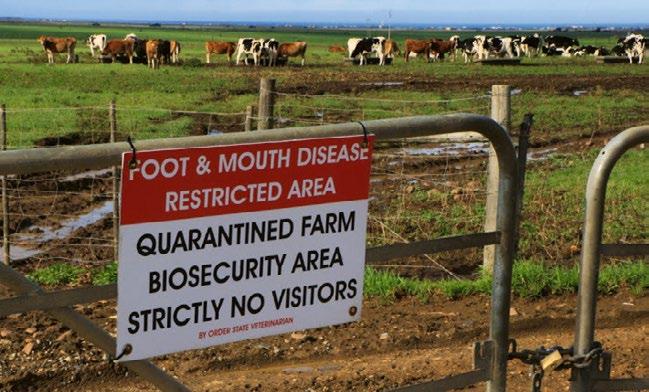
Government and farmers worked together to contain Foot-and-mouth disease (FMD) in the Western Cape, with affected farms placed under quarantine to prevent further spread of the disease.
The one question with a certain answer is, can FMD be stopped with good biosecurity measures? The certain answer is, “YES, it can be stopped with good biosecurity!”
When an outbreak occurs, Veterinary Services establish a control area around the affected zone. Within this area, livestock movement is strictly regulated, surveillance is intensified, and farmers are required to implement enhanced biosecurity protocols.
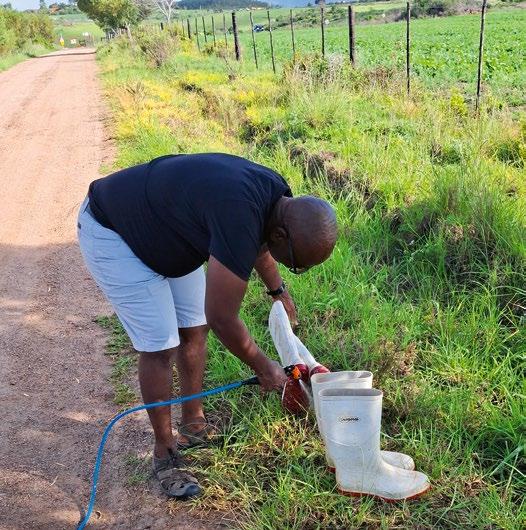
and disinfecting clothing
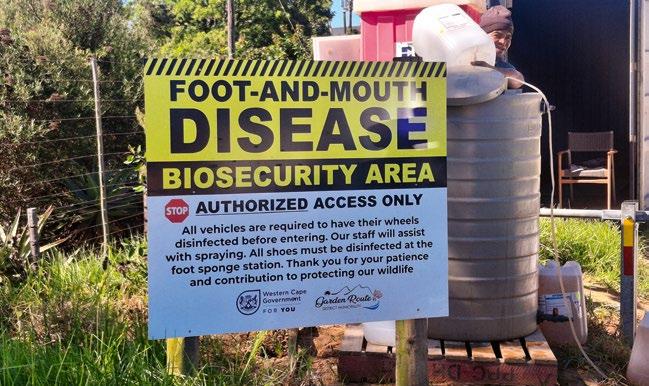
These measures are designed to contain the virus, prevent it from spreading to disease-free areas, and ultimately eradicate it from the region:
One of the most important components of biosecurity in a control area is movement control. No animals may enter or leave a property without official permission. Permits are issued only after veterinary risk assessments are conducted. Auction sales, livestock shows and other gatherings of animals are often suspended. Vehicles transporting feed, animals or equipment must be disinfected before entering and leaving farms. These restrictions may be inconvenient, but they are necessary to stop the spread of FMD.
On-farm biosecurity practices play an equally vital role. Farmers are encouraged to restrict access to their properties and keep detailed visitor logs. Only essential personnel should be allowed entry, and they must follow strict hygiene measures. Spray equipment with approved FMD disinfectants should be placed at entry and exit points, and protective clothing should be worn when handling animals. Workers should avoid visiting other farms, especially those with known infections.
Public awareness is also critical. Farmers, farm workers, transporters, abattoir operators and community members must understand how the disease spreads and why control measures are in place. Transparent communication from authorities helps build trust and encourages cooperation.
Lime is used as part of on-farm disinfection measures to help reduce the risk of FMD transmission.
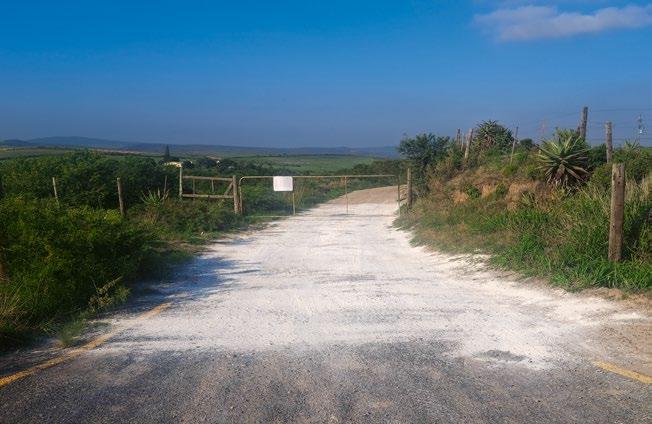
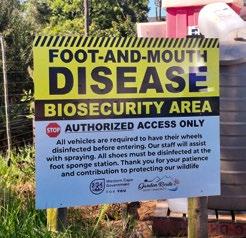
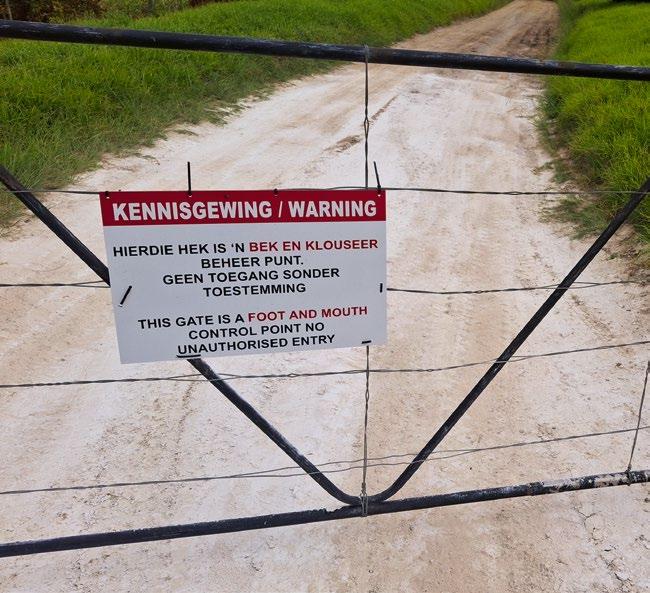
Clear FMD biosecurity signage helps control access and reminds all visitors to follow disease-prevention protocols.
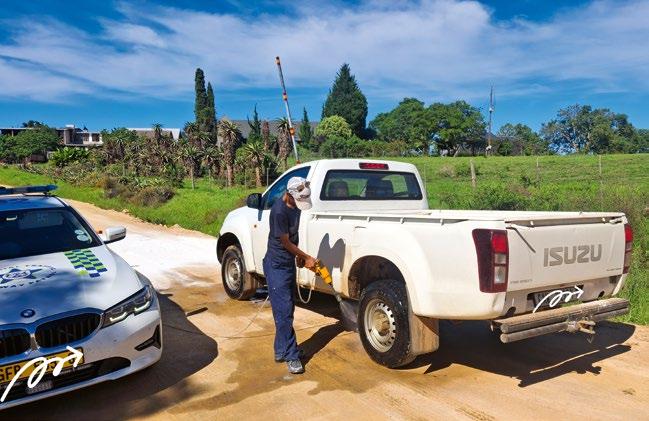
Vehicles are sprayed with disinfectant at FMD checkpoints to reduce the risk of disease spread between farms and regions.
Cleaning
at entry points form part of the first line of defence against the spread of FMD.
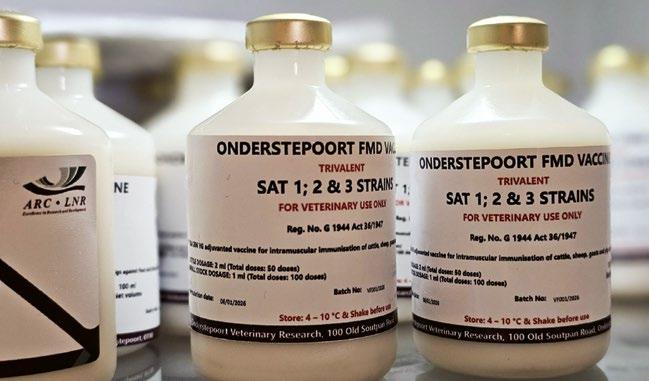
In many control areas, Veterinary Services conduct farm visits, surveillance sampling and vaccination campaigns to monitor and manage the disease. Vaccination may be implemented as part of a control strategy, depending on national policy and the epidemiological situation. While vaccination does not always eliminate the virus immediately, it reduces clinical signs and viral shedding, thereby lowering transmission risk. However, vaccination must be combined with strict biosecurity; it is not a substitute for movement control and hygiene practices.
Watch this!
Scan the QR code or visit https://tinyurl.com/2u72hx to watch the news report: “15 000 foot-and-mouth vaccines rolled out in Western Cape hotspots in a week”. Published by News24, 20 February 2026.
The economic implications of poor biosecurity are severe. An uncontrolled outbreak can result in trade bans, loss of export markets, reduced production and significant financial hardship for farmers. Secondary industries, including feed suppliers, transporters and processors, also suffer losses. Maintaining strong biosecurity safeguards not only animal health but also livelihoods and national agricultural stability. Let’s look at biosecurity the same way that you would look at security at home. You would build a fence around your property, then lock your doors, and even put up burglar bars and alarm systems so unwanted guests do not have access to your home. You are controlling entry. Biosecurity is not complicated, even if the word sounds very scientific.
A simple way of seeing it: Control what goes in and contain it, so nothing gets out. FMD will get a good knockout punch right on the nose with good biosecurity! AP
FMD HOTLINE
Helpful FMD links: www.elsenburg.com
FMD hotline number: 080 928 4102 (press 1 for FMD). Report any possible FMD at your nearest State Vet Office.
For more information contact Thean du Plessis: thean.duplessis@westerncape.gov.za
Vehicles are sprayed with disinfectant at FMD checkpoints to reduce the risk of disease spread between farms and regions.


Food safety amidst FMD outbreak
by Dr Polly Dibetso
FFoot-and-mouth disease (FMD) is a highly contagious viral disease that affects cloven-hoofed animals such as cattle, sheep, goats and pigs. It is caused by a virus from the Picornaviridae family and spreads rapidly among animals, leading to significant economic losses, particularly in the cattle industry. While the disease is serious for animal health and agricultural production, it is important for the public to understand that FMD is not zoonotic
This means that it does not infect humans, and consuming meat or animal products from FMDpositive or vaccinated animals does not pose a health risk to people.
“Although FMD does not threaten human health, biosecurity measures remain essential.”
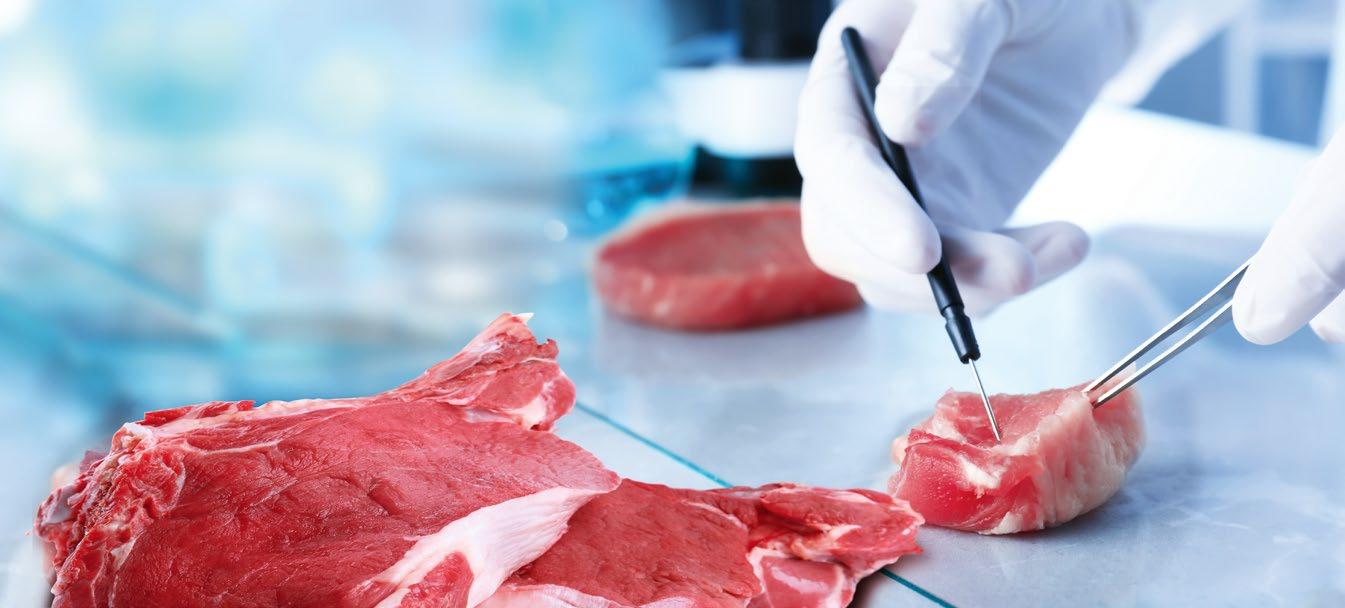
Considering the recent FMD outbreak in the Western Cape, maintaining proper food safety practices is more important than ever. One of the most critical measures is ensuring that animals are slaughtered at formal, registered abattoirs rather than through informal or backyard practices.
Abattoirs operate under strict hygiene and safety regulations designed to prevent the spread of diseases like FMD, while also ensuring that meat is safe and of good quality for consumers.
“This controlled process ensures that meat undergoes thorough inspection, is handled hygienically and is properly chilled.”
Animals that were vaccinated against FMD may only be slaughtered at approved abattoirs and with permission from the National Department of Agriculture. This controlled process ensures that meat undergoes thorough inspection, is handled hygienically and is properly chilled. It also guarantees that waste products are disposed of safely, reducing the risk of environmental contamination and further disease spread.
Although FMD does not threaten human health, biosecurity measures remain essential. Consumers are encouraged to buy meat only from reputable sources, such as registered abattoirs or trusted retailers. Always check for official inspection markings or stamps, such as “passed”, which indicate that the meat has been examined and approved for consumption.
Backyard and informal slaughter practices pose serious risks, particularly due to poor waste disposal. Animal by-products such as blood and internal organs can contaminate the environment and contribute to the spread of disease. Furthermore, meat from such sources often lacks proper inspection, making it unsafe for sale and a risk even for own consumption.
For these reasons, informal slaughter should be avoided during the FMD outbreak. By following these guidelines, the public can help control the disease and promote food safety. AP
For more information contact Dr Polly Dibetso: polly.dibetso@westerncape.gov.za
ISIXHOSA VERSION
Ukhuseleko lokutya phakathi kokuqhambuka kweFMD
IIsifo Socwane neNyebethu (FMD) sisifo esisuleleka kakhulu yintsholongwane esichaphazela izilwanyana ezinompuphu ezifana neenkomo, iigusha, iibhokhwe kunye neehagu. Ibangelwa yintsholongwane evela kwintsapho yasePicornviridae kwaye isasazeka ngokukhawuleza phakathi kwezilwanyana ezikhokelela ekulahlekelweni okukhulu kwezoqoqosho, ngokukodwa kwishishini leenkomo. Nangona isifo siyingozi kwimpilo yezilwanyana kunye nemveliso yezolimo, kubalulekile ukuba uluntu luqonde ukuba i-FMD ayisosifo sisulelayo ukusuka kwizilwanyana ukuya ebantwini
Oku kuthetha ukuba akosuleli abantu, kwaye ukutya inyama okanye iimveliso zezilwanyana ezivela kwizilwanyana ezine -FMD okanye ezigonyelweyo akubeki ingozi empilweni yabantu.
“
Nangona i-FMD ingasongeli impilo yabantu, amanyathelo okhuseleko lwezifo asaqhubeka ebalulekile.”
Ukuqwalasela ukuqhambuka kweFMD yakutshanje eNtshona Koloni, ukugcinwa kweendllela ezifanelelkileyo zokhuseleko lokutya kubaluleke kakhulu kunangaphambili. Elinye lawona manyathelo abalulekileyo kukuqinisekisa ukuba izilwanyana zixhelwe kwiindawo zokuxhela ezisemthethweni, ezibhalisiweyo endaweni yokuxhela ngokungekho sikweni okanye emva kwendlu.
Iindawo zokuxhela zisebenza phantsi kococeko olungqongqo kunye nemithetho yokhuseleko eyilelwe ukuthintela ukwanda kwezifo ezifana neFMD, ngeli lixa ziqinisekisa ukuba inyama ikhuselekile kwaye ikumgangatho olungileyo kubathengi.
Izilwanyana ezigonyelwe i-FMD zinokuxhelwa kuphela kwizilarha ezivunyiweyo kwaye ngemvume evela kwiSebe lezoLimo leSizwe (NDA). Le nkqubo ilawulwayo iqinisekisa ukuba inyama ihlolisiswa ngokucokisekileyo, iphathwa ngococeko, kwaye ibanda ngokufanelekileyo. Ikwaqinisekisa ukuba inkunkuma ilahlwa ngokukhuselekileyo, inciphisa umngcipheko wokungcoliseka kwendalo kunye nokusasazeka kwezifo. Nangona i-FMD ingasongeli impilo yabantu, amanyathelo okhuseleko lwendalo ahlala eyimfuneko. Abathengi bayakhuthazwa ukuba bathenge inyama kuphela kwimithombo ethembekileyo, efana nezilarha ezibhalisiweyo okanye abathengisi abathembekileyo. Ngalo lonke ixesha
khangela iimpawo zokuhlowa okanye izitampu ezisemthethweni, ezinjengokuthi “ipasisiwe,” ezibonisa ukuba inyama ihloliwe yaza yavunywa ukuba ityiwe.
Ukuxhela ngasemva kwendlu kunye nokungacwangciswanga kubeka umngcipheko omkhulu, ngakumbi ngenxa yokulahlwa kwenkunkuma okulambathayo. Izinto eziphuma kwizilwanyana ezinjengegazi namalungu angaphakathi zinokungcolisa imekobume zibe negalelo ekusasazekeni kwezifo. Ngaphezu koko, inyama evela kuloo mithombo isoloko ingahlolisiswa kakuhle, nto leyo eyenza ukuba ingakhuselekanga ukuba ithengiswe kwaye ibe sengozini nokuba ityiwa yona.
Ngezi zizathu, ukuxhela ngokungekho sikweni kufuneka kuphetshwe ngexesha lokuqhambuka kwe-FMD.
Ngokulandela ezi zikhokelo, uluntu lunonceda ukulawulwa esisifo kwaye lukhuthaze ukhuseleko lokutya. AP
Ngolwazi oluthe vetshe qhagamshelana noGrirha Polly Dibetso: polly.dibetso@westerncape.gov.za
AFRIKAANS VERSION
Voedselveiligheid tydens BKS-uitbreking
BBek-en-klouseer (BKS) is ’n hoogs aansteeklike virussiekte wat diere met gesplete hoewe soos beeste, skape, bokke en varke aantas. Dit word veroorsaak deur ’n virus van die Picornaviridaefamilie en versprei vinnig onder diere, wat lei tot aansienlike ekonomiese verliese, veral in die beesbedryf. Hoewel die siekte ernstig is vir dieregesondheid en landbouproduksie, is dit belangrik dat die publiek verstaan BKS is nie soönoties nie
Dit beteken dat dit nie mense besmet nie en die eet van vleis of diereprodukte van BKS-positiewe of ingeënte diere nie ’n gesondheidsrisiko vir mense inhou nie.
“
Hoewel BKS nie menslike gesondheid bedreig nie, bly biosekuriteitsmaatreëls noodsaaklik.”
In die lig van die onlangse bek-enklouseer-uitbreking in die Wes-Kaap, is die handhawing van behoorlike voedselveiligheidspraktyke belangriker as ooit tevore. Een van die belangrikste maatreëls is om te verseker dat diere by formele, geregistreerde slagpale geslag word eerder as deur informele of agterplaaspraktyke.
Slagpale funksioneer onder streng higiëne- en veiligheidsregulasies wat ontwerp is om die verspreiding van siektes soos bek-en-klouseer te voorkom, terwyl dit ook verseker dat vleis veilig en van goeie gehalte vir verbruikers is.
“
Hierdie beheerde proses verseker dat vleis deeglike inspeksie ondergaan, higiënies hanteer word en behoorlik verkoel
word.”
Diere wat teen bek-en-klouseer ingeënt is, mag slegs by goedgekeurde slagpale en met toestemming van die Nasionale Departement van Landbou geslag word. Hierdie beheerde proses verseker dat vleis deeglike inspeksie ondergaan, higiënies hanteer word en behoorlik verkoel word. Dit waarborg ook dat afvalprodukte veilig mee weggedoen word, wat die risiko van omgewingsbesoedeling en verdere siekteverspreiding verminder.
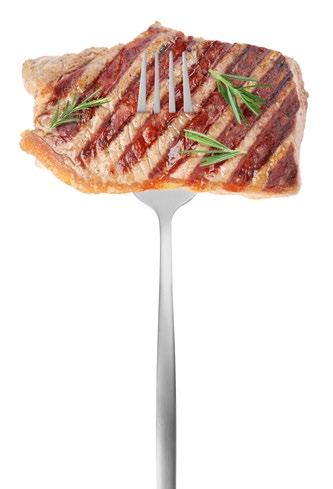
Hoewel bek-en-klouseer nie menslike gesondheid bedreig nie, bly biosekuriteitsmaatreëls noodsaaklik. Verbruikers word aangemoedig om slegs vleis by betroubare bronne te koop, soos geregistreerde slagpale of betroubare kleinhandelaars. Kyk altyd vir amptelike inspeksiemerke of stempels, soos “passed” (“geslaag”), wat aandui dat die vleis ondersoek en goedgekeur is vir verbruik. Agterplaas- en informele slagpraktyke hou ernstige risiko's in, veral vanweë swak afvalverwydering. Neweprodukte van diere soos bloed en interne organe kan die omgewing besoedel en bydra tot die verspreiding van siektes. Verder word vleis van sulke bronne dikwels nie behoorlik geïnspekteer nie, wat dit onveilig maak om te verkoop en ’n risiko inhou, selfs vir eie gebruik.
Om hierdie redes moet die informele slag van diere tydens die bek-en-klouseer-uitbreking vermy word. Deur hierdie riglyne te volg, kan die publiek help om die siekte te beheer en voedselveiligheid te bevorder. AP
Vir meer inligting, kontak Dr Polly Dibetso: polly.dibetso@westerncape.gov.za
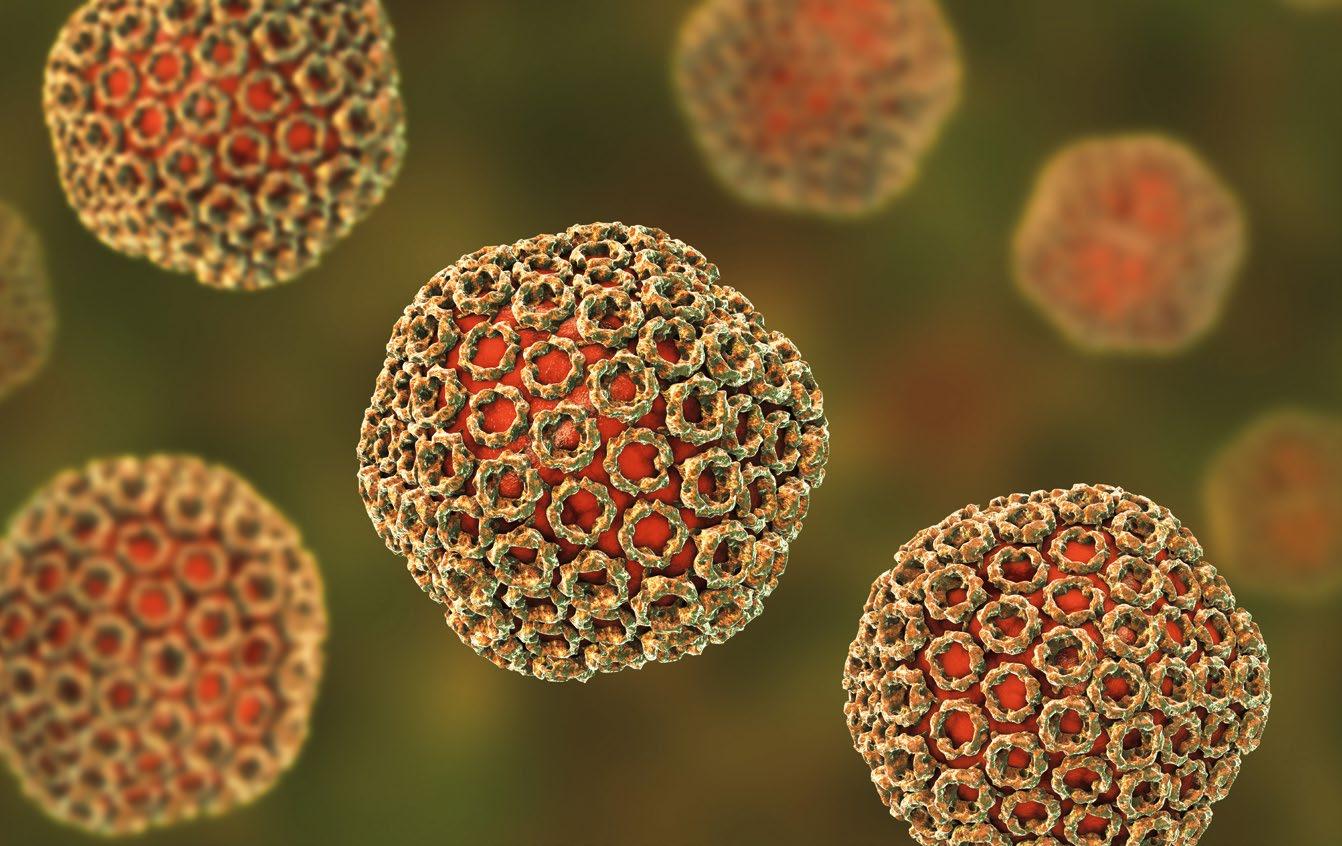

RWhat is Rift Valley fever and when do outbreaks occur?
by Dr Anne Bishop
Rift Valley fever (RVF) is a vector-borne RNA virus that can infect both animals and humans. In South Africa, it is a notifiable disease in animals and a Category 1 notifiable disease in humans. It typically occurs in cyclic outbreaks every 5-15 years, primarily affecting livestock such as sheep, goats and cattle, and is particularly dangerous due to its high mortality rate. In South Africa, major outbreaks are predicted to occur approximately every 25 years, with the last significant outbreak recorded between 2008 and 2011. More recently, in November 2025, an isolated outbreak occurred on a farm in the Northern Cape Province, resulting in the death of 40 sheep.
Outbreaks typically occur following above average rainfall, including heavy rainfall or flooding, which favours the breeding of mosquito vectors after prolonged dry periods. However, outbreaks can also occur in the absence of flooding.
How does it spread and what happens to humans?
RVF primarily spreads through mosquito bites, especially from Aedes mosquitoes, although Culex and Anopheles species can also transmit the virus. RVF may also spread accidentally through the reuse of needles if an infected animal contaminates the needle.
Rift Valley fever virus – a mosquito-borne RNA virus that can infect livestock and people, with transmission linked to infected animals, mosquito bites and exposure to contaminated animal tissue or fluids.
3D illustration by Katerynakon
Epidemiological cycle of Rift Valley fever virus. High rainfall and flooding trigger the hatching of mosquito eggs, including those infected with RVFV, leading to an increase in infected mosquito populations. These mosquitoes feed on livestock (domesticated ruminants), amplifying the virus and raising the risk of direct transmission to other animals, including humans.
Source:
Scan the QR code or visit https://tinyurl.com/knx8yfrp
Humans can become infected through direct contact with tissue of infected animals, contact with aborted material, aerosol transmission during slaughter or when opening a carcass, ingestion of unpasteurised milk or less commonly through mosquito bites.
In humans, infection is usually subclinical, with no obvious clinical signs, but it may present as a moderate to severe flu like illness. Potential complications include ocular lesions, haemorrhagic manifestations and encephalitis, which can unfortunately lead to death. However, the disease is not contagious between humans.
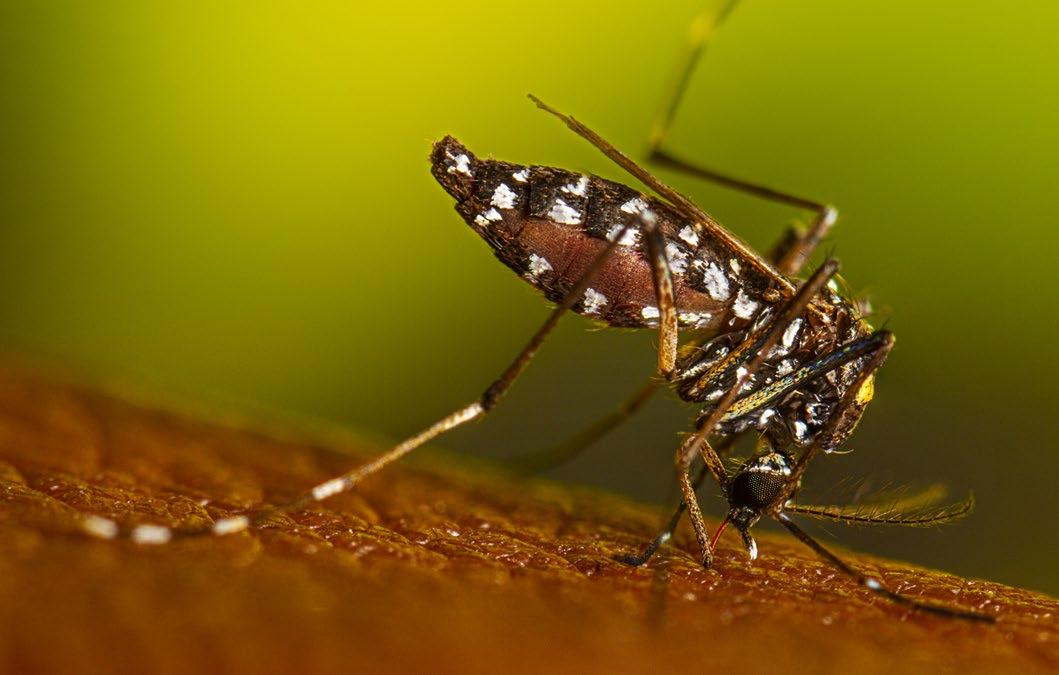
“Since RFV is viral and has no specific treatment, prevention is essential.”
An Aedes mosquito, the primary vector responsible for transmitting Rift Valley fever (RVF).
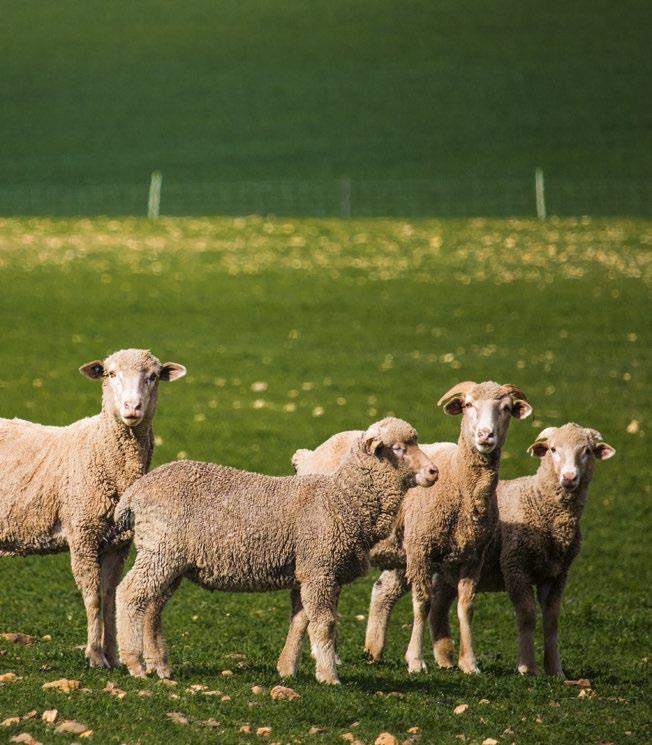
What to look out for?
RVF in animals can manifest in several ways, but the main clinical signs include abortions in livestock and sudden deaths in young animals. Older, less susceptible animals may also show abnormal clotting, which predisposes them to bleeding and can result in clinical signs such as bloody diarrhoea and bloody nasal discharge.
Other clinical signs may include lethargy, fever, rapid breathing and yellow discolouration of the mucous membranes. If an RVF outbreak is suspected, a veterinarian should be contacted immediately.
Control and prevention
Since RFV is viral and has no specific treatment, prevention is essential. Annual livestock vaccination is the most effective control measure, particularly because animals are frequently unvaccinated at the time of outbreaks. Additional control measures include mosquito control and avoiding the reuse of needles.
How does this affect meat safety in South Africa?
RVF has important implications for meat safety in South Africa, especially during outbreaks. Meat from infected animals may contain high levels of the virus, particularly if the animal was slaughtered while showing clinical signs. For this reason, animals that are sick, have aborted or have died unexpectedly should never be slaughtered for human consumption.
At abattoirs, several lines of defence are in place before meat reaches the consumer’s plate.
To download scan the QR code or visit https://tinyurl.com/54vffwzd
Download a list of all notifiable animal diseases in South Africa.
To download scan the QR code or visit https://tinyurl.com/mtcbpau9
National Institute for Communicable Diseases – Rift Valley fever
Sheep grazing near Caledon. Vaccination, mosquito control and early reporting remain key measures in reducing the risk of Rift Valley fever.
Photo © Sergio Lacueva
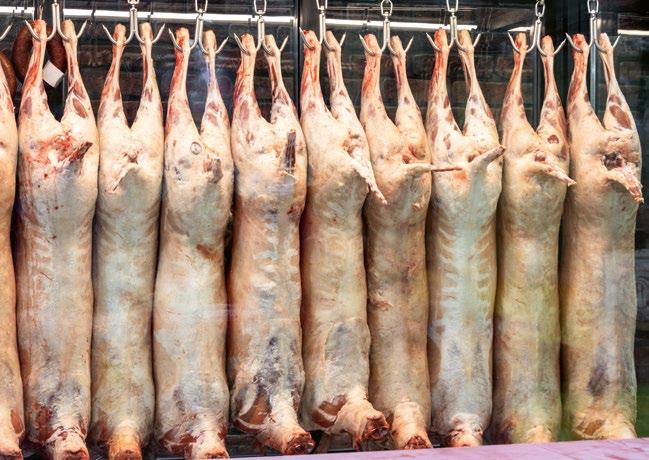
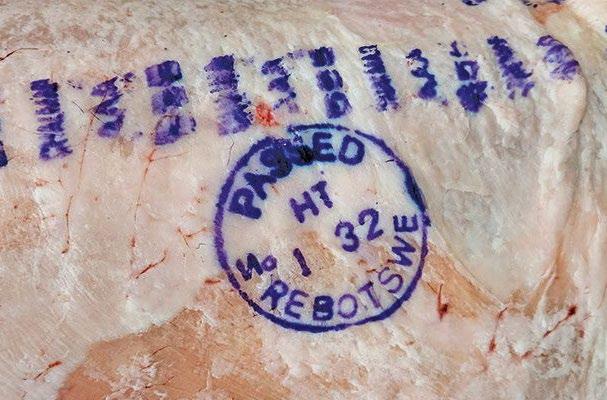
An approved carcass that has been inspected and marked with a clear, legible “PASSED” stamp, indicating it is safe for human consumption.
Firstly, farmers are required to declare that their animals are healthy and free of disease. While the animals are alive, meat inspectors conduct ante-mortem inspections, observing the animals to ensure that none are injured or showing signs of illness.
After slaughter, during post-mortem inspection, meat examiners, meat inspectors and/or veterinarians examine the carcasses for obvious macroscopic signs of disease. When suspicious lesions are detected, the carcass is detained for secondary meat inspection conducted by a veterinarian. Only healthy carcasses, or parts thereof, are passed for human consumption. Proper cooking of meat inactivates the virus; however, handling raw meat from infected animals poses a significant risk of infection. The greatest risk to humans is therefore associated with illegal or home slaughter, where meat is not inspected, rather than with commercially purchased meat.
Consumers are advised to purchase meat that has been officially inspected and stamped “PASSED”, indicating that it is safe for human consumption, as meat from illegally slaughtered animals will typically not carry this mark.
Conclusion
Although RVF can occasionally cause fatalities in humans, strict inspection systems in South African abattoirs, together with the work of meat inspectors and examiners, play an important role in preventing infected meat from reaching consumers. AP
References
1. https://pmc.ncbi.nlm.nih.gov/articles/PMC6276270/
2. https://www.cdc.gov/mosquitoes/php/toolkit/potential-range-of-aedes.html
3. https://www.farmersweekly.co.za/opinion/an-inside-look-at-south-africas-meat-safety-standards/
4. https://www.who.int/news-room/fact-sheets/detail/rift-valley-fever
For more information, contact Dr Anne Bishop: anne.bishop@westerncape.gov.za
Lamb carcasses in the red meat value chain. Product traceability from farm to consumer supports food safety and enables rapid responses to contamination or disease outbreaks.
ELSENBURG JOURNAL
Grazing cover crops
Balancing productivity and sustainability
Rebecca Ellerbeck Vol 23 | No 2 | 2026
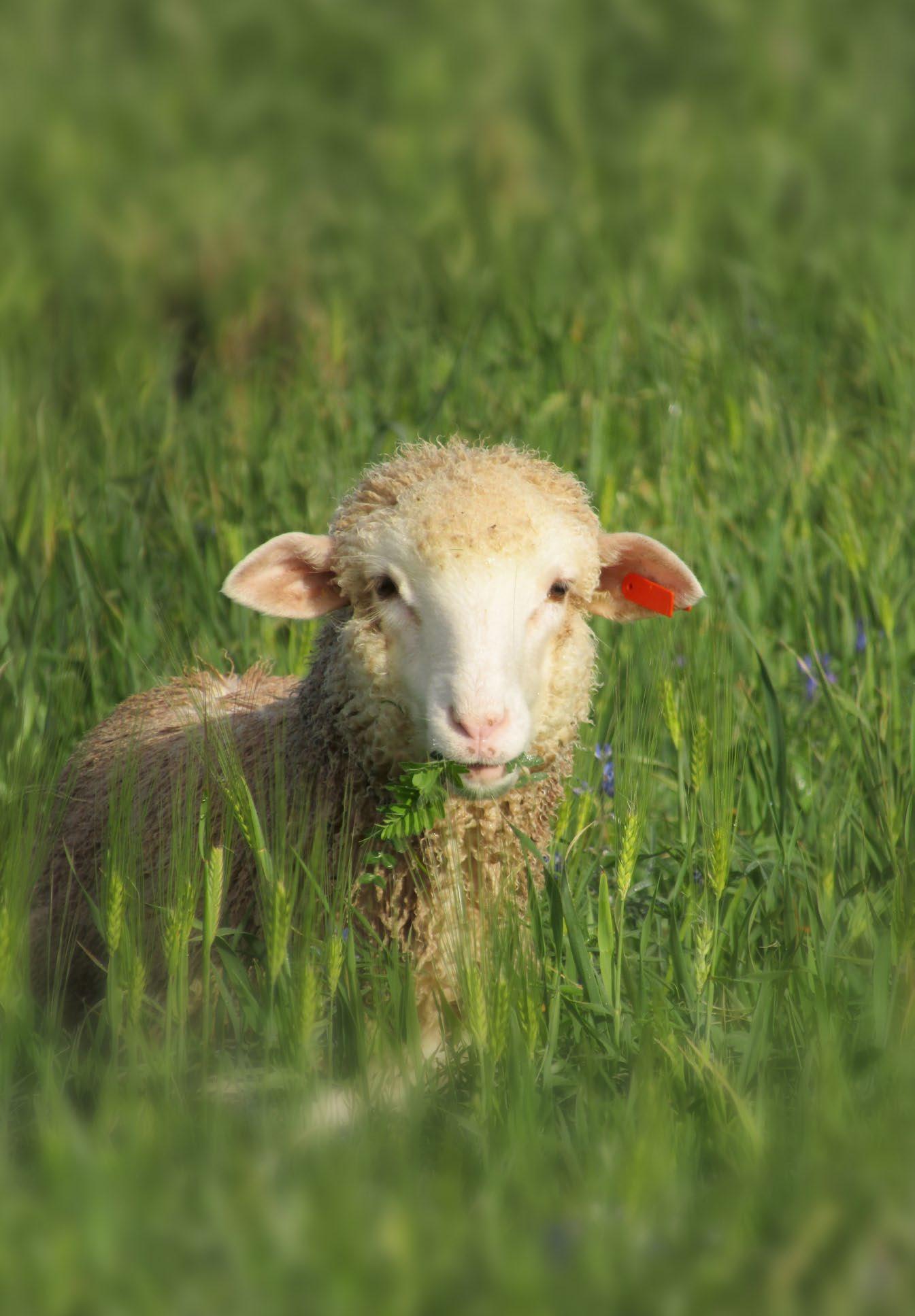
Did you know?
Tygerhoek Research Farm, situated near Riviersonderend in the Overberg, was established in 1960 and covers 560.38 ha, including approximately 500 ha of arable land. The farm supports long-term research in mixed farming systems, including small grains, crop rotation, conservation and regenerative agriculture, and fine-wool Merino sheep breeding.
Learn more!
Scan the QR code or visit www.elsenburg.com/ tygerhoek-research-farm/ to read more about the research, facilities and team at Tygerhoek Research Farm.
Riviersonderend, Overberg
Photo © Sergey Uryadnikov
Grazing cover crops Balancing productivity and sustainability
by Rebecca Ellerbeck
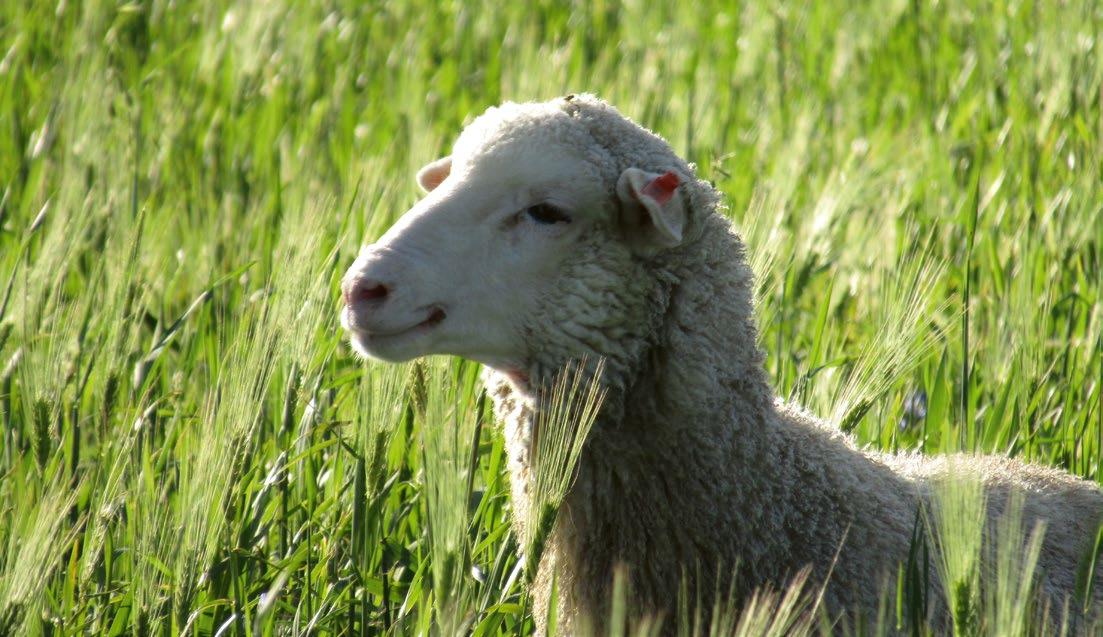
UUnlocking value from cover crops
In conservation agriculture systems, cover crops are widely recognised for improving soil structure, nutrient cycling and weed suppression. In Mediterranean-type climates, however, they come at a cost. Because cover crops occupy the same growing window as cash crops, producers often sacrifice income to realise these benefits.
Integrating livestock into cover crop phases offers a practical solution. By utilising cover crops as forage, farmers can generate income while preserving their ecological benefits. However, success depends on good grazing management. Poorly managed grazing can reduce
soil cover, limit biomass production and compromise system resilience.
Testing grazing strategies under field conditions
To better understand these dynamics, a multi-species cover crop was grazed by weaner lambs under four grazing management strategies, ranging from continuous grazing to progressively more intensive rotational grazing. The same stocking rate was used across all strategies, beginning at 8 lambs per hectare and later increasing to 12 lambs per hectare in the second year of the study. The trial was conducted over two growing seasons on Tygerhoek Research Farm.
Dual-purpose lambs were used to graze the cover crops.
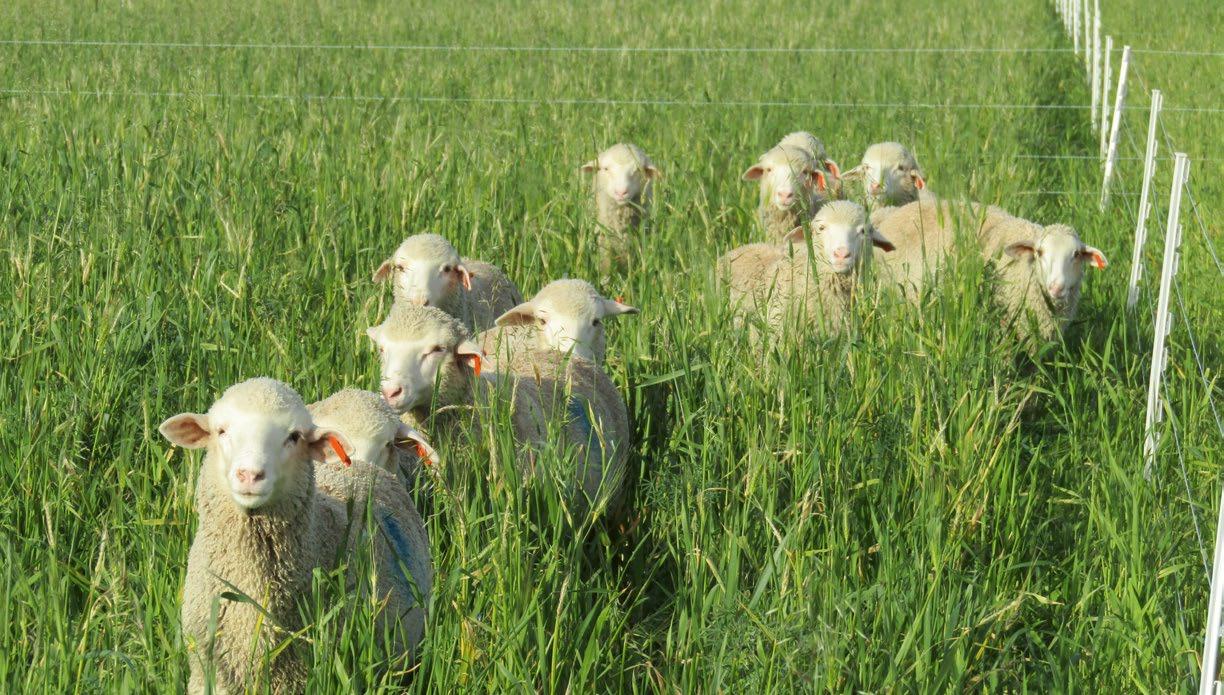
Does grazing improve or reduce forage production?
Grazing stimulated strong regrowth across all treatments. Forage availability continued to increase in grazed plots, exceeding the ungrazed control by the middle of the season. This indicates that moderate grazing can enhance biomass production. The forage in the control accumulated more slowly as ungrazed plants matured.
Forage availability did not differ among the grazed treatments, indicating that all tested grazing management strategies have the potential to increase it.
What
happens to plant composition under grazing?
Plant composition was influenced more by seasonal conditions than by grazing treatment. Differences between years were more pronounced than differences between grazing strategies.
The multi-species cover crop mixture showed resilience, with species compensating for one another under varying conditions. This maintained ground cover and stable productivity, likely also reducing pest and disease pressure.
Grazing animals appeared to suppress ryegrass reproduction by consuming flowering structures, increasing vegetative growth while reducing seed production. While weed seed production was not measured in this study, this observation suggests a strong potential for livestock to improve weed management.
Do grazing strategies affect animal performance?
Livestock performance remained consistent across all treatments. Growth rates and carcass quality characteristics showed no significant differences, indicating that all grazing strategies supported good production. This is likely attributable to the moderate stocking rates used in the trial.
Are there measurable effects on soil health?
Soil responses were limited over the study period. Some short-term changes in soil chemical properties were observed, but these were inconsistent and did not persist between seasons, suggesting they were primarily driven by seasonal variation.
Temporary electric fencing was used to split fields into smaller paddocks for rotational grazing.
Seasonal conditions appeared overall to have a stronger influence than grazing treatment. This suggests that moderate grazing of cover crops does not result in significant short-term changes in soil chemistry. Longer-term monitoring would be required to detect cumulative effects.
Does livestock integration pay?
Livestock integration proved economically viable, although profitability was sensitive to input costs. Gross income across all treatments was similar regardless of grazing strategy, indicating that increased rotation intensity did not greatly affect revenue.
Initial infrastructure costs played a key role in profitability. Higher-rotation systems required greater investment in fencing and water points, drastically reducing profitability in the first year. By the second year, most systems generated positive returns, except for the highest-rotation strategy. Lower-rotation and continuous grazing systems consistently provided the best balance between cost and return.
When existing livestock were used, thus eliminating the need to purchase lambs, profitability increased further. This highlights the advantage of utilising existing farm resources.
Management matters more than method
A key finding is that grazing strategy is not the primary driver of system performance. Instead, stocking rate, climate and overall management play a greater role.
In permanent pastures and rangeland systems, differences between grazing strategies are often pronounced. However, this study suggests that these distinctions are less relevant in cover crop systems. Cover crops are grazed for short periods – typically a few months – and not every year.
This intermittent use reduces cumulative grazing effects. As a result, lower-cost, lower-rotation systems can be applied without damaging the system, provided stocking rates remain moderate. »

The mixed-species cover crop provided a high-quality diet for the lambs.
“Bringing livestock into cover crop phases can support, rather than diminish, productivity and sustainability.”
Rebecca Ellerbeck, an MSc student in agronomy at Stellenbosch University’s Faculty of Agri Sciences, presented her research on cover-crop grazing pressure within a conservation agriculture system at the 60th Annual Congress of the Grassland Society of Southern Africa in Hilton, KwaZulu-Natal.
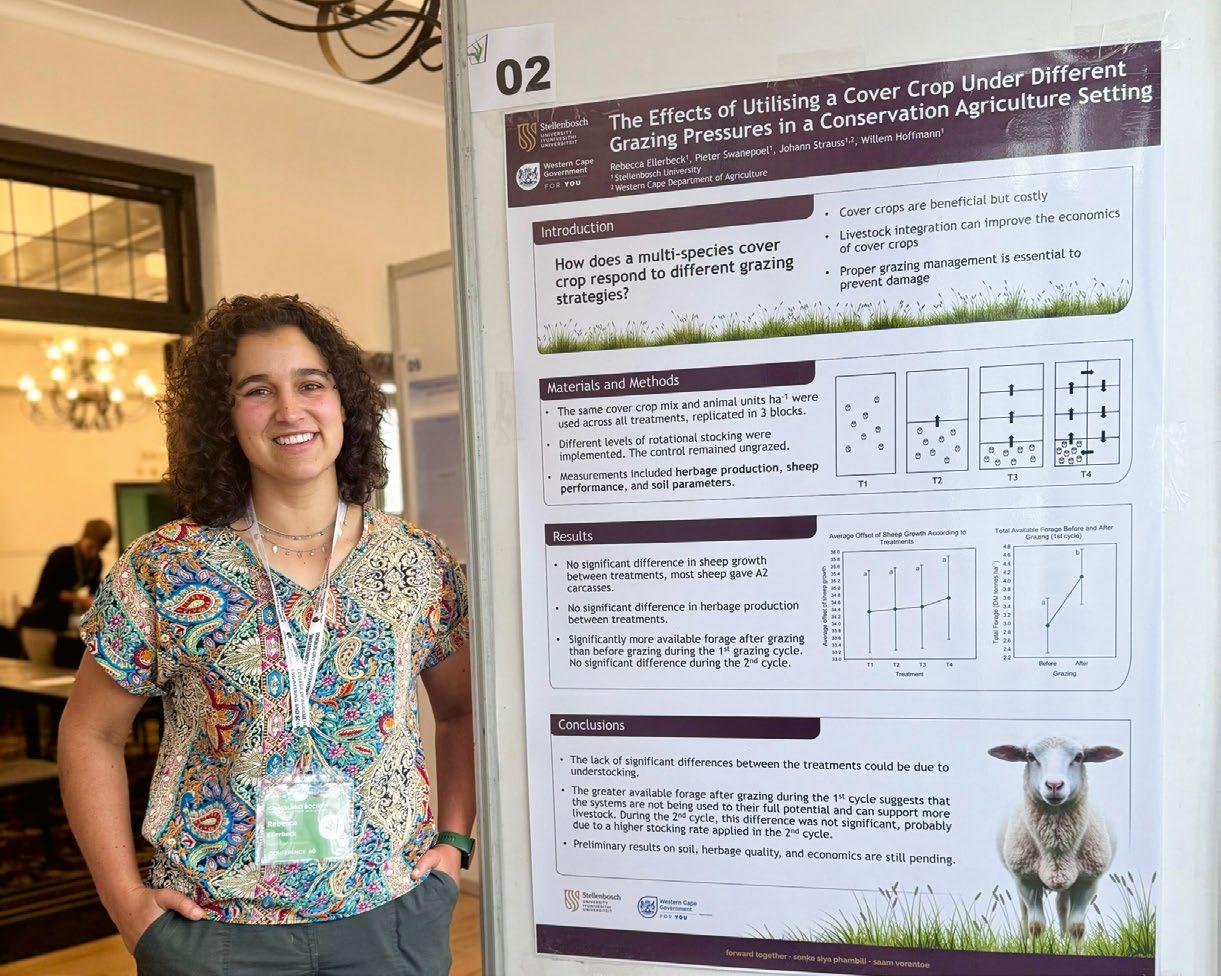
This study was carried out as a joint initiative between Stellenbosch University (SU) and the Western Cape Department of Agriculture (WCDoA), under the supervision of Prof. Johann Strauss (WCDoA), Prof. Pieter Swanepoel (Department of Agronomy, SU), and Dr Willem Hoffmann (Department of Agricultural Economics, SU).
A practical path forward
The results show that livestock can be successfully integrated into cover crop systems without compromising productivity or sustainability. Moderate grazing increased forage production, maintained livestock performance and avoided negative soil impacts. Increasing management complexity did not deliver consistent benefits. Higher-rotation systems added cost without improving outcomes, while simpler, lower-rotation or continuous systems proved both effective and practical. Outcomes are driven less by
grazing strategy and more by appropriate stocking rates and environmental conditions. When managed correctly, even simple grazing approaches can deliver strong ecological and economic results. Avoiding high stocking rates is essential, as the primary objective of the season remains to boost soil function through cover crops rather than maximise livestock production. Success also depends on adaptability: Monitoring forage availability and grazing pressure enables timely adjustments as conditions change. Flexibility, rather than complexity, is key to building resilient integrated crop-livestock systems. AP
For more information, contact Johann Strauss: johann.strauss@westerncape.gov.za
FOOT AND MOUTH DISEASE PREVENTION AND CONTROL
CONTACTS:
State Veterinarian: George 044-803-3771/0
State Veterinarian: George 044-803-3771/0
State Veterinarian: Boland 021-808-5028/5253
State Veterinarian: Boland 021-808-5028/ 5253
State Veterinarian: Swellendam
021-808-5059/ 028-425-4850
State Veterinarian: Swellendam 021-808-5059/ 028-425-4850
State Veterinarian: Beaufort West
023-414-9220/1
State Veterinarian: Beaufort West 023-414-9220/1
State Veterinarian: Vredendal 027-201-3514/-0
State Veterinarian: Vredendal 027-201-3514/-0
State Veterinarian: Malmesbury 022-482-1380
State Veterinarian: Malmesbury 022-482-1380
SVGeorge@westerncape.gov.za
SVGeorge@westerncape.gov.za
SVBoland@westerncape.gov.za
SVBoland@westerncape.gov.za
DOA.svswellendam@westerncape.gov.za
DOA.svswellendam@westerncape.gov.za
DOA.svbeaufortwest@westerncape.gov.za
DOA.svbeaufortwest@westerncape.gov.za
DOA.svvredendal@westerncape.gov.za
DOA.svvredendal@westerncape.gov.za
DOA.svmalmesbury@westerncape.gov.za
4 Varing Avenue, George
4 Varing Avenue, George
Western Cape Department of Agriculture building, Muldersvlei road, Elsenburg
Western Cape Department of Agriculture building, Muldersvlei road, Elsenburg
67 Voortrekker St, Swellendam
67 Voortrekker St, Swellendam
Blyth St, Beaufort West
Blyth St, Beaufort West
Cnr Matzikama and Noord St. Vredendal
Cnr Matzikama and Noord St. Vredendal
DOA.svmalmesbury@westerncape.gov.za Cnr Spoorweg and Munisipale St, Malmesbury
Cnr Spoorweg and Munisipale St, Malmesbury
State Veterinarian: Oudtshoorn 044-203-9443/5
State Veterinarian: Oudtshoorn 044-203-9443/5
State Veterinarian: Worcester 021-808-5052
State Veterinarian: Worcester 021-808-5052

DOA.svoudtshoorn@westerncape.gov.za
DOA.svoudtshoorn@westerncape.gov.za
43 Van Der Riet St, Oudtshoorn
43 Van Der Riet St, Oudtshoorn
DOA.svworcester@westerncape.gov.za
DOA.svworcester@westerncape.gov.za
IMPORTANT: New Animal Health Regulations Apply
IMPORTANT: New Animal Health Regulations Apply
30 Van Arckel St, Worcester
30 Van Arckel St, Worcester
View the latest government notices and gazetted requirements for animal gatherings, movement and disease control.
View the latest government notices and gazetted requirements for animal gatherings, movement and disease control.
Scan the QR code or visit: https://www.elsenburg.com/wp-content/uploads/2025/06/Government-Gazette.pdf
Scan the QR code or visit: https://www.elsenburg.com/wp-content/uploads/2025/06/Government-Gazette.pdf

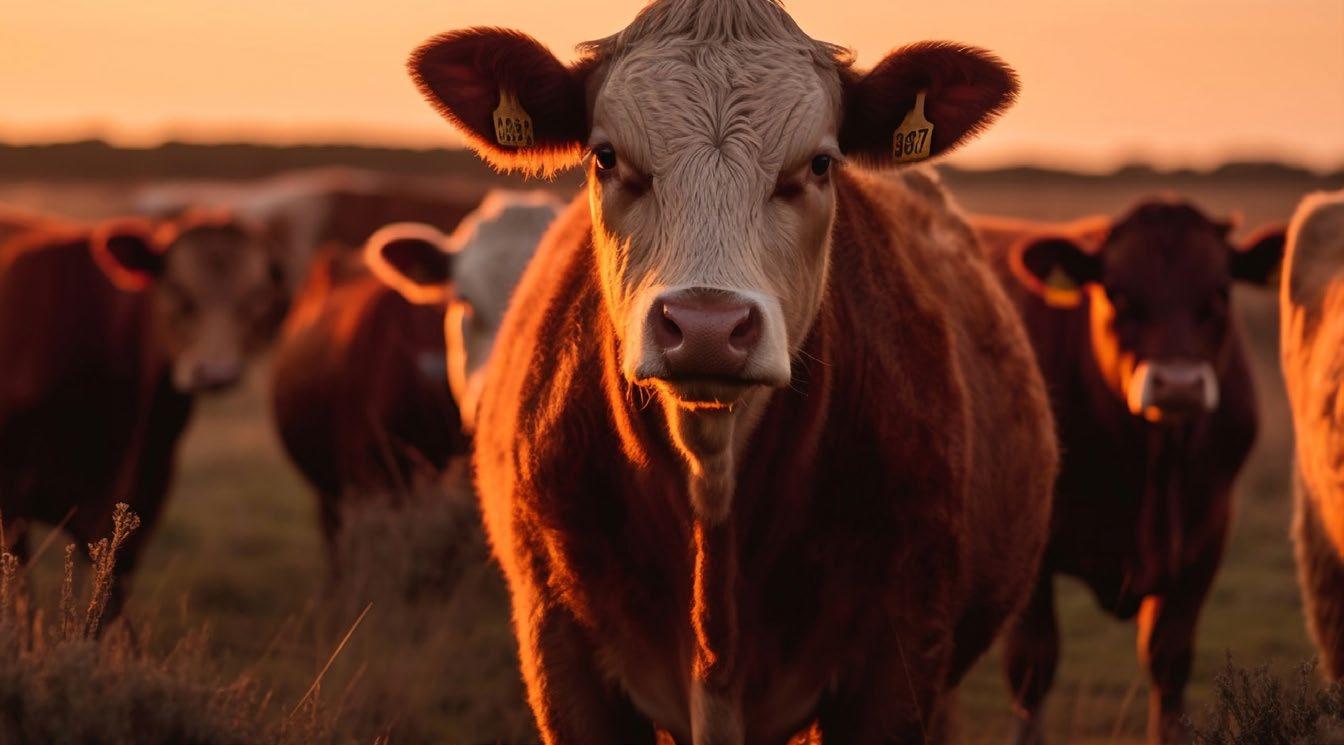
Protect our province’s livestock and livelihoods. Visit www.elsenburg.com for the latest FMD updates and dashboard — or report a suspected case via the FMD
AGRI PROBE
Is a quarterly magazine, distributed to subscribers at no charge by the Western Cape Department of Agriculture.
Subscription
For free subscription to this quarterly magazine, please submit your details to Magrieta de Lange.
Tel: 021 808 7613
Email: doa.info@westerncape.gov.za
Contact us
Western Cape Department of Agriculture
Tel: 021 808 5111
Email: doa.info@westerncape.gov.za
Web: www.elsenburg.com
Printing
CTP Printers (Cape Town)
Tel: 021 929 6200
Digital edition
Available on the ZINIO newsstand
Web: www.zinio.com
Packaging
Stellenbosch Work Centre for Adults with Disabilities
Tel: 021 887 8688
Email: jjja@sun.ac.za
You can also read your copy online and subscribe at www.zinio.com/za/agriprobe-m40279
Don’t forget to tune into RSG Landbou every Friday morning at 05:00am and on Saturdays at 11:45am. Listen to the highly informative programmes on the Western Cape Department of Agriculture and the Agricultural Sector in general.
If you miss it on the radio, you can also listen to the programmes of the week on www.elsenburg.com/rsg-landbou/