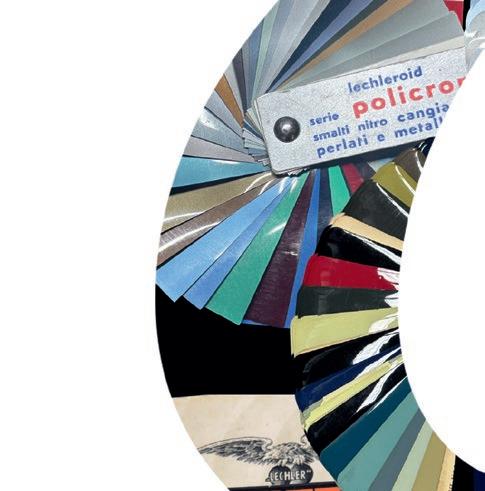
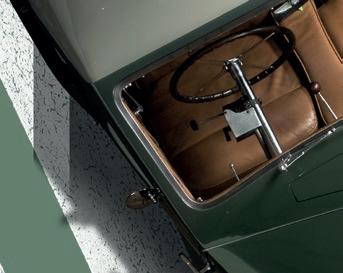
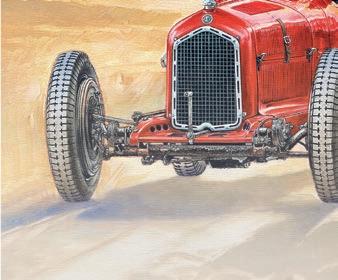
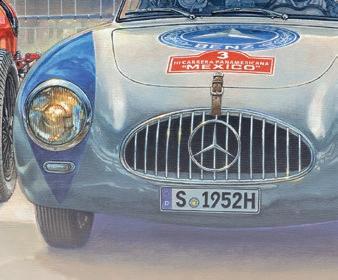
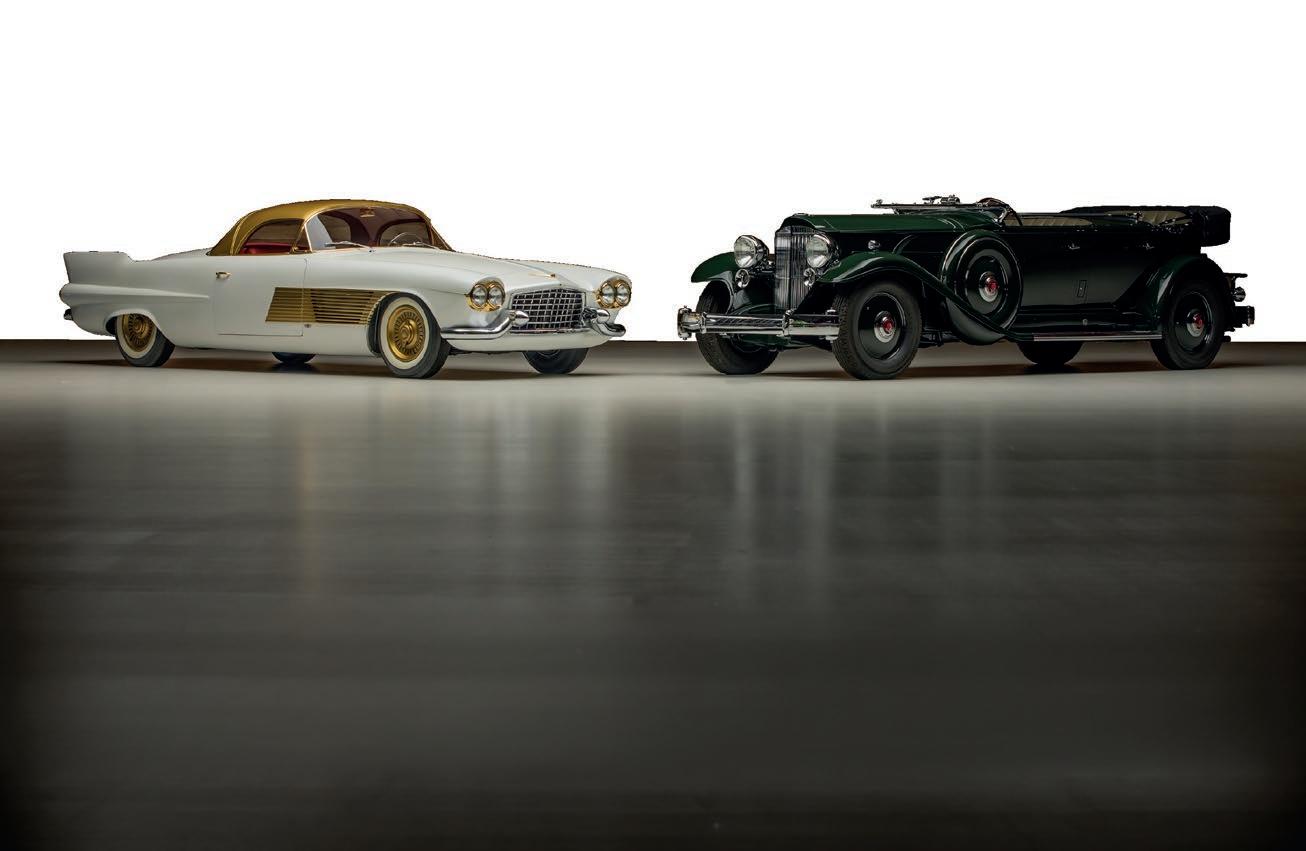
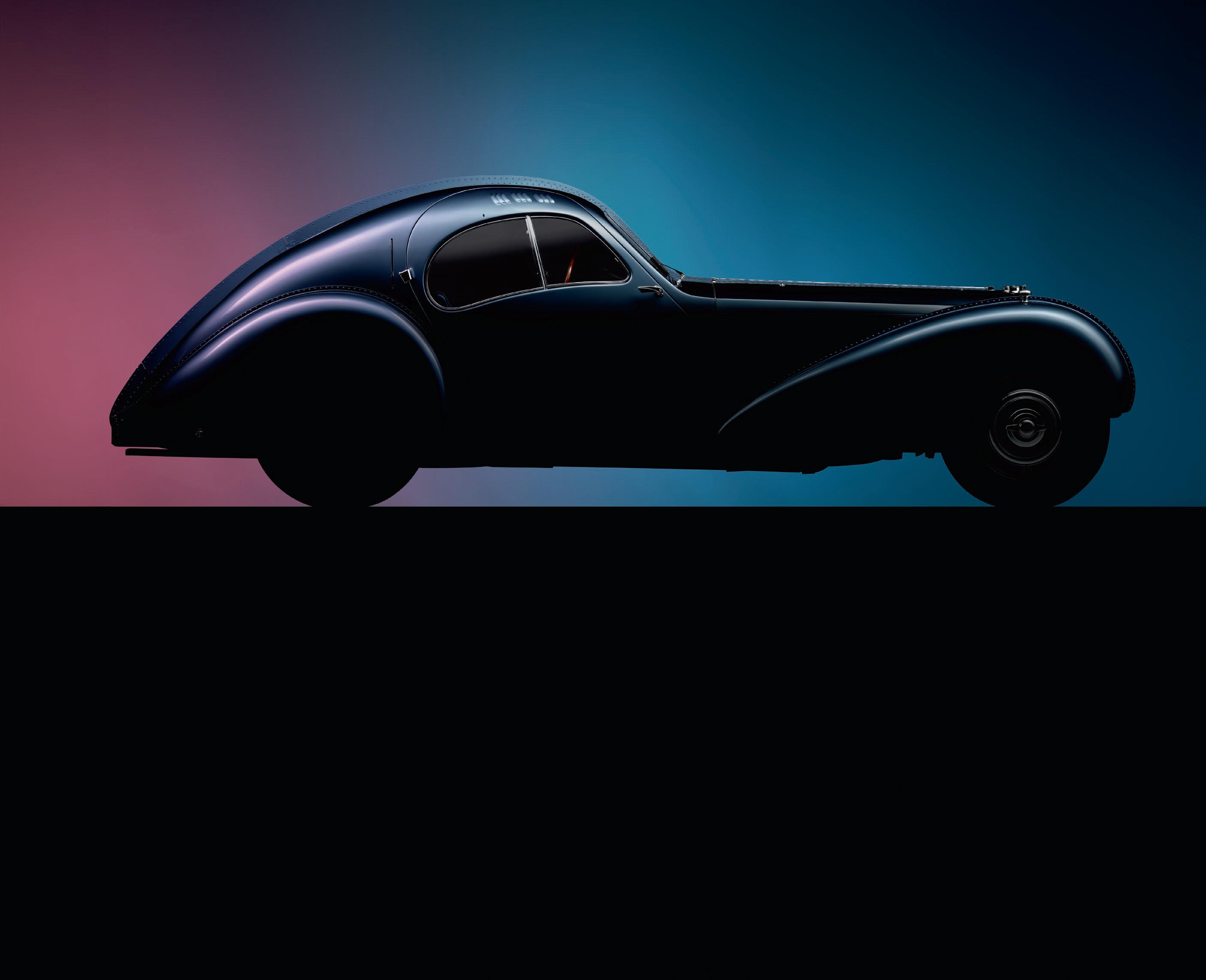
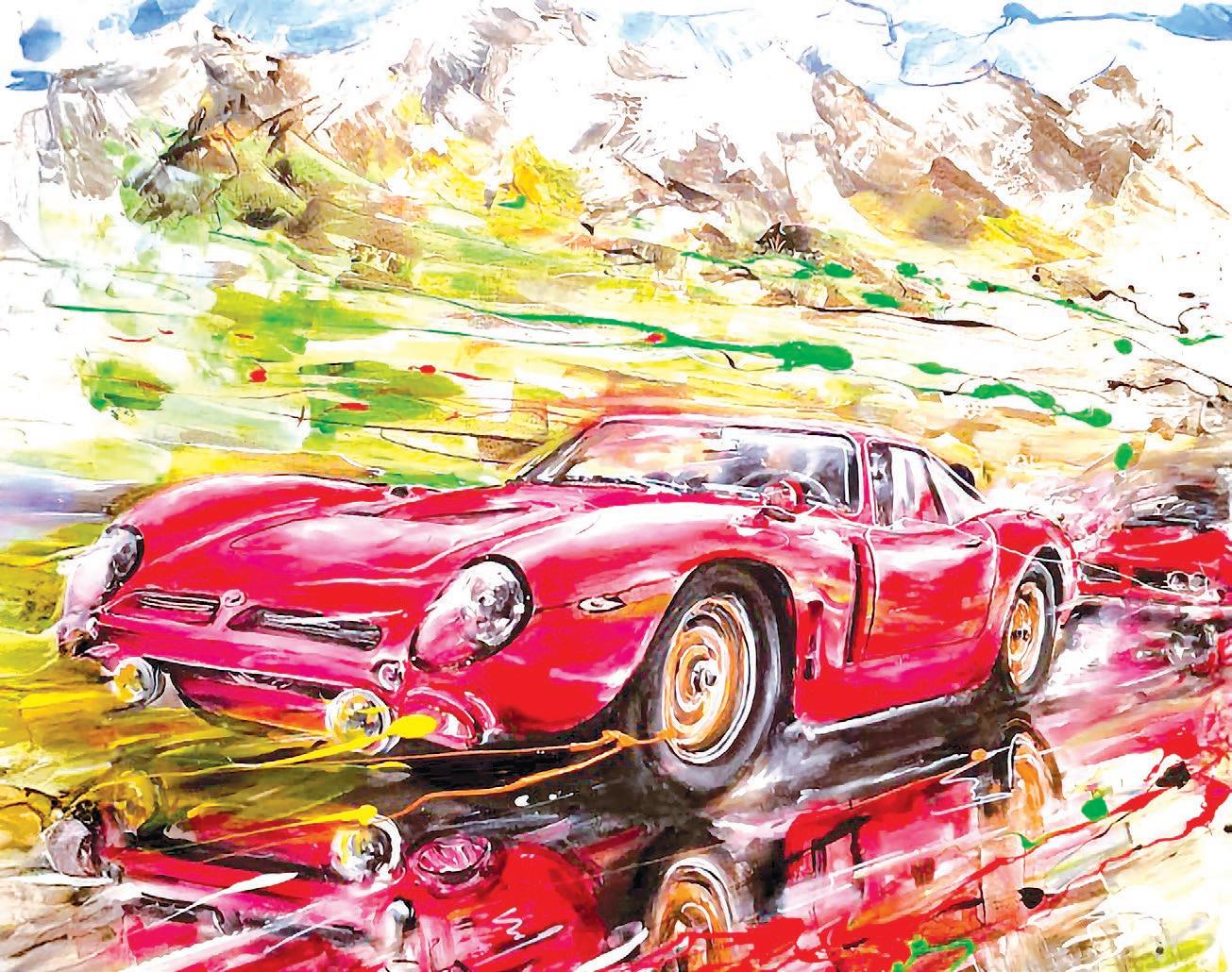
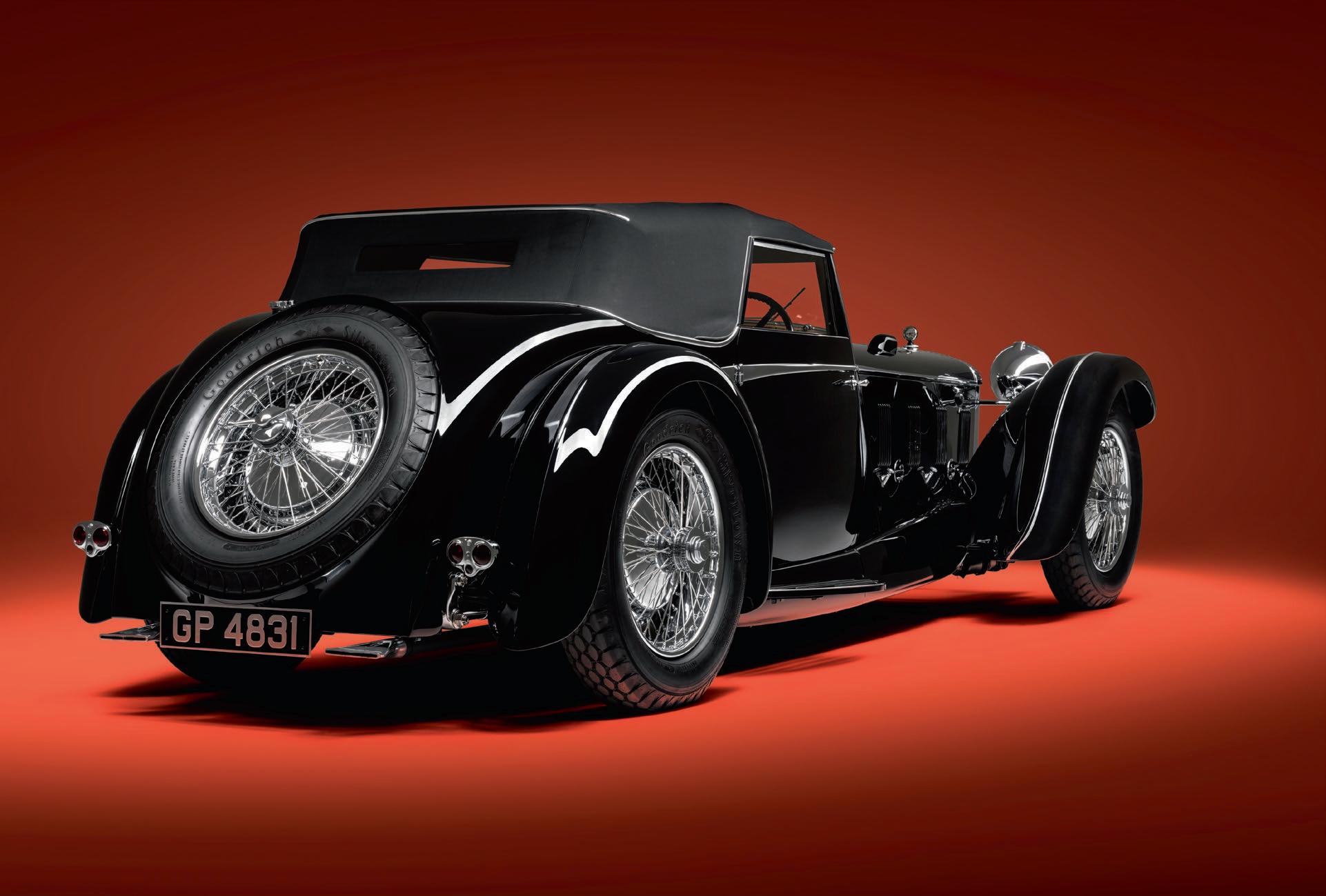
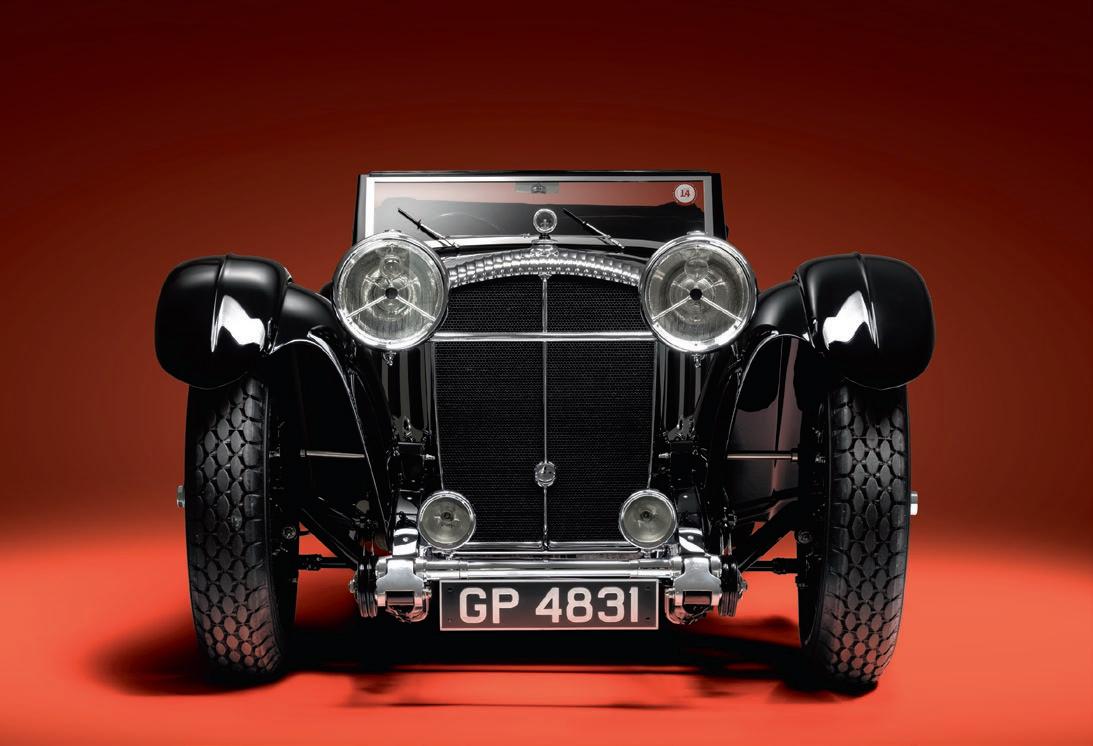
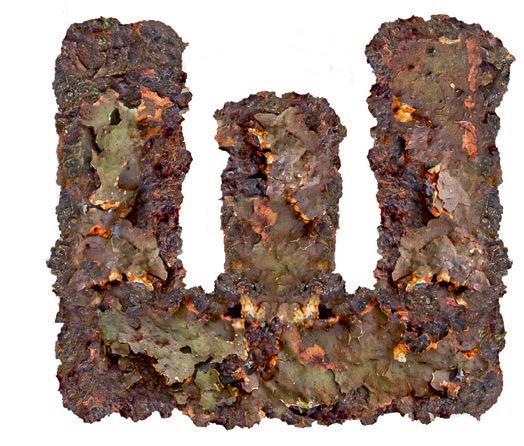
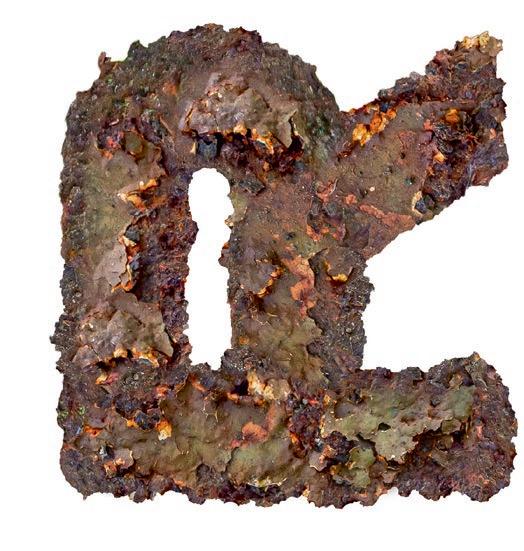
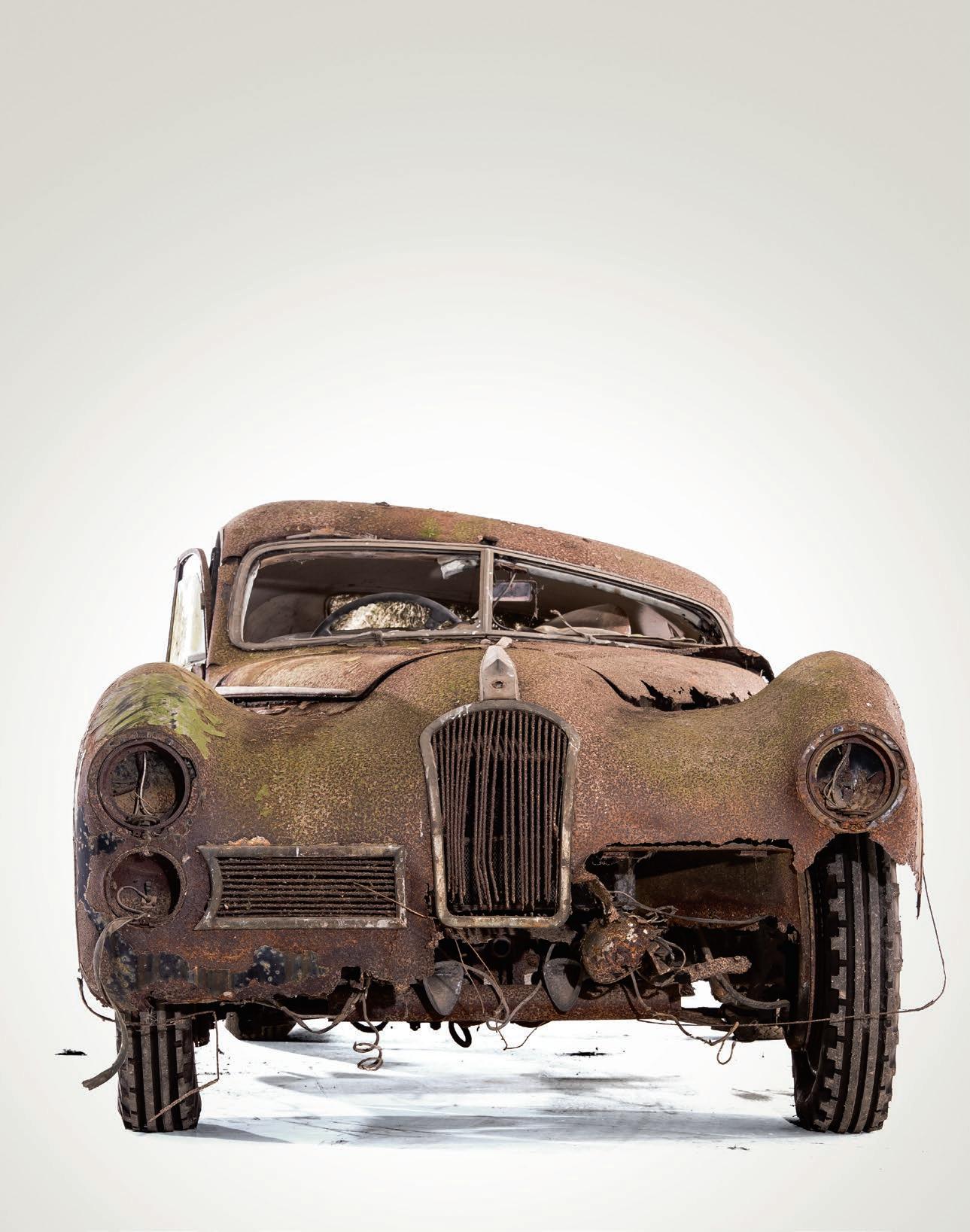
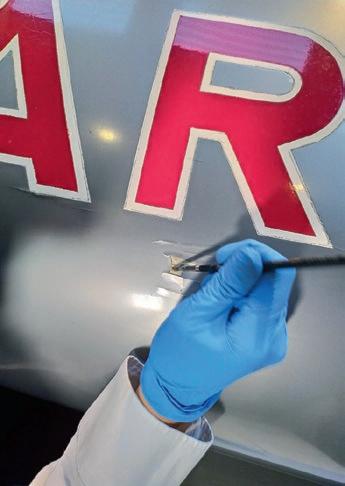
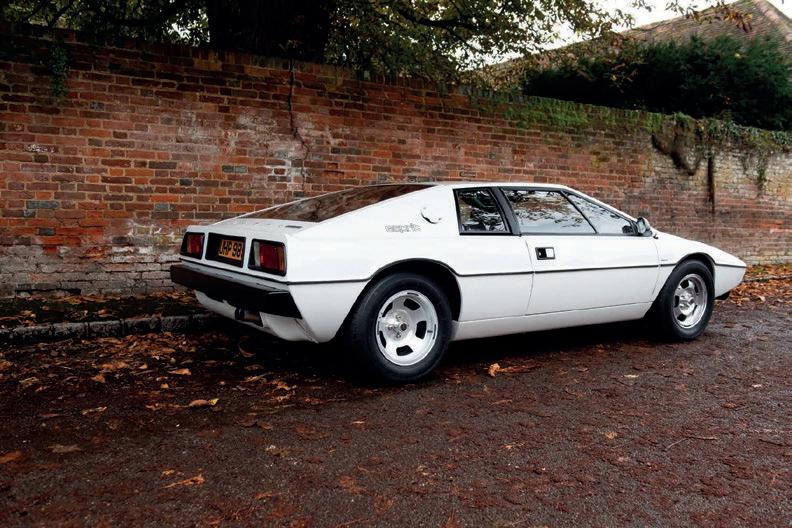
The colour archive of a century. A collection paint swatches from early 1900s to beginning and now available for purchase. Contact:
Concours
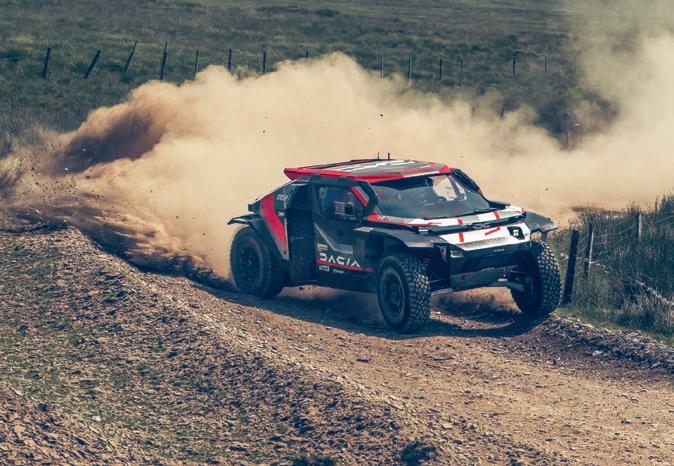
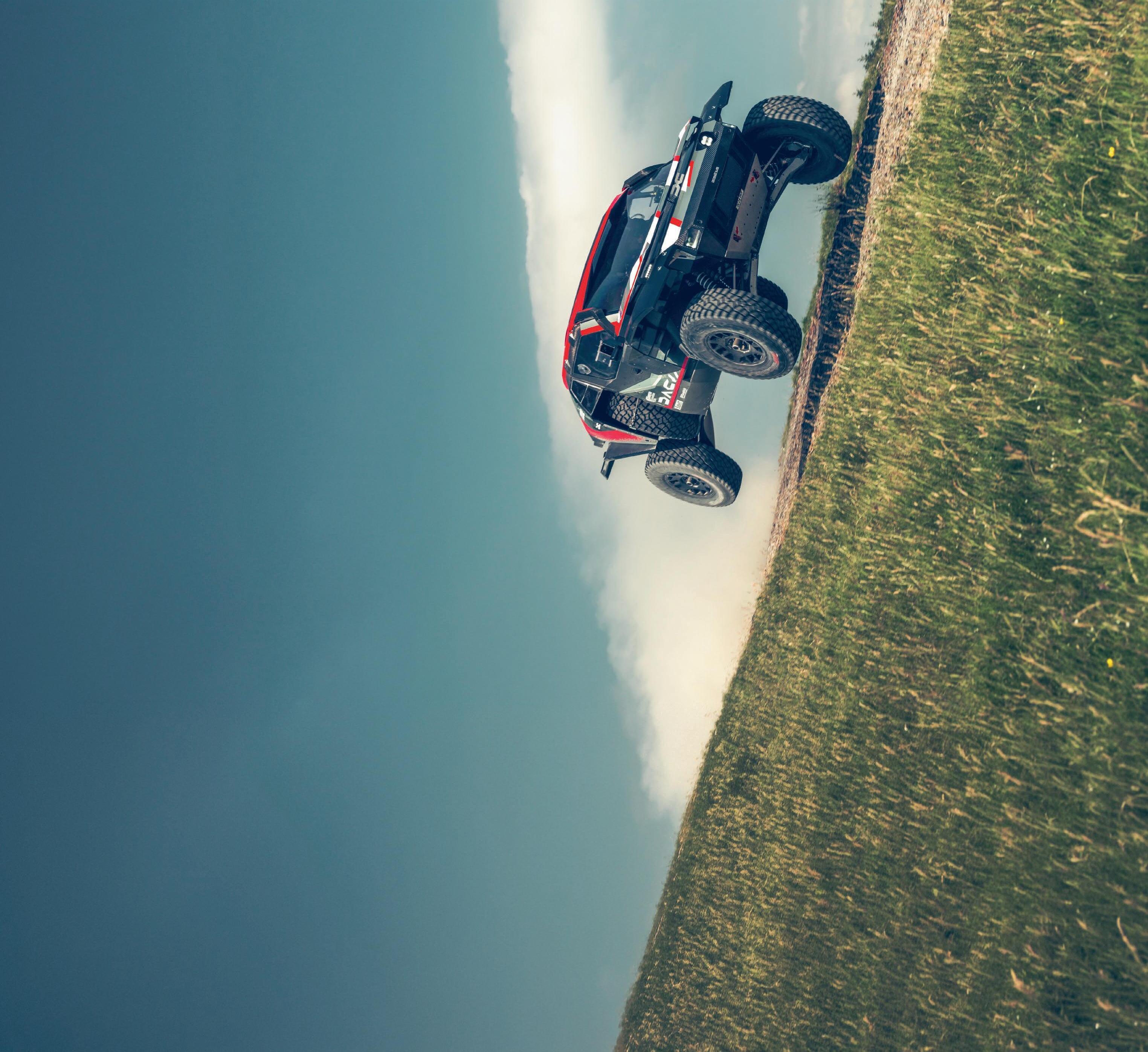
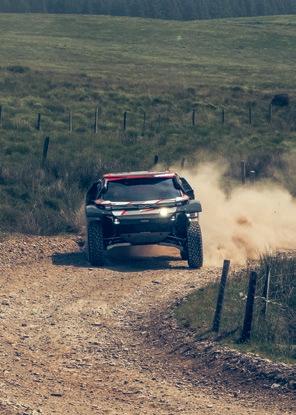
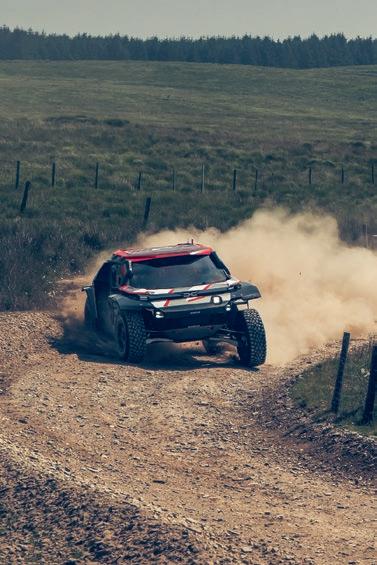
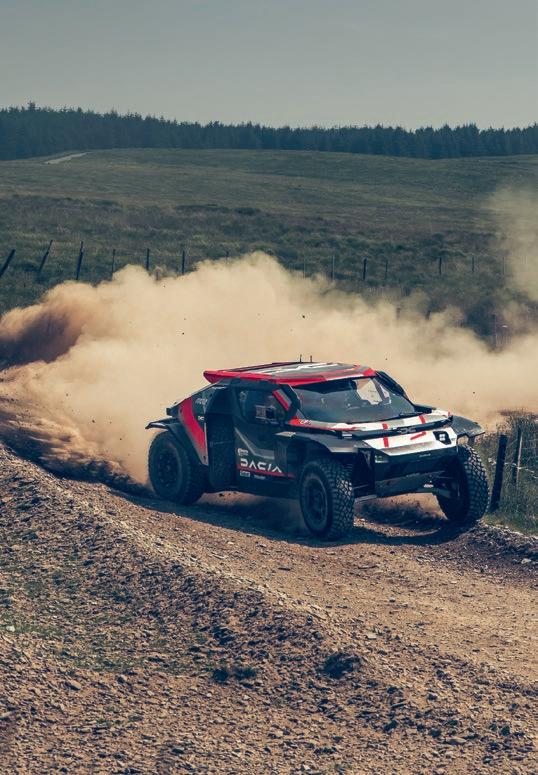
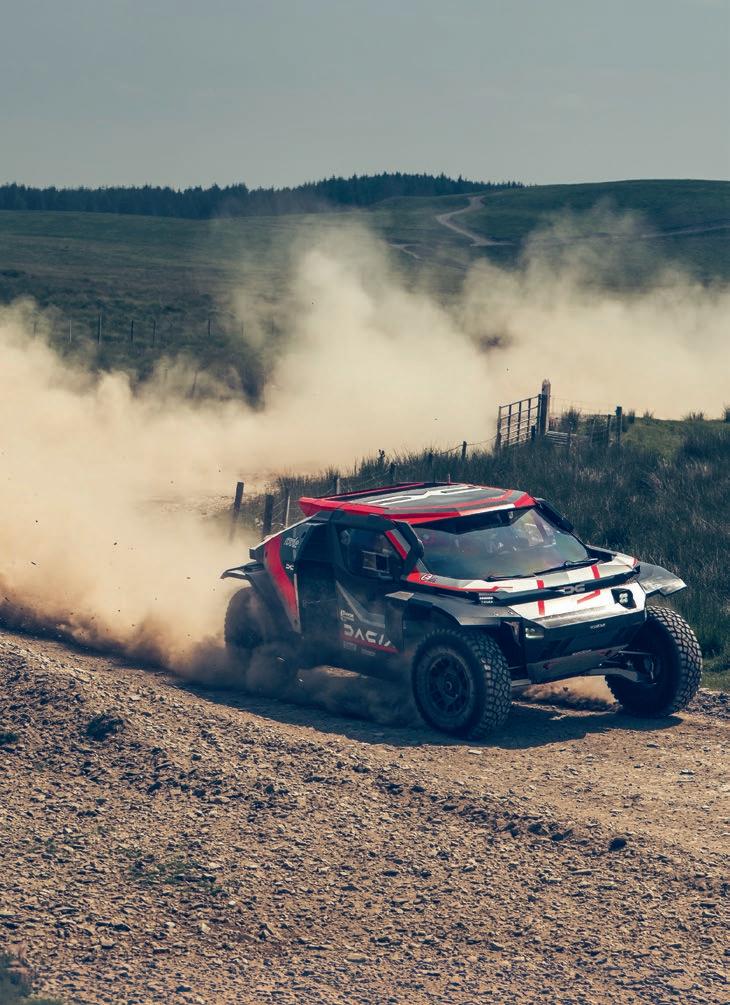
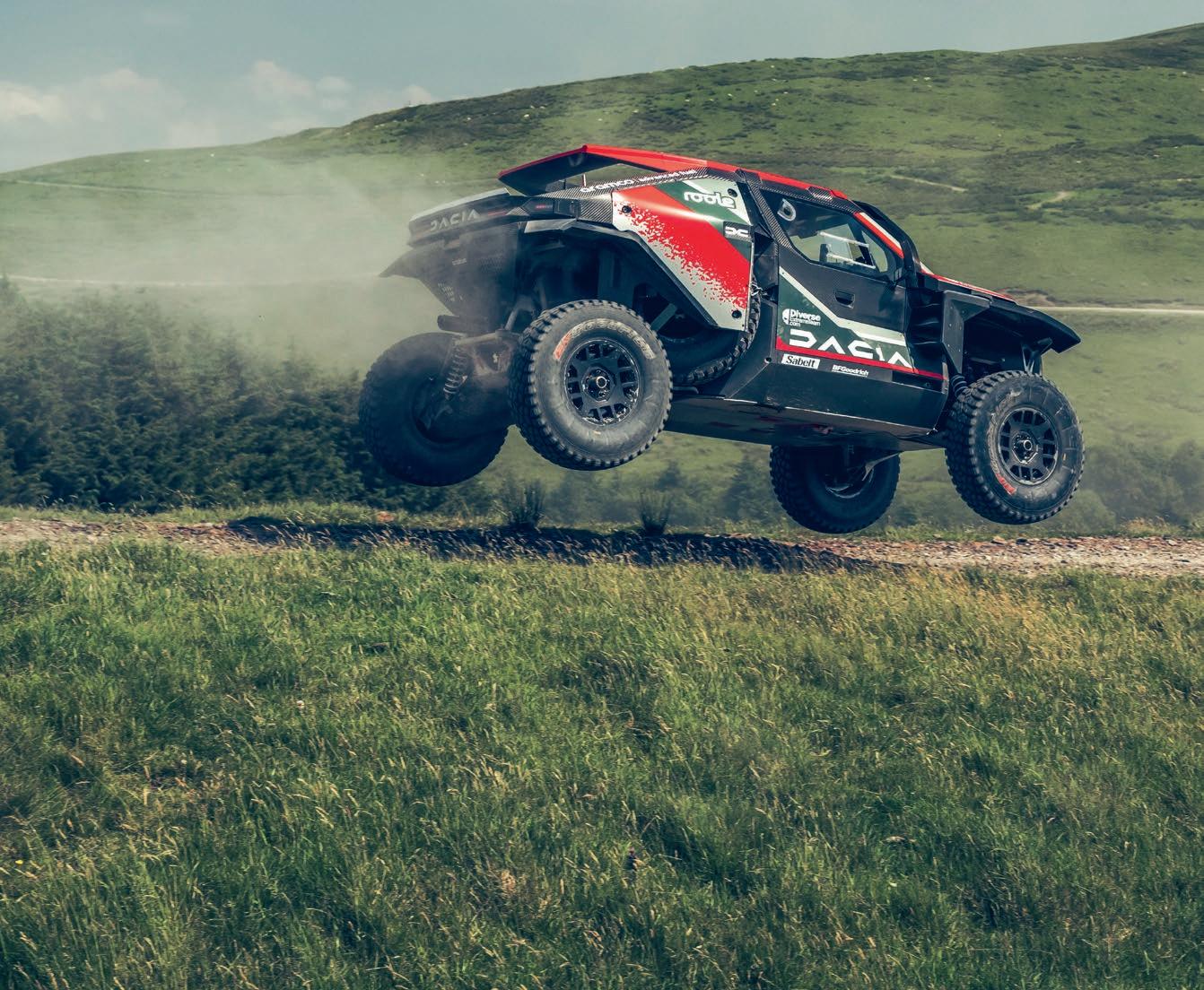
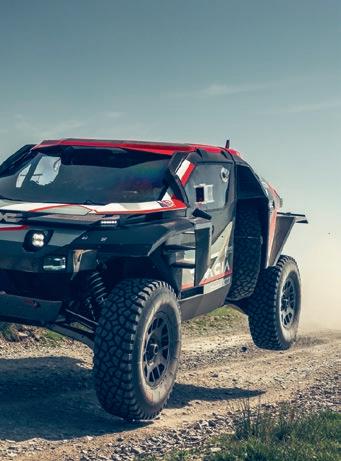
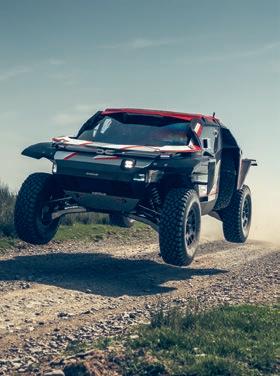
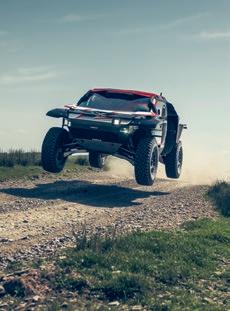
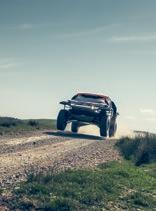
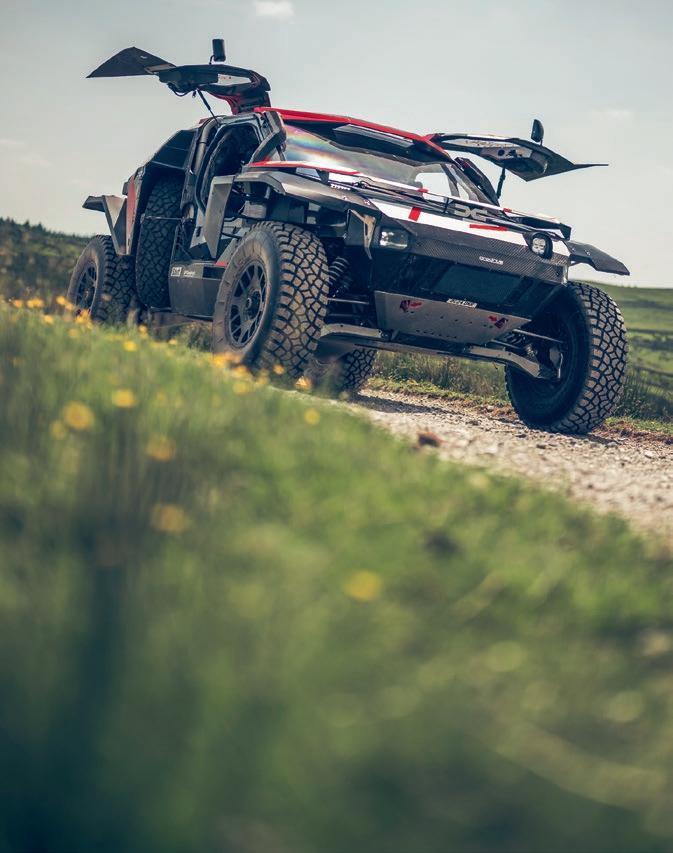
Dacia Sandrider Dakar winner
Taking to the hills – and the air – for the wildest ride ever
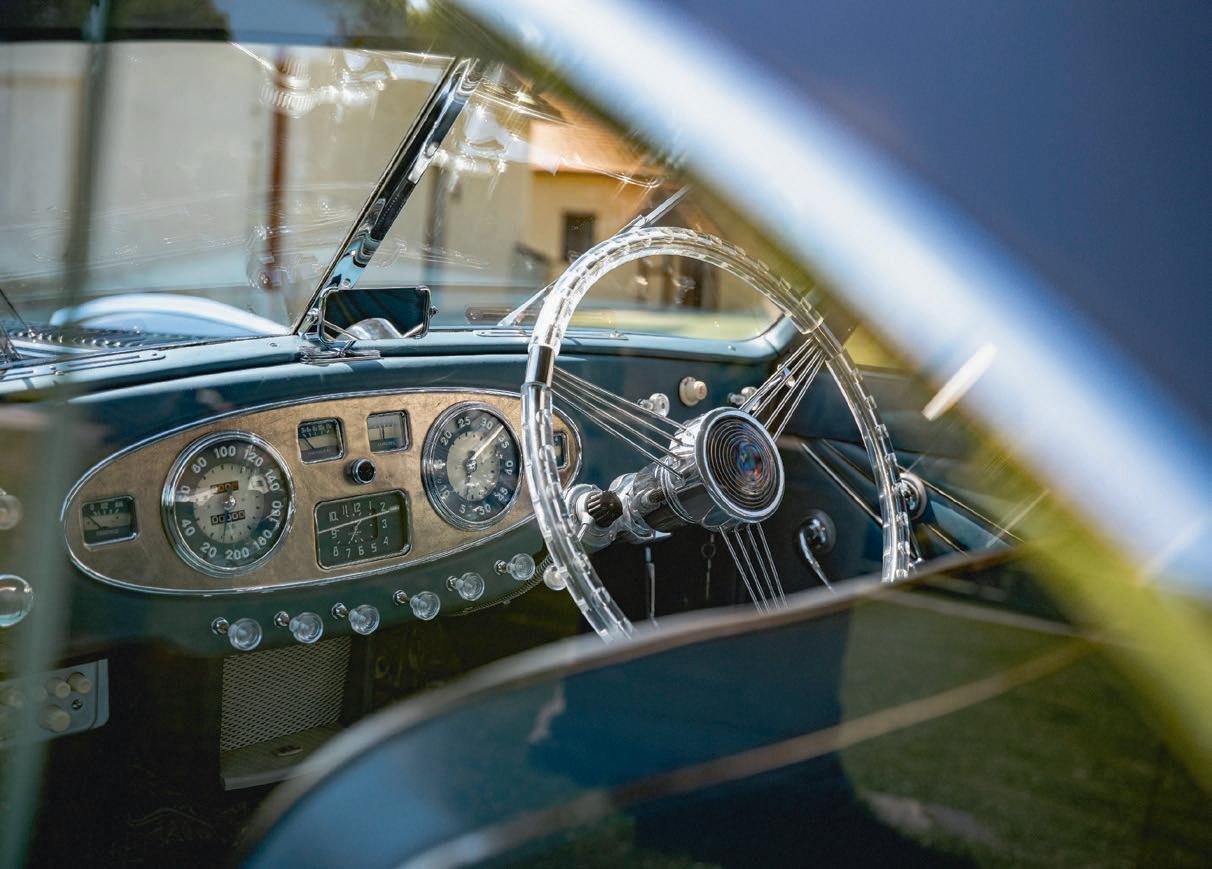
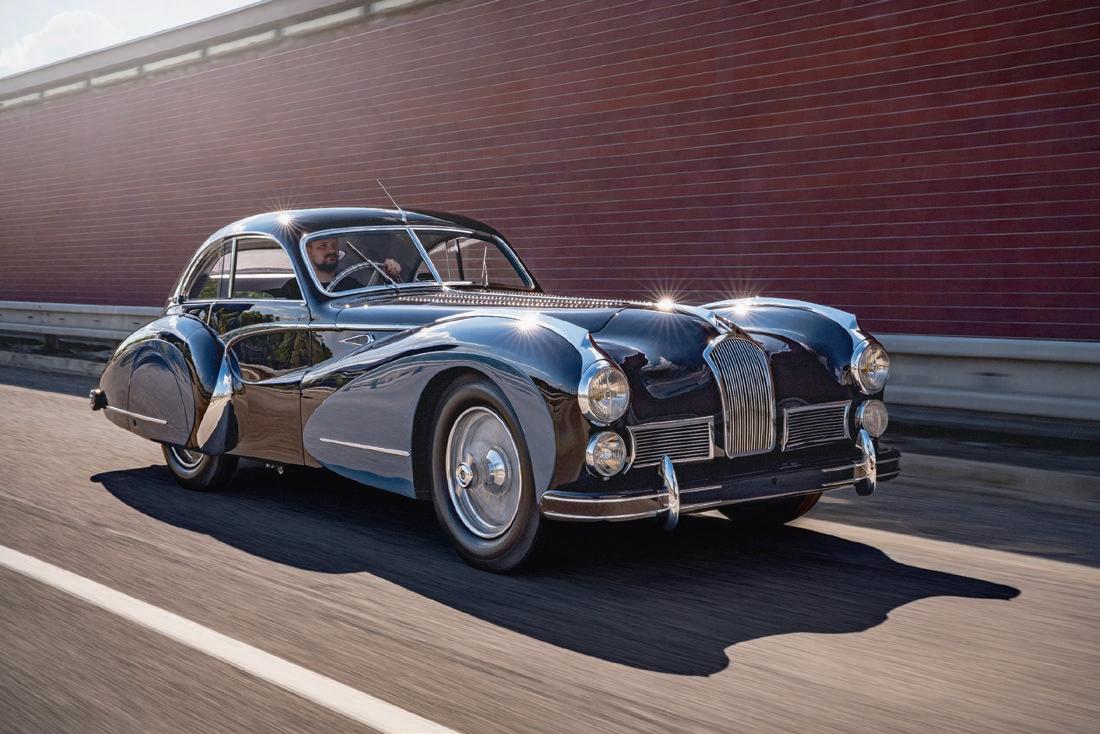
1949 Talbot-Lago T26 Grand Sport
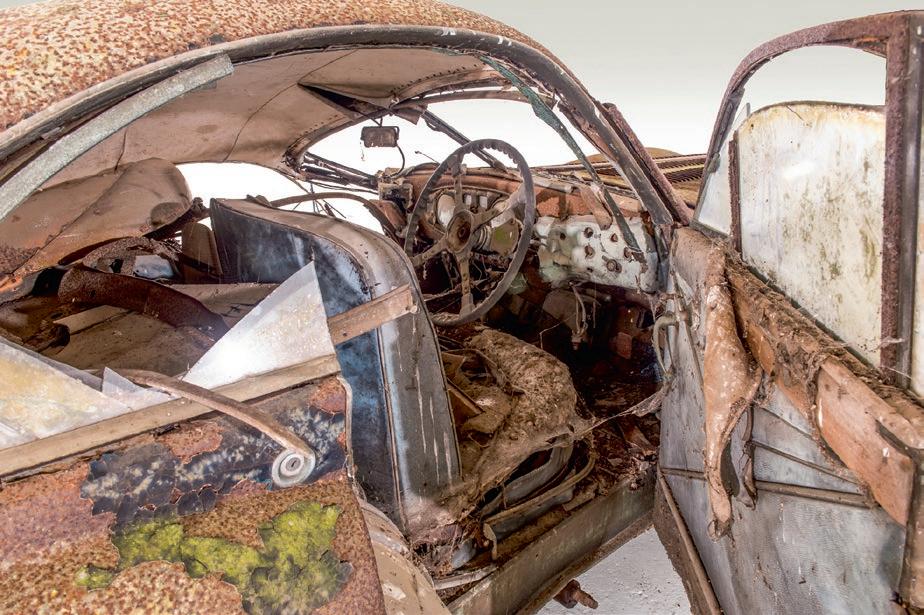
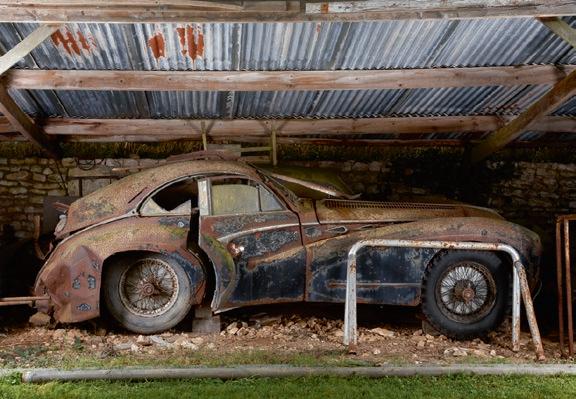
The born-again exBaillon Collection Saoutchik coupé
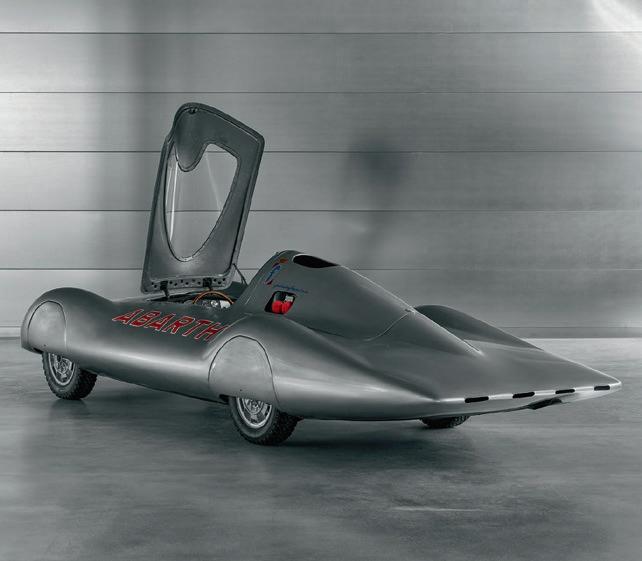
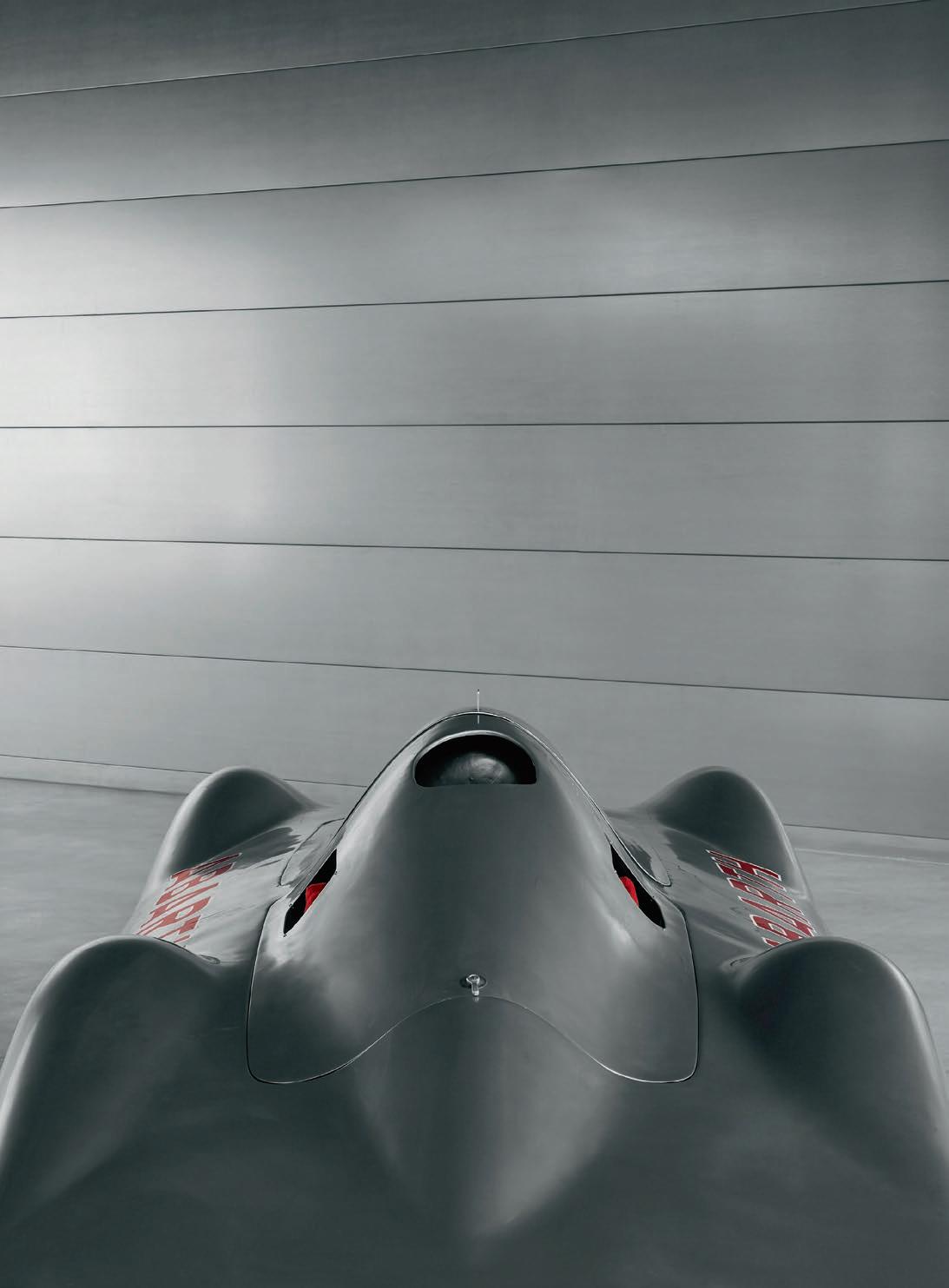
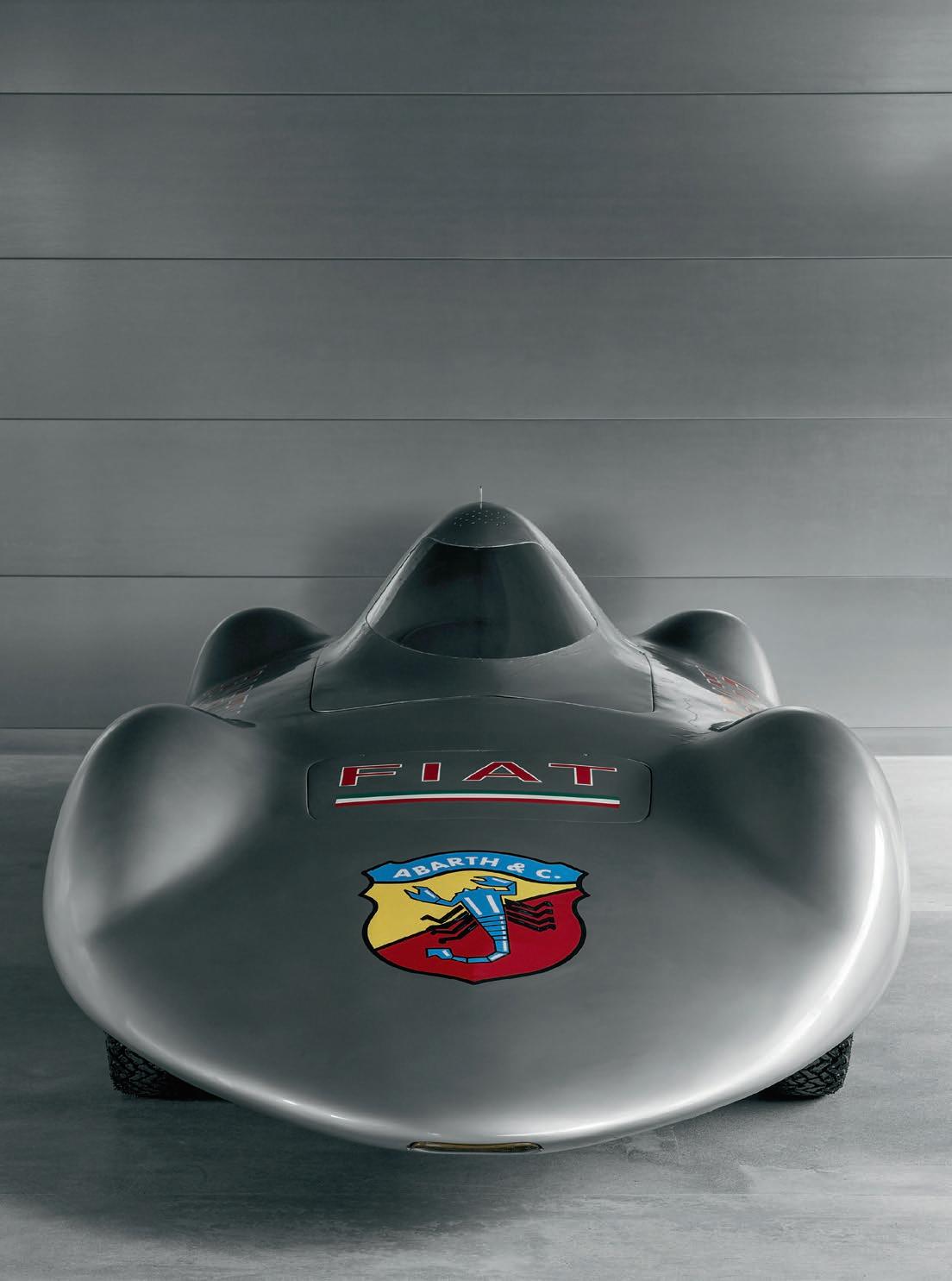
Extracting the true identity of a worldclass streamliner
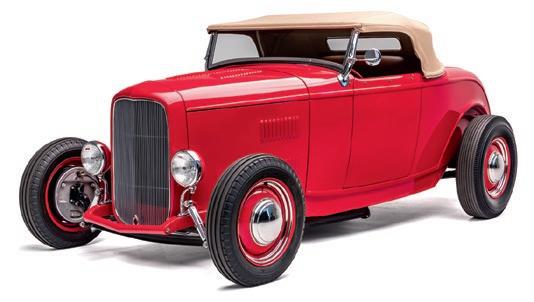
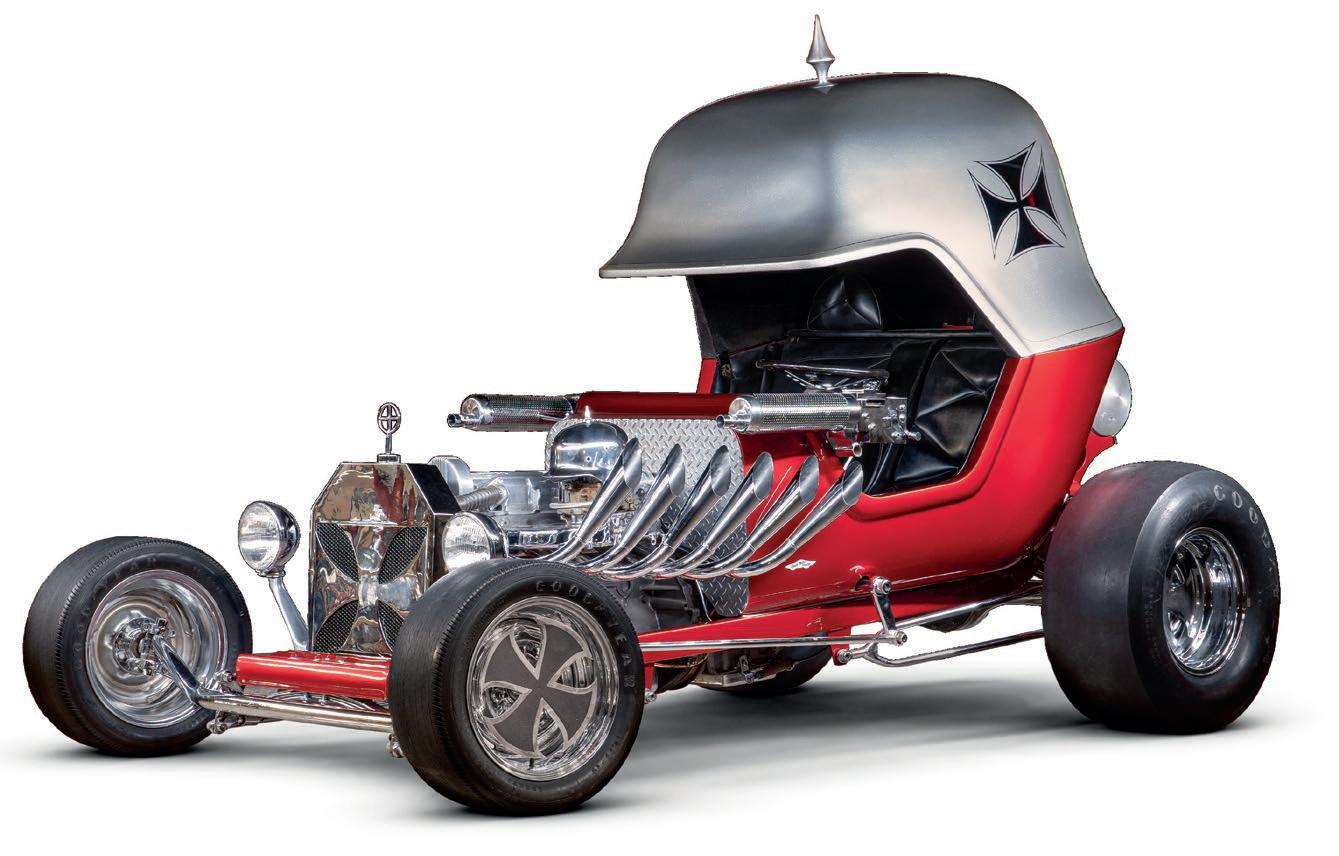
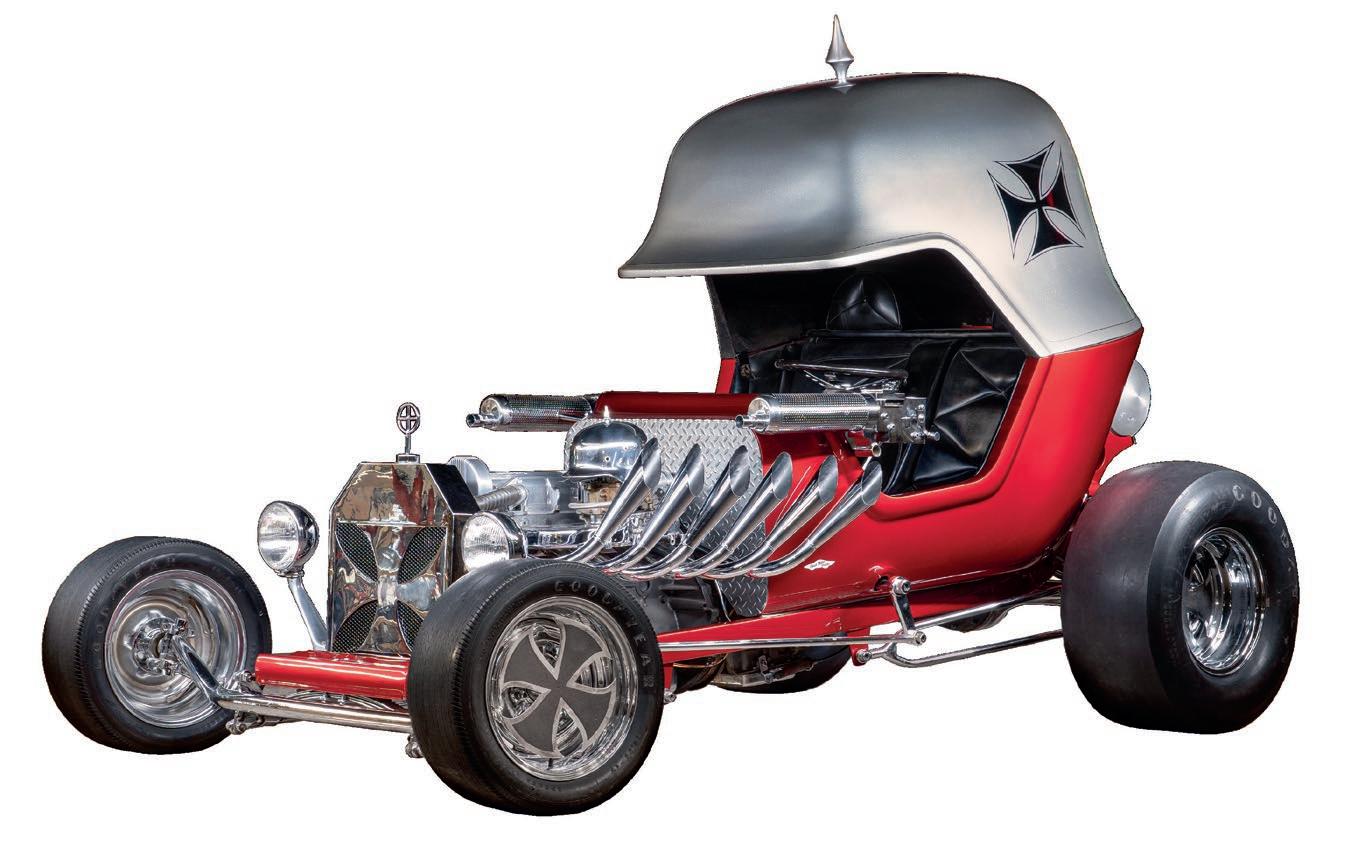
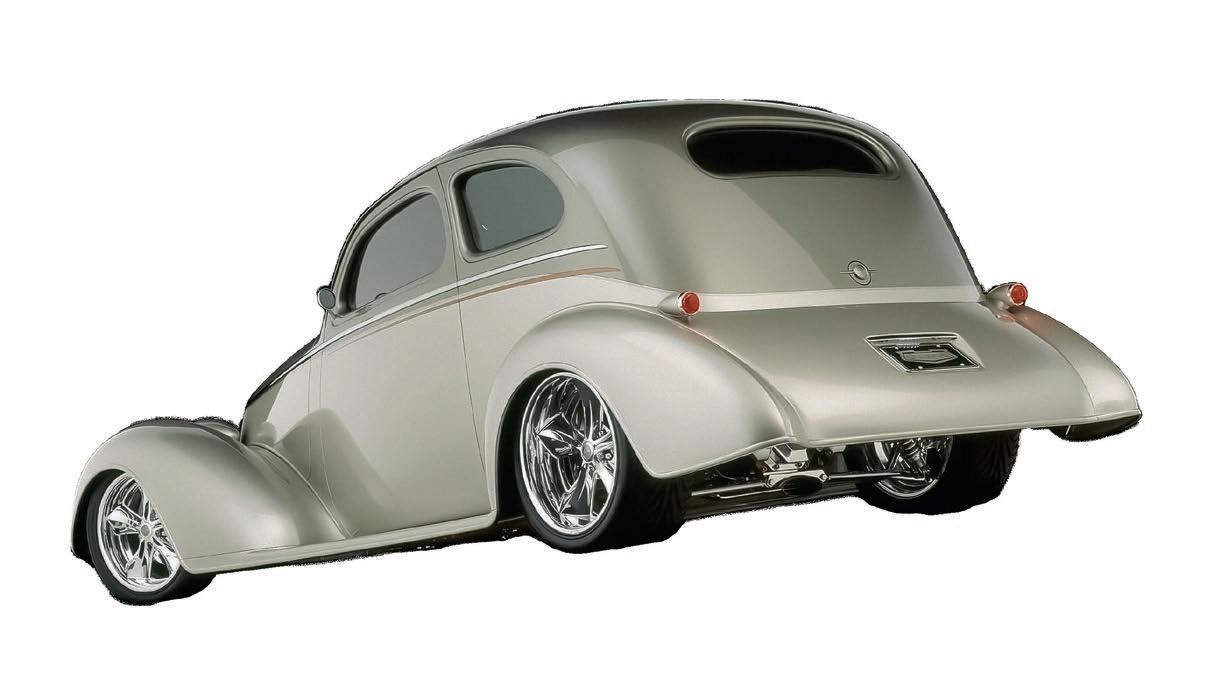
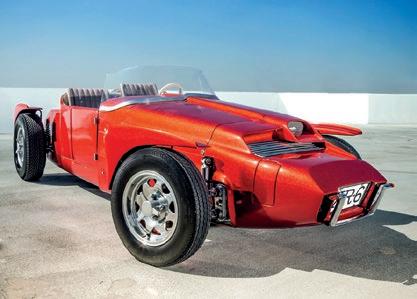
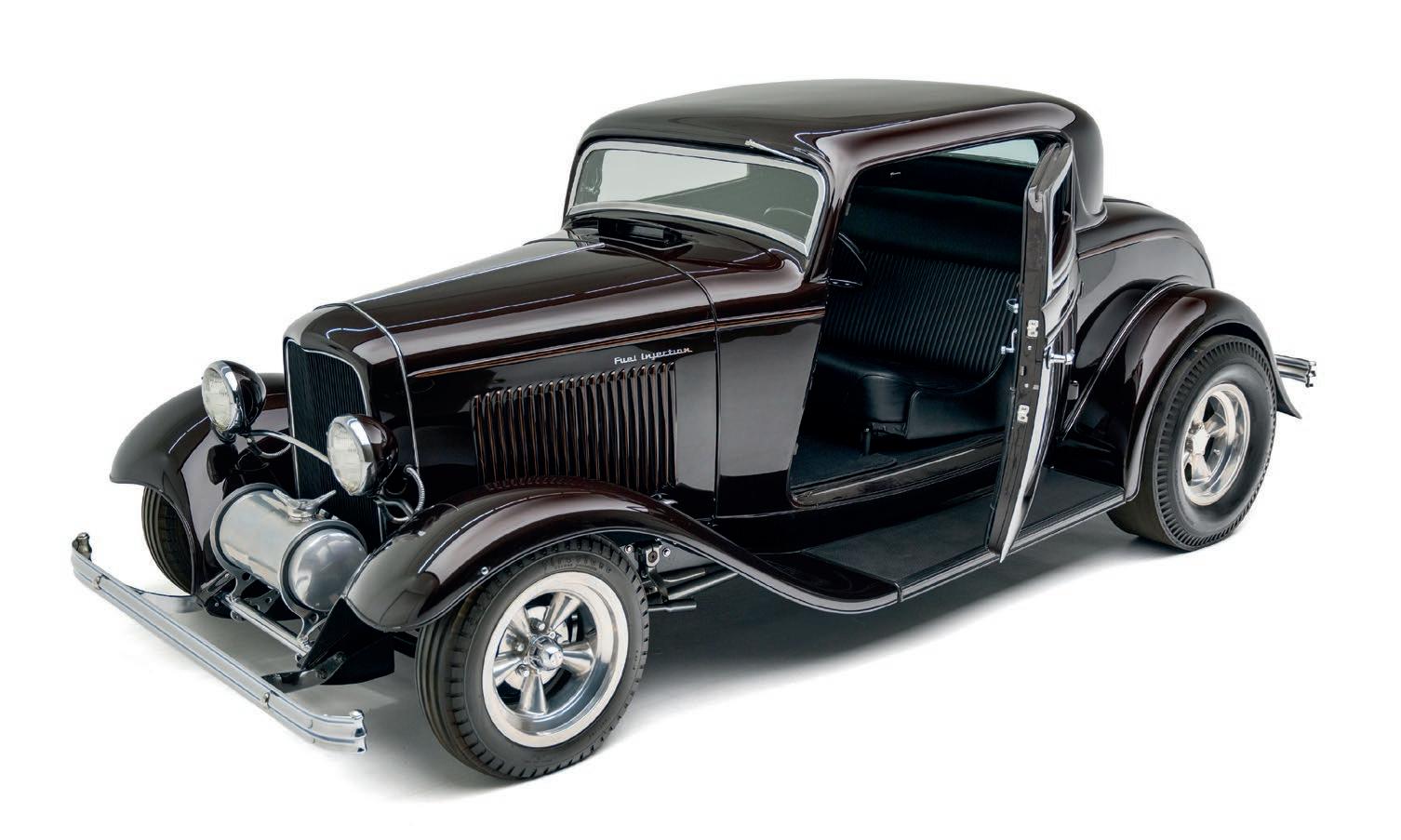
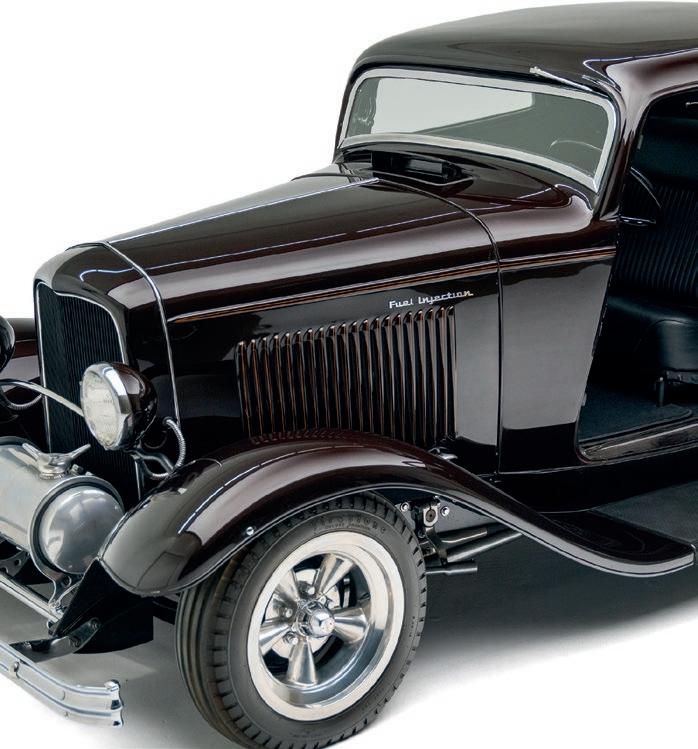
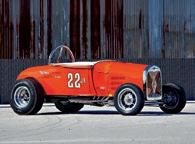
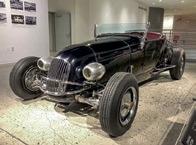
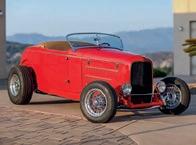
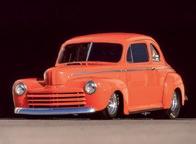
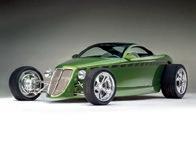
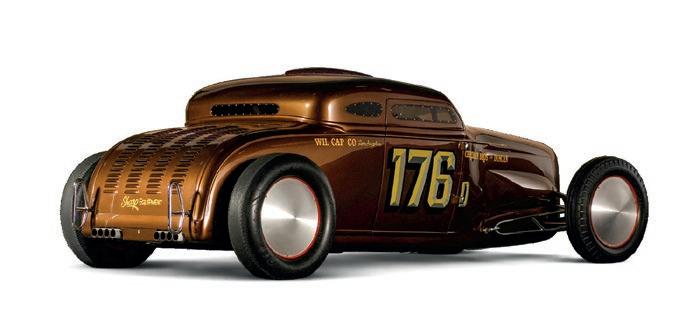
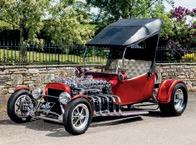
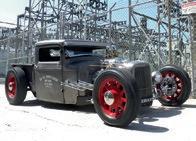
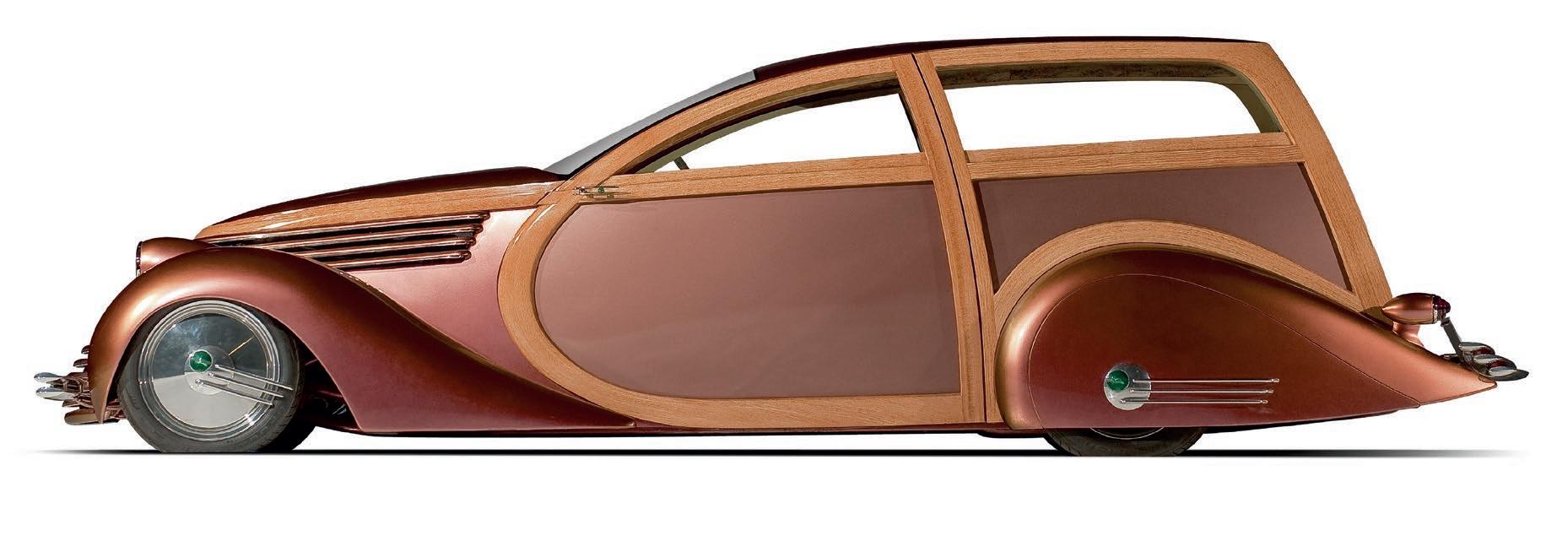
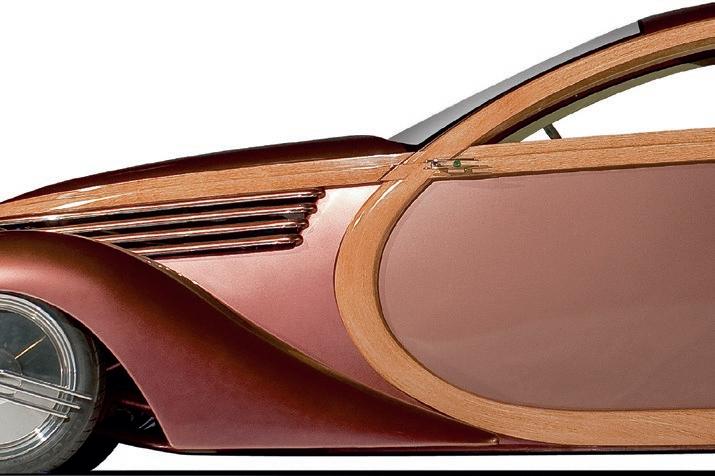
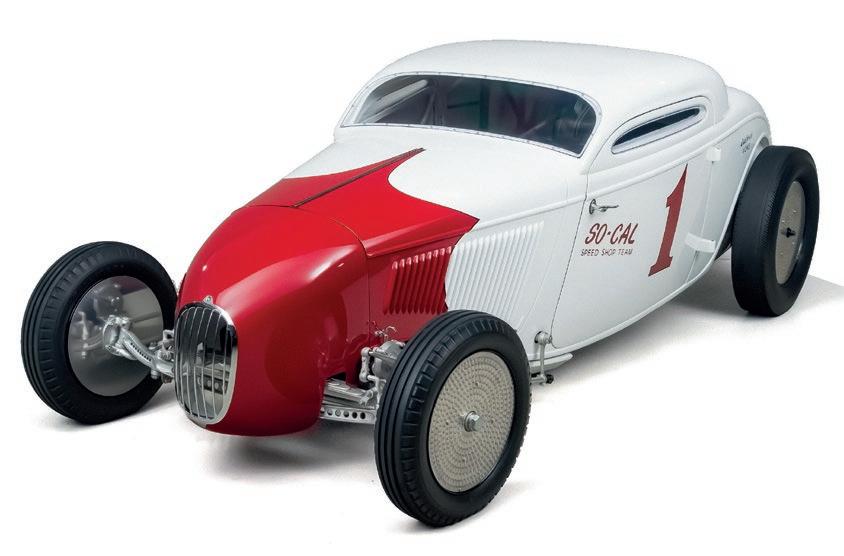
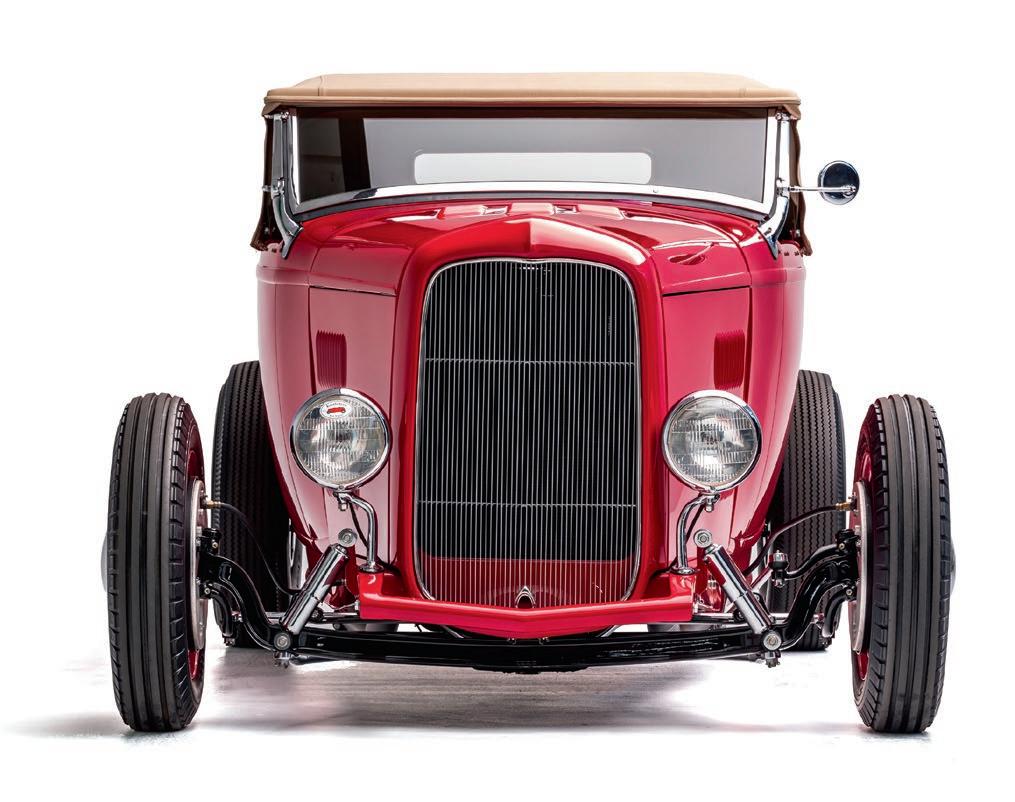
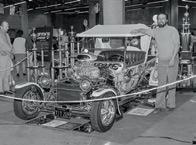
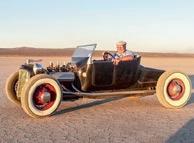
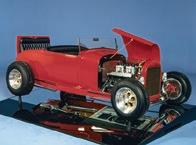
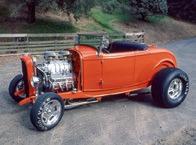
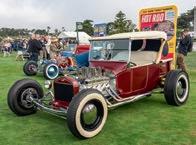
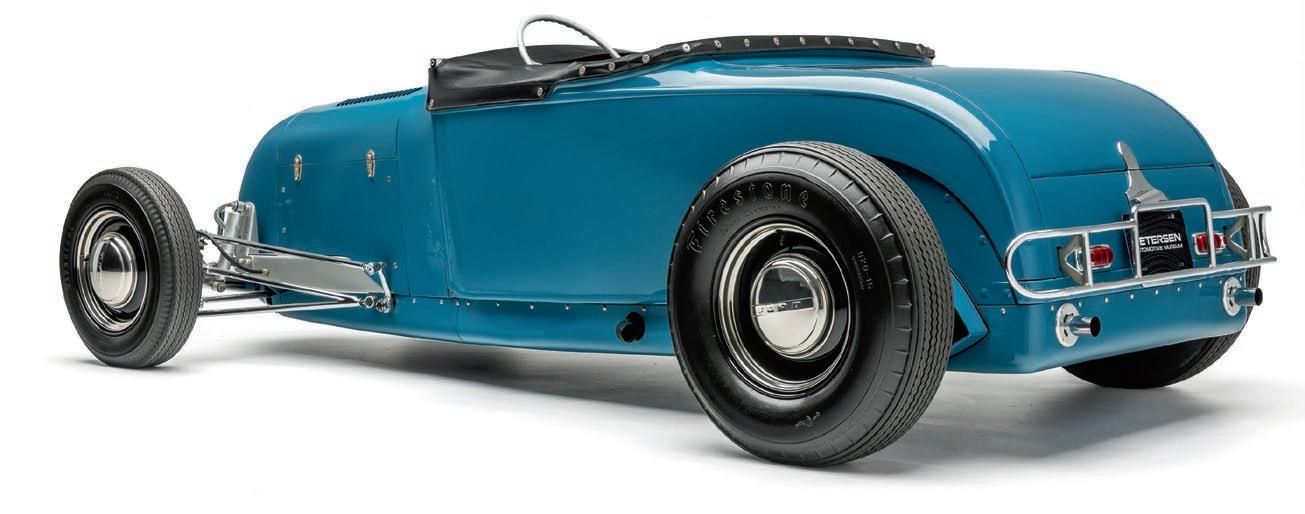
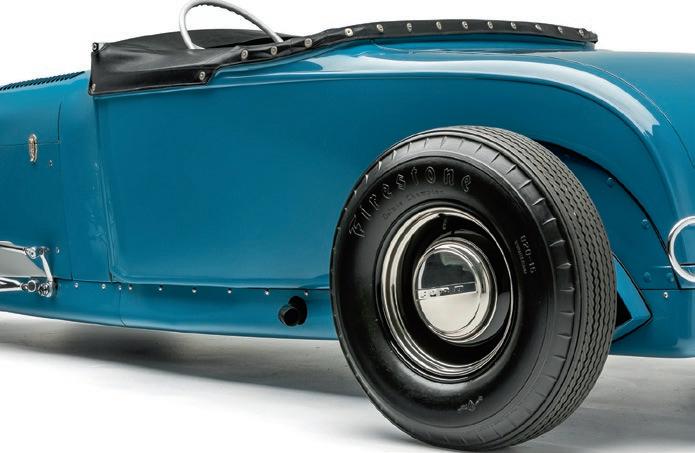
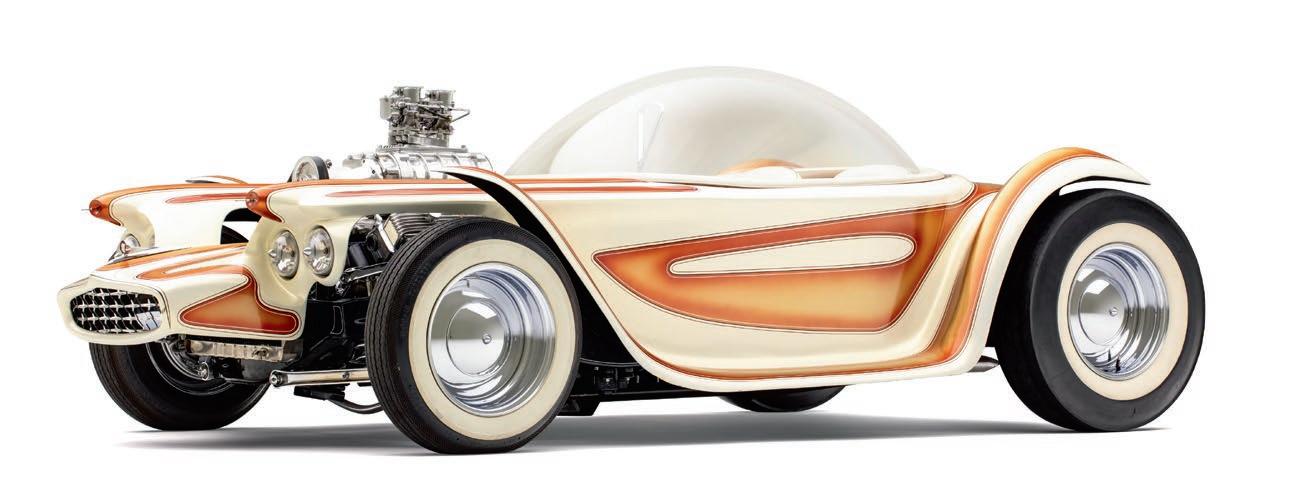
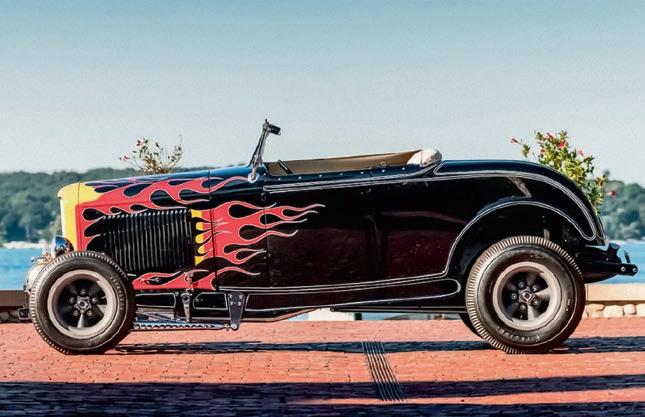
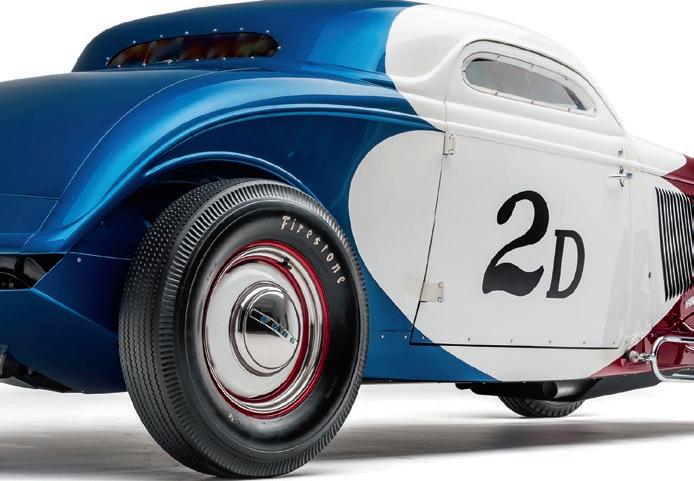
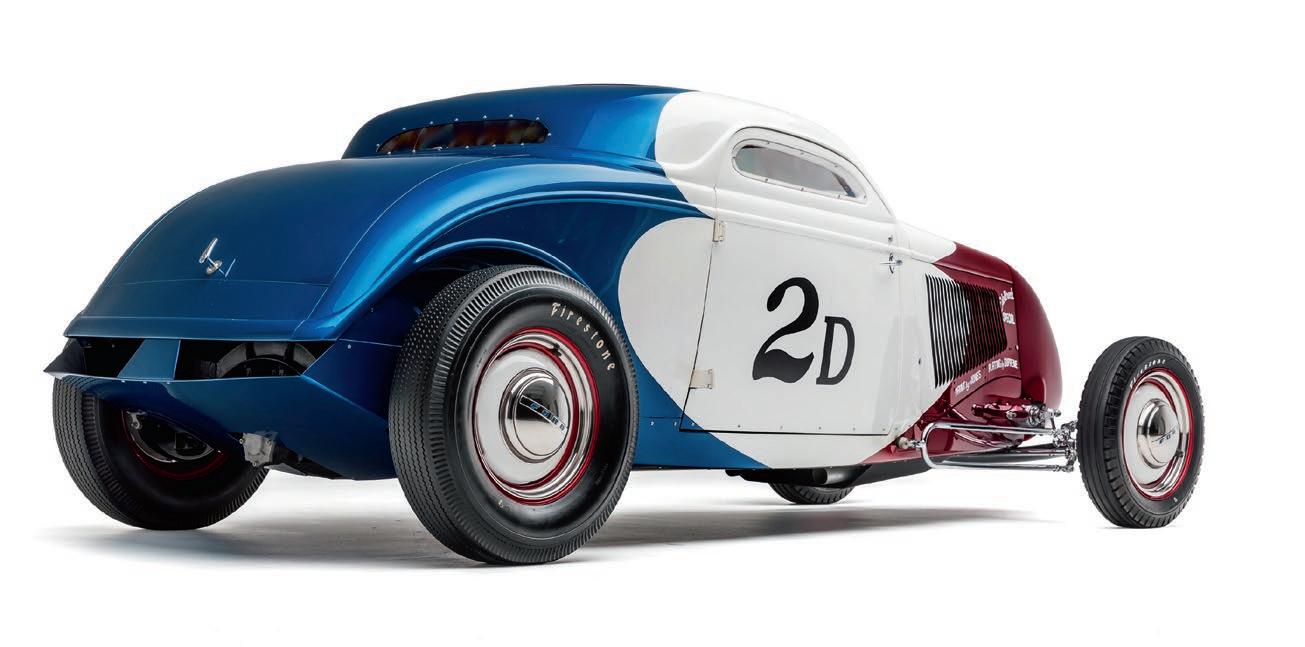
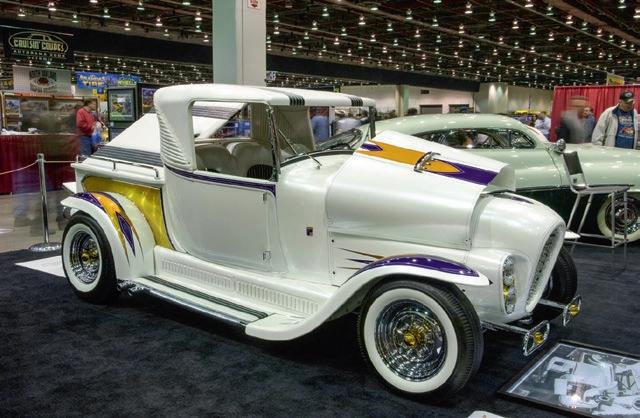
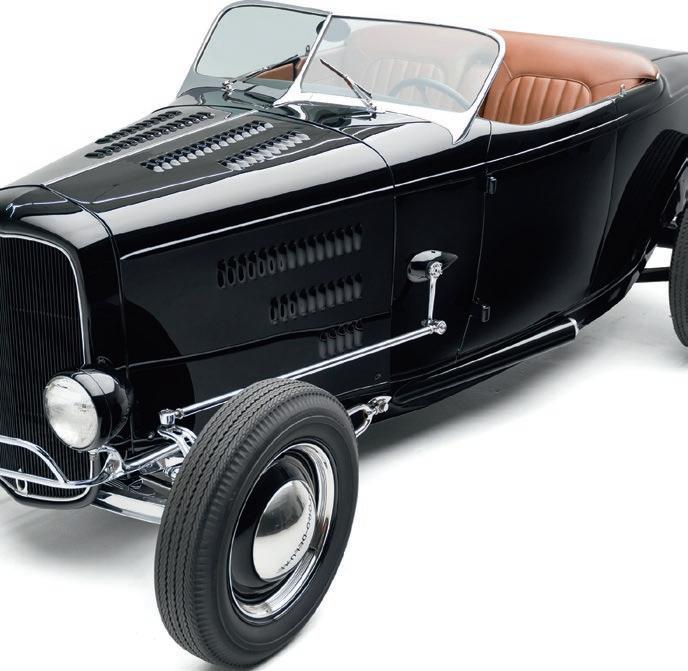
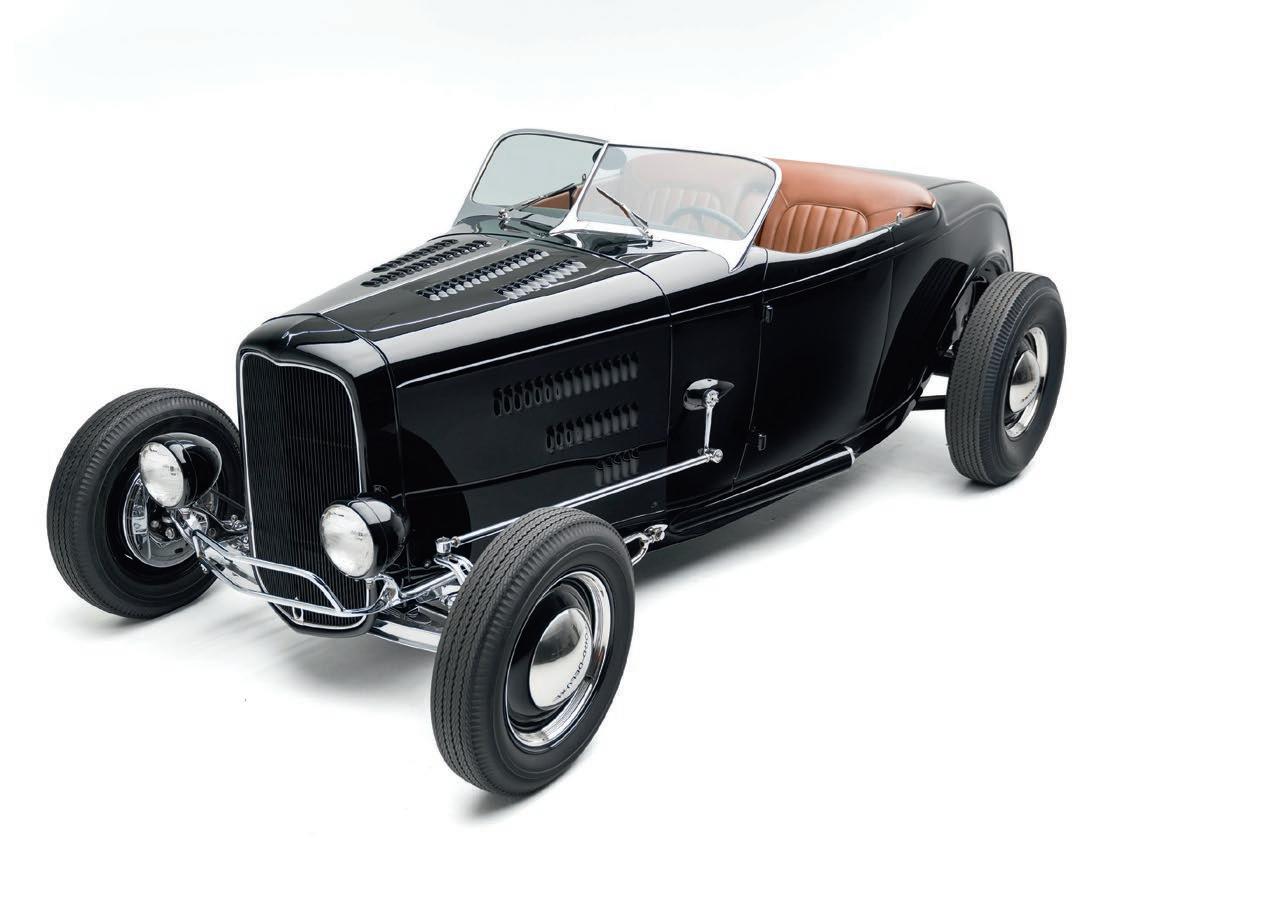
Fusing creativity, style and performance – here are our favourite rods
Acquire
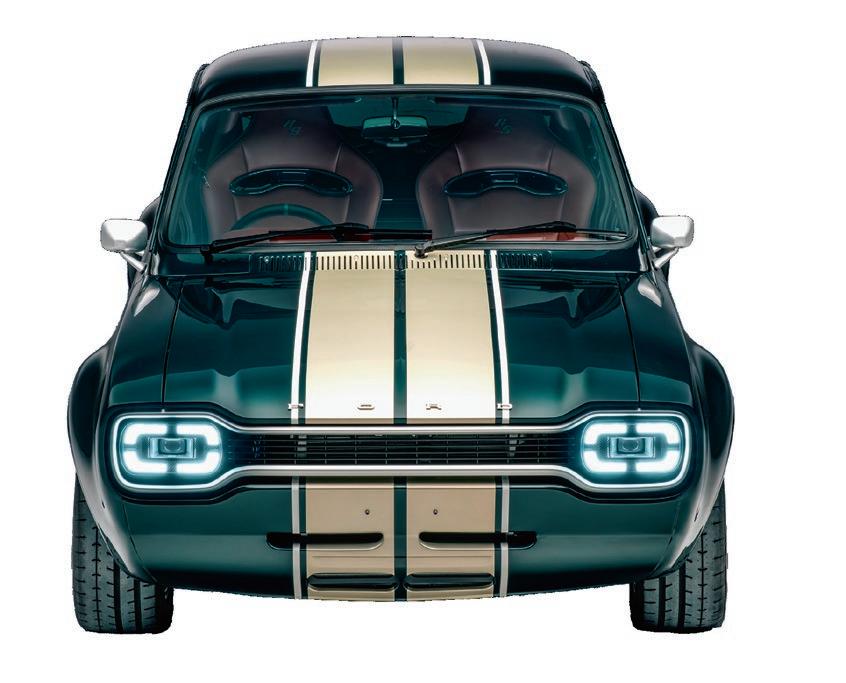
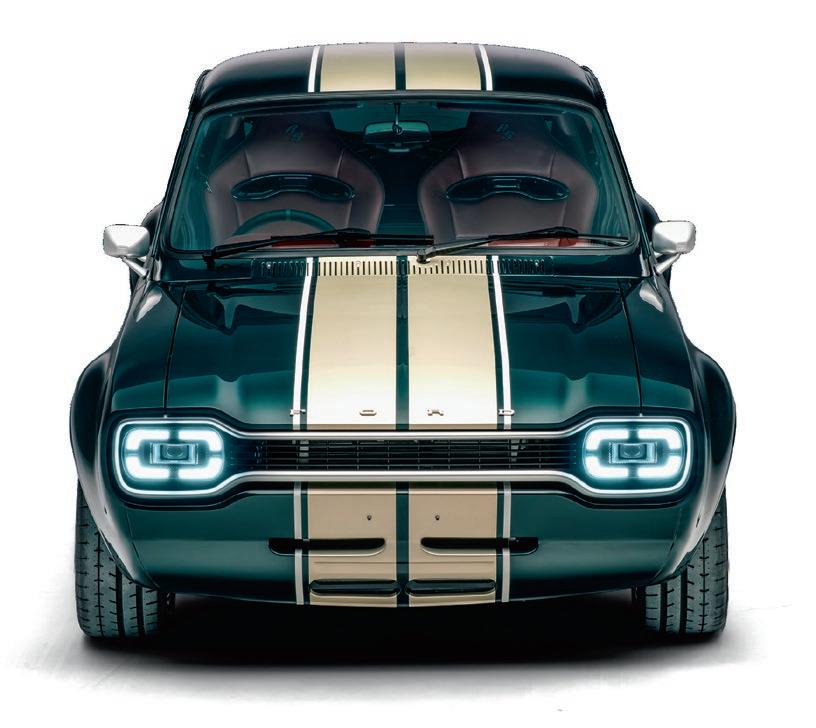
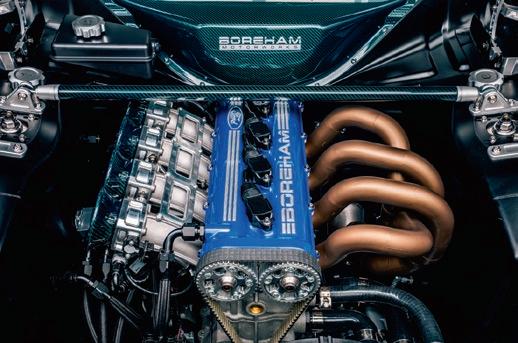
Market milestones, XK120 owner, new Escort Mk1 RS 184
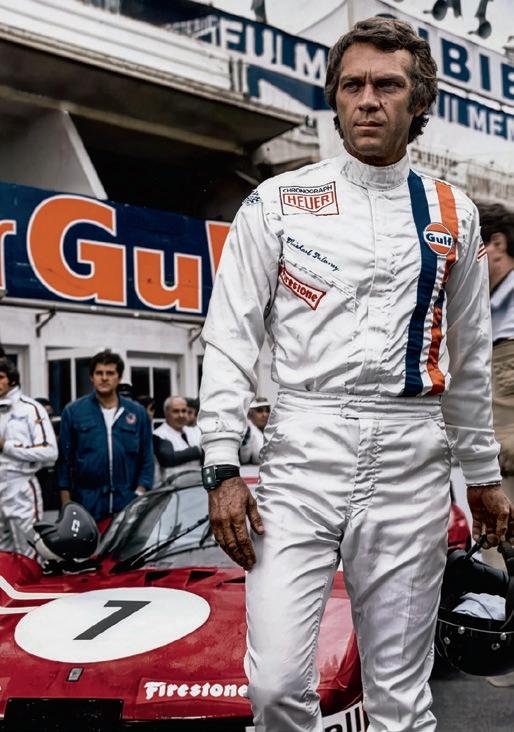
Books, products, McQueen, watches, art and bespoke cars 190
The Alfa museum, with curator Lorenzo Ardizio 202
In a world full of connections
we help you make the right ones
Advantage lies in a partner who understands you and your business. Through our global network of specialist advisors, we help you build your portfolio and plan your wealth.
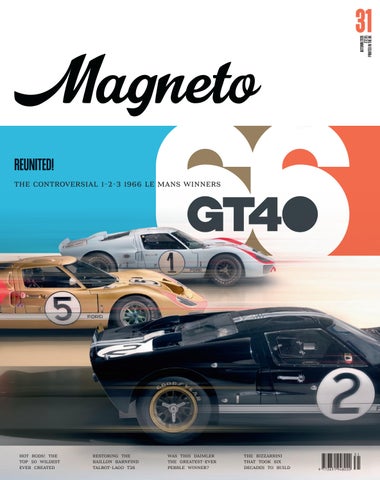
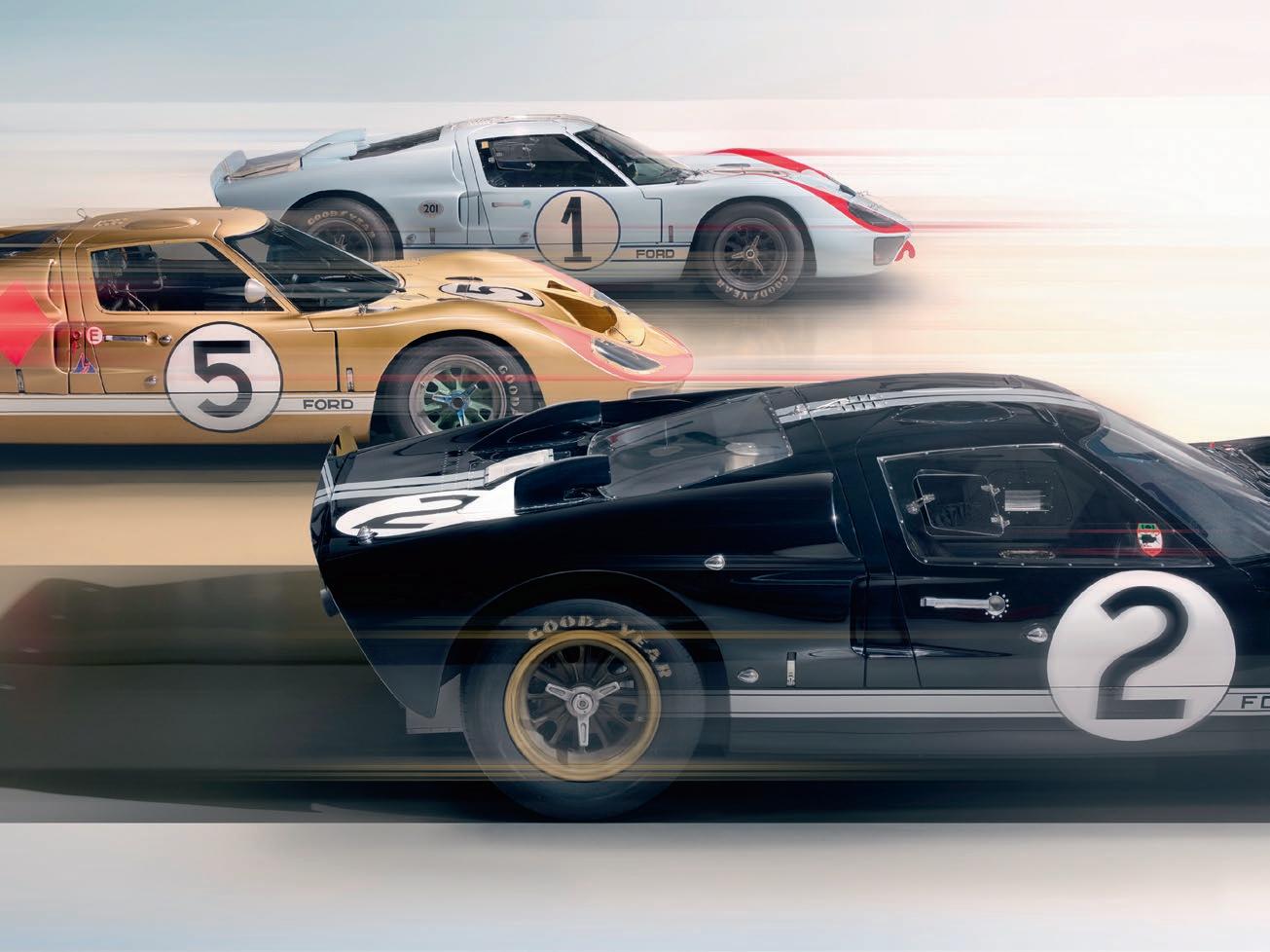
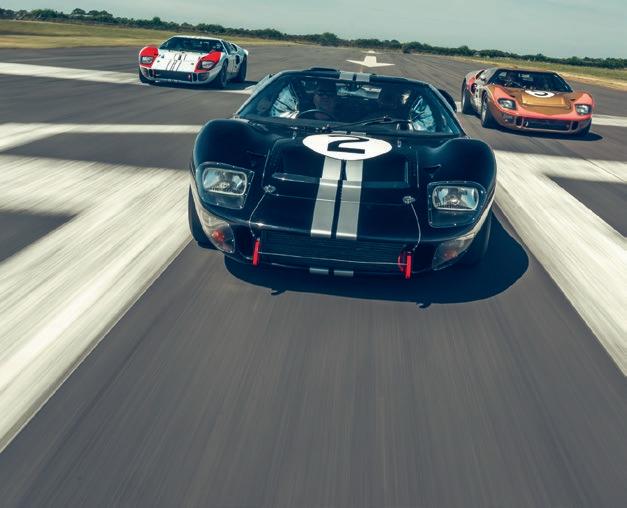
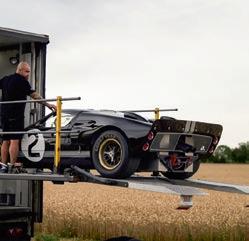
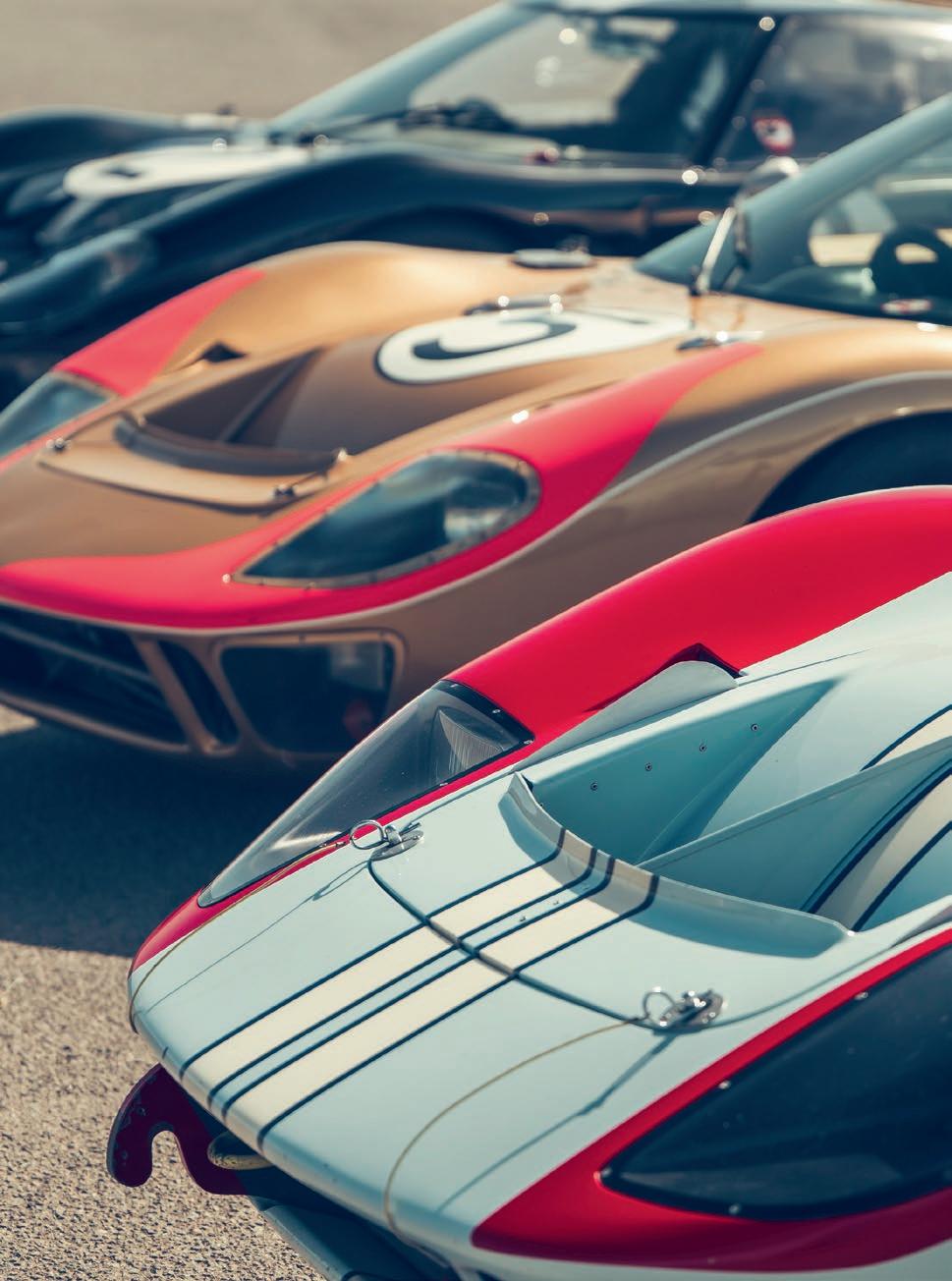
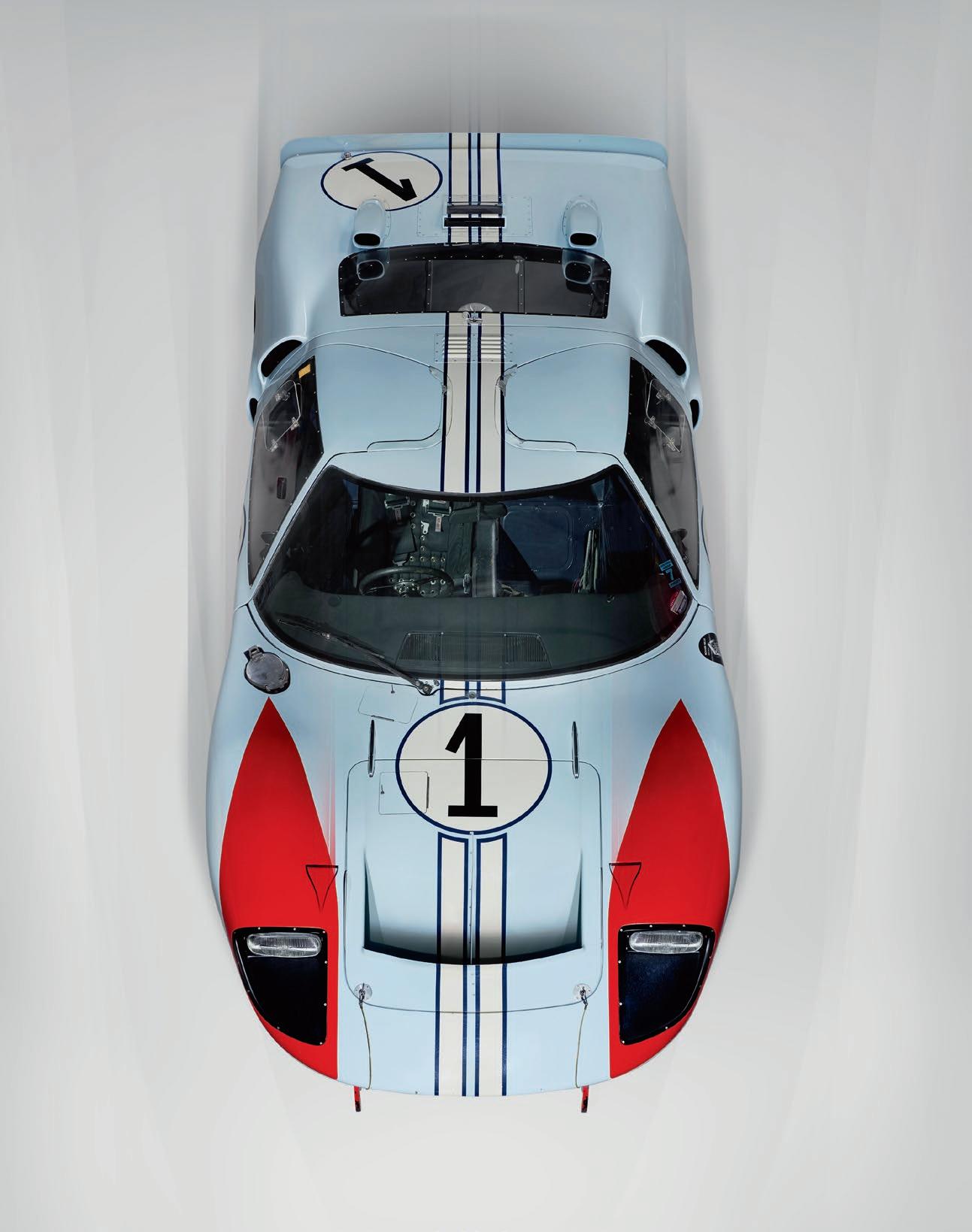
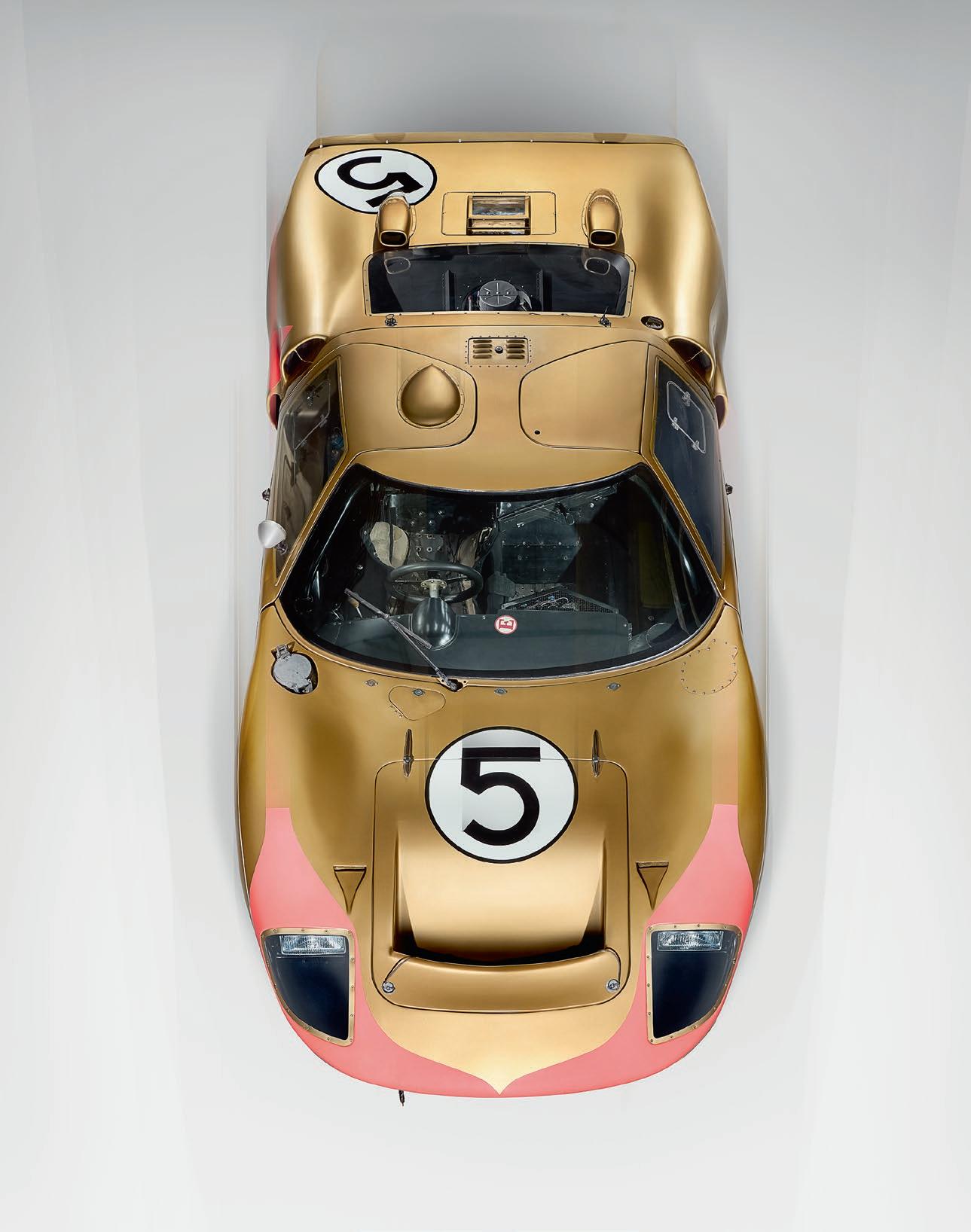
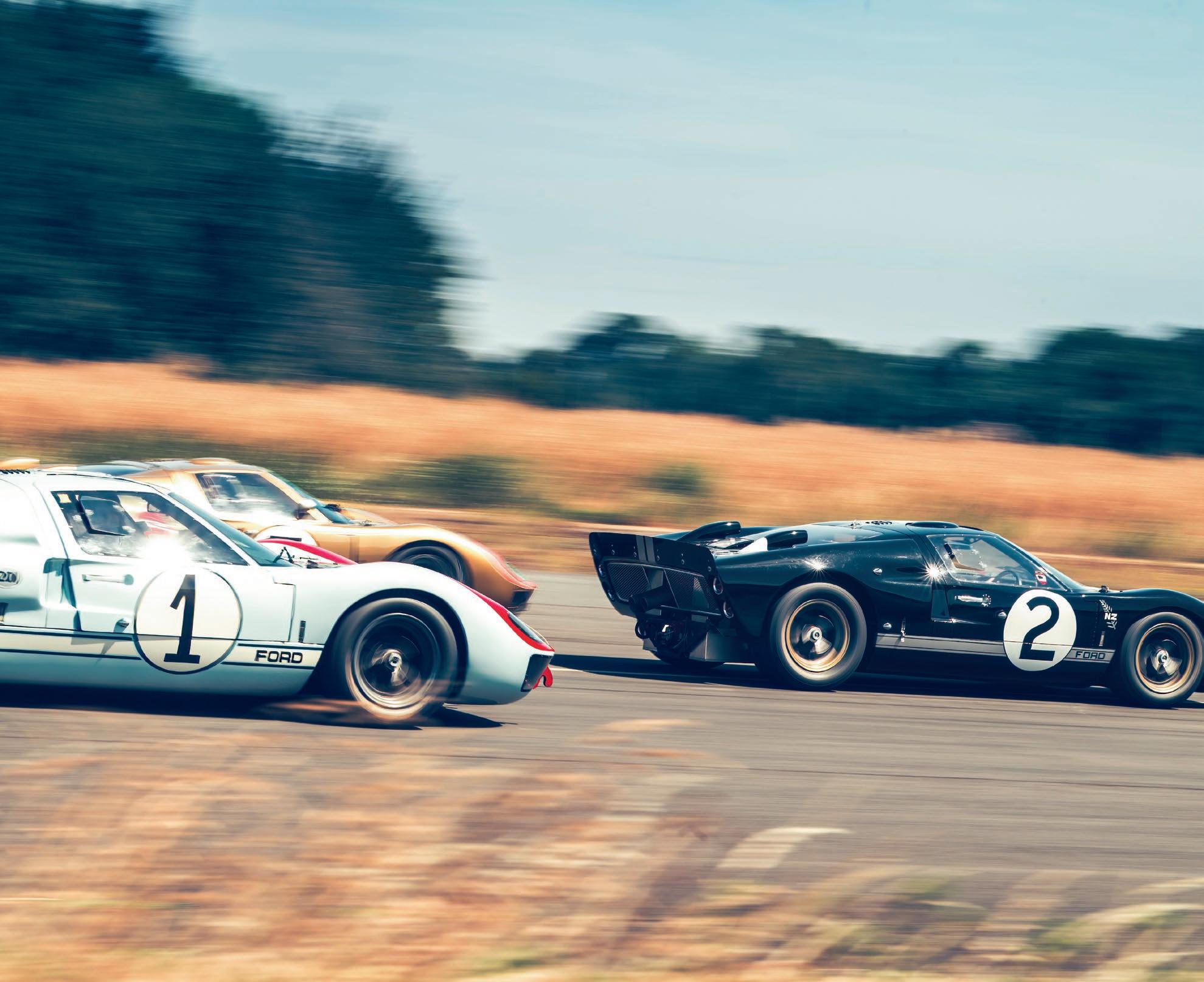
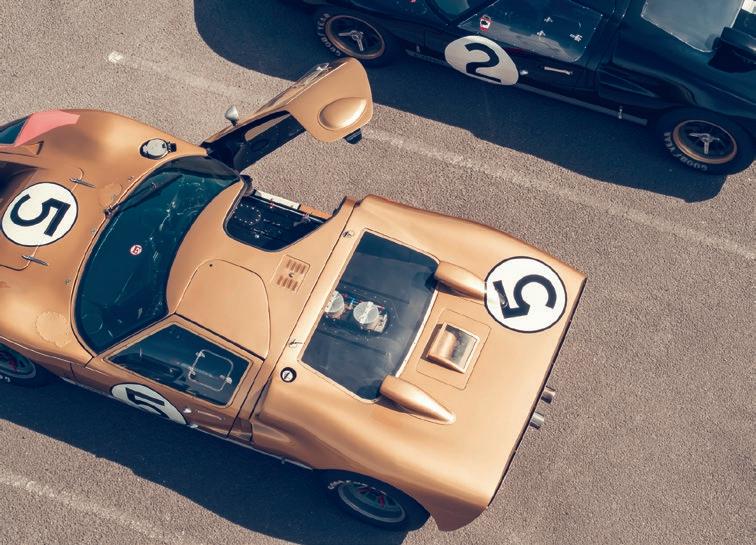
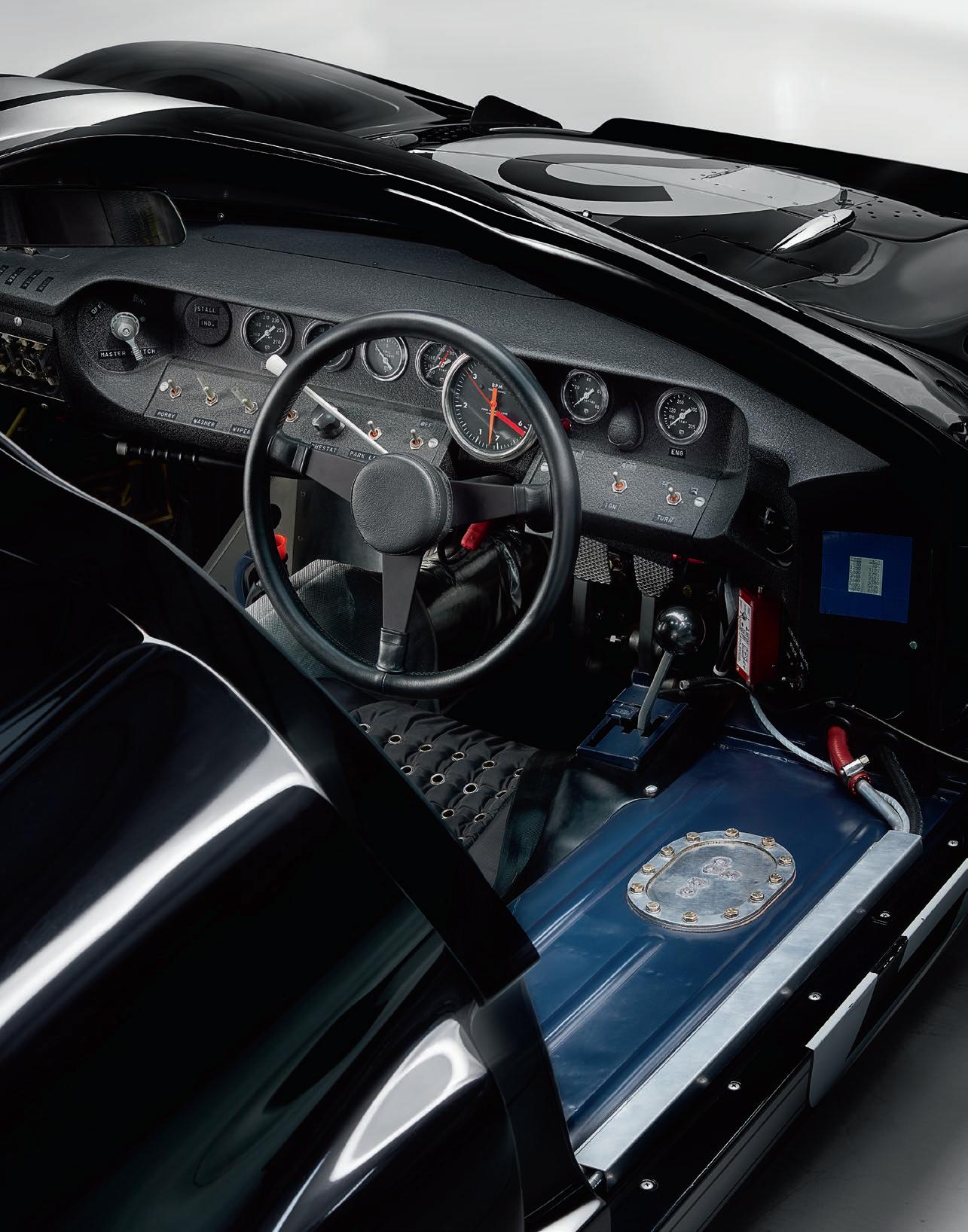
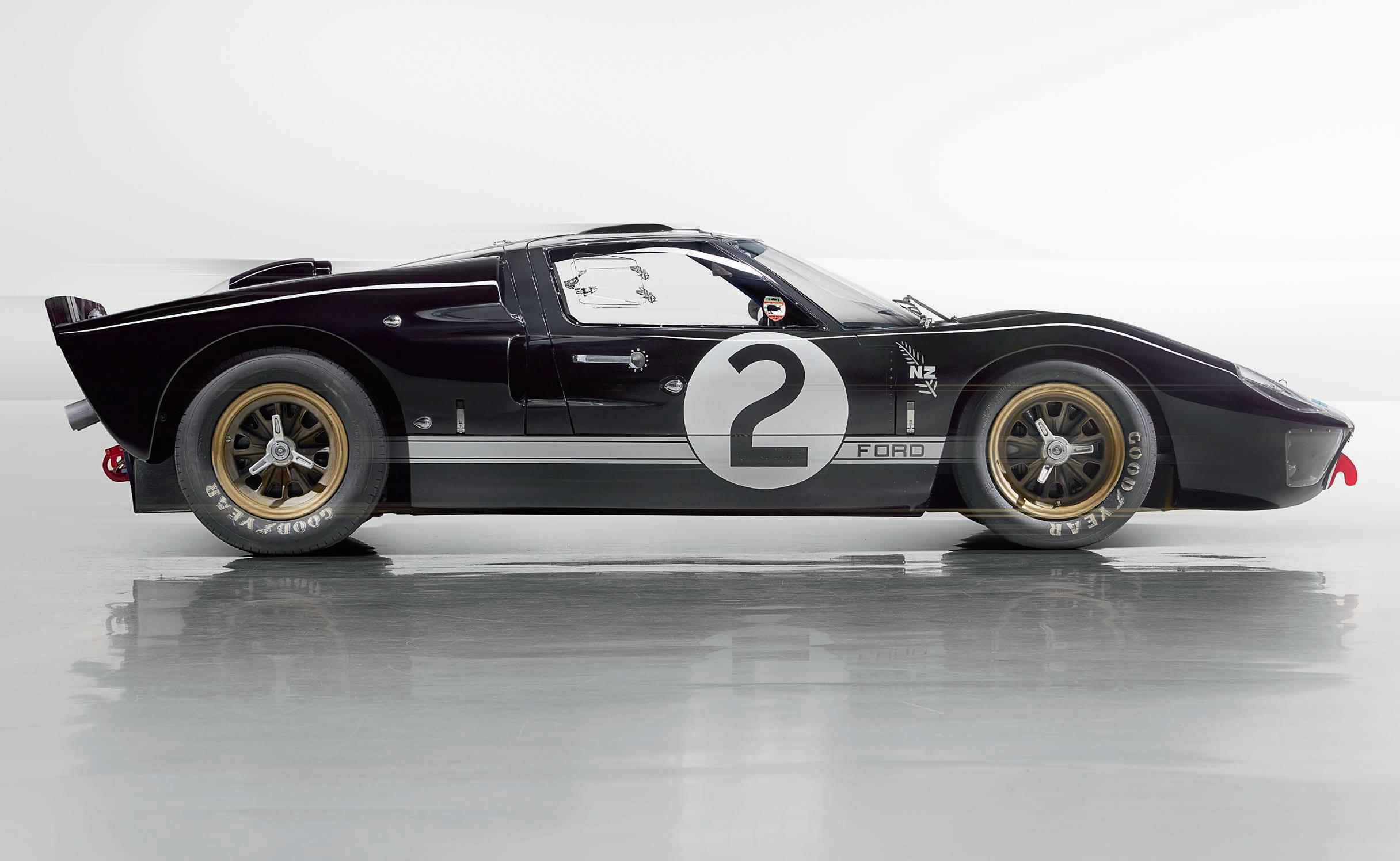
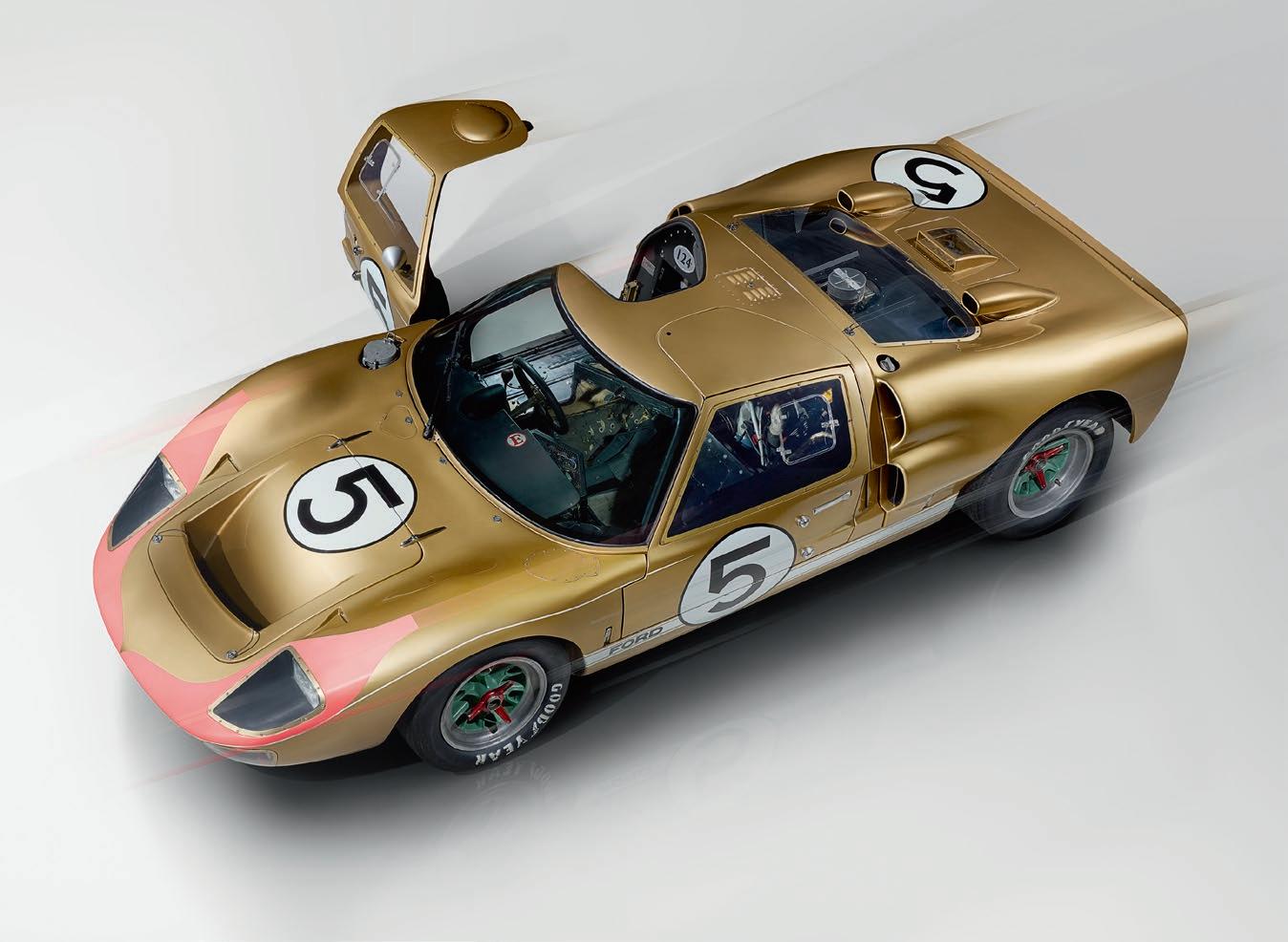
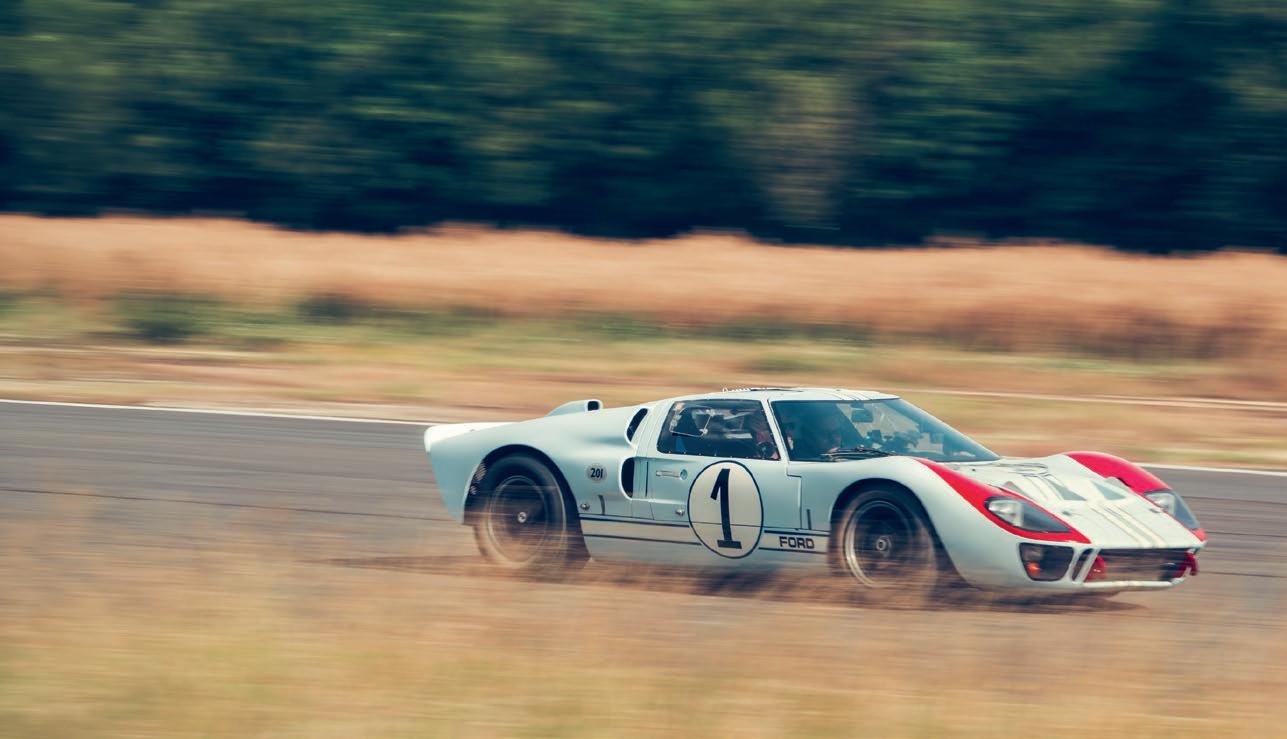
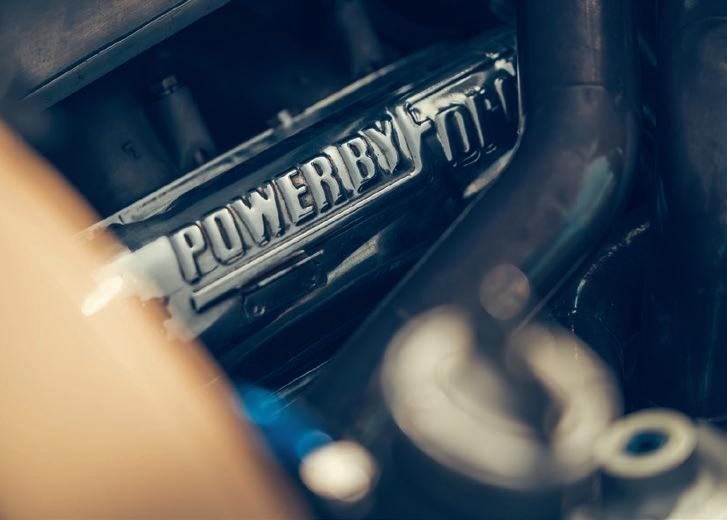
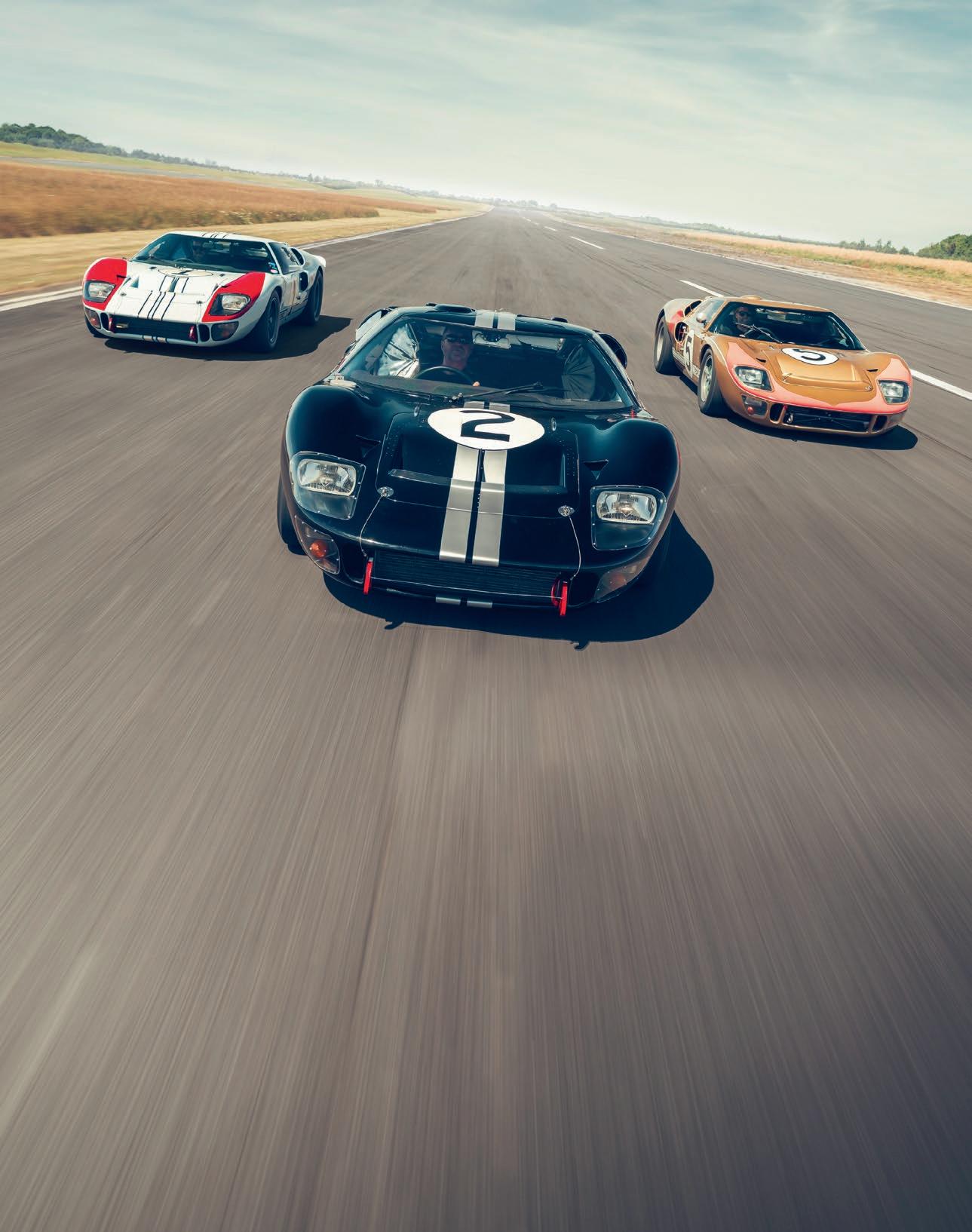
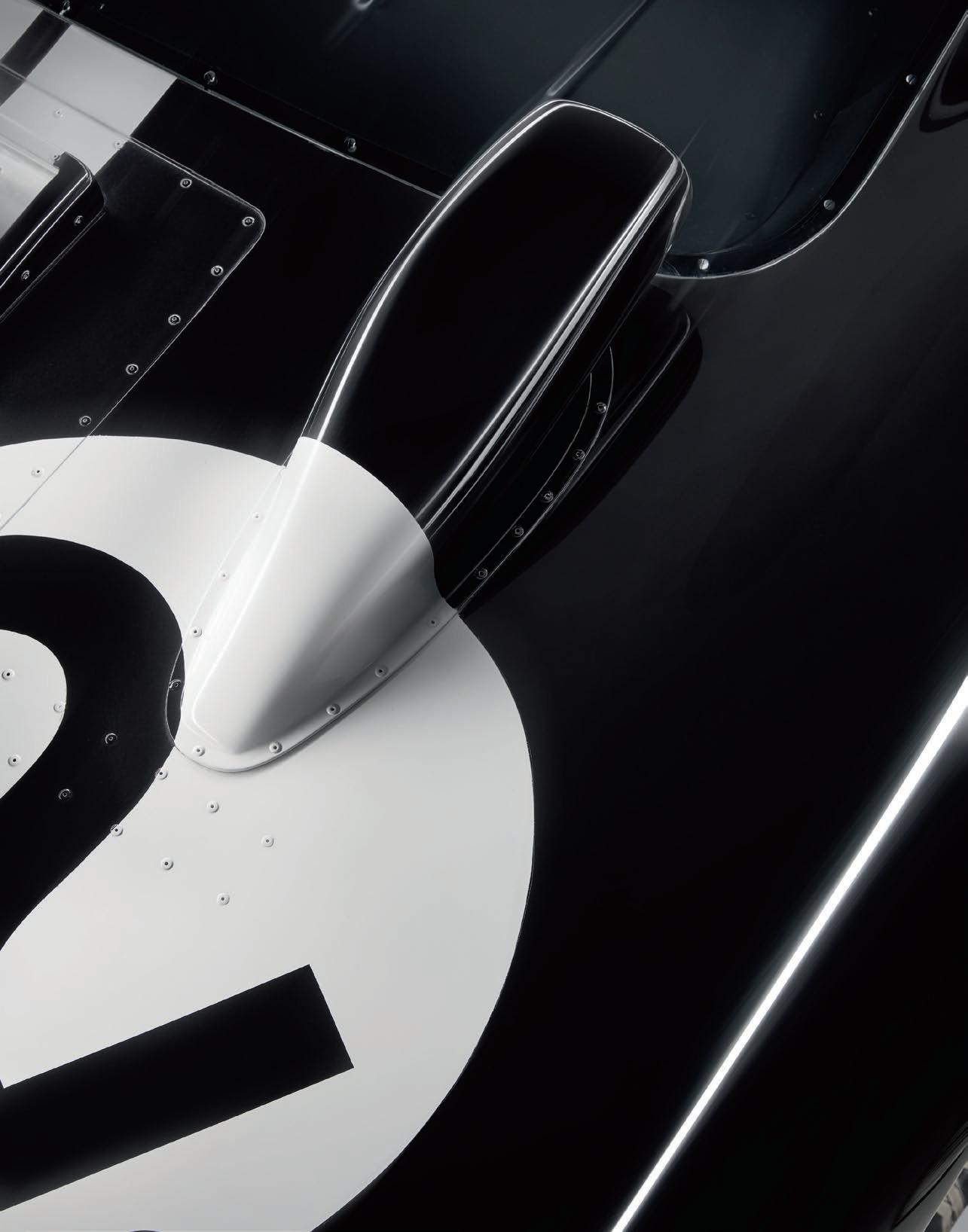
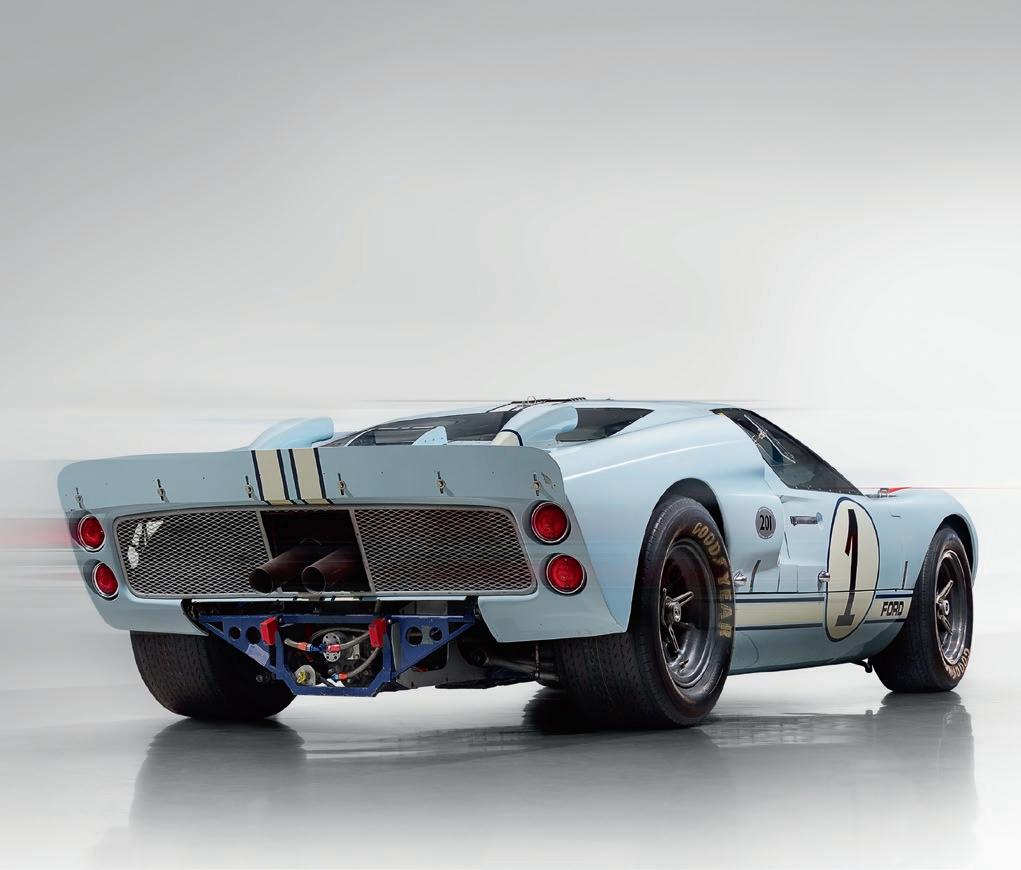
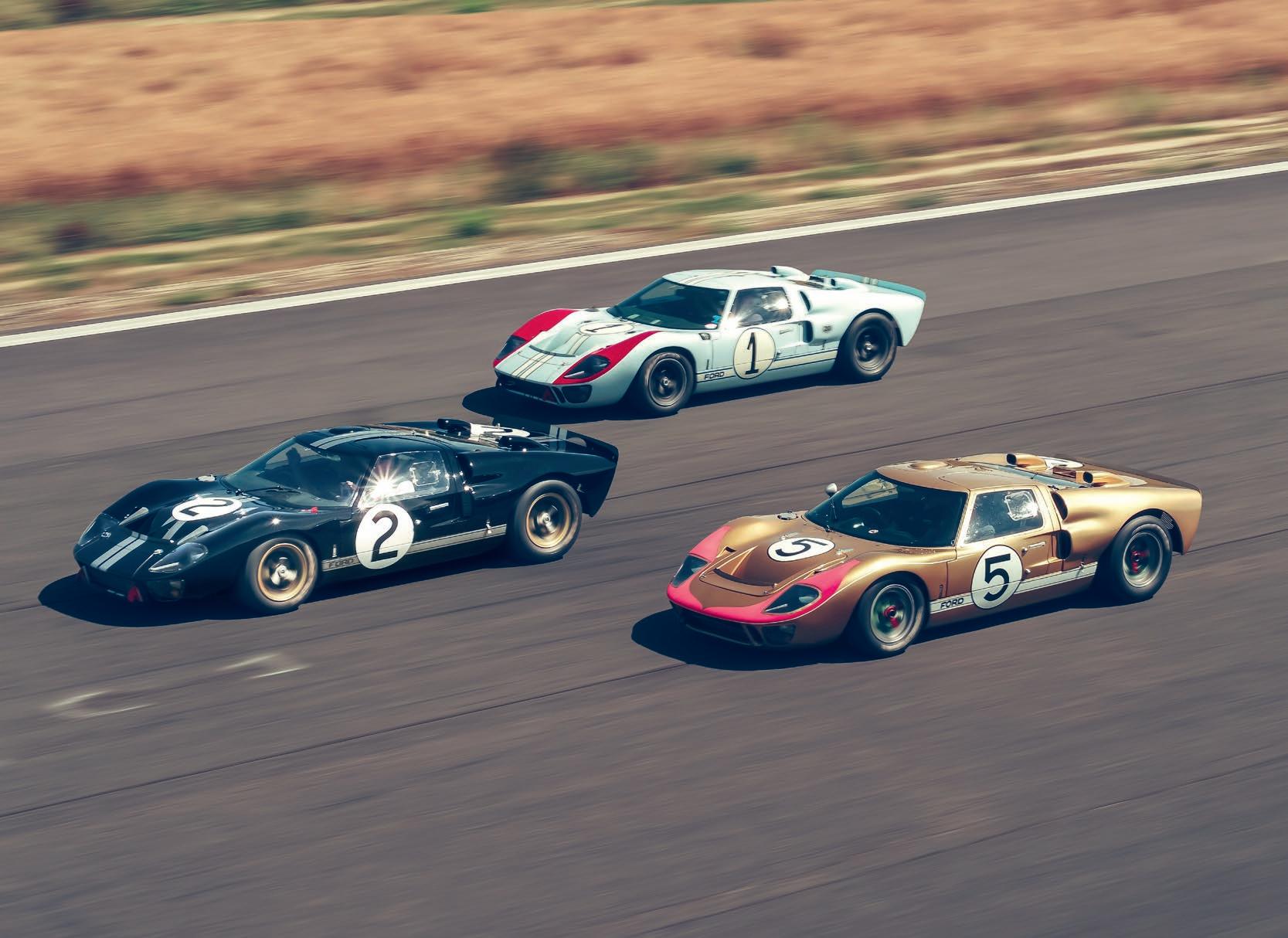
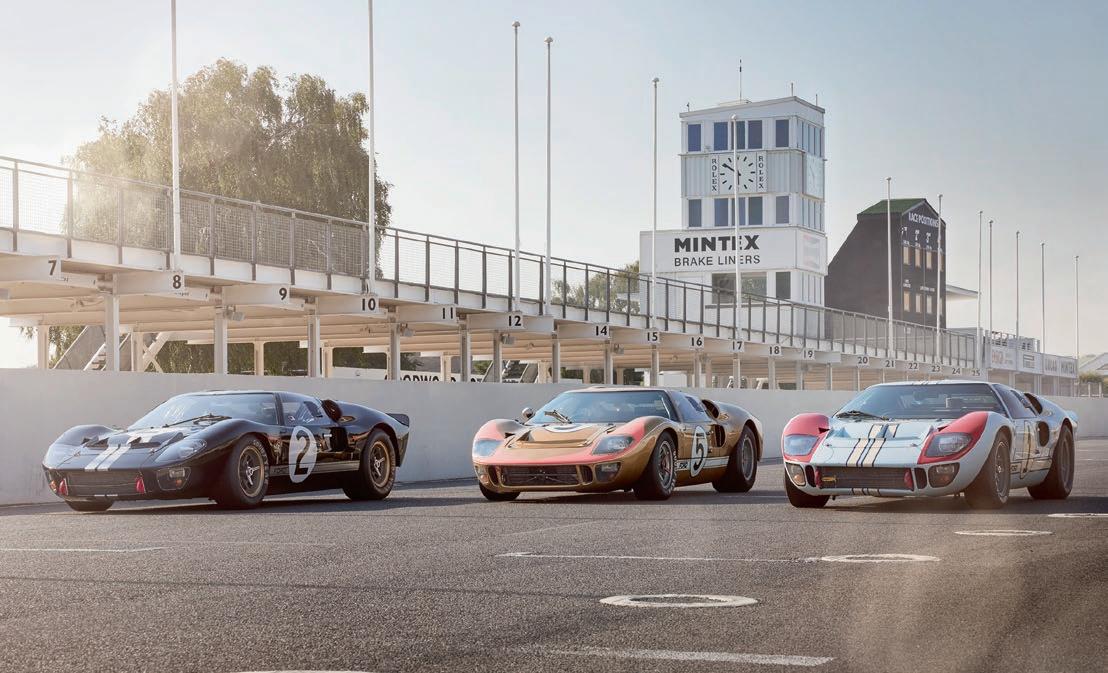
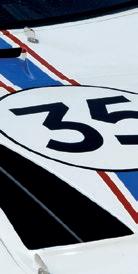
That trio of Ford GT40s on the front cover... we really sweated over them. Initially we sweated to secure the feature on all three, which is something we’ve wanted to do for a long, long time, and which finally started to come together in August 2025.
And then we sweated to work out the timings of the three photoshoots with a window of just a few days between the cars’ arrival together in the UK and their appearance at the Goodwood Festival of Speed – bear in mind that they’ve not been together in the US for years, either.
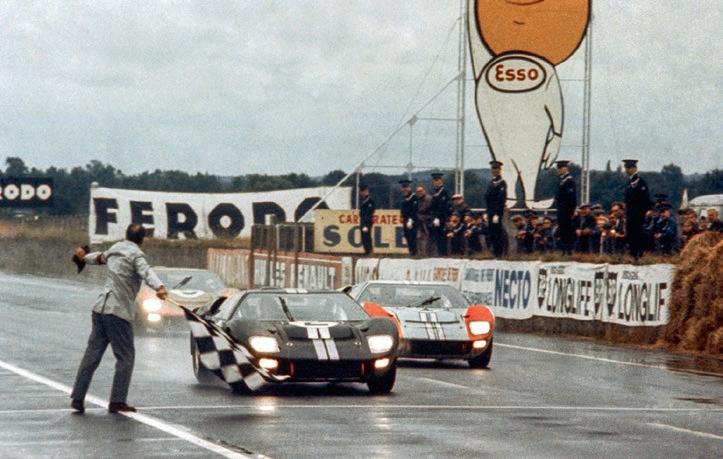
Finally, we sweated over whether or not anyone would care enough to make it worthwhile. How ridiculous to have thought that: at the Festival of Speed, I lost count of the number of people saying that it had been their dream to see the one-two-three finishers of the 1966 Le Mans in action together. I hope that our feature here will provide the icing on the cake for all those fans.
The full story of how these cars came together and, of course, what they did 60 years ago to warrant the attention is explained in full further on in the issue. But I have to say a huge thank you to Aaron Shelby, the Duke of Richmond, Greg and Heidi Miller, Rob Kauffman, Rachel Holt and the amazing Blakeney Motorsport crew for enabling us to feature these historic GT40s in Magneto
It’s been quite a special few weeks for other reasons, too. We held our inaugural ‘Legends’ event at Wilton House in the UK with petrolhead and all-round good guy the Earl of Pembroke. It was hard work but we’re immensely proud. We know what needs to be improved, and we know it will be even bigger and better when it returns in June 2027.
David Lillywhite Editorial director
David Burgess-Wise
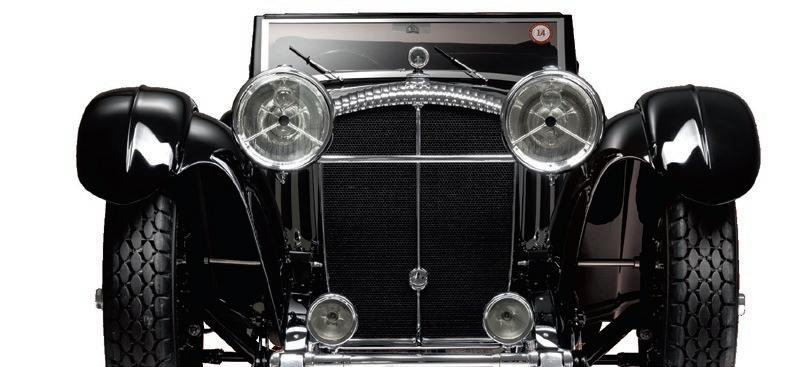
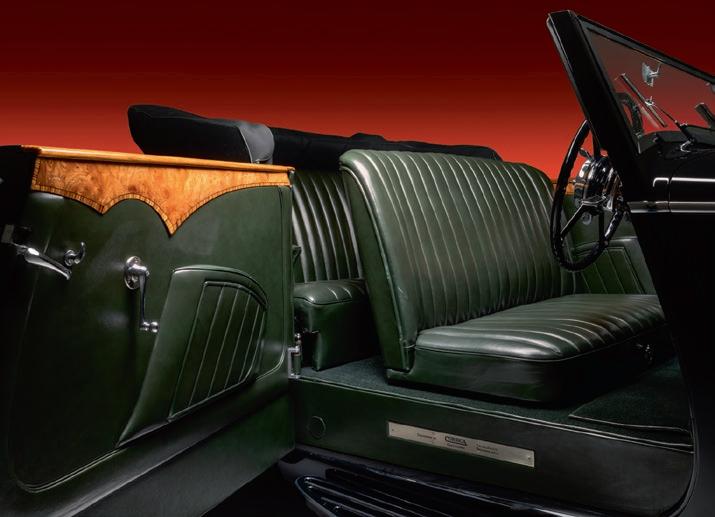
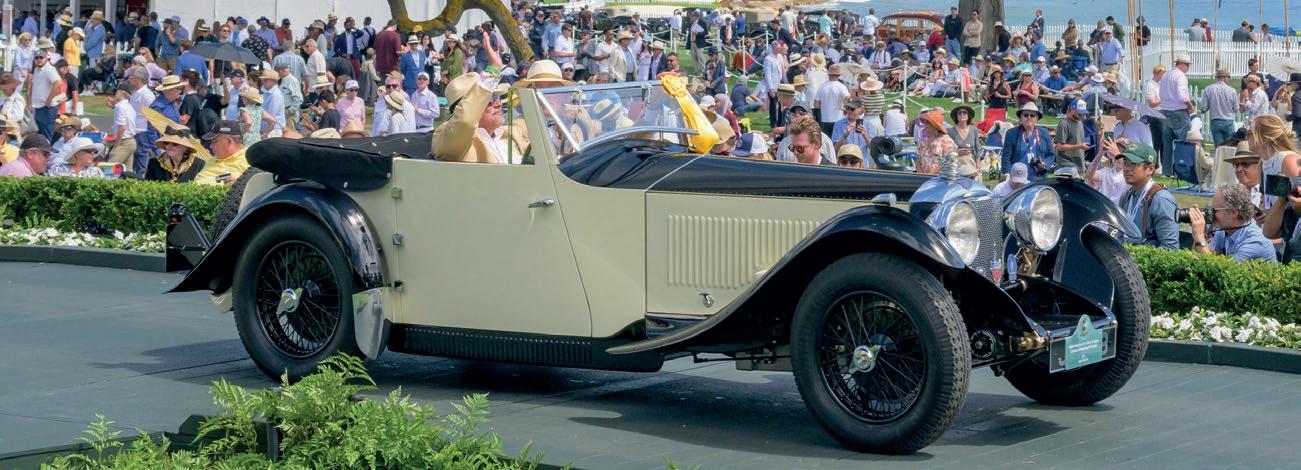
In his 60-year-plus career, award-winning motoring historian David has written more than 30 books. He’s owned vintage cars since he was old enough for a licence, and he currently drives a 1926 Delage DISS skiff and a 1924 Sunbeam 14/40 coupé. Here, he expertly details a Pebble Beach Concours great, the Daimler Double-Six Corsica.
Marcus Bicknell
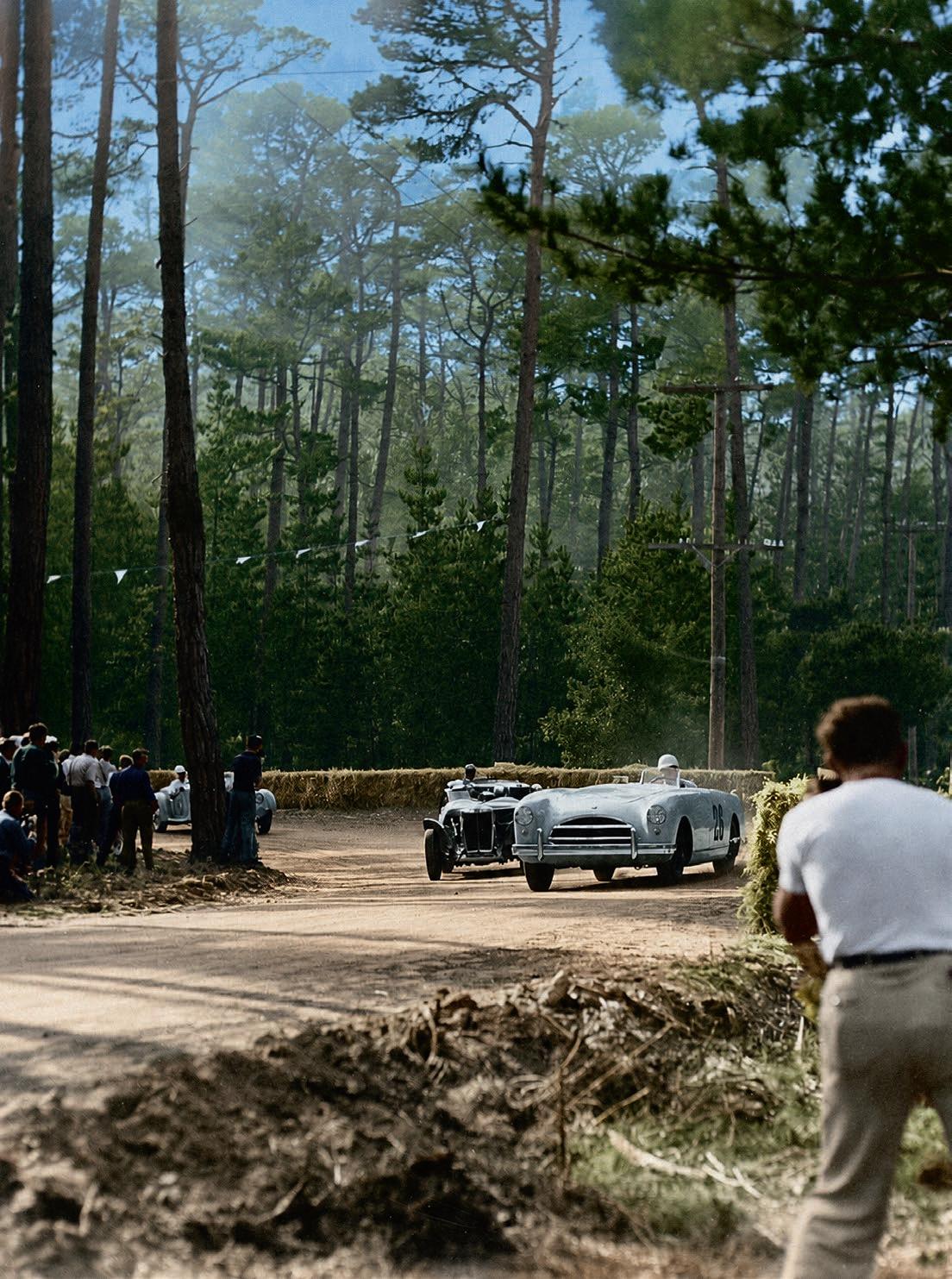
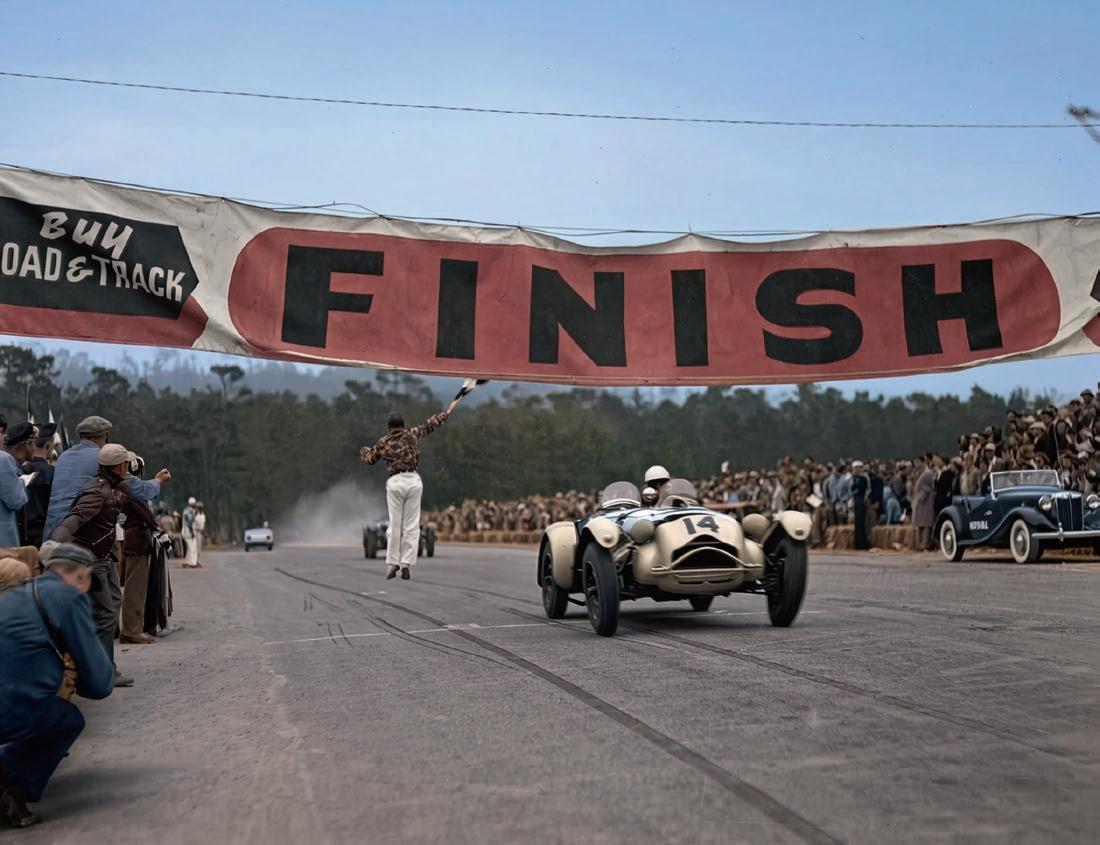
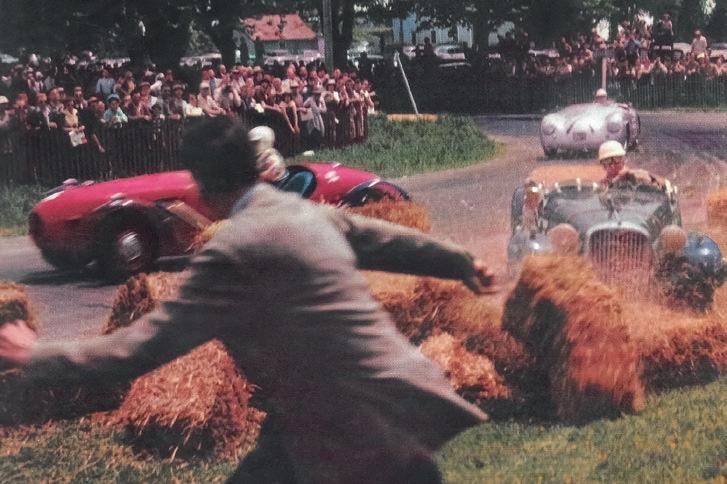
Marcus managed Genesis and worked for CBS, A&M Records, TV satellite SES Astra and the BBC. Author, award-winning historian and long-time UK Clubmans and Bernie’s V8s series racer, Marcus guest-drives the 1952 Schaghticoke Streets Manning Special – identical to the cars in the Pebble Beach Road Races he writes about here.
Preston Lerner
A freelancer based in California, Preston’s written about racing for countless British and US magazines. He’s authored eight books, the latest of which, The Deadliest Decade, chronicles racing from 1964-73 – but it was his 2015 release Ford GT, about the history of Ford’s Le Mans programme, that put him on pole for our cover story.
Olgun Kordal
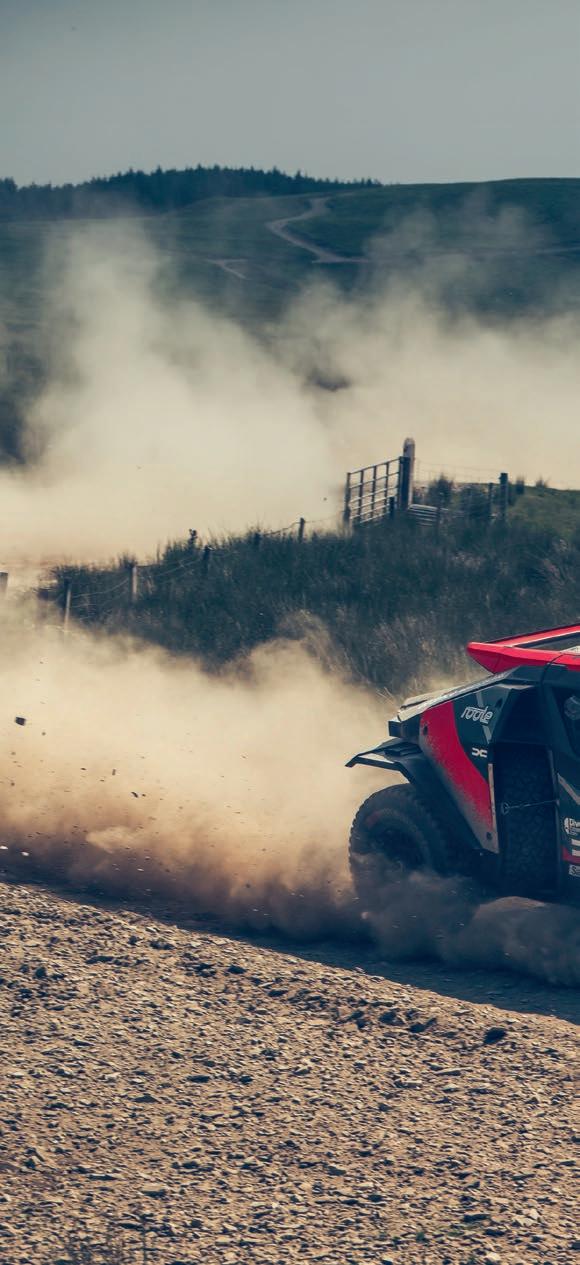
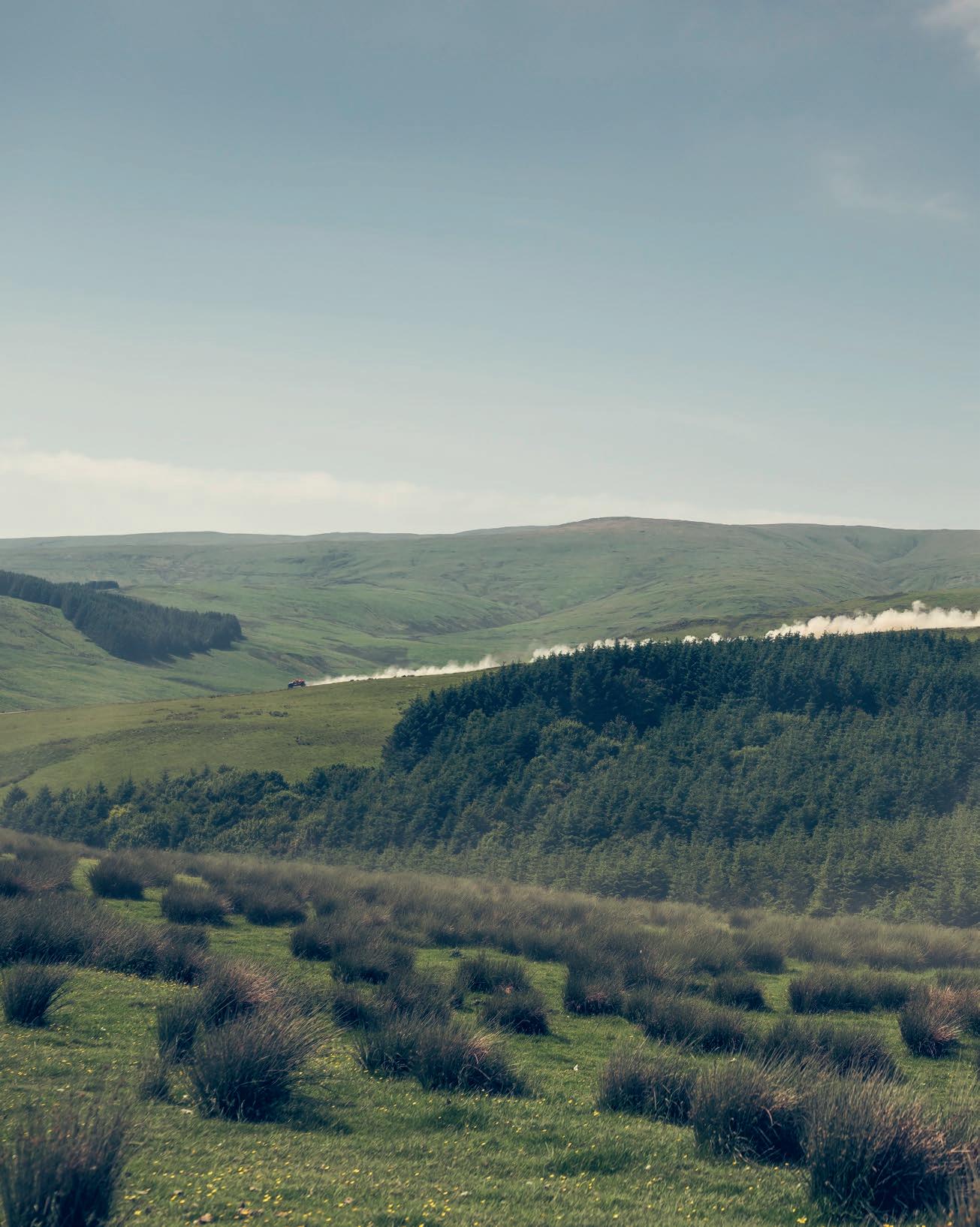
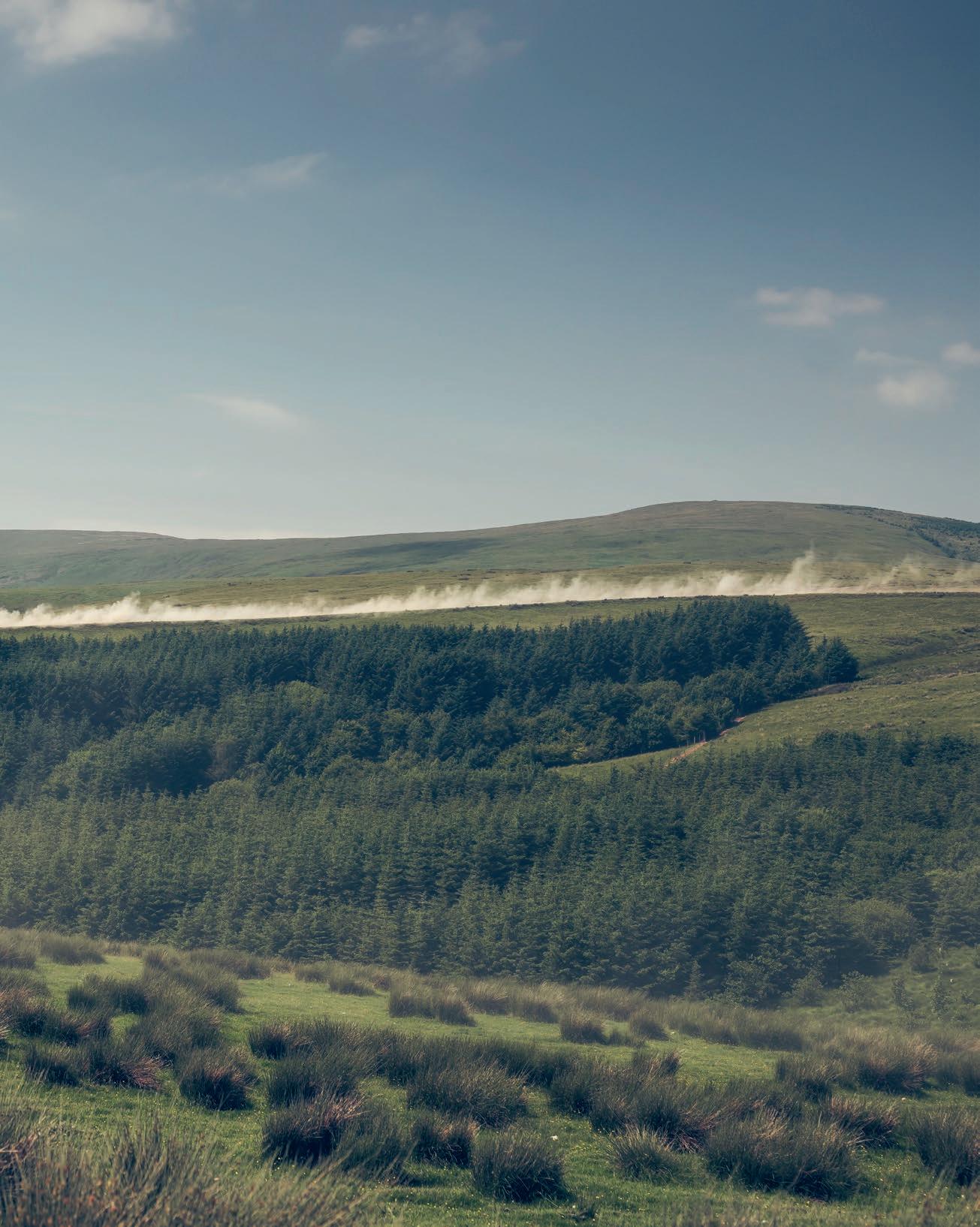
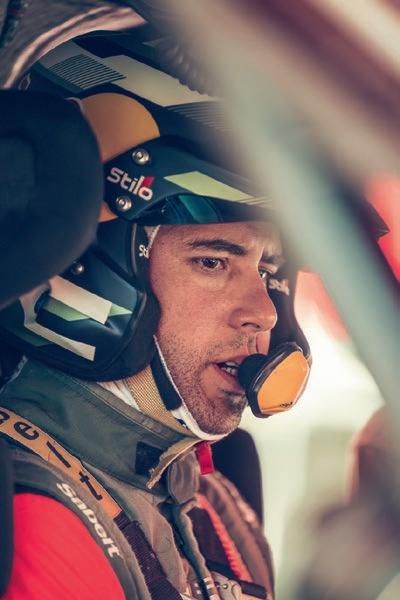
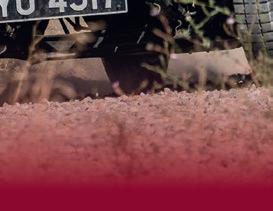
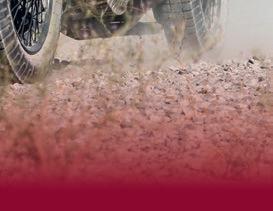
Prolifically experienced automotive photographer Olgun has shot campaigns for premium OEMs and top media outlets. His popular Cars and Colour artwork series portrays automotive subjects in their most vibrant and cleanest forms. Naturally, we sent him to shoot a Dakar winner at a dusty, heat-hazy off-road test track in Wales.
Deputy editor Wayne Batty
Subscriptions manager
Tom Nichols
Editorial director David Lillywhite
Creative director Peter Allen
Features writer
Elliott Hughes
Events manager
Emma Glanville
Managing director Geoff Love
Managing editor
Sarah Bradley
Designer Debbie Nolan Accounts
Marketing and events
Hannah-Maria Ward
Contributors in this issue
Advertising sales Sue Farrow, Rob Schulp
Jonathan Ellis, Sarah Dilley
Lifestyle advertising
Sophie Kochan
Advertising production
Elaine Briggs
Stuart Ager, Marcus Bicknell, Blair Bunting, Jonathon Burford, David Burgess-Wise, Sam Butcher, Nathan Chadwick, Sam Chick, Martyn Goddard, Rick Guest, Richard Heseltine, Jim Hinckley, Olgun Kordal, Peter M Larsen, Preston Lerner, Karl Ludvigsen, John Mayhead, Petr Michalek, David Rodríguez Sánchez, Peter Stevens, Joe Twyman, Rupert Whyte
Single issues and subscriptions
Please visit
Geoff Love, David Lillywhite, George Pilkington
Unit 16, Enterprise Centre, Michael Way, Warth Park Way, Raunds, Northants NN9 6GR, UK
Printed on Amadeus Silk, Galerie Fine Silk and Amber Graphic supplied by Denmaur as a Carbon Balanced product. Made from Chain of Custody certified and traceable pulp sources.
Who to contact
Subscriptions tom@hothousemedia.co.uk
Events emma@hothousemedia.co.uk
Marketing hannahmaria@hothousemedia.co.uk
Business geoff@hothousemedia.co.uk
Accounts accounts@hothousemedia.co.uk
Editorial david@hothousemedia.co.uk
Advertising sue@flyingspace.co.uk or rob@flyingspace.co.uk
Lifestyle advertising sophie.kochan2010@gmail.com
Advertising production adproduction@hothousemedia.co.uk
Specialist newsstand distribution
Pineapple Media, Select Publisher Services
The making of Magneto
Just in time for the GT40s
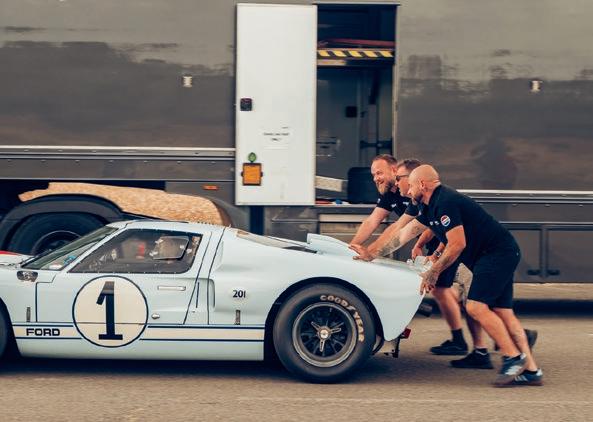
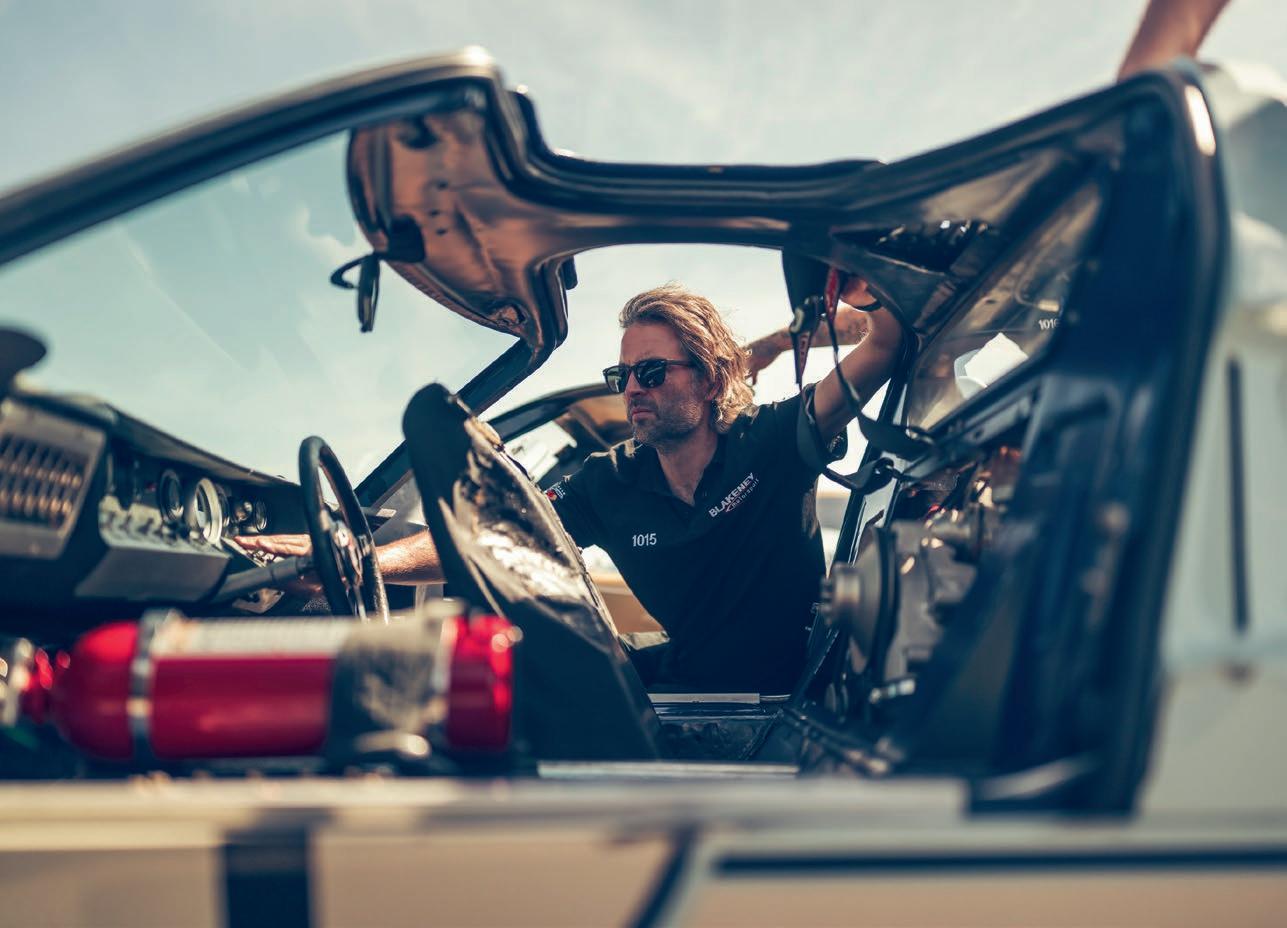
It started a year ago following a chat with Aaron Shelby, who revealed that the 1966 Le Mans 1-2-3 GT40s were to be reunited for Goodwood. It’d be impossible to shoot them after the Festival of Speed in time for this issue, but there would be a window of a few days before the event – as long as the cars cleared customs in time. A nervous wait ensued...
Identifying an Italian flier
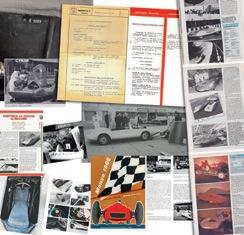
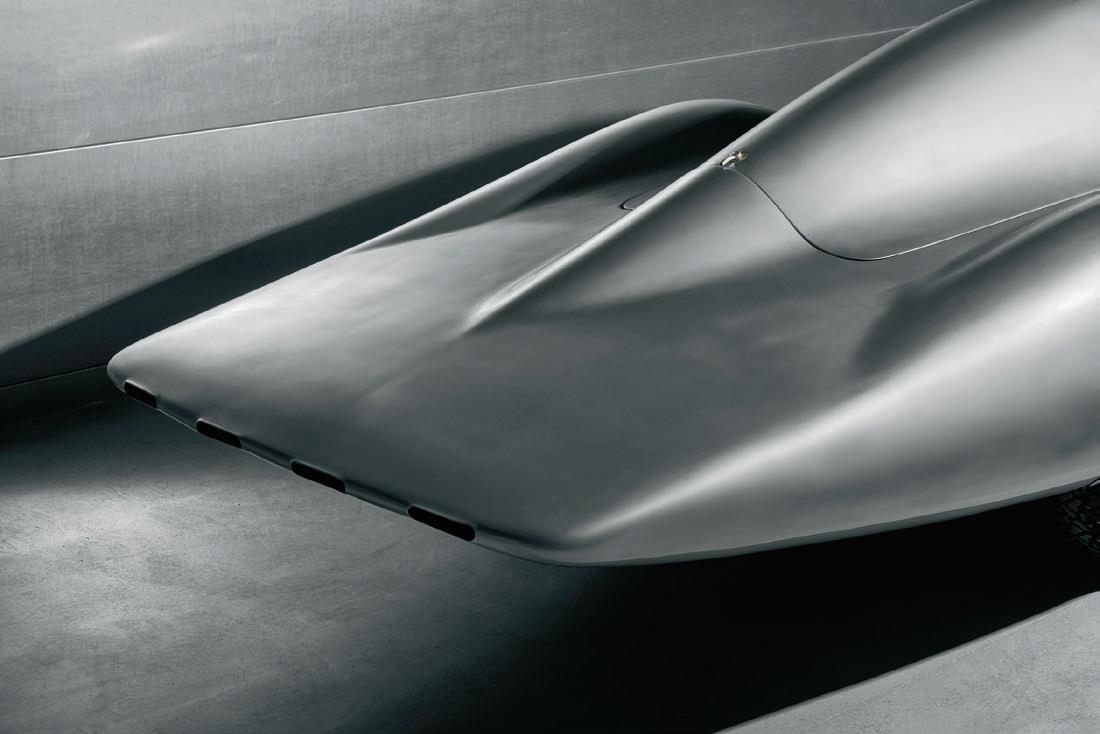
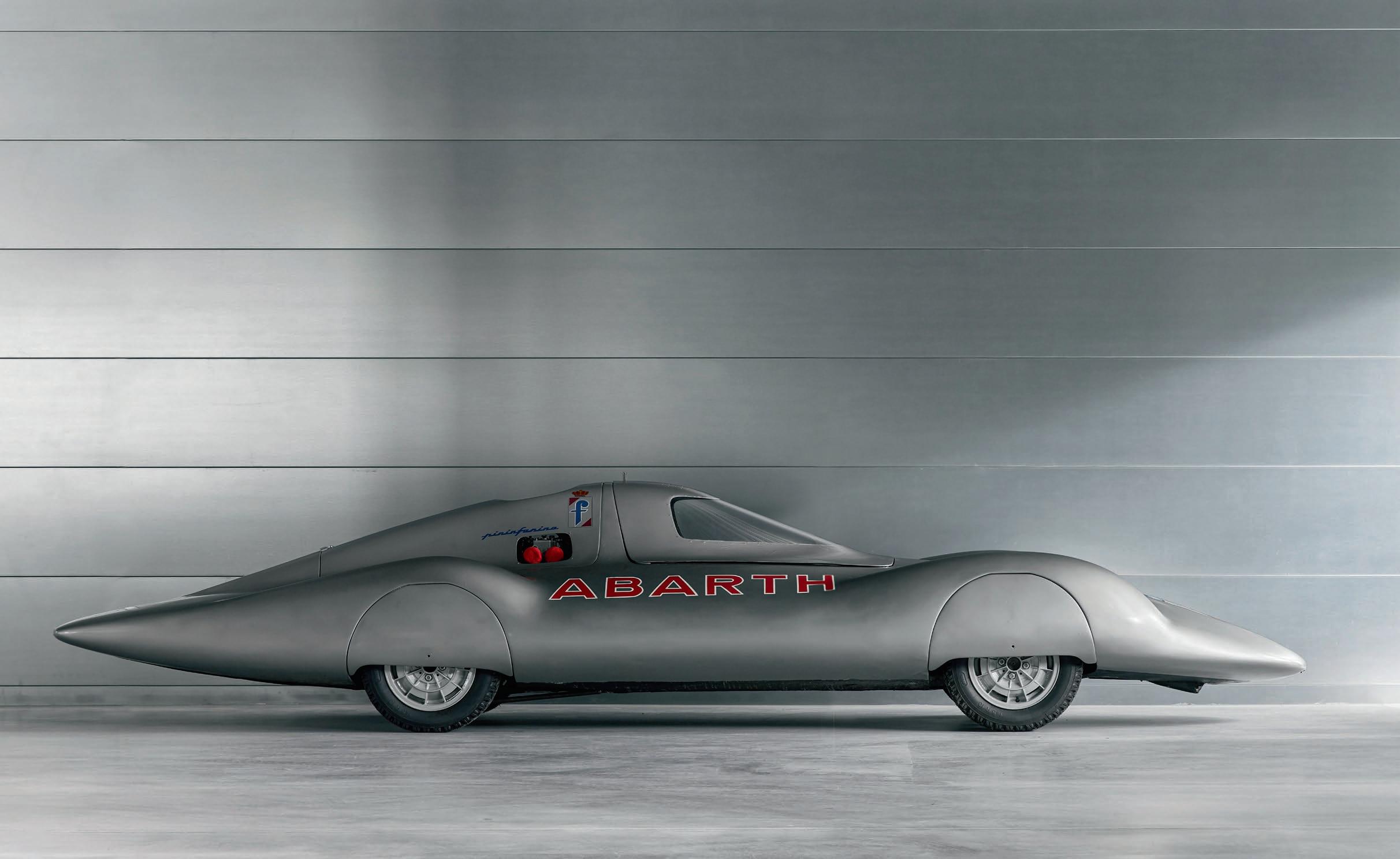
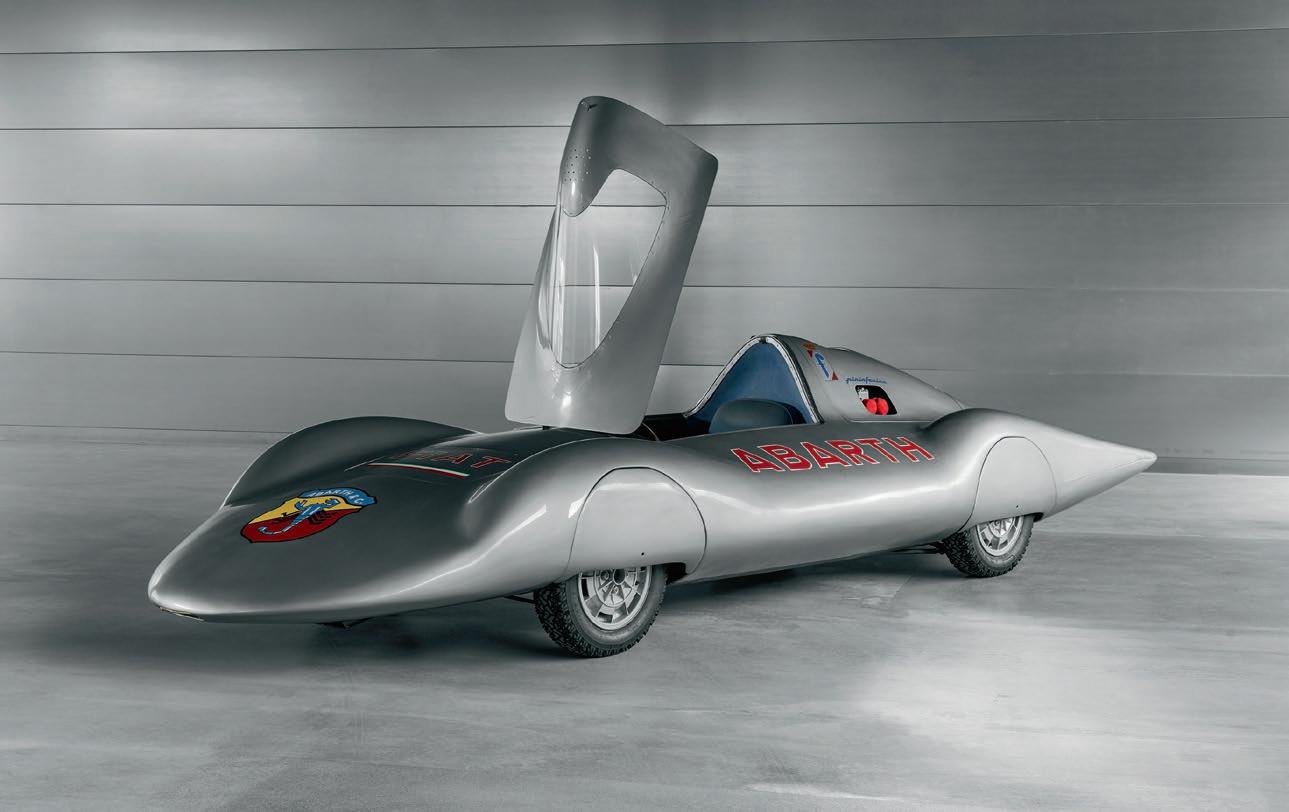
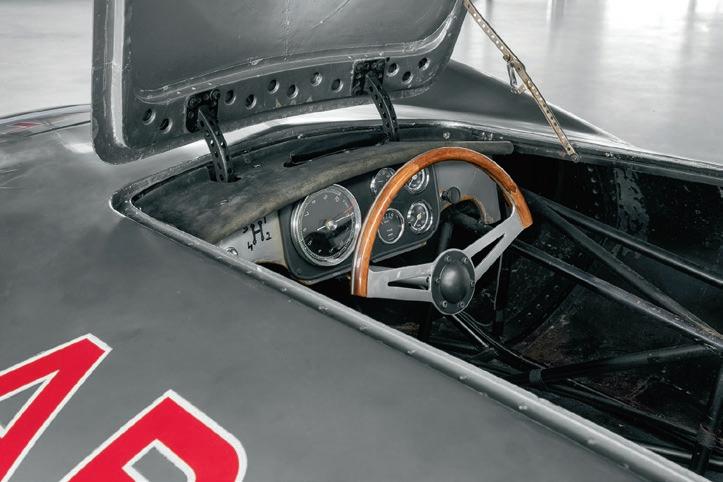
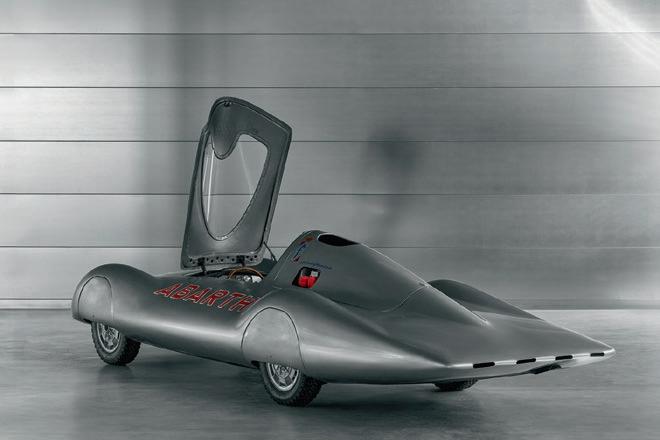
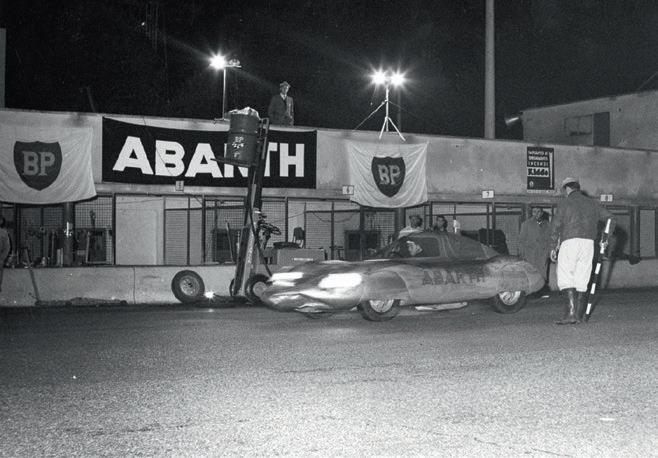
What was meant to be a quick write-up turned into a sleuth fest as the real history of this Fiat Abarth 750 Pininfarina slowly emerged. Myriad images, documents, book extracts and magazine articles were analysed, three Italian institutions visited and more than 20 people with various connections to Abarth tracked down and quizzed.
Since 2020, Mondaine Group (including all brands) is one of the first watch companies worldwide to be comprehensively CO2 neutral for scope 1,2,3 of the GHG protocol through reforestation. Reduce, Reuse, Recycle
International Historic Motoring Awards
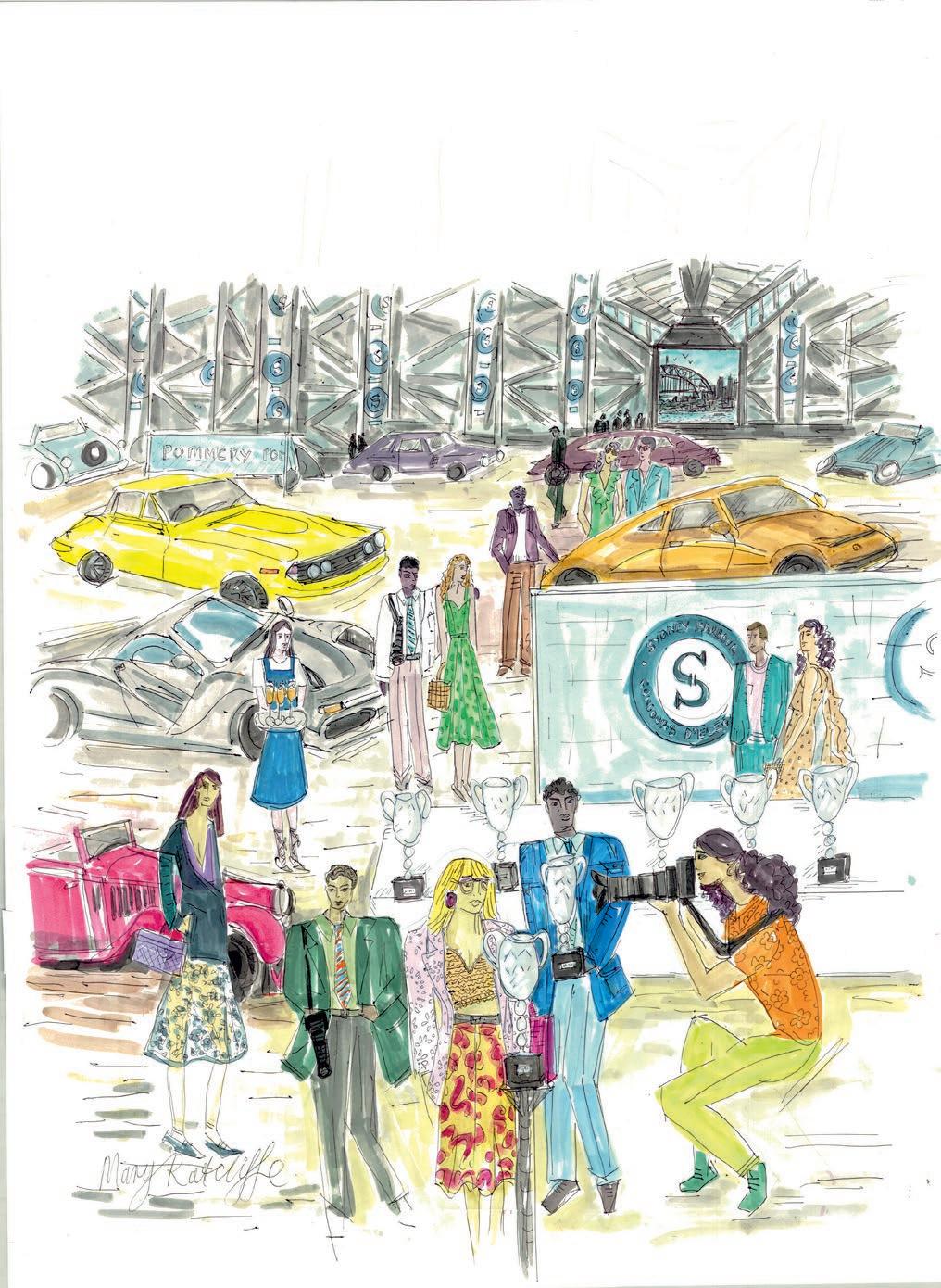
The well established and globally renowned International Historic Motoring Awards are the most prestigious global awards night in the world of collector cars. The 2026 edition will be held on Friday November 13 at the five-star Peninsula London hotel. To nominate or to book a table, please visit www.historicmotoringawards.co.uk
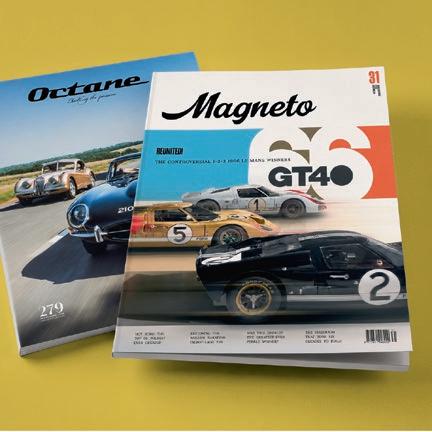
Subscribe to Magneto and Octane
Don’t miss out on any issues of Magneto or sister title Octane. One-year subscriptions start at £54 and £72 respectively, including p&p. Each magazine can be delivered worldwide. Please visit either www.magnetomagazine.com or www.octane-magazine.com for more details, including international delivery prices, or call +44 (0)208 068 6829.
Sign up to our email newsletters
Magneto’s Weekly Briefing is a curated regular package of the news, features, event reports and previews that matter most to classic and collector car audiences. Meanwhile, our fortnightly Market Briefing previews upcoming events and adds expert analysis of auction results and prevailing market trends. Sign up at www.magnetomagazine.com
Save the dates for next year!
Early news of our two big events for next year. The hugely popular Concours on Savile Row will return to London for the fourth time on May 19-20, 2027, while the renamed Wilton Legends will follow up this year’s inaugural event at Wilton House, Wiltshire on June 18-20, 2027. More at www.concoursonsavilerow.com and www.wiltonlegends.co.uk.
Behind wheel of Bizzarrini’s new 5300 Aperta Lusso
Goodwood Road Racing Club launches in US
Lotus Elise design – what were the alternatives?
Mullin cars in new permanent gallery at the Petersen
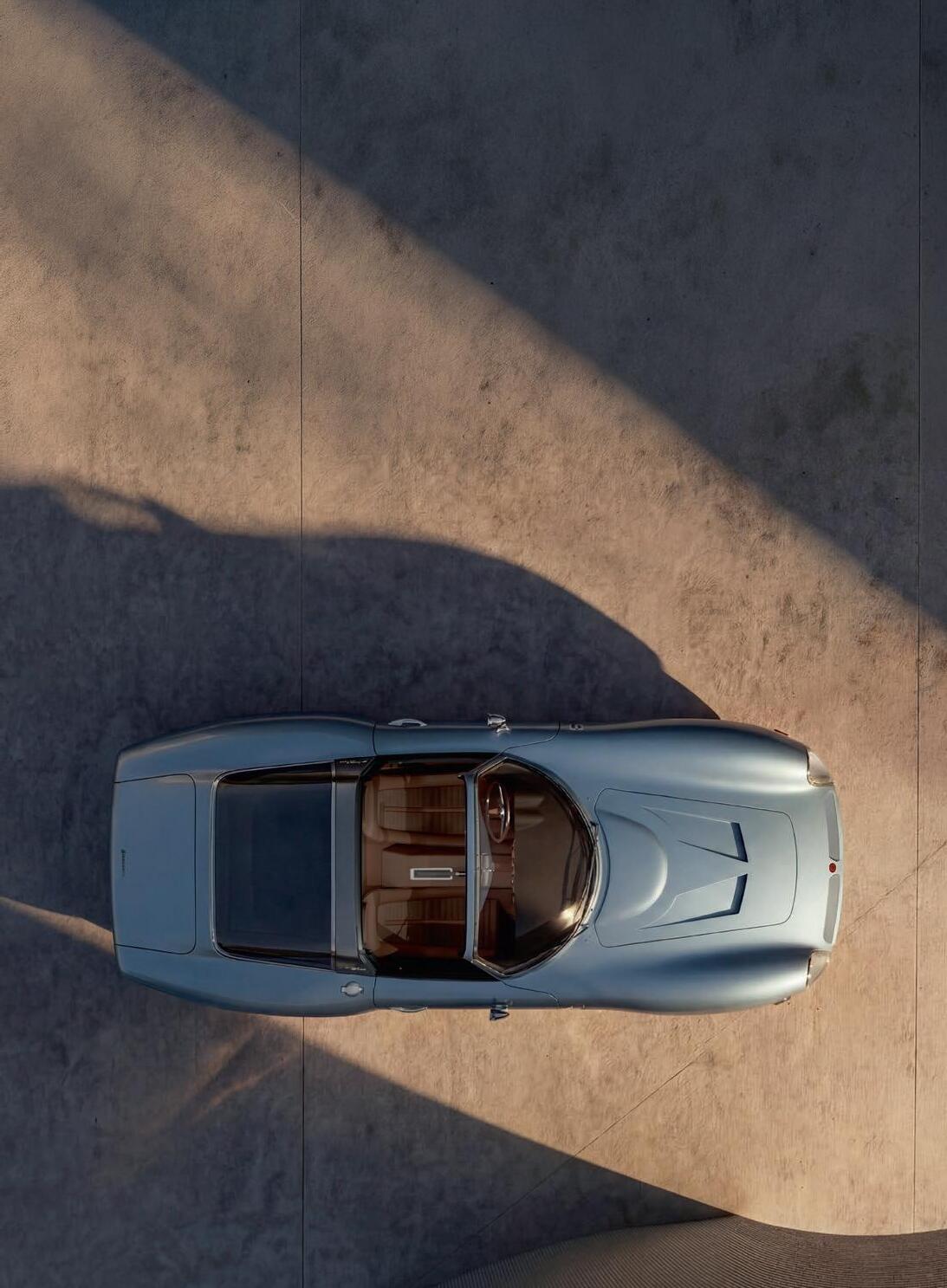
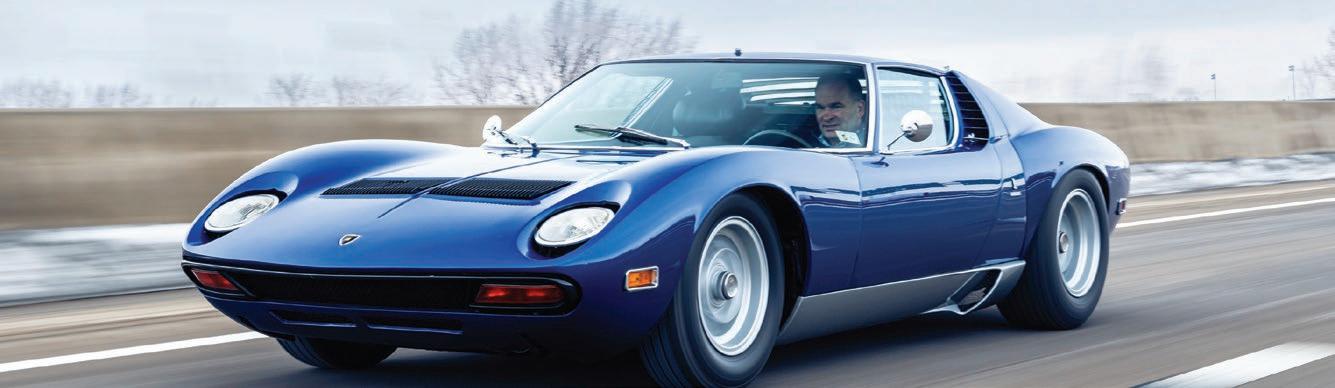
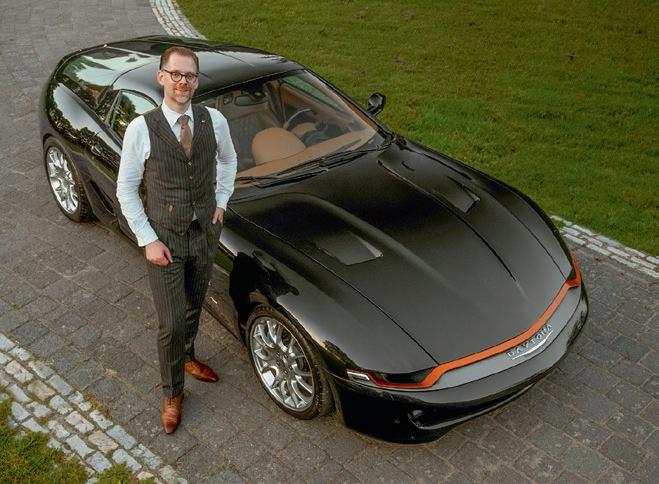
“IT’S BEEN NINE MONTHS… just like a baby,” says Marco Utili, referring to how long he’s waited to take delivery of his newborn. Except his fresh arrival is no fleshand-blood creation but a brand-new Bizzarrini sports car wrought from carbonfibre and 60-year-old Italian design magic. While this is no maternity ward, we are currently at GFG Style in Moncalieri, Turin, one of the greatest automotive idea incubators of all time.
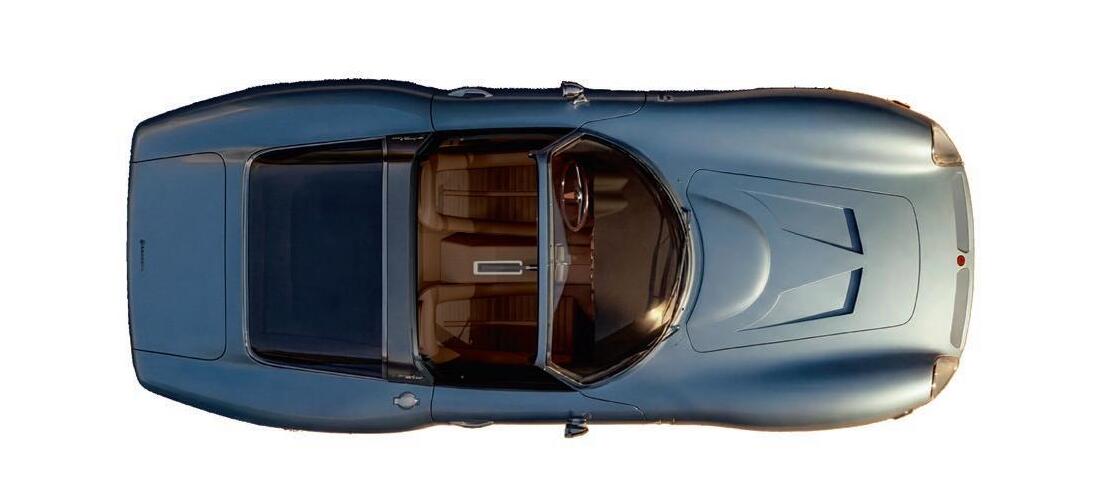
Marco’s ‘baby’ is the all-new 5300 Aperta Lusso. It is Bizzarrini’s answer to the question of how best to bridge the gap between its previous car, a faithful revival of the 60-year-old 5300 GT Corsa, and the imminent introduction of its all-new carbonfibre-bodied V12engined Giotto hypercar.
In essence, Bizzarrini rumbled through its design archive and pulled out an unrealised Giorgetto Giugiaro concept drawn in the 1960s. The design envisaged an open-top version of the 5300 GT Corsa with a removable roof panel supported by a fixed arch behind the seats instead of the usual folding fabric top. In an ideal display of
In pursuit of the sweet life
Driving Giugiaro and Bizzarrini’s brand-new 60-year-old targatopped dream from Turin to Swiss resort haven Andermatt
the marque’s grasp of heritage and modernity, Bizzarrini has now turned that vision into a carbonfibre reality with a dose of contemporary luxury and technology blended in.
Given the historical link and the current close ties to Bizzarrini, it’s no surprise that GFG Style – the father-and-son pairing of Giorgetto and Fabrizio Giugiaro – was responsible for refining the design of the Aperta Lusso. With much of the body being a faithful reproduction of the wide-body Corsa, most of that design work went into the area above the waistline. Running his hand across the sumptuously sculpted front wing, Fabrizio concedes: “The design was pretty well resolved to begin with.”
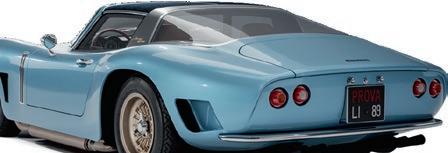
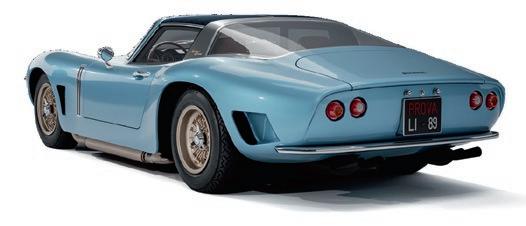
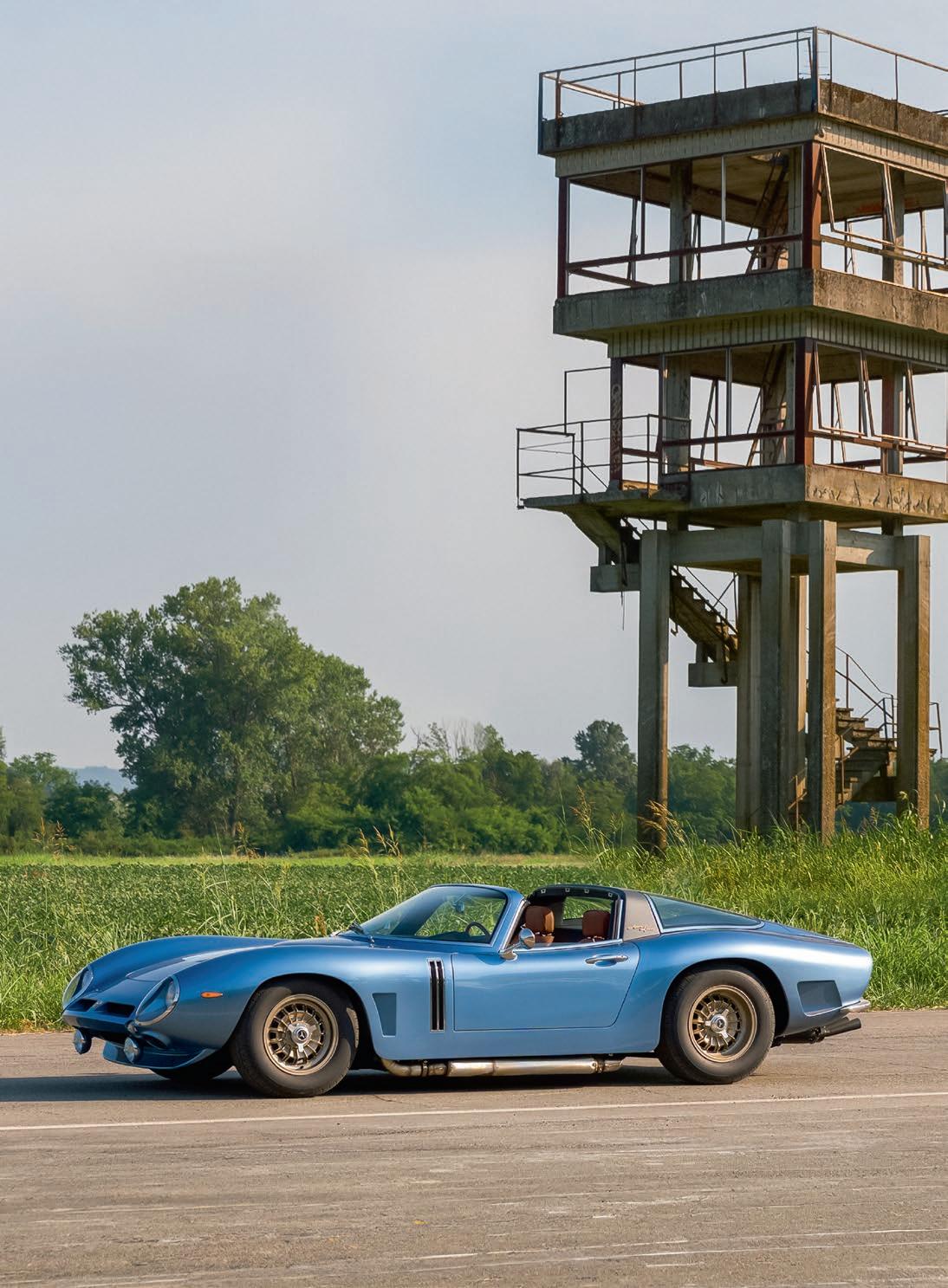
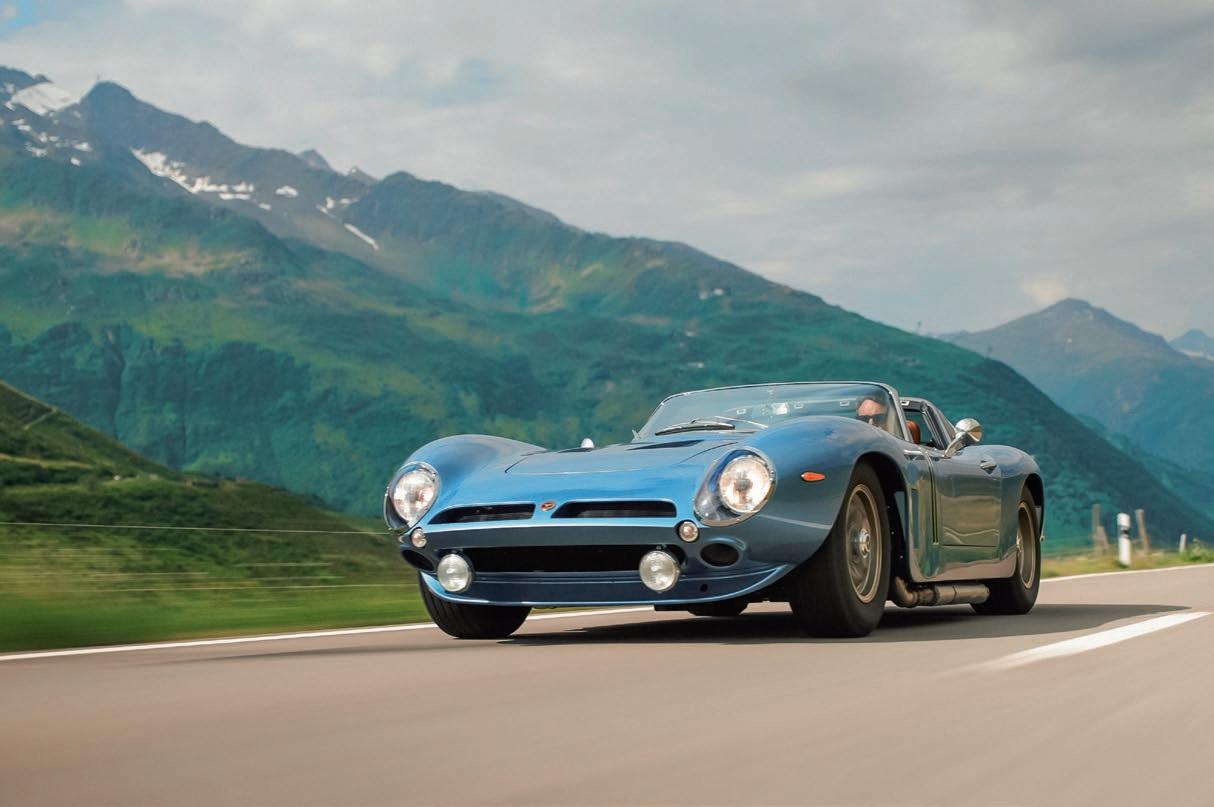
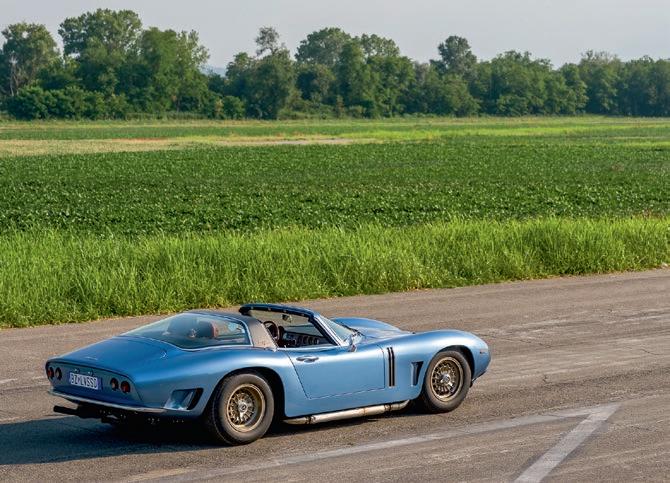
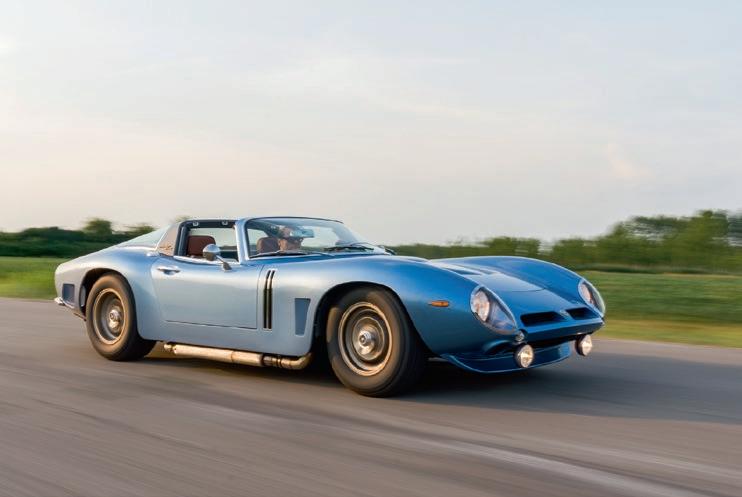
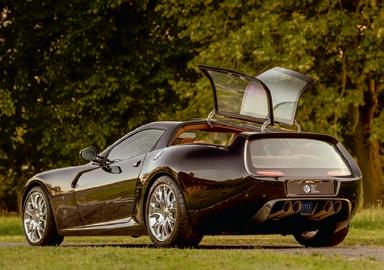
He’s right. The Aperta Lusso is a thing of beauty; long, wide and low, with ‘coke bottle’ hips and those bulging front fenders – both aspects on permanent display in the side mirrors and through the windscreen, respectively. It is the rear threequarter view, though, that will have most hooked. The way the roofline flows almost seamlessly from the ‘targa’ hoop, accentuated by its dark contrast colour, first into the THIS SPREAD
Aperta Lusso
ABOVE
wraparound (more wrapover really) rear glass and then into the bootlid area, is a study in automotive beauty. Getting the glass made to fit well and be free of distortion proved tricky. According to chief marketing officer Simon Busby, it took more than 24 iterations for the specialist screen manufacturer to perfect the shape.
The core structure of the Aperta comprises a single-piece carbonfibre composite shell, a semi-monocoque bonded chassis and a steel reinforcement assembly that doubles as a chassis-stiffening ‘spine’ and transmission tunnel. The last of these, along with a crossbar and the targa’s rollover hoop, boosts the Aperta’s torsional rigidity well beyond that of the original 1960s coupé.
I grab a few minutes with hugely experienced chief engineer Fraser
Dunn. He talks steering, engine, castmagnesium Campagnolo centrelock wheels, body stiffness and aerodynamics (pointing out the deeper chin spoiler), before moving on to the sills: “They’ve ended up thicker than the Corsa’s because the doors had to be redesigned. We have added a modern latching system, keyless entry and electric windows.”
They are frameless, too, so they incorporate an automatic dropdown and pop-up feature when the door is opened and shut to facilitate a perfect seal. It’s clear that much thought has gone into enhancing everyday usability and convenience. As another example, both front and rear screens are heated.
The initial plan is to build just ten owner-commissioned Aperta Lussos, although Busby explains
Handbuilt, ownercommissioned interior is a unique expression of Italian style and fashion.
‘It had to be a “Friday switch off, pack a bag and head off to Portofino” kind of car’
THIS SPREAD
The heart of a class-winning Le Mans race car with the soul of an open-topped grand tourer.
that “further commissioning slots may become available in due course”.
As the enthusiastic driver-owner of a Lamborghini Miura V12engined Bizzarrini 538 and a 5300 Corsa, Marco could not have been better suited to the role of first commissioner. Not just because he’s no fan of ‘museum cars’, but also because he was happy to make his hand-built Aperta available to select media and for marketing events.
Having just encountered Marco’s easy-going, energetic and affable demeanour, and taken note of his stylish shirt and casually cool white cotton trousers, I already have an inkling as to why his Aperta Lusso is known as the La Dolce Vita commission. Keen to hear more, I ask how it came to be.
When the Giugiaros sold Italdesign to the Volkswagen Group, they needed new daily-drivers. Enter multiple dealership mogul Marco. Fabrizio became a friend. When the Aperta Lusso idea broke, Utili was more than interested: “I chose this very small but very beautiful brand because I saw an opportunity to play a part in its revival.”
With today’s semi-autonomous driving-assistance systems, auto ’boxes, whispering electric motors and everything else designed to uncouple one from the driving experience, Marco wanted a car that
offered something visceral, engaging and completely analogue.
“I was looking for something to restore the equilibrium,” he says. Not only that, but it also had to be a ‘Friday switch off, pack a bag and head off to Portofino for the weekend’ kind of car. A rolling reminder – when things get busy –to live the sweet life.
And life does indeed get busy for Marco. Apart from managing his extensive luxury European dealership network, he’s about to add some high-end Chinese brands, too. Oh, and he also sells yachts. “I will sell anything, really,” he says quite seriously. Quick on the draw, his girlfriend chimes in with: “You are not allowed to sell this one.”
She’s clearly taken with the car –and who wouldn’t be?
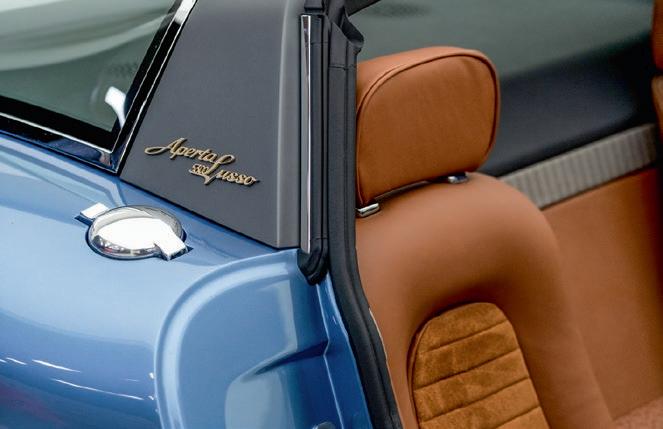
Finished in a light metallic blue incorporating a gold fleck, the bespoke colour, named Azzurro Gaia in honour of Marco’s daughter, was inspired by the waters of the Ligurian Sea. But Portofino is not on today’s agenda. Instead, in the blistering summer heat, I’m quite pleased to be sharing driving duties with Marco on a 300km road trip from Turin up into the cooler climes of the Swiss Alps.
As I fold into what initially feels like a tight cabin and settle into the fixed-position single-piece
passenger seat, Marco flips the ‘electrics’ toggle switch and holds in the starter button. Just for a moment, there’s turn but no thunder. The motor’s initial reluctance is strangely comforting, a reminder of the way things used to be. Of a time when cars, especially those with sportier aspirations, had to be coaxed into action, like waking a sleeping teenager.
Almost as if it senses the Alpine adventure that awaits, the 5.3-litre V8 then bursts into throbbing life, with a guttural roar followed by off-throttle burble. It is raw and exciting, the beating heart of the first all-new Bizzarrini production car in more than five decades.
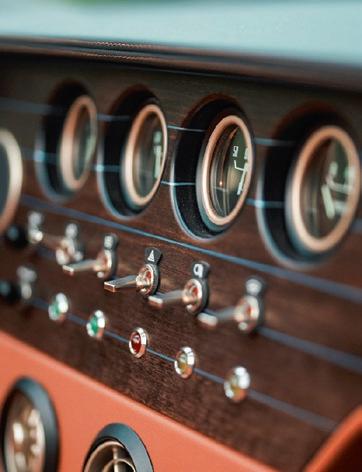
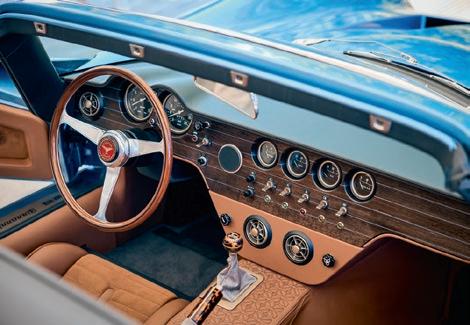
As we hit the autostrada, I take the opportunity to explore La Dolce Vita’s exquisite cabin. Crafted from one piece of European maple, the dash has been specified with body-colour pinstriping purposefully reminiscent of a Riva boat. It is punctuated by stylishly minimalist speed and rev counters, four satin gold-rimmed auxiliary gauges, a row of delightful toggle switches above corresponding indication lamps and a MagSafe charging mount. Audio, for music and phone calls, is via Bluetooth with a separate, physical volume control.
A pair of decidedly period-looking ventilation-control knobs, set into
the leather-lined lower centre console either side of two air vents, match the windscreen-wiper/wash switch. The period look is completed with a large-diameter, three-spoke, wood-rimmed Nardi steering wheel that feels as special as it looks. And, joy of joys, just one dainty column stalk, to operate the indicators.
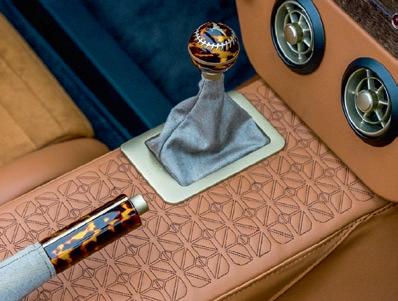
I comment on the colours and textures of the materials; the warm tones of the wood and leather, the luxurious feel of the Zegna-supplied wool fabric, the geometrically patterned transmission tunnel and the tortoiseshell handbrake and gearknob, pointing out how stylishly complementary it all is. “Italians just know what colours go together… it’s innate,” offers Marco.
“Why the tortoiseshell?” I ask. When it comes to La Dolce Vita, just about every aspect comes with a story: “My great-grandfather always wore tortoiseshell-coloured sunglasses. I have a few pairs of JMM [Jacque Marie Mage] Fellinis with gold detailing. [It is no coincidence Federico Fellini cowrote and directed the 1960 film, La Dolce Vita.] They’re made from several pairs of old sunglasses. Something from the past made new – just like this car. It was just a coincidence that I was wearing the tortoiseshell pair on the day we specced the interior. They fitted so well with the wood and the gold.
I am making mental notes about the excellent seat comfort, the lack of storage – easily sorted with the addition of a net pocket on the transmission tunnel – and the bipolar ventilation system. The two central vents plumb frosty conditioned air into the cabin, while the outer pair receive air channelled
‘I reflect on how, just for a few hours, I have experienced La Dolce Vita. What a car’
from the two front airdam inlets past the exhaust manifold and into the cabin. Best closed on hot days.
After a decent motorway stint and some mid-speed stability testing, Marco is ready to relinquish control. Having experienced the relative quiet of the well insulated coupé mode, we opt to complete the trip sans carbonfibre roof. The two panels unclip with ease and don’t take up too much space in the surprisingly large boot. It’s then that I spot ‘La Dolce Vita’ embroidered into the inner bootlid lining in gold thread...
With the top panels removed, cabin access improves dramatically. I settle into the driver’s seat and
slide it forward. The wheel has reach and rake adjustment, but Marco’s setting suits me fine. Although the 1960s-style chrome-stalk side mirrors are small and require manual positioning, anything else would look out of place.
Selecting first and easing off the well weighted clutch, we rejoin the road and continue on towards the picturesque mountain village of Andermatt in central Switzerland. I am immediately aware of several things: the mechanical feel and satisfying ‘click’ of the narrow-gate, short-throw, five-speed Tremec ’box; the servo-less ventilated disc brakes that require panic levels of pressure before they bite; and the long travel of the accelerator pedal that translates into cushioned stages of thrust.
You can bury the throttle of course, with the expected result, but doing so involves an unusually concerted ankle-extension effort. On a tight mountain pass in a mega-bucks special with 400bhp shifting just 1280kg and the owner sitting on my right, not attempting to find the limits of traction seems prudent. Still, when circumstances and traffic allow, I let the engine breathe a little.
Happy enough to pull from low revs in a high-ish gear, the injected V8, mounted well behind the front axle, really comes alive above 3500rpm in terms of both power delivery and ‘music’. While it hasn’t yet been activated on La Dolce Vita, the Aperta’s exhaust system, handfabricated in Inconel, will feature a ‘quiet mode’ valve. Depending on owner type, this could be either the most- or the least-used switch.
As we press on, other aspects of the package come to the fore. Small vibrations felt through the steering
constantly relay a reassuring sense of connection. Earlier that morning during a quick technical briefing, Fraser mentioned that the Aperta’s steering has been upgraded from the Corsa’s box set-up to a far more accurate, variably assisted rack-andpinion system. Slightly feathered around the centre point, steering feel is great beyond that. At 2.5 turns lock to lock (versus 3.5 on the older car), it’s geared reasonably quickly, too.
The revelation for me is the suspension. Double wishbones all round with adjustable Koni dampers are expertly calibrated to offer a surprisingly compliant ride. With minimum fuss it gobbles up a short section of cobbled road we encounter. That said, there is nothing like a tightening-radius off-ramp taken well above the recommended speed to induce body roll. However, after hitting its acceptable tilt allowance the Aperta Lusso stays flat and composed.
We are soon into the helical switchbacks of the Gotthard Pass.
Short of an axle-twisting extreme offroad course, there’s not a finer public test of torsional rigidity. Again, the car acquits itself well with no audible creaks or other signs of chassis flex.
Totally absorbed in the driving experience, I’ve forgotten about the hole above my head. A combination of excellent aerodynamics, the targa design and a borrowed cap mean I’ve not had to endure the hair-tugging buffeting of a typical convertible. As we pull into the entrance of The Chedi hotel in Andermatt, I reflect on how, just for a few hours, I have experienced La Dolce Vita. What a car, I think. Just then, something Marco said earlier pops into frame: “In Italy, it’s not a car – it’s a culture.”
Wilton Legends
UK’s Wilton House event will be back again in June 2027, even bigger and better – and with a new name
OUR NEW EVENT AT WILTON House near Salisbury, held in June in the southwest of England, was a fabulous success, with thousands of visitors, more than 60 speakers and a strong mix of cars, personalities, artists and craftspeople at the Earl of Pembroke’s stunning stately home.
It will be back in 2027 on June 18-20, with the same format but a number of changes to build upon this year’s event. For starters, the slightly unwieldy Concours des Légendes name will be changed to what it’s already being referred to as anyway: Wilton Legends.
The number of cars in the concours will be increased by at least another 20 which, with exhibitor machinery and the Earl’s own collection, will take the total to well over 100. We’ll continue to display a deliberately eclectic range of machinery, but this time there are even more top-end cars already promised by leading collectors from around the world. We will also be changing the layout of the show slightly, adding a wider range of
both catering and retail offerings.
The format of telling the stories of cars and people across three stages will remain, because this is what sets the event aside from the rest, globally. If you didn’t attend this year, think of a cross between a vibrant concours and a literary festival – and for 2027 there’ll be more crossover between the cars and the stage talks. We’ll also continue with the engineering and art demonstrations that went down so well at the inaugural show.
Among the names at the 2026 event were Brian Johnson, Nick Mason, Andy Green OBE, Stefan Johansson, Richard Attwood, Wayne Carini, Ian Callum, Valentino Balboni, Marek Reichman, Frank Stephenson, Peter Stevens, Tiff Needell, James Martin, Johnny Mowlem, Maurice Hamilton, Edd China and many more. One of the most memorable moments came when Johnson and Mason took to the stage together, receiving a standing ovation, while discussions between some of the industry’s top designers proved both humorous and insightful. Another
THIS PAGE
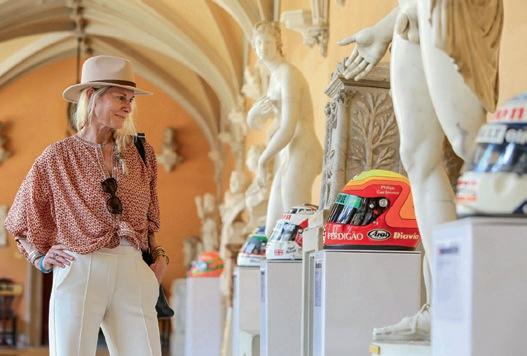
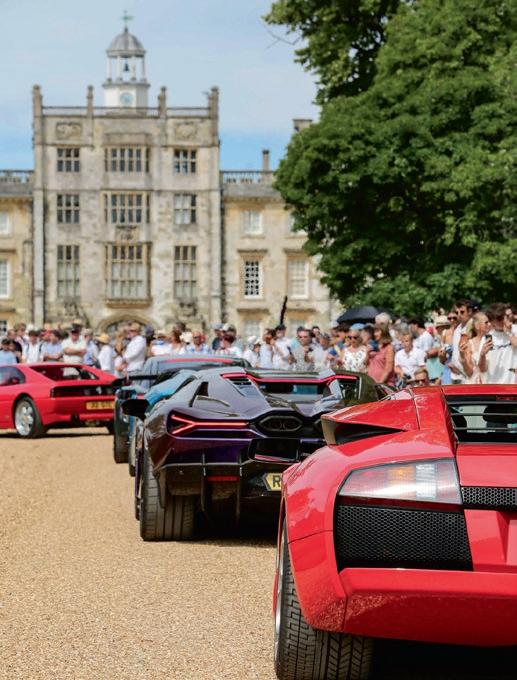
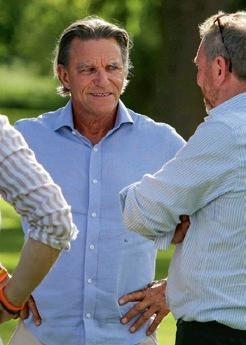
Helmet display, Supercar DriveIn and Stefan Johansson among the many things – and people – to see at the inaugural event.
popular attraction was a screening of Luca: Seeing Red, with director Manish Pandey – writer of the award-winning Senna – introducing the acclaimed documentary on Luca di Montezemolo.
The Hagerty Owners’ Stories feature became one of the emotional centres of the event, where around a dozen owners each day were selected to tell the stories behind their beloved cars. The Literary Stage, meanwhile, brought together leading authors and historians, while Hortons Books hosted signings with participating authors throughout the weekend.
The Lycetts-sponsored helmet display, curated by Joe Twyman, was a great bonus for all those taking the Wilton House tour, and we already have a very special exhibition lined up for that area for 2027. The Supercar Drive-In, and the auctions that took place within the grounds, will also return, along with a few more special surprises. We’ll keep you updated. Wilton Legends will take place on June 18-20, 2027. For more details, please see www.wiltonlegends.co.uk.
Stateside move for GRRC
Goodwood Road Racing Club is launching in America, with inaugural event at Willow Springs
WILL GOODWOOD BREAK America? It’s a question that’s been asked for years, and is a subject close to the hearts of the core team at Goodwood. Now the international expansion of the Goodwood Road Racing Club (GRRC) begins, starting with a California-based membership offering from 2027.
For those not familiar with the GRRC, it’s Goodwood’s membership club founded nearly 30 years ago. It can be joined in the UK as an associate member, which gets you onto the waiting list for full membership. GRRC members gain access to exclusive events as well as special areas within the Festival of Speed and the Revival, and further automotive experiences, too.
The brand-new Goodwood Road Racing Club of America will follow a similar model of automotive membership, combining unrivalled access with a programme built around participation – but designed with the US enthusiast in mind.
There will be a comprehensive year-round calendar of events and experiences across California and Nevada, including track days, driving tours, private visits and curated social gatherings, with the inaugural
THIS PAGE
A spectacular launch at FoS was part of US motor sport celebrations.
event at Willow Springs in 2028.
Goodwood says that a highlight of each year will be “a flagship event in California, inspired by US motor sport and car culture, delivered with the charm, wit and style for which Goodwood is renowned”.
Certainly, this is no half-hearted foray into the US. Goodwood is putting everything into the GRRC of America, and it intends for the California activities to be just the start in a drive to roll out the club across America and further afield.
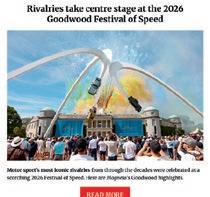
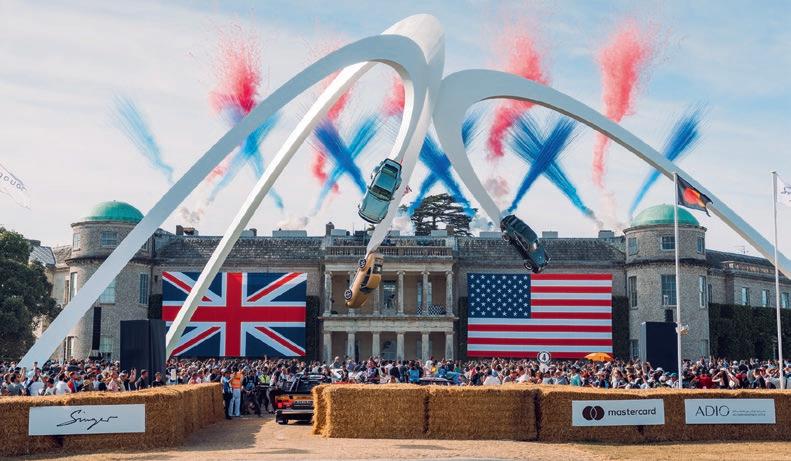
The club was announced on the first day of this year’s Festival of Speed, with the thunderous arrival of the race cars celebrating American motor sport on the turning circle in front of Goodwood House. The stars were the three 1966 Le Mans GT40s featured in this issue, and the announcement was heralded by flame-throwers, fireworks and red, white and blue smoke. Amid all this, none other than Damon Hill played guitar to ‘Route 66’ on the roof of the house. It was a surreal moment.
The Duke of Richmond said: “I am delighted to be launching the Goodwood Road Racing Club of America. The GRRC has been at the heart of everything we do – a
‘With California as our starting point, our aim is to create something genuinely new’
wonderfully diverse community brought together by a shared passion for cars and motor sport of every genre. Bringing that spirit to the US is not only a defining moment for us, but one we believe will resonate across the wider car culture world.
“With California as our starting point, our aim is to create something genuinely new – a club built around unrivalled access, extraordinary experiences and a sense of belonging unlike anything else currently available to enthusiasts in America.
Announcing it at the Festival of Speed, as we celebrate American motor sport and 250 years since the Declaration of Independence, makes this moment even more meaningful.”
On Willow Springs, the Duke was equally effusive: “Unspoilt since 1953, it’s steeped in history and feels like Goodwood’s long-lost Californian cousin. We also have three amazing patrons of the GRRC of America: Sir Jackie Stewart, Mario Andretti and [dons a cowboy hat] we have The King [Richard Petty]... and now I am on first-name terms with [Cars movie character] Lightning McQueen, I’ve invited him to be our fourth patron. Ka-Chow indeed!” More at www.grrcamerica.com.
FRIDAY AUGUST 14 AT 4PM
SATURDAY AUGUST 15 AT 11AM LIVE AUCTIONS
ONLINE BIDDING AVAILABLE
REGISTER TO BID
1959 MASERATI TIPO 61 BIRDCAGE
The First Tipo 61 Birdcage Built Extensive Period West Coast Racing History Coachwork by Allegretti I Chassis 2452
THURSDAY NOVEMBER 19
FRIDAY NOVEMBER 20 LIVE AUCTIONS I JAVITS CENTER NOW INVITING CONSIGNMENTS
FEBRUARY 2027
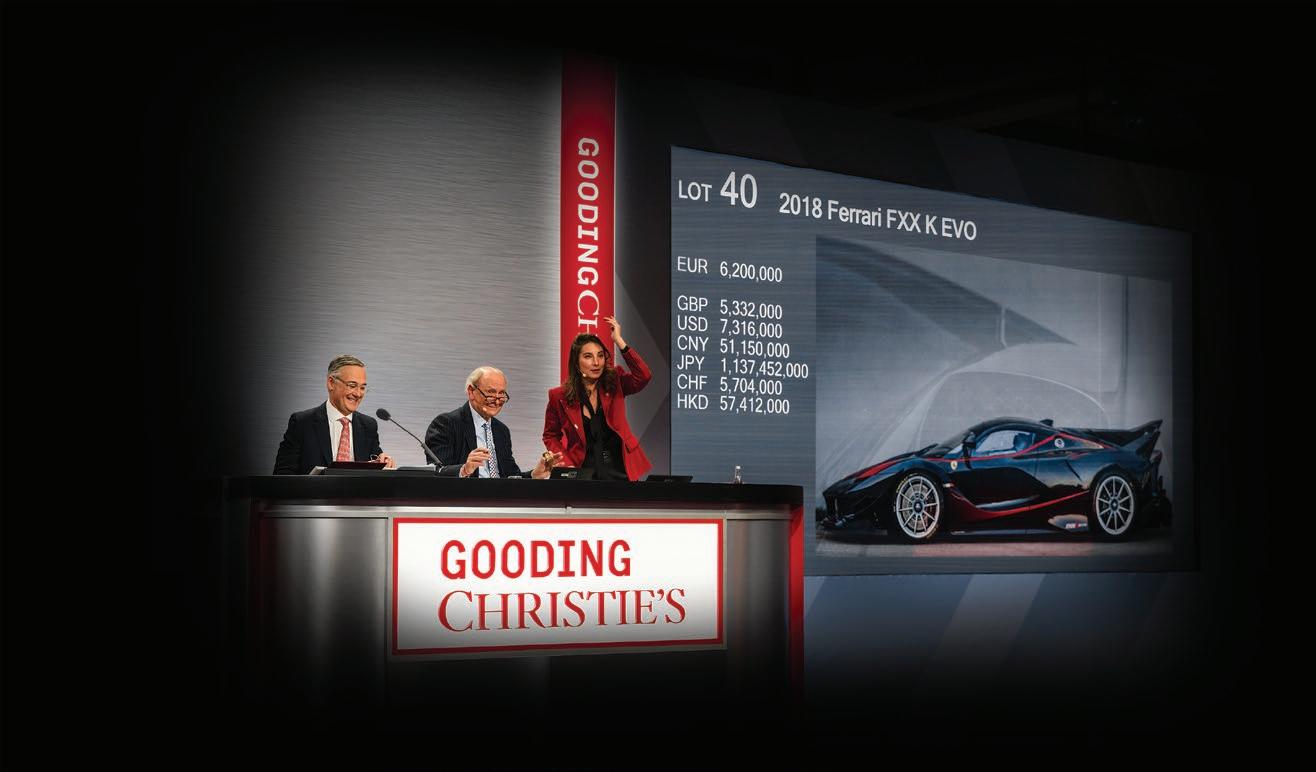
2018 FERRARI FXX K EVO SOLD for €6,980,000
Record for the Model Rétromobile Paris Auction 2026
AUCTION HOUSE OF RÉTROMOBILE PARIS
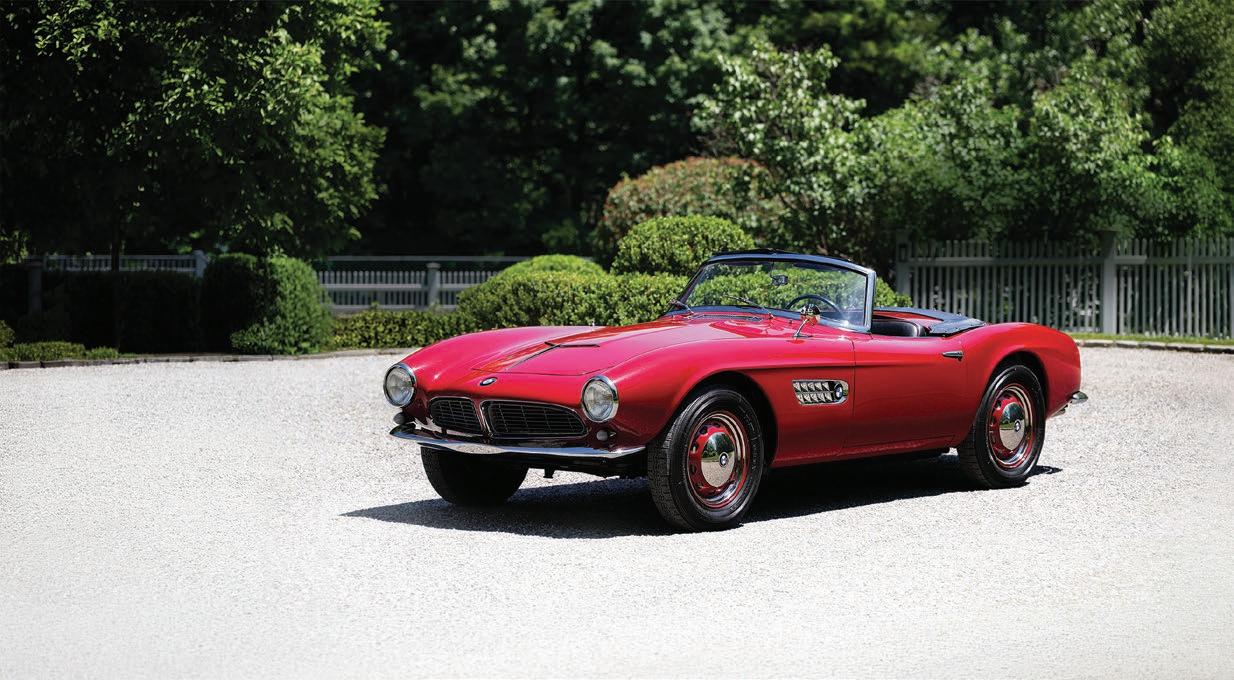
1957 BMW 507 SERIES I I Iconic US-Market Model Commissioned by Max Hoffman and Debuted in New York City
One of 252 Built and 1000 Miglia Eligible, Subject to Registro Acceptance
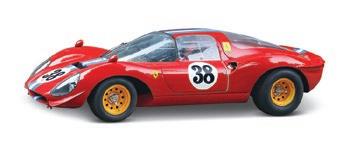
1966 FERRARI DINO 206 S BERLINETTA
One of Only Three Berlinettas Built I Campaigned by Chinetti’s NART at Le Mans, Sebring, and Daytona Coachwork by Carrozzeria Sports Cars I Chassis 014
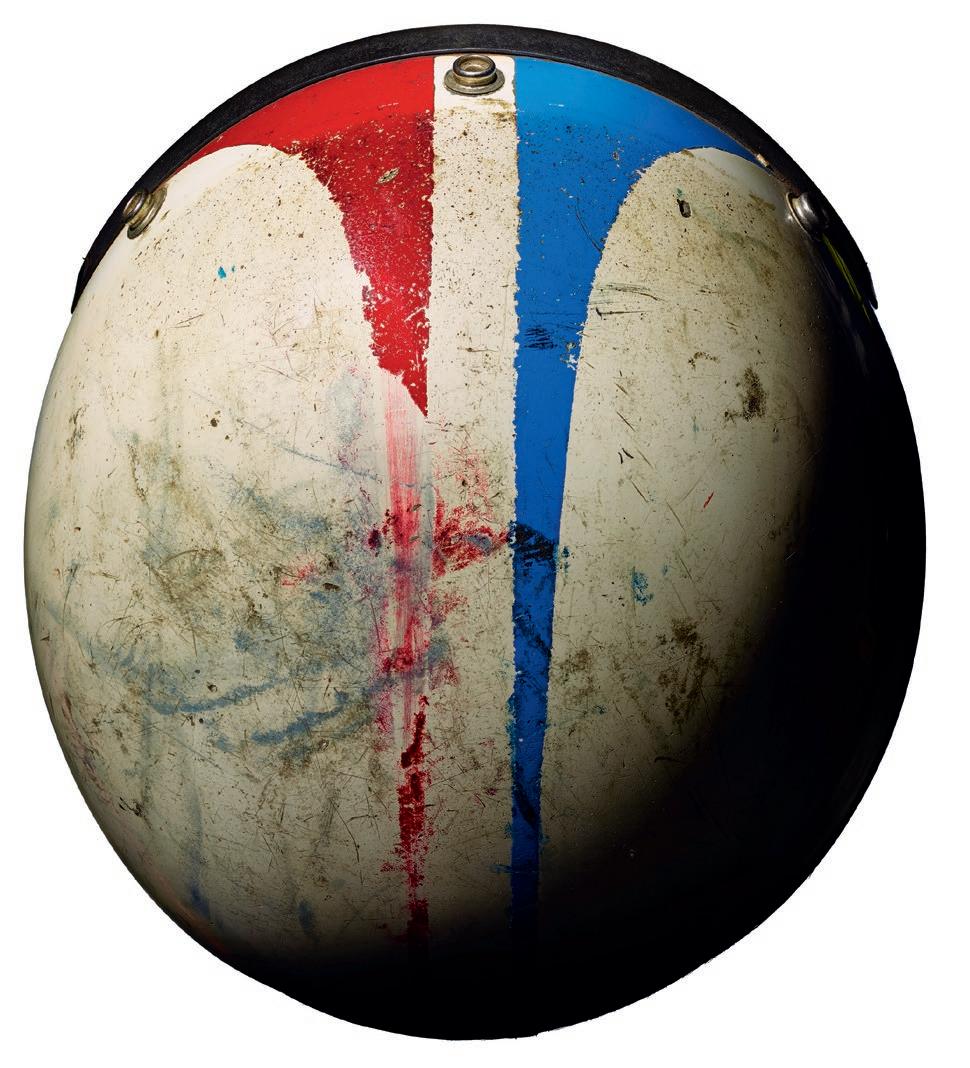
The Object Amon’s
Le Mans helmet
Scars tell the story of a legendary endurance battle
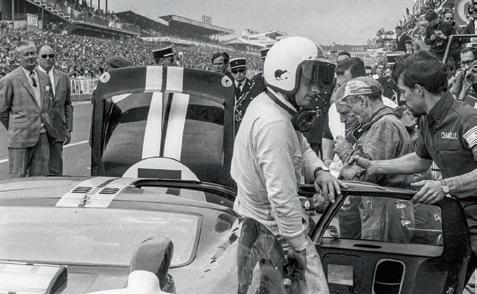
Chris Amon wore this Bell to win the 1966 Le Mans 24 Hours. The Ford GT40’s cramped cockpit meant there was barely enough room for a driver’s helmet; the blue and red stripes still bear scratches caused by the car’s door brushing against it when closing. The marks are more than evidence of the confined cockpit – they are reminders of the conditions Amon endured on his way to victory at La Sarthe.
VW Group supercar concepts
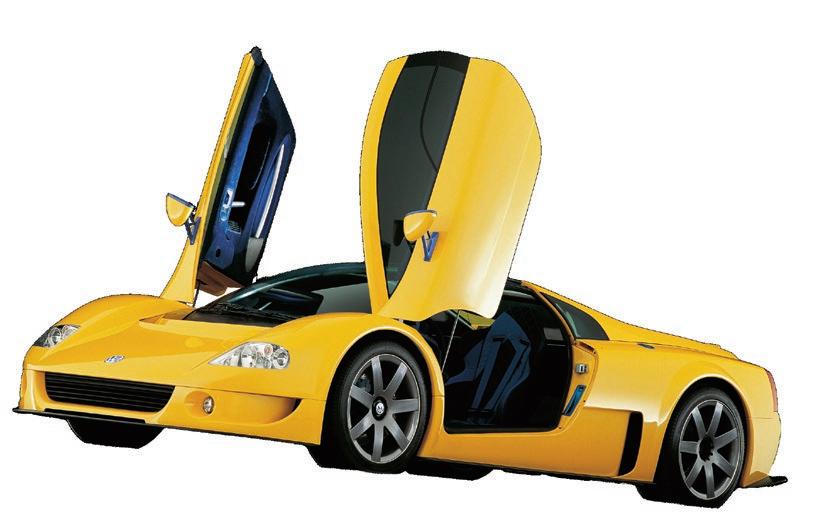
After his 1998 marquebuying spree, VW Group chairman Ferdinand K Piëch went cylinder and supercar crazy. The result was a spectacular set of late-1990s dream machines
Origin story
Top Trumps: Engine Edition
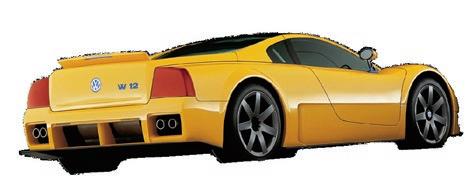
A brand-boosting Volkswagen supercar with serious production intent – at least initially – that was also intended to provide a credible motor sport rival to the Mercedes-Benz CLK GTR and Porsche’s GT1 at Le Mans.
First presented in 1997 as W12 Syncro (4WD) with a 5.6-litre W12 – two VR6s set at a 72º angle – delivering 420bhp. RWD, 6.0-litre, 600bhp W12 Coupé aka Nardò appeared at the 2001 Tokyo Motor Show.
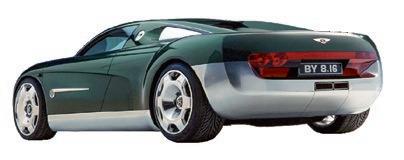
What better way to show off the sporting heritage of your newly acquired five-time Le Mans-winning brand than a supercar concept named after the Circuit de la Sarthe’s legendary straight?
Design notes Legacy value
Tasked with enhancing the performance profile of VW’s new W12, Italdesign’s Giorgetto Giugiaro said: “I put together a casing, a shell around the central engine, which I left on view to emphasise its importance.”
An 8.0-litre naturally aspirated W16 made 623bhp and 561lb ft of torque. Its four chain-driven overhead camshafts featured variable timing. Permanent four-wheel drive was a given.
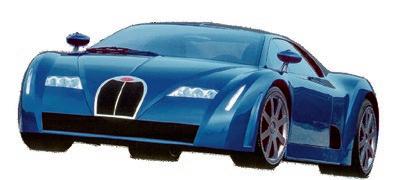
When Volkswagen AG acquired the Bugatti brand in May 1998, chairman Ferdinand K Piëch commissioned a series of marque-worthy studies: the front-engined EB 118 coupé and EB 218 saloon, and this mid-engined 4WD supercar.
Unusual W18 configuration – three VR6s fused at the crank – reportedly sketched on an envelope by Piëch on a Shinkansen train in Japan. Naturally aspirated, 6.3-litre, 18-cylinder engine produced 547bhp.
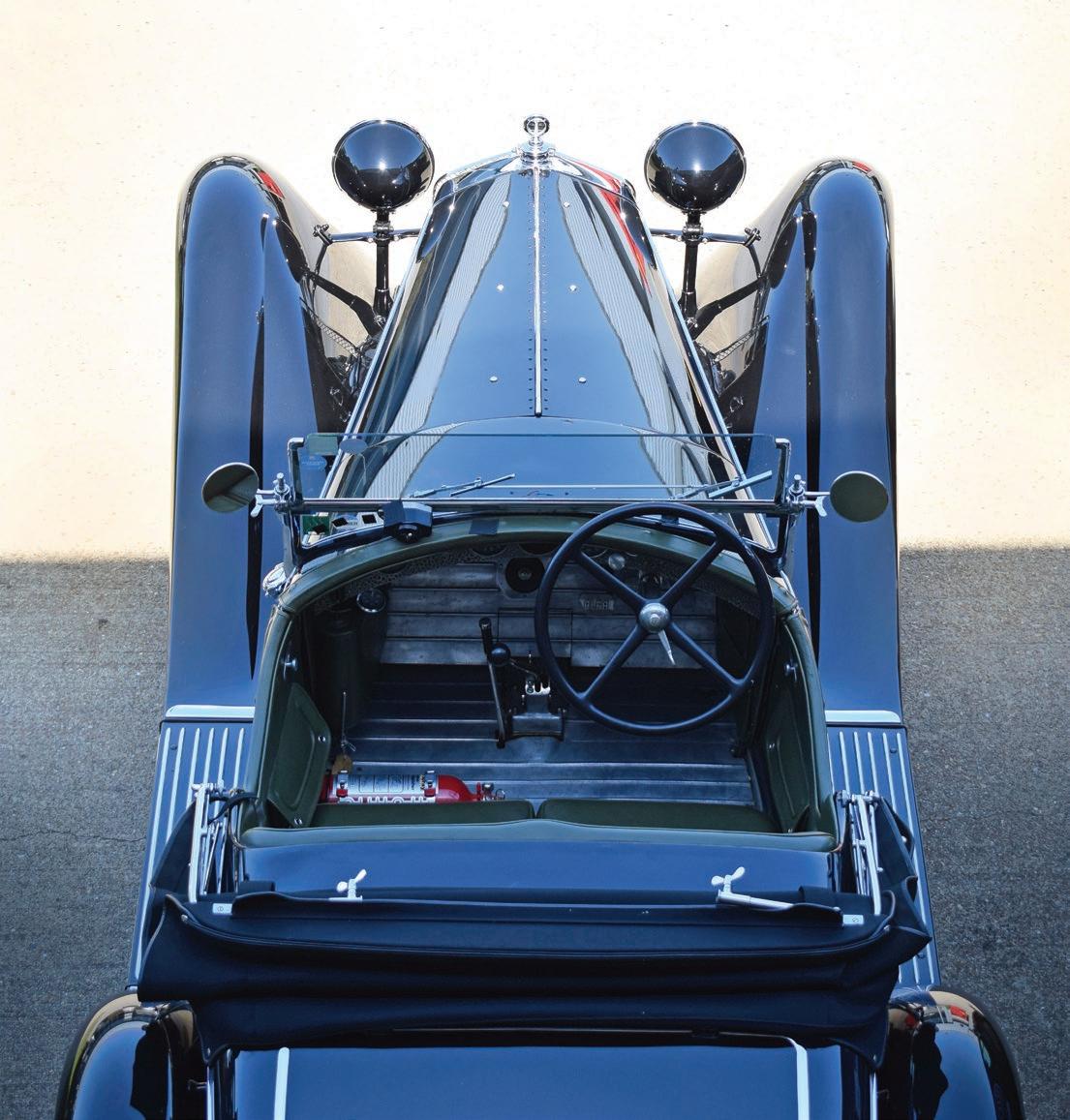
Engine-turned aluminium dash and dark green paint pointed to the Bentley Blowers of the 1920s. A mid-engined layout and dramatic Andreas Mindtdesigned cab-forward supercar style were new territory for the marque.
Five-year project delivered three show cars – Syncro, Roadster and Coupé – and a string of world records on the Nardò high-speed circuit in southern Italy before being shelved. W12 motor showed up in Phaeton and Touareg.
Built on a modified Lamborghini Diablo VT chassis, the Hunaudières quietly disappeared to clear the path for Bugatti’s Veyron. It did serve to remind the public of Bentley’s performance legacy in preparation for an ultimately victorious return to Le Mans.
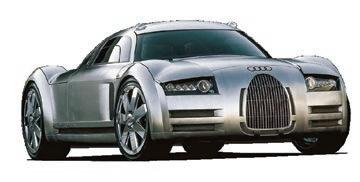
Not created in anticipation of future production or even developed as a running prototype, this visual demonstrator of the brand’s technological potential was
W16 engine ahead of the rear axle, capable of sending 700bhp to the wheels through its Quattro permanent four-wheel-drive system via a six-speed, open-gated manual gearbox.
While Giorgetto Giugiaro of Italdesign penned the EB 118 and EB 218, the EB 18/3 Chiron, presented at the September 1999 IAA in Frankfurt, was designed by his son Fabrizio.
Slotted engine cover, massive oval grille and brushed-aluminium body recall mighty 1930s Auto Union racers. Novel sliding headlight covers, quilted Nomex interior upholstery and cameras for wing mirrors.
Named after Bugatti racing driver Louis Chiron, the 18/3 concept was unfortunately overshadowed by VW’s in-house-designed Bugatti EB 18/4 Veyron, revealed just one month later at the 1999 Tokyo Motor Show.
A bold nod to the legacy of German racing driver Bernd Rosemeyer. Heralded the introduction of a single-frame grille on the 2004 Audi A8, but beyond that the static design study has remained largely in the shadows at the museum in Ingolstadt.
1997 VOLKSWAGEN W12 SYNCRO
IHMA –time to nominate
Join us for November’s International Historic Motoring Awards 2026
THE
INTERNATIONAL
HISTORIC
Motoring Awards sponsored by Lockton will return to the stunning Peninsula London hotel on Friday November 13, 2026 for the 16th running of the renowned annual event – and nominations are now open across the board.
Following the relaunch of the awards in 2024, this year’s staging will reveal a few more surprises and double down on the quality of the previous events. The award categories remain unchanged for 2026, by popular demand.
As previously, Car of the Year will be voted for by the public, including Magneto readers. We’ll publish the shortlist of contenders on the IHMA and Magneto websites. The rest, with the exception of the Lifetime Achievement award, will be judged by an independent panel of experts.
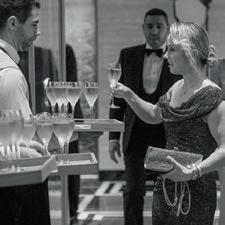
This is one of the best nights out in the classic car world’s calendar, bringing together many of the most influential collectors, organisers and specialists. Being shortlisted or winning an award carries global kudos. Don’t miss out on your chance to take part in some way.
To nominate, or for more details on this, please see www.historic motoringawards.co.uk. Meanwhile, to book a table (note that we sold out well ahead of the event last year), contact events manager Emma Glanville at emma@hothousemedia. co.uk. And to talk about sponsorship opportunities, speak with managing director Geoff Love at geoff@ hothousemedia.co.uk.
YOUTH ENTERPRISE OF THE YEAR
The organisation that has done the most to encourage young people in the collector car world.
PERSONAL ACHIEVEMENT OF THE YEAR
The person who has made a significant difference to the world of collector cars through their personal endeavours.
CAR OF THE YEAR
The car – classic or new – that has made the greatest impact on the collector car world this year. This is voted for by the public.
BESPOKE CAR OF THE YEAR
Most significant one-off or lowvolume new car launched since November 2025.
SPECIALIST OF THE YEAR
The collector car specialist that has made the most significant contribution to the collector car world, or that has achieved something new or special for its own benefit, since November 2025. This goes across all genres, from car sales to restoration and parts supply.
RESTORATION OF THE YEAR
The best classic restoration completed since November 2025, demonstrating skills, understanding of history, provenance and overall achievement. Open to all eras and types of collector car.
RACE SERIES OF THE YEAR
The Historic race series, whether national or international, in any country, that has demonstrated particular success and/or innovation since November 2025.
CLUB OF THE YEAR
The car club that has made a significant achievement this year.
INDUSTRY SUPPORTER OF THE YEAR
The individual or organisation that has made the greatest contribution to the collector car world.
MUSEUM OR COLLECTION OF THE YEAR
The museum or collection that has made the greatest achievements in their field this year.
MOTORING BOOK OF THE YEAR
For the outstanding automotive book published since October 1, 2025, whether focused on history, marque, personality or photography.
DIGITAL MEDIA OF THE YEAR
The best publication, article, website, video, film, social media or any other type of collector car-focused media.
BREAKTHROUGH EVENT OF THE YEAR
The best collector car event that had its first running after November 2025.
RALLY OR TOUR OF THE YEAR
The collector car rally or tour that has demonstrated innovation, participant satisfaction or significant achievement.
MOTORING EVENT OF THE YEAR
The world’s best motoring event, whether a festival, anniversary celebration, concours, one-marque gathering or other collector car show.
MOTOR SPORT EVENT OF THE YEAR
The best collector car competitive motor sport event, from the disciplines of racing, hillclimbing, stage rallies, sprints, drag racing and many more.
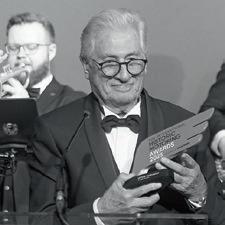
LIFETIME ACHIEVEMENT
The person who has spent their working life involved in the automotive world, and who is judged to have made significant differences to that world along the way.
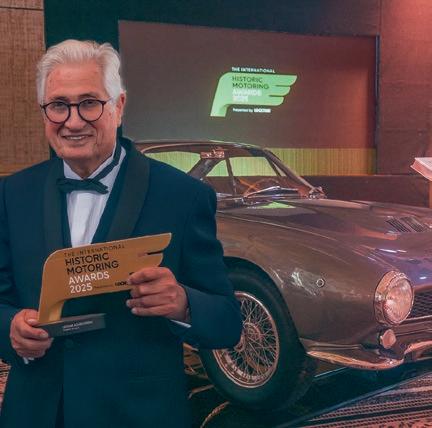
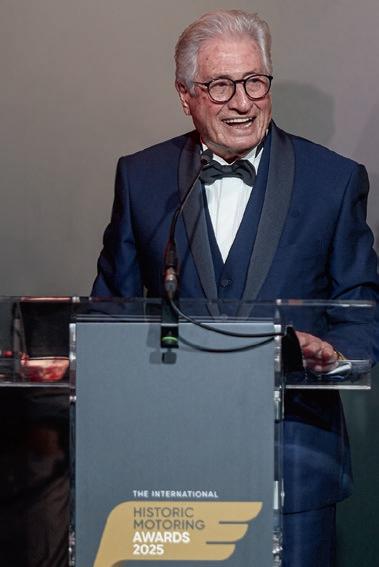
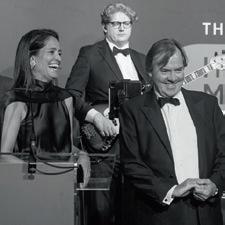
THIS PAGE IHMA 2025 – the Lifetime Achievement award went to Giorgetto Giugiaro, and Bespoke Car of the Year to the Eagle Lightweight GTR.
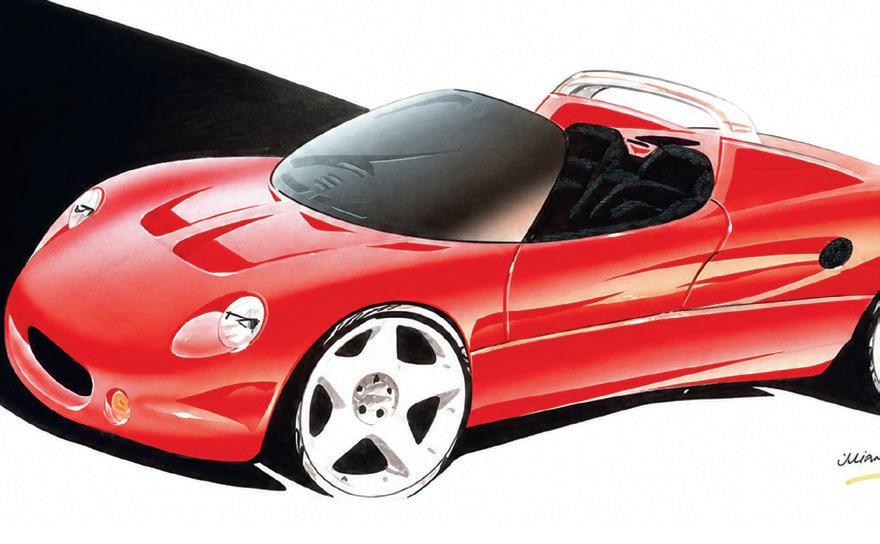
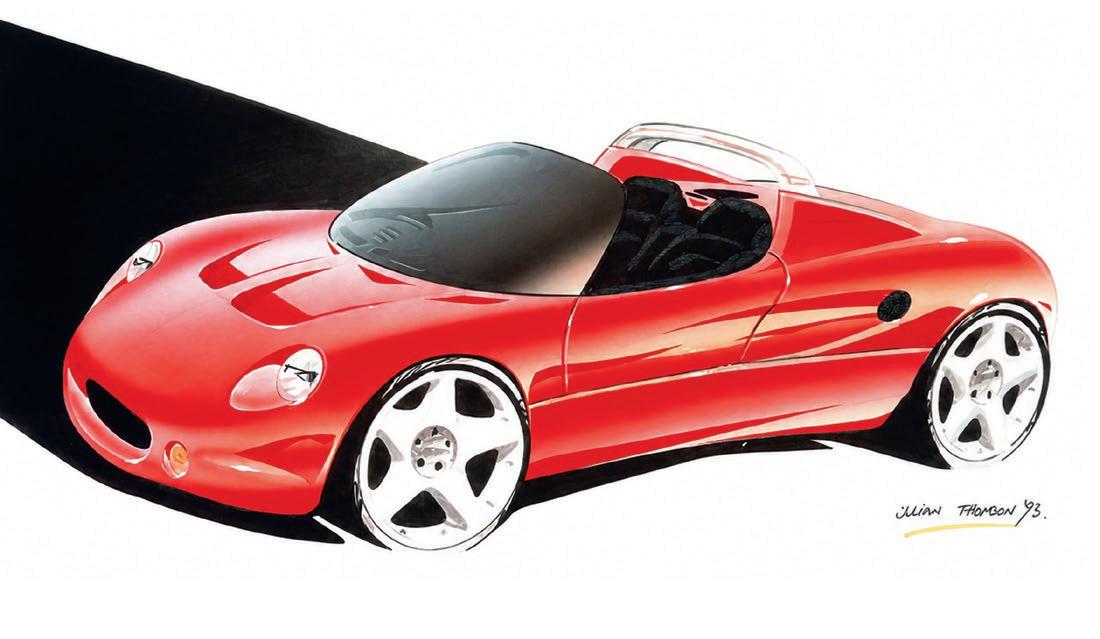
prototype. The Elise made its public debut at the 1995 Frankfurt Motor Show, becoming the most influential and archetypal Lotus since the first Elan.
Lotus Elise Sketch Battle: Meet the contenders
Released 30 years ago, the Lotus Elise we know and love could have been a very different-looking machine if one of these alternative proposals had been chosen instead
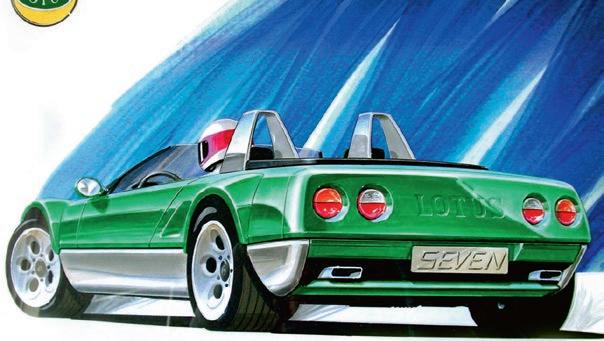
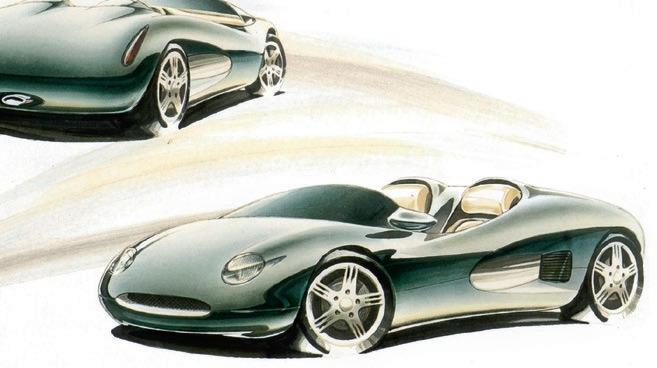
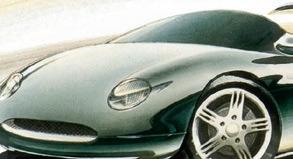
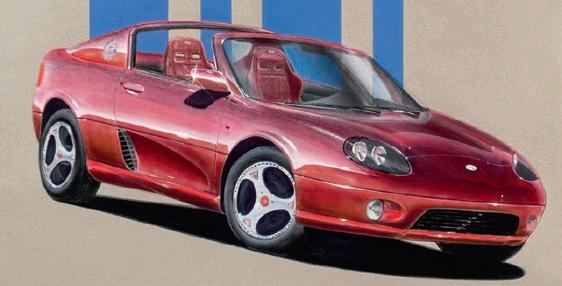
went independent in 1985. a competition promoted by Benedini for the design of two new Lotus cars. One of my proposals was inspired by the spirit of the Lotus Seven, emphasising the wheelarches over a rectangular body, with headlights emerging from the bonnet surface and a split roll bar to accentuate its sporting character.”
AFTER COMPLETING LOTUS’ front-wheel-drive M100 Elan in 1989, design chief Peter Stevens left to work on the TWR Jaguar XJR-15 and McLaren F1 supercar projects. Julian Thomson took charge of the studio, but facing huge financial pressure Group Lotus owner General Motors cancelled the Norfolk-based company’s new 2+2 (M200) and advanced supercar (M300) projects, and sought to offload the illustrious brand.
And so, in September 1993, Bugatti Automobili owner Romano Artioli and his financial partners became the unlikely new custodians of Group Lotus. Almost immediately, the green light was given for the design of a small, light sports machine under the internal code M111. With all other projects shelved, the new car – named Elise after Artioli’s granddaughter Elisa – simply had to succeed, or it
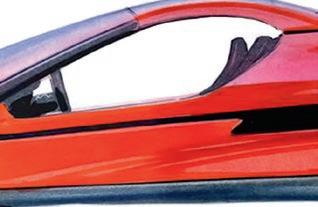
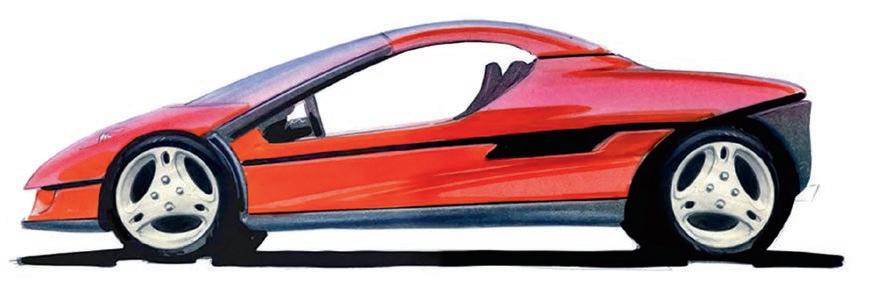
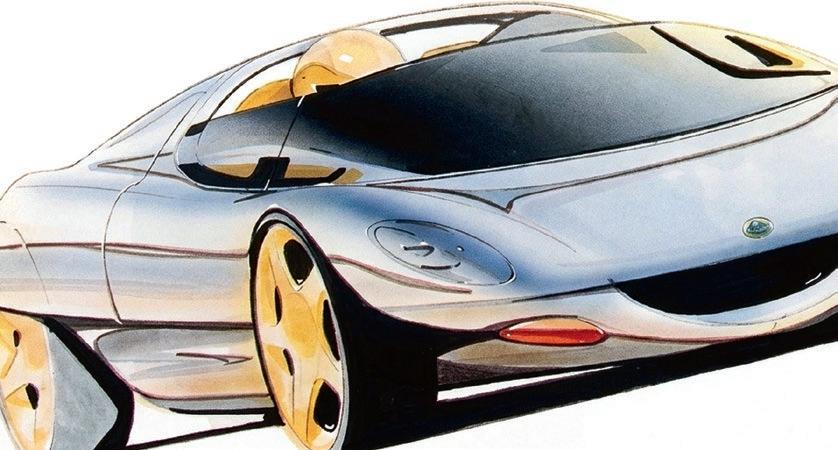
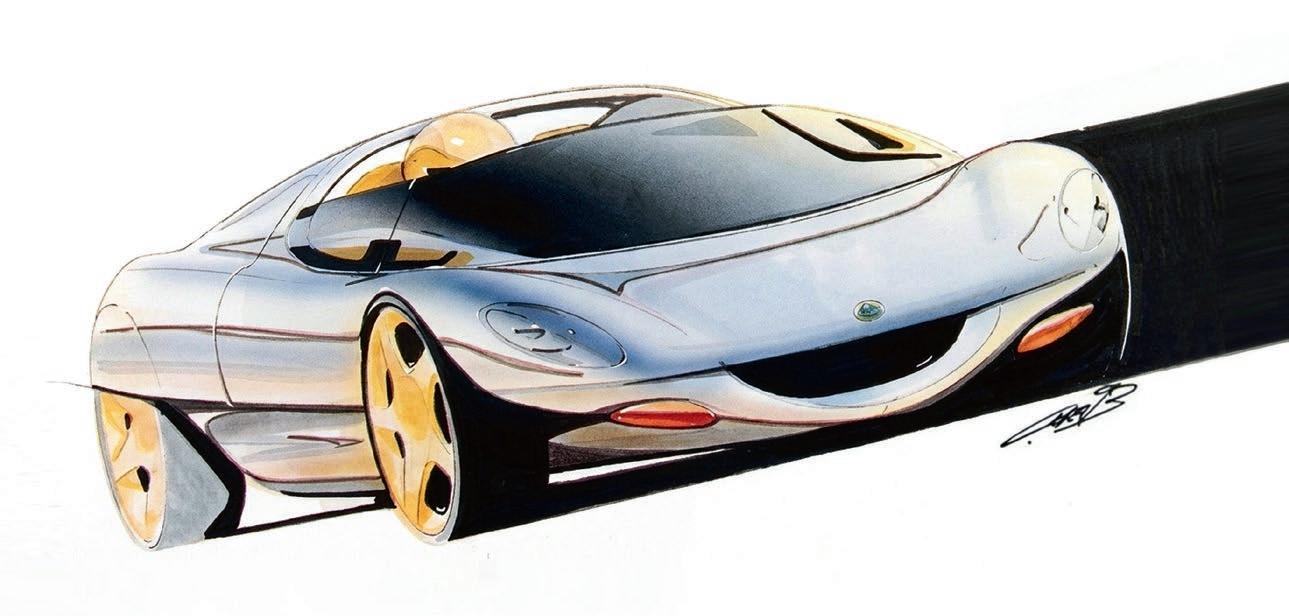
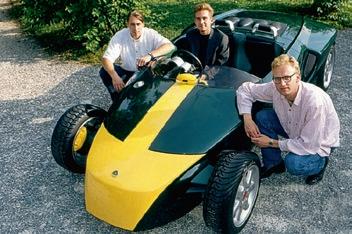
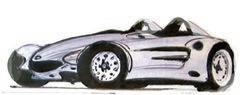
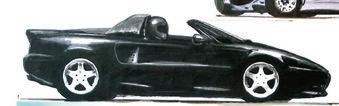
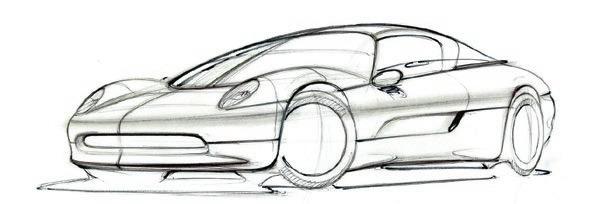
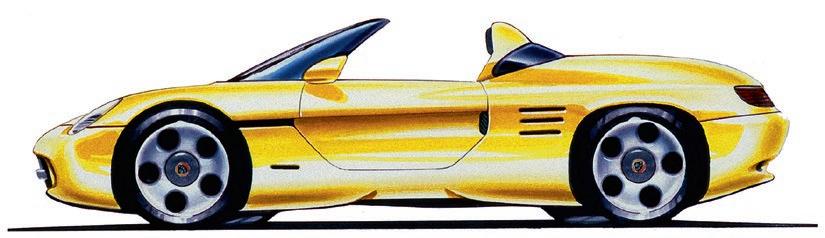
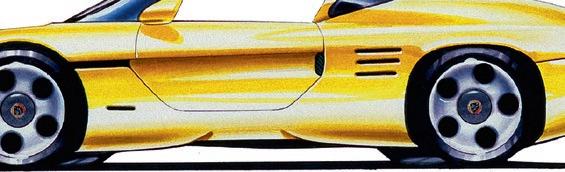
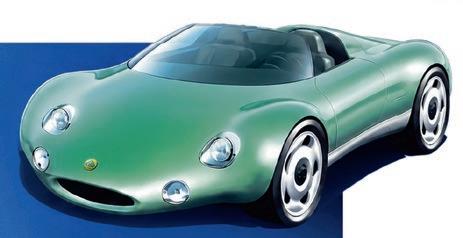
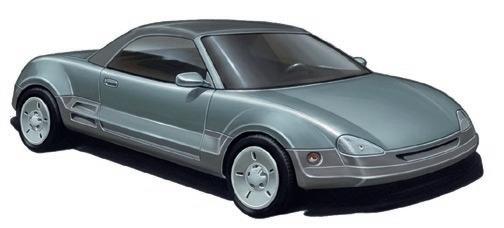
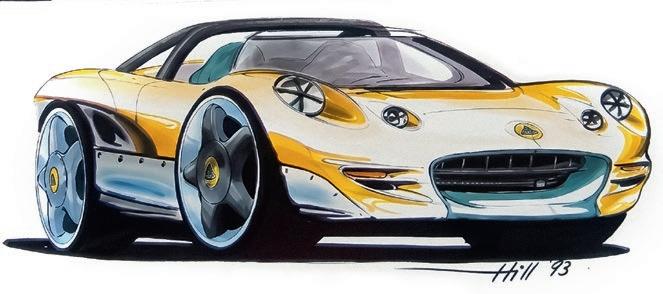
would die along with the brand. Conceiving futuristic sports car concepts was daily fare for Lotus Design’s Thomson, Andrew Hill and Russell Carr, although they could not have known as work began on project M111 in October 1993 that it’d deliver a genuine motoring icon. In December 1993, in an unofficial sketch battle against the in-house Lotus team, Bugatti design manager Giampaolo Benedini invited external proposals for both a mid-engined car and a front-engined version in the spirit of the Seven. The great Italian design houses of Bertone, Italdesign and Pininfarina all declined. Still, the list of contenders included such luminaries as Tom Tjaarda, Ercole Spada (Zagato), Peter Stevens, Carlo Gaino, Paul Breuer, Paolo Ségota and Carlos Sánchez (I.DE.A Institute). Many of these initial, undeveloped concept sketches are presented here.
I.DE.A INSTITUTE
Driven by founder and CEO Franco Mantegazza, this top-rated Italian car design consultancy competed directly with Italdesign, Bertone and Pininfarina for high-profile carmaker contracts. Then-design director Justyn Norek encouraged ambitious ideas for the M111 contest from his colleagues. Shown here is a proposal by senior designer Carlos Sánchez.
RUSSELL CARR
Carr’s inventive and sporty early M111 concepts pushed the style envelope, paving the way for the future track-focused Lotus 340R
WORDS DAVID RODRÍGUEZ SÁNCHEZ
PETER STEVENS
Peter recalls: “Some time in 1993, Romano Artioli contacted me with a request to develop ideas for a new small Lotus. While being asked to explore the mid-engined package, I was also invited to suggest something closer to the
Seven. I thought that both should build on Lotus’s ‘lightweight and simplicity’ philosophy. It was a fun project, but like so many of that kind, its purpose was really to ‘benchmark’ Lotus’ ideas against those of outside consultants.”
BUGATTI
Bugatti’s Campogalliano facility housed a small styling cell led by the Benedini. With designers Filippo Masnaghetti and Eric Serafini on EB110 duty, it fell to Steve Bernaud to explore an in-house proposal for the M111. This, the only surviving drawing, betrays cross-pollination with Bugatti’s stillborn Suzuki Cappuccinobased Espresso.
ARTCENTER EUROPE
Students Carsten Aengenheyster, Urs Rahmel and Martin Uhlarik exhibited a full-scale model of a modern Lotus Seven in August 1994. Called the Lotus Echo, it was developed under the guidance of former Ford of Europe design chief Uwe Bahnsen and Lotus’ Julian Thomson, with strong industry support. It was praised for its convincing interpretation of the Seven spirit and its forwardlooking execution.
PAOLO SÉGOTA
This industrial designer worked on an Alfa Romeo project in the mid-1960s before collaborating with Paolo Stanzani at Lamborghini. His Bugatti EB110 scoop illustrations for Quattroruote caused a stir, and he was invited by Giampaolo Benedini to propose a future Lotus Seven. His M111 study survives only in this form; his more resolved final renderings drew high praise.
CARLO GAINO
ERCOLE SPADA
Spada began his career at Zagato, then worked for Ghia, Ford, BMW, Audi and I.DE.A Institute. He rejoined Zagato in 1992 as chief designer, where he worked on several projects and commissions involving Ferrari, Lamborghini and Lotus. After providing prototyping and engineering services to Bugatti, Zagato was invited to submit proposals for the future small British sports car. Both Spada and deputy designer Norihiko Harada presented visions. Spada’s concept, shown here, was rendered by Harada.
ANDREW HILL
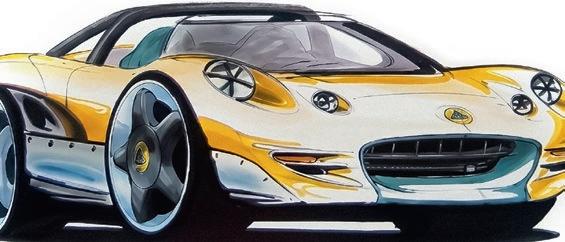
Aspects of Hill’s characterful M111 sketch proposal – the lighting arrangement, for example – were visible on the final car. His contribution to the aesthetics and packaging of the Series 1 Elise was invaluable.
Carlo founded Synthesis Design in Turin in 1987 after stints at Italdesign and I.DE.A Institute. His greatest hits include the 1988 Lancia ECV 2, 1992 Maserati Barchetta and later De Tomaso Guarà. He visited Bugatti with Alejandro de Tomaso, heard about the Lotus project and submitted this beautifully balanced theme that was seemingly inspired by Porsche’s 1993 Boxster concept.
Designer of the De Tomaso Pantera, the Mk1 Ford Fiesta and many more, Tjaarda helped resolve tricky front-end design issues on the EB110 and
also developed a small sports car proposal for Bugatti. His oddly proportioned vision for a Lotus sports car was well wide of the mark, though.
The ex-Dan Gurney, Bridgehampton-winning 1966 Lola-Ford T70 MKII Can-Am Spyder The ex-Jim Clark, 3-time Indy 500 qualifier 1967 Vollstedt-Ford USAC cccc Single-Seater Without Reserve
Eyewitness
The full Monte
Documenting behindthe-scenes thrills and spills of the legendary Monte Carlo Rally
I WAS ON ASSIGNMENT FOR Car and Driver, meeting up with writer Larry Griffin at Nice Airport. A Michelin PR was to drive us north to join the Monte Carlo Rally in La Souche in the Ardeche. We shoehorned Larry’s excess baggage into a Peugeot, and headed off into the lateafternoon gloom amid snow flurries.
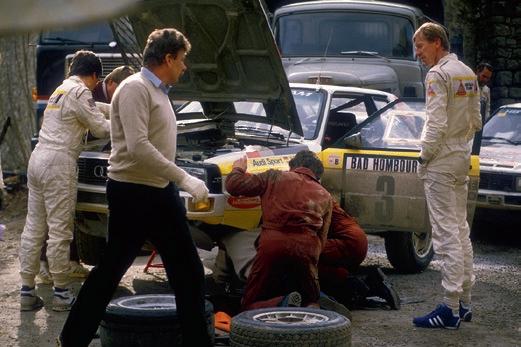
We arrived at the small village in the mountains. Here the townsfolk thronged around large Michelin transporters where mechanics were setting up service points for the teams. The French firm would supply 8000 tyres over the next seven days.
It was at this location we met up with Maurice Guaslard (pronounced Gow-Lar), Michelin’s rally supremo. We ate alfresco barbecued lamb chops in the town square before joining the ice-note crew for the 400km night section to Saint-Auban. Maurice gave us a quick résumé of the rally and the company’s support for the two front-running teams, Audi Sport and Peugeot Talbot Sport.
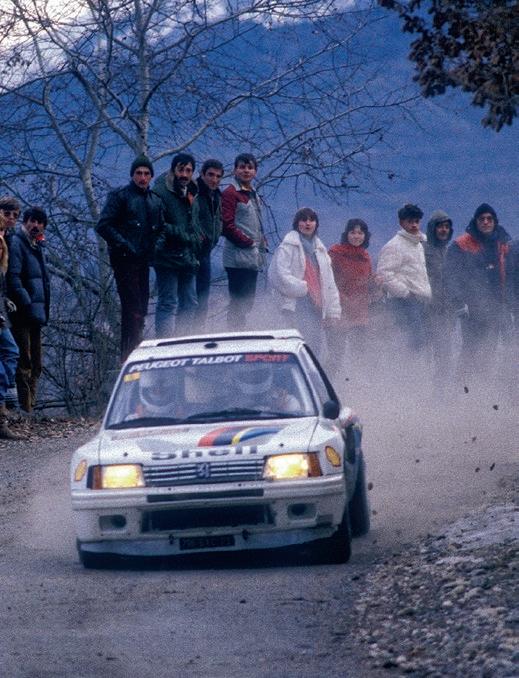
Both these outfits were running 4x4 Group B cars but with totally different layouts: the front-engined
Audi Sport Quattro and Peugeot’s agile mid-engine 205 Turbo 16. The Michelin guys thought Peugeot would take the honours, but in the early stages Walter Röhrl’s Audi led and Ari Vatanen had an off and hurt a spectator. It would be a long night stage to the Alps.
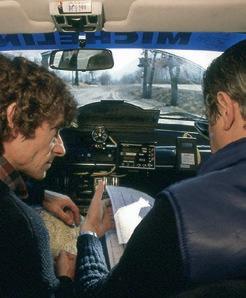
Michelin had three ice-note crews. We clambered aboard a Peugeot 505 GTi equipped with extra lights, tripmaster, UHF radio and benchmark tyres, with JeanPhilippe and Alain Chevalier as pilots. We sped off into the night at a cracking pace, heading for the first special stage. The conditions were a mix of snow, ice and dry Tarmac. Jean-Philippe stopped at the stage start then sped up the hill, inducing just enough oversteer. He shouted a number, which Alain noted, and at the stage end we pulled over for a quick total and discussion. Alain then radioed their tyre choice to HQ, to pass on to the teams. Both the crew had previously driven the full Works Audi and Peugeot, so their help with tyre selection was noted. In addition, each team would
send its own ice-note crew over the stage just before the road was closed. Compared with the present-day Monte Carlo, the 1985 edition was a monster for participants and machines. We continued to assess the stages in the Ardeche, then carried on over the Rhone and into the Alps. We next arrived at Gap, where another service halt was set up.
In the Michelin truck all notes were reviewed, and Maurice visited Roland Gumpert at Audi and Jean Todt, team principal of Peugeot. Vatanen was on a charge and was challenging Röhrl and Stig Blomqvist.
After a few hours’ sleep, I climbed aboard the Audi helicopter to shoot the Quattros powering through the stages. The Peugeot team didn’t use a chopper, and so saved $40,000 from its budget. After seven days Vatanen won, Timo Salonen was third and Bruno Saby fifth. The Audis of Röhrl and Blomqvist came second and fourth respectively. The Michelin crew were left wondering if Audi Sport would have a mid-engined Quattro and how to compete with the Pirelli-shod Lancia Delta in 1986.
THIS PAGE Tyre giant Michelin supported Audi Sport and Peugeot Talbot Sport, aided by ice-note crew Jean-Philippe and Alain Chevalier (above).
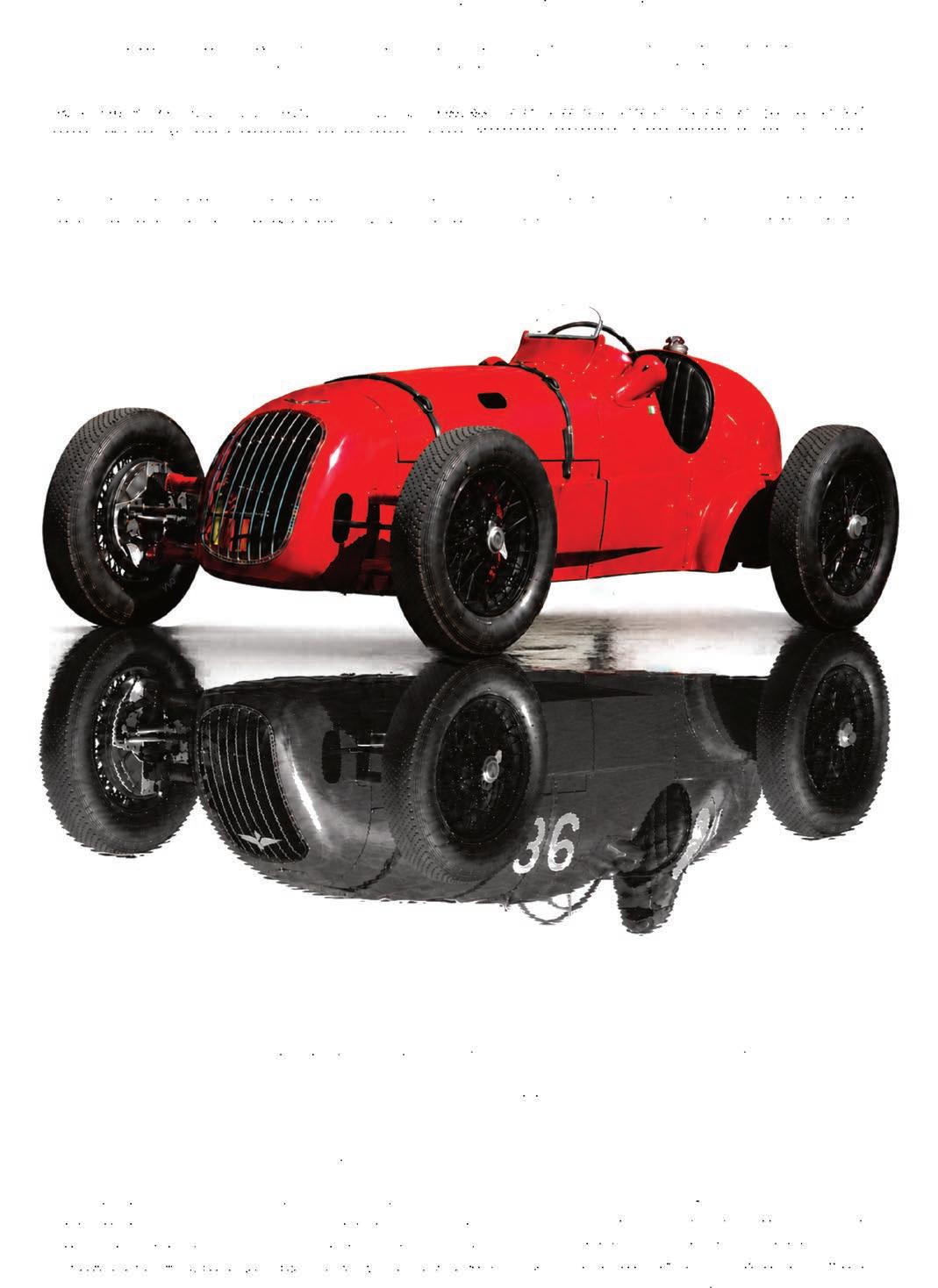
1938 Alta Chassis 62IS
Tom Hardman Limited & The VSCC
are hosting the return of Seaman Trophy race at this years Oulton Park Gold Cup 29th -31st August 2026
The Park will roar once more to Pre-war GP cars!
Ordered New in 1938 by Hugh Curling Hunter Who Raced the Car Extensively, Pre-WW2
This is a early print-only notice, exclusively for Magneto Magazine readers. Register your interest today.
WORDS DAVID LILLYWHITE
Welcome to the club
Aurora Strauss is the 27-year-old racer behind Florida’s latest private community for petrolheads – the P1 Motor Club
“WE’VE TAKEN EVERYTHING that you would come to expect from a luxury country club in South Florida; all the same amenities and infrastructure, except instead of a golf course, we have more than nine miles of private, no-speed-limit race tracks,” says Aurora Straus, a founding partner of P1 Motor Club.
It is a perfect summary of something that’s going on across the US. Private clubs are springing up around the country, some with custom-built tracks and others based around existing circuits. Almost all include the chance to buy an on-site apartment or garage, high-luxury facilities, frequent track access and a substantial membership fee.
The $250 million P1 Motor Club is the largest of these clubs, spread over 650 acres in Port St Lucie, Florida –close to Palm Beach and within two or three hours of Orlando, Fort Lauderdale, Miami, Fort Myers and more. It has a planned nine-plus miles of purpose-built race surfaces, customisable garage townhomes and Homestead-eligible single-family residences, a commerce park and a professional R&D facility for race teams and automotive brands.
It’s about to launch the first of its two primary tracks, the 3.0-mile Treasure Coast Circuit, with the 4.5-mile P1 Circuit set to open in 2027. Nearly a mile of rally circuits, a 0.25-mile drift track, a 1.0-mile karting circuit and slow-speed offroad trails will follow, along with member clubhouse, pool and sports courts, and running and bike trails.
What’s interesting here is that the
RIGHT
Aurora Straus and her family were behind the Monticello Motor Club,
and now P1, too.
team behind P1 has already done all this before, with the famed Monticello Motor Club in New York.
“This is a family business,” explains Aurora. “My dad [Ari Straus] and I are both founding partners, and he was the previous managing partner at Monticello. My mother Molly and I developed all of our family and youth programming there, and I started the world’s only sleepaway teenage racing camps, which will be happening at P1 as well. We started varsity racing as a high-school sport during Covid, when every other sport shut down. We started women-only track days that ended up being monumentally successful for getting people’s family and extended family involved.
“My scope at P1 is much broader. It’s a huge project, one of the most ambitious motor sport projects in the world. It is going to take much longer to build as a result, but the Treasure Coast Circuit is what we are focused on right now because our entire business model revolves around people racing.
“Nearly every member of our team has some sort of experience in motor sport or luxury hospitality,” she says – and that includes Aurora herself, who learned to drive on track at Monticello, had her first professional race at 16 and competes in IMSA with Mercedes-AMG.
“For everyone who has joined so far, the number-one rationale is the quality of the tracks we’ve designed. Then they also get access to all of the programming surrounding that; we want to make sure that this is a
‘We want P1 members to bring their family, and escape with them instead of escape from them’
one-stop shop for anything you want to do in a race car, from learning how to drive for the first time, all the way to pro drivers who want to learn how to drift or go rally racing. We can do all of that.
“The largest difference, though, is that we are targeting families. We will likely sell about 850 licences, and a membership licence at P1 covers your extended family – your spouse as well as your parents, grandparents, kids and grandkids. We want to incentivise members to bring their family, and escape with them instead of escape from them.”
P1 already has 260 members. Membership licences initially started at $150,000, with pricing increasing as more development progresses. More at www.p1motorclub.com.
WHILE THE DEATH OF PETER Mullin in September 2023 wasn’t unexpected – he’d been ill for some time – his loss was felt throughout the collector car world, particularly on the US West Coast, where the Mullin Automotive Museum was based. Over nearly three decades, Peter and wife Merle had set up an unparalleled collection of Bugattis, Delahayes, Delages, Hispano-Suizas, Voisins, Talbot-Lagos and other French Art Deco-era masterpieces.
Within five months of Peter’s passing the museum was closed forever, although Merle continued to exhibit models around the world. It was then announced that the cars from the collection would be sold by Gooding & Company at Amelia Island and at a sale at the Mullin Automotive Museum during 2024.
However, it was known that three of the most important examples would go to the Petersen, of which Peter had been the inspirational chairman. The Mullin Collection had also had part ownership with Rob Walton of the famous Bugatti
Mullin cars at the Petersen
LA museum unveils permanent Mullin Family Gallery
WORDS DAVID LILLYWHITE
Type 57 SC Atlantic, featured on the front cover of Magneto issue 30. This car now belongs solely to Rob.
Almost 40 Mullin Collection models were sold, but those of us familiar with the cars soon realised that several were left unaccounted for. Further talks with people close to the Mullins and the Petersen indicated that there were plans afoot, but there were issues to overcome before anything could be revealed.
Now, the Petersen Automotive Museum has publicly announced that the best cars from the Mullin Collection have indeed been donated to the Los Angeles facility. The gift represents one of the most significant moments in the Petersen’s history.
On July 18, the museum unveiled the Mullin Family Gallery, featuring cars from the Mullin Collection, inside the venue’s famous Vault. They include the legendary 1937 Delahaye Type 145 ‘Million Franc Delahaye’ and the 1934 Voisin C27 Aérosport Coupé, as well as an extraordinary selection of Bugatti, Talbot-Lago, Delage, Peugeot and Hispano-Suiza
‘It is a honour to fulfil Peter’s vision by becoming the steward of this extraordinary collection’
masterpieces. This will be followed by a much larger exhibition in 2028, when the Mullin Family Gallery will host a major exhibition featuring nearly 30 vehicles from the collection.
“Peter believed these automobiles belonged to history, not to us,” said Merle, co-founder of the Mullin Automotive Museum, trustee of the Mullin Family Foundation, Petersen Automotive Museum board member and internationally respected automotive collector.
“Together, we built this collection with the dream of preserving the extraordinary artistry, innovation and craftsmanship of French Art Deco automobiles. It was equally
important to us that these masterpieces would one day be shared with the broadest-possible audience. Peter always believed the Petersen Automotive Museum was the right steward for that responsibility, and it is deeply meaningful to see that vision fulfilled. We are proud to know that this collection will continue inspiring generations of enthusiasts, historians and future collectors.”
Terry L Karges, executive director of the Petersen Automotive Museum, said: “It would be difficult to overstate Peter Mullin’s impact on the automotive world and on the Petersen Automotive Museum itself. Peter helped build the museum we know today, and it is an incredible honour to fulfil his vision by becoming the steward of this extraordinary collection. There is no better place to preserve these remarkable automobiles and share their beauty, history and artistry with visitors from around the world.” Tickets and additional information from www.petersen.org/exhibits.
THIS PAGE Petersen is now home to the ’37 Talbot-Lago T150-C SS, among many other Mullin Collection cars.
In the light
Ferrari Luce – is it a massive misstep or simply misunderstood?
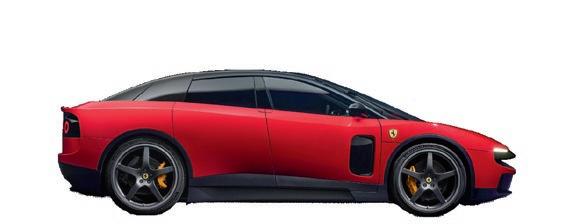
“WHENEVER WE UNVEIL THE car there are going to be incredible discussions. We’re going to have some great lovers, and we’re going to have a lot of haters,” prophesied Emanuele Carando, Ferrari’s head of global product marketing, in a promo film produced prior to the recent reveal of the Ferrari Luce in Rome. Talk about no truer words… Hideous. Should have been a subbrand like Dino. Say hello to the Apple Leaf. It’s ‘giving’ Waymo. Ferrari’s Aztek moment. Teslarrari. Somehow worse than I could ever have imagined. The death of Ferrari. You know it needs a miracle when the Pope gets involved... The haters have it, the haters have it. Just how much of this is just cancel culture groupthink, I wonder? Regardless, given the almost universal panning of the Luce, Ferrari’s first full EV, I have been processing my initial
reaction to seeing a quintet of them on display at the official unveiling in a bright, glass-roofed section of the Vela di Calatrava. Confined to a stepped viewing area, I could see only the front and sides at first; the rear would remain a mystery until a 30-minute slot scheduled for later.
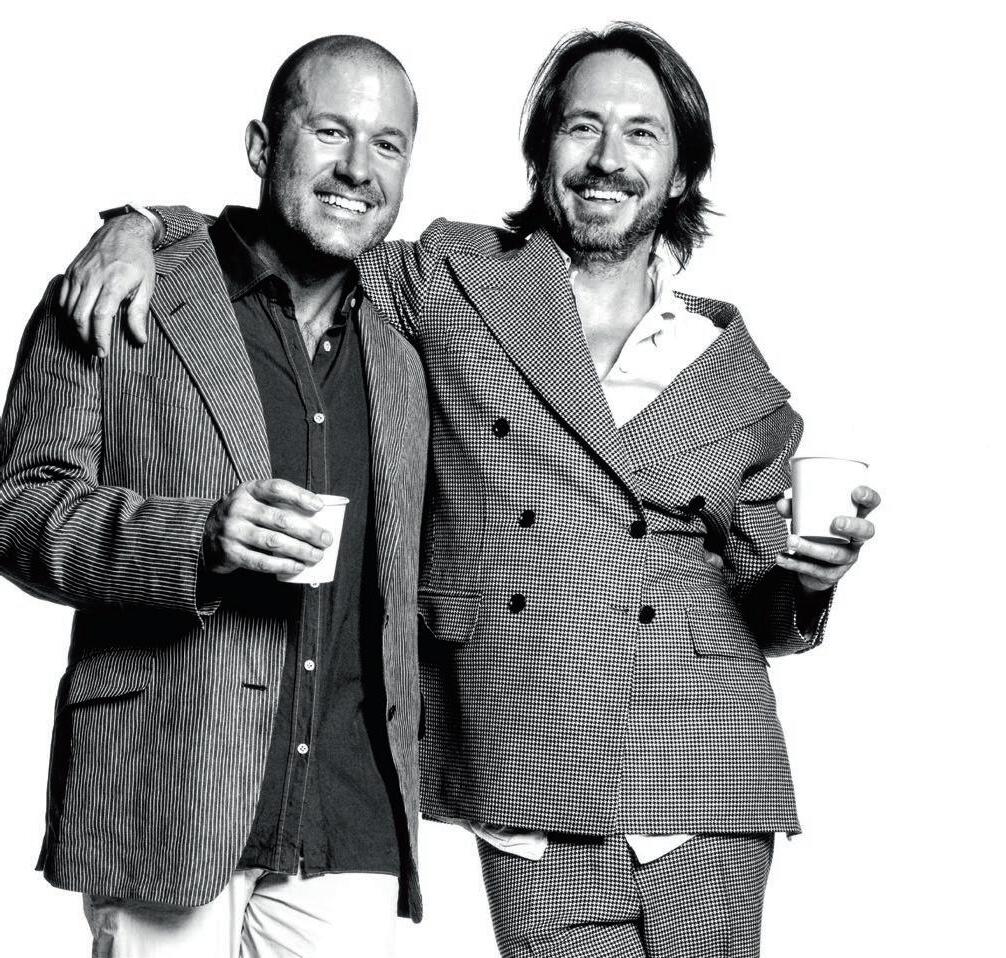
Of course, I’d read the 23-page press release the night before. It confirmed that creative collective LoveFrom, headed up by former Apple design chief Sir Jony Ive and Marc Newson, CBE – the latter an Apple Watch design contributor himself – had been responsible for the exterior as well as the interior. After 14 years of in-house design autonomy, that must have been quite a culture shock for Ferrari’s Centro Stile. I guess we will never know whether chief design officer Flavio Manzoni thought it a major slight, or a genuine opportunity to
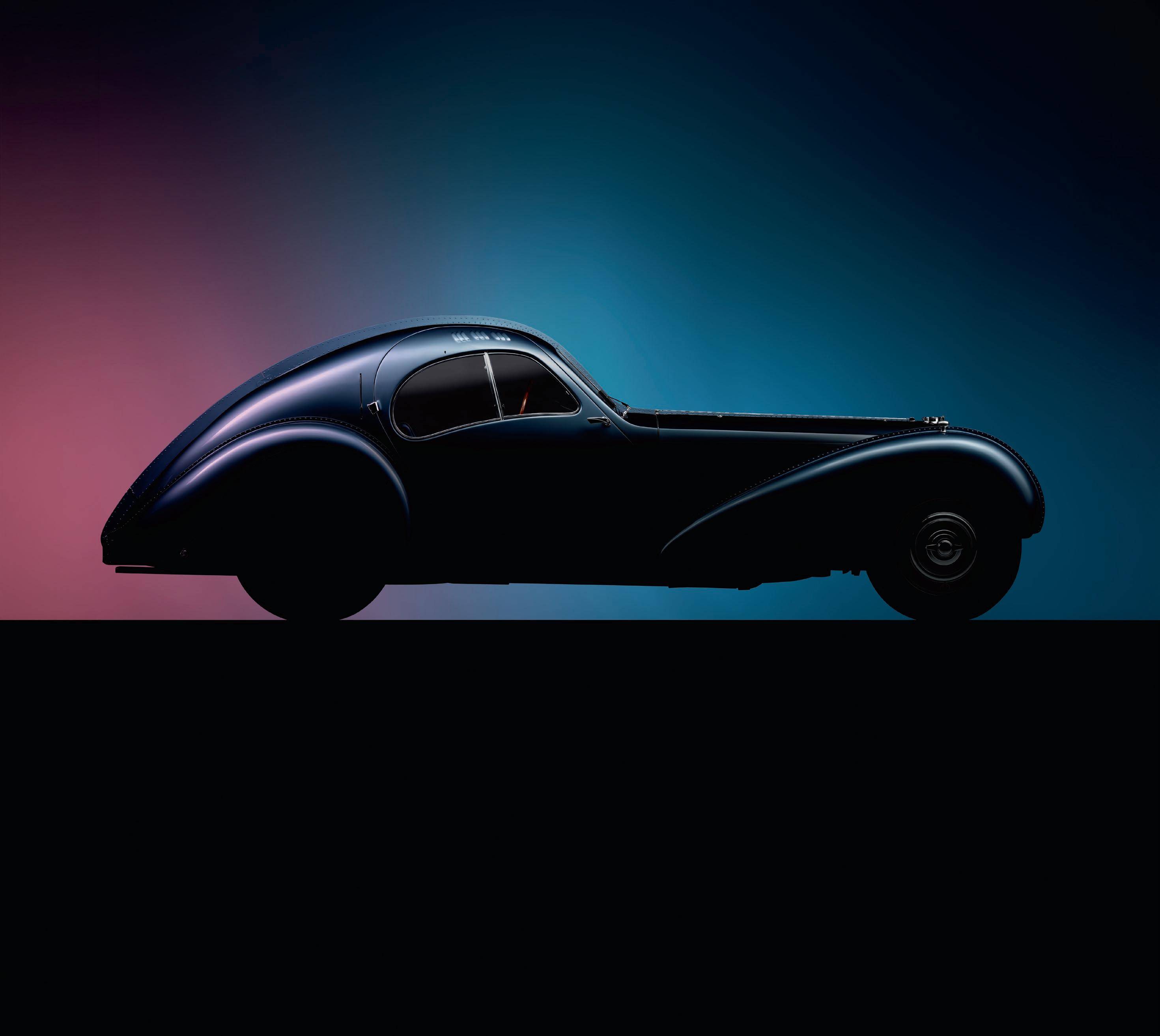
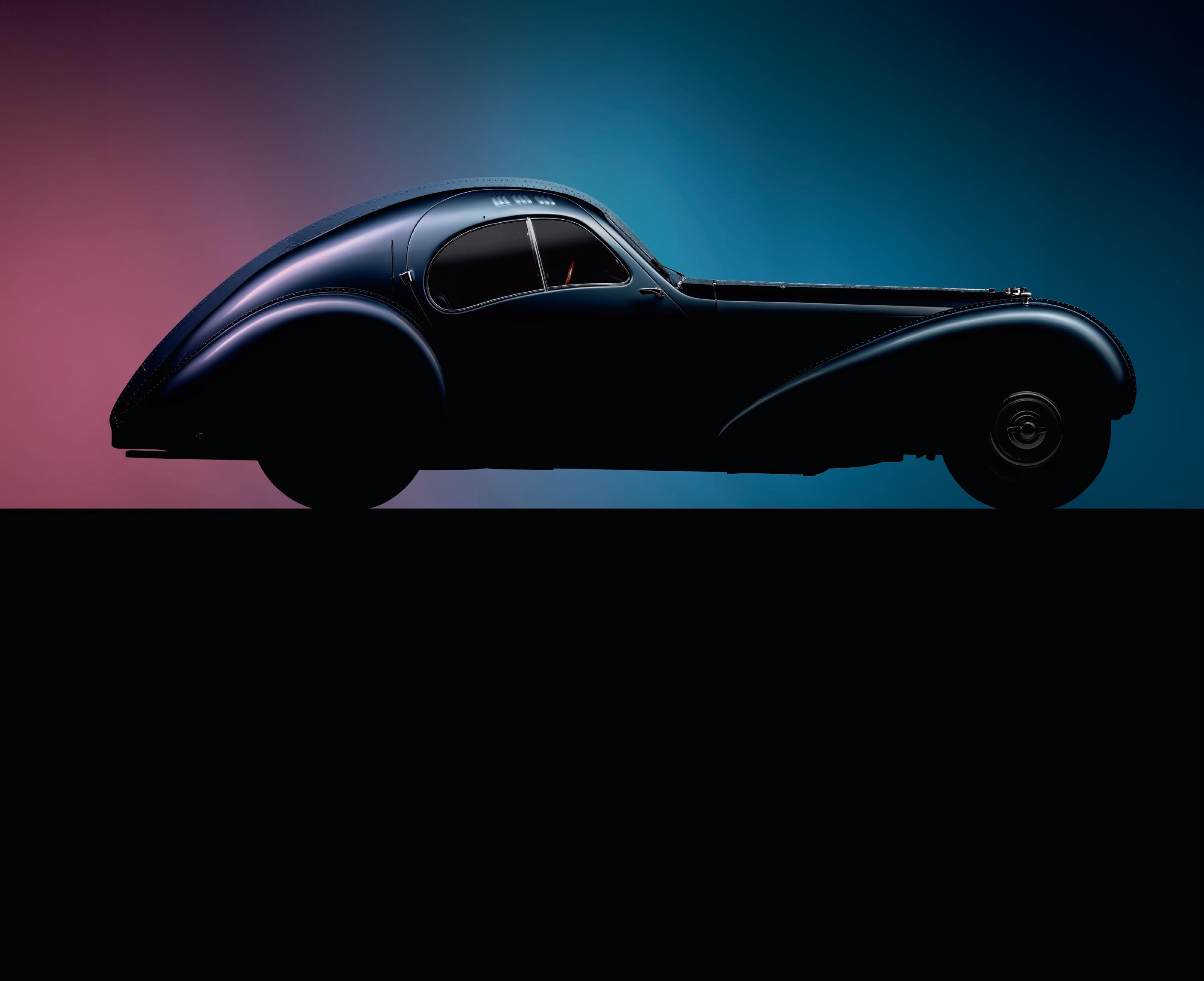
The towering life and tragic fate of Ettore Bugatti
A Renault concept car that triggered the Audi TT
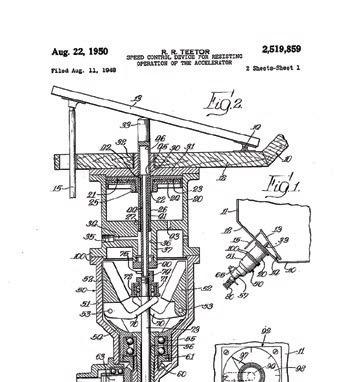
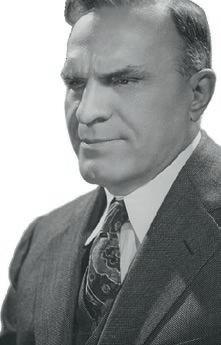
The unrestricted innovation of Ralph R Teetor
Peter Stevens on the life of a design consultant
WORDS WAYNE BATTY
“invite a new perspective and crossfertilisation, enabling a new design language to be introduced”.
Also contained within the release was a vague paragraph on the exterior that described a “uniquely pure and simple form” defined by “a glasshouse that extends below the beltline to the extremes of the car”. This, courtesy of “front and rear wings that float above and around the silhouette”.
Intrigued, I had hoped those words would equate to a shift away from the overly complex graphic modularity and aggression of the current crop of Ferraris, and reintroduce an aspect of beauty. That said, most enthusiasts don’t seem to mind the F80’s ‘raccoon face’ or the flat angularity of its panels, shut lines and creases. To my eyes, these kind of elements disrupt the visual flow, none more so than the vertical black detail that just about slices the side profile of the 849 Testarossa in half. However, these elements fit in perfectly with the ‘disruptive design’ mantra that Manzoni has been championing for some time now.
And so, lack of beauty aside, seeing the Luce’s bold separation of glasshouse and super-clean body was a pleasant surprise to me. I said as much to Marc Newson during our media group round-table discussion. It got so quiet in the room you could hear a pixel pop, but it was genuine praise for what is a superbly designed product, with the emphasis on ‘product’.
Of course, having worked in industrial design as a conceptual designer and 3D solid modeller back when Philippe Starck first introduced his brand of whimsical égalité to form and function, I was assessing the Luce as a product rather than a car. Blame the reveal’s Cupertino-style presentation complete with obligatory pastel colour options, and the fact that the newcomer looks more like a product than any Ferrari ever.
Hang on, though; isn’t a car in essence merely a large, complex product? In that same promo film, Sir Jony said this of the Luce: “The car is an aggregation of hundreds of products… we felt strongly that you should have a sense that there was one singular, coherent design.”
The idea of coherent design was mentioned more than once by
Newson, too. And it couldn’t be more polar opposite to Manzoni’s ‘disruptive’ talk. If you need a reason for why the Luce doesn’t look like any other recent Ferrari, here it is. Perhaps just the idea of an electric Ferrari was disruptive enough?
Carando took it a step further: “We didn’t want to develop a new electric vehicle – we wanted to develop a completely new Ferrari.”
Is something really new if it makes no impact, if it arrives without a shock?
To achieve that shock of the new, Ferrari essentially gave LoveFrom licence to create a clean-sheet Prancing Horse-badged concept car informed by a design language no model from Maranello has ever spoken before. The process was nowhere near as official back in the day, but there is precedent here in the alternative-universe forms of Bertone’s 308 GT Rainbow, Pininfarina’s Pinin, Fioravanti’s F100, Zagato’s FZ93 and others.
The difference is that the Luce is no one-off special destined for a short, sharp, shocked season on the motor show merry-go-round – it is a full-production Ferrari, in showroom specification. Trusting outsiders, albeit prolifically talented ones, to broaden the definition of what a Ferrari can be was always a risk, but the Luce is the right product to take that risk on.
Have they been a little too bold, though – looked a little too far down the road? Not that the Luce is futuristic, it’s just that it has radically pared back the surface complexity and advanced the functional aspects and usability well beyond what Ferrari’s current admirers are used to; beyond the point of MAYA. The Most Advanced Yet [still] Acceptable principle must surely still apply?
“Product designers are not car designers” has been a common refrain since the model’s launch. Strictly speaking, that is perfectly true, but it’s also a lazy argument. Ive and Newson are elite-level industrial designers capable of creating genre-defining products from toothbrushes and laptops to yachts, trains and, yes, even automobiles. Both are proper classic-Ferrari-owning car guys, too. Newson’s fabulous collection includes a Ferrari 225 S and a Bugatti Type 59, so he’s well versed in
automotive beauty. In the case of the Luce’s interior and exterior, LoveFrom’s contribution was allencompassing. “There wasn’t a single thing that we didn’t design,” revealed Newson.
When my 30-minute one-on-one with the Luce arrived, I took another moment to absorb it all from a distance, thinking: “We haven’t seen a Ferrari as simply surfaced (above the side-strake graphics at least) and with such an overtly aerodynamic bias since the I.DE.A Institute’s Mondial T PPG Pace Car.” It is about as unusually proportioned, too. Gauging its actual size is near impossible. Blacked-out sills hide its 1.54m height, while 23-inch front wheels and outrageous 24-inch rear rims visually shorten its fivemetre-plus length.
Tracking the shoulder line of the Luce around to the disappointingly amorphic rear end, I recalled reading, some 30 years ago now, renowned automotive designer David Hilton’s generous critical assessment of my rendered 3D car designs: “Quite promising, but there aren’t enough twisting elements.” He was dead right. My antiquated AutoCad mesh models lacked the organic surfacing that lets light dance across the curvaceous hips of a Dino or a 296. The surfaces didn’t have emotion and desire. That, at least in part, is what has everyone so riled up about the new Ferrari.
In the pursuit of aerodynamic ideals, slavish surface simplicity and 360° design coherency, the Luce’s exterior aesthetic has ended up so simple and coherent that it is short on emotion and character – a victim of nailing its own well defined brief. What’s more, being battery powered means it is so intrinsically bereft of ‘jewellery’ that it doesn’t look as valuable as it should. An EV simply doesn’t require interest-enhancing elements such as NACA ducts, hotair extraction vents, a Lexan engine cover or stainless-steel exhaust tips. This is especially true when specified with the all-function, noform aero wheels that somehow contrive to make 24-inch rims appear no larger than 17s. Sure, the techy suspension and drivetrain trickery developed solely in heartland Maranello are likely to be engineering gold, but the parts crafted out of San Fran are always
‘Is something really new if it makes no impact, if it arrives without a shock?’
visible. We all know beauty is more than skin deep, but you’d expect some of it to be on display.
It’s a different story inside. By opting for authentic materials and considered, timeless design, the cabin feels genuinely precious. LoveFrom has rejected the ever-larger screens and cheap, buttonless cockpit plague for a set of joyously tactile interface elements that marry impeccable design to top-notch materials. Think machined-glass control knobs, layered digital instruments with analogue needles sandwiched between, premium leathers and anodised aluminium for the steering wheel, pedals, dash panel, lush grab handles and more. As a result, the Luce’s cabin is likely to still feel valuable 30 years from now. In the
digital dashboard era, it’s a seismic moment not just for Ferrari but for car interiors in general.
Unlike the Testarossa, the 288 GTO and the F40, the Luce will never end up on youngsters’ bedroom walls. Still, slating the design for that reason alone is genuinely naïve. Tasked with designing the most practical, usable, comfortable and aerodynamic Ferrari ever, minus the one core component around which all previous Prancing Horses have revolved – a powerful internalcombustion engine – it is only logical that the newcomer should break solidly in a visual sense as well.
LoveFrom had a blank-canvas opportunity to broaden Ferrari’s design palette. How awful if the
LoveFrom almost as long; YouTube wannabe designers, memesters and ChatGPT ‘experts’, you have had seven hours! Shut Photoshop down, log off Discord, close your Midjourney, Vizcom or Nano Banana tabs, and go for a walk.
Could the rear be more sculptural? Absolutely. Would the Luce have benefitted from more emotional surfacing and value-enhancing details? Sure. Should it have token heritage-cue circular tail-lights? Probably not. A unique futuristic lighting signature would have felt more ‘coherent’. I could go on, but the fact is there are a million subtly different routes LoveFrom’s designers could have gone down. They, and Ferrari’s chief decision makers, chose this one.
In a fast-changing world at war with the art and joys of driving, cars are losing their soul by design as they are turned into products of transportation. We are passionate motoring enthusiasts who recognise the F40 as Peak Ferrari, but the Luce was not conceived with us in mind. It is built for a world most of us are increasingly unfamiliar with. From a purely visual viewpoint I don’t love this car; at £440,000, it was never designed for me or my bedroom wall.
Luce had not moved the dial massively in any direction. And yet everyone with a keyboard seems to disagree, suggesting instead that the Luce should somehow look like every other current Ferrari.
Mere hours after the embargo lifted, hundreds of AI-enabled instant Photoshop ‘fixes’ appeared, all seemingly morphing the Luce into a far sexier, low-slung two-door sports car. Not one solved the proportion challenge of the project’s ‘preset’ platform and packaging constraints, functional targets and homologation requirements.
Can you imagine how ungainly an F50 might have looked with room for five adults and 600 litres of luggage capacity? Really, Ferrari has had seven years to think about this,
The Luce opens the door to entirely new audiences. Prancing Horse insiders estimate that between 60 and 80 percent will be first-time Ferrari buyers – Silicon Valley’s tech billionaires, hyperflush early EV adopters and the pinnacle of the massive Chinese market. These are all buyers who bought zero-heritage Teslas, Lucids and Xiaomis, and are looking to trade up. At the car’s official Chinese launch, Ferrari’s admittedly tiny initial market allocation of 88 units is said to have sold out instantly.
Those buyers are unlikely to care that the Luce doesn’t look like a traditional Ferrari or that it doesn’t have an engine description starting with a ‘V’. They care about the badge, the exclusivity and the technology of a product that aligns with their practical needs and stratospheric lifestyle aspirations – an instant signal that the owner belongs to China’s wealthiest one percent. The Luce does all that [and it promises to be brilliant to drive as well].
“Ferrari’s biggest mistake” may yet surprise the naysayers.
Le Patron
The towering life and tragic fate of
Ettore Bugatti
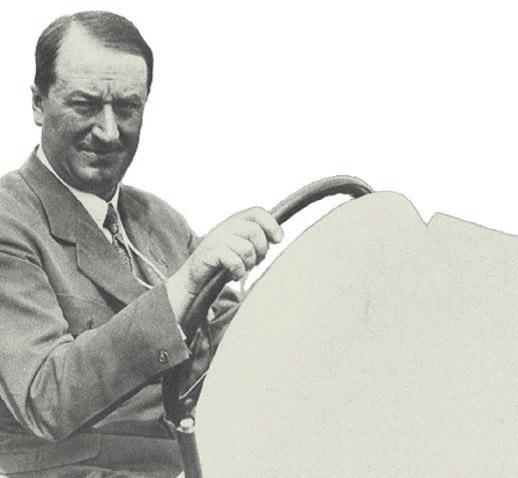
BETWEEN TWO WORLD WARS, betwixt art and engineering, the Italian Ettore Bugatti – ‘Le Patron’ –created some of the most bewitching cars in the long history of the automobile. A narcotic rush of speed, power and poise made real in steel, in brass, in turned aluminium. Engineering elegance with aesthetic splendour in shadow and light on French Racing Blue...
Some kind of pinnacle, nonpareil, ne plus ultra... No wonder Ettore Bugatti’s cars were referred to by the cognoscenti as Le Pur Sang: The Pure Blood, thoroughbreds made in Molsheim, in Alsace, a territory whose language, culture and identity had been established long before the modern-day states of France and Germany had been conceived.
Bugatti’s first high-profile motorracing victories came in the Voiturette Grand Prix de France in 1920, and the Gran Premio d’Italia in 1921. If racing improved the breed, so it perfected Le Pur Sang. When the Type 35 was introduced in 1924, winning had become as natural as breathing, as certain as night follows day. In no time, racing success would propel Ettore Bugatti from littleknown name to worldwide acclaim.
Having beaten Alfa Romeo for speed, Ettore intended to beat RollsRoyce for refinement. Those who had seen the new model in development referred to it as The Golden Bugatti. Le Patron explained: “...These cars will be [...] made with irreproachable care [...] a piece of machinery beyond criticism... I hope to achieve perfect silence.”
When it appeared, in 1930, and
in anticipation of the few who would be able to afford it, it would be named the Royale.
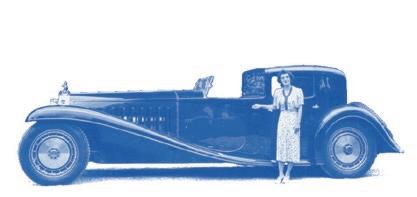
Only six would be produced – and, in 1987, one of them would sell for $9.7 million, at the time the highest price ever paid for a car. During the 1930s, Ettore Bugatti would use a Royale as his daily driver, and it could often be seen parked on the street outside the marque’s Avenue Montaigne showroom in Paris.
From winning in Monte Carlo at the start of the 1930s, to victory at the Le Mans 24 Hours at the end of the decade, it looked as if, for Le Patron, the inter-war period was a wave of success without end – but time and tide wait for no man.
In August 1939, Ettore’s son Jean was testing a streamlined Type 57 on public roads. An errant cyclist veered into the path of the speeding Bugatti, and as Jean wrenched the steering wheel to avoid striking bike and rider, so the scrabbling tyres scribed an arc of death. In the blink of an eye, speed and sound were gone, replaced by stillness and silence. The wrecked automobile was found, grotesquely distorted against a tree trunk, and Jean Bugatti was dead.
Two weeks later Germany invaded Poland, and so the sun set on two decades of decadence. Upon the invasion of France, Bugatti was obliged to sell his factories to German engineer Hans Trippel. His highprecision machinery would be used to make amphibious vehicles, and parts for torpedoes and V-1 rockets.
So the events of a glorious era of motoring would slowly fade into halfforgotten memories of the past. Yet
the death of Jean was not quite the final chapter of the Bugatti story.
After the war, in 1946, pèreEttore applied to the local authorities of Alsace-Lorraine to reacquire his workshops. If such requests were commonplace, thousands of businesses having been seized by the Nazis, so Le Patron was stunned when his claim was dismissed.
Perhaps Ettore Bugatti was an easy target. He may have painted his cars French Racing Blue, but his passport stated that he was an Italian citizen. Of little consequence before 1939, after 1945 the rules were different. In 1946, the first post-war Paris Motor Show was being held. The relevance? All German and Italian manufacturers were excluded.
At the time, France was governed by a coalition that comprised the Socialist SFIO, the Catholic MRP, and the Communist PCF. Balanced on a knife edge, the government would only survive for as long as each of the three parties were achieving some of their disparate goals. The Communist PCF, for example, was determined to prevent the re-establishment of Capitalist enterprises. A company such as
‘Ettore returned to Paris, sank into a depression, suffered a stroke and fell into a coma’
Ettore Bugatti’s, which produced products for the wealthy few, was indeed a red rag to the Reds.
When, in the April of 1947, Bugatti launched an appeal, the political landscape had not changed, and neither had the decision. During the hearing, the advocate representing the Communist trade union conducted a bitter verbal attack on Ettore. The accusations were echoed by the local council, by the workers, by the press. Distraught, Bugatti travelled to Molsheim, to the precise scene of Jean’s death, and collapsed. He returned to Paris, sank into a depression, suffered a stroke and fell into a coma.
Just a few weeks later, in June 1947, as Ettore lay in hospital after his appeal had failed, the French court reversed its decision. The back-pedalling came after the Crisis of May 1947. What was the crisis?
The US Ambassador in Paris, Jefferson Caffery, told French President Paul Ramadier that the North American programme of financial aid would stop unless the Communist PCF was kicked out of the governing coalition.
As France could not afford to forego $13.3 billion ($173 billion in 2025) of Marshall Plan aid, promised for 1948, the Communist PCF was indeed excluded from the government with immediate effect. Only now, in this new administrative climate, could permission be granted for Ettore to reacquire his factory.
That, however, would be a task for his heirs to complete.
Le Patron never woke from his coma, and, in August 1947, he died.
WORDS KARL LUDVIGSEN
Argos the influencer
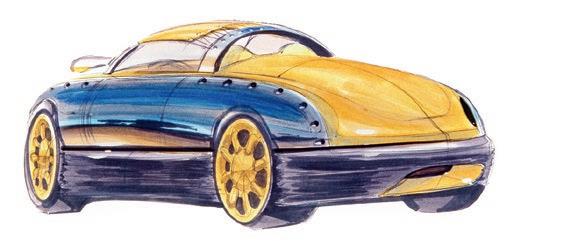
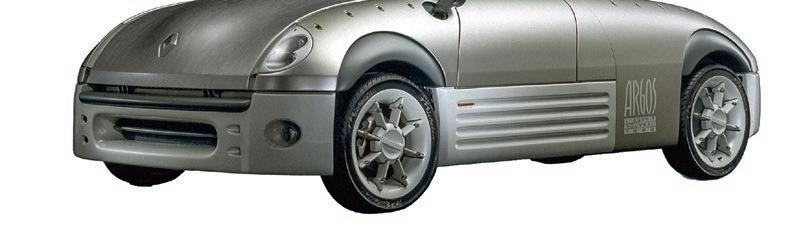
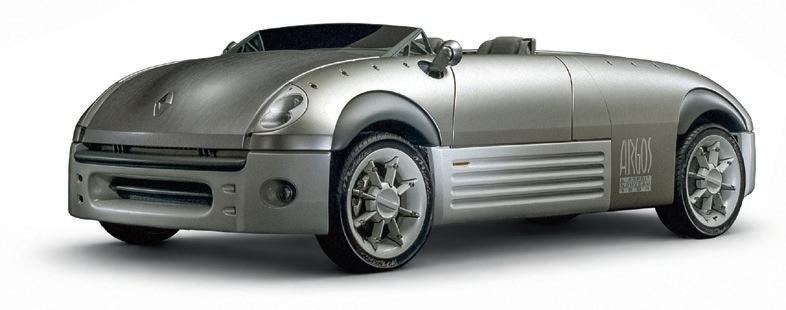
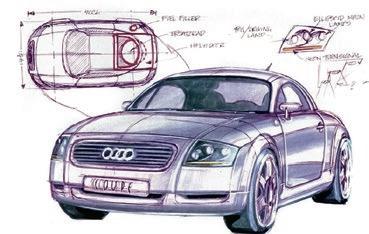
Inspired by the little 1952 Panhard Dyna Junior sports car, the Renault Argos concept in turn triggered the Audi TT
IN THE RELATIVE QUIET OF the preview day of the 1994 Geneva Motor Show, Volkswagen AG boss Ferdinand Karl Piëch spent more than the usual time looking at a brand-new concept car. Taking in its novel proportions, unusual materials and bold creativity, he muttered, almost to himself: “The air must be different in Paris.”
Having joined Renault in 1987, in 1990 Patrick le Quément moved his design team into the new BoulogneBillancourt Design Centre, a stone’s throw from the shed where Louis Renault had built his first car. By habit, Patrick usually arrived early to see what his designers had put up on their bulletin boards.
In the Advanced Studio one day, le Quément was “pulled up short by a small spontaneous drawing, or rather a doodle. It was one of those little creative outbursts that were often featured behind Jean-Pierre Ploué’s desk. This doodle spoke to me, brought me right back to a part of my life, a quarter of a century ago, at Birmingham’s art and design college”.
Patrick went on: “When I eventually spoke to Jean-Pierre that day, he appeared puzzled by my enthusiasm. Only a little later did his director, Jean-François Venet, mention to me that Jean-Pierre admitted he believed he had come up with what looked like a cockroach, and that he thought I was going to ask him if all was well in his life.
“The more I thought about that doodle,” said le Quément, “the more
I could see it in 3D. I knew that this would be like the shock felt when stepping out of a sauna and jumping into nearly-freezing water. I knew immediately that it would become the theme for our next concept car. It would be like a manifesto to return to the essential, to break many of the rules of superficial styling, as was practiced at the time. This could become a cut-off point, our concept of the Year Zero.”
Ploué went through an intense phase of sketching. A few photos of a Panhard Dyna Junior appeared on his bulletin board. It turned out that the doodle that launched his adventure had stemmed from his appreciation of this deliberately obtuse little sporty car. Le Quément decided that Jean-Pierre should continue as the sole exterior-design contributor. Ploué produced scores of sketches, exploring side-paths and sometimes hacking through a jungle of uncharted territory.
The full-size model was developed in Turin at G Studio, which still used plaster instead of clay. “I recall,” said le Quément, “that on one of my early reviews I found the model, a huge white slab of plaster, to be far too wide. I asked for it to be made narrower by 15cm. The operation was carried out within the day. Before I flew back to Paris, I could confirm that we now had the right proportions.
“We pushed further towards the fundamentals,” Patrick continued, “by fitting our wonder demonstrator with an articulated windscreen that,
when closed, provided a seamless, almost geometric continuity between the front and the rear. The concept evolved towards sliding doors that glided smoothly inside the rear quarters. We even found a way to make our rear-view mirrors pivot and disappear into the bodywork when the car was parked. After all, this was a manifesto that we wanted to present that could not be weakened by the visual letdown of a detail.”
The cabin design was begun by a competition. Quickly a winning theme emerged. Swedish designer Karine Reikeras’s whole interior perfectly matched Renault’s ‘back to essentials’ move. Based on elements of the Twingo, including the steering wheel, the instrument panel was drawn with a rigorous simplicity. It was functional, calm and clean, yet not clinically cold. Colour and Trim designer Isabelle Charles came up with a harmonious scheme that successfully achieved a blending of the interior with the exterior.
The Argos’ design and spec pegged it as a proposal for a carefree leisure vehicle, not for those with
‘A manifesto to return to the essential... a cut-off point, our concept of the Year Zero’
sporting ambitions. Yet it embodied hard engineering: its blunt hood with its simple horizontal air vents, its purely functional side design with its recessed-screw connections and, last but not least, its satin grey paint gave the Argos the appearance of an unadorned, raw product.
Under the model’s hood was a modest 1239cc four-cylinder engine from a donor Twingo. The body was made of ultra-light composite material. Pairs of 1mm-thick carbonfibre panels defined the main shell. Between them was sandwiched a 10mm-thick layer of foam. However, for an open-top car it was essential to create a particularly rigid platform frame. This was achieved with unusually high door sills, accentuated by external ribbing.
Sloping gently backward, giving the look of a mid-engined car, the truck lid was guided in an unusual manner by two parallelograms and opened like a grand piano. Miniscreens were movable and hinged into recesses in the dashboard. They could be raised like racing deflectors. Remembered le Quément: “The overall result was unlike anything we had ever done, giving voice to textures, graphics and colours such as the light almond-green interior, cohabitating with cream-coloured lower panels, as well as front and rear fenders in warm silver. Harmony was still maintained when we added a hood and deck-lid finish in natural aluminium.”
The Argos – named after an
WORDS JIM HINCKLEY
A man with perfect vision
The unrestricted innovation and humbling personal drive of industry pioneer Ralph R Teetor
applied to the University of Michigan. Resultant of his disability, the application was denied.
Then, with assistance from family, he was accepted into the University of Pennsylvania. In 1912, Teetor graduated with a bachelor’s degree in mechanical engineering. He later acquired a master’s degree.
practicing engineers in industry and government”.
ABOVE Argos’ design and spec pegged it as a proposal for a carefree leisure vehicle. Audi’s TT expanded on the theme.
ancient Greek settlement – took centre stage on the Renault stand at Geneva in 1994. Its backward-sliding doors were shut and the windscreen was folded down. Its pure silhouette resembled the beautiful hull of an upturned fishing boat.
“As I began the presentation,” Patrick recalled, “we pulled away the cloth and there was a brief but total silence, followed by an emphatic applause. The stand remained packed as never before on both press days. I noticed groups of designers coming several times to gaze at the Argos –and among them a particularly high number of Audi designers.”
The full story was finally told many years later. American designer Freeman Thomas made a doodle in March 1994, which he showed to J Mays, Audi’s then head of Worldwide Design Strategy. Mays showed it to Audi’s head of Product Development, Franz-Josef Paefgen. At the Design Centre in Ingolstadt, Freeman made a quarter-scale clay model of his interpretation, which was then presented as a concept to various senior execs. All gave their approval, and Ferdinand Piëch decided to go ahead with a production car based on a Golf platform.
“Just after the launch of the Audi TT,” related le Quément, “Freeman Thomas gave an interview to an American magazine. He mentioned that the origin of his initial sketch was triggered by seeing the Argos –which just goes to show that it’s important to look at doodles.”
ECCENTRICITY AND GENIUS, vision and myopia, good luck and bad luck are made manifest in the story of the automotive industry’s pioneers. A few achieved a dubious form of immortality with their last names known throughout the world, but their diverse accomplishments were forgotten. Who today remembers that David Buick invented and patented a process for bonding white porcelain enamel to cast iron? How many people know that Louis Chevrolet began his career with bicycle repair, innovation and racing?
Consider the story of Ralph R Teetor, an automotive engineer who overcame what many people would think of as a debilitating handicap. In 1948, he filed his first speed-control device patent, just one manifestation of his genius.
Manufactured by Perfect Circle and trademarked as the Speedostat, it was first available as an Auto Pilot option in the 1958 Imperial as well as the Chrysler New Yorker and Windsor. In 1959, Cadillac offered the device as Cruise Control. Today the set-up is ubiquitous as a standard feature on vehicles produced throughout the world.
Teetor was born into a family of machinists, inventors and tinkerers in 1890. From an early age he was trained by his father and uncles to be a machinist in a family business. Shortly before his 13th birthday, Ralph and his grandfather designed and built a 3hp vehicle. Before completing high school, Teetor had devised a diverse array of inventions including an electric light. He even wired up his grandparents’ home for electricity.
Hungry to transform his hobby and passion into a career in mechanical engineering, Ralph
After college Ralph worked at the family business, but during World War One he was employed as a mechanical engineering advisor for the New York Shipbuilding Corporation. While working on a project for the US Navy, Teetor developed a process to dynamically balance steam turbines.
He returned to the family business, which was reorganised as The Perfect Circle Company, a manufacturer of piston rings, after the war. Because the firm was located near the Indianapolis Motor Speedway Teetor was a frequent attendee, and many teams asked him to help fine-tune their engines.
His reputation for tuning motors, for innovation and for resolving complex mechanical issues spread throughout the auto industry. In 1923, Ralph was granted a patent for a ‘tool for compressing piston rings’. The following year he patented a hydraulic automatic transmission design. An improved lawnmower and fishing rod with adjustable grip were also counted among the more than 40 patents Teetor would be awarded.
He was elected as the president of the Society of Automotive Engineers (SAE) in 1936. And in 1963, he endowed the SAE’s Ralph R Teetor Educational Award to stimulate “contacts between younger engineering educators and
He also received two honorary degrees, one from the Indiana Institute of Technology and the other from Earlham College, Indiana. And he was made a Fellow of the American Society of Mechanical Engineers. In 1988, he was posthumously inducted into the Automotive Hall of Fame in Dearborn, Michigan, and in 2024 he was inducted into the National Inventors Hall of Fame. These are just some of the professional recognitions awarded to Teetor.
Meanwhile, at the Indianapolis Motor Speedway he was named chief steward of the Indy 500 and served as a track official. For nearly 20 years he was the lead engineer at Perfect Circle.
Ralph Teetor’s inventions and accomplishments would be highly notable. But what truly set him apart from other inventors is the fact that he had been blinded in a childhood accident at age five.
He learned by having books read to him and hand-assembling engineering models, and his extraordinary sense of touch and memory became legendary. He is on record as being the first blind person in the US to receive an engineering degree.
When visiting blind war veterans in 1945 at a military hospital near Philadelphia, Teetor told them: “Remember, you’re not handicapped so long as you can think logically. Many times people have told me how sorry they were that I am handicapped. My answer to them has always been that I am not handicapped, because I have never considered myself so.”
RIGHT of cruise control and more than 40 further patents, Teetor never allowed his disability to define him.
WORDS PETER STEVENS
The life of a design consultant
How Peter Stevens’ design journey shaped up, from the Royal College of Art to Lotus and McLaren, via MG Rover and Hong Kong’s Peak Tram
WAY BACK BEFORE MY TIME as a consultant designer, it was usual for manufacturers’ products –anything except small, low-cost cars – to be bodied by outside coachwork suppliers. It would be their staff who talked with the customer about styles and details. Then, as more sophisticated production processes evolved, carmakers followed the lead of GM and established their own design departments. Sometimes for a particularly important or forwardlooking project, ‘big name’ designers (such as Raymond Loewy) would be asked to submit ideas.
Post-war, small firms with low production, infrequent new models and limited budgets had no option but to contact freelance consultants. In the UK Lotus frequently did this, while Reliant worked almost exclusively with Ogle Design.
In both Italy and France, the bigger brands would choose a company to both design the cars and build the bodies – Ferrari and Pininfarina being a good example of this pattern of work. By the 1970s many auto manufacturers had fallen under the spell of the Italian bigname designers. Quite often the makers would be shown several design ideas, from which they could choose one – the others would be touted to another company.
I was probably quite lucky because when I was studying vehicle design at London’s Royal College of Art, one of my tutors was Tom Karen, who had worked with David Ogle at Ogle Design. After what I’d call a ‘proper
when I asked him to choose one of three different design schemes, he said: “I don’t know. You’re the bloody designer. All I do know is that you don’t need to prove to me that you are busy.” I have always thought that I undercharged him.
I was then contacted by Gordon Murray, who I’d known since the time I did livery and graphic work for Bernie Ecclestone at Brabham. Bernie had been a delight – and, him being him, we just shook hands when he said: “You’re working with me.”
by an Indonesian consortium led by Tommy Suharto, it made life very difficult for any outsider. A fine contract drawn up by a top lawyer made no difference to anything.
job’ at the Ford Motor Company’s Dunton design studio for three years, I could see that either I would become ‘A Ford Man’ or I could join Ogle to learn how a freelance designer might make a living.
Ogle was fun, while Tom was charming but maddening – and quite often the clients would not come back with a second project. My first business lesson. That is how I started out on my own as a freelance designer. Since that time, I’ve had a couple of other ‘proper’ jobs.
One was at Lotus, for whom I became a freelance consultant. At a prototype shop in Norfolk I met the chief engineer, Colin Spooner, who asked if I’d like to take on some Lotus work. We never had a signed agreement; I just had a daily rate, which Spooner thought was OK. An hourly rate always seemed absurd. As a freelancer you’re always thinking about the project, and a day can be as long, or as short, as you need.
When Colin Chapman suddenly died, Lotus was in a state of confusion. The firm came under the ownership of General Motors, and Spooner said that since he and Mike Kimberley didn’t want an American designer, I’d better have a proper job. After a while the pace of exciting work slowed, so when Tom Walkinshaw asked if I would like to design a road-going version of the Jaguar XJR-8 endurance racer, I thought for a few seconds and then said YES!
Again, we had no formal contract. Tom never doubted my monthly invoices for days worked. Once,
Later Murray asked my advice about finding a designer to turn his thoughts for a McLaren road car into design drawings. I suggested that he needed someone with a bit more experience than that, and suggested myself. The agreement with McLaren was for a loosely fixed period of employment, we agreed a salary, and again there was no assignment of IP or design rights. That never came up in discussion. There was to be no company car and no F1 at the end of the project.
I then briefly consulted for Mike Kimberley at Lamborghini, but because the firm had been bought
‘I asked Tom to choose one of three different design schemes. He said: “I don’t know. You’re the bloody designer”’
This was followed by a period with the new MG Rover. Bernd Pischetsrieder, for whom I’d worked on the 1999 Le Mans-winning BMW V12, told me just what to put in my contract – four-year consultancy and a decent salary: “They will be gone in four years, so make sure they don’t owe you any money.” OK, except for the fourth one...
Since then, I have worked with a very simple contract, days not hours, keep each other well informed of progress, identify changes of requirement and share their effect on costs, and don’t charge for pens, pencils and paper. And for myself my plan is always for the client to come back with the next project. With international firms, a decent but not over-complicated contract is essential. I worked for some years on a very complex project concerning new carriages and upgraded stations for Hong Kong’s Peak Tram funicular railway. Everyone was required to put in a fixed quote for one’s total input before we knew what the project entailed, and that was written in our contracts. With Covid arriving late in the programme, everything changed. The contract was ‘discussed’.
As I always say, nothing takes longer than saving time and nothing costs more than saving money. The only very simple thing that I always put in a contract is that until the last invoice is paid in full, the design belongs to me.
CELEBRATING THE VERY BEST OF THE CLASSIC AND COLLECTOR CAR WORLD Signuptodaytoexperiencethein-depthwriting, stunningimageryandaward-winningdesignon thecars,peopleandstoriesthatreallymatter.
REUNITED AT LAST! SIXTY YEARS AFTER THE FORD GT40’S LEGENDARY LE MANS 1-2-3, MAGNETO CELEBRATES BY CAPTURING THE THREE VICTORS BEING DRIVEN TOGETHER FOR ONLY THE SECOND TIME SINCE 1966.
HERE WE LOOK AT THE CARS, THE DRIVERS, THE STRATEGY AND THE CONTROVERSY...
IT’S 7:00AM ON A PRIVATE AIRFIELD IN rural Northamptonshire, two days before the 2026 Goodwood Festival of Speed. The UK heatwave is in full swing, but a breeze is keeping the early-morning heat at bay. Here, three of the most significant race cars of all time are about to be unloaded.
They had landed in the UK just over a week before, and everyone in the know held their collective breath until they cleared customs. A single hiccup with the paperwork and we might not have witnessed the famous 1966 Le Mans 1-2-3 trio of GT40 MkIIs driving together for only the second time since 1966.
The transporter door lowers to the ground, and here they are: Ford GT40s P/1015, P/1016 and P/1046 – the P stands for ‘production’. Together they made history, not just for slaying Ferrari at its own game and for settling the grudge between Enzo and Henry Ford II, but also for arguably the most controversial finish in Le Mans 24 Hours history.
First off the truck is 1016, the famous Kandy Gold and DayGlo Pink car in which Ronnie Bucknum and Dick Hutcherson finished third at
THIS SPREAD Testing secretly in the Midlands with Blakeney Motorsport, as Michael Grant Peterkin checks over car 1015.
Le Mans in ’66. It was an oddity when it started out, and it’s still unusual now, with various detail differences over the other two. In September 1965 it had been shipped out of the UK’s Ford Advanced Vehicles operation in Slough alongside its sister car P/1015 to Shelby American in California, where both models underwent race preparation: the fitment of 427ci (7.0-litre) Ford V8s and T44 four-speed transmissions designed and assembled by Kar-Kraft, plus Halibrand wheels; modified front bodywork to reduce front lift; and a pair of brake-cooling inlet ducts on the rear deck. At this stage, both were painted in white with a matt-black bonnet.
But then P/2016 went to the Holman-Moody team in Charlotte, North Carolina, where the suspension was further uprated and the transmission switched for an experimental twospeed automatic PowerShift transaxle. In this form it raced at the 1966 Daytona 24 Hours but retired due to transmission failure. Six weeks later it was out again, now painted gold, at the Sebring 12 Hours, finishing 12th.
For Le Mans, the automatic ’box was swapped for the T44 manual transmission, and the DayGlo detailing was added at the last minute to help identify the car in the dark hours of the race. After finishing third in the ’66 race the car was converted to MkIIB specification – hence its dual Holley carbs in place of the single four-barrels of the other two cars – and tested for the ’67 Le Mans, although it didn’t race. In 1970 it was donated to the Harrah Collection in Reno, Nevada.
Next off the truck is 1015, the infamous ‘Ken Miles car’ in its light-blue paintwork. Arguably as famous as the winning GT40, 1015 competed only four times and at just two tracks, but it scored a brace of the most significant-ever results for Ford in 1966: a win at Daytona in the hands of Miles and Lloyd Ruby, and that highly contentious second place at Le Mans, driven by Ken and Denny Hulme. As with 1016, it was converted to MkIIB spec for the ’67 Le Mans, but it crashed in the race while attempting to avoid Ford’s new J-Car and GT40 P/1047.
Finally, from deep in the transporter comes
RIGHT Ford trio were among only 15 of 55 Le Mans starters that made it to the finish; cars were a lot more fragile in 1966.
the winning car, perfect in its black-with-whitestripes livery. This is chassis P/1046, driven to a choreographed victory by Bruce McLaren and Chris Amon. Slowly it’s pulled out and lowered to the ground, where it joins the other two.
Cars 1015 and 1016 have lived a relatively quiet life at the Shelby American Collection in Boulder, Colorado, courtesy of the Miller Family Automobile Foundation, since 1999 and 2018 respectively. Chassis 1046, in contrast, has been driven hard by experienced Historic racer Rob Kauffman – although there’s a twist to this story that we’ll divulge shortly.
After winning Le Mans, 1046 raced again in MkIIB spec at Daytona in 1967, only to crash during testing. Years later it was converted to a road car, and then it was rescued and restored during the 1980s. When Kauffman bought it in 2014, he had it meticulously returned to its exact 1966 Le Mans specification by Rare Drive in New Hampshire, and he has raced it extensively since.
All three are being looked after in the UK by Blakeney Motorsport, whose workshop team have had just days to ensure that the cars will run
THIS SPREAD Cars 1016 (gold) and 1046. Note 1016’s dual carburettors and separate left-hand roof/ door panel.
1966
LE MANS GT40S
SPREAD
Sixty years ago, 1015 (blue) was driven by Ken Miles. Just two months later he was dead.
reliably at the Festival of Speed. Despite the tight deadline, we have been able to photograph the Fords in the Blakeney workshop at the end of the week, staying late into the evening to produce the studio-style shots you see here.
Back at the airfield, Blakeney Motorsport founder Patrick Blakeney-Edwards and general manager Mike Grant Peterkin are firing up and test-driving each GT40 in turn. The Ford V8s idle loosely, each one fluffing slightly on pulls away before they’re gently pushed harder. Each is carefully checked over before its next run.
After a couple of hours of this, we’re able to bring all three GT40s together on the runway for a few victorious passes for the camera. The cars are then loaded back onto the transporter to head to Goodwood… where we all meet again for a Wednesday-evening photoshoot on the circuit, watched over by owners Greg and Heidi Miller.
And then it’s Thursday morning, and the trio of GT40s are the kings of the hillclimb – and paddock – at the Festival of Speed. As the fans flock around the cars, little do they know that Rob Kauffman has agreed to sell the winning Ford to the Miller family. The news is finally released the next day, and Greg sums it up
perfectly: “Few moments in motor sport history carry the significance of Ford’s victory at Le Mans in 1966,” he says, as the representative of the Miller Family Automobile Foundation.
“To be entrusted with the care of chassis P/1046 is both an honour and a responsibility. Reuniting the first-, second- and third-place GT40s from that historic race creates a once-ina-generation opportunity to preserve and share an unparalleled chapter of automotive and racing history with enthusiasts around the world.”
The three cars will stay in the UK now to appear at the Goodwood Revival 2026, but after that they’ll return to the US – and it’s unlikely they will be run together again. So it’s now time to hand over to GT40 historian Preston Lerner to tell the story of that pivotal 1966 race…
David Lillywhite
SIXTY YEARS AFTER THE FACT, THE 1-2-3 finish of Ford GTs at Le Mans in 1966 remains the greatest achievement by an American manufacturer in international motor sport and, arguably, the most controversial ending of a major event in racing history. Yet it was decided not by the designers who fashioned the cars, the fabricators who built them, the mechanics who maintained them or even the drivers who squired them through light rain. No, the principal architect of the stage-managed finish was a Ford executive who hadn’t seen a single race until attending the Indy 500 two years earlier. His
name was Leo Beebe, and if that sounds familiar, it’s probably because he was cast as the villain in the 2019 motion-picture extravaganza Ford v Ferrari (or Le Mans ’66 in the UK and Europe)
Movies that purport to be based on true stories routinely jettison any facts that the screenwriters find inconvenient. But of all the liberties taken in Ford v Ferrari, none was as egregious as the mischaracterisation of Beebe as a Machiavellian heel. By most accounts, he was a stand-up guy with a strong sense of moral integrity who’d risen from humble roots to the top of the corporate totem pole. He’d been a star athlete at the University of Michigan, and, at 48, he still cut an imposing figure. In 1964, Ford Division general manager Lee Iacocca tapped him to oversee the company’s expansive racing portfolio. “Just win Daytona, Indianapolis and Le Mans,” Iacocca told him. Looking back, Beebe said wryly: “Well, that was a hell of a challenge.”
A few weeks before Le Mans, Beebe met with company president Henry Ford II, aka Hank the Deuce, the de facto dictator of the corporate empire founded by his grandfather. HFII gave Beebe a piece of heavy blue card stock, slightly smaller than a dollar bill. On it, he’d written: “You better win. Henry.” The two men had met while the blue-collar Beebe was working a summer job at the colossal River Rouge factory, and then again in the US Navy during World War Two. But this wasn’t a friendly exhortation from an old buddy. It was a direct order from his
THIS SPREAD Pre-Goodwood tests completed, there was just time for the three cars to run together on the airfield.
commander-in-chief, and Leo understood that if he failed – if Ford didn’t win Le Mans – he would be expected to fall on his sword. The card meant so much to Beebe that he carried it in his wallet for the rest of his life. And the words scrawled on it went a long way to determining why Bruce McLaren and Chris Amon won the race instead of Ken Miles and Denny Hulme.
Le Mans was personal for The Deuce. In fact, the major reason Ford, the company, had shown up in 1966 with the largest armada the motor sport world had ever seen was because Ford, the CEO, had an axe to grind with another autocratic monarch of the family-owned automotive kingdom. Three years earlier, Enzo Ferrari had let it be known that he was looking to sell a stake in his small, artisanal company. This was music to the ears of the Ford Motor Company, which was looking to add some performance-car glitz to its reputation for building lacklustre family models. Ford Division assistant general manager Don Frey was dispatched to Maranello with a brigade of engineers and accountants, who pored over the books and roamed around the Ferrari factory. “They counted the screws, and they even checked our underpants,” the men in the shop joked. After long, tortuous negotiations, a $10 million purchase price was hammered out. But at the 11th hour, Enzo got cold feet and blew up the deal. “My rights, my integrity, my very being as a manufacturer, as an entrepreneur, as the leader of the Ferrari Works, cannot work under the enormous machine, the suffocating bureaucracy of the Ford Motor Company,” he declared.
When HFII got the news, he was furious. You have got to understand that The Deuce was every bit as imperious as Enzo, and he couldn’t help but see the last-minute rejection as a giant F-U from an Italian ingrate whose annual revenues didn’t amount to a rounding error in the Ford balance sheet. “All right,” he told Frey. “If that’s the way he wants it, we’ll go out and whip his arse.” Or he may have said: “You go to Le Mans and beat his arse.” (Frey’s account changed over the years.) With these words – whichever version – the Ford Le Mans programme was born. And it was just a matter of time before Ferrari was buried under the corporate weight of its unhappily jilted suitor. By the spring of 1964, a small cadre of
engineers from Dearborn and British craftsmen led by Lola founder Eric Broadley had created a sleek mid-engine coupe powered by a smallblock pushrod Ford V8. The car was christened the Ford GT, but it was often called GT40 because it stood at 40 inches high. Three of them raced at Le Mans that summer, and while one set a lap record, they had all retired by dawn on Sunday. The next year, the Blue Oval returned to La Sarthe with six cars, two of them upgraded MkIIs fitted with big-block 427ci engines. Although they claimed another lap record, none of the Fords even made it to nightfall on Saturday, and they cumulatively finished fewer laps than the Ferrari 250 LM that won the race.
The humiliating debacle of 1965 was FoMoCo’s version of the Battle of Kasserine Pass, where American troops were routed in their first encounter with Axis forces during World War Two. For 1966, the company decided to stage its own take on the D-Day invasion, marshalling so much material and logistical support that victory would be guaranteed. The expeditionary force encompassed around 100 people, eight raceready MkIIs (and one spare), seven back-up 427s, 21 tonnes of parts... and a Coca-Cola machine. Holman-Moody, the race team best known for its NASCAR operation, shipped over a 40-foot-long trailer equipped with a lathe, mill, hydraulic press, sheet-metal bender, gas and electric welding rigs, bathrooms, showers and, on the roof, canopies and cots for sleeping.
The rig was so big that it got wedged between buildings in a small French town. “We had to get two wreckers to back it up so we could get the heck out of there,” Lee Holman recalls. Southern
stock car mechanics were dubious about French cuisine, so Glen Wood, patriarch of the famed Wood Brothers pit crew, showed up at Charlotte Airport with suitcases bulging with cases of potted meats and Vienna sausage. “We ate every can that he had,” stock car ace Dick Hutcherson reported later.
With rigorously dyno-tested engines rated at between 469bhp and 505bhp, and cars geared to top out at close to 220mph, Ford arrived at Le Mans as the odds-on favourite. Ferrari was in the midst of one of its periodic interludes of technical stagnation and internal dissension. The 330 P3 was elegant and agile – but this was the pre-chicane era at the Circuit de la Sarthe, and on this racetrack the P3s were stilettos competing against howitzers from Dearborn. Then, adding insult to injury, ace driver John Surtees quit the Ferrari team after a political dispute just after practice began. Under the circumstances, Ford’s major competition was destined to come from... Ford itself.
The eight factory entries were being fielded by three teams: Shelby American, Holman-Moody and Alan Mann Racing. Shelby American was the first among equals. Carroll Shelby had already established his credentials with his hairychested Cobras (and a Le Mans win as a driver with Aston Martin in 1959). After the GT40’s disastrous season in 1964, Iacocca had hired his resident snake charmer to work the same magic with the Ford GT programme. Sure enough, a Shelby American GT40 driven by Miles and Lloyd Ruby had won at Daytona in the opening race of 1965. But the rest of that season was a nightmare, and Ford decided that it might not be a good idea to keep all of its eggs in one
basket. For 1966, Holman-Moody was brought in to supplement Shelby American alongside Alan Mann, who had campaigned Falcons, Mustangs, Cortinas and the Cobra Daytona Coupe under the Ford factory banner.
The Shelby American entries qualified 1-2-4, with Dan Gurney and Jerry Grant on pole, Miles and Hulme next, and McLaren and Amon bringing up the rear – which, ironically, turned out to be the key to victory. There was a brouhaha during practice when the Automobile Club de l’Ouest (ACO) disqualified one of the two Alan Mann cars after driver Dick Thompson had a minor accident. Enraged by what he perceived as the strong-arm tactic of a petty tyrant, Beebe threatened to withdraw the entire Ford team. The ACO backed down, saving face by barring Thompson but allowing the car to run with replacement driver Brian Muir. So Leo’s power play was successful, but his high-handedness would come back to bite him during the race.
Cars were a lot more fragile in 1966 than they are today, and the idea of racing flat-out for 24 hours would have seemed delusional. (As it happened, only 15 of the 55 starters made it to the finish.) At a pre-race meeting, the Ford factory drivers were sternly ordered to circle the track at conservative lap times, well off their qualifying pace. The Shelby American guys ignored this command almost from the moment Henry Ford II dropped the Tricolore to start the race. Miles was the first scofflaw. He was forced to pit after the first lap because his door hadn’t latched securely, and he broke the lap record on Lap 7 and again on Lap 20 to make up for lost time. Then Gurney reset the mark at 3:30.6, or 142.979mph, while securing the lead. However,
RIGHT Miles claimed that he and McLaren were deadeven where it counted – even if images from the race show otherwise...
SEEKING CONSIGNMENTS
WE ARE NOW SEEKING AMERICAN-BASED CONSIGNMENTS FOR OUR RETROMOBILE NEW YORK STAND. A PROVEN PILLAR OF OUR BUSINESS, WE WILL REPLICATE THE SUCESS OF OUR PARIS STAND ON AMERICAN SHORES. NEW YORK IS A CITY WITH RICH MOTORSPORT HISTORY AND WE LOOK FORWARD TO CONTINUING THIS TRADITION UNDER THE BRIGHT LIGHTS OF THE JAVITS CENTRE.
TO SPEAK WITH A MEMBER OF THE TEAM ABOUT CONSIGNING YOUR IMPORTANT VEHICLE WHETHER FOR NEW YORK, PARIS, OR OUR LONDON MEWS SHOWROOM, PLEASE GET IN TOUCH BELOW.
the complexion of the race changed when sunny skies gave way to rain that would fall on and off for the next 23 hours.
At the time, the racing world was in the midst of a titanic tyre war. Because Shelby was one of Goodyear’s biggest race-tyre distributors, the Gurney and Miles cars were running on Goodyears. But in addition to driving for Ford, McLaren built his own race cars, and his fledgling team was sponsored primarily by Firestone. Unfortunately, the intermediate Firestones he and Amon were using started ‘chunking’ on the greasy track. After losing three laps to the leaders, McLaren made the politically inexpedient decision to junk the Firestones and bolt on a set of Goodyears. As Chris was about to leave the pits, Bruce told him: “Let’s drive the door handles off the thing.” (Or he may have said: “Go like hell.” Amon offered slightly different accounts over the years...)
By 4:00am, halfway through the race, the Ferraris had wilted and the Fords were running 1-2-3-4-5-6. The three Shelby American cars swapped the lead several times over the next few hours until Grant pitted around 9:00am with what turned out to be terminal overheating issues. At noon on Sunday, McLaren was leading Miles, with Hutcherson nine laps behind in the last remaining Holman-Moody car. And that was a potential problem. As Jacque Passino, Beebe’s right-hand man, put it later: “All those guys were real racers. Miles would race his grandmother to the breakfast table, and the other two weren’t much better.”
Spare a thought for Lee Beebe. He’s got HFII’s “You better win” note in his wallet, and Ford and a large entourage of company brass are there at Le Mans, literally looking over his shoulder. Miles has already flouted team orders, just as he had done while winning at Sebring two months earlier. (In Florida, Ken refused to slow down until Shelby climbed up on the pit wall and brandished a hammer at him.) McLaren, meanwhile, wants to win so badly that he’s dumped his major sponsor just to get back in
the hunt. Beebe had presided over the Ford debacles at Le Mans in 1964, when all three factory-backed cars broke, and in 1965, when all six of them DNF’ed. While others imagine a glorious Ford 1-2-3 finish, all he can see is a disaster in the making. And then comes a piece of serendipitous inspiration – the notion of orchestrating a dead-heat finish, with Miles and McLaren as co-winners, thereby eliminating the possibility that they’d fight for the lead and crash each other out of the race.
Sounds great, in theory. But as a practical matter, no major motor race has ever ended in a tie. Which begs the question: Who came up with the crazy idea for the dead heat at Le Mans? In a letter to his father, McLaren claimed credit, although this has never been independently confirmed. And that still leaves an even bigger mystery: Why did the ACO sign off on such an outrageous request when a Ford executive floated the proposal in the middle of the race? It’s a classic riddle wrapped in an enigma. But Beebe wasn’t about to look a gift horse in the mouth. At this point, Le Mans ceased to be a race in the commonly accepted sense of the word. Oh, positions ebbed and flowed as the cars pitted for fuel, tyres, and brake pads and rotors. (Because the MkIIs were so fast and heavy, they were notoriously hard on brakes.) But none of the Shelby American drivers were dicing for
position. They were not even pushing hard. Instead, they were told to slow down to lap times of four minutes while shifting gears at 5000rpm. (Normal shift points were 6800rpm in first and second gears, 6200rpm in third and fourth.) “It took me something like ten laps of concentrated effort to slow down to this speed,” Amon said. When the decision to stage-manage the finish was made, Miles was several laps ahead of McLaren. The reason for the gap has been the subject of debate, forensic analysis and fevered conspiracy theories for the past 60 years. According to Shelby American alumni such as Peter Brock and Charlie Agapiou, the crew chief on the Miles car, Ken and Denny were simply faster than their rivals. On the other hand, Amon and Beebe believed that Miles periodically ignored team orders and slipped in a few fast laps to ensure he stayed in front. Also, advocates on both sides of the issue believe that ‘their’ car was hamstrung by purposely slow pitstops. Ford engineer Bob Negstad went so far as to maintain that Ford functionaries petitioned race officials to delete one of Miles’ laps to give McLaren an advantage.
During their final fuel stops, Ken was told to slow down and McLaren to speed up so they could cross the line side by side. “So ends my contribution to this bloody motor race,” a disgruntled Miles growled as he flung down his sunglasses. Before Ken peeled out of the pits, Shelby American team manager Carroll Smith ducked his head in the cockpit. “I don’t know what they told you,” he said, “but you won’t be fired for winning Le Mans.” Remember, though, at this point the English driver still thought he was going to win the race, or at least co-win it.
Shortly after Miles and McLaren returned to the track, a Ford exec ran breathlessly into the
ABOVE McLaren, Miles, Beebe, Hulme and Amon celebrating victory at Le Mans – two of them smiling through gritted teeth...
pits carrying a figurative monkey wrench. “Leo,” he said, “the officials now say a tie isn’t possible.” Instead, victory would be awarded to the car that had covered the greatest distance. Since McLaren had started fourth, 20 feet behind Miles in second, this meant he and Amon would be declared the winners in the event of a dead heat. This was a major kick in the teeth, and you have to wonder if it wasn’t payback from the ACO for Beebe’s arrogance over Dick Thompson’s disqualification. Leo found himself facing a no-win situation. There were no in-car radios, so the only way to explain the situation to the drivers would be to call them into the pits, and that came with clear risks. Also, once Miles and McLaren understood the score, Beebe was worried they might start battling for the win – a worst-case scenario. His safest course was to do nothing, so that’s what he did. Unaware of the ACO’s about-face, Ken and Bruce crossed the timing line side by side. (Photos showing McLaren’s black car slightly ahead of Miles’ powder-blue MkII have led some
BELOW The champions of Goodwood ’26; see them again at the Revival in September.
critics to accuse the Kiwi of goosing the throttle as race director Jacques Loste waved the chequered flag, but Miles later claimed that he and McLaren were dead-even where it counted.) Confusion reigned, and not just among the 350,000 spectators. Chris didn’t realise he and Bruce had won until he was directed to the rostrum. Meanwhile, Miles still thought he was a co-winner until gendarmes prevented him – and Hulme, who was perched happily on the roof of their MkII – from driving up to the victory area. Later, while quaffing Champagne on the rostrum with The Deuce, Amon and McLaren wore sheepish smiles (and driving suits advertising the Firestone tyres they’d abandoned). “I think I’ve been fucked,” Ken told Agapiou. Publicly, though, he toed the Ford line: “They’re paying the piper. They call the tunes.” Two months later, he was killed at Riverside while testing the J-Car, designed as the successor to the MkII. Four years after that, McLaren died while testing at Goodwood. In that era, racing was indeed a cruel sport.
The haters blame Beebe for screwing Miles out of a win he deserved. The theory of the case is that Leo disliked Ken and thought that letting
him win the so-called triple crown of endurance racing – Daytona, Sebring and Le Mans – would put the spotlight on the driver rather than the car. For the record, Miles had been working fruitfully with Ford going back to the Cobra days, and the triple-crown concept didn’t yet exist.
McLaren surmised that he and Amon had been rewarded for being loyal soldiers with the Ford GT programme virtually since it began, while Hulme was a newcomer and Miles had disobeyed team orders. Whatever the reasons, Beebe never second-guessed his decision. “I was always fond of Ken and I always had great respect for him,” he said. “In that race, Miles was devilish, not only for himself but for others.”
No matter what Leo did, there were bound to be two enormously unhappy drivers at Le Mans in 1966. Beebe didn’t care about the finishing order, only the finish itself: Fords, 1-2-3; Ferraris, nowhere. Mission accomplished.
Preston Lerner
Special thanks to Aaron Shelby, the Duke of Richmond, Goodwood, the Miller family, Rob Kauffman, Rare Drive and Blakeney Motorsport.
A landmark creation from McLaren Special Operations. Representing the absolute zenith of the 12C, Chassis #5 offers a vanishingly rare opportunity to acquire one of only ten High Sport models ever built.
LaSource is a trusted partner in the sale and acquisition of the world’s most sought-after vehicles; hypercars and fine restomods built in such small numbers that personal introductions are often a prerequisite to purchase.
WORDSDAVID BURGESS-WISE
PHOTOGRAPHY BLAIR BUNTING
CHASSIS CORSICA
IN THE 75-YEAR HISTORY OF PEBBLE BEACH CONCOURS D’ELEGANCE, HAS THERE EVER BEEN A MORE IMPOSING BEST OF SHOW WINNER THAN THIS GARGANTUAN 1929 DAIMLER DOUBLE-SIX? ITS MULTI-LAYERED STORY IS EVEN MORE COMPELLING THAN ITS APPEARANCE
WHETHER DAIMLER CHIEF designer Cyril Simpson had been inspired by reading Dorothy L Sayers’ detective novel Unnatural Death when, in 1929, he commissioned engineer Reid Railton, chief designer of Thomson & Taylor (Brooklands) Ltd, to produce a “lowslung touring car”. The brief was to use “mainly existing ‘standard’ components” of the Coventry marque’s 7136cc Double-Six – Britain’s first production V12 car, and one unquestionably regarded as “chauffeur-driven”.
For in Unnatural Death – first published in 1927 – Sayers’ aristocratic sleuth Lord Peter Wimsey acquires a new motor car, a Daimler Double-Six with “a racing body... a slim black monster with its long rakish body and polished copper twin exhausts”. Wimsey names his new car ‘Mrs Merdle’ after a “striking and
magnificent” character in Charles Dickens’ Little Dorrit who “hated fuss”.
And the Daimler Double-Six, never intended as a rakish sports car and first officially revealed to the British public in October 1926, mere months before the publication of Unnatural Death, was notably fuss free, accelerating, as Sayers – whose informed motoring knowledge resulted from an affair with an enthusiastic car mechanic – put it, “not with the bellowing roar of the ordinary racing engine, but in a smooth, uncanny silence”. That description was far from fictional, as veteran racing driver Jack Fairman, BELOW
The renovation work by RM Auto Restoration revealed the Daimler’s triple identity.
1929 DAIMLER
LOW- CHASSIS CORSICA
who had worked as an improver-fitter at the Daimler factory in the 1930s, told me 30 years ago. He recalled: “The only audible sounds made by a Double-Six – if you opened the bonnet and went right up to it – were the almost imperceptible tick as the ignition points opened and the faint breathing of the carburettor.”
The genesis of Simpson’s Double-Six, which used the cylinder blocks of the 3568cc six-cylinder 25/85hp model set at 60º on a common crankcase, had been the ambition of Daimler – supplier of cars to Britain’s Royal Family (and the royalties of many other nations) since the dawn of the Motor Age – to counter its rivals for the luxury market, the new Rolls-Royce Phantom among them. It planned a superlative new V12 model, the result of a “search along the avenues of progress for a design which will carry a large closed body from walking pace to hurricane speeds with the least possible noise or vibration”. Cyril Simpson was far from a stranger to the V12 configuration. Before joining Daimler in 1919 he had worked for Sunbeam, which had built many hundreds of V12 aero engines during the Great War as well as a couple of successful V12 racing cars, notably the 350hp recordbreaker now proudly preserved at Beaulieu.
Although the design of the Double-Six has
ABOVE During restoration, interior trim identical to the original pattern was installed.
often erroneously been accredited to ex-Vauxhall engineer Laurence Pomeroy, that cannot be, for Pomeroy – who had left his alcoholic wife and decamped to America with the “other woman” in 1919 – had only returned from his self-imposed exile in the United States in October 1926 aboard the Cunard liner Carmania. He arrived mere days before the public announcement of the Double-Six, to take up a new job as the chief engineer of Daimler’s commercial-vehicle wing, Associated Daimler. With Royal patronage behind it, the Daimler Double-Six did not disappoint. The Autocar was fulsome in its praise: “These great cars, with the largest, most powerful and most expensive of any touring chassis built in the British Isles, are for the lucky few who have the means to purchase them and to keep them in commission... We found that the petrol consumption taken over a distance of about 300 miles worked out at approximately 10mpg. To the private owner of a small car this may sound a great deal, but to a man who is able to pay the best part of £3000 for a car, it is more or less a trifling matter, particularly when one considers that first-class travel for
seven full-sized people is being provided.”
A sporty, low-slung touring car was the very antithesis of that ideal. Perhaps that is why Simpson had farmed out the project to Reid Railton, who was located far away from any unwanted meddling from traditionally minded Daimler management. Happily we know something of the process, thanks to former Thomson & Taylor draughtsman Ralph Beauchamp, whose memoirs I edited for the Brooklands Society in 1995.
Then an active 92, he recalled that in 1929, aged 26, he’d been tasked with producing the necessary working drawings for the low-slung car, assisted by “another Daimler man” based in their drawing office in the old canalside Motor Mills building at Coventry. It had been, he remembered, “a very pleasant project to work on”. Beauchamp travelled between his parental home in Brentford and the Daimler works in Coventry or the Thomson & Taylor offices at Brooklands on his long-stroke Sunbeam motorbike, covering the 100-mile intercity “commute” in around 2hr 10min and engaging in friendly rivalry with a Coventry man who made the southward journey on an ohv Rudge. With a new, “low-slung frame” underslung at
1929 DAIMLER LOW- CHASSIS CORSICA
the rear – chassis no. 30661 – on a gargantuan wheelbase of 12ft 6in, the sporting special employed standard Daimler Double-Six components: radiator, sleeve-valve engine no. 52986, which developed a claimed 150hp thanks to lightweight steel sleeves tuned for highspeed work by Simpson, friction clutch and crash gearbox, with a short propeller shaft driving a worm-drive rear axle.
It rode on 7.50x23in tyres, had a 7ft bonnet –half the Daimler was engine, which was longer than the passenger accommodation – and the front point of the car was 10ft from the windscreen; the radiator cap stood just 5in higher than the top of the front tyres. The massive powerplant filled the engine bay so tightly that there was no room for a conventional steering column; instead, Daimler patented a unique steering layout whose worm-and-sector gearbox was located on the driver’s side of the cast-aluminium firewall. A short, horizontal “drop arm” peeping into the engine compartment operated a long, vertical linking rod connected to a bellcrank pivoted outside the chassis to actuate the long drag link to the conventional front axle. A small raised “blister” atop the tight-fitting bonnet accommodated the vertical movement of that drop arm; a matching blister containing nothing but air was added on the opposite side for aesthetic effect.
This car was no lightweight; fitted with bodywork, it tipped the scale at some two tonnes.
Ralph Beauchamp recalled the Double-Six’s first body – “a rather splendid touring car” – as the work of Gurney Nutting, although other sources attribute that coachwork to Thrupp & Maberly.
From drawing board to finished product, the work was completed in six months, and the very special Double-Six was registered UW53, a London index, in September 1929.
Its early history is both confused and confusing, for it seems – thanks to the comprehensive renovation of the model carried out by RM Auto Restoration – that what had long been thought to be a trio of separate cars was in fact the same Double-Six bodied in three distinct incarnations over a relatively short timeframe.
Beauchamp confirmed that the first owner was “a certain Captain Wilson”, who has frequently been mistakenly supposed to be Walter Gordon Wilson, inventor of the tank and of the preselector “self-changing gearbox” latterly fitted to this car in conjunction with a
1929 DAIMLER LOW- CHASSIS CORSICA
fluid flywheel, a revolutionary ratio-changing combination launched by Daimler in June 1930. But Wilson was known in peacetime by his wartime rank of Major, so it wasn’t him.
In fact, the Captain Wilson in question was Charles Benjamin ‘Percy’ Wilson of Irstead Lodge, in the village of Neatishead in the heart of the Norfolk Broads. Wilson, who seems to have had no connection with the Daimler company, had been a Captain in the Royal Flying Corps, and had spent the latter part of the Great War as a prisoner after his BE2c aircraft had been shot down in 1916. It would have been a remarkable coincidence had his BE2c been one of the batch built under contract by Daimler, but it had actually been one of the BE2c’s built by the British & Colonial (Bristol) company at Filton.
Wilson’s tenure of the sporting Daimler Double-Six seems to have been remarkably short, for what we now know to have been the same car was pictured in both The Autocar and The Motor in October 1930 with “a strikinglooking sportsman’s coupé” body built by Weymann Motor Bodies of Weybridge “to the order of Stratton-Instone Ltd”. Stratton-Instone was the top Daimler dealer, whose co-founder
Undecimus ‘Eugene’ Stratton had been supplying Daimler cars to the Royal Mews since 1904. Managing director Joseph Mackle, who headed Stratton-Instone after the deaths of its founding fathers, was also anxious to exploit the sporting potential of the Double-Six, and had ordered a speedy two-seater Double-Six named ‘Magic Carpet’ in May 1929.
It would appear that the next owner of the now Weymann-bodied car took delivery – almost certainly from Stratton-Instone – in the spring of 1931, for the car was re-registered GP4931 (‘GP’ was a London index first issued in May that year). Charles Wilson – a future High Sheriff of Norwich – had presumably transferred the registration UW53 to his next car.
That second owner of the low-chassis Double-Six – by then fitted with the latest fluid flywheel and preselector transmission, maybe at the behest of Stratton-Instone – was RW Hutchings of GW Hutchings & Co, Excelsior Works, Bristol, manufacturer of Excelsior footwear: “A shoe of beauty and a joy to wear.” It must have been while hastening to – or from –Bristol on the A4 Great West Road in 1933 that Hutchings managed to tip the Daimler over onto
its side while trying to avoid an Austin that had imprudently emerged from a side road. The damage to the Daimler was reportedly minimal and its occupants were uninjured, but Hutchings’ wife refused to ride in the car again.
Minimal damage or not, sometime after the accident the car was sent to Corsica Coachworks in Grimaldi Street, close to King’s Cross Station in north London, to be endowed with the dashing drophead coachwork it now wears, although its designer’s name remains a mystery.
While Corsica, a company founded in 1920 by brothers-in-law Charlie Stammers and Joe Lee, specialised in affordably building one-off sports bodies to special order, the company never employed any in-house designers. If the rough ideas of the person who had commissioned the job needed further development, a freelance artist was called to create acceptable sketches that the Corsica craftsmen could work from.
“Corsica didn’t advertise – it didn’t need to,” motor-racing photographer and sometime motor dealer Guy Griffiths told me in 1997.
“It got all the work it needed.”
One of the reasons why Corsica coachwork was so affordable was the company’s ability to
Award-Winning Restoration
1924 Hispano-Suiza H6C “Tulipwood” Torpedo by Nieuport-Astra as restored by RM Auto Restoration and RM Machine Works
In a natural collaboration between the leading forces in automotive restoration and precision machining, this impressive automobile has been meticulously restored to its most correct speci cations. The ‘Tulipwood’ has bene ted from a complete precision engine rebuild, and an all-bolts-o concours-grade restoration that features the most impeccable craftsmanship in every sense, and at every stage.
incorporate elements of the donor body into the new construction; when the low-built DoubleSix was dismantled for restoration, it was found that the framework of the coupé body was still there, with modifications made to create the raked windscreen and reverse-hung “suicide” doors clearly seen in the timber frame.
Unfortunately, Corsica’s economies also stretched to the keeping – or more accurately, the non-keeping – of client records, so we do not know who commissioned that third body on chassis no. 30661, although it’s unlikely to have been Stratton-Instone, with its taste for highend coachbuilders. Nor did Chas Stammers, who had joined his father’s coachworks as a 15-year-old apprentice in 1935, recall the Daimler or the client when I interviewed him about Corsica for Automobile Quarterly 30 years ago.
The Corsica Daimler seems to have dropped from sight during the latter part of the 1930s, unless it was the “1932-33 Daimler special supersports two-seater, especially light chassis, amazing performance with economy, cellulosed blue and grey, in showroom condition... taxed £85” advertised in Motor Sport in April 1936.
The Double-Six resurfaced in the 1950s when the indefatigable Bill Boddy of Motor Sport discovered it in “a state of almost total decay” in a rural breaker’s yard in Hertfordshire. It was rescued and restored by Boddy’s friend Charles
Mortimer, a former Brooklands bike racer who’d become a successful dealer in motoring books.
In the mid-1950s Mortimer sold the car to an American serviceman, VA Sharp, who was stationed at a nearby US Air Force base. He first road-registered the car from an address in Hemel Hempstead, Hertfordshire, on September 4, 1957, but only kept the car a year. In late 1958 it was exchanged for a 1936 Auburn with one George Final of Buckland Common in Buckinghamshire. Final apparently drove the Daimler for some five years, but never managed to slake its huge thirst for oil, excessive even by sleeve-valve marque standards.
In early 1963 the Daimler was offered for sale through the Knightsbridge dealership, based in Roberts Mews, Lowndes Place, in the upmarket Kensington district of London SW1. Knightsbridge advertised the Daimler – “one of the most fabulous cars ever made” – in Motor Sport for an unrealistic £2500 (a coachbuilt MkVI Bentley is advertised on the same page for just £675).
Knightsbridge’s high hopes were unfulfilled, and the Daimler was offered for auction at the Montagu Motor Museum. Veteran & Vintage Magazine’s Michael Sedgwick said: “What price the only remaining Double-Six-50 [‘50’ for the 50hp taxable rating] by Thomson & Taylor out of Corsica – yards and yards of bonnet concealing 12 of Charles Yale Knight’s turbine-smooth
cylinders, splendidly restored, even if the instruments did come from an early Jaguar?”
The spectacular Daimler caught the attention of one young Barry Burnett. He tried to convince his father Richard, an enthusiast for the larger sort of pre-war car, to buy it, but was told that the estimate was impossibly high. Richard duly retired to the beer tent to shelter from the rain that poured during the sale, but Barry stayed to watch the auction. When bidding for the Corsica Daimler stalled at £450, Barry ran into the beer tent to retrieve his father, who managed to put in a late bid and acquire the car for a very realistic £510. Thus it joined Richard’s stable of thoroughbreds: a Delage D8 120-SS with carrosserie by Figoni, a Rolls-Royce Phantom I with an “effective” home-made touring body, and a “particularly stark” two-seater Bentley 6½ Litre.
When it came to getting his surprise purchase home, Burnett quickly discovered that the car emitted “the most enormous smoke clouds”. It was thus legally undrivable and had to be towed the 90-odd miles back to his house near Bristol. His unfortunate wife had to take the wheel of the behemoth Daimler, finding herself “on tow” for the first time in her life.
The inordinate oil consumption was found to be caused by blocked oil-return lines in the sump, causing excess lubricant to be forced into the combustion chambers and burned. Once the
RIGHT A view familiar to a chauffeur in the DoubleSix saloon; as a Corsica drophead, the owner would more likely have taken control.
Historic Car Rally | 15 March - 11 April 2027
Namibia - Botswana - Eswatini - South Africa
Embark on the adventure of a lifetime, expect world-class rallying on stunning desert and mountain roads, breathtaking landscapes, and bucket-list wildlife moments. From towering dunes and salt flats to lush jungles and private game reserves, this rally blends competitive driving with unrivalled safari experiences. Stay in luxury game lodges, enjoy sunrise and sunset wildlife drives, spot lions, elephants and whales, marvel at waterfalls, taste world-class cuisine, and finish at Cape Town’s iconic V&A Waterfront. This is a once-in-a-lifetime rally across Africa’s most enchanting terrain. Iconic roads.
Elite hospitality. Pure rallying spirit. Bookings strictly limited to 30 cars, secure your place now.
Photo: Will Broadhead
SCAN ME
1929 DAIMLER LOW- CHASSIS CORSICA
lines were cleaned out, the car ran smoothly without visible oil smoke.
What was it like to drive? Bill Boddy remembered his 1966 encounter with this unique motor car: “The [lead-loaded] steering wheel had accommodating finger holds, the preselector lever could be moved to the position that anticipated the next gearchange, and the complex powerplant, having rumbled into life, took us lazily on our way, in a style not exactly sporting, dignified certainly, yet quite different from the dignity of a dowager’s stately limousine, the overall impression, in spite of the unexpected simplicity of handling, being of this great car’s enormous size. In short, no other car I have driven compares directly with this rare and exotic Daimler.”
The Corsica remained in Burnett family custodianship for the next 41 years, not lost to sight but rarely seen, as when it made a brief appearance in the 1970 “awfully dumb” Michael Crawford film Hello-Goodbye. In 1984 Barry Burnett inherited the car, which in 1996 achieved iconic status during the celebrations of Daimler’s 100th birthday – Jaguar Special Vehicle Operations even built a special oneoff peppermint green centennial ‘Corsica’ convertible version of the 1996 Double-Six saloon, which I saw at the Daimler Centenary Ball held on the Jaguar-Daimler factory site in Browns Lane, Coventry to celebrate the oldest British marque’s 100th year.
It was in the latter part of the 1990s that RM
Classic Cars of Blenheim, Ontario, Canada, began its quest to buy the Corsica Daimler, finally managing to acquire the car in 2004. It was almost immediately purchased from RM by “renaissance man” Robert M Lee of Reno, Nevada – discerning collector of antique arms and automobiles as well as explorer and conservationist – who declared that the Daimler “made my heart skip a beat” and commissioned RM’s Auto Restoration division to undertake a no-expense-spared renovation.
A thorough inventory and dismantlement of the car revealed that, despite it being an older restoration, it was fundamentally complete and correct. Nevertheless, it was decided that the Daimler was so rare and important that it should be rebuilt from end to end – an autopsy that was to reveal the great machine’s triple identity. That unique Thomson & Taylor chassis proved to be in excellent condition, and required little more than to be thoroughly cleansed and repainted, while its ancillary components – suspension, steering and the unique servo-assisted braking system – were rebuilt and reinstalled.
While much of the original timber frame had survived, its joints were carefully taken apart, cleaned and refastened. Localised areas of wood decay were replaced using traditional techniques, and the few areas of the original sheet metalwork needing repair were rectified. Finally, after meticulous preparation, the bodywork was given a new gloss-black finish
that truly emphasised its dramatic lines; interior trim identical to the original pattern was installed. Although the complex engine had been restored by a gifted amateur, it had not run for years. As such, it was decided that a complete rebuild was essential, with every component, no matter how minor, returned equal to factory tolerances or better, using original blueprints as reference.
Advantage was taken of modern metallurgy to create new sleeves that replicated the tuned originals and the small auxiliary crankshafts that operated them. New, too, were the alloy pistons and the 24 fork-and-blade conrods, all shotpeened and fitted with fresh bearing surfaces.
The reward for this dedication to detail was a coveted Best of Show award for the Daimler at the 2006 Pebble Beach Concours d’Elegance, an outstanding achievement that the State of Nevada recognised by declaring September 1, 2006 a day in honour of Robert M Lee and his Daimler Double-Six Corsica. Said a delighted Lee when later asked what it took to win the first of his brace of Best of Shows at Pebble Beach (he would win again in 2009 with a 1937 Horch): “A million dollars – plus the right expertise.”
Although Robert M Lee passed away in 2016, the Lee Collection remains intact. It is maintained by its sole custodian, his widow Anne Brockinton Lee, who continues to add to the Collection and shows its automobiles worldwide in concours, taking many Best of Shows and class wins with help from Collection manager James O’Brien and its staff.
AS THE WORLD-FAMOUS CONCOURS MARKS ITS 75TH YEAR, WE LOOK AT THIS MANICURED AND URBANE EVENT’S ORIGINS IN SOMETHING RATHER MORE VISCERAL – THE
PENINSULA’S REMARKABLE ROAD RACES
ON AUGUST 16, 2026, THE PEBBLE BEACH Concours d’Elegance celebrates its 75th anniversary; the manicured lawns of the 18th fairway of the Pebble Beach Golf Links have been displaying for three-quarters of a century the most priceless, revered and breathtaking motor cars ever created. It’s a milestone that not only honours this show of the finest automobiles in the world, but also pays tribute to the event’s even more visceral origins. For alongside the Concours was born one of America’s most remarkable motor sport adventures: the Pebble Beach Road Races.
The two events arrived hand-in-hand in 1950, created by passionate enthusiasts determined to bring the thrill of European-style motor sport to California’s spectacular Monterey Peninsula. In the years following World War Two, affluent West Coast motorists had fallen under the spell of nimble Jaguars, Ferraris, MGs and Allards arriving from Europe. Sensing an opportunity for something extraordinary, racing driver Sterling Edwards convinced Del Monte Properties Company executives Samuel FB ‘Sam’ Morse and his son John Boit ‘Jack’ Morse to transform the winding roads behind The Lodge at Pebble Beach into a racing circuit.
The proposal was wonderfully simple: race cars through the forest for the sheer joy of
competition. It was a bold vision, but Pebble Beach was no ordinary backdrop. Since 1880, the Del Monte Properties Company had been creating an unrivalled 20,000-acre playground on California’s rugged Pacific coast. Its holdings stretched across the famed Del Monte Forest and the legendary 17-Mile Drive, encompassing Pebble Beach, Pacific Grove and Carmel Valley, as well as a collection of world-class attractions that included Pebble Beach Golf Links, Cypress Point, Spyglass Hill, Monterey Peninsula Country Club, The Lodge at Pebble Beach, polo grounds, hunting lodges, swimming complexes, an equestrian centre and, until the military took it over in the war, the grand Hotel Del Monte.
Against this spectacular setting, the Pebble Beach Road Races quickly became one of the most glamorous and exciting fixtures on the American motor sport calendar. For seven unforgettable years, sports cars thundered through towering pines and along twisting public roads, drawing star drivers, exotic machinery and thousands of spectators. At the same time, the Concours showcased the beauty and craftsmanship of the automobile on the manicured lawns overlooking the ocean.
Together, the Races and the Concours created a phenomenon. They attracted crowds from across the country, elevated Pebble Beach to international prominence and brought invaluable prestige to the Del Monte Properties developments and the homes for sale. More importantly, they captured a uniquely post-war spirit – an era when speed, style and optimism combined to create something magical.
The first Pebble Beach Road Races event
THIS SPREAD Phil Hill accepts the winner’s trophy in 1950. Bill Pollack finishes first in 1951 driving a J-2 Allard.
bales provided a softer landing for errant race cars than the forest pines, but had spectators scrambling.
(billed initially in the singular, ‘Race’) was held in November 1950 and ran for seven years till 1956. Long before purpose-built circuits and expansive run-off areas became the norm, some of the world’s finest sports cars thundered round the narrow roads, often surfaced in just dirt or loose gravel, through the forest. Drivers wrestled powerful machines through hairpins and sweeping bends, with little more than hay bales and snow fencing separating them from towering and immovable Monterey pines. More than 7000 spectators at the first event, and 30,000-40,000 later on, stood just yards from the action as cars slid, bounced and occasionally hit the trees.
What made Pebble Beach unique was not simply its layout, but its atmosphere. Sunlight flickered through dense stands of pine, creating a dizzying strobe effect that challenged drivers’ vision at speed. On other days, the circuit disappeared beneath coastal fog or became treacherously slick after rain. Every lap demanded absolute concentration, rewarding bravery and precision in equal measure.
For just $15, members of the newly formed Sports Car Club of America could compete in the Pebble Beach Road Races. The events attracted many of the leading sports cars and drivers of the era, quickly establishing Pebble Beach as one of the most prestigious motor sport gatherings.
Motor racing in the years following World War Two was an amateur affair, but the 1950 event gained credibility when 23-year-old Phil Hill won
the first running. As Sports Illustrated observed: “Hill drove a new XK120 Jaguar. It was long, low and hump-fendered, and as sleek as its namesake, but by the time Hill finished punishing it at Pebble Beach it was merely another muddy, dented, brakeless and clutchless racing hulk.
“Hill’s driving technique at the time consisted of ploughing his car into each turn too fast, bracing himself as the car bounced off the track’s protective bales of hay and then jerking the steering wheel until the car straightened out and proceeded to the next turn – with his foot nailed to the gas pedal. It was a technique that showed neither style nor fear, and one that would change.”
Indeed, Hill would win the Pebble Beach Road Races twice more – in 1953 and 1955 in Ferraris – before becoming the first American to claim the Formula 1 World Drivers’ Championship in 1961. Phil himself said: “In 1950, I was driving the XK120. And the most important event on the West Coast that year was to be the first Pebble Beach Road Races on November 5. It was a real road race, and I hadn’t been in one before. There really hadn’t been any such thing on the West Coast.”
A new benchmark at Pebble Beach was set by Bill Pollack. Renowned for his mastery of the agile Allard J2 into which Tom Carstens had crammed a Cadillac V8, Pollack captured consecutive Del Monte Trophy victories in 1951 and 1952, becoming one of the circuit’s first dominant stars. His success helped cement the reputation of the Races during their formative
years and demonstrated the effectiveness of lightweight, powerful sports cars on the demanding forest circuit.
The Pebble Beach Road Races attracted many of the era’s most talented drivers, but few names resonate quite like that of Carroll Shelby. The Texan added a final flourish to the event’s history by winning the last Del Monte Trophy Race in 1956 at the wheel of a Ferrari 750 Monza. It was an early milestone in a remarkable career that would later see Shelby claim victory at the Le Mans 24 Hours and establish himself as one of the most influential figures in American performance-car history through the creation of the Shelby Cobra and Shelby Mustang.
Another pivotal figure was Sterling Edwards, whose influence extended far beyond the cockpit. A driving force behind both the Pebble Beach Road Races and the Pebble Beach Concours d’Elegance, Edwards played a central role in shaping the event’s identity. In 1954, he combined organisational vision with driving talent by claiming overall victory in a Ferrari 340 MM, further embedding his name in Pebble Beach folklore.
Richie Ginther raced in an MG TC Ford V8 Special. John von Neumann won the 1950 Cypress Point Light Car Race in an MG TD Special. No account of the Pebble Beach Road Races would be complete without Ken Miles. Long before his exploits with Ford at Le Mans and Sebring made him internationally famous, Miles was a formidable presence on America’s
1955 Lancia B24S Spider America
1955 ex works Maserati 250F
The most beautiful GP race car of the 50s, with excellent provenance and race history. Eligible for many track events including amongst others the Historic GP of Manaco and Goodwood Revival.
1965 Ferrari 275 GTS
One of only 200 275 GTS produced. 1965 Ferrari Geneva Show car. An older restoration with very little use since. Matching numbers as confirmed by Ferrari Classiche. It was shown at Salon Privé in 2018 and this year at the Anantara Concorso in Rome.
1998 Porsche 911 (993) Cup 3.8 RSR
This is the very last air-cooled Porsche RSR ever built. Only two owners from new, mechanically fully revised and equipped with a large spare parts package. Race ready for the Le Mans Classic, HSR Classic Sebring 12 Hours, and many other events.
One of 169 LHD examples out of a total production of only 240 cars built of this iconic and elegant Mille Miglia eligible Lancia. A true pleasure and joy to drive, powered by the very first V6 engine ever produced. Connecticut, USA +1-203-918-830 • Europe +49-151-1918-8300 Thomas@HamannClassicCars.com • HamannClassicCars.com
1966 Shelby AC Cobra 427
A well cared for example of the infamous big block Shelby Cobra, fitted with a soft top and side curtains. Eligible for track events like the Le Mans Classic and Rallyes and tours such as the Tour Auto and Colorado Grand.
1960 Maserati 3500 GT Vignale Spyder
One of only 242 3500 GT Spyder produced with the elegant Vignale coachwork. Fitted with an optional factory hardtop, matching numbers and only three owners from new. Restored by Cremonini in Modena.
We presently have an impressive selection of vintage race and sports cars which are eligible for the world’s top events. If you wish to sell or trade your classic, we are your reliable partner with more than 40 years of experience.
West Coast racing scene. Driving a series of self-built and highly modified MG Specials, he became one of the most successful and innovative competitors of the early 1950s. His engineering ingenuity and fearless driving style made him a firm favourite with the crowd and helped define the pioneering spirit that characterised racing at Pebble Beach.
Many Californian garagistes realised they could have fun, race fast and challenge the initial dominance of the European imports by building their own cars. They used flathead (side-valve) V8 engines making 110bhp pushed to 275bhp (overhead-valve V8s later on), hot rod speed equipment and Ford running gear to produce very quick race machinery.
Many of these one-off ‘junkyard dogs’ – the California Road Race Specials – are still racing just as they did 75 years ago; the Baldwin Payne, Baldwin Mercury, Baldwin Hanssen, Hagemann Chrysler, Hagemann Leson Simca, Tatum Hagemann GMC, Huffaker-Marston Healey, Streets Manning, Barlow Simca, von Neumann MG TD, Miles MG R2 ‘Flying Shingle’, Cannon Mk1, Cannon Mk3 and the Carstens HWM Chevrolet ‘Stovebolt’ (now owned and driven by commentator and writer Simon Taylor – being flown in from the UK for this year’s racing and for the Concours, thanks to the American Hot Rod Foundation), along with the low-production Kurtis 500s and a number of Crosley and Panhard-engine H-Modifieds, are
early-1950s survivors competing today.
Don Parkinson wrapped his Jaguar XK120 around one of the Pebble Beach pine trees in 1951, so he built a new car out of the Jaguar engine and running gear. [The resulting white no. 3 Parkinson Jaguar Special races on and is a delightful hybrid of the European thoroughbreds and the California Specials.]
For seven remarkable years, Pebble Beach offered a form of racing that now seems almost unimaginable – a high-speed contest fought on public roads, through a forest, with little margin for error. It remains one of the most fascinating chapters in US motor sport history, variously described as heroic, iconic, spectacular, absurd and, for Salvador Dalí, by association, surrealistic.
The course was tight and twisty, so accidents did happen, often uneventful. The exception came in 1956 when Ernie McAfee (no relation to fellow racer Jack McAfee) fatally slammed his Ferrari into a tree. This spelled the end of the popular Pebble Beach Road Races, but just a year later they were racing again at the purpose-built Laguna Seca Raceway 15 miles inland.
Seventy-five years after the first Pebble Beach Race, the Rolex Monterey Motorsports Reunion – in 2026, from August 12-15 – hosts full-throttle competition for up to 40 of the Pebble Beach Road Racers in the Del Monte Trophy Race Group. The silver Del Monte Trophy, for the premier event each year in the ’50s, is still awarded to the car
and driver most in the spirit of the original Races.
The Pebble Beach Concours d’Elegance actually began in tandem with the Pebble Beach Road Races in 1950 as a last-minute addition – a social gathering intended to add a bit of style to the much-anticipated racing spectacle unfolding on the roads of the Del Monte Forest. These two events have evolved into today’s worldfamous Monterey Car Week, with many dozens of car shows and auctions.
For its 75th celebration, the Concours is paying special tribute to its origins in the Road Races by hosting two special classes of the Road Racers; 21 of these cars will be displayed on the hallowed turf on Sunday, many of them fresh from their racing exploits at Laguna Seca on the previous days in the Del Monte Trophy Race Group. The Concours is hosting the Pebble Beach Classic Car Forum (with subjects including the Pebble Beach Road Races) and the debut of Mark Brinker’s Heroes of the Forest, his new history of the Pebble Beach Road Races 1950-1956 in four volumes.
The Concours will bring out a special commemorative poster honouring the Pebble Beach Road Races, while up at Laguna Seca for the Reunion some 40 of the Pebble Beach Road Racers will feature in the paddock display with a historical walk through the cars. Period videos will be provided by the Del Monte Trophy Foundation, a charity set up “to preserve, document and educate on the history, culture and significance of early American road racing”.
Seventy-five years later, the echoes of those Road Races still resonate through the Concours d’Elegance and on track. Beneath the elegance, the silver trophies and the immaculate restorations lies the same passion that inspired Sterling Edwards and the Morse family in 1950: a love of automobiles, and the irresistible allure of the road. Read more at www.pebblebeachconcours.net
RIGHT An ecstatic Carroll Shelby celebrates after winning the 1956 event in a 1955 Ferrari 750 Monza.
The Spa 1,000km GT1 Winning
PHOTOGRAPHY OLGUN KORDAL
WORDS
DAVID LILLYWHITE
WE SAW IT BEING BUILT. WE WATCHED IT WIN ITS DEBUT RALLY. WE CHEERED IT ON IN THE DAKAR. NOW WE FINALLY GET TO SAMPLE THE
DACIA SANDRIDER
FROM BASE CAMP, AMID THE KHAKI green service trucks, someone comments that the vehicle kicking up dust on the high gravel tracks in the distance looks just like one of those classic Tamiya remote-control buggies. It moves in the same way, he says, with surreally rapid manoeuvres: a burst of forward motion, a flick to the side, a slide, a wheelspin, an exuberant jump.
The soundtrack echoing off the hills gives it away, though; it’s just as mechanical and raucous as you would expect from a machine capable of winning the Dakar Rally.
Just minutes ago it was me in that very vehicle, grinning like an idiot: after 18 months of PR- and management-bothering – having first visited the team in late 2024 – Magneto has gatecrashed a rare UK test session of the Dacia
Sandrider. Better still, we have reigning World Rally-Raid Champion Lucas Moraes in the driver’s seat for a series of hot laps on the famed Sweet Lamb Motorsport Complex rally stages in the dramatic hills of Mid Wales.
The team’s time is precious, though, and we don’t want to get in the way, so before the day got properly into gear I had been shooed out to sample the off-roading capabilities of the four-wheel-drive version of the Dacia Bigster (impressive, in case you’re wondering) in among the 20 miles of off-road tracks, while a multitude of technicians fussed around the Sandrider.
At exactly 10:55am, I’m hurried into a race suit and helmet, and ushered urgently to the car – if indeed this Prodrive-engineered Dakar monster
Welsh hills
a monster. This is the Dacia Sandrider in the hands of its newest driver.
SANDRIDER
can be called a car. It’s left-hand drive, so I’m firmly steered towards the right-hand door; there’s no time for anyone but Lucas to drive, as disappointing as that might be. I haven’t even mentioned that the last time I was at Sweet Lamb I put a Land Rover Defender on its side, either.
There’s a technique to getting into the high cabin of the Sandrider. Right hand around the front bar of the roll cage, right foot into a small slot in the carbonfibre bodywork, then hoist up, manoeuvre left leg into place and drop into the seat while using hands to pull right leg in.
Lucas jumps in with a grin, making it look far easier. He’s had a wild ride, not just literally in the FIA World Rally-Raid Championship but in terms of his career, too. Having won his home Brazilian rally championship three times, and the South American Mitsubishi Cup on a couple of occasions before that, he achieved his dream of competing in the Dakar Rally in 2023 – and finished third. That was with Toyota; after three years he switched to the Dacia Sandriders team, which is how I come to be sitting alongside him as he carefully runs through the pre-start checks.
There’s not much room in this cockpit, but the array of instruments and switches wouldn’t look out of place in an aircraft. In front of me there’s a large screen for navigation. Between me and Lucas a smaller screen flicks continually through a bewildering range of parameters, which I’m still trying to fathom out when a technician leans in and yanks on the straps of my harness, pinning me back into the seat. I know from past experience that when the straps need to be that tight, it’s going to be a wild ride.
Moraes flicks more switches and presses the starter button. There’s a brief, high-pitched whirr of the starter, a deep boom from the exhaust as the V6 behind us fires into life and then it’s idling high, with the soundtrack a mix of exhaust, harshly whirring engine internals and the jet engine-like background of cooling fans. It sounds mechanical and harsh, but not as loud as I expect. There’s a reason for that, which I’ll come to later.
Lucas pulls the huge sequential gearlever back and the Sandrider clunks into first. He slips the clutch and this Mad Max creation lurches forward, erratically at first until the engine picks up, and we burble out of the makeshift paddock, quite literally heading for the hills. Moraes accelerates hard up the steep, narrow gravel track and then backs off, pushing me back in the seat and then throwing me forward, despite that tightly fitted harness. He does the same again, and again, then steers violently from side to side, grabbing the massive hydraulic handbrake lever momentarily as well, to ensure that engine, transmission, brakes and tyres are warmed up. The straight-cut gears of the transmission whine, even more so on the overrun, and there’s a solid, almost brutal clunk on every change of the sequential ratios.
We pull up alongside one of the Dacia crew, who explains to Lucas where the undulating, rather fearsome track goes. With helmet on and
SANDRIDER
DACIA
THIS SPREAD Lucas Moraes was our pilot in Dacia-designed cockpit, the Sandrider our flying steed on the test track.
intercom buzzing, I think I hear him tell Lucas that it’s just “left, left, left, left again” above the sound of the engine, and I realise that this is Moraes’ first time on the track. Oh…
Lucas says something like: “I’ll take it easy on the first lap.” Then he pulls back on the gearlever, feeds in the clutch and immediately we are accelerating hard up the hill and onto a blind crest, which we fly over at speed – and remember we’re not on a race circuit, we’re on the side of a mountain – and onto a short straight, with a large drop to one side and rocks to the other.
“I think it was left?” shouts Lucas, and as I agree with an unhelpful “err…” he flicks the Sandrider into the sharp downhill corner and we’re immediately sideways, stones battering the underside. Then left again, sideways again, slithering one way and another, and then at some point on one of the vaguely straight straights hitting two bumps at high speed and gaining a bit of air before gunning it round another left, hesitating momentarily – “was it this left?” – and blasting back up the hill to where we started.
“OK?” asks Lucas at the top. Well if I wasn’t it would be a bit late, but I’m loving it and just shout something like “it’s brilliant” before we’re up and running again, this time even faster. Moraes launches the Sandrider over the first blind crest without lifting and takes the left even more sideways. He’s banging through the gears, flicking the Sandrider from side to side with the smallest of movements to the steering wheel while dancing his feet across the three pedals and occasionally grabbing at
the handbrake quickly to aid the sharper turns.
I’m sure I should be scared witless, because this would feel like lunacy to anyone who didn’t know the car’s or the driver’s history, but (I promise this isn’t bravado) I’m enjoying every minute of it. After a few more equally exhilarating laps, Moraes heads back down the hill and along an access road to allow the Sandrider to cool.
“Doing the Dakar or a world championship round it’s crucial to be very focused, because in the dust it really can be dangerous,” he says. “You have to focus and have a lot of patience to understand that, OK, you are catching the car in front, but if you try to push too much – and maybe you are out of the roadbook trying to catch them – then you can easily hit something.”
I’m a little sweaty, shaken and stirred from our hot laps at Sweet Lamb, but they’d have been nothing compared with a full Rally-Raid. Doesn’t Lucas take a battering every single day?
“We don’t have the g-force like the Formula 1 cars have, but we take a lot of impact,” he admits. “Here is very smooth [I beg to differ...], but when you go into the desert the body really feels it. It’s important to be fit, especially in your abs, shoulders and neck, because we are driving for five hours every single day for 14 days doing the Dakar. There’s the heat also; at least the majority of the time we are racing in the winter, like in Argentina or Saudi Arabia, but it can still get really warm so the A/C in the car really helps.”
What’s Lucas monitoring while he’s driving, I want to know? Is it just the view ahead?
“Especially in Dakar we are always focused on
tyre pressures because the car is so reliable we can go flat-out from day one. The speed we’re going is so fast, and of course the tyres are the most fragile part because we’re going through rocks and dunes. You can easily get a puncture. So you’re always looking at the pressures, and of course we look at the temperature – but the car is really reliable. It’s so smooth and easy to drive that it gives you a lot of confidence to really push.
“I remember the first stage I won in Dakar – I won by nine seconds and I didn’t even see the other guy. We were doing our own race and it was just nine seconds difference.”
Did you notice a few key words there? “Reliable”, “smooth”, “A/C” (air-con). You’d think Lucas was piloting an SUV. But the secret of the best Dakar and Rally-Raid machines is that they are nearindestructible and also look after the driver as much as they possibly can. Sure, the Sandrider is loud and warm inside – our shoot is taking place in the middle of a UK heatwave – but it has twin air-con units and masses of heat insulation, and it’s striking just how smoothly it rides over the gravel and how utterly planted it always feels.
Clearly, this is no accident. Dacia road cars have a reputation for ruggedness, which the Sandrider plays into, but the engineering and support behind it are from UK-based Prodrive’s decades of learnings in the World Rally Championship, the Safari Rally and the Dakar. Paul Howarth, Prodrive’s performance director of motor sport, explains that the company started to look at the demands of Dakar nearly ten years before entering, “to look at all the teams
SANDRIDER DACIA
South Africa
Explore diverse beauty on a luxurious self-drive 4x4 tour.
February 2027
Luxury African adventures, expertly curated and fully escorted throughout.
Spectacular roads, extraordinary wildlife, exclusive experiences and seamless service from start to finish.
Namibia
Once in a lifetime glimpse into this extraordinary wilderness.
March 2027
Botswana
Unforgettable adventure through unparalleled wildlife & scenery.
November 2027
Self-Drive Adventures
Fully Guided 4x4 Safaris Exquisite accommodation
Once in a Lifetime experiences
Scan to discover what
and every aspect of the rally to give us a good grounding on how to approach it”. The team then “cherry-picked the key components” and, in 2020, developed the eco-fuel-powered Prodrive Hunter, designed to optimise FIA RallyRaid regulations for an attempt on the Dakar.
On its debut in 2021 the Hunter achieved the best position for a new car in the Dakar’s premier Ultimate T1+ class, and three successive podiums followed between 2022 and 2024 with Sébastien Loeb and the Prodrive-run BRX team. It’s also had success with independent customer outfits, including in the hands of the ‘King of Rally-Raid’, Nasser Al-Attiyah, when he secured the 2024 drivers’ FIA World Rally-Raid Championship. The vehicle spawned the 600bhp road-legal Hunter Hypercar, which is another story altogether.
So the Dacia Sandrider is just a remodelled Hunter? Definitely not. Its exterior styling was by the Dacia design team, with echoes of its 2022 Manifesto SUV concept car, and under the skin it’s a significant evolution from the Hunter. Paul Howarth again: “We’ve maximised all cockpit positioning and engine positioning within the wheelbase for a very well balanced car. The mass of the car is the fuel cell at 500 litres of fuel, then the crew is the next mass, and then the engine and transmission is the next mass.”
The regulations for the Ultimate T1+ class state that the car may be based on a spaceframe chassis but the engine must come from, or be derived from, a production model. Only one unit per car per rally is allowed, and driving aids such as traction control or ABS are banned.
Sure enough, the Sandrider uses a tubular spaceframe, carbonfibre bodywork and a twinturbo, fuel-injected 3.0-litre V6 that you’d find in a Nissan 400Z or Infiniti G50, restricted by the regulations to 360bhp at 5000rpm and 539Nm at 4250rpm. It runs through a six-speed sequential 4x4 transmission, as specified by the regulations. Of all these engineering achievements, arguably the most significant is the shock-absorbing seat developed by Prodrive for the Sandrider. It’s so effective it will be adopted by all teams for 2027.
“Everyone says the Acropolis [World Rally
Championship event] is rough, but it’s nothing compared to when you go down a dry river bed in Saudi, for example,” says Paul. “The biggest difference compared with a WRC car is durability: to win Dakar, you don’t want to come in at night and pull the car to bits, then send it out on a 600km loop. The Dakar covers the full distance plus more of the whole year’s World Rally Championship, to put it in perspective.”
What was fascinating to see on our workshop visit in 2024 was the attention to detail that Prodrive brought to the project. A few examples: every bolt head is the same size for ease of use; there are magnets on the body to hold those bolts during maintenance – they can’t be dropped in the sand; and every component is designed to be replaced quickly, even in a sandstorm. Brakes and suspension take minutes, the rear differential is 25 minutes, the gearbox 30 minutes...
Has it worked? The Sandrider debuted in the October 2024 Rallye du Maroc Rally-Raid round, where the three cars finished first (Al-Attiyah), second (Loeb) and 82nd (Cristina Gutiérrez). But after that incredible start, the Dakar in January
2025 proved tougher: Al-Attiyah finished fourth but Loeb was controversially disqualified due to apparent roll-cage structural damage after flipping his car, and Gutiérrez’s Sandrider suffered a technical fault and didn’t finish. The year improved, but the cars just missed out on a championship win, instead finishing second and fourth.
In this year’s Dakar, four cars were fielded. This time, the dream came true: Al-Attiyah won, while Loeb finished fourth, our man Lucas was seventh and Gutiérrez 11th. At time of writing, two more rallies in, with two to go, the Sandriders are first, second and seventh in the championship.
Dacia has proved a point and accelerated the brand’s standing; this’ll be the last year it competes. Prodrive, meanwhile, may add another world championship to its achievements. Will that be enough, with all that development and tech sat ready for another season? Unlikely, we suspect.
For now, though, we are going to savour the memory of one of the wilder Magneto rides and continue to brush the dust from our clothing… Thanks to Prodrive at www.prodrive.com and the Dacia Sandriders team at www.dacia.co.uk.
SANDRIDER
DACIA
WORDS PETER M LARSEN
PHOTOGRAPHY
ARTISANAL SKILLS AT THE HIGHEST LEVEL, PHILOSOPHICAL
CONSIDERATIONS ABOUT THE NATURE OF RESTORATION AND A DEEP COMMITMENT TO PRESERVING AUTHENTICITY
ALL PLAYED A ROLE IN THIS TALE OF THE ROMANTIC DETERIORATION AND HEROIC RESURRECTION OF THE
TALBOT-LAGO T26 GRAND SPORT CHASSIS
110109 is a famous car. Oddly, it was not especially well known when it was new, although it did appear in period at the Geneva and London Motor Shows. It is what happened to 110109 later in life – the way it was allowed to romantically deteriorate and how it was eventually sold at one of the most remarkable auctions the world has ever seen – that has made it the stuff of legend.
I clearly remember walking through the darkened hall where the Artcurial auction house had placed the lots from the so-called Baillon Barnfind Collection. It was in 2015 at Rétromobile in Paris, and the cars had been brought there
with the utmost care. Every cobweb, every lump of dried earth, every piece of mouse excrement remained in place as the fragile artefacts were extracted from their overgrown surroundings, loaded onto trucks and transported to Paris as if they were Fabergé eggs.
Rust and decay were everywhere. Muted spotlights placed strategically under chassis, inside fender wells and in interiors gave an almost ghoulish illumination. The entire tableau was accompanied by sombre, moody electronic music that set a dreamy and pensive mood. One was truly transported to an automobile graveyard, redolent with the passing of time where each car was its own symbolic tombstone and mausoleum rolled into one. It was a hallucinatory experience, a masterclass in psychological manipulation, of sophisticated mind control. One must hand it to Artcurial for understanding that it was selling myths and dreams rather than mere objects in metal.
The auction the following day was an equally fantastical and bizarre experience. In a room that would normally hold a crowd of around 1500, more than double the number were crammed in. People stood in tiers, packed like anchovies in a jar. There was a surreal episode that took place right in front of me, when a person with a bidder’s paddle was denied access because of the crowding. Next thing, a fistfight broke out with security. I nearly didn’t get in myself. It was only because I was on tow with the Artcurial people that I got pulled through the crowd. Literally. I had a death grip on the arm of the person forging ahead. He almost missed the boat, too, in spite of the fact that he was one of the organisers.
The atmosphere was electric – like the ozone you smell during a thunderstorm. Shockingly, I saw cars selling for ten times their estimate. It was something never to forget. When 110109 finally sold, there was universal applause.
Now, more than ten years have passed. Like the phoenix, risen out of the flaky rust of its disintegrated past, 110109 has re-emerged in its original splendour. We can reflect on a remarkable and forensic restoration, a labour of love that deserves a celebration.
The first showing of a T26 Grand Sport chassis was on October 23, 1947 at the Paris Salon de l’Automobile, where it was presented on the centre of the Talbot stand. At 265cm, the wheelbase of this expensive and exclusive new chassis was identical to that of the pre-war
T150 C-SS sports car, and most components, with the exception of the new six-cylinder 4.5-litre twin-cam Grand Sport engine, were carried over from its legendary forebear. Some nine months later on July 10, 1948, the Carrosserie de Luxe Jacques Saoutchik received no. 110101, the first production T26 GS chassis. A little over a year after that chassis 110109 was delivered to the coachbuilder, on November 5, 1949. Notably, Saoutchik was written into both the carrosserie and the client field on the Talbot production sheet. This indicates that Saoutchik ordered chassis 110109 directly from the factory to be bodied for show purposes at the coachbuilder’s own expense – with the intent, after having drummed up some publicity, to sell off the completed car to a client. Accordingly, the chassis received a high-roof version of the semipontoon fastback coupé design that Saoutchik had premiered on chassis 110101 at the 1948 Paris Salon, where it had wowed the crowds.
Since Jacques Saoutchik was building this body to show off his talents, 110109 received virtually every styling enhancement that was available on the carrosserie’s rather comprehensive ‘menu’. In order to make the many chromed embellishments stand out, 110109 was painted a single royalblue colour with a contrasting sky-blue interior
1949
TALBOT-LAGO
with lavish Art Deco-style silver accents.
The front received a three-piece grille treatment, while the side-sweep on the body was chromed, as were the scallops on the leading edge of the rear fender. The tapering chromed scallops running from the headlight bezels along the fender tops were large, pointed and dramatic. It was a deliberately over-the-top design, calculated to fascinate, impress and overwhelm.
To round off this flamboyant concoction, Saoutchik gave 110109 a set of Buick-inspired teardrop-shaped portholes on either side of the hood. Of the six Saoutchik fastback coupés, chassis 110109 was the only one to receive these portholes, and they immediately identify the car. Altogether, 110109 was the most ornamented and embellished of the Saoutchik fastbacks –an extravagant and stunning automobile sure to dazzle any passer-by.
110109 was registered 8-RS3 to the carrosserie
THIS SPREAD
From ruin to rebirth, chassis 110109 has been returned to exactly as it would have looked at the 1950 London Motor Show.
in November 1949, and once finished, the car became a Saoutchik ‘work horse’ so to speak. It first went on display at the Geneva show in March 1950 but did not sell and went back to France. The T26 found its first owner on May 5 of that year, when it was registered 315-A7 to the Laboratoires du Docteur Plantier, owned by Robert Plantier, a maker of pharmaceutical products at no. 9 rue Saint Georges in Annonay in the Ardèche department, 80km from Lyon. Monsieur Plantier cannot have been especially satisfied with his new acquisition, because he retained his sleek sports car for less than a year. While 110109 did not appear for sale at the Paris Salon that opened its doors on October 5, 1950, it was on display in London at Earls Court during the British International Motor Show, which opened on the 18th of that month. The car was placed next to T26 GS chassis 110120, a lavish Grand Sport convertible, also by Saoutchik.
For this event, 110109 featured exposed wire wheels, while the coachwork had been freshened with a new two-tone paint scheme: the dramatic
raised fender inserts were now painted a lighter contrasting shade of blue that matched the sybaritic interior. Once again, the T26 did not sell. The car went back to France, where it then found another buyer some nine months later. On July 23, 1951, 110109 was registered to an owner in the Haute-Savoie, and five years after that, in August 1956, it was back in Paris, now registered to a real-estate agent who would happily keep his Grand Sport for a little more than four years.
By October 1960, now 11 years old, the car was with Parisian dealer Beaulaincourt Autos, possibly deregistered. The Talbot must have sat on the lot for a year or thereabouts – the next registration was in October 1961 to an unknown buyer in Nancy, approximately 300km dead east of Paris. Unlike many other rare French cars in those years, chassis 110109 was never exported. It remained in France, and it is likely that it went to ground in the Nancy area. Sometime around 1980, this unique Talbot was finally purchased somewhere in the east of France by a secretive
collector who owned a transportation company based in both Niort and Paris.
By then, 110109 was not registered, was in poor condition, had suffered a serious impact to the rear and was no longer a runner. The secretive collector was Roger Baillon, a hoarder of fantastical automobiles. He placed 110109 in a lean-to shed in his collection in Niort alongside a Delahaye 235 Chapron coupé, neither of which provided the Talbot-Lago with much in the way of protection against the elements. Like a latterday Sleeping Beauty, this gorgeous coupé was laid to rest for more than three decades, and was not to be freed from its magic slumber until after Monsieur Baillon’s passing.
By the time Roger Baillon did pass away in 1996, he had become a legend of long standing among knowledgeable classic car collectors in France. To them, the 100-plus vehicles that were still stored haphazardly on the grounds of his château was the worst-kept secret in the land. After Roger’s son Jacques passed in 2013, the
RIGHT The exact colour, texture and pattern of the original leather was established using the car’s one remaining door capping.
community knew perfectly well that the 2015 auction that would close the book on the lives of Roger and Jacques Baillon was the third auction in France of ‘Baillon Cars’, not the first. On the contrary. The auction marked an ending, the final chapter of a long-running saga.
Some 70 years earlier, after the liberation of France, Roger Baillon had set up his fledgling transportation company in rural Niort. Starting with a few reconditioned army surplus trucks and endless ambition, he began delivering produce in his local area. Demand was high for virtually everything in the early post-war years, and Transports R. Baillon grew quickly. By 1947, the firm had landed its first major contract transporting chemicals for a large local manufacturer. Next, he entered the wine-transportation business. From there, the only way was up.
Money was rolling in, and because his Niortbased trucks were constantly criss-crossing the Deux-Sèvres département in western France, Baillon kept stumbling across hidden and forgotten coachbuilt machinery from the golden age of the French luxury chassis. These large and opulent gas-consuming artefacts of a bygone age were now merely ‘used cars’, and most could be had for a song – people were glad to be rid of them. In the early 1950s, Baillon began buying up and collecting the vehicles he discovered. And he collected… and collected… and collected. And never sold. Not unlike a certain Fritz Schlumpf in Alsace.
In addition to Baillon’s own findings, his truck drivers had been briefed to report any interesting automobiles they might encounter on
the road. So while Fritz Schlumpf purchased the services of ‘Bugatti Hunter’ Antoine Rafaëlli, Baillon used his many employees – who made up in numbers for their lack of specific understanding of old cars. And the buying continued.
Condition was not paramount, and as the passion grew, cars were sometimes bought in groups of up to 20 at a time from other early French collectors such as Henri Malartre and Serge Pozzoli. At a lower level, this once again mirrored the behaviour of Fritz Schlumpf, and the modus operandi and insatiable appetite of the two collectors were not all that different. And although Roger Baillon was not in Schlump’s league and the cars were not as spectacular, he had managed to assemble some 200 classic automobiles in less than ten years.
By the late 1960s Baillon’s behaviour was becoming increasingly eccentric, and as time went on the business began to suffer. The quality of service provided by the Transports R. Baillon deteriorated and friction grew. By the mid-1970s, things were not looking good. Business had slumped, yet Roger and his son Jacques continued to live at their château in Niort as ‘lords of the manor’, tooling around in expensive new Ferraris and Maseratis while their classic cars were left to rot.
By the end of 1977, the workers went on strike due to unpaid wages, and the Transports R. Baillon became insolvent. The company closed its doors on January 8, 1978, approximately two years after Fritz and Hans Schlumpf had gone under in much the same manner. The Baillon assets were liquidated, and just as with the
brothers Schlumpf, the cars were included in the company assets – a decision the Baillon family fought tooth and nail to prevent. But to no avail.
The first auction of Baillon cars was held on June 23 and 24, 1979, where 60 of the best classics went under the hammer. On October 20, 1985, a second auction of 38 cars was held. Remaining on the estate were 95 cars, which the family was allowed to keep because the receiver deemed they would not generate sufficient cash to justify a third auction. One could say this was a magnanimous consolation prize of sorts, but the festering wound ran too deep for it to make much of an emotional difference for the Baillons.
The family had been traumatised by the proceedings. On the one hand they had lost the company that had been the life’s work of Roger Baillon, and on the other they had been forced to part with almost 100 classic cars, collected across two decades. Add to this the humiliation of the very public loss of power and prestige. The Baillons and their company had been ‘world famous’ and kings of the hill in Niort for a long time, and now it was all in ruins. The remaining cars were left as they were, still semi-exposed to the elements.
A decades-long stillness draped itself over the château and its stashed hoard of rare metal. As the years passed, the silence turned into secrecy, secrecy into mystery and mystery into legend. No one in the family spoke about the cars to outsiders. Jacques remained at the estate after Roger’s passing, and with regard to the collection, nothing changed. Jacques’ children would visit, but they were not allowed to bring friends or
acquaintances. A few mechanics and local workmen could gain entrance, but that was it. Eventually, like the great Ring of Power in Tolkien’s books, the Baillon cars faded to a dim memory and the shroud of silence that cloaked everything became forgetfulness – for most. Those old enough to remember the 1979 and ’85 auctions had not forgotten. Yet when Jacques Baillon died in 2013 and his two children decided to sell, the auction was touted as The Barnfind of the Century. And it was not a misnomer: in spite of the knowledge in some quarters that the collection existed, virtually no one knew what was actually there. Everyone speculated what was lurking behind the crumbling moss-grown walls, the barred and rusty gate, the shabby lean-to’s, gently eroding into the greenery, just as the cars were slowly sinking into the ground, coming to rest on their axles.
It was delicate work to extract the hulks from their resting places. Metal had become brittle, woodwork was fragile, wheels were frozen on axles. It required almost surgical precision to pull the cars out, load them onto flatbeds and transporters, and get them to the auction venue with minimal disruption of their state of noble rot. Every ravage of time, every fleck of rust, every cobweb, the scrim of years. Everything had to remain intact – the sense of history, the sense of a precious relic that had survived against all odds, the sense of the past speaking to us. It all had to remain untouched for the compelling auction catalogue that had to be made and the captivating showing that was in store. And it was. It was all there. And it was from this bucolic devastation that 110109 was finally rescued. It was the ending of an era and the beginning
ABOVE Decades
in exposed
surroundings meant restoration of the Talbot-Lago was a mammoth job – but no detail was too small.
of a new one: restoration would be a monumental undertaking, and as it turned out, 11 years of daunting work lay ahead. This would not be the simple brush-up of an older renovation, perhaps correcting some earlier mistakes along the way, nor the straightforward restoration of a car that had suffered neglect. It would not only require artisanal skills at the highest level, but complex, philosophical considerations about the nature of restoration. And most important of all, a deep and unshakable commitment to preserving the originality and authenticity of this automobile. After the auction, 110109 was handed over to Tomáš Hrehovčík of Retromotive in Košice, Slovakia. The hours spent as Hrehovčík guided the forensic restoration of a great car brought low, defy belief. The endless attention to detail, the turning of every stone and the consideration of every aspect of this intimidating task have all been monumental: the ash frame, the mechanicals, interior and brightwork – all had to be perfect.
One door capping remained, battered but intact, so the colour, texture and pattern of the leather could be established. Flecks of original paint were found and given a molecular analysis
by Dr Gundula Tutt, an internationally recognised expert on recreating authentic period paints. The precise shade and composition of the car’s dark- and light-blue livery from the 1950 London Motor Show was determined, and the stunning body was brought back to what it once was.
Most daunting was the restoration of the bodywork, which all attendees at the auction had noted was in shockingly poor condition. Others would simply have made new, thereby achieving the objective of a finished car much sooner and with less heartbreak. Hrehovčík understood intuitively that this was not the right goal and that it would have been a hollow accomplishment. Therefore, an exact to-scale wooden buck was constructed using the body on chassis 110114, also a high-roof Saoutchik fastback, as a template. Then began the painstaking struggle to save every possible square centimetre of the original sheet metal and integrate it in the precisely correct location in the new handbeaten panels as the body was slowly reborn.
There was no task in this lengthy process where it was ever an option to take the easy way out. In the end, as much as 55 percent of the original metal was saved. The world would have thought it impossible. More than ten years after the car entered his shop, Tomáš has proved everyone wrong. There were times when he felt that there would never be an end to it. But the resolve to complete this endeavour and return 110109 to its former glory never wavered. The result speaks for itself.
Find out more in Peter M Larsen and Ben Erickson’s latest book, 1949 Talbot-Lago Grand Sport Chassis 110109: The Baillon Car (www.moteurs.dk).
OCTOBER 27, 1965. LOCATION: THE steeply banked Autodromo Nazionale Monza set within the heavily wooded Parco di Monza in northern Italy. In the distance, a silver dot expands, speed-morphing into a flying saucer levitating half a foot above the reinforcedconcrete surface. The visual progression has a matching soundtrack – a distant hum that crescendos to a 7300rpm mechanical thrash. Sadly it’s not a sci-fi plasma-thrust boom, but rather the aural trace effect of a 742cc fourcylinder petrol engine giving its absolute all. As this automotive sickle scythes its way into the observer’s most immediate atmosphere, its full, unforgettable shape manifests. A car so low and smooth it appears as mercury spilled over four wheels, cockpit and motor. An otherworldly
carriage fit for Marvel Comics’ Silver Surfer. Stretched out beyond five metres and perfectly streamlined, its tapered tail streaks by, barely disturbing the air but leaving a trail of fresh ink on the historical record.
The car is the Fiat Abarth 750 Record Pininfarina, chassis E 1351, and the man behind the project has been one of the driving forces of Italy’s post-war sports car prowess, the much-revered Carlo Abarth.
Automotive greats tend to have their niches. For Colin Chapman it was a war on weight. Enzo Ferrari was all about race-winning technical excellence. Austrian-born Karl Albert Abarth’s niche was making small things go faster. Whether as an 11-year-old kid modifying the wheels of his go-kart, racing his mechanically massaged motorcycles at 19 or making tiny cars with even tinier engines take on the world and win, he was always up for a challenge.
Karl moved to Italy in 1934 and changed his name to Carlo Alberto Abarth – to better suit his adopted nationality. By 1947 he had joined Piero Dusio’s Cisitalia project. In 1949, along with Armando Scagliarini, he established Abarth & C, adding the Abarth name to a handful of Fiat 1100-based Cisitalia 204 A Sport Spiders he’d received in various states of completion when Cisitalia folded. The first true Abarth was the 1950 205 A Berlinetta. Performance-boosting exhaust kits soon followed, along with explosive growth. In 1956 Carlo’s passion for building faster cars
and his keen talent for promotion set him on a decade-long journey that would net his little automotive upstart ten world and 113 international acceleration and endurance speed records on the steeply banked Monza circuit.
The first of these was achieved in June 1956 with a 748cc four-cylinder Fiat Tipo 219/S engine producing 47bhp. The car, developed under internal project number 23, made its public debut at the Turin Motor Show in April 1956. Shaped like a silver shoe from a Syd Mead futurescape, its aerodynamic coachwork, courtesy of Bertone’s Franco Scaglione, startled showgoers. Deployed in three engine sizes, each with slight detail tweaks to the body, the little Abarth set many records. Cleverly, Carlo invited Paul Frère, Bernard Cahier, Gordon Wilkins and other renowned journalists along as drivers. What better way to ensure column inches for the Scorpion brand’s exploits?
Given the success, it’s unclear why the Fiat Abarth 750 Record Enduro Bertone was the first and last record car Nuccio’s firm would design for Carlo. It’s been suggested that Bertone did not take kindly to the ‘unauthorised’ body mods. True or not, it opened the door to a collaboration with Pinin Farina that would yield at least five known speed and endurance record-seeking machines. Their streamlined bodies were developed in the Politecnico di Torino wind tunnel managed by aerodynamics pioneer Professor Alberto Morelli. Most of the cars that emerged from the threeway collaboration are easily identifiable. These
RIGHT Focused cockpit features rev counter, dual coolant, oil-temperature and pressure gauges, neatly cut-off steering wheel, exposed spaceframe and hand-drawn shift pattern.
include the two 1957 tail-finned efforts – the 5.68m-long Alfa Romeo 1100 and the slightly shorter but similarly shaped white-body, redroof Abarth 750; and the petite yellow twocylinder 500, which had already amassed 23 international records before being displayed at the 1958 Turin Motor Show. Then there is the short-tailed car currently on display at the Stellantis Group Heritage Hub collection at the historic Mirafiori industrial complex in Turin. More on this one later.
Yet it’s the car that graces these pages, chassis E 1351, that’s caused this writer sleepless nights. It’s been identified in several books and across the internet as ‘La Principessa’, the famous Fiat Abarth 1000 Record Pinin Farina which, in September 1960, amassed eight records and completed 13,441km in 72 hours around an unlit Monza oval at an average speed of 186.89km/h... without any form of headlights whatsoever. You see the obvious problem with that, don’t you?
Unmasking the true history of E 1351 has been a process. Owner Fritz Burkard, after granting us free rein to shoot his streamlined wonder, had no hesitation in suggesting who to contact first. “Corrado Lopresto restored the car and knows everything about it,” said the Swiss collector.
A full morning spent with Corrado at his treasure trove in Milan proved illuminating. As an Italian concept car and prototype collector extraordinaire, a renowned restorer, preserver and much more, the man’s passion for automotive history is legendary. While carrying out the type of research required for accurate restoration, he and his team had quickly dispelled the notion that E 1351 was involved in the successful 1960 record attempts. Confirmation came courtesy of the Monza 1961 official yearbook with its detailed accounts of all the previous year’s significant on-track happenings. Pages 129 and 130 contained written and photographic evidence of the aforementioned short-tailed car’s exploits beginning September 22.
First fitted with a 748cc four-cylinder engine, the car was scheduled to run for six hours in search of a series of Class H records. Why not longer than six hours? Because, as with E 1351, it did not [yet] have headlights. With Umberto Maglioli behind the wheel, the car managed to set four records in a little over 90 minutes before a mechanical issue spoiled the fun.
Six days later, it returned to the track complete with headlights, a cowl over the side-exit exhaust pipes and a much more powerful 982cc Bialbero (twin-cam) engine. Ten drivers were summoned for the September 28 assault on various records up to the 72-hour mark. Most articles you’ll read online, including on the Stellantis Abarth heritage pages, will relay that everything went pretty much to plan until the early hours of October 1, when the weather took a turn for the worse, a torrential downpour
eventually catching Maglioli out. He crashed with around an hour and a half left on the clock. The engine refused to start, and he was forced to push the car for 4km to ensure that the team’s 72-hour record would count.
In addition to that, the Monza yearbook also reports that at 3:48am on September 30, “there was a brief stop at the pits, lasting a few minutes, for the repair of the radiator damaged by game”.
A Centro Storico Fiat archive image of the shorttailed Abarth leaving the pit area at night, headlights ablaze, shows clear damage to the car’s nose. Even in the darkness, it’s clearly a dead-ringer for the short-tailed Heritage Hub car and absolutely not E 1351. Case closed.
So, with the late-September 1960 records comprehensively ruled out, Lopresto’s team pored over every known image of the car in an effort to correctly date its on-track appearance. It was then that they spotted something unusual in the background of a colour photograph of E 1351 parked just off the track at Monza. A man in white overalls, most likely an Abarth mechanic, was sitting alongside. They realised his gaze was locked in on an open-wheel singleseater Formula 2 car hurtling down the straight.
As has been well documented, Abarth only ran its F2 car – first developed in 1964 and codenamed SE 08 – at Monza in 1965. In search of the 100th record, and always looking for maximum Scorpion-marque exposure, 57-year-old Carlo slipped in behind the wheel for a crack at some Class G records. His dedicated preparation is said to have included an apple-only diet. Now radically slimmer, on October 20 he set quarter-mile and
BELOW The most extreme record car from Abarth invites deep inspection.
500-metre acceleration records in an Abarth 1000 Monoposto Record. This particular car can also be seen today at the Heritage Hub.
Further attempts in a 2.0-litre version followed, before a final assault on the record books one week later. According to an official Abarth & C Tentativi di Records document dated October 27, 1965, kindly supplied by Guy Moerenhout of Belgium’s Squadra Abarth & Rally Collection, three cars were employed in the attempts. These were described as a Fiat Abarth 1000 Monoposto, a Fiat Abarth 1450 Sport OT and a Fiat Abarth 750 “carrozzeria da record realizzata da Pininfarina”.
The 750 had been driven on both days by long-time Abarth loyalist Mario Poltronieri, who famously went on to become one of the great Formula 1 commentators. He set new Class H records for the quarter-mile (15.125 seconds) and the 500m (17.15 seconds). Interestingly, according to the official document, the engine fitted was a newer, over-square (63mm x 59.5mm) 742cc Bialbero unit, making 80CV/DIN (79bhp).
To further cement the idea that the 750 mentioned here was E 1351, photographic proof would be required. Sure enough, the 1966 Monza yearbook delivered just that with photos of all three cars including the unmistakably long and sleek silhouette of E 1351.
While it had been definitively confirmed that the car had run in ’65, there was still no certainty as to when it was built. Surely Abarth had not gone to all the trouble of building its most aerodynamically extreme record car just for a shot at the Class H quarter-mile and 500-metre acceleration records? This point is especially relevant when you factor in that these record cars were designed with c.50-litre fuel tanks. Or could it be that the model was conceived as early as 1960, and built for a different purpose? Time to get better acquainted with E 1351. Its chassis is a spaceframe constructed from
JIM STOKES WORKSHOPS
tubular steel, clothed in an aluminium skin. In terms of core dimensions and weight, the car is 5.14m long, 1100mm tall, has a 2315mm wheelbase and weighs little more than 500kg. It boasts independent suspension all round with transverse leaf springs and hydraulic dampers up front, and coil springs and hydraulic dampers at the rear. With no need for serious braking other than pit entry, there are drum brakes on the front wheels only. Steering is the Fiat 600’s worm-and-roller set-up. It is currently fitted with a 982cc DOHC Type 229 inline-four breathed upon by twin Weber 40 DCOE carburettors, although it is clear that other engine types were employed earlier. The midmounted, longitudinally orientated powerplant delivers 108bhp, driving the rear wheels through a four-speed manual transaxle.
The car’s known history is as follows. Post 1965, record car E 1351 was wheeled out on occasion alongside two other Pininfarina models for a spot of Abarth promo work. Images, taken around 1968, show it parked alongside five other record cars ranging from the 1956 Bertone to the 1966 Fiat Abarth 2000 Monoposto open-wheeler inside an Abarth storage area. Fiat bought Abarth outright in 1971. According to Simone Bertolero, E 1351 wound up in the possession of Pininfarina. At some point in the early 1990s the car went on display at the Luigi Bonfanti Automobile Museum, and it appeared at Autostory Genova in 1996 before returning to Pininfarina, which then sold it on to Simone’s father, Luciano Bertolero. “I’m not able to give you the exact date the car arrived in our collection, but it was a long time ago,” said Simone. In search of the sale date we asked Pininfarina, but the archive team’s simple reply was: “We have no documents on the sale and purchase of this car.”
The streamliner emerged from deep storage in Moncalieri, Turin in 2015 and was put up for auction at Gooding & Company’s 2016 Pebble Beach Auction. Lot 148 was listed as the recordbreaking 1960 Fiat-Abarth 1000 Monoposto Da Record ‘La Principessa’ with coachwork by Pinin Farina and was “certified by Abarth Classiche, FIVA and ASI”. It failed to sell.
A tour of the concours and show circuit followed, with the speedform machine receiving the ASI Trophy for the best-preserved post-war car at the 2017 Concorso d’Eleganza Villa d’Este, placing third in the Post-war Preservation Class at Pebble Beach in 2017 and picking up the Collector’s Award at the 2019 Parco Valentino –Salone dell’Auto di Torino. The car was then acquired by Fritz Burkard in 2020.
In a spring 2021 Autoitaliana feature, Corrado Lopresto is quoted as saying: “When my friend and collector, Fritz Burkard, decided to buy it
ABOVE Proof that E 1351 was not involved in the September 1960 72-hour record attempt.
[E 1351] to include in his Pearl Collection, he told me: ‘I will only take it if you take care of the restoration.’ It is a challenge that I gladly accepted and the result was a meticulous conservative intervention, in which at the same time we tried to be as minimally invasive as possible.”
Corrado confirmed to us that the idea of undertaking a back-to-raw-aluminium restoration was never on the table. Instead, expert artwork restorer Giulia Dilecce was commissioned to work on the car’s myriad cracks, chips and lifting paintwork using techniques and products relevant to the period. Where the original finish had peeled away from the body, they went so far as to use a fixative that was popular 100 years ago. The result is that when viewed up close, the slippery single-seater still bears its age-related scars with grace and boasts an authenticity that would otherwise have been completely lost.
The decision was also made to only retouch the car’s painted ‘Abarth’ lettering and Pininfarina branding where absolutely necessary. The Tricolore stripes were reinstated beneath the ‘Fiat’ lettering, and the large Abarth shield on the car’s nose was returned to 1965 Monza spec, because it had been replaced by one featuring the all-black Scorpion logo first seen in 1968-69. It appears that all the surviving record cars, including the 750 Bertone from 1956, received the updated logo, likely all at the same time.
Working with mechanics from AutoColombo Laco, a repair and restoration workshop in Bareggio with expert knowledge in cars from this period, the engine was completely dismantled and rebuilt. Knowing that E 1351’s record run was
in Class H, you’d think it would’ve been a 750cc unit, but the last engine Abarth fitted to it was a 1.0-litre powerplant stamped as ABA229/113. As was often the case back then, engines were routinely swapped out and switched between various chassis. For maximum record hauls and financial prudence, the bell-housings of the Abarth record cars were usually engineered to accept a range of engine capacities.
And this is where it gets interesting. While we’d received warm welcomes at the Stellantis Heritage Hub, Centro Storico Fiat and Pininfarina, these pre-arranged visits yielded precious little in terms of relevant archive material. “The Abarth production registers are lost, and we simply don’t have any idea where they could be,” said Paolo Guidotti at Centro Storico, before adding, wistfully: “Hope is the last thing to die.”
Surely Pininfarina would have loads of technical drawings from the period? “Unfortunately, we have no other photographs or documentation in the archive,” replied the otherwise wonderfully helpful Alessia Mocci after a thorough tour of the company’s milestone designs.
Finding anyone still alive who had worked at Abarth’s engineering facility at Corso Marche 72 in Turin at the time also proved difficult, until Guy Moerenhout suggested we try Gianfranco Bossù.
As head of the powertrain design office under Luciano Fochi between 1959 and 1968, Bossù was directly involved with the record-car engines. Happily, he replied to our email, in Italian. A few days later, he called. With Italian politely declined, he switched to French, and a comically one-sided conversation ensued. Beyond exchanging pleasantries, the only message received was “la mort”. Clearly the people who might have known something useful about the chassis had since died. On a brighter note, Bossù did send us 13 Abarth & C Caratteristiche Techiche Vettura fact sheets for record cars ranging from 1956 to 1966. While these dated
Ferrari 250 ‘Low Roof’ Boano, mechanically restored and prepared by CKL Developments for the 2026 Mille Miglia
and numbered ‘progetto’ documents were packed with technical specs, including engine, gearbox and body-construction details, plus dimensions and top speeds, they were obviously not a complete set – the 1958 Abarth 500 record car being conspicuous in its absence. Frustratingly, the sheets did not include chassis numbers. It was automotive historian and artist Gabriele Guidetti’s friend Sergio Seccatore, an engineer in the Abarth chassis department from 1967 to 1972, who confirmed the scenario mentioned earlier: “Mr Abarth used to exchange the engines very frequently, so there is for sure not a case of matching the chassis and engine numbers of those cars.” It’s not something we’ve been able to cross reference, but Guidetti was adamant that E 1351’s nickname is ‘Filante’, which most appropriately translates as either a streamer or a shooting star, literally ‘stella filante’.
In his book Abarth Guide, Alfred S Cosentino details the final Abarth record car to feature Pininfarina-designed bodywork. Photographs of a rolling chassis, temporarily enveloped in a welded wire framework around which aluminium panels were yet to be formed, promised the most radically aerodynamic record car yet. A full set of these images can be seen in the Revs Institute’s digital library, all very specifically dated July 22, 1963.
These photographs, along with two promotional shots of the completed model –sadly undated, but likely taken at a test session at Monza in January 1965 – show a car with striking similarities to E 1351. In terms of the bodywork, the car appears identical apart from being shorter at both ends with a less pointed nose and a distinctively upswept tail. The latter was no doubt an attempt at increasing highspeed stability. It also does not feature E 1351’s distinctive cut-out in the top of the engine cover. Cosentino goes on to say that the engine was of the latest over-square 76mm x 55mm bore and stroke architecture, not the former 65mm x 74mm combination used in the 1.0-litre-record engine from 1960. According to one of Bossù’s technical sheets (project 113 of January 1965), this new 998cc over-square Tipo 231 motor employed two Weber 45 DCOE (sidedraught) carbs and produced 118bhp @ 9500rpm.
Despite the visible differences in body shapes, could this be chassis E 1351 in its original form? Corrado Lopresto and his team had come to that conclusion. Could we find anyone with close ties to the project to provide a cross-reference?
Enter Ugo Fadini. Back in the early 1990s, Fadini wrote a series of illuminating articles about the Abarth record cars for Auto d’Epoca magazine. What added more credence to the writings was that he had spent time with several of the personnel responsible for Abarth’s 11year record-breaking run. This included taking part as an invited speaker in a round-table
conversation at a conference entitled ‘Italian Records: The Abarth Season’ held at the Luigi Bonfanti Automobile Museum. E 1351 was the stage prop, positioned in front of, among others, Abarth sporting director Lorenzo Avidano, chief technician Cornelio Maffiodo, renowned engineer Giorgio Valentini, and drivers Mario Poltronieri and Remo Cattini. Interestingly, even 30-odd years ago the car was considered to have a somewhat “mysterious” past, its absolute date of origin “uncertain”.
A very forthcoming Fadini recounted key points from the conference: “Giorgio Valentini remembered with certainty that the car [E 1351] had been built after the 1960 world record car. This coincided with the fact that no one seemed to remember the two cars being built at the same time. It also emerged that the car had been originally conceived as an alternative design for the 1960 short-tailed car, an idea underscored by the highly respected automotive journalist Gianni Marin, who, in an article for Auto ltaliana’s October 1960 issue, referred to ‘two alternative construction philosophies for the 960 project’.” Based on logic and the total lack of evidence of a surviving sister car, Fadini is also of the opinion that E 1351 was initially built with a shorter nose and an upswept tail.
Putting all the pieces together creates a possible timeline for E 1351: the idea for the car has its genesis in 1960, but is sidelined for the short-tailed world record breaker. Its rolling chassis is displayed and photographed sometime after the 1960 record attempts. Mid-way through 1963, the car is photographed with a wireframe body-panel shaping guide positioned on the chassis. Over the following two years, the bodywork is completed and the car tested, most likely with the intention of further improving on existing records. The car is photographed with
its cockpit and engine covers removed, possibly while testing at Monza. Its driver, Hans Herrmann, who only became an Abarth Works driver in 1963, is standing alongside. We can only speculate, but perhaps things didn’t go to plan. An unexpected high-speed aerodynamic issue perhaps... who knows?... but its shape is then modified, presumably in early 1965. Fitted with the over-square 742cc engine, it is then sent to Monza in late October of that year to capture two then-newly introduced acceleration records – not exactly what it was designed for. But, as Fadini pointed out, it would have been the only record car not to capture any records, which wouldn’t have sat well with Carlo Abarth.
Why the need for body mods? Firstly, without a downforce-balancing chin spoiler the upswept tail, effectively a faired-in rear spoiler, would’ve caused the nose to lift at speed. The solution: straighten and lengthen the rear and reprofile the nose to be longer and lower.An overcompensation no doubt, but a ‘safe’ option in the 1960s world of experimental aerodynamics. Why cut a hole in the engine cover? The asymmetry of the cut-out [clearly visible on page 63], strongly suggests that the car was not designed this way.
Another undated Centro Storico Fiat photo shows E 1351 – identified by the hand-drawn gearshift pattern on the dashboard to the left of the steering wheel – fitted with what Bossù identified as a Tipo 229 1.0-litre Bialbero fourcylinder, complete with Weber 36 DCL 4 twinbarrel downdraught carbs. While the car was originally designed around newer sidedraughts, when Abarth fitted this older-spec, under-square engine, the cut-out became necessary to allow more direct access to colder airflow from above. For reasons unknown, the steering wheel was also cut down to its current two-spoke, half-rim state. Without sufficient, infallible proof such as newspaper articles and authentically dated photographs, attempting to nail down the absolute birth year of this incredible piece of Abarth legacy has been maddening. As Corrado Lopresto encountered during his research, the many discrepancies between the information reported in the various books doesn’t help. We’ve had to use ‘circa’, ‘around’ and ‘at some point’ quite a lot. However, provided the dates of the Revs Institute Cosentino Collection photographs are as accurate as they seem, then we’re sure E 1351 did not appear in its original shape before late 1963, and only took its current form in 1965. We set out to tell the full story but will have to settle for the most complete one. So, while we can be sure of much of its history, for now, this grand old lady of speed remains at least in part an unidentified flying object.
Thanks to Fritz Burkard, Gianfranco Bossù, Ugo Fadini, Lana Ghvinjilia, Gabriele Guidetti, Paolo Guidotti, Corrado Lopresto, Guy Moerenhout, Jean-François Ruchaud and Sergio Seccatore.
ABOVE Expert art-restoration techniques were used on the car’s myriad cracks, chips and areas of lifting paint.
SET IN STUNNING UDAIPUR, THE OBEROI CONCOURS D’ELEGANCE PROVIDES AN EXCEPTIONAL PLATFORM ON WHICH TO PRESENT HISTORIC AUTOMOBILES AMID WORLD-CLASS LUXURY, IMPECCABLE HOSPITALITY AND EXQUISITE ARCHITECTURE
INDIA HAS LONG CAPTIVATED travellers with its rich and exotic history, culture, hospitality and craftsmanship, yet few destinations embody the romance and regal splendour of the country quite like the enchanting city of Udaipur.
Known as the City of Lakes, Udaipur is all shimmering water, marble palaces, vibrant bazaars and royal heritage – which make the most magnificent backdrop for what is now one of the world’s pre-eminent automotive celebrations: The Oberoi Concours d’Elegance.
In 2024, the inaugural Oberoi Concours d’Elegance heralded the start of a new tradition. And on February 20-22 this year, the concours was held once again in the lush grounds of the resplendent Oberoi Udaivilas, bringing together an extraordinary assemblage of historic motorcars and motorcycles. With the City Palace and Lake Pichola as the backdrop, this must be one of the most idyllic settings in the world.
At the heart of the event, more than 80 cars and 35 motorcycles were presented at the concours, many of which had been owned by Maharajas, or Maharanas as the royal kings of Udaipur were known. Now Indian restorers have brought them back to life and onto the world stage.
Arjun Oberoi, executive chairman at The Oberoi Group and serious car enthusiast, said: “The second season of The Oberoi Concours
LEFT The cars on display at the concours are cultural artefacts shaped by patrons, craftsmen and time.
RIGHT Arjun Oberoi is host of the concours, as the executive chairman and a passionate classic car enthusiast.
d’Elegance reflects our enduring commitment to preserving automotive heritage and celebrating India’s unique motoring history. We are delighted once again to welcome the global classic automobile community to Udaipur and to present an experience that honours both tradition and our commitment to restoration excellence.”
The concours was superbly curated by renowned automotive enthusiast Manvendra Singh Barwani, who explained: “India remains a remarkable repository of automotive history. The Oberoi Concours d’Elegance provides an exceptional platform to present these automobiles as cultural artefacts shaped by patrons, craftsmen and time. And let’s not forget that India accounted for one-fourth of RollsRoyce’s total sales from 1912 to 1947, when Indian royals would go to London and Paris shows and buy cars there.”
Other marques were competing in this year’s concours, including Bentley, Bugatti, Alfa Romeo, Jaguar, Cadillac and Sunbeam. All cars were testament to the skills and high standards of India’s indigenous craftspeople and workshops, which are now internationally respected.
“We are seeing a renewed interest from Indian collectors,” said Arjun Oberoi. “Some of the cars have been in the same family for
THIS PAGE Sir Jackie Stewart was among the lauded judges at the most recent Oberoi Concours d’Elegance.
generations. Maybe they skipped a generation in which the parents or grandparents didn’t really appreciate what they had. So the younger generation suddenly said: ‘Wow! This is something unique, let’s restore it.’” Indeed, The Oberoi Concours d’Elegance is not merely an exhibition of wealth or nostalgia, but a celebration of craftsmanship and motoring heritage that continues to captivate generations and international interest.
This year the concours commenced with The Oberoi Tour d’Elegance, an exclusive drive that showed off a selection of the vehicles in action on a cavalcade around the picturesque Fateh Sagar Lake. This set the tone for the weekend –concours motorcars in the City of Lakes.
The international team of judges headed by the Pebble Beach Concours d’Elegance’s Sandra Button included Derek Bell, Giacomo Agostini, Sir Jackie Stewart, Sir Michael Kadoorie, Professor Peter Stevens and Jean Todt, with Simon Kidston conducting the insightful commentary. Of the 26 cars that reached the podium, spanning 11 classes, Best of Show was awarded to the fabulous 1939 Bentley 41/4 Litre HJ Mulliner Drophead Coupé owned by Dhanraj Gidwaney. This was delivered new to the Nawab of Bhopal, who later gifted it to Maharani Gayatri of Jaipur as a wedding present. Motorcycle honours were awarded to the 1944 BSA WM20 as campaigned by the British Army in Burma in the 1940s.
The Oberoi Concours d’Elegance is a wonderfully colourful Indian experience with international flex. It’s a celebration of India’s enduring ability to blend heritage with contemporary excellence amid world-class luxury, impeccable service and exquisite architecture at the Oberoi Udaivilas in unforgettable Udaipur. The next Oberoi Concours d’Elegance will be celebrated in 2028, exact date to be confirmed. See www.theoberoiconcours.com for full concours results.
THIS PAGE Set against a superb backdrop, the 2026 concours awarded Best of Show to Dhanraj Gidwaney’s royal provenance 1939 Bentley 41/4 Litre HJ Mulliner Drophead Coupé (below).
TOP 50 HOT RODS A SUPREME FUSION OF CREATIVITY, STYLE AND
PERFORMANCE, HOT RODS IN ALL THEIR GUISES REPRESENT THE
ULTIMATE IN AUTOMOTIVE BLUE-SKY THINKING. HERE ARE OUR FAVOURITES
WORDS
RICHARD HESELTINE
Casper’s Ghost
CARL Casper won the Fisher Body Craftsman Guild model car contest when he was 14 years old. He constructed a radical 1951 Chevy custom car, Exotic Empress, while in high school and displayed it across the US. He then followed through and built Casper’s Ghost, which won the America’s Most Beautiful Roadster award in 1964. This Chevy V8-engined creation
featured a reconfigured glassfibre Model T body and packed twin superchargers. While very much a show rod, Casper’s Ghost proved influential – not least because it demonstrated that cars built on the East Coast could win big.
Car Craft Dream Rod
Galaxian
Ford Model BDA
HOT rods and model kits were made for each other. They once enjoyed a symbiotic relationship, and never more
their own and built full-size replicas to promote them. The Red Baron was perhaps the most famous; it was
THE 1960s witnessed a raft of magazine project cars that promised to foretell the future of hot rodding, as here. In 1963, Car Craft and ace promoter Bob Larivee roped in Bill Cushenberry to create this brave new world. It didn’t bare even trace elements of a modified pre-war car, but the ‘feel’ was pure show rod. Power came from a 289ci Ford V8, the steel body being crafted around a raft of proprietary parts (the front wings and doors were modified 1960 Pontiac items, and so on). And the remarkable bit? It employed a Jowett Jupiter chassis.
JAPAN was late to the party with hot rodding. Interest germinated in the 1980s and subsequently grew out of all recognition. Perhaps the best-known homegrown rod is Galaxian, fashioned by Junichi Shimodaira, whose Paradise Road outfit is well known for its nostalgia-tinged rods. Galaxian is a 1927 Model T powered by a 348ci Chevy V8, and represents a mash-up of 1960s show rod and lowrider influences. The first build from 2006 was a full roadster in gold. More recently, it has gained a hinged top and multi-hued metalflake paint.
TO be honest, there were all manner of Nordic machines we could have picked. Some might argue that this one doesn’t really qualify as a hot rod. We beg to differ – we adore this ‘sleeper’. While it may outwardly look like any other 1929 Model A, this Mäkelä Auto-Tuning-built car is radically different beneath the skin – but then it was built for four-time World Rally Champion Juha Kankkunen. He acquired the donor car in Argentina in 1993, and it subsequently gained a 1991cc Cosworth-Ford BDA engine, a five-speed ZF gearbox and rose-jointed suspension.
The Red Baron
Nickel Roadster
THIS jewel-like ’32 Ford wore its influences well. However, while it may have looked like other ostensibly better-known rods, this 1990s offering has long been celebrated for the quality of its build. The car was constructed by Don Thelen at the behest of collector Bob Morris, the moniker having been coined on account of the amount of nickel plating employed here. The car featured an original steel body, a Pete Eastwood-fabricated chassis, Halibrand wheels and a Ford small-block V8, complete with Gurney-Weslake heads. Ownership later passed to comedian Tim Allen, who retained it until 2005.
Bob McCoy Forty
SCROLL back to the early to mid-1950s and hot rods tended to be roadsters. This car helped changed that. The 1940 Ford Tudor Sedan – or simply Forty – was built by Bob McCoy in San Diego. Its signature feature was its reg-yelloworange flame paintwork. That, and its white and black tuck-and-roll interior. Fullfendered Fords were still relatively unusual, but this car screamed hot rod. It appeared on the cover of Car Craft in October 1956, among other titles. However, it soon disappeared into the ether.
THIS wild confection began life as a 1932 Ford Sedan. Its builder, Dave Stuckey of Wichita, Kansas, acquired the car in 1954 and worked on it after school. It was chopped and channelled to the nth degree and was completed in 1956. Two years later it underwent a radical makeover, not least the addition of a new, specially fabricated nose. Stuckey sold the car in 1960, and it underwent several redos thereafter, some by top customiser Darryl Starbird. It was also immortalised in model kit form by Monogram. It was later damaged in a fire but has since been restored.
Hot Rod XR-6
THE XR-6 was devised by Hot Rod’s technical guru, Leroi ‘Tex’ Smith. The car was mapped out by dragster designer Steve Swaja and comprised a heavily modified glassfibre reproduction Ford Model T body, a Smith-built tubular chassis, Volkswagen Beetle-derived front suspension, a Chrysler
straight-six fed by triple Weber carbs and a five-speed Siata transmission. Unconventionally attractive to some, and conventionally unattractive to others, the XR-6 divided opinion. The judges at the 1963 Grand National Roadster Show clearly loved it, because it won the prestigious America’s Most Beautiful Roadster prize.
Lil’ Coffin
DOYLE Gammel’s threewindow ’32 ‘coop’ didn’t grace magazine covers in period. When it did appear inside a publication, it was in black and white. Nevertheless, it proved to be hugely influential, with The Rodder’s Journal stalwart Pat Ganahl labelling it “perfection on wheels”. With its chopped, hunkered-down roof, Moon fuel tank up front,
polished five-spoke wheels and chocolate-brown hue, there was nothing else quite like it. This Corvette-engined machine underwent numerous changes of ownership thereafter and some wild makeovers – not least a stint wearing crazy flames over purple paintwork. It has since been restored to its original splendour.
BLURRING the lines between a hot rod and a custom car, Bill Cushenberry’s wild 1939 Ford made one hell of an impression. He began work on the car in late 1959, giving it a 89mm (3.5in) roof chop. He also sectioned it by 114mm (4.5in). The front end was largely hand-formed, complete with a stacked headlight set-up and a chrome mesh grille. El Matador was finished in time for the big reveal at the Oakland Roadster Show in February 1961, and it went on to be a cover star of umpteen publications.
TONY Nancy earned a degree of fame as a master trimmer who outfitted many a car for Hollywood’s glitterati. He was also a highly skilled drag racer and serial innovator. 22Jr was a quarter-mile weapon, but one that was typically imbued with show-car levels of detailing. It employed a Kent Fuller chassis, a Model A body and a Buick V8 powerplant that ran in both normally aspirated and supercharged forms. It also gained fuel injection along the way. Work began in 1959, and 22Jr went on to be quite the performer during the early 1960s.
The Deucari
THIS much-garlanded machine may appear much like any other ’32 Ford ‘Hi-Boy’ roadster. However, look closely and you may notice the slightly elongated nose. That, and the Borrani wire wheels. This most American of icons had a decidedly highbrow Italian vibe, a 4.4-litre Ferrari V12 fitting snugly up front. The
car was built in 1979 by Dick ‘Magoo’ Megugorac at the behest of Brian Burnett. Intriguingly, the engine had previously resided in something equally improbable – Bill Harrah’s Jeep Wagoneer. The Deucari was much garlanded in period – and it still exists, having covered around 50,000 miles in the interim.
Frank Mack T
ANOTHER pioneering rod from the East Coast, this 1927 Model T roadster was built by Michigan’s Frank Mack. He reputedly invested 3000 hours in the build, the car featuring a full-race Ford flathead V8, a Track-T-style nose fabricated from two 1941 Chevy wings and a full-length belly pan. The car was the star turn during the inaugural Detroit Autorama in 1953, and Mack went on to own it for the next 40 years. It still survives and has never been restored. The black paint was applied more than 70 years ago and it hasn’t lost its lustre.
El Matador
Aluma Coupe
THIS distinctive machine proved highly divisive when first seen in 1992. It was a no-expense-spared ‘corporate’ hot rod, and one that wasn’t based on an existing car. It was all new, and built by the then white-hot Boyd Coddington at the behest of Mitsubishi. The Aluma Coupe (aka Alumacoupe) was styled by Larry Erickson and employed a turbocharged four-cylinder unit that was sited amidships and mated to a Galant transaxle. Virtually everything else was bespoke. The car was totally on-trend in terms of look and lack of adornment, but traditionalists remained unmoved.
Fat Jack
HOT rods, by definition, are modified pre-1949 cars. However, there was a time –decades, even, when anything made in the immediate postwar era was toxic. Cars were worth buttons. ‘Fat Jack’ Robinson changed that. It should be pointed out at this juncture that Robinson wasn’t exactly porky, but his ’46 Ford was. In 1985, he took an unloved Club Coupe, reconfigured the chassis, added a big-block Ford V8, painted it a searing shade of orange and ushered in the ‘fat attack’ trend. At a stroke, everybody wanted a big-boned Ford.
Munster Koach
THIS much-loved oddball introduced a legion of young fans to hot rods, not least future car-builders outside the US. Barris Kustoms created the Munster Koach for the TV series to a design by Tom Daniel. It was constructed by Tex Smith, but finished by Dick Dean. The chassis was built from scratch, with three Model T shells sacrificed to create the body. Not that it looked much like a ‘Tin Lizzie’. Power came from a 289ci Ford V8. Only one car was built in period, although a clone was supplied to Barris in 1982.
Limefire
PETE Chapouris was best known for creating The California Kid ’34 Ford in the early 1970s. However, his ’32 Ford roadster proved hugely influential at the end of the following decade. Chapouris and his team built Limefire in just 79 days, and conceptually it was to be a ‘driver’ that could also double up as a quarter-mile weapon. It represented a distillation of influences from cars built from the 1950s onwards, the lime-gold hue being inspired by the colour of the Buick Chapouris’ dad customised when Pete was a young ’un. Limefire was a media magnet when completed in 1987.
Foose Hemisfear
THIS awkwardly named confection was a ‘boutique’ hot rod. It was mapped out by Chip Foose for his graduation project in 1990 (he had studied design on Chrysler’s dime). Scroll forward to 2005, and the scheme had moved on apace to the point that an evolution of the design was made real. Here was a mega-buck turn-key hot rod with a carbonfibre body (over a tubular inner structure), a bespoke chassis and a 6.4-litre Mopar V8 sited amidships. The prototype was painted in lime green and displayed alongside a black ‘production’ car at the SEMA (Specialty Equipment Market Association) event in 2006. Five Hemisfears were made.
Extremeliner
HOT rods have historically been based on existing cars, or at least existing bodystyles. The 1990s, by contrast, witnessed a craze for ‘phantom’ outlines for well known offerings such as the ’32 Ford that never existed in period. Then there was Ken ‘Posies’ Fenical, who stretched the concept beyond its elastic limits. This master craftsman created the Extremeliner to a design by Thom Taylor. In theory it was based on a 1937 Studebaker – but you would be pretty hard-pressed to recognise anything made in South Bend, Indiana here.
The Extremeliner was completed in the mid-1990s and raised the bar several notches for attention to
detail. It was created from scratch in Fenical’s Pennsylvania workshop, and married pure Americana with influences from pre-war European exotica to winning effect. It boasted a custombuilt chassis with all-Corvette running gear. This art moderne masterpiece also ran to a tan leather interior with jute and bamboo inlays. The end product appeared in magazines the world over. More recently, it has starred on the concours circuit alongside cars that inspired it.
Chrisman Bros
ART and Lloyd Chrisman’s Model A appeared on Hot Rod’s February 1954 cover, tagged ‘The Most Fantastic Coupe’. This wild-looking confection was something else. While ostensibly based on a 1930 production car, virtually everything was fabricated by hand, not least its semi-spaceframe chassis. The car initially ran with Ford and Mercury flathead V8s in a variety of displacements, the brothers sometimes swapping engines between runs as they chased records in different classes on the dry lakes of Southern California. What’s more, the car was mid-engined, the 1940 Ford rear axle being bolted directly to the frame, complete with a Halibrand quick-change diff. Chrysler hemis replaced the Blue Oval motors in 1954, powering Art to 194mph. In
Gary Belcher T-Bucket
ONE of the all-time great British hot rods, this radical Model T was built by Gary Belcher. It prompted jaws to slacken when it was unveiled at the 1979 National Custom Car Show. It may have resembled a ‘T-Bucket’, which were prevalent at the time, but that’s all it did. This was Belcher’s second Jaguar-engined rod. It took three years to build and was originally mapped out around a straight-six unit. Having already built the chassis, Gary had a change of heart after he was offered a twin-cam V12 from a prototype XJ-S that was heading for the scrapper. As with the rest of the car the doorless body was fashioned in a small domestic garage, and it was painted in Candy Apple Red (as was much of the underside, or at least the parts that weren’t chromed). The T remained with the Belcher family until 2023, when it was acquired by an American enthusiast. A British hot rod completed 47 years ago is now wowing the crowds in the birthplace of hot rodding.
Jimmy Shine
‘NOSTALGIA rodding’ took hold in the UK during the 1980s before spreading to Scandinavia and, eventually, back Stateside. Jimmy Shine’s unpainted pick-up helped popularise the movement. This was no rat rod: its builder Jimmy Falschlehner – aka Jimmy Shine – created a car that looked era-correct rather than something akin to a carnival ride. It was a lowbuck effort, too; the secondgeneration rodder embarked on the project in his late 20s when he acquired a 1934 Ford cab and frame from a friend for $500. It had been rescued from a dry riverbed. Shine largely fabricated the chassis and the floor. He chopped and channelled the body, and installed a narrowed 1940 Ford dash. Power came from a 1949 8BA flathead V8 that was allied to a three-speed ’box. Shine also made his own wheels. The bare-metal truck appeared on the cover of Rodder’s Journal in 2001 and established a look that was much imitated thereafter.
Revenge
NICK Butler’s name is writ large in British hot rodding. The former Hawker Siddeley engineer first built an Oldsmobile V8-engined T-Bucket. Nikylodeon was completed in 1974 and won countless awards. In 1976 Butler decided to turn his hobby into a business, and a year later his Auto Imagination concern became famous far beyond the UK’s borders with the release of this Ford C-cab hot rod. Revenge was powered by a 427ci Chevrolet V8, complete with a GMC 6-71 blower, while the body was fashioned in its entirety by Butler.
Keith Seume wrote in Hot Car in January 1978:
“When we came to try and make a standing quarter-mile figure, Nick had to lift off part way down the strip ’cos the car caused rags, maps, gloves etc to be whipped up in a mini maelstrom… Considering that the rod was running in full street trim, the times achieved, despite the setbacks, were little short of incredible.” It remains the best-known British rod of all time.
So-Cal Coupe
HOT rods have a habit of being reinvented, and this radical ’34 Ford underwent more than one metamorphosis. Jim Gray and Russell Lanthorne built this car in 1950, signature features including an extreme roof chop and a nose cone
mustered a none-too-shabby 153mph at Bonneville in 1951. The car was subsequently sold to Alex Xydias of the So-Cal Speedshop in Burbank, California. He and Buddy Fox substituted a supercharged Mercury flathead fed by four gurgling Stromberg 48 carbs. Now resplendent in red and white, the car broke records during the 1953 Bonneville Speed Week, mustering a two-way run speed of 172.7mph. The rod underwent further engine swaps during Xydias’ tenure, and subsequent owner Jim Travis raced it with Ford and Chevy units from the 1970s until the early ’90s, during which time he managed a personal best of 236mph. More recently, the car was acquired by Historic racer Don Orosco, who initiated a restoration to So-Cal spec.
Little Deuce Coupe
STRICTLY speaking, the rod that graced the cover of The Beach Boys’ album Little Deuce Coupe was called the Silver Sapphire. Also, there was more than one iteration. Dearborn’s Clarence Catallo bought the incomplete base car – a former dragster – in 1956 for $75. He was just 15 years old at the time. The redo was entrusted to the Alexander Brothers and the build was completed in 1959. It was still a relatively orthodox 1932 Ford Model B; one that initially was finished in a striking shade of blue with silver scallops. In this guise, the car appeared on the cover of Popular Hot Rodding in November 1962. Tellingly, this was two years after the Ford had been radically reworked by Barris Kustoms, Catallo having by then moved to the West Coast. The roof had been chopped by three inches and the nose comprehensively reworked. Oh, and contrary to the Beach Boys’ reference to the Little Deuce Coupe having a “flathead mill”, the Silver Sapphire packed a very hot Oldsmobile V8.
Stone, Woods & Cook
ONE of the all-time great hot rods is also one of the most famous dragsters. This legendary machine earned nationwide fame during the height of the ‘Gasser Wars’. However, as is often the way with these things, there was more than one Stone, Woods & Cook ’41 Willys (aka Swindler II, which morphed into Swindler A, which begat…). The team was formed by Fred Stone and Tim Woods. What tended to be under-reported in period was that they were black. This was at a time when prejudice was rife to the point that the men sometimes had to watch their car compete from the stands because they weren’t allowed into the pit area. The driver, Doug Cook, was white, and he blasted the Willys to a string of wins and track records during the early to mid-1960s. Oldsmobile and later Chrysler V8s were employed. The original car was cannibalised in 1966 to create the Dark Horse II Ford Mustang. However, Cook’s son Mike retrieved the body and later restored the car back to its original Gasser spec.
Dick
Flint Roadster
THIS distinctive ’29 Model A had a look all of its own – one that you either loved or hated. It also famously appeared on the cover of Hot Rod in May 1952. The delightfully campy – and endlessly mimicked – image depicted two young bucks in the car that was stopped at a crosswalk as a young lady nonchalantly walked before them, her head titled slightly so as to ignore them.
The car itself was very much a hot rod in that it boasted an Edelbrock-equipped flathead V8. It topped out at 143mph on the dry lakes at El Mirage. This was all the more remarkable because Dick Flint drove it on the street on a regular basis. Its signature feature was its streamlined nose, closer to the sort of thing you might find on a Track-T roadster. It was crafted by Neil Emory at Valley Customs. The car sold for $557,000 in 2013.
Instant T
NORM Grabowski is widely credited with helping usher in the T-Bucket look via the Kookie Kar during the late 1950s. Andy Brizio can be credited with bolstering the movement via his Instant T packages. He wasn’t the first to offer such ‘kits’. He wasn’t even the first to use the Instant T tag (that would be Tom McMullen). However, Brizio was a master car-builder who had a genius for marketing. His emporium in San Francisco was a one-stop shop for hot rod builders. He was a single-source purveyor of Model T-related parts from a drop-tube front axle to a glassfibre repro body, a brass
radiator shroud to mag wheels. Brizio began offering these packages in 1966, and four years later he built an Instant T that featured a wild, multihued paintjob by Art Himsl. It was crowned America’s Most Beautiful Roadster at the Oakland Roadster Show in 1970. Just to prove that it was no trailer queen, Brizio then drove the car 2000 miles to attend the inaugural National Street Rod Association Nationals in Peoria, Illinois.
Isky Roadster
ED ‘Isky’ Iskenderian was one of the founding fathers of the US aftermarket tuning industry. This remarkable man, who died in February 2026, aged 104, also wasn’t one to get rid of things – hence he never parted with this roadster, which hit the road in the late 1930s. The project began with the purchase of a set of Essex chassis rails and a Model T body. A flathead V8 motor was then sourced from a scrapyard, which also yielded a 1934 Pontiac grille. The car was made to go faster in the immediate post-war years, thanks to a set of Maxi F-heads (for which he made his own aluminium
valve covers), and a triple carb set-up. The roadster’s engine-turned bulkhead and oxblood leather interior were also his own work. Its flying-skull grille ornament, meanwhile, had been cast several years earlier while he was a student at Manual Arts High in Los Angeles. The car featured on the cover of Hot Rod in June 1948. It remained like a time capsule thereafter.
BOB McGee acquired this ’32 Ford in 1940 and immediately set about modifying it, only to get drafted. While Bob was away serving his country, the car was entrusted to a friend – who promptly crashed it. Eventually returning Stateside, McGee set about straightening it out, while Jimmy Summers and Whitey Clayton fashioned a bespoke three-piece bonnet and a lot more besides. Power came from an overbored 236ci flathead V8, which also boasted Federal-Mogul heads. The car was displayed at the inaugural Southern California Timing Association Hot Rod Exposition at LA’s National Guard Armory in January 1948. It also appeared on the cover of Hot Rod that October.
Subsequent owner Dick Scritchfield was among the first to insert a small-block Chevy into a Model B. It subsequently became the first car ever to receive a metalflake paintjob. In a later incarnation, the roadster set a class record at Bonneville (it topped out at 167mph in 1971). More recently, the rod has been restored to its McGee-era configuration.
Bob McGee Roadster
IT’S hard to overstate just how big an impact this smoothed-over Model A had on hot rodding – and more than once. The car was commissioned by John Corno from Portland, Oregon, who called in a roster of superstars to make it happen. These included designer and illustrator Harry Bradley, and car-builder John Buttera. Hot Rod labelled it a “masterpiece” in 1977. Two years later it underwent a makeover, the concept being refined by Bradley and Mike McKennett of Restorations and Reproductions. The lack of adornment established a trend, while the car’s 302ci Ford V8 gained four gurgling Weber 48 IDA carbs. Resplendent in a searing shade of Porsche Red, and riding on Centerline Champion wheels, it won the America’s Most Beautiful Roadster gong in 1980. If anything, the car’s legacy was dulled by the number of copyists that followed in its wake. A lot of cars looked like this during the 1980s. However, few matched the purity of the original.
EVERY era of hot rodding has a defining look, and the 1970s was all about resto rods; cars that didn’t stray too far from the base material in terms of style. This machine helped change that. It put the ‘hot’ back into hot rod – and how. It was the work of Phil Cool of Cloverdale, California, who completed the build in 1977. There was nothing particularly new or original about the car, so much as it looked downright malevolent. This was due in no small part to the engine, a 427ci Chevrolet L-88 bent eight that was topped with a GMC 6-71 supercharger. This produced around 650bhp, which ensured smoky burnouts at will. In 1978, Gray Baskerville wrote in Hot Rod: “Phil’s flight rig is pure hot rod, the epitome of a fenderless Ford roadster, a mother’s worry, the personification of something that’s bright, hungry-looking, loud, powerful and very, very fast.” Cool’s car went on to win that year’s America’s Most Beautiful Roadster award, and its influence is still being felt.
TOMMY Ivo’s Model T was inspired by Norm Grabowski’s Kookie Kar that famously appeared on the TV show, Sunset Strip. Ivo was so taken with this wild-looking machine that he decided to build something along similar lines. You could argue that he refined the concept. His rod was not exactly subtle, but the overall look – the stance, the proportions and the symmetry – was arguably better. The car was powered by a Buick ‘Nailhead’ V8 that was allied to a LaSalle transmission.
While Grabowski’s car featured wild flames and pinstriping by Dean Jeffries, Ivo’s was ’striped by Von Dutch. Nevertheless, it was positively restrained by Dutch’s oft-outrageous standards. The ironic part is that while Grabowski’s car led to roles on TV for its owner, Ivo had been appearing on the small screen since he was a child. Building his T-Bucket, and then taking it to the strip, inspired him into professional drag racing at the expense of being an actor.
NieKamp Roadster
THIS road-cum-race machine was built by Bill NieKamp in 1949. It was ostensibly based on a 1929 Model A roadster, but the streamlined body, complete with a Whitey Clayton nose, was largely bespoke. It was draped over 1927 Essex chassis rails, power coming from a highly tuned 1942 Mercury V8. The car’s pastel blue colour was chosen for no other reason than the paint was free (NieKamp was then employed at the Plymouth plant in Los Angeles). The hot rod went on to be crowned America’s Most Beautiful Roadster at the inaugural National Roadster Show in 1950. The car appeared on the cover of umpteen magazines
thereafter, including Popular Science in May of that year. NieKamp sold the roadster in 1958, its new keeper roping in Larry Watson to give it a Candy Grape over Platinum Pearl redo. The car was acquired by Rod & Custom staffer Pete Chapouris in the late 1960s. He drove it across the country on multiple occasions, adding a smallblock Chevrolet V8 along the way, only to later restore the car to late-1940s spec.
Phil Cool
John Corno ’29 Ford
Tommy Ivo
Vern Luce Coupe
EVERY once in a while, a rod comes along that makes all others appear old hat – and does so at a stroke. Vern Luce’s three-window ’33 Ford arrived out of left field in 1981. Luce provided the money, the lollipop magnate originally desiring something that bit more… traditional. However, he saw some renderings mapped out by Thom Taylor and was instantly hooked. The Hot Rods by Boyd team then set to, the donor car being reconfigured out of all recognition.
The augmented look was achieved by lengthening the wheelbase by 76mm (3in), tapering the nose and lifting the body 25mm (1in) at the rear. There was no chrome tinsel, either, nor louvres or handles (although, oddly,
EL Caballo de Hierro was gnarly, ugly and borderline offensive, which is why we love it. The choice of name was appropriate, too, Iron Horse having been built by Ak Miller to go endurance racing on the cheap. In 1953, he campaigned a blunt-nosed roadster at Bonneville that employed a chopped-down ’27 Model T body and an Oldsmobile V8, complete with homebrewed fuel injection. That same year also saw him channel his expertise into constructing this madcap special, complete with a shortened 1950 Ford chassis, a 340ci Oldsmobile V8 and a Model T body.
Miller spent six months building the car, which cost him all of $1300, and he entered it in the Carrera
Kookie Kar
MODEL T hot rods existed well before the term had even been coined. They had been around almost as long as the Tin Lizzie itself. However, Norm Grabowski’s ’23 roadster broke moulds, pushed envelopes and fulfilled every other cliché. While most prior offerings had been built for go, this crazy confection was also made for show. The Cadillacengined machine was raked, shortened, chopped and flamed, the cut ’n’ shut rear end starting a trend that continued for decades to come via the T-Bucket look. Nothing about this rod was in the realms of the normal. The car first appeared on the front cover of Hot Rod in
October 1955, only to be badly damaged shortly thereafter. It was then rebuilt prior to appearing in LIFE in April 1957. However, its fame was sent soaring following its starring role in the TV show Sunset Strip from 1958 into the 1960s. The Kookie Kar inspired a legion of car-builders across the globe. It sold at auction for $440,000 in 2018, which speaks volumes.
Outlaw
ED Roth’s Outlaw was inspired by Norm Grabowski’s Kookie Kar, but it had a look all of its own. Ed created his own glassfibre body, having first conceived of the idea many years earlier while stationed in Africa. He had seen a picture in LIFE that showed Henry Ford hitting a bootlid made of this new wonder material with a hammer. It clearly left an impression. Outlaw’s crude body comprised four panels, with some theorising that the separate nose section mostly comprised plaster of Paris. However, it had been primped, painted and polished to the nth degree by the time it appeared in Car Craft in January 1960. Roth originally christened it Excaliber (the comedy spelling was his), and spun a yarn about how the sword handle employed as a gearshift lever had originated in Ye Olde England. Power came from a Cadillac V8 with a quad-carb set-up, the undercarriage being fully chromed. The Outlaw outlived
The
California Kid
UNLIKE some cars created for roles on the silver screen, this 1934 Ford rod existed before its cinematic outing. That said, The California Kid was a 1974 TV movie, but bear with us. The producers behind this Martin Sheen vehicle wanted an appropriate car for the hero, and Pete Chapouris’ chopped ’n’ flamed three-window coupe was deemed to be just the ticket. It was already well known, not least as a Rod & Custom cover star. With its 302ci Ford V8, quick-change rear end and polished Halibrands, it was relatively conventional, but the flames ensured that it went against the resto rod trend of the day. The film was set in the late
1950s, so the car received a few tweaks including (non-functioning) side pipes, era-correct ‘steelies’ with Ford hubcaps and ‘The California Kid’ lettering. While perhaps not a brilliant film, the movie resonated with audiences. As with the 1932 Deuce Coupe that appeared in American Graffiti, it introduced the very idea of a hot rod to many newbies – not least in the UK, where it appeared at shows.
Mantaray
THE Dean Jeffries-built Mantaray didn’t bear even a token resemblance to a pre-1949 production car, as per the definition of a hot rod. However, it was reputedly based on a pre-war offering – a Maserati Grand Prix racer. Yes, really. Much to the annoyance of future historians, the identity of the particular model, let alone which particular chassis, remains a mystery. Not only that, some sources insist that the project was rooted in two Maserati frames, the best parts from which were knitted together to create a single platform. Power came from a 289ci Ford V8 sourced from Shelby American, but it was the silhouette that truly made the Mantaray a standout flight of fantasy. Jeffries constructed the body by hand using 86 sheets of aluminium. The outline was inspired by marine life, the asymmetrical ‘bubble top’ being decidedly à la mode in the early-1960s world of show rods and customs. The car made waves when it was first seen publicly in 1964 and it remains a thing of wonder.
Mooneyham & Sharp
THE Mooneyham & Sharp 554 coupe was built by Gene Mooneyham and began life as a full-fendered, flatheadpowered ’34 Ford sedan. He campaigned it on the dry lakes of Southern California during the early 1950s and at the drag strip – where it managed a best time through the traps of 133mph. Mooneyham then swapped the body for a five-window coupe affair. It cost him $20. It subsequently received an 89mm (3.5in) roof chop courtesy of Carol Johnson (who co-owned the car for a while).
And then the flattie blew, hence the decision to install an Al Sharp-built, nitro-fed 390ci Chrysler V8 that also boasted a GMC 6-71 blower and Enderle fuel injection. The car proved a prolific winner – or at least it did until Mooneyham flipped the rod at San Diego’s Paradise Mesa Drag Strip. The car was rebuilt with the help of Larry Faust, with financial support from Al Sharp, and reappeared in metallic blue with custom lettering. Faust acquired the coupe in 1963 for $3000.
Piss Yella Coupe
WHERE were you in ’62? That was the tagline from American Graffiti, which remains the most personal film to date from director George Lucas. The future Star Wars helmsman based the John Milner character on his friend, former racer Allen Grant, for whom he had acted as a one-man pit crew in the early 1960s. The producers acquired Milner’s Piss Yella Coupe when it was still in grey primer. The choice of the yellow hue was in honour of Grant’s Cobra, Executor. The Ford had already received a roof chop and was powered by a 327ci Chevy V8. It wasn’t a great hot rod in terms of build or even looks, though – but that wasn’t the point. It was meant to evoke the sort of car that guys in small towns across the US were building during the period in which the movie was set. The film’s release in 1973 helped further foster interest in hot rodding, especially in Britain at a time when the movement was finding traction.
Eliminator Coupe
FEW hot rods are more redolent of their era than the Eliminator Coupe. It rocketed into the public consciousness in 1983 and remains one of the all-time greats. Billy Gibbons, guitarist with swamp rock gods ZZ Top, was smitten with the ’34 Ford from The California Kid and met its builder Pete Chapouris at the dawn of the 1980s. The upshot was that Chapouris agreed to oversee the build of a car, Gibbons in turn acquiring a mint ’33 donor from its original owner, the proverbial little old lady from Tucson.
Much of the fabrication work was carried out by Don Thelen’s Buffalo Motor Works, the car’s signature feature being its sculptured three-piece bonnet and corresponding ZZ Top graphics that were designed by Kenny Youngblood.
Gibbons wanted a rod that he could drive long distances, so the car employed nothing more exotic than a mildly warmed-over 350ci Chevy V8 and a Turbo 350 transmission.
The Eliminator’s starring role in umpteen music videos and other media appearances ensured its legendary status.
THIS belief-beggaring show car straddled the line between kinetic sculpture and cultural reference point. It barely qualified as a hot rod given that it wasn’t rooted in a pre-1949 production car, the donor vehicle missing out by a year (basis was a shortened 1950 Oldsmobile chassis). However, the term ‘hot rod’ is a malleable one, and the Beatnik Bandit seemed to be everywhere during the early 1960s. That was rather the point of the exercise. Its creator, Ed Roth, used the car to draw in customers for his ‘weirdo’ T-shirts.
The glassfibre bodywork was designed by cartoonist Joe Henning and crafted by Roth’s regular collaborator and foil, ‘Dirty Doug’ Kinney. Roth claimed that he made the bubbletop roof himself by
blowing plastic into a pizza oven, but this may be apocryphal (he wasn’t above telling tall tales). Power came from a Fritz Voigt-built 303ci Oldsmobile V8 with a GMC 4-71 blower. Steering, throttle inputs and gearchanges were all actuated by a chromeplated joystick. However, while the car was operable, that was not necessarily the same as driveable...
THE 1960s saw interest in traditional hot rods dwindle, not least because pure show cars were all the rage. Not only that, muscle cars took centre stage during the second half of the decade. Nevertheless, there were some true believers, and none more so than Tom McMullen. He purchased his ’32 Ford in 1958 on arriving in California from the East Coast. It had already been fitted with a 283ci Chevrolet V8. The former submariner then tore the car apart and set about realising his vision.
The existing Chevy V8 was
bored out to 301ci, only to be replaced with a 327ci unit that had gained a blower by the time the car appeared on the cover of Hot Rod in April 1963. Then there were the mag wheels, Moon tank and wild flames that were mapped out by Ed Roth and painted by McMullen (Roth later pinstriped it). In addition to road duties, the car was campaigned on the strip and the dry lakes at El Mirage to the end of the ’60s.
Tom McMullen Roadster
Beatnik Bandit
1987 MARCH 871 LEYTON HOUSE
The
2011 PESCAROLO 01 OAK LMP1
2013 MORGAN NISSAN OAK RACING LMP2
Pierson Bros
THIS remarkable machine broke the mould for hot rods.
Dick Pierson acquired the car while still at school. He and his brother Bob then recruited Bobby Meeks to help rod it. This radical machine was the first of its kind to feature slanted A-pillars, the aerodynamic nose being the work of Harry Jones (the grille was from a Kurtis midget
racer). The car appeared in Hot Rod in April 1950, when it was running a 267ci Mercury flathead V8. That same year saw it top out at 153mph during a Russetta Timing Association meeting.
Ownership passed to Dawson Hadley and Jim Evans in 1951. Two years later, the latter completed a 165mph pass at Bonneville.
A subsequent owner managed a record-breaking 187.9mph in 1956, by which time the car was running a supercharged Chevy powerplant. There were some fallow periods thereafter when the car was laid up. However, Tom Bryant ran it extensively during the 1980s and into the ’90s, managing a personal best of 227mph.
Ala Kart
THE identity of the winner here was never in doubt. By conspicuous contrast, we agonised over whether or not to make this the runner-up. Why? Because it was a pure show rod, with all that entails. Ala Kart made it to the number two spot by dint of it being an incredible piece of work. That, and because of its outsized influence. This ’29 Model A pick-up cast one hell of a long shadow. It was created by Barris Kustoms at the behest of Richard Peters of Fresno, California. The Barris crew was given a fair degree of latitude during the build, but Peters was unyielding about
one thing: he expected to hoist aloft the 1958 America’s Most Beautiful Roadster trophy at the Oakland Roadster Show. Part of the body was formed by hand, not least the grille surround, while the rear tonneau cover was upholstered in fine Naugahyde to match the interior. The dash was also created from scratch. Power came from a Dodge ‘Red Ram’ Hemi V8, complete with Hilborn fuel injection, which was allied to a Lincoln Zephyr transmission. Everything that wasn’t chrome was painted in mother of pearl overlaid with Kandy Cerise scallops and gold-leaf inserts. Pinstriping
by Dean Jeffries added the final cherry to a highly calorific cake.
Ala Kart won the AMBR prize at a canter. It also featured prominently on the poster for B-movie classic Hot Rod Gang, and became the first real rod (as opposed to a generic madeup one) to be immortalised in kit form by AMT (which subsequently acquired Ala Kart for promotional purposes). More than a million kits were sold inside a year.
The truck was subsequently reworked, changes including the adoption of four Stromberg carbs. It won the AMBR trophy again in 1959.
Gelscoe Motorsport Ford GT40
Built new in 2021 as an exacting copy of the Ecurie France GT40, including blue chassis, roof vents and other details, this car has been maintained to the highest standards and has been raced sparingly at events such as Goodwood Revival, Spa 6 Hours, and Le Mans Classic. Complete with FIA HTP valid until 2031, this car is an exceptional entry into some of the most prestigious motoring events. Rebuilt Warrior engine with only 2 hours use since, and racing transmissions rebuilt gearbox. Also includes spare set of wheels. Complete with UK road registration this car is perfect for racing or road rallies.
Please call for more info.
A BLACK ’32 Ford Model B roadster is the archetypical hot rod. In many ways, and on many levels, this car established the template. Not that its creator, Doane Spencer, set out to build a landmark rod. He just did. The thing is, this car was built aeons ago, and it was a daily driver that also doubled up as a competition tool. Plenty of cars have since imitated its look, but none we can think of are a patch on the original in terms of engineering and purity of line. It is perfect. The story began with the purchase of a George DuVall windshield surround in 1942. Spencer was attending Hollywood High, but he spent rather more time working on his ’31 Model A Phaeton. The V-shaped accessory was going to set it off a treat – but he crashed the car before he could install it. As such, it passed to his classmate Jack Dorn, who owned a ’32 Ford with a blacked-out grille, Chevy headlights and a late-model flathead V8. Dorn and Spencer
were drafted into the navy shortly thereafter and, during their service, the latter acquired the car for $500.
On being discharged, Spencer pressed the then full-fendered rod into service while also building a hot 243ci Mercury engine. He made his first long-distance trip in 1946, to watch the inaugural postwar Indy 500. This roadster was built to move, and it did. It was continuously developed, and Doane wound it up to 114mph at El Mirage in 1947. Two years later, and with some further engine mods, it managed 126.7mph.
The car’s looks evolved in tandem. Spencer devised his own detachable steel roof, not that it was ever in place for long. The rear deck was reworked by Valley Customs, too, while the windshield surround that had kicked things off years earlier was modified to fit neat little wipers. Then there was the rear rolled fuel tank cover, complete with a recessed numberplate. Doane couldn’t leave well alone, every nut,
washer and bracket being fabricated by hand. Matters took a turn during the early 1950s when Spencer was influenced by Ak Miller’s exploits on the Carrera Panamericana. He decided to follow suit and set about modifying his rod accordingly. He acquired Lincoln’s latest OHV V8, a Schroeder sprint car steering box, a Halibrand quick-change and knock-off magnesium wheels. However, such was Doane’s obsessive perfectionism, the race had been consigned to history by the time he was finished. In later years, Spencer became renowned for his raceprep skills, not least alongside Hollywood Sports Cars. He zigzagged the US in the rod, too, and claimed to have visited 42 states aboard the car. The roadster later passed through various hands before it was acquired by its current owner in 1995. It was then comprehensively restored by Pete Chapouris and his team. It was, remains and will forever be the definitive hot rod.
Doane Spencer
- Undergoing full nut and bolt restoration.
- FIA Historic Trophy Winner. 1965 FIA Porsche 911 2.0L Cup Car
- Genuine first series early 1965 production.
- Being built to front running 2.0L Cup Specifications.
- Owned and rallied by Ex Porsche driver Åke Andersson.
YESTERDAY’S PORSCHES || PRESERVED FOR TOMORROW || ENJOYED TODAY
Three decades that matter most in the collector car world 184
Unique commission from Niels van Roij Design
188
New 325bhp Escort Mk1 RS. Is it the ultimate fast Ford?
Steve McQueen – collecting the King of Cool
The three decades that matter
most
Why, from a collectability viewpoint, years of refinement defined by global events have resulted in key periods of automotive Nirvana
SOMETIMES, A CONCEPT WILL come to me as I drive. In a recent edition of Magneto’s sister magazine Octane, I wrote about why I believed 1960s Italian grand tourers were great cars, and now consequently undervalued. A few weeks later, crossing France in an old Porsche with many hours to think, I considered what I had written and suddenly the picture became clear: it wasn’t just 1960s Italian GT cars, it was wider than that. Automotive Nirvana teased, then flickered into focus. Had I just achieved motoring omniscience?
It became clear in my mile-addled
WORDS JOHN MAYHEAD
brain that there were three decades when cars had reached their peak: roughly 1928 to 1938, the 1960s and 1995 to 2005. So I started to list the phenomenal cars that were created in or around these periods.
Pre-war, the Alfa Romeo 6C 1750 Gran Sport and 8C 2300 Monza, the Mercedes-Benz SSK and 540K, the MG K3, the 4½ Litre Blower Bentley, the Bugatti Type 57 and the Duesenberg Model J. In the 1960s, the Jaguar E-type, the Ferrari 250 GTO and Daytona, the Ford GT40, the Lamborghini Miura, the Mini, the Porsche 911, the birth of the muscle car and the Corvette
THREE PEAKS: 1930S, 1960S AND 1995-2005
Likelihood of a model appearing in the top 300 of Hagerty’s Collectability Index, appearing in the top 30, having an insured value of over $500k or having sold for over $500k. Percentage of entire Hagerty book.
Stingray… too many to mention. Then, from the mid-1990s, we gained the McLaren F1, the Ferrari F50 and Enzo, the Bugatti Veyron, the Lotus Elise, the Porsche 997 GT3 RS 4.0 and Carrera GT, the Mercedes-Benz CLK GTR and SLR McLaren; the Subaru Impreza 22B STi, the Nissan Skyline GT-R NISMO 400R and many more. There were exceptions, of course, but so many of the greats fell in these periods separated by roughly two decades of rebuilding.
My heightened state during my drive through France showed me that these were times when that particular generation of vehicles had reached their peak, only to be transformed by a major global event. By the 1930s, both engineering and design had been honed: the early experimental approaches to powering, gearing and stopping cars had settled into a general acceptance of norms that promoted the internal-combustion engine, often with forced induction, drum brakes and even the dawn of gearbox synchros. Design of the hand-beaten, ash-frame cars had reached its peak of beauty, thanks to the start of aerodynamics.
World War Two not only brought a huge shock to the global economy but also introduced mass production, machine stamping and a host of other technological advances that peaked in the 1960s. By then, the economies of those four automotive powerhouses, Italy, Germany, France and Great Britain, had recovered to the extent that they could once again compete fairly with the US.
It was also the time of motoring innovators reaching their peak, from designers such as Spada, Gandini, Giugiaro, Issigonis, Opron, Bracq, Sayer and Ferdinand Porsche to engineers and visionaries such as Duckworth and Costin, John Cooper, Rosche, Mezger, Chapman, Forghieri, Bizzarrini and Shelby. In the 1970s, big engines, beautiful bodies made from pressed steel and aluminium, power and style were all compromised by a combination of the oil crisis, encroaching US crash legislation and, in the UK in particular, industrial disputes.
After another two decades of realignment, thriving economies and the stability afforded by the post-Cold War world, plus names such as Stephenson, de Silva, Callum, Stevens, Piëch, Murray and Pagani, transformed the industry
and enabled the crossover from motor racing to road-performance tech that brought the analogue modern sports car to its peak, only to be dulled by the growing insidious nature of the Global War on Terror, the 2008 financial crisis and the dawn of the EV age, each of which brought new challenges.
This is all very convincing in an anecdotal way, and on first glance, Hagerty data seems to support the concept. It shows that cars built in the 1930s are most likely to be valued at over $500,000 both at auction and within the Hagerty Price Guide. 1960s models are by far the most likely to feature in the top 300 places in Hagerty’s Collectability Index, and nearly half of the world’s top 30 most collectable cars are from that decade; second for both are those from 19952005. Look at the models making all the headway in value terms this year: top of the list are two in this category, the Enzo and the Carrera GT, which both saw their publicauction record pretty much triple in the first few months of 2026.
But there are also issues with the data. The percentage of ’30s survivors is tiny compared to the numbers built, so it’s not unexpected that the top (and therefore most valuable) cars are the ones mainly left. The late-’80s boom in the classic world as both a hobby and an investment option promoted many models from the ’60s, and therefore they may be more likely to appear as ‘collectable’. You can’t argue with the auction records for the ‘halo’ Ferrari and Porsche, but these prices already seem a little unrepresentative of the general market and may fall back.
So, what does all this mean for me and my petrol-fumed vision of the Three Decades of Perfection? Well, I stand by it; I’ve tested my theory on various groups of fellow enthusiasts and they all tend to agree with me. I believe that counts for something: as much as I love to try to prove market movements or forecast change with data, what makes a car valuable is a complex and often elusive combination of passion, perception and common sense. What people think actually matters more than anything else, and I really believe these three key decades will remain the motoring greats. The only question is whether the next one, due roughly in the coming ten years, will start: are we on the cusp of the hybrid glory years? Time, as they say, will tell.
The car that does everything
Racer and collector Guy Harman has more exotic machinery, but his XK120 is the one he’d keep
OWNER’S STORY
HONESTLY, IF I HAD TO SELL everything now except one car, I’d keep my Jaguar XK120. They are great! They just look and sound so right. The XK120 is the epitome of a classic sports car in my mind, and what makes the difference is that they raced in period and they rallied in period. They did everything.
I think, in terms of where the market is with them now, they are an absolute steal for the values they have dropped to, particularly the roadsters if you can find a nice one. What’s so good about them is that they are welcomed on any race or rally circuit around the world – and they’re eligible for so many of the best events, even the Mille Miglia. Whether you have got one in standard trim or you’ve modified it slightly, they’re fabulous to drive, and because everyone knows how to work with an XK engine they’re easy
to look after and make changes to.
The next step up from an XK120 in the Jaguar world is a C-type, and how much more expensive would that be? Probably another 50 times more and yet the experience isn’t that different, especially if the XK is modified. Or for three times the price, you’re looking at an AC Ace Bristol – but the engine in that is more expensive than an entire XK120.
I bought my XK in 2014, nine months before the 2015 Mille Miglia [which Guy did with co-driver David Lillywhite in the latter’s pre-Magneto days). It’s an ex-Noddy Coombs car, and I bought it from his estate. It’s got proper race history: it was built in 1950 and raced early in its life by former Brooklands man, Hurricane pilot and Cresta Run founding member Benjamin Harvey Bowring. He cut down the front wings and fitted aero screens. He also added
THIS PAGE Guy and Magneto editor David Lillywhite did the Mille Miglia in the XK120 back in 2015.
‘I think Jaguar XK120s are an absolute steal for the values they have dropped to’
alloy bucket seats, 2.0-inch sand-cast SU carburettors, a C-type exhaust manifold and a side-exit pipe.
After its early years of racing it was stored away for years because Dick Protheroe crashed it in 1954 at Goodwood. The factory rebuilt it but then it was tucked away until it was bought in 2009 by the grandchildren of the first owner. Coombs recalled racing against it in period, so he later bought it from them.
I had it checked over and prepared by Nick Finburgh at Classic Autos [in Kings Langley, Herts], so I’d only driven it ten miles before the Mille Miglia. It’s still the same spec as it was in 2015 – 2.0in SUs, drum brakes and lever-arm dampers. It’s one of the very few period cars still racing, so I don’t want to touch it. I could make it a lot quicker and more competitive, but I think it’s brilliant as it is.
I’ve since done four Goodwoods in it: I’ve raced in the Fordwater Trophy at the Revival and the Members’ Meeting. I have also done the La
Leggenda di Bassano rally three times and various other tours. Again, it’s just fabulous for these events. I use it to drive to the shops, to go on jollies and to just smoke around. You can get in it, it starts, it’s fun. I love it. I deliberately went after one with race history. At the time, JD Classics was selling XK120s for between £750,000 and £1 million, although of course mine was nothing like that. I actually bought another XK around the same time, a barnfind from a Coys auction, which also had race history, but I had to leave it at the auction – that was a Coys thing – and I was offered silly money for it by someone else, so I let it go. Someone I know came up to the Highlands with a group of us earlier this year in his XK120, then went to tour Italy, did the Bassano, then did another tour; he did something like 3000 miles in two months. That just shows how usable these cars are. They are really cheap for what they are. I’d definitely recommend one.
WORDS DAVID LILLYWHITE
Blast from the past
Is the brand-new, 325bhp, road-legal Escort Mk1 RS from Boreham Motorworks the ultimate fast Ford for the 21st century?
THIS PAGE Allnew Escort Mk1 RS is a perfect mix of old and new. We can’t wait to drive it.
THERE ARE RESTOMODS AND factory-sanctioned continuations –and now we have a ‘continumod’, fully licensed by Ford to the point that the Blue Oval’s big execs fly into the UK to see it. What is it? It’s the Escort Mk1 RS from Boreham Motorworks, the same company that last year brought us the Historic race-eligible Alan Mann 68 Edition Escort – a Continuation of the famous 1968 British Saloon Car Championship winner.
This is the road-legal version, although it’s a very different beast, unfettered by the need to stick to race regulations or to copy old tech. Just 150 will be made, with a choice of
the remanufactured 1960s Twin Cam unit of the race car or the all-new 2152cc inline-four TEN-K engine developed by Boreham Motorworks’ parent firm DRVN. The latter makes 330PS (325bhp) at 10,000rpm. And yes, you read that right.
The car is built on an all-new steel shell, which has been optimised for strength and light weight using digital CAE stress analysis. The bonnet and bootlid are carbonfibre, and the wheelarches are accurate copies of the Alan Mann car’s, which was the first Escort to use bubble arches.
The front suspension is mounted on an all-new subframe design, which allows lower wishbones in place of
control arms but retains the eradefining MacPherson struts. At the rear the live axle rightly remains, but in place of the cast-iron and steel tubing of old, it uses a lightweight alloy differential case and titanium axle tubes. The assembly weighs just 50kg – half that of the original.
Four radius arms and a twin Watts linkage locate the axle, and the dampers all round are specially developed units from R53, which also supplies Gordon Murray Automotive.
And the TEN-K engine? It really is all new, rather than being based on an existing unit. Why? Partly because modern motors are mostly too tall for the compact Escort engine bay, due to them being relatively long stroke to reduce emissions. And partly because Boreham Motorworks could – and at just 85kg with further ability for a higher rev limit and power output, it suited the well resourced company to do so.
The 16v cylinder head uses beltdriven double overhead camshafts and Formula 1-inspired porting. The engine block is 3D metal-printed to the smallest size possible, with thin walls that hug the rotating parts and the most compact water galleries possible. Dry-sump lubrication minimises the unit’s height but also ensures the most efficient lubrication and oil cooling at those super-high revs, while the water pump plus the heating and air-con
of packaging as much as power use.
The gearbox is a bespoke fivespeed unit built in partnership with Holinger Engineering in a ZF casing, with bespoke gearing, on a dog-leg first ratio pattern. The long, racestyle gearlever pokes into a cabin that’s still recognisably Mk1 Escort – six-dial instrument panel and dished steering wheel included – but in another league in terms of quality.
All the switchgear is new and reengineered, and there is extensive use of carbonfibre and leather.
Buyers will be able to select their paint schemes, including a red-andgold Alan Mann tribute, along with five 15-inch wheel options (such as the four-spoke RS alloys and others in the style of Minilites, Revolutions and BBS crosswires).
Genuine AVO and RS Escorts have risen in price dramatically, but none gets close to the £275,000 ($400,000) being asked for this car. You’ll need to recalibrate your thinking for this, because it’s less than an Alfaholics GTA, an Eagle E-type or a Singer, and yet it’s 100 percent brand new and sanctioned by its original maker. The order books are already strong enough for a new factory at Thruxton circuit to be currently under construction, and the first customer car is in build. We’re looking forward to an initial drive later this year.
For more information please see www.borehammotorworks.com.
This distinctive, gadroon-patterned Piaget became a defining luxury watch of the 1970s and today truly captures the spirit of its era
FEW WATCHES CAPTURE THE spirit of an era as completely as the original Piaget Polo. Recognisable by its seamless integration of case and bracelet, gadroon-pattern construction and unapologetic use of precious metal, the Polo became a defining luxury watch of its time.
Despite its distinctive design and historical importance it’s often been overshadowed, yet today collectors are increasingly recognising it as one of the most ambitious and successful luxury watch designs ever created.
To understand the significance of the Polo, one must first understand Piaget itself. Founded in 1874 in La Côte-aux-Fées, it built its reputation on ultra-thin watchmaking and exceptional jewellery craftsmanship. By the 1960s it had established itself as one of Switzerland’s top makers of elegant dress watches, incorporating hardstone dials, precious metals and intricate gem-setting techniques rarely seen elsewhere.
As the industry entered the turbulent 1970s, makers sought new ways to respond to changing tastes and the growing influence of luxury sports watches. Audemars Piguet introduced the Royal Oak in 1972; Patek Philippe, the Nautilus in 1976. Piaget took a very different approach.
Rather than creating a sports watch in steel, it doubled down on its strengths. Introduced in 1979 under Yves Piaget, the Polo was conceived not as a tool watch but as the ultimate luxury lifestyle watch. It was designed for the world of private jets, yachts and the polo fields from which it took its name, emphasising elegance, craftsmanship and precious materials over utilitarianism.
Made almost entirely from gold, the revolutionary Polo’s bracelet and case were almost indistinguishable. Horizontal gadroons flowed across the bracelet, case and dial, creating a visual continuity unlike anything previously seen. The entire watch appeared carved from one block of gold – a seamless construction both aesthetically striking and technically demanding. Every link required precise finishing and alignment, while that gadroon motif reinforced the impression of one unified object.
Central to the Polo’s success was Piaget’s expertise in ultra-thin movements. Most examples used the manufacture’s quartz calibre 7P, introduced in 1976. At just 3.1mm thick, it was among the thinnestever quartz movements and allowed
WATCHES
Piaget to achieve the elegant profile that defined the model. Mechanical examples were produced in smaller numbers, but the quartz movement reflected the technological ambitions and design priorities of the era.
The Polo eventually evolved into a remarkably diverse collection. The round models were joined by square and rectangular variants, while sizes ranged from discreet dress-watch proportions to larger examples suited to 1980s and ’90s tastes.
Today, yellow-gold examples are the most frequently seen and emblematic of the model’s original character. White-gold watches, by contrast, were produced in far smaller numbers and often attract strong interest due to their rarity and understated appearance.
Beyond case metals, Piaget’s expertise as a jeweller allowed for astonishing decorative variations. Diamond-set bezels and dials with pavé and precious stones transformed the Polo into a canvas for artistic expression. Lapis lazuli, tiger’s eye, onyx, malachite and other hardstones were incorporated, creating select references that blurred the line between horology and haute joaillerie
Maybe more than any rival, the Polo became a symbol of success and glamour, worn by celebrities, business leaders and socialites. For years, however, collectors largely overlooked it as attention focused on the craze of steel sports watches. That dynamic has now changed.
Today’s collectors increasingly appreciate the originality of the Polo and its importance within the history of luxury watch design. Condition remains particularly important, as polishing can significantly alter the sharp definition of the gadroons and bracelet. Well preserved examples, particularly those with rare dials and original accessories, continue to command growing premiums.
The original Polo remains one of the most distinctive watches of the 20th century. Sculptural, elegant and unapologetically luxurious, it stands as a testament to Piaget’s creativity and craftsmanship. As collectors continue to look beyond the established icons, the Polo is recognised not merely as a product of its time, but as one of the defining watch designs of the modern era.
Writer Jonathon Burford is SVP and specialist at Sotheby’s watch department. For its ongoing watches sales, see www.sothebys.com.
ART
What lies beneath?
French artist Alan Reullier’s creations sit in a unique space between street art, industrial heritage and creative recycling
FOR ALAN REULLIER, THE car is far more than a machine. It’s the final chapter in a story that begins with an idea, passes through the hands of designers, engineers and craftspeople, and eventually becomes part of our collective memory.
The French artist’s work sits in a unique space between street art, industrial heritage and creative recycling. Rather than starting with a blank canvas, he is drawn to objects that have already lived a life. Mechanical components, technical drawings, vintage artefacts and industrial materials all become potential foundations for his work, each carrying its
own history and significance. What fascinates him is not simply the object itself, but the stories hidden within it. “Every object carries a memory worth sharing,” he explains. Through his art, Reullier seeks to reveal those memories and transform overlooked fragments of the past into objects of artistic and historical contemplation.
The themes that run through his work are those of time, memory, transmission and transformation. He is particularly interested in the relationship between people and the things they create. Whether examining a machine, a component or a familiar everyday object, Reullier sees evidence of human ambition, ingenuity and imagination.
The car provides especially rich territory for exploration. To Reullier, it embodies freedom, adventure and innovation – and much more. He is fascinated by the journey of an idea: how a vision becomes a project, a project becomes an object and, ultimately, how that object influences the society around it.
This philosophy is reflected in
his choice of materials. Reullier deliberately seeks out objects with a previous life, preserving their history while giving them a new purpose. There is no single medium that defines his work.
One project may involve creating art directly on a car, another may use industrial blueprints as a canvas, while a third might transform discarded mechanical components into sculpture.
Motor sport and automotive history continue to provide a powerful source of inspiration. What resonates most with Reullier is the spirit of those who pushed beyond accepted limits. Behind every great car, he sees stories of courage, innovation and determination. His art seeks to uncover the human emotion hidden beneath the metal. By giving familiar objects a second life, Reullier encourages viewers to look more closely at what’s around them and to recognise the stories, memories and ambitions embedded within the things we create.
Writer Rupert Whyte runs Historic Car Art, www.historiccarart.net, selling original works and posters.
MOTORING
WORDS RUPERT WHYTE
Dethroned?
With Steve McQueenrelated cars seemingly no longer as desirable as they once were, is the King of Cool’s appeal thawing out elsewhere, too?
COLLECTING BY NATHAN CHADWICK
IN THE WORLD OF MOVIE celebrities with strong automotive connections, few retain the allure of Steve McQueen. Paul Newman had the longer and more substantial racing career, but McQueen’s private collection and appearances in films such as Bullitt and Le Mans have long added a sizeable premium to cars associated with him.
Yet recent auction results suggest that the McQueen premium is neither automatic nor as substantial as sellers sometimes expect. The starkest example was the Porsche 917K offered by Mecum last year. Then owned by Jerry Seinfeld, chassis 917-022 was one of three 917s used during the filming of Le Mans. Pre-sale speculation placed its possible value anywhere between $40m and $80m, but bidding reached a mere $25m and the car was sold privately after the auction.
It’s a similar story elsewhere. At Monterey in 2023, McQueen’s former 1967 Ferrari 275 GTB/4 sold for $5.395m. The result represented a roughly 40 percent premium over comparable 275 GTB/4s at the time, but it was almost half the price the same car achieved nine years earlier.
A 1972 Mercedes-Benz 300 SEL 6.3 Steve bought new and used until his death in 1980 sold for $148,400 at RM Sotheby’s Monterey auction in 2024. This also represented a sizeable premium over Hagerty’s US valuation for an excellent-condition example, although it remained below both the auction’s $175,000 high
estimate and Hagerty’s $165,000 value for a concours model.
The results suggest that while buyers still value a McQueen connection, they now assess the underlying car and its provenance more carefully than before. The same distinction is increasingly visible in the memorabilia market.
“The market for Steve McQueen memorabilia has matured as the collecting demographic has matured,” says Bonhams’ Claire Tole-Moir. Buyers increasingly concentrate on personally owned cars, motorcycles, watches, clothing, racing equipment and hand-written documents with strong provenance. “They also focus on objects that have intrinsic value in their own right, which supports the McQueen association.”
Posters, photographs, books and other mass-produced material have softened slightly because collectors have more opportunities to acquire them. Personally owned and well documented objects, film-used props and costumes as well as rare signed memorabilia remain much scarcer: “Collectors of all ages are still just as
‘The market for memorabilia has matured as the collecting demographic has matured’
enthusiastic about these pieces. The opportunity to buy them at auction remains rare and exciting.”
McQueen’s films also remain accessible to younger audiences via streaming services, preventing his reputation from becoming confined to collectors who remember the movies’ original release. “Given how many platforms there are, his films are still accessible,” Claire explains. “Perhaps even more so and to a wider audience.”
Although she cannot predict how McQueen’s market will develop, Claire believes his appeal extends well beyond cinema into motor sport, watches, motorcycles, menswear and automotive culture. “Steve McQueen will always be a key name in the world of Hollywood and of great significance to a wide array of collectors,” she says.
More broadly, material connected
with actors who played key roles in major film franchises also remains in demand. The James Bond market supports memorabilia associated with Sean Connery, Roger Moore and Daniel Craig, while Harrison Ford attracts collectors through his roles in Star Wars and Indiana Jones. Similarly, Clint Eastwood’s era-defining action movies have maintained interest in objects connected with his career.
“Paul Newman is very popular and attracts a collector similar to that of McQueen,” Claire says. “James Dean always sparks interest because of his short life, and Marlon Brando because of his timeless roles.”
The larger question is who might become the next King of Cool for a new generation. Claire points towards Tom Cruise, Brad Pitt, Johnny Depp, Ryan Gosling, Ryan Reynolds and Michael Fassbender as the next group of major male actors whose possessions could become increasingly collectable.
We just need to convince one of them to remake Le Mans or thrap a Mustang through San Francisco. Over to you, chaps...
ABOVE Steve McQueen’s racing suit from Le Mans made $425,000 via Bonhams in 2015.
A unique proposition
The latest one-off coachbuilt commission from Dutch specialist
Niels van Roij Design
ONCE AGAIN, DUTCH DESIGNER
Niels van Roij has brought the art of one-off and low-volume coachbuilding into the public eye, with the release of his company’s latest creation – the Daytona Shooting Brake Hommage.
It was inspired by the famous black 1972 Ferrari Daytona shooting brake converted in 1974 by Panther Westwinds, but it’s based on “a modern Italian front-engined V12” that [wink!] you can think of as, say, a Ferrari 599. Only the doors remain the same, though, for every other exterior panel has been “reimagined” in hand-formed aluminium.
The most striking feature is the continuous roofline and the total absence of rear shutlines. Meanwhile, the cabin has been remodelled and trimmed to a much higher spec than
the original, and if you’re wondering how any luggage space might be accessed, it is via the electrically operated butterfly side windows.
The Daytona Shooting Brake Hommage follows several other striking releases from Niels van Roij Design, including the Breadvan Hommage, Rolls-Royce Cornichebased Henry II Shooting Brake, Wraith-based Silver Spectre Shooting Brake (now owned by Dario Franchitti) and Guida Touring Sport targa Testarossa reinterpretation.
Niels van Roij Design’s stated philosophy is “coachbuilding as an active design discipline, combining digital automotive design with traditional craftsmanship”. But what does that mean? We spoke with Niels to find out.
“More and more people are
THIS PAGE
Daytona
Shooting Brake Hommage was created from hand-formed aluminium.
becoming aware of the fact that it is a possibility to have something coachbuilt, rather than buying off the shelf. Even if it’s something as exclusive as a Ferrari, Rolls-Royce or Aston Martin, you could choose the colour, wheels and trim, but it is what it is. Now these brands are introducing elements of coachbuilding too, of course, which helps our business as well, because the marketing power they have is slightly bigger than ours. So there is awareness now among some people, but not all.”
Of course, there are plenty of historic companies doing this, too, and Niels happily acknowledges that he’s following in the footsteps of many great coachbuilders. His firm is deliberately kept small: “We work with a host of suppliers and builders, because it makes us extremely flexible, so we can do relatively small projects. This collaboration with a group of people that really knows what they’re doing is very important.
“More and more factories are closing, and more and more people are doing something else, rather than working with their hands. So in this set-up, we are able to take on a very wide range of projects, from the fully carbonfibre Silver Spectre Shooting Brake to the fully hand-beaten Breadvan Homage that featured zero computer interference.”
He continues: “We don’t have a large workshop. We have a small one here in Uden, where we do some restomodding projects, but the larger coachbuilding projects are
built in a workshop about an hour and a half away. The 20-ish people there do high-end restorations, so they’re very well equipped.”
Niels’ background is a traditional one. He studied car design at London’s Royal College of Art under chief tutor Peter Stevens, with visiting tutors including Frank Stephenson and Ian Callum – Niels’ “childhood hero”. While there, van Roij was selected for a competition that saw him designing a shooting brake version of the then-current Ghost.
Once he had graduated, Niels worked on several design projects including one for a potential London taxi, but he didn’t feel he was getting where he wanted to be.
“I looked into what I could do that matches customers as well as car design, and of course coachbuilding was one of the opportunities that I saw. But then how to find clients?
Sometimes the stars align… I still have my first car, a Volvo 940. The former marketing director of Volvo in the Netherlands drove a 780 Bertone coupé, and we got chatting.
“Many years after our first conversations about cars and design, he called me and said: ‘Niels, a friend of mine owns a Tesla Model S and he’d like to convert it into a shooting brake. I think he should talk to a car designer, rather than just a builder.’
It all went from there – the Tesla went viral online and quite a bit of interest was sparked in the media. It’s just grown from there.”
For more, see www.nielsvanroij.com.
additional tyre-bearing surface from these specially designed product lines of cushions to avoid, seriously, the tyre flat spot phenomenon.
ALTairEGO cushions sets offer a tyre-bearing surface +400% greater than when the car is parked on the ground, thus avoiding the tyre at spot.
3 product lines Comfort STD, Comfort 4RD and SToraway
23 models in respect to your car’s speci c kerb weight category, between 500 kg / 1100 lbs and up to 4000 kg / 8800 lbs.
since 2009 tyre cushion sets info@altairego.it www.altairego.it 100% MADE IN ITALY
We are qualified watchmakers with over 30 years of experience and source vintage watches that only meet the highest of standards. Every watch we sell comes with the reassurance of a 24 month guarantee. Buying,
DIVERSIONS
Focal Diva Alta Utopia loudspeakers
Developed with Naim, this active wireless loudspeaker system combines Focal acoustic engineering with 600W of Class AB amplification per speaker. It supports Spotify Connect, TIDAL Connect, Qobuz Connect, AirPlay 2, Google Cast, Bluetooth 5.3, UPnP and HDMI eARC, with Ultra Wideband speaker-tospeaker transmission up to 192kHz/24-bit. Felt finishes cost £165,000; high-gloss are £175,000. www.focal.com
Patek Philippe 5236P-011
In-Line Perpetual Calendar
This platinum Grand Complication has a silvery vertical satin-finish dial with a black-gradient rim, and displays the day, date and month in one large 12 o’clock aperture. Its patented mechanism uses the ultra-thin self-winding Calibre 31-260 PS QL with platinum mini-rotor, while the case carries a diamond at 6 o’clock. It is £125,950. www.patek.com
Scalextric Ronnie Peterson Lotus Formula 1 set
This twin-car Formula 1 set honours Ronnie Peterson with two Lotus icons in black and gold John Player Special livery. It pairs the Lotus 72 from the 1974 Monaco Grand Prix with the ground-effect Lotus 79 from the 1978 Austrian Grand Prix. It costs £109.99. www.scalextric.com
The latest Titan Minimal Art evolution sharpens Silhouette’s rimless eyewear design, first introduced in 1999. Made in Linz, Austria, it retains the brand’s hingeless construction and pairs metallic finishes including Astral Gold, Aurora Rosegold and Starlight Rhodium with soft gradient tints in Mint, Rose and Blue. It costs from £353, excluding purchase of lenses. www.silhouette.com
Silhouette Titan Minimal Art
Ultimate Ferrari 365 GTB/4 Daytona
The definitive history of the car that sharpened the marque’s design language for the 1970s
BOOK REVIEWS
FERRARI’S BEAUTIFUL BUT traditionally styled 275 GTB/4 soon found itself up against a new breed of avant-garde mid-engined rivals. As a result, the marque seemed set to abandon its long-established front-engined V12 GT formula –and it surely would have, if not for the passion of Leonardo Fioravanti.
“I didn’t want the last frontengined Ferrari [at the time] to be not so good and not to succeed,” he later said. The young Pininfarina designer’s impressive sketch proposal and 1:1 scale model convinced Enzo to replace the 275 with the 365 GTB/4, better known as the Daytona.
The latest addition to Porter Press’s acclaimed Ultimate series, priced from £475, presents the full history of the 365 GTB/4 in two substantial volumes. The first, by Luca Dal Monte, covers the road cars. Early chapters on Enzo, the Ferrari legend and the Pininfarina connection –“My relationship with Pinin Farina will last,” proclaimed il Drake – set a solid foundation for what is largely the Fioravanti show leading up to the debut of the sensational Daytona at the 1968 Paris Motor Show.
Launch reactions, rivals, early racing exploits and a detailed look at the production series cars follow, accompanied by great studio photos of chassis 12943. Porter’s Ultimate books are usually superbly illustrated, and so it is here with more than 700 images including an intriguing selection of Daytona bodies in build at Scaglietti. Interviews with
WORDS WAYNE BATTY
Fioravanti, Lorenzo Ramaciotti and the late Mauro Forghieri and Paolo Pininfarina provide genuine insight.
Other sections cover the V12, US regulation-appeasing modifications (making it the first Ferrari with pop-up headlights), 122 Spiders, the Daytona’s status in pop culture –Miami Vice et al – all the ‘specials’ (Michelotti NART Spiders, shooting brakes and others) and the car’s enduring legacy, as epitomised by the 2024 launch of the 12Cilindri.
Fittingly, the volume closes with a comprehensive technical appraisal by marque expert Keith Bluemel and a full chassis listing of all Berlinetta, Competizione and GTS/4 Spiders.
Volume 2, by Simon Charlesworth, focuses on the Competizione cars. The GTB/4 was initially outgunned in Group 5 and left languishing in homologation wilderness, but 1971’s Appendix J to the International Sporting Code, and that document’s redefining of Group 4 regulations, led to the arrival of the Competizione.
The book tracks all three series, discussing their differences in bodypanel materials, Plexiglass windows, flared arches, chin spoilers and other aero addenda. The text is packed with detailed stories from all the important races and their major campaigners: Charles Pozzi, Georges Filipinetti, Luigi Chinetti, Maranello Concessionaires and others.
An unexpected delight concerns the September 1974 NART-devised speed-record attempts at Bonneville. These featured Milt Minter, Chinetti
THIS PAGE volume set packed with granular information about the 365 GTB/4 lives up to its ‘definitive’ billing.
Jr, Graham Hill (who took part for just “$1000 and a first-class return plane ticket”) and Paul Newman, who was a little embarrassed to be four seconds off the pace. “Frankly, I’m bloody glad you’re not going as fast as I am,” was Hill’s response.
Individual chassis histories and a table of international race results completes what is a superbly written and illustrated, deeply researched publication that absolutely lives up to its ‘definitive’ billing. www.porterpress.co.uk
964 Carrera RS
Impressively detailed and superbly crafted tome from the man who knows, for the enthusiast, collector or lover of air-cooled icons
THREE AND A HALF YEARS IN the making, this impressively detailed and superbly crafted offering from former Porsche Supercup titlewinning team manager Christoph Mäder documents the full story of the 964 RS, one of the purest, most exhilarating air-cooled 911s ever. It begins by outlining the standard 964 from ideological conception and development through to 1988 Paris Motor Show reveal. The internal discussions, the financial constraints and the politics that shaped its aesthetics and defined its mechanical package are laid bare. Why no fixed
The Last Train to Basel: Schlumpf, Bugatti and the French President
Stuart Ager’s £39.99 book will reframe your understanding of the Schlumpf Affair – and probably also the way the world works. A simple story about a 584-strong car collection in Mulhouse, France is instead seemingly about a father and son playing 3D political chess. Not a work of fiction, but a scarcely believable weaving of the illicit arms trade, the orchestrated collapse of France’s textile industry, Saigon’s rubber trees, Concorde, weaponised media, mysterious deaths and 100 Bugattis. An enthralling investigation soaked in art and intellect. Unmissable! Available from Amazon, Chaters, Waterstones and more.
rear wing, and why no turbocharger or Fuchs wheels? These questions and many others are answered here. It was Ulrich Bez’s decision to switch Porsche’s single-make race offering from 944 to 911 that led to the creation of the 1990 Carrera Cup race car, which in turn inspired the 1992 Carrera RS production model. Accordingly, Mäder devotes three chapters to the 1990-92 Carrera Cup cars, before launching into a comprehensive study of the RS itself. And that is no exaggeration: it discusses details as seemingly minor as wheel-centre
Grand Prix Ford: Ford, Cosworth and the DFV
First published as a hardback in 2015, the late Graham Robson’s defining look at how Ford’s DFV engine transformed Formula 1 now comes as a £30 softback. It doesn’t get wound up in endless engineering detail, but instead it looks more closely at the people, the ideas and the circumstances surrounding the projects: “The why, rather than the what.” Beyond that it covers the dominant period and major rivals, and records the 50-plus DFV-employing teams, providing succinct yet satisfying outfit histories and analyses of the specific cars. Marvellous insight into F1’s greatest motor. www.veloce.co.uk
RIGHT
Outstanding publication covers every major variant of the 964 Carrera RS family.
caps and dashboard-switch blanks, along with engine, gearbox, electrics, suspension and much more.
In addition, every one of the 2000odd RS models built, in Basis [Base], Touring and race-ready Clubsport versions, is listed, showing things such as its VIN, paint colour, interior, tyres and optional extras or M-codes. A paint-swatch gatefold is a neat addition, complementing the book’s 737 photographs, many previously unseen.
The chapter on production is again extremely detailed, for example explaining which mounting brackets were omitted on the then-new Werk 5 line, and where additional human welding was required to strategically over-engineer the standard bodies
The Deadliest Decade
“Gentleman, start your coffins,” wrote Jim Murray of the Los Angeles Times. Preston Lerner’s absorbing 496-page examination of top-tier motor sport, with specific focus on the deadly 1964-73 period, delves into how corporate sponsorships, tyre wars and technological advances drove up speeds at a pace that far outstripped driver and track safety. Enriched by the recollections of survivors, the $34.95 book also deftly relays the human side of it all. Many accepted death as the price of racing; a few railed against the notion that even small mistakes should cost lives. Unwavering Jackie Stewart was not alone in the protest, but he led the charge that turned the tide. www.octanepress.com
before going for paint and final assembly across the road in Werk 2.
Apart from thorough outlines of the Carrera RS 3.8, RSR 3.8, Carrera 4 Leichtbau and RS America models, the book even includes the fascinating specification story of the 21 ‘Macau’ models with their leather-wrapped roll cages.
Also available in German and French, the English versions are limited to 1600 slip-cased standard and 578 Colour edition specials, all individually numbered. If you’re a Porsche enthusiast, collector or just have a thing for air-cooled icons, this quality publication is essential reading. At €392, 964 Carrera RS isn’t cheap, but it is a wunderwerk www.maedermorse.com
A Century of Concours d’Elegance
Compiled by the stellar editorial team of Daniel Cabart, Patrick Rollet, Denis Cohignac and Gautam Sen, this elegant and delightfully complete 400-page hardback traces of the history of the concours from early ‘flower parades’ to today’s concours d’etat (condition). Hundreds of blackand-white photographs convey the early concours spirit superbly. Chapters detail the significant events of the 1920s, the Golden Age of the ’30s including the transformative role of women in concours life, the post-war struggles, the up-down-up story of Villa d’Este, the birth and boom of Pebble Beach, the global spread and more. A $150 treat for the concours enthusiast. www.daltonwatson.com
BOOK REVIEWS WORDS WAYNE BATTY
The Interview Lorenzo Ardizio
First opened back in 1976, Alfa Romeo’s superb museum is 50 this year. Its curator details its past, present and future
Do you think the museum has had two lives in its 50-year history?
In fact there are three lives. The first was in 1956, when Alfa Romeo considered building a museum as part of its planned new manufacturing plant and headquarters in Arese. The idea was approved in 1959, as a collection [of cars and documents] to represent the marque’s legacy. This wasn’t about preservation only, but to create a visual reconstruction of Alfa Romeo history, including recreating some very important cars that no longer existed.
The museum’s second life was after the 1976 opening. For nearly 40 years it was a visitable collection, but by approved appointment only. It was modern and beautiful, yet being located inside the HQ meant it was not open to the public with a ticket.
Its third life started in 2014, when Alfa decided to refurbish the museum and open it to the public.
What effect did that decision have?
Moving from 5000 guests to 100,000 paying visitors per year required a very different approach. You need a big parking area, restaurant, ticket office and new bathroom facilities –and to adapt the display to a wider public, not only car enthusiasts. The displays changed from chronological to thematic, which aim to mirror Alfa’s values: the history, the products, the beauty of design and the brand’s role in society. Along with this is the idea of speed, technology, motor sport, driving pleasure and everything related to these.
What can visitors expect today?
The museum offers three different points of access to Alfa history. It is not only the cars on display in the viewing areas, it is also the storage rooms that are open to the public and it is the archive. Completely refurbished, the latter contains 6000 meters of shelving bursting with documents, and we answer 10,000 requests per year. It’s important to note that it’s a living museum with cars being added [including new restorations] and some temporarily removed for events, along with changes to specific themed displays.
Alfa has recently been shifted from global to regional, premium brand within Stellantis. How safe is the financial backing for the museum?
We are an important part of the Alfa brand. For many reasons it cannot live without its history, and the museum is the vital link. While we don’t exist to earn money, the results in terms of image, visitor numbers and revenues are pretty good. In terms of public opinion, the museum has a very high Google rating (4.7 out of 5 stars), based on more than 12,700 reviews. These results are due to the quality of the collection, and also to our events and our approach.
What’s the secret to the museum’s friendly, welcoming environment?
One of Alfa’s values is its Italianità, its Italianness. We don’t want to be cold; we are not a showroom or a place you just visit, but a museum that encourages you to absorb the culture.
‘We aim to mirror Alfa’s values: the history, products, beauty of design and the brand’s role in society’
Tell us more about the make-up and significance of the collection. We have 69 cars, plus those that form the temporary theme displays and those that belong to the Carabinieri Collection. We have a further 180 cars in the visitable storage rooms. These are maintained and considered at the same level as the museum cars. They are in two areas because we didn’t want to create an experience that the public might find too long to walk through. We make a selection in terms not of quality or condition, but of message. Sometimes we can swap without changing the message. Some other cars don’t quite tell the same story.
You are celebrating the Duetto at 60 in 2026. What big anniversary plans will be coming after that? Almost every year we have a choice of anniversaries, but next year we want to celebrate the 156. At 30, it’s a youngtimer, yet its role, its image and the passion around it are enough to create an important anniversary. The Mille Miglia will mark its centenary in 2027, but for
us 2028 will be 100 years since Alfa’s first victory there. We’ll celebrate the 6C 1500 Super Sport’s win then.
Is there a desire to bring popular Alfa-badged concepts such as the Scighera into the collection? We have many prototypes: Carabo, Cuneo, Caimano and more. If the project was developed in conjunction with Alfa, it was normal to bring the car to the museum afterward. In other cases, Alfa decided in time to buy the car, or the coachbuilder would donate it. With the Scighera, a prototype was developed without approval or a commitment, so it stayed with Italdesign. When people ask which car is missing, there are many – but speaking about modern concepts, the model I really want is the 2uettottanta by Pininfarina.
Your feelings on the Disco Volante? For me, it creates a special emotion. It looks like a concept, yet it’s official. Usually, our concepts were designed and built by someone else because we had no time or budget to create a styling study. The Carabo and the Super Flow were amazing, but they weren’t conceived or commissioned by Alfa. With the Disco Volante, it’s a totally different story. We have a bit of a mystery because, although we can’t corroborate it, there is rumour about the direct involvement of Max Hoffman. And so I’m still not fully clear on the reason why Alfa decided to pay for so strange a shape. But the result is crazy – one of the absolute highlights of our collection.
WORDS WAYNE BATTY
1960 Porsche 356 B Super 90 Coupe
Sold new in Germany and retaining its matching numbers engine
1967 Aston Martin DB6 Volante
Superb matching numbers example with significant recent expenditure
RM 64-01 COLNAGO
Skeletonised manual winding tourbillon calibre
65-hour power reserve (± 10%)
Baseplate and bridges in grade 5 titanium
Fast-rotating barrel
Case in white and blue Quartz TPT® Limited edition of 50 pieces