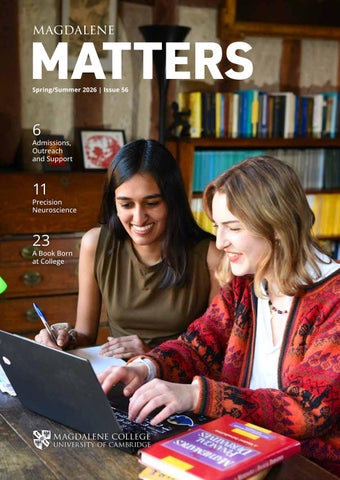

this issue Welcome
6–7 Admissions, Outreach and Support
8–9 Maintenance at Magdalene: A Glimpse into the Past
10–11 Precision Neuroscience
Brain–Computer Interface
12–13 Magdalene-Magdalen
Sports Day
14–15 The (Many) End(s) of History
16–17 Inside ClassDojo
18–19 The Irish Pope: Paul Cullen, 1803–1878
20 Let there be …
23 From Paper Airplanes to Principles: A Book Born at College
Dear Members,
I am lucky to have a view of the stunning Benson Court cherry tree in full bloom and feel reassured that despite the cold and wet winter, summer is on its way. And with it the joys of the May Bumps, the bops, the garden parties, the May Balls and punting to Grantchester. It’s all as much part of Magdalene as supervisions, exeats and a quick lunch in Ramsay. Watching yet another cohort of our students graduate in early July is always a moment of great pride and quiet satisfaction for the many colleagues in College who ultimately all work together to make that happen, year after year.
Summer will also see the long awaited removal of the very large scaffold encasing the Pepys Building following the completion of the extensive renovation works. The Pepys Presses will then be moved back and restored in situ before all 3,000 volumes are returned to their rightful home. The library itself will reopen to visitors in early 2027 and we are very much looking forward to celebrating the occasion with the many Members and Friends, who, once again, have funded most of this important project with hugely generous donations, thank you.
We continue to endeavour to bring Magdalene to you by organising receptions, dinners and events across the UK, and around the world. We were delighted to meet so many of you in New York, Boston, Washington, Kuala Lumpur, Singapore, Hong Kong, Sydney, Berlin and London! The ongoing interest in the College, the loyalty and the undiminished affection so many Members share for Magdalene ensures enduring connections with the College but also among alumni. Do come back to College, join us for one of our many alumni events and keep in touch. Please visit www.magd.cam.ac.uk for updates on current life at Magdalene, details on how you can support your College if you wish, the Pepys Library blogs, event listings, and the merchandise pages, where you can find all sorts of goodies including bottles of Magdalene Gin!
CORINNE LLOYD Editor and Director of Development
Magdalene Matters is published by the Alumni and Development Office. For further information or if you would like to submit content for future issues please contact the Communications Manager, Mr Matthew Moon, or the Editor, Mrs Corinne Lloyd.
The views expressed in this publication do not necessarily represent the views of Magdalene College Cambridge.
Cover photo taken by Stephen Bond.

the pepys building restoration: Taking it apart, putting it back together again
by Professor Tom Spencer (1973), Chair of the Pepys Restoration Project Board
There has been a lot going on since the Pepys Building was surrounded by scaffolding and encased in plastic in the summer of 2025. Our contractor, Regent Construction, began with the disassembly of internal walls, ceilings, floors, windows and doors, and the removal of redundant services and asbestos (rather more than we would have liked). In the absence of proper floors, there followed a period of distinctly wobbly access with glimpses of alarming drops to lower levels.
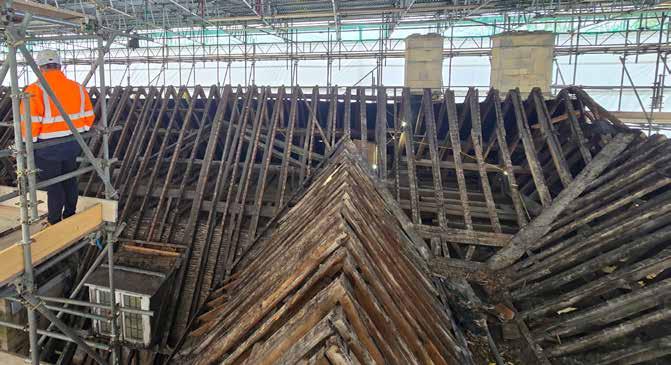
The removal of the roof tiles, battens and felt roofing revealed the building’s original roof timbers in all their glory, a stupendous sight to those who climbed to the very top of the scaffolding. The exposure of the roof timbers allowed for the extraction of small cores for tree‑ring dating, the art and science of dendrochronology, which confirmed the recorded dates for the building work being carried out between 1670 and 1703. Six samples from the roof over the Left Cloister came from four trees all felled in spring 1677, corresponding to the earlier scheme for the building, which was then transformed with the west front and extended roof design of Robert Hooke. One timber in
the front range has a last measured ring of 1683, and two rafters over the Right Cloister date to the 1690s, one being felled in the winter of 1694–95.
With the building now completely opened up, it was time to install a massive steel frame to support the floor above the new Seminar Room at the back of Right Cloister, to open up the new entrance to the building at the river end of the Pepys Cloister, and to start to prepare for the installation of the lift from the new ground floor Foyer. More recently, the first fix for mechanical and electrical services has been taking place, still throwing up some architectural anomalies and strange original building materials, and new ceilings and flooring are starting to go in. For the College’s Pepys Restoration Team and Board, the main questions now are those of finishes, such as light fittings, bathroom tiles, wall colours and balustrade paintwork. As the number of building surprises finally subsides, we are very hopeful of getting the building back in the late summer and fully ready to be re‑occupied at the start of the 2026–27 academic year. Restoring the Pepys Library to its newly refurbished home will take a little while longer.
FELLOWS’ NEWS

Professor Tim Coombs (2000)
Professor Tim Coombs has co-authored a report highlighting how high temperature superconducting cables could help move renewable energy from offshore platforms and remote sites to areas with high demand. The report explains that these cables offer near zero losses and can transmit large amounts of power underground with minimal impact.

Dr Allègre Hadida (2003) Director of Studies in Management Studies, Dr Allègre Hadida, was awarded a 2025 Cambridge Judge Excellence in Teaching Award. The award recognises her contribution to teaching on the MBA programme at Cambridge Judge Business School, where students praised her as an inspiring and passionate educator who has driven innovation through her commitment to advancing pedagogy with technology.

Professor Antje du Bois-Pedain (2004)
Director of Studies in Law, Professor Antje du BoisPedain, was awarded an honorary doctorate in law by the University of Uppsala, Sweden in recognition of her significant contributions to criminal law theory and her sustained work in building international academic links in this field.
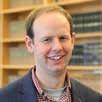
Mr Alistair Mills (2006)
Mr Alistair Mills co-edited The Law and Practice of Human Rights, published by LexisNexis in October 2025. The book, produced with David Blundell KC and Miranda Butler, provides a detailed guide to human rights law and examines both the legal framework of the European Convention and its application in the UK.

Professor Philippa Steele (2010)
Professor Philippa Steele has published a study examining Mount Hymettos in Athens as a long-standing site of writing. Her work surveys more than two millennia of inscriptions and graffiti found on the mountain, with particular focus on religious writing and early activity at the seventh century BCE sanctuary of Zeus Semios.

Professor Anastasia Fialkov (2022)
Research co-authored by Professor Anastasia Fialkov shows that a faint 21 centimetre radio signal from early hydrogen can offer new insight into the formation of the first stars. The study explains how this ancient signal, shaped by early stellar activity, could help reveal how these stars influenced conditions in the young universe.
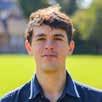
Dr Peter Asimov (2022)
Dr Peter Asimov has received the Society for Music Analysis Adele Katz Early Career Researcher Award. His work focuses on French musical modernism, and his publications include studies of Messiaen, Yvonne Loriod, and the naturalisation of Indian scales in French music. The award recognises his contribution to music analysis.
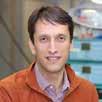
Professor Xavier Moya (2022)
Professor Xavier Moya has been named an American Physical Society Fellow for “pioneering work on the development of caloric materials and prototypes, which are environmentally friendly solid state cooling technologies”. This recognition is given to physicists who have made outstanding contributions to their field, with only a very small number of members selected each year.
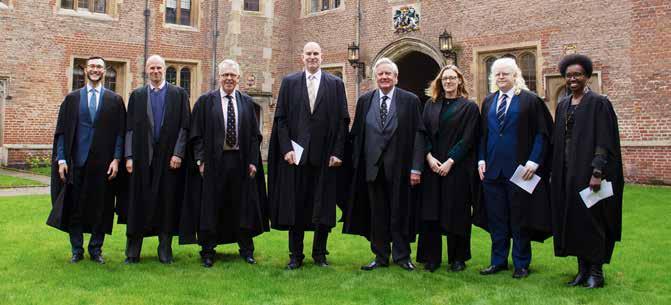
new fellows
Mr Aaron Taylor (2025)
Mr Aaron Taylor is a Fellow Commoner and barrister whose academic focus centres on legal issues involving art and cultural property. His work examines fraud, fakes, and questions of authenticity in the art market, drawing on extensive practice experience in civil fraud and related disputes. He writes on the legal responsibilities of authentication experts and contributes to the journal Art Antiquity and Law. He also teaches art law at the London School of Economics and is developing a book on fraud and financial crime within the art market, expected to appear in 2027.
Professor David Edwards (2025)
Professor David Edwards is a Senior Research Fellow, and founding Director of the Centre for Global Wood Security at Cambridge. His academic work examines how forest biodiversity and ecosystem services respond to pressures such as selective logging, land conversion and climate change. He combines fieldwork with remote sensing, global mapping and land use modelling to investigate questions central to forest ecology and conservation. His research spans tropical regions from the Andes to Southeast Asia and highlights risks to timber supply, biodiversity loss, and the potential of restoration to support ecological recovery.
Professor John Branch (2026)
Professor John Branch is a Visiting Fellow. His academic work encompasses three strands. He investigates how individuals interpret their consumption, using cultural research approaches to understand how meaning is formed in consumer behaviour. He also examines issues shaped by his extensive international experience, particularly in emerging economies. His third focus is educational policy and pedagogy, informed by his long involvement in teaching and academic administration across global institutions.
Dr Amelia Urry (2025)
Dr Amelia Urry is the Lumley Research Fellow in History of Science. Her work examines how scientific narratives of apocalypse have influenced the development of modern climate sciences. She completed her PhD in 2025 on evolving ideas of scientific uncertainty in twentieth century Antarctic glaciology, following an MPhil in the History and Philosophy of Science. As a Research Fellow, she is undertaking new work on the historical role of apocalyptic framing within climate science. You can read more about her research on page 14.
Dr Cameron Wachowich (2026)
Dr Cameron Wachowich is a Fellow-Commoner. He is a Teaching Associate in Modern Irish at the Department of Anglo-Saxon, Norse and Celtic. He has published on medieval Irish classical reception, the reception of Arthurian literature in Irish bardic poetry, as well as the enigmatic word ormesta. His interests range across the languages and literatures of medieval Europe and occasionally further afield and include medieval literature both Latin and vernacular, historical linguistics, palaeography, and textual criticism.
Dr Freda Nkirote M’Mbogori (2026)
Dr Freda Nkirote M’Mbogori is a Visiting Fellow, and a Senior Research Scientist at the National Museums of Kenya. Her work examines the Iron Age and historical periods in East Africa, with recent research centred on pastoralist communities in northern Kenya and southern Ethiopia. This includes studies of ancient wells and endangered material knowledge linked to containers used for milk and water. She has also held leadership roles in regional archaeology, including serving as President of the Pan African Archaeological Association.
Admissions, Outreach and Support
by Mr Cei Whitehouse, Academic Registrar
Building on nearly six centuries of academic tradition, today Magdalene College seeks to attract the very best applicants from across the UK and around the globe. Our Admissions Tutors, Directors of Studies, teaching and support staff put in herculean efforts each year to ensure that we admit those students with the greatest academic potential.
Efforts to give our Admissions Tutor as broad a field as possible from which to select begin in some cases years before applications are made. Our outreach team is directed by Dr Sara Caputo (2019), the Admissions Tutor for Access, supported by Schools Liaison Officer Ms Tess Bottomley, and the newly appointed Widening Participation Officer, Ms Carys Myers. Our annual (and –thanks to recent generous benefactions – growing) cycle of events seeks to encourage applications from the most academically gifted students in the UK, with a specific focus on those in Magdalene’s ‘link areas’ of North Wales, the Isle of Man, and Merseyside – with the North West of England recently highlighted by the university as underrepresented, and a pivotal target for attracting the best talent and the brightest minds wherever they are, and whatever their backgrounds.
Over the past five years, in addition to reviving our longstanding biennial conference in Liverpool, we have begun co hosting Cambridge’s ‘North West Conference’, and have doubled the number of pupils attending residential events for sixth formers during the Easter vacation. Many attendees from these events have gone on to make successful applications to study at Magdalene and other Cambridge colleges, with a few even braving admission to the Other Place! We have been delighted to see hundreds of entries to the new Armstrong Essay Competition over the past few years, and also to work closely with other Colleges and central university teams to host events for the Brilliant Club, STEM SMART, HE+, ClickCambridge, and the Cambridge Students’ Union.
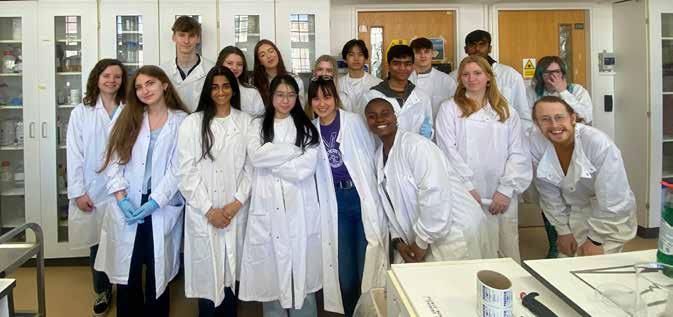
Magdalene Residential participants.
We have massively expanded our offering of online ‘webinars’, in which Magdalene academics offer taster lectures to aspiring students. The format not only allows us to work with many more sixth formers than we could otherwise reach, but also means that we have been able to involve many more Fellows in our work with schools without having to transport them halfway across the country. In addition to taster lectures, we also host a series of application support sessions, including an introduction to the Cambridge admissions process, choosing a subject at university, and an introduction to student finance. These all help to support pupils, their parents and their teachers in making a competitive application. All of this is in addition to hosting school visits throughout the year, and visiting schools and colleges across our link areas.
Thanks in no small part to the impressive work of our outreach team, we received over seven hundred applications for undergraduate study in the most recent round: our highest number on record. We have seen a particular increase in UK applicants over the past few years, which has significantly outstripped the increase in UK applicants to Cambridge as a whole over the same period. Our aim to interview the majority of applicants has meant a considerable effort on the part of our Directors of Studies, whose December is spent less looking forward to Christmas and more focusing on making it through to the end of interviews.
We take pride in assessing each application holistically, and carefully reviewing every component: in addition to the much vaunted Cambridge interview for those invited, this
THANKS IN NO SMALL PART TO THE IMPRESSIVE WORK OF OUR OUTREACH TEAM, WE RECEIVED OVER SEVEN HUNDRED APPLICATIONS FOR UNDERGRADUATE STUDY IN THE MOST RECENT ROUND: OUR HIGHEST NUMBER ON RECORD.
includes considering candidates’ admissions assessments and submitted work, personal statements, school references, and academic record. We also take into account a range of contextual data to ensure that we are evaluating academic potential appropriately for every applicant, irrespective of their background and any educational or personal disruptions that they may have faced. Candidates work incredibly hard to ensure that the Admissions Tutor and Directors of Studies have an unenviable task in selecting the strongest in a field full of highly qualified, talented young people. We do our best to ensure this job gets harder with each passing year.
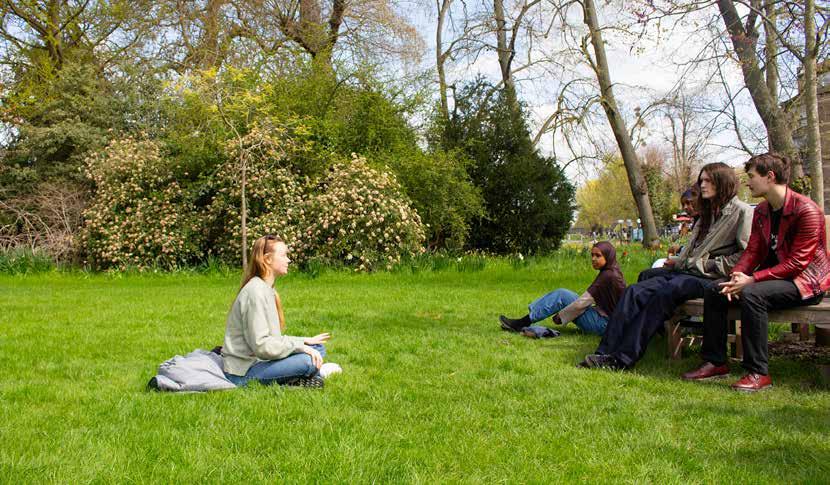
Once interviews have taken place, the intercollegiate winter pool allows moderation of candidates across Cambridge, and has in recent years seen a considerable and increasing number of strong Magdalene applicants who have performed well in the application process given offers at other Colleges, in cases when we have not had space for them ourselves. This whole operation is overseen by the Admissions Tutor for Undergraduates, Dr Simon Ravenscroft (2018), whose background in the philosophy of religion has prepared him well for some of the more esoteric queries the College receives during this period. He is ably assisted by Mrs Jo Woodman and Ms Remke van der Velden, whose efforts ensured that over 1,000 interviews took place smoothly in December with nary a paper out of place.
Offer holders chatting with Director of Studies in the Fellows' Garden.
Maintenance at Magdalene: A Glimpse into the Past
by Ms Eva Norton, Graduate Library Trainee
Ms Eva Norton is the Graduate Library Trainee at Magdalene this year, and she has been undertaking a project to catalogue College receipts in the Archive. She’s just finished cataloguing receipts from the year 1791–92.
‘Cobwebbing the chapel’, ‘mending the brewhouse pump’, ‘half a day in the privy at the King’s Head’; these are just a few entries from the College audit receipts, a collection in the Archive that documents the expenses, taxes and reparations at Magdalene from the middle of the eighteenth century to the nineteenth
century. They were often written by tradespeople recording the money they were owed by the College.
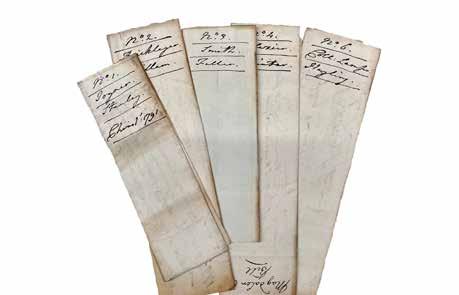
The range of professions represented is spectacular, from basket makers and glaziers to thatchers and coopers. Below is a receipt for painting work carried out by John Favell. Details such as “2 doors chocolate colour” offer a glimpse of how the College may have appeared in 1792. A later receipt from 1795 also records work in College buildings that have since vanished, including the Swan pub, once on the corner of Chesterton Lane, on the site now occupied by the Master’s Garden.
The receipts encouraged us to look more closely at John Favell and his family. Their lives were certainly eventful. John’s
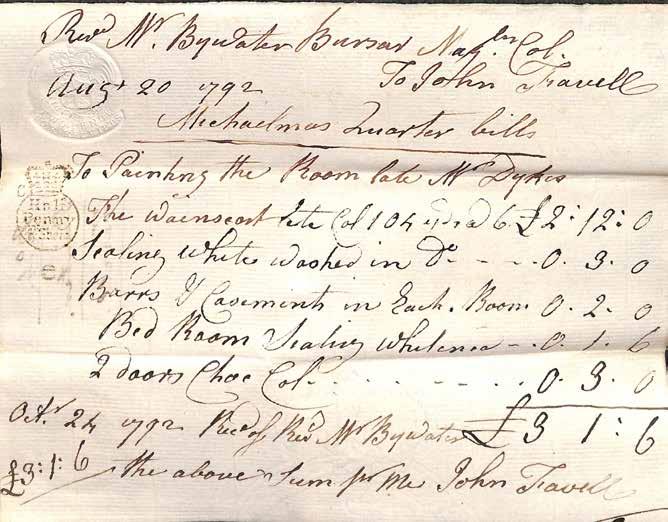
A receipt written by John Favell, 1792.
apprentice, Joen Neave, was sentenced to death at the assizes for stealing thirty six guineas, a sum worth more than four thousand pounds today. Neave was only 15 years old.
John and his wife, Elizabeth, had sixteen children, only nine survived infancy. One of their sons, Samuel, attended Christ’s Hospital and was a friend of writer Charles Lamb. He later became a student at Pembroke while his father was working as a painter at Magdalene. Samuel was killed in 1812 at the Battle of Salamanca. Four other Favell children also died in the Napoleonic Wars.
The longevity of the College’s relationship with the Favell family is extraordinary. John Favell died in 1804, and after his death, his widow Elizabeth ran the decorating firm with their son James. Unfortunately, they went bankrupt in 1809, and James left to serve in the Navy.
Bankruptcy did not deter Elizabeth, she restarted the painting business. A newspaper announcement from 1810 shows her thanking Cambridge for its continued support and affirming her professional capability. In 1813, her son Edward joined the business, and they traded as Elizabeth Favell & Son. When Elizabeth died at the age of ninety three, Edward continued the business and later entered into partnership with Robert Ellis. The company then became Favell & Ellis.
house from Magdalene. The Half Moon stood just across the river, approximately where Prezzo is today. Taken together with evidence from Stanley’s will, this suggests that he was relatively wealthy. This was far from unusual among those named in the receipts. College cooks were often wealthy, and College staff were generally well-respected in the town. John Favell, for instance, was elected a Councilman in 1778 and later served as Coroner.
Stanley had another connection with the College. His sister married into the Wentworth family, the same family that later sold Wentworth House on Chesterton Road to Magdalene.
We shared the receipts with the modern counterparts of John Favell and William Stanley, Wayne Dickerson, the College painter, and Sam Wiffin, our carpenter. They prompted questions I had not previously considered, including whether Favell and Stanley worked on site at the same time or assisted
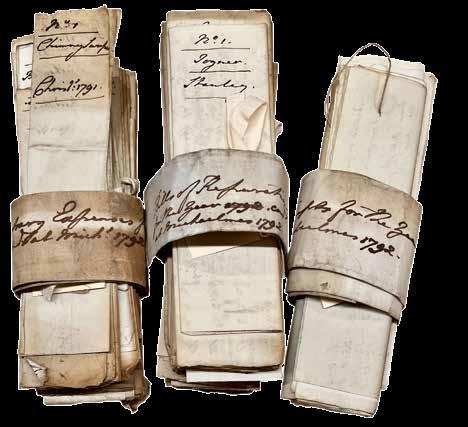
the year 1791–92.
Edward Favell died in 1854 and was the last member of his family to paint at Magdalene. The name nevertheless endured through the firm Favell & Ellis, which the College continued to employ until 1912, more than a century after the Favell family first appeared in the account books.
Another name that appears in the receipts is William Stanley, a joiner working at the College in the late eighteenth century. His receipts also chart changes at Magdalene over time. References to work such as “brewhouse yard gate” and “mending the stable floor” point to areas of the College that no longer survive.
William Stanley appears in more than the College’s receipts. In the early nineteenth century he also leased the Half Moon public
They also drew attention to what the receipts omit. Details such as where materials were bought, who employed them, and how payment was arranged are absent. In some cases, College staff were paid up to six months after completing the work.
Wayne confirmed that the Favell family would have mixed their own paint and was particularly struck by the description “painter and gilder” in Elizabeth Favell’s advertisement, as gilding was a specialised trade. He also noted that paint rollers were not invented until the twentieth century, meaning all paintwork would have been done using horsehair brushes.
Working with the receipts opened up many lines of enquiry, and choosing just two stories was challenging. Together, they show the value of archival material, both for understanding Magdalene’s past and for tracing wider social and economic change in the town, as well as family histories. Linking these receipts to the work of Wayne and Sam was an effective way to connect College staff across generations. It is easy to imagine that the work they are carrying out today may one day lead future archivists to discoveries that are equally compelling.
precision neuroscience Brain–Computer Interface
by Michael Mager (2013), Founder and CEO of Precision Neuroscience
Afew weeks ago, I stood in an operating theatre during brain surgery, watching coloured patterns appear on a monitor across the room. The patient was awake. I could not see past the plastic surgical veil, but I knew a small section of her skull had been removed, exposing her brain, with a thin yellow device resting on its surface. As she moved her hand and answered simple prompts, bursts of pixelated activity flickered across the screen.
Those flashing patterns were not abstract graphics. They were electrical signals, the physical traces of thought. Each pulse reflected neurons firing in coordinated patterns. For a moment, something normally private and fleeting, even mystical, was visible to everyone in the room.
When I was a student at Cambridge studying economic history, I spent much of my time thinking about how new technologies reshape societies over decades or centuries. I never imagined I would one day see thought itself rendered as data.
Yet my
career led me to brain computer interfaces and to founding Precision Neuroscience, a company developing a new way to connect with the human brain.
The Intellectual Problem
The brain runs on roughly twenty watts of power, about the same as a light bulb. With that modest energy budget, it produces language, imagination, memory, emotion, and consciousness. Modern data centres consume vast amounts of electricity to approximate crude artificial intelligence. The human brain achieves general intelligence using almost no power. Yet, after decades of neuroscience, we still do not understand how it works. We can measure electrical activity and identify regions for movement or speech. We still cannot explain how neural firing becomes memory, or intention becomes action. Even partial understanding can have real power in medicine.
For people with severe paralysis from spinal cord injury, ALS, or stroke, the tragedy is not that their brains stop working. Often, their brain functions normally. The problem is that the link between intention and movement is severed. They know what they want to do: turn a light on or off, text a loved one, share a joke. Their bodies simply cannot execute the command.
For decades, scientists have tried to bridge that gap. In laboratories, electrodes implanted in the brain have allowed neural signals to move a cursor or control a robotic limb. These experiments showed that intention can be decoded, but exposed a central challenge, recording brain signals safely and at high resolution.
My Path to Founding Precision
I never expected to work on this problem. I studied History and Literature at Harvard, spent eight years in Hong Kong in finance, then came to Magdalene for economic history. My interests were broad; politics, markets, and technological change, not neuroscience. That changed when a mutual friend introduced me to Ben Rapoport. Ben is both a neurosurgeon and an electrical engineer, and he grew up thinking about these questions. His father was an electrical engineer who later became a neurologist. From early in his career, Ben had been focused on building brain computer interfaces and on the question of how to move an experimental technology into mainstream medicine.
Ben had previously co founded Neuralink, Elon Musk’s brain computer interface company, but left over concerns about safety and long term biological impact. At the time, most researchers believed a high bandwidth connection required penetrating electrodes inserted into the cortex. Ben believed there was another approach that did not penetrate brain tissue. He needed a partner to turn that belief into a company. That was the start of Precision Neuroscience. My role was to build the organisation, raise capital, recruit engineers and clinicians, and map a path from lab concept to regulated medical device.
What Makes the Technology Different
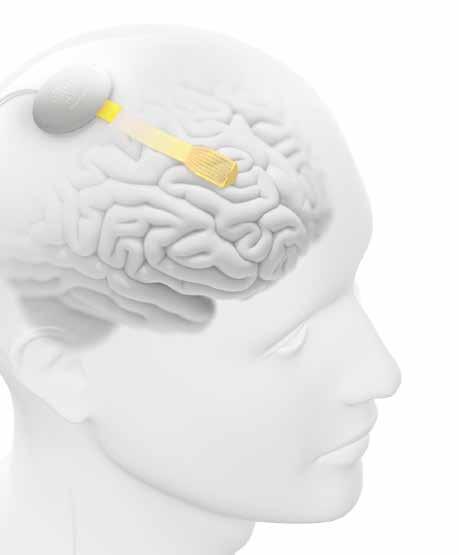
At Precision, we developed a surface conforming cortical array, an ultra thin flexible sheet with 1,024 microscopic platinum electrodes. Rather than piercing the brain, it rests gently on the surface, following the natural contours of the cortex.
The device is thinner than a human hair. We manufacture it using photolithography, the technique used for semiconductor chips and one not previously applied to implantable neural interfaces. This allows us to create a dense grid of electrodes that can record electrical activity at high resolution.
The surgical approach is different. Instead of removing a large portion of the skull, we create a narrow slit that lets the array slide into place, like a letter through a letterbox. The device sits beneath the skull on the brain surface, avoiding penetration of neural tissue.
This distinction matters clinically. Systems that injure tissue with each implantation are hard to scale safely, whether across larger areas of cortex or more patients. A surface based interface can cover broader brain regions, increasing data collection while minimizing harm. That scalability matters, beyond restoring movement in paralysis, it is also key to understanding and treating other neurological conditions. Disorders such as depression, epilepsy, Parkinson’s disease, and dementia involve abnormal neural activity. A technology that can record these patterns safely at scale could open new paths for diagnosis and therapy.
Working With Patients
Precision has received FDA clearance for temporary implantation of our device for up to thirty days and has been granted Breakthrough Device designation. To date, we have implanted the system temporarily in more than seventy patients.
Our work is done in partnership with fifteen hospitals across the United States. The device is used during surgeries patients already require, such as tumour removal or epilepsy treatment. With consent, we place the array on the brain surface and record neural activity while the surgical team
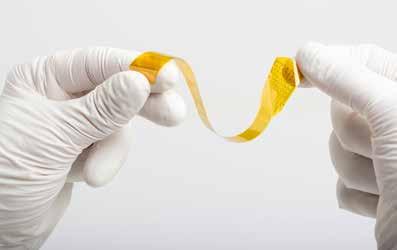
The Layer 7 cortical interface, Precision Neuroscience’s thin film microelectrode array.
carries out its clinical work. The system is fully removable. Meeting our clinical study participants has been one of the most meaningful parts of this journey. They face serious medical challenges and, at vulnerable moments, consent to research that may not help them directly but could aid future patients.
There is nothing abstract about developing medical technology in this context. You are reminded immediately that the brain is not a concept but a living organ. Standing in an operating theatre with something that touches a living brain carries real responsibility and is what drives our cautious, deliberate progress.
Cambridge Influence
In some ways, it is a long way from studying economic history at Magdalene to founding a neurotechnology company. But the connection is closer than it appears. My time at Cambridge taught me to ask basic questions about systems, how they evolve, what constraints shape them, and how institutions determine whether ideas endure.Brain computer interfaces sit at the intersection of engineering, medicine, regulation, and ethics. Turning a scientific idea into a clinical tool requires infrastructure, evidence, and patience.
Looking Forward
In the near term, our focus is clear: restoring communication and function to people with severe paralysis. Being able to type a message, control a device, or express oneself independently can be transformative. But the implications reach further. For the first time, we are beginning to digitise brain activity at scale. Over the past half century, medicine was reshaped by imaging and genomics, by seeing inside the body and sequencing its code. The brain has remained comparatively opaque, with many neurological conditions diagnosed indirectly through symptoms rather than direct measurement.
Standing in that operating theatre, watching neural activity appear in real time, feels a little like stepping onto the deck of a spacecraft. It is exhilarating and profoundly humbling. We are at the early stages of a new scientific frontier, one that may change how we understand disability, neurological disease, and ultimately the organ that makes us who we are.
MAGDALENE-MAGDALEN SPORTS DAY
by Ms Esther Ng (2024), JCR Vice-President
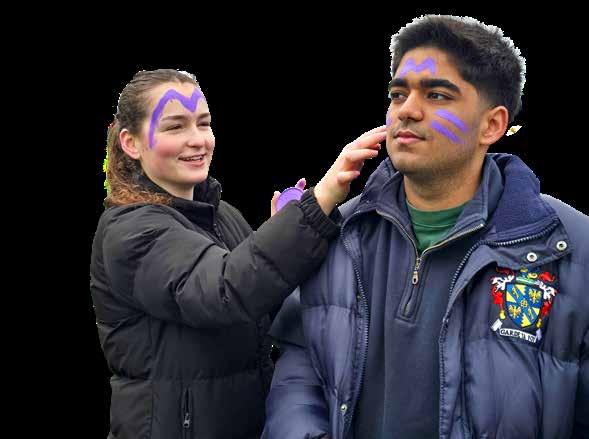
There is a particular kind of optimism required to organise a Sports Day. You must believe that venues can be secured and teams fielded in time despite last minute crises; against all meteorological evidence, that it will not rain; and that Oxford will show up with the right teams and the right equipment. On at least the first two counts, we were vindicated.
The forecast did not inspire confidence. Rain was predicted all day and the morning duly obliged. Despite that, mixed netball set the tone with a composed 19-13 victory. A result made all the more memorable by the sustained presence of the Master himself, Sir Christopher Greenwood, who took up his position court-side and delivered what those present could only describe as a resounding call to arms. Ladies’ netball followed suit with a 13-8 win, and between them the two netball teams ensured Oxford had a deeply uncomfortable morning.
Elsewhere, Magdalene was equally ruthless. Badminton: 8-0. Mixed hockey: 9-0. Table tennis: 5-0. Tennis: 2-1. Rugby, played at Jesus, deserves a highlight of its own: a 36-5 annihilation that suggests the seven-year winless streak broken in 2024 was not a fluke but the dawn of an era, which Oxford really should have clocked by now. Oxford, to their credit, turned up. Mostly. Squash was forfeited the day before, leaving Francis and team
to celebrate a walkover with the dignified restraint the situation demanded. Basketball was cancelled an hour before the match, and the lacrosse sticks that had been promised failed to materialise in sufficient numbers for a proper match.
In what can only be described as a Magdalene-Magdalen miracle (much like 2024’s similarly sodden saga) the clouds parted by afternoon and the sun graced John’s pitches just in time for the football. At this rate, one might suspect Cambridge has friends in high places. While sadly men’s 2 football and women’s football had to occur concurrently, the crowd showcased a spectacular ability to follow two matches at once, producing creative cheers and calling out Oxford’s sneakier attempts with admirable vigilance. The solitary Oxford win in women’s football, 5-0, tells only a fraction of the story. Our valiant Magdalene team took to the pitch with just enough players to field a side and not a single one to spare for substitutions. That they competed at all,
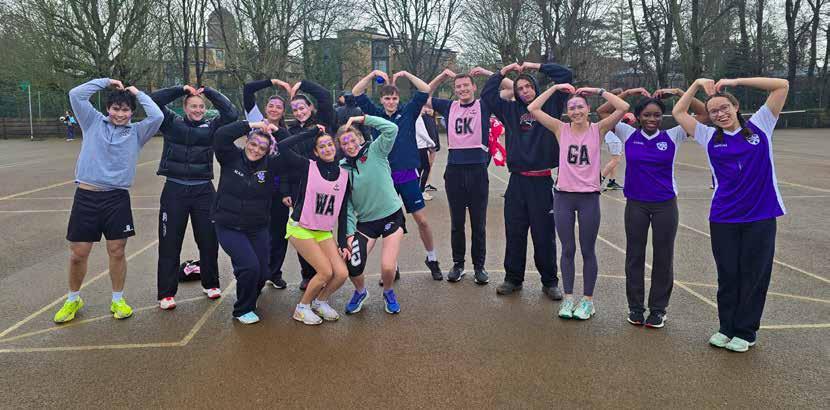
following Oxford’s ceaseless requests for a women’s football match, was an act of heroism, and their dedication deserves far more recognition than the scoreline can offer, and once again trouncing Oxford’s ability to match participation in sports.
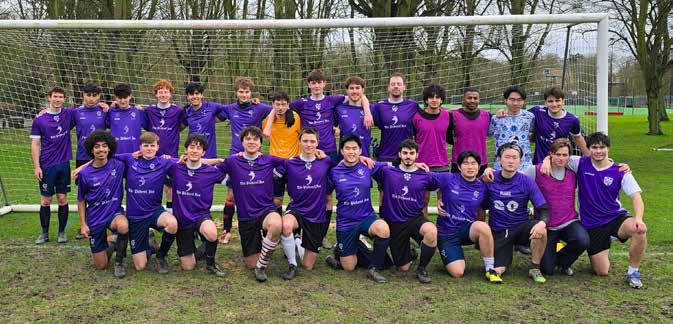
On the other pitch, men’s football was the stuff of legend. The first team cruised to a 3-1 win to the raucous delight of the sideline, but the second team equally provided one of the afternoon’s most theatrical moments. Magdalene struck near the ninetieth minute to send the crowd into raptures, only for Oxford to equalise and drag proceedings to extra time. Rather than despair, Magdalene stepped up and converted all five penalties in a 5-3 shootout victory. The scenes that followed were, by multiple eyewitness accounts, entirely unhinged. The scoreboard does not lie: Magdalene 9, Magdalen 1.
The fun and games wrapped up with the three-legged race, egg and spoon, and spikeball. The egg and spoon produced a Cambridge winner, while the threelegged race (run along an M-shaped route, naturally) went to Oxford, whose technique we can only describe as impeccable. The pièce de résistance came at 5.15 pm: the Presidents’ Arm Wrestle, in which Magdalene signed off an overwhelming victory as a conclusion for the day.
With sports concluded, attention turned to matters of equal importance. The evening’s Vintage Varsity-themed bop saw Magdalene and Magdalen come together in the finest tradition of the rivalry: competitive by day, collegiate by night. The drinks ran out faster
than anyone could remember, which we choose to interpret as a ringing endorsement, and after a friendly club night out, we sent Magdalen home to the Other Place.
A final score of 9-1 in Magdalene’s favour speaks for itself. But numbers can’t capture what Sports Day really is: three hundredodd students charging around St. John’s Pitches and Cambridge, a Master holding court on the netball sideline, pizza appearing at precisely the right moment, and more importantly, two Colleges sharing a name (almost) coming together to make memories worth reminiscing about in years to come.
Long live the rivalry, Garde Ta Sporty Foy!
Mens Football Team.
The
(Many) End(s)
of History unwinding the long tradition of scientific apocalypse(s)
by Dr Amelia Urry (2025), Lumley Research Fellow in History of Science
The world is, it seems, always on the verge of catastrophe. In fact, stories of global collapse go back as far as you care to look. Whether biblical flood or deadly pandemic, actual or imagined disasters often wear the familiar garments of apocalypse. The word, which comes from the Greek for 'unveiling', first referred to a Judeo Christian revelation. But, more recent iterations of this narrative have instead been tangled up in scientific concerns. In the eighteenth century, for example, French astronomers set off widespread panic by calculating the statistical likelihood of comets striking the Earth; within a hundred years, these catastrophic visions had shifted to feature dying suns and declining planets, linked to the popular reception of theories of evolution and entropy. By the twentieth century, apocalyptic fictions delivered us H. G. Wells' alien invasions and the out of control chemistry of Kurt Vonnegut's “ice nine”, Isaac Asimov's killer robots, Margaret Atwood's genetically engineered chimeras, and the irradiated wasteland of Cormac McCarthy's The Road
Amid this anxious scrum of new technologies and threats at the midcentury, the sciences of measuring, modeling, and, eventually, predicting global climate were emerging.

Climate science blossomed in the period after WWII, as scientists took advantage of advances in mechanical computation to deal with vast quantities of meteorological data and new theoretical insights about planetary systems. Armed with these powerful new tools of climatology, researchers began to grapple this young science to the problem of predicting the future of the Earth.
Perhaps unsurprisingly, this young discipline began churning out scenarios of climate catastrophe, dressed in a familiar set of concerns about the paradoxical nature of human vulnerability and power. From the 1960s and 70s onward, scientific publications and popular science writing presented narratives of all consuming ice ages and runaway global warming, sea level change and extinction, ultimately speculative scenarios but always with one foot planted in the real sciences of the Earth’s systems.
As the Lumley Junior Research Fellow in the History of Science, I investigate the history of these scientific narratives of crisis and collapse. Where did they come from, and where might they lead us? For the climate sciences, crisis has been part of the picture from the beginning, shaped by older debates about violent geological
transformation, ice ages, and mass extinction. What did this mean about what scientists expected they would be able to learn about climates past or future? What kinds of outcomes, at what scales, were they concerned with predicting? And how did this affect what they ended up being able to do with climate data?
Though science is sometimes imagined as standing outside the realm of culture and narrative, a glance over the speculative catastrophes of the twentieth century reveals a clear arc connecting different disciplines through a shared set of narrative expectations. Take, for instance, fears of global nuclear radiation in the wake of an atomic war. This scenario was considered by military experts and modeled by scientists during the Cold War. Its very real dangers were highlighted in 1954 by the disastrous American Castle Bravo hydrogen bomb test, in which a large plume of fallout enveloped the Marshall Islands in deadly radiation. Three years later, Nevil Shute's 1957 novel On the Beach presented a story of slow apocalypse via fallout. Meanwhile, climatologists were able to use the tragic circumstances of Castle Bravo to gather information about the architecture of the atmosphere, with its layer cake composition. Because nuclear fallout created a distinct and traceable signature as it moved around, the unplanned release of this large quantity of radioactive material provided an opportunity for scientists to understand how these layers connected different regions of the Earth.
In due course, these climatological insights about the composition and circulation of the atmosphere, along with the fictional and journalistic narratives of helpless witnessing generated by nuclear testing, later reappeared in changed form in the theorising of nuclear winter. This issue was controversially raised in a special feature of Parade magazine in 1983, by the American science writer and television host Carl Sagan. Sagan and co authors had been working to model what would happen in the atmosphere in the wake of even a small nuclear war, and found that feedback effects would quickly cool the atmosphere, plunging the Earth into an artificial, global winter. “We have placed our civilization and our species in jeopardy” Sagan wrote with weighty authority in the Parade article, which was published before the peer reviewed scientific results. "Fortunately, it is not yet too late. We can safeguard the planetary civilization and the human family if we so choose. There is no more important or more urgent issue.”
And so the story kept going. It is not my aim to argue whether this framework was right or wrong for the situation, helpful or distracting. What interests me, instead, is the way that these narratives have travelled through different epochs of history, raising urgent concerns on some fronts while obscuring other realities, which might have offered other ways of relating to expertise, uncertainty, and control. After all, almost a half century from Sagan's warning, it is fair to say that
these “not yet too late” scenarios have not had the kind of political outcomes that their purveyors might have wished.
Ultimately, narratives of world ending crisis present a compelling paradox. Always deeply speculative by their nature (since as far as we can tell “the world” has not “ended” yet), they deal in futures where any previous knowledge is tentative and incomplete in relation to the scale of the present concern. And yet this narrative framework nevertheless holds out a promise of certainty: the end of the world suggests the authority of the omniscient view. And in some sense it can be reassuring to know – or believe – what the future will hold, even if the answer is terrifying. The end of that story will offer, at least, the end of your worries.
Perhaps it is inevitable that in the face of these grand cataclysms, smaller or more familiar disasters end up seeming trivial. For instance, at the same time that American and European scientists were fretting about the possibility of famines set off by nuclear winter or climate cooling in the 1970s, real famines were bearing out tragic consequences across North Africa and South Asia, exacerbated by U.S. market policies. In this, we can see how apocalyptic narratives confound space and time, by transfiguring present day events playing out somewhere else into speculative future concerns which may or may not come to pass here. As the indigenous scholar Kyle White has pointed out, for peoples around the world who have been subject to genocide, forced removal, and environmental violence, the apocalypse has already come and gone – a way of life has been brutally, violently cut off – even as life goes on. These partial or unfinished apocalypses offer, among other valuable perspectives, an important corrective to the dangerous delusion of relying on the end of the world to solve today’s problems.
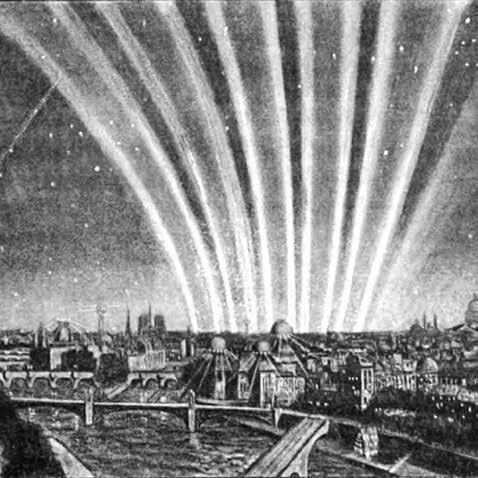
Great Comet of 1744, La fin du monde 1894, Camille Flammarion.
FROM MAGDALENE TO MISSION:
How Cambridge Shaped ClassDojo’s Audacious Bet on Every Child
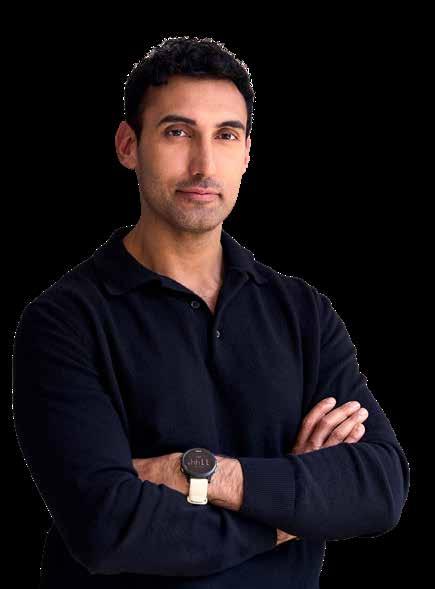
by Mr Sam Chaudhary (2004), Co-founder and CEO ClassDojo
Igrew up in a small village in Wales. My first school was the local convent, where my dad insisted on sending me and my brothers because he wanted us to develop good values. It was a warm, close-knit place, and everyone more or less knew everyone. I was a shy, nerdy kid, one of few Asian families for miles around. There was some bullying, as there always is when you look different from everyone else, but growing up in the countryside without many distractions forced me to build a rich inner world. I became obsessed with how things worked. Dinosaurs first, then space, then physics, then mathematics. I loved diving deep.
When my family moved to the Middle East, I thought I'd finally blend in. No luck, now I was the shy, nerdy Brit with the odd accent at a Lebanese school.
But I had grown up around people who showed me what determination could do. My father grew up in a small village in Pakistan with almost nothing. He was seven years old when his father sat him down and told him that their family's future depended on his success. He won a scholarship, became a doctor, and made it to the UK, lifting his entire family out of poverty in a single generation. My mother's family told her she wasn't allowed to go to university because she was a woman. She channelled her passion for mathematics and biology into my brothers and me at home, and in later life became an entrepreneur in her own right. Education wasn't an abstract idea in our house. It was the thing that had made everything else possible, and it carried with it a sense of responsibility. We were reminded again and again: your abilities are not just for you; they're to be used in service of something bigger.
My secondary school took it a step further. It had an intense culture of peer learning, encouraging kids to teach rather than just learn. I discovered that working through a problem with someone, solving it together, seeing understanding click into place, was a source of joy. We connected around a shared love of discovery, a sense of community and esprit de corps, all levelling up together. I started my first business around that, tutoring people through hundreds of concepts and questions step by step, and once demand grew, I wrote down detailed explanations and notes for all of the problems in our textbooks, scanning the pages and putting them online so others could access the thinking (password for a modest fee!).
When I matriculated at Magdalene, it felt like coming home. I had chosen it in part because it was small enough to know almost everyone. I'd spent most of my life feeling like the outsider, and suddenly I was part of an intimate community. That defined my university experience. Through countless evening chats at the Pick, hurting together on the river or the rugby pitch, quayside conversations that wandered from economics to engineering to someone's latest ingenious scheme to crash a May Ball (we would never), I found a sense of community and belonging
And while everyone was individually brilliant, perhaps what struck me most was the care: the close attention from tutors, help always being available, from people who were genuinely obsessed with the thing they were focused on. Each pursuing excellence, but also collectively looking out for each other. That is in many ways the story of Cambridge, and the story of progress itself: small groups of intensely curious people, going
absurdly deep, moving the world forward together. That idea lodged itself somewhere in me.
In my final year, I was set on a PhD. Then one of my tutors, Nigel Knight, asked if, given my teaching experience at school, I might help his friend with a teacher shortage at Charterhouse before committing to academia. I thought that sounded fun (and was a neat coincidence: I'd lived in Mallory Court at Magdalene, named after George Mallory, a Magdalene alumnus who had also taught at Charterhouse). In the evenings after teaching sixth-form, I found myself thinking far less about academia, and increasingly about the question of how to make education better. Soon after, McKinsey came knocking, offering me the chance to understand and help governments improve global education systems, and I took it. I saw something there that bothered me: almost everyone was addressing the system, schools, districts, government, while the people who actually stood to benefit from education, children and their families, weren't part of the discussion. That stayed with me.
Shortly after, I met my future co-founder, Liam, at a weekend hackathon in Cambridge. In our early twenties, we excitedly debated the fundamental problems in the world. We got down to two. Energy felt like one, we need energy to ensure human survival. And education felt like the other: civilisation advances to the extent that people get to discover and develop their talents and capacities. We started ClassDojo to work on this second problem, with the mission to give every child on Earth an education they love. Unlike most education companies, we weren't selling to schools from the top down but serving teachers, children, and families from the bottom up. We were accepted by Y Combinator, and flew to Silicon Valley to begin work, knowing nobody, and without a place to stay. I soon found a Magdalene alumnus at Stanford and he kindly let us sleep on his sofa for a week, thanks Nick!
Looking back, much of ClassDojo mirrors what I found at Magdalene.
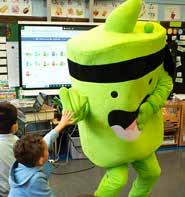
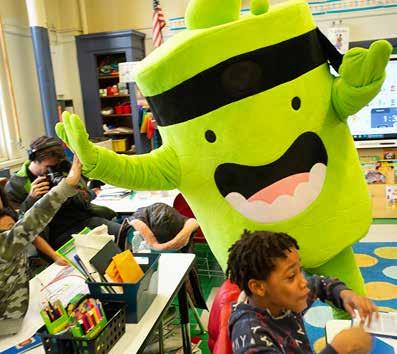
ClassDojo started as a communication app connecting teachers, children, and families, helping families feel part of their child's education, and rebuilding the sense of community around children. A supportive, intimate place where nobody feels on the outside. People loved it, told their friends, and it spread. Today, ClassDojo reaches roughly one in four families in the US, 95% of US primary schools, and more than fifty million children in 180 countries.
This reach was always the means, not the end. One of the most studied findings in education is Bloom's two sigma observation, the discovery that one-to-one attention produces two standard deviation better outcomes than a classroom alone. That's like taking someone from the 50th percentile to the 98th percentile. Magdalene delivered that through supervisions. But that kind of individual attention has never scaled. Now, with AI, it can. For the first time, technology can give a child truly individual support: adapting to how they think, where they struggle, what makes them light up. At ClassDojo, we've built an AI reading tutor that
uses the science of reading to help children learn to read. We're now seeing children do that in just fifteen minutes a day over five months, rather than taking many years.
In a world where according to UNESCO, 55% of children can't read a simple story by age ten, we think this kind of contribution to literacy could be very substantial. I think of hundreds of millions of futures that suddenly become possible. Numeracy is up next.
People worry about the future of education in the age of AI. When I hear that, I often think about our parents' generation: they couldn't have predicted where technology would go, computers, the internet. But they raised children who have largely thrived, I suspect because the underlying traits we all developed transfer across technology frontiers. Perseverance. Curiosity. Empathy. The willingness to figure things out when nobody hands you the answer. Those are exactly the things many of us learned growing up, and that Magdalene encouraged. As we enter a future where intelligence is more freely available to all, I suspect these qualities may matter far more than any of us think.
I couldn't have predicted how many threads would run from a rural Welsh convent through Magdalene's courtyards to Silicon Valley: the belief in human potential. The desire to help people make the most of their talents. The courage to think differently. The reminder that small groups of passionate people can change the world. The instinct to strive collectively, and to do so for the benefit and betterment of all.
I'm forever grateful for my time at Magdalene. Thank you for giving me an education I loved, and the courage to try to do the same for every child on Earth.
Students with the ClassDojo mascot.
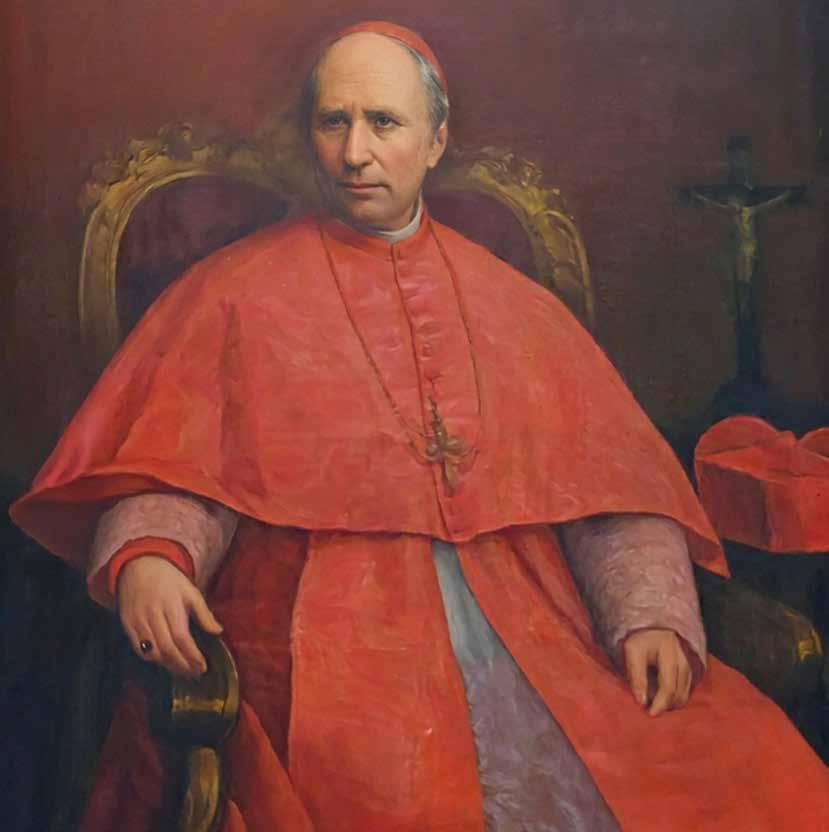
The Irish Pope: paul cullen, 1803–1878
by Professor Colin Barr (2025), Parnell Visiting Fellow
When Paul Cullen died in 1878, he was widely understood to have been both the dominant Irishman of his generation and a figure of global importance. The Times of London declared that for the previous 26 years ‘No man in the kingdom has exercised a greater personal influence, or wielded more absolute power,’ the New York Times called him ‘a power in the land’, and the Sydney Freeman’s Journal published a six page supplement commemorating his life. Requiem masses were celebrated throughout the world, James Joyce mocked him as an ‘apple of God’s eye’, and he is reputedly the only person never to have set foot on the continent to have received an entry in the Dictionary of Australian Biography. Yet Cullen’s
reputation has long suffered from what Abraham Lincoln called ‘the silent artillery of time’. There are no streets, bridges, squares, or playing fields named after him, and no public statues. His grave is unkempt and largely unknown (famously, a transient once gave his address in court as ‘The Crypt, Clonliffe’), and his great seminary complex in Dublin has just been sold to the Gaelic Athletic Association, in part for a parking lot. If he is remembered at all, it is as an anti national ‘Castle Bishop’ in politics.
This neglect has at least in part extended to the historiography. That is not to say that historians are unaware of Cullen’s importance. Quite the opposite. To take only one
example, he is key to one of the most influential historical arguments of the past half century, Emmet Larkin’s ‘Devotional Revolution’. Through Cullen’s actions, Larkin wrote, the ‘great mass of the Irish people became practising Catholics.’ In fact, almost no work of mid Victorian Irish political, social, educational, or religious history ignores Cullen; he is often central and always present. As the Australian scholar Patrick O’Farrell remarked in 1971, Cullen was one of four men – Daniel O’Connell, Charles Stewart Parnell, and Patrick Pearse were the others – around whom ‘Irish history as it impinged on England revolved,’ while K. T. Hoppen called him ‘the key figure of his time’.
Cullen is similarly well known to scholars of Irish migration, and of the Catholic Church in the English speaking world, particularly but not only in Australia, and was, for example, the main character in my own recent Ireland’s Empire: The Roman Catholic Church in the English-speaking World, 1829–1914 (Cambridge, 2020). Indeed, the scale of scholarly interest in Cullen can be neatly demonstrated by the range and quality of the 27 contributions to the 2011 volume Paul Cardinal Cullen and his Worlds, edited by Dáire Keogh and Albert McDonnell. While Cullen’s importance is not in doubt, however, there remains a significant gap in the historiography: every other Irish figure of a similar agreed importance (and many others) has been the subject of a biography, often more than once, often at great length, and occasionally in multiple volumes, while there is no satisfactory biography of Paul Cullen. There have been two attempts: Desmond Bowen’s Paul Cardinal Cullen and the Shaping of Modern Irish Catholicism (1983) and Ciarán O’Carroll’s Paul Cardinal Cullen: Portrait of a Practical Nationalist (2008). Neither were entirely successful, and neither considered the totality of Cullen’s life and influence. Bowen’s book in particular achieved the rare feat of unifying the Irish historical profession in hostility to its transparent agenda and tendentious presentation, and Bowen himself admitted that it was not a ‘biography in the ordinary sense.’ O’Carroll, on the other hand, focused on only one aspect of Cullen’s career. As one prominent Irish ecclesiastic lamented in the mid 1950s, ‘How is it that there is no biography of Cardinal Cullen?’ That question could still be asked today.
Cambridge University Press. This book examines every aspect of Cullen’s life: his early years at the Quaker school in Ballitore, Co. Kildare, his education in papal Rome, his career in the curia, experience of revolution, career as a spiritual imperialist, and growing involvement in Irish affairs, before turning to Ireland itself. He was at various times the catalyst of the devotional revolution, hammer of the fenians, institution builder, employer of John Henry Newman, politician, and author of the compromise text that defined the dogma of papal infallibility. This is possible because Cullen is likely the best documented Irishman of his generation, if not of the entire nineteenth century, and the book is based on the vast collections in multiple languages held in Dublin, Rome, and another 130 or so repositories scattered around the world.
“ONLY A HANDFUL OF PEOPLE CALLED HIM PAUL, ONLY ONE PERSON COULD UNQUESTIONABLY BE CALLED HIS FRIEND, AND HIS ONLY DISCERNABLE HOBBY WAS READING ABOUT IRISH HISTORY. HIS INNER LIFE IS ALMOST ENTIRELY UNKNOWN. WE DO NOT EVEN KNOW WHY HE DECIDED TO BECOME A PRIEST.”
The sheer size of the evidentiary base is important, because Cullen was, as the Irish historian Gearóid Ó Tuathaigh put it, ‘stubbornly, almost obsessively, reserved and inscrutable.’ He is not an easy subject. He had no apparent vices, there is no evidence of a lover, and he did not have a sense of humour. (His often heavy handed irony was something different.) Only a handful of people called him Paul, only one person could unquestionably be called his friend, and his only discernable hobby was reading about Irish history. His inner life is almost entirely unknown. We do not even know why he decided to become a priest. What we do know is what Paul Cullen did on nearly a daily basis. It is possible to trace almost every decision, every political maneuver, and every curial manipulation. We just know almost nothing of the man himself. As the historian Sir Shane Leslie stated in 1961, ‘He really was too busy fighting his battles for Faith and Fatherland to care one Peter’s penny what anyone said.’
This is a great pity. How else to resolve what David Steele called ‘the apparently insoluble problem for students of nineteenth century Irish history’, which was ‘to see Cullen for what he really was rather than what his many critics have alleged’? It is exactly this that I hope to achieve with The Irish Pope, which will appear later this spring with
This matters because in life Cullen accumulated an astonishing array of enemies. He has been seen variously as a bitter enemy of Irish freedom and an impassioned opponent of British rule in Ireland, and as everything from an ‘extreme conservative’, to an O’Connellite, a political radical, a ‘messianic nationalist’, a ‘practical nationalist’, a unionist, or a ‘political prisoner of the Liberals.’ In fact he was all of these things at one time or another, and to one degree or another. What is not in doubt, however, is that he was the most important Irishman in the generation between the death of Daniel O’Connell in 1847 and the rise of Charles Stewart Parnell in the late 1870s. As Sir Shane Leslie put it when briefly considering his own attempt at a biography, ‘It would of course be writing the history of Ireland during the fifty years 1823–1878.’ It exactly that which The Irish Pope sets out to do.
LET THERE BE …
by The Reverend Sarah Atkins (2002), Dean of Chapel
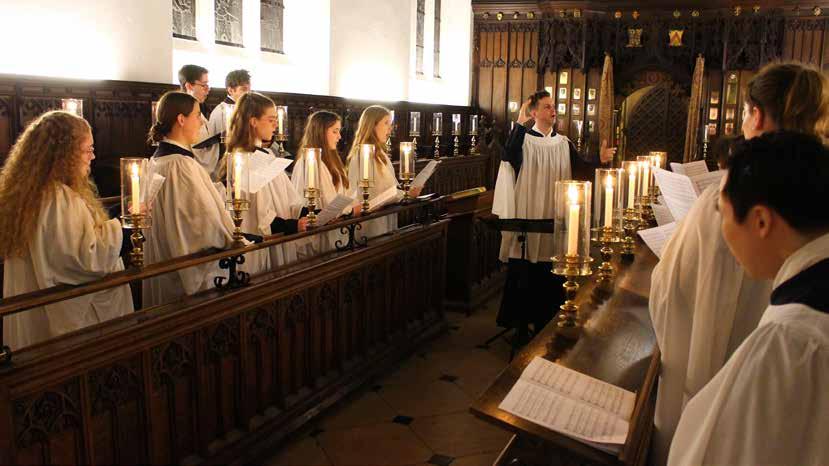
‘Nothing can add beauty to light.’ So Christopher Wren is supposed to have said.
Day by day, the College Chapel receives students, staff, Fellows and visitors who cross the threshold into its peace. Here you don’t need to explain yourself or be sure or be right. Here you are. The space around you captures the light, not in Classical style any more (most of the eighteenthcentury innovations were removed by the Victorians) but through neo-gothic stained glass. The high medieval roof looms above you, and below it the oak stalls gleam in the candlelight or the brasses glint in the sun. You know you need not add anything.
However, when there is neither sun nor a candlelit service, we are at a disadvantage. You can’t add beauty to light, but some light is needed to behold what is beautiful. The mid twentiethcentury fittings (eye-level fluorescent strips and bathroom globes) are neither beautiful nor, it has been said, especially light. They manage to be both stark and gloomy. So, after many comments from alumni and much squinting from the choir, the time has come to bring in more light, and to show the Chapel some love, for the sake of all those it serves.
No doubt Wren might have solved this by removing the coloured glass, but that’s not an option for us. Instead, after careful planning, overhead lights will be placed sensitively at the rafters for shadow and glare-free illumination. The lights will be set to welcome visitors, cheer a winter wedding or aid the candles at Evensong. Paramount in our minds has been the fact that we have a beautifully simple Chapel, and we want to keep it that way, so this is not a complicated reinvention. We will use light to help the building tell its story, with a subtle focus on some features – the organ, altar and icons – while diffuse, consistent light washes the space in warmth. Future-proofing has also been a key concern. Efficient LED lights sourced from trusted British and German firms will save energy and the quality fittings have a 50,000 hour/2030 year lifespan for a low-maintenance value-for-money scheme. Our designer, Benedict Cadbury of Lampholder Design, was part of the award-winning new lighting at King’s College and Ely Cathedral and has decades of experience in Cambridge chapels. It will cost about £40,000.
The College has planned redecoration and fire-safety work in Chapel this coming summer 2026. This is our chance to use scaffolding to make these long-overdue lighting improvements. Sadly this means that the Chapel will be closed from early July to the end of September. If this means it’s closed when you visit, please accept our apologies. Many alumni have kindly donated towards the lighting, so we hope you will come back to see the effect of your support. You can’t add beauty to light, but what our Members add to this place is beautiful. Your support for this scheme is not only for cables and bulbs, it is a vote of confidence in what the College is here for: to help our Members encounter beauty and inspiration, to shape students who are not only people who can acquire knowledge but who recognise beauty that cannot be added to or controlled. The light of the Chapel is here to remind the College of our call to wonder at invisible wisdom, wisdom that many find sitting in the space and community of the Chapel, wisdom, that, as the old hymn has it, is ‘unresting, unhasting and silent as light’.
JCR UPDATE
by Mr Samuel Barker (2024), JCR President
The newly elected JCR committee kicked off Lent Term by diving into their roles and responsibilities.
We began the term with the annual Magdalene-Magdalen Sports Day, where we hosted Magdalen College Oxford. This was organised by the Vice President, Esther, and I am pleased to report a Cambridge victory of 9–1. Sports day ended with a brilliant BOP organised by our Ents Officers, Niamh and Clara. We are all looking forward to the regal costumes for the Royal Court themed end of Lent BOP.
Our diversity officers, including the LGBTQ+, Access, Class Act, Women’s, BAME and Disabilities Officers, have hosted joint drop-in sessions in the College Café for our students to raise any issues they may have. Our Women’s Officer, Katy, has also been running a range of events for the 1988 Society, including feminist reading groups, a formal for International Women’s Day and film nights. She also worked with our Greens and Charities Officers, Maja and Tabby, on a bake sale supporting the breast cancer charity Cambridge Pink Week, raising over £80.
Our Access and Academic Officer, Thomas, has also successfully helped run the Cambridge SU Shadowing Scheme, supported by our Class Act Officer, Madeleine. LGBT+ History Month was commemorated by our LGBTQ+ Officer, Sam, who organised a live music night and collaborated with the Magdalene History Society to organise a talk on LGBT history in Cambridge.
Welfare has remained a priority for the JCR. Our Welfare Officers, Francis, Melanie and Isabella, prepared their Week 5 welfare packs, organised trips to Knoops for hot chocolate and hosted watch-alongs of The Apprentice every Thursday. They have also been working with College wellbeing support to run tea-at-three every Wednesday in the library.
Our international students have been supported by the International Officers, Neal and Lukas, through film nights and hotpot evenings. They have also been working with our Freshers’ Representatives, Anaya and Alex, as planning for Freshers’ Week begins. Anaya and Alex have also hosted the marriage formal for our first-year students to help build their College families.
The Treasurers, Zoe and Jennifer, have kept the JCR accounts running smoothly. Our IT Officer, Tai, has reorganised the JCR website and kept our mailing lists in good order. Returning students have chosen their rooms for next year through the annual rooms ballot, organised by our Catering and Accommodation Officer, Ceiri. Our weekly Magdazines have been written by our Secretary, Maaria who also takes minutes at every JCR meeting.
The end of term brings warmer weather and many more opportunities for events arranged by our dedicated committee. Although Easter Term offers fewer chances for large gatherings, the committee has already planned how they will support students through a demanding period of work. We are all particularly looking forward to our May Week plans and to enjoying the sunny city after so much hard work.
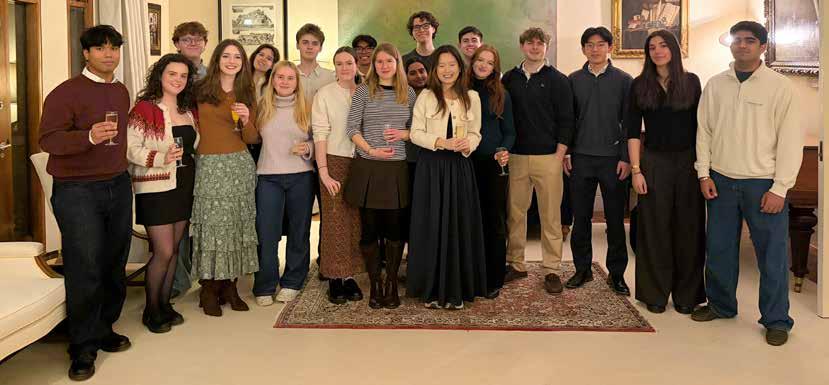
The JCR Committee.
MCR UPDATE
by Mr Joseph Cameron (2024), MCR President
Over the past year, our MCR here at Magdalene has continued to grow as a lively, welcoming, and closely connected postgraduate community. With a strong MCR committee of fourteen in place, we have been fortunate to build on solid foundations while also introducing new ideas and priorities.
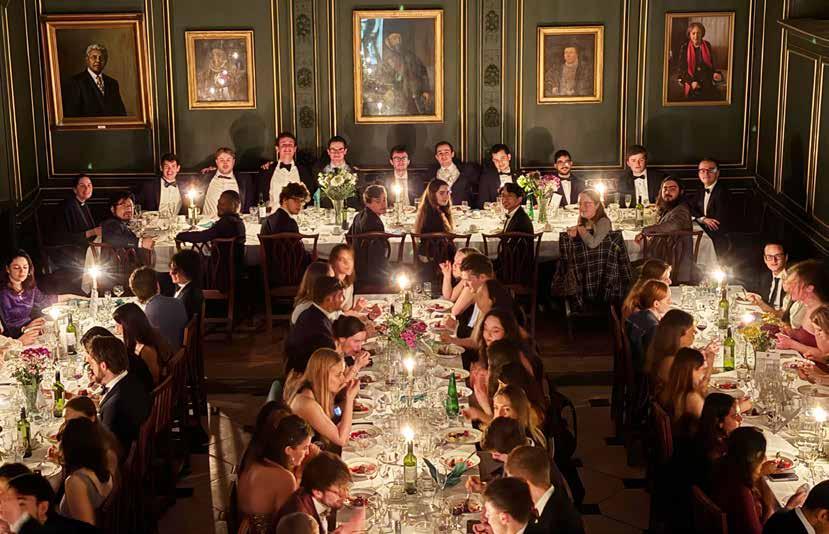
One of the highlights of the year was a wonderfully successful Christmas Banquet, which offered a magnificent moment of celebration at the end of term. Alongside this, the MCR has enjoyed several formal swaps with other Colleges, reinforcing the social traditions that are such a valued part of postgraduate life at Magdalene. We are now looking ahead to the Easter Banquet, which we hope will provide another opportunity for the community to come together.
A key focus this year has been wellbeing. In response to feedback from MCR members, we have expanded our programme of welfare-oriented events, including mindfulness and meditation sessions, informal coffee and pastries gatherings in the MCR, and group outings to the ADC Theatre. These quieter moments of connection have been just as important as larger social occasions.
Academically, the MCR has remained an active space for conversation and exchange. The Parlour Talks, run in collaboration with the SCR, have continued to bring together speakers and audiences from across disciplines. This year also saw the introduction of a postgraduate Academic Research Symposium, creating a new platform for members to share their work with one another in an open and supportive setting.
Collaboration across the various Magdalene departments has been another defining feature of the year. Working closely with the JCR and the Library, the MCR has helped organise joint events such as pre-BA formal drinks in the Robert Cripps Gallery, reflecting the strong sense of community that connects Magdalene students at every stage.
Looking beyond Cambridge, we are also in the process of establishing what we hope will become an annual formal swap with our sister College, Magdalen College Oxford, strengthening ties between our two institutions.
As the year continues, I would like to thank the MCR committee for their energy, generosity, and commitment, and the wider MCR for helping to make Magdalene such a rewarding place to live and work.
MCR Easter Banquet.
from paper airplanes to principles: A BOOK BORN AT COLLEGE
by Mr Alex Schultz (2000), Pepys Benefactor Fellow, CMO Meta
My marketing career started here at College, quite literally paying the bills.
While studying Natural Sciences, I built websites about paper airplanes and cocktail recipes, learned the dark arts of SEO, and made money through Google AdSense. That paper airplane hobby led to a book that sold tens of thousands of copies through Marks & Spencer. So when I say this book is written in the spirit of our College’s educational tradition, I mean it started in these very buildings.
Two decades later, having built and led marketing and analytics at Meta, I’ve had the privilege of teaching at Stanford, Wharton, London Business School, Nanyang, and others (the Judge is being scheduled). Imperial now uses my book as a textbook, and Harvard Business School is publishing a teaching case study based on it. But I didn't write this book for academics alone. I wrote it because I kept seeing the same problems whether I was advising a Fortune 500 CMO or mentoring a founder in their garage.
The book rests on two tenets I’ve learned the hard way:
First, tools change, principles are timeless. When I started, we optimised for AltaVista. Then Google. Then Facebook. Now it's AI and machine learning. The specific platforms will keep changing, they always do, but the fundamentals of reaching the right people with the right message and measuring the impact? Those haven’t changed since David Ogilvy was in short trousers. If you understand the principles, you can adapt to any channel.
Second, incrementality is everything. The question isn’t “did we make sales?” but “did we make sales that wouldn’t have happened otherwise?” This means experiments, control groups, and a healthy skepticism of attribution reports that claim credit for customers who were buying anyway. Studying Natural Sciences at Cambridge taught me how to run proper experiments and interpret results. That scientific training has shaped everything about how I approach
measurement. It also drives how I approach my life, things need to change because I showed up, I put too much of my life into work to just collect a paycheck. I want to make a difference.
I wrote this for two audiences: marketers expanding their skills to new channels, perhaps moving from offline to digital or adding product led growth to their toolkit, and business leaders who don't do marketing themselves but need to leverage it effectively. Whether you’re a CMO or a CEO who just needs to ask smarter questions of your CMO, I wanted this to be useful.
The results have been humbling. Over 30,000 copies sold. Translations into seven languages, including Bahasa. The publisher is pleased. Meta is pleased. But what pleases me most is that all proceeds go into a donor advised fund for charity. The first money is going to Addey’s and Stanhope School in Deptford, where my mum went to school, and further contributions will come back to the College.
It feels fitting, somehow. What I learned here shaped everything that followed. This book is my attempt to pass that on.


Mr Alex Schultz
Upcoming Events
26 September 10th, 25th and 50th Anniversary Reunion Dinner for 2016, 2001 and 1976 matriculands
16 October
NRM Night
7 November
NRM Night 17 November San Francisco Dinner
20 November New York Dinner
21 November Washington DC Dinner
27 November
NRM Night
@magdalene
@magdalene
@magdalene.cam
@magdalenecollege.bsky.social
@magdalene-college
Alumni and Development Office
Magdalene College Cambridge CB3 0AG
E alumni@magd.cam.ac.uk
T +44 (0)1223 332104
4 December
Annual Carol Concert in London
5 December
Benefactors’ Event: Festive Drinks with the Master
5 December
Master’s Guild Dinner
The above events may be subject to change. Additional events may be added; please check www.magd.cam.ac.uk/events and look out for updated listings in Magdalene eMatters. If you are interested in attending an event or would like additional information, please email events@magd.cam.ac.uk