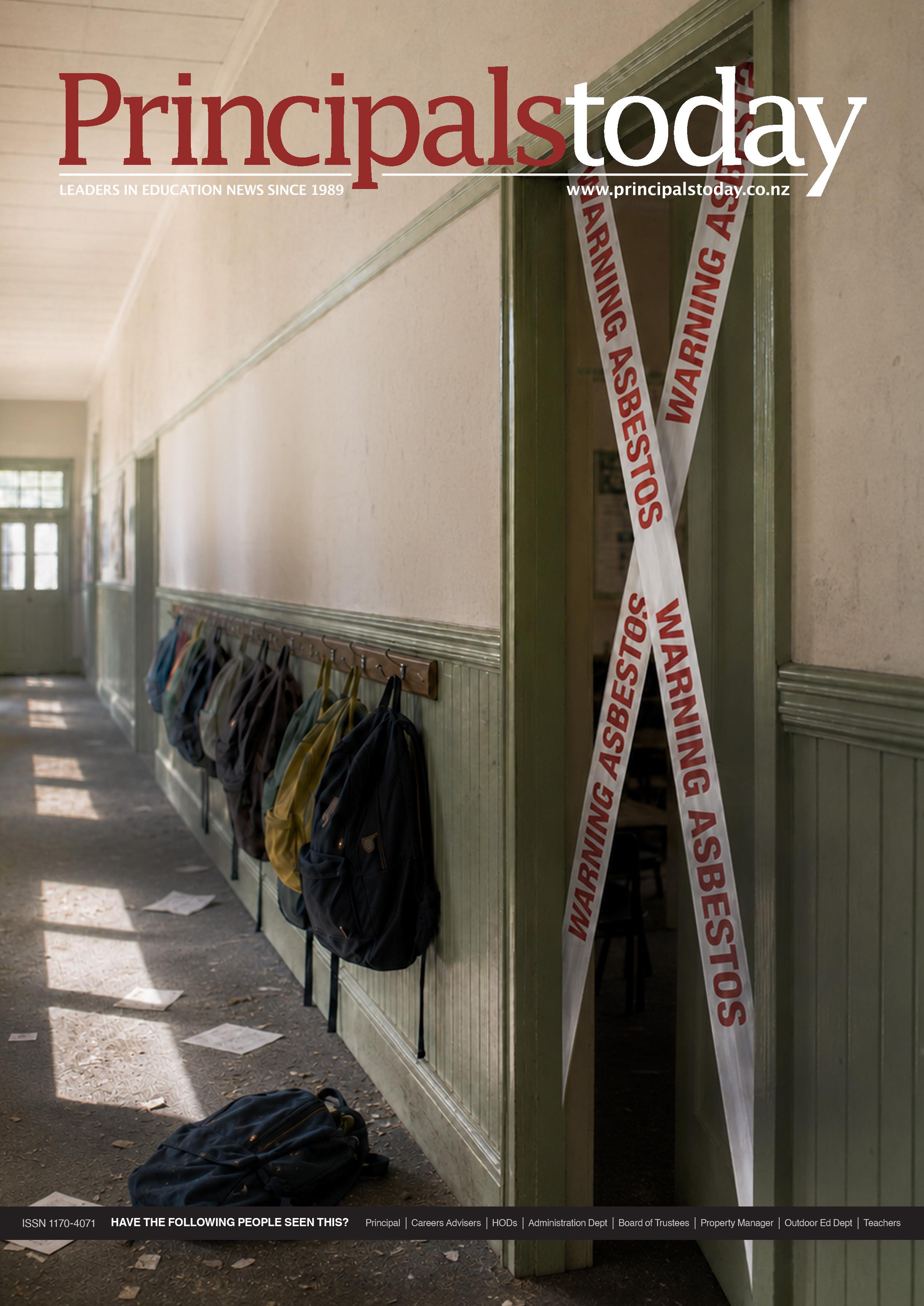
Clearing the air
Asbestos in schools, one year on
What replaces it from 2028
The power of the performing arts
A hard look at looksmaxxing
Singapore approves caning bullies

Asbestos in schools, one year on
What replaces it from 2028
The power of the performing arts
A hard look at looksmaxxing
Singapore approves caning bullies
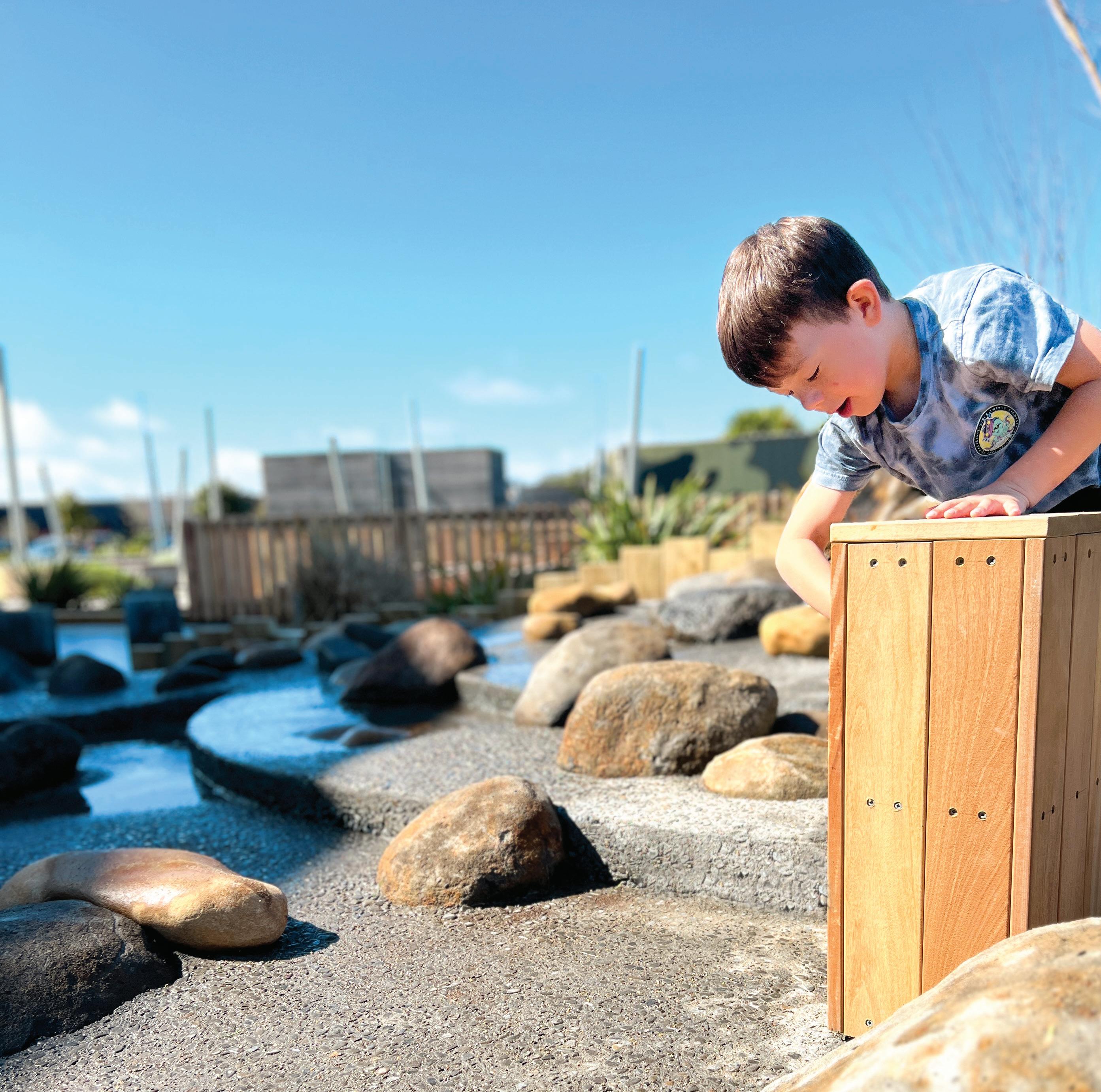
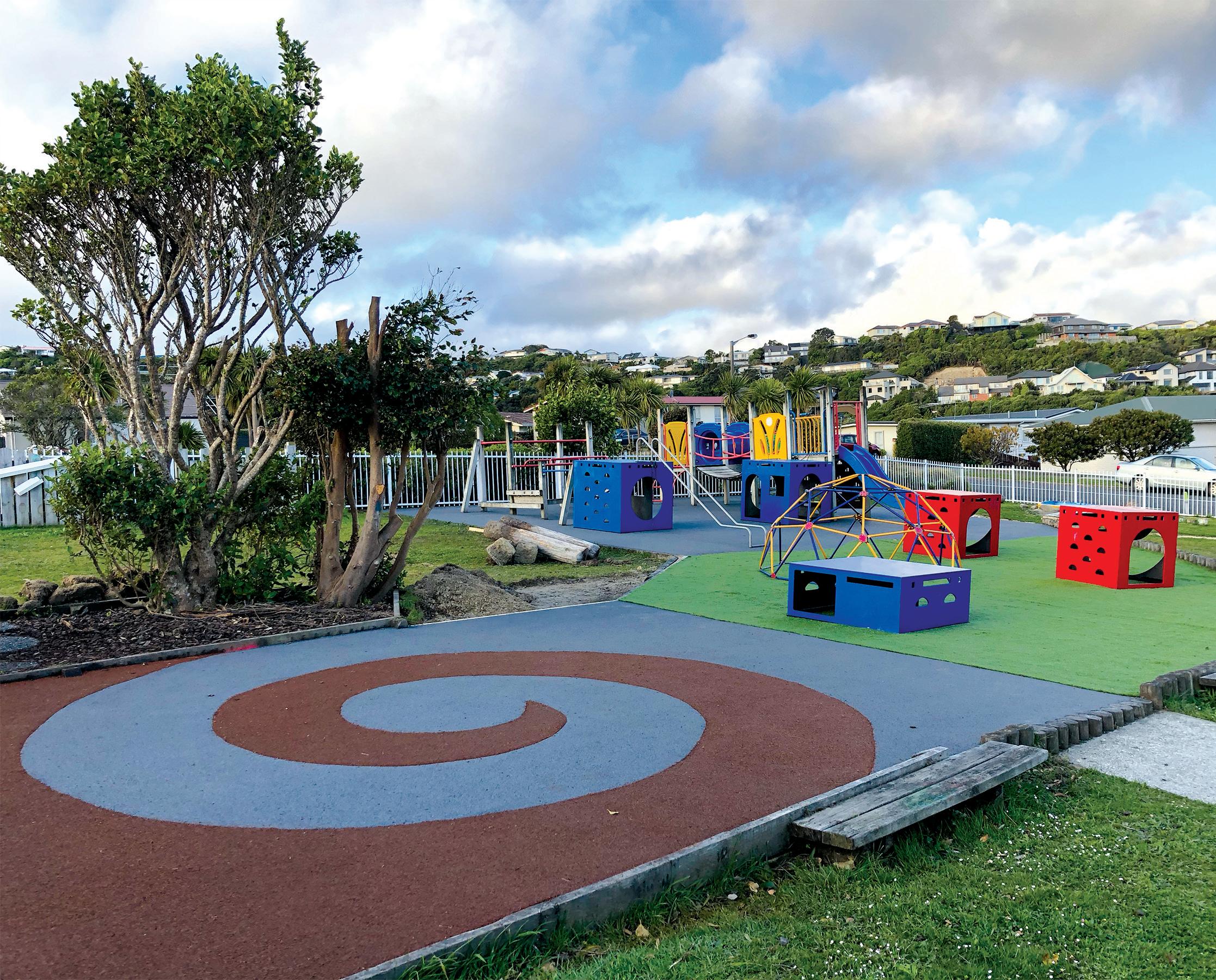
We create playgrounds and outdoor learning environments where curiosity, imagination, and adventure come to life. Explore our past creations at www.playscape.co.nz





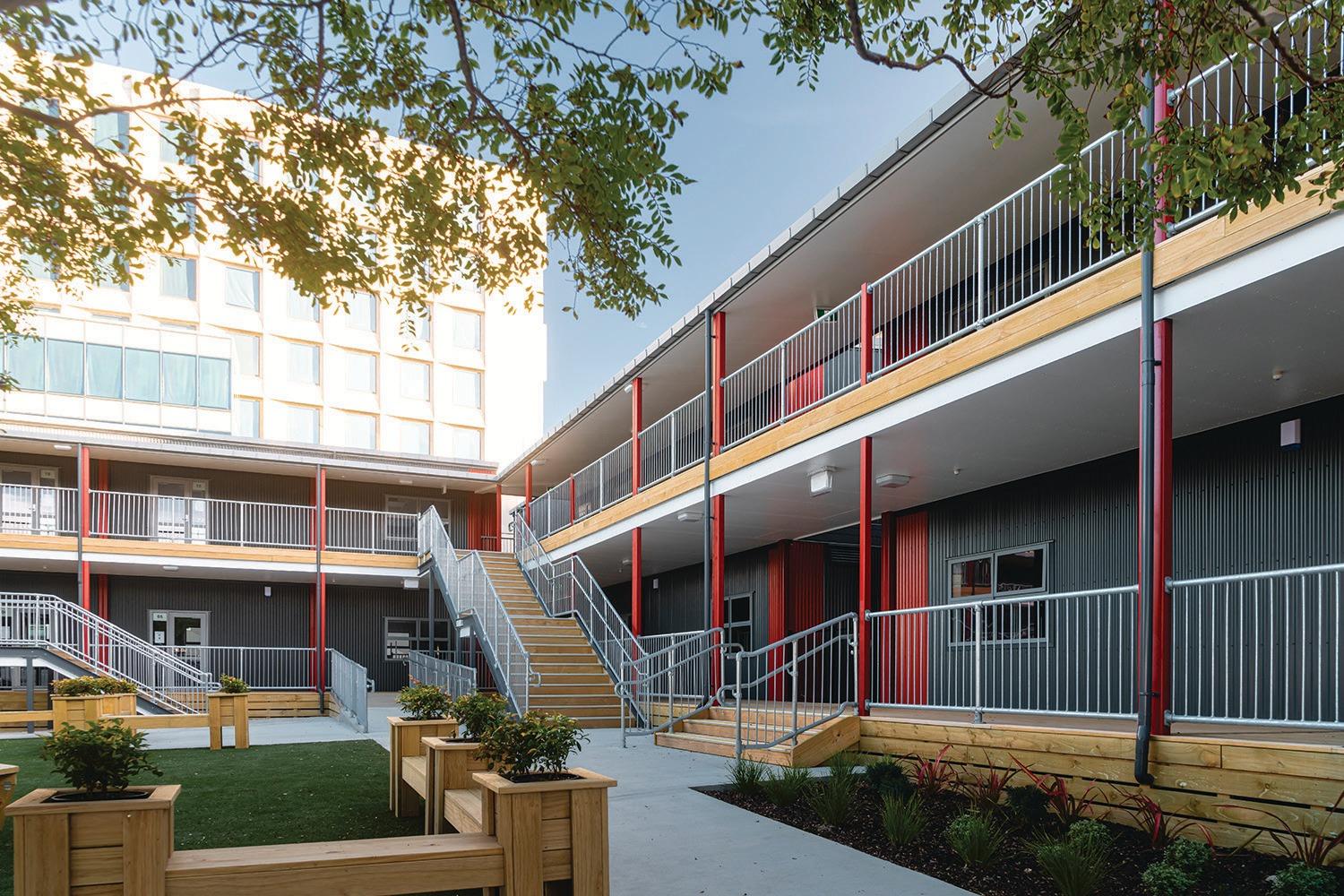
• Project Management: from project conception through to completion specializing in the Education sector
SERVICES
• Design & Build (Full turnkey Classroom Solutions - New Build & Refurbishment)
• Coordination experience with Ministry of Education
• Full-service Project Management, Planning & Compliance
• Inhouse Design team: with experience in Master Planning, concept design, architectural design, full design packages for development approvals and Council submissions.
• Dedicated team of design consultants
• Niche in-house construction team
• Niche Group companies: Engineering, Manufacturing, Plumbing & Drainage, Windows & Doors, Wall & Truss fabrication, Concrete construction.
0800 1NICHE | enquiries@nichemodular.co.nz | www.nichemodular.co.nz 8


For most of the past year, asbestos stopped being a problem schools could leave in the walls and forget. Instead, it turned up in the sandpit. As play sand triggered nationwide testing and an $8 million clean-up scheme, the rules were shifting underneath it. Since 1 April, schools can use only Ministry-accredited suppliers for asbestos work. PT looks at what’s settled, what hasn’t, and the checks worth making.
32 2026 Rockquest amps up
And the case for co-curricular music
36 One reform slows, another accelerates
The curriculum pause and Teaching Council shake-up
40 The end of NCEA
The $131.3m package and what’s replacing NCEA
Schools are constantly adapting, but many of the biggest challenges today extend well beyond the classroom. In this issue, we revisit asbestos in schools one year after contaminated play sand prompted a nationwide response, what’s changed and what schools must now do.
Education reform also takes centre stage in our Term 3 issue as we unpack the end of NCEA, the Government’s replacement plans from 2028, and the major curriculum changes reshaping teaching.
Student wellbeing is another key theme, with features on screen use and executive function, the rise of online looksmaxxing culture among teen boys, and the growing cost of school formals.
There’s plenty to celebrate too, from the enduring value of Rockquest and the New Zealand School of Dance to the inaugural New Zealand Education Excellence Awards. We also explore school cybersecurity, new research supporting autistic readers, and Singapore’s controversial approach to tackling school bullying. Enjoy.

The team at
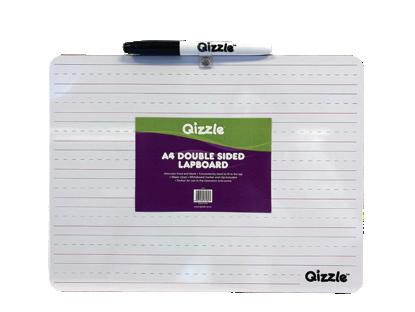
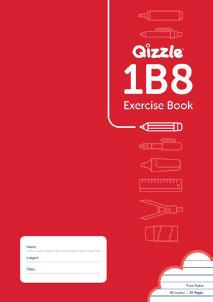
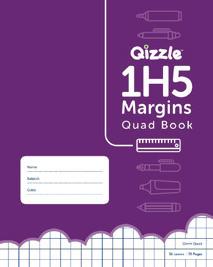
…that your admin, teachers and parents will love!
4.9 Google Reviews
“So glad my kids’ school used Qizzle.”
“Also it’s great quality stationery and cheap. Like, super cheap.”
“The website made it easy.”
“Convenient, quick delivery and good quality.”
“An easy way to get things sorted.”










80 The rising cost of school formals
Why seniors aren’t having a ball
84 Students embrace the art of dance
New Zealand School of Dance’s Paula Steeds-Huston
92 Helping students find their voice
Kids Voting and election year learning

BY PLUM B O B
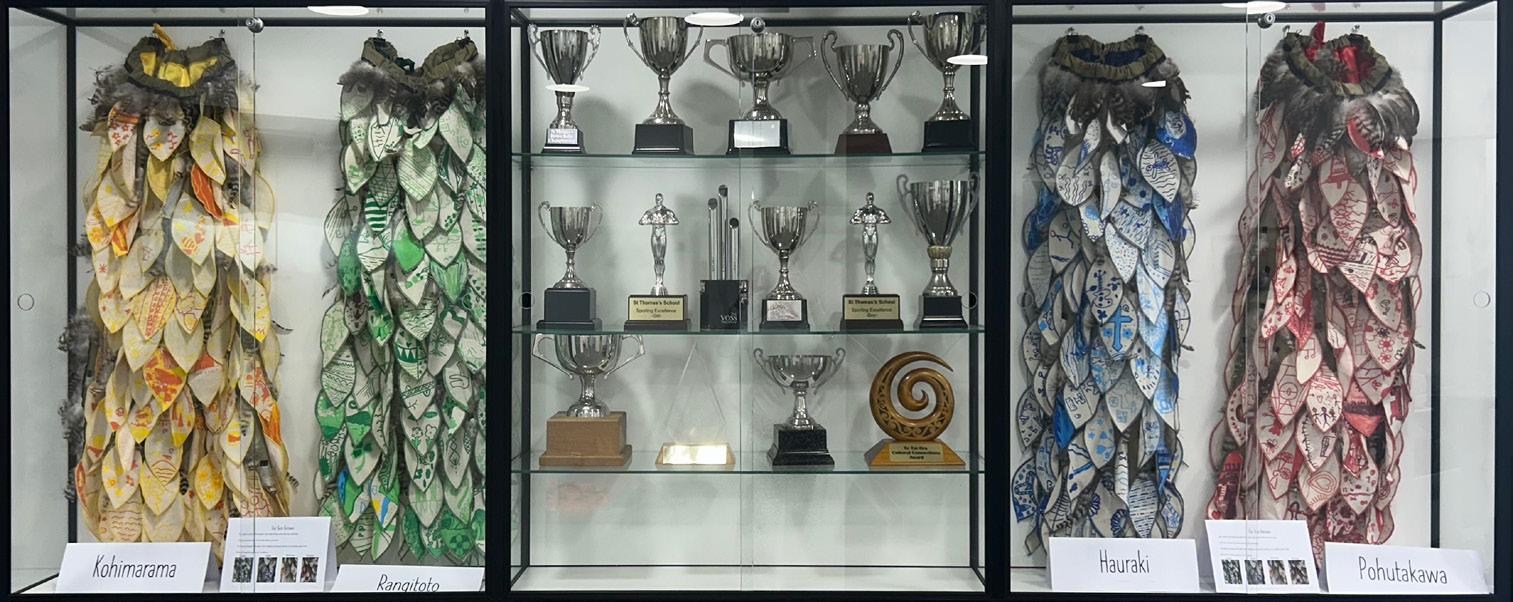
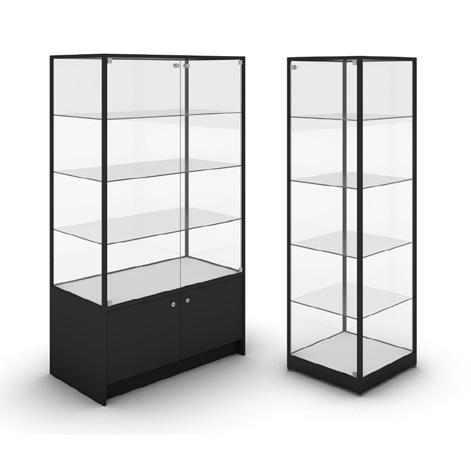
Our premium glass display cases feature the slimmest joinery available to enhance your viewing potential. All cases come fully assembled with lockable glass doors and adjustable shelves.
Joinery colour and LED strip lighting options are available for all models, so you can customise the look and feel of your display.


ü NZ designed & manufactured
ü Delivered fully assembled
ü Customisable to your needs
ü Nationwide delivery


SHOP / SERVICES
New Electric Boilers
High Voltage
Electrode Boiler
Boiler Parts & Service
Hire Boilers
Low Emission Boilers
Technical Specs
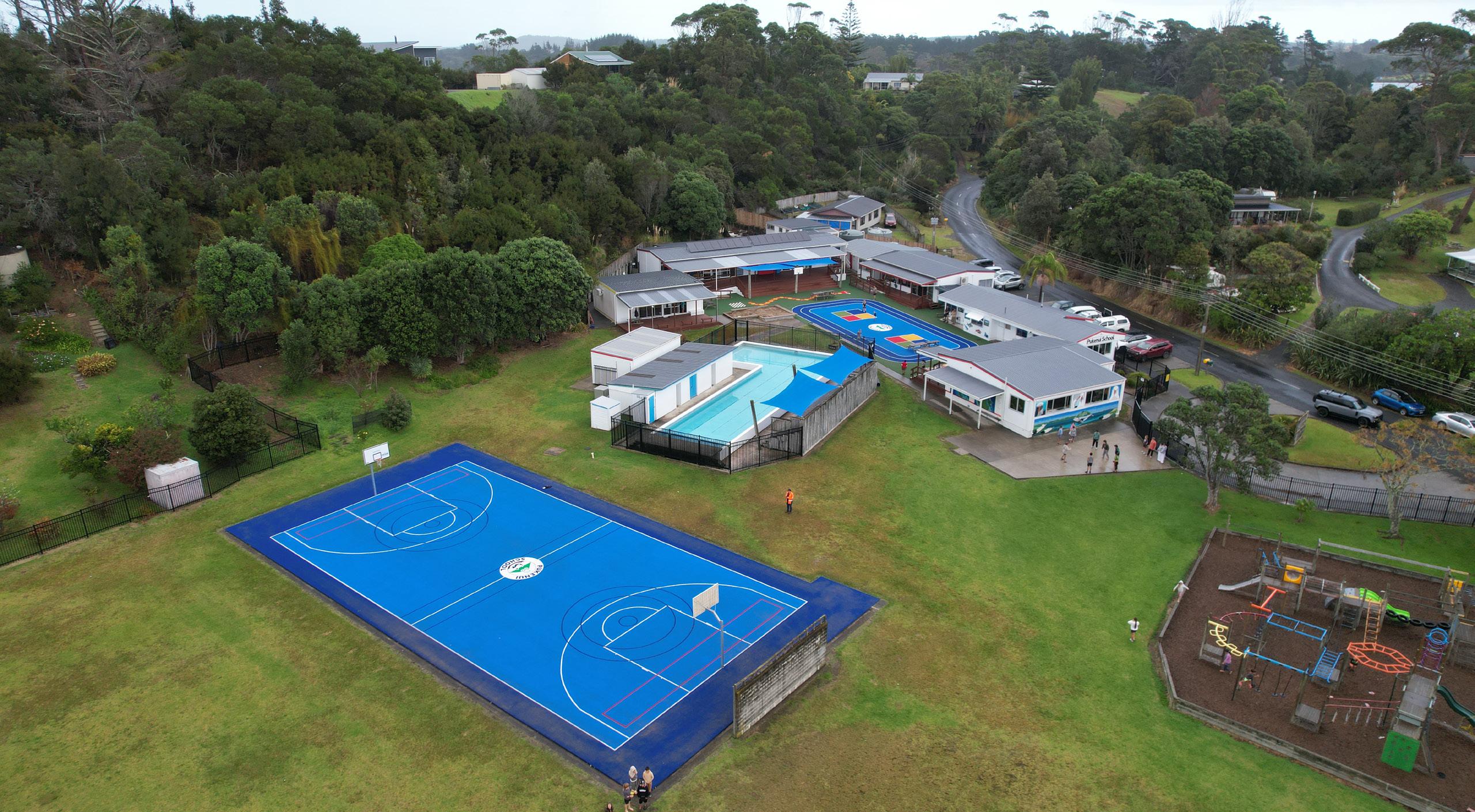
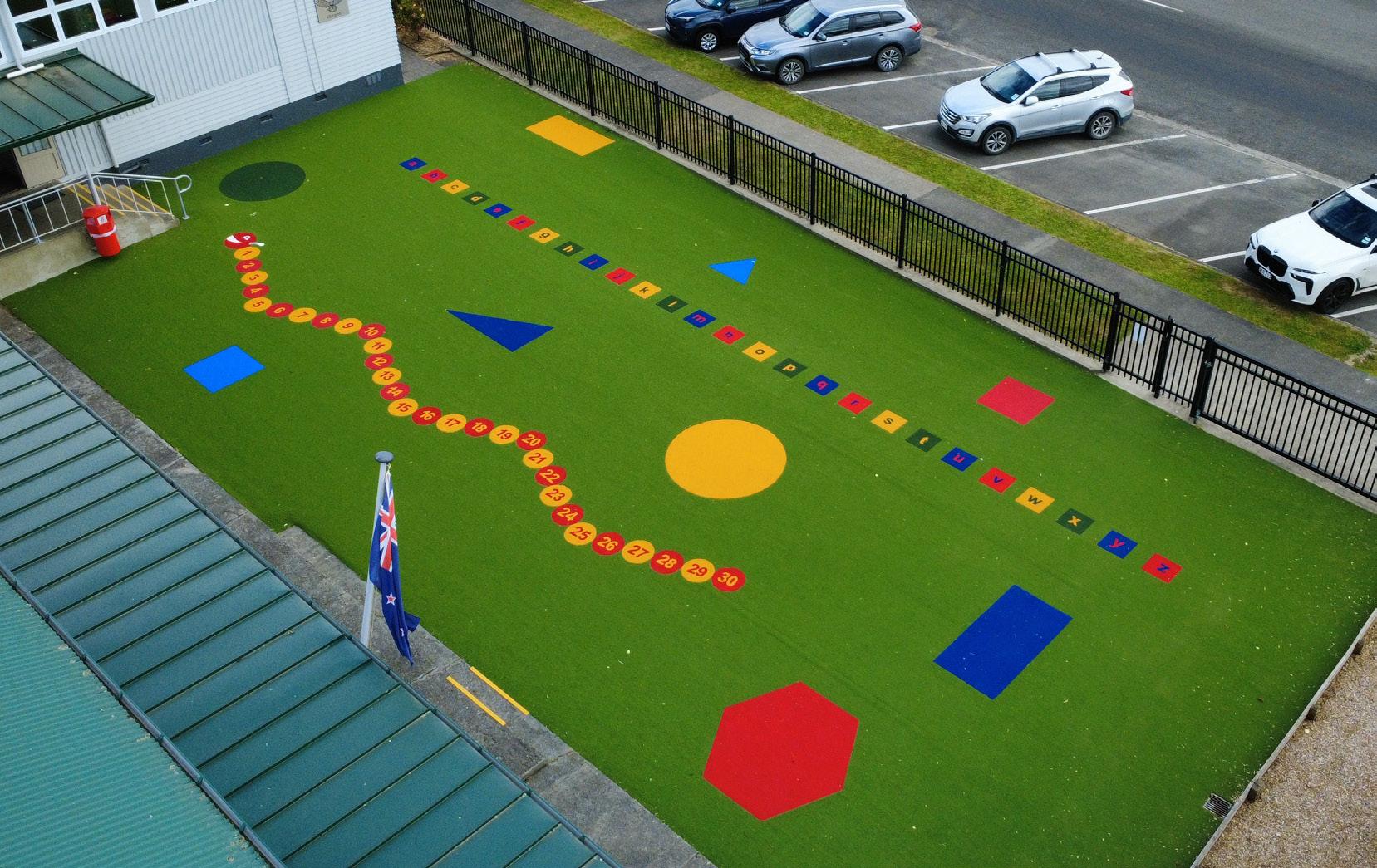
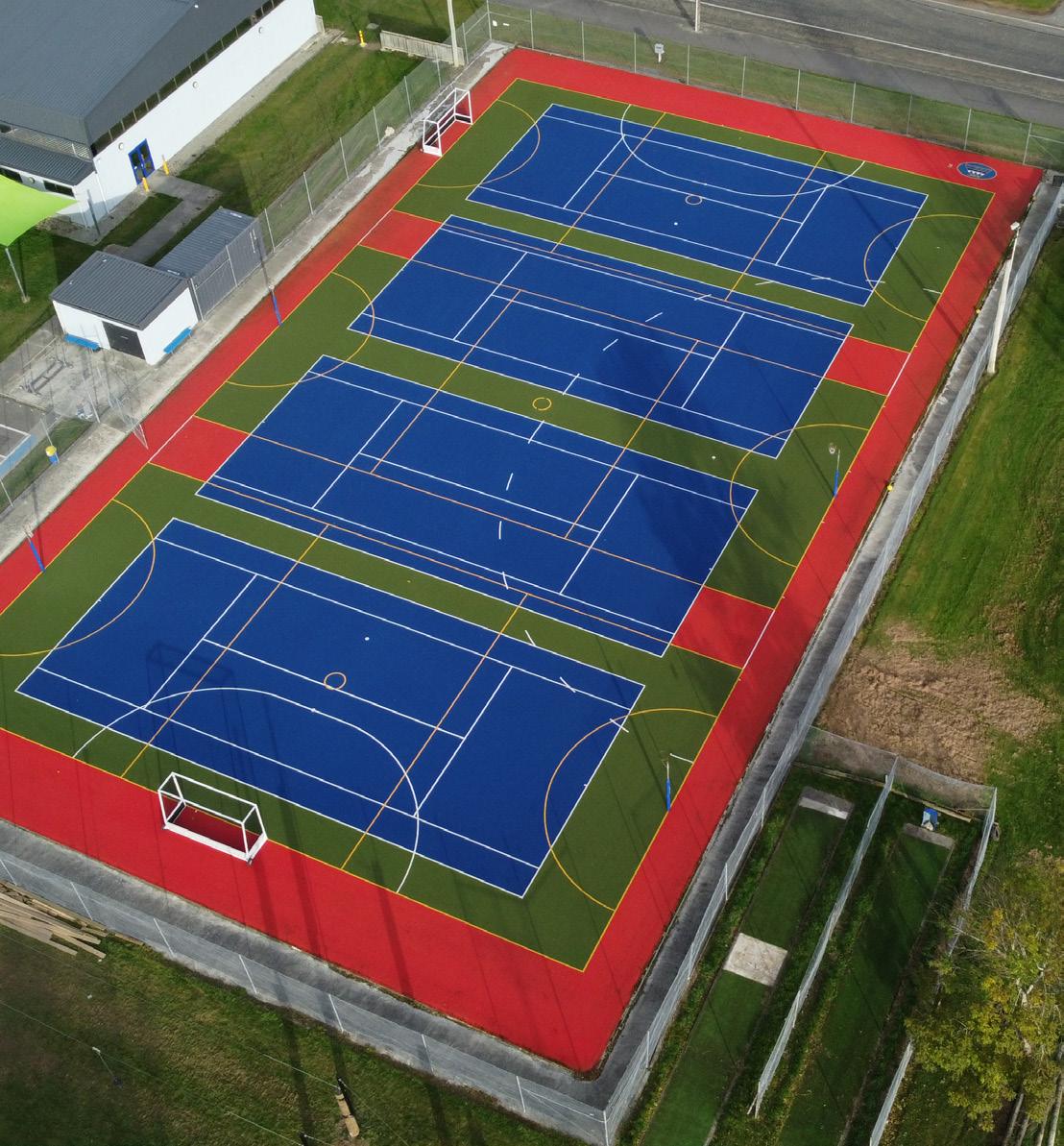
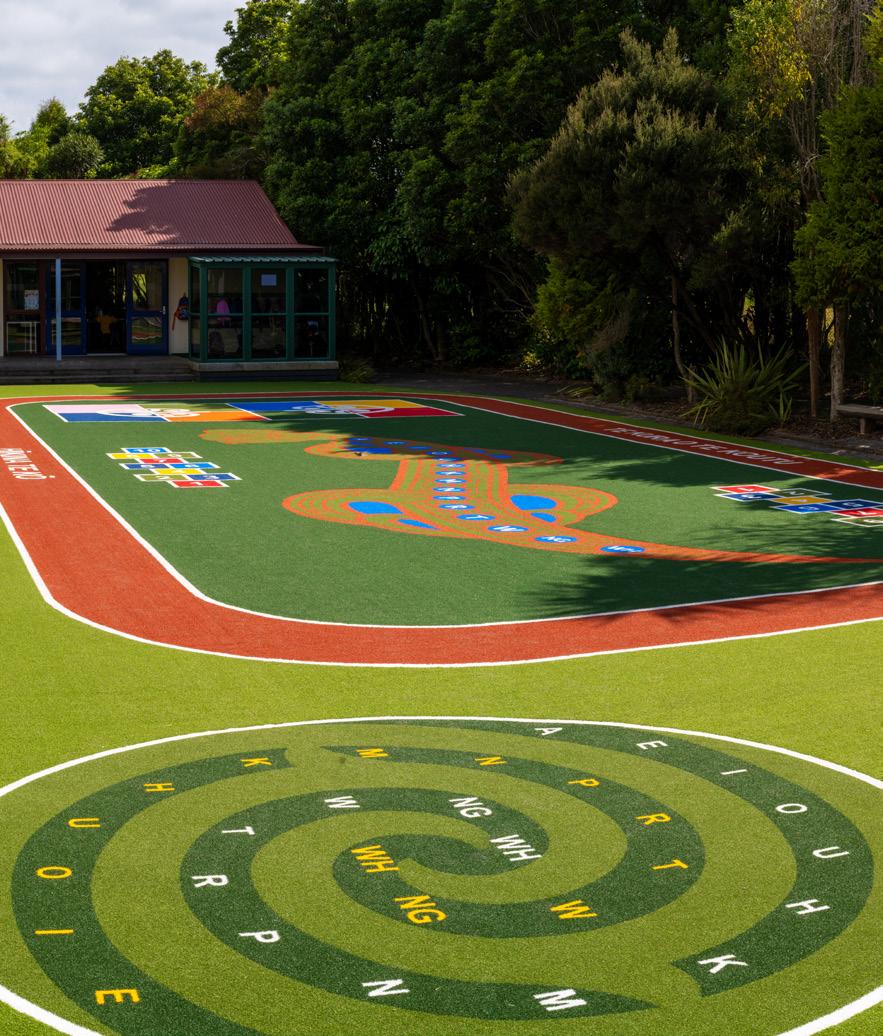
Pukenui School in Northland set out to upgrade its outdoor spaces with the aim of creating practical, inclusive areas that could support both sport and everyday play.
Pukenui School partnered with TigerTurf to transform its outdoor recreation areas, creating a new multicourt and courtyard games area spanning nearly 1,200m². Designed to support both structured sport and everyday play, the project delivers versatile spaces that cater to the needs of a busy primary school environment
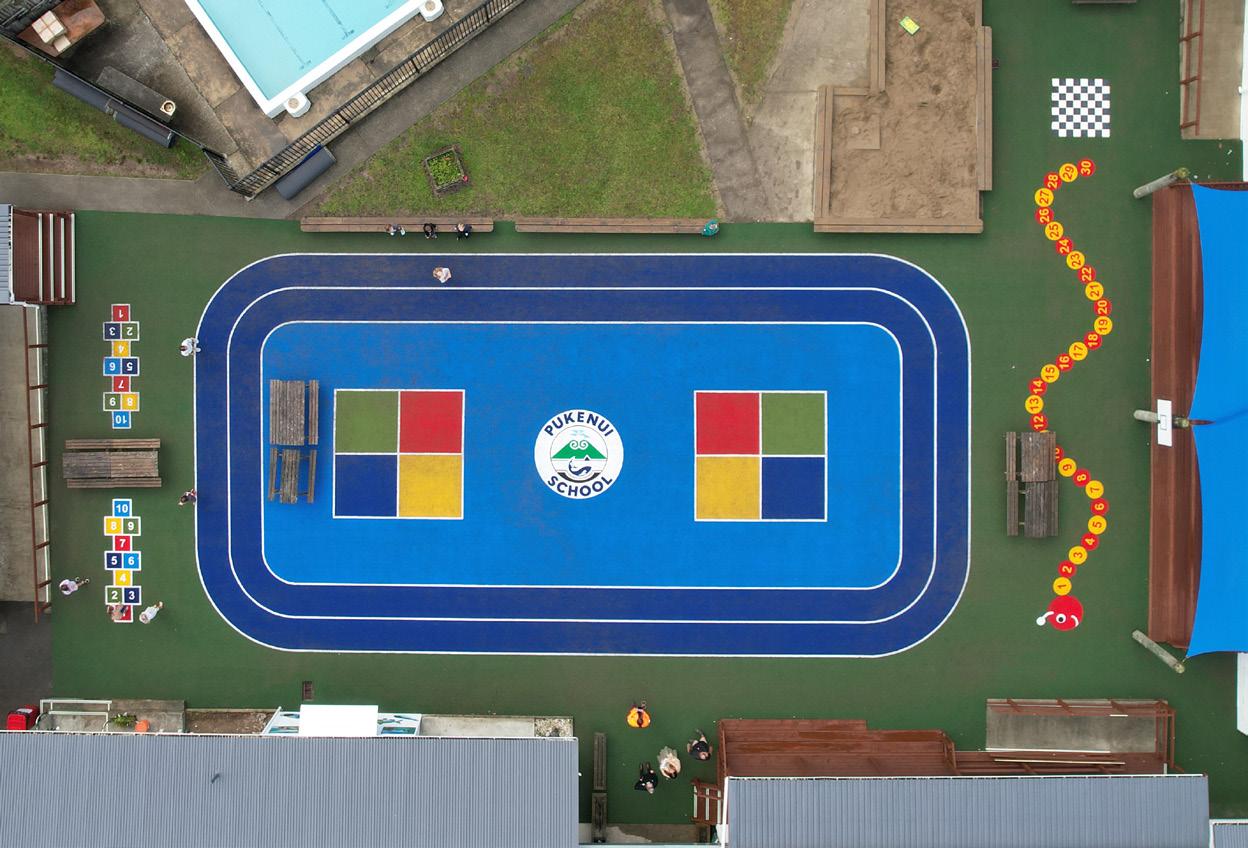
The 672m² multicourt accommodates activities such as basketball, Turbo Touch and Tapu Ae, while the 522m² courtyard games area encourages active play and learning through interactive markings. Installed over a concrete base and finished with TigerTurf’s Trophy surface, both areas were designed to provide long-term durability and consistent performance.
A key focus of the project was creating spaces that could be used by different year groups throughout the day. By carefully considering how students would interact with each area, the design balances organised sport, free play and
educational activities within a cohesive outdoor setting, ensuring the spaces remain relevant and well utilised throughout the school week.
Colour was used to clearly define each space, with a two-tone blue multicourt complemented by a courtyard featuring a dark green perimeter and two-tone blue running track. The contrasting colours help guide activity, improve visibility and create a vibrant environment that complements the wider school grounds. Completed in April 2026, the installation included detailed line markings and custom SignGrass school logos, creating strong focal points and reinforcing school pride. The Trophy surface was selected for its ability to support crisp, permanent markings while maintaining a smooth and durable finish suitable for daily use. The courtyard incorporates a running track, number caterpillar, arithmetic butterfly, number scotch layouts and four-square courts, providing opportunities for both learning and recreation. Meanwhile, the multicourt features markings for basketball, Turbo Touch and Tapu Ae, giving teachers the flexibility to deliver a variety
of sporting activities within a single space. Since completion, the new facilities have become a valued part of daily school life, providing students with engaging spaces for physical activity, teamwork and learning through play.
“Working with TigerTurf was an outstanding experience from start to finish. From the initial planning stages through to installation, the team was professional, communicative and highly respectful of our school environment The completed project has completely transformed our outdoor spaces, creating vibrant, engaging areas that provide significantly more opportunities for both
structured sport and everyday play. The students absolutely love the new courts and have embraced the running track, games markings and sports areas from day one. The quality of the installation, combined with the custom school emblem and modern design, has enhanced the look of our school and created a real sense of pride throughout our community.”
Ruahine
Smith, Principal
Check out our Youtube channel for the latest news and projects


With a range of flexible options to suit any school’s requirements TigerTurf is your perfect sporting partner
Sports and recreation is high on the curriculum, teaching new skills, to be active, about health and fitness. Sport teaches strategy and planning, about being a team player, it exposes children to winning and whatever the sport, whatever the weather, TigerTurf’s versatile synthetic turf sports surfaces are the best place to play.
Providing the best possible sports facilities will inspire students, with the passion to participate in outdoor activities and encourage them to keep coming back. TigerTurf’s synthetic turf surfaces are the perfect foundation on which to develop the passion, the skills, the talents of tomorrow’s athletes.


Save 15% when you sign up for regular cleans!
The floor they sit on should be the cleanest surface in the school
Healthier classrooms start from the ground up. Fast-drying, low-chemical cleaning that's safe for little ones and ready the same day. Book in for the holidays - limited space available.




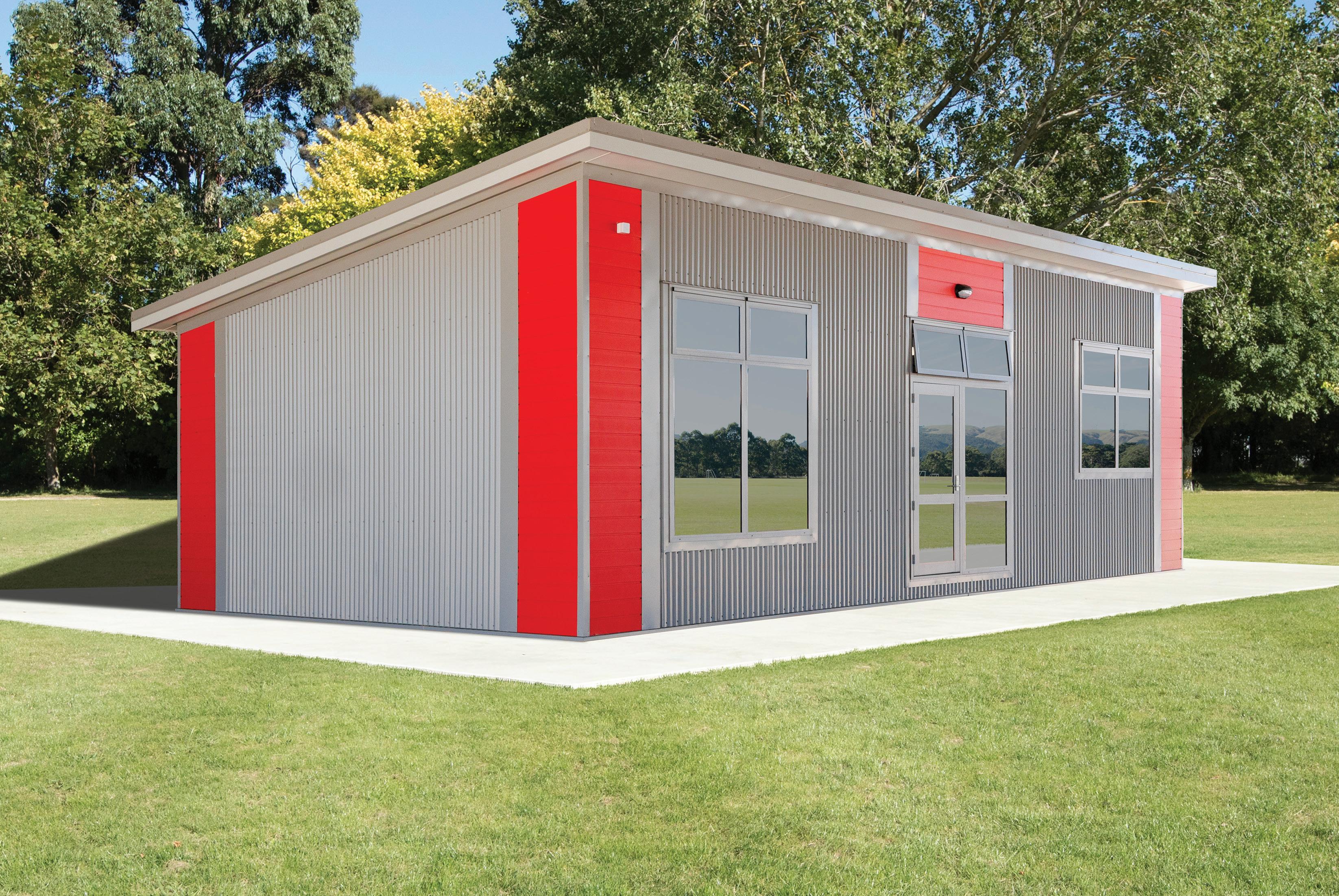
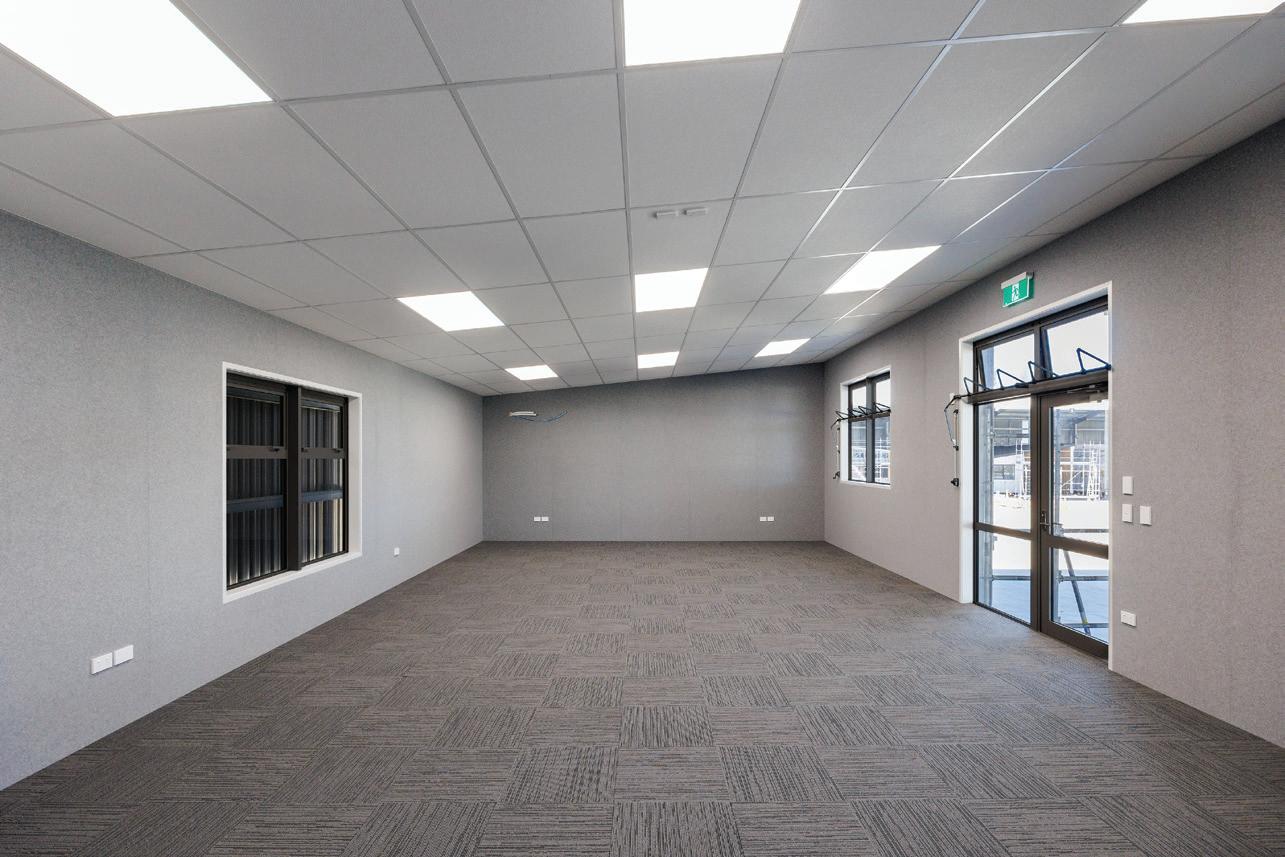
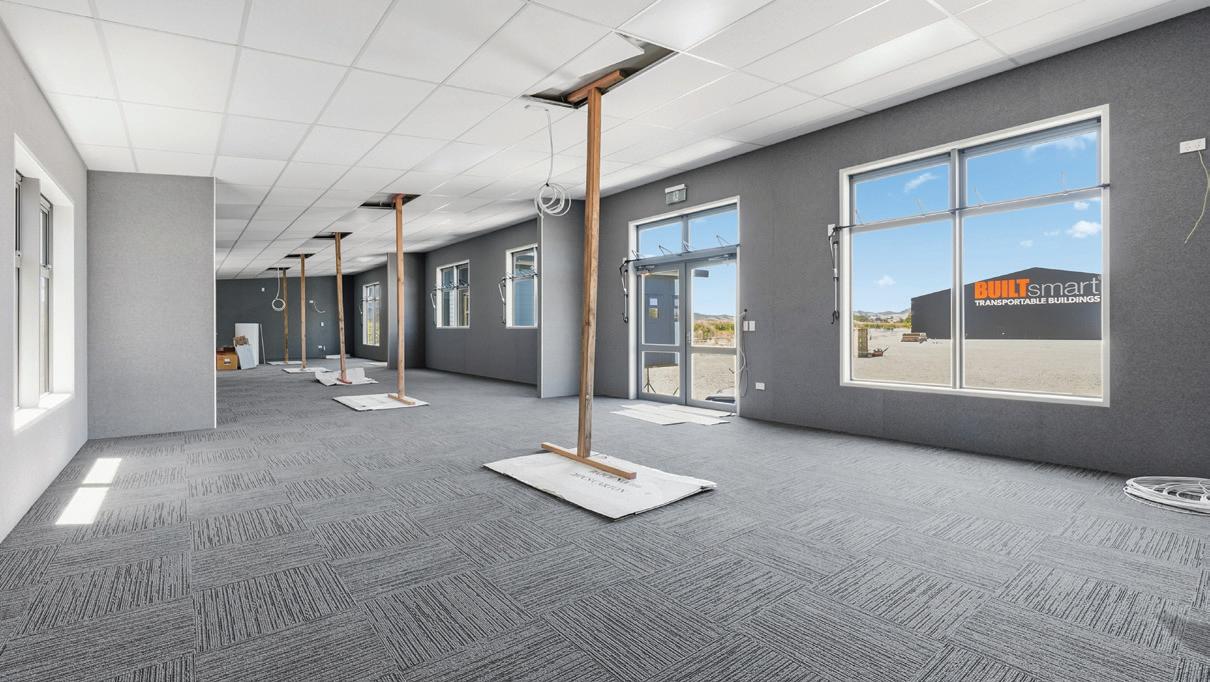
This well-designed 140m² and 70m2 building offers a robust, quiet, and comfortable environment suitable for education, training, offices, health, or community use. Built to a high specification, it balances long-term durability with occupant comfort and operational efficiency.
Internally, the building features full Autex acoustic wall linings, significantly reducing both internal reverberation and external noise intrusion. This
creates a calm, controlled environment ideal for learning, focused work, or consultation spaces. Climate control is handled by two independent heat pumps, allowing zoning and consistent comfort year-round.
Structurally, the building has been designed with enhanced exterior wall support, providing excellent rigidity and resilience.
The raking ceiling delivers a minimum internal height of 2.6m, rising to just under 3.0m, giving the space an open, modern feel while improving natural air movement and light distribution.
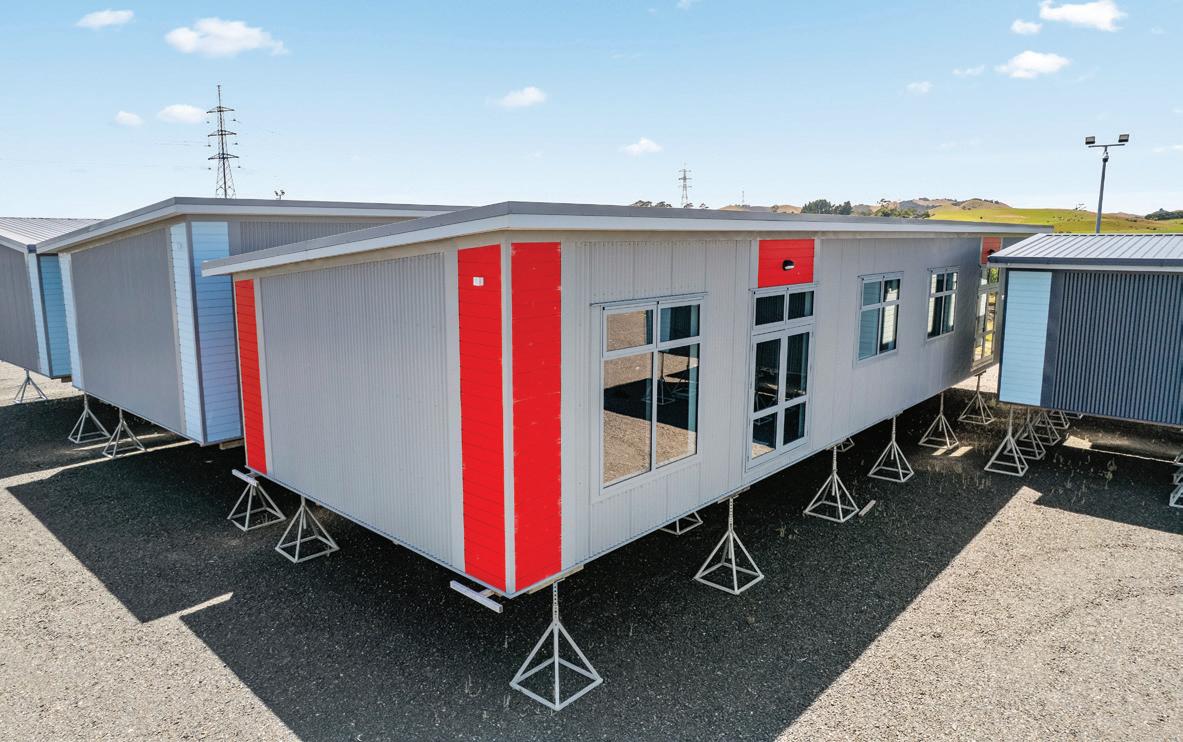
Externally, the building is clad in 0.55mm corrugated steel, selected for strength, weather resistance, and minimal ongoing maintenance. Two 900mm wide, threshold-level entry doors provide easy access and compliance-friendly entry for high-traffic or accessibilityfocused uses.

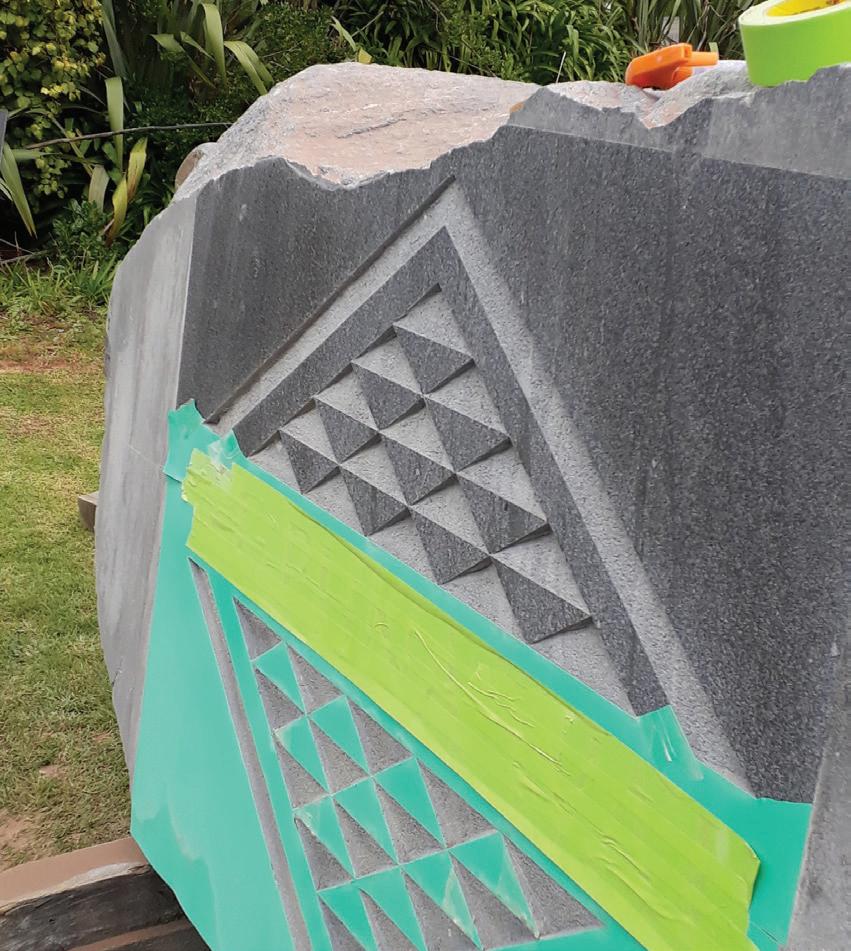
Taranaki-owned and operated, Headstones Taranaki are a compassionate and professional service dedicated to helping families create meaningful, lasting tributes for their loved ones. With a strong focus on quality workmanship and personal care, the team understands the importance of honouring a life in a way that feels both respectful and enduring.
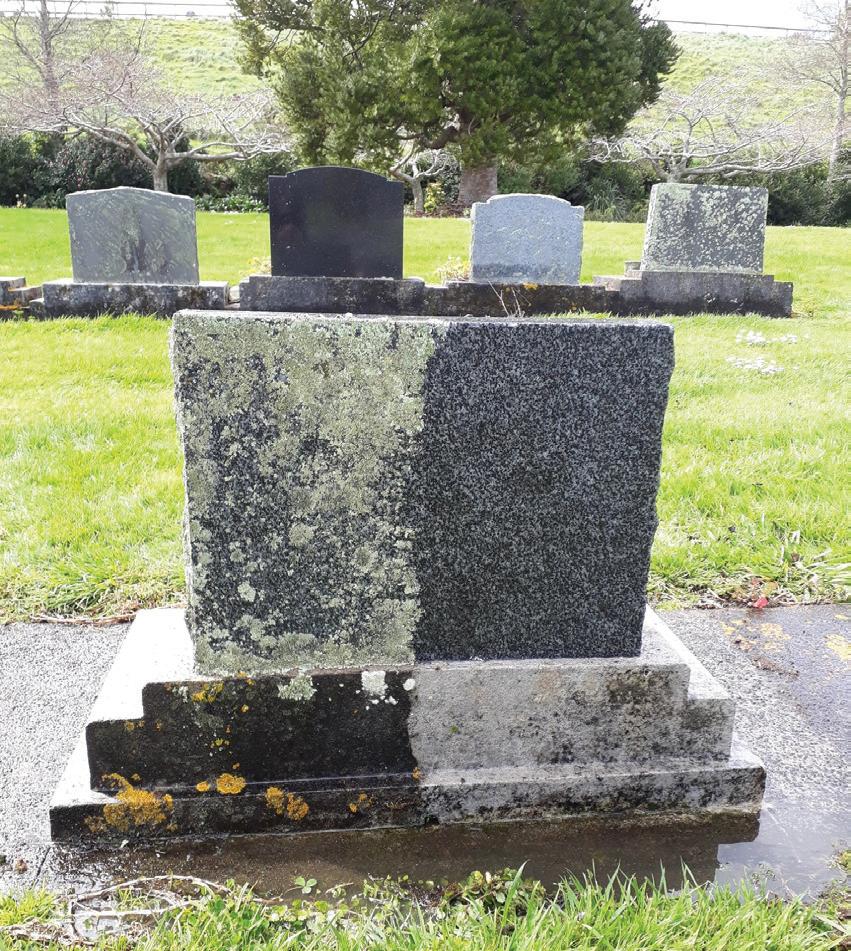
Specialising in new headstones as well as the restoration of existing memorials, Headstones Taranaki offers a wide range of services to meet individual needs. Whether families are looking to design a brand-new memorial or breathe new life into an older headstone, the team brings skill, attention to detail, and sensitivity to every project.
Their restoration services include cleaning, repainting, and second inscriptions, ensuring that ageing memorials are carefully refreshed while preserving their
original character. This allows families to maintain and honour existing sites for generations to come. For those seeking something more personalised, Headstones Taranaki also offers custom stonework and unique memorial designs, working closely with clients to create something truly special.
Every memorial is crafted with care, recognising that each piece represents a deeply personal story. The team takes pride in guiding families through the process, offering support and understanding
during what can often be a difficult time.
With a reputation for reliability and thoughtful service across the region, Headstones Taranaki is committed to delivering highquality results that stand the test of time. Their combination of

experience, craftsmanship, and genuine care ensures that every memorial is a fitting tribute.
For families in Taranaki looking to honour and remember loved ones, Headstones Taranaki are a trusted, local service dedicated to creating memorials that will be cherished for years to come.

By Ben O’Connell

For most of the past year, asbestos has not been a problem schools could leave in the walls and forget. It arrived in the sandpit. From late 2025, coloured and “rainbow” play sand sold to schools and early learning services was found to contain the naturally occurring asbestos tremolite triggering product recalls and a scramble of testing, closures and clean-ups. Around two dozen schools shut their gates at least briefly; close to 170 sought advice from the Ministry of Education. It was an unusually public reminder of a risk that sits in a large share of the country’s classrooms.
The year asbestos went to the sandpit
The sand saga was costly as well as alarming. The Ministry told schools and centres that, legally, the responsibility for funding removal and make-good sat with them. It later set up a support scheme, with around $8 million available for costs that insurers would not cover, and has so far approved about $1.4 million in one-off grants to 65 schools. Not everyone was covered: of 127 schools that applied, roughly half were turned down, many because they were seeking
reimbursement for asbestos testing, which the grants did not fund. Individual bills ran from a few thousand dollars to more than $100,000, with one school facing an estimated $350,000. The episode was specific to a contaminated consumer product, but it exposed how quickly an asbestos incident can consume a school’s time, money and goodwill.
Why it’s in so many schools at all
The reason asbestos keeps surfacing is structural. The
Ministry’s property portfolio runs to more than 16,000 buildings and around 36,500 teaching spaces, and roughly a third of it is over 50 years old. Many buildings constructed before the 1990s contain asbestos materials, which are safe while undisturbed but hazardous when broken, drilled or disturbed during maintenance, refurbishment or demolition. That is why every school is required to hold an asbestos management plan identifying where the material is and how it will be handled. Education Minister Erica Stanford has framed the wider push in plain terms, that the portfolio must be managed so students can learn in environments that are “safe, warm and dry.”
The part that isn’t settled
Not everything is tightening in the same direction, and that has unsettled some in the field. As
“A watered-down system” is the wrong direction, asbestosindustry leaders warn — communities need the assurance a code of practice provides.
schools move to accredited-only suppliers, WorkSafe has been reworking the national rules for everyone else. New goodpractice guidance for surveyors, removalists and assessors was published in April 2026, but the 2016 approved code of practice — a stronger, more enforceable instrument — is being retained for now, with any conversion of the new guidance into codes deferred until after health-andsafety law reforms, likely in late 2026 or 2027.
Workplace Relations and Safety Minister Brooke van Velden has said asbestos is “different,” and that industry feedback favoured guidelines over rigid codes. Experts are wary. The New Zealand Demolition and Asbestos Association’s president, Helina Stil, has warned against a “watered-down system,” arguing communities need the assurance a code provides. The Council of Trade Unions has pointed to the stakes: around 220 New Zealanders die of asbestos-related disease each year, making it one of the country’s biggest workplace killers. The concern is the mixed message; stricter rules inside the school gate, more flexible ones beyond it.
Why the caution runs deep It’s worth remembering why asbestos commands this level of care, because the answer is what makes a management plan more than paperwork. Asbestos is dangerous precisely because it is patient. Its fibres cause disease, including mesothelioma, an aggressive and incurable cancer of the lung lining, but the gap between breathing them in and falling ill can stretch across decades. There’s no early warning and no safe, visible threshold; by the time harm shows, the exposure that caused it is long past. That is why the figure the Council of Trade Unions cites, around 220 New Zealanders dying of asbestos-related disease each year, reflects working conditions from a generation ago, not today’s, and why the toll is expected to run on for years yet.
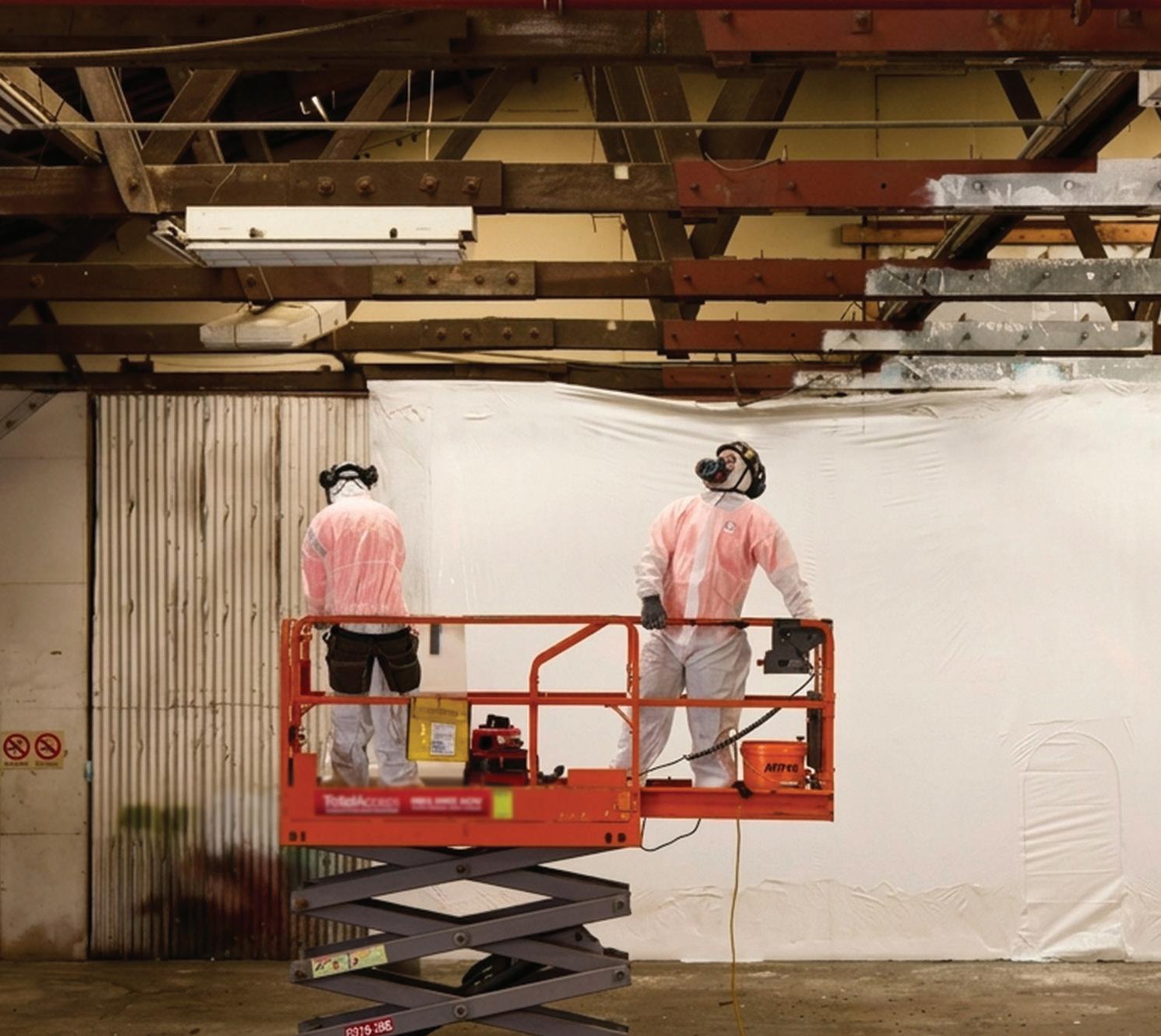
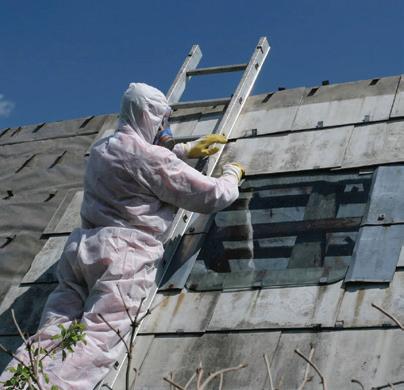
The people most often at risk are not pupils in a classroom but the adults who disturb the fabric of the building, caretakers drilling a wall, a contractor lifting old flooring, a tradesperson cutting into a ceiling during a holiday refurbishment. Children are not exempt from this, but their everyday classroom use rarely disturbs the building’s structure.
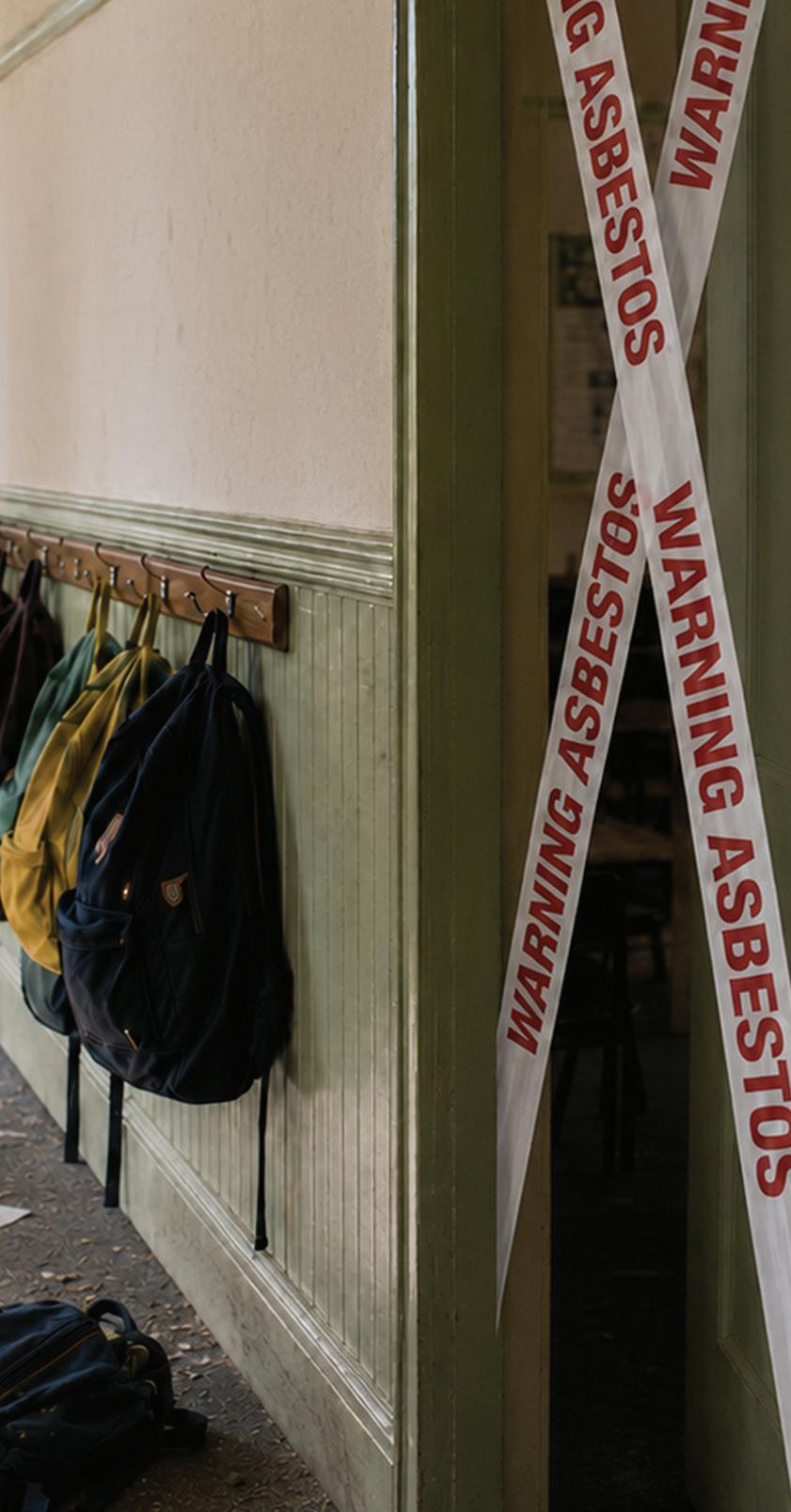
The people most often at risk are not pupils in a classroom but the adults who disturb the fabric of the building, caretakers drilling a wall, a contractor lifting old flooring, a tradesperson cutting into a ceiling during a holiday refurbishment.
Around
The exposures that matter happen during maintenance, refurbishment and demolition, which is why those moments are so tightly governed. It is also why asbestos is treated differently from hazards that announce themselves. A frayed cord or a wet floor can be seen and fixed; an asbestos fibre cannot. The protection has to be built in advance, through records and trained removalists, because there is no second chance to react once the dust is in the air.
For principals, the year’s lesson is less about panic than about preparation. Three moves are worth making this term. First, pull out the asbestos management plan and check it is current,
accurate and known to the people who need it: caretakers, contractors, the board. Second, use the Ministry’s accredited supplier list for any asbestos work; since April it’s mandatory, and it takes the job of vetting contractors off the school’s plate. Third, treat asbestos as a budget and insurance question as much as a safety one: the sand episode showed schools can be left legally liable for costs, and that support, where it exists, is partial. None of this makes asbestos go away, it sits in too many buildings for that. But a school that knows where its asbestos is, uses accredited people to deal with it, and has read the fine print on who pays is in a far stronger position than one learning all three the hard way.




0800 33 33 11
Industry leaders in Asbestos remediation, mould, occupational hygiene and hazardous materials management.
Assisting Schools nationwide since 1991
Asbestos consulting, removal and reinstatement
NZs leading asbestos experts
Occupational hygiene
IICRC certified experts specialising in the education sector
Mould remediation
Services to identify and reduce exposure to hazards in your school
Contact us today for free advice or to discuss a particular project.
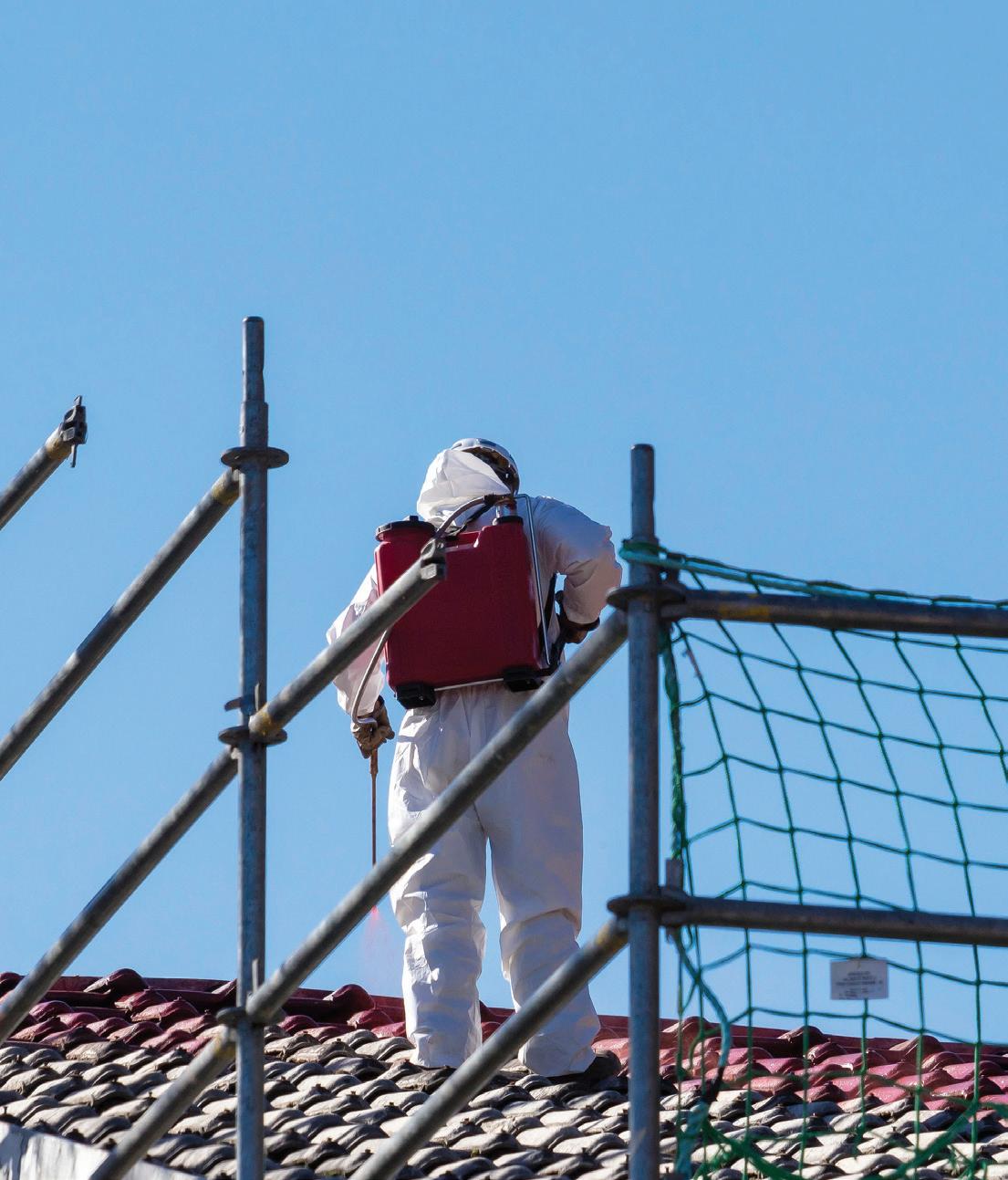
Asbestos management specialists, solving complex challenges.
We partner with clients to identify and manage hazardous materials such as asbestos, lead paint, and other contaminants that pose risk to human health – especially our children.
• Asbestos surveying and licensed asbestos assessor services
• Asbestos air monitoring
• Exposure risk assessment
Contact us:
m 027 557 7342
• Asbestos management plans
• Asbestos awareness training
• Emergency response
• Demolition and removal oversight
k david.dangerfield@ehs-support.com
K ehs-support.co.nz

Since April, schools can only use Ministry-accredited suppliers for asbestos work — here’s how the register works and why it matters.
Managing asbestos is serious work, and school boards and principals carry the responsibility for making sure it is done safely, by people competent to do it.
The hardest part, schools have long said, is knowing which suppliers to trust. Since 1 April 2026 that judgement has effectively been taken off their plate: schools, and the Ministry of Education itself, must now use only suppliers from a national accredited list for any asbestosrelated work. It is a significant change — and, the Ministry argues, one designed to give schools confidence rather than more compliance.
The register — formally the Accredited Asbestos Services List, or AASL, published on education. govt.nz — covers three core
service types: 39 asbestos consultancies, 69 asbestos removal companies and 16 asbestos laboratories, enough for national coverage in every region. Each supplier has passed a structured evaluation checking qualifications, experience, systems of work and alignment with the latest WorkSafe good-practice guidance. The point, the Ministry says, is not to create barriers but to guarantee a consistent baseline of competence. Laboratories on the list are independently accredited by International Accreditation New Zealand, and while coverage is already national, the Ministry says it is working to make the register easier to search by region.
Mandatory, not optional Use of the list is compulsory for all asbestos work — planned or reactive, a small repair or a major project. It applies whether the work is a one-off survey, a clearance test after a leak, or part of a major refurbishment.
Servicing all of New Zealand with Physical Branches in Auckland | Wellington | Christchurch | Nelson
Expert Asbestos & Restoration
• Asbestos Testing
• Asbestos Removal
• Mould Restoration
• Meth Decontamination
• Flood and Fire Restoration
• HAZMAT and Bio Cleans

TechClean is your trusted certified partner for professional A & B class asbestos and restoration services








Schools should not need to become experts in evaluating asbestos professionals — that work has now been done centrally.
The reasoning is assurance: every supplier on it has demonstrated they understand the risks and follow good practice. Going outside the list removes that assurance and raises the risk, which is why it is not a matter of preference. For school leaders, the upside is that they no longer need to become experts in vetting asbestos professionals — that work has been done centrally.
A traffic-light system
Accreditation is not a one-off tick. Suppliers are monitored over time using a traffic-light system with four levels. Green

means a supplier is performing well. Yellow flags a minor nonconformance. Amber signals a moderate non-conformance and carries a three-month standdown. Red marks a major nonconformance and means removal from the list. Accreditation, in other words, can be lost as well as earned. Good performance is recognised; concerns raised about a supplier are taken seriously. Because the register is live and dynamic, schools should
check it at the moment they contract, rather than relying on a name they used last year.
If your usual supplier isn’t on it
Some schools have longstanding relationships with suppliers who are not yet accredited. The Ministry’s advice is to encourage them to apply — the process is a chance for a good operator to demonstrate competence, and the details are on education.govt.nz. But if a
supplier chooses not to apply, schools should stop using them for asbestos work once the list is mandatory; the risks are too great, and the assurance the evaluation provides is the whole point. Asbestos management is a shared responsibility: schools engage accredited suppliers and follow the right processes, suppliers maintain their competence, and the Ministry manages the list and monitors performance.








NZ owned and operated since 1995
Operating out of Auckland and Dunedin, servicing nationwide
MOE accredited supplier and laboratory
Worksafe licensed asbestos assessors and surveyors
Hazards including indoor air quality and mould assessments
AUCKLAND HEAD OFFICE
FREEPHONE: 0800 369 335
Email: info@dal.kiwi
DUNEDIN BRANCH + Phone: 022 014 6390
Email: david@dal.kiwi







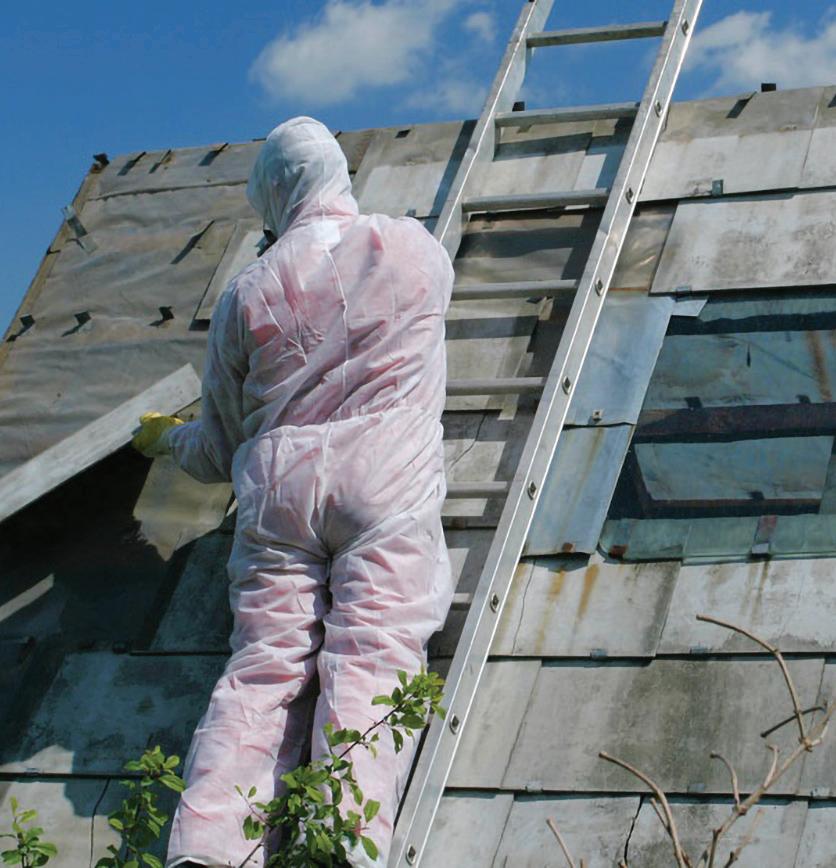

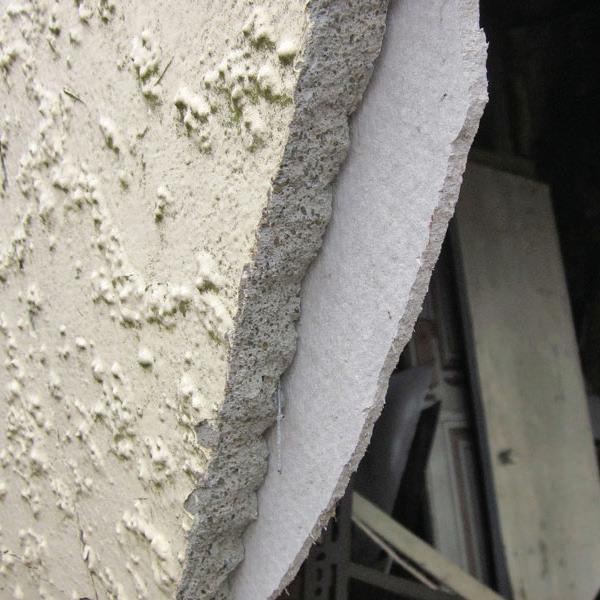
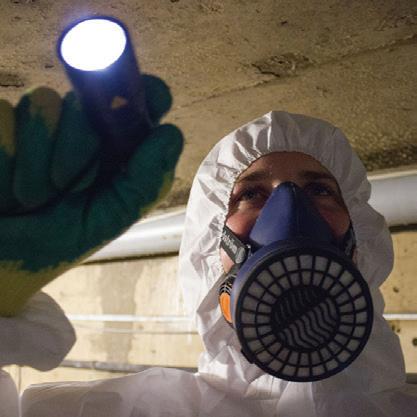
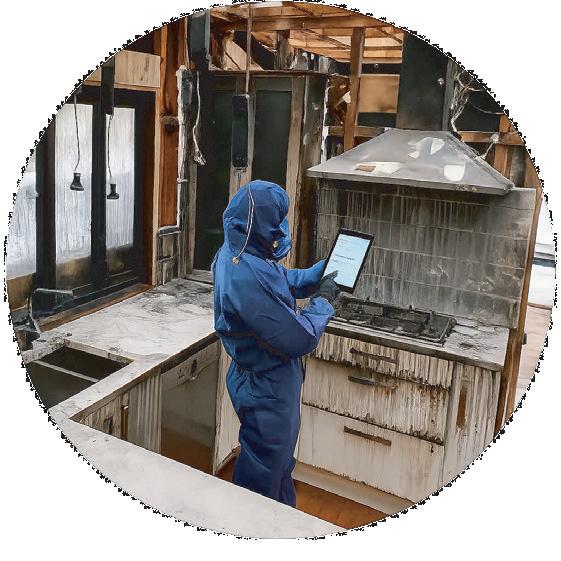

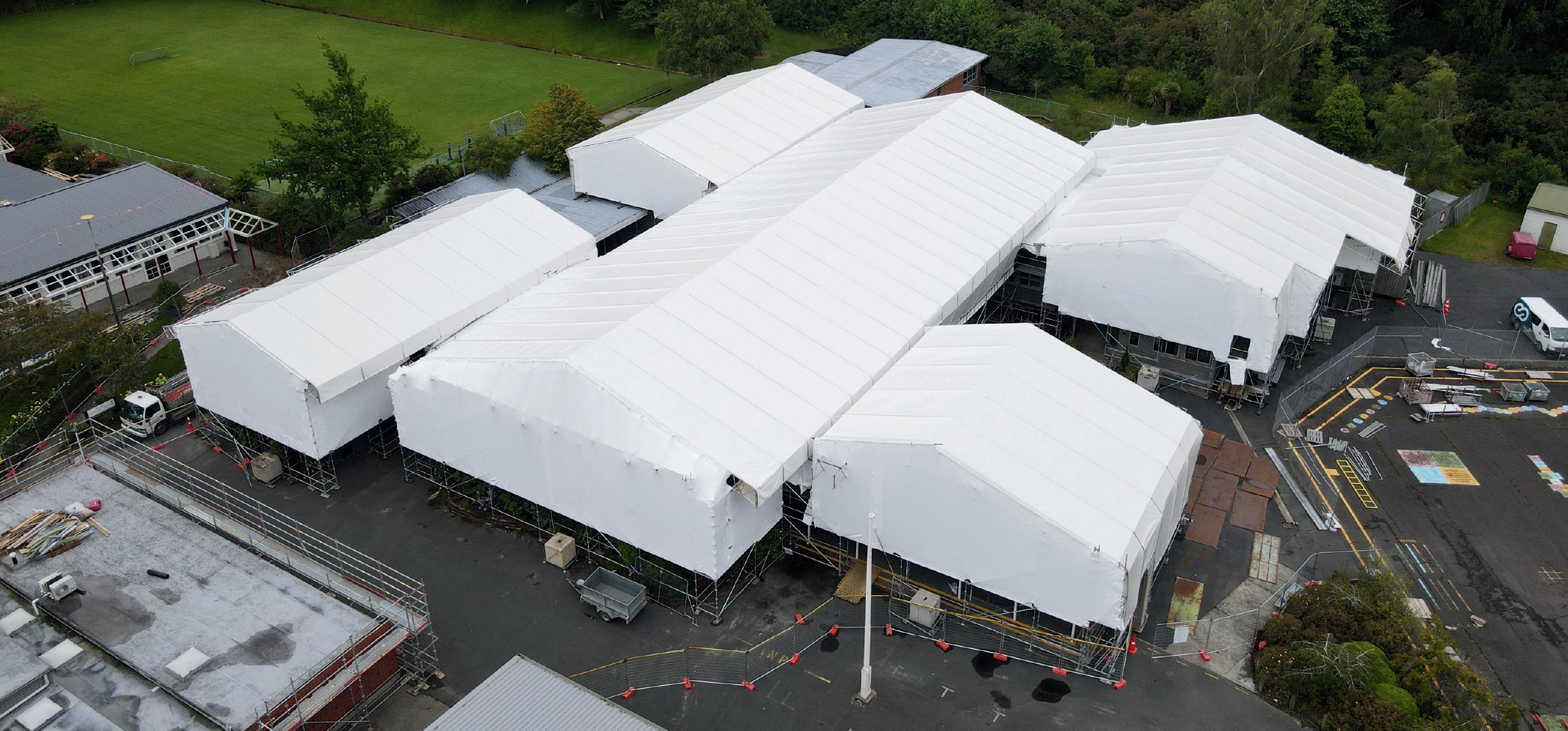



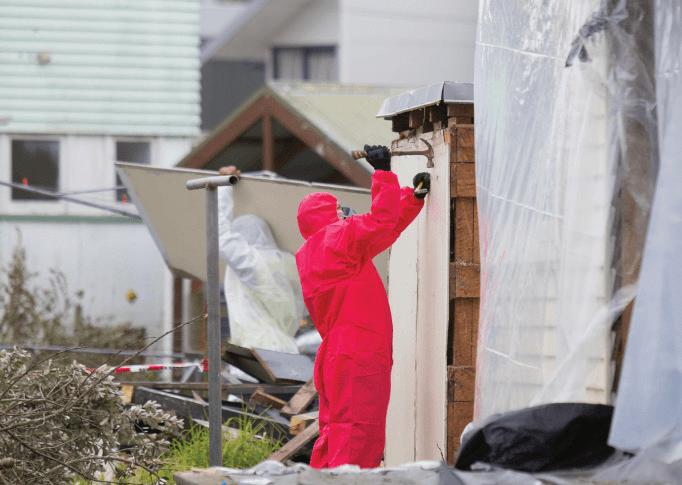
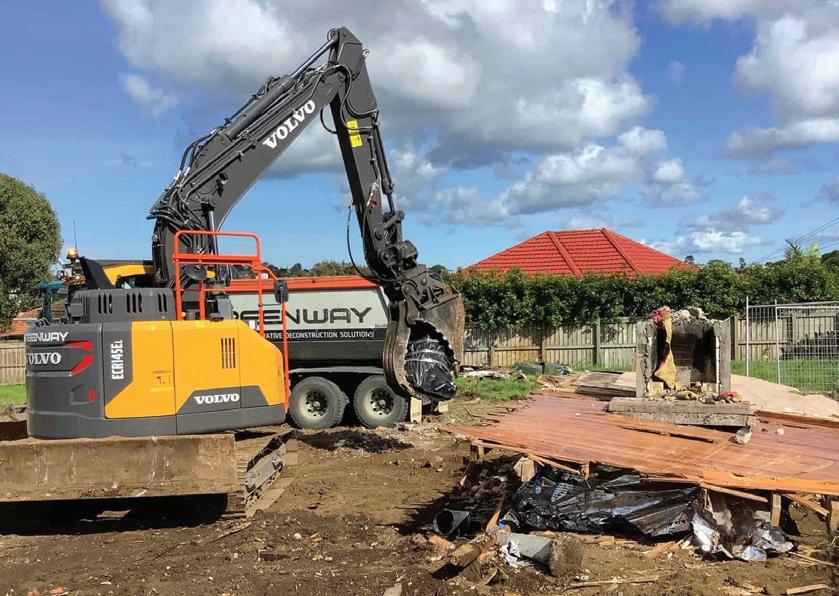
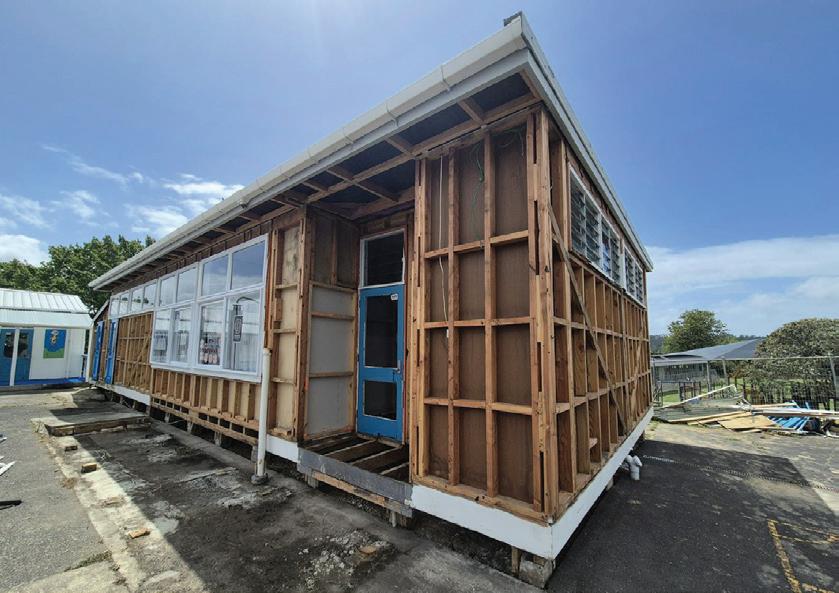
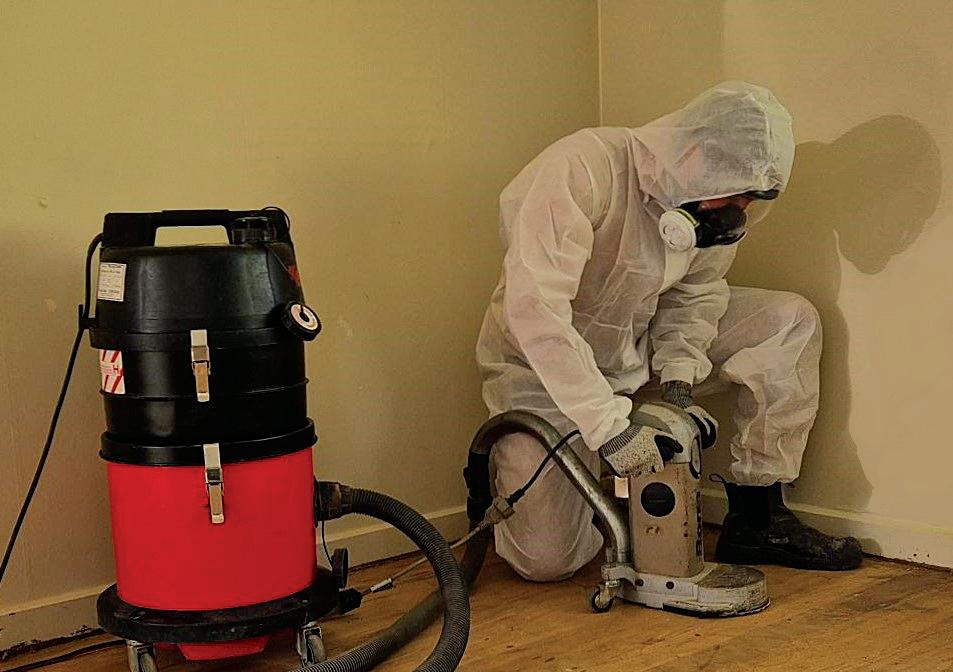
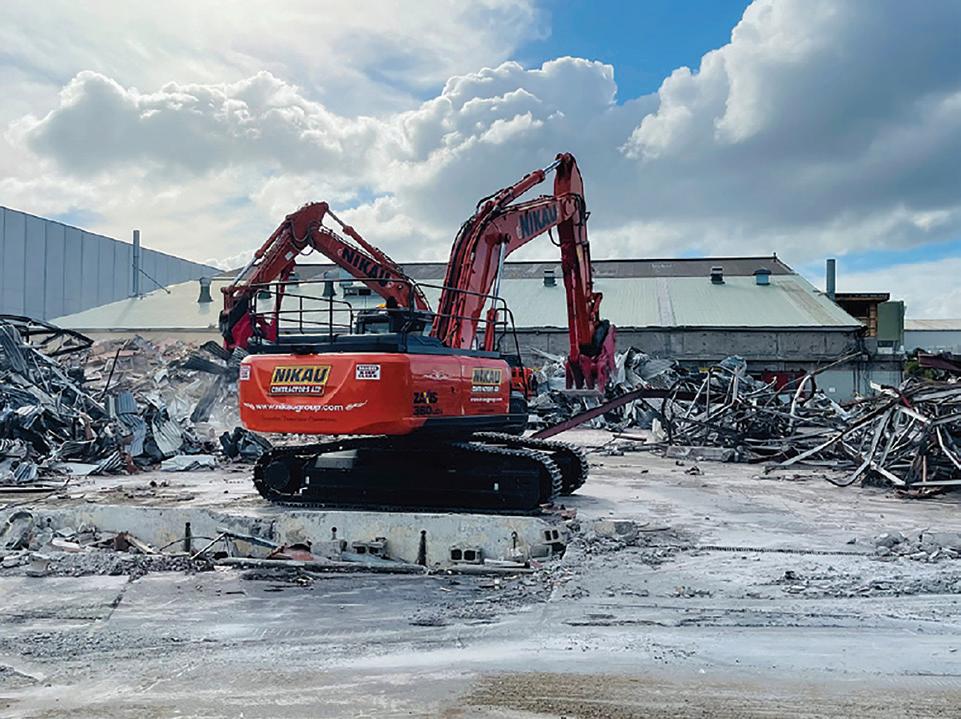
Delivering specialty demolition and deconstruction techniques by providing real value in the most complex of demolition projects throughout New Zealand.
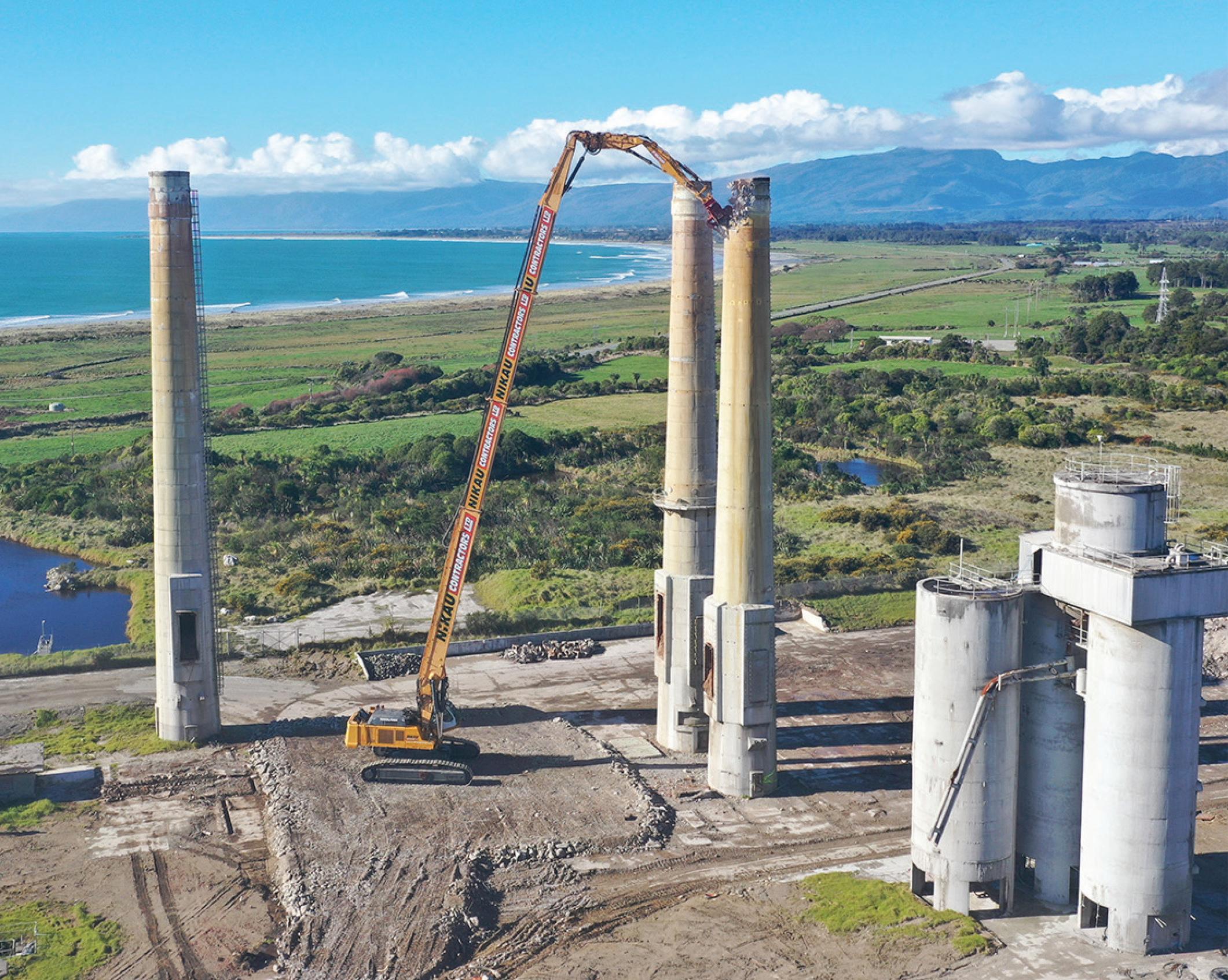
We are the ground breakers in providing our clients with superior multi-faceted responsive best practice services to meet their unique & challenging needs.
OUR SPECIALIST SERVICES
¤ DEMOLITION & DECONSTRUCTION
¤ HIGH REACH DEMOLITION
¤ ASBESTOS & LAND REMEDIATION
¤ CONCRETE & STEEL CUTTING
¤ HEAVY TRANSPORT
¤ CRANE & RIGGING
¤ SCRAP METAL RECYCLING
¤ TIMBER SALVAGE & RECYCLING
¤ CRUSHING & SCREENING
¤ C&D WASTE RECYCLING
¤ EMERGENCY RESPONSE



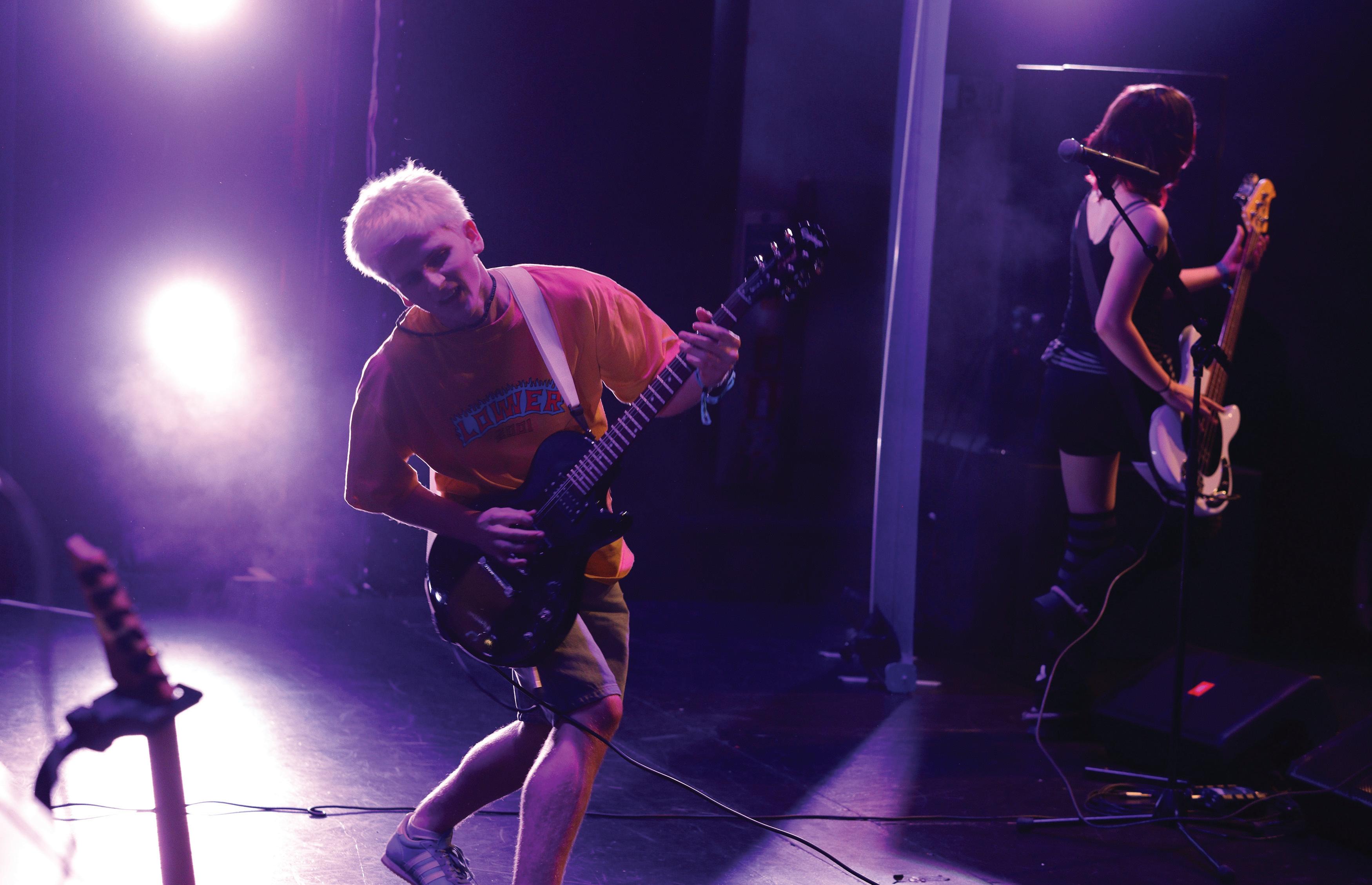
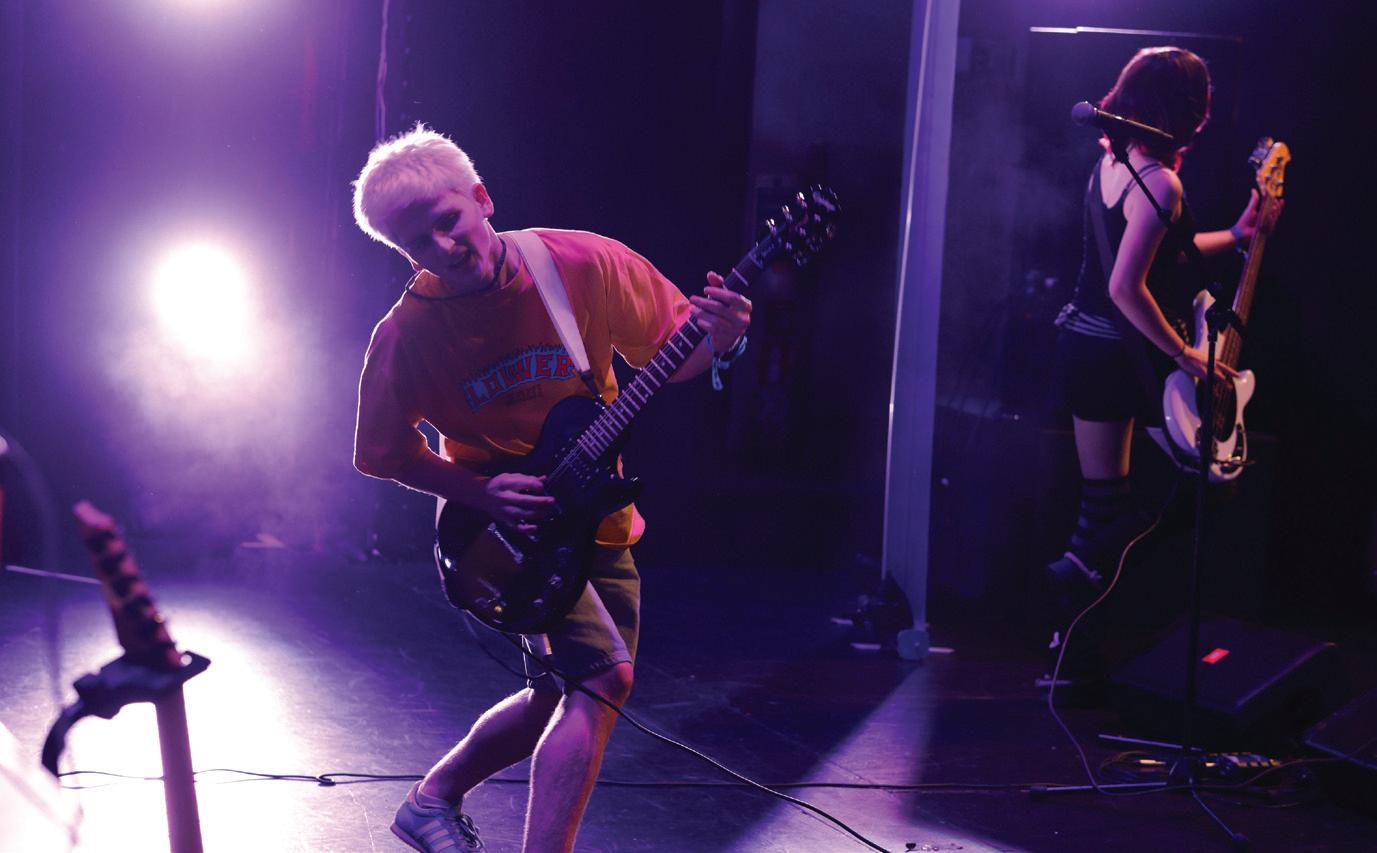
A nationwide run of thrilling regional finals sends a wave of school bands toward the national stage
On a winter Friday night, 400 teenagers packed into Tōtara Street in Mount Maunganui, knew each other’s lyrics, and sang them back at the stage from the mosh pit. The Bay of Plenty final of Smokefreerockquest had sold out. A week of regional finals in late June looked much the same around the country: a full theatre in Blenheim, a twelve-band bill in Rotorua, another in Hamilton, all of them secondary students performing original music they had written themselves.
Smokefreerockquest is undeniably iconic. The annual tour reaches 22 regions over two months, from Whangārei to Invercargill. Rockquest Promotions, founded by Glenn Common and Pete Rainey in 1988, says it works with more than 15,000 young people and 35,000 audience members a year across music, dance, songwriting, film and fashion, which it reckons makes it the largest provider of creative arts opportunities
outside the classroom. This year, the Rockquest programme was at participant capacity, with the highest number of acts ever.
Instrumental rock band R.A.G.E, from Te Kura Kaupapa Māori o Huiarau, won the Rotorua final. The original band was formed by their parents, who competed in Rockquest a generation ago. The current line-up has
picked up where they left off.
“We come from somewhere so small,” they said after the win. “There’s not many opportunities for young people in Rotorua.”
Running alongside the main contest is Smokefree Tangata Beats, a nationwide platform for original music that celebrates the identities and cultures of Tangata Whenua and Pasifika students,
and it featured on most of the regional bills.
Jess Cruzon, who took out the Marlborough solo and duo category as Jess (& Qalo), put her entry down to a teacher. “I wouldn’t have done this, or had the opportunity to do this, if it wasn’t for her,” she said of Ms Morgan. Amoeba’s Isaac Moore, in his third and final year of the

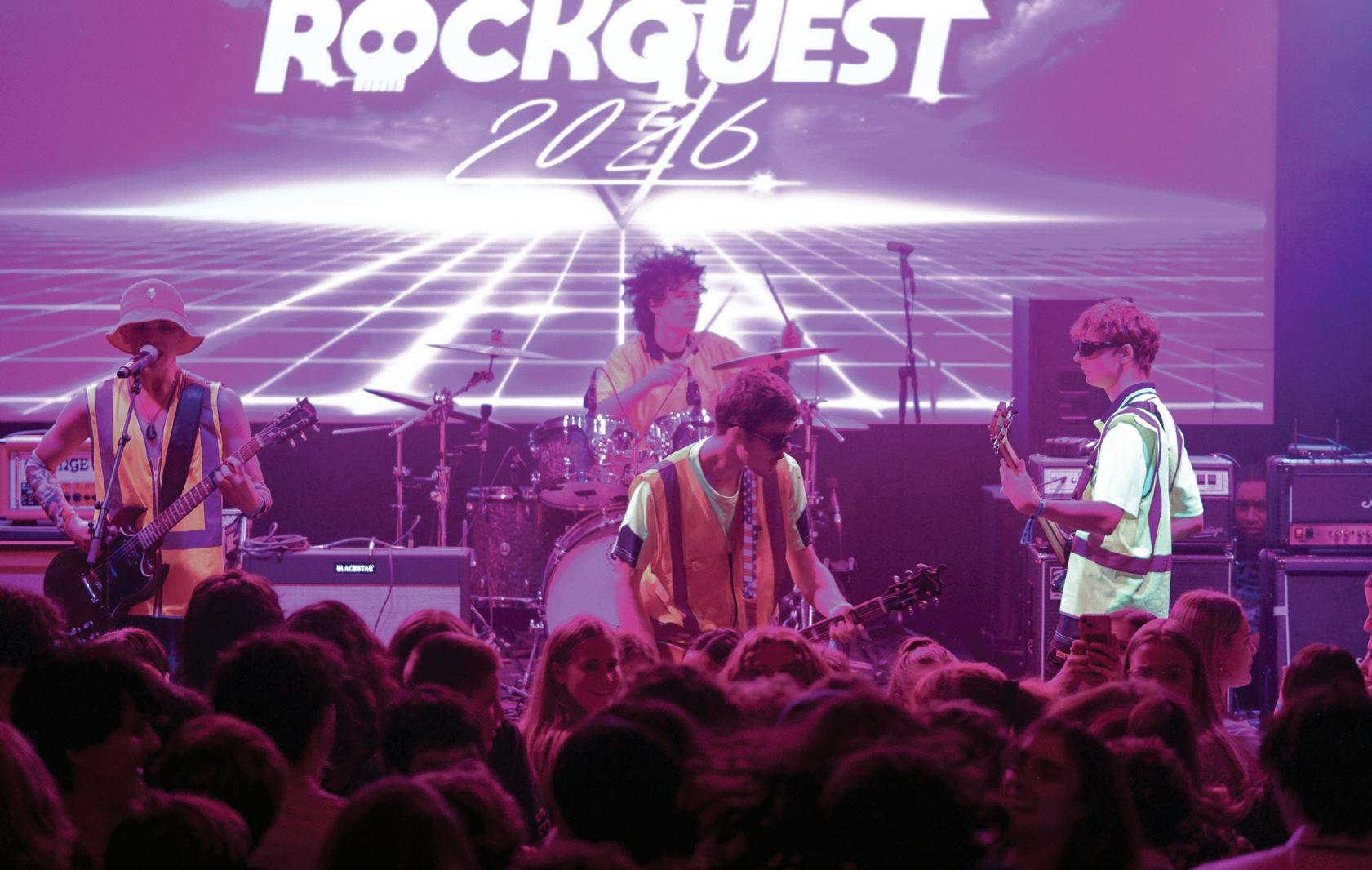
competition, said knowing what to expect on a professional stage was exactly what made the night work. Winning bands in Hamilton and the Bay of Plenty thanked their school music departments by name.
The regional winners now move to a video submission round,
the next step towards the 2026 national finals, and these four finals alone send a sizeable contingent forward. From the Bay of Plenty it’s pop band Grizzlyfish (Tōmoetai College) and Spud (Mount Maunganui College); from Rotorua, R.A.G.E and Super 7 (Tarawera High School); from
Hamilton, Parade (Hamilton Christian School) and Lipstink (Hillcrest High School); and from Marlborough, Amoeba and The Beans (both Marlborough Boys’ College). Each goes through alongside the top solo and duo acts from its region, among them Marlborough’s
The annual tour reaches 22 regions over two months, from Whangārei to Invercargill.
Jess (& Qalo), and the Smokefree Tangata Beats winners, who advance the same way.
That’s a lot of young people putting original songs in front of a professional sound system and a paying crowd. Co-curricular music is easy to treat as a niceto-have when budgets and timetables are tight, but for some of these students it’s the first professional stage they have stood on, and for a few it’s one of the few chances their town offers. The music room that stays open after the bell is doing more than filling an evening.
• Lighting and staging hire
• Lighting design for productions
• Equipment sales, installation and technical support
• Professional consultancy services
• Lighting system design for auditoriums, theatres, halls & drama rooms
• Advice on new facilities or on the refit of existing spaces
• Liaison with architects, engineers and users to ensure specialist theatrical services are optimised


When planning a new teaching studio or theatre, getting the right technical advisors involved in the design process as early as possible is key to ensuring you end up with a space that meets your needs now and into the future. We are actively working in the entertainment industry, so bring current real world experience to projects including advice on areas beyond just lighting.
Whether you need a full system specification, an audit of your existing facilities, or just some friendly advice about lighting up your next production, we’d love to help.
Grant Robertson k grant@lightsite.co.nz m 027 435 8951
Paul Hermans k paul@lightsite.co.nz m 021 663 588
www.lightsite.co.nz (03) 372 9101
Financial education is now compulsory in the New Zealand Curriculum and Sorted in Schools is here to make it easy for every school, kura, teacher and community.
Who are we?
Te Ara Ahunga Ora Retirement Commission is the engine that drives Sorted, Aotearoa New Zealand’s trusted and independent guide to all things money, designed to help people get ahead financially. It’s been running Sorted.org.nz for more than 20 years and providing financial education resources and training to teachers since 2018 through Sorted in Schools – a programme now used in more than 80% of New Zealand secondary schools and kura.
The Retirement Commission also leads the National Strategy for Financial Capability, which brings together 1,000-plus partners from across the financial sector to lead initiatives that improve New Zealanders’ financial wellbeing.
With financial education now compulsory in the New Zealand Curriculum from 2027, a partnership has been formed between the Ministry of Education and the Retirement Commission to support schools through the changes. This includes collaborating with experienced financial education providers through an advisory group coordinated by the Retirement Commission working to ensure schools have access to resources and programmes that align with, and support, the new curriculum.
Sorted in Schools has released the financial education implementation guides, with mapping to the Mathematics curriculum already present and the Social Sciences curriculum mapping to be added very soon. These guides are designed to take the hard work out of embedding financial education into your school’s programme giving teachers and leaders everything they need, in one place, for free.
The guides are built to help schools:
✓ Plan and pace financial education across year levels in a way that is manageable and sustainable
✓ Understand where financial education fits within the existing curriculum across Mathematics and Statistics and Social Sciences learning areas
✓ Access ready-to-use, classroom-tested resources that are curriculum-aligned and age-appropriate
✓ Support teachers of all experience levels to deliver financial education with confidence
✓ Engage their wider school community including whānau and community groups in meaningful conversations about money.
The resources inside the guides are practical, flexible and designed for real classrooms. Whether you’re just starting out with financial education or looking to strengthen what you already do, the guides meet you where you are.
We know that change can feel overwhelming, especially when teachers and schools are already stretched. That’s why Sorted in Schools offers handson support to make financial education as easy as possible for your team, designed and supported by trained teachers that know the challenges.
For a short period of time to help with the transition, Yasmin Frazer, our dedicated Learning Lead, is available to work directly with school leadership to:
✓ Help you understand how financial education fits within your school’s existing programmes and curriculum planning
✓ Support your leadership team and staff in building confidence and capability around financial education
✓ Help you think about how to engage your school community including whānau in this mahi
✓ Walk you through the implementation guides and the resources inside them, so your team feels ready to get started.
All of our resources, guides and support are completely free. Our goal is simple: to make financial education accessible for every school, remove barriers for teachers, and give students the money skills they need to thrive.

Ready to explore how financial education can work for your school? Reach out to Yasmin, our Learning Lead, for a free, no-obligation conversation. Whether you’re at the very beginning of your journey or looking to go deeper, we’re here to walk alongside you.
Access the guides:
Financial education implementation guides
Email: yasmin@retirement.govt.nz financial.education@retirement.govt.nz
Everything is free. We’re here to make it easy.
By Ben O’Connell

On the Government’s reform programme this year, principals, the unions and the subject associations have mostly spoken with one voice: slow down.
On the curriculum, the message landed: the Years 0–10 rollout has been pushed back. But on one front the Government has not slowed at all. New legislation removes elected members from the Teaching Council and transfers responsibility for professional standards to the Secretary for Education.
The curriculum: a pause won A joint statement to the Minister of Education, first issued in March after a hui led by the New Zealand Principals’ Federation (NZPF) and NZEI Te Riu Roa, called the draft Years 0–10 documents “not fit for purpose” and argued the overhaul was moving too fast. “Educators are being told to implement a total curriculum overhaul at a breakneck pace and with minimal support, which is a recipe for failure,” NZEI Te Riu Roa president Ripeka Lessels said. The Government has since
delayed the rollout, a win for the sector that pushed for it, though the drafts still need the rewrites teachers asked for.
“This law change strips the Council of its independence and moves teachers’ standards to the Ministry.”
— Ripeka Lessels, NZEI Te Riu Roa
practising certificates, quality assurance and discipline. The Government says the changes will strengthen oversight of the teaching workforce, improve accountability and clarify the respective roles of the Ministry and the Teaching Council.
The Teaching Council: full speed ahead
The contrast is the Teaching Council. New law removes all elected members and gives the Minister of Education control of appointments, while professional standard-setting — the standards for the profession, the criteria for registration and certification, and the code of conduct — moves to the Secretary for Education within the Ministry. The Council retains responsibility for registration,
The change follows governance concerns at the Council, including a Public Service Commission inquiry into its procurement and handling of conflicts of interest. The profession’s response was immediate and unusually broad, with PPTA, NZEI, the Tertiary Education Union, the NZNO and the Public Service Association issuing a joint statement.
“Teachers should have a genuine say in the Teaching Council — it’s as simple as that. This is a significant abuse of political power,” PPTA Te Wehengarua president Chris Abercrombie said. Lessels added that the law “strips the Council of its independence and moves teachers’ standards to the Ministry.”
The picture is uneven: the brakes went on for the curriculum,
“Teachers should have a genuine say in the Teaching Council — it’s as simple as that. This is a significant abuse of political power.”
— Chris Abercrombie, PPTA Te Wehengarua
but not for the governance of the profession. Day-to-day registration continues as normal, but the bodies that set and police teaching standards are changing hands. Over the coming year, watch the revised curriculum timeline, the make-up of the new ministerially appointed Council, and whether the remaining System Reform Bill provisions (also contested) follow the curriculum’s path to delay or the Teaching Council’s to passage. In the meantime, reassure staff that registration and certification are unaffected for now, and watch for changes to the professional standards and code of conduct set by the Secretary for Education.
10-11 November 2026
From policy to pedagogy, we build the bridge.
New Zealand’s education landscape is shifting beneath our feet. Between navigating massive curriculum updates, managing staff wellbeing, and grappling with the rapid rise of AI in our classrooms, school leaders and educators are being asked to redesign learning in real-time.
The Kura Conference is where we move past the theory and offer proven approaches and examples to help shape solutions that fit your context. This is a multi-streamed, high-impact event designed to give you the strategic tools, technological literacy, and leadership resilience required to guide your kura into the future.


We strip back the noise surrounding the national curriculum changes. From deep dives into Primary and Secondary shifts to the mechanics of change management, this stream provides practical guidance, proven approaches, and real-world examples to help you implement pedagogical change while preserving your school’s unique identity.
The Innovation Stream

Innovation is a core requirement for the modern classroom. We explore the ethical frontier of AI, practical use cases to reduce teacher workload, and how to build an innovation-ready culture. By championing integrated learning for purpose-led, real-world connections, this stream gives you the tools to prepare our ākonga for a future workforce that hasn’t been built yet.

This stream explores the people challenges and opportunities facing today’s school leaders – from managing complaints, navigating difficult community dynamics, and tackling complex HR issues, to leading meaningful change within your kura. Learn from the experiences of other leaders and gain the latest insights into sustainable leadership practices that enable both people and schools to flourish.

A 2-part intensive training course for Principals & School Leaders to navigate policy, governance and implementation of AI in schools and classrooms.
Day 1 – AI Governance, Policy & Strategy for your School
A practical 1-day workshop for Principals and Senior Leaders of New Zealand primary and secondary schools. With a strong focus on governance, this session explores the opportunities, limitations, and risks of AI, and provides hands-on experience with leading AI tools to support effective planning, policy development, and engagement with your school board and community.
Day 2 – AI in the Classroom: Enhancing learning, teaching and assessment practice
Designed for educators to build confidence and understanding of AI in teaching practice to enhance student learning, facilitate equity in learning and the opportunity to optimise assessment.
COURSE DATES
AUCKLAND 15, 16 SEPTEMBER
CHRISTCHURCH 19, 20 NOVEMBER
may book 1 day or 2 days. It is assumed that participants booking day 2 only and exclusively will already have an established AI policy in their school.
Scan QR code to book tickets or visit brightstar.co.nz/training-courses/ai-in-the-classroom/

By Ben O’Connell
The Government’s reform programme in two parts — the money going into the early years, and the qualification set to replace NCEA
The coalition’s education programme runs on two tracks at once. At the primary end, a multi-year funding package is pouring money into the foundations; reading, writing and maths in the early and middle years. At the secondary end, the country’s main qualification is being rebuilt from the ground up. Both are framed by Education Minister Erica Stanford as a single project: lifting achievement by strengthening the basics and making the system clearer to read. For principals, the two tracks land at different ends of the school, but the logic, and the scrutiny, is shared.
The investment
The $131.3 million foundationallearning package is spread across twelve initiatives aimed at lifting reading, writing and maths in primary and intermediate
schools. The largest share, $43.5 million, goes to professional learning and development, helping leaders and teachers use student data better and adopt high-impact explicit teaching practices. Writing receives $38.7 million, funding curriculumaligned workbooks for Years 4 to 5 and a digital writing tool for Years 6 to 8. Maths pāngarau gets $29.7 million, including maths hubs, hands-on equipment for every Year 0 to 8 classroom, a new times-table and division check, 36 additional intervention teachers, and an expanded acceleration programme for Years 9 to 10. Structured literacy is allocated $19.4 million, covering decodable books for older readers, an end-of-Year 2 literacy check, and a new teaching programme for Years 0 to 10. Stanford has described the package as part of “generational” reforms aimed at reversing declining achievement, pointing to data showing only 22% of Year 8 students were meeting the expected maths standard, and fewer than half
“This doesn’t feel like us... What is being proposed feels imported, rigid, and over-engineered.”
— Chris Abercrombie, PPTA Te Wehengarua
of secondary students passing the foundational numeracy co-requisite. The funding is spent over four years, with some resources — digital writing tools, maths equipment — provided centrally and free of charge. The maths drive has not been without controversy: in 2024 the Government redirected $30 million from Te Ahu o Te Reo Māori, the programme supporting teachers learning te reo Māori, to pay for maths resources, a decision which Māori education leaders criticised at the time. BusinessNZ’s Rachel Simpson welcomed the latest investment, calling teacher development “central to lifting
student achievement... Strong foundational education is critical for the future workforce New Zealand businesses depend on.”
The qualification
At the other end of the school, NCEA is being phased out from 2028. NCEA Level 1 disappears entirely; Year 11 students instead focus on what the Government calls “deeper curriculum-driven learning” — with English and mathematics compulsory — alongside a new Foundational Award recognising literacy and numeracy achievement. From 2029, NCEA Level 2 will be replaced by the New Zealand Certificate of Education (NZCE) at Year 12, followed in 2030 by the New Zealand Advanced Certificate of Education (NZACE) at Year 13, a two-level senior system in place of the current three.
The deeper change is to how students are assessed. The current credit-based qualification model gives way to subjectbased assessment, closer to traditional overseas systems.
A new grading scale running from A+ to E replaces Not Achieved, Achieved, Merit and Excellence, with a C required to pass. Industry-developed vocational subjects in sectors such as construction, hospitality and the automotive trades will sit alongside academic subjects within a single qualification for both vocational and universitybound students. The transition is gradual: students currently in Year 9 are the first to move fully into the new system, and no student will have to switch between NCEA and its replacement mid-schooling.
A shared debate
Both tracks have drawn the same core tension. Supporters, including some teachers and principals, argue the current NCEA has become assessmentheavy and administratively complex, and that clearer grading, a stronger subject focus and centrally provided resources will reduce fragmentation and workload. Critics question the pace and the philosophy. PPTA Te Wehengarua president Chris

Abercrombie said the proposed qualification appears to abandon the principles that shaped NCEA more than 20 years ago. “This doesn’t feel like us,” he said. “New Zealand has built an education system that values flexibility, creativity, and recognising the different strengths of our young people. What is being proposed feels imported, rigid, and over-engineered.”


For leadership teams, the practical task is to treat the two tracks as one planning conversation. Primary leaders can map the new resources and support against where their achievement data is weakest; secondary leaders can begin briefing staff and whānau on a qualification their current juniors will be the first to sit. The
settled facts — the funding lines, the 2028 start, and the phased rollout — are firm enough to plan around now. The contested parts are the pace and the detail, and those are still moving. Either way, the Government’s intended direction is clear: more central direction, a stronger subject focus, and a sharper emphasis on the basics across both ends of the school.
Finding reliable childcare that fits around busy family schedules can be challenging, but Bounce OSC provides a trusted and engaging solution for families in Levin and the surrounding community.
Operating since 2008, Bounce OSC is an OSCAR and MSD accredited programme run by the Zion Family Centre Trust, offering safe, supportive, and well-structured care for school-aged children.
The programme includes before-school, after-school, and holiday care, giving parents flexible options to suit their needs. Morning sessions begin from 7am, with breakfast provided and time for quiet activities before children are transported to school.
In the afternoons, children are collected and welcomed into a relaxed environment where
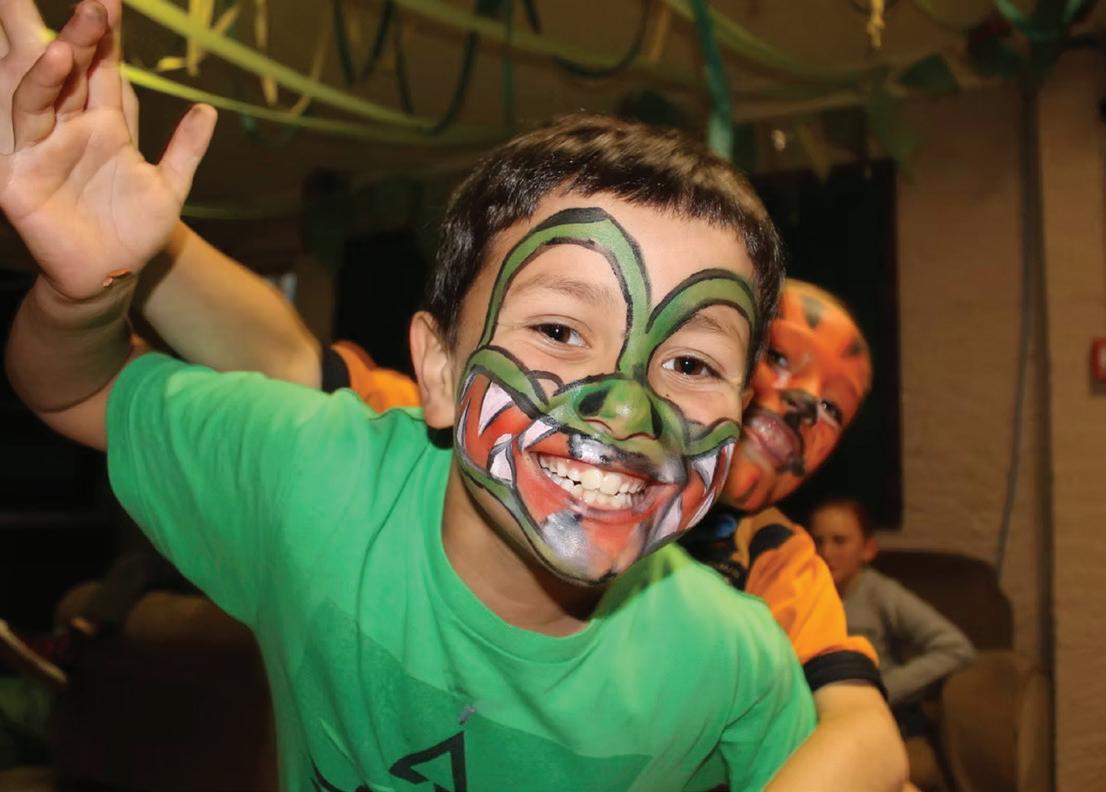
they can enjoy afternoon tea, complete homework, and take part in a range of activities, including arts, crafts, sports, and group games.
Holiday programmes offer full-day care packed with fun, from creative projects and themed days to outdoor play and excursions.
At Bounce OSC, children are encouraged to build confidence, develop social skills, and express themselves in a welcoming, home-like setting.
With experienced staff, WINZ subsidies available, and a strong focus on wellbeing, Bounce OSC gives families peace of mind everyday.
Enrol now and give your child a safe, supportive and fun place to learn, grow, and belong with Bounce OSC today.
Spaces are available across a range of age groups, and the programme is designed to be inclusive, welcome children from different backgrounds and abilities.
The team prioritises safety and supervision, ensuring all activities are appropriate, engaging, and carefully managed at all times.
Strong relationships with families and local schools help create a supportive network around every child, reinforcing consistency and care throughout their daily routine.
Choosing Bounce OSC means choosing dependable care you can trust every single day for your child’s happiness, growth, and ongoing development.
• Installation and Maintenance
• Drainlaying Services
• CCTV For Drain Blockages
• Drain Unblocking
• Earth Moving
• Installation of Septic Tanks
• Installation of Effluent Systems & Filters
• Installing Wastewater Plants & Servicing
• Repairs & Maintenance

A major international review led by the University of Auckland has found consistent links between children’s screen use and later difficulties with attention, planning and self-control, though the researchers are careful to say the relationship is complex, and not necessarily causal.
What the review found
Published in the journal Developmental Review, the study analysed 58 papers from around the world, published between 2013 and 2024. Some 81% reported at least one negative association between screen use and executive function — the cognitive skills covering focus, impulse control, working memory and flexible thinking. Thirty-four studies linked heavier screen use with poorer executive function over time. But the direction was not always clear: nine found children with weaker executive function used screens more, and four found a two-way relationship. The review drew on studies from Asia, Europe, North
America, Oceania and South America, with participants from infancy to 18; some also examined links with conditions such as ADHD.
‘The brain’s management system’
Lead author Claire Reid describes executive function as “the brain’s management system.” It develops “throughout childhood and into our mid-twenties, and while it is developing, it is sensitive to experiences and environments.”
That sensitivity is the worry.
“The potential for long-term harm to our kids’ development is concerning,” Reid says.
“We need action at all levels — policy, schools and the family — to better protect our children.” A smaller set of eight neuroimaging studies tracked children’s brains over time and reported that higher screen use was associated with smaller increases in brain volume and differences in connectivity in regions linked to executive function, an emerging area, but one pointing to possible biological pathways.
“Executive
function is the brain’s management system. It develops throughout childhood and into our mid-twenties, and while it is developing, it is sensitive to experiences and environments.”
— Claire Reid, University of Auckland
Senior author Karen Waldie urges care: these are associations, not proof of cause, and factors such as sleep, physical activity, social interaction and family context all matter. The evidence is not one-sided either, research with very young children found touchscreen use could be linked to faster reaction times, alongside reduced ability to hold focus. The researchers’ real point is less about screens themselves than about what they displace: sleep, physical play and face-toface interaction.
The authors land on balance, not bans — managing excessive use rather than eliminating screens, and making sure children keep doing the things that
build cognitive and emotional development. For schools, that is familiar territory: it reinforces device policies, digital-citizenship teaching and the value of unstructured play. It also gives leaders an evidence base for conversations with whānau. The goal is not a screen-free childhood, but protecting the sleep, play and face-to-face talk that screens too easily crowd out. Reid, who began the work “as a mum concerned about my own kids” and because of what she had heard from teachers, frames it as empowerment, not alarm. “My goal was to empower parents with evidence-based information. The field is evolving so rapidly that it’s crucial to keep up, and more high-quality, longterm research is needed.”


The Waimakariri District Council is proud to support two schoolbased sustainability programmes that empower local schools and early childhood education centres (ECEs) to reduce waste and adopt more environmentally responsible practices Boards of Trustees, caretakers, and teaching staff to review internal processes and implement sustainable systems. Their team also offers site visits to key Council facilities, including the Southbrook Resource Recovery Park, water and wastewater treatment sites, and the Northbrook Ponds, providing students with real-world insights into local environmental management.
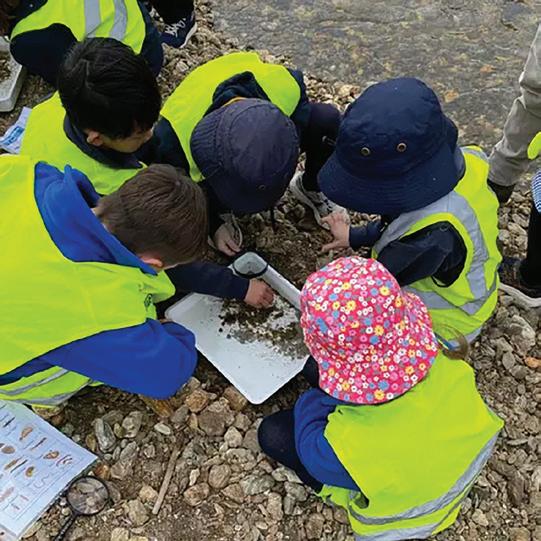
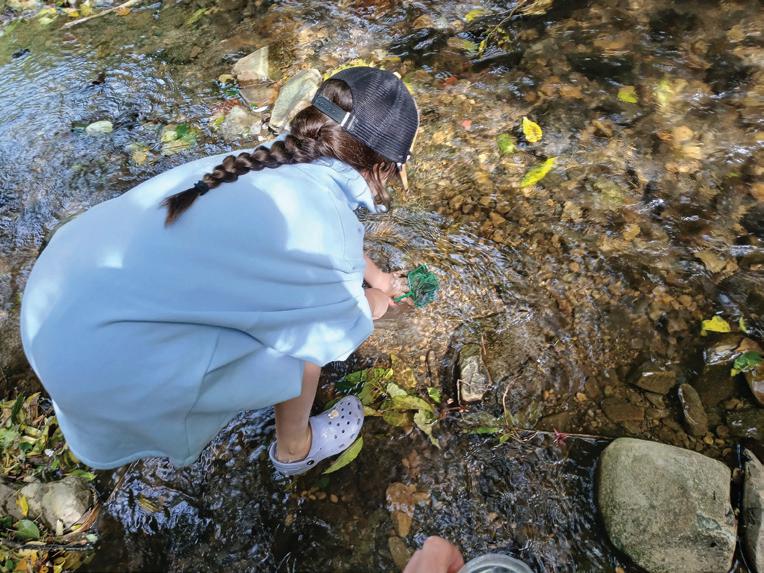
Delivered by Eco Educate, our contracted education provider, the Sustainability Education Programme focuses on waste minimisation, water conservation, and the protection of local waterways. This free initiative is available to all schools and ECEs within the district.
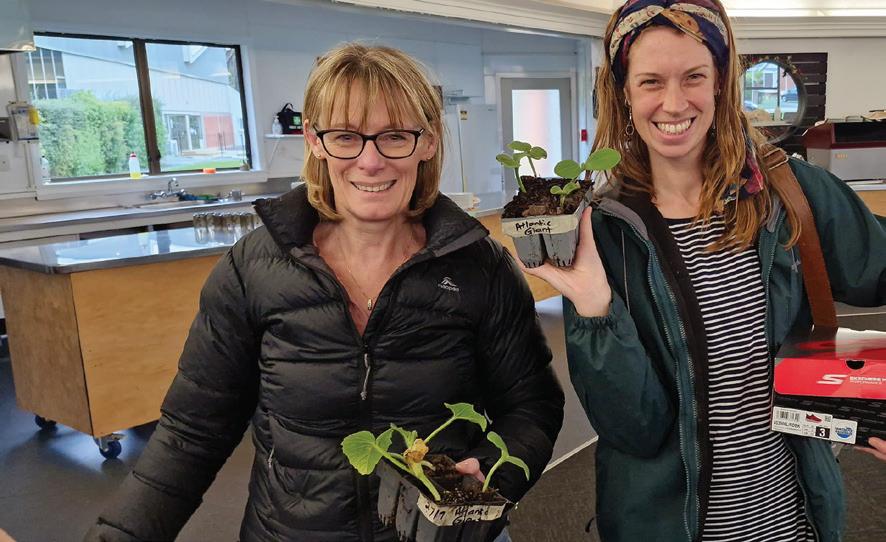
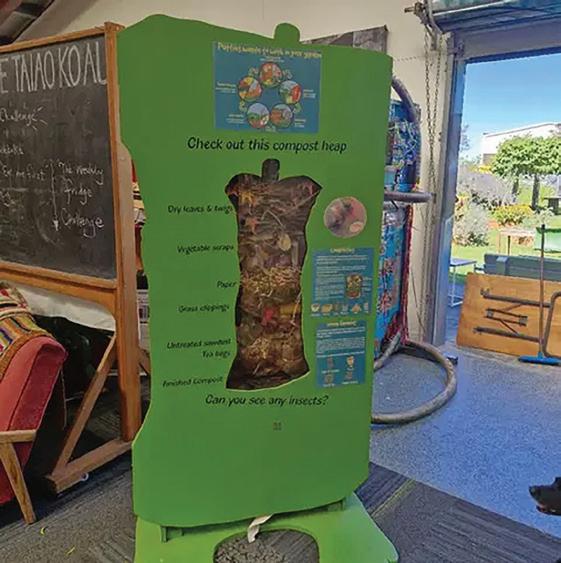
Eco Educate’s experienced facilitators work directly with teachers, students, and staff to deliver engaging classroom sessions and hands-on workshops. Topics include composting, worm farming, EM Bokashi systems, recycling, gardening, and broader environmental awareness. The programme encourages schools to rethink their waste systems and explore practical ways to reduce water usage and divert organic and recyclable materials from landfill.
Support is not limited to the classroom. Eco Educate works collaboratively with principals,

To learn more or to book a session, contact Eco Educate at rethink@ecoeducate.co.nz

Enviroschools is a nationwide programme that empowers young people to lead sustainability initiatives within their schools, communities, and the wider district. In Canterbury, the programme is coordinated by Environment Canterbury, with Waimakariri District Council as one of ten regional partners. Additional support comes from eight regional collaborators, including Te Kōhaka o Tūhaitara Trust.
Facilitators work with early learning centres, primary, area, and secondary schools to embed sustainability across key themes such as zero waste, water conservation, energy efficiency, ecological building, living landscapes, and active transport. The programme encourages a whole-school approach, fostering collaboration and longterm change.
As of 1 July 2025, 20 schools in the Waimakariri District are part of the Enviroschools network. These schools are actively contributing to the development of resilient, healthy, and thriving communities.
To explore participating schools or learn more, visit Enviroschools
Canterbury (link to https:// enviroschools.org.nz/regions/ canterbury/). For enquiries, contact Zoe Watson, Canterbury Regional Coordinator, at zoe. watson@ecan.govt.nz
Additional Resources
For further guidance on reducing school waste, visit the Council’s Reducing Your School Waste page (link to https://www.waimakariri.govt. nz/services/rubbish,-recyclingand-organics/reducing-yourwaste) or explore the One Planet Schools website (link to https:// www.oneplanet.nz/schools/) for tools and ideas to support your sustainability journey.

To ensure your bin gets emptied and to avoid contamination of recycling:
Keep items loose
Don’t squash bottles, tins or cans
Put all lids in the rubbish
Make sure everything is clean
Plastics numbered 3, 4, 6 & 7
No containers larger than 4L or smaller than 150ml
Containers from garage or garden sheds e.g. sprays, plant pots, car oil
Soft plastics or any plastic you can scrunch into a ball
Takeaway cups and liquid cartons
Cardboard & paper smaller than an envelope i.e. 140mm x 100mm
Aerosol cans
Compostable items
Clothes and toys
Nappies
Polystyrene
Pans and foils
Window glass, crockery & light bulbs
Batteries
General rubbish or food.
Repeated contamination may result in withdrawal of your kerbside collection service.
Your RECYCLING bin is only for the following CLEAN items…







Rigid household plastic bottles and containers





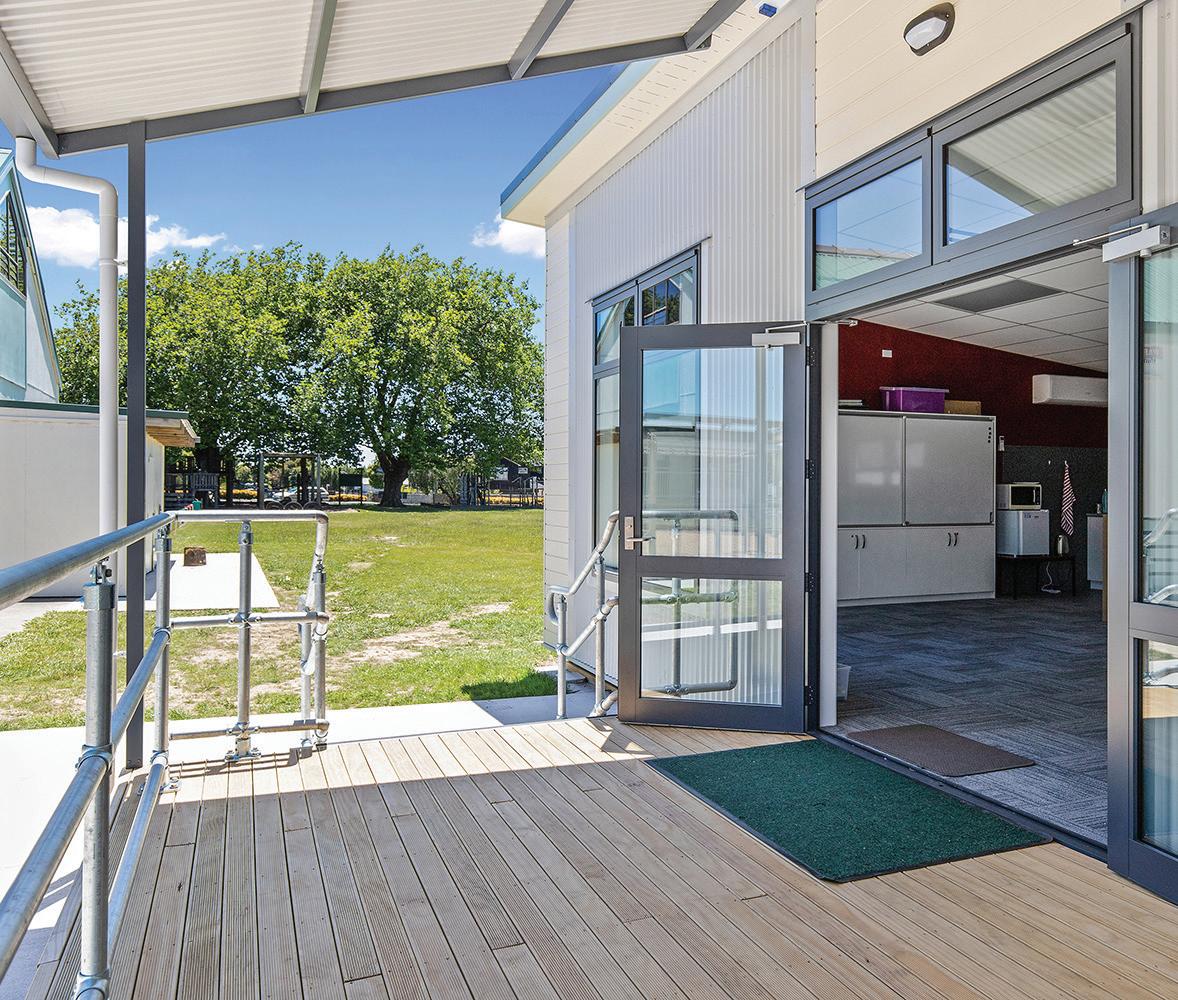
Builtsmart is uniquely positioned to deliver high-quality classrooms across New Zealand at the most affordable prices. With a strong focus on efficiency and innovation, Builtsmart combines modern construction methods with decades of experience to ensure every build meets strict quality standards while staying on budget.
One of Builtsmart’s key strengths is its capacity and resources. The company operates with a streamlined manufacturing process, allowing multiple classrooms to be produced simultaneously without compromising workmanship. This scalability ensures schools can rely on timely delivery, even for larger or more complex projects.
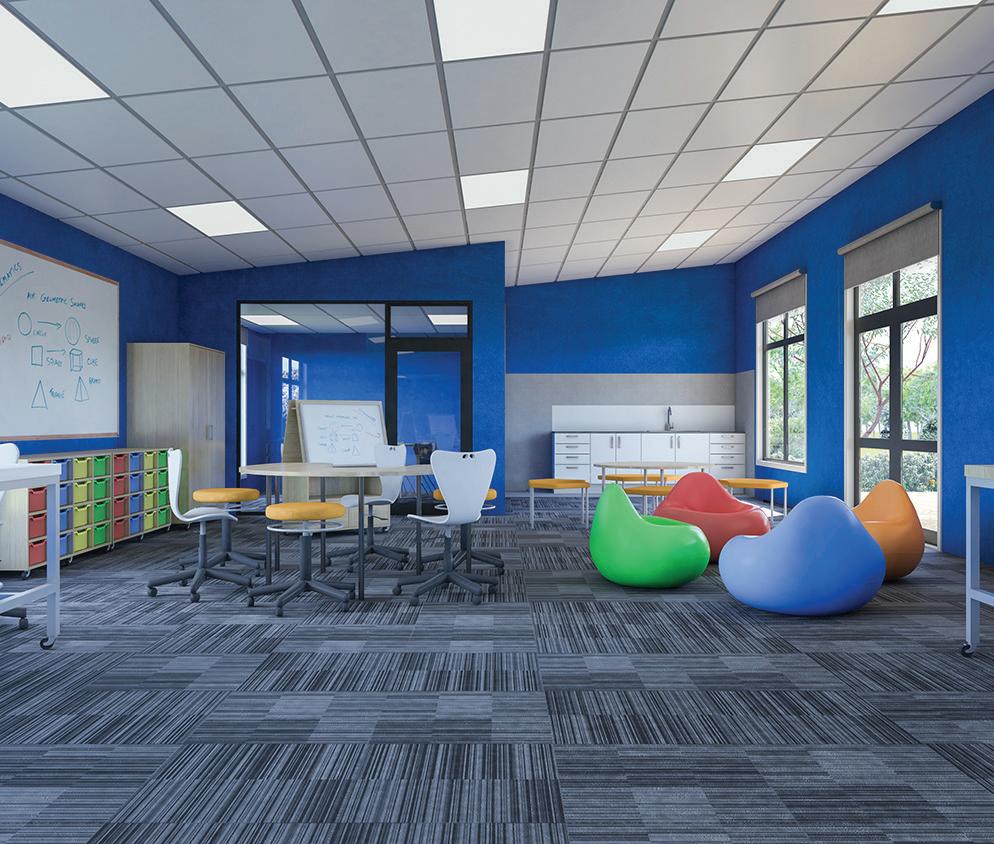
Quality is at the core of every Builtsmart classroom. Each structure is built in a controlled environment, ensuring consistency, durability, and compliance with New Zealand building regulations. The result is a modern, comfortable learning space designed to support both students and teachers.
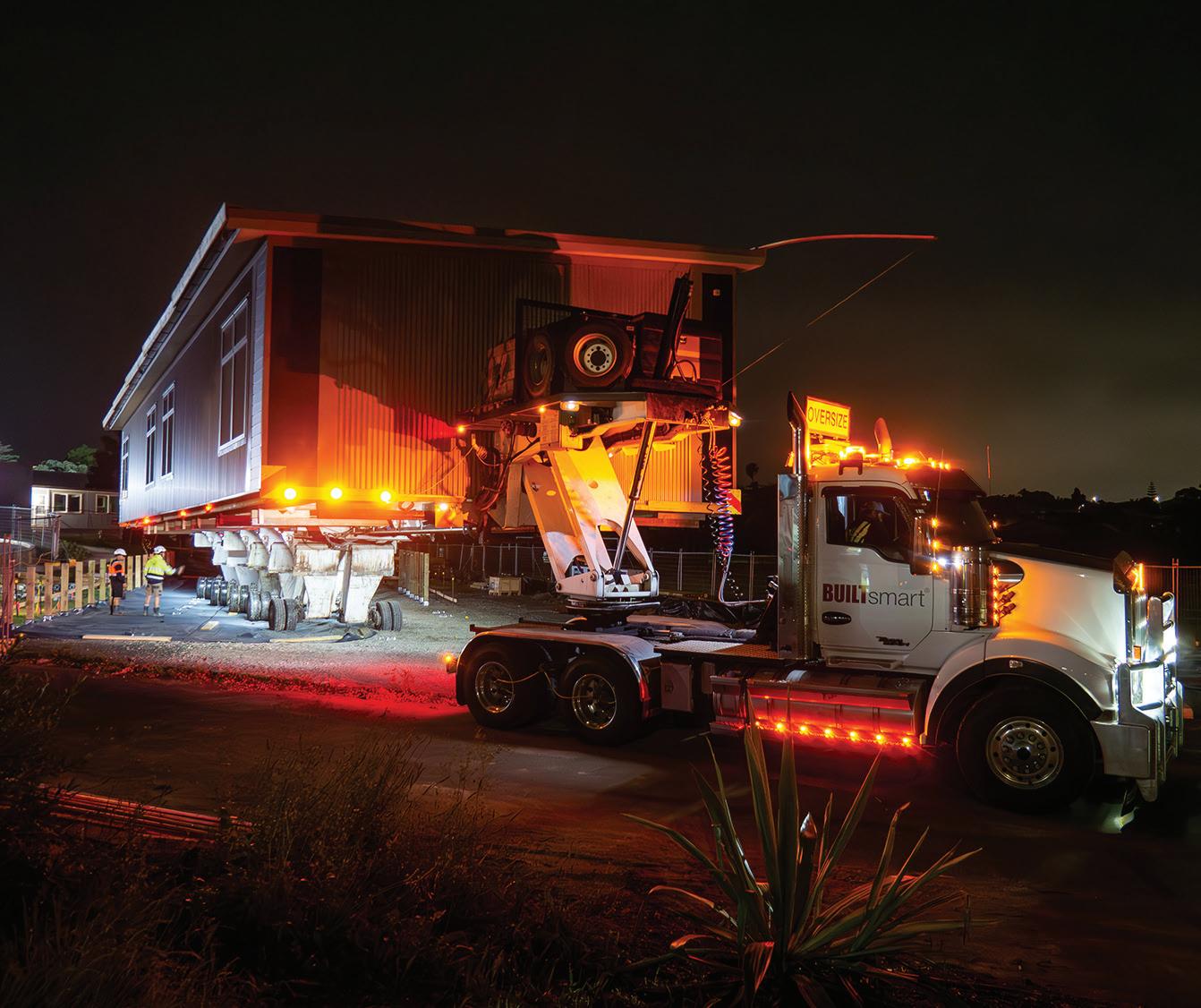
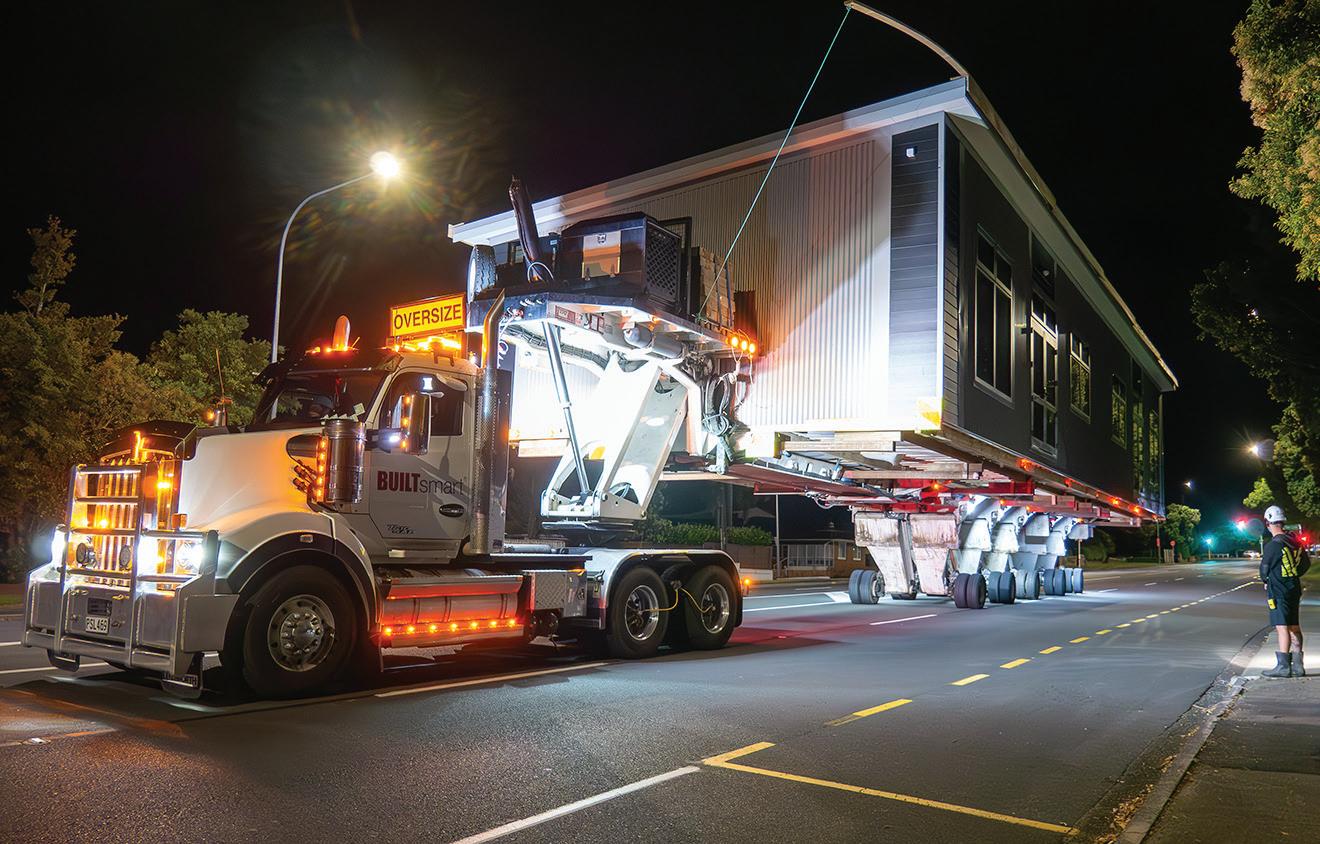
Importantly, Builtsmart minimises disruption to school environments. By constructing buildings off-site and delivering them ready for installation, on-site work is significantly reduced. This means less noise, fewer safety concerns, and minimal interruption to daily school operations—allowing students and staff to continue their routines with little disturbance.
Builtsmart is set to make a significant impact in 2026 with the delivery of multiple twostorey classroom projects across New Zealand. Responding to increasing demand for modern learning environments and growing school rolls, Builtsmart is leveraging its construction approach to “deliver high-quality, multi-level facilities efficiently and cost-effectively.
These two-storey classroom buildings are designed to maximise space on existing school sites, making them an ideal solution for urban and high-density areas. Each project reflects Builtsmart’s commitment to quality.
For
Dan Blazkow
Operations & Commercial Manager BUILTsmart
P. 021 532 902 E. daniel@builtsmart.co.nz
www.builtsmart.co.nz

The New Zealand Education Excellence Awards | Ngā Tohu Kairangi Mātauranga o Aotearoa recognise and celebrate outstanding performance in primary and secondary schools.
They highlight the work of schools and kura making an exceptional difference for their learners, educators and communities.
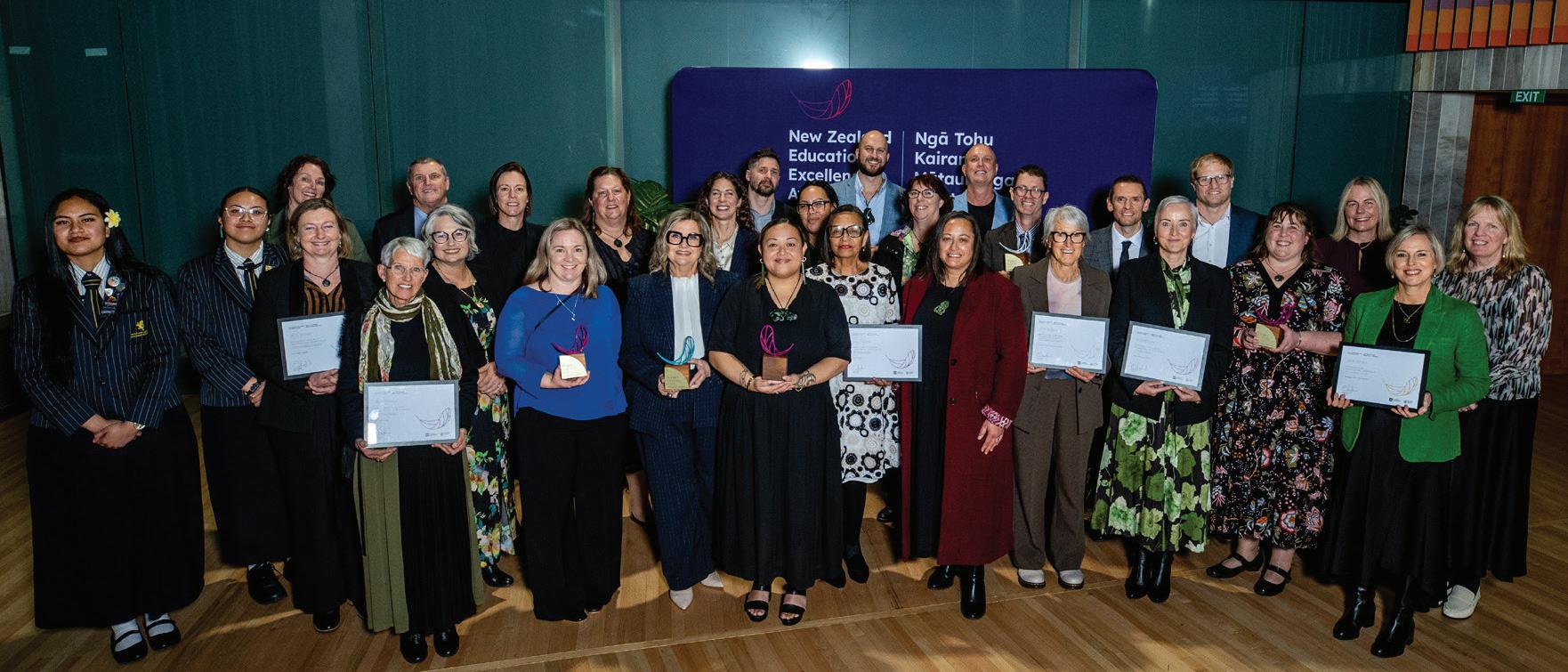
The inaugural 2026 awards ceremony took place at Parliament in Wellington on Wednesday, 24 June. The ceremony was attended by Minister of Education Hon Erica Stanford.
Four award categories were celebrated:
• Excellence in Student Engagement and Attendance
• Excellence in Raising Student Achievement
• Excellence in Quality Teaching and Instruction
• Excellence in Educational Leadership.
These awards recognise excellence across primary and secondary education, and this year’s winners highlight the commitment, care and aroha educators bring to supporting learners every day.
In the applications across the categories, the panel considered the context, approach, and outcomes for each school’s entry, while looking for a clear understanding of:

• The challenge the school faces,
• A well-explained response, and
• Evidence of a measurable difference.
The selection panel also identified five applications with considerable merit or a unique set of circumstances, who have been recognised with commendations.
All finalists and winners received a framed certificate of recognition, with award winners receiving $20,000 and finalists receiving $5,000 each. Each commended school also received a certificate of recognition and $1,000.
More information about the awards and a recording of the
These awards recognise excellence across primary and secondary education, and this year’s winners highlight the commitment, care and aroha educators bring to supporting learners every day.
event can be found on the New Zealand Education Excellence Awards - Ministry of Education page on the Ministry of Education website.
Excellence in Student Engagement & Attendance
Kaihere School – Waikato
Kaiti School – Tairāwhiti | Hawke’s Bay
Maniototo Area School – Otago, Southland
Excellence in Raising Student Achievement
Manurewa Intermediate – Tāmaki
Auckland Girls’ Grammar School – Tāmaki Herenga Manawa | Auckland Central/East
Excellence in Quality Teaching & Instruction
Sommerville School – Tāmaki Herenga Manawa | Auckland Central/East
Avondale College – Tāmaki Herenga Manawa | Auckland Central/East
Excellence in Educational Leadership
Goodwood School – Waikato
Westlake Girls’ High School – Tāmaki Herenga Tāngata | Atuckland North/West
A gnawed fibre cable was all it took to shut Hillmorton High School for two days in late June, exposing just how dependent schools have become on digital systems for everyday operations.
The damage, caused by rats beneath the Christchurch school site, cut access to the school’s internet and wired network, along with internal phone lines, CCTV, and the student management system used for rolls, timetables and emergency contact details.
With about 1,500 students on site, principal Sam Ainsworth said the decision to close the school was driven by safety concerns rather than convenience.
“When you’ve got nearly 1,500 students, it’s just a danger if we went into an emergency situation, not being able to make contact with parents and being

able to make contact with staff across the school,” he said.
Not everyone was sympathetic. Parents vented on community social media, with many labelling the closure “ridiculous.” Questions flew: couldn’t teachers take the roll the old-fashioned way? Couldn’t lessons happen without the internet?
Others pointed out the real stakes. Without CCTV or a functioning alarm system, a fire or other emergency could have had serious consequences. By Tuesday evening, a temporary workaround had been installed, and students returned to school the next morning.
“When you’ve got nearly 1,500 students, it’s just a danger if we went into an emergency situation, not being able to make contact with parents.”
Longer-term repairs are still to come, and the school has reviewed how a critical cable was left exposed to rodent damage in the first place. Schools now rely on cloud-based systems for administration, communication and teaching. Something as ordinary as a rat has exposed how dependent education has become on a single piece of digital infrastructure.


with
Project management for school property upgrades and facilities.
We manage school building and upgrade work around learning, timetables and everyday school life.







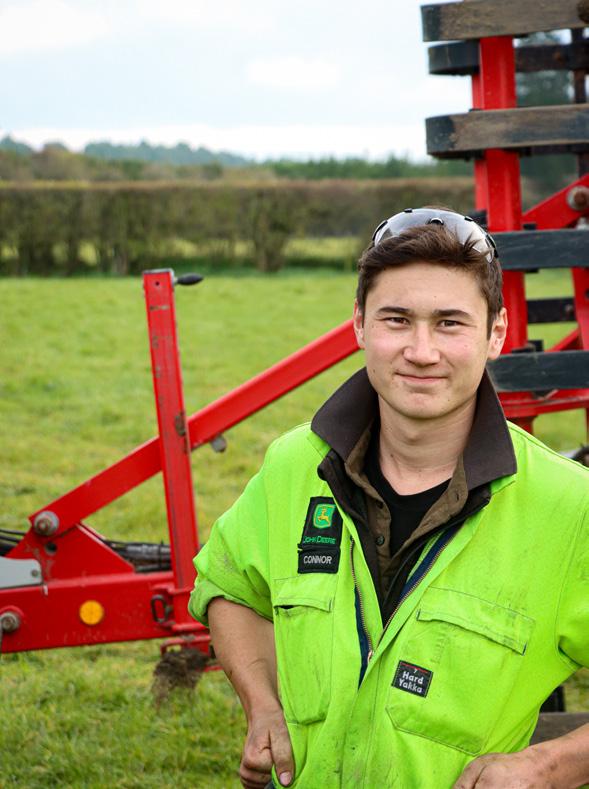
Double qualified with MITO in both Heavy Automotive Engineering and Automotive Electrical Engineering, Cam Main has taken his skills to McMurdo Station in Antarctica, completing two three-month summer stints in the Vehicle Maintenance Facility (VMF). Cam›s most recent season saw him spend time in the power plant and lead an in-frame overhaul of a CAT 3516 generator.
What makes your role unique?
McMurdo was originally a US Navy base, so there’s a lot of old ex-US Navy trucks and equipment still kicking about. It’s also a very harsh climate; some days the outside temperature is as low as -40C. The sun also doesn’t set over summer, so 24/7 daylight takes a bit to get used to!
What are some of your main responsibilities?
• Keeping the equipment running around station, including the machines out at the airfields on the Ross Ice Shelf
• Completing component changeouts, including engines, transmissions, hydraulics, etc

• Fault-finding and diagnostic work
• Attending breakdowns
• Preventative maintenance servicing
• Lots of jump-starting!
What are the coolest things about your job?
Going out on the ice shelf for breakdowns on a fine day;
Help your students explore hands‑on careers in automotive, road transport, mining, and quarrying.
With MITO micro credentials, year 11–13 students can earn NCEA credits while gaining real‑world skills.
working under Mt. Erebus and seeing the Transantarctic mountain range in the distance.
Seeing all the wildlife around station. There are plenty of sunbathing seals, but it’s always exciting when penguins are in town. When the sea ice melts over Christmas, orcas swim into the bay, too.
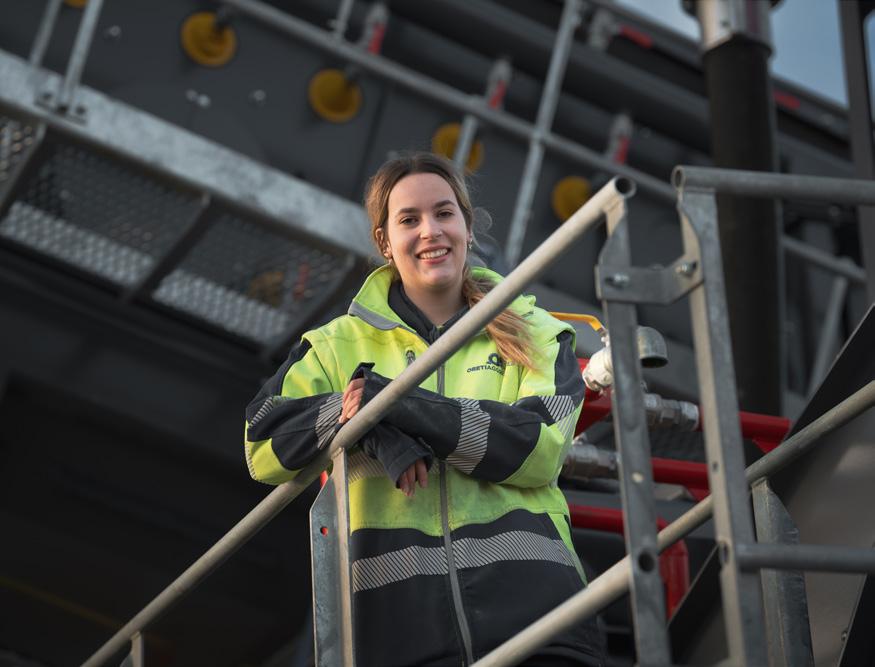

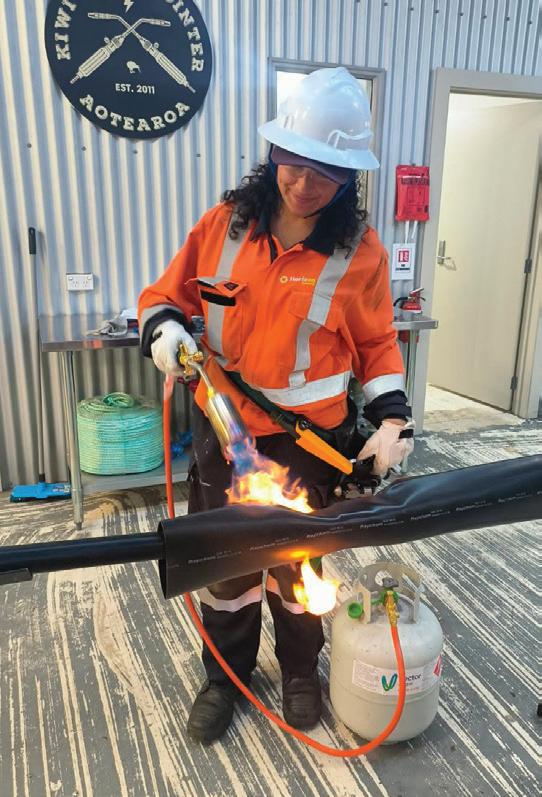
Attending a Connexis Girls with Hi-Vis® (GWHV) event in 2022 opened Natalee Hughes’s eyes to a new world of career possibilities.
After attending a GWHV hosted by Horizon Networks in Whakatane, Natalee completed a Gateway programme with Horizon while she was still a student at Trident High School. It just cemented the idea that a career as a line mechanic was for her.
Once she left school, Natalee joined Horizon full time as an apprentice line mechanic
enjoyed the hands-on nature of the work.
“GWHV is important because it gives girls a chance to try things you wouldn’t usually expect girls to do,” she says. “If you’re thinking about a trade, just go for it. Don’t let the opportunity pass you by — you might regret it.”
Natalee’s own successes are proof
I’d never tried before and I wanted to gain confidence in my own abilities,” Natalee says, adding that one of the most rewarding parts of the experience was working with the team of people on her Outward Bound course.
“They were non-judgemental and they were all amazing people who really encouraged me to never give up on myself or my teammates. I was nervous about the 5km run we had to do, because of an injury, but I managed it and didn’t give up. I



What works for one learner may not work for another. And this is especially evident when it comes to how we teach neurodivergent students.
Traditional approaches to literacy education often focus on visual cues. Recent research out of the University of Canterbury suggests that this approach may not always support autistic students. The findings could assist teachers in better adapting reading strategies for autistic learners in the classroom and provide useful guidance for caregivers
supporting autistic children with reading at home.
UC researcher Dr Sarah Hinchey has found that widely used classroom reading strategies may not enhance autistic children’s comprehension in the same way they do for other learners.
Dr Hinchey’s research was inspired by her autistic daughter’s reading behaviours. “She struggled to understand what she was reading when reading silently, but didn’t seem to have the same difficulty when reading aloud,” she says.
She says the observation sparked her interest in understanding how autistic students make sense of what they read. “In classrooms, multisensory strategies like picture books or visual supports are often used to help children understand what they read. But we don’t yet fully understand whether these approaches support or hinder comprehension for autistic children.”
Hinchey says that for some autistic children, comprehension difficulties may not become obvious until around the age of eight or nine, when students begin reading to learn rather than learning to read. Some autistic children may seem to read fluently, yet still find it hard to understand the meaning of what they are reading.
Dr Hinchey’s PhD research looked into reading comprehension in autistic children aged eight to 12, using electroencephalography (EEG) to monitor brain activity
during reading tasks. The study compared three common classroom approaches: silent reading, reading aloud, and silent reading supported by pictures. Alongside this, children completed standardised assessments of reading ability, language, IQ, and working memory. While autistic and nonautistic participants achieved similar results in most of these measures, the EEG data revealed clear differences in how each group processed comprehension across the different conditions.
Dr Hinchey noted that autistic and non-autistic groups displayed distinct patterns of brain activity depending on the reading approach used. In particular, autistic children showed significantly stronger neural signals associated with comprehension when reading aloud compared with reading supported by pictures.
“Reading aloud may benefit some autistic children, but what works for one child may not work for another.”
— Dr Sarah Hinchey, University of Canterbury
The big takeaway: tailoring reading strategies to suit the individual learner matters more than relying on any single classroom method. Dr Hinchey is continuing her research by trialling reading supports for autistic children, including text-to-speech applications, and again using EEG to gain a deeper understanding of how these tools assist reading development.
“Reading aloud may benefit some autistic children, but what works for one child may not work for another,” Dr Hinchey says. “These can have important

implications for teachers and speech-language therapists supporting autistic learners.”
For teachers, the practical message is that reading instruction should be flexible and individualised; no single method will suit every autistic learner, so a range may be needed within the same classroom. Reading aloud helps some students hear rhythm, intonation and
structure, but it is not universally effective; others may prefer silent or assisted reading depending on their sensory and processing preferences.
Several supports are worth having in the kit. Text-to-speech tools can reduce cognitive load and let students focus on meaning rather than decoding. Visual supports help when they are directly aligned with the
text and kept simple, clarity over quantity. Pre-teaching key vocabulary, breaking texts into smaller sections, checking understanding as you go, and connecting material to a student’s interests all support comprehension. The most effective approach is the one grounded in ongoing observation of what works for each learner.







• Modern & appealing design
• 4.3” Colour touch screen
• New foot control
• Integrated tutorials
• Easy to operate
• Recycled polyester dust cover
BERNINA NZ offer special school prices on a full range of machines suited to the demands of the modern classroom. We do not sacrifice on the quality or robustness of the machines, we believe a machine that lasts is the right investment for a school. Sewing is such an important skill for the future and students deserve the best tools to learn with.

For more information, contact your local BERNINA Sewing Centre or email info@bernina.co.nz
www.bernina.co.nz





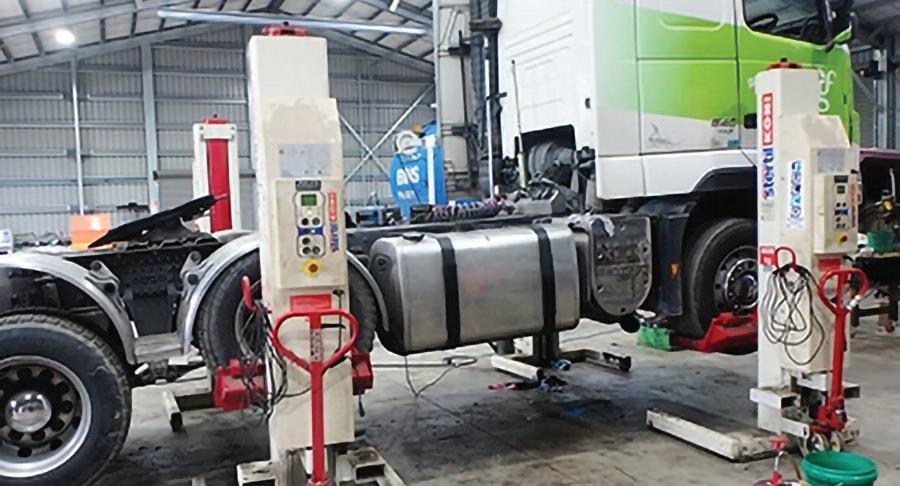
An established truck servicing company, Levin Truck Services provides machinery and truck owners in the Horowhenua region a range of servicing and repair options including mobile hydraulic repair, diesel servicing and farm machinery repairs. Our team includes heavy vehicle engineers, hydraulics specialists and in-house Certificate of Fitness inspectors to make sure your trucks and equipment are fully fit for purpose.

Walk into any busy classroom mid-afternoon and you’ll often sense it before you measure it. Perhaps a stuffiness that makes eyes droop and concentration wander.
Poor indoor air quality is one of the most overlooked factors affecting student learning, and our schools are not immune.
Research consistently links elevated carbon dioxide levels with reduced cognitive performance. When CO₂ climbs above 1,000 parts per million, which is common in a room of 30 students with windows shut against a cold Christchurch morning, children show measurable declines in decisionmaking, attention, and memory. At 2,000 ppm, the effect is significant enough to impair test performance.
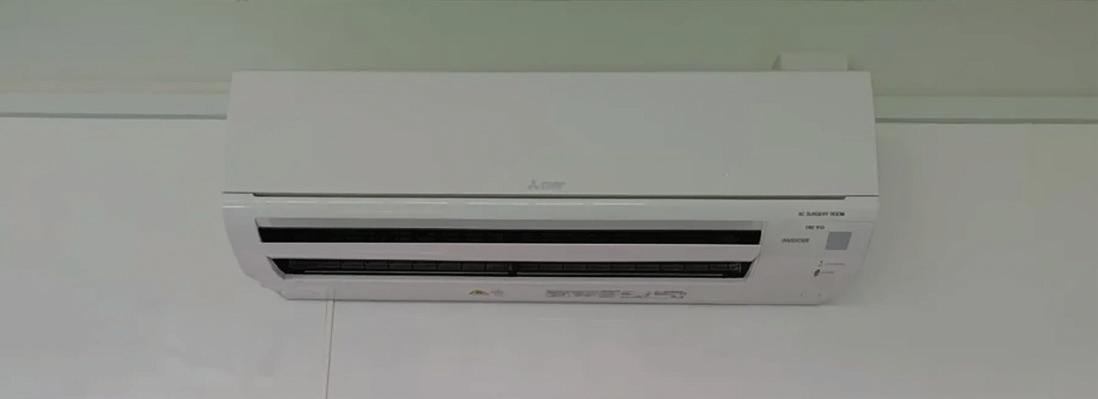
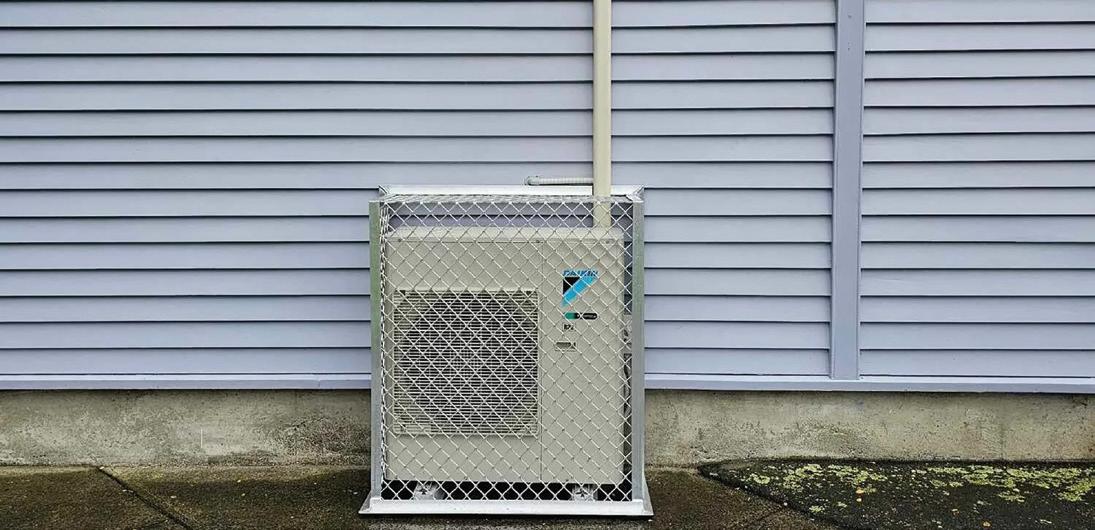
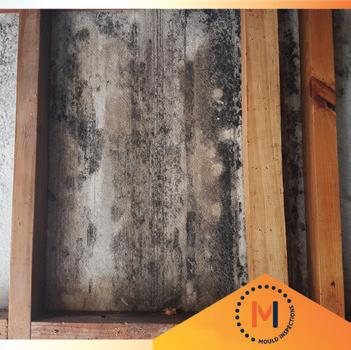
Beyond CO₂, classrooms accumulate volatile organic compounds from cleaning products, furniture, and adhesives, along with particulate matter tracked in from outside or stirred up during art and construction activities. Mould spores in older, poorly ventilated buildings add another layer of risk, particularly for students with asthma or allergies, conditions
that affect roughly one in seven Kiwi kids.
The good news is that meaningful improvement doesn’t always require major capital expenditure. Opening windows and doors strategically, particularly during breaks, can dramatically refresh air. Portable HEPA air purifiers have become affordable and are effective in classrooms where ventilation upgrades aren’t yet possible. Low-cost CO₂ monitors give teachers real-time feedback, turning air quality from an invisible problem into a manageable one.
Better air means better learning. As schools refresh property plans and seek funding through Ministry of Education channels, indoor air quality deserves a line item alongside heating and lighting. Your students’ lungs, and their NCEA results, will thank you.
In recent years, more businesses have begun marketing themselves as mould experts despite lacking formal accreditation and qualifications. Misleading websites, broad claims, and budget pricing can make it hard for property owners, tenants, landlords, and businesses to know who to trust.
Like most industries, when choosing a mould company for testing and investigations, there are different levels of standards and abilities with corresponding price structures.
In the microbial field, the difference between qualified professionals and untrained operators can be massive. While lower pricing may appear attractive, mould investigations often require specialised knowledge, internationally recognised certifications and accurate reporting that, if needed, can withstand legal or insurance scrutiny.
The reality is that mould issues are hardly ever just surface-level
problems. Effective investigations should identify not only where mould is present, but why it is occurring in the first place. Without that understanding, the same problems can come back, leading to ongoing health concerns, property damage, and further costs.
A qualified mould specialist should be able to answer several key questions with confidence and evidence. What is causing the mould? Is it toxic or harmful? Is the environment safe for occupants? What remediation process is required? And importantly, how should the area be properly decontaminated?

If these questions cannot be answered clearly, there is a strong chance that further investigations or remedial work will be needed after the initial assessment has already been completed.
For landlords and tenants, proper reporting can also play a key role in determining responsibility and liability. Certified professionals
provide reassurance that investigations have been completed to recognised industry standards.
When dealing with mould, expertise matters. As qualified mould technicians, Mould Inspections NZ Ltd will ensure you receive the undisputed answers you need.
We specialise in building-related mould issues






Qualified Mould Experts
We set the standards across New Zealand in mould investigation, indoor air quality testing and occupational safety.
We are a nationally recognised brand, contracted by all major Health and Government organisations. With extensive technical and head office support.
Most highly certified Inspection business in NZ across testing/reporting/decontamination.
On average, we breathe 13,000 litres of air per day and spend around 90% of our day indoors – either at home, work or school.
When classrooms overheat or CO₂ builds up, concentration drops, headaches increase and behaviour can become challenging. In monitored New Zealand classrooms - as part of the ‘Healthy Schools’ project part sponsored by APL and carried out by Massey University - CO₂ levels have been found climbing well above recommended thresholds for extended periods during the school day.
Studies confirmed that airborne viruses from droplets and microdroplets will spread dangerously with closed windows. With windows open the viral concentration remains densest near the
infected student but the contaminants are diluted in the rest of the room.
Good window design is one of the simplest ways to tackle this. High-level openings, cross-ventilation and passive vents can help refresh classroom air, manage heat build-up and support more stable temperatures throughout the day. The key is: multiple ‘air changes’ on a regular basis, either through open windows or through the installation of passive ventilators.
Part of that window design is the glass, which plays a huge part in overall
temperature of a classroom. APL’s sister company, AGP, offer two high-performing Low-E glass options (Solux-E® or Solux Ultra®) which pair seamlessly with our thermally efficient frames. Instead of choosing glass and windows in isolation, schools can take a window-system approach that considers orientation, shading, opening type and passive ventilation as one solution.
This means classrooms that feel more comfortable, support better learning conditions, and remain fit for purpose as summers get hotter and expectations around indoor air quality continue to rise.

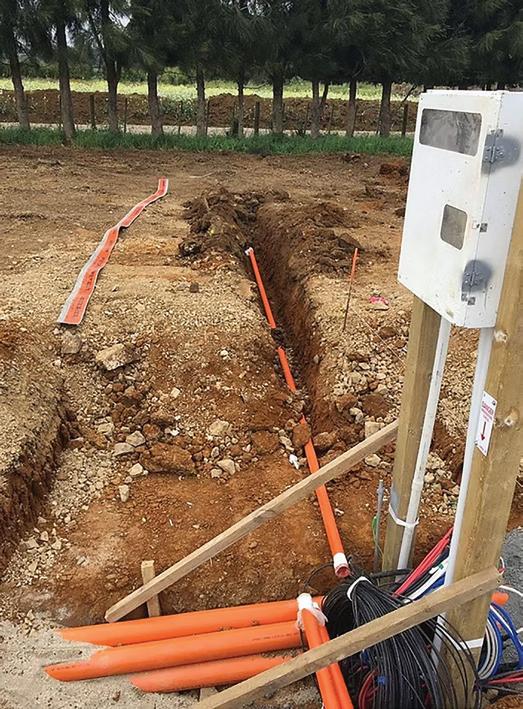
Looking for unparalleled electrical services in the Waikato region? Rivertown Electrical is your go-to, specialising in a wide range of electrical solutions. Whether you need domestic, rural, commercial, or industrial services, our skilled electricians are ready to deliver top-tier and unmatched customer care.
Superior service options
Rivertown Electrical provides an extensive array of services. From routine maintenance checks to complex installations and emergency repairs, our team ensures your electrical systems function flawlessly. Our expertise covers everything from rural installation and servicing to domestic installation, maintenance and servicing. No job is too big or too small for us.
Deep local roots and expertise
Located in Huntly, we are deeply embedded in the Waikato community and understand its unique electrical needs and
challenges. Our local knowledge not only helps us deliver effective solutions but also guarantees compliance with regional safety standards, giving you peace of mind that your electrical work is done right.
Customer satisfaction:
Our core commitment
We prioritise our clients’ satisfaction above all else. Rivertown Electrical is dedicated to exceeding your expectations through our responsive customer service, punctuality, and commitment to solving your electrical issues swiftly and efficiently. We listen to your needs and tailor our
services accordingly, ensuring a personalised experience every time.
Safety and quality standards
Safety is number one to us at Rivertown Electrical. We adhere to strict safety standards, and all our work is compliant with national regulations. Our electricians are well-trained in the latest safety protocols
and use only the best tools and technologies, guaranteeing the highest quality of workmanship.
Reach out for exceptional electrical services
Don’t compromise on quality and safety. Reach out to Rivertown Electrical for reliable, efficient, and high-quality electrical services. Let Rivertown Electrical power your home or business with skill, dedication, and professional integrity. Experience the best in the business –because when it comes to electricity, only the best will do.
Rivertown Electrical
07 828 7240
rivertownelectrical@xtra.co.nz
www.rivertownelectrical.co.nz
30 William Street, Huntly 3700
Hours of operation: 24/7, 365 days of the year
No project too big or too small!
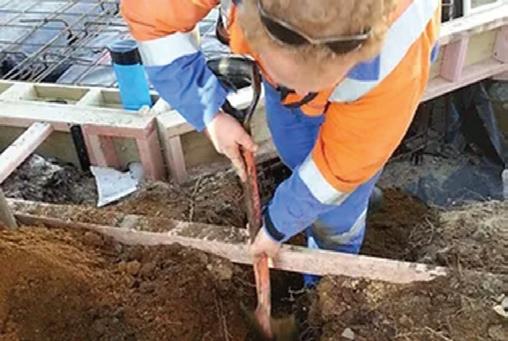
Based in Huntly, Rivertown Electrical is focused on providing electrical services with the highest levels of customer satisfaction. We provide electrical servicing to a wide range of valued domestic, rural, commercial and industrial clients across the Waikato region and beyond, 24/7 365 days of the year.
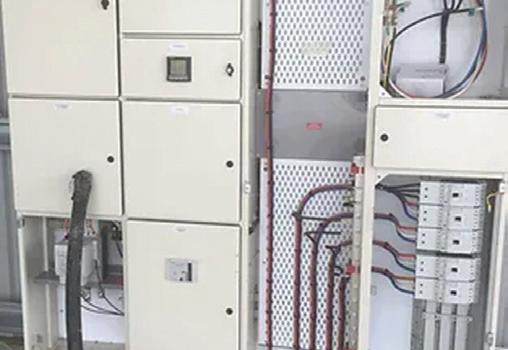
For homeowners in Rotorua seeking quality craftsmanship and a builder they can rely on, MK Build Ltd offers experience, professionalism and a personalised approach that sets it apart.
With more than 18 years of industry experience, the company has built a strong reputation for delivering highquality residential construction projects tailored to each client’s vision and lifestyle.
MK Build Ltd specialises in new builds, renovations and extensions, working closely with clients from concept through to completion. Building or renovating a home is one of the biggest investments many people will make, and the team understands the importance of clear communication, careful planning and consistent workmanship. Clients are kept informed at every stage, ensuring the process remains transparent, collaborative, and as stress-free as possible.
As a proud member of the New Zealand Certified Builders Association, MK Build Ltd demonstrates its commitment to high standards and ongoing professional development. Membership reflects trade qualifications and a dedication to best practice within the building industry. Regular updates on regulations and building requirements mean projects are completed in line with current standards, giving clients added confidence and peace of mind.
Bathroom renovations are a core service, whether updating existing fixtures or undertaking a full transformation. MK Build Ltd coordinates all aspects of the renovation, working alongside trusted electricians, plumbers, tilers and painters to ensure a seamless result. Attention to detail and careful project management help deliver bathrooms that are both functional and visually appealing.
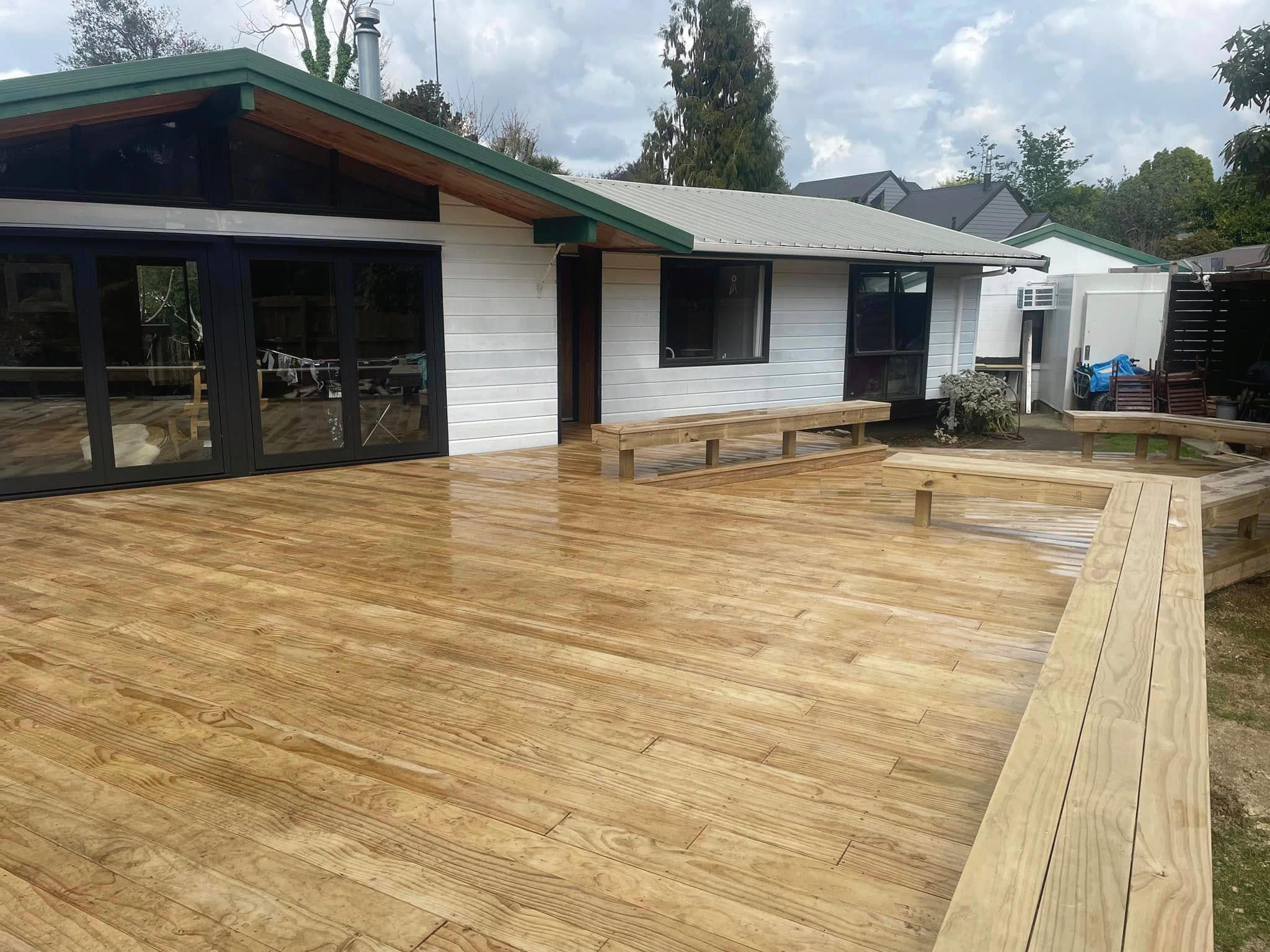
From classic decks to covered or wraparound designs, MK Build Ltd constructs outdoor areas that extend the usable space of the home. Each deck is built to suit the property, lifestyle and budget, enhancing both enjoyment and value.
Kitchen projects are approached with the same level of care and expertise. Whether clients require additional storage, improved layout or a complete redesign, MK Build Ltd works with local joiners to remove and install cabinetry and fixtures efficiently. The focus is on creating practical, well-designed spaces that suit the way families live and entertain.
Outdoor living is another area of strength. From classic decks to covered or wrap-around designs, MK Build Ltd constructs
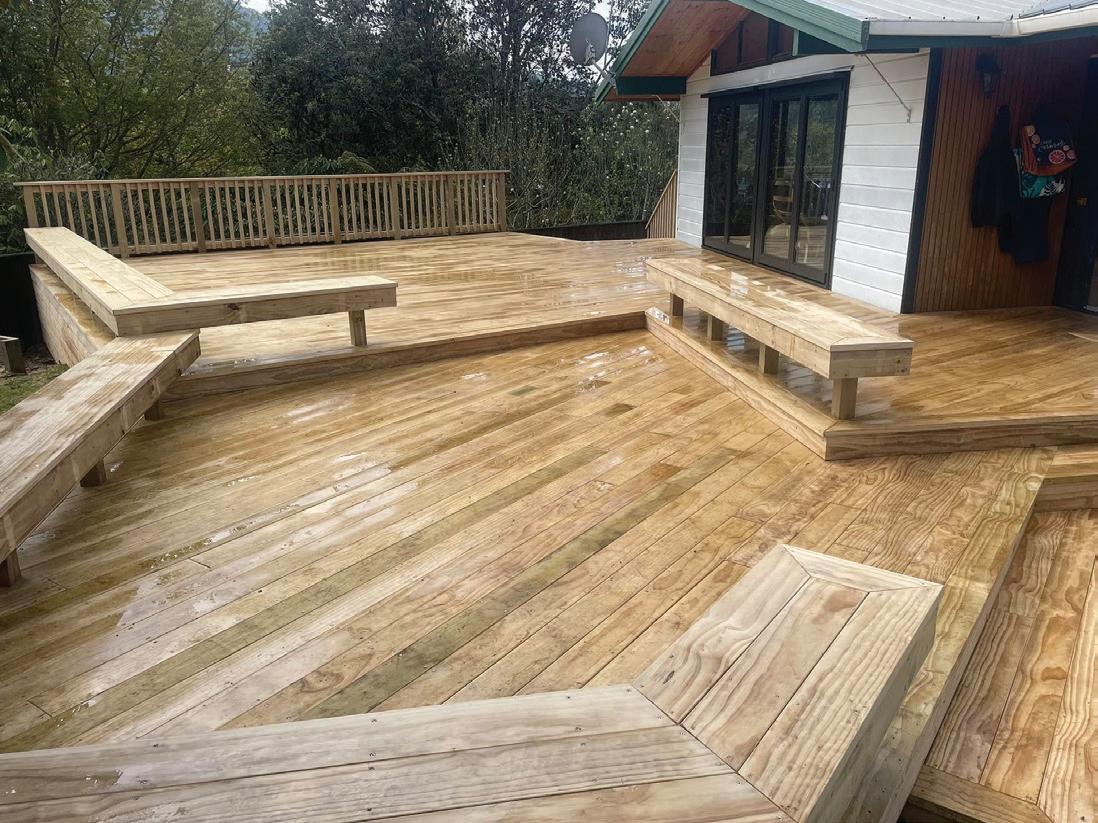
outdoor areas that extend the usable space of the home. Each deck is built to suit the property, lifestyle and budget, enhancing both enjoyment and value.
For those building from the ground up, MK Build Ltd works closely with a local architect to guide clients through the entire new build process. This includes assistance with council consent applications and regulatory requirements, helping ensure a smooth journey from initial design to finished home. Renovations and extensions are
handled with equal expertise, whether expanding living areas, adding bedrooms or reconfiguring existing layouts to better meet changing needs.
Every project undertaken by MK Build Ltd reflects a commitment to quality workmanship, reliability and client satisfaction. By combining nearly two decades of experience with a hands-on, approachable style, the company continues to deliver homes and spaces that Rotorua residents are proud to call their own.

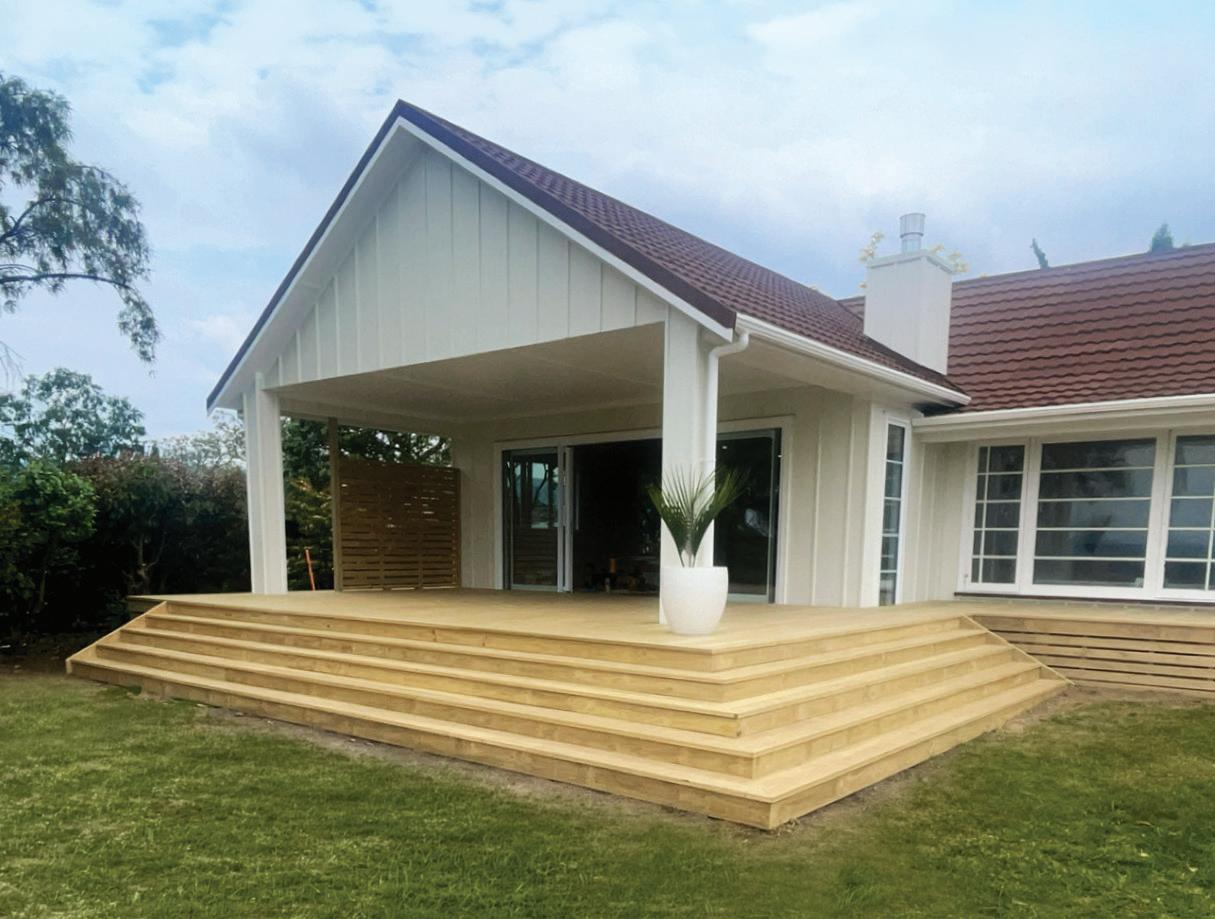
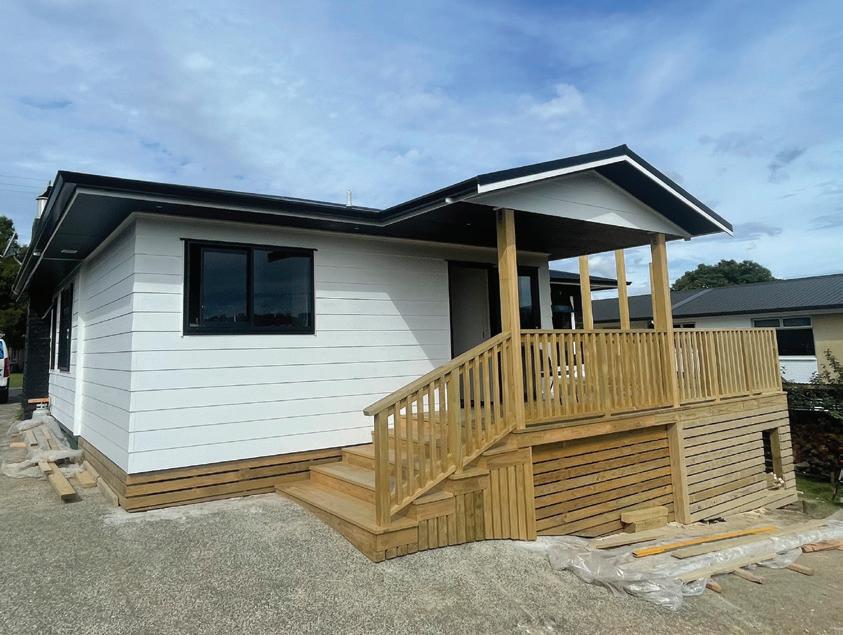
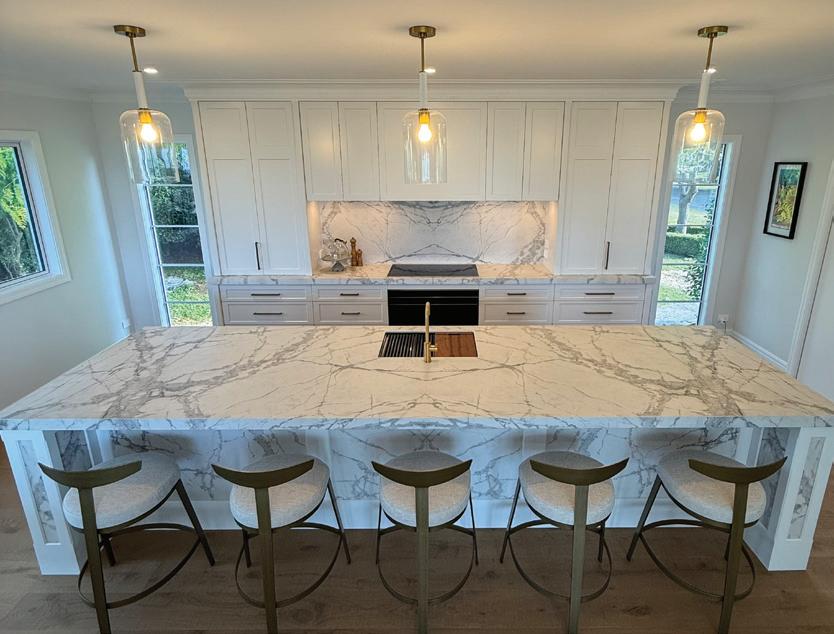

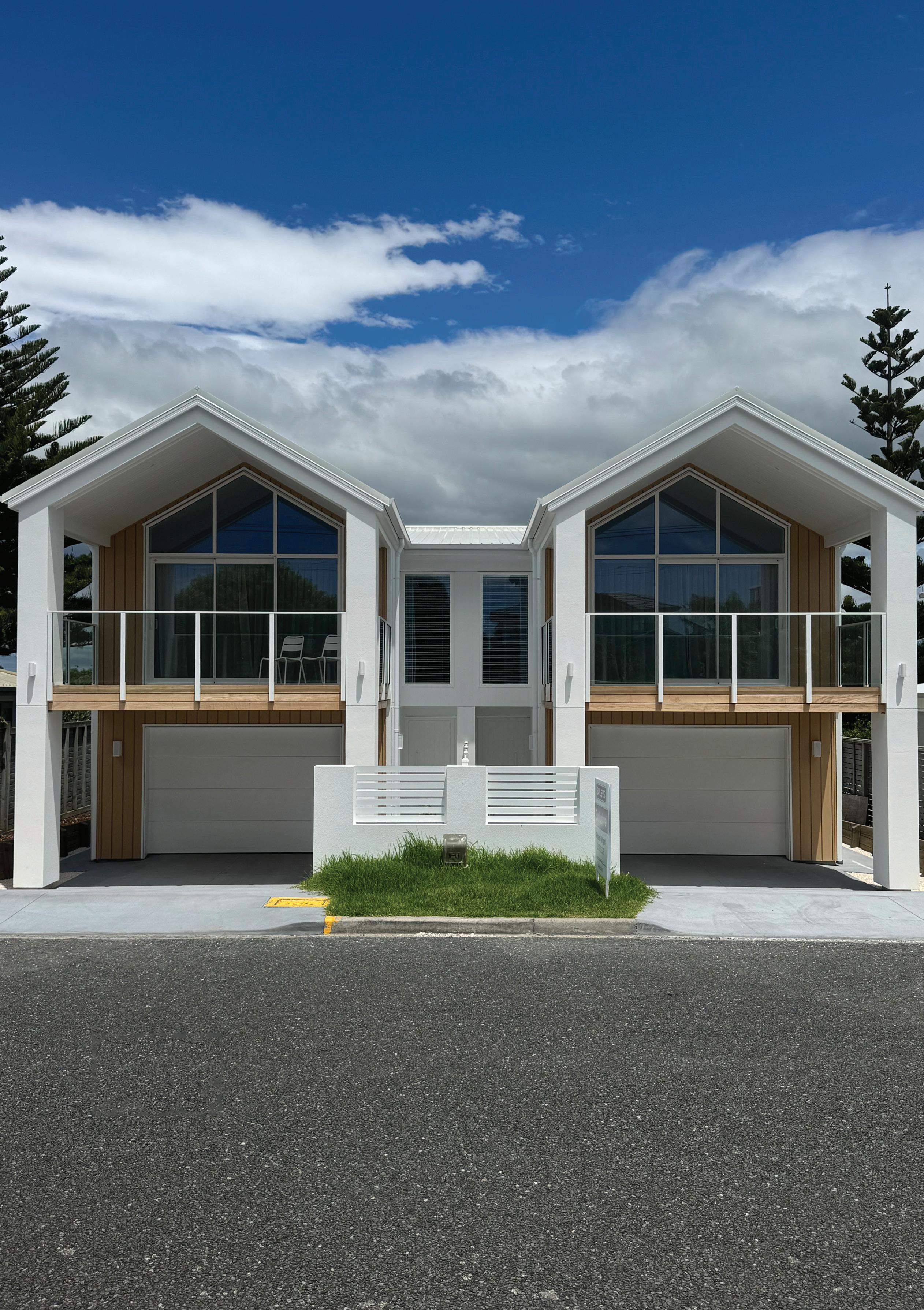
PLENTY’S
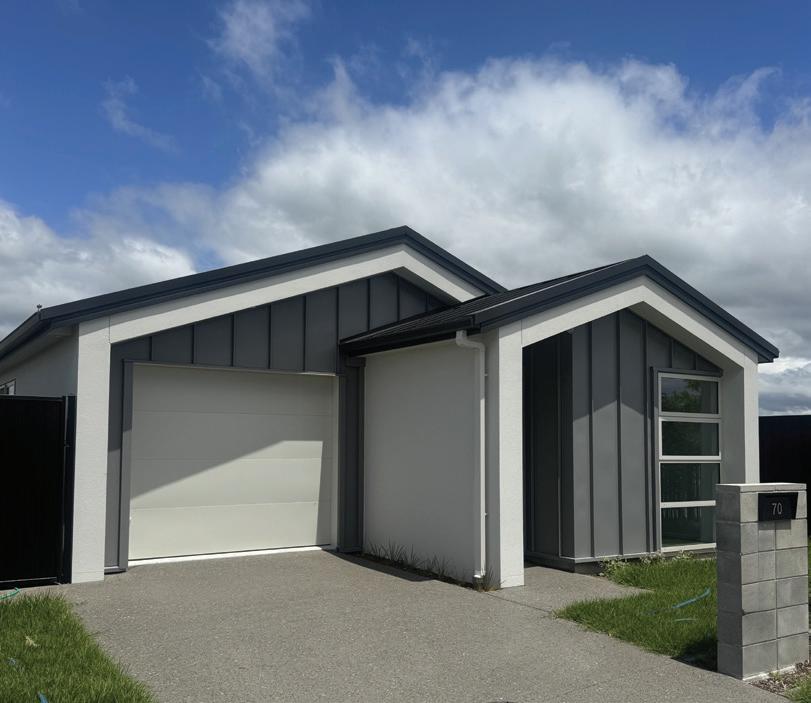
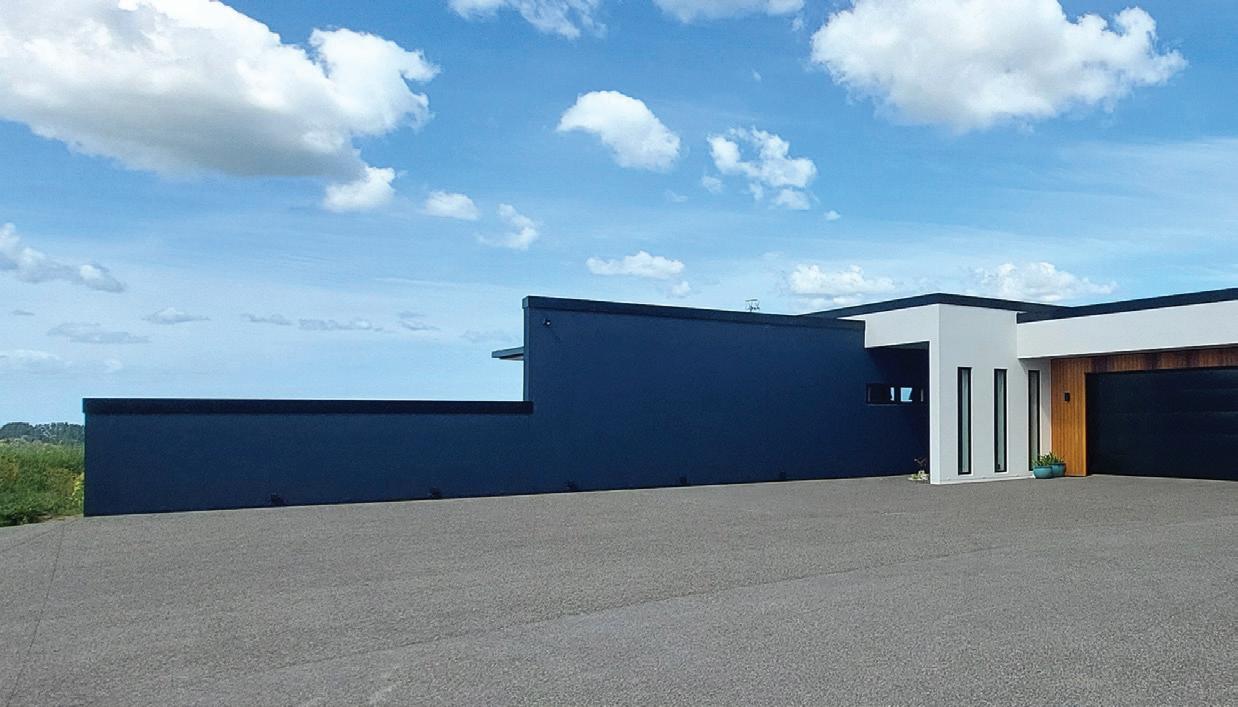
A1 Exteriors is a trusted Bay of Plenty exterior specialist with over 20 years of industry experience, delivering high-quality finishes for residential and commercial projects.
Known for their attention to detail and professional approach, the team prides itself on producing smooth, durable results using proven, BRANZ-approved systems. Every project is carefully managed, from preparation through to completion, ensuring consistency, longevity, and a flawless appearance.
A1 Exteriors works closely with clients, builders, and developers to achieve results that enhance and protect buildings, while enhancing both the look and long-term value of each property. With a strong reputation for reliability, workmanship, and clear communication, A1 Exteriors continues to be a trusted name throughout the Bay of Plenty.

Singapore’s announcement that it will strengthen the use of caning for serious school bullying has reignited a question that many New Zealanders might assume was settled long ago: are we doing enough to protect kids from bullies?
Under Singapore’s new policy, male students aged nine and older can receive up to three cane strokes for severe bullying offences, including repeated physical assaults and serious cyberbullying. The nation’s Education Minister Desmond Lee said the punishment would require principal authorisation and be used only as a last resort, after other interventions have failed. The move follows a string of high-profile incidents, such as filmed assaults and viral videos of student attacks, that prompted genuine public alarm.
New Zealand has its own reasons to take notice. The 2022 PISA survey found that around 28% of Kiwi students reported being bullied at least a few times a month. That’s above the OECD
average of about 20%, with boys (32%) the most affected. Cyberbullying continues to rise alongside teenage smartphone use. And frustration about classroom violence surfaces regularly in public debate, particularly among parents who feel schools lack meaningful consequences for repeat offenders. So, should New Zealand follow Singapore’s example?
The real lesson from Singapore is not the cane. It’s that a society took school violence seriously enough to act decisively.
The honest answer is almost certainly no, and not simply because of squeamishness. New Zealand banned physical punishment by teachers in 1990 through amendments to the Education Act. The law is unambiguous: school staff
cannot use force for correction or discipline. Legally, politically and culturally, reversing that would face enormous resistance, and for good reason.
The evidence against corporal punishment is substantial. A 2021 review in The Lancet, led by Heilmann and colleagues, drew on 69 long-term studies and found consistent links between physical punishment and negative outcomes, including increased aggression, anxiety, depression and lower academic achievement. Put simply, hitting children to stop them hurting others is not supported by the research.
New Zealand has instead invested in restorative practices, trauma-informed approaches, counselling and behaviour support programmes. The Bullying-Free NZ initiative and Positive Behaviour for Learning framework represent a very different philosophy: that lasting change comes from addressing the causes of harmful behaviour, not from fear of physical pain. Singapore’s approach reflects its own legal culture, one where
judicial caning already exists for adult offences including vandalism and drug crimes. Significant public support for corporal punishment in Singapore has been documented consistently over the past decade. That context matters. What works within one society’s norms and institutions does not automatically transfer to another. Where New Zealand should genuinely take stock is in asking whether its alternative approaches are working well enough. A bullying rate among the highest in the developed world is not a record to be comfortable with. If restorative practices and support programmes are not reaching the most serious cases, that demands honest scrutiny and better resourcing, not a retreat to methods the evidence has repeatedly found harmful.
The real lesson from Singapore is not the cane. It’s that a society took school violence seriously enough to act decisively. New Zealand should feel the same urgency, and find its own answers.


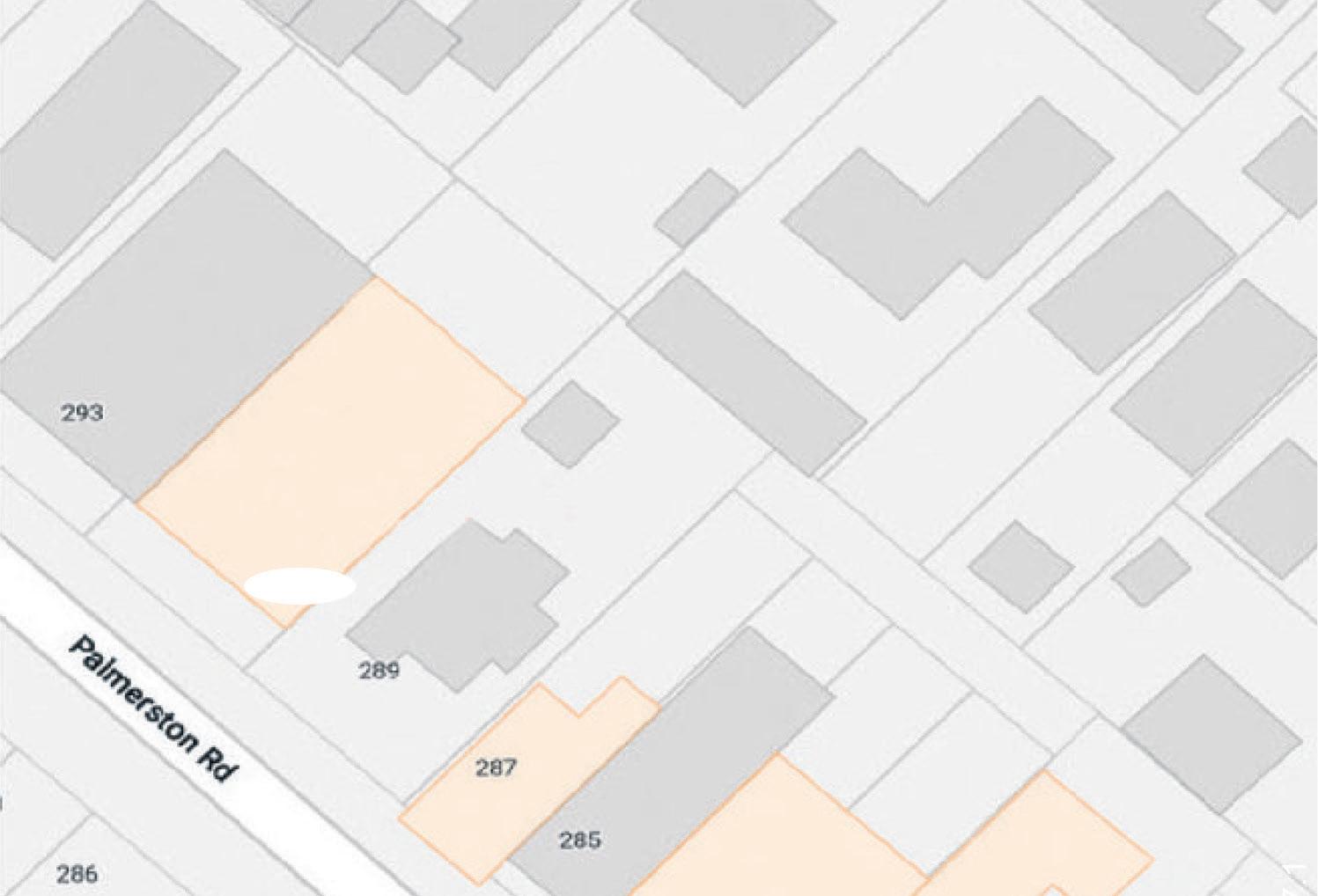



In today’s fast-moving education landscape, teachers are expected to do more than ever – adapt to curriculum change, personalise learning, ensure assessment integrity, and still find time to inspire.
What if the tools you relied on could lighten that load, while lifting outcomes for ākonga?
At Instant Education Solutions, that’s exactly what we’re here for!
For more than 25 years, we’ve partnered with schools and kura across Aotearoa, guided by a simple but powerful mission: changing lives through learning. As specialists in the secondary and tertiary sectors, we understand the realities of modern classrooms – and we design and test our solutions for the real-world.
Our resources are built to take the pressure off. That means less time spent planning, formatting, and verifying – and more time doing what matters most: teaching, connecting, and inspiring.
Flexible learning, designed for you
Meet Instant Online – our flexible, future-ready platform that puts you in control.
Whether you want full delivery or only the assessment Instant Online supports your teaching model:
• Assessment Only – your teaching style and lesson

content, with our premoderated assessments that ensure credibility and consistency.
• Learning Content & Assessment – A complete, ready-to-go solution with engaging learning material and pre-moderated assessments.
Our Moodle-based platform offers a seamless, end-to-end solution, set up and ready to go; or import our content into your own LMS. Instant Online integrates with platforms supporting Moodle backup imports or IMS Common Cartridge formats – giving you the flexibility to work your way.
Check out our new courses
We continue to expand our offerings to meet real classroom needs. Two of our latest additions include:

• US 3462v7 (Level 2, 3 Credits) – Demonstrate knowledge of traffic law for the purpose of safe driving
• US 3491v8 (Level 3, 4 Credits) – Write a report
These courses help you broaden subject choice, maintain assessment credibility, and deliver recognised outcomes—without adding complexity to your workload.
Print that works as hard as you do
Introducing Instant Print –our dedicated education print solution designed with you in mind.
We know that teaching materials need to be affordable, engaging, and delivered on time. With cutting-edge digital technology we produce high-quality:
• Workbooks and course material
• Certificates and flyers
• Posters and classroom resources
From small-run jobs to larger orders, every job is handled with care and precision. The process is straightforward: send us your brief, confirm your requirements, and we take care of everything –from print to finishing to nationwide delivery.

With options for variable data printing and eco-conscious production, Instant Print helps your school operate smarter and more sustainably.
Your partner in learning
At Instant Education Solutions, we don’t just create resources –we build partnerships. Through collaboration, innovation, and a deep understanding of education in Aotearoa, we support kaiako to deliver meaningful, high-quality learning experiences every day. Because when teachers are supported, learners succeed.
Discover the difference.
Scan the QR codes to explore our catalogue, Instant Online, and Instant Print – and take the next step toward simpler, stronger teaching.
We specialise in the provision of assessment resource solutions, allowing you to relax and get on with the job of teaching.
No Time To Mark? No Consent To Assess? Contact us today for more information.

Smart Printing for Education Fabulous, Flexible, and Flawless.
Instant Print delivers premium-quality digital printing for schools, training providers, and publishers across New Zealand. Flyers, Brochures, Posters and Booklets. Visit our website for the full catalogue
An online learning platform, for New Zealand Secondary School students, giving the opportunity for credit achievement towards NCEA levels 1-3.
Check
www.instant.org.nz
By Ben O’Connell

More teenage boys are talking about training, diet and physique than they were a generation ago. What used to sit at the edges of gym culture has moved into everyday school life: PE classes, group chats and short-form video feeds. For most of them, that interest is a good thing.
Strength training builds confidence, routine and a sense of belonging, and a generation of boys taking their health seriously is not a problem to be solved.
The broader online trend often labelled ‘looksmaxxing’ is a loose blend of fitness, grooming and lifestyle content built around maximising appearance. At its most benign it is ordinary self-improvement. At its most extreme it pushes rapid physical change, rigid routines and relentless self-comparison.
The most visible figures are a handful of international influencers with large teenage audiences. Some focus on genuine training and performance; others court
attention with punishing regimes and, in some high-profile cases, openly discuss using performance-enhancing drugs to get the look they want.
Aotearoa has fewer largescale equivalents in this space. Our local online fitness scene leans towards coaches and athletes whose content centres on performance, health and sustainable training. But Kiwi teens still scroll the same global feeds on TikTok, Instagram and wherever else, so the content reaches them regardless. Livestreamed content on streaming platforms such as Twitch and Kick has further ethical implications.
Teen health research, including work from universities like Michigan’s, consistently link exposure to idealised male bodies with higher rates of body dissatisfaction among teenage boys. The same body of work suggests that while anabolic steroid use appears relatively stable overall in comparable countries, the use of supplements such as creatine has increased in some gym-focused youth populations. That’s one
The
broader online trend often labelled
‘looksmaxxing’ is a loose
fitness,
blend of
grooming and lifestyle content built around maximising appearance.
sign that some boys are thinking less about sport alone and more about ‘optimising’ how they look.
Recent research also points to a useful distinction for schools: it appears to be the type of content a boy watches, muscularity and supplement-focused feeds, rather than screen time alone, that’s most strongly linked to harm.
That harm has a name. Muscle dysmorphia, also known as bigorexia or vigorexia, is a recognised condition in which someone sees themselves as small or underbuilt despite being visibly muscular, and trains and diets compulsively to fix a problem that isn’t there. It
can be associated with anxiety, depression, disordered eating and, in some cases, steroid use. The medical risks of anabolic steroids are well documented. Research published in the European Heart Journal has shown long-term users developing reduced heart function and structural changes to the heart muscle, with risk increasing the longer and more heavily the drugs are used. Some of that damage may not fully reverse after use stops, particularly where use begins young.
A bigger shift is in how these drugs are talked about. In some online spaces steroids are framed less as dangerous substances and more as a shortcut to a certain physique. That change in language matters, because it can make risky behaviour feel normal. Algorithms tend to amplify high-engagement and visually extreme content. The most extreme versions move curious teens from sensible workout routines into niche communities where drug use is normalised as another fitness tool.




Delivering quality, compliance & confidence - every step of the way.
At Asset Project Facilitators, we specialise in end-to-end project consulting for schools across New Zealand.
Our expertise ensures your capital works are delivered on time, within budget, and in full compliance with Ministry of Education standards.
Our Services Include:
• 5YA Project Delivery
• Weathertightness Remediation
• Cyclical Maintenance Planning
• 10YPP Development & Management
• AoG Panel
We bring clarity, structure and value to every stage of your school’s property journey.
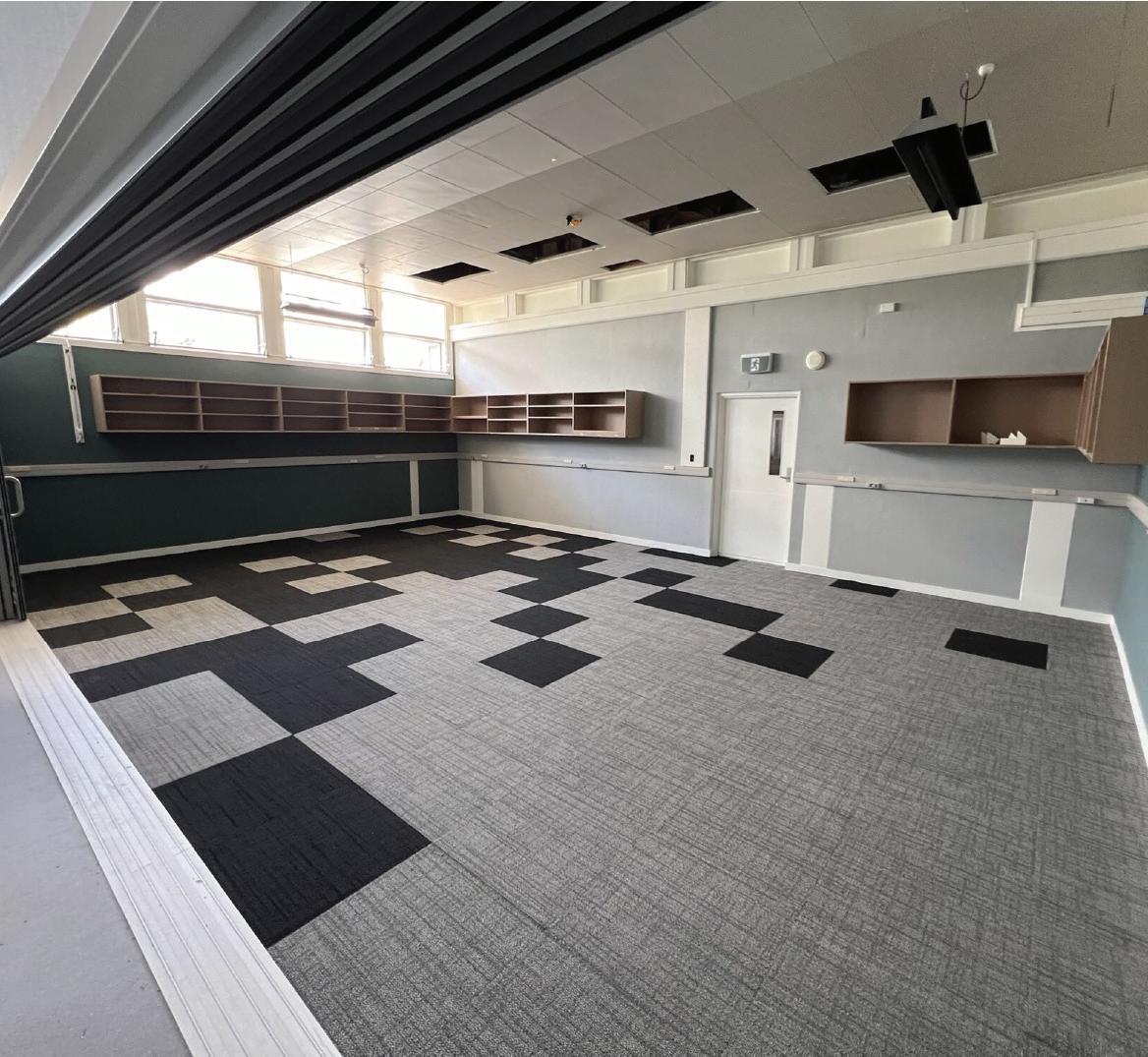

schools
This is the line schools have to walk: take the harm seriously without treating every boy who lifts weights as a patient, and without making fitness itself sound shameful. Shame tends to push boys further into the online spaces where they feel understood. A handful of practical moves help.
• Know the warning signs. Be alert to training through injury, rigid or secretive eating, anxiety or irritability when a session is missed, constant mirror or body-checking, heavy reliance on supplements, and withdrawal from family or shared meals. Pastoral and PE staff are well placed to notice these, and to open a quiet, non-judgmental conversation rather than a confrontation.
• Have a referral pathway ready. Make sure staff know where a concern goes next, whether that’s the school counsellor, the school nurse, or a GP, so a worried teacher is not left holding it alone.
Algorithms tend to amplify high-engagement and visually extreme content. The most extreme versions move curious teens from sensible workout routines into niche communities where drug use is normalised as another fitness tool.
strength training framed around what a body can do rather than how it looks, and grounded male role models among staff give boys a version of strength that does not depend on a phone.
• Bring whānau in. Parents often see the supplement tubs and the gym obsession without a frame for it. A short note or evening session on what is healthy, what the warning signs are, and how to raise it
without nagging turns home into part of the support rather than another battleground. None of this is about steering boys away from the gym. For most, training is one of the healthier things they do, and the job is to keep it that way, to make sure they can engage with fitness culture, and whatever else draws them online, in a way that builds them up rather than feeding comparison, pressure and extremes.
• Be the trusted source on training. Boys will learn about lifting somewhere; better the school than an anonymous feed. Use PE and the Health and Physical Education learning area, which already covers body image and wellbeing, to teach correct technique, sensible nutrition and realistic timeframes. Accurate information is the best inoculation against the magical thinking the feeds sell.
• Teach algorithm literacy, not just “media literacy”. Go beyond “don’t believe everything online”. Show students how the feed is engineered: that it rewards engagement, that much supplement and “transformation” content is paid promotion, and that the bodies they measure themselves against are often lit, filmed and sometimes chemically assisted for effect. Pulling a real fitness feed apart in class lands harder than a warning.
• Offer a better script. The pull of this content is partly about identity and belonging. Sport,

Beyond the slide and swing set, a truly effective playground is a carefully designed environment. For schools and councils, maximising play value (the capacity of a space to genuinely engage and enrich children) is the cornerstone of successful design. It’s not just about what equipment you install, but how well the whole setting inspires return visits.
Here are the five essential design principles that transform a typical playground into a dynamic hub for children’s development.
1. Inclusive capacity
A vibrant play space is a social one. Designing for inclusive capacity means consciously accommodating diverse group sizes and play preferences, ensuring that children of all abilities feel welcomed and integrated. This foundational step promotes positive social interaction and
prevents any child from feeling isolated or excluded.
2. Dynamic play
Monotony kills interest. To maintain sustained engagement, a playground must offer a wide variety of experiences. Scrutinise your existing resources and ensure new additions don’t duplicate current options. A dynamic play environment presents fresh and varied challenges, allowing children to explore new physical and cognitive activities.
3. Irresistible appeal
What makes children rush toward a space? The “wow factor”, that immediate, undeniable attraction. Achieve this with inventive design, bold, vibrant colours, or themed elements. The visual promise of adventure is what initially draws children in and makes the play area an instant favourite.
4. Sustained engagement
Attraction is the opening act but sustained engagement is the main event. Activities that allow for collaboration, physical problem-solving, or skill mastery are highly effective at keeping children immersed for extended periods.
5. Open-ended exploration
The best play components don’t dictate how they should be used. Equipment supporting
open-ended exploration invites children to use their imagination, finding new and unexpected ways to interact with the structure and the environment. This empowers children to become active creators of their own play, ensuring the space remains a continuous source of discovery. By strategically applying these key points, focusing on who is playing and how they are playing, you can curate a playground that goes far beyond a leisure spot, transforming it into a powerful, enriching foundation for a child’s social and educational journey.
www.parksupplies.co.nz sales@parksupplies.co.nz 0800 752 947
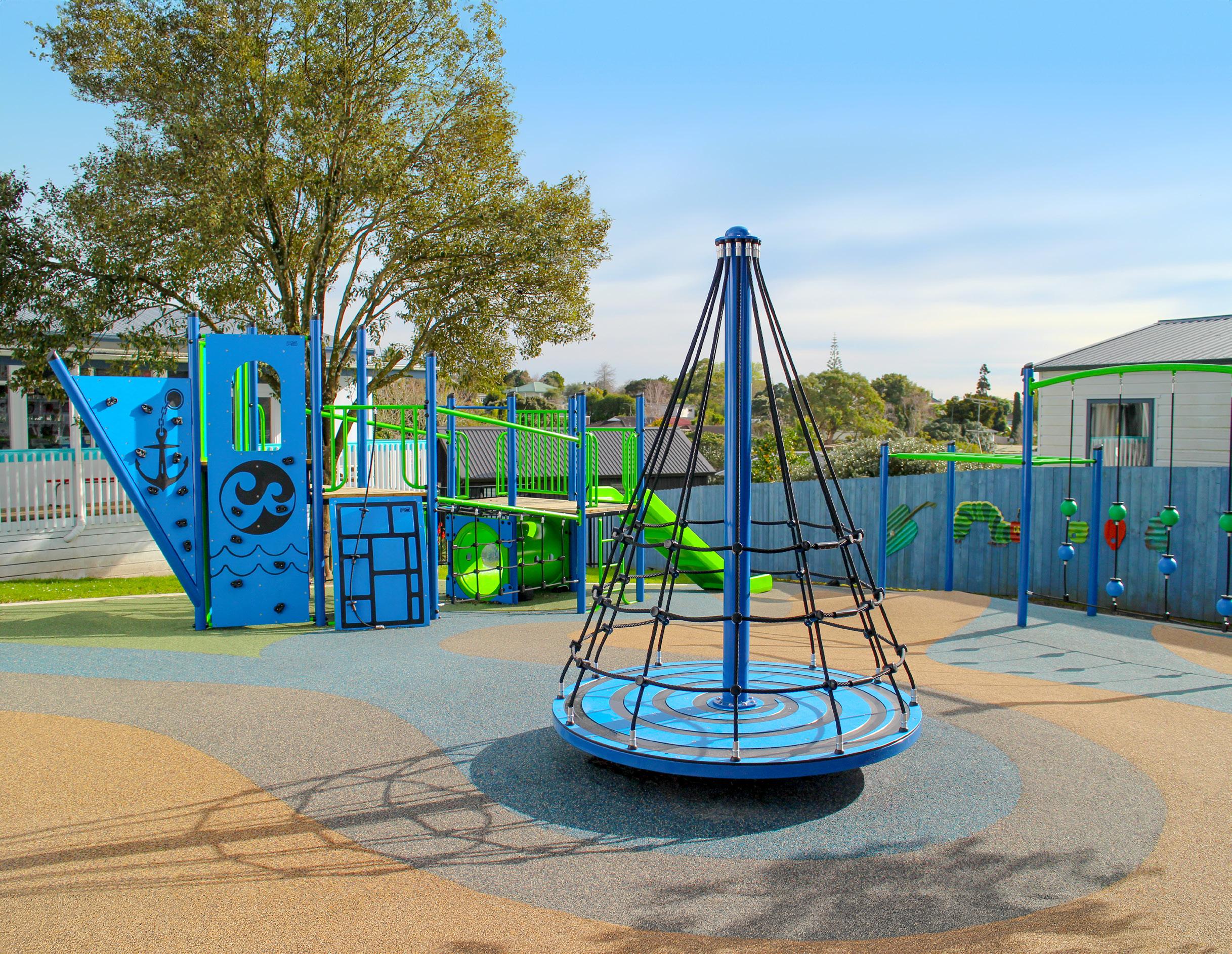


Recognised for excellence in planning and client service.
Development can be complex — but it doesn’t have to be.
Plan Co. is a specialist planning consultancy that helps property owners, developers, and investors successfully navigate the resource consent process from concept through to council approval.
Founded in 2016, the firm brings together experienced planners with
backgrounds in local government and international planning, offering practical guidance that keeps projects moving forward.
With a collaborative approach and deep understanding of regulatory processes, Plan Co. helps clients unlock the full potential of their sites.
From small residential projects to large-scale developments — no project is too big or small.

Resource Consents
End-to-end management of consent applications — from coordinating specialists to preparing and lodging submissions with council. Due Diligence
Strategic planning advice and feasibility assessments to help you make informed development decisions. Development Planning
Expert guidance for residential, subdivision, and commercial developments of any scale.
3 Extensive experience with councils across New Zealand
3 Clear, honest communication throughout the process
3 Collaborative approach with industry specialists 3 Proven track record delivering successful consent outcomes
These principles allow projects to move efficiently through regulatory processes while maximising site potential.

School formals have become a serious costof-living issue for many families, with ticket prices, outfits, transport, hair and makeup quickly pushing the final bill into the hundreds or even thousands of dollars. A recent case at Ōrewa College showed how quickly the debate can flare when a ball ticket was set at $230 before being cut to $195 after parent backlash.
Parents described the original $230 ticket for a ball at Auckland’s new International Convention Centre as “obscene,” especially given the cost-of-living squeeze, and one parent with twins said the event would have cost nearly $500 just for tickets.
Principal Wiri Warriner told parents the team had “carefully” reviewed the event and cut the ticket by 15% to $195, within a “similar range” to the past two years’ balls at $190 and $220.
Ticket prices are only the starting point. Reports on school balls in New Zealand say tickets can range from about $100 to more than $300, depending on venue, catering and event scale. At some schools, principals have tried to keep prices below $100 through fundraising and cheaper venues, but that is increasingly difficult when event costs rise.
The ticket is only one part of the bill. Families also have to cover dresses or suits, shoes, hair, makeup, nails, accessories, transport, corsages, and often pre-ball or after-ball events. One parent interviewed in national coverage said those extras made the overall cost feel “horrendous,” and described spending a couple of thousand dollars across several balls.


School formals are no longer a small annual expense, and for many parents, they now rival other major household costs.
For many households, the issue is whether the event has drifted beyond what ordinary families can comfortably afford. Even if a school holds ticket prices down, the broader social expectation around formal wear can still make attendance expensive.
The rising cost of school formals also raises questions about fairness. When prices climb, students from lower-income families are more likely to miss out, even if they want to go. School leaders have acknowledged that while they can help with tickets, they cannot control the cost of dresses, grooming and other extras.
That creates a split between the ideal of a memorable shared
rite of passage and the reality of unequal access. A formal can become a status event, rather than a celebration open to everyone in the year group. In that sense, the cost of the night is shaping who gets to belong.
Schools that keep formals more affordable tend to rely on student committees, sponsorship, fundraising and modest venues. Those measures can help, but they only go so far when external costs rise. The challenge is balancing a special event with the need to keep it inclusive.
Ōrewa College’s ticket cut shows that schools can respond when families push back. But the bigger issue remains the same: school formals are no longer a small annual expense, and for many parents, they now rival other major household costs.
We pride ourselves on our quality customer service which has built our excellent reputation in the market.
We specialises in the following services:
Alterations & Additions
Bathrooms & Kitchens
Plumber
Maintenance and Servicing
Rural
Heating
Maintenance and Servicing
IQP Backflow Prevention
Pumps Tanks Filtration and Irrigation
Solar Hot Water Servicing
Central Heating Systems
Hot Water Heat Pumps
Log Burner Installation
IQP / RPZ Backflow Prevention
When you hire a Laser Plumber or Electrician, you’ll receive our ‘Totally Dependable’ service!
Timely delivery
Promise of care and skill
Appropriate work for customers’ needs
Well-presented, professional employees
Ensure responsibility of material supplied
Honour manufacturer’s guarantees
Meet and frequently exceed our customers’ expectations
“Totally Dependable”
Blocked Drains / Waterblasting Drains
Underfloor Heating
Water Pump Sales, Repairs & Service
Roofing & Spouting Repairs
Water Tanks
Residential Services
Water Filtration Systems
24-Hour Call Outs


NZSD Head of Contemporary Dance Paula Steeds-Huston on what elite dance training gives students long after they leave the studio.
Established in 1967, the New Zealand School of Dance (NZSD) has an international reputation for producing versatile and employable dancers, skilled in both classical ballet and contemporary dance. The School’s unique training develops the qualities needed to meet the demands of the dance profession while extending the boundaries of the art form, says

its Head of Contemporary Dance, Paula Steeds-Huston.
NZSD is the official school of the Royal New Zealand Ballet and The New Zealand Dance Company, enjoying strong professional relationships with both organisations.
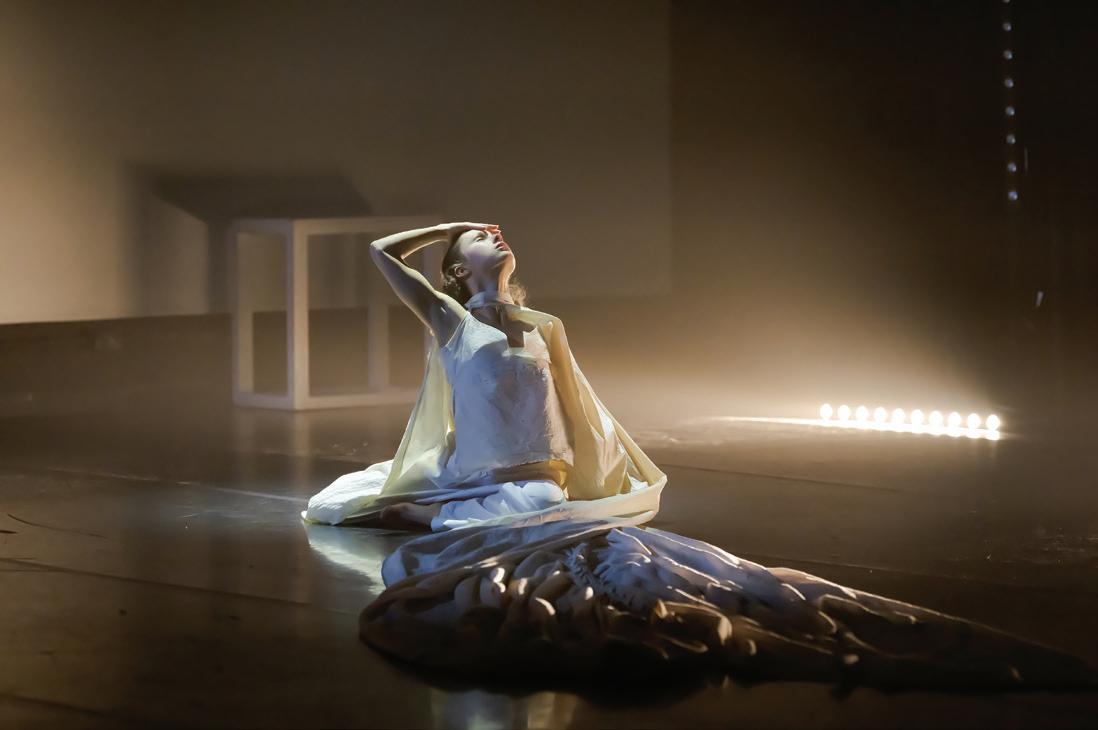
Through Memorandums of Understanding, NZSD is recognised as the official school of each company. These relationships provide enhanced opportunities for students to gain valuable industry experience and extend their professional networks.
What does dance education uniquely offer students?
The New Zealand School of Dance (NZSD) offers a unique education in the arts. Dance is an art form that is both physically demanding, with the expectations of an elite athlete, and creatively enriching through exploration and discovery. Dance education provides an opportunity to explore oneself and develop each student’s unique artistic voice. It encourages us to examine how we view the world, our values, and how we express them. As an art form, dance has the power to connect with people in many different ways, and here in Aotearoa it has long been a powerful vehicle for cultural expression. Contemporary dance in particular embodies authentic self-expression. NZSD offers this exploration
at the highest level within an incredibly safe and supportive environment.
What stood out about the festival this year and other events so far in 2026?
This year, NZSD was part of the Pōneke Festival of Contemporary Dance, showcasing our Choreographic Season. Note to Self was devised by our third-year contemporary dance students and marked the culmination of each student’s choreographic journey over their three years of study. The season provided an opportunity for students to collaborate with lighting designers, a dramaturgical consultant, marketing, and costume designers while being mentored by NZSD staff. They performed to full houses, embraced the festival’s energy, and experienced its positive impact on our community here in Te Whanganui-a-Tara. Footnote New Zealand Dance, the festival organisers, curate an incredibly inspiring programme of contemporary artists. It was an honour to perform alongside the industry as part of this festival.

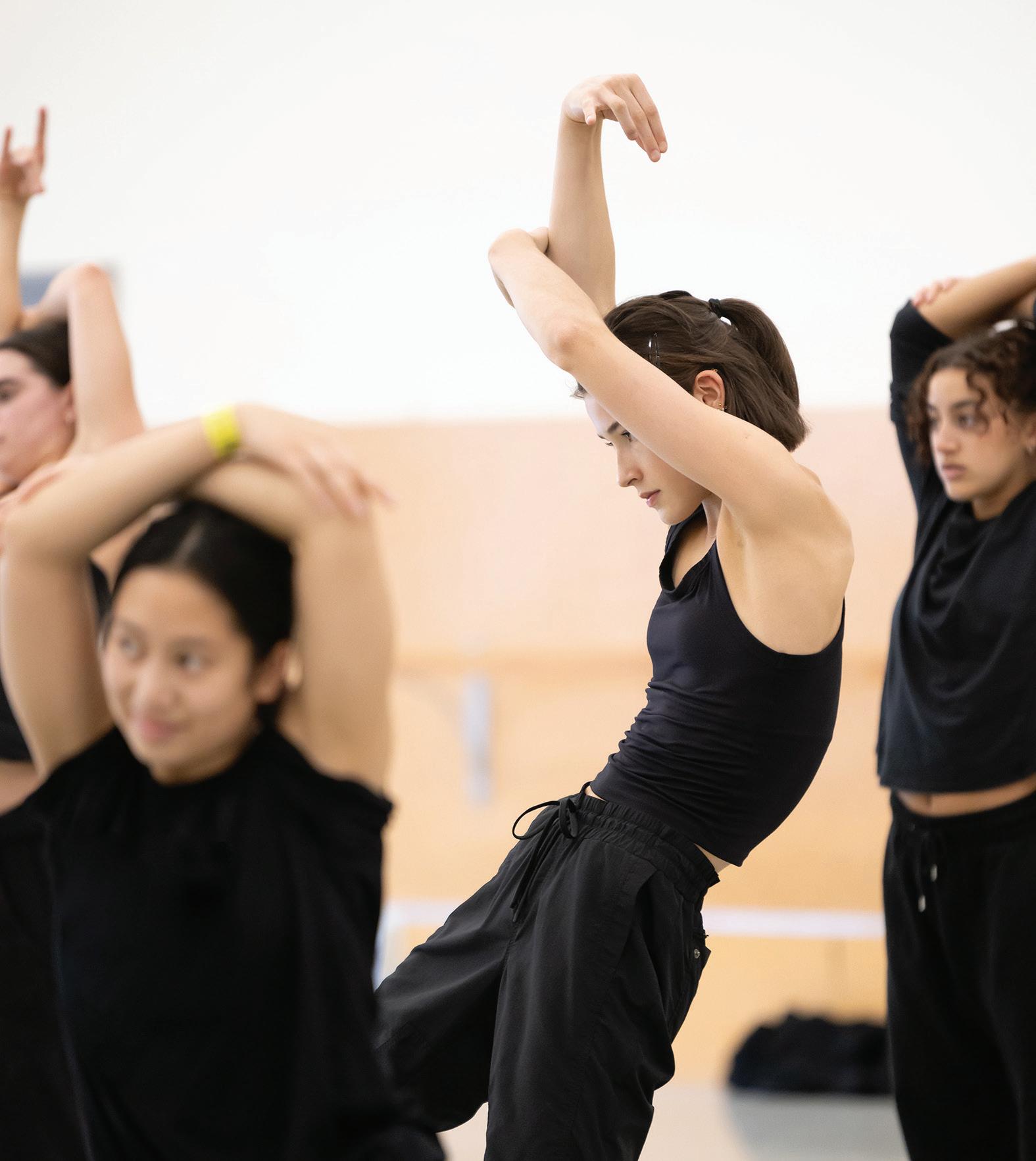

What skills or qualities does dance training build that extend beyond the studio?
Dance education teaches students to stand strong in their values while developing selfmotivation, determination, and resilience, qualities that can be applied across any profession.
The world is full of uncertainty, and dance provides the tools to navigate challenge, change, and expectation. It prepares students for whatever career pathway they choose. Understanding oneself,
both physically and mentally, provides a foundation for life. Dance is about far more than mastering movement. Through a creative lens, it develops confidence, discipline, empathy, and self-awareness. Beyond the studio and the stage, dance training fosters remarkable personal growth.
How is NZSD shaping pathways into professional arts careers?
NZSD is recognised worldwide as one of the leading tertiary institutions for both classical
ballet and contemporary dance. Our graduates have careers across the globe and continue to shape the industry as dancers, choreographers, directors, educators, and arts advocates. Supporting students in achieving their dreams and aspirations drives us to continually strive for excellence in dance education. NZSD leads the way in dance training through the integration of sports medicine and scientific research, with many international institutions looking to us as leaders in safe, holistic training

practices. We are proud to be the official school of the Royal New Zealand Ballet and The New Zealand Dance Company, providing students with valuable industry experience and opportunities to build professional networks. What should educators understand about the value of sustained dance education? Education extends far beyond what is traditionally measured as success within the education system. As the arts continue to face increasing pressure, we know that dance and arts education more broadly is vital to a thriving society. Dance institutions offer far more than technical training. They empower young people to discover their voices, advocate for diversity and inclusion, and pursue their aspirations with confidence and purpose.
The arts deserve greater recognition and investment. We remain committed to championing dance education and advocating for an education system that recognises the essential role of the creative industries in enriching our communities and shaping a more connected, compassionate society.

Ampelite NZ Ltd is a manufacturer and distributor of natural lighting roofing products that has been operating in New Zealand for 25 years. Their extensive product range caters for both residential and commercial applications. The residential range includes products like Solasafe and Easyclick polycarbonate roofing that are suitable for roofing residential deck areas and pergolas. All of Ampelite’s polycarbonate products are UV protected for the New Zealand environment and are available through leading builders merchants throughout New Zealand.
Ampelite is the market leader in commercial fibreglass roofing applications with its key products here being:
Wonderglas is used in warehouses, factories, gymnasiums, etc. This is available in most roofing manufacturer’s profiles and has a market leading 25 year warranty for light transmission.
Webglas is a trafficable fibreglass roofing product. While designed for use in harsh industrial environment applications, it is also approved for use in schools by MoE for covered walkways, etc because of it’s trafficability. Webglas is the only GRP product with a 20 year light, water and structural stability warranty. It is available in Clear, Opal and coloured finishes. The colours can be made to match Colorsteel/Colorcote roofing colours as well as custom colours depending on quantities.
Further to these products, Ampelite’s extensive range includes multi-wall polycarbonate products like Thermoclear and Thermoclick, roofing ventilation products for both residential and commercial use through the Ampelair ventilator range and the Panorama soffit lining system.
To find out about these products and more visit us online at www.ampelite.co.nz or call 0800 267354 to find your closest stockist/distributor.
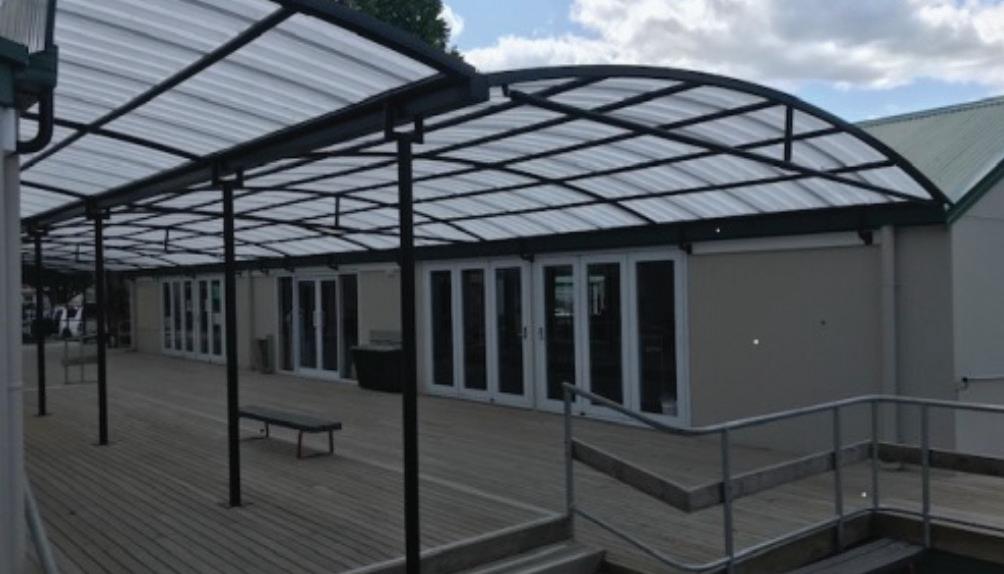
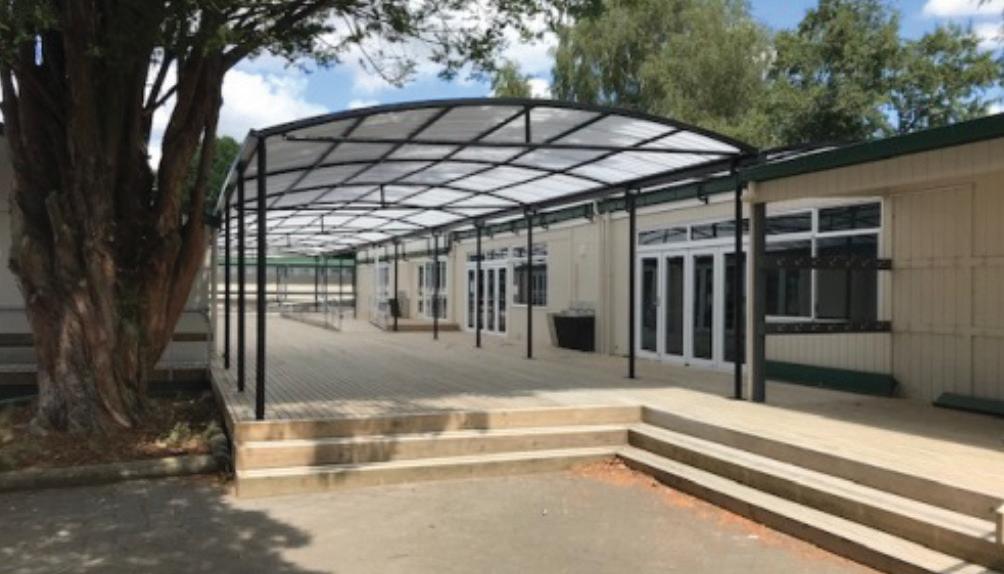
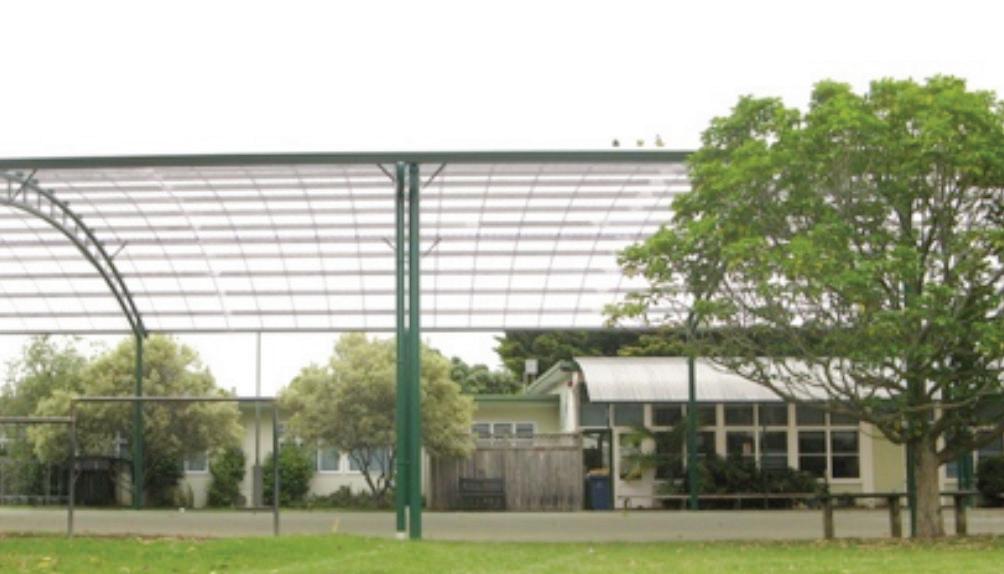


Marr Electrical & Refrigeration Ltd has proudly been serving the Gore, Southland, and West Otago communities for over 30 years. The business was started by Gore locals Stephen and Jill Marr and today trades as Level Electrical Gore.
A standout team of electricians and refrigeration mechanics provide a diverse suite of services including electrical, heat pumps, solar PV and HVAC for the commercial, farming, schools and residential sectors.
Schools
Residential Electrical
Air Conditioning
Solar Power
Commercial Electrical
Heat Pumps
Commercial HVAC
Servicing & Maintenance

Explore the underground world of Waitomo— without stepping into a cave.
Discover Waitomo’s wonders through our Education Centre. From glowworm biology to hands-on geology, students enjoy interactive, curriculum-linked learning in the heart of the caves.
Education session subjects (to name a few): Geology, Biology, Conservation and Native Birds at the Kiwi House
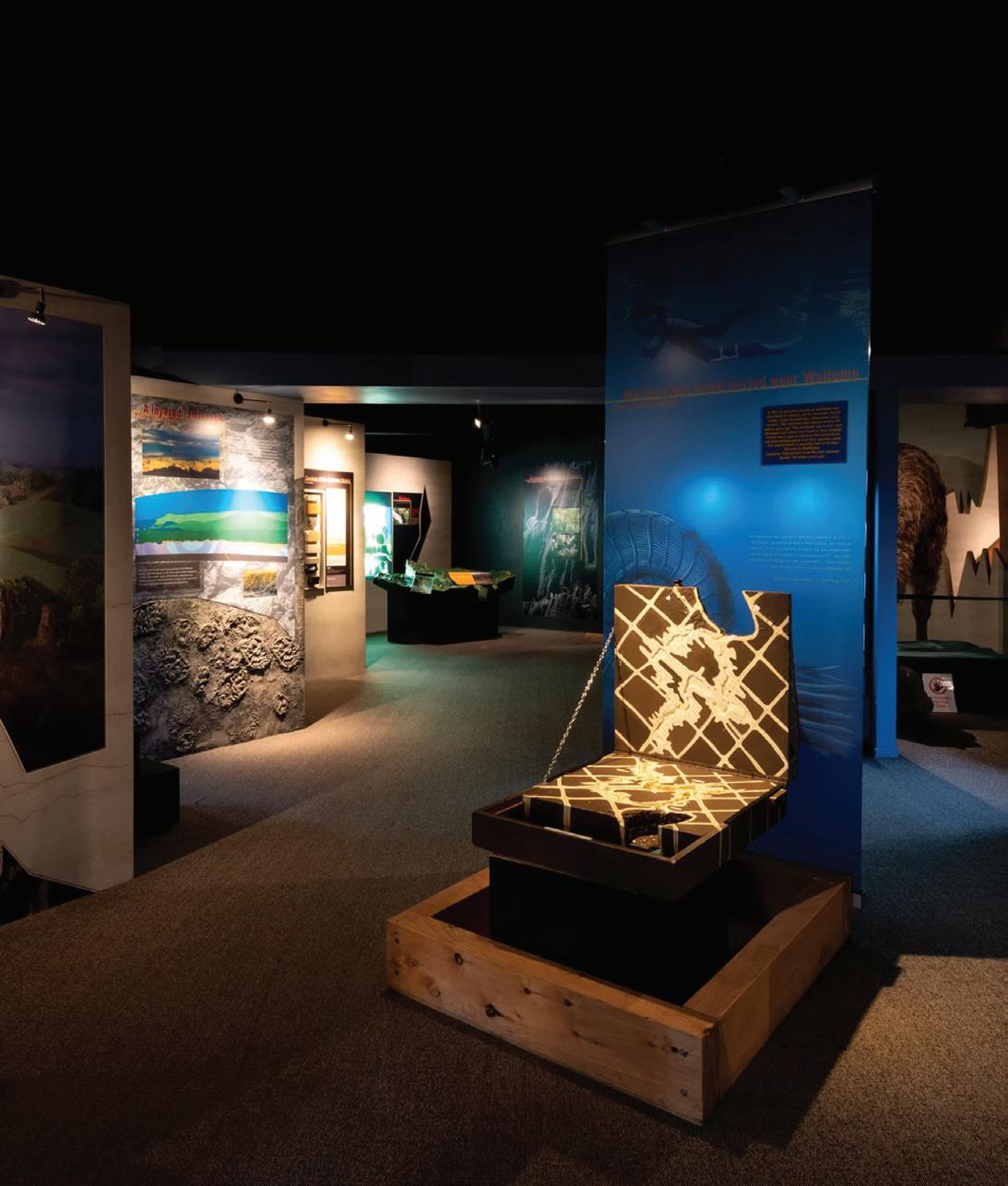
21 Waitomo Village Road, Waitomo Caves Village P: 07 878 7640 E: education@waitomodiscovery.org www.waitomocavesmuseum.nz
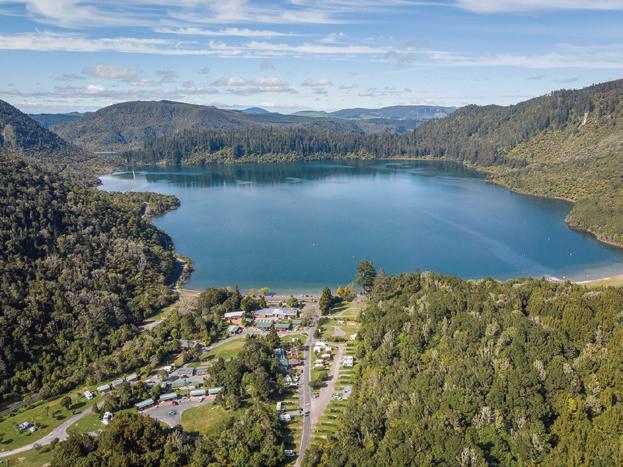
Rotorua Blue Lake TOP 10 have a wide variety of accommodation options available to suit every budget, from 180 powered and non-powered tent sites to standard and self-contained cabins.
The facilities at the park will keep your group entertained and active, a private or sole use marquee with attached kitchen and BBQ that can accommodate up to 80 people.
The park is central to a variety of local attractions. Lakes Tarawera, Okareka and Rotokakahi are all within 2km of the park, and a short 8km drive will find you in the centre of Rotorua.
Rotorua Blue Lake TOP 10 can offer large groups discounted rates from March – November (excluding peak season only) and can work with you to accommodate any size group and any budget.
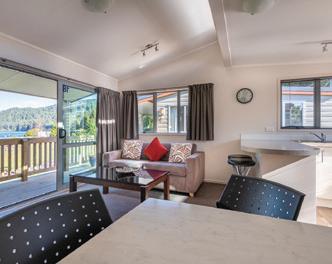
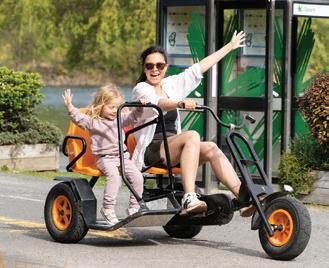
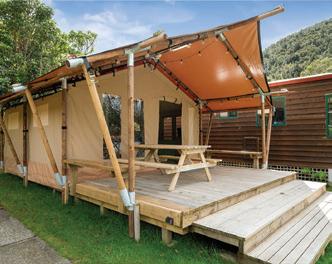
0800 808 292 or visit






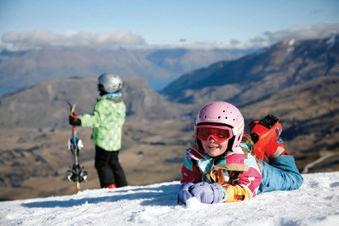
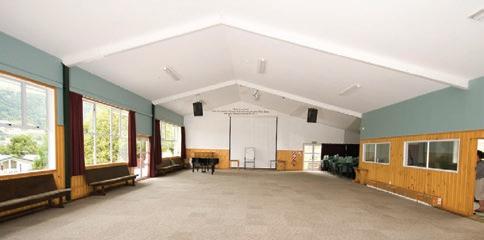
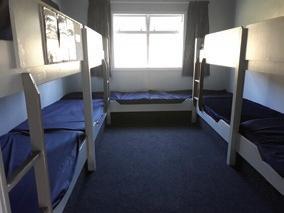

Planning school trips has never been more complex or more important. Beyond logistics, educators are increasingly seeking experiences that are safe, engaging, and genuinely enriching for students. Drifter believes where students stay should be considered as much as where they go.
Drifter Christchurch was created with this in mind: a design-led, centrally located space that blends the comfort of a hotel with the energy and connection of a shared environment. For schools, this means access to flexible room configurations, from private suites for staff to shared options for students, all within a secure and well-managed setting.
What sets Drifter apart is the way our spaces are designed
to support both structure and spontaneity. Dedicated study areas and co-working spaces allow students to stay focused when needed, while communal lounges, cinema rooms and wellness areas provide opportunities to unwind and connect. These shared environments encourage collaboration, independence and social development, key
outcomes of any successful school trip.
We also understand that safety and simplicity are nonnegotiable. That’s why every group booking is supported by a dedicated coordinator, ensuring a smooth experience from planning through to departure. With 24/7 on-site support, secure facilities, and clear communication at every stage,
we take the pressure off staff so they can focus on their students.
Location is another critical factor. Based in central Christchurch, Drifter places school groups within walking distance of the city’s leading cultural, educational and recreational attractions. This reduces the need for complex transport logistics, allowing more time for meaningful experiences outside the classroom.
With expansion planned into Wellington and Auckland in late 2026, Drifter is growing alongside the needs of schools across New Zealand, creating a network of group-friendly accommodation options that schools can rely on. This means consistency in quality, safety and experience, no matter the destination.
At Drifter, we’re proud to partner with schools to deliver stays that are safe, seamless, and genuinely memorable.

groups@thedrifter.com thedrifter.com
School Group Accommodation in the Heart of Christchurch.
With secure dorm-style rooms featuring private ensuites, dedicated group dining with discounted meals, flexible spaces for team briefings, movie nights or downtime, Drifter Christchurch makes school travel simple. Designed with student comfort and safety in mind, we'll take care of the details so you can focus on the experience.


A free Electoral Commission programme lets schools run a realistic mock election before the 2026 vote
With New Zealand preparing for the 2026 General Election, schools have a unique opportunity to bring civics education to life through Kids
Voting – Te Pōti a Ngā Tamariki, a free nationwide programme from the Electoral Commission.
Open to all schools and kura, the initiative gives students the chance to explore how our nation’s democracy works before taking part in a realistic mock election. Using real political parties, candidates and election issues, students
experience the voting process in an engaging, age-appropriate way while developing a deeper understanding of civic participation.
Participating schools receive a free resource kit containing lesson plans, a teacher guide, posters and a ballot box, making it simple to deliver the programme regardless of prior experience. The learning materials align with Levels 1 to 5 of the New Zealand Social Sciences Curriculum and Level 5 of Te Marautanga o Aotearoa, allowing teachers to integrate civics learning into existing classroom programmes. The programme culminates in a mock election during early
Work-life balance is about sustainably managing classroom needs and personal time

Vitae counselling is independent, objective and confidential. We're here to talk and help you find strategies that work for you.
Call 0508 664 981 24/7 to make an appointment, or book online at vitae.co.nz/ contact/request-appointment/



Term 4, giving students the opportunity to cast their vote and compare their school’s results with the outcome of the national election. Beyond learning how ballots are cast and counted, students are encouraged to discuss issues
with classmates and whānau, helping foster informed conversations about democracy at home and in the community. Registrations for Kids Voting 2026 are now open, with the Electoral Commission encouraging schools to sign up early so they receive their teaching resources ahead of the election period. Register your school at elections.nz.
Tip sheet:
Work-life balance is about finding a sustainable way to meet the demands of the classroom while still protecting time and energy for your life outside of school. When that balance is off, it can feel like lesson planning, marking, emails and student needs spill into every part of the day, leaving little room to rest and recharge.
Individual factors such as your personality and stage in life play a role in defining what ‘work-life balance’ means to you. So does your teaching style and the school environment.
Here are some helpful tips
Identify your needs
Think about what work-life balance means to you. Is it leaving school on time more often? Reducing weekend marking? Protecting time for family? Identifying what matters most can help you make those small, practical changes.
Set boundaries around your work
Teaching can easily expand to fill every available hour. Instead, be realistic about what’s manageable and speak with your principal if your workload is becoming unsustainable. Switch off after school
When the school day ends, give yourself permission to switch off. Turn off notifications, step away from emails and avoid carrying tomorrow’s to-do list into your evening where possible.

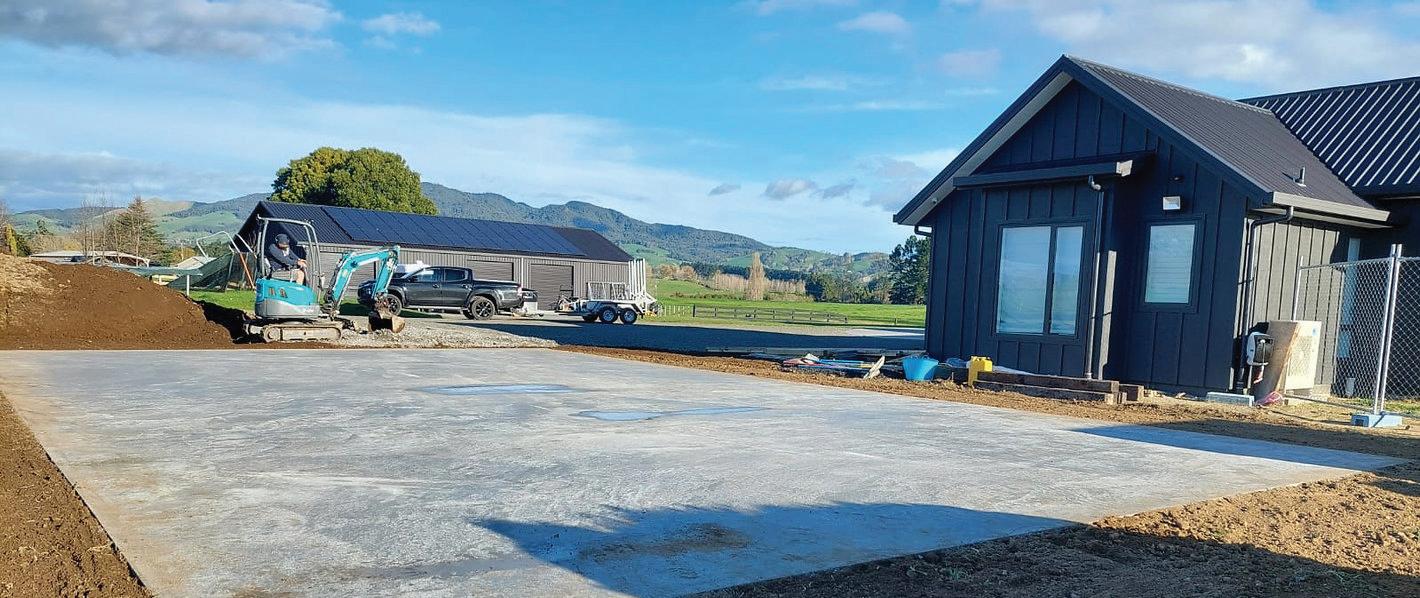
Use the most cost effective and easiest job site in New Zealand. Now with a new and improved website making things even easier, ensuring you get quality applicants, every time!
Purchase 1 ad (for 1 month) for $157+gst or unlimited ads for 12 months for $1597+gst
100% money back guarantee if you don’t think it’s the best money you’ve spent all year, plus we’ll give you another 12 months free!
Include your company profile so applicants can see why they want to work for you! (once again, other companies charge for this)