
DegreeOptions
At the end of Level I, students who meet the requirements outlined below can pursue the following degree options:
Honours Social Gerontology B.A.*
Grade Point Average of at least 5.0 (C) including a grade of at least C in HLTH AGE 1BB3 (HLTH AGE 1AA3 or HLTHAGE 1ZZ3 must be completed by the end of Level II)
Honours Health & Society B.A.*
Grade Point Average of at least 5 0 (C) including a grade of at least C in HLTHAGE 1AA3 or HLTHAGE 1ZZ3 (HLTHAGE 1BB3 must be completed by the end of Level II)
Honours Social Gerontology, Specialization in Mental Health & Addiction B.A.
Grade Point Average of at least 5.0 (C) including a grade of at least C in HLTHAGE 1CC3 and a grade of at least C in HLTHAGE 1BB3 (HLTHAGE 1AA3 or HLTHAGE 1ZZ3 must be completed by the end of Level II)
Honours Health & Society, Specialization in Mental Health & Addiction B.A.
Grade Point Average of at least 5.0 (C) including a grade of at least C in HLTHAGE 1CC3 and a grade of at least C in HLTHAGE 1AA3 or HLTHAGE 1ZZ3 (HLTHAGE 1BB3 must be completed by the end of Level II)
Combined Honours B.A. in Social Gerontology or Health & Society & another subject
Grade Point Average of at least 5 0 (C) including a grade of at least C in HLTHAGE 1BB3 and a grade of at least C in HLTHAGE 1AA3 or HLTHAGE 1ZZ3 Satisfaction of admission requirements for the Honours program in the other B.A. subject.
Minors
Health, Aging & Society
Complexity within healthcare is increasing and new technologies are continually emerging Mental health and addictions escalate despite new pharmaceutical interventions Engaging with communities and sharing perspectives lead to real world solutions to improve well-being. Our programs equip students to approach these issues through the critical and constructive social sciences lens.





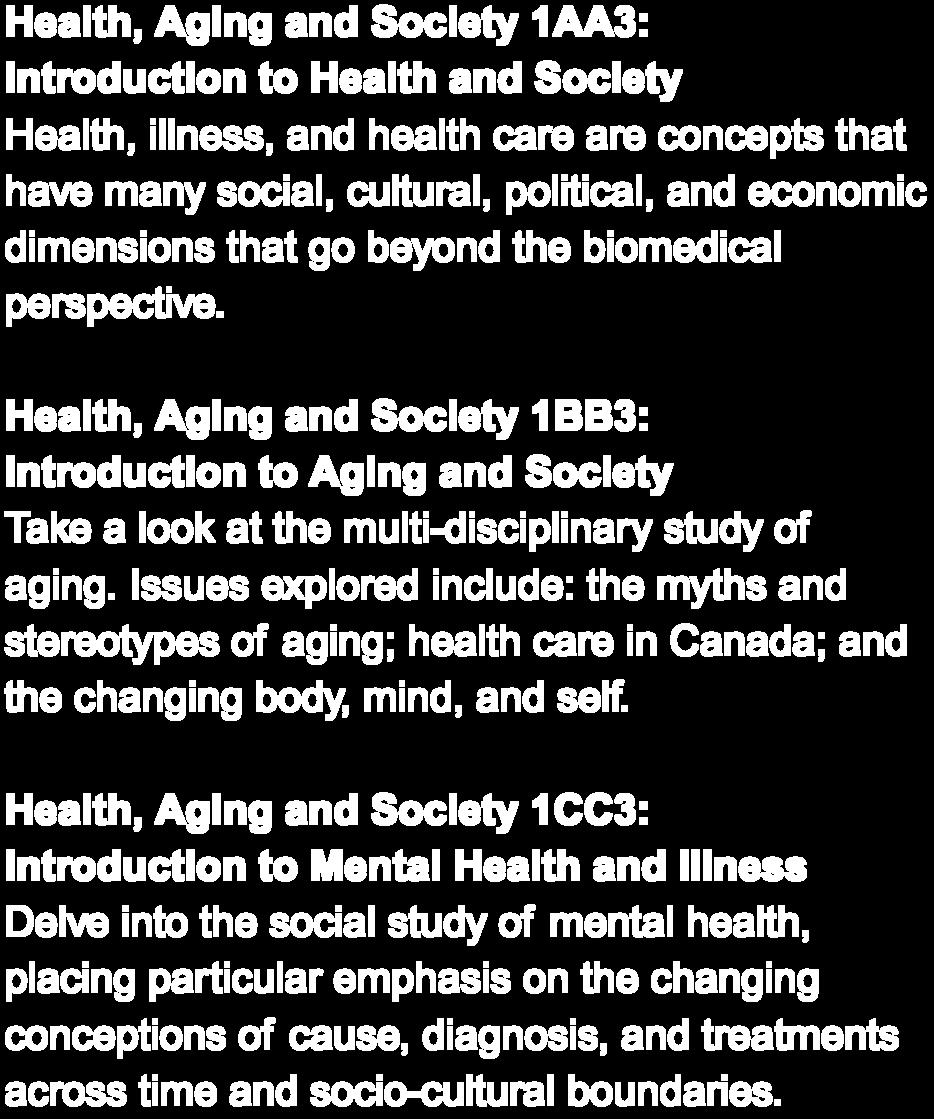
LevelICourses
SpecializationorMinorin MentalHealthandAddiction
These options equip you to be knowledgeable about how mental health, addiction and society interact. Key areas of study include:
The relationship between mental health and marginalization, the construction of illness, and the social determinants of health
Understand how social and non-biomedical interventions can impact mental health and addiction as well as promote wellbeing
SkillsDevelopment
Critical thinking
Communication skills
Research and analysis skills
Teamwork
Problem-solving
Time management
Expository writing
BeyondFirstYear
Choose from a variety of courses, such as:
Social Identity, Health and Illness
Aging and Health Care Systems
Geographies of Death and Disease
Drugs, Sex and Alcohol: Society and its Addictions
Perspectives on Disability, Chronic Illness and Aging
Ethical Issues in Health and Aging
Community Based Research
Global Health
Narratives of Illness
Representations of Mental Illness
Careers&Experiential Education
Through Careers & Experiential Education programs, you can participate in paid internships, a tuition-free career planning course, academic placements and job shadowing.
Apply for an Undergraduate Student Research Award to complete your own research project under the supervision of a professor during the summer.
GraduateStudies
Our graduates go on to graduate work in a variety of MA programs worldwide. Higher level studies in our department include:
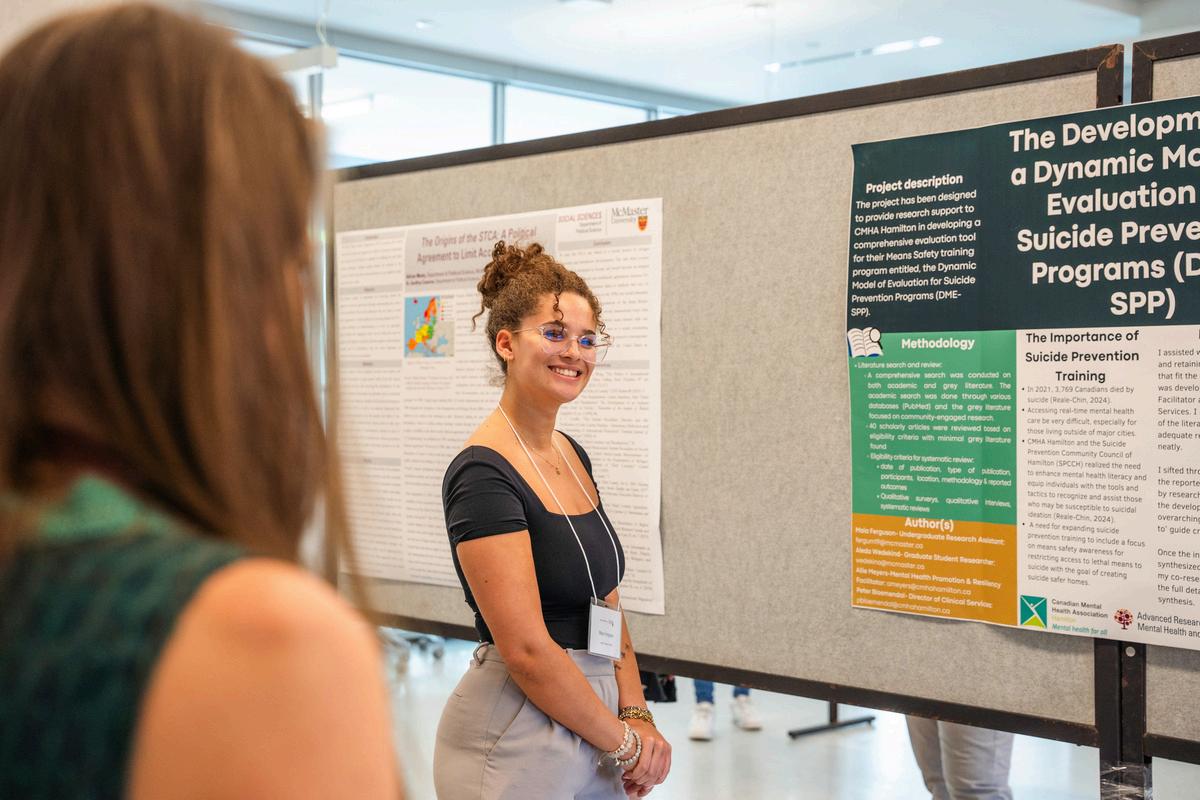
“Thisdegreeallowedmetofindmy passioninhealthadministration andpublicpolicy.Igainednew skillsthroughresearchprojectsand fieldworkthatIwilltakeintomy professionallifeaftergraduation”
-MaiaF.(Health&Society, SpecializationinMentalHealth& AddictionAlum)
MA in Social Gerontology
PhD in Health and Society PhD in Social Gerontology
PotentialCareers
Health Policy/Social Policy Research
Project Coordinators
Care Coordinators
Education Coordinators
Marketing
Public Health
Mental Health Researcher
Addictions Researcher
Recreation/Activation staff in long-term care
AHealth,Aging&Societydegreealso providesthefoundationforpost-graduate studiesinthesamediscipline,medicineand law.