2026 MIDD Report
Macomb Interceptor Drainage District (MIDD) Candice S. Miller
Macomb County Public Works Commissioner
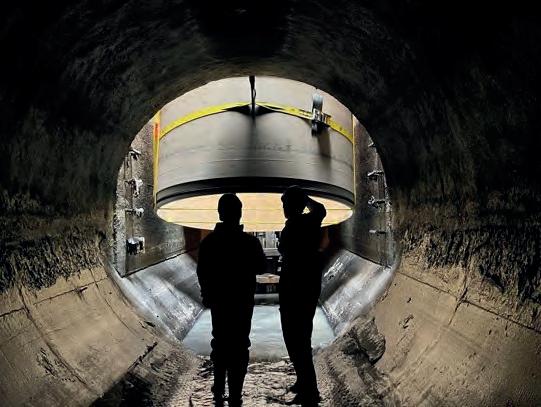

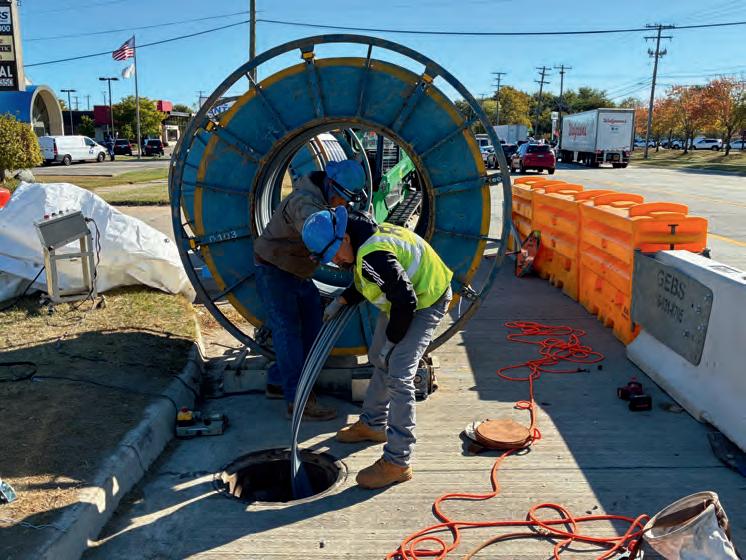
Pictured: Lowering HOBAS pipe into 15 Mile Interceptor
NO MORE SINKHOLES
15MileLiningCompleted
Two extremely critical underground infrastructure projects to prevent interceptor collapses like the one that caused a sinkhole in December 2016, have been completed following debris removal, cleaning and inspection.
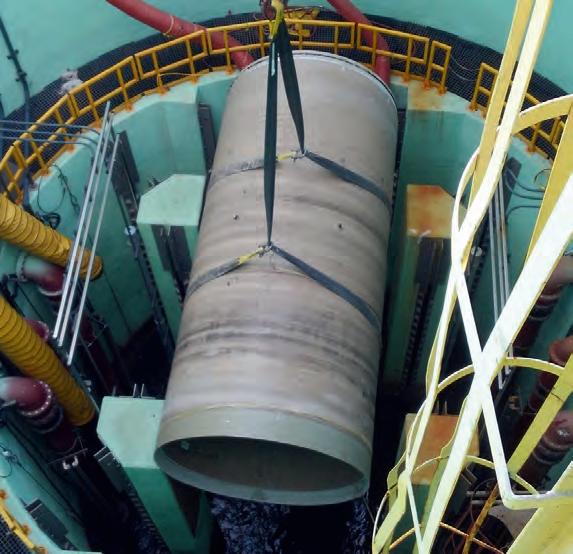
The “Segment 6” rehabilitation included painstaking removal of extensive sediment, followed by slip-lining (using HOBAS) of the 5-foot-diameter 15 Mile Interceptor near the intersection of Garfield Road and 15 Mile, to approximately 2,200 feet east along 15 Mile; cleaning and HOBAS slip-lining of the 1,400 linear feet of the 11-foot-diameter Romeo Arm Interceptor sewer along Garfield, north from 15 Mile Road; rehabilitation of a meter facility on Garfield south of 15 Mile; spraylining of two concrete control structures that were damaged by H2S gas and installation of a foul-air duct to extract sewer gas toward the upgraded biofilter facility.
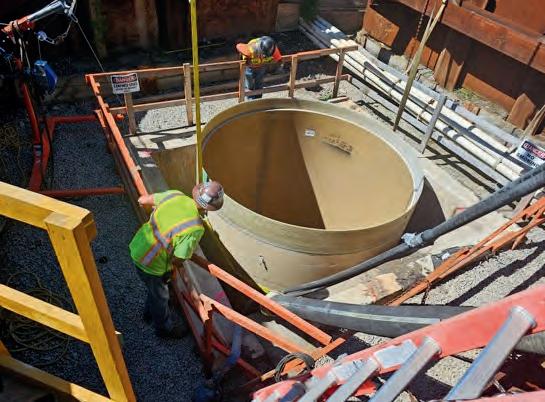
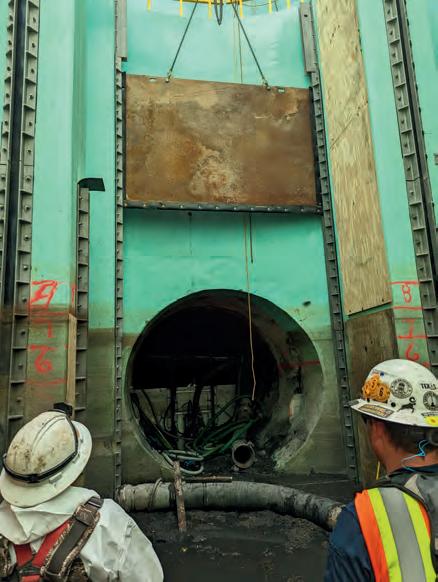
The “Segment 5” reach of the Romeo Arm Interceptor, approximately 8,300 linear feet, runs along 15 Mile Road starting at the ITC Corridor and extends east to approximately Hayes Road. The first 7,000 linear feet starting at the utility corridor is 11-footdiameter non-reinforced concrete pipe, which was slip-lined with non-pervious HOBAS pipe. The next 1,300 linear feet is 8foot-diameter steel reinforced concrete pipe, that was coated with a corrosionresistant geopolymer spray coating. To facilitate the work, a large access shaft was excavated to reach the interceptor and a new control structure and dewatering pump station were built to draw down the upstream water level in the sewer.
ACEC 2025 Honorable Conceptor Award Segment6Rehabilitation
NO MORE SINKHOLES
15Mile-EastofGarfieldLiningCompleted
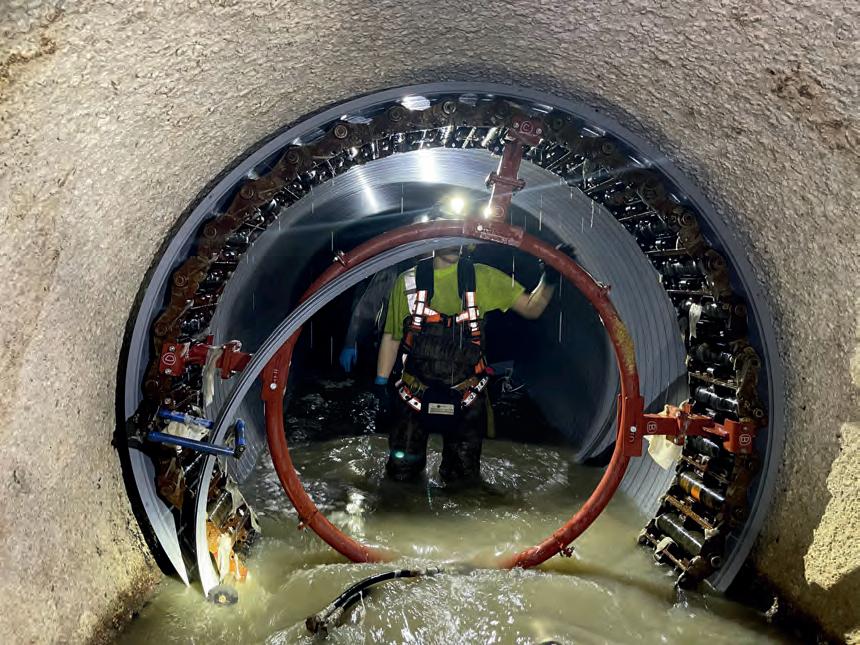
In fall 2025, construction commenced on the Segment 6 Phase 2 project to rehabilitate the 15 Mile Interceptor. Following sewer inspection, cleaning and grouting to seal active infiltration, 4,380 linear feet of 5-foot-diameter reinforced concrete pipe at 15 Mileeast of Garfield was installed, using a PVC spiral-wound liner to protect the pipe from further degradation caused by corrosive, hydrogen sulfide sewer gas.
The spiral-wound approach to pipe rehabilitation minimizes excavation and public disruption associated with digging of a shaft and also avoids the need for extensive bypass pumping.
NorthGratiotInterceptorLiningCompleted
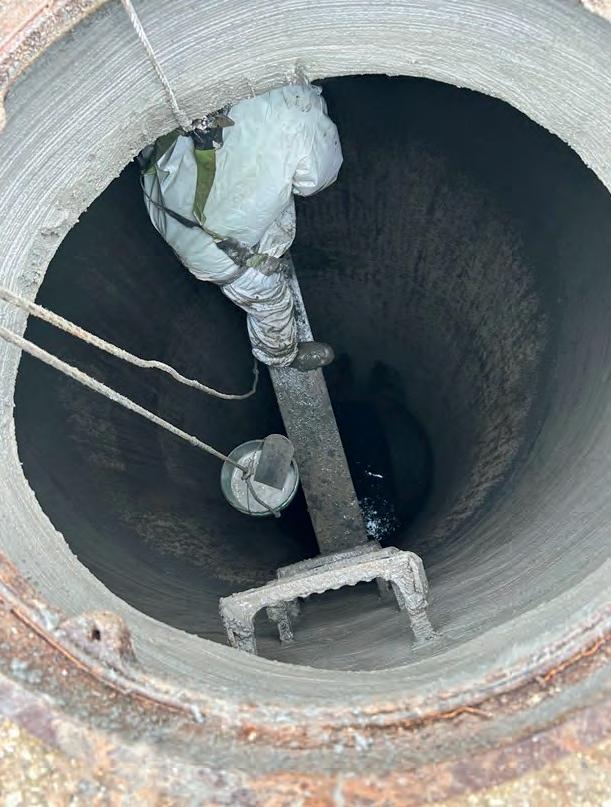
The project – along Gratiot Avenue near 26 Mile Road -involved approximately 2,400 linear feet of 36-inch to 48inch-diameter sewer cleaning, inspection and cured-in-place pipe lining; 10 temporary manhole modifications; 260 vertical feet of geopolymer manhole lining at eight manhole structures; and rehabilitation of a sewerage metering facility in Lenox Township including concrete repair, cleaning, sandblasting and application of a polymer protective lining.
NO MORE SINKHOLES
MeterFacilityDropShaftsCompleted
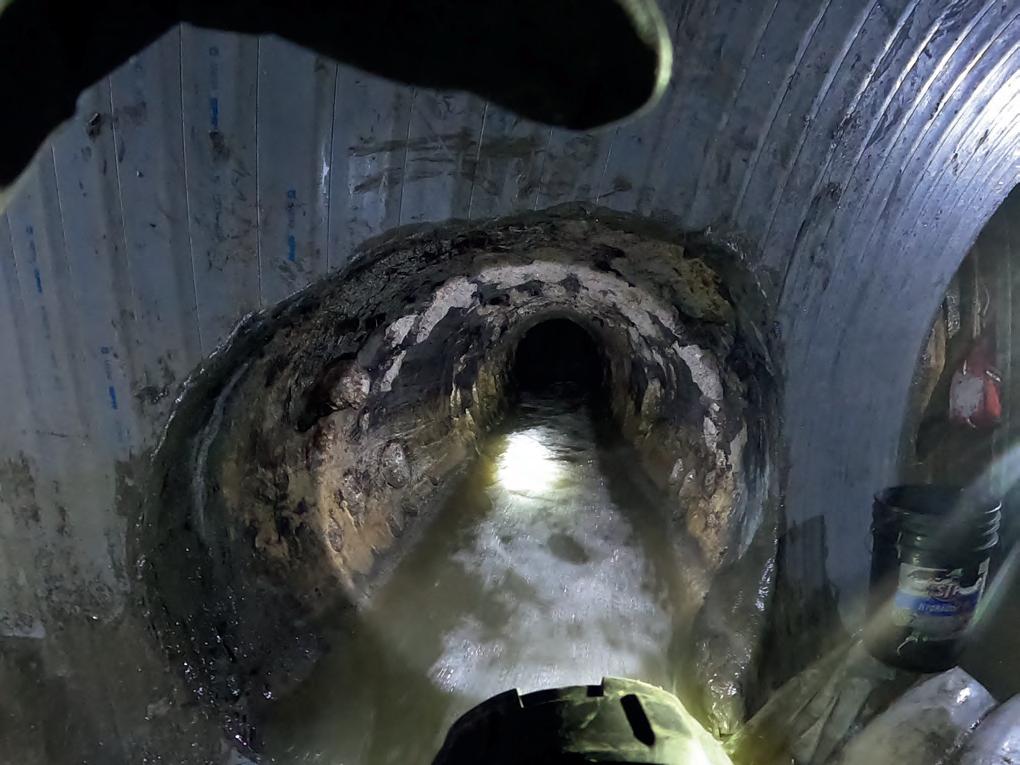
Rehabilitation work is nearly complete at eight meter facility drop shafts and connecting sewers due to degradation of the concrete caused by corrosive sewer gas. This photo shows how badly the pipe had deteriorated, exposing the rebar. The meters are in Shelby Township, Clinton Township, Sterling Heights, Harrison Township and Chesterfield Township.
MaintainingMeters
Flow meters and level sensors determine how each of the MIDD communities are billed for their respective flow volumes. The devices are operated and maintained by MCPWO to ensure they are functioning properly and that cities, township and villages are billed accurately.
In February 2026, the MIDD Board approved a 1-year extension of a system maintenance contract that includes updates to all meters. The board also has approved a 1-year extension of a contract for dye testing, a specialized service, at more than 30 billing meters. Municipal officials have online access to review their historic flows.
NO MORE SINKHOLES
Odor&CorrosionFacilitiesOnline
ACEC2025Honorable ConceptorAward
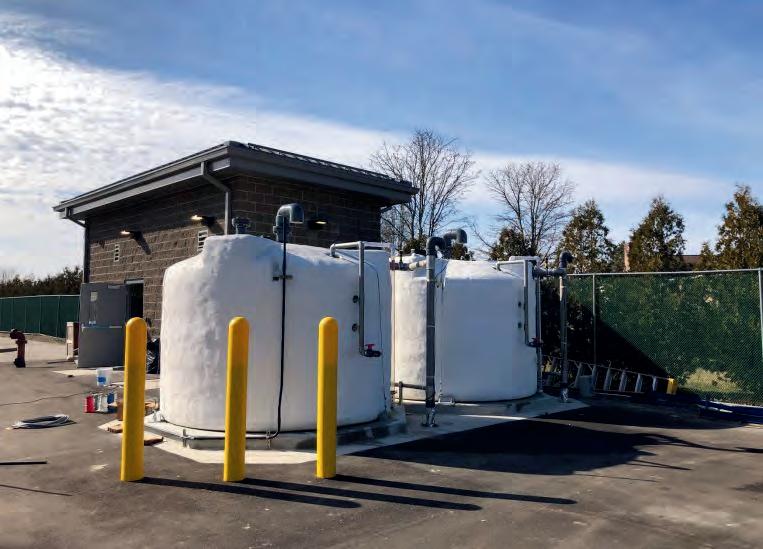
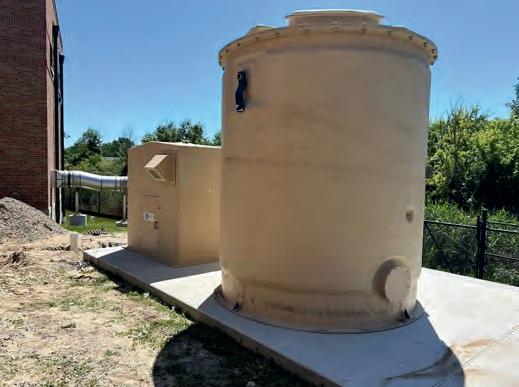
To prevent potential sinkholes, a system-wide study determined a need for additional odor and corrosion control facilities to mitigate degradation caused by hydrogen sulfide and nuisance odors. Project features included construction of four odor and corrosion control treatment systems using three different technologies. Each of the four locations was matched with the optimum technology for the location's goals and constraints. Testing data has shown that the treatment facilities’ performance has exceeded the contractual requirements. The four improvements have received a 2025 “Honorable Conception Award” from the American Council of Engineers.
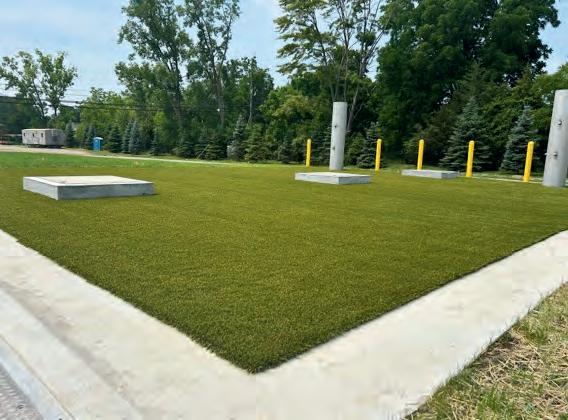
The biofilter on 15 Mile Road in Fraser was converted from open beds of woodchips to an enclosed, underground, concrete structure to hold an engineered carbon media to remove H2S. H2S is drawn from the interceptor to the biofilter through an additional foul air duct.
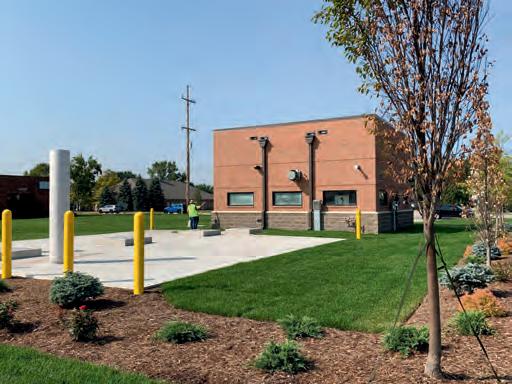
new biofilter at the corner of 21 Mile & Garfield roads in Macomb Township includes an enclosed chamber with engineered carbon media to remove H2S from the Garfield Interceptor that carries flows from Macomb, Shelby and Washington townships.
The
Chemical injection system using calcium nitrate at the North Gratiot Pump Station near Gratiot Avenue & 26 Mile Road in Chesterfield Township.
Sewer gas mitigation at Clintondale Pump Station, near Union Lake Road and I-94 in Clinton Township, to protect the MIDD’s Lakeshore Interceptor.
More TechnologyAdvances
GoFloDevice
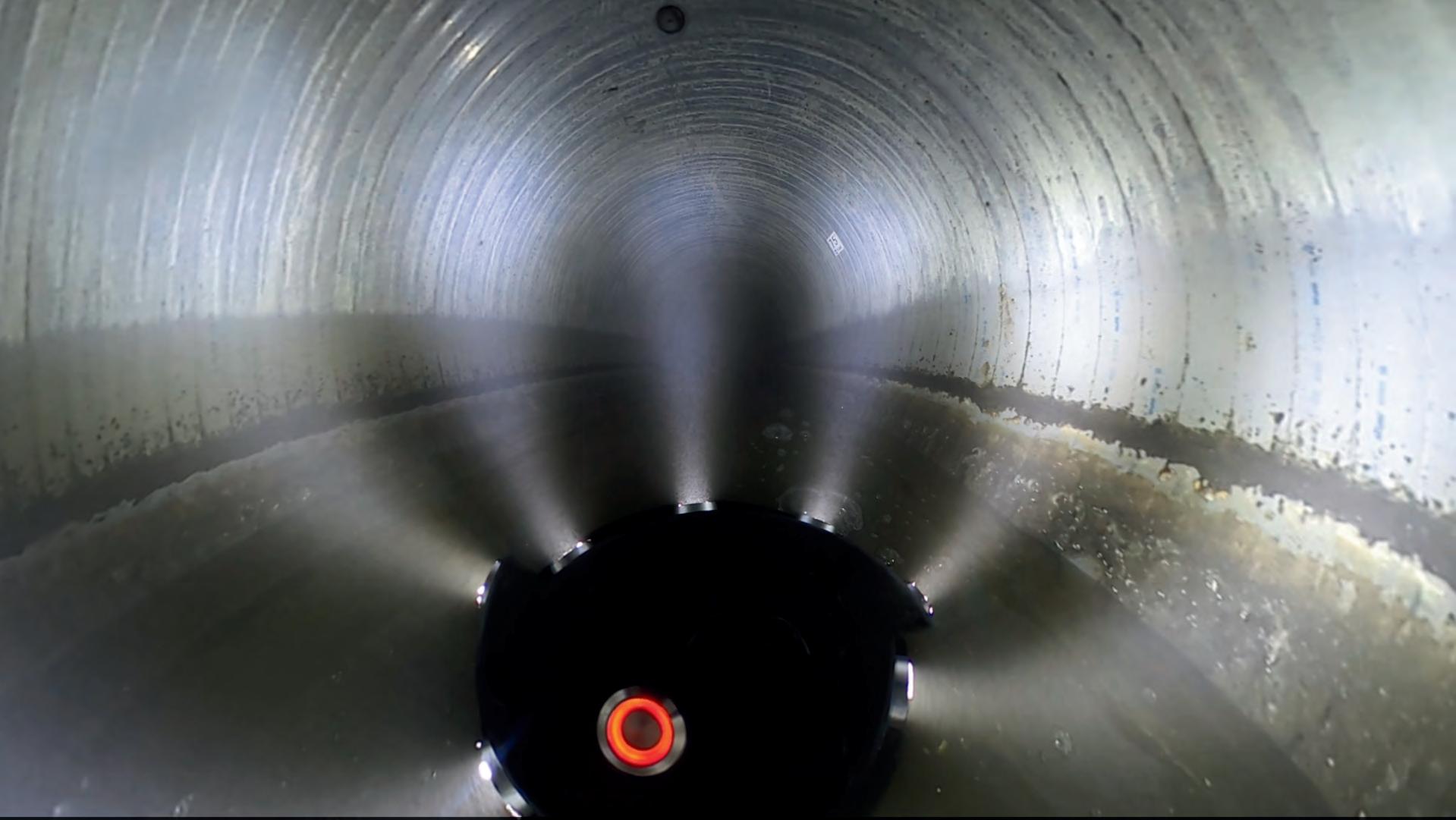
Following the implementation of the first-in-Michigan combination of a confined spaces drone and artificial intelligence to inspect sewers with greater accuracy and significant cost savings, we continue to launch more technological advancements. Our GoFlo device – designed in-house by our engineers - recently received an honorable mention award from the Michigan Association of County Drain Commissioners for innovation and excellence. GoFlo is a buoyant device equipped with a Go Pro camera and LED lights to record the condition of the interior of interceptors while being carried by the flow in the pipe. The digital video data is uploaded into AI software and analyzed. We are now looking to add a sonar sensor to the bottom of the unit to measure sediment levels, a geolocater, as well as a new device for manhole inspections, and two smaller GoFlo units for use in smaller pipes.

OdorSensors
OdorSensors
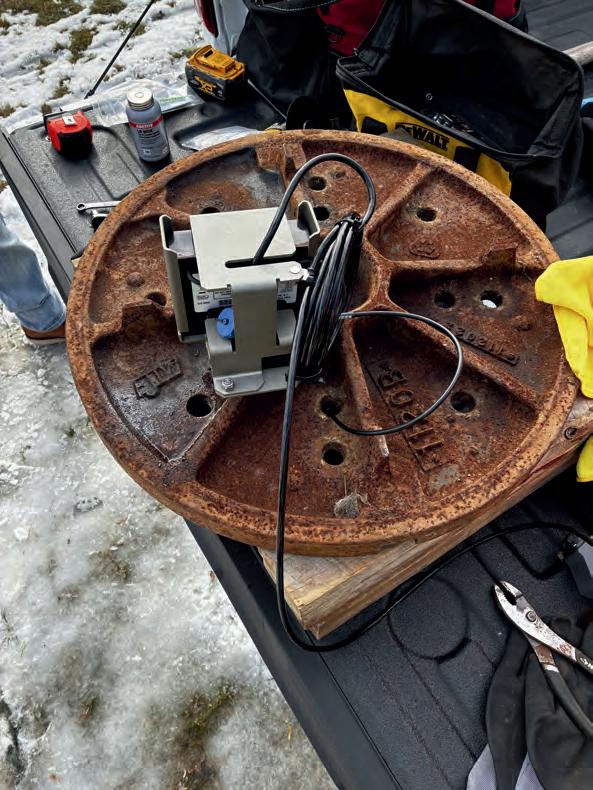
Six odor sensors called SmartCovers has been installed and are operational under a half-dozen manhole covers to measure the level of hydrogen sulfide sewer gas (H2S) and track it over time. The SmartCover system uses satellitebased communications to upload the data to the cloud-hosted site for viewing by MCPWO personnel. The data has assisted engineers to determine the extent of the odorous, corrosive gas in various locations without the need for confined space entry.
NewChemicals ReducingSewerGas
Since the launch of a pilot project in December 2025, MCPWO engineers are overseeing the addition of a chemical injection system as a viable solution to the odor issues in the MIDD system. Turbulence in the flow –particularly from drop shafts - stirs up the sulfides, creating hydrogen sulfide (H2S) when it becomes airborne in the interceptor.
A new chemical is being injected into the North Gratiot Interceptor sanitary flow to reduce the sulfide levels. A second location is now operational at Clintondale Pump Station, and the two stations will work in tandem targeting 13 miles of odor-reducing and corrosionpreventive treatment. Data thus far has shown the chemical Bioxide is very effective at stripping sulfides. In addition to reducing odor, reduction of H2S will also protect the condition of large concrete pipes from further degradation, effectively extending the useful life of the pipes.

TAKE CONTROL OF YOUR WATER AND SEWER BILL WITH WRAP!
$900,000/year available for Macomb residents
Anyone below 200% of federal poverty line is eligible
Up to $100/month in bill credits, $2,400 for unpaid bills and $2,000 for plumbing assistance
To find more information, and to see if you qualify, call Macomb Community Action at 586-469-6464 or visit mca.macombgov.org
NewRainGaugesInstalled
Ten additional rain gauges will soon be installed across the county, enabling more residents to go online to check rainfall amounts in their community.
There will now be 36 rainfall monitoring devices installed by the Macomb County Public Works Office. With the increased frequency of intense storms dumping multiple inches of rain, some in a short time, rainfall totals can be much different from one neighborhood to another located just a few miles away.
The data is continuously recorded by the devices on a 5minute interval and can be view in near real time by visiting our website, or by scanning this QR code with your phone. The web page includes an interactive map that also includes historical rainfall data.
UpcomingProjects
AdditionalLining
The contractor that performed the Segment 6 Phase 2 lining project is beginning work in the 15 Mile Interceptor to the immediate east, from Groesbeck Highway to just east of Gratiot Avenue. During the work on Phase 2, inspection of the interceptor revealed degradation that was more severe than anticipated based on previous inspections. The MIDD board amended the Phase 2 contract, to reline the next stretch totaling 8,345 linear feet using the spiral wound PVC product inside the 60-inch-diameter pipe. “The contractor and crew on Phase 2 did excellent work, with substantial completion ahead of schedule despite severe winter temperatures. The board wisely
15Mile-Groesbeck toGratiot
decided to keep that company for the next phase at a good price since they’re already in the area, know the interceptor well and eliminate anything that otherwise might have delayed maintenance to protect the pipe from further degradation and a potential collapse,” Public Works Commissioner Candice S. Miller said.
FlowControl
All work performed inside underground sanitary sewer structures require flow control - a designed and well-orchestrated series of sequential procedures to hold back flow for a specified number of hours to allow workers to safely to perform inspections, cleaning, grouting, lining and other critical maintenance downstream under low-flow conditions.
For each MIDD project, a detailing flow control specification is written that includes a description of the interceptor systems; expected flow rates and wastewater depths; requirements for coordination with other projects within the MIDD and OaklandMacomb Interceptor Drain districts; a definition of dry weather conditions; the expected number of wet weather days per week; temporary bypass requirements; lock-out/tag-out requirements; and flow control procedures such as closing and opening gates.
OMIDProjectUpdates
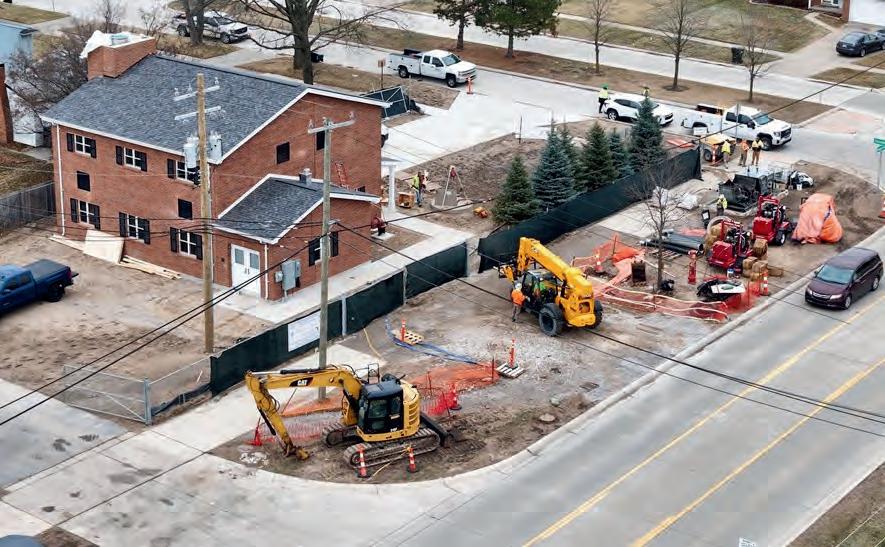
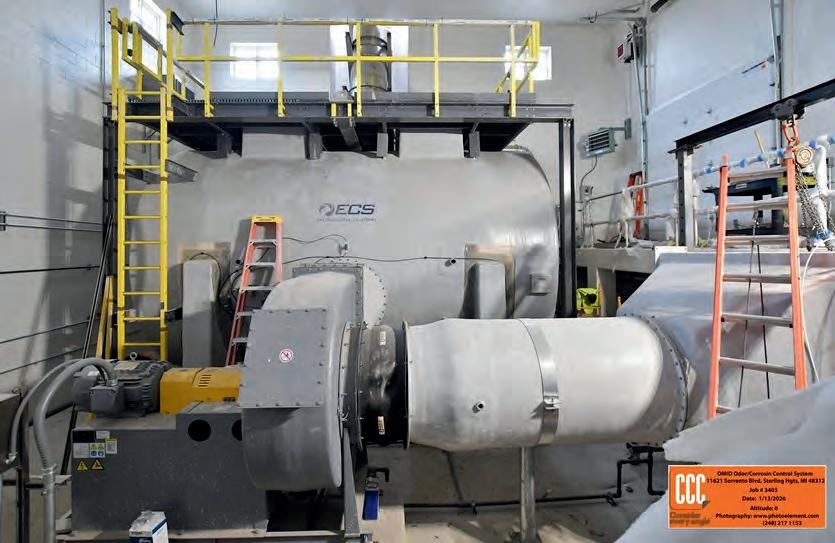
The MIDD system flows downstream where it connects to the OaklandMacomb Interceptor Drain and eventually to the Great Lakes Water Authority’s wastewater treatment plant. In addition to the 11 communities in the MIDD, the OMID serves 12 communities in southeast Oakland County. The new biofilter system at the corner of Sorrento Boulevard and Dodge Park Road, south of 17 Mile Road in Sterling Heights is near completion. The facility is visually notable because the exterior resembles a colonial-style home that complements the neighborhood. Inside, it contains ducts, filters, highspeed fans to draw corrosive hydrogen sulfide gas from the concrete pipes deep below the surface and filter it to reduce odors in that area emanating from the OMID interceptor. H2S is corrosive, causing degradation of the concrete interior of the pipe. Degradation can lead to infiltration of the dirt sounding the pipe, which could cause the pipe to collapse.
FauxHouse
InsideFauxHouse
OMIDProjectUpdates
NortheastSewagePumpingStation
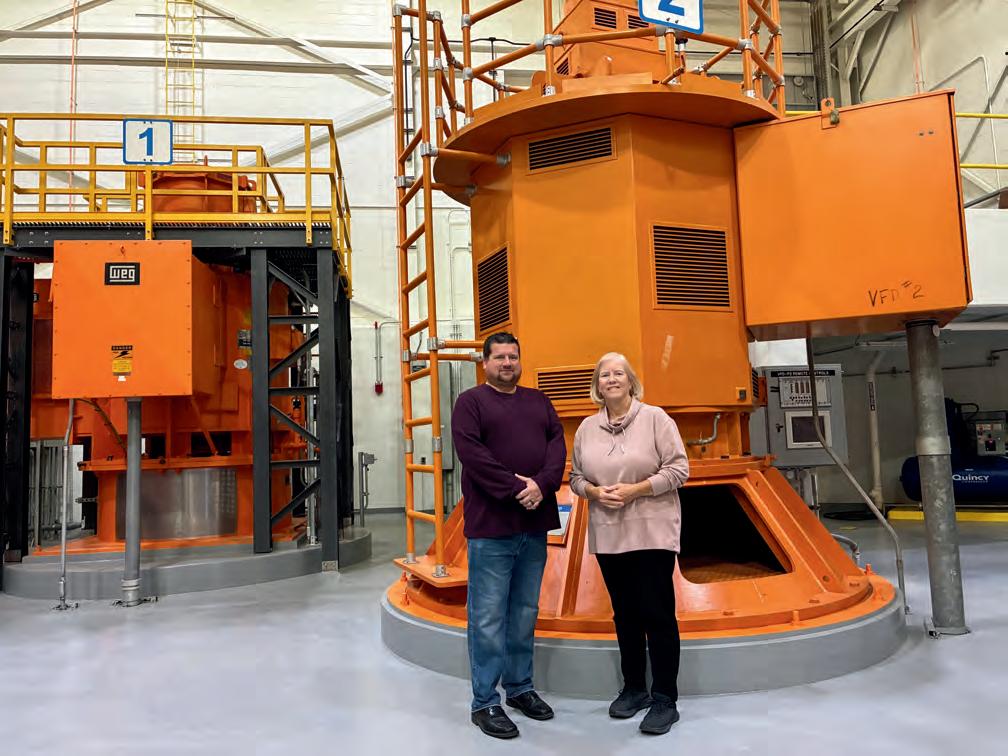
The multi-phase $100 million overhaul of the Northeast Sewage Pumping Station (NESPS) in Detroit was completed in October 2025. The flow from the 11 communities in the MIDD district goes to the NESPS before being treated at the Great Lakes Water Authority’s wastewater treatment facility.
The successful completion of this extensive and vital project is the culmination of a very effective partnership between Macomb and Oakland counties and will benefit sanitary system users and ratepayers in both counties and the environment for decades.
“There’s no overstating how important that massive modernization project was. Without it, that pumping station built in the 1960s would have eventually failed and caused an infrastructure disaster and health hazard impacting many hundreds of thousands of people, homes and businesses in both counties,” Macomb County Public Works Commissioner Candice S. Miller said.
$2.5MillionState
Funding
The confluence of two major sanitary sewer interceptors on the south side of 15 Mile Road and the ITC corridor in Sterling Heights has resulted in odor-related complaints for decades. In addition to several sewer rehabilitation projects and a series of odor and corrosion control facilities being constructed at critical points in the MIDD system, the design and construction of a new odor control facility at this hydraulically complicated juncture in the system is planned. The project will help mitigate hydrogen sulfide-induced degradation of the sewer pipes and manage nuisance odors emanating from the sewer system, preserving the useful life of the sewer.
State Rep. Ron Robinson successfully secured a $2.5 million state appropriation to help fund the project. “Ron Robinson heard the concerns of his constituents, has delivered on his promise to address their concerns, and we appreciate his efforts,” said Macomb County Public Works Commissioner Candice S. Miller.
MIDD FY 2027 Budget & Charges
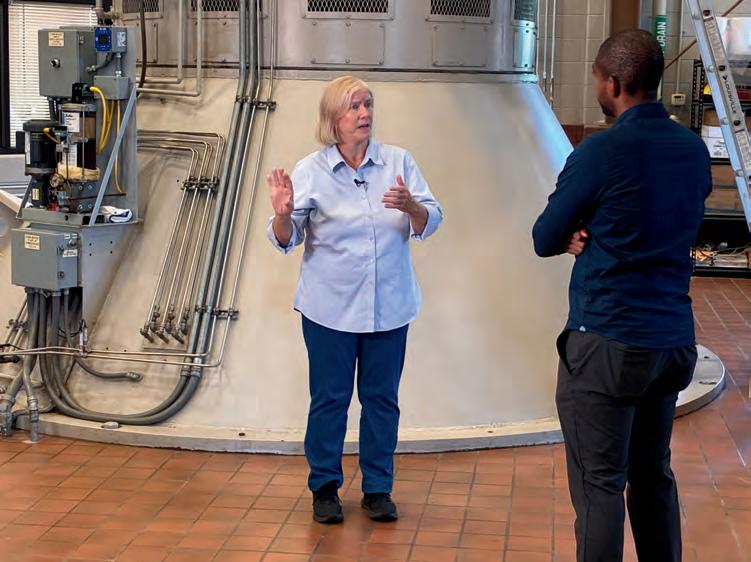
We are happy to report that despite a 4.4% sewer increase from GLWA, we were able to lower the overall increase to a 2.7% average rate adjustment. Commissioner Miller has successfully secured $43 million of Federal, State and County funds for MIDD and OMID projects which has lowered the need for higher rate adjustments.
This is now the eighth consecutive year average charge adjustments have remained below 3% which is well below the 10% - 15% average annual increases experienced from 2010-2016, before the current administration took over the Macomb County Public Works Office.
The MIDD budget continues to invest in lining projects to ensure we have no more sinkholes. It also funds the rehabilitation of flow control gates, new chemical treatments and facilities to prevent pipe degradation and to reduce nuisance odors, additional interceptor cleaning and sediment removal to ensure adequate flows and continued high tech preventative maintenance inspections.
Less than a
2.8%
annual rate adjustment the past 9 years
With the completion of several projects and those costs dropping off, the budget funds several MIDD projects without incurring debt including:
$6.0 million to retire a portion of the 2017 15 Mile Sinkhole bond, saving $4.4 million in interest.
$3.0 million for lining projects to continue to avoid future sinkholes.
$2.8 million to line the 15 Mile Interceptor from Gratiot to Groesbeck.
$1.0 million to rehabilitate the CS-3 flow control gate.
$1.0 million to replace the exhaust fan at the Fraser Biofilter.
$750,000 for chemical treatment at the Clintondale Pump Station to reduce odors.
MIDD FY 2027 Budget
& Charges
WhileGLWA While GLWA increasedFY2027 increased FY 2027 sewerchargesby sewer charges by 4.4%,theMIDDis 4.4%, the MIDD is passingononlya passing on only a 2.7%average 2.7% average increase increase
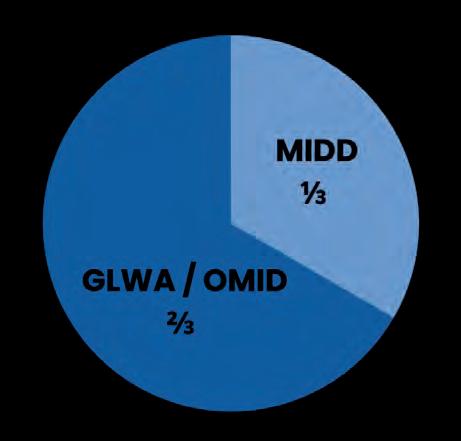

AverageAnnualSewerFlows byCommunity(10years)
Go With The Flow: Meter Dashboard Available to Community Leaders
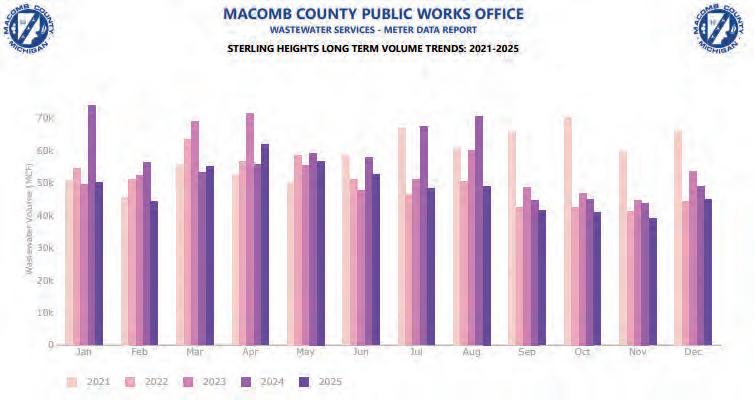
Thirty sanitary sewer outlet meter facilities maintained by the Macomb County Public Works Office allow officials from the communities in the Macomb Interceptor Drain Drainage District to view the data that’s used to calculate billing of sewer service.
These facilities monitor and collect data on the sewage volumes on a continuous basis. A cloudbased meter data management tool -- called ACE- allows municipal finance administrators, elected officials, wastewater and DPW officials to view the data on a user-friendly dashboard. Previously, they would have to wait for Public Works staff to download the data and provide it in a spreadsheet.
Data from rain gauges is also included in the dashboard. An analysis of sewage flow and rainfall totals can determine whether there is any infiltration of ground water into the sanitary system. Infiltration of storm water increases the amount of flow measured by the meters and increases cost to the local community.
COMMUNITY DASHBOARD IS INTENDED TO PROVIDE A QUICK LIVE SNAPSHOT OF COMMUNITY SANITARY SEWAGE FLOW METERS:
KEY FEATURES INCLUDE:
24-HOUR INTERACTIVE TREND OF ALL SANITARY SEWAGE FLOW METERS.
DAILY AND HISTORIC RAINFALL TOTALS
DATA QUALITY (SANITARY SEWAGE FLOW METER UPTIME PERCENTAGE)
24-HOUR ANALYTICS ON LOW, NORMAL AND HIGH FLOWS
90-DAY CERTIFICATION
HISTORY; AS REVIEWED AND CERTIFIED BY MCPWO

MIDD By The Numbers






$13.1





15.2 Billion Gallons Annual Flow Volume ZEROSinkholes since 2016 ZEROSanitary Sewer Overflows since 2016
2.8% Avg. Annual Rate Adjustment since 2017 vs. 15% Annual Increases from 2010-2016 Contractors
MIDDProjectsTimeline
NortheastSewage PumpStation
Start: October 2020
Segment5SewerRehab
Start: October 2020
Finish: June 2025
Segment6SewerRehab
Start: October 2021
Finish: May 2025
4OdorCorrosion Facilities
Start: January 2023
Finish: Fall 2025
8MeterFacilityDrop ShaftRehabilitations
Start: November 2024
Finish: Spring 2026
NGISewerRehab
Start: January 2025
Finish: Summer 2025
15MileInterceptorLining
GroesbecktoGratiot:
Start: Spring 2026
Inspections Start: Ongoing
Finish: July 2025 Grouting Start: Ongoing
OMIDDNorthInterceptor EastArmLining/Gates
Start: February 2021
Finish: November 2025
21Mile&Garfield Lining
Start: January 2023
Finish: Spring 2024
2OMIDDOdor& CorrosionFacilities
Start: September 2024
Finish: April 2026
15MileInterceptorLining
GarfieldtoGroesbeckHwy
Start: Fall 2025
Finish: February 2026
SystemWideCleaning &SedimentRemoval
Start: Spring 2027