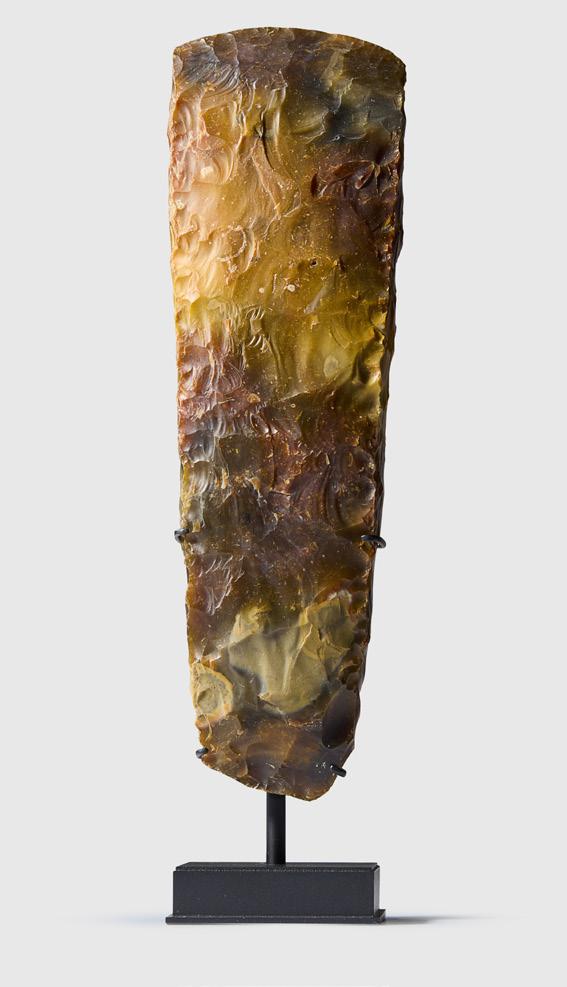
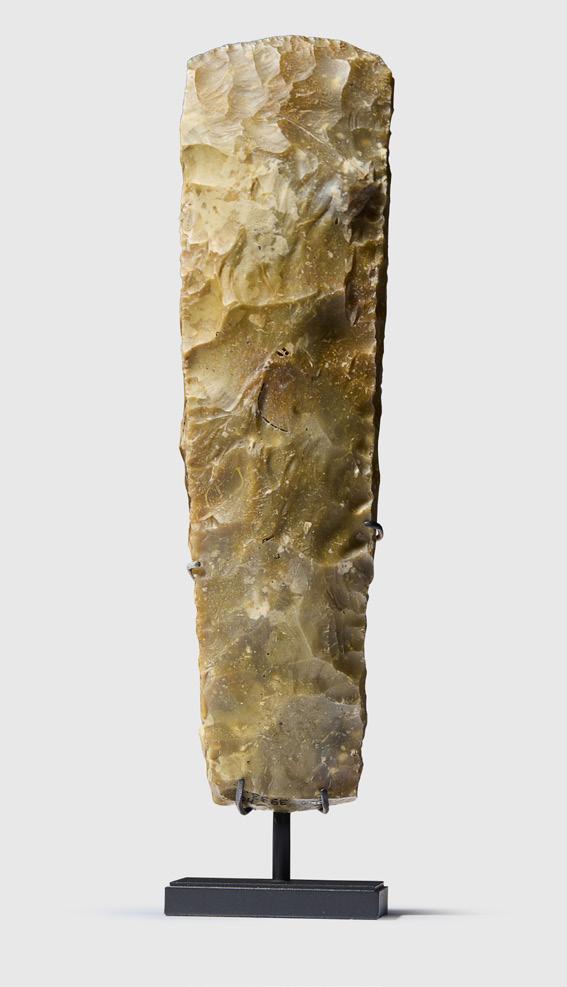
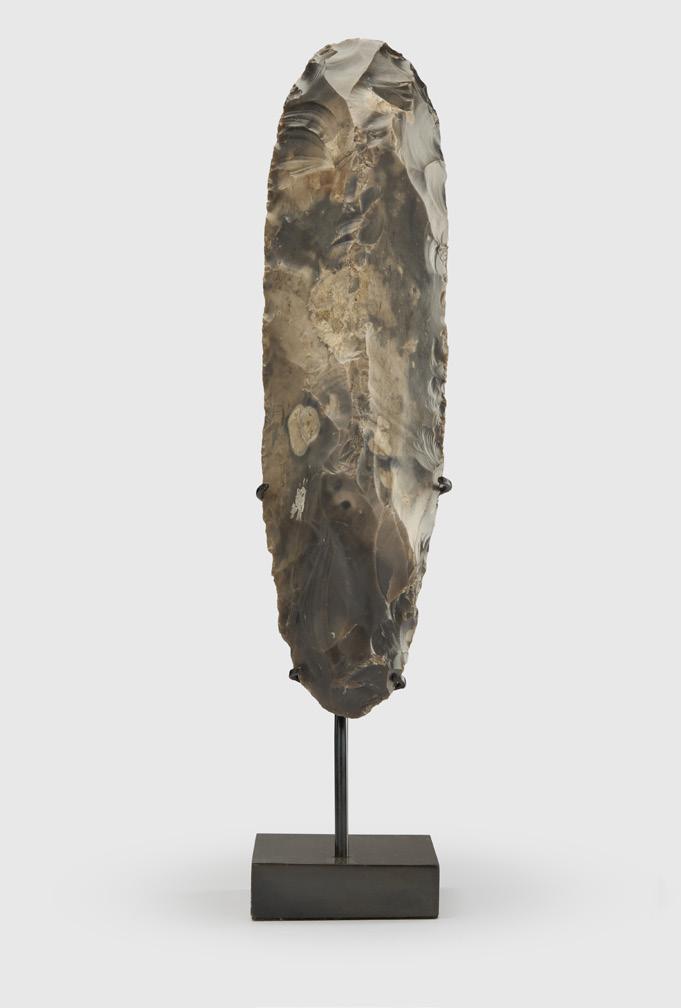
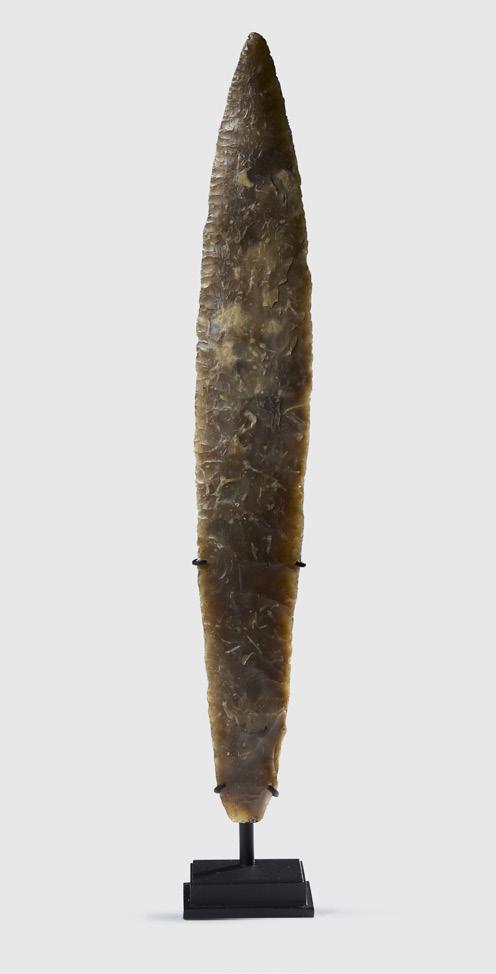
MEET THE SPECIALISTS
At Lyon & Turnbull we want to make buying at auction as easy and enjoyable as possible. Our specialist team are on hand to assist you, whether you are looking for something in particular for your home or collection, require more detailed information about the history or current condition of a lot, or just want to find out more about the auction process.
POLLY BAKER Sale Coordinator polly.baker@lyonandturnbull.com
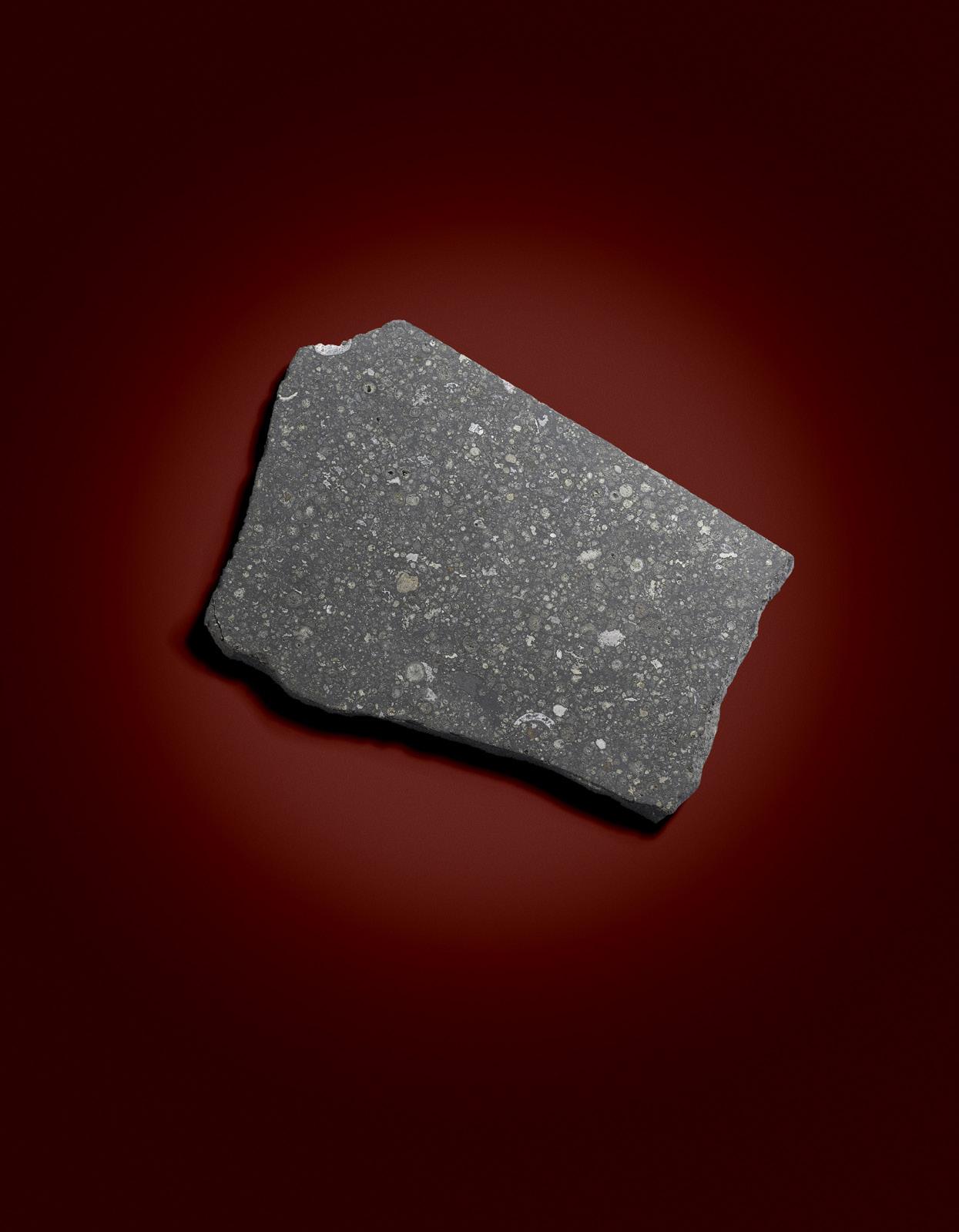
THE OLDEST MATERIAL IN THE SOLAR SYSTEM
ALLENDE, CARBONACEOUS CHONDRITE, CV3, FELL CHIHUAHUA, MEXICO, 26°58’ N, 105°19’ W
The present example comes from the world-famous Allende meteorite, one of the most extensively studied meteorites ever recovered, with hundreds of scientific papers devoted to its remarkable composition and origin. Allende fell in Chihuahua Mexico at 1 A.M. on the morning of February 8, 1969. The huge fireball it created lit up thousands of square miles above the desert and ranch land of northern Mexico. For nearly 40 miles, hundreds of thousands of meteorite fragments fell across the landscape, making the Allende meteorite shower one of the largest known strewn fields on record.
Allende is a rare carbonaceous chondrite that preserves some of the oldest known material in the Solar System. Its most remarkable features are the white calcium–aluminium-rich inclusions (CAIs) visible here, widely regarded as the first solid substances to form in the primordial Solar System. These components are effectively the first building blocks of planetary formation. Dating to approximately 4.567 billion years ago, their age is used as the reference “time zero” for Solar System formation.
The present example therefore represents a direct physical link to both the earliest stages of Solar System formation and the even older stellar processes that preceded it; an exceptionally rare record of deep cosmic time preserved in stone.
75.8g, 9.5cm diameter
Provenance: Dr. Elbert King, Houston, Texas, United States Al Mitterling, United States
Martin Goff, United Kingdom
Robert Elliot, United Kingdom
£1,500-2,500
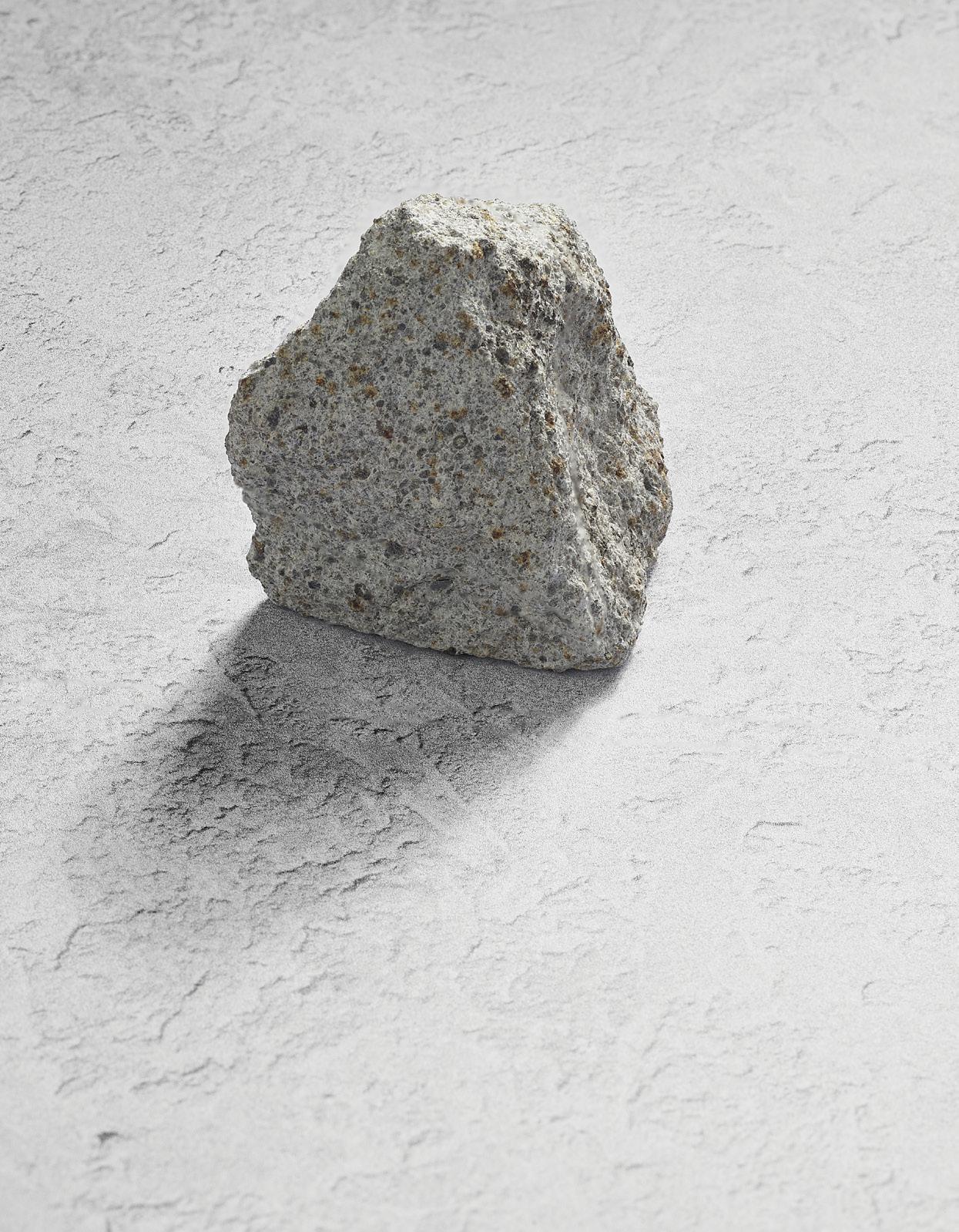
THE CHRISTMAS METEORITE
CHONDRITE, L6, FELL BARWELL, LEICESTERSHIRE, UNITED KINGDOM, 24TH DECEMBER 1965
olivine-hypersthene chondrite, with trace iron, L6 classified 95.87g, 5.6cm tall
Provenance: Fell at Barwell , found by Mrs. Jean Ferguson (nee McKellar), 6th January 1966
Subsequently in the Robert Elliot Meteorite Collection, United Kingdom
Known as the “Barwell meteorite”, and widely considered to be the most famous British meteorite, this fall occurred over the village of Barwell, England, at approximately 4:20 pm on Christmas Eve 1965.
A large aerial explosion and accompanying sonic boom shook the area and alarmed residents. Fragments struck buildings and vehicles: one broke through a house window and landed in a plant pot, another formed an impact pit in a driveway, while a further piece penetrated a garage roof and became lodged in a car near the engine block. Local observers, including carol singers, later reported unknowingly walking over fallen material.
A significant quantity of this L6 chondrite was recovered shortly after the fall, resulting in specimens that retain a notably fresh, light coloured matrix with minimal weathering. The Barwell event is one of the very few witnessed meteorite falls in England and is also notable for the number of fragments that struck man made objects, a feature particularly valued by collectors.
£2,000-4,000
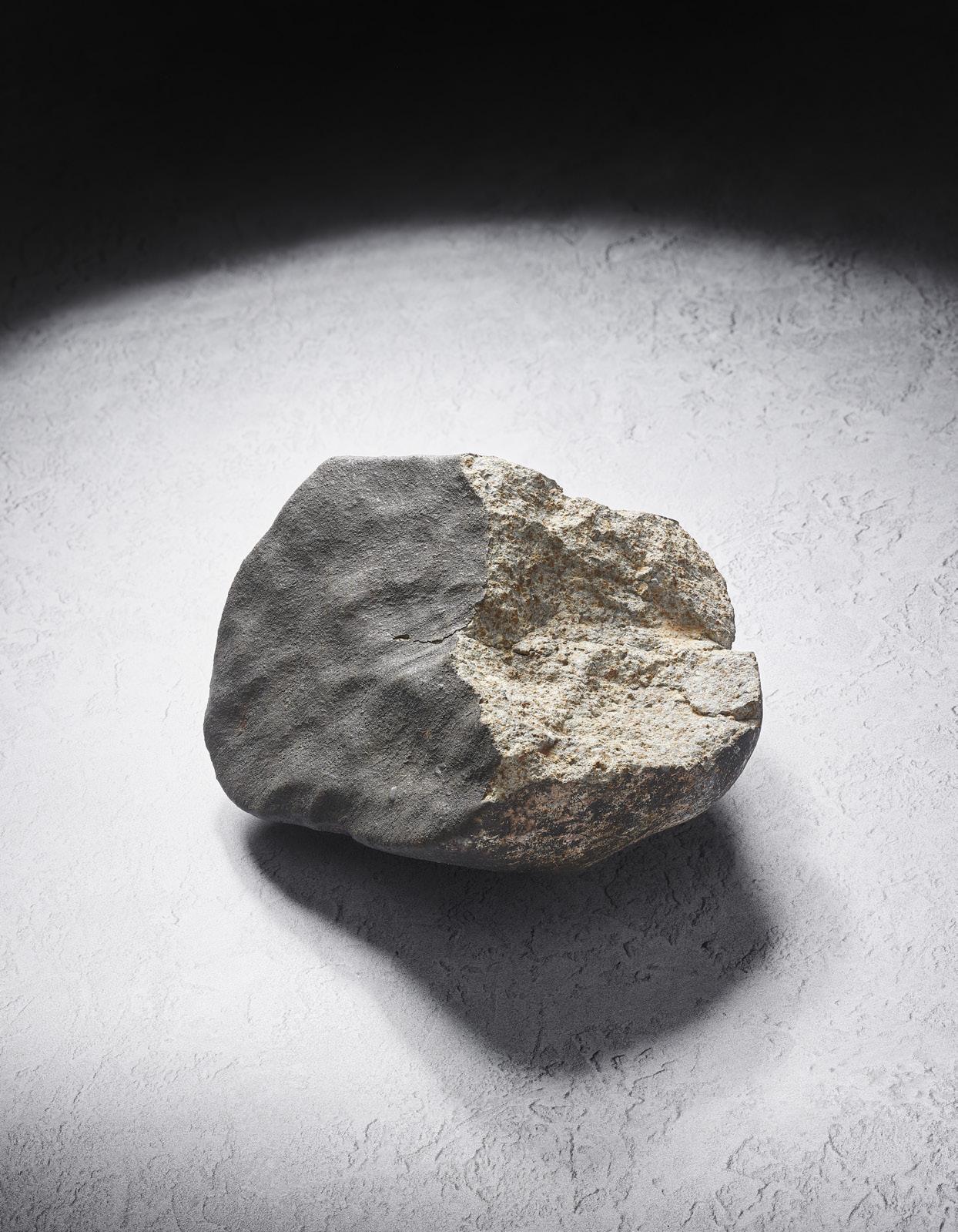
A FRAGMENT OF THE METEORITE THAT CONTAINS EXTRATERRESTRIAL WATER CHONDRITE, H3-6, FELL ZAG, WESTERN SAHARA, AUGUST 4TH 1998
H3-6 regolith breccia, a sculptural, oriented specimen with fusion crust and impact scarring
1325g, 16.4cm diameter
After a dramatic fireball and powerful explosions seen and heard across hundreds of miles, this meteorite fell to Earth in Morocco in early March 1998. Known as Zag, it is a striking brecciated H3-6 regolith chondrite, valued for its complexity and rarity. Notably, blue halite (salt) crystals discovered within its H3 regions have been found to contain traces of extraterrestrial liquid water, placing Zag among only a handful of meteorites known to preserve this remarkable feature.
£2,000-3,000
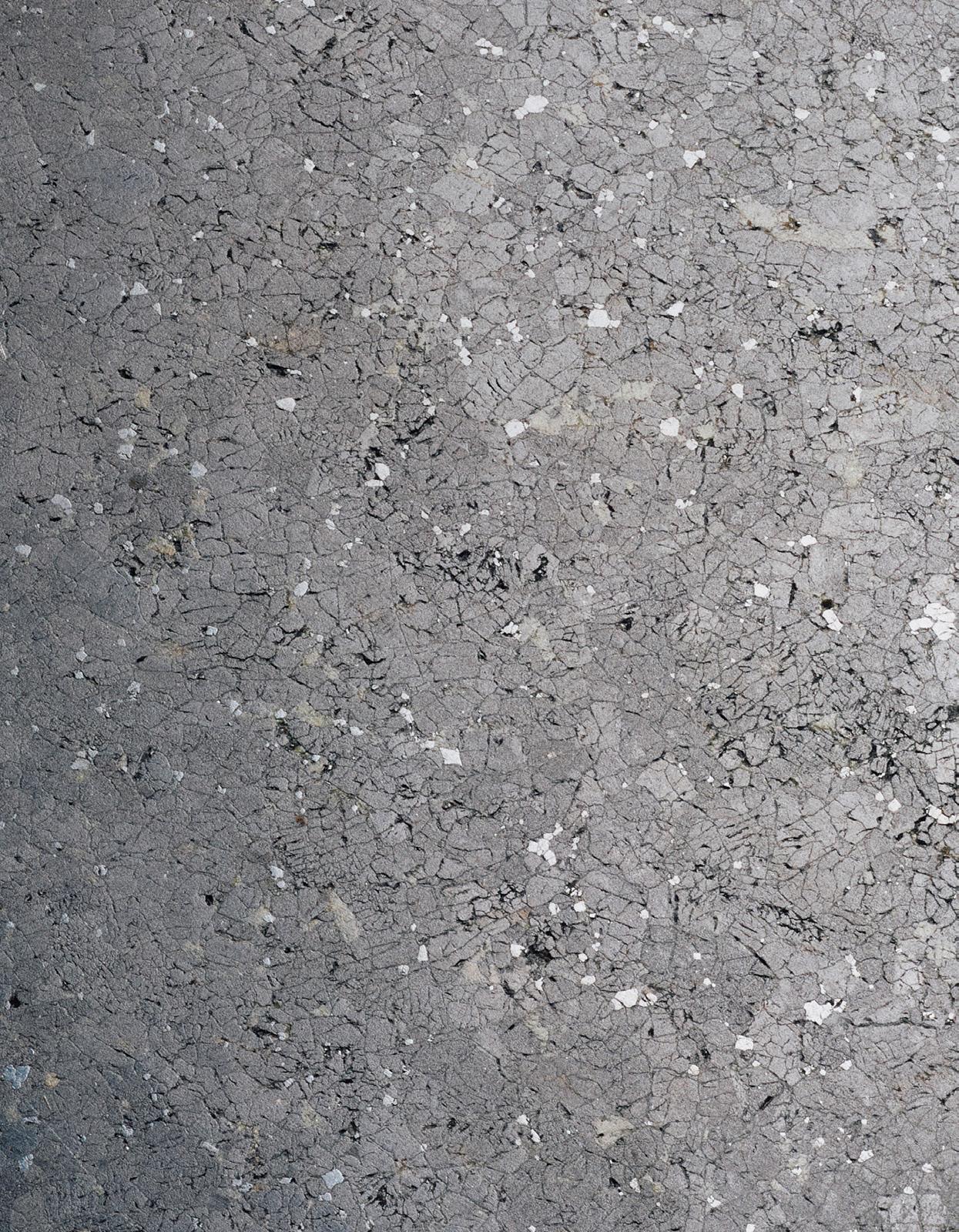
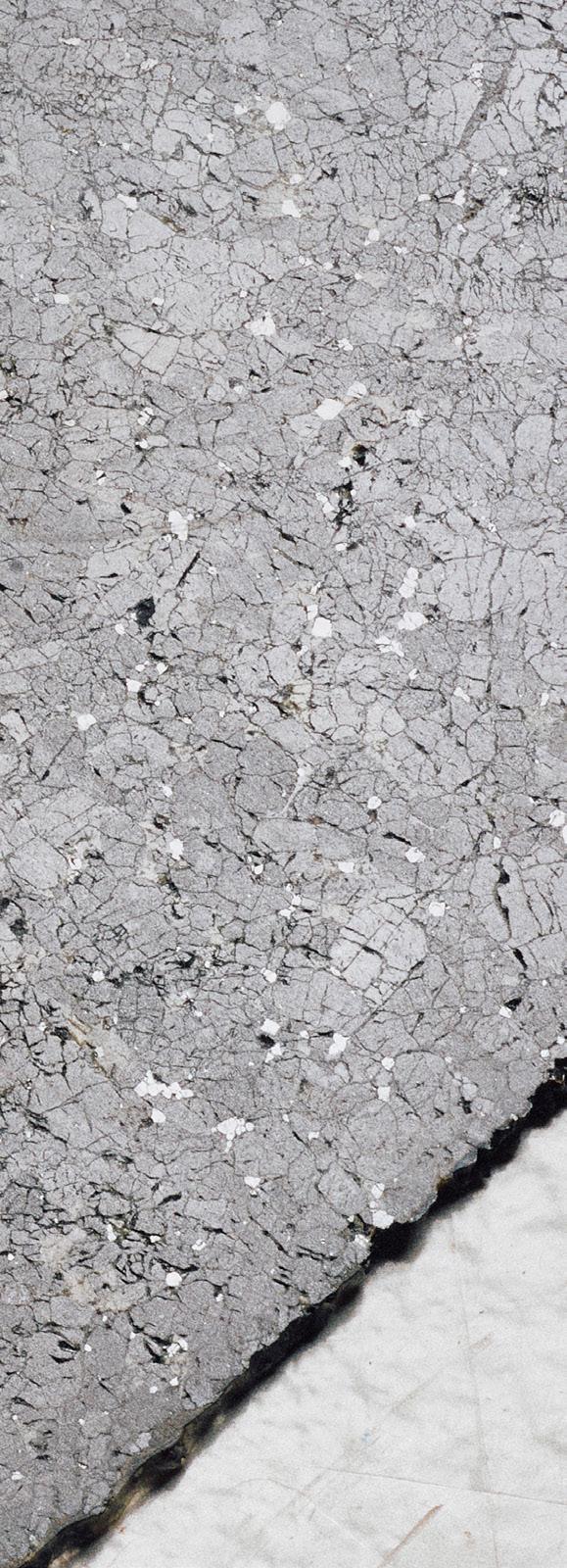
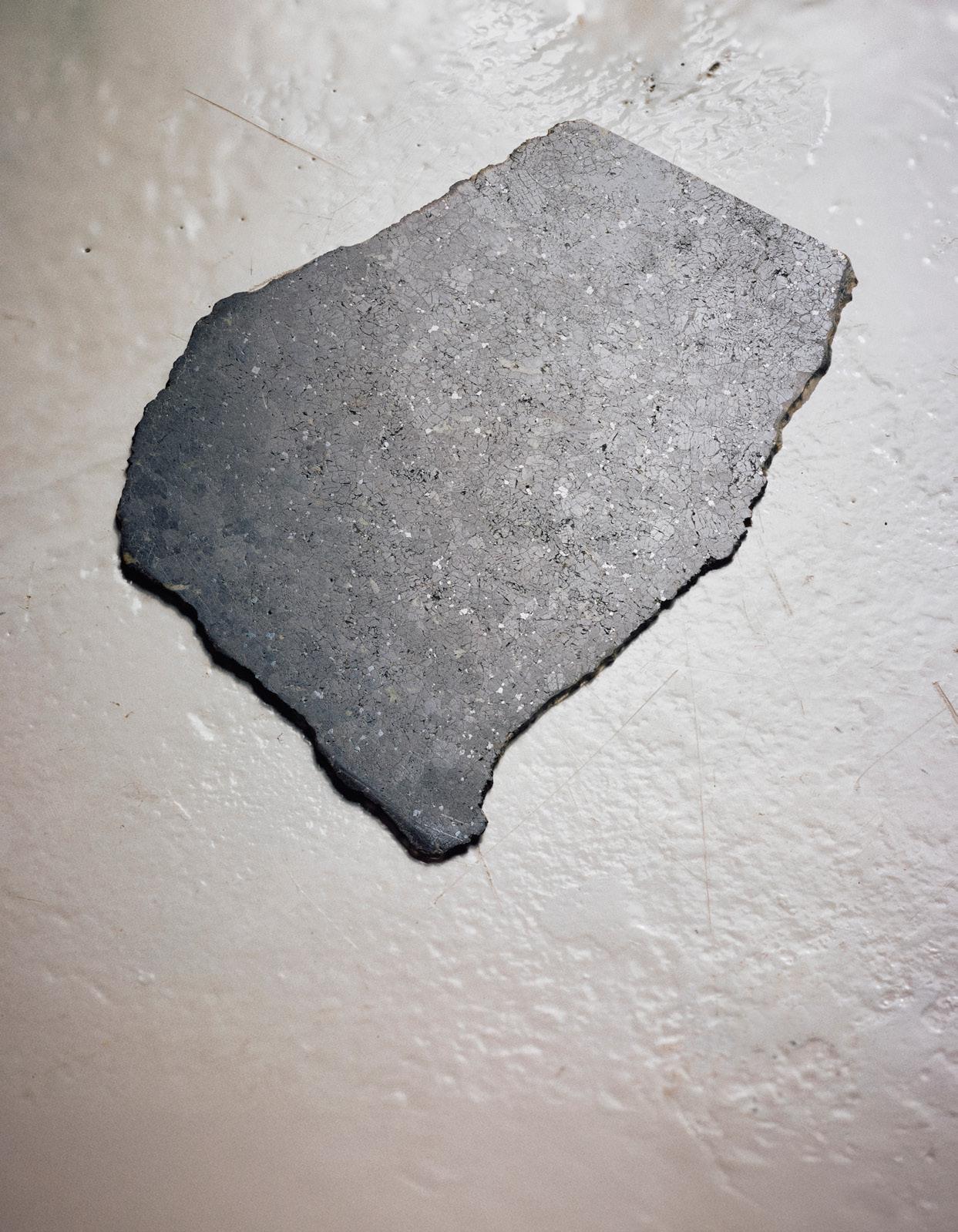
A SLICE OF THE PLANET MARS NWA 2737, CHASSIGNITE
one of the rarest objects on Earth, a specimen of rock from the planet Mars, coarse-grained olivine, set within a dark grey crystalline matrix, with fine fissures from impact visible throughout 1.5g, 4.7cm diameter
Provenance: Bruno Fetcay Collection, France Lucy Cullen, United Kingdom
The Robert Elliot Collection, United Kingdom
The present example is a rare Martian meteorite, part of the small group known as SNCs, named after the type specimens Shergotty, Nakhla and Chassigny. Material from Mars accounts for only about 0.4% of all known meteorites, and within this already exclusive category, chassignites are among the least common, with only a few recognised examples.
Designated NWA 2737, this specimen is composed predominantly of olivine, an iron-magnesium silicate that crystallised deep within a magma chamber beneath the Martian surface. As these crystals formed, they settled under gravity, creating the distinctive mosaic-like structure seen today. The rock was later ejected from Mars by a powerful asteroid impact, an event that subjected it to intense shock, leaving fine fissures running through its dark, olivine-rich matrix. Formed deep within Mars and later launched into space by a catastrophic impact, this specimen represents material from the Martian interior, a region otherwise beyond reach. Its mineralogy offers valuable insight into the composition and evolution of the red planet, making it of considerable scientific interest. Examples of this type are seldom available, representing a rare opportunity to acquire a genuine fragment of Mars itself.
£2,500-3,500
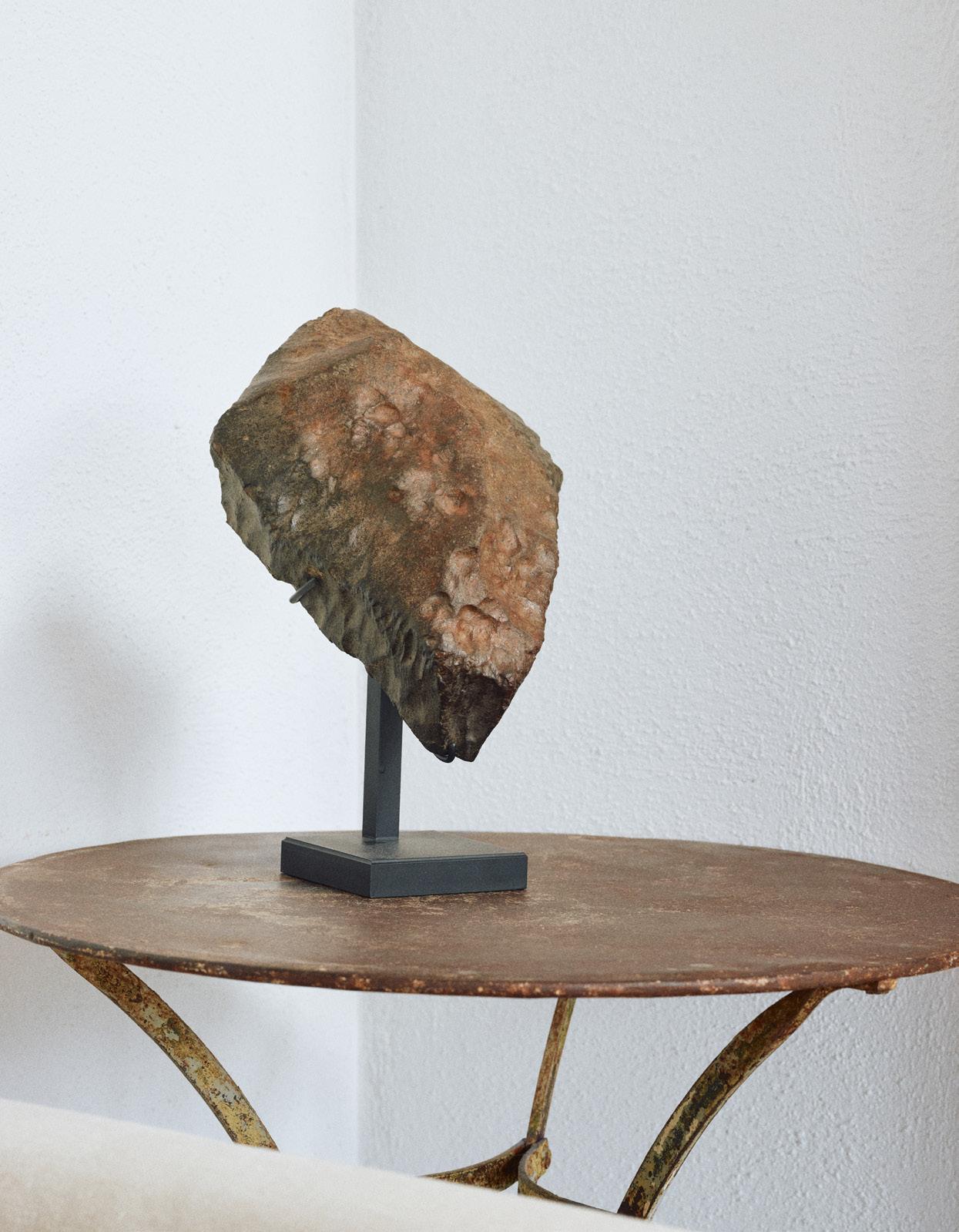
LARGE AND SCULPTURAL ORIENTATED METEORITE CHONDRITE, SAHARA DESERT, NORTH-WEST AFRICA
a substantial and highly sculptural orientated chondrite, exhibiting a trapezoidal form with traces of fusion crust, the surface is distinguished by a series of pronounced regmaglypts, numerous chondrules visible in the matrix, raised on a bespoke mount
Length: 32.5cm, weight: 8245g
The shallow, thumbprint-like depressions on the surface of this meteorite are called regmaglypts. They form as the rock streaks through the atmosphere at incredible speed, partially melting in its descent to Earth. These natural sculptures make orientated meteorites like the present example especially striking, revealing the dynamic forces that act on extraterrestrial objects before they land.
£15,000-25,000
6
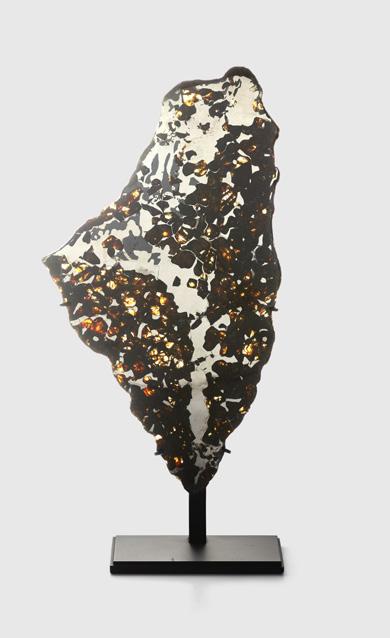
PALLASITE METEORITE CROSS SECTION SLICE SEYMCHAN, MAGADAN DISTRICT, RUSSIA (62°54’ N, 152°26’ E), FORMED 4.56 BILLION YEARS B.P.
the slice with olivine crystals suspended within the metal matrix and etching, raised on a bespoke mount
19.8cm high
This specimen is abundant with extraterrestrial gemstones, showcasing a mesmerising array of olivine and peridot crystals. These crystals are the remnants of the asteroid’s stony mantle, which became embedded within the molten iron-nickel core during its formation 4.56 billion years ago. This remarkable process occurred as the asteroid’s metallic core cooled and solidified, trapping fragments of its silicate rich mantle and preserving them in their pristine, otherworldly form. The vibrant hues of the olivine and peridot crystals are a testament to the intense heat and pressure these materials endured in the asteroid’s interior.
£2,000-3,000
7
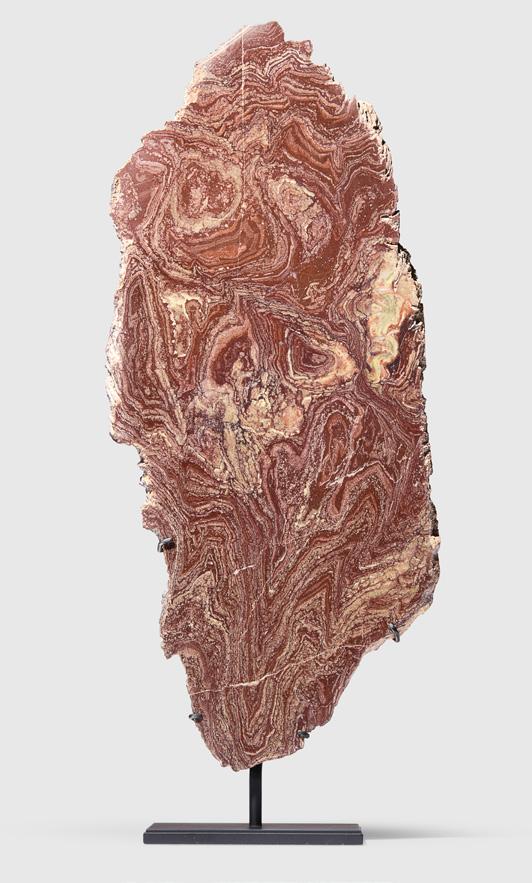
STROMATOLITE SPECIMEN
UPPER TACHGAGALT FORMATION, MOROCCO, PRECAMBRIAN PERIOD, 635 – 541 MILLION YEARS B.P.
cut and polished stromatolite (Conophyton amantourartensis), displaying undulating and folding growth structures, in tones of reddish-brown, rust and tan, raised on a bespoke mount
42.4cm tall
This specimen stands as evidence of some of the world’s earliest life forms. Stromatolites first appeared more than 3.5 billion years ago, forming in the shallow, warm waters of the Earth’s primordial seas. There, microbial mats trapped and bound fine sediment and minerals, creating layers over vast periods of time. The banding visible here preserves that gradual process, offering a direct link to life in its earliest stages.
£400-600
8
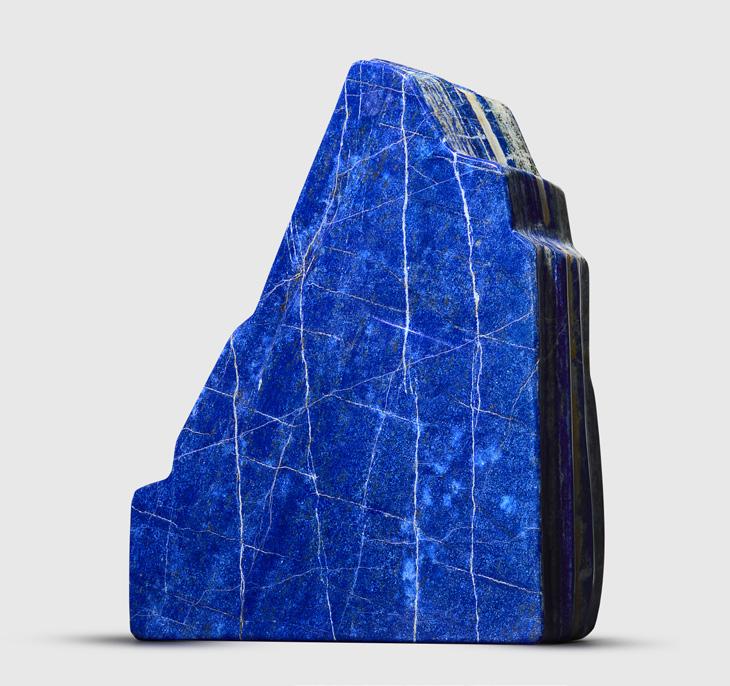
LARGE SPECIMEN OF LAPIS LAZULI
SAR-I-SANG, AFGHANISTAN
deep blue, cut and polished, with thin veining and pyrite deposits
Weight: 8758g
Height: 28.8cm
A large and impressive specimen of lapis lazuli from the historic Sar-i-Sang mines, Badakhshan, Afghanistan. This historic source, worked for over 6,000 years, has produced some of the finest lapis lazuli known. Material from the Sar-i-Sang mines travelled along ancient trade routes to Mesopotamia and Egypt, where it was prized for its intense celestial-blue colour and symbolic association with the heavens and divinity. Used in jewellery, amulets, carvings, and later ground to create the precious pigment ultramarine, lapis lazuli has long been regarded as one of the most coveted ornamental stones of the ancient world.
£1,000-1,500
9
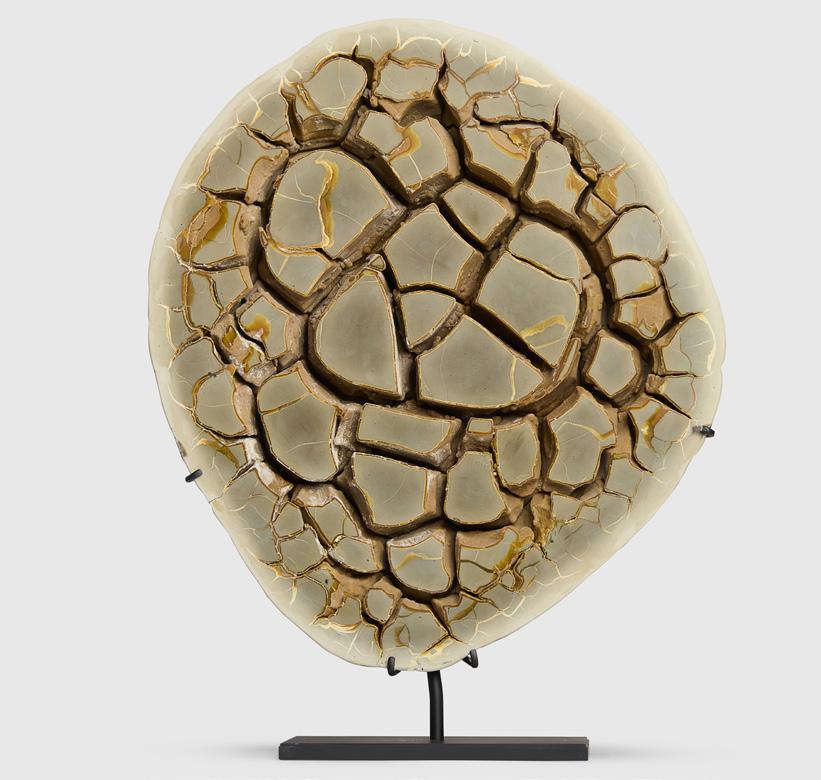
SEPTARIAN CONCRETION
BOOM, BELGIUM, OLIGOCENE, 30 MILLION YEARS B.P.
a sculptural septarian concretion with calcite crystal growth filling natural cavities within limestone, formed as mineral rich sediments contracted and fractured, raised on a bespoke mount 48cm tall
£1,000-1,500
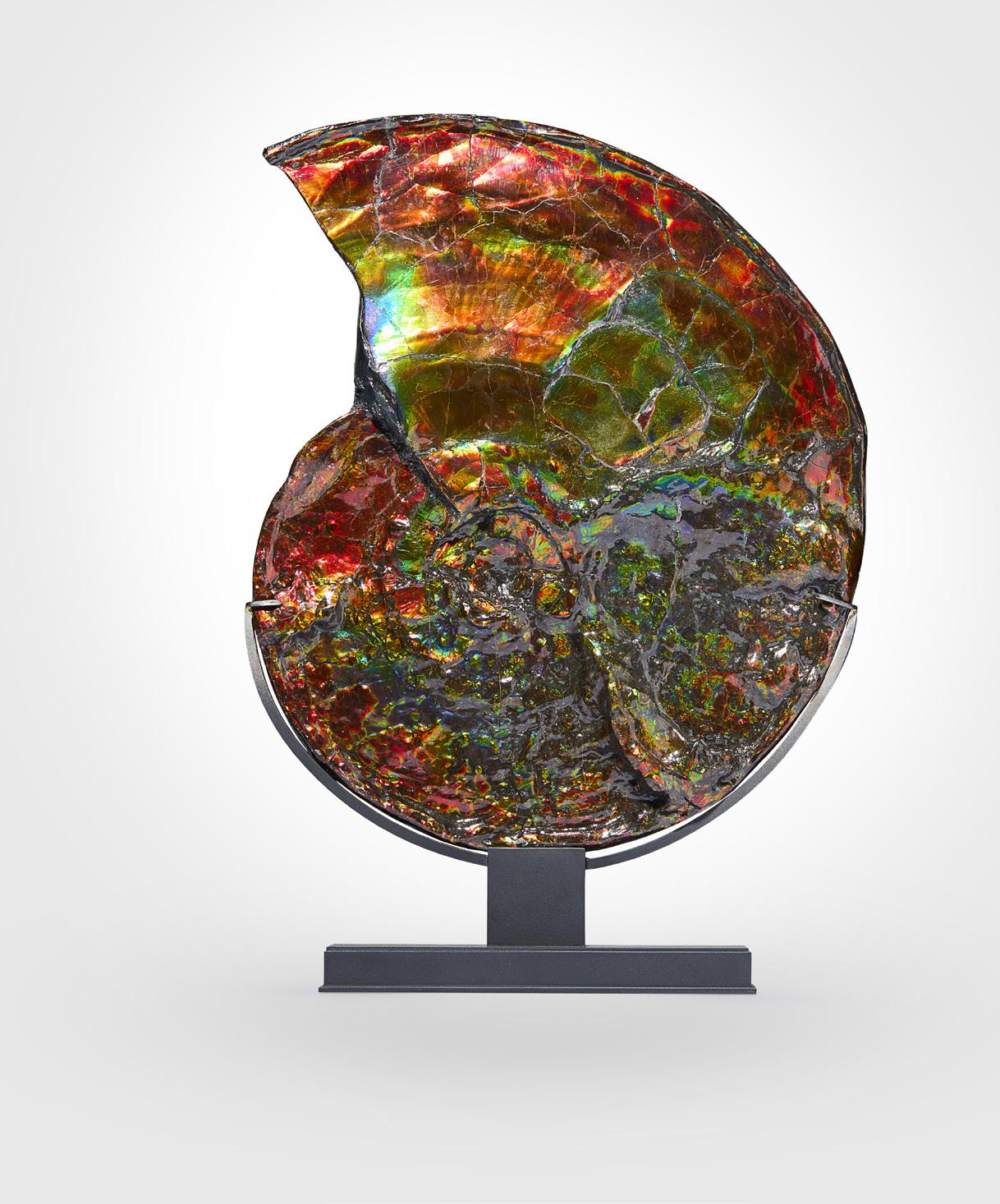
LARGE IRIDESCENT AMMOLITE SPECIMEN BEARPAW FORMATION, CANADA, UPPER CRETACEOUS, 75 - 72 MILLION YEARS B.P. specimen of Placenticeras meeki showing iridescence of red, green, yellow and orange to both sides, raised on a bespoke mount
37cm diameter
Once a living creature, a large mollusc living in the shallow temperate seas in what is now central Canada, the eons have literally transformed this specimen into a gemstone. Over millions of years, continual compression and the interaction of various minerals have transformed the shell into the opal-like gemstone ammolite. Significant deposits of this substance are only found at the Bearpaw Formation, with the present piece being a particular magnificent example.
£25,000-35,000
11
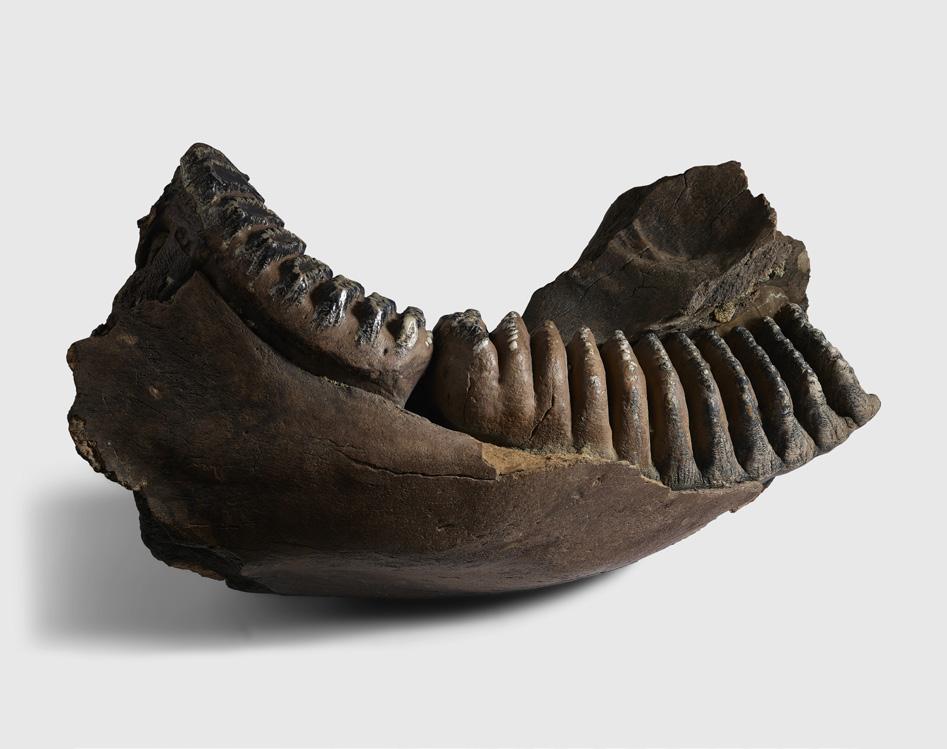
STEGODON JAW
EARLY PLEISTOCENE, SOUTHEAST ASIA, C. 2 - 1 MILLION YEARS B.P.
a fine specimen displaying a deep black patination, a 1 - 2 million-year-old member of the Elephantidae subfamily, Stegodon is considered the ancestor of elephants, mastodons and mammoths 51.8cm long
£3,500-4,500
12
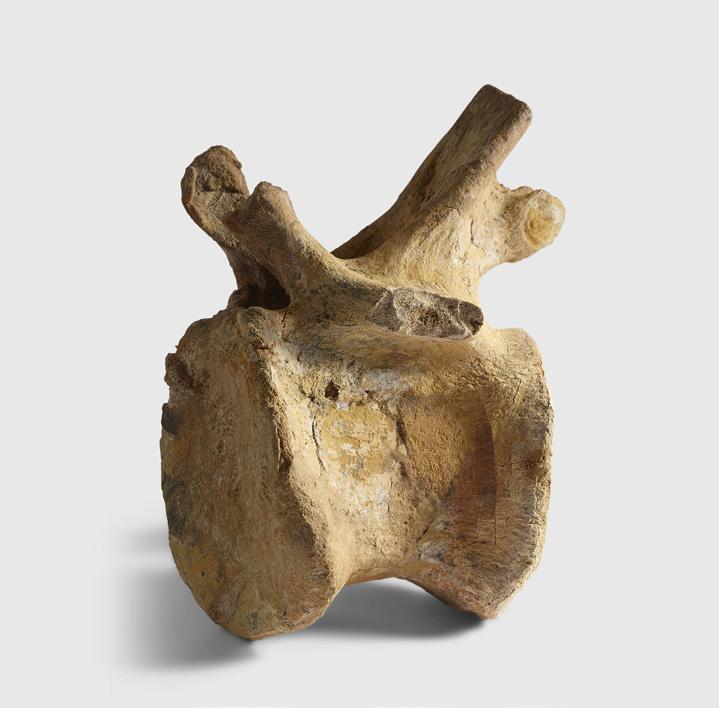
DINOSAUR VERTIBRAE, SPINOSAURUS AEGYPTIACUS
TEGANA FORMATION, CRETACEOUS PERIOD, KEM KEM BASIN, MOROCCO, 96 - 93 MILLION YEARS B.P.
a large vertebrae from the enormous Cretaceous therapod, spinosaurus aegyptiacus 24cm diameter
£1,200-1,500
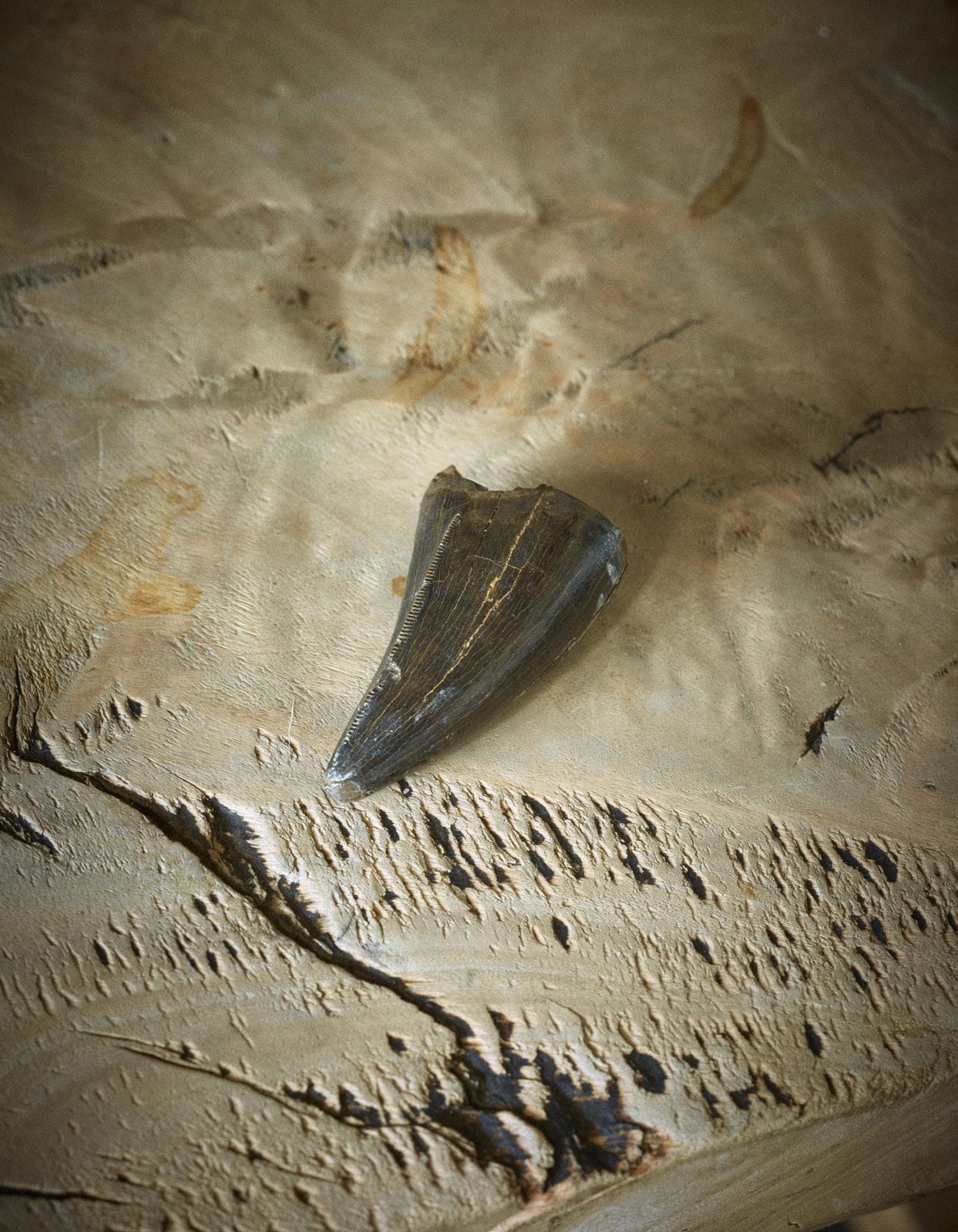
THE TOOTH OF A TYRANNOSAURUS-REX HELL CREEK FORMATION, DAWSON COUNTY, MONTANA, LATE CRETACEOUS, C. 67–66 MILLION B.P.
a well-preserved tooth of a Tyrannosaurus rex, with fine serration, Hell Creek Formation, Maastrichtian, late Cretaceous, c. 67 - 66 million years b.p., raised on a bespoke mount 4.95cm long
Provenance: Excavated in 2025 on privately owned land in the Hell Creek Formation, Dawson County, Montana
The fossil originates from the renowned Hell Creek Formation, a geological treasure trove dating back 68–66 million years, right at the end of the Cretaceous period, just before the mass extinction of the dinosaurs. During this time, the landscape was a lush, subtropical floodplain teeming with life. Fossil discoveries from these beds include a diverse array of dinosaurs, reptiles, mammals, and even marine creatures, painting a vivid picture of a once-thriving prehistoric ecosystem. Tyrannosaurus rex had proportionally massive teeth, with thick, robust crowns covered in heavy enamel and serrations on both edges. Its 60 teeth, reaching up to 20 cm (8 inches) long, combined with an immensely powerful bite, around three times stronger than a lion’s, made it a dominant apex predator. Fossil evidence, including bite marks on Triceratops and Edmontosaurus bones, reveals its ability to crush through bone.
£5,000-8,000
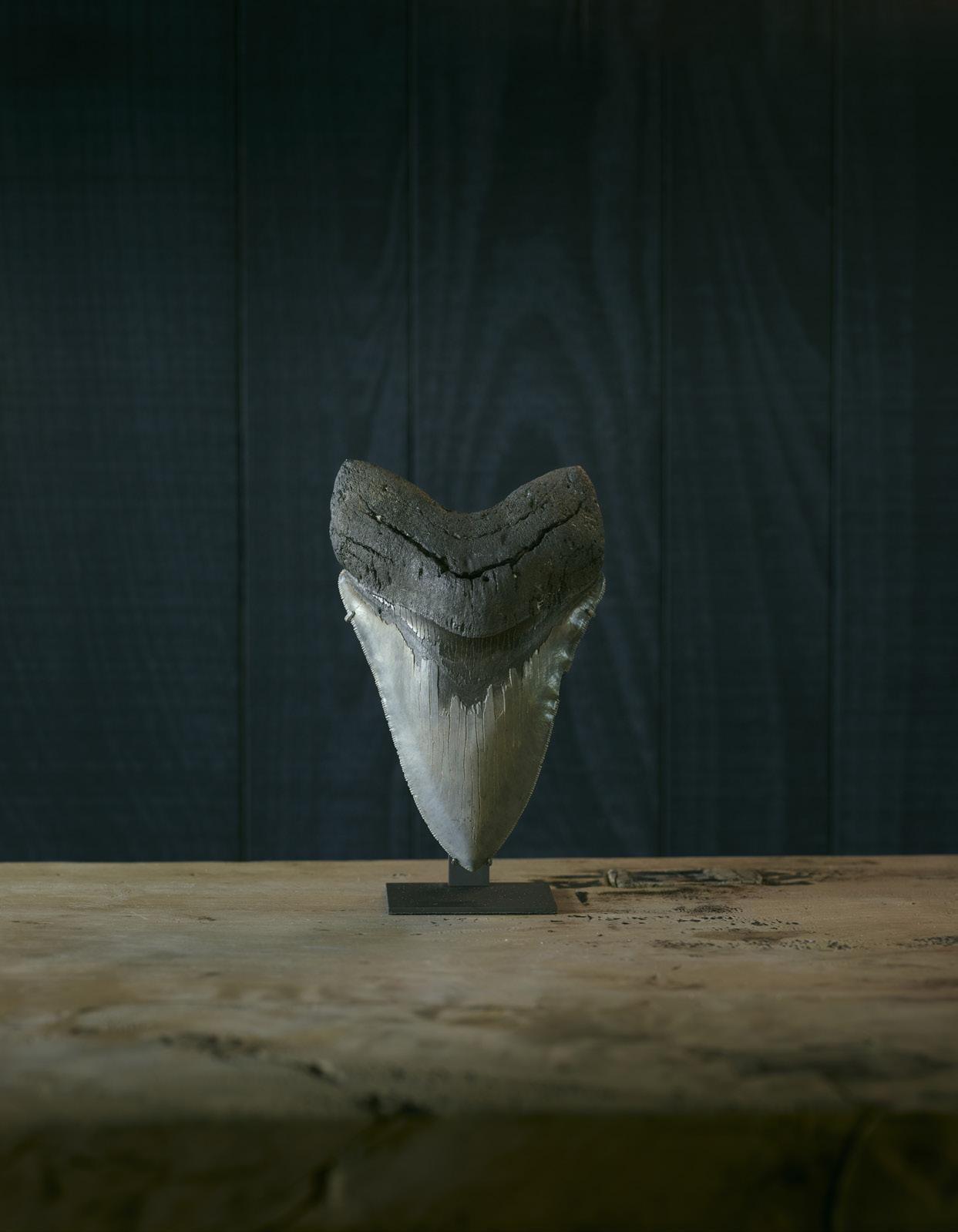
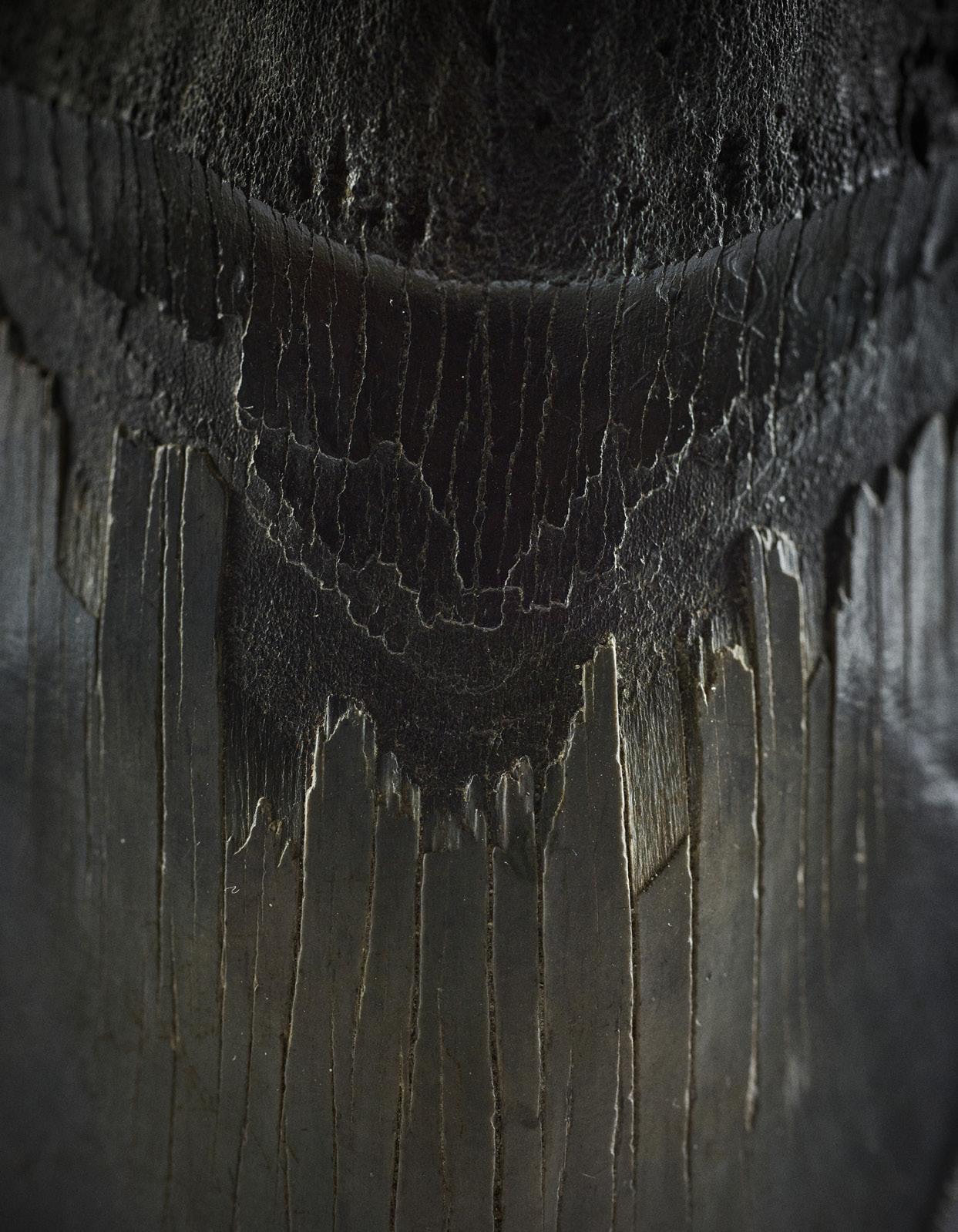
LARGE MEGALODON TOOTH
SOUTH CAROLINA, MIOCENE PERIOD, 10 - 15 MILLION YEARS B.P.
a fine Otodus megalodon tooth, gradated grey-black in colour, with fine serrations, displaying a distinctive “wave” growth pattern at the base, only achieved on very large specimens 15.4cm (6.1 inches) long
Provenance: Excavated in South Carolina riverine deposits, 2025. £1,000-1,500
15
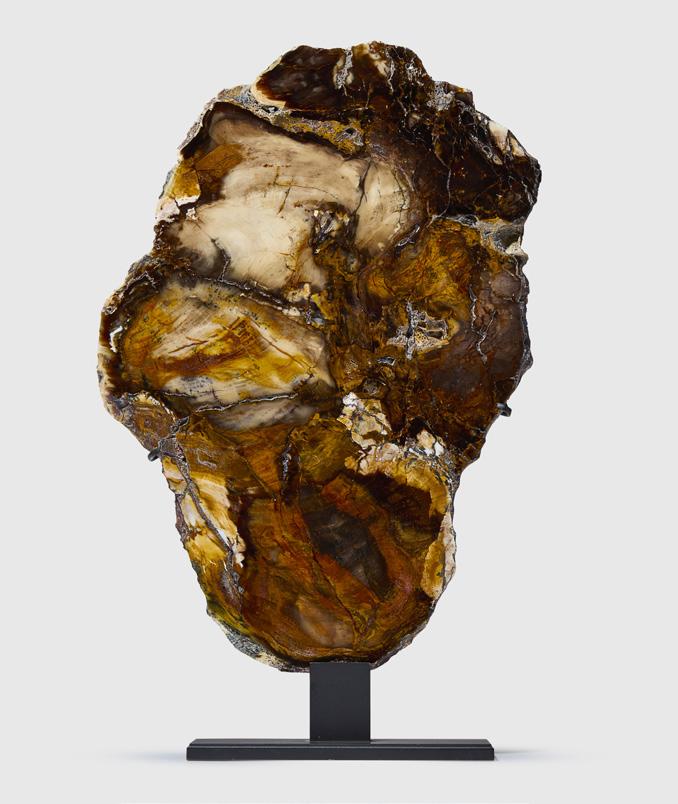
PETRIFIED WOOD SLICE
NEVADA, TRIASSIC PERIOD, C. 230 - 200 MILLION YEARS B.P.
this well-preserved, cross section of fossilized conifer features distinct caramel and charcoal hues, the bark texture remains intact along all edges, raised on a bespoke mount
31.3cm tall
Sourced from Nevada’s Triassic deposits, formed when this region lay within the supercontinent of Pangaea, this fossil wood evokes a landscape very different from today’s arid basins. During the Triassic, Nevada was warmer and often seasonally wet, with conifer forests and river systems stretching across broad lowlands. Over immense spans of time, fallen timber was buried, mineralised, and transformed into stone, preserving the fine structure of its grain.
£400-600
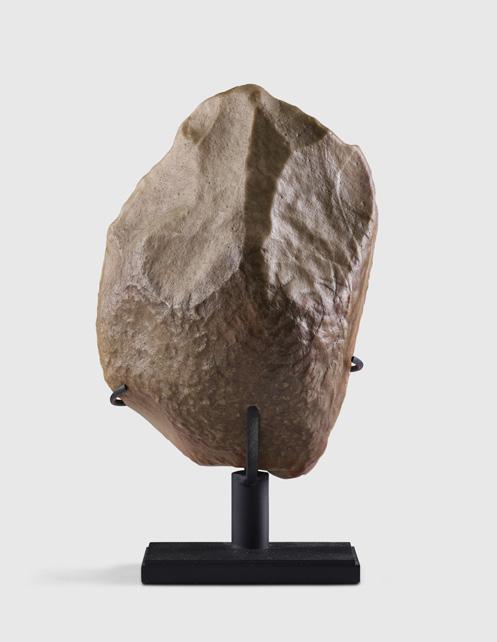
ACHEULEAN STONE CHOPPER
MOROCCO, LOWER PALEOLITHIC, C. 1,000,000 YEARS BEFORE PRESENT
knapped grey stone, of protobiface form, raised on a bespoke mount
14.9cm tall
Provenance: Private collection, Belgium, by descent
Unremarkable in appearance, this piece is nonetheless extraordinary. Made over one million years ago in Africa by homo erectus, it belongs to the earliest phases of the Acheulean tradition, when our ancestors began shaping stone with intention, skill, and foresight. It stands among the first objects consciously fashioned by human hands.
This chopper was a simple but versatile cutting tool, used for tasks such as butchering animals, breaking bones to access marrow, and chopping or scraping plant materials.
£300-500
17
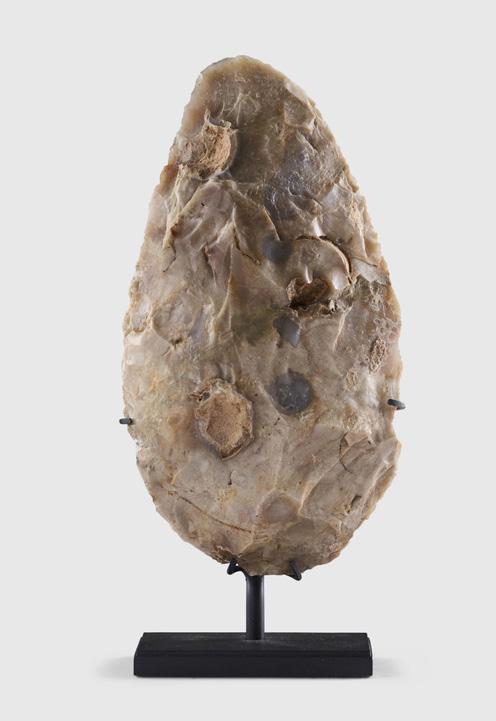
FLINT HANDAXE
OISE, NORTHERN FRANCE, PALEOLITHIC PERIOD, C. 300,000 – 100,000 B.C.
knapped flint, a large and impressive silver and grey flint handaxe, uncovered in Oise, northern France, raised on a bespoke mount
17.7cm tall
Provenance: Private collection, France, prior to 2000 The Tony Berlant Collection, Santa Monica, United States. Berlant’s collection is noted for his 2018 exhibition First Sculpture: Handaxe to Figure Stone at the Nasher Sculpture Center, developed in collaboration with anthropologist Thomas Wynn. The group brought together prehistoric flint handaxes and figure stones selected for their formal and aesthetic qualities, reframing them as early expressions of visual cognition.
Private collection, Belgium, acquired from the above
£800-1,200
18
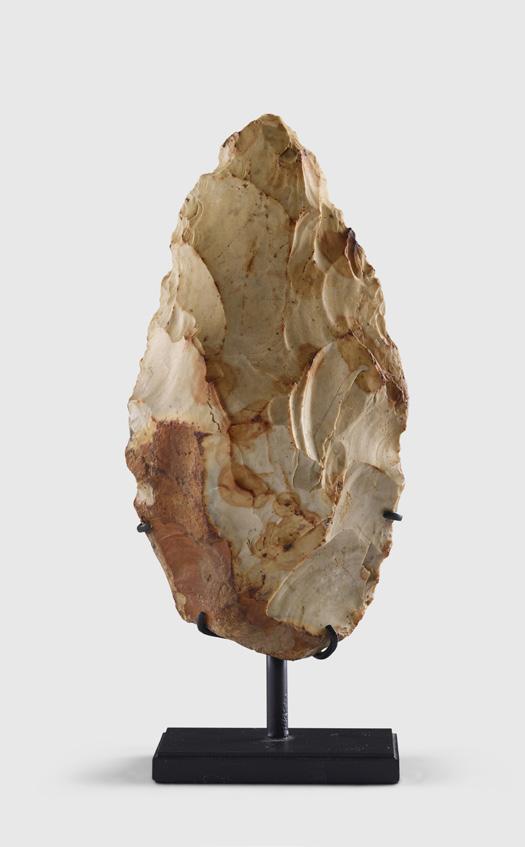
FLINT HANDAXE
TROYES, NORTHEASTERN FRANCE, MIDDLE PALEOLITHIC PERIOD, C. 300,000 – 100,000 B.C.
knapped flint, with a beautiful foliate form, a large and impressive buff and ochre coloured handaxe, uncovered in northeastern France, raised on a bespoke mount
14.9cm tall
Provenance: Private collection, Belgium, acquired at a French auction 2010s Handaxes are the earliest and longest-used tools made by hominids, with a history spanning 1.7 million years. They reflect an early human interest in both functionality and form, with makers often crafting symmetrical edges and faces beyond practical needs. This attention to detail highlights not only their usefulness but also an early sense of aesthetics in tool-making.
£800-1,200
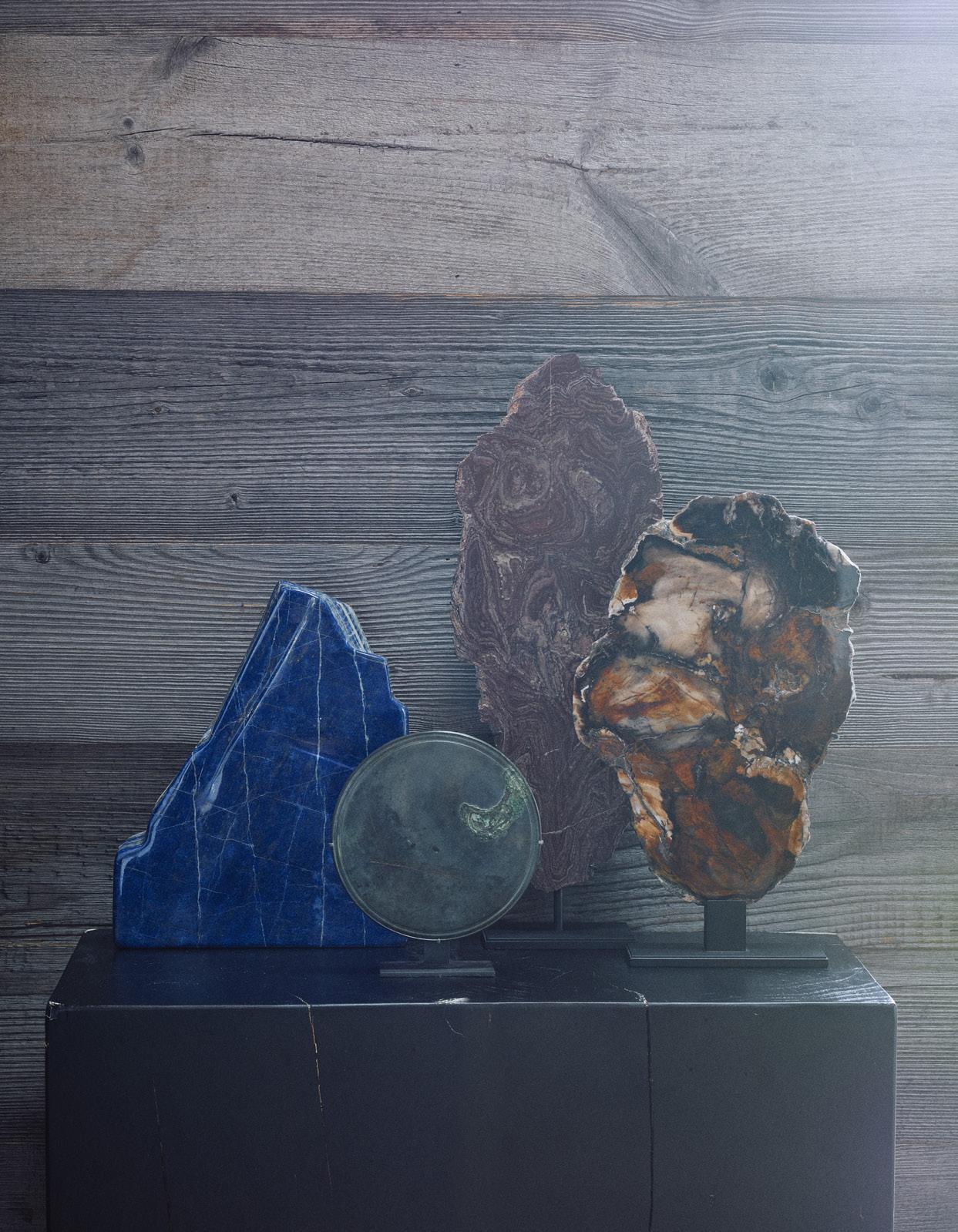
Left to right, Lots 8, 68, 7 & 15
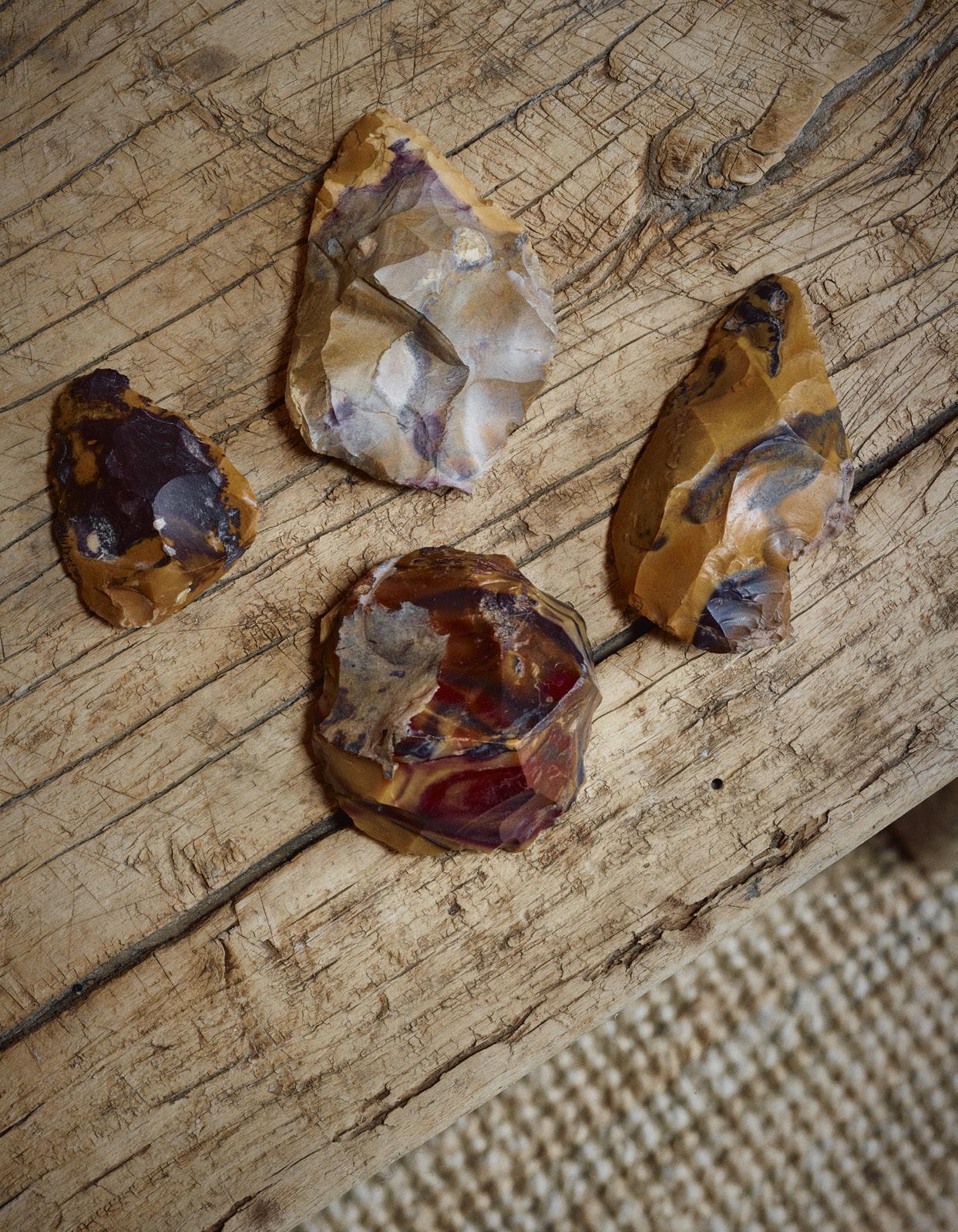
NEANDERTHAL JASPER TOOLS
MIDDLE PALEOLITHIC, FONTMORE, CENTRAL FRANCE, C.
300,000 - 40,000 B.P.
knapped jasper, a collection of four bifaces, ranging from 5.3 to 10.2 cm long, each displaying a vibrant hue (4) largest 10.2cm long
Provenance: Private collection, Belgium
Previously in the Tony Berlant Collection, United States
The present group of four biface tools comes from the Fontmort area of France and was made by Neanderthals (Homo neanderthalensis), the closest extinct relatives of modern humans. Far from crude implements, the stone was carefully knapped into balanced, functional forms. Such tools reflect a high level of technical skill and planning, produced through controlled sequences of flaking that created sharp, symmetrical edges suitable for cutting, scraping and butchery tasks.
Rather than isolated objects, these handaxes formed part of a broader cultural system in which Neanderthals engaged deeply with the properties of stone. As noted in Before Art, “even though flint was readily accessible and equally practical, jasper was the material of choice at the site of Fontmore”. Archaeologist L. Pradel further observes that Neanderthals “were able to grasp the harmony of a beautiful geometric tool” and may also have been “struck by the admirable multicoloured, ever-changing patterns of Fontmore jasper” (ArtAncient, 2023).
Together, these objects suggest that early stone tool production was not solely functional, but also involved perception, selection, and a sensitivity to material qualities that foreshadows later developments in visual culture and design.
£300-500
20
LARGE FLINT AXEHEAD
SCANDINAVIA, 4000 - 3000 B.C.
knapped flint, the stone worked into a rectangular form with a sharp tapering blade, finely flaked, displaying hues of caramel brown, silver and dark grey, raised on a bespoke mount
29cm tall
£3,000-5,000
21
LARGE FLINT AXEHEAD
SCANDINAVIA, 4000 - 3000 B.C.
knapped flint, the stone worked into a rectangular form with a sharp tapering blade, finely flaked, displaying hues of mottled silver, raised on a bespoke mount
31cm tall
“The arrival of farming in Europe six thousand years ago led to a new material existence. The growing of crops and the rearing of domesticated animals tied people to places in new ways whilst monuments transformed their experience of landscape and place. It also caused a revolution in the types of objects people carried and valued.
Stone tools were as important to farming communities as they were to hunter gatherers of the previous million years, but for the farmers stone axes seemed to acquire a new enhanced significance. For these communities, stone axes, especially those composed of rare or beautiful materials, acquired a high level of spiritual significance.”
Garrow, D. & Wilkin, N., 2022. The World of Stonehenge. London: British Museum Press.
£3,000-5,000
22
LARGE BRITISH NEOLITHIC FLINT AXEHEAD
UNITED KINGDOM, NEOLTHIC PERIOD, C. 3500 B.C.
knapped flint, of elongated oval form, bifacially-flaked, sightly tapering butt and rounded cutting edge, unpolished, raised on a bespoke mount
34.1cm long
Provenance: Private collection, London; acquired on the UK art market since 2000 Previously held in a private collection in Norfolk, United Kingdom; discovered during fieldwalking within the county
This substantial flint axe represents a Neolithic roughout from Britain, dating between circa 4000 - 2500 BC, likely quarried and partially shaped at sites such as Grimes Graves before final polishing elsewhere. Axes of this type were essential for Neolithic woodland clearance but also carried considerable symbolic value, sometimes circulating widely in trade networks.
£2,000-3,000
23
NEOLITIHIC FLINT DAGGER
TYPE I. SOUTHERN SCANDINAVIA, C. 2300 B.C.
knapped light grey flint, of lanceolate form, tapering to a point, raised on a bespoke mount
26.2cm long
Type I flint daggers, characterised by their lanceolate shape, mark the transition from the Stone Age to the Bronze Age in Denmark around 2350 BC. These daggers were influenced by metal dagger designs from cultures such as the Unetice and Bell Beaker groups of Central Europe.
£1,500-2,500
24
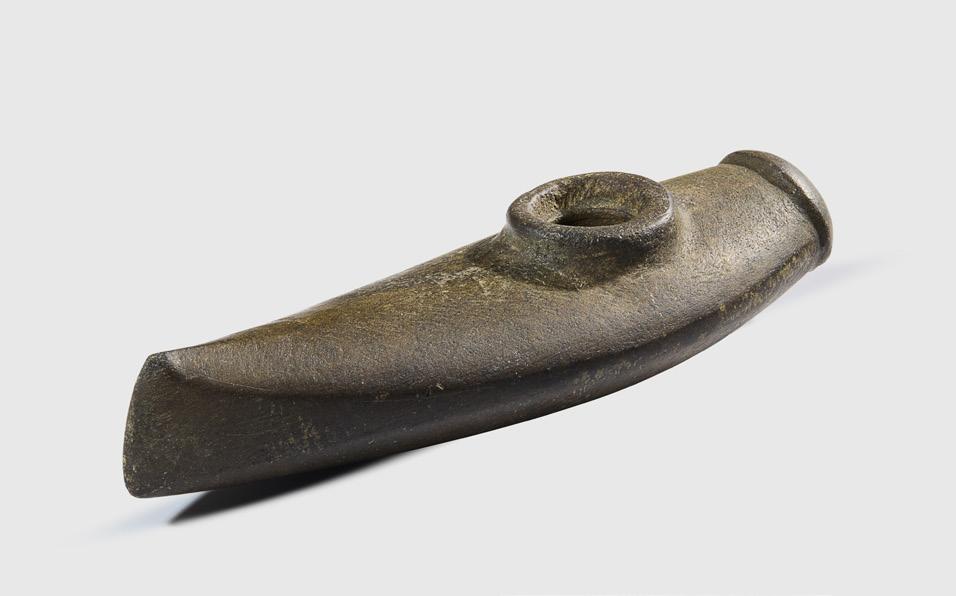
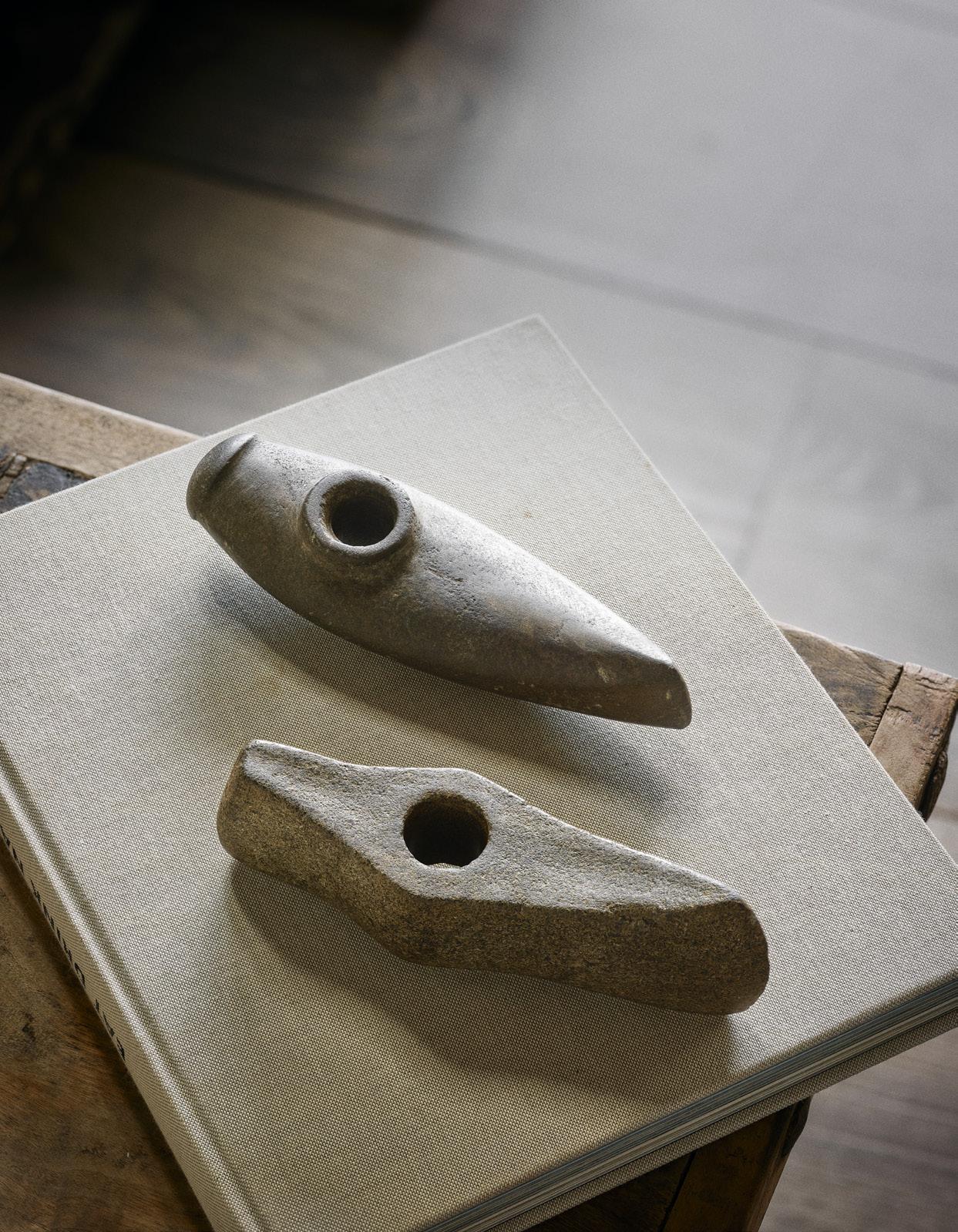
SCANDINAVIAN “BOAT AXE”
SWEDEN, NEOLITHIC PERIOD, C. 2100 – 1900 B.C.
carved stone with a sleek, elongated form, tapering to a rounded butt at one end and a sharpened cutting edge at the other, featuring a raised collar for handle insertion and a gently curved profile reminiscent of a boat, the surface is smoothly finished, with refined contours
18.2cm long
£4,000-6,000
25
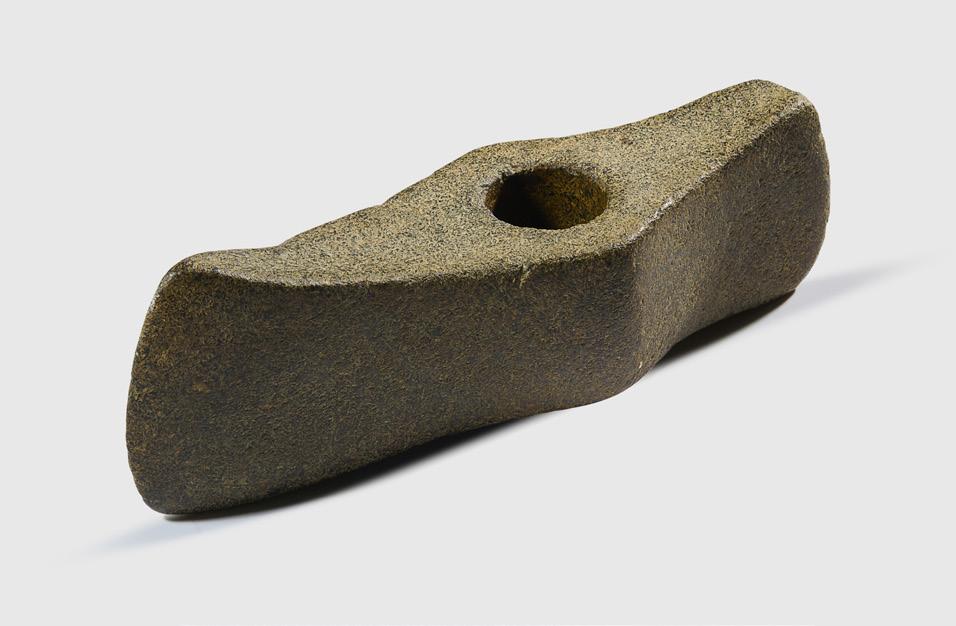
NORDIC STONE BATTLE AXE
SCANDINAVIA, NEOLITHIC PERIOD, C. 3RD MILLENNIUM B.C.
carved stone, dual cutting edges featuring an elegant tapering form, with an off-centre circular perforation, the surface is smoothly finished with refined contours that emphasise its balanced proportions
16.9cm long
£4,000-6,000
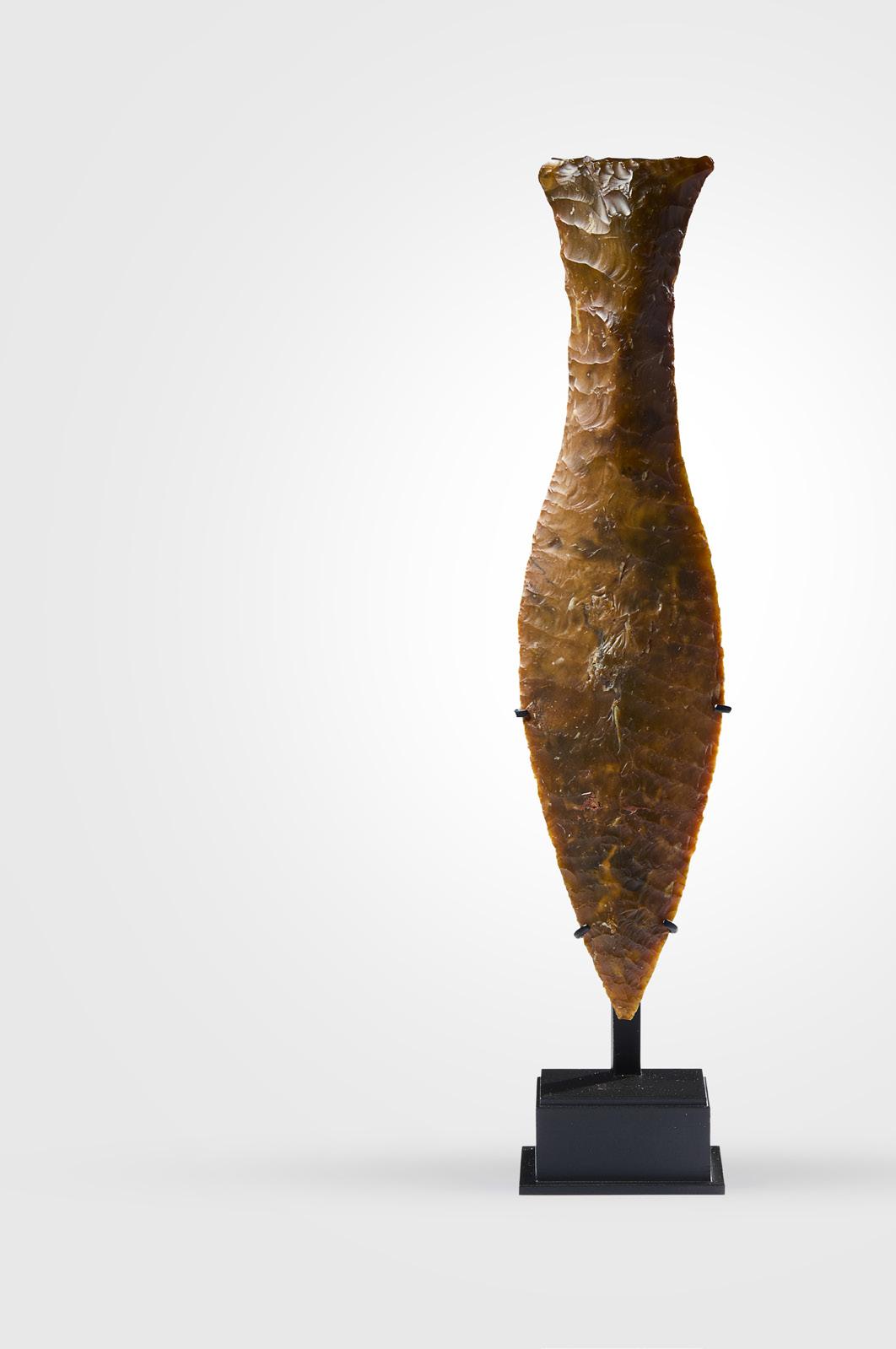
NEOLITIHIC FLINT DAGGER OF “FISHTAIL” TYPE
TYPE V. SOUTHERN SCANDINAVIA, C. 2400 - 1800 B.C.
knapped caramel and brown flint, with central “stitching”, an elongated leaf shaped blade and thin handle terminating in a fishtail butt, raised on a bespoke mount 18.1cm long
This fine blade is an example of the remarkable heights achieved by flint workers in late Neolithic Scandinavia. It dates to c. 2400 – 1800 B.C., aptly named the “Dagger Period”, an era where much of the rest of Europe had already adopted metallurgy.
Though fashioned from flint, daggers such as these were inspired by contemporaneous European metal counterparts. During this period, Scandinavia lacked a sustainable supply of copper ore to support a metallurgical industry, so communities were traditionally thought to have lacked the ability, rather than the will, to produce copper daggers. However, recent studies have found that the delicate finishing could only have been completed with the aid of a metal-tipped tool. As such, it appears that the continued use of flint as a medium was made through choice as opposed to necessity. Indeed, even as bronze became very popular, the production of these beautiful flint daggers continued well into the Bronze Age. The common consensus is now that these daggers were a symbol of status. Used to demonstrate prestige or given as gifts. Microwear analysis on these items reveals that they were unlikely to have been used for practical purposes. Rather, the wear was found to be consistent with frequent removal from a protective sheath.
They are widely considered to represent the very pinnacle of a European flint working industry that dated back tens of thousands of years.
£3,000-5,000
The most significant weapons of Early Bronze Age Europe were not forged from metal but shaped from stone. These remarkable artefacts, in use for over a millennium, were wielded by peoples across a vast expanse from the Baltic to the Atlantic. Far more than mere tools, they were symbols of power, prestige, and cultural identity, their forms and craftsmanship attesting to the sophistication of their creators.
They are most closely associated with the archaeological Corded Ware Culture, a society distinguished by its distinctive cord-impressed pottery, which flourished across much of northern and central Europe. Skilled farmers, traders, and warriors, the people of this culture left behind burial sites rich with evidence of complex social structures and belief systems. Among the first to adopt and spread the use of copper and bronze, the Corded Ware people marked a pivotal shift in European metallurgy. Yet, it is the stone battle axes that stand out as some of their most diagnostic objects.
Diametrically aligned around a central perforation, these axe-hammers are finely sculpted, with intricate chiselled details that reveal an aesthetic intent behind their design. Among the most striking are the “boat-shaped” models, their sleek profiles reminiscent of Native American canoes (see lot 80), which are characteristic of the late Neolithic period.
André Grisse argued these objects were crafted with geometric precision, based on metric standards. He observed:
“These artefacts convey a spiritual and ideological message. Their forms, shaped by geometric and mathematical principles, reflect cultural connections across Europe from the late 6th millennium to the mid-3rd millennium B.C. They bore invisible geometric traces, suggesting their creators’ advanced understanding of design and symbolism. Those who carried these objects were likely not just warriors but also scholars or astronomers, connected to earthworks.”
While their imposing forms may suggest a martial purpose, many clues point also to a ceremonial role. Though nothing can be said with absolute certainty about their use, the limited effectiveness of these axes as cutting tools combined with the significant effort required to produce them makes their function as everyday implements unlikely (though there is debate in this respect). Instead, their depiction on funerary stelae alongside warriors, coupled with the exceptional care in their craftsmanship, suggests they symbolised social status. Some examples may even have been influenced by the earliest copper axes emerging in southeastern Europe during the 5th millennium B.C., reinforcing their symbolic significance.
So integral were these artefacts to local cultures that miniature versions were created, possibly for personal adornment or ritual use. In southern Sweden, such miniatures have been found in wetland deposits, likely offered as gifts to the watery realm, while in northern Germany, they appear in mortuary contexts linked to cremation practices. Interestingly, while full-sized battle axes are typically associated with male burials, smaller examples are found in contexts involving women and children, suggesting they may have held talismanic properties. Some miniatures display pounding wear on their edges, unseen on full-sized axes, hinting at their use as mortars, perhaps for grinding materials for rituals. These miniatures might even be precursors to Thor’s hammer pendants of the Viking Age.
Though we must be cautious when drawing direct connections, there is a further intriguing link between these ancient stone battle axes and the mythological world of the Viking Age, particularly through language. The people of the Corded Ware Culture are believed to have spoken an early form of the Indo-European language family. The Old Norse wordhamarr, which describes Thor’s hammer, carries a dual meaning, both “hammer” and “rock.” It’s Indo-European roots, signifying “pointed,” “sharp,” and “stone,” connect Thor’s weapon to the same qualities embodied by the stone axes wielded by the Corded Ware peoples. This linguistic link suggests that the hammer, much like the stone axes, was seen not just as a tool, but as an object imbued with power and symbolism deeply tied to the natural and metaphysical world. These stone axes appear to have been passed down through generations, with the evidence shown in their wear patterns and reworked edges, indicating prolonged use and careful maintenance. Some axes show signs of resharpening or re-polishing, suggesting they were prized possessions, preserved and adapted for continued use. Their deposition in highstatus burials hints at their role as cherished heirlooms, interred at significant moments - possibly the death of the final owner. Others were placed in liminal spaces, such as riverbanks, bogs, or hilltops, indicating they were offerings to mark transitions or connections between realms both physical and spiritual.
In later centuries and millennia, the discovery of these stone battle axes often occurred during ploughing, particularly following storms, when the soil was disturbed and these ancient artefacts emerged. Their striking forms, coupled with this timing, led to their association with “thunderstones”, a folkloric belief that such objects were remnants of thunderbolts hurled by gods or supernatural beings. In many European traditions, these axes were thought to possess protective or magical properties, guarding homes from lightning, evil spirits, or even the mischief of trolls and fairies. Originally symbols of power, these axes took on new meaning when they were rediscovered in fields, riverbanks, and other liminal spaces. This connection to celestial or magical power deepened their mystique, transforming them from simple tools into sacred relics. In this way, and in a manner that continues to resonate today, objects such as these have seen many lives, first as weapons, then as relics of forgotten pasts, and now as artefacts that continue to captivate and intrigue, bridging the ancient and the modern.
Axelsson, B. & Christensen, P.G.R. (eds.) (2004) The Corded Ware Culture in the Neolithic of Europe: A Social and Economic Approach.
Beauvarlet, M. (2000) La Hache de Pierre à Travers le Monde. Paris: Editions Errance.
Garrow, D. and Wilkin, N. (2022) The World of Stonehenge. London: British Museum Press.
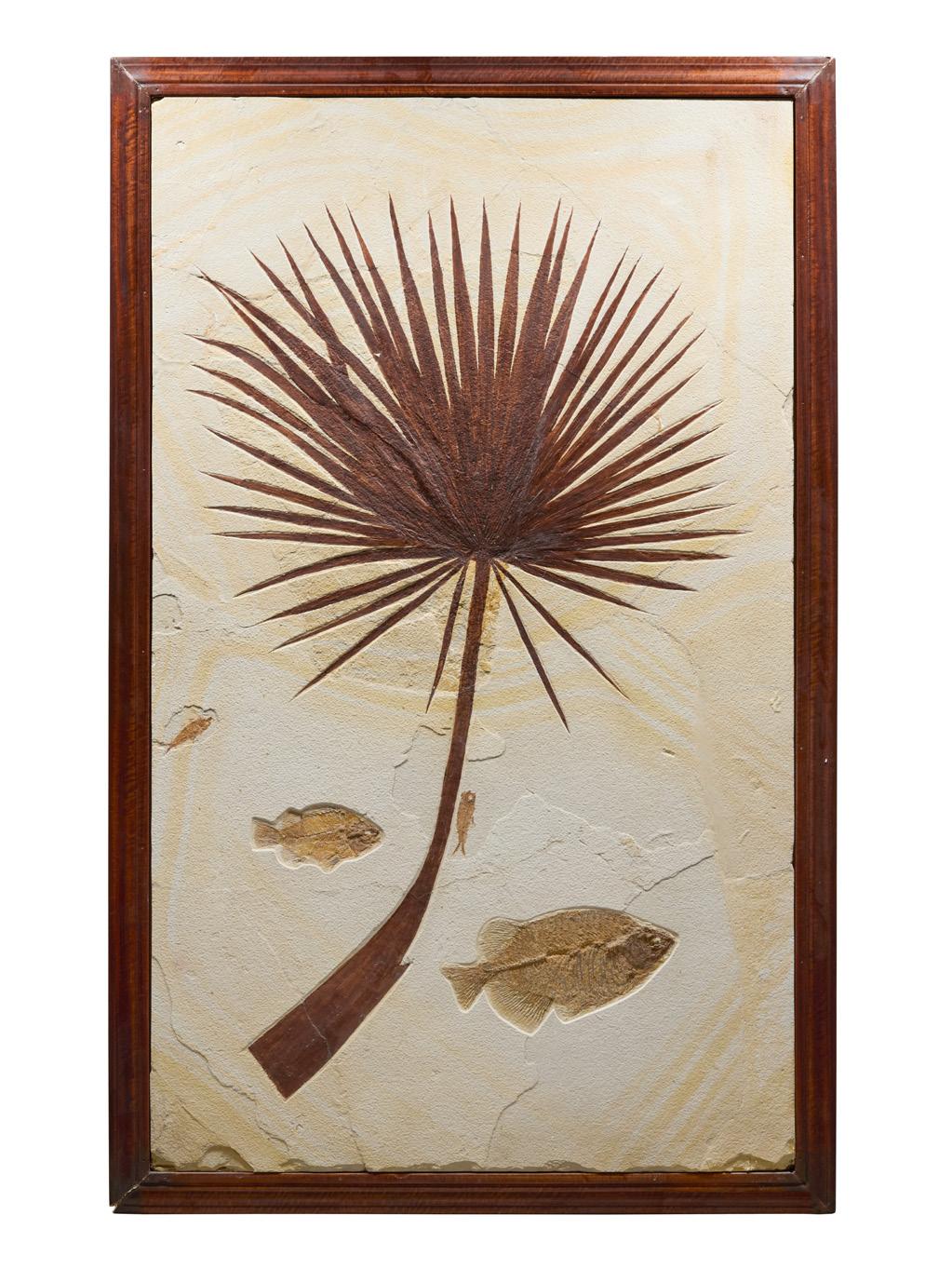
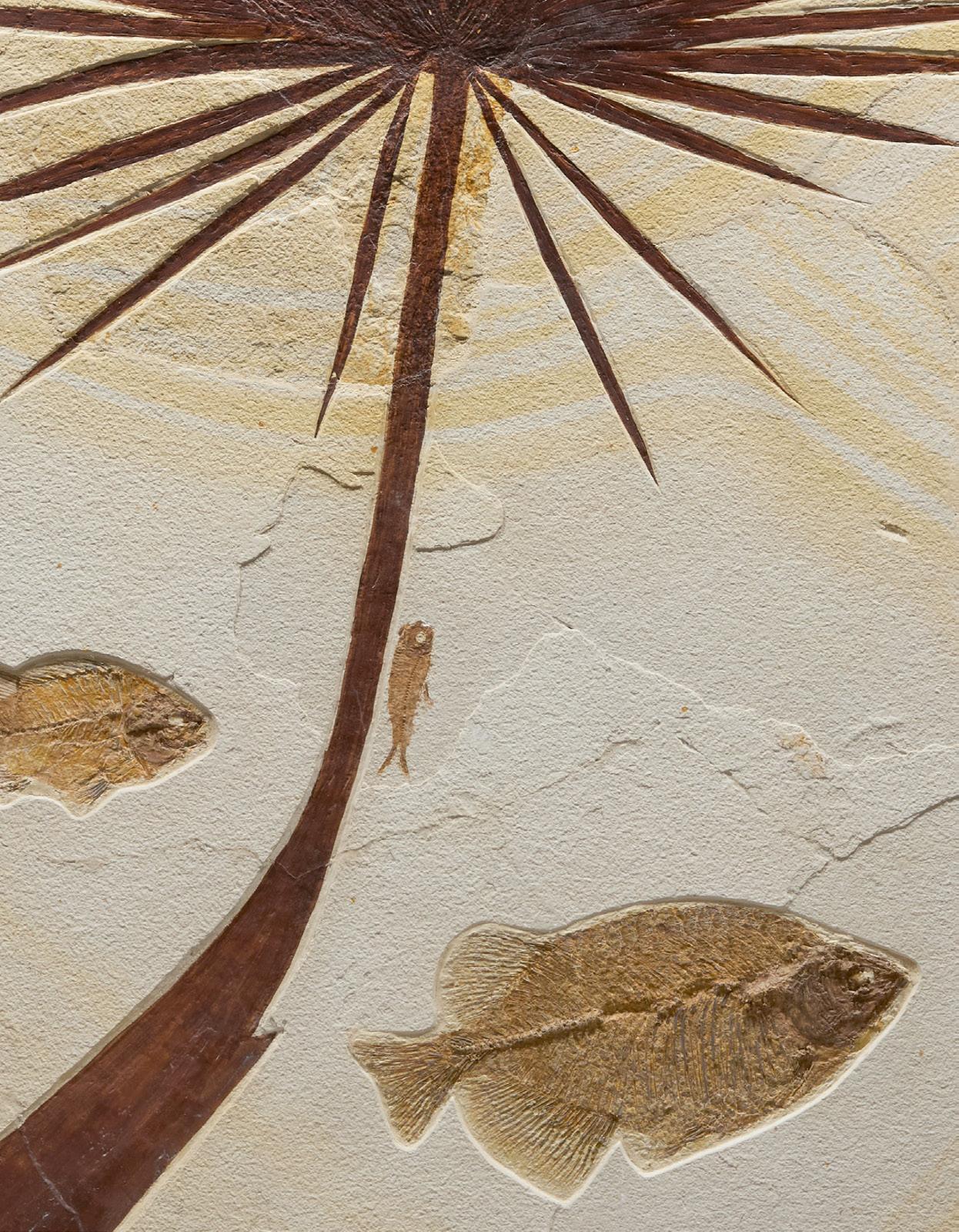
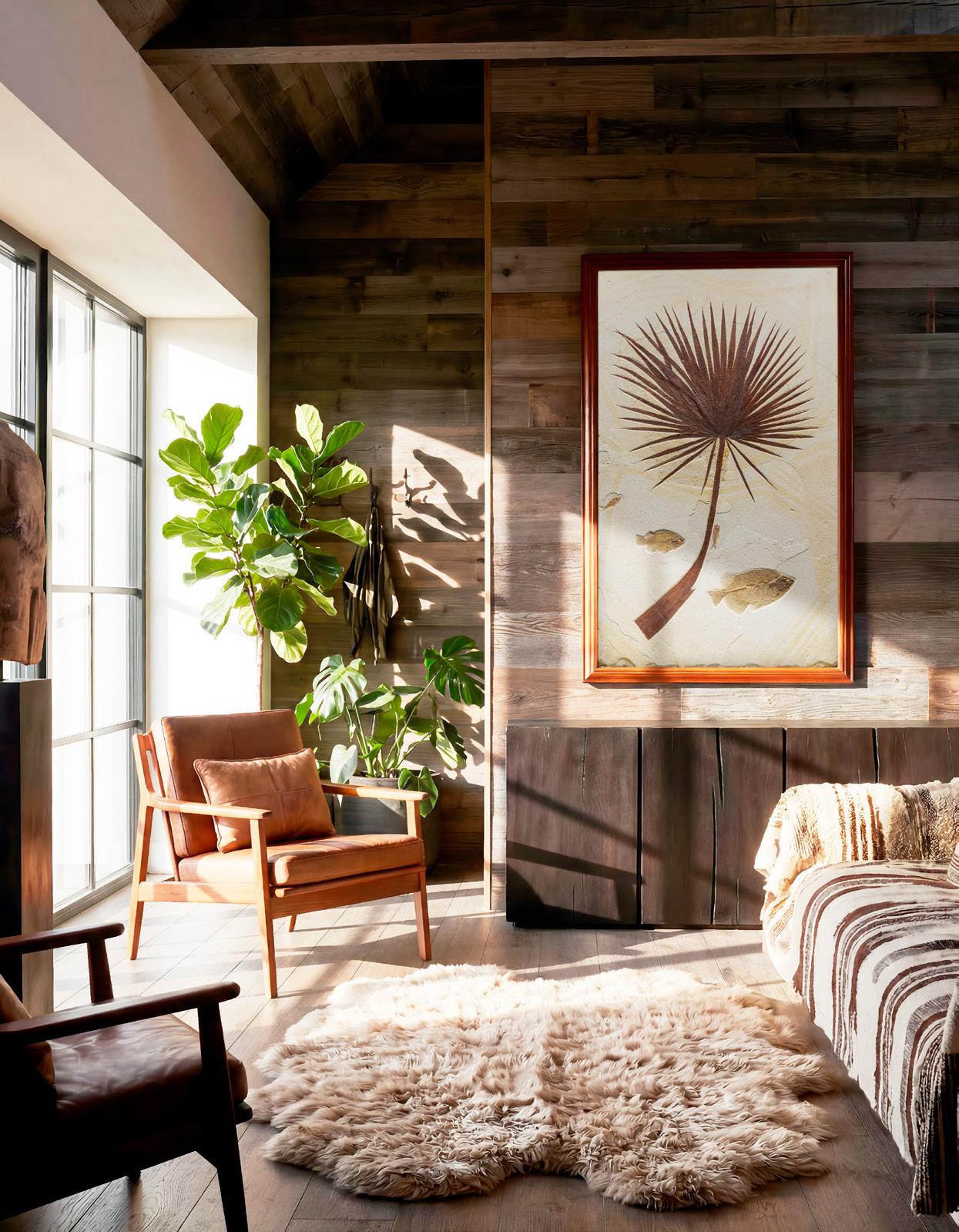
FOSSIL PALM FROND WITH FISH
GREEN RIVER FORMATION, WYOMING, EARLY EOCINE, 50 MILLION YEARS B.P.
a large and impressive fossil limestone panel preserving a near complete palm frond (Sabalites sp.), with finely articulated leaflets, alongside four fish, comprising two Knightia eocaena and two Diplomystus dentatus, each laterally preserved with clear skeletal definition, the dark fossil material set in striking contrast against the fine grained limestone matrix
152 x 92 cm
Provenance: Formerly on display at The Palm Beach Museum of Natural History, Florida
The present specimen was excavated from the Green River Formation, located predominantly in present day Wyoming. Today, the landscape is dry and windswept, with open plains and sparse vegetation stretching across an exposed terrain of layered limestone and shale that records ancient lake environments.
However, during the early Eocene, around 50 million years ago, this region was not arid but subtropical, with broad freshwater lakes surrounded by lush vegetation. The climate was warm and humid, supporting crocodiles, early mammals, insects, fish and dense forests along the lake margins, including palms such as Sabalites, whose fronds are preserved in exceptional detail within the fine sediments, contributing to a serene depiction of this ancient environment.
The lakes themselves teemed with life. Schooling fish such as Knightia eocaena, among the most abundant species in the formation, moved in vast numbers through the water, while larger predatory fish such as Diplomystus dentatus occupied a higher position in the food chain. Specimens preserving both flora and fauna together offer a rare glimpse into this balanced ecosystem, capturing a serene depiction of an ancient lakeside scene.
£30,000-50,000
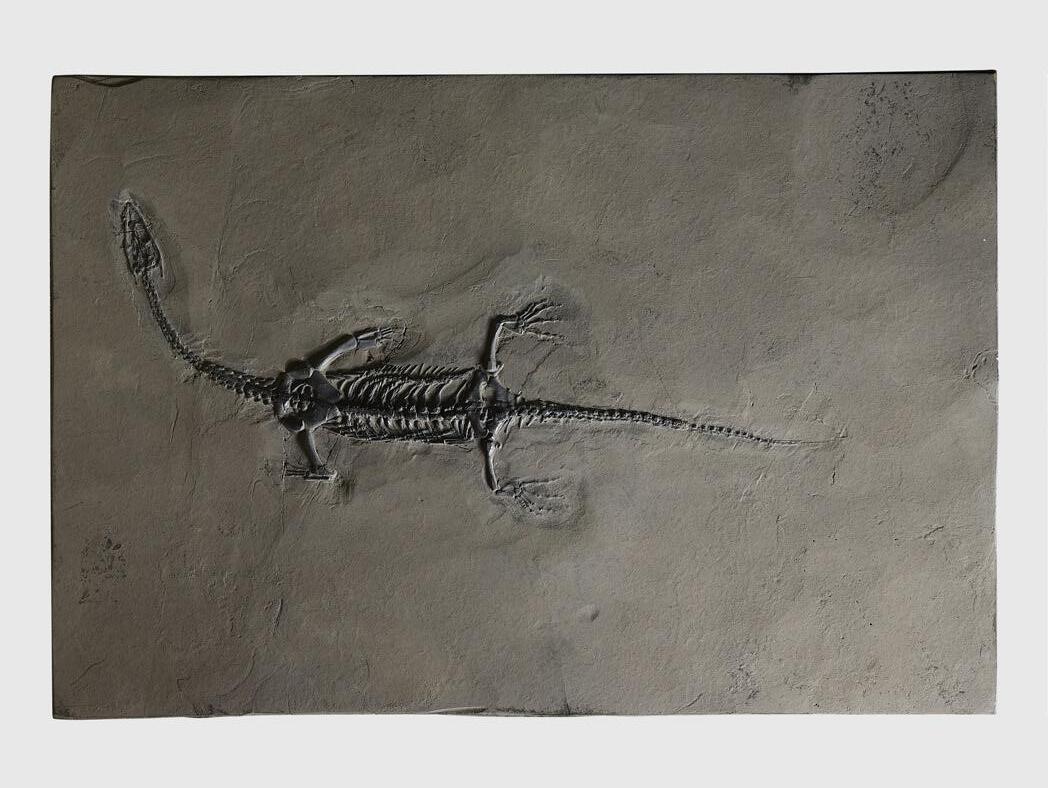
KEICHOUSAURUS HUI SPECIMEN
XINGYI, GUIZHOU PROVINCE, CHINA, TRIASSIC PERIOD, 240 MILLION YEARS B.P.
a finely preserved Keichousaurus hui specimen, set within a slate matrix specimen 19.8cm long, plate 26 x 18cm
Distantly related to plesiosaurs, the small Keichousaurus huiwas a species of marine reptile that lived around 240 million years ago in the warm, shallow coastal seas that covered parts of what is now southern China. These were clear, tropical lagoons dotted with reefs and teeming with shellfish, small fish, and other early marine reptiles. With its slender neck and paddle-like limbs, Keichousaurus likely moved gracefully through the water, hunting small prey among coral outcrops and seafloor sediments.
£1,000-1,500
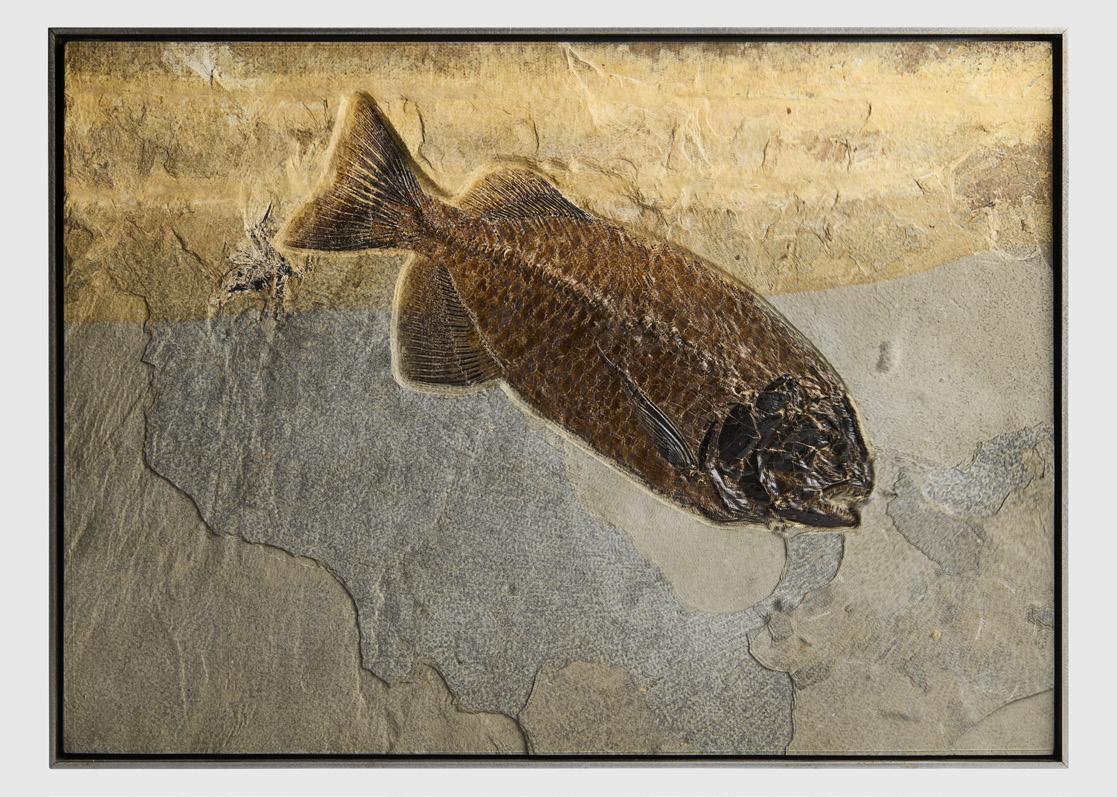
LARGE FOSSIL FISH SPECIMEN
GREEN RIVER FORMATION, WYOMING, EOCENE, C. 50 MILLION YEARS B.P.
a superbly preserved 18.5 inch specimen of Phareodus encaustus, showing a high degree of three-dimensionality, encased within the limestone matrix and mounted on an iron frame
75.5 x 55cm (inc. frame)
The present specimen was excavated from the Green River Formation, located predominantly in present day Wyoming. Today, the landscape is dry and windswept, with open plains and sparse vegetation stretching across an exposed terrain of layered limestone and shale that records ancient lake environments.
However, during the early Eocene, around 50 million years ago, this region was not arid but subtropical, with broad freshwater lakes surrounded by lush vegetation. The climate was warm and humid, supporting crocodiles, early mammals, insects, fish and dense forests along the lake margins.
With sharp teeth and a streamlined body, Phareodus encaustus was a mid-level predator within these ancient lake ecosystems. Its prey likely included schooling fish such as Knightia eocaena, one of the most abundant species found in the formation.
£7,000-9,000
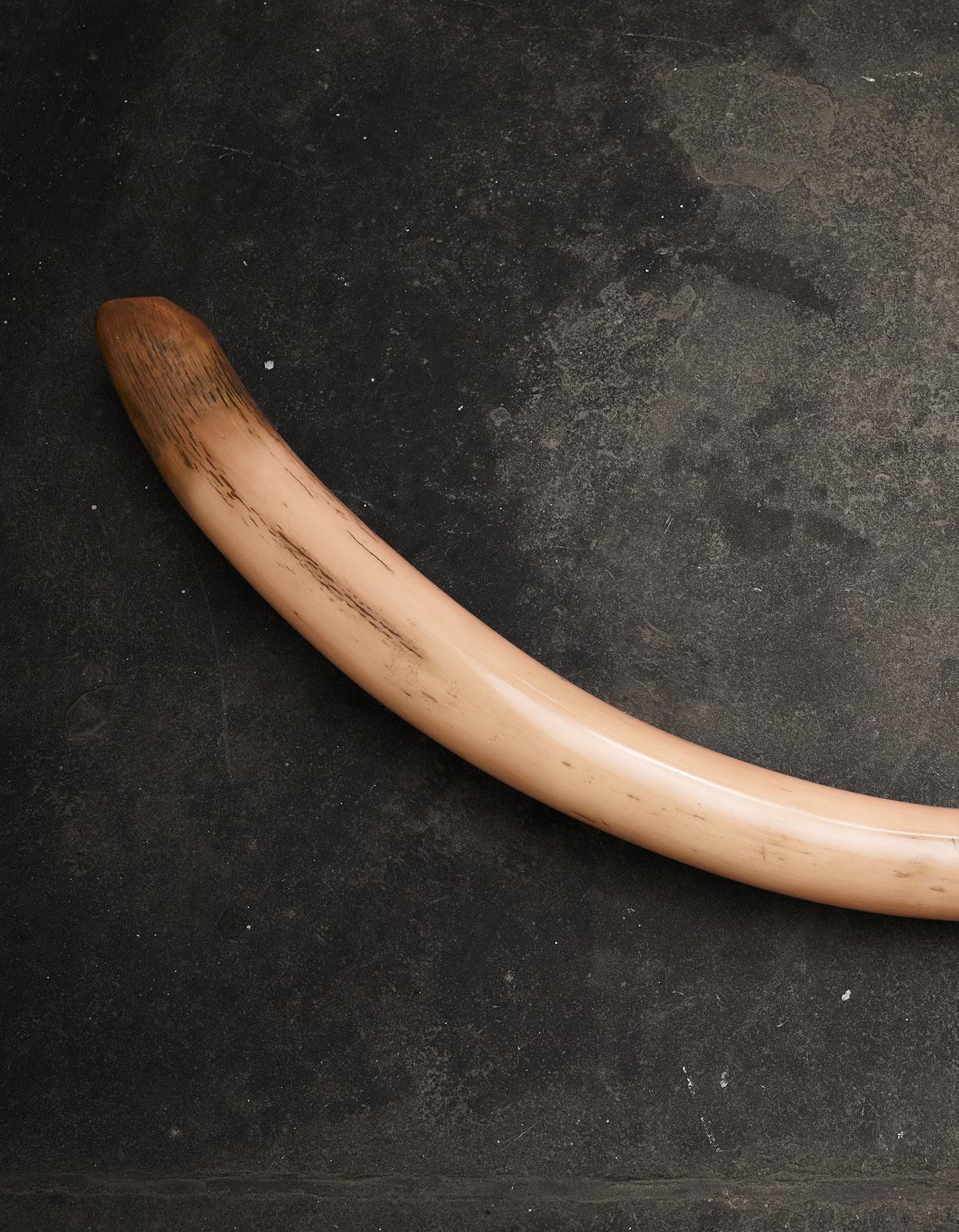
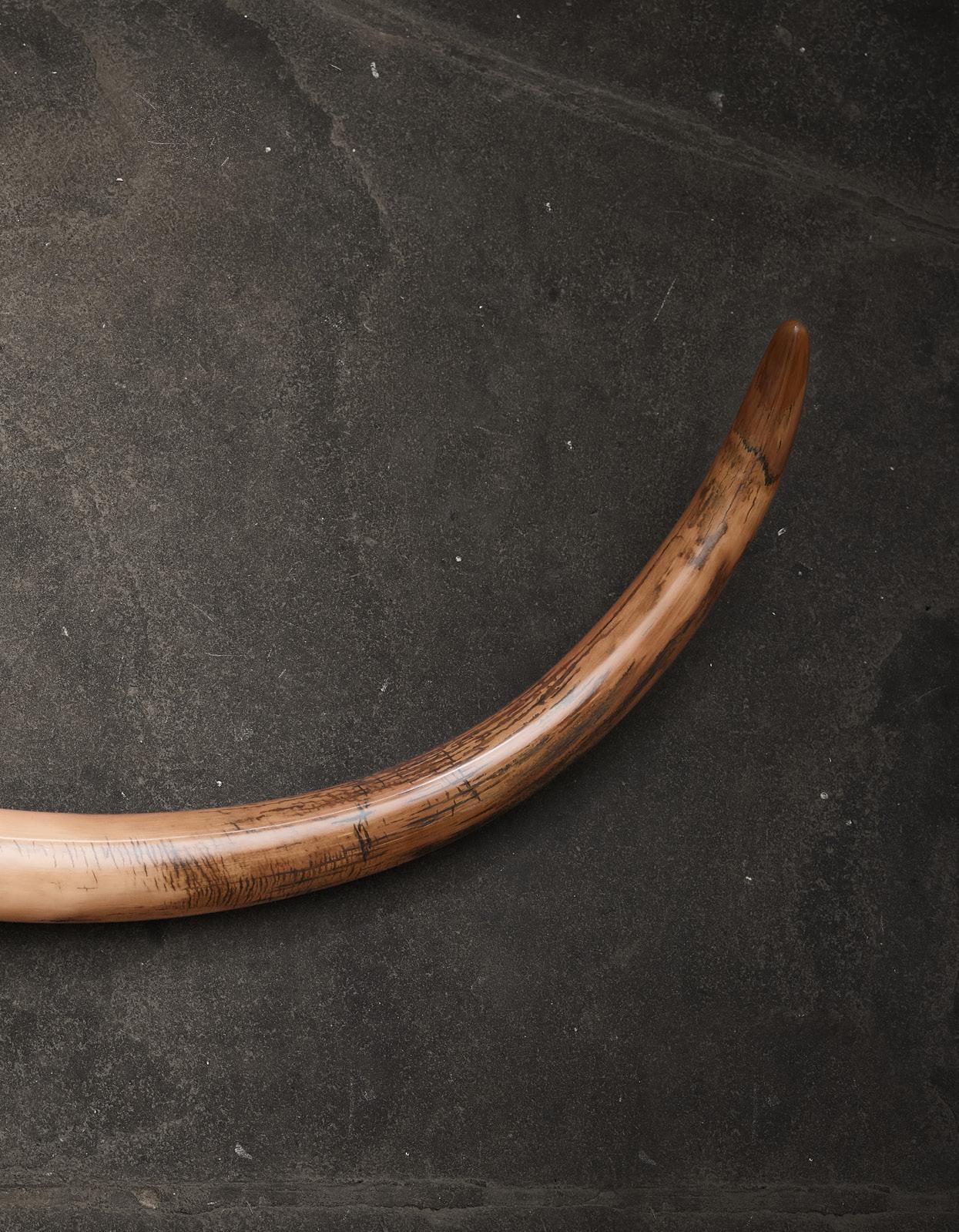
LARGE WOOLLY MAMMOTH TUSK, MAMMUTHUS PRIMIGENIUS
SIBERIA, PLEISTOCENE C. 80,000 - 10,000 YEARS B.P.
a large and fine mammoth tusk, with a classical tapering outline and powerful curvature, polished
132cm long
Provenance: Private collection, United Kingdom, acquired 2021 from the below Arctic Antiques, Oestrich-Winkel, Germany
Private collection, Russia
The woolly mammoth (Mammuthus primigenius), represents one of the most iconic Ice Age megafauna that once roamed Eurasia. It lived during the Pleistocene epoch and was highly adapted to cold steppe environments, with long shaggy hair, a thick layer of fat, and curved tusks for foraging through snow. These herds moved across vast, frozen grasslands alongside other cold-adapted species. The woolly mammoth ultimately went extinct around the end of the last Ice Age, likely due to a combination of climate change and human hunting.
£5,000-8,000
31
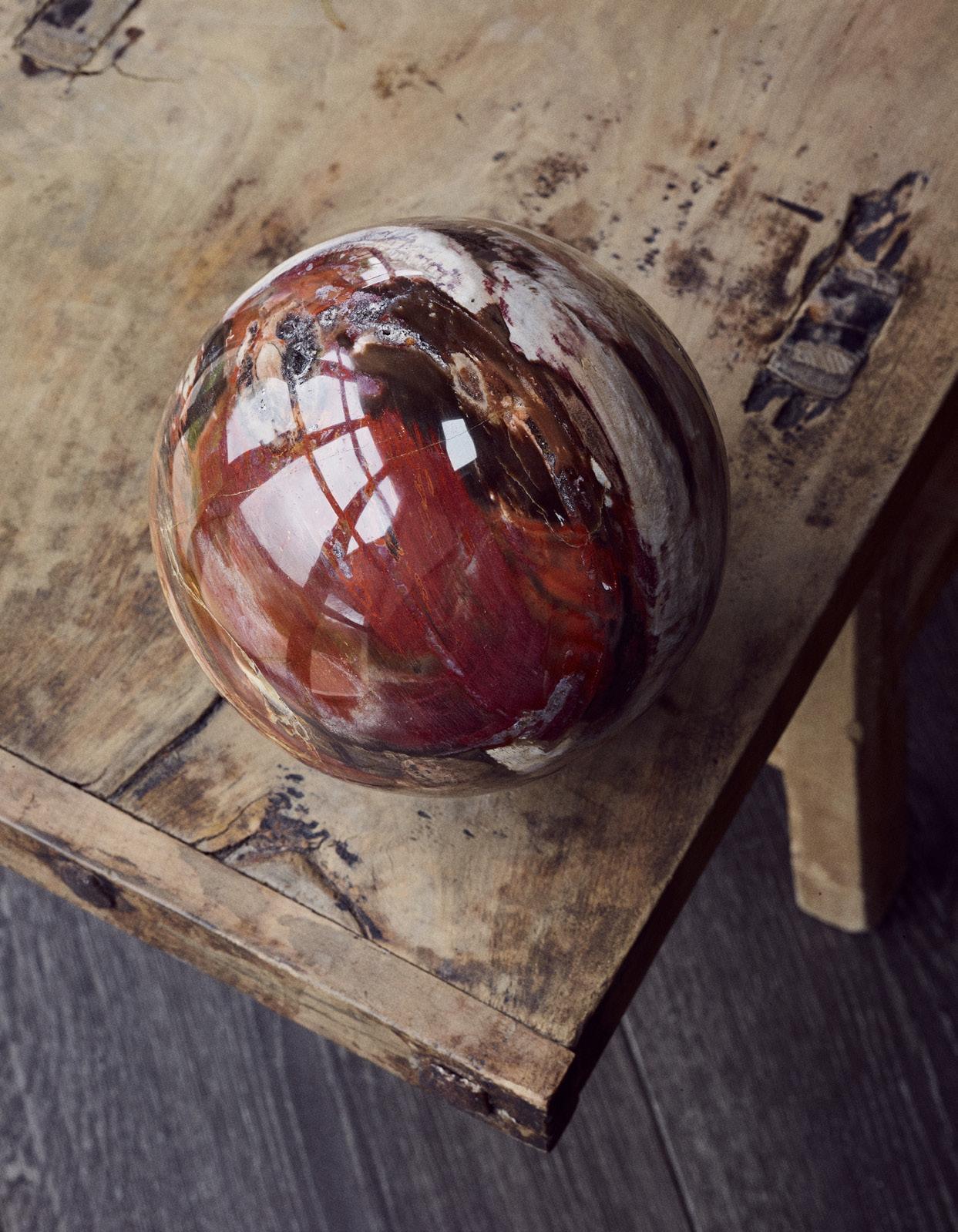
FOSSILISED WOOD SPHERE
ISALO II FORMATION, AMBILOBE, MADAGASCAR, TRIASSIC PERIOD, C. 220 MILLION YEARS B.P.
a single large specimen of fossilised conifer wood from the species araucaria, worked into sphere, displaying vibrant hues of red, mauve, silver and brown, raised on a bespoke mount
Weight: 6937g
Circumference: 55.3cm
Madagascan fossilised wood is primarily found in the northwestern regions of the island. During the Triassic period, approximately 220 million years ago, this area supported extensive coniferous forests dominated by species such as araucaria. At that time, Madagascar formed part of the supercontinent Gondwana and experienced a warm climate that allowed large forests to flourish across broad river plains and lowland environments.
£300-500
32
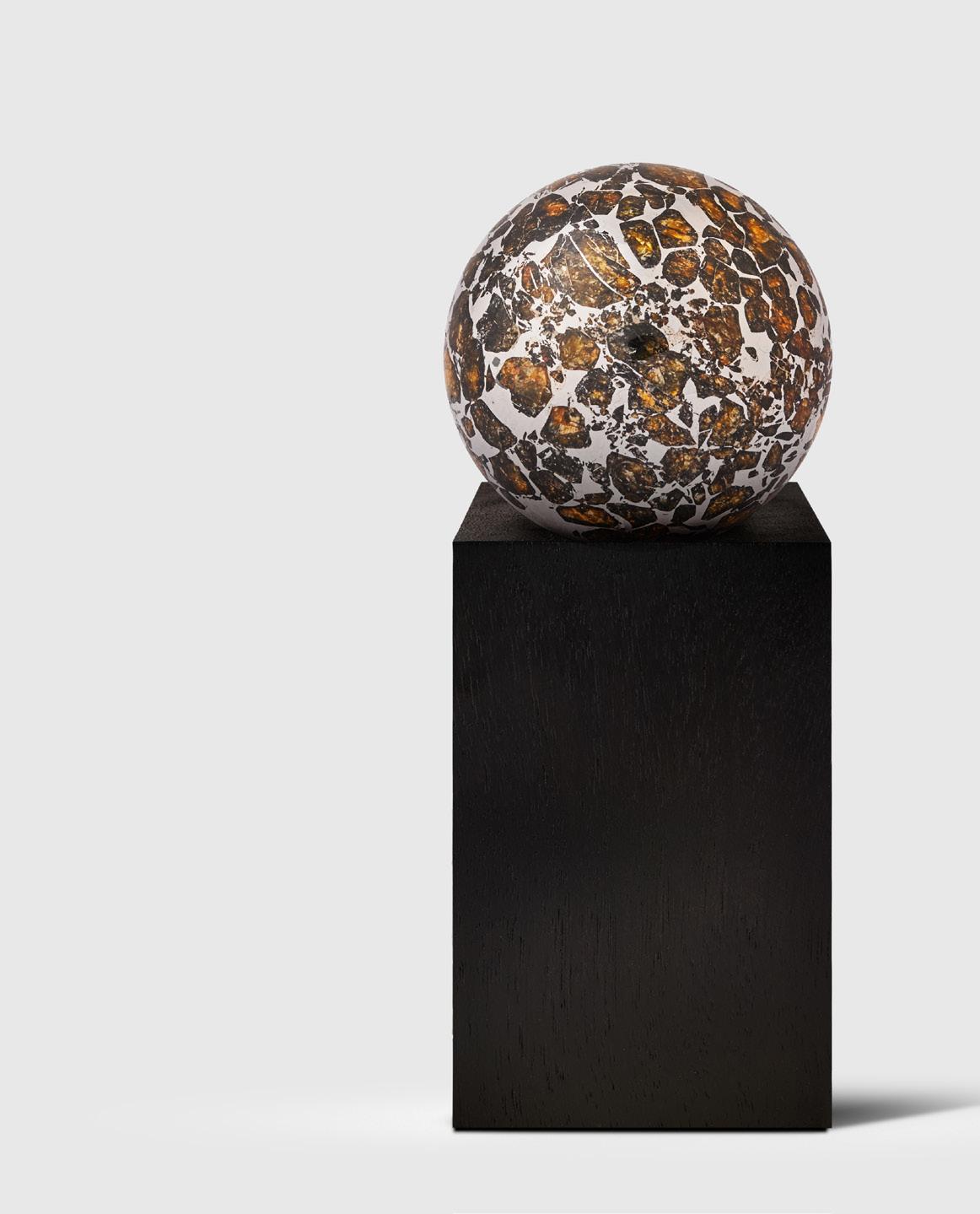
PALLASITE METEORITE SPHERE
SEYMCHAN, MAGADAN DISTRICT, RUSSIA
(62°54’ N, 152°26’ E), FORMED 4.56 BILLION YEARS B.P.
the sphere with abundant olivine crystals suspended within the iron-nickel matrix, raised on a bespoke wooden mount
Diameter: 5.1 cm
Weight: 309g
Provenance: Discovered in 1967 in a remote area of Siberia by the Soviet geologist F. A. Mednikov. The original mass of this meteorite was found in the bed of a stream flowing into the River Hekandue near the town of Seymchan.
This specimen is abundant with extraterrestrial gemstones, showcasing a mesmerising array of olivine and peridot crystals. These crystals are the remnants of the asteroid’s stony mantle, which became embedded within the molten iron-nickel core during its formation 4.56 billion years ago. This remarkable process occurred as the asteroid’s metallic core cooled and solidified, trapping fragments of its silicate rich mantle and preserving them in their pristine, otherworldly form. The vibrant hues of the olivine and peridot crystals are a testament to the intense heat and pressure these materials endured in the asteroid’s interior.
£8,000-12,000
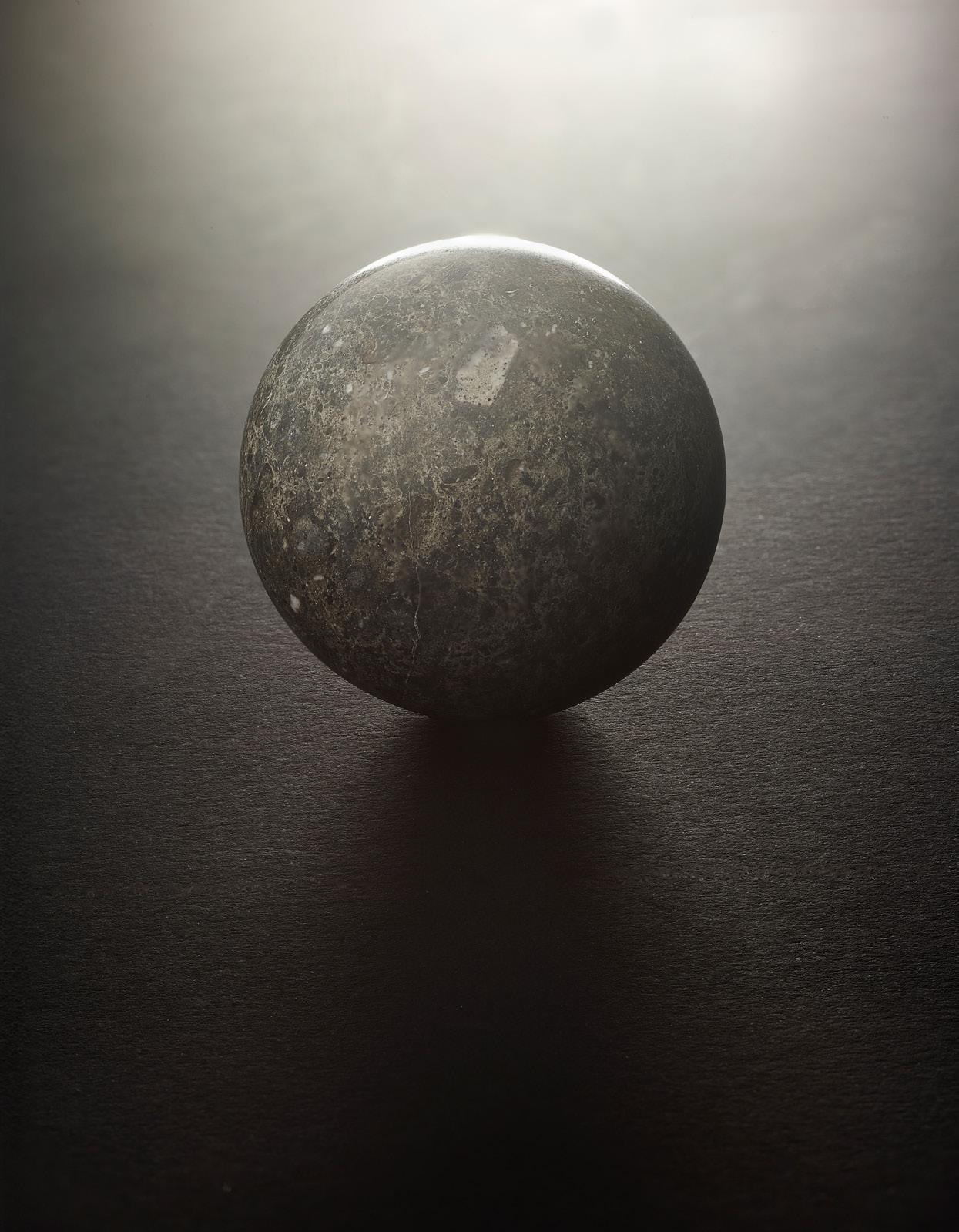
A PIECE OF THE MOON, WORKED INTO A SPHERE
LAAYOUNE 002, 27.070°N, 13.202°W
Specimens of Moon rock are among the rarest substances on Earth, with only around 750 kilograms of confirmed lunar meteorites known to exist. Often termed “lunaite”, the present specimen has been expertly shaped into a sphere, highlighting the natural beauty of its composition.
This remarkable piece is formed from the lunar meteorite Laayoune 002, recovered in the deserts of Western Sahara in January 2022. Classified as a feldspathic breccia, it originates from the Moon’s ancient highlands, representing material from one of the oldest regions of the lunar crust. The primordial surface that dates to around 4.1 - 4.5 billion years ago arose from an early lunar magma ocean. These highlands are most prominently found on the Moon’s far side, the hemisphere often referred to as the “dark side” and recently orbited by the astronauts of Artemis II.
Ejected from the Moon’s surface by a powerful asteroid impact, fragments such as this travelled through space before ultimately falling to Earth. Within the stone are traces of iron material introduced by the original impactor itself, a telling signature of the violent event that launched it to Earth. The matrix is composed of feldspathic breccia, distinguished by bright white anorthite clasts, mineral fragments that formed in the primordial lunar crust during its earliest epochs. Its polished surface reveals a striking interplay of light and texture, bringing out the natural contrast within the stone.
Authenticity is confirmed through classification and registration in the Meteoritical Bulletin (No. 111) as a lunar feldspathic breccia, following analysis by research teams including the University of Washington. 446g
Provenance: From a large mass discovered at Laayoune, Morocco, in January 2022
£30,000-50,000
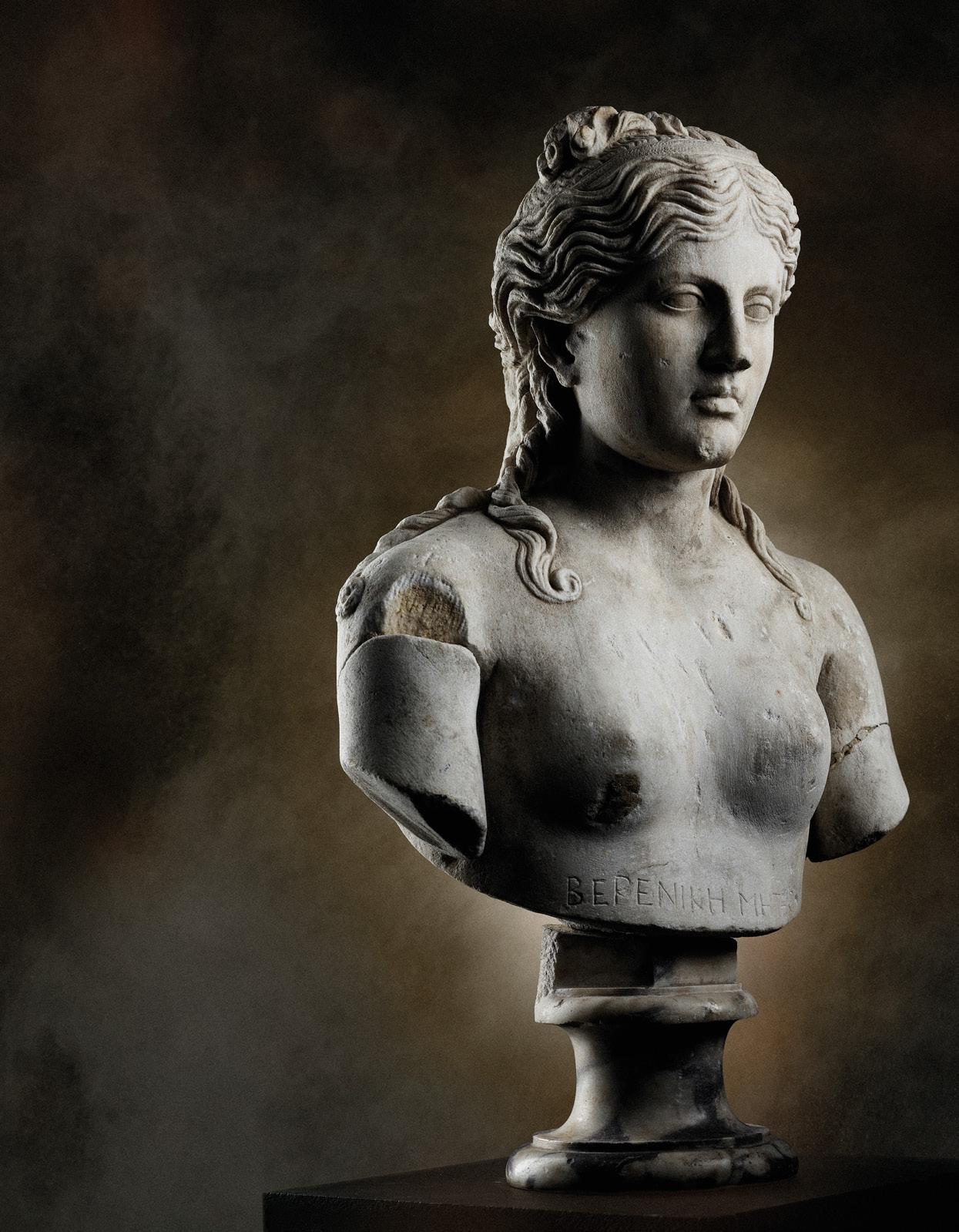
THE WILTON HOUSE APHRODITE
LATE 1ST - EARLY 2ND CENTURY A.D.
46.6cm tall (excl. socle), 60.1cm (inc. socle)
Provenance: Possibly part of the collection of Cardinal Mazarin (1602-1661) Thomas Herbert, 8th Earl of Pembroke (1656 – 1733), Wilton House, Wiltshire, possibly acquired from the above Sidney Herbert, 16th Earl of Pembroke (1906 – 1969), Wilton House, Wiltshire, by descent from the above
Sold Christie’s, London, July 3rd 1961, lot 60
Subsequently in a private European collection
Published:
R. Cowdry, A description of the pictures, statues, busto’s basso-relievo’s, and other curiosities at the Earl of Pembroke’s house at Wilton, 1751, p. 48. Martyn, Thomas, The English connoisseur : containing an account of whatever is curious in painting, sculpture, &c., in the palaces and seats of the nobility and principal gentry of England, both in town and country, volume II, 1766, p. 148.
J. Kennedy, A description of the pictures, statues, bustos, basso-relievos, and other curiosities at the Earl of Pembroke’s house at Wilton : in the antiques of this collection are contain’d the whole of Cardinal Richelieu’s and Cardinal Mazarine’s, and the greatest part of the Earl of Arundel’s; besides several particular pieces purchas’d at different times, Salisbury, 1769, p. 49.
Richardson, George. Ædes Pembrochianæ: a new account and description of the statues, bustos, relievos, paintings Medals, and other antiquities and curiosities in Wilton-House. 1788, p. 61.
The Times, London, June 1961
£60,000-90,000
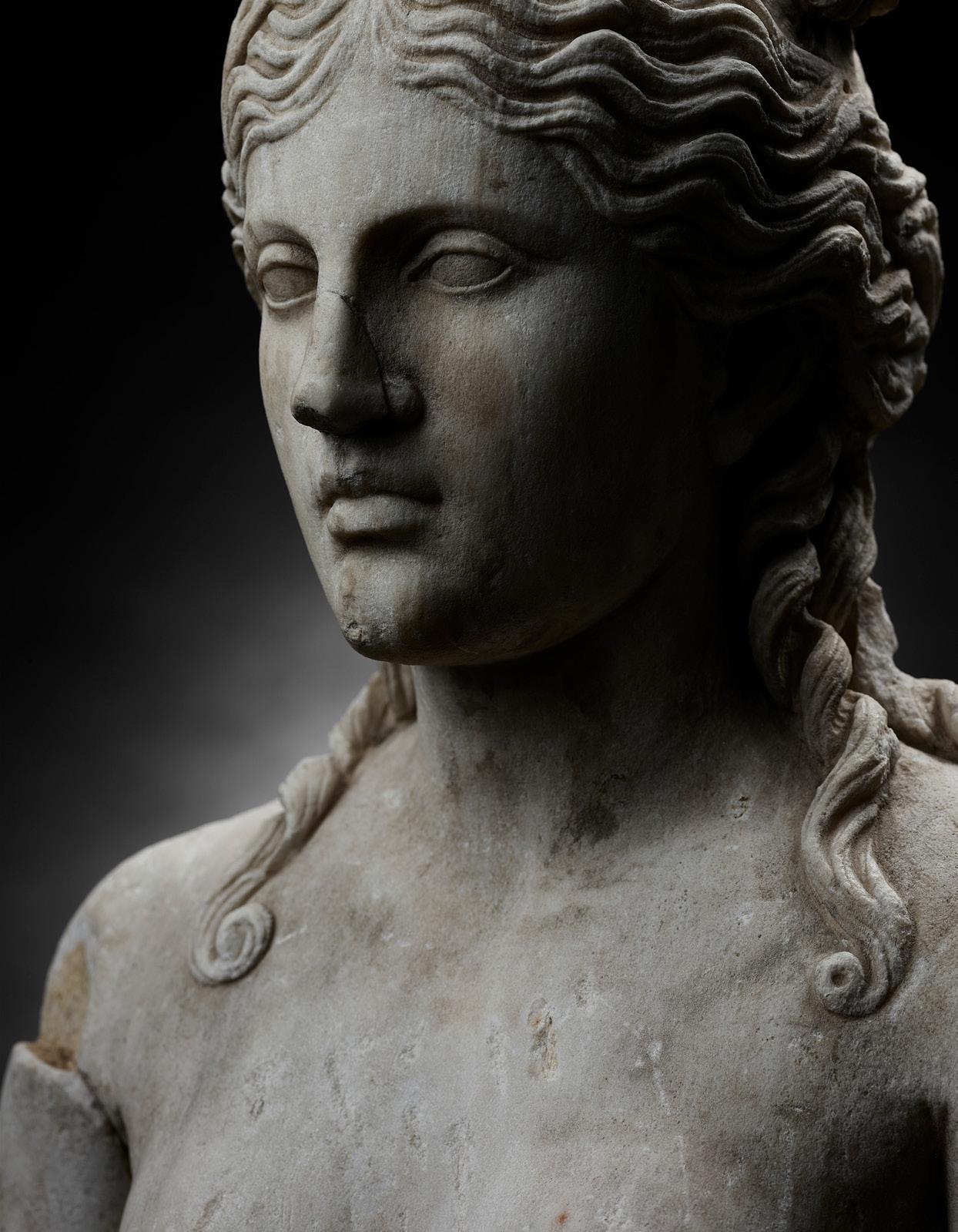
THE WILTON HOUSE APHRODITE
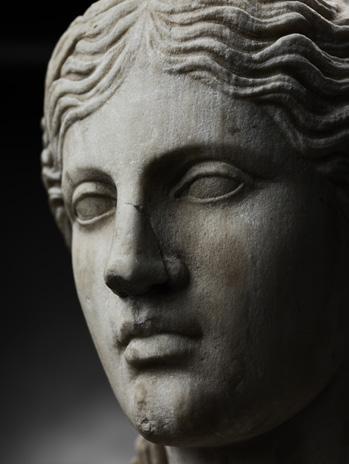

Rediscovered after six decades, the Wilton House Aphrodite boasts over 200 years of unbroken provenance. Dating to the first - early second centuries A.D., the sculpture depicts Aphrodite with a composed, introspective gaze directed straight ahead. The body and head are original to one another, the sculpture having originally formed part of a full-length figure, a rare survival among Roman marble sculpture. The face is softly modelled, with gently arched brows, a straight, well-defined nose, and heavy-lidded eyes that convey a serene, idealised calm. The mouth is small, with subtly articulated lips, lending the features a restrained sensuality characteristic of Roman interpretations of Greek originals. Her hair is carefully arranged and finely carved, parted at the centre and drawn back in undulating waves that frame the face before being gathered behind the head. Loose strands are worked in low relief along the temples, while longer, softly curling locks descend over the shoulders, contrasting with the shorter ringlets articulated at the nape of the neck.
The sculpture is first definitively recorded in the collection of Henry Herbert, 10th Earl of Pembroke, by 1751, when it was published in R. Cowdry’s A Description of the Pictures, Statues, Bustos, Basso Relievos, and Other Curiosities at the Earl of Pembroke’s House at Wilton, where it is described as “Berenice the Mother; her Hair in a particular Manner.”
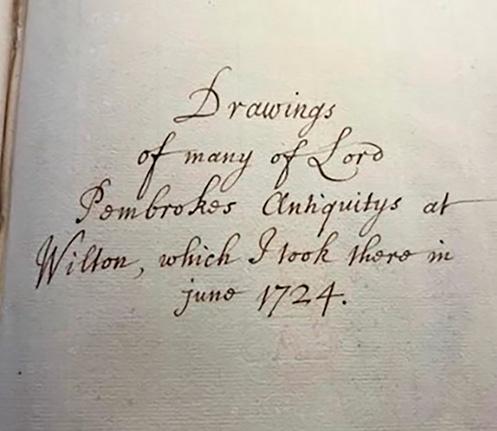
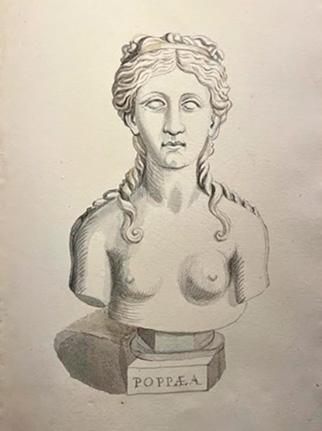
It is, however, most likely that the bust entered the collection considerably earlier, during the tenure of Thomas Herbert, 8th Earl of Pembroke, a noted antiquarian who was responsible for assembling the greater part of the Wilton antiquities collection. The bust is most probably recorded in the drawings made by William Stukeley in 1724 for his Catalogue of Marbles and Sculpture at Wilton in the Collection of Thomas Herbert, 8th Earl of Pembroke with Drawings. In this manuscript, a closely related sculpture is illustrated which, although inscribed on its base as “Poppaea,” bears an extraordinary similarity to the present bust, notably in the refined treatment and arrangement of the hair. Michaelis (1882) later records a single bust identified as “Poppaea” in the Wilton collection; however, the description he provides does not correspond to the sculpture depicted by Stukeley in 1724. In light of this discrepancy, it seems most plausible that the bust illustrated by Stukeley is in fact the present example, and that the attribution and inscription of “Poppaea” reflect an early misidentification. Regardless, further evidence for the bust’s presence at Wilton House
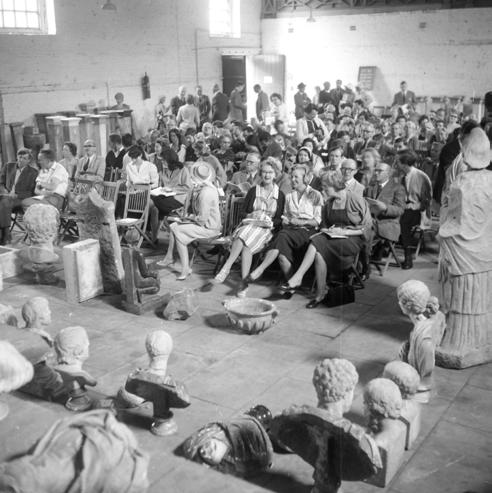
Sydney Herbert, 16th Earl of Pembroke pictured in 1961 with sculptures from the Wilton House Collection, the present bust is visible at back left Image Chris Ware, Hulton Archive
Christie’s sale, 3 July 1961 Image Smith Archive, Alamy
during the period of the 8th Earl is provided by the Greek inscription carved on the surface, reading “BEPENIKH MHTHR” (Berenice Mother). This attribution is erroneous, but closely parallels other misidentifications within the Wilton collection at this time. Such inscriptions were added at the direction of the 8th Earl as part of his well-documented practice of reassigning identities to ancient sculptures according to his own interpretations. In discussing these Wilton labels, Peter Stewart has observed that the names were retrospectively imposed and that some inscriptions are so crudely cut that it is plausible the Earl himself undertook the carving, rather than employing a professional stone cutter.
The form of the socle on this example has also been noted by Stewart to resemble those associated with the Mazarin collection, suggesting a possible provenance from that celebrated assemblage. Michaelis, writing in 1882, records that one of the most extensive acquisitions made for Wilton House consisted of a large group of marbles from the Mazarin collection in Paris, acquired in the early decades of the eighteenth century, when the Palais Mazarin was being reorganised for
John Law’s financial enterprises.
The bust was published on several further occasions during the eighteenth century and remained at Wilton House until its eventual sale at Christie’s in 1961, in the dispersal of a significant portion of the Wilton antiquities. In that sale it appeared alongside a number of important Roman sculptures and was erroneously catalogued as a work of the seventeenth century. It was pictured in a photograph published in The Times in June 1961 prior to the sale, depicting the incumbent (16th) Earl, Sidney Herbert, alongside several notable pieces (it can be seen in the background to the left of Herbert).
Combining refined workmanship with a compelling sense of calm idealisation, the present bust stands as a fine example of Roman portrait sculpture informed by Classical Greek prototypes, and reflects both the aesthetic tastes of the early Imperial period and the rich and complex collecting history of one of Britain’s most important aristocratic collections. Examples from the Wilton House collection have since been dispersed and now occupy places in a number of the world’s most renowned public institutions and distinguished private collections.
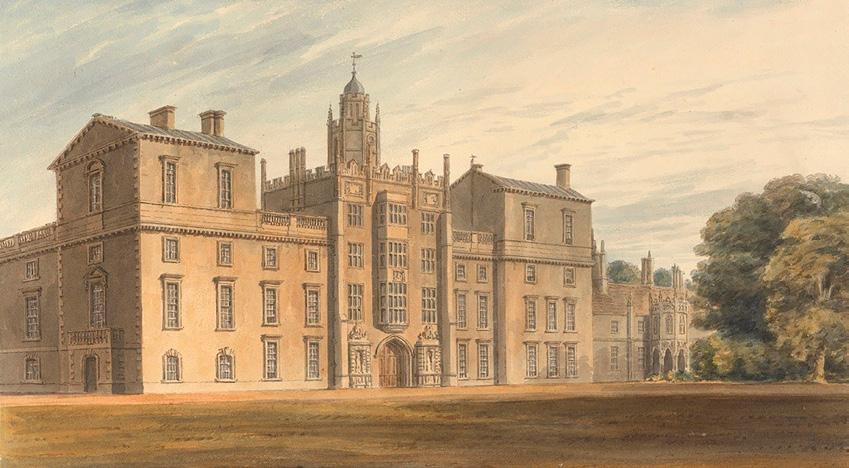
Wilton House c. 1809
35
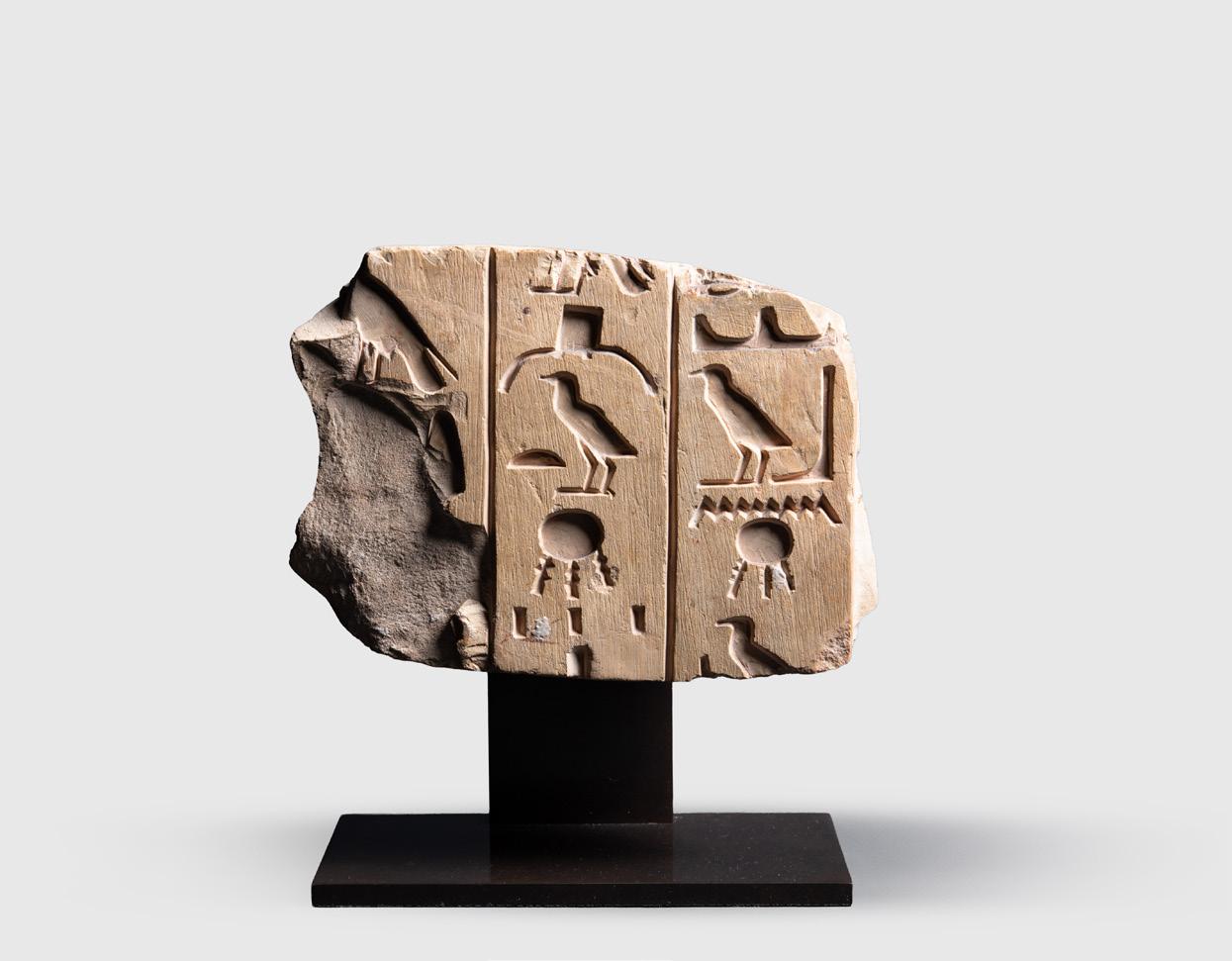
ANCIENT EGYPTIAN RELIEF FRAGMENT
EGYPT, NEW KINGDOM, C. 1550-1069 B.C.
carved limestone, finely carved in shallow relief with a trio of columns of inscription containing a ritual text, with traces of surviving pigment, raised on a bespoke mount
12cm high
Provenance: Albert Newall Collection, Cape Town, South Africa, exported to the UK during the 1970s
Thence by descent to his son, Peter Rae Newall (1946-2018)
Duke’s Auctioneers, Dorchester, England, Coins, Antiquities, Tribal Art, Medals, 11 October 2018, Lot 52
This finely carved fragment preserves three columns of carefully executed hieroglyphs set into limestone, each separated by incised grooves for clarity and definition. It would originally have formed part of a larger decorative and textual programme, likely accompanying painted or carved imagery on the walls of a temple or tomb.
£3,000-5,000
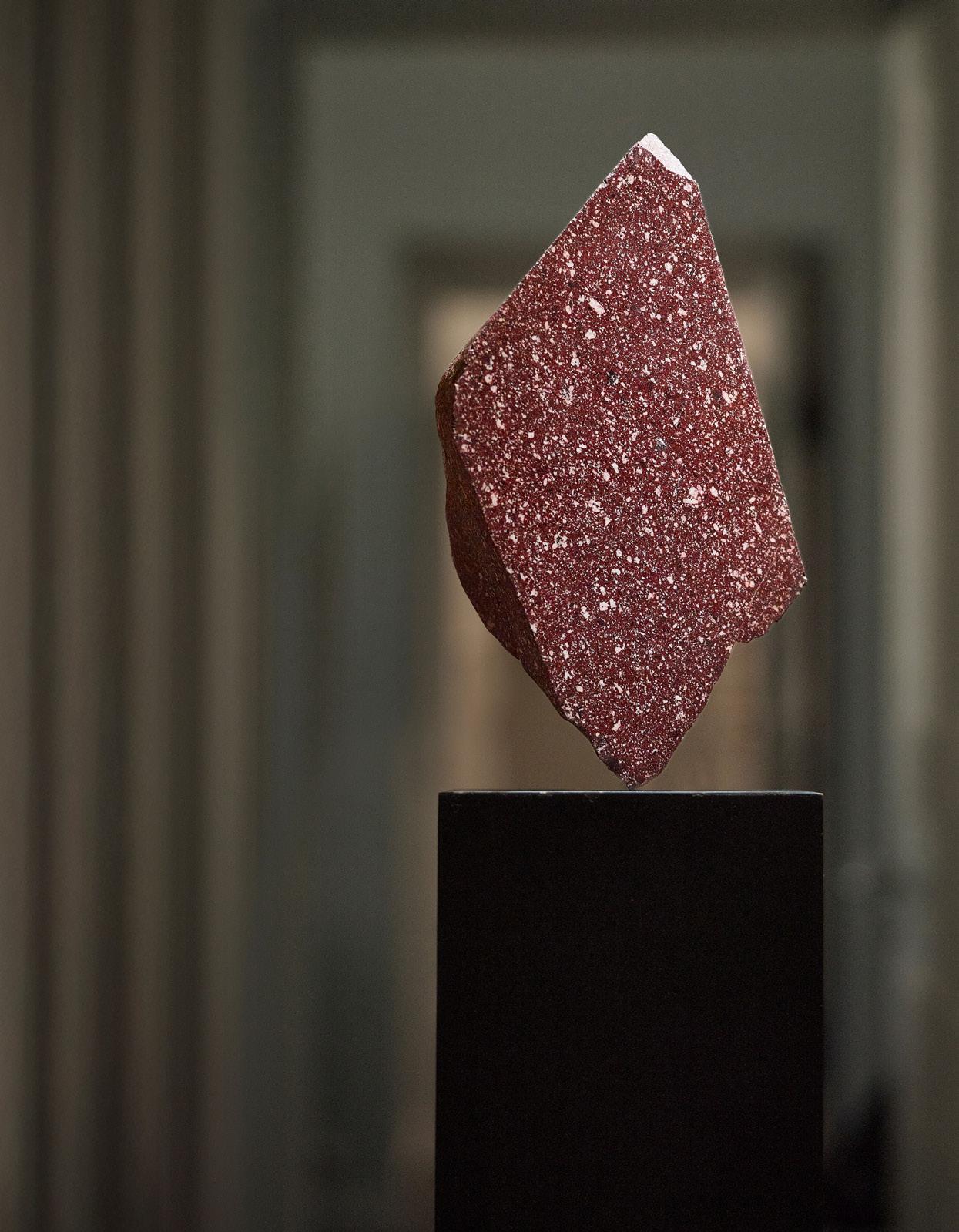
LARGE FRAGMENT OF ROMAN IMPERIAL PORPHYRY
GEBEL DOKHAN, EGYPT, C. 1ST – 5TH CENTURY A.D.
cut porphyry, front likely re-polished in the 18th century, exhibiting a deep reddish-purple ground with scattered pale pink and white crystalline inclusions, mounted on a bespoke stand
Height: 27.2cm tall
Weight: 4.78kg
Provenance: Private collection, West Country, United Kingdom, acquired prior to 2005
The present piece of Egyptian porphyry originates from the quarries at Gebel Dokhan, situated in Egypt’s Red Sea Hills. Discovered in the early first century AD, these sites remained under Roman Imperial control and were actively exploited until the fifth century. This piece would have been quarried during the antique period and transported over considerable distances, first along the Nile, then across the Mediterranean, to reach Roman centres, reflecting the immense effort and resources devoted to procuring this rare Imperial material.
£4,000-6,000
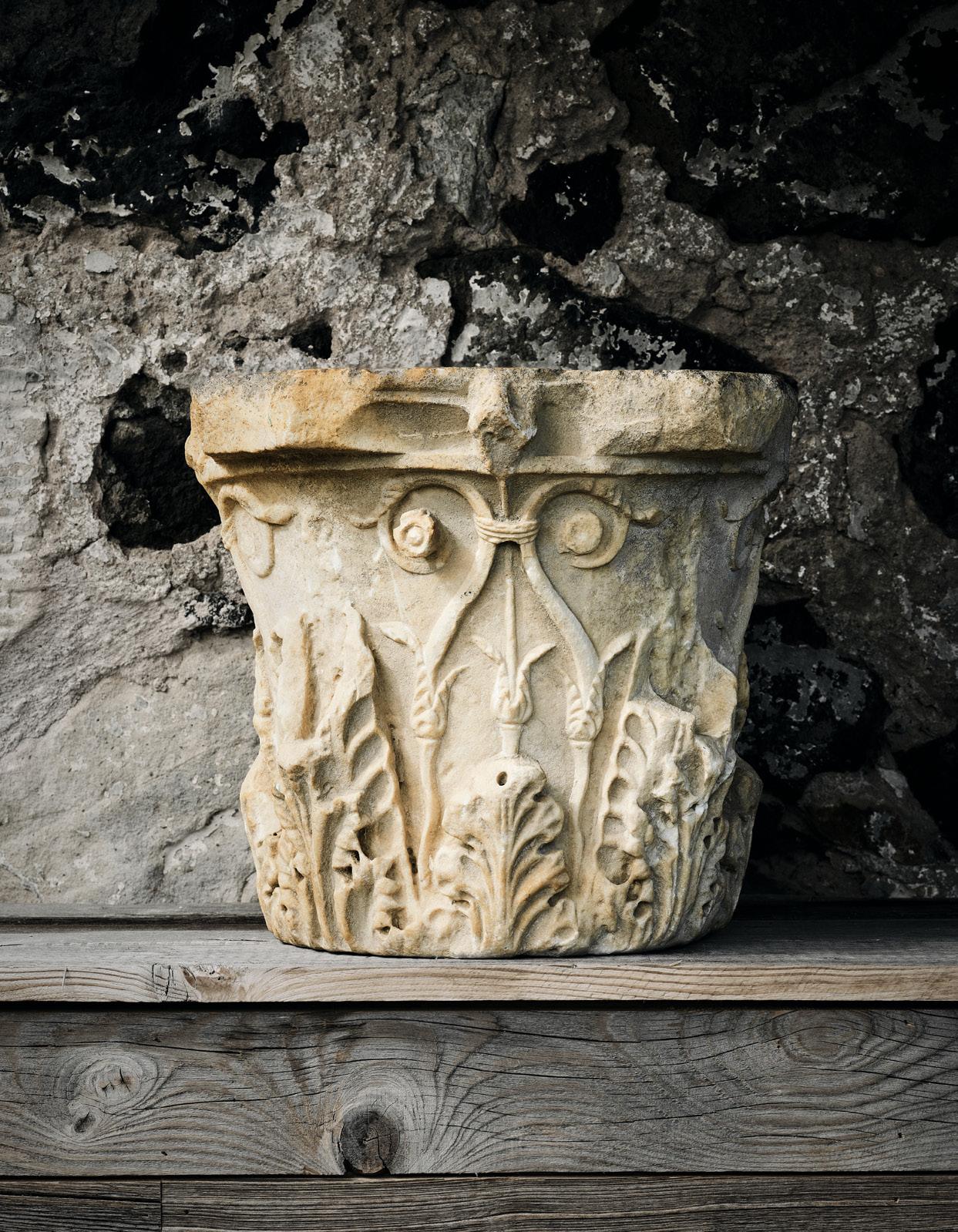
ROMAN CORINTHIAN COLUMN CAPITAL WESTERN EUROPE, 1ST - 2ND CENTURY A.D.
carved marble, with dual tiers of acanthus leaves, floral ornaments and scrolling vines above 32.6cm tall
Provenance: Sotheby’s, New York, March 1st - 2nd 1984, Antiquities and Islamic Art, Including the Collection of the Late Lester Wolfe, lot 82. Subsequently in the collection of Iosif Ioselevich (December 30, 1945 –March 9, 2024), Leonardo, New Jersey
The finely carved acanthus leaves, curling volutes, and central flower identify this piece as a Corinthian column capital. First developed in ancient Greece and later widely adopted by Rome, the Corinthian order became the most decorative and popular architectural style of the Roman world. The writer Vitruvius described it as the tallest and most slender of the classical orders: “The Corinthian capital was discovered in the following manner. A freeborn maiden of Corinth, just of marriageable age, fell sick and died. After her burial, her nurse collected into a basket some little things which the girl had prized in life, and carried it to the tomb, placing it on top and covering it with a tile so that it might last longer in the open air. This basket happened to be set over the root of an acanthus plant. As the leaves grew in spring, they curled up around the basket, and, meeting the corners of the tile, were forced to bend outward in the form of volutes.”
Vitruvius, De Architectura, IV.1.9–10.
£12,000-15,000
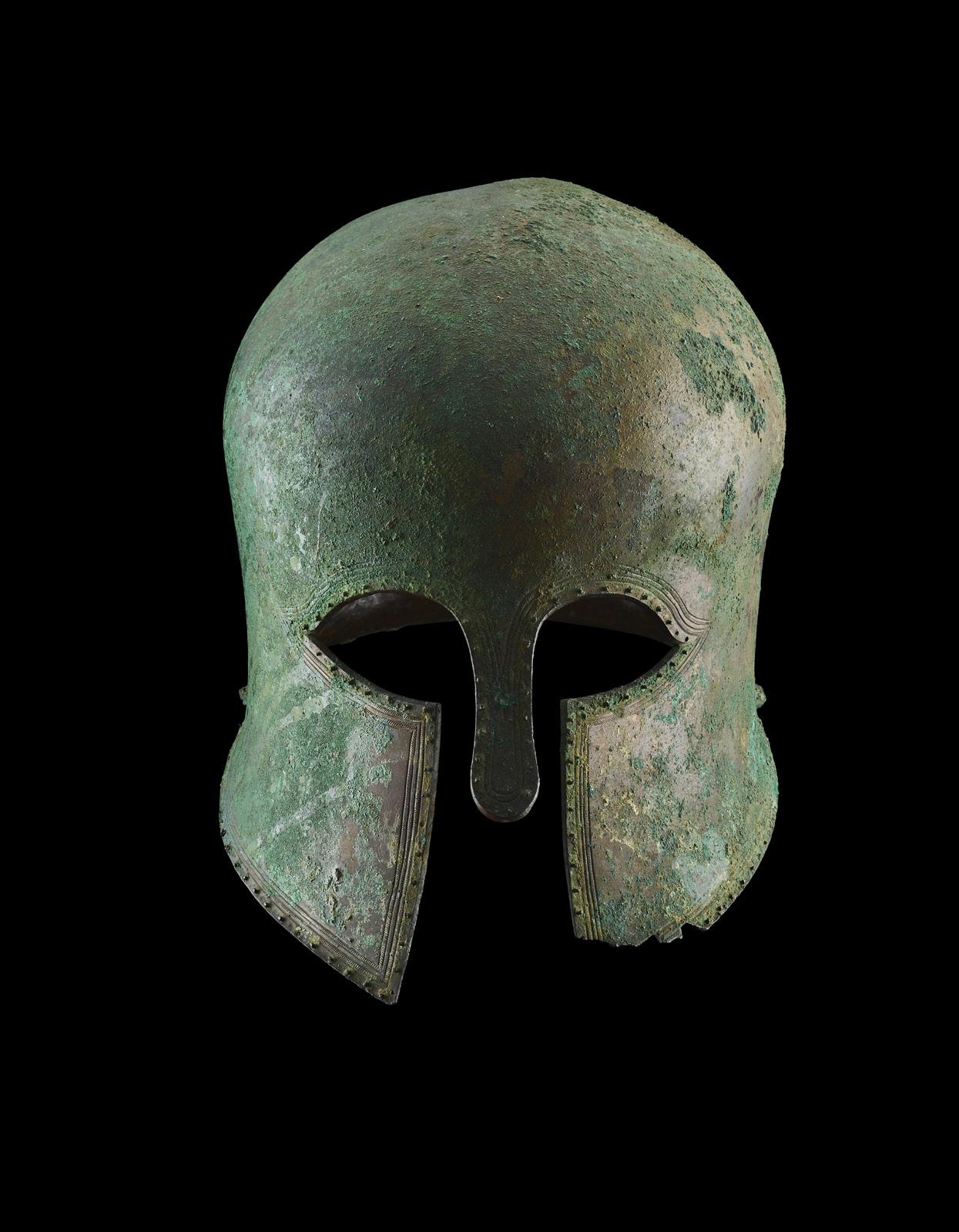
EXCEPTIONAL ANCIENT GREEK HELMET OF CORINTHIAN TYPE
GREECE, LATE ARCHAIC PERIOD, C. 525 - 475 B.C.
hammered from a single piece of bronze, with a domed helm, flaring nose and cheek guards, almond-shaped eyes, and perforations along edges for attachment, sweeping lines executed in light relief run from the top of the nose guard and along the borders of the eyes, rich patination, raised on a bespoke mount
31cm tall
Provenance: Private collection, London, United Kingdom, acquired Sotheby’s, New York, Antiquities and Islamic Art, May 29th 1987, lot 80, sold for $85,000
The present helmet is an exceptional example of the iconic Corinthian type, distinguished both by its remarkable state of preservation and by the absence of modern restoration. Among the finest and most aesthetically compelling examples to appear on the market, it embodies the technical sophistication and sculptural refinement associated with the Corinthian helmet at the height of its development. Its elegant proportions, carefully modelled features, and outstanding condition together make it a particularly important survival of ancient Greek armour.
The Corinthian helmet is among the most distinctive and iconic forms of ancient Greek armour, and it remains one of the most immediately recognisable survivals of the classical world. Its enduring appeal lies in its almost anthropomorphic presence, that evokes a powerful sense of connection with the ancient warrior. With a substantial corpus of surviving examples, modern scholarship has been able to trace subtle regional and chronological variations, revealing how its form evolved across different workshops and periods of production.
The helmet is defined by its enveloping design, typically characterised by deep almond shaped eye openings, a prominent nose guard that tapers gently towards its tip, and integral cheek pieces that extend downward in pointed or rounded forms. This configuration reflects its development during the late seventh and early sixth centuries B.C., when Greek armorers increasingly prioritised full protection within the context of hoplite warfare. Constructed from a single sheet of bronze hammered into shape, it represents a significant technical advancement over earlier composite forms, reducing points of weakness and offering a more unified protective surface.
In military use, the Corinthian helmet was designed to maximise survivability in close order combat. It reduced facial exposure to a narrow T shaped opening, protecting the wearer from slashing and thrusting weapons while maintaining structural strength through its continuous metal form. Although highly effective in the press of battle, its enclosed structure would have limited peripheral vision and hearing, factors that likely contributed to its gradual replacement in favour of more open designs during the later Classical period.
The present example is carefully worked, with a high domed crown that flows into a subtly flared neck guard, creating a harmonious and continuous profile. A faint medial ridge rises across the skull, enhancing both structural integrity and visual definition, while the eye openings are crisply delineated and carefully proportioned. The nose guard is robust yet elegantly integrated into the overall form, maintaining both strength and visual coherence. Along the lower edge, a series of perforations indicates the former presence of a textile or leather lining, now lost, which would have improved comfort and fit.
It dates to the period 525 to 475 BCE, a time spanning the late Archaic and early Classical eras of Greek history, when the Corinthian helmet reached its apogee of design and was closely associated with the peak of hoplite warfare. This was the period in which the Greek city states faced major conflicts with the Persian Empire, most notably the battles of Marathon (490 B.C.) and Thermopylae (480 B.C.), events that came to define the military and cultural identity of the Classical Greek world. At Marathon, Athenian hoplites achieved a decisive victory through disciplined phalanx tactics, while at Thermopylae a small allied force led by Spartans famously resisted a vastly larger Persian army in a narrow pass.
The Corinthian helmet, has come to symbolise the idealised Greek warrior, and its association with defining moments such as Marathon and Thermopylae ensured its lasting cultural resonance. Even after its decline as a common battlefield form, it continued to appear in art and later cultural memory as an emblem of the age.
£100,000-150,000
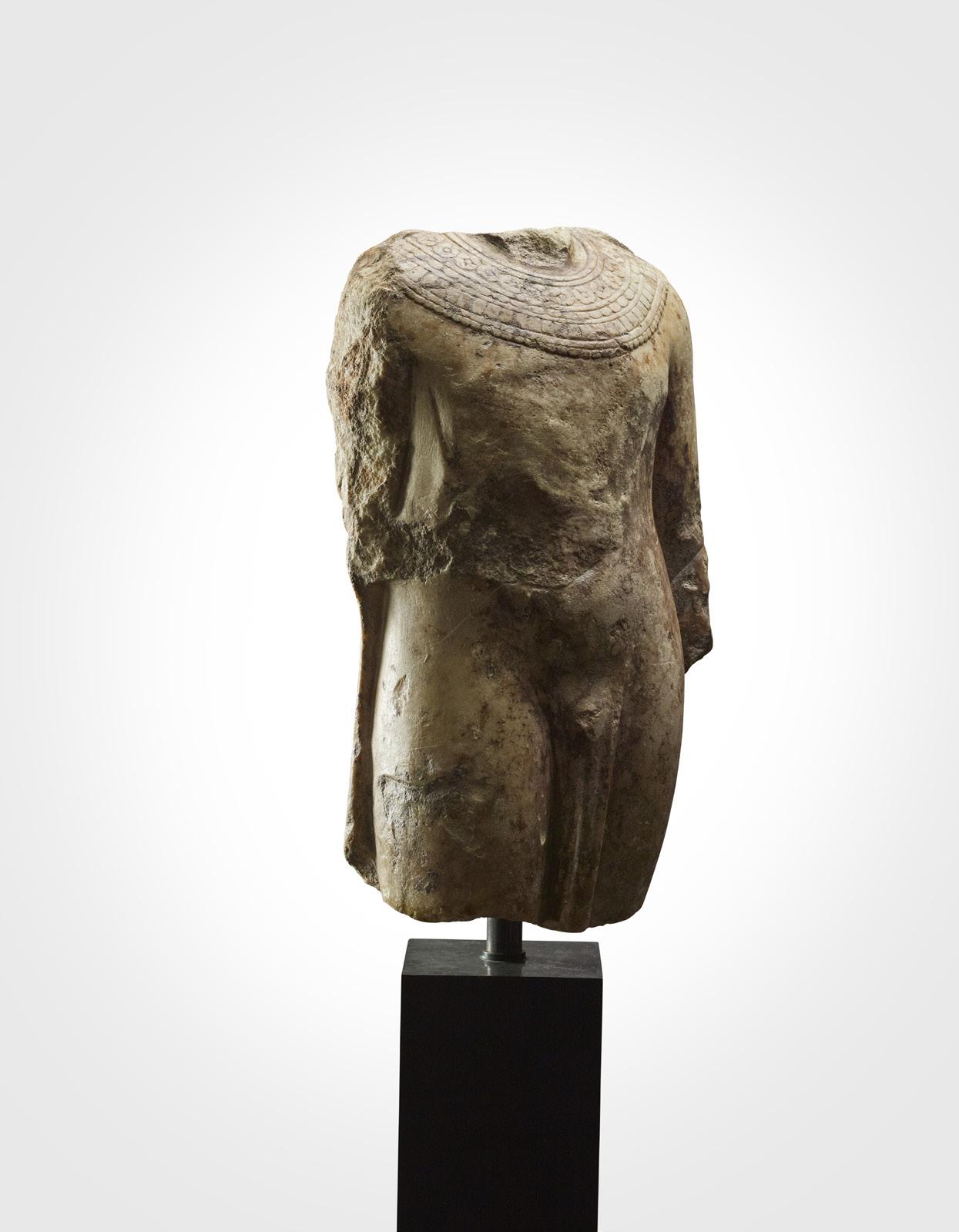
LARGE ROMAN TORSO OF AN EGYPTIAN PRIEST EUROPE, IMPERIAL PERIOD, 1ST - 2ND CENTURY A.D.
carved alabaster, the large fragmentary figure shown nude, with an angled posture, the chest and abdomen are broad and softly modelled, the figure wears a finely incised wesekh, raised on a bespoke metal stand 56cm tall (unmounted), height including stand 160cm
Provenance: Merrin Gallery, New York, United States, by 1986
Subsequently in the collection of US fashion designer Linda Allard, New York, (b. 1940)
Published: Edward H. Merrin Gallery, Inc. The Majesty of Ancient Egypt and the Classical World, New York, 1986, p. 31 (ill).
Discussing the present piece in The Majesty of Ancient Egypt and the Classical World (Merrin, 1986, p. 31), the author notes: “Due to the increasing demand for Egyptian objects among the Roman elite, Egyptian sculptors who had settled in Italy created objects in the Egyptian style. This figure, a priest of Isis, is very classical in posture, the Egyptianizing influence can be seen in his broad collar, which is similar to one worn by Tutankhamun.”
As Merrin notes, Roman elites had a strong appetite for Egyptian imagery, which meant artists had to adapt their work to suit contemporary tastes in Italy. The result was often a blend of styles that felt both familiar and exotic to buyers.
In this case, the priest’s “classical” body reflects the artistic preferences of Roman consumers, who were used to naturalistic, idealised forms in sculpture. At the same time, details like the broad collar were kept deliberately “Egyptian” to signal authenticity and add cultural prestige. For a Roman patron, such a piece would have worked almost like a luxury collectible, something that conveyed sophistication, religious interest in Isis, and participation in fashionable trends associated with Egypt.
For a similar example, please see: Roullet, A. (1972) The Egyptian and Egyptianizing Monuments of Imperial Rome. Leiden: E.J. Brill, pl. CXIV, no. 158. £12,000-16,000
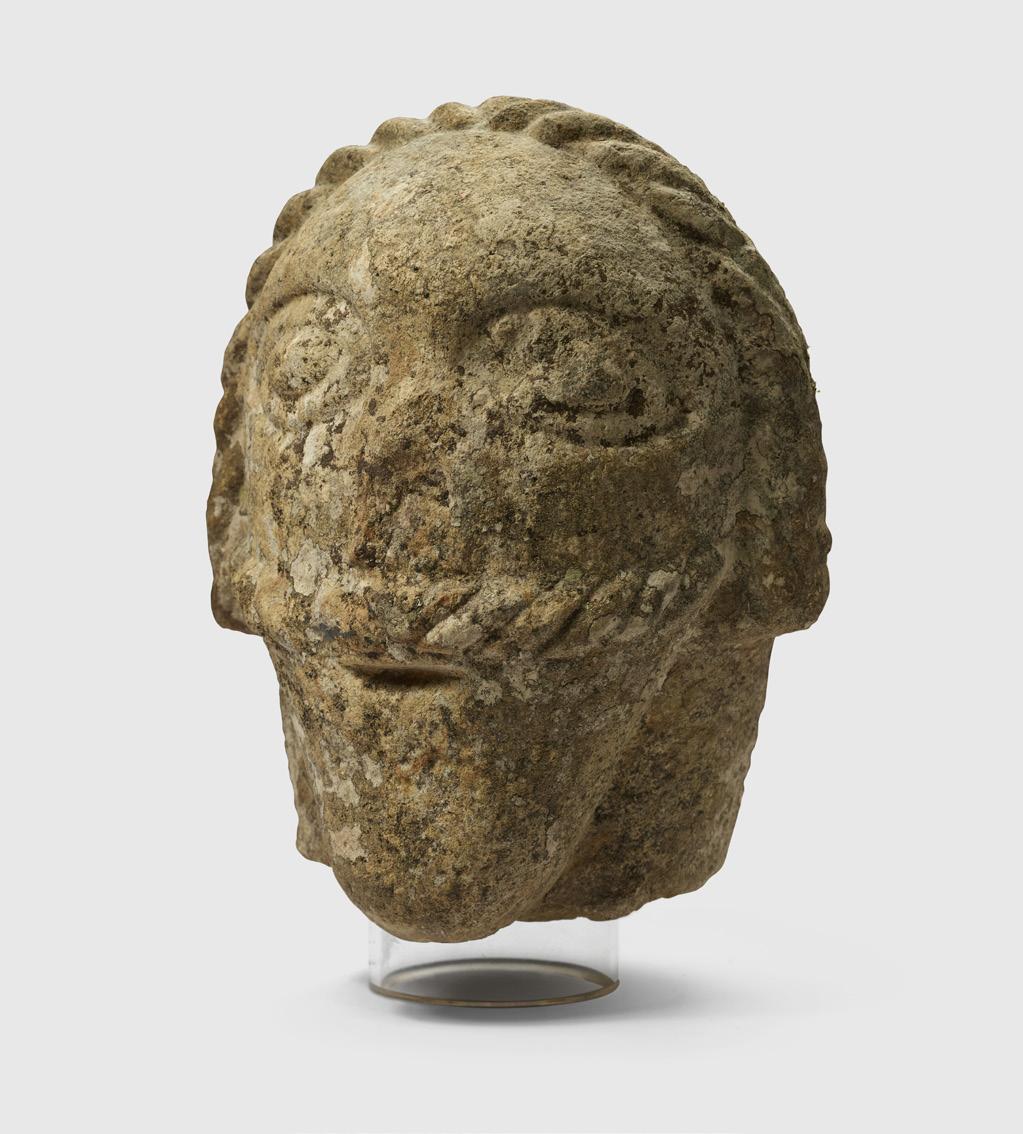
CELTIC STONE HEAD
SOUTHWEST ENGLAND, C. LATE FIRST MILLENNIUM B.C.EARLY FIRST MILLENNIUM A.D.
carved granite, the head compact and rounded, with a broad, flattened nose and almond-shaped eyes beneath a continuous brow, the small mouth is framed by a prominent, wide moustache in low relief, the hair indicated by simple incised lines, raised on a bespoke mount 21.1cm tall
Provenance: Found on the premises of a smallholding near Ivybridge, Devon, forming part of a wall. Other material found on site include a series of Bronze Age stone cists. Thence by family descent.
The present example epitomises the simple lines imbued with great power that defines ancient Celtic art. The individual depicted, whether deity or human subject, has an undeniable presence. The style of the finely backcombed hair and moustache, well-groomed and reaching across much of the face, bears a strong similarity to those seen on three small copper alloy models of men’s faces uncovered at two Late Iron Age burials (c. 50 – 20 B.C.) in Welwyn in 1906 and now housed at the British Museum (accession number 1911,1208.5).
The power of ancient Celtic art lies in its ability to sit between the recognisable and the otherworldly. The fact that this piece’s exact its meaning is lost to us perhaps adds to this ethereal quality.
£2,000-4,000
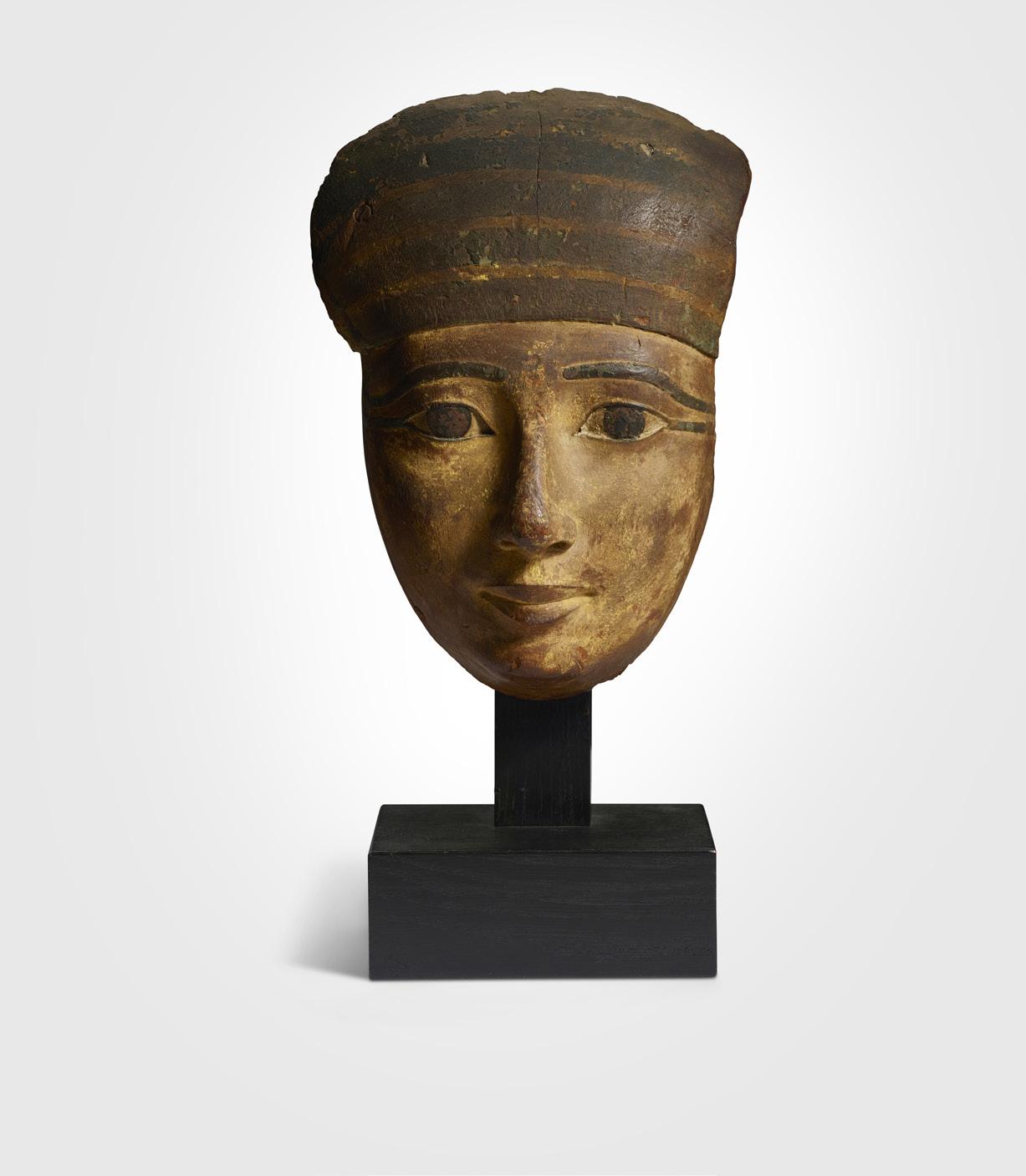
ANCIENT EGYPTIAN MUMMY MASK
EGYPT, THIRD INTERMEDIATE PERIOD, 22ND DYNASTY24TH DYNASTY, CIRCA 945 - 715 B.C.
wood and pigment, the face painted in gold pigment and displaying softly rounded cheeks, with a small, closed mouth forming a faint smile, the almond shaped eyes painted, outlined in black with extended cosmetic lines; the brows gently arched; the nose straight and slender, the forehead framed by a striated wig, raised on a bespoke mount
24.1cm tall
Provenance: Thomas M. Messer (1920–2013), New York; director of the Guggenheim Museum from 1962–1988
Sotheby’s, New York, 12th December 2013, Antiquities, lot 16
Rupert Wace, London, United Kingdom
Private collection, United Kingdom, acquired on 21 December 2018 from the above
The use of gold pigment on mummy masks evokes divinity and eternity through its luminous, unchanging quality. In ancient Egyptian belief, the skin of Osiris (and other gods) was formed of gold, whose eternal nature and radiant, solar glow signified the divine. The application of this pigment therefore associated the deceased with these divine qualities, equating them with the gods in the hope of achieving eternal life.
£10,000-15,000
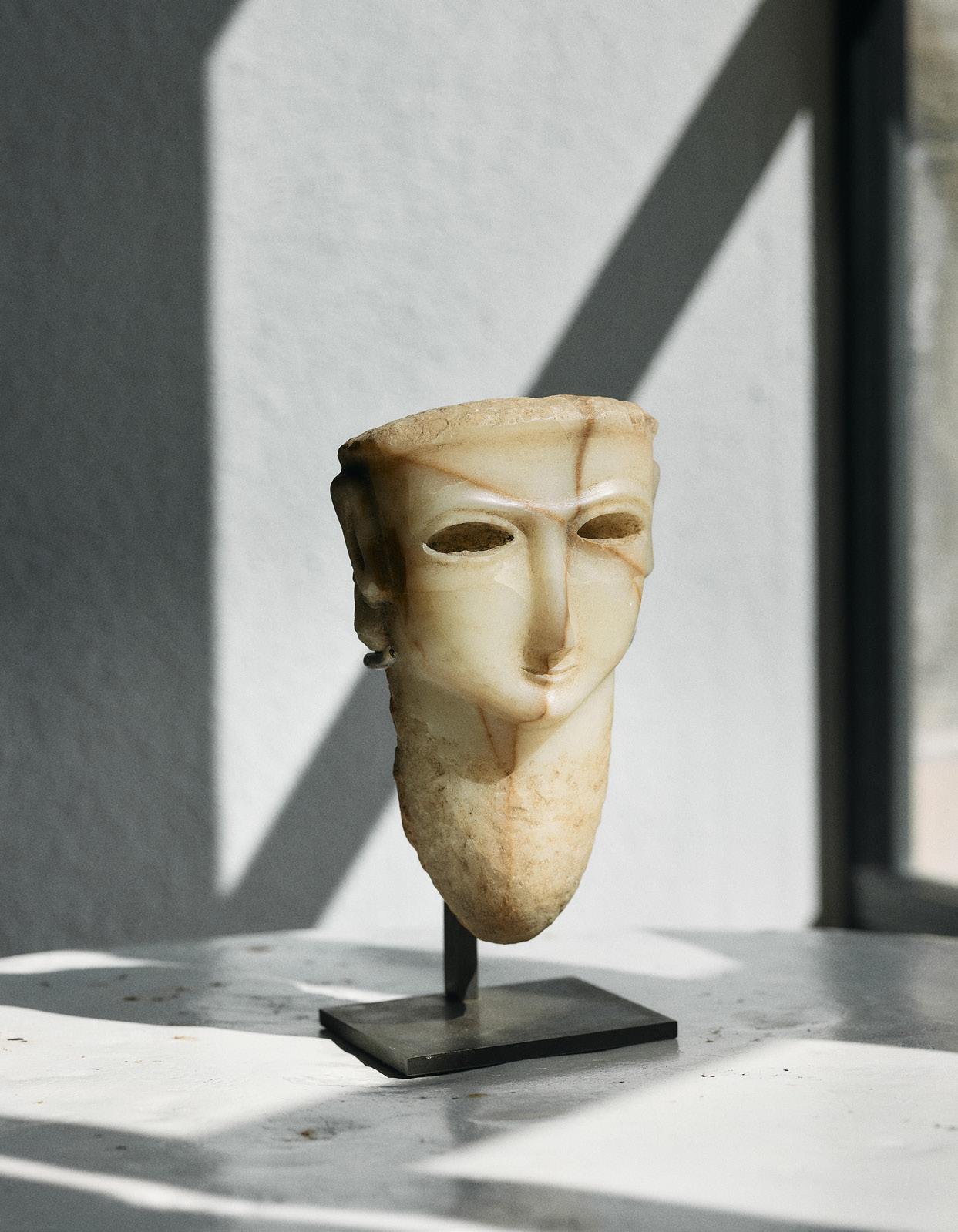
ANCIENT ARABIAN ALABASTER HEAD SOUTHERN ARABIA, C. 1ST CENTURY B.C.
carved banded alabaster, with long tapering neck, slender mouth, thin ridged nose, deeply recessed almond eyes for inlay, raised on a bespoke mount
19.1cm tall
Provenance: Jimmy Belilty, Miami, acquired from the below 2010 Galerie 1492, Paris
Private collection, France, acquired prior to 2000
The present piece is a fine example of the distinctive and enigmatic sculpture produced by the wealthy South Arabian kingdoms at the turn of the first millennium BC. With its facial features reduced to their essential forms, the head reflects the highly stylised aesthetic characteristic of the region. Most likely created to adorn a small rectangular niche within a tomb or ritual setting, as suggested by the flattened top of the head, it would have belonged to a high status private individual and may have functioned as a votive image commemorating the deceased.
Originating in a land of considerable prosperity, the Sabaeans were a powerful trading people whose wealth derived largely from the exchange of prized aromatics such as frankincense and myrrh. Some scholars associate their kingdom with the biblical land of Sheba, famed as the home of the wealthy Queen of Sheba.
£7,000-9,000
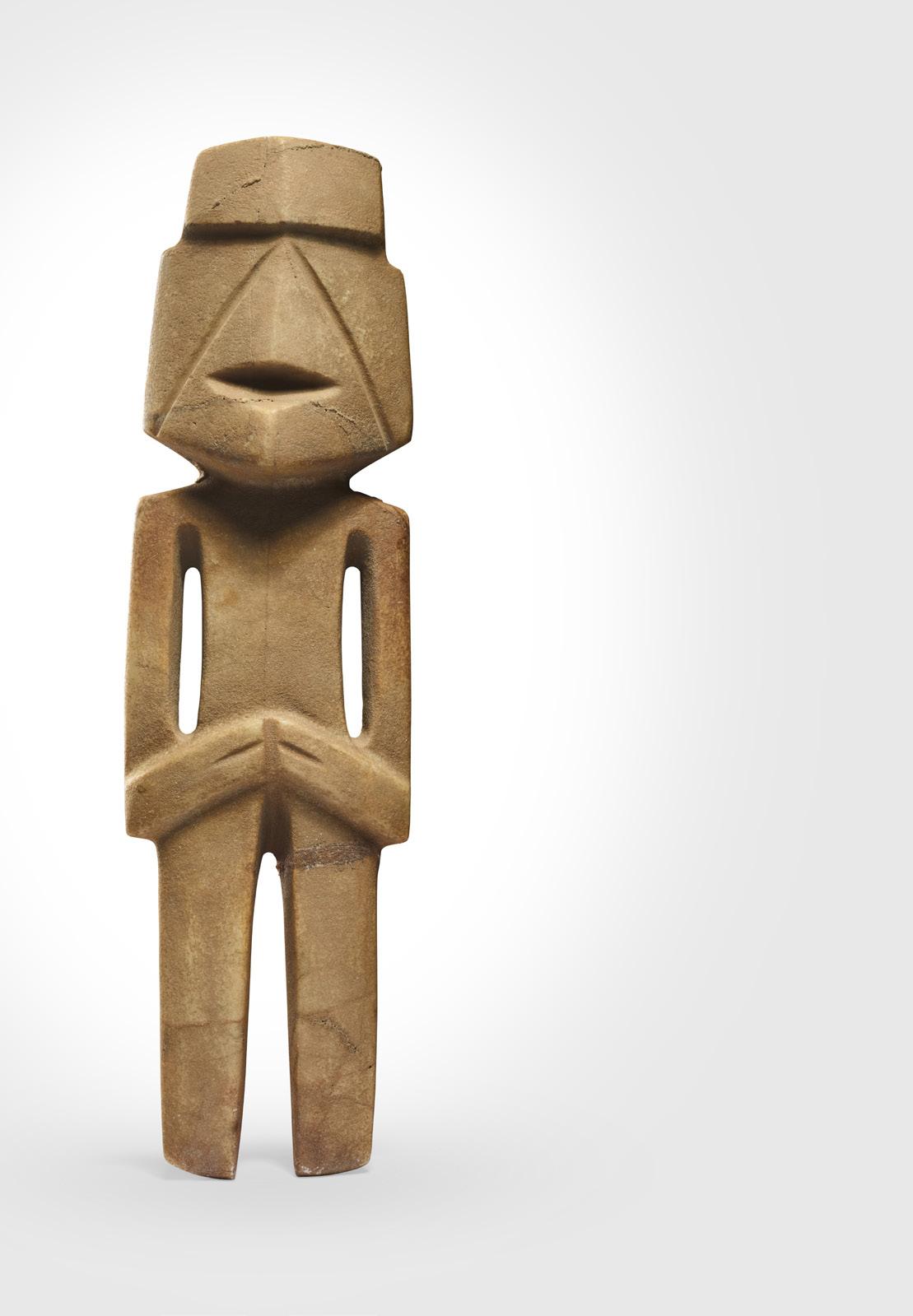
MEZCALA FIGURE
GUERRERO, MEXICO, LATE PRECLASSIC, C. 300 – 100 B.C.
carved calcite, the abstracted figure with broad torso, arms folded into the waist, the head with recessed horizontals planes indicating the eyes and mouth
35.7cm tall
Provenance: Cruz Collection, Cedar city, Utah, acquired mid-20th century, thence by descent
Private collection, United Kingdom, acquired 2023
The present piece originates from the Mezcala culture of the mountainous region of Guerrero in present-day Mexico. Active between 300 - 100 BC, this culture is celebrated for its abundant stone carvings, encompassing stylised human figures, animal effigies and small-scale architectural forms. Despite the survival of these works, little is known about the civilisation itself, aside from its practice of burying the deceased with such enigmatic and highly abstract stone sculptures.
£6,000-9,000
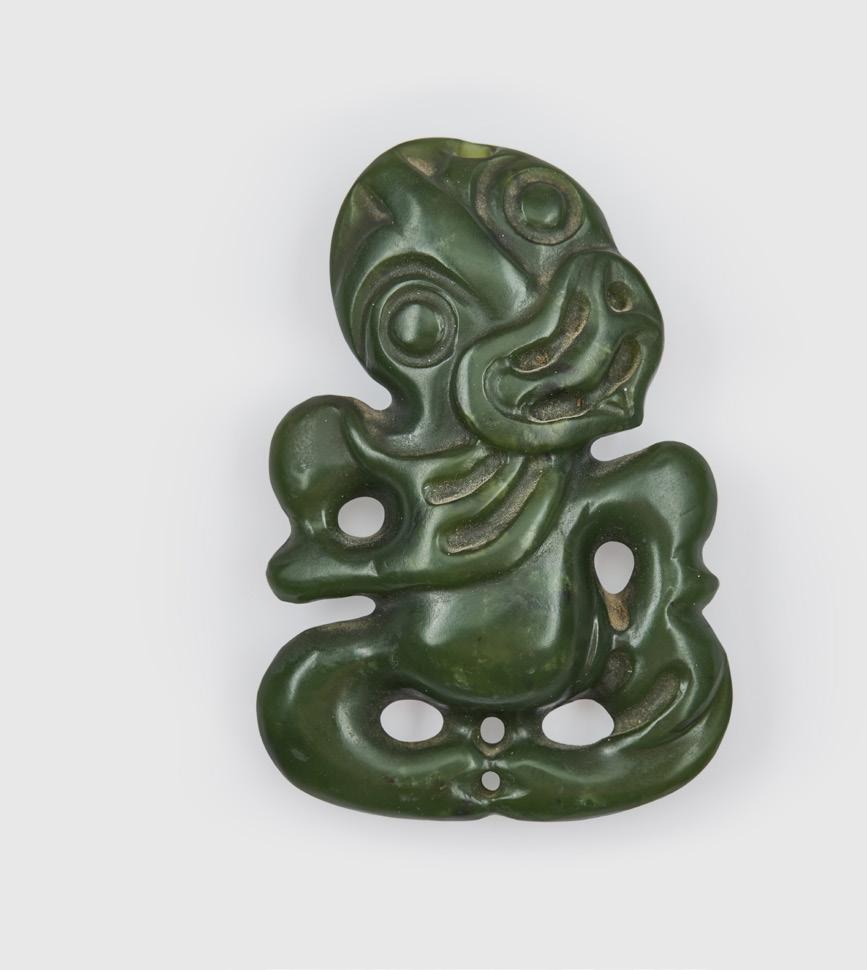
MAORI HEI-TIKI PENDANT NEW ZEALAND, 19TH CENTURY OR EARLIER
carved pounamu, depicted with an open mouth displaying a forked tongue, the right hand resting on the chest and the left held to the thigh, a concave suspension hole running from the top of the head to the reverse 8.5cm tall
Provenance: Private collection, United Kingdom. Originally acquired by the previous owner’s father in the 1930s–1940s; subsequently purchased on the UK art market. Lyon and Turnbull, London, Form Through Time, 30th July 2025, lot 92, sold for £4,788
£4,000-6,000
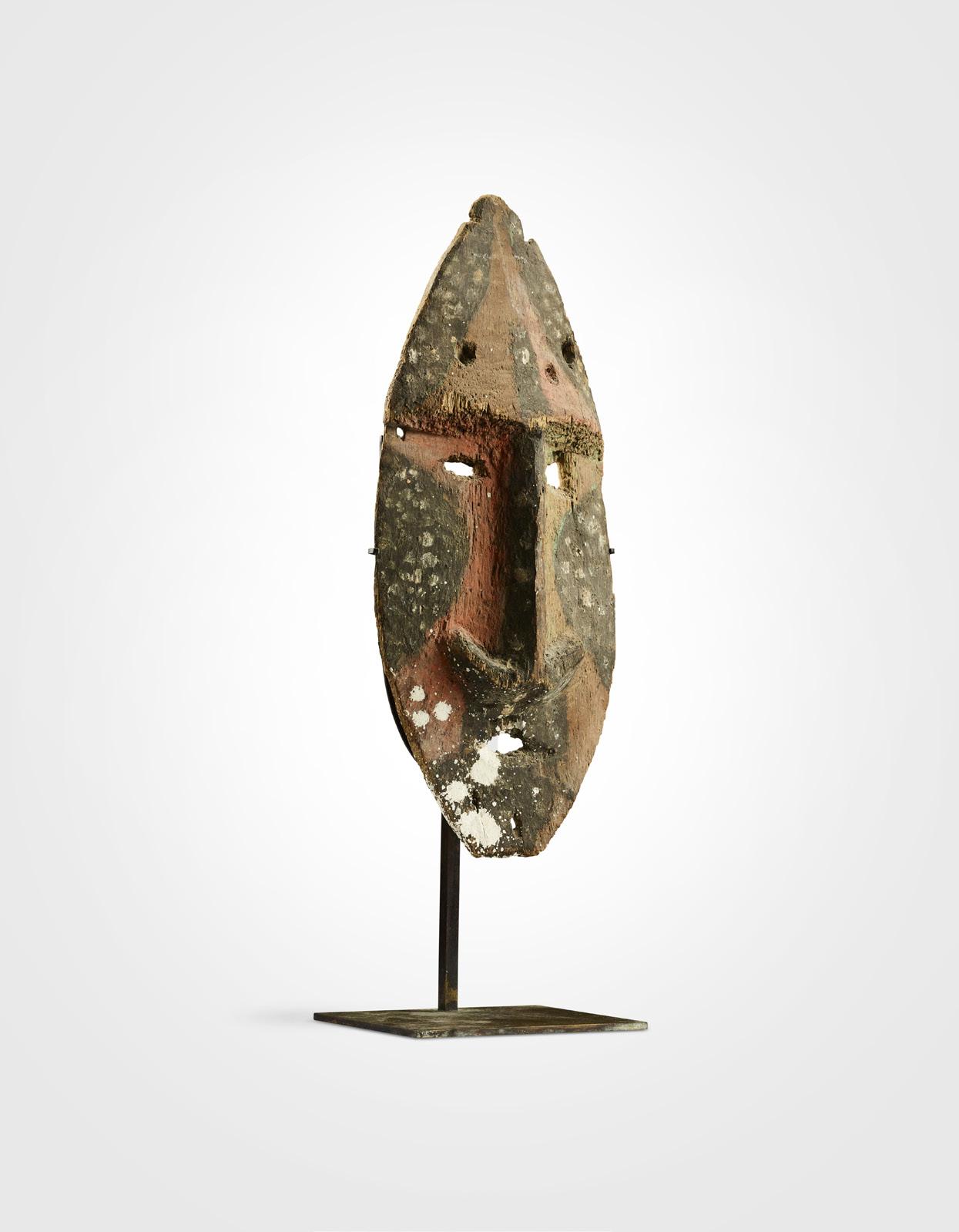
MALEKULA GRADE MASK
MALEKULA ISLAND, VANUATU
carved wood and pigment, tapering form with a pointed chin, a pronounced central ridge forms a long, narrow nose, flanked by shallow, recessed eye apertures beneath a projecting brow, painted in a palette of red, dark ochre and splashes of white, bearing an old pencil inscription on the reverse, raised on a bespoke mount
35.3cm tall
Provenance: William Frank Ellis OBE (1928–2015), Perth, Australia, was an anthropologist and museum director who led the Queen Victoria Museum and Art Gallery in Tasmania from 1955 to 1978. He began his career at the museum as an anthropologist, working on its Tasmanian Aboriginal and Pacific Islands collections, before rising to the position of Director. Thence by descent to:
Vivienne Rae Ellis (1930–2015), Bath, Somerset, a noted Australian writer, journalist, and broadcaster.
Private collection, United Kingdom, acquired from the above.
£2,000-3,000
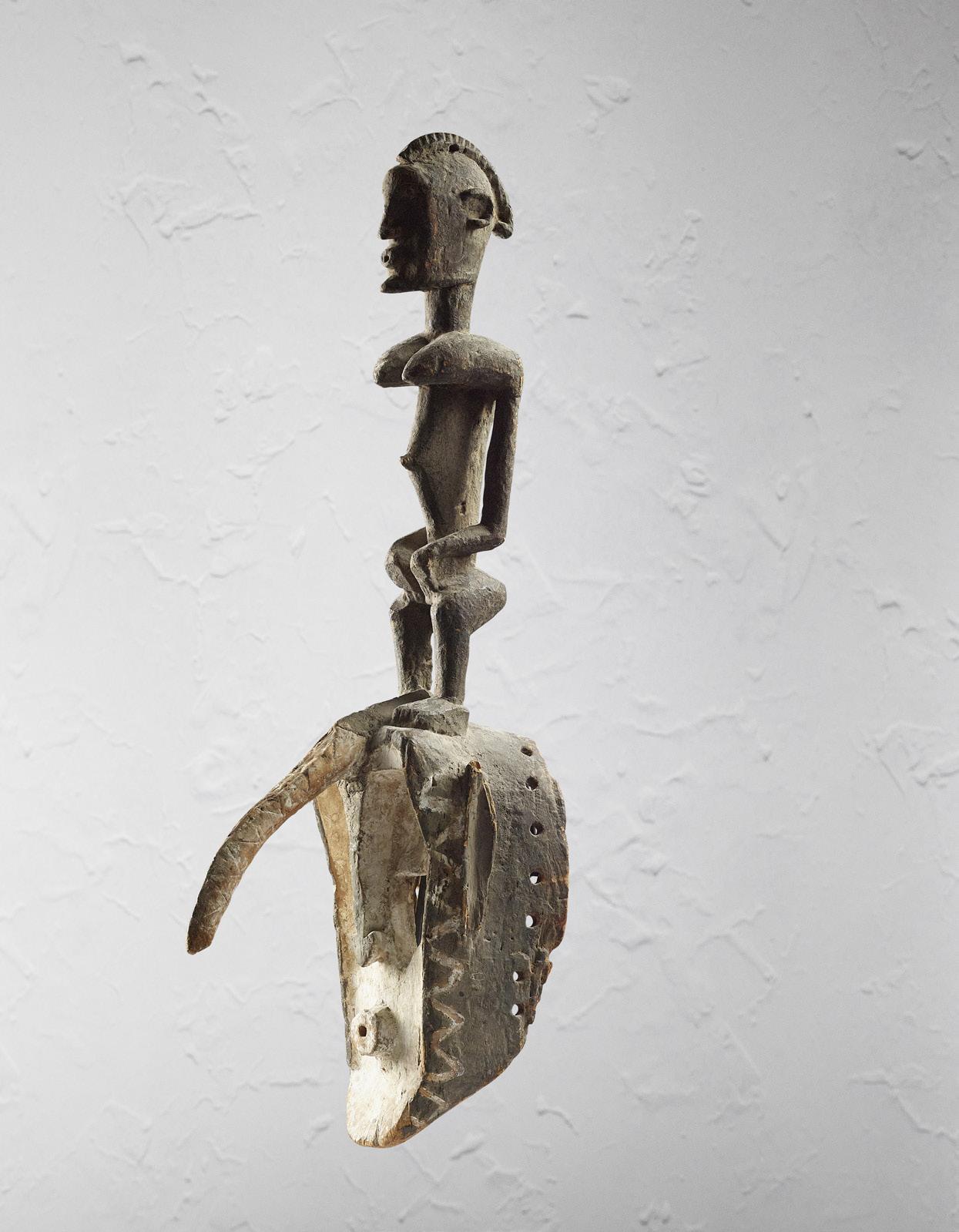
DOGON HORNBILL MASK, DYODYOMINI
MALI
carved wood and pigment, openwork mask with protruding hornbill beak, above sits a female figure, with elongated proportions and stylised facial features, raised on a bespoke mount 84.6cm tall
Provenance: Mr and Mrs Allen Figgis Lucien van de Velde, Belgium John Giltsoff (1947 - 2014), United Kingdom Private collection, United Kingdom, acquired from the above in 1994
According to Dogon tradition, a woman is said to have once encountered a group of masked supernatural beings. Frightened, they fled, leaving their masks behind, which she carried back to her village. Envious of her discovery, the men later took the masks from her and established masquerade as an exclusively male practice. She is remembered as Yasigine, the “sister of the masks”, a figure symbolised in this type by the female form atop the mask, associated with the hornbill and its behaviour of pecking grain and stirring dust.
In Dogon culture, masks play a central role in funerary and commemorative rites, guiding deceased men into the ancestral world. They are used in ceremonies marking burial and the end of mourning, known respectively as baga bundo and dama. The dama is typically held during the dry season, when communities commission numerous masks representing both mythological figures and aspects of daily life. Hornbill forms are particularly linked to agriculture and fertility, their movements echoing the gathering of millet through crouching, pecking dance gestures.
£3,000-5,000
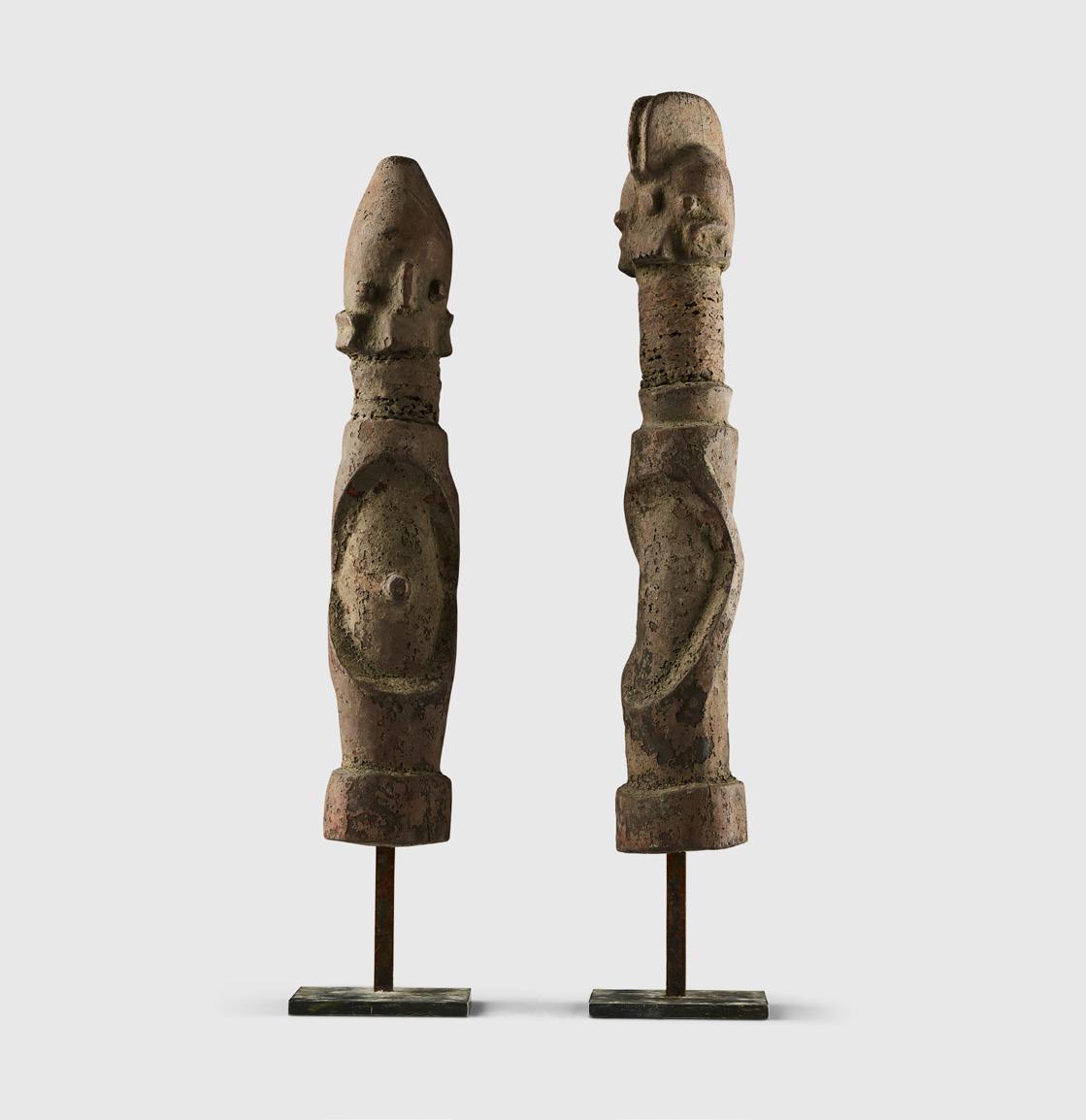
PAIR OF WURKUN KUNDUL FIGURES NIGERIA
carved wood, fibre binding and iron, each of strongly stylised form, with a cylindrical body and surmounted by a large head on an elongated neck with fibre binding, the facial features rendered in an abstract manner, both with surviving iron pins and rich patination, raised on bespoke wooden mounts with a French handwritten note to the underside of one which reads:
“Pair of sculptures from the Wurkun tribe of the Niger Delta. Normally they were mounted on iron rods planted in the ground to protect the crops. Sometimes also inside a hut in the middle of the village to ensure domestic tranquility. (See: ‘Three Rivers of Nigeria’ by Wittmer and Arnett.)”
48.6cm & 44.9cm tall
Provenance: Mr. J. Hale, south-west England, acquired on the French art market in the 1970s, thence by descent. The piece is accompanied by a copy of a receipt from the British Museum, dated 27th July 1980, when the items were deposited for identification.
“Kundul figures served as part of Wurkun ritual practice in northern Nigeria. A healer would instruct clients to acquire a set from an artist as a component of treatment. The ritual expert then applied organic materials to empower the statues to aid the client’s well-being. The figures were then washed with a solution of brown or red clay and polished with oil from a local seed, producing the encrusted surfaces seen here. Objects like these may have been decorated around their long necks with palm frond fibers, the friction from the fibers smoothing the surface. A vertical head crest distinguishes the male from its female counterpart.”
Princeton University Art Museum, United States, 2015, for similar examples please see accession number 2015-6681 a-b.
£1,500-2,500
48
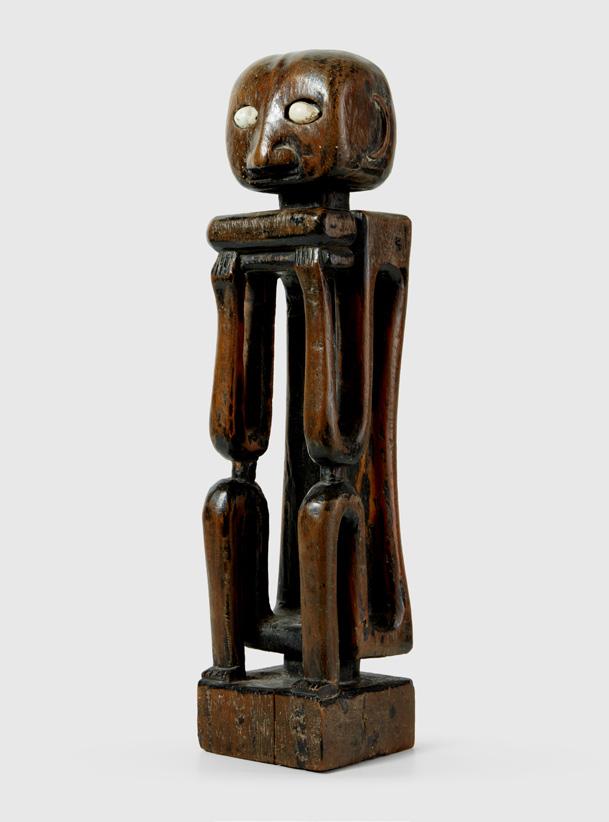
MOLUCCAS ISLANDS ANCESTOR FIGURE
LETTI ARCHIPELAGO, INDONESIA
carved wood and cowrie shell, rising from a squared base, of slender and abstracted form, the standing body defined by elongated limbs and openwork structure, the head sculpted with a stylised facial expression, inset shell eyes providing contrast against the richly patinated hardwood surface
37.5cm tall
Provenance: Private collection, London, United Kingdom, acquired MB Abraham’s, Santa Monica, 2017
£700-900
49
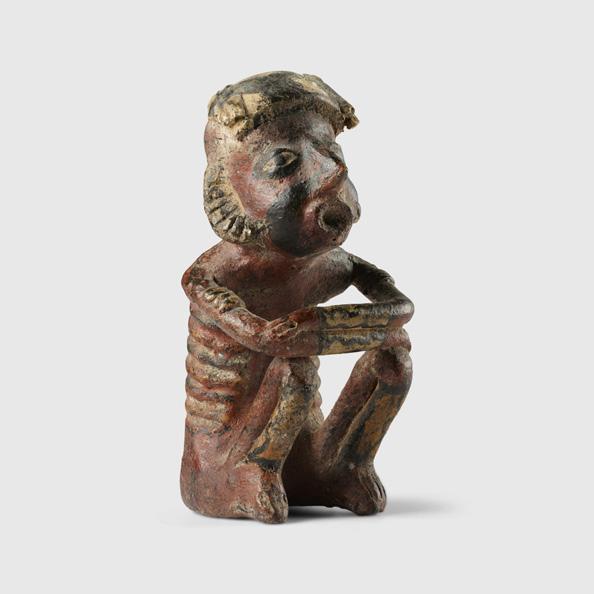
NAYARIT FIGURE
MEXICO, 100 B.C. - 200 A.D.
terracotta and pigment, in the form of a crouching man, his arms held to the knees, his exposed ribs indicating an emaciated state
14cm tall
Provenance: Private collection, Moray, Scotland, acquired c. 1980s - 1990s
The pronounced ribs and wide, staring eyes of this sombre figure may reflect the physical effects of a ritual fast rather than simple starvation. In many ceremonial contexts, fasting was undertaken deliberately as a form of purification, preparing the individual for participation in sacred rites. Such abstention from food could also heighten states of sensory deprivation, which were sometimes believed to facilitate communication with the supernatural or encourage visionary experiences.
£300-500
50
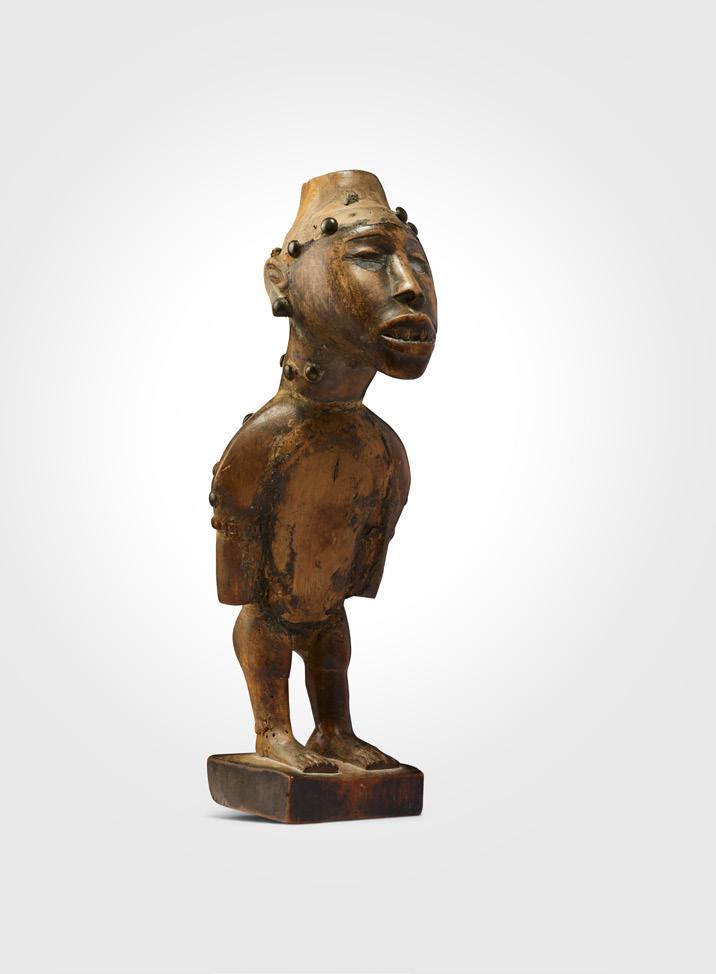
KONGO YOMBE NKISI FIGURE DEMOCRATIC REPUBLIC OF CONGO
carved wood and brass, shown standing, the torso angled forwards, the face expressive, with large open eyes inlaid with glass and emphasised by arched eyebrows, the features executed with great detail, the teeth carved to a point, the magical charge at the belly removed, brass upholstery nails remain around the crown of the head and across the back
25.7cm tall
Provenance: Private collection, Antwerp, Belgium Subsequently part of a United Kingdom private collection For a comparable work, possibly executed by the same hand, see Lot 43, sale Arts d’Afrique et d’Océanie, Giquello & Associés, Paris, 22 November 2022. That example was collected in the field by Hippolyte-Paul Le Layec, Governor of Middle Congo, in 1935.
£5,000-8,000
51
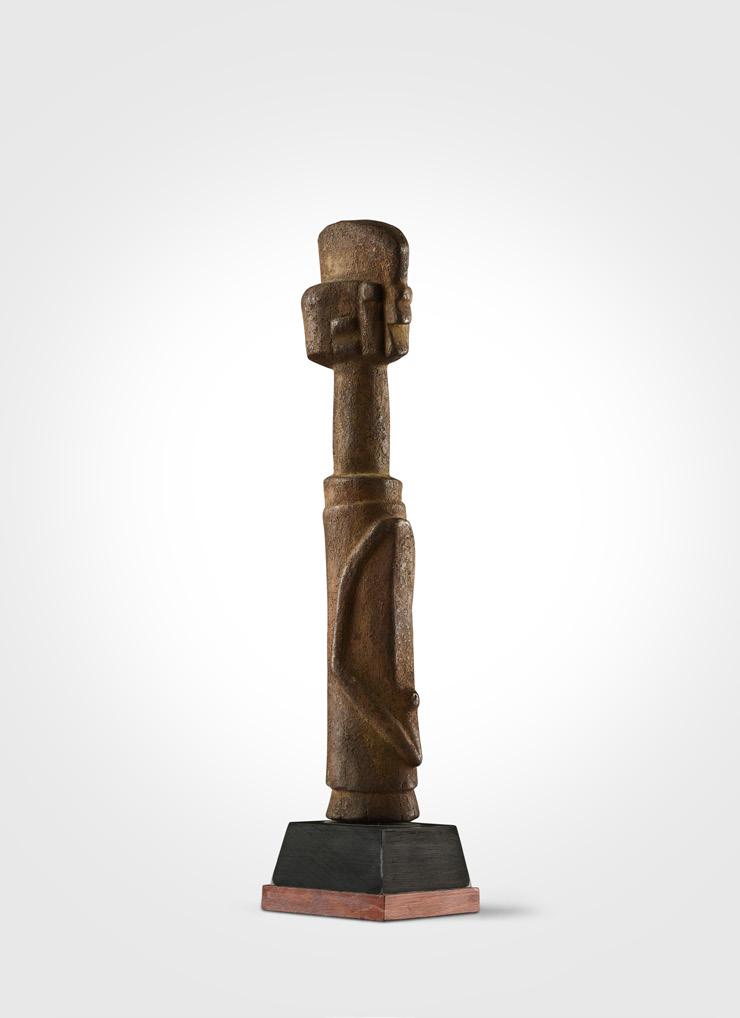
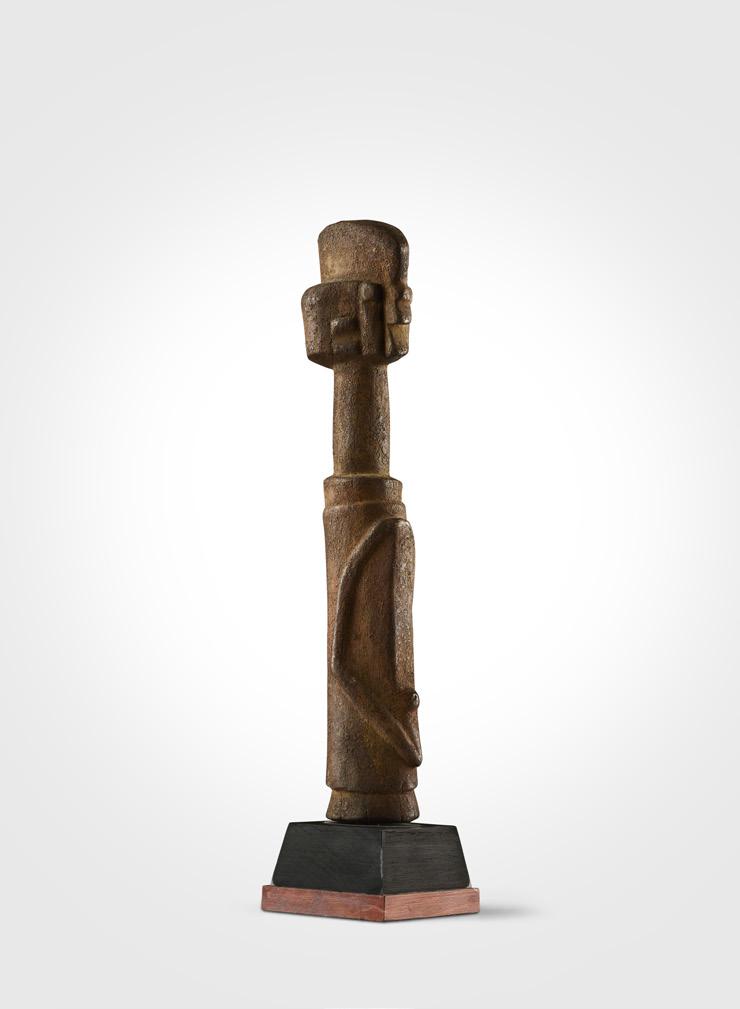
WURKUN KUNDUL FIGURE NIGERIA
carved wood, of strongly stylised form, with a cylindrical body and surmounted by a large head on an elongated neck, the facial features are rendered in a restrained manner, raised on a bespoke wooden mount
45.2cm tall
Provenance: Private collection, Belgium, acquired from Joaquin Pecci, Brussels, 2024
£2,000-3,000
53
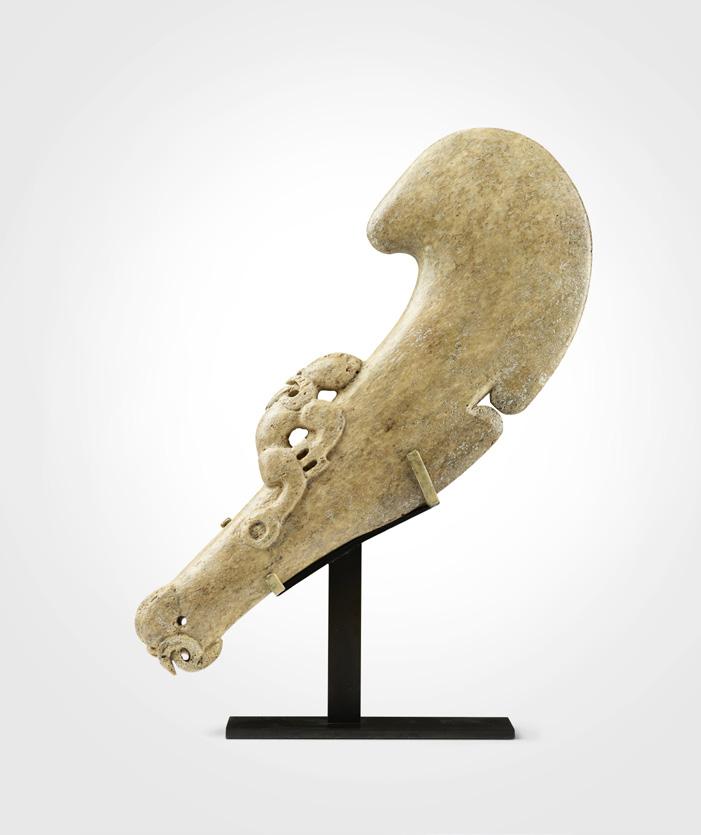
MAORI WAHAIKA CLUB
NEW ZEALAND
carved whalebone, the broad, flattened blade with characteristic lateral notch and gently curved striking edge, one face carved in high relief with a stretching figure, the limbs flexed and hands resting upon the abdomen; the details articulated with incised linear decoration, the base of the handle decorated with the head of a tiki
37.3cm long
Provenance: Bonhams & Cornette de Saint Cyr, Brussels, December 17th 2024, Arts d’Afrique, du Pacifique et des Amériques, lot 172
£15,000-18,000
52
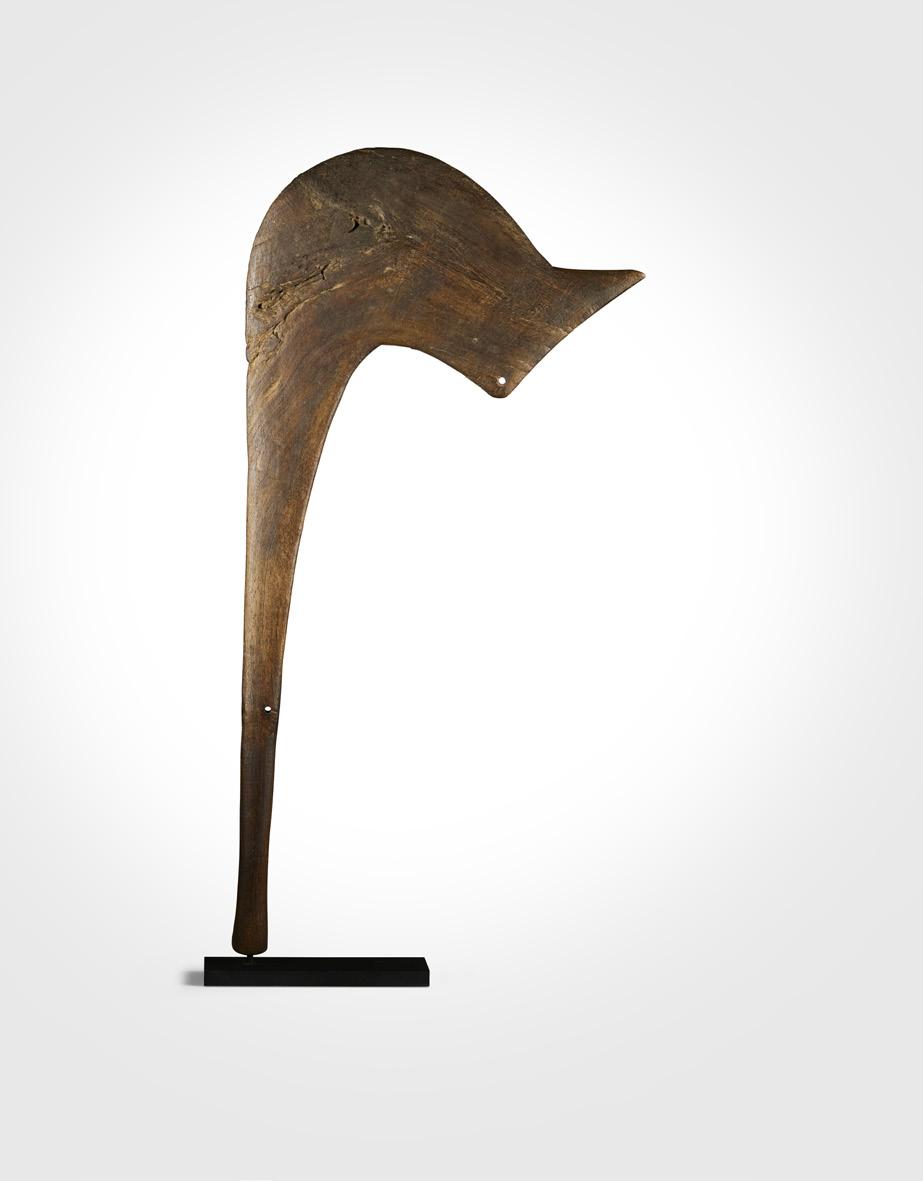
SENUFO DANCE SCEPTRE COTE D’IVOIRE
carved wood, the tapering shaft rising to a broad crescentic head, dark and aged patina, raised on a bespoke mount
77cm long
A similar example from the collection of M. Guy Loudmer (and previously in the collection of Jacques Kerchache) recently achieved 9,030 euro at AuctionArt Paris (18th February 2026, lot 13).
£400-600
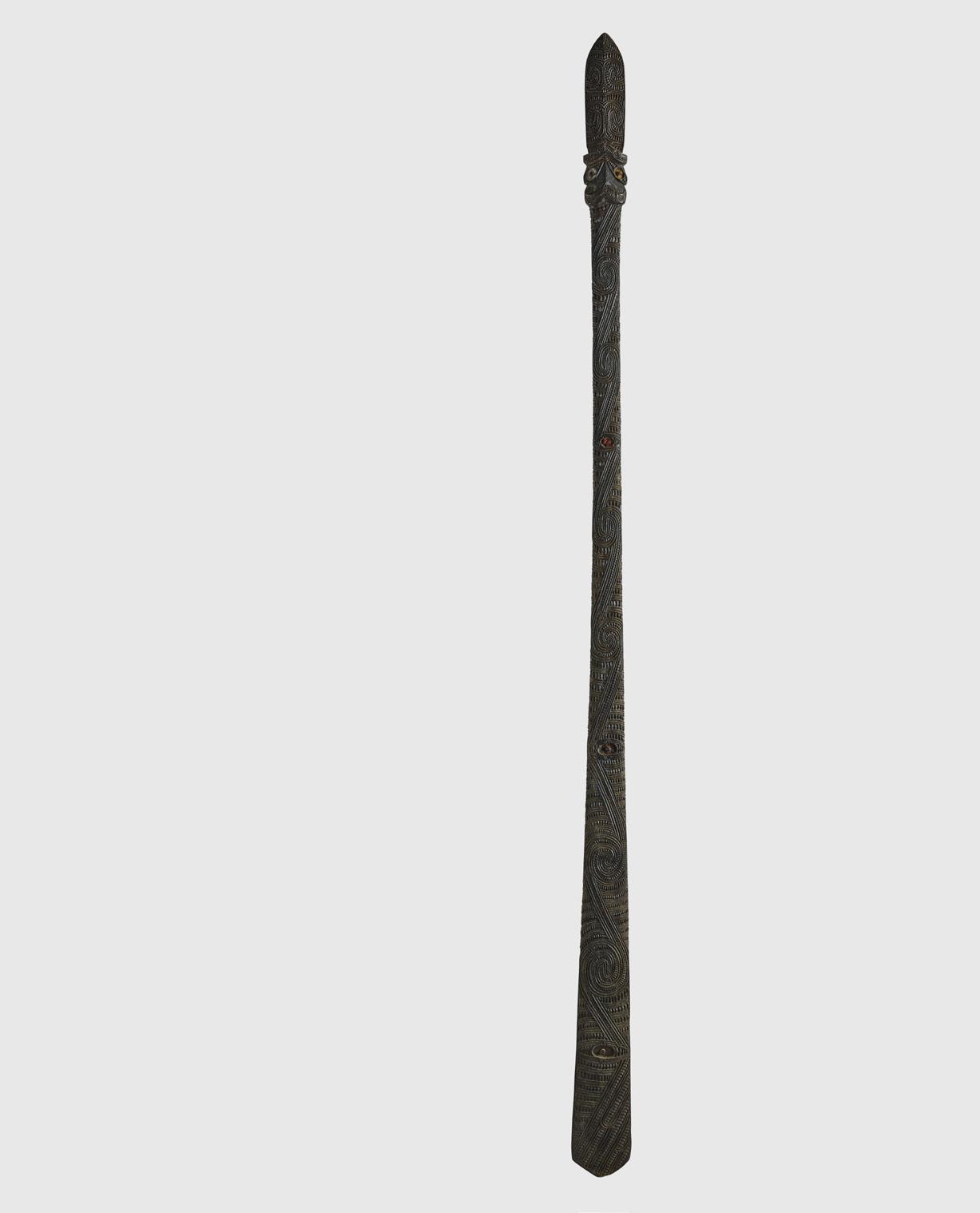
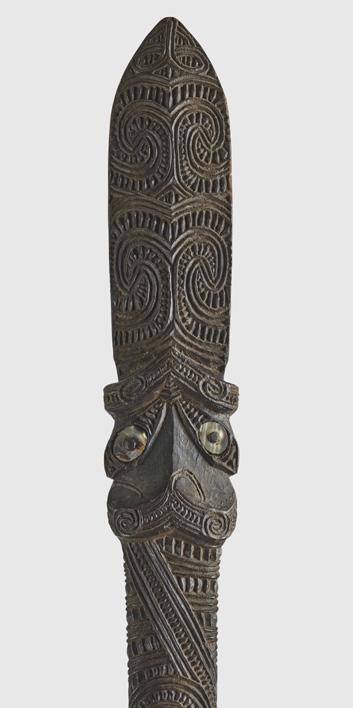
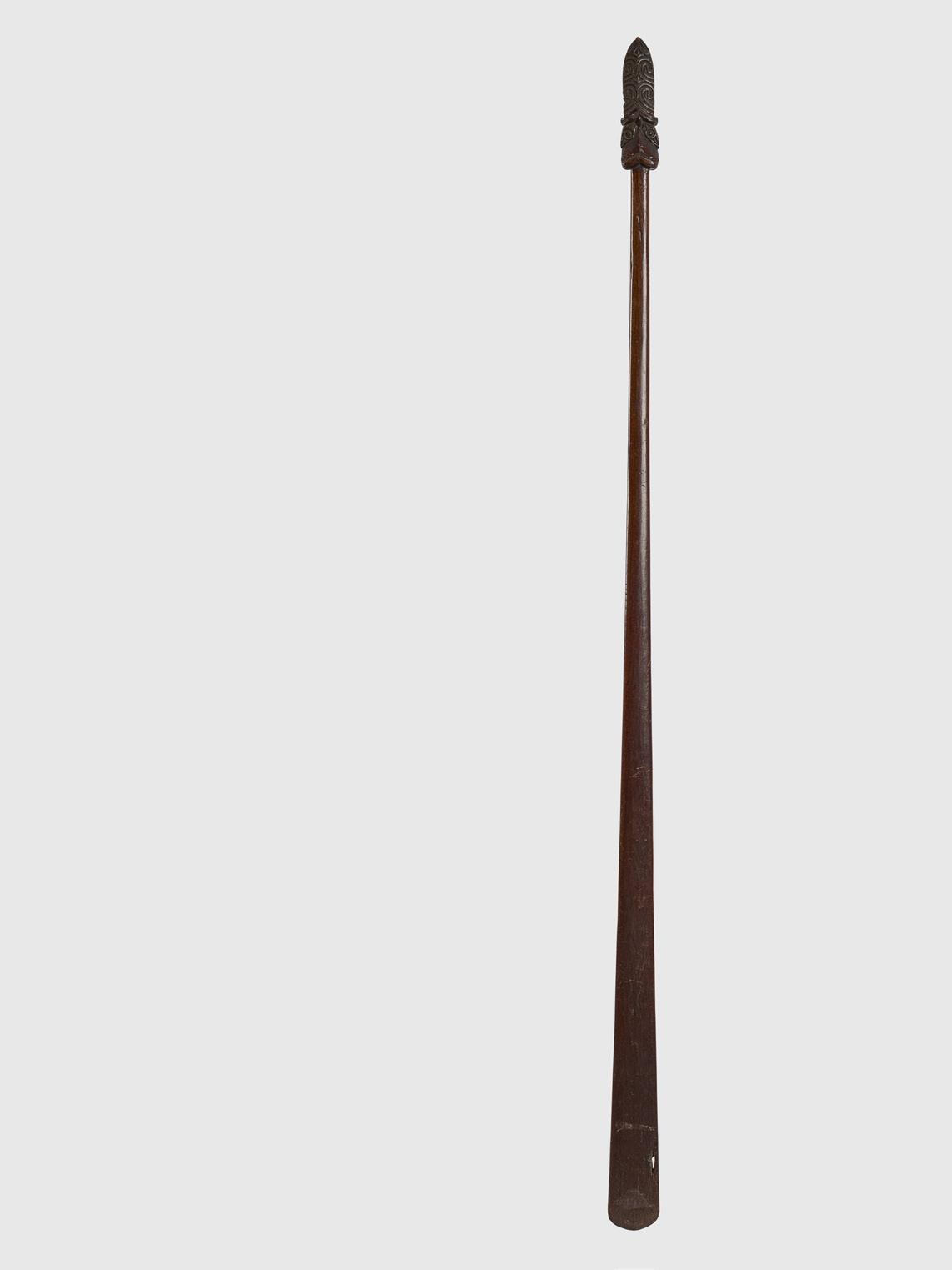
MAORI QUARTER STAFF, TAIAHA NEW ZEALAND
carved wood, wax and shell, the long tapering shaft fully covered in finely incised scrolling decoration with shell eye inlays, terminating in an upoko with further shell inlay and a tongue extending from the mouth, richly adorned with carved detail, the surface with a dark glossy patination throughout 156.2cm long
Provenance: Private collection, United Kingdom, acquired in the 1950s at the clearance sale of Oxhey Place, Hertfordshire, and thence by descent Oxhey Place, formerly the residence of the Blackwell family, owners of Crosse & Blackwell, collection likely assembled during the early 20th century
A taiaha of comparable style, with similar scrolling motifs down the entire length of the tinana, can be seen at the Te Papa in Wellington (accession number OL000069.S/36). It was acquired by the New Zealand government in 1948 from the private collection of William Oldman (1879 –1949).
Another similar example, originally acquired by Admiral Richard Aldworth (1811-1889) in 1847, whilst serving as Captain of HMS Fly, was sold as part of the Edric van Vredenburgh Collection by Sotheby’s on the 13th April 2022, achieving a final price of EUR 23,940 (lot 119).
£3,000-5,000
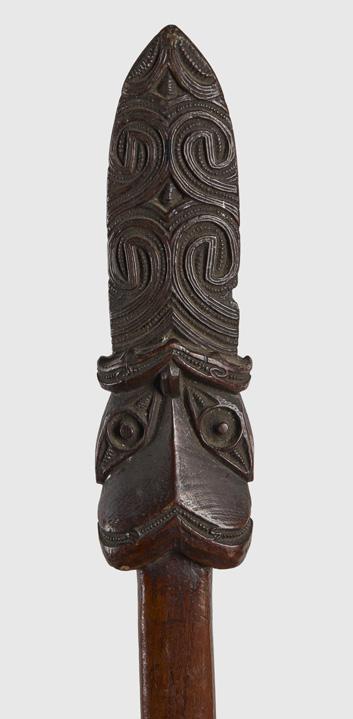
MAORI QUARTER STAFF, TAIAHA
NEW ZEALAND, 19TH CENTURY
carved wood, long tapering shaft terminating in an upoko with tongue extending out from the mouth, adorned with carved detail, dark glossy patination throughout 165cm long
Provenance: In the collection of Bo’ness Theatre, West Lothian, since at least in the mid-20th century Maori men of high birth wielded staffs as symbols of their social status. These staffs served various purposes, including enhancing oratory skills, engaging in hand-to-hand combat, and participating in ceremonial exhibitions. Additionally, they functioned as both parrying and sparring weapons for a martial art known as Mau taiaha, still taught and practised in New Zealand today. Certain staffs held significant importance, as they were believed to possess magical properties and were employed for divination purposes.
£800-1,200
56
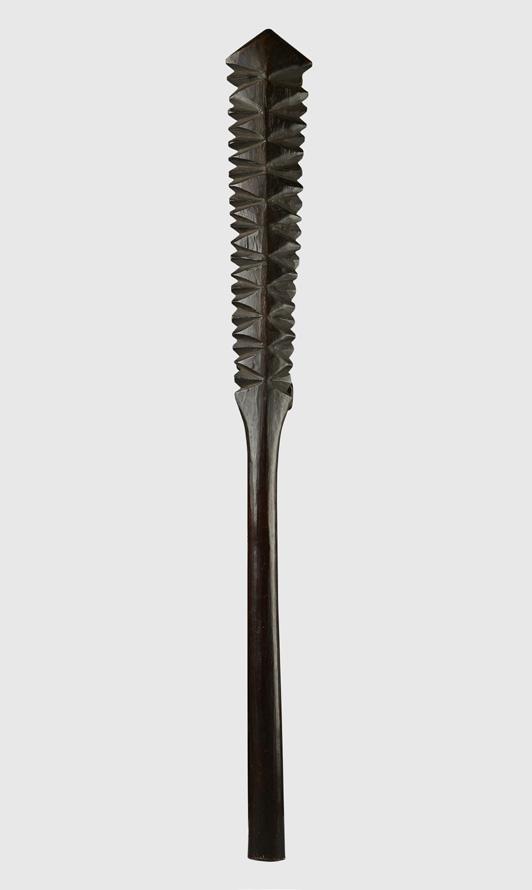
TALAVALU CLUB
SAMOA
carved wood, the long handle leading to rows of carved teeth below a triangular head, rich patination
84.9cm long
Provenance: Clive Loveless, London, United Kingdom Private collection, United Kingdom, acquired from the above
The name of this club, “talavalu”, is a reference to its ‘teeth’ represented by the triangular spikes at either side.
£1,200-1,500
57
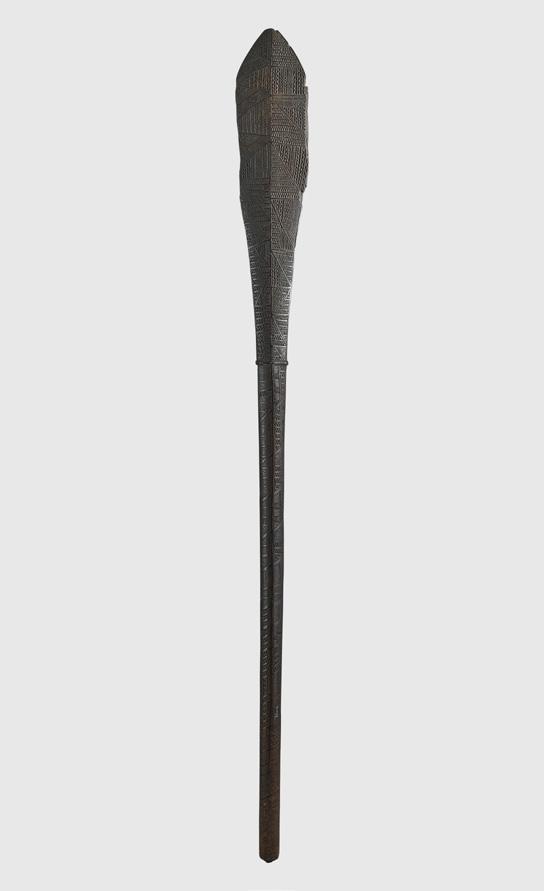
AKAU TAU CLUB TONGA ISLANDS
carved wood, the long cylindrical shaft tapering toward the grip, a raised collar below a broad leaf-shaped head terminating in a pointed tip, the entire surface densely covered with finely engraved chip-carved geometric ornament arranged in panels and bands
119.3cm long
Provenance: Private collection, United Kingdom; acquired on the art market in 2011; formerly in an old Warwickshire estate.
The present example is a finely carved Akau Tau war club. Its geometric body, with characteristic angular facets, terminates in a pointed head typical of Tongan art. While the symbolic significance of the layout and motifs on Tongan clubs remains unclear, it likely relates to tattoo and bark-cloth patterns, which served as metaphors for chiefly qualities.
£2,000-3,000
58
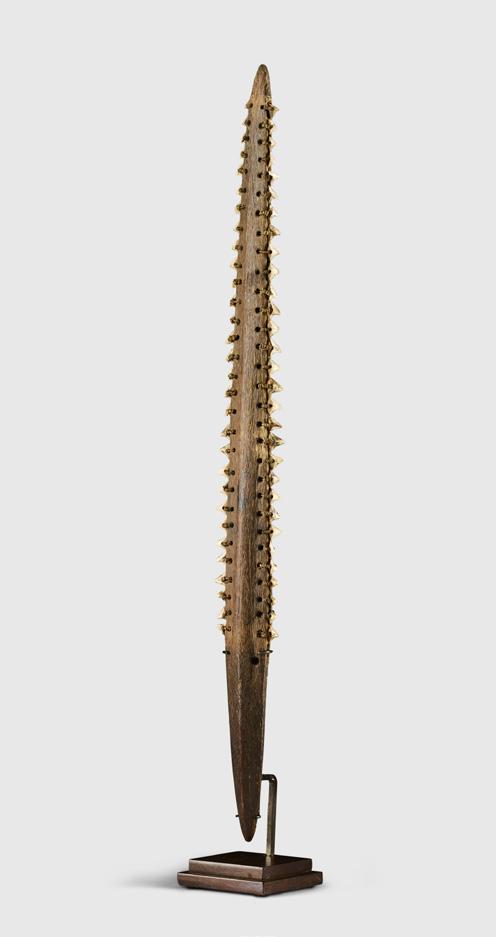
SHARK TOOTH SWORD KIRIBATI
carved palm wood and shark tooth, the teeth set into precisely cut grooves running along each edge of the weapon, then secured with fibre cord
55.6cm long
Provenance: Michael Hamson, Los Angeles, United States, bearing Hamson inventory number “MHMC-2064”
Private collection, United Kingdom, acquired from the above
Made for the inter clan warfare that once shaped the islands of Kiribati, these striking weapons were fitted with rows of shark teeth, fastened to palmwood shafts. They belonged to a broader martial tradition that also produced spears, blades and short stabbing weapons.
To guard against such jagged cutting edges, warriors wore heavy armour woven from coconut fibre. Often bulky but highly effective, it typically comprised a helmet, a cuirass with an extended backplate, together with arm and leg protection designed to resist even these unusually lethal arms.
£1,000-1,500
59
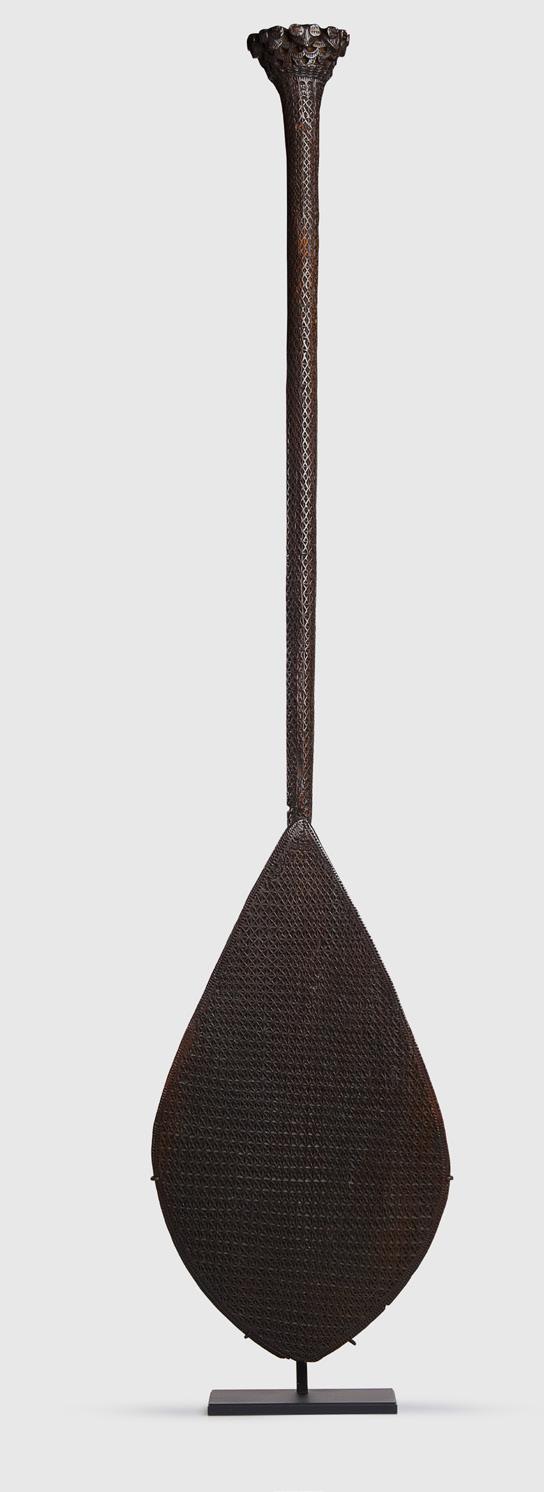
CEREMONIAL PADDLE RAIVAVAE, AUSTRAL ISLANDS, 19TH CENTURY
carved wood, densely carved with geometric motifs throughout, the paddle blade leading to a long cylindrical shaft and a rounded pommel sculpted with dancing figures
114.9cm long
“Ra’ivavae, in the Austral Islands, was a renowned centre for carving and in particular for the production, with introduced iron tools, of intricately decorated paddles. These appear not to have been made before 1820 but were created in large numbers over the subsequent twenty years in response to the interests of mariners in acquiring ‘curiosities’ as souvenirs and for sale in their home ports. Over a thousand examples are known to exist in museum collections.”
Brunt, P., et al. (2018) Oceania, London: Royal Academy of Arts, p. 306
£3,000-5,000
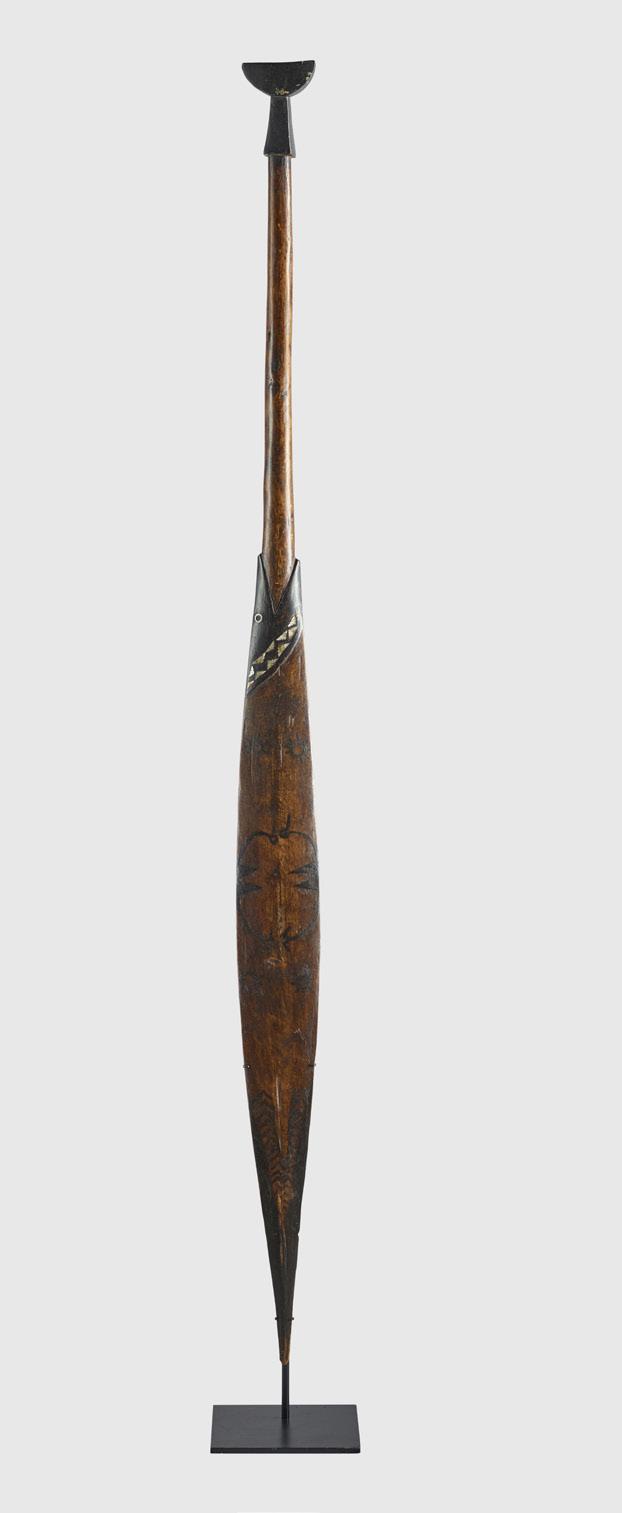
FISH PADDLE SOLOMON ISLANDS
carved wood and pigment, the long, slender shaft topped by a broad, slightly flared crest-like handle, transitioning to a leaf-shaped blade in the form of a fish, with pointed tip 134.6cm long
Provenance: Christie’s, London, December 1, 1983, lot 187 Seymour and Alyce Lazar, Palm Springs, acquired at the above sale Sotheby’s, New York, Sculpture from the Collection of Seymour and Alyce Lazar, October 6th 2022, lot 60
Private collection, United Kingdom, acquired from the above
“There is a whimsical quality to this paddle, with the upper end of the blade taking the form of a fish which effortlessly swallows the shaft of the paddle in its gaping maw, while at the other end the pommel evokes the tail of a fish. The two faces of the blade bear finely painted designs, more or less symmetrical in character, which in the central register seem to depict soaring frigate birds, while the sense of movement in the painted design of the distal end suggests the flipping tail of a fish.”
Sotheby’s, 2022
For similar, please see: The British Museum, London, accession number Oc1913,0524.29.
£2,000-3,000
62
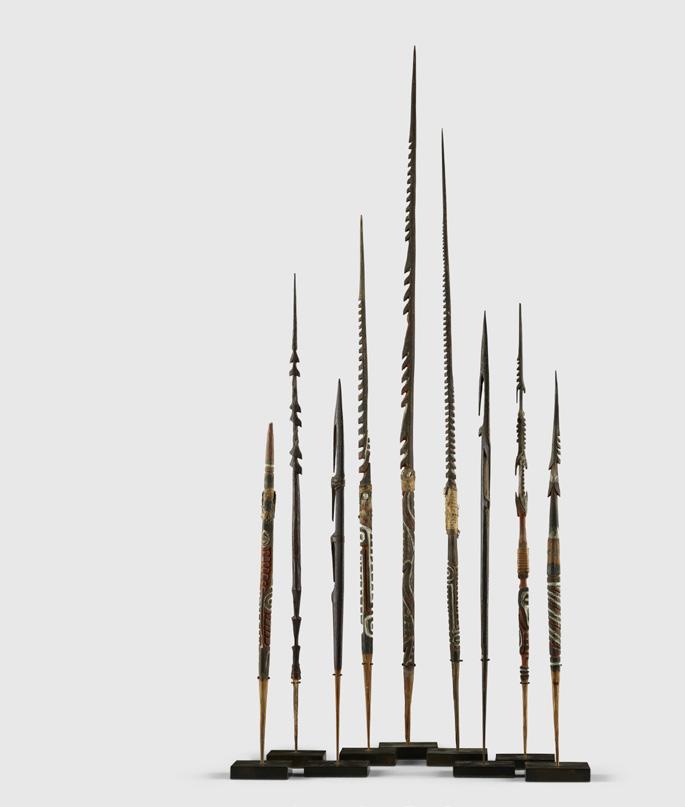
COLLECTION OF SPEARHEADS
PAPUA NEW GUINEA
carved wood, pigment and shell, each raised on a bespoke mount (9)
largest 39cm long
Provenance: Private collection, United Kingdom, acquired from the below in 2010
Clive Loveless, United Kingdom
Adam Prout, United Kingdom
£1,000-1,500
61
PAIR
OF BAINING CLUBS
NEW BRITAIN, PAPUA NEW GUINEA
carved wood and greenstone, each with a long shaft, stepped butt and flaring top with inset carved greenstone head (2)
127.1 & 125cm long
Provenance: Private collection, United Kingdom, acquired from the below in 2006
Ben Hunter, London
Private collection, Sweden
For similar, please see: Hooper, Steven (ed.), Power and Prestige. The Art of Clubs in Oceania, Venice 2021, p. 83, fig. 53
£400-600
63
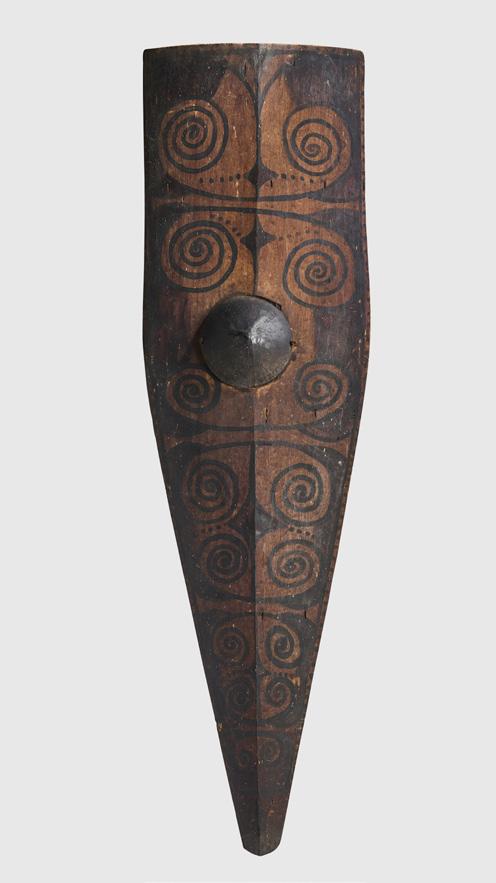
MENTAWAI KURABIT SHIELD
WESTERN SUMATRA, INDONESIA
carved wood, coconut and pigment, of elongated, tapering form, the surface decorated geometric motifs, arranged in symmetrical registers, including spirals and linear elements, with a central coconut shell boss, the reverse also profusely decorated with spiral motifs and bearing an integral handle 104.7cm tall
Provenance: Tony Anninos, Brussels, Belgium Private collection, Netherlands, acquired 1980s
£1,500-2,500
64
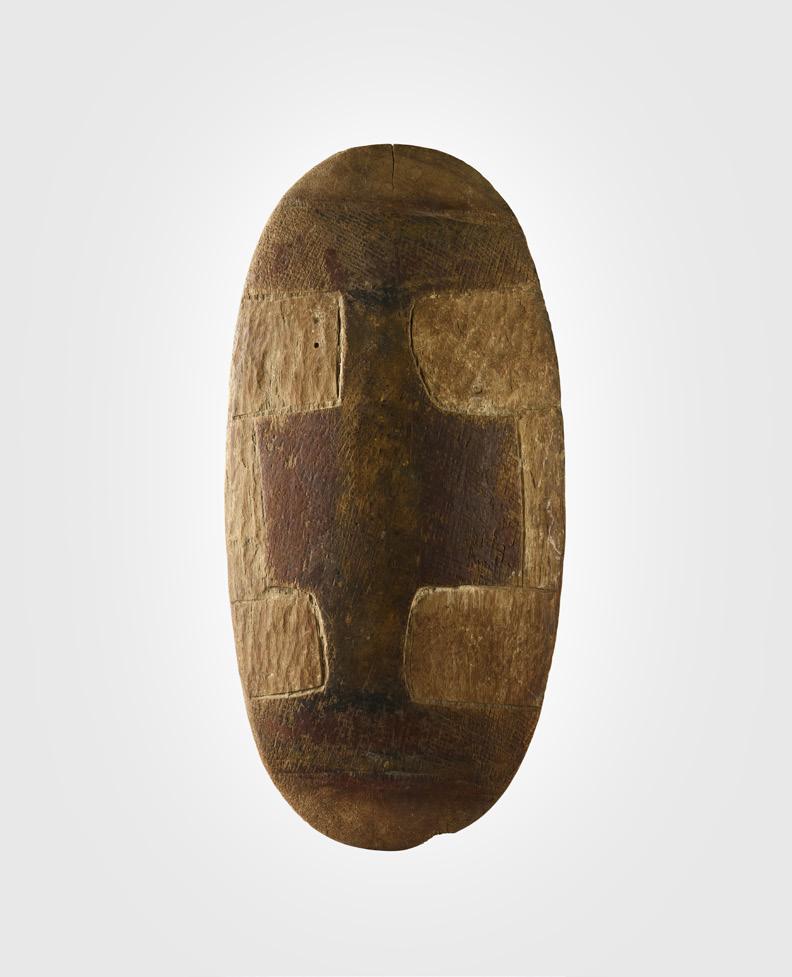
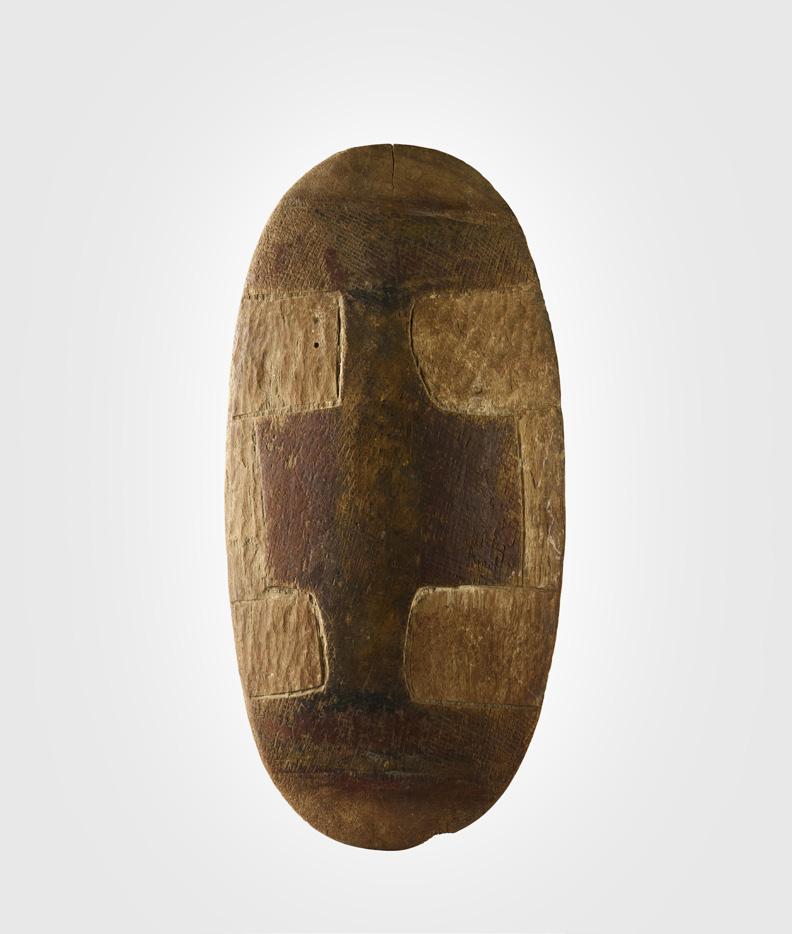
GULMARI SHIELD
NORTHEAST QUEENSLAND, AUSTRALIA
carved wood and pigment, of oblong form, with squared recessed areas filled with lime pigment, an integral handle to the reverse 49.6cm tall
Provenance: Graham Turnor, Bollingbroke Cattle Station, Queensland, acquired mid-1870s whilst working as a cattle drover in western and central Queensland, prior to his purchasing Bollingbroke Station in 1879.
Turnor gifted the shield to his niece, Theodora Caroline Trench (1891 - 1971) of Loughton House, County Offaly, Ireland, in 1920. They remained in the family via descent, until the contents of Loughton House were sold in September 2016.
£3,000-5,000
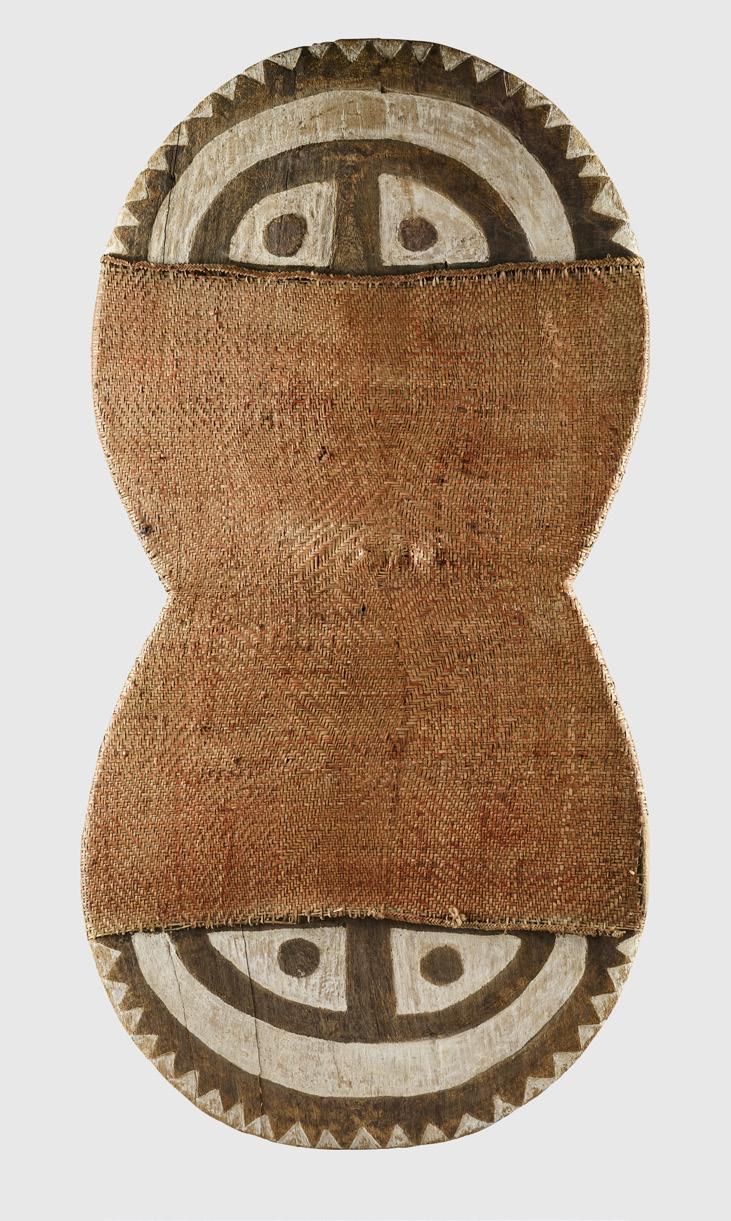
MOTU SHIELD
CENTRAL PROVINCE, PAPUA NEW GUINEA, 19TH CENTURY
carved wood, pigment and rattan, in figureof-eight shape, the mid-section encased within a rattan binding, the surface decoration accented with lime and pigment 98cm tall
Provenance: B. L. Hornshaw (1878-1937), Sydney, ca. 1921
Elizabeth Pryce, Sydney Sotheby’s, Paris,October 10th 2018, Collection Elizabeth Pryce – L’art De Vivre En Océanie, lot 16 Private collection, London, acquired from the above
The distinctive hourglass-shaped shields made by the Motu people of Papua New Guinea’s Central Province are extremely rare. This is likely because the southern coast of New Guinea was an early center of missionary activity, and by the late 19th century fighting shields were no longer in use. Their carefully proportioned hourglass form gives them a harmonious, well-balanced appearance.
£4,000-6,000
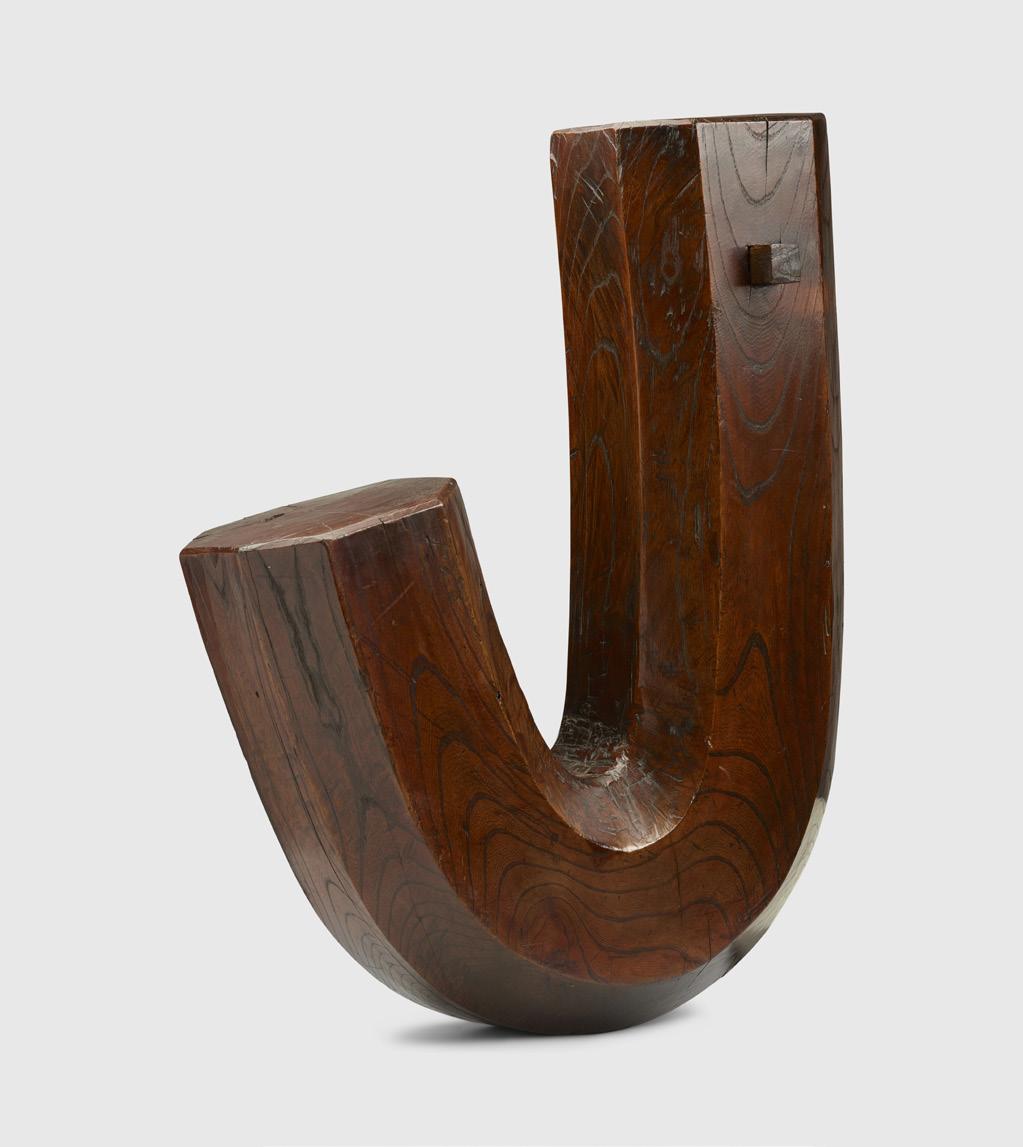
KETTLE HANGING HOOK, JIZAI-KAGI
JAPAN, MEIJI PERIOD, SECOND HALF OF THE 19TH CENTURY
carved keyaki wood, of classical J-shape, rich patination and scarification to the wood from use
72.6cm tall
Provenance: Private collection, Amsterdam, Netherlands
Private collection, United Kingdom
The present example, known as a jizaikagi, is the hook from which an iron kettle for making tea was suspended. It was traditionally hung in the centre of the main room of a Japanese house of the Meiji period, above an open hearth in which a fire was constantly lit. Because the hearth was always visible, this utilitarian item evolved into a decorative piece.
Wealthy individuals sought out impressive designs crafted from high-quality wood, carefully shaped and polished.
The present shape is known as “Ebisu”, named after one of the Seven Gods of Luck, as its form is thought to resemble his distinctive tall hat. Ebisu is associated with prosperity, fishing, and the protection of young children’s health.
£1,200-1,500
67
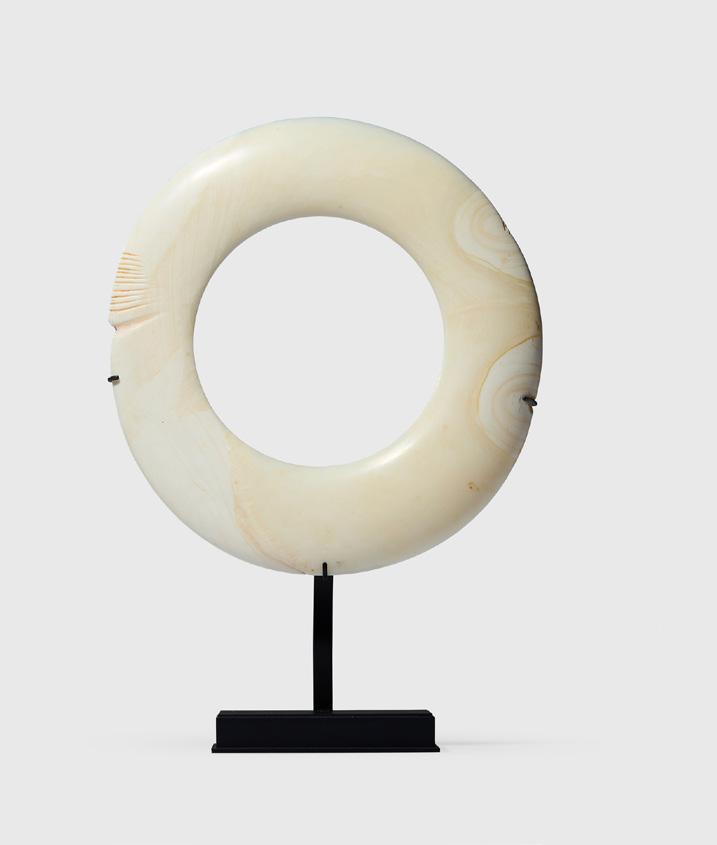
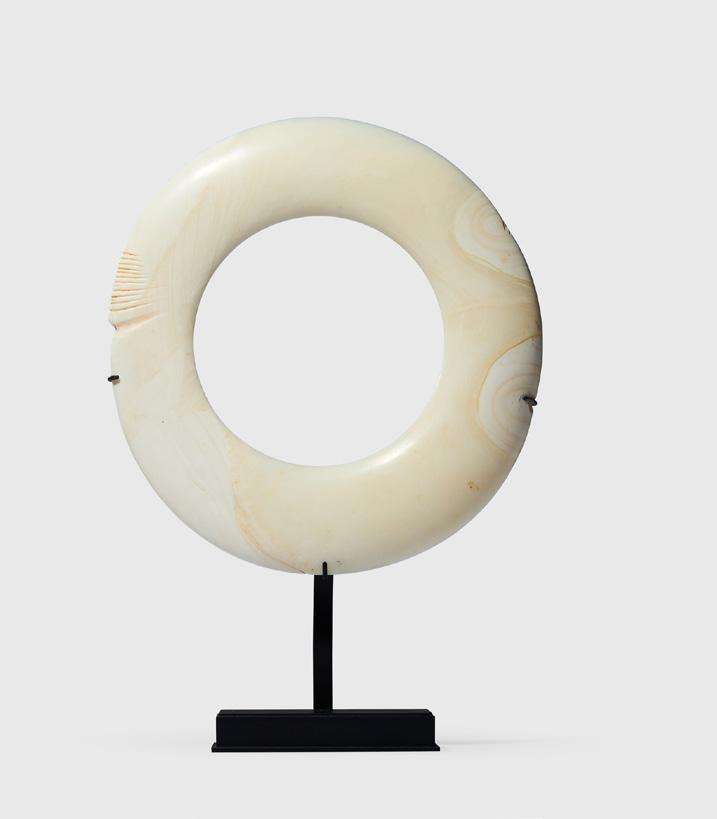
BOIKEN SHELL RING CURRENCY
EAST SEPIK PROVINCE, PAPUA NEW GUINEA
carved and polished shell, worked into a ring, with carved notches to one side, raised on a bespoke mount
25.2cm diameter
£1,800-2,000
68
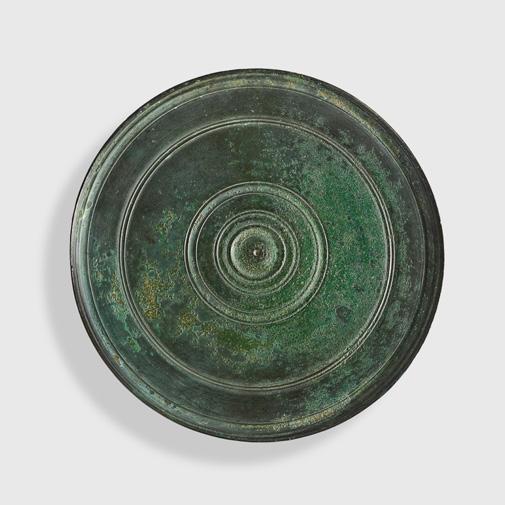
ROMAN BRONZE MIRROR
EUROPE, C. 1ST - 2ND CENTURY A.D.
bronze, a finely worked disc, with raised concentric bands along the border, deep green patination, raised on a bespoke mount 16cm diameter
Provenance: Private collection, United Kingdom, acquired prior to 2000 Bonhams, London, Antiquities, 1st April 2014, lot 107 (part) Private collection, London, acquired at the above sale
Roman bronze mirrors were typically circular or oval, polished to a reflective sheen, and sometimes set into intricately decorated frames made of wood, bone, or ivory. They were often carried as personal items by elite individuals and used in daily grooming rituals. Beyond their practical function, mirrors held a complex symbolic meaning in Roman society. The ability to see one’s reflection was linked not only to vanity and personal care but also to deeper philosophical and spiritual ideas about self-awareness, identity, and the soul.
£800-1,200
69
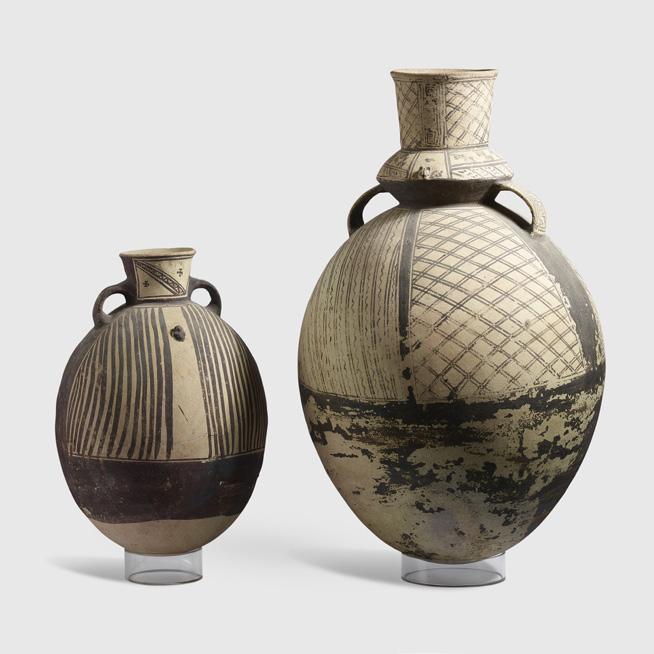
PAIR OF CHANCAY VASES
SOUTHERN PERU, C. 1000 TO 1470 A.D.
painted terracotta, each of ovoid form and sitting on a rounded base, finished in a cream slip with umber pigment, decorated with bands and cross-hatching possibly evoking textile wrapping; twin strap handles rise to a trumpet-shaped neck with a wide rim, the larger example with a pronounced collar below; each vessel further detailed with a small applied animal head (2)
largest 28cm tall
Provenance: Desmond Morris Collection, United Kingdom. Desmond Morris (1928-2026) was a British zoologist, surrealist artist, and author best known for The Naked Ape, whose work explored human behaviour from both scientific and artistic perspectives. He was also an active collector with a particular interest in ethnographic and visual material, reflecting his interdisciplinary approach.
Stothert and Trice, London, United Kingdom. Private collection, United Kingdom, acquired from the above.
£600-900
70
COLLECTION OF TUTSI BASKETS RWANDA
woven grass, of varying sizes, each with lids evoking an architectural form, all with diverse black geometric designs across the body (4)
tallest 31cm
Provenance: Private collection, Belgium
Traditional Tutsi miniature baskets, known for their exquisite craftsmanship, embody both artistic refinement and cultural significance. These finely woven baskets, often featuring intricate geometric patterns in black and natural gold hues, reflect the striking conical roofs of traditional Tutsi houses. Their delicate construction required exacting skill, with women of the Tutsi elite using locally sourced fibres and natural black pigments to create visually dynamic compositions. Unlike larger utilitarian baskets used for storage, these miniatures served as prestigious gifts, safeguarding precious items like amulets, beads, or the head of the house’s pipe.
£900-1,100
HUARI TEXTILE COCO BAG
PERU, C. 700 - 1000 A.D.
woven and dyed camelid wool, rectangular textile panel with a red ground, arranged in two registers, the upper register shows a stylised frontal figure with outstretched arms, while the lower register contains a large cross, the design is woven in a limited palette of red, cream and dark tones, with patterning integrated into the fabric structure, professionally mounted in a perspex case
57 x 39.1cm
Provenance: Taylor Dale, Santa Fe, United States
Private collection, London, United Kingdom, acquired from the above
£2,000-4,000
LAKOTA SIOUX HEADDRESS
GREAT PLAINS, UNITED STATES OF AMERICA, C. 19TH CENTURY felt, cotton, red fabric, seed beads of various hues, feathers, bison hide, leather, horsehair, satin ribbon
43.4cm tall
Provenance: Private collection, Germany, acquired c. 1980 Binoche Renaud Giquello, Art Asiatique – Art Primitif – Art des Indiens d’Amérique, lot 292, 6 December 2013
Craig Finch, London
Private collection, London, acquired from the above
This striking warrior headdress is crafted from a felt cap lined with cotton and edged with finely beaded bison leather. Golden eagle feathers, wrapped in red fabric, radiate from the cap to form a broad, majestic crown. A single “spirit feather” at the centre top, mounted on a leather disk. Satin ribbons and falcon feathers adorn either side of the headdress. The arrangement of the feathers served as a visual identifier of tribal affiliation, with the present style characteristic of the Sioux, Crow, and Cheyenne. The headdress demonstrates meticulous “reserve” beadwork, where portions of the surface are intentionally left unworked to create design contrast.
£4,000-6,000
FOR BUYERS (UK)
These Conditions of Sale and the Saleroom Notices as well as specific Catalogue terms, set out the terms on which we offer the Lots listed in this Catalogue for sale. By registering to bid and/or by bidding at auction You agree to these terms, we recommend that You read them carefully before doing so. You will find a list of definitions and a glossary at the end providing explanations for the meanings of the words and expressions used.
Special terms may be used in Catalogue descriptions of particular classes of items (Books, Jewellery, Paintings, Guns, Firearms, etc.) in which case the descriptions must be interpreted in accordance with any glossary appearing in the Catalogue. These notices and terms will also form part of our terms and conditions of sales.
In these Conditions the words “Us”, “Our”, “We” etc. refers to Lyon & Turnbull Ltd, the singular includes the plural and vice versa as appropriate. “You”, “Your” means the Buyer. Lyon & Turnbull Ltd. acts as agent for the Seller. Lyon & Turnbull Ltd. acts as agent for the Seller. On occasion where Lyon & Turnbull Ltd. own a lot in part or full the property will be identified in the catalogue with the symbol (��) next to its lot number.
A. BEFORE THE SALE
A1. DESCRIPTIONS OF LOTS
Whilst we seek to describe Lots accurately, it may be impractical for us to carry out exhaustive due diligence on each Lot. Prospective Buyers are given ample opportunities to view and inspect before any sale and they (and any independent experts on their behalf) must satisfy themselves as to the accuracy of any description applied to a Lot. Prospective Buyers also bid on the understanding that, inevitably, representations or statements by us as to authorship, genuineness, origin, date, age, provenance, condition or Estimated selling price involve matters of opinion. We undertake that any such opinion shall be honestly and reasonably held and only accept liability for opinions given negligently or fraudulently. Subject to the foregoing neither we the Auctioneer or our employees or agents accept liability for the correctness of such opinions and no warranties, whether relating to description, condition or quality of Lots, express, implied or statutory, are given. Please note that photographs/ images provided may not be fully representative of the condition of the Lot and should not be relied upon as indicative of the overall condition of the Lot. All dimensions and weights are approximate only.
A2. OUR RESPONSIBILITY FOR OUR DESCRIPTION OF LOTS
We do not provide any guarantee in relation to the nature of a Lot apart from our authenticity warranty contained in paragraph E.2 and to the extent provided below.
(a) Condition Reports: Condition Reports are provided on our Website or upon request. The absence of a report does not imply that a Lot is without imperfections. Large numbers of such requests are received shortly before each sale and department specialists and administration will endeavour to respond to all requests although we offer no guarantee. Any statement in relation to the Lot is merely an expression of opinion of the Seller or us and should not be relied upon as an inducement to bid on the Lot. Lots are available for inspection prior to the sale and You are strongly advised to examine any Lot in which You are interested prior to the sale. Our Condition Reports are not prepared by professional conservators, restorers or engineers. Our Condition Report does not form any contract between us and the Buyer. The Condition Reports do not affect the Buyer’s obligations in any way.
(b) Estimates: Estimates are placed on each Lot to help Buyers gauge the sums involved for the purchase of a particular Lot. Estimates do not include the Buyer’s Premium or VAT. Estimates are a matter of opinion and prepared in advance. Estimates may be subject to change and are for guidance only and should not be relied upon.
(c) Catalogue Alterations: Lot descriptions and Estimates are prepared in advance of the sale and may be subject to change. Any alterations will be announced on the Catalogue alteration sheet, made available prior to the sale. It is the responsibility of the Buyer to make themselves aware to any alterations which may have occurred.
A3. WITHDRAWAL
Lyon & Turnbull may, at its discretion, withdraw any Lot at any time prior to or during the sale of the Lot. Lyon & Turnbull has no liability to You for any decision to withdraw.
A4. JEWELLERY, CLOCKS & OTHER ITEMS
(a) Jewellery:
(i) Coloured gemstones (such as rubies, sapphires and emeralds) may have been treated to enhance their look, through methods such as heating and oiling. These methods are accepted practice but may make the gemstone less strong and/or require special care in future.
(ii) All types of gemstones may have been improved by some method. You may request a gemmological report for any Lot which does not have a report if the request is made to us at least three weeks before the date of the sale and You pay the fee for the report in
advance of receiving said report.
(iii) We do not obtain a gemmological report for every gemstone sold in our sales. Where we do get gemmological reports from internationally accepted gemmological laboratories, such reports may be described in the Sale Particulars. Reports will describe any improvement or treatment only if we request that they do so, but will confirm when no improvement or treatment has been made. Because of differences in approach and technology, laboratories may not agree whether a particular gemstone has been treated, the amount of treatment or whether treatment is permanent. The gemmological laboratories will only report on the improvements or treatments known to the laboratories at the date of the report.
(iv) For jewellery sales, all Estimates are based on the information in any gemmological report or, if no gemmological report is available, You should assume that the gemstones may have been treated or enhanced.
(b) Clocks & Watches: All Lots are sold “as seen”, and the absence of any reference to the condition of a clock or watch does not imply the Lot is in good condition and without defects, repairs or restorations. Most clocks and watches will have been repaired during their normal lifetime and may now incorporate additional/ newer parts. Furthermore, we make no representation or warranty that any clock or watch is in working order. As clocks and watches often contain fine and complex mechanisms, Buyers should be aware that a general service, change of battery or further repair work, for which the Buyer is solely responsible, may be necessary. Buyers should also be aware that we cannot guarantee a watch will remain waterproof if the back is removed. Buyers should be aware that the importing watches such as Rolex, Frank Muller and Corum into the United States is highly restricted. These watches cannot be shipped to the USA and only imported personally. Clocks may be sold without pendulums, weights or keys.
(c) Alcohol: may only be sold to persons aged of 18 years and over. By registering to bid, You affirm that You are at least that age. All collections must be signed for by a person over the age of 18. We Reserve the right to ask for ID from the person collecting. Buyers of alcohol must make appropriate allowances for natural variations of ullages, conditions of corks and wine. We can provide no guarantees as to how the alcohol may have been stored. There is always a risk of cork failure and allowance by the Buyer must be made. Alcohol is sold “as is” and quality of the alcohol is entirely at the risk of the Buyer and no warranties are given.
(d) Books-Collation: If on collation any named item in the sale Catalogue proves defective, in text or illustration the Buyer may reject the Lot provided he returns it within 21 days of the
sale stating the defect in writing. This, however, shall not apply in the case of unnamed items, periodicals, autographed letters, music M.M.S., maps, drawings nor in respect of damage to bindings, stains, foxing, marginal worm holes or other defects not affecting the completeness of the text nor in respect of Defects mentioned in the Catalogue, or at the time of sale, nor in respect of Lots sold for less than £300.
(e) Electrical Goods: are sold as “works of art” only and if bought for use must be checked over for compliance with safety regulations by a qualified electrician first. Use of such goods is entirely at the risk of the Buyer and no warranties as to safety of the goods are given.
(f) Upholstered items: are sold as “works of art” only and if bought for use must be checked over for compliance with safety regulations (items manufactured prior to 1950 are exempt from any regulations). Use of such goods is entirely at the risk of the Buyer and no warranties as to safety of the goods are given. We provide no guarantee as to the originality of any wood/material contained within the item.
B. REGISTERING TO BID
B1.
NEW BIDDERS
(a) If this is Your first time bidding at Lyon & Turnbull or You are a returning Bidder who has not bought anything from us within the last two years You must register at least 48 hours before an auction to give us enough time to process and approve Your registration. We may, at our discretion, decline to permit You to register as a Bidder. You will be asked for the following:
(i) Individuals: Photo identification (driving licence, national identity card or passport) and, if not shown on the ID document, proof of Your current address (for example, a current utility bill or bank statement)
(ii) Corporate clients: Your Certificate of Incorporation or equivalent document (s) showing Your name and registered address together with documentary proof of directors and beneficial owners, and;
(iii) Trusts, partnerships, offshore companies and other business structures please contact us directly in advance to discuss requirements.
(b) We may also ask You to provide a financial reference and/or a deposit to allow You to bid. For help, please contact our Finance Department on +44 (0)131 557 8844.
B2.
RETURNING BIDDERS
We may at our discretion ask You for current identification as described in paragraph B.1. (a) above, a finance reference or a deposit as a condition of allowing You to bid. If You have not bought anything from us in the last two years, or if You want to spend more than on previous occasions, please contact our Finance Department on +44 (0)131 557 8844.
B3. FAILURE TO PROVIDE THE RIGHT DOCUMENTS
If in our opinion You do not satisfy our Bidder identification and registration procedures including, but not limited to, completing any anti-money laundering and/or antiterrorism financing checks we may require to our satisfaction, we may refuse to register You to bid, and if You make a successful bid, we may cancel the contract between You and the Seller.
B4. BIDDING ON BEHALF OF ANOTHER PERSON
(a) As an authorised Bidder: If You are bidding on behalf of another person, that person will need to complete the registration requirements above before You can bid, and supply a signed letter authorising You to bid for him/her.
(b) As agent for an undisclosed principal: If You are bidding as an agent for an undisclosed principle (the ultimate Buyer (s)) You accept personal liability to pay the Purchase Price and all other sums due, unless it has been agreed in writing with us before commencement of the auction that the Bidder is acting as an agent on behalf of a named third party acceptable to us and we will seek payment from the named third party.
B5. BIDDING IN PERSON
If You wish to bid in the saleroom You must register for a numbered bidding paddle before You begin bidding. Please ensure You bring photo identification with You to allow us to verify Your registration.
B6. BIDDING SERVICES
The bidding services described below are a free service offered as a convenience to our clients and we are not responsible for any error (human or otherwise), omission or breakdown in providing these services.
(a) Phone bids
Your request for this service must be made no later than 12 hours prior to the auction. We will accept bids by telephone for Lots only if our staff are available to take the bids. If You need to bid in a language other than English You should arrange this Well before the auction. We do not accept liability for failure to do so or for errors and omissions in connections.
(b) Internet Bids
For certain auctions we will accept bids over the internet. For more information please visit our Website. We will use reasonable efforts to carry out online bids and do not accept liability for equipment failure, inability to access the internet or software malfunctions related to execution of online bids/ live bidding.
(c) Written Bids
While prospective Buyers are strongly advised to attend the auction and are always responsible for any decision to bid for a particular Lot and shall be assumed to have carefully inspected and satisfied themselves as to its condition we shall, if so instructed,
clearly and in writing execute bids on their behalf. Neither the Auctioneer nor our employees nor agents shall be responsible for any failure to do so. Where two or more commission bids at the same level are recorded we Reserve the right in our absolute discretion to prefer the first bid so made. Bids must be expressed in the currency of the saleroom. The Auctioneer will take reasonable steps to carry out written bids at the lowest possible price, taking into account the Reserve. If You make a written bid on a Lot which does not have a Reserve and there is no higher bid than Yours, we will bid on Your behalf at around 50% of the lower Estimate or, if lower, the amount of Your bid.
C.
DURING THE SALE
C1. ADMISSION TO OUR AUCTIONS
We shall have the right at our discretion, to refuse admission to our premises or attendance at our auctions by any person. We may refuse admission at any time before, during or after the auction.
C2. RESERVES
Unless indicated by an insert symbol (∆), all Lots in this Catalogue are offered subject to a Reserve. A Reserve is the confidential Hammer Price established between us and the Seller. The Reserve is generally set at a percentage of the low Estimate and will not exceed the low Estimate for the Lot.
C3. AUCTIONEER’S DISCRETION
The maker of the highest bid accepted by the Auctioneer conducting the sale shall be the Buyer and any dispute shall be settled at the Auctioneer’s absolute discretion. The Auctioneer may move the bidding backwards of forwards in any way he or she may decide or change the order of the Lots. The Auctioneer may also; refuse any bid, withdraw any Lot, divide any Lot or combine any two or more Lots, reopen or continuing bidding even after the hammer has fallen.
C4. BIDDING
The Auctioneer accepts bids from:
(a) Bidders in the saleroom;
(b) Telephone Bidders, and internet Bidders through Lyon & Turnbull Live or any other online bidding platform we have chosen to list on and;
(c) Written bids (also known as absentee bids or commission bids) left with us by a Bidder before the auction.
C5. BIDDING INCREMENTS
Bidding increments shall be at the Auctioneer’s sole discretion.
C6. CURRENCY CONVERTER
The saleroom video screens and bidding platforms may show bids in some other major currencies as Well as sterling. Any conversion is for guidance only and we cannot be bound be any rate of exchange used. We are not responsible for any error (human or otherwise) omission
or breakdown in providing these services.
C7. SUCCESSFUL BIDS
Unless the Auctioneer decides to use their discretion as set out above, when the Auctioneer’s hammer falls, we have accepted the last bid. This means a contract for sale has been formed between the Seller and the successful Bidder. We will issue an invoice only to the registered Bidder who made the successful bid. While we send out invoices by post/or email after the auction, we do not accept responsibility for telling You whether or not Your bid was successful. If You have bid by written bid, You should contact us by telephone or in person as soon as possible after the auction to get details of the outcome of our bid to avoid having to pay unnecessary storage charges.
C8. RELEVANT LEGISLATION
You agree that when bidding in any of our sales that You will strictly comply with all relevant legislation including local laws and regulations in force at the time of the sale for the relevant saleroom location.
D.
THE BUYER’S PREMIUM, TAXES AND ARTIST’S RESALE ROYALTY
D1. THE PURCHASE PRICE
For each Lot purchased a Buyer’s Premium of 27% of the Hammer Price of each Lot up to and including £20,000, plus 26% from £20,001 to £800,000, plus 20% from £800,001 thereafter. VAT at the appropriate rate is charged on the Buyer’s Premium. No VAT is payable on the Hammer Price or premium for printed books or unframed maps bought at auction. Live online bidding may be subject to an additional premium (level dependent on the live bidding service provider chosen). This additional premium is subject to VAT at the appropriate rate as above.
D2. VALUE ADDED TAX
Value Added Tax is charged at the appropriate rate prevailing by law at the date of sale and is payable by Buyers of relevant Lots.
(a) Lots affixed with (†): Value Added Tax on the Hammer Price is imposed by law on all items affixed with a dagger (†). This imposition of VAT maybe because the Seller is registered for VAT within the European Union and is not operating under a Margin Scheme.
(b) Lots affixed with (*): A reduced rate of Value Added Tax on the Hammer Price of 5% is payable. This indicates that a Lot has been imported from outwit the European Union. This reduced rate is applicable to Antique items.
(c) Lots affixed with [Ω]: Standard rate of Value Added Tax on the Hammer Price and premium is payable. This applies to items that have been imported from outwit the European Union and do not fall within the reduced rate category outlined above.
D3.
ARTIST’S RESALE ROYALTY (DROIT DE SUITE)
This symbol § indicates works which may be subject to the Droit de Suite or Artist’s Resale Right, which took effect in the United Kingdom on 14th February 2006. We are required to collect a royalty payment for all qualifying works of art. Under new legislation which came into effect on 1st January 2012 this applies to living artists and artists who have died in the last 70 years. This royalty will be charged to the Buyer on the Hammer Price and in addition to the Buyer’s Premium. It will not apply to works where the Hammer Price is less than £1,000. The charge for works of art sold at and above £1,000 and below £50,000 is 4%. For items selling above £50,000, charges are calculated on a sliding scale. All royalty charges are paid to the Design and Artists Copyright Society (‘DACS’) and no handling costs or additional fees are retained by the Auctioneer. Resale royalties are not subject to VAT. More information on Droit de Suite is available at www.dacs.org.uk.
E. WARRANTIES
E1.
SELLER’S WARRANTIES
For each Lot, the Seller gives a warranty that the Seller;
(a) Is the owner of the Lot or a joint owner of the Lot acting with the permission of the other co-owners, or if the Sellers is not the owner of or a joint owner of the Lot, has the permission of the owner to sell the Lot, or the right to do so in law, and; (b) Had the right to transfer ownership of the Lot to the Buyer without any restrictions or claims by anyone else.
If either other above warranties are incorrect, the Seller shall not have to pay more than the Purchase Price (as defined in the glossary) paid by You to us. The Seller will not be responsible to You for any reason for loss of profits or business, expected savings, loss of opportunity or interest, costs, damages, other damages or expense. The Seller gives no warranty in relation to any Lot other than as set out above and, as far as the Seller is allowed by law, all warranties from the Seller to You, and all obligations upon the Seller which may be added to this agreement by law, are excluded.
E2. AUTHENTICITY GUARANTEE
We guarantee that the authorship, period, or origin (collectively, “Authorship”) of each Lot in this Catalogue is as stated in the BOLD or CAPITALISED type heading in the Catalogue description of the Lot, as amended by oral or written saleroom notes or announcements. We make no warranties whatsoever, whether express or implied, with respect to any material in the Catalogue other than that appearing in the Bold or Capitalised heading and subject to the exclusions below.
In the event we, in our reasonable opinion, deem that the conditions of the authenticity guarantee have been satisfied, it shall refund to the original purchaser of the Lot the Hammer Price and applicable Buyer’s Premium paid for the Lot by the original purchaser. This Guarantee does not apply if:
(a) The Catalogue description was in accordance with the opinion (s) of generally accepted scholar (s) and expert (s) at the date of the sale, or the Catalogue description indicated that there was a conflict of such opinions; or
(b) the only method of establishing that the Authorship was not as described in the Bold or Capitalised heading at the date of the sale would have been by means or processes not then generally available or accepted; unreasonably expensive or impractical to use; or likely (in our reasonable opinion) to have caused damage to the Lot or likely to have caused loss of value to the Lot; or
(c) There has been no material loss in value of the Lot from its value had it been in accordance with its description in the Bold or Capitalised type heading. This Guarantee is provided for a period of one year from the date of the relevant auction, is solely for the benefit of the original purchaser of the Lot at the auction and may not be transferred to any third party. To be able to claim under this Authenticity Guarantee, the original purchaser of the Lot must:
(a) notify us in writing within one month of receiving any information that causes the original purchaser of record to dispute the accuracy of the Bold or Capitalised type heading, specifying the Lot number, date of the auction at which it was purchased and the reasons for such dispute; and
(b) return the Lot to our registered office in the same condition as at the date of sale to the original purchaser of record and be able to transfer good title to the Lot, free from any third party claims arising after the date of such sale.
We have discretion to waive any of the above requirements. We may require the original purchaser of the Lot to obtain, at the original purchaser of Lot’s cost, the reports of two independent and recognised experts in the field. The reports must be mutually acceptable to us and the original purchaser of the Lot. We shall not be bound by any reports produced by the original purchaser of the Lot, and Reserves the right to seek additional expert advice at its own expense. It is specifically understood and agreed that the rescission of a sale and the refund of the original Purchase Price paid (the successful Hammer Price, plus the Buyer’s Premium) is exclusive and in lieu of any other remedy which might otherwise be available as a matter of law. Lyon & Turnbull and the Seller shall not be liable for any incidental or consequential damages incurred or claimed, including without limitation, loss of profits or interest.
E3. YOUR WARRANTIES
(a) You warrant that the funds used for settlement are not connected with any criminal activities, including tax evasion and You are neither; under investigation, have been charged with or convicted of money laundering, terrorist activities or other crimes.
(b) Where You are bidding on behalf of another person You warrant that:
(i) You have conducted appropriate customer due diligence on the ultimate Buyer (s) of the Lot (s) in accordance with all relevant anti-money laundering legislation, consent to us relying on this due diligence, and You will retain for a period of not less than five years the documentation evidencing the due diligence. You will make such documentation promptly available for immediate inspection by a third party auditor upon our written request to do so;
(ii) The arrangements between You and the ultimate Buyer (s) in relation to the Lot or otherwise do not, in whole or in part, facilitate tax crimes, and;
(iii) You do not know, and have no reason to suspect that the funds used for settlement are connected with the proceeds of any criminal activity, including tax evasion, or that the ultimate Buyer (s) are under investigation or have been charged with or convicted of moneylaundering, terrorist activities, or other crimes.
F. PAYMENT
F1.
MAKING PAYMENT
(a) Within 7 days of a Lot being sold You will pay to us the Total Amount Due in cash or by such other method as is agreed by us. We accept cash, bank transfer (details on request), debit cards and Visa or MasterCard credit cards. Please note that we do not accept cash payments over £5,000 per Buyer per year.
(b) Any payments by You to us can be applied by us towards any sums owing by You to us howsoever incurred and without agreement by You or Your agent, whether express or implied.
(c) We will only accept payment from the registered Bidder. Once issued, we cannot change the Buyer’s name on an invoice or re-issue the invoice in a different name.
(d) The ownership of any Lots purchased shall not pass to You until You have made payment in full to us of the Total Amount Due. The risk in and the responsibility for the Lot will transfer to You from whichever is the earlier of the following:
(i) When You collect the Lot; or
(ii) At the end of the 30th day following the date of the auction, or, if earlier, the date the Lot is taken into care by a third party unless we have agreed otherwise with You in writing.
(e) You shall at Your own risk and expense take away any Lots that You have purchased and paid for not
later than 7 working days following the day of the auction or upon the clearance of any payment whichever is later. Please note we do not accept cheques. We can provide You with a list of shippers. However, we will not be responsible for the acts or omissions of carriers or packers whether or not recommended by us.
(f) No purchase can be claimed or removed until it has been paid for.
(g) It is the Buyer’s responsibility to ascertain collection procedures, particularly if the sale is not being held at our main sale room and the potential storage charges for Lots not collected by the appropriate time.
F2. IN THE EVENT OF NON-PAYMENT
If any Lot is not paid for in full and taken away in accordance with these Conditions or if there is any other breach of these Conditions, we, as agent for the Sellers and on their behalf, shall at our absolute discretion and without prejudice to any other rights we may have, be entitled to exercise one or more of the following rights and remedies:
(a) To proceed against You for damages for breach of contract;
(b) To rescind the contract for sale of that Lot and/or any other Lots sold by us to You;
(c) To resell the Lot (s) (by auction or private treaty) in which case You shall be responsible for any resulting deficiency in the Total Amount Due (after crediting any part payment and adding any resale costs).
(d) To remove, store and insure the Lot in the case of storage, either at our premises or elsewhere and to recover from You all costs incurred in respect thereof;
(e) To charge interest at a rate of 5% a year above the Bank of Scotland base rate from time to time on all sums outstanding for more than 7 working days after the sale;
(f) To retain that or any other Lot sold to You until You pay the Total Amount Due;
(g) To reject or ignore bids from You or Your agent at future auctions or to impose conditions before any such bids shall be accepted;
(h) To apply any proceeds of sale of other Lots due or which become due to You towards the settlement of the Total Amount Due by You and to exercise a lien over any of Your property in our possession for any purpose until the debt due is satisfied. You will be deemed to have granted such security to us and we may retain such property as collateral security for Your obligations to us; we may decide to sell Your property in any way we think appropriate. We will use the proceeds of the sale against any amounts You owe us and we will pay any amount left from that sale to You. If there is a shortfall, You must pay us the balance; and
(i) Take any other action we see necessary or appropriate.
G. COLLECTION & STORAGE
(1) It is the Buyer’s responsibility to ascertain collection procedures, particularly if the sale is not being held at our main sale room and the potential storage charges for Lots not collected by the appropriate time. Information on collection is set out in the Catalogue and our Website
(2) Unless agreed otherwise, You must collect purchased Lots within seven days from the auction. Please note the Lots will only be released upon full payment being received. We will assume your authority to release your item(s) to a recognised shipper providing they can provide your invoice details.
(3) If You do not collect any Lot within seven days following the auction we can, at our discretion;
(i) Charge You storage costs at the rates set out on our Website.
(ii) Move the Lot to another location or an affiliate or third party and charge You transport and administration costs for doing so and You will be subject to the third party storage terms and pay for their fees and costs.
(iii) Sell the Lot in any way we think reasonable.
H. TRANSPORT & SHIPPING
H1.
TRANSPORT AND SHIPPING
We will include transport and shipping information with each invoice sent to You as well as displayed on our Website. You must make all transport and shipping arrangements.
H2.
EXPORT OF GOODS
Buyers intending to export goods should ascertain;
(a) Whether an export licence is required; and
(b) Whether there is any specific prohibition on importing goods of that character, e.g. items that may contain prohibited materials such as ivory or rhino horn. It is the Buyer’s sole responsibility to obtain any relevant export or import licence. The denial of any licence or any delay in obtaining licences shall neither justify the recession of any sale not any delay in making full payment for the Lot.
H3. CITES: ENDANGERED PLANTS AND ANIMALS LEGISLATION
Please be aware that all Lots marked with the symbol Y may be subject to CITES regulations when exporting these items outside the EU. These regulations may be found at http:// www.defra.gov.uk/ahvla-en/importsexports/cites
We accept no liability for any Lots which may be subject to CITES but have not be identified as such.
I. OUR LIABILITY TO YOU
(a) We give no warranty in relation to any statement made, or information give, by us, our representatives or employees about any Lot other than as set out in the authenticity warranty and as far as we are allowed by law, all warranties and other terms which may be added to this agreement by law are exclude. The Seller’s warranties contained in paragraph E.1 are their own and we do not have a liability in relation to those warranties.
(b) (i) We are not responsible to You for any reason whether for breaking this agreement or any other matter relating to Your purchase of, or bid for, any Lot other than in the event of fraud or fraudulent misrepresentation by us other than as expressly set out in these conditions of sale; or
(ii) We do not give any representation, warranty or guarantee or assume any liability for a kind in respect of any Lot with regard to merchantability, fitness for a particular purpose, description, size, quality, condition, attribution, authenticity, rarity, importance, medium, provenance, exhibition history, literature or historical relevance, except as required by local law, any warranty of any kind is excluded by this paragraph.
(c) in particular, please be aware that our written and telephone bidding services, Lyon & Turnbull Live, Condition Reports, currency converter and saleroom video screens are free services and we are not responsible for any error (human or otherwise) omission or breakdown in these services.
(d) We have no responsibility to any person other than a Buyer in connection with the purchase of any Lot
(e) If in spite of the terms of this paragraph we are found to be liable to You for any reason, we shall not have to pay more than the Purchase Price paid by You to us. We will not be responsible for any reason for loss of profits, business, loss of opportunity or value, expected savings or interest, costs damages or expenses.
J. OTHER TERMS
J1. OUR ABILITY TO CANCEL
In addition to the other rights of cancellation contained in this agreement, we can cancel the sale of a Lot if;
(i) Any of our warranties are not correct, as set out in paragraph E3, (ii) We reasonably believe that completing the transaction is or may be unlawful; or
(iii) We reasonably believe that the sale places us or the Seller under any liability to anyone else or may damage our reputation.
J2. RECORDINGS
We may videotape and record proceedings at any auction. We will keep any personal information
confidential, except to the extent disclosure is required by law if You do not wish to be videotaped, You may make arrangements to bit by telephone or a written bid or bid on Lyon & Turnbull Live instead. Unless we agree otherwise in writing, You may not videotape or record proceedings at any auction.
J3. COPYRIGHT
We own the copyright in respect of all images, illustrations and written material produced by or for us relating to a Lot. (Including Catalogue entries unless otherwise noted in the Catalogue) You cannot use them without our prior written permission. We do not offer any guarantee that You will gain any copyright or other reproductions to the Lot.
J4. ENFORCING THIS AGREEMENT
If a court finds that any part of this agreement is not valid or is illegal or impossible to enforce, that part of the agreement will be treated as deleted and the rest of this agreement will remain in force.
J5. TRANSFERRING YOUR RIGHTS AND RESPONSIBILITIES
You may not grant a security over or transfer Your rights of responsibilities under these terms on the contract of sale with the Buyer unless we have given our written permission. This agreement will be binding on Your successors or estate and anyone who takes over Your rights and responsibilities.
J6. REPORTING ON LYONANDTURNBULL.COM
Details of all Lots sold by us, including Catalogue disruptions and prices, may be reported on www. lyonandturnbull.com. Sales totals are Hammer Price plus Buyer’s Premium and do not reflect any additional fees that may have been incurred. We regret we cannot agree to requests to remove these details from our Website.
J7. SALE BY PRIVATE TREATY
(a) The same Conditions of Sale (Buyers) shall apply to sales by private treaty.
(b) Private treaty sales made under these Conditions are deemed to be sales by auction and subject to our agreed charges for Sellers and Buyers.
(c) We undertake to inform the Seller of any offers it receives in relation to an item prior to any Proposed Sale, excluding the normal method of commission bids.
(d) For the purposes of a private treaty sale, if a Lot is sold in any other currency than Sterling, the exchange rate is to be taken on the date of sale.
J8. THIRD PARTY LIABILITY
All members of the public on our premises are there at their own risk and must note the lay-out of the premises, safety and security arrangements. Accordingly, neither the Auctioneer nor our employees or agents shall incur liability for death
or personal injury or similarly for the safety of the property of persons visiting prior to, during or after a sale.
J9. DATA PROTECTION
Where we obtain any personal information about You, we shall use it in accordance with the terms of our Privacy Policy (subject to any additional specific consent (s) You may have given at the time Your information was disclosed). A copy of our Privacy Policy can be found on our Website www.lyonandturnbull. com or requested from Client Services, 33 Broughton Place, Edinburgh, EH1 3RR or by email from data enquiries@lyonandturnbull.com.
J10.
FORCE MAJEURE
We shall be under no liability if they shall be unable to carry out any provision of the Contract of Sale for any reason beyond their control including (without limiting the foregoing) an act of God, legislation, war, fire, flood, drought, failure of power supply, lock-out, strike or other action taken by employees in contemplation or furtherance of a dispute or owing to any inability to procure materials required for the performance of the contract.
J11. LAW AND JURISDICTION
(a) Governing Law: These Conditions of Sale and all aspects of all matters, transactions or disputes to which they relate or apply shall be governed by, and interpreted in accordance with, Scots law
(b) Jurisdiction: The Buyer agrees that the Courts of Scotland are to have exclusive jurisdiction to settle all disputes arising in connection with all aspects of all matters or transactions to which these Conditions of Sale relate or apply.
K. DEFINITIONS & GLOSSARY
The following words and phrases used have (unless the context otherwise requires) the meaning to given to them below. The go Glossary is to assist You to understand words and phrases which have a specific legal meaning which You may not be familiar with.
K1. DEFINITIONS
“Auctioneer” Lyon & Turnbull Ltd
(Registered in Scotland No: 191166 | Registered address: 33 Broughton Place, Edinburgh, EH1 3RR) or it’s authorised representative conducting the sale, as appropriate;
“Bidder” a person who has completed a Bidding Form
“Bidding Form” our Bidding Registration Form our Absentee Bidding Form or our Telephone Bidding Form.
“Buyer” the person to whom a Lot is knocked down by the Auctioneer. The Buyer is also referred to by the words “You” and “Your”
“Buyer’s Premium” the sum calculated on the Hammer Price at the rates stated in Catalogue.
“Catalogue” the Catalogue relating to the relevant Sale, including any
representation on our Website
“Condition Report” the report on the physical condition of a Lot provided to a Bidder or potential Bidder by us on behalf of the Seller.
“Estimate” a statement of our opinion of the range within the hammer is likely to fall.
“Hammer Price” the level of bidding reached (at or above any Reserve) when the Auctioneer brings down the hammer;
“High Cumulative Value of Lot” several Lots with a total lower Estimate value of £30,000 or above;
“High Value Lot” a Lot with a lower Estimate of £30,000 or above;
“Lot” each Item offered for sale by Lyon & Turnbull;
“Purchase Price” is the aggregate of Hammer Price and any applicable Buyer’s Premium, VAT on the Hammer Price (where applicable), VAT on the Buyer’s Premium and any other applicable expenses;
“Reserve” the lowest price below which an item cannot be sold whether at auction or by private treaty;
“Sale” the auction sale at which a Lot is to be offered for sale by us.
“Seller” the person who offers the Lot for Sale. We act as agent for the Seller.
“Total Amount Due” the Hammer Price in respect of the Lot sold together with any premium, Value Added Tax or other taxes chargeable and any additional charges payable by a defaulting Buyer under these Conditions;
“VAT” value added tax at the prevailing rate at the date of the sale in the United Kingdom.
“Website” Lyon & Turnbull’s Website at www.lyonandturnbull.com
K2. GLOSSARY
The following have specific legal meaning which You may not be familiar with. The following glossary is intended to give You an understanding of those expressions but is not intended to restrict their legal meanings:
“Artist’s Resale Right” the right of the creator of a work of art to receive a payment on Sales of that work subsequent to
“Knocked Down” when a Lot is sold to a Bidder, indicated by the fall of the hammer at the Sale.
“Lien” a right for the person who has possession of the Lot to retain possession of it.
“Risk” the possibility that a Lot may be lost, damaged, destroyed, stolen, or deteriorate in condition or value.
“Title” the legal and equitable right to the ownership of a Lot.