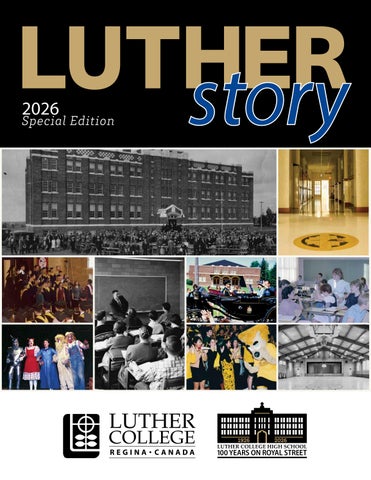
2026 Special Edition LUTHER
RE GI NA CA NA DA
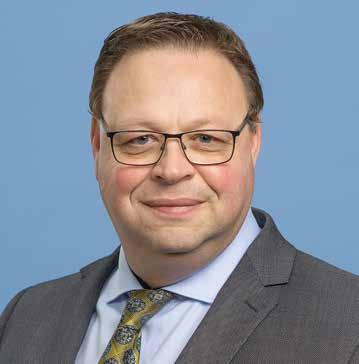
Iam grateful to serve a school and college with such a meaningful history in this province, and I am honoured to serve as President as Luther College High School prepares to celebrate 100 Years on Royal Street during the 2026-2027 academic year.
This is a milestone worth marking. For a century, students have walked the halls of Luther College High School, sat in classrooms, played on teams, performed on stages, sung in choirs, built friendships, found confidence, and become people who have gone on to serve their communities in countless ways.
But anniversaries are not only about remembering the past. At their best, they also ask us to think seriously about the future.
Luther College has never been a place that simply sits still and protects what it already has. Luther has endured because, at key moments, people loved it enough to help it change. Luther has a long and proud history. That history is a gift, but it is not a guarantee.
Institutions are not built by slogans or strategic plans alone. They are built by people: people who teach, lead, give, serve, and show up when it would be easier not to. Luther College exists because people did that before us. Luther’s future depends on whether we are willing to do the same.
Our mission says that Luther College “prepares students to be compassionate, creative, and critical thinkers, through academic excellence and a community of care that is rooted in our call to love and serve our neighbours.” That is not decorative language. That is the work.
And that work now takes place in a world that has changed. Costs have risen. Families are making
careful decisions about education. Enrolment patterns are shifting. Governments are making policy choices that affect schools and universities. The expectations placed on students, teachers, and institutions continue to increase.
We need to be honest about those realities. But we also need to be equally honest about our strengths.
We have a strong mission. We have deeply committed faculty and staff. We have students who remind us every day why this work matters. We have loyal alumni. We have generous donors. We have a volunteer Board of Regents taking the long-term sustainability of Luther College seriously. And we have a story that is worth telling with more clarity and confidence.
Our responsibility now is to take those strengths and focus them. That means disciplined stewardship of our resources. It means wise decisions about facilities, programs, scholarships, student support, enrolment, and long-term sustainability. It means protecting what is essential, changing where change is needed, and keeping one simple question at the centre of our decision-making:
What will make Luther stronger for the students who are here now, and for the students who have not yet arrived? That question will guide us.
As we prepare for 100 Years on Royal Street, we are not simply asking what Luther has been. We are asking what kind of school Luther must become in its next century.
Will we still be a place where students are known by name? Will we still be a place where academic excellence and care belong together?
Will we still be a place where meaningful tradition meets an open and changing world? Will we still form young people as compassionate, creative, and critical thinkers? I believe the answer is yes.
But that future will not happen by accident. It will happen because people continue to believe in this school, support it, challenge it, and help carry it forward. Luther College has been sustained by generations of people who believed that education could change lives. They were right. It has changed lives. It is changing lives now. And, with continued care and commitment, it will keep changing lives for generations to come.
We will be honest about our challenges. We will be disciplined with our resources. We will make decisions with the care of our students at the centre. We will tell Luther’s story with greater confidence. And we will work to ensure that this school remains worthy of the trust placed in it.
I am grateful for the faculty and staff who care deeply about our students, for our alumni and donors, for parents and friends, and for our volunteer Board of Regents. Most of all, I am grateful for the students, because everything we do comes back to them.
They are the reason we look back with gratitude. They are the reason we move forward with purpose.
EDITOR
Angela Bethune
EDITORIAL ADVISORS
Donna Achtzehner & Michelle Clark
DESIGN & PRINTING
Michayla Ziegler & Western Litho
CONTRIBUTORS
Angela Bethune, Sabrina Cataldo, Rev. Dr. Richard Hordern, Dr. Murray Knuttila, Nora Marpole, Dr. Tom Phenix, Leah Quick, Kelly Russill, Chris Senger & Michayla Ziegler
ON THE COVER
A Look Back:100 Years on Royal Street, Luther College High School
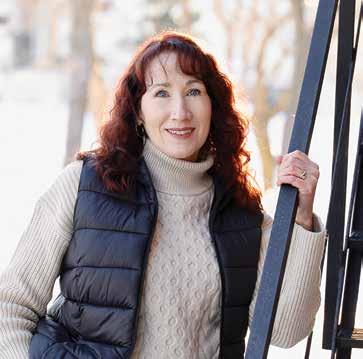
As Luther College High School moves toward celebrating 100 years on Royal Street in 2026, it feels especially meaningful to reflect on the history and the people entrusted with carrying that legacy forward. For me, that reflection is deeply personal.
My connection to Luther College began long before I joined the faculty in 2005. My grandmother, Anne Newton Pantel, attended Luther for Grades 9 and 10 before leaving school to support her family. Her experience left such a lasting impression that she later sent my father and two aunts to Luther. Years later, my own daughter and son would also graduate from Luther, making this school part of three generations of our family’s story. I could never have imagined then that one day I would serve as the school’s Principal.
I arrived at Luther as a teacher, drawn by the school’s reputation for academic excellence, strong relationships, and distinctive sense of community. What I quickly discovered was that Luther is more than a school. It is rooted in a strong Lutheran tradition while remaining genuinely open to students from many different backgrounds, faiths, and experiences. That balance continues to shape who we are as a community.
I’ve had the privilege of serving as a teacher, Vice-Principal, Interim Principal, and now
Principal. Whether supporting students in classrooms, attending chapel, watching the musical and Candlelight performances, cheering at L.I.T., travelling on study tours, or helping students navigate academic and personal challenges, I have come to understand that the heart of Luther has always been its people.
I have been fortunate to learn from remarkable mentors whose leadership helped shape both the school and my own approach to education. Two individuals who stand out are Berbel Knoll and Dr. Mark Anderson.
Berbel’s quiet strength, wisdom, and unwavering care for students left a profound mark on generations of Luther families. As Luther’s first female Principal, she modeled thoughtful and steady leadership grounded in compassion, patience, and integrity.
Dr. Mark Anderson likewise leaves an extraordinary legacy. His commitment to academic excellence, community, and Luther’s grace-filled Christian context shaped the school in countless ways. He reminded us that education is not simply about achievement, but about preparing compassionate, creative, and critical thinkers who understand their responsibility to serve others and contribute meaningfully to the world around them.
Today, Luther College enters a new chapter marked by both transition and opportunity.
With new leadership, there is excitement and responsibility in carrying the College forward. At the same time, we remain grounded in the values that have sustained Luther for generations: excellence, compassion, care, stewardship, integrity, and a commitment to building a community where students feel respected, supported, and challenged to grow.
There is much to honour and much to look forward to. Our students continue to excel academically, artistically, and athletically. New opportunities in the IB program, Indigenous education, student wellness, interdisciplinary learning, and global engagement continue to expand how we support the whole student and help young people discover their purpose, passion, and potential in the world.
Anniversaries naturally invite nostalgia, but they also invite responsibility. The challenge before us is not simply to preserve Luther’s history, but to carry it forward thoughtfully and faithfully for the next generation. As Principal, it is both a privilege and a responsibility to help steward that legacy into Luther College’s next century on Royal Street.
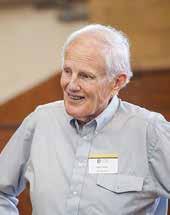
ick Stark was an icon in the Luther College High School legacy. He passed away October 10, 2025, at age 90.
Dick was a pillar of Luther College High School for decades, teaching math and physics and coaching athletics from 1969 to 1993. But since then, he never stopped supporting and connecting with teachers, staff, students, and alumni in all the decades that followed. Coach Stark, true to his unselfish nature, helped Luther over the last few decades wherever he could with advice, visits with alumni, and using his engineering background to contribute to many building projects. His presence was felt at all our Luther events, especially L.I.T. and basketball and football games. He received Luther’s Distinguished Service Award in 2013 for his genuine love for and belief in Luther College, its students, and its mission.
Troy Casper, current Luther teacher and former student and friend of Dick, said, “Coach Stark devoted much of his life to the students, athletes, and community of Luther College High School, where he became far more than a coach or teacher – he became a cornerstone of the school itself. Through decades of coaching basketball, football, and countless other athletic programs, Dick built a legacy rooted not simply in wins and championships, but in character, respect, and genuine care for others. His calm, respectful nature earned admiration from everyone around him, from opponents and officials to fellow coaches, players, students, and the
broader Regina athletic community. Widely respected across the country for both his coaching abilities and his integrity, he dedicated his life to shaping young men and women into better athletes, better leaders, and better people.”
Gerry Harris, a former faculty member and long-time friend of Dick’s, agreed that Dick showed genuine care for everyone he encountered and always went above and beyond. “He was all in, all the time.” Harris spoke at his memorial service, sharing this: “Dick always knew when to offer a listening ear and approached everything he was involved in with passion and kindness. He was deeply attuned to the feelings and well-being of others. Dick consistently showed genuine interest in students, athletes, artists, and young people striving to reach their potential. I do not think he ever missed a girls’ or boys’ basketball game, football game, or any drama production. His support for students extended far beyond the classroom –he was always there, cheering them on in all their pursuits.”
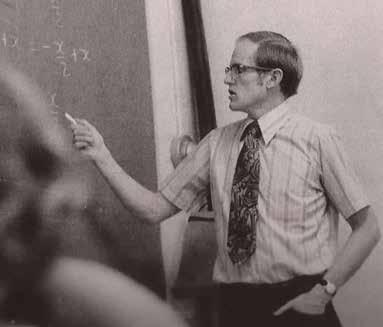
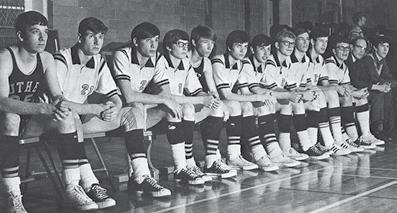
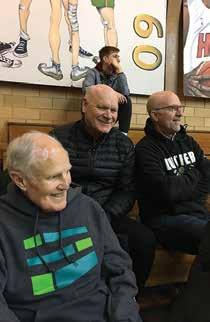
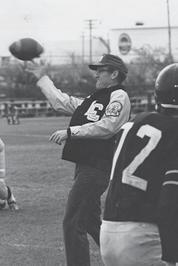
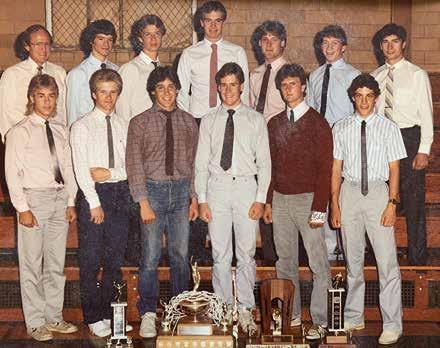
His influence continues to live on through the generations he taught and coached, and through those who now carry forward the lessons, values, and compassion he instilled in them. Dick Stark will forever remain a pillar of Luther College and of Regina high school athletics, remembered not only for what he accomplished, but for the extraordinary way he treated people,” says Troy Casper.
Alongside his brother Rod and sister-in-law Donna, his family was Luther College High School. We will miss him and the love and care he showed to us all.


Join us throughout the 2026-27 academic year, as we celebrate 100 Years of on Royal Street and the traditions that history has given us.
As a proud Luther alumna (HS‘01, U‘08), I know firsthand how Luther College represents much more than simply a place of study. The Royal Street centennial celebrations provide the unique opportunity to revisit these halls while reflecting on how the lasting gift of a Luther education has been at work in your own life. Luther’s noble history, lasting legacy and exciting future are to be celebrated! As Luther’s Director of Development, I look forward to welcoming you back to our special Luther events. No matter when you graduated, you are a meaningful part of its story!
This special year will include the unveiling of a WWII memorial plaque commemorating Luther's fallen alumni. Additionally, there will be the launch of an online and in-person archive, special merchandise available, and more!
Stay up to date at luthercollege.edu/Royal100.
Leah Quick Director of Development leah.quick@luthercollege.edu
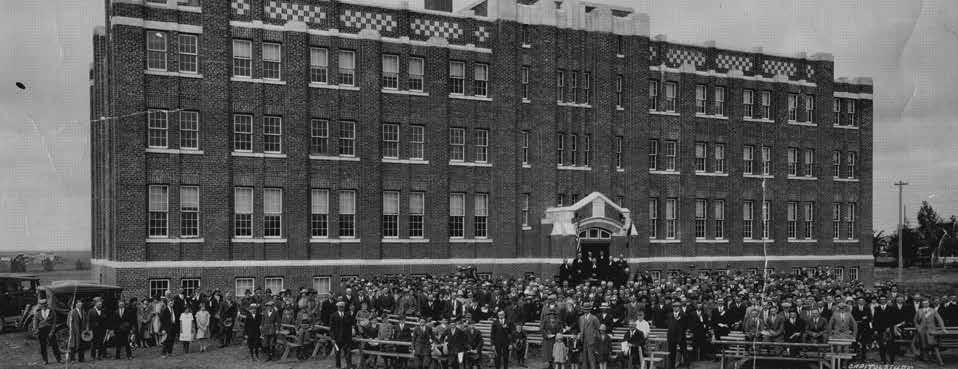
In July 1925, delegates to the Canada District of the Ohio Synod left Regina’s Trinity Lutheran Church and traveled west on Dewdney Avenue to the site of the new Luther Academy. The Ohio Synod was a church body serving Lutheran congregations in several countries of the world.
Passing Government House and turning southwest near Myra Street, they reached land once occupied by the 1883 Government House – historic ground tied to Treaty 4 discussions, the 1885 Northwest Rebellion led by Louis Riel (who was hanged a few hundred yards west on the North West Mounted Police grounds), and early discussions that created Saskatchewan and Alberta.
The group reached a large cement basement that was ready for the installation of a cornerstone. Luther Academy had been founded in Melville, and now the Ohio Synod was relocating it to Regina. Among the construction workers was contractor John Ast of Lemberg, who had helped construct the original Melville Academy and would later assist with the girls’ dormitory and President’s House. His children and grandchildren would remain active in the school for generations.
The cornerstone ceremony included a brief worship service and speeches in English and German. A Regina Leader reporter recorded only the English remarks, which described the “new Luther Academy,” its $100,000 building,
and the sacrifices made by ordinary people to fund it. The speaker said the Academy aimed to provide a Christian environment that would help students become “better Canadians, better Christians, and better children of God.”
After the German speaker, the cornerstone was laid. It is inscribed “1925” but does not name the school.
The Academy’s story begins in 1910, when the Canada District voted to establish an academy and debated locating it in Regina or Melville. Regina supporters emphasized its larger population of 30,000, access to the largest library in the province, and proximity to Regina College, a church school operated by the Methodists. But Regina lacked rail connections to many German Lutheran areas, had only one local congregation, and offered a modest financial incentive of $8,000 in land from the city and $1,000 from Trinity Lutheran Church.
Melville, by contrast, was a legendary “boom town” of the prairies that had grown to 3,000 people in two years. Its Grand Trunk railroad connected directly to all District congregations, and the local Lutheran church was one of the largest in the region. Melville also offered a far stronger incentive: $8,000 in cash.
A six-member Board voted and split three-to-three. After pastors submitted
comments, the Board had a heated debate and voted three votes for Melville and one for Regina, with two members not voting. Melville was chosen.
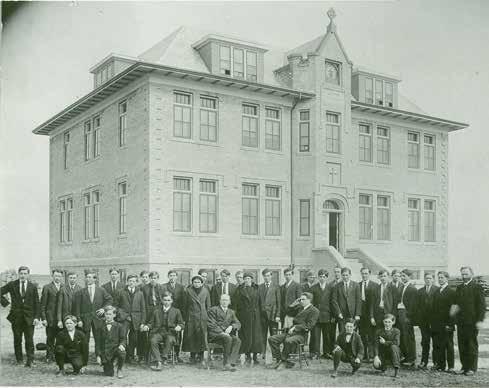
Luther Academy opened there in 1914, named for the leader of the Protestant Reformation, Martin Luther, who founded the Lutheran tradition in the Christian church. The town provided land west of town and the Board requested to have access to services (water, sewer, electricity).
The minutes of the Board and of the Canada District show no dissatisfaction with Melville, but other sources reveal irritations. Melville’s economic boom crashed in 1914 when both the town and the Grand Trunk railroad went bankrupt. Unable to afford water or sewer service for the Academy and delaying its promised $8,000 cash gift, Melville forced the school to take out a loan. These failures were disappointing. At the 1919 District convention, delegates unexpectedly voted to relocate the Academy to Regina, with no advance hint in Board or District minutes that such a motion was coming. By 1919, Regina offered more than it had earlier. Still resentful that the provincial university had gone to Saskatoon, Regina’s city council was determined to make the city “the educational centre of the province.” Alongside Regina College, there was now potential resource sharing with the Anglicans' Saint Chad’s College and Seminary and the Catholics' Campion College. Trinity Lutheran Church had become the District’s largest congregation, providing strong local support. Regina’s population had grown to 34,500, while Melville remained at 3,000.
Earlier, all Canada District congregations had a one-day rail trip to Melville, but church growth southeast and southwest
of Regina meant students in those new areas would need two days to reach Melville by rail, but if the school were in Regina then all of the District congregations would have a one-day trip. The decisive factor was the Ohio Synod’s national fundraising campaign, which pledged $50,000 to Luther Academy. It made no sense to invest that money in a town failing to provide basic utilities. Melville’s boomtown era had ended, and its town council was not keeping its promises.
A new Board was appointed to relocate the Academy to Regina. In 1922, the Board toured Regina’s available properties, and was not excited about the options. Some properties were offered at inflated prices, some lacked city services, and one was next to an area planned to become an industrial park.
A month later the land agents McCallum and Hill offered the Board a parcel of land on 23rd Avenue facing Albert Street, just across from what was then Campion College. It was attractive because it had an electric streetcar line, and since city services were already installed along Albert, it would be easy to connect to them. The property was the best contender to this point, the main concern being “its proximity to the Catholic college.”
Several months went by and then the provincial government decided it could sell two properties. One was on Broad Street, exact location not clear. The second was outstanding: 18 acres west on Dewdney Avenue at Myra Street. The Board was delighted – the price was reasonable, municipal services were installed on Dewdney, and there was an electric streetcar line connecting Dewdney to downtown. The distance to downtown and Trinity Church was the same as the distance from the 23rd Avenue property.
This property had been the site of an earlier Government House, adjacent on the east to the current Government House, and adjacent on the west to the current RCMP grounds. The Board believed this neighbourhood would not become a congested urban area, offering students open spaces and a daily exposure to nature, with the land presenting a certain tranquility to keep a focus on studies. It would be like having the school located in a park.
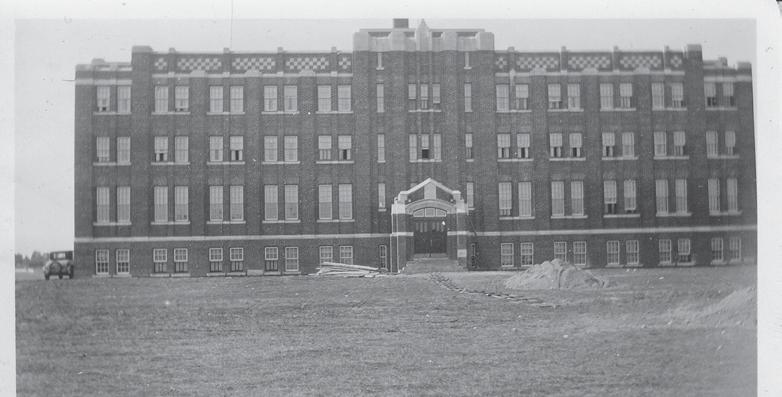
The Board requested that the City extend Myra Street further south so that the new school could front Myra instead of having its front facing Dewdney. This was agreed, but in extending Myra south, the street would need a slight curve to the east, to connect with an existing road named North Royal Street that went south to the railroad tracks. The City connected Myra to North Royal and renamed the extended street “Royal Street,” honouring a previous Lieutenant Governor who lived and worked at Government House (Joseph Royal). There was already a Royal Street in east Regina which was now renamed Abbott Street. Construction of the new school began in 1925, with the cornerstone ceremony being held on July 12.
It had been decided, apparently in Ohio, that the school needed updates. The Ohio Synod’s school in Columbus, named Capital University, recognized Luther in Regina as a Junior College accredited to teach one full year of university courses. That meant Luther students could go to Capital and, in two years, complete a university degree. So the name of the school in Regina was changed to reflect this and became Luther College.
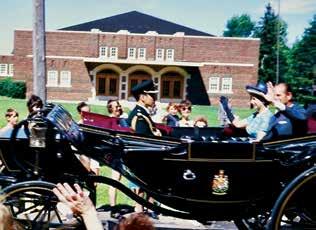
On August 8, 1926, an estimated 300 people left Trinity Lutheran Church and made their way west on Dewdney Avenue, passing Government House, crossing Royal Street, making their way to Luther College’s front doors, for a service of dedication.
The Dedication Ceremony was similar to the previous year’s cornerstone-laying. The main speaker was a Vice President of the Ohio Synod, who came from Chicago. His talk presented the main purpose of education as training and inspiring young people to a life of service. This new school, he said, would “devote itself to training men and women, not only for service in the church, but also in the state and other walks of life.”
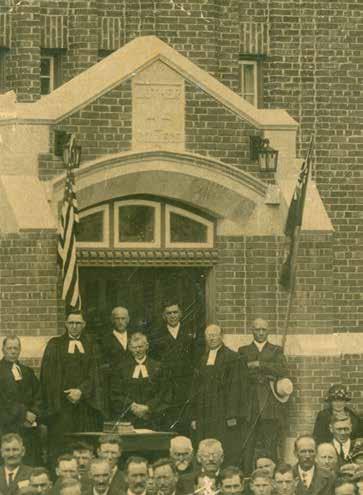
The Leader reported that the Dedication Ceremony was attended by persons from all sections of Saskatchewan, including Lieutenant Governor Newlands and Saskatchewan Premier Gardiner (whose children would later attend Luther College). Unlike the cornerstone-laying, the service of the dedication of Luther College was apparently conducted only in English.
Luther College opened for classes in September 1926, with an enrolment double what was experienced in Melville. Enrolment, after harvest stragglers were included, was 108, including 30 girls. That was 100 years ago. That is where the story of Luther Academy ends and the story of Luther College begins.
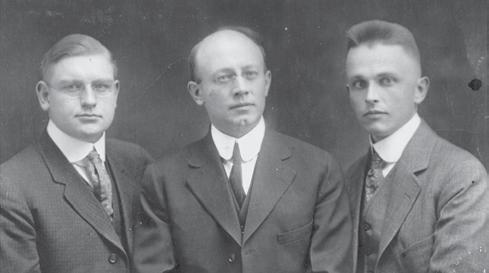
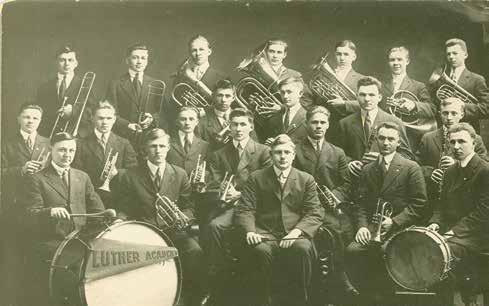
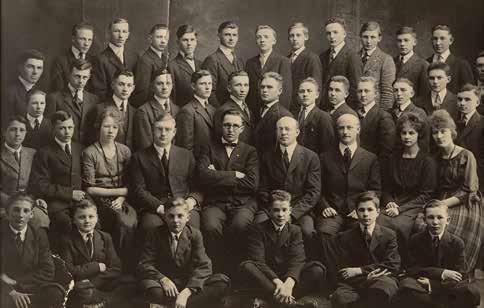

Luther Academy moves to Regina, on the newly renamed Royal Street.
Luther Academy becomes Luther College after being recognized as a junior college by Capital University in Columbus, Ohio. The curriculum includes Grade 8 to first-year university, plus a Conservatory of Music.
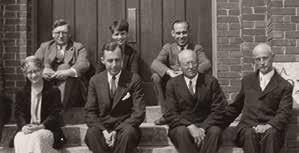
Dr. Rex Schneider becomes President and Principal.
Enrolment climbs to 108 students, including 13 female students.
1927
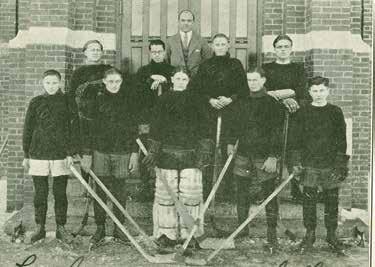
Hockey is Luther's first organized sports team, named Luther Huskies. The school colours are black and gold, copied from the Luther Seminary in Saint Paul, Minnesota.
University of Saskatchewan accepts Luther's universitylevel classes for credit.
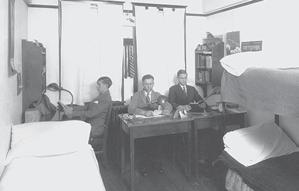
Dorms see overcrowding, demonstrating the need for expansion.
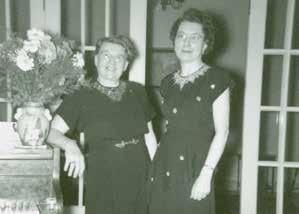
Emilie Walter (pictured left) is hired as a teacher, eventually becoming the first Dean of Women (1930-1964). She starts the tradition of putting a Christmas tree in the Blue Room.
Luther hosts its first musical production, Marrying Marion. Other events begin, like separate year-end banquets for boys and girls.
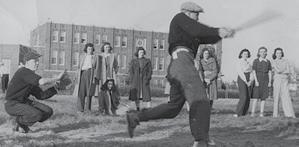
Organized sports expand to baseball, basketball, and rugby.
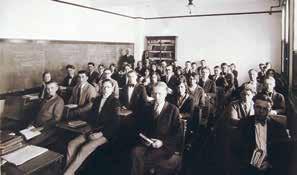
Enrolment hits a high of 183 before dropping sharply, only slowly climbing back by the end of the decade.
The Great Depression causes most junior colleges and private high schools to close – Luther is one of the few survivors.
Faculty take pay cuts, some as much as half their salary, while others leave for more stable work elsewhere. Some of those who stay move into dorms and turn part of the school grounds into a vegetable garden to save money.
Luther welcomes its first Jewish student. The diverse student body is credited as a factor for surviving the Great Depression.
1934
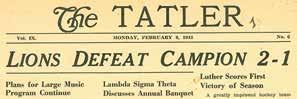
Luther launches a student newspaper, The Tatler, helping to keep the community connected.
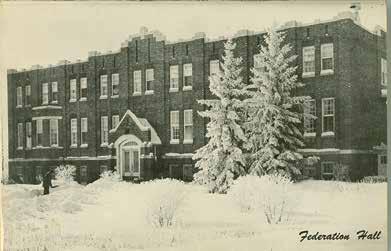
Construction of a new girls’ dorm (Federation Hall) is made possible by a gift from the Women’s Missionary Federation of the American Lutheran Church.
1939
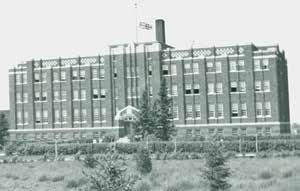
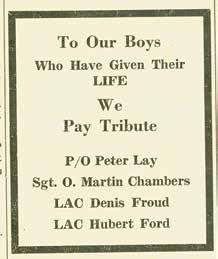
With the start of WWII, students contribute to efforts to aid with the war in various ways, from fundraising to support roles, and more than 300 Luther students and alumni served in the military. Sixteen do not return home.
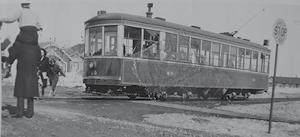
Faculty and students rely on streetcars to go downtown.

In a strong display of patriotism the boys’ dorm is run using military-style routines. There are daily flag ceremonies and participation in cadet and officer training programs.
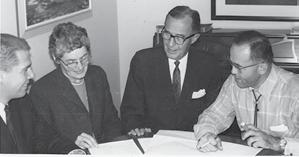
As founding President of Canadian Lutheran World Relief, Dr. Rex Schneider ensures Luther’s involvement in post-war efforts, helping to support recovery in Europe and assist refugees. Many German students attend Luther.
Enrolment surpasses 200 quickly post-war.
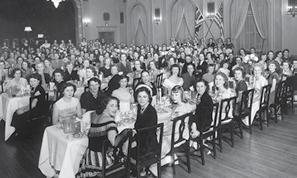
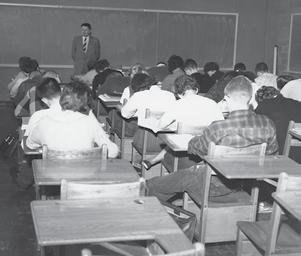
Enrolment peaks around 300. An expansion of high schools in rural Saskatchewan impacts boarding numbers.
1951
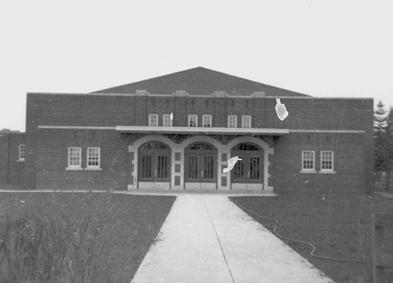
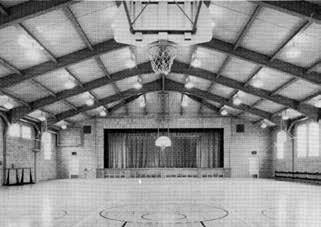
Luther celebrates its 25th anniversary and 25 years of leadership by Dr. Rex Schneider with the opening of a new gymnasium which quickly becomes the centre of activity.
The Lion is adopted as the school’s mascot.
The yearbook changes its name to Multifaria, meaning ‘many little things’.
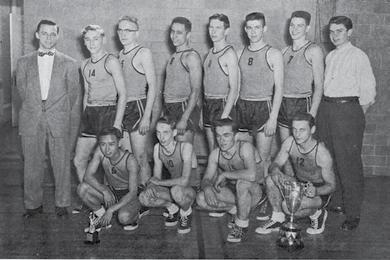
Athletic director John Chomay holds a basketball tournament to show off the new gym, the first Luther Invitational Tournament–L.I.T.
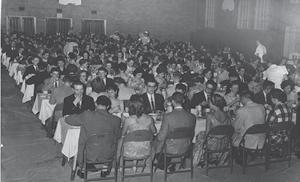
Separate boys’ and girls’ year-end banquets merge into a spring banquet for the first time, and in 1957 became the All College banquet.
1958
Social life shifts, and students push for dances, which until then had been prohibited. Previously, there had been creative compromises like “singing games,” which looked a great deal like dancing.
Greg Brandt is the school’s first Rhodes Scholarship recipient.
Church restructuring reduces funding and pushes the school to strengthen its own fundraising efforts.
International enrolment expands, with students arriving from places like Trinidad and Hong Kong, reshaping dorm life.
Enrolment grows to 360, with15 full-time faculty.
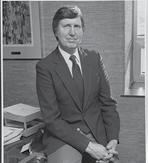
Dr. Morris Anderson becomes President and Principal, after the retirement of Dr. Rex Schneider.
Saskatchewan introduces operating grants for private church schools, supporting Luther during a period of growth and transition. This group of schools eventually becomes recognized by the government as Historical High Schools.
Luther College is invited to federate with the new Regina Campus of the University of Saskatchewan. Fundraising begins to build the university campus.
1970
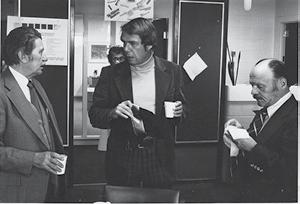
Luther helps negotiate an agreement that allows teachers at private schools to be associated with the Saskatchewan Teachers’ Federation, making pensions possible for staff.
The building on Royal Street no longer has any university students, as all have moved to the new university campus. Grade 8 students are added to the school to help with enrolment.
1971
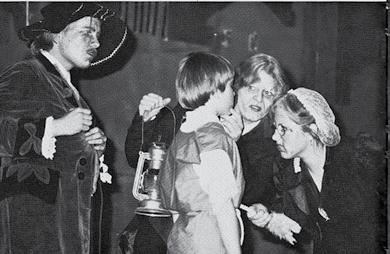
Luther’s production of Oliver! establishes the tradition of annual Broadway musicals, making the arts an even bigger part of school culture.
1974
Luther adopts the logo that is still used today and embraces the idea of “Quality Education in a Christian Context” as its guiding mission.
The roles of President and Principal are separated.
Dr. Morris Anderson continues as President and Rudie Selzer becomes Principal.
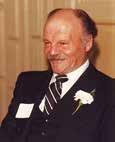
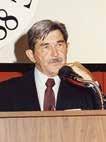
Dr. Henry Taube (HS'33), Luther alumnus, receives the Nobel Prize in Chemistry.
1975
Luther surpasses 4,000 living alumni, reflecting the school’s growing community and influence.
1976
Luther’s handbell choir begins.
1980
Rev. Dr. Don King becomes Principal.
Luther begins offering the International Baccalaureate (IB) Programme, one of the most significant academic changes in its history.
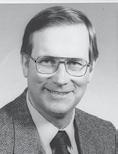
1986
Dr. Don Lee becomes President.
Major fundraising campaigns launch to support expansion and new facilities.
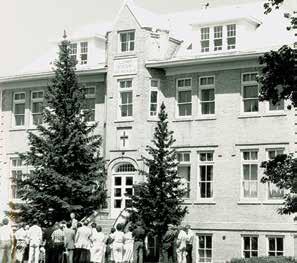
75th anniversary celebrations take place in Regina and Melville, where the original Luther Academy building has been restored as a heritage site.
1989
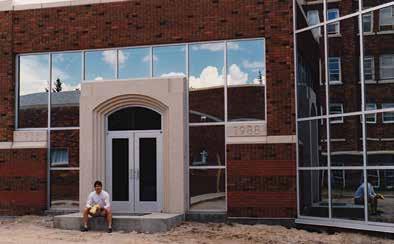
1988 Enrolment climbs to 500.
The new classroom wing opens, featuring a library, computer lab, art studio, and accessibility improvements.
1991
Rev. Allan Christiansen becomes Principal.
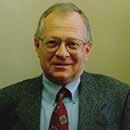
Rev. Dr. Don King becomes President.
Rev. Dr. Richard Hordern becomes President.
Bert McNair becomes Principal for one year.
International enrolment shifts, with fewer students arriving from Hong Kong and more from countries like South Korea.
Capital costs are no longer covered by the national church. The “Black and Gold Challenge” fundraising campaign kicks off to raise critical funds to help the high school overcome a significant deficit, while teachers voluntarily contribute part of their salaries to balance the budget.
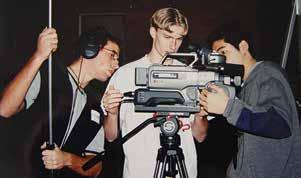
Academic and co-curricular programs grow to include psychology, revived drama and band, plus an expansion of film that would later influence the IB curriculum.
Having served many roles at Luther, including Dean of Women, Berbel (Guenzel) Knoll becomes Principal.
Luther launches its first website and begins using email to connect with alumni, reflecting the move into the digital age.
The annual Senior Girls Volleyball Tournament is established.
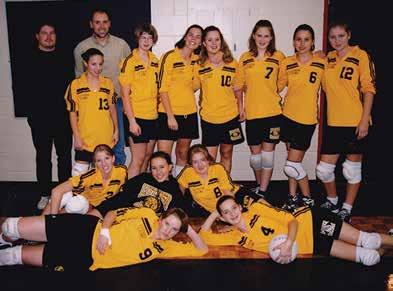
Luther’s Spirit Campaign exceeds its $2.5 million goal to repair and renovate the buildings and grounds.
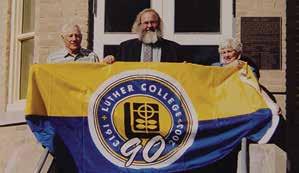
Luther celebrates its 90th anniversary.
Charitable donations surpass $1 million in a single year, the highest amount in the school’s history at the time.
Dr. Bruce Perlson (HS'62, HSU'63) becomes President, the first who is also a Luther alumnus.
Dr. Mark Anderson becomes Principal.
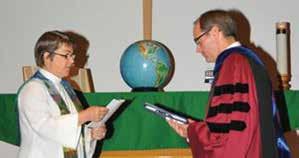
Dr. Bryan Hillis (U'78) becomes President.
Luther College announces a $17 million expansion and renovation project and a $13 million fundraising campaign, "A Time To Build", to support it.
Luther celebrates “A Century of Faithfulness,” marking 100 years since the founding of Luther Academy in Melville.
Merlis Belsher pledges $2.5 million to the fundraising campaign, the largest gift in the College's history. The heritage gymnasium will be named in his honor.
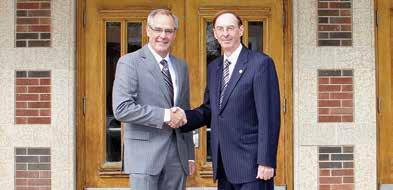
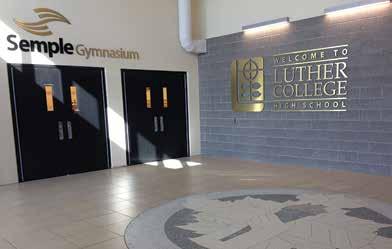
Luther receives a $1.75 million donation from Gavin and Shaun Semple to build what will be called the Semple Gymnasium, the largest high school gym in Regina.
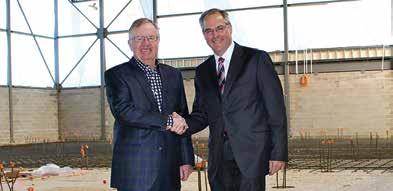
The addition and renovation is complete, including the new Semple Gym, Student Commons, classrooms, and renewed Merlis Belsher Heritage Centre.
Luther Parents Association forms to create community and raise funds.
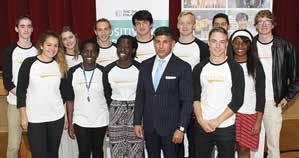
The Dilawri Foundation donates $500,000 to establish the Dilawri Award for Students of Promise.
L.I.T. is inducted into the Regina Sports Hall of Fame.
The new Luther College Act receives Royal Assent in the Saskatchewan Legislature.
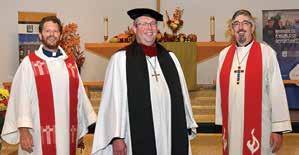
Rev. Dr. Marc Jerry becomes President after the retirement of Dr. Bryan Hillis.
Province-wide Covid cases and subsequent restrictions lead to eight weeks of remote learning.
In-person learning resumes with safe school protocols, including virtual chapel.
L.I.T. is canceled for the first time in tournament history due to the continuing variants of Covid.
$1.77 million is raised between both campuses.
The ministry with ELCIC is strengthened with a shared internship for Pastor Diane Nokonechny between LCHS and Trinity Evangelical Lutheran Church.
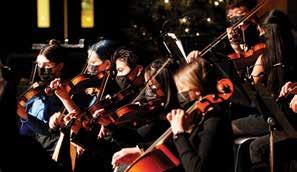
Candlelight Services are held virtually with choir members following Covid safety protocols.
L.I.T. Lite – a smaller version of L.I.T. – is held due to the continuing variants of Covid.
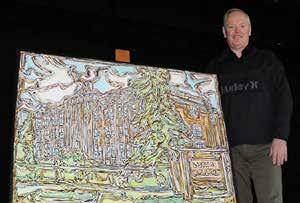
Dr. Mark Anderson retires as Principal after 35 years as a Luther teacher and administrator.
Under Rev. Dr. Marc Jerry’s leadership, Vision 2025 Strategic Plan concludes with new Vision, Mission, and Value statements for Luther College.
VISION: Luther College makes transformative change for a more grace-filled, just, and joyful world.
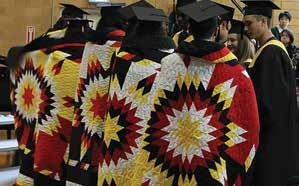
Starblankets and reciprocal gifts are given for the first time during graduation.
$850,000 is given out in bursaries and financial aid across both campuses with $320,000+ funded by donations.
Rev. Dr. Marc Jerry leaves Luther for a position in Ontario. Interim President Dr. Murray Knuttila is chosen by the Board for a one-year term while the search begins for a new President.
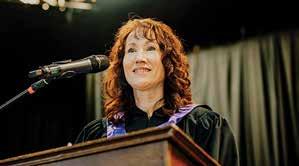
Nora Marpole becomes Principal.
Luther mourns the loss of two former Presidents, Dr. Morris Anderson and Dr. Bryan Hillis.

Luther once again sponsors Queen City Pride Parade, with board, faculty and staff, and students from both campuses participating.
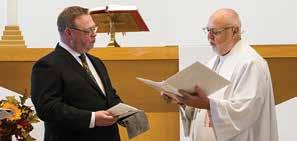
Dr. Tom Phenix becomes President. He previously served as Dean of Campion College.
Luther College High School marks 100 Years on Royal Street in the 2026-27 academic school year.
This historical timeline is for general informational purposes only. While every effort has been made to ensure the accuracy of the dates, events, and historical context, some errors may remain.
By Sabrina Cataldo, BA ’97, BJ ’99, MA ’23
Elizabeth Fix and Jeff Vall started as locker mates at Luther College High School (LCHS) and ended up as life mates with two daughters, who are now current or future Luther students themselves.
It all began with a swiped lunch. “I would steal his lunch. He had really good lunches,” Fix laughs. The pair became dear friends in Grades 11 and 12, going on the school-organized Holland cycle tour and travelling to Switzerland and Italy together post graduation. “Shortly after that, we started dating. And it was all because of the time we spent together at Luther,” she recounts.
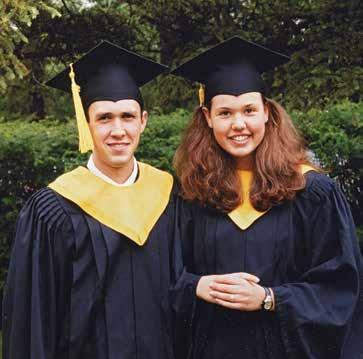
Fix and Vall graduated from LCHS in 2000. Fix got an arts degree with a major in sociology from Luther College at the University of Regina (2005), and Vall did a business admin degree at the U of R (2004). After Fix convocated, the couple moved to Toronto, so
Fix could get a master’s in public policy at Toronto Metropolitan University (TMU, previously known as Ryerson University, 2006), while Vall worked at RBC. The original plan was that they would be in a long-distance relationship while Fix completed her degree, but, miraculously, Vall was able to secure a transfer from the Prince Albert RBC branch to one on Bay Street in Toronto. They came back to the province in 2006 to be married in a little church in Yellow Grass. “My grandparents, my mom, and her siblings attended that church, and my parents were married there, so it holds special meaning for us,” explains Fix. Then, they went back to Toronto and switched roles: Fix worked for the federal government while Vall did his MBA at TMU (2008). “I finished my MBA at the peak of the 2008 financial crisis, a tough time to be continuing in the field of banking and investments,” says Vall. “But our intention was always to move back home, so it seemed like a good time to pack up and move back to Saskatchewan.” They welcomed their first daughter, Madelyn, in 2010, and their second, Judith, in 2013.
Both Fix and Vall have built rewarding careers in Regina. Fix secured a job working in immigrant settlement programming and labour market
development with the provincial government. When the pandemic hit, she thought it would be a good time to try something different at Farm Credit Canada. “I learned quickly that finance and agriculture don’t fill my cup. I’m more interested in the human side,” she says. In 2022, she made the leap to the nonprofit sector to work for Ranch Ehrlo Society, where she is now the executive director of strategy and governance. Ranch Ehrlo offers group living, clinical, family, community and educational programs across Saskatchewan. “It’s the best of both worlds. I still get to do what I love, but I’m doing it in a place that’s making a difference in people’s lives.”
As for Vall, after he completed his MBA, he had the opportunity to work for a software company called iQmetrix, building potential partnerships for the business. Then, he went into management consulting with Conroy Ross Partners, where he facilitated strategic planning, organization design and process management for businesses, non-profits and crown corporations throughout Western Canada. While he enjoyed his time there, he couldn’t pass up the opportunity to return to iQmetrix in 2015, to lead the partnership and acquisition strategies as their senior vice president of corporate development.
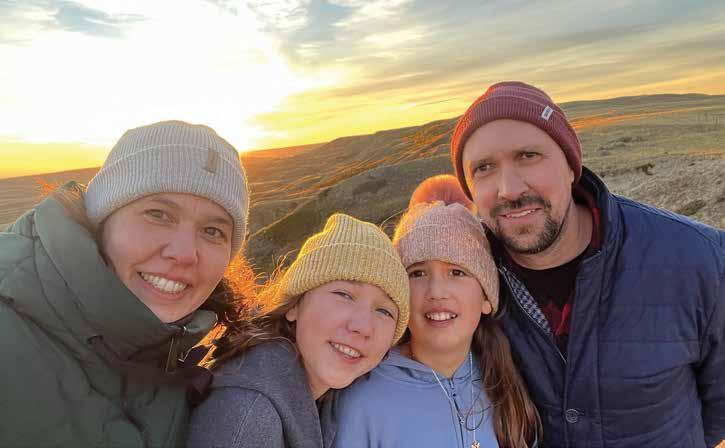
Another bonus to returning to Regina is being able to live within a couple blocks of Fix’s sister, Jennifer (HS’98, U’04), who also attended Luther. Jennifer studied urban planning at the University of British Columbia and worked in Vancouver for 15 years, returning to Regina to have a family and open her own consulting firm. The third Fix sister, Kathryn (HS’02), yet another Luther grad, got a social work degree at the University of Regina, then moved to Winnipeg, where she did her master’s and now works at the University of Winnipeg managing a team of counsellors. Meanwhile, Vall’s sister, Charla (HS’02), married Elias Tomaras (HS’02) in 2009, and they now reside in Calgary. Charla is a consultant director with Junxion Strategy and Elias is a corporate consultant with the City of Calgary.
Going to Luther clearly runs in the family, so it’s not a surprise that Fix and Vall’s daughter Madelyn is part of the latest generation of LCHS students. “Leading up to Grade 9, we told Madelyn stories about Luther and took her to L.I.T., so she could see what Luther was like. She made the decision on her own, but we had some influence by exposing her to the environment ahead of time,” says Vall.
We feel really lucky. When we moved back to Saskatchewan and had kids, Luther was always in the back of our minds. And now, 15 years later, we have the opportunity to send Madelyn to Luther to carve out her own unique experience. She loves it and has found a great group of friends,” says Fix.
“I don’t need her to be valedictorian or athlete of the year – I just want her to be part of a community where she can be curious, grow, and thrive. These are all things she can experience at Luther, and I feel grateful for that.”
Berbel Knoll, Past Principal, 1996-2007
Congratulations to students, faculty and staff, past and present, and all those who have supported the College on Royal for 100 years, truly a milestone to celebrate! So many memories for those of us who have spent time on this campus. I look forward to sharing them as we gather for Homecoming.
This has been a place of learning rooted in faith, a community where friendships have been solidified and where joys and sorrows have been shared. Luther has a uniqueness that is hard to define. I have been blessed to have spent so many memorable years here and appreciate the many students, their families, colleagues, and staff who became friends. I am grateful for the visionaries who built this school and the community that sustained it.
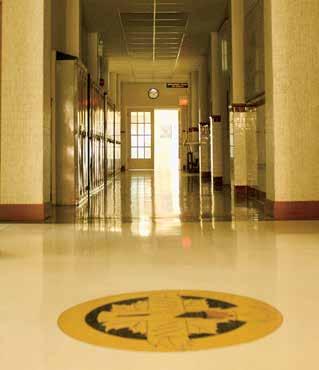
When I enter these halls, the song, often sung by our choirs at alumni gatherings, comes to mind, titled “If These Walls Could Speak.” It poignantly reflects the lasting emotions of our shared experiences.
If these old fashioned window panes were eyes
I guess they would have seen it all Each little tear and sigh and footfall
And every dream that we came to seek or followed after If these walls could speak May God continue to bless all who are a part of this unique community, now and in the years to come.
By Sabrina Cataldo, BA ’97, BJ ’99, MA ’23
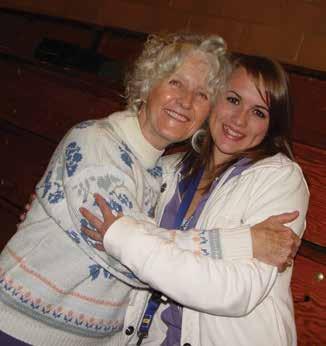
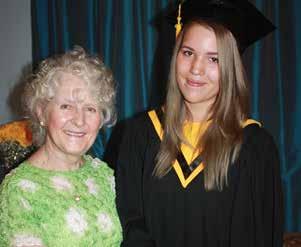
As she sits in her beautifully manicured backyard, Cornelia Taschow-Graupe gazes upon a constant reminder of her many years as Luther College High School teacher: hanging in the trees are birdhouses that her students made for her, adorned with German phrases such as Guten Tag.
The retired German teacher keeps in close contact with many of her former students. “I always encouraged them to find me in the phone book or email me. The best part is when my former students say, ‘Frau Cornelia, I’ll be in Regina. Can I come visit?’” she remarks. “Word spreads from one student to another, and I get more visitors. At Christmastime, a dozen of them came by, and we shared German baking. In the summer, we visit outside, and I point out the birdhouses.”
Cornelia started teaching at Luther in 2007, after 36 years at the Saskatchewan Government Correspondence School, and retired in 2024 after a total of 51 years teaching. “I was only supposed to be at Luther for one semester. It just so happened that I was there 15 years later,” she laughs. Beginning in the English as a Second Language department (now known as English as an Additional Language), she went on to teach
German, Latin, French, and Life Transition courses.
She was known for going above and beyond for her students, tutoring them after school and on weekends. “I had no problem with that. I never looked back wondering, ‘Did I choose the right profession?’ I think it was my calling. I always like to think of myself as being a born teacher. I loved every day,” she says.
Cornelia is a bit surprised to say that she’s enjoying every second of her retirement, pursuing her various hobbies and social engagements.
Over the past few decades, philanthropy has become increasingly important to her. She started giving to Luther shortly after she started teaching there. “I got to know the President at the time, Dr. Bruce Perlson, and mentioned I would like to help students financially. He introduced me to the idea of scholarships. It was right down my alley.”
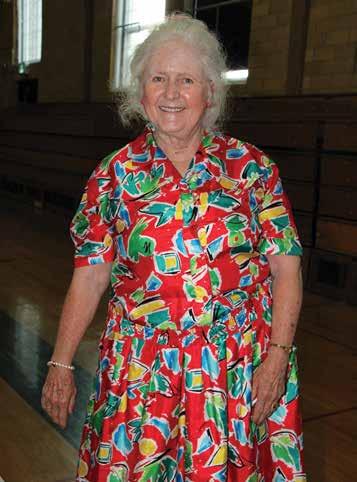
school fees for the next year, and the Grade 12 students receive $1,000 toward university tuition. “It’s very gratifying to be able to help students whose parents may be a bit financially strapped,” Cornelia says, but most of all, she wants students to be recognized.
To receive a scholarship is a token of appreciation. It shows you’ve worked hard and been an active member in the Luther community.”
She set up two scholarship funds at the high school that continue to this day – one for German students and one for music students. There are four scholarships under each fund, one for each grade: the Grades 9-11 students receive scholarships of $500 to help them with high
Part of her excitement about scholarships stems from being a recipient as a university student, herself. “I worked hard, got good grades and, at the end of the day, I was awarded one scholarship after another,” she recounts. “I appreciated the money, but being recognized meant more than the monetary value. It meant that the academic world was aware that I was working very hard. Students who receive my scholarships appreciate the recognition and encouragement to continue their studies – they tell me that all the time.”
Frau Cornelia, as she is fondly called, has made a legacy donation in her will to ensure her Luther scholarships will continue beyond her lifetime. “I don’t have children, and, once I’m gone, I would like to continue to help students who need financial assistance and who show great strides in their education. I thought Luther would be the perfect place to do that,” she explains.
Other teachers as well as parents have asked her about her experience as a major donor to Luther. “I encourage them to establish a scholarship if they’re in the financial position to do so. If their child is a basketball player, perhaps they could start a basketball scholarship – it could be anything they want. A few of the teachers and parents I’ve talked to have set up scholarships, so there may be some new ones coming out,” Cornelia says.
I think it’s always satisfying for the donor to be able to give back. I’ve been very fortunate in my life to receive so many scholarships. In return, I think, ‘Why can’t I do something similar now that I’m in a position to do so?’” she says.
"I could be going on cruises or playing the ponies, but I would rather be sharing my joy and pride with students worthy of these kinds of academic rewards.”
The birdhouses in Frau Cornelia’s yard are a quiet reminder of the students who passed through her classroom and thought to leave something behind. In many ways, they’re much like Cornelia at Luther. She was only supposed to teach one semester and stayed for 15 years. Now, through her scholarships and legacy gift, she’s not leaving at all. For a woman who never questioned her career choice, that seems about right.
By Sabrina Cataldo, BA ’97, BJ ’99, MA ’23
While the Cayman Islands is known for its crystal-clear waters, world-class diving, and thriving offshore economy, there are challenges that lie beneath its sun-drenched surface.
Mental health, for example, is generally misunderstood – there is often a stigma attached to people struggling with it.
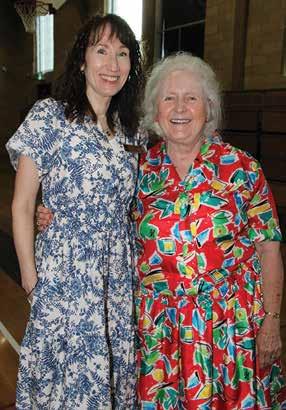
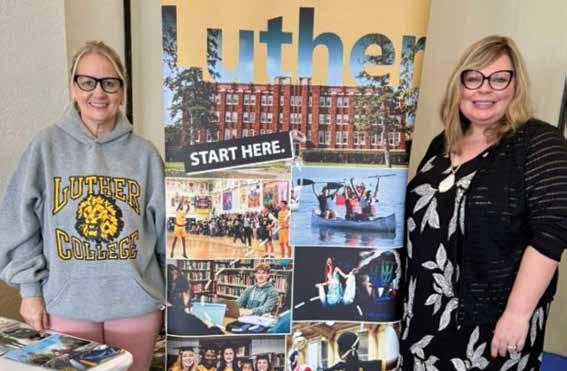
Shannon (nee Embury) Seymour (HS’88, U’94) saw the need for responsive community-based mental health treatment in the island nation and decided to do something about it.
In 2004, after seven years as a clinical psychologist in a Cayman Islands government facility working with parents and young children, Seymour established her private practice, The Wellness Centre. “At the time, there was no private mental health clinic in the country. Insurance didn’t cover it, and the government system had a lot of red tape and bureaucracy. I wanted to have a communitybased service and respond to the community’s needs in real time,” she explains. As Director of The Wellness Centre, Seymour leads a multidisciplinary team of psychologists, mental health therapists, and developmental and behavioural specialists.
She, herself, specializes in the field of infant mental health,
the study of the well-being of young children and the systems around them. “It isn’t wellknown. It focuses on the parent relationship and borrows a lot of attachment, child development, and social systems theory – the family exists within a system,” she says. Social justice theory, the study of the aspects of families and societies that create healthy children, is also a passion of Seymour’s. “A lot of the work I do is with parents. Social justice has an impact on the well-being of both adults and children,” she notes, going on to say that mental health problems don’t show up the same way in young children as they do in adults. “Mental health problems are apparent in childhood, but they show up as behavioural problems. You see them in play and behaviour.”
Seymour’s passion for social justice and community development is evident in her volunteerism and service work. In 2002, she was a founding Board Member of the Cayman Islands Crisis Centre and served as Vice Chair of the Board until 2008, and she is currently a co-founding Director of the Cayman Islands Psychological Association. She’s also served on the boards of one2one Cayman (formerly Big Brothers and Big Sisters) and her local football (soccer) club.
She credits both her parents and Luther College for instilling in her a sense of service. “When I was moving to the Cayman Islands, my parents said, ‘Don’t cause any trouble, and make a contribution.’ I lived by that."

"I’ve always had a strong sense of being able to give back in a way that honours this culture and country. Not ‘I’ll come save’ but ‘I’ll come learn and see how I can contribute,’” she says.
How did Seymour end up going from Luther College to the Cayman Islands? In the summer between Grades 11 and 12, she volunteered for the Commonwealth Parliamentary Conference at the Saskatchewan
Legislature. There, she connected with youth her age who were the children of Cayman Islands parliamentarians. “They invited me to visit. We wrote letters all my Grade 12 year to plan the trip for July,” she says. The visit was only supposed to last for a few months, but then she met Virgil Seymour, who would later become her husband. She stayed for two years and worked in a daycare, after which the couple returned to Regina to get married and for her to attend university.
Seymour graduated with her BA Hons in psychology from Luther College (1994) and a Master’s in clinical psychology from the U of R (1998). After working in provincial and non-profit organizations for a few years, Virgil was transferred out of his job in Regina. They took that as a cue to move back to the Cayman Islands. There, they established their careers and their family, with two sons: Logan, born in Regina and now 32, and Elijah, born after the Seymours moved back to the Cayman Islands, now 26.
After working in her field for more than 20 years, Seymour went back to school in 2019 and did a second Master’s degree, this time in developmental disabilities at Fielding Graduate University in Santa Barbara, California. In 2022, she achieved her PhD in psychology there, specializing in infant mental health.
More than two decades after arriving as a teenager with a summer plan, Shannon Seymour has built something the Cayman Islands didn’t have before: a place where people can ask for help and find it waiting. The challenges haven’t disappeared, but Seymour’s work is proof that real change doesn’t come from the outside in; it comes from someone who chooses to learn, to stay, and to contribute.
Rev. Dr. Don King, Past President, 1991-1994
As the college was a neighbour to other residents on Dewdney Avenue, we stressed the importance of being a good neighbour. One day a neighbour asked to see me. Luther’s rabbits were eating up her garden, she said. I assured her that the rabbits weren’t ours and that I would let our maintenance staff know about her complaint. That seemed to satisfy her. I shared the story in chapel as one small example of being a good neighbour that I thought might catch the attention of the students.
Dr. Don Lee, Past President, 1986-1991
My wife, Marilyn, and I attended a special chapel service in March marking one hundred years on Royal Street. It was a wonderful morning filled with encouraging speeches, moving prayers, appropriate scriptures, beautiful music and good fellowship – all followed by a most delicious lunch. Well-planned, it was a truly enjoyable event. Interestingly, however, the most electric moment was unplanned; it occurred when the class-change bell rang and the auditorium almost instantly filled with teenagers. To be among them was an exhilarating experience and reminded me anew why it is important to support and infinitely sustain Luther – the students need the kind of education they receive and the world needs the kind of men and women they become.
By Sabrina Cataldo, BA ’97, BJ ’99, MA ’23
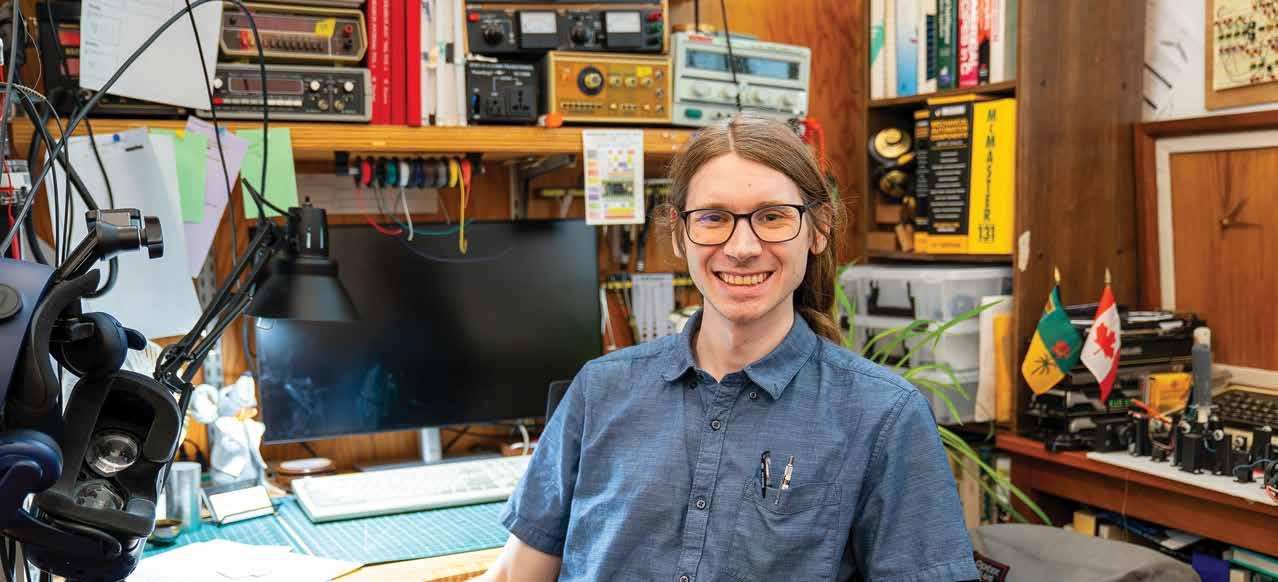
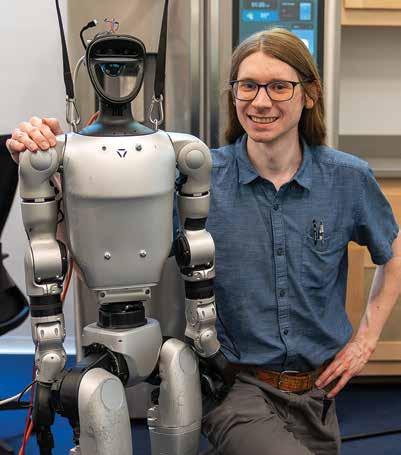
These days, Wil Norton (HS’17) often feels like he’s “the dumbest person in the room.”
However, in his field, “that’s a good place to be – you’re going to learn something,” he remarks. Norton is currently working on his PhD in the Distributed Robotics Lab at the Massachusetts Institute of Technology (MIT). He was admitted to the program in 2022 after completing his Bachelor of Applied Science in electronic systems engineering at the University of Regina.
Being at MIT has been an amazing experience. “I really love it. I get to build robots every day and am given tools and resources to make dreams come true. This is something I would do as a hobby, but I get to do it as my job,” Norton says.
The people he works alongside are just as incredible as the work itself. “If I have any challenges in my work, I have a brilliant colleague to ask about it. These are passionate, excited people with deep interest in a research question. It’s an incredible place to be.”
Norton considers himself a generalist: “My hands are in a lot of pies. I like experimenting with lots of stuff.” His main research explores how robotics can make dangerous human jobs safer, including work deep underwater and even in space. He works directly with humanoid robots – human-shaped robots with
legs, arms and torsos – to improve the capabilities of what they can do, particularly with operating them remotely. “There are plenty of applications for that –situations where we need the dexterity of a person, but it’s unsafe,” he says. This includes building space infrastructure. “They spend hundreds of millions of dollars to send an astronaut into space to do these tasks. If a robot does the routine maintenance on a space station instead, a person isn’t in harm’s way, and it opens up time for astronauts to do different work.”
Unlike other graduate programs where a master’s is typically taken before a PhD, many departments at MIT don’t even offer master’s degrees. Rather than having a tuition-based business model, the school’s main source of revenue is research. Because of this, many of their undergrads attend without paying tuition fees, and PhD students are salaried, spending most of their time doing research work funded by various clients. “We’re treated more like employees than students in Canadian schools, where the norm is to offer a stipend,” Norton says. This attracts grad students who would otherwise work in places like Silicon Valley and covers the cost of living in Boston.
Norton estimates his PhD will take two more years, after which he would like to be a professor who teaches a variety of courses on subjects that excite him, such as mechanical, electrical and applied robot control work.
As he looks to the future, Norton also looks back on his time at Luther College High School and how his experiences there helped him get to where he is today. “When I was at Luther, it would have been a random guess that I would go into the sciences,” he laughs. Rather, he was very involved in drama and crosscountry running. He didn’t even take computer science classes in high school, due to a scheduling conflict with art class. “I was in IB Art and did a lot of painting, which rounds me out. Any engineer can program, but not every engineer can paint. You’d be surprised when that comes in handy,” he says, going on to explain, “Art is about observation, especially when you’re painting from reference. You need to learn how to see things how they are, and that transfers extremely well to engineering.”
He appreciates Luther’s emphasis on a liberal arts education the most. “Many of my favourite classes were English. You learn a lot of skills that are really valuable to engineers and researchers. Being well-rounded is a great asset in the field. I think people
underestimate how much of research is writing,” he says. “I love writing and do as much of it as I can with my research – for journal papers, for example. That level of writing comes from Luther. I had great English teachers who encouraged me and my writing.”
I get to build robots every day and am given tools and resources to make dreams come true.”
Norton also feels that Luther and MIT have a lot in common. “Students who go there are already really passionate about academics, or they’re artistic or talented in other areas. There’s a lot to be said about going to school in a community where you’re surrounded by passionate peers,” he says. Both Luther and MIT also have closeknit community atmospheres.
“There are a distinct culture and traditions at each school and a sense that you’re part of this larger
community. That’s an encouraging feeling to have – to get to be part of that culture.”
As Norton prepares for his final years of doctoral research, he carries with him the lessons of both Luther and MIT: that being well-rounded is an engineer’s greatest asset and that community matters. And if he still occasionally feels like the “dumbest person in the room” along the way, he wouldn’t have it any other way. After all, in a world of endless discovery, it means he is exactly where he needs to be to keep learning.
Wil Norton Photo Credits: Andrew Zucosky
Rev. Dr. Marc Jerry, Past President, 2020-2024
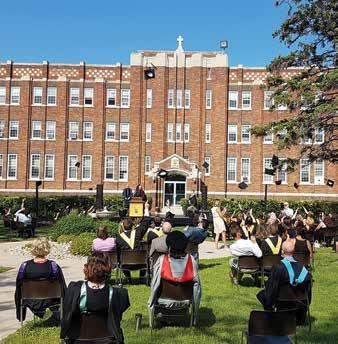
In my time as President, I had the privilege of living in the President’s House on Royal Street. There I enjoyed having a front row view of the high school building, watching the seasons change. From spring flowers, big Saskatchewan summer skies, fall colours, and even snowy mornings, all had their own beauty that highlighted the history and grandeur of the high school building. As the pandemic wore on, one particular memory for me was when social distancing was still needed: we held the high school graduation on the front lawn, with the historic building as the stage backdrop. May many more wonderful memories be made at this site as you enter into your second 100 years on Royal Street.
As Luther College High School commemorates and celebrates 100 Years on Royal Street, it is important to consider the words of John F. Kennedy: “Hold fast to the best of the past and move fast to the best of the future.”
Among the best of the past are the many presidents who have served Luther College. The list of fullterm presidents and their varied backgrounds, credentials, intellectual and political skills is beyond impressive. One past President, Rev. Dr. Richard Hordern, documented the contributions of many of these founders in his magnificent history, The Luther College Story, 1913-2013, A History of Faithfulness in Education.
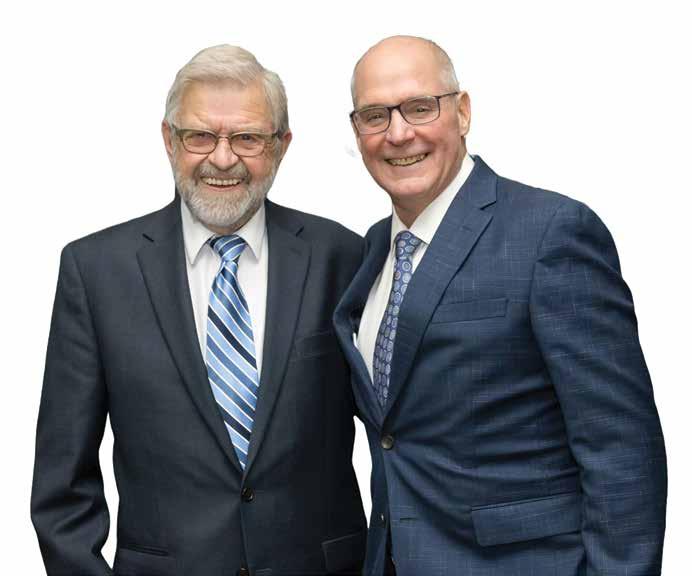
When we reflect on what has transpired since Luther Academy changed its name and moved to Regina in 1926, it’s obvious that Luther College has moved fast and never sat still. While I could tailor my remarks to acknowledge the contributions of every full-term president, I want to focus on one, the late Dr. Bryan Hillis, and his leadership role in moving Luther College on a tack that the circumstances required if it was to embody the best of the future.
Bryan, a Rhodes Scholar, teacher, and public intellectual, served as the Dean of Luther College (1995-2005) and as President (2010-2020). This entire period was one of radical economic, social, and political transformation.
Bryan was aware of changes including those in his own church, the political landscape, and the cultural and social mosaic of Canada and Saskatchewan. He recognized the importance of addressing the centuries of oppression experienced by Indigenous people, and the need to eliminate systemic racism and recognize sexual, cultural, and political pluralism.
A student of theology and a historian of religion, Bryan understood that religion was changing as well. In 1986, Luther College had became formally associated with the Evangelical Lutheran Church in Canada (ELCIC). The new ELCIC immediately faced several issues common to Christian churches at the time. Declining attendance and revenues resulted in the ELCIC withdrawing most of its financial support from schools it supported, including Luther College. The change in funding did not alter the formal fiscal and governance relationship between Luther College and the ELCIC.
Although Luther College had been operating for more than 50 years, it was not until 1969 that it was formally incorporated under the Luther College Act. The Luther College Act specified that a Board of Regents be established to oversee the routine operation of the College, while matters such as approval of the budget and the appointment of Regents were to be handled in conjunction with each convention of the ELCIC. Importantly, under the Act all property and assets were held in trust and thus formally owned by the ELCIC.
It is also important to recall that the early 21st century saw numerous churches facing litigation relating to the abuses suffered in residential schools and other forms of malfeasance by church authorities. Although the ELCIC was not facing any legal action, the fact was that should the ELCIC face a financial crisis the assets of Luther College might be in jeopardy.
Additionally, the effectiveness of the College business meetings held at ELCIC national
conventions was questionable because many delegates were not sufficiently familiar with Luther College, Regina. After considering these matters the Board of Regents, supported by Bryan, undertook to revise the Luther College Act to establish a new corporation that would be financially, constitutionally, and administratively, but not theologically, separate from the ELCIC.
Bryan used his political connections and skills to ensure that the Luther College Act (2018) was supported by all parties in the Saskatchewan Legislature. The new Act continues to ensure that the ELCIC has a foundational governance role by virtue of the membership criteria for the Corporation and its Board of Regents.
I have noted the social, cultural, and political change and turmoil that marked Bryan’s tenure as Dean and President. We know that periods of rapid change can engender insecurity, confusion, a longing for stability, and the romanticization of a golden age. There is no doubt that many were unsettled by the gains of feminists to achieve a measure of equality, and by measures to entrench inclusion and redress historic injustices and oppression visited on Indigenous peoples through recognition and reconciliation. Among the manifestations of this angst was the rejection of what was seen as the excesses of those advocating acceptance of diversity, equality, and the right to be included. Among some, including Christians, this meant the advocacy of a reactionary nostalgia that included reaffirming the “naturalness” of patriarchy, a “prosperity” reading of the Gospels, the xenophobic denigration of “others” and the acceptance of an authoritarian politics in which “might equals right” and truth is a matter of opinion.
Evangelical Lutheran Church of America (ELCA). These institutions created a formal Network of ELCA Colleges and Universities (NECU).
Bryan became active in NECU around 2015, a relationship that resulted in his co-authorship of an important statement of NECU’s view of Lutheran education in a modern pluralist world, “ROOTED AND OPEN: The Common Calling of the Network of ELCA Colleges and Universities”. Bryan brought the document to the attention of the Board of Regents, who spent considerable time studying and discussing its relevance to the mission and operation of Luther College.
“Rooted and Open” states that while the specific missions of their membership may vary, all will equip their graduates to be “Called and empowered to serve the neighbor so that all may flourish.” The summary statement reads in part: “The Lutheran theological roots that these schools have inherited deepen their educational purpose, inform their educational commitments, and anchor their educational priorities.” Additionally, the document notes that, “A rich and living Lutheran intellectual and educational tradition compels member institutions to be open to a wide variety of insights from people with a wide variety of backgrounds.”
Not everyone, of course, held that we were going to Hades in a handbasket! Indeed, there were significant voices within the religious community, including Lutherans, who worked for more equality, more inclusion, more diversity, and greater social justice.
The history of Luther College is entwined with Lutheran churches in the United States where there are 28 colleges and universities associated with the
A decade after its release, I believe that the spirit of “Rooted and Open” continues to impact the work of Luther College, including the Regents as they formulate plans to govern both the direction and operations of the College. What makes Luther College important and essential at this moment of historical anger, angst, and insecurity that verges on nihilism is a unique and explicit commitment. Luther College commits to using its Lutheran intellectual traditions and commitment to facilitate “transformative change for a more grace-filled, just, and joyful world” by preparing “students to be compassionate, creative, and critical thinkers, through academic excellence and a community of care that is rooted in our call to love and serve our neighbours.” Luther College, so much needed today!
There are people who teach you mathematics, and then there are the people who teach you how to live. Fotini Labropulu was the rare kind of person who was both.
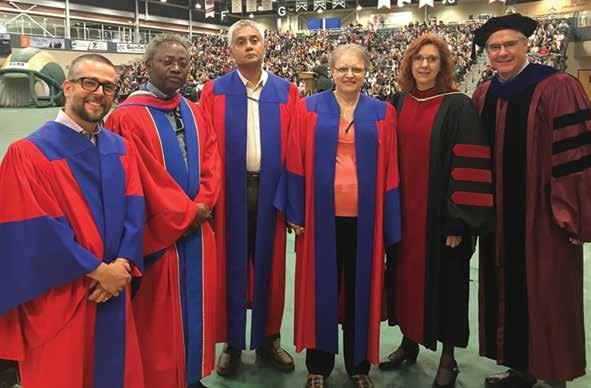
Luther College mourns the loss of Dr. Fotini Labropulu, who passed away on March 20, 2026. She was a respected teacher, mentor, and researcher who made a difference in the lives of her students and colleagues.
She devoted herself to her students with a sincerity that was almost humbling. Her passion for mathematics was contagious. She did not just teach a course; she opened a door and walked students through it with wonder. She held office hours with patience and care. She answered questions long after the lecture had ended. She made time for people, always, because she believed that people deserved her time,” says her colleague and former student, Dr. Vijaya Agasthian.
Dr. Yvonne Petry, former Dean and faculty member who served with Fotini for many years, remembers that her courses were always full as students sought her out. “She made difficult material clear and strove to find ways to improve students’ understanding. She taught Mathematics at all levels, from her popular introductory courses to specialized graduate courses. Her students appreciated her enthusiasm, her accessibility and her clear presentation of complex mathematical concepts.”
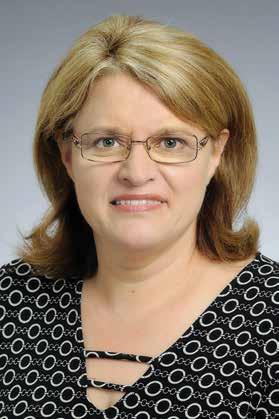
She collaborated with Dr. Iqbal Husain, her husband and fellow professor at Luther College, and Campion College professor Dr. Robert Petry to develop open educational resources for Calculus I, Calculus II, and Linear Algebra; textbooks that were not more detailed than standard materials, but freely available to students, saving them hundreds of dollars.
As a senior faculty member, Fotini filled important leadership roles both at Luther and in the University of Regina’s Faculty of Science. She completed her doctorate in Applied Partial Differential Equations and Fluid Dynamics at the University of Windsor in 1993 and began a tenure-track appointment at Luther in 1996. Petry summarized one of Dr. Labropulu’s research projects. “She worked on the mathematics of mixed convection, involving the study of flow and heat transfer over moving surfaces. This has many applications in industrial
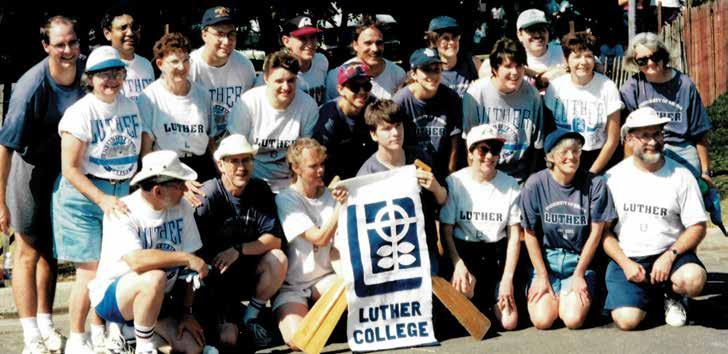
and engineering processes.” Her contributions to the field of mathematics are immense and lasting.
Musicology Professor Dr. Barbara Reul reminisced, “I met Fotini in 2003. I immediately liked this impeccably dressed Greek lady who modelled to me what genuine commitment to your work, family, and loved ones was all about. My favourite memories include her excitement at being promoted to full Professor in record time, and the incredible kindness she showed to the countless students who would line up for her office hours. The best piece of advice I ever got from Fotini, the mentor, was to ‘stop obsessing’ over work, if not life in general. I will never forget her reaction to my sudden cancer diagnosis in 2020. 'You like to eat, and I like to cook!' She taught me that life is precious and that friendship means everything.”
When Fotini faced cancer, she faced it the way she faced everything: with quiet strength and a steady smile. She did not want pity. She did not want her illness to become an excuse to give less. She kept coming to class. She kept showing up, for her students, for her colleagues, for the mathematics she loved.
Fotini and Iqbal, with their twins Maria (HS’18, U’22) and Alexander (HS’18, U’22) were fixtures at Luther College for decades. She was deeply committed to the values and goals of Luther College and strove to uphold them in her work.
Dr. Agasthian expressed her grief by saying, “Fotini was a tremendous loss for all. For over three decades, she was one of the pillars of the Mathematics department, Luther College, and our community. As a woman of sincere belief and a giving heart, she treated everyone as if they were her own family. She made this community feel like home.”
Our most sincere condolences to her family and friends – the Luther community mourns with you.
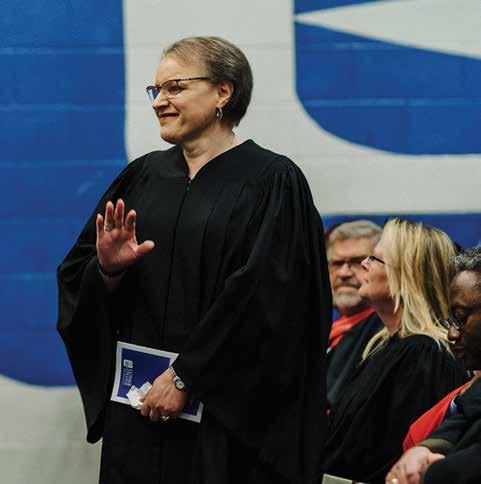
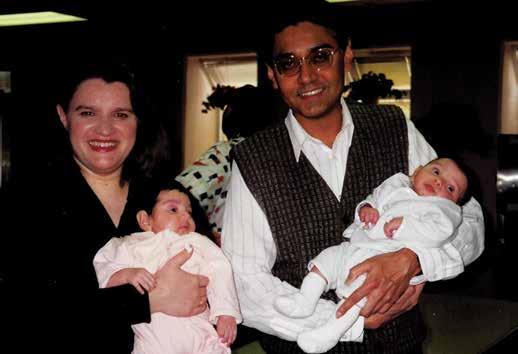
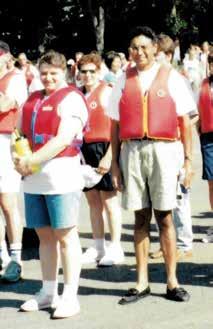
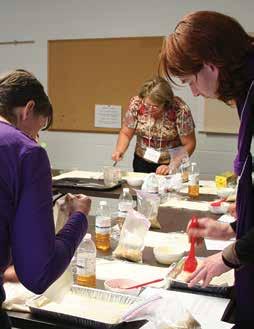
Nearly 100 years ago, on August 8, 1926, a dedication service officially opened the doors to Luther College on Royal Street in Regina. Recently, Luther College High School held a special chapel service in recognition of this milestone and officially launched 100 Years on Royal Street: a year-long anniversary celebration leading up to and including the 2026-27 academic year.
Each year our chapel program has a specific theme that helps our community and our guests to gain a deeper understanding of various topics that revolve around or are connected to a specific subject or idea. This year our theme has been “A Change of Heart”. We have explored topics and had speakers present who challenge us to think in different ways that move beyond head understanding and move towards a deeper heart understanding so that we can be challenged to respect, love, or care for even those who we are different from or who we disagree with. It was very exciting to hear of the vision for 100 Years on Royal and begin thinking about how chapel and our theme for the coming year might be in alignment with and complement the overall celebration of our Luther community.
Isaiah 28:16
16 Therefore thus says the Lord GOD: See, I am laying in Zion a foundation stone, a tested stone, a precious cornerstone, a sure foundation: ‘One who trusts will not panic.'
We are rooted in a deep history, tradition, and past that has often been a light to the world, and both thoughtful and progressive. This is articulated in our value to be Rooted and Open, and guides who we are, honours who we have been, and is a compass that helps us navigate who we are becoming. Next year's "cornerstone" theme for chapel will help us frame many stories and help us think critically about how we engage with others and our world. These are and will be exciting stories to tell and ideas to unpack!
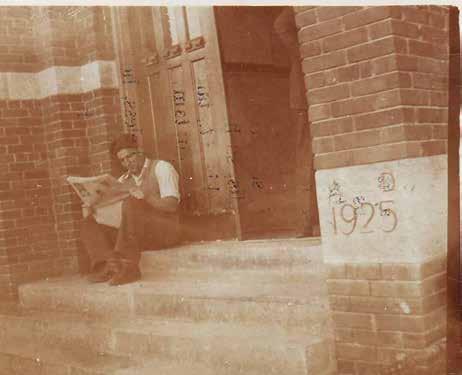
Our chapel theme for next academic year will be centered around the word “cornerstone”. A cornerstone (or foundation stone) is the first stone set in the construction of any masonry building. Luther's cornerstone can be found at the main entrance on Royal Street. But this physical stone is not Luther's only cornerstone. For over 100 years, Luther's cornerstone has been its foundation of faith, and its belief that this institution exists to bring glory to God, encourage grace in our world, and to encourage the message of the Gospel to be lived out in both actions and in words in how we love our neighbour.
At our 100 Years on Royal Street kickoff, we also acknowledged that we are situated on land that has been cared for by peoples for many hundreds of years; this land holds stories older than our institution – stories of learning passed on through generations, of relationship with the earth, and of responsibility to one another. These are stories that are true and are shared among all people, and resonate with the historic vision of Luther, and our present understanding of our call and purpose, our hopes, aspirations and dreams, and our commitment to a future of hope. This will be an exciting year, and I am grateful (and humbled) to be part of the Luther community at this time and to celebrate how each of us has served and worked – and will continue to serve and work – towards a more grace-filled, just, and joyful world!
Luther College is introducing a new way to honour graduates of our high school and our university: the Luther College Visionary Alumni Award.
This annual award will recognize alumni living the mission, vision, and values of Luther College in meaningful and transformative ways. It celebrates individuals whose lives reflect Luther’s commitment to excellence, compassion, integrity, service, and leadership. These are graduates who think critically, act creatively, serve generously, and lead with humility. These alumni embody the mission and spirit of Luther College in their work, relationships, and engagement with the world.
Recipients of the Visionary Alumni Award help make their communities more grace-filled, just, and joyful. Through their personal, professional, or volunteer contributions, they demonstrate what it means to care deeply and serve their neighbour. Their lives show that the values cultivated at Luther are not simply ideas – they are a way of living. This award honours not only what alumni achieve, but who they become.
Nominees should be Luther alumni who demonstrate:
COMPASSION – caring for others with empathy and generosity
SERVICE – contributing meaningfully to their communities
INTEGRITY – leading with honesty, humility, and strong moral character
EXCELLENCE – pursuing high standards in personal, academic, or professional life
LEADERSHIP – inspiring others and creating positive change
WHY DOES THIS MATTER? Because the true impact of Luther College does not end at graduation. In many ways, that is when it becomes most visible. The real measure of a school is not only what happens within its walls, but what its graduates carry into the world long after they leave.
We celebrate the enduring impact of a Luther education and the legacy our graduates continue to build. Help us recognize the remarkable people who represent the heart of Luther College. Nominations open on our website on October 5, 2026.
Thanks to the generosity of alumnus Soren Oberg (HS’88), four Luther College High School Professional Development Awards for 2026 have been granted. These awards help teachers and staff pursue nontraditional professional or personal development opportunities so that in turn they can provide Luther students with an excellent learning experience.
Catching a Glimpse into the Spirit of Everyday Life in India
Kim Greenman, history and world religions teacher, will be embarking on an immersive journey of exposure to India’s cultural and religious life to enhance her teaching practices.
Exploring the Artistic Traditions and Innovations of Japan
Drew Hunter, art teacher, will be learning tangible, hands-on art techniques in Japan, broadening cultural understandings, and sparking fresh project ideas to strengthen student learning and enrich the art program.
London’s Globe Theatre
Sarah Stone, English teacher and musical director, will be going behind the scenes at this historic theatre to inform not only her teaching of Shakespeare but enhance her knowledge about modern direction of historic works.
British Columbia Wellness Adventure
Troy Casper, phys-ed teacher, will be hiking in the mountains, swimming in the lakes, white-water rafting, and enjoying all the natural beauty that B.C. offers with his family.
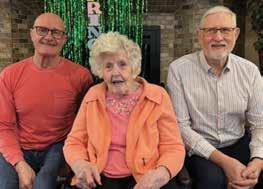
Doris Kathleen (Norin) Kerr (HS’43) turned 101 this year. In this photo, she is joined by her sons Colin (HS'76) and Grant (U’78).
Terry Gordon (HS’59) is living, playing, and enjoying the good life in Qualicum Beach on Vancouver Island.
Rev. Dr. Richard Hordern, Past President, 1994-2005
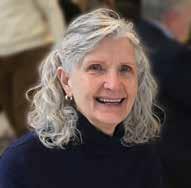
Marsha Brown (HS’61) has been concentrating on the discovery and preservation of family history. Her books are in several libraries in Canada and the U.S., including the Saskatchewan Genealogical Society. She is an active member of The Women’s Art Association of Canada, the Toronto Plein Air Painting Group, and Urban Sketchers Toronto. Her three children and six grandchildren continue to be the light of her life, and she is soon to be a great-grandmother! She has special memories of gatherings in the girls dorm! Find her on Instagram @marshabrownart
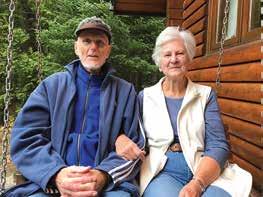
Elaine (Schmeling) Wassermann (HSU’62) took her first year of university at Luther, before becoming a teacher and moving to Toronto. She taught for the Toronto school board, then taught piano and theory while earning an Associate Diploma of The Royal Conservatory of Music. She lived in Georgetown, Ontario for 34 years until retirement in 2001, when she and her husband built a log home on the Bruce Peninsula overlooking Georgian Bay. She was active in the Bruce Trail Conservancy for almost 20 years. “My husband’s dementia diagnosis brought us to Guelph. After 54 years, I’m a widow but content with my son, daughter, and two wonderful grandchildren. I have wonderful memories of French with Miss Christie, English with Fred Wagner and German with Laurie Mang, as well as L.I.T., choir with Mrs. Schneider, learning to jive in the Blue Room, and the girls’ dorm with Emilie Walter as dean.”
Rae Haverstock (HS’68) says, “Luther has always been part of my life. After my grandfather’s passing, the family moved to Regina where my grandmother opened Aintree Grocery which became the confectionery for Luther students for decades. Both my aunt and mother graduated from Luther. My grandmother remarried in the old chapel at Luther in 1944. My brother Cal and I attended Luther. There Cal met his wife, Sandi Young. I had the good fortune to meet peers from all over the world. We built and maintained life-long friendships out of our Luther experiences.
Coaches Davis, Fry, MacDonald, and teachers Carson, Ast, Christie, Liefeld, Mang, Selzer and Pastors Tiefenbach and Christiansen led by Morris Anderson were instrumental in guiding students throughout our Luther years and preparing us for our futures.”
I give thanks for the many wonderful people I worked with at Luther for forty years; for the 3,000 students who took classes from me, and from whom I learned many things; for the many alumni and friends of the College I was privileged to meet and who have given valuable support to our school.
Luther continues to offer both a strong academic program and also a Christian context for spiritual and moral development. The point of education is: not how to make a living, but how to live life.
Luther College is a survivor. We are the third oldest school in Saskatchewan teaching post-secondary classes. Other schools, established later than Luther, have closed their doors. As a historic independent high school, Luther’s future is never guaranteed – every year we have to keep it strong and faithful to its mission.
Celebrating 100 years on Royal Street hopefully inspires us to continue our support for Luther in the future.
Nancy and I are pleased to have made our own contributions to Luther’s ongoing success in educating students as whole persons –mind, body, and spirit – and in treating all people as children of God.
John Mang (HS’71, U’72) and Sue Wood live in the Comox Valley, Vancouver Island, with a wonderful circle of friends, truly entrenched in the local community. Together, they’ve produced the Comox Nautical Days Festival for seven years, and most recently planned a summer concert series for downtown Comox. John serves on the CBC Pensioners Association National Board, local strata council, and recently completed two terms on a local parks board. Music has always been a big part of his life – including playing in the Luther College Orchestra under Paul Liefeld. These days, John plays keyboards in three islandbased bands (including one with Sue). Their latest adventure is roaming around the island in their motorhome, with plans for a Western Canada tour in the fall.
Carol (Tucker) Hodges (HS’71) has lived in Qualicum Beach on Vancouver island for 16 years. She is now retired, and her last teaching placement was in Special Education at Thom Collegiate in Regina. She has two sons and three grandchildren in Saskatchewan. Carol and her husband explore the hiking trails on the Island and in the winter they curl. She continues to dabble in dressage with her horse. “Events leading up to and including the event itself, L.I.T. would definitely rank at the top of my memories list. There was always great team support and spirit in a packed gymnasium. What a mammoth and successful undertaking by students and staff!”
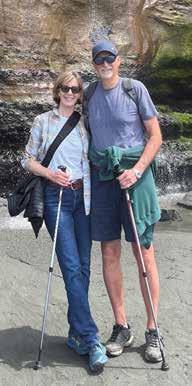
Four generations of the McEwen family have been at Luther College; the first was Glenn McEwen (HS’45), then his son Harvey (HS’69). “Luther College was a valuable experience for me 57 years ago. I am pleased to see that it continues to offer that same value to others. It has been a part of our family for four generations. It is quite the legacy for our family.”
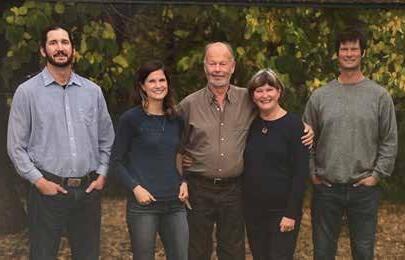
Harvey’s children all attended Luther as well: Warren (HS’00), Blair (HS’02), and Heather (HS’05). Now, Blair’s children are at Luther, living in the dorms. Daegan McEwen graduated in June 2026.
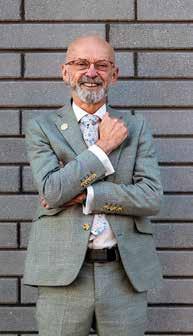
Ralph Carl Wushke (U’74) has devoted his life to ministry, advocacy, and service. A graduate of the Lutheran Theological Seminary (LTS) in 1978, he has long been a courageous advocate for the full inclusion of 2SLGBTQIA+ people in the church. His leadership helped bring the work of Lutherans Concerned/North America – now Reconciling Works – to Canada, shaping decades of progress in faith communities. In May 2026, the Lutheran Theological Seminary in Saskatoon conferred upon him a Doctor of Divinity (honoris causa) in recognition of his “exceptional service to both church and society.” His faithfulness, courage, and love for the church reflect the kind of Gospel-centred leadership LTS seeks to nurture. Ralph fondly remembers evenings in the second south lounge of the Luther Residence, listening to “Bye, Bye, Miss American Pie” with friends in the fall of 1971, feeling every bit as cool as the moment deserved.
“Attending Luther College has been a meaningful experience for me academically and personally. Knowing that my family has a long history with Luther makes my time here even more special. I’m proud to be part of that tradition and the strong sense of community and the opportunities I’ve had at Luther have helped shape who I am today.”
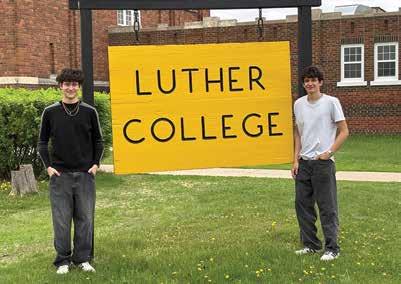
Daegan's brother James is also at Luther and will graduate in 2028. “Luther is a great community where students feel welcomed and supported. The teachers are very supportive and help students succeed both in and out of the classroom.”
Barb Leuze (HS’81) is living and teaching in beautiful Tumbler Ridge, BC, and is a proud grandma of two grandsons. Her latest travel adventure was a sail and cycle trip in Croatia – spectacular! “So many great memories of dorm life. We were one big, slightly crazy family with the amazing Berbel Guenzel as our fearless leader. Disco dancing in the hallways after study hours, water fights, late night gab sessions, friends from around the world and of course teen girl drama all made for a very memorable time.”
Dr. Mark Anderson, Past Principal, 2007-2023
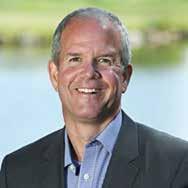
Mike Houston (HS’83) graduated from the University of Manitoba with a Bachelor of Science, Chemistry major. He worked within the pharmaceutical industry for 16 years in Edmonton, Kelowna, Vancouver, and then made the career switch to Corporate Recruitment in 2008 for less travel and a less corporate world. He now resides in Kelowna, B.C. and is nearing retirement. Mike says, “Dick Stark was a force as a coach on the football field and in the classroom. His time with us on football and tutoring physics was exemplary. He took the time to get to know us one on one and provide his positive feedback. He even took a group of us golfing and for steak dinner at his expense! In my adult life I’ve struggled to emulate him, but I am glad we were able to see what that looks like! He set the bar!”
Leanne Tourney (HS’85, U’89) has built a long and fulfilling career in real estate. After completing both high school and university through Luther, she eventually found her professional home with RE/MAX, where she has been a licensed agent since 2001. Over the years, she has helped buyers, sellers, and investors navigate important life transitions, forming lasting relationships within the communities she serves. Now based in Victoria, B.C., Leanne continues to grow her business. Real estate has allowed her to blend strategy, communication, and entrepreneurship in ways that have been both personally and professionally rewarding, and she remains grateful for the opportunities and connections this career has brought into her life.
Karen (Pockrandt) Rozon (HS’87) retired in October 2024 (along with her husband) from the RCMP, and they have been traveling, greenhouse gardening and spending as much time as possible in the outdoors. They recently returned from a Hawaiian cruise – they went to the top of Haleakala volcano at 10,023 feet, experienced the beauty of the Waimea Canyon, drove the twisting and narrow road to Hana, saw lava flowing from the recently erupted Kilauea volcano, visited Pearl Harbour, toured the island of Oahu by helicopter and enjoyed the sunsets on Waikiki Beach.
She says her fondest memories of Luther College were the caring teachers, chapel everyday, and the many cultural backgrounds that the students came from.
The occasion of 100 years on Royal Street invites the question, “How did a small, standalone school on the sparsely populated Canadian prairies not only survive, but flourish through World Wars, a Depression, sweeping social changes and more?” In a word, “faithfulness.” Luther College students have trusted – no matter the decade – that they will experience a well-grounded, well-rounded education preparing them for the privileges and responsibilities of engaged citizenship, that they will enjoy the freedom to critically pursue truth, knowledge, and wisdom, that they will be engaged in a rich and active campus life in a close-knit community, and that they will have opportunity to practise the imperative to serve others. The language we use to communicate our pillars may have changed over the century, but not the core educational principles it expresses. Faithfulness to these fundamental principles has been the cornerstone of the Luther experience and thus of its reputation since 1913. The word-of-mouth validation of this reputation by countless alumni bears witness to its veracity and its staying power.
Nonetheless, many schools also could rightfully claim to honour some or all of these principles. Therefore, there is, I would suggest, an additional element that characterizes Luther’s unique enduring effectiveness, the kind of intangible that elevates the College above the sum of its parts, but also roots it in something timeless. This intangible, like the most moving art or the most intense emotions, defies articulation but is the central ingredient of a mysterious alchemy that unifies, enlivens and defines our core principles. First-time visitors to the campus have noted it often, saying, “I can’t describe it, but I sensed something special and exciting the moment I walked through the school doors.” I, too, felt exactly that when I first stepped onto the Luther campus in 1987. So, we give thanks for a “Century of Faithfulness,” but equally look forward with hopefulness for what is yet to be, assured of the continuing excellence of the Luther College experience.
Gary Hunter (HS’95) carries forward a family connection to Luther: his three brothers (Rod, Greg, Bruce) are also alumni. Luther helped shape the values that would guide his professional life – perseverance, leadership, and a strong sense of collegiality. He pursued medicine and trained as a neurologist, building a career in Saskatoon with a focus on stroke care, neurocritical care, EEG, and inpatient neurology. Much of his work has centred on collaborating with colleagues across SK to improve neurological care and develop systems and programs that better support patients throughout the province. Gary looks back fondly on memories of L.I.T., football, challenging classroom discussions, great friends and lasting connections with amazing teachers. “I was thoroughly challenged at Luther, which led me to later success, for which I remain grateful.”
Thomas Boxall (HS’98, U’07) became an IT Professional working on projects across North America. He currently shapes governance around AI policies corporately and within government agencies. He is the SK representative on the Canadian Information Processing Society National board and helps promote ethics and professionalism within the IT industry.
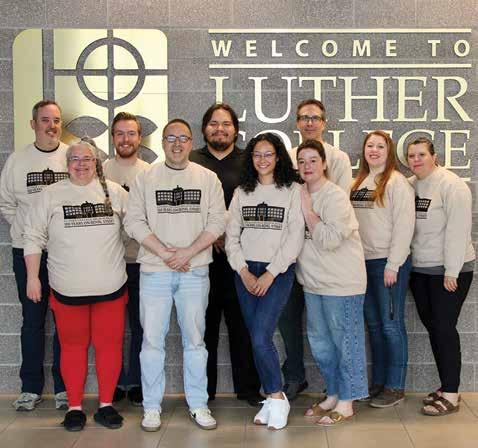

Thomas says, “I loved to program and solve problems. I would build programs that played Zeppelin songs when my computer booted, or simple accounting tools to manage the dorm’s entertainment budget. Once, after hours programing, my friend and neighbour JC decided to rewire his lamp. I heard a loud curse from his room just before the power went out, and I lost my coding as a result. This happened several times that weekend. I have the feeling JC was purposely zapping himself in the end, just to hear me curse.”
Jason Cullimore (HS’90) earned an interdisciplinary PhD in Computer Science and Fine Art in 2021 at the U of R, with LCUR professor Dr. Barbara Reul serving on his committee. He now teaches remotely and does app design and coding work for the Recovery College at the Centre for Addiction and Mental Health in Toronto, supporting learning around AI, music production, game theory, and music psychology. He also maintains an art practice focused on algorithmic music systems, particularly in augmented reality, alongside composing, songwriting, and film scoring. He welcomes reconnecting with the Luther community, and anyone interested in AI, music, or related topics.
Many Luther alumni are serving the College as faculty and staff, pictured here in their 100 Years on Royal Street sweatshirts!
L-R Front Row: Leslie DeMars (HS'86), Jon Graf (HS'94), Kyéra Levesque (HS'14, U'20) & Leah Quick (HS'01, U'08)
L-R Back Row: Joel Beres (HS'99, U'07), Stephen Rieger (HS'17), Micheal Kingerski (HS'19), Derek Persson (HS'91), Sarah Stone (HS'97) & Julia Mitchell (HS'02)
Missing: Troy Casper (HS'94), Darrian Tam (HS'15), Gracie Christiansen (HS'22), Gracelen Johnson (HS'22) & Sarina Noftall-Miller (HS'23)
“When I was in IB, I studied English with Steve Haddad and Biology with Randy Brooks. Both teachers organized “lock-ins” in the LCUR dorms, where students spent days preparing for exams, which was both helpful and enjoyable. What I remember most was the sense of community I felt we shared, during and outside of study sessions. All of us were in Grade 12 and many of us had known each other for four years. It has always been meaningful for me to be part of the Luther community, and those times of study, discovery, and laughter affirmed it beautifully.”
Congratulations to Dr. Bob Steadward (HS’64) a Saskatchewan-born pioneer of the Paralympic movement, who received an Honorary Doctor of Laws from the University of Regina in June 2026. Dr. Steadward’s vision and leadership have transformed opportunities for people with disabilities around the world. As founding President of the International Paralympic Committee, he helped elevate the Paralympic Games to the global stage and championed the values of accessibility and inclusion.
Honorary degrees are the University’s highest distinction, recognizing individuals whose leadership, service, and accomplishments have made a profound and lasting impact.
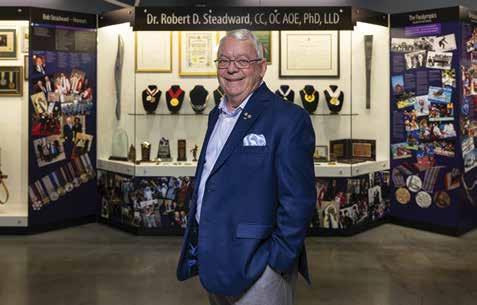
William Butler (HS’01) built a career in energy engineering that’s taken him around the world. After early years in subsurface engineering and oil & gas, he pivoted into the energy transition, advising major global investors on renewable energy and low-carbon infrastructure projects. He is now a Senior Consultant at Arup in London, leading technical due diligence. He’s a registered Professional Engineer, Fellow of the Energy Institute, and proud father of identical twin girls. “Mr. Leupold nurtured my love of history and taught me to see the past not as a dusty subject but as a lens for understanding human nature. His lessons on how history repeats and rhymes still guide me today. Mr. Becker’s physics classes sparked a deep curiosity about how the world actually works, this never left me and set me on the path to becoming an engineer. I owe more to those two teachers than they probably realise, and I’ll always be grateful that Luther put them in my corner.”
Sarah Fedirko (HS’06) has built a career centered around leadership, community, and creating meaningful connections. She is the Director of Alumni & Donor Engagement at Saskatchewan Polytechnic and is completing a Master's of Administration in Leadership at the U of R. She has supported major community initiatives, served on local boards, mentored others, and speaks publicly about leadership and philanthropy.
Sarah says, “I’m grateful for the foundation Luther provided and the opportunities it created to grow personally and professionally here in SK. Looking back, what stands out most about LCHS isn’t one single moment, it’s the people. Luther created an environment where real, lasting friendships were built, and many of those connections are still an important part of my life today. I think that says a lot about the kind of community the school created and why so many alumni continue to feel connected long after graduation.”
Carolyn Fluter (HS’05, U’11) completed a B.A. in Psychology and worked in Social Services while taking time to travel. Later she received a B.Ed. and is now a Learning Catalyst teacher, supporting new teachers and collaborating with staff to ensure students are learning through current best practices. She’s also completing a Master's in Educational Leadership and co-owns YQR Tutors. Outside of work, life is busy and fun with her two children and new puppy!
Carolyn says, “Because LCHS was smaller, everyone knew and supported one another. It always felt like a safe place to learn and grow. I have fond memories of walking to Som’s for snacks, chatting with Wendy in the cafeteria, and the teachers who took time when I needed extra help. I loved playing volleyball and being part of the L.I.T. committee. L.I.T. is such a special event, with the entire school coming together. Luther gave me lifelong memories, meaningful relationships, and a strong foundation for university and beyond.”
Pat Neufeld (HS’06) is in his 15th season of professional football in the CFL. He’s the third-longest CFL tenured player and has played in five Grey Cups in a row from 2019-2024, one of three teams in history to do so. He has been a three-time CFL all-star and three-time CFL west division all-star. Pat and his wife have a beautiful daughter and make Winnipeg home. His favorite Luther memory is his senior year, when Luther was provincial champions in football as well as L.I.T. champions.
Bennet Misskey (HS’06) is a partner with the Regina law firm MLT Aikins. He maintains a broad litigation practice with a focus on corporate and commercial litigation and regularly acts for clients on complex construction, transportation, insurance and energy-related matters. Following receipt of his LLB and BCL degrees from McGill and studying International and European Law (Université Paris 1 Panthéon-Sorbonne), he was called to the Saskatchewan bar in 2016. Ben is fluent in French. He married Patricia Miller, who has a family law practice, and together they have two sons, ages six and four.
Jonathan Misskey (HS’06) is a clinical assistant professor and Vascular Surgeon at the Vancouver General Hospital. His practice includes open and advanced endovascular interventions, aortic disease, peripheral arterial disease, and all types of chronic venous insufficiency. He is also the postgraduate director for UBC Division of Vascular Surgery and the Department of Surgery Surgical Foundations program. Jon received his MD from the U of S, earned a Clinical Education Fellowship through UBC, and a Master's of Health Professions Education through Maastricht University. He completed his vascular surgery training at UBC. Jon married Anna Maslany (HS’06) who has a PhD in Psychology from UBC. Jon and Anna have twin eightyear-old daughters.
Class Notes submissions have been edited for length and clarity.
To submit your own Class Note for the 2027 Luther Story, please email alumni@luthercollege.edu.
Meaghan (Kimmie) Rewniak (HS’07) received an alumni award from Norquest College and was featured in their marketing campaigns including billboards in northern Alberta. She is currently working for ATB Financial as an Entrepreneur Event Specialist while advocating for mental health and disability equity.
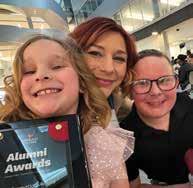
Jennifer Yim-Rodier (U’08) opened a private counselling practice. She has a Master's in Educational Psychology and is a Canadian Certified Counsellor. She was recently accepted into the Doctorate of Educational Leadership program at the U of S. She and her husband have two children. They coach their daughter’s softball team and volunteer on the parent council at their daughter’s school.

Ryan Gormican (HS’19) is building a career in AI, working at TensoAI, an AgriTech startup. He works on datadriven solutions, helping farmers and researchers make decisions around agriculture. Using a range of climate and sensor data, Ryan develops the system holistically, working on machine learning, AI workflows, and full-stack development. Beyond work, he enjoys writing on LinkedIn about AI, Agritech, and life philosophies that inspire him.
Logan Pletz (HS’19) made his Olympic debut in biathlon at the games in Milano-Cortina, Italy. He previously competed in three consecutive IBU World Championships.
Chelsea Coupal (U’10, U'12) had a second poetry collection, U Alive, published with Thistledown Press in April 2026. Chelsea graduated with a BA in Journalism in 2010, a BA (Honours) English degree in 2012 and an MA in Creative Writing in 2017. chelseacoupal.com

Jennifer says, “I met my husband AJ at Luther College. We were in the same English 100 class back in 2003. AJ lived in the Luther Residence so we spent a lot of time at Luther. We made some great friends there.”
Austin Josephson (HS’10, U’15) toured the school with Thomas Fahlman and felt a holistic connection to Classroom 111, the Music Room, and the Merlis Belsher Heritage Centre. These specific locations meant so much to them and they cherish the memories associated with those spaces. They remember history lessons taught by Mr. Ben Freitag, senior choir rehearsals under the direction of Dr. Melissa Morgan, community gathering through daily Chapel, and performing in musicals like Hello Dolly (2007), and Annie (2008). Austin and Thomas will celebrate 20 years of friendship in 2027, and are proud to be Luther Lions!
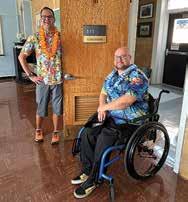
Valerie Leitch (U’22) is ticking off the bucket list of travel, destinations, being a grandma, and loving life. As a senior, she started her educational journey looking for a Certificate in Spanish (just to finish what she started in her teen years) – 36 credit hours later, she was hooked on learning. “Luther offered challenging and intriguing classes, I had a great experience getting my full degree with Distinction, and I attribute that to my professors and librarians who provided knowledgeable support. History Jeopardy in Dr. Yvonne Petry’s classes stands out as a highlight. Dr. Brenda Anderson opened new insights into religion, gender and inclusion.”
Malena Szechtman Pintos (HS’16) completed her undergraduate degree in ecology from the University of Alberta. She worked odd jobs all over Canada before coming back to Saskatchewan to pursue veterinary medicine. She is moving to Edmonton with her partner in September where she will be working as a veterinarian. She has special memories of canoe trips in northern Saskatchewan with Mr. Hall.

Jen Taylor (U’23) is a Contracts Administrator at First Nations University of Canada. She will be pursuing a Master of Arts in English in 2027, with a goal to find sessional lecturer work, and continue to work in academic spaces. “I always enjoyed the last day of my Luther classes. The instructors would bring in cookies to help ease us into finals. That kind of treatment was not given at other larger colleges – I am grateful to have had the small classes at Luther, which gave me the opportunity to get to know my instructors, and build lasting relationships and supports.”
Kathryn Blommaert (U’24) earned her degree in Human Justice from Luther College. After graduating, she moved to pursue law at the University of Alberta, where she is now working toward completing her final year in 2026. Following graduation, she will article with McDougall Gauley LLP, beginning the next chapter of her professional life.
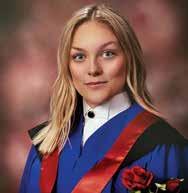
Richard Barnsley (HS’61)
Lola (Morley) Beck (HS’52)
Henry Borgardt (HS’51), former Lutheran pastor in Regina
Thomas Brock (HS’57, HSU’58)
Carl Cherland, former LCHS teacher and founder of Luther Bach Choir
William Cote (HS’48)
Daun Daum (HS’64, HSU’67)
Phil Engstrom, former LCUR faculty member
Lawrence Fries (HS’59)
Brian Goehring (HS’70)
Connor Gherasim (U’21)
Kenneth Holliday (HS’61)
Pete Hoeppner (HS’48)
Ralph Johnson (HS’57)
Carol Koch (HS’56)
Ernest Koch (HS’54, HSU’55)
Janet (Grassick) Kuchinka (HS’57)
Fotini Labropulu, LCUR faculty member
John Lynch (HS’56)
Ralph Machin (HS’62)
Chris Marshall (HS’60)
Diane (McDonald) McPhie (HS’87)
Ronald Pugsley (HS’53)
Randy Selzer (HS’71), predeceased by parents Rudie (former LCHS teacher and principal) and Anne (former LCHS librarian)
Phyllis (Fries) Sommerfeld (HS’58)
Richard (Dick) Stark, former LCHS teacher and coach
Judith (McManus) Tait (HS’58)
Charlotte Watson (HS’51, HSU’52)
Sandra Watson, LCHS cafeteria staff member
Carl Wagner (HSU’60)
Wayne Yerhoff (HS’65)
Gail Bowen
Olive Chapman
Irene Edworthy
Lyn Goldman
Mary Grant
Jim Hopson, former L.I.T. Special Guest
Claire Kramer
Larry Lafrentz, former L.I.T. Special Guest
Terence (Terry) McKague, Chancellor Emeritus of the U of R
Donna Miller
Vaughan Solomon Schofield, Saskatchewan’s Lieutenant Governor (2012-18)
Kim Thorson, former member of the Board of Regents
Submitted by Erin Stepenoff
The Luther story for this family started with Carole Stepenoff (HS‘65). After her four years at Luther, she went on to graduate from the University of Saskatchewan and the University of Regina. For the next 60 years, Carole always took the road less traveled, hitchhiking around Europe and working in all the western provinces, with career choices that included libraries, engineering associations, and the Saskatchewan Science Centre. Carole settled in Vancouver for 30 years, running an ESL business, working in many elections, and in retail. A second retirement brought her back to Regina to be closer to family.
Following Carole was her brother Ken (HS‘68). Ken was a key member of various athletic teams at Luther. After graduating, Ken took over the family flooring business from his father and helped raise his family. One of Ken’s rules was that his kids, Erin and Colby, had to go to Luther for at least Grade 9 and give it a try. While they may have started at Luther because of their dad, both of Ken’s children stayed at Luther, made lifelong friends, and went on to graduate. Sadly, Ken passed away in 2012 shortly after retiring.
Ken’s daughter Erin (HS‘90) enjoyed her four years at Luther, and then went on to the University of Saskatchewan and the University of Regina, obtaining her Bachelor of Administration degree. She worked in the family flooring business for five years after university. Erin also worked for Luther Care Communities and Ipsco, where she ran the Turvey Centre. In 2008, Erin married Dion Tchorzewski and they had their daughter, Eden, in 2009. She decided to stay home with their daughter at that point and help her aging grandmothers. The three of them love to travel and spend time at their cabin at Crystal Lake.
Colby (HS‘95) followed his sister Erin, first by attending Luther and then by becoming the third generation to manage the family flooring business. Colby’s time at Luther was focused on sports and friends. His joy in life is discovering sandy beaches in many parts of the world, settling on permanent beach life at Last Mountain Lake just outside of Regina.
Erin says, “We are now lucky to have our third generation attending Luther, but hopefully not the last.” Erin’s daughter Eden Tchorzewski will be graduating with the Class of 2027. “Eden loves being at Luther. She plays on the volleyball team and is one of the yearbook editors. She is dedicated to her studies but finds time for fun with her Luther friends.”
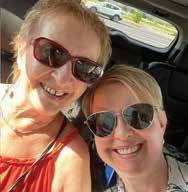
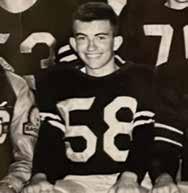
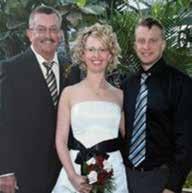

Phil Engstrom, Professor Emeritus, passed in April 2025, and his wife Lorraine passed in December 2025. Phil was a Luther College at the University of Regina mathematics faculty member from 1974-1991. Lorraine previously worked at the U of R Archer Library.
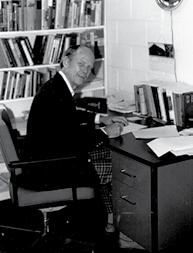
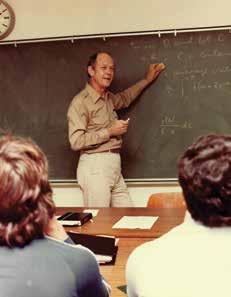
Kim Thorson, former Luther College Board of Regents Chair, passed away in January 2026. He was appointed to the Board in 1986 and was elected Chair in 1989. He served as Chair of the Board until June 5, 1995.
Top: Ground-breaking LCUR new wing (now the Anderson Wing) on June 28, 1990. L-R: Kim Thorson with architect Gerry Norbraten.
Bottom: Presidential Installation of Rev. Dr. Richard Hordern, April 30, 1995. L-R: Rev. Dr. William Hordern, Rev. Dr. Richard Hordern, Kim Thorson, Rev. Allan Grundahl (Bishop of Sask Synod ELCIC) & Rev. Telmor Sartison (Bishop of ELCIC).
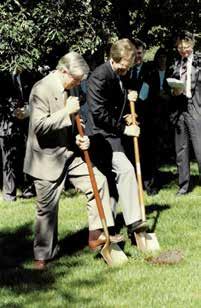
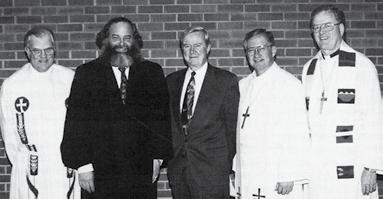
Submitted by Bob & Vi Jacobs
The Krell family learned of Luther College from Pastor Abs of the Zion Lutheran Church in Stoughton. All six children of the Fred and Lena Krell family – Sophie Leah, Lily, Bill, Marie, and Vi – attended Luther College High School. The first was Grade 12 for Lily in 1948. In 1949, Sophie, Leah, and Lily enrolled in their first years of university. That same year, Bill attended for Grade 12 and Marie for Grade 11. Having five children from one family in residence for the same year was historic! In 1950, Vi enrolled in Grade 9 through to her Grade 12 graduation in 1954, and she remained for a fifth year in the girls’ dorm enrolled in her first year of university.
Vi says, “Our parents farmed diligently to provide a good education for us. They believed that getting an education was very important because no one could ever take it away from you! On one occasion, our Dad sold a load of cattle in Regina and brought a $1,000 bill to the Luther office to pay towards the family tuition."
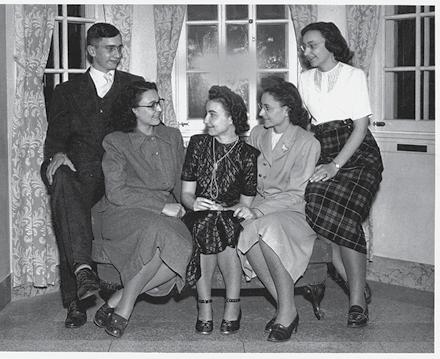
Vi went on to complete a nursing degree in public health from the University of Saskatchewan in 1959. While at U of S, she served on the executive of the Lutheran Student Association. “We needed a new president and Robert (Bob) Jacob became that person.” Bob and Vi were married in Saskatoon in 1960.
Bob attended Luther College for his first year of university in 1955, then began pre-seminary at Lutheran Theological Seminary. Following his ordination in 1962, Winnipeg became their home. Bob served at Lutheran Church of the Cross and at Grace Lutheran Church. In 1998, Bob was asked to start a mission congregation in Birds Hill, East St. Paul, a community in northern Winnipeg. “Together we canvassed 2000+ homes and in 2006, Abundant Life Lutheran Church building became a reality. This beautiful building is presently home to a vibrant congregation.”
Bob and Vi were blessed with six children, Lori, Joy, Nathan, Kim, Kai, and Kendra. Their daughter, Lori also attended Luther College in 1978, residing in the residence to complete her Grade 11 and 12. She became a registered nurse and a teacher/guidance counsellor.
After being a stay-at-home mom, Vi worked for a year as a teaching assistant and eventually returned to Public Health in Winnipeg. Bob and Vi have 11 grandchildren and four great-grandchildren. “They are so very special to us. How blessed and thankful we are!”
Luther College was a very formative part of their Christian journey. “We are grateful to our parents who made it happen for us and for the caring guidance of the Luther College staff and the ministry provided by Christ Lutheran Church.” Bob and Vi Jacobs reside in Winnipeg within minutes of their children and Abundant Life Lutheran Church.
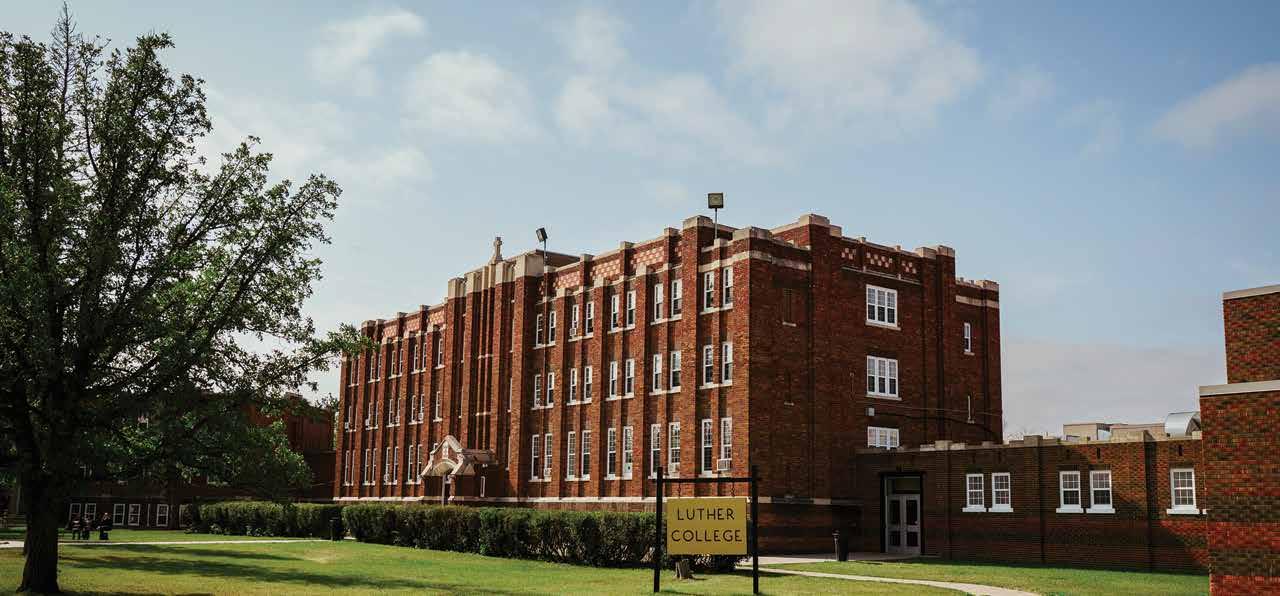
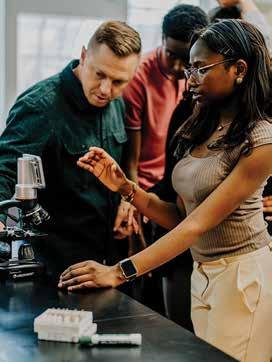
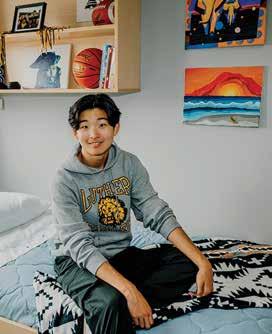
The friendships. The opportunities. The mentors. The sense of belonging.
Today, there are families searching for a boarding school where their student can thrive academically, grow as a leader, and become part of a supportive community. You can help them find Luther.
Whether they live in Saskatchewan, Canada, or around the world, Luther’s boarding program offers a safe and supportive community that feels like family, academic support, lifelong friendships, and travel opportunities.
If you know a student who would benefit from the Luther experience, we’d love to hear from you. Contact us at admissions@luthercollege.edu or call 306-791-9150.
THE LUTHER STORY DISTRIBUTED BY CANADA POST UNDER PUBLICATION MAIL AGREEMENT NUMBER 40065736.
RETURN UNDELIVERABLE CANADIAN ADDRESSES TO:
The Luther Story c/o Luther College High School 1500 Royal Street Regina, SK S4T 5A5 email: lutherstory@luthercollege.edu