(Ebook) Cambridge IGCSE and O Level History Workbook 2C - Depth Study: the United States, 1919-41 2nd Edition by Benjamin Harrison ISBN 9781398375147, 9781398375048, 1398375144, 1398375047
All rights reserved. No part of this book may be reproduced or transmitted in any form or by any means, electronic or mechanical including photocopying, recording or by any information storage and retrieval system, without permission from the publisher in writing.
Design by Battle eld Design
Maps by Battle eld Design
Color pro les by Johnny Shumate
Printed and bound in the Czech Republic by FINIDR, s.r.o.
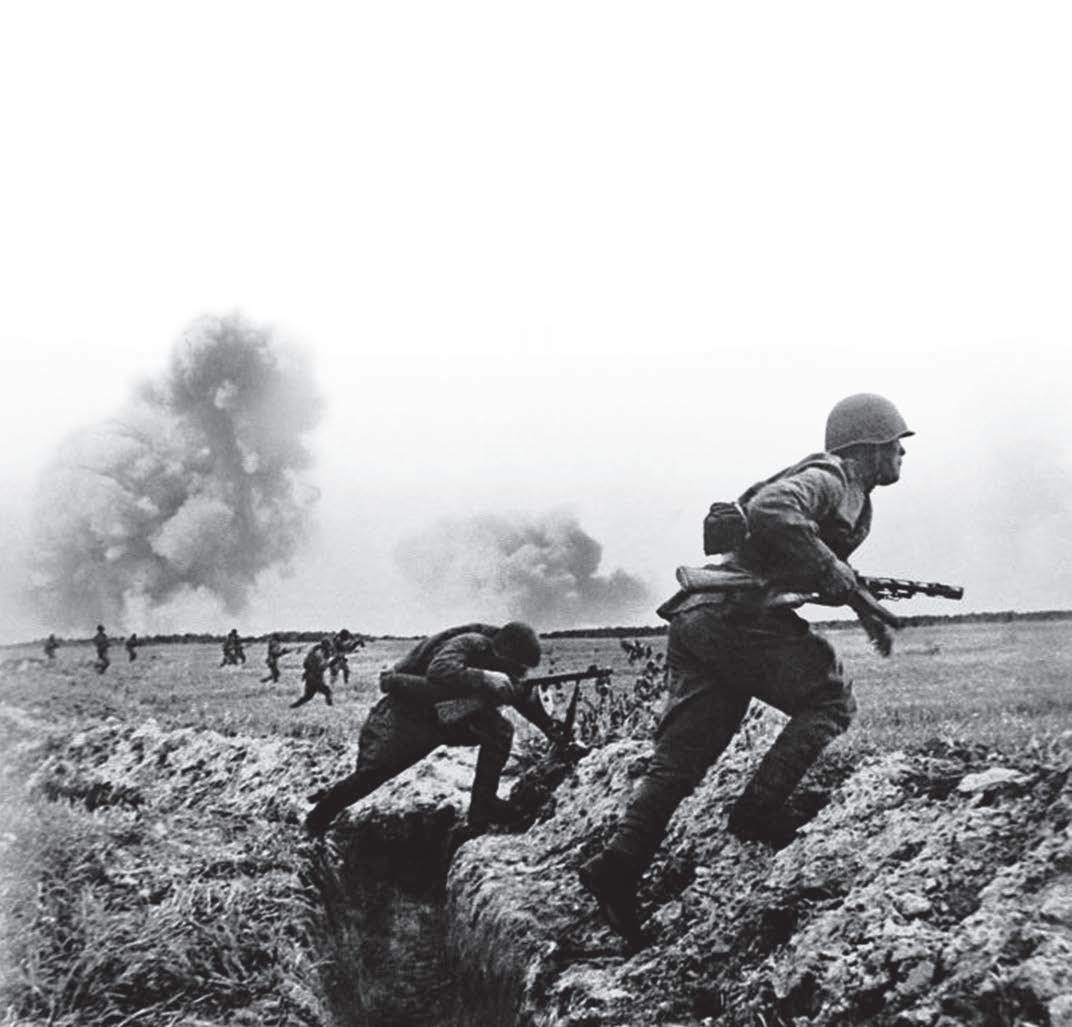
Title page: Red Army troops charging into action during the Bagration offensive.
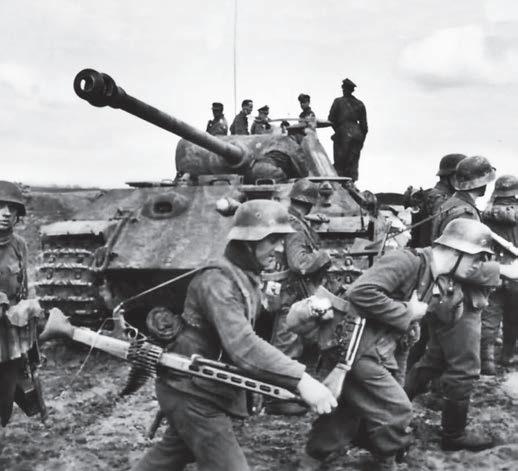
Contents page: Well-armed panzergrenadiers pass a stationary command Panther during operations on the Eastern Front during mid-1944. In an attempt to stem the Soviet drive westward, the bulk of the Panther battalions were committed to the Bagration operation in a desperate struggle to try to contain the enemy offensive, if only temporarily.
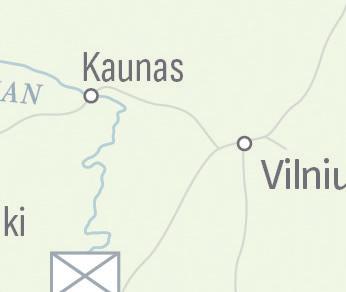
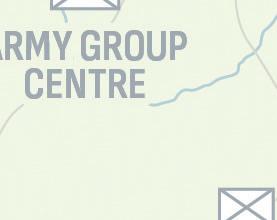
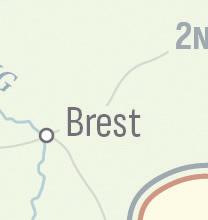
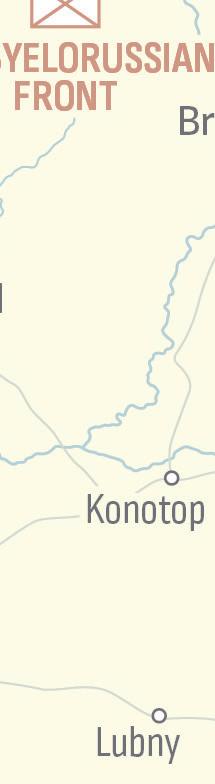
Map: In total, Army Group Center comprised some 400,000 troops with a further 400,000 in support and in non-combat units. Opposing the Germans the Red Army had mobilized some 1,7000,000 troops for the offensive.
All images are from the author’s collection, unless stated otherwise.
Timeline of Events
Named a er Pyotr Bagration, the Russian general in the Napoleonic Wars, Bagration was the codename for the Red Army’s 1944 summer o ensive that led to the destruction of German Army Group Center, the greatest military defeat experienced by the Wehrmacht during World War II. On June 22, 1944, over a million Soviet troops poured across the German lines. What ensued was a swi and bloody battle of attrition. In the days and weeks that followed, German units fought and hemorrhaged under the constant hammer blows of Soviet ground and aerial bombardments, and the endless armored and infantry attacks. As the Soviet might punched a massive hole in the German lines, it sent shock waves through Army Group Center forcing it to retreat. However, the Russian o ensive was so fast that many of the German units with their precious panzer and infantry divisions quickly became encircled and destroyed, its remnants retreating west in order to save themselves. By the end of the o ensive the cataclysm was bigger than that experienced at Stalingrad. It saw the German Army being pushed out of Byelorussia into Poland with the loss of over 300,000 men and most of its weaponry.
May 1–31, 1944: Soviet planning for a major offensive against the German Army in the East.
June 19, 1944: Soviet partisan groups go into action against German supply and communication.
May 20, 1944: The Red Army’s launch date for the new summer offensive, Operation Bagration, is set for June 22.
June 22, 1944: Operation Bagration is opened under General Zhukov.Over 1.2 million Soviet troops go into action along four fronts.
June 23, 1944: 1st and 3rd Byelorussian Fronts advance northeast of Minsk, surrounding the 4th Army.
June 26, 1944: Hitler orders the 9th Army to retreat westward to take up further blocking positions.
June 28, 1944: Hitler replaces Field Marshal Busch with his “troubleshooter,” General Field Marshal Model.
June 29, 1944: The Soviets capture Bobruysk. The 1st and 2nd Byelorussian Fronts close in on Minsk, attempting to link up with the 3rd Byelorussian Front.
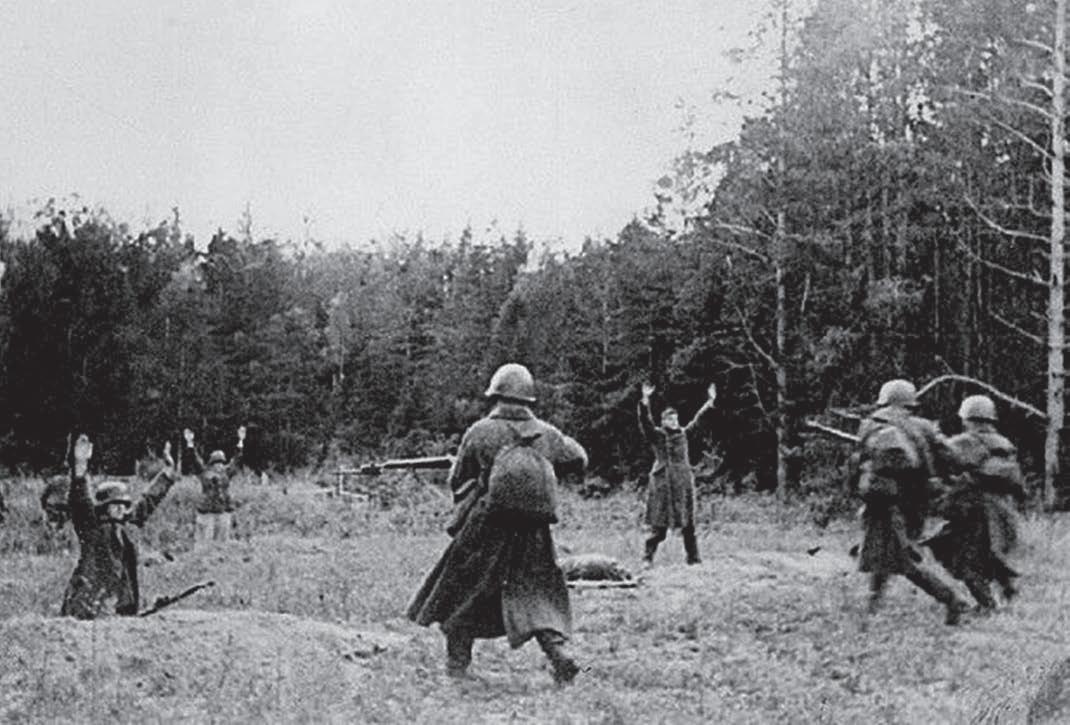
Russian riflemen charge a German defensive position during the initial phase of the offensive. In a number of areas along the front Wehrmacht soldiers were quickly surrounded or overwhelmed.
July 4, 1944: Minsk falls as 100,000 German troops are caught in the Soviet encirclement of the city.
July 11, 1944: The 9th Army is almost annihilated, and the remnants withdraw toward Lithuania.
July 13, 1944: Vilnius is captured by Soviet troops. The 1st and 4th Ukrainian Fronts launch a fresh offensive toward southern Poland against German Army Group North Ukraine.
July 28, 1944: Lvov is captured. The following day Brest-Litovsk falls to the Soviets. The drive westward by the Red Army continues with unabated ferocity.
AUGUST
July 17, 1944: Byelorussia is cleared of all German forces. Some 57,000 German PoWs are paraded through the Moscow in a victory parade.
German Army Group Center is annihilated.
August 15, 1944: The Red Army is forced to temporarily halt its westward advance due to overstretched supply lines.
JULY
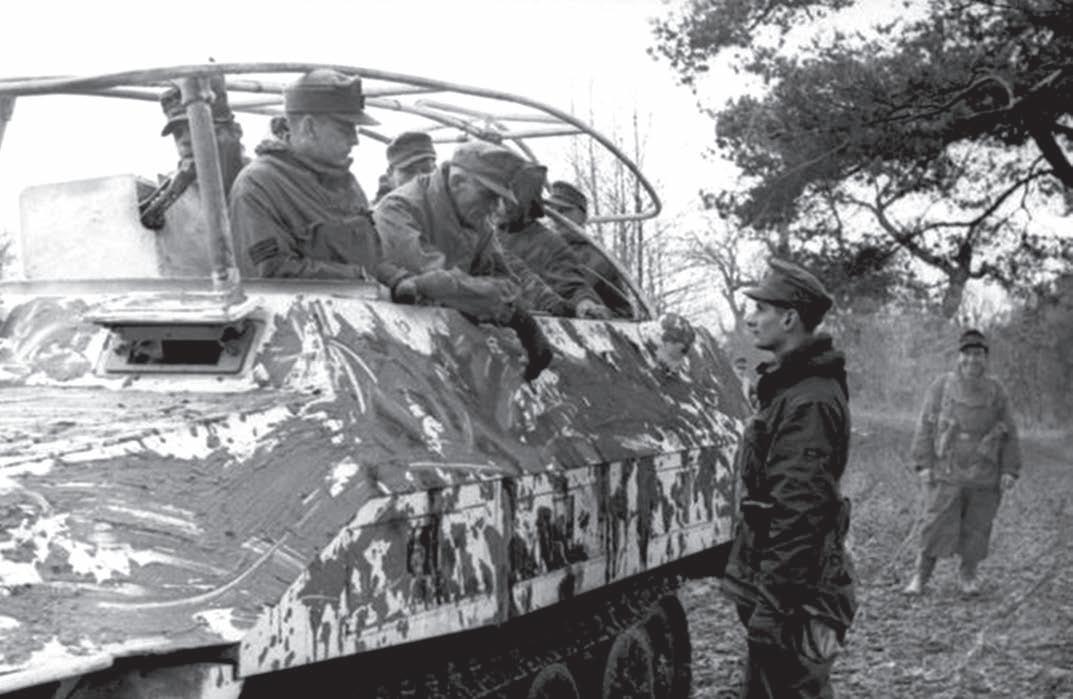
Crew inside an Sd.Kfz. 251/3 communications vehicle fitted with extra radio equipment for command, converse with a soldier out in the field. This photograph was taken in early 1944 on the Central Front. Army Group Center during this period comprised the 3rd Panzer Army, 2nd Army, 4th Army, and 9th Army.
Prelude to Disaster
Following the catastrophe of the last German o ensive on the Eastern Front, Operation Citadel, or the battle of Kursk, in the summer of 1943, German tactics would now consist of a series of withdrawals with its forces fanatically contesting every foot of ground. e war in the USSR had taken its toll on the German war machine and losses in both men and equipment were vast.
However, in spite of the reverse in fortune for the German forces along the battered front, troops continued to hold their positions against overwhelming odds. Whilst a number of areas simply cracked under the sheer weight of the Russian onslaught, there were many places where German units continued to demonstrate their ability to defend the most hazardous positions against well-prepared and highly superior enemy forces, particularly in German Army Group Center.
By late 1943 Army Group Center’s front, covering some 180 miles, had more or less stabilized, becoming relatively static with a strongly forti ed defensive line. Much of the German success along the Central Front was due to the winter weather, and the fact that the Soviets had slowed their advance in order to bring up reinforcements and to regroup, and replenish its units for the spring the following year.
Hitler made full use of the situation along the Central Front and ordered reinforcements to the area, deploying panzer and infantry divisions, and assault gun brigades from other army groups and from Germany to bolster the front. Although this could only be achieved at the cost of weakening other fronts in Russia, he was determined that no yard of ground should be given up without a ght, and that every o cer and Landser in Army Group Center should be instilled with the iron will to hold rm. In his eyes, if his forces could hold the enemy, this would prevent the Central Front from collapsing and the Soviet armies using it as a springboard into Poland. Hitler was under no illusion that the war in the East could be won employing these types of tactics. But what could be achieved was a war of attrition where his troops could wear down the enemy and stagnate the front into a fourth Russian winter.
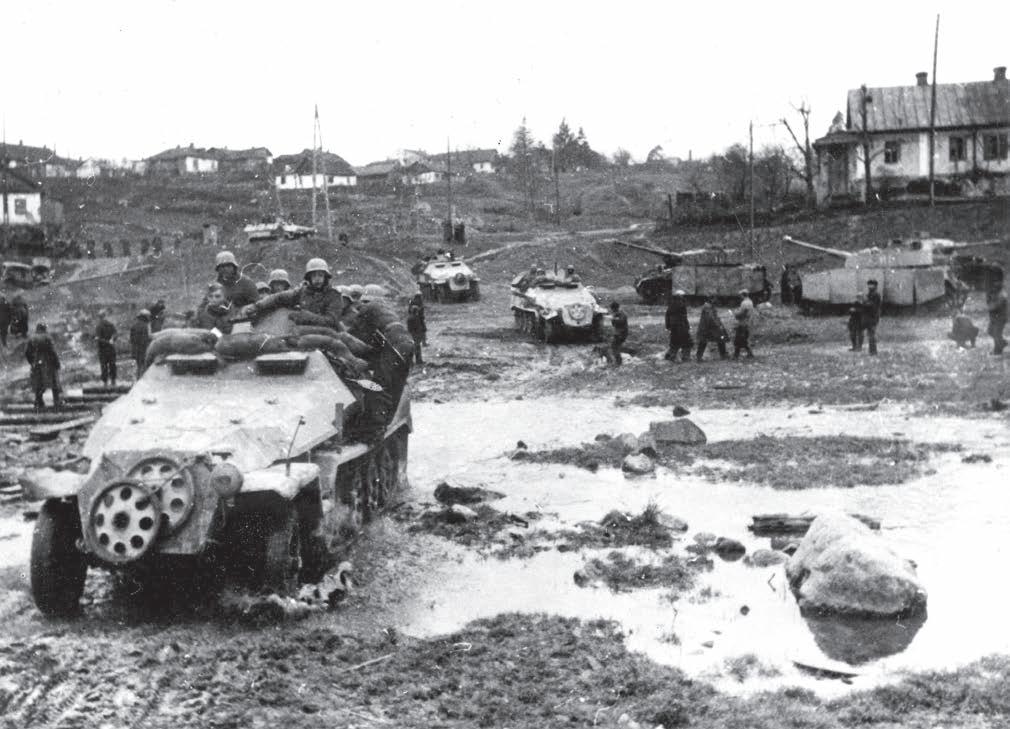
Sd.Kfz. 251 halftrack personnel carriers and late variant Panzer IVs on the Eastern Front in the winter of 1944. The halftrack, especially the Sd.Kfz. 251, was a very versatile vehicle and could travel across some of the most rugged terrain. Whilst these halftracks were primarily used to transport troops to the forward edge of the battlefield, they were often tasked for reconnaissance missions because of their speed, versatility, protection and useful firepower.
By June 1944, German strategy was faced with a two-front war. More than 53 percent of the army was ghting in Russia, whilst the other 47 percent was in Western Europe trying to stem the Allied invasion along the Normandy coast. On the Eastern Front the German Army strength had reached a new low of some 2,242,649 against more than 6 million Soviet troops. German commanders in the eld were well aware of the seriousness of the military situation and looked ahead to the coming battles, knowing that that they were bound by Hitler’s orders with which they could not successfully comply. In front of them stood a vast enemy army whose strength was almost three times their own.
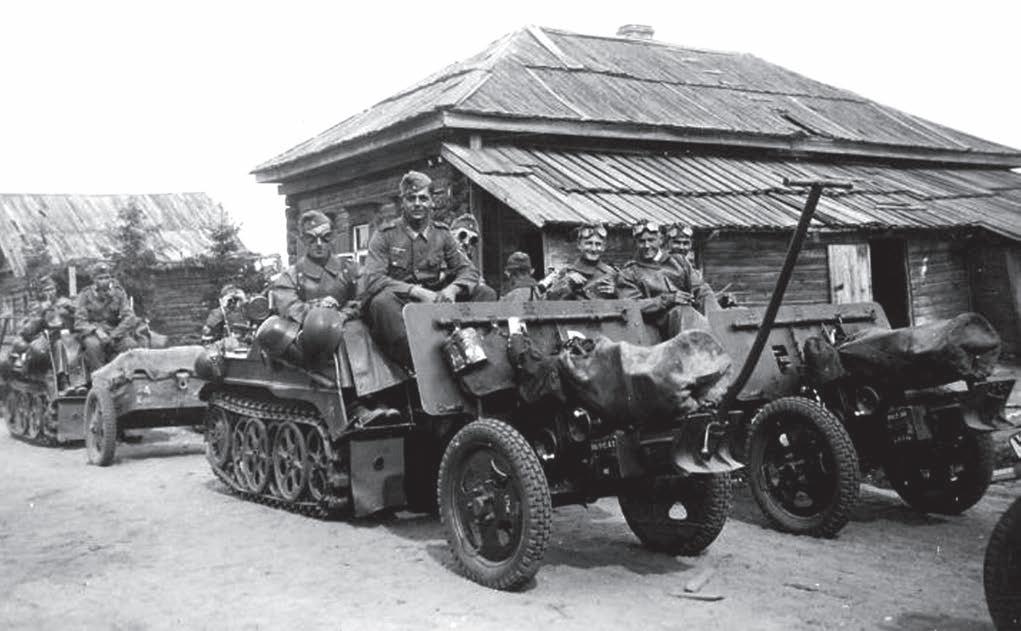
Sd.Kfz. 2s—or what the Wehrmacht called the Kleines Kettenkraftrad HK 101 or Kettenkrad—towing ordnance on the Eastern Front. Initially, the Kettenkraftrad was a motorcycle tractor for airborne units and Fallschirmjäger. With its overlapped and interleafed road wheels, it was used extensively throughout the war, mainly in Russia. There were two variants of the vehicle: Sd.Kfz. 2/1 and Sd.Kfz. 2/2. Both were used with a trailer and had field communication gear mounted behind the driver. It was primarily tasked with laying communication cable from a mounted wire spool. However, because of its versatility, it could be used for a variety of other tasks such as pulling heavy loads, and carrying troops. Later in the war the Kettenkrads also appeared in reconnaissance patrols and independent scout detachments, and were used especially where roads were almost impassable or in dense forests.
German Forces
e German soldiers of 1944 had gone through radical changes since they began their war with the Soviet Union in the summer of 1941. ey had fought across hundreds of miles of steppe, an environment alien to them, against a growing and hostile army. Initially, the Germans fought a series of victorious o ensive operations attacking more or less simultaneously across large areas of enemy terrain in order to pin the enemy forces ahead of them, while mobile formations were concentrated to attack along narrow sectors of the front, breaking through to the enemy rear and surrounding him.
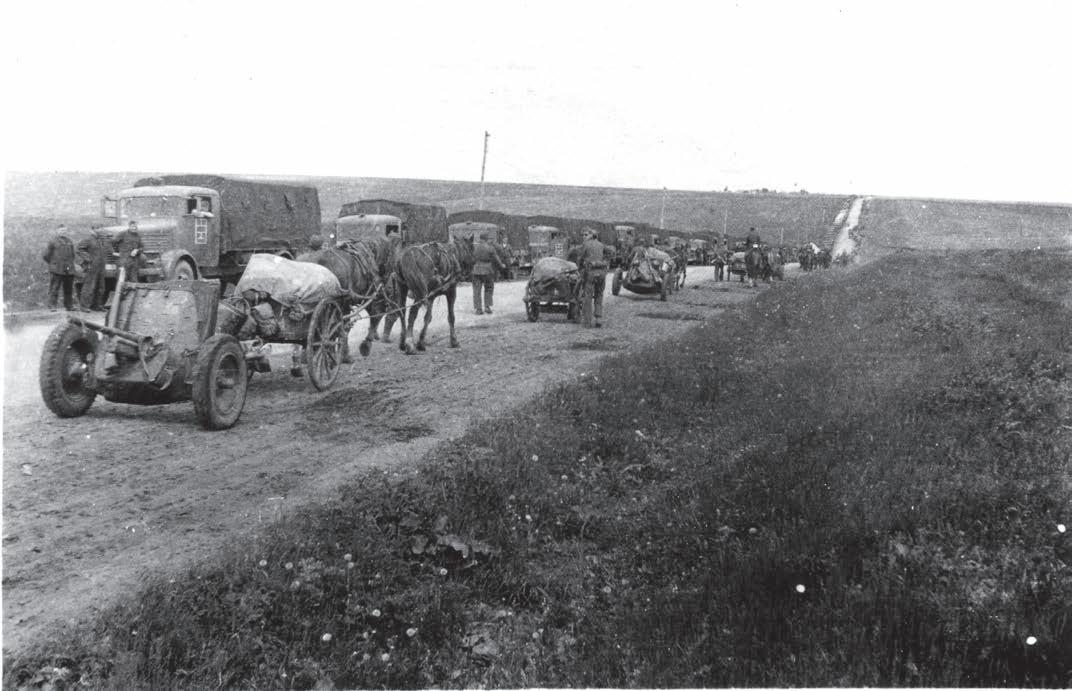
Yet, due to the vast distances initially covered by the Wehrmacht, coupled with that rst winter, and a strong defensive enemy strategy, the German soldiers’ tactics and the way they survived on the Eastern Front changed irrevocably. rough 1942 and 1943 the German soldier was no longer ghting simultaneously across an entire front. Instead, there were vast areas that had stagnated, like Army Group North. On the Southern Front, German PaK 35/36 guns being towed by horses toward the front in the early spring of 1944. Contrary to popular belief, even by the latter stage of the war, much of the Wehrmacht still made use of animal draft.
forces had unleashed their summer o ensive and fought a bloody battle of attrition in and around Stalingrad. Although Hitler said that the 6th Army had provided a valuable service by tying down almost three quarters of a million enemy troops, the loss of the 6th Army was so signi cant that it marked the turning point of the war in the East. e German soldier was now faced with a relentlessly growing and improving Red Army. Apart from the lastgasp Operation Citadel, German tactics in a number of areas now altered from o ensive to defensive operations with infantry formations deployed across the front to hold the main defensive lines. Mobile formations were then concentrated in small numbers in various locations from where they launched focused counterattacks against enemy forces who had broken through the infantry’s defensive belts. Many of the armored vehicles too, notably the Sturmgeschütz III, which had been initially deployed as an infantry support vehicle, were now compelled to support other armored vehicles—panzers—due to the telling shortages. is not only deprived the infantry of additional re support, but it weakened their lines and made them vulnerable to constant enemy attack.
us by 1944, the German soldier found himself in a vulnerable and uid situation. With a lack of proper armored re support, additional men, and weaponry, soldiers were compelled to dig in and defend positions o en with only an array of machine guns and antitank PaK (Panzerabwehrkanone) guns.
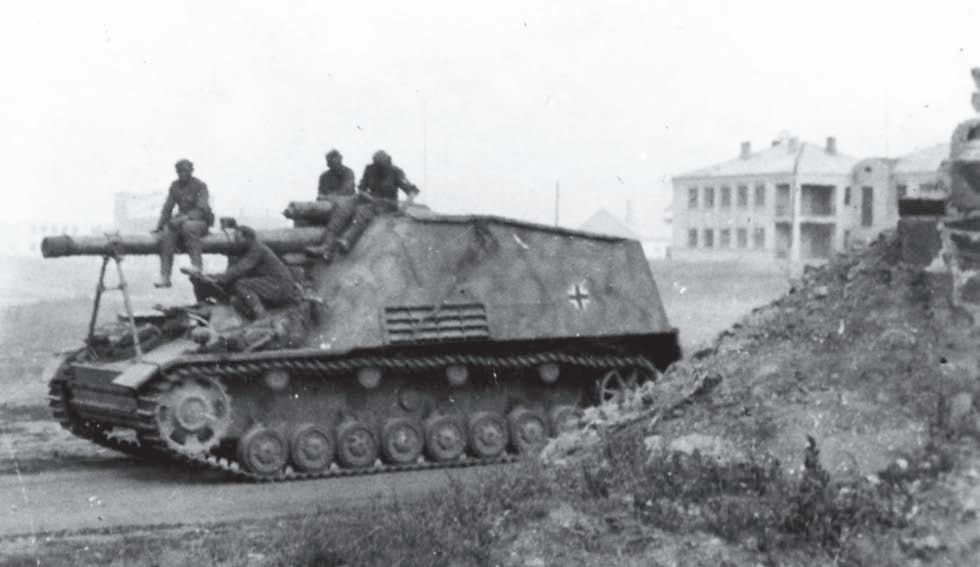
On the Central Front in April 1944 is a Hummel mounting its powerful 15cm howitzer. These vehicles served in armored artillery battalions—Panzerartillerie Abteilungen—of the panzer divisions, forming independent self-propelled artillery batteries, each with six Hummels and one ammunition carrier. Whilst primarily designed for offensive operations, they were successful in defensive roles as well.
As a result of the lack of supplies, a sense of futility and gloom gripped the German soldier. On the Central Front, countless thousands of soldiers had been killed since the summer of 1943, and almost a year later the Germans found themselves pushed back, holding parts of a front almost reminiscent of World War I—with a string of defensive positions, trenches and shell holes—in which gains and losses could be measured only in yards.
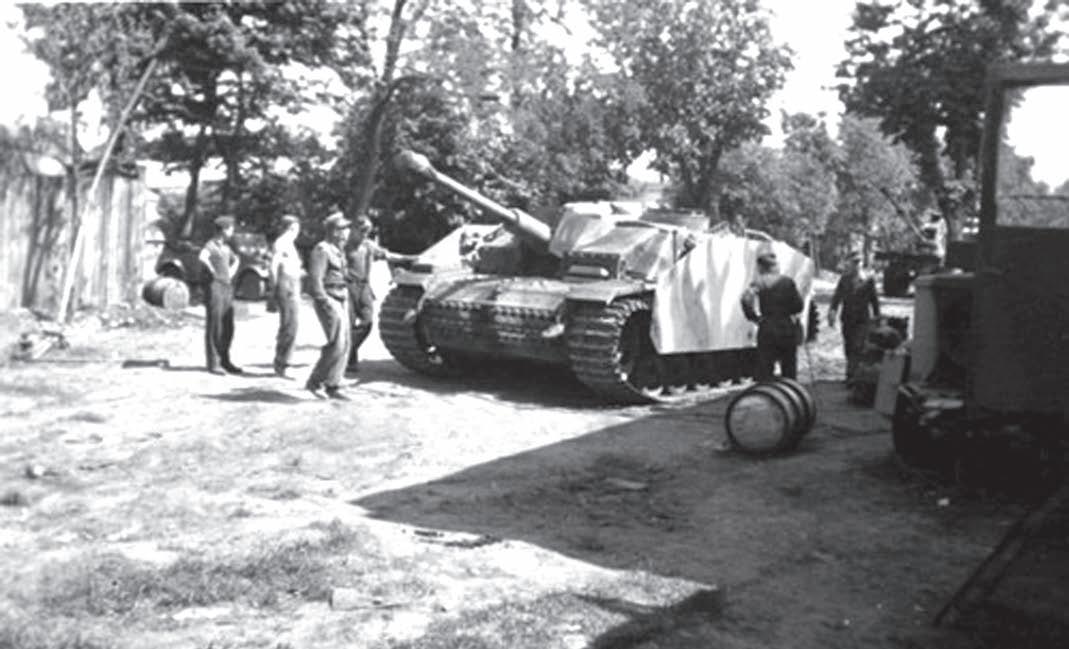
A late variant Sturmgeschütz III. By early 1944, about 55 percent of the Panzerwaffe was comprised of assault guns. In February 1944 the organization of an assault gun battery was changed to four platoons, one with three 10.5cm assault howitzer 42s, and three with three 7.5cm assault cannon 40s each. With the battery leader’s two assault guns, this amounted to 14 vehicles per battery. The alteration was supposed to make the gun batteries more effective on the battlefield. Whilst it increased the firepower, crews still found they were outnumbered and as a consequence still suffered heavy losses. Yet, despite the setbacks, by the time the spring thaw arrived in March and early April 1944, there was a genuine feeling of motivation within the ranks of the assault gun units. Yet, these vehicles would have to be stretched along a very thin Eastern Front, with many of them rarely reaching proper operating levels.
In Profile: Panzergrenadier and MG 42 machine-gunner
A panzergrenadier in the summer of 1944. The Wehrmacht were slow in the development of camouflage clothing and it was not until the spring of 1942 that the first camouflage smock appeared. This soldier, an NCO, has donned a lightweight camouflage smock with matching helmet cover. He is armed with a 9mm MP40 and is holding two M24 stick grenades. Attached to his black leather belt is his MP40 magazine pouch. Note the entrenching tool in his belt. (Johnny Shumate)
A light machine-gunner with his MG 42 machine gun with folded bipod. A common method of carrying ammunition was the ready-to-use belt—two linked-together 50-round belts—which is draped around the machine-gunner’s neck with bullets pointing outward to prevent them from digging into the body. Though not seen, the soldier will have carried all the relevant issued equipment for a machine-gunner including the standard infantryman’s personal equipment used to sustain himself on the battlefield. (Johnny Shumate)
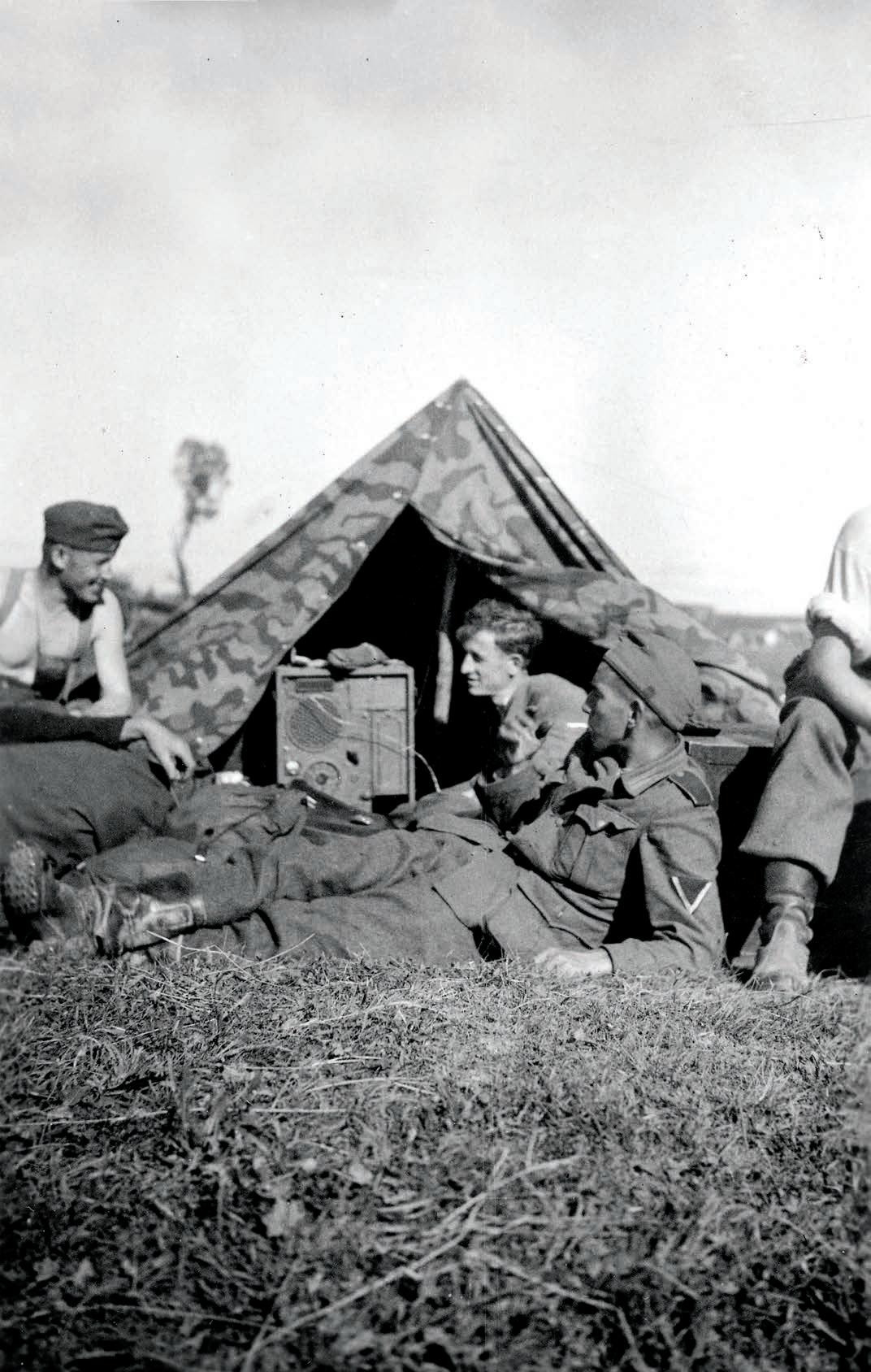
A German forward communication post in the early summer of 1944. The position is out in the open, and a Zeltbahn shelter has been erected to help protect the men from the elements and enemy detection.
e German Infantry Division in 1944
Surprisingly, the organization and composition of the standard infantry division had remained virtually unaltered since 1942. A typical division was still made up of three infantry regiments of three battalions plus an artillery component also being a regiment of three battalions. Other units in the division comprised a battalion each of anti-tank artillery, reconnaissance, signals, and pioneers. Initially, the total strength of a division was supposed to be 17,200 of all ranks, but by 1944, this number varied wildly and mostly never reached this gure.
e bulk of the weapons and equipment in a typical infantry division hardly changed throughout the war. By 1944 the Wehrmacht was supplied with a huge variety of weaponry, everything from small arms to heavy tanks. Weapons of foreign origin also saw considerable use in Wehrmacht units, especially captured Soviet machine guns and anti-tank guns due to the never-ending shortages and dwindling resupplies.
In order to support the shortfall of a typical infantry division during the last year of the war, there was a large in ux of mobile artillery vehicles and armored personnel carriers, so that entire panzergrenadier battalions could be carried into battle. A typical panzergrenadier division was comprised of two motorized infantry regiments, each of three battalions, all armored and with artillery, anti-tank, and engineer units.
An assortment of German vehicles is purposely spread out across a field in the early summer on the German Central Front. The vehicles are spaced apart like this to minimize the risk and effective impact of enemy aerial and ground attacks.
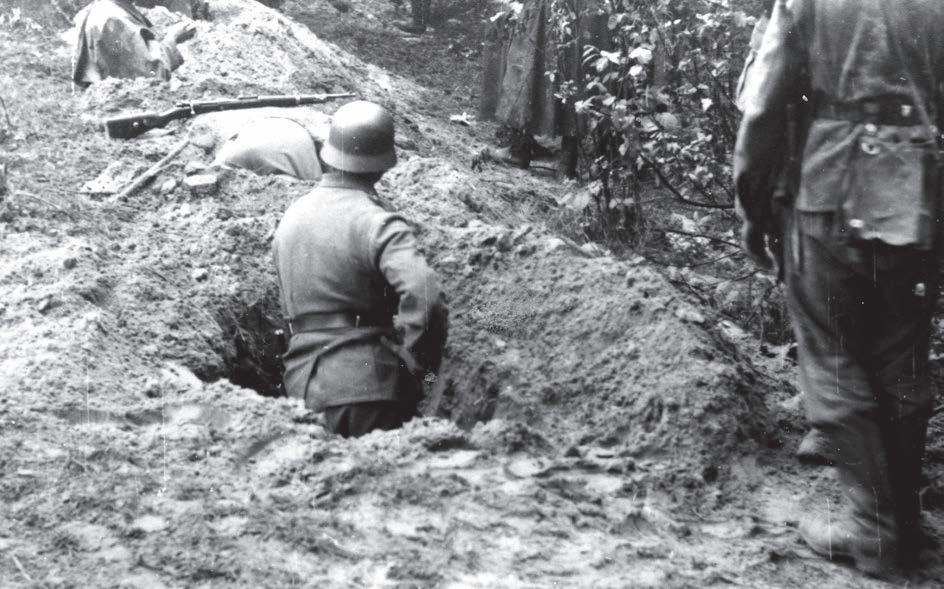
German soldiers setting up a defensive position with infantrymen in their foxholes.
Along the Front
In mid-1944 Army Group Center was relatively static along its prepared defensive positions in the Byelorussian sector and had been for a number of months. In that time the Germans had managed to construct extensive eld forti cations and miles of trench lines, o en to a depth of some 3 or 4 miles. Spread along the front was a German force totalling some 34 infantry divisions, two Lu wa e eld divisions, two panzergrenadier divisions, including components of Panzergrenadier Division Feldherrnhalle, one panzer division and seven security divisions. Supporting these forces were some severely depleted Hungarian units that were undermanned and lacked adequate weaponry to withstand any enemy attacks for any appreciable length of time.
In total, Army Group Center comprised some 400,000 troops, with a further 400,000 in rear-echelon roles and non-combat units. Whilst on paper the numbers appeared to con rm that the Germans could hold their positions, units were in fact dispersed and overstretched along their lines, and lacked su cient heavy weapons. Each division had to cover a front of about 25 miles, double the length of what it should have been defending. Each mile of front was supported by some 80 to 100 troops with two or three artillery pieces and a motley collection of assault guns. Some local towns and villages that fell in the path of these defensive belts had already been evacuated. ousands of women, children, and old men had been removed from their homes with some pressed into service to construct massive antitank ditches and other obstacles. A typical strongpoint deployed along the front contained light MG 34 and heavy MG 42 machine-gun sections, an anti-tank ri e company, a sapper platoon equipped with a host of explosives, infantry guns, an anti-tank artillery company with a number of anti-tank guns, and occasionally a self-propelled gun.
Operating at intervals were Pz.Kpfw.IVs (Panzer IVs), Tigers, and a few Panthers, as well whatever StuG III assault guns that could be scraped together. is front-line defensive belt was designated as a killing zone where every possible anti-tank weapon and artillery piece would be used to ambush Soviet tanks: whilst an enemy tank was subjected to a storm of re within the kill zone, special mobile engineer detachments equipped with anti-
In Profile: The German Commanders
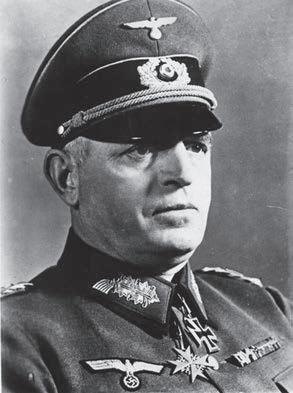
General Field Marshal Ernst von Busch
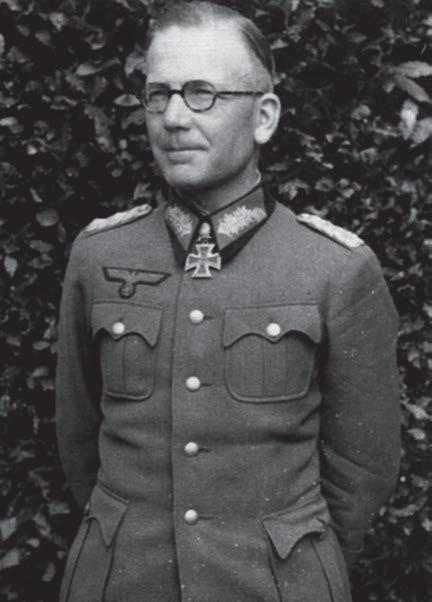
General Busch had an exemplary record as commander of the 16th Army during Operation Barbarossa in 1941. On February 1, 1943, he was promoted field marshal. On October 28, 1943, following a vehicle accident in which Field Marshal Günther von Kluge, the commander of Army Group Center, was injured, Busch was named as his replacement. He would control 76 divisions across four field armies, including five panzer divisions and 54 infantry divisions, with six from Hungary. By June 1944, his command had been whittled down to 38 infantry divisions.
General Field Marshal Walter Model
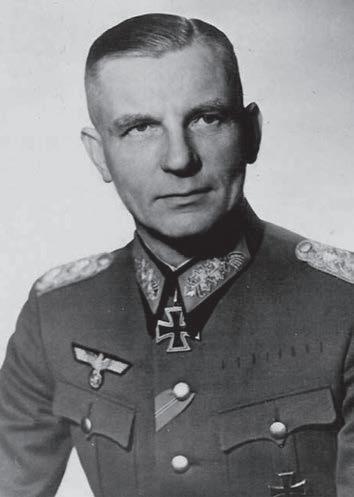
General Field Marshal Model was commander of the 3rd Panzer Army during the invasion of Russia in the summer of 1941. Model’s character as a great military tactician saw him go from one success to another, instilling vigor and determination into his units. In January 1942 he was placed in charge of the 9th Army where he again achieved great success occupying the Rzhev salient. By the summer of 1943, he assumed command of the offensive against the northern Kursk salient. Although Operation Citadel failed, soldiers in the field looked upon Model as the “Führer’s troubleshooter.” As a result of his energy and brilliance on the battlefield, he took command of Army Group North in January 1944. On March 30, he was placed in command of Army Group North Ukraine in Galicia, which was withdrawing under relentless attack from Zhukov’s 1st Ukrainian Front. It was here during bitter fighting that he introduced the “shield and sword” doctrine, which stated that retreats were tolerable, but only if they paved the way for a counterstroke later. Out on the battlefield he was not only courageous and innovative, but was friendly and popular with his troops. By the early summer of 1944, he simultaneously became commander of both Army Group North Ukraine and Army Group Center.
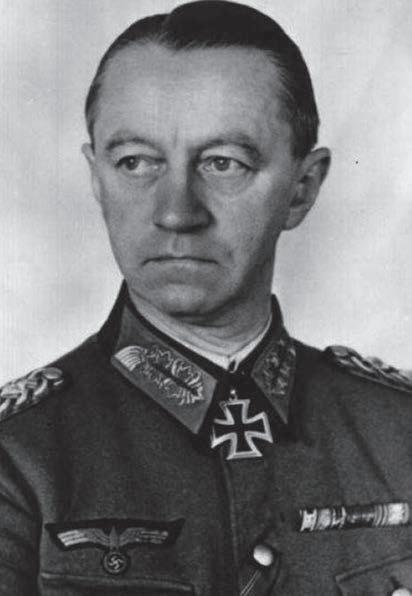
General Walter-Otto Weiss
General Walter-Otto Weiss, of Prussian aristocracy, quickly advanced through the ranks as a dedicated, loyal and determined officer. He took part in Operation Barbarossa and soon earned the respect of his troops. In July 1942, Weiss took command of XXVII Army Corps, before being given command of the 2nd Army on the Eastern Front in February 1943. He continued to command the 2nd Army on the Central Front into the summer of 1944.
General Hans Jordan
General Jordan saw extensive success on the Eastern Front in 1941 commanding the 7th Infantry Division and later VI Army Corps. On 20 May 1944, he was given command of the 9th Army in Army Group Center. He was a recipient of the Knight’s Cross of the Iron Cross with Oak Leaves and Swords.
General Kurt von Tippelskirch
General Tippelskirch was commander of the 30th Infantry Division, Army Group North, during the invasion of Russia in 1941. A great military tactician, his skill and obstinacy earned him the Knight’s Cross of the Iron Cross on November 23, 1941. He saw extensive action around the Demyansk Pocket. By the summer of 1942, as the 6th Army began arriving outside Stalingrad, Tippelskirch was assigned as the liaison officer to the Italian 8th Army near the River Don. On February 18, 1943, he became commanding general of XII Army Corps, retaining this position until June 4, 1944, when he assumed command of the 4th Army, Army Group Center, from General Gotthard Heinrici.
General Georg-Hans Reinhardt
During Operation Barbarossa, General Reinhardt commanded XLI Panzer Corps. As a dedicated and enthusiastic commander, his successes in the field saw him assuming command of the 3rd Panzer Army, Army Group Center. He led the advance on Moscow during Operation Typhoon. Following the German defeat at the gates of the Russian capital, Reinhardt’s forces operated in the Smolensk and Vitebsk regions. He assumed command of Army Group Center in August 1944.
personnel and anti-tank mines would quickly deploy and erect new obstacles, just in case other tanks managed to escape the zone. If the crew from a disabled tank survived the initial attack and bailed out, special sapper units would pick o any survivors.
Behind these defensive positions at varying depths were anti-tank defenses, including mortars, Panzerschreck, Panzerfaust, 7.5cm and 8.8cm PaK guns, all ready to counter any enemy armored vehicle that managed to break through. Yet supply levels of these weapons were thinly stretched, and would be unable to deal with a massive o ensive.
ere was also little in the way of a strategic reserve on which to fall back if the front caved in during an attack. e Germans did partly strengthen a number of towns along the defensive line in what Hitler outlined in his “Blocking Formation” order, but again these forti ed areas were overstretched and weakly held by rear-echelon troops.
Although the soldiers at the front hoped that their meager defensive positions would hold out for an appreciable length of time, they never had the proper support weaponry to contain a signi cant attack. Assigned to these units along Army Group Center was an assorted concentration of armor, comprising of 553 armored vehicles, of which 480 were Sturmgeschütz IIIs. e largest contingent of armor was in the 4th Army, concentrated in and around the town of Orsha. Its units were comprised of 40 panzers including 29 Tiger Is, and 246 Sturmgeschütz IIIs. In addition, were a number of panzerjäger (tank destroyers) and self-propelled guns such as the Hornisse. Further support consisted of 15cm and 10.5cm howitzers, various PaK guns, MG 34 and MG 42 machine guns, and mortars of all sizes.
In the skies, support was provided by Lu otte 6, comprising two ghter groups which by mid-June could only muster 40 Bf 109K Messerschmitt ghters, due to massive losses already sustained on the Eastern Front. Bomber strength totalled some 312 aircra , mainly Heinkel He 111 bombers and a small eet of Junkers Ju 88s. Ground-attack aircra were limited to a few Ju 87G Stukas and Fw-190 ghter-bombers.
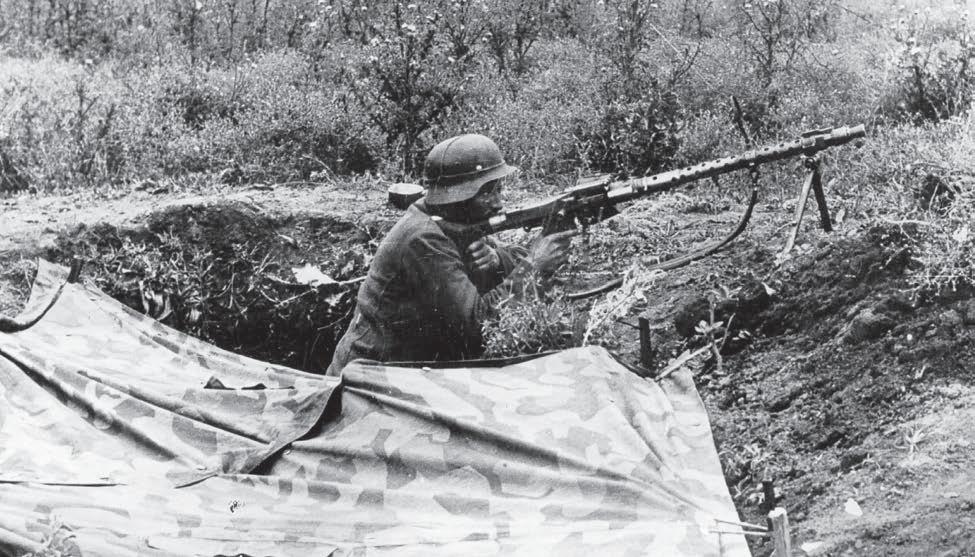
A light MG 34 machine-gunner in a defensive position along the Central Front during the early summer of 1944. His foxhole has been partially concealed by the camouflaged waterproof cape, or Zeltbahn
Army Group Center Order of Battle June 15, 1944
ARMY GROUP CENTER
Reserves
707th Infantry Division
14th Infantry Division
OKH Reserves
Panzer Group F
221st Security Division
391st Security Division
2ND ARMY
(General Walter-Otto Weiss)
Reserves
5th Hungarian Reserve Division
23rd Hungarian Reserve Division
4th Cavalry Brigade
1st Hungarian Cavalry Division
VIII Army Corps
5th Jäger Division
211th Infantry Division
12th Hungarian Reserve Division
XX Army Corps
3rd Cavalry Brigade
XXIII Army Corps
7th Infantry Division
203rd Security Division
9TH ARMY
(General Hans Jordan)
LV Army Corps
102nd Infantry Division
292nd Infantry Division
XXXXI Panzer Corps
129th Infantry Division
35th Infantry Division
36th Infantry Division
XXXV Army Corps
45th Infantry Division
383rd Infantry Division
6th Infantry Division
296th Infantry Division
134th Infantry Division
129th Infantry Division
4TH ARMY
(General Kurt von Tippelskirch) Reserves
286th Security Division
XII Army Corps
57th Infantry Division
267th Infantry Division
18th Panzergrenadier Division
XXXIX Panzer Corps
31st Infantry Division
12th Infantry Division
337th Infantry Division
110th Infantry Division
XXVII Army Corps
260th Infantry Division
25th Panzergrenadier Division
78th Sturm Division
3RD PANZER ARMY
(General Georg-Hans Reinhardt) Reserves
201st Security Division
95th Infantry Division
VI Army Corps
256th Infantry Division
299th Infantry Division
197th Infantry Division
LIII Army Corps
206th Infantry Division
6th Luftwaffe Field Division
4th Luftwaffe Field Division
246th Infantry Division
IX Army Corps Division Group 252
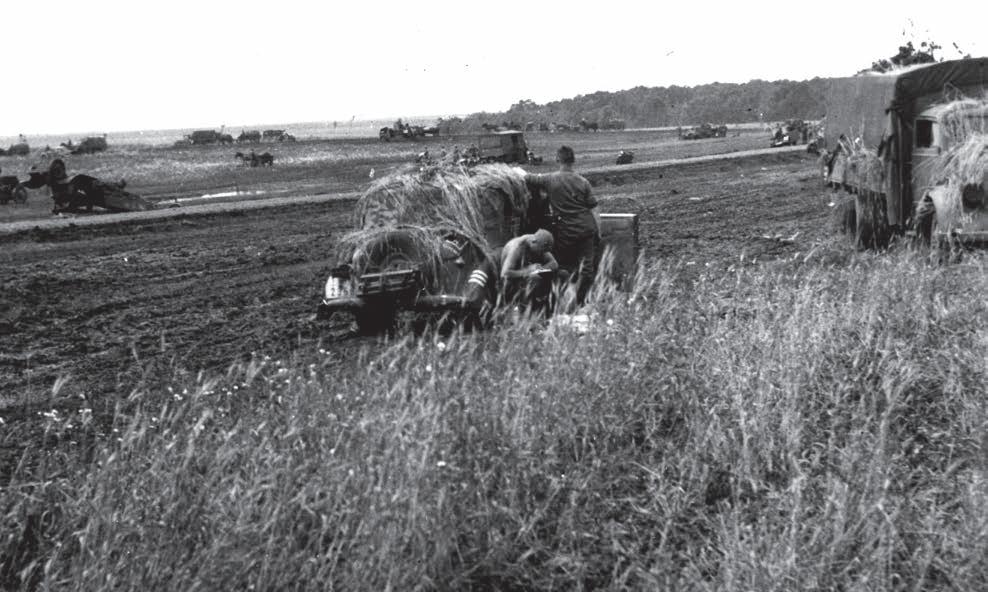
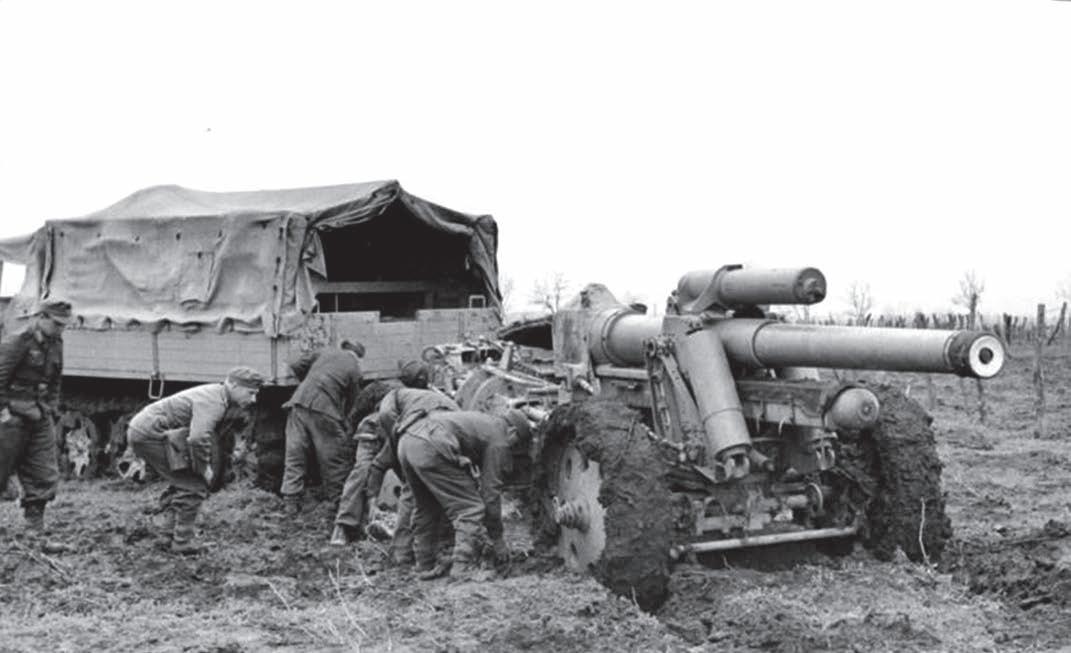
A sudden downpour of rain on the Eastern Front during the summer months could bring wheeled vehicles to a standstill. In this photograph taken in the early summer of 1944 on the Central Front, artillerymen are attempting to get their 15cm howitzer gun carriage out of the mire. Due to the bad road system in Russia, operations were severely hampered by mud.
Soviet Forces
Although the opening months of the war in the East were a complete catastrophe for the Russian troops, their commanders knew that ultimately geography would aid them. Operating in Russia was unlike anything the Germans had experienced before. Just a year earlier in 1940 they had fought a Blitzkrieg campaign with good roads and an excellent infrastructure. In the Soviet heartland dirt tracks o en linked cities and towns, which could be vast distances apart. Dust, mud, and later the extreme arctic weather would take a heavy toll on the German war machine.
Coupled with overcon dence and a lack of knowledge, the Germans were slowly drawn into a protracted war of attrition. In spite of the huge losses that the Red Army incurred in 1941, they held rm and fought back in what became the Great Patriotic War. e German soldier had totally underestimated his foe, and the resources he had with which to defend his country.
Following the German disaster at Kursk in the summer of 1943, the Red Army rolled onto an unstoppable o ensive from which the Germans would never properly recover. By the fall of 1944, the Russian soldier had beaten his adversary back to the borders of Poland, in spite of massive losses. However, these were losses that could be replaced. Soviet forces were overwhelming both numerically and in the quality of their troops and weaponry. e Red Army achieved a ratio of 10 to 1 in tanks and 7 to 1 in aircra over the Wehrmacht. It was only a matter of time before the enemy would be destroyed.
e Soviet Divisions in 1944
When Germany invaded the Soviet Union in June 1941, the Russian ground forces opposing them had 303 divisions and 22 separate brigades (5.5 million soldiers), including 166 divisions and brigades (2.6 million) garrisoned in the western military districts. A typical basic infantry division during this period consisted of 14,500 men. However, the Red Army divisions were totally unprepared for the German attack, despite various warnings from a variety of sources. As a result, the Red Army was hit hard and su ered massive losses in the eld, mainly due to being only partly mobilized, disorganized, and poorly trained.
In spite of this, within months, Soviet infantry divisions had managed to improvise even though there were some that deployed without weapons, vehicles, and other critical equipment. Fortunately for the Russian infantryman, the German war machine soon overreached itself, and, with the advent of the Russian winter, was brought to a grinding halt. is gave the Russian infantry divisions time to regroup.
By 1944, with a string of successes on all fronts, the very backbone of the Red Army had proved to be the ri e armies. Each contained three ri e corps, each of three ri e divisions. Similarly, to support these divisions in the eld was the tank army, which contained a large proportion of mechanized infantry.
In Profile: Red Army infantryman and T-34 tanker
A Soviet infantryman wearing the ShapkaUshanka, the ear-flapped cap. Over his standard army uniform he wears the Telogreyka, the Red Army quilted padded jacket. Attached to his brown leather infantryman’s belt is a PPSh-41 SMG 71-round drum magazine canvas pouch for his sub-machine gun, which he is holding. An entrenching tool can be seen on his belt, so he can access it at a moment’s notice whilst in the field.
A T-34 tanker standing in front of his vehicle. He wears the standard canvas tank helmet complete with Soviet shirt tunic, breeches, boots, and belt. Before the war, the tank helmet was made from black leather, but later replaced by black or gray canvas. The earflaps are designed to allow an intercom headset to be worn. In the summer, tank crews often wore one-piece coveralls.
In Profile: The Soviet Commanders
General Georgy Konstantinovich Zhukov
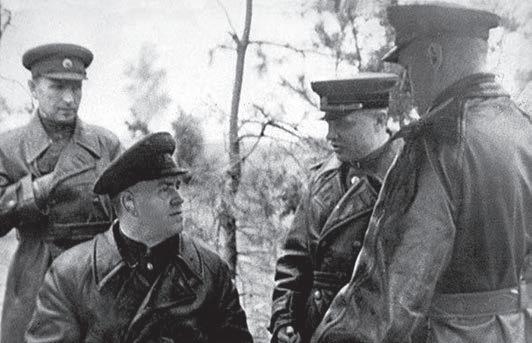
General Zhukov was regarded as the most successful Russian general in World War II. Throughout the entire campaign in the East he was known as “the man who did not lose a battle.” His first real test was to save Moscow. He then used his expertise to destroy the German 6th Army at Stalingrad, which led to the surrender of Field Marshal Paulus. Zhukov then took full advantage of Germany’s deteriorating military situation, utilizing the fast-moving spearheads of the T-34 tanks to smash through the enemy defenses. His victory at Kursk provided him with a huge advantage over the Germans in terms of armored warfare, which the German war machine never managed to balance. For Bagration, Zhukov coordinated the 1st and 2nd Byelorussian Fronts, and later the 1st Ukrainian Front too.
Army General Ivan Bagramyan
General Bagramyan was one of the greatest military commanders of World War II. He distinguished himself as a fine leader, especially in the early part of the war during Soviet counteroffensive operations in the battle of Moscow during December 1941. He was given his first army command in 1942 as commander of the 16th Army. Later this army was redesignated as the 11th Guards Army following successful operations during the Bryansk offensive in February 1943. Bagramyan then led the 11th Guards Army at the successful battle of Kursk in July 1943 where he was promoted colonel general. In November 1943 he assumed his most prominent role as the commander of the 1st Baltic Front.
Army General Konstantin Rokossovsky
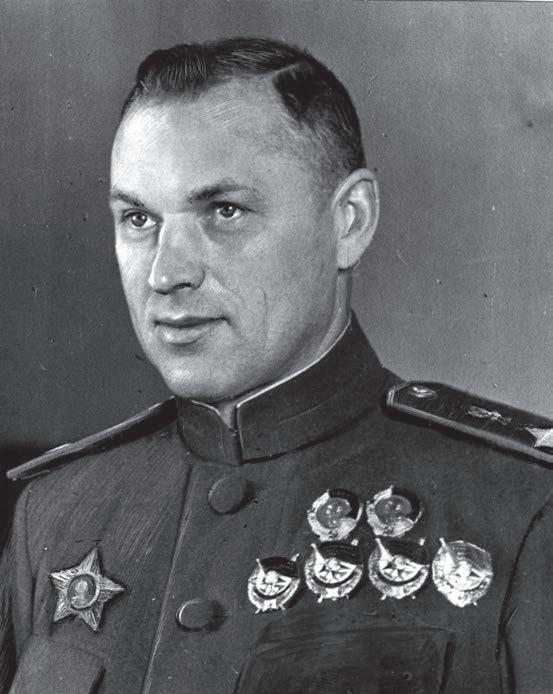
By 1944 General Rokossovsky had established himself as one of the greatest commanders in the Soviet Union. His place in history was recognized during the German invasion of Russia in 1941, in what the Soviets called the Great Patriot War. It was in September 1941 that Stalin personally appointed Rokossovsky as commander of the 16th Army which successfully defended the approaches to Moscow, due in no small part to Rokossovsky’s tactical abilities and stubborn attitude in defense. In July 1942, with his growing stature as a great military commander, he was awarded his first operational-level command in charge of the Bryansk Front. Later that year, as the Red Army fought to the death defending the besieged city of Stalingrad on the Volga River, Rokossovsky assumed overall command of the 65th Army (4th Tank Army), the 24th Army, and the 66th Army, that were all brought together as the Don Front. Following successful operations around Stalingrad, during Operation Winter Storm and Operation Little Saturn, Rokossovsky was tasked with mopping up the remnants of the defeated German forces at Stalingrad. In January 1943, with the Red Army on the brink of victory at Stalingrad, he was promoted colonel general. A month later he assumed command of the Central Front where he was entrusted with a key role during the battle of Kursk. Later the Central Front was renamed the 1st Byelorussian Front. In the spring of 1944, Rokossovsky was ordered to prepare his front with the objective of smashing through German Army Group Center that had built a string of defensive positions, and advance through Byelorussia into Poland.
General Georgy Zakharov
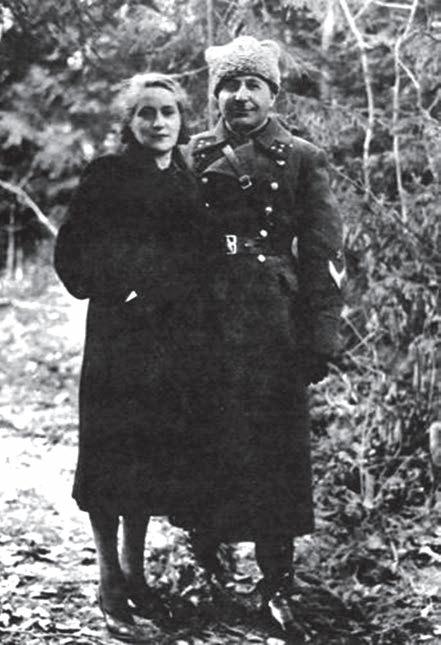
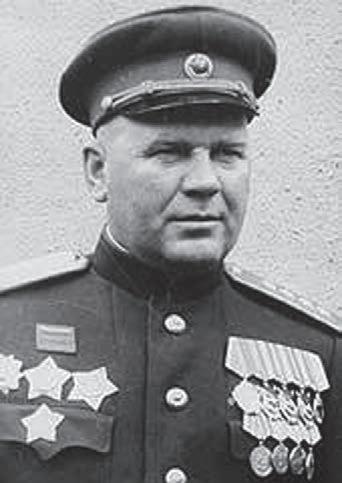
General Zakharov was regarded as a great strategist and brilliant defensive tactician. His skills and determination as a commander saw him very quickly advancing through the ranks. In late 1941 he became deputy commander of the Western Front, which participated in defensive operations during the battle of Moscow. During the spring thaw of April 1942, he assumed command as chief of staff of the North Caucasian Strategic Direct, and the following month became commander of the North Caucasian Front. By August, as the German 6th Army approached the banks of the Volga River outside Stalingrad, he was promoted chief of staff of the Stalingrad Front. Later that year, as the battle inside Stalingrad intensified, he became deputy commander of the Stalingrad Front, where he directed a number of successful actions defending the city. By January 1943 he was appointed deputy commander of the Southern Front before being promoted commander of the 51st Army. Zakharov then went on to command the 2nd Guards Army during defensive operations along the Mius and Molochnava. In the early summer of 1944, he assumed command of the 2nd Byelorussian Front. (Photo credit: http://encyclopedia.mil.ru/ encyclopedia/heroes/USSR)
General Ivan Chernyakhovsky
General Chernyakhovsky was a young, determined, and competent tank commander who had quickly risen through the ranks and by June 1942 he was commander of the 18th Tank Corps. The following month he was promoted again, assuming command of the 60th Army which, in July 1943, he led during the battle of Kursk. Following the liberation of Kiev in 1943, and the great strategic advances through the Ukraine in early 1944, he was placed in command of the Western Front, which in April 1944 became the 3rd Byelorussian Front.
Establishment of a ri e division comprised some 9,000 men, with a ri e regiment totaling about 2,000 men; each of the three ri e companies in a battalion comprised around 110 soldiers. Also included in the ri e battalion order of battle was a medium machine-gun company of three platoons, organized on the lines of the machine-gun platoons of the ri e companies.
Supporting the ri e and infantry divisions were mortar companies and artillery batteries. A typical artillery battery comprised a gun troop, anti-tank, anti-aircra , and heavy machine guns and the Katyusha multiple-rocket launcher. e Katyusha had proved so successful in the eld that by January 1943 some 57 regiments were in service, together with smaller independent battalions. is was the equivalent of 216 batteries, a staggering amount of repower. ese rocket battalions were used extensively to support the infantry, ri e, and tank divisions which ultimately brought success on all fronts.
Along the Front
Opposing the German Army, spread out between the Pripet marshes in the south to the Dvina River east of the city of Vitebsk in the north, was the Red Army, a formidable force totaling eight tank and mechanized corps, 118 ri e divisions, six cavalry divisions, 13 artillery divisions and 14 air defense divisions. In all, there were some 1,700,000 troops and support personnel bearing down on a front with a force more than double the size of the enemy’s.
Spread out along the front were hundreds of thousands of fully equipped ri emen, with massed artillery and armor in support. Some 2,715 tanks and 1,355 assault guns were assigned to the front, supported by vast amounts of artillery of all calibers. Most of the tanks deployed to the combat zone were T-34s and the newer T-34-85s that had entered service earlier that year. ere were also some lend-lease American M4 Sherman tanks as well as T-70 and British-Canadian Valentine light tanks.
Supporting the armor was a vast array of artillery, totaling some 10,563 pieces distributed across four fronts on the Central Front. e largest concentrations of repower were found in the 5th Artillery Corps, attached to the 3rd Byelorussian Front, and the 4th Artillery Corps attached to the 1st Byelorussian Front. Additional repower comprised 4,230 anti-tank guns, plus 2,306 multiple-rocket launchers.
e capabilities of the ground repower were immense. If this was not enough, in the air the fronts were supported by 21 ghter divisions comprising 2,318 ghters, eight bomber divisions of 655 medium bombers, 16 strategic bomber divisions totaling 1,007 bombers, six night-bomber divisions of 431 light bombers, and 179 reconnaissance aircra . In total the Soviet Air Forces boasted a staggering 5,327 combat aircra , just on the Central Front alone, outnumbering the Lu wa e by more than 7 to 1.
e Soviet forces opposing German Army Group Center were gargantuan, yet the Germans still underestimated their opponents. Whilst they sat in their trenches, overstretched and lacking in weaponry and armor, they believed that their extensive forti cations and mine elds would be enough to hold back a large Soviet attack. However, the German tacticians had wholly overlooked the massive array of Soviet engineer support and logistics. In the eld the Red Army was reinforced by specialized engineer tank units speci cally assigned to mine-sweeping operations, including ame-thrower tank regiments and assault pioneer battalions. e Soviets would use these support units to wrench open parts of the front in order to allow armor and troops to pour through.
e Eve of Battle
By the early summer of 1944, the Oberkommando des Heeres (OKH)—the German high command—began receiving reports of a pending large-scale o ensive against Army Group Center. ey anticipated that Soviet forces would attack the Central Front in order to smash through the forti ed German lines, wrench open the front, and pour vast quantities of men and equipment toward the Polish frontier and then onto German soil.
Hitler, for one, believed that there was a strong possibility that the Red Army was preparing such a large-scale o ensive against the center. His intelligence had for some time been intercepting various radio transmissions relating to enemy movements and the buildup of troops and armor in the area. German reconnaissance too, both on the ground and in the air, was also closely monitoring the Soviets and the intelligence gathered from these missions con rmed that the Russians were indeed preparing an o ensive of considerable size. Yet, in spite of this, much of the information was limited and unreliable. German radio inceptors could not always attain signi cant intelligence due to strict Russian radio silence. Aerial reconnaissance too was o en limited due to heavy Russian ak and aircra activity. Furthermore, the Russians had already taken into consideration that the Germans would be trying to deduce their movements and plans. In view of this, Soviet intelligence purposely prepared special plans to deceive Army Group Center in order to dupe them into believing that they were actually going to attack on the southern front, and not in the center. ese large-scale deception plans, using a variety of false radio transmissions together with dummy ground movements, led to German intelligence believing that while there would be an attack on the Central Front, the main assault would actually be in the south.
In view of this, Hitler and his commanders felt they had the initiative. With this in mind, the Führer stripped essential Army Group Center units of armor and troops to create a reserve strike force in North Ukraine. is consequently starved a number of formations in Army Group Center of their panzers, self-propelled and anti-tank guns, and anti-aircra capabilities, in many cases the majority.
Whilst Army Group North Ukraine prepared its positions for the main Soviet thrust, by early June 1944, German intelligence services began receiving worrying reports that Red Army formations, including substantial troop and armored concentrations, were moving northward to face the forti ed lines of Army Group Center. Yet, even at this stage, when it seemed that German intelligence had indeed been duped, Hitler still remained resolute during the rst week of June that the main attack would be unleashed in the south. However, it was not until around June 10 that he received reports of four large Soviet armies deploying opposite Army Group Center.
German intelligence then sent a string of reports concluding that they now predicted the main attack was against the center. One of the last German reports, sent on June 19, indicated that enemy attacks were expected against Army Group Center’s sector around Bobruysk, Mogilev, Orsha, and possibly southwest of Vitebsk. e report highlighted that the sheer scale of the Soviet armies indicated that the Russian objective was to bring about the total destruction of Army Group Center’s salient by penetration on several sectors.