Lutheran AMBASSADOR


ohn paints a beautiful picture in Revelation 7:9, “After this I looked, and behold, a great multitude that no one could number, from every nation, from all tribes and peoples and languages, standing before the throne and before the Lamb, clothed in white robes, with palm branches in their hands, and crying out with a loud voice, ‘Salvation belongs to our God who sits on the throne, and to the Lamb!’”
It gives me goosebumps of anticipation when I imagine what that might look like. Innumerable saints from every nation and language together worshiping our resurrected King!
Imagine seeing faces in that cosmic worship service who are there because of a conversation you had with them at work. Or through the quiet way you modeled Christ’s love during a difficult season. This “great multitude” isn’t just a distant prophecy; it’s a mosaic being pieced together one precious soul at a time. We get a foretaste—a divine sneak peek—of this reality each week as we gather with our local congregation around the Word and sacraments.
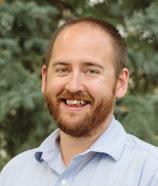
The theme of this issue is “missions.” Missions is simply the church in motion, carrying the light of Christ to a world entombed in darkness. We pray these articles encourage you as we celebrate the many ways God is using his Church to gather the lost to himself.
In this issue, Adam shares a glimpse of life and ministry in Germany. We also highlight several missions efforts within our Association. Pastor Micah Hjermstad, president of the AFLC, writes an article for this issue reflecting on his recent trip to India. Pastor Earl Korhonen, director of World Missions for the AFLC, interviewed Zach and Carey Ritland as they serve in their first year of ministry alongside Matthew and Ednay Abel in Paraguay. Pastor Andy Coyle, director of Home Missions for the AFLC, writes about a new position within his department and how it reflects the vision and goals for Home Missions.
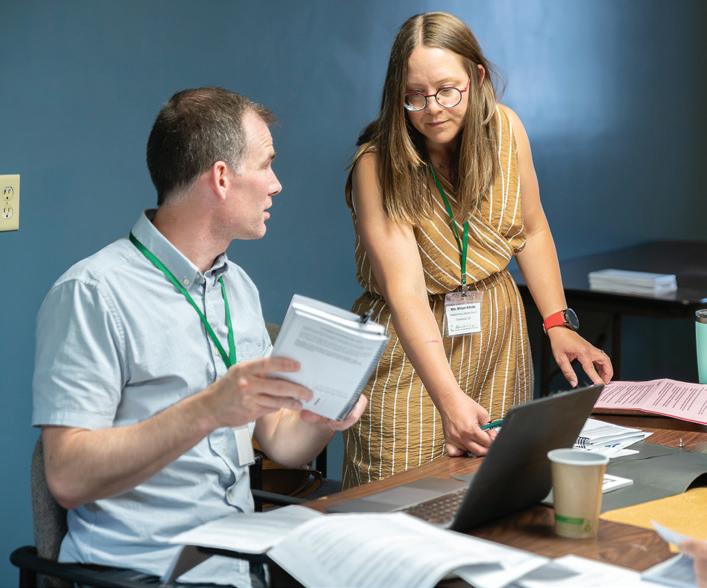
We also have information on the upcoming Annual Conference in this issue. Be sure to prayerfully review the potential nominees for the various boards and offices before we gather in Moorhead in June.
Finally, we are trying out a new feature in this issue! Earlier this year, Kirstie Skogerboe delivered a paper at the Free Lutheran Seminary Symposium entitled, “Smitten by God: The Violence and Beauty of Repentance.” Thankfully, she agreed to have it published in the Lutheran Ambassador. Because of its length, we will be serializing the piece, publishing it in installments over the coming months.
Please send me an email with any feedback, questions, or concerns regarding the Lutheran Ambassador
—Pastor Andrew Kneeland
Editor
Pastor Andrew Kneeland laeditor@aflc.org
Managing Editor
Ruth Gunderson ruthg@aflc.org
Circulation
Liz McCarlson lasubscriptions@aflc.org
Editorial Board
Monica Coyle Pastor Jerry Moan Pastor Craig Johnson
The Lutheran Ambassador (ISSN 0746-3413) (USPS 588-620) is published monthly by the Association of Free Lutheran Congregations, 3110 E. Medicine Lake Blvd., Plymouth, MN 55441 Phone (763) 545-5631
Periodicals postage paid at St. Paul, MN and additional mailing offices.
Postmaster send address changes to The Lutheran Ambassador, 3110 E. Medicine Lake Blvd., Plymouth, MN 55441.
subscriptions & giving
The Lutheran Ambassador is a free publication of the AFLC. Our non-profit ministry is supported by readers’ gifts. To subscribe and give online, visit our website aflc.org/lutheran-ambassador
Checks may be mailed to 3110 E. Medicine Lake Blvd., Plymouth, MN 55441
Email inquiries can be sent to lasubscriptions@aflc.org MAY
The business of the Christian is nothing else but to be ever preparing for death.
[Irenaeus]
God, send me anywhere, only go with me. Lay any burden on me, only sustain me. And sever any tie in my heart except the tie that binds my heart to Yours.
[David Livingstone]
Every Christian is either a missionary or an impostor.
[Charles Spurgeon]
There has been in our congregations a deep love for missions both at home and abroad, and we pray that this love may grow exceedingly.
[1962 Annual Conference of AFLC]
I have committed no crime. The only reason why I am put to death is that I have been preaching the doctrine of our Lord Jesus Christ. I am very happy to die for such a cause.
[Paul Miki, martyred in 1597]
BY PASTOR MICAH HJERMSTAD
In January, I had the honor and privilege of traveling to India with Dr. Earl and Joan Korhonen to visit our AFLC brothers and sisters there and spend a week teaching their pastors and Bible women. We had a delightful time. The food was delicious. I anticipated losing weight on the trip, and let’s just say that didn’t happen. We drank lots of the best chai you’ll ever taste, and I even logged my first camel ride by the ocean.
As I reflect on my time there, two main themes emerge. The first is joy. Many times, I found my soul rejoicing. Did you know that the AFLC has 56 congregations in India? I grew up in the AFLC, and I’ve known about the ministry in India for as long as I can remember, but I praise God for 56 congregations there. They’re even working on planting a congregation, and we were blessed to worship with that group for their second week of worship services.
It was also a blessing to witness their love for the Lord and his Word. We enjoyed rich fellowship around the Word, and their faith is evident in all parts of their lives. Each day, each activity, is entrusted to the Lord in prayer. One example was the practice of praying before we drove anywhere. There’s a joke to be made about the need for prayer before venturing out because of the lack of discernible traffic laws, but it was the spirit of the practice that was impressed upon me. It was a spirit of joyful and complete dependence upon the Lord. It was beautiful.
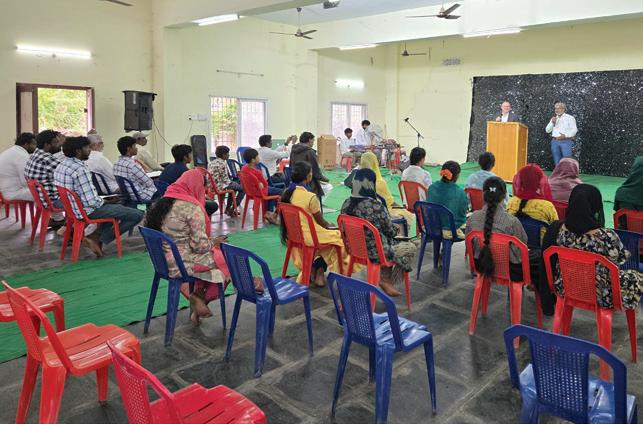
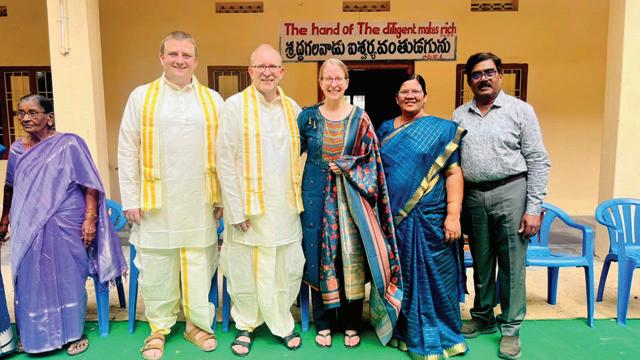
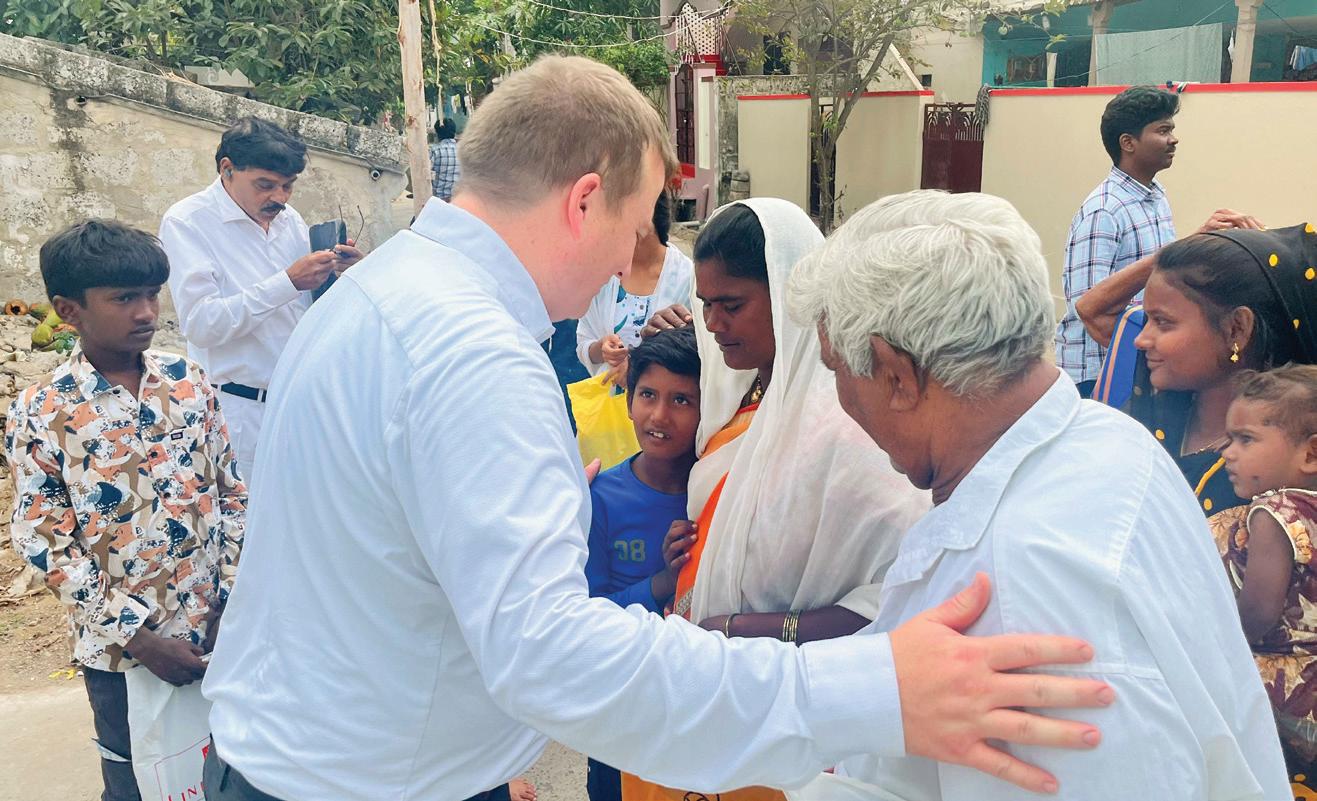
I’m grateful to the Lord for raising up young leaders there, too. AFLC World Missions has a very good relationship with Dr. Luther Sastry, the president of AFLC-India. He has served well for many years, and his knowledge of AFLC distinctives has been very helpful. He also knows that it is important for these distinctives to be passed on to the next generation. I taught each day on the AFLC’s distinctives: free, living, and Lutheran. It was encouraging to see their embrace of these principles. I also thoroughly enjoyed building relationships with their younger pastors and leaders, and I’m excited to see how God continues to equip them.
One more blessing: technology. Technology really helps us bridge the language gap. Unless or until we learn to be fluent in Telugu, this will always be a struggle. But technology has advanced to the extent that we can now start to safely build things like handouts and PowerPoint slides, all in their own language. Our phones were also able to translate their singing in real time, and they love to sing. At first, it was interesting to just listen to their unique style. But once I started following along with the translated words, I found another blessing. They were singing Scripture; they were praising the Lord, “He is worthy of praise!” It helped me to worship with them, and that was a precious gift that I will always remember.
The second main theme that emerged from my time
there was the call to pray for them. Scripture exhorts us to pray for one another. It’s easier to do that for our families, friends, local congregations, and even Christians in other U.S. congregations because we see them and interact with them so much more. But we have brothers and sisters literally on the other side of the world, too, and I was reminded of the importance and value of praying for them.
In some ways, our Indian brothers and sisters share the same joys and praises that we have, and they ask God to provide for similar needs. They also have some unique needs. It was my first time visiting an area where the Muslim call to prayer is regularly heard. Many of our congregations are in predominantly Hindu villages, and that can create various levels of tension and conflict. There are other worrying trends that remind me that our Indian brothers and sisters need our prayer.
Please join me in rejoicing over the Lord’s work in India. I’m grateful that the AFLC has a vibrant ministry in the world’s most populous country. And join me in praying that God would continue to protect and provide for them and use them to share the light of the gospel of Jesus Christ in that part of the world.
Hjermstad, a member of Grace Free Lutheran, Maple Grove, Minn., is the president of the AFLC. Submitted photos.

Zachariah and Carey Ritland began their call with AFLC World Missions on March 1, 2025, and arrived on the field in Villarica, Paraguay, on September 18. I recently asked them some questions to help us better understand how to support and pray for new missionaries on the field.
—Dr. Earl Korhonen, executive director of AFLC World Missions
QYou had an agricultural career during and after your university studies. How did you sense that God was calling you into missions?
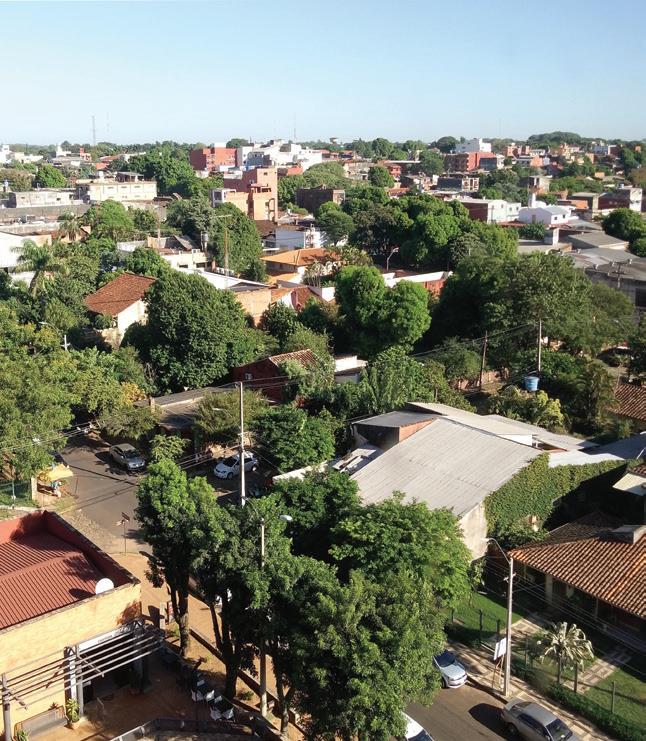
Founded in 1570, Villarica, Paraguay, is one of the oldest settlements in the country. Called the “wandering city,” its inhabitants were forced to relocate seven times over a period of 100 years in the 16th and 17th centuries as the area was fought over by both Portuguese and Spanish settlers.
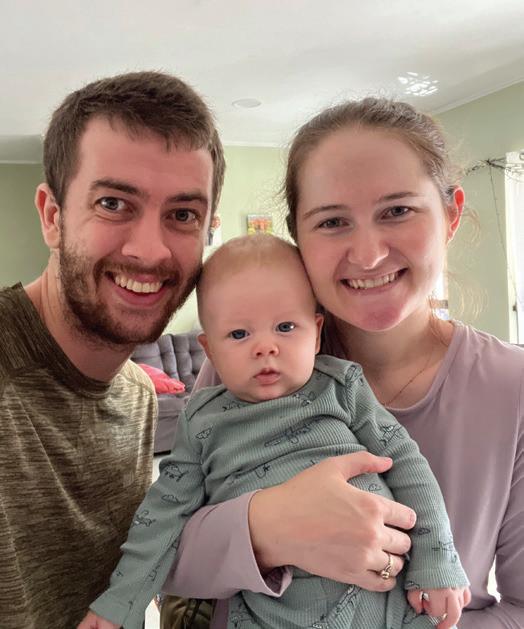
Zach and Carey Ritland welcomed their son, Jericho, shortly after arriving in Villarica.
AMaturing in the faith helped me better realize the brevity and futileness of earthly achievement and comfort. Psalm 39:4 says, “Show me, Lord, my life’s end and the number of my days; let me know how fleeting my life is.” I always thought and was told that I was highly ambitious. But I began to realize that my high ambitions were actually quite low. Earthly achievement and success are pretty low bars for a follower of Christ to set his aim at. Our ambitions should be eternal. All these thoughts were living rent-free in my mind, and, in combination with time in God’s Word, I began to realize I needed new ambitions.
Q You maintained an ambitious deputation schedule to raise prayer and financial support. What was the greatest challenge and greatest blessing of your travel and time with people and congregations?
A
Being in a new place every night was challenging. In a good way, it was challenging to schedule congregations and individuals in an efficient manner that allowed us to see so many people and congregations during our limited deputation time. The greatest blessing was seeing faithful individuals wherever we traveled and meeting those individuals with eternal ambitions for the people in their churches, jobs, families, and for anyone the Lord has given them the duty of being a witness to.
Q What question do you wish people and congregations would have asked you about on deputation?
A I would have liked congregations to ask what things they could be doing to encourage and equip individuals within their own church to become long-term missionaries. “The harvest is plentiful, but the laborers are few; therefore pray earnestly to the Lord of the harvest to send out laborers into his harvest” (Matthew 9:37–38).
Q
How did you find a place to live in Paraguay, and what is your home like? Please describe how it is similar and different to a home in the United States.
APastor Matthew Abel was able to find a house for us. The entire structure is concrete. The only wood is the rafters. Inside and outside the walls are concrete. All the floors are tile. There is no hot water except in the shower. What stands out to me as different is that there is no desire or need for things to be square or level when building a house. It’s close enough that it functions, and that’s good enough.
QBesides the language, what are the greatest cultural adjustments you are realizing? Would you be willing to share an instance of cultural confusion with our readers?
AInviting people to church or other events has been a fun learning experience. One day Carey and I invited a lady named Valeria to a church event. Valeria said she would love to come but never showed up. A week later we ran into her again; she asked how the church event went and requested that I notify her of the next one because she wanted to come. I did, and again, no show. Here everyone is so nice that they don’t even say what they mean. It is a bit confusing.
Q Where do you buy groceries? Besides the traditional convenience store/grocery store, can you share some details to help us understand what it is like to shop at some of the fruit stands and the community market?
A We buy groceries from many places. Shopping is a great opportunity to practice language, so I buy from many places. I enjoy the market where people are selling all kinds of things. It’s dirty, smelly, and looks like pure chaos. In the market I think I probably pay a special foreigner tax.
Q What is your typical daily schedule? Do you have language lessons every day?
A
Three days a week a Paraguayan girl who attends a local college comes to do language lessons that Carey and I have prepared beforehand. Esperanza Viva, our church, always has different events going on: women’s Bible study, prayer meetings, and kids’ club. We are learning language, culture, and ministry, so a lot of what we do is simply observing and helping out where we can.
AQPlease share how you are building relationships with people despite the language barrier.
Just showing up for events helps us build relationships despite the language barrier. We can see people appreciate that we continue to try. Playing basketball in the local park has been a good outlet for building relationships.
Q
A
What are three specific prayer requests you have for members of the AFLC?
First, for wisdom as we grow, learn, and minister in a world very new to us. Second, that Christ living in us would be evident to everyone we interact with. Third, for our immediate family and our marriage.
What’s it like to be a missionary in the former East Germany?
BY ADAM
Annett is already up on Monday when my iPhone starts playing Andrew Peterson’s “All Things Together” at 5:30 a.m. I find her on the couch reading Moses V (Deuteronomy) in her German Bible in a year. Since we often have many weekend pension guests, we block off Sunday evenings so Annett can practice her sabbath on Monday mornings.
I fill up my Twin Cities Starbucks mug with strong coffee Annett has prepared and walk downstairs to my classroom. My OneYear Bible, a 1989 gift from Pastor Keith Quanbeck when I served in Camarillo, Calif., sits open to my passages for the day. I recite Luther’s Morning Prayer in German and add a new German sentence structure to my prayer time: “Barmherziger Gott, bitte leite mich in ______” (Merciful God, please lead me in my ____). Noticing that Luther’s term for “merciful” is made up of the words for “womb/bosom” and “heart,” I make a note to include that in our new prayer newsletter. I create fill-in-the-blank prayers with nouns that need at least three different forms of the pronoun “mine” and pray them out loud to help me learn them by heart.
Around 9 a.m., Grace arrives and starts cleaning the “Scandinavia Room” in the pension, first dusting the plaque by the door, which thanks a couple from Arizona for a
donation to renovate and furnish the room. Grace is our Iowan mission partner from Spring Lake. At 26, she’s at the beginning of her career as a teacher and missionary and loves using her growing German conversation skills to tell anyone she meets about Jesus.
A few minutes later Barbara enters and turns on the coffee machine—a gift from a retired pastor in Phoenix that has provided guests with more than 5,000 cups in the last five years—makes herself an extra-large crema, and grabs her sturdy old toothbrush for some bathroom scrubbing. Barbara’s in her late 60s and spends a couple months with us twice a year. When her husband passed away at the beginning of their retirement, Barbara felt God calling her to Germany, which soon led her to serving on our staff. This testimony itself usually raises questions with beautiful gospel-proclaiming answers.
Today is Mariia’s turn to cook lunch. A refugee since Russia invaded Ukraine in 2022, she has become part of the Kerkermeister Ministries team and helps Annett with ironing bedsheets and turning over the pension rooms. We meet in her apartment next to ours, where she prays for our week of service and in turn serves us. Over her delicious potato and cabbage
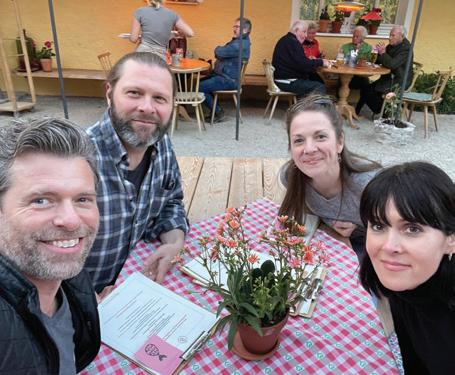
varenyky, we dream together about plans to open an art studio this summer and share ideas for the next big project: a café or coffee shop outreach in our building’s historical vaulted-arch hall.
After lunch, I make green tea in one of the pottery sets from my time in South Korea, and our team gathers in the Travel Lounge: Barbara, Grace, Annett, and me. Graces opens with a prayer of gratitude for those in the U.S. who support us with prayer, donations, and letters of encouragement. We spend the next hour mostly in silence, composing emails, WhatsApp messages, and sometimes physical thank-you cards for supporters.
During the rest of the afternoon, I type out lesson invoices; Barbara dons her accountant hat and files taxes for us on a new German accounting app; Annett checks with the Immigration Office about visas for a new missionary family hoping to join us this October; and Grace prepares a craft-making lesson for later in the week.
The late afternoon sun in Auerbach brings in guests with rooms booked for the night. Sometimes we are the convenient stop along the autobahn for travelers between Berlin and Munich, or Hamburg and Prague, or Poland and the Swiss Alps. Other times we give hospitality to those who grew up in our region and have returned for a class reunion or a relative’s birthday, wedding, or funeral. Occasionally we host tourists hiking the Jakobs Trail, indulging in the local thermal spas, or visiting the Freizeit Amusement Park in a
neighboring village. As they check in, they notice the collection of crosses, hear the Jon Guerra praise songs in our lobby, and perhaps page through a German translation of a C.S. Lewis or Tim Keller book.
Annett’s Oma (grandmother) has been living in our building for the past year so Annett can better care for her, which also means that we can use her electric stairclimbing wheelchair to help one of our students attend classes in person on the second floor. I meet with her and two of her friends at 5 p.m. for 60 minutes of travel English, empowering them for their 2026 travel plans: a ski trip to Italy and a safari in Kenya. Other students come most afternoons to learn with Barbara and Grace, as well.
At 6:15 the doorbell rings a few times as the ladies arrive for our Monday evening “Grandma English” class. One of the four ladies presents on her recent vacation in the Canary Islands, and the rest of us practice follow-up and clarification questions. Their initial group formed in 2024, and they’ve added one new member each of the following years. Although they all grew up under communist schooling in East Germany, one-by-one they’ve shared cracks in their atheistic upbringing with the group.
Upstairs Annett has a warm dinner ready for me after class. We thank God for the day, enjoy some fresh German bread with a new leek soup recipe (a contender for the future café menu?) while debriefing about how we’ve seen God at work today, and then eventually settle in for some reading or a film before bed.
Another week of ministry is under way.
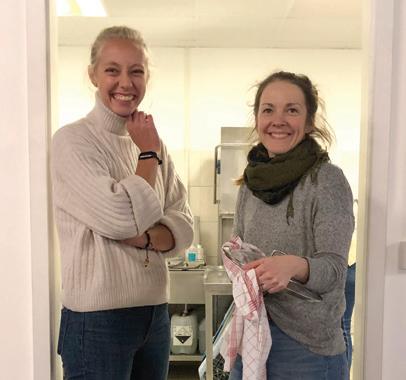
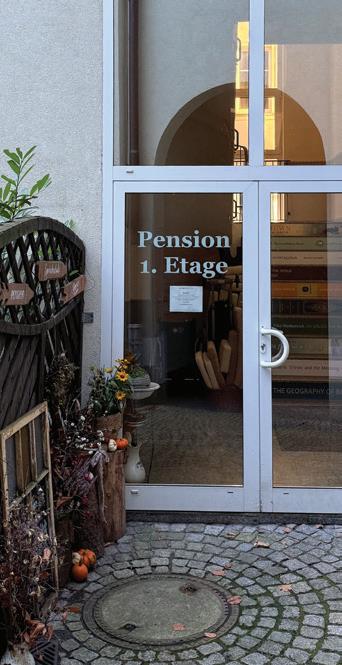
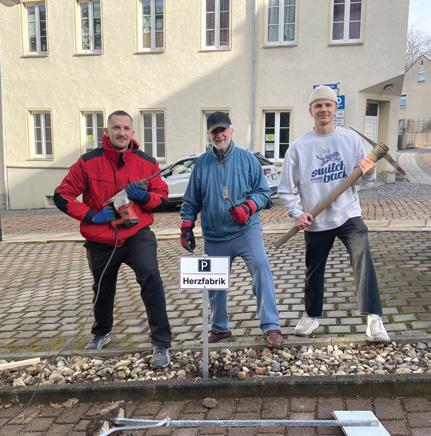
Adam, a 1989 graduate of the Free Lutheran Bible College, is a missionary with the Mission of Christ Network in Auerbach, Germany. Submitted photos.
The Kerkermeister Pension and Kerkermeister Language School are ministries in Saxony, a region in the former East Germany. Based in a historic Reformation-era building and partnering with a local congregation, Annett, Adam, Grace, and Barbara share the love of Jesus through hospitality, education, and art, reaching both guests and students while serving the community. The name Kerkermeister—Martin Luther’s translation of “jail keeper” from Acts 16:23–34—reflects the building’s unique history. Once a courthouse, it still houses an original dungeon cellar, connecting a storied past to its present missional story.
BY PASTOR ANDY COYLE
Across the AFLC, we thank God for the many congregations that faithfully proclaim the gospel, disciple believers, and serve their communities. For generations, God has used our churches to plant new congregations, nurture believers, and extend the mission of Christ. This legacy of gospel faithfulness is something we celebrate with deep gratitude. At the same time, many pastors and church leaders recognize that sustaining spiritual vitality and missional clarity has become challenging. Recent internal assessments indicate that roughly half of our congregations are experiencing measurable decline. These numbers do not necessarily represent failure. In many cases, they reflect the natural life cycle that congregations experience over time. Churches can lose momentum, leadership structures can become strained, and ministry vision can gradually become unclear. Left unaddressed, however, these patterns can lead to discouragement or longterm decline. For that reason, AFLC Home Missions is launching a Congregational Renewal Initiative designed to help churches rediscover their mission, strengthen leadership, and cultivate long-term spiritual vitality.
At the heart of this effort is a simple conviction: renewal ultimately comes from the Spirit of God who works through his means of grace. Georg Sverdrup called them the “wellsprings of life.” This is the gospel foundation we must cling to. Yet Scripture also reminds us that our choices, leadership, and priorities matter. In our personal lives, we know that spiritual growth can be hindered by sin, passivity, or poor decisions. The same dynamics can exist within congregations. The goal of this initiative is not to impose programs on churches but to come alongside congregations as a trusted partner, helping leaders evaluate their current ministry realities and identify practical pathways toward renewed health.
A renewal director to serve congregations
At the center of this vision will be the development of a renewal director whose calling will be to serve AFLC congregations through assessment, coaching, training, and pastoral encouragement. The goal is to provide practical tools and relational support specifically designed for the needs of AFLC churches.
This ministry will focus on several key areas.
• Congregational assessment: Renewal often begins with honest evaluation. Through guided assessment, congregations will gain a clearer understanding of their strengths, challenges, and current stage within the life cycle of the church. This process helps leaders clarify priorities, strengthen leadership structures, and identify practical strategies for renewed ministry effectiveness. Rather than offering generic solutions, the aim is thoughtful, context-specific guidance that helps each congregation move forward with clarity and purpose.
Home Missions is in the midst of creating an online renewal assessment tool for AFLC congregations, with a projected launch this summer. The tool will cover areas such as theological integrity, mission clarity, spiritual formation, worship, spiritual vitality, stewardship, congregational culture, congregational systems, and leadership development.
• Training for pastors and congregational leadership: Home Missions is already offering regional renewal conferences twice each year, offering theological encouragement, ministry wisdom, and practical training for pastors and lay leaders. Congregations may also host local seminars focused on topics such as leadership development, discipleship, mission clarity, and congregational health. These settings allow churches to access meaningful training without the burden of extensive travel.
• Pastoral coaching and encouragement: Flowing from our conferences, Home Missions will establish pastoral coaching cohorts where pastors can meet regularly for encouragement, prayer, and shared learning. These cohorts will provide a setting where pastors can discuss ministry challenges, exchange ideas, and support one another in their calling. In addition, the renewal director will provide personal mentoring, coaching, and congregational visits to ensure that renewal efforts remain relational and pastoral rather than merely organizational.
• Ongoing learning resources: In addition to in-person training, Home Missions is developing a growing library of resources for pastors and congregations. The goal is to equip churches with tools that support ongoing learning and discipleship long after conferences or seminars have concluded.
Strengthening the whole AFLC
Congregational renewal naturally intersects with the work of Home Missions, the AFLC president’s office, PACCT, and other ministry leaders. By working together rather than independently, our departments can share resources, provide coordinated care for pastors, and pursue a more unified vision for strengthening the church. Such collaboration increases overall ministry effectiveness and ensures that our efforts are aligned in serving congregations.
The establishment of a renewal director represents a hopeful and proactive investment in the future health of AFLC congregations. The potential impact is significant. When churches grow in health, the ripple effects often include renewed evangelistic engagement, stronger leadership development, greater congregational stability, students in our schools, and increased participation in AFLC mission work.
ahead with hope
AFLC Home Missions believes this initiative represents a strategic opportunity to strengthen the long-term health of our churches. The investment required is relatively small compared to the potential gospel impact. Our prayer is that God would use this effort to encourage pastors, strengthen congregations, and renew our shared commitment to Christ’s mission. By God’s grace, we can continue planting and renewing free and living Lutheran congregations for generations to come.
Coyle, a member of Grace Free Lutheran, Maple Grove, Minn., is the director of Home Missions.
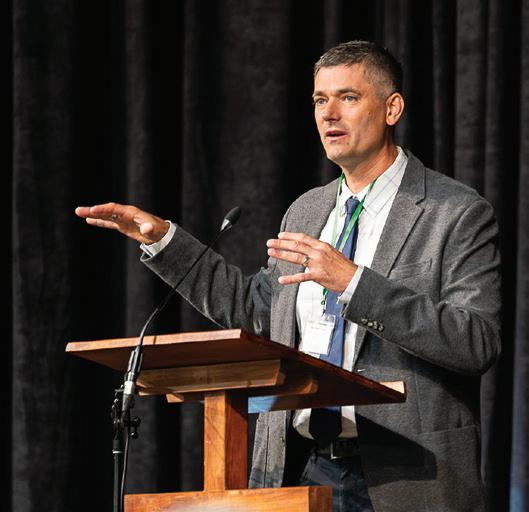
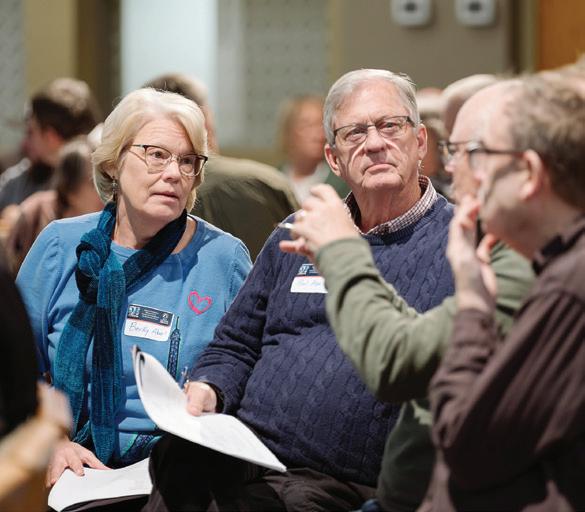
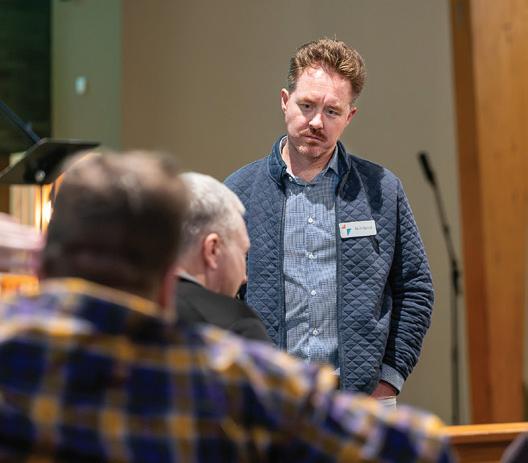

AUTHOR’S NOTE: When I was asked to share a paper at the 2026 FLS Symposium on beauty, my thoughts immediately gravitated to the crucifixion—not just that Christ is most beautiful to us on the cross, but also how the cross reveals his beauty. If we accept that God has revealed his beauty most clearly in Christ crucified (the premise of Dr. Mark Mattes’ book Martin Luther’s Theology of Beauty), we must reckon with the means of that revelation: the tearing of Christ’s back flesh, the blows to his face, the punctures in his forehead as the thorns sank deep, the metal pounded into his wrists and ankles, and the spear—like the staff of Moses—striking the rock to break loose a gush of blood and water. And if God ordained that such violence would reveal the beauty of Christ our master, how might we expect him to create and reveal his beauty in us, his servants? This paper is a meditation on the union of violence, beauty, and repentance—an effort to gaze without cringing and with ever-increasing rapture at the crushed Christ and say with the beauty and confidence of the forgiven, “I have been crucified with him.”
Many of us grew up singing the hymn, “Beautiful Savior,” the lyrics giving voice to our love for Christ:
“Fair are the meadows, Fair are the woodlands, Robed in flow’rs of blooming spring; Jesus is fairer, Jesus is purer; He makes our sorr’wing spirit sing” (Gesangbuch).
How do we depict a beauty that surpasses all earthly loveliness? King David proclaims of the Messiah in Psalm 45, “You are the most handsome of the sons of men; grace is poured upon your lips; therefore God has blessed you forever” (v. 2, ESV). But Isaiah prophesies of the same Man, “He had no form or majesty that we should look at him, and no beauty that we should desire him” (53:2b). The reality is that Scripture presents a Christ who both attracts and repels us. How do we visualize such a captivating, repulsive beauty?
Christian artist Makoto Fujimura suggests an unintuitive answer to this question: Jesus’ greatest beauty is made visible to us through violence. In Fujimura’s book



Silence and Beauty, he recounts his first exposure to a piece of Japanese art known as a fumi-e. During an intense period of Christian persecution in 17th-century Japan, the Japanese government commissioned images of the crucified Christ or the Virgin and child in wood or bronze. Leaders of the religious purge positioned these images at the feet of suspected Christians and commanded the accused to stamp a foot on the image. In a culture driven by honor and shame, people who stepped on the fumi-e did not just communicate their indifference to Christ—they desecrated him. Over years of persecution, thousands of heels bruised and trampled Jesus, striking his face and body out of unbelief or fear. Fujimura describes his first experience seeing the surviving fumi-e in a Japanese museum: “What haunted me, and continues to haunt me to this day, is that all of the fumi-e images were worn smooth.”1 Yet for Fujimura, the fumi-e does not just portray haunting betrayal; instead, he agrees with fellow artist Atsushi Suwa: “Fumi-e is the best portrait of Christ I’ve ever seen.”
How can an image of Jesus effaced by the blows of




human feet reveal who Jesus is? Why are people drawn to Christ when he is lifted up in agony and humiliation (John 12:32)? Why does the first song of Revelation burst forth after the appearance of the bloody body of a slaughtered Lamb (5:6–10)?
When, in the words of Zechariah, we “look on him whom [we] have pierced” (12:10), we see enough to make us mourn as if we had lost our only child and sing as if we were standing with the angels. Jesus’ body on the cross reveals his whole heart for sinners, precisely because his body is beaten and bleeding. As he takes our blows, as he is lifted up, naked and shamed, as he lets himself be led like a lamb to the slaughter, we see the radiance of his love and righteousness. His bloody face shines like the sun in full strength; his nailed feet, like burnished bronze refined in a furnace, crush the head of our enemy; his bruised eyes burn with fire that consumes our sin and purifies us like silver and gold (Revelation 1:14–16; Zechariah 13:9). The violence of the crucifixion does not efface Jesus’ beauty but reveals it. By unveiling Christ’s beauty through the violence of
the cross, God also reveals that he will make us beautiful through violence: in our case, the violence of repentance. To be beautiful like Christ, our sinful nature must be crucified with him—annihilated by the fire and sword of Jesus. The agony of this violence turns our eyes to the image of Jesus in agony, where we see with eyes of faith that violence in the hand of God generates a deeper beauty than any of our efforts to be whole.
In the next issue, Skogerboe, the digital communications coordinator for the AFLC, will examine the biblical precedent for violence and holy war as God’s principle means of redemption for his people and judgment for wickedness. Through this lens of holy war, we see the beauty of Christ on the cross—the Divine Warrior who violently conquers evil by letting himself be slain.
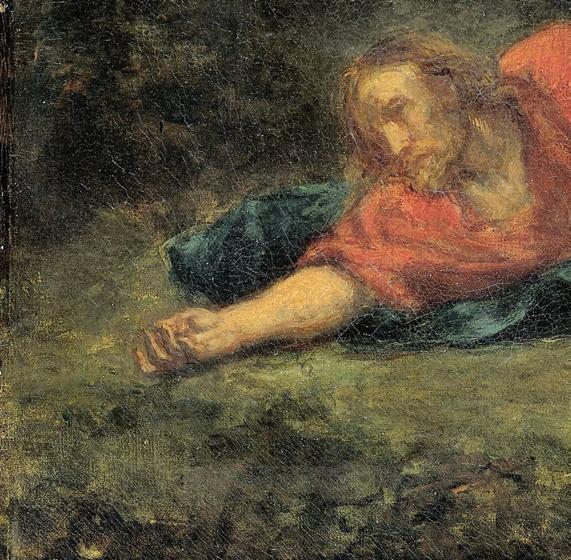
Artwork: “The Agony in the Garden,” Eugène Delacroix, 1851, Rijksmuseum.
1 Fujimura, Makoto, “Silence and Beauty: Hidden Faith Born of Suffering,” InterVarsity Press, 2016.
BY NEVAEH WEEG
is
• Spring Concert: May 1
• Graduation: May 2
• Summer Institute of Theology: Aug. 3–7
• Golf Scramble: Aug. 10
For more information about campus events, visit our website: flbc.edu
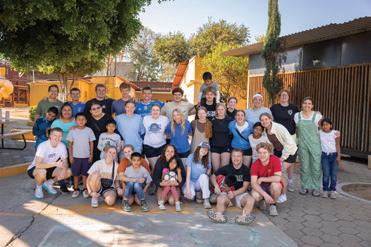
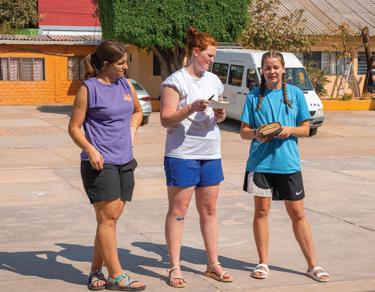
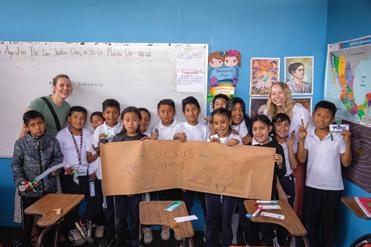
Ilearned a lot about the goodness and providence of the Lord during our spring mission trip to Oaxaca, Mexico. He is always moving. One of the best examples of this was when our team went to the zocalo, which is similar to an outdoor community center. That evening, I had taken a seat to talk with one of our trip leaders who was telling us stories about all the other mission trips that he had been on. While he was talking, I sat back and watched our team members share the gospel. Some of them made connections by playing basketball or volleyball. One was writing a message in Spanish in a New Testament to give to a girl she had just met. Another team member was talking with a student she had met from our classroom work earlier in the week. In a different corner, some of our team was talking to the full-time missionaries and praying for the mission of Casa Hogar, the orphanage where we were working that week. Some of our team members were simply talking and laughing with the people of Oaxaca using the little Spanish that we had learned.
Moments like these I can never forget. This trip opened my eyes to see the world a little bit more like how Jesus sees it. He is in control and has a perfect plan. When it seems like there is so much evil and darkness in the world, I look back to my time in Mexico and know that I can trust God’s providence and his loving and perfect plan of redemption.
• Introduction
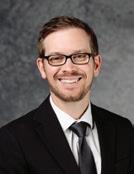
• Instructor: Dr. Jarrod Hylden
One of the assignments that sophomore students have in Pastoral Epistles is to create three Bible studies on three consecutive chapters from one of the letters studied in this course (I and II Thessalonians; I and II Timothy; and Titus). The target audience for this Bible study is high school youth groups. Each Bible study should include a variety of questions and elements:
• Questions that cause students to observe or engage with the Scripture passage
• Questions that cause students to apply the passage to their own lives
• Comments that provide faithful interpretations of difficult or significant passages
• A “leader’s notes” section to help a Bible study leader (other than the creator of the study) to lead the study.
The desired outcome for this assignment is to prepare Bible college students to teach God’s Word in their local congregations or in other ministry settings. I want students to grow in their ability to communicate and teach others what they have been taught from the Bible. As a former youth director in Grafton, N.D., I remember struggling to lead my first ever Bible study. Now I’m giving my students the opportunity to enter that same struggle that I had, but in a classroom setting. I’m happy to know that when they leave here, their “first one” won’t be their first one!
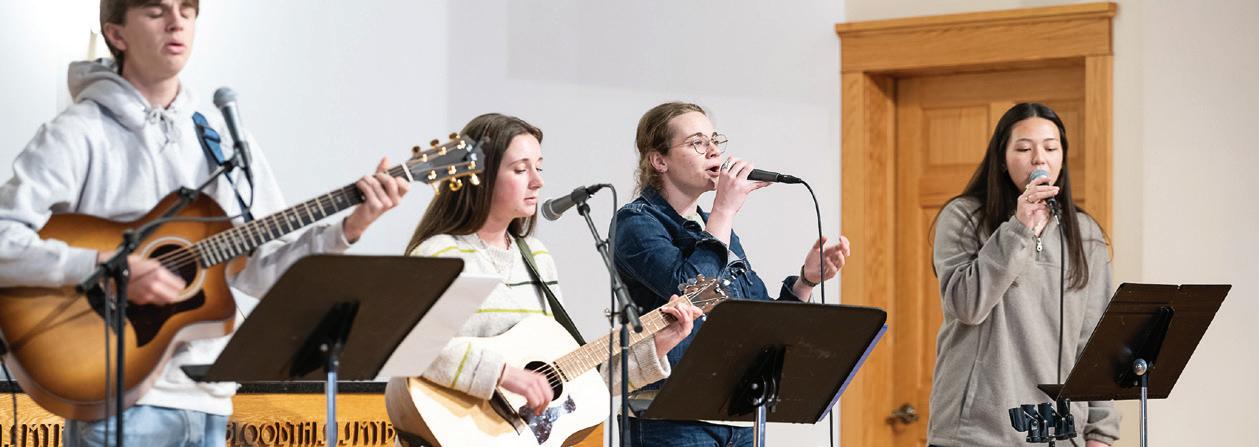
BY JACK JORDAN
During my two years at FLBC, I learned so much about the Bible, different cultures, church history, and more. FLBC fosters a truly authentic community, building friendships that last a lifetime. Its focus is to teach students about Jesus in a compelling and meaningful way. Each class is packed with so much information that, in just two years—which feel like two minutes— you are equipped to share what you’ve learned in a variety of ways.
I have been applying what I learned since the first day I moved to Hawaii. I arrived with my own plans and ideas for how to help the Waikiki Beach Gathering grow, but I quickly set those aside for God’s plan. I had to trust him and allow the Spirit to lead me on his path rather than my own. I’ve used the skills I gained at Bible college to run sound, lead worship, and faithfully love Jesus, love others, and make disciples. FLBC also inspired me to pursue a daily quiet time, which has now become a much-needed and consistent part of my life. Currently, I serve the Lord every Sunday at WBG on the leadership team and by leading the sound team, where I see firsthand how God continues to bless us. Becoming a leader has been a challenge, but one I have been well prepared for. Life is full of challenges, but time spent at Bible college helps you understand how deeply God loves you. He guides you through every trial, keeps you grounded, and enables you to finish the race strong.
For our spring Spotlight event, Matt Whitman of The Ten Minute Bible Hour on YouTube spoke to our students about “Digital Wisdom for Your Soul and Witness.” He walked through the Book of Nehemiah, comparing how the prophet straddled a divide in Israel’s history to the way that Gen Z straddles the pre-internet and internetted eras. He encouraged students to be both wise as serpents and innocent as doves as they navigate their digital lives. Nehemiah needed to exercise wisdom and tact to accomplish what God had called him to do. Likewise, Christians shouldn’t stomp around on the internet carelessly but instead speak the truth in love wherever they go—including online.
Matt opened students’ eyes to the pervasiveness of AI-generated manipulation and challenged them to approach every online social interaction as a missionally motivated endeavor, rather than seeing the internet as a safe place to find entertainment. He described the internet as a powerful tool, but one that also uses us back. He left them with the encouragement to live life in the real world around real people doing real things.
If each of us is honest, every generation today needs this challenge just as much as our Bible College students!
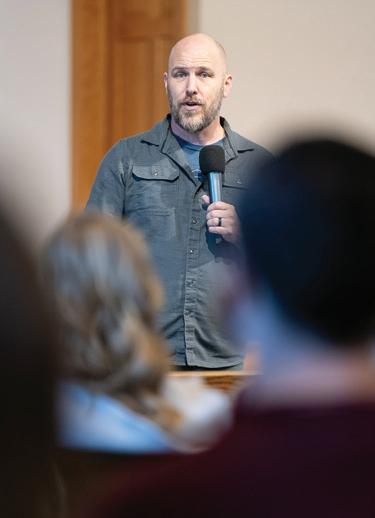
Spotlight: Digital Missions.

Matt Whitman (above) from the Ten Minute Bible Hour was a guest on the FLBC podcast where he talked with Wade Mobley, FLBC president, about how to have cordial conversations with Christians who believe differently. This episode, with accompanying video, can be found by scanning the QR code above and by visiting the FLBC channel on YouTube:
• youtube.com/@flbcs
Jordan, a 2020 graduate of FLBC, is a member of the Waikiki Beach Gathering, Honolulu.
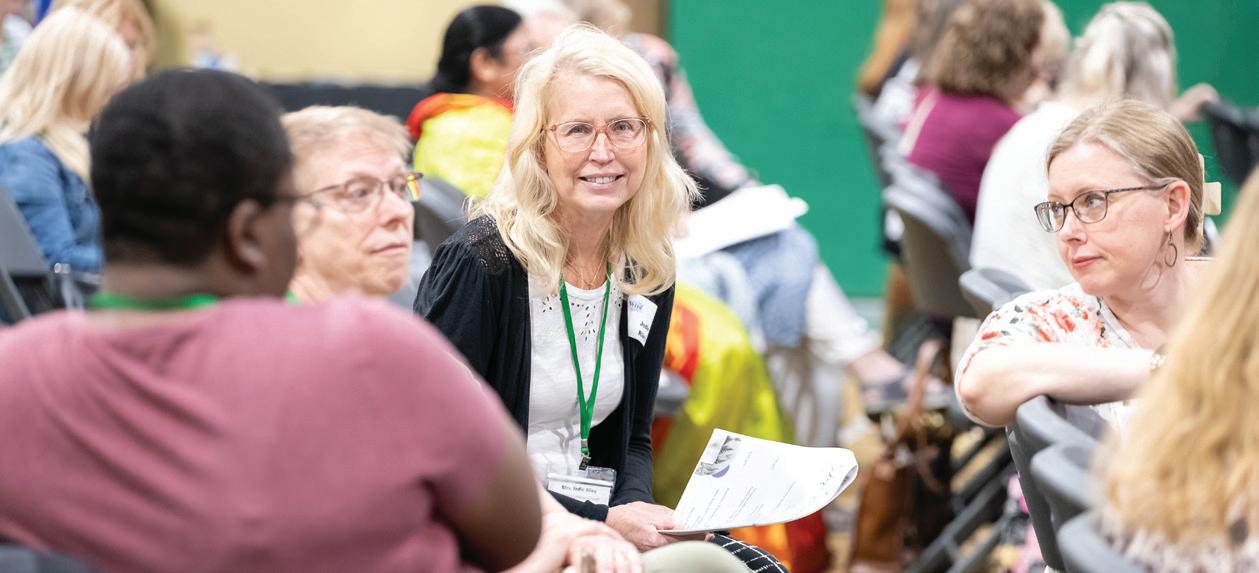
During the WMF Day business meeting on June 10 in Moorhead, Minn., we will be discussing and possibly amending the bylaws of the WMF of the AFLC. To find out what those changes include, visit the WMF website (aflc.org/ women) beginning May 1. Or, contact WMF Executive Secretary Jenn Thorson by email (wmfcomm@aflc.org) or phone (605.521.3677). Any amendments or motions regarding the bylaws discussion should be submitted in writing to Jenn Thorson prior to WMF Day, June 10.
WMF Board elections.
During the WMF Day business meeting, two board positions will be open for election. Positions and candidates include:
• Second Vice President
Cathe Johnson
Kristin Peterson
• Treasurer
Pam Twedt
Sarah Larson
For more information about WMF Day, visit our website at:
• aflc.org/women/wmf-day
Pederson, a member of Zion Lutheran, Tioga, N.D., is the president of the WMF Board.
BY KAREN PEDERSON
The WMF has been busy with many projects. Our 2026 Bible study, I Believe: Who God Is, written by Joyce Erickson, is under way at many local WMFs. The study can still be ordered and used weekly or monthly, with 11 lessons. Our prayer is that you will dig into God’s Word to discover what it truly means to believe in God. See our website to order our Bible study, or email Jenn Thorson at wmfcomm@aflc.org.
Various WMFs held their district rallies in churches across the country this spring, spending the day in sweet fellowship with women from their area and learning from God’s Word. Many groups are already planning where their fall rallies will be held. Be on the lookout for notices in your area.
Members of the national WMF Board have been praying and planning for this year’s WMF Day, scheduled for Wednesday, June 10, on the campus of Concordia College in Moorhead, Minn. St. Paul’s Free Lutheran Church in Fargo, N.D., is our host congregation. Area congregations have spent many hours assisting us in organizing our day together, including meals and business sessions.
Our theme for the day is “I Believe; Help My Unbelief” from Mark 9:24, reflecting the theme of our 2026 Bible study. Linda Fugleberg, our WMF communications secretary, has contacted many speakers and musicians, and our day together is full. Abby Anderson will lead us in singing, and Joyce Erickson will share devotions. Dr. Jason Gudim from the Free Lutheran Bible College and Seminary will teach from God’s Word, and Laurie Nash will also lead a morning session. Our memorial service will be led by Anne Presteng.
After our luncheon and more singing, Marian Christopherson, AFLC Parish Education director, will present a session before we break into prayer groups. We will then conclude the day with a short business meeting. This meeting will include discussion about adding two AFLC ministries—AFLC Evangelism & Discipleship and Youth Ministry—to our giving projects, as well as the election of new officers (see graphic at left).
During the WMF breakfast on June 11, we will hear from Shelby Greven, who has served as a short-term missionary assistant in Brazil and currently works in the World Missions office.
On Thursday evening, June 11, World Missions Executive Director Earl Korhonen will lead the WMF Mission Festival service, with Pastor Matthew Pillman preaching. The offering will be divided between Home and World Missions. You may register for WMF Day, the luncheon, and the WMF mission breakfast on June 11 through the online Annual Conference registration process (see page 18).
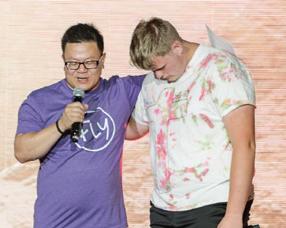

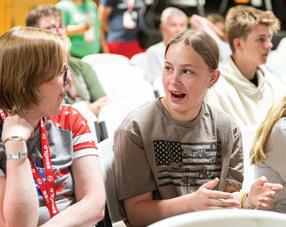
“I have said these things to you, that in me you may have peace. In the world you will have tribulation. But take heart; I have overcome the world” (John 16:33).
BY PASTOR NICK DYRUD
“Dad, you don’t really understand what it’s like at school!” I remember the conversation like it was yesterday. I did understand to a certain extent. But I also needed to hear that from my son, who was expressing the challenges he faced every day as a believer in Christ in the hallways and classrooms of his high school.
Let’s be honest. If we truly live for Jesus and are obedient to his Word, we will face adversity in the days in which we live. When I consider the world my kids are growing up in, I regularly worry about what they are facing. There are trials and struggles, temptations, fears, anxieties, and challenges—from what they see in public spheres to what they are exposed to on social media. There is an increasing censorship and growing animosity towards Bible-believing Christians. Our students are living in a world where tribulation is imminent.
How are we to prepare the next generation to face the adversity that seems imminent in our world today? How will they be ready to stand for Christ, no matter the cost?
In the moments leading up to Jesus’ arrest and subsequent crucifixion, he told his disciples, “In the world you will have tribulation. But take heart; I have overcome the world.” When I read these courageous words, I believe them with all of my heart. Yet I struggle to live in the peace that Jesus promised. Why? Do I have trust issues? Do I consume too much news? Do my algorithms need to be reset?
What gives us strength, boldness, and courage is that Jesus has overcome the world! True peace comes from the victory he has already accomplished on the cross. Jesus has conquered death. The grave is empty. He has risen! He has overcome Satan, sin, the world, and all its issues. So as we live from victory in him, we must remember that we have nothing to fear through Christ Jesus; we have overcome!
The Free Lutheran Youth Convention is coming July 5–10, 2027, to the YMCA of the Rockies in Estes Park, Colorado. The FLY Committee continues to organize this incredible week, and we want to share with you some details that are taking shape. As costs have continued to rise over the years, we are doing everything we can to keep registration costs as low as possible. We encourage AFLC churches to fundraise and support our youth. Registration opens Nov. 3. Deadlines for registration and the cheapest rates are listed in the graphic at right.
Registration for the 2027 FLY Convention opens Nov. 3. The following deadlines apply:
January 14, 2027
• Students: $699
• Staff & DRLs: $599
• Adults: $1,099
• Children: $299
March 18, 2027
• Students: $799
• Staff & DRLs: $699
• Adults: $1,199
April 22, 2027
• Students: $899
• Staff & DRLs: $799
• Adults: $1,299
Walk Ups
• Students: $1,099
• Children: $319
* $150 deposit required for all registrations FLY 2027 registration chart.
Dyrud, who serves Emmaus Free Lutheran, Bloomington, Minn., is the president of the 2027 FLY Committee.

June 10–13 • Knutson Campus Center
Concordia College • Moorhead, Minn.
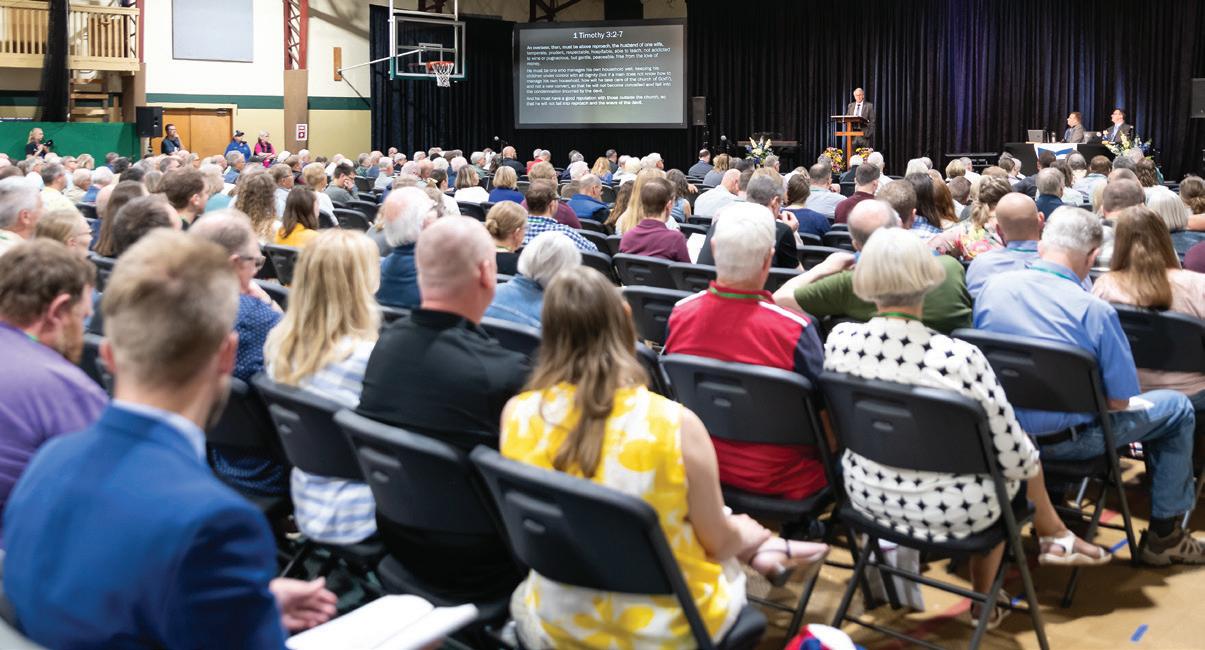
The AFLC Annual Conference will be held June 10–13 at Concordia College, Moorhead, Minn., in the Knutson Campus Center, with the theme “Sure Hope” from Philippians 1:6.
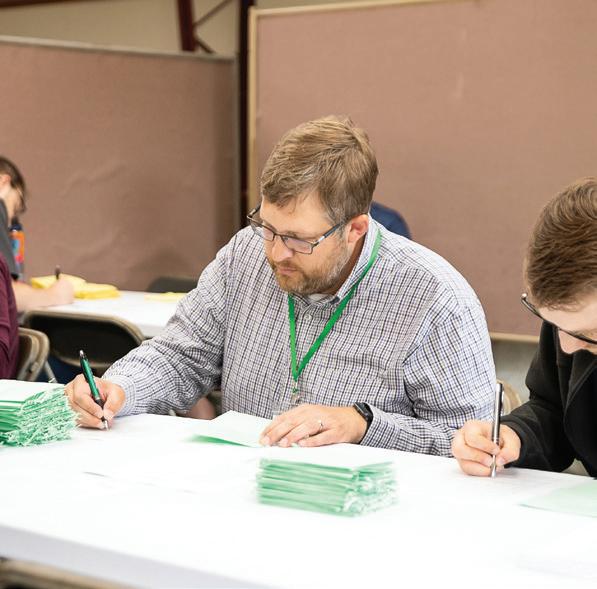
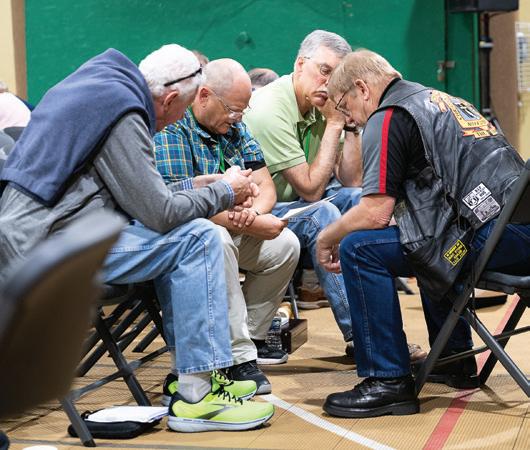
Conference registration is now open (aflc.org/conferences). Prices are $55/single or $95/couple. Online registration options include meals, nursery, vacation Bible school (VBS), and youth activities. Online registration and meal registration will close on May 31. Walk-up registration will be available for the conference ($65/$105), nursery, VBS, and youth. Payment for conference registration will be due upon arrival at the conference. Meal payment is due by May 31. Conference registration policies can be found on the conference webpage.
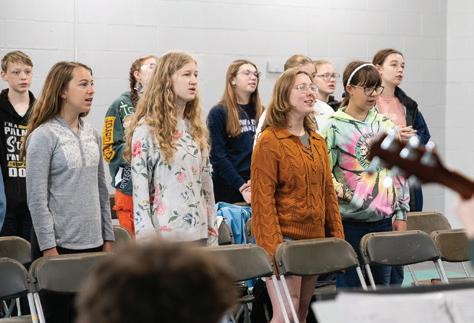
Nursery is available for children aged 3 and younger. A VBS program will be provided for children entering preschool through those entering sixth grade. The youth track is offered to those entering seventh grade through high school (aged 17 and younger). Those registering youth will receive follow-up communication regarding scheduling, costs, and waivers, as some activities may be held off-site.
Conference housing information can also be found on the conference webpage. The information includes limited campus housing availability with contact information and a list of area hotels and campsites located near Concordia College.
Conference committees will meet on June 10.
Rekindle the Fire, June 9
AFLC Evangelism and Discipleship will host Rekindle the Fire, a revitalizing and equipping event, on June 9 at St. Paul’s Free Lutheran, Fargo, N.D. With the theme “Loving Your Neighbor to Christ,” the event is open to clergy and lay members. Pastor Tom Parrish will lead two sessions on intentional listening and responsive conversations. The event, which is free, will include an evening meal and a time of worship and prayer for the Annual Conference. Registration can be found at aflc.org/ evangelism/events/rekindle-fire.
WMF Day, June 10
WMF Day will be held June 10 at Concordia College with the theme “I Believe, Help My Unbelief” (Mark 9:24). The schedule begins with worship at 9 a.m., followed by devotions and recognition of missionaries in attendance. Workshops will be presented. A memorial service and business meeting will close out the day. The Mission Festival service will be held June 11.
Registration ($25/person before June 10, price increases to $30) can be found online (aflc.org/conferences). You may also register for the WMF Day meal ($17) on the AFLC registration form. See page 16 for more information about WMF Day.
ARC Corporation
(10 terms of five years each)
*Lois Grothe, Astoria, Ore.
*Pastor Steve Jensen, Ishpeming, Mich.
*Katie Johnson, Glyndon, Minn.
*Hannah Langness, Rapid City, S.D.
*John Rieschl, Minneapolis
Lavonne West, Columbia Falls, Mont.
14 more names needed
Home Missions Corporation (10 terms of five years each)
*Pastor David Franz, Baxter, Minn.
Pastor Joe Frech, Milford, Ill.
**John Greven, Big Lake, Minn.
**Bill Holt, Ralph, S.D.
*Kevin Hoops, Byron, Neb.
*Brian Lee, Ray, N.D.
Tom Propst, Stover, Mo.
*Pastor Ron Smith, Brookings, S.D.
Donna Trapp, East Gull Lake, Minn.
11 more names needed
Schools Corporation (10 terms of five years each)
Pastor Luke Berntson, Northome, Minn.
Pastor Dana Coyle, Beulah, N.D.
*Nathan Dalager, Argyle, Minn.
*Pastor Chad Friestad, Camarillo, Calif.
*Pastor Rodney Johnson, Buffalo, Minn.
Ray Miller, Fosston, Minn.
Dana Osborn, Arlington, Wash.
*Karen Pederson, Tioga, N.D.
*Pastor James Pierson, Golden Valley, N.D.
Diana Richardson, Fosston, Minn.
*Pastor Steve Snipstead, Kalispell, Mont.
*Pastor Sam Wellumson, East Grand Forks, Minn.
8 more names needed
World Missions Corporation
(10 terms of five years each)
Pastor Mark Antal, Apple Valley, Minn.
*Mike Berntson, Valley City, N.D.
Michael Jackson, Versailles, Mo.
*Vicki Johnson, Larimore, N.D.
Corrine Mattson, Greenbush, Minn.
Jodie Riley, Bethel Park, Pa.
*Mark Riley, Bethel Park, Pa.
*Ethan Zeltinger, Fargo, N.D.
12 more names needed
* Incumbents
** Must be elected or reelected to corporation to serve on board or committee
X Nominations not named by press deadline
Association Retreat Center
Voted on by corporation members
• (One layman, five-year term) No nominees
Bay Broadcasting
Voted on by corporation members
• (One layman, three-year term)
*Loren Tungseth, Fergus Falls, Minn. X
• (One layman, three-year term)
*Rodney Scheel, Fergus Falls, Minn. X
Benefits Board
• (One pastor, five-year term)
*Pastor Ron Smith, Brookings, S.D. X
Budget Analysis Committee
• (One layman, three-year term)
*Danielle Joyce, Ramsey, Minn. X
• (One layman, three-year term)
Michael Jackson, Versailles, Mo. X
Coordinating Committee
• (One layman, five-year term)
*David Olson, Sioux Falls, S.D. X
• (One pastor, five-year term)
*Pastor Jon Benson, Newark, Ill. X
• (One pastor, five-year term)
*Pastor Tom Parrish, Mendota Heights, Minn. X
• (One layman, three-year term) No nominees
• (One pastor, four-year term)
Pastor Brent Raan, Tioga, N.D. X
Voted on by corporation members
• (One layman, five-year term)
**John Greven, Big Lake, Minn.
**Bill Holt, Ralph, S.D.
• (One pastor, five-year term)
Pastor Jeremy Crowell, Arlington, Wash. X
Home Missions Board of Dir.
Voted on by corporation members
• (Two laymen, two-year terms)
**John Greven, Big Lake, Minn.
*Dana Hagen, Sioux Falls, S.D. X X
• (Two pastors, two-year terms)
*Pastor Matthew Ballmann, San Antonio, Texas
Three more nominees needed
Parish Education
• (One pastor, five-year term)
Pastor Mikey Meester, Melvin, Ill. X
Schools Board of Trustees
Voted on by corporation members
• (One pastor, five-year term)
Pastor Phill Hooper, Duluth, Minn. X
• (One layman, five-year term)
Walter Rolf, Lisbon, N.D. X
World Missions Board of Dir. Voted on by corporation members
• (One layman, two-year term) No nominees
• (One layman, two-year term)
*Bill Sheldon, Ray, N.D. X
• (One pastor, two-year term)
*Pastor David Johnson, Larimore, N.D. X
• (One layman, two-year term) No nominees
Youth Board
• (One layman, five-year term)
Coltin Cox, Bethel Park, Pa.
*Wendy Greven, Big Lake, Minn.
Center, Concordia College • Moorhead, Minn.
Tuesday • June 9
3 pm. Rekindle the Fire, St. Paul’s Free Lutheran, Fargo, N.D.
Wednesday • June 10
9 a.m.
AFLC ministry boards and committees meet at Concordia College Conference resolution committees 1–5 meet WMF Day begins Noon Lunch
5 p.m. Dinner
7 p.m.
Ordination service and conference opening
Speaker: Pastor Terry Olson
Thursday–Saturday • June 11–13
7 a.m. Breakfast
8:45 a.m.
Devotions: Adam Erickson, Caleb Korhonen, and Alex Monseth
9 a.m. Business session
10:25 a.m. Morning break
10:50 a.m. Business session
11:40 a.m. Prayer time: Pastor David Franz, leader
Noon Lunch; Chaplains lunch (Thursday), FLBC Alumni (Saturday)
12:45 p.m. Corporation meetings (Friday)
1:15–2 p.m. Electives: AED & World Missions (Thursday), ARC & Coordinating Committee (Saturday) Lecture (Friday)
2:15–3 p.m.
Electives: Ambassador Publications & Home Missions (Thursday), FLBCS & Youth (Saturday) Lecture (Friday)
3:25 p.m. Worship and testimony: Alexander Grimes, Micah Moan, and Adam McCarlson
3:45 p.m. Business session
5 p.m. Dinner; Pastor’s banquet (Friday)
7 p.m.
Mission Festival service: Pastor Matthew Pillman (Thursday) Communion service: Nathan Dalager (Friday)

Prospective students were welcomed to the campus of the Free Lutheran Bible College April 10–11 for the spring Campus Days event. In two evening sessions, Dr. Wade Mobley, president of FLBCS, spoke on the theme of citizenship from Philippians 3:20, digging into the fundamental question, “How does a citizen of heaven live well as a citizen of earth?”
On Saturday morning, students chose two class sessions. At 9 a.m., class options included Dr. Jarrod Hylden’s “Do Not Be Ashamed,” Dr. Jason Gudim’s “Intro to Hebrews,” and Dr. Brent Olson’s “Sea Monsters and the Exodus.”
At 10 a.m. Dr. Gudim taught an apologetics class, and Dr. Andrew Kneeland taught a class on how the crusades changed history. The morning ended with a panel discussion on vocation. Students had the afternoon to socialize and take part in organized sports, crafts, and games.
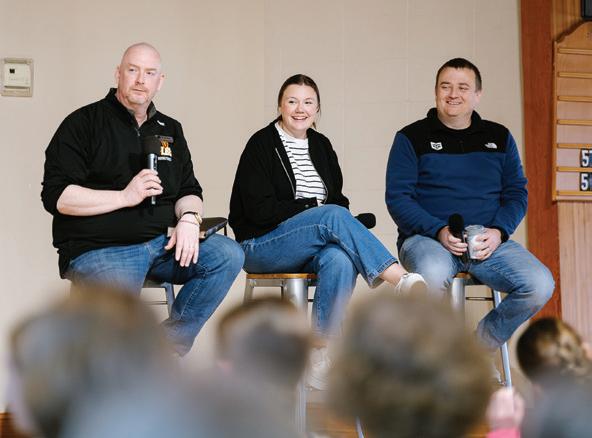
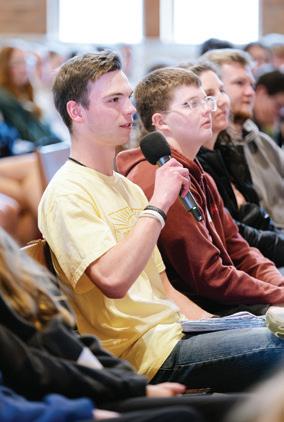

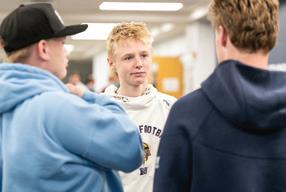
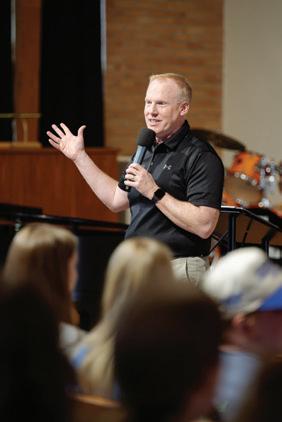

Students took two morning classes on Saturday (including Christian History with Andrew Kneeland, above middle) before a student assembly in the chapel, which included a panel discussion on vocation moderated by Dr. Wade Mobley (top) and including (center, from left) Dr. Jason Gudim, Madi Trost, and Pastor Micah Hjermstad.
Four 2026 Free Lutheran Seminary graduates have accepted calls to local congregations:
• Alex Monseth has accepted a call to St. Ansgar’s Lutheran, Salinas, Calif.
• Alexander Grimes has accepted a call to Alsace Lutheran, Reading, Pa.
• Caleb Korhonen has accepted a call to Maple Bay Free Lutheran, Mentor, Minn.
• Adam McCarlson has accepted a call to Solid Rock Free Lutheran, Anoka, Minn., as a part-time associate pastor. McCarlson’s role as the director of AFLC Youth Ministries has been reduced to three-quarter time by the Youth Board, effective July 1. The change reflects a reduction in giving and a desire to steward well the funds that have been received. McCarlson has worked part-time since his call in 2023 and studies at FLS.
Pastor Jordan Langness has accepted a call to serve United Free Lutheran, Greenbush, Minn., and has applied to join the AFLC’s Licensed Pastor Roster. He leaves his role as youth ministry pastor at Hope Evangelical Lutheran, Ishpeming, Mich.
Pastor Kevin Garner has resigned from Fox River Lutheran, Sheridan, Ill.
Pastor Ben Sollie has resigned from Hope Lutheran, Minneapolis.
Pastor Tom Olson has resigned from Minnesota Valley Lutheran, Lakeville, Minn., and is now retired.
Pastor Gary Jorgenson is ending his time as interim pastor at Calvary Free Lutheran, Fergus Falls, Minn.
Pastor Gary Zikan (non-AFLC), who served St. John’s Lutheran, Finlayson, Minn., died March 11, 2026.
Ignacio Davalos has accepted a call as youth ministry director at Abiding Savior Free Lutheran, Sioux Falls, S.D. Members of the Coordinating Committee have accepted closing forms from two congregations:
• Gloria Dei Lutheran, St. Louis, Mo.
• Lord of Life Lutheran, Mount Vernon, Wash.
AED
Thomas Phillips
FLBCS
Cindy Sulzbach
Clarice Skjonsby
Lorilee Mundfrom
Ron Strom
Ruth Claus
Alice Dahlgren
Thompson
Ethel Wellen
John Bjorsness
General Fund
Lorilee Mundfrom
Home Missions
Bob Long
Ambassador
Mundfrom
Donna Hass
Clarice Skjonsby
Ann Chapman
Marlowe Stenslie
Keith Quanbeck
Lorilee Mundfrom
Gerald Dahl
Kathy Rovang
Keith Quanbeck
Barb Tollefson
AFLC Home Missions announced plans to plant a new congregation in the west metro area of the Twin Cities. Heading that effort is Pastor Adam Osier, who recently stepped down as dean of the Free Lutheran Bible College.
“While we are blessed to live in an area with established churches, the rapid growth of the west metro presents a unique opportunity,” said Osier in a Home Missions email. “We desire to join our metro congregations in the harvest described in Matthew 9. Our goal is to provide a new point of entry for the gospel in a region where thousands of people are still looking for a spiritual home that feels both grounded and alive.”
The congregation will be called Epiphany Free Lutheran. Osier stated, “We plant Epiphany as a new means of participating in the mission of God by inviting his image bearers to receive the light of Christ through Word and sacrament and reflect that light to their neighbors.”
The plant is currently in its initial stages of development as they seek a core planting team, prayer support, and financial support. For more information, contact Home Missions by email at homemis@aflc.org.
Current sponsored congregations include Living Stone Chinese Lutheran, St. Paul, Minn.; Hope Free Lutheran, Killdeer, N.D.; Emmanuel Lutheran, Ankeny, Iowa; and Lamb of God Lutheran, Moorhead, Minn.
The Lutheran Ambassador is free for all subscribers. Our ministry is subsidized by your gifts. Thank you for your gifts which support our ministry! For information on giving, visit our website at aflc.org/lutheran-ambassador.

BY MICHELE MOBLEY
“Trust in the Lord and do good. Dwell in the land and cultivate faithfulness” (Psalm 37:3).
rust. Do good. Dwell. Cultivate. These imperatives guide the lives of God’s children living as sojourners on this earth. They are necessary, too, for life in the congregation. Our sojourning here is marked by seasons of change, times of transition. Transitions mark both family life and congregational life. Life is a continuum. Arriving follows leaving, and how well we leave a place or a season of life includes how well we live while there, how well we love while there, and how well we grieve while there.
TLeaving well includes living well.
“Dwell in the land.” Dwelling denotes permanence. The child of God is both a sojourner of promise (Hebrews 11:13–16) and a faithful steward of the mysteries of God (I Corinthians 4:1–2). We are simultaneously a sojourner, a steward, and an ambassador of Christ carrying the message of reconciliation (II Corinthians 5:20). Our trust is in the Lord, and as we dwell in the land, our call is to cultivate faithfulness.
Cultivating promotes growth. The farmer breaks up land, preparing it to receive seed that will sprout, spread roots, shoot forth a stalk, and produce fruit. The disciple of Christ is called to cultivate faithfulness. In Romans 12:13–15, the Apostle Paul lays out a seed bed where
faithfulness is cultivated. Rejoice with the rejoicers; weep with the weepers; bless your enemies; make room for one another; and meet the needs of your fellow saints. And as you do, God will expose your covetous ways, your seeking of revenge, and your selfish ambitions. Dwelling in the land and cultivating faithfulness are both redemptive and restorative works. Leaving well includes living well.
Leaving well includes loving well.
Romans 12:9–10a states, “Let love be without hypocrisy. Detest evil; cling to what is good. Love one another deeply as brothers and sisters.” Fellow sojourners, our families and our congregations need us to be sincerely present. Love does not play an act. Where sin is present, do not excuse it. Address sin, detesting its destructiveness. The body of Christ is joined together by the redemptive and restorative love of Christ.
R.H. Lenski in his commentary on Romans writes, “Where love is so highly esteemed as it is in the Christian Church, counterfeit love is often passed out as the real gold coin, and the lack of love attempts to hide itself behind the mask of love and of words that are supposed to have the sound of love.”
Leaving well includes loving well.
Leaving well includes grieving well.
Grieving allows us to acknowledge loss, leading to remembrance of good gifts by the Father of Lights “with whom there is no variation or shadow due to change” (James 1:17). C.S. Lewis was right to acknowledge
our time on this earth as “the shadowlands.” We are not home yet. As we dwell in the shadowlands and as we cultivate faithfulness, we experience the Father of Lights handing down his good gifts to us. I believe grieving is one of God’s good gifts to life in the shadowlands. The places where we dwell will change, but Immanuel does not change. The people we dwell with may break our hearts. An unfaithful spouse, a prodigal child, a slanderous tongue, a broken promise—faithfulness met with unfaithfulness. Dear soul, grieve the brokenness. Forgive. Denial leaves you alone and defensive in the shadows. Grief brings you before the Father of Lights who is making all things new.
Arriving always follows leaving, and the secret to arriving well rests in leaving well. Is the Lord calling you to a new season? Dwell and cultivate again! Has a broken relationship left you bitter? Repent and forgive. Fellow sojourner, in both the leaving and the arriving, embrace grieving. Grieving acknowledges the loss—whatever it may be—and, in so doing, remembers the unchanging, good Giver of all good gifts, the Father of Lights. And when you find yourself unwilling or unable to grieve, with your hand clenched and one fist raised to the sky, repent of your idols. Repent of your demands. Come out of the shadows and rest in the Light. And while you do so, it is okay to weep.
Mobley is a member of Solid Rock Free Lutheran, Anoka, Minn.
BUILDING THE BASE \\\ THE FIVE SOLAS \ Part 3
BY PASTOR STEVE SNIPSTEAD
“For by grace you have been saved through faith. And this is not your own doing; it is the gift of God” (Ephesians 2:8).
The Greek word for grace, charis, is one of those deceptively simple words. It means a favor or a gift, but grace is no simple gift. Grace offers life, strength, and peace. Grace is a gift unlike any other.
That makes grace hard to understand. It’s not merely an intellectual problem. Believing and trusting in grace takes deep humility, not the polite humility that nobody is perfect, but a profound grasp of how different, how much greater, God is than we are. We don’t understand God’s grace completely, but believing and receiving grace starts when you know you can’t save yourself. We are open to grace when we know and feel our helplessness. That is not a comfortable space to be. The human heart would much rather live in a place more predictable. Somewhere where we have assurance that we can get
things and expect things from God. To be truly helpless is deeply humbling, but that is when we become open to grace.
Grace allows us to face our deep flaws—the things you don’t want anyone to know about you. The crazy thoughts, the bad temper, how you are really feeling. God knows all those things, and even knowing all of that, Jesus still went to the cross for you.
Grace seems too good to be true. When the New Testament writers talk of grace, you can sense the excitement, the joy, and the awe in their words: “Although I am less than the least of all the Lord’s people, this grace was given me: to preach to the Gentiles the boundless riches of Christ” (Ephesians 3:8).
But our human heart has suspicions. “No one gets something for nothing. No one would do that. At least no one I know. How can God be as powerful, amazing, and loving as he says he is?” The satisfying answer to those questions is found in reading your Bible and seeking God in
prayer—not to understand grace, but to know the person who offers us the gift of grace. Grace isn’t just an idea you admit to; it is a person you surrender to. Grace alone is the doctrine that gives Christians the power to live in the world with strength and humility: I’m so bad that Jesus had to die for me, yet I’m so loved that Jesus was glad to die for me (att. Timothy Keller).
Always be learning that Jesus loves you. “But God, being rich in mercy, because of the great love with which he loved us, even when we were dead in our trespasses, made us alive together with Christ—by grace you have been saved” (Ephesians 2:4–5).
Let grace get hold of your heart. Remember the effort, the pain, the separation, and the loss that God chose willingly so that he could share your pain and give you the great gift of his grace.
Snipstead, who serves on the FLBCS Board of Trustees, is a member of Faith Free Lutheran, Kalispell, Mont.