Lutheran AMBASSADOR THE

GENESIS
• EXODUS • LEVITICUS
•

• EXODUS • LEVITICUS
•



Dated literature can be a challenge to navigate. It isn’t always easy to pick up a novel by Charles Dickens or Jane Austen and immediately grasp the nuances of the story; many Victorian-era turns of phrase have simply fallen out of style.
It’s a similar problem when trying to read the Church fathers! Often, the only available English translations date to the late 19th century, penned by scholars who sometimes seem more interested in showcasing their mastery of Latin or Greek than in helping readers understand the author’s meaning.
Does the Old Testament ever feel similarly “dated”? Moses, the author of the Pentateuch, lived more than 3,000 years ago. Do these ancient books still hold any relevance to us today? And if they do, can we truly hope to understand their meaning?
The answer to both questions, of course, is a resounding yes. Our goal in these pages is to demonstrate why the five books of Moses—called the Pentateuch, or Torah—remain tremendous blessings for our lives and faith today.
Jon Watson opens the issue by looking at the Book of Genesis. God’s sovereign mercy transformed a pagan idolater into the father of a “great nation.” This ancient covenant finds its true fulfillment in Christ, and through Christ these promised blessings are extended to all believers.

Pastor Todd Erickson examines how the Mosaic Law, especially all those commands through the Book of Exodus, continues to function for the modern Christian as a mirror, curb, and guide.
Leviticus is one of the most daunting books in the Old Testament—the graveyard of many read-the-Bible-in-a-year plans, buried under a mountain of ancient regulations. Yet, as Pastor Steve Berntson explains, it’s also one of the most beautiful pictures of Jesus. In the rituals of the Day of Atonement, where the people are cleaned from their sin, we find a shadow of the more glorious atonement accomplished at Golgotha.
Ruth Wagner writes about the wilderness wanderings recorded in the Book of Numbers. These accounts are not merely history but encourage and sustain us as we are faithfully guided through many wildernesses in our lives today.
And finally, Kayla Brandt intimately shares a portion of her story to illuminate those simple words in the Book of Deuteronomy: “… because the Lord loves you.” Taken from Moses’ last sermon to the people of Israel before they crossed the Jordan River, this precious promise reminds us that God’s favor is not a reward for our efforts but a gift rooted in his unchanging character.
Though centuries and cultures separate us from Moses, these five books remain the foundation upon which our own stories are built. The Torah is far from “dated literature.” It’s a vibrant treasury of God’s great mercy and grace! The same God who spoke creation into existence, rescued his people from slavery, and guided them toward the promise is the same God who creates and strengthens your faith, rescues you from sin and evil, and lovingly guides you today.
—Pastor Andrew Kneeland
JUNE 2026
VOL. 64 NO. 6
Editor
Pastor Andrew Kneeland laeditor@aflc.org
Managing Editor
Ruth Gunderson ruthg@aflc.org
Circulation
Liz McCarlson lasubscriptions@aflc.org
Editorial Board
Monica Coyle
Pastor Jerry Moan Pastor Craig Johnson
The Lutheran Ambassador (ISSN 0746-3413) (USPS 588-620) is published monthly by the Association of Free Lutheran Congregations, 3110 E. Medicine Lake Blvd., Plymouth, MN 55441 Phone (763) 545-5631 Periodicals postage paid at St. Paul, MN and additional mailing offices. Postmaster send address changes to The Lutheran Ambassador, 3110 E. Medicine Lake Blvd., Plymouth, MN 55441.
subscriptions & giving
The Lutheran Ambassador is a free publication of the AFLC. Our non-profit ministry is supported by readers’ gifts. To subscribe and give online, visit our website aflc.org/lutheran-ambassador
Checks may be mailed to 3110 E. Medicine Lake Blvd., Plymouth, MN 55441 Email inquiries can be sent to lasubscriptions@aflc.org
The law is a mirror that accurately depicts the will of God and what pleases him. It should always be held before the faithful and taught among them continuously and diligently.
[Formula of Concord (SD, VI)]
There is no purer, more heartwarming gospel in the whole Scripture than this verse (Exodus 20:2) with its promise.
[August Pieper]
The law and the gospel are two keys. The law is the key that shutteth up all men under condemnation, and the gospel is the key which opens the door and lets them out.
[William Tyndale]
For He creates man from nothing, and through His own blood redeems him when dead in sin; and to those who believe in Him He has given His grace.
[Mark the Ascetic]
A person might ask, Why should I bother with Leviticus, since I have the New Testament? … It’s because the shadows help us see the light more clearly!
[Mark J. Lenz]
BY JON WATSON
When I was a child, my family traveled around quite a bit. The type of work my father did was contractual, so when the work was completed, we would move to another location. Memphis, Orlando, Dallas, and finally back to Mississippi, our home state. God always kept his Word to our family to care for us as we followed his direction.
In the Book of Genesis, we see a similar story of God’s faithfulness as we take a glimpse into the law and gospel realities of the story of Abram.
According to Joshua 24:2, Abram’s family were not Godfearing believers. His father, Tehran, was a pagan moon god worshiper. Flip back to Genesis 12:1–3, and we see our God step in, as only he can, to extend mercy and offer a covenant to Abram. We read, “Now the Lord said to Abram, ‘Go from your country and your kindred and your father’s house to the land that I will show you. And I will make of you a great nation, and I will bless you and make your name great, so that you will be a blessing. I will bless those who bless you, and to him who dishonors you I will curse, and in you all the families of the earth shall be blessed.’”
God, through divine revelation, called out to Abram in his worldly state and commanded him to leave everything, forsaking all that he knew and understood—his father and other relatives and his home in Ur of the Chaldees. Abram obeyed by faith. In this act, Abram acknowledged his idolatry. He recognized that God, Yahweh, is holy and just. God, in return, offered great promises to Abram. By faith, God promised to make of Abram “a great nation” (v. 2). God made this personal, saying, “I will make of you a great nation” (emphasis mine).
God is personal in his calling and blessing. He is specific and definitive. Just as God made a promise to Abram, he also speaks to those who would believe in him because of Abram: the patriarchs, the people of Israel, and new covenant believers who acknowledge Christ as Lord based on this very promise.
God called Abram’s descendants a “great nation.” This is not only an earthly identity but also a spiritual one—the identity of a people to whom God would show everlasting mercy and kindness. As the psalmist declares: “He remembers his covenant forever, the word that he commanded, for a thousand generations, the covenant that he made with Abraham, his sworn promise to Isaac, which

he confirmed to Jacob as a statute, to Israel as an everlasting covenant” (Psalm 105:8–10).
The next verses in Genesis 12 clue us into what God bestowed upon Abram and why. God declared, “You will be a blessing,” and “I will bless those who bless you.” God channels a promised result for the blessing, stating, “You will.” He promised protection to Abram and his descendants in this covenant exchange. As the psalmist writes, “Because he holds fast to me in love, I will deliver him; I will protect him because he knows my name. When he calls to me, I will answer him; I will be with him in trouble; I will rescue him and honor him. With long life I will satisfy him and show him my salvation” (Psalm 91:14–16).
God further extends this promise to Abram by declaring that he will “make his name great.” We understand that God eventually renames him Abraham, and he becomes the father of nations and the patriarch of our faith. In Hebrews 11 Abraham is named in the great “hall of faith” passage, showing us that God alone established a plan of salvation, starting by the call of one man to obedience.
Martin Luther ties this concept together. He writes, “But now there follows a promise which should be written in golden letters and should be extolled in the languages of all people, for it offers eternal treasures. For it cannot be understood in a material sense, namely, that it would be confined to this people only, as the previous blessings were. But if, as the words clearly indicate, this promise is to be extended to all nations, or families of the Earth, who else, shall we say, has dispensed this blessing among all nations except the Son of God, our Lord Jesus Christ?” (Luther’s Works, vol. 2).
This is the very reason God gave the promise to Abram: Christ. This story is the shift in redemptive history to a specific gospel reality. It starts with Abram’s faith and eventually extends to us through the redemption found in Jesus Christ and him alone. We truly are, as Paul boldly declares in Galatians 3:29, the seed of Abraham.
The church is the harvest God won through Jesus. This was all given in Christ. Cling to this reality. When we read about Abraham, we should see Jesus Christ, who was promised to Israel and eventually given for us.
Watson is a member of Calvary Free Lutheran, Fosston, Minn.


TORAH



TORAH PART TWO
BY PASTOR TODD ERICKSON


When we read the Book of Exodus, we continue the journey with Israel’s (Jacob’s) family. In the beginning of the book, they are in slavery in Egypt needing a “deliverer.” Throughout the book there are the wonderful true stories we remember from Sunday school or family Bible story times. Stories like baby Moses being saved in a basket floating down the Nile; the burning bush; Moses telling Pharaoh, “Let my people go!”; the ten plagues; the Passover; the parting of the Red Sea; the gift of manna; the giving of the Ten Commandments on stone tablets; Moses’ face shining from being in God’s presence; and people worshiping a golden calf. When these stories are told, they pique the interest of young and old alike.
Diving into the second book of the Torah brings us face-to-face with God’s law, the Ten Commandments. It also contains a whole set of laws and principles regarding Hebrew servants, personal injuries, protection of property, social responsibilities, the application of justice and mercy, the keeping of the Sabbath, festivals that are to be celebrated, and what sacrifices and offerings are to be a part of those celebrations.


The question that arises for you and me is, “What are we to do with the Ten Commandments and these sets of laws today?”
In other words, what does the true believer do?
At this point it is important to understand the threefold division of the law as we consider the Torah (the Old Testament Mosaic code).
The primary part is the moral law, which is binding upon all people for all time. This moral law was the Ten Commandments given to Moses and the people of Israel as they camped near Mt. Sinai.
Ceremonial and judicial laws are the second and third divisions of the law given to the Hebrew people for the age in which they lived. These laws—beyond the Ten Commandments—presented a type of Christ (ceremonial laws) and dealt with such subjects as cleanliness, health, civil responsibilities, and more (i.e., judicial laws).
So, we may ask at this point, how can we apply the Book of Exodus and the law of God to our lives today? Should we throw it all out? Should we follow every little part down to the minutest detail? Or should we pick and choose what fits life today and our culture or our mood? Maybe even the question arises: Why do we study the Ten Commandments in confirmation? Why are they so important? Knowing the three uses of the law helps us greatly as we consider this wonderful Book of Exodus. The first use of the law is often called the proper use of the law, and we picture it as a mirror. As we look into the
mirror of God’s perfect law, we see our sinfulness and, thus, our need for a Savior. Putting it simply, this mirror points us to Jesus, who fulfilled the law. He is the only one to have completely kept the Ten Commandments. The law of God cannot save us sinners, but as a mirror it shows us our need. The mirror itself cannot clean us but we must rely upon the blood of Christ shed for us. We surely see a picture of this idea in the festival of the Passover in the Book of Exodus. And in the same manner as the Passover, we should not blame the mirror as it exposes our sin or use the law as a window to look at others instead of ourselves.
Next, we have the social use of the law, often referred to as a curb, which protects the social order or the world in general around us. The basis for this curb—the Ten Commandments—is meant for all people.
The third use of the law is for true believers who have trusted in the gospel message of Jesus. It is often referred to as the guide or didactic (teaching) use of the law. As true believers, we are no longer under the condemnation of the law; rather, the law becomes a guide for us. We were never able to save ourselves by trying to keep the law because we couldn’t. But now our good works can flow out of what Christ has done for us. With God’s help, we are guided to live out the Ten Commandments, loving God and loving our neighbor because we know God’s love for us in the gospel. “We should fear and love God so that we do not … and so that we should …” (Martin Luther’s Small Catechism).
We should live in the presence of God. Exodus demonstrates this concept well, as a good portion of the book involves building the Tabernacle for God’s presence to be among his people. It is also demonstrated when we are introduced to God’s name in Exodus 3 with the story of the burning bush. “I Am that I Am,” God says to Moses (v. 14). Where does God dwell on earth today? In the hearts of true believers. He leads and guides by his Word, a light unto our path, a luminous cloud, and a pillar of fire within us.
Don’t throw out the law. Instead, let it continue to kill the old nature. And let us live in the new nature the gospel brings, now letting the law be a guide that all the more brings about love for God and our neighbor. Live in the presence of God. May Exodus be a book that points you to Jesus, the Deliverer, and helps you live out daily your relationship with him.
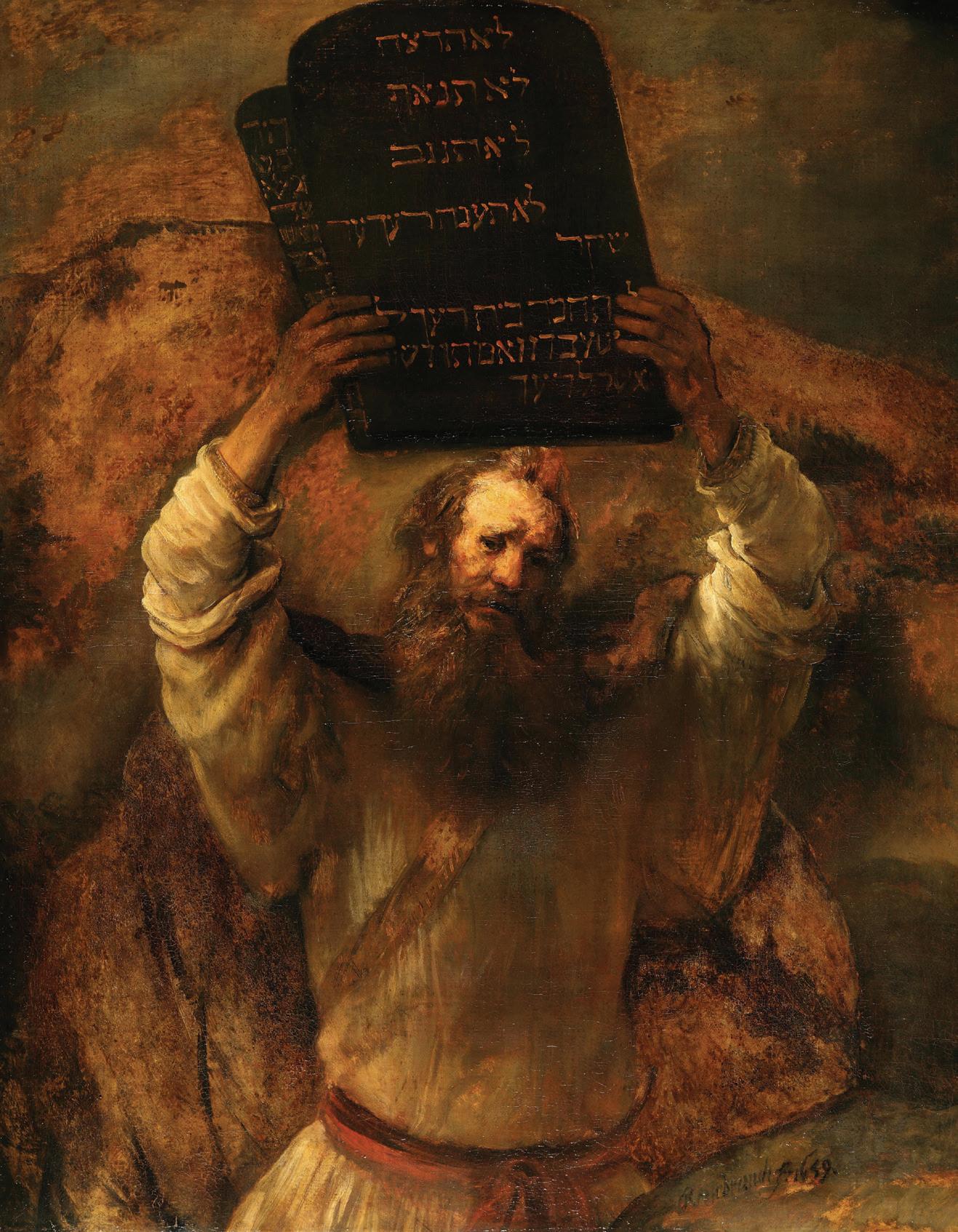
Erickson serves Rose Free Lutheran, Roseau, Minn., and Spruce Free Lutheran, Salol, Minn. Artwork: “Moses with the Tablets of the Law,” Rembrandt van Rijn, 1659, Staatliche Museen Berlin.
When I was in third grade, I received a Bible at Bethany Lutheran in Rugby, N.D. For the next many nights, I sat down in our living room recliner, determined to read through the whole thing. I made it through Genesis (pretty exciting stuff!) and Exodus (first half: exciting, second half: a little tough) and got stuck in Leviticus, bogged down like our Olds Delta 88 on a muddy prairie trail while goose hunting.

I’ve since spoken with many who likewise gave up reading their Bibles when they reached Leviticus. First, the book seems to be full of endless regulations repeated (with slight variations) for burnt offerings, grain offerings, peace offerings, sin offerings, guilt offerings, and various other sacrifices.
Second, one wonders, “How is this relevant?” Do we really need to know the proper way to wring a pigeon’s neck—“not sever it completely” (5:8)—though I did find this technique helpful on those goose hunts. Not since A.D. 70, when the temple was destroyed, has this sacrificial system been employed by the Jews. So, why should it matter to those of us who believe that Jesus was the final and sufficient sacrifice at Calvary?
And yet, if indeed “All Scripture is breathed out by God and profitable for teaching, for reproof, for correction, and for training in righteousness” (II Timothy 3:16), then even Leviticus must have value for us today. If our risen Lord Jesus, on that Emmaus walk, “Beginning with Moses ... interpreted to them in all the Scriptures the things concerning himself” (Luke 24:27), then surely he spent time explaining how Leviticus pointed to and was fulfilled in him.
In fact, Leviticus does point to him, and its words have been fulfilled in him.
In my Hebrew Old Testament, Leviticus is entitled “Vayyiqra,” the first word of the Hebrew text. It means, “And He [the Lord] called.” This opening word is a clue to the whole book. It points to a holy God calling an unholy people to himself. But there’s a problem: sin! How can a sinful people come into the presence of a holy God? The sacrificial system was God’s provision, enabling even those who had worshiped the golden calf to come into his presence. From Genesis onward, God makes it clear that sin leads to death (Genesis 2:17, Romans 6:23). Hebrews 9:22b declares, “Without the shedding of blood there is no forgiveness of sins.” So the sacrificial system, while alien
BY PASTOR STEVE
to us, was actually an extension of God’s mercy, allowing the blood/life of animals to substitute for the lives of sinful people and foreshadowing the once-for-all sacrifice of Jesus upon the cross.
If space allowed, we could explore how each of the five offerings foreshadows aspects of Jesus’ sacrifice and how each of the seven festivals in Leviticus 23 has been or will be fulfilled in Jesus’ first or second coming.
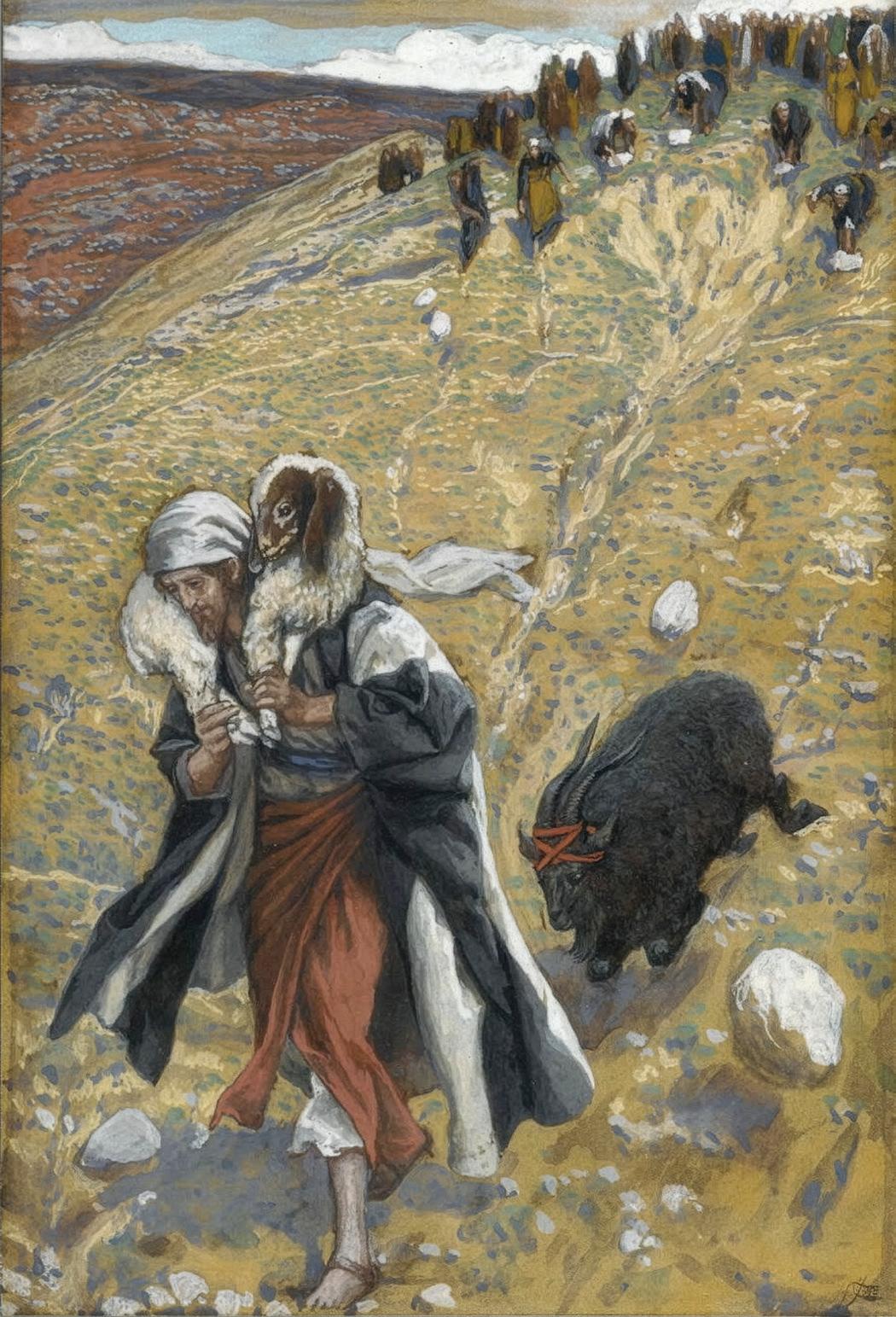
But space dictates that we focus on the one chapter that most clearly presents Jesus’ saving work. Leviticus is the central book of the Torah, and in the heart of this book is chapter 16, “The Day of Atonement.” Once a year, Aaron was to enter “the Holy Place, inside the veil” (v. 2) with fire, incense, and the blood of animals to sprinkle on the mercy seat of the ark. At the entrance of the tent of meeting, lots were cast over two goats. One goat became a sin offering for the Lord, and the other—the “scapegoat”—was for Azazel, a mysterious term linked to demonic entities and implying “utter destruction,” a fitting destination for the sins of the people. Aaron laid his hands on this goat’s head as he “confessed over it all the iniquities of the people” (v. 21) and then released it to carry the sins of the people into the wilderness. “As far as the east is from the west, so far does he remove our transgressions from us” (Psalm 103:12).
Both of these atonement sacrifices—the dead and the living—are fulfilled in Jesus. At the cross we see the “lamb that is led to the slaughter” (Isaiah 53:7); and through the eyes of John the Baptist, we “behold the Lamb of God, who takes away the sin of the world” (John 1:29).
How beautifully Yom Kippur (Day of Atonement) foreshadows the cross, where Jesus made “at-one-ment” between a holy God and repentant sinners a reality through his blood, “shed for you, and for many, for the forgiveness of sins” (Ambassador Hymnal, p. 7).
With the help of the One Year Bible, I’ve now read or listened through all of Leviticus about 20 times. Some portions are still a slog, but understanding the big picture has transformed that Delta 88 into a four-wheel drive, so by God’s grace, I can power through the rules and regulations to find the gospel truths that populate its pages.
Berntson serves New Hope Free Lutheran, Jamestown, N.D. Artwork: “Agnus-Dei: The Scapegoat,” by James Tissot, c. 1886, Brooklyn Museum.


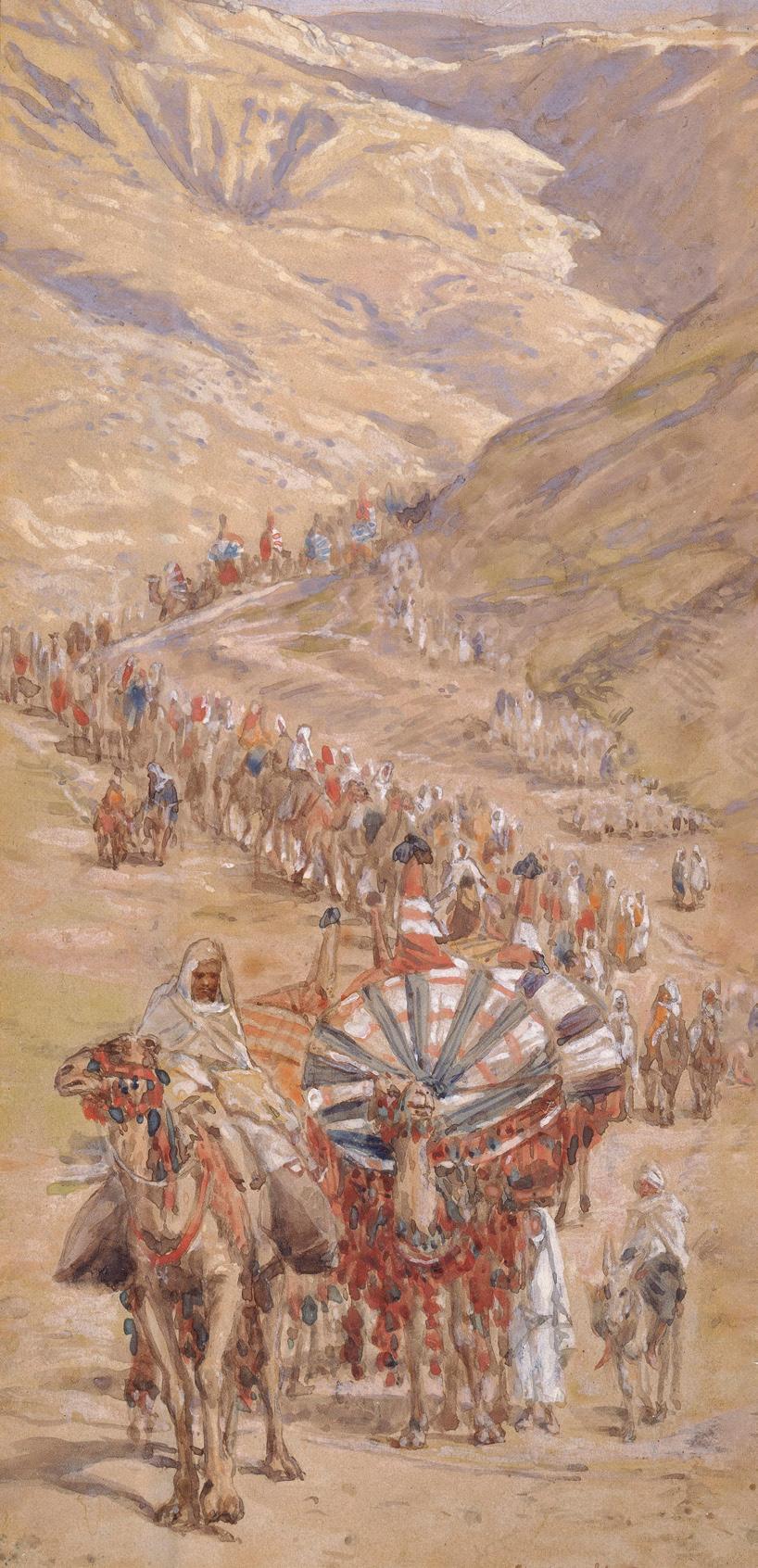
Is there a more uninviting title for a book than Numbers? I doubt it even lures in mathematicians. You may be surprised to learn that the original Hebrew title is Bemidbar, meaning “in the wilderness,” which highlights Israel’s 40 years of wandering in the desert. A major theme is the distinction between two generations and their censuses at the beginning and end of the book, so the book was renamed when it was translated into Greek (Septuagint) to Arithmoi, meaning “Numbers.” This was then adopted in the Latin Vulgate translation, and all of our English versions since as Numeri. Both titles—In the Wilderness and Numbers—represent important dimensions of the book’s message.
In the Wilderness: Led, Not Lost
Though the censuses serve as structural bookends, much of the narrative centers on the nation of Israel wandering through the wilderness. Their path on a map gives the impression of aimless wandering, but we know they were deliberately led by a cloud in the daytime and a pillar of fire at night (Exodus 13:21–22). Their movements were guided by the Lord’s presence. There was no question of when and where to go and what to follow.
The wilderness “denotes a place that can’t provide enough food and water to sustain people,” writes Reed Lessing in Hope in the Wilderness, noting further, “Interim seasons don’t come for our comfort. God uses them to mold and shape us to become more like Christ. In-between days are God’s invitation to learn how to wait and grow in faith. We don’t need fewer of these times. We need more insight into how to mature from them.” It is just as Paul writes that the good work begun in us will bring it to completion (Philippians 1:6). We are not alone and lost in the wilderness; God has led us there and is with us. Hebrews tells us that the promise of rest is also for us if we do not disobey and disbelieve (chapters 3–4).
In my times of wilderness wandering, during periods of prolonged illness, moving from place to place, and repeated “interruptions” and evacuations from the mission field, I have felt desperate, lost, and afraid. I have been tempted to feel that the journey is aimless, pulling me into solitude and loneliness. Yet God continuously provides voices of faith like Joshua and Caleb, pointing me to Christ, my cloud and pillar.
I remember a season in Sierra Leone when we felt alone, as if we had moved across the boundaries of the Church into a lonely wilderness. Our pastor at the time was Dr. Jason Gudim at Faith Free Lutheran, Minneapolis. He cared for us through virtual calls with encouragement and routines for confession and absolution. Across the ocean, he pointed us to the cloud and pillar of Christ. We began to recognize the vast camp of Christians in Sierra Leone (though still a significant minority in the area) who look to the same Christ. We were led into fellowship and Christian love with our brothers and sisters in Christ.
Numbers: A New Generation
The book begins with a census at Sinai about a year after leaving Egypt (Numbers 1–4). This census counted and organized
men for military duty and arranged the people around the tabernacle, pointing to God, his presence, and his voice coming from above the mercy seat (Numbers 7:89) in the center of the vast camp.
Unfortunately, the entire generation was denied entry into the Promised Land, except for Joshua and Caleb, because of their rebellious grumbling following the spies’ fearful report. After 40 years, a second census was taken of the new generation in the plains of Moab across from Jericho before entering the Promised Land (Numbers 26).
Both censuses totaled just more than 600,000 men; the nation that left Egypt was completely replaced, apart from Joshua and Caleb. You might wonder how an entire generation can die within 40 years. God sent plague after plague and other supernatural interventions in judgment for their rebellion. There are lots of numbers and names in the Book of Numbers, but it also has story after story of venomous snakes, the ground swallowing people, and people consumed by fire. Jude 5 says, “Now I want to remind you, although you once fully knew it, that Jesus, who saved a people out of the land of Egypt, afterward destroyed those who did not believe.”
The final plague wiped out the last of the stubborn and disobedient generation caught up in idolatry and sexual immorality, and the second census counted the new generation. This was a significant turning point, acknowledging the forced end of their rebellion and that their time in the wilderness was coming to an end. The generation entering the Promised Land was new, different from the one before—one that had spent their entire lives looking to the cloud by day and the pillar by night.
Counted Anew
Brothers and sisters, Israel’s time in the wilderness is not merely history. Paul tells us, “Now these things took place as examples for us, that we might not desire evil as they did” (I Corinthians 10:6). Paul shows us in I Corinthians 10 and Romans 6–8 that Israel’s history is our own. Through baptism, we are united with Christ in his death and resurrection (Romans 6), just as the Israelites crossed the Red Sea. The law exposes our sin (Romans 7) as it did for the Israelites at Sinai. Christ and the Spirit live in us (Romans 8) as with the presence of the ark of the covenant, the tabernacle, the cloud, and the pillar. In your wilderness, look to Romans 8 and know you are an heir in Christ, awaiting future glory, free from suffering and weakness, confident in God’s everlasting love.
As God leads you through the wilderness, remember how he sustains you. Feed on his Word (Matthew 4:4, Luke 4:4) and body and blood, like the manna and quail in the wilderness. Jesus said, “Truly, truly, I say to you, it was not Moses who gave you the bread from heaven, but my Father gives you the true bread from heaven. For the bread of God is he who comes down from heaven and gives
life to the world. … I am the bread of life; whoever comes to me shall not hunger, and whoever believes in me shall never thirst” (John 6:32–35). Again, he says, “Blessed are those who hunger and thirst for righteousness, for they shall be satisfied” (Matthew 5:6). Abandon your fear and embrace your faith and the rest promised by God. Be the generation that sees the Promised Land, rejoicing in how he is carrying you through.
Wagner was called to the work of Bible translation while attending FLBC (2003–5). She has an MA in linguistics and is working toward a DMin in Bible translation. She and her family served in Sierra Leone with Lutheran Bible Translators and AFLC World Missions. She now works as a translation development specialist with LBT. Artwork: “Moses Sees the Promised Land from Afar,” by James Tissot, c. 1896, The Jewish Museum, New York.

BY RUTHIE WAGNER



I’d broken every command. Not just a couple, all ten of them. For someone who likes rules and order, it was both shocking and shameful that I’d recklessly rebelled against the obedience part of the rules. As I lay in a quiet and stark hospital room on the eve of my daughter’s birth, the stifling reality of the mess I’d made commanded my every thought as fear took hold. Though largely pregnant, I was empty. My baby and I, the two of us together, were so very small and alone.
My phone rang, breaking the silence and solitude. I wasn’t prepared for the volume of the conversation that followed. The last thing I wanted was a reminder of my disobedience of the rules given by Moses on the plains of Moab, especially in the form of a sermon from my dad, the pastor.
Can you imagine the heaviness of my dad’s heart? It was a hard stretch to say I’d honored my father and mother even a little. His callously wayward third-born daughter—how embarrassing! How difficult the dichotomy must have been for him with the weight of my sin on his mind—and yet, his heart was eager to embrace a precious grandbaby. He knew she didn’t choose the circumstances into which she was about to be born. How agonizing it must have been for him to know the daughter he loved so much was so very far from Christ.
When you’re suffocating in your sin, everyone seems like a stone thrower, even the soul seekers. But the truth is, sometimes what we want least is what we need most.
Even still, it was that conversation. You know the type, the kind that draws a line in the sand. Except this line was more like a trench. With each word exchanged, our emotions mounted, and that trench erupted into a full-blown canyon.
“You’re not hiding anything, Kayla! Everyone knows the father is married. Everyone knows what you’ve done and who you really are.”
Truth. I was a liar. A fraud. An adulterer.
I’d built a life of idols, and now, brick by brick, the lies and deception were crashing down, burying me beneath the rubble of the Tower of Babel.
And everyone knew.
The veracity of his words cut straight through me like the scalpel that would soon birth my daughter from the worst mother ever.
Swallowed in sadness, I choked out a whisper, “But … Lola. Her life matters. She is loved. I’ll call you tomorrow when she arrives.”
With the great divide now firmly situated between us and a certainty that we’d never actually speak again, I hung up the phone and wept.
I found out later that my dad wept, too.
I’d chosen Lola’s name months before, not knowing its meaning. Sorrows. More specifically


BY KAYLA BRANDT

translated as “born from sorrow.” She was most certainly that.
Though overcome with grief, all I could think about in the darkness and desolation was how desperately I wanted Lola to know she was loved. As she entered this world, my heart ached for her to realize how much she mattered. She was wanted. Her life had worth, value, and purpose in spite of her mother. And because I didn’t want weeping to be the last sounds she heard from inside my womb, I started to sing.
Jesus loves me. Oh, yes, he does! Jesus loves me, for the Bible tells me so.
This, I know.
I was singing for Lola, not me. At the time, I didn’t believe Jesus could ever love me, but I was confident he loved her. With each note, my little acrobat joyfully somersaulted inside of me, and together we sang the sorrow away.
Despite my sin, God ushered me into the promised land of motherhood the next morning. Lola was born. Rebirth began in me. And my dad, Lola’s grandpa, kept praying. He loved us both so very much; he cried tears of joy when he heard the news of Lola’s birth. All three of us, beautifully broken.
The Father’s love for us was so vast he built a strong and mighty bridge of forgiveness and reconciliation through baby Lola. The irony wasn’t lost on me—my tiny baby closing the great divide between me and my dad. And baby Jesus, our only bridge to the Father. But … God.
Deuteronomy lays out a lot of rules. Law. Order. A code of conduct and a call to obedience. Deuteronomy makes our choice clear: Disobedience equals destruction and exile, and obedience leads to life and blessing. The commandments can seem daunting if we miss the “why,” but the “why” is pivotal because it’s where all the love lies. Deuteronomy 7:7–8a says, “The Lord did not set his affection on you and choose you because you were more numerous than other peoples, for you were the fewest ... But it was because the Lord loved you and kept the oath he swore ...” God set his affection on us—the smallest, the worst, the least—because of his immense love for us. God redeems us because he is faithful. God keeps his promises because his love for us is immeasurable and boundless. It is a love vastly deep and wide; he conceived and created a way to usher us into the promised land of his grace because we are wretched and not worthy. And he wants us to choose life! An abundant life in the fullness of his grace.
God did all of this because he loves us. And all we have to do is love him back. Yes, Jesus loves me. This, I know.
Brandt is a member of Abiding Savior Free Lutheran, Sioux Falls, S.D.
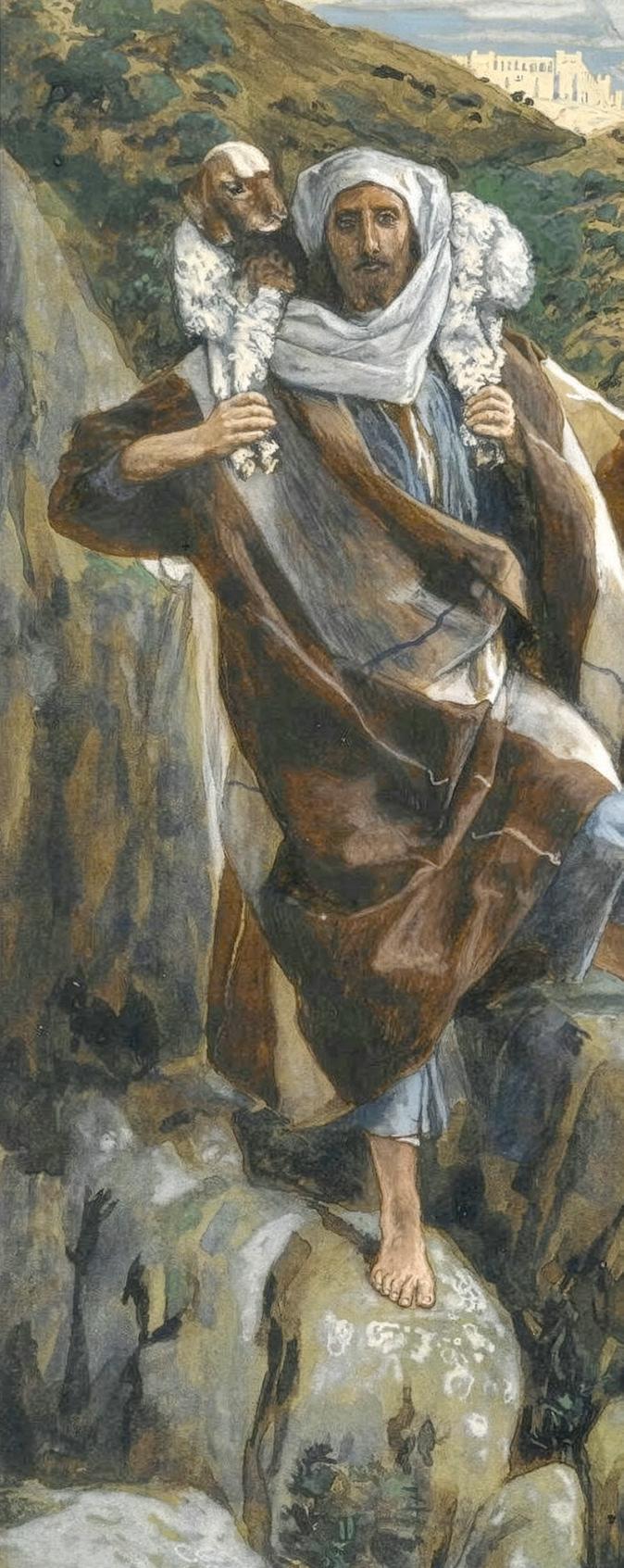
Artwork: “The Good Shepherd,” by James Tissot, c. 1886, Brooklyn Museum.


Violence is not tangential to Christ’s beauty on the cross. Jesus’ violent death was foretold and even imaged multiple times in the holy wars of the Old Testament. If God waited a few thousand years to send his Son to earth, might he not have waited a couple thousand more when less gory execution tactics had been invented? Why a bloody cross and not a lethal injection?
God’s war against Satan is first depicted in the promise, “He shall bruise your head, and you will bruise his heel” (Genesis 3:15, ESV). In his paper “Unity of the Scriptures and the Gospel,” Dr. Phil Haugen describes the significance of Christ as the Divine Warrior, bridging the narratives of holy war in both the Old and New Testaments. Speaking of the Old Testament prophets, he writes, “The prophets understood that these battles, played out in a physical arena, were also spiritual battles. The danger was not simply physical danger, and the enemy was not simply a physical enemy. The battles and the enemy were ultimately spiritual.” As Haugen notes, these physical and spiritual wars were inextricably linked with Israel’s salvation and prefigured the salvific war the Messiah would wage. “According to Isaiah,” he writes, “the victory of the Messiah is a holy war victory.” And as such, the Messiah’s victory is a violent one.
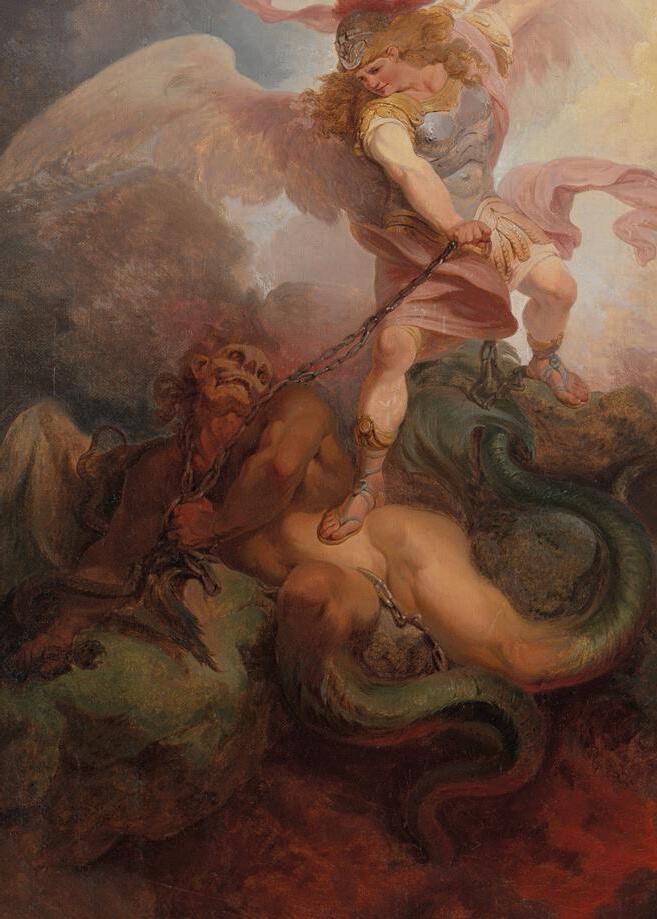
Following the path of Genesis 3, the rest of the Old Testament speaks repeatedly of violence and war as the way God wins redemption for his people. “The righteous will rejoice when he sees the vengeance,” David writes in Psalm 58, “he will bathe his feet in the blood of the wicked. Mankind will say, ‘Surely there is a reward for the righteous …’” (vv. 10–11a). After recalling that God “struck down the firstborn of Egypt” (v. 10), “overthrew Pharaoh and his army

and the prohibition to destroy in God’s holy mountain come after this statement: “He shall strike the earth with the rod of his mouth; with the breath of his lips he shall kill the wicked” (Isaiah 11:4b). The Prophet Habakkuk writes, “You marched through the earth in fury; you threshed the nations in anger. You went out for the salvation of your people, for the salvation of your anointed. You crushed the head of the house of the wicked, laying him bare from thigh to neck” (3:12–13). In Exodus, where we find the foundational story of holy war, the Egyptians’ drowning in the Red Sea sparks a song of celebration. Isaiah, though, speaks most memorably of the ultimate act of salvific violence: “Surely he has borne our griefs and carried our sorrows; yet we esteemed him stricken, smitten by God, and afflicted. But he was pierced for our transgressions; he was crushed for our iniquities; upon him was the chastisement that brought us peace, and with his wounds we are healed … It was the will of the Lord to crush him” (53:4–5, 10a).
God’s redemptive war is exemplified in Old Testament stories of Christ-like figures who save their people through




violence. In the Book of Judges, Deborah sings of Jael, “She sent her hand to the tent peg and her right hand to the workmen’s mallet; she struck Sisera; she crushed his head; she shattered and pierced his temple” (5:26). The chapter then concludes, “And the land had rest for forty years” (5:31). After God sends a plague on the Israelites for their idolatrous sexual immorality, Phineas the priest witnesses the blatant disobedience of a man who brings a Midianite woman into his family in the sight of all Israel. So Phineas “took a spear in his hand and went after the man of Israel into the chamber and pierced both of them, the man of Israel and the woman through her belly. Thus the plague on the people of Israel was stopped” (Numbers 25:7b–8). After generations of poetry, prophecy, and prototypes that all affirm that God’s war brings salvation, the Divine Warrior Christ comes to the people of God to wage war at the cross. Despite the Old Testament’s countless images of redemption through violence, the Jews did not expect the inversion of these images in the Messiah: the beauty of his sacrificial death and the beauty he would give to sinners. All the holy wars of the Old Testament point to the crucifixion, where God poured out his destruction of evil. But if we view the holy war of the cross through the same lens as the Old Testament holy wars, we do not immediately find beauty— instead, we see blood and conquest for a righteous cause. The beauty of Jesus’ crucifixion appears because he is the conqueror and the conquered. Mark Mattes writes, “Christ’s beauty is his identifying and becoming one with sinners” (Martin Luther’s Theology of Beauty), and this oneness occurs as he wages and suffers the holy war of the Father. Jesus is gentle and lowly in heart, but he is also the Son of Man in Revelation, with a burning face and a sword coming from his mouth to slay the devil and obliterate every sign of our sin. “The reason the Son of God appeared,” the Apostle John said, “was to destroy the works of the devil” (I John 3:8b). As in the days of the Old Testament, the holy war that Christ fought was both physical and spiritual—and, as before, the physical imaged the spiritual. As Haugen says in his work on the exodus, quoting biblical scholar Denis Baly, “God’s intervention in holy war was seen as part of ‘a sustained struggle against what is evil and therefore to be destroyed.’”1 The physical violence of the cross was not just a peripheral, dramatic detail but a sign of war—only this time, God bore the enmity in his own body and gave himself to be crushed.
In this way, and as it did with the sacrificial system, violence communicates the extent of our enmity. It is Jesus’ willingness to bear this enmity that illuminates the beauty and extent of his love. Swiss philosopher Hans Urs von Balthasar writes, “[L]ove is an unconditional assent to and readiness for God’s will … love is an a priori Yes to whatever may come, whether it be the Cross, or being plunged into absolute abandonment, or being forgotten, or utter uselessness and meaninglessness. It is the Son’s Yes to the Father …” (Love Alone is Credible). Jesus’ “yes” to being both the Divine Warrior and the Lamb that was slain is the ultimate reason we “gaze upon the beauty of the Lord and inquire in his temple” (Psalm 27:4b). German Lutheran theologian Adolf Koëberle writes in The Quest for Holiness, “[Jesus] knows that He has been sent to establish [a] new relationship with humanity. He knows that as the old covenant became valid and effective only by a bloody yielding to death, so the new covenant can be realized only if He, as both the Victim and the Priest, gives Himself to God as a sacrifice of reconciliation.”
As we witness Christ subsume our hostility into himself both spiritually and physically, profusely shedding his blood both spiritually and physically, giving his flesh for the life of the world both spiritually and physically, and finishing the work of salvation in abject pain both spiritually and physically, we must acknowledge that we see his beauty not only through the spiritual significance of his death but also through the physicality of its violence.
In the next issue, Skogerboe, the digital communications coordinator for the AFLC, will explore the ongoing mission of the Divine Warrior to annihilate evil—not only our external spiritual enemies but also the internal enemy of our sinful flesh. The violence of this annihilation often demolishes Christians’ expectation of a noble progress toward piety, instead exposing the gruesome reality of sin’s ugliness. This sight is enough to birth the true beauty of contrition and faith—but it is also enough to leave us transfixed by our wretchedness. For this reason, the image of the disfigured and wretched Christ carries particular power to console the conscience devastated by God’s violence.
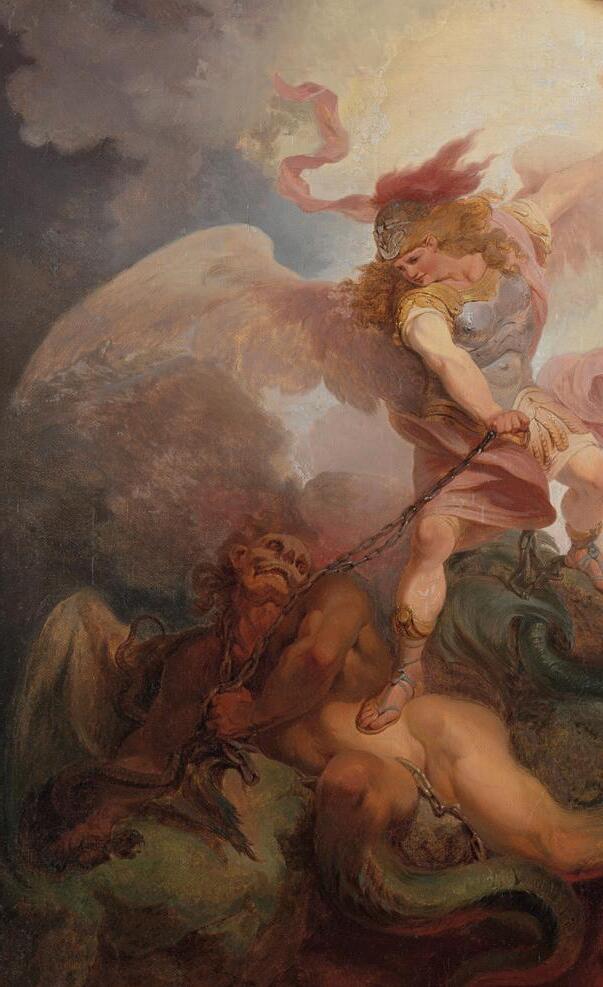
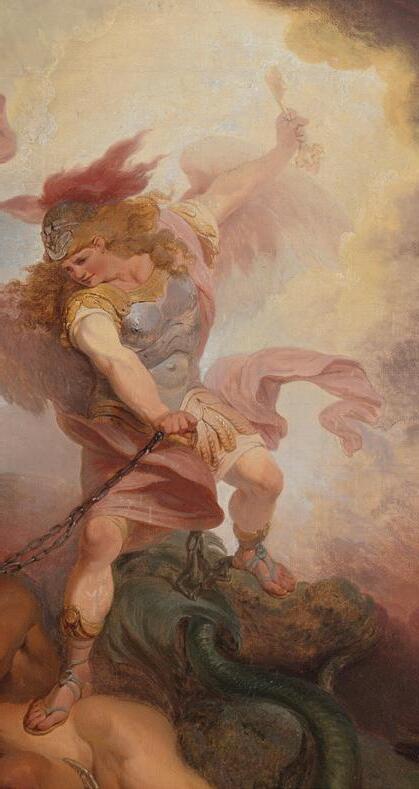
Artwork: “The Angel Binding Satan,” by Philippe-Jacques de Loutherbourg, c. 1797, Yale Center for British Art. 1Haugen, Phillip S., “The Consummation of the Exodus: A Study of the Exodus Motif in the Revelation” (1985). Master of Sacred Theology Thesis.
AFLC-Canada.
BY PASTOR JASON SIEMENS
AFLC Canada held its Annual Conference April 16–19 in Frontier, Saskatchewan. We were blessed to have Dr. Wade Mobley speak during our Saturday sessions on the theme of taking the gospel to the next generation, with our theme text being II Timothy 3:16–17. I was also re-elected president for another three-year term.
In the last year, we have seen both real challenges and real victories. As a small church body with only three congregations currently served by clergy, the challenges are significant. Yet God, in his wisdom and grace, continues to sustain and lead us where he would have us walk.
Our mission work among the diaspora—particularly displaced and refugee Muslims—has gained significant ground. Our missionary, Sulaiman, has planted nine house “gatherings” (the term “church” feels too formal in this context). From these gatherings, additional missionaries have already been sent to three other cities to proclaim the gospel. God has opened these doors widely. As the influx of Muslims continues, we are bringing the gospel to them, and they are being brought to Christ. I do not think those who orchestrated this movement of people anticipated that outcome.
The Lord has also provided financially through our investments, allowing us to support Sulaiman full-time. God be praised for his provision. Sulaiman sees himself primarily as an evangelist, which means our next great need is pastoral care for these new believers, the lambs of God. Please pray that the Lord would provide a theologically sound man to come alongside this work and faithfully shepherd them. Also pray that, according to God’s will, we would be able to sustain this work financially in the years ahead.
Challenges
At the conference, several expressed concern about our future. With only three congregations currently shepherded, the question naturally arises: What does the future hold?
Recently, I heard a pastor from a much larger denomination respond to a similar concern in a way that applies well to us. To paraphrase, it is not our task to secure the future of a denomination. Our task is to be faithful to the Word of God, to love our neighbor, and to hold firmly to sound doctrine—and to leave the future in God’s hands.
Yes, we are small. But God has a long history of using small things to accomplish his purposes: a stone in a sling and a baby in a manger come to mind. Could a larger denomination have moved as quickly to establish mission work among Muslims as we have? Perhaps, but perhaps not. Please pray for those among us who carry anxiety about the future.
AFLC-Canada has congregations in the provinces of Alberta, British Columbia, and Saskatchewan. Visit their website at:
• Website: aflccanada.org
Siemens, who serves St. John’s Lutheran, Edmonton, is the president of AFLC-Canada.
Our congregations are largely rooted in small communities and function, in many ways, as community churches. It is a blessing that we draw people from a wide range of denominational backgrounds; this speaks to the Spirit of God at work among us. At the same time, this brings tension. I rejoice to see vibrant worship, yet I am concerned when infants are not being baptized and catechized. I rejoice in multi-generational worship, yet I hear the growing influence of non-Lutheran teaching.
The question becomes: How do we faithfully minister to the broader community while remaining firmly grounded in Lutheran doctrine?
Some of you may not know my own story. I was raised as a Mennonite, came to faith under a Calvinist Baptist preacher, and was brought into Lutheran theology when my family needed to hear the gospel clearly during our daughter’s illness. Because of my story, I hold to our Lutheran confession dearly. Please pray for me—that I would have the wisdom to be gentle where needed, encouraging where appropriate, and firm where necessary.

BY PASTOR MICAH HJERMSTAD
In a few weeks, the AFLC will gather on the campus of Concordia College in Moorhead, Minn., for our 64th Annual Conference. I’m excited for the time we will have together, and I hope to see many of you there.
Our Friday evening service will be led by Pastor Brandon Marschner, and Nathan Dalager will preach. They and their families are planting a new AFLC congregation in Moorhead, not far from the college campus. I’m grateful for how the Lord has led this group, and I’m excited to see what God has in store for them.
Early in the planning—and praying—process for this church plant, I was still serving St. Paul’s Free Lutheran in Fargo, N.D., the parent church of this plant. I remember wrestling with questions like, “Do we need another AFLC church in Fargo-Moorhead?” “Are there other less-churched cities in America that need a new church?” North Dakota is near the top of the list of states with the most churches per capita, and there are churches everywhere in the Fargo-Moorhead community. It’s also true that most estimates of the unchurched population in Fargo-Moorhead are at or near 100,000 people. That really helped to shape my perspective. That’s a lot of souls who need Jesus, so yes, there’s plenty of room for another AFLC congregation.
I think of that now in my role as president. Growth and multiplication can be scary things, and we can be tempted to come up with lots of excuses to not step out into new areas of ministry. I don’t know if the Lord has any significant growth planned for the AFLC, but I do know that my office is fielding more serious inquiries for affiliation now than we did during my first term, and it’s reasonable to expect that this is only the beginning.
No matter what happens, we must hold fast to our identity as free and living Lutheran congregations. Frankly, that’s why more haven’t joined us to this point. They realize their identity doesn’t align with ours. But I also don’t want to let that become an excuse to approach those situations with skepticism and fear. Rather, I want us to manage these opportunities with confidence and hope. We have confidence in our identity. We don’t apologize for it, and we praise God for what he has made us to be as an AFLC. We have hope because we believe that what we have is a treasure to be shared, and people are hungry for this treasure.
It may seem obvious that the president would believe something like this, but if we truly believe this, it shapes how we approach the potential for new congregations. The AFLC is not a treasure to bury; it’s a treasure to steward, to share. I travel all over the country to encourage our congregations and pastors, and I can say very confidently that there is plenty of room for more AFLC congregations.
I don’t know if that will happen, but God does. And so, we pray, “Thy will be done.” Will you join me in that prayer? It can be a scary prayer because he may lead us to places we’ve never been. But maybe that’s good for us, too. Is there any better, more safe, fun, and exciting place to be than in the will of God?
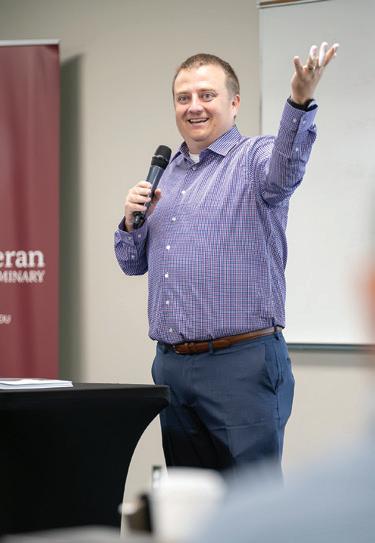
AFLC Annual Conference.
The AFLC Annual Conference will be held June 10–13 at Concordia College, Moorhead, Minn. For information about the conference schedule and to register, visit the AFLC website at:
• aflc.org/conferences
Hjermstad, a member of Grace Free Lutheran, Maple Grove, Minn., is president of the AFLC.

Parish Education Director Marian Christopherson and staff Will Stromstad and Jaelynn Kozicky explore the new website.

Aaron Arneson, who left for his seminary internship in May, displays the new shipping label. We are thankful for his years of service in Parish Education.
Updated online bookstore.
The new storefront completes phase one of the online bookstore redevelopment. Phase two will implement bar scanning capabilities, and phase three will integrate inventory with accounting software. About $15,000 is needed to complete phases two and three. We welcome gifts to support this project.
• store.ambassadorpublications.org
Kozicky, a member of Hope Lutheran, Minneapolis, is the administrative assistant for AFLC Parish Education.
• Serving in the small things
BY JAELYNN KOZICKY
When I started working in Parish Education about a year ago, there were already conversations about building a new online bookstore. After looking through the old site, I quickly understood why. If I had been a viewer, I probably wouldn’t have ordered from it. The site felt outdated and clumsy. I knew it needed to change, but I didn’t realize how much work that would take. I also didn’t realize how worth it the work would be!
The project sounded simple: clean things up, maybe fix a few categories, and add some new pictures. But it didn’t take long to realize it would be much more than that. Soon we found ourselves working through our nearly 2,000 products, one by one. Titles, prices, categories, images. Everything needed attention. Just when I thought we were done, we realized we needed to add a weight for each product. Then we had to go through each product one more time to add inventory numbers. It was the kind of work where you start to lose track of what you’ve already checked, and your eyes start to hurt. Slow? Yes. Worth it? Also, yes.
Then came the turning point. We received the first draft of the new site, and suddenly it all clicked. What used to feel cluttered and outdated now looked clean, simple, and easy to use. For the first time, I thought, “I would actually shop here.”
One of the more memorable moments came during our first test order. We figured out how to print shipping labels directly from the backend of the site, and my coworker Aaron Arneson was more excited than I’d ever seen him before. He held up the first printed label like it was a trophy. It might seem like a small thing, but it saves about five minutes on every order. For those of us working with it every day, that kind of improvement makes a real difference. Since launching the updated site in April, we’ve already seen more orders coming in. That’s been especially encouraging because it means people are finding and using these resources. It’s a reminder that making the site clearer and more accessible really does matter.
Through all of this, we kept coming back to one simple truth: this isn’t just a website, and these aren’t just products. Every book we carry has the potential to lead someone to Christ and encourage people in their faith. And that is what truly makes it all worth it.
A verse that motivated me through this process was Colossians 3:23: “Whatever you do, work heartily, as for the Lord and not for men.” Even the small, behind-the-scenes tasks can be done with purpose. Most of this work will never be seen, and that’s okay. The goal was never to draw attention to the work; it was to build something helpful. As the updated bookstore continues to take shape, our hope is that it will quietly serve people well—helping them find solid, Christ-centered resources and grow deeper in their faith.

BY LISA ARNESON
“R
ight now, you could really use a visit from your pastor, but you are the pastor.” My dad spoke those words to my husband and me years ago. My dad was right. Life was challenging at the time on multiple fronts; among other struggles, we had recently lost a baby to a miscarriage. My dad had pastored us at various times in our years of ministry. We have also had people from our congregations who have supported us in real hands-on ways during the bumps of life’s journey.
There are times when a pastor needs pastoral care. Our AFLC forefathers also saw this need. Part of the job description for the president of the AFLC is to care for the pastors and congregations of the AFLC. One man can’t do that alone effectively. President Micah Hjermstad has tasked his presidential ministry associate, Jason Holt, to intentionally reach out to pastors as part of what he does.
The 2018 AFLC Annual Conference also saw the need for intentional care for pastors and congregations. That is when PACCT was created. PACCT stands for Pastors And Congregational Care Team. We are a team of pastors and wives and lay couples who work together with Pastor Micah and Pastor Jason to care for pastors and congregations.
At the end of March, we gathered for our annual retreat. It was so good to get to know each other better in person instead of online in our monthly meetings. The topics of our sessions helped clarify our purpose and gave us practical steps to take as we care for others. A good heart and compassion for others was evident in everyone who was there.
Obviously, a major part of what PACCT does is reach out to pastors to visit, encourage, and pray with them. We do this also for pastors’ wives who would like us to. There are times when we may help connect a pastor’s family to resources that meet a need they may have.
A project we have taken on in the last year or so is creating a series of excellent videos for pastors’ wives. The videos consist of interviews with AFLC pastors’ wives discussing questions and topics relevant to the pastor’s family. If you haven’t seen them yet, they are on the PACCT website. It would be insightful for you to hear these thoughts from a wife’s perspective.
We also have a display table at Annual Conference and other AFLC events. Someone from the PACCT team is at the table as much as possible to be available to visit and pray with whoever would like that. We also offer a variety of books and resources that would be helpful to ministry at the table.
PACCT team members.
Our team members include:
• Wayne and Jane Smith
• Scott and Mary Stroud
• Alan and Lisa Arneson
To learn more about our PACCT team members, visit our website. Pastors and congregants can reach out at any time to any of our members. We are on your team.
PACCT Website
• aflc.org/pacct
Arneson is a member of Amery Free Lutheran, Amery, Wis. She serves on PACCT with her husband, Pastor Alan Arneson.
The Summer Institute of Theology will be held Aug. 3–7 on the campus of the Free Lutheran Bible College and Seminary, Plymouth, Minn. Sessions will include “The Gospel of Matthew” by Pastor Alex Amiot, “The Pastor as Theologian” by Dr. Nathan Olson, “Planning and Leading a Worship Service” by Andrew Hanson, “Cultivating a Gospel Culture in the Congregation” by Dr. Craig Johnson, and “History and Aims of the AFLC” by Dr. Martin Horn.
Event information, including online registration, can be found online at flbc.edu/ events.

The AFLC Annual Conference will be held June 10–13 at Concordia College, Moorhead, Minn., in the Knutson Campus Center, with the theme “Sure Hope” from Philippians 1:6. Conference registration can be found online (aflc.org/conferences). Prices are $55/single or $95/couple ($65/$105 for walk-up). Online registration options include nursery, vacation Bible school (VBS), and youth activities. Conference registration policies can be found on the conference webpage.
Nursery is available for children aged 3 and younger. A VBS program will be provided for children entering preschool through those entering sixth grade. The youth track is offered to those entering seventh grade through high school (aged 17 and younger). Those registering youth will receive follow-up communication regarding scheduling, costs, and waivers, as some activities may be held off-site.
Conference committees will meet on June 10 at the conference site.
Rekindle the Fire, June 9
AFLC Evangelism and Discipleship will host Rekindle the Fire, a revitalizing and equipping event, on June 9 at St. Paul’s Free Lutheran, Fargo, N.D. With the theme “Loving Your Neighbor to Christ,” the event is open to clergy and lay members. Pastor Tom Parrish will lead two sessions on intentional listening and responsive conversations. The event, which is free, will include an evening meal and a time of worship and prayer for the Annual Conference. Registration can be found at aflc.org/ evangelism/events/rekindle-fire.
WMF Day, June 10
WMF Day will be held June 10 at Concordia College with the theme “I Believe, Help My Unbelief” (Mark 9:24). The schedule begins with worship at 9 a.m., followed by devotions and recognition of missionaries in attendance. Workshops will be presented. A memorial service and business meeting will close out the day. The Mission Festival service will be held June 11.
Registration ($25/person before June 10; price increases to $30) can be found online (aflc.org/conferences). You may also register for the WMF Day meal ($17) on the AFLC registration form through May 31.
AFLC Youth Ministries will host FLY Beyond, a national youth equipping conference, July 12–16 at the Association Retreat Center, near Osceola, Wis. The camp will feature the theme “Living Stone,” from I Peter 2:4–9. The event combines preaching, teaching, apologetics, and worldview training with a small group learning environment for a powerful week of spiritual growth.
The camp schedule includes morning Bible studies led by Pastor Brent Olson followed by daily apologetics and worldview training sessions led by Tim Barnett from Stand to Reason. The morning schedule will conclude with discussion teams.
Afternoon activities include team games and open recreation. Evening prayer time will precede the evening sessions led by Pastor Sam Wellumson. Barnett will lead another worldview training session in the evenings. Registration is now available online at aflc. org/youth/fly-beyond with a final deadline of June 9.
The Association Retreat Center is hosting several AFLC camps this summer under their 2026 theme of “Abundant Growth.”
Fire Up summer camp for teens in grades 5–8 will be held June 21–25 with Pastor Eric Westlake as the camp speaker. The camp is $265/student and $210/leader or adult attending.
Family Camp is scheduled for July 26–Aug. 1 with registration open through July 15. The evening speaker will be Pastor Josh Skogerboe; the morning Bible study leader will be Pastor Adam Osier; Owen Parsley will lead a topical study; Pastor Jarrod Hylden will lead the young adults; and Pastor Nick Dyrud will lead the youth study. Donations are now being solicited for a silent auction that will be held throughout the week to support ARC special projects. Registration prices range from $260/adult, $246/youth, $147/child, and $80/toddler. Onsite lodging and camping is available, and prices can be found online.
Online registration is available for both camps at arc-aflc.org.

Graduation was held May 2 on the campus of the Free Lutheran Bible College and Seminary, where six seminarians earned Master of Divinity degrees, four students earned their Bachelor of Arts in Bible and ministry, and 39 students earned an Associate of Arts in Bible and ministry.


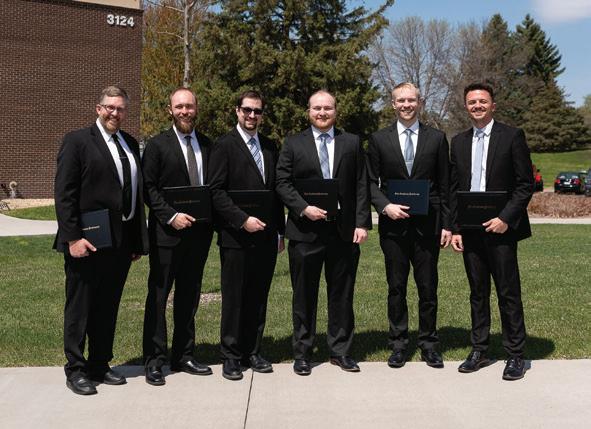

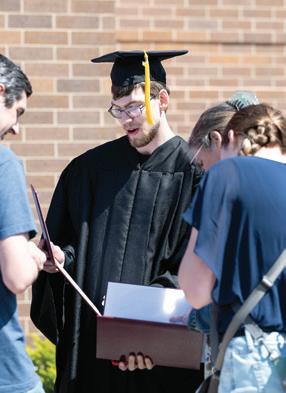
FROM TOP, CLOCKWISE: Families and guests greeted graduates on the quad following the service. Six seminary graduates include Adam McCarlson, Adam Erickson, Alexander Grimes, Caleb Korhonen, Micah Moan, and Alex Monseth. Bible college graduate Josh Larson shows off his certificate. Bible college graduate Laura Impola prays during the service. Members of the Concert and Proclaim choirs sing “Is He Worthy?” Graduates sing with the congregation during the service.
Pastor Jon Benson has resigned from Newark Lutheran, Newark, Ill.
Pastor Luke Emerson has resigned from Peace Lutheran Church, St. Francis, Kan., and has accepted a call to St. Peter Lutheran Church in Benson, Ill.
Pastor Peter Ward has resigned from Maranatha Free Lutheran, Ulen, Minn., to retire. His last Sunday was May 31.
Correction: The benevolence numbers in the May issue for FLBCS were incorrectly reported. The correct amounts are $162,634 received in February for a YTD total of $299,237.
Correction: Mark Riley, Bethel Park, Pa., must be reelected to the World Missions Corporation in order to continue serving on the World Missions Board of Directors.
Marleen Eidsmoe
Sophie Marleen Eidsmoe, 79, died April 24, 2026. Born Sept. 2, 1946, in Valley City, N.D., she was the daughter of Henry and Dora Van Dyke. She married John Eidsmoe on Aug. 8, 1970. She grew up on a farm near Marion, N.D. After high school she attended Northwestern Bible College in Minneapolis for a year and then graduated from the University of Northern Iowa, majoring in elementary education. She taught children in schools in Cedar Rapids, Sioux City, and Council Bluffs, Iowa, and Grand Forks, N.D. They also lived in Minnesota, Oklahoma, and Alabama, and she was a partner to her husband in his careers with the U.S. Air Force, teaching and practicing law, and pastoring churches. Besides teaching in Christian schools and homeschooling her own children, Marleen taught Sunday school for several churches and worked with Child Evangelism Fellowship. She was one of two founding teachers for Montgomery Christian School, where she taught for 13 years and established the school’s art program. She frequently presented lectures on children’s literature and gave presentations in period dress as Holocaust survivor Corrie ten Boom, Martin Luther’s wife Katherine von Bora, and the pilgrim Priscilla Mullins. She also wrote and illustrated devotional books.
Surviving are her husband, Pastor John Eidsmoe; three children, David Eidsmoe (Donna) Eidsmoe, Kirsten (Chris Tidwell) Eidsmoe, and Justin (Aaryn) Eidsmoe; four grandchildren; and one sister, Greta Marie (Michael Wittmeier) Van Dyke.
A memorial service was held May 1 at Trinity Presbyterian Church, Montgomery, Ala. A second memorial service was held May 15 at Skrefsrud Free Lutheran Church, Beresford, S.D., with Pastor Michael Brandt officiating. Burial was in Beresford Cemetery. Memorials are requested to Child Evangelism Fellowship (cefonline.com), P.O. Box 348, Warrenton, MO 63383.
Members of Amery Free Lutheran will celebrate the congregation’s 50th anniversary on Sunday, June 7. The celebration will include a 9:30 a.m. worship service with former Pastor Michael Brandt preaching, a catered dinner, followed by a 1 p.m. anniversary service. The theme for the event is “God’s Faithfulness through All Generations.” For more information, visit the congregation’s website at ameryflc.org.
The Lutheran Ambassador is free for all subscribers. Our ministry is subsidized by your generous gifts. Thank you! Our mission continues to provide encouraging and informative content. For information on how to support our ministry financially, please visit our website at aflc.org/ lutheran-ambassador.
FLBCS
Doug Swanson
Karen Koshenina
Anna Marie Huesers
Muriel Green
Loretta Langaas
Keith Quanbeck
Jerome Axvig
John Arlen Johnson
Lorilee Mundfrom
Lori Hill
Clarice Skjonsby
Ron Strom
Mark Gustafson
Parish Education
Muriel Green
Loretta Langaas
WMF
Clarice Skjonsby
Youth Ministries
Ellen Burslie
Ron Strom
AFLC-Brazil is launching a missions program this fall aimed at equipping students for mission work. Based at the seminary campus in Campo Mourão, the International Mission Foundation School will feature a four-month program in English. Three months will be spent on campus, learning through classes and practical ministry avenues.
In the last month, students will be sent on a full-time practical mission outreach in Paraguay to work with AFLC missionaries.
The program will run from Aug. 15 through Dec. 12 at a cost of $5,500. For more information, email Michelle Abel (imfs.missionschool@gmail.com) or via Instagram at @imfs_missionschool.
BY PASTOR SAM WELLUMSON
“Speak tenderly to Jerusalem, and cry to her that her warfare is ended, that her iniquity is pardoned, that she has received from the Lord’s hand double for all her sins” (Isaiah 40:2).
n your lowest moments—even before those moments arrive—God is already there, leaning in close. He does not offer mere clichés from a distance. He speaks tenderly, directly to the heart: “Comfort, comfort my people, says your God” (Isaiah 40:1).
These precious words come at a pivotal moment in the Book of Isaiah. Judah’s King Hezekiah had just welcomed diplomats from Babylon and proudly displayed every treasure, weapon, and spice in his palace (Isaiah 39). He boasted about his kingdom but forgot to boast about Yahweh, who gave it all. Isaiah confronted him, prophesying that Babylon would return in about a century to strip Judah bare. Hezekiah’s selfish reply? Well, at least it won’t happen “in my days” (Isaiah 39:8).
The Babylonians did come. The temple was destroyed, families were slaughtered or torn from their homes, and God’s people were carried into exile. They knew they were paying the price of their former king’s pride.
Imagine being one of those exiles—bitter, grieving, overwhelmed by the consequences of someone else’s sin. How would you cope? Where would you turn for comfort?
Even before the suffering began, God preached these words of comfort to his people. “Speak tenderly to Jerusalem.” The Hebrew is stronger than most English translations suggest. It is a command to “speak to the heart.” Your God comes near. He does not offer shallow encouragement. He addresses the deepest ache caused by sin, whether it is your sin or the sins of others.
Read what he then says: “Her warfare is ended, that her iniquity is pardoned, that she has received from the Lord’s hand double for all her sins” (Isaiah 40:2). The phrase “double for all her sins” might sound like double punishment. It is not. God is not piling wrath on top of judgment. No, these are words of pure gospel! Iniquity, that crushing feeling of debt and guilt of sin? It is pardoned. The warfare, that lifelong battle against sin, death, and the devil? It is over.
Here is the double comfort for you, believer. Jesus does not merely erase your debt. He pays it in full on his cross. Then, Christ credits your account with his perfect righteousness. Imagine a ledger filled with billions of debts you owe in red ink. Christ wipes the slate clean and then

writes across it every perfect, holy, loving act he ever performed. You receive double from the Lord’s hand—forgiveness plus his very own holiness. As one pastor has said, if you stole $1,000 from God, he does not just forgive the debt and call it even. He gives you $1,000 more.
This comfort is not only for ancient Judah. It is for you today. Through faith in Christ, you are God’s people. The Creator, Redeemer, and Sanctifier calls you his own and is not ashamed to be called your God (Hebrews 11:16).
Then comes the voice crying in the wilderness: “Prepare the way of the Lord; make straight in the desert a highway for our God” (Isaiah 40:3). Every valley is lifted up, every mountain and hill made low, and the rough places smoothed. God himself comes. No obstacle is too great for him. The glory of the Lord will be revealed, and all flesh shall see it together.
We recognize the voice of John the Baptist preparing hearts for the arrival of Jesus. In Christ, the glory of God is revealed—not in terrifying judgment, but in his tender mercy. The blind receive sight, the lame walk, lepers are cleansed, the deaf hear, the dead are raised, and the poor have good news preached to them (Matthew 11:2–6). Heaven meets earth in a manger, on a cross, and from an empty tomb.
Whatever wilderness you are walking through right now—grief, guilt, illness, anxiety, or the consequences of someone else’s sin—hear your God speaking directly to your heart. “Comfort, comfort. Your warfare is ended. Your iniquity is pardoned. You have received double grace in Jesus.”
The Lord comes to you, leveling every obstacle and revealing his glory for you to see, now and forever.
Wellumson serves Christ the King Lutheran, East Grand Forks, Minn.
SOMETHING TO SHARE
BY KYLEE GREENE
The Book of Ezekiel is filled with sorrow at the weight of the sins of Israel. In chapter 34, Ezekiel delivered a message to the corrupt shepherd rulers saying, “Thus says the Lord God: Ah, shepherds of Israel who have been feeding yourselves! Should not shepherds feed the sheep?” (34:2b, ESV). He lamented the hard hearts and lack of love the leaders had toward God’s people, with whom they had been entrusted. This sorrow over their sin and brokenness produced a longing for a new and better shepherd who would love his sheep and save them from being crushed.
Later in Ezekiel 34, the Lord promises that he will be the one who will make his people lie down in green pastures. He will separate the sheep and the goats, something the leaders of Israel failed to do (Psalm 23; Matthew 25:32). The Apostle John records the fulfillment of this prophecy in Jesus’ words: “I am the good shepherd. The good shepherd lays down his life for the sheep” (John 10:11).
But it wasn’t only the shepherds of Ezekiel’s time who were corrupt, for the sheep also went astray from the Lord. And if God’s chosen people were cut off from the presence of their Creator, how much more the rest of the world?
Today, we are still surrounded by the corruption of people seeking selfish gain. Pastors use their flocks as a means to an end. And politicians seek after power, money, and convenience rather than seeking the good of those who put them in office. How can
people do what is good when their very definition and practice of such things are skewed by sin?
How comforting, then, is the promise of the Good Shepherd who perfectly defines goodness and does what is good because he is good. Jesus promises that through the power of the cross he will seek out his sheep and rescue them from where they have been scattered (Ezekiel 34:11–12). He has already conquered our enemy and will one day return to dwell with us forever. Therefore, we need not fear when he leads us through the valley, for he will not forsake his own. He knows us by name. He gave us his life. And he is our portion, now and forever.
Not only that, but he will punish the unrighteous rulers and bring justice to his people. The Lord declares, “I will set up over them one shepherd, my servant David, and he shall feed them: he shall feed them and be their shepherd. And I, the Lord, will be their God, and my servant David shall be prince among them. I am the Lord; I have spoken” (Ezekiel 34:23–24). Because of this, we can choose to trust and follow him even when we do not understand where he is leading, holding fast to the truth that he is the Good Shepherd who cares for his sheep and will do so unto eternity.
Greene is the lead dorm assistant at the Free Lutheran Bible College, Plymouth, Minn.