Albrecht Dürer
‘The Apocalypse’ 1498 / 1511
Like Leonardo’s ‘Last Supper’, Dürer’s ‘Apocalypse’ belongs among what may be called the inescapable works of art. Summarizing, yet surpassing an age-old tradition, these works command an authority which no later artist could or can ignore, except perhaps by way of a deliberate opposition which in itself is another form of dependence. Dürer’s compositions were copied, not only in Germany but also in Italy, in France and in Russia, and not only in woodcuts and engravings but also in paintings, reliefs, tapestries and enamels. Their indirect influence, transmitted by a master like Holbein, as well as by such modest craftsmen as the illustrators of the Luther Bibles, reached even the monasteries of Mount Athos.
– Erwin Panofsky

Albrecht Dürer
Die heimliche Offenbaru[n]g Ioh[an]nis. (The Secret Revelation of St. John). / Apocalipsis cum Figuris. (The Apocalypse with Pictures)
Nuremberg. (By the artist). 1498/1511
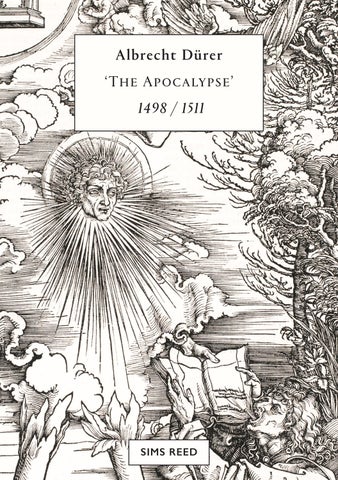
Dürer’s ‘The Apocalypse’, the first book to be conceived, designed, printed and sold by a single artist.
The complete series of Albrecht Dürer’s ‘The Apocalypse’: 16 original woodcuts, one proof before text, five from the 1498 German edition, ten from the 1511 Latin edition.
Folio. (c.380 × 280 mm). Original woodcut title with the Virgin with child appearing to St. John, printed text in Latin or German where applicable and 15 original woodcuts by Albrecht Dürer, various sheet sizes.
Conceived as a project by Dürer in the mid-1490s and the approach of the half millennium, his ‘Apocalypse’ cycle is a work of paramount importance in the development of his own oeuvre, of the woodcut and of the illustrated printed book.
The priority Dürer created of the illustration over the text was a reversal of the traditional modus and a precedent that has endured. The text, as indicated by the title of the German edition, is St. John’s ‘Book of Revelation’, the apocalyptic visionary narrative of the end of this world and the coming of the next, a thesis that was of immediate appeal to a Europe in the grip of millenarian chaos and on the verge of a Turkish invasion.
Dürer’s first edition of 1498 featured a printed title and fifteen original woodcuts with text to the verso of each print in Latin or German; for the second edition of 1511 Dürer added a vignette to the title of the Virgin with infant Christ appearing to St. John but used the Latin text exclusively. The presence here of a proof without text is also of significance (these are highly desirable and of considerable rarity) and demonstrates Dürer’s innovative distributive techniques: the book could be bought as a whole, or in single sheets, as desired.
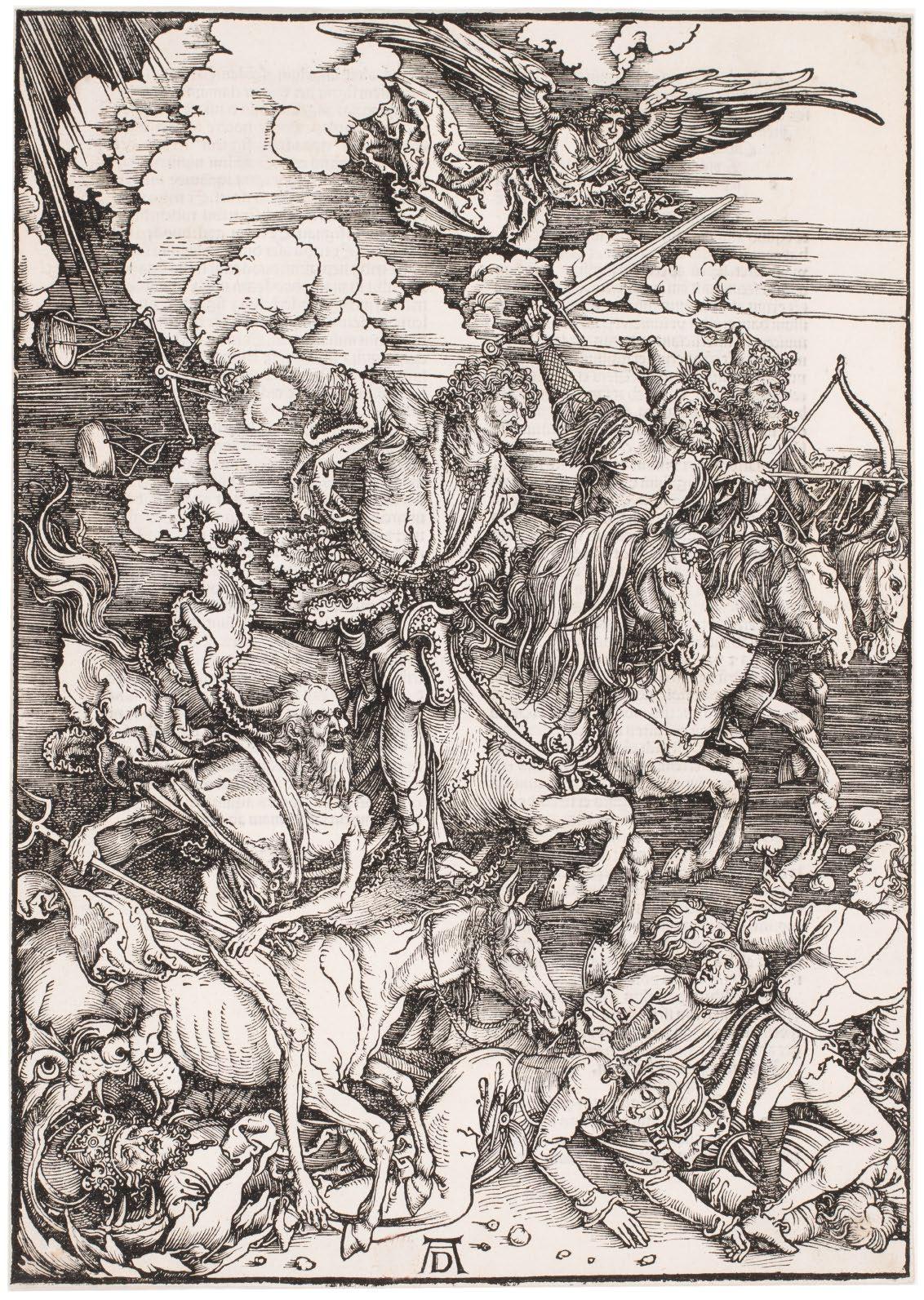
[Left: ‘The Four Horsemen’ (395 x 280 mm)]
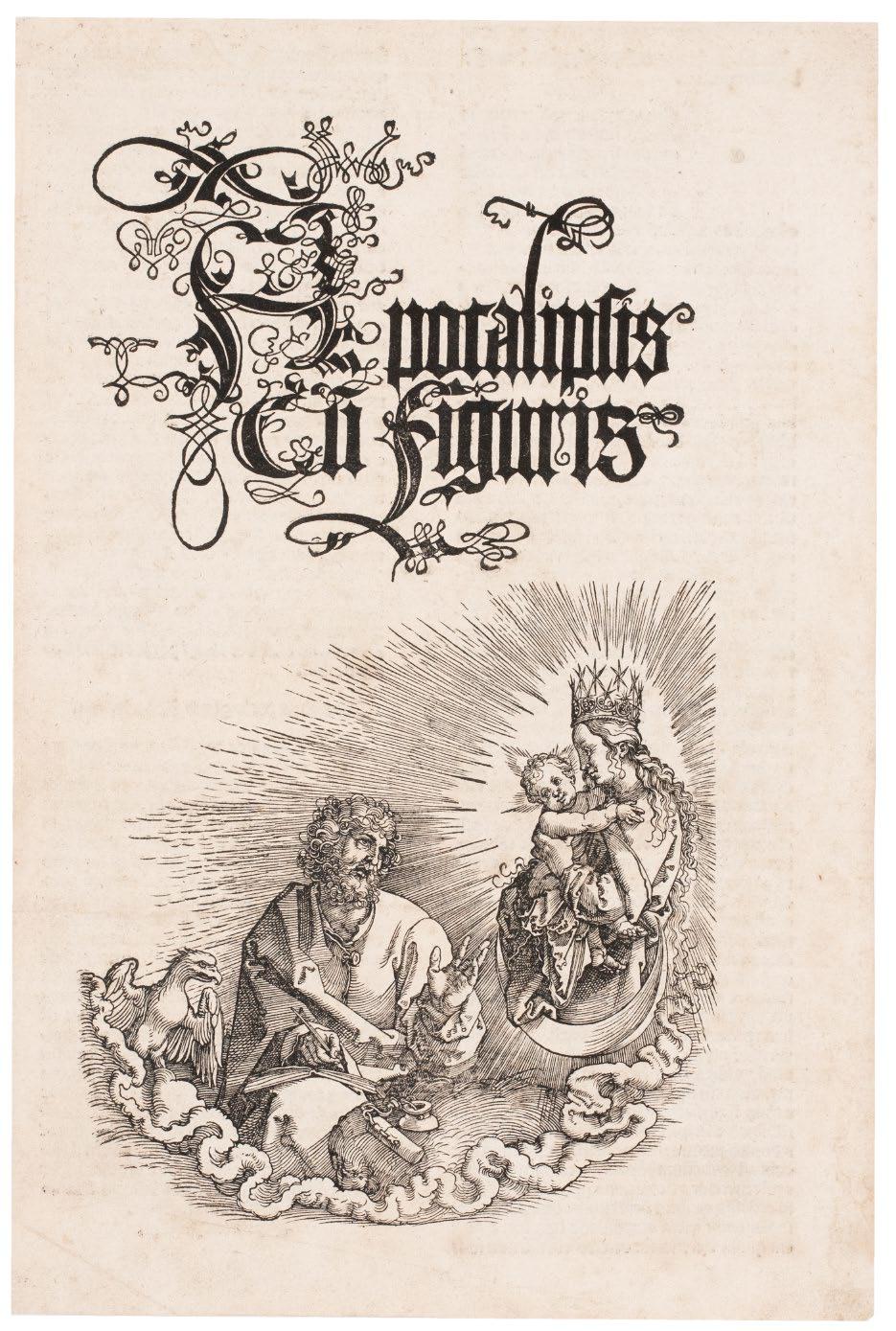
‘The Virgin Appearing to St. John’ (370 x 246 mm): 1511 Latin edition with text verso.
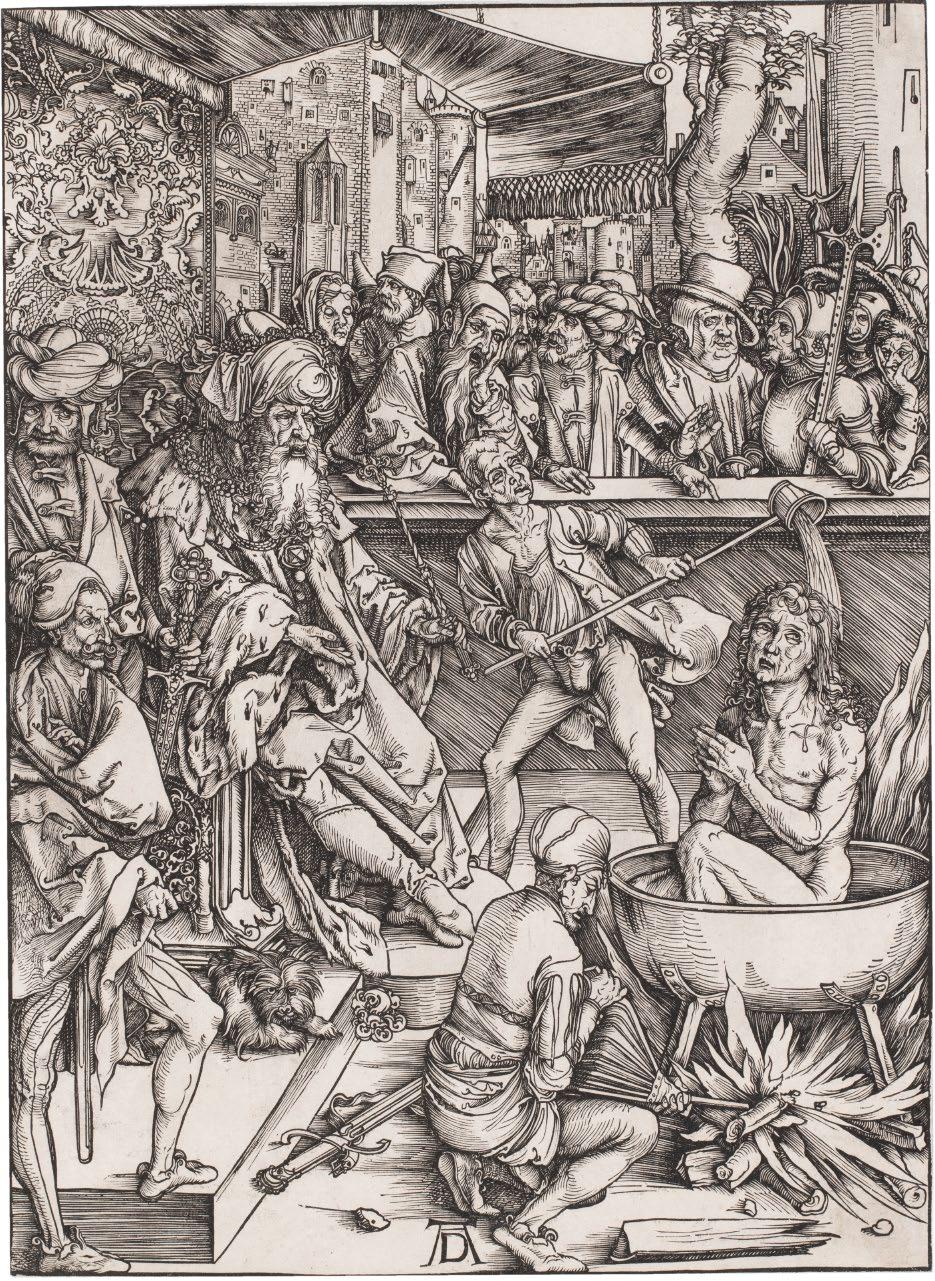
‘The Martyrdom of St. John’ (386 x 281 mm): c.1496 / 1497, proof before text on laid paper, from the collection of Freiherr von Lanna (Lugt 2773).
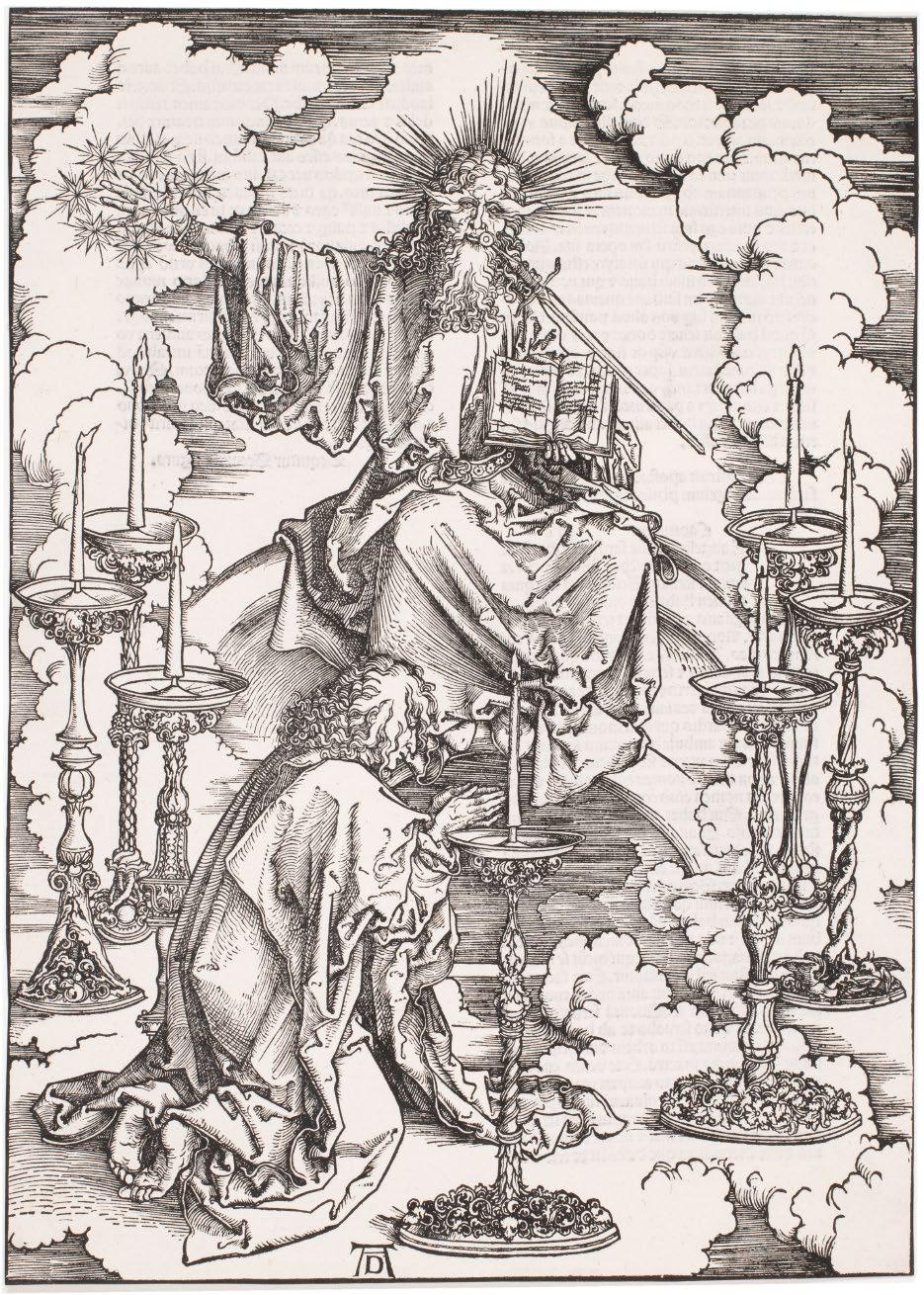
‘The Vison of the Seven Candlesticks’ (392 x 280 mm): 1511 Latin edition with text verso.
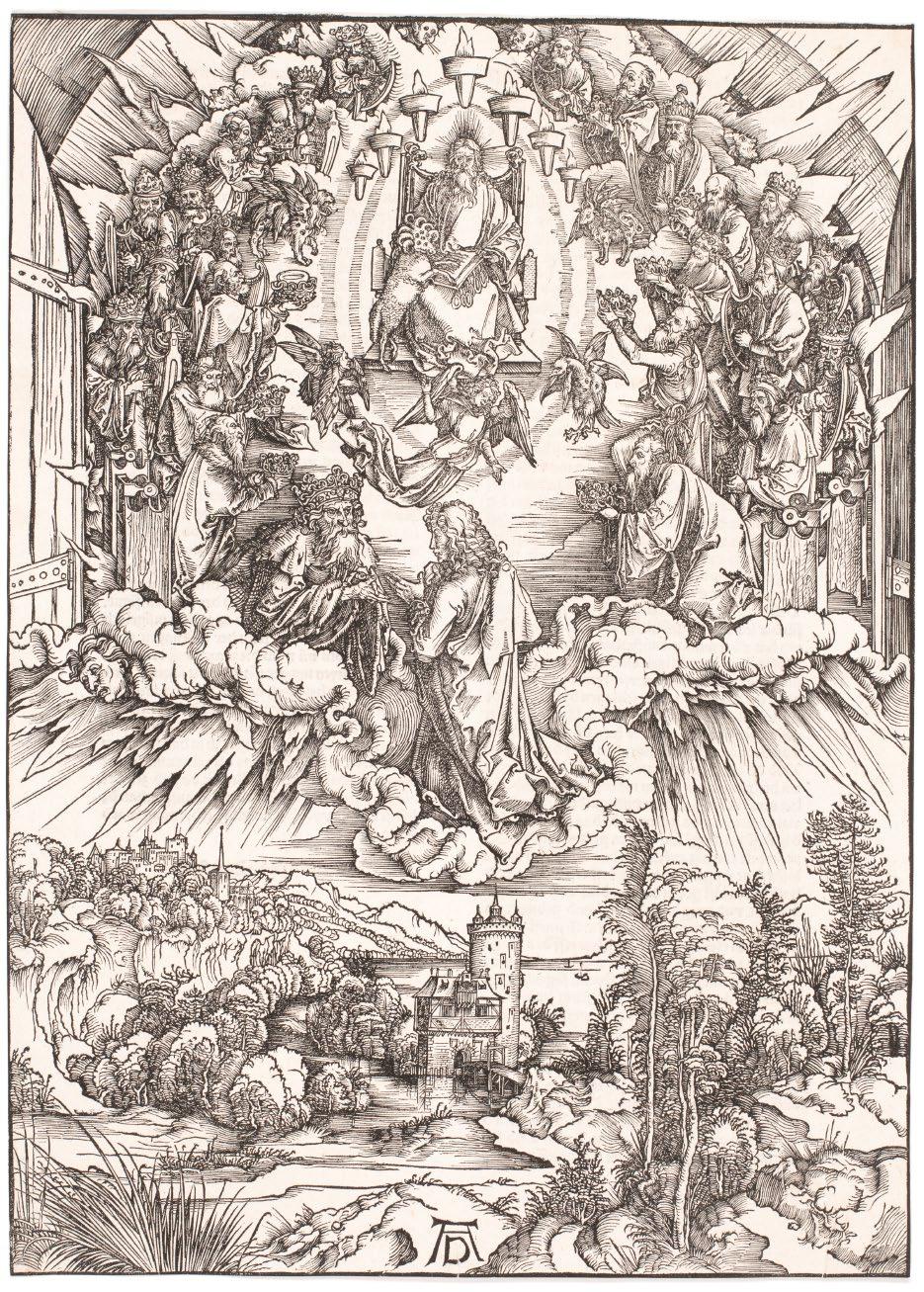
1498 German edition
‘St. John Before God and the Elders’ (394 x 283 mm):
with text verso.
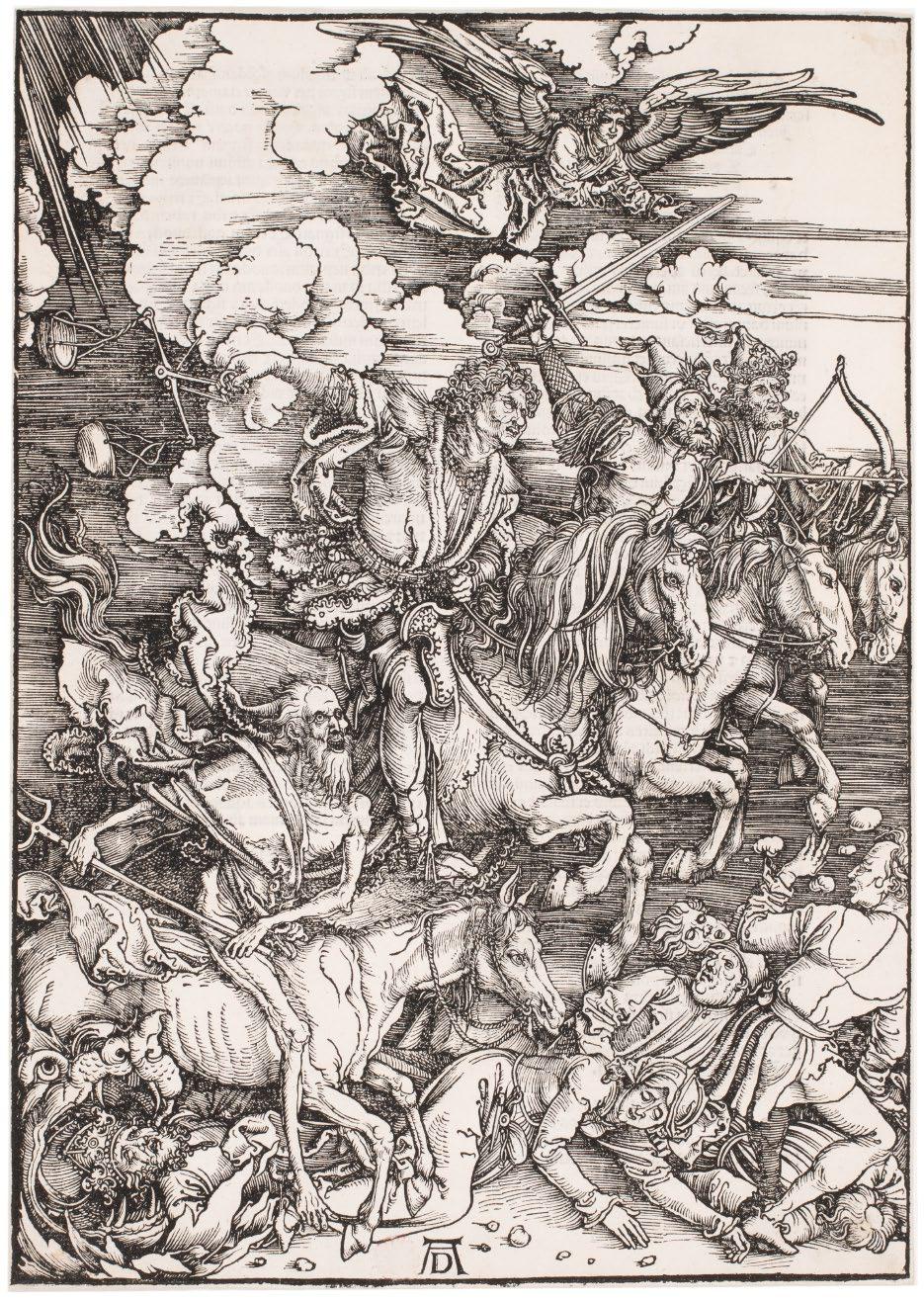
(395
280 mm): 1511 Latin edition with text verso.
‘The Four Horsemen’
x
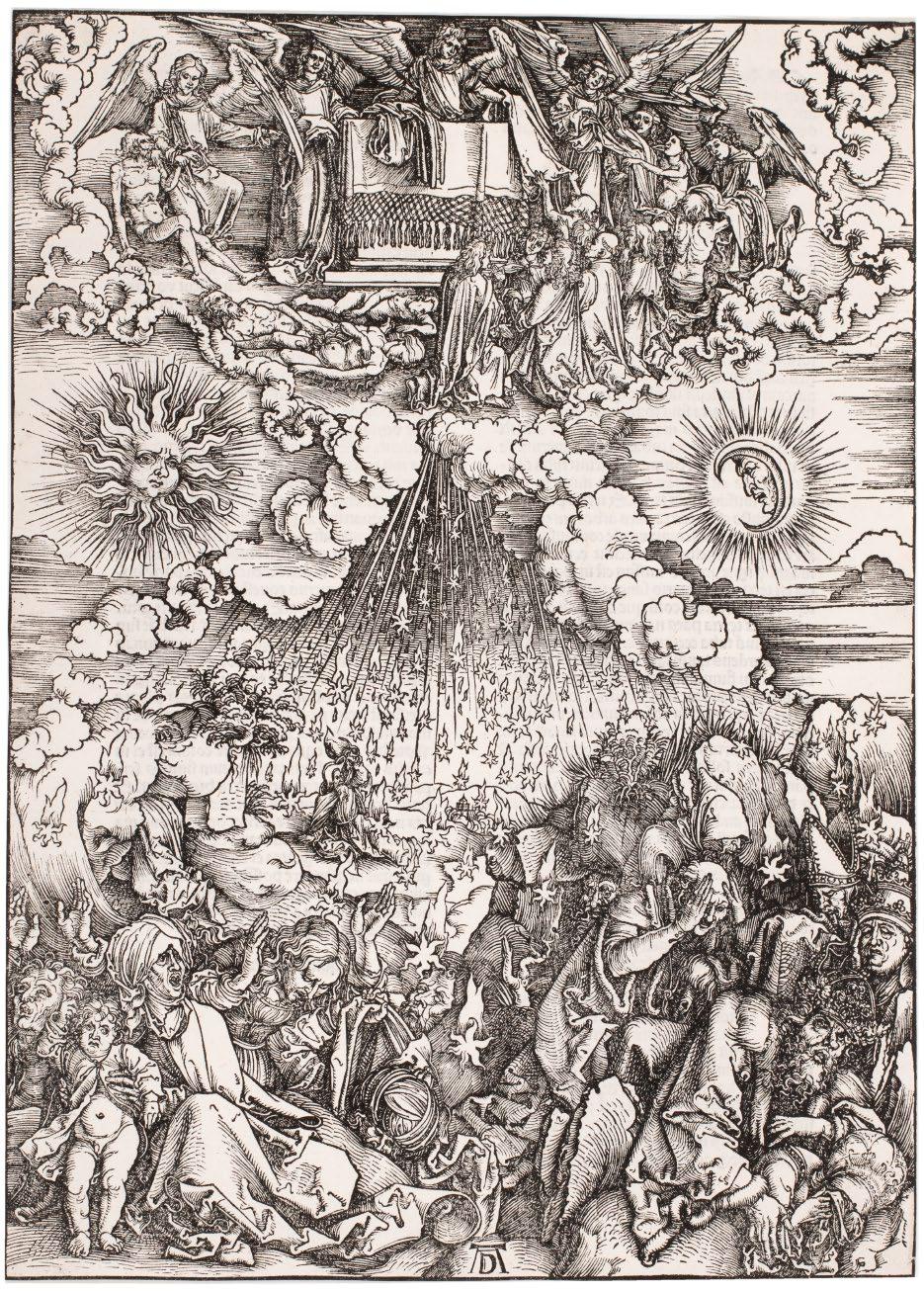
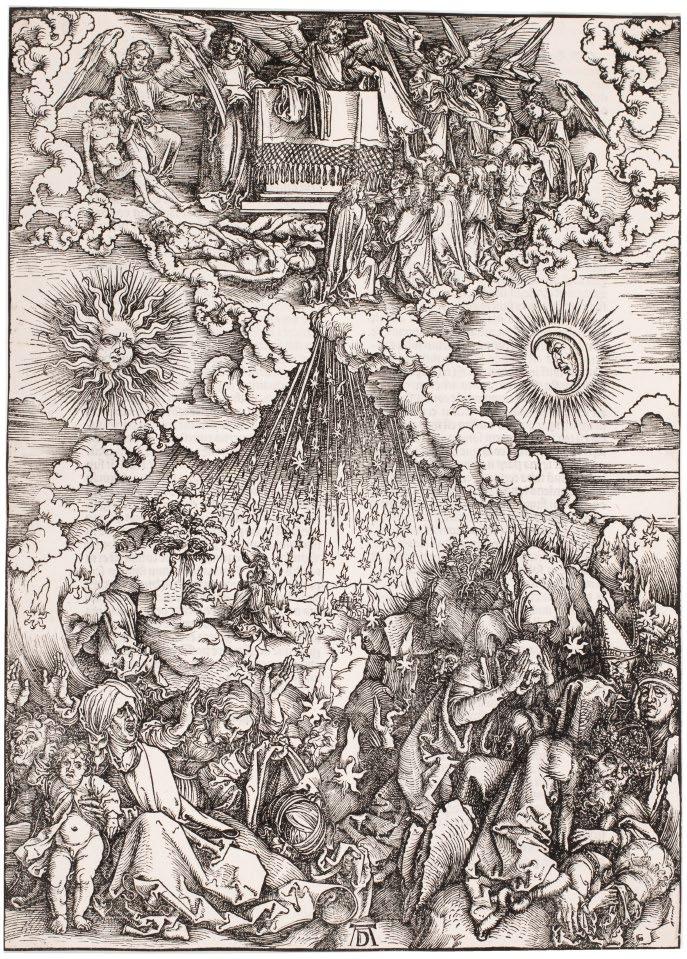
‘The Opening of the Fifth and Sixth Seals’ (392 x 281 mm): 1511 Latin edition with text verso.
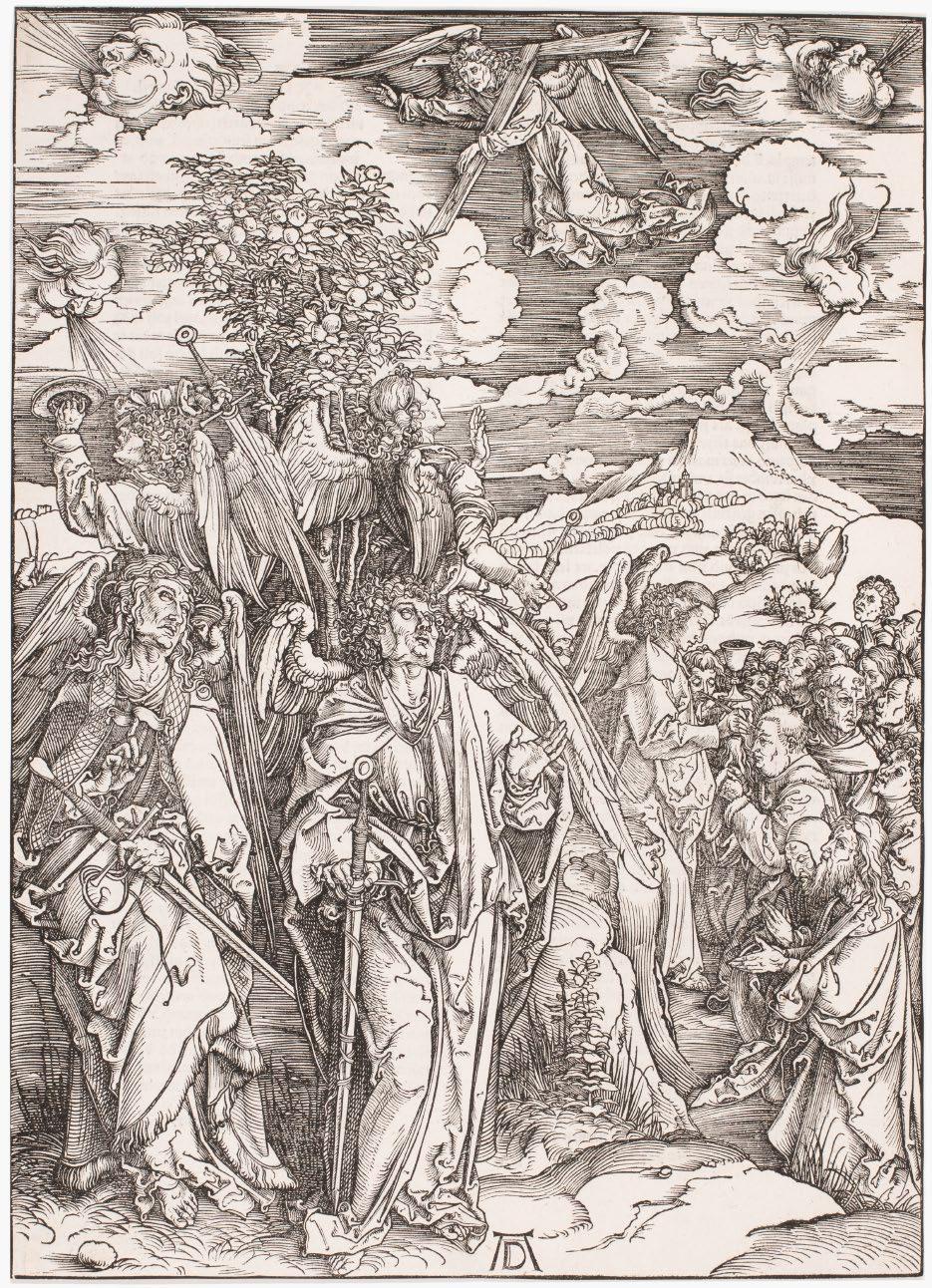
1498 German edition with text verso.
‘The Four Angels Holding the Winds’ (395 x 284 mm):
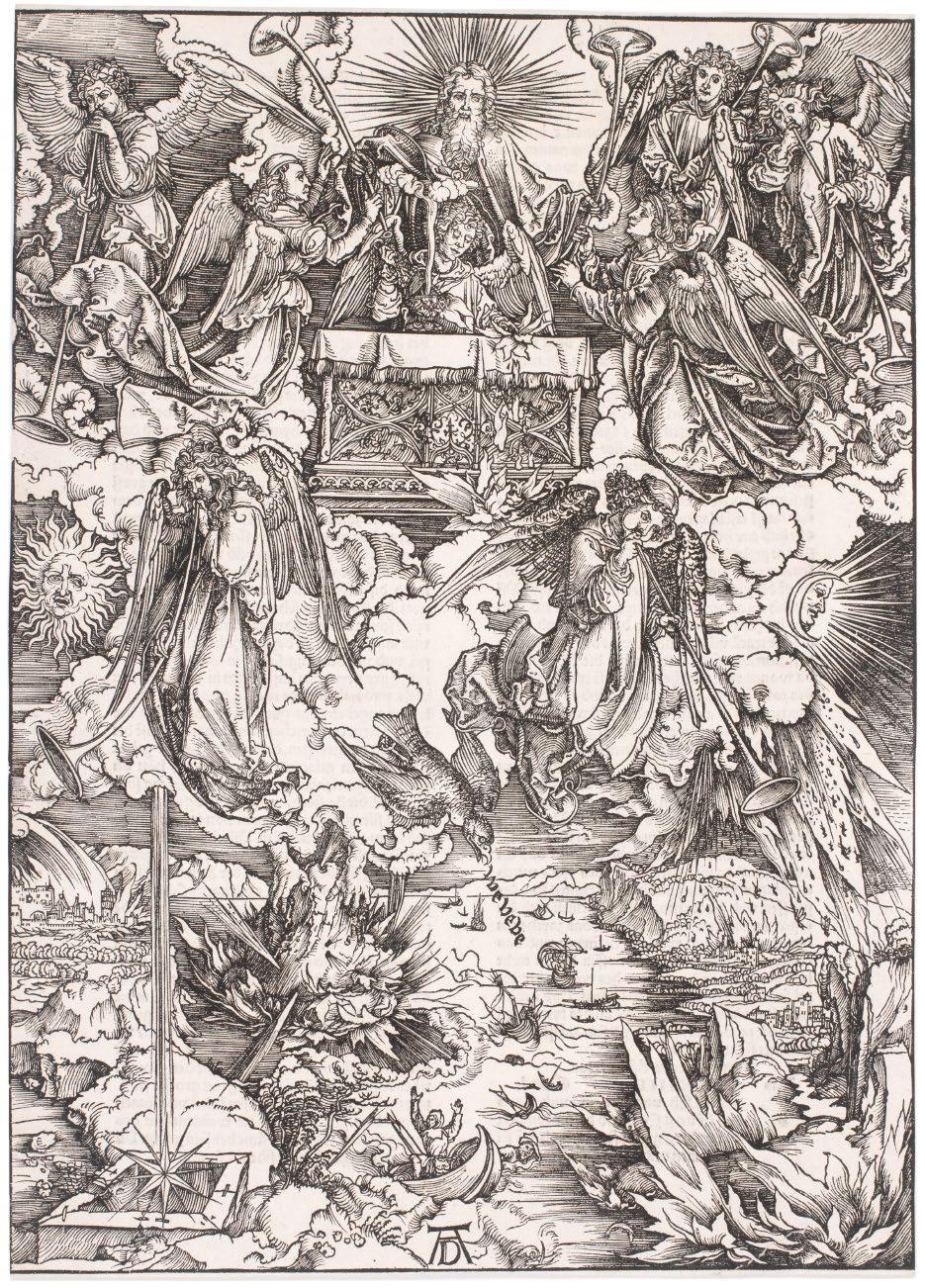
‘The
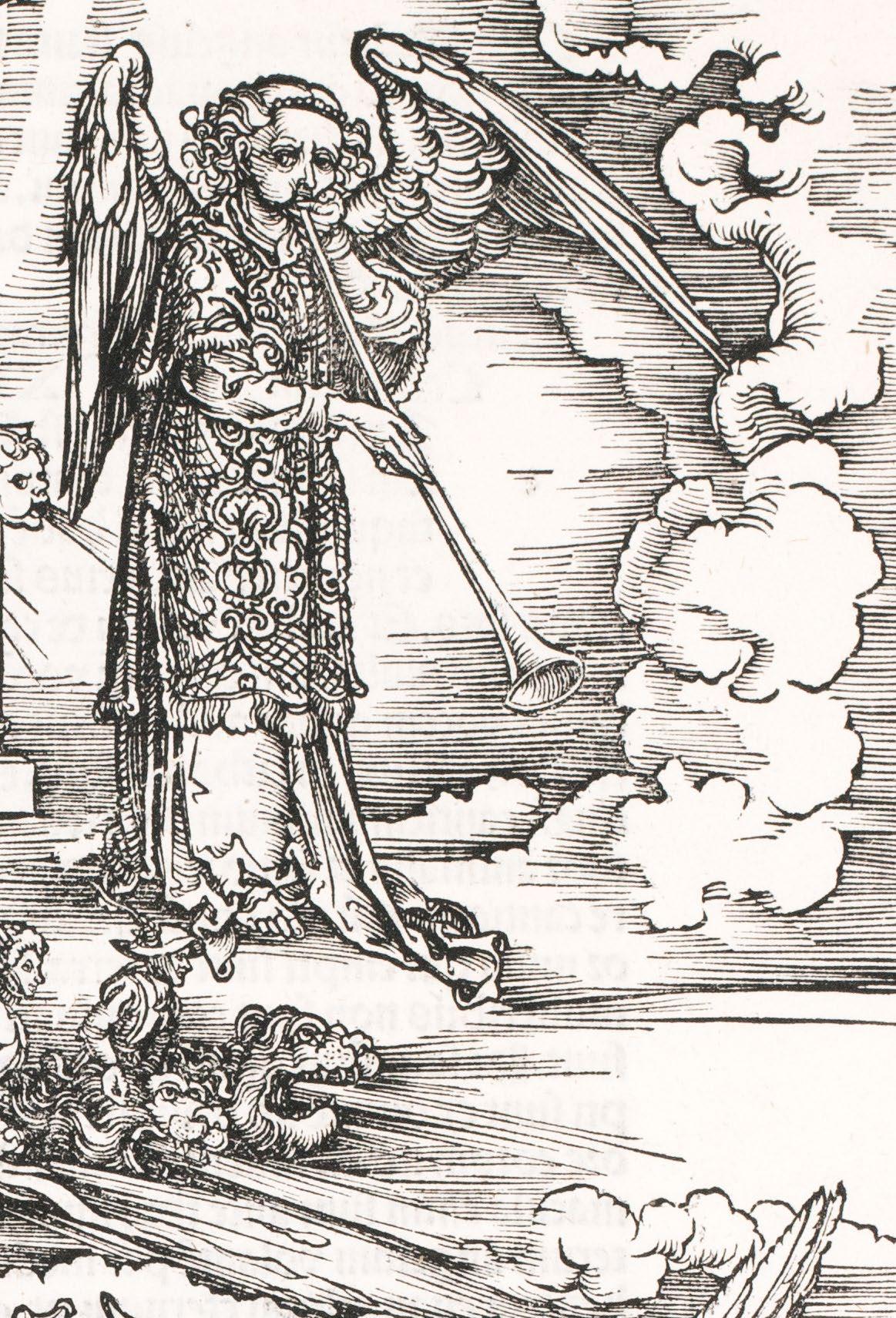
Angels with the Trumpets’ (393 x 283 mm): 1498 German edition with text verso.
Seven
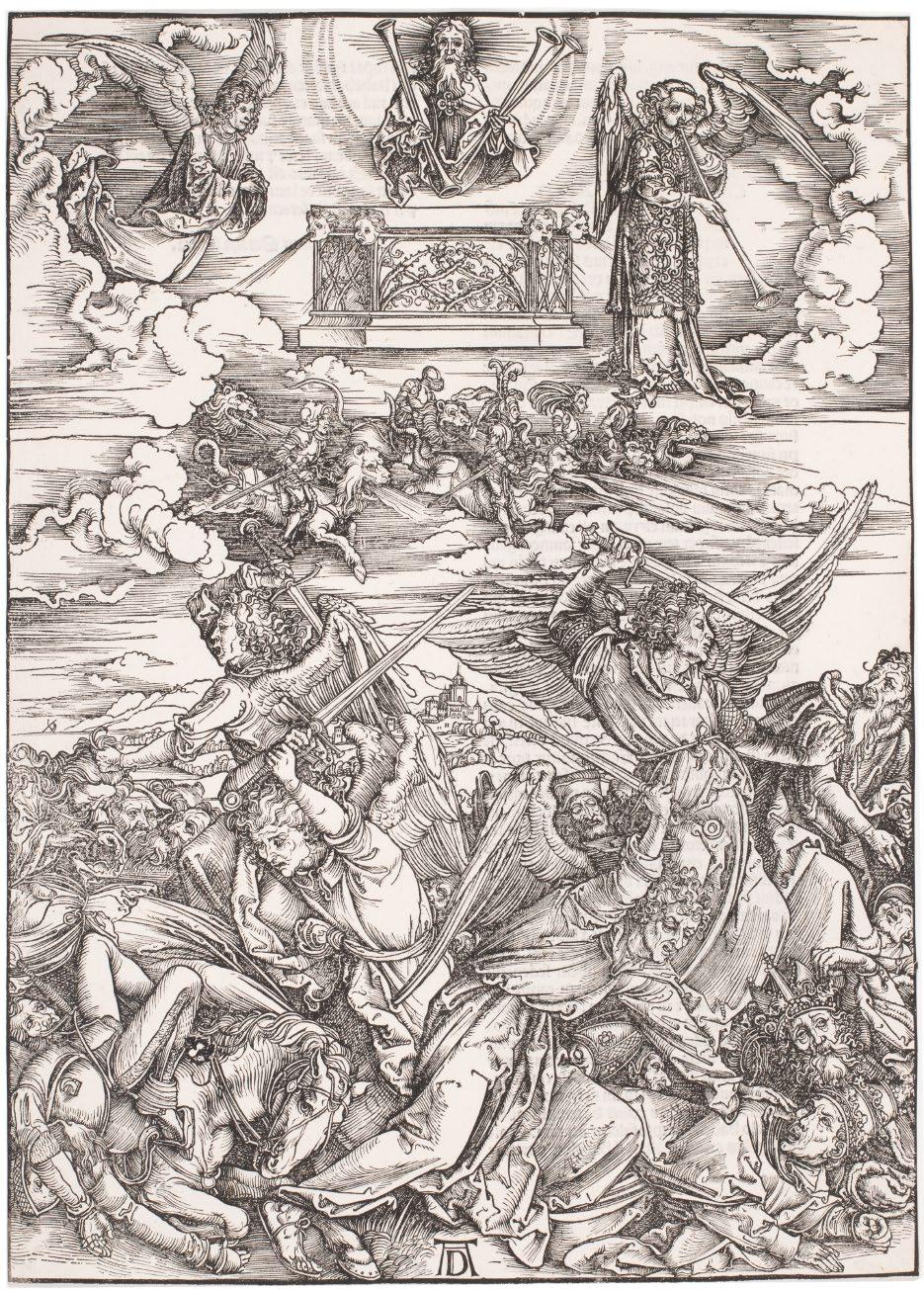
‘The Four Avenging Angels’ (394 x 282 mm): 1511 Latin edition with text verso.
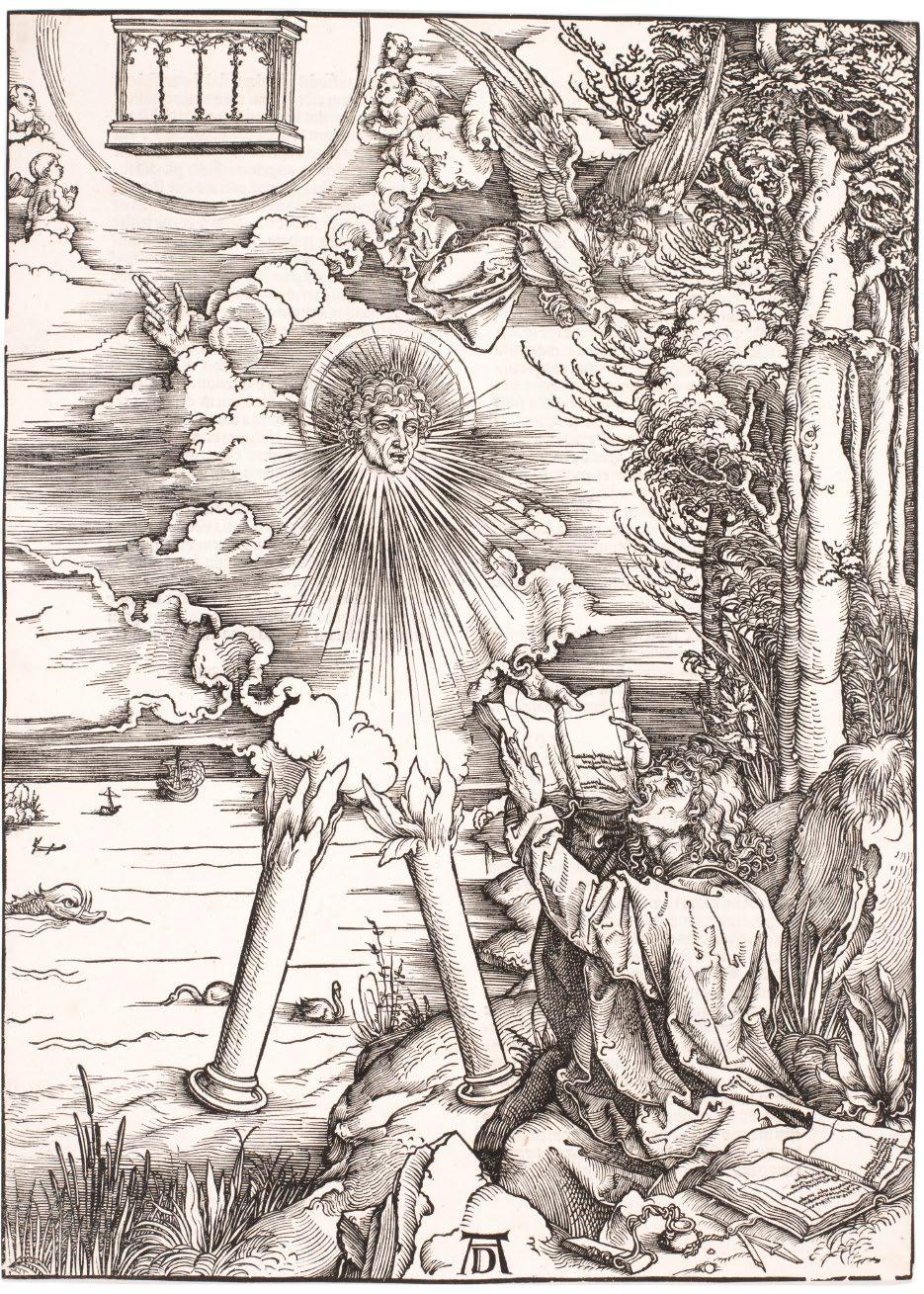
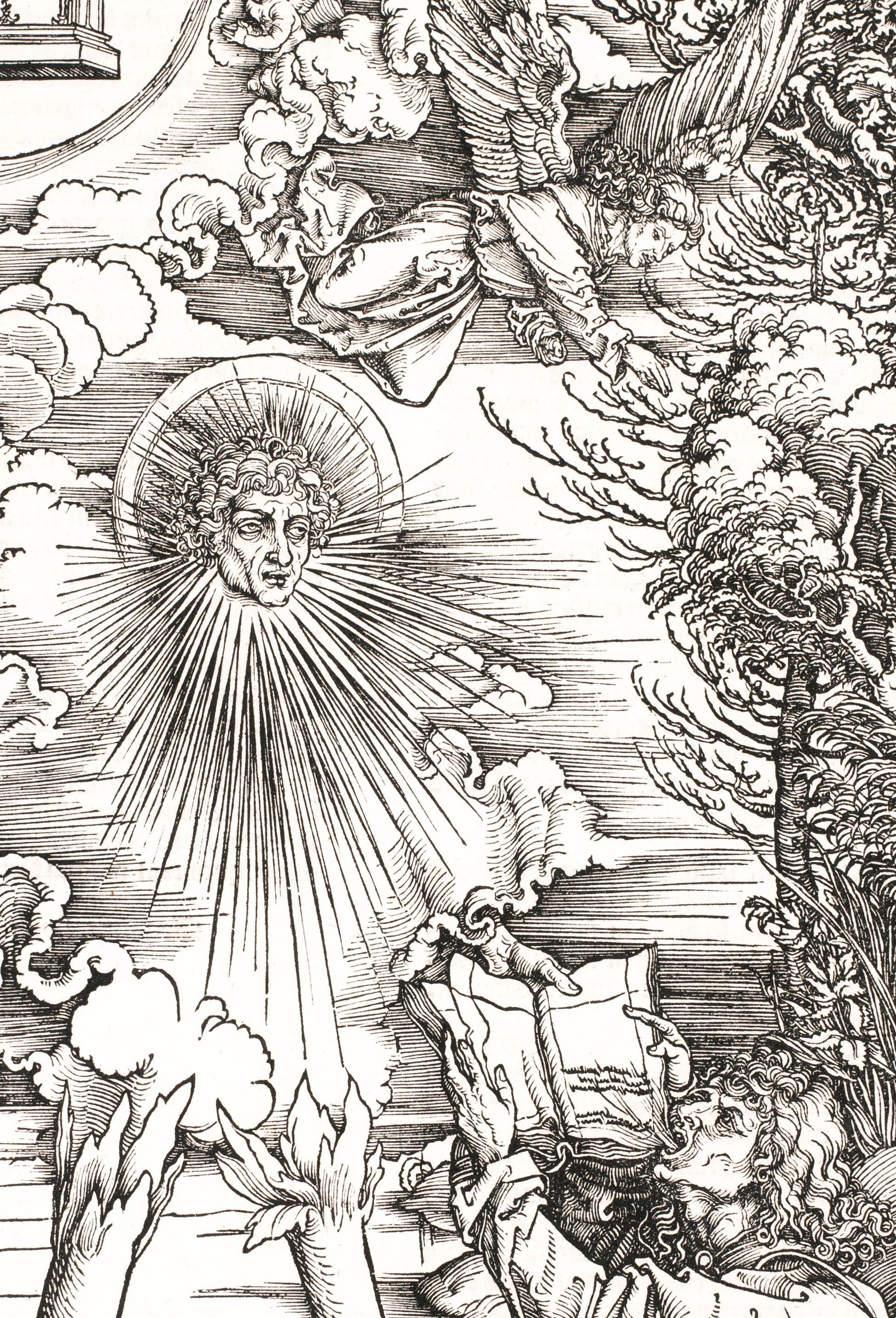
‘St. John Devouring the Book’ (393 x 283 mm): 1511 Latin edition with text verso.
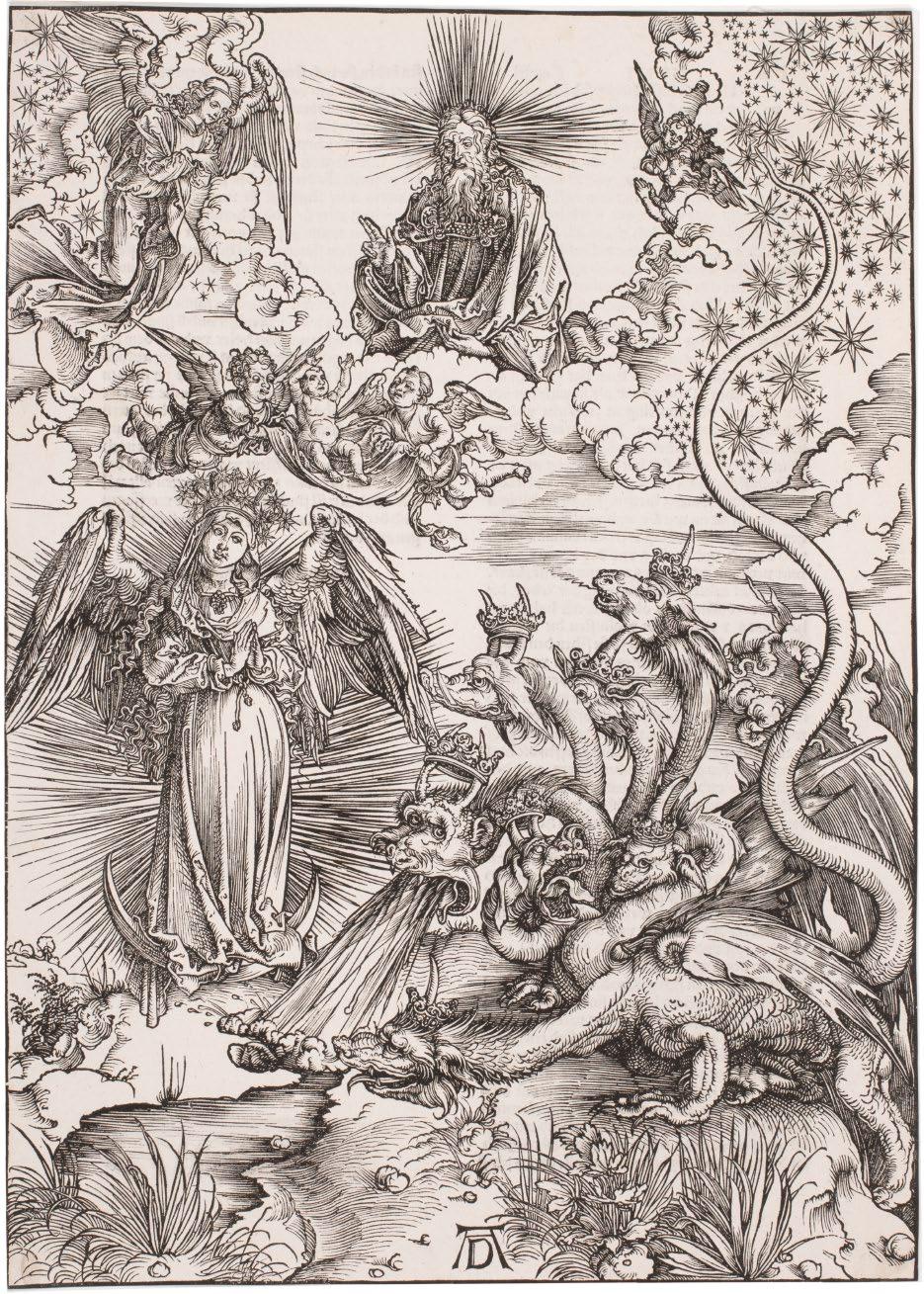
‘The Apocalyptic Woman’ (394 x 283 mm): 1498 German edition with text verso.
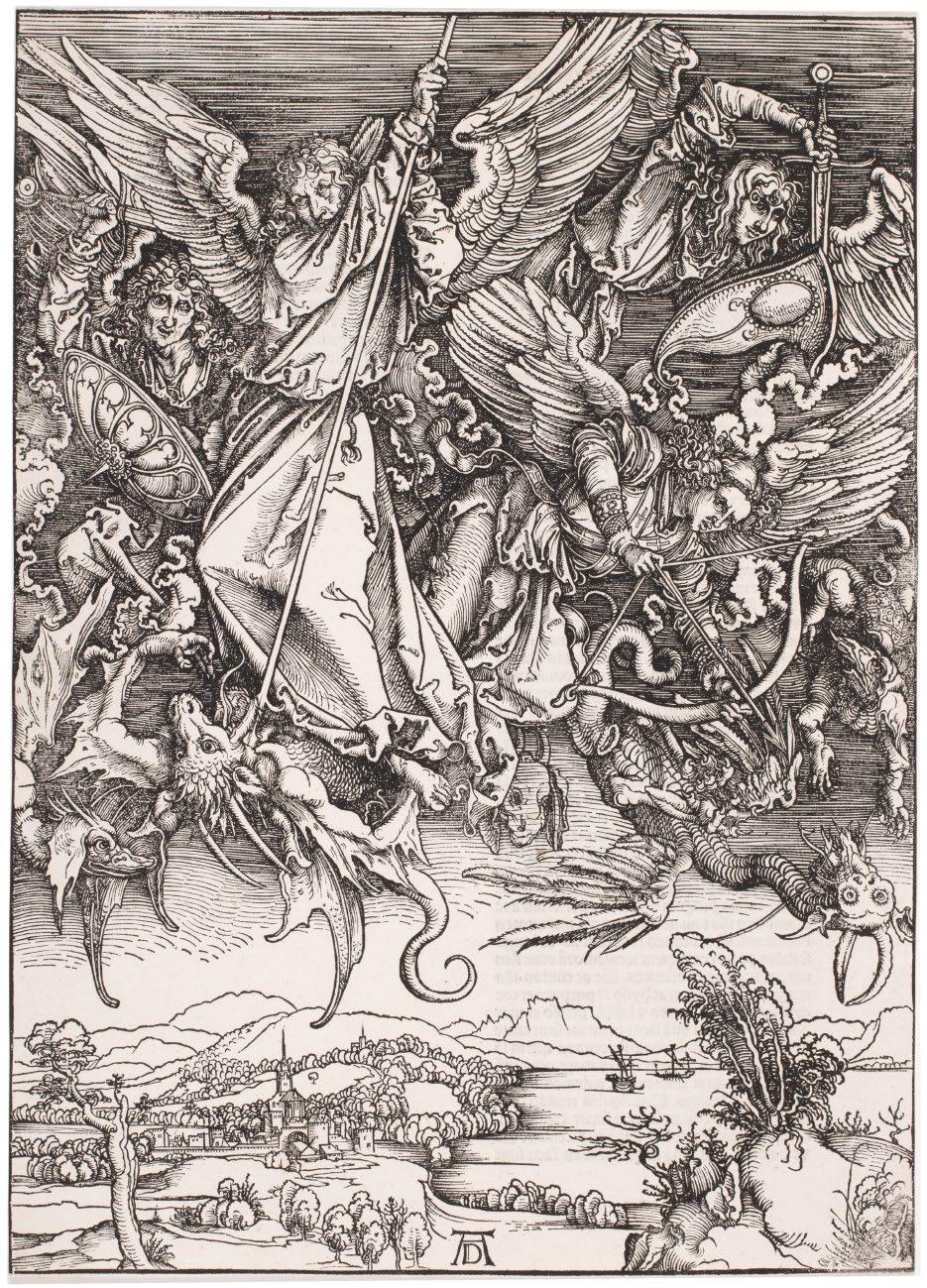
‘St. Michael Fighting the Dragon’ (394 x 282 mm): 1511 Latin edition with text verso.
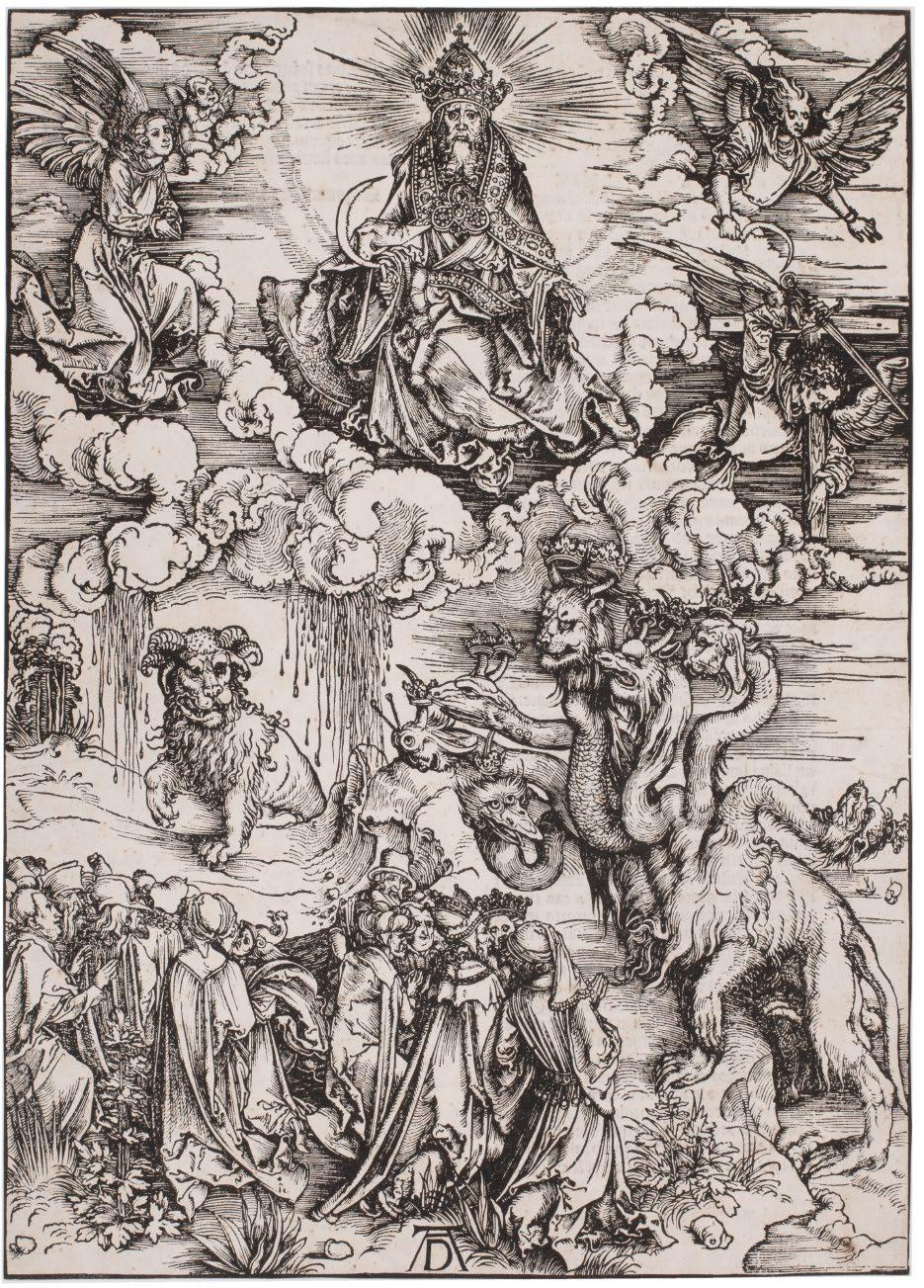
‘The Beast with Two Horns Like a Lamb’ (392 x 280 mm): 1511 Latin edition with text verso.
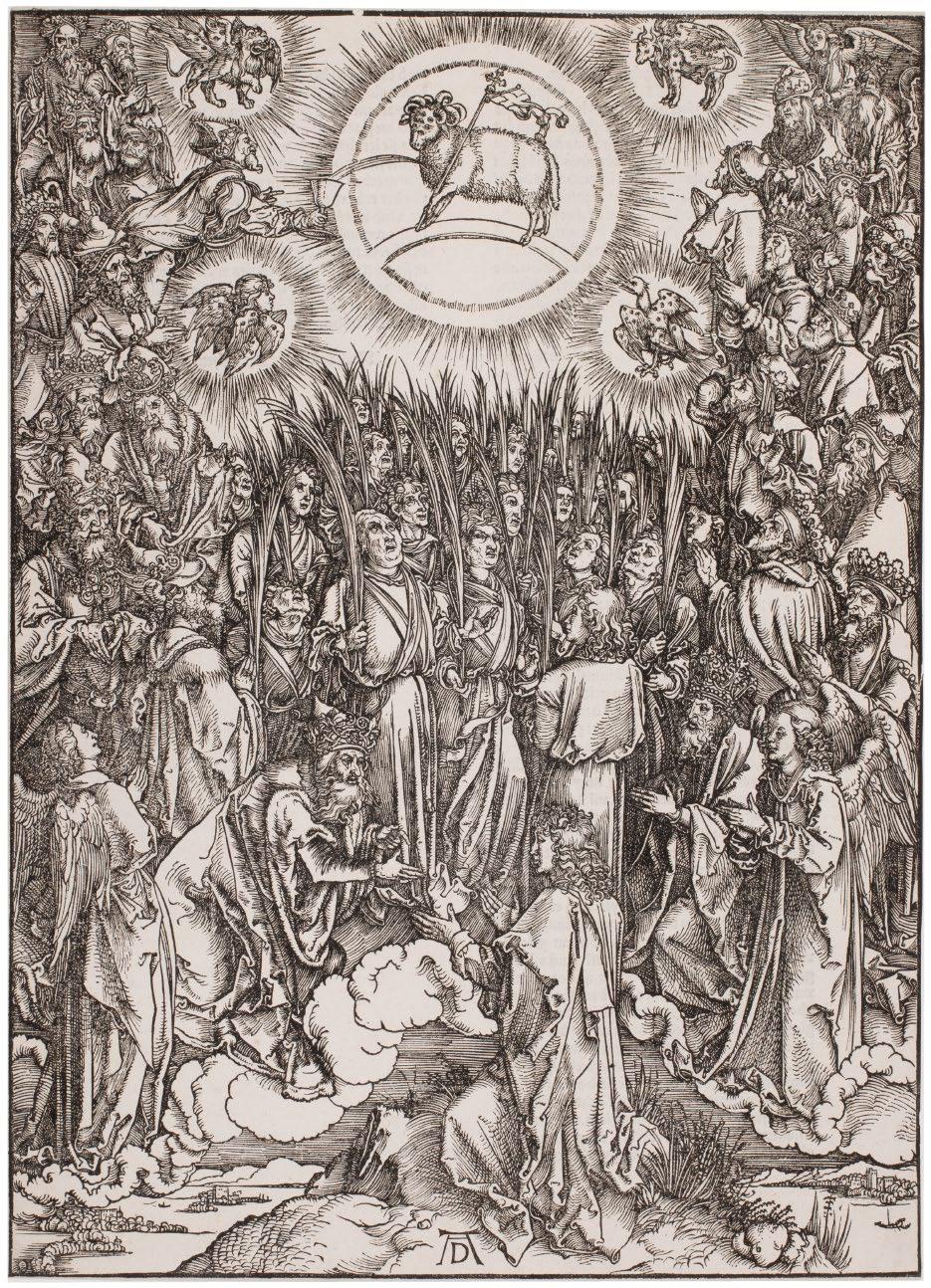
‘The Adoration of the Lamb’ (396 x 285 mm): 1498 German edition with text verso.
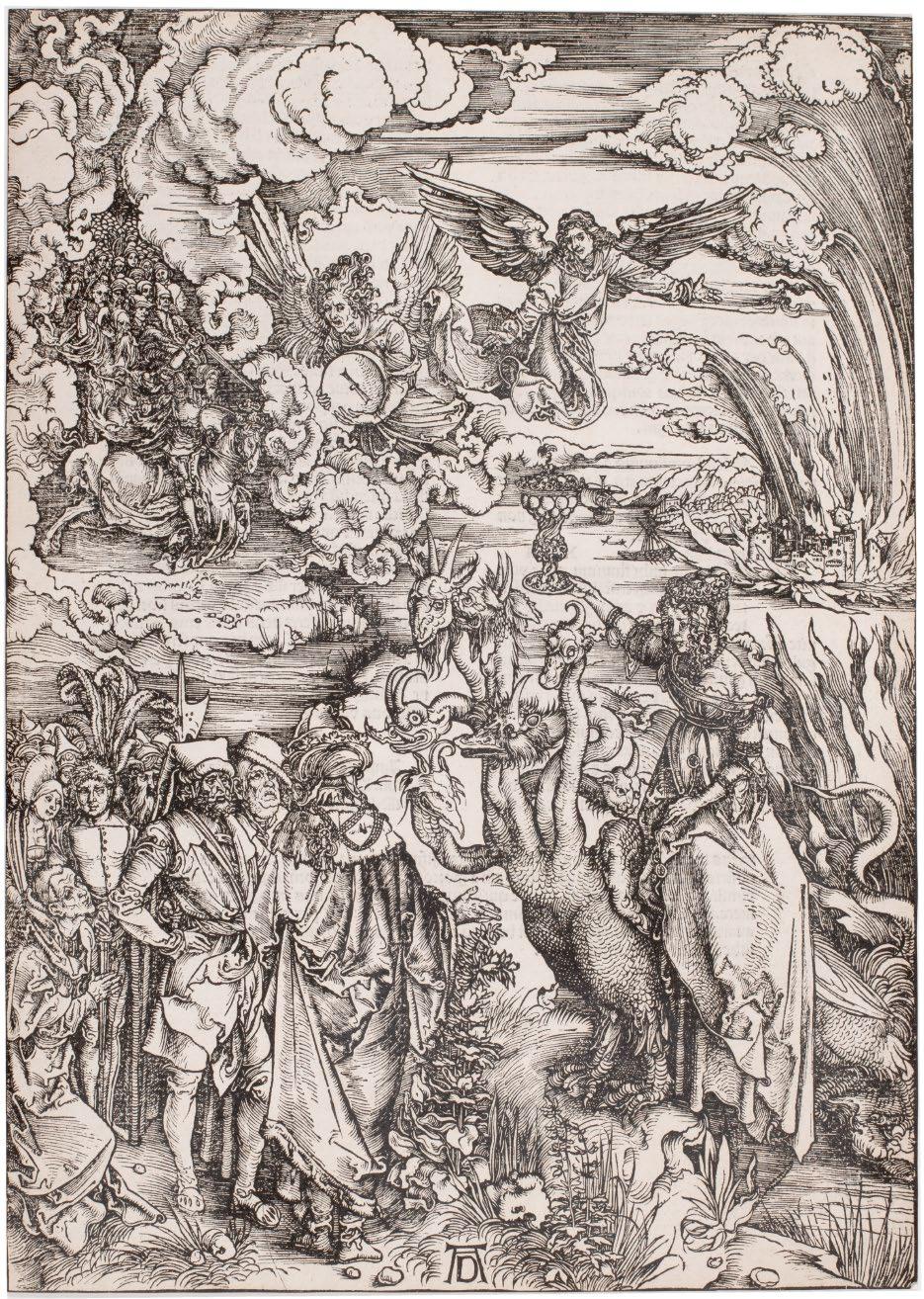
‘The Babylonian Whore’ (388 x276 mm): 1511 Latin edition with text verso.
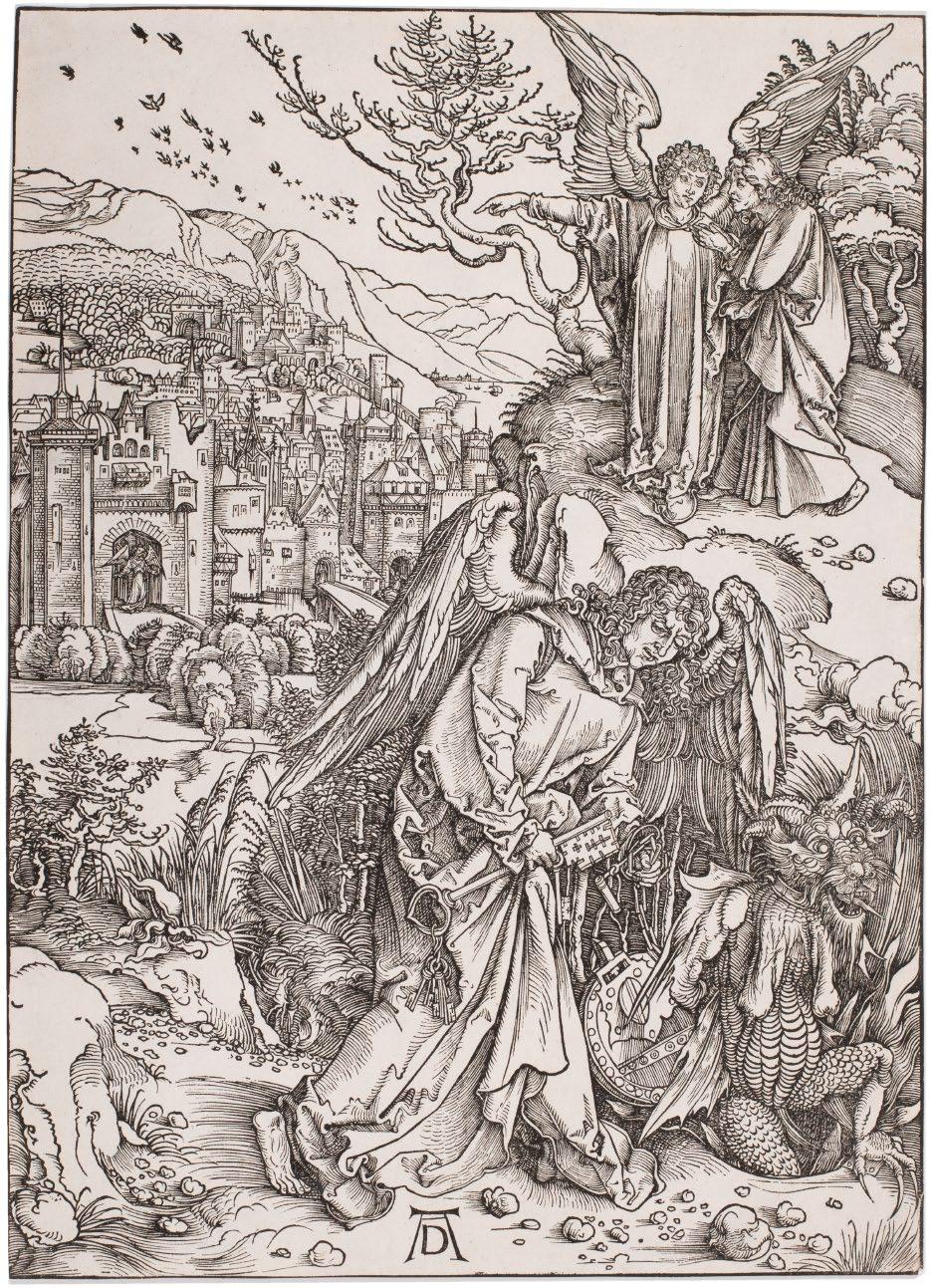
‘The Angel with the Key to the Bottomless Pit’ (393 x 283 mm): likely 1511 Latin edition.
‘The Virgin Appearing to St. John’ (370 x 246 mm): 1511 Latin edition with text verso, the sheet trimmed and with two diagonal folds at lower left, some slight foxing.
‘The Martyrdom of St. John’ (386 x 281 mm): c.1496 / 1497, proof before text on laid paper with Meder’s ‘Large Imperial Orb’ watermark (M. 53), horizontal drying crease visible verso, some small thinner spots, from the collection of Freiherr von Lanna (Lugt 2773).
‘The Vison of the Seven Candlesticks’ (392 x 280 mm): 1511 Latin edition with text verso.
‘St. John Before God and the Elders’ (394 x 283 mm): 1498 German edition with text verso, two small printer’s creases at lower right.
‘The Four Horsemen’ (395 x 280 mm): 1511 Latin edition with text verso, some small spots at lower left and upper right, effaced collector’s stamp in red (?) at left of monogram.
‘The Opening of the Fifth and Sixth Seals’ (392 x 281 mm): 1511 Latin edition with text verso, Meder’s ‘Flower with a triangle’ watermark (M. 123).
‘The Four Angels Holding the Winds’ (395 x 284 mm): 1498 German edition with text verso.
‘The Seven Angels with the Trumpets’ (393 x 283 mm): 1498 German edition with text verso, small repaired tear at lower right, two or three small repaired nicks to left-hand sheet edge.
‘The Four Avenging Angels’ (394 x 282 mm): 1511 Latin edition with text verso, Meder’s ‘Flower with a triangle’ watermark (M. 127).
‘St. John Devouring the Book’ (393 x 283 mm): 1511 Latin edition with text verso.
‘The Apocalyptic Woman’ (394 x 283 mm): 1498 German edition with text verso, mild softening to corners possibly from old mounting.
‘St. Michael Fighting the Dragon’ (394 x 282 mm): 1511 Latin edition with text verso, small printing flaw within foliage at lower right.
‘The Beast with Two Horns Like a Lamb’ (392 x 280 mm): 1511 Latin edition with text verso, Meder’s ‘Flower with a triangle’ watermark (M. 127), printer’s crease at lower right in necks of the beast.
‘The Adoration of the Lamb’ (396 x 285 mm): 1498 German edition with text verso, small thin area with pinhole.
‘The Babylonian Whore’ (388 x276 mm): 1511 Latin edition with text verso, Meder’s ‘Tower with Crown and Flower’ watermark (M. 259).
‘The Angel with the Key to the Bottomless Pit’ (393 x 283 mm): likely 1511 Latin edition.
[Meder 163 - 178; Bartsch 60 - 75; see Erwin Panofsky’s ‘The Life and Art of Albrecht Dürer’, pp. 51 - 59 (third edition), Princeton, 1955].
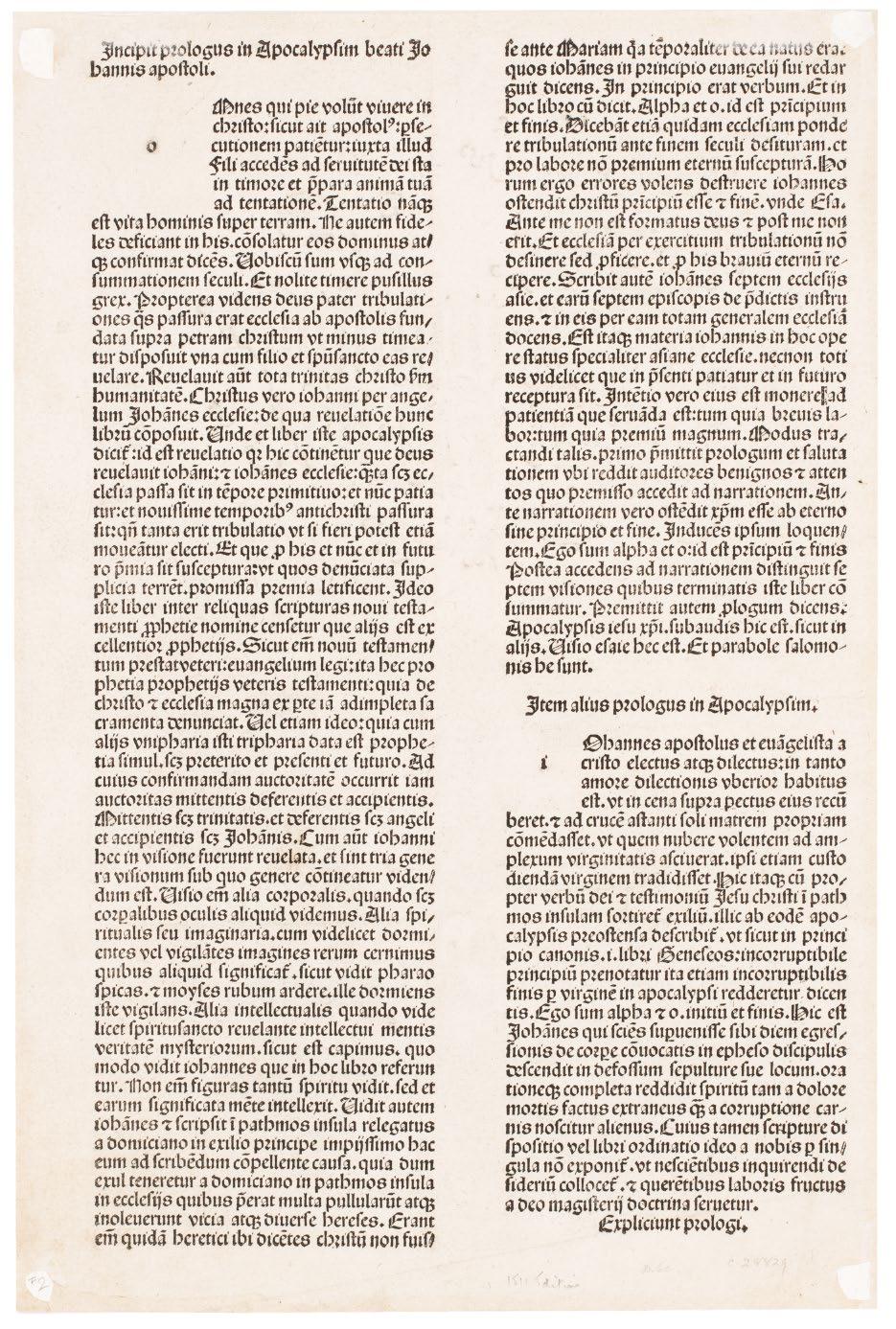
Text verso to Title.