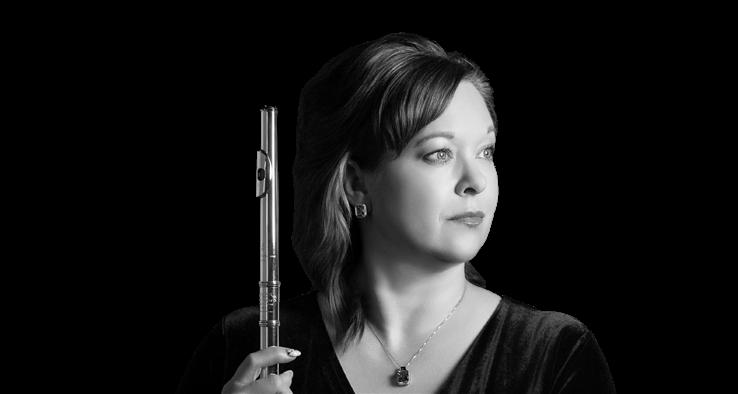
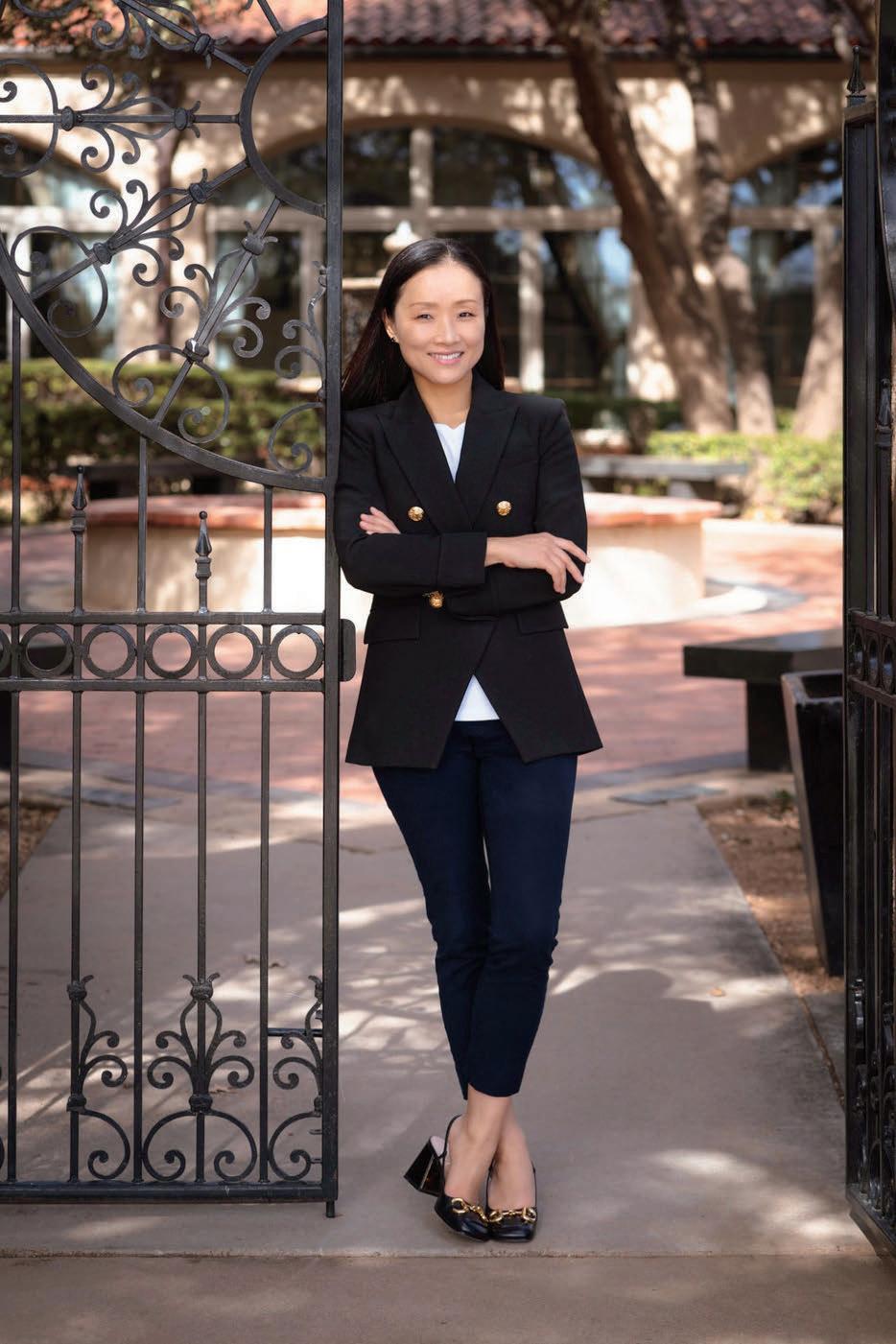
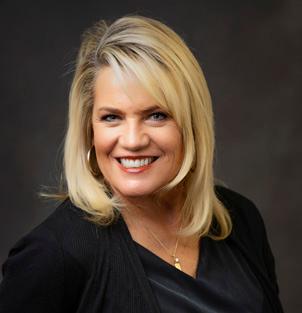
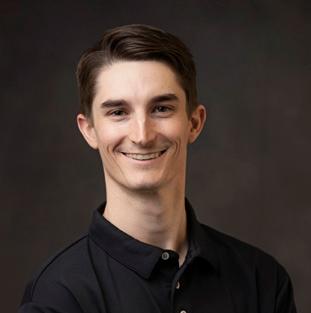
Kim Hudson has served as the Principal Flute of the Lubbock Symphony since 2009. Kim is an active soloist and teacher who maintains a flute studio of AllState and All-Region participants. She will be featured as a guest soloist next season with the Lubbock Symphony Chamber Orchestra. Kim is a graduate of University of Houston (B.M.) and Texas Tech University (M.M.). At Texas Tech School of Music, she studied with Dr. Lisa Garner Santa.
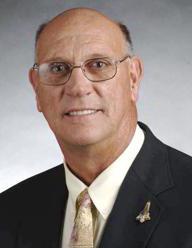
Get to know Barent McCool, LSO Principal Flute Endowment Donor
Question 1: What role has music played in your life over the years?
The interest in music occurred rather late in my life compared to most people. It first occurred in 1969 when my oldest son Willie, then 8 years old, came home from school (maybe 3 or 4th grade) asking to be allowed to join the developing school music program. He chose to learn the violin. I took him to a local gentleman who specialized in children’s instruments. There he took down a child size violin and played the violin solo to Scheherazade!! That was my first introduction to “Real music”! I have been captured by Classical Music ever since. Willie’s little brother Shawn (my youngest son) learned to play the bassoon in high school.
Question 2: What drew you to endow and support the Lubbock Symphony’s Principal Flute endowed chair?
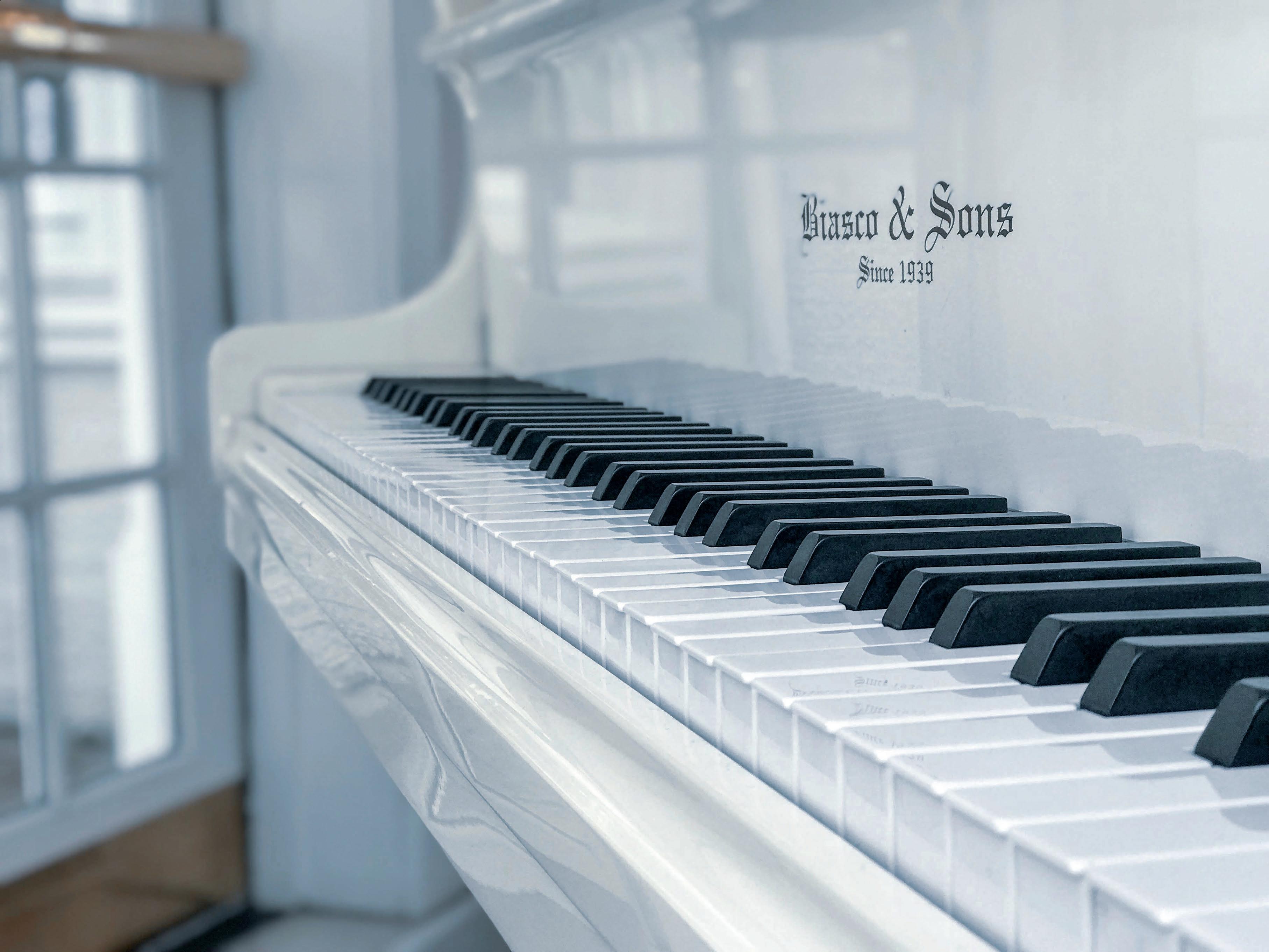
It is in memory of my son William (Willie) Cameron McCool who served our country as a Naval Officer and then as a NASA Astronaut. My late wife, Audrey, was very musically inclined and was involved in music programs through high school. When I came home from one of our Lubbock Symphony board meetings, where endowing a chair was discussed, Audrey and I talked about what a tribute it would be to Willie and the Crew of Columbia Space Shuttle if we could endow a chair in their memory. Because of Willie’s music lessons through violin, we had initially considered endowing a violin chair. We were a little late in making the commitment and the Concertmaster Endowment was already taken by the Jones-Saathoff Family. We then chose the first chair of the winds, the Principal Flute, as our choice. The rest is history!
Question 3: What does it mean to you to have a musician’s chair carry your name and dedication to the Crew of Columbia, STS-107?
What it means to the whole McCool family (surviving daughter and son plus 7 grandchildren and 9 great grandchildren) is that Willie and the Crew of Columbia will be remembered every time someone sits in the Buddy Holly Hall and reads the program while waiting for the Lubbock Symphony to begin. They will see the small footnote and remember what the Crew of Columbia gave to our country Lest we forget these American Heros.
My wife Audrey would have been truly proud of the Lubbock Symphony’s deep mission in our community. Thank you Lubbock Symphony!
A LETTER FROM THE PRESIDENT & CEO
Dear Lubbock Symphony Orchestra Patrons,
Welcome to our fifth and final Masterworks concert of the season. Thank you for joining us as we Celebrate America and 250 years this evening.
Many have asked why the 1812 Overture by Tchaikovsky? The tradition of tying Russian composer Tchaikovsky’s towering overture to America’s Independence Day celebration dates to 1974, when the Boston Pops, under Conductor Arthur Fiedler had the orchestra play the piece at the end of its annual Fourth of July concert. It is not linked to anything historical – it’s just because it’s spectacular and it has the cannons at the end. As we prepare for the 80th season, many might remember that Arthur Fiedler was the Guest Conductor of the Lubbock Symphony not once but twice in December 1960 and on April 15, 1975.
We also extend our sincere appreciation to Armstrong Plumbing, Air and Electric, Double T Smiles, and United Supermarkets for this evening’s concert. Their support helps us create special opportunities to engage our patrons in unique ways throughout the concert experience.
Additionally, a sincere thank you for the continued investment of our partners: The CH Foundation, the Helen Jones Foundation, Texas Commission on the Arts, Civic Lubbock, Inc., and the Lubbock Symphony Guild. Their generous support sustains our Masterworks series and helps ensure that world-class symphonic music continues to thrive in West Texas.
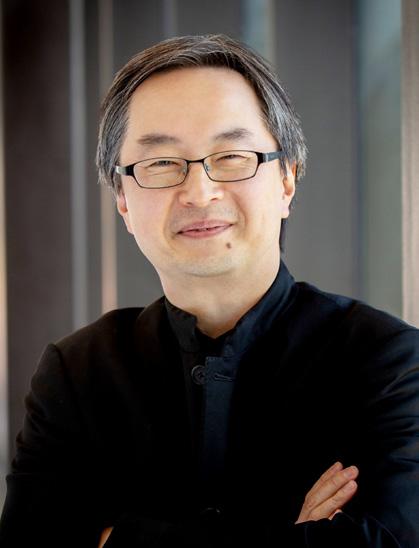
I would like to thank our musicians, Maestro David Cho, our dedicated Lubbock Symphony and Lubbock Youth Orchestras staff, and our Board of Directors for their commitment they continue to bring to every performance. Finally, we look forward to seeing you on Thursday, September 3rd for our 80th Season and our guest artist, Cliburn Laureate pianist, Clayton Stephenson. Have a great summer!
Sincerely,
Heather Hocker President & CEO hhocker@LubbockSymphony.org
HEARING
A LETTER FROM THE BOARD CHAIR
Dear Symphony Friends:
Good evening and welcome to tonight’s concert Celebrate America! As the United States approaches its 250th anniversary, orchestras and communities across the country are considering how best to acknowledge the milestone through music. These commemorations offer an opportunity not only to celebrate the nation’s history, but also to reflect on its evolving ideals and shared experiences. I believe this evening’s selection of music does just that.
I want to take this opportunity to express my sincere appreciation to our sponsors, Armstrong Plumbing, Air and Electric, Double T Smiles, and United Supermarkets, for their support of this evening’s concert. The Lubbock Symphony Orchestra is a vital part of the community and could not exist without the generous support we receive from you, our many patrons and corporate sponsors. As we conclude this season, a special thank you to the Lubbock Symphony Guild, this year’s Debutantes and Beaux, and their parents. We are grateful for the continued support of the LSG.
This evening would not be possible without the musical expertise of Maestro David Cho and the exceptional virtuosity of the LSO musicians. Thank you for sharing your talents with all of us on the South Plains. We are fortunate to live in a community which has set a high standard of excellence with our musicians.
Finally, we are excited to celebrate our 80th season beginning on Thursday, September 3rd here at The Buddy Holly Hall of Performing Arts & Sciences. Be sure and secure your tickets, today and join us as we celebrate this special season.
Fondly,
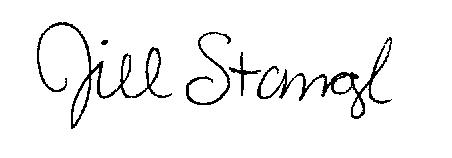
Jill Stangl Chair LSO Board of Directors
J U S T L I K E M U S I C ,
Sills Seals the Deal!
A LETTER FROM THE MUSIC DIRECTOR
Dear Friends of the Lubbock Symphony,
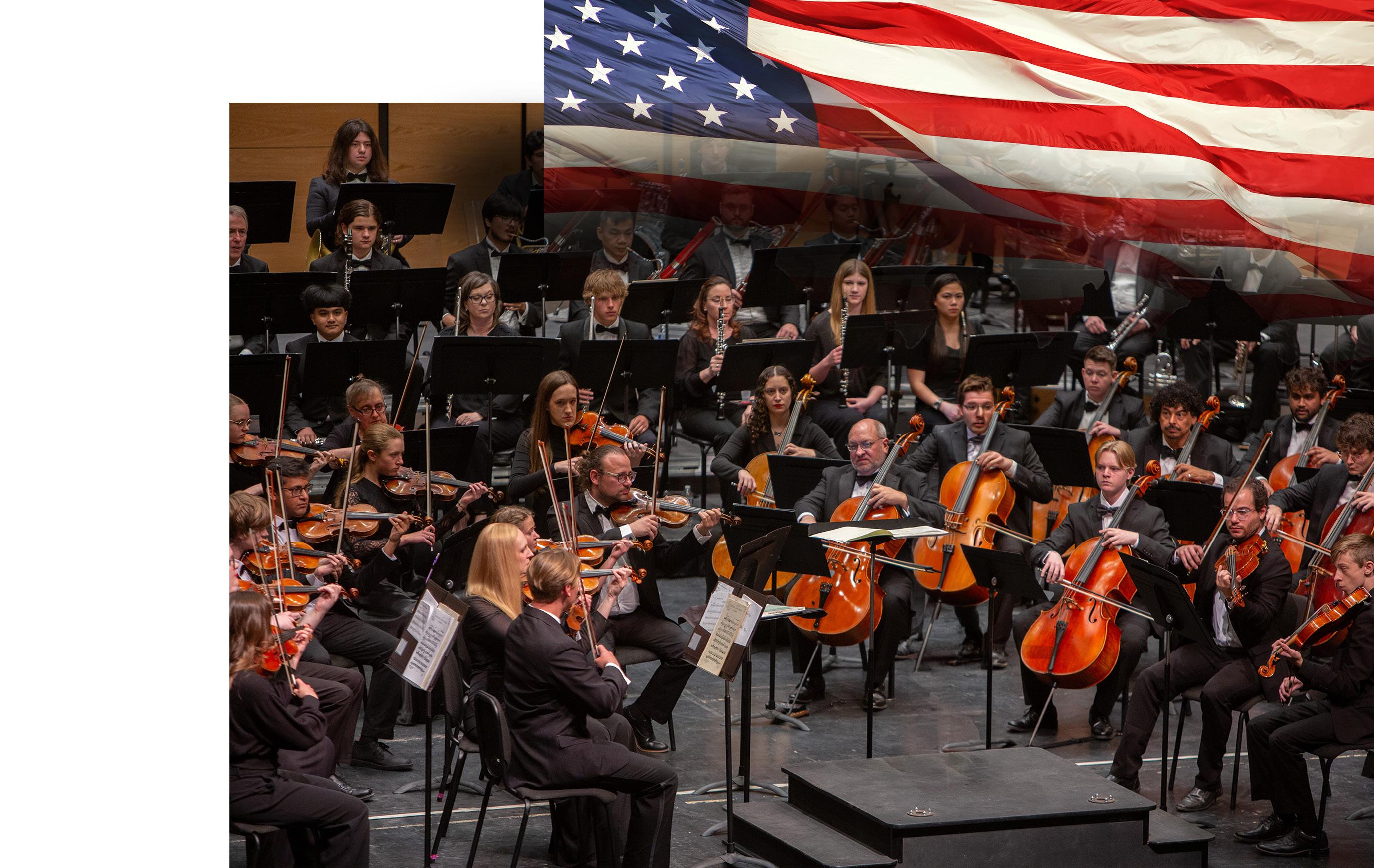
Celebrating the 250th birthday of our United States of America, we have lined up an exciting, reminiscent and meaningful pool of great symphonic classics for you tonight!
Commencing with a tribute to all things American, verve and splendor, we feature folk melodies such as “Johnny Comes Marching Home”. We visit briefly with Charles Ives and his American Original sound.
Scott Joplin’s “The Entertainer” and George Gershwin’s “An American in Paris” will round up the first half. Those Parisian taxi horns traveled far to be featured in Lubbock tonight!
The second half of the program begins with the music of Aaron Copland depicting the vast landscapes of America and fun hoe-down that resonates with West Texas. Copland will be followed by the beloved works by Tchaikovsky, Lowden and Sousa. With the victorious chimes, thunderous cannon shots and piccolo soli, followed by recognitions of our veterans and a singalong of “Stars and Stripes Forever”, this evening will be a memorable occasion to celebrate a milestone.
We are truly grateful to every single audience members and the most generous concert sponsors; Armstrong Plumbing, Air and Electric, Double T Smiles, and United Supermarkets.
Sincerely,
David Cho
David Cho Music Director Lubbock Symphony Orchestra
LUBBOCK SYMPHONY ORCHESTRA
CONDUCTOR
David Cho
Conductor
The CH Foundation Endowed
Conductor’s Podium
VIOLIN I
Annie Chalex Boyle
Concertmaster
Jones-Saathoff Family
Endowed Chair
Linda Lin
Associate Concertmaster
Diekemper Family Foundation
Endowed Chair
Josenir Alves Cerqueira Jr.
Assistant Concertmaster
Adan Flores
Shawn Earthman
Radman Rasti
TTU School of Music
Endowed Performer
Guillermo Uribe Laudino
Sean Kyhm
Malik Winston
VIOLIN II
Evgeny Zvonnikov
Principal
Justice Phil and Carla Johnson
Endowed Chair
Saikat Karmakar
Assistant Principal
Cassidy Forehand
Kea Beasley
James Ellis
Shirley Wigley
Christine Tao
Martha Perez
Darcy Radcliffe
Savannah Sharp
VIOLA
Bruno Silva
Principal
Mary M. Epps and Ralph E.
Wallingford Endowed Chair
Jordan Stubblefield
Sharon Mirll
Libby Herring
Viola, cont.
Camellia Asadi
Vivian McDermott
Jasmin Caldera
CELLO
Michael Newton
Principal
Mary Francis Carter
Endowed Chair
Danny Mar
Alejos Anaya
Madeline Garcia
Justin Barnwell
Kelly Kuhn
Jeremy Couture
Caroline Silva
DOUBLE BASS
Hannah MacGillivray
Principal
Eugene and Covar Dabezies
Endowed Chair
Stuart Anderson
Christopher Arcy
Gregory Faught
Lucas Rocha
Fernando Almeida
FLUTE/PICCOLO
Kim Hudson
Principal
Crew of Columbia, STS-107
Endowed Chair
Eric Leise
Associate Principal
Spencer Hartman
OBOE
Kathleen Bell
Principal
Lubbock Symphony Guild
Endowed Chair
Angeli Marie Nicolas
Jordan Hastings
ENGLISH HORN
Jordan Hastings
CLARINET
David Shea
Principal
Christine Polvado and John
Stockdale Endowed Chair
McKenna Swearingen
Aaron Maczak
BASS CLARINET
Aaron Maczak
BASSOON
Adam Drake Principal
Nancy and Tom Neal
Endowed Chair
Ian Resurreccion
SAXOPHONE
David Dees Principal
Christine Ewald
Jay Pettit
HORN
Quentin Fisher Principal
Anthony and Helen Brittin
Endowed Chair
Esteban Chavez
Clark Hutchinson
Caleb Dent
Joshua Graves
TRUMPET
Gary Hudson Principal
Stacey and Robert Kollman
Family Endowed Chair
Joe Vandiver
William Takacs
Scott Strovas
TROMBONE
Benjamin Hahn
Principal
Larry and Lucy Landusky
Endowed Chair
Bruce Keeling
BASS TROMBONE
Darin Cash
Tim and Mary Jane Sampson
Endowed Chair
TUBA
Arturo Galvan Principal
Diekemper Family Foundation Endowed Chair
TIMPANI
Kyle Buentello Principal
Lubbock Symphony Guild
Endowed Chair
PERCUSSION
Christopher Mehrafshan
Principal
Lisa Rogers/Alan Shinn
Percussion Endowed Chair
Erin Martysz
Anthony Flores
Jared Boothe
Martha Reyes Carrasco
HARP
Jennifer Miller Principal
Rachel Jean Armstrong Thomas Principal Harp Endowed Chair
KEYBOARD
Richard Fountain Principal
Edward R. and Jo Anne M. Smith
Endowed Chair
PERSONNEL MANAGER
Gary Hudson
LIBRARIAN
Israel Mello
The Symphony has the ability to bring us joy and comfort, to motivate us and to help us relax.
PROUD SUPPORTER OF
Symphony Orchestra
Lubbock
— Matshona Dhliwayo
DAVID CHO, CONDUCTOR
Gould, Morton (1913-1996)
American Salute
Ives, Charles (1874-1954)
Variations on America
Joplin, Scott (1867-1917)
The Entertainer
Gershwin, George (1898-1937)
An American in Paris
INTERMISSION
Copland, Aaron (1900-1990)
Variations on a Shaker Melody “Hoe-Down”: from Rodeo
This program is approximately 1 hour and 22 minutes
Helen Jones Foundation, Inc.
SS Foundation
PROGRAM NOTES
Neil Kurtzman
American Salute
Composed in 1942 at the height of World War II, American Salute by Morton Gould stands as one of the most exuberant and enduring expressions of American musical patriotism. The work is based on the well-known Civil War tune ‘When Johnny Comes Marching Home’. Gould transforms this familiar song into a brilliant orchestral showpiece, combining symphonic craft with popular appeal.
Originally written for orchestra and later adapted for band, American Salute reflects Gould’s unique ability to bridge classical and vernacular traditions. The piece opens with a bold, attention-grabbing statement, quickly establishing a festive and energetic atmosphere. As the music unfolds, Gould subjects the tune to a series of imaginative variations.
Rhythmic vitality is a hallmark of the work. Syncopations, shifting accents, and crisp percussion writing infuse the music with a distinctly American character, evoking jazz and popular idioms of the early 20th century. Gould’s orchestration is deft and sophisticated, allowing different instrumental sections to shine in turn. Brass fanfares, woodwind flourishes, and sweeping string passages all contribute to the work’s vibrant character.
Despite its celebratory surface, American Salute also carries a deeper resonance. Written during a time of global conflict, it can be heard as both a morale-boosting tribute and a reaffirmation of national spirit. The familiar tune, reimagined through Gould’s inventive lens, becomes a symbol of continuity and resilience.
Today, American Salute remains a concert favorite, admired for its brilliance, accessibility, and unmistakable sense of occasion. It captures, in just a few minutes, a vivid portrait of American musical optimism and ingenuity.
Variations on America
Charles Ives’s Variations on America is a quintessential slice of Americana - irreverent, virtuosic, and deeply prophetic. Composed in 1891 when Ives was just 17 years old, the work was originally written for a 4th of July celebration in Brewster, New York. It serves as a vivid window into the mind of a young composer who was already stretching the boundaries of traditional harmony while remaining firmly rooted in the core of American life.
The piece is based on the tune of My Country, ‘Tis of Thee (set to the melody of God Save the King). At its surface, it is a traditional set of variations, showcasing the technical brilliance of the organ - Ives’s primary instrument. Each variation explores a different stylistic texture; some are charmingly Victorian, others display a Mendelssohnian lightness, and some lean into the bombastic show-stopper style typical of late 19th-century organ recitals.
However, it is the two Interludes that reveal the true Ives. In these brief moments, Ives introduced bitonality - playing in two different keys simultaneously - decades before it became a staple of European modernism. Legend has it that his father, George Ives, encouraged these experiments but suggested the young Charles not play them at the official concert, as they might prove too dissonant for the local congregation.
In 1962, William Schuman’s orchestration brought the work to a wider symphonic audience, translating the organ’s registrations into vivid brass fanfares and swirling woodwind lines. Whether heard in its original organ form or Schuman’s brassy arrangement, the Variations remain a brilliant paradox: a respectful tribute to a national anthem and a mischievous subversion of musical expectations. It is a work of youthful exuberance that captures the spirit of an emerging American voice - one that is at once traditional, experimental, and unswervingly bold.
The other parts of Ives’ life are as unique as his music. At Yale, he studied composition with the noted pedagogue Horatio Parker. He was also an outstanding athlete. He and his friend Julian Myrick formed their own insurance agency, Ives & Co (which later became Ives & Myrick) where he remained until he retired. During his career as an insurance executive and actuary, Ives devised creative ways to structure life-insurance packages for people of means, which laid the foundation of modern estate planning.
At the same time he was working as an insurance agent, he composed four numbered symphonies, several works with the word ‘Symphony’ in their titles, as well as The Unanswered Question (1908), written for the unusual combination of trumpet, four flutes, and string quartet. The Unanswered Question was influenced by the New England writers Ralph Waldo Emerson and Henry David Thoreau. His Symphony No. 3 won the Pulitzer Prize for music in 1946. He gave the money away saying, “Prizes are for boys, and I’m all grown up.”
Leonard Bernstein championed Ives’ music. He conducted the New York Philharmonic in the world premiere of Ives’s Symphony No. 2 in a broadcast concert in 1951. Ives is one of the most creative and innovative composers in American musical history.
The Entertainer
When Scott Joplin published The Entertainer in 1902, he subtitled it ‘A Rag Time Two Step’, envisioning it as the height of American classical elegance. However, by the mid-20th century, the nuanced classic ragtime Joplin championed had largely faded into the kitsch of “honky-tonk” saloons. The sophisticated architecture of the piece - its syncopated stop-time patterns and melodic grace - was often buried under out-of-tune upright pianos played at frantic tempos.
The revival of Joplin’s true intent began in earnest with Gunther Schuller, a polymath composer, conductor, and jazz historian. In the early 1970s, Schuller discovered a collection of period arrangements known as the Red Back Book. These were the original orchestrations used by itinerant ragtime orchestras at the turn of the century. Schuller’s realization of The Entertainer for his New England Ragtime Ensemble stripped away decades of stylistic exaggeration, returning the work to its intended chamber-music proportions.
In Schuller’s arrangement, the piano no longer carries the burden alone. Instead, the melody is passed with conversational wit between the flute, clarinet, and cornet, underpinned by the steady oom-pah of the tuba and the crisp rhythmic punctuation of the snare drum. Schuller insisted on Joplin’s own directive: “It is never right to play Ragtime fast.” By adhering to a relaxed, strutting tempo, Schuller allowed the listener to appreciate the harmonic sophistication and the wistful, almost melancholic undercurrents of the “C” section. In ragtime music, the “C” section (often called the Trio) is a formal structural element that provides a distinct shift in mood, key, and texture. While the first two sections of The Entertainer are bright and percussive, the “C” section acts as a melodic heart to the piece.
This specific arrangement became a cultural phenomenon when it was featured in the 1973 film The Sting. Beyond its cinematic fame, however, Schuller’s work serves as a vital bridge between the conservatory and the jazz club. It reminds us that Joplin was not merely a songwriter, but a meticulous architect of sound, who remains a cornerstone of the American musical identity.
An American in Paris
George Gershwin was born in 1898 in Brooklyn to Jewish immigrant parents from the Russian Empire. He grew up in Manhattan, where he spent most of his life. His birth certificate identified him as Jacob Gershwine. His family name had transitioned from Gershovitz to Gershwine after his older brother Ira was born. Yiddish was his first language. He soon became known as George. He changed the spelling of his name to “Gershwin” around the time he became a professional musician. Ira followed his example and became one of the best lyricists of the 20th century.
George’s first interest in music occurred when he was 10 years old. His family bought a piano. and he started to play it. He studied with various piano teachers for about two years (circa 1911) before finally being introduced to Charles Hambitzer, the pianist in the Beethoven Symphony Orchestra. Until he died in 1918, Hambitzer remained Gershwin’s musical mentor, taught him conventional piano technique, introduced him to music of the European classical tradition, and encouraged him to attend orchestral concerts.
In 1913, Gershwin left school at the age of 15 to work as a song plugger on New York City’s Tin Pan Alley. He soon began writing songs, some of which appeared on Broadway. His first big success was Swanee, with words by
Program notes, cont.
Irving Caesar. Al Jolson heard it and added it to one of his shows.
In 1924, Gershwin composed his first major work, Rhapsody in Blue, for orchestra and piano. It was orchestrated by Ferde Grofé and premiered by Paul Whiteman’s Concert Band in New York. It subsequently became his most popular work and established Gershwin’s signature style of blending vastly different musical styles, including jazz and classical music, in unique ways. In the same year, he began to collaborate with his brother Ira on a musical comedy, Lady Be Good. The show included such future standards as ‘Fascinating Rhythm’ and ‘Oh, Lady Be Good!’ From this year forward Gershwin was a world famous composer.
Eager to expand the scope of his work, he went to Paris in 1926, where he asked to study composition with Nadia Boulanger, who, along with several other prospective tutors such as Maurice Ravel, turned him down, afraid that rigorous classical study would ruin his jazz-influenced style. When Ravel heard how much money Gershwin earned in a year, he said he should study with Gershwin rather than the other way around.
During this visit, he began to sketch his An American in Paris. He returned to Paris in early 1928 to continue composing the piece. The work was largely inspired by his experiences in the city and was premiered in December 1928, at Carnegie Hall, conducted by Walter Damrosch.
“My purpose here is to portray the impressions of an American visitor in Paris as he strolls about the city, listens to the various street noises, and absorbs the French atmosphere.” - George Gershwin
This was the first piece that Gershwin orchestrated himself. Perhaps the most famous technical aspect of the score is Gershwin’s use of real taxi horns. During his second stay in Paris, Gershwin scoured automotive shops to find horns with just the right pitches - specifically tuned to A, B, C, and D. He brought them back to New York for the premiere, ensuring that the din of the city was not merely a musical approximation, but a literal slice of Parisian life. These horns punctuate the opening section, creating a playful, chaotic energy that mirrors the bustling traffic of the 1920s.
The second section represents a sudden wave of le mal du payshomesickness. The solo trumpet wails a quintessential American blues, reminding the listener that no matter how beautiful the Seine may be, the protagonist is still a stranger. It is a moment of profound vulnerability, bridged by a violin solo that suggests a romantic encounter or perhaps a fleeting conversation with a fellow traveler.
The finale of the work is a brilliant technical feat. Gershwin doesn’t leave his traveler in a state of melancholy; instead, the blues theme is transformed. It is sped up, infused with the syncopation of the Charleston, and married to the bustling energy of the opening walking themes.
The structure of the work is a large-scale A-B-A form, but it functions more like a cinematic montage. Gershwin utilizes the full palette of the orchestra, from the lush strings to the exuberant woodwinds, to illustrate a final, vibrant celebration of the city. The American has found his footing. He has embraced the Gallic spirit without losing his American identity.
Gershwin’s premature death at 38 from a malignant brain tumor was a blow to American music from which it has yet to recover. Irving Berlin, another American musical great who, like Gershwin’s parents, emigrated from Russia to America, summed up Gershwin’s career: “George is a composer, the rest of us are songwriters.” Gershwin should have been the American Verdi had not fate decided otherwise.
Copland’s Variations and Hoe-Down
Aaron Copland’s music has long been synonymous with an idealized American sound. Two of his most performed works, Variations on a Shaker Melody and the exuberant Hoe-Down from Rodeo, reveal opposite sides of his style: one contemplative and lyrical, the other rhythmic and electrifying.
The Variations on a Shaker Melody is drawn from Copland’s ballet Appalachian Spring (1944), composed for choreographer Martha Graham. Copland uses the Shaker hymn ‘Simple Gifts’ in Section 7 of the Appalachian Spring Suite, which he made from the ballet. The section follows a theme-and-variation structure that builds from a single solo to a powerful, full-orchestral climax. Even as the orchestration broadens and the music swells, there remains a sense of openness, as though the vast American landscape were being translated into sound.
If Appalachian Spring represents Copland at his most serene, Rodeo (1942) captures his flair for energy, humor, and rhythmic vitality. Commissioned for the choreographer Agnes de Mille, the ballet depicts scenes of ranch life in the American West. Its final section, the ‘Hoe-Down’, has become one of Copland’s most recognizable pieces, often performed independently in the concert hall.
The ‘Hoe-Down’ is built on traditional American fiddle tunes, most notably ‘Bonaparte’s Retreat’. Copland transforms these folk materials into a dazzling orchestral showpiece, marked by driving rhythms, sharp accents, and brilliant instrumental color. Syncopations snap with percussive force, while the orchestra alternates between lean, transparent textures and fullbodied climaxes. The music’s infectious momentum evokes the energy of a frontier dance, complete with stomping feet and exuberant celebration.
Together, these works demonstrate Copland’s unique ability to elevate vernacular materials into art of great sophistication. Whether in the quiet unfolding of a Shaker hymn or the raucous excitement of a Western dance, his music speaks with a distinctly American voice, direct, expressive, and unmistakably his own.
Inspired by Possibility adition
Program notes, cont.
Tchaikovsky 1812 Overture
The 1812 Overture (full title: The Year 1812, Solemn Overture, Op. 49) was composed in 1880 by Pyotr Tchaikovsky. He was commissioned to write a grand piece for the All-Russian Arts and Industry Exhibition. The work was intended to serve three purposes: The completion of the Cathedral of Christ the Saviour (built to commemorate Russia’s victory over Napoleon), the silver jubilee of Tsar Alexander II, and the opening of the exhibition itself.
Tchaikovsky’s friend and mentor, Nikolai Rubinstein, suggested he write something “on a grand scale.” Tchaikovsky obliged, though he complained in letters that he was “not a conductor of festivals” and felt the task lacked “warmth and love.”
Tchaikovsky conceived the piece as a programmatic spectacle, not a symphonic poem. He wove into it the Russian hymn God Save the Tsar, French references like La Marseillaise, Orthodox liturgical chants, and cannon fire and bells for the climactic effect.
The overture is programmatic; it tells a specific story through soundspecifically, the 1812 French invasion of Russia and the subsequent retreat of Napoleon’s Grande Armée. Tchaikovsky uses specific musical motifs to represent the opposing forces.
The Russian People are represented as the piece opens with the somber Eastern Orthodox chant God Preserve Thy People, played by four cellos and two violas. This represents the Russian prayer for divine intervention. As the battle begins, Tchaikovsky introduces the French national anthem, La Marseillaise. It sounds aggressive and dominant at its first appearance. Folk melodies represent the Russian spirit, which begins to clash with the French anthem. As the piece nears its end, the music depicts the Battle of Borodino. The La Marseillaise begins to fragment and falter.
Then come the effects that made the piece famous. Tchaikovsky wrote 16 literal cannon shots into the score. A chaotic peal of church bells symbolizes the liberation of Moscow. The piece concludes with a thunderous rendition of God Save the Tsar!, completely drowning out the French theme.
Tchaikovsky held a remarkably low opinion of the 1812 Overture. In a letter to his patroness, Nadezhda von Meck, he wrote: “The overture will be very loud and noisy, but I wrote it without any feeling of love, and so it will probably be of no artistic merit.” He viewed it as a “hack job” written for a paycheck and a public spectacle rather than a piece of high art like his symphonies or his ballets. He was genuinely surprised (and perhaps a bit annoyed) when it became one of his most successful works.
Giuseppe Verdi (opera’s greatest composer ) decisively declared that the only critic whose opinion counts is the audience. The audience has decided. They love the “hack job”.
Why has music depicting the victory of one European emperor over another become a staple of the 4th of July? American orchestras (notably the Boston Pops Orchestra under Arthur Fiedler) began pairing it with fireworks and cannon blasts. Spectacle and its patriotic tone (even if Russian) cemented the tradition of performing the piece on America’s Independence Day.
The 1812 Overture endures not because of structural brilliance, but because it is immediately intelligible, emotionally direct, and perfectly suited to largescale public celebration. It is a triumph of spectacle over self-criticism - a piece its composer doubted, but the public never stopped loving.
Armed Forces Salute
Bob Lowden’s Armed Forces Salute is one of the most familiar patriotic medleys in the American band repertoire. Written in 1980 and lasting about 4 minutes, it was conceived as a compact tribute to the nation’s military services. The medley incorporates the official or long-associated songs of the armed services in succession: “The Caisson Song” for the Army, “Semper Paratus” for the Coast Guard, “The Marines’ Hymn” for the Marine Corps, “The U.S. Air Force”(“Wild Blue Yonder”), and “Anchors Aweigh” for the Navy. There are also a few bars of “America”, “When “Johnny Comes Marching Home”, and the “Battle Hymn of the Republic”. They are used to frame the brief piece and as connective tissue.
The Stars and Stripes Forever
Few works in the American orchestral repertoire are as instantly recognizable - or as enduringly beloved - as The Stars and Stripes Forever by John Philip Sousa. Composed in 1896, shortly after Sousa learned of the death of his longtime manager David Blakely, the march is often said to have come to him fully formed during a transatlantic voyage back to the United States.
The Stars and Stripes Forever exemplifies Sousa’s mastery of the march form. It follows the traditional structure: an opening fanfare-like introduction, followed by contrasting strains that balance lyrical grace with rhythmic precision. Yet it is the final section - the famous trio - that elevates the piece to iconic status. Here, the piccolo obbligato soars brilliantly above the ensemble, while the brass introduces a bold countermelody, creating a thrilling interplay of textures that builds to a rousing conclusion.
Sousa once remarked that this march was about the “onward march of destiny.” Since its first performance in Philadelphia in 1897, it has transcended its origins as a patriotic rally cry to become a masterpiece of orchestration. In 1987, it was officially designated by Congress as the National March of the United States. Some have even suggested that it become the National Anthem. More than a century after its creation, The Stars and Stripes Forever continues to stir audiences and characterize the American spirit. Program notes, cont.
ANNUAL FUND
The Lubbock Symphony Orchestra appreciates the generosity of the following individuals who have given to the Annual Fund between May 2025 and May 2026.
MAESTRO’S LEGACY CIRCLE
($100,000+)
Herb and Evan Armstrong
Ann and Craig* McDonald Family
MAESTRO’S PLATINUM CIRCLE
($25,000-$49,999)
Deena and Harold Evensky
Sandra and Neil Kurtzman
Nadene and Roger Tipton
MAESTRO’S GOLD CIRCLE
($15,000-$24,999)
Leen and Mounir Borno
Patricia and Donnie Hicks
Shari and Randy Holloway
Laura and Monte Monroe
Tricia and Peter Reed
Ralph Tamper and Don Shrum
Jenny and Edson Way
Lola and Thomas Windisch
MAESTRO’S SILVER CIRCLE
($7,500 – $14,999)
Dr. Rebeccah and Mr. Dustin Baucom
Jill and Gilbert Berdine
Maureen Chadwick
Suzanne Q. Evon
Melissa and Stephen L. Faulk
Birgit and Brad Green
Lory and Rob Ioppolo
Betsy and Thivakorn Kasemsri
Shanna and James St. Clair
Lyn and Mark Stoll
MAESTRO’S CIRCLE
($5,000 – $7,499)
Dolle Barker
Covar Dabezies
Sue and Curtis Griffith
Leslie and Adrian Huckabee
Susan and Don Maddox
Mary McCrary
Maestro’s Circle, cont.
Mary Jane and Tim Sampson
Jo Anne M Smith
Toni E. Wallingford
Patricia and Charles Wheeler
VIRTUOSO’S CIRCLE
($3,500 – $4,999)
Elizabeth and Will Ashmore
Patricia Lynn Freier
Terry Hawkins and Doug Klepper
Lucy and Larry Landusky
Jan Ledbetter
CONCERTMASTER’S CIRCLE
($1,500 – $3,499)
Betsy and Mark Bass
Kasi and Chris Boutwell
Nanette and Mike Deso
Eleonora and Elias Ghandour
John Hunter
The Hon. and Mrs.Phil Johnson
Virginia Kellogg
Julie and Joshua Kendrick
Stacey and Robert Kollman
Nancy and Thomas Neal
Cindy Kirk and Robert Nebb
Gwen and Thomas Nichols
Brenda and Curtis Parrish
Janeen Patterson
Melissa and Tim Pridmore
Melanie and Mike Ragain
Katie and John Salter
Janice and Lowry Schaub
Jill and Fred Stangl
Cindy and Harry Zimmerman
MUSICIAN’S CIRCLE
($1,000 – $1,499)
Patti and Jim Douglass
Clay Elliott
Michael Epps
Martha Fregia
Jolene and Al Gary
Amy and Jason Grisham
LaVelle and Tommy* Hawkins
Sandy and Alan Henry
Rhea and Sam Hill
Bobbye Hrncirik
Jimmy Johnson
James Johnson
Grace and Robert Lin
Patti and James Lupton
Sharon and Rick Martin
Sally Murray
Susan Nall
Tam Nguyen
Kevin Noble
Tim Oliver
Cathy and Scott Porter
Stephanie Rogers
Janice Stachiowak and Cloyce Stetson
Susan Tarrant
Teresa and Alejandro Verdugo
Darya White
Joyce and Scott White
Brian A. Willcutt
YOUNG ARTIST’S CIRCLE
($500 - $999)
Gisele Bazan
Dawn Kelley and Marcus Borhani
Mary Ann Bridges
Beverly and Dana Butler
Mary and W.R. Collier
Reyhan and Richard Crider
Sandra and Robert Crosier
Ellen and Dennis Harp
Callum Hetherington
Richard Jorgensen
Janice and Morris* Knox
Kyle Laughlin
Wyatt Leavell
Debbie and Conrad Lyford
Carolyn Moore and Allan MacKenzie
Cindy and Mark McBrayer
Betty and Norman Orr
Sharmon and Keith Owens
Sarah and Thomas Parsons
Maria and Carlos A. Ricaldi
Dona Richardson
Tracee and Scott Spore
Chris St. Clair
Tracy Tobin
Sally Walton
PATRON’S CIRCLE
($275 - $499)
Kristina Butts
Barry Cohen
David Cummings
Helen Duncum
James Fox
Constance Goodwin
David Hodges
Janeen Drew Holmes
Alycyn Keeling
Stacy Keith
Chee-Yun Kim
Kishor Mehta
Michael Mitchell
Sheri Mudd
Jill Nelson
Mary Ellen Perez
Vanessa Pope
Patrick Poradek
Janet and Davis Price
Sherril and Charles Skibell
Steve Synck
Carol K. Walker
Ben Williams
Gay Word
Wei Zhang
SUSTAINER’S CIRCLE
($125 - $274)
Ann and Lynn Akin
Marie and H. Allen Anderson
Xochitl Anderton
Jill and Randy Ball
Pam Blassingame
Bradley Blount
Jessica Brashear
Kathy Britton
Joana Brown
Carla Burrus
Mary Cato
George Porter Musician’s Circle,
Neill and Manon Carter
Amy and Josh Corbin
Bobbe Crawford
Cari and Dennis Dillon
Gregory Fields
Deborah and Craig Finlayson
Kim and Mark Flenniken
Mark Funderburk
David Gibson
Lisa Gilliland
Tyler Graham
Aveline Hewetson
Aaron Huff
Margaret Kemp
Wendell Leatherwood
Judy and Gary Linker
Diane Lowell
Keri Lynn
Penelope and Gerald Pipkin
Sustainer’s Circle, cont.
Christy Reeves
Darin Richards
Christy and Joel Robinett
Carmen Stein
Jim Tapp
Linda and Tom Tenner
Dave Treat
Alina Warraich
Callie Watson
Wayne Weslander
Dianne White
Rodney White
Gary Wood
LUBBOCK SYMPHONY CHAMBER ORCHESTRA SPONSORS
Grey Hare Analytics, Inc.
SS Foundation
Patricia and Donnie Hicks
Prosperity Bank Shari and Randy Holloway
LUBBOCK YOUTH ORCHESTRAS SPONSORS
The CH Foundation
Comissioners Court / Lubbock County, Texas
Civic Lubbock
ESO Fan Wear
Helen Jones Foundation
Mighty Wash
Lubbock Live Festival for the Arts
UMC Connect
SEASON SPONSORS
*Lubbock Youth Orchestras and Lubbock Symphony Education Sponsors
MAESTRO’S PLATINUM CIRCLE
($25,000+)
The United Family
MAESTRO’S GOLD CIRCLE
($15,000-$24,999)
City Bank
University Medical Center
UMB Bank
LSO Partners in Harmony
MAESTRO’S SILVER CIRCLE
($7,500 – $14,999)
Armstrong Plumbing, Air and Electric -
Beth and Chris Carpenter
Chappell, Lanehart & Stangl P.C.
*Double T Smiles -
Drs. Colleen and Michael Segall
Hill & Ioppolo Oral & Dental Implant
Surgery of Lubbock
(The Ioppolo Family Foundation)Lory and Dr. Rob Ioppolo
Merrill Lynch
MWM Architects
Officewise Commercial Interiors
Overton Hotel & Conference Center
Texas Tech Office of the President / J.T. and Margaret Talkington College of Visual and Performing Arts
MAESTRO’S CIRCLE
($5,000 – $7,499)
Casserole Premium Quality Beans
Friends of Trout Fishing in America
Tiva Kasemsri
Lowry Schaub
Scott Spore
Roger Tipton
Thomas Windisch
John Zias
GRACO Real Estate Development
The Andrews Family
Happy State Bank
Julian Gold
HG Thrash
Texas Tech University School of Music
Victory Bank
Visual Edge IT
VIRTUOSO’S CIRCLE
($3,500 – $4,999)
Grey Hare Analytics, Inc.
CONCERTMASTER’S CIRCLE
($1,000 – $3,499)
Abuelo’s Mexican Restaurant
Grace and Robert Lin
Blue Layer
Community National Bank
Evensky & Katz / Foldes
Wealth Management -
Katie and John Salter
Lydick Hooks Roofing Company
Prosperity Bank
Science Spectrum
Tucker Floral
HONORARIUMS
The Lubbock Symphony Orchestra respectfully acknowledges donations received during the 2025-2026 Season in honor of the following:
Bess Haley In Honor Of Toni Wallingford
Evelyn Davies In Honor Of Toni Wallingford
The Randy Andrews Family In Honor Of David Cho
William Choe In Honor Of David Cho
Sue Sexton In Honor Of David Cho
Virginia Kellogg In Honor Of David Cho
Dean Kilmer In Honor Of David Cho
Rock Thoms In Honor Of David Cho
David J. Tobin In Honor Of David Cho
G3 In Honor of Stephen L. and Melissa A. Faulk
Michael Epps In Honor Of Stephen L. and Melissa A. Faulk
Robin and Don Walker In Honor Of Stephen L. and Melissa A. Faulk
Toni E. Wallingford In Honor Of Stephen L. and Melissa A. Faulk
Patricia and Charles Wheeler In Honor Of Stephen L. and Melissa A. Faulk
Twentieth Century Club In Honor Of Dr. Elissa Stroman
Jim Smith In Honor Of Donna Smith
Cathy and Scott Porter In Honor Of David Cho and Heather Hocker
Don and Susan Maddox In Honor Of Cover Dabezies and Courtney Jordan
In honor of Dawn Kelley & Marcus Borhani Musicians Support Endowment
James and Luann Beardemphl
Scott and Jessica Beardemphl
Crystal Borhani
Rahim and Martha Borhani
Tutti Burkett
David Cho
Bryan and Linda Dunn
Richard and Rebecca Gale
Larry and Susan Hess
Sheryl House
George R. Keeling Insurance
Doug Klepper and Terry Hawkins
Leslie Mihal
Allan Mackenzie and Carolyn Moore
Steve and Peggy Reinhart
Susan and Chris Seiter
Tom and Judy Spoonts
Priscilla Stennis
Cloyce Stetson and Janice Stachowiak
Lloyd and Betti Whetzel
Patricia and Charles Wheeler
Jo Anne M. Smith In Memory Of Norton Baker
Michael Epps In Memory Of Eva and Walter Beets
Thivakorn Kasemsri In Memory Of RADM Stephen K. Chadwick
Toni E. Wallingford In Memory Of Dickie and Fritz Epps
Martha Fregia In Memory Of Justin Fregia
Connie Goodwin In Memory Of Grace and Frank Goodwin
Allan MacKenzie In Memory Of Ruth Lauer
Peggy Dyess In Memory Of Audrey McCool
Carolyn Wooten In Memory Of Ricky Rasco
Suzanne Rasco In Memory Of Ricky Rasco
Jim Smith In Memory Of Donna Smith
Eric and Janis Blackwell In Memory of Dr. Roy Wilson
Janice Knox In Memory Of Dr. Morris Knox
If you would like to honor an individual or organization important to you, please send your tax-deductible donation to the Lubbock Symphony Orchestra, 601 Avenue K; Lubbock, TX 79401.
LSO ENDOWMENTS
The Lubbock Symphony Orchestra Endowment Trust
The CH Foundation Conductor’s Podium Endowment
Helen DeVitt Jones Endowment for Education
LSO Endowment for Musician Fees and Education
Shelley Hall Nelson Endowment for Musicians’ Salaries
Lubbock Symphony Opera Fund
Texas Tech University J.T. & Margaret Talkington College of Visual and Performing Arts, School of Music Performer Endowment
Jones-Saathoff Family Concertmaster Endowment
Diekemper Family Foundation Associate Concertmaster Endowment
Justice Phil and Carla Johnson Principal Second Violin Endowment
Mary M. Epps and Ralph E. Wallingford Principal Viola Endowment
Mary Francis Carter Principal Cello Endowment
Eugene and Covar Dabezies Principal Bass Endowment
Drs. Audrey and Barry McCool Principal Flute Endowment, in memory of the Crew of Columbia, STS-107
Lubbock Symphony Guild Principal Oboe Endowment
Janeen Drew Holmes English Horn Endowment
Christine Polvado and John Stockdale Principal Clarinet Endowment
Nancy and Tom Neal Principal Bassoon Endowment
Anthony and Helen Brittin Principal Horn Endowment
Stacey and Robert Kollman Family Principal Trumpet Endowment
Larry and Lucy Landusky Principal Trombone Endowment
Tim and Mary Jane Sampson Bass Trombone Endowment
Diekemper Family Foundation Principal Tuba Endowment
Lubbock Symphony Guild Timpani Endowment
Lisa Rogers/Alan Shinn Principal Percussion Endowment
Rachel Jean Armstrong Thomas Principal Harp Endowment
Edward R. and Jo Anne M. Smith Principal Piano Endowment
Dawn Kelley and Marcus Borhani Musicians Support Endowment
Thank You
To our Partners In Harmony founding members
Beth and Will Ashmore
Kasi and Chris Boutwell
Mary Ann Bridges
Maureen Chadwick
Bobbe Crawford
Deena and Harold Evensky
Stephen L. and Melissa A. Faulk
Patricia Freier
Terry Hawkins and Dr. Doug Klepper
Honorable Phil and Carla Johnson
Dawn Kelley and Marcus Borhani
Diane Lowell
Ann McDonald
Laura and Monte Monroe
Nancy Neal
Melissa Pridmore
Janice Stachowiak
Jill Stangl
Toni E. Wallingford
Carol Walker
Dr. Charles and Patricia Wheeler
Birgit Green
Dr. Lola B. Windisch
Susan Tarrant
Our mission is to support the Lubbock Symphony Orchestra’s education initiatives by underwriting a Masterworks concert each season that builds on the LSO’s 80-year tradition of education and outreach, providing students from education related organizations the opportunity to experience the power of a live symphonic performance.
If you are interested in joining the LSO’s Partners In Harmony, please contact Courtney Jordan at courtney@lubbocksymphony.org or call 806-762-1688
FINANCIALLY SAVVY WAYS TO GIVE TO THE LUBBOCK SYMPHONY ORCHESTRA
Your support enables the LSO to offer grand musical experiences, whether in concert with world-renowned guest artists or in classrooms sharing the wonder of music with students.
Below is a list of ways you can support your LSO:
Traditional Donation
Mail a check, payable to the Lubbock Symphony Orchestra, or make an online gift. See the QR Code below to make a gift.
Matching Gifts
Many businesses will match employees’ charitable gifts. A donation may be matched dollar-for-dollar or at a percentage. Check with your company to see if they participate in a matching program.
Qualified Charitable Distribution (QCD)*
Beginning at age 70½, you may contribute up to $100,000 annually directly from your IRA to the LSO through a QCD and avoid the distribution as income.
Donor-Advised Fund (DAF)*
You may contribute to the LSO through a donor-advised fund. The LSO can also be the beneficiary or successor advisor to your DAF.
Stock and Securities*
You can donate appreciated stocks and securities to the LSO, saving capital gains taxes while providing a deduction of the entire donation.
Bequests/Legacy Gifts*
Remembering the LSO in wills and trusts helps ensure we continue creating quality symphonic performances and educational experiences.
*To ensure your gift meets proper tax requirements and to determine the best method of gifting for your unique situation, we recommend reviewing guidelines and discussing with your tax and/or financial advisor and legal professional for bequests and legacy gifts.
For additional information or questions, contact Courtney Jordan, Director of Development, at 806.642.5228 or courtney@lubbocksymphony.org
Lubbock Symphony Orchestra
601 Avenue K | Lubbock, TX 79401
EIN #75-6001993
The LSO is a 501c(3) nonprofit organization.
MICHAEL POSTAR’S
ADVISORY COUNCIL, PAST CHAIRS
Jack M. Lewis
W.P. Clement
Charles E. Maedgen, Jr.
Roy Bass
Rex Webster
Marion Key
W.R. Sewell
J.C. Reynold
James L. Quicksall, Jr.
Asher Thompson
Richard G. Richards
Jack Kastman
Joe J. Moise
J. Harmon Jenkins
George C. Miller
Lonnie Langston
John Witcomb
O.W. English
Asher Thompson
Troy Myers
Arthur E. Gamble
Charley Pope
C.B. Carter
Robert E. Norris
Dean James Allen
Robert L. Stripling
Charley Pope
John R. Kreiger
Roger Key
Edwin E. Merriman
Owen McWhorter, Jr.
Frank Newton
Frank Anderson
Kay Sanford
Paul Meyer
Robert L. Stripling
Jim Ratliff
Coffee Conner
Alan Henry
William D. Armstrong
Susan Boling
Curtis Griffith
DeWayne Pierce
Mike Cunningham
Margaret Lutherer
Chris Barnette
Catherine S. Porter
Ray Fargason
Emily Ratcliff
Brad Green
Peter G. Daia
Kirk McLaughlin
Harry Zimmerman
Shannon Taliaferro
Heather Hocker
Brian Willcutt
Toni Wallingford
CONNECT WITH US & SIGN UP TODAY!
UMC Connect is a revolutionary fitness facility located inside UMC Health & Wellness Hospital in South Lubbock!
From Technogym wristband technology that integrates straight into our equipment to unlimited studio classes like group cycle, Pilates, yoga, and circuit-based training.
UNLIMITED CLASSES. NO HIDDEN FEES.
BEHIND THE MUSIC
OFFICERS
Jill Stangl
Chair
Dustin Baucom
Chair Elect
Brad Green
Treasurer
Stephanie Rogers Secretary
Toni Wallingford
Immediate Past Chair
BOARD OF DIRECTORS
Beth Ashmore
Steve Balch
Dustin Baucom
Gilbert Berdine
Leen Borno
Kasi Boutwell
Terri Byrne
Maureen Chadwick
David Cho
Cassie Christopher
Allison Clayton
Covar Dabezies
Clay Elliott
Deena Evensky
Stephen L. Faulk
Melissa A. Faulk
Cassidy Forehand
Patricia Lynn Freier
Elias Ghandour
Brad Green
Amy Grisham
Spencer Hartman
Sandy Henry
Rhea Hill
Bobbye Hrncirik
Rob Ioppolo
Carla Johnson
Tiva Kasemsri
Amanda Kuhn
Neil Kurtzman
Larry Landusky
Grace Lin
Laura Monroe
Brenda Parrish
Board of Directors, cont.
Melissa Pridmore
Peter Reed
Carol Robertson
Stephanie Rogers
Tim Sampson
Jill Stangl
Andrew Stetson
Nadene Tipton
Alejandro Verdugo
Toni Wallingford
Edson Way
Darya White
Joyce White
Lola Windisch
ADMINISTRATION
Heather Hocker
President & CEO
David Cho
Music Director
Eric Allen
Lubbock Symphony
Chamber Orchestra Artistic Director
Courtney Jordan
Director of Development
Katy Christy Director of Accounting
Callie Watson
Box Office Coordinator
Amelia Jamieson
Graphic Designer
Julia Griffith
Education Outreach Manager
Lee Schrader
LYO Manager
Gary Hudson
Personnel Manager
Corey Dolter
Operations Manager
Israel Mello
Librarian
Karyn Roy
Development Intern
A LETTER FROM THE LUBBOCK SYMPHONY GUILD PRESIDENT
Welcome Patrons,
Thank you for attending tonight’s performance! We appreciate your support of the Lubbock Symphony Orchestra. The 20252026 season promises to be an outstanding year of symphonic performances. We are excited to experience the joy of music with you.
Tonight’s performance, and every performance since 1952, has been made possible in part by the Lubbock Symphony Guild. For 73 years, the Guild members have donated their time, talent and resources to keep symphonic music thriving in West Texas.
I hope that you enjoy the incredible talent of our remarkable Orchestra and value the educational and cultural contributions they provide to our community. I invite you to consider becoming a member of the Lubbock Symphony Guild, to join us in further supporting the efforts of the LSO. For more information, please visit our website at www. lubbocksymphonyguild.com.
Sincerely,
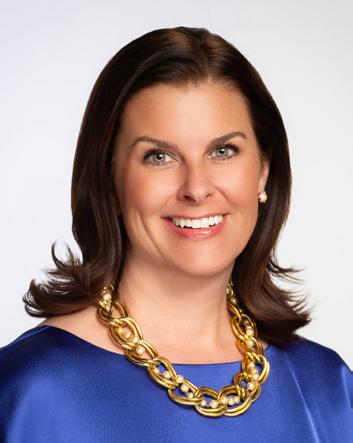
Kathleen Burrell, President Lubbock Symphony Guild
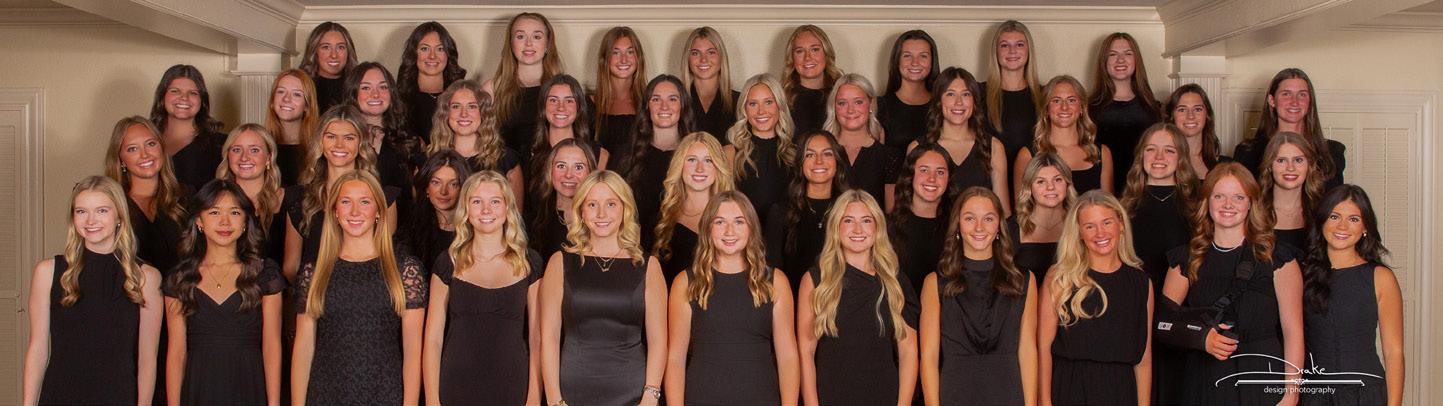
Lubbock Symphony Guild Senior Debutantes
Front Row Left to Right - Kathleen Jane St. Clair, Angelia Liu, Sarah Simpson, Sadie Gillespie, Meridith Bradley, Lauren King, Payton Reed, Emyrson Parrott, Blakely Martin, Katelyn Bollens, Chayce Johnson
2nd Row Left to Right - Georgia Kitten, Alice Everett, Ellie Underwood Reya Felton, Mckanna Garcia, Kennedy Cowan, Joleigh Reno, Ashlyn Edwards, Brynlee Smith, Emma Lane, Erin Brodbeck
3rd Row Left to Right - Elizabeth Nicholson, Cassidy McKinnon, Campbell Beeler, Katelyn Glenn, London Bird, Baylee Fillingim, Addison Stewart, Natalie Sweat, EllaMaria Webb, Chayce Welborn, Campbell Franklin, Harper Burrell
4th Row Left to Right - Halley Reynolds, Addison Neufeld, Landry Allen, Joy Wischmeyer Adelaide Underwood, Madison Heider, Ava Smith, Finnley Forero, Dannelle McCourt Not Pictured - Talitha Dalton
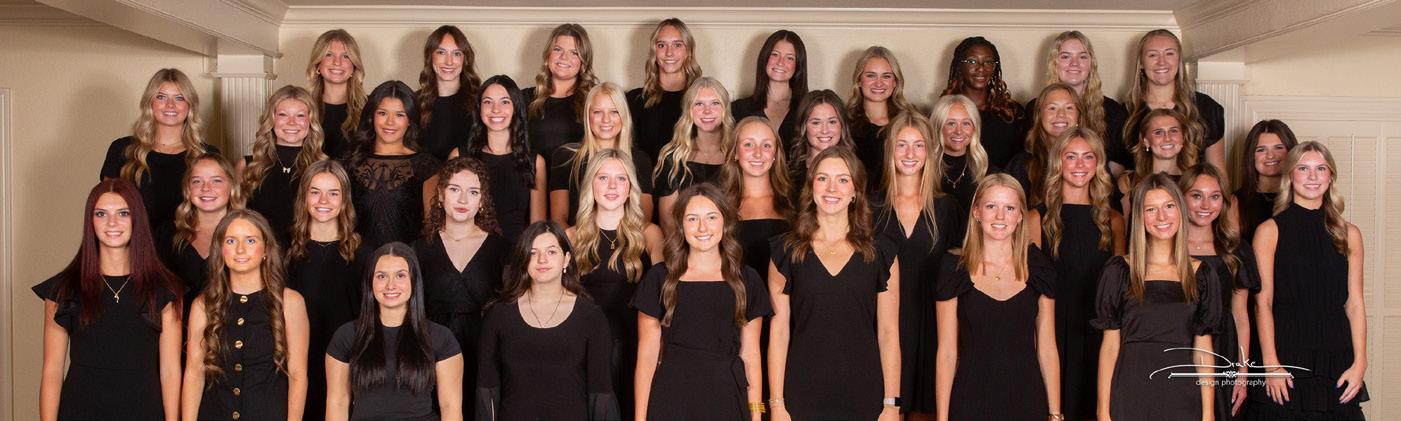
Lubbock Symphony Guild Junior Debutantes
Front Row Left to Right - Lola Latham, Kayci Cave, Shelby Rivas, Ella Condra, Carter Piland
Sophie Scolaro, Sarah Poe, Rynn Riddle
2nd Row Left to Right - Alexis Gregory, Aubry Elrod, Sophie Carter, Emily Aldinger, Sage Boyle, Kristine Wischmeyer, Riverson Sawyer, Kayleigh Lewis, Hope Stonestreet
3rd Row Left to Right - Alyssa Joiner, Ashtyn Neufeld, Isabella Hernandez, Kaylee Jordan Emersyn Cross, Marlee Thompson, Presley Taylor, Pamela Buckley, Addison Evans, Kaylee McKee, Kaelie Fincher
Back Row Left to Right - Finley Cross, Ellison Roberts, Elizabeth Thane, Campbell Wilson
Abbott Spitzer, Hadley Payne, Lula Biondi, Elizabeth Williams, Kate Harlien
Not Pictured - Lauren Brashear, Hannah Owen
Lubbock Symphony Guild Senior Debutantes
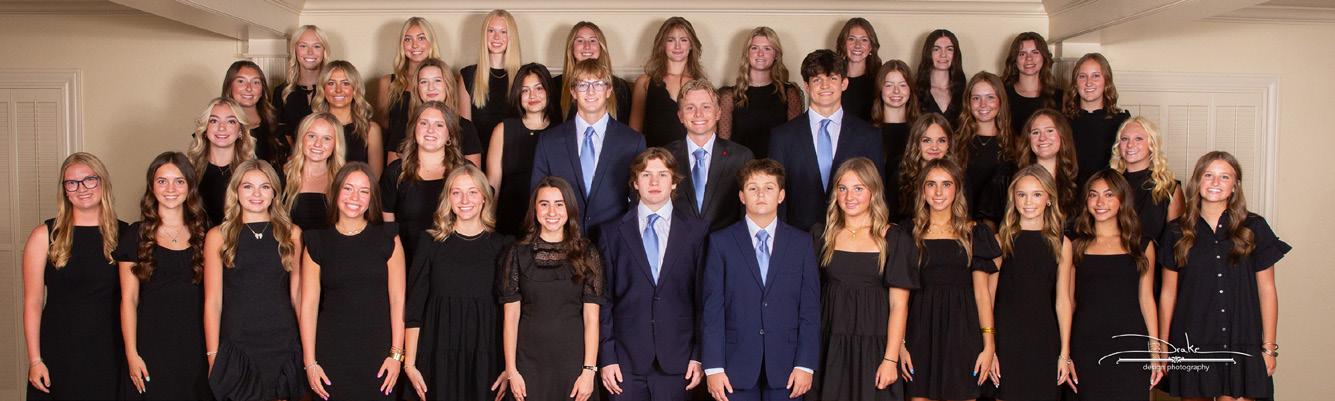
Lubbock Symphony Guild Sophomore Debutantes
Front Row Left to Right - Cannon Miller, Tatum Maines, Kaylee Cottrell, Audrey Oaks
Hope Acrey, Elizabeth Cruce-Roberst, Jack Callahan, Frederick Strangl, Emerson Mooty
Ella Hurst, Tess Stockdale, Avery Garza, Grace Cone
2nd Row Left to Right - Alexis Edwards, Halle McPherson, Caroline Cathey, Wade Massengale, Beau Bennett, William Marcinkowski, McKenna Tidwell, Clara Pesterfield, Channing Boyd
3rd Row Left to Right - Avery Smith, Avery Underwood, Ella Polk, Ainsley Wisniewski
Grace Tippy, Elly Craft, Saylor Sexton
Back Row Left to Right - Channing King, Hurley Neufeld, Taylor Haymes.
Caroline Crawford, Anna Belle Needham, Elizabeth Burrell, Allison Clifford, Ava Grace Wright, Josephine Butts