

Floods come again
Hill Country water a mixed bag for hunters and fishermen
By Mike Bodenchuk
Widespread rains across the southern Texas Hill Country during the week of July 13-17 created flood-
ing on mainstem rivers, ephemeral creeks, dry washes and even low-lying areas on ranches.
The worst flooding was from Kerrville and Bandera southwest toward Uvalde, where some 20-plus inches of rain fell in a 48-hour period. Beyond the human impacts, both wildlife and fisheries were impacted by flooding.
New public ramp open on SPI
By Tony Vindell For Lone Star outdoor newS
For those anglers tired of waiting to launch a boat from a public ramp on South Padre Island, your wait and frustration could be coming to an end thanks to a new public boat ramp that has opened on the island.
“Do we need more boat ramps?” angler Jose Carpio of Brownsville said rhetorically. “Yes, we do!” He said he has been fishing for
On the wildlife side, this part of Texas has extensive high fence ranches and miles of fencing were washed out by flood waters. Typically, ranchers can predict the flood areas and create “water gaps” which can be repaired in short order. This flooding episode produced extensive water which, mixed with floating debris, weighed down the fences and posts,
Axis, axis everywhere

North central lakes producing
Whitney, Benbrook, Richland Chambers fishing good
By Corey Byrnes For Lone Star outdoor newS
Lake Whitney has been excellent for hybrid striper fishing this summer.
Shallow and deep water presentations have been productive utilizing a
variety of different tactics.
Daniel Dean with Big Bite Guide Service said his clients have been focusing on the fish out deep.
“Right now, we’ve been out in some deeper water, fishing around. The fish have been kind of relating over the thermocline out in the main body of the lake there closer to the dam,” Dean said. “So, they’re not relating to structure.”
For Dean and his clients, it has been
By Nate Skinner For
The axis rut is as hot as the summertime temperatures.
Hunters spending time at ranches and deer leases have reported seeing an abundance of spotted deer, including good numbers of mature bucks. Some have even commented this has been the best summertime season for axis they can ever remember.
Brandon Blanch of El Sapo Guide Service has been chasing axis with his hunters in Sutton, Edwards, and Val Verde counties, where he said the bucks have been plentiful.
“This is the best axis season I’ve ever experienced as far as mature bucks and numbers are concerned,” Blanch said. “They’re just everywhere out here right now. With groups of six to nine hunters, it’s been very rare for us to have to keep hunting into the second afternoon.”
Blanch said his hunters have been harvesting the highest quality bucks, on average, that he’s ever seen. Most of the axis
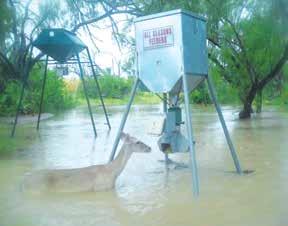
Wildlife stuck in low areas had to deal with severe flooding in many parts of the Hill Country and South Texas after huge amounts of rain fell. Photo by 4H Ranch.
John Paul Tabor shot this mature axis buck while on a spot and stalk hunt with El Sapo Guide Service. Photo by Brandon Blanch.
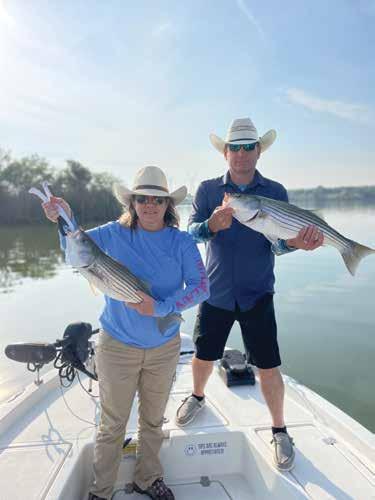
Anglers are finding good catches of hybrids and striped bass on Central Texas lakes this month. Photo by James Davies.
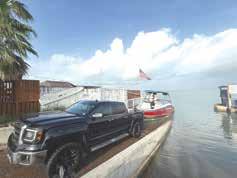
South Padre Island anglers who need to launch a boat at a public ramp now have a third option on the island since the new ramp opened. Photo by Tony Vindell, for Lone Star Outdoor News.


HUNTING
Summer turkey surveys ongoing
Poult production good the past few years
By Joseph Richards
Every spring and summer, wild turkey hens undergo the challenge of successfully reproducing – starting with incu bating a clutch of eggs to raising a brood of poults to inde pendency. This major feat promotes long-term population stability and persistence.
Jason Hardin, Texas Parks and Wildlife Department’s Wild Turkey program leader, explained that a lack of muchneeded winter precipitation and moisture conditions de layed nesting activity across much of the Rio Grande wild turkey’s range this year.
“A lot of Texas didn't see good winter moisture. The rains came late. It's going to be great for quail, but we are getting off to a late start for turkey,” he said. “What we see with most of our turkey is the earlier they nest, the more success ful those hens are at bringing on a brood.”
According to the Texas Water Development Board’s Wa ter Weekly Report (July 6, 2026), 89% of Texas experienced drought conditions three months prior (around April). Wet winters and springs help enhance soil moisture for the “spring green-up” and the subsequent vegetation growth that promotes high-protein insects critical for hens laying eggs.
“That's kind of the winning recipe for us, a mild winter that's wet. Our hens start nesting, in some cases in South Texas, late February and early March,” Hardin said. “When ever we don't get our moisture until May, we've already missed a big window, and a lot of those hens won't be in good physical shape until mid-May to June.”
In areas of the state that have seen optimal rains and moisture for nesting and brooding habitat, landowners have reported seeing poults on the ground.
Cuatro Hindes, a lifetime rancher and upcoming wildlife photographer, said in his area of South Texas, the rains ar rived just in time to promote vegetation cover for nesting.
“I’ve seen three hens with babies so far,” Hindes said. “If the rains didn’t arrive when they did, I don’t think we would have raised any this year.”
Other regions such as East Texas have been seeing poults for the last month and a half, according to Hardin. Turkeys are just starting to hatch in the High Plains (Panhandle Re gion) – this author observed a hen with four robin-sized poults the last week in June near the city of Sundown (Hockley County).
Hardin said it’s too early to assess what 2026 production will be. On July 1, TPWD biologists kickstarted their annual summer turkey surveys across the state.
In response to the need for a standard survey method, TPWD reinitiated its annual wild turkey surveys across the
Looking up
populations take advantage of premium range
By Nate Skinner For Lone S
Things are heading in the right direction for pronghorn in West Texas. While TPWD continues to conduct surveys over antelope herds and habi tat, reports of excellent range conditions, successful fawn crops, and good horn development continue to come from the Panhandle and Trans-Pecos areas.
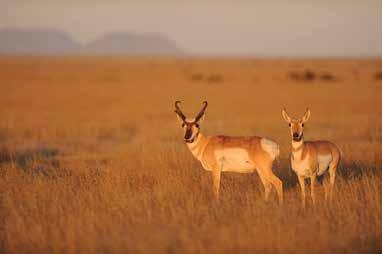
According to the Mule Deer and Pronghorn Program Leader at TPWD, Shawn Gray, range conditions in the Panhandle and Trans-Pecos are in much better shape than they have been over the past several years. Gray attributes this to the much needed, timely rainfall these areas received during the spring and early summer months.
“Pronghorn population numbers in the Panhandle have continued to increase,” Gray said. “And things are looking good for our herds in the Trans-Pecos, as well. Populations in this region have remained fairly stable, despite the persistent drought conditions that the area was plagued
Like father like daughter
Del Rio gun shop carrying on tradition
By: Meghan Jackson
For Lone Star outdoor newS
There is something special about continuing a legacy. At Humphreys’ Gun Shop in Del Rio, there is a father/daughter duo that prioritizes that and more.
Founder Gary Humphreys started the business in 1973 where he became known as a gunsmith, business owner, and maintained a presence within the local shooting and outdoor community. He has made a positive impact on youth shooting sports in the area for generations.
As Del Rio’s first and only full-time gun shop, there is only one person Humphreys trusts to carry the torch. His daughter, Holly Humphreys York, is more than ready to step into her father’s shoes as the official owner.
“It became a running joke that I've been the shop’s general manager since I could walk,” York said. “Once I was old enough to hold a broom, I started sweeping floors, trying to tidy it up. I even had my own little corner with a bookshelf, a television, a chair, a rug, and a drafting table.”
Humphrey said he has always known Holly was a

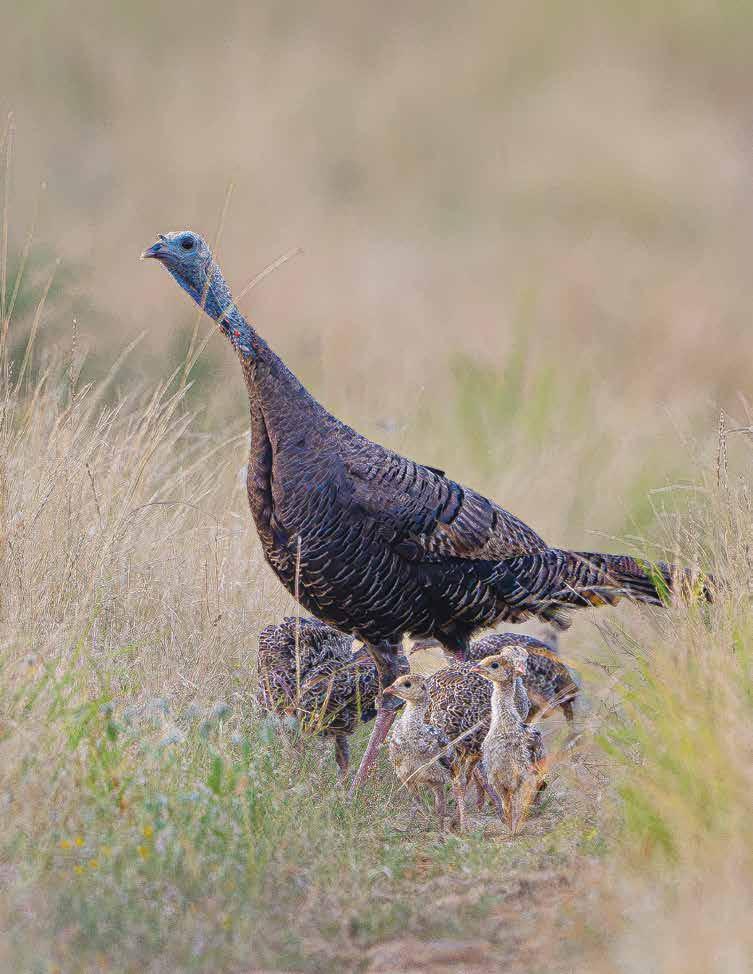
Poult production has been good the previous couple of years but was a little late this spring since rains arrived later in the summer.
Photo by Cuatro Hindes.
Gary Humphreys stands at the counter of his gun shop in Del Rio. His daughter, Holly, has worked in the shop for years alongside her dad, and is ready to take over when he retires.
Photo by Holly Humphreys York.
Several years of good range conditions should make for an excellent pronghorn season in Texas this fall. Photo by David J. Sams, Lone Star Outdoor News.
Boss CIC copper shotshells confirmed legal by Feds
By Nate Skinner
For Lone Star outdoor newS
After a brief regulatory review, the U.S. Fish & Wildlife Service has officially confirmed the Corrosion-Inhibited Copper (CIC) CuProX Shotshells manufactured by Boss Outdoors fully comply with federal non-toxic shot regulations for migratory birds.
According to the FWS, Corrosion-Inhibited-Copper shot is the only currently approved nontoxic shot type composed primarily of copper.
Good to go
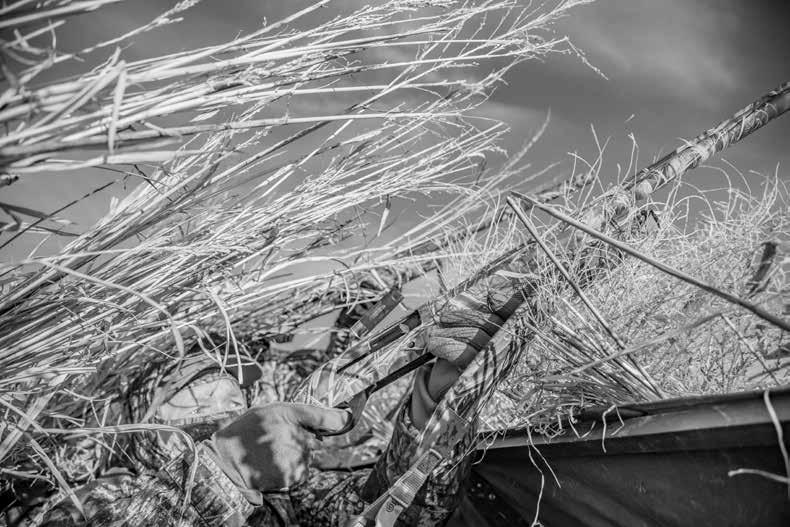
“Approval of CIC shot hinges on the use of benzotriazole (BTA) corrosion-inhibitor coatings and the inclusion of a thermoplastic fluorescent powder coating,” the FWS wrote in a Migratory Bird Program Memorandum on June 26.
The FWS reported Boss Outdoors provided a detailed production description and certificate outlining the composition and manufacturing process for the copper core, corrosion-inhibited shot. The shotshells submitted for review were loaded with a fluorescent powder allowing the pellets to be identified in the field.
In their recent memorandum, the FWS reported the submitted shot product consisted of a copper core of 99.99% oxygenfree copper coated with a benzotriazole corrosion-inhibitor consistent with the mechanisms used in approved CIC shot formulations.
“The fluorescent material incorporated into the shotshell provides a reliable means for enforcement officers to identify the shot type in the field,” said the FWS. “The materials, construction, and identification features meet the functional requirements for nontoxic shot as defined in 50 CFR 20.134.”
Boss currently offers their CuProX shotshells in 12-gauge, 20-gauge, 28-gauge, 16-gauge, and .410 bore models.
“By perfecting the manufacturing process and surface finish, we’ve managed to significantly increase performance at all yardages compared to not only Bismuth, but our first-generation copper,” Boss said in a press release published on their website. “Our CuProX shotshells fly cleaner, hit truer, and retain more energy than the loads that already had everyone talking.”
Please note: This is a follow-up to the June 12 issue of Lone Star Outdoor News article on Federal guidelines regarding copper shot. The story can be found online at LSONews.com/archives/.


Lone Star blitz
SCI announces three new Texas chapters
By Conor Harrison Lone Star outdoor newS
Safari Club International is continuing to expand its footprint into Texas. The organizations has recently announced the chartering of three new chapters in the state.
“We are now good to go,” said the new Lone Star Chapter president Connor Dunlat. The chapter will be based in the Dallas area of North Texas.
“SCI approved our chapter and we will hold our first meet and greet on Aug. 26 at Love and War in Texas in Plano. Obviously, our chapter will adhere to the SCI principles of conservation. We are going to take a bunch of kids hunting and fishing that would normally not get the opportunity to go hunting and fishing, along with disabled veterans who want to get into hunting.”
Dunlat said the new chapter has five board members, and they will be looking at several more volunteers in the next few months who might want to take on a leadership role within the chapter.
All three new chapters will serve as local hubs for hunter advocacy, conservation initiatives, member engagement, fundraising, education, and community outreach. The other chartered chapters include the East Texas Chapter in Tyler and the Big Country Chapter in Abilene.
"Our expansion in Texas reflects the need for strong leadership to represent and protect the interests of hunters," said W. Laird Hamberlin, CEO of Safari Club International. "Hunters across Texas are looking for an organization that is focused, effective, and unapologetic in its defense of hunting and conservation. These new chapters are a direct response to that demand and another sign of SCI's growing momentum."

































QUIETLY.COMPAC







Adding just 4.6" to barrel length, the Nomad Ti OTB advances over-the-barrel suppressor innovation. Delivering the recoil reduction and sound suppression of a longer system, it maintains optimal balance and keeps the rifle compact for fast handling and confident control in the field.


















Waterfowl hunters have a copper shot option now that the Feds have approved Boss Corrosion-Inhibited Copper shot. Photo by Nate Skinner, for Lone Star Outdoor News.
Slowing down
Reds tougher in summer
By Cory Byrnes For Lone Star outdoor newS
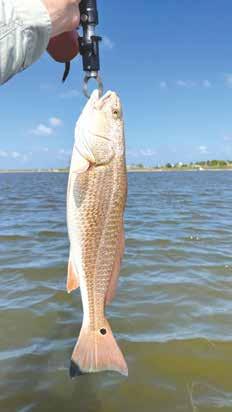
The summer redfish bite has been a bit harder this year, according to local anglers. Many reasons were given, but most agree it is better to wait for cooler temperatures.
“It was a little tough there for quite a while,” JR. Wood with Wood’s Guide Service out of Port Aransas said. “They’re finally starting to show back up.”
Angler pressure and weather are to blame, according to Wood. He and his clients have had to run into very skinny water.
“I don’t understand why they are up there. It’s so skinny, the water’s so hot, and yet they are up there,” Wood said, referring to the flats. He has been targeting flats near grass where the flats eventually lead to deeper pockets during low tide.
“The ones that do get off the flat, they’re staying fairly close (to the edge),” he said. “They can drop off into that deeper water in the afternoon.”
Anglers should start targeting ledges coming off the flat as that slight transition of shallow to deeper water will start to hold more fish. Low tides in the morning have been the most productive.
For Wood and his clients, it’s been live and cut bait.
“I throw cut bait and live bait, mostly freelining,” Wood said.
He expects this pattern should stay this way through August.
In the Galveston Bay Area, “reds are okay, but not like what it used to be 10 years ago,” said angler Jay Lee.
During the day, Lee reports fishing is slow. The best bite has been at daybreak up to an hour after, and then it gets slow. Lee has been exploring the dock lights at night once it cools down a bit.
“Fishing redfish in green light at night is like fishing in a barrel,” Lee said. “It’s easy fishing. It doesn’t mean they are plentiful, just concentrated in one spot.”
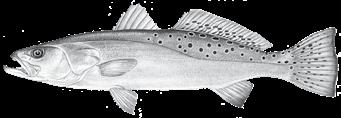
It’s also a good way to catch trout mixed in right now. Lee exclusively uses artificial baits.
“Jigs, jerk lures, and paddle tails,” Lee said. “No particular color has really been producing more than another. You just got to be confident in what you throw. Start out light and more natural.”
For him, it’s all about presentation. He recommended adding weight only when it is necessary due to winds and current.
“When the water gets too hot, fish will be in deeper water in midday,” Lee said. Anglers should focus on shallow areas with quick access to deeper, more oxygenated water nearby. Once the sun is up, work 10 feet or deeper water over oyster beds and other structures.
Holy Coike
Urchin bait craze takes bass fishing industry by storm
By Nate Skinner Lone Star outdoor newS
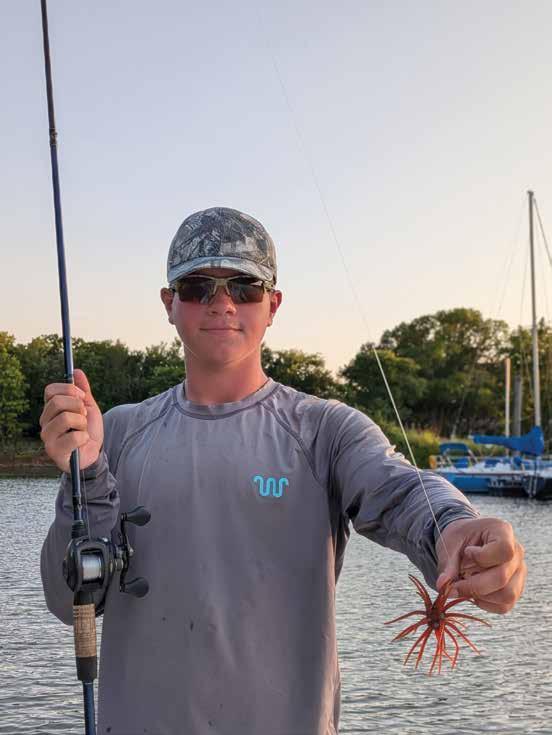
The show floor at the 2026 ICAST sportfishing trade show in Orlando, Florida was dominated by “urchin” or “Coike” (pronounced coy-key) style soft plastic baits.
At least 11 major brands officially debuted their own, unique take on the new lure trend, including Strike King, Rapala - Crush City, Hideup, Big Bite Baits, Missile Baits, NetBait, Lunkerhunt, Yama-
moto Baits, Fish or Die, Skinny Bear Bass Jigs and Bait Cave. The craze even trickled over into the terminal tackle sector, as BUZBE debuted a specialized Urchin Bait Box at the show.
According to the Product Development Manager for GSM Outdoors, Jack Dice, urchin baits come to life in the water with each twitch of a rod tip. Under GSM’s umbrella of brands, Dice said both Big Bite Baits and Yamamoto Baits now offer anglers “Coike” style lure options. They include Big Bite’s Orbix, and Yamamoto’s Uni, Uni Mas, and Uni Max.
“When it comes to catching pressured fish, showing them something new can
Could be better
Crappie bite steady through the heat
By Cory Byrnes For Lone Star outdoor newS
The crappie fishing across Texas is good right now, but it could be better.
On Cedar Creek Lake, crappie fishing has been productive, though not at springtime numbers.
“We are still able to catch some numbers of them. They’ve moved deep on structure,” said Dakota Davidson with Bigcrappie.com reported. “We pretty much like brush or letdowns from 15- to 24-feet of water.”
He and his clients have had their best days when the sun is out and
overhead with soft plastics and jig heads.
“Black and chartreuse is definitely a go-to,” he said.
Davidson is having to stick and move to build his stringer, and has found more fish deeper.
“We’re catching one to five fish a spot,” Davidson said. “Get your bites and keeping moving. Right in the 20-foot [range] is where we are having the most luck, and we won’t find them shallow anymore.”
On Lake Athens, Justin Shelton from Creekside Outfitters reports the fishing has been good.
“There’s a lot of black crappie in the lake. They’re anywhere from 10- to 12-inch fish, and you will find them on brush piles in like 20 to 30 feet normally,” Shelton said.
make a difference,” Dice said. “Urchinstyle baits really just gained momentum over the last year, and several notable, national bass tournaments have been won on them over that short span of time. In the grand scheme of things, it’s a presentation that the fish have not been exposed to for very long.”
Dice said urchin baits are extremely versatile, as they can be rigged and fished in a variety of ways to be effective in a large range of water depths and a plethora of scenarios.
“A lot of anglers are adding tungsten nail weights to them to increase how fast they sink when they are targeting bass
Anglers like Charlie Ash are buying into the hype of the urchin or Coike (pronounced coy-key) bait. Ash caught an 8-pound bass the first time he used this bait. Photo by Mike Hughs, for Lone Star Outdoor News.
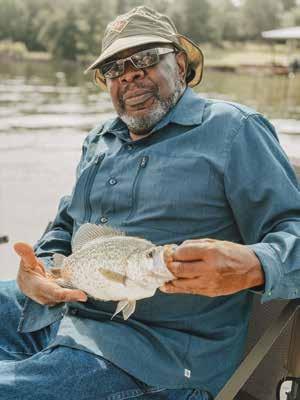
BJ Deebs holds a crappie caught recently. Photo by Justin Shelton, Creekside Outfitters.
Redfish have been slower this month along the coast, with fish being tougher to find in the warm water. Photo by David J. Sams, Lone Star Outdoor News.
Funny names, serious lures
Geezer Fishing Co. launches
By Nate Skinner
For Lone Star outdoor newS
Scott Gieser is the founder of Geezer Fishing Co.
He and his wife, Summer, and their son, Shane, own and operate the business, based in Granbury, and officially launched their lineup of high quality, hard plastic baits earlier this year. As a hard-working, familyowned company, the Gieser’s are passionate about helping anglers land their next fish, and having a great time while doing so. Their mantra is “Funny names — Serious lures.”
“Yes, I am the real Geezer,” said Gieser. “My last name is pronounced just like it’s spelled. And that’s exactly how we came up with the name, Geezer Fishing Co.”
According to Gieser, the name just came to him. They had just about everything ready to go as far as production was concerned, including the factory, molds, painters, designs, and big ideas for growth and expansion — the only thing they were missing was a brand name.
“It just hit me,” Gieser said. “Why wait
until you’re old to be a geezer? We are making fishing lures like many companies used to, with quality components, character, and a little extra attitude. Geezer Fishing Co. is a legitimate, high-end lure company built on professional design and purposedriven craftsmanship. Every decision, every detail, and every bait is focused on making anglers more successful.”
The antics and fun with Geezer Fishing Co. don’t just stop with the company’s name. The names of the different types of baits they produce fit right in with the “Geezer” theme.
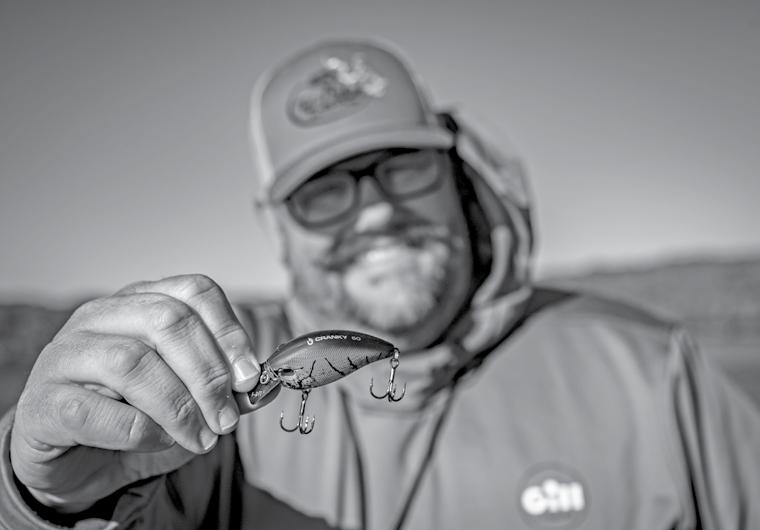
“The fun we have incorporated into all of our products just came naturally,” Gieser said. “That’s just who we are. I had a list of lure names and shared them with my son, Shane. His eyes immediately lit up, and he jumped in headfirst right along with me. That’s how the names for our lures, such as Dagnabit and Skedaddle were born. They were followed soon by the Catawampus, Cranky, and Codger, and we’ve got plenty more on the way.”
The unique, funny, and entertaining aspect of the Geezer Fishing Co. brand continues right on into the color patterns they offer for their different lure models. Some
Big time
SPI tourney draws lots of anglers
By Tony Vindell
For Lone Star outdoor newS
A fishing tournament billed by its organizers as the “World’s largest bay fishing tourney” took place on South Padre Island under near perfect weather several weeks ago.
A total of 352 entries and 1,282 anglers registered for the event held to benefit the Make-A-Wish Foundation of the Rio Grande Valley Chapter.
The proceeds raised from the tournament, $86,000, went to the organization created in 1997 to grant wishes to children with critical health issues from Cameron, Hidalgo, Willacy, Starr, Brooks and Kenedy counties.
The Ron Hoover Fishing Tournament, held June 11 on South Padre Island gave out more than $300,000 in cash and prizes, including a Majek boat and a Catalina RV to the winners.

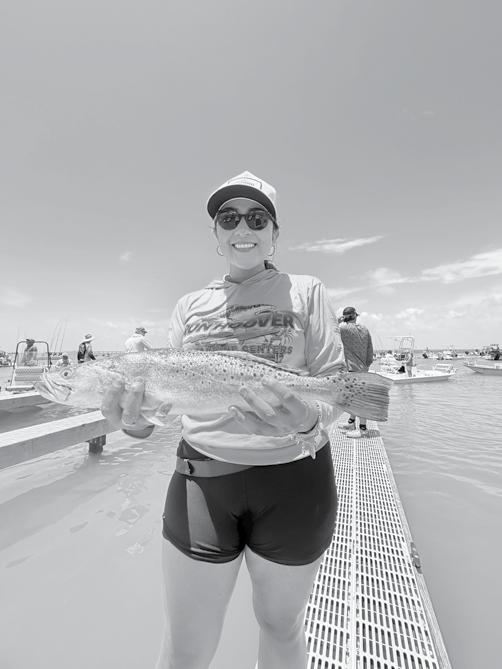
Anglers like Rosie Garcia of Weslaco, Erik Cox of Brownsville and others said they fished under one of the best weather days they have ever had in bay waters. Cox’s four-person team, South Texas Tails, caught plenty of fish, only keeping the ones weighed in for the tournament.
“We caught snook and plenty of reds and trout,” he said. “We are lures-only anglers.”

Geezer Fishing Co has come out with a lineup of new lures with funny names, but anglers aren’t laughing when it comes to putting fish in the boat with these designs. Photo by Scott Gieser.
Tournament angler Rosie Garcia with her 20-inch trout brought to the docks for the weigh in. Photo by Tony Vindell, for Lone Star Outdoor News.
SALTWATER FISHING
By Chuck Uzzle
For Lone Star outdoor newS
SABINE LAKE
• Fishing for both speckled trout and redfish remain good
• The east shoreline is producing plenty of trout around the mouths of the bayous as the shrimp numbers continue to grow
• Better quality trout and redfish are shadowing schools of pogies in the mid-lake area
• The jetties are producing good numbers of redfish and black drum
• Live bait under Coastal Pro Rattling corks working well
• Tripletail numbers are good for the anglers running the beachfront
GALVESTON / TRINITY BAYS
• Speckled trout are good on the beachfront early
• Use top-water plugs when the water clears
• East Galveston Bay has been consistent
• Fishing has been best on open bay reefs and channel spoils
• Deeper structure around the channel is also holding good numbers of fish
• Best lures have been brightercolored soft plastics on 3/16- or 1/4-oz jigs
• Trinity Bay has been slow due to run off from recent rains
EAST MATAGORDA BAY
• Trout are fair while drifting
• Depths around 5 feet of water over shell and mud are best
• Tides are 2 feet below normal
• water is stained due to high southwest winds
• Redfish action is fair around the jetty on mullet and crabs
• Wade fishermen are taking trout on top-waters and soft plastics over mid-bay reefs on tidal changes
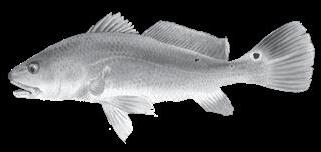
WEST MATAGORDA BAY
• Deeper water options are paying off for speckled trout and redfish
• Fishing deep structure like reefs, gas wells and other structure in the middle of the bay have been the best patterns
• Soft plastics and live bait fished deep has been the most consistent bite
• Some nice tripletails are being caught working channel markers and other structure with live shrimp under corks
ROCKPORT
• Redfish are consistent in deeper water locations as the temps heat up
• Good bites early in 1- to 3-feet, then moving to deeper, cooler water as the sun gets up and water starts to heat up
LONE STAR FISHING REPORTS
• Trout fishing continues to be outstanding
• Target most of the shell in the middle of the bays for best action
• Live croaker has been producing both limits and quality trout
BAFFIN BAY
• Fishing for both trout and redfish has slowed as a result of some heavy rains and warmer temps
• Water clarity has suffered somewhat after the recent rains making for more challenging conditions
• Water levels are 1 to 1.5 feet low, so many fish have pulled off the shallow structure
• Look for fishing to rebound with the coming high tides
• Best baits have been soft plastics with paddle tails and shallow-running twitch or wake baits
FRESHWATER FISHING
By Vivian Leopold For Lone Star outdoor newS
LAKE ARROWHEAD
• Water level is 3.35 feet below pool at 80.2% full
• Water temps are about 80 degrees, stained water
• The lake is fishing well overall; Fish are holding deeper during the heat of the day and becoming more active during low-light periods
• Sunrise through mid-morning are best times to fish and the last couple of hours before sunset; If there is any wind, target windblown points, as baitfish often congregate
• Largemouth bass can be found on points, creek channels, submerged brush and offshore structure in 15to 25-feet of water
• Texas-rigged worms, deep-diving crankbaits, football jigs and Carolina rigs are all productive
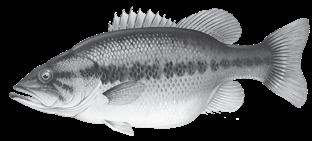
• White bass — Watch for schooling fish early or late in the day; When they are feeding, small spoons, swimbaits and inline spinners can be effective
BOIS D’ARC
• Water level is 0.05 feet below pool at 99.8% full
• Water temps are around 86 degrees
• Bois d'Arc Lake is fishing well this month, especially if you are targeting bass.
• Largemouth bass (excellent) — Fish are moving to deeper timber, creek channels, and submerged brush during the day, then becoming more active on shallow flats at dawn, dusk, and after dark
• Texas-rigged worms, football jigs, big worms, swimbaits and deepdiving crankbaits are attracting fish; The lake continues to produce numerous bass over 7 pounds, with biologists expecting true trophyclass fish to become increasingly common
• A black,10-inch ribbon-tail worm, a slow-rolled spinnerbait or a large black buzzbait around timber and
secondary points can produce your best shot at a true trophy
• Crappie (excellent) — Suspend over standing timber and brush piles in 15- to 25-feet of water; Live minnows or 1/16- to 1/8-ounce jigs fished vertically are your best bet
• Catfish (good) — Channel catfish are active on cut shad, punch bait and stink bait around creek channels and flats, particularly in the evening and overnight
• White bass — Available but generally slower than bass and crappie during midsummer; Look for schooling activity early in the morning if baitfish are present
• Fish from first light until about 9:30 a.m., then again in the last two hours before sunset; If you are on the water midday, concentrate on 20- to 30-feet of water around flooded timber and channel swings
LAKE LIVINGSTON
• Water level is 0.18 feet above pool at 100% full
• Water temps are about 86 degrees
• The lake is in a solid midsummer pattern right now; The standout species are white bass and catfish, while largemouth bass require more targeted offshore fishing during the heat of the day
• Largemouth bass (fair to good) — Better fish can be found near offshore structure in deeper water during the day; Texas-rigged worms, football jigs and deepdiving crankbaits are good choices, with a top-water bite around dawn
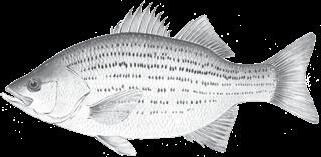
• White bass (excellent) — This is the species Lake Livingston is best known for in summer; Schools are active on humps, ledges and along the old Trinity River channel, especially early and late in the day
• Slabs, jigging spoons and swimbaits are producing well; Fishing has been improving in the mid- and lower-lake areas
• Blue and channel catfish (excellent) — Drift-fishing with fresh cut shad over flats in 15 to 30 feet is producing good catches; Anchoring on creek-channel edges with cut bait also remains productive
• Crappie (good) — Fish are holding on brush piles, bridge pilings and standing timber in 15 to 25 feet; Live minnows have been especially productive
LAKE BRAUNIG
• Because Lake Braunig is an industrial cooling lake (for CPS Energy), it does not have the same “percent full” or “below conservation pool” metrics used for flood-control reservoirs. Its conservation pool is simply the normal operating level which is 506.5 feet; The water level fluctuates only 1 to 2 feet during the year
• Water temps are about 83 degrees, generally stained but fishable
• Early morning, late evening and night fishing are producing the best action; Fish are holding deeper during the day
• Redfish/Red Drum (stocked) remain the lake’s top attraction
• Target points, drop-offs and areas with baitfish activity; Look for birds working schools of bait; Redfish fishing is typically strong through summer
• Fish are being caught on live tilapia, fresh-cut tilapia, gold spoons, chrome or silver Rat-L-Traps and deep-diving crankbaits; Gold Rat-L-Traps are a local favorite for Braunig redfish, especially good on sunny days with some water stain
• Catfish are one of the more consistent bites Fish 10 to 25 feet deep using shad, shrimp or punch bait; Channel edges, flats adjacent to deeper water and areas near the old river channel are productive; After sunset is especially good
• Hybrid stripers are fair to good action over deeper water; Live shad is the top producer but vertical jigging spoons can work when fish are schooled up; Focus on humps and channel areas of the lake
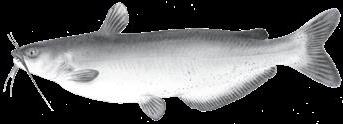
• Largemouth bass are not the lake’s primary fishery, but some quality fish are present; Fish early around shoreline cover, grass edges and structure before the sun gets high
CANYON LAKE
• Canyon Lake is full
• Water temps are around 82 degrees
• Good fishing potential but changing conditions; The influx of water has pushed baitfish and gamefish into new areas; Fish are now found by flooded shoreline cover, creek channels and transition zones where muddy water meets clearer water; Early morning and late evening remain the best periods
• Largemouth bass are fair to good; Fish early using top-water baits over points and flooded cover; After sunrise, work deeper rocky points, ledges and brush in 10 to 25 feet
• Productive baits include green pumpkin worms, watermelon-red soft plastics, white swimbaits, shad-colored crankbaits and topwater walking baits at dawn
• White bass and striped bass are good, one of the lake’s strongest summer fisheries; Look for schooling fish around main-lake points and humps and watch for surface activity and diving birds
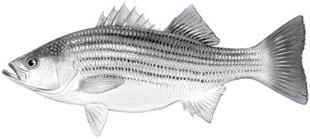
• Try using white bucktail jigs, chrome spoons, silver Rat-L-Traps, white paddle tails and live shad in 20 to 40 feet during the day and shallower during low light
• Catfish are good to very good in 15 to 30 feet in creek channels and flats adjacent to deeper water
• Best baits are cut shad, punch bait, chicken liver and prepared stink baits; The upper end of the reservoir produces some of the most consistent catfish action
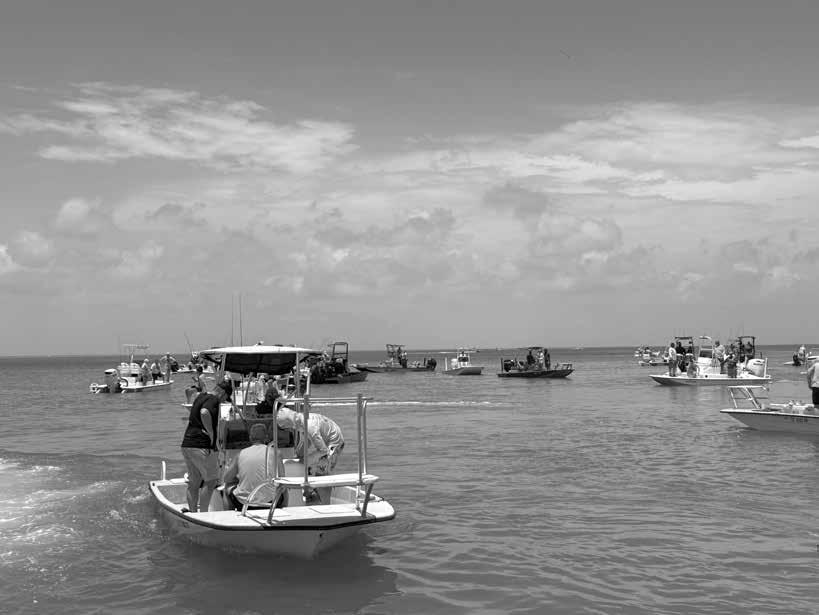
For Garcia, the tournament was her second time to fish in the six years it has been going on.
She caught a 20-inch trout that weighed 2.6 pounds.
“I don’ know how I will do,” she said, “but I am happy to participate today.”
Unlike other tournaments, the weigh-in was from 11 a.m. to 1 p.m. That meant a boat had to be on the dock between those two hours in order to be eligible to have their catch officially weighed.
A team of anglers made it just past the deadline and were told time was up.
As per the tournament rules, fish lengths were determined during the captain’s meeting held the day before, using a random system.
For a redfish, the tournament’s legal size was 20 to 22 inches and a slot of 19 to 20 inches for a trout. Each weighed entry consisted of two reds and one speck. Some anglers said they had no problem with the last-minute rules as it made the tourney more challenging and made the chance of cheating less of an issue.
Adding the length of the fish submitted for the weigh-in, the tournament’s top three winning teams were:
• Star and Bars, 64 inches
• Led 956 Bait and Tackle, 63 1/2 inches
• 7 Day Addition, 62 5/8 inches
As per its regulation, there was no grand prize and no Texas grand slam winners.
Texas lakes
Continued from page 1
a game of chasing the schools.
“They’re out there roaming around in that deeper water,” he said. “We’ve been primarily using live bait. You can catch a little bit on artificial, but they’re moving so quickly out there it’s hard to stay on top of them.”
Once one is hooked, though, it tends to fire them all up into a frenzy, and he and his clients can hold over them for a bit, catching a few more fish before they take off again. There has also been some top-water action in the main lake. If you’re looking for a mater action.
“I wouldn’t say good, but there’s been some top-water action some of the mornings if you can catch them schooling,” he said. “You will want to be on the water early for that. They’ll probably stay in this pattern until the water starts cooling off here. They’re just riding out the heat of summer in that deeper water right now.”
Patt Small with Pats Lake Whitney Striper Fishing has focused mostly on the shallow fish.
“It’s been good. It’s been kind of slow, but it’s turned out good the last couple of weeks,” Small said.
Small and his clients go after the hybrids in the early part of the day, chasing them up in the shallows with artificial bait.
“I am the only guide on the lake that fishes artificial bait only. I do it the hard way, and it’s hard,” Small said. “We’re chunking big lures, but we’re getting limits.”
Recently, the most productive bait has been a bone-colored spook and a pencil popper. On the occasions he finds himself fishing deeper water, he favors a flutter spoon.
“I am seeing them on my side image, and I am casting that flutter spoon to them,” Small said.
If you’re chasing this type of bite, early morning is when you want to be out there. Small expects it will be tough fishing this way through the summer, but as it cools down, the top-water bite will turn on more.
On Richland Chambers Reservoir, the


fishing has been excellent, according to Cory Krause with Pirate Fishing.
“The hybrids have been really good,” Krause said.
He and his clients have been fishing on what he referred to as the flats.
“There’s a big area that’s pretty shallow out, several hundred yards, and then it drops off real deep,” Krause said. “I have been focusing on the edge of that transition with live bait. There are certain times a year where we do better on artificial, and so we’ll use flukes or slabs or things of that nature.”
When he does, he prefers yellow and chartreuse for colors. Anglers should pick a likely spot and hold on to it with all of the pressure. If conditions are good and you can find the space, drifting is effective, though.
Krause expects this pattern to continue, but the feeding habits of hybrids to change. He will switch over to exclusively large gizzard shad over the smaller threadfin shad now through September.
On Benbrook Lake, the bite has been good.
In the early morning, anglers should look for top-water action around schooling baitfish.
“That’s what I am going to be looking for in the first hour or so, especially if it is cloudy,” said James Davis with Davis Guide Service.
Plugs like a bone-color spook have been the most effective during this bite. Once the top-water bite dies down, Davis and his clients transition back to the deeper water.
“I’d say 15 to 20 feet,” Davis said. “When they’re there, they are feeding.”
He and his clients are using live bait on those deep drops and keeping mobile.
“Once you get them under you and catch one or two, they’ll stay under you and get in a feeding frenzy. That’s kind of the goal,” Davis said. “Every day is different. Some days they will be schooling up, and other days they will be more spread out.”
Anglers will have to keep mobile and make the best of the opportunities they are given to be successful.

Boatloads of anglers wait to have their catch weighed at the recent Ron Hoover Fishing Tournament in SPI.
Photo by Tony Vindell, for Lone Star Outdoor News.
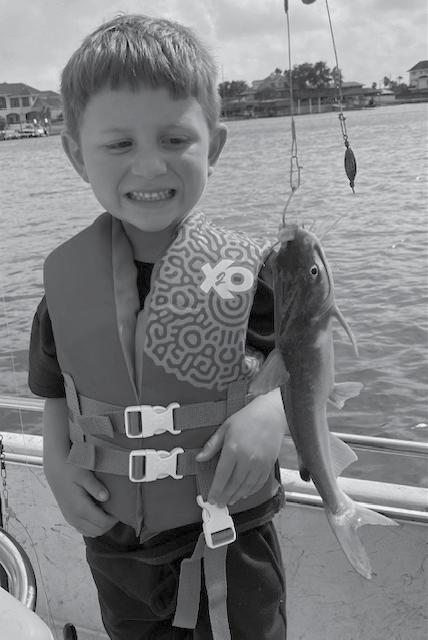


Five-year-old Avery with the hardhead catfish he caught while fishing with his Paw in Offatts Bayou in Galveston.
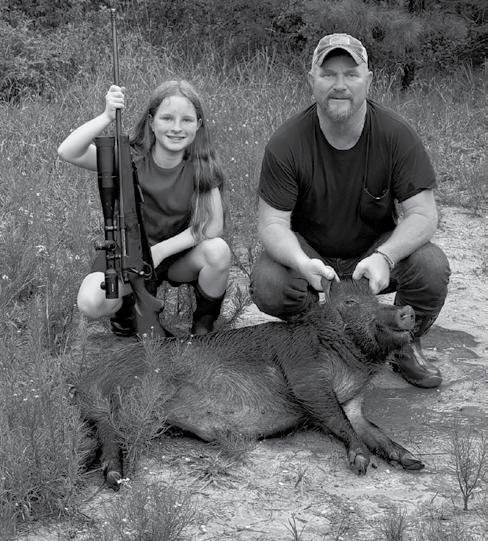
Cruz McKinney, 11, shot her first hog with a Weatherby 7 Mag. with her dad, Jeff, on a deer lease in Nesbit.
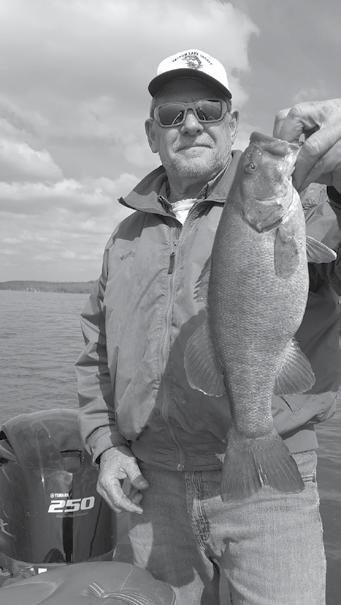
James Bendele was fishing this past winter on Falcon Lake when he unexpectedly caught this 3-pound smallmouth bass.
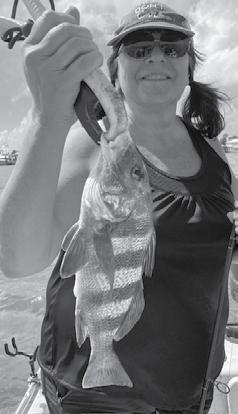
Nicki Pyfer with a black drum she caught near the Tiki Island Bridge on recent trip.
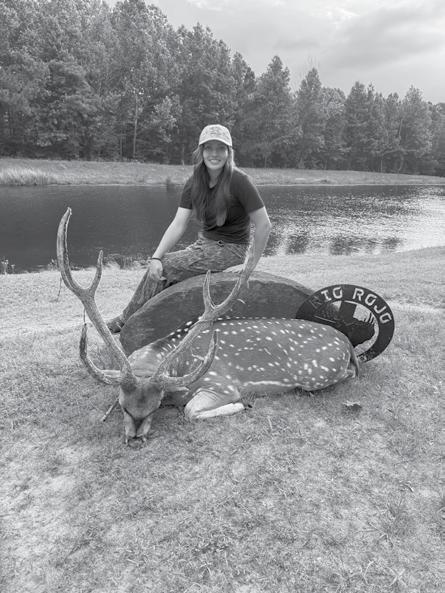
Kinley Hatfield took this axis on an auction hunt purchased by her Granddad, Joe Mitchell. She was sitting with her dad, Joshua, on the Rio Rojo Rancho wearing a lucky hat when the buck stepped out.
state in 2021. Summer turkey surveys (sometimes called brood surveys even though males are also counted) are a traditional approach used across different states to estimate annual production, potential recruitment, and sex ratios. Every July and August, state biologists drive and count the number of poults, hens, and males observed.
Counting the number of hens with broods generates metrics such as poults per hen (PPH) ratios - which are used by biologists and turkey managers as an index of regional productivity over time. The scientific literature pins two poults per hen as a proxy for a sustaining population. Higher numbers suggest a growing population, while lower values suggest the reverse.
Texas’ wild turkey recruitment has remained relatively strong in recent years, despite a sharp dip in 2022. Since rebounding in 2023, summer surveys have recorded more than two poults per hen each year, including 2.19 PPH in 2025.
Hardin is hopeful that since the 2023 and 2024 surveys saw an abundance of birds on the landscape, now those same birds are 3- and 2-year-olds, respectively.
“From a hunting standpoint, there's a lot of turkey out there,” Hardin said.
Hardin expects the Texas summer turkey surveys will help play a bigger role for monitoring wild turkey throughout the country. The Southeast Wild Turkey Working Group, under the Southeastern Association of Fish and Wildlife Agencies (Texas is a member state), have developed a protocol for standardization that would allow comparisons of wild turkey productivity across each state – providing reliable estimates at large spatial scales that before were limited by inconsistent survey methods.
“We only re-engaged in this 5 years ago, so we don't have a long-term dataset. We are working on a protocol that allows us to compare apples to apples across the entire country with every state agency that does this,” Hardin said.

with in recent years. Fawn production has been extremely successful, and I believe we will see an increase in overall numbers of pronghorn in the area.”
In addition to timely rainfall, Gray said timely predator control efforts have also been effective in the Trans-Pecos region, which has further improved fawn production.
Gray said TPWD pronghorn survey efforts are still currently underway. While they do not have any finalized data from these surveys yet, he said the overall consensus is that things are looking extremely well for pronghorn in the Panhandle and Trans Pecos regions, especially when compared to the last 5 or 6 years.
“We conduct aerial surveys over specific herd units in both ecoregions during June and July every year” Gray said. “While these surveys can’t reveal everything about what’s taking place within pronghorn populations across the landscape, they do provide us with a good, general overlook as to how these populations are doing.”
Gray said pronghorn survey efforts should be completed by the end of the month, and the permit issuance process for landowners should begin in early- to mid-August. The teams conducting these surveys have been extremely positive in regard to overall health of our state’s populations of pronghorn.
“Fawn production has significantly improved compared to the past several years,” Gray said. “Horn development should also be excellent this year, due to key rainfall.”
examples include Hypothermia, Gout, Sea Sick, Blood clot, and Osteo, to name a few.
“We take our fishing seriously, but we don’t take ourselves too seriously,” Gieser said. “From the lures to the colors and the apparel, we built this brand to reflect who we are as a family — hardworking, detail-focused people, who are here for a good time and a long time. We are a Texas family chasing a dream and building something we are proud of. When you support Geezer Fishing Co., you’re supporting the real Giesers, and we are passionate about helping others achieve excellence in the sport we truly love.”
Geezer Fishing Co. currently offers a variety of lipless crankbaits, jerk baits, squarebilled crankbaits, deep diving crankbaits, and topwater baits. They can be purchased online at geezerfishingco.com and at their growing list of dealers.


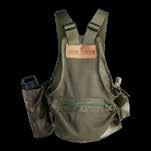
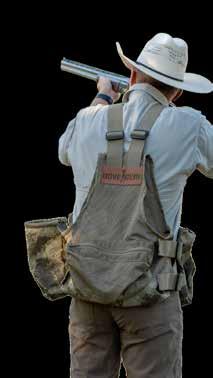
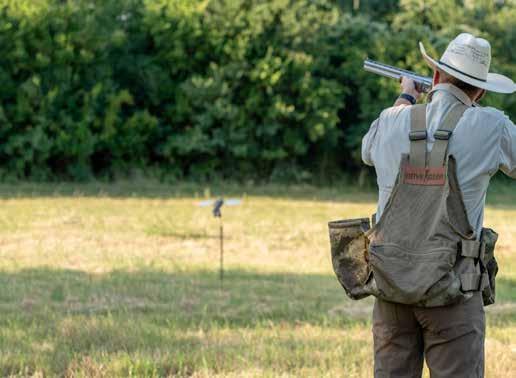








The Ultimate Bird Vest

27 Mon 4:09 10:21 4:34 10:46
31
02
Jul
TEXAS SUN, MOON AND TIDES
Freeport Harbor
Port O’Connor
Nueces Bay
Matagorda
Axis
Continued from page 1
have been in the 33- to 34inch range, and some have even stretched the tape to 36 inches or more. He at tributes the quality of the deer to strict management practices, a consistent feed ing program, and timely rainfall.
“We have also been able to be extremely picky about making sure our hunters are harvesting mature bucks,” Blanch said. “We are fortunate to have access to a lot of premium low-fence ground, which allows us to let the axis deer get some age on them and reach their full potential regarding antler quality. For the most part we are only harvesting bucks in the 5- to 6-year-old age class.”
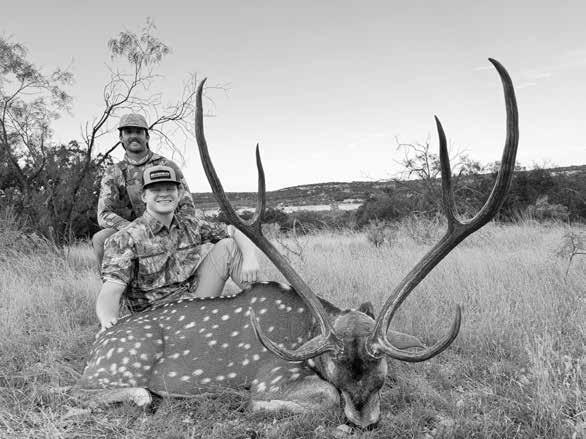
According to Blanch, he and his hunters have had the best success covering ground and spotting deer while glassing and then using a spot-and-stalk approach to play the wind and get within shooting range.
“There are so many axis moving around right now, that we are not sitting and waiting for them at all,” Blanch said. “Even in areas where I know they will eventually move through to feed or get water, we are staying mobile and targeting specific bucks that we find while glassing. It’s hard to go sit still when I know there are more bucks over the hill.”
Blanch said there are small groups of bucks hanging around large herds of does. However, he said there are also some bucks off on their own, covering ground, raking trees, and being very vocal.
“When the bucks have been roaring, we’ve been able to somewhat pinpoint where they are located just by listening to them scream,” Blanch said. “This has consistently allowed us to stalk in close to lay eyes on them, and oftentimes, provided a shot opportunity. I have not been doing any kind of calling, myself. I’ve just been listening, and then tactfully making a move on them, based on what I’m hearing.”
Hunting guide and outfitter Cooper Mcfadin of Mcfadin Outfitters said axis bucks around the Sonora area in Sutton County could be found fairly consistently near watering holes prior to the recent rains the area received.
“Following the major and minor feed time periods as indicated on solunar tables has also been key to our success,” Mcfadin said. “Even in the extreme heat, if the major or minor feeding period is predicted to occur during the middle of the day or the mid-afternoon hours during the hottest part of the day, we’ve been finding mature bucks on their feet and covering ground.”
Mcfadin said recent rains somewhat scattered the deer. This has made covering ground and glassing for bucks, and then using a spot and stalk approach, the best tactic for getting a shot opportunity at a mature axis.
“There are just a ton of big axis bucks out there on the ranches we are hunting right now,” Mcfadin said. “The largest bucks have been found tending to groups of does, off on their own. Some of them have been pretty vocal, depending on the day.”
Hunters in Schleicher County have also reported seeing consistent numbers of axis while filling deer feeders and prepping for the upcoming fall hunting season. One even noted that he heard what sounded like five different bucks roaring during the early morning hours before the summertime heat set in.
New boat ramp
Continued from page 1
years here and finding a spot to launch a boat has always been an issue.
The new ramp is located on the south end of Laguna Boulevard and Palm Street, less than a stone’s throw from another public ramp sandwiched between Longboard and Lobo Del Mar bar and grills.
South Padre Island now has three public boat ramps. The other two are on Palm and Polaris streets.
The town project, set to cost more than $3.2 million when it’s all said and done, is the result of a combination of a grant from the Texas Parks and Wildlife Department, other agencies and the township.
The 329x140-foot ramp has 13 parking spots and two fish cleaning tables that are yet to be installed.
A grand opening of the ramp was held Tuesday, June 21, but the project still waits to be completed.
Called the Marisol Boat Ramp, the final design calls for public restrooms that will be completed later, although the infrastructure is already there.
SPI Mayor Patrick McNulty said the ramp has been long overdue.
“It’s going to be a great project,” he said, “and the first new boat access in decades.”
A Myspi.org press release issued out Tuesday, June 14, announced the ramp grand opening ceremony.
“This is the first public bay access development constructed in 30 years. The Marisol (Laguna Madre) Boat Ramp will offer excellent amenities for both the community and visitors, featuring truck and trailer parking, a fish cleaning station, and an ADA-accessible loading and attendant dock right next to the ramp,” Kristina Boburka,
Flood
Continued from page 1
bending metal T-posts and pipe posts like they were made of paper.
Exotics and white-tailed deer alike will be shuffled across the landscape, with some ranchers losing game and others, even low fence ranches, gaining some. While common exotics like axis deer and blackbuck already exist as free roaming game, look for super exotics like red deer, scimitar-horned oryx or addax to show up in completely new areas. This year’s deer season will certainly provide some surprises.
“Look, we got 23 inches of rain in three days,” said Tim Fallon with FTW Ranch near Barksdale, where low water crossings still held enough water to make safe passage nearly impossible on Monday, July 20. “And, as typical, the creeks flood and go out into the Nueces (River) there, and then it’s maybe going to be down enough to get back on the ranch. We’ve been taking care of downed fences and some water gaps, but we are fine. It’s just another pain because we’ve gotten flooded the past few years.”
On the fisheries side, some lakes, like Medina Lake and Choke Canyon Reservoir, will catch some much-needed water. Not nearly enough to fill the reservoirs, but the addition of water at this time of year will allow baitfish and game fish to spread out. Initially, fishing may be harder, as the fish will seek new habitat but in the long run this water will breathe new life into these bodies of water.
Hill Country rivers like the Guadalupe and Pedernales overflowed with flood waters that will rearrange boulder-strewn bottoms, scour weed beds that produced insect life and create new obstacles like debris dams and trees in the rivers from collapsed banks. These rivers have been popular for float fishing and area guides will have to relearn the new terrain. Some good will come from the flush of silt and the creation of new holes, but it may take a year or more for the fisheries to level out.
The Rio Grande below Laredo flooded. Not known as much of a fishery outside of Amistad and Falcon reservoirs, the Rio Grande does produce catfish in the deeper holes, and all of these will be restocked by recent flooding. Once water drops, fishing for catfish will be excellent.
South Texas rivers, like the Devil’s, Dry Devil’s, Frio, Nueces, Medina and smaller creeks like Seco and Hondo creeks all carried epic flood waters that will certainly redistribute fish. These fisheries were always limited to deeper holes that held water during dry periods. Many of these deeper holes went dry before this flood, so this flooding event will increase fishery opportunities as the water drops. Within a month or so, panfish like bluegill, long eared sunfish and Texas cichlid will begin spawning in these holes. Fly fishing these holes above or below public access points provides good sport.
“Our area got flooded, and the Nueces crested about twice as high as last year, and I thought last year we had a lot of water,” said Ricky Cenorio, ranch manager of Seco Creek Ranch between D’Hanis and Pearsall. “We are lucky because all our fences and buildings were up higher. That wasn’t the case for a lot of folks around us.”
Cenorio said multiple herds of axis had been seen near the Highway 57 and Interstate 35 intersection since the flooding.
“There are going to be a lot of big deer and big exotics shot this year on low-fenced places,” he added.
the shoreline director said. “This initiative was made achievable through the valuable grant programs provided by the RESTORE Act, via the Texas Commission on Environmental Quality, and the Texas Parks & Wildlife Boating Access Grant. We are deeply appreciative of these opportunities as this new public boat ramp will significantly enhance boating access to the Lower Laguna Madre for visitors, community members, and residents.”
The total project cost of $3,223,061 was partially funded by grants of $2,408,415 from the U.S. Department of the Treasury (Treasury)’s Direct Component program for land acquisition and construction, as well as the Texas Parks & Wildlife Boating Access Grant for engineering and permitting. The City of South Padre Island contributed the remaining 25% of the funding, or $69,163, the statement added.
Besides the other two public, townowned facilities, there are other, privatelyowned ramps, including at Jim’s Pier, Captain’s Cove Oyster Bar and at the Sea Ranch Restaurant.
The first one charges $25 per launch the other two are for private use only.
Another ramp is at Island Blanca Park run by Cameron County. The park charges an entry fee of $12 per day or $100 for an annual pass.
Other boat ramps are in Port Isabel, and each have different fees.
But while the new boat ramp is a welcome relief by anglers and boat owners, there is another issue they all said needs to be addressed island-wide — parking.



Jackson Barber shot this impressive, mature axis with outfitter Cooper Mcfadin in the Sonora area, right before recent rains occurred in the area. Photo from Cooper Mcfadin.
LONE STAR OUTDOOR PUZZLER
Solution on Page 18

ACROSS
1.Texas state fish
5. Microscopic aquatic plant
8. Marsh plants
11. Bird of prey
12. Coastal marsh vegetation
13.Exotic antelope
14. Forest treetop layer
15. Young turkey
16. Fast Gulf game fish
18. Gun-cleaning liquid
21. Three-legged shooting support
22. Male duck
24. Close-range bass fishing technique
26. Muzzleloader loading tool
27. Deer resting location
28. Complete ammunition round
31. Dry stream channel
32. Flat Gulf fish
34. Masked nocturnal mammal
36. Wildlife feeding area often man-made
37. Fully grown male deer DOWN
2. Popular Gulf crustacean 3. Odor-reducing hunting practice 4. Central Texas region prone to floods 6. One-year-old animal
7. Small paddle craft
9. Self-setting fishing hook 10. Vertical finesse fishing setup 12. Buck breeding sign 15. Antler attachment point 17. Wildlife feeding device 18. Large Asian deer of the Powderhorn 19. Classic repeating rifle 20. Surface fishing lure
23. Small shotgun pellets
25. Found between lure and mainline
29. Game hanging frame
30. Unintended fish found in nets
33. Marsh game bird
35. Single shotgun projectile
20 fresh Cremini or Baby Bella Mushrooms (large or medium size)
1 Tbsp. olive oil
1 pound ground axis venison
1/2 cup diced onion
1/2 cup diced mushroom stems
1 tsp. paprika
1 tsp. garlic powder
1 tsp. onion powder
1 tsp. salt
1/2 tsp. black pepper
1 Tbsp. minced garlic
2 cups packed baby spinach, chopped
1 (8 ounce) package cream cheese, softened
1/3 cup grated Parmesan
1/4 cup breadcrumbs

your
Axis stuffed mushrooms
Remove stems from washed mushrooms and scoop out dark brown gills with a small spoon while keeping the mushroom cap intact. Reserve the mushroom stems to the side and dice them up, reserving 1/2 cups worth. Preheat the oven to 375 degrees. Heat olive oil in a large skillet over medium high heat. Add in ground venison and onion and cook for 5 to 7 minutes, until the venison is no longer pink. Add in salt and black pepper and mix until well combined. Add garlic and cook until fragrant, 30 seconds to 1 minute. Remove from heat and allow to cool. Once the venison is cooled, transfer to a large mixing bowl.
INDUSTRY
Walther appoints Angle
Walther Arms and Umarex USA announced Don Angle's appointment as general manager for Law Enforcement, Military, and Government markets. Angle brings extensive experience from his tenure at Trijicon and over two decades of U.S. Army and defense industry service.
Delta Waterfowl hiring
Delta Waterfowl is hiring a Regional Director for the Indiana, Ohio, and Michigan region. The position involves developing and managing Delta Waterfowl chapters, coordinating fundraising events, recruiting volunteers, and supporting the organization's waterfowl conservation mission.
AGM Global Visions hires Vester
AGM Global Vision announced the appointment of Leslie Vester as head of Marketing. Vester brings over a decade of experience in brand strategy and marketing leadership to support AGM's expansion across hunting, shooting sports, law enforcement, and outdoor industries.
Millennium Outdoors adds Ware
Millennium Outdoors announced Scott Ware's appointment as director of Sales and Marketing. With nearly three decades of industry experience and 26 years at Outtech
representing Millennium brands, Ware brings deep dealer relationships and product knowledge to strengthen the company's market presence and dealer partnerships.
Wildlife Forever hiring
Wildlife Forever, a 501c3 non-profit organization based in White Bear Lake, Minnesota, is hiring a marketing professional to support conservation programs including the Getting Families Fishing & Boating Initiative and Art of Conservation programs in coordination with state, federal, industry and non-profit partners.
Krieghoff seeks gunsmith
Krieghoff International is hiring a skilled Gunsmith for its U.S. Service Center in Ottsville, Pennsylvania. The full-time position involves repairing, building, and modifying competition shotguns with factory training from Krieghoff Master Gunsmiths, requiring gunsmithing school credentials and experience with break-open shotguns.
RMEF hiring regional director
The Rocky Mountain Elk Foundation is hiring a Regional Director for western Montana to oversee volunteer chapters, organize fundraising events, and manage grant programs. The position requires a bachelor's degree, five years of professional experience, and frequent travel throughout the region.

Add in chopped spinach, softened cream cheese, Parmesan and breadcrumbs. Mix well. Gently stuff into mushroom caps. Then place each stuffed mushroom onto a parchment paper lined baking tray or a non-stick baking tray. Bake them for 12-15 minutes. Garnish with fresh parsley and serve immediately.
Crappie scampi
4 crappie fillets
Melted butter
Fresh garlic, to taste Breadcrumbs
Set the oven to broil and allow it to preheat. While the oven is preheating, place foil over a cookie sheet and spray with oil. Add crappie fillets to the sheet. Sprinkle garlic, butter and breadcrumbs over the fillets. Place the fillets under the broiler and cook until the fish flakes with a fork. Once the fish is done, serve and enjoy.
Puzzle by Conor Harrison, Lone Star Outdoor News
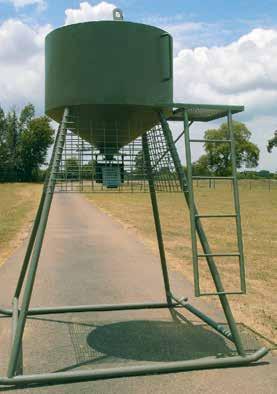
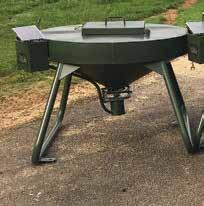

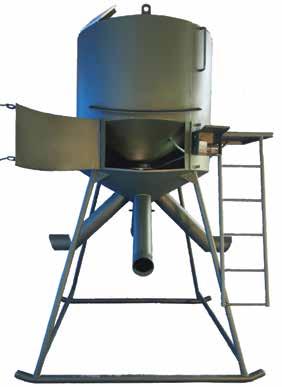
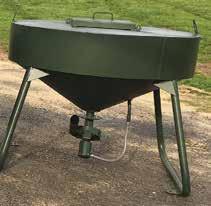
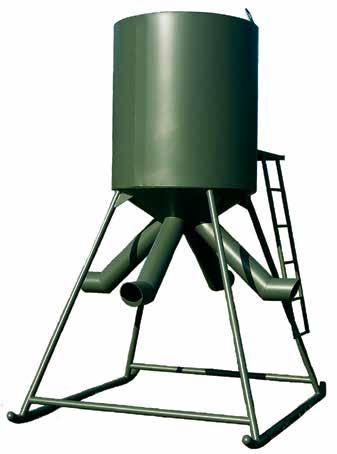
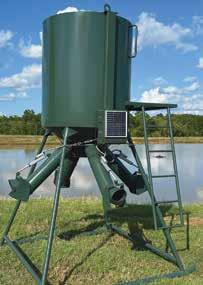
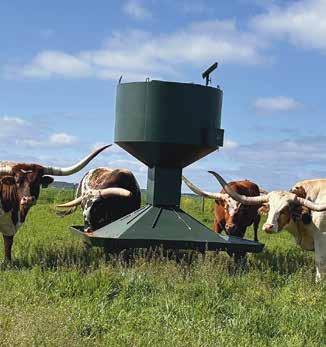
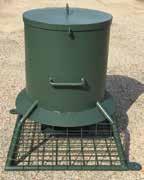
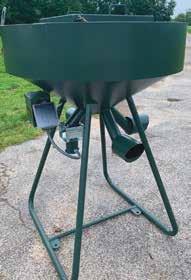
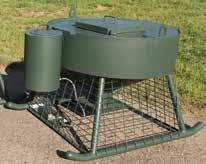
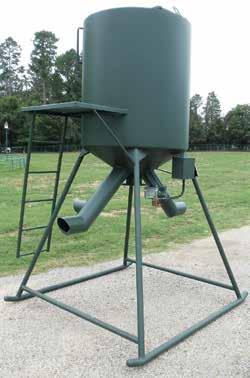
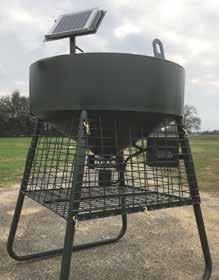
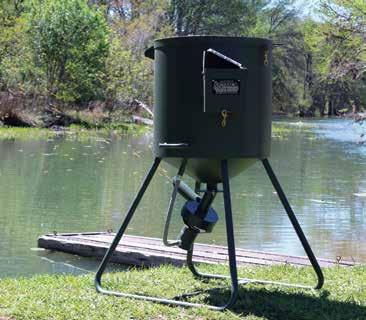
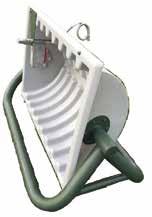
TheRegulator utilizes“TheTimer”allowing controlofthefeedamountwhilemaintaining dispensedfeedinsidethefeederhousing andtubes.Youprogramtodispensefeed uptosixtimes/dayattherateof2lbs./ second&360lbs./daymaximum.









MONTANA
Public comment sought on wolves
Wolf numbers in Montana continue to be well above minimums outlined in the Montana Wolf Management Plan, and they are seeing a decline.
As part of the package released for public comment Friday, Montana Fish, Wildlife & Parks released its annual Wolf Report, along with proposed changes to the Wolf and Furbearer Trapping Regulations. These will be in front of the Fish and Wildlife Commission on Aug. 19 during their regular meeting.
This year's Wolf Report contains two population estimates as FWP is moving toward an updated version of the wolf population estimation tool Integrated Patch Occupancy Model (iPOM). The new version, iPOM 2.0, is yet to be published in a peer reviewed scientific journal, like iPOM.

40

Under iPOM, the wolf population is estimated to be relatively stable at 1,094 wolves. With iPOM 2.0, the population estimate is lower at 725 wolves.
At the Aug. 19 Fish and Wildlife Commission meeting, the commission will consider the wolf and furbearer trapping regulation proposal from FWP. Included in that proposal is the annual wolf harvest quota. The public can comment on the proposal through Aug. 12.
—MFWP
ARKANSAS New WMA regulations for ducks
The Arkansas Game and Fish Commission in Little Rock heard the first reading of a regulations proposal from AGFC staff to establish a drawn permit hunt unit for waterfowl on a roughly 1,000-acre portion of the 30,000-acre St. Francis Sunken Lands Wildlife Management Area in northeast Arkansas.
The regulation proposal was introduced to combat continued comments of concern from hunters regarding crowding and pressure on WMAs during duck season. The draw and hunting process for this section of the area, if the proposal is passed, will be similar to waterfowl draw opportunities on 10 other WMAs, but hunting locations would be available for drawing seven days per week during regular duck season.
The draw hunt area spans just under 5 miles along a portion of the river known as St. Francis Lake, and permit winners will be assigned marked locations for the day of their hunt. Permit winners will be able to bring three hunting companions on their designated hunt day. Permit winners and their guests must remain on public land within 150 yards of their designated location. The exact number of locations has not been finalized but will be based on safety and consideration to distance from area boundaries and private land. Traditionally popular locations within the unit will be prioritized for inclusion in the draw.
—AGFC
WYOMING
WSF applauds grizzly decisions
The Wild Sheep Foundation welcomed a new U.S. Fish and Wildlife Service draft rule that recognizes the remarkable recovery of grizzly bears and involves state and tribal wildlife agencies more directly in continuing bear conservation.
The rule would authorize state and tribal wildlife agencies to activate their own management plans in coordination with the Fish and Wildlife Service. States and tribes would gain more responsibility for managing bears and deterring damage by bears in areas where grizzlies surpass local objectives – such as the Greater Yellowstone area where the grizzly population has increased from approximately 136 bears in 1975 to more than 1,000 today.
"This rule reflects what successful conservation should look like—recognizing recovery while providing the tools needed to address the challenges that accompany it," said Gray N. Thornton, president and CEO of the Wild Sheep Foundation. "We commend Secretary Doug Burgum, Director Brian Nesvik, and the U.S. Fish and Wildlife Service for advancing a practical, science-based approach that benefits both grizzly bears and the people who live alongside them."
MARYLAND Black bear hunt applications open
The Maryland Department of Natural Resources' black bear hunt lottery will be open from July 15 through August 31. Entry is required to participate in the 2026 Maryland bear hunting season from October 26 – 31 in all of Allegany, Frederick, Garrett and Washington counties.
The bear hunt is an important part of managing Maryland's expanding bear population by helping to reduce conflicts between humans and bears such as collisions with vehicles and property damage.
Hunters can check the DNR black bear hunt website on September 3 to see if they were selected. Applicants of the lottery who are not selected receive one preference point for each year that they enter the lottery but are not selected. Each preference point represents one chance in the next bear permit lottery the hunter enters. Anyone who is not seeking a permit this year, but may in the future, can purchase a preference point for $15 without entering the 2026 lottery.
IDAHO
1M kokanee fingerlings released
Idaho Fish and Game released approximately one million kokanee fingerlings in June from its first captive broodstock program, which raises kokanee to adulthood in hatcheries to stabilize annual stocking numbers.
The program aims to eventually produce three million fingerlings annually and was modeled after the successful sockeye salmon hatchery program.
Fish and Game tries to stock around 7 million kokanee fingerlings every year, but a bad year for adult survival can affect how many fingerlings are available the following year. While Fish and Game can't change natural conditions that affect adult survival, hatchery production can buffer some of the fluctuations.
Taking a cue from the successful sockeye salmon hatchery program, which now produces about a million young sockeye per year, fisheries staff decided to raise kokanee (which are landlocked sockeye) in a similar manner. They raised kokanee to adulthood in hatcheries and spawned those to augment the traditional "trap, spawn and rear" method.
Shrimp season opened July 15
NOAA Fisheries announces federal waters from 9 to 200 nautical miles off Texas open to shrimp trawling beginning 30 minutes after official sunset, local time, on July 15, 2026, corresponding to the time Texas opens its waters to shrimp trawling.
The waters off Texas are closed to shrimp fishing annually to allow brown shrimp to reach a larger and more valuable size prior to harvest, and to prevent waste of brown shrimp that might otherwise be discarded because of their small size.
The fishery closed on May 15, 2026.
The re-opening date for Texas waters is based on the results of biological sampling by the Texas Parks and Wildlife Department and the assessment of maximum tidal durations.
In addition, Texas regulations only allow a 60-day closure; the 60-day period expires July 15, 2026.
—MDNR
Gun shop
Continued from page 4
hard worker and a go-getter. She has never been afraid of rolling up her sleeves and getting something done.
“One moment that has always stuck with me happened when she was probably 11 or 12 years old, and we were driving home from a rifle match in Monahans where she had shot really well,” Humphreys said. “I asked her what motivated her to work so hard at shooting, and without missing a beat she said, ‘Well duh, you own a gun shop. I’ve got to make you look good.’ I thought that was a pretty good answer.”
York said her second home was at the gun shop and now as an adult believes the business is part of the fabric of Southwest Texas.

“For more than 50 years, hunters, ranchers, law enforcement officers, competitive shooters, and generations of local families have walked through those doors,” York said. “The shop is at the center of so many parts of our culture and heritage and preserving that has become just as important to me as preserving the business itself.”
York said she never imagined she would own the business but believes it is worth preserving. From being the home of the world’s largest six shooter to her father’s impact as the Val Verde County 4-H Shooting Sports program leader, she realized her love isn't just the outdoors or shooting, it's the heritage that surrounds them.
“There are larger and certainly newer gun shops, but there are very few that have 53 years of history layered into them where someone walks through the front door and immediately says, now this is a real gun shop,” York said. “I want to preserve the relationships, the reputation, the history, and the character that Dad spent a lifetime building.”
York expressed that her goal is not to change what makes the shop special, but make sure it survives another generation of modernization where it makes sense.
“This includes online inventory, e-commerce, updated accounting systems, a modern point-of-sale system, and a stronger digital presence, while preserving the personality that our community has loved for decades,” York said.
People assume succession happens the day someone retires, but according to York, it happens years before that moment. When asked when she is going to take over the shop, she believes that process has already begun.
“It happens while you're hanging a new front door together, restoring a landmark, planning estates, and deciding what deserves to stay exactly the way it has always been,” York said. “At 80 years old, Dad is still behind the counter when he can be, and that's exactly how we want it.”
York said her job right now is making sure everything her dad spent more than fifty years building is still here years from now, on their terms.






“I’ve always believed that if you treat people right, the business will take care of itself,” Humphreys said. “I think Holly understands that, and I know she’ll continue serving the community that way.”

Three Texas lakes make B.A.S.S. top 10
#2: Lake J B Thomas
Every year, a different Texas lake bursts onto the national stage. This year, J.B. Thomas is that fishery. Not that Thomas is an unknown. Far from it, considering it was No. 9 on our list of best bass lakes in the Central Division a year ago. But 2025 was a ballad compared to the absolute shredding happening on Thomas in 2026. In the first four months of this year, a total of 159 of the 467 bass entered in the popular Texas Parks and Wildlife Department program were caught at J.B. Thomas. To qualify for the program, the bass must weigh more than 8 pounds, and a third of the way into the year, more than a third of qualifying bass were caught in the small reservoir located in west Texas, about 95 miles northeast of Odessa. The highlight through April was the pair of huge bass caught by Lawrence Lee of Tolar, Texas, on March 24 — the heavy bass tipping the scales at 13.57 pounds and another coming in at 13.10. Lee already had proved his prowess when he boated a 13.12-pound fish on March 8. Almost a month earlier, Stephenville, Texas, resident Brandon Burks caught a 13.16-pounder. The lake’s success even surprises TPWD officials, who note the turbid and muddy waters of J.B. Thomas “continue to defy normal bass logic and continue to produce an unfathomable number of fish over 8 pounds.”
#6: Lake Fork
When Texas biologists and seasoned anglers talk about the best the the state has to offer, most of them continue to point to Lake Fork. And that speaks volumes, considering the otherworldly productivity lakes like J.B. Thomas and O.H. Ivie have had the past few
years. Lake Fork is located just east of Dallas, making it easy to reach for countless thousands of anglers. It’s also a big enough water body to comfortably host recreational anglers and tournament anglers simultaneously. And the catch here is as consistent as big-bass fisheries come. How so? Consider 51 8-pound or over bass were caught at Fork in the first four months of 2026, the biggest of those a 13.38-pound fish caught Feb. 28 by Godley, Texas, resident Dale Washington. That’s a toad by anyone’s measurements, but it’s the long list of 8- and 9-pounders that truly makes Fork stand out — for anyone from Bassmaster Elite Series anglers to weekend warriors itching to tackle a trophy bass.
#8 : O H Ivie Reservoir
Ivie has been in the Texas spotlight the past half-decade, blossoming from relative obscurity into a destination lake that gained worldwide notoriety. That sort of change happens when a place is voted the Best Bass Lake in the U.S. in 2023 and second in 2022, 2024 and 2025. Ivie “slips” in the rankings this year not because it’s been any less productive than the previous few years, but only because it can be hit or miss for anglers looking for trophy bass. The ones that hit, though, are reeling in giants. In the first four months of 2026, Ivie anglers caught 32 bass that qualified for the program — the biggest of them a 14.22-pound bass caught by Ted Taylor of Lucas, Texas, on March 31. That was one of five largemouth bass that clocked in at more than 13 pounds this year, and there were a good number of 12-, 11- and 10-pounders to prove that Ivie hasn’t lost a step when it comes to world-class bassin’.
—Bassmaster.com




Holly Humphreys York stands with her father in their gun shop in Del Rio. Holly has worked there for years and is taking over the shop from her father. Photo from Holly Humphreys York.
HUNTING FISHING
MOBILE SPORTING CLAYS FOR HIRE!

Fundraisers, Corporate, Parties! Sales/Service all Traps! 40+ Years Experience! (817) 999-1395
BIOLOGIST 4 HIRE, LLC. Fish & Wildlife Habitat Consulting, 1-D-1 Wildlife Agriculture Valuation, Conservation Land Assessment & Management Plans, Drone Mapping Services. Chad E. Simmons
USDA NRCS TSP B-19-22936 chad@biologist4hire.com (972) 837-0392
HUNTING CAMP FOR LEASE
Between Rocksprings and Del Rio
3
TEXAS TROPHY WHITETAILS Axis, Blackbuck, Hogs Free range whitetail and exotic hunts in Sonora, TX HuntTexasWhitetails.com (717) 512-3582
JULY 23-26
DALLAS SAFARI CLUB

and local intel from guides. Focused on artificial and fly, use the app to determine where to go, when to go and what to throw to increase your fishing success. Free trial to get started.

MISC
CATTLE MARKET IS HOT Cash out every Tuesday @10 am Atascosa Livestock Exchange Pleasanton Hauling Available Call (210) 289-7698
JMB SERVICES Commercial Fencing, Residential Fencing Ranch Fencing, High Fencing Privacy Fencing, Gate Entrances Land Clearing, Root Plowing Metal Buildings, Post Driving Retaining Walls, Concrete Work Water Lines, Trenching John Batot (830) 560-6877
DATEBOOK

Summer Expo & Foundation Gala Gaylord Texan Resort, Grapevine (972) 980-9800 biggame.org
JULY 25
ROCKY MOUNTAIN ELK FOUNDATION
Texas Gulf Coast Big Game Banquet Knights of Columbus, Pearland (281) 703-8747 rmef.org
JULY 31
DUCKS UNLIMITED Cibolo Creek Banquet Mikulski Hall, Schertz (303) 915-5371 ducks.org

NATIONAL WILD TURKEY FERDERATION Fort Worth/Panther City Inaugural Banquet 7640 NE Loop 82 Suite 110, North Richland Hills (817) 448-7386 your.nwtf.org
AUGUST 1
SAFARI CLUB INTERNATIONAL Bayou City Chapter Banquet NRG Center, Houston scibayoucity.com
AUGUST 7
SAFARI CLUB INTERNATIONAL

Austin Chapter Banquet and Auction Dripping Springs Ranch Park and Event Center sciaustin.org
AUGUST 13
DUCKS UNLIMITED Fayette County Banquet KC Hall, La Grange (979) 966-7688 fayettecodu.com
AUGUST 13
DUCKS UNLIMITED Angelina County Banquet Lufkin Convention Center (903) 733-7838 ducks.org
AUGUST 14

NATIONAL WILD TURKEY FERDERATION Kaufman County Hunting Heritage Banquet 3000 FM 429, North Terrell tammywomack@anbtx.com your.nwtf.org
AUGUST 28-29
TEXAS DEER ASSOCIATION Annual Convention

JW Marriott Hill Country Resort, San Antonio (512) 499-0466 texasdeerassociation.com

SOUTHWEST ROOFING
Commercial & Residential
Roof Maintenance
Missing Shingles
Replace Roof Jack Chimney Restoration All Work Guaranteed
$150 Repair Per Leak & Up
Free Inspection & Estimates (832) 817-0202
JOBS

SITKA IN DALLAS IS HIRING Part Time and Full Time Sales Positions. Call (469) 445-1123
RANCH FOREMAN –BURNET, TEXAS
Seeking a hardworking, self-motivated ranch foreman for a beautiful 120-acre ranch with a small cattle herd. Duties include fencing, mowing, tree trimming, cedar clearing, road maintenance, irrigation, pest control, and general ranch upkeep. Compensation includes $2,000/month salary, utilities, and an RV/5th wheel site. Must provide your own RV or 5th wheel. Equipment and tractors are provided. Couples welcome. Looking for someone who will care for the ranch as if it were their own and maintain it to owner standards. Enjoy peaceful country living, stocked fishing, and incredible Texas starry nights.
JGILL@ATXATTORNEY.COM




Urchin Crappie
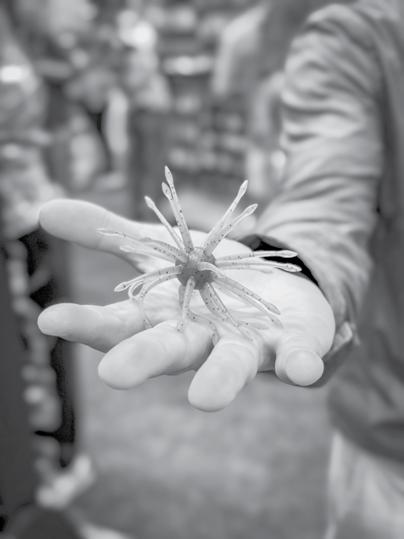
in deeper water,” Dice said. “Urchin-style baits can also be fished weightless and can be rigged with both single and treble hooks. The most productive retrieve while using them tends to incorporate an aggressive and erratic cadence that employs distinct twitches with plenty of pauses mixed in, similar to the type of retrieve most folks use when chunking a jerk bait. Oftentimes, the fish strike the bait on the pause, as it is suspending in the water column and seemingly, pulsing with life.”
San Antonio area fishing guide Clendon Taylor of C&C Guide Service said what he likes most about the new urchin baits that have hit the lure market, is how easy they are to use.
“Anybody can fish with one of these baits, regardless of their experience or skill level,” Taylor said. “They put out a ton of vibration and have excellent action in the water that can be produced by the slightest movement of the rod tip. It’s almost a do-nothing style of bait. If you put it in front of a bass, they can’t help but strike it.”
Some anglers have expressed their thoughts on the shape of urchin baits and theorized these lures provoke some sort of instinctive reaction from the fish, since they resemble an enlarged, plankton-like organism. Others have reported they have even experienced some crossover success with these lures in inshore applications where trout and redfish are feeding on crustaceans and crabs.
With their buoyant, slow-sinking properties, it’s possible trophy speckled trout fanatics may be testing these baits out in the near future during the upcoming fall and winter months. It seems there is no end in sight, in terms of where this new, urchin bait craze is headed.
Continued from page 6
He and his clients have been using small jigs and pitching them over the piles.
“We use small jigs, like 1/8-ounce or even less like a 1/16-ounce,” Shelton said. “The most productive color has been a more natural shad like monkey milk. They’re pretty killer out there.”
Live bait has also been effective.
“It’ll stay the same as long as the conditions are consistent. Really, out there they don’t move around much since it is a smaller lake,” Shelton said about summer fishing.
On Richland Chambers Reservoir, Shelton reports the fish are running a little shallower in 15- to 20-feet of water.
“Just the timber hasn’t been as good. I’ve mainly been fishing brushpiles out there with minnows,” Shelton said.
He and his clients will also throw jigs when the bite is better.
“Color doesn’t matter as much out there,” he said, referring to the stained water. “I like white with a chartreuse tail or something like that, but I have been mainly fishing minnows.”
Again, anglers should be mobile, catch the few active fish off of the pile, and moving to the next spot.
“This morning we got really lucky and had like 31 off of a spot, but for the most part, maybe five fish off of every spot,” Shelton said.
On Benbrook Lake, James Davis with Davis Guide Service reports fishing has been steady with most fish suspending around 15 feet on structure.
“I wouldn’t go any shallower than 15 feet up to 30-, 35-feet of water, but most of these fish are going to be about 15 feet down,” Davis said.
He and his clients have had success with jigs and hair jigs.
“Of course, you can always use a minnow,” he said. The most productive color for Davis and his clients has been some combination of something with chartreuse.
“I mean, every day is really different,” Davis said. “Keep a couple of poles rigged so you can change out quickly if they decide they like one color over another.”
On Lake Ray Hubbard, Brandon Sargent with Lead Slinger Outdoors reports the fishing has been excellent.
OUTDOOR BUSINESS
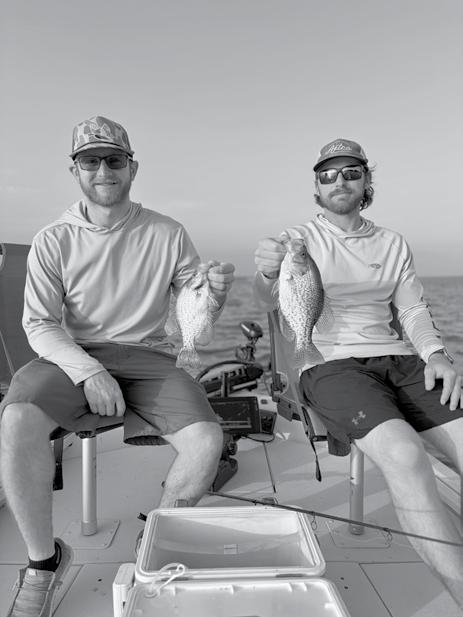
“There’s probably around 500,000 crappie per tree that I’ve come across,” Sargent said laughing. “You’re going to go through a lot of little ones to get to the bigger ones, but you know how it is.”
He and his clients have been targeting brushpiles in 20- to 25-feet of water.
“Just follow the bank lines and come across a tree, and you’re going to come across a massive load of crappie,” Sargent said.
He believes the boost in crappie population has been caused by the recently built bridge.
“I think the population is going to keep growing with the bridges built out here. Fish are not going to have to go all the way to the creeks to spawn,” he said.
Everything he and his clients have thrown at them has been productive.
“Anything you put on, if you present it right, you’re going to catch them,” he said.
Ultraviolet reflective colors have probably been slightly better in the deeper water. For Sargent and his clients, though, it’s just about getting on them.

Urchin-style baits have seemingly taken the bass fishing industry by storm, and many anglers are already contemplating whether these lures may have a place in saltwater environments, as well. Photo by Nate Skinner, for Lone Star Outdoor News.
Anglers like Dustin West and Lane Scruggs are finding good numbers of crappie, often several at one spot, on many lakes this month. Photo by Justin Shelton.