By Tony Vindell For Lone Star outdoor newS
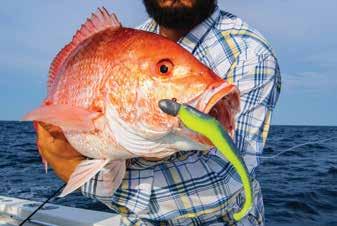
The 2026 red snapper season in federal waters is now open. Beginning June 1, anglers can chase big red snapper more than nine miles offshore.
“It’s a 147-day season,” said Capt. Roy Cagle. “It’s the longest one season
By Nate Skinner
For Lone Star outdoor newS
Fly-anglers have been enjoying successful days on the water across Central Texas and Hill Country rivers.
Guadalupe bass and largemouth bass have been providing the most consistent action, and some smallmouths and Rio Grande cichlids have been in the mix, too. Area lakes have also produced action for those chasing bass on the fly. A variety of poppers, as well as crawfish and baitfish patterns, have been working well.
Chris Johnson of Living Waters Fly Fishing said the fly-fishing action on the San Gabriel River has been excellent lately on poppers and flies in a crawfish patterns.
“The biggest key to catching fish on the fly on the San Gabriel and other Central Texas and Hill Country rivers has been matching your presentation with the prevalent food sources that Guadalupe bass and largemouths are feeding on right now,” Johnson said. “Matching your fly to what makes sense on the river or body of water you are
fishing will keep you hooked up.”
Johnson said he’s been consistently catching Guadalupe bass and largemouth bass in the 1- to 2-pound range on the San Gabriel and other rivers recently. He said the fish have been feeding in moving water and around sunfish beds.
“Any areas with shade or deeper pools have also been productive, especially during the middle of the day during sunny conditions,” Johnson said. “When it’s bright outside, the fish have been holding tight to cover.”
According to Johnson, it’s a great time to flyfish our rivers right now. He said the fish are biting all day long, and there’s been a solid mix of Guads, largemouths, sun fish, and Rio Grande Cichlids willing to strike a variety of flies.
Hill Country fly-fishing guide Pablo Torrez of the Grateful Angler said crawfish pattern flies, Clouser minnow flies, streamers, baitfish patterns, and poppers have been producing plenty of strikes from Guadalupe bass, largemouth bass, and cichlids on the San Marcos and Blanco rivers and their surrounding tributaries.
“Poppers have been the ticket during the first couple of hours of the day, early in the morning,” Torrez said. “They have also been working well late in the evening as the sun sinks lower in the sky.”
I know of.”
Cagel spoke to LSON as he took about 40 anglers on The Thunderbird, a for-hire vessel docked at the South Padre Island Marina. The trip, expected to be a nearly 8-hour journey, ended two hours earlier thanks to the good weather and equally good catches.
Each angler caught their 2-fish per day limit of red snapper, with the size ranging from 17 to 20 or more inches. The legal minimum length limit is 16
inches.
Anglers Phil Roechrich, Victor Sanchez, Ricardo Antonio Gonzalez and Henry Oh were excited about how the day turned out.
“I caught my limit really fast,” Roechrich said. “It was one of my best days. I was really happy with the fish I got.”
In fact, his two red snapper were among the biggest ones caught on the trip.
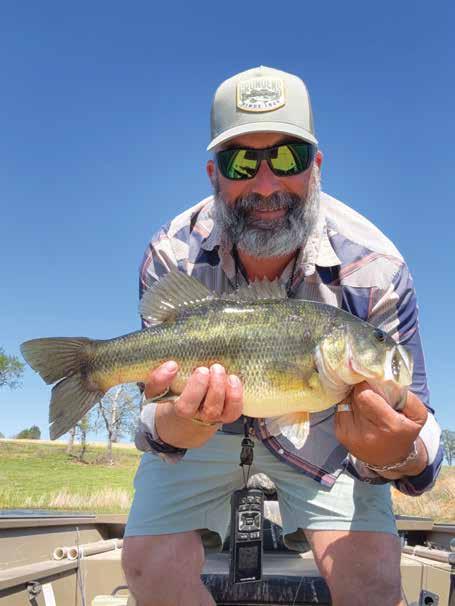
By Conor Harrison Lone Star outdoor newS
Texas Parks and Wildlife Department is once again taking comments onaproposaltoallowriflehuntingon a small number of properties in Dallas, Rockwall, Collin and Grayson counties in North Texas.
Of the four, Grayson County is the
only county currently with properties meeting the proposed criteria — a high-fenced property currently under the Managed Lands Deer Permits program.
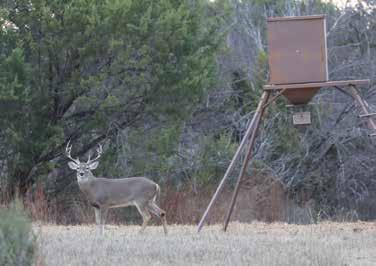
According to Blaise Korzekwa, the white-tailed deer program leader for TPWD, the proposal was submitted because of management issues on the high-fenced properties. Currently, all four counties are archery only for white-tailed deer hunting.
“The last proposal was submitted back in 2021, and it was to open the entire counties up for firearm






New World screwworm found in Texas; no wildlife impacted yet
By Conor Harrison
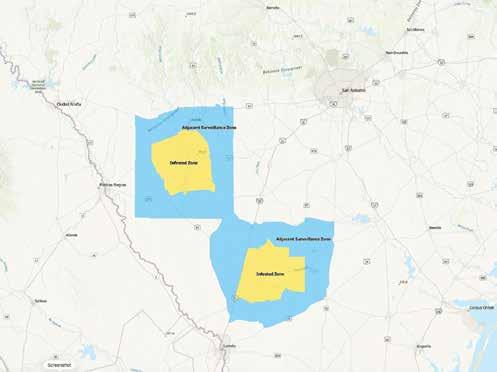
In the first case since 1966, officials confirmed the detection of New World screwworm in a Zavala County calf on June 3. A sample collected from the three-week-old calf with an umbilical lesion was identified and confirmed as NWS by the National Veterinary Servies Laboratory in Ames, Iowa.
As of press time, no NWS cases have been reported in Texas wildlife. The state’s $9.6 billion hunting industry faces risk, as 80% of Texas white-tailed deer were wiped out during a 1960s outbreak.
Two additional cases of New World screwworm have been confirmed in Texas as of June 8 — a calf in La Salle County and a dog from New Mexico in Andrews County.
Wildlife biologists along the border are concerned.
“As a wildlife biologist, I would never have thought screwworm would be on my bingo card,” said Donnie Draeger, biologist for the Comanche Ranch. “I have read the chapter in Al Brother’s deer book about screwworms during the 1970s, and studied it more since hearing of this issue a couple years ago. Look closely at your deer this summer on your game cameras. The screwworm open wound could be a thumbnail size up to a softball size infection and is usually round in shape.”
The parasitic fly, which lays eggs in the wounds or orifices of animals, can be fatal. A screwworm outbreak could cost Texas around $1.8 billion annually, with cattle producers alone facing $735 million to $745 million in losses each year, according to Peyton Schuman, senior director of government relations for the Texas and Southwestern Cattle Raisers Association.
The Unites States Department of Agriculture,
Please turn to page 20
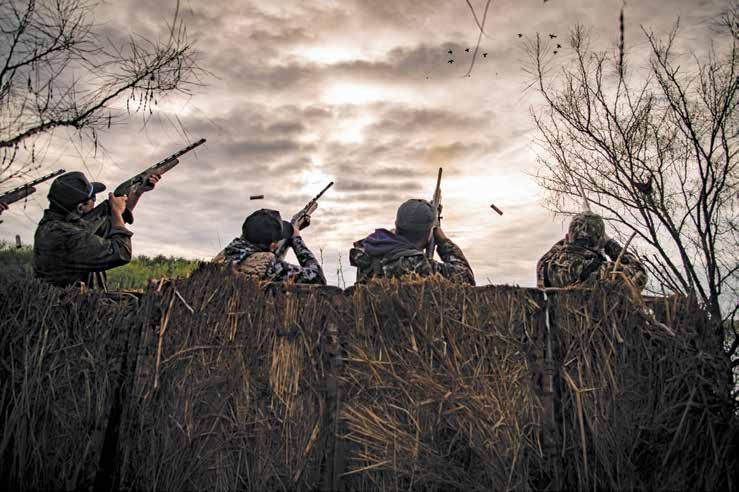
By Nate Skinner For Lone Star outdoor newS
At the end of April, the U.S. Fish & Wildlife Service issued a memorandum to clarify approved nontoxic shot requirements for hunting migratory waterfowl. According to the agency, they had received frequent questions about the use of copper shot.
Within the memorandum, the U.S. Fish & Wildlife Service said that in order for new nontoxic shot types to be approved, a shot material must show no significant toxicity risk to birds, wildlife, or habitats. The shot material must also be identifiable as non-lead in the field using portable testing devices and be formally approved through rulemaking and added to the federally approved nontoxic shot type list.
Since lead shot was banned nationwide for waterfowl hunting in 1991, the most common and popular nontoxic shot type used by waterfowl hunters has been steel.
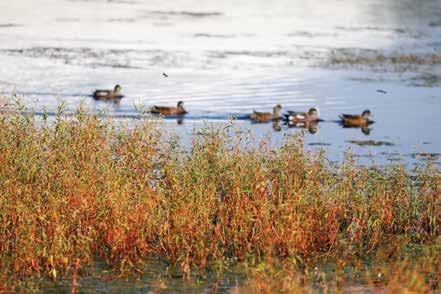
In recent years, however, there has been a growing trend amongst duck and goose hunters for using shot shells that incorporate loads with bismuth and tungsten shot. These metals have higher densities, offering waterfowl hunters a more powerful, harder hitting shot shell load option. The cost of bismuth and tungsten has skyrocketed recently, largely due to political and military activities, and the use of these metals for military needs. Because of this, some ammunition manufacturers have begun exploring and producing copper shot shells. The recent memorandum from the U.S. Fish & Wildlife Service highlights some possible issues with these new copper loads.
“While thin copper coatings on other approved shot types have been allowed since 1986, pure copper shot is not approved because copper can be toxic to waterfowl and aquatic species,” the U.S. Fish & Wildlife Service stated in their memorandum. “There are 4 shot variations contained or coated with copper that are authorized; however, only one copper-based shot type with greater than 44% copper, corrosion-inhibited copper shot, is currently approved.”
The U.S. Fish & Wildlife Service said
CIC shot is a unique formulation, in which copper is allowed only because it is coated with benzotriazole and a fluorescent powder that prevents corrosion and exposure meeting all federally approved nontoxic shot requirements.
“Shot types that are not listed as meeting the specific requirements, or that lack required coatings or field-testing compatibility, may not be used for migratory bird hunting,” said the U.S. Fish & Wildlife Service. “The FWS will continue reviewing new shot and coating applications under the requirements, but no additional copper-based shot types are approved at this time.”
The U.S. Fish & Wildlife Service did say they are considering future rulemaking to update migratory bird hunting regulations in order to address several emerging issues and technological advances, including nontoxic shot types and their approval processes.
The full memorandum issued by the U.S. Fish & Wildlife Service can be viewed and downloaded at fws.gov, along with the current approved list of nontoxic shot types.
Playa restoration: a win for wildlife, water and communities
By Joseph Richards For Lone Star outdoor newS
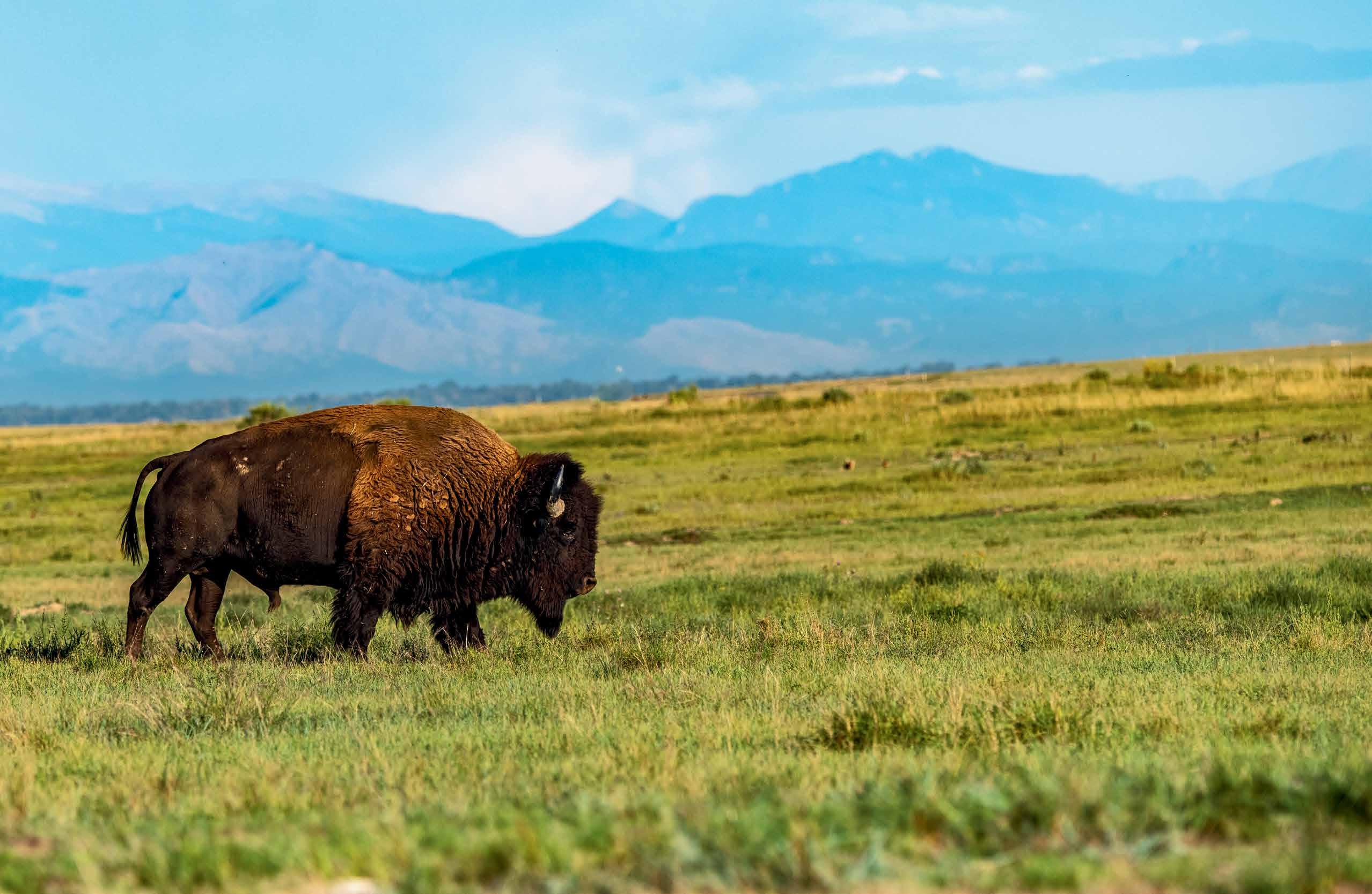
Before settlement, the Southern Great Plains was a prairie-wildlife ecosystem dominated by short grasses and bison herds. Across this dry landscape, playas, also known as playa lakes, mud holes or buffalo wallows, were the main source of water for wildlife.
While the developed landscape looks different today, more than 200 species of birds and other wildlife still depend on these temporary wetlands as their main source of food, water, and cover.
Playas also provide water for people by recharging the Ogallala Aquifer — a 174,000 square mile groundwater formation that supplies the majority of people’s water needs in the Great Plains.
Playas are a primary source of groundwater re-
charge, contributing up to 95 percent of water flowing to the aquifer, with recharge rates in playas 10 to 1,000 times higher than under other areas.
“We need water to survive out here. Without water, this place is uninhabitable,” said Heather Johnson, Migratory Game Bird Specialist for Texas Parks and Wildlife Department. “Playas hold the majority of the biodiversity in the region and can support our local communities for their daily needs, rangelands, and livestock operations.”
As biodiversity hotspots, playas can support multiple recreational activities that rely on wildlife, including hunting, wildlife viewing, birdwatching and photography.
Migrating waterfowl, cranes, and shorebirds in the Central Flyway depend on these round, shallow basins as feeding and resting areas.
“Sandhill cranes will roost in playas if there's
New state parks will have hunting opportunities this fall
By Conor Harrison Lone Star outdoor newS
Texas hunters will have two new state parks to hunt on a limited basis this fall thanks to two new acquisitions by TPWD.
The 54,000-acre Silver Lake Ranch is in the western Hill Country and the 2,000-acre Bear Creek State Park is near Concan. Silver Lake is the second biggest state park behind Big Bend Ranch.
Located about 150 miles west of San Antonio between Rocksprings and Uvalde, the Silver Lake Ranch features steep canyons, rolling hills and miles of river frontage along the West Nueces River. Additionally, it is home to 30-acre spring-fed Silver Lake, the property namesake.
According to TWPD Public Hunt coordinator Kelly Edmiston, both properties will have hunting available through the TPWD Drawn Hunts program.
“We will have some deer hunts out there this year,” Edmiston said. “The parks division will be pulling some park staff from other parks to facilitate some of the hunts. I anticipate there will be at least 10 deer hunting permits up for drawing. Neither park has a superintendent yet, so both are really fresh. The parks division will also be working on a master plan to decide on infrastructure, how the park will be built out, and things like that.”
Edmiston said it is actually easier to administer and logistically run a hunt when the park is not yet open to the public, since it does not require closing anything down, as would normally happen on active state parks.
Edmiston said he’s excited to see what comes off both properties from hunters, especially Bear Creek, as it hasn’t been hunted in decades.
Steep canyons and limestone cliffs rise above rolling hills covered in native vegetation including live oak, juniper and other Hill Country plant communities. Several creeks and natural water features can also be found throughout the property including Sycamore Creek, Lost Creek, North Spring Creek, Blue Waterhole and Dutch Waterhole. The deer hunting should be outstanding, according to biologists.


By Cory Byrnes For Lone Star outdoor newS
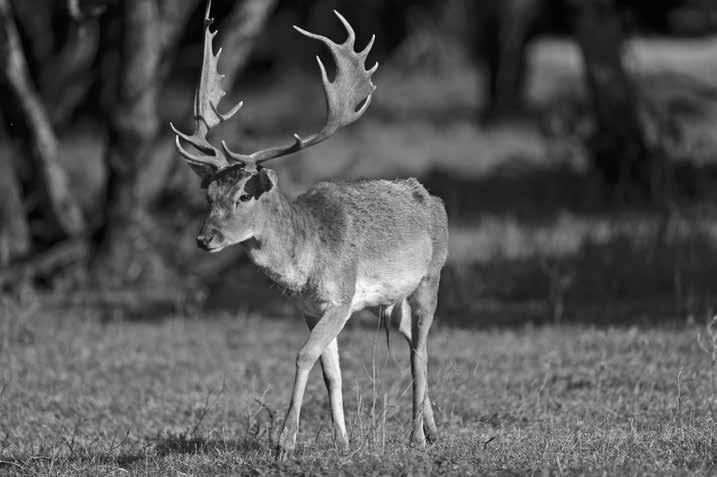
Over the last decade, Texas ranchers have seen an increase in hunters wanting to chase exotics, while also seeing the number of ranches that carry exotics increase, and the numbers back it up.
“Animal and hunt sales skyrocketed during the COVID years,” said Callen Ahrens with Ahrens Ranch and Wildlife.
With limited travel options, hunters wanted to get out and have an experience, and Texas offered that in droves. After COVID, the numbers have settled back down to their previous levels.
“The market is still very strong. It’s just the prices have softened a little bit,” Ahrens said.
The industry continues to thrive for
many reasons. Not all of which relate to hunting.
“There is a lot of interest for a lot of different reasons,” Ken Yancey, executive director of Exotic Wildlife Association said. “From a conservation perspective, people are interested in maintaining populations of some of these animals that are endangered in their natural habitat.”
From a hunting perspective, it provides an experience unlike anything else. From a conservation perspective, it funds efforts to repatriate some of these animals to their native habitats.
“Conservation by commerce means that hunters’ dollars matter, that’s real dollars going towards that animal, that species,” Ahrens said. “Financial benefit to landowners is what allows these













































Adding just 4.6" to barrel length, the Nomad Ti OTB advances over-the-barrel suppressor innovation. Delivering the recoil reduction and sound suppression of a longer system, it maintains optimal balance and keeps the rifle compact for fast handling and confident control in the field.

















Enter in the TBBC by July 15 to automatically be entered in the Early Bird gun prize drawing on July 16, for a Rizzini BR110 Sporter 12ga. $20 entry - can be done by itself or as part of a Texas Dove Hunters Association membership combo.
Continued from page 1
hunting,” Korzekwa said. “We received lots of pushback from bow hunters. They shoot some really big deer up there and they did not want the age structure to deteriorate. There was also a safety argument, and it is becoming much more urbanized, but people still use firearms to predator hunt, hog hunt and hunt exotics on a few places.”



Every year, TDHA bands & releases 800 Eurasian Collared doves across Texas. If you’re entered in the TBBC (must enter by Aug. 31) & harvest one of our orange-banded birds, you’re an automatic WINNER! See prizes & rules online. No bird harvest necessary for the Early Bird gun prize.
The 2021 proposal was eventually not enacted. The new proposal is very narrow in scope and has much less opposition, according to recent scoping meetings in Grayson County.
“We had 28 attendees at the most recent meeting in Grayson County,” Korzekwa said. “Last time, more than 300 people showed up. Those 28 did voice concern, but we’ve found, depending on what is in the presentation, the most vocal in opposition are usually the ones to speak. We surveyed everyone at the meeting and it came back about 40% positive compared to 60% negative.”
Korzekwa said if the rule is adopted, and TPWD still must go through a formal process to approve, the measure would have no impact on bow hunters throughout the counties or the age of the deer herd structure. Korzekwa said the high-fenced landowners could not harvest enough deer with archery gear to maintain their management plans, so they asked for the change.
Korzekwa was adamant that, if adopted, the rule would not lead to other proposals for rifle hunting in the counties.
“We have zero intention of doing anything county-wide,” he said. “This is such a narrow scope.”
Grayson County hunters are mixed on the new regulations.
“It’s all about making more money with a guaranteed trophy deer which means more money in the landowner’s pocket,” said hunter David Purdom on social media. “It’s not about controlling the deer population on the property. I have hunted a high fence over 20 years, and we never had an issue with it getting overpopulated, (and) it was an archery only property. TPWD should be overseeing the production and harvest of these deer. If the landowners can’t control the population under the TPWD regulations, they need to cut the fence down. That is considered poor management if you have to get regulations changed for 4 or 5 ranches. TPWD needs to do their job and get these ranches managed properly and not change regulations.”
The next steps for TWPD include publishing the proposed ruling in a public registrar and go through the TPWD Commissioners approval process, including more public testimony.
A New Braunfels man has been accused of illegally killing at least 13 white-tailed bucks in Comal, Hays and Bexar counties between the fall of 2024 and through late summer 2025.
Darrell Maguire, 55, New Braunfels, is alleged to have poached deer over an 11-month period, often shooting the animals with a crossbow from his vehicle, removing only the heads and leaving the carcasses to waste.


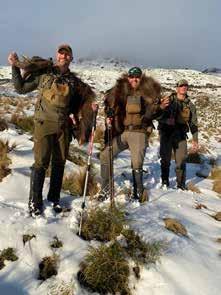


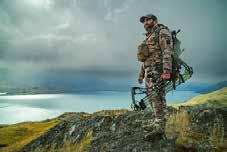
The investigation began in June 2025 after multiple white-tailed buck carcasses were discovered in Comal and Hays counties. Several of the incidents occurred in residential neighborhoods, where wardens recovered crossbow bolts from front yards and porches.
Texas game wardens arrested Maguire in September on wildlife and drug possession charges. While executing the search warrant of his residence, wardens recovered evidence they say linked him to multiple poaching scenes.
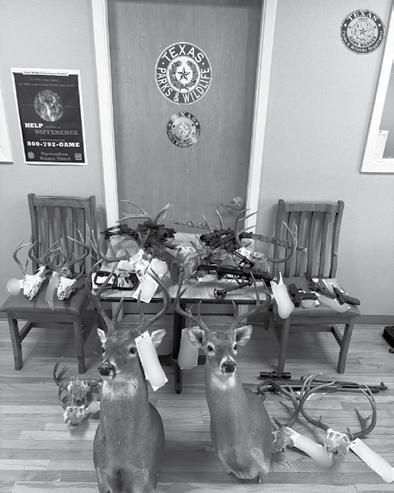
As the investigation continued, wardens determined Maguire also exceeded the annual bag limit during the 2024 hunting season, allegedly taking five white-tailed bucks over the legal limit in Bexar County.
From June through September 2025, investigators believe Maguire illegally killed at least eight white-tailed bucks in residential areas across Comal and Hays counties.
Charges filed against Maguire include:
• Hunting without landowner consent, a state jail felony
• Hunting white-tailed deer at night, a Class A misdemeanor
• Hunting white-tailed deer from a vehicle from a public roadway, a Class A misdemeanor

• Failure to retrieve and keep white-tailed deer in edible condition, a Class A misdemeanor when committed in conjunction with other Class A offenses
• Possession of a controlled substance PG 1/1B (methamphetamines) 5.86 grams, a 2nd degree felony
• Possession of marijuana, a Class B misdemeanor Maguire also faces multiple Class C Parks and Wildlife Code violations.
The case remains pending.
Safari Club International applauded President Donald Trump's recent Executive Order, Removing Unnecessary and Counterproductive Restrictions on Access to Federal Lands, revoking two longstanding executive actions.
SCI previously sent a letter urging the White House to revise these orders, originally signed by presidents Richard Nixon and Jimmy Carter, to better recognize the importance of motorized access to federal lands for hunting, hiking, wildlife management, and other recreational uses. As SCI noted, the Nixon and Carter orders were inconsistent with more recent Congressional statutes, including the Dingell Act and the Expanding Public Lands Outdoor Recreation Experiences Act.
These laws direct federal agencies to expand public access opportunities, such as appropriate motorized access, on public lands. The previous orders imposed vague "minimization criteria" that, when combined with activist litigation, often led federal agencies to disproportionately restrict motorized access. Anti-use groups leveraged these standards to challenge motorized big game retrieval and limit hunting access on National Forest lands during peak seasons, effectively creating de facto wilderness by litigation rather than Congressional designation.

By Nate Skinner
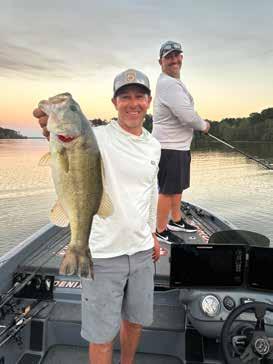
Early summertime patterns for bass are starting to kick in across our inland lakes, as the fish are beginning to push offshore with rising temperatures. Some bass are still biting in shallow areas at sunrise, before moving out deeper as the sun climbs overhead. A variety of crankbaits and soft plastics have been working well to draw strikes.
West Texas bass fishing guide Duster Craven has been focusing his efforts on Lake Alan Henry lately, where he said the bass have been hitting top-waters up shallow in 5 feet of water or less over rocky bottoms during the early morning hours.
“By 8 o’clock, the shallow bite is usually over,” Craven said. “Once the sun rises into the sky, the fish have been pushing out to offshore structure in anywhere from 10- to 30-feet of water.”
Craven said major drop-offs and ledges around points, flats, and
Please turn to page 17
By Cory Byrnes F
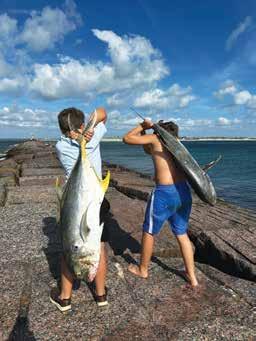
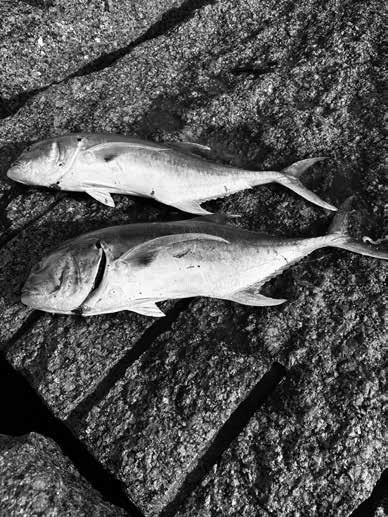
ties are dominated by jack crevalle right now, and king fish also are showing up in smaller numbers.
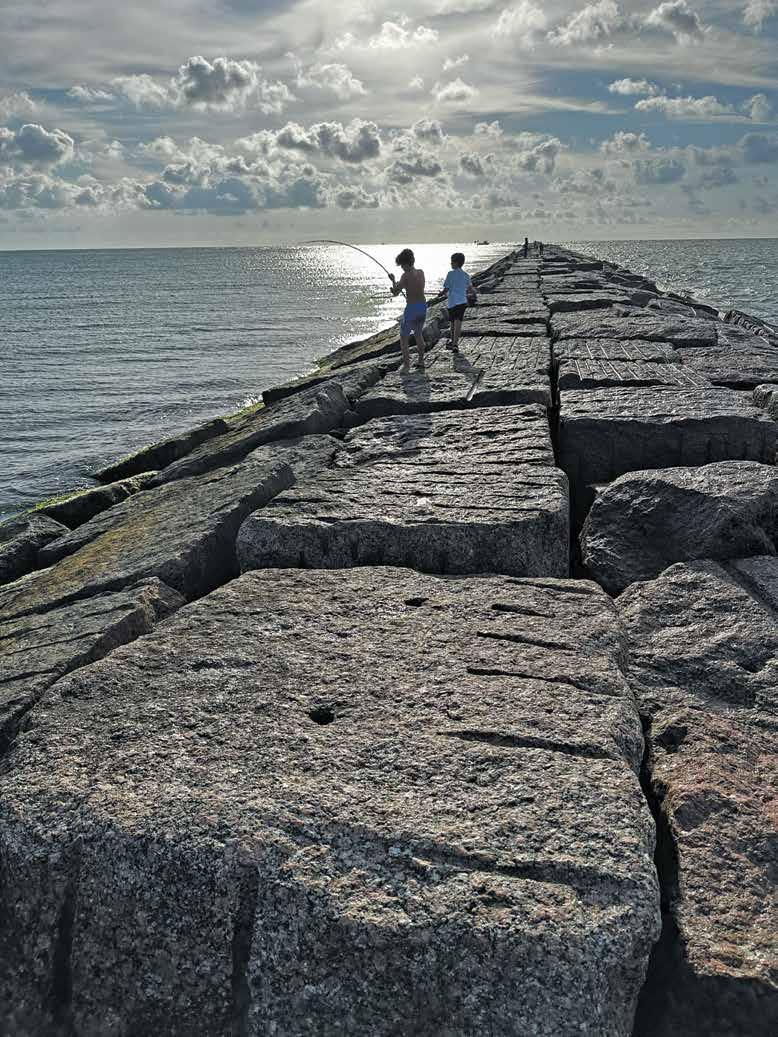
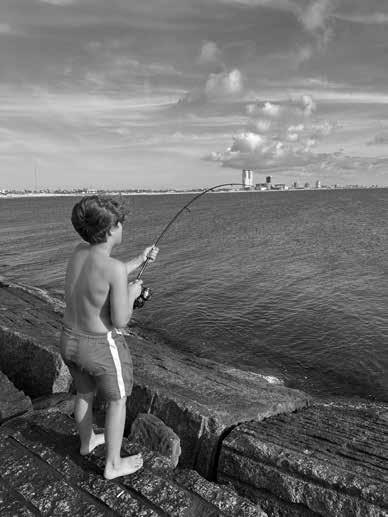
sons, Greg Kunkle III, 12, and William Kunkle, 8, have been going to the jetties for years. Recently, they had a day to remember.
With summertime conditions firmly set on the Texas coast, many speckled trout fanatics tend to shift their focus from targeting trophysized specimens to finding numbers of fish.
The common thought is that large female specks are more difficult to pattern and catch when water temperatures rise. While there may be some truth to that, anglers wade-fishing in Baffin Bay have continued to prove that theory wrong, recently.
Many fish stretching to 27 inches or longer have been brought to hand by those who have stayed persistent in their pursuit for hefty
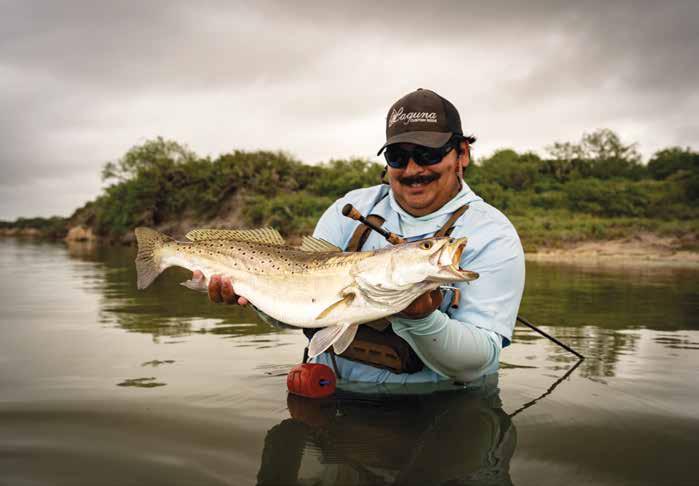
Carlos Rubio recently fished the upper reaches of the Baffin Bay complex with Capt. Storm Brodnax out of La Pesca Lodge. He was wading the edge of a waist-deep flat with scattered grass beds and throwing a Big Smooth
by Down South Lures when he caught 27- and
“I noticed a few mullet jumping out in front of me along the edge of the drop-off I was fishing,” Rubio said. “So, I made a cast in that direction and immediately felt the thump. That fish measured right at 27 inches in length. After I released her, I threw back in the same area and stuck what felt like was another big trout. Sure enough, that fish ended up being 28 inches.”
Baffin Bay fishing guide Capt. Gilbert Smithwick said he and his anglers have been finding solid trout measuring 24 inches and above along the edges of bars and guts across the Baffin Bay complex.
“A lot of the larger trout are hanging out in deeper areas near the edges of shallower flats,” Smithwick said. “The key has been finding stretches of water with active baitfish and then meticulously working the area. Most of the hefty fish we have seen lately have struck large soft plastic lures.”
Alex Trevino went wade-fishing with Smithwick recently and caught and released a 28inch trout while working a soft plastic along
By Cory Byrnes For L
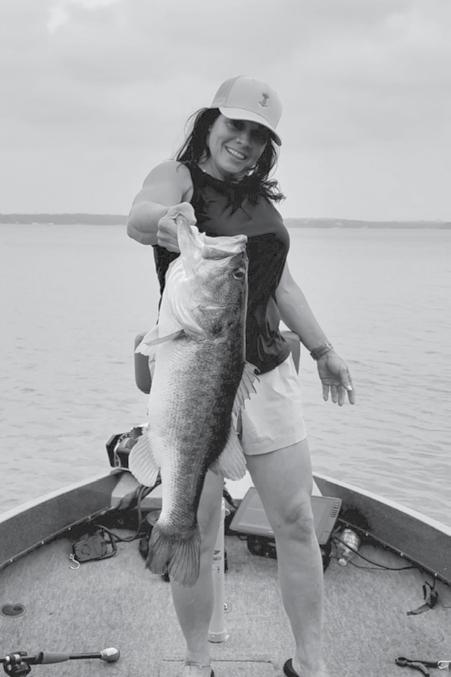
Dalton Smith had just had to cancel a duck hunt in Arkansas because of poor river conditions. He and Cole Logsdon, a friend of his, instead decided to head to O.H. Ivie Reservoir in West Texas. The lake had already become known as a trophy bass fishing lake by this time. The pair loaded up and drove to Texas late that evening. That trip quickly turned into a life-changing event. Three years later, Dsmithfishing and Guide Service is one of the established guiding names on O.H. Ivie.
Smith and Logsdon spent their first day just getting familiar with the lake.
“I don’t think we made a whole lot of casts, just kind of saw the lake,” Smith said.
The next day they got to work.
“We blasted them,” he said. “Like a bunch of good fish, 5- to 7-pounders, and then right at the end, my buddy Cole locks in and catches an 11-pound, 11-ounce (fish) right at sundown. I’ve never seen a doubledigit fish before.”
He recalls they could have left right then and he would have been satisfied.
“I mean, we got to see a double-digit, right, an 11-pounder at that,” he said.
There was one more day of fishing, though.
On the third day it was raining but flat calm. Their first stop didn’t produce the fish they were looking for.
“I was like, let’s run, let’s run to another part of the lake, where I caught that 5-pounder yesterday,” Smith said.
Smith and Logsdon were fishing in the middle of the channel. This is where knowing your equipment matters. Smith was very familiar with his equipment and comfortable in deep water.
“I grew up on Dale Hollow (Kentucky) with forward-facing sonar, teaching it and catching big smallmouth, and we like to fish a lot of deep water,” he said. “So, I’m not scared to get out there in the middle of the channel.”
It wasn’t long before the marks started to show on the sonar.
“I started seeing some really big marks on our sonar. We didn’t know what they were, and I lost a big fish,” Smith said. “That had to be a bass.”
On his next cast, he set the hook on his first of two 14-pound fish that day.
“She got me hung in a tree,” Smith recollected. “I opened my bail and let the fish float up the tree, and it stopped about 5 feet under the surface.” Logsdon managed to net the fish before
Smith’s 8-pound test line wore through.
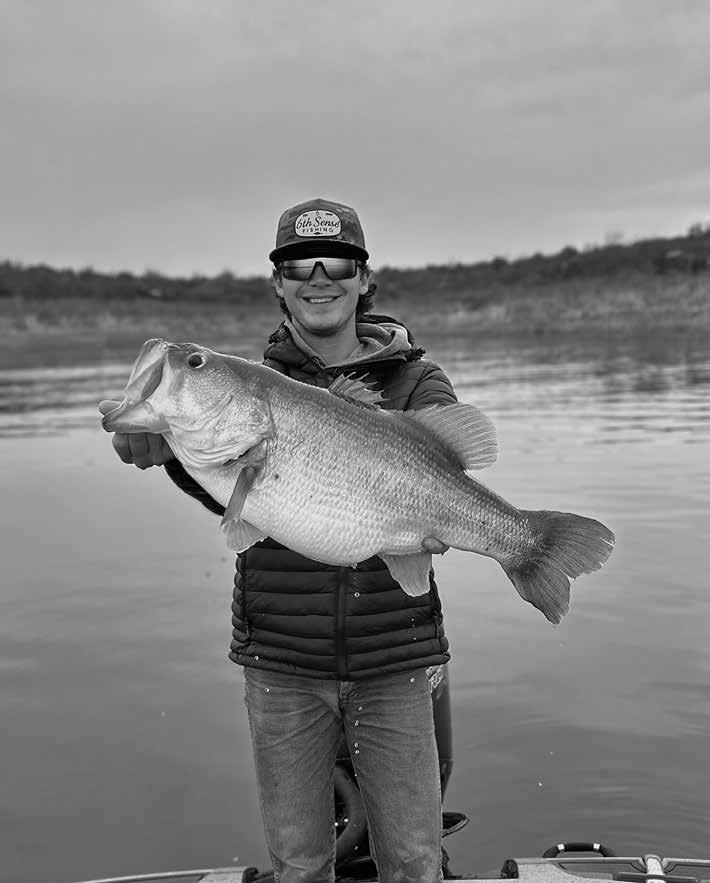
“My dang emotions got so big, I started dry heaving over the side of the boat,” Smith laughed.
Smith put the fish in the live well and ran up the creek to the marina to have the fish weighed. It came in at 14 pounds, 6.9 ounces.
“The dude was like, ‘Well, you’re two days early,’” Smith said, referring to the Texas big bass program. “I didn’t even know there was a season for it.
Again, he and Logsdon could have left and been fully satisfied with the trip, but there was still light, and they decided to go back to the same spot to fish some more. They were there no more than 10 minutes before Smith’s rod bowed over again. This time, he boated a fish weighing in at 14 pounds 2.9 ounces.
A 29-pound sack is a great 5-fish bag. Twenty-nine pounds with just two fish is almost unheard of.
In a span of a couple of hours, Smith caught two 14-plus-pound fish in the same creek bed.
“Two 14-pounders in one day,” Smith said. “I really don't think anybody in the history of bass fishing has ever caught two 14-pounders in one day, or if they have, it hasn't been documented like I've done it.”
That is when the phone calls started.
One of them was from Brett Cannon, a guide on Ivie and a mutual friend through Bass Pro Tour angler John Hunter.
“‘Man, I’ve got a bunch of overflow clients. Why don’t you just move down here?’” Cannon asked. How do you say no to that, right?” Smith said.
In just seven days, he picked up his life in Arkansas, got in his truck, and drove back to O.H. Ivie to start guiding.
“The driving factor was, I just caught two 14-pounders in one day. When you catch two 14-pounders in one day, it’s hard to go back and fish for 5 pounders. It really is,” Smith said when recalling why he ultimately made the move. “The toughest part is obviously being away from family. Everybody’s been great at Elm Creek. I have a second family in Texas now.”
His clients have now landed fish that rank among the biggest ever recorded on the lake, including a 16-pound 6.5-ounce caught by client Shawn Strength, the second-largest bass in Ivie history.
“I've devoted my life to fishing, and I'm going to do it for a living,” he said. “To come down here with nothing and build a respectable guide business — in my eyes, that's been the biggest success.”















ready for surf, sand and sunrises in Port Arthur, the Cajun Capital of Texas. Drive on over to Texas’ upper Gulf Coast for a family vacation overflowing with spring time fun. From sports and music hall of fames at the Museum of the Gulf Coast to overnight camping and paddling one of three rated trails at Sea Rim State Park to fishing and beach combing at McFaddin Beach, and even filling up on the best Cajun seafood in all of Texas, you’ll love every memory-making moment.






By Cory Byrnes For Lone Star outdoor
Coastal fishing for black drum is on fire out of the Matagorda and Sargent areas.
“Slot black drum are biting unbelievably well,” said Walter Colton, owner of Just Bit ten Fishing Tackle. “They have slowed down a little bit (this past week), but they are close. Easily in casting distance.”
Colton focuses on water just past the first gut.
“Most of those big fish I catch, I catch pretty close,” Colton said. “I love casting. I think casting is easy, and I do very well.”
He recommends not fishing right on top of the first sand bar, but just past it in the gut between bars.
“I tell people to look for something differ ent. All along the Texas coast there are three bars. You can typically see where those bars are by looking at waves. If you look out and see that the waves aren’t cresting on the first and second bar but everywhere else you can, there is probably something there,” Colton said. “I have pretty good luck finding fish up close when I follow those guidelines,” he said.
The most productive bait for Colton has been crabs.
“If I am going to go out there and target black drum, I use blue crab,” he said. “You can use blue crab whole or cut them in half.”
He uses a drum rig or a high-low rig with a spider weight. He has also had success with FISHGUM and shrimp.
“I was catching them on Fishbites and shrimp for the slot drum,” he added. “A tri ple drop leader is an excellent presentation when using Fishbites and shrimp.”
He’s recently also started targeting the larger black drum at night.
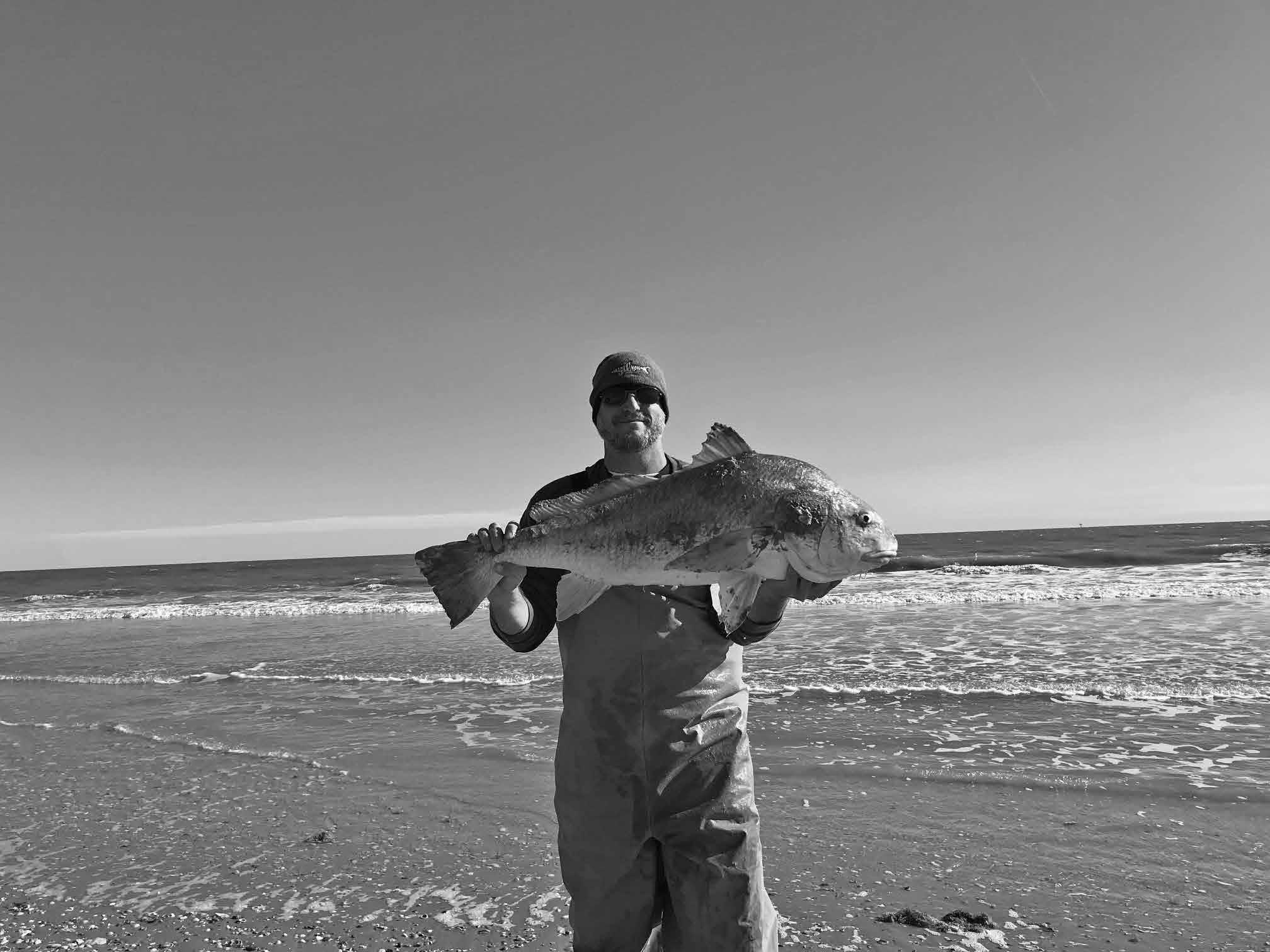
“I think the black drum is really good at night, especially in the summertime after the sun goes down. You can still use the same bait I mentioned. It’s just a matter of spot. “For drum, I use both popping corks with on muddy shorelines, so don’t count those out. The fishing from day to day has been shrimp.”

Continued from page 8
and, as their father, I was afraid watching that happen,” Kunkle Jr. said. The elder Kunkle was hooked up at one point, but wasn’t able to land the fish, losing it in the final 10 or 15 feet. The trio lost four others to cut lines and broken hooks.
The Kunkle family was using 4-inch soft plastics.
“Just black and white plastic lures, nothing too fancy,” Kunkle III said. “Spoons, along with Rapalas in orange, have been productive as well. Your main line should be 30-pound braid with a 40to 50-pound fluorocarbon leader. Anything lighter and you’ll get bit off or cut off pretty quickly.”
The most critical thing? Drag. Cast towards surface disturbances and keep the fish on top. Otherwise, the jetties will release your catch prematurely.
“You have to keep them on top of the water instead of the bottom, but if you put too much pressure, they’ll immediately snap the line,” William said.
Greg Kunkle III and William predict the jacks will stay active for the summer.
“Jacks are going to keep up for a little bit during the summer, and I think the kings will hit a little later,” Kunkle III said.
William has also seen reds being caught on the surf side.
“In the summer, there’s going to be jacks and a lot of reds,” William said. “You never know what can happen at the jetties. Some days it’s catfish, some days you’re hooking up on oversized reds, kingfish, bonita, mangrove snapper. It’s always an adventure. If you’re looking for an adventure, bring your kids, bring your family, and have a good time right on the rocks,” Kunkle Jr. said.
If you’re wondering where to start, Kunkle III says “all you really need is a pole and a hook and some bait.”
By Cory Byrnes For Lone Star outdoor newS
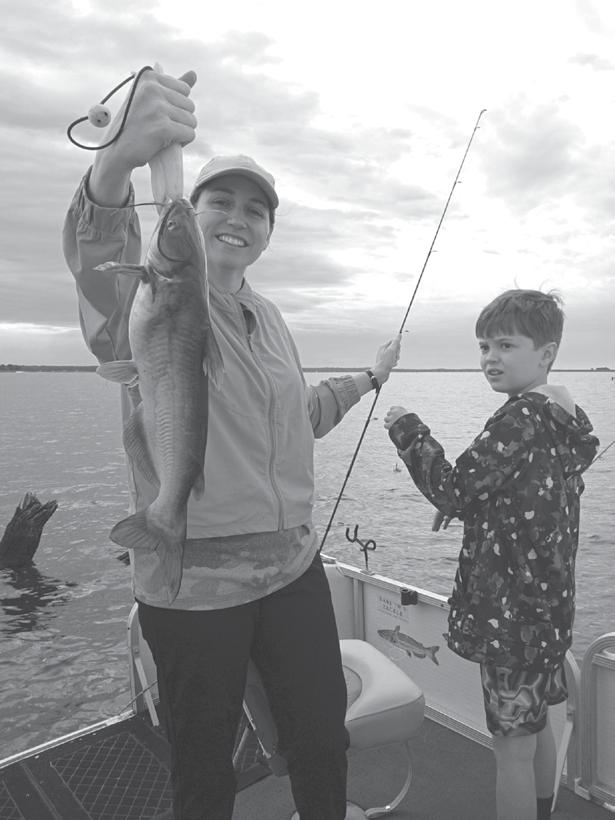
The catfish bite has been excellent on Lake Fork, according to guide Stan Kuhn of Stan Kuhn’s Lake Fork Catfish Guide Service.
“Right now I am getting a limit every time I go out,” Kuhn said.
He and his clients have been finding them in 30 feet of water over baited holes.
“I am actually fishing right off a creek line. I think those fish are moving along that creek line,” he said.
Other productive areas are points with a ledge and timber. If you’re not catching them, he recommends moving, but once you find them, you won’t need to move.
“I caught all my fish today off one tree. Sometimes, I’ll have to move, but lately I have been just catching them on one spot,” Kuhn said. “I am going to fish it until they stop biting.”
He will stick to the same pattern until August and eventually move out to deeper water.
On Lake Lewisville, the fishing has been good, reported Richard Hernandez with Big Rich Fish.
“I have been drifting bait and dragging baits in about 5- to 15-feet of water,” Hernandez said. “We have been targeting flat open pockets off the main lake with cut bait. Using cut shad, bluegill, drum, and carp, we use 8 rods off the back with planer boards.”
He has been covering a lot of water to find his fish.
“We are going about 2.5 miles an hour. We got to move to cover enough water,” Hernandez said. “You can also let the wind push you across these flats if you want something slower paced.”
As the season progresses, Hernandez and his clients will play the wind.
“If there is no wind, I’ll anchor up near timber in shallow water. On windier days, I will drift in about 10 feet of water,” Hernandez said.
On Lake Conroe, the bite has also been good.
“They (catfish) have been biting well,” said Darryl Taylor with Catfish Man Guide Service. “Some days have been better than others. You know how catfishing is.” He and his clients have been fishing baited holes in 20- to 25-feet of water. Anglers should look for timber and other structure setting up. He and his clients have had most of their success on punch bait dropped right on top of them.
“Sometimes you get out there on one hole and limit out; sometimes you get out there and won’t catch anything for 30 minutes. Then you got to move,” Taylor said. “If you don’t have a bite in 30 minutes, move on to the next one. If you’re not catching them in 20 or 25 minutes, it’s good to move to another spot.”
On Lake Livingston, the bite has been good, James Huson with Huson Outdoors Guide Service reported.
“Right now, we are coming off what we call the bulkhead bite,” Huson said. “The early morning on the bulkheads has still been the most productive bite. Wood bulkheads are better than the metal bulkheads.”
Once the morning bite dies down, “you can literally just turn around and catch fish. The fish are going to go right under you to the ledge in about 6- to 9-feet of water, and they’re going to hang there,” Huson said.
For this type of fishing, the most productive bait is live shad.
“We generally use a Carolina rig. You can use kind of a drop-shot rig if you wanted to, but a Carolina rig is the easiest,” Huson said.
The other way Huson and his clients target catfish is by throwing jugs.
“We set all ours 15- to 20-feet and deep water set them,” Huson said.
Then he and his clients will go and fish other places and pick up the jugs on the way back to the dock. Setting them this way, they will free float.
“Pay attention to the lake you want them in,” Huson said. “You drift into coves and not out into the main lake. You really need to know how many jugs you put out.”
Continued from page 1
During the midday hours, Torrez said weighted and sinking flies have been producing steady action. Fast moving water, deeper pools, and just about any area with cover or shade has been holding decent numbers of bass.
“Transition areas where shallow moving water drops off into a deeper pool have been great,” Torrez said. “The largemouth bass have been in the 1- to 3-pound range, and the Guads have been in the 1- to 2-pound range. There’s also been plenty of good-sized Rio Grande cichlids mixed in.”
North Texas fly-fishing guide Sean Polk said he’s been catching bass on the fly on Lake Fork and Lake Athens in shallow areas during the early morning hours recently.
“On Lake Fork, overcast mornings have been great,” Polk said. “Small, silver poppers have been producing well in the backs of creeks and along main lake points in stretches where I’ve been seeing shorebirds hunting for baitfish. I’ve been catching largemouth bass up to 4 pounds following this pattern.”
Polk said he’s been finding bass along shallow, windblown banks of islands and bulkheads during the early morning hours on Lake Athens. Poppers and frog imitation flies have been working the best, and most of the bass have been in 2- to 4-pound range.





By Chuck Uzzle For Lone Star outdoor newS
SABINE LAKE
• Water temps 78-80 with good visibility
• Speckled trout fishing is good for anglers along the east shoreline
• Best bite coming on top-waters, soft plastics under rattling corks and swim baits
• The bite at the jetty has greatly improved for speckled trout as better water continues to pour into the lake
• Redfish, black drum and sheepshead are steady along the rocks on live shrimp and soft plastics
• Some schooling activity on the south end of Sabine has produced oversized redfish and jack crevalle. Water temps 78-80 with good visibility
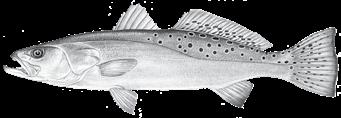
GALVESTON/TRINITY BAYS
• Water temps in mid 80s
• Excellent clarity and color
• Trout fishing is good now out on the open bay reefs in deeper water
• Finding slicks over shell reefs has been the best pattern
• Water temps in mid 80s with excellent clarity and color
• Beachfront conditions continue to improve with lighter winds and stronger incoming tides
EAST MATAGORDA
• Water temps 80 to 82 degrees
• Trout are good while drifting over shell in 5 feet of water
• Live shrimp and soft plastics working well
• Waders have tossed small top-water lures and MirrOlure Soft Dines on midbay reefs
• Redfish action improved dramatically this week on the brighter moon
• Still lots of drum being found on every piece of shell
• Water temps in the bay are near 80 degrees.
• Solid trout in West Matagorda fishing reefs
• Live shrimp under corks and also on Hogie Major Minnows in roach and strawberry/white are getting bites
• Recent runoff has moved the redfish around and out of the back lakes
• Look for those fish to stage up at the first deep drop near the bayous and channels
• Despite the off-colored water, there is still a good redfish bite on live and cut mullet
ROCKPORT
• Water temps remain 78 to 80 degrees
• Despite the influx of greatly needed fresh water from the recent rains,
trout fishing continues to be on the good side
• Best bite for speckled trout is early and near green water
• Redfish are consistent even with the fresh water and high tides
• Shallow grass and potholes are the best pattern for redfish
BAFFIN BAY
• Speckled trout and redfish are good
• Recent rains and runoff knocked water temps down near 80 last week but temps have rebounded to the mid and upper 80s
• Top-water bite has been very good for larger trout up to 7 pounds
• Best areas have been 2- to 3-feet deep with good concentrations of mullet present
• Higher-than-normal tides have redfish tight to the shorelines
• Spoons, swimbaits and larger soft plastics rigged on light jig heads have been producing good numbers of redfish
• Calm winds and above normal tides have made water conditions very good overall
By Vivian Leopold For Lone Star outdoor newS
EAGLE MOUNTAIN LAKE
• Water level is 1.04 feet below full pool at 82.6% full
• Water temps are about 77 to 80 degrees
• Rising water temperatures have increased overall fish activity across the lake
• Wind continues to be a major factor in fishing success, with windy days producing better catches than calm conditions
• Baitfish concentrations remain key to locating active fish; Anglers willing to move frequently and follow bait are finding the most consistent success
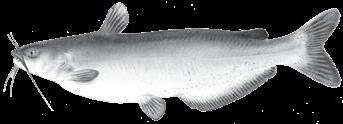
• Channel catfish and white bass provide the most dependable action on Eagle Mountain Lake and should remain excellent through June
• Blue catfish opportunities remain good, especially during low-light periods and on windy days
• Early morning trips continue to offer the most comfortable conditions and best overall fishing
• Blue catfish action is good and improving as fish transition into late spring and early summer patterns; fish shallow out to 30 feet deep, depending on weather conditions and baitfish movement
• Fresh cut shad and Mr. Whiskers Punch bait remain baits of choice
• Anchored fishing around points, flats, creek channels and humps is producing fish ranging from 2 to 15 pounds with occasional larger fish mixed in; fish early morning hours for most consistent action
• Channel catfish are excellent. Fish weighing 1 to 5 pounds dominate catches, with larger fish occasionally showing up
• This pattern will continue through June and into the summer months. Follow the same depths as blue catfish with punch bait producing fast action
• White bass are excellent
• Schools are transitioning into their summer pattern and can be found relative to deeper structure and baitfish concentrations
• Use chartreuse and white Sandy Kandy slabs with teaser flies when active schools can be located; Anglers should rely heavily on electronics to locate fish
LAKE BROWNWOOD
• Water level is 3.23 feet below full pool at 82.6% full, improved from drought lows
• Water temps are around 76 degrees, and the water is stained
• Current conditions are fair to good overall, with improving late-spring patterns for bass, crappie, catfish and white bass
• Largemouth bass are good, being caught on soft plastics, worms, jigs and jerkbaits; focus in 8 to 15 feet of water around docks, rocky points, brush and ledges; early morning and late evening have been most productive
• Crappie are fair to good, holding around brush piles, docks and submerged cover; minnows and small jigs remain productive targeting depths of 12 to 18 feet
• White bass – Fishing is improving; May though summer is traditionally one of the better periods
• Look for schooling fish in the main lake and along creek channels
• Catfish are good fishing as catfish transition to summer locations along creek and river channels; use cut bait, punch bait and stink bait
POSSUM KINGDOM LAKE
• Water level is 2.18 feet below full pool at 92.9% full
• Water temps are about 76 degrees; Clear water conditions favor natural-colored lures and lighter line presentations
• Fishing is good to very good right now for bass anglers, fair to good for stripers and good for catfish. Recent angler reports indicate active fish, though patterns are shifting as water temperatures rise. The best fishing window is typically sunrise through mid morning before heat and recreational traffic increases
• Largemouth bass are good early and late in the day around points, brush piles, rocky shorelines and docks. Topwater lures are producing during low-light periods, while soft plastics and jigs are working deeper as the sun gets higher
• Striped bass are fair to good, especially during morning hours. Fish are found suspended over deeper water and near bait schools. The striper bite has reportedly slowed compared with earlier springs, but quality fish are still being caught
• White bass are sporadic but available around schooling activity and main lake structure
• Channel and blue catfish remain consistent around submerged structure, creek channels and baited areas
LAKE BOB SANDLIN
• Water level is 0.73 below full pool at 96.7% full
• Water temps are about 78 degrees, stained to lightly stained
• Current fishing conditions are generally good for largemouth bass and crappie with fish transitioning into early summer patterns after the spawn. Recent angler reports indicate active bass in shallow-to-mid depth cover and consistent crappie action around timber and brush
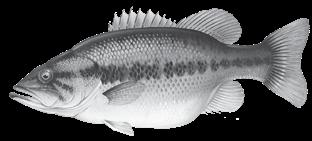
• Largemouth bass are good. Early morning top-water action is productive around points, grass and shallow cover. As the day warms, target brush piles, creek-channel swings, docks and timber in 6 to 15 feet of water with Texas-rigged plastics, jigs and swimbaits. Guide reports describe an aggressive bite and fish feeding actively
• Reports continue to rate crappie fishing among the better bites on the lake. Fish are holding around standing timber in 10 to 20 feet of water, bridge pilings, brush piles and creek-channel edges. Top producers are minnows and small jigs
• Catfish are fair to good using cut bait, punch bait and stink bait along creek channels and deeper structure
• White bass schools can be found on main-lake points and channel edges, especially during low-light periods
• Water level is close to full pool which is 485 feet; no indication of an unusual drawdown in the reservoir at present
• Water temps are around 81 degrees, moderately stained
• Best areas to fish are warm-water discharge areas and adjacent flats with windblown shorelines and points good when baitfish are present
• March through August is considered prime redfish season and recent guide reports show solid, keeper catches; tilapia, crawfish, Rat-L-Traps and spoons are productive choices
• Hybrid striped bass – Active especially around moving water and current areas
• Channel catfish and blue catfish –Some guides are reporting catfish catches along with redfish
• Largemouth bass – Look for structure and vegetation
By Nate Skinner
For Lone Star outdoor newS
Back in 2022, Capt. Drew Hymel dropped everything, including his growing and developing corporate career in Houston, and moved to Matagorda to pursue his dream of becoming a fishing guide.
Fast forward to present day, and he has been a full-time guide based out of Matagorda for a little over a year. Hymel now spends his days sharing his passion for inshore angling with others.
Hymel grew up in Spring and first developed his passion for the sport of fishing by pursuing bass on Lake Conroe with his dad. During his high school and college years, he began making fishing trips to the coast with his dad and his buddies. They primarily fished around Port O’Connor and Matagorda.
After graduating from college, Hymel took a corporate job in Houston. While living and working in the big city, Hymel said he spent every weekend fishing in Port O’Connor and Matagorda.
“I just always wanted to get away from the city and the concrete jungle,” Hymel said. “Wade-fishing quickly became my escape from the stress of my job and everyday life. It was the only way I could relax, clear my head, and find peace. I’d go out in my dad’s boat, jump out, and wade for miles.”
After three years of working his desk job in Houston and spending his spare time fishing at the coast, he decided he wanted to make angling his full-time career.
“I went fishing one day, and when I got back to the dock, I started talking to a reputable and seasoned Matagorda fishing guide,” Hymel said. “When I started asking him questions about his job, I quickly realized having a career as a fishing guide was a true possibility. Then on my way home, I was talking on the phone to my uncle about my idea of possibly becoming a fishing guide, and he told me something I will never
forget. He told me that if I found something I loved, I should figure out a way to build a career around it.”
Hymel said the very next day when he returned to work in Houston, he put in his two weeks’ notice.
On that same day, he got registered for Captain’s School. Within a two-week time frame, Hymel quit his job, went to Captain’s School to obtain his Captain’s license, bought a boat, and moved to Matagorda.
“I didn’t have any clientele built up at the time, of course, so I took a job at a local sporting goods store,” Hymel said. “When I wasn’t working at the shop, I was out on the water, fishing and learning everything I could about the Matagorda Bay complex.”
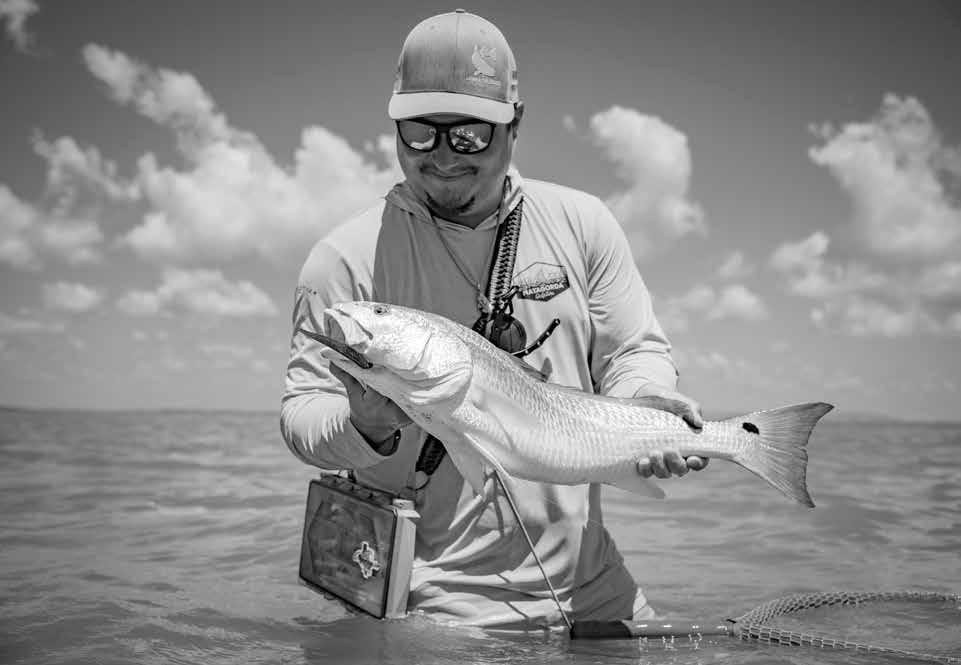
Hymel said he worked at the sporting goods store and spent as much time as he could for about a year and a half before he started running some guided trips. His first clients came from word of mouth through the people he was meeting while working at the shop.
“One thing led to another, and over time I started getting more and more clients, and booking more trips,” Hymel said. “At first I was running artificial only, wade-fishing trips, but I quickly expanded my business to offering trips for folks that preferred to fish from the boat, whether that was with artifi-

cial lures or with natural or live bait.”
Hymel’s guide business continued to grow, and by the summer of 2025, he became a full-time fishing guide. He now runs inshore trips for anglers who want to fly-fish or sight-cast to redfish, pursue trophy speckled trout with artificial lures, simply catch what’s biting on live bait, and everything in between.
“I also am a guide for the Hook Spit Junior Anglers Association summer youth camp, which has become one of my favorite events to be a part of each year,” Hymel said. “I love sharing my passion for fishing with today’s
youth and this camp gives me that opportunity every year.”
Hymel said his favorite thing about guiding is seeing others become excited and passionate about fishing on the Texas coast.
“I remember what it was like when that fire got lit inside of me and my addiction for the sport began,” Hymel said. “I love seeing that in the eyes of the anglers I get to share the water with day in and day out. It never gets old.”
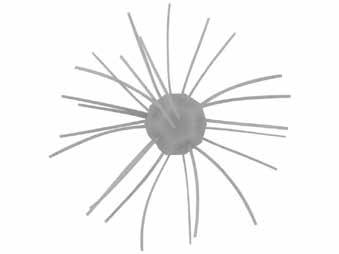
A bite-sized finesse bait that imitates zooplankton, insects, crayfish, and distressed prey, the Z-Man Fuzzy NuggetZ features a 12-sided dodecahedron shape hand-threaded with premium silicone skirt material for lifelike flowing action. Built using Z-Man’s 10X tough Elaztech plastic for extreme durability, the Fuzzy NuggetZ withstands the abuse of numerous fish catches even with light wire finesse hooks that tend to tear up traditional plastics.
Designed for nail-weighted wacky rigs, drop shots, and free rig applications, its high-floating construction can be weighted to create a slow-sinking presentation that hovers in the water column to entice bites from curious fish. The perfect addition to any angler’s finesse and sight-fishing arsenal, the Z-Man Fuzzy NuggetZ converts finicky fish into biters with a unique sense of life and compact half-inch bait size that allows for multiple hooking points.
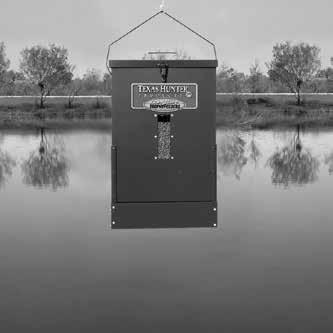
Texas Hunter Products hanging feeder is designed to feed fish in the most remote areas.
After you hang your fish feeder over the water, it will automatically dispense the proper amount of feed to help you maintain and grow your fish population. And with four removable baffles, you’ll remain in control of where you want your feed to go — straight down, outwards in all directions or outwards in only two or three directions. The configuration you choose can help you minimize waste and maximize your feed’s potential.
Texas Hunter Products is the premier choice of lake management professionals across the country due in part to the reliability of our EZ Set Digital Timer system. The timer allows up to nine feeding times every day, delivering high accuracy and dependability even in harsh weather. Run time lasts between one second and one minute depending on your preferences. And with the timer’s memory chip, you can rest assured your feed times will be saved even if disconnected from the battery.
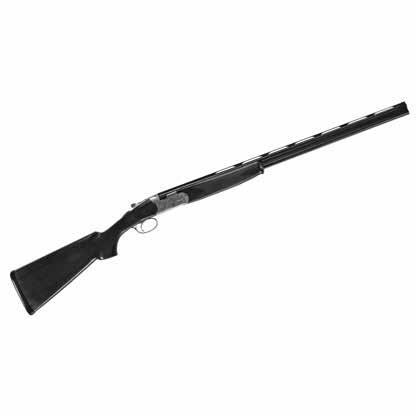
For over 35 years, the Silver Pigeon has set the standard in the over-and-under crossover shotgun category, establishing itself as the epitome of excellence and reliability. The 2024 evolution of the 686 SPI is the best version of the Silver Pigeon I yet— an incremental upgrade that elevates the renowned Beretta field shotgun to new heights.
The innovative and smoother opening lever mechanism makes it easier to open and close the shotgun. Together with the improved receiver balance and the polished stainless-steel trigger, it brings the Silver Pigeon into a new era of functionality. This is important for an enhanced, enjoyable shooting experience for novices, young shooters, and shooting schools providing lessons.
For the first time, the richer and more distinctive floral engraving is featured on the receiver tail and is more intricately detailed on the hinge pins, covering all the metal surfaces seamlessly.
The Silver Pigeon I incorporates the perfect ballistics of Beretta's highly reputed Steelium Optimabore HP barrels for dense, uniform patterns and low recoil and muzzle rise.
The multi-purpose .46 caliber Primal is optimized for big caliber high-pressure rifles, but adaptable for your pistol – and everything in between.
Extreme versatility makes it the king of multi-platform shooting. Direct thread simplicity, quick-attach KeyMo, accuracy-driven Xeno, pistol boosters, and 3-lug for subgun fun, are all made possible thanks to our industry-standard 1.375”-24 rear threads and our newly engineered HUB to P-Series adapter.
From 9mm to .45 ACP, and 45-70 to .338 Lapua, like a rabid beast the Primal will eat just about anything you give it. If you only want one silencer (to begin with), the Primal is it.


By Cory Byrnes For Lone Star outdoor newS
“It is definitely the time to be here if you enjoy catching fish, because that is what we are doing right now.”
That quote was from Daniel Armstrong with Lake Texoma Cat fish Guide who said, “the fishing has been tremendous.”
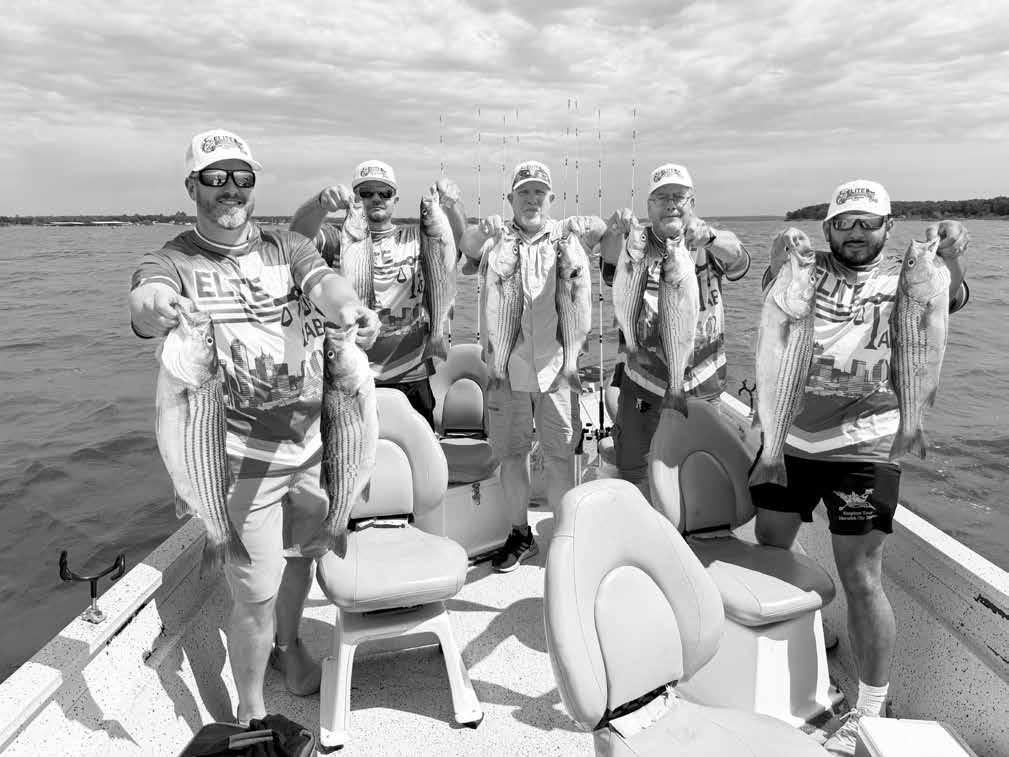
Armstrong has been focusing on catfish and striped bass.
“Catfishing wise we are chasing channel catfish this time of year,” Armstrong said. “My clients are fishing over baited holes. We pick areas that are adjacent to ledges, drop-offs, and stumps. Texoma doesn’t have a lot of timber, so you have to trial and error it. When you find the right area, the fish keep replenishing. Once you find a good hole where the fish will replenish, you won’t have to go anywhere else.”
He prefers to fish early morning this time of year to beat the heat.
“That’s when you get your most consistent bite, especially for better quality,” he said.
His bait of choice for the eater-sized catfish is Mr. Whiskers punch bait dropped right over top
to follow this pattern through the summer.
“The hotter it gets the better the channel catfishing gets,” Armstrong said. “The striper bite has been phenomenal. We have been seeing fish over 20 inches.”
live bait exclusively.
“Adjacent to the river channel seems to be producing the most consistent striper bite,” Armstrong said. “Right now, anglers are having to pick a spot and anchor up. There is a little bit of bird activ-
Wildlife Forever named Lydia Li of Texas as the 2026 Richard M. Hart Educator of the Year.
A dedicated and inspiring educator, Ms. Li has integrated the Fish Art Contest into both classroom and outdoor learning, helping students explore angling, aquatic ecosystems, and the natural world through art. Her commitment to connecting youth with nature makes her a standout leader in conservation education.
The Richard M. Hart Educator of the Year Award honors the legacy of Richard "Dick" Hart of Dallas, a lifelong conservationist and educator who championed teaching the joys of fishing. His vision led to the creation of the HartMorris Education Center at the Texas Freshwater Fisheries Center in Athens.
Students and families consistently describe Ms. Li's classroom as a place where creativity and nature come together. Through her teaching, students learn to closely observe fish, wildlife, and habitats, often incorporating outdoor exploration, nature collection, and detailed study into their artwork. Many shared that she encourages them to use their imagination while deepening their understanding of ecosystems, helping them recognize the importance of protecting rivers, lakes, and wildlife. Her supportive and engaging approach fosters both artistic confidence and a lasting appreciation for the outdoors.
"I am incredibly honored by this recognition," said Ms. Li. "The Fish Art Contest has become a meaningful way to teach students about fish and aquatic ecosystems while encouraging them to explore and appreciate the outdoors through art."
—Wildlife Forever
Continued from page 5
animals to be able to be propagated, which then in turn gives these opportunities to hunters in and out of state. It is a win-win.”
Today’s demand is being driven by a more experienced hunter who wants something beyond whitetailed deer.
“The trend right now is, you know, not bigger is not always better, but they’re looking for the better experience,” Ahrens said. “They are scrolling social media and watching hunting content from axis deer, freerange aoudads, and black buck stalks in Texas. They’re saying, you know, I want to be a part of that.”
The pull is real, and ranchers are pricing and packaging hunts for hunters with real-world budgets. Can’t go to Africa for the hunt of a lifetime? Texas is the place you should be.
There are many species available to hunters, but axis deer remain the top draw. Axis hunts have become the go-to experience for first-time exotic hunters. Blackbuck antelope is a close second.
“Those are easier animals to get access to,” Ahrens said. “Almost every outfitter in Texas has an operation for those species.”
Whether free range or high-fenced, they are an easier hunt versus packing up and down a mountain
going after an elk. More importantly, they are an affordable entry point.
“Axis and blackbuck normally run anywhere from $4,000 to $5,000,” Ahrens said. “Nilgai, axis, and blackbuck are by far the best bang for your buck when it comes to experience and meat quality.”
Other popular animals like the scimitar oryx, gemsbok, and bongo antelope are available to hunters as well, but they come with a much larger price tag. There are ways to get into a hunt for less.
“If you want to shoot a management animal, though, those are less expensive, and they are less expensive in just about any species,” Yancey said.
Ranchers often have to manage herd sizes for various reasons. While these hunts are not trophy hunts, they can provide you with an experience of a lifetime. You, as the hunter, need to be willing to negotiate and call around to find those options. A good place to look is the EWA register, hunting forums with Texas-specific boards, and asking your local guide if they know anyone who is running a hunt you might be interested in.
“The registry that we are operating now has well over 30,000 animals,” Yancey said.
That means there is plenty of opportunity this summer.
areas and target suspended fish just above the thermocline trolling slabs and Alabama rigs.
Marty Zamora with Capt. Marty’s Guide Service reports that the striper fishing has been excellent.
“We are live bait-fishing,” he said. “Most days we are in 20- to 30-feet of water,” Zamora said. “I’ve been seeing them grouped up on the bottom near points, ledges and other transition points. When you stop and put bait down, they start coming off the bottom.”
Zamora continued, “We are catching a mix this year. Some real nice fish over 20 inches, but we are also seeing a lot of 12- to 14inch fish, which is odd this time of year.”
Zamora and his clients have also found the white bass are mixed in with the stripers.
“We have been catching real nice ones (white bass) mixed in,” Zamora said.
ity but striper have not yet started schooling yet. The water temperature is already up to about 80 degrees. By the end of the month, we may have some fish schooling as the thermocline starts to form.”
Anglers should watch the water temperature and adjust to deeper
Adding to your box another species without a lot of extra effort is always nice. If white bass are your target, follow the same pattern you would for stripers. Once you locate a group, you can stay and catch a limit. If you’re not catching the quality fish, guides recommend covering more water until you do.
An anchor tenant in one of DFW’s most exclusive shopping areas is looking for a new home.
The Dallas Beretta Gallery, located for decades in Highland Park Village off Lovers Lane, has shuttered their old storefront location, permanently it appears. However, Beretta will still be accepting orders and providing gunsmithing services through a current location in the mid cities while they search for a new permanent location.
The store has also hosted the Lone Star Outdoor News Foundation Wild Game Night annually since its inception.
No word yet on when an announcement will be made about a new location.
To contact Beretta, call (214) 559-9800 or go to berettagalleryusa.com.
—Staff report
Continued from page 1
Roechrich said he fished the last two seasons, but fishing was not that great, making him wonder how many red snapper were out in the Gulf.
Gonzalez and Sanchez also caught decent-sized snapper.
The two anglers said they have been fishing the past several seasons on opening day and will continue doing so, as long as time permits.
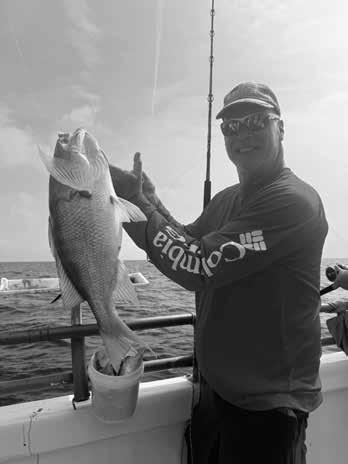
“You know me,” Gonzalez said, “I could fish every day, or maybe every week if I could.”
For Oh, opening day did not turn out as he expected.
“I got my two fish,” he said, “but I wish they would have been a little bigger.”
Nevertheless, Oh said he will take advantage of this long season and will come again.
The federal red snapper season is set to end Oct. 26.
25

2:29 AM 1.40H 6:43 PM -0.26L
3:33 AM 1.56H 7:15 PM -0.38L Jun 26 4:24 AM 1.67H 7:46 PM -0.46L
isolated humps have been holding the most consistent action. He and his an glers have been consistently catching bass of all sizes in the 1.5- to 8-pound range in these areas.
“Deep diving crankbaits, Rat-L-Traps, and large, Texas-rigged worms and crea ture baits have been the ticket for get ting bit,” Craven said. “Varying the an gle at which we are retrieving these bait presentations in relation to the ledge or drop-off we have been targeting has been the key to success. Some days the bass prefer a bait moving from shallow to deep water, down the ledge or dropoff. On other days, they seem to bite better when the bait is being worked up the ledge or drop-off, from deep to shal low water.”
Over in East Texas, bass fishing guide Ryan Pinkston has been spending most of his time on Toledo Bend Reservoir, and he said more and more bass are starting to push out to offshore struc ture with each passing day. Most of the fish he and his anglers have been catch ing have been in the 10- to 16-feet depth range on secondary points, humps, flats, and ridges.
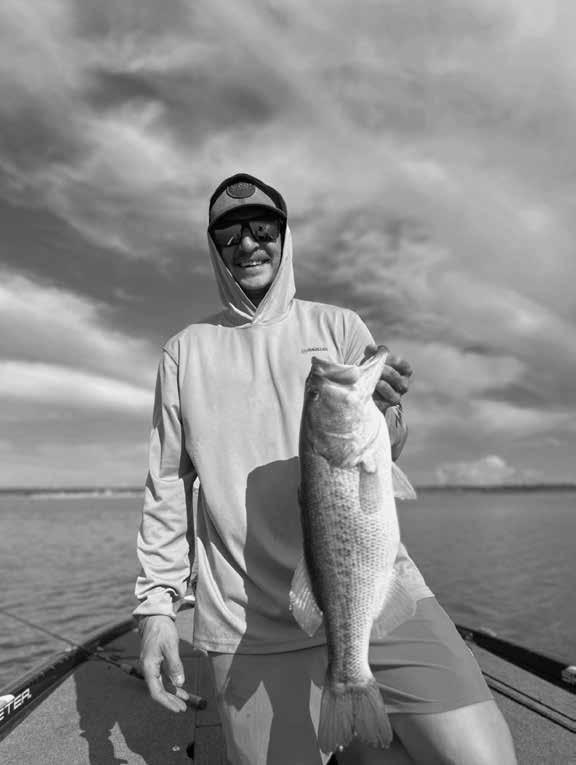
“Typical summertime patterns are really starting to gain momentum,”
Pinkston said. “Big crankbaits and large plastic worms on Shaky heads and Texas rigs have been producing the most strikes. Switching back and forth between these presentations has brought a lot of fish to the boat lately.”
Pinkston said he’s also finding some fish roaming and chasing balls of shad. He’s been targeting these bass using forward facing sonar and chunking swimbaits, jerkbaits, and minnow-style baits.
“We are starting to see the bass school up in stretches with 10- to 16-feet of water as temperatures continue to rise,” Pinkston said. “The bite has been good and seems to only be getting better as the fish continue to move toward deeper water.”
Pinkston said the early morning hours have been good, followed by a lull in the action during the mid morning hours. He said the bite has been picking back up during the early afternoon hours, as well. Most of the bass have been in the 2.75- to 4-pound range, with some larger fish pushing 6 pounds or more mixed in.
Austin-area bass fishing guide Ander Meine reported good numbers of bass on Lady Bird Lake holding around submerged vegetation in 4- to 10-feet of water.
“Many fish are beginning to group up in productive, deeper areas as water temperatures continues to rise,” Meine said. “Neko-rigged creature baits and drop-shot-rigged finesse worms have been producing the most consistent action when worked through submerged vegetation.”
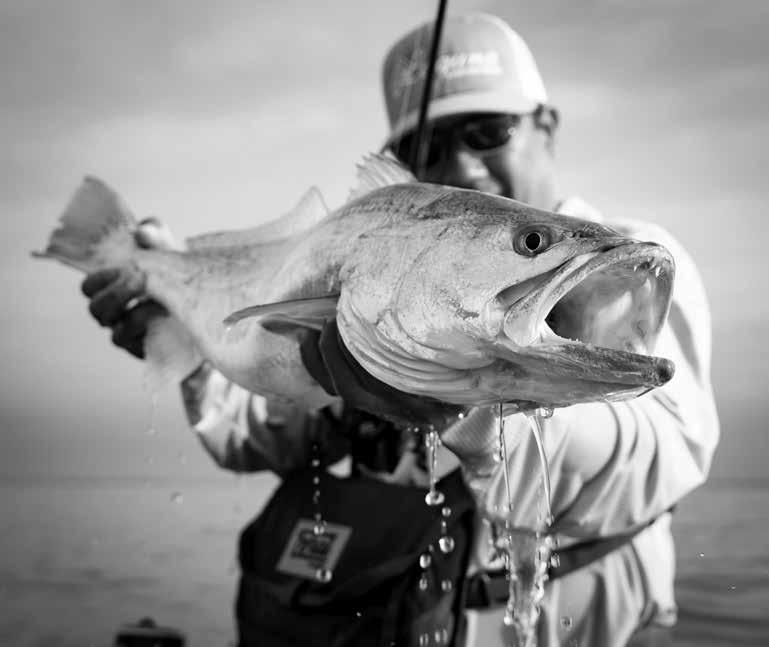
the edge of a gut while walking a knee deep flat. Trevino said the fish struck his lure right where the flat fell off into deeper water.
“She went absolutely nuts along the surface after I set the hook,” Trevino said. “The fish put on quite a show when I brought her up in the shallow water. After she circled me three or four times, I was finally able to land her.”
Darren Jones, owner of Feral Concepts, has also been catching and releasing some hefty specks in Baffin lately, including two weighing over 8 pounds. Both fish struck soft plastic jerkbaits worked steadily over waist-deep flats with mud and scattered sea grass beds.
“All of the big trout that I’ve caught or seen recently have come from areas with pockets of active baitfish,” Jones said. “Any stretch of water where the mullet look nervous along the surface is worth targeting right now. You never know when you’re going to hook your next trout of a lifetime, and there’s always a chance when you’re around concentrations of mullet in Baffin Bay.”





Solution on Page 22

ACROSS
2. Bullet speed at exit
3. Deep-diving lure
5. Trail cam technology
7. Texas' state fish
10. Food source for deer
13. Lives off of dead animals
14. Animal that hunts
17. Name for a community of ogranisms
19. Pulling lures behind a boat
21. Common on STX deer leases
22. Royal diving duck
24. Where to catch pelagics
25. Business end of barrel
29. Mix of fresh and salt water
31. Wildlife tracking method
32. Mineral attractant for deer
35. Young deer
36. Can be oats, alfalfa, corn or wheat
37. Seasonal movement of species
38. Good one of these needed for big bucks
39. Young fish to be stocked
DOWN
1. Technique to spear fish
4. Stike indicator
6. Buck travel signpost
8. Exotic deer species
9. Also needed for big bucks
11. Dam overflow
12. Concealment at eye level
15. Indigenous prairie plant
16. Aquatic plant
18. Member of the deer family
20. Influential group in Texas
22. Streambed pathway
23. Fish reproduction period
26. Waterfowl hunting hide
27. Dried game meat
28. Invasive swine
30. Oak and hickory, for example
33. Stream feeding river
34. Sliver game fish
36. Natural food for animals
12 whole crabs, cleaned
2 cups unsalted butter
1 cup olive oil
20 cloves garlic (about 1/2 cup)
1/4 cup diced onion
1/4 cup diced celery
1/4 cup diced red bell pepper
1/4 cup sliced green onion
1/4 cup chopped fresh parsley
2 bay leaves
1 Tbsp. Worcestershire sauce
1 Tbsp. hot sauce
1 tsp. kosher salt
1/2 tsp. ground black pepper
1/4 tsp. crushed red pepper
1/4 tsp. granulated garlic
Grilled French bread, to serve

ZEV Technologies looking
ZEV Technologies, backed by Syndicate Group and led by President Taylor Goode and Senior Business Advisor Jeff Stawiarski, is recruiting a vice president of sales to lead revenue growth across commercial, law enforcement, and defense channels.
Silent Steel USA adds agency
Silent Steel USA, a veteran-owned suppressor manufacturer, named Route 1A Advertising as its Advertising and Branding Agency of Record and Walk 2 West as its Social Media Marketing Agency of Record to accelerate brand awareness and market expansion.
Lancaster looking
Lancaster Archery Supply, the world's largest archery supplier based in Lancaster, Pa., is hiring an academy manager to lead its training academy. The role involves overseeing instruction, programming, and operations for archers of all skill levels while driving growth through strategic partnerships and marketing initiatives.
Dead Air Silencers has appointed DunkinLewis, Inc. as its western sales representative agency covering 13 states. The partnership leverages Dunkin-Lewis's 60-plus years of
sporting goods industry experience to provide sales support and dealer service across the western United States.
Derya Arms appoints Rockwell
Derya Arms, a firearms manufacturer with operations in Jacksonville, Florida and Türkiye, announced the appointment of Keebler Rockwell as business development director. Rockwell will drive OEM sales, lead military and law enforcement business development, and manage the authorized dealer program while reporting to President Abdullah Celer and Vice President Dustin Jones.
William Woodrow Hicks, founder and CEO of Bill Hicks & Co., Ltd., a wholesale distributor for the shooting sports industry in Minneapolis, Minnesota, passed away on May 28. He built his business over 57 years from a basement operation into a successful distributorship, leaving a legacy continued by his family.
S&W hiring
Smith & Wesson is hiring a law enforcement technical services advisor to support domestic law enforcement sales and provide technical expertise for armorer training programs, including Team One Network operations and new product development for global and international sales.

*email LSON your favorite recipe to editor@lonestaroutdoornews.com.
Preheat oven to 400 degrees. In a large sauté pan, melt butter over medium-high heat. Pour in oil to prevent butter from burning. Add garlic cloves, diced onion, celery, bell pepper, green onion, parsley, and bay leaves. Stir constantly to prevent garlic from scorching. Add Worcestershire, hot sauce, salt, black pepper, red pepper, and granulated garlic. Place crabs in a single layer in a large baking dish with a 1-inch or 2-inch lip and pour garlic butter mixture over crabs. Bake until crabs are cooked to your liking, 20 to 25 minutes. Serve warm with hot French bread.
Serve burgers/peppers and drink beer.
—Staff report
Start a charcoal fire or preheat a gas grill to 300 degrees. Mix ground venison with all burger ingredients and form into 4 patties (If grinding your own venison, use shoulders and hinds). Set patties on grill Place 2-3 horizontally sliced shishito peppers on cast iron pan next to burgers. Place remaining whole shishito peppers on grill (preferably above lower grill). Cook patties 10 minutes on one side; 8 minutes on other side, depending on your grill. Flip/ watch meat until desired doneness is reached. Turn/watch whole shishito peppers until they are evenly charred on all sides. Lightly toast buns on grill. Place burgers on toasted buns with toppings; whole grilled peppers on the side
Continued from page 4
water in them and no tree structures around — especially when near wheat fields. [Cranes] love that very shallow water,” Johnson said.
With intense development and agricultural activity around them, playa basins attract resident grassland birds such as quail and pheasants. During wet years, Johnson typically targets playas when hunting pheasants.
“Playa edges are prime pheasant habitat. When I've hunted in other states that have a lot of playas, that's where I would go first because that's most likely where you're going to find pheasants hanging out,” Johnson said.
Playas collect and hold water from rainfall and runoff, and when they are functioning properly, water spreads across the basin — giving dabbling ducks access to food like pink smartweed and other annual seeds that grow in the playa.
Playas are recharge wetlands, meaning water flows through them to the underlying aquifer.
Even though playas are oftentimes dry, the wet-dry cycle promotes quality annual plant production, which attracts waterfowl and enhances groundwater recharge.
“Playas need to dry out to provide quality annual plant production for waterfowl. They also need to dry out because of the huge cracks in the basin. Early on in the rainy event, water is guzzling down into those cracks and heading towards our aquifer,” Johnson said.
To provide these many benefits, a playa has to be functioning as a healthy system. This means it has an intact clay basin — without excavated pits or ditches — that is not buried by sediment from nearby fields and is surrounded by a vegetative buffer.
“Playas are basically, one, if not the only, vectors to recharge the Ogallala Aquifer on top of the Caprock,” Johnson said. “When
they're not functioning, they don't recharge. So, it's important to have them in a functional state to be able to recharge the aquifer.”
Of the more than 23,000 playas scattered across the Texas High Plains, more than 80 percent have been modified by land conversion and do not fit this description.
“Many of these naturally occurring wetlands are not functioning healthily because of the modifications made to them in the past,” said Tavin Dotson, Texas Playa biologist for Ducks Unlimited. “But restoring them to their functioning state is fairly straightforward. Several programs can support landowners who are interested in restoring playas on their land, providing the funding and the expertise to help them restore their playas while meeting their operational goals.”
Playa restoration reverses past modifications by removing accumulated sediment, filling in drainage features like pits and ditches, redirecting water back into the playa, and planting native vegetative buffers around the playa. These vegetative buffers protect the playa by preventing sediment from reaching the basin and filtering contaminants from the water before it reaches the aquifer.
“When playas are functioning the way they should, they quietly do a lot of work for our water supply,” Dotson said. “Restoring them gives the region a practical, locally driven way to benefit wildlife and support future water supplies.”
As pressure on the Ogallala Aquifer grows, playa restoration can support communities searching for long-term solutions. While recharge occurs slowly — sometimes decades to centuries depending on the depth of the aquifer — restoring playas still represents one of the most effective and economical ways to return water to the aquifer.
The Gulf Council met in Tampa, Florida, on June 1-3. Below is a rundown of topics discussed.
Commercial Red Grouper
The Gulf Council took final action on Reef Fish Amendment 63 to develop a 3-year program to set aside a portion of the red grouper commercial quota for distribution to participants of the Grouper/Tilefish Individual Fishing Quota program. The Council recommends establishing a quota pool beginning in 2027 if the commercial annual catch target (quota) is above 4,280,000 pounds. That quota pool would be populated with 50% of the quota increase above 4,280,000 million pounds gutted weight.
Greater Amberjack Regional Management
The Council heard a presentation on development of a draft document that considers regional management of recreational greater amberjack. The Council discussed key decision points including whether to divide management by state or region; how to allocate among the regions; which data units to use; which management measures should be considered; and how to structure accountability measures. The Council plans to continue work on this document during its October 2026 meeting.
For-Hire Data Collection
The Council reviewed a public hearing draft of the Generic Amendment to develop a Gulf For-Hire Data Collection Program. The Council's current preferred alternatives would require owner/operators of federal for-hire vessels to submit a trip declaration for each for-hire fishing trip, and complete electronic reports for each trip before offloading.
Recreational Reporting of Deep-Water Grouper
After hearing a presentation on the mandatory recreational reporting program for tilefish in the Mid-Atlantic, the Council decided to delay development of a reporting system for the recreational deep-water grouper fishery until angler feedback is gathered and after further research is conducted on the feasibility of a reporting program.
Private Red Snapper Accountability Measures
The Council reviewed options for modifying the post-season accountability measures for private recreational red snapper to allow more flexibility without compromising the effectiveness of state management. Presently, if a Gulf state's landings exceed its state-specific annual catch limit in a fishing year, then in the following year, that state's annual catch limit will be reduced by the amount of the overage in the previous year.
—Gulf Council



The Texas Parks and Wildlife Department has selected fishing guide Brady Stanford of Millersville as the 2025 Guide of the Year.
Stanford reeled in a 13.13-pound bass on Jan. 2, 2025, after landing his first Legacy Class largemouth bass on Jan. 23, 2022, with a 15.03-pound fish. Both of the massive bass came from O.H. Ivie. In addition to personal catches, five of Stanford’s clients have caught bass over 13 pounds.
“I am humbled to be considered for the … fishing guide of the year,” said Stanford. “I am so fortunate to be able to share my passion for fishing with others and even more so, that I can make a living doing what I love. I credit my love for fishing to my grandfather and father. Even as a young boy, I realized the rush of catching big fish. As the years went by, learning how to care for and protect the species I fish for has become as much of a priority as finding those double digits.”
“Back in June of 2022 Blake Thornton, TPWD biologist, contacted me about submitting scale samples on fish eight pounds and larger, at the time I was unaware of the program,” added Stanford. “Ever since I have strongly supported the program helping my clients submit numerous samples from various lakes to help grow the genetic database. I am very blessed to grow up around the best lakes in the country, getting to share my knowledge of the fisheries and putting people on giant bass is amazing.”
—Staff
report
Due in part to massive pushback from ranchers, trappers and hunters across the state, Texas Parks and Wildlife Department staff withdrew the proposed mandatory mountain lion reporting topic from the TPWD Commissioner’s agenda in late May. No reason was given by TPWD for the removal of the item from the agenda.
The move was celebrated by many, especially on social media, when the retraction from the agenda was announced. Many called it a win against government overreach and argued the number of mountain lions killed in Texas each year was small and did not hurt the population.
Some in favor of the mandatory harvest reporting said the number of cats could not be known because of a lack of data. Currently, Texas hunters who kill a mountain lion can voluntarily submit the harvest information to TPWD.
Some stakeholders applauded the move to wait for more input.
“Good policy outcomes sometimes require compromise and creative approaches that no single group initially envisioned,” wrote outfitter Greg Simons on Facebook. “It's also worth stating clearly: the groups on opposing sides of this debate are generally not adversaries in conservation; disagreement on methods does not necessarily equal bad intentions. All parties at the table generally want healthy wildlife populations and a thriving landscape. Sure, there will always be extremists on either side of important debates and perhaps one extreme “cancels” the other. But more importantly, there must be reasonable minds with an appetite for solution-management to ensure good conservation outcomes.”
—Staff report
Ruger has discovered that in some LCP MAX Manual Safety models, the recess that retains the safety lever detent spring may not be machined properly. When this condition is present, the safety lever detent spring can become dislodged under the recoil of firing. If this happens, the manual safety lever will have no resistance and will not remain in the "safe" position. If present, the condition typically will emerge after firing 50-100 rounds through the pistol and the condition will be readily apparent when attempting normal operation.
Note that if this condition occurs, the other safety mechanisms in your pistol, including the trigger safety, are not affected and will still function properly.
Ruger is committed to safety and is warning consumers of the potential for this condition to occur. If you experience the condition described above, please stop using your pistol immediately and arrange for its retrofit by providing your serial number and contact information using the form at Ruger.com/LCPMAXRetrofit.
What Pistols Are Potentially Affected?
Only LCP MAX Manual Safety models with a serial number below 383100000 are potentially affected. Other models of the LCP MAX, LCP MAX pistols equipped from the factory with the Magpul Enhanced Handgun Grip, regardless of serial number, and other models of the LCP are not affected.
—Ruger
Continued from page 4
alongside state partners, established a 12-mile quarantine zone and an Infested Zone in Zavala County. This containment zone restricts the movement of warmblooded animals and mandates intensive surveillance and targeted sterile fly releases.
• Infested Zone: A zone surrounding the exact location of the screwworm detection
• Quarantine Zone: A perimeter extending 12-miles around the IZ
• Movement Controls: Warm-blooded animals (including livestock, equines, and pets) cannot be moved outside this zone without a veterinary inspection
“NWS can have devastating impacts on free-ranging wildlife populations and rural communities,” said Dr. David Yoskowitz, executive director of Texas Parks and Wildlife Department. “TPWD, in partnership with our state and federal partners, will work diligently to respond to suspected cases of NWS, and to urge the public to monitor and report signs of an infestation in warm-blooded animals.”
“Texas Animal Health Commission has been actively preparing for a resurgence of NWS for over two years,” said Dr. Bud Dinges, TAHC state veterinarian and executive director. “We are putting these preparations into action, and we encourage all animal owners and caretakers to continue to remain vigilant for the presence of larvae in animal wounds and immediately report any suspicions.”
Targeted releases of sterile NWS flies are being expedited to eliminate any reproducing populations in the area associated with the detection.
A federal judge paused Florida’s expanded Atlantic red snapper season on May 22, 2026, just before it was set to open. The ruling blocked special federal permits that would have allowed Florida and several other southeastern states to offer longer recreational fishing seasons in federal Atlantic waters. The decision immediately disrupted plans for anglers, charter captains, and coastal businesses preparing for the Memorial Day weekend opener.
The judge ruled to pause new South Atlantic exempted fishing permits that were issued in early May by the U.S. Secretary of Commerce and the National Marine Fisheries Service and extended the recreational red snapper fishing season to 39 days, citing commercial fisheries and activist concerns over potential overfishing.
As a result of the ruling, anglers cannot harvest red snapper in federal South Atlantic waters, which begin three nautical miles off Florida’s Atlantic coast. Governor Ron DeSantis and Florida wildlife officials criticized the decision and said they plan to challenge it.
—Floridatoday.com
The Gulf Council announced the presentation of the 2025 Law Enforcement Officer of the Year Award to Officer Specialists Kyle Yurewitch and Mathew Rubenstein of the Florida Fish and Wildlife Conservation Commission. This outstanding team operates the Offshore Patrol Vessel Gulf Ranger, based out of Marco Island, Florida.
Officers Yurewitch and Rubenstein specialize in federal and state fishery patrols. Their normal patrol is anywhere from near coastal waters out to over 130 miles offshore conducting turtle excluder device boardings, long-line pelagic fishing vessel inspections, and patrolling Pulley Ridge and Dry Tortugas. In 2025, they spent 272 hours on federal fisheries enforcement performing 40 boardings on shrimp vessels to check Turtle Excluder Devices and making 14 fisheries cases resulting in 66 federal citations. Additionally, they participated in numerous outreach events including kids fishing clinics.
—TGC
Any person wanting to hunt on or after July 1, 2026, using a crossbow permit (R12-4-216) or CHAMP (R12-4-217) will need to complete a new medical evaluation and submit a new application to AZGFD. Applications are now being accepted in-person or by mail at any AZGFD office.
This update comes after a review of Article 2 (Licenses; Permits; Stamps; Tags) of the Arizona Game and Fish Laws and Rules. AZGFD reviews rule packages every five years. Review of Article 2 began in 2023, with public comments accepted throughout the rulemaking process. The Arizona Game and Fish Commission voted to approve the final rulemaking package at its September 2025 meeting. The Arizona Secretary of State approved the package for publication on Feb. 11, 2026.
—AZGFD
More than 23,000 acres of crucial range for elk, as well as a vital migration corridor for the second-largest mule deer herd in Nevada, is now protected under a voluntary conservation agreement (also known as a conservation easement) between the Rocky Mountain Elk Foundation and a private landowner. A corresponding access easement across the property, managed by the Nevada Department of Wildlife, provides new or improved access to 47,000 acres of checkerboard private and
public land for hunting and other outdoor recreation.
Windermere Hills in Elko County is part of a working ranch named as a conservation priority for Pequop Mountains mule deer, part of the state's Area 7 herd, in NDOW's 2024 Nevada State Action Plan. The plan, issued under Department of the Interior Secretarial Order 3362, outlines projects for improving habitat quality in Western big game winter range and migration corridors.
—RMEF
Order 3447 from the Department of the Interior expands hunting and fishing opportunities nationwide.
The proposal would make more than 92 million acres, over 95% of National Wildlife Refuge System lands, available for hunting, representing a major milestone in expanding public access to America's lands and waters while reinforcing the administration's commitment to conservation, outdoor recreation, and rural economic growth. The proposed rule would increase access at 111 field stations, including 107 national wildlife refuges and four national fish hatcheries, and would establish first-ever hunting or sport fishing opportunities at 14 refuges and three hatcheries, reflecting continued progress toward maximizing access where compatible with conservation goals. In total, the proposal would create more than 1,450 new hunting and sport fishing opportunities.
"Access is essential to the future of hunting and conservation," said Greg Sheehan, President and CEO of the Mule Deer Foundation. "We appreciate the department's decision to increase opportunities for hunters and anglers to participate in the conservation traditions that have sustained wildlife for generations."
All artists are invited to create an entry for the 45th annual Oklahoma Waterfowl Stamp Design Competition. Artwork must be delivered to the Oklahoma Department of Wildlife Conservation headquarters in Oklahoma City by 4:30 p.m. the final Friday in August, or shipped and postmarked by the final Friday in August.
The winning artwork will become the design for the 2027-28 Oklahoma Waterfowl Stamp, which is sold to state waterfowl hunters and stamp collectors nationwide. The winning artist will receive a $1,200 purchase award. Revenue from waterfowl stamp sales is used to fund wildlife department waterfowl conservation efforts across the state.
This year's selected subject is the whitefronted goose, also known as the specklebelly, which migrates through Oklahoma each fall and winter. — ODWC
In April 2026, Governor Maura Healey filed legislation to:
• Remove the statutory ban on Sunday hunting to enable MassWildlife to regulate hunting on Sundays during established hunting seasons.
• Remove the statutory prohibitions to enable MassWildlife to regulate hunting with a crossbow during established hunting seasons.
• Reduce the minimum archery hunting setback distance from 500 feet to 250 feet from a dwelling in use except with landowner permission.
• Remove the hunting setback for falconry.
These proposed changes were made following an extensive effort to collect public feedback and a recommendation from MassWildlife. The changes must be approved by the state legislature to go into effect. —MassWidlife

MOBILE SPORTING CLAYS FOR HIRE!

Fundraisers, Corporate, Parties! Sales/Service all Traps! 40+ Years Experience! (817) 999-1395
PUREBRED GSP FOR SALE IN AUSTIN
BIOLOGIST 4 HIRE, LLC.
Fish & Wildlife Habitat Consulting, 1-D-1 Wildlife Agriculture Valuation, Conservation Land Assessment & Management Plans, Drone Mapping Services. Chad E. Simmons USDA NRCS TSP B-19-22936 chad@biologist4hire.com (972) 837-0392
TEXAS TROPHY WHITETAILS Axis, Blackbuck, Hogs Free range whitetail and exotic hunts in Sonora, TX HuntTexasWhitetails.com (717) 512-3582
TEXANS ARCHERY CLUB
Network of Archery Ranges For One Membership! TEXASARCHERY.INFO
HUNTING CAMP FOR LEASE
Between Rocksprings and Del Rio
3 Bedroom Cabin
4 blinds
One year lease (612) 723-1323

361 FISHING
Get the Texas saltwater fishing app (iOS) that has it all. Bite times, top 5 spots right now, real-time weather and local intel from guides. Focused on artificial and fly, use the app to determine where to go, when to go and what to throw to increase your fishing success. Free trial to get started.

FLOATING CABIN Permit for Sale
Tide Gauge Bar Baffin Bay 42’x17’x12’
Serious Inquires Only (713) 254-8166
JMB SERVICES
Commercial Fencing, Residential Fencing Ranch Fencing, High Fencing Privacy Fencing, Gate Entrances Land Clearing, Root Plowing Metal Buildings, Post Driving Retaining Walls, Concrete Work Water Lines, Trenching John Batot (830) 560-6877
JUNE 12-13
SAN ANTONIO RODEO WILDLIFE COMMITTEE Texas Hill Country Game Fair Joshua Creek Ranch (210) 225-5851 sarodeo.com/wildlife
JUNE 13
ROCKY MOUNTAIN ELK FOUNDATION Texoma Chapter Banquet VFW Hall Post 2772 (720) 597-6791 rmef.org
JUNE 27
ROCKY MOUNTAIN ELK FOUNDATION
New Braunfels Big Game Banquet New Braunfels Civic Center (832) 655-3180 rmef.org
JULY 10




RANCH FOREMAN –BURNET, TEXAS
Seeking a hardworking, self-motivated ranch foreman for a beautiful 120-acre ranch with a small cattle herd. Duties include fencing, mowing, tree trimming, cedar clearing, road maintenance, irrigation, pest control, and general ranch upkeep. Compensation includes $2,000/month salary, utilities, and an RV/5th wheel site. Must provide your own RV or 5th wheel. Equipment and tractors are provided. Couples welcome. Looking for someone who will care for the ranch as if it were their own and maintain it to owner standards. Enjoy peaceful country living, stocked fishing, and incredible Texas starry nights. JGILL@ATXATTORNEY.COM
Points and retrieves birds. 3 years old. Call or text for info (512) 626-5911 Puzzle solution from Page 18

JUNE 18
ROCKY MOUNTAIN ELK FOUNDATION East Texas Chapter Banquet Rose Garden Center, Tyler (573) 694-6081 rmef.org
JUNE 19-21
GOD AND THE GREAT OUTDOORS EXPO Maude Cobb Convention Center, Longview (903) 574-1911 godandthegreatoutdoors.com
JUNE 25
DUCKS UNLIMITED
2026 Texas State Convention Texas A&M Hotel and Conference Center, College Station ducks.org
JUNE 26
NATIONAL WILD TURKEY FEDERATION

Amarillo’s Central Prairie Chapter Banquet Mission Ranch Venue, Amarillo (806) 671-3511 your.nwtf.org
SAFARI CLUB INTERNATIONAL Bayou City Chapter Steaks and Clays Greater Houston Sports Club scibayoucity.com
JULY 17-19
TEXAS HUNTERS AND SPORTSMAN'S EXPO McAllen Convention Center (956) 664-2884 texashunterassociation.com
JULY 23
NATIONAL WILD TURKEY FEDERATION
Tri-County Longbeards Banquet SPJST Lodge 47, Temple your.nwtf.org
JULY 23-26
DALLAS SAFARI CLUB
Summer Expo & Foundation Gala Gaylord Texan Resort, Grapevine (972) 980-9800 biggame.org
JULY 31
DUCKS UNLIMITED
Cibolo Creek Banquet Mikulski Hall, Schertz (303) 915-5371 ducks.org




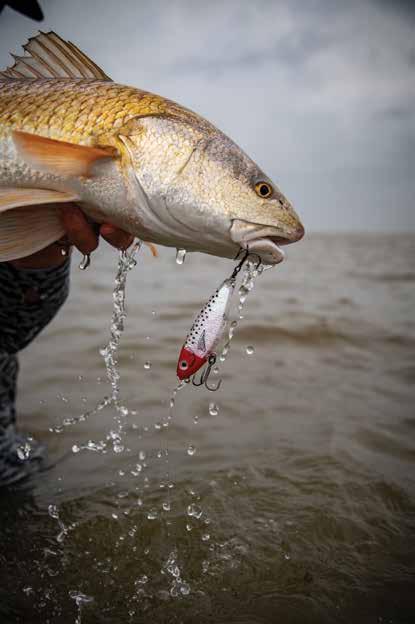
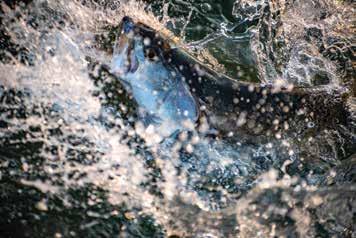
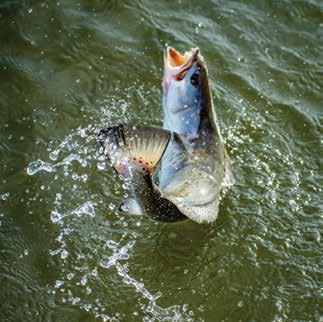
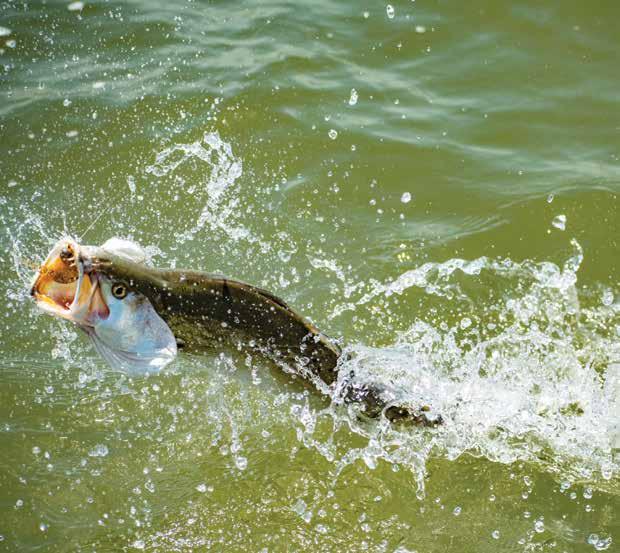
LSON’s Nate Skinner has been spending a lot of time along the Texas coast this summer shooting images for clients and fishing with friends. He’s been catching great numbers of trout and redfish. Bringing fish to hand can be the most stressful time on the water for an angler. You know you’ve hooked into the fish you came out to find, and it is so close you can almost grab it. Then, without warning, a blowup or another run sends nerves fraying and hearts thumping. When you finally do get the fish in your net or hand, all of the sacrifice and time spent chasing these creatures feels worth it.
A quick photo, and it’s back into the water to fight another day, or the cooler to enjoy at dinner with a beverage and good company.