
Spring gator hunt yields new record
By Tony Vindell For Lone Star outdoor newS
The 2026 alligator hunt in deep South Texas has resulted in a new record since the reptile was added to the game species list on national wildlife refuges.
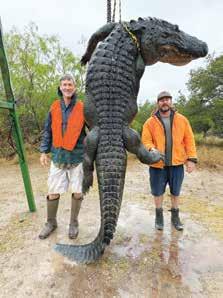
The 12.1-foot monster was caught on the last day of a two-day hunt held in early April. Justin Shafer and Steve Murphy caught the gator with a hook and line in a place called Alligator Pond at the Laguna Atascosa National Wildlife Refuge. The pair of hunters went to the area about 8 a.m. Sunday and noticed the line was down.
“We got the big one,” Murphy said. “It’s probably a 10- or a 12-footer.” They wrestled with the gator for
Please turn to page 11
By Cory Byrnes For Lone Star outdoor newS
Despite strong winds, anglers are still finding a way to bring in fish on Galveston Bay.
There are many places you can go within the Galveston Bay system to get out of the wind. The fishing in North Galveston and Trinity bays has been off and on as of late because of the tough weather conditions, according to Capt. David Rappelet with Bow to Stern Fishing Tours.
“There are multiple challenges we are having right now. We have had wind, fluctuating water levels, rain, high salinity, and the fish migration has changed again this year,” he said.
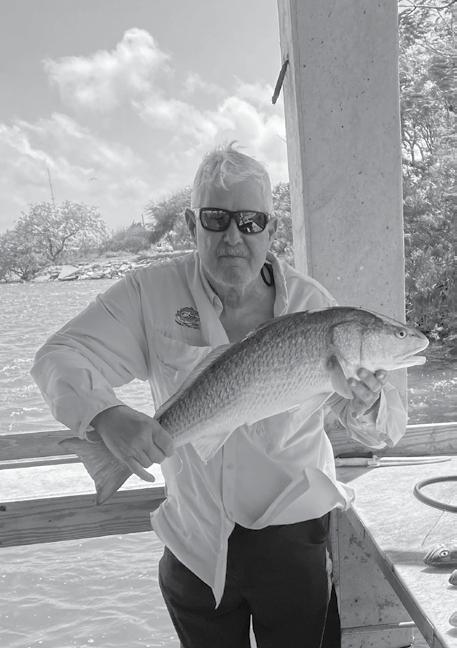
“It’s kind of good in some ways because now we are having a huge fluctuation of large trout moving back in like we did before. We are catching trout, reds, black drum, bull reds, and sheepshead and stuff like that. Reds have been the primary target right now.”
He and his clients have been targeting rock walls with reefs and sandy bottoms.
“There are some open reefs that are producing trout and reds,” Rappelet said. “The majority of easy catch will be around the rock structures and sandbars.”
On an incoming tide, he targets 2- to 4-feet of water, and on an outgoing tide, he is looking for drop-offs between 2 and 15-feet of depth.
“Any time the water is moving, I can put people on fish,” Rappelet said. “I exclusively use dead bait. My nickname is ‘Dead Bait Dave’ because I only use fresh dead bait.”
He rigs his bait under a cork or with
Please turn to page 14
Bass guide catches two 13 pounders in one day
By Nate Skinner For Lone Star outdoor newS
Bass fishing guide
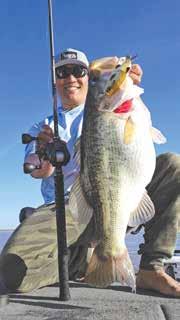
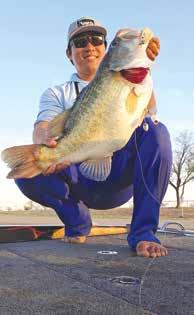
Lawrence Lee etched his name in the Texas’ trophy bass history books at the end of March when he successfully hooked
and landed two largemouth bass weighing more than 13 pounds on the same day. This was just a little over two weeks after he caught another fish tipping the scales to 13-plus pounds. All three fish came from J.B. Thomas Reservoir and were entered and donated by Lee to Texas Parks and Wildlife Department’s trophy bass hatchery program.
According to TPWD, this is the first time in the 40-year history of the program that two bass weighing 13 pounds or more have been caught on the same day by the same angler, and also the first time a single angler has registered three 13-pound bass in one season. Lee said he hit the lake early in the morning before sunrise and was fish-


By Joe Richards
For Lone Star outdoor newS
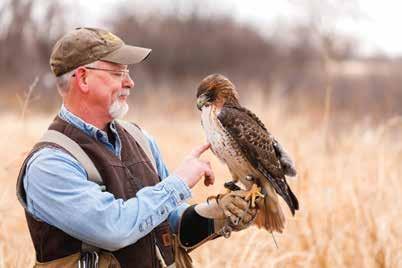
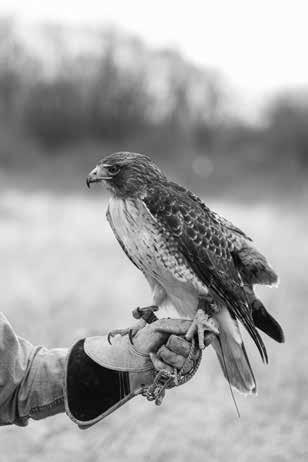
Under a cloudless West Texas sky, a determined hunter watches his dogs working the brush. On his leather glove rests a female red-tailed hawk scanning the surroundings. Whether it’s in pursuit of rabbits or squirrels, hunting with dogs is time well spent in the outdoors, and a small, but dedicated cohort of falconers have paired this tradition with flying their trained raptors.
This year marks Tyler resident Dennis Hurley’s 14th falconry season. Coming from the Pineywoods of East Texas, Hurley primarily hunts Eastern gray and fox squirrels with his female red-tailed hawk. After receiving advice at a falconry meetup on running dogs for squirrel hawking, Hurley acquired his first dog — a mid-sized mutt named Gizmo — a decision that has amplified his experience in the woods and abroad.
“I noticed by adding the dog to the team, I was having to do less work, but we were catching at a higher rate,” Hurley said. “Typically, one out of every seven chases I would see my bird catch. With the dog, it’s about every four chases. My catch rate went up because the squirrel would be less likely to come down from the tree.”
Hurley recommends to other falconers looking to add dogs to their hunting team to get a dog that is trainable, has a strong prey drive, and respects the bird.
“It really doesn’t matter the type of dog — some breeds are bred to do certain things. Any mutt will work as long as it has a strong prey drive and is trainable,” Hurley said. “For falconers who are primarily concerned with hawking squirrels and rabbits, you can really get the family pet involved as long as they have that strong prey drive and respect the bird.”
Enthused by his success in the field and three years after adding his first dog, Hurley acquired a wire-haired Jack Russell shorty named Radar.
“I wanted to add a dog to get into tight spaces — especially holes where squirrels or rabbits might get into,” Hurley said.
Hurley knew that his bird had accepted the team when he noticed her following the dogs through the woods. The dogs work together to circle and keep the squirrels treed. If the squirrel leaps to the ground, the dogs chase it back up the tree to give the hawk a second opportunity to catch.
“I have found that the bird not only learns this behavior but, in some ways, depends upon it,” Hurley said. “The team is the dogs and the bird. I am there to facilitate the hunt, control the catch, and keep the bird safe as well.” Even though his team primarily hunts squirrels in the Pineywoods, Hurley and his team travel to Lubbock every year for the annual meetup of the Texas Hawking Association — a conservation-oriented organization that serves as an advocacy group for the sport and ethics of falconry, birds of prey, and their quarry.
Serving as the editor of On the Wing, THA’s official publication, and participating in the annual meetups has allowed Hurley to meet other dedicated falconers such as Matt Reidy, Texas Parks & Wildlife biologist and Director at Large for THA.
“Falconry is hunting wild game with a trained raptor,” Reidy explained. “What’s really cool about falconry is that it brings together all kinds of people from all walks of life. You can’t put a finger on who is a falconer. It can be anybody. Getting out with falconers, being in the field daily, and seeing the hunting is where it starts.”
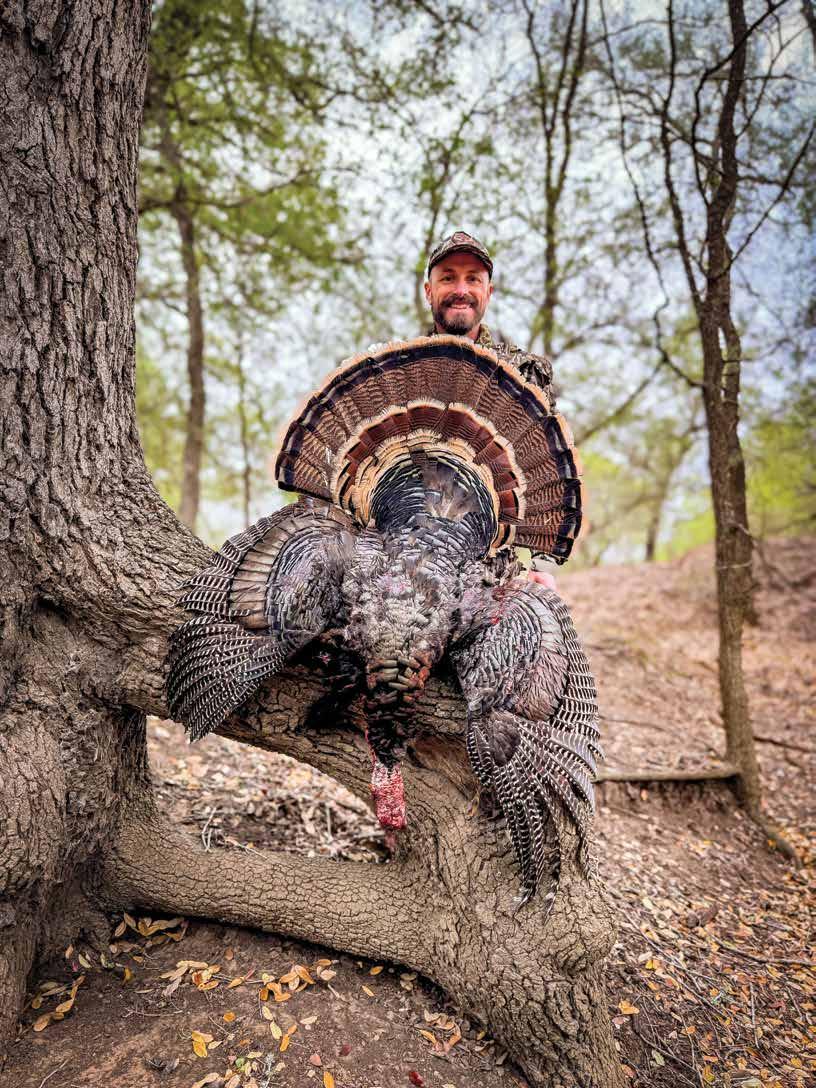
Spring turkey season commenced in the North Zone at the end of last month, and hunters were greeted with cooler temperatures and steady
ing hours. Those who were lucky enough to put a tag on a mature Tom had better success later in the day.
Aaron Whiteley spent the opening weekend of the North Zone hunting
was cold and windy. He saw several flocks of turkey throughout the day on the property he was hunting, but all of the gobblers were seemingly glued to large groups of hens.
Hunter takes South Texas birds near famous drink-making plant
By Tony Vindell For Lone
Star outdoor newS
Some hunters just run lucky.
Such was the case for Brock Griffin, a Waco veterinarian who enjoys hunting mature gobblers more than any other bird or game animal.
Griffin said he has been harvesting these large critters since he was a young boy, mostly on his grandfather’s farm near Gonzales.
On the morning of March 25, he went to the farm in hopes of bagging a big Tom. He found a spot around 6 a.m., sat down for a few minutes before he started calling, hoping for a response from several of the big Toms he knew lived in the area. Some minutes later, he spotted several hens and heard a Tom
Texas Parks and Wildlife Department has announced the 2026 Lone Star Land Steward Ecoregion Award winners.
The Lone Star Land Steward Award recognizes private landowners in Texas for their exemplary contributions to land, water and wildlife stewardship. With 95 percent of the land in Texas under private ownership, the conservation and stewardship efforts of private landowners are vital to the state.
Blackland Prairie — Wisdom-Bennett Farm, Navarro County
Edwards Plateau —Stowers Ranch, Kerr County
Pineywoods — Rock Creek Ranch, Polk County
Rolling Plains —Chadbourne Ranch, Coke, Nolan and Runnels Counties
South Texas — Chaparrosa Ranch-Flying B Ranches, Zavala County
Wildlife Management Co-op – Fayette Prairie Chapter of Native Prairies Association of Texas —TPWD
The Texas Parks and Wildlife Commission approved updated proof of residency requirements for residents, nonresidents and foreign residents buying a recreational hunting or fishing license in Texas. The new amendment takes effect Aug. 1, two weeks before annual hunting and fishing licenses become available for purchase Aug. 15.
The intention of this change is aimed at preventing fraud and misrepresentation for Texas residency status by ensuring that individuals do not unlawfully obtain resident-prices, licenses, or benefits at the point-of-sale.
When purchasing licenses issued by the Texas Parks and Wildlife Department, residents of Texas and most other states will need to present an unexpired driver’s license or personal identification certificate.
Residents of the District of Columbia and 19 other states including California, Colorado, Connecticut, Delaware, Hawaii, Illinois, Massachusetts, Maryland, Minnesota, Nevada, New Jersey, New Mexico, New York, Oregon, Rhode Island, Utah, Vermont, Virginia and Washington, will need to present an unexpired driver’s license or personal identification certificate that complies with the federal REAL ID Act of 2005, or an unexpired non-REAL ID compliant driver’s license or state identification certificate plus an unexpired United States of America passport or passport card, U.S. military identification card, Texas license to carry a handgun, or an original birth certificate, or original U.S. government issued document of a child born abroad to U.S. citizens.
Besides the updated dove season dates, several other regulations were changed at the most recent TPWD Commissioners meeting
Upland Game Bird Regulations
• Chachalaca and quail hunting season dates were aligned (November 1, 2026 – February 28, 2027)
• Matagorda and Wharton counties were closed to wild turkey hunting due to the decline in wild turkey populations in the area
• Due to the overall decline in wild turkey populations across Texas, annual bag limits were changed to only gobblers and bearded hens in counties where either sex is currently allowed for wild turkey hunting
Big Game Regulations
• “Doe days” were expanded to a 16-day season that begins the second Saturday of General Season and closes the Sunday following Thanksgiving in Austin, Bastrop, Caldwell, Colorado, Comal (east of IH 35), DeWitt, Fayette, Goliad (north of U.S. Highway 59), Gonzales, Guadalupe, Hays (east of IH 35), Jackson (north of U.S. Highway 59), Karnes, Lavaca, Lee, Travis (east of IH 35), Victoria (north of U.S. Highway 59), Waller, Washington, Wharton (north of U.S. Highway 59), and Wilson counties
• The definition of “muzzleloader” was defined to allow the use of new muzzleloading technology for the take of white-tailed deer
The Rolling Plains Quail Research Foundation officially concluded their spring 2026 trapping efforts. Conditions across the Rolling Plains have been hot and dry, but despite this, biologists were pleasantly surprised by the number of birds captured. Staff and volunteers handled 1,762 unique birds, indicating strong winter survival and encouraging numbers heading into the breeding season.
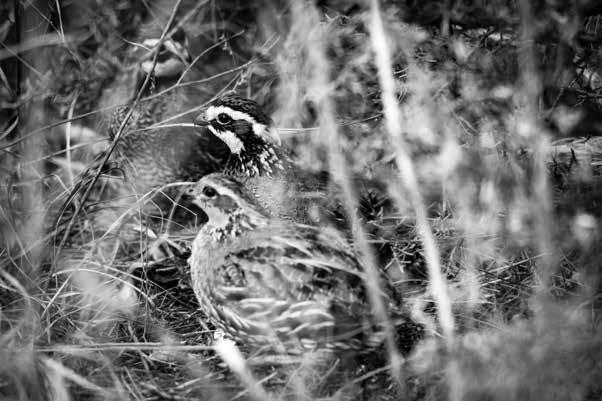
Looking ahead, continued dry conditions will likely limit reproductive success. However, timely April and May rainfall could quickly shift conditions in quail’s favor and set the stage for another strong hunting season.
This season, RPQRF deployed 50 GPS backpacks and 60 VHF collars. In addition to comparing the cost and performance of these technologies, this work allows them to monitor survival, evaluate nesting success, and assess the effectiveness of fenbendazole treatments in wild bobwhite populations.
—Mitchell Riggs, RPQRF



By Nate Skinner For Lone Star outdoor newS
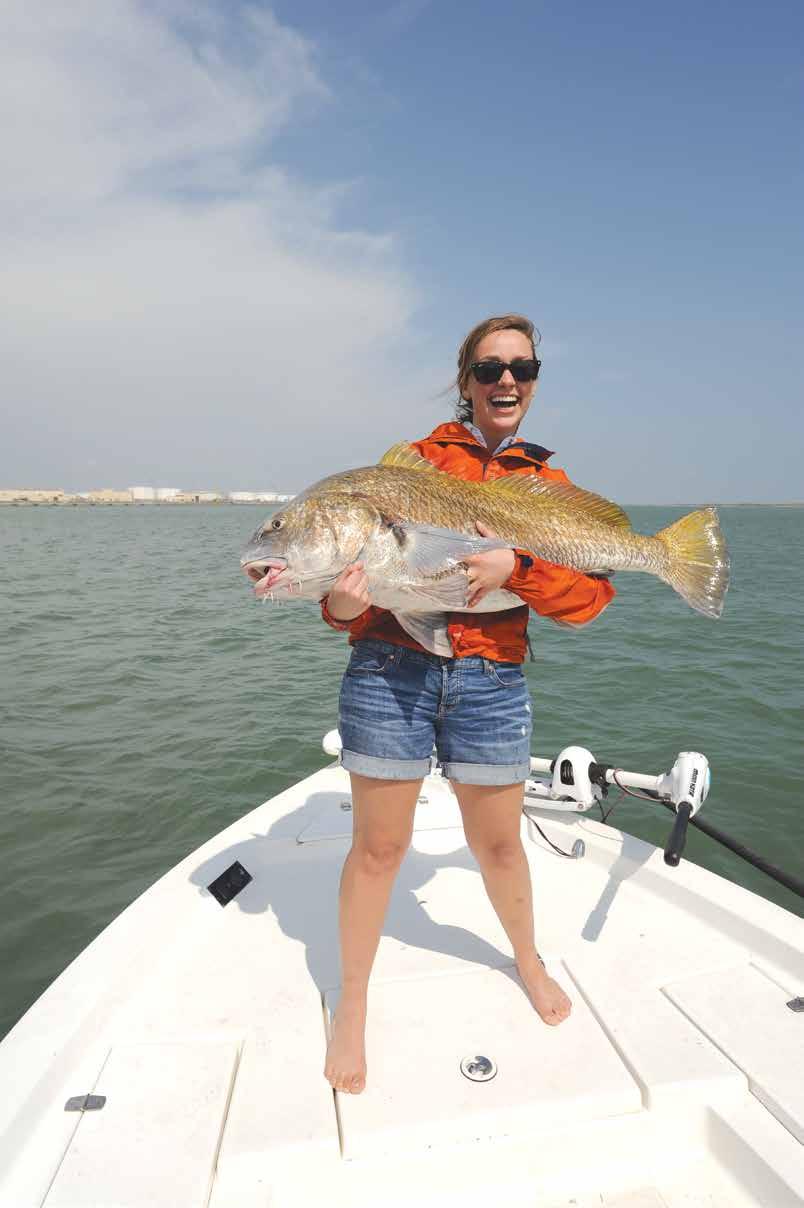
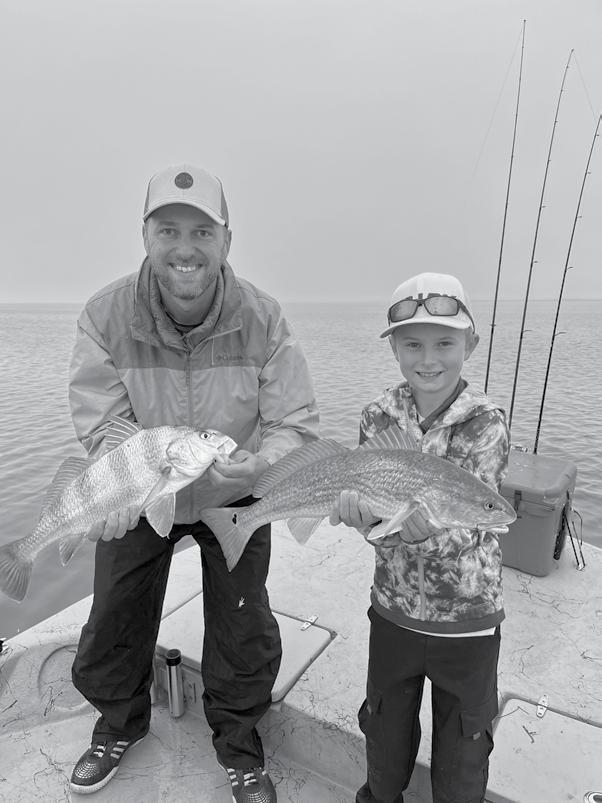
If there’s one thing coastal anglers can count on during the springtime right alongside the ever-changing wind and condi tions, it’s black drum. The highly sought after species is provid ing plenty of rod bending action up and down coastal bays in both shallow and deep water.
Redfish have also been in the mix as spring patterns begin to set in.
Rockport area fishing guide Capt. Keene Palacios of Lonestar Fishing Adventures has been fishing the northern portion of the Aransas Bay complex, where he said black drum have started to push up into the back lakes, as well as channels, drains, and ditches leading to the entrances of back bay areas. Small chunks of fresh, dead shrimp fished along the bottom have been his goto bait presentation for targeting drum lately.
“When tides are high, black drum are stacking up in the far reaches of back lakes in pretty shallow water,” Palacios said. “If the tide is falling or low, the fish have been staging along the en trances and mouths of the back lakes. Flats with muddy bottoms and shallow stretches with oyster shell have been holding the most drum.”
Palacios said water movement is key. The best action has been occurring when the tide is moving in areas where the current flows consistently during a rising or falling tide. Most of the drum he and his anglers have been catching have been in the 15to 25-inch range.
Out along main bay flats, Palacios said redfish have been pro viding consistent action in 1- to 3-feet of water on chunks of cut mullet. Stretches with scattered seagrass beds and sandy potholes with plenty of baitfish present have been the ticket.
“We are catching redfish in all sizes right now, from 20 inches on up to 40 inches in length,” Palacios said.
Capt. Ryan O’Keane has been chasing black drum out of Cor pus Christi along the upper Laguna Madre and Baffin Bay lately. He’s been focusing on deeper flats and stretches in 3- to 4-feet of water. There are some shallower areas where he’s been finding them in 1 or 2 feet of water, but those areas are directly adjacent to deeper drop-offs near the edges of channels and guts.
“Deeper flats with muddy bottoms and very short grass beds have been holding the most fish,” O’Keane said. “Current has been the key to success. You’ve got to have current, whether it is wind driven current or tidal current, in order to experience a great drum bite. Windy days have been extremely productive for that reason.”
O’Keane said live shrimp or sea lice fished along the bottom have been producing the most bites. He said the key has been us ing a heavy enough weight to get the bait down to the bottom.
“You really have to adjust how heavy of an egg weight you are using on a Carolina rig, depending on the current and the wind,” O’Keane said. “If the bait isn’t getting down to the bottom, you’re not going to get bit.”
O’Keane said he and his anglers have been catching a lot of black drum in the upper-slot range, with some oversized fish mixed in as well. Most have measured anywhere from 20- to
By Cory Byrnes Lone Star outdoor newS
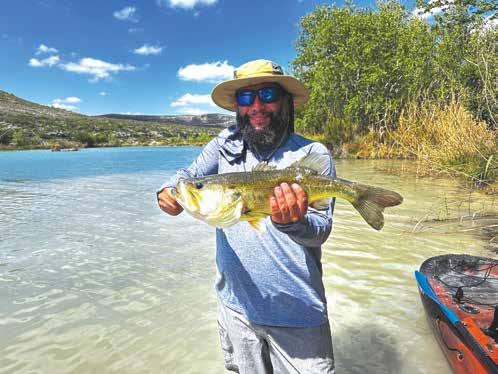
The Devils River is an oasis in the middle of the desert in South Texas. Few get to paddle and fish it due to the required permits and limited public access to the water.
Nico Werderman is one of the few who self-shuttle and made the 15-mile paddle between the two State Natural Area’s maintained by Texas Parks and Wildlife Department.
“I mean, it’s beautiful scenery, the water was pristine. It is definitely a gem of West Texas that I think everybody should try and get out there and see at least once,” Werderman said. It just so happens to also be a premier spot for largemouth and smallmouth bass.
“The fishing was awesome,” he said. “There were plenty of bass out there. You would see them swim by your boat.”
Werderman targeted the slower, deeper pools between rapids and riffles targeting hungry bass of both the largemouth and smallmouth varieties.
“I walked out a little bit onto one of the limestone ledges out on the shoreline to cast it out to the middle into the deeper water,” he recalled. “The water was flowing, but not incredibly fast, and I was just doing a slow retrieve. I would
White bass run comes and goes early this year
By Cory Byrnes For Lone Star outdoor newS
The white bass run came on early this year and is now closing a couple of weeks ahead of schedule.
Now anglers are transitioning back to the main lakes targeting structure where white bass traditionally haunt. On Lake Lewisville, the fishing is steady.
“Right now, it’s a pretty steady bite. Fish are coming out of the creeks,” said Alex Gonzales with Chasin’ Outdoors Fishing Guide Service. “It’s still another two weeks before all the fish will be out. For the most part, they are still in that weird stage that happens every year.”
Over the past several weeks, Gonzales and his clients have stayed toward the south end of the lake due to strong winds.
“The wind has been brutal,” he said. “There’s been a few days that have been just nice fishing, but most
By Nate Skinner
For Lone Star outdoor newS
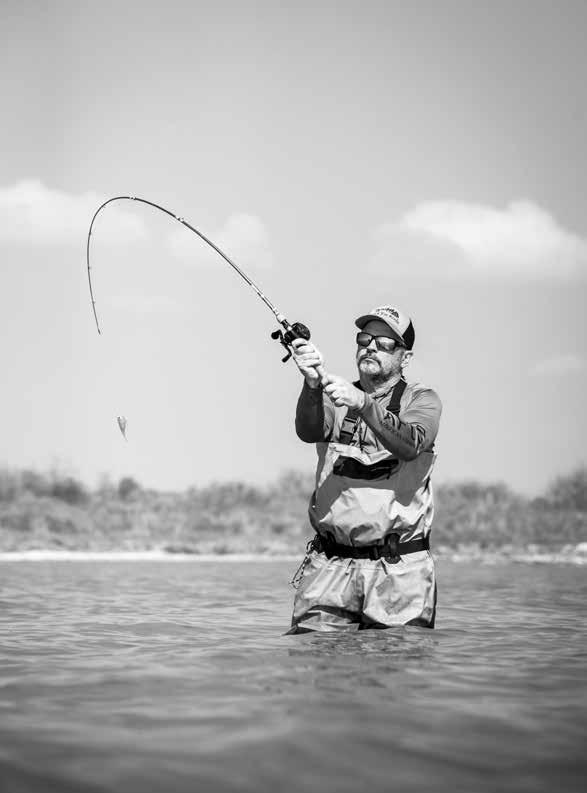
After spending the majority of his life in and around the fishing industry in a variety of facets, including working for a variety of brands, distributors, and manufacturers, John McClain decided he wanted to own and operate his own inshore fishing rod company. He recently debuted his new company, Stick ‘Em Rods, in the inshore market, with the goal of producing affordable and durable rods that the everyday, working man angler can count on.
In a world where inshore anglers can easily spend up to $400 or more on a single fishing rod, McClain wanted to bring something much more affordable to the market. He also wanted to bring back some more old school, slower rod actions that have seemingly become phased out in recent years.
“The inshore rod market has become dominated by actions that are fast to extra fast,” McClain said. “There’s nothing wrong with that, as fast actions have their place. That being said, our lineup of rods provides anglers with more moderate, slower action offerings that were at one time considered a staple amongst the inshore angling crowd.”
McClain said rods with a slower, more
moderate action load up easier when being cast.
“Basically, it takes less force to achieve the same distance on a cast with a slower action rod in comparison to a faster action rod,” McClain said. “A slower, more moderate action rod also has a longer release point time window during a cast than a faster action rod does, making slower action rods a little easier to cast more accurately, depending on the given situation and scenario.”
Stick ‘Em Rods offers 16 different rod actions and lengths within their current lineup, including eight different spinning rod options and eight different casting rod options. According to McClain, they use an extremely strong, carbon blend blank. The guide inserts are machine-pressed onto the guides themselves, so they cannot come out, and the reel seats they use are simple and durable.
“Our lineup of rods are made for anglers that are looking for a rod that is easy to cast, simple, affordable, won’t fail under harsh conditions, and has reliable and durable components,” McClain said. “They aren’t made to be flashy. They are made to function, and function well for any type of inshore fishing, including using both natural baits and artificial lures.”
Stick ‘Em Rods can only be found and purchased at local dealers. They have a growing Texas dealer network that currently includes Anglers Anonymous in Katy,
Saltwater Legend Series crowns season winners
By Tony Vindell For Lone Star outdoor newS
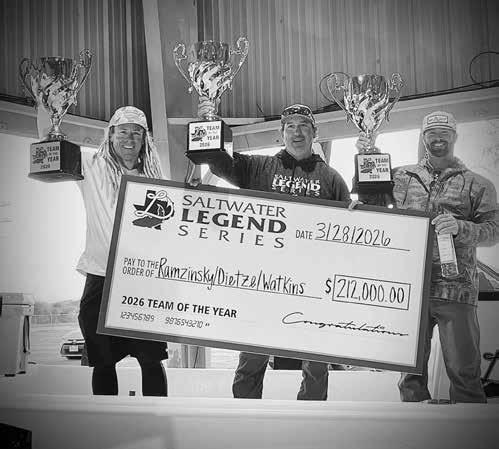
The winners of the Saltwater Legend Series fishing tournament are a trio of anglers from the upper Texas coast — Weldon Dietze, Jay Ray Watkins and Tommy Ramzinsky. The three hooked the Team of the Year award after competing in the tournament held in three Texas ports — Port Aransas, Port Mansfield and Port O’Connor. Though they finished in fourth place in the final tournament held Feb.



















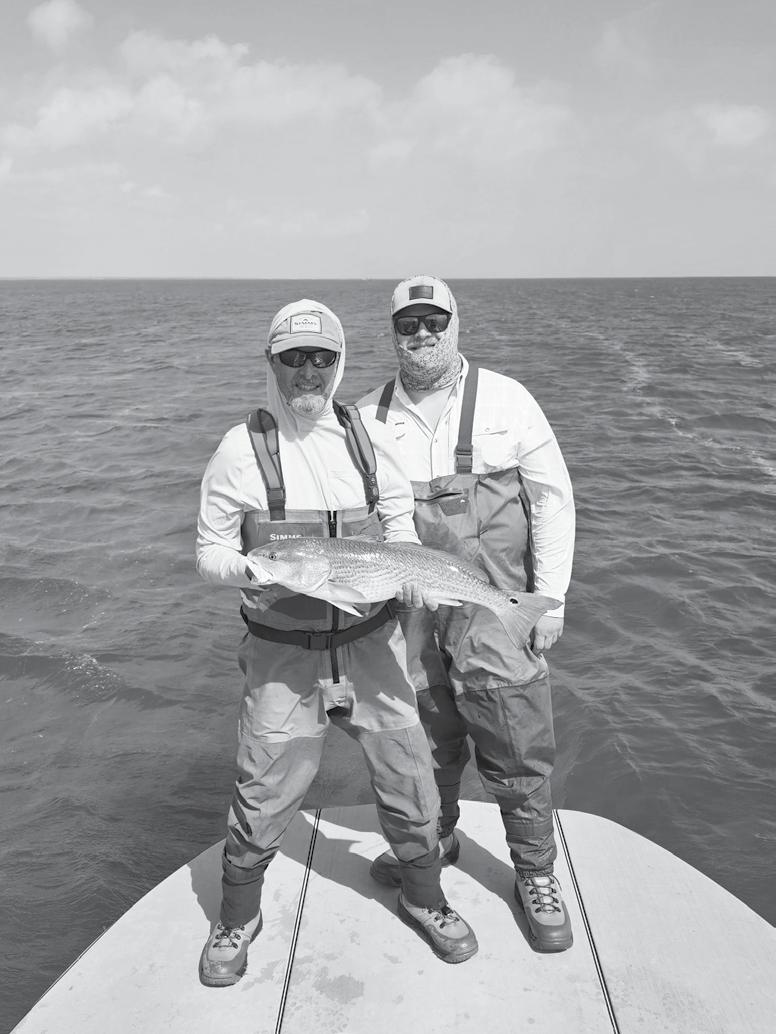
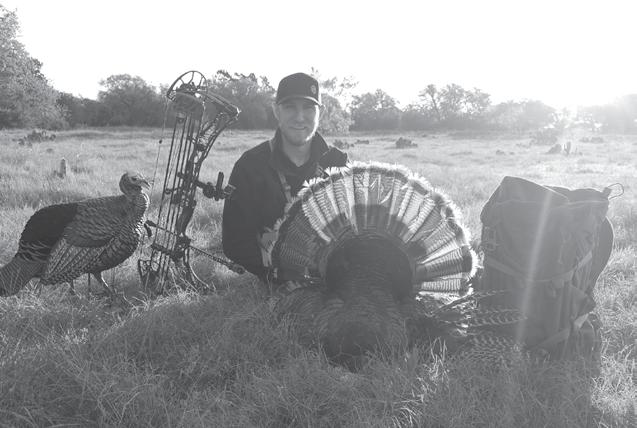
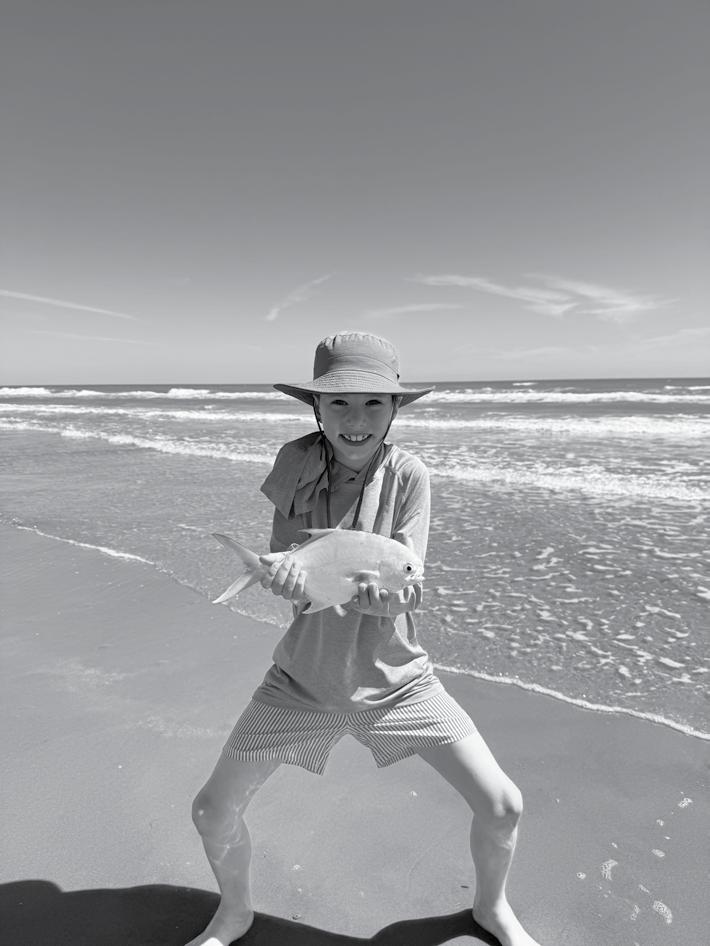
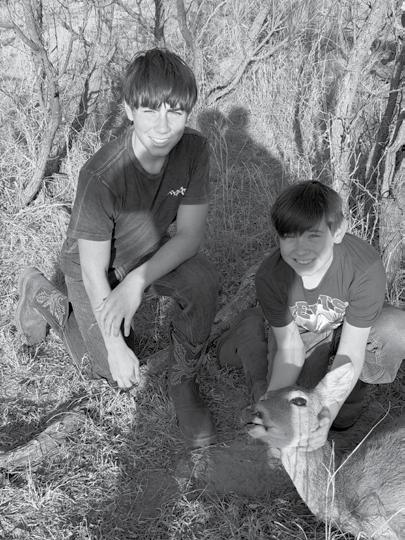


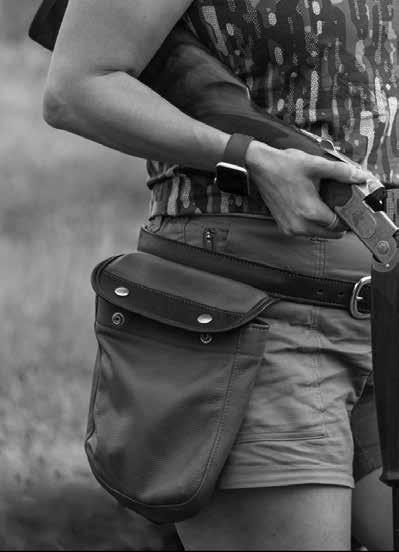
Blake Jones Designs has been crafting premium leather hunting gear since 1988, built on a foundation of quality, durability, and pride in workmanship. Every piece is thoughtfully designed and carefully made using full-grain leather selected for strength, character, and long-term performance.
At the heart of our craft lies a deep respect for tradition, wilderness, and the rugged spirit of the outdoors. We specialize in the design and manufacture of premium leather hunting gear, combining time-honored techniques with modern performance needs to create heirloom-quality products built for generations.
From bird bags and rifle cases to shell carriers and field accessories, our gear is created for sportsmen who appreciate function without sacrificing style. Each product is made to perform in the field, age beautifully over time, and become part of the stories that matter most.
Our gear is field-tested and built to endure the harshest environments — from dense forests to high-country ridge lines. We offer custom work tailored to individual hunters, including personalized sizing, tooling, initials, and functional designs that reflect your unique style and needs. These products are rooted in craftsmanship, made for the hunt, and built to last. We believe in doing things the right way — with attention to detail, respect for tradition, and a commitment to lasting value. Master the outdoors.

Continued from page 4
Observing Hurley’s team at the annual meetup in Lubbock, Gizmo and Radar navigated through a mosaic landscape of rustic tractor equipment and thick brush — an environment suitable for a number of cottontail inhabitants. The dogs detected the familiar scent particles of a rabbit under a pile of debris. Smaller in size, Radar disappeared under the cover and flushed the rabbit — a blur dashing in the opposite direction. The hawk leaped from her perch and descended with talons extended. The trained raptor’s speed and strength seemed effortless, and the chase was over in seconds.
“For people that are wanting to get involved in falconry, you have got to love the outdoors and hunting,” Hurley explained. “It’s really neat when you see a good hunting team working together and getting to see how man’s best friend comes beside you to hunt in the field with a team.”
Continued from page 4
gobbling way off on the back of the property. Griffin figured the distance was about 200 yards away. The hens soon disappeared and Griffin quickly moved to another location, thinking the flock was probably headed there.
“I sat down and took a 15-minute nap,” he said. “I then heard a gobbler and started calling.”
The bird hung up about 75 yards behind a mesquite tree, looking for the hen who had been making the yelping sounds minutes earlier. But competition was coming as Griffin said he heard another gobbler or two headed his way. He said he made a couple of yelps and saw several birds coming his way.
Griffin said he tried to pick the one with the biggest beard, pointed his 20-gauge shotgun at the bird and fired. He saw the bird go down, and as he went to pick it up, he had a huge surprise.
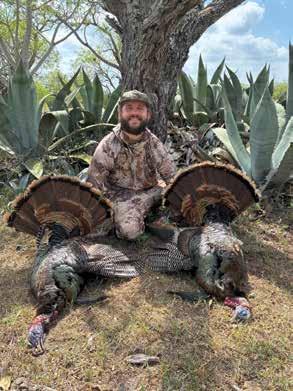
“It was crazy,” Griffin said. “I found two birds down.”
He said he never saw the second bird before he took the single shot, adding the Toms probably walked in a single file one right behind the other.
“I live for turkey hunting,” he said, “but I have never done this before.”
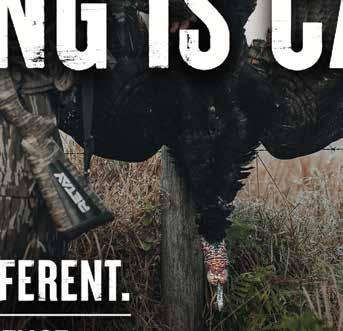
After the hunt, he carried the two birds away and had some pictures taken in front of a patch of Mexican thorny plants, called maguey or agave. The plants are the main source of tequila and are found throughout central and northern Mexico.
Griffin said he hopes to pursue the turkey grand slam in the coming years.





Continued from page 11
32-inches in length.
Upper Coast anglers fishing along the Texas City Dike have reported scattered action for black drum in both the keeper and oversized length ranges. Fresh dead shrimp, cut bait, and chunks of fresh crab have been the best baits.
Galveston Bay anglers are still reporting fairly consistent catches of oversized black drum around the Bolivar gas wells and the Galveston Jetties. Fresh, cracked or cut blue crab has been resulting in the most bites from the big uglies.
Continued from page 1
ing a creek mouth with a glide bait when he spotted what appeared to be a pretty large fish about 15 feet below the surface in 25 feet of water on his forwardfacing sonar unit.
“I brought the bait right in front of the fish, and she inhaled it,” Lee said. “The fish was about 20 feet from the boat when she struck the lure, and the fight was fairly short.”
Lee said he knew the bass was well over 10 pounds as soon as he landed her. He immediately put her in the livewell for a few minutes to revive her. Once he made sure the fish was healthy after the fight, he got her on the scale and she weighed 13.10 pounds.
“I contacted the folks at the (TPWD) program, and they dispatched someone to meet me,” Lee said. “After giving the fish to them, I went back out to fish for the rest of the day.”
Lee said he didn’t get another bite until right before sunset.
“I was chasing a fish on my electronics that I felt like was in the 10- to 11-pound range,” Lee said. “As I was following that fish, I spotted another fish that looked
Continued from page 1
several hours. The beast would surface for a few seconds before going under for extended periods. After the gator was finally put down, it was brought out of the water. It was then when the fun really began while light rain coming down in the morning started to intensify.
The two hunters, plus two others who showed up to assist them, were soaking wet and all covered with mud as they got the alligator out of the water.
“Everybody was exhausted,” Murphy said of the 5-hour ordeal. “It was pretty rough.”

to be even bigger on the screen. I worked a swimbait right past her, and she struck the bait.”
Lee said he set the hook on slack line and really didn’t get a good hook-set. The fish immediately came to the surface and jumped.
“I knew it was another giant bass,” Lee said. “She surfaced multiple times, as I tried to get her in close enough to get a net underneath her.”
The first time he tried to net the fish, the bass dove deep.
“On my first attempt to net her, I ended up bumping the fish and my line with the net as she dove below the surface,” Lee admitted. “Somehow, the fish stayed hooked, and I was able to get her in the net. As soon as I got her in the boat, I was confident she was over 13 pounds.”
The bass ended up weighing 13.57 pounds and became the second Legacy Class fish for Lee to catch in a single day.
Just a little more than two weeks prior to this unforgettable day, Lee caught his first huge bass of the season on J.B Thomas, which weighed 13.12 pounds.
It was a scene similar to those on the television series “Swamp People.” According to refuge personnel, the gator is probably the biggest ever taken during the past decade of hunts. The reptile is also one of the largest ever harvested on the refuge system in Texas.
A 14.3-foot alligator was harvested in 2018 at Choke Canyon Reservoir in Live Oak County, according a Texas Parks & Wildlife Department release, but that was on state land, not a federal reserve.
Murphy and Shafer drew a permit to hunt out of the 20 available
through a random selection held every year.
The first day, Friday evening, was disappointing as no alligators were seen as the hunters checked their lines. On the second day, they walked more than 10 miles throughout the area open for people to hunt. They finally got a 7.1foot gator, went home and came back the next morning.
Shafer said he has hunted alligator before.
“This is the third one for me,” he said, “but this is the biggest one I have ever seen.”



Continued from page 7
Serious Tackle in La Marque, POC Rod & Gun in Port O’Connor, Port A Outfitters in Port Aransas, Roy’s Bait & Tackle in Corpus Christi, Tackle Box in Victoria, Grassy Point Kayak in Palacios, and Quick Stop in Port Isabel.
McClain said their dealer network will soon be expanding to Louisiana, and he has goals of adding dealers across the entire Gulf coast, as well as along the east coast of the United States.
“We want to partner, support and work with local, small businesses that anglers trust and rely on for all of their fishing needs,” McClain said. “We are actively working to grow our dealer network.”
Fishing has been an important part of McClain’s life since he was a young boy. He grew up fishing up and down the Texas coast with his dad and brother. His passion for the sport is a product of his roots, and he is excited to provide anglers with quality rods they count on, day in and day out.

Solution on Page 18

ACROSS
3. The lesser and Attwater’s are two subspecies
6. Large reptile
9. Docile, bottom-dwelling species of Jaws fame
11. TTHA Journal editor, wildlife biologist and deer hunter
12. Remote South Texas waterway
14. Nutrient rich byproduct used for wildlife feed
16. Primitive fishing gear
18. Signals a fish strike
21. Coastal gigging target
23. A student of animal ecosystems
24. Endangered cat species
25. Small ones often called “puppies”
28. Cinnamon, green-winged are varieties
30. Invasive rodent
32. Fastest North American land mammal
33. Pulling baits offshore
34. Shallow prairie wetlands
35. A place to go relax during hunting season
36. Montezuma, Gambel’s are examples
37. Spotted cat common in Texas
38. Texas border water
DOWN
1. Stout burrowing animal
2. Mexican gobbler
4. Splits opinions in the hunting community
5. Longest continuous hike in Texas
7. Derived from Greek meaning ‘arrangement of skin’
8. Common coastal gamefish
10. Lure designed to produce flash and vibration
12. Turkey hunter’s friend
13. Bedroom for birds
15. Long-billed master of camouflage
17. Nine banded
19. Alaskan flounder
20. Offshore anglers dream catch
22. Large Texas mesa
23. Require cavities for nesting
26. Mountain gobbler
27. Vast, semi-arid plateau of Western US
29. River fish distinguished by snout
31. Man-eating species can live in fresh or saltwater

USA Archery National Head Coach Elias Cuesta has been named World Archery Coach of the Year for 2025, recognizing his outstanding first year leading the U.S. program. Cuesta guided Team USA to historic results on the World Cup circuit and secured podium finishes at both the World Archery Championships and World Archery Youth Championships.
Ruger appoints Wieland
Sturm, Ruger & Company, Inc. announced Andrew Wieland’s appointment as senior vice president and chief financial officer, succeeding Tom Dineen. Wieland brings extensive financial leadership experience from Eaton Corporation and will lead Ruger’s financial operations supporting the company’s 2030 strategic plan.
Godin hired
Target Sports USA announced Nathan Godin’s appointment as IT manager. Godin brings expertise in systems administration, NetSuite customization, and workflow automation from his previous role at Oma’s Pride.
Penn Gov. Shapiro appointed
Pennsylvania Gov. Josh Shapiro has been appointed as the Democrat Co-Chair of the Governors Sportsmen’s Caucus for a two-year term. Governor Shapiro signed Act No. 36 into law in 2025, repealing Pennsylvania’s ban on Sunday hunting, benefiting the state’s 850,000 licensed hunters and supporting rural economies.
New UM professor
The University of Montana’s Wildlife Biology Program named Heather Johnson as the new Boone and Crockett professor of wildlife conservation, the sixth researcher to hold this position since its establishment in 1993.
Yamaha promotes Berry
Yamaha U.S. Marine Business Unit promoted Jason Berry to director of marine service, where he will oversee all U.S. service operations including call centers, field service, warranty, and training.
Check-Mate, a U.S.-based manufacturer of magazine systems and firearm components, is expanding its engineering team and seeking a process engineer to optimize PLEX ERP
*email LSON your favorite recipe to editor@lonestaroutdoornews.com.
4 eggs
1 cup flour
1 cup cornmeal
2 wild turkey breasts, cubed
1 cup vegetable oil
Sauce:
1 cup mayo
1 cup honey
1 cup BBQ sauce
1 cup ketchup
3 Tbsps. Dijon mustard
2 Tbsps. yellow mustard
2 Tbsps. Worcestershire sauce
2 Tbsps. paprika
2 Tbsps. garlic powder
Cube the turkey breasts. In a skillet, heat oil until slightly bubbly. In a bowl, combine the flour, cornmeal, salt and pepper. In another bowl, whisk the eggs. Dip the cubed turkey in the egg, then the flour mixture, and put in hot oil and fry until dark down and crispy. Remove and put in paper towel to soak-up excess oil. Repeat this process until all turkey is gone. Continue remaking flour and egg mixture as needed. To make the sauce, mix all ingredients together until incorporated well. Refrigerate leftover sauce.
—Virginia DWR
4 Tbsps. unsalted butter, melted
3 Tbsps. fresh lemon juice
Zest from 1 lemon
1 Tbsp. fresh minced garlic
1/4 tsp. dried dill
4 flounder fillets
Kosher salt and freshly ground black pepper, to taste
Preheat your oven to 425 degrees. Spray a large baking dish or rimmed baking sheet with cooking spray. In a medium bowl, stir together the melted butter, lemon juice, lemon zest, garlic and dill. Rinse flounder fillets and pat dry. Place in baking dish and season with desired amount of salt and pepper. Evenly drizzle butter mixture over flounder fillets. Top with lemon slices, if desired. Bake for 10-12 minutes, then broil on high for 3-5 minutes. Garnish with lemon and parsley. —Staff report


Continued from page 7
award.
The combined tally netted a total of 139.09 pounds of fish caught by the three anglers. In addition to the top prize of a new Haynie boat with a 250 horse power Mercury 250 motor, they also won a number of other prizes like coolers and fishing gear.
The boat was donated by Chris Coulter, a tourney sponsor. The team also won a combined $212,000 in prizes from the three tournaments.
The Saltwater Legend Series was founded by Chad Peterek, a fishing guide from Corpus Christi, who conceived the idea as a way to honor saltwater fishing enthusiasts. Since then, the wade fishing tournament has become so popular that Peterek said people from Louisiana to Florida have been asking him to take the event there. So far, the Texas coast remains the tournament’s home.
Peterek has said, however, that the ongoing drought has been impacting the fish that inhabit the Laguna Madre systems. Although redfish and trout, the two species allowed in the tournament, live in salt water, he said they still required an influx of fresh water to strive.
According to tournament rules, two trout and one redfish is permitted for the weigh-in. A trout caught has to be released on the spot, whereas a redfish is brought in for the weigh-in alive and then released.
The Port Mansfield tournament, held Feb. 27-28, broke the participation record with a total of 192 anglers wade fishing.
Jimmy Lloyd grabbed the Angler of the Year award, catching a total of 37.71 pounds of fish in all three of the tournaments.
Continued from page 1
a modified Carolina rig depending on the structure he is fishing. The key to success for any angler going into summer is to find the pockets of water where the wind is tolerable and the water is moving, either in or out.
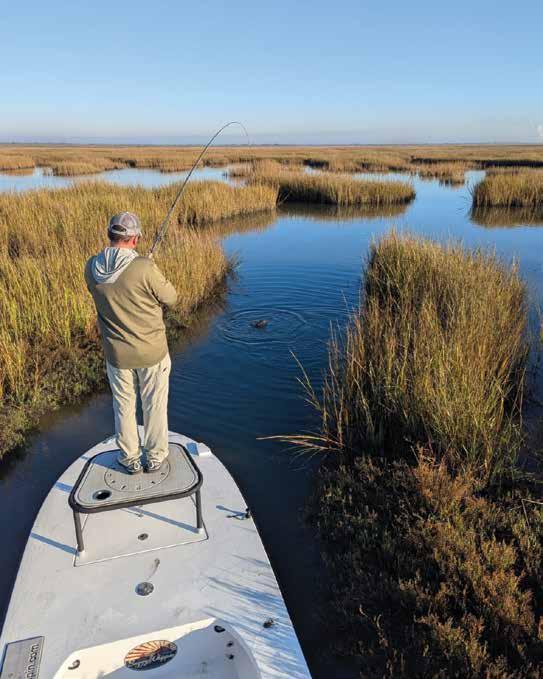
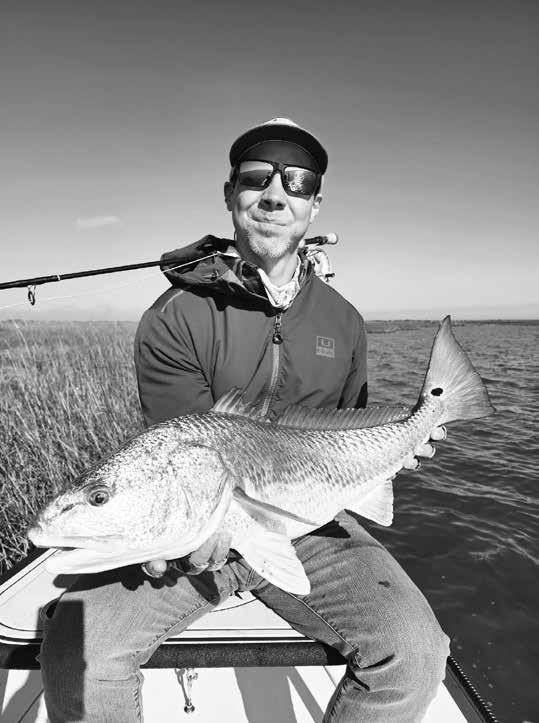
Back in the marshes, the fishing in Galveston Bay has been difficult, reported Clay Sheward with Buggy Whipping Sight Fishing Charters.
“It’s a little tough. The fish are a little sporadic. I don’t think they’ve fully come into the bay just yet as far as the marshlands,” Sheward said.
“They’re still kind of out in the deeper waters.
Anglers should note that the fish are still transiting out of their winter patterns. With the wind churning the water, anglers in the marsh need to look for other signs.
“As far as finding fish for my clients, I am really trying to find as clear of water as I can and keep them looking straight down rather than out,” Sheward said.
He recommended keeping an eye on the bank and down close to your boat. Back in the marsh, the reds will take on the same color as the bottom, making them hard to spot unless you know what you’re looking for.
“You’ll be right on top of them before you know it,” he said. “Be ready for quick, short shots.”
Crab and shrimp flies have been productive.
“Any of those types of patterns will work,” Sheward said. “If you’re throwing black and purple, you’re doing yourself a favor.”
Streamer patterns that imitate mullet have also been productive in deeper water. As we move into summer and the winds begin to die down, Sheward and his clients will push further back into the marsh, looking for those fish in 6- to 8-inches of water or less. Keep moving and keep an eye out for reds just lounging about.
In the Main and East Bay area, the fishing is picking up, David Mills with DJ’s Guide Service and Dreamcatcher reports.
“There is a lot of wind. This time of year, it’s kind of like that,” Mills said. “We’ve been catching a large variety of fish. The sheepshead have been running on the jetty, and also black drum. We’ve been catching a few sharks. In the bay, the trout started moving back in.”
What you catch really depends on what you’re targeting and the wind for the day. Anglers can get out of the wind by sticking to the southeast bay.
Mills and his clients have been successful with live shrimp and artificial lures.
“Jig heads and soft plastics; I use mostly Down South Lures,” he said. “Right now, the water is kind of clear, so white, clear, and lighter colors have been good. When the water is dirty, you’ll have to use a darker color.”
Mills has been targeting shallow reefs for reds and 2- to 4-feet of water for trout. For flounder, he and his clients have been targeting the muddy flats.
“I stick mostly to shell reefs. I catch a lot of my trout and reds on shell,” Mills said.
As summer picks up, Mills and his clients will transition to deeper water where the fish will hold up to get out of the heat. “When I say deep water, I mean 5 or 6 feet of water,” Mills clarified. “From now to May, you’re going to be able to catch any fish you want in the shallows.”
The Vermont Fish and Wildlife Board voted on April 1 to have 65 either-sex moose hunting permits and 20 antlerless moose hunting permits available this year for a hunt limited to Vermont’s Wildlife Management Unit (WMU) E in the northeastern corner of the state. The science-based hunt is expected to result in a harvest of 40 to 50 moose, or about 6 percent of the current moose population in WMU E.
Permit applications are now available on the Vermont Fish and Wildlife Department’s website. The deadline to apply is June 17, and the permit lottery drawing is July 15. —VFWD
The application period for moose, bighorn sheep, and mountain goat controlled hunts opens April 1 and runs through April 30. Hunters can apply online, at any Fish and Game office, license vendor, or by calling 1 (800) 554-8685.
Residents and nonresidents can apply for moose, bighorn sheep, and mountain goat hunts, but nonresidents are limited to no more than 10% of the total number of tags for each species. To apply, each applicant must possess a 2026 Idaho hunting or combination license. There is a nonrefundable application fee of $16.75 for residents and $45.75 for nonresidents.
Moose, sheep, and goat hunt applicants must pay the tag fee along with the application fee when they apply. The total application fees for moose, bighorn sheep and mountain goat are:
• Residents under Price Lock: $183.50
• Residents without Price Lock: $216.50
• Nonresidents: $2,672.50 Moose, sheep, and goat drawing results will be online in early June.
—IFG
A total of 36,353 North Dakota deer hunters took approximately 20,877 deer during the 2025 deer gun hunting season, according to a post-season survey conducted by the state Game and Fish Department.
Hunter success was 57%, with each hunter spending an average of 4.9 days in the field. Hunter success for white-tailed deer was 53% for antlered and 45% for antlerless whitetails. Mule deer license holder success was 82% for antlered and 82% for antlerless mule deer.
In total, 22,944 bowhunters harvested 6,610 deer (5,590 whitetails, 1,020 mule deer) for a success rate of 29%.
—NDGF
Yamaha Pro Jason Christie pulled off a nailbiting finish to win the third 2026 Bassmaster Elite series tournament of the season on Sunday, March 29, on the Tennessee-Tombigbee Waterway with a four-day total weight of 58 pounds, 2 ounces. The decorated veteran angler from Dry Creek, Okla., now has nine Bassmaster wins to his credit.
“I thought there was zero chance I’d win,” Christie said. “When I was idling in, I figured somebody had caught ‘em. It’s funny, in the previous Elite tournament on Lake Martin, I finished dead last, and I win this one. Last year, I finished dead last (in another trail), and then I won. It feels good to win because I fish to win every single time I go out. Getting older makes it sweeter — especially on a spinnerbait.”
—Yamaha
10% above the five-year average. The 2025 survey was the fifth record count in the past six years.
Brett Wiedmann, Department big game biologist, said 104 rams, 234 ewes and 40 lambs were counted. Not included are approximately 40 bighorn sheep in the North Unit of Theodore Roosevelt National Park and bighorns introduced to the Fort Berthold Indian Reservation in 2020.
The northern badlands population increased by 8% from 2024 and was the highest count on record. The southern badlands population remained near its lowest level since bighorns were reintroduced there in 1966.
—NDGF
On March 18, the House passed H.R. 556, the Protecting Access for Hunters and Anglers Act. This act generally prohibits the Secretary of the Interior and the Secretary of Agriculture from restricting the use of lead ammunition or tackle on certain federal lands and waters open to hunting or fishing, while allowing limited exceptions when wildlife declines are shown by field data and state law or policy supports action.
“National Wild Turkey Federation believes hunters and anglers deserve policies that protect access, respect state wildlife management, and rely on clear scientific evidence before imposing restrictions,” said Matt Lindler, NWTF’s director of government affairs. “Blanket bans on lead ammunition and tackle put another financial burden on sportsmen and women without proving they will deliver meaningful wildlife benefits. We support voluntary, targeted, and science-based solutions that preserve opportunity, protect our hunting heritage, and lift restrictions once species recovery goals have been met.”
—NWTF
The Utah Division of Wildlife Resources is releasing its proposed big game hunting permit numbers for 2026 and is asking for the public’s feedback on the recommendations, as well as on a variety of other proposals.
DWR biologists are recommending a total of 86,625 general-season deer hunting permits, which is a 6,425 permit increase from the previous year.
The current statewide elk management plan includes an objective to have 80,600 elk across Utah — there are currently an estimated 83,020 elk in the state. DWR biologists are recommending a slight decrease in public draw limited-entry bull elk permits for the 2026 hunts. They’re also recommending an increase in antlerless elk permits in order to manage the overall elk population numbers to meet management objectives.
—UDNR
The West Virginia Division of Natural Resources announced that hunters harvested 92,553 white-tailed deer during the 20252026 seasons, which is a 17% decrease from the 2024 deer harvest of 111,646 and 14% below the 5-year average of 107,434. This year’s decreased harvest was caused by an increase in hard mast production, which often results in decreased harvests due to the difficulty of tracking and targeting game species spread out over a landscape. Several counties also experienced an outbreak of hemorrhagic disease, which likely impacted hunter success, especially in the western part of the state.
The North Dakota Game and Fish Department’s 2025 bighorn sheep survey, completed by recounting lambs in March, revealed a record 378 bighorn sheep in the badlands of western North Dakota, up 8% from 2024 and
According to preliminary numbers collected through the WVDNR’s electronic game checking system, hunters harvested 33,823 bucks during the traditional buck firearm season, 25,453 antlerless deer during all antlerless firearm hunting opportunities, 29,654 deer during the urban and regular archery/crossbow seasons, 3,102 deer during the muzzleloader season and 501 deer during the Mountaineer Heritage season.
—WVDNR
Continued from page 6
guess it was probably about 6 feet of water.”
His biggest fish of the trip came on a white soft plastic swimbait rigged on an underspin weedless hook. He and his group had made it to camp a little earlier in the day and, after lounging on the bank for a while, he announced he was going to catch a bass.
“I was just putting out some positive energy,” he recalled.
After two casts, his rod loaded up and he reeled in a 5-pound bass. “I went out and did it within 5 minutes of saying it,” he said. “I think that was pretty cool!”
Shane Essink, another river angler, was primarily targeting smallmouth bass.
“We didn’t end up fishing as much as I had planned based on just the challenge of maneuvering the kayak and actually getting in certain spots,” Essink said. “But overall, it was good.”
Essink targeted deeper pools right after rapids where the smallmouth like to hold up.
“The one I caught, I caught it on a spinnerbait. It kind of had a translucent tail on it,” he said. “The other gentleman I saw catching quite a few was using a Texasrigged worm.”
Essink also targeted shallow water banks while on the move down the river.
“I would have liked to have a few topwaters to walk the dog in some of the areas where it was a little calmer. I think we would have done really well on that,” Essink said. “Those grassy areas are what I would like to try if I went back.”
Local guides said the river is fishing better as the weather gets a bit hotter.
“It’s starting to heat up a little bit and get a little bit better,” said Mike Naccarato with


Far West Texas Outfitters. “It’s still a little bit chilly. I feel like the bass are still waking back up.”
Naccarato and his clients will either do a fully-guided full float in a canoe from the Del Norte SNA to the Dan Hughes SNA or do a guide-piloted raft float on short sections of the river. He and his clients have been targeting spring spawning areas on the river with pink Game Changers and poppers in yellow, white, or black.
“As far as the bass fishing goes, they’re starting to get on top and hit top-water,” he said. “I carry two, 7-weight rods, one with a popper and a pink Game Changer. That will pretty much cover all your bases.”
He also recommended the Lunch Money and rust or black color nymphs.
“We also switch to flashy swimmy stuff for the smallies,” he said.
For largemouth bass, he and his clients target the slower-moving pools where the grass has a chance to grow. For smallmouth, he will target moving water and pools after rivers.
“Oftentimes, guys will catch smallies in a foot of water in the middle of rapids,” Naccarato said. “We will continue to target these same waters throughout the season. Once it gets too hot, the fish will get a break for a couple of months before the fall season picks up again in September.”
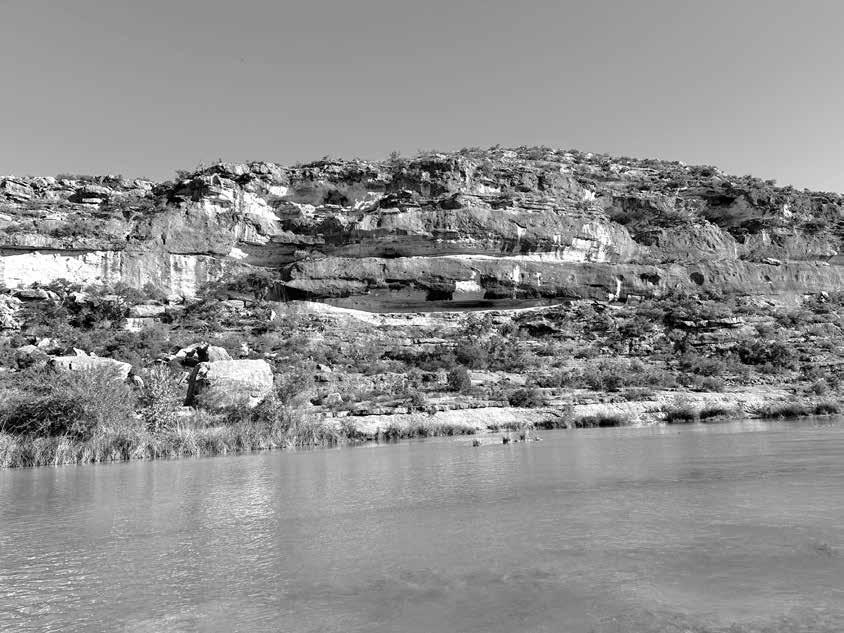
Werderman and Essink both agree that one of the biggest challenges fishing the Devils River is time. There isn’t enough of it to really pick a spot apart. This is because, generally, paddlers have to keep a schedule, and all the water looks good. While going down the river, anglers are almost always surrounded by private land. They are only
able to camp on islands or within the first gradient line of the riverbank.
TPWD only maintains two campsites between the Del Norte SNA and the Dan Hughes SNA for paddlers to camp. Each camper is limited to only a single night per
campsite.
For those considering making the trip, use Google Maps to locate possible campsites or use a local outfitter.










































QAdding just 4.6" to barrel length, the Nomad Ti OTB advances over-the-barrel suppressor innovation. Delivering the recoil reduction and sound suppression of a longer system, it maintains optimal balance and keeps the rifle compact for fast handling and confident control in the field.




















Continued from page 4
“The next day I set up a pop-up blind along a clear cut on a different property where I had been getting trail camera photos of some nice Toms on an almost daily basis,” Whiteley said. “I was settled in well before sunrise and saw my first group of turkey that morn ing about an hour after first light.”
Whiteley said the flock had 12 to 15 hens with three Toms and three jakes fol lowing them. He said they worked out in front of him, but the Toms wouldn’t leave the hens and come check out his decoys.
“I had multiple flocks of birds like that throughout the day, with 10 to 15 hens or more, move through the area I was hunting,” White ley said. “Then about 5 p.m., I spotted a lone Tom about 50 yards away. He appeared uninterested in my set up, and I thought he was going to walk off to the east, away from me.”
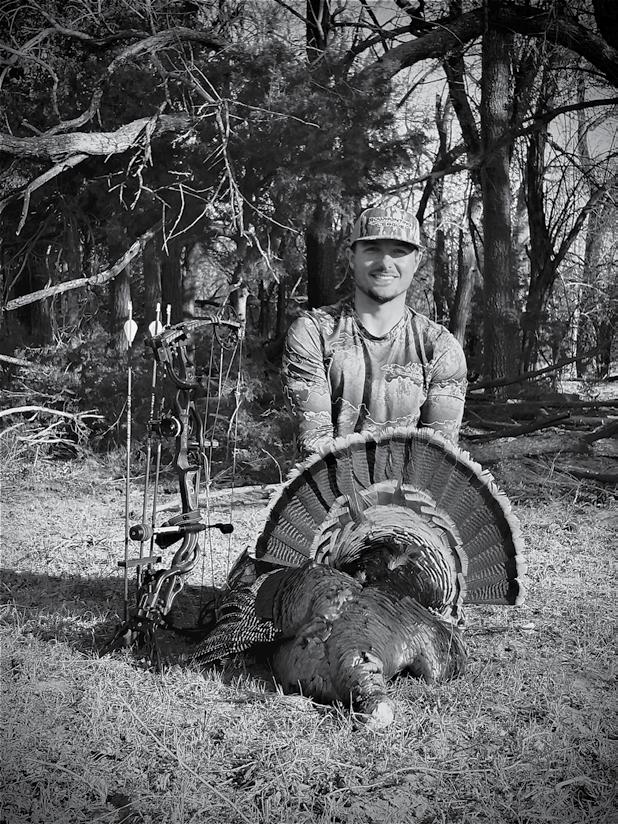
About 10 minutes after he lost sight of the gobbler from his pop-up blind, the Tom appeared about 10 yards away.
“He must’ve circled around behind me before deciding to come into the decoys,” Whiteley said. “I quickly grabbed my bow and putted at him.”
Whiteley said the turkey paused long enough for him to send an arrow. The bird fell immediately and flopped in its tracks.
Luke Bledsoe, owner and operator of Speck Ops, said their hunters during the opener had their best success during the midday hours, well after the birds hit the ground from their roosts in Gillespie County.
“Opening morning was downright cold,” Bledsoe said. “It felt like wintertime, and the birds were in large flocks. We saw several groups of 3 to 6 Toms following 5 to 10 hens or more on almost all of the properties we hunted.”
Bledsoe said the gobblers seemed much more willing to play after they became separated from flocks of hens mid-morning. It was almost impossible to get them to come in when they were following hens.
“Using a strutter decoy did seem to provoke some aggression from a few gobblers that were flocked up with hens,” Bledsoe said. “Now, if you could get a hen to come into the decoys, she was likely going to bring a Tom with her. That’s exactly how one of our hunters scored a mature gobbler right off of the roost. The hens came into the decoys, and the longbeards followed.”
Darren Jones confirmed the gobblers have been distracted by large numbers of hens in Schleicher County. He was able to harvest a gobbler during the North Zone opener by calling hens into his set up.
“I was able to turn the hens, and a gobbler followed their lead,” Jones said.
Turkey hunters further south have also reported plenty of hens to compete with across the landscape, as the South Zone spring turkey season continues.
Joe Link was able to put a tag on a mature Tom recently during a mid-morning sit in Wilson County. He said he heard a hen yelping nearby, and was able to call her in. A longbeard that never gobbled was hot on her trail and gave him a 20-yard shot opportunity.
Continued from page 6
of them have been windy and more windy. Luckily, the fish are staying over there.”
He has not been targeting any structure, in particular. Anything that could hold fish is worth casting to right now.
“I’ve fished just about everything. I fish points, I fish humps, flats. I have caught fish on all of them,” Gonzales said.
He is picking and moving through the typical spots until he finds the right school, though.
“I just keep moving if the quality is not there for me, so try and find a school with bigger fish,” Gonzales recommended.
Once you find the right school, you can stay over the top of them to catch your fish.
Once he finds the fish, Gonzales and his clients have been most successful with jigs atop slabs and baby flukes.
“It doesn’t really matter what color,” he said. “They’re going to hit it. If you want better quality fish, upgrade the size of your bait to a baby fluke or something.”
Live bait has also been productive. As Texas marches into summer, Gonzales will switch almost exclusively to live bait and target deeper points where the fish like to stack up out of the heat.
On Richland Chambers Reservoir, the fishing has been going strong.
“We’ve been hammering out steady limits most days,” said Jarrett Cunningham
with Wild Side Guide Service.
Cunningham and his clients have been targeting hybrids and white bass off the bulkhead in 2- to 5-feet of water.
“The shad have been spawning, off and on, for probably a little over a week,” he said. “Once the morning shad spawn dies down, the fish have been moving out to 20plus feet of water and schooling there. Once the spawn is over, it moves out deep immediately. By deep, I mean by 8 or 9 o’clock, you’re in 15 feet of water up to 20 feet.”
During the morning, live shad have been productive shallow. As the day goes on and the fish move deeper, Cunningham and his clients swap over to jigs in chartreuse.
“If it ain’t chartreuse, it’s no use,” he laughed. “Just get it in their face, and you should be successful. Anglers should target the drop-offs. You’ll find them laid up on the shelves. You know, on the drop. You might pick up and move 50 feet, maybe 50 yards, but we’re going to be in the same area, and we are going to catch.”
As the season progresses, Cunningham will target hybrids first and then go looking for white bass.
“Once the shad spawn is over, I’ll be switching to bigger baits to avoid the smaller fish. But other than that, it is the same as usual,” Cunningham said.
The 2026 red snapper fishing season for vessels with a federal for-hire reef fish permit is 147 days in federal waters of the Gulf. Private Anglers Note: Each Gulf state will set the private angling season for state and federal waters. Please check with your state agency for specific dates.
The season for federally-permitted for-hire reef fish vessels will open at 12:01 a.m., local time, on June 1, 2026, and will close at 12:01 a.m., local time, October 26, 2026.
How the Season Was Determined:
The red snapper total recreational quota is 7,991,900 pounds whole weight. The private angling component is allocated 57.7% and the for-hire component is allocated 42.3% of the quota.
For the federal for-hire component:
• The 2026 quota for the federal for-hire component is 3,380,574 pounds whole weight
• The annual catch target for the federal for-hire component is 3,076,322 pounds whole weight, which is 91% of the quota
• The number of days for the federal for-hire component to harvest its ACT was projected using recent catch rates and average weights of landed fish
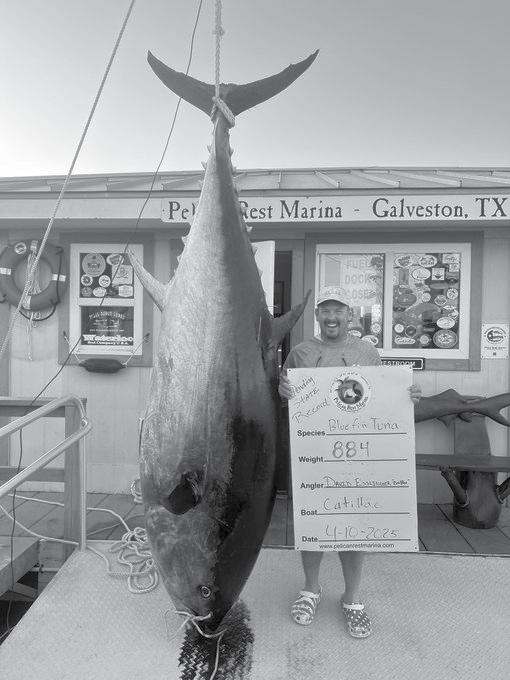
Anglers from Texas and across the nation set numerous fishing records in Texas waters via the Texas Parks and Wildlife Department’s Angler Recognition Program in 2025.
The angler with the most 2025 catch awards was Charles Dewey of Universal City with 52. He averaged an incredible, one record per week, with most of his submissions being uncommonly targeted species that include common carp and smallmouth buffalo. The heaviest state record, broken in 2025, was an 884-pound bluefin tuna caught by David L. Essingler of Houston.
A phenomenal 207 water bodies contributed to the 2025 submissions.
Anglers set a combined 44 new state records and 470 waterbody records throughout the course of 2025. State and waterbody records are awarded in overall and junior angler categories for public and private freshwater fisheries along with saltwater fisheries in the state.
A few other notable catches were entered into the program in 2025: The smallest (lightest) new state record was a 0.50lb Warmouth caught by Killian Speers of Rockwall (youth, private waters).
Trent Rickman of Fate landed a 6.66-pound Bowfin on a fly rod. This species has a hard mouth and teeth, making them difficult to hook and land, even for anglers with gear and tackle made to target them.
A new species was added to the program’s State Records and thanks to Raymond Benton Pahlka of Houston, there is now a 14.48-pound Barrelfish weight record.
A teenager from Florida, Julia Bernstein, traveled to Texas and earned 17 awards/records for five catches during her trip.
78 total species were submitted as largemouth bass topped the list with 81 entries followed by white bass (54) and white crappie.
—TPWD






TEXANS ARCHERY CLUB
Network of Archery Ranges For One Membership! TEXASARCHERY.INFO

MOBILE SPORTING CLAYS FOR HIRE! Fundraisers, Corporate, Parties! Sales/Service all Traps! 40+ Years Experience! (817) 999-1395 RIO GRANDE PIPE/ RENO EQUIPMENT
HUNTING CAMP FOR LEASE
Between Rocksprings and Del Rio
3 Bedroom Cabin
4 blinds
One year lease (612) 723-1323
BIOLOGIST 4 HIRE, LLC.
Fish & Wildlife Habitat Consulting, 1-D-1 Wildlife Agriculture Valuation, Conservation Land Assessment & Management Plans, Drone Mapping Services. Chad E. Simmons USDA NRCS TSP B-19-22936 chad@biologist4hire.com (972) 837-0392
TEXAS TROPHY WHITETAILS Axis, Blackbuck, Hogs Free range whitetail and exotic hunts in Sonora, TX HuntTexasWhitetails.com (717) 512-3582

FLOATING CABIN
Permit for Sale
Tide Gauge Bar Baffin Bay 42’x17’x12’ Serious Inquires Only (713) 254-8166
361 FISHING
Get the Texas saltwater fishing app (iOS) that has it all. Bite times, top 5 spots right now, real-time weather and local intel from guides. Focused on artificial and fly, use the app to determine where to go, when to go and what to throw to increase your fishing success. Free trial to get started.

361FISHING.COM
COASTAL CONSERVATION ASSOCIATION
MARKET IS HOT Cash out every Tuesday @10 am Atascosa Livestock Exchange Pleasanton Hauling Available Call (210) 289-7698

APRIL 11
HOUSTON SAFARI CLUB
Crawfish Boil American Shooting Centers (713) 623-8844 hscfdn.org
DSC PANHANDLE CHAPTER
Annual Banquet Amarillo Civic Center (806) 433-5766 facebook.com/PanhandleDSC
APRIL 11-12
JUNCTION CHAMBER OF COMMERCE Junction Gun Show Coke Stevenson Center (325) 206-1818 junctiontexas.com
APRIL 18
SCI BRAZOS VALLEY CHAPTER Crawfish Boil Circle Star Firearms, Anderson (832) 451-2723 safariclub.org
BASSCHAMPS
Lake Ray Roberts Tournament Ray Roberts Marina (817) 439-3274 basschamps.com
JUNCTION CHAMBER OF COMMERCE
Outdoor Women Gone Wild (325) 446-3190 junctiontexas.com
APRIL 23
DALLAS SAFARI CLUB

47th Annual North Texas Chapter Banquet 3Rs Ranch, Prosper (214) 402-3825 ccatexas.org
APRIL 25
DELTA WATERFOWL DW Clay Shoot
American Shooting Center, Houston (888) 987-3695 deltawaterfowl.org
APRIL 30
COASTAL CONSERVATION ASSOCIATION
Annual San Antonio Chapter Banquet Freeman Coliseum Exposition Hall (210) 289-8821 ccatexas.org
MAY 1


For home or office delivery, go to LSONews.com, or call (214) 361-2276, or send a check or money order to the address below. Lone Star Outdoor News, ISSN 2162-8300, a publication of Lone Star Outdoor News, LLC, publishes twice a month. A mailed subscription is $35 for 24 issues. Newsstand copies are $3, in certain markets copies are free, one per person. Copyright 2026 with all rights reserved. Reproduction and/ or use of any photographic or written material without written permission by the publisher is prohibited. Subscribers may send address changes to: Lone Star Outdoor News, P.O. Box 551695, Dallas, TX 75355 or email them to editor@lonestaroutdoornews.com.

4TH ANNUAL CHASIN’ WHISKERS CATFISH TOURNAMENT Lake Texana (210) 818-7707 facebook.com/chasinwhiskerscatfishtournament
MAY 16
DSC CENTRAL TEXAS CHAPTER Chapter Banquet Comanche Trace, Kerrville instagram.com/dsc_central_texas_chapter

Speaker Series featuring Tom Hammond Gleneagles Country Club (972) 980-9800 biggame.org
TEXAS DOVE HUNTERS ASSOCIATION 2026 Sporting Clays Shoot National Shooting Complex (210) 764-1189 texasdovehunters.com

DUCKS UNLIMITED Tyler DU Sporting Clays Shooting Competition 5H Shooting Sports, Frankston (817) 789-1051 ducks.org
For home delivery subscriptions
Advertising: Call (214) 361-2276 or email editor@lonestaroutdoornews.com to request a media kit.