We are almost halfway through summer. How does time fly by so quickly? I hope everyone is enjoying the warm months (some days might just be a tad too warm) and all the outside activities summer brings our way.
Our 2026 Conference celebrating our 50th Anniversary has gone by, and it seems to already be a distant memory. We had great speakers and topics, more sponsors and the largest trade show than ever before. As always, the conference provided valuable networking opportunities throughout the event. The participants who took a little time to complete the surveys provided us with very positive comments but also expressed some suggestions on how to move forward in future years. The feedback is a very important part of the entire process, and we do listen. Wait until you see what’s in store for 2027.
There were specific comments on the location of the conference, the days of the week, and how many days the conference should last. The final results revealed the following:
• Niagara Falls and Oakville areas were the most popular locations
• It appears participants would prefer going back to the end of the week for the conferences
• The time frame is 1 to 2 days in length and should be held every year
• A slight majority said to hold the Golf Tournament at a different time than the actual conference but we will see what may be available
The Conference Committee has already started their meetings to discuss the results of the 2026 Conference, the 2027 Conference, and to review all the feedback about the above and future content to be presented.
We know we can always improve and provide the learning experience you expect.
IHM has taken some fantastic strides with our education strategies and opportunities with various groups. We have Humber and George Brown Colleges offering our Core Courses and we are very excited to announce that Sheridan College will be offering our courses starting in September 2026. Distance Learning and our five-day virtual classes are still very popular.
The encouraging successes we have had in other markets over the past two years are what is exciting and illustrates how we are expanding. IHM has completed the following:
• Delivered our core training curriculum to the CASA group in Edmonton
• Provided our core mandatory courses in our virtual fast-track training platform
• Delivered a customized training program - Property Management Foundations - to twenty-five Niagara Region employees
• We also provided a customized course on RGI for Simcoe County and here is what they had to say:
“We were happy to have Tracy Geddes, AIHM, from IHM join our housing provider meeting and deliver a presentation tailored to our specific questions around rent-gearedto-income. She was thorough, knowledgeable, and very engaging throughout. Tracy also communicated clearly ahead of time to make sure we were aligned and that the content met our needs. Her presentation was well received and a great addition to the meeting.”
We are striving to expand our customized education programs to other regions, property management companies and the property management community at large. It is very exciting that IHM continues to provide professional education to advance the skills of property managers across the country.
Keep an eye on our website for upcoming opportunities. We encourage you to reach out if you have specific needs you would like to discuss. IHM is open for business.
I hope everyone enjoys the remainder of the summer.
Jimmy Mellor, FIHM
IHM President
There were many highlights as IHM celebrated its 50th anniversary with a stellar program from start to finish. Here are just a few:
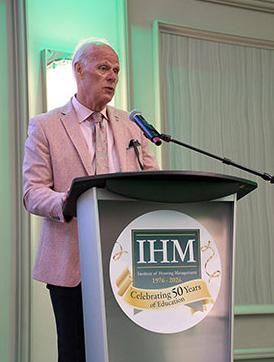
Mayor Dan Carter welcomed delegates to the conference with a heartfelt presentation of his struggles from addiction and homelessness to the path that has led to the success he enjoys today.
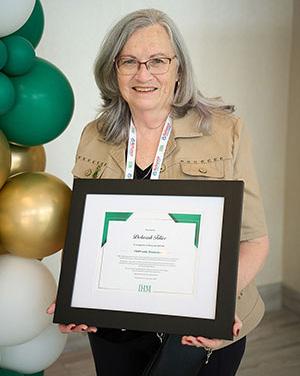
Deborah Filice’s dedication to IHM, professional education and the housing management community has had a lasting impact. Her leadership, mentorship and commitment to advancing excellence in the property management field have helped shape IHM and support generations of housing professionals. In recognition of Deborah’s unwavering commitment, she was awarded the first ever Fellow with Distinction.
Continued
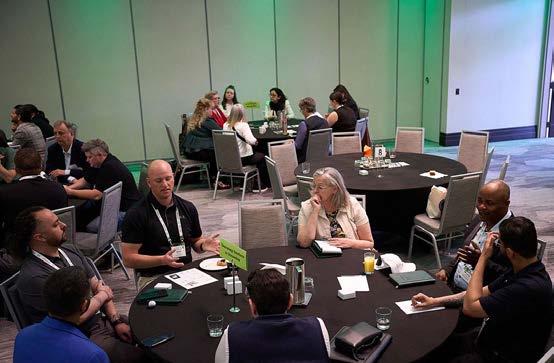
The always-popular round table discussions provided an opportunity for delegates to learn from industry experts and peers on practical issues affecting property management today.
The speakers were on point from start to finish. It’s impossible to recognition each of these experts, but here are a few of the highlights:
• John Fox delivered our keynote address “Housing’s Moments: Fireworks or Systemic Change?”.
• Steve Pomeroy’s presentation providing insight into the “State of Rental Housing in Canada – Navigating Growth While Protecting Affordability”.
• A first …. a presentation from the Ministry of Municipal Affairs and Housing – Laura Smith provided an overview of the Ministry’s initiatives in tackling the provinces housing challenges.
• Lawyer Michael Hackl, hosted an interactive q&a addressing issues focusing on tenant issues and responsibilities , Bill C10 and Bill 60, and an array of other legal concerns presented by delegates.
• Social worker Natalie Blake, provided delegates with practical tips to address the stress faced by property managers when tackling their day-to-day challenges and responsibilities.
• Captain Fire Prevention Oshawa, Catherine Beaver, held nothing back as she reinforced the importance of a fire prevention/escape plan.
The trade show surpassed all expectations. It was the largest event ever held, bringing together an impressive lineup of 20 companies. Each exhibitor showcased a diverse range of products and services, ensuring that delegates were not only engaged but also kept fully informed about the most innovative and cutting-edge solutions available in the market.
In celebration of this milestone, delegates enjoyed a reception, delightful dinner and great entertainment featuring GrandMagic Dueling Pianos. GrandMagic played to the crowd with folks providing a number of song selections for their listening and dancing pleasure.
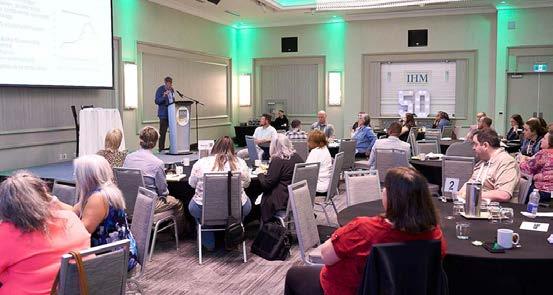
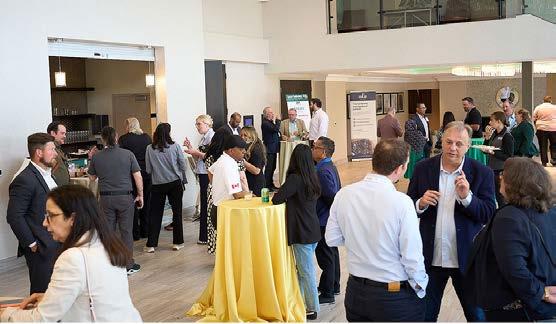
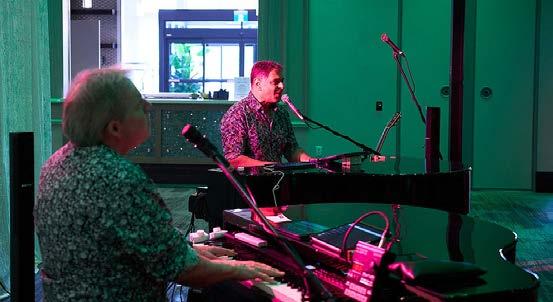
A number of members have earned their service pins in the past year. Those in attendance were presented with their pins:
• 10 Year Kiya Morphy & Wendy Swoffer
• 15 Year Lynda Gourlie & Jacqueline Quinn
• 30 Year Ed Cipriani
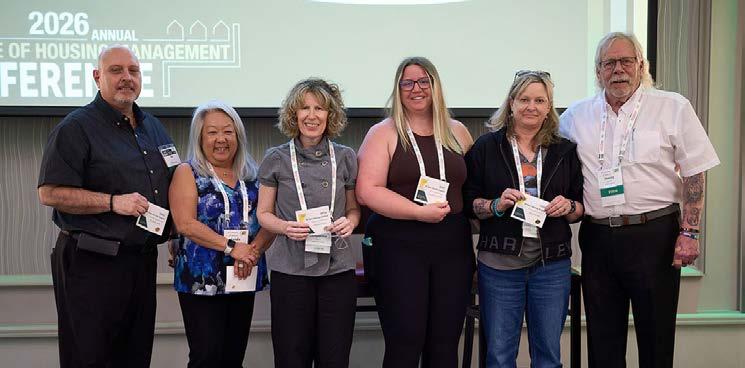
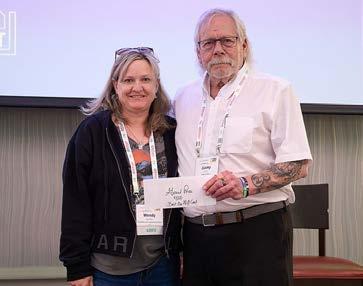
The conference ended on a high note with the presentation of the Grand Draw Prize. Congratulations to Wendy Swoffer, AIHM - winner of the $500 Best Buy gift card.
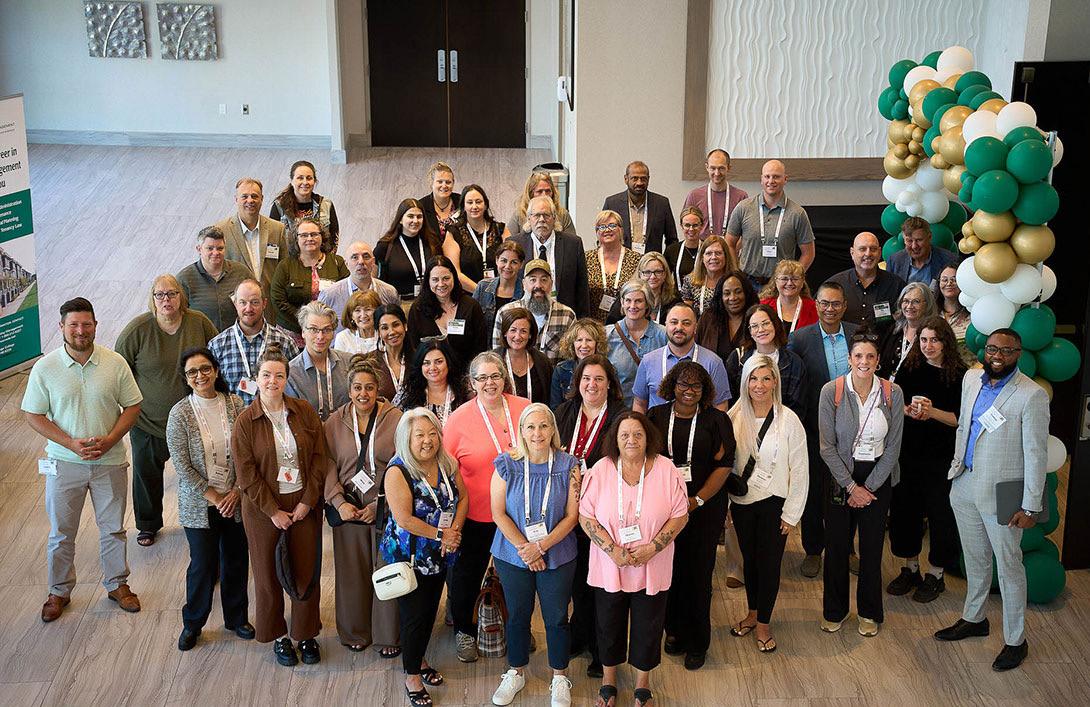
We can’t wrap up the highlights without expressing our thanks to those who made the 50th Anniversary Celebration possible:
• Diamond Sponsor – Registon Building Restoration Ltd.
• Gold Sponsors – Reliance Home Comfort, Yardi Canada Ltd., F. Shaw Management & Consulting Inc., Auxilium Properties Inc. and On Side Restoration
• Silver Sponsors – Enercare Home & Commercial Services, DSG Restoration Services and BEST Consultants Martin Gerskup Architects Inc.
• Bronze Sponsors – Homepro Pest Control, Apollo Pest Management, Williams and McDaniel, Safe and Sound Connections, Trauma Tech Inc., Tap Report, Paul David Restoration Inc., and Canada Pro Roofing Inc.
To 2026 Conference Committee Members:
Jimmy Mellor, FIHM, Deborah Filice, FIHM, Tracy Geddes, AIHM, Lynn Alexander, FIHM
To our speakers, volunteers and every attendee who celebrated 50 years of IHM with us.

September 4, 11, 18 & 25, 2026
Exam – October 2, 2026
Instructor: Ed Cipriani, FIHM, MAATO, Dipl.T., COQ, CET
Fridays - Online classes
9:00 a.m. to 1:00 p.m. - Zoom Session 1:00 pm - 4:00 pm - Asynchronous Learning Exam - October 2, 2026
The final online exam will take place from 9:00 am – 1:00 noon

By Petr Bakus, AIHM, CIHCM
hen people ask how I found my way into housing, they sometimes expect to hear that it was always the plan.
It wasn’t.
My journey into housing began before I ever worked in the sector. As a student at the University of Waterloo, I lived at Waterloo Co-operative Residence Inc. (WCRI), a student housing co-operative. Through committees, volunteer leadership, and participation in the governance of the co-op, I discovered that housing was about far more than providing a place to live. It was about community, shared responsibility, democratic decision-making, and people working together toward a common purpose.
Looking back, WCRI was my first classroom in housing. It taught me leadership, accountability, teamwork, and governance while instilling a deep appreciation for the co-operative model. Co-ops do more than provide affordable homes; they create opportunities for members to contribute, learn, and grow as leaders. Those early experiences shaped not only how I viewed housing, but how I approached leadership throughout my career.
Although my academic studies began in biochemistry, I never imagined they would lead me to a career in housing. Yet after graduating, I found myself drawn back to the values I had experienced at WCRI, beginning my professional journey with a non-profit property management company supporting housing co-ops. Somewhere along the way I realized I hadn’t simply found a job. I had found a profession.
Housing is unlike almost any other field. We are responsible for buildings, budgets, maintenance, supporting good governance, managing risk, and working within an evolving legislative and regulatory framework. Yet behind every spreadsheet, inspection, policy, or work order is something far more important: someone’s home.
That realization has guided every stage of my career.
My early years in housing reinforced the lessons I had first learned at WCRI. Whether working with housing co-ops or later across the broader non-profit housing sector, I came to appreciate that successful housing is built not only on bricks and mortar, but on relationships, trust, good governance, and
a shared commitment to the people and communities we serve.
As my career evolved, so did my perspective. What began with supporting individual housing providers gradually expanded into helping organizations strengthen their operations, governance, and services. I found myself increasingly drawn to solving complex problems, building better processes, coaching staff, mentoring emerging leaders, and helping boards make thoughtful decisions. Along the way, I discovered that what motivated me most was helping organizations become stronger than they were before.
My work at Victoria Park Community Homes (VPCH) gave me the opportunity to see how leadership, governance, operations, and organizational culture come together in service of residents and communities. Serving as Chief Operating Officer taught me how every decision, from governance to maintenance planning, from insurance strategy to regulatory compliance, ultimately influences the daily lives of residents. At VPCH, I had the privilege of leading alongside talented colleagues who cared deeply about the communities we served.
I have found that some of the greatest lessons come from listening to diverse voices, sharing experiences, and working collaboratively toward better outcomes.

Alongside my operational leadership roles, I continued supporting housing co-ops as a neutral chair and governance facilitator. Facilitating annual meetings, resolving conflict, and delivering governance education reinforced an important belief: strong governance is one of the greatest investments any housing organization can make.
Throughout my career, I have sought opportunities to continue learning beyond my day-to-day responsibilities. Working across both the co-op and non-profit housing sectors, while serving on boards, government advisory panels, and sector committees, exposed me to diverse perspectives on leadership, governance, and community.
Formal education and professional development have also been central to that journey, including earning both my AIHM and CIHCM designations. Together, they reinforced that housing is a profession grounded in leadership, ethics, governance, continuous learning, and a commitment to serving residents and communities. Whether contributing to housing policy, serving in governance roles, or supporting the advancement of the profession through organizations such as IHM and CIH
Canada, I have found that some of the greatest lessons come from listening to diverse voices, sharing experiences, and working collaboratively toward better outcomes.
That commitment to lifelong learning extended beyond my own organizations and communities. Over the past two years, I had the privilege of participating in two CIH Canada international study tours that broadened my perspective on housing and the role of our profession.
The first took me to the United Kingdom, where we explored some of the country’s largest social housing providers. Seeing housing delivered at such scale reinforced the importance of long-term stewardship, organizational resilience, and resident-centred services. A year later, I travelled to Finland with housing professionals from across Canada to study the internationally recognized Housing First model. Visiting Helsinki and speaking directly with housing providers, policymakers, and frontline staff demonstrated how housing can become the foundation for recovery, stability, and opportunity.
One of the most rewarding aspects of my journey has been the relation-
ships built along the way. Whether through co-ops, non-profit housing, board service, professional associations, conferences, or international study tours, I have been fortunate to learn alongside remarkable people who have generously shared their knowledge and experience. Those conversations have often taught me as much as any classroom, reinforcing that although every community and every country face unique challenges, our profession is united by a common purpose: creating communities where people can live with dignity, stability, and hope.
If my journey has taught me anything, it is that none of us succeeds alone. Every stage of my career has been shaped by people who were willing to share their knowledge, challenge my thinking, and encourage me to keep learning. I hope I have been able to do the same for others.
Looking back, I realize that while my job titles changed, my purpose remained remarkably consistent. I have always been interested in helping organizations become better tomorrow than they were yesterday. Sometimes it meant introducing new technology, redesigning processes, coaching staff, mentoring leaders, strengthening governance,
or helping teams navigate change. Over time, continuous improvement became less of a methodology and more of a philosophy.
Housing today faces extraordinary challenges. Affordability, aging infrastructure, changing regulation, increasing resident complexity, reconciliation, climate resilience, and workforce pressures demand thoughtful leadership. None of these challenges have simple solutions, but they reinforce why professionalism in housing matters.
For me, being a housing professional has never meant having all the answers. It means remaining curious, continuing to learn, listening before acting, and remembering that every policy, procedure, every board deci-
sion, and every operational choice ultimately affects someone’s home.
Recently I closed one chapter of my career by leaving my role as Chief Operating Officer and relocating across the country to Vancouver Island. It felt less like an ending and more like a reminder that none of us owns the role we hold. We are simply its caretaker for a time. Our responsibility is to leave it stronger than we found it, prepare those who follow us, and continue serving wherever our next opportunity leads.
After more than two decades in housing, I remain convinced that our profession is about far more than managing buildings. It is about serving people through strong communities, thoughtful leadership,
good governance, and a commitment to continual learning.
Looking back, I am grateful for the people, experiences, and opportunities that have shaped my journey. Looking ahead, I remain just as excited to learn, contribute, and serve as I was when it all began.
Petr Bakus, AIHM is Chair of Communications Committee. He is a housing sector leader with more than 20 years of experience advancing affordable and community housing across the non-profit sector. Throughout his career, he has demonstrated a strong commitment to operational excellence, organizational leadership, and building sustainable housing solutions that support thriving communities. u
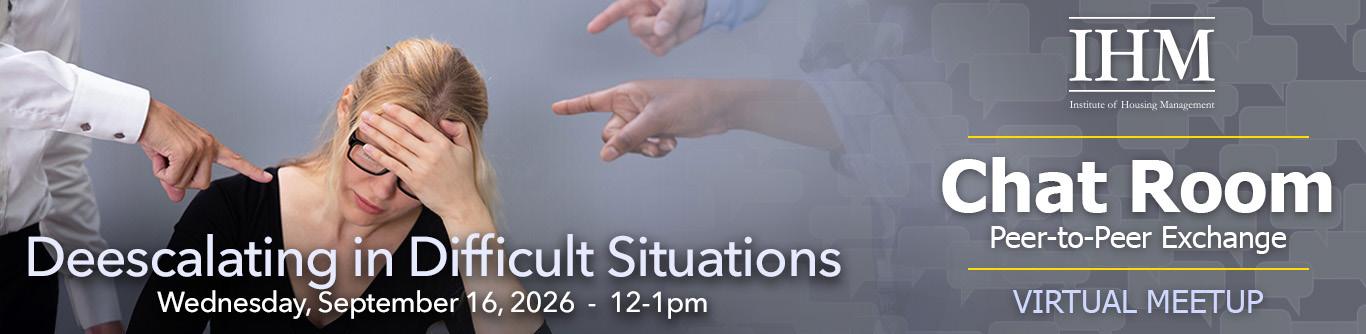
September 16, 2026
12:00 pm - 1:00 pm - Zoom Session
Presenters: Heidi Billyard
Housing Consultant, Good Shepherd Non-Profit Homes Inc.
Aleah Baldwin
Assistant Director- Good Shepherd Homes
Administration
Dana Dufford
Nikola Jordanoski
u u u
Human Relations
Nikita Chandra
Rachel Dagenais
Shreya Deshpande
Catharine Martin
Taylor van Oorschot
Nicki Zilkalns
u u u
Maintenance
Lori Ann Barcier
Tamara Coombs
Tracy Legros
u u u
Tenancy Law
Jamie Collyer
Patricia Hicks
Andre Hinds
Lisa Roy
Gregory With u u u
Kristen Wilson, AIHM
Proudly Canadian Established 2011



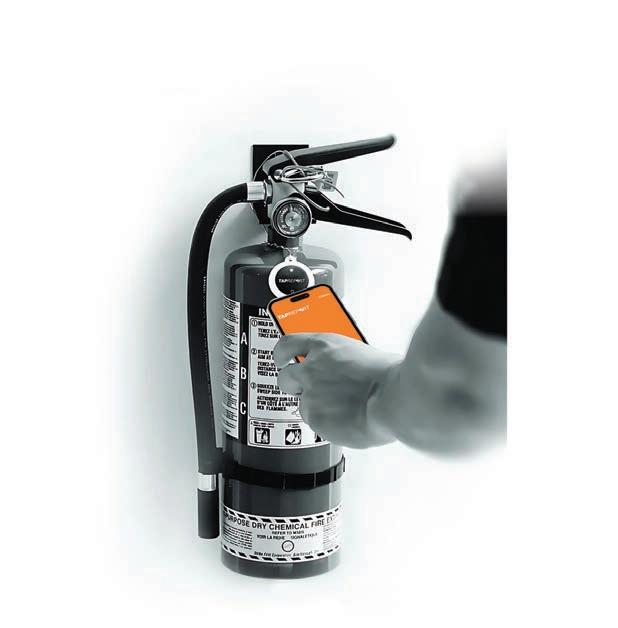
Join our community of 500+ million workplace inspections
Digital solution for managing workplace inspections, safety compliance, and operational reporting.
Generate dozens of audit-proof and compliant reports.
tapreport.ca | 1-855-727-9388
By Carola Mittag
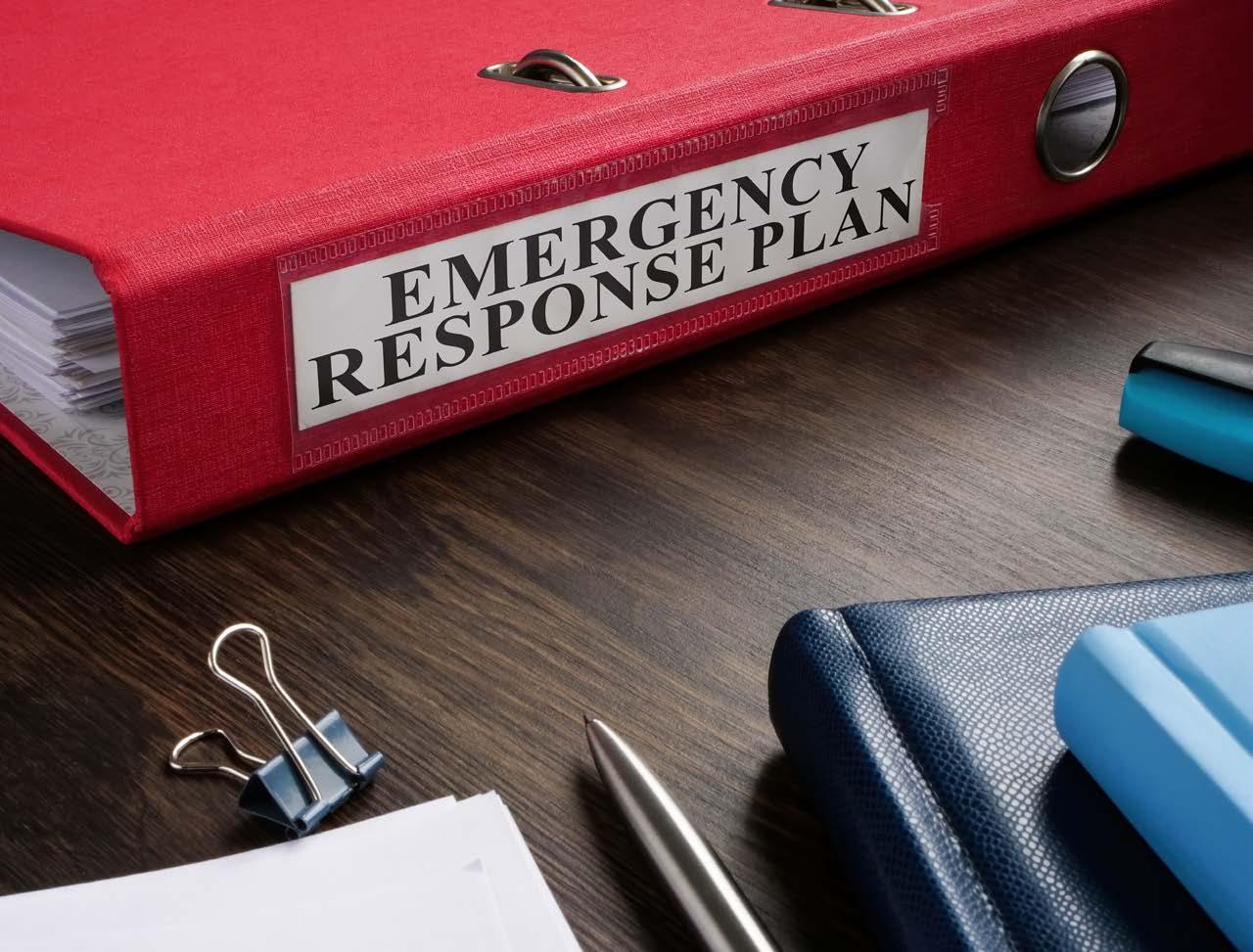
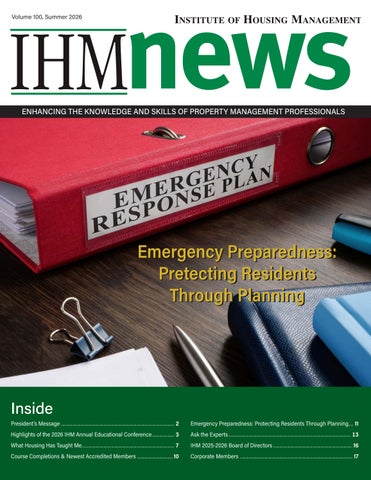
mergency Preparedness: Protecting Residents Through Planning Emergencies can happen without warning. Power outages, severe weather, gas leaks, flooding, area lockdowns, or other unexpected events can quickly disrupt normal operations and place residents at risk. While these incidents cannot always be prevented, their impact can be minimized through effective planning. For Ontario housing providers, emergency preparedness is not only a best practice, it is a critical component of protecting residents and maintaining safe communities.
Ontario’s Occupational Health and Safety Act (OHSA) requires employers to take every reasonable precaution in the circumstances to protect workers. Although the Act primarily focuses on worker safety, maintaining a safe workplace directly supports the ability of staff to respond effectively and protect residents during emergencies. Complementing the OHSA, Ontario’s Emergency Management and Civil Protection Act (EMCPA) requires municipalities to maintain emergency management programs, ensuring local governments are prepared to respond
to community-wide emergencies. Housing providers play an important role by aligning their emergency plans with municipal emergency response efforts and local emergency services.
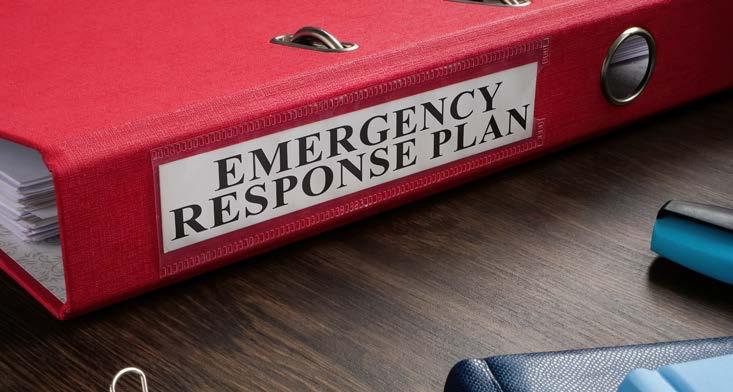
A comprehensive emergency preparedness plan establishes clear procedures for responding before, during, and after an emergency. It identifies staff roles and responsibilities, communication methods, evacuation or shelter-in-place procedures, and strategies for supporting residents who may require additional assistance. Planning ahead reduces confusion, promotes coordinated decision-making, and enables a faster, more effective response when every minute matters.
Residential communities include seniors, individuals with disabilities, and residents who rely on electrically powered medical equipment or refrigerated medications. Extended power outages can affect elevators, heating and cooling systems, electronic security systems, and essential building services. Emergency plans should include procedures for resident wellness checks, alternative communication methods, backup power where available, and access to community resources if relocation becomes necessary.
Area lockdowns, whether caused by police activity, hazardous material incidents, or extreme weather, present different challenges. Hous-
ing providers should be prepared to communicate timely updates, maintain building security, and help residents access essential needs while remaining safely indoors. Clear, consistent communication helps reduce uncertainty and supports resident confidence during stressful situations.
Public Safety Canada encourages every household to maintain a personal emergency kit capable of supporting occupants for at least 72 hours. Housing providers can reinforce this message by encouraging residents to prepare kits containing bottled water, non-perishable food, flashlights, batteries, medications, copies of important documents, and basic first aid supplies. Resident preparedness complements organi-
zational planning and strengthens overall community resilience.
An emergency plan is only effective if it is understood and regularly practiced. Routine reviews, staff training, tabletop exercises, and emergency drills help identify gaps and improve response capabilities before an actual incident occurs. Regular communication with residents regarding evacuation routes, emergency contacts, and building procedures also promotes confidence and preparedness.
Emergency preparedness is a shared responsibility. Housing providers, employees, residents, municipal emergency management officials, and first responders each play an important role in ensuring a coor-
dinated response. By developing, reviewing, and practicing comprehensive emergency plans, housing providers demonstrate their commitment to resident safety while supporting Ontario’s broader emergency management framework.
If you require assistance with developing an Emergency Management Plan, please contact me at: carola@ langloissafety.com
Carola Mittag is a Consultant to Langlois Safety Training & Consulting Services. She has been providing health and safety insights for IHM since 2013. u
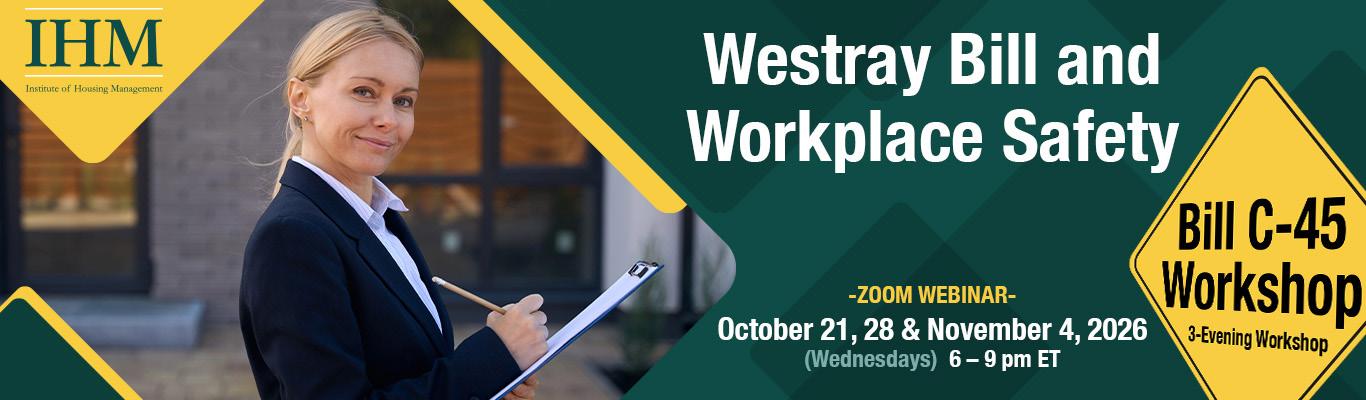
3-Evening Zoom Workshop
Wednesday October 21, 28 & November 4, 2026
Presenters: Jimmy Mellor, FIHM
IHM President
Tracy Geddes, AIHM
IHM Director
6:00 - 9:00 pm ET Visit our website’s Events Page for information and updates on all IHM Events
“I wanted to know if you have any recommendations for adding AC to a multi-residential building from the 1960s/70s that has a gas boiler heating system, but was not designed for AC. With global warming a current reality, I am wondering how a building might adapt to increased cooling needs beyond cold rooms.”
In most cases, the answer is yes, air conditioning can be added to a 1960s & 1970s multi-residential building with a gas boiler heating system. Many of these buildings use hot-water radiators, convectors, or fan-coil units supplied by a central gas boiler. These buildings can generally be retrofitted with air conditioning, but the approach varies significantly. Still, the feasibility, cost, and complexity depend on the Building’s electrical capacity, layout, and ownership structure. Additionally, these buildings lack an existing air-distribution system, and many will have issues with where to place outdoor equipment and how to route refrigerant lines through the Building. The most practical solution is often a ductless mini-split or a VRF retrofit rather than converting the original boiler system into a traditional forced-air HVAC system. The biggest obstacles are often not the heating system itself, but:
• Limited electrical service capacity
- Many 1960s–1970s buildings were designed for much lower electrical loads.
- May require electrical panel upgrades.
- Transformers lack capacity.
• Structural, balcony and façade considerations for condenser placement.
• Building envelope leakages
- Age of windows.
- Reduce air leakages.
- Roofing insulation improvements.
• Asbestos-containing materials, common in buildings of that era, can increase renovation costs.
- Mechanical retrofits in older buildings often trigger asbestos surveys and, in some cases, abatement work.
• Rental Building or condominium regulations governing exterior modifications.
• Available shaft, riser, and ceiling space for new piping.
I would suggest that your first step is to engage an engineering firm that will provide an electrical and mechanical team. As there is a consultant fee for this service, you request that they perform:
• A building electrical capacity assessment.
• A mechanical feasibility study.
• A cooling load calculation for suites and common areas.
I have listed some common retrofit options below for your reference.
Individual unit air conditioning can be accomplished by installing window units or portable air conditioners, which are the simplest option if building rules allow them. Ductless mini-split heat pump systems can provide efficient cooling without existing ductwork, as each unit has its own indoor unit and an outdoor condenser (or a shared condenser system). Unfortunately, there are some challenges with individual suite air conditioning, including finding locations for outdoor units, electrical upgrades within suites, and obtaining approvals from the management company or condominium board.
Air-to-Air heat pumps generate heated or chilled water and connect to hydronic systems. These units will leverage existing building infrastructure, provide both cooling and heating, and lower greenhouse gas emissions. The air-to-air water heat pump is best suited for buildings that have an existing hydronic distribution system.
tion system, by replacing existing fan-coil units with heating/ cooling fan coils or by adding a chiller, cooling towers and associated mechanical equipment.
Central cooling retrofits will also pose challenges, as there will be a significant capital cost to complete them. Additionally, there are mechanical room space requirements with extensive building-wide renovations.
Many older apartment and condominium buildings are being retrofitted with VRF systems that require running refrigerant piping throughout the Building. In this retrofit, the individual units will receive an indoor air handler. This system provides high energy efficiency, can provide both cooling and supplemental heating while serving multiple units, and can incorporate a heat pump. VRFs also have challenges, such as upfront installation cost and the need for riser space and electrical upgrades.
These systems will retain the gas boiler, but it operates only during very cold weather. Hybrid systems will include a heat pump, lowering your capital costs compared to full electrification while maintaining winter reliability. A hybrid system is often a practical first step for older multi-residential buildings.
From other discussions I have had with landlords, technical consultants, and building and housing associations, we are seeing a trend toward the installation of mini-split units, central VRV systems, and heat-pump retrofits. If you plan on investigating the addition of air conditioning, look into Ontario incentives for multi-residential buildings, such as:
• Enbridge Gas
• Independent Electricity System Operator (IESO)
• Canada Mortgage and Housing Corporation (CMHC)
• Federal and provincial energy-efficiency programs
Answered by Ed Cipriani, FIHM, MAATO, Dipl.T., COQ, CET
IHM Vice President and Senior Director, Facilitiy & Security Services, Mohawk College. u
After a small kitchen fire in a rental unit, what should a housing provider’s first priorities be to address smoke and soot damage and return the unit to occupancy as quickly as possible?”
A minor kitchen fire in a residential rental unit earlier this week resulted in smoke and soot damage, but no reported injuries.
The incident began when unattended cooking caused a brief stovetop flare up. Although the flames were quickly contained, smoke spread throughout the kitchen and into adjacent living areas, leaving soot residue and a lingering odor.
On Side Restoration responded promptly, initiating immediate mitigation efforts to limit further damage. Technicians applied specialized soot removal products and detailed cleaning techniques to restore affected surfaces, including cabinetry, walls, and appliances, while protecting existing finishes.
To address airborne contaminants, On Side’s crews installed high-efficiency air scrubbers equipped with HEPA filtration to continuously remove fine smoke particles and improve indoor air quality.
Due to the swift and thorough response, further damage from embedded smoke contaminants and odors was successfully prevented. The timely intervention allowed for a rapid turnaround, enabling the unit to be restored efficiently and ready for occupancy again in a short period.
Officials note that quick professional response is critical in rental properties, where smoke and odor can quickly set into materials if not addressed immediately.
Answer provided by On Side Restoration. Tel: 1-888-663-6604 u
Do you have a question for the experts? Submit here: info@ihmcanada.net

The Co-op Housing Management Accreditation (CHMA) is the first-ever national co-operative housing professional accreditation program.
Whether you already work as a co-op housing staff person or manager, or plan to, we are here to support your vocation.
• Distance learning: this is self-directed, on-demand learning through the use of an electronic manual.
• Hybrid: this is a mix of self-directed on demand learning using the electronic manual and four twohour live online sessions.
• In person: these are courses offered through the CHF Canada Annual Meeting Co-op Management Conference (CMC).
The program offers courses in Property and Building Administration, Strategic and Financial Management, Human Relations and Maintenance.

Learn more by visiting chfcanada.coop/accreditation

Get in touch today info@chfcanada.coop

@chfcanada www.chfcanada.coop

EXECUTIVE
President
CHMA Committee, Conference Committee
Jimmy Mellor, FIHM
Property Management Consultant
Tel: 902-943-9919
Vice President
Ed Cipriani, FIHM, MAATO, Dipl.T., COQ, CET
Mohawk College
Tel: 905-719-0674
Secretary-Treasurer
Conference Committee
Lynn Alexander, FIHM
Region of Durham Housing Service
Tel: 905-666-6239 Ext 2450
Communication Committee Chair
Petr Bakus, AIHM
Bakus Consulting
Tel: 519-635-4888
CHMA Committee, Communications Committee & Conference Committee
Deborah Filice, MEd, FIHM, CIHCM, CMMIII, RSSW
IHM Education Director
DAF Property Management Services
Tel: 289-244-8269
Communications Committee
Francesca Filice, B.A., FIHM
Victoria Park Community Homes
Tel: 905-527-0221
Carolyne Vigon, Executive Director Beth McKenzie, Program Manager 2800 14th Avenue, Suite 210, Markham, Ontario L3R 0E4 Tel: 416-493-7382 / 1-866-212-4377 • Fax: 416-491-1670
Email: info@ihmcanada.net
Conference Committee Chair
Tracy Geddes, AIHM
TLG Consulting and Facilitating
Tel: 905-980-6000
Director-At-Large
Stacey Sanelli, AIHM
Precision Property Management Inc.
Tel: 416-887-1251
Membership Committee
Pamela Tomio, AIHM
Peel Region
Tel: 416-988-7220
Candidate Director, Membership Committee & Education Committee
Kamela Williams, MEd, MSc, BEd
Toronto Community Housing Corporation
Tel: 647-819-2735
n Participate on the various committees n Help with the Annual Educational Conference n Submit relevant articles for the IHM quarterly newsletter n Mentor a Candidate member (FIHM/AIHM Members only) n Become an Instructor (FIHM/ AIHM Members only)