

Join us for two action-packed days at the premier event for housing and property management professionals in Ontario. The IHM Conference brings together over 100 industry leaders and practitioners to share their expertise, discuss emerging trends, and tackle the challenges facing the housing industry today.
Our engaging and informative program is designed to inspire and empower attendees, offering a dynamic keynote session, interactive and thought-provoking panel discussions. Whether you are looking to gain fresh insights, advance your career, or explore cutting-edge solutions, this conference is your gateway to growth and success.
Beyond the sessions, attendees will have the opportunity to build meaningful connections through unparalleled networking opportunities. Share ideas, collaborate with peers, and connect with leaders from across the housing and property management landscape.
Together, we will explore strategies, share success stories, and set the stage for advancements that will elevate the industry and improve communities across Canada.
Don’t miss this opportunity to be part of the conversation that drives the future of housing management. We look forward to welcoming you to the IHM Conference 2026!

The anticipation is mounting for IHM’s Annual Educational Conference taking place at the Harmony Event Centre, Oshawa – June 2-3, 2026. By the time you read this message, the conference will be right around the corner. And a reminder that this is our 50th Anniversary Event and it promises to be a great celebration befitting of this milestone. It’s time to jump on board and register for two days of learning and networking. And for those who want to join in the excitement early, our annual golf tournament takes place on Monday, June 1st. Don’t delay – register today. https://ihmcanada.net/events/2026-conference/overview
The conference brings a slate of excellent speakers addressing the topics of most relevance and concern to our members – a Ministry of Housing Update, Maintenance Trends & Challenges, New Fire Code Update and Tenant Relations in Today’s Shifting Legal Landscape are just a few of the topics being presented. Our ever-popular round table discussions will kick things off Tuesday morning. Sponsor support is through the roof and there will be many new suppliers represented at the trade show.
Plans also include more social events to give everyone a chance to mingle and network with colleagues. A reception will take place at the conclusion of Tuesday’s business program, followed by a 50th anniversary banquet featuring entertainment by the “Duelling Pianos”. Of course, we will have our closing luncheon on Wednesday with a special grand prize draw.
Another important announcement! IHM will develop and offer elective courses. These courses are designed not only to provide a convenient gateway for those seeking to complete the education requirement for their accreditation, but also to provide learning to all members on those topics of vital importance to everyone in the sector. The value of these courses is not measured by the number of hours required for completion, but on the content these important topics bring to those in the property management profession.
Our first elective is focused on the Westray Bill (commonly known as Bill-45). This course will be offered once a week for three weeks – 3 hours per night – October 21, 28 and November 4, 2026. This legislation is a significant change (and is included in the Criminal Code of Canada (217.1) and will have a major impact on everyone in property management and the properties we manage. Further info to follow.
We continue to work closely with CHF Canada to develop and offer an accreditation program customized to meet the specific needs of the cooperative sector. The last of the four core courses – Strategic & Financial Management – is slated for completion this spring and will be offered at CHF’s Annual Conference in June. Response to this program has been extremely positive and we look forward to its continued success.
Thanks as always to our directors, our volunteers and our members for their continued support. We look forward to seeing you at our 50th Anniversary Conference Celebration.
Jimmy Mellor, FIHM IHM President
Tuesday, June 2, 2026 |












By Carola Mittag
ogistical and actionable health and safety risk management might sound complex, but for property managers, it really comes down to staying organized and taking small, consistent steps to keep people safe.
The logistical side is simply about having a system in place. Think of it as keeping a reliable schedule and checklist for your property. Regular tasks like fire alarm testing, elevator inspections, and seasonal maintenance don’t need to be overwhelming, they just need to be planned and tracked. Using a calendar or simple property management software can make a big difference by sending reminders and keeping everything in one place.
The actionable side is where the real impact happens. This is about what you or your team actually do on a daily or weekly basis. Instead of broad goals like “maintain a safe building,” focus on practical steps: doing quick walkthroughs, keeping an eye out for hazards like spills or broken lighting, and knowing exactly what to do if something goes wrong. Clear, simple checklists can make these routines easy to follow and repeat.
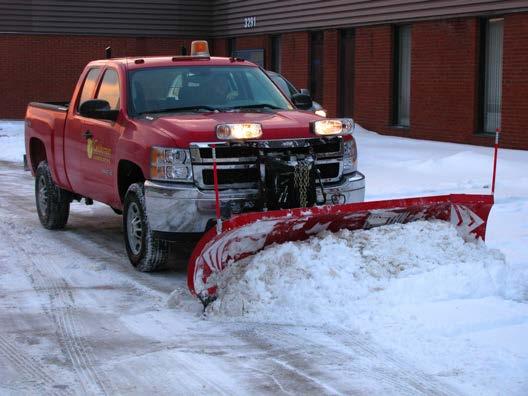
The good news is that you don’t have to do everything at once. Start with a few key areas like emergency procedures or seasonal risks and build from there. For example, in winter, make sure you have a plan for snow
patterns. If the same issue keeps coming up, e.g. repeated slips in one area, it’s a sign that something needs adjusting. Maybe it’s better lighting, more frequent checks, or a simple repair.
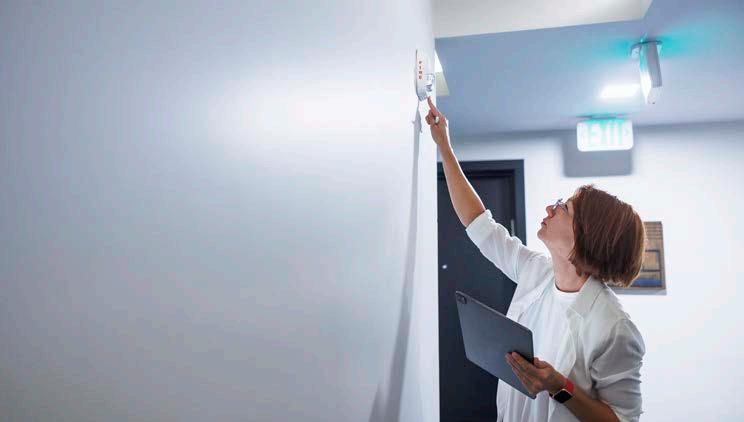
Focus on practical steps like quick walkthroughs and keeping an eye out for hazards.
and ice removal, keep salt stocked, and ask staff to do quick morning checks of walkways. Small actions like these go a long way in preventing bigger problems.
Training doesn’t have to be formal or time-consuming either. Short team check-ins, quick refreshers, or sharing a one-page guide can help everyone feel more confident in handling safety responsibilities.
It’s also helpful to pay attention to
At the end of the day, effective health and safety management is about keeping things clear and manageable. With a bit of organization and a focus on simple, practical actions, property managers can create safer spaces without adding unnecessary stress to their workload.
Carola Mittag is a Consultant to Langlois Safety Training & Consulting Services. She has been providing health and safety insights for IHM since 2013. u

By: Patrick Langille
Pet ownership has increased substantially since the pandemic. According to IPSOS polls, 44% of people aged over 50 own a pet, whereas 68% of people under 35 own a pet. Additionally, a study at York University noted that roughly one in three households adopted a pet during the pandemic, with one third of these being first time pet owners. These changes will have a great impact on landlord-tenant relations.
In Ontario, we cannot evict simply because a tenant has a pet. Once the tenant has possession, a nopet clause is unenforceable at the Landlord and Tenant Board. If one makes an application relying on the lease language alone the application will be dismissed.
Where a Landlord can act is when the pet causes a real problem. Such issues can include excessive noise, damage, safety issues, or serious health concerns. Nevertheless, the legislation is very clear: the LTB cares about impact, not pet ownership per se.
Take barking for example. A dog barking occasionally is not a viable justification for eviction. A dog
barking for hours overnight, multiple times a week, with complaints from different units would however be a just cause for eviction provided there is sufficient evidence.
A viable N5 notice would include something like this: “Your dog has been barking for extended periods, including on March 3, March 7, and March 10 between the hours of 11:00 p.m. and 2:00 a.m., substantially interfering with the reasonable enjoyment of other tenants in the building.”

Another example could include “Your dog has caused damage to the rental unit, including chewed baseboards in the living room and
scratched interior doors, as observed during the inspection on April 5. This damage goes beyond normal wear and tear.”
Photos, inspection notes, and estimates matter here. If we don’t have evidence, we’re not ready to issue a notice.
Allergies are another area where people assume the law automatically favours removal of the pet.
A tenant saying “I’m allergic” isn’t enough on its own. The Board will look for medical documentation and will expect us to explore reasonable accommodation first. This could include cleaning schedules, air filters, or unit transfers. If we skip that step and jump straight to enforcement, it usually backfires.
A dog bite, or even a serious attempted bite, is not treated like barking or minor nuisance issues. This is no longer about annoyance or preference; this is about safety. And the Board takes that very seriously.
If a dog bites another tenant, a guest, a child, or staff, or displays

aggressive behaviour that creates a real risk, we are no longer in “wait and see” mode. We still need evidence, but the threshold for urgency is much lower.
What matters here is:
• Who was bitten or threatened
• When and where it happened
• Whether medical attention was required
• Whether there are witness statements or incident reports
In these cases, our N5 language should be very direct and factual.
For example:
A viable N5 document could include something like this: “On May 12, your dog bit another tenant in the common hallway, causing injury that required medical attention. This conduct has seriously impaired the safety of other residents in the complex.”
It describes a specific incident, includes the impact of the dog bite, and would be readily documented on security cameras.
In addition to eviction, there are other methods Landlords can use to rectify the situation. If the dog’s behaviour is deemed sufficiently serious, especially if there’s a repeat incident or clear risk, a Landlord may coordinate with bylaw or animal services. Documentation is always a necessary component. This can include incident reports, witness statements, emails, photos and security camera footage.
One important point: we do not need to wait for a second bite if the first incident is serious enough. Safety-based interference is treated differently than noise or minor disturbances.
The general rule of thumb to work around is that pets are not a policy issue. They are a conduct and safety issue.
Before issuing an N5, ask yourself:
• Can I clearly explain what happened, when it happened, and how it affected others?
• Is this a nuisance issue, or is it a safety issue?
• Would this notice still make
sense if the problem was a loud stereo or an unsafe behaviour instead of a dog?
If the answer is yes, we’re usually on solid ground. If not, slow down and document first. It saves time, money, and credibility later.
Handled properly, pet issues, including serious ones like dog bites, are manageable. Handled casually, they’re one of the easiest ways to lose an otherwise strong application.
Patrick Langille is the current Legal and Regulatory Manager at Victoria Park Community Homes. He has worked with several Non-Profit organizations, as well as with private law firms. He holds a Paralegal Diploma from Mohawk College and a B.A. in History from the University of Toronto. u
Why is the duty to repair considered a “positive obligation,” and how is that different from general maintenance expectations?
Response
Section 20 of the Residential Tenancies Act imposes a positive obligation on landlords to maintain rental units and residential complexes in good repair. This duty applies regardless of the property’s age or condition and cannot be waived by lease provisions.
The obligation extends beyond mere cosmetic upkeep. It includes compliance with municipal property standards, building codes, fire safety regulations, and applicable health requirements. Landlords must ensure that essential services—such as heat, water, and electricity are properly maintained and available, except where interruptions are necessary for repairs or are beyond the landlord’s control.
In addition, landlords are responsible for preserving the structural integrity of the residence, ensuring it remains
safe and in good condition. This includes maintaining roofs, foundations, walls, stairways, and common areas to prevent hazards or deterioration that could affect the safety or habitability of the premises. Regular inspections and timely repairs are expected to address issues such as leaks, mould, pest infestations, or faulty systems before they worsen.
Furthermore, landlords must take reasonable steps to ensure that safety features—such as smoke detectors, carbon monoxide alarms, and fire exits are properly installed, functional, and compliant with applicable regulations. These obligations apply regardless of the age or condition of the property and cannot be waived by agreement. Overall, the duty reflects a continuing responsibility to provide and maintain rental housing that is safe, habitable, and compliant with all relevant legal standards.
In a four-storey building with a forced-air HVAC system, where one gas furnace serves two apartments on different floors controlled by a split-zone system (each with its own thermostat)… What fire-blocking methods are required between the floors, where ducts pass through ?
Where could I find the specific code requirements? Is it OBC , The Ontario Fire Code or both ?
Response
Thank you for your question regarding fire stopping/ fire blocking. I put together some information for your reference to your question.
Fire blocking in apartment buildings involves sealing concealed wall, floor, and ceiling cavities so fire and smoke cannot rapidly travel through the structure. The
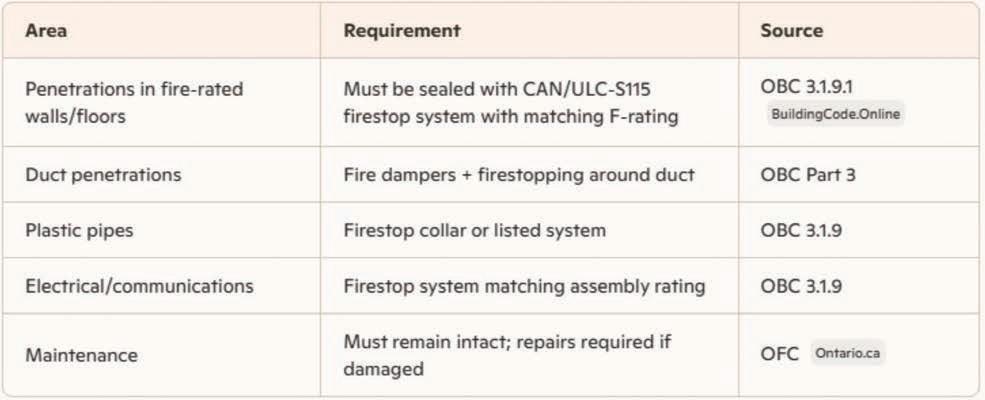
goal is to compartmentalize hidden spaces and slow the spread of fire. Ontario’s requirements for firestopping in apartment buildings come primarily from the Ontario Building Code (OBC), Division B, Part 3, which mandates that any penetration through a fire-rated wall, floor, or ceiling must be sealed with a firestop system tested to CAN/ULC S115 and rated to match the fire resistance of the assembly.
Continued...
Firestopping is mandatory anywhere a fire-rated assembly is breached, including:
Walls and floors separating:
• Individual dwelling units
• Units from corridors
• Units from service rooms
• Units from exit stairwells
• Vertical shafts (ducts, plumbing, electrical risers)
Typical locations requiring firestopping:
• Around ductwork (with fire dampers where required)
• Around plumbing stacks
• Around electrical panels and conduit
• At floor-to-wall intersections
• At the top of fire-rated walls
• In concealed spaces (bulkheads, drop ceilings, chases)
You will find that this is the main section governing firestopping in multi-unit residential buildings. The key requirements include:
• Any penetration through a fire separation or a membrane of a fire-rated assembly must be:
o Sealed with a firestop system tested to CAN/ ULC S115, with an F rating at least equal to the required fire protection rating of the assembly, or
o Tightly fitted (only allowed in limited cases).
• Applies to penetrations such as:
o Ductwork
o Pipes (metal or plastic)
o Electrical conduit
o Cable bundles
o Mechanical chases
o Service penetrations
• Firestopping must restore the continuity of the fire separation.
To comply with CAN/ULC S115, materials must be part of a listed firestop system, such as:
• Intumescent fire caulk
• Fire-rated sealants
• Firestop mortar
• Mineral wool (Rockwool) + fire caulk
• Firestop collars (for plastic pipes)
• Firestop boards
• Firestop pillows (for large cable openings)
These materials must be installed exactly as per the tested system—thickness, backing, annular space, and orientation all matter.
When ductwork penetrates a fire-rated wall or floor:
• A fire damper is required unless the duct is inside a rated shaft.
• The annular space around the duct must still be fire stopped.
• Dampers must be accessible for inspection.
These requirements fall under the same OBC fire separation rules and are reinforced by the Ontario Fire Code’s maintenance obligations.
While the OBC governs construction, the OFC governs ongoing maintenance. Key obligations include:
• Maintaining all fire separations in good repair
• Ensuring firestopping remains intact
• Ensuring fire dampers are accessible and functional
• Ensuring no unsealed penetrations exist after renovations or trades work
• Intumescent fire caulk expands when heated, sealing gaps.
• Used around:
o Electrical wiring
o Pipes
o Conduit penetrations
• Prevents air movement that feeds a fire.
• Special fire blocking foam (NOT regular spray foam).
• Used for:
o Small gaps around penetrations
o Top plate openings
• Must be labelled as fire-blocking foam to meet code requirements.
• Used around:
Continued...
o Plastic pipes (ABS, PVC)
o Large mechanical penetrations
• Often paired with intumescent sealant to maintain fire rating.
Fire Stopping Systems (for Rated Walls/Floors)
Fire stopping differs from fire blocking, but the two are often used together in apartment buildings.
• Used in fire-rated assemblies (e.g., between units, corridors, shafts).
• Includes:
o Fire-rated mortars
o Fire stop pillows
o Fire stop putty
o Fire stop boards
• Ensures penetrations maintain the required fire resistance rating.
ASK THE EXPERTS
you have a question for the experts? Submit here: info@ihmcanada.net
Adeni Abigo
Stephanie Barcelo
Mikhayla Roberts
Lindsy St Jacques
Robert Ure
Kamela Williams
u u u
Maintenance
Patricia Baena Gomez
Bernadette Degsi
Tracey Fisher
Patricia Hicks
Elivered Mulongo
Maureen Newell
Firoz Osmani
Nivethitha Theepan
Chris Wagner
u u u
Danielle Love
Daniela Luiceanu
Surabhi Patel
Josh Wong
u u u
Tenancy Law
Jennifer Nichols
Surabhi Patel
Emilee Wotton
u u u
Finance
Tracey Fisher
Surabhi Patel
Greg With
Emilee Wotton u u u
Mary Georgiou, AIHM
Leanne James, AIHM
Tracey Fisher, AIHM

We know that a Property Manager’s job can be both challenging and interesting. How often have you come to work with your day all planned in your head only to have something unexpected come along?
We are looking for some stories to share with your colleagues in the Property Management field. If you have an interesting story that you would be willing to author, please contact the Newsletter Committee at info@ihmcanada.net

By: Marcia O’Connor
Aging assets and tight budgets aren’t going away. But property managers are uniquely positioned to lead through this moment with clarity, confidence, and practical foresight. Property managers see the risks before others do. They understand the operational realities behind every decision. They protect people, property, and long term value — often without the recognition they deserve. Staying ahead of the curve isn’t about doing more with less. It’s about doing the right things with the resources available, backed by evidence, insight, and strong professional judgment.
Property managers are facing aging buildings, rising operating costs, shrinking budgets, and growing expectations from tenants, boards, and regulators. It’s a pressure cooker that leaves even the most seasoned professionals asking the same question: How do we stay ahead of the curve? The answer lies in shifting from reactive to intentional, informed decision making that protects both customers and long term asset value.
Much of the multi residential and community housing stock is now
40–60 years old, with many systems operating well beyond their intended service life. National housing and infrastructure reports
Staying ahead begins with building a clear, defensible picture of the assets under management. Most organizations have asset lists, but far

When property managers quantify risk in dollars, boards and executives listen differently.
show deferred maintenance rising by 2–4% annually, capital renewal needs outpacing available funding, and mechanical and electrical failures increasing as replacement costs climb 15–30% over the last five years. Energy and utility costs continue to rise, putting even more pressure on operating budgets that were already stretched thin. Property managers are the ones absorbing the impact of these realities every day.
fewer have accurate, decision ready asset intelligence. Aging assets fail in predictable patterns — but only if the right indicators are being tracked. Detailed condition assessments, lifecycle forecasts tied to real performance, risk scoring that highlights safety and service disruption, and capital plans that show the consequences of underfunding all help shift the conversation from “optional” to “essential.” When property managers can clearly
articulate what will fail, when, and why it matters, they change the way decisions are made.
Another critical shift is moving from cost cutting to defensible cost impacts. In tight budget environments, the instinct is to defer maintenance — but research shows that every dollar deferred becomes four to seven dollars in future capital cost. Defensible cost impacts reframe the conversation by focusing on the cost of doing nothing, the risks that increase when work is delayed, the operational disruptions tenants will experience, and the regulatory or insurance implications created by deferral. When property managers quantify risk in dollars, boards and executives listen differently.
Communication has become one of the most important skills in property management. Technical expertise is essential, but communication is what moves decisions forward. Property managers today must translate technical issues into clear business impacts, communicate risk without creating panic, influence boards and executives, and build alignment across departments. Often, the property manager is the only one who sees the full picture. The ability to communicate that picture clearly is not just a value add — it is essential to keeping properties functional, safe, and financially sustainable.
Staying ahead of the curve isn’t a luxury; it’s a responsibility. And in a sector where pressures are rising and resources are tightening,
property managers are not just maintaining buildings — they are safeguarding communities, protecting organizational reputation, and shaping the future of Canada’s housing system. With the right data, the right partnerships, and the right conversations, property managers can continue to deliver safe, resilient, and sustainable homes, even in the most challenging conditions.
Marcia O’Connor is an Inspirational Leader, Educator, and Mentor at AM FM Consulting Group Inc.
E: marcia.oconnor@amfmconsulting. com
Text/Mobile: 416-433-3565
Linked In: https://www.linkedin.com/in/ marciakoconno u

IHM - 50 th year Celebration in 2026
In celebration of this journey, we will be featuring a few past newsletter articles. Here’s a look at an article, reprinted from the March 1996 issue – but still relevant today.
By: Ray Bourque
Everybody knows that operating costs are the costs of running a building. The average changes in the operating cost of a typical residential rental building in Ontario are reflected in the annual guideline. However, if a landlord experiences an “extraordinary” increase in certain operating costs, he or she can make an application for a rent increase above the guideline.
The operating cost categories considered for increases and decreases in rent are heat, hydro, water, and property taxes.
What is extraordinary?
In order to be considered extraordinary, the cost increases must pass certain tests:
1. The landlord must have experienced an actual cost increase.
2. The percentage increase must be at least 50% more than the average percentage increase for the cost category.
The extraordinary operating cost increase allowed for hydro is $75 per year.
The extraordinary operating cost decrease calculated for water is $25 per year.
Offsetting $75 - $25 = $50
The landlord is required to file proof of all costs for a two year period. The rent officer will consider the change in operation costs from one year (reference year) to the next (base year).
The base year is the landlord’s most recently completed 12 month accounting period at least 90 days before the date of the first increase applied for. The reference year is the 12 months prior to the base year.
Landlord’s cost for hydro:
1991 - $500 (reference year)
1992 - $600 (base year)
The difference is $100, which is a 20% increase above the reference year amount.
(Increase must be at least 50% greater than average)
Operating cost category for hydro in
1993 shows an average increase of 11.32%
50% greater than 11.32% is 16.98%. Since 20% is greater than 16.98% the test is met.
(There must be an actual increase in cost)
The landlord’s costs have been increased by $100, so the these is met.
The rent officer subtracts the increase that was reflected in the guideline from the actual increase experienced by the landlord.
The actual increase ($100) less the increase reflected in the guideline ($500 x 11.32% = $56.60).
The allowance would be $43.40 ($100 - $56.60).
This is the extraordinary operating cost allowance for the building, for the year. Although the allowance is calculated by comparing the cost of 1992 with the cost of 1991, the rent increase will not take effect until 1993. u

The Co-op Housing Management Accreditation (CHMA) is the first-ever national co-operative housing professional accreditation program.
Whether you already work as a co-op housing staff person or manager, or plan to, we are here to support your vocation.
• Distance learning: this is self-directed, on-demand learning through the use of an electronic manual.
• Hybrid: this is a mix of self-directed on demand learning using the electronic manual and four twohour live online sessions.
• In person: these are courses offered through the CHF Canada Annual Meeting Co-op Management Conference (CMC).
The program offers courses in Property and Building Administration, Strategic and Financial Management, Human Relations and Maintenance.

Learn more by visiting chfcanada.coop/accreditation

Get in touch today info@chfcanada.coop

@chfcanada www.chfcanada.coop

EXECUTIVE
President
CHMA Committee, Conference Committee
Jimmy Mellor, FIHM
Property Management Consultant
Tel: 902-943-9919
Vice President
Ed Cipriani, FIHM, MAATO, Dipl.T., COQ, CET
Mohawk College
Tel: 905-719-0674
Secretary-Treasurer
Conference Committee
Lynn Alexander, FIHM
Region of Durham Housing Service
Tel: 905-666-6239 Ext 2450
Communications Committee
Kevin McCann, FIHM
K.J. McCann and Associates
Tel: 647-323-4921
Communications Committee, Conference Committee
Deborah Filice, MEd, FIHM, CIHCM, CMMIII, RSSW
IHM Education Director
DAF Property Management Services
Tel: 289-244-8269
Communications Committee Chair
Francesca Filice, B.A., FIHM
Victoria Park Community Homes
Tel: 905-527-0221
Conference Committee Co-Chair
Tracy Geddes, AIHM
Niagara Region, Housing Services Division
Tel: 905-980-6000
Conference Committee Co-Chair
Stacey Sanelli, AIHM
Precision Property Management Inc.
Tel: 416-887-1251
Office: Carolyne Vigon, Executive Director Beth McKenzie, Program Manager 2800 14th Avenue, Suite 210, Markham, Ontario L3R 0E4 Tel: 416-493-7382 / 1-866-212-4377 • Fax: 416-491-1670 • Email: info@ihmcanada.net
n Participate on the various committees
n Help with the Annual Educational Conference
n Submit relevant articles for the IHM quarterly newsletter
n Mentor a Candidate member (FIHM/AIHM Members only)
n Become an Instructor (FIHM/ AIHM Members only)

the IHM office for more information on how you can help.