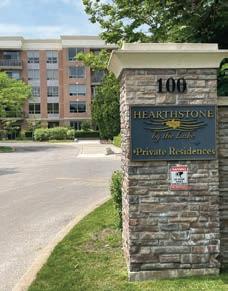
Because every property is different, the impact of these changes will vary depending on the age, design, and systems within each building. Condominium corporations should have their fire safety plans reviewed periodically by a professional to ensure their plan includes any changes to the fire code. This is particularly important in years when a new version of the fire code has been released, like it has been in 2026.
Residents can help by staying informed and understanding their individual responsibilities.
What Can Residents Do?
Every resident plays an important role in maintaining a safe community. You can help by:
• Testing smoke alarms and carbon monoxide detectors as required;
• Reporting maintenance concerns promptly;
• Keeping hallways, exits, and common areas free from obstructions;
• Familiarizing yourself with the building’s emergency procedures; and
• Following any fire safety guidance provided by management or the condominium corporation.
Safety Starts with Awareness
Fire code compliance is more than a regulatory requirement—it’s an ongoing commitment to pro -
tecting our neighbours, families, visitors, and emergency responders. Whether you are a resident, board member, property manager, or contractor, understanding your role contributes to a safer community for everyone.
By working together, communicating clearly, and addressing concerns proactively, we can help ensure that our condominium remains both compliant and, most importantly, safe.
Michele Farley, CCI (Hon’s), LCCI President & Senior Code Consultant FCS Fire Consulting Services Ltd.
CCI Golden Horseshow Chapter
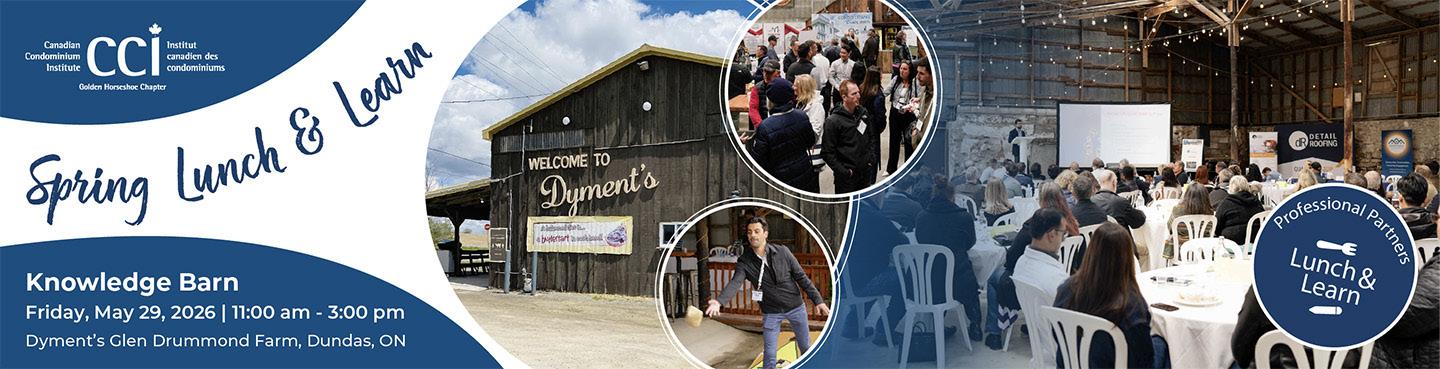
Spring Lunch & Learn – Knowledge Barn
Friday May 29, 2026
Dyment’s Glen Drummond Farm, Dundas, ON
By Kevin Shaw, B.Tech.(Arch.Sc.), LCCI
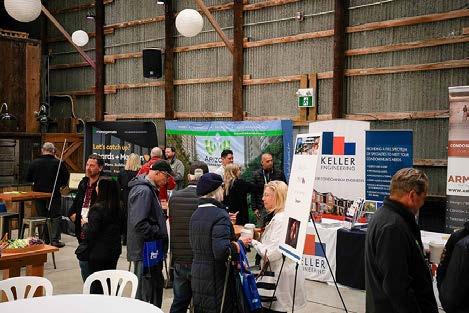
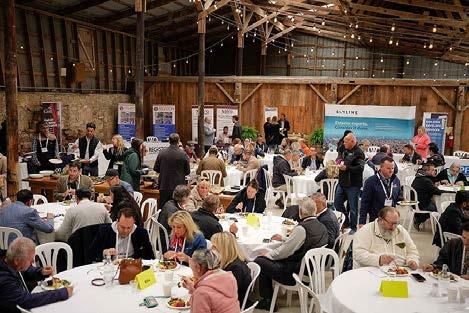
It was a beautiful warm spring day at Dyment’s Farm where the CCI Golden Horseshoe Professional and Business Partners committee held their spring lunch & learn event. A series of speakers were on hand to provide condo industry tips to the audience of Condo Directors and Property Managers.
This was the second annual event held at the Dyment’s Glen Drummond Farm venue located at 416 Fallsview Road East in Dundas, Ontario.
The speakers for the event included myself, Kevin Shaw, Principal with Cion – Engineers & Building Scientists, Luka Milidragovic from Condominium Lending Group, Zeke Margaritis from Armourco, Carly Rowden from Normac, Wayne Scott from Wellington Dock & Door and Jordan Vandervelde from Edison Engineers. The session was moderated by Mike Mullen, Executive VP from Wilson Blanchard who wore his stray farm hat and utilized his signature cow horn to keep the sessions moving right on time.
For further details (including a list of our many sponsors), and to see a series of great photos taken at the event, please visit the Golden Horseshoe Chapter of CCI website (cci-ghc.ca) under “Courses and Events”.
The following is a brief synopsis of the speakers presentations from that day.
Kevin ShawAdequate Funding, What Does It Mean?
I kicked off the rapid-style presentations with a brief discussion on “Adequate Funding” when it comes to Reserve Fund Studies. My first comments were to point out that the term “adequate”, which is quoted from the Condominium Act, has never been properly defined but has generally been accepted to mean the Reserve Fund must maintain positive balances over the required 30-year study period while covering the planned expenditures.
The issues arise when the discussion turns to when the Reserve Fund is to be adequate. The Regulations for the Act state that for new condos (registered after the Act came into force), it’s 1 year and for existing condos it was 15 years. The math however shows we have run out of the time originally envisioned when the Act came into force:
• Act came into force in 2001
• First study was to be completed by 2024
• 2024 + 15 years = 2019?
Here we are in 2026 and it’s a bit of a wild west situation where the Regulations no longer appear applicable. So what is to be done when it comes to Reserve Fund planning? Here are the general recommendations being followed today:
1. A review of the Act in 2013 proposed the following change to the idea of adequate funding:
a. The year over year percentage change in total contributions to the reserve fund should be no greater than the assumed inflation rate used in the study;
b. E xcept for the first 3 years when total contributions may be greater than the assumed rate.
Further to this, the Professional Engineers of Ontario (PEO), agrees that “it is generally accepted in the industry that the goal of an ideal reserve fund study is that the rate of escalation of contributions should not exceed the assumed rate of inflation.” The PEO further states that “where this is not possible…it is reasonable to inflate contributions at a greater rate than inflation for the period of time until the next study will be completed (3 years)”.
For the reasons described above, the majority of planners within the industry are following those guidelines when preparing studies.
The outstanding question we still periodically receive is “are there other available options under the requirements of the Condo Act”. The short answer is maybe but you will need to speak with your planner and determine what they may guide you towards. This could incorporate an extension of the catch-up period (more than the 3 years recommended).
Reserve Fund Planning has been a very difficult task in the aftermath of Covid and the resulting increases in inflation across all industries/communities. It is more important than ever to work closely with your Reserve Fund planner to compile the best Stud-
ies possible to allow Condos to properly maintain the Common Elements and Assets of their Corporation.
Luka Milidragovic –Underfunding of Reserve Funds
Luka kicked off his presentation with a sobering statistic posted by the Auditor General of Ontario in a 2020 report that found that “69% of surveyed condo boards did not have adequate funds to pay for major repairs.” Inadequate reserve funds and staggering construction inflation was resulting in reserve Fund shortfalls for many condominiums in Ontario. Findings from Statistics Canada indicated the Greater Toronto Area (GTA) was facing an 86% increase in construction inflation for residential buildings over a five-year period from 2020 through 2024.
Luka went on to highlight that a typical reserve fund study accounting for 3% increases over that same period of time would have only totalled 16% total increase compared to the 86% published data.
The discussion concluded with the recommendation for corporations to explore the multiple fund-
ing options available for reserve fund studies dealing with potential shortfalls.
Short-term fundings options were presented should a Board be facing a Reserve Fund shortfall. Options such as special assessments, loans or hybrid are available to assist with bridging the gap between reserve fund balances and needed repair costs.
Zeke Margaritis –
What’s an RFP and How Can Artificial Intelligence (AI) Help?
Zeke started off by listing the most important aspects that a Request for Proposal (RFP) must communicate. These include; scope, expectations, timelines, standards, deliverables and communication requirements.
Poorly prepared RFP’s are problematic as they do not provide enough details regarding selected finishes, phasing strategies, access requirements or thorough specifications. This leads to bidders/contractors having to make assumptions with their pricing resulting in inconsistent pricing during tendering and potential change orders and delays during construction.
Zeke emphasized that quality RFP’s have better results for clients by providing better planning and clearer expectations. These result in closer tenders, smoother execution and a better experience overall when it comes to construction projects.
Zeke’s next series of comments described how AI can assist with preparing scopes faster, improving verbiage, organizing the RFP contents and building effective check lists. While AI can assist with the preparation of more effective RFP’s, it does not replace the knowledge or experience of consultants, engineers, contactors or Property Managers.
Zeke went on to illustrate some examples of how entering a strong prompt into an AI tool can provide a detailed RFP summary document that can be tailored to any individual property and project.
Key takeaways from Zeke’s presentation include:
• RFP’s set scope, standards and expectations
• Well prepared RFP’s reduce risks and potential changes
• AI can draft, organize and compare RFP’s and submitted bids
• Good prompts = usable draft RFP’s
• AI assists you but your expertise still leads
Carly Rowden –The Ontario Insurance Gap
Carly’s presentation focused on the question; what drives valuation increases and how can corporation’s plan ahead?
The “insurance gap” referred to in the title for Carly’s segment refers to the difference between the policy limit and the actual replacement cost value for the property. Carly highlighted the main factors that are driving replacement costs today and those include:
• Construction costs and the recent years of inflation
• GTA rebuild complexities
• Building Code changes
• L abour and material volatility
These factors can lead to unexpected increases where valuation best practices break down. Timing for appraisals matters where a condo is trying to minimize cost increases. This means not waiting every 3 to 5 years for an appraisal, have them done more often (even yearly) and a Board can better predict increases in insurance fees. Being underinsured or having an insurance gap can occur when construction costs are increasing rapidly as they have over the last 4 years.
Key takeaways from Carly’s presentation were:
• Get regular valuation updates (these lead to smaller predictable changes)
• Align valuations with renewal cycles
• Increase communication between Property Managers, Boards and Brokers
The bottom line is re-construction costs will always be changing so how we capture those changes in what matters. Consistency can help eliminate frustrating jumps.
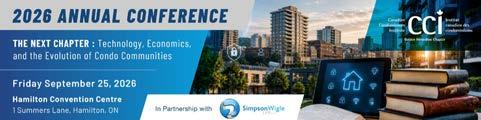
2026 ANNUAL CONDO CONFERENCE
REGISTER TODAY!
For the Golden Horseshoe Chapter of the Canadian Condominium Institute Annual Conference.
NEWIN2026
NEWIN2026 New location at the Hamilton Convention Centre. Break out rooms with targeted topics.
Condo managers will learn how to:
• Navigate legal, financial, and operational issues
• Align experts, boards, and communities
• Respond to crisis and recovery challenges
• Improve workflows, leadership, and wellness
For more information visit: www.cci-ghc.ca
FRIDAY SEPT 25
Hamilton Convention Centre 1 Summers Lane, Hamilton, ON
FEATURE PANEL
A Chapter We Never Expected: Leadership, Crisis and Community Response
PATRICK GRECO Partner, Shibley Righton LLP
Condo Lawyer for Bellaria 2 Residences
E-Bikes, Batteries and Condo Safety: What Boards and Managers Should Know
And here it is, the long awaited season: summer!
Residents are pulling out their bikes, dusting off their helmets, and heading back outside. Balconies, storage rooms, and bike racks are coming back to life. However, alongside traditional bicycles, boards and managers are now seeing more e-bikes, e scooters, and other battery powered devices. In many cases, these devices are not seasonal; some users rely on e-bikes year round, even in severe weather.
While bicycles have long been a familiar and manageable aspect of condominium living, e-bikes and their batteries introduce additional considerations. In particular, lithium ion batteries, charging practices, fire safety, and use on the
Gareth Stackhouse Common Ground Condo Law
Yuliya Lappo Common Ground Condo Law
common elements are raising new and evolving concerns for condominium corporations.
Fire Risks Associated with E-Bikes and Similar Devices
These concerns are not merely hypothetical. According to Toronto Fire Services1, the number of lithium-ion battery-related fire incidents has been increasing. These types of safety and fire risks are common across all types of lithium-ion batteries (which are ubiquitous), but e-bikes carry a higher risk due to the size of the batteries, the exposure to road conditions (including rain and salt, great for corrosion), and the fact that they are attached to large pieces of metal that can be hard to properly store.
Recent news reports have linked fires in high-rise buildings to lithium-ion batteries used in e-bikes and similar devices. For example, in December 2025, an apartment fire in Toronto’s west end sent two people to the hospital, and the alleged source of the fire was an electric bike battery2 . In April 2026, a high-rise balcony fire in downtown Toronto was reported to involve lithium-ion batteries associated with an e-scooter or similar device3
Managing E-Bikes Safely
In light of this, condominium communities face a practical question: how can condominium corporations manage e-bikes and other battery powered devices to ensure the safety and well being of the condominium community?
This article provides practical
guidance for boards and property managers on how to manage e-bikes in a way that is safe, reasonable, and fair to residents.
E-bikes offer residents a convenient means of transportation, and they are here to stay. Although a ban may seem appealing, it is not an appropriate solution or a solution that’s free of conflict. Instead, condominium boards should approach the safety risks associated with e-bikes in a measured and thoughtful way, without overreacting or imposing unnecessary restrictions on residents.
The Science
This thoughtful approach starts with understanding the technology itself; specifically, what lithium ion batteries are, why they can pose risks, and how those risks arise in a condominium setting.
Lithium-ion batteries power many everyday devices. While generally safe, they can become dangerous if damaged, tampered
One
of the most efficient ways for condo corporations to address the use and storage of e-bikes and similar devices is through clear and targeted rules.
with, or improperly charged. In rare cases, a faulty battery can overheat and cause a fast moving fire that is difficult to control.
In a multi-unit condominium community, the lithium-ion powered e-bikes and e-scooters can create practical challenges, including:
1. Charging batteries inside units, on balconies, or on the common elements using common element electrical outlets;
2. Storing e-bikes in hallways, units, lockers, or other areas not intended for that purpose;
3. Operating or riding e-bikes on the common elements.
What Condos Can Do
One of the most efficient ways for condo corporations to address the use and storage of e-bikes and similar devices is through clear and targeted rules. The Condominium Act, 1998 (the “Act”) gives corporations the authority to adopt rules that promote the safety, security,
and welfare of residents and to prevent unreasonable interference with the use and enjoyment of the property, provided the rules are reasonable and consistent with the Act and the corporation’s governing documents.
Condo e-bikes rules can establish practical limits and guidelines, including:
1. Establishing charging and battery rules, including restrictions on unsafe or inappropriate locations and requiring safe charging practices.
2. Requiring only recognized approved batteries and equipment, such as those bearing the Canadian certification mark (e.g., “CSA”, “cUL” or “cETL”), and prohibiting modifications to the batteries and charging systems.
3. Restricting where e-bikes can be used, stored and charged:
a) Requiring residents to walk them on the common elements;
b) L imiting where e-bikes can be stored, such as requiring storage in designated areas (e.g., bike rooms, parking units, or assigned storage spaces) and prohibiting storage in hallways or other unauthorized areas;
c) Prohibiting riding on interior common elements.
4. Requiring registration of e-bikes with management to support monitoring and compliance.
5. Permitting the corporation to remove improperly stored or non compliant e-bikes at the owner’s expense and providing a clear enforcement mechanism.
These measures are all about reasonable control, not elimination.
Where Does the CAT Fit In?
If disputes relating to e-bike rules arise, they may typically be addressed through the Condominium Authority Tribunal (the “CAT”), as vehicle, storage, or parking rule-compliance matters. For example, if an owner fails to comply with a rule by storing an e scooter in the lobby or parking it in an unauthorized area, the corporation, after following the usual escalation process, may bring an application to enforce compliance.
A Practical Way Forward
E-bikes, e-scooters, and similar devices offer many benefits, but they require sensible precautions in the condominium context. With a growing number of these devices in residential communities, corporations are well advised to adopt clear rules and provide guidance on their safe use.
By focusing on proper storage, safe charging practices, and reasonable limits on use, condominium corporations can reduce risk while still accommodating residents’ preference for modern, convenient, and environmentally friendly mobility.
It is not about banning e-bikes. It is about managing them safely to protect residents and the property.
That is a common sense solution most communities can support. And your Common Ground Condo Law Lawyers are always here to help.
Happy and safe summer!
Gareth Stackhouse serves as general counsel to condominiums throughout Ontario, offering trusted advice and common-sense solutions to a wide array of condominium legal challenges. With the Common Ground Condo Law team, he assists condominium clients with every legal issue that literally walks in their front doors. Gareth specializes in corporate governance, acting as an outside chairperson during contentious meetings, and managing complex governing document changes, such as declaration amendments, by-laws, and section 98 agreements. His expertise extends to land use and real property matters, project financing, shared facilities, and navigating the intersections of repair after damage, insurance, and standard unit considerations. Active in several CCI chapters and ACMO, Gareth is a regular contributor to industry discussions through both writing and public speaking on condominium-related topics.
Yuliya Lappo is a lawyer with Common Ground Condo Law, advising condominium corporations and property managers across Ontario. Her practice focuses on governance, compliance, and enforcement matters, including assisting with drafting and amending governing documents. She has written on condominium law topics for industry publications and enjoys helping clients navigate practical and legal challenges in condominium communities.
Reach Condo Leaders & Decision Makers!
20 AUG
BSAO & GHC 3rd Annual Golf Tournament
August 20, 2026 - 1:30 Tee off Century Pines Golf Course, Hamilton, ON
24 SEP
25 SEP
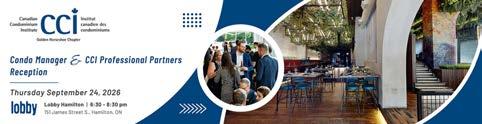
Condo Manager & Professional Partners Reception
September 24, 2026 - 6:30 - 8:30 pm Lobby, Hamilton Convention Centre
2026 Annual Conference & Trade Show
September 25, 2026 - 12:00 – 1:00 pm Hamilton Convention Centre, Hamilton, ON
1 OCT Directors Certificate Program
October 1 - 29, 2026 - Via Zoom - 7:00 -9:00 pm
Program includes 8-Modules running through the month of October. Individual module titles and dates available at https://director-certificate.cci-ghc.ca/modules/overview
Replacing or upgrading aging makeup air units can improve system reliability, reduce operating costs, and enhance overall building performance. Understanding the role these systems play, the factors that contribute to their deterioration, and the indicators that signal the need for modernization can help condominium boards and managers make informed decisions and plan proactively.
What are MUAs
MUAs serve a fundamental purpose in condominium building ventilation by introducing fresh outdoor air to replace indoor air that has been exhausted from the building. When exhaust systems remove air from corridors and other common spaces, that air must be replaced to prevent negative pressure conditions that can com-
promise safety, comfort, and other equipment performance. Without adequate MUA, buildings can experience back drafting of combustion appliances, difficulty opening doors, reduced exhaust hood effectiveness, and infiltration of unconditioned air through unintended pathways. These units differ from standard HVAC systems in that they handle 100% outdoor air rather than recirculating indoor air. The energy implications of conditioning 100% outdoor air are significant, which is why modern MUAs increasingly incorporate sophisticated heat recovery technologies, variable speed controls, and intelligent management systems. As energy costs rise and environmental regulations tighten, the efficiency of MUA systems has become a critical factor in overall building performance and operating costs.
Factors Contributing to the Deterioration and Obsolescence of Makeup Air Units
There are several mechanical, environmental, and technological reasons that result in deterioration of MUAs over time:
• Mechanical Wear and Tear: MUAs run continuously yearround, conditioning massive volumes of freezing outdoor air in the winter and humid air in the summer. Over time, bearings wear out, belts degrade, and fan blades suffer from fatigue.
• Harsh Climate Exposure: In Ontario and similar climates, extreme temperature fluctuations and freeze-thaw cycles cause significant stress and rust to the metal cabinets, dampeners, and interior housing.
We will present the loan information to the owners at the Information Meeting and answer all their questions. No need for Board Members to explain. We will help prepare the loan information package sent to owners about the Information Meeting, where owners can hear about the loan option. Our expertise for these meetings saves you effort. We will help with the loan draw requests during repair. No need to run around, we handle it 1. 3. 4. 5. We
We will prepare all the
• Outdated Controls and Parts
Obsolescence: As units age, electrical boards fail, and replacement parts are frequently discontinued by the original manufacturer, making ongoing repairs uneconomical.
• Decreased Energy Efficiency: Older units use constant-speed motors and lack modern heat recovery capabilities, causing them to consume substantially more energy and fuel than today’s high-efficiency models.
• Safety and Regulatory Risks: Gas-fired heating coils and heat exchangers eventually rupture or perforate due to constant heating and cooling. This can draw dangerous combustion gases into the building’s air supply, necessitating immediate replacement for fire and life safety compliance.
• Resident and building maintenance staff complaints: Typically, when MUAs begin to degrade, you will begin to receive comments and objections from building occupants regarding uneven suite temperatures, air quality discomfort, constant repairs and maintenance challenges.
State of the Art in MUAs
Energy efficiency is driving innovation in MUA unit design and operation. Heat recovery systems typically recover heat in the exhaust air and have significantly improved the energy efficiency of buildings, representing a dramatic advancement over traditional systems that simply exhausted conditioned air without recovering its thermal energy.
Modern MUA units employ mul-
tiple strategies to minimize energy consumption. Variable speed fans adjust airflow based on actual demand rather than running continuously at full capacity, reducing electrical consumption during periods of lower ventilation requirements. Advanced motor technologies, including electronically commutated motors (ECMs) and permanent magnet motors, deliver the same airflow with significantly less energy input compared to traditional motor designs.
These systems can be customized with a variety of cooling and heating options, filtration options, direct digital control (DDC) systems, and sizes and configurations to meet your application needs, allowing building owners to optimize their MUA systems for specific operational requirements and climate conditions. This customization extends to the selection of heat recovery technologies, with options including plate heat exchangers, rotary heat exchangers, heat pipe systems, and run-around coil configurations, each offering distinct advantages for different applications.
These advanced units can be controlled remotely, often via smartphones or home automation systems, allowing for better control of air quality and energy use. Integration with smart home systems is becoming more common, as consumers seek seamless, efficient solutions that can adapt to their specific needs. This trend toward intelligent, connected systems represents one of the most significant shifts in MUA unit technology.
Modern MUA units increasingly feature sophisticated control systems that go far beyond simple on/off operation. The integration of smart technologies like IoT enables
real-time monitoring and optimization of ventilation systems, enhancing their appeal. These systems can monitor multiple parameters including outdoor temperature, humidity, indoor air quality, exhaust fan operation, and building pressure, making continuous adjustments to optimize performance and efficiency.
Integration with building automation systems (BAS) allows MUA units to coordinate with other HVAC equipment, lighting systems, and occupancy sensors to optimize overall building performance. For example, a MUA unit can automatically adjust its operation based on signals from kitchen exhaust hoods, reducing airflow during periods of low cooking activity and ramping up when exhaust demands increase. This coordination ensures proper building pressurization while minimizing energy waste.
Reserve Fund Planning and Lifecycle Cost Considerations
Long-term financial planning is essential to ensure the continued maintenance and replacement of building mechanical systems. A well-funded reserve fund provides the financial framework necessary to support the future repair or replacement of aging MUAs as they approach the end of their service life.
A careful evaluation of the building’s mechanical systems by experienced mechanical specialists will present a complete view of the MUAs state and estimated useful life remaining with a 30-year projection review, to provide a true picture of the condition and have a financial plan for repair or replacement.
Long-term financial planning is essential to ensure the continued maintenance and replacement of building mechanical systems.
By looking at both the immediate and long-term, it is possible to establish a reserve-funding plan, that accurately predicts the HVAC needs of the building. This projection gives the Corporation the necessary information to develop yearly contributions, based on an average over several years, and assists its investment strategy for the funds as it identifies when repairs will be needed.
A well-maintained building and well-funded reserve can help to increase the value of the property by demonstrating to potential buyers and lenders that the corporation is committed to maintaining the property in good condition.
Managing OccupiedBuilding Retrofit Projects
Managing replacement of mechanical systems while the building is occupied requires coordinating construction efficiency with occupant comfort. Some strategies to achieve a well-planned project include effective, open resident communication, phased construction staging to minimize disruption,
and establishing a single point of contact. It is crucial to coordinate work hours around peak usage times.
Executing major MUAs upgrades without disturbing occupants requires meticulous, organized management. Core strategies include:
Construction
• Sequential Staging: Breaking the projects into smaller, manageable, chronological segments. This method isolates specific tasks to maintain continuous site operations, protect workers and the public, and systematically advance the build without overwhelming infrastructure.
• Zone-by-Zone Approach: Sequence the work by floors, wings, or specific risers. This isolates the active construction zones, confining noise, dust, and utility shutoffs to limited areas rather than the entire building.
• Targeted Scheduling: Confine heavy, intrusive construction to designated daytime weekday hours minimizes disruption to the occupants’ routines.
Resident & Occupant Coordination
• Single Point of Contact: Designate a dedicated liaison (like a retrofit manager) to field inquiries, coordinate schedules, and handle access arrangements.
• Clear Notice Protocols: Issue structured timelines specifying when different units or spaces will be affected by utility shutoffs, suite entries, or hallway blockages.
• Swing Spaces: Provide designated quiet spaces or temporary relocation areas within or outside the building to give vulnerable or sensitive occupants a refuge.
Dust, Noise, and Air Quality Controls
• Containment Strategies: Utilize temporary barriers, negative air pressure machines, and specialized dust-containment tents to prevent construction debris from spreading into occupied common areas and units.
Allen Kim Brown & Beattie Ltd.
Lithium-Ion Batteries –Building Fire Risks
Imagine you are in an elevator when an E-bike battery suddenly starts hissing noxious gas that then erupts in flames. This scenario is something that happened recently on a Toronto TTC subway car. According to Global News and Toronto Fire, the lithium-ion battery from the E-bike was the source of the fire. If not for the subway reaching the platform near the start of the fire, this could have been a much more catastrophic event.
What’s the Issue?
Lithium-Ion batteries are known to be potential fire hazards, and the reasons may not be what you think.
Lithium-Ion (Li-Ion) batteries are common throughout modern life and can be present in rechargeable electronic devices such as;
l Power tools
l Portable chargers, Toys
l Electronics (computers, phones, tablets, smartwatches)
l Vaping (e-cigarettes)
l E-scooters, E-bikes and mobility devices
continued…
This condition is called ‘Thermal Runaway’. As the name implies, it is like a runaway train that cannot be stopped.
Thermal Runaway
When Thermal Runaway occurs, it is a self-sustaining chemical reaction. The effects of one battery cell entering Thermal Runaway can easily trigger nearby battery cells to enter a similar condition. Essentially, there is a cascading effect that can occur with one battery triggering nearby cells to catch fire or explode, resulting in an increasingly dangerous situation. Trying to put out these types of fires is complicated and best left to the professional fire service. Water does not put out battery fires, but is generally used to cool down adjacent batteries, giving enough time to allow the battery to extinguish on its own.
Site Specific Issues Related To Condominium Buildings
Multi-unit condominiums introduce additional layers of fire safety issues that should be reviewed periodically by Building Management. The availability and price point of mobility devices such as e-scooters and e-bikes have allowed these devices to become pervasive in our communities.
The entrances and exits to buildings, as well as elevators, are bottlenecks where mobility devices are likely to be encountered daily. The travel path to and from a building, as
well as storage locations and underground parking, should be carefully considered when allowing larger Liion batteries into the building.
Storing large quantities of E-bikes or E-scooters in common storage rooms brings additional levels of fire risk. If one device enters a Thermal Runaway condition, it may trigger nearby devices, resulting in a much larger and potentially uncontrollable situation. The number of stored mobility devices should be reduced as much as possible. Maximizing the distance between adjacent devices will also help minimize cascading effects.
Storage areas should be adequately ventilated and located far from combustible materials or critical building services. Consideration for outside storage facilities may be a desired approach.
The charging location for these large battery packs also needs to be carefully considered so that in an emergency, people can evacuate to the exit corridors and outside. The egress doorway and the travel path to the exit should always be unobstructed, even in the event of a battery failure, fire, or off-gassing from a battery pack.
Essentially, battery packs should not be charged at or near exit doors or hallways in the path to the exit. It goes without saying that battery packs should also not be charged in public spaces or hallways.
The environmental and health effects of Li-Ion battery fires are also a concern. The ‘smoke’ produced during these events includes various chemicals from the battery chemistry, which can be more hazardous to health than smoke from a typical wood-burning or combustible material fire.
Resident education and battery safety information will be important approaches to reducing building incidents.
Best Practices
Building Management, Operators, and Boards of Directors may want to consider implementing recommendations from regional Authorities such as the City of Toronto, Fire Services, or Health Canada, which can include, but not limited:
l Only purchase CSA, cUL, or cETL certified batteries.
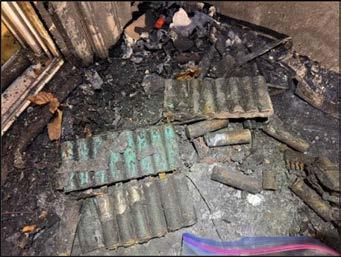
E-bike batteries after involvement in a fire.
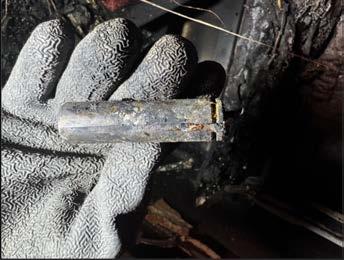
Single battery after involvement in a fire.
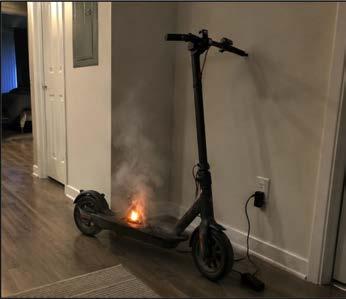
Example of E-scooter battery fire AI Generated image - Chatgpt.com
l Properly charge and use batteries as per the Manufacturer recommendations.
l Use only the battery that is designed for the device and the charger cable/cord that came with it. If a replacement charger is needed, buy it from a trusted source and make sure the voltage and current are compatible with the device.
l Never modify or tamper with the battery.
l Do not keep batteries plugged in while not in use.
l Never modify or tamper with your battery.
l Keep batteries away from living spaces, and egress routes.
The overall failure rate of Lithium-ion batteries is low considering the number of batteries in circulation. However, the popularity of mobility devices like E-bikes, E-scooters and similar devices, where the larger batteries are at a higher risk of damage from use, needs to be considered as part of any building’s fire safety plan. Knowing the risks and recommended safety practices will hopefully reduce and minimize the extent of damage or disruption which could occur if (or when) a battery fails.
Allen Kim, P.Eng is a structural engineer and certified fire and explosion investigator with over 17 years of varied practical engineering experience. His expertise includes forensic and building assessments, the preparation of restoration scope of work, Code evaluation and cause & origin investigations. Brown & Beattie Ltd.
Sample Certification marks
Tool Talk
The mandate for the Professional Partners Committee has always been to promote and grow a network of trusted professionals for the benefit of all CCI members. To that end much of our focus has been organizing networking events where we bring together our business partners with our CCI members. The majority of these events are planned as educational seminars where our professionals present on a wide variety of topics that the Committee feels will benefit our membership.
The Tool Talk series of videos will provide some behind the scenes views of our professionals to highlight a few of the many services our experts provide to their condo clients. The idea is for these short videos (3 to 4 minutes each), to give our membership a behind the scenes look at our experts at work. Many of these clips will be a view of activities/operations which may never have been seen/witnessed by our members before. Some of the first videos will focus on engineering, contracting and emergency/ disaster response.
The video clips will be uploaded to the CCI Golden Horseshoe website for easy viewing access and a library of multiple topics/insights will be created. We hope the clips will provide a fun and interesting look “behind the curtain” with our professionals while also educating the viewers on the methods, materials, operations utilized to inspect, resolve and repair typical problems being faced by condominiums within our community.
You can review our current library of videos here:
As always, the committee welcomes input from our members. If anyone has a suggestion for one of our videos, please feel free to reach out to us at admin@cci-ghc.ca.
View Tool Talk Videos
Jimmy Muir
FirstService Residential
A Mid-Year Financial Check-In:
Why Summer Is the Right Time for Condominiums to Reassess the Numbers
As summer approaches, many people think about vacations, longer days, and a slower pace. For condominium communities however, this period offers something equally valuable: a timely opportunity for a mid-year financial check-in.
Whether you serve on the board or are an owner invested in your community’s long-term health, a mid-year financial review is worthwhile. It can prevent unwelcome surprises and support better decision-making before year-end. From operating expenses and contracts to reserve fund performance and insurance coverage, summer is an ideal time to pause, assess, and plan ahead.
Why it matters
By mid-year, condominium corporations have several months of actual financial data to compare against their approved budgets. This makes it easier to identify emerging trends, cost pressures, or areas where spending may be tracking higher or lower than expected.
A proactive review allows boards to:
• Address budget variances early rather than reacting at year-end
• Adjust forecasting to reflect current economic conditions
• Plan for necessary repairs, projects, or contract changes
• Communicate transparently with owners
continued…
For owners, this kind of oversight offers reassurance that the corporation is actively managing funds, not simply reacting once annual financial statements are issued.
Are costs tracking as planned?
Inflation and rising service costs continue to be a reality affecting condominiums. Utilities, labour, materials, and professional services have all experienced upward pressure in recent years, making it increasingly important to review actual spending against budget assumptions.
A mid-year check-in should examine:
• Utilities and energy usage versus projections
• Maintenance and repair costs, particularly emergency or unplanned work
• Administrative and professional fees
• Seasonal expenses such as landscaping
If certain line items are consistently trending over budget, this doesn’t necessarily indicate mismanagement, but it does signal a need for informed adjustments, either through tighter controls, scope changes, or revised forecasting for the remainder of the year.
Are you still getting value from your vendor contracts?
Summer is also a great time to review vendor contracts. Many service agreements renew annually or automatically, and boards can miss their chance to renegotiate if they
If projects have been accelerated, delayed, or reprioritized, it’s important to evaluate how these changes affect long-term funding plans.
wait too long.
Key questions to consider:
• Are contractors meeting performance expectations?
• Do current service levels still reflect the community’s needs?
• Have market rates shifted since contracts were last signed?
• Are there upcoming renewals that require board decisions?
For boards, this review can help ensure the corporation continues to receive value for money. For owners, it supports cost-conscious governance that balances quality service with fiscal responsibility.
Are your reserve funds still on track?
Reserve funds are designed to protect owners from large, unexpected special assessments but only if they are properly funded and aligned with the reserve fund study.
A mid-year financial review should assess:
• Contributions made versus planned contributions
• Any reserve expenditures already completed this year
• Upcoming major projects outlined in the reserve fund study
If projects have been accelerated, delayed, or reprioritized, it’s important to evaluate how these changes affect long-term funding plans. Summer is a practical time to revisit these assumptions while there is still time to course-correct before the next budget cycle.
Helping eliminate surprises when forecasting for year-end
One of the biggest advantages of a summer financial review is the ability to forecast more accurately for year-end. With a clearer picture of operating costs, contract obligations, and reserve activity, boards can better anticipate whether budget adjustments or owner communication may be required.
This forward-looking approach helps:
• Reduce the likelihood of yearend deficits
• Suppor t more accurate budgeting for the following year
• Improve transparency and trust with owners
• Enable informed planning for capital projects or improvements Clear forecasts also allow management and boards to com-
municate proactively, rather than explaining financial challenges after the fact.
Don’t overlook insurance coverage
Insurance is one of the most critical and often overlooked components of a condominium’s financial health. With construction costs, claim values, and deductibles continuing to rise, a mid-year review is an excellent time to ensure coverage remains adequate and appropriate.
Boards should consider:
• Whether replacement values accurately reflect current construction costs
• Any recent claims or incidents that could affect premiums or deductibles
• Changes to building use, amenities, or systems that may impact coverage
• Alignment between the corporation’s policy and owner responsibilities
A proper insurance review, ideally conducted with qualified professionals, can help protect both the corporation and individual owners from significant financial exposure.
A shared responsibility
A well-managed condominium relies on an informed board, a supportive management partner, engaged owners, and consistent oversight. A mid-year financial check-in isn’t about finding fault; it’s about protecting the community’s financial stability today and planning responsibly for the future.
By taking advantage of the summer months to reassess spending, contracts, reserve performance, insurance coverage, and year-end forecasts, condominiums can enter the second half of the year with greater clarity, confidence, and control.
Additionally, the right property management partner brings the people, systems, connections, and financial expertise to support every area covered above. From budget tracking and forecasting to contract oversight, reserve fund planning, and insurance reviews. With the right team in place, boards can act on issues early, stay compliant, and make confident decisions that protect the community’s long-term financial health.
Jimmy Muir is Director of Business Development with FirstService Residential.
Victor Yee
Shibley Righton LLP
RECENT CAT CASES: A Dangerous Dog, and an Indeterminate Noise Investigation
The old adage in condominium law about most disputes centering around “people, pets, and parking” still holds true, particularly with the online Condominium Authority Tribunal (the “CAT”) that was established nearly a decade ago.
Two recent decisions from the CAT have highlighted the continued nature of such communal disputes in condominiums.
Dangerous Part-Time Dog: HSCC 694 v. Evlova
In Halton Standard Condominium Corporation No. 694 v. Evlova, 2026 ONCAT 111, a unit owner’s son lived elsewhere, but let his dog stay with the unit owner while he was at work. The German Shepherd exceeded the condominium’s 15-kilogram weight limit for pets, displayed aggressive behaviour on multiple occasions, and the unit owner had difficulty controlling the dog from lunging and barking aggressively at other residents and children. Nearby, but off-site from the condominium, the dog also allegedly bit another resident.
The unit owner submitted a medical note which indicated that she “should
live with a survival companion, like a dog” after her husband had passed away. However, the CAT held that the German Shepherd is not the unit owner’s dog – it was her son’s dog. The dog was only at the premises as a guest or a visitor. The CAT noted that, “It is unusual for a person with a disability to only require the services of a support dog on a part-time basis.”
Even if the German Shepherd was owned by the unit owner and stayed with her full-time, the CAT held that ultimately, the unit owner was not entitled to keep such a dangerous dog at the premises, because doing so would impose an undue hardship on other residents.
Interestingly, the CAT noted in its Decision that it does not have legal jurisdiction to decide disputes about “dangerous conditions” under Section 117(1) of the Condominium Act – namely, a condition or an activity in a unit or on the common elements that is likely to cause property damage or personal injury, such as a dangerous dog which has caused personal injury to others. However, here, the CAT ruled that the dangerous condition of the dog could be separated from the Tribunal’s jurisdiction over pets; namely, its adjudication about whether the unit owner was entitled to have the German Shepherd at the premises.
Never-ending Noise Investigation:
Stoneburgh v. YCC 266
In Stoneburgh v. York Condominium Corporation No. 266, 2026 ONCAT 104, a unit owner claimed that the condominium failed to properly investigate, and enforce against, her complaints about noise disturbances that she alleged were
emanating from outside of her unit.
The respondent condominium was a high-rise building in Toronto, where most of the units are two-storeys and stacked on top of each other in varying configurations.
Despite years of investigation by Management and Security personnel on-site, nobody could figure out where the reported noises were coming from. The unit owner refused to allow the condominium to conduct an acoustical engineering investigation in her unit, due to her concerns about privacy.
Even in Stage 3 of the CAT’s 3-stage dispute resolution process, the CAT adjudicator was unable to determine where the purported noises were originating from or who was responsible for making the noises, which were alleged to be sounds of someone with a carpentry hobby (hammering, sanding, drilling) and furniture being moved around.
The CAT held that the condominium corporation satisfied its legal obligation to reasonably investigate the unit owner’s complaints. The condominium had done what it could to investigate the noises, and could not be faulted for failing to figure out where the noises were coming from. While the condominium could have acted sooner to investigate the noises at the beginning when the unit owner’s complaints first arose, the CAT ruled that, “It is not clear that a more expeditious and timely investigation would have led to any better outcome.”
Takeaways
These two decisions are useful reminders that the CAT will generally look for a practical way to ad-
judicate a dispute, and focus more on the facts of the specific case at hand rather than the strict letter of the law.
In the dog case, the CAT was prepared to separate the question of whether the German Shepherd was a “dangerous condition” on the property, from the broader question of whether the unit owner was entitled to keep the dog as a human rights accommodation. The CAT found that even though the unit owner had a medical note, the condominium corporation was not required to accept a situation that would create undue hardship by compromising the safety of other residents.
The noise case confirms that a condominium corporation is not expected to solve every complaint perfectly, especially where the source of the problem cannot be verified despite reasonable efforts. What matters is that the condominium responds in good faith, documents the steps taken, follows up where appropriate, and remains open to further reasonable investigation. The CAT’s focus is not on perfection, but rather, on whether the condominium acted reasonably in the circumstances.
Victor Yee is a condominium lawyer at Shibley Righton LLP, and has worked in condominium law for over 10 years. Victor provides practical, cost-effective advice to condominium corporations and unit owners.
The Ron Danks Leadership Award
The Ron Danks Leadership Award
Through the Ron Danks Leadership Award, the Golden Horseshoe Chapter recognizes its true condominium board member leaders; those individuals that have gone that extra mile, time and time again, to help their condominium community.
If your condominium corporation is a current GHC member and you know of a current or past board member that exemplifies the spirit of what leadership means, email outlining why the candidate is worthy of this recognition.
Your submission should be of sufficient detail for the judging panel to want to know more. Simply being a long-time board member is not sufficient. What has your candidate done to make a difference?
Submit your nomination online at https://cci-ghc.ca/ who-is-cci/ron-danks-leadership-award.
Showcase Your Community in “Condo News” — and be Considered for Condo of the Year!
The Golden Horseshoe Chapter of the Canadian Condominium Institute is inviting condominium corporations across our region to be featured in upcoming issues of Condo News Magazine. This is your opportunity to highlight the unique story of your community — and to be considered for our annual Condo of the Year Award
Every condominium has a story worth telling. Whether it’s a major project you’ve completed, a successful community initiative, a sustainability effort, or simply the culture that makes your building special, Condo News is the perfect platform to share it.
Why submit an article?
• Showcase your community to members across the Golden Horseshoe Region
• Celebrate your board, residents, and volunteers
• Highlight achievements, improvements, or innovative approaches
• Share lessons learned that can help other condominium communities
• Build pride and engagement within your corporation
• Be automatically entered into consideration for Condo of the Year
What to include in your article:
• A brief history of your condominium
• What makes your community unique
• Recent projects, challenges, or successes
• Photos of your building and community spaces
• Any initiatives that demonstrate leadership, innovation, or collaboration
Our editorial team is happy to assist with structure or editing if needed.
If your condominium would like to be featured — or if you have questions about the process — email admin@ghc-cci.ca.
Are you still stressing over holding your
Annual General Meeting
virtually?
Can’t find a service provider to host your meeting?
Are you a member of Golden Horseshoe Chapter –Canadian Condominium Institute? Yes! THEN WE CAN HELP!!
The GHC-CCI will offer our technical expertise and the use of our Zoom platform to host your AGM. You will still be required to prepare everything needed for your AGM:
•PowerPoint
•Script
•Host
•Collection of proxies
•Minute taker
•Polling/voting questions and choice of answers
•Distribution of your AGM package
•Provide GH with name/emails of partici-pants
Golden Horseshoe Chapter will supply the following:
•Zoom Pro platform (including polling through Zoom)
•Conference call number for those not able to connect through zoom
•Any confidential voting requirements through an online survey link
•A technician to run the event in the background who will:
-set Up link and any recording requirements
-set Up polls
-launch Polls and surveys
-provide tech help/troubleshooting
This service is available for smaller condos as follows:
1-19 Units - $250 + HST
20 – 49 Units - $350 + HST
50 – 80 Units - $450 + HST
This service is only being offered to small condominium units that are members of GHC-CCI and is on a first come, first served basis.
If you are interested in using our services please email us at admin@ghc-cci.ca with the date and time of your AGM, and we will get back to you with our availability.
Thank you for being a member of GHC-CCI!
Advertising in Condo News magazine is more than a placement—it’s a strategic connection. The publication is a trusted resource for condo boards, property managers, and industry professionals who turn to it for insight, education, and reliable service recommendations. Featuring your brand here puts you directly in front of the decisionmakers who shape the condominium community.
Beyond visibility, your presence in Condo News sends a powerful message. It signals that your organization is not just serving the condo sector, but actively supporting its growth, education, and best practices. That kind of engagement builds confidence and credibility—qualities boards and managers look for when choosing longterm partners.
This is a focused, cost-effective way to elevate your profile, deepen relationships, and remain top of mind with those who matter most in the condo industry.
We welcome article submissions on topics such as:
• Technical guidance and best practices
• Legal, financial, or regulatory updates
• Maintenance, operations, and building performance
• Case studies or lessons learned
• Emerging trends and innovations in the condo industry
Condo News is one of the most widely read and trusted publications in the condominium sector across the Golden Horseshoe region. Your expertise, insights, and practical knowledge help educate condominium directors, managers, and professionals while showcasing the depth of experience within our Business and Professional Partner community, and we are inviting our valued Partner members to contribute articles.
Articles should be educational and non‑promotional in nature, and include the authors name, short bio, and headshot.
If you are interested in contributing to an upcoming issue, please send your proposed topic or draft article to admin@ghc-cci.ca.
Thank you for your continued support of CCI Golden Horseshoe and for helping us deliver high‑quality, relevant content to our condominium community.