VERSION 1 JUNE 2026
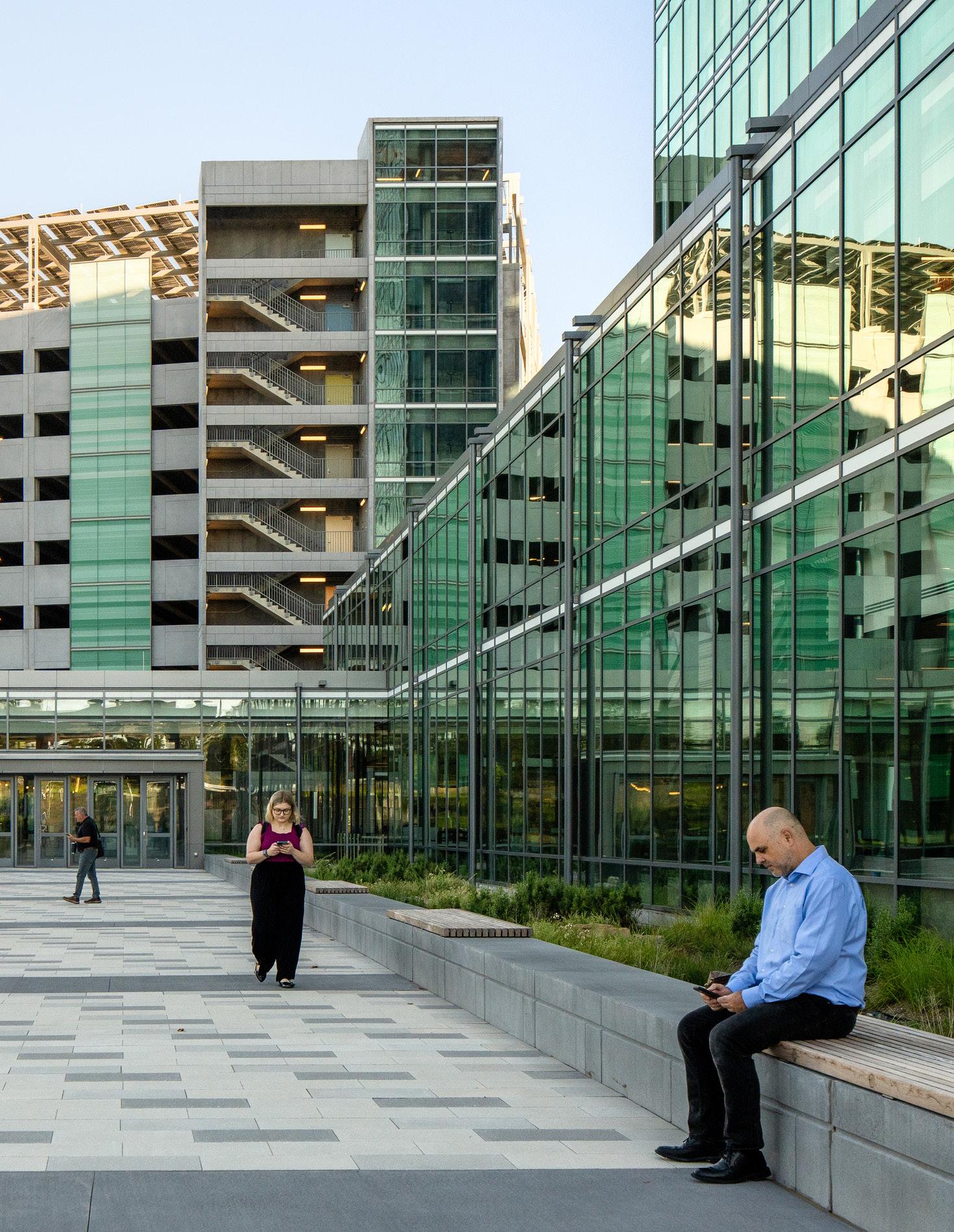
NORTH CAROLINA DEPARTMENT OF HEALTH & HUMAN SERVICES CAMPUS RALEIGH, NC
VERSION 1 JUNE 2026
LS3P is a proud signatory of the AIA Materials Pledge, reinforcing the firm’s long-standing commitment to sustainable, resilient, and human-centered design. Signed in 2023, the pledge represents a firmwide initiative to improving human and environmental health through more thoughtful material selection across all projects, offices, and markets. LS3P’s Materials Action Plan establishes a clear framework for implementing this commitment consistently and effectively across the firm. This plan also supports LS3P’s Evolution30 initiative to “integrate sustainable performance.”
Materials decisions have far-reaching impacts—on building occupants, project teams, clients, manufacturing workers, frontline communities, and ecosystems worldwide. From raw material extraction through manufacturing, use, and eventual reuse or disposal, material choices influence indoor air quality, climate emissions, biodiversity, labor practices, and waste. The AIA Materials Pledge aligns directly with LS3P’s mission, values, and design tenets, as well as the AIA Framework for Design Excellence, by recognizing resources and well-being as critical levers for positive change.
The AIA Materials Pledge organizes material impacts across five interconnected categories:
Human Health—reducing harmful chemicals and emissions to support individuals in the supply chain and occupant well-being
Climate Health—lowering embodied carbon and supporting climate resilience
Ecosystem Health—encouraging responsible sourcing and regenerative practices
Social Health & Equity—supporting fair labor practices and positive community impacts
Circular Economy—reducing waste through reuse, recyclability, and design for disassembly
LS3P aligns these categories with the mindful M aterials Common Materials Framework (CMF) and other industry tools to guide informed, transparent, and consistent decision-making.
The Action Plan outlines a practical, scalable approach built around five core principles:
Align selections with Materials Pledge criteria
Ask for transparency through third-party documentation
Set goals and metrics at product, project, and firm levels
Continuously improve specifications and procurement practices
Collaborate and share knowledge internally and across the industry
These principles are supported by phased short, medium, and long-term targets, enabling LS3P to establish a baseline, track progress, and steadily increase impact across all projects.
Implementing the Materials Pledge is a shared responsibility. Success depends on coordination across project teams, office leadership, the Specifications Team, Sustainability Team, Materials Champions, and firm leadership. The Materials Pledge Task
Force provides governance, education, and oversight—developing tools, refining specifications, supporting teams, and leading annual reporting.
Materials selection is embedded within LS3P’s integrated design process, with opportunities for impact at multiple project milestones. While not every product will meet all five impact categories, the firm is committed to continuous improvement, raising expectations over time.
LS3P reports annually on Materials Pledge progress, using project data to demonstrate accountability and identify opportunities for improvement. Ongoing training, shared resources, and collaboration with industry partners—such as mindful M aterials and Grace Farms—equip teams to implement best practices as tools and data evolve.
The Materials Action Plan positions LS3P to not only meet the AIA Materials Pledge, but to help drive market transformation. By using the firm’s specifications influence responsibly, engaging suppliers and clients, and sharing lessons learned, LS3P advances healthier, more equitable, and more resilient outcomes for our projects, our communities, and the profession.

LS3P is a proud signatory of the AIA Materials Pledge, which aims to improve human and environmental health through the selection of materials in our projects. Our large, diverse portfolio of work across the Southeast and beyond allows us to achieve significant impacts across our footprint, and we are committed to continuous improvement in this area. This Materials Action Plan provides guidance on implementing the AIA Materials Pledge firmwide.
“Design excellence today means understanding the full impact of our decisions. Materials are central to that responsibility—and to the legacy of our work.”
Katherine Peele LS3P Board Chair
Our firm has a long history of leadership in sustainable, resilient design, and signing the AIA Materials Pledge in 2023 represented another significant milestone. We recognize that sustainability and resiliency are integral to design excellence, and believe that a holistic approach to design must include thoughtful consideration of materials that are better for our projects, our buildings’ end users, our clients, and our communities.
2023
AIA Materials Pledge signed
2024
LS3P Materials Pledge Task Force forms to educate team members and develop resources
First reporting year (RY23) is a success Task Force distributes letters to vendors and consultants about our commitment Task Force identifies “Materials Champions” to support each office
2025
Second reporting year (RY24) is a success Task force collaborates with Specifications Team to promote technical compliance
Development of Materials Action Plan begins
2026
Third reporting year (RY25) is a success Task force develops the Materials Action Plan, outlining firm’s commitment to the Pledge Task force collaborates with Project Managers ans Specifications Team to promote compliance with Pledge initiatives
2026-2028
Provide material health review process for 25-45% of projects
Track material selections for 50% increase in compliance
Specify >30% of products per project as red list compliant
Create embodied carbon assessment for >30% of project materials
2028-2031
Provide material health review process for 45-75% of projects
Track material selections for 75% increase in compliance
Specify >60% of products per project as red list compliant
Create embodied carbon assessment for >50% of project materials
2031-2035
Provide material health review process for 75100% of projects
Track material selections to double compliance each year
Specify 100% of products per project as red list compliant
Create embodied carbon assessment for >80% of project materials
Report 30% more projects than previous reporting year
Report all projects that completed design in the year prior Short-Term Goals
Report 50% more projects than previous reporting year
We invite every team member to become familiar with the pledge and to participate actively in implementing healthier materials into your own projects, beginning today.
The AIA Materials Pledge aligns with our mission to “engage, design, and transform” as well as our values of excellence, integrity, empowerment, collaboration, balance, stewardship, and caring. The pledge also supports our vision: “In our commitment to the Southeast, we create architecture that enriches community through a culture of design excellence, expertise, innovation, and collaborative engagement.” This plan also supports LS3P’s Evolution30 initiative to “integrate sustainable performance.”
Our materials choices impact not only our clients and their end users, our landfills, and various environmental factors, but also the people who extract raw goods, the people involved in the manufacturing process, and the people in the frontline communities near industrial facilities. Because the entire lifecycle of materials must be considered from extraction through
eventual demolition and disposal or reuse, these impacts are global as well as local. This pledge is consistent with both the AIA Framework for Design Excellence and LS3P’s tenets for design excellence.
LS3P’s Materials Action Plan and supporting documents will guide the selection and use of interior and exterior materials in all projects to integrate sustainable, resilient, healthy, and equitable products. The AIA Materials Pledge addresses the impacts of building materials across five categories: Human Health, Climate Health, Ecosystem Health, Social Health and Equity, and Circular Economy. These categories align with the mindfulMaterials Common Materials Framework (CMF) and the CMF Toolkit helps guide selections.
“The AIA Materials Pledge is closely aligned with LS3P’s values and vision as we create architecture that enriches our communities. As designers, the materials we choose carr y real consequences. This plan reflects our responsibility and our commitment to making the best choices for the people we serve. We are uniquely positioned to use our influence to improve human health, strengthen communities, and reduce our impact on the environment.”
Marc Marchant CEO
Selecting materials that avoid harmful chemicals, and prioritizing lowemission materials, contributes significantly to better Indoor Air Quality (IAQ) and reduces health risks for occupants. Materials free from toxic substances contribute to a healthier environment, promoting overall wellbeing and comfort.
Selecting materials with low embodied carbon and those that sequester carbon reduces the overall carbon footprint of the project and helps to mitigate climate change. Many sustainable materials have better thermal properties than typical materials, which can enhance the energy efficiency of buildings.
Selecting responsibly sourced materials such as FSC-certified wood supports sustainable forestry practices and helps in conserving biodiversity. Materials from manufacturers engaging in regenerative practices contribute to the restoration of natural ecosystems.
Choosing materials from manufacturers that uphold human rights and fair labor practices supports ethical production processes and workers’ rights. Materials that positively impact the communities where they are produced foster social equity and economic development.
Materials designed for disassembly and reuse minimize waste, promote a circular economy, reduce landfill contributions, and shorten supply chains (which reduces risk of exploitation). Prioritizing recyclable and reusable materials supports efficient use of resources and sustainable consumption patterns.

Implementing the AIA Materials Pledge will require us to be mindful of decisions at the project, office, specifications, and firm levels as we ask for transparency, set goals and metrics, update our specifications and procurement processes, and share knowledge.
Materials selection should be part of an integrated design process, outlined in LS3P’s Materials Pledge Implementation Guide and Project Road Map. Opportunities occur at multiple points in the project work flow —including the Framework for Design Excellence Process—and will rely on expertise from multidisciplinary experts
The Materials Pledge Task Force will work closely with the LS3P Leadership, the Sustainability Team, the Specifications Team, Materials Champions, and other stakeholders to develop and refine the Materials Action Plan and provide firmwide support for this effort.
The Specifications Team is continuously developing recommended specifications for building materials that are included in a typical project, beginning with the most commonly specified materials for maximum impact. Project teams will be more involved in selecting products that vary by project, including stone assemblies, tiling, carpet, resilient flooring, countertops, fabrics, and furniture. Project milestones will provide checkpoints via data exports from materials tracking tech partners for identifying and making resilient materials choices. Every product might not achieve goals in all five categories; the goal is continuous improvement.
At a minimum, each product should meet goals for at least one pledge category. This goal will be revisited annually, and the bar will gradually be raised until all projects meet these criteria. The goal is for construction administrators to review submittals and oversee Materials Pledge compliance in the field.
Much of this effort will be built into our own best practices such as setting standards for internal office renovations, encouraging reuse where we can, setting expectations for handling material samples, and other policies and procedures.
—Integrating Products that Support Human Health
LOOK FOR INGREDIENT TRANSPARENCY AND DISCLOSURE
Require Health Product Declarations (HPDs), Environmental Product Declarations (EPDs), or Declare Labels (or comparable documentation) for all materials.
AVOID HARMFUL CHEMICALS
Exclude materials containing substances from the Red List (as defined by the international Living Futures Institute) such as PVC, formaldehyde, VOCs, flame retardants, antimicrobials, and phthalates.
PRIORITIZE LOW EMISSIONS
Select materials with low or no VOC emissions.
—Integrating Products that Support Climate Health
DESIGN FOR LOWER EMBODIED CARBON
Consider building or material reuse first. If new materials are necessary, use Environmental Product Declarations (EPDs) to assess and select materials with low embodied carbon.
DESIGN FOR CARBON SEQUESTRATION
Prefer materials that sequester more carbon than they emit, such as biobased materials.
—Integrating Products that Support Ecosystem Health
LOOK FOR SUSTAINABLE SOURCING
Choose materials that are responsibly sourced, such as FSC-certified wood.
CONSIDER REUSE
Where possible, pursue adaptive reuse of existing buildings and reuse existing building products to limit impacts on natural ecosystems.
SUPPORT REGENERATIVE PRACTICES
Seek out manufacturers that engage in regenerative practices and responsible supply chain management.
—Integrating Products that Support Social Health and Equity
SUPPORT FAIR LABOR PRACTICES
Choose materials from manufacturers that uphold human rights and fair labor practices and can provide certification/ documentation on these practices. For manufacturers that do not prioritize these practices, let them know that this is a priority in our specifications process.
LOOK FOR POSITIVE COMMUNITY IMPACTS
Prioritize products that positively impact the communities where they are produced. Utilize Grace Farm’s Design for Freedom Toolkit for steps to further implement.
—Integrating Products that Support a Circular Economy
PRIORITIZE REUSABILITY AND RECYCLABILITY
Look for opportunities to salvage, reclaim, or reuse materials first. Choose materials designed for disassembly and reuse.
DESIGN FOR WASTE REDUCTION
Avoid materials that contribute to waste, such as nonrecyclable composites.
IDENTIFY SUSTAINABLE MATERIALS
Research and compile a list of materials that meet sustainability criteria. Consider factors such as lifecycle impact, materials take-back and recycling programs, recycled content, and the presence of harmful chemicals.
BUILD RELATIONSHIPS
Engage with suppliers who prioritize sustainability. Establish partnerships with those who can provide documentation on the environmental impact of their products.
“When healthier materials are part of the process from the start, they become a natural part of project delivery, not an add-on. This approach shifts the mindset from reactive selection to intentional design, where material health is embedded in every decision.”
Tanya De Leon Sr. Architect
The first step in specifying healthier project materials is to ask for transparency. Requesting third-party documentation through HPDs, EPDs, Declare Labels, FSC certification, Cradle to Cradle certification, Living Product Certification, and other reputable certifications not only helps designers understand the impacts of their choices, but also helps to drive better industry practices by building market demand for more sustainable materials.
Requesting detailed information on materials impacts project-level decisions but also applies to office and firm procedures for working with vendors and maintaining our materials libraries. Project teams should incorporate pledge-compliant materials into both new and ongoing projects, verify that these materials are specified in project documents, and clearly communicate our commitment to contractors.
Continuous improvement in materials selection will require us to establish our baseline and measure progress. Setting goals and metrics at the product level and at the firm level will help us to gain insight into opportunities for impact, and will assist in required yearly AIA reporting efforts.
At the project level, early-stage project discussions provide an excellent opportunity for discussions about healthier, more sustainable materials. When documented as part of project visioning, Owner’s Project Requirements, and AIA Framework for Design Excellence conversations, this topic can be revisited at appropriate project milestones as decisions are refined. Setting specific goals at the beginning and measuring success at the end of a project will help position to meet ambitious targets.
At the product level, project teams should continuously improve their product selections. Improving the quality of transparency and disclosure documents (including thirdparty certifications) is the goal. Teams should strive to increase the quantity of pledge-compliant materials for each consecutive project. Project team members should regularly monitor the use of sustainable materials and assess their performance, which may involve site visits, material testing, and feedback from project teams.
At the firmwide level, the Materials Pledge Task Force can conduct regular audits of materials used in projects as part of the annual Materials Pledge reporting cycle, and provide progress reports to stakeholders highlighting achievements and areas to increase positive impacts.
The firm will continue to improve and update our specifications and procurement processes to require transparency and optimized products, with third-party optimized documentation as a priority.
At the office level, communicating our goals to our internal teams, our consultants, and our vendors will help to align our efforts and achieve buy-in from all stakeholders. Materials Champions in each office will be instrumental in checking in with and guiding project teams in their offices, as well as maintaining our materials libraries with easy-to-find information on pledge-compliant materials. Materials library refreshes will happen continuously over time.
At the specifications level, the Specifications Team will curate master guideline specs with concise language to use across the firm’s most impactful specifications divisions; create product selection guides highlighting preferred manufacturers who consistently meet or exceed LS3P’s sustainability standards; and develop a mentorship strategy to encourage outreach and collaboration, build a wider knowledge base, and facilitate consistent materials research.
The Specifications Team continually evaluates the most commonly used project materials to focus on improving cohesion between our template specifications and Materials Pledge recommendations.
As we grow our knowledge and expand our healthy materials options, we will collaborate and share best practices, tools, and educational resources. We can do this internally and externally; at the project scale or on a larger national stage.
“At LS3P, our commitment to the AIA Materials Pledge reflects a belief that better buildings begin with better decisions about what we put into them. By prioritizing transparency and healthier materials, we can positively impact human and environmental health. Achieving this requires alignment across consultants, contractors, and manufacturers, working together to make informed, responsible material choices on every project.”
Dan Scheaffer Charleston Office Leader
Implementing the AIA Materials Pledge begins with understanding where we are,then laying a foundation for where we’re going. Since signing the AIA Materials Pledge in 2023, LS3P has taken steps to evaluate current practices, create processes for continued education, determine goals for implementation, and set us on the path to success.
The firmwide Materials Pledge Task Force and Materials Champions located in each office have been instrumental in conducting thorough reviews of the materials currently used in LS3P projects and in the LS3P Materials Library. This includes assessing manufacturers’ practices, processes, and the materials they produce for their environmental impact, health implications, and sustainability credentials. These
Champions are labelling pledgecompliant materials for easy access in each of our offices’ materials libraries through review of current transparency documents or similar efforts. They are also sharing LS3P’s commitment with our manufacturer’s reps, with letters that address the “what,” the “why,” and how they can help. The reporting team selects projects from each of LS3P’s markets for research and reporting, establishing a baseline for future reporting efforts.
As LS3P continues to implement the AIA Materials Pledge, the Materials Pledge Task Force will work with LS3P leadership and stakeholders to set clear, specific, and measurable materials goals and milestone targets. These goals will include firmwide, project-level, and product-level targets. Occasional pledge updates are provided to OMFs and OLs on process and team needs.

Methods: Project teams will implement Materials Pledge strategies in projects from LS3P’s current Materials Pledge Implementation Guide. Materials Champions will vet all new and current products in each office’s materials library according to sustainable materials criteria and support Pledge implementation at their office level. The Specifications Team will update priority section sourcing criteria. Project teams implement process into 30% more projects than our 2024 baseline after identifying categories of focus to pursue.
Per Evolution30’s “integrate sustainable performance” initiative, 25-45% of LS3P projects over 10,000 SF will include a material health review process by 2030 to achieve a measurable reduction in harmful materials and chemicals of concern.
Transparency: Project teams will track material selections for the AIA’s top 22 architectural and structural products of concern to include 50% more pledge-compliant products than in their 2024 baseline of previous projects.
Red List Compliance: Project teams will continue eliminating the use of products with Red List chemicals (as identified by ILFI), including all products containing polyvinyl chloride/PVC, and strive to specify at least 30% of products per project that are considered Red List free.
Carbon Footprint: The Materials Pledge Task Force, in conjunction with the Embodied Carbon Task Force, will develop a plan to conduct embodied carbon assessments for 30% of materials used in projects.
Impact Category Focus: The Materials Pledge Task Force will provide educational content about all Pledge categories, initially prioritizing Human and Climate Health. (This category currently has more available documentation than others to facilitate implementation.) The Task Force will begin bringing more awareness to Social Health and Equity, Ecosystem Health, and Circular Economy.
Reporting: The Materials Pledge Task Force will work with project teams to report 30% more projects than in the previous reporting year. The Task Force will continue reporting at the product, project, and firm level.
Methods: The Materials Pledge Task Force will continue developing tools and internal education to assist teams to streamline the materials implementation process. Each year, project teams will implement the Materials pledge in 50% more projects than in the previous year.
Per Evolution30’s “integrate sustainable performance” initiative, 45-75% of LS3P projects over 10,000 SF will include a material health review process by 2030 to achieve a measurable reduction in harmful materials and chemicals of concern.
Transparency: Materials Champions will encourage material selections for the AIA’s top 22 architectural and structural products of concern to include 75% more pledgecompliant products on current projects over the average from previous year.
Red List Compliance: Project teams will continue eliminating the use of products with Red List chemicals, including all products containing polyvinyl chloride/PVC, and strive to specify at least 60% of products per project that are considered Red List free.
Carbon Footprint: The Materials Pledge Task Force, in conjunction with the Embodied Carbon Task Force, will continue their plan to conduct embodied carbon assessments for 50% of materials used in projects.
Impact Category Focus: The Materials Pledge Task Force will develop educational content for the categories of Social Health and Equity, Ecosystem Health, and Circular Economy awareness and implementation as more data becomes available. Project teams will continue to implement strategies for Human and Climate Health through improved specifications.
Reporting: Each year, the Materials Pledge Task Force will report 50% more projects than the previous reporting year.
Methods: Project teams will fully implement materials best practices into all new projects.
Per Evolution30’s “integrate sustainable performance” initiative, 75-100% of LS3P projects over 10,000 SF will include a material health review process by 2030 to achieve a measurable reduction in harmful materials and chemicals of concern
Transparency: Project teams will track material selections for the AIA’s top 22 architectural and structural products of concern with the goal of doubling the number of pledge compliant products year over year.
Red List Compliance: Project teams will continue eliminating the use of products with Red List chemicals, including all products containing polyvinyl chloride/PVC, and strive for 100% of materials specified for each project to be Red List free.
Carbon Footprint: The Materials Pledge Task Force, in conjunction with the Embodied Carbon Task Force, will continue their plan to conduct embodied carbon assessments for 80% of materials used in projects.
Impact Category Focus: Project teams fully support and implement all Materials Pledge categories—as available in the market—through improved education, data, and specifications.
Reporting: The Materials Pledge Task Force will report all projects that completed the design phase in the previous year.
“The materials we specify turn our aspirational designs into threedimensional realities, so it’s hard to imagine a larger and more immediate positive impact than choosing materials that support human and planetary health. Research and innovation across the supply chain can help move the needle and provide opportunities for measurable change.”
Katherine Ball Research Leader
Part of our commitment to the AIA Materials Pledge is to report annually on our progress. During the early years of this rollout, the AIA will allow firms to self-define which projects are reported. The reporting team consists of volunteers from LS3P’s Materials Pledge Task Force who identify projects, interview project team members, review available project data, and compile information for reporting.
To facilitate this process as LS3P scales its reporting efforts, project team members should:

Document Results: Keep detailed records of the materials used, their sources, and their environmental impact using the strategies outlined in LS3P’s Materials Pledge Implementation Guide. This documentation is crucial for reporting and for identifying areas for improvement.

Commit to Continuous Improvement: Regularly review practices and update materials strategies based on new research, feedback, and technological advancements. Project teams should strive to specify more pledgecompliant products on each project to show progress.

Materials Champions in each office will support project teams to achieve continuous improvement in the reporting process. The Materials Pledge Task Force will share reporting data with LS3P leadership and with the firm so that all team members can participate fully in this effort.
“The Specifications Team strives to select sustainable products for integration into our projects. Clear and consistent specifications facilitate compliance with the Materials Pledge while minimizing unnecessar y complexity. Effective implementation is achieved when the Specifications Writer collaborates closely with project teams, exchanging expertise, learning from each project, and improving over time.”
Carlota Longo Specifications Team Leader

GUILFORD COUNTY SCHOOLS PROFESSIONAL AND COMMUNITY EDUCATION CENTER (PCEC) GREENSBORO, NC
LS3P’s Materials Pledge Task Force serves as a conduit of collaboration between internal practice alignment teams, learning communities, markets, and the firm. The Task Force is actively engaged in creating and sharing resources available to all team members. The Task Force includes members of the Specifications Team, who are developing pledge-compliant specs for our most commonly used product types.
Initial educational efforts included an introductory AIA Materials Pledge presentation to the firm, communications with LS3P’s vendors and product reps, the selection of office-level Materials Champions, and the first round of Materials Pledge reporting to the AIA.
Many resources to help team members build knowledge and successfully implement the AIA Materials Pledge in their own projects are available on FRANK. These resources include:
The Materials Pledge Starter Guide (AIA)
AIA Materials Pledge Reporting Guide (AIA)
PRESENTATIONS
LS3P Materials Pledge Presentation
Design Excellence Through Materials – Every Step Matters (Tarkett)
Design Excellence Through Materials– Common Materials Framework
Design Excellence Through Materials Presentation – LightArt
Design for Resources: Materials Pledge
Ecomedes Training Presentation
COMMUNICATIONS
Consultant Letter
Vendor Letter (Client Leave Behind for interviews)
Entry Criteria for Vendors for Materials Libraries
Monthly Materials Pledge Tips
Materials Library Labeling (for product compliance)
Materials Pledge Best Practices Guide
TOOLS
INFORMED Product Guidance
INFORMED Assessment Tools
Ecomedes
Mindful Materials Common Materials Framework and Implementation Toolkit
Sustainable Minds Transparency
Catalog and Project Builder
Living Future/Declare
Carbon Smart Materials Palette
Building Ease Material Tracking Database
Practice Greenhealth
Center for Environmental Healthfurniture purchasing guidelines
LEED v5 Building product selection and procurement criteria areas
Materials Champions, Specifications Team members, and Sustainability Team members are also excellent resources for information and guidance. Ongoing education efforts led by the Materials Pledge Task Force may include focused education on Materials Pledge categories, case studies, or other supporting materials.
The Materials Pledge Reporting Team continues to disclose firm, project, and product-level results each year to the AIA—improving the process and outcomes as we learn.
“Real change happens when we align design teams, specifications, and industry partners around shared sustainability goals. That collaboration is essential to transformation, locally and at scale.”
Leigh Pfeiffer Sustainability Leader

Implementing the AIA Materials Pledge will be a team effort. Our responsibility extends beyond our own practices to include advocacy and outreach to our wider network; this includes our vendors, our clients, consultants, and colleagues in the industry. The Materials Pledge Task Force has developed standard communications and marketing materials to assist with messaging. Conversations about Materials Pledge implementation must occur early in the project process for team education and buy-in, although all are part of LS3P’s best practices.
In addition to driving change at the project level, the AIA Materials Pledge aims to drive market transformation. When we collaborate with other organizations, industry groups, and stakeholders to promote sustainable practices, we amplify our efforts to encourage better materials for the industry. The AIA Community Hub is one venue for sharing knowledge and resources. Sharing success stories in the form of case studies, press releases, and social media builds confidence, bolsters our reputation, and encourages others to join the effort. We can do this at the local, regional, and national level through industry events and our own marketing materials.
We acknowledge that not every vendor or client will be at the same place along the journey. Supplier engagement will be a key part of our success. We aim to foster enduring partnerships with trusted collaborators, meet manufacturers where they are, and work alongside them to realize bold, shared ambitions.
“The Materials Pledge is a responsibility we must take with the specification power we hold as designers in a large firm. This is our opportunity to positively impact public health with thoughtful, considerate, and equitable design practices.”
Amie Blankenship Sr. Sustainable Design Specialist
“At the scale of work we do at LS3P, we have a responsibility to help set the standard and clearly communicate what we expect as a Materials Pledge signatory. Manufacturers are taking it seriously, and many reps now tell us up front whether their products are compliant before we ask. For those who are still learning, we have the opportunity for education and conversation.”
Sathya Vyagrapuri Sr. Practice Professional
learn more at ls3p.com/sustainability