Design in the Wild: The Power of the In-Person Experience
When designers are looking for inspiration, it’s easy to turn to the closest source: the internet. While our screens can provide more options than the human brain can handle, the endless scroll isn’t always the best way shake ideas loose. Sometimes, the seed of an idea that becomes the cornerstone of a project shows up in the real, three-dimensional world, and it’s something we never would have thought to type into a search bar. That’s why LS3P Raleigh’s interior designers recently made the trek to the twice-yearly High Point furniture market, one of the largest residential furniture expos in the world. They didn’t walk the full 11 million square feet, but the designers brought back a few key insights (and remembered that there’s no substitute for being able to see, hold, sit on, and talk about design elements in-person).
Design Trend #1 Warmth over Perfection
Design Trend #2 “Resimercial” Is Growing Up
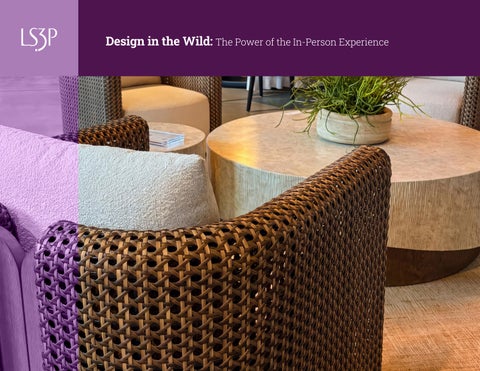
The team quickly spotted a strong aesthetic signal: warm, earthy materials are edging out sleek minimalism. Color palettes of burgundy, wine, brown, and a range of greens are paired with rich textures such as walnut burl, leather, frosted glass, and patinated metals, emphasizing organic textures and patterns. Mixed-material pieces are combining stone, metal, leather, and wood; visible joinery and natural variation are features rather than flaws.
The strategy of pulling residential elements into commercial interior spaces isn’t new; the elements, however, are becoming more sophisticated. Residentially inspired and scaled lounge furniture is now common across the workplace, healthcare, education, hospitality, and other markets, but it is becoming more refined. Commercial-grade pieces that are lush and comfortable include booths, café settings, and layered lounge sets translate easily across a variety of settings.
WHY IT MATTERS More than a simple color trend, this aesthetic points to a growing desire for interiors that feel grounded, comfortable, elevated, and human.
WHY IT MATTERS The resimercial trend may have origins in the “make the office feel like home” days of the post-pandemic era, but it’s grown towards a broader commitment to comfort and individuality that maintains both durability and professionalism.
Design Trend #3 Connection Over Function
Design Trend #4 People Care About Provenance
Design Trend #5 Experience Matters
Furniture that encourages community showed up across multiple High Point showrooms, pointing towards a desire to design places designed for “hang time” rather than just passing through. Examples include high-end gaming furniture that brings Mahjong, PingPong, Skee-Ball, and other play-focused pieces into upscale environments.
It’s nice when a product looks good; it’s even nicer when people can get excited about the story. Lamps handwoven from recycled materials, designs inspired by regional craft traditions, and pieces created by specific makers and processes all tell us something about where, how, and by whom a product was made. Products with compelling material or maker stories stand out from mass produced items.
In an increasingly digital world, the design industry needs physical, real-world, real-time experience even more. Screens are great, but tactile, in-person exploration remains essential to understanding scale, texture, material, and nuance. Even the best photography fails to convey subtleties. Being able to feel a surface, examine the construction, flop onto a sofa, and see the fabric under different lighting conditions provides a much richer understanding of the design and quality.
WHY IT MATTERS The notion that play can be a vital programming component reflects a broader post-pandemic hunger for real-life connection. Workplace, hospitality, residential, and even educational environments are increasingly building in opportunities for human connection and spontaneous social opportunities that support their broader goals.
WHY IT MATTERS The rapid rise of AI and automation may be driving a desire for human elements in design. A compelling material or maker story that aligns with a client’s values and vision can become a defining part of the design and a point of pride for building users.
WHY IT MATTERS Markets and showroom visits are research labs for embodied design knowledge. This experience may be magnified when a team of designers shares in the process; one might notice lighting, another styling, and another joinery, and the collective brainpower strengthens the whole team.