MEMORY CARE DESIGN
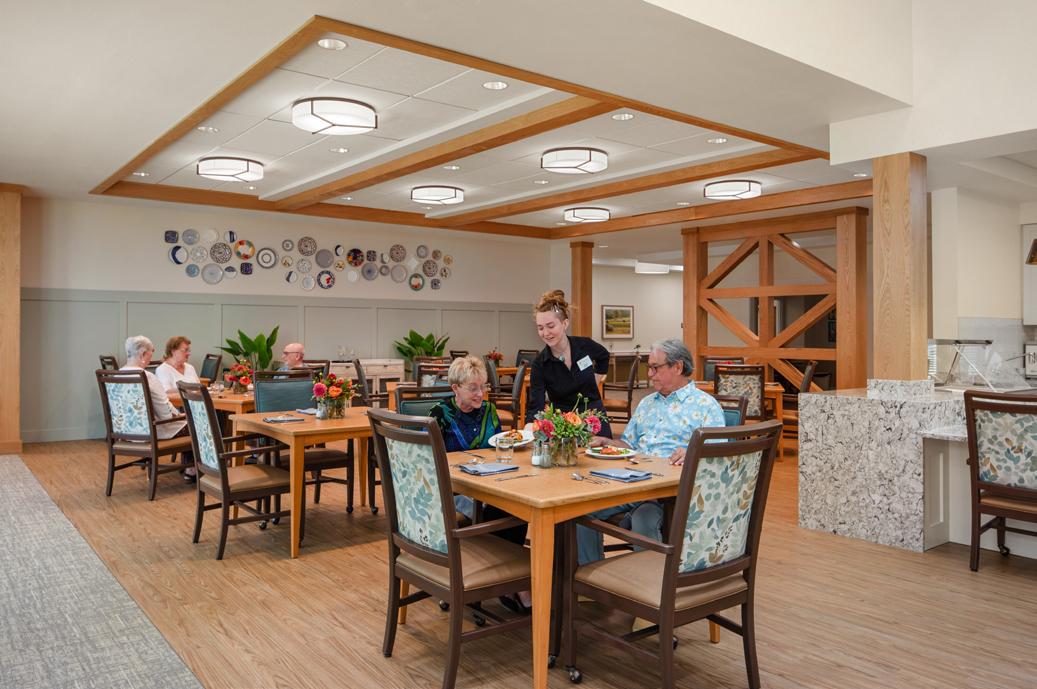
FOOD FOR THOUGHT
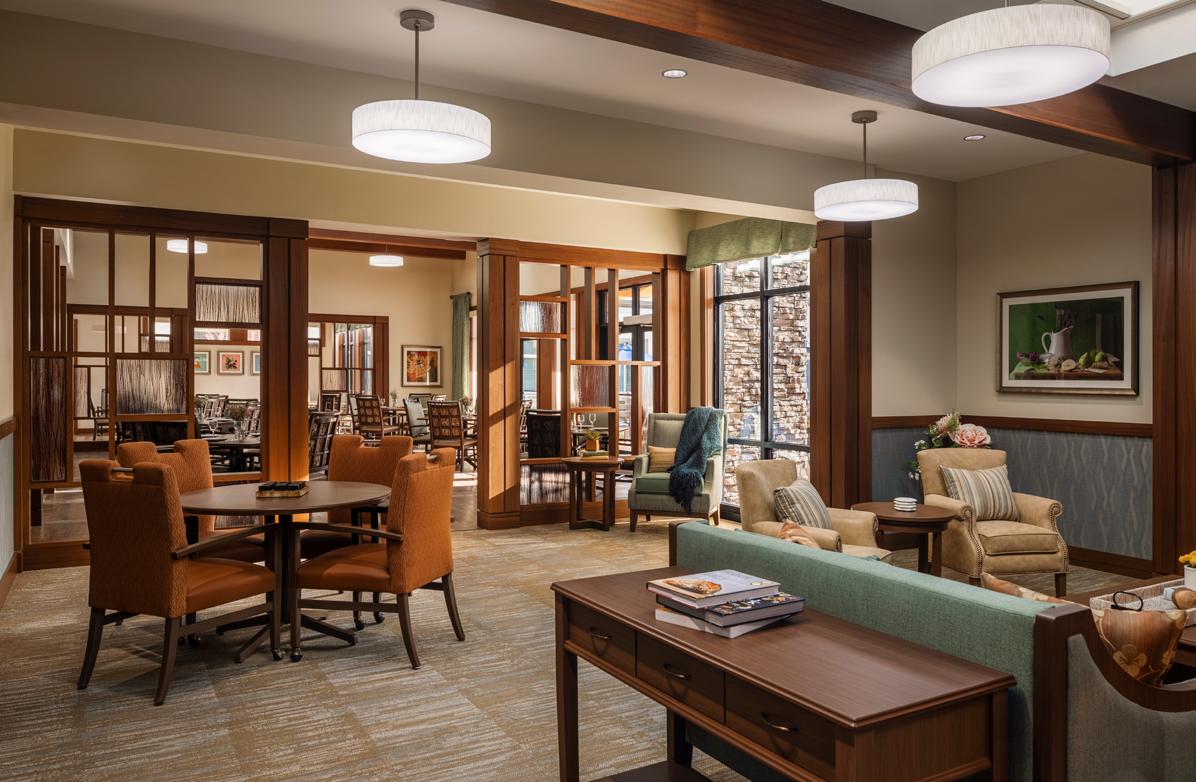
Dining areas are one of the most used spaces in a community. Good acoustics are a must. Provide flexibility in table arrangements, count, and spacing for circulation. Lighting and visual contrast are other design elements with large impacts on the space.
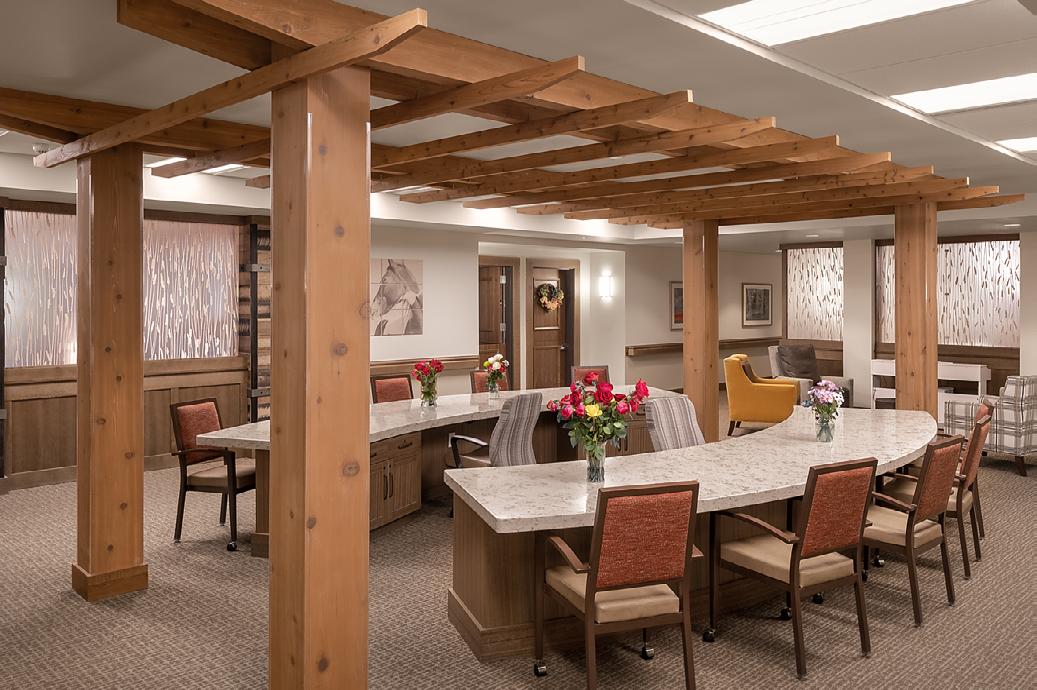
GOOD STIMULATION
Activities for life enrichment come in many forms. Design elements into the space that foster resident engagement and satisfaction.
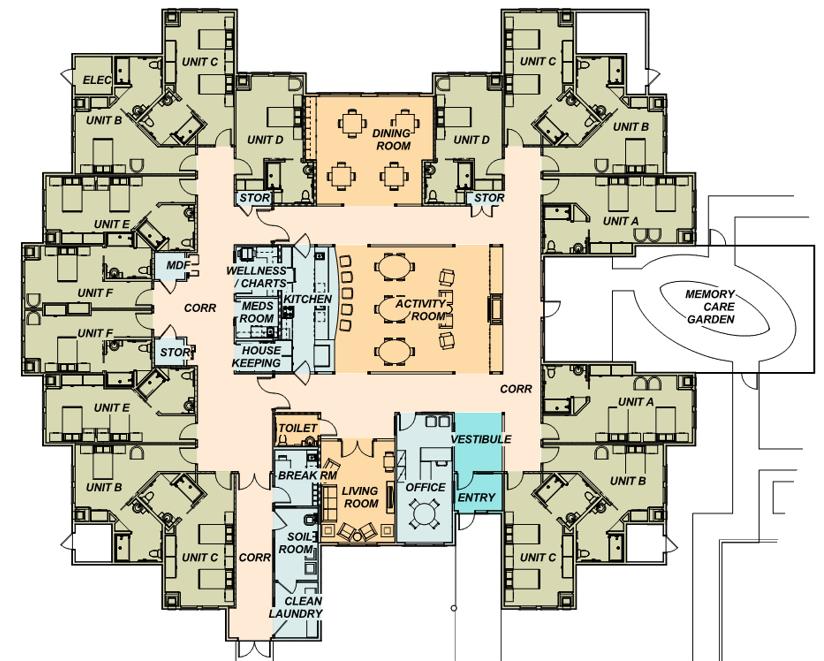
OPERATIONAL STYLE DIRECTS THE DESIGN
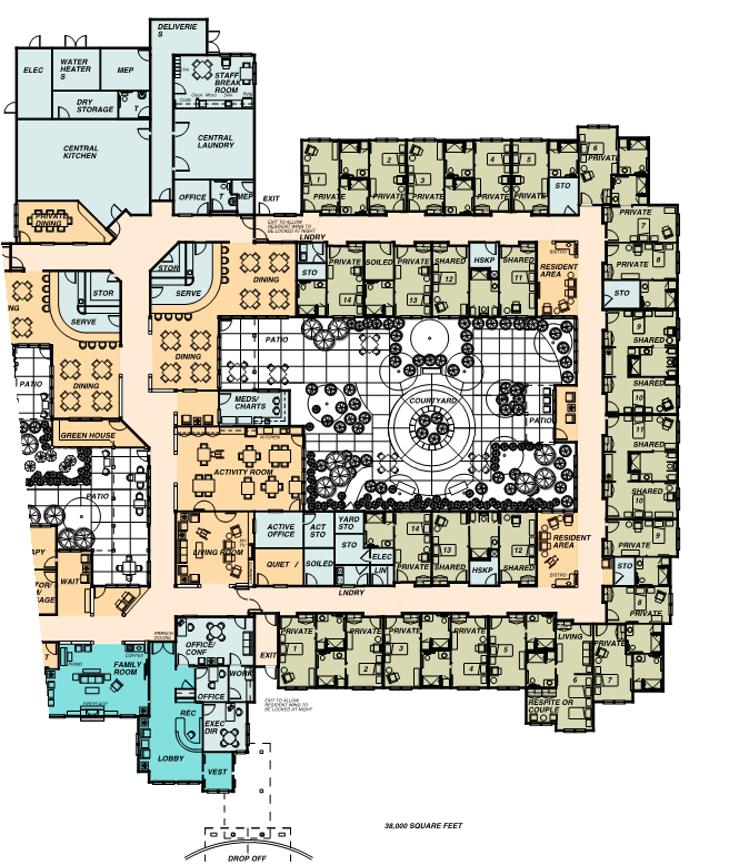
A successful design should reflect operational and staff needs. To plan for efficiency and productivity, consider the connections between resident-focused spaces and staff work areas. The “household plan” above shows the relationships between open activity areas, residential units, and back-of-house spaces.
HEALING COURTYARD
There is an extensive list of design ideas to incorporate and consider for therapeutic gardens. Safe, well-organized courtyards make for a pleasant biophilic experience that heals, encourage courtyard use, and bring relaxation to residents and their families.
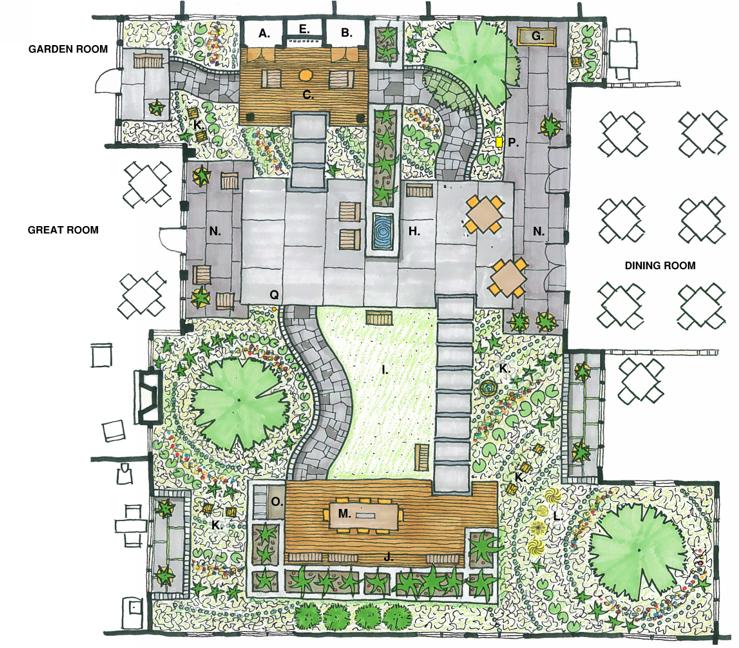
KEEP IT SIMPLE SIMON Make it easy for residents to a connect with the outdoor environment by providing adjacent doorway access to activity area.
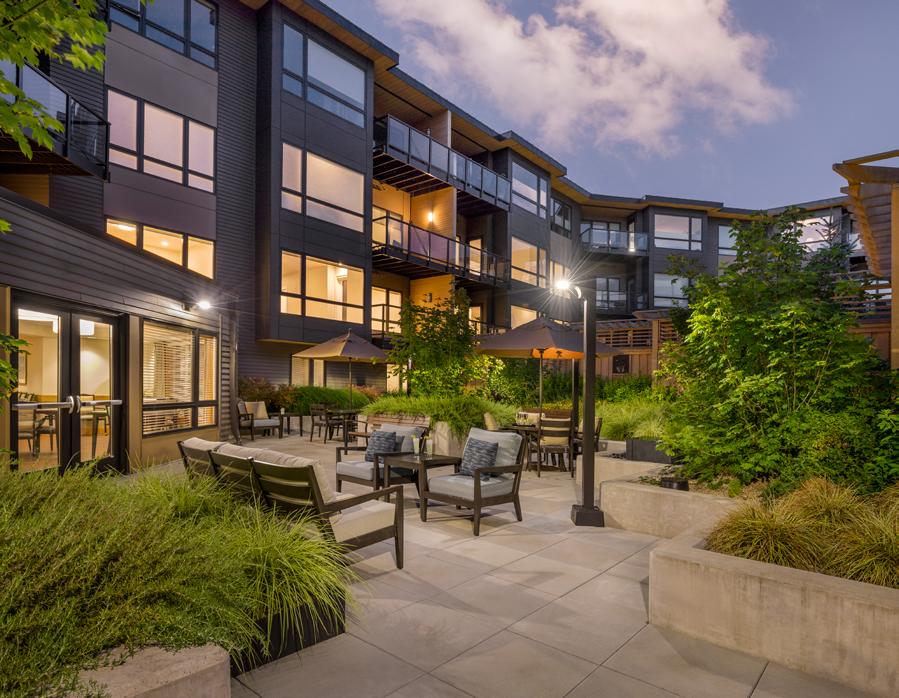
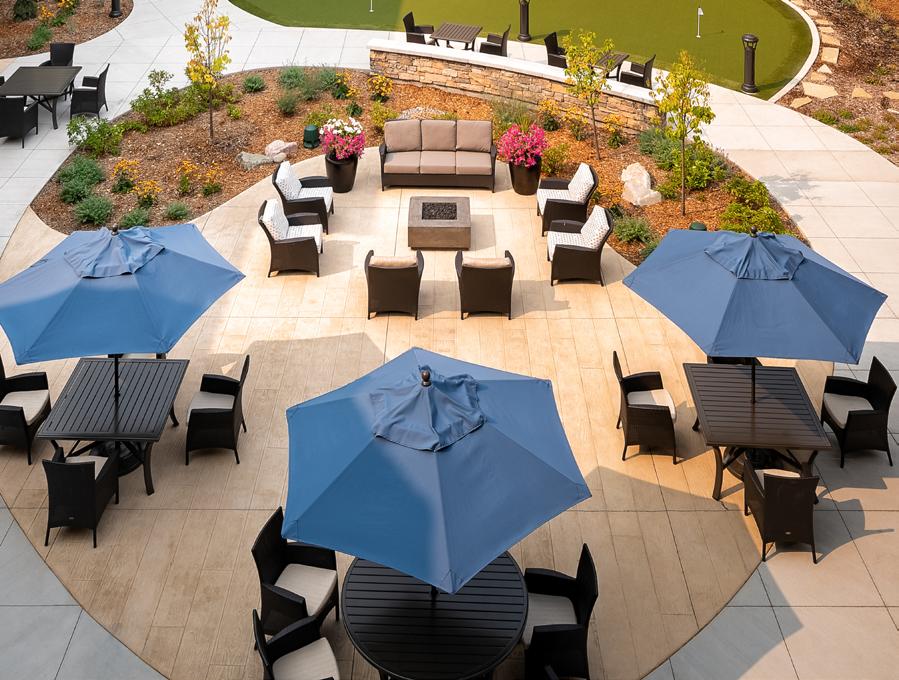
VITAMIN D
Designing for sunlight and outdoor access supports circadian rhythm, reduces agitation, and promotes overall wellness by creating spaces where residents can safely explore, rest, and reconnect with nature.
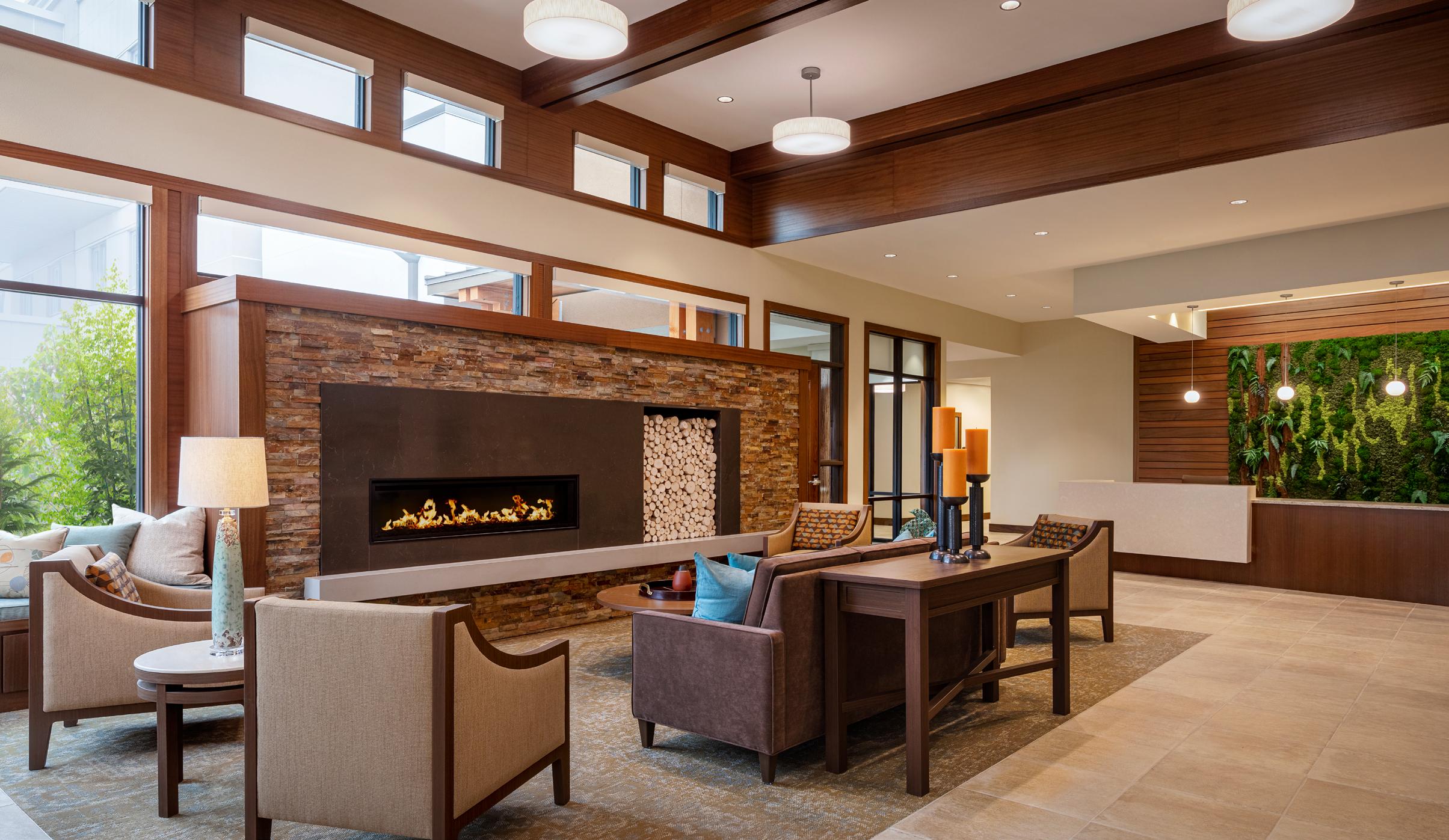
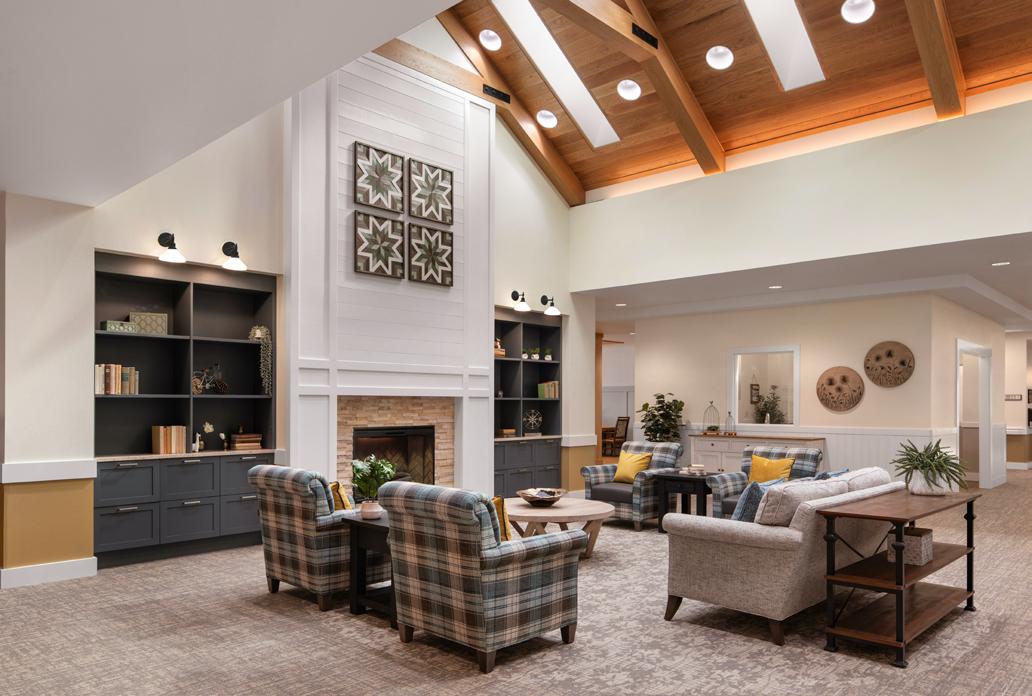
COZY ROOM COZY FIRE
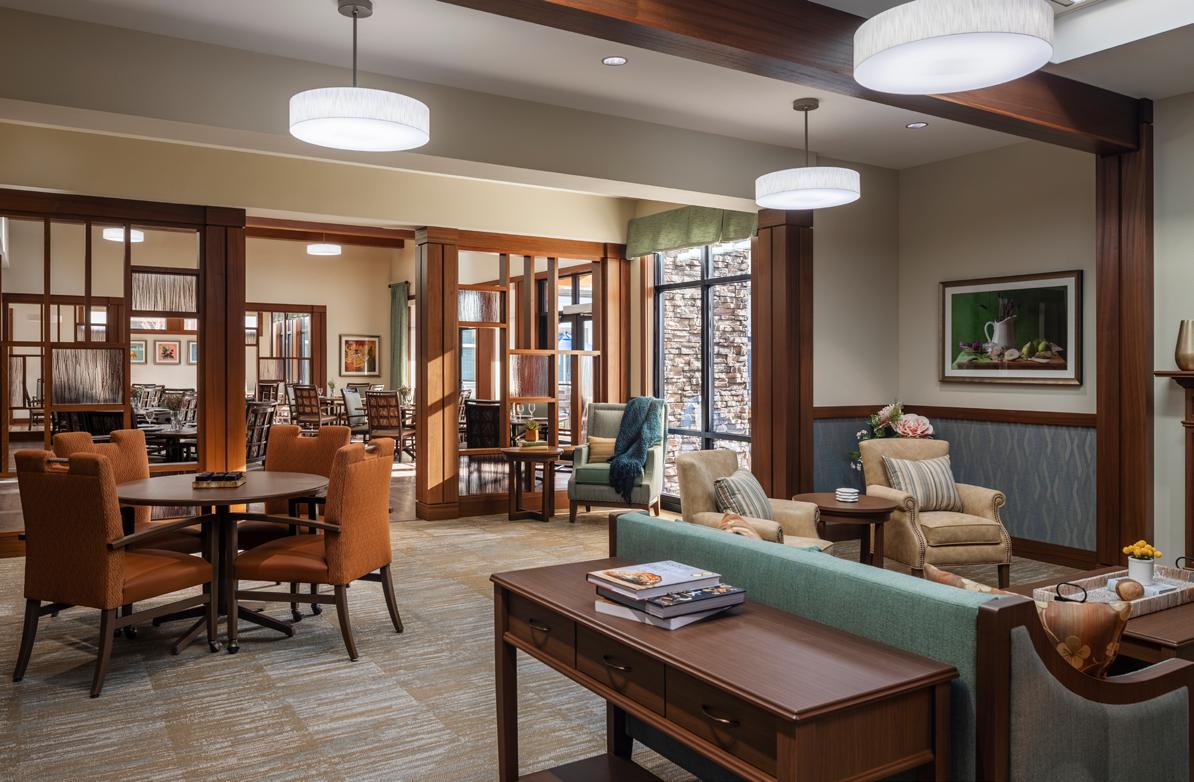
Create warm, inviting spaces where residents, families, and other guests come together
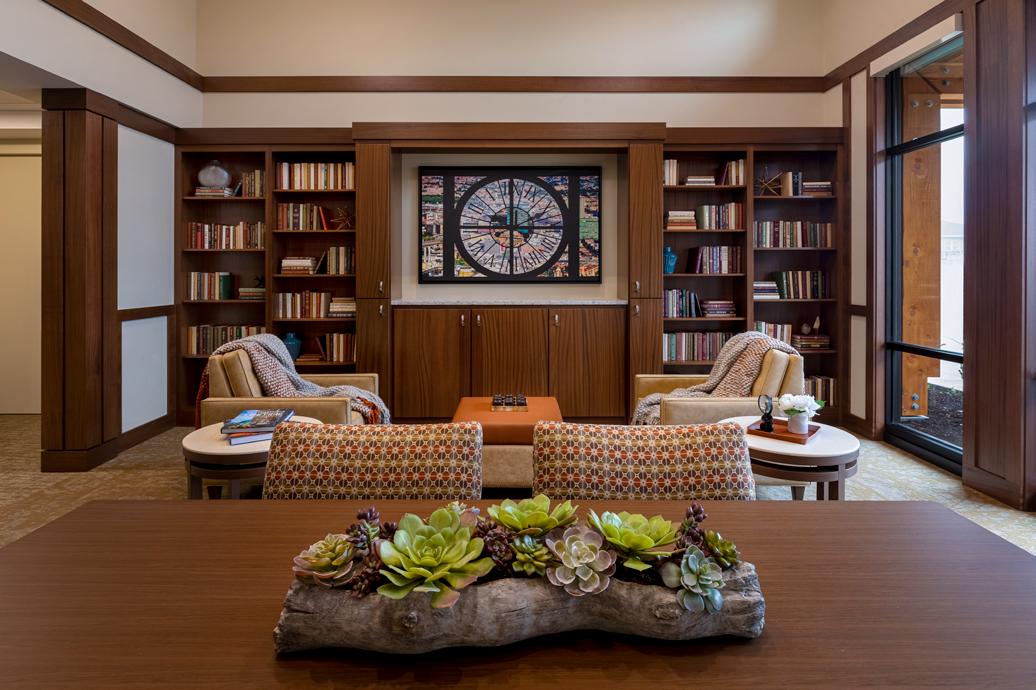
LIVED IN AND LOVED
A well-loved room should be durable and enduring – inviting and comfortable, with furniture and finishes that hold up over time and daily use
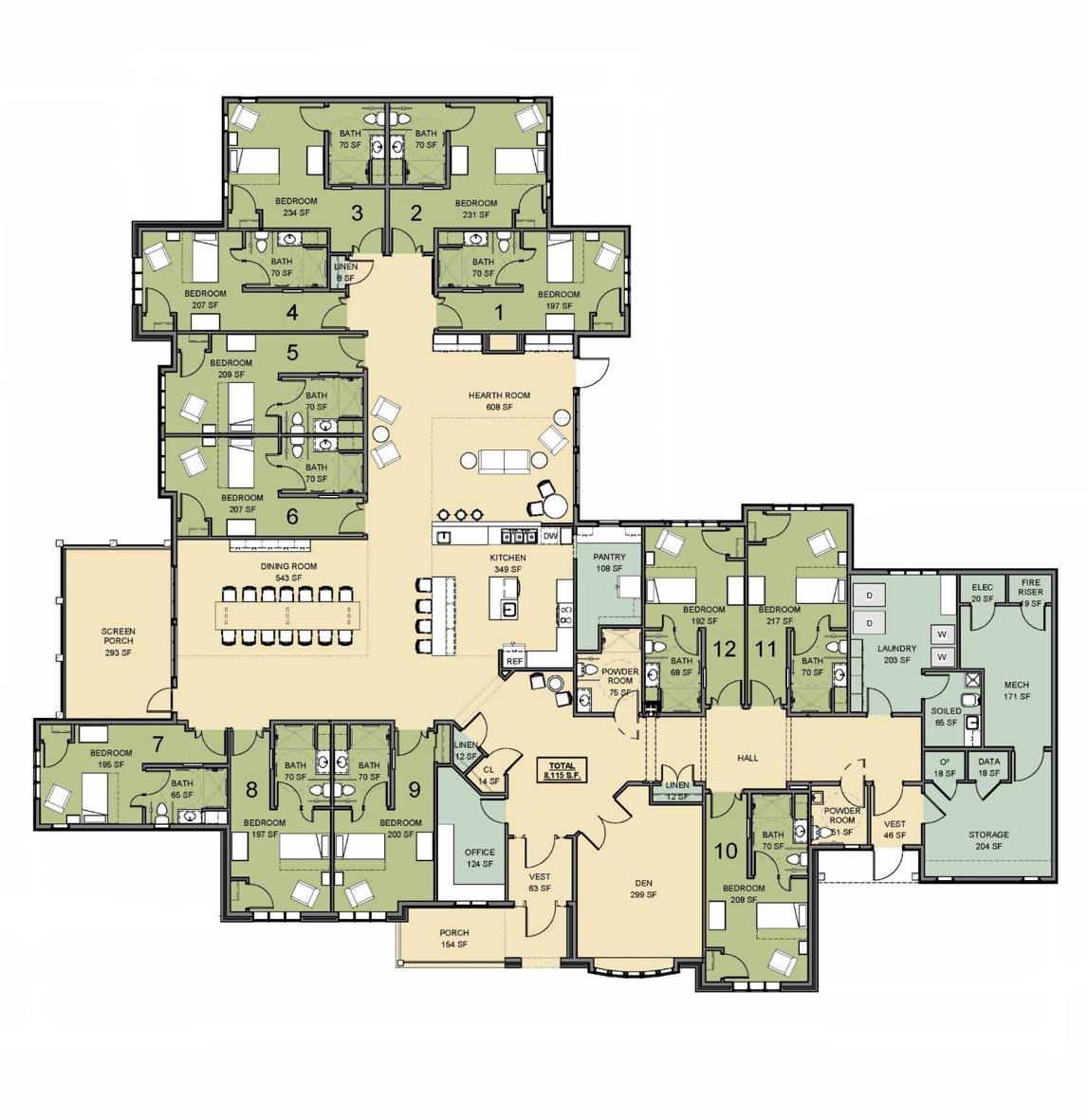
OPEN AND LIGHT HOUSEHOLD
The plan above demonstrates a strategy to provide open sight lines that give staff a clear view of residents, while preserving ample access to natural daylight
THOUGHTFULLY ARRANGED NEIGHBORHOOD
In larger-scale projects, think about the floors and corridors as the Main Street of a neighborhood, with a mix of activities, shops, resources, and neighbors living side by side. This corridor plan integrates staff and services facilities alongside units and a mix of amenities to make caregiving and resource-sharing easier.
DAILY ENGAGEMENT
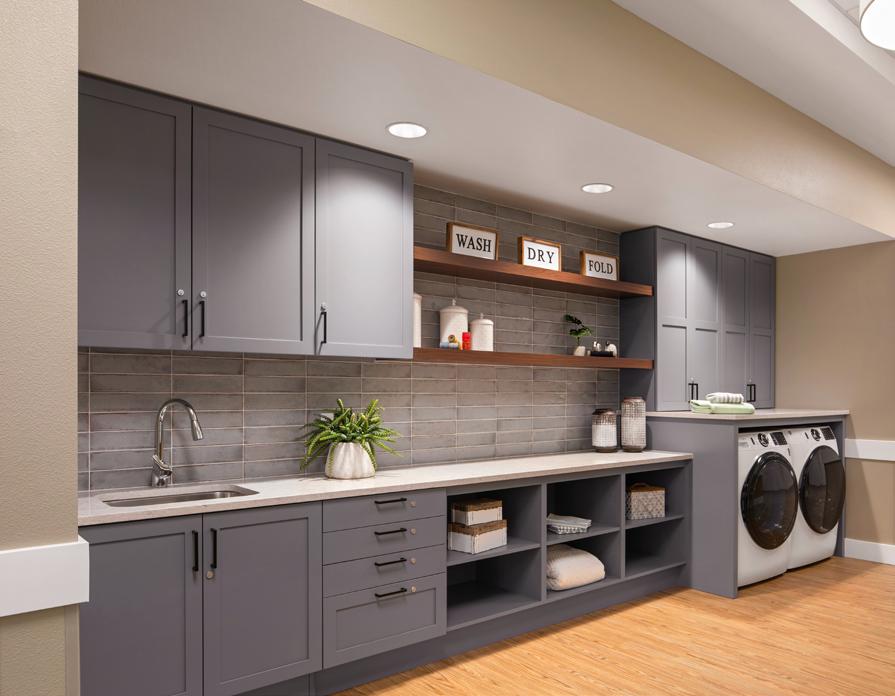
Enrichment comes in many forms. Familiar activities, like laundry, can be comforting to residents and make it easier for them to engage and interact with their caregivers.
FROM WORK BENCH TO GARDEN
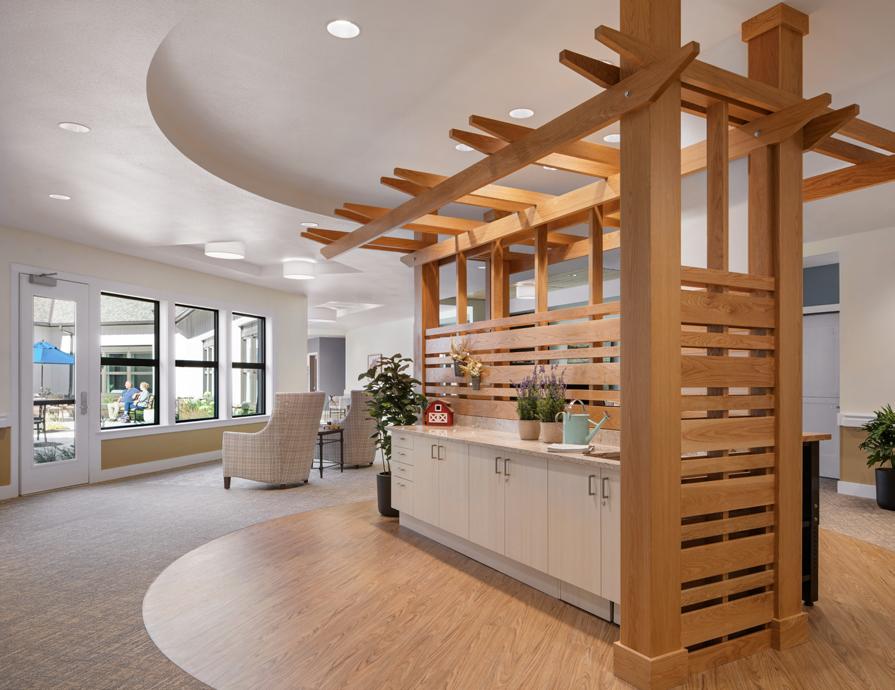
Activity stations placed along hallways provide residents an activity for curiosity, stimulation, and routine. Allowing all residents areas that pique their interest and creativity.
TUNABLE LIGHTING FOR CIRCADIAN RHYTHM HEALTH
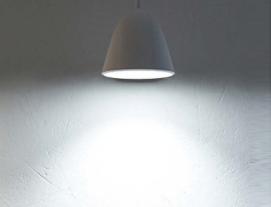
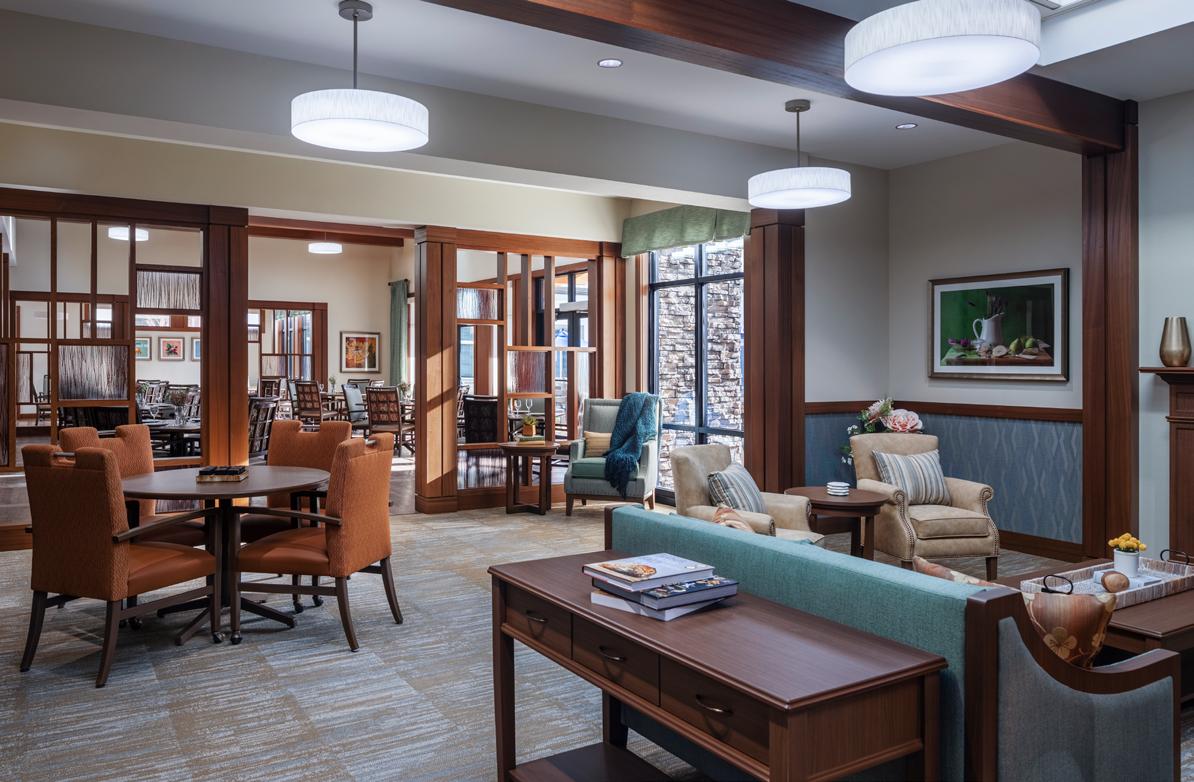
Access to natural daylight has significant impact on resident health. Our circadian rhythms are maintained best when we have access to plenty of natural light and a dark room to guarantee a good night’s sleep. Tunable lighting controls the indoor lighting system to mimic natural daylight patterns, which keeps residents happy, healthy, and attuned to their daily schedules.
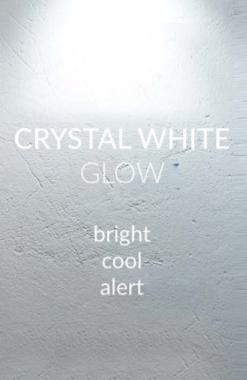
6500K
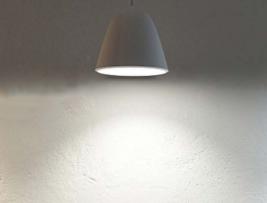
6500
KELVIN LIGHT TEMPERATURE
This cool light temperature gives off a bright and energizing hue to jump start the day. 6500K mimics the cool morning hue of the sky before the sun rises. The blue light waves have a stimulating effect on the brain.
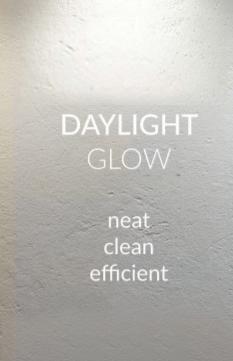
4100 KELVIN LIGHT TEMPERATURE
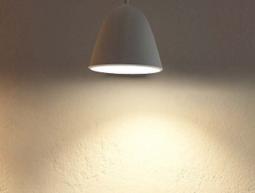
As the day begins to wind down, the hue neutralizes. The energizing effect of the cool light temperature is softened with a hint of red to begin to warm the light ever so subtly.
3000K
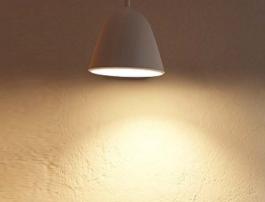
3000 KELVIN LIGHT TEMPERATURE
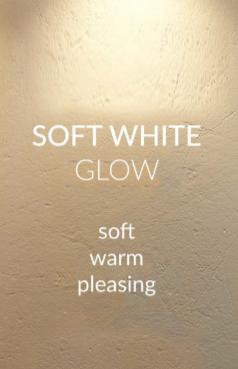
This neutral tone of light is perfect for the middle of the day, or when residents are feeling awake and don’t need help getting sleepy.
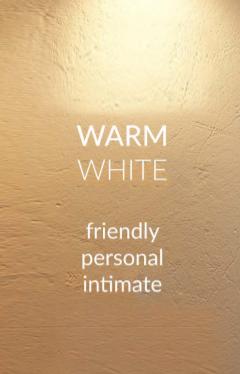
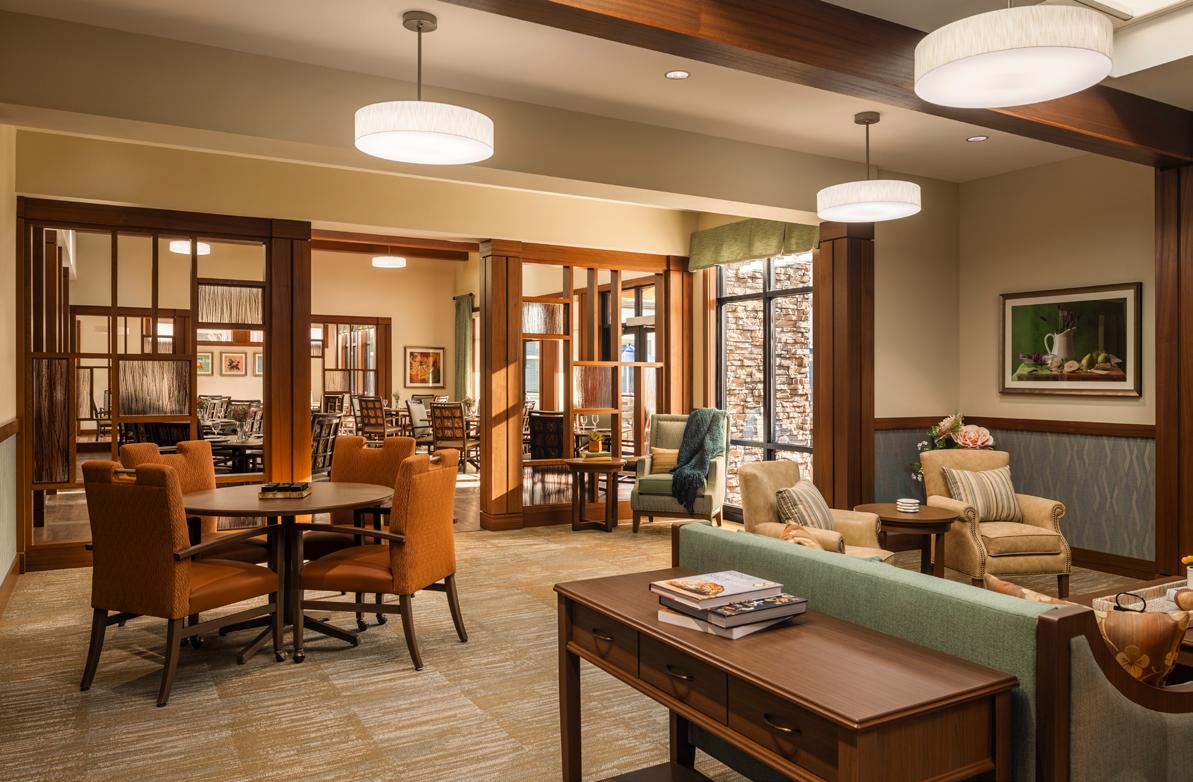
2700 KELVIN LIGHT TEMPERATURE
This light gives a cozy feeling and is easy on the eyes. The warm temperature with red light promotes sleepiness and will naturally cue the body to get ready for bedtime.
OUTSIDE INSIDE
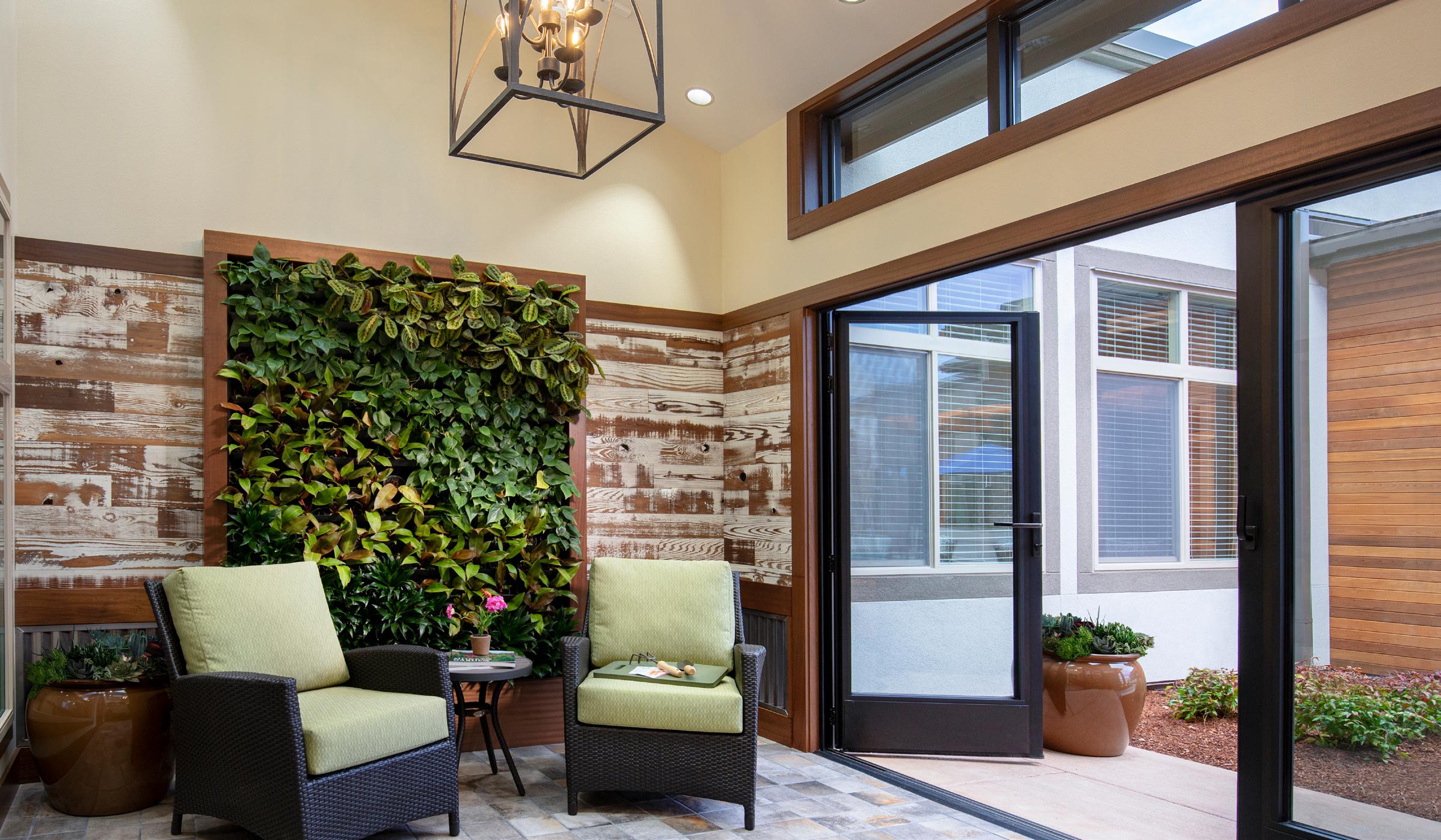
Biophilia is a hypothetical human tendency to seek out nature, and to benefit from connections to the natural world. To harness the benefits of biophilia in design, provide access to plants, natural light, fresh air, outdoor spaces, and views to the neighborhood.
LIVING WALLS
Living plants nurtured with care provide the healing power of Mother Nature’s influence on mental health and wellbeing in any room. A wide variety of plants can live inside supported by automated watering and feeding.
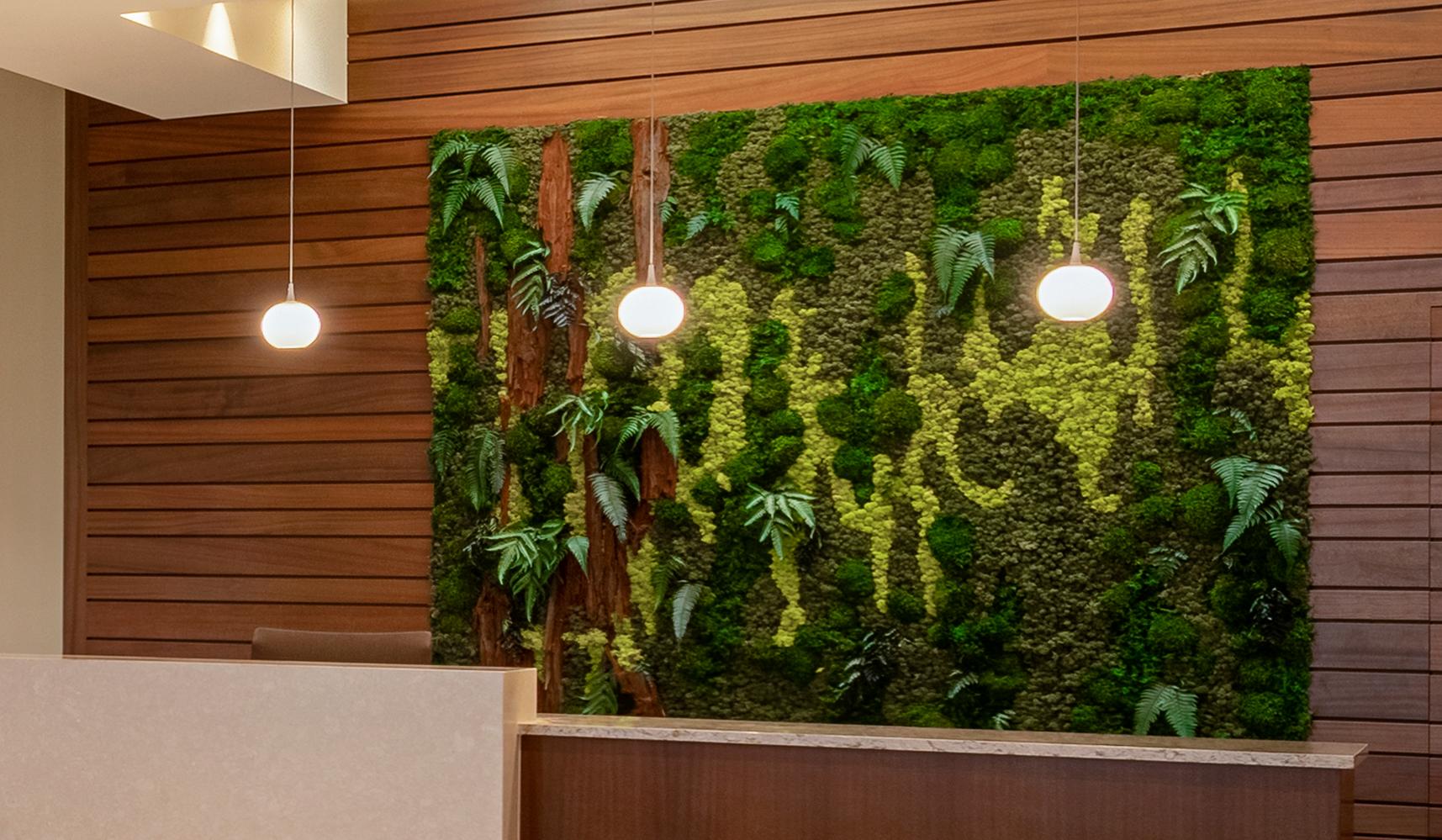
MOSS WALLS
An easy way to bring nature into an interior space, moss walls never change color and look beautiful year round. They require no water, feeding, or trimming, and are very easy to maintain, needing no more than an occasional dusting.
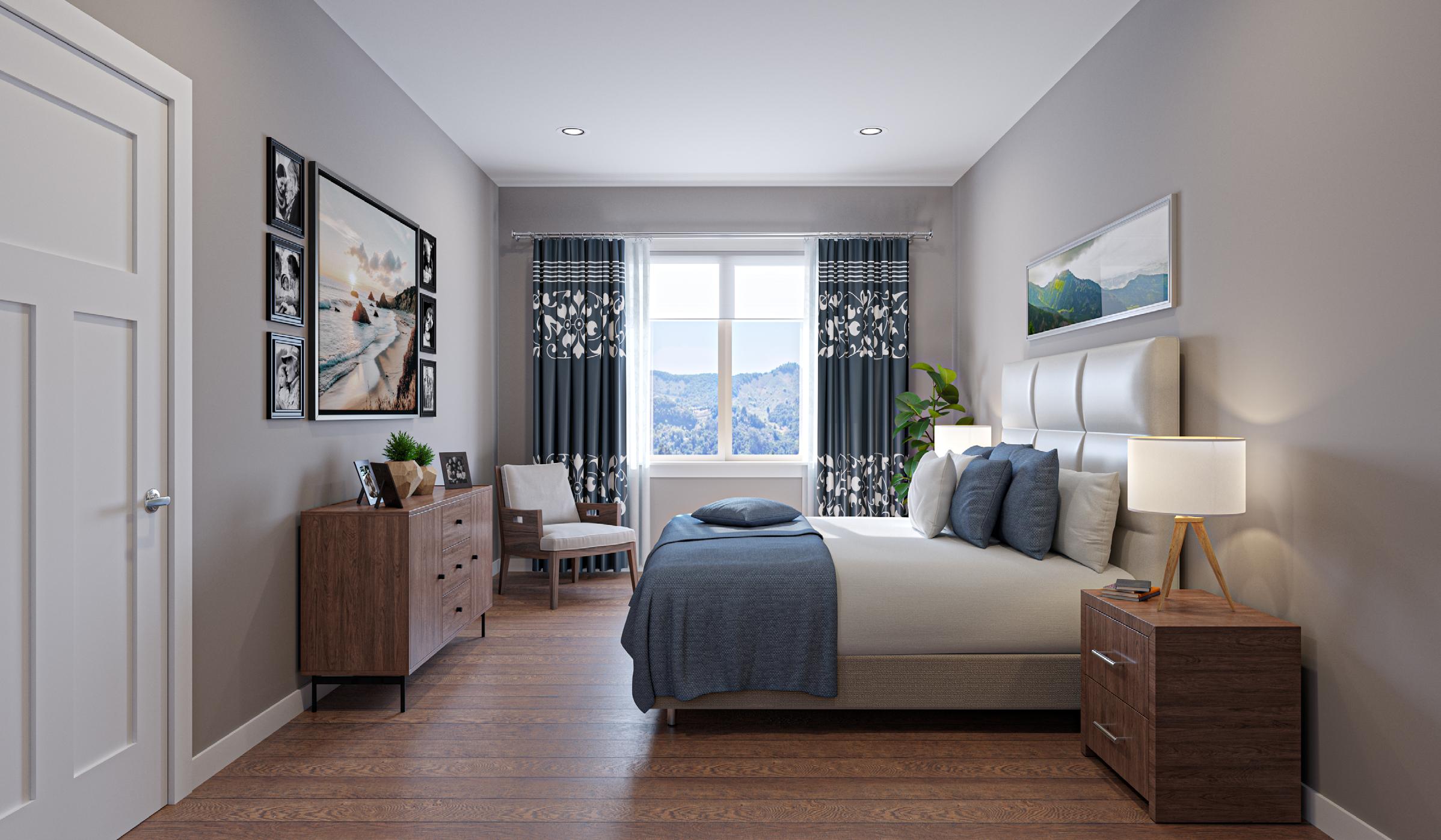
HOME ENVIRONMENT
Resident rooms that look and feel like a home environment help create a sense of familiarity
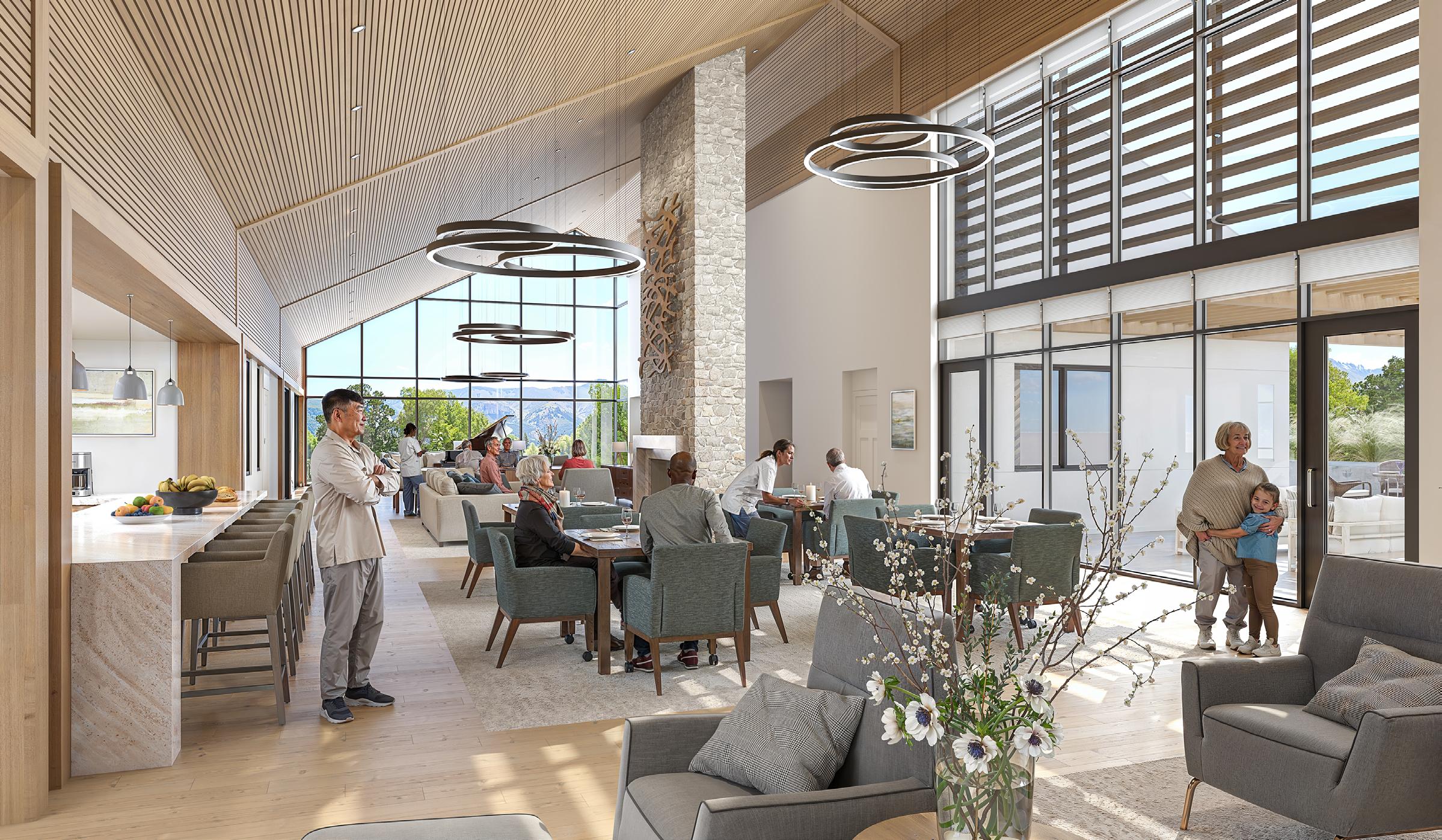
SOPHISTICATION FOR ALL
Refined materials and a contemporary color palette shape a warm, uplifting setting, while an intentional spatial layout encourages gathering, engagement, and shared moments.