E S S AY : Let No One Sleep: An Operatic Journey • PA G E 4 2
Conductor & Artist Biographies • PA G E 4 6
P A G E 5 1
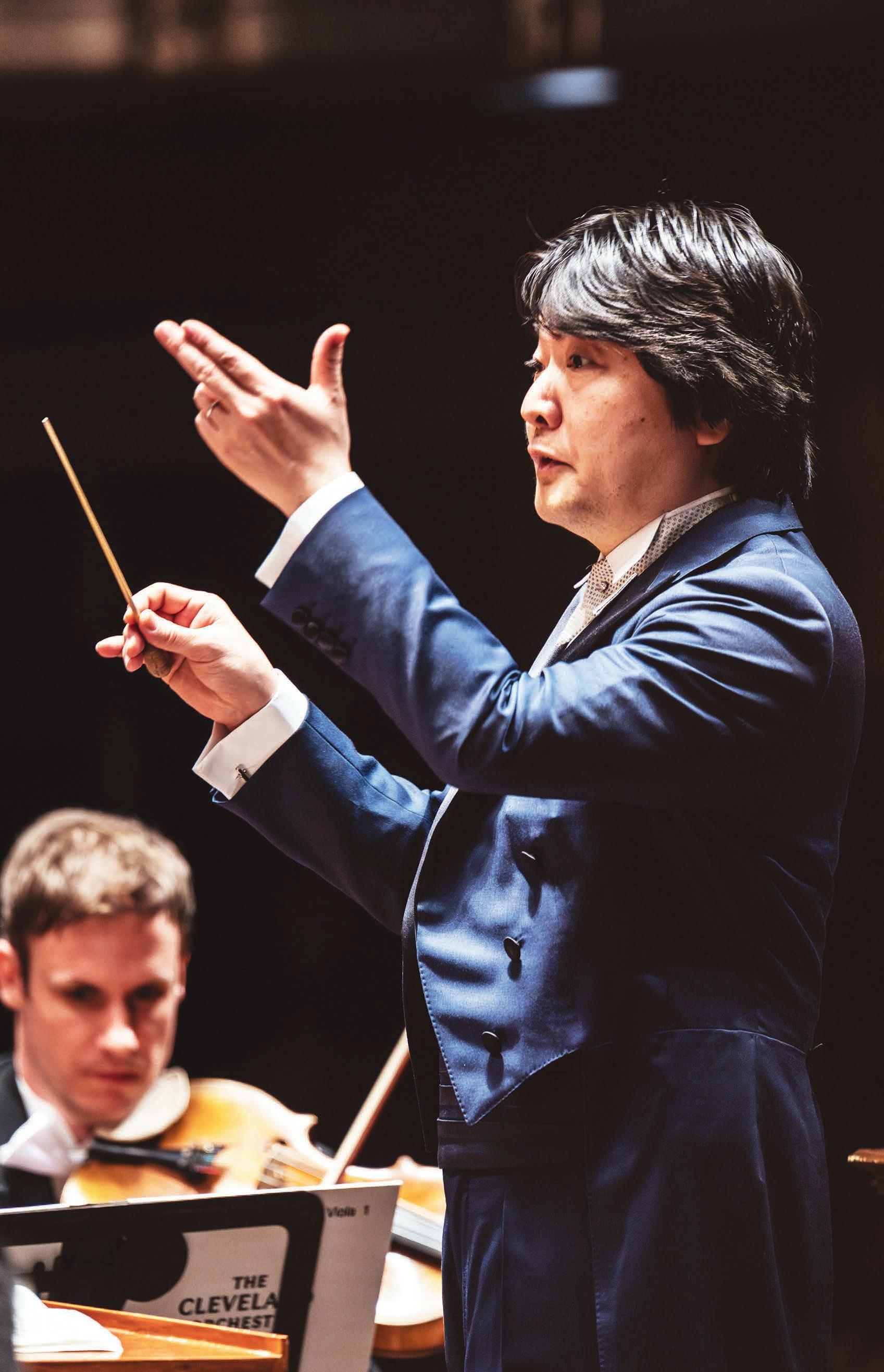
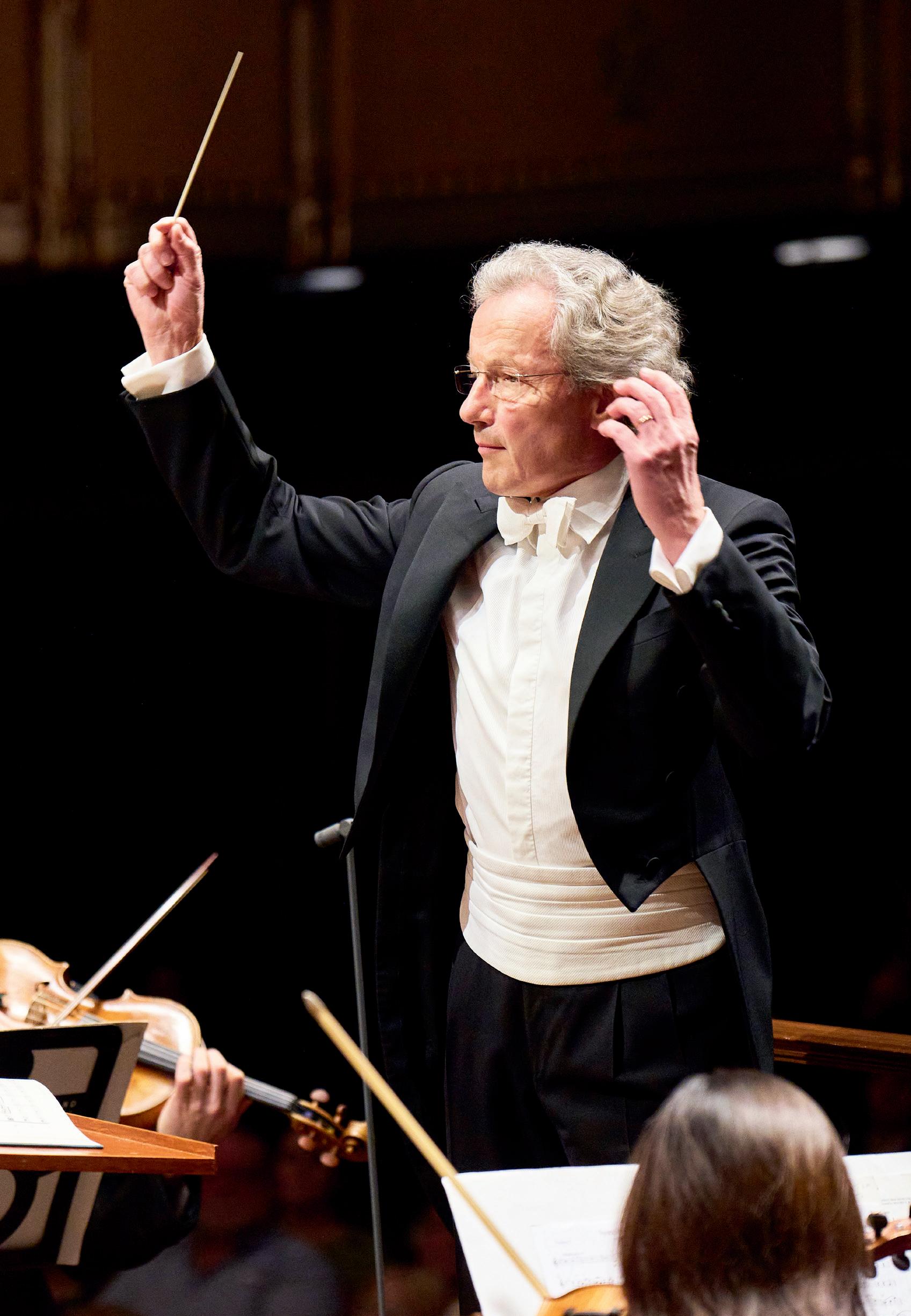
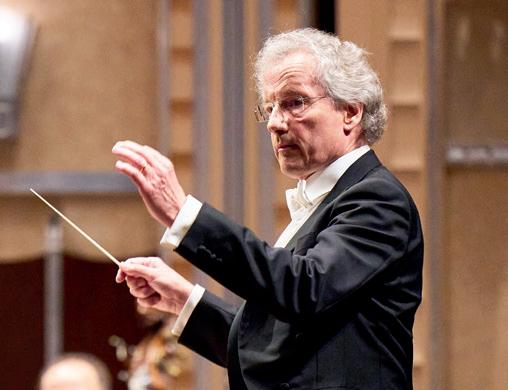
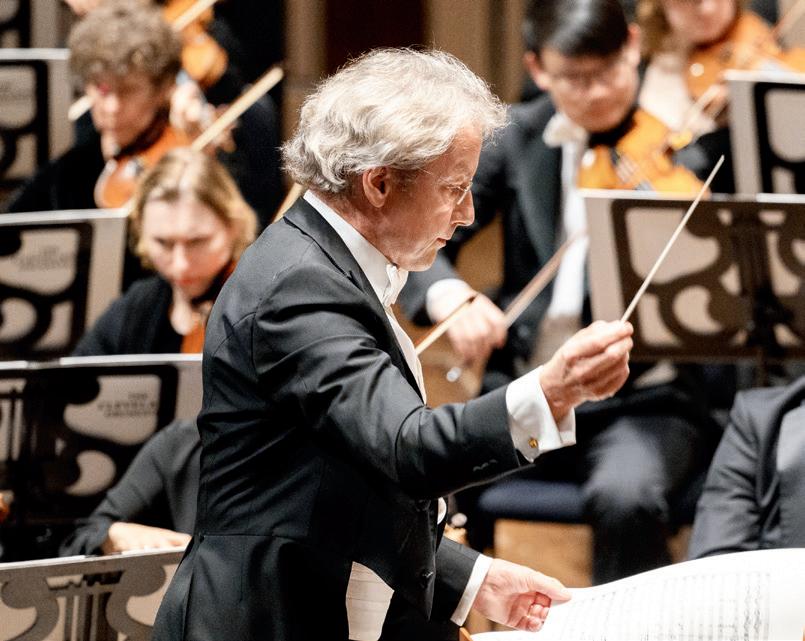
W E L S E R - M Ö S T C O N D U C T S S T R A U S S
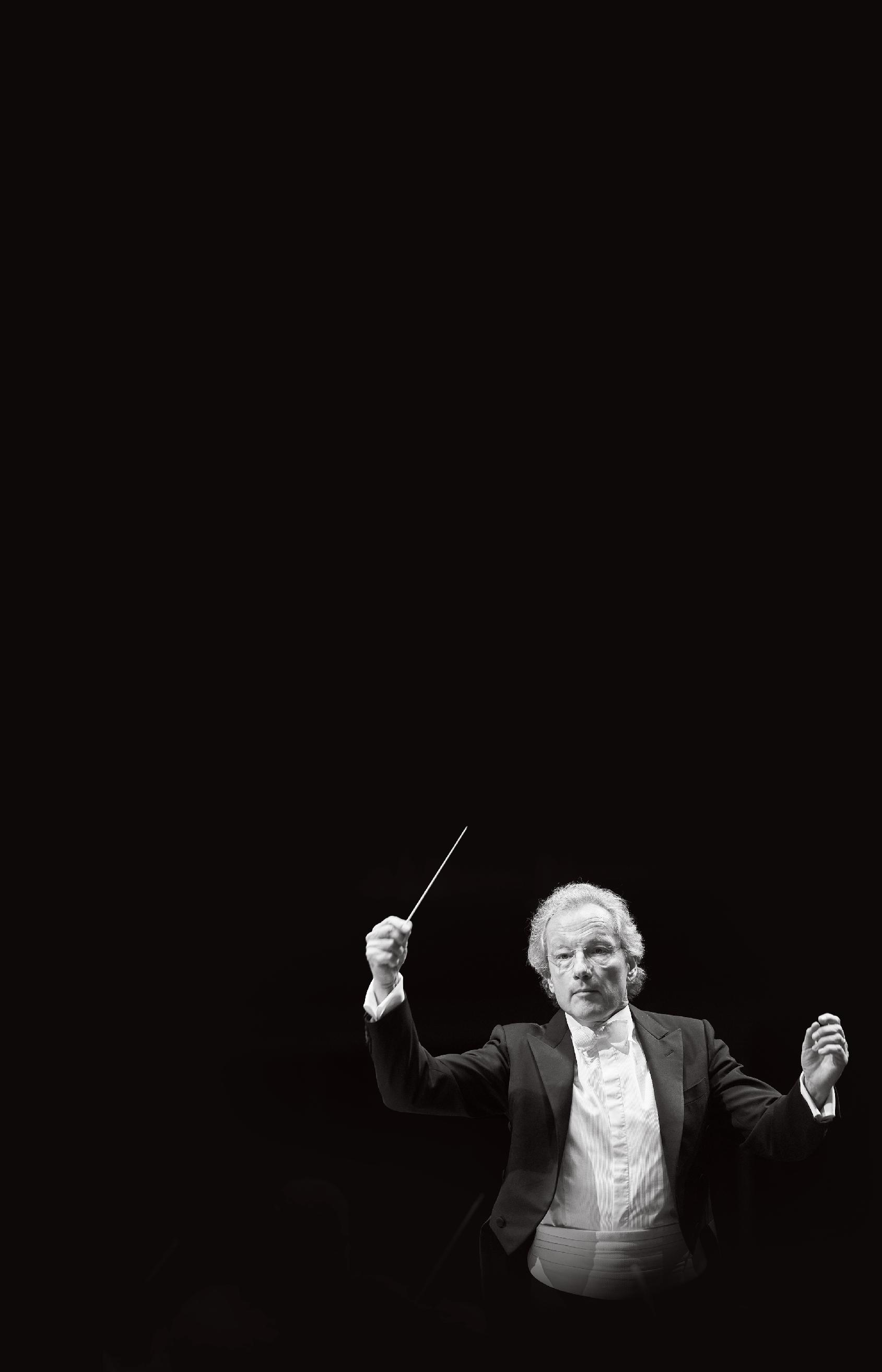
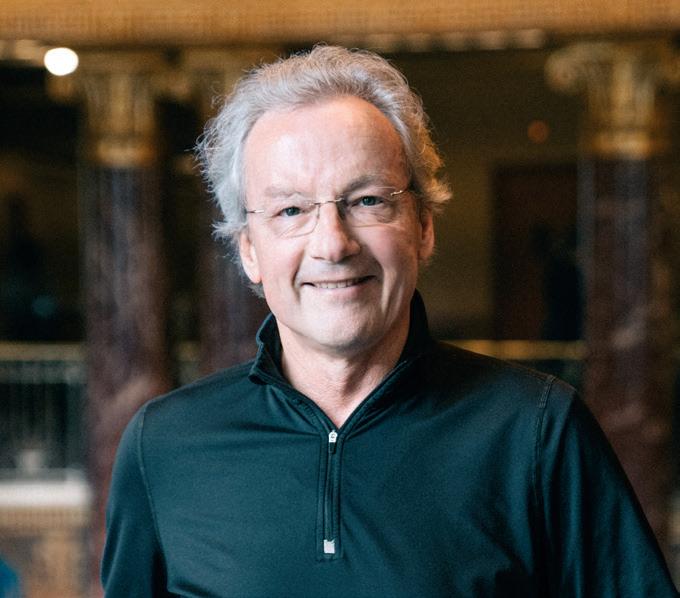
Franz Welser-Möst, conductor
Prelude to Act I of Die Meistersinger von Nürnberg by Richard Wagner • PA G E 5 3
Intensity by Bernd Richard Deutsch • PA G E 5 5
Symphonia domestica by Richard Strauss • PA G E 5 8
Conductor Biography • PA G E 6 2
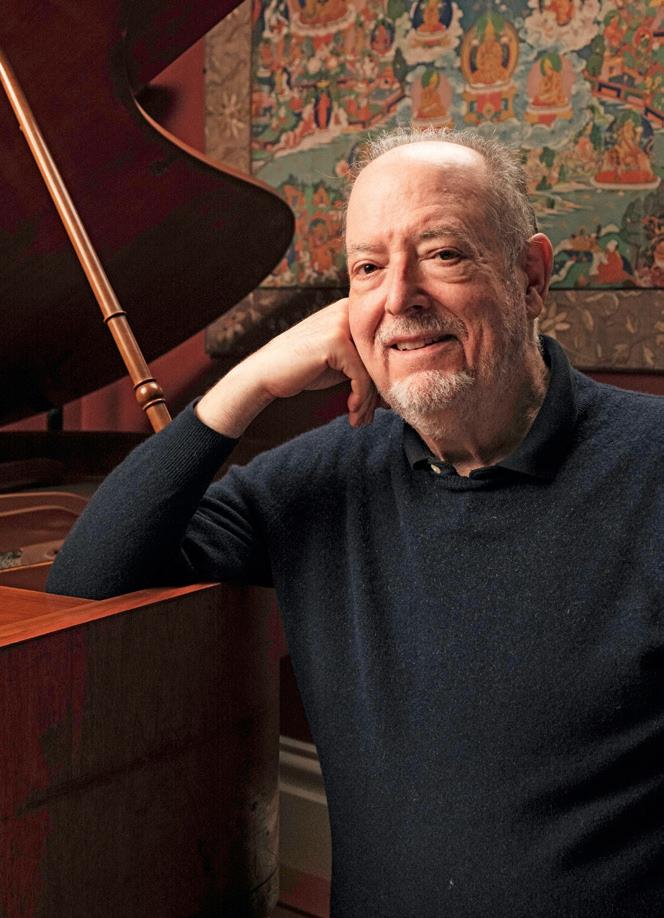
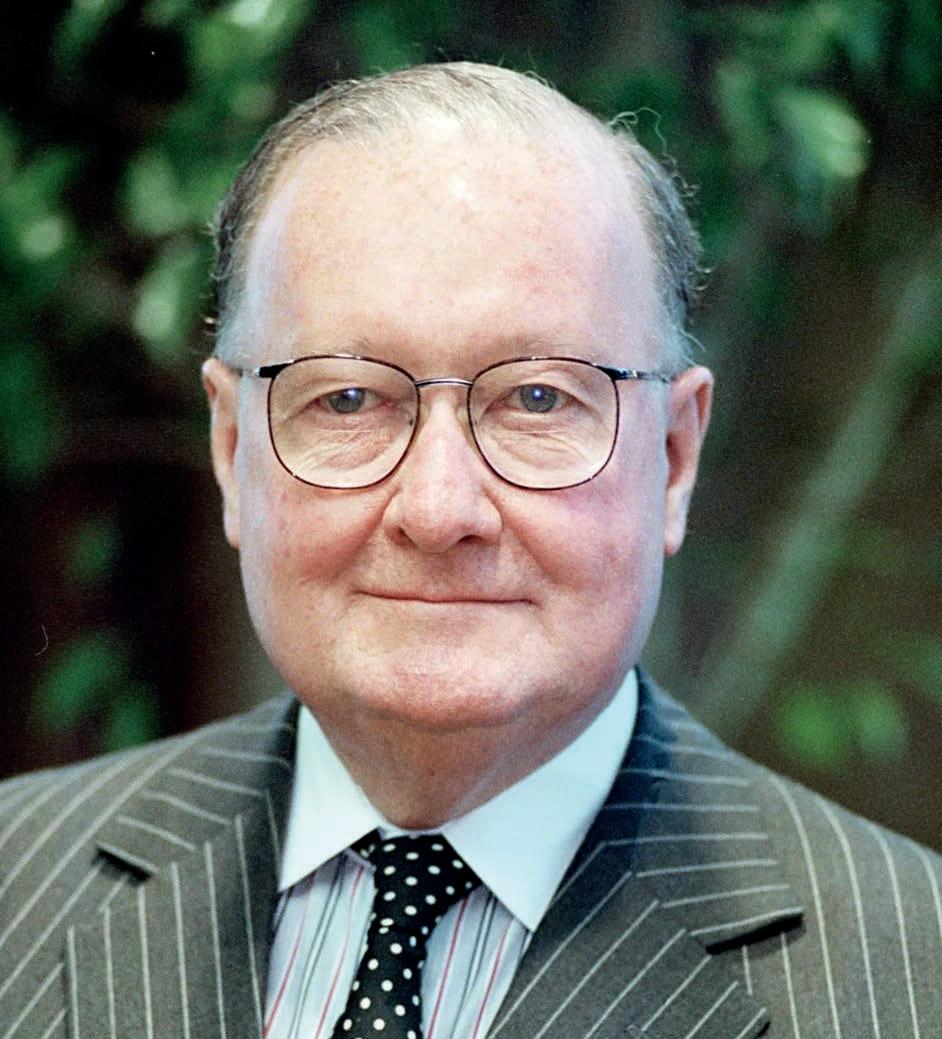
A Remembrance: John Ong • PA G E 6 5
TCO 26 –27 Season Calendar • PA G E 6 6
The Cleveland Orchestra • PA G E 6 8
Don’t mis s a
Subscribe to the 2026 –27 Season
When you subscribe, you provide vital support to your Cleveland Orchestra and enjoy these exclusive benefits:
• The BEST seats at the BEST prices
• FREE and easy ticket exchanges
• Purchase your parking in advance
• 20% off additional ticket purchases
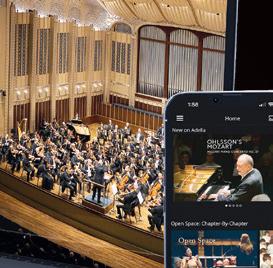
• 33% off subscription to Adella .live, our digital home
• 10% off at The Cleveland Orchestra Store
• Money back guarantee
See page 66 for the full season calendar!
Thank you for silencing your electronic devices.
Ohls son Plays Rachmaninof f
Thursday, July 16, 2026, at 7 PM
Semyon Bychkov, conductor
Bedřich Smetana (1824–1884)
Sergei Rachmaninoff (1873–1943)
The Moldau from Má vlast
minutes
Piano Concerto No. 1 25 minutes in F-sharp minor, Op. 1
I. Vivace
II. Andante
III. Allegro vivace
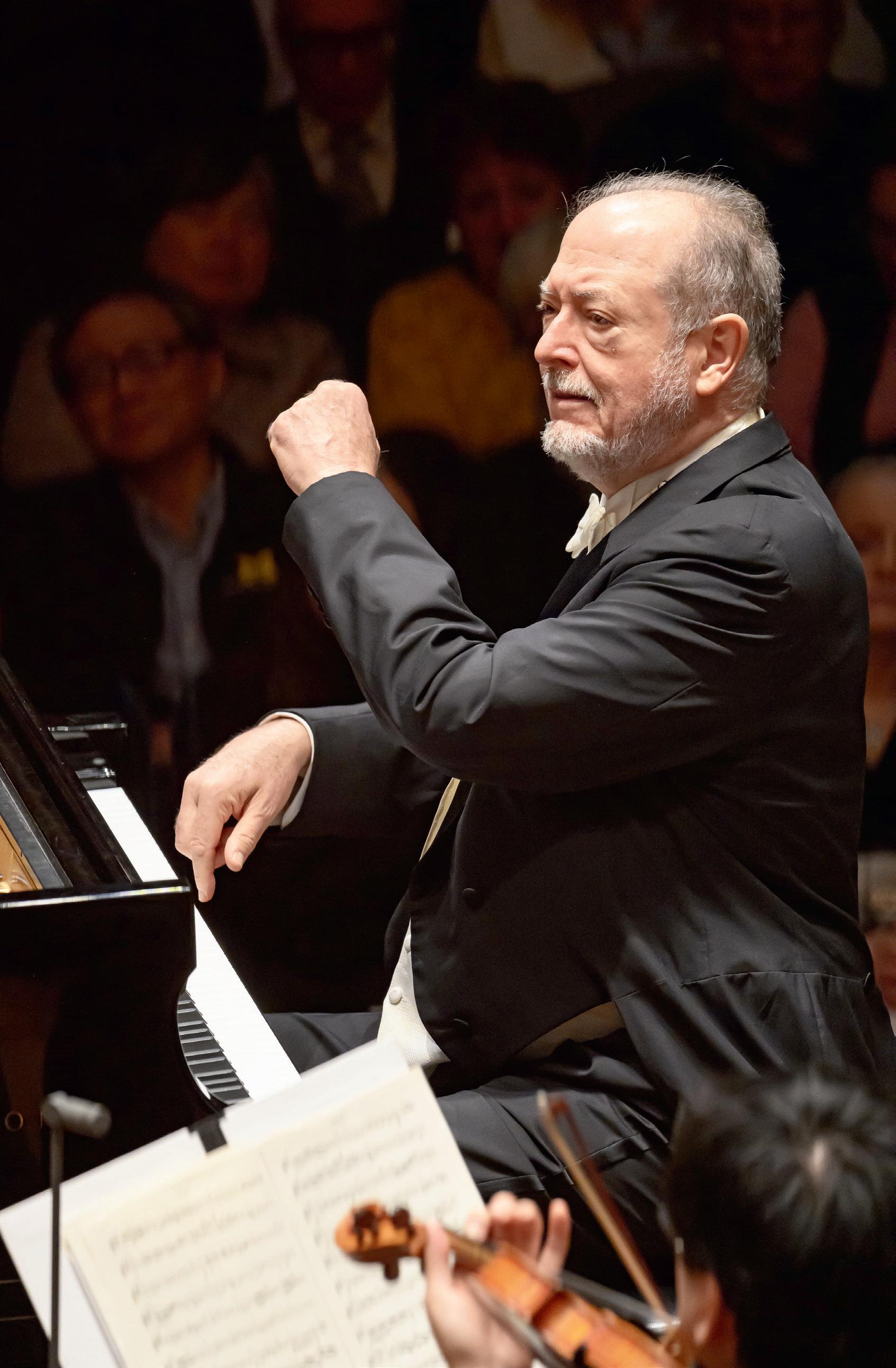
Garrick Ohlsson, piano
I N T E R M I S S I O N
Antonín Dvořák (1841–1904)
minutes
Symphony No. 8 in G major, Op. 88 35 minutes
I. Allegro con brio
II. Adagio
III. Allegretto grazioso
IV. Allegro ma non troppo
This program will last approximately 1 hour 30 minutes
Summers at Severance
Presenting Sponsor:
Tonight’s performance is dedicated to Iris and Tom Harvie in recognition of their generous support of music.
M E N T S in the musical landscape of the latter 19th century was the emergence of musical nationalism, as composers in non-Germanic countries increasingly sought to resist German cultural domination by incorporating elements of their traditional musical cultures into their works. Both Bedřich Smetana and Antonín Dvořák used folk songs as the foundation for a distinctively Czech musical style And in Russia, the music of Sergei Rachmaninoff exhibits the lushly emotional lyricism so favored by his countrymen.
Composed in 1874, The Moldau is the most famous of the six descriptive symphonic poems Smetana composed under the collective title Ma vlást (My Homeland). The work takes us on a picturesque musical tour of the Vltava, the longest river in the Czech Republic. We hear a bubbling brook become a mighty river and gaze at sights along our journey. The river finally flows into Prague where, to the sounds of a regal hymn, it passes the ancient fortress of Vyšehrad before quietly disappearing as it merges with the Elbe River.
Rachmaninoff ’s First Piano Concerto was originally completed in 1891, when the composer was still an 18-year-old conservatory student, but extensively revised in 1917. The first movement begins with a display of impetuous virtuosity that alternates with a lush main theme. The short second movement introduces a quieter nocturnal mood, and the finale again alternates brilliant solo passages with more contemplative themes before ending with an appropriately dazzling flourish.
Inspired by the bucolic setting of his country home, Dvořák composed his Eighth Symphony in the summer of 1889. The pastoral mood of the first movement is established when a solo flute introduces the first of several memorable themes
The overall mood of the Adagio second movement is one of gentle tranquility, which is twice interrupted by moments of sublime ecstasy. A dreamy waltz introduces the A–B–A third movement, with contrast provided by a more earthy folk dance. The finale features multiple variations of a noble theme that are interrupted by a boisterous dance, which ultimately brings the work to a rousing conclusion.
Michael Strasser
Michael Strasser is professor emeritus of musicology at Baldwin Wallace University. He has published numerous articles and reviews and presented papers at international conferences on fin- de-siècle France , Arnold Schoenberg , and colonial music in British North America and Mexico
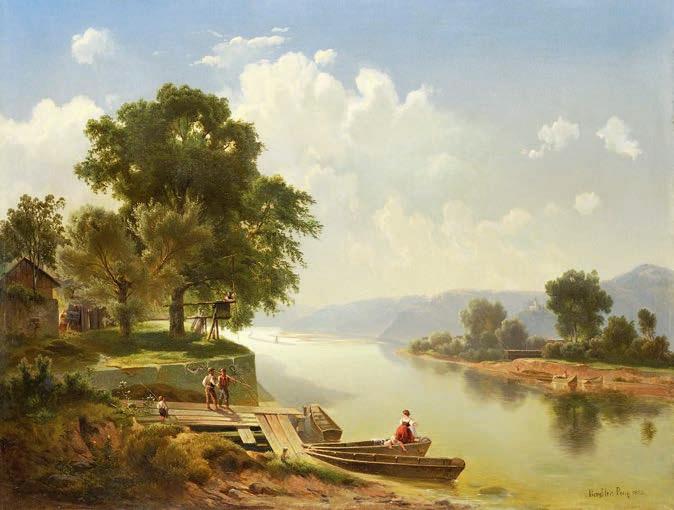
The Vltava river by Czech painter Vojtěch Brechler.
The Moldau from Má vlast
by Bedřich Smetana
B O R N : March 2, 1824, in Litomyšl, Bohemia (present- day Czech Republic)
D I E D : May 12, 1884, in Prague
▶ C O M P O S E D : 1874
▶ W O R L D P R E M I E R E : April 4, 1875, with the Prague Provisional Theatre Orchestra conducted by Adolf Čech
▶ C L E V E L A N D O R C H E S T R A P R E M I E R E : March 11, 1924, led by Music Director Nikolai Sokoloff
▶ O R C H E S T R AT I O N : 2 flutes , piccolo, 2 oboes , 2 clarinets , 2 bassoons , 4 horns , 2 trumpets , 3 trombones , tuba , timpani, percussion (bass drum , cymbals , triangle), harp , and strings
▶ D U R AT I O N : about 10 minutes
B E D Ř I C H S M E TA N A W RO T E the six parts of his symphonic cycle Má vlast (My Homeland) just as he reached age 50, when fame and fortune were knocking regularly at his door and just when sudden deafness created a nearly irreconcilable gulf between him and the everyday world. These tone poems were, perhaps in part, a way for the composer to recapture and hold onto the sounds of the world around him, musically encapsulating the joy and emotion of life.
Smetana originally conceived the cycle as a four-part symphony that would extol the glories of his native Bohemia and its Czech people. Only after the initial success of its opening movements, each premiered separately, did he decide to “complete” the work by adding two final sections. Since 1952, it has been performed annually on the anniversary
of Smetana’s death each May 12th as part of the Prague Spring Festival.
Despite being a cycle of connected and intertwined symphonic poems, these wellcrafted works are frequently performed alone, especially the second, titled Vltava ( The Moldau) after the mighty river that runs through the Czech Republic. The opening three movements are often played as a group and provide a well-focused view of Smetana’s original idea for creating a “symphony” on Czech themes.
The main musical theme of The Moldau is today a popular Czech folk song, which was not the case when Smetana wrote the piece. Smetana had, in fact, often voiced violent opposition to the idea of adopting actual folk song melodies into the national musical language he was trying to create. His borrowing, in this case, reached quite
far geographically, when he adapted (perhaps subconsciously) a folk melody he had heard while teaching in Sweden. (Dvořák crossed much the same path and controversy with some of the adapted borrowings in his “New World” Symphony.)
Smetana’s words about this tone poem clearly lay out the river’s migration from mountain spring through Bohemia toward the sea:
Two springs pour forth in the shade of the Bohemian Forest, one warm and gushing, the other cold and peaceful. Their waves flow quickly over rocky beds, joining together and glistening in the morning sun The forest brook, hastening on, becomes the river Moldau. Coursing through Bohemia’s valle ys, it grows into a mighty stream. Through thick woods it flows, as the triumphant sounds of the hunt and the notes of hunters’ horns are heard e ver nearer. It flows through grass-grown pastures and lowlands where a wedding feast is being celebrated in song and dance. At night, wood and water nymphs re vel in its sparkling waves. Reflected on its surface are fortresses and castles witnesses to bygone days of knightly splendor and the vanished glory of fighting times. At the St. John Rapids, the stream races ahead, winding through the cataracts, he wing out a path with its foaming waves through the rocky chasm into the broad riverbed finally, flowing on in majestic peace toward Prague and welcomed by the time-honored castle Vyšehrad. Then it vanishes be yond our gaze.
Like Verdi and Wagner, Smetana devoted most of his creative energies to writing opera. Like them, he pioneered the art form both as music and as an expression of his country’s nationhood
However, Smetana is best known today especially outside his homeland for Má vlast. And, as originally conceived, this cycle of tone poems remains closer to a traditional symphony in form and function than Smetana cared to admit. When the whole of Má vlast was first performed as a cycle in November 1882, Smetana had been deaf for eight years. The music was greeted with great acclaim and rejoicing. Smetana heard none of it, of course, but appears to have understood two years before his death, and just as his mind was succumbing to dementia that he had finally been anointed the musical saint of his struggling Czech homeland
Eric Sellen
Eric Sellen is The Cleveland Orchestra’s Editor Emeritus He previously was Program Book Editor for 28 seasons
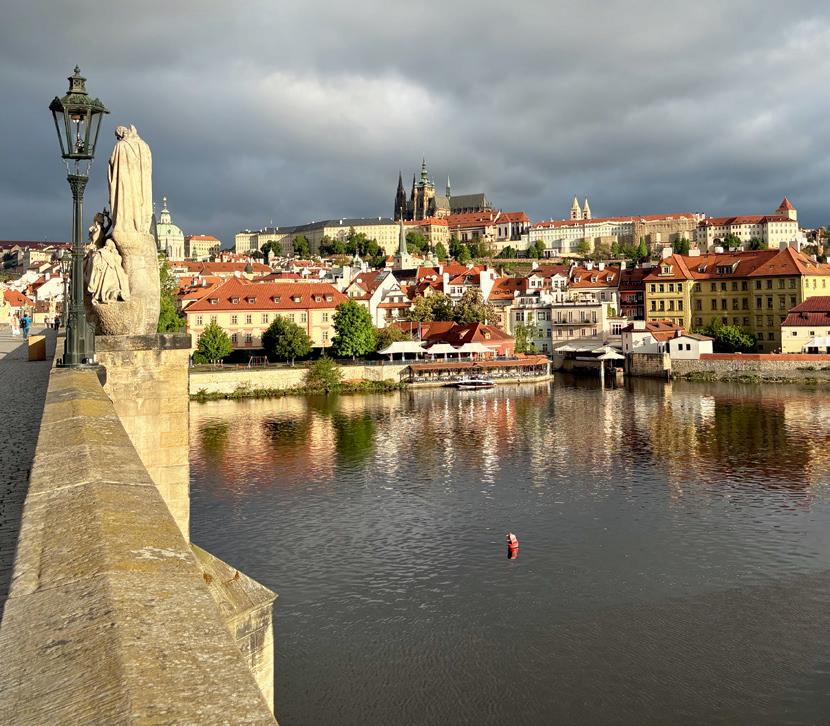
As it flows through Prague, the Moldau (or Vltava) river passes under the historic Charles Bridge.
Piano Concerto No . 1 in F-sharp minor, Op . 1
by Sergei Rachmaninoff
B O R N : April 1 , 1873, in Semyonovo, Russia
D I E D : March 28, 1943, in Beverly Hills , California
▶ C O M P O S E D : 1890 – 91, revised 1917
▶ W O R L D P R E M I E R E : The complete, revised version premiered on January 29, 1919, at Carnegie Hall, with Modest Altschuler conducting the Russian Symphony Society Orchestra , and Rachmaninoff on piano.
▶ C L E V E L A N D O R C H E S T R A P R E M I E R E : October 26, 1939, led by Music Director Artur Rodziński, with the composer as soloist
▶ O R C H E S T R AT I O N : 2 flutes , 2 oboes , 2 clarinets , 2 bassoons , 4 horns , 2 trumpets , 3 trombones , timpani, and strings , plus solo piano
▶ D U R AT I O N : about 25 minutes
S E RG E I R AC H M A N I N O F F P ROV E D H I M S E L F a composer at an early age, even before he had graduated from the Moscow Conservatory. This is somewhat surprising, given that his childhood was extremely unsettled moving from place to place as his father slipped further into debt.
Rachmaninoff ’s musical training began at the St. Petersburg Conservatory, and his career might have been quite different if he had remained there to study with Rimsky-Korsakov and fraternize with the likes of Glazunov and Stravinsky. Instead, after some poor exam results, he was transferred to Moscow, where he studied with the disciplinarian Nikolai Zverev, met a group of talented fellow-students including Scriabin and Medtner,
and above all came under the influence of Tchaikovsky.
Rachmaninoff graduated from the Conservatory’s piano class at age 19 and from the composition class a year later, by which time he had already started a symphony, completed his First Piano Concerto, and composed the Trio élégiaque No. 1, a tone poem called Prince Rostislav, and an opera, Aleko.
For five years, until the famously disastrous performance of his First Symphony in 1897, fine music continued to flow from Rachmaninoff ’s pen, especially piano music and songs Later in life, he was better known as a conductor and pianist, but it was on composition that his ambitions were focused as he approached his 20th year.
After abandoning an earlier piano concerto (in C minor), Rachmaninoff tried again in 1890 and completed the first movement. The rest was rapidly written in July 1891. He later wrote: I could have finished it much earlier, but after the first movement I was idle for a long time and only began to write out the other movements on July 3rd. I wrote down and orchestrated the last two movements in two-and-a-half days. You can imagine what a job that was! I wrote from 5 in the morning until 8 o’clock at night.
comfortable and made plans to go abroad. Working still in Moscow, he wrote out a new version of the concerto, completing it just two weeks after the October Revolution broke out in Petrograd. At a fortunate moment, Rachmaninoff received an invitation to give some concerts in Stockholm, and he was able to get the necessary visas. Just before Christmas, he and his family left Russia, never to return.
Hallmarks of Rachmaninoff ’s mature style appear in both the original version
Perhaps the strongest impression this concerto leaves is of Rachmaninoff the improviser.
Vasily Safonov, head of the Moscow Conservatory, agreed to conduct the first performance the following year.
It is hard to imagine that such rich, complex piano writing could fail to impress, but one early reviewer wrote: “In the first movement there was not yet any individuality, but there was taste, tension, youthful sincerity, and obvious skill; already there is much promise.”
Rachmaninoff himself was not entirely satisfied, and before long he was hinting that he would like to revise the concerto. He did not do so, however, for another quarter century, until the world-shaking days of 1917 when the Tsar’s abdication in the spring caused the composer to celebrate being at last in a “free country.” Still, as the threat of further revolution came closer, Rachmaninoff felt less
and the 1917 revision of the concerto the rich harmonic progressions, the wealth of melody woven into cascading torrents of notes in the solo part, the subtle orchestration. The music is restless, never retaining a single tempo for long, often interrupted by magnificent decorative swirls in the piano, and unfailingly rich in texture. The melodies have his stamp of authorship, but they do not extend into the long snakelike themes of his later music; here they are still always built a few measures at a time.
The tempo markings, by which we conventionally list the concerto’s three movements, tell only part of the story of this music The Vivace first movement’s main theme, for instance, is first heard at a surprisingly moderate pace. And, yes, the slow movement (marked
Andante) starts at a slow speed, but its end is so full of filigree notes that it feels almost like a scherzo, echoing the slow movement of Tchaikovsky’s First Piano Concerto. And the fast finale includes a section marked “Andante ma non troppo,” lovingly decorated by the soloist before returning to the up-tempo music. Perhaps the strongest impression this concerto leaves is of Rachmaninoff the
improviser. He feels his way towards his themes before stating them, and then immediately adds decorations and variations that pull the tempo and the texture in different directions, almost as if he was playing the piece for the first time. Indeed, perhaps this is a clue towards explaining the concerto’s eternal freshness
Hugh Macdonald
Hugh Macdonald is Avis H Blewett Professor Emeritus of Music at Washington University in St Louis He has written books on Beethoven, Berlioz , Bizet , and Scriabin, as well as Music in 1853: The Biography of a Year
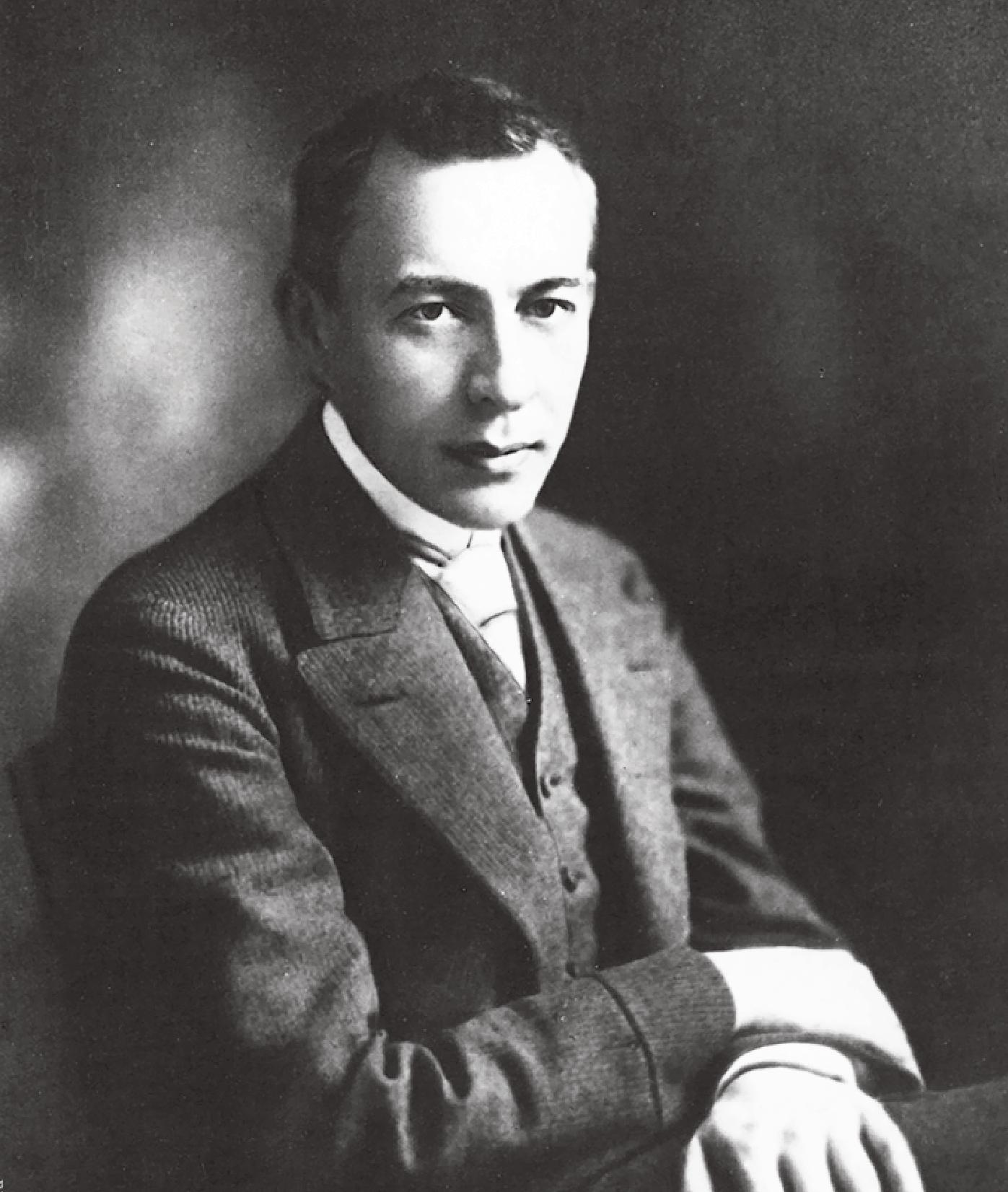
A 28-year-old Rachmaninoff sat for this photograph in 1901, several years after premiering the first version of his Piano Concerto No. 1.
Symphony No . 8 in G major,
Op . 88
by Antonín Dvořák
B O R N : September 8, 1841 , in Nelahozeves , Bohemia (present- day Czech Republic)
D I E D : May 1 , 1904, in Prague
▶ C O M P O S E D : 1889
▶ W O R L D P R E M I E R E : February 2 , 1890, in Prague, with the composer leading the National Theater Orchestra
▶ C L E V E L A N D O R C H E S T R A P R E M I E R E : October 27, 1938 , led by Music Director Artur Rodziński
▶ O R C H E S T R AT I O N : 2 flutes (2nd doubling piccolo), 2 oboes (2nd doubling English horn), 2 clarinets , 2 bassoons , 4 horns , 2 trumpets , 3 trombones , tuba , timpani, and strings
▶ D U R AT I O N : about 35 minutes
P E R H A P S I N R E A C T I O N T O Antonín
Dvořák’s nickname for his Ninth Symphony, “From the New World,” his Eighth Symphony has occasionally been called the “London” Symphony, taking its place alongside symphonies by Haydn and Vaughan Williams named for the great city. But Dvořák’s Eighth Symphony has little reason to be associated with London other than the fact that it was published there by Novello, as Dvořák had temporarily fallen out with his longtime Berlin publisher, Simrock.
In truth, the Seventh has a greater claim to an association with London than the Eighth, since, like Beethoven’s Ninth, it was commissioned by London’s Philharmonic Society. Unlike Beethoven’s Ninth, Dvořák’s Seventh was first per-
formed in London at a time when the composer was making frequent visits to England, appearing in cities across the country and making many friends among British musicians.
The Eighth, in contrast, was not commissioned by anyone and was written during summer 1889 at Dvořák’s country retreat in the Bohemian hills, where he always felt happy and productive.
Dvořák biographer John Clapham has called this the happiest of the composer’s symphonies and notes that, by this point in his career and life, Dvořák was no longer striving to impress an audience or emulate another composer; he was just allowing his playful invention to sprinkle ideas over four movements, to create a symphony that spoke to himself.
Dvořák finished the score on November 8, 1889, and conducted the first performance in Prague the following February. He conducted it again in London in the same month, then in Frankfurt in November, and again in Cambridge when he received an honorary degree in June 1891.
Pretty soon, the symphony had been played to great success across Europe, demonstrating how highly Dvořák was regarded in art music circles at the time. Brahms, never easy to please, admired
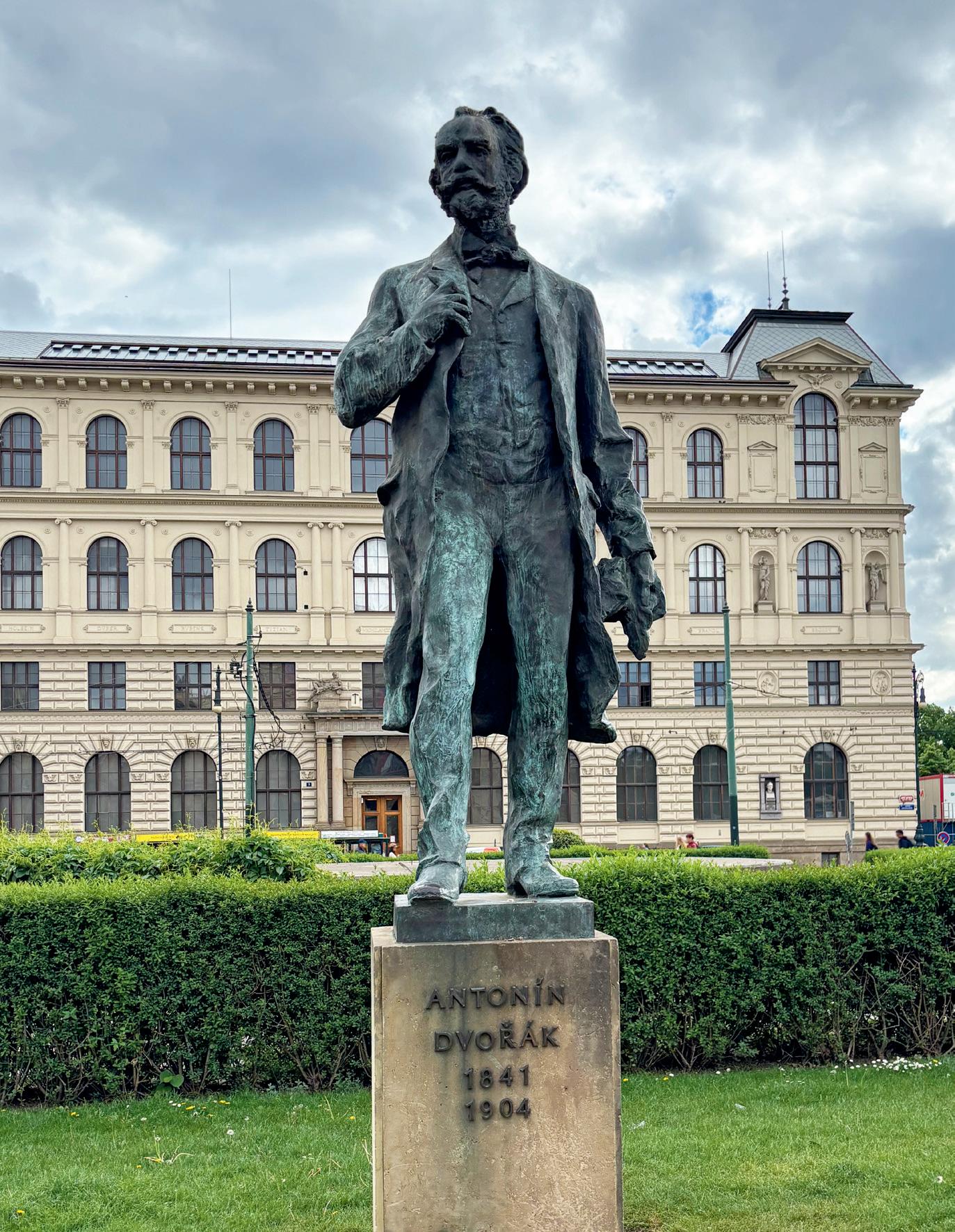
This statue of Dvořák stands across from Prague’s Rudolfinum, where the composer led the inaugural concert by the Czech Philharmonic in 1896
the work when he heard it in Vienna in January 1891. He called it “musically captivating and beautiful,” despite his ongoing misgivings about Dvořák’s idiosyncratic approach to symphonic form.
In that vein, Brahms may have been disconcerted by the opening of the first movement. Though marked Allegro con brio, it actually proceeds at a leisurely pace with a minor-key tune presented by two clarinets, one bassoon, two horns, and all the cellos an extraordinarily inventive bit of scoring. Even when a solo flute offers a quite different, major-
exploration of new territory begins. The movement eventually concludes in unmistakably high spirits.
Next comes the symphony’s slow movement, also notable for moving from minor to major, with the latter episode marked again by a solo flute, played over an enchanting series of descending octave scales. This is the kind of music that lingers in memory long after a performance. Toward the end of the movement, tensions build before falling back to sweet, quiet tones as if nothing had happened
This is the kind of music that lingers in memory long after a
performance .
key theme, it scarcely feels like a symphonic allegro movement. Rapid activity soon infiltrates the texture, however, and the music builds to a robust, full declaration of the flute’s theme, the point at which the body of the first movement is definitively launched. More important themes make their appearance, establishing a strong body of material for symphonic development. The movement’s development section begins in earnest with a trick Dvořák may have taken from Brahms. The music appears to be going back to the beginning with a literal repeat of the minor-key music and the flute’s major-key solo. This is not, however, a repetition of the exposition, as Mozart or Beethoven might have indicated. Instead, an
The third movement is an elegant waltz, and its trio section seems to have been created especially to define the word “lilt.”
The fourth-movement finale, on the other hand, defies definition, beyond appearing to be a set of crazy variations on a lovely theme played by the cellos. The opening trumpet fanfare perhaps in imitation of a bugle call to arms is sufficient warning that no orthodox finale should be expected. Only in the famous Slavonic D ances do we get such a clear sense that Dvořák is composing entirely for his own enjoyment This is fun-filled and jovial music of a special character, to which the trombones at the end contribute a hearty “Amen.”
Hugh Macdonald
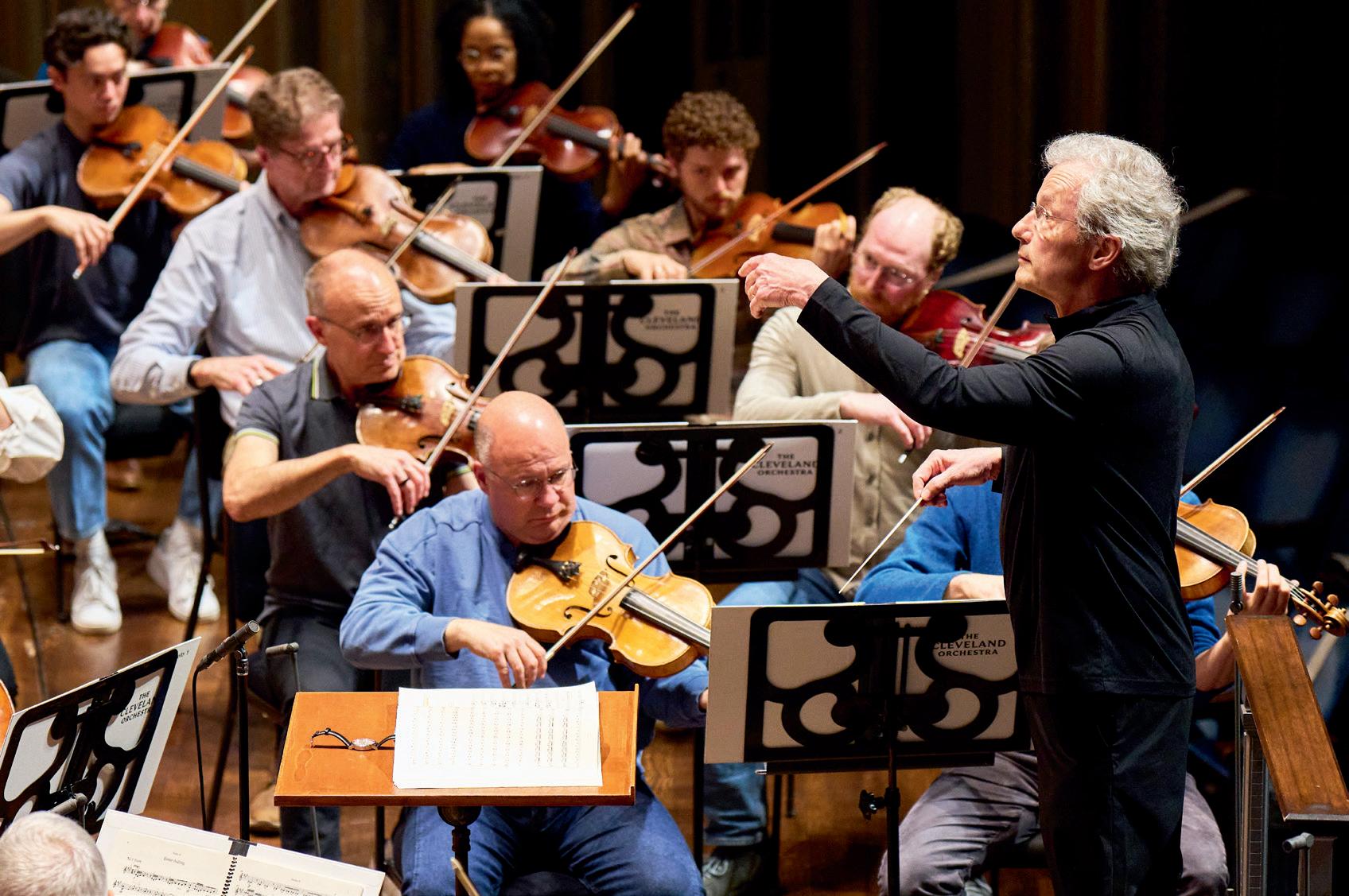
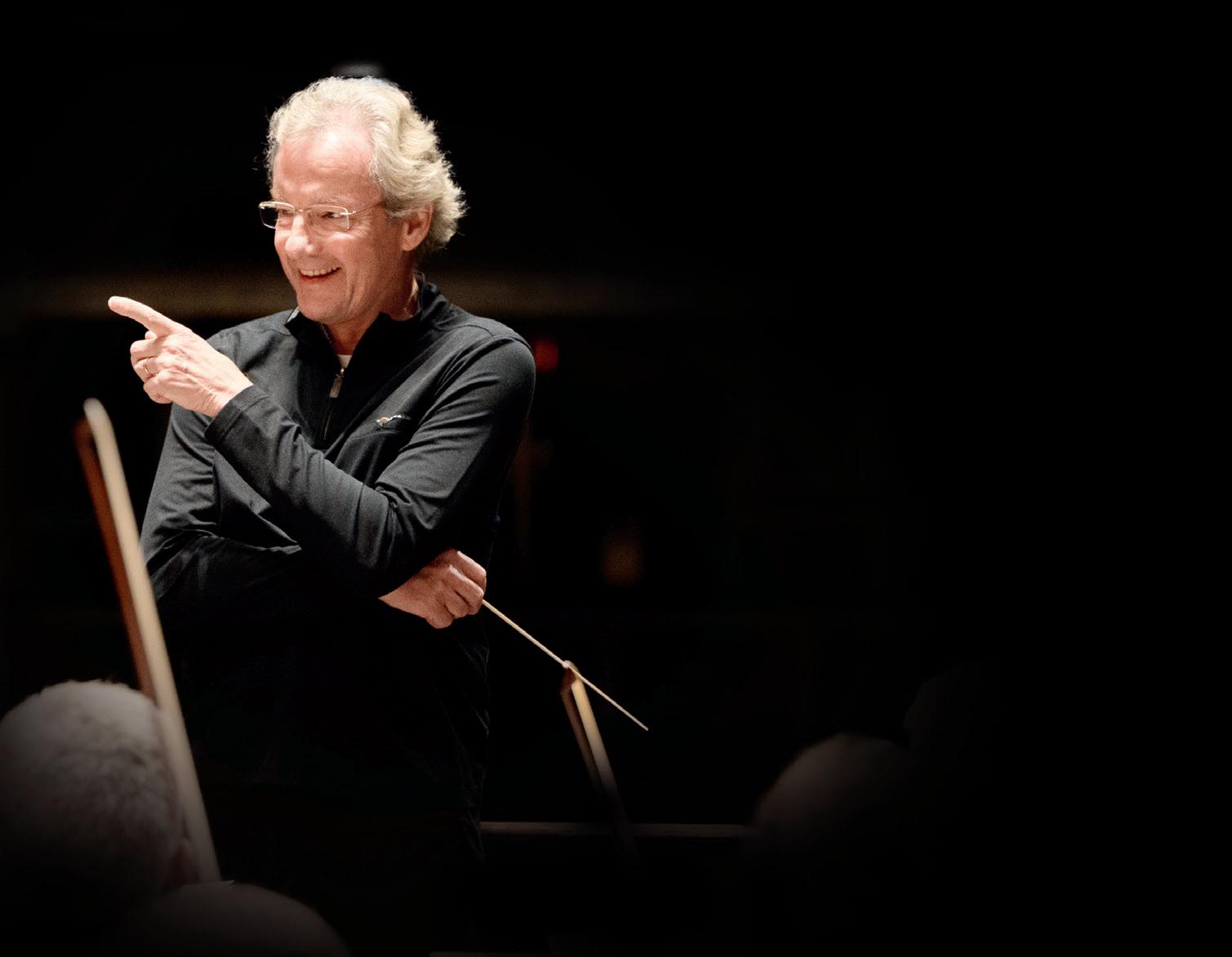
The Cleveland Orchestra rehearses under the baton of Music Director Franz Welser-Möst
C O N D U C T O R
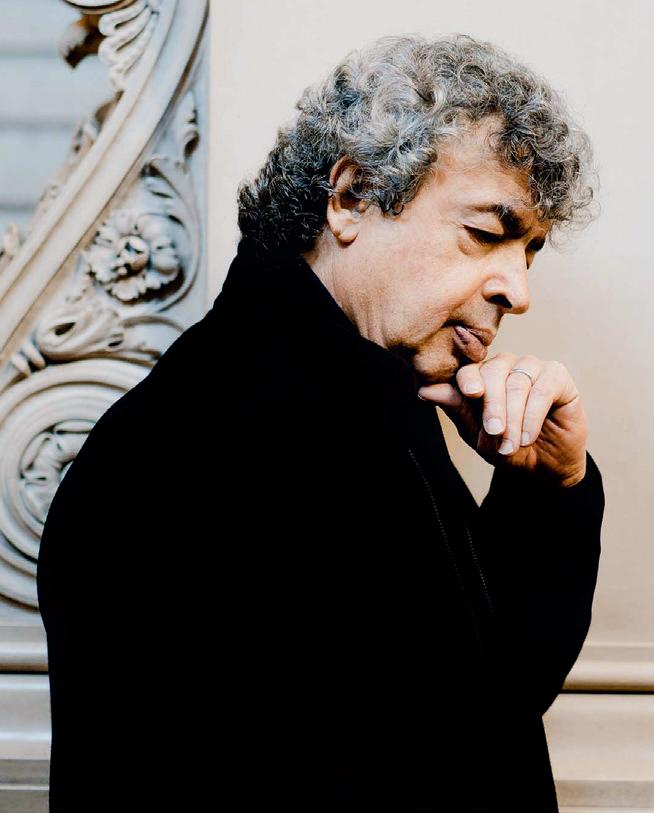
Semyon Bychkov
S E M YO N B YC H KO V ’ S T E N U R E as chief conductor and music director of the Czech Philharmonic Gramophone’s 2024 Orchestra of the Year was initiated with concerts in Prague, London, New York, and Washington, DC, celebrating the 100th anniversary of Czech independence. This past season, alongside subscription concerts in Prague, Bychkov toured with the orchestra to Taiwan, Japan, Korea, Austria, Italy, Germany, Luxembourg, Sweden, and Finland. In spring 2026, Pentatone released the complete cycle of Mahler symphonies recorded with the Philharmonic over the past 8 seasons.
Bychkov brings a unique combination of innate musicality and rigorous pedagogy to a repertoire that spans four centuries. He is a frequent guest with the leading international orchestras and opera companies and has recorded extensively with the Berlin Philharmonic, Bavarian Radio Symphony Orchestra, Concertgebouworkest, Philharmonia Orchestra, London Philharmonic Orchestra, Orchestre de Paris, and WDR Symphony Orchestra Cologne, among others.
This season, Bychkov conducted a new production of Tchaikovsky’s Eugene O negin at the Paris Opera and returned for concerts with the Concertgebouworkest, Leipzig Gewandhausorchester, Orchestra dell’Accademia Nazionale
di Santa Cecilia, Berlin Philharmonic, and New York Philharmonic
In common with the Czech Philharmonic, Bychkov has one foot firmly in the culture of the East and the other in the West Born in St Petersburg, he emigrated to the United States in 1975 and is now based in Europe. In 1989, Bychkov returned to the former Soviet Union as principal guest conductor of the St. Petersburg Philharmonic, and the same year was named music director of the Orchestre de Paris. In 1997, he was appointed chief conductor of the WDR Symphony Orchestra Cologne, and in 1998, chief conductor of the Dresden Semperoper.
Bychkov holds honorary titles with the BBC Symphony Orchestra and the Royal Academy of Music. He was named Conductor of the Year by the International Opera Awards in 2015 and by Musical America in 2022
A R T I S T Garrick Ohlsson piano
S I N C E H I S T R I U M P H A S W I N N E R of the 1970 Chopin International Piano Competition, pianist Garrick Ohlsson has established himself worldwide as a musician of magisterial interpretive and technical prowess. Although long regarded as one of the world’s leading exponents of the music of Chopin, Ohlsson commands an enormous repertoire that ranges over the entire piano literature, encompassing more than 80 concertos.
For the first time in its history, the Chopin Competition invited an American to chair the jury, and Ohlsson assumed that role for the 19th incarnation in October 2025. He then returnd as guest soloist to The Cleveland Orchestra and National Symphony Orchestra, followed in the winter by a duo tour with violist Richard O’Neill, which took them from Los Angeles to Charlottesville, St. Paul, and New York’s 92nd Street Y. In solo recital, he can be heard in Vienna, London, Philadelphia, and Chicago.
Collaborations with the Cleveland, Emerson, Tokyo, and Takács string quartets have led to decades of touring and recordings. His solo recordings are available on the British label Hyperion and in the US on Bridge Records. Both Brahms concertos and Tchaikovsky’s Second Piano Concerto have been released on live recordings with the
Melbourne and Sydney symphonies on their own labels, and Rachmaninoff’s Third Piano Concerto was recorded with the Atlanta Symphony Orchestra and Robert Spano
A native of White Plains, New York, Ohlsson began piano studies at age 8 at the Westchester Conservatory of Music, and at 13, he entered The Juilliard School He was awarded the Avery Fisher Prize in 1994 and the University Musical Society Distinguished Artist Award in Ann Arbor in 1998. He is the 2014 recipient of the Jean Gimbel Lane Prize in Piano Performance from the Northwestern University Bienen School of Music, and in August 2018, the Polish Deputy Culture Minister awarded him the Gloria Artis Gold Medal for cultural merit.
Ohlsson is a Steinway Artist and makes his home in San Francisco.
Blo ssom Summer Soirée
Preschool to Grade 8 | OldTrail org
Thank you for silencing your electronic
Saint- Saëns’s Organ Symphony
Thursday, July 30, 2026, at 7 PM
Kazuki Yamada, conductor
Franz Joseph Haydn (1732–1809)
Symphony No. 104 in D major, 30 minutes “London”
I. Adagio Allegro
II. Andante
III. Menuet: Allegro Trio
IV. Finale: Spiritoso
Nino Rota (1911–1979)
Camille Saint- Saëns (1835–1921)
Concerto for Trombone 15 minutes and Orchestra
I. Allegro giusto
II. Lento, ben ritmato
III. Allegro moderato
Brian Wendel, trombone
I N T E R M I S S I O N
Symphony No. 3 in C minor, 35 minutes Op. 78, “Organ”
I. Adagio Allegro moderato Poco adagio
II. Allegro moderato Presto Maestoso
Summers at Severance
Presenting Sponsor:
Tonight’s performance is dedicated to Dr. Elizabeth Swenson in recognition of her generous support of music.
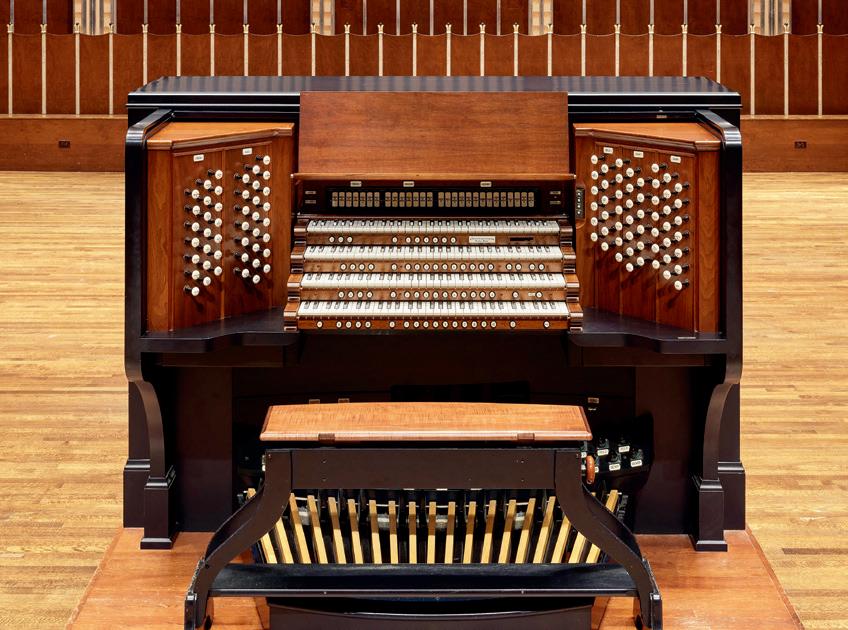
“T O M Y E Y E S A N D E A R S , the organ will ever be the King of Instruments.” These words, allegedly uttered by Mozart, are hard to disagree with. Pipe organs are magnificent in both sight and sound. Their towering pipes spark a sense of awe, and their multiple keyboards can conjure a seemingly endless range of sounds, from the softest melodic lines to the most bone-rattling chords. Severance’s Norton Memorial Organ (above), in particular, is a mechanical marvel and holds a unique and at times, fraught history. (Scan the QR code at the bottom of this page to learn more.)
Tonight’s program features the “King of Instruments” in a perennial favorite: Camille Saint-Saëns’s Third Symphony. The composer called it a symphony “with organ,” treating it as part of the larger ensemble rather than a solo instrument. Even so, the organ is a vital player, adding palpable gravitas to the symphony’s vivid orchestral colors and hummable tunes. (One of these was even turned into the 1977 pop song “If I Had Words,” which later made a memorable appearance in the 1995 film Babe.)
Stepping into a more traditional solo role earlier in the program, Principal Trombone Brian Wendel makes his Cleveland Orchestra concerto debut with Nino Rota’s Trombone Concerto. In this work, Rota perhaps best known for his scores for the first two Godfather films brings out the surprisingly lyrical qualities of the trombone, an instrument that hasn’t always received its proper due in the concerto repertoire. (Read Wendel’s thoughts on the piece on page 29.)
To open the concert, we go all the way back to 1795 with Franz Joseph Haydn’s “London” Symphony. This is the 104th and final symphony Haydn wrote, which was posthumously nicknamed after the city which offered the composer a productive artistic home in the 1790s The jaunty tune in the final movement is supported by a steady drone, perhaps meant to evoke a street organ grinder playing a distant relative of the mighty pipe organ.
Kevin McBrien is The Cleveland Orchestra’s Editorial & Publications Manager
Ke vin McBrien
Scan the QR code to read more about the history of Severance’s Norton Memorial Organ in our Stories from the Archives
Symphony No . 104 in D major, “London”
by Franz Joseph Haydn
B O R N : March 31 , 1732, in Rohrau , Austria
D I E D : May 31 , 1809, in Vienna
▶ C O M P O S E D : 1795
▶ W O R L D P R E M I E R E : May 4, 1795, in London , under the composer ’ s direction
▶ C L E V E L A N D O R C H E S T R A P R E M I E R E : November 28 , 1920, led by Music Director Nikolai Sokoloff
▶ O R C H E S T R AT I O N : 2 flutes , 2 oboes , 2 clarinets , 2 bassoons , 2 horns , 2 trumpets , timpani, and strings
▶ D U R AT I O N : about 30 minutes
I N S E P T E M B E R 1 7 9 0 , Franz Joseph Haydn’s longtime patron, Prince Nikolaus Esterházy, passed into eternity. After 28 years as the Prince’s faithful musical servant, Haydn’s life was about to change.
Nikolaus’s heir, Anton, did not share his father’s interest in music; he immediately dissolved the house orchestra and, while nominally retaining Haydn, left the composer to do whatever he wished. Haydn soon departed the Esterházy palace to explore Vienna.
There, Haydn whose music was already well-known across much of Europe was flooded with offers, yet the invitation that most intrigued him came in the form of a stranger who appeared at his apartment with the simple words, “My name is [Johann Peter] Salomon
I have come from London to fetch you; we shall conclude our accord tomorrow.”
That agreement, quickly worked out by Salomon a violinist, impresario, and conductor with his own orchestra stipulated that Haydn was to receive a fee of 1,200 British pounds sterling to write a new opera, six new symphonies, and various others compositions to be performed in 20 concerts, and one benefit concert. Salomon was also to receive the music’s copyright
Haydn knew that his greatest strengths lay in instrumental music and London, having excellently trained orchestras and eager audiences, was compelling. In addition, London offered him the adventure of a bustling city wherein he could exercise his newfound freedom. And, of course, the money to be earned was immense.
S A I N T- S A Ë N S ’ S O R G A N S Y M P H O N Y
Haydn’s first stay in London lasted from January 1791 through June 1792, and by all accounts it was a stimulating and successful experience. After the first concert on March 11, 1791, an article in the Morning Chronicle concluded: “We cannot suppress our very anxious hope that the first musical genius of his age may be induced by our liberal welcome to take up his residence in England ” That July, Haydn was even invited to Oxford, where he received an honorary doctorate of music.
late–17th
the Adagio from the main Allegro section, with its first theme in D major. Following a full-orchestra tutti transition, the Allegro theme is stated in the dominant key of A major. A closing section leads to the movement’s development, built largely on the sigh motive and the ascending arpeggio figure from the closing section. The first theme returns during the recapitulation.
The second movement, an Andante
The folklike melody that dominates the Finale . . . was until recently thought to have been based on a London street vendor’s cry. More recently, it has come to be recognized as “Oj Jelena , ” a Croatian ballad . recently in major, is
After returning to Vienna for a time in July 1792, Haydn once again set foot in London for a second long stay on February 4, 1794. Audiences were again captivated and appreciative, and it was under the auspices of Salomon’s new “Opera Concerts” series that Haydn premiered a new Symphony in D major soon nicknamed the “London” Symphony and later designated as No. 104 on May 4, 1795 Not only was this his last symphony for London, it was to be his final statement in a genre that he had played a major role in developing.
Symphony No 104 commences with an Adagio introduction in D minor with a sighing motive that evokes the soundworld of Mozart’s Requiem (also in the key of D minor). A brief pause separates
in G major, is made of a quasi-rondo “theme and variations” form boasting a dramatic development in G minor The wit of the third movement Menuet is most notable in the use of unexpected pauses.
The folklike melody that dominates the Finale, marked “Spiritoso,” was until recently thought to have been based on a London street vendor’s cry. More recently, it has come to be recognized as “Oj Jelena,” a Croatian ballad. This last movement is not a traditional rondo, but is cast in a fuller sonata form, with the recapitulation introducing surprises almost until the final chord
Ste ven Lacoste
Steven Lacoste is a lecturer in music theory at California State Polytechnic University, Pomona
This
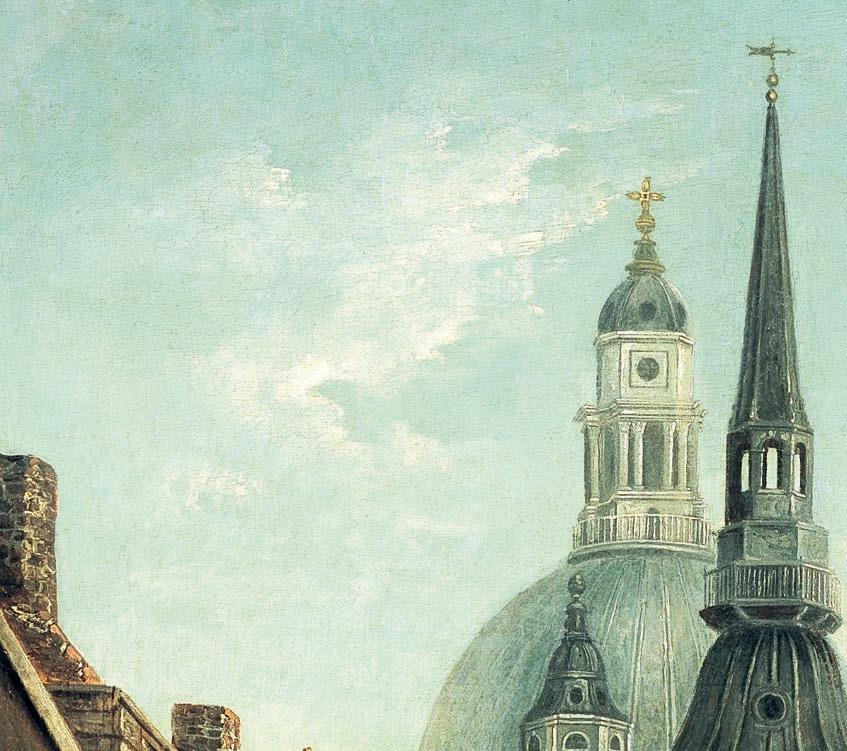
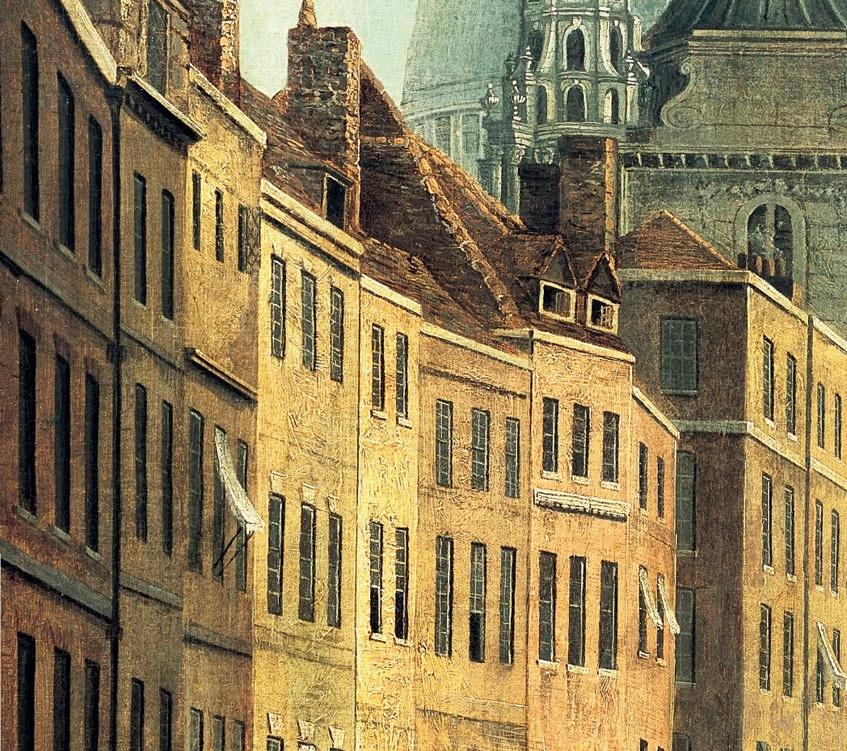
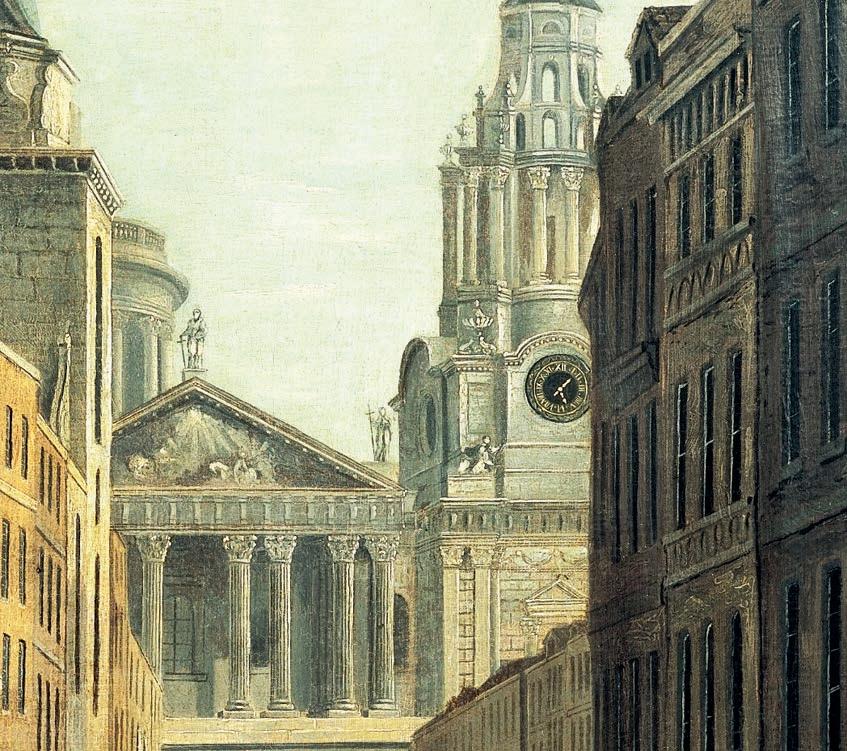
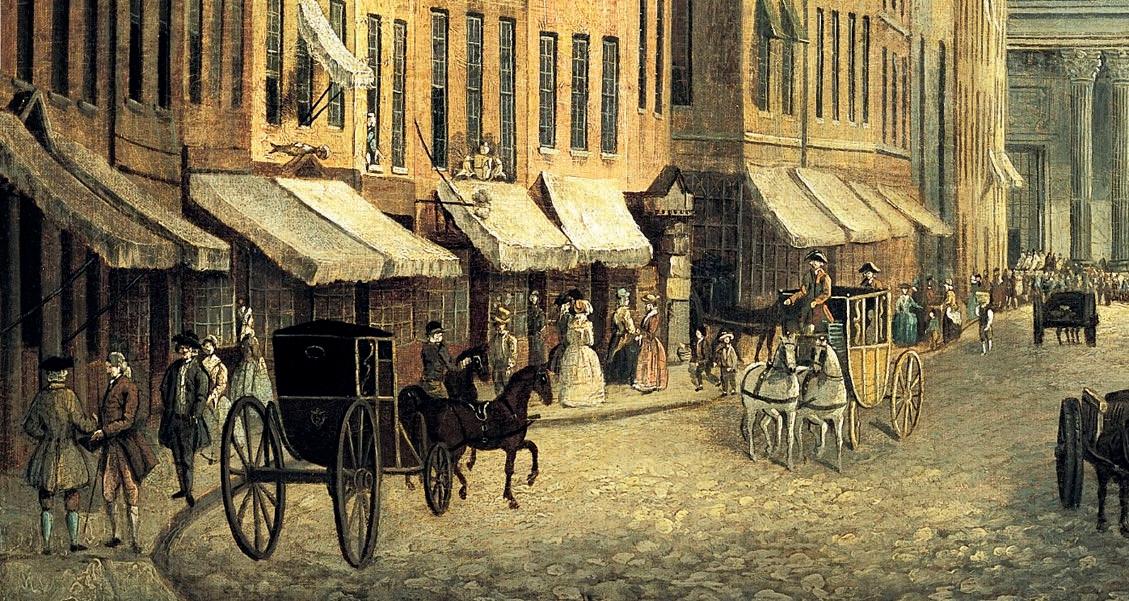
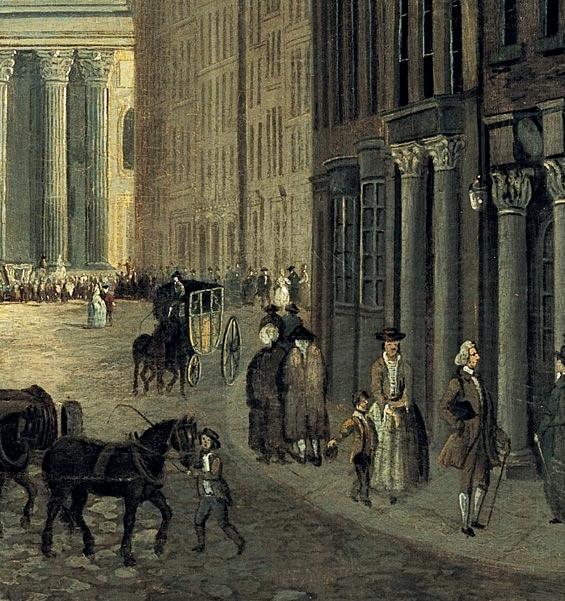
century painting by English artist William Marlow captures a scene on London’s Ludgate Street , a view Haydn would have recognized during his two trips to the city.
Concerto for Trombone and Orchestra
by Nino Rota
B O R N : December 3, 1911 , in Milan
D I E D : April 10, 1979, in Rome
▶ C O M P O S E D : 1966
▶ W O R L D P R E M I E R E : May 6, 1969, with Franco Caracciolo conducting the Orchestra dei Pomeriggi Musicali di Milano and Bruno Ferrari as soloist
▶ C L E V E L A N D O R C H E S T R A P R E M I E R E : February 8 , 2013, with Gianandrea Noseda conducting
▶ O R C H E S T R AT I O N : flute, oboe, 2 clarinets , 2 bassoons , 2 horns , timpani, and strings , plus solo trombone
▶ D U R AT I O N : about 15 minutes
T H E O S C A R-W I N N I N G S C O R E for The Godfather Part II and the love theme for Franco Zeffirelli’s 1968 Romeo and Juliet may have brought him his widest recognition, but Nino Rota was a fully rounded musician with rich and varied talents. Across his lifetime, he was a gifted and prolific composer for the opera house, concert hall, theater, and cinema. He was also a skilled pianist and conductor, a dedicated teacher, and director of one of Italy’s leading conservatories.
Rota was born into an artistic family in Milan and began studying music as a child with his mother, the daughter of concert pianist Giovanni Rinaldi. Nino was composing by age 8, and by 12 he had completed an oratorio titled
L’infanzia di San Giovanni Battista ( The Childhood of St. John the Baptist), the performance of which established him as a child prodigy. He was admitted to the Milan Conservatory later that year to study privately with the school’s director, Ildebrando Pizzetti.
In 1926, Rota entered the Accademia di Santa Cecilia in Rome as a student of Alfredo Casella. At the time of his graduation in 1930, Arturo Toscanini, recently appointed music director of the New York Philharmonic, helped arrange a scholarship for Rota to study at the Curtis Institute of Music in Philadelphia with composer Rosario Scalero and conductor Fritz Reiner. Rota profited greatly during his two years in America, not just from the
A Conversation with Soloist Brian Wendel
Even though it’s a quintessential member of the orchestral brass section , the trombone doesn’t frequently appear in the solo spotlight . We recently sat down with TCO’s Principal Trombone
Brian Wendel (see also page 36) to learn about why that makes Nino Rota’s Trombone Concerto so unique .
What was your first exposure to this piece, and what made you select it for Summers at Severance?
There’s a great Canadian trombonist , Alain Trudel, who started as solo player but later branched out to conducting . His recording was probably one of the first I heard, with Yannick Nézet- Séguin conducting the Orchestre
Métropolitain , and it’s a great musical rendition . The concerto is a classic for us , and even if the audience doesn’t know Rota by name or this particular piece, they will feel familiar with his music , whether it’s through his Godfather scores or his other film music . The work also demonstrates the rich and powerful tone that the trombone really thrives at , so it’s a great way to introduce the instrument’s more soloistic sound to the audience.
How does it compare to other concertos for trombone?
There’s a simplicity and agility to Rota’s voice which comes through in both the solo part and the orchestra . We sadly don’t have any concertos from Beethoven or Brahms, so it’s nice to play a piece by someone who also wrote a lot of music . And though there are some challenges with his writing , it’s very comfortable for the player and doesn’t press the boundaries of the instrument like more modern trombone concertos .
This will be your concerto debut with The Cleveland Orchestra . What are you looking forward to in terms of getting to step into the solo spot?
I expect to feel a combination of excitement , joy, and nerves all bundled up at once. It’s a unique opportunity to share the trombone in a way that the audience and maybe even some of my colleagues might have never heard. I also hope to let the music speak for itself and bring Rota and his music to life in a way that’s authentic , yet current and spontaneous .
Scan the QR code to read an extended version of this conversation on The Cleveland Orchestra’s Content Hub
formal curriculum at Curtis but also from his newly forged friendships with Aaron Copland, Samuel Barber, and other leading American musicians, as well as from his immersion in this country’s popular music and, perhaps most influentially, his first experience with talking pictures.
The year after returning to Italy in 1932, Rota composed his first movie score (Trena Popolare, or “People’s Train”). This marked the start of a productive film career, which would, by the time of his death in 1979, encompass over 150 film scores. Though he enjoyed an enduring and productive collaborative partnership with director Federico Fellini, Rota perhaps enjoyed his greatest success with Francis Ford Coppola in the Godfather movies. His score for Part I was nominated for an Academy Award, but had to be withdrawn because Rota had borrowed from his score from the 1958 film Fortunella; Part II later won the Oscar for him in 1975. Despite the great diversity of his work, Rota’s creative philosophy was simple: “I’d do everything I could to give everyone a moment of happiness. That’s what’s at the heart of my music.”
Rota composed his Trombone Concerto in 1966 for Bruno Ferrari, principal trombone of the La Scala Orchestra and professor at the Giuseppe Verdi Conservatory in Milan. Ferrari premiered it in May 1969 in the Great Hall of the Conservatory with the Orchestra dei Pomeriggi Musicali di Milano, the city’s leading chamber
orchestra, which specializes in contemporary music.
The concerto’s opening movement follows a compact sonata form that takes an angular, fanfare-like strain as its main theme and a rising line in tight, dotted rhythms as its subsidiary subject. The angular motive is treated in a brief development section before the earlier materials are recapitulated and the movement comes to an energetic close
The second-movement Lento is arranged in three broad structural paragraphs, with somber music moving at an almost funereal tread in its outer sections and a more lyrical episode led by the soloist at its center.
The third-movement finale is an ingeniously modified sonata form. The trombone announces both the spirited, scale-based main theme and the melodious second subject. The development section is based on not just the finale’s scalar main theme but also on variants of the angular fanfare motive from the first movement. The ensuing recapitulation begins, as expected, with the return of the main theme, but the music abruptly slows and changes mood as the arching second subject is given a dreamlike setting strewn with the soloist’s pearly arpeggios The concerto closes with a rousing coda derived from the finale’s main theme.
Richard E. Rodda
Richard E Rodda has written program notes for orchestras and chamber series across the country and internationally He previously taught at Case Western Reserve University and the Cleveland Institute of Music and is the recipient of a 2010 ASCAP Deems Taylor Award
Symphony No . 3 in C minor, Op . 78 , “Organ”
by Camille Saint-Saëns
B O R N : October 9, 1835, in Paris
D I E D : December 16, 1921 , in Algiers
▶ C O M P O S E D : 1886
▶ W O R L D P R E M I E R E : May 19, 1886, with the composer leading the London Philharmonic Society
▶ C L E V E L A N D O R C H E S T R A P R E M I E R E : November 25, 1926, led by Music Director Nikolai Sokoloff
▶ O R C H E S T R AT I O N : 3 flutes (3rd doubling piccolo), 2 oboes , English horn , 2 clarinets , bass clarinet , 2 bassoons , contrabassoon , 4 horns , 3 trumpets , 3 trombones , tuba , timpani, percussion (bass drum , cymbals , triangle), piano (four hands), organ , and strings
▶ D U R AT I O N : about 35 minutes
W I T H H I S T H I R D A N D F I N A L S Y M P H O N Y , Camille Saint-Saëns set out to write a masterpiece. At 51, he was and had long been one of the most famous musicians in France, equally successful as a composer, conductor, pianist, and organist, having served in this capacity for many years at the Madeleine, one of the landmark churches in Paris. His career started with the unqualified endorsement of such luminaries as Berlioz, Liszt, and Gounod, and he had come to be considered a luminary himself.
At the same time, he had reason to feel that some of his best efforts in the field of composition were not sufficiently appreciated. He had won great acclaim for his concertos and other virtuosic solo
pieces. However, his symphonic poems were met with little enthusiasm in Paris, and his opera Samson and D elilah premiered, thanks only to Liszt’s unflagging support, in Weimar. At home, Saint-Saëns found himself locked in a rivalry with César Franck, his senior by 13 years, who wrote some of the best French Romantic instrumental music. Saint-Saëns was antagonized by Franck’s students and was increasingly isolated in the Société nationale de musique (which he had founded), a situation that, soon after the premiere of the Third Symphony, led to his resignation as the society’s president. Saint-Saëns wanted to make a major statement, and the invitation of the London Philharmonic Society to write
his
a symphony provided just the incentive he needed. In fact, Saint-Saëns had already sketched the work, and before long, he reported that the project was “well under way.” He played parts of his work-in-progress for Liszt in 1885, when the older man passed through Paris for the last time in his life. Saint-Saëns conducted the premiere of his completed symphony in London on May 19, 1886, to a standing ovation. With this concert, Saint-Saëns, who had long been wellknown in England, definitively established his popularity there The symphony proved to be a success in France, as well.
there. The in
The composer thinks that the time has come for the symphony to benefit [from] the progress of modern instrumentation.
Some of the innovations in orchestral writing in Saint-Saëns’s symphony clearly came from the symphonic poems of Liszt, who had used the organ in his Hunnenschlacht (Battle of the Huns).
Saint-Saëns’s method of motivic transformation also follows Lisztian models to some extent. The four movements are telescoped into two parts, with the opening Allegro and the slow movement constituting the first part, and the scherzo and finale the second Moreover,
I have given all that I had to give . What I have done I shall never do again .
Camille Saint-Saëns , on his “Organ” Symphony
The composer himself wrote the first program note about his symphony, offering a detailed outline of the themes, referring to himself in the third person throughout:
This symphony is divided into two parts, in the manner of Saint-Saëns’s Fourth Piano Concerto and his Sonata for Piano and Violin. ... It nonetheless includes practically the traditional four movements The first, checked in de velopment, serves as an introduction to the Adagio. In the same manner, the scherzo is connected with the finale The composer has thus endeavored to avoid in a certain measure the interminable repetitions that are now more and more disappearing from instrumental music.
motivic relationships permeate all of the movements so that the entire work is rich in internal connections.
All four movements share a rising fournote motive, which is first heard in the oboe. Further versions are played by the trombones and soon afterward by the violins. A second, lyrical idea completes the opening Allegro’s melodic material.
We first hear the organ, for which the symphony is nicknamed, in the Poco adagio, in the first of many extended solos. Its entrance also transforms the initial motive both as a hymnlike melody and as a fairly conspicuous accompaniment figure.
In the Allegro moderato that opens the symphony’s second half, we hear new
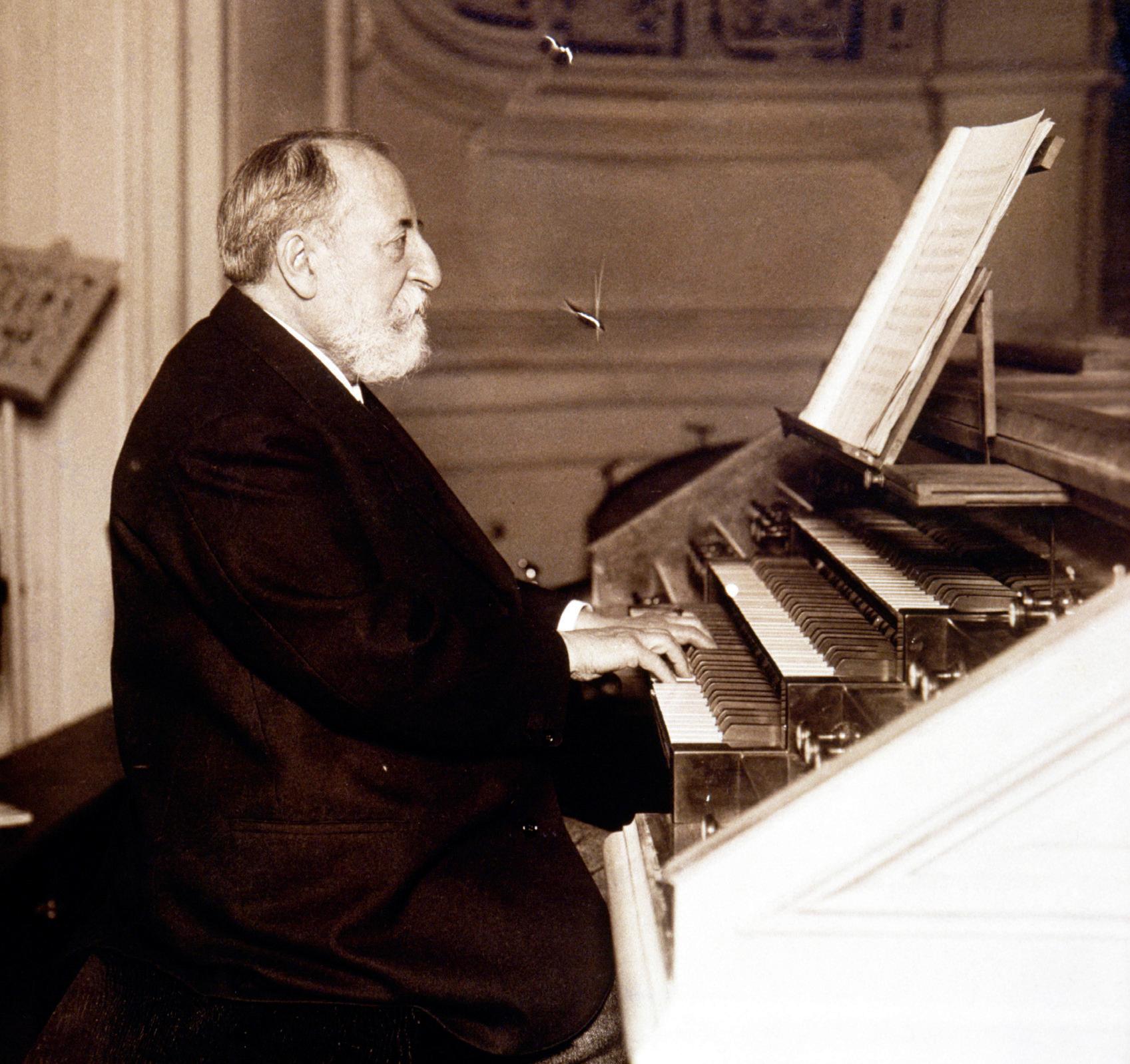
Saint-Saëns sitting at the organ console in Paris’s Salle Gaveau, which became a popular concert venue after it opened in 1907
variants of our motive, followed by the Trio section, distinguished by fast piano scales as a special orchestral color. A short contrapuntal section based on the motive serves as a transition to the finale, which begins with the lush sounds of the organ and the piano. The basic idea builds into a solemn chorale and then into a fugue reminiscent of Mozart’s “Jupiter” Symphony. The work ends with a glorious climax, magnificent in its effect.
Saint-Saëns was well aware of the symphony’s significance as a supreme achievement in his career. He never attempted to write another symphony; instead, he returned to writing operas, concertos, and chamber music. He wrote about the “Organ” Symphony in later years: “I have given all that I had to give. What I have done I shall never do again ”
Peter Laki
Peter Laki is a musicologist and frequent lecturer on classical music He is a visiting associate professor of music , emeritus , at Bard College and was The Cleveland Orchestra’s program annotator from 1990 to 2007
C O N D U C T O R
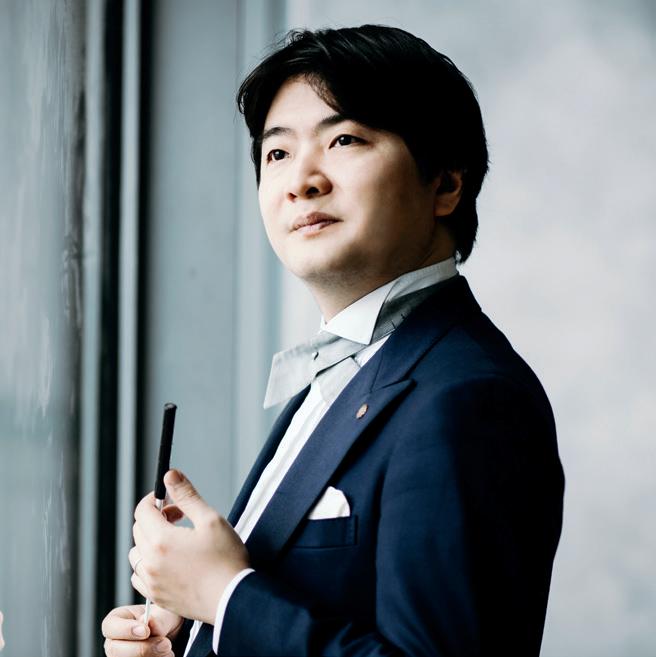
Kazuki Yamada
K A Z U K I YA M A DA I S M U S I C D I R E C T O R of the City of Birmingham Symphony Orchestra (CBSO). Alongside his commitments in Birmingham, he is also artistic and music director of the Orchestre Philharmonique de MonteCarlo (OPMC) and will become chief conductor and artistic director of the Deutsches Symphonie-Orchester Berlin starting in the 2026–27 season
Yamada commands a busy schedule of orchestral, opera, and choral conducting. Recent highlights include an appearance at the BBC Proms and a European tour with the CBSO, a return Tanglewood with the Boston Symphony Orchestra, and debut appearances with the Bamberger Symphoniker, NDR Elbphilharmonie Orchester, Rotterdam Philharmonic Orchestra, and Wiener Symphoniker. Yamada also conducted the Monte Carlo Opera in a production of Debussy’s Pelléas et Mélisande.
In addition, Yamada appears regularly with The Cleveland Orchestra, Finnish Radio Symphony Orchestra, Oslo Philharmonic, Orchestra dell’Accademia Nazionale di Santa Cecilia, Orchestre National du Capitole de Toulouse, and Swedish Radio Symphony Orchestra. He also returns to Japan every season to work with orchestras such as the NHK Symphony Orchestra and Yomiuri Nippon Symphony Orchestra, among others.
Yamada often performs with distin-
guished soloists such as Emanuel Ax, Seong-Jin Cho, Isabelle Faust, Alexandre Kantorow, Yunchan Lim, Julian Prégardien, Baiba Skride, Fazıl Say, and Jean-Yves Thibaudet
Strongly committed to his role as an educator, Yamada appears annually as a guest artist at the Seiji Ozawa International Academy Switzerland and is strongly committed to the CBSO’s outreach program. The impact of the pandemic on international concert halls reaffirmed his belief that in his words “The audience is always involved in making the music. As a conductor, I need an audience there as much as the musicians.”
Yamada studied music at Tokyo University of the Arts, where he discovered a love for both Mozart and the Russian Romantic repertory. He achieved international attention upon receiving First Prize in the 51st International Besançon Competition for Young Conductors in 2009. Having lived in Japan for most of his life, Yamada now resides in Berlin
A R T I S T
Brian
Wendel Principal Trombone
G I L B E R T W. A N D L O U I S E I . H U M P H R E Y C H A I R
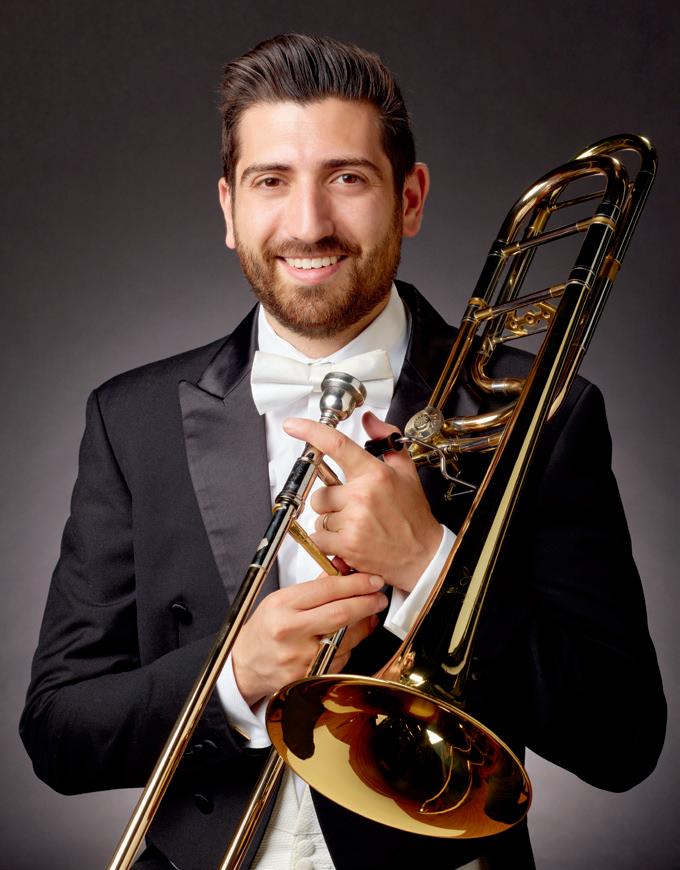
B R I A N W E N D E L J O I N E D The Cleveland Orchestra as Principal Trombone in August 2022, appointed by Franz Welser-Möst. He previously served as principal trombone of the Vancouver Symphony Orchestra for five seasons, and has appeared as a soloist with the Vancouver, Murcia, and Prince George symphonies, Real Filharmonía de Galicia, Denver University Brass Ensemble, and Juilliard Trombone Choir
Wendel is on faculty at the Cleveland Institute of Music and is enthusiastic about working with students around the world. He has presented masterclasses at the Jacobs School of Music at Indiana University, The Juilliard School, Manhattan School of Music, Escola Superior de Música de Lisboa (Portugal), Hochschule Luzern (Switzerland), and Long Siew Tow Conservatory (Singapore), among others. Wendel served as adjunct professor of trombone at the University of British Columbia from 2019–22 and was also associate instructor for the Alessi Seminar Asia. In Vancouver, he co-founded Vancouver Trombone Week alongside VSO bass trombonist Ilan Morgenstern, which garnered attention from CTV Morning Live and CBC Music. Wendel received his bachelor’s degree from The Juilliard School under the
mentorship of Joseph Alessi. He spent summer months at the Music Academy of the West, Pacific Music Festival, American Institute of Musical Studies (Graz, Austria), National Orchestral Institute, and the Alessi Seminar He was also an inaugural member of the 2013 National Youth Orchestra of the United States of America.
Wendel grew up in Conway, Massachusetts. Starting on the piano at age 6 and the trombone at age 9, he studied both classical and jazz music and was a student at the New England Conservatory Preparatory School. Some of his early musical mentors include David Sporny, Norman Bolter, Andy Jaffe, and his dad, Renato Wendel.
Amidst a busy and fulfilling musical life, Wendel cherishes above all else the time spent with his wife (and violist) Karen, and their two young boys.
O P E R A C L U B
Celebrating Voice
Enjoy the best vocal artists of our time alongside fellow supporters .
• Opportunity to sponsor a vocalist
• Invitations to parties , meet and greets , and more
• Join the Orchestra’s New York tour
C O N T A C T : Angela Mortellaro, Major Gift Officer 216 -231- 8 014 | amortellaro@clevelandorchestra .com clevelandorchestra . com/operaclub
B E C O M E A M E M B E R T O DAY ! Membership begins with donations of $2 , 500 and more . U N D E R 4 0? Join with your gift of $1,000!
E A R N P O I N T S
• Attend concerts
• Watch videos
• Take quizzes
• Give feedback
G E T R E WA R D S
• Seat upgrades
• Exclusive content
• F R E E season of Adella with 3000 Rewards points
• V I P experiences and more
Sara Jakubiak performs the heroic role of Leonore in Beethoven’s Fidelio, May 2026
Thank you for silencing your electronic devices.
A Night at the Opera
Thursday, August 13, 2026, at 7 PM
John Fiore, conductor
Otto Nicolai (1810–1849)
Antonín Dvořák (1841–1904)
Franz Schreker (1878–1934)
Erich Wolfgang Korngold (1897–1957)
Franz Lehár (1870–1948)
Giuseppe Verdi (1813–1901)
Overture to The Merry Wives of Windsor 10 minutes
Final Scene from Act III of Rusalka, Op. 114 10 minutes
This program will last approximately 1 hour 45 minutes
Tonight’s concert is dedicated to Catherine and Hyun Park in recognition of their generous support of music.
Let No One Sleep: An Operatic Journey
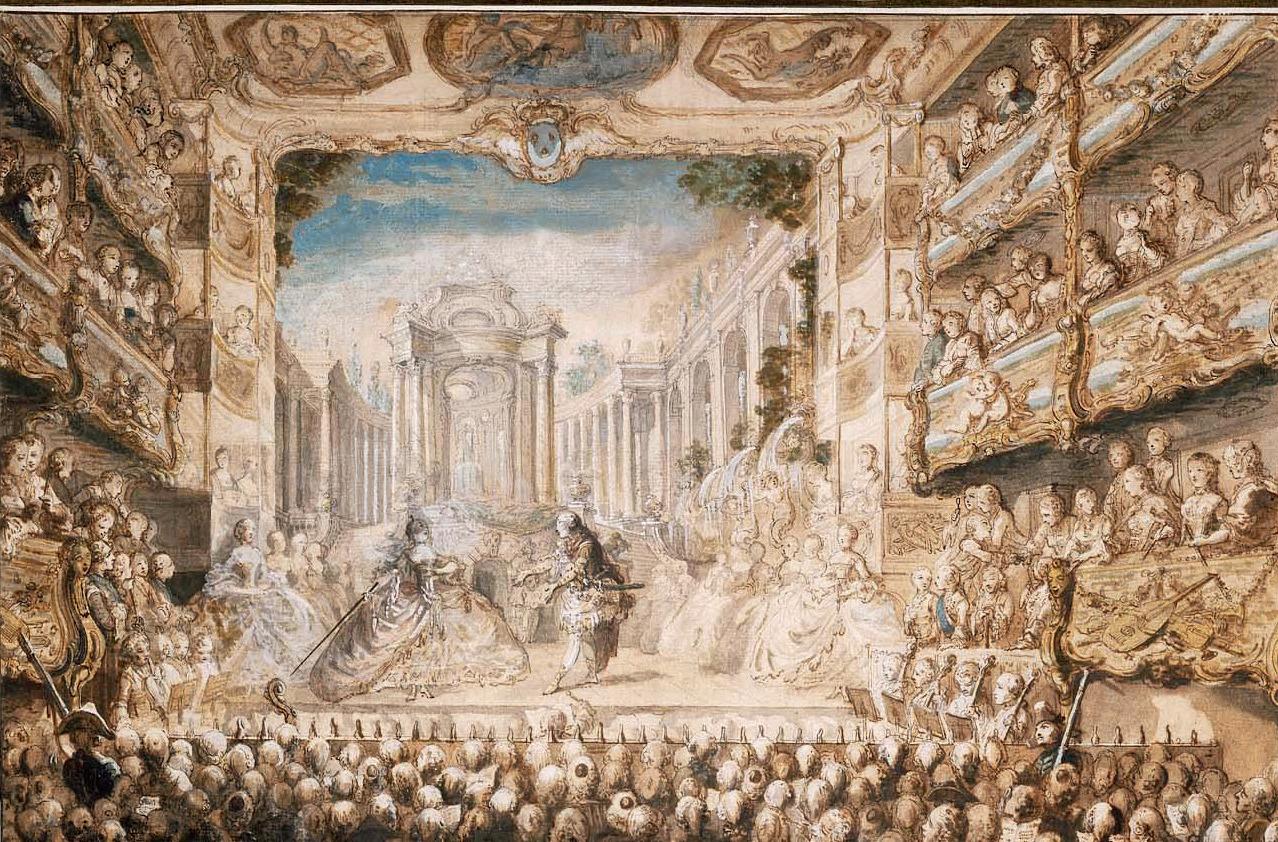
T H E Y E A R I S 1 6 2 7 . You’re pressed in elbow-to-elbow on the ground-le vel parterre, jocke ying to catch a first glimpse of the performers’ feet below the curtain. The air is full of smoke from the tallow candles lining the base of the stage, and your vie w is blocked by a sea of decadent wigs. The roar of the crowd lowers to a murmur as the concertmaster beats his staff to begin the overture. Heads crane to track the King’s progress to his prominent box. As the orchestra finishes the overture with a flourish, the curtain rises ...
Opera houses have always been a place to see and be seen. Some of the earliest designs featured box seats for royalty that didn’t even face the stage, displaying the monarchs for audience members rather than letting them see the action. Sometimes, the singers and dancers on stage rivaled the fame of the monarchs perched above them Stars won legions of fans wherever they performed and composers would tailor arias to specific singers, giving them ample opportunity to display their talents.
While arias give singers a chance to show off vocal pyrotechnics especially the da capo form, with its built-in repeat leaving ample room for lavish ornamentation recitative dialogue fills in the blanks and moves the story forward. Meanwhile, the orchestra often holds the most emotional power of all, introducing important melodies and pulling at heartstrings as tensions rise.
What of the stories? Perhaps the most stereotypical opera plot finds both humor and heartbreak in an unlikely love triangle, straining the barriers between classes, or entangling the fates of gods and mortals. The very earliest operas, written at the turn of the 17th century,
attempted to revive the sung dramas of Classical antiquity, drawing inspiration from Greek mythology. Throughout the 18th century, adaptations of folklore and literature joined the mix, often with allegorical connections to powerful rulers or current events. As the 19th century progressed and revolutions weakened monarchs across Europe, audiences began to prefer plots that featured everyday people and their lives a tradition that came to be known as verismo (true to life).
Tonight’s concert borrows common elements of opera instrumental overtures and interludes, arias, and choruses to tell a story that transcends time and place, celebrating this treasured art form.
The program opens with the overture from Otto Nicolai’s The Merry Wives of Windsor, a delightful opera based on the Shakespeare play. With the scene set, the evening’s soloists launch into the final part of Antonín Dvořák’s opera Rusalka. Dvořák resists the usual alternation between aria and recitative, preferring a drama that flows organically as the action unfolds. In this fateful final embrace between a human prince and a water spirit, you can hear how the
music changes to match the conversation, rather than following a fixed form.
The Orchestra then whisks us off into the longing world of Franz Schreker’s D er ferne Klang ( The Distant Sound). In this opera about an opera, a young composer, Fritz, leaves his small-town love behind in search of “the distant sound” that compels him to write music. The Nachtstück (Night Piece) from Act III accompanies his realization that he has squandered his life by abandoning his sweetheart. In the end, the two are reunited, and he frantically revises his great opera before dying in her arms. This popular work catapulted Schreker to the limelight as Austria’s rising star of opera, but his fame was cut short by Nazi bans of Jewish composers and by his untimely death in 1934.
A fellow Austrian Jewish composer, Erich Wolfgang Korngold had a much longer career after he emigrated to the United States and became a notable Hollywood composer. While he’s most remembered for his film scores, he had an auspicious start in the opera world.
D ie tote Stadt ( The Dead City) is an
French artist Gabriel de Saint-Aubin captured many of the traits that characterized operas of the 17th century: lavish sets , sumptuous costumes , and a grand sense of spectacle.
adaptation of a novel about a man, Paul, who struggles to let go of the memory of his dead wife, Marie. He meets a young opera singer, Marietta, who so resembles Marie that he imagines she’s come back to life. In Marietta’s Lied, she sings a tender song for Paul that Marie used to sing. Driven to madness, Paul spends much of the rest of the opera in a twisted fever dream, before emerging to finally find closure.
The final selection of the first half comes from yet another Austrian, Franz Lehár. His opera The Land of Smiles centers on a common opera trope: cultural mismatch In it, an Austrian noblewoman marries a Chinese prince but ultimately cannot bear his native customs and returns to Europe. “Yours is my heart alone” was a so-called Tauberlied a virtuosic aria Lehar wrote specifically for his friend, famed tenor Richard Tauber. Of the Tauberlieder Lehár wrote in various operas, this is perhaps the most famous.
From Austria, the Orchestra travels south to Italy for the second half of this program. As in The Land of Smiles,
Giuseppe Verdi’s La forza del destino ( The Force of Destiny) follows doomed lovers from different cultures. South American Don Alvaro and Spaniard Donna Leonora experience disaster after disaster from the accidental murder of her father, to the lovers’ separation in their haste to flee, to the deaths of both Leonora and her vengeful brother (the ominous triple blows of fate that open the overture presage the loss of life that awaits). “Son giunta!” is Leonora’s song of gratitude in Act II, as she arrives safely to a monastery to live out her days, alone, but protected.
sor as the leading composer of Italian opera, and the concert closes with selections from two of his operas, after the pulsing strains of doomed love from Umberto Giordano’s Fedora (based on the 1882 play from which the iconic hat draws its name). The first comes from Tosca, a gripping tale of love, mistrust, and loyalty set during the Napoleonic wars In “Or lasciami al lavoro,” the painter Cavaradossi and his jealous lover Tosca flirt and bicker. Puccini’s final, unfinished opera, Turandot tells the story of a Chinese princess who vows to marry only the
Tonight’s concert borrows common elements of opera . . . to tell a story that transcends time and place, celebrating this treasured art form .
The Blossom Festival Chorus continues the tribute to Verdi with two of his most memorable choruses. Both represent the voices of oppressed peoples the Roma in Il trovatore ( The Troubadour) and the Israelites in Nabucco. In the Anvil Chorus, the Roma mock their station in a rollicking song, singing that a good drink and the love of a maiden will carry them into the hope of a new day. The hope of the Israelites in “Va pensiero” is much more understated yet inspiring, as they sing a lilting waltz about their homeland in the face of certain death at the hands of their Babylonian enslavers.
Giacomo Puccini was Verdi’s succes-
one who can answer her three riddles. All who fail are executed. But when a mysterious prince succeeds in passing the test, Turandot refuses his hand. He sets her a counteroffer: if she can learn his name by morning, he will accept death. As Turandot frantically demands that no one rest until this name is discovered, Prince Calaf sings “Nessun dorma” (Let no one sleep) confident he will prevail. And with all of these enchanting melodies dancing in our minds, we may all find it difficult to sleep tonight
Ellen Sauer Tanyeri
Ellen Sauer Tanyeri is The Cleveland Orchestra’s Archives & Editorial Assistant and is a PhD candidate in musicology at Case Western Reserve University
A
C O N D U C T O R
John Fiore
W E L L-K N O W N A M O N G I N T E R N AT I O N A L opera houses, John Fiore is renowned for his knowledge of a broad operatic repertoire, his sensitive and supportive collaborations with singers and soloists, and for his deft technique and ability to communicate between the stage and pit. A gifted linguist with command and fluency in eight languages, he has been a guest of the leading companies throughout Europe, North America, Asia, and Australia, leading works which span styles, languages, and centuries.
Recent highlights include Schreker’s D er ferne Klang at the Royal Swedish Opera, Giordano’s Fedora at the Deutsche Oper, Puccini’s Tosca at the Dresden Semperoper, and Verdi’s Aida at the Berliner Staatsoper. In summer 2026, Fiore returns to Santa Fe Opera, a company he has appeared at since 1991, to conduct Madama Butterfly.
Over his career, Fiore has forged relationships with some of Europe and North America’s great institutions. He was the first music director of the Norwegian Opera, chief conductor of the Deutsche Oper-am-Rhein, and general music director of the Düsseldorfer Symphoniker. At the Metropolitan Opera, Fiore has conducted more than 100 performances of a dozen works. He also holds longstanding relationships with the Lyric Opera of Chicago and San Francisco Opera.
In the symphonic realm, Fiore’s orchestral engagements have included the Boston Symphony Orchestra, Minnesota Orchestra, Seattle Symphony, Toronto Symphony Orchestra, Dresdner Staatskapelle, Orchestre de la Suisse Romande, Accademia Nazionale di Santa Cecilia, and Basel Radio Symphony Orchestra, among many others.
Fiore was born in New York City to a musical family, and he received his earliest training at home from his father, a pianist and choral director, and mother, a singer. He later attended the Eastman School of Music, joined the staff at the Santa Fe Opera in 1981, and assisted such renowned conductors as Zubin Mehta, Daniel Barenboim, and Leonard Bernstein. In 1986, he made his solo conducting debut at the San Francisco Opera with Gounod’s Faust
A R T I S T
Latonia Moore soprano
C O N S I D E R E D O N E O F T H E G R E AT E S T sopranos in the world today, Latonia Moore’s 2025–26 season included the roles of Bess and Serena in Porgy and Bess at the Theatro Municipal de São Paulo, The Metropolitan Opera, and Houston Grand Opera. She also appeared as Liù in Turandot at Music Hall Detroit and joined The Cleveland Orchestra for their annual Martin Luther King, Jr. Celebration Concert.
During the 2024–25 season, Moore performed Musetta in La bohème at San Diego Opera, Mahler’s Eighth Symphony with the Boston Symphony Orchestra, the title role in Jenůfa with The Cleveland Orchestra under the baton of Franz Welser-Möst, and at the Academy of Vocal Arts Gala Concert at the Kimmel Center in Philadelphia. Moore has received global acclaim for her interpretation of the title role in Aida. Houses where she has sung the role include The Metropolitan Opera, Royal Opera House, Opernhaus Zürich, Teatro Colón, New National Theatre Tokyo, Pittsburgh Opera, Detroit Opera, Polish National Opera, and at the Ravinia Festival with the Chicago Symphony Orchestra.
Additional operatic highlights include performances of D ead Man Walking and Madama Butterfly at The Metropolitan Opera, Terence Blanchard’s Fire Shut Up in My Bones at Lyric Opera of Chicago,
Turandot at the Royal Opera House, Tosca and D on Carlo at Opera Australia, La bohème at Semperoper Dresden, O tello at Bergen National Opera, Porgy and Bess at English National Opera, and an appearance at the 50th Anniversary Gala of The Metropolitan Opera.
Orchestral highlights include the role of Lady Macbeth in a recording of Macbeth with Edward Gardner for Chandos, Mahler’s Second Symphony with the Vienna Philharmonic and Gilbert Kaplan for Deutsche Grammophon, Verdi’s Requiem at the BBC Proms, L’arlesiana with the Opera Orchestra of New York at Carnegie Hall, and Porgy and Bess with the Berlin Philharmonic and Sir Simon Rattle.
A R T I S T Brandon Jovanovich tenor
B R A N D O N J O VA N O V I C H A P P E A R S regularly at the world’s leading opera companies and is celebrated for his passionate stage portrayals of roles in French, Italian, German, and Slavic opera. He began the 2025–26 season in the title role of Parsifal at San Francisco Opera and later returned to Lyric Opera of Chicago as Herod in Salome Jovanovich also joined Boston Lyric Opera for a new, staged version of D as Lied von der Erde alongside Raehann Bryce-Davis.
Other recent opera highlights include Fauré’s Penelope at the Bayerische Staatsoper, the company premiere of Jake Heggie’s Moby D ick at The Metropolitan Opera, the title role of Peter Grimes at Teatro alla Scala, and a program of Wagner scenes with Washington National Opera. In past seasons, Jovanovich has also appeared at the Staatsoper Berlin, Gran Teatre del Liceu, Wiener Staatsoper, Royal Opera House, Deutsche Oper Berlin, and Salzburg Festival, among many others.
Jovanovich has also had much success with concert work throughout Europe and the United States. His orchestral appearances include Schoenberg’s Gurre-Lieder with Orchestra Köln and The Hallé, Mahler’s Eighth Symphony with the Gürzenich Orchestra Cologne and the Dresdner Philharmonie, and Beethoven’s Ninth Symphony with the
RAI National Symphony Orchestra, Los Angeles Philharmonic, St. Louis Symphony Orchestra, and Aquitaine National Orchestra
A native of Billings, Montana, Jovanovich received his training at Northern Arizona University and the Manhattan School of Music. He was the recipient of the 2007 Richard Tucker Award and was twice a New York City district winner in the Metropolitan Opera National Council Auditions. He was a founding member of the Seattle Young Artists program and a member of the Santa Fe Opera Apprentice Program, where he received the Anna Case Mackay Award He won the Crawley Award from the Young Patronesses of the Opera/ Florida Grand Opera Voice Competition and, in 2004, received the prestigious ARIA Award
Thank
Welser -Möst Conducts Straus s
Thursday, August 27, 2026, at 7 PM
Franz Welser -Möst, conductor
Richard Wagner (1813–1883)
Bernd Richard Deutsch (b. 1977)
Richard Strauss (1864–1949)
Summers at Severance Presenting Sponsor:
Tonight’s concert is dedicated to Dr. Russell A . Trusso in recognition of his generous support of music.
A S I P L A N N E D F O R M Y F I N A L S E A S O N and last big European tour with The Cleveland Orchestra, I wanted to showcase what this ensemble stands for and highlight its extraordinary qualities. An important signature of my tenure has been opera, so we begin this concert with the Prelude to Act I of Richard Wagner’s D ie Meistersinger. This prelude is a compact presentation of musical themes that become central in this opera hours later Any piece is an architectural plan by the composer; when you perform any part of it, you must know the whole plan, so that the journey is well paced. Otherwise, after a couple of hours, you’re just lost in space. There’s a famous sentence from Goethe’s Faust, “Verweile doch! Du bist so schön!” or, in other words, “That moment is so beautiful Can we hang on to it longer?” But if you do that, the whole journey will stop.
The other two pieces on this program are works we will take on tour to Europe in October. The Cleveland Orchestra has a long tradition of commissioning new music, and Intensity, by Bernd Richard Deutsch, has been one of the most successful of the 47 pieces I’ve commissioned as Music Director. After getting to know the Orchestra as a Daniel R . Lewis Composer Fellow, Deutsch wrote this piece to capture its brilliance and virtuosity.
We close this evening with Symphonia domestica, one of the most misunderstood pieces by Richard Strauss. Right from the beginning, the critics said, “How dare he write a piece about his family life? Could he get any more egotistical?” But I think what people miss is Strauss’s self-irony. When you read the score, it’s full of funny details. At one point, the relatives come to visit the newborn baby. The trumpets play a little motive and Strauss writes “Ganz der Papa,” meaning the baby takes after his father, and it’s answered by the trombones playing the same motive that he labels “Ganz die Mama” exactly like his mother. So in many ways, the work is much more lighthearted than people very often think. And to bring that out, you need an Orchestra that can play with ease and a light approach
As I look ahead to my final season at the helm of this great Orchestra, this program celebrates what we have built together: an ensemble of extraordinary depth, flexibility, imagination, and spirit.
Franz Welser-Möst, Music D irector of The Cle veland O rchestra
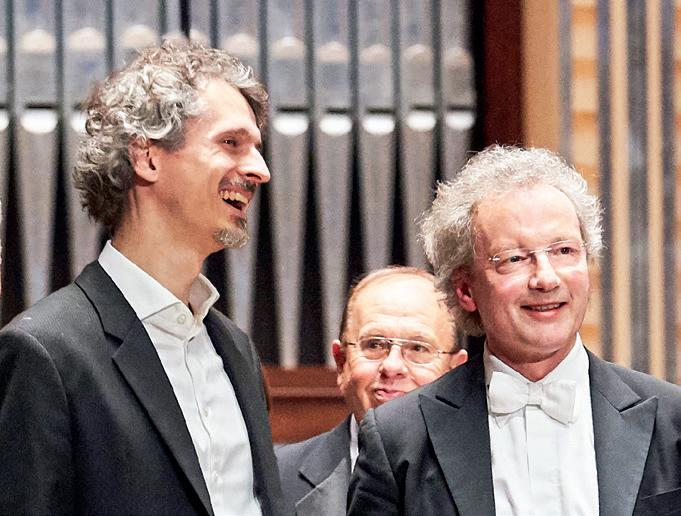
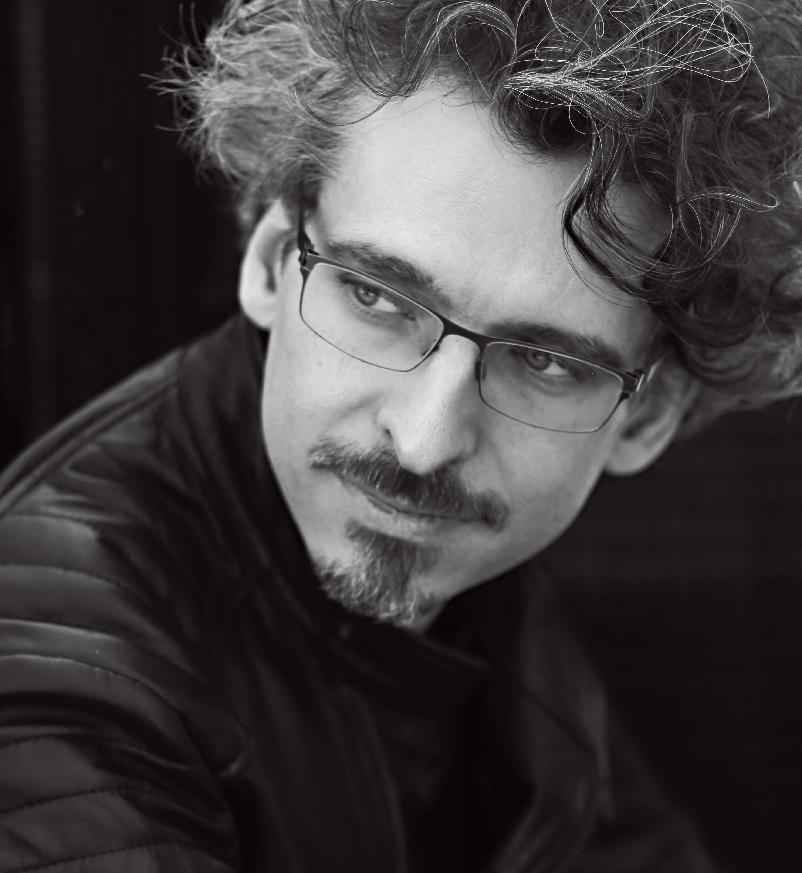
Bernd Richard Deutsch and Franz Welser-Möst in 2019.
Prelude to Act I of Die Meistersinger von Nürnberg
by Richard Wag ner
B O R N : May 22, 1813, in Leipzig
D I E D : February 13, 1883, in Venice
▶ C O M P O S E D : 1862
▶ W O R L D P R E M I E R E : Wagner conducted the first performance of the Prelude on November 1, 1862 , in Leipzig . The full opera was premiered in Munich on June 21, 1868 , under Hans von Bülow.
▶ C L E V E L A N D O R C H E S T R A P R E M I E R E : April 15, 1920, led by Music Director Nikolai Sokoloff
▶ O R C H E S T R AT I O N : 2 flutes , piccolo, 2 oboes , 2 clarinets , 2 bassoons , 4 horns , 3 trumpets , 3 trombones , tuba , timpani, cymbals , triangle, harp , and strings
▶ D U R AT I O N : about 10 minutes
R I C H A R D WA G N E R D R A F T E D his first ideas for D ie Meistersinger von Nürnberg ( The Mastersingers of Nuremberg) as early as 1845, while still living in Dresden. But the work that later came to fruition as his only mature comic opera served as a necessary tonic to the anguished drama of its immediate predecessor, Tristan und Isolde. For Meistersinger, Wagner put aside the unmoored, futuristic harmonic language of Tristan’s world, instead grounding himself in the musical past, finding new vigor in J.S. Bach–inspired counterpoint and even further back, in the traditions of medieval music guilds. Like Tristan, Wagner first imagined D ie Meistersinger as a brief interlude in his creative work In this case, it was to
be a quick comic romp inspired by an actual historical figure, the working-class hero and poet Hans Sachs. The exhaustive effort of Tristan notwithstanding, Wagner rallied while still keeping the not-yet-completed Ring cycle on the back burner and found his initially modest concept ballooning to gigantic proportions. One inspiration was the example of the “old masters” and the topic itself of artistic renewal and creativity, which lies at the heart of Meistersinger.
In his autobiography, Wagner reports that he’d been perked up by an artviewing expedition in Venice, where he sought relief from his post-Tristan depression. The paintings of the great Renaissance artist Titian made such
an impression that Wagner resolved to turn his attention to Meistersinger. Wagner’s telling of this inspiration points to the sense of nostalgia that Meistersinger stirs for an imaginary Renaissance utopia of a society in which artistic genius has integral value.
Wagner recalled that, while taking the train from Venice back to Vienna in 1862, a portion of the Prelude to D ie Meistersinger came to him spontaneously, “with the greatest clarity,” and composed it quickly. Ironically, the opera as a whole proved much more effortful Wagner spent another five years finishing the work.
D ie Meistersinger calls for a very large cast and features several plot lines that intertwine with the contrapuntal finesse that we hear in the Prelude itself. Wagner scales back his orchestral forces somewhat from what he had used in Tristan, but the musical tapestry he weaves from his material is magnificently rich.
The Prelude is designed in the old-fashioned mode of an overture-style “synopsis” of main themes to come (even if the opera itself had yet to be written). At the same time, it can be heard as a miniature symphony that is “about” itself, whether we know that the proud, pompous opening represents the self-important attitude of the Mastersingers or that the sweetly cadenced, lyrical music that comes next stands for the love between Eva and Walther. A young upstart of an artist, Walther will win Eva in marriage through his success at the climactic song contest, with the
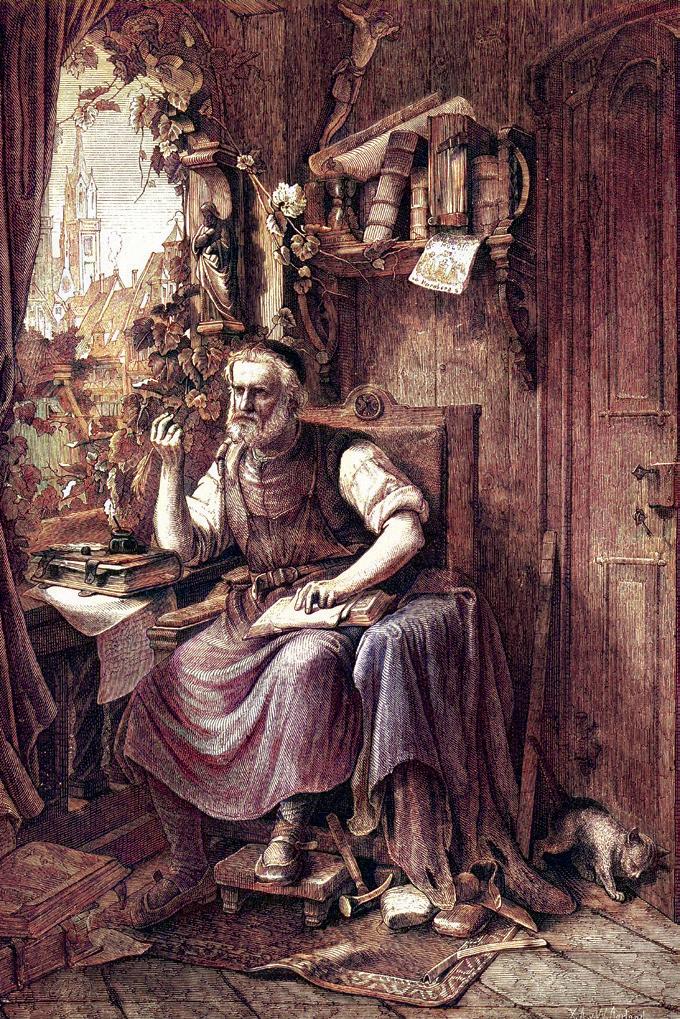
Wagner’s opera Die Meistersinger is based on a real-life figure: the German poet Hans Sachs (above, 1494 – 1576).
final thread of his winning song woven into the musical mix.
Wagner even includes a miniature scherzo of chattering woodwinds a figure for the most annoying pedantic of the Mastersingers, the rule-bound Beckmesser that spin mock counterpoint from the opening theme. He then pulls out all the stops for a grandly symphonic climax. Combining these materials together in a thrilling, majestically paced synthesis, Wagner ends the Prelude with a sunlit blaze of C major.
Thomas May
Thomas May is a writer, critic , educator, and translator
A regular contributor to The New York Times, The Seattle Times, Gramophone, and Strings magazine , he is the English-language editor for the Lucerne Festival
Intensit y
by Bernd Richard Deutsch
B O R N : May 15, 1977, in Mödling , Austria
▶ C O M P O S E D : 2019 – 20 (commissioned by The Cleveland Orchestra and Music Director Franz Welser -Möst)
▶ W O R L D P R E M I E R E : January 13, 2022 , led by Franz Welser-Möst
▶ O R C H E S T R AT I O N : 3 flutes (2nd and 3rd doubling piccolo), 2 oboes , English horn , 2 clarinets , bass clarinet , 2 bassoons , contrabassoon , 4 horns , 3 trumpets , 3 trombones , tuba , timpani, percussion (bass drum , bongos , cowbells , finger cymbals , glockenspiel, güiro, Indian elephant bells , lion’s roar, marimba , rainstick , rute, slide flutes , snare drum , tam-tam , tambourine, temple blocks , tom-tom , tubular bells , tuned gongs , vibraphone, whip , woodblocks , xylophone), harp , piano, celesta , and strings
▶ D U R AT I O N : about 20 minutes
I N M A R C H 2 0 1 9 , Bernd Richard Deutsch made his first visit to Severance to attend the US premiere of his concerto for organ and orchestra, Okeanos, with eminent soloist Paul Jacobs. He had just embarked on his first season as The Cleveland Orchestra’s 10th Daniel R Lewis Composer Fellow, following in the footsteps of now-internationally recognized composers, including Susan Botti, Anthony Cheung, Matthias Pintscher, and Jörg Widmann. This performance came early in the fellowship, while the Orchestra and Music Director Franz Welser-Möst familiarized themselves with Deutsch’s soundworld, a musical landscape that has been described as virtuosic, playful, and sometimes ironic. ( The performance was captured on A Ne w Century, the
Orchestra’s inaugural release on its own recording label.)
Deutsch remembers the concert vividly: “I listened to the music with my eyes closed and experienced the sound very intensely and highly emotionalized. Strong color impressions set in, gold, purple, bright, radiant colors, various forms of light. I memorized these impressions well, and they surely influenced and inspired my music.”
The result was Intensity, written especially for The Cleveland Orchestra. Deutsch defines this title as “a quality or state of experience that I expect from life as well as from art in general.” This quality resonates within his music and can also be found in the way the Orchestra and Welser-Möst approach music-making. It also captures how
the pandemic heightened feelings of separation as well as togetherness in the artistic process.
Born in 1977 outside of Vienna, Deutsch studied composition, piano, and bassoon at the Vienna University of Music and Performing Arts. Since graduating in 2001, he has received several prizes and accolades, including Vienna’s Ernst Krenek Prize (2002), an Austrian state scholarship twice (2010 and 2017), second prize in the 2011 Tōru Takemitsu Composition Competition, the Paul Hindemith Prize (2014), and Australia’s Paul Louwin Prize for composition (2015).
“We believe Mr. Deutsch will be a major figure,” said Franz Welser-Möst. “He’s in the tradition of the third
Viennese school, which has a lighter touch to it, but he also has a real original, personal voice in his music.”
The initial sparks of Intensity came shortly before the premiere of Okeanos, when Deutsch attended The Cleveland Orchestra’s 2018 performances at the Musikverein in Vienna. The allBeethoven program, part of that season’s Prometheus Project, made an impression on the composer.
Deutsch recalled, “I thought immediately I should include a short moment in my piece, in which only the string section plays. A few months later, I then composed such a passage in the third part of my piece.”
Deutsch
defines this title [Intensity] as “a quality or state of experience that I expect from life as well as from art in general . ” composed a passage as “a ntens ty in three main as
Intensity unfolds in three main sections, which Deutsch describes as “departure introspection (absence) return.” Having written most of the piece in a period of self-imposed isolation just prior to the lockdowns early in the pandemic, Deutsch finds even more emotional weight within the last section: “It seems almost prophetic [that] ... after an enforced ‘absence’ of such long dimensions, the ‘return’ becomes even more emphatic.”
Amanda Angel
Amanda Angel was The Cleveland Orchestra’s Managing Editor of Content
Several of Bernd Richard Deutsch’s works have been performed at Severance, including Intensity (2022) and Urworte (2025), both written specifically for The Cleveland Orchestra .
Composer ’s Note
Intensity has three parts and is built on three main themes and two basic chords . I borrowed the second basic chord as an objet trouvé from Modest Mussorgsky’s Pictures at an Exhibition (The Old Castle). The fast movements of the first part convey a sense of a fresh start/euphoric mood (the German word is “Aufbruchsstimmung”). The motivic core for the whole piece emerges from a trumpet signal in the first bars . The middle section is a very quiet introspection a listening to the sound and an inward intensity in contrast to the outward intensity of the first and third parts . After a transition , there is a return of the euphoric mood. Motives from the first part are processed playfully and freely. The piece ends with a renewed burst of energy.
Bernd Richard Deutsch
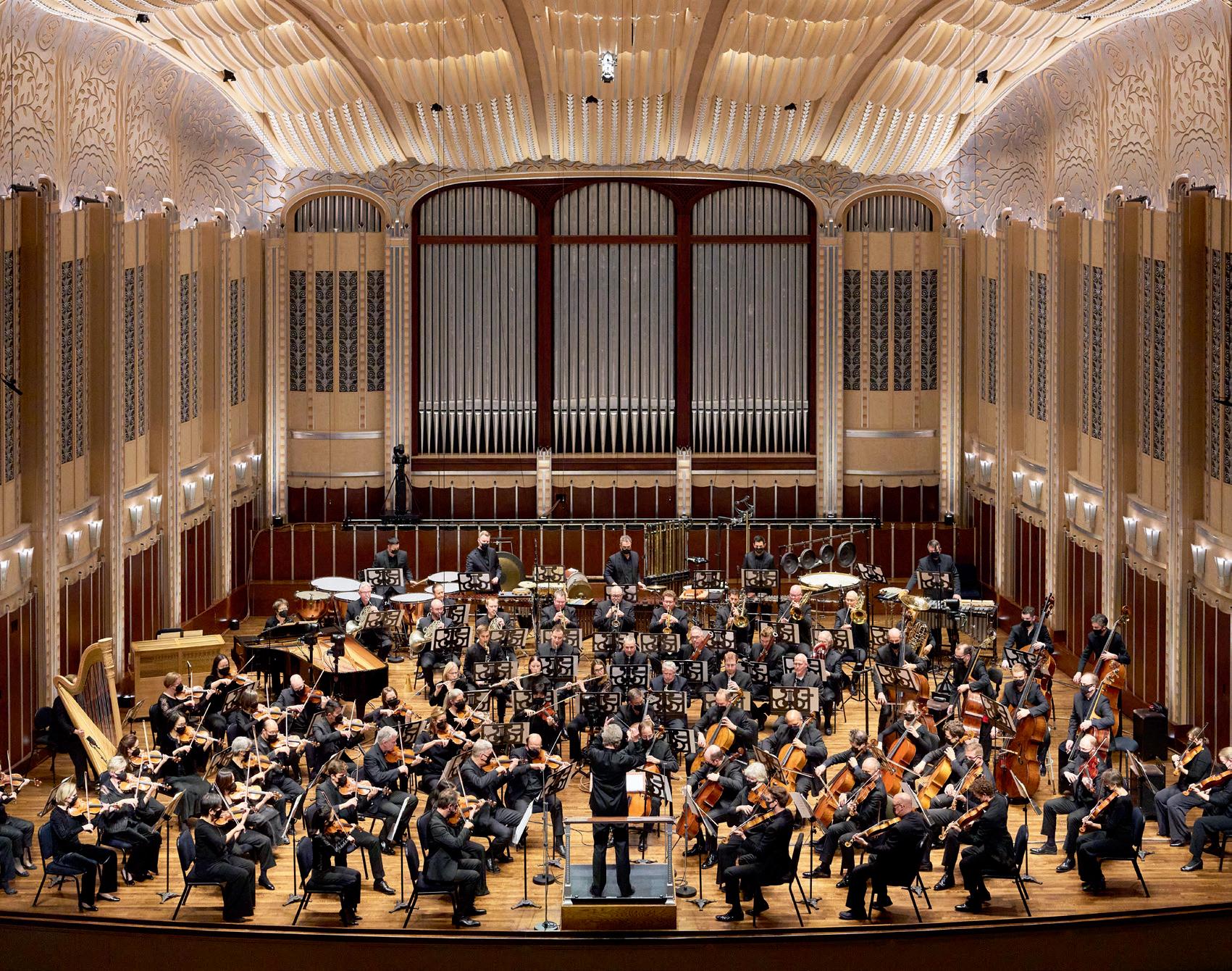
The Cleveland Orchestra and Music Director Franz Welser-Möst presenting the premiere of Bernd Richard Deutsch’s Intensity in January 2022.
Symphonia domestica, Op . 53
by Richard Strauss
B O R N : June 11 , 1864, in Munich
D I E D : September 8, 1949, in Garmisch-Partenkirchen , Bavaria
▶ C O M P O S E D : 1902 – 03
▶ W O R L D P R E M I E R E : March 21, 1904, at Carnegie Hall, conducted by the composer
▶ C L E V E L A N D O R C H E S T R A P R E M I E R E : November 2 , 1939, led by Music Director Artur Rodziński
▶ O R C H E S T R AT I O N : 3 flutes , piccolo, 2 oboes , oboe d’amore, English horn , 3 clarinets , small clarinet in D, bass clarinet , 4 bassoons , contrabassoon , 4 optional saxophones (soprano, alto, baritone, and bass), 8 horns , 4 trumpets , 3 trombones , tuba , timpani, percussion (bass drum , cymbals , glockenspiel, tambourine, triangle), 2 harps , and strings
▶ D U R AT I O N : about 45 minutes
M A R R I A G E , PA R E N T H O O D , and the intimacies of family life, for most of us, are of consuming importance, permanent and inescapable. They are usually also private, personal matters, and the source of happiness, misery, or both Painters and novelists have explored domestic subjects for centuries, and the self-portrait is an honored form of art. Why, then, was Richard Strauss ridiculed for portraying himself and his family in his music? How can the subject of domestic life be deemed unworthy of a composer’s creative efforts, condemned as in bad taste, when other artists and art forms have plunged its intimate and emotional depths to the fullest?
If a symphony can be pastoral, or fantastique, or Italian, or Rhenish, or pathétique, why not domestic? This was what the composer was thinking when he attempted to portray and celebrate the everyday private world he shared with his wife, Pauline, and son, Franz. The Symphonia domestica belongs to the series of tone poems Strauss had been composing since the stunningly successful D on Juan of 1889, each more ambitious than the last The new one was to be called a symphonic poem, not a tone poem (and it has recognizable scherzo and adagio sections, not unlike symphonic movements) Yet it is much more of a narrative with three principal characters. Two of them, his wife and himself, featured prominently in the previous tone poem, Ein Heldenleben.
They are now joined by the baby, known as “Bubi,” whose squeals and tantrums as well as his heavenly repose are represented in the music.
The listener may prefer to know no more than that and let each section suggest what it will. Strauss originally explained events in considerable detail, then later removed most of the tags and cues, sensing the embarrassment that over-descriptive music can cause.
The musical themes for Strauss and his wife are a reflection of each other in diametrically opposing keys, F and B. They reappear constantly his not always gently, hers not always angrily, although Strauss lays his cards on the table early on His own themes at the opening are in turn comfortable (cellos), dreamy (oboe), morose (clarinets), fiery (violins), joyful (trumpet), and fresh (rushing scales)
Her themes follow immediately, but without labels. Pauline did not always make her husband’s life easy and even sometimes sneered at his music. One of their rows became the basis of his 1924 opera Intermezzo. Nevertheless, he remained devoted to her and recognized that he needed her, as the closing pages of the Symphonia domestica celebrate. Their marriage lasted more than half a century, until his death in 1949; she died 10 months later.
A folklike passage suggests bourgeois comforts (interrupted by passionate exchanges) before a sudden hash introduces the baby. He is represented by an important theme played by the oboe d’amore, an instrument familiar to J.S. Bach but not widely used in
Richard Strauss at home in Garmisch with his wife, Pauline, and son, Franz (c. 1904).
Strauss’s time. The baby is, of course, sweet when quiet but also capable of screaming. During his playtime, his theme is transformed into a gentle scherzo somewhat in Mahler’s manner.
As the baby gets drowsy, father looks on with pride. A gently rocking lullaby appears, and as the two parents each say “good night” to their own themes, a clock chimes 7 in the evening All is calm and father settles down to his desk (the adagio, or third movement). The rich sound of horns introduces his
music, tension grows between husband and wife, leading to a blazing row but ending in reconciliation. Strauss’s sheer joy in composing and his unstoppable invention take over, well beyond the point where any storytelling is needed. This is no dirge on the miseries of home life it is a triumphant celebration of a good and ideal life, brilliantly expressed.
Once again Strauss shows himself the master of the modern orchestra, in this case an orchestra larger than any he had called for before. A horn section of eight
This is no dirge on the miseries of home life it is a triumphant celebration of a good and ideal life, brilliantly expressed . horns his
thoughts taking shape and, although he is interrupted by his wife, the music flows freely and leads directly into a love scene. Strauss is at his descriptive best here, and why not? He did not need to apologize for any lack of delicacy since no words are needed.
The couple are soon asleep, although they are troubled by worried thoughts about the child in a surreal passage scored mostly for high instruments They are woken by the clock again striking 7 in the morning.
The new day provides material for the extensive final scene (or movement)
The baby’s theme, sped up, is the subject of a vigorous fugue, with the wife’s theme as a second subject, also treated as a fugue. In the course of this energetic
(as in Wagner’s Ring cycle) was established in Ein Heldenleben, but here he adds the oboe d’amore and a full quartet of saxophones, although Strauss is strangely cautious in their use, for they only play in sections for full orchestra and are never heard on their own. Indeed, in his own performances he did not use saxophones.
Strauss once boasted he could portray a teaspoon in music and compose the differences between a knife and a fork. Music can transform the trivial into the sublime, and the Symphonia domestica proves it quite admirably.
Hugh Macdonald
Hugh Macdonald is Avis H Blewett Professor Emeritus of Music at Washington University in St Louis He has written books on Beethoven, Berlioz , Bizet , and Scriabin, as well as Music in I853: The Biography of a Year
Thank you, Franz
As Franz Welser -Möst begins his 25th and final season, he does so as the longest-serving Music Director in the Orchestra’s history. We invite you to celebrate this extraordinary milestone by making a donation in his honor. Your gift will support the opera & vocal programs he dearly loves and champions .
Show your appreciation today:
Na me d af t er our pione ering founder, Adella Pren t is s Hughe s , our s t re a ming s er vic e of fers access to exclusive lives treams, on-demand c onc er t s , sp e c ia l in t er views , a nd more .
Ava ila ble on t he web, iOS , A ndroid, Roku, A pple T V, A ndroid T V, a nd Chrome c
Try it free by visiting adella .live and using the promo code ADELLA30 at checkout
Franz Welser -Möst
F R A N Z W E L S E R-M Ö S T H A S F O R G E D one of the most transformative artistic legacies in the history of The Cleveland Orchestra, as its seventh and longestserving Music Director. Now in his 25th and final season, he has shaped its sound with extraordinary care and imagination, cultivating greater warmth and flexibility, while preserving precision and transparency. Since the start of his tenure in 2002–03, he has led more than 1,200 performances across 15 US states and 26 countries, and has appointed 56 of the Orchestra’s 100 current musicians.
Widely admired for his interpretations of Central European and Russian repertoire, Welser-Möst has also been a champion for living composers, specifically through the Orchestra’s Daniel R . Lewis Composer Fellowship. His artistic collaborations have resulted in dozens of commissions and co-commissions, and at the close of the 2026–27 season, he will have led The Cleveland Orchestra in 27 world premieres and 21 US premieres. Welser-Möst’s tenure also brought about major innovative milestones for the Orchestra, including the creation of its recording label, the launch of its streaming platform, Adella.live, and the inauguration of the Jack, Joseph and Morton Mandel Opera & Humanities Festival. Opera has become a defining element of Welser-Möst’s Cleveland career
through acclaimed productions of Dvořák’s Rusalka, Richard Strauss’s Ariadne auf Naxos, Janáček’s The Cunning Little Vixen, and Mozart’s The Magic Flute. In May 2027, he leads a fully staged production of Richard Strauss’s D ie Frau ohne Schatten With the appointment of Lisa Wong as Director of Choruses, Welser-Möst also elevated the all-volunteer Cleveland Orchestra Chorus as an essential artistic partner in these productions and other large works.
Beyond Cleveland, Welser-Möst maintains a distinguished international career, marked by a longstanding artistic partnership with the Vienna Philharmonic. He regularly leads the ensemble at the Musikverein and on major international tours, and has already conducted the celebrated annual New Year’s concert three times. In 2024, he was named an Honorary Member of the Vienna Philharmonic, one of its highest honors. He is also celebrated for his interpretations of opera, conducting productions which have been widely acclaimed at the Salzburg Festival and the Vienna State Opera.
From dazzling new works to time -tested favorites , discover the “Cleveland sound” through recordings from The Cleveland Orchestra’s own label.
I N M E M O R I A M :
John Ong
T H E C L E V E L A N D O R C H E S T R A is deeply saddened by the recent passing of John Ong. Ong was elected to the MAA Board of Trustees in 1979 and became an Honorary Trustee for Life in 2017. During his time on the board, he served as Chair of both the Nominating Committee and Comprehensive Campaign Steering Committee and was a member of several other committees. Ong was also a subscriber to Severance and Blossom since 1966
Ong served as United States Ambassador to Norway from 2002 to 2005. A longtime employee of the B.F. Goodrich Company, he served as chairman and chief executive officer from 1979 to 1996. In 1984, President Reagan appointed Ong to the President’s Commission on Industrial Competitiveness, where he served as co-chair of its International Trade Committee. He retired in 1997 as chairman of the board of directors. He was a trustee emeritus at Western Reserve Academy, where the
John D Ong Library is named in his honor. At the end of his ambassadorship in November 2005, Ong was given the Grand Cross of the Royal Norwegian Order of Merit. He was an emeritus trustee of The University of Chicago and Case Western Reserve University, and a former director of seven S&P 500 companies.
Ong and his late wife, Mary Lee, were married for 62 years, raised three children, and enjoyed six grandchildren. Our thoughts are with his family, friends, and loved ones during this time
John Ong was an invaluable member of The Cleveland Orchestra family. He served for many years on the MAA Board of Trustees and was a loyal subscriber since 1966
R E C I TA L
S E P 1 2
L A N G L A N G I N R E C I TA L
Works by Mozart, Beethoven, Albéniz, Granados, and Liszt
S E P 1 7 & 2 0
S T R AU S S &
S H O S TA KOV I C H
Franz Welser-Möst, conductor
Golda Schultz, soprano
R . S T R A U S S Four Last Songs
S H O S TA KO V I C H Symphony No. 8
S E P 24 & 2 6
B R A H M S ’ S S E C O N D
S Y M P H O N Y
Franz Welser-Möst, conductor
L I S Z T Orpheus
M A RT I N Ů Symphony No. 2
B R A H M S Symphony No. 2
R E C I TA L
O C T 1 9
B AT I A S H V I LI ,
C A P U Ç O N & T H I B AU D E T
I N R E C I TA L
Lisa Batiashvili, violin
Gautier Capuçon, cello
Jean-Yves Thibaudet, piano
Works by Shostakovich, Debussy, and Dvořák
O C T 24
T H E C H O RU S AT 75
W I T H E R I C W H I TAC R E
The Cleveland Orchestra Chorus
Lisa Wong, conductor
Eric Whitacre, conductor
Members of The Cleveland Orchestra
J O H N C O R I G L I A N O Fern Hill
E R I C W H I TA C R E Eternity in an Hour
O C T 3 0 & 31 , N OV 1
M A H LE R ’ S F I F T H
S Y M P H O N Y
Petr Popelka, conductor
H AY D N Symphony No. 80 M A H L E R Symphony No. 5
N OV 5 , 7 & 8
B R A H M S ’ S R E Q U I E M
Petr Popelka, conductor
Frank Rosenwein, oboe
Julia Kleiter, soprano
Lucas Meachem, baritone
The Cleveland Orchestra Chorus A D O L P H U S H A I L S T O R K Distant
Lands: Concerto for Oboe
B R A H M S Ein deutsches Requiem
N OV 1 2 , 14 & 1 5
ROYA L I LLU M I N AT I O N S
Jane Glover, conductor
Julia Bullock, soprano
H A N D E L Suites Nos . 2 and 3 from Water Music
B R I T T E N Les Illuminations
S TA C Y G A R RO P Spectacle of Light
H A N D E L Music for the Royal Fireworks
N OV 1 9 –2 2
RO U VA LI C O N D U C T S
S T R AU S S
Santtu-Matias Rouvali, conductor
Steven Banks, saxophone
B I L LY C H I L D S Diaspora: Concerto for Saxophone* R . S T R A U S S Ein Heldenleben
N OV 2 7–2 9
TC H A I KOV S K Y ’ S
S WA N L A K E
Elim Chan, conductor
Veronika Eberle, violin
G U B A I D U L I N A Fairytale Poem
B R U C H Violin Concerto No 1
T C H A I KO V S K Y Suite from Swan Lake
D E C 3 – 5
H A D E LI C H P L AY S
B A RTÓ K
Alan Gilbert, conductor
Augustin Hadelich, violin
D A L I T WA R S H AW Responses
B A RT Ó K Violin Concerto No. 2
D E B U S S Y Images
W I N T E R
J A N 14 & 1 6
B E E T H OV E N ’ S
M I S S A S O LE M N I S
Franz Welser-Möst, conductor
Golda Schultz, soprano
Taylor Raven, mezzo-soprano
Julian Prégardien, tenor
Anthony Schneider, bass
The Cleveland Orchestra Chorus
B E E T H O V E N Missa solemnis
J A N 1 5
W E L S E R- M Ö S T
C O N D U C T S S T R AU S S
Franz Welser-Möst, conductor
R . S T R A U S S Introduction and Finale from Daphne
R . S T R A U S S Metamorphosen
R . S T R A U S S Symphonia domestica
R E C I TA L
J A N 2 6
S T E P H E N H O U G H
I N R E C I TA L
Works by Schubert, Brahms, Schoenberg, Stockhausen, Beethoven, R. Schumann, and Sherman
F E B 4 –7
H O L S T ’ S T H E P L A N E T S
Thomas Adès, conductor
The Cleveland Orchestra Chorus
T H O M A S A D È S Inferno Suite F R A N C I S C O C O L L Lilith H O L S T The Planets
F E B 1 1–14
A LL TC H A I KOV S K Y
Kazuki Yamada, conductor
Beatrice Rana, piano
T C H A I KO V S K Y Piano Concerto No. 1
T C H A I KO V S K Y Symphony No 6, “Pathétique”
F E B 1 8 & 2 0
H UA N G P L AY S B A R B E R
Fabio Luisi, conductor
Paul Huang, violin
B E N T S Ø R E N S E N Evening Land
B A R B E R Violin Concerto
N I E L S E N Symphony No. 4, “ The Inextinguishable”
F E B 2 5 –2 7
C H O P L AY S C H O P I N
Santtu-Matias Rouvali, conductor
Seong-Jin Cho, piano
C H O P I N Piano Concerto No. 1
S H O S TA KO V I C H Symphony No. 15
M A R 4 –7
R AC H M A N I N O F F ’ S
R H A P S O DY
Semyon Bychkov, conductor
Alexandre Kantorow, piano
B R I T T E N The Young Person’s Guide to the Orchestra
R A C H M A N I N O F F Rhapsody on a Theme of Paganini
E L G A R Enigma Variations
R E C I TA L
M A R 1 6
G A R R I C K O H L S S O N
I N R E C I TA L
Works by Chopin
S P R I N G
A P R 1 5 , 1 7 & 1 8
LI M P L AY S LI S Z T
Esa-Pekka Salonen, conductor
Yunchan Lim, piano
E S A - P E K K A S A L O N E N NYX
L I S Z T Piano Concerto No 2
B E R L I O Z Suite from Roméo et Juliette
R E C I TA L
A P R 2 0
N O B U Y U K I T S U J I I
I N R E C I TA L
Works by Grieg, Debussy, Ravel, and Kapustin
A P R 2 2–24
A DA M S & TAO
John Adams, conductor
Conrad Tao, piano
W E I L L Suite from The Threepenny Opera
C O P L A N D Piano Concerto
H A R R I S Symphony No. 3*
J O H N A D A M S Slonimsky’s Earbox
A P R 2 9, M AY 1 & 2
M A H LE R ’ S N I N T H
Franz Welser-Möst, conductor
M A H L E R Symphony No. 9
M AY 6 & 7
S T R AV I N S K Y & S I B E LI U S
Franz Welser-Möst, conductor
S T R AV I N S K Y Orpheus
S I B E L I U S Four Legends from the Kalevala
M AY 1 6 , 1 9 & 2 2
D I E F R AU O H N E
S C H AT T E N
Franz Welser-Möst, conductor
Frederic Wake-Walker, director
David Butt Philip, tenor (The Emperor)
Sara Jakubiak, soprano (The Empress)
Jennifer Johnson Cano, mezzosoprano (The Nurse)
Roman Burdenko, baritone (Barak)
Ambur Braid, soprano (The Dyer’s Wife)
The Cleveland Orchestra Chorus
R . S T R A U S S Die Frau ohne Schatten
Opera presentation sung in German with projected supertitles
* Not performed on the Friday matinee concert
Generous support for the 2026 – 27 Recital Series provided by the Art of Beauty Company, Inc.
M AY 2 7
H AY D N ’ S C R E AT I O N
Franz Welser-Möst, conductor
Joélle Harvey, soprano
Kai Kluge, tenor
Ludwig Mittelhammer, baritone
The Cleveland Orchestra Chorus
H AY D N The Creation
M AY 2 8
S T R AU S S ’ S A LP I N E
S Y M P H O N Y
Franz Welser-Möst, conductor
B E R N D R I C H A R D D E U T S C H
Intensity
E A S T M A N Symphony No. 2
R . S T R A U S S An Alpine Symphony
M AY 2 9
T H E L A S T WA LT Z
Franz Welser-Möst, conductor
A spirited concert of Viennese dances and overtures , celebrating Franz Welser -Möst and capping his 25 transformative years as Music Director of The Cleveland Orchestra.
Franz Welser -Möst, Music Director
K E LV I N S M I T H FA M I LY C H A I R
F I R S T V I O L I N S
Joel Link
C O N C E RT M A S T E R
Blossom-Lee Chair
Elizabeth Fayette
F I R S T A S S O C I AT E
C O N C E RT M A S T E R
Virginia M. Lindseth, PhD, Chair
Jung-Min Amy Lee
A S S O C I AT E
C O N C E RT M A S T E R
Gretchen D. and Ward Smith Chair
Zhan Shu
A S S I S TA N T
C O N C E RT M A S T E R
Clara G. and George P. Bickford Chair
Stephen Tavani
A S S I S TA N T
C O N C E RT M A S T E R
Dr Ronald H Krasney Chair
Wei-Fang Gu
Drs . Paul M. and Renate H. Duchesneau Chair
Kim Gomez
Elizabeth and Leslie Kondorossy Chair
Chul-In Park
Harriet T. and David L . Simon Chair
Miho Hashizume
Theodore Rautenberg Chair
Jeanne Preucil Rose
Larry J B and Barbara S
Robinson Chair
Alicia Koelz
Oswald and Phyllis Lerner
Gilroy Chair
Yu Yuan
Patty and John Collinson Chair
Isabel Trautwein
Trevor and Jennie Jones Chair
Katherine Bormann
Paul and Lucille Jones Chair
Analise Handke
Gladys B Goetz Chair
Genevieve Smelser
S E C O N D V I O L I N S
Stephen Rose*
Alfred M and Clara T Rankin Chair
Eli Matthews1
Patricia M. Kozerefski and Richard J Bogomolny Chair
Jason Yu2
James and Donna Reid Chair
Sonja Braaten Molloy
Carolyn Gadiel Warner
Elayna Duitman
Ioana Missits
Jeffrey Zehngut^
Kathleen Collins
Beth Woodside
Emma Shook
Dr Jeanette Grasselli Brown and Dr Glenn R Brown Chair
Yun-Ting Lee
Deborah L . Neale Chair
Jiah Chung Chapdelaine
Liyuan Xie
Gawon Kim
Dustin Wilkes-Kim
V I O L A S
Wesley Collins*
Chaillé H and Richard B
Tullis Chair
Gareth Zehngut1^
Charles M. and Janet G.
Kimball Chair
Stanley Konopka2
Mark Jackobs
Jean Wall Bennett Chair
Lisa Boyko
Richard and Nancy Sneed Chair
Richard Waugh
Lembi Veskimets
The Morgan Sisters Chair
Eliesha Nelson^
Anthony and Diane Wynshaw-Boris Chair
William Bender
Thomas Lauria and Christopher Lauria Chair
With sincere gratitude to the musicians of The Cleveland Orchestra for their in-kind contributions supporting community programs and securing funding opportunities
C E L L O S
Mark Kosower*
Louis D Beaumont Chair
Richard Weiss1
The GAR Foundation Chair
Charles Bernard2
Helen Weil Ross Chair
Bryan Dumm
Muriel and Noah Butkin Chair
Tanya Ell
Thomas J and Judith Fay
Gruber Chair
Ralph Curry
Brian Thornton
William P. Blair III Chair
David Alan Harrell
Martha Baldwin
Dane Johansen
Marguerite and James Rigby Chair
Paul Kushious
B A S S E S
Maximilian Dimoff*
Clarence T. Reinberger Chair
Charles Paul1
Mary E . and F. Joseph
Callahan Chair
Derek Zadinsky2
Mark Atherton
Thomas Sperl
Henry Peyrebrune
Charles Barr Memorial Chair
Charles Carleton
Scott Dixon
Brandon Mason
H A R P
Trina Struble*
Alice Chalifoux Chair
F LU T E S
Joshua Smith*
Elizabeth M. and William C.
Treuhaft Chair
Saeran St. Christopher
Jessica Sindell2^
Austin B and Ellen W Chinn Chair
Mary Kay Fink
P I C C O L O
Mary Kay Fink
Anne M and M Roger Clapp Chair
O B O E S
Frank Rosenwein*
Edith S Taplin Chair
Corbin Stair
Sharon and Yoash Wiener Chair
Jeffrey Rathbun2
Everett D. and Eugenia S .
McCurdy Chair
Robert Walters
E N G L I S H H O R N
Robert Walters
Samuel C and Bernette K
Jaffe Chair
C L A R I N E T S
Afendi Yusuf*
Robert Marcellus Chair
Robert Woolfrey
Victoire G and Alfred M
Rankin, Jr Chair
Daniel McKelway2
Robert R and Vilma L Kohn
Chair
Amy Zoloto
E-F L AT C L A R I N E T
Daniel McKelway
Stanley L and Eloise M
Morgan Chair
B A S S C L A R I N E T
Amy Zoloto
Myrna and James Spira Chair
B A S S O O N S
John Clouser*
Louise Harkness Ingalls Chair
Gareth Thomas
Catherine Van Handel2
Sandra L Haslinger Chair
Jonathan Sherwin
C O N T R A B A S S O O N
Jonathan Sherwin
H O R N S
Nathaniel Silberschlag*
George Szell Memorial Chair
Michael Mayhew§ Knight Foundation Chair
Jesse McCormick-Stepp
Robert B Benyo Chair
Hans Clebsch
Richard King
Meghan Guegold Hege^
Gay Cull Addicott and Robert R . Cull Chair
T RU M P E T S
Michael Sachs*
Robert and Eunice Podis Weiskopf Chair
Jack Sutte
Lyle Steelman2^
James P and Dolores D Storer Chair
Michael Miller
C O R N E T S
Michael Sachs*
Mary Elizabeth and G Robert Klein Chair
T RO M B O N E S
Brian Wendel*
Gilbert W. and Louise I.
Humphrey Chair
Richard Stout
Alexander and Marianna C McAfee Chair
Shachar Israel2
B A S S T RO M B O N E
Luke Sieve
E U P H O N I U M &
B A S S T RU M P E T
Richard Stout
T U B A
Yasuhito Sugiyama*
Nathalie C . Spence and Nathalie S . Boswell Chair
T I M PA N I
Peter Nichols2
Mr and Mrs Richard K Smucker Chair
P E RC U S S I O N
Marc Damoulakis*
Margaret Allen Ireland Chair
Thomas Sherwood
Tanner Tanyeri
Peter Nichols
K E Y B OA R D I N S T RU M E N T S
Carolyn Gadiel Warner
Marjory and Marc L . Swartzbaugh Chair
L I B R A R I A N
Michael Ferraguto*
Joe and Marlene Toot Chair
E N D O W E D C H A I R S C U R R E N T LY
U N O C C U P I E D
Sunshine Chair
Otto G and Corinne T Voss Chair
Rudolf Serkin Chair
Michael Miller C
Christoph von Dohnányi †
Taichi Fukumura
Elizabeth Ring and William Gwinn Mather Chair
James Feddeck
and Doris Dworkin Chair
Lisa Wong
Frances P. and Chester C . Bolton Chair
* Principal § Associate Principal 1 First Assistant Principal 2 Assistant Principal
^ Alum of The Cleveland Orchestra Youth Orchestra † In Memoriam
This roster lists full-time members of The Cleveland Orchestra . The number and seating of musicians on stage varies depending on the piece being performed Seating within the string sections rotates on a periodic basis
T H E C L E V E L A N D O R C H E S T R A , under the leadership of Franz Welser-Möst since 2002, is widely recognized as one of the world’s leading ensembles. Praised by The Ne w York Times as “America’s Finest,” the Orchestra is renowned for its virtuosity, elegance of sound, and chamber-like musical flexibility. In his 25th and final season as Music Director, Welser-Möst concludes a transformative partnership that has been marked by exceptional artistic ambition, growing international recognition, and deep community connection.
During his tenure, the Orchestra has achieved major institutional milestones, including groundbreaking residencies at the Musikverein in Vienna the first by an American orchestra and at the Adrienne Arsht Center in Miami. In 2023, The Cleveland Orchestra launched the annual Jack, Joseph and Morton Mandel Opera & Humanities Festival, presenting acclaimed opera productions alongside
art exhibits, community events, and civic conversations.
Through concerts, broadcasts, recordings, tours, and digital initiatives, The Cleveland Orchestra reaches an ever-growing audience around the world. Its in-house recording label and streaming platform, Adella.live, capture and share performances from the Welser-Möst era while introducing new generations of fans to the Orchestra’s artistry.
Founded by Adella Prentiss Hughes, The Cleveland Orchestra gave its inaugural concert in December 1918
Over more than a century, it has grown into a treasured community institution, enriching lives through music, education, and a deep commitment to Northeast Ohio. Today, more than 400,000 people attend Cleveland Orchestra concerts each year. From its year-round home at Severance Music Center to its summer season at Blossom Music Center in Cuyahoga Valley National Park, the Orchestra continues to serve audiences across the region.
Seven Music Directors Nikolai Sokoloff, Artur Rodziński, Erich Leinsdorf, George Szell, Lorin Maazel, Christoph von Dohnányi, and Franz Welser-Möst have shaped the ensemble’s distinctive musical identity and celebrated “Cleveland sound.”
Welser-Möst’s tenure as the longestserving Music Director in Cleveland Orchestra history stands as a defining chapter in that evolution.
The Cleveland Orchestra Board of Trustees
O F F I C E R S
Richard J. Kramer
Chair
David J. Hooker
Secretary
Victor Alexander
Treasurer
André Gremillet
President & CEO,
The Richard K Smucker Chair
Richard K . Smucker
Immediate Past Chair
Richard J Bogomolny
Chair Emeritus
Dennis W. LaBarre
Chair Emeritus
Norma Lerner
Honorary Chair
R E S I D E N T T R U S T E E S
Victor Alexander
Robin Dunn Blossom
Yuval Brisker
Helen Rankin Butler
Nancy Slocum Callahan
Irad Carmi
Bill Clawson
Matthew V. Crawford
Lisa Fedorovich
Michael Frank , MD JD
Hiroyuki Fujita
Robert Glick
Arthur C. Hall III
Iris Harvie
Dee Haslam
Stephen H. Hoffman
David J. Hooker
Michelle Shan Jeschelnig
Sarah Liotta Johnston
Elizabeth B. Juliano
Nancy F. Keithley
Douglas A . Kern
John D. Koch
Richard J. Kramer
Dennis W LaBarre
Heather Lennox
Cathy Lincoln
Robert W Malone
Ben Mathews
Nancy W. McCann
Stephen McHale
Scott C. Mueller
Katherine T. O’Neill
Hyun Park
Alfred M. Rankin, Jr.
Zoya Reyzis
Richard K . Smucker
James C. Spira
R . Thomas Stanton
Richard Stovsky
Russell A Trusso
Robert Walker
Daniel P. Walsh
Thomas A . Waltermire
Jes Warren
Jeffery J. Weaver
Anya Weaving
Meredith Smith Weil
Paul E . Westlake Jr.
David A . Wolfort
Anthony Wynshaw-Boris
Virginia Nord Barbato (NY)
Mary Jo Eaton (FL)
Christina A . Gold (FL)
Michael J. Horvitz (FL)
Thomas E Lauria (FL)
Loretta Mester (PA)
Benjamin N Pyne (NY)
Geraldine B Warner (OH)
Tony White (OH)
Wolfgang C. Berndt (Austria)
Herbert Kloiber (Germany)
André Gremillet
Todd Diacon
Denise Horstman
Sarah Hutchins
Eric Kaler
Beverly J Schneider
Richard J. Bogomolny
Charles P. Bolton
Robert D. Conrad
Alexander M. Cutler
Richard C Gridley
Norma Lerner
Alex Machaskee
Robert P. Madison
Milton S. Maltz
Beth E . Mooney
Audrey Gilbert Ratner
Charles A . Ratner
Hewitt B. Shaw
Luci Schey Spring
Whatever greatness The Cleveland Orchestra has achieved is because of all the people here in this community, who believe in what the power of music can do.
Franz Welser-Möst , TCO Music Director
Y O U R V I S I T
L AT E S E AT I N G
As a courtesy to audience members and musicians , late-arriving patrons are asked to wait quietly until the first convenient break in the program. These seating breaks are at the discretion of the House Manager in consultation with the performing artists .
C E L L P H O N E S , WAT C H E S &
O T H E R D E V I C E S
To ensure a quiet and respectful listening environment , please silence all electronic devices .
P H O T O G R A P H Y, V I D E O G R A P H Y & R E C O R D I N G
Audio recording, photography, and videography are not allowed during performances at Severance Photographs can only be taken when the performance is not in progress . H E A R I
In consideration of others , please reduce the volume on hearing aids and other health-assistive devices that may produce noise. For Infrared Assistive-Listening Devices , please see an usher. To request one in advance, email info@cleveland orchestra .com. I N T H E E V E N T
Contact an usher or a member of house staff if you require medical assistance. Emergency exits are clearly marked throughout the building Ushers and house staff will provide instructions in the event of an emergency
A G E G U I D E L I N E S
Regardless of age, each person must have a ticket and be able to sit quietly in a seat throughout the
T H E C L E V E L A N D O R C H E S T R A A P P Official Mobile App of TCO
Explore upcoming concerts , purchase and access your tickets , receive performance updates , and more .
For more information and direct links to download, visit clevelandorchestra .com/visit/ tco-app or scan the QR code with your smartphone camera . Available for iOS and Android on Google Play and at the Apple App Store
performance. Classical Season subscription concerts are not recommended for children under 8. However, there are several ageappropriate series designed specifically for children and youth, including Music Explorers (ages 3 to 6) and Family Concerts (ages 7 and older)
F O O D & M E RC H A N D I S E
Beverages and snacks are available at bars throughout the building and in the Lounge at Severance Only bottled water is permitted in the hall. For Cleveland Orchestra apparel, recordings , and gift items , visit the Welcome Center.
T E L L U S A B O U T YO U R E X P E R I E N C E
We are so glad you joined us! Want to share about your time at Severance? Send your feedback to cx@clevelandorchestra .com. Hearing directly from you will help us create the best experience possible.
The Cleveland Orchestra is grateful to the following organizations for their ongoing generous support of The Cleveland Orchestra: the State of Ohio and Ohio Arts Council and to the residents of Cuyahoga County through Cuyahoga Arts and Culture
Cleveland Orchestra performances are broadcast as part of regular programming on ideastream/WCLV Classical 90.3 FM, Saturdays at 8 PM and Sundays at 4 PM.
The Cleveland Orchestra is proud of its long-term partnership with Kent State University, made possible in part through generous funding from the State of Ohio
The Cleveland Orchestra is proud to have its home, Severance Music Center, located on the campus of Case Western Reserve University, with whom it has a long history of collaboration and partnership.
Kevin McBrien, Editorial & Publications Manager, The Cleveland Orchestra kmcbrien@clevelandorchestra .com
Ellen Sauer Tanyeri, Archives & Editorial Assistant, The Cleveland Orchestra
D E S I G N
Elizabeth Eddins, Eddinsdesign eddinsdesign@gmail com
A D V E R T I S I N G Live Publishing Company, 216-721-1800
Every so often you reach a moment that demands an important conversation. When it arrives, Glenmede is ready with sophisticated wealth and investment management solutions delivered with the personalized service you deserve. glenmede.com