

A FESTIVAL OF CONCERTS, CONVERSATIONS & IDEAS
MAY 15–24, 2026




















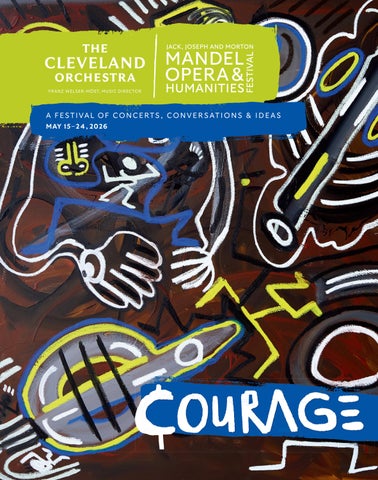
MAY 15–24, 2026

FROM THE CLEVELAND ORCHESTRA PRESIDENT & CEO
WELCOME TO THE 2026 Jack, Joseph and Morton Mandel Opera & Humanities Festival. We are pleased to once again host this annual celebration of music, art, and conversations both at Severance Music Center and with partners throughout Cleveland.
This fourth edition of the festival explores the timely theme of Courage Though a simple idea on the surface, courage is much more than mere bravery. It is not the absence of fear, but the power to act in the face of that fear. It takes courage to speak out, but also to listen and self-reflect. Centered around performances of Beethoven’s only opera, Fidelio, led by Music Director Franz Welser-Möst, we hope that this year’s festival will create a space for meaningful dialogue, inspiration, and reflection.
For the first time, we are also pleased to welcome a guest curator to the festival. Acclaimed composer, jazz trumpeter, and social activist Terence Blanchard has designed several of this year’s performances and discussions, which, together with the Halim Flowers’s art exhibition, examine how courage unites people and drives change through moments of resolve, both mundane and earth-shattering. The result is a compelling 10 days of artistic and intellectual exploration.
As always, I would like to express my deepest thanks and appreciation to several collaborators, without whom this festival would not be possible: the Jack, Joseph and Morton Mandel Foundation, the local partners for this year’s festival, and our Cleveland Orchestra donor family, whose support and unwavering generosity are second to none. I would also like to extend special thanks to Franz Welser-Möst, Terence Blanchard, Christophe Abi-Nassif, and The Cleveland Orchestra musicians and staff, whose tireless vision, talents, and efforts are essential to bringing what we do to life.
Thank you for joining us for this year’s festival, which has truly become one of my favorite parts of the Orchestra’s season. I hope you take in all the sights and sounds we have to offer, and that you come away feeling uplifted and inspired.
André Gremillet President & CEO
THE RICHARD K. SMUCKER CHAIR
The Cleveland Orchestra
WELCOME TO THE FOURTH ANNUAL Jack, Joseph and Morton Mandel Opera & Humanities Festival. Each year, this week-long celebration invites us to enjoy extraordinary artistic experiences that provide a lens for deeper reflection on the world we share. We are grateful for the institutional partnership that makes this possible and are humbled by the ways Cleveland audiences continue to embrace these conversations.
WELCOME TO THE FOURTH ANNUAL Jack, Joseph and Morton Mandel Opera & Humanities Festival. Each year, this week-long celebration invites us to enjoy extraordinary artistic experiences that provide a lens for deeper reflection on the world we share. We are grateful for the institutional partnership that makes this possible and are humbled by the ways Cleveland audiences continue to embrace these conversations.
This year’s festival theme, Courage, asks us to consider what it means to stand firm in our values — both as individuals and as a society. In the context of worldwide events and the era of misinformation, humans risk becoming isolated by media algorithms that reward outrage and reinforce social division. Music, art, and theater offer a bridge of connection beyond language, introducing us to surprisingly familiar characters whose flaws and challenges mirror our own. It is an act of moral courage to examine our beliefs and seek out opposing views. Moreover, curiosity and selfreflection are vital to the work of building a more just and compassionate world.
This year’s festival theme, Courage, asks us to consider what it means to stand firm in our values — both as individuals and as a society. In the context of worldwide events and the era of misinformation, humans risk becoming isolated by media algorithms that reward outrage and reinforce social division. Music, art, and theater offer a bridge of connection beyond language, introducing us to surprisingly familiar characters whose flaws and challenges mirror our own. It is an act of moral courage to examine our beliefs and seek out opposing views. Moreover, curiosity and selfreflection are vital to the work of building a more just and compassionate world.
Beethoven’s only opera, Fidelio, with its story of love, justice, and resistance to tyranny, offers a timeless reminder that freedom requires not just bold action but also moral clarity and hope. As the United States marks the 250th anniversary of its response to tyranny, we are reminded that our democratic experiment, however imperfect, continues to evolve.
Beethoven’s only opera, Fidelio, with its story of love, justice, and resistance to tyranny, offers a timeless reminder that freedom requires not just bold action but also moral clarity and hope. As the United States marks the 250th anniversary of its response to tyranny, we are reminded that our democratic experiment, however imperfect, continues to evolve.
We are grateful to the artists and performers who challenge us to expand our worldview, and we are proud to support a festival that brings world-class opera to Cleveland. This annual gathering strengthens the Mandel Foundation’s longstanding commitment to the enriching cultural life of our city and highlights the power of partnership among artists, institutions, and the community.
We are grateful to the artists and performers who challenge us to expand our worldview, and we are proud to support a festival that brings world-class opera to Cleveland. This annual gathering strengthens the Mandel Foundation’s longstanding commitment to the enriching cultural life of our city and highlights the power of partnership among artists, institutions, and the community.
Our thanks to André Gremillet, Franz Welser Möst, Terence Blanchard, the musicians and staff of The Cleveland Orchestra, and the many collaborators whose vision brings this festival to life. May these performances and conversations inspire renewed understanding, compassion, and courageous civic engagement.
Our thanks to André Gremillet, Franz Welser Möst, Terence Blanchard, the musicians and staff of The Cleveland Orchestra, and the many collaborators whose vision brings this festival to life. May these performances and conversations inspire renewed understanding, compassion, and courageous civic engagement.
Dr. Jehuda Reinharz
Dr. Jehuda Reinharz
President & CEO
President & CEO
Jack, Joseph and Morton Mandel Foundation
Jack, Joseph and Morton Mandel Foundation
Stephen H. Hoffman
Stephen H. Hoffman
Chairman
Chairman
Jack, Joseph and Morton Mandel Foundation
Jack, Joseph and Morton Mandel Foundation
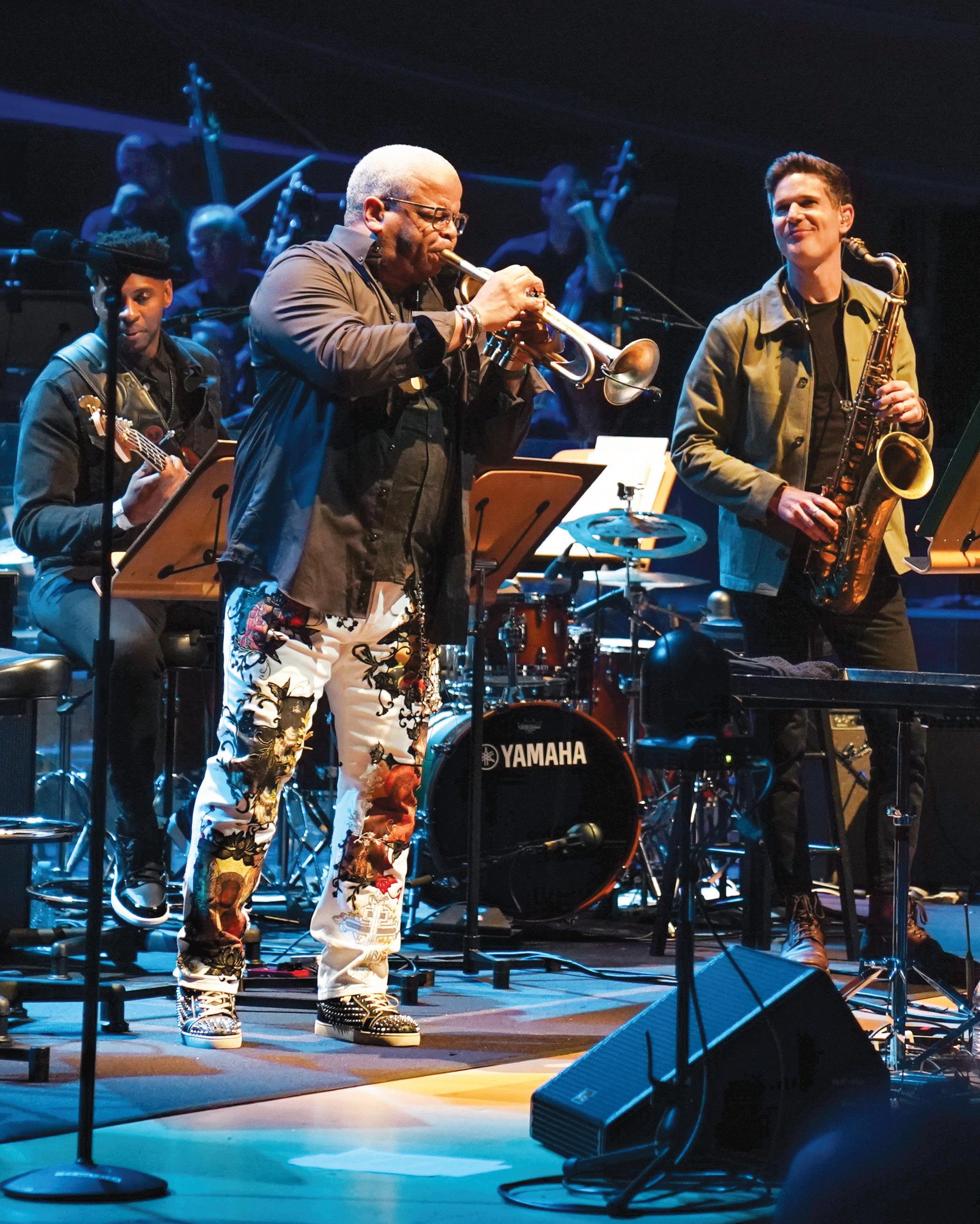
by Terence Blanchard Festival Curator
Terence Blanchard has curated a festival that explores courage through various lenses, creating bridges across art forms
IT HAS BEEN AN HONOR TO SERVE AS CURATOR of the 2026 Mandel Opera & Humanities Festival and to work so closely with The Cleveland Orchestra.
This collaboration speaks to a culminating moment in my life. I’m a jazz musician, but for a long time, I’ve dealt with visual arts, film, and vocal genres, including opera — so I understand those worlds. Bringing these things together to create a festival experience that celebrates the humanities and social justice is a powerful thing.
Whenever I enter new artistic spaces, I strive to be a turnkey and not a token. Just because I am a prominent African American voice in the room, doesn’t mean the work is done — it only proves that there are so many diverse voices that need to be heard. When art forms have been so insular for so long, we are all missing out on important opportunities.
We have to learn how to celebrate our differences rather than use them as weapons. There are so many forces that pull us away from each other. But I truly believe that none of us are mistakes; we’re all unique for a reason. No matter how different our beliefs and our backgrounds are, we can find that common area that helps us grow and appreciate each other instead of being afraid of one another. This is where I see our theme of Courage coming in. Fear is the biggest culprit in tearing us apart. But music can give us courage to do all the things that we are afraid of doing. Amid all the negativity and division in the news, a single piece
of music can form a bridge. For some of us, it will bring back beautiful memories. For others, it is an exciting new experience that makes us curious about where it came from. That is powerful, because if you are truly curious, you won’t allow people with talking points to cloud your judgment. You will go out and do the research and approach unfamiliar spaces with understanding.
Curating the festival has reminded me of my work in film. After I see an amazing scene, there’s often a moment when I start to panic about what to do musically. But if you relax, the scene tells you what it is that you need to do. The circumstances invite your creativity. You could also compare it to being a band leader. You have to work to find that thing that connects to the audience and helps all of us reach a higher consciousness. The leader gives each musician room to express themselves and incorporates those ideas to form a stronger whole. It’s a perfect metaphor for how we should be as a society.
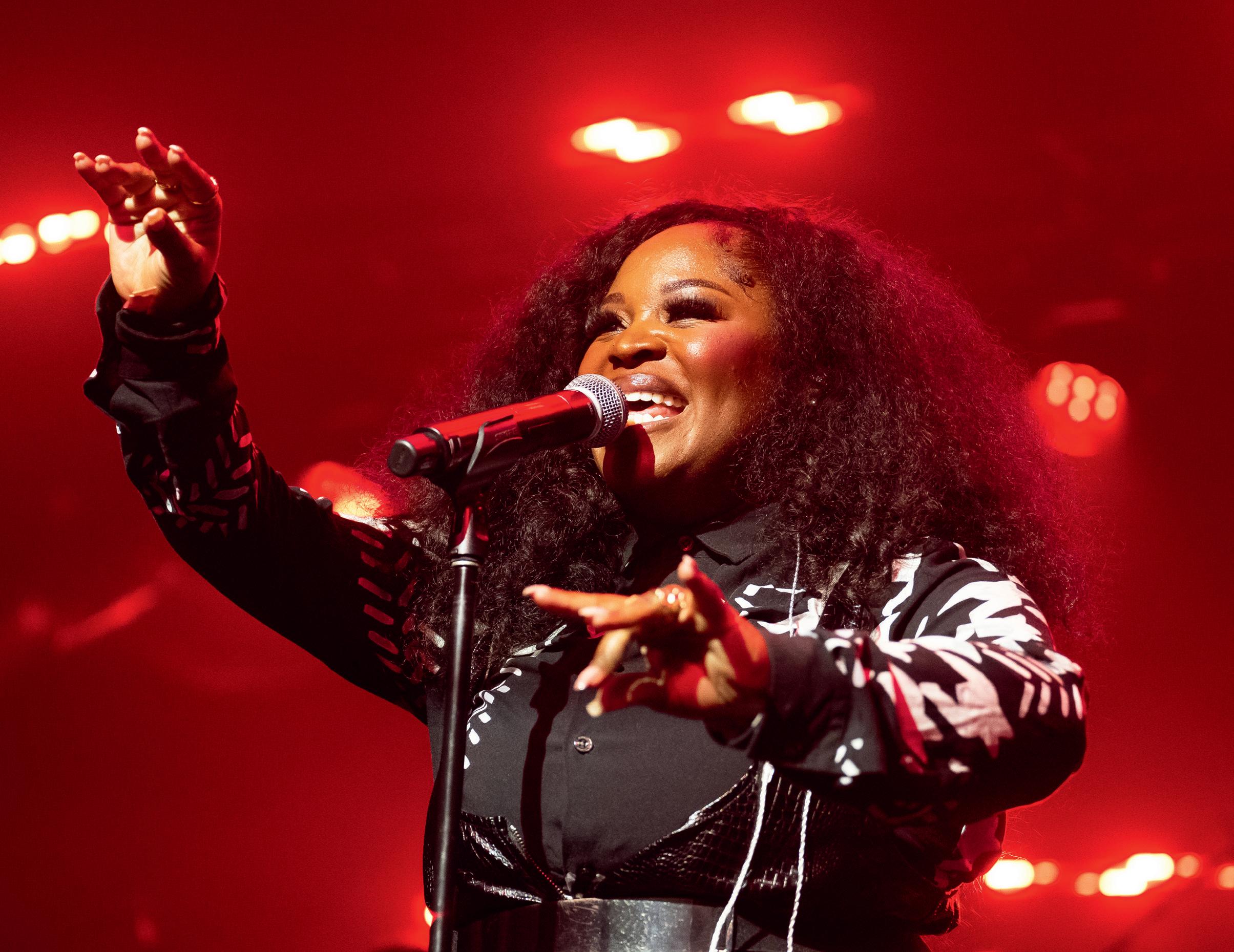
above: Grammy-winning artist Tarriona
Ball takes the stage on May 17 for an inspirational afternoon of music and poetry (see page 47).
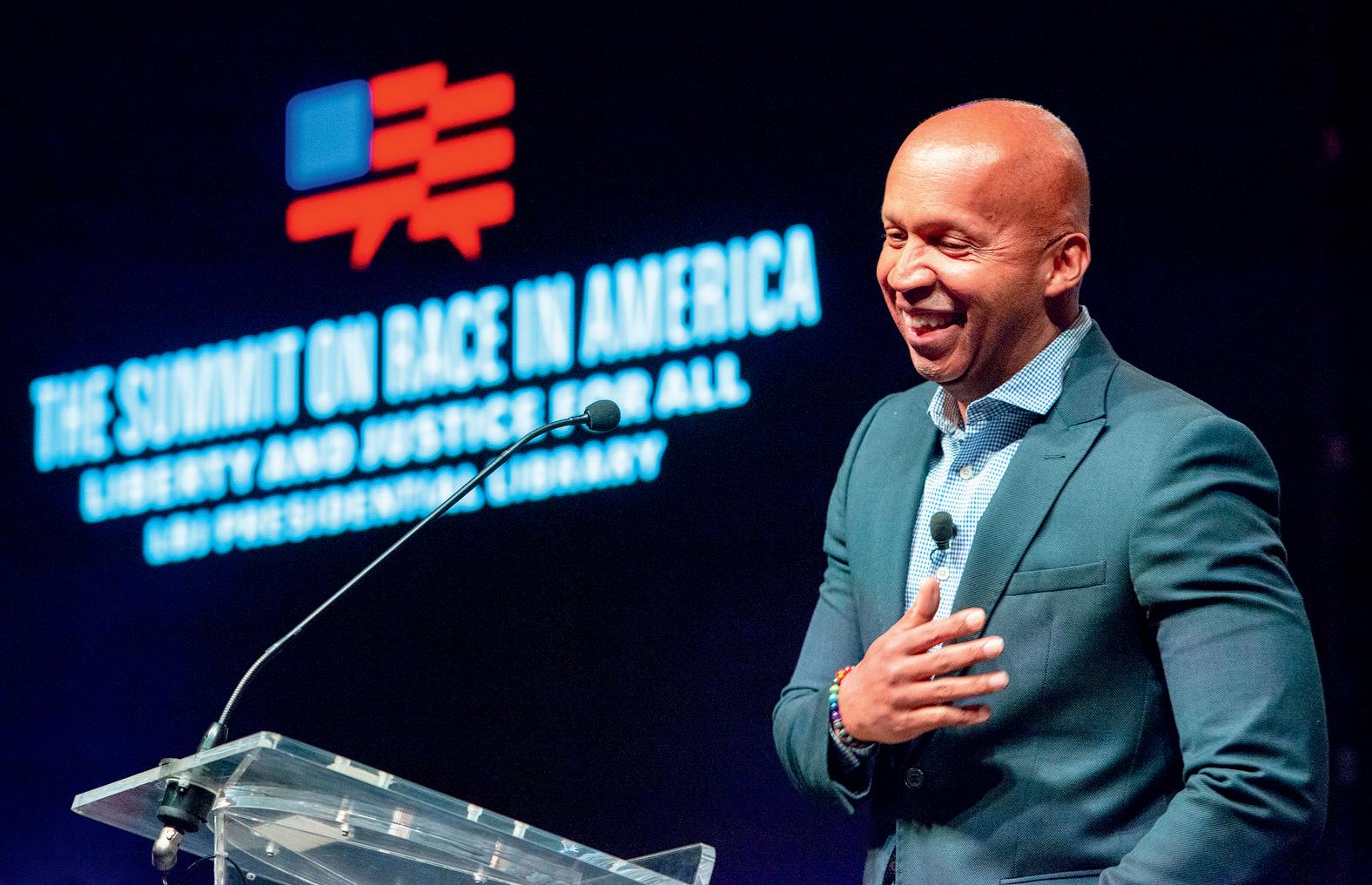
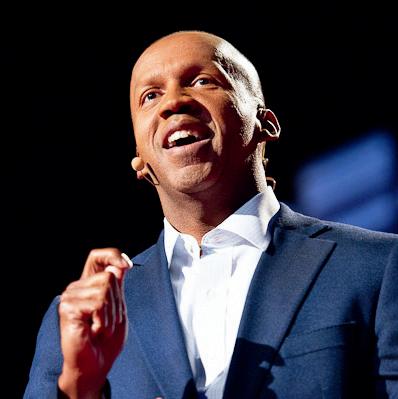
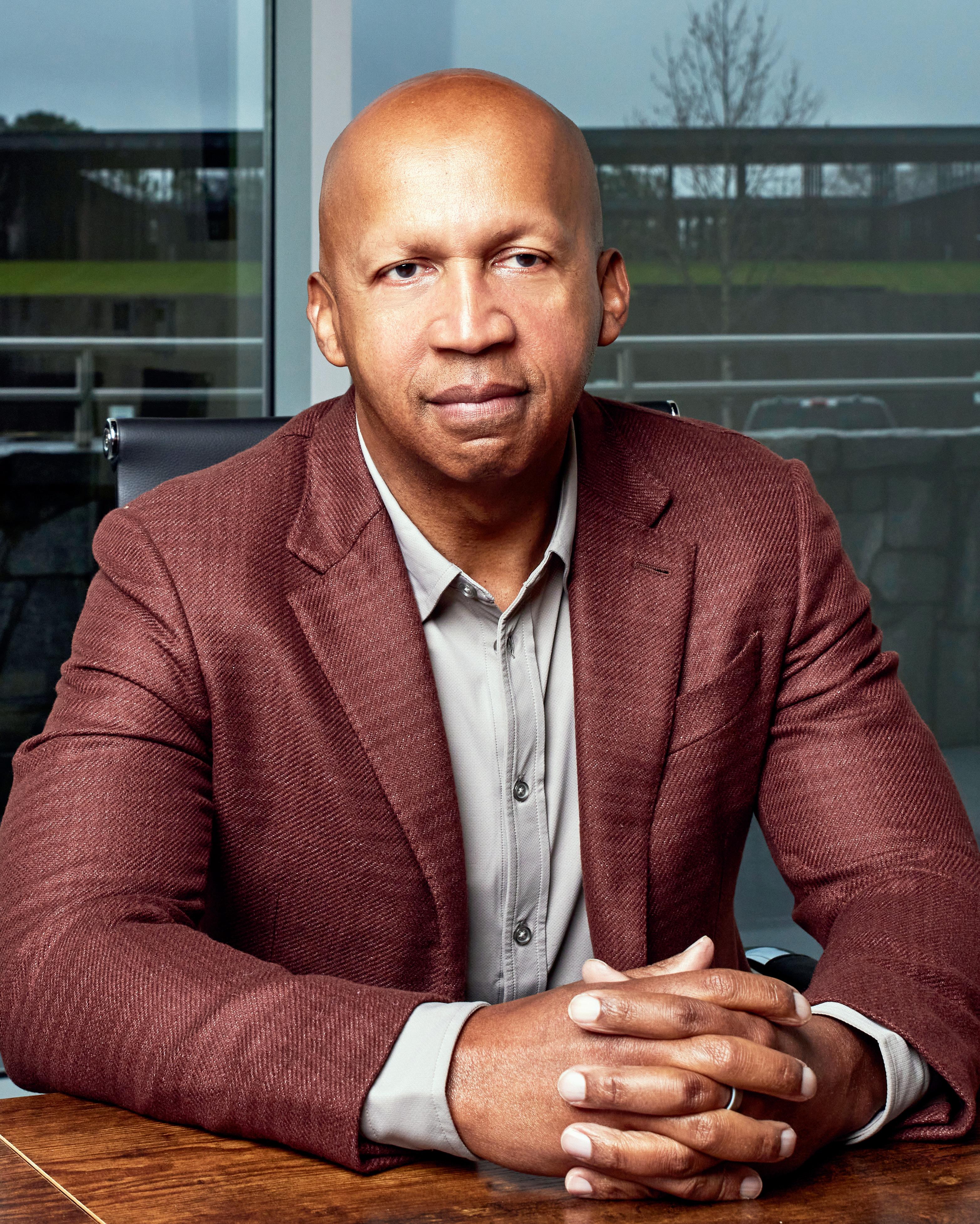
Bryan Stevenson speaks at The Summit on Race in America at the LBJ Presidential Library in April 2019. Stevenson serves as the festival’s keynote speaker on May 18 (see page 49).
Fear is the biggest culprit in tearing us apart. But music can give us courage to do all the things that we are afraid of doing.
Fear is the biggest culprit in tearing us apart. But music can give us courage to do all the things that we are afraid of doing.
The speakers, thinkers, musicians, and artists of this year’s festival embody this pursuit of curiosity and human connection. The local voices of United in Song! (see page 23), personal stories heard in The Moth Mainstage (see page 53), and powerful poetry of Tank Ball (see page 47) showcase how individual and collective voices can change the world. Meanwhile, keynote speaker Bryan Stevenson (see page 49), exhibition artist Halim Flowers (see page 15), and the operatic centerpiece — Beethoven’s Fidelio (see page 31) — all offer perspectives on wrongful incarceration and the beauty of breaking down barriers. (For a complete listing of festival events and performances, see pages 10–11.)
The speakers, thinkers, musicians, and artists of this year’s festival embody this pursuit of curiosity and human connection. The local voices of United in Song! (see page 23), personal stories heard in The Moth Mainstage (see page 53), and powerful poetry of Tank Ball (see page 47) showcase how individual and collective voices can change the world. Meanwhile, keynote speaker Bryan Stevenson (see page 49), exhibition artist Halim Flowers (see page 15), and the operatic centerpiece —
Beethoven’s Fidelio (see page 31) — all offer perspectives on wrongful incarceration and the beauty of breaking down barriers. (For a complete listing of festival events and performances, see pages 10–11.)
Thanks to all these individuals and groups, this year’s festival is a masterclass in the courage to speak your mind, the courage to listen and truly hear, the courage to allow all of us to have a voice and come together as a community should. Through music and art, I invite you to reflect on who we are as human beings, who we need to be moving forward, and how we need to remind ourselves of our own humanity.
Thanks to all these individuals and groups, this year’s festival is a masterclass in the courage to speak your mind, the courage to listen and truly hear, the courage to allow all of us to have a voice and come together as a community should. Through music and art, I invite you to reflect on who we are as human beings, who we need to be moving forward, and how we need to remind ourselves of our own humanity.
APRIL 9 – MAY 24
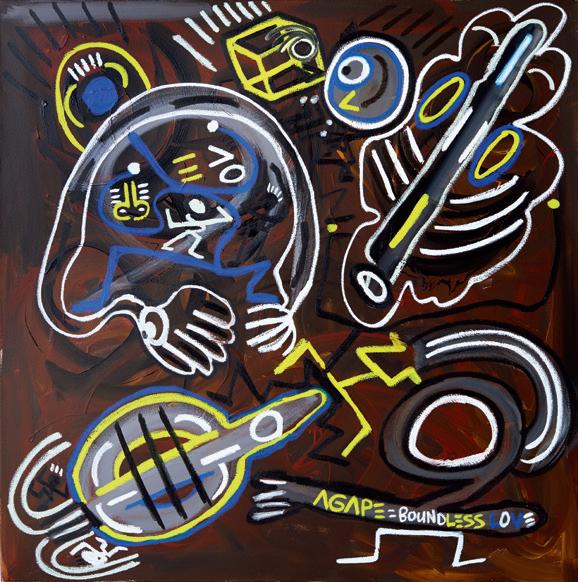
Halim Flowers: It Takes Courage to Love All Unconditionally
Bogomolny-Kozerefski Grand Foyer at Severance Music Center
Celebrated artist Halim Flowers unveils a new body of work created in Cleveland expressly for this year’s festival, which draws its energy and vision from the central theme of Courage
SEE PAGE 15
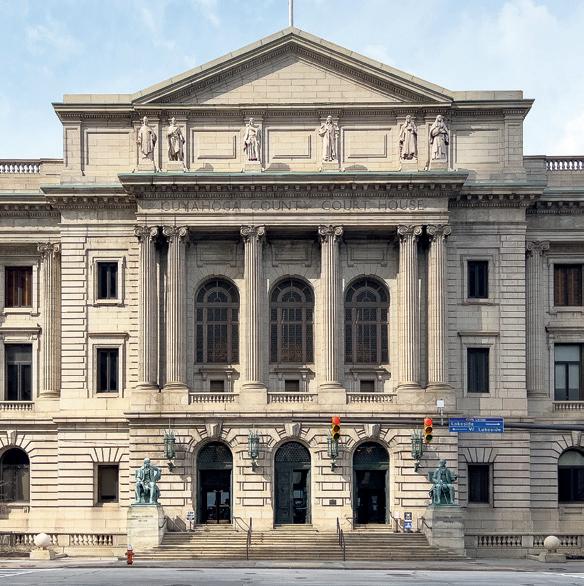
THURSDAY, MAY 14
6 PM
Community Conversation: Exploring Wrongful Convictions Through the Arts
Martin Luther King, Jr. Branch of the Cleveland Public Library
A panel of local experts discuss the intersection of courage, the arts, and wrongful convictions.
SEE PAGE 16
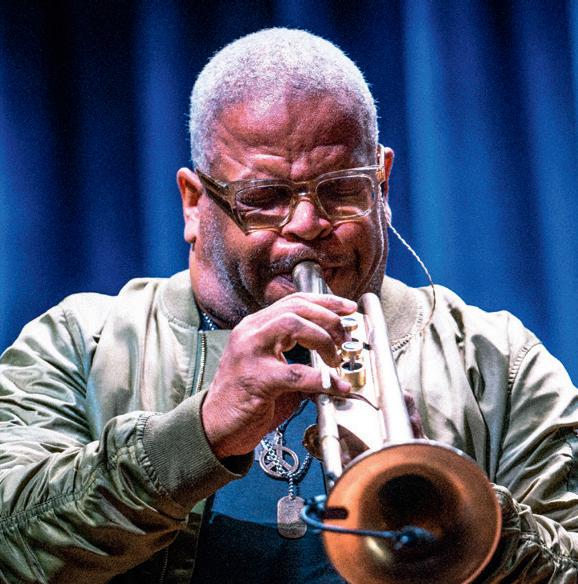
FRIDAY, MAY 15
7 PM
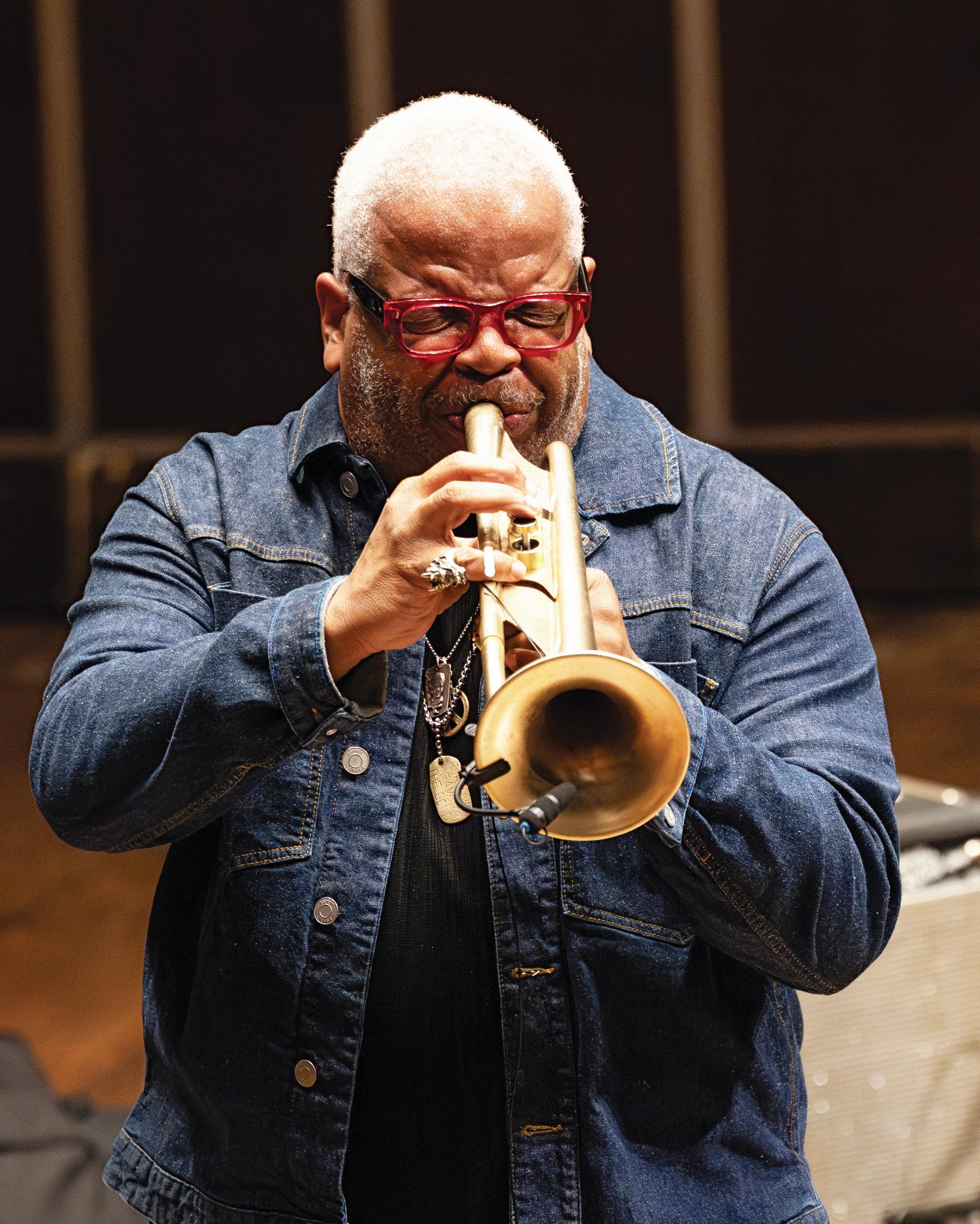
The World(s) of Terence Blanchard
Mandel Concert Hall at Severance Music Center
This genre-bending concert highlights Festival Curator Terence Blanchard’s work across opera, film, and jazz.
SEE PAGE 19
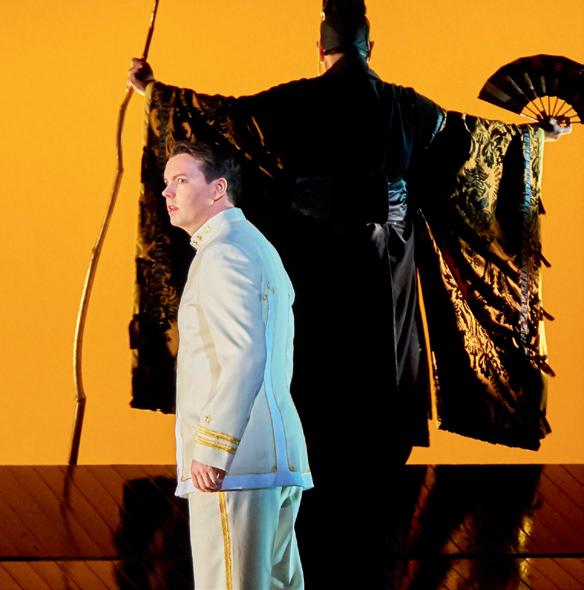
FRIDAY, MAY 15
11:30 AM
Opera Now: Tradition, Innovation, and the Road Ahead
The City Club of Cleveland Festival Curator Terence Blanchard and singers Adrienne Danrich and David Butt Philip (above) discuss how opera continues to transform while retaining its emotional and artistic core.
SEE PAGE 17
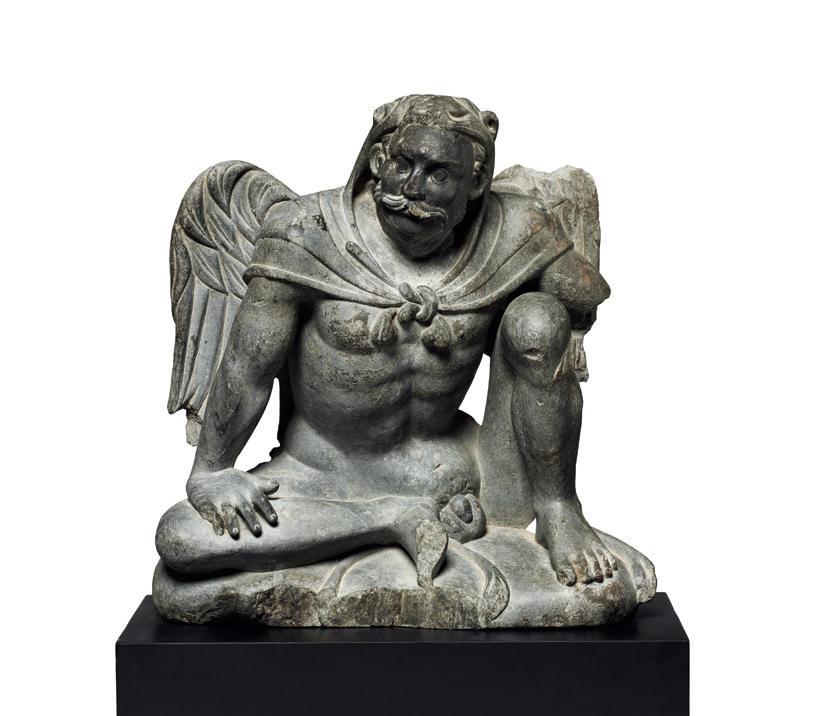
MAY 16, 17, 23 & 24
2 PM
Docent Tours: The Art of Courage
Cleveland Museum of Art
Join a docent-guided tour at the Cleveland Museum of Art that highlights artworks centered on the festival theme of Courage.
SEE PAGE 21

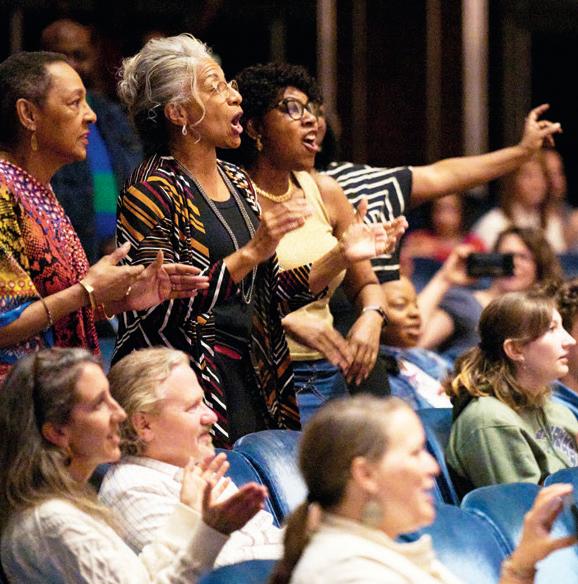
SATURDAY, MAY 16
1 PM
United in Song!
A Community Choral Celebration
Mandel Concert Hall at Severance Music Center
An afternoon of joyous vocal performances at Severance Music Center representing the rich diversity of the Greater Cleveland choral community.
SEE PAGE 23
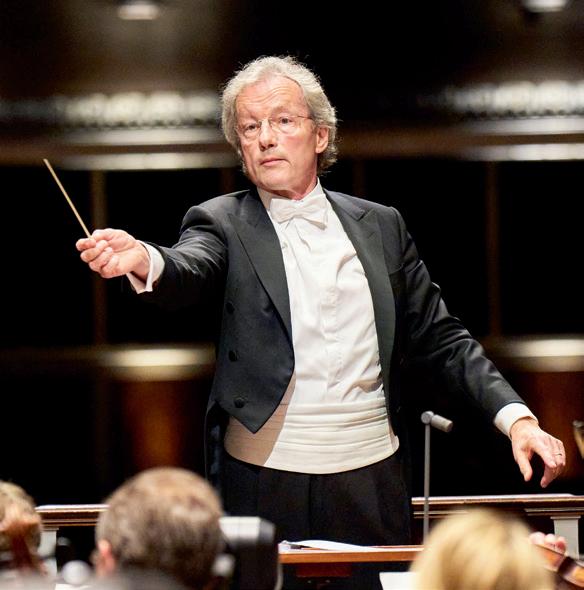
SATURDAY, MAY 16 | 7 PM
THURSDAY, MAY 21 | 7 PM
SUNDAY, MAY 24 | 3 PM
Beethoven’s Fidelio
Mandel Concert Hall at Severance Music Center
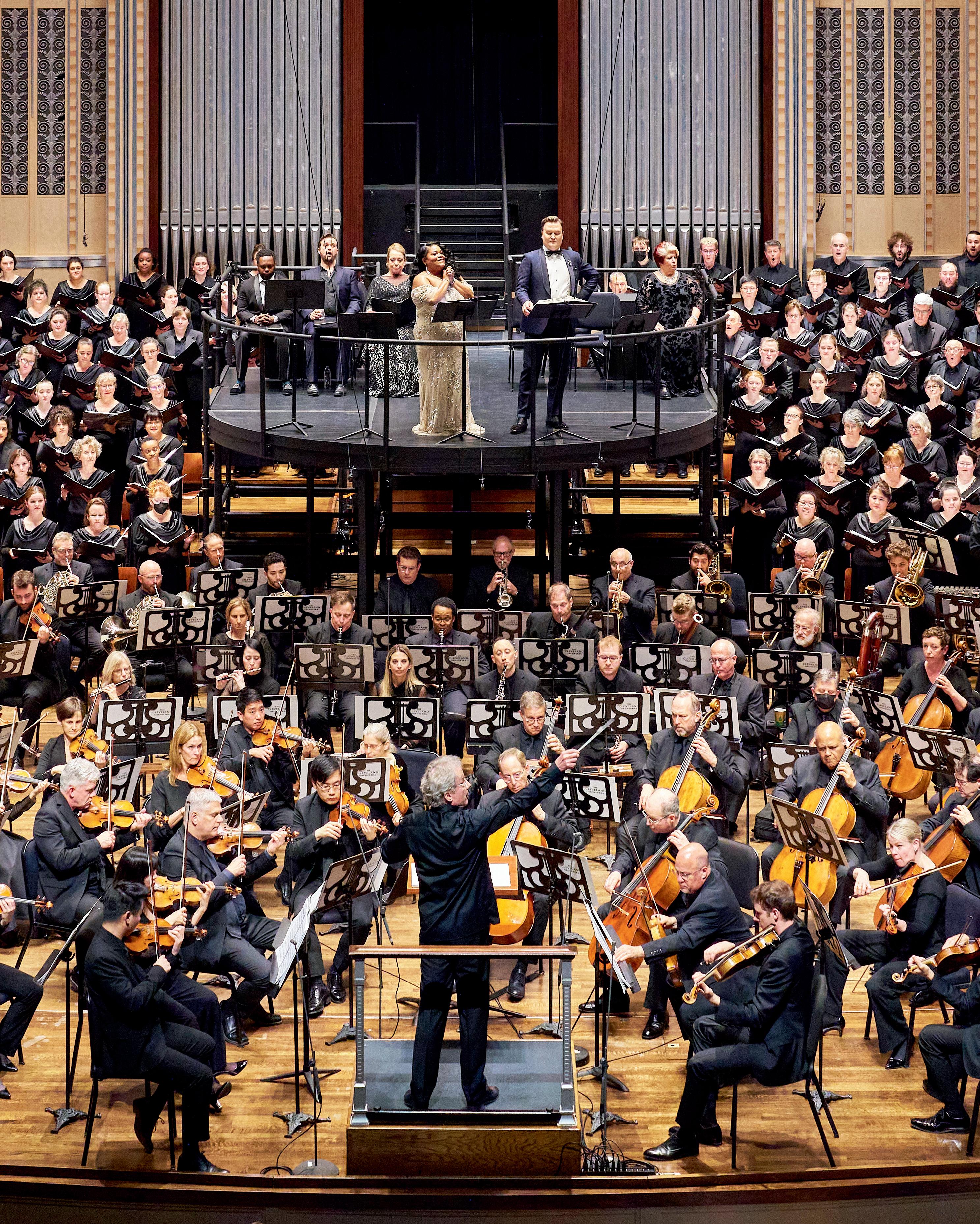
Music Director Franz Welser-Möst leads The Cleveland Orchestra, The Cleveland Orchestra Chorus, and an all-star cast of soloists through Beethoven’s only opera.
SEE PAGE 31
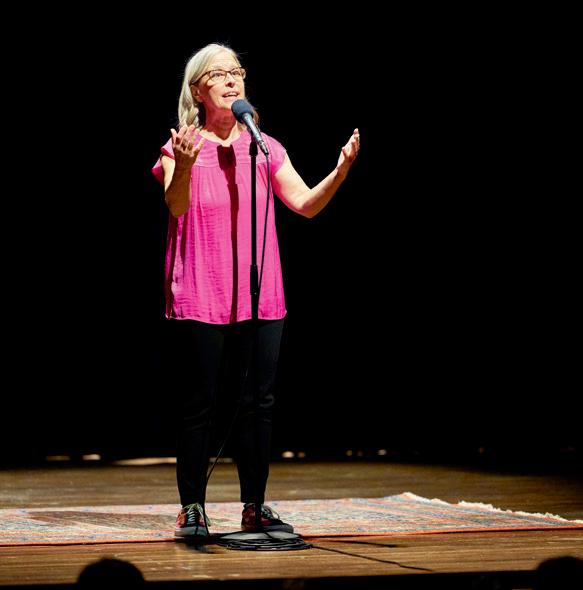
TUESDAY, MAY 19
7 PM
The Moth Mainstage: Live from Severance Mandel Concert Hall at Severance Music Center
Five extraordinary storytellers share true stories inspired by the festival theme of Courage — tales of risk and resilience, of stepping into the unknown, and of finding courage amid fear.
SEE PAGE 53
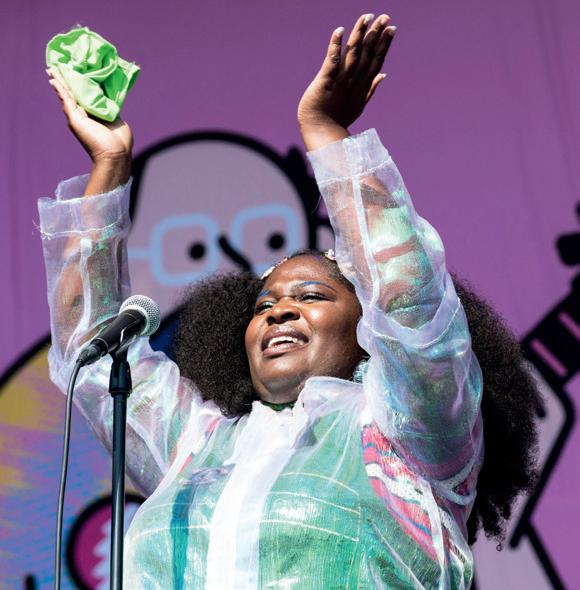
SUNDAY, MAY 17
4 PM
Courage and Poetry:
An Afternoon with Tank Ball
Reinberger Chamber Hall at Severance Music Center
Grammy-winning artist Tarriona “Tank” Ball shares her spellbinding blend of spoken word and poetry in a performance that digs deep into the meaning of courage.
SEE PAGE 47
FRIDAY, MAY 22
7:30 PM
Hero’s Song
Mandel Concert Hall at Severance Music Center
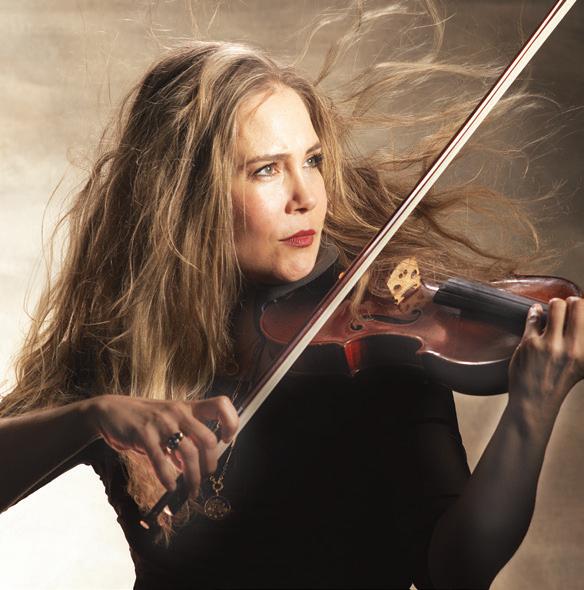
Music Director Franz Welser-Möst conducts The Cleveland Orchestra in a wide-ranging program, featuring a brand-new double concerto for violinist Leila Josefowicz (above) and TCO’s Principal Harp Trina Struble.
SEE PAGE 55
MONDAY, MAY 18
7 PM
Bryan Stevenson on Courage
Mandel Concert Hall at Severance Music Center
Acclaimed civil rights leader, bestselling author, and founder of the Equal Justice Initiative Bryan Stevenson reflects on courage: how we confront injustice, stay proximate to suffering, and choose to hope in the face of overwhelming odds.
SEE PAGE 49
SATURDAY, MAY 23
4 PM
Children’s Choruses
Spring Concert
Mandel Concert Hall at Severance Music Center
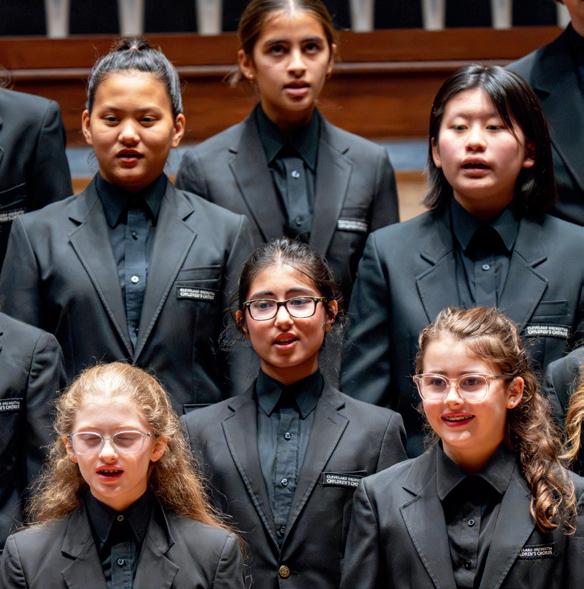
The Cleveland Orchestra Children’s Choruses present an uplifting musical celebration of the 250th anniversary of the United States.
SEE PAGE 61
The Cleveland Orchestra’s 2026 Mandel Opera & Humanities Festival is supported by a historic grant from the Jack, Joseph and Morton Mandel Foundation.
The Cleveland Orchestra’s production of Fidelio is generously sponsored by Jan R. Lewis. This production is generously supported by the Franz Welser-Möst Legacy Fund.
The Cleveland Orchestra thanks the following donors and members of the Opera Club for their support of the 2026 Mandel Opera & Humanities Festival:
Ms. Viia R. Beechler
Mel Berger & Jane Haylor
Robin Dunn Blossom
David & Julie Borsani
In Memory of Marissa I. Borsani
Dr. Robert Brown & Mrs. Janet Gans Brown
Drs. Wuu-Shung & Amy Chuang
Ted & Donna Connolly
Tamara Durn
Richard C. & Lisa Fedorovich
Dagmar & Frederick Fellowes
Dr. Michael Frank & Patricia A.* Snyder
JoAnn & Robert Glick
Mr. James Graham & Mr. David Dusek
Iris & Tom Harvie
Malcolm & Vivian Henoch
Michael Hudson
In Memory of Susan Benningfield Hudson
Elisabeth Hugh
Robert & Linda Jenkins
Karmendot Fund
Dennis & Camille LaBarre
Mrs. Susan D. LaPine
Jan R. Lewis
Frank Licata & Michelle Wesley Licata
Dr. Alan & Mrs. Joni Lichtin
Ms. Cathy Lincoln
In honor of Emma Skoff Lincoln
Mr. & Mrs. Alex Machaskee
The Jack, Joseph and Morton Mandel Foundation
Ms. Nancy L. Meacham
Loretta J. Mester & George J. Mailath
Deborah L. Neale
Mr. & Mrs. Forrest A. Norman III
Mr. & Mrs. John Olejko
Mr. David A. Osage & Ms. Claudia C. Woods
Peter M. Padegimas
In Memory of Beverly A. Padegimas
David J. Reimer & Raffaele DiLallo
James & Marguerite Rigby
Mr. D. Keith* & Mrs. Margaret B. Robinson
Richard B. & Cheryl A. Schmitz
Ms. Beverly J. Schneider
Astri Seidenfeld
Katie & Michael* Shames
Drs. Charles Kent Smith & Patricia Moore Smith
Kathryn & Duncan Stuart
Wesley Family Foundation
Ms. Linda L. Wilmot
Tony & Diane Wynshaw-Boris
Anonymous
The Cleveland Orchestra and the Mandel Opera & Humanities Festival are proud to partner with the following organizations:
Assembly for the Arts ASSEMBLYCLE.ORG
The City Club of Cleveland CITYCLUB.ORG
Cleveland Museum of Art CLEVELANDART.ORG
Cleveland Public Library CPL.ORG District Gallery DISTRICT-GALLERY.COM
Ideastream Public Media IDEASTREAM.ORG
Tri-C JazzFest TRI-C.EDU/JAZZFEST/ Xhibition XHIBITION.CO
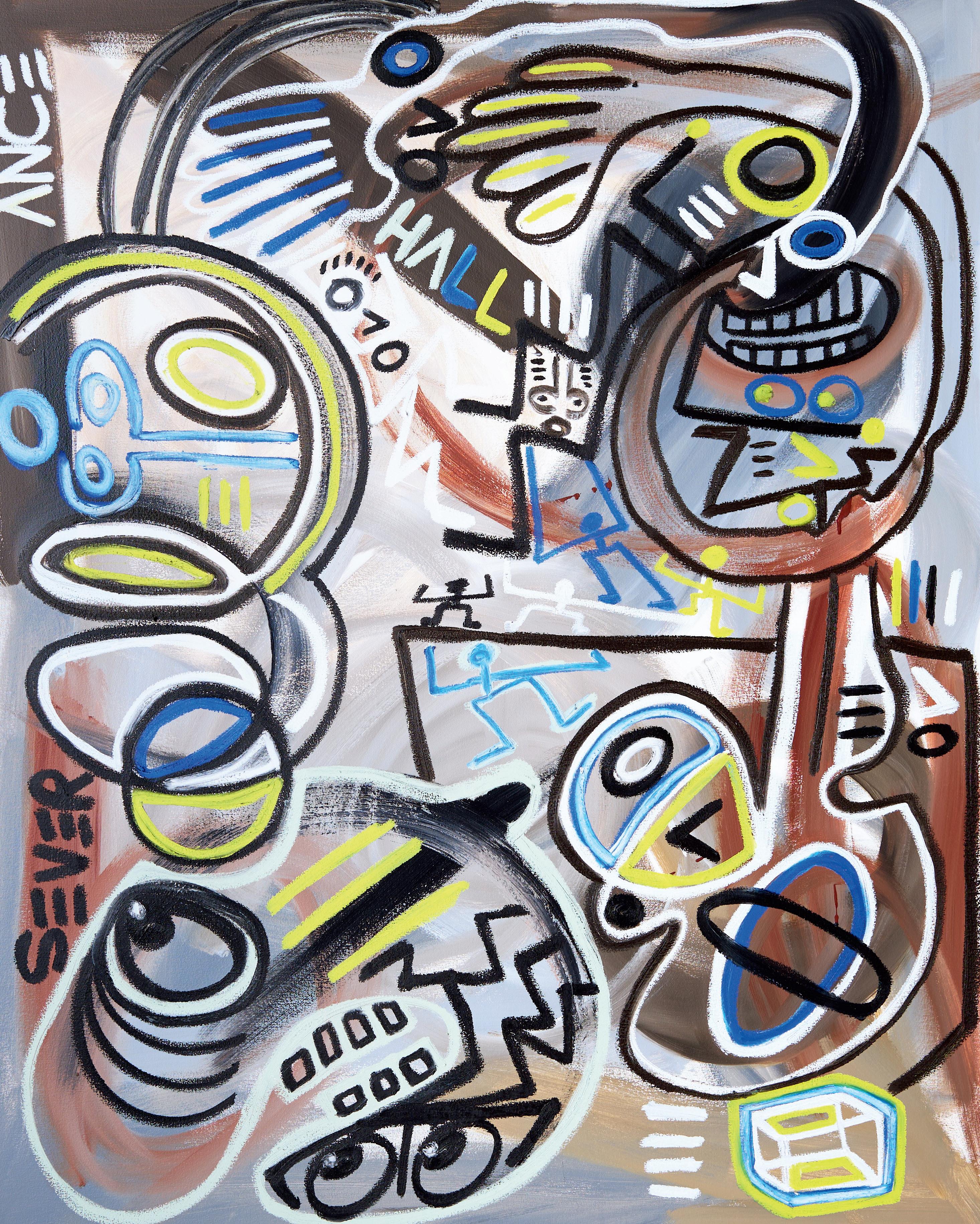
Bogomolny-Kozerefski Grand Foyer at Severance Music Center
Join us for Community Open Houses: SUNDAY, MAY 10 | 1:30 – 3 PM SATURDAY, MAY 16 | 11 AM – 1 PM
THIS FESTIVAL CELEBRATES COURAGE , reflecting the personal journey I’ve been on for quite some time. Many choices I made in my childhood led to consequences that were not a result of my being a “bad kid,” but rather due to my inability to overcome negative peer influences and community pressures.
I believe in love, especially in a world that often encourages us to hide our authentic selves. It takes immense strength and courage to embrace who we truly are and to love ourselves. This body of work represents an extension of my identity and self-worth. I had to learn to love myself, even when society labeled me as a menace and treated me accordingly.
The colors in the pieces I created for this exhibition emerged organically; they chose me. I usually don’t work with earth tones or neutrals, but this time, the mediums — my tools of mass construction — were paintbrushes, oil sticks, canvas, and fashion. The colors arrived uniquely and unexpectedly. — Halim Flowers
ABOUT THE ARTIST
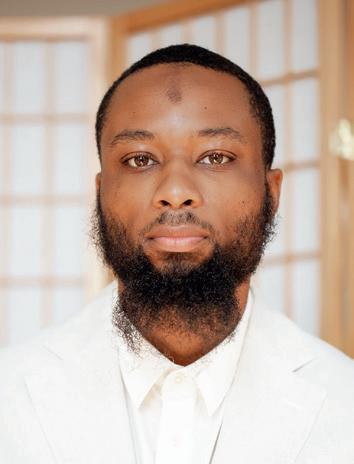
Halim Flowers is an artist, poet, and activist whose work is shaped by resilience and transformation. At 16, he was sentenced as an adult to two life terms for a crime he did not commit. While incarcerated, he developed a deep love for language, beginning with freestyle rap before evolving into poetry as a way to process the traumas of surviving prison and growing up during Washington, DC’s crack epidemic.

After serving more than 20 years, Flowers was released in 2019 following criminal justice reform in DC. Soon after, he expanded his creative practice into visual art, drawing inspiration from Jean-Michel Basquiat and translating his experiences onto canvas through vibrant, layered works.
Flowers has received fellowships from Halcyon Arts Lab and Echoing Green, was featured in the Museum of Modern Art’s Marking Time: Art in the Age of Mass Incarceration, and is a 2025 –26 Obama Foundation USA Leader. His work is exhibited internationally.

THURSDAY | 6 PM
Martin Luther King, Jr. Branch of the Cleveland Public Library
THIS TWO-PART EVENING opens with a preview of the 2026 Mandel Opera & Humanities Festival and its theme of Courage. Following this, a panel of local experts explore the intersection of courage, the arts, and wrongful convictions, with a specific focus on our Cleveland community.
MODERATOR
Jeremy Johnson, President & CEO of Assembly for the Arts
PANELISTS
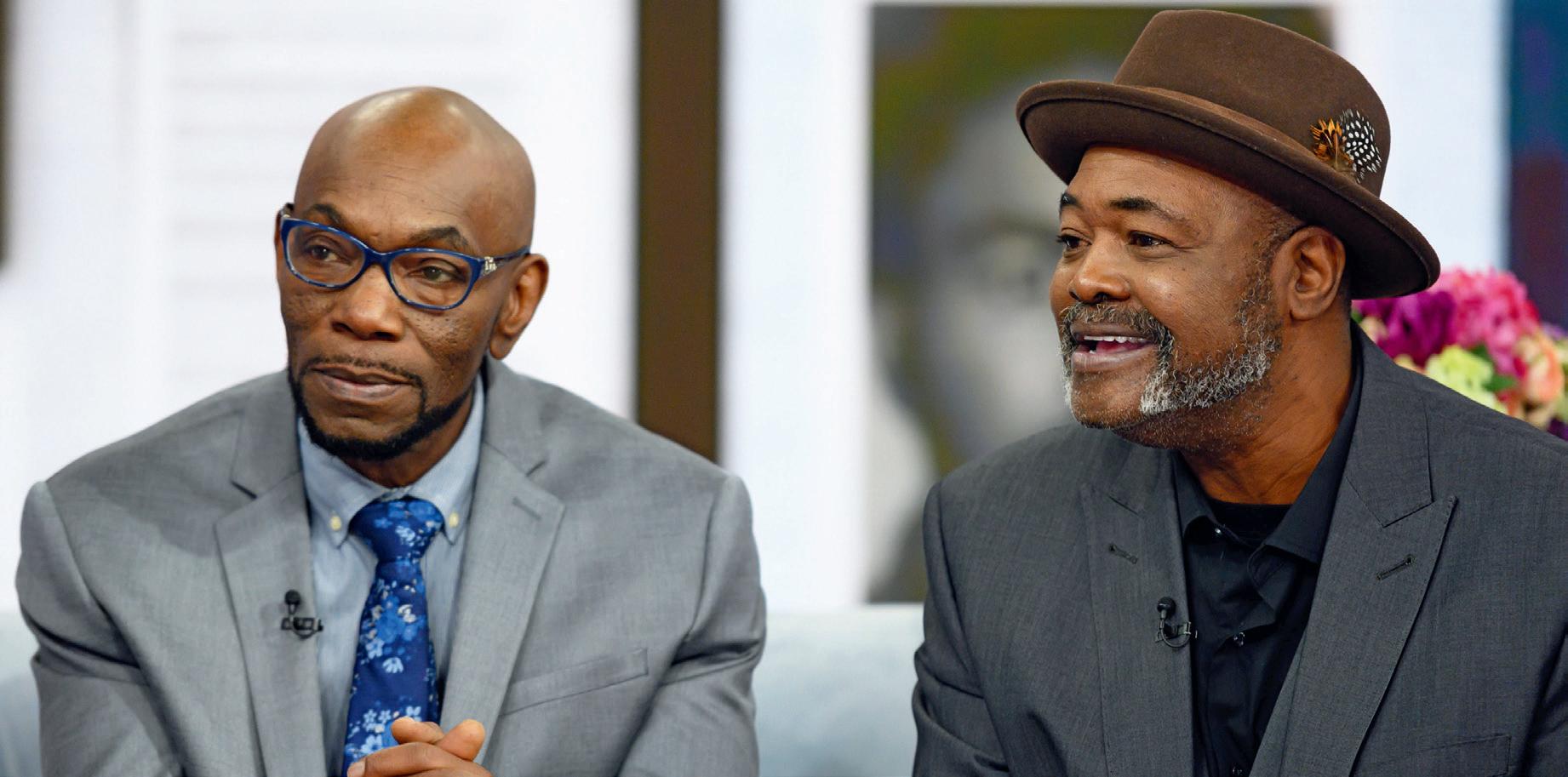
In 1975, Clevelanders Ricky Jackson (left) and Kwame Ajamu (right) were both wrongfully sentenced to death in a murder-robbery case. Ajamu was released on parole in 2003, but Jackson was not released until 2014, the year both were finally exonerated.
Ayesha Bell Hardaway, professor of law & director of Case Western Reserve University’s Social Justice Institute
Karen Prasser, executive director of Arts for Justice Cleveland
Raymond Towler, musician and artist

Presented in partnership with the Cleveland Public Library and Assembly for the Arts
FRIDAY | 11:30 AM
FRIDAY | 11:30 AM
The City Club of Cleveland
The City Club of Cleveland
WHAT DOES OPERA MEAN TODAY — and what might it become? Festival Curator
Terence Blanchard and singers Adrienne Danrich and David Butt Philip join The City Club of Cleveland for a wide-ranging conversation on tradition, innovation, and the future of the art form. From new creative voices to evolving audience expectations, this forum considers how opera continues to transform while retaining its emotional and artistic core.
MODERATOR
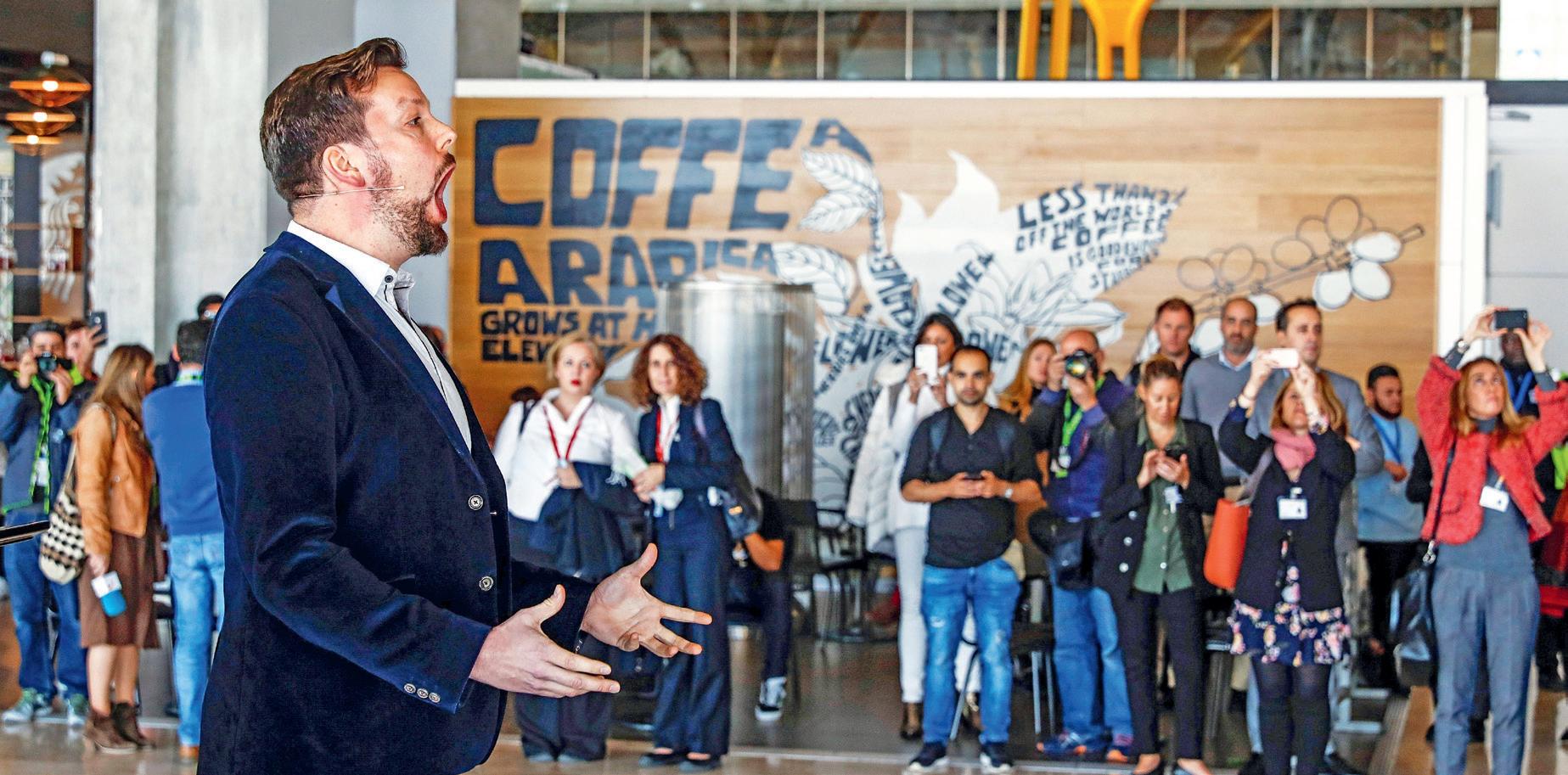
Tenor David Butt Philip performs an aria from Puccini’s Turandot at the Madrid–Barajas Airport in 2018. As opera adapts, there will be more opportunities to engage with the art form outside the opera house.
André Gremillet, President & CEO of The Cleveland Orchestra, The Richard K. Smucker Chair PANELISTS
MODERATOR PANELISTS
Terence Blanchard, Festival Curator
Adrienne Danrich, soprano
David Butt Philip, tenor
Presented in partnership with The City Club of Cleveland. This forum is presented in partnership with The Cleveland Orchestra’s Opera Club, a group of donors who support opera and vocal programming at The Cleveland Orchestra and receive special benefits and experiences.
Presented in partnership with The City Club of Cleveland. This forum is presented in partnership with The Cleveland Orchestra’s Opera Club, a group of donors who support opera and vocal programming at The Cleveland Orchestra and receive special benefits and experiences.
FRIDAY | 7 PM
Mandel Concert Hall at Severance Music Center
MY EXPERIENCE IN THE FILM WORLD helped me tremendously [in the operatic world] because I wasn’t so concerned about writing for orchestra. I had that under my belt, and creating sonic colors for certain situations was fine. The problem was writing for voice. And the most problematic part is different from singer to singer. They can all be sopranos, but they’re different sopranos. [They can] all be baritones and all be different. So that part … took some time to learn. But when you learn that for a specific singer … it turns everything around. Knowing the abilities of the singers to be able to do those things, that’s when the storytelling process really becomes a big deal.
— Terence Blanchard (interviewed on the NEA Art Works Podcast, February 2025)
Terence Blanchard, trumpet
The E-Collective
Charles Altura, guitar
Tom Oren, piano
Alex Smith, bass
Mark Whitfield Jr., drums
Turtle Island Quartet
David Balakrishnan, violin
Gabriel Terracciano, violin
Mads Tolling, viola
Naseem Alatrash, cello
Andrew F. Scott, projections
Matthew Unkenholz, projectionist
Throughout his career, Terence Blanchard has collaborated with director Spike Lee on over 20 projects, including the jazzinflected score for the biopic Malcolm X (1992), which received acclaim alongside Denzel Washington’s portrayal of the title character.
THE PROGRAM
Terence Blanchard (b. 1962)
Suite from Fire Shut Up in My Bones
I. Tears of anger and shame
II. Don’t be in such a rush
III. Leave it in the road
IV. Golden button
V. Peculiar grace
VI. Peculiar grace (Instrumental)
VII. There was a storm
VIII. A piece for Billie
IX. In the car
X. Peculiar grace (Reprise)
Adrienne Danrich, soprano
Will Liverman, baritone
Terence Blanchard
Malcolm X Jazz Suite
I. The Opening (Parts 1 & 2)
II. Melody for Laura
III. Theme for Elijah
IV. Cops and Robbers
V. Going to Mecca
VI. Betty’s Theme
VII. Fruit of Islam
VIII. Malcolm’s Theme
Presented in partnership with Tri-C JazzFest

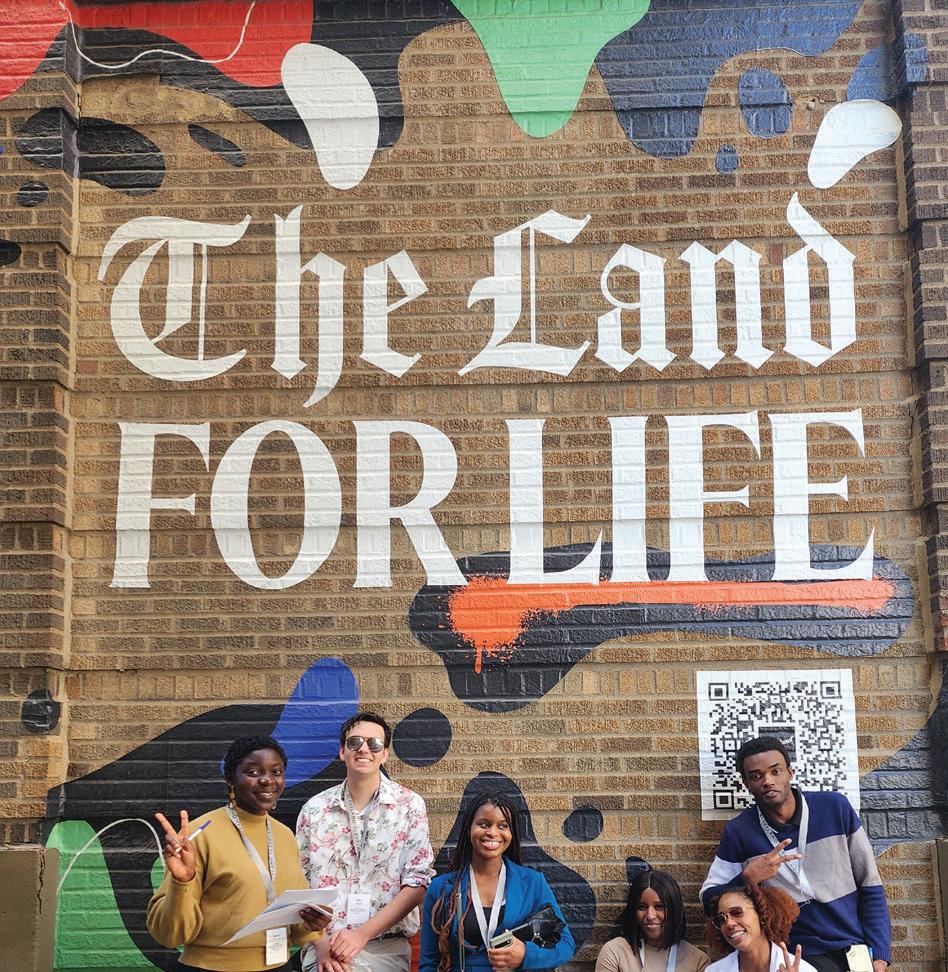
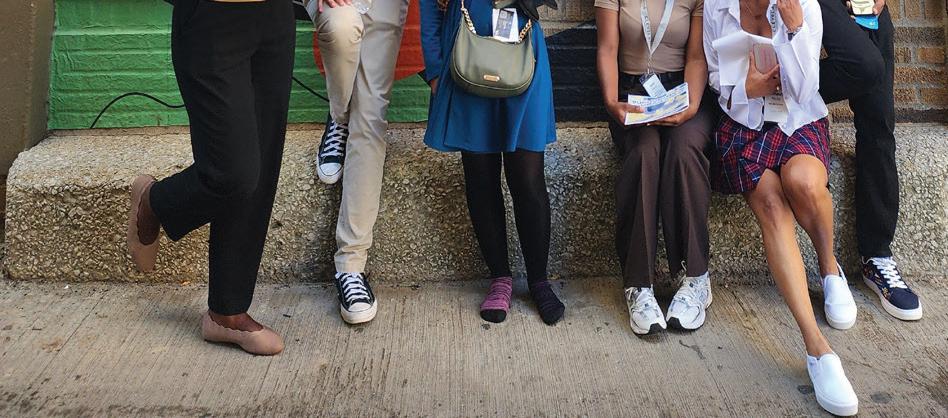




MAY 16, 17, 23 & 24
SATURDAYS & SUNDAYS | 2 PM
Cleveland Museum of Art
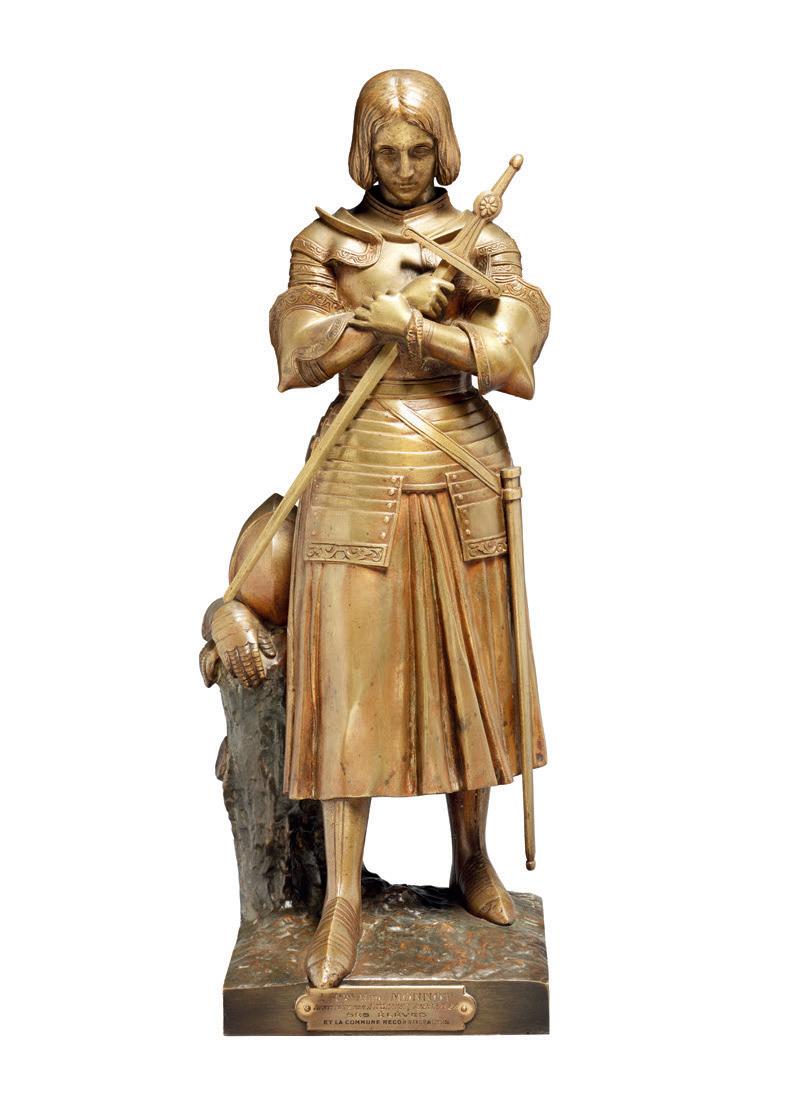

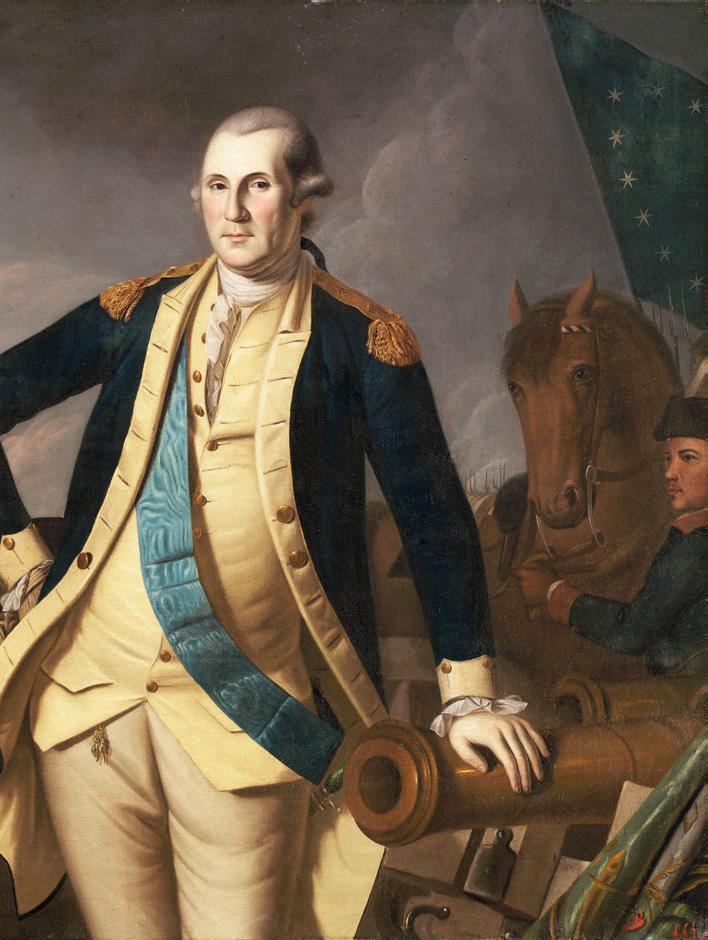
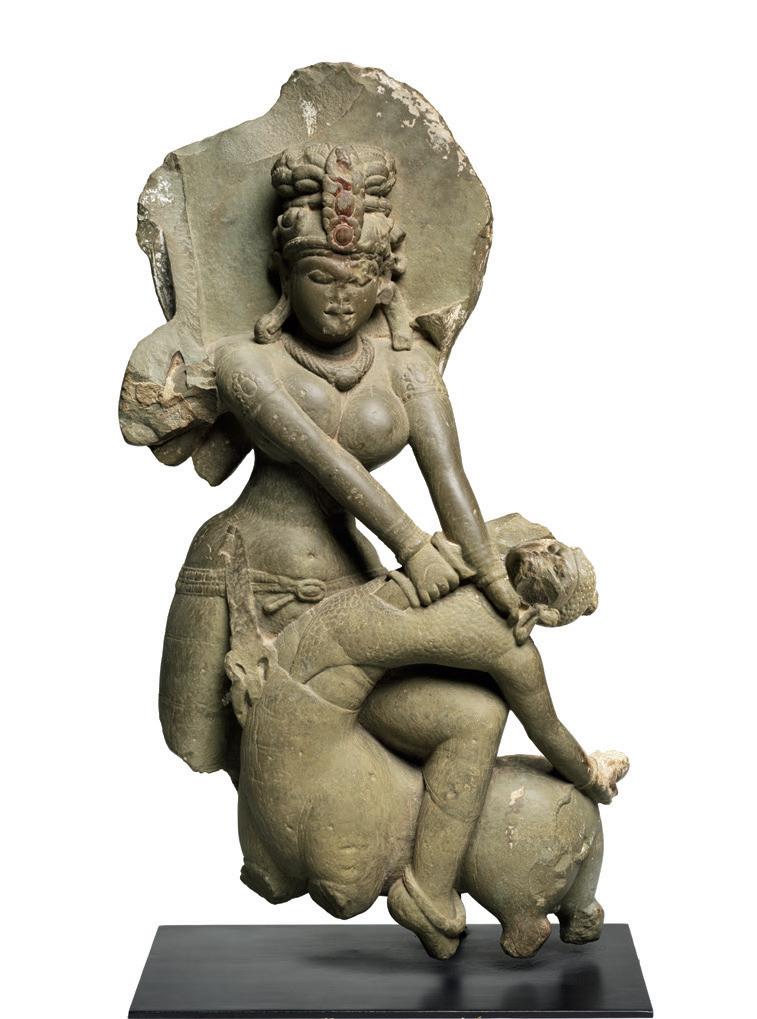
IN CONJUNCTION WITH The Cleveland Orchestra’s 2026 Jack, Joseph and Morton Mandel Opera & Humanities Festival, join an hour-long, docent-led tour at the Cleveland Museum of Art that reflects on the theme of Courage. Inspired by Beethoven’s opera Fidelio, this tour invites visitors to consider how artists across time and cultures have grappled with and portrayed bravery, conviction, and courage.

a
array
artistic approaches and courageous subjects that span centuries and cultures, including
Tours are FREE, but tickets are required. Reserve by scanning the QR code or visiting clevelandart.org/events/art-courage-tours
SATURDAY | 1 PM
Mandel Concert Hall at Severance Music Center
JOIN US FOR AN AFTERNOON of joyous vocal performances at Severance Music Center representing the rich diversity of the Greater Cleveland choral community. The event is hosted by nationally acclaimed baritone and retired Akron Public School District teacher Brian Keith Johnson.
ABOUT THE ARTISTS
Cleveland Chamber Choir
Gregory Ristow, artistic director
The Cleveland Chamber Choir provides audiences with exceptional performances of diverse repertoire, emphasizing the works of composers historically excluded from the concert hall. Since its founding in 2015, the choir has won acclaim for its inclusive programming, partnerships with community charities, pedagogical outreach, and free concerts that ensure everyone can hear world-class professional choral singing. Under the leadership of artistic director Gregory Ristow, all the ensemble’s members are professional singers who currently reside in Northeast Ohio. clevelandchamberchoir.org
Hudson Community Choruses Adult Chorus
Jon C. Peterson, artistic director
Founded in 1988, the Hudson Community Choruses enrich the cultural life of Hudson and the surrounding region
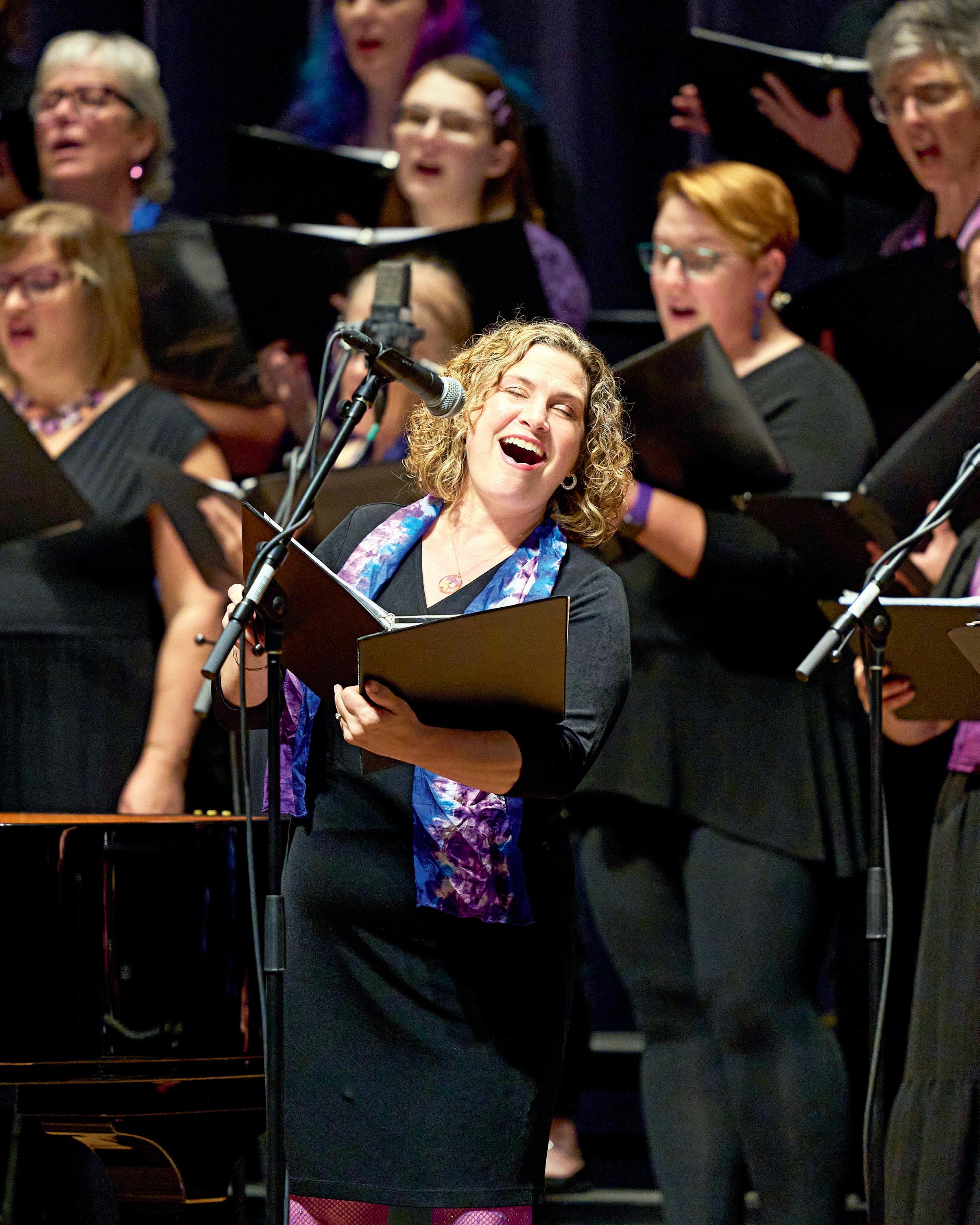
Amanda Cobes-Miller sings with Windsong, Cleveland’s Feminist Chorus, as part of United in Song! in 2025. This year’s festival marks the fourth year of this annual community favorite.
through exceptional choral performance and music education. Under the leadership of Jon C. Peterson, the organization comprises three ensembles spanning more than 150 singers from second grade through adult and representing 20 communities. Supported by a dedicated board and committed volunteers, the Hudson Community Choruses continue to cultivate a thriving, inclusive community of singers united by a shared passion for choral music.
hudsonsings.org
Dr. William Henry Caldwell, music director
Steven Weems, conductor
The Martin Luther King, Jr. Celebration Chorus is a volunteer community chorus assembled each year since 1989. Bringing together singers from across Northeast Ohio, the Chorus lifts its collective voices in affirmation of Dr. King’s vision of justice, peace, and harmony. In addition to its performance during The Cleveland Orchestra’s annual Dr. Martin Luther King, Jr.
Support for United in Song! is generously provided by Mrs. Jayne M. Zborowsky
Celebration Concert, the ensemble has sung at Tri-C’s Creative Arts Academy and at Cleveland Cavaliers and Guardians games. clevelandorchestra.com/ mlkchorus
Jim Koenig, music director
The Singing Angels is one of Cleveland’s most treasured performing arts organizations. Founded in 1964 by William C. Boehm, their mission is to encourage, foster, and cultivate positive youth development, guided by the motto “Make Music, Make Friends, Make a Difference.” The group’s remarkable history includes concerts in the United States and 38 countries abroad, TV broadcasts, and performances for popes and presidents. In May 2026, The Singing Angels celebrate their 62nd anniversary of inspiring audiences and helping shape the citizens and leaders of tomorrow.
singingangels.org

Scan the QR code for more program information and for the full singer roster.

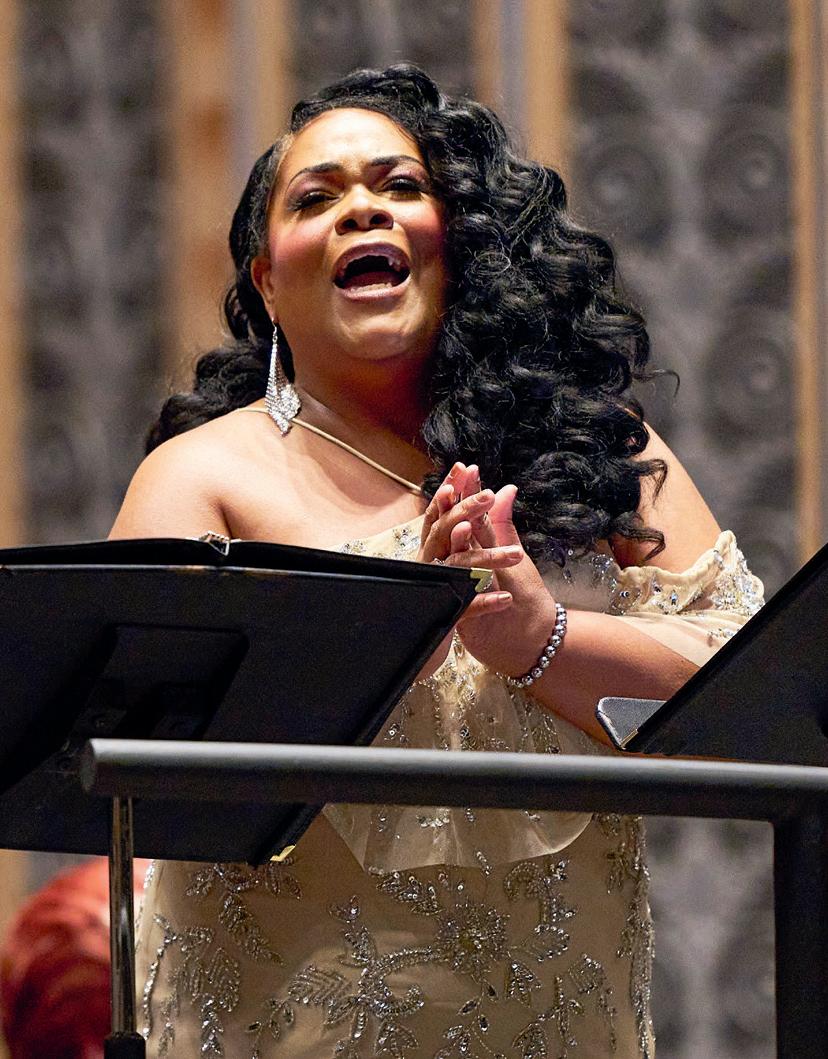
Enjoy the best vocal artists of our time alongside fellow supporters.
Benefits may include:
• Opportunities to sponsor a vocal soloist or opera cast member
• Post-concert artist meet and greets for select concerts
• An invitation to join The Cleveland Orchestra’s New York tour
• Exclusive invitations to parties, performances, and more!
Artist sponsorship opportunities in the 2026 – 27 Season will include members of the cast of R. Strauss’s Die Frau ohne Schatten, among others!
clevelandorchestra.com/operaclub
clevelandorchestra.com/operaclub

BECOME A MEMBER TODAY! Opera Club membership starts with donations of $2,500 and higher.
UNDER 40? Enjoy Opera Club Membership for $1,000 and enjoy benefits at the $2,500 level! CONTACT Angela Mortellaro, Major Gift Officer 216-231-8014
amortellaro@clevelandorchestra.com

by Franz Welser-Möst Music Director, The Cleveland Orchestra

by Franz Welser-Möst Music Director, The Cleveland Orchestra


Fidelio is about the value of human life and how freedom, both individual and collective, is only possible through love
Fidelio is about the value of human life and how freedom, both individual and collective, is only possible through love
FIDELIO IS NOT ONLY AN OPERA ; it’s a philosophical statement about courage, liberty, love, and the triumph of the human spirit. Every stage director I’ve met wrestles with the same question when putting on Fidelio: How do you make it relevant to the time we live in? Here, we present it in concert to bring attention to the extraordinary ways that Ludwig van Beethoven’s music is philosophy set to sound.
FIDELIO IS NOT ONLY AN OPERA ; it’s a philosophical statement about courage, liberty, love, and the triumph of the human spirit. Every stage director I’ve met wrestles with the same question when putting on Fidelio: How do you make it relevant to the time we live in? Here, we present it in concert to bring attention to the extraordinary ways that Ludwig van Beethoven’s music is philosophy set to sound.
Any staging of Fidelio joins a long history of political performances. At a time when Europe was fighting one war after another, Beethoven — an extremely well-educated and politically engaged man — wrote this opera about a political prisoner ultimately freed by his wife’s courage. It is a very humanistic statement about the value of human life and the idea that freedom, both individual and collective, is only possible through love. ▶ ▶ ▶
Any staging of Fidelio joins a long history of political performances. At a time when Europe was fighting one war after another, Beethoven — an extremely well-educated and politically engaged man — wrote this opera about a political prisoner ultimately freed by his wife’s courage. It is a very humanistic statement about the value of human life and the idea that freedom, both individual and collective, is only possible through love. ▶ ▶ ▶


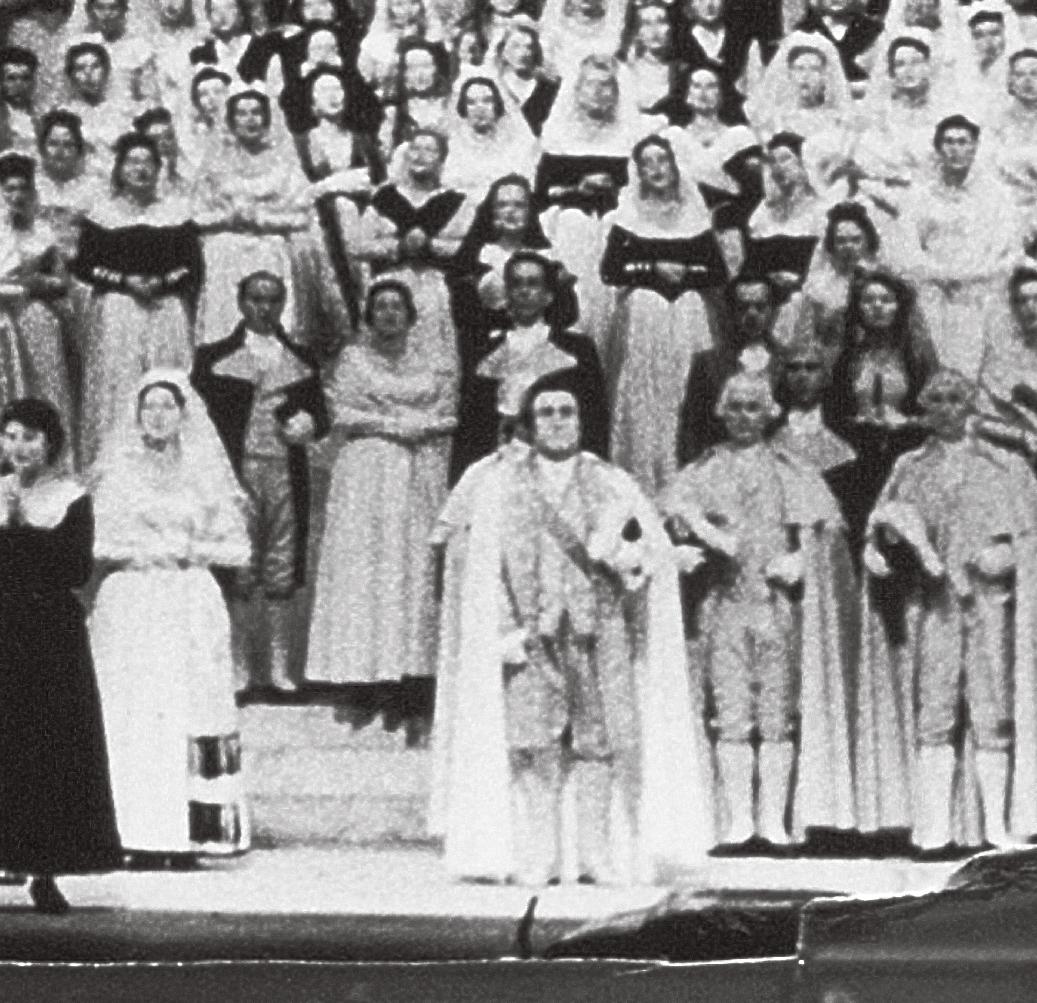

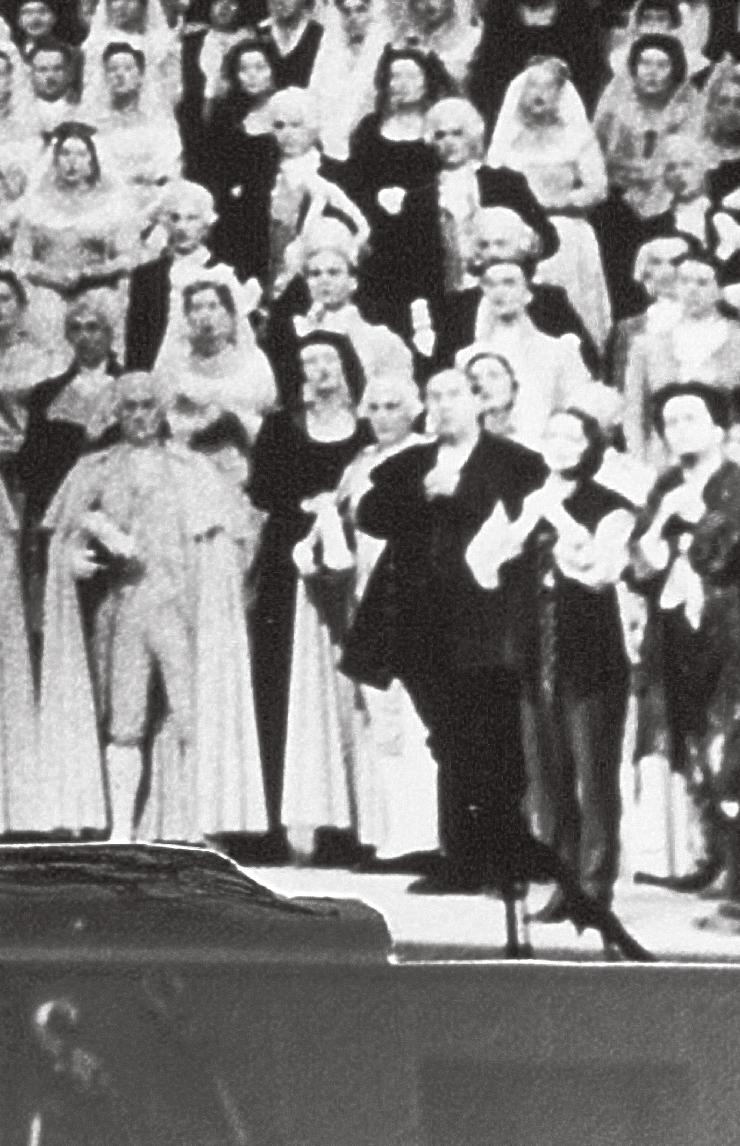
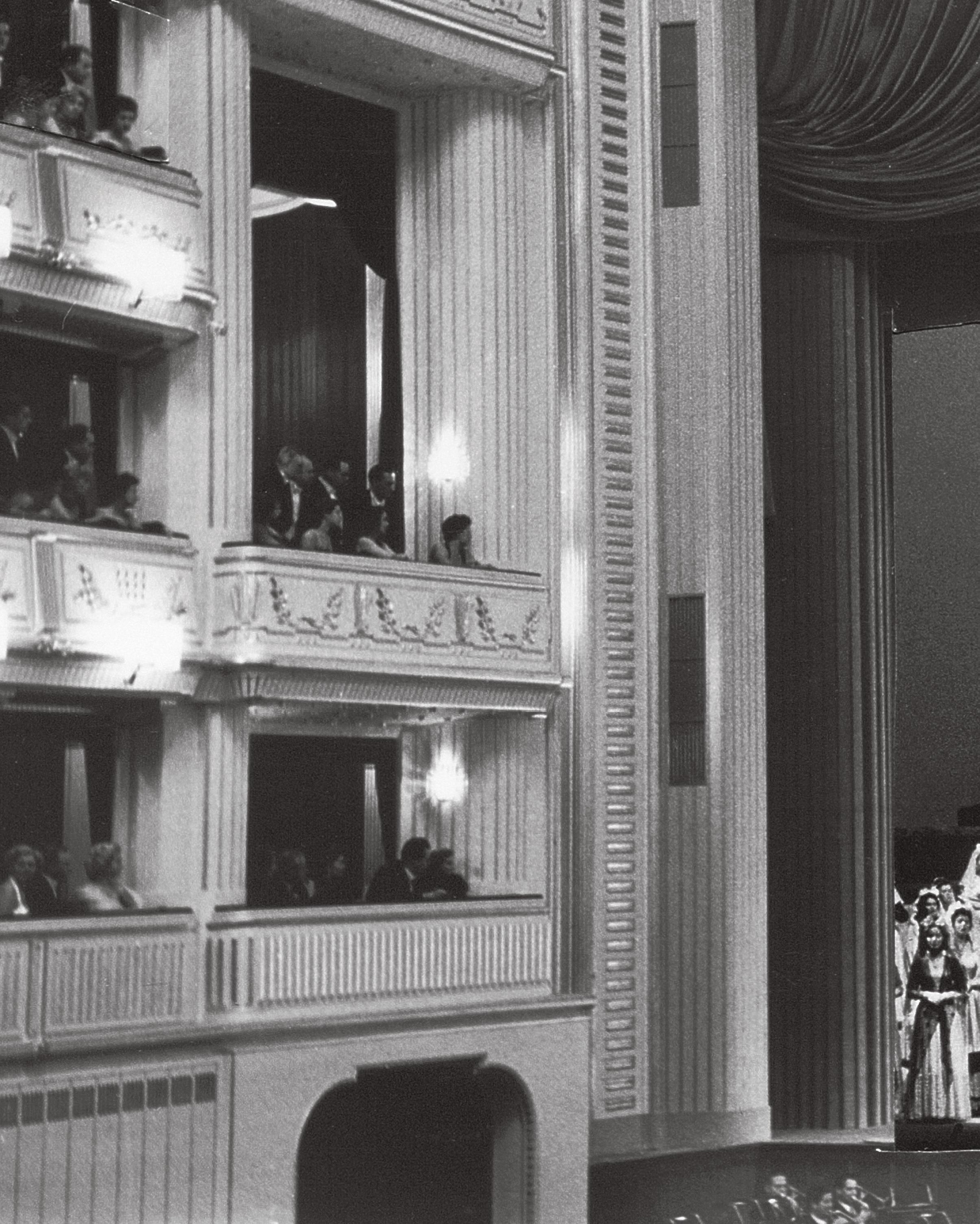
It is no accident that, in 1955, the first opera staged after the reopening of the bombed-out Vienna State Opera was Fidelio (previous page). After 10 years of being divided into four occupation zones, Austria was finally free to be its own country, and Fidelio captured that moment.
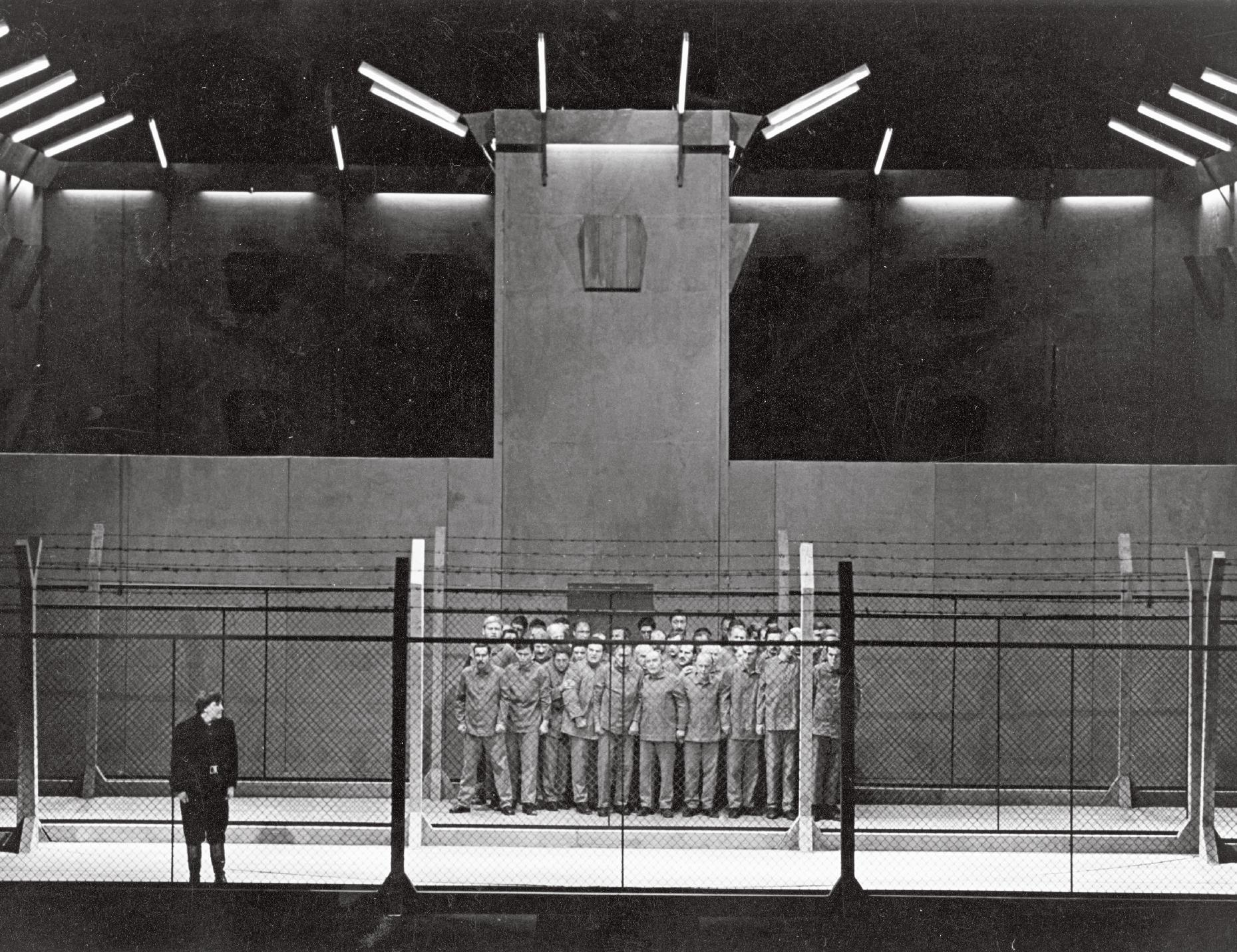
There was another famous production in 1989 by Christine Mielitz in Dresden (above), then the headquarters of the Secret Service of communist East Germany. The production premiered on October 7, almost exactly a month before the Berlin Wall fell. With dozens of secret agents in the audience, she staged it so that, as an audience member, you felt like you were inside the prison. It took tremendous courage of Mielitz to stage it that way, and from the Dresden Semperoper to present it.
Civic courage is not the strength of our time. People on both sides of the political spectrum tend to go with the flow without considering the consequences. But in the character of Leonore, Beethoven shows us that moving against the grain takes courage. She is the character who brings the light into a dark place. Before the opera starts, Leonore has the courage to dress up as a man and get a job in the prison. Don Pizarro harbors so much evil and maintains such a strong regime, but it is a woman who is willing to say, “No, that’s not what we stand for.”
Fidelio is a political opera that has been produced at critical junctures in history. It marked the reopening of the Vienna State Opera in 1955 (previous page) after the building had been bombed in World War II. Years later, a striking 1989 production in Dresden (above) featured barbed wire and a surveillance tower — mirroring the realities of East Germany outside the opera house walls.
right: The opera’s enduring message of freedom and justice also found its way into Beethoven’s perennial Ninth Symphony, which Franz Welser-Möst and The Cleveland Orchestra presented in October.
In fact, Beethoven’s original title for the opera was Leonore, oder Der Triumph der ehelichen Liebe (Leonore, or The Triumph of Marital Love). He was always a proponent of sweeping philosophical messages. Before his First Symphony, he wrote the ballet The Creatures of Prometheus in 1801. Though it was a failure, it was his first earnest attempt to create music with a larger message. Even then, he already had plans to set Friedrich Schiller’s “An die Freude” (Ode to Joy), which he eventually did more than 20 years later in the Ninth Symphony.
Beethoven urges each of us to stand up for the people we love and the values we believe in.
But like Prometheus, Fidelio was not a huge success, because Beethoven’s ideals were bigger than the libretto could accommodate. There’s a saying in opera: “Only a second-rate libretto gives the chance to a first-rate opera.” There is some truth to that, but in the case of Fidelio, the text is not even second-rate. And that’s why staging it is so often a failure.
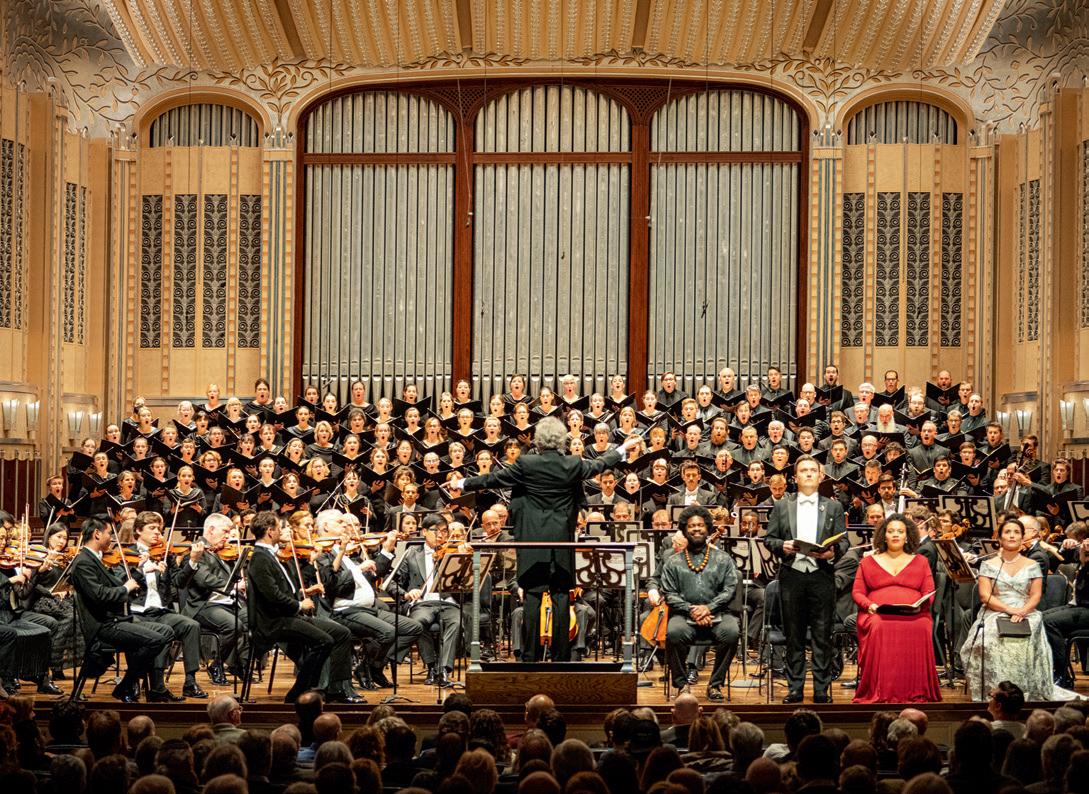
But the music is just extraordinary. It’s really Beethoven at his best. That is why I have decided to present this work unstaged, allowing the music itself to be the vessel for Beethoven’s powerful message. I’ve conducted over 70 different operas in my life, but every time I pick an opera for Cleveland, it’s because I specifically want to hear this Orchestra play it. Alongside the orchestra, of course, you also need strong soloists. Even at his best, Beethoven was never kind to singers. We have assembled a cast with great technique, especially Sara Jakubiak (Leonore) and David Butt Philip (Florestan), who can navigate the vocal challenges that Beethoven created. Don Pizarro is also an impossible role, but Tomasz Konieczny has a voice of such power that the hall may need another renovation!
Without a director influencing our interpretation, each of us is free to connect the opera with our own stories of love and courage, big and small. For me, it is a reminder of my father’s participation, at age 17, in an underground student movement against Hitler. For you, it will be something different. The scale does not need to be grand. Beethoven urges each of us to stand up for the people we love and the values we believe in.
MAY 16 , 21 & 24
SATURDAY, MAY 16 | 7 PM
THURSDAY, MAY 21 | 7 PM
SUNDAY, MAY 24 | 3 PM
Mandel Concert Hall at Severance Music Center
This performance is approximately 2 hours and 20 minutes long, including one 20-minute intermission
Ludwig van Beethoven COMPOSER
Joseph Sonnleithner LIBRETTIST
With further revisions by Stephan von Breuning & Georg Friedrich Trietschke
Based on Léonore, ou L’amour conjugal (Leonore, or Marital Love) by Jean-Nicolas Bouilly
The Cleveland Orchestra
Franz Welser-Möst CONDUCTOR
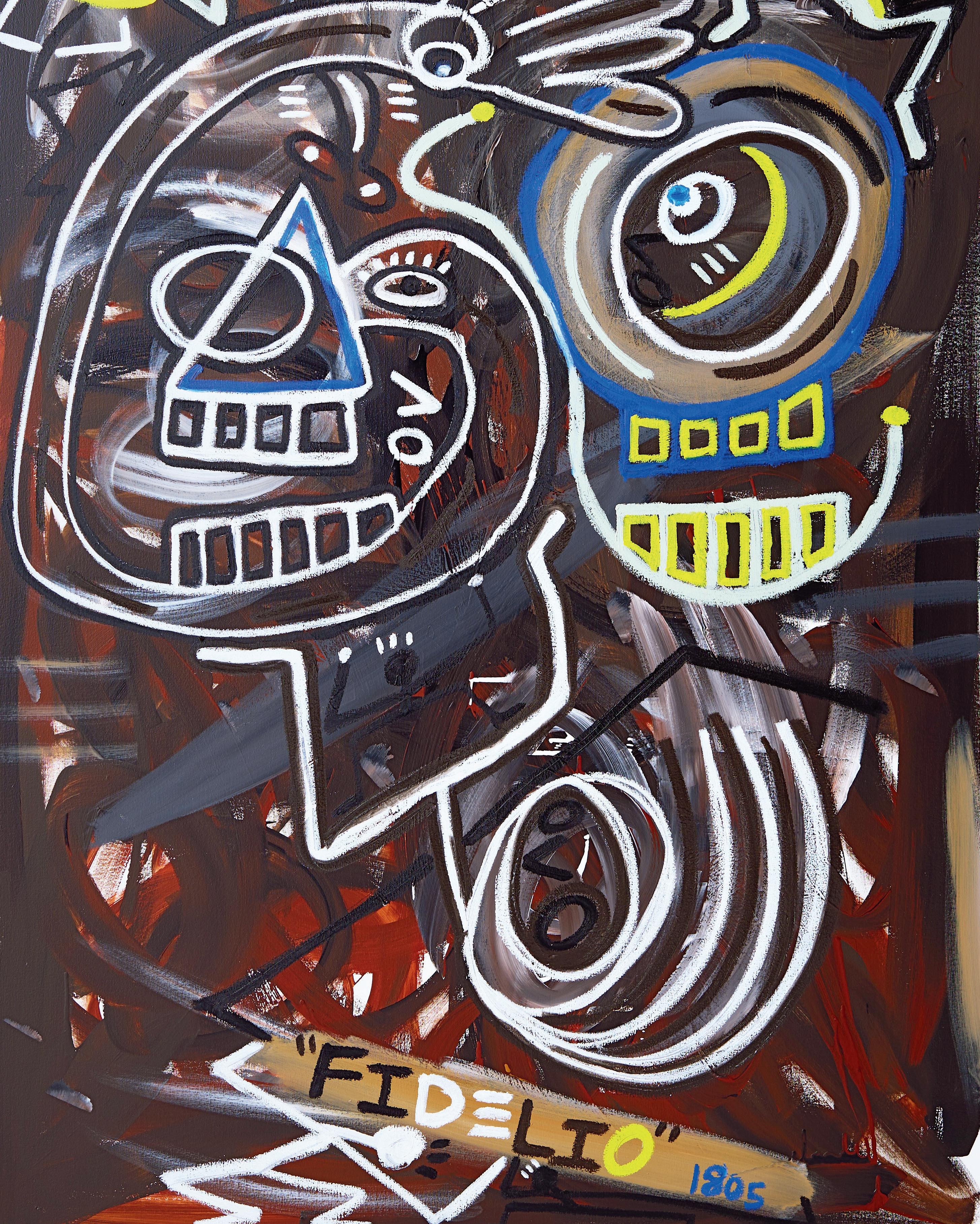
The design of Halim Flowers’s painting Fidelio (1805) finds resonance in the dark, maze-like dungeon where Florestan is being held captive in the opera. This, along with several other pieces by Flowers, can be viewed in the Bogomolny-Kozerefski Grand Foyer (see page 15).
CAST (IN ORDER OF APPEARANCE)
Tony F. Sias, narrator
Owen McCausland, Jaquino
Ashley Emerson, Marzelline
Raymond Aceto, Rocco
Sara Jakubiak, Leonore
Tomasz Konieczny, Don Pizarro
Ronnie Dailey & Adam Kilo (u/s), First Prisoner
Francisco Prado & Ronnie Dailey (u/s), Second Prisoner
David Butt Philip, Florestan
Dashon Burton, Don Fernando
The Cleveland Orchestra Chorus
u/s = understudy
Miloš Repický REPETITEUR
Lisa Wong DIRECTOR OF CHORUSES
Lucy Guillemette PRODUCTION STAGE MANAGER
Sonya Friedman ENGLISH SUPERTITLES
Jacqueline Kaminski SUPERTITLE OPERATOR
SuperTitle System courtesy of DIGITEXT, Chatham, VA
Narration text by Franz Welser-Möst, translated by Rebecca Epstein-Boley
Beethoven’s Fidelio is performed by arrangement with European American Music Distributors Company, US and Canadian agent for Bärenreiter Music Corp., publisher and copyright owner.
The Cleveland Orchestra’s production of Fidelio is generously sponsored by Jan R. Lewis. This production is generously supported by the Franz Welser-Möst Legacy Fund.
Sara Jakubiak’s performance is generously sponsored by Ms. Cathy Lincoln.
Ashley Emerson’s performance is generously sponsored by Jane Haylor and Mel Berger.
Owen McCausland’s performance is generously sponsored by James and Marguerite Rigby
Miloš Repický, repetiteur, is generously sponsored by Dr. Michael Frank and Patricia A.* Snyder.
The Cleveland Orchestra Chorus’s performance in Beethoven’s Fidelio is generously sponsored by Michael Hudson in memory of Susan Benningfield Hudson, a former vocal coach and accompanist for the TCO Chorus under the direction of Robert Page.
Thursday evening’s concert is dedicated to Mr. and Mrs. Dennis W. LaBarre in recognition of their generous support of music.
ACT I: A prison for political dissidents outside Seville, Spain | 75 MINUTES
INTERMISSION | 20 MINUTES
ACT II: The prison dungeons | 45 MINUTES
In the gatehouse of a formidable prison, Jaquino, the gatekeeper, tries in vain to win back the affections of the warden’s daughter, Marzelline. She eschews his advances; her heart now belongs to the errand boy, Fidelio. As Marzelline sings of her devotion, Fidelio returns, laden with packages for her father, Rocco. The grateful warden welcomes Fidelio back and reassures him that his extra efforts in pursuit of Marzelline have not gone unnoticed.
Unbeknownst to all, Fidelio is not a lovesick young man, but a woman — Leonore — in disguise, desperate to ingratiate herself with Rocco so that she can find her husband, Florestan. Leonore believes her husband is locked in the prison’s secret cellar, incarcerated two years prior for attempting to expose the crimes of the prison governor, Don Pizarro.
Rocco promises a wedding for Marzelline and Fidelio and dreams of the wealth this union will bring his family. As Fidelio, Leonore plays the eager son-in-law and offers to lighten Rocco’s load by taking on his most harrowing duties. Rocco, however, refuses to discuss the horrific conditions of his most secret prisoner.
Martial music announces the arrival of Don Pizarro and his coterie. Pizarro is shaken to learn that the king’s minister, Don Fernando, is en route to inspect the prison. He knows that Florestan,
a good friend of the minister, has not died as the minister believes, because Pizarro himself has been brutally torturing the prisoner for years.
Pizarro resolves to kill Florestan before the visit and enlists Rocco to help weaken the prisoner and dig his grave. Listening in, Leonore is both encouraged to hear that her husband lives and horrified by his impending murder.
On a whim, she asks Rocco to let the prisoners out into the fresh air. He grudgingly agrees, and Marzelline convinces Rocco to distract Pizarro in the meantime. Granted access to the grounds for the first time, the prisoners revel in this fleeting taste of freedom.
In the meantime, Rocco has secured Pizarro’s blessing of Fidelio and Marzelline’s marriage and, with it, a lucrative promotion for Fidelio. With newfound trust in his future son-in-law, Rocco informs Fidelio of Pizarro’s plan to kill and dispose of Florestan.
Pizarro blusters in, having caught wind that the prisoners are in the yard. Rocco makes the necessary excuses, distracting the governor with a reminder of Florestan’s imminent demise. Rocco and Jaquino usher the prisoners back into the dark fortress as Leonore prepares to accompany Rocco down to Florestan’s cell.


Deep in the dark recesses of the prison, Florestan sits alone in his cell, despairing in his fate. A celestial vision of his wife briefly lifts his spirits before he falls asleep.
Rocco and Leonore — still disguised as Fidelio — quietly descend into the dungeon, guided by the dim light of a lantern. Through the dark, Rocco sees Florestan sleeping on the floor of his cell. As the pair begin digging the grave, Leonore casts worried glances at the sleeping figure, unsure whether it is her husband.
As the two continue digging, Florestan wakes. He begins to speak with Rocco, when Leonore is struck by the sudden realization — it is her husband! She composes herself as the men continue their conversation.
Florestan is enraged to hear he is being held captive by Pizarro and begs Rocco to send for Leonore, unaware that she is mere feet away. Rocco rebuffs Florestan’s pleas but agrees to share the last drops of his wine.
Having finished digging, Rocco leaves to alert the governor that everything is ready. Florestan begins to panic as Leonore comforts him. She desperately wants to reveal herself but holds back — the time is not yet right.
Pizarro arrives, gleefully flaunting a dagger, and commands Rocco to dismiss Fidelio and loosen the prisoner’s chains. Meanwhile, the disguised Leonore has slipped into the background,
observing the scene from the shadows. As Rocco fumbles with Florestan’s chains, Pizarro mutters to himself that he will also have to dispose of Rocco and Fidelio — there can be no witnesses. Suddenly, Fidelio leaps from the darkness and reveals her true identity — Leonore, Florestan’s wife. Her dramatic revelation is met with stunned silence. Composing himself, Pizarro raises his dagger to kill Leonore, but she swiftly pulls out a gun and points it at the governor. She is prepared to shoot.
A trumpet call interrupts the commotion, signaling the arrival of the minister, Don Fernando. Freedom is imminent! Jaquino and several soldiers enter to inform the group that the minister is waiting at the gate. Rocco calls upon several soldiers to escort Pizarro up the stairway. The reunited couple is finally alone, and they affirm their profound, abiding love for one another. Before long, Rocco rushes back in with good news: Don Fernando has ordered the immediate review of all prison sentences and promised to hold Pizarro responsible for his crimes. Overjoyed, Florestan and Leonore embrace as the prisoners begin to sing of their long-awaited freedom. Justice has won the day.
— Kevin McBrien and Ellen Sauer Tanyeri
by Mark Ferraguto
by Mark Ferraguto
Fidelio is one of Beethoven’s crowning achievements, but it had a difficult gestation from its premiere to the version we know today
Fidelio is one of Beethoven’s crowning achievements, but it had a difficult gestation from its premiere to the version we know today
’S
JEAN-NICOLAS BOUILLY ’S 1798 COMIC OPERA Léonore, ou L’amour conjugal (Leonore, or Marital Love) was conceived — like several other contemporary “rescue” dramas — in reaction to the Reign of Terror that gripped France in 1793–94. According to Bouilly’s 1836 memoirs, the story’s eponymous heroine was based on a real-life acquaintance, one who disguised herself as a male guard to free her husband from a Jacobin prison. Premiering in Paris with music by Pierre Gaveaux, Bouilly’s play went on to inspire three further operas over the next six years: Ferdinando Paer’s Leonora, ossia L’amore coniugale (Dresden, October 1804), Simon Mayr’s L’amor coniugale (Padua, July 1805), and Ludwig van Beethoven’s Fidelio, oder die eheliche Liebe (Vienna, November 1805) — the latter so named by the theater management to avoid confusion with Paer’s Leonora.
COMIC OPERA Léonore, ou L’amour conjugal (Leonore, or Marital Love) was conceived — like several other contemporary “rescue” dramas — in reaction to the Reign of Terror that gripped France in 1793–94. According to Bouilly’s 1836 memoirs, the story’s eponymous heroine was based on a real-life acquaintance, one who disguised herself as a male guard to free her husband from a Jacobin prison. Premiering in Paris with music by Pierre Gaveaux, Bouilly’s play went on to inspire three further operas over the next six years: Ferdinando Paer’s Leonora, ossia L’amore coniugale (Dresden, October 1804), Simon Mayr’s L’amor coniugale (Padua, July 1805), and Ludwig van Beethoven’s Fidelio, oder die eheliche Liebe (Vienna, November 1805) — the latter so named by the theater management to avoid confusion with Paer’s Leonora.
Beethoven came to Bouilly’s libretto in a roundabout way. His operatic journey began in early 1803 with an offer from Emanuel Schikaneder, librettist of Mozart’s The Magic Flute and founder of the Theater an der Wien. Schikaneder proposed that Beethoven write an opera for his company in exchange for an apartment in the theater complex and the use of his theater for concerts. This was an attractive deal: it allowed Beethoven to collaborate with a star in the theatrical firmament, provided a pathway into the lucrative world of opera, and enabled him to produce concerts for his own benefit.
Beethoven came to Bouilly’s libretto in a roundabout way. His operatic journey began in early 1803 with an offer from Emanuel Schikaneder, librettist of Mozart’s The Magic Flute and founder of the Theater an der Wien. Schikaneder proposed that Beethoven write an opera for his company in exchange for an apartment in the theater complex and the use of his theater for concerts. This was an attractive deal: it allowed Beethoven to collaborate with a star in the theatrical firmament, provided a pathway into the lucrative world of opera, and enabled him to produce concerts for his own benefit.
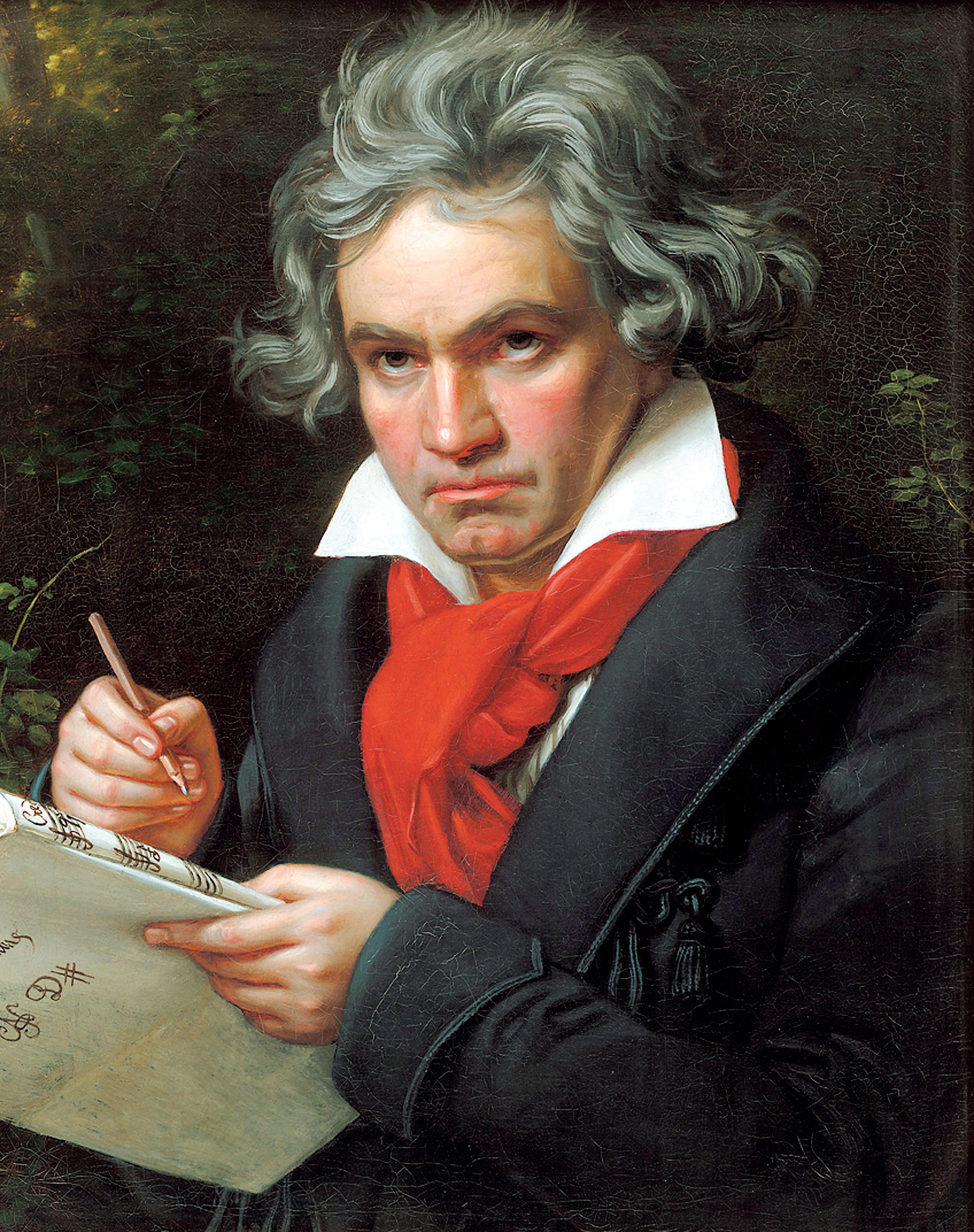
Though he composed several vocal-andorchestral works during his productive career, Fidelio was Beethoven’s only completed opera. This famous 1820 portrait by Joseph Karl Stieler shows the composer with the manuscript to his Missa solemnis
his productive career, Fidelio was Beethoven’s only completed opera. This famous 1820 portrait by Joseph Karl Stieler shows the composer with the manuscript to his Missa solemnis
Beethoven resided in the theater complex from April 1803 to May 1804. Not until November 1803 did he tackle Schikaneder’s libretto for Vestas Feuer (Vesta’s Fire), a ponderous affair about the Vestal virgins in Ancient Rome. Soon after composing the first scene, he soured on the project, writing to Johann Friedrich Rochlitz in January 1804: “I allowed myself to be deceived, because I was hoping that, given [Schikaneder’s] well-known ability to create stage effects, he would produce something more intelligent than usual. How wrong I was!” Beethoven further explained
Beethoven resided in the theater complex from April 1803 to May 1804. Not until November 1803 did he tackle Schikaneder’s libretto for Vestas Feuer (Vesta’s Fire), a ponderous affair about the Vestal virgins in Ancient Rome. Soon after composing the first scene, he soured on the project, writing to Johann Friedrich Rochlitz in January 1804: “I allowed myself to be deceived, because I was hoping that, given [Schikaneder’s] well-known ability to create stage effects, he would produce something more intelligent than usual. How wrong I was!” Beethoven further explained
that he had cut ties with the impresario and was already at work on another opera, one based on an adaptation of an “old French libretto.”
Léonore was adapted for the Viennese stage by Joseph Sonnleithner, a lawyer, former court official, and artistic director of the Theater an der Wien in 1804. Sonnleithner translated Bouilly’s libretto into German and rendered it suitable for Viennese consumption, ensuring that the opera would uphold, in musicologist Michael Tusa’s words, “principles of monarchical rule, hierarchical class structure, and the honor of the Habsburg dynasty.” One significant revision involved minimizing the state’s role in Florestan’s persecution. Rather than the state minister (Don Fernando) taking responsibility for the former’s unjust imprisonment, the blame is placed squarely on the prison’s governor (Don Pizarro), who acts according to a personal — rather than official — vendetta.
The image of Beethoven
eccentric
has persisted as a popular trope in art, literature, and film over the centuries.
It is difficult to know precisely when certain changes were implemented, but the opera was still controversial enough to elicit a ban from the Viennese authorities two weeks before the premiere. In a desperate memorandum to State Councilor Philipp von Stahl, Sonnleithner stressed that the action was set in 16th-century Spain and therefore had no relation to current events, and that Pizarro was acting merely on a private impulse. In addition, the story was not only “moral in the highest degree” but also a favorite of Empress Maria Theresa, on whose name day (October 15) the premiere was scheduled to take place. These arguments — along with further tweaks to the libretto — persuaded the censors. The premiere proceeded a month later, on November 20, 1805.
The timing, unfortunately, could not have been worse. A week earlier, Napoleon had invaded the Austrian capital, parading his army through the streets and taking up residence in Schönbrunn Palace. Emperor Francis II fled the city, along with the rest of the imperial family and most of the nobility. While the five theaters remained open by governmental decree, Beethoven’s aristocratic supporters were gone, and the parterre was filled with foreigners who had little appreciation for German opera. More distressingly for Beethoven, critics found the work cumbersome and dramatically ineffective, citing among other concerns the “very extensive” third act, the overture with its “very long Adagio,” and the “endlessly repeated text.” The opera was a failure, withdrawn after just three performances.
Beethoven spent the winter revising his opera with the help of his friend Stephan von Breuning. The main changes entailed condensing the work from three
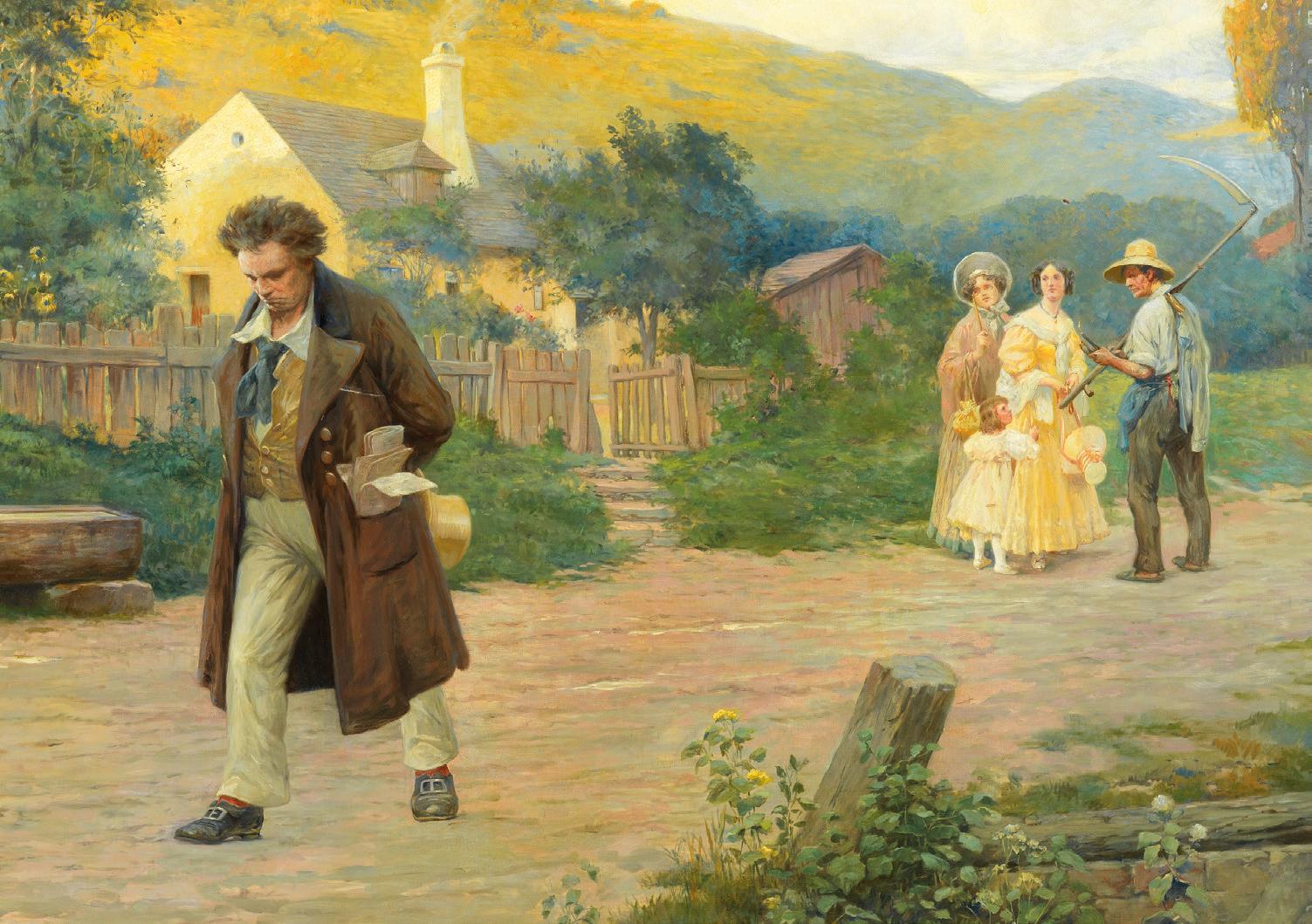
Otto Robert Nowak’s 1908 painting The Solitary Master shows Beethoven on a walk in the Vienna countryside as some locals look on inquisitively.
acts into two and tightening the action. Beethoven also composed a new overture, known as Leonore No. 3. (Leonore No. 1, confusingly, was composed in 1807 for an aborted performance in Prague; Leonore No. 2 refers to the original 1805 overture). The second run of performances, in spring 1806, received a somewhat warmer response, but the financial returns were disappointing. Beethoven, inexperienced with the business of opera, believed the theater management had swindled him; the work was pulled after just two performances. In a June 1806 letter, Breuning confided to his sister and her husband that “probably nothing has caused Beethoven so much grief as this work, whose value will be fully appreciated only in the future.”
Fidelio lay dormant for eight years until 1814, when the success of Beethoven’s battle symphony Wellington’s Victory encouraged the directors of the court-run Kärntnertortheater to suggest reviving the opera. Beethoven now turned to the playwright Georg Friedrich Treitschke for assistance, and the two honed the work into what would become its definitive version.
Preserving Breuning’s two-act structure, Treitschke and Beethoven reversed the opening aria and duet, cut two numbers involving the warden Rocco’s daughter (Marzelline), expanded both act-ending ensembles, and moved the final scene from the subterranean dungeon to an outdoor courtyard, among many other edits. Beethoven also composed a fresh overture — known now as the Fidelio Overture — that, unlike the previous ones, makes no explicit reference to the ensuing drama. (However, Leonore Overture No. 3 is still sometimes played before the penultimate scene of Act II, as in The Cleveland Orchestra’s performances.) The sum of these changes was to sacrifice some of the original work’s characterizations and subtleties in favor of a celebration of universal themes: hope over despair, humanity over evil, light over darkness, feminine virtue, Christ-like resignation, divine providence, and moral courage.
The sum of these changes was to sacrifice some of the original work’s characterizations and subtleties in favor of a celebration of universal themes: hope over despair, humanity over evil, light over darkness, feminine virtue, Christ-like resignation, divine providence, and moral courage.
Fidelio was, at long last, a hit, despite Beethoven’s sardonic remark to Treitschke that it would only win him “a martyr’s crown.” Indeed, the stars finally seemed to align, with the reworked opera’s premiere in May 1814 benefiting from the giddy atmosphere of Napoleon’s defeat by the Sixth Coalition. Over the next year, Fidelio was repeatedly performed for the monarchs and diplomats assembled at the Congress of Vienna as they decided how to carve up the European continent. The opera’s message of freedom from tyranny — facilitated, crucially, under the auspices of enlightened absolutism — set the tone for the Congress, commemorating Napoleon’s defeat while offering a vision of post-Napoleonic Europe that was at once ideologically progressive and politically conservative.
by Allison Chu
Beethoven’s clarion call for freedom and justice resounds as clear today as in its first performance in 1805
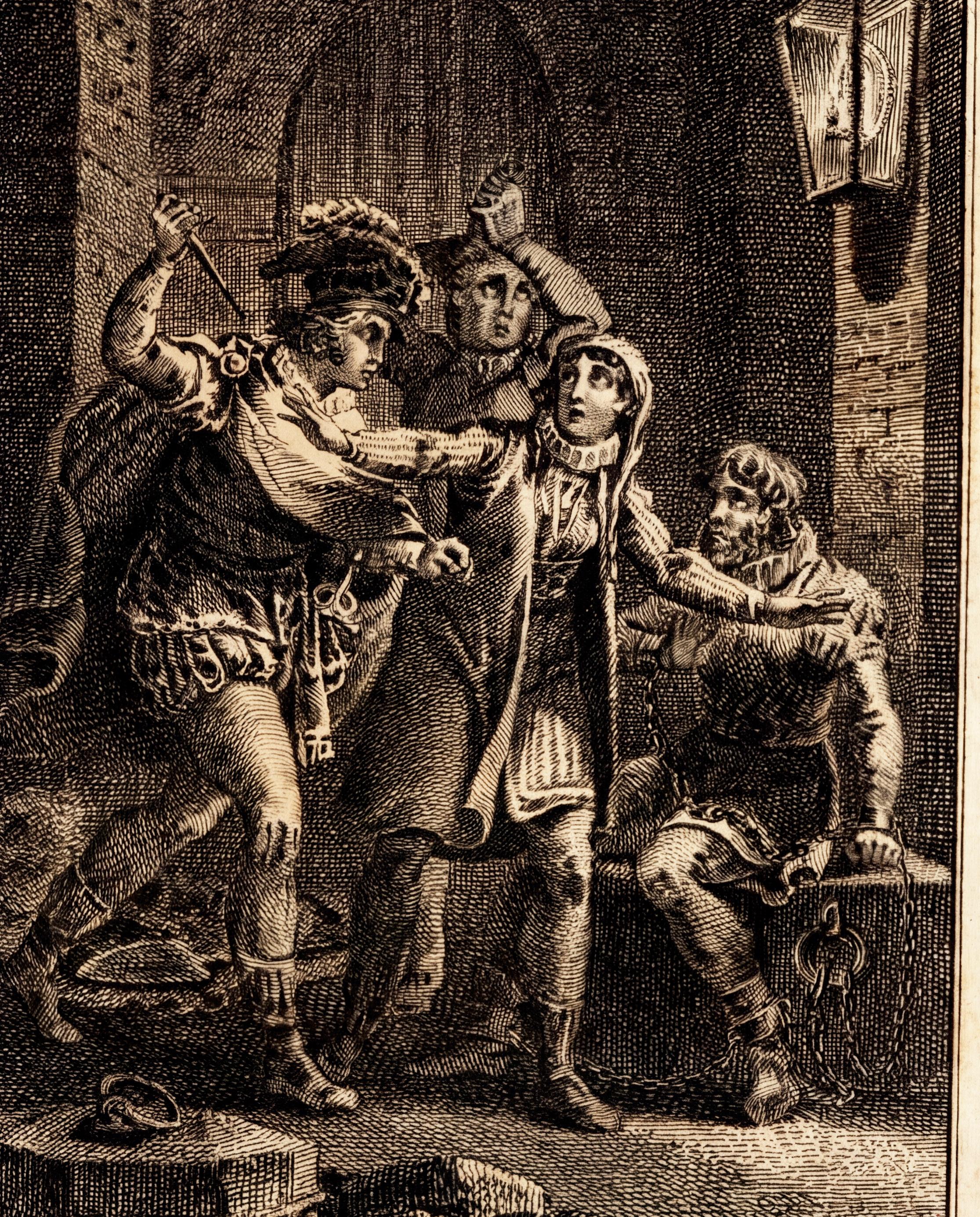
Leonore reveals her identity and stops the murder of her husband, Florestan, in this engraving by Vincent Grüner. The image was printed in the 1815 almanac for the Weiner Hof-Theater, compiled by Beethoven’s acquaintance, dramatist Ignaz Franz Castelli
THE FIRST TIME WE MEET DON PIZARRO , the governor who rules over the prison where Florestan is unjustly incarcerated, he makes no effort to hide his malicious machinations. In his Act I aria, Pizarro menacingly addresses the unseen prisoner: “I will satisfy my desire for revenge / Your fate awaits you!” Don Pizarro is villainous, intent on targeting those who speak out against him. His agenda is clear — Florestan must die. Ludwig van Beethoven wrote Fidelio, his only opera, during a time in which the ideas of revolutionary fervor, prison reform, and freedom through enlightenment were in vogue. Based on a French libretto by Jean-Nicolas Bouilly, Fidelio follows the model of the “rescue opera” popular before, during, and after the French Revolution. Many such operas thematized the imprisonment and rescue of political prisoners from the control of unlawful, tyrannical governments. In Vienna, French rescue operas such as Luigi Cherubini’s Lodoïska (1791) and Le deux journées (1800) had already been produced to great success. Action-packed and appealing to a new working-class audience, rescue operas promoted the core Enlightenment values of self-determination and the triumph over oppressive forces.
Though structured as a Singspiel — a theatrical musical work in which the dialogue between musical numbers is spoken rather than sung in recitative — Fidelio clearly exemplifies the influences of its French predecessors. Set in a state prison, the opera follows the daring rescue efforts of Leonore, a desperate wife who disguises herself as a young prison guard named Fidelio to free her husband, Florestan. Maneuvering around Don Pizarro, Leonore ultimately succeeds in reuniting with Florestan and overthrowing Pizarro, and the opera concludes with a celebration of freedom. The version most often performed today was created in 1814 with the help of Georg Friedrich Treitschke, following 1806 revisions by Stephan von Breuning
Notably, in the final version, Treitschke altered the ending to grant amnesty to all the prisoners. It was premiered during the Congress of Vienna to celebrate the defeat of Napoleon.
Nowhere in the opera are the musical pleas for freedom more apparent than in the famous Act I “Prisoners’ Chorus.” Fidelio has just gotten permission from Rocco, the jailer, for the prisoners to walk in the courtyard, a small reprieve from their grim reality. While the moment is dramaturgically extraneous to the larger plot, in this chorus, we momentarily glimpse the meaning of freedom. We are not privy to these prisoners’ convictions or identities — we know only that they are state prisoners. The anonymous men begin singing cautiously, softly gathering strength from the open air:
“Oh, what joy / to breathe in the open air again!” Registral shifts sonically illustrate the text, differentiating between the open-air courtyard and the dungeon, the locus of imprisonment. Musically arcing upwards, the prisoners’ phrases relish the feeling of freedom, and they reach the apexes of their phrases on the words “Luft” and “Frei” — air and freedom. Yet just as quickly as the chorus began, the closing stanza of the three-part form arrives. The opening returns, this time at a softer dynamic level, closing the brief window to the outside world. As the prisoners shuffle back into their cells, we are reminded of how fleeting true liberation can be.
In our current moment, the cries of the imprisoned reverberate on a new frequency, prompting us to ask: Who are those nameless choristers kept behind bars?
Performing Fidelio has always been a political act. Government censors, working to protect the interests of the newly created Austrian Empire, banned the production just two weeks before the premiere at Vienna’s Theater an der Wien, citing political objections to the opera’s harshest scenes. Translator and librettist Joseph Sonnleithner then submitted a petition that appealed to Empress Marie Theresa’s admiration of the marital love theme and altered the setting to 18th-century Seville, which appeased government officials. The opera eventually opened to lukewarm reception and sparse attendance on November 20, 1805.
The exact nature of the tyrannical political power symbolized and embodied by Don Pizarro has been, and continues to be, mutable, taking on different guises in various performances at key historical junctures. During World War II, Arturo Toscanini conducted annual productions of Fidelio at the Salzburg Festival between 1935 and 1937 that have been understood as protests against the Axis powers. But in 1938, following the annexation of Austria into Nazi Germany, Fidelio was performed as a celebration of liberation by the National Socialists. In 1945, Fidelio yet again marked a sense of freedom at Berlin’s Deutsche Oper as the first opera performed in the city after World War II.
Fidelio has also acted as a symbol of liberation beyond Europe. A 1980 production of the opera in Buenos Aires notably flew under the radar of a regime that, like the malicious Don Pizarro, had similarly detained 30,000 political prisoners. And in South Africa, as musicologist Juliana M. Pistorius has shown, pivotal productions of the opera in 1994 and 2004 were associated with the nation’s democratic transition. More recently, director Francesca Zambello timed Washington National Opera’s 2024 production to coincide with Election Day in the US.
In our current moment, the cries of the imprisoned reverberate on a new frequency, prompting us to ask: Who are those nameless choristers kept behind bars? From those wrongly accused of crimes they did not commit, to those held in immigration detention centers and punished for seeking new lives, incarceration has yet again emerged as a pressing issue in contemporary discourse. Without a Leonore to rescue them, many are trapped within the United States’s current system of mass incarceration — one that imprisons at a higher rate than any other country. Yet the story of Fidelio is, at its core, one about humanity and the power of courage in the face of despair. To experience Fidelio, then, is to question the Don Pizarros who cling to tyranny, and to listen to those who remain imprisoned out of sight.
Fidelio is a poignant work of art that engages critical issues including courage, power, corruption, justice, and prison reform. Here are several local organizations that are committed to serving the incarcerated and formerly incarcerated populations in and around Northeast Ohio:
Urban League of Greater Cleveland
Focused on eliminating barriers that prevent communities of color from achieving their full potential ulcleveland.org
Renovare
Cleveland-based ensemble that employs music as a tool for personal growth and healing, frequently working with women in the Northeast Reintegration Center renovaremusic.org
Power of Harmony Foundation
Using choral music and mentorship to support youth in correctional facilities powerofharmonyfoundation.org
EDWINS Leadership & Restaurant Institute
Providing culinary training and holistic support for formerly incarcerated adults
edwinsrestaurant.org
Passages Ohio
Helping recently incarcerated fathers and parents reconnect with and support their families passages-oh.org
The Cleveland Freedom Project
Youth-led organization that advocates for systemic changes in the juvenile justice system clevelandfreedomproject.org
ACLU of Ohio
Cleveland-based chapter of the American Civil Liberties Union, which seeks to preserve civil liberties and advance civil rights for all Ohioans acluohio.org
The Legal Aid Society of Cleveland
Provides “second chance” legal representation for formerly incarcerated people, helping them clear barriers to stable housing and employment lasclev.org
by Jessica Waldoff
Though Leonore’s actions echo the 18th-century fight for women’s rights, her character represents much more
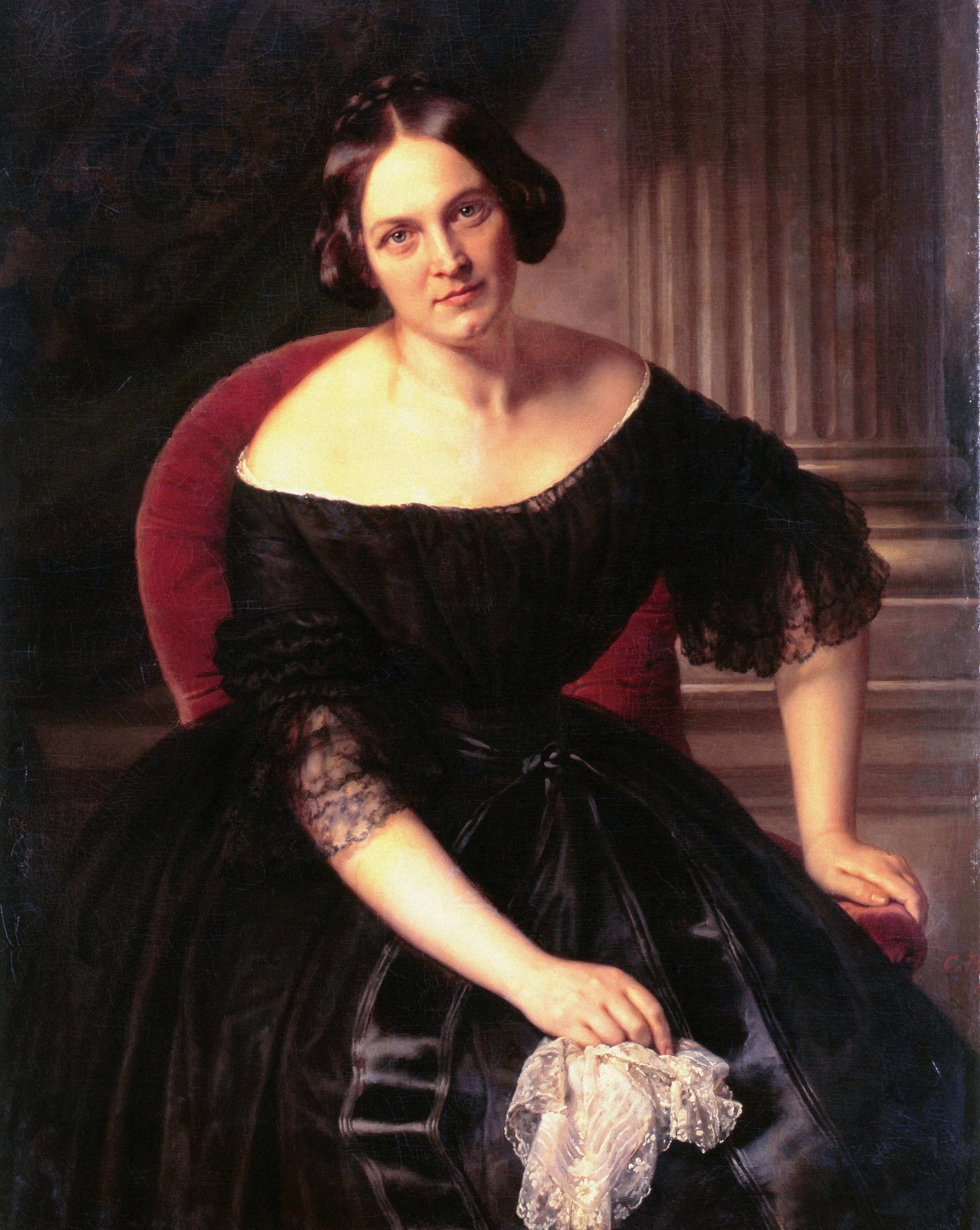
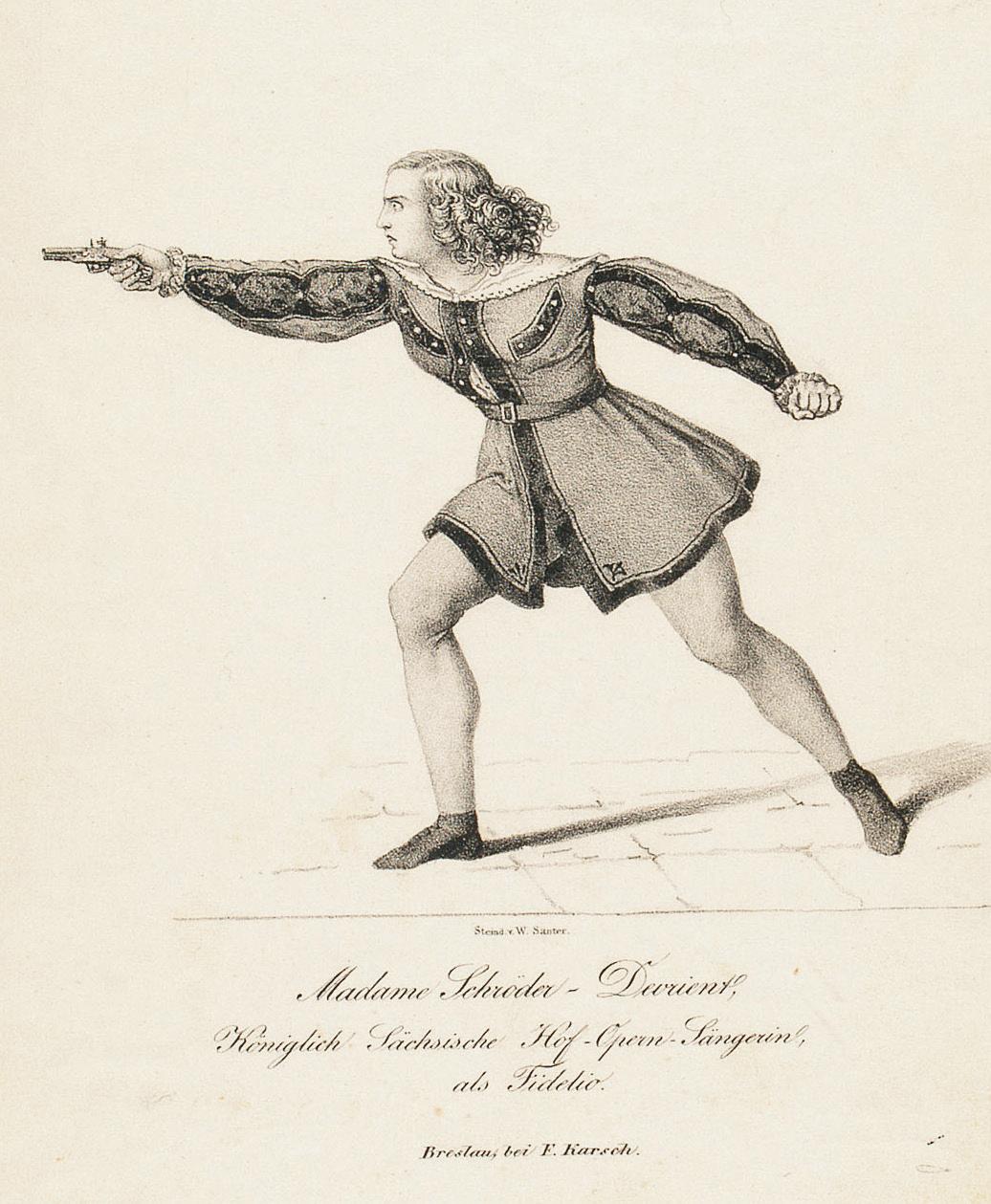
In 1822, Beethoven attended the Vienna revival of Fidelio and was captivated by German soprano Wilhelmine Schröder-Devrient (1804 – 1860) as Leonore. Though profoundly deaf by this point, the composer allegedly offered to write her another opera, but this never materialized.
Schröder-Devrient later went on to create several soprano roles for Wagner, including Senta in The Flying Dutchman and Venus in Tannhäuser
FROM A 21ST-CENTURY VANTAGE POINT , it is tempting to view Leonore’s courageous actions in Fidelio against the backdrop of 18th-century debates over women’s rights that produced foundational texts such as Judith Sargent Murray’s On the Equality of the Sexes (1790), Olympe de Gouges’s Declaration of the Rights of Woman (1791), and Mary Wollstonecraft’s A Vindication of the Rights of Woman (1792). Ludwig van Beethoven’s Leonore, however, does not engage in any such debates. She is a woman of action.
In the years preceding and during the Age of Revolution, many operas, especially in France, claimed to represent actual events and were thus billed as “fait historique.” Several centered on the actions of a heroine who rescues her beloved from imprisonment: Le déserteur (1769), an early and especially well-known example; Le comte d’Albert (1787) in which a wife saves her husband; The Prisoner (1792), an English pastiche (adapting music by Dalayrac and Mozart) in which two women pose as soldiers; and Léonore, ou L’amour conjugal (1798), on which Beethoven and his librettists based Fidelio. Jean-Nicolas Bouilly, author of the libretto on which all subsequent Léonore operas relied, had trained in law and served as a judge in Tours during the Reign of Terror. He later said in his memoirs that he based his drama on “a sublime deed of heroism and devotion by [a lady] … whose noble efforts I had the happiness of assisting.”
Writing about the idealization of women in literature in A Room of One’s Own (1929), Virginia Woolf points to a curious paradox that aptly describes the duality of the Leonore/Fidelio figure: “[In] real life a respectable woman could hardly show her face alone in the street, and yet on the stage woman equals or surpasses man.” Leonore knows she cannot achieve her objective as a woman and has therefore disguised herself as a man. This simple fact is essential to understanding the opera’s action.
For most of Act I, we only glimpse Leonore through her disguise. It is not until her grand scena before the finale that we discover her full capacity for courage, love, and hope. Leonore has overheard Don Pizarro’s diabolical plan to murder her husband (Florestan), and when she enters, her inner turmoil can be heard in the orchestra. She tries to make sense of Pizarro’s rage as the music moves toward his key (D major). But then, suddenly, she imagines a rainbow shining above her, represented in the winds and in the unexpected key of C major, a key associated with love and triumph (especially in the Act II finale).
The aria type Beethoven employs here (a two-tempo rondo) was particularly associated with complex and emotionally fraught situations for noble heroines. It begins slowly in a bright E major, the key of the opera’s overture but otherwise unique to Leonore in this opera. Three horns, an audible manifestation of her innermost thoughts, engage in an exquisite dialogue with the voice. Coloratura aptly paints the image of how love will reach (“erreichen”) its goal. The tempo soon picks up as Leonore declares her resolve. Huge leaps, vocal runs, and an ascent to a high B emphasize the key word “Gattenliebe” (marital love).
In the Act II quartet, the opera’s climax, Leonore’s resolve is put to the test. Pizarro begins the ensemble in his key, but the music, characterized by frequent chromatic motion, drives continually onward, reflecting the action at every turn. As Leonore steps forward to shield Florestan from Pizarro’s dagger, she deflects the established harmony yet again. Unaccompanied and exposed, she dares Pizarro to kill her first, reaching up to a high B-flat. The battle of wills continues for more than 40 bars until the trumpet call is heard. This signal announcing the minister’s arrival changes everything: Leonore has achieved freedom for her beloved Florestan.
Two supreme moments of satisfaction now unfold for Leonore. First, the private reunion of husband and wife, in which extended a due passages (simultaneous singing in thirds) appropriately dramatize two hearts beating as one. The placement right before the finale is conventional, but this particular love duet, with its dynamic range, unexpected pauses, and heart-racing energy, conveys emotional exuberance as only Beethoven can.
The second such moment occurs in the Act II finale, when the minister (Don Fernando) invites Leonore to unlock Florestan’s chains. The music here makes an unexpected shift of tempo, texture, key, and mood. As Leonore gives thanks, the music captures the wonder of freedom. Its transformative stillness recalls the promise of Leonore’s rainbow in her scena and the quiet “shock tutti” passage in the dungeon after the trumpet signal is heard. The overwhelming emotion of the moment (“Augenblick”) appears to stop time and heighten the senses.
Fidelio’s celebration of love, hope, and freedom may be summed up in one word: Leonore.
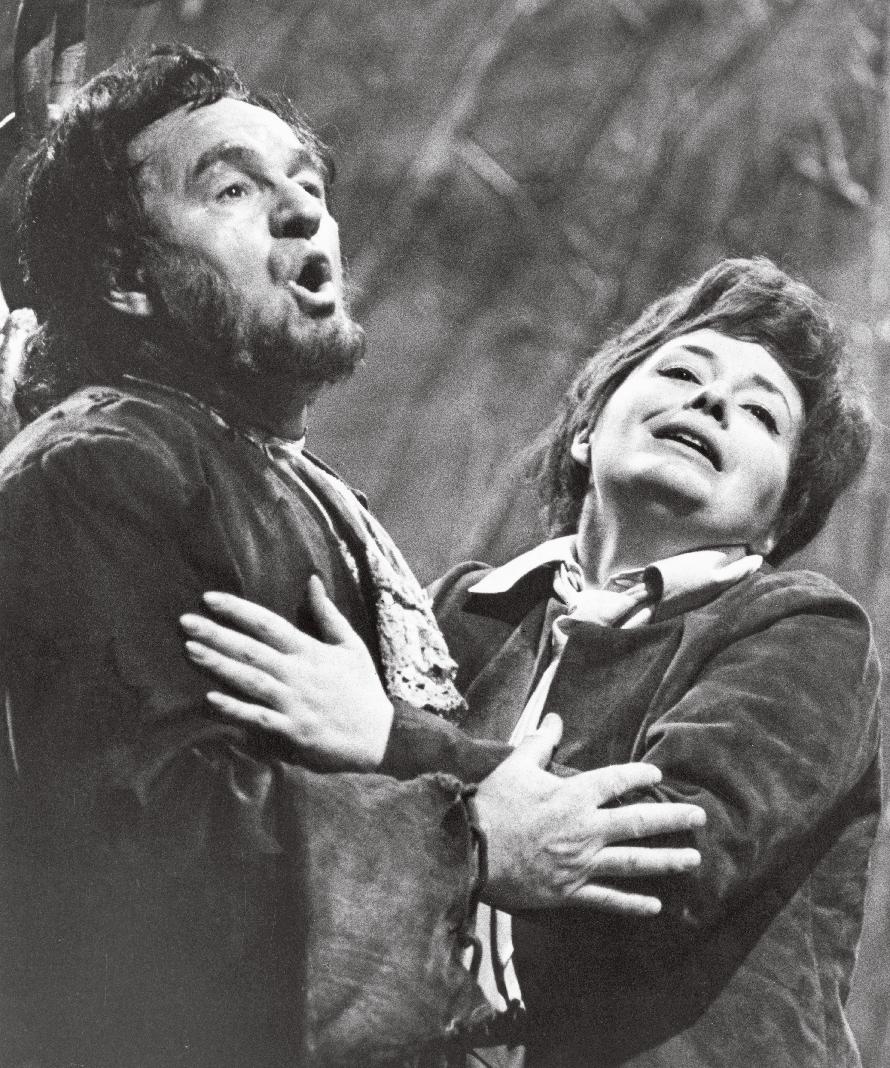
Since its premiere in 1805, generations of legendary sopranos have appeared in the role of Leonore, including Wilhelmine Schröder-Devrient (above left), Lotte Lehmann, Birgit Nilsson, Jessye Norman, and Nina Stemme, to name a few. Welsh soprano Gwyneth Jones (right) appeared alongside tenor Ronald Dowd in a London production of the opera in 1967.
The opera’s final celebration in the next section focuses on Leonore as the chorus (comprising prisoners and townspeople, including women) sings together: “Whoever has won a lovely wife / Let him join in our jubilation” (a paraphrase of lines from Friedrich Schiller’s “An die Freude,” now familiar from Beethoven’s Ninth Symphony). The text setting is harmonious and euphoric. In the opera’s remaining bars, we hear this refrain sung repeatedly by the main characters and the chorus in turn. Fidelio’s celebration of love, hope, and freedom may be summed up in one word: Leonore. She is the opera’s primary champion of compassion, justice, and courage. In Act I, it is she who insists that the prisoners be released into the open air. In Act II, upon first seeing the prisoner in the dungeon, she exclaims, “Whoever you are, I will save you.” And at the opera’s end, she attributes courage to love: “true love knows no fear.” Through her actions, Leonore demonstrates the essential message of Wollstonecraft’s Vindication, that freedom must “strengthen [woman’s] reason till she comprehend her duty, and see in what manner it is connected with her real good.”
Jessica Waldoff is Carol and Park B. Smith Professor of Music at the College of the Holy Cross. She has published widely on the music of Mozart and his contemporaries. Her most recent book is The Cambridge Companion to The Magic Flute (2023).

SUNDAY | 4 PM
Reinberger Chamber Hall at Severance Music Center
[POETRY] IS MY FIRST LOVE . And the first to love me back. She’s grown with me. Sometimes she don’t want to deal with me. It’s a relationship. Sometimes you don’t wanna do what you have to do. If she taps me on the shoulder and she wants to go out on a date, I must be ready to support her. I gotta be ready to ignore everybody and go in on that poem. I really just see it as something that loves me back; it’s safe. You could write about anything, and the page will never judge your deep secrets if you don’t show it to nobody. And I love that.
— Tarriona “Tank” Ball (interviewed for Under the Radar magazine, January 2025)
ARTIST
Tarriona “Tank” Ball, spoken word
MUSICIAN
Terence Blanchard, trumpet
Led by Tarriona “Tank” Ball, Tank and the Bangas won the 2017 NPR Tiny Desk Concert and were nominated in the Best New Artist category at the 2020 Grammy Awards. The group ultimately won a Grammy in 2025 for Best Spoken Word Album.
Hailing from New Orleans, Tarriona “Tank” Ball is the frontwoman of the Grammy-winning group Tank and the Bangas. The four-piece ensemble has a rare knack for combining musical styles — fiery soul, deft hip-hop, deep-drove R&B, and subtle jazz — into one dazzling, cohesive whole that evokes the scope of New Orleans music while retaining a distinctive feel all its own.

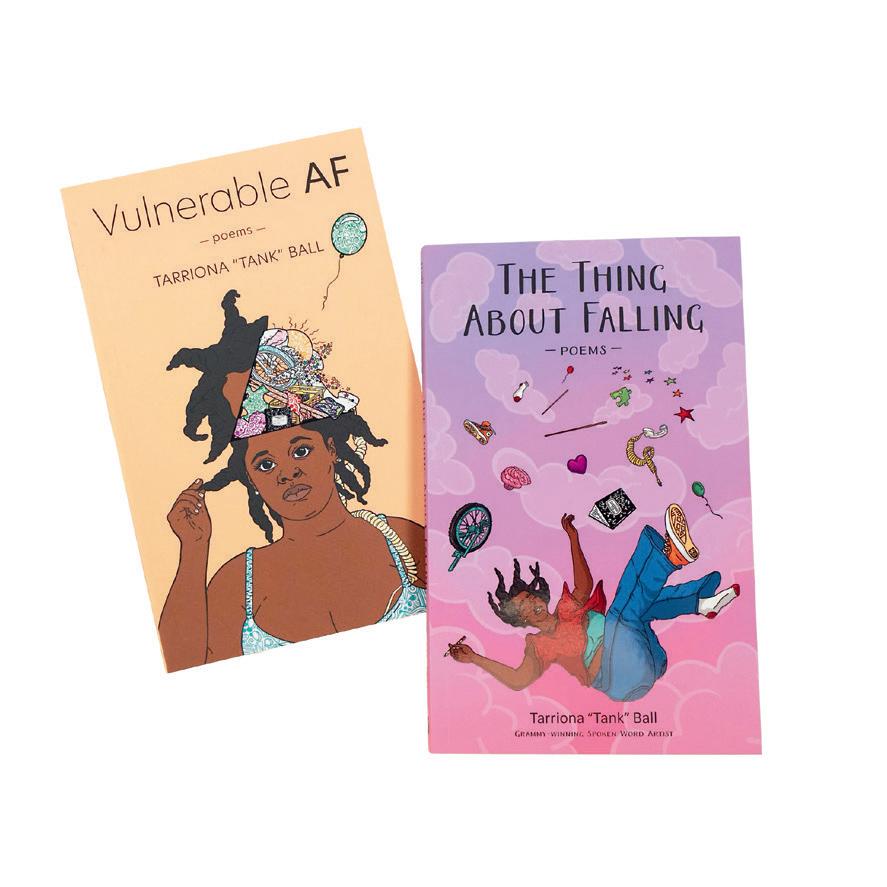
Known for her amazing ability to write, Ball released her first poetry book, Vulnerable AF followed by The Thing About Falling in 2025. Tank and the Bangas also recently released their newest album, The Last Balloon, on Verve Forecast.





Festival Curator , ,
Ball has collaborated with artists like Norah Jones Lalah Hathaway, Robert Glasper, Moonchild Brasstracks, and many more.
MONDAY | 7 PM
MONDAY | 7 PM
Mandel Concert Hall at Severance Music Center
Mandel Concert Hall at Severance Music Center
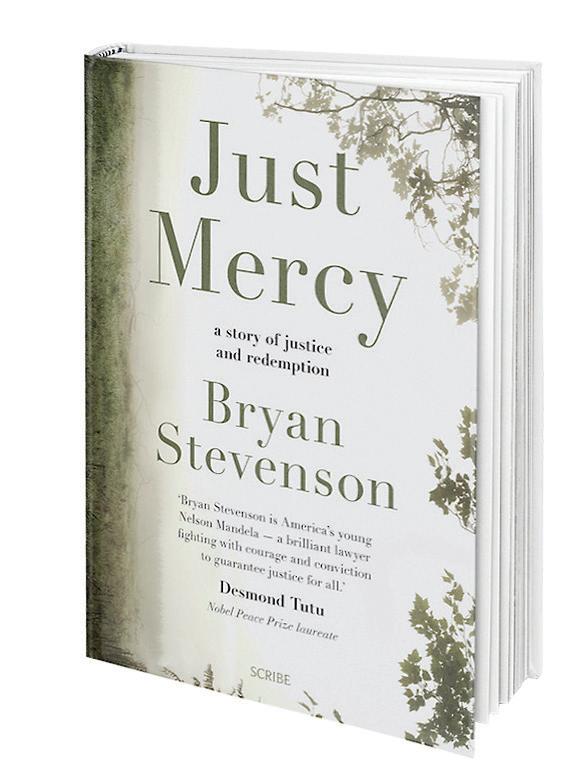
PROXIMITY HAS TAUGHT ME SOME BASIC AND HUMBLING TRUTHS , including this vital lesson: Each of us is more than the worst thing we’ve ever done. My work with the poor and the incarcerated has persuaded me that the opposite of poverty is not wealth; the opposite of poverty is justice.
— Bryan Stevenson, Just Mercy: A Story of Justice and Redemption (2014)
PROGRAM MODERATOR
PROGRAM MODERATOR
Terence Blanchard, Festival Curator
SPECIAL GUEST
SPECIAL GUEST
Halim Flowers, Festival Exhibition Artist
ABOUT THE KEYNOTE SPEAKER
ABOUT THE KEYNOTE SPEAKER
Bryan Stevenson is the founder and executive director of the Equal Justice Initiative (EJI), a human rights organization based in Montgomery, Alabama. Under his leadership, EJI has won major legal challenges eliminating excessive and unfair sentencing, exonerating over 140 innocent death-row prisoners, confronting abuse of the incarcerated and the mentally ill, and aiding children prosecuted as adults.
Stevenson has initiated major anti-poverty and anti-discrimination efforts that challenge inequality in America. He also led the creation of EJI’s highly acclaimed Legacy Sites, including the Legacy Museum, the National Memorial for Peace and Justice, and Freedom Monument Sculpture Park.
Stevenson’s work has won him numerous awards including the prestigious MacArthur
Since its founding in 1989, Bryan Stevenson’s Equal Justice Initiative has provided legal aid to hundreds of prisoners, fought for criminal justice reforms, produced educational materials, and created museums and memorials that address the legacy of slavery in the United States.
JACK,
Foundation “Genius” Prize, the American Bar Association Medal, the National Medal of Liberty from the American Civil Liberties Union, and the Olof Palme Prize for international human rights. Additionally, Stevenson has received over 50 honorary doctorates, was inducted into the American Academy of Arts and Sciences in 2014, and was named to the 2015 Time 100 list, recognizing the world’s most influential people. In 2023, he was awarded the National Humanities Medal by President Joseph Biden. Stevenson is the author of the critically acclaimed New York Times bestseller Just Mercy, which was adapted into a major motion picture, winning the American Bar Association’s 2020 Silver Gavel Award as well as four NAACP Image Awards. Stevenson is also the subject of the Emmy Award–winning HBO documentary True Justice. He is a graduate of the Harvard Law School and the Harvard School of Government.
Presented in partnership with The City Club of Cleveland. Sponsored by KeyBank
Presented in partnership with The City Club of Cleveland. Sponsored by KeyBank
For 200 years,
Case Western Reserve University has been a force to ignite dialogue, challenge assumptions and celebrate our shared humanity.
Case Western Reserve University has been a force to ignite dialogue, challenge assumptions and celebrate our shared humanity.
Thank you to the Jack, Joseph and Morton Mandel Supporting Foundation for helping create a movement that inspires change and connection.
Thank you to the Jack, Joseph and Morton Mandel Supporting Foundation for helping create a movement that inspires change and connection.







At KeyBa nk, we a re pas sionate a bou t suppor ting the a r ts a nd be lieve in the ir a bilit y to ins pire a nd tra nsfor m. T hat’s w hy we’re proud to re cognize the c ourage of B r ya n Steve nson, Fe sti va l Key note at the M a nd e l O p e ra & Huma nitie s Fe sti va l.
Thank you, Bryan for inspiring us to choose hope.


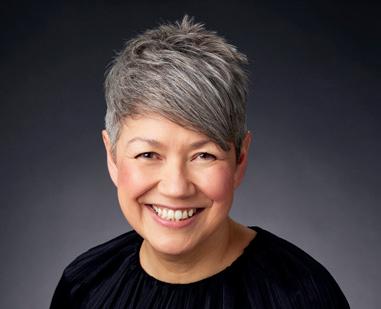
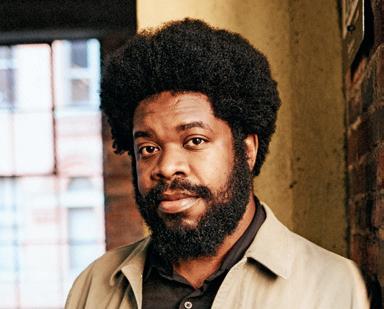
JUN 26 | FRI 7:30 PM
Severance Music Center
Selections from Craig Hella Johnson’s Considering Matthew Shepard Lisa Wong, conductor Dashon Burton, bass-baritone



SCAN TO BUY TICKETS



TUESDAY | 7 PM
Mandel Concert Hall at Severance Music Center

When
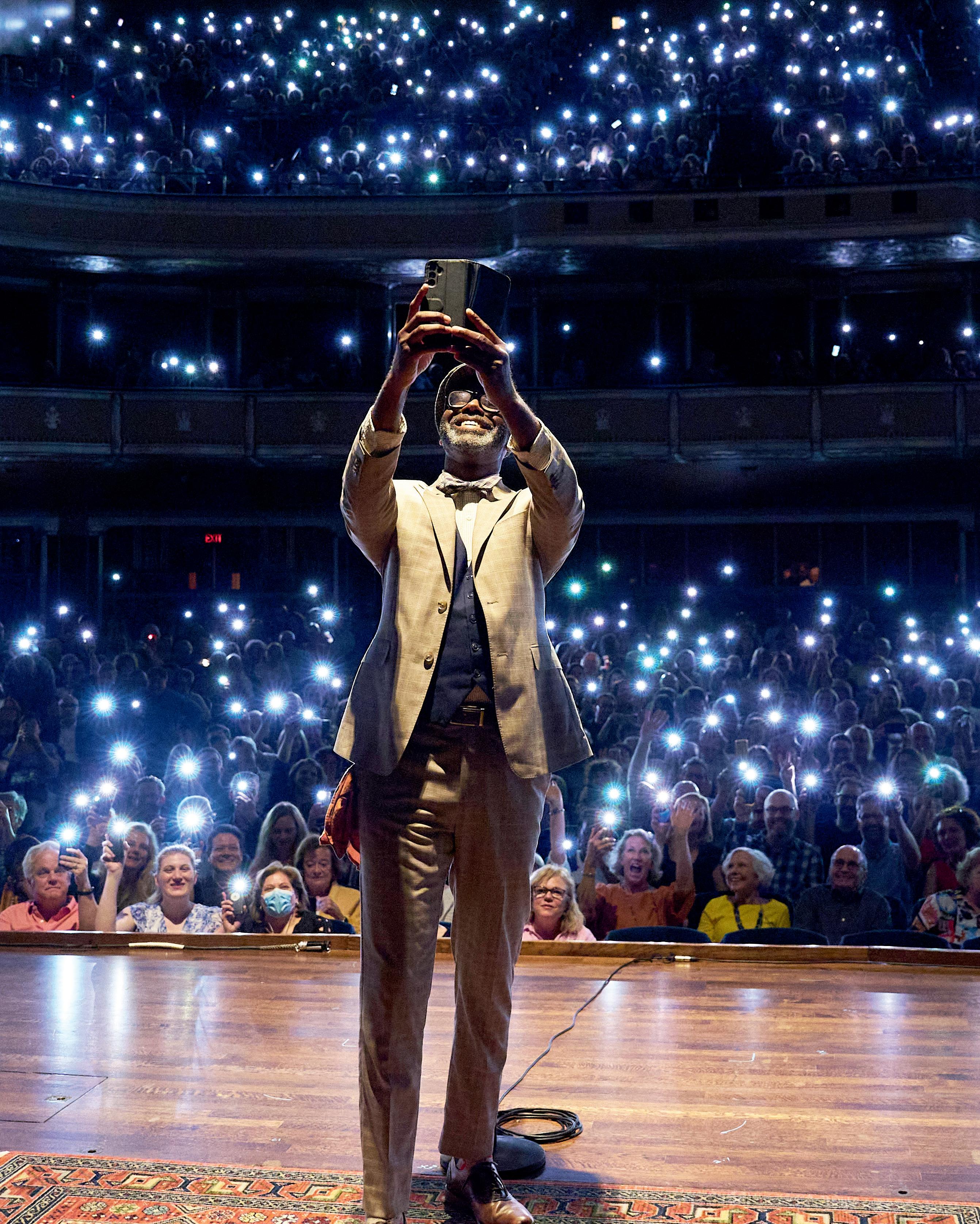
FOLLOWING ITS SOLD-OUT CLEVELAND DEBUT LAST YEAR , The Moth Mainstage returns to Severance Music Center for a night of live storytelling and unforgettable personal journeys. In this two-part program, punctuated with musical interludes, five extraordinary storytellers share true stories inspired by the festival theme of Courage. Through tales of risk and resilience, of stepping into the unknown, and of finding courage amid fear, this quintessential Moth experience offers an evening of intimate connection and shared humanity.
it comes to engaging and brilliant storytelling, The Moth never disappoints. Moth performances are the go-to for anyone who has ever wanted to hear the best of the art of storytelling.
Forbes
Alongside its acclaimed Mainstage events, the Moth’s outreach includes storytelling competitions, educational initiatives, a Peabody Award–winning radio program, a podcast, books, a card game, and a fundraising gala.
HOST
Peter Aguero STORYTELLERS
Donald Black Jr.
Terence Blanchard
Heather Rhoades
Mike Song
Renita Walls
CREW
Jodi Powell, director Chloë Muñoz, producer
Presented in partnership with Ideastream Public Media

Scan the QR code for more information on the participants.
FRIDAY | 7:30 PM
Mandel Concert Hall at Severance Music Center
This performance is approximately 1 hour and 40 minutes long, including one 20-minute intermission
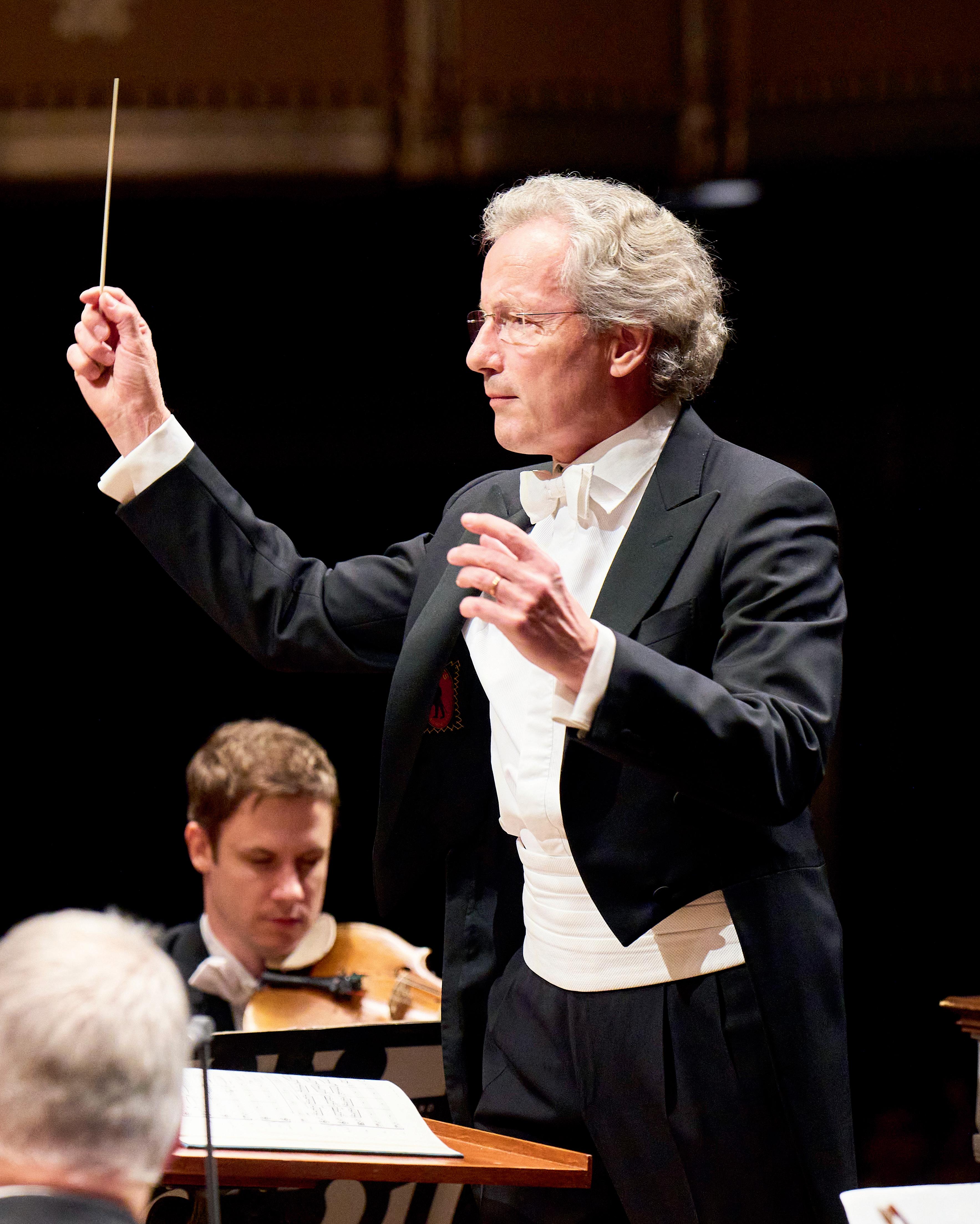
TWO PIECES ON THIS PROGRAM deal directly with our festival theme of Courage: Dvořák’s Hero’s Song and Adolphus Hailstork’s tribute to Martin Luther King, Jr. With these inspiring pieces, we have the premiere of Jüri Reinvere’s double concerto, and another piece which has something to do with my own upbringing. When I was a youngster, I played second violin in a string quartet, and we played a contemporary piece by Polish composer Grażyna Bacewicz in a competition. I loved it but then forgot all about it. Decades later, I am glad to conduct one of her symphonies, the Fourth, which is a wonderful, exciting piece.
— Franz Welser-Möst
Franz Welser-Möst leads The Cleveland Orchestra in a program inspired by the festival theme of Courage, opening with an ode to Civil Rights hero Martin Luther King, Jr. and concluding with the unnamed hero of Dvořák’s symphonic poem.
Franz Welser-Möst CONDUCTOR
THE PROGRAM
Adolphus Hailstork (b. 1941)
Epitaph (In Memoriam: Martin Luther King, Jr.)
Grażyna Bacewicz (1909 –1969)
Symphony No. 4
I. Appassionato
II. Adagio
III. Scherzo: Vivace
IV. Adagio mesto — Allegro furioso
Jüri Reinvere (b. 1971)
Concerto for Violin, Harp, and Orchestra
Leila Josefowicz, violin
Trina Struble, harp
World Premiere; Commissioned by The Cleveland Orchestra
Antonín Dvořák (1841– 1904)
A Hero’s Song, Op. 111
Trina Struble’s performance is generously supported by The Jean, Harry, and Brenda Fuchs Family Foundation
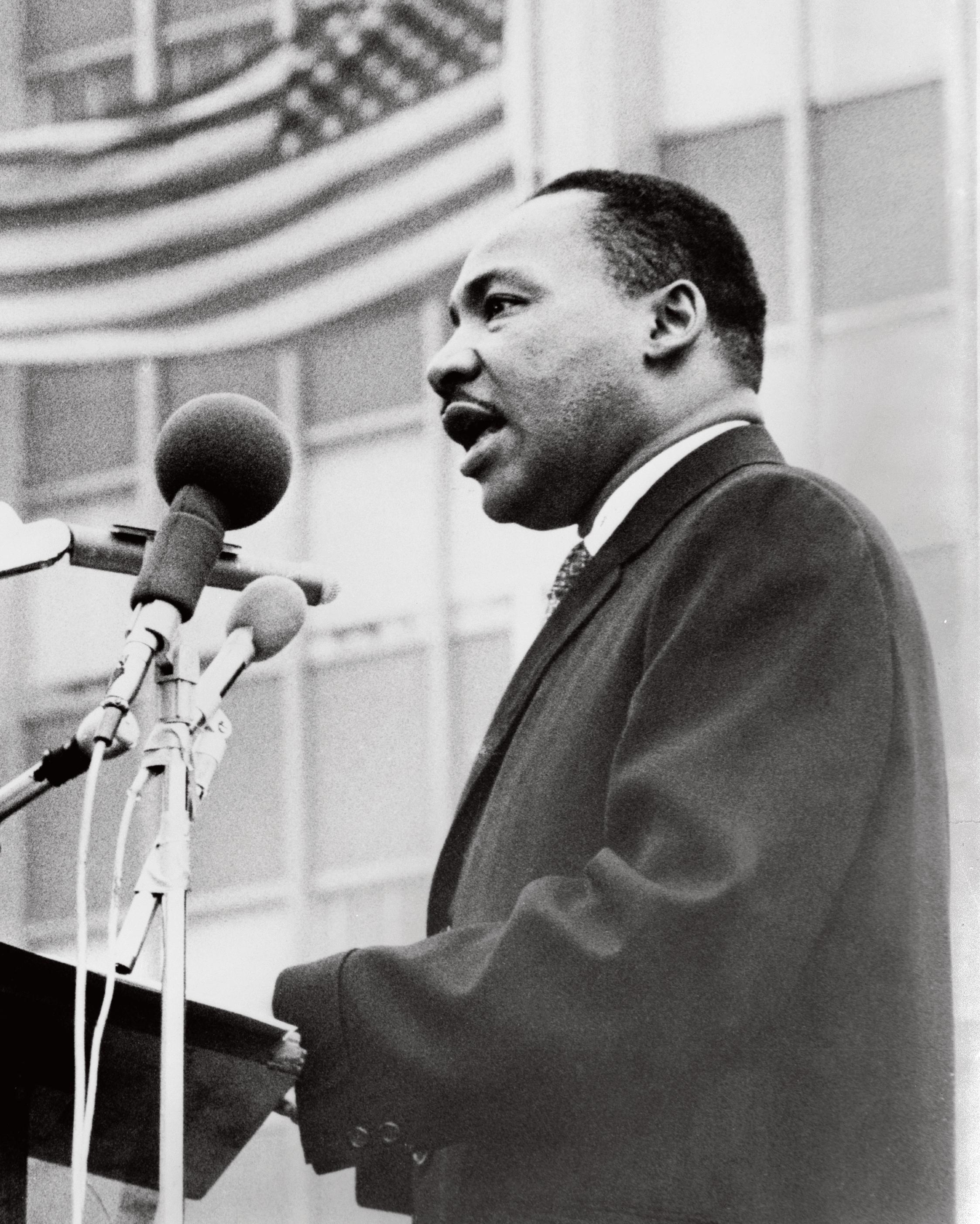
by Douglas W. Shadle
by Douglas W. Shadle
COURAGE IS A CHOICE . When we’re riddled with doubt or fear about what lies ahead, and we choose to step forward anyway — that’s courage. When we choose to accept whatever consequences await us — that’s courage. When we choose to take a stand for what we believe in — that’s courage. Courage in music arises from the vulnerability of self-expression. The famous line, “I know why the caged bird sings,” from African American poet Paul Laurence Dunbar’s “Sympathy” says it all: Even in physical confinement, a courageous voice refuses to be contained. In their own way, each piece on this program captures the composer’s courage to lay bare an interior world of hope and resolve, with music carrying the capacity to inspire.
COURAGE IS A CHOICE . When we’re riddled with doubt or fear about what lies ahead, and we choose to step forward anyway — that’s courage. When we choose to accept whatever consequences await us — that’s courage. When we choose to take a stand for what we believe in — that’s courage. Courage in music arises from the vulnerability of self-expression. The famous line, “I know why the caged bird sings,” from African American poet Paul Laurence Dunbar’s “Sympathy” says it all: Even in physical confinement, a courageous voice refuses to be contained. In their own way, each piece on this program captures the composer’s courage to lay bare an interior world of hope and resolve, with music carrying the capacity to inspire.
In their own way, each piece on this program captures the composer’s courage to lay bare an interior world of hope and resolve, with music carrying the capacity to inspire.
In their own way, each piece on this program captures the composer’s courage to lay bare an interior world of hope and resolve, with music carrying the capacity to inspire.
In
Adolphus Hailstork’s Epitaph (In Memoriam: Martin Luther King, Jr.) — a somber reflection on the death of the Civil Rights icon — presents us with a clear profile in courage. It opens with the gathering of graveside mourners who join in singing a melody that emerges from a viscous instrumental texture and eventually receives a full, humble statement in the flutes. Following a brief brass chorale, a light gesture in the harp prompts the group to shift focus to Martin Luther King, Jr.’s dream of a new world. Having seen a way forward, the mourners develop a fresh, steely resolve to fight for freedom on the path Dr. King paved for them.
Adolphus Hailstork’s Epitaph (In Memoriam: Martin Luther King, Jr.) — a somber reflection on the death of the Civil Rights icon — presents us with a clear profile in courage. It opens with the gathering of graveside mourners who join in singing a melody that emerges from a viscous instrumental texture and eventually receives a full, humble statement in the flutes. Following a brief brass chorale, a light gesture in the harp prompts the group to shift focus to Martin Luther King, Jr.’s dream of a new world. Having seen a way forward, the mourners develop a fresh, steely resolve to fight for freedom on the path Dr. King paved for them.
Grażyna Bacewicz stands alongside contemporaries like England’s Rebecca Clarke and America’s Margaret Bonds as a prolific composer who has been unjustly overshadowed in a historically male-dominated industry. As scholarly recovery of their works and growing public interest have shown, the mere pursuit of the profes-
Grażyna Bacewicz stands alongside contemporaries like England’s Rebecca Clarke and America’s Margaret Bonds as a prolific composer who has been unjustly overshadowed in a historically male-dominated industry. As scholarly recovery of their works and growing public interest have shown, the mere pursuit of the profes-
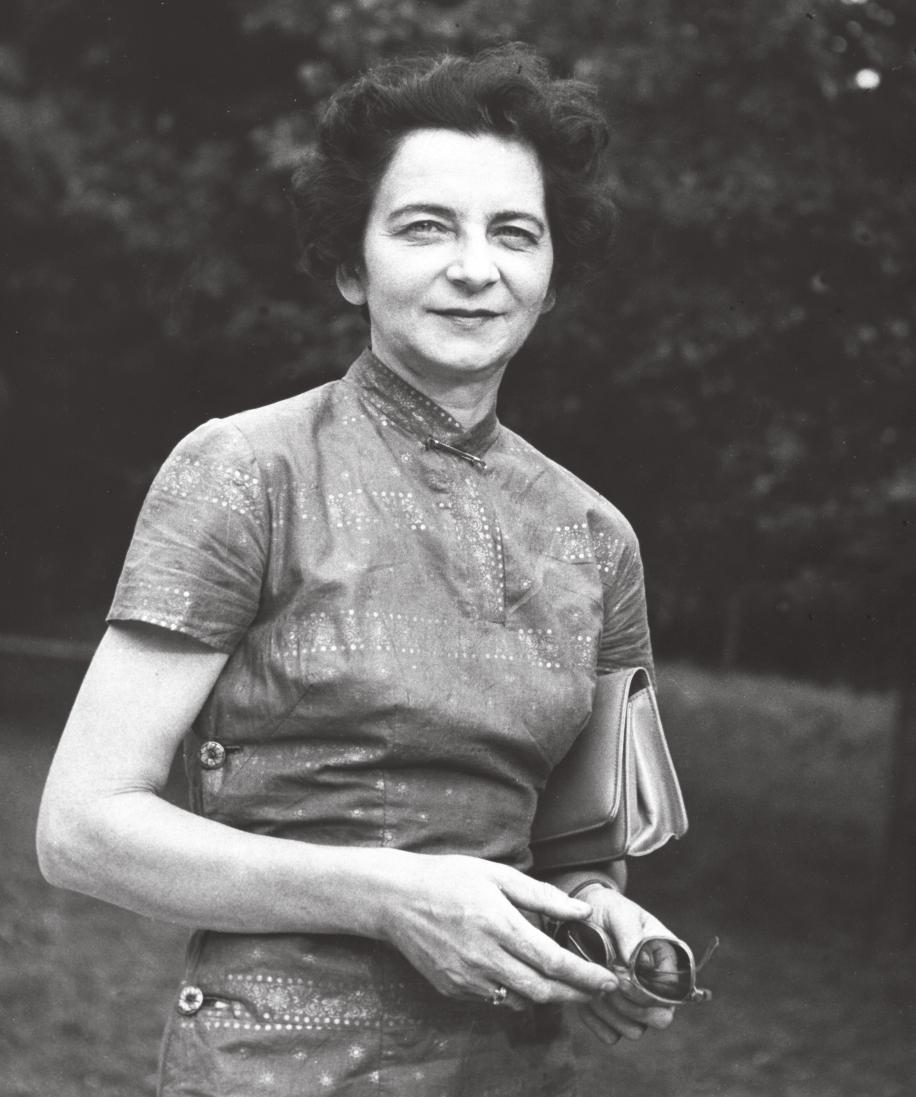
sion was an act of courage against long-held stereotypes about women’s capacity to excel in composition. Of course, the stereotypes have absolutely no basis in reality, as works like Bacewicz’s Fourth Symphony amply demonstrate.
The symphony reflects the challenges and contradictions Bacewicz faced as a Polish artist working under Soviet-influenced cultural policy after World War II. Restrictions on creative expression were counterbalanced by high levels of institutional support and public visibility. Surviving letters show that, while she was afraid of the authoritarian regime, she clearly enjoyed composition and was fortunate that her evolving style aligned with top-down mandates. Through it all, she had the courage to be herself. Cast in a standard four-movement form, the symphony displays Bacewicz’s fondness for using tiny musical fragments as the foundation for further musical elaboration. The vigorous first and fourth movements, for example, build dramatic arcs from a two-note motive. The work is also suffused with Bacewicz’s tendency to use all the instruments at once and compose melodies with traces of folkloric rhythms and scales.
In a more literal sense, Jüri Reinvere’s choice to write a new double concerto for violin and harp was courageous. There are practically no models in the repertoire
Polish composer Grażyna Bacewicz fostered a remarkably productive career, writing four numbered symphonies, several concertos (including seven for violin), string quartets, piano works, vocal music, film scores, and much more.
beyond Louis Spohr’s G-major concertante dating from 1808, leaving Reinvere a wide-open but lonely terrain to explore. Scored for large instrumental forces, including glass and metal chimes, crotales, and other unusual percussion, the piece unfolds over 20 unbroken minutes, rather than the standard three-movement concerto form. The work’s core musical narrative follows the relationship between the two soloists. The violin is designed for long, flowing melodies, whereas notes on the harp fade immediately. The concerto opens with this sharp distinction on full display, but soon each instrument begins to take on more of the other’s character as the orchestra tries to blend and obscure the soloists’ identities, presenting gestures that push them in one dramatic direction or another. An astounding climax finds the entire orchestra in the duel between sustained tones and harp-like scales before coming to a quiet close reminiscent of the opening.
Dvořák ... described the main character as a “Slavic bard” whose heroism arises from the courage to sing, like Dunbar’s caged bird, through
the struggles of self-discovery, self-doubt, and self-mastery.
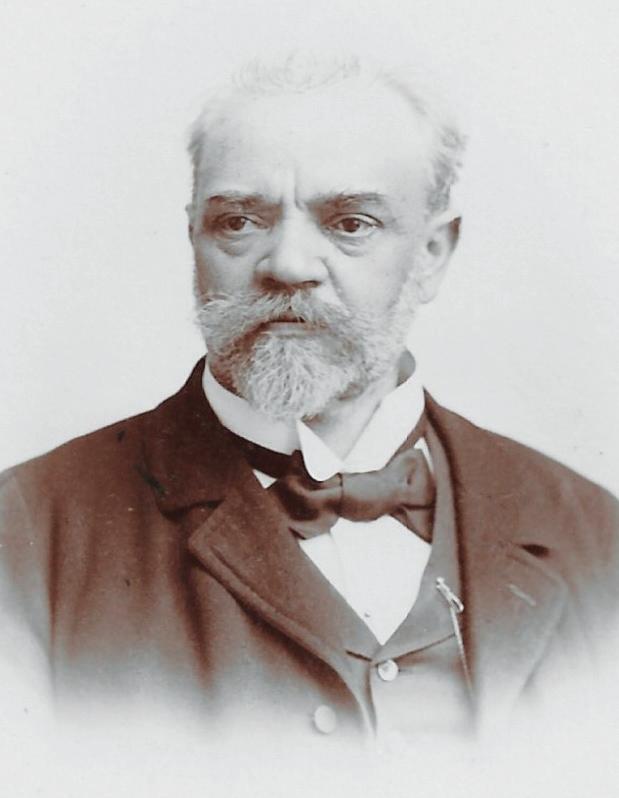
The four sections of Antonín Dvořák’s (left) A Hero’s Song return to several of the themes that opened the concert in Hailstork’s Epitaph: optimism, disappointment and setback (here presented as a funeral march), hope and struggle (inflected by elements of the composer’s Czech folklore), and the triumph of the human spirit. Seeking a text to explain the work for listeners, Dvořák contacted the poet Julius Zeyer, whose overwrought description fit the music but detracted from the interiority the composer hoped to convey. Dvořák eventually described the main character as a “Slavic bard” whose heroism arises from the courage to sing, like Dunbar’s caged bird, through the struggles of self-discovery, self-doubt, and self-mastery. While listening to each work on this program, we might think about how it relates to Leonore in disguise, working quietly and patiently to free her husband from unjust imprisonment. Or we can see Dunbar’s caged bird, who flaps his wings until they draw blood before singing to heaven to transcend his captivity. Courage like theirs is essential in unexpected moments. And when those moments arise, one critical question greets us: What choice will you make?
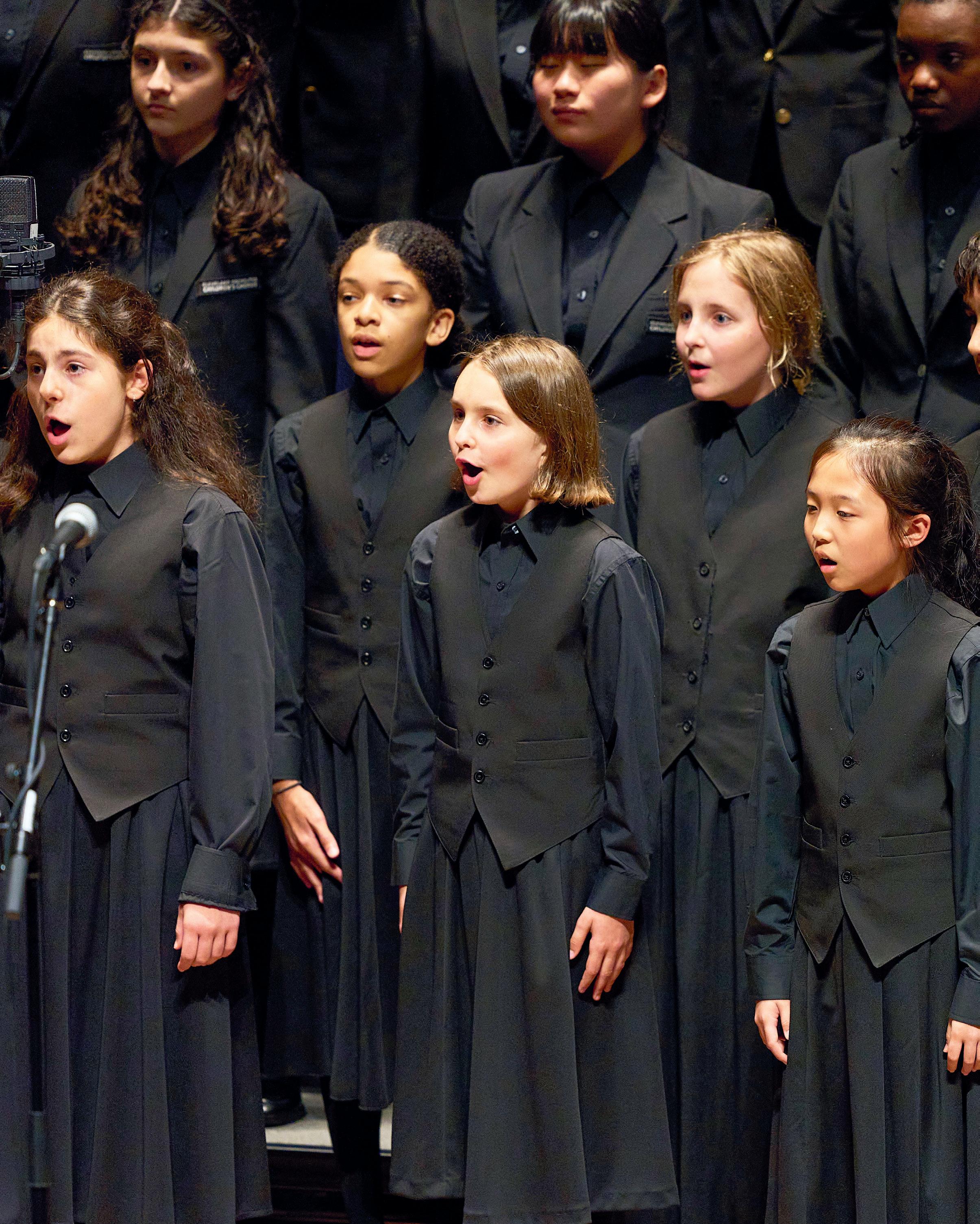
SATURDAY | 4 PM
SATURDAY | 4 PM
Mandel Concert Hall at Severance Music Center
Mandel Concert Hall at Severance Music Center
JOIN THE CLEVELAND ORCHESTRA CHILDREN’S CHORUSES for a musical celebration of the 250th anniversary of the United States. This program will highlight the power of American music to shape and tell our story. From the hopeful promise of “Somewhere Over the Rainbow,” to the joyful confidence of “Feeling Good,” these songs reflect the resilience, creativity, and courage to dream that define the American spirit.
JOIN THE CLEVELAND ORCHESTRA CHILDREN’S CHORUSES for a musical celebration of the 250th anniversary of the United States. This program will highlight the power of American music to shape and tell our story. From the hopeful promise of “Somewhere Over the Rainbow,” to the joyful confidence of “Feeling Good,” these songs reflect the resilience, creativity, and courage to dream that define the American spirit.
ABOUT THE ARTISTS
The Cleveland Orchestra Children’s Preparatory Chorus
The Cleveland Orchestra Children’s Preparatory Chorus
Jacob Young, director
Jacob Young, director
The Cleveland Orchestra Children’s Preparatory Chorus was formed in 2005 by Dr. Ann Usher to establish a foundation of vocal technique, musical literacy, and musicianship through quality children’s choral literature.
Members of the Preparatory Chorus strengthen their vocal production and choral performance skills and learn sight-reading using movable “do” solfège and Kodály/ Curwen hand signs. Students also develop leadership skills that will help them strengthen the other choirs in which they participate. The Preparatory Chorus typically gives two performances each season, once in the winter and once in the spring.
The Cleveland Orchestra Children’s Preparatory Chorus was formed in 2005 by Dr. Ann Usher to establish a foundation of vocal technique, musical literacy, and musicianship through quality children’s choral literature. Members of the Preparatory Chorus strengthen their vocal production and choral performance skills and learn sight-reading using movable “do” solfège and Kodály/ Curwen hand signs. Students also develop leadership skills that will help them strengthen the other choirs in which they participate. The Preparatory Chorus typically gives two performances each season, once in the winter and once in the spring.
The Cleveland Orchestra Children’s Chorus
The Cleveland Orchestra Children’s Chorus
Jennifer Rozsa, director
Jennifer Rozsa, director
The Cleveland Orchestra Children’s Chorus was formed in the spring of 1967 under the direction of Jane Barker Casey to provide a high-quality choral group for the many orchestral works written for children’s voices, and to offer choral training to school children in the Cleveland area. Their first performance was Britten’s Spring Symphony with Robert Shaw conducting. Today, the Children’s Chorus performs annually with The Cleveland Orchestra and The Cleveland Orchestra Chorus at Severance Music Center. Recent seasons have also seen performances with the Cleveland Pops Orchestra, Akron Symphony Orchestra, and The Cleveland Orchestra Youth Chorus.
The Cleveland Orchestra Children’s Chorus was formed in the spring of 1967 under the direction of Jane Barker Casey to provide a high-quality choral group for the many orchestral works written for children’s voices, and to offer choral training to school children in the Cleveland area. Their first performance was Britten’s Spring Symphony with Robert Shaw conducting. Today, the Children’s Chorus performs annually with The Cleveland Orchestra and The Cleveland Orchestra Chorus at Severance Music Center. Recent seasons have also seen performances with the Cleveland Pops Orchestra, Akron Symphony Orchestra, and The Cleveland Orchestra Youth Chorus.
The Cleveland Orchestra Children’s Choruses appeared as part of United in Song! in 2025. Now, they take center stage in their own program that celebrates the 250th anniversary of the United States.
The Cleveland Orchestra Children’s Choruses appeared as part of United in Song! in 2025. Now, they take center stage in their own program that celebrates the 250th anniversary of the United States.
Support for The Cleveland Orchestra Children’s Choruses is provided by the Wesley Family Foundation, The Edward and Ruth Wilkof Foundation, and Friends of The Cleveland Orchestra
Support for The Cleveland Orchestra Children’s Choruses is provided by the Wesley Family Foundation, The Edward and Ruth Wilkof Foundation, and Friends of The Cleveland Orchestra

Scan the QR code for more program information and for the full singer roster.
Scan the QR code for more program information and for the full singer roster.

















TWENTY-FIVE YEARS
TWENTY-FIVE YEARS

When you subscribe, you provide vital support to your Cleveland Orchestra and enjoy these exclusive benefits:
• The BEST seats at the BEST prices

• FREE and easy ticket exchanges
• Purchase your parking in advance
• 20% off additional ticket purchases


• 33% off subscription to Adella.live, our digital home

• 10% off at The Cleveland Orchestra Store
• Money back guarantee
When you subscribe, you provide vital support to your Cleveland Orchestra and enjoy these exclusive benefits: seats at the off subscription to Adella.live, our digital home off at The Cleveland Orchestra Store Money back guarantee
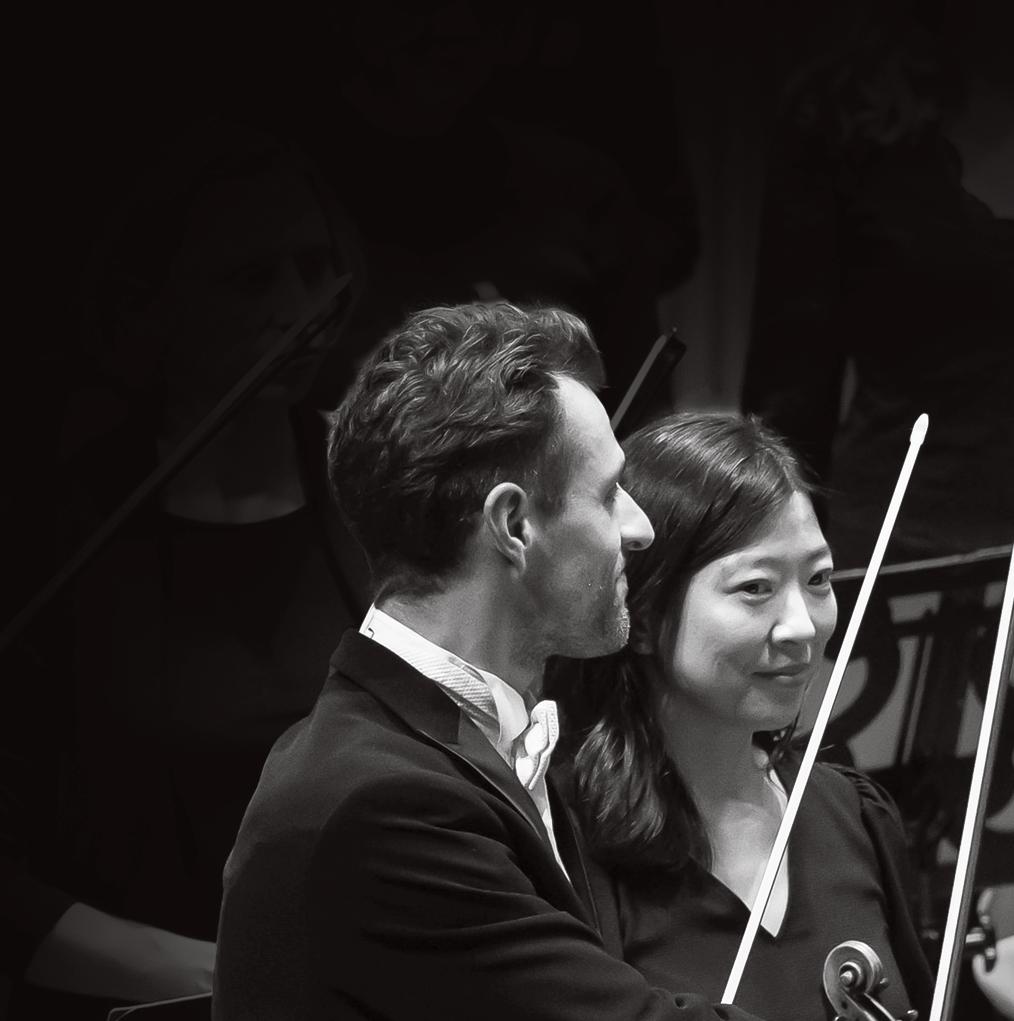



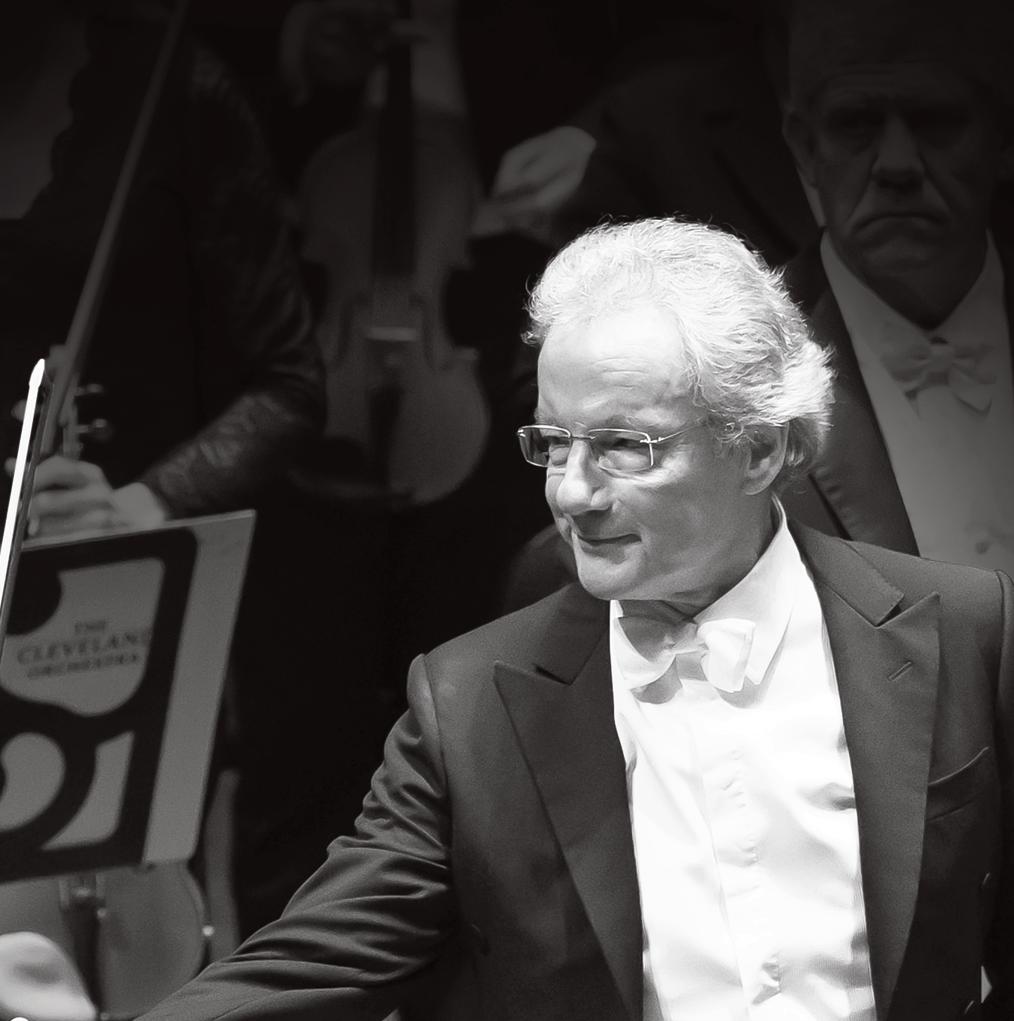
BIOGRAPHIES
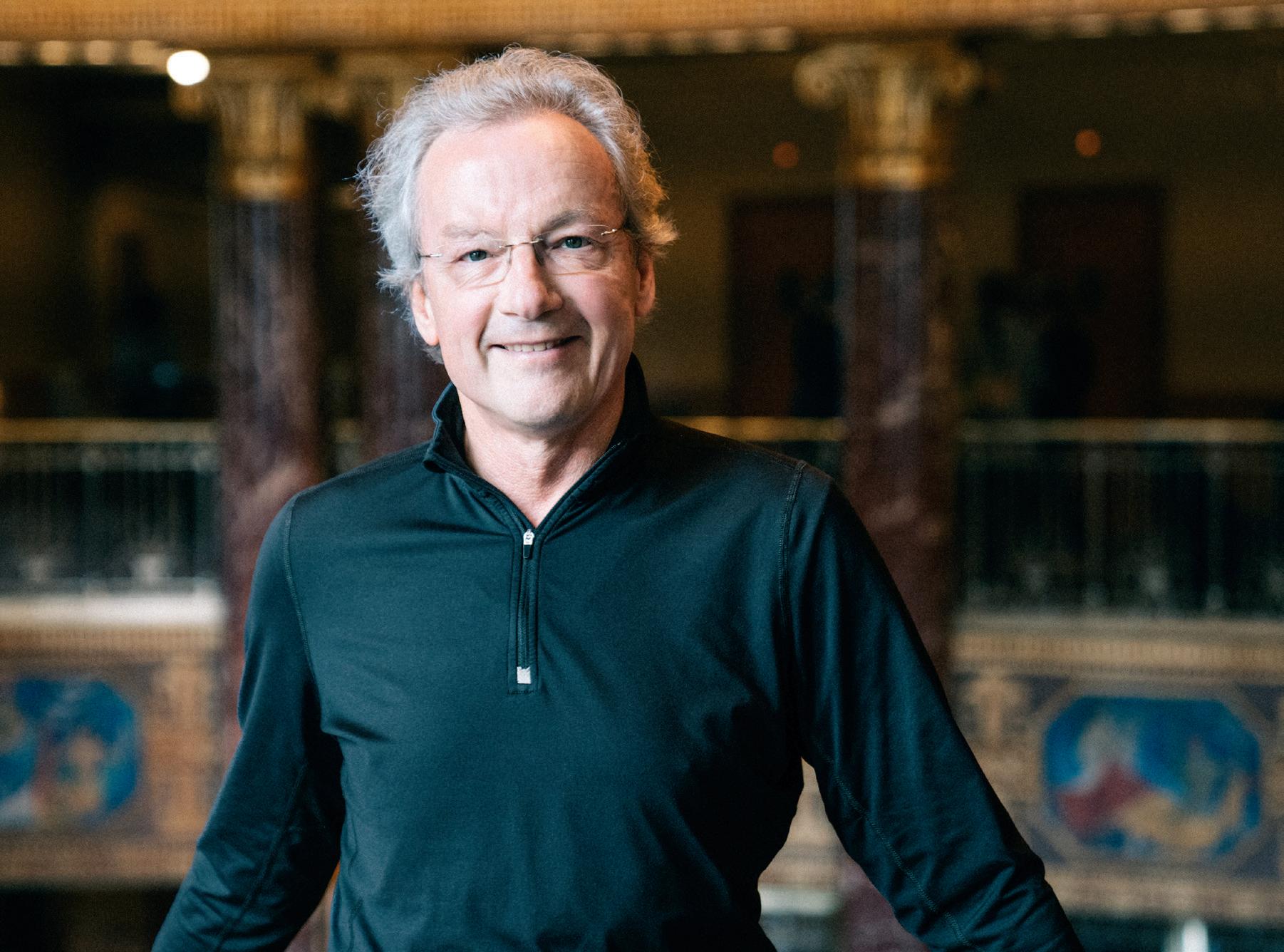
MUSIC DIRECTOR
KELVIN SMITH FAMILY CHAIR
KELVIN SMITH FAMILY CHAIR
NOW IN HIS 24TH SEASON , Franz Welser-Möst continues to shape an unmistakable sound culture as Music Director of The Cleveland Orchestra. Under his leadership, the Orchestra has earned repeated international acclaim for its musical excellence, reaffirmed its strong commitment to new music, and brought annual opera presentations back to the stage of Severance Music Center. In recent years, the Orchestra also launched its own streaming platform, Adella.live, and a recording label. Today, it boasts one of the youngest audiences in the United States. In addition to residencies in the US and Europe, Welser-Möst and the Orchestra perform regularly at the world’s leading international festivals. Welser-Möst will remain Music Director until 2027, making him the longest-serving music director of The Cleveland Orchestra.
NOW IN HIS 24TH SEASON , Franz Welser-Möst continues to shape an unmistakable sound culture as Music Director of The Cleveland Orchestra. Under his leadership, the Orchestra has earned repeated international acclaim for its musical excellence, reaffirmed its strong commitment to new music, and brought annual opera presentations back to the stage of Severance Music Center. In recent years, the Orchestra also launched its own streaming platform, Adella.live, and a recording label. Today, it boasts one of the youngest audiences in the United States.
In addition to residencies in the US and Europe, Welser-Möst and the Orchestra perform regularly at the world’s leading international festivals. Welser-Möst will remain Music Director until 2027, making him the longest-serving music director of The Cleveland Orchestra.
Welser-Möst enjoys a particularly close and productive artistic partnership with the Vienna Philharmonic. He regularly conducts the orchestra in subscription concerts at the Vienna Musikverein, at the Salzburg Festival, and on tour in Europe, Japan, China, and the US, and has appeared three times on the podium for their celebrated New Year’s Concert (2011, 2013, and 2023). At the Salzburg Festival, Welser-Möst has set new standards in interpretation as an opera conductor, with a special focus on the operas of Richard Strauss
Welser-Möst enjoys a particularly close and productive artistic partnership with the Vienna Philharmonic. He regularly conducts the orchestra in subscription concerts at the Vienna Musikverein, at the Salzburg Festival, and on tour in Europe, Japan, China, and the US, and has appeared three times on the podium for their celebrated New Year’s Concert (2011, 2013, and 2023). At the Salzburg Festival, Welser-Möst has set new standards in interpretation as an opera conductor, with a special focus on the operas of Richard Strauss
Among Welser-Möst’s many honors and awards, he was named an Honorary Member of the Vienna Philharmonic in 2024, one of the orchestra’s highest distinctions.
Among Welser-Möst’s many honors and awards, he was named an Honorary Member of the Vienna Philharmonic in 2024, one of the orchestra’s highest distinctions.
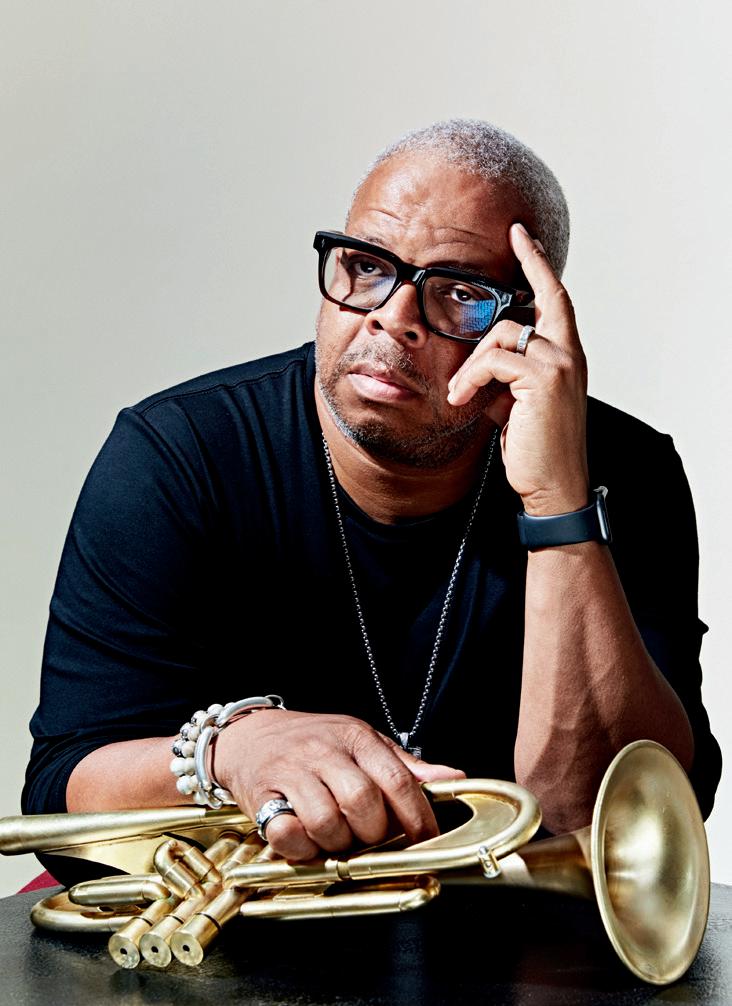
AND GENRE-DEFYING , Terence Blanchard is recognized globally as a trumpet soloist and a prolific composer for film, television, opera, Broadway, orchestra, and for his own ensembles.
An eight-time Grammy winner, Blanchard became only the second African American composer after Quincy Jones to be nominated twice in the Best Original Score category at the 2021 Academy Awards. Alongside his work composing scores for over 20 Spike Lee projects, Blanchard’s music has created strong backdrops to human stories like The Woman King, One Night in Miami…, Eve’s Bayou, the HBO drama series Perry Mason, and Apple TV’s docuseries They Call Me Magic (for which Blanchard received an Emmy nomination).
Blanchard’s second opera, Fire Shut Up in My Bones, received its Metropolitan Opera premiere in September 2021, making it the first opera by an African American composer to appear at the Met in its 138-year history. The recording of those performances received the 2023 Grammy Award for Best Opera Recording, and the opera returned to the Met for a highly anticipated second run in April 2024. Blanchard’s first opera, Champion, was performed at the Met in April 2023 to widespread critical acclaim. It received the Grammy for Best Opera Recording in 2024.
Blanchard’s extensive recording catalog includes Absence, a tribute to Wayne Shorter created in collaboration with The E-Collective and Turtle Island Quartet. Absence received Grammy nominations in November 2021 for Best Instrumental Jazz Album and Best Improvised Jazz Solo for Blanchard. Blanchard’s recorded work has placed him at the forefront of giving voice to human rights, civil rights, and racial injustice, including the 2016 album Breathless, an elegy for Eric Garner.
Born in New Orleans in 1962, Blanchard is a musical polymath who launched his solo career in the 1990s. Since then, he has released 20 solo albums, garnered 15 Grammy nominations, composed music for over 60 films, and received 10 major commissions. He was named a 2024 NEA Jazz Master as well as a member of the American Academy of Arts and Letters, and currently serves as the executive artistic director for SF Jazz, the largest non-profit jazz presenter in the world.
ADRIENNE DANRICH
SOPRANO
The World(s) of Terence Blanchard
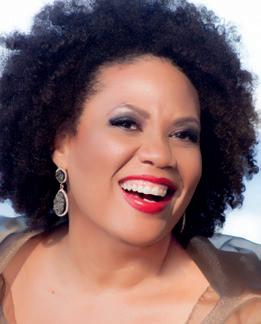
Adrienne Danrich’s masterful interpretations of new works has received attention from both opera presenters and composers. The 2025 – 26 season sees Danrich return to the Metropolitan Opera, sing performances of the Fire Shut Up in My Bones Suite, and appear with Cincinnati Opera in the world premiere of Kevin Day’s Lalovavi.
In addition to singing, Danrich is a composer, lyricist, and sound designer. Her one-woman show, This Little Light of Mine: The Stories of Marian Anderson and Leontyne Price, received an Emmy Award for Outstanding Achievement for On-Camera Talent as a Performer and Narrator.
Danrich is a native of St. Louis and an alum of the Eastman School of Music and the University of Cincinnati College-Conservatory of Music.
Hero’s Song
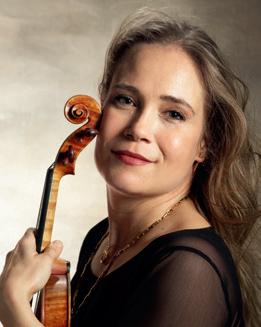
Leila Josefowicz’s passionate advocacy of contemporary violin music is reflected in her diverse programs and enthusiasm for performing new works. A favorite of living composers, Josefowicz has premiered many concertos, including those by Matthias Pintscher, John Adams, and Esa-Pekka Salonen, all written for her. This season, Josefowicz presents the world premiere of Jüri Reinvere’s Concerto for Violin, Harp, and Orchestra with The Cleveland Orchestra and Music Director Franz WelserMöst. Further engagements include The Philadelphia Orchestra, New York Philharmonic, Tonhalle-Orchester Zürich, and Hong Kong Philharmonic Orchestra.
In recognition of her outstanding achievements and excellence in music, Josefowicz won the 2018 Avery Fisher Prize and was awarded a prestigious MacArthur Fellowship in 2008.
The World(s) of Terence Blanchard
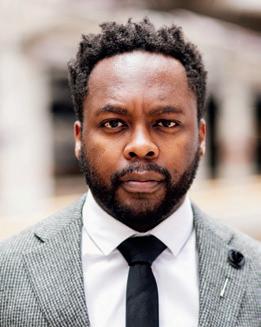
Grammy Award–winning baritone Will Liverman has been praised internationally for his versatility in both dramatic and comedic roles and for his dedication and vision as a composer, artist, and advisor, helping to evolve and push the performing arts industry forward.
He is co-creator of The Factotum, which premiered in a sold-out production at the Lyric Opera of Chicago in 2023. He was nominated for a 2026 Grammy Award for Best Classical Compendium.
A recipient of the Metropolitan Opera’s 2022 Beverly Sills Artist Award, Liverman is an alumnus of the Ryan Opera Center at the Lyric Opera of Chicago and holds degrees from The Juilliard School and Wheaton College in Illinois.
The Cleveland Orchestra Children’s Choruses Spring Concert
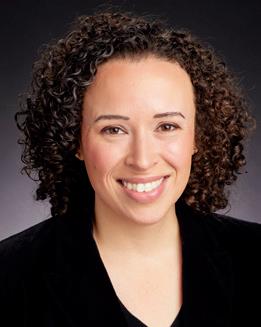
Jennifer Rozsa is an active conductor and music educator. She earned her bachelor’s and master’s degrees in music education from Capital University’s Conservatory of Music, received Orff-Schulwerk certifications from the San Francisco International Orff Course, and pursued advanced studies at the Kodály Institute in Hungary. In 2024, she began her doctoral studies in music education at Kent State University.
Rozsa’s professional background includes conducting positions with the San Francisco Boys Chorus and Peninsula Girls Chorus, alongside K–8 choir and general music teaching experience in Cleveland, San Francisco, and Chicago. An accomplished choral singer, she has performed with The Cleveland Orchestra Chorus and San Francisco Symphony Chorus and is currently a member of the Cleveland Chamber Choir.
The World(s) of Terence Blanchard
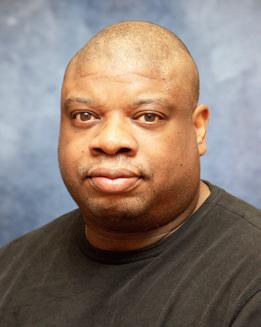
Andrew F. Scott is a multidisciplinary artist and educator whose work explores memory, culture, technology, and public space. A key aspect of his practice is collaboration — most notably with musicians such as Terence Blanchard, Fabian Almazan, and Brandee Younger — where he creates immersive visual experiences that enhance live performance and deepen audience engagement. He also collaborates with civic and community partners on public art projects that activate shared spaces and foster cultural connections.
Scott is an associate professor of art and technology at the University of Texas at Dallas. He holds a bachelor’s from Long Island University, Southampton, and a master’s from The Ohio State University, where he also studied at its Advanced Computing Center for the Arts and Design.
PRINCIPAL HARP |
ALICE CHALIFOUX CHAIR
Hero’s Song
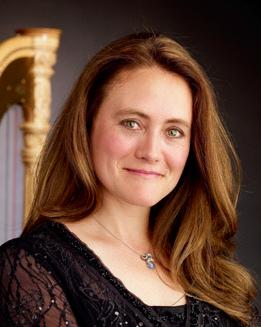
Trina Struble was appointed Principal Harp of The Cleveland Orchestra in October 2007. She joined the Orchestra as Assistant Principal Harp in 1992, after graduating from the Oberlin College Conservatory of Music with a bachelor’s degree in both harp and violin. She subsequently earned Master of Music degrees in harp and violin from the Cleveland Institute of Music. Before joining the Orchestra, Struble toured with the American Soviet Youth Orchestra. She also performed with the National Repertory Orchestra, Atlanta Symphony Orchestra, The Florida Orchestra, and Houston Symphony. Struble joined the faculty of the Cleveland Institute of Music in September 2011 and taught previously at Baldwin Wallace University. She also teaches privately and presents masterclasses.
ENSEMBLE
The World(s) of Terence Blanchard
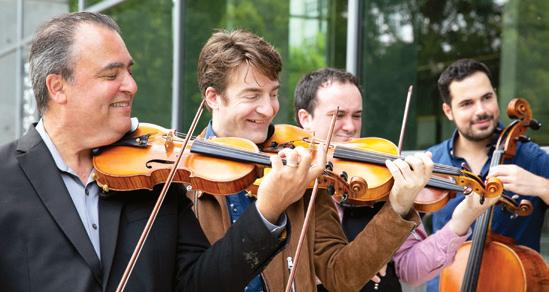
Since its founding in 1985, the Turtle Island Quartet has been a singular force in redefining the string quartet for the modern era. Winners of two Grammy Awards for Best Classical Crossover Album, the quartet fuses the classical chamber tradition with jazz, American roots, and global musical influences. The Turtle Island Quartet has performed worldwide, collaborated with leading artists across genres, and helped reestablish improvisation as a central element of string quartet performance. The group’s latest album, Island Prayers, features world premieres by David Balakrishnan, Terence Blanchard, Rhiannon Giddens, and Jerod Impichchaachaaha’ Tate
JACOB YOUNG
DIRECTOR, THE CLEVELAND ORCHESTRA CHILDREN’S PREPARATORY CHORUS
The Cleveland Orchestra Children’s Choruses Spring Concert
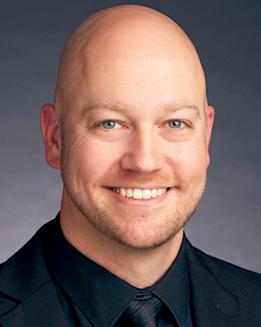
Jacob Young is Director of The Cleveland Orchestra Children’s Preparatory Chorus and Assistant Director of the Children’s Chorus. For over a decade, Young has taught music at a variety of schools and levels in Ohio and Kentucky, alongside teacher preparation courses at the University of Akron. Additionally, Young has directed choral ensembles from young children through adults and is active as a clinician and presenter, holding memberships with the Ohio Music Education Association (OMEA) and American Choral Directors Association (ACDA). Choirs under Young’s direction have earned Superior and Distinguished ratings at OMEA and Kentucky Music Education Association (KMEA) adjudicated events. Young holds a bachelor’s and master’s degrees in music from Ohio University.
TONY F. SIAS NARRATOR
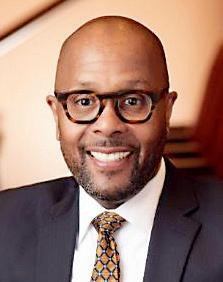
Tony F. Sias is the president & CEO of Karamu House, America’s oldest Black producing theater.
Under Sias, since 2015, Karamu raised over $14 million for restoration and increased attendance. As a creative, Sias has produced, directed, and performed in over 150 productions. His work has been highlighted nationally in The New York Times, American Theatre Magazine, on NBC’s Today Show with Al Roker, and more.
Sias’s numerous recognitions include the Cleveland Arts Prize (Barbara S. Robinson Prize), Cleveland Magazine’s Community Leader Award, and the Community Leadership Award from the NAACP’s Cleveland Branch. In addition, he serves on the boards of Assembly for the Arts, Cleveland School of the Arts, and the Lake View Cemetery Association.
Jaquino
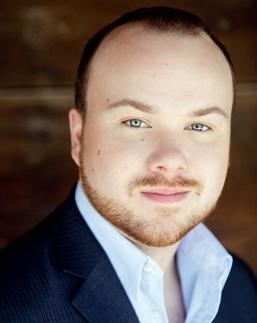
Canadian tenor
Owen McCausland is increasingly in demand for both operatic and symphonic engagements worldwide.
Recent highlights include Berg’s Wozzeck with the Canadian Opera Company, Mozart’s Requiem with the Choir of King’s College, Cambridge, and Così fan tutte and The Magic Flute with Vancouver Opera. He returns to The Cleveland Orchestra after appearances in Verdi’s Otello and Puccini’s The Girl of the Golden West
Additional prior engagements include Haydn’s The Creation with the Victoria Symphony, Weill’s The Seven Deadly Sins with the Toronto Symphony Orchestra, and the world premiere of Matthew Ricketts’s opera Chaakapesh: The Trickster’s Quest with the Orchestre symphonique de Montréal under the baton of Kent Nagano.
ASHLEY EMERSON
SOPRANO
Marzelline
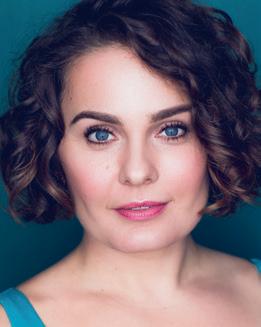
Soprano Ashley Emerson is sought after for her effervescent singing and storytelling in repertoire ranging from Vivaldi to Thomas Adès. In the 2025 – 26 season, Emerson returns to The Cleveland Orchestra for Beethoven’s Fidelio and makes her debut with Anchorage Opera in The Medium and Gianni Schicchi
Emerson is a veteran of the Metropolitan Opera, where she holds over 220 performance credits. She has also appeared in major roles with Boston Lyric Opera, Los Angeles Opera, Seattle Opera, and Opera National de Bordeaux. In concert, Emerson has appeared with the Tanglewood Festival Orchestra, Brooklyn Art Song Society, Bangor Symphony Orchestra, and ChoralArt of Maine, among others. Emerson received training at the University of Southern Maine, the Metropolitan Opera’s Lindemann Young Artist Development Program, and the Opera Theatre of St. Louis’s Gerdine Young Artist Program.
RAYMOND ACETO
BASS
Rocco
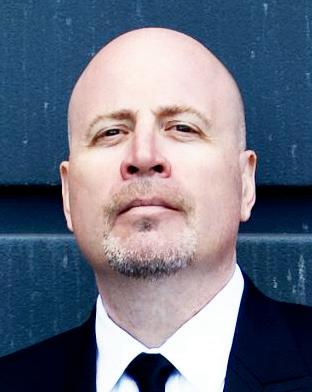
American bass
Raymond Aceto has established a commanding presence among the world’s leading opera companies and symphony orchestras, earning both critical and popular acclaim. Highlights of his 2025 – 26 season include Dead Man Walking at San Francisco Opera and Dialogues of the Carmelites at The Dallas Opera. Other recent appearances include roles at the Metropolitan Opera, Lyric Opera of Chicago, Santa Fe Opera, and Opéra de Montréal.
A graduate of the Metropolitan Opera’s Young Artist Development Program, the Ohioborn bass has appeared frequently with the company since his debut during the 1992 – 93 season. Among his awards are Richard Tucker Foundation Career Grants and a Sullivan Foundation Award.
SOPRANO
Leonore
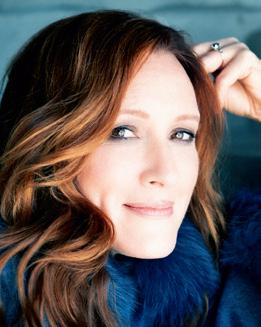
Sara Jakubiak is renowned for her ability to bring complex characters to life, blending musical understanding with dramatic instincts. Her 2025 – 26 season is a season of firsts. She makes her La Scala debut in the opening-night production of Shostakovich’s Lady Macbeth of Mtsensk, sings her first Isolde with the London Symphony Orchestra, and opens the Norwegian National Opera season with her role debut as Rusalka.
Recent orchestral highlights include Janáček’s Glagolitic Mass with the London Philharmonic Orchestra, Britten’s War Requiem with the Dresden Philharmoniker, and Schoenberg’s Erwartung with the Royal Concertgebouw Orchestra.
Jakubiak also has a significant discography, including the 2020 Opus Klassik Award–winning production of Korngold’s Das Wunder der Heliane with Deutsche Oper Berlin.
Jakubiak hails from Bay City, Michigan and received her university training at Yale and the Cleveland Institute of Music.
TOMASZ
BASS-BARITONE
Don Pizarro
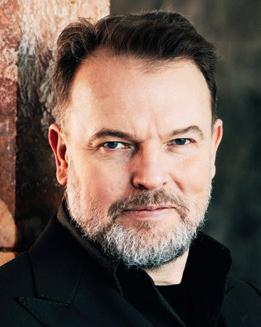
Polish bass-baritone
Tomasz Konieczny regularly appears at the world’s most important opera houses including the Metropolitan Opera, La Scala, Teatro Real Madrid, and at the Bayreuth and Salzburg festivals.
Highlights of his 2025 – 26 season include Arabella and Tristan und Isolde at the Metropolitan, Salome at the Vienna State Opera, and Fidelio at the Bavarian State Opera and with The Cleveland Orchestra.
Konieczny is also a successful concert performer, with a repertoire ranging from J.S. Bach to Penderecki. His discography includes recordings of the Ring cycle and Schubert’s Winterreise, alongside his recent lied CD, From Secession to Distortion.
Konieczny was named Austrian Kammersänger in 2019 and was awarded the Gold Medal for Cultural Merit “Gloria Artis” in 2022.
RONNIE DAILEY
BARITONE
First Prisoner
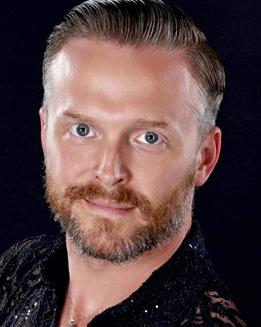
Ronnie Dailey is currently in his fourth season with The Cleveland Orchestra Chorus. He has performed as a soloist in Vaughn Williams’s Dona nobis pacem with the Lorain County Community College Civic Chorale, a soloist in Mozart’s Requiem and Regina coeli, and is a frequent soloist and cantor at Trinity Cathedral in Cleveland and Westminster Presbyterian Church in Akron. In addition, Dailey has served as both vocalist and composer for local ensembles, most recently composing for Singers Companye. Dailey studied music education at The University of Akron.
Second Prisoner
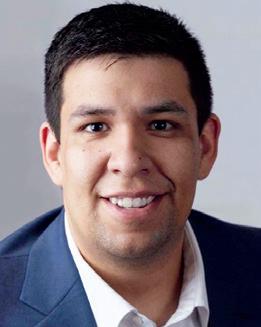
Francisco Prado is in his ninth season with The Cleveland Orchestra Chorus. Previous roles with the Chorus include Peter in J.S. Bach’s St. John Passion, the Steersman in Wagner’s Tristan und Isolde, and the wigmaker in Richard Strauss’s Ariadne auf Naxos. He is also a member of Apollo’s Singers, the chorus for Cleveland’s Grammy Award–winning periodinstrument orchestra, Apollo’s Fire. Prado is a graduate of The Cleveland Institute of Music and currently serves as the director of music at St. Rocco Catholic Church.
Florestan
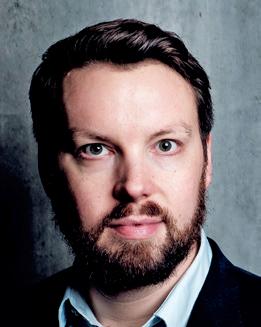
David Butt Philip is one of Britain’s most exciting tenors and quickly becoming a firm favorite on major international stages. A graduate of the Jette Parker Young Artist Program at the Royal Opera House, he has earned major critical and public acclaim at the Wiener Staatsoper, Edinburgh International Festival, Bayerische Staatsoper, and Deutsche Oper Berlin, among others.
Highlights of the 2025 – 26 season include his company and role debut as Siegmund in Die Walküre at Teatro alla Scala, a return to the Wiener Staatsoper as Florestan in Fidelio, Apollo in Daphne with Seattle Opera, The Flying Dutchman and Guerrelieder at the Tokyo Spring Festival, and Bacchus in Ariadne auf Naxos with the Glyndebourne Festival.
Don Fernando
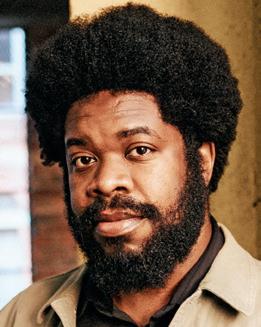
Bass-baritone Dashon Burton’s 2025 – 26 season highlights include Beethoven’s Ninth Symphony and Fidelio with The Cleveland Orchestra. He also sings Mahler’s Songs of a Wayfarer and Mozart’s Requiem with the New Jersey Symphony, appears with the Bach Choir of Bethlehem, and presents a recital at The Phillips Collection.
Burton received the Grammy Award for Best Classical Solo Vocal Album in 2021 for Ethyl Smyth’s The Prison with The Experiential Orchestra and has twice won with the vocal ensemble Roomful of Teeth, of which he is a founding member. His discography also includes Paul Moravec’s Sanctuary Road and Caroline Shaw’s The Listeners. Burton holds degrees from Oberlin College and Conservatory and Yale University. He is assistant professor of voice at Vanderbilt University.
NOW FIRMLY IN ITS SECOND CENTURY , The Cleveland Orchestra, under the leadership of Franz Welser-Möst since 2002, is one of the most sought-after performing ensembles in the world. Year after year, the ensemble exemplifies extraordinary artistic excellence, creative programming, and community engagement. In recent years, The New York Times has called Cleveland “the best in America” for its virtuosity, elegance of sound, variety of color, and chamberlike musical cohesion.
Founded by Adella Prentiss Hughes, the Orchestra performed its inaugural concert in December 1918. By the middle of the century, decades of growth and sustained support had turned the ensemble into one of the most admired around the world.
The past decade has seen an increasing number of young people attending concerts, bringing fresh attention to The Cleveland Orchestra’s legendary sound and committed programming. More recently, the Orchestra launched
Kelvin Smith Family Chair
FIRST VIOLINS
Joel Link
CONCERTMASTER
Blossom-Lee Chair
Jung-Min Amy Lee
ASSOCIATE
CONCERTMASTER
Gretchen D. and Ward Smith Chair
Zhan Shu
ASSISTANT CONCERTMASTER
Clara G. and George P. Bickford Chair
Stephen Tavani
ASSISTANT CONCERTMASTER
Dr. Ronald H. Krasney Chair
Wei-Fang Gu
Drs. Paul M. and Renate H. Duchesneau Chair
Kim Gomez
Elizabeth and Leslie Kondorossy Chair
Chul-In Park
Harriet T. and David L.
Simon Chair
Miho Hashizume
Theodore Rautenberg Chair
Jeanne Preucil Rose
Larry J.B. and Barbara S. Robinson Chair
Alicia Koelz
Oswald and Phyllis Lerner Gilroy Chair
Yu Yuan
Patty and John Collinson Chair
Isabel Trautwein
Trevor and Jennie Jones Chair
Katherine Bormann
Analise Handke
Gladys B. Goetz Chair
Youngji Kim
Paul and Lucille Jones Chair
Genevieve Smelser
SECOND VIOLINS
Stephen Rose*
Alfred M. and Clara T. Rankin Chair
Eli Matthews1
Patricia M. Kozerefski and Richard J. Bogomolny Chair
Jason Yu2
several bold digital projects, including the streaming platform Adella.live and its own recording label. Together, they have captured the Orchestra’s unique artistry and the musical achievements of the Welser-Möst and Cleveland Orchestra partnership.
The 2025 – 26 season marks Franz Welser-Möst’s 24th year as Music Director, a period in which The Cleveland Orchestra has earned unprecedented acclaim around the world, including a series of residencies at the Musikverein in Vienna, the first of its kind by an American orchestra, and a number of celebrated opera presentations.
Since 1918, seven music directors — Nikolai Sokoloff, Artur Rodziński, Erich Leinsdorf, George Szell, Lorin Maazel, Christoph von Dohnányi, and Franz Welser-Möst — have guided and shaped the ensemble’s growth and sound. Through concerts at home and on tour, broadcasts, and a catalog of acclaimed recordings, The Cleveland Orchestra is heard today by a growing group of fans around the world.
James and Donna Reid Chair
Sonja Braaten Molloy
Carolyn Gadiel Warner
Elayna Duitman
Ioana Missits
Jeffrey Zehngut^
Kathleen Collins
Beth Woodside
Emma Shook
Dr. Jeanette Grasselli
Brown and Dr. Glenn R.
Brown Chair
Yun-Ting Lee
Deborah L. Neale Chair
Jiah Chung Chapdelaine
Liyuan Xie
Gawon Kim
VIOLAS
Wesley Collins*
Chaillé H. and Richard B. Tullis Chair
Gareth Zehngut1^
Charles M. and Janet G. Kimball Chair
Stanley Konopka2
Mark Jackobs
Jean Wall Bennett Chair
Lisa Boyko
Richard and Nancy Sneed Chair
Richard Waugh
Lembi Veskimets
The Morgan Sisters Chair
Eliesha Nelson^
Anthony and Diane Wynshaw-Boris Chair
Joanna Patterson Zakany
William Bender
Thomas Lauria and Christopher Lauria Chair
CELLOS
Mark Kosower*
Louis D. Beaumont Chair
Richard Weiss1
The GAR Foundation Chair
Charles Bernard2
Helen Weil Ross Chair
Bryan Dumm
Muriel and Noah Butkin Chair
Tanya Ell
Thomas J. and Judith Fay
Gruber Chair
Ralph Curry
Brian Thornton
William P. Blair III Chair
David Alan Harrell
Martha Baldwin
Dane Johansen
Marguerite and James Rigby Chair
Paul Kushious
BASSES
Maximilian Dimoff*
Clarence T. Reinberger
Chair
Charles Paul1
Mary E. and F. Joseph Callahan Chair
Derek Zadinsky2
Mark Atherton
Thomas Sperl
Henry Peyrebrune
Charles Barr Memorial Chair
Charles Carleton
Scott Dixon
Brandon Mason
HARP
Trina Struble*
Alice Chalifoux Chair
FLUTES
Joshua Smith*
Elizabeth M. and William C. Treuhaft Chair
Saeran St. Christopher
Jessica Sindell2^
Austin B. and Ellen W. Chinn Chair
Mary Kay Fink
PICCOLO
Mary Kay Fink
Anne M. and M. Roger
Clapp Chair
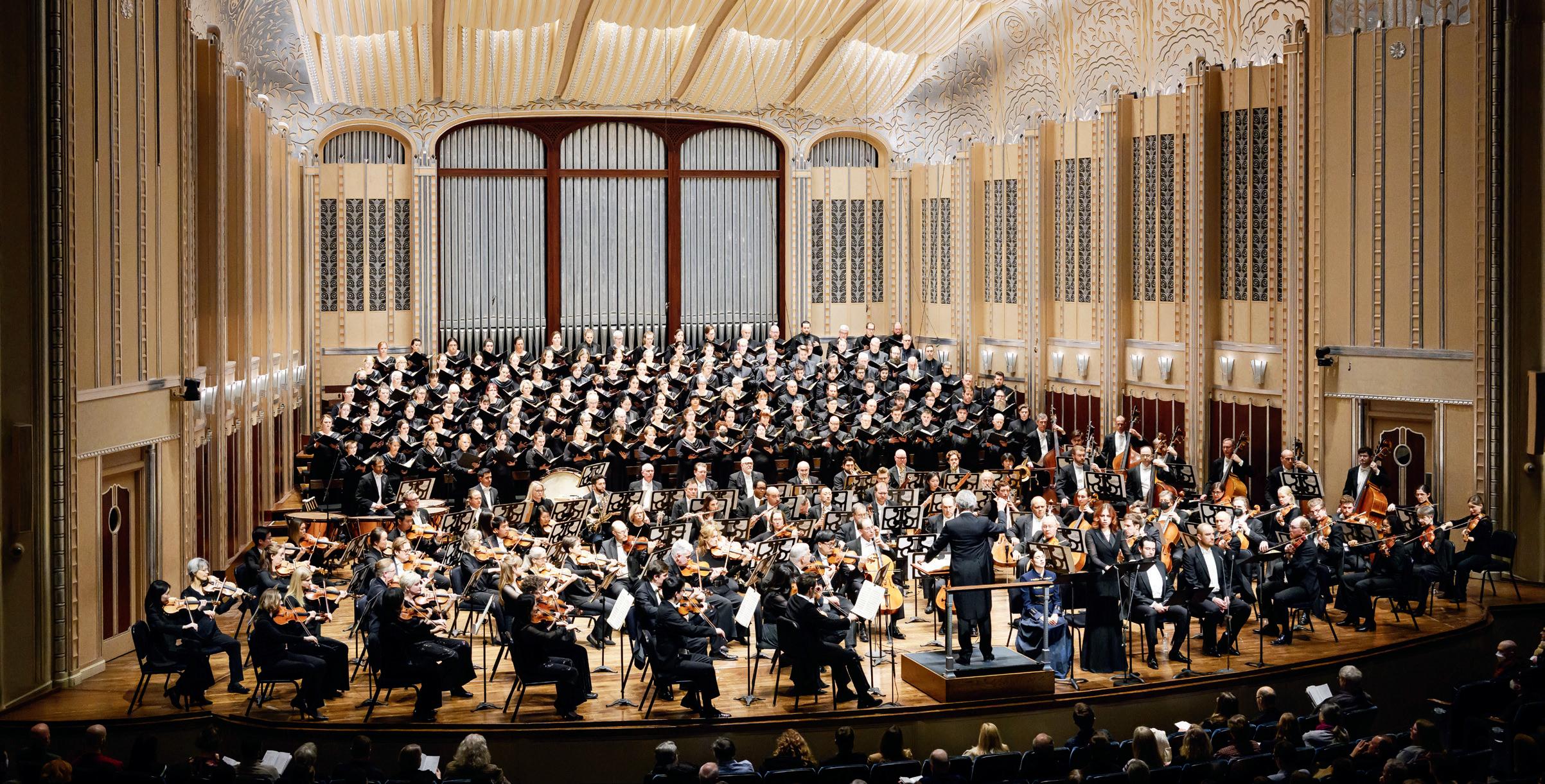
OBOES
Frank Rosenwein*
Edith S. Taplin Chair
Corbin Stair
Sharon and Yoash Wiener Chair
Jeffrey Rathbun2
Everett D. and Eugenia S. McCurdy Chair
Robert Walters
ENGLISH HORN
Robert Walters
Samuel C. and Bernette K. Jaffe Chair
CLARINETS
Afendi Yusuf*
Robert Marcellus Chair
Robert Woolfrey
Victoire G. and Alfred M. Rankin, Jr. Chair
Daniel McKelway2
Robert R. and Vilma L. Kohn Chair
Amy Zoloto
E-FLAT CLARINET
Daniel McKelway
Stanley L. and Eloise M. Morgan Chair
BASS CLARINET
Amy Zoloto
Myrna and James Spira Chair
BASSOONS
John Clouser*
Louise Harkness Ingalls Chair
Gareth Thomas
Catherine Van Handel2
Sandra L. Haslinger Chair
Jonathan Sherwin
CONTRABASSOON
Jonathan Sherwin
HORNS
Nathaniel Silberschlag* George Szell Memorial Chair
Michael Mayhew§
Knight Foundation Chair
Jesse McCormick
Robert B. Benyo Chair
Hans Clebsch
Richard King
Meghan Guegold Hege^
Gay Cull Addicott and Robert R. Cull Chair
TRUMPETS
Michael Sachs*
Robert and Eunice Podis Weiskopf Chair
Jack Sutte
Lyle Steelman2^
James P. and Dolores D. Storer Chair
Michael Miller
CORNETS
Michael Sachs*
Mary Elizabeth and G. Robert Klein Chair
Michael Miller
TROMBONES
Brian Wendel*
Gilbert W. and Louise I. Humphrey Chair
Richard Stout
Alexander and Marianna C. McAfee Chair
Shachar Israel2
BASS TROMBONE
Luke Sieve
EUPHONIUM & BASS TRUMPET
Richard Stout
TUBA
Yasuhito Sugiyama*
Nathalie C. Spence and Nathalie S. Boswell Chair
TIMPANI
Zubin Hathi*
Otto G. and Corinne T. Voss Chair
Peter Nichols2
Mr. and Mrs. Richard K. Smucker Chair
PERCUSSION
Marc Damoulakis*
Margaret Allen Ireland Chair
Thomas Sherwood
Tanner Tanyeri
Peter Nichols
KEYBOARD INSTRUMENTS
Carolyn Gadiel Warner
Marjory and Marc L. Swartzbaugh Chair
LIBRARIAN
Michael Ferraguto*
Joe and Marlene Toot Chair
ENDOWED CHAIRS CURRENTLY UNOCCUPIED
Virginia M. Lindseth, PhD, Chair
Sunshine Chair
Rudolf Serkin Chair
CONDUCTORS
Christoph von Dohnányi †
MUSIC DIRECTOR LAUREATE
Taichi Fukumura
ASSISTANT CONDUCTOR
Elizabeth Ring and William Gwinn Mather Chair
James Feddeck
PRINCIPAL CONDUCTOR &
MUSICAL ADVISOR OF THE CLEVELAND ORCHESTRA YOUTH ORCHESTRA
Sidney and Doris Dworkin Chair
Lisa Wong
DIRECTOR OF CHORUSES
Frances P. and Chester C. Bolton Chair
* Principal
§ Associate Principal
1 First Assistant Principal
2 Assistant Principal
Alum of The Cleveland
Orchestra Youth Orchestra
† In Memoriam
This roster lists full-time members of The Cleveland Orchestra. The number and seating of musicians on stage varies depending on the piece being performed. Seating within the string sections rotates on a periodic basis.
With sincere gratitude to the musicians of The Cleveland Orchestra for their in-kind contributions supporting community programs and securing funding opportunities.
NOW IN ITS 74TH SEASON , The Cleveland Orchestra Chorus is celebrated for its versatility and refined musicianship, appearing regularly with The Cleveland Orchestra at Severance and Blossom music centers. As one of the few all-volunteer, professionally trained choruses affiliated with a major American orchestra, it received the 2019 –20 Distinguished Service Award, recognizing extraordinary service to the Orchestra.
Frances P. and Chester C. Bolton Chair
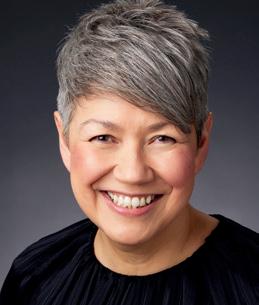
Lisa Wong, a distinguished choral conductor and educator, serves as Director of Choruses for The Cleveland Orchestra, where she has prepared The Cleveland Orchestra Chorus and Blossom Festival Chorus for acclaimed performances under conductors Franz Welser-Möst, Klaus Mäkelä, John Adams, Jane Glover, Susanna Mälkki, and Eric Whitacre, among others.
Wong served for 16 years as the Olive Williams Kettering Professor of Music at The College of Wooster. As director of the award-winning Wooster Chorus, she elevated the ensemble to national prominence through annual tours, performances at state and regional conferences, and the premieres of 15 new works. Her expertise in music education is informed by 32 years of classroom experience and extensive work as a clinician, adjudicator, and guest conductor.
A sought-after leader in the field, Wong has served as a grant panelist for the National Endowment for the Arts and Chorus America and presented at state and national conferences on varied topics. She is President-Elect of the Ohio Choral Directors Association and served as the Repertoire and Resource Chair for World Music and Cultures and on the Committee for Diversity, Equity, and Inclusion for the Ohio Music Education Association.
With degrees from West Chester University and the Indiana University Jacobs School of Music, Wong’s academic foundation is complemented by a rich career dedicated to inspiring and nurturing musicians of all ages.
SOPRANOS
Amy Foster Babinski
Claudia Barriga
Jesse Bobbitt
Emily Carlson
Signe Carlson
Ruby Chen
Maryssa Duncan
Emily Engle
Lisa Fedorovich
Emily Flood
Jennifer Gilles
Julia Halamek
Rebecca S. Hall
Sarah Henley
Lisa Hrusovsky
Rachel Imhoff
Shannon R. Jakubczak
Kiersten Johnson
Sarah Jones-Gould
Katie Kitchen
Hope Klassen-Kay
Brianna Knapp*
EvaCecilia Koh
Kate Macy
Gracie Mino
Sarah Moldover
Julie Myers-Pruchenski
Jennifer Heinert O’Leary
Katie Paskey
Victoria Peacock
Elizabeth Stockton
Perkins
Sarah Peterson
Stephanie Popik
Grace Prentice
Jylian Purtee
Lisa M. Ramsey
Mandi Rice
Emma Russell
Ellie Kleber Smith
Megan Tettau
Meagan Ulery
Cassie Utt
Sharilee Walker
ALTOS
Emily Austin
Debbie Bates
Riley Beistel
Kristina Bodnar
Carla Cashman
Barbara J. Clugh
Amber Dimoff
Shannon Dunning*
Brooke Emmel
Colleen Endrizzi
Shawna Hill
Karen S. Hunt
Sarah Hutchins
Maggie Keverline
Kayla Kim
Rebecca King
Kristi Krueger-O’Grady
Elise Leitzel
Victoria MarquardSchultz
Danielle S. McDonald
Karla McMullen
Dawn Ostrowski
Abigail Patton
Ellie Petro
Andrea Pintabona
Toni Arnold Shreve
Ina Stanek-Michaelis
Melanie Tabak
Rachel Thibo
Kristen Tobey
Laure Wasserbauer
Haley Wheeler
Maggie Fairman
Williams
Caroline Willoughby
Leah Wilson
Jennifer R. Woda
Debra Yasinow
Lynne Leutenberg Yulish
Nathan Bachofsky
Christian Bush
Rong Chen
Richard Hall
Michael Heid
Corey Hill
Daniel M. Katz
Adam Kilo
Peter Kvidera
Adam Landry
Christian Maric
David McCallum
Matt Rizer
Ted Rodenborn
Jacob Rumelfanger
Nathan A. Russell
John Sabol
Lee Scantlebury
Andrew Stamp
J.R. Tomkinson
Visit cochorus.com for more information on the Chorus and auditions.
BASSES
Simon Beck
Nicholas Campagna
Eric Coffelt
Ronnie Dailey
Christopher Dewald
Jeffrey Duber
Thomas Flowers
Andrew Fowler
Jeffrey D. Gershman
Kurtis B. Hoffman
Kim Jacoby
James Johnston
Kevin Kutz
Jaden Levine*
Jason Levy
Michael N. Lutkus
Tyler Mason
Glenn Obergefell
Eddie Papp
John Philipps
Francisco Prado
Brandon Randall
Charles Tobias
Matt Turell
Bob Winters
Ryan Yonek
Martin Young
Paul Zito
* Shari Bierman Singer Fellow
Daniel J. Singer
ASSISTANT DIRECTOR
Daniel Overly
COLLABORATIVE PIANIST
Jill Harbaugh
DIRECTOR OF CHORAL OPERATIONS
Victoria Peacock
CHORUS COORDINATOR
Sarah Hutchins
CHAIR, OPERATING COMMITTEE
We thank the Shari Bierman Singer Family and Charles M. Hoppel and Marianne
Karwowski Hoppel for their generous and continued support of The Cleveland Orchestra Chorus.
BY
Behind every powerful performance is a community of supporters who bring the music to life. We are deeply thankful for the generosity of every member of The Cleveland Orchestra family.
Adella Prentiss Hughes Society
Gifts of $1,000,000 & more
Mr. & Mrs.* Geoffrey Gund+
Haslam 3 Foundation+
Joan Y. Horvitz*+
Anne H. & Tom H.* Jenkins
Milton & Tamar Maltz+
Mrs. Jane B. Nord+
Mr. & Mrs.* Richard K. Smucker+
Gifts of $200,000 to $999,999
The Musicians of the Cleveland Orchestra (in-kind contribution for community programs and opportunities to secure funding)
The Walter and Jean Kalberer Foundation+
Bruce* & Eleanor Kendrick
Dr.* & Mrs. Anthony T. Lauria
Mrs. Norma Lerner+
Jan R. Lewis+
Robert Lugibihl
Deborah L. Neale
Mr. & Mrs. Albert B. Ratner+
Jenny & Tim Smucker+
Richard & Nancy Sneed+
Roy C. Waas*
Gifts of $100,000 to $199,999
Art of Beauty Company, Inc.+
Robert R. and Gay C. Cull Family Foundation
Mr. Yuval Brisker
Rebecca Dunn+
Dr. Michael Frank & Patricia A.* Snyder
Dr. Hiroyuki & Mrs. Mikiko Fujita
Peter & Christina Gold (Miami)
Mr. & Mrs. Michael J. Horvitz+
Dr. & Mrs. Herbert Kloiber+ (Europe)
Dennis & Camille LaBarre+
Thomas & Jessica Lauria (Miami)
Daniel R. Lewis+ (Miami)
Ms. Beth E. Mooney+
Estate of Bernadette Norwood
The Oatey Foundation+ (Cleveland, Miami)
Saul & Mary Sanders (Miami)
Jim & Myrna* Spira+
The Estate of Donald W. Strang, Jr. and Karen Strang
Ginger Warner+
Paul & Suzanne Westlake
Tony & Diane Wynshaw-Boris Anonymous (3)
Lillian Baldwin Society
Gifts of $75,000 to $99,999
Mr. & Mrs. Alexander M. Cutler+
Mr.* & Mrs. Bernard H. Eckstein
JoAnn & Robert Glick
Michael Hudson in memory of Susan Hudson
Mr. & Mrs. Douglas A. Kern+
Richard & Christine Kramer
Mr. & Mrs. Alfred M. Rankin, Jr.+
Astri Seidenfeld
R. Thomas & Meg Harris Stanton
George Szell Society
Gifts of $50,000 to $74,999
Randall & Virginia Barbato
Brenda & Marshall B. Brown
Mr. & Mrs. Thomas H. Gale
Mr.* & Mrs. Robert W. Gillespie
Ms. Alexandra Hanna
Richard & Michelle Jeschelnig
Elizabeth B. Juliano
Cynthia Knight
Mr. & Mrs. Ben Mathews
Nancy W. McCann+
Mr. & Mrs. Scott C. Mueller
William J. & Katherine T. O’Neill
Peter M. Padegimas, in memory of Beverly A. Padegimas
Mr. & Mrs. Benjamin N. Pyne
Mrs. Alfred M. Rankin, Sr.*+
Ilana & Chuck Horowitz Ratner+
Mark & Shelly Saltzman
The Seven Five Fund+
Donna E. Shalala (Miami)
Holly Strawbridge (Miami)
Herb & Jody Wainer
Mr. & Mrs. Franz Welser-Möst
Barbara & David Wolfort
Mrs. Jayne M. Zborowsky
Elisabeth DeWitt
Severance Society
Gifts of $25,000 to $49,999
Victor & Abby Alexander
Mr. & Mrs. A. Chace Anderson
Gerrie E. Berena
Dr. & Mrs. Wolfgang Berndt (Europe)
Robin Dunn Blossom
Mr. Richard J. Bogomolny & Ms. Patricia M. Kozerefski+
Dr. Ben H. & Julia Brouhard
Jeanette Grasselli Brown* & Glenn R. Brown*+
Dr. Robert Brown & Mrs. Janet Gans Brown
J. C. & Helen Rankin Butler
Irad & Rebecca Carmi
Bill & Jennifer Clawson
Judith & George W. Diehl
Budd & Judy Dworkin
Mary Jo Eaton (Miami)
Drs. Wolfgang & Gabi Eder (Europe)
Richard C. & Lisa Fedorovich
David & Robin Gunning
Alfredo & Luz Maria Gutierrez (Miami)
Sondra & Steve Hardis
Iris & Tom Harvie
Mary & Jon* Heider (Cleveland, Miami)
Mrs. Lynn Heisler
Amy & Stephen Hoffman
David & Nancy Hooker
Richard Horvitz & Erica HartmanHorvitz (Cleveland, Miami)
Mrs. Marguerite B. Humphrey*
Allan V. Johnson
Mr. & Mrs. Joseph P. Keithley+
Jonathan & Tina Kislak (Miami)
Rob & Laura Kochis
Eeva & Harri Kulovaara (Miami)
Ms. Cathy Lincoln
Jon A. & Virginia M. Lindseth, PhD+
Mr. & Mrs. Robert W. Malone
Mr. Stephen McHale
Loretta J. Mester & George J. Mailath
Randy & Christine Myeroff
Jennifer & Alexander Ogan
The Honorable John Doyle Ong+
Mr. J. William & Dr. Suzanne* Palmer
Catherine & Hyun Park
Douglas & Noreen Powers
Mr. & Mrs. James A. Ratner
James & Marguerite Rigby
The Ralph and Luci Schey Foundation+
Mr. Eric A. Seed & Ms. Ellen Oglesby
Kathryn & Duncan Stuart
Dr. Elizabeth Swenson
Dr. Russell A. Trusso
Tom & Shirley* Waltermire
John & Deborah Warner
Anya Weaving & Tom Mihaljevic
Meredith & Michael Weil
Tony & Christine White
Anonymous (3)
Dudley S. Blossom Society Gifts of $15,000 to $24,999
Mr. & Mrs. William Winfield Baker
Ms. Viia R. Beechler
Mr. & Mrs. Jules Belkin
Mel Berger & Jane Haylor
Doug & Barbara* Bletcher
Mr. & Mrs. C. Perry Blossom
Mr. & Mrs. Charles P. Bolton
Dr. Christopher P. Brandt & Dr. Beth Sersig
Mr. D. McGregor Brandt, Jr. Meghan & Trent Brown
Nancy & Tim Callahan
Ellen E.* & Victor J. Cohn
Kathleen A. Coleman
Ted & Donna Connolly
Mr. & Mrs. Kevin C. Conway
Mrs. Barbara Cook
Mr. & Mrs. Matthew V. Crawford
Brian & Susan Dickie
Maureen A. Doerner & Geoffrey T. White
Henry & Mary* Doll
Nancy & Richard* Dotson
Peter & Sandy Earl
Dr. & Mrs. Robert Ehrlich (Europe)
Mr. Brian L. Ewart & Mr. William McHenry
Friends of The Cleveland Orchestra+
Dawn M. Full Revocable Trust
Mr. James S. Gascoigne & Ms. Cynthia Prior
Richard & Ann Gridley
Gary L. & Cari T. Gross
Mr. & Mrs. Harley I. Gross
Ms. Marianne Gymer
Kathleen E. Hancock
Jack Harley & Judy Ernest
Matthew & Elizabeth Horvitz
Gerald Hughes
Pysht Fund
Lute & Lynn Quintrell
James* & Donna Reid+
Elizabeth & Robert J. Reid
David J. Reimer & Raffaele DiLallo
Mr. D. Keith* & Mrs. Margaret B. Robinson
Lisa Robinson & Robert Hansel
Dr. & Mrs. Ronald Ross
Robert* & Margo Roth
Dr. Adel S. Saada
Dr. Vernon E. Sackman &
Ms. Marguerite Patton*
Mr. & Mrs. Lowell Satre
Sandra Sauder
Bob & Ellie Scheuer
John* & Barbara Schubert
Sally & Larry Sears
John Sedor & Geri Presti
Deborah Sesek
Katie & Michael* Shames
Mr. Philip & Mrs. Michelle Sharp
Mr. Michael R. Shaughnessy
Elizabeth & Timothy Sheeler
Paul & Betsy Shiverick (Miami)
Zachary & Shelby Siegal
Howard & Beth Simon
Mr. James S. Simon
The Shari Bierman Singer Family
Drs. Charles Kent Smith & Patricia Moore Smith
Mrs. Gretchen D. Smith+
Mr. & Mrs. William E. Spatz
Diane M. Stack
Maribeth & Christopher Stahl
George & Mary* Stark
Sue Starrett & Jerry Smith
Mr. Robert D. Sweet
Ms. Lorraine S. Szabo
Robert & Carol Taller
Eca & Richard Taylor
Caroline Theus
Mr. John R. Thorne and Family
Bill & Jacky Thornton
Mr. & Mrs. Gary B. Tishkoff
Dr. & Mrs. James E. Triner
Mr.* & Mrs. Robert N. Trombly
Dr. & Mrs. Michael B. Troner (Miami)
Steve & Christa Turnbull
Dr. & Mrs. Wulf H. Utian
Robert & Marti* Vagi
Bobbi & Peter* van Dijk
Mr*. & Mrs. Lee Vandenberg
Teresa Galang-Viñas & Joaquin Viñas (Miami)
Mr. & Mrs. Les C. Vinney
George & Barbara von Mehren
Mr. Randall Wagner
Randall E. Wagner
Ron Wakser
John & Jeanette Walton
Greg & Lynn Weekley
Tilles-Weidenthal Foundation
Mr. & Mrs. Mark Allen Weigand
Mr. Peter & Mrs. Laurie Weinberger
Paul & Nancy Wellener
Dr. Edward L. & Mrs. Suzanne* Westbrook
Dr. Paul R. & Catherine Williams
Ms. Linda L. Wilmot
Bob & Kat Wollyung
Mr. Graham Wood
Mr. Kal Zucker & Dr. Mary Frances Haerr
Anonymous (4)
Composer’s Circle
Gifts of $2,500 to $4,999
Mr. & Mrs. Paul R. Abbey
Mr. Leonard H. Abrams*
David & Sharon Anderson
Sarah May Anderson
Gabrielle Aryeetey
Jack & Darby Ashelman
Ronen & Susan Avinir (Miami)
Don Baker*
Brian Balogh & Kathy Craig
Mr. Richard H. Bamberger
Eric Barbato & Elisha Swindell
Ms. Carol Barnak
Ms. Kimberley Barton
Lucy Battle
Kathryn & Gerald Berkshire
Mr. Jeffrey & Dr. Sheila Berlin
Mr. & Mrs. Turney P. Berry
Margo & Tom Bertin
Mr. & Mrs. Charles Bittenbender
Zeda W. Blau
Marilyn & Lawrence Blaustein
Peter Blazunas
Ms. Pamela M. Blemaster
Blossom Friends of The Cleveland Orchestra+
Howard & Arlyne Bochnek
Mr. John & Mrs. Robyn Boebinger
Dr. & Mrs. Timothy Bohn
Mr. & Mrs. Richard H. Bole
David and Julie Borsani, in memory of Marissa I. Borsani
Dwight Bowden
Lisa & Ronald Boyko
William & AnnaMarie Brancovsky
Adam & Vikki Briggs
Matthew D. Brocone
Mr. & Mrs. Dale R. Brogan
Dale & Wendy Brott
Bennett Brown
Mrs. Nancy E. Brown
Mr. & Mrs. Henry G. Brownell
Mr. Felix Brueck &
Ms. Ann Kowal Smith
Mrs. Frances Buchholzer
Mr. & Mrs. William D. Buss II
William Busta & Joan Tomkins
Dr. & Mrs. William E. Cappaert
Ms. Joanna Carfagna
Mr.* & Mrs. John J. Carney
Dr. Jeffrey Chaitoff &
Ms. Margo Vinney
Dr. Ronald Chapnick* & Mrs. Sonia Chapnick
Gregory & Kathrine Chemnitz
Gertrude Kalnow Chisholm &
Homer D.W. Chisholm
Dr. Gary Chottiner & Anne Poirson
Natalie Cipriano
Robert & Judy Ciulla
Pete Clapham & Anita Stoll
Mr. & Mrs. David Clark
Jill & Paul Clark
Richard J. & Joanne Clark
Drs. John* & Mary Clough
Christopher Colaluca
William & Ruth Coleman
Mr. & Mrs. Robert Conrad
Jim & Mary Conway
Mary* & Bill Conway
Mr. & Mrs. Thomas Cook
The Honorable Colleen Conway
Cooney & Mr. John Cooney
Mr. John Couriel & Dr. Rebecca Toonkel (Miami)
Mr. Ed Covington
Dr. Dale & Susan Cowan
Laura Cox
Jane Cronin
John Cunningham
Dr. Lucy Ann Dahlberg
Karen & Jim Dakin
Mrs. Jane Dangler
Dr. & Mrs. Thomas M. Daniel
Karen & Neil Davies
Gary Davis & Jane Cooper
Mrs. Lois Joan Davis
Jeffrey Dean and Barbara & Karen Claas
Prof. George & Mrs. Rebecca Dent
Michael & Amy Diamant
Dr. & Mrs. Howard Dickey-White
Ms. Marlene Dirksen
Mr. & Mrs. David E. Dix
Do Unto Others Trust (Miami)
Jack & Elaine Drage
Mrs. Rhonda Drakulich
Mr. & Mrs. Robert Dreshfield
Ms. Barbara Dunaway
Mr. & Mrs. Robert P. Duvin
Mr. & Mrs. Ronald E. Dziedzicki
Erich Eichhorn & Ursel Dougherty
Mr. Mike S. Eidson, Esq. & Dr. Margaret Eidson (Miami)
S. Stuart Eilers
Peter & Kathryn Eloff
Louis* & Patricia Esposito
Andy & Leigh Fabens
Michelle Fay
Anne Ferguson & Peter Drench
Mr. Jonathon R. Forman
Joan & Philip Fracassa
Mr. & Mrs. Larry Frankel
Howard Freedman & Rita Montlack
Marvin Ross Friedman & Adrienne bon Haes (Miami)
Robert Friedman &
Elizabeth MacGowan
Peggy A. Fullmer
The Fung Family
Timothy & Susan Gall
Mr. Stephen H. Gariepy & Ms. Nancy Sin
Pamela Garrison (Miami)
Mr. William Gaskill &
Ms. Kathleen Burke
Mr. & Mrs. Bengt Gerborg
Mr. & Mrs. M. Lee Gibson
Daniel & Kathleen Gisser
Holly & Fred Glock
Dr.* & Mrs. Victor M. Goldberg
Enrique Gomez (Miami)
Lawrence Goodman & Stephanie Betts
Agnes Tartara Goss
Mr. Robert Goss
Dr. & Mrs. Ronald L. Gould
Bob Graf & Mia Zaper
Mr. James Graham & Mr. David Dusek
Dr. Ruffin Graham
Robert K. Gudbranson & Joon-Li Kim
Mr. & Mrs. John E. Guinness
Mr. Davin & Mrs. Jo Ann Gustafson
Mr. Ian S. Haberman
Mary Louise Hahn
Dr. James O. Hall
Megan Hall & James Janning
Dr. Haifa & Dr. Michael A. Hanna
John Hannon
Mrs. Martha S. Harding
Dr. Jared Harp
Mr. Samuel D. Harris
Thomas & Darlene Hawkins
Dr. Toby Helfand
In Memory of Hazel Helgesen
Drs. Gene & Sharon Henderson
T. K.* & Faye A. Heston
Eric & Karen Hillenbrand
Richard & Jean Hipple
Arnold & Janice Hirshon
Mr. & Mrs. Stephen J. Holler
Charles M. Hoppel & Marianne Karwowski Hoppel
Lois Krejci-Hornbostel & Roland Hornbostel
Xavier-Nichols Foundation/ Robert and Karen Hostoffer
Phillip Huber
Dr. Diane Huey
Mr. Brooks G. Hull &
Mr. Terry Gimmellie
Dr. & Mrs. Grant Hunsicker
Mrs. Laura Hunsicker
Mr.* & Mrs. J. David Hunter
Ms. Melanie Ingalls
Bruce & Debbie Jarosz
Helen & Erik Jensen
Dylan Jin
Eric & Susan Johnson
Joela Jones & Richard Weiss
Steven Jones
Dr. Eric Kaler
Mr. Donald J. Katt & Mrs. Maribeth Filipic-Katt
Dr. Richard* & Roberta Katzman
The Kendis Family Trust: Hilary & Robert Kendis and Susan & James Kendis
Joanne Kim & Jim Nash
Mr. Thomas Kinsey & Ms. Lynn Slifer
Mrs. Judith A. Kirsh
Steve & Beth Kish
Mr. & Mrs. Stuart F. Kline
Michael Kluger & Heidi Greene
Stewart Kohl
Mr. Ronald & Mrs. Kimberly Kolz
Ursula Korneitchouk
Margaret Kotz & Ed Covington
Dr. & Mrs. John P. Kristofco
Mr. & Mrs. David S. Kushner
Alfred & Carol Lambo
Mr. & Mrs. John J. Lane, Jr.
Dr.* & Mrs. Roger H. Langston
Mrs. Susan D. LaPine
Mr. & Mrs. Richard L. Larrabee
Mrs. Sandra S. Laurenson
Mr. & Mrs. Michael Lavelle
Richard & Barbara Lederman
Mr. Elliot & Mrs. Christine Legow
Michael & Lois Lemr
Robert G. Levy
Mr. & Mrs.* Thomas A. Liederbach
Eva & Rudolf Linnebach
Mr. Henry Lipian
Dr. George I. Litman
Ms. Agnes Loeffler
Mary Lohman
Mr. & Mrs. Carlos Lopez-Cantera (Miami)
Virginia Lovejoy
Linda* & Saul Ludwig
Elsie* & Byron Lutman
Mr. & Mrs.* Robert P. Madison
Herbert L. & Ronda Marcus
Dr.* & Mrs. Sanford E. Marovitz
Ms. Dorene Marsh
Mr. John R. Martin
Kevin Martin & Hansa Jacob-Martin
Ms. Amanda Martinsek
Ms. Judith E. Matsko
Bruce & Karen McDiarmid
Mr. & Mrs. Thomas B. McGowan
Mr. James E. Menger
Mrs. Nathaniel C. Merritt-Mervine
Dr. Miloslava Mervart
Mr. & Mrs. Gerald A. Messerman
Mr. Glenn A. Metzdorf
Mr. Stephen P. Metzler
David Michel & Lynne Killgore
Beth M. Mikes
Amy Miller & Nikhil Rao
Mr. & Mrs. David S. Miller
Dr. & Mrs. Leon Miller
Mr. Tom Millward
Anton & Laura Milo
Michael Milo
MindCrafted Systems
Jon Morrell
Mr. & Mrs. Thomas W. Morris
Ken & Sharon Mountcastle
Susan B. Murphy
Dave & Nancy Murray
Karen & Bernie Murray
Joan Katz Napoli & August Napoli
Dr. Anne & Mr. Peter Neff
Karen Nemec
Mark & Paula Nylander
Richard & Jolene O’Callaghan
Ms. Kathleen Ode
Robert & Mary Ann Olive
Dr. & Mrs. Paul T. Omelsky
Harvey* & Robin Oppmann
Dr. Kata & Mr. Len Pagon
George Parras & Mary Spencer
Drs. James & Marian Patterson
Dr. Lewis E. & Janice B. Patterson
David Pavlich & Cherie Arnold
Matt Peart
Alan & Charlene Perkins
John Perko
Robert S. Perry
Mark & Eve Pihl
Barbara Pittman
Mr. Richard W. Pogue
Mr. & Mrs. Frank Porter
Patrick J. Holland
Drs. Raymond R. Rackley &
Carmen M. Fonseca
Dr. James & Lynne Rambasek
Mr. Todd J. Reese
Dr. Robert W. Reynolds
David & Gloria Richards
Michael & Lydia Ridenour
Joan & Rick Rivitz
Mr. & Mrs. Jay F. Rockman
Michael & Jodi Rogoff
David & Mitsuko Rosinus (Miami)
Steven & Ellen Ross
Drs. Edward & Teresa Ruch
Ms. Kathy E. Ruekberg
Mr. & Mrs. Paul L. Rupert
Nathan & Marie Rutherford
Anne Sagsveen
Richard & Mary Lou Sanders
Ms. Patricia E. Say
Bryan & Jenna Scafidi
Don Schmitt & Jim Harmon
Michael Schneidler
Mr. Don Schriver &
Mrs. Jane Schriver
Mr. James Schutte
Nicklaus Schwenk
Ms. Kathryn & Mr. Michael Seider
Mr. & Mrs. Joseph Selden
Dr. Judith Sewell &
Mr. Donald Sewell
Caltha Seymour
Lee Shackelford
Donald Shafer &
Katherine Stokes-Shafer
Steve & Marybeth Shamrock
Ginger & Larry Shane
Harry* & Ilene Shapiro
Ms. Frances L. Sharp
Larry Oscar & Jeanne Shatten
Charitable Fund of the Jewish Federation
Lynn Shaw
Dr. & Mrs. William C. Sheldon
Mr. Richard Shirey
Jim Simler & Dr. Amy Zhang
Dr. Anne & Mr. Jay Singer
Harry & Geri Singer
Dr. Edward & Mrs. Barbara Sivak
G. Michael & Kathy* Mead Skerritt
Bruce L. Smith
Mr. Christopher & Mrs. Michelle Smith
David Kane Smith
Mr. Joshua Smith
Mr. Eugene Smolik
Drs. Nancy & Ronald Sobecks
Drs. Thomas & Terry Sosnowski
SPÄNGLER PRIVATSTIFTUNG
Mr. Michael Star
Edward R. and Jean Geis Stell Foundation
Ryan & Melissa Stenger
Ronald & Lauren Sterbank
Janet Stern
Ms. Natalie Stevens
Nancy Stillwagon & Jon Stein
AJ & Nancy Stokes
Frederick & Elizabeth Stueber
Mr. & Mrs. John* K. Sullivan
Nancy & Patrick Sullivan
Mike & Wendy Summers
Mr. Marc L. Swartzbaugh
Mrs. Mary L. Sykora
Mr. & Mrs. Michael Taipale
Rebecca & Jeffrey Talbert
Dr. James Taylor & Ms. Susan Slugg
Jill & Jim Taylor
Mr. Robert Taylor
Ms. Aileen Thong-Dratler
Dr. & Mrs. Thomas* A. Timko
Drs. Anna* & Gilbert True
Ms. Christeen Tuttle
Koen van Besien & Ok-Kyong Chaekal
Dr. Doug Van Auken & Mr. John Corlett
Michael & Jaclyn Vary
Mr. & Mrs. Steven M. Venezia
Philip Volpe
Sarah & Jim Vosmik
Neha & Sanjay Vyas
Mr. & Mrs. Eric Wald
Ms. Lois Walters
Harriet Warm
Jessica & James Warren
Margaret & Eric* Wayne
Mr. Paul Wehrmeister
Emily Westlake & Robertson Gilliland
Mr. Peter White
Mr. & Mrs. John W. Wilhelm
John & Nancy Woelfl
Mr. James M. Wood Sr.
Dale & Cynthia Woodling
Ms. Jennifer Wynn
Rad & Patty Yates
Ms. Carol A. Yellig
Ellen Zegarra
Dr. Rosemary Gornik & Dr. William Zelei
Mr. Paul Zraik
John & Jane Zuzek
Anonymous (10)
OFFICERS
Richard J. Kramer
Chair
André Gremillet
President & CEO,
The Richard K. Smucker Chair
Richard K. Smucker
Immediate Past Chair
Richard J. Bogomolny
Chair Emeritus
Dennis W. LaBarre
Chair Emeritus
Norma Lerner
Honorary Chair
David J. Hooker
Secretary
Victor Alexander
Treasurer
RESIDENT TRUSTEES
Victor Alexander
Robin Dunn Blossom
Yuval Brisker
Helen Rankin Butler
Nancy Slocum Callahan
Irad Carmi
Bill Clawson
Matthew V. Crawford
Lisa Fedorovich
Michael Frank, MD JD
Hiroyuki Fujita
Robert Glick
Arthur C. Hall III
Iris Harvie
Dee Haslam
Stephen H. Hoffman
David J. Hooker
Michelle Shan Jeschelnig
Sarah Liotta Johnston
Elizabeth B. Juliano
Nancy F. Keithley
Douglas A. Kern
John D. Koch
Richard J. Kramer
Dennis W. LaBarre
Heather Lennox
Cathy Lincoln
Robert W. Malone
Ben Mathews
Nancy W. McCann
Stephen McHale
Scott C. Mueller
Christine Myeroff
Katherine T. O’Neill
Hyun Park
Alfred M. Rankin, Jr.
Charles A. Ratner
Zoya Reyzis
Richard K. Smucker
James C. Spira
R. Thomas Stanton
Richard Stovsky
Russell A. Trusso
Daniel P. Walsh
Thomas A. Waltermire
Jes Warren
Jeffery J. Weaver
Anya Weaving
Meredith Smith Weil
Paul E. Westlake Jr.
David A. Wolfort
Anthony Wynshaw-Boris
NATIONAL TRUSTEES
Virginia Nord Barbato (NY)
Mary Jo Eaton (FL)
Michael J. Horvitz (FL)
Thomas E Lauria (FL)
Loretta Mester (PA)
Benjamin N. Pyne (NY)
Geraldine B. Warner (OH)
Tony White (OH)
INTERNATIONAL TRUSTEES
Wolfgang C. Berndt (Austria)
Herbert Kloiber (Germany)
EX-OFFICIO TRUSTEES
André Gremillet
Todd Diacon
Sarah Hutchins
Eric Kaler
Judith E. Matsko
Beverly J. Schneider
TRUSTEE EMERITUS
Thomas F. McKee
HONORARY TRUSTEES FOR LIFE
Richard J. Bogomolny
Charles P. Bolton
Robert D. Conrad
Alexander M. Cutler
Richard C. Gridley
Norma Lerner
Virginia Lindseth*
Alex Machaskee
Robert P. Madison
Milton S. Maltz
Beth E. Mooney
John D. Ong
Audrey Gilbert Ratner
Hewitt B. Shaw
Luci Schey Spring
The Cleveland Orchestra extends heartfelt gratitude to these generous organizations and partners who bring concerts and educational programs to life for our community.
CORPORATE SUPPORT
Gifts of $300,000 & more
The Goodyear Tire & Rubber Company+
Hyster-Yale, Inc.+
NACCO Industries, Inc.+
Gifts of $200,000 to $299,999
Jones Day Foundation+
Ohio CAT
The J. M. Smucker Co.+
Gifts of $100,000 to $199,999
KeyBank+
Quality Electrodynamics
White & Case (Miami)
Gifts of $50,000 to $99,999
FirstEnergy Foundation+ NOPEC
Parker Hannifin Foundation+
PNC+
Thompson Hine LLP+
Anonymous
Gifts of $15,000 to $49,999
Acme Fresh Markets
Akron Children’s BakerHostetler+
Buyers Products Company
Calfee, Halter & Griswold LLP
Cuffs Clothing Company
Dealer Tire LLC
DLR Group | Westlake Reed
Leskosky
Frantz Ward LLP
The Giant Eagle Foundation
Lake Effect Health
Miba AG (Europe)
Northern Haserot
Olympic Steel, Inc.
Park-Ohio Holdings
RPM International Inc.
RSM US LLP
Welty Enterprises
Westfield
Anonymous
Gifts of $2,500 to $14,999
BDI
Berkadia
Blue Technologies, Inc.
BNY Wealth
Brothers Printing Company
The Cedarwood Companies
The Cleveland-Cliffs Foundation
Consolidated Solutions
Dickie, McCamey & Chilcote
Eaton+
Evarts Tremaine
The Ewart-Ohlson Machine Company
FirstEnergy Foundation
Goldman Sachs & Co. LLC
GPD Foundation
GPD Group
Gross Residential
Hahn Loeser & Parks LLP
Hunsicker Family Dental
Jones Group Interiors Inc.
Karlie Newton II Insurance Agency
Kohrman Jackson & Krantz, LLP
KPMG LLP
The Lincoln Electric Foundation
MGM Resorts Foundation
Nordson Corporation Foundation
Northern Trust
Ohio Real Title
Sikich
Something’s Popping
Ver Ploeg & Marino (Miami)
Warby Parker
Winslow Assets
Margaret W. Wong & Associates LLC
Young Presidents’ Organization
Gifts of $1,000,000 & more
The Brown and Kunze Foundation+
The Milton and Tamar Maltz Family Foundation+
The Jack, Joseph and Morton Mandel Foundation+
David and Inez Myers Foundation+
State of Ohio+
The Kelvin and Eleanor Smith Foundation+
Richard & Emily Smucker Family Foundation+
Timken Foundation of Canton+
Gifts of $500,000 to $999,999
The William Bingham Foundation+
Mary E. & F. Joseph Callahan Foundation+
Cuyahoga County residents through Cuyahoga Arts & Culture+
Ohio Arts Council+
The Payne Fund+
Gifts of $250,000 to $499,999
Kulas Foundation+
John P. Murphy Foundation+
The Dr. M. Lee Pearce Foundation, Inc.+ (Miami)
Gifts of $100,000 to $249,999
Paul M. Angell Family Foundation
The Louise H. and David S. Ingalls Foundation+
Wesley Family Foundation Anonymous
Gifts of $50,000 to $99,999
The George W. Codrington Charitable Foundation+
The Jean, Harry and Brenda Fuchs Family Foundation, in memory of Harry Fuchs GAR Foundation+
The George Gund Foundation+
The Sam J. Frankino Foundation
The Gerhard Foundation, Inc.+
The Helen Wade Greene Charitable Trust
The Catherine L. & Edward A. Lozick Foundation
With the support of the MiamiDade County Department of Cultural Affairs and the Cultural Affairs Council, the Miami-Dade County Mayor, and Board of County Commissioners
The Nord Family Foundation
Edwin D. Northrup II Fund
PWC Foundation
The Esther and Hyman Rapport
Philanthropic Trust
The Reinberger Foundation+
SCH Foundation
Albert G. & Olive H. Schlink Foundation
The Sisler McFawn Foundation+
The Veale Foundation
The George Garretson Wade Charitable Trust
The John L. Severance Society is named to honor the philanthropist and business leader who dedicated his life and fortune to creating The Cleveland Orchestra’s home concert hall, which today symbolizes unrivaled quality and enduring community pride.
The donors recognized with a ‘+’ represent today’s visionary leaders, who have each surpassed $1 million in cumulative gifts to The Cleveland Orchestra. Their generosity and support joins a long tradition of community-wide support, helping to ensure The Cleveland Orchestra’s mission to provide extraordinary musical experiences — today and for future generations.
William Randolph Hearst Foundation
Martha Holden Jennings Foundation+
Myra Tuteur Kahn Memorial Fund of the Cleveland Foundation+
Gifts of $15,000 to $49,999
The Abington Foundation
Akron Community Foundation
The Batchelor Foundation, Inc. (Miami)
The Mary S. and David C. Corbin Foundation
Mary and Dr. George L. Demetros Charitable Trust
The Thomas H. White Foundation, a KeyBank Trust Anonymous
Gifts of $2,500 to $14,999
The Ruth and Elmer Babin Foundation
The Bernheimer Family Fund of the Cleveland Foundation
The Cowles Charitable Trust (Miami)
The C.R.E.W. Foundation
The Frances G. and Lewis Allen
Davies Endowment
James Deering Danielson Foundation
Dorn Family Foundation
Fisher-Renkert Foundation
The Harry K. Fox and Emma R. Fox
Charitable Foundation
The Hankins Foundation
The Muna & Basem Hishmeh Foundation
George M. and Pamela S. Humphrey Fund
The Kirk Foundation (Miami)
The Laub Foundation
The Lehner Family Foundation
The Fred A. Lennon Charitable Trust
The G. R. Lincoln Family Foundation
Elizabeth Ring Mather and William Gwinn Mather Fund+
The Eric & Jane Nord Family Fund+
The M. G. O’Neil Foundation
The O’Neill Brothers Foundation
Ophthalmology Education Worldwide
Paintstone Foundation
The Perkins Charitable Foundation
Charles E. & Mabel M. Ritchie
Memorial Foundation
Lloyd L. and Louise K. Smith
Memorial Foundation
The South Waite Foundation
Sterling Chamber Players
Third Federal Foundation
Uvas Foundation
The Welty Family Foundation
The Edward and Ruth Wilkof Foundation
The Wuliger Foundation
Anonymous (2)
Whatever greatness The Cleveland Orchestra has achieved is because of all the people here in this community, who believe in what the power of music can do.
— Franz Welser-Möst, Music Director
As a courtesy to audience members and musicians, late-arriving patrons are asked to wait quietly until the first convenient break in the program. These seating breaks are at the discretion of the House Manager in consultation with the performing artists.
To ensure a quiet and respectful listening environment, please silence all electronic devices.
Audio recording, photography, and videography are not allowed during performances at Severance. Photographs can only be taken when the performance is not in progress.
In consideration of others, please reduce the volume on hearing aids and other health-assistive devices that may produce noise. For Infrared AssistiveListening Devices, please see an usher. To request one in advance, email info@clevelandorchestra.com.
Contact an usher or a member of house staff if you require medical assistance. Emergency exits are clearly marked throughout the building. Ushers and house staff will provide instructions in the event of an emergency.
Regardless of age, each person must have a ticket and be able to sit quietly in a seat throughout the performance. Classical Season subscription concerts are not recommended for children under 8. However, there are several
age-appropriate series designed specifically for children and youth, including Music Explorers (for 3 to 6 years old) and Family Concerts (for ages 7 and older).
Beverages and snacks are available at bars throughout the building and in the Lounge at Severance. Only bottled water is permitted in the hall. For Cleveland Orchestra apparel, recordings, and gift items, visit the Welcome Center.
We are so glad you joined us!
Want to share about your time at Severance? Send your feedback to cx@clevelandorchestra.com. Hearing directly from you will help us create the best experience possible.
EDITORIAL
kmcbrien@clevelandorchestra.com
Ellen Sauer Tanyeri, Archives & Editorial
ADMINISTRATION
Ross Binnie, Chief Brand Officer
Christophe Abi-Nassif, Chief Growth Officer
DESIGN
Elizabeth Eddins, eddinsdesign@gmail.com
PRINTING Meridian Printing, meridianprinting.com
ADVERTISING Live Publishing Company, 216-721-1800





Named after our pioneering founder, Adella Prentiss Hughes, our streaming service offers access to exclusive livestreams, on-demand concerts, special interviews, and more. Available on the web, iOS, Android, Roku, Apple TV, Android TV, and Chromecast.